WO2022123779A1 - 不正検知システム、不正検知装置、不正検知方法、及びプログラム - Google Patents
不正検知システム、不正検知装置、不正検知方法、及びプログラム Download PDFInfo
- Publication number
- WO2022123779A1 WO2022123779A1 PCT/JP2020/046320 JP2020046320W WO2022123779A1 WO 2022123779 A1 WO2022123779 A1 WO 2022123779A1 JP 2020046320 W JP2020046320 W JP 2020046320W WO 2022123779 A1 WO2022123779 A1 WO 2022123779A1
- Authority
- WO
- WIPO (PCT)
- Prior art keywords
- fraud detection
- user
- predetermined
- code
- fraud
- Prior art date
- Legal status (The legal status is an assumption and is not a legal conclusion. Google has not performed a legal analysis and makes no representation as to the accuracy of the status listed.)
- Ceased
Links
Images


Classifications
-
- G—PHYSICS
- G06—COMPUTING OR CALCULATING; COUNTING
- G06Q—INFORMATION AND COMMUNICATION TECHNOLOGY [ICT] SPECIALLY ADAPTED FOR ADMINISTRATIVE, COMMERCIAL, FINANCIAL, MANAGERIAL OR SUPERVISORY PURPOSES; SYSTEMS OR METHODS SPECIALLY ADAPTED FOR ADMINISTRATIVE, COMMERCIAL, FINANCIAL, MANAGERIAL OR SUPERVISORY PURPOSES, NOT OTHERWISE PROVIDED FOR
- G06Q20/00—Payment architectures, schemes or protocols
- G06Q20/38—Payment protocols; Details thereof
- G06Q20/40—Authorisation, e.g. identification of payer or payee, verification of customer or shop credentials; Review and approval of payers, e.g. check credit lines or negative lists
- G06Q20/401—Transaction verification
- G06Q20/4016—Transaction verification involving fraud or risk level assessment in transaction processing
-
- G—PHYSICS
- G06—COMPUTING OR CALCULATING; COUNTING
- G06F—ELECTRIC DIGITAL DATA PROCESSING
- G06F21/00—Security arrangements for protecting computers, components thereof, programs or data against unauthorised activity
- G06F21/30—Authentication, i.e. establishing the identity or authorisation of security principals
- G06F21/31—User authentication
- G06F21/36—User authentication by graphic or iconic representation
-
- G—PHYSICS
- G06—COMPUTING OR CALCULATING; COUNTING
- G06F—ELECTRIC DIGITAL DATA PROCESSING
- G06F21/00—Security arrangements for protecting computers, components thereof, programs or data against unauthorised activity
- G06F21/30—Authentication, i.e. establishing the identity or authorisation of security principals
- G06F21/31—User authentication
- G06F21/34—User authentication involving the use of external additional devices, e.g. dongles or smart cards
- G06F21/35—User authentication involving the use of external additional devices, e.g. dongles or smart cards communicating wirelessly
-
- G—PHYSICS
- G06—COMPUTING OR CALCULATING; COUNTING
- G06N—COMPUTING ARRANGEMENTS BASED ON SPECIFIC COMPUTATIONAL MODELS
- G06N3/00—Computing arrangements based on biological models
- G06N3/02—Neural networks
- G06N3/04—Architecture, e.g. interconnection topology
- G06N3/0499—Feedforward networks
-
- G—PHYSICS
- G06—COMPUTING OR CALCULATING; COUNTING
- G06N—COMPUTING ARRANGEMENTS BASED ON SPECIFIC COMPUTATIONAL MODELS
- G06N3/00—Computing arrangements based on biological models
- G06N3/02—Neural networks
- G06N3/08—Learning methods
- G06N3/0895—Weakly supervised learning, e.g. semi-supervised or self-supervised learning
-
- G—PHYSICS
- G06—COMPUTING OR CALCULATING; COUNTING
- G06N—COMPUTING ARRANGEMENTS BASED ON SPECIFIC COMPUTATIONAL MODELS
- G06N3/00—Computing arrangements based on biological models
- G06N3/02—Neural networks
- G06N3/08—Learning methods
- G06N3/09—Supervised learning
-
- G—PHYSICS
- G06—COMPUTING OR CALCULATING; COUNTING
- G06Q—INFORMATION AND COMMUNICATION TECHNOLOGY [ICT] SPECIALLY ADAPTED FOR ADMINISTRATIVE, COMMERCIAL, FINANCIAL, MANAGERIAL OR SUPERVISORY PURPOSES; SYSTEMS OR METHODS SPECIALLY ADAPTED FOR ADMINISTRATIVE, COMMERCIAL, FINANCIAL, MANAGERIAL OR SUPERVISORY PURPOSES, NOT OTHERWISE PROVIDED FOR
- G06Q20/00—Payment architectures, schemes or protocols
- G06Q20/08—Payment architectures
- G06Q20/20—Point-of-sale [POS] network systems
- G06Q20/204—Point-of-sale [POS] network systems comprising interface for record bearing medium or carrier for electronic funds transfer or payment credit
-
- G—PHYSICS
- G06—COMPUTING OR CALCULATING; COUNTING
- G06Q—INFORMATION AND COMMUNICATION TECHNOLOGY [ICT] SPECIALLY ADAPTED FOR ADMINISTRATIVE, COMMERCIAL, FINANCIAL, MANAGERIAL OR SUPERVISORY PURPOSES; SYSTEMS OR METHODS SPECIALLY ADAPTED FOR ADMINISTRATIVE, COMMERCIAL, FINANCIAL, MANAGERIAL OR SUPERVISORY PURPOSES, NOT OTHERWISE PROVIDED FOR
- G06Q20/00—Payment architectures, schemes or protocols
- G06Q20/30—Payment architectures, schemes or protocols characterised by the use of specific devices or networks
- G06Q20/32—Payment architectures, schemes or protocols characterised by the use of specific devices or networks using wireless devices
- G06Q20/322—Aspects of commerce using mobile devices [M-devices]
- G06Q20/3224—Transactions dependent on location of M-devices
-
- G—PHYSICS
- G06—COMPUTING OR CALCULATING; COUNTING
- G06Q—INFORMATION AND COMMUNICATION TECHNOLOGY [ICT] SPECIALLY ADAPTED FOR ADMINISTRATIVE, COMMERCIAL, FINANCIAL, MANAGERIAL OR SUPERVISORY PURPOSES; SYSTEMS OR METHODS SPECIALLY ADAPTED FOR ADMINISTRATIVE, COMMERCIAL, FINANCIAL, MANAGERIAL OR SUPERVISORY PURPOSES, NOT OTHERWISE PROVIDED FOR
- G06Q20/00—Payment architectures, schemes or protocols
- G06Q20/30—Payment architectures, schemes or protocols characterised by the use of specific devices or networks
- G06Q20/32—Payment architectures, schemes or protocols characterised by the use of specific devices or networks using wireless devices
- G06Q20/322—Aspects of commerce using mobile devices [M-devices]
- G06Q20/3226—Use of secure elements separate from M-devices
-
- G—PHYSICS
- G06—COMPUTING OR CALCULATING; COUNTING
- G06Q—INFORMATION AND COMMUNICATION TECHNOLOGY [ICT] SPECIALLY ADAPTED FOR ADMINISTRATIVE, COMMERCIAL, FINANCIAL, MANAGERIAL OR SUPERVISORY PURPOSES; SYSTEMS OR METHODS SPECIALLY ADAPTED FOR ADMINISTRATIVE, COMMERCIAL, FINANCIAL, MANAGERIAL OR SUPERVISORY PURPOSES, NOT OTHERWISE PROVIDED FOR
- G06Q20/00—Payment architectures, schemes or protocols
- G06Q20/30—Payment architectures, schemes or protocols characterised by the use of specific devices or networks
- G06Q20/32—Payment architectures, schemes or protocols characterised by the use of specific devices or networks using wireless devices
- G06Q20/327—Short range or proximity payments by means of M-devices
- G06Q20/3274—Short range or proximity payments by means of M-devices using a pictured code, e.g. barcode or QR-code, being displayed on the M-device
-
- G—PHYSICS
- G06—COMPUTING OR CALCULATING; COUNTING
- G06Q—INFORMATION AND COMMUNICATION TECHNOLOGY [ICT] SPECIALLY ADAPTED FOR ADMINISTRATIVE, COMMERCIAL, FINANCIAL, MANAGERIAL OR SUPERVISORY PURPOSES; SYSTEMS OR METHODS SPECIALLY ADAPTED FOR ADMINISTRATIVE, COMMERCIAL, FINANCIAL, MANAGERIAL OR SUPERVISORY PURPOSES, NOT OTHERWISE PROVIDED FOR
- G06Q20/00—Payment architectures, schemes or protocols
- G06Q20/30—Payment architectures, schemes or protocols characterised by the use of specific devices or networks
- G06Q20/32—Payment architectures, schemes or protocols characterised by the use of specific devices or networks using wireless devices
- G06Q20/327—Short range or proximity payments by means of M-devices
- G06Q20/3276—Short range or proximity payments by means of M-devices using a pictured code, e.g. barcode or QR-code, being read by the M-device
-
- H—ELECTRICITY
- H04—ELECTRIC COMMUNICATION TECHNIQUE
- H04L—TRANSMISSION OF DIGITAL INFORMATION, e.g. TELEGRAPHIC COMMUNICATION
- H04L63/00—Network architectures or network communication protocols for network security
- H04L63/08—Network architectures or network communication protocols for network security for authentication of entities
- H04L63/0853—Network architectures or network communication protocols for network security for authentication of entities using an additional device, e.g. smartcard, SIM or a different communication terminal
-
- H—ELECTRICITY
- H04—ELECTRIC COMMUNICATION TECHNIQUE
- H04L—TRANSMISSION OF DIGITAL INFORMATION, e.g. TELEGRAPHIC COMMUNICATION
- H04L63/00—Network architectures or network communication protocols for network security
- H04L63/10—Network architectures or network communication protocols for network security for controlling access to devices or network resources
- H04L63/107—Network architectures or network communication protocols for network security for controlling access to devices or network resources wherein the security policies are location-dependent, e.g. entities privileges depend on current location or allowing specific operations only from locally connected terminals
-
- H—ELECTRICITY
- H04—ELECTRIC COMMUNICATION TECHNIQUE
- H04L—TRANSMISSION OF DIGITAL INFORMATION, e.g. TELEGRAPHIC COMMUNICATION
- H04L63/00—Network architectures or network communication protocols for network security
- H04L63/10—Network architectures or network communication protocols for network security for controlling access to devices or network resources
- H04L63/108—Network architectures or network communication protocols for network security for controlling access to devices or network resources when the policy decisions are valid for a limited amount of time
-
- H—ELECTRICITY
- H04—ELECTRIC COMMUNICATION TECHNIQUE
- H04L—TRANSMISSION OF DIGITAL INFORMATION, e.g. TELEGRAPHIC COMMUNICATION
- H04L63/00—Network architectures or network communication protocols for network security
- H04L63/14—Network architectures or network communication protocols for network security for detecting or protecting against malicious traffic
- H04L63/1441—Countermeasures against malicious traffic
- H04L63/1483—Countermeasures against malicious traffic service impersonation, e.g. phishing, pharming or web spoofing
-
- H—ELECTRICITY
- H04—ELECTRIC COMMUNICATION TECHNIQUE
- H04W—WIRELESS COMMUNICATION NETWORKS
- H04W12/00—Security arrangements; Authentication; Protecting privacy or anonymity
- H04W12/12—Detection or prevention of fraud
-
- H—ELECTRICITY
- H04—ELECTRIC COMMUNICATION TECHNIQUE
- H04W—WIRELESS COMMUNICATION NETWORKS
- H04W12/00—Security arrangements; Authentication; Protecting privacy or anonymity
- H04W12/60—Context-dependent security
- H04W12/61—Time-dependent
-
- H—ELECTRICITY
- H04—ELECTRIC COMMUNICATION TECHNIQUE
- H04W—WIRELESS COMMUNICATION NETWORKS
- H04W12/00—Security arrangements; Authentication; Protecting privacy or anonymity
- H04W12/60—Context-dependent security
- H04W12/63—Location-dependent; Proximity-dependent
-
- H—ELECTRICITY
- H04—ELECTRIC COMMUNICATION TECHNIQUE
- H04W—WIRELESS COMMUNICATION NETWORKS
- H04W12/00—Security arrangements; Authentication; Protecting privacy or anonymity
- H04W12/60—Context-dependent security
- H04W12/69—Identity-dependent
- H04W12/77—Graphical identity
-
- G—PHYSICS
- G06—COMPUTING OR CALCULATING; COUNTING
- G06F—ELECTRIC DIGITAL DATA PROCESSING
- G06F2221/00—Indexing scheme relating to security arrangements for protecting computers, components thereof, programs or data against unauthorised activity
- G06F2221/21—Indexing scheme relating to G06F21/00 and subgroups addressing additional information or applications relating to security arrangements for protecting computers, components thereof, programs or data against unauthorised activity
- G06F2221/2111—Location-sensitive, e.g. geographical location, GPS
-
- G—PHYSICS
- G06—COMPUTING OR CALCULATING; COUNTING
- G06F—ELECTRIC DIGITAL DATA PROCESSING
- G06F2221/00—Indexing scheme relating to security arrangements for protecting computers, components thereof, programs or data against unauthorised activity
- G06F2221/21—Indexing scheme relating to G06F21/00 and subgroups addressing additional information or applications relating to security arrangements for protecting computers, components thereof, programs or data against unauthorised activity
- G06F2221/2137—Time limited access, e.g. to a computer or data
-
- G—PHYSICS
- G06—COMPUTING OR CALCULATING; COUNTING
- G06K—GRAPHICAL DATA READING; PRESENTATION OF DATA; RECORD CARRIERS; HANDLING RECORD CARRIERS
- G06K7/00—Methods or arrangements for sensing record carriers, e.g. for reading patterns
- G06K7/10—Methods or arrangements for sensing record carriers, e.g. for reading patterns by electromagnetic radiation, e.g. optical sensing; by corpuscular radiation
- G06K7/10544—Methods or arrangements for sensing record carriers, e.g. for reading patterns by electromagnetic radiation, e.g. optical sensing; by corpuscular radiation by scanning of the records by radiation in the optical part of the electromagnetic spectrum
- G06K7/10821—Methods or arrangements for sensing record carriers, e.g. for reading patterns by electromagnetic radiation, e.g. optical sensing; by corpuscular radiation by scanning of the records by radiation in the optical part of the electromagnetic spectrum further details of bar or optical code scanning devices
- G06K7/1095—Methods or arrangements for sensing record carriers, e.g. for reading patterns by electromagnetic radiation, e.g. optical sensing; by corpuscular radiation by scanning of the records by radiation in the optical part of the electromagnetic spectrum further details of bar or optical code scanning devices the scanner comprising adaptations for scanning a record carrier that is displayed on a display-screen or the like
-
- G—PHYSICS
- G06—COMPUTING OR CALCULATING; COUNTING
- G06N—COMPUTING ARRANGEMENTS BASED ON SPECIFIC COMPUTATIONAL MODELS
- G06N3/00—Computing arrangements based on biological models
- G06N3/02—Neural networks
- G06N3/08—Learning methods
Definitions
- This disclosure relates to fraud detection systems, fraud detection devices, fraud detection methods, and programs.
- Patent Document 1 a technique for executing fraud detection regarding a user is known.
- a machine learning model is trained with training data in which a user's feature amount is input and a user's validity determination result is output, and fraud detection is performed using the trained machine learning model.
- the technology to perform is described.
- the inventors are considering executing fraud detection in a system in which a predetermined process is executed when a detection target is detected by using a detection device.
- a code required for a user to enter a facility (an example of a detection target) is issued, and a code reader (an example of a detection device) is used to display a code displayed on a user terminal.
- a code reader an example of a detection device
- Examples thereof include a system in which a process (an example of a predetermined process) for confirming the validity of the identification information contained in the code is executed when the code is detected.
- One of the purposes of the present disclosure is to shorten the time from the detection of the detection target to the completion of the predetermined processing even if the fraud detection is executed.
- the fraud detection system is a fraud detection system in which a predetermined process is executed when a detection target is detected by using a detection device, and the fraud detection system is performed before the detection target is detected. Based on the operation determining means for determining whether or not a predetermined operation has been performed by a user having a user terminal, and the identification information stored in the user terminal when it is determined that the predetermined operation has been performed. , A fraud detection means for executing fraud detection regarding the user, and an execution means for executing the predetermined process based on the execution result of the fraud detection when the detection target is detected.
- FIG. 1 It is a figure which shows an example of the whole structure of a fraud detection system. It is a figure which shows an example of the state which a user enters a facility in 1st Embodiment. It is a functional block diagram which shows an example of a function realized by a fraud detection system. It is a figure which shows the data storage example of a user database. It is a figure which shows the data storage example of a facility database. It is a figure which shows the data storage example of a fraud detection queue. It is a figure which shows the data storage example of the execution result data. It is a flow diagram which shows an example of the process executed in 1st Embodiment.
- the fraud detection system will be described by taking as an example a scene where a user enters a facility.
- the fraud detection system can be applied to any other situation.
- Other application examples will be described in the modified examples described later.
- FIG. 1 is a diagram showing an example of the overall configuration of a fraud detection system.
- the fraud detection system S includes a server 10, a user terminal 20, and a facility terminal 30.
- Each of the server 10, the user terminal 20, and the facility terminal 30 can be connected to a network N such as the Internet.
- FIG. 1 shows one server 10, one user terminal 20, and one facility terminal 30, there may be a plurality of these.
- the server 10 is a server computer.
- the server 10 is an example of a fraud detection device.
- the server 10 includes a control unit 11, a storage unit 12, and a communication unit 13.
- the control unit 11 includes at least one processor.
- the storage unit 12 includes a volatile memory such as RAM and a non-volatile memory such as a hard disk.
- the communication unit 13 includes at least one of a communication interface for wired communication and a communication interface for wireless communication.
- the user terminal 20 is a computer operated by the user.
- the user terminal 20 is a smartphone, a tablet terminal, a wearable terminal, or a personal computer.
- the user terminal 20 includes a control unit 21, a storage unit 22, a communication unit 23, an operation unit 24, a display unit 25, a photographing unit 26, and a GPS receiving unit 27.
- the physical configurations of the control unit 21, the storage unit 22, and the communication unit 23 may be the same as those of the control unit 11, the storage unit 12, and the communication unit 13, respectively.
- the operation unit 24 is an input device such as a touch panel.
- the display unit 25 is a liquid crystal display or an organic EL display.
- the photographing unit 26 includes at least one camera.
- the GPS receiver 27 is a receiver that receives signals from satellites.
- the facility terminal 30 is a computer arranged in the facility.
- the facility terminal 30 is a tablet terminal, a personal computer, or a smartphone.
- the facility terminal 30 includes a control unit 31, a storage unit 32, a communication unit 33, an operation unit 34, a display unit 35, and a photographing unit 36.
- the physical configurations of the control unit 31, the storage unit 32, the communication unit 33, the operation unit 34, the display unit 35, and the photographing unit 36 are the control unit 11, the storage unit 12, the communication unit 13, the operation unit 24, and the display unit 25, respectively. , And may be the same as the photographing unit 26.
- the detection device 40 is connected to the facility terminal 30 by wire or wirelessly.
- the detection device 40 is a device used for detecting a detection target.
- the detection target is an object to be detected.
- the detection target may be a tangible object or an intangible object.
- the detection target may be any type, for example, an electronically displayed image, an image formed on a medium such as paper, a user's part, an RFID tag, an IC chip (non-contact type or contact type), and the like. Alternatively, it may be electronic data.
- the detection target can be detected by any detection method, and may be, for example, an optical detection method, a detection method using wireless communication, or a detection method using a sensor signal.
- the detection target is a code displayed on the user terminal 20
- the portion described as the code in the first embodiment can be read as the detection target.
- the code itself may be of various standards, for example, a barcode or a two-dimensional code. Code detection can also be called code reading.
- the code may be detected by a detection method according to the standard.
- the detection device 40 may be any device according to the detection target.
- the detection device 40 is a code reader, a camera, a scanner, a biometric information reader, a sensor, an RFID reader, an IC chip reader, an antenna, or a computer capable of receiving electronic data.
- the detection device 40 is used for detecting the code and is outside the user terminal 20. Being external means that it is not included in the housing.
- the detection device 40 is outside the facility terminal 30, but may be included in the facility terminal 30.
- the code may be detected by the photographing unit 36 instead of the detection device 40. In this case, the detection device 40 can be omitted, and the photographing unit 36 corresponds to the detection device according to the present disclosure.
- the programs and data described as being stored in the storage units 12, 22, and 32 may be supplied via the network N.
- the hardware configurations of the server 10, the user terminal 20, and the facility terminal 30 are not limited to the above examples, and various hardware can be applied.
- a reading unit that reads a computer-readable information storage medium (for example, an optical disk drive or a memory card slot) and an input / output unit for inputting / outputting data to / from an external device (for example, a USB port). May be included.
- at least one of the programs and data stored in the information storage medium may be supplied via at least one of the reading unit and the input / output unit.
- the user causes the user terminal 20 to display the code required for entering the facility.
- the facility may be of any type, eg, an event venue, a stadium, a station, an airport, an office building, a test venue, a polling place, a cinema, a museum, or a public facility.
- an application for displaying a code is installed in the user terminal 20. The user launches the application to display the code.
- FIG. 2 is a diagram showing an example of how a user enters a facility in the first embodiment.
- the user visits the facility with the portable user terminal 20.
- a staff member is waiting at the facility.
- the clerk urges the user to display the code on the user terminal 20.
- the user starts the application of the user terminal 20, displays the code, and presents it to the staff.
- the code includes the application ID stored in the user terminal 20.
- the application ID is an example of the identification information according to the present disclosure. Therefore, the portion described as the application ID in the first embodiment can be read as identification information.
- the identification information is information that can identify the user. In the first embodiment, the case where the identification information is issued so as not to be duplicated between users will be described, but the identification information may be duplicated between users as long as it is a small number.
- the identification information is not limited to the application ID, and may be any information.
- the identification information may be a user account described later, or may be information called by another name.
- the identification information may be in any form and is represented, for example, in numbers, letters, or a combination thereof.
- the numerical value of "9000 0152 6619 8395" is the application ID.
- the application ID may be in any format and may include characters, for example.
- the code displayed on the user terminal 20 is an image in which the application ID is coded.
- the code may include information other than the application ID.
- the user installs the application on the user terminal 20 and performs a predetermined usage registration before visiting the facility.
- the server 10 issues a user account and a password.
- the server 10 generates an application ID and sends it to the user terminal 20.
- the user terminal 20 receives the application ID and records it in the storage unit 22.
- the application ID is updated every time the user displays the code. For example, when the application is started, when the application is transferred to the background mode and then recalled, when the application is started and then the sleep mode is entered and the sleep mode is released, or when the application is started, the predetermined state is specified.
- the application ID is updated.
- the code displayed on the user terminal 20 is also updated.
- the staff member When the user presents the code to the staff member, the staff member reads the code using the detection device 40.
- the facility terminal 30 extracts the application ID from the code and sends it to the server 10.
- the server 10 confirms the validity of the application ID and transmits the confirmation result to the facility terminal 30.
- the facility terminal 30 displays the confirmation result received from the server 10.
- a service for permitting admission to the facility using a code is provided.
- a malicious user may illegally obtain a user account of another user and impersonate another user to enter the facility. For this reason, it is desirable to detect fraud by the user before entering the facility, but as described in the prior art, fraud detection often takes time. It takes more time to ensure the accuracy of fraud detection. Therefore, if the server 10 executes fraud detection after the detection device 40 reads the code, it takes time for the user to be admitted.
- the server 10 executes the fraud detection. That is, in principle, the server 10 executes fraud detection between the time when the code is displayed on the user terminal 20 and the time when the code presented by the user to the staff member is read by the detection device 40. Therefore, when the detection device 40 reads the code, the fraud detection is completed in principle, so that the time until the user is admitted is shortened.
- the details of this technique will be described.
- FIG. 3 is a functional block diagram showing an example of the functions realized by the fraud detection system S.
- the functions realized by each of the server 10, the user terminal 20, and the facility terminal 30 will be described.
- the data storage unit 100 is mainly realized by the storage unit 12.
- the data storage unit 100 stores data necessary for the process described in the first embodiment.
- the user database DB 1 the user database DB 1
- the facility database DB 2 the fraud detection queue Q
- the execution result data D will be described.
- FIG. 4 is a diagram showing an example of data storage in the user database DB1.
- the user database DB 1 is a database in which information about a user is stored.
- the user database DB 1 stores a user account, a password, a user's name, an application ID, and a service usage history.
- a new record is created in the user database DB1 and information about the user is stored.
- the user account and password are the information required to log in to the service.
- the server 10 issues an application ID to the logged-in user. Every time the application ID stored in the user terminal 20 is updated, the application ID stored in the user database DB 1 is also updated.
- the usage history is the usage status of the service in the past. For example, the date and time when the user entered the facility, the information that can identify the facility, and the position of the user terminal 20 at the time of displaying the code are stored as the usage history.
- FIG. 5 is a diagram showing an example of data storage in the facility database DB2.
- the facility database DB2 is a database in which information about the facility is stored.
- the facility database DB2 stores the facility ID, the facility name, and the location information.
- the facility ID is information that can uniquely identify the facility.
- the location information is information that can identify the location of the facility.
- location information includes at least one of the facility's address and latitude / longitude (coordinates).
- FIG. 6 is a diagram showing an example of data storage of the fraud detection queue Q.
- the fraud detection queue Q is data related to a user waiting for execution of fraud detection.
- the fraud detection queue Q stores the fraud detection execution order, the application ID of the user waiting for fraud detection execution, and the probability calculated by the calculation unit 102.
- the user waiting for the execution of fraud detection may be identified by other information such as a user account instead of the application ID.
- FIG. 7 is a diagram showing a data storage example of the execution result data D.
- the execution result data D is data related to the execution result of fraud detection.
- the execution result data D stores the application ID of the user who executed the fraud detection, the execution result of the fraud detection, and the execution date and time.
- the user for whom fraud detection has been executed may be identified by other information such as a user account instead of the application ID.
- the record of the user who has completed admission to the facility may be deleted from the execution result data D.
- the data stored in the data storage unit 100 is not limited to the above example.
- the data storage unit 100 stores a learning model for probability calculation by the calculation unit 102 and a learning model for fraud detection by the fraud detection unit 103.
- the learning model is a model using machine learning.
- Various methods can be used for machine learning itself, and for example, it may be either supervised machine learning, semi-supervised machine learning, or unsupervised machine learning.
- the learning model may be created using a neural network.
- the update unit 101 is mainly realized by the control unit 11.
- the update unit 101 updates the application ID stored in the user terminal 20 when a predetermined update condition is satisfied.
- the update unit 101 does not update the application ID when the update condition is not satisfied.
- the update condition may be an arbitrary condition, and in the first embodiment, the display operation for displaying the code on the user terminal 20 is performed. That is, performing the display operation corresponds to satisfying the update condition.
- the display operation may be performed by any operation, for example, an application operation for starting an application, a recall operation for recalling an application that has entered the background mode, a release operation for canceling the sleep mode, or a state in which the application is started. It is a predetermined update operation to be performed.
- the update condition is not limited to the above example, and may be any condition.
- the update condition is that a predetermined time has elapsed since the application ID was updated, the moving distance of the user terminal 20 is equal to or greater than the threshold value, or the distance between the user terminal 20 and the facility is less than the threshold value. There may be. Further, for example, the update condition may be that a predetermined time elapses while the same code is still displayed, and the moving distance of the user terminal 20 becomes equal to or greater than the threshold value.
- the code ID is updated and the fraud detection is executed. Therefore, the code update cycle and the fraud detection execution cycle are different. Match.
- the code update cycle and the fraud detection execution cycle do not have to match. That is, the code update condition and the fraud detection execution condition (that a predetermined operation described later is performed) do not have to match.
- the calculation unit 102 is mainly realized by the control unit 11.
- the calculation unit 102 calculates the probability that the code displayed on the user terminal 20 will be used by the user based on a predetermined calculation method. For example, the calculation unit 102 calculates the probability based on the learning model for the probability calculation.
- This learning model has already learned training data including a pair of input data, which is a feature amount related to the user who displayed the code, and output data indicating whether or not the code was actually used.
- the learning model outputs the probability that the code will be used (the probability that the code will be used as a label indicating that the code will be used).
- the user terminal 20 transmits the application ID to the server 10.
- the calculation unit 102 identifies the user corresponding to the application ID received from the user terminal 20 based on the user database DB 1.
- the calculation unit 102 generates the feature amount of the user as input data, and calculates the probability by using the learning model for probability calculation.
- the feature amount may be calculated inside the learning model.
- the input data may include items that correlate with the probability that the code will be used by the user.
- the input data may include any item, for example, the location information of the user terminal 20, the date and time when the code is displayed, the date and time or time when the display operation is performed, and the facility closest to the user terminal 20. Distance, and at least one of the user's usage history.
- the input data has the same format as the input data included in the training data of the learning model for probability calculation.
- the input data can be expressed in any format, for example, in vector format, array format, or a single numerical value.
- the input data itself may be treated as a feature amount, or the feature amount may be calculated based on the input data.
- the learning model for probability calculation outputs the probability according to the input data.
- the probability calculation method is not limited to the above example.
- the calculation unit 102 may calculate the probability based on a predetermined program without using the learning model for the probability calculation. Further, for example, the calculation unit 102 may calculate the probability based on a predetermined mathematical formula or table. In these cases, the relationship between the feature amount related to the user who displays the code and the probability that the code is used may be defined in the program, the formula, or the table. Alternatively, for example, the probability may be calculated based on a predetermined rule.
- the fraud detection unit 103 is mainly realized by the control unit 11.
- the fraud detection unit 103 executes fraud detection regarding the user based on the application ID stored in the user terminal 20 when it is determined that the predetermined operation has been performed. The details of the predetermined operation will be described later. If it is not determined that a predetermined operation has been performed by a certain user, the fraud detection unit 103 does not execute fraud detection for that user. That is, it is a condition for executing fraud detection regarding the user that a predetermined operation is performed by a certain user.
- Fraud detection regarding a user is to determine whether or not the user is fraudulent, or to calculate the probability that the user is fraudulent. Fraud is a violation of the Terms of Service. For example, fraud is unauthorized login (spoofing), use of illegally obtained information, attack on server 10, or harassment to other users.
- This learning model has already learned training data including a pair of input data, which is a feature amount of a user to be detected for fraud, and output data indicating whether or not the user was actually fraudulent.
- the learning model outputs a label indicating whether or not the user is illegal, or a probability that the user is classified illegally.
- the fraud detection unit 103 identifies a user who has performed a predetermined operation (that is, a user who is a target of fraud detection) based on the application ID received from the user terminal 20 based on the user database DB1.
- the fraud detection unit 103 generates the feature amount of this user as input data, and calculates the probability by using the learning model for fraud detection.
- the feature amount may be calculated inside the learning model.
- the fraud detection unit 103 stores the application ID of the user who executed the fraud detection, the execution result of the fraud detection, and the execution date and time, which is the current date and time, in the execution result data D in association with each other.
- the input data should include items that are correlated with fraud.
- the input data may include any item, for example, the location information of the user terminal 20, the date and time when the code is displayed, the date and time or time when the display operation is performed, and the facility closest to the user terminal 20. Distance, and at least one of the user's usage history.
- the input data has the same format as the input data included in the training data of the learning model for fraud detection.
- the input data can be expressed in any format, for example, in vector format, array format, or a single numerical value.
- the learning model for fraud detection may treat the input data itself as a feature amount, or may calculate the feature amount based on the input data.
- the learning model for fraud detection outputs the execution result of fraud detection according to the input data.
- displaying the code on the user terminal 20 corresponds to a predetermined operation, and the user can be identified by the application ID stored in the user terminal 20, so that the fraud detection unit 103 performs the display operation. If it is determined to be the case, fraud detection is executed based on the application ID stored in the user terminal 20. If it is not determined that the display operation has been performed by a certain user, the fraud detection unit 103 does not execute fraud detection for that user. That is, the fact that the code is displayed by a certain user is a condition for executing fraud detection for that user.
- fraud detection may be executed based on a predetermined rule without using a learning model for fraud detection. For example, this rule is determined based on the feature amount of the user who is the target of fraud detection.
- the fraud detection unit 103 determines that a user who matches the rule is fraudulent.
- the fraud detection unit 103 may execute fraud detection based on a predetermined program, mathematical formula, or table. In this case, the relationship between the feature amount of the user to be detected for fraud and whether or not the user is fraudulent may be defined in the program, mathematical formula, or table.
- the fraud detection unit 103 executes fraud detection based on the probability calculated by the calculation unit 102 when it is determined that the display operation has been performed. For example, when there are a plurality of users (users whose code is displayed on the user terminal 20) who should execute fraud detection, the fraud detection unit 103 detects fraud based on the probability corresponding to each of the plurality of users. Determine the execution order of. The higher the probability, the earlier the fraud detection execution order. That is, the higher the probability of a user, the more preferentially the fraud detection of that user is executed.
- the fraud detection unit 103 updates the fraud detection queue Q so that the execution order of fraud detection and the order of high probability match.
- the fraud detection unit 103 refers to the fraud detection queue Q and executes the fraud detection of the user whose execution order is first. That is, the fraud detection unit 103 executes fraud detection of a user with a relatively high probability before fraud detection of a user with a relatively low probability. In other words, the fraud detection unit 103 executes fraud detection of each of the plurality of users in descending order of probability of each of the plurality of users.
- the fraud detection unit 103 may execute fraud detection by a plurality of people at once.
- the method of executing fraud detection based on probability is not limited to the above example.
- the fraud detection unit 103 may determine whether or not to execute fraud detection for a user based on the probability corresponding to that user. For example, the fraud detection unit 103 does not execute fraud detection of a certain user when the probability of a certain user is less than the threshold value, and executes fraud detection of the user when the probability of a certain user is equal to or higher than the threshold value. May be good.
- the threshold value may be a fixed value or a variable value according to the user.
- fraud detection may be executed without calculating the probability. In this case, fraud detection is executed in the order in which the display operations are accepted.
- the fraud detection unit 103 executes fraud detection when it is determined that the application ID has been updated and the display operation has been performed.
- the fraud detection unit 103 does not execute fraud detection when the application ID has not been updated and / or when it is not determined that the display operation has been performed.
- the two conditions for executing fraud detection are that the application ID is updated and that the display operation is performed. Therefore, even if the code is displayed, fraud detection is not executed unless the application ID is updated.
- the application ID is also updated in the process of a series of flows in which the code is displayed, these two conditions are satisfied at the same time. As mentioned above, these two do not have to be satisfied at the same time.
- the fraud detection unit 103 may execute fraud detection regardless of the probability. In this case, the calculation unit 102 can be omitted. Further, the fraud detection unit 103 may execute fraud detection even if the application ID is not updated. In this case, the update unit 101 can be omitted.
- a data storage unit 200 As shown in FIG. 3, in the user terminal 20, a data storage unit 200, an operation determination unit 201, a display control unit 202, a transmission unit 203, and a reception unit 204 are realized.
- the data storage unit 200 is mainly realized as the storage unit 22.
- the data storage unit 200 stores data necessary for the process described in the first embodiment.
- the data storage unit 200 stores an application for displaying a code and an application ID.
- the application ID stored in the data storage unit 200 is updated (overwritten) each time the display operation is performed.
- the data storage unit 200 may store the facility database DB2.
- the user terminal 20 may acquire the execution result of fraud detection by the fraud detection unit 103, and may store the execution result of fraud detection in the data storage unit 200.
- the facility terminal 30 may acquire the execution result of fraud detection stored in the data storage unit 200 by using wireless communication or a code.
- the operation determination unit 201 is mainly realized by the control unit 21.
- the operation determination unit 201 determines whether or not a predetermined operation has been performed by the user having the user terminal 20 before the code is detected.
- the predetermined operation is an operation performed before the code is detected.
- the predetermined operation may be a preparatory or preliminary operation performed before the operation for detecting the code (for example, the operation of reading the code by the detection device 40).
- the predetermined operation is a display operation for displaying the code on the user terminal 20
- the portion explaining the display operation for displaying the code on the user terminal 20 in the first embodiment can be read as a predetermined operation.
- each of the above-mentioned application start operation, recall operation, release operation, and update operation corresponds to a display operation.
- the display operation is not limited to these examples, and may be any operation.
- the operation determination unit 201 determines whether or not the display operation has been performed before the code is detected. For example, the operation determination unit 201 determines whether or not any of the application start operation, the recall operation, the release operation, and the update operation has been performed based on the operation for the operation unit 24.
- the predetermined operation is not limited to the example of the first embodiment. Examples of other operations will be described in the modified examples described later.
- the display control unit 202 is mainly realized by the control unit 21.
- the display control unit 202 causes the display unit 25 to display a code based on the application ID stored in the data storage unit 200 when a predetermined operation is performed by the user.
- a predetermined operation As described above, the application start operation, the recall operation, the release operation, or the update operation is an example of a predetermined operation.
- the display control unit 202 encodes the application ID based on the procedure according to the code standard, and causes the display unit 25 to display the code.
- the transmission unit 203 is mainly realized by the control unit 21.
- the transmission unit 203 transmits arbitrary data to the server 10.
- the transmission unit 203 transmits the application ID stored in the data storage unit 200 to the server 10.
- the transmission unit 203 may transmit the application ID to the facility terminal 30. Further, the transmission unit 203 may transmit other data to the server 10 or the facility terminal 30.
- the receiving unit 204 is mainly realized by the control unit 21.
- the receiving unit 204 receives arbitrary data from the server 10. For example, the receiving unit 204 receives the application ID issued to the user from the server 10.
- the receiving unit 204 may receive other data from the server 10. Further, the receiving unit 204 may receive some data from the facility terminal 30.
- FIG. 3 Functions realized in facility terminals
- a data storage unit 300 As shown in FIG. 3, in the facility terminal 30, a data storage unit 300, a transmission unit 301, a reception unit 302, and an execution unit 303 are realized.
- the data storage unit 300 is mainly realized as a storage unit 32.
- the data storage unit 300 stores data necessary for the process described in the first embodiment.
- the data storage unit 300 stores the facility ID of the facility where the facility terminal 30 is arranged.
- the transmission unit 301 is mainly realized by the control unit 31.
- the transmission unit 301 transmits arbitrary data to the server 10.
- the transmission unit 301 transmits the facility ID stored in the data storage unit 300 and the application ID included in the code read by the detection device 40 to the server 10.
- the transmission unit 301 may transmit other data to the server 10. Further, the transmission unit 301 may transmit some data to the user terminal 20.
- the receiving unit 302 is mainly realized by the control unit 31.
- the receiving unit 302 receives arbitrary data from the server 10.
- the receiving unit 302 receives the execution result of fraud detection from the server 10.
- the receiving unit 302 may receive other data from the server 10. Further, the receiving unit 302 may receive some data from the user terminal 20.
- the execution unit 303 is mainly realized by the control unit 31.
- the fraud detection system S when a code is detected by using the detection device 40, a predetermined process is executed, and when the code is detected, the execution unit 303 is based on the execution result of the fraud detection. Executes a predetermined process.
- the execution unit 303 does not execute a predetermined process when the user's fraud is detected, and executes a predetermined process when the user's fraud is not detected. That is, the fact that the code is detected and that the fraud is not detected is a condition that the predetermined process is executed.
- the predetermined process is a process that is permitted (executed) when the execution result of fraud detection is a predetermined result.
- the predetermined process may be any kind of process. ..
- the process of opening the entrance gate may correspond to a predetermined process.
- the printer is connected to the facility terminal 30, printing of a receipt or a ticket indicating that the user is allowed to enter may correspond to a predetermined process.
- the predetermined process may be any process according to the situation in which the fraud detection system S is applied. An example of a predetermined process in another application example will be described in a modified example described later.
- FIG. 8 is a flow chart showing an example of the processing executed in the first embodiment.
- the process shown in FIG. 8 is executed by the control units 11, 21, and 31 operating according to the programs stored in the storage units 12, 22, and 32, respectively.
- the process described below is an example of the process executed by the functional block shown in FIG. It is assumed that the application is already installed on the user terminal 20 and the application ID is recorded.
- the user terminal 20 when the user terminal 20 receives a predetermined application activation operation from the operation unit 24, the user terminal 20 activates the application stored in the storage unit 22 (S1), and requests the server 10 to update the application ID. Is transmitted (S2).
- the application start operation is an operation for starting an application, for example, an operation of selecting an application icon displayed on the user terminal 20.
- the update request is a notification for requesting the update of the application ID, and is performed by transmitting data in a predetermined format.
- the update request includes the application ID stored in the storage unit 22 and the location information of the user terminal 20 detected by the GPS receiving unit 27.
- the server 10 When the server 10 receives the update request, it issues a new application ID based on a predetermined issuing rule (S3). In S3, the server 10 issues a new application ID so as not to overlap with the application IDs of other users stored in the user database DB1. The server 10 stores the issued application ID in the record in which the application ID included in the update request is stored in the user database DB1. As a result, the application ID on the server 10 side is updated.
- S3 a predetermined issuing rule
- the server 10 transmits the new application ID issued in S3 to the user terminal 20 (S4).
- the user terminal 20 Upon receiving the new application ID, the user terminal 20 records the application ID in the storage unit 22 (S5), and causes the display unit 25 to display the code based on the application ID updated in S5 (S6).
- the user terminal 20 overwrites the old application ID (application ID included in the update request) with the new application ID. As a result, the application ID on the user terminal 20 side is updated.
- the server 10 calculates the probability that the code displayed on the user terminal 20 will be used based on the learning model for probability calculation (S7).
- the server 10 acquires input data to be input to the learning model for probability calculation based on the position information of the user terminal 20 included in the update request and the information stored in the user database DB1.
- the server 10 inputs input data to the learning model for probability calculation, and acquires the probability output from the learning model for probability calculation.
- the server 10 adds a user to the fraud detection queue Q based on the probability calculated in S7 (S8).
- the server 10 adds a user to the fraud detection queue Q so that the higher the probability calculated in S7, the earlier the fraud detection execution order.
- the server 10 executes fraud detection based on the fraud detection queue Q and the learning model for fraud detection (S9).
- the server 10 identifies the user whose execution order is first among the users added to the fraud detection queue Q.
- the server 10 acquires input data to be input to the learning model for fraud detection based on the position information of the user terminal 20 included in the update request of the user and the information stored in the user database DB1.
- the server 10 inputs input data to the learning model for fraud detection, and acquires the execution result of fraud detection output from the learning model for fraud detection.
- the server 10 stores the execution result of fraud detection in the execution result data D.
- the server 10 deletes the user who executed the fraud detection from the fraud detection queue Q.
- the process in S9 is executed at any time.
- the facility terminal 30 determines whether or not the code displayed on the user terminal 20 has been read by the detection device 40 (S10). When it is determined that the code has been read (S10; Y), the facility terminal 30 transmits the application ID included in the code to the server 10 (S11).
- S10 and S11 are executed after the execution of S8 and S9 will be described, but S8 and S9 and S10 and S11 may be executed in parallel. For example, S10 may be executed before the execution of S9 is completed.
- the server 10 When the server 10 receives the application ID, it refers to the execution result of fraud detection of the user corresponding to the application ID based on the execution result data D (S12).
- the server 10 determines that the application ID is valid and refers to the execution result of fraud detection associated with the application ID. .. If the application ID is not stored in the execution result data D, the server 10 determines that the application ID is invalid and proceeds to the process of S13. If the application ID is not stored in the execution result data D, the execution result of fraud detection may be added to the execution result data D immediately after that, so the server 10 waits for a certain period of time and executes again. You may refer to the result data D.
- the server 10 transmits a confirmation result indicating that the user is fraudulent to the facility terminal 30. (S13).
- the facility terminal 30 causes the display unit 35 to display a message indicating that the user is not allowed to enter (S14), and this process ends.
- the server 10 transmits a confirmation result indicating legitimacy to the facility terminal 30 (S15).
- the facility terminal 30 causes the display unit 35 to display a message to the effect that the user is allowed to enter (S16), and this process ends.
- the user terminal 20 identifies the user's operation based on the detection signal of the operation unit 24 (S17). In S17, it is assumed that a recall operation, a release operation, an update operation, or an application termination operation is performed.
- the fraud detection when it is determined that the display operation is performed by the user, the fraud detection is executed based on the application ID stored in the user terminal 20, and the user terminal is used. It is possible to shorten the time from the detection of the code displayed on 20 to the admission to the facility. In addition, by making the display operation a condition for executing fraud detection, it is possible to reduce the number of fraud detection executions and prevent fraud detection from being concentrated at a specific point in time (fraud detection). The processing load of the server 10 can be reduced by distributing the execution). Even if the detection target is something other than the code and the predetermined processing is a processing other than the processing for entering the facility, similarly, from the detection of the detection target to the execution of the predetermined processing.
- the time is shortened, and the processing load of the server 10 can be reduced. Further, since the fraud detection is executed immediately before the detection target is detected (immediately before the predetermined process is executed), the fraud detection can be performed with high accuracy. As a result, security can be enhanced.
- the fraud detection system S can optimize the execution order of the user's fraud detection by executing the fraud detection based on the probability that the code is used.
- the processing load of the server 10 can be effectively reduced by further reducing the number of fraud detection executions and effectively avoiding the concentration of fraud detection execution at a specific time point.
- the fraud detection system S prevents unnecessary fraud detection from being executed by executing fraud detection when it is determined that the application ID is updated and the display operation is performed.
- the processing load of the server 10 can be effectively reduced.
- the fraud detection system S can enhance security by executing fraud detection every time the application ID is updated.
- the detection device 40 in the facility can be omitted.
- the photographing unit 26 of the user terminal 20 corresponds to the detection device according to the present disclosure. Therefore, the portion described as the photographing unit 26 in the second embodiment can be read as a detection device.
- FIG. 9 is a diagram showing an example of a user entering the facility in the second embodiment.
- a code including a facility ID is posted on the facility.
- the user activates the application of the user terminal 20 and the photographing unit 26 to photograph the code.
- the user terminal 20 transmits the facility ID included in the code and the application ID stored in the user terminal 20 to the server 10.
- the application ID is coded and not displayed.
- a mode in which the code is displayed as in the first embodiment and a code as in the second embodiment are used.
- the mode for shooting the image may be switched. That is, both the service as in the first embodiment and the service as in the second embodiment may be provided to the user.
- the server 10 When the server 10 receives the facility ID and the application ID, the server 10 confirms the validity of the application ID and transmits the confirmation result to the facility terminal 30 corresponding to the facility ID.
- the facility terminal 30 displays the confirmation result received from the server 10.
- the staff confirms the validity by looking at the confirmation result, the user is admitted. Even in such a case, if the server 10 executes fraud detection after the user terminal 20 reads the code, it takes time for the user to be admitted.
- the server 10 executes the fraud detection. That is, in principle, the server 10 executes fraud detection between the time when the photographing unit 26 of the user terminal 20 is activated and the time when the photographing unit 26 reads the code. Therefore, when the photographing unit 26 reads the code, the fraud detection is completed in principle, so that the time until the user is admitted is shortened.
- the details of this technique will be described.
- the detection target of the second embodiment is a code outside the user terminal 20.
- the code may be displayed on the facility terminal 30, or may be posted in a state of being formed on a medium such as paper.
- the photographing unit 26 is used for detecting the code and is included in the user terminal 20.
- the predetermined operation in the second embodiment is an activation operation for activating the photographing unit 26 of the user terminal 20.
- an activation operation for activating the photographing unit 26 of the user terminal 20.
- the application when the specified camera start operation is performed while the application is running, when the application is recalled after entering the background mode, or when the application is started and then the sleep mode is entered. Then, when the sleep mode is canceled, the photographing unit 26 is activated.
- the application ID is updated at the timing when the shooting unit 26 is activated will be described, but as in the first embodiment, the application ID update cycle and the fraud detection execution cycle are different. You may.
- the operation determination unit 201 determines whether or not the activation operation has been performed before the code is detected. For example, the operation determination unit 201 determines whether or not any of the application activation operation, the camera activation operation, the recall operation, and the release operation has been performed based on the operation for the operation unit 24. These operations are examples of startup operations. The startup operation is not limited to these examples, and may be any operation.
- the fraud detection unit 103 executes fraud detection based on the application ID stored in the user terminal 20 when it is determined that the activation operation has been performed. If it is not determined that the activation operation has been performed by a certain user, the fraud detection unit 103 does not execute fraud detection for that user. That is, it is a condition for executing fraud detection regarding the user that the activation operation is performed by a certain user.
- the process of the execution unit 303 is the same as that of the first embodiment, and when the code is detected, the execution unit 303 executes a predetermined process based on the execution result of the fraud detection.
- FIG. 10 is a flow chart showing an example of the processing executed in the second embodiment.
- S21 to S25 are the same as S1 to S5, respectively.
- the user terminal 20 When the user terminal 20 records the application ID in the storage unit 22 in S25, the user terminal 20 activates the shooting unit 26 (S26).
- S26 may be executed before S22 or S25.
- Subsequent S27 to S29 are the same as S7 to S9, respectively.
- the probability that the code in S27 will be used means the probability that the code taken by the user will be used, that is, the probability that the code will be taken by the user.
- the user terminal 20 determines whether or not the code posted on the facility has been read by the photographing unit 26 (S30). When it is determined that the code has been read (S30; Y), the user terminal 20 transmits the facility ID included in the code and the application ID recorded in the storage unit 22 to the server 10 (S31). ..
- S30 and S31 are executed after the execution of S28 and S29 will be described, but S28 and S29 and S30 and S31 may be executed in parallel. For example, S30 may be executed before the execution of S29 is completed. Subsequent S32 to S38 are the same as S12 to S18, respectively.
- the code posted on the facility is detected by executing fraud detection based on the application ID stored in the user terminal 20. It is possible to shorten the time from when admission to the facility is granted. Further, by setting the activation operation as a condition for executing the fraud detection, it is possible to prevent unnecessary fraud detection from being executed and reduce the processing load of the server 10.
- FIG. 11 is a functional block diagram in a modified example. As shown in FIG. 11, in the modification described below, in addition to the functions described in the embodiment, the location determination unit 104, the first permission unit 105, the second permission unit 106, the terminal determination unit 107, and the effectiveness determination Part 108 is realized.
- fraud detection may be executed even if the user does not intend to enter the facility and displays the code on a trial basis. There is. In this case, the server 10 may execute unnecessary fraud detection and increase the processing load. Therefore, if the user is not in or near the facility, the code may not be displayed. If the code is not displayed, the app ID is not updated and fraud detection is not executed. That is, even if the display operation is performed, fraud detection is not executed unless the code display is permitted.
- the detection device 40 is arranged in the facility as in the first embodiment.
- a facility is an example of a given location. Therefore, the place described as a facility can be read as a predetermined place.
- the predetermined place is the place where the detection device 40 is arranged or the place where the code is posted.
- the predetermined place can also be said to be a place visited by the user.
- the fraud detection system S of this modification includes a location determination unit 104 and a first permission unit 105.
- the location determination unit 104 and the first permission unit 105 are mainly realized by the control unit 11.
- FIG. 12 is a diagram showing an example of a screen of the user terminal 20 according to the positional relationship between the user and the facility.
- the location determination unit 104 determines whether or not there is a user in or near the facility. For example, the location determination unit 104 acquires location information from the user terminal 20, and based on the location information of the user terminal 20 and the location information of the facility stored in the facility database DB 2, the user terminal 20 and the facility. Determine if the distance is less than the threshold.
- the determination target of the location determination unit 104 may be only the facility closest to the user terminal 20, or the second and subsequent facilities may be the determination target.
- the location determination unit 104 does not determine that there is a user in or near the facility when the distance between the user terminal 20 and the facility to be determined is equal to or greater than the threshold value, and when this distance is less than the threshold value, the facility or It is determined that there is a user in the vicinity.
- the determination method of the location determination unit 104 is not limited to the above example.
- the facility or its It may be determined whether or not there is a user in the vicinity.
- the first permission unit 105 permits the display of the code on the user terminal 20 when it is determined that there is a user in or near the facility.
- the first permission unit 105 does not permit the display of the code on the user terminal 20 when it is not determined that the user is present at or near the facility.
- the presence of a user at or near the facility is a condition for displaying the code on the user terminal 20.
- the first permission unit 105 determines whether or not to permit the display of the code by transmitting a predetermined notification to the user terminal 20. Control.
- this notification is a notification that the display of the code is not permitted will be described, but this notification may be a notification that the display of the code is permitted.
- the first permission unit 105 sends a notification to the user terminal 20 indicating that the display of the code is not permitted.
- the display control unit 202 receives the notification, the display control unit 202 does not display the code.
- the display control unit 202 displays the code based on the application ID stored in the data storage unit 200. Not receiving the notification means not receiving any notification from the first permission unit 105, or receiving a notification to the effect that the display of the code is permitted.
- the fraud detection unit 103 executes fraud detection when it is determined that the display operation has been performed and the code display is permitted.
- the fraud detection unit 103 does not execute fraud detection when it is not determined that the display operation has been performed and / or when it is not determined that the code display is permitted.
- the display operation and the permission to display the code are two conditions for executing fraud detection. Therefore, even if the display operation is performed, fraud detection is not executed unless the code display is permitted.
- the display of the code on the user terminal 20 is permitted to prevent unnecessary fraud detection from being executed.
- the processing load of the server 10 can be reduced.
- the modification (1) when the modification (1) is applied to the second embodiment and it is not determined that there is a user in or near the facility, it may be restricted so that the photographing unit 26 is not started while the application is started. .. That is, when it is determined that there is a user in or near the facility, the activation of the photographing unit 26 with the application activated may be permitted. If the shooting unit 26 is not activated, the application ID is not updated and fraud detection is not executed. Even if the activation operation is performed, the fraud detection is not executed unless the activation of the photographing unit 26 is permitted.
- the fraud detection system S of this modification includes the second permission unit 106.
- the second permission unit 106 is mainly realized by the control unit 11.
- the second permission unit 106 permits the display of the code on the user terminal 20 when the user's fraud is not confirmed by the execution result of the fraud detection.
- the second permission unit 106 does not permit the display of the code on the user terminal 20 when the user's fraud is confirmed by the execution result of the fraud detection.
- the fact that the user's fraud is not confirmed is a condition for displaying the code on the user terminal 20.
- the second permission unit 106 determines whether or not to permit the display of the code by transmitting a predetermined notification to the user terminal 20. Control.
- this notification is a notification that the display of the code is not permitted will be described, but this notification may be a notification that the display of the code is permitted.
- the second permission unit 106 sends a notification to the user terminal 20 indicating that the display of the code is not permitted.
- the display control unit 202 receives the notification, the display control unit 202 does not display the code.
- the display control unit 202 displays the code based on the application ID stored in the data storage unit 200. Not receiving the notification means not receiving any notification from the second permission unit 106, or receiving a notification to the effect that the display of the code is permitted.
- the display of the code may be permitted by the operation of the administrator after being examined by the administrator of the fraud detection system S.
- the display of the code may be restricted from the time when the fraud is detected until the predetermined time elapses, and the display of the code may be permitted when the predetermined time elapses.
- the fraud detection unit 103 executes fraud detection when it is determined that the display operation has been performed and the code display is permitted.
- the determination result of the first permission unit 105 is the execution condition of fraud detection
- the determination result of the second permission unit 106 is the execution condition of fraud detection. It is different in that. The other points are the same, even if the display operation is performed, fraud detection is not executed unless the code display is permitted.
- Both the determination result of the first permission unit 105 and the determination result of the second permission unit 106 may be the execution conditions for fraud detection.
- the code when the user's fraud is not confirmed, the code can be displayed on the user terminal 20 to prevent the unauthorized user from entering the facility and enhance the security. can. Further, since the display of the code is not permitted for the unauthorized user, it is possible to prevent unnecessary fraud detection from being executed once the fraud is detected and reduce the processing load of the server 10.
- the modification (2) may be applied to the second embodiment, and if the user's fraud is confirmed, the shooting unit 26 may be restricted so as not to be started while the application is started. That is, if the user's fraud is not confirmed, the shooting unit 26 may be permitted to start while the application is started. Even if the activation operation is performed, the fraud detection is not executed unless the activation of the photographing unit 26 is permitted.
- the fraud detection system S of this modification includes the location determination unit 104 as in the modification (1).
- the fraud detection unit 103 executes fraud detection when it is determined that the display operation has been performed and it is determined that there is a user in or near the facility.
- the fraud detection unit 103 does not execute fraud detection when it is not determined that the display operation has been performed and / or when it is not determined that there is a user in or near the facility.
- the display operation and the presence of a user at or near the facility are two conditions for executing fraud detection. Therefore, even if the code is displayed, fraud detection is not executed unless the user is in or near the facility.
- the modification (3) is applied to the second embodiment so that fraud detection is executed when it is determined that the activation operation has been performed and it is determined that there is a user in or near the facility. You may. That is, even if the activation operation is performed, the fraud detection may not be executed unless the user is in or near the facility.
- fraud may be executed after the fraud detection is executed, so it is better to execute the fraud detection immediately before the code is read as much as possible.
- the detection device 40 does not always read the code immediately.
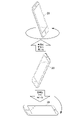
- the user may orient the user terminal 20 in a predetermined orientation or posture when the detection device 40 is made to read the code. Therefore, fraud detection may be executed when the user terminal 20 is in a predetermined orientation or posture.
- the user terminal 20 includes at least one sensor for detecting the direction or the posture, and the direction or the posture of the user terminal 20 is detected by using the detection signal of the at least one sensor.
- the sensor may be of any type, for example a gyro sensor, an accelerometer, a geomagnetic sensor, or an electronic compass.
- the fraud detection system S of this modification includes the terminal determination unit 107.
- the terminal determination unit 107 is mainly realized by the control unit 11.
- FIG. 13 is a diagram showing the orientation or posture of the user terminal 20 in the modified example (4).
- the terminal determination unit 107 determines whether or not the orientation or posture of the user terminal 20 is in a predetermined orientation or posture for causing the detection device 40 to detect the code.
- the posture can also be said to be tilted.
- the predetermined orientation is the orientation in which the code can be easily read by the detection device 40.
- the orientation or posture of the user terminal 20 that shows the display unit 25 (screen) to the staff corresponds to a predetermined orientation or posture.
- the orientation or posture of the user terminal 20 such that the display unit 25 (screen) faces straight up corresponds to a predetermined orientation or posture.
- the terminal determination unit 107 determines whether or not the deviation (intersection angle) between the direction of the display unit 25 (the perpendicular direction of the display unit 25) and the vertical direction on the earth is less than a threshold value (for example, 20 degrees). do. If this deviation is less than the threshold value, it corresponds to a predetermined orientation or posture.
- a threshold value for example, 20 degrees
- the orientation or posture of the user terminal 20 such that the user terminal 20 is inverted and the display unit 25 (screen) is directed toward the detection device 40 or the staff member corresponds to a predetermined orientation or posture.
- the terminal determination unit 107 measures a change in the orientation or posture of the user terminal 20, and determines whether or not the deviation (rotation angle) from the orientation or posture when the code is displayed is equal to or greater than a threshold value (for example, 150 degrees). To judge. When this deviation is equal to or larger than the threshold value, it corresponds to a predetermined orientation or posture.
- a threshold value for example, 150 degrees
- the terminal determination unit 107 since the terminal determination unit 107 is included in the server 10, the user terminal 20 acquires terminal information regarding the orientation or posture based on the detection signal of the sensor when the code is displayed, and the server. Send to 10.
- the server 10 receives the terminal information, and the terminal determination unit 107 determines whether or not the user terminal 20 is in a predetermined orientation or a predetermined posture based on the terminal information.
- the threshold value described above may be a fixed value or a variable value according to the user's habit.
- the fraud detection unit 103 executes fraud detection when it is determined that the display operation has been performed and it is determined that the user terminal 20 is in a predetermined orientation or a predetermined posture.
- the fraud detection unit 103 does not execute fraud detection when it is not determined that the display operation has been performed and / or when it is not determined that the user terminal 20 is in a predetermined orientation or a predetermined posture.
- the display operation is performed and the user terminal 20 is in a predetermined orientation or a predetermined posture, which are two conditions for executing fraud detection. Therefore, even if the code is displayed, fraud detection is not executed unless the user terminal 20 is in a predetermined orientation or posture.
- the modification (4) when the modification (4) is applied to the second embodiment, it is determined that the activation operation has been performed, and it is determined that the user terminal 20 is in a predetermined orientation or a predetermined posture, fraud detection is detected. It may be executed.
- the predetermined orientation or posture is such that the photographing unit 26 is directed toward the code in order to read the code posted on the facility.
- the deviation (intersection angle) between the photographing direction of the photographing unit 26 and the horizontal direction on the earth is less than the threshold value (for example, 20 degrees) corresponds to a predetermined direction or posture.
- the fraud detection system S of this modification includes the validity determination unit 108.
- the effectiveness determination unit 108 is mainly realized by the control unit 11.
- the effectiveness determination unit 108 determines the effectiveness of fraud detection executed in the past based on a predetermined determination condition.
- the determination condition may be any condition, and examples thereof include the following modified examples (5-1)-(5-3). Two or more conditions of the following modified examples (5-1)-(5-3) may be combined.
- the following modifications (5-1)-(5-3) can be applied to both the pattern of the first embodiment and the pattern of the second embodiment as in the modifications (1)-(4). ..
- the predetermined determination condition is a condition relating to the elapsed time since the fraud detection was executed in the past.
- This elapsed time can also be said to be the valid period of fraud detection.
- This elapsed time is the time from the latest fraud detection execution date and time to the current date and time.
- the effectiveness determination unit 108 determines the effectiveness based on the elapsed time.
- the fraud detection unit 103 stores the date and time when the fraud detection is executed in the execution result data D when the fraud detection of a certain user is executed.
- the validity period of fraud detection may be stored in the execution result data D instead of the execution date and time.
- the validity determination unit 108 acquires the elapsed time based on the current date and time and the date and time when the fraud detection was executed. The validity determination unit 108 determines that the fraud detection execution result is not valid when the elapsed time is equal to or longer than the threshold value, and the fraud detection execution result is valid when the elapsed time is less than the threshold value. Is determined. The validity determination unit 108 may determine whether or not the validity period of fraud detection has elapsed based on the current date and time. In this modification, since the validity determination unit 108 is included in the server 10, the effectiveness determination unit 108 transmits the effectiveness determination result to the facility terminal 30.
- the execution unit 303 executes a predetermined process based on the execution result of fraud detection and the determination result of the effectiveness of the fraud detection. When it is determined that the fraud detection execution result is not valid, the execution unit 303 does not execute a predetermined process regardless of the fraud detection execution result. The execution unit 303 executes a predetermined process when the execution result of the fraud detection is valid and the fraud of the user is not detected. That is, it is a condition that a predetermined process is executed that the fraud is not detected and the execution result is valid. Therefore, even if fraud is not detected, the predetermined process is not executed unless the effectiveness can be confirmed.
- security can be enhanced by allowing admission to the facility based on the execution result of fraud detection and the determination result of the effectiveness of the fraud detection.
- the predetermined determination condition is a condition relating to the movement distance of the user since the fraud detection was executed in the past.
- the effectiveness determination unit 108 determines the effectiveness based on the movement distance. This travel distance is the total travel distance from the latest fraud detection execution date and time to the current date and time.
- the travel distance of the user may be calculated by the user terminal 20 or the server 10.
- the user terminal 20 tracks the position information detected by the GPS receiving unit 27 and measures the moving distance.
- the moving distance of the user can be measured by any other method.
- the travel distance of the user may be measured by a change in the mobile base station information of the user terminal 20 or the communication device information wirelessly communicated with the user terminal 20.
- the server 10 receives position information from the user terminal 20 at any time and measures the moving distance.
- the validity determination unit 108 determines that the fraud detection execution result is not valid when the user's movement distance is equal to or greater than the threshold value, and the fraud detection execution result is valid when the movement distance is less than the threshold value. Is determined to be.
- the processing of the execution unit 303 is as described in the modified example (5-1).
- the effectiveness of fraud detection is determined based on the distance traveled by the user since the fraud detection was executed in the past, so that the effectiveness of fraud detection is determined by the distance traveled.
- Limits can be set to increase security. For example, if the user moves too unnaturally, the user may cheat, so that the fraud detection executed before that may be invalidated and the fraud detection may be executed again.
- the predetermined determination condition is a condition relating to the distance between the facility and the position of the user terminal 20 when the display operation is performed.
- the effectiveness determination unit 108 determines the effectiveness based on this distance.
- the position of the user terminal 20 when the display operation is performed is the position of the user terminal 20 at the time when the code is displayed or before and after the code is displayed, and is, for example, an application start operation, a recall operation, a release operation, or a position. This is the position of the user terminal 20 when the update operation is accepted.
- the above distance acquisition method is as described in the modified example (1).
- the validity determination unit 108 determines that the fraud detection execution result is not valid when this distance is equal to or greater than the threshold value, and the fraud detection execution result is valid when this distance is less than the threshold value. Is determined.
- the processing of the execution unit 303 is as described in the modified example (5-1).
- fraud detection is performed by determining the effectiveness of fraud detection based on the distance between the facility and the position of the user terminal 20 when the display operation is performed.
- Security can be enhanced by setting the above distance limit on effectiveness. For example, since there is a possibility of fraud after the user leaves the facility, it is possible to invalidate the fraud detection executed before that and execute the fraud detection again.
- a scene where a user enters a facility is taken as an example, but the fraud detection system S can also be applied to an electronic payment service.
- a scene where a user visits a store and purchases a product will be described as an example.
- the store corresponds to the facility, and the facility terminal 30 is arranged in the store.
- the facility terminal 30 is a POS terminal, a vending machine, or a ticket vending machine.
- the store may be an unmanned store or a store such as a mobile sales vehicle.
- the detection device 40 is connected to the facility terminal 30 of the store.
- the user brings the product of the store to the cash register.
- the store clerk reads the barcode of the product with the detection device 40.
- the user may read the barcode of the product with the detection device 40 instead of the clerk.
- the facility terminal 30 stores the product database and acquires the product information according to the barcode.
- Product information includes product names and prices.
- the facility terminal 30 records the product information such as the product brought to the cash register by the user and the total price thereof in the storage unit 32.
- the user starts the application of the user terminal 20, displays the code, and informs the clerk that he / she will use the electronic payment service.
- the application ID is updated and the fraud detection is executed as described in the first embodiment.
- the clerk reads the code displayed on the user terminal 20 with the detection device 40.
- the facility terminal 30 transmits the application ID included in the code to the server 10.
- the server 10 When the server 10 receives the application ID, it executes the payment process based on the execution result of the fraud detection corresponding to the application ID.
- fraud detection may be executed by any method.
- the fraud detection unit 103 executes fraud detection based on information such as a user's position in past payments, a payment amount, or a payment frequency.
- the server 10 does not execute the payment process when fraud is detected, and executes the payment process when the fraud is not detected.
- the server 10 transmits the execution result of the payment process to the facility terminal 30.
- the facility terminal 30 displays the execution result of the payment process. If the payment process is not executed, the clerk informs the user to that effect and urges the user to pay by another payment method. When the payment process is executed, the clerk performs a predetermined accounting operation, and the user receives the product.
- the predetermined process is the settlement process.
- the execution unit 303 is included in the server 10, and the control unit 11 is mainly realized.
- the execution unit 303 executes the payment process based on the execution result of fraud detection and the payment information of the user.
- the payment information is information necessary for payment, and is, for example, a credit card number, debit card information, bank account information, electronic money information, point information, virtual currency information, or wallet information. It is assumed that the payment information is stored in the user database DB1.
- the execution unit 303 does not execute the payment process when the user's fraud is detected, and executes the payment process based on the payment information when the user's fraud is not detected. That is, the fact that the code is detected and that fraud is not detected is a condition for the payment process to be executed.
- the execution result is displayed on the facility terminal 30.
- the user can select multiple payment methods.
- the execution unit 303 executes the payment process based on the payment information according to the payment method selected by the user.
- the payment method selected by the user may be registered in the user database DB 1 in advance, or may be recorded in the user terminal 20.
- Information identifying the payment method selected by the user may be included in the code displayed on the user terminal 20.
- the time until the payment process is executed can be shortened. For example, even if the timeout time after the code is detected is set short, the payment process can be executed after executing fraud detection. For example, if the time-out time for point payment is set extremely shorter than the time-out time for credit card payment, it is difficult to execute fraud detection after the code for point payment is detected. Even in such a case, fraud detection can be executed. Further, for example, it is possible to make up for the shortage of points in the point settlement with electronic money immediately charged with a credit card. In this case, the time-out time in point payment may be the standard, and it becomes difficult to execute fraud detection even though credit card payment is executed as a back-end process. Even in some cases, fraud detection can be performed.
- the fraud detection system S can also be applied to an electronic payment service in which the code posted in the store is read by the user terminal 20, as in the second embodiment.
- the flow until the barcode of the product is read is the same as the flow described above.
- the user informs the clerk that he / she will use the electronic payment service, activates the application of the user terminal 20 and the photographing unit 26, and reads the code posted on the cash register by the photographing unit 26.
- the application ID is updated and the fraud detection is executed, as described in the second embodiment.
- the user completes the payment by performing a predetermined operation such as inputting the total amount to the application, and shows the payment completion screen to the clerk.
- the clerk confirms the screen the clerk hands over the product to the user. Even in such a case, the fraud detection system S can be applied.
- the predetermined operation determined by the operation determination unit 201 is not limited to the example described above.
- the predetermined operation may be any operation performed before the detection target is detected.
- the elapse of a predetermined time while the code is displayed on the user terminal 20 may correspond to a predetermined operation.
- stopping by the user while the code is displayed on the user terminal 20 may correspond to a predetermined operation.
- the user saying a predetermined word while the code is displayed on the user terminal 20 may correspond to a predetermined operation.
- the microphone of the user terminal 20 or the facility terminal 30 corresponds to the detection device.
- the predetermined operation does not have to be to display the code.
- the predetermined action may be for the user to go to or near the facility without displaying the code.
- the predetermined operation may be that the user terminal 20 is in a predetermined orientation or posture without displaying the code.
- the predetermined operation may be that the user says a predetermined word without displaying the code.
- the detection target is not a code but an RFID tag, an IC chip, or the like, the display of the code is not a condition. Therefore, the predetermined operation may be one or more of the operations described above.
- fraud detection may be executed when a predetermined operation is performed by a user in a predetermined time zone.
- the fraud detection system S can be applied to services other than the services described in the above embodiment and the above modification, such as an electronic ticket service, an automatic ticket gate service, an electronic money transfer service, or an SNS service.
- the fraud detection system S reads a code displayed on the user terminal 20 of a certain user on the user terminal 20 of another user, thereby performing a predetermined process (for example, a remittance process between users or an SNS). It can also be applied when the friend addition process) is executed.
- a predetermined process for example, a remittance process between users or an SNS. It can also be applied when the friend addition process) is executed.
- the photographing unit 26 of the user terminal 20 of another user corresponds to the detection device according to the present disclosure.
- the fraud detection system S can be applied to the case where the biometric information of the user is detected by the detection device 40.
- the detection target is the biometric information of the user, and the detection device 40 is used for detecting the biometric information.
- the predetermined operation is that the user approaches or touches the detection device 40 (the user is in or near the facility), and the operation determination unit 201 allows the user to touch the detection device 40 before the biometric information is detected. It is determined whether or not an approaching motion or a touching motion is performed.
- the fraud detection unit 103 executes fraud detection based on the application ID when it is determined that the user has approached or touched the detection device 40.
- the execution unit 303 executes a predetermined process based on the execution result of fraud detection.
- each function may be shared by a plurality of computers.
- the functions may be shared by each of the server 10, the user terminal 20, and the facility terminal 30.
- fraud detection may not be executed on the server 10, but may be executed on the user terminal 20 or the facility terminal 30.
- the user terminal 20 or the facility terminal 30 corresponds to the fraud detection device.
- the execution of the predetermined process may be executed by the server 10 or the user terminal 20 instead of the facility terminal 30.
- the facility terminal 30 may be omitted.
- the functions may be shared by these plurality of server computers.
Landscapes
- Engineering & Computer Science (AREA)
- Business, Economics & Management (AREA)
- Computer Security & Cryptography (AREA)
- Theoretical Computer Science (AREA)
- Physics & Mathematics (AREA)
- Computer Networks & Wireless Communication (AREA)
- General Physics & Mathematics (AREA)
- Accounting & Taxation (AREA)
- General Engineering & Computer Science (AREA)
- Strategic Management (AREA)
- General Business, Economics & Management (AREA)
- Signal Processing (AREA)
- Computing Systems (AREA)
- Computer Hardware Design (AREA)
- Software Systems (AREA)
- Finance (AREA)
- Data Mining & Analysis (AREA)
- Computational Linguistics (AREA)
- Health & Medical Sciences (AREA)
- Life Sciences & Earth Sciences (AREA)
- Artificial Intelligence (AREA)
- Biomedical Technology (AREA)
- Biophysics (AREA)
- Mathematical Physics (AREA)
- Molecular Biology (AREA)
- Evolutionary Computation (AREA)
- General Health & Medical Sciences (AREA)
- Development Economics (AREA)
- Economics (AREA)
- Management, Administration, Business Operations System, And Electronic Commerce (AREA)
- Geophysics And Detection Of Objects (AREA)
- Debugging And Monitoring (AREA)
Abstract
Description
以降、本開示に係る不正検知システムの第1実施形態の例を説明する。第1実施形態では、ユーザが施設に入場する場面を例に挙げて、不正検知システムを説明する。不正検知システムは、他の任意の場面に適用可能である。他の適用例は、後述する変形例で説明する。
図1は、不正検知システムの全体構成の一例を示す図である。図1に示すように、不正検知システムSは、サーバ10、ユーザ端末20、及び施設端末30を含む。サーバ10、ユーザ端末20、及び施設端末30の各々は、インターネットなどのネットワークNに接続可能である。なお、図1では、サーバ10、ユーザ端末20、及び施設端末30の各々を1台ずつ示しているが、これらは複数台あってもよい。
第1実施形態では、ユーザは、施設の入場に必要なコードをユーザ端末20に表示させる。ユーザが施設を訪れて検出装置40にコードを読み取らせると、施設への入場が許可される。施設は、任意の種類であってよく、例えば、イベント会場、競技場、駅、空港、オフィスビル、試験会場、投票所、映画館、美術館、又は公共施設である。例えば、ユーザ端末20には、コードを表示させるためのアプリケーションがインストールされている。ユーザは、アプリケーションを起動してコードを表示させる。
図3は、不正検知システムSで実現される機能の一例を示す機能ブロック図である。ここでは、サーバ10、ユーザ端末20、及び施設端末30の各々で実現される機能を説明する。
図3に示すように、サーバ10では、データ記憶部100、更新部101、計算部102、及び不正検知部103が実現される。
データ記憶部100は、記憶部12を主として実現される。データ記憶部100は、第1実施形態で説明する処理に必要なデータを記憶する。ここでは、データ記憶部100が記憶するデータの一例として、ユーザデータベースDB1、施設データベースDB2、不正検知キューQ、及び実行結果データDについて説明する。
更新部101は、制御部11を主として実現される。更新部101は、所定の更新条件が満たされた場合に、ユーザ端末20に記憶されるアプリIDを更新する。更新部101は、更新条件が満たされない場合には、アプリIDを更新しない。
計算部102は、制御部11を主として実現される。計算部102は、所定の計算方法に基づいて、ユーザ端末20に表示されたコードがユーザにより利用される確率を計算する。例えば、計算部102は、確率計算用の学習モデルに基づいて、確率を計算する。この学習モデルは、コードを表示させたユーザに関する特徴量である入力データと、そのコードが実際に利用されたか否かを示す出力データと、のペアを含む訓練データを学習済みである。学習モデルは、訓練データに含まれる入力データと同じ形式の入力データが入力されると、コードが利用される確率(コードが利用されることを示すラベルに分類される蓋然性)を出力する。
不正検知部103は、制御部11を主として実現される。不正検知部103は、所定の動作が行われたと判定された場合に、ユーザ端末20に記憶されたアプリIDに基づいて、ユーザに関する不正検知を実行する。所定の動作の詳細は後述する。不正検知部103は、あるユーザにより所定の動作が行われたと判定されない場合には、そのユーザに関する不正検知を実行しない。即ち、あるユーザにより所定の動作が行われることが、そのユーザに関する不正検知を実行することの条件になる。
図3に示すように、ユーザ端末20では、データ記憶部200、動作判定部201、表示制御部202、送信部203、及び受信部204が実現される。
データ記憶部200は、記憶部22を主として実現される。データ記憶部200は、第1実施形態で説明する処理に必要なデータを記憶する。例えば、データ記憶部200は、コードを表示させるためのアプリケーションと、アプリIDと、を記憶する。先述したように、データ記憶部200に記憶されるアプリIDは、表示動作が行われるたびに更新(上書き)される。データ記憶部200は、施設データベースDB2を記憶してもよい。ユーザ端末20は、不正検知部103による不正検知の実行結果を取得し、データ記憶部200に不正検知の実行結果が記憶されてもよい。この場合、施設端末30は、無線通信又はコードを利用して、データ記憶部200に記憶された不正検知の実行結果を取得してもよい。
動作判定部201は、制御部21を主として実現される。動作判定部201は、コードが検出される前に、ユーザ端末20を有するユーザにより所定の動作が行われたか否かを判定する。所定の動作は、コードが検出される前に行われる動作である。所定の動作は、コードを検出するための操作(例えば、検出装置40でコードを読み取る操作)の前に行われる準備又は予備的な動作ということもできる。
表示制御部202は、制御部21を主として実現される。表示制御部202は、ユーザにより所定の動作が行われた場合に、データ記憶部200に記憶されたアプリIDに基づいて、表示部25にコードを表示させる。先述したように、アプリ起動操作、呼戻操作、解除操作、又は更新操作は、所定の動作の一例である。表示制御部202は、コードの規格に沿った手順に基づいて、アプリIDをコード化し、表示部25にコードを表示させる。
送信部203は、制御部21を主として実現される。送信部203は、サーバ10に対し、任意のデータを送信する。例えば、送信部203は、サーバ10に対し、データ記憶部200に記憶されたアプリIDを送信する。なお、送信部203は、施設端末30に対し、アプリIDを送信してもよい。また、送信部203は、サーバ10又は施設端末30に対し、他のデータを送信してもよい。
受信部204は、制御部21を主として実現される。受信部204は、サーバ10から、任意のデータを受信する。例えば、受信部204は、サーバ10から、ユーザに対して発行されたアプリIDを受信する。なお、受信部204は、サーバ10から、他のデータを受信してもよい。また、受信部204は、施設端末30から何らかのデータを受信してもよい。
図3に示すように、施設端末30では、データ記憶部300、送信部301、受信部302、及び実行部303が実現される。
データ記憶部300は、記憶部32を主として実現される。データ記憶部300は、第1実施形態で説明する処理に必要なデータを記憶する。例えば、データ記憶部300は、施設端末30が配置された施設の施設IDを記憶する。
送信部301は、制御部31を主として実現される。送信部301は、サーバ10に対し、任意のデータを送信する。例えば、送信部301は、サーバ10に対し、データ記憶部300に記憶された施設IDと、検出装置40により読み取られたコードに含まれるアプリIDと、を送信する。なお、送信部301は、サーバ10に対し、他のデータを送信してもよい。また、送信部301は、ユーザ端末20に対し、何らかのデータを送信してもよい。
受信部302は、制御部31を主として実現される。受信部302は、サーバ10から、任意のデータを受信する。例えば、受信部302は、サーバ10から、不正検知の実行結果を受信する。なお、受信部302は、サーバ10から、他のデータを受信してもよい。また、受信部302は、ユーザ端末20から何らかのデータを受信してもよい。
実行部303は、制御部31を主として実現される。不正検知システムSでは、検出装置40を利用してコードが検出された場合に、所定の処理が実行され、実行部303は、コードが検出された場合に、不正検知の実行結果に基づいて、所定の処理を実行する。実行部303は、ユーザの不正が検知された場合には、所定の処理を実行せず、ユーザの不正が検知されなかった場合に、所定の処理を実行する。即ち、コードが検出されること及び不正が検知されないことは、所定の処理が実行されることの条件になる。
図8は、第1実施形態において実行される処理の一例を示すフロー図である。図8に示す処理は、制御部11,21,31が、それぞれ記憶部12,22,32に記憶されたプログラムに従って動作することによって実行される。下記に説明する処理は、図3に示す機能ブロックにより実行される処理の一例である。なお、ユーザ端末20には、アプリケーションがインストール済みであり、アプリIDが記録されているものとする。
次に、不正検知システムSの第2実施形態を説明する。第2実施形態では、施設に掲示されたコードがユーザ端末20で読み取られる場面に不正検知システムSを適用する場合を例に挙げる。即ち、第2実施形態では、施設の係員ではなく、ユーザがコードを読み取る操作を行う。なお、第1実施形態と同様の構成については説明を省略する。
なお、本開示は、以上に説明した実施の形態に限定されるものではない。本開示の趣旨を逸脱しない範囲で、適宜変更可能である。
Claims (17)
- 検出装置を利用して検出対象が検出された場合に、所定の処理が実行される不正検知システムであって、
前記検出対象が検出される前に、ユーザ端末を有するユーザにより所定の動作が行われたか否かを判定する動作判定手段と、
前記所定の動作が行われたと判定された場合に、前記ユーザ端末に記憶された識別情報に基づいて、前記ユーザに関する不正検知を実行する不正検知手段と、
前記検出対象が検出された場合に、前記不正検知の実行結果に基づいて、前記所定の処理を実行する実行手段と、
を含む不正検知システム。 - 前記検出対象は、前記ユーザ端末に表示されるコードであり、
前記検出装置は、前記コードの検出に利用され、前記ユーザ端末の外部にあり、
前記所定の動作は、前記ユーザ端末に前記コードを表示させるための表示動作であり、
前記動作判定手段は、前記コードが検出される前に、前記表示動作が行われたか否かを判定し、
前記不正検知手段は、前記表示動作が行われたと判定された場合に、前記識別情報に基づいて前記不正検知を実行し、
前記実行手段は、前記コードが検出された場合に、前記不正検知の実行結果に基づいて、前記所定の処理を実行する、
請求項1に記載の不正検知システム。 - 前記不正検知システムは、所定の計算方法に基づいて、前記ユーザ端末に表示された前記コードが前記ユーザにより利用される確率を計算する計算手段を更に含み、
前記不正検知手段は、前記表示動作が行われたと判定された場合に、前記確率に基づいて、前記不正検知を実行する、
請求項2に記載の不正検知システム。 - 前記検出装置は、所定の場所に配置されており、
前記不正検知システムは、
前記所定の場所又はその付近に前記ユーザがいるか否かを判定する場所判定手段と、
前記所定の場所又はその付近に前記ユーザがいると判定された場合に、前記ユーザ端末における前記コードの表示を許可する第1許可手段と、
を更に含み、
前記不正検知手段は、前記表示動作が行われたと判定され、かつ、前記コードの表示が許可された場合に、前記不正検知を実行する、
請求項2又は3に記載の不正検知システム。 - 前記不正検知システムは、前記不正検知の実行結果により前記ユーザの不正が確認されない場合に、前記ユーザ端末における前記コードの表示を許可する第2許可手段を更に含み、
前記不正検知手段は、前記表示動作が行われたと判定され、かつ、前記コードの表示が許可された場合に、前記不正検知を実行する、
請求項2~4の何れかに記載の不正検知システム。 - 前記検出装置は、所定の場所に配置されており、
前記不正検知システムは、前記所定の場所又はその付近に前記ユーザがいるか否かを判定する場所判定手段を更に含み、
前記不正検知手段は、前記表示動作が行われたと判定され、かつ、前記所定の場所又はその付近に前記ユーザがいると判定された場合に、前記不正検知を実行する、
請求項2~5の何れかに記載の不正検知システム。 - 前記不正検知システムは、前記ユーザ端末の向き又は姿勢が、前記コードを前記検出装置に検出させるための所定の向き又は所定の姿勢になったか否かを判定する端末判定手段を更に含み、
前記不正検知手段は、前記表示動作が行われたと判定され、かつ、前記ユーザ端末が前記所定の向き又は前記所定の姿勢になったと判定された場合に、前記不正検知を実行する、
請求項2~6の何れかに記載の不正検知システム。 - 前記不正検知システムは、所定の更新条件が満たされた場合に、前記ユーザ端末に記憶される前記識別情報を更新する更新手段を更に含み、
前記不正検知手段は、前記識別情報が更新され、かつ、前記所定の動作が行われたと判定された場合に、前記不正検知を実行する、
請求項1~7の何れかに記載の不正検知システム。 - 前記不正検知システムは、所定の判定条件に基づいて、過去に実行された前記不正検知の有効性を判定する有効性判定手段を更に含み、
前記実行手段は、前記不正検知の実行結果と、当該不正検知の有効性の判定結果と、に基づいて、前記所定の処理を実行する、
請求項1~8の何れかに記載の不正検知システム。 - 前記所定の判定条件は、過去に前記不正検知が実行されてからの経過時間に関する条件であり、
前記有効性判定手段は、前記経過時間に基づいて、前記有効性を判定する、
請求項9に記載の不正検知システム。 - 前記所定の判定条件は、過去に前記不正検知が実行されてからの前記ユーザの移動距離に関する条件であり、
前記有効性判定手段は、前記移動距離に基づいて、前記有効性を判定する、
請求項9又は10に記載の不正検知システム。 - 前記検出装置は、所定の場所に配置されており、
前記所定の判定条件は、前記所定の場所と、前記所定の動作が行われた場合の前記ユーザ端末の位置と、の間の距離に関する条件であり、
前記有効性判定手段は、前記距離に基づいて、前記有効性を判定する、
請求項9~11の何れかに記載の不正検知システム。 - 前記検出対象は、前記ユーザ端末の外部にあるコードであり、
前記検出装置は、前記コードの検出に利用され、前記ユーザ端末に含まれており、
前記所定の動作は、前記ユーザ端末の前記検出装置を起動させるための起動動作であり、
前記動作判定手段は、前記コードが検出される前に、前記起動動作が行われたか否かを判定し、
前記不正検知手段は、前記起動動作が行われたと判定された場合に、前記識別情報に基づいて前記不正検知を実行し、
前記実行手段は、前記コードが検出された場合に、前記不正検知の実行結果に基づいて、前記所定の処理を実行する、
請求項1に記載の不正検知システム。 - 前記所定の処理は、決済処理であり、
前記実行手段は、前記検出対象が検出された場合に、前記不正検知の実行結果と、前記ユーザの決済情報と、に基づいて、前記決済処理を実行する、
請求項1~13の何れかに記載の不正検知システム。 - 所定の処理を実行するために検出装置を利用して検出対象が検出される前に、ユーザ端末を有するユーザにより所定の動作が行われたと判定された場合に、前記ユーザ端末に記憶された識別情報に基づいて、前記ユーザに関する不正検知を実行する不正検知手段、
を含む不正検知装置。 - 検出装置を利用して検出対象が検出された場合に、所定の処理が実行される不正検知方法であって、
前記検出対象が検出される前に、ユーザ端末を有するユーザにより所定の動作が行われたか否かを判定する動作判定ステップと、
前記所定の動作が行われたと判定された場合に、前記ユーザ端末に記憶された識別情報に基づいて、前記ユーザに関する不正検知を実行する不正検知ステップと、
前記検出対象が検出された場合に、前記不正検知の実行結果に基づいて、前記所定の処理を実行する実行ステップと、
を含む不正検知方法。 - 所定の処理を実行するために検出装置を利用して検出対象が検出される前に、ユーザ端末を有するユーザにより所定の動作が行われたと判定された場合に、前記ユーザ端末に記憶された識別情報に基づいて、前記ユーザに関する不正検知を実行する不正検知手段、
としてコンピュータを機能させるためのプログラム。
Priority Applications (6)
| Application Number | Priority Date | Filing Date | Title |
|---|---|---|---|
| EP20938506.1A EP4033382B1 (en) | 2020-12-11 | 2020-12-11 | Fraud detection system, fraud detection device, fraud detection method, and program |
| US17/596,419 US12456122B2 (en) | 2020-12-11 | 2020-12-11 | Fraud detection system, fraud detection device, fraud detection method, and program |
| JP2021572410A JP7133107B1 (ja) | 2020-12-11 | 2020-12-11 | 不正検知システム及びプログラム |
| CN202080042526.XA CN114981805A (zh) | 2020-12-11 | 2020-12-11 | 非法检测系统、非法检测装置、非法检测方法和程序 |
| PCT/JP2020/046320 WO2022123779A1 (ja) | 2020-12-11 | 2020-12-11 | 不正検知システム、不正検知装置、不正検知方法、及びプログラム |
| TW110145881A TWI837556B (zh) | 2020-12-11 | 2021-12-08 | 不正檢測系統、不正檢測裝置、不正檢測方法及程式產品 |
Applications Claiming Priority (1)
| Application Number | Priority Date | Filing Date | Title |
|---|---|---|---|
| PCT/JP2020/046320 WO2022123779A1 (ja) | 2020-12-11 | 2020-12-11 | 不正検知システム、不正検知装置、不正検知方法、及びプログラム |
Publications (1)
| Publication Number | Publication Date |
|---|---|
| WO2022123779A1 true WO2022123779A1 (ja) | 2022-06-16 |
Family
ID=81973483
Family Applications (1)
| Application Number | Title | Priority Date | Filing Date |
|---|---|---|---|
| PCT/JP2020/046320 Ceased WO2022123779A1 (ja) | 2020-12-11 | 2020-12-11 | 不正検知システム、不正検知装置、不正検知方法、及びプログラム |
Country Status (6)
| Country | Link |
|---|---|
| US (1) | US12456122B2 (ja) |
| EP (1) | EP4033382B1 (ja) |
| JP (1) | JP7133107B1 (ja) |
| CN (1) | CN114981805A (ja) |
| TW (1) | TWI837556B (ja) |
| WO (1) | WO2022123779A1 (ja) |
Families Citing this family (3)
| Publication number | Priority date | Publication date | Assignee | Title |
|---|---|---|---|---|
| CN113519015A (zh) * | 2019-03-04 | 2021-10-19 | 日本电气株式会社 | 店铺系统、店铺装置、结账方法和程序 |
| JP7591626B1 (ja) * | 2023-08-07 | 2024-11-28 | 楽天グループ株式会社 | 不正検知システム、不正検知方法、及びプログラム |
| CN121079691A (zh) * | 2024-03-27 | 2025-12-05 | 乐天集团股份有限公司 | 显示控制程序、显示控制装置以及显示控制方法 |
Citations (4)
| Publication number | Priority date | Publication date | Assignee | Title |
|---|---|---|---|---|
| JP2002007698A (ja) * | 2000-06-19 | 2002-01-11 | Takasago Electric Ind Co Ltd | 個人認証システム、個人認証方法および管理装置 |
| JP2008250884A (ja) * | 2007-03-30 | 2008-10-16 | Cyber Coin Kk | 認証システム、認証システムに用いられるサーバ、移動体通信端末、プログラム |
| US20150269577A1 (en) * | 2014-03-18 | 2015-09-24 | International Business Machines Corporation | Detecting fraudulent mobile payments |
| WO2019049210A1 (ja) | 2017-09-05 | 2019-03-14 | 楽天株式会社 | 推定システム、推定方法及びプログラム |
Family Cites Families (25)
| Publication number | Priority date | Publication date | Assignee | Title |
|---|---|---|---|---|
| US7044362B2 (en) | 2001-10-10 | 2006-05-16 | Hewlett-Packard Development Company, L.P. | Electronic ticketing system and method |
| CN1333552C (zh) * | 2005-03-23 | 2007-08-22 | 北京首信科技有限公司 | 基于机器学习的用户行为异常的检测方法 |
| JP2008129626A (ja) * | 2006-11-16 | 2008-06-05 | Oki Electric Ind Co Ltd | カード利用者の認証方法及び認証システム |
| CN101075316A (zh) * | 2007-06-25 | 2007-11-21 | 陆航程 | 一种电子票证交易认证管理方法、载体结构、系统、终端 |
| JP5565884B2 (ja) * | 2012-02-22 | 2014-08-06 | Necエンジニアリング株式会社 | 不正認証防止システム、不正認証防止装置及び不正認証防止プログラム |
| US8789167B2 (en) * | 2012-08-24 | 2014-07-22 | Andrea Albani | Fraud-proof location identification system |
| US10445711B1 (en) * | 2014-01-24 | 2019-10-15 | Jp Morgan Chase Bank, N.A. | Remote controlled ATM system and method |
| CN103886456A (zh) * | 2014-03-17 | 2014-06-25 | 黄昱钊 | 基于动态显示二维码的支付系统及其实现方法 |
| CN104331728B (zh) * | 2014-10-24 | 2017-04-19 | 安徽农业大学 | 一种二维码的生成方法及其应用 |
| CN108269084A (zh) | 2017-01-03 | 2018-07-10 | 阿里巴巴集团控股有限公司 | 一种用于在移动设备上进行扫码支付的方法及装置 |
| CN106911668B (zh) * | 2017-01-10 | 2020-07-14 | 同济大学 | 一种基于用户行为模型的身份认证方法及系统 |
| CN106875178A (zh) | 2017-01-11 | 2017-06-20 | 深圳市金立通信设备有限公司 | 一种电子支付方法及终端 |
| US10397691B2 (en) | 2017-06-20 | 2019-08-27 | Cubic Corporation | Audio assisted dynamic barcode system |
| TW202044076A (zh) | 2017-07-25 | 2020-12-01 | 律碁科技股份有限公司 | 指定條件之認證方法、指定條件之認證軟體、用於進行指定條件之認證的裝置 |
| US11182794B1 (en) * | 2018-03-29 | 2021-11-23 | Square, Inc. | Detecting unauthorized devices using proximity sensor(s) |
| US20210081937A1 (en) * | 2018-04-26 | 2021-03-18 | Wells Fargo Bank, N.A. | Accessible user interface for automatic teller machine |
| US20190385170A1 (en) * | 2018-06-19 | 2019-12-19 | American Express Travel Related Services Company, Inc. | Automatically-Updating Fraud Detection System |
| JP6892570B2 (ja) * | 2019-06-06 | 2021-06-23 | 楽天グループ株式会社 | 推定システム、推定方法、及びプログラム |
| CN111125798A (zh) * | 2019-12-12 | 2020-05-08 | 维沃移动通信有限公司 | 一种凭证显示方法及电子设备 |
| US11475513B2 (en) * | 2019-12-23 | 2022-10-18 | Mastercard International Incorporated | Streamline banking |
| US10878668B1 (en) * | 2020-01-17 | 2020-12-29 | Capital One Services, Llc | Methods and systems for demonstrating a personalized automated teller machine (ATM) presentation |
| US11412372B2 (en) * | 2020-03-03 | 2022-08-09 | International Business Machines Corporation | Secure display of transaction approval code |
| US11074562B1 (en) * | 2020-05-18 | 2021-07-27 | Capital One Services, Llc | Using a third party dynamic QR code on a personal mobile device to complete a transaction at an ATM |
| CN112069485B (zh) * | 2020-06-12 | 2024-05-14 | 完美世界(北京)软件科技发展有限公司 | 基于用户行为的安全处理方法、装置及设备 |
| US12067550B2 (en) * | 2020-11-11 | 2024-08-20 | Paypal, Inc. | QR code initiative: checkout |
-
2020
- 2020-12-11 CN CN202080042526.XA patent/CN114981805A/zh active Pending
- 2020-12-11 US US17/596,419 patent/US12456122B2/en active Active
- 2020-12-11 WO PCT/JP2020/046320 patent/WO2022123779A1/ja not_active Ceased
- 2020-12-11 EP EP20938506.1A patent/EP4033382B1/en active Active
- 2020-12-11 JP JP2021572410A patent/JP7133107B1/ja active Active
-
2021
- 2021-12-08 TW TW110145881A patent/TWI837556B/zh active
Patent Citations (4)
| Publication number | Priority date | Publication date | Assignee | Title |
|---|---|---|---|---|
| JP2002007698A (ja) * | 2000-06-19 | 2002-01-11 | Takasago Electric Ind Co Ltd | 個人認証システム、個人認証方法および管理装置 |
| JP2008250884A (ja) * | 2007-03-30 | 2008-10-16 | Cyber Coin Kk | 認証システム、認証システムに用いられるサーバ、移動体通信端末、プログラム |
| US20150269577A1 (en) * | 2014-03-18 | 2015-09-24 | International Business Machines Corporation | Detecting fraudulent mobile payments |
| WO2019049210A1 (ja) | 2017-09-05 | 2019-03-14 | 楽天株式会社 | 推定システム、推定方法及びプログラム |
Non-Patent Citations (1)
| Title |
|---|
| See also references of EP4033382A4 |
Also Published As
| Publication number | Publication date |
|---|---|
| JP7133107B1 (ja) | 2022-09-07 |
| TWI837556B (zh) | 2024-04-01 |
| JPWO2022123779A1 (ja) | 2022-06-16 |
| EP4033382A4 (en) | 2022-07-27 |
| US12456122B2 (en) | 2025-10-28 |
| US20220351211A1 (en) | 2022-11-03 |
| TW202238421A (zh) | 2022-10-01 |
| EP4033382A1 (en) | 2022-07-27 |
| EP4033382B1 (en) | 2025-07-30 |
| CN114981805A (zh) | 2022-08-30 |
Similar Documents
| Publication | Publication Date | Title |
|---|---|---|
| US11195165B2 (en) | Modulating mobile-device displays based on ambient signals to reduce the likelihood of fraud | |
| JP6992376B2 (ja) | 生体認証装置 | |
| US20150088751A1 (en) | Transaction verification system based on user location | |
| CN103282929A (zh) | 移动电话atm处理方法和系统 | |
| KR20170104153A (ko) | 멀티 레이어 인증을 이용한 오퍼 기반 거래 및 비콘 기반 디지털 거래에 대한 비콘 기반 내비게이션을 위한 시스템 및 방법 | |
| JP7133107B1 (ja) | 不正検知システム及びプログラム | |
| US11663594B2 (en) | Systems and methods for location based account integration and electronic authentication | |
| US20180165677A1 (en) | System and method for secured tax refund for cross border transactions with mobile device wallet application | |
| CN109863523A (zh) | 信息处理装置、信息处理系统、信息处理方法和程序 | |
| US12315001B2 (en) | Electronic payment system, electronic payment method, and information storage medium | |
| JP2014016745A (ja) | 電子取引システム、および電子取引方法 | |
| WO2016183473A1 (en) | Modulating mobile-device displays based on ambient signals to reduce the likelihood of fraud | |
| TWI578245B (zh) | Portable terminals, delivery servers, control methods, and programs | |
| JP2021152690A (ja) | 情報処理システム | |
| US20200366676A1 (en) | Information processing device, information processing method, user terminal, service providing device, and service providing method | |
| JP7335456B2 (ja) | 認証システム、認証方法、及びプログラム | |
| JP7190082B1 (ja) | 認証システム、認証方法、及びプログラム | |
| US20240193491A1 (en) | Check-in system, check-in method and program | |
| JP2022018823A (ja) | 車両運賃算出システム、車両運賃算出装置、及び移動端末 | |
| WO2022269682A1 (ja) | 認証システム、認証方法、及びプログラム | |
| JP2012239502A (ja) | 通信祈願システム | |
| JP2006190070A (ja) | サービス享受用データ操作システム、サービス享受用データ操作装置、および端末装置 | |
| JP2006079545A (ja) | 投票券処理システムの投票サーバとセンタサーバ、及び投票サーバプログラムとセンタサーバプログラム | |
| HK1237960A1 (en) | System and method for beacon based navigation to offer based transactions and beacon based digital transactions with multiple layer authentication | |
| KR20150017451A (ko) | 포인트 운용 기능을 갖는 키오스크 단말기와 운용시스템 및 운용방법 |
Legal Events
| Date | Code | Title | Description |
|---|---|---|---|
| ENP | Entry into the national phase |
Ref document number: 2021572410 Country of ref document: JP Kind code of ref document: A |
|
| ENP | Entry into the national phase |
Ref document number: 2020938506 Country of ref document: EP Effective date: 20211209 |
|
| NENP | Non-entry into the national phase |
Ref country code: DE |
|
| WWG | Wipo information: grant in national office |
Ref document number: 2020938506 Country of ref document: EP |
|
| WWG | Wipo information: grant in national office |
Ref document number: 17596419 Country of ref document: US |