WO2022097727A1 - Rps25遺伝子の発現及び/又は機能調節剤 - Google Patents
Rps25遺伝子の発現及び/又は機能調節剤 Download PDFInfo
- Publication number
- WO2022097727A1 WO2022097727A1 PCT/JP2021/040853 JP2021040853W WO2022097727A1 WO 2022097727 A1 WO2022097727 A1 WO 2022097727A1 JP 2021040853 W JP2021040853 W JP 2021040853W WO 2022097727 A1 WO2022097727 A1 WO 2022097727A1
- Authority
- WO
- WIPO (PCT)
- Prior art keywords
- antisense oligonucleotide
- stranded antisense
- base sequence
- acceptable salt
- pharmaceutically acceptable
- Prior art date
- Legal status (The legal status is an assumption and is not a legal conclusion. Google has not performed a legal analysis and makes no representation as to the accuracy of the status listed.)
- Ceased
Links
Images



Classifications
-
- A—HUMAN NECESSITIES
- A61—MEDICAL OR VETERINARY SCIENCE; HYGIENE
- A61P—SPECIFIC THERAPEUTIC ACTIVITY OF CHEMICAL COMPOUNDS OR MEDICINAL PREPARATIONS
- A61P21/00—Drugs for disorders of the muscular or neuromuscular system
- A61P21/04—Drugs for disorders of the muscular or neuromuscular system for myasthenia gravis
-
- A—HUMAN NECESSITIES
- A61—MEDICAL OR VETERINARY SCIENCE; HYGIENE
- A61K—PREPARATIONS FOR MEDICAL, DENTAL OR TOILETRY PURPOSES
- A61K31/00—Medicinal preparations containing organic active ingredients
- A61K31/70—Carbohydrates; Sugars; Derivatives thereof
- A61K31/7088—Compounds having three or more nucleosides or nucleotides
- A61K31/712—Nucleic acids or oligonucleotides having modified sugars, i.e. other than ribose or 2'-deoxyribose
-
- A—HUMAN NECESSITIES
- A61—MEDICAL OR VETERINARY SCIENCE; HYGIENE
- A61K—PREPARATIONS FOR MEDICAL, DENTAL OR TOILETRY PURPOSES
- A61K31/00—Medicinal preparations containing organic active ingredients
- A61K31/70—Carbohydrates; Sugars; Derivatives thereof
- A61K31/7088—Compounds having three or more nucleosides or nucleotides
- A61K31/7125—Nucleic acids or oligonucleotides having modified internucleoside linkage, i.e. other than 3'-5' phosphodiesters
-
- C—CHEMISTRY; METALLURGY
- C12—BIOCHEMISTRY; BEER; SPIRITS; WINE; VINEGAR; MICROBIOLOGY; ENZYMOLOGY; MUTATION OR GENETIC ENGINEERING
- C12N—MICROORGANISMS OR ENZYMES; COMPOSITIONS THEREOF; PROPAGATING, PRESERVING, OR MAINTAINING MICROORGANISMS; MUTATION OR GENETIC ENGINEERING; CULTURE MEDIA
- C12N15/00—Mutation or genetic engineering; DNA or RNA concerning genetic engineering, vectors, e.g. plasmids, or their isolation, preparation or purification; Use of hosts therefor
- C12N15/09—Recombinant DNA-technology
- C12N15/11—DNA or RNA fragments; Modified forms thereof; Non-coding nucleic acids having a biological activity
- C12N15/113—Non-coding nucleic acids modulating the expression of genes, e.g. antisense oligonucleotides; Antisense DNA or RNA; Triplex- forming oligonucleotides; Catalytic nucleic acids, e.g. ribozymes; Nucleic acids used in co-suppression or gene silencing
-
- C—CHEMISTRY; METALLURGY
- C12—BIOCHEMISTRY; BEER; SPIRITS; WINE; VINEGAR; MICROBIOLOGY; ENZYMOLOGY; MUTATION OR GENETIC ENGINEERING
- C12N—MICROORGANISMS OR ENZYMES; COMPOSITIONS THEREOF; PROPAGATING, PRESERVING, OR MAINTAINING MICROORGANISMS; MUTATION OR GENETIC ENGINEERING; CULTURE MEDIA
- C12N2310/00—Structure or type of the nucleic acid
- C12N2310/10—Type of nucleic acid
- C12N2310/11—Antisense
-
- C—CHEMISTRY; METALLURGY
- C12—BIOCHEMISTRY; BEER; SPIRITS; WINE; VINEGAR; MICROBIOLOGY; ENZYMOLOGY; MUTATION OR GENETIC ENGINEERING
- C12N—MICROORGANISMS OR ENZYMES; COMPOSITIONS THEREOF; PROPAGATING, PRESERVING, OR MAINTAINING MICROORGANISMS; MUTATION OR GENETIC ENGINEERING; CULTURE MEDIA
- C12N2310/00—Structure or type of the nucleic acid
- C12N2310/30—Chemical structure
- C12N2310/31—Chemical structure of the backbone
- C12N2310/315—Phosphorothioates
-
- C—CHEMISTRY; METALLURGY
- C12—BIOCHEMISTRY; BEER; SPIRITS; WINE; VINEGAR; MICROBIOLOGY; ENZYMOLOGY; MUTATION OR GENETIC ENGINEERING
- C12N—MICROORGANISMS OR ENZYMES; COMPOSITIONS THEREOF; PROPAGATING, PRESERVING, OR MAINTAINING MICROORGANISMS; MUTATION OR GENETIC ENGINEERING; CULTURE MEDIA
- C12N2310/00—Structure or type of the nucleic acid
- C12N2310/30—Chemical structure
- C12N2310/32—Chemical structure of the sugar
- C12N2310/323—Chemical structure of the sugar modified ring structure
- C12N2310/3231—Chemical structure of the sugar modified ring structure having an additional ring, e.g. LNA, ENA
-
- C—CHEMISTRY; METALLURGY
- C12—BIOCHEMISTRY; BEER; SPIRITS; WINE; VINEGAR; MICROBIOLOGY; ENZYMOLOGY; MUTATION OR GENETIC ENGINEERING
- C12N—MICROORGANISMS OR ENZYMES; COMPOSITIONS THEREOF; PROPAGATING, PRESERVING, OR MAINTAINING MICROORGANISMS; MUTATION OR GENETIC ENGINEERING; CULTURE MEDIA
- C12N2310/00—Structure or type of the nucleic acid
- C12N2310/30—Chemical structure
- C12N2310/34—Spatial arrangement of the modifications
- C12N2310/341—Gapmers, i.e. of the type ===---===
-
- C—CHEMISTRY; METALLURGY
- C12—BIOCHEMISTRY; BEER; SPIRITS; WINE; VINEGAR; MICROBIOLOGY; ENZYMOLOGY; MUTATION OR GENETIC ENGINEERING
- C12N—MICROORGANISMS OR ENZYMES; COMPOSITIONS THEREOF; PROPAGATING, PRESERVING, OR MAINTAINING MICROORGANISMS; MUTATION OR GENETIC ENGINEERING; CULTURE MEDIA
- C12N2310/00—Structure or type of the nucleic acid
- C12N2310/30—Chemical structure
- C12N2310/35—Nature of the modification
- C12N2310/351—Conjugate
Definitions
- the present invention relates to an antisense oligonucleotide that regulates the expression and / or function of the RPS25 gene, and an agent that regulates the expression and / or function of the RPS25 gene containing the same.
- the Ribosomal Protein S25 (RPS25) gene is a gene encoding one of the constituent proteins of the ribosomal 40S subunit.
- the constituent protein encoded by the RPS25 gene (RPS25 protein) has also been clarified in terms of its three-dimensional structure in the ribosomal 40S subunit. (Non-Patent Document 1)
- the RPS25 protein binds to RNA elements that allow cap-independent translation initiation and controls translation.
- the RNA element to which the RPS25 protein binds is called an internal ribosome entry site (IRES). IRES is one of the most commonly found cap-independent translation mechanisms, especially in viruses.
- RAN translation means a mechanism of ATG-independent translation into a protein (dipeptide repeat (DPR), etc.) by repeating a specific sequence.
- DPR dipeptide repeat
- ALS amyotrophic lateral sclerosis
- C9orf72 ALS amyotrophic lateral sclerosis
- the involvement of RAN translation has also been reported in diseases that develop due to repeated sequences). Studies have been conducted on the relationship between DPR produced by RAN translation and pathological conditions, and it has been reported that removal of DPR is actually effective in improving pathological conditions.
- the RPS25 protein was reported as a molecule that greatly contributes to the production of dipeptide repeats by RAN translation.
- the GGGGCC repeat sequence is known as a C9orf72 gene abnormal extension mutation, which is one of the familial mutations in amyotrophic lateral sclerosis.
- the CAG repeat sequence is known as an abnormal extension mutation of the huntingtin gene and the ATXN2 gene.
- Non-Patent Document 6 In induced purulipotent stem cell (iPSC) -derived motor neurons established from patients with the C9orf72 gene mutation, knockdown of the RPS25 gene suppresses the production of DPR derived from the GGGGCC repeat sequence and causes motor neuronal cell death. was also revealed to be suppressed.
- iPSC induced purulipotent stem cell
- the wing portion is modified with 2'-O-methylated RNA (2'-OMe nucleic acid), and the nucleosides are phosphorothioated. It is a gap mar.
- the base sequence of the antisense oligonucleotide contains a part of the base sequence of the sense strand of the RPS25 gene.
- Patent Document 1 Although it is reported in Patent Document 1 that the production of DPR is suppressed by inhibiting the RPS25 gene, it is unclear whether a similar effect is observed by an approach using a nucleic acid such as antisense. Further, the antisense oligonucleotide described in Non-Patent Document 5 suppresses the expression of the RPS25 gene, but the suppressive action is partial, and the creation of an antisense oligonucleotide against the RPS25 gene, which is more effective for use as a pharmaceutical product. Is required.
- the present invention has been made in view of the above circumstances, and the problem to be solved by the present invention is a single-stranded antisense oligonucleotide that regulates the expression and / or function of the RPS25 gene, and the RPS25 gene containing the single-stranded antisense oligonucleotide.
- the problem to be solved by the present invention is a single-stranded antisense oligonucleotide that regulates the expression and / or function of the RPS25 gene, and the RPS25 gene containing the single-stranded antisense oligonucleotide.
- antisense oligonucleotide of the present invention The salt to be used (hereinafter, may be referred to as "antisense oligonucleotide of the present invention") was found, and the present invention was completed. That is, the present invention is as follows.
- the antisense oligonucleotide of the present invention is a single-stranded antisense oligonucleotide or a pharmaceutically acceptable salt thereof that regulates the expression and / or function of the RPS25 gene.
- each nucleotide is bound with a phosphate group and / or a modified phosphate group.
- the single-stranded antisense oligonucleotide has a gap region, a 3'wing region attached to the 3'end of the gap region, and a 5'wing region attached to the 5'end of the gap region.
- the gap region is a nucleic acid composed of deoxyribose, which may contain a nucleic acid having a modified sugar moiety.
- the 3'wing region and the 5'wing region are modified nucleic acids.
- the base length of the single-stranded antisense oligonucleotide is 12 to 30 mer.
- the base sequence of the above single-stranded antisense oligonucleotide is 90% or more of the base sequence set forth in SEQ ID NO: 1 or SEQ ID NO: 2 based on a base sequence complementary to at least one target region having the same base length as the single-stranded antisense oligonucleotide.
- Nucleotide sequence with 100% or less sequence identity A base sequence complementary to a base sequence in which one or several bases are deleted, substituted, inserted or added in the target region, or A single-stranded antisense oligonucleotide or a pharmaceutically acceptable salt thereof, which is a base sequence that hybridizes to an oligonucleotide having the target region under stringent conditions.
- the modified nucleic acid is arranged in the gap region, the 5'wing region and the 3'wing region.
- the modified nucleic acid is preferably a 5'-CP nucleic acid (5'-cyclopropanol Nucleic Acid).
- the modified nucleic acids arranged in the 5'wing region and the 3'wing region are 2'-MOE nucleic acids (2'-O-methoxythyl nucleic acid acid) and 2'-OMe nucleic acids (2'-OMe nucleic acids) as 2'-position modified nucleic acids.
- LNA Long RNA cleic acid
- AmNA amide-bridged modified nucleic acid, Amido-bridged nucleic acid
- GuNA guanidin-bridged modified nucleic acid, Guandino-bridged nucleic acid
- scpBNA scpBNA
- the antisense oligonucleotide of the present invention can be expected to have a high binding affinity for RPS25 mRNA or pre-mRNA. Further, since the antisense oligonucleotide of the present invention is a so-called gapmer type single-stranded antisense oligonucleotide, it functions as a catalyst in the degradation reaction of the RPS25 gene by the RNA degrading enzyme described later. Therefore, it is considered that a predetermined effect is continuously produced even with a small dose.
- the base sequence of the single-stranded antisense oligonucleotide is 95% or more based on the base sequence complementary to at least one target region having the same base length as the single-stranded antisense oligonucleotide in the base sequence set forth in SEQ ID NO: 1 or SEQ ID NO: 2. It is preferably a base sequence having 100% or less sequence identity.
- the base sequence of the single-stranded antisense oligonucleotide is In the base sequence set forth in SEQ ID NO: 1 or SEQ ID NO: 2, it is preferable that the base sequence is complementary to at least one target region having the same base length as the single-stranded antisense oligonucleotide.
- the number of bases in the gap region is 5 to 20 mer, and the number of bases is 5 to 20 mer.
- the 3'wing region is a modified nucleic acid of 1 to 5 mer.
- the 5'wing region is preferably a modified nucleic acid of 1 to 5 mer.
- the base length of the single-stranded antisense oligonucleotide is preferably 14 to 22 mer.
- the modified nucleic acid in the 3'wing region contains at least one selected from the group consisting of 2'-MOE nucleic acid, LNA, AmNA, GuNA, and scpBNA.
- the modified nucleic acid in the 5'wing region preferably contains at least one selected from the group consisting of 2'-MOE nucleic acid, LNA, AmNA, GuNA, and scpBNA.
- At least one internucleotide bond of the single-stranded antisense oligonucleotide is a phosphorothioate bond.
- At least one internucleotide bond of the single-stranded antisense oligonucleotide is a phosphodiester bond.
- the base sequence of the single-stranded antisense oligonucleotide is In the base sequence shown in SEQ ID NO: 1, 8th to 10th, 27th to 29th, 34th to 40th, 79th, 98th, 101st to 106th, 123rd to 129th counting from the 5'end. Numbers, 140, 160-161, 180-191, 208-221, 242-243, 255-268, 285-286, 292-304, 321- 90% or more of 100 based on the base sequence complementary to the target region composed of 14 to 22 mer continuous from the bases located at 328, 340 to 344, 365, or 429 to 454.
- base sequence In the above target region, a base sequence complementary to a base sequence in which one or several bases are deleted, substituted, inserted or added, or It is preferable that the nucleotide sequence hybridizes to the oligonucleotide having the target region under stringent conditions.
- the base sequence of the single-stranded antisense oligonucleotide is the base sequence shown in SEQ ID NO: 1, counting from the 5'end, No. 8, No. 10, No. 28-29, No. 35-37, 101-104, 123-126, 129, 160, 180-187, 209-220, 258-267, 285, 295-297, 300-304 , 321 to 327, 341, 344, 365, or 429 to 454 with reference to a base sequence complementary to the target region composed of consecutive 14 to 22 mer. It is a base sequence having 90% or more and 100% or less sequence identity, and is The above 3'wing area is 2 to 5 mer, The 5'wing region is preferably 2 to 5 mer.
- the base sequence of the single-stranded antisense oligonucleotide is, in the base sequence shown in SEQ ID NO: 1, 36, 102 to 103, 123 to 126, 185 to counting from the 5'end. 187, 213 to 214, 220, 259 to 260, 263 to 265, 295 to 296, 300, 302 to 303, 322 to 327, 429 to 431. It is preferable that the base sequence is complementary to the target region composed of 14 to 22 mer continuous from the base located at No. 435 or No. 438 to 454.
- nucleotide sequences of the single-stranded antisense oligonucleotides are SEQ ID NOs: 18, 24 to 25, 28 to 29, 38, 48 to 49, 53, 58 to 59, 63 to 64, 66 to 68, 79 to 80, 84, 86-91, 93-95, 97, 99-105, 113-119, 121-123, 125, 127-130, 140, 162, 169, 171-173, 183, 188, 190, 304- 306, 309, 310, 312, 313, 317, 321 to 323, 326 to 327, 331 to 332, 334, 337, 340 to 344, 346, 348, 349, 351 and 353, 355 to 364, 366 to 367, One selected from the group consisting of the base sequences of 371 to 382, 385, 386, 388, 389, 391, 394, 396, 397, 407, 408, 410, 418 to 4
- the base sequence of the single-stranded antisense oligonucleotide is, in the base sequence shown in SEQ ID NO: 2, Nos. 1, 75, 233, 261 and 278 to 280, counting from the 5'end. 390-392, 417-423, 445-447, 460-461, 510, 561-562, 589, 605, 626-628, 632-634 , 696 to 697, 1034 to 1035, 1103 to 1107, 1128 to 1129, 1196 to 1197, 1398, 1408 to 1412, 1478 to 1480, 1715, 1749. It consisted of 14 to 22 mer consecutively from the bases located at Nos.
- a base sequence having 90% or more and 100% or less sequence identity based on a base sequence complementary to the target region In the above target region, a base sequence complementary to a base sequence in which one or several bases are deleted, substituted, inserted or added, or It is preferable that the nucleotide sequence hybridizes to the oligonucleotide having the target region under stringent conditions.
- the nucleotide sequence of the single-stranded antisense oligonucleotide is the nucleotide sequence shown in SEQ ID NO: 2, counted from the 5'end, Nos. 1, 278 to 279, 417 to 420, 561 and so on. 605, 627, 632 to 634, 697, 1035, 1128, 1196 to 1197, 1409 to 1410, 1478, 1715, 1750, 2047 to 2049, 2342 90% or more and 100% or less sequence identity based on the base sequence complementary to the target region composed of 14 to 22 mer continuous from the bases located at No. 2406 or No. 2585 to 2587. It is a base sequence that has The above 3'wing area is 2 to 5 mer, The 5'wing region is preferably 2 to 5 mer.
- the double-stranded antisense oligonucleotide according to the present invention includes the above-mentioned single-stranded antisense oligonucleotide.
- the base sequence of the second-stranded oligonucleotide is a base sequence having 90% or more and 100% or less sequence identity based on the base sequence complementary to the base sequence of the single-stranded antisense oligonucleotide. ..
- the antisense oligonucleotide complex according to the present invention is the single-stranded antisense oligonucleotide or a pharmaceutically acceptable salt thereof, or the double-stranded antisense oligonucleotide or a pharmaceutically acceptable salt thereof.
- the additional substance is selected from the group consisting of polyethylene glycol, peptides, alkyl chains, ligand compounds, antibodies, proteins, and sugar chains.
- the pharmaceutical product according to the present invention is the single-stranded antisense oligonucleotide or a pharmaceutically acceptable salt thereof, the double-stranded antisense oligonucleotide or a pharmaceutically acceptable salt thereof, or the above. It contains an antisense oligonucleotide complex or a pharmaceutically acceptable salt thereof as an active ingredient.
- the expression and / or function regulator of the RPS25 gene according to the present invention is the single-stranded antisense oligonucleotide or a pharmaceutically acceptable salt thereof, the double-stranded antisense oligonucleotide or a pharmaceutical product thereof.
- the active ingredient comprises a pharmaceutically acceptable salt, or the antisense oligonucleotide complex or a pharmaceutically acceptable salt thereof.
- the RAN-translated dipeptide repeat production inhibitor according to the present invention is the above-mentioned single-stranded antisense oligonucleotide or a pharmaceutically acceptable salt thereof, the above-mentioned double-stranded antisense oligonucleotide or its pharmaceutically acceptable salt.
- the active ingredient comprises an acceptable salt, or the antisense oligonucleotide complex or a pharmaceutically acceptable salt thereof.
- the therapeutic agent for repeat disease is the single-stranded antisense oligonucleotide or a pharmaceutically acceptable salt thereof, the double-stranded antisense oligonucleotide or a pharmaceutically acceptable salt thereof.
- the active ingredient comprises a salt, or the above-mentioned antisense oligonucleotide complex or a pharmaceutically acceptable salt thereof.
- the preventive agent for repeat disease is the single-stranded antisense oligonucleotide or a pharmaceutically acceptable salt thereof, the double-stranded antisense oligonucleotide or a pharmaceutically acceptable salt thereof.
- the active ingredient comprises a salt, or the above-mentioned antisense oligonucleotide complex or a pharmaceutically acceptable salt thereof.
- the repeat disease may be referred to as frontotemporal lobar degeneration (FTLD) (hereinafter, "C9orf72 FTLD”) having a mutation on the C9orf72 ALS and C9orf72 genes. ), Huntington's disease, spinocerebellar ataxia, dentate nucleus red nucleus paleosphere Louis body ataxia, bulbous spinocerebellar ataxia, Friedreich ataxia, fragile X concomitant tremor ataxia syndrome, and muscle tonic dystrophy. It is preferably at least one selected from the group.
- FTLD frontotemporal lobar degeneration
- the method for regulating the expression of the RPS25 gene according to the present invention is the single-stranded antisense oligonucleotide or a pharmaceutically acceptable salt thereof, the double-stranded antisense oligonucleotide or the pharmaceutically acceptable salt thereof. It comprises a step of administering an acceptable salt, or the antisense oligonucleotide complex or a pharmaceutically acceptable salt thereof as an active ingredient to cells, tissues or individuals expressing the RPS25 gene.
- the method for treating or preventing repeat diseases according to the present invention is the above-mentioned single-stranded antisense oligonucleotide or a pharmaceutically acceptable salt thereof, the above-mentioned double-stranded antisense oligonucleotide or its pharmaceutically acceptable salt.
- the above-mentioned repeat diseases include C9orf72 ALS, C9orf72 FTLD, Huntington's disease, spinocerebellar ataxia, dentatorubral-red nucleus paleosphere Louis body ataxia, spinal and bulbar muscular ataxia, Friedreich ataxia, and fragile X-associated tremor ataxia. It is preferably at least one selected from the group consisting of the syndrome and the muscle tonic dystrophy.
- the present invention relates to the single-stranded antisense oligonucleotide or a pharmaceutically acceptable salt thereof, the double-stranded antisense oligonucleotide or a pharmaceutically acceptable salt thereof, or the antisense oligonucleotide.
- a method for treating or preventing C9orf72 ALS which comprises administering a nucleotide complex or a pharmaceutically acceptable salt thereof to an individual.
- the present invention relates to the above-mentioned single-stranded antisense oligonucleotide or a pharmaceutically acceptable salt thereof, the above-mentioned double-stranded antisense oligonucleotide or a pharmaceutical product thereof for use in the treatment or prevention of C9orf72 ALS.
- a pharmaceutically acceptable salt, or the antisense oligonucleotide complex or a pharmaceutically acceptable salt thereof is provided.
- the present invention is the single-stranded antisense oligonucleotide or a pharmaceutically acceptable salt thereof used for producing a therapeutic or prophylactic agent for C9orf72 ALS, and the double-stranded antisense oligonucleotide.
- a pharmaceutically acceptable salt thereof, or the antisense oligonucleotide complex or a pharmaceutically acceptable salt thereof is provided.
- the present invention it becomes possible to provide a single-stranded antisense oligonucleotide that regulates the expression and / or function of the RPS25 gene, and an agent that regulates the expression and / or function of the RPS25 gene containing the single-stranded antisense oligonucleotide.
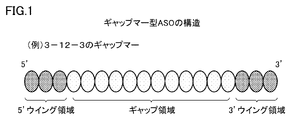
- FIG. 1 is a schematic diagram showing an example of the configuration of a single-stranded antisense oligonucleotide according to the present embodiment.
- FIG. 2 is a schematic diagram illustrating a mechanism by which the expression of the RPS25 gene is suppressed when the single-stranded antisense oligonucleotide according to the present embodiment is used.
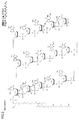
- FIG. 3 is a schematic diagram showing the chemical structure of the single-stranded antisense oligonucleotide used in Example 412.
- FIG. 4 is a schematic diagram showing the chemical structure of the single-stranded antisense oligonucleotide used in Example 413.
- FIG. 5 is a schematic diagram showing the chemical structure of the single-stranded antisense oligonucleotide used in Example 414.
- FIG. 6 is a schematic diagram showing the chemical structure of the single-stranded antisense oligonucleotide used in Example 415.
- FIG. 7 is a schematic diagram showing the chemical structure of the single-stranded antisense oligonucleotide used in Example 416.
- the present embodiment an embodiment of the present invention (hereinafter, may be referred to as “the present embodiment”) will be described. However, this embodiment is not limited to this.
- the notation in the form of "I to J” means the upper and lower limits of the range (that is, I or more and J or less). When there is no description of the unit in I and the unit is described only in J, the unit of I and the unit of J are the same.
- the single-stranded antisense oligonucleotide of the present embodiment is a single-stranded antisense oligonucleotide or a pharmaceutically acceptable salt thereof that regulates the expression and / or function of the RPS25 gene.
- each nucleotide is bound with a phosphate group and / or a modified phosphate group.
- the single-stranded antisense oligonucleotide has a gap region, a 3'wing region attached to the 3'end of the gap region, and a 5'wing region attached to the 5'end of the gap region.
- the gap region is a nucleic acid composed of deoxyribose, which may contain a nucleic acid having a modified sugar moiety.
- the 3'wing region and the 5'wing region are modified nucleic acids.
- the base length of the antisense oligonucleotide is 12 to 30 mer, and the base length is 12 to 30 mer.
- the base sequence of the above antisense oligonucleotide is 90% or more and 100% or less based on the base sequence complementary to at least one target region having the same base length as the antisense oligonucleotide in the base sequence set forth in SEQ ID NO: 1 or SEQ ID NO: 2.
- Base sequence with sequence identity A base sequence complementary to a base sequence in which one or several bases are deleted, substituted, inserted or added in the target region, or A single-stranded antisense oligonucleotide or a pharmaceutically acceptable salt thereof, which is a base sequence that hybridizes to an oligonucleotide having the target region under stringent conditions. This will be described in detail below.
- RPS25 gene In this embodiment, the "RPS25 gene” is referred to as Mol. Gen. Genet. (1979) 169: 1-6 (Non-Patent Document 7), Curr. Opin. Structure. Biol. (2014) 24: 165-169 (Non-Patent Document 8). Synonyms for "RPS25” include 40S ribosomal protein S25, ribosomal protein S25, Small ribosomal subutone protein eS25, Rps25, 2810009D21Rik, ribosomalprotein25, Ribosomal Protein25, Ribosomal protein 25, Ribosomal protein 25, Ribosomal protein 25, Ribosomal protein 25, Ribosomal protein 25, Ribosomal protein 25, Ribosomal protein 25, Ribosomal protein 25, Ribosomal protein 25, Ribosomal protein 25 Ribosomal protein 25 Ribosomal protein 25 Ribosomal protein 25
- the "single-stranded antisense oligonucleotide” or “antisense oligonucleotide” (hereinafter, may be referred to as “ASO”) is the mRNA, mRNA precursor, or ncRNA (non-co-) of the target gene.
- Ding RNA (hereinafter, these three may be collectively referred to as “target RNA”) means an oligonucleotide complementary to the oligonucleotide or a pharmacologically acceptable salt thereof.
- Antisense oligonucleotides are composed of DNA, RNA and / or analogs thereof.
- the antisense oligonucleotide suppresses the action of the target mRNA, pre-mRNA or ncRNA by forming a double strand with the target mRNA, pre-mRNA or ncRNA.
- Antisense oligonucleotides include those having a base sequence that is completely complementary to the base sequence of the target mRNA, mRNA precursor, or ncRNA, and one or several bases in the complementary base sequence. Includes those having a base sequence deleted, substituted, inserted or added, and those containing a base forming a fluctuating base pair in the base sequence.
- the antisense oligonucleotide of the present invention may further contain a modified nucleotide known in the art other than the "modified nucleic acid in which the sugar portion is a modified sugar" (modified nucleotide having a sugar modification) described later. ..
- modified nucleotide known in the art include, in addition to the modified nucleotide that has been sugar-modified, a modified nucleotide that has been modified with a phosphate group and a modified nucleotide that has been modified with a nucleic acid base, which will be described later.
- the structure of both ends of the antisense oligonucleotide in this embodiment is not particularly limited, and may be, for example, -OH (where R is an alkyl chain, a phosphate ester, or a phosphate ester). It may be an additional substance described later.).
- the single-stranded antisense oligonucleotide in the present embodiment may be in the single-stranded form, or may be hybridized with the second-stranded oligonucleotide described later to take the double-stranded form.
- double-stranded antisense oligonucleotide composed of the above-mentioned single-stranded antisense oligonucleotide and the second-stranded oligonucleotide hybridized with the above-mentioned single-stranded antisense oligonucleotide is referred to as "double-stranded antisense oligonucleotide”. May be called.
- oligonucleotide means a polymer of nucleotides in which the same or different nucleotides are linked by 2 to 30 phosphodiester bonds or other bonds. It can also be understood that the oligonucleotide is composed of a nucleic acid base portion, a phosphoric acid portion, and a sugar portion as shown by the following structural formula.
- oligonucleotides are roughly classified into natural oligonucleotides and non-natural oligonucleotides.
- Natural oligonucleotide means an oligonucleotide consisting of naturally occurring nucleotides.
- the "unnatural oligonucleotide” means an oligonucleotide containing at least one modified nucleotide as a constituent unit, which will be described later.
- non-natural oligonucleotide is preferably a modified sugar derivative in which the sugar moiety is modified; a phosphorothioate derivative in which one non-bridged oxygen atom of the phosphate diester bond is replaced with a sulfur atom; a phosphoric acid diester bond.
- Acid-esterified boranophosphate derivative an alkylphosphonate (eg, methylphosphonate, methoxypropylphosphonate, etc.) derivative in which the non-bridged oxygen atom of the phosphate diester bond is replaced with an alkyl group; the phosphate diester bond is replaced with an amide bond.
- Modified amide derivative A modified base derivative in which a nucleic acid base is modified can be mentioned.
- the unnatural oligonucleotide is a cross-linked modified sugar derivative in which the sugar moiety is modified; a phosphorothioate derivative in which one non-cross-linked oxygen atom of a phosphoric acid diester bond is replaced with a sulfur atom; a phosphoric acid diester bond.
- Esterized ester derivative; and the sugar moiety is modified with a modified sugar (eg, crosslinked sugar) described below, and one non-crosslinked oxygen atom of the phosphodiester bond is replaced with a sulfur atom, or phosphorus. Examples thereof include an alkylphosphonate-ized derivative in which the non-bridged oxygen atom of the acid diester bond is substituted with an alkyl group.
- nucleoside means a compound in which a purine base or a pyrimidine base is bound to a sugar.
- Naturally occurring nucleosides are sometimes referred to as “natural nucleosides”.
- Modified nucleosides that do not exist in nature may be referred to as “modified nucleosides”.
- a modified nucleoside in which the sugar moiety is modified may be referred to as a “modified sugar nucleoside”.
- nucleotide means a compound in which a phosphate group is bound to the sugar of the nucleoside.
- Naturally occurring nucleotides may be referred to as “natural nucleotides”.
- Modified nucleotides that do not exist in nature may be referred to as “modified nucleotides” or “modified nucleic acids.”
- modified nucleotides or “modified nucleic acid” include a compound in which a phosphate group is bound to the sugar moiety of the modified nucleoside, a compound in which a modified phosphate group described later is bound to the sugar moiety of the modified nucleoside, and a natural nucleoside. Examples thereof include compounds in which a modified phosphoric acid group described later is bonded to the sugar portion.
- sugar modification means that the sugar portion of the above-mentioned nucleotide is modified.
- the modified sugar portion may be particularly referred to as "modified sugar”.
- Modified nucleotides that have been sugar-modified can be used as modified nucleic acids, for example, AmNA, GuNA, scpBNA, 2'-O-alkyl (eg, 2'-O-methyl nucleic acid, 2'-MOE nucleic acid, etc.).
- LNA examples include those including the structures represented by the symbols “A (L)”, “5 (L)”, “G (L)”, and “T (L)” described later.
- AmNA examples include those including the structures represented by the symbols “A (Y)”, “5 (Y)”, “G (Y)”, and “T (Y)” described later.
- Examples of GuNA include those including the structures represented by the symbols “A (Gx)”, “5 (Gx)”, “G (Gx)”, and “T (Gx)” described later.
- Examples of the scpBNA include those including the structures represented by the symbols “A (S)”, “5 (S)”, “G (S)”, and “T (S)” described later.
- Examples of the 2'-MOE nucleic acid include those containing structures represented by the symbols “A (m)”, “5 (m)”, “G (m)”, and “T (m)” described later. ..
- Examples of the 5'-CP nucleic acid include the symbols “A (5'-CP)”, “5 (5'-CP)”, “G (5'-CP)”, and “T (5'-CP)” described later. ) ”, Including the structure shown by.
- Examples of the 2'-OMe nucleic acid include those containing structures represented by the symbols “A (M)”, “C (M)”, “G (M)”, and “U (M)” described later. .
- Examples of the MCE nucleic acid include those containing the structures represented by “A (Mx)”, “C (Mx)”, “G (Mx)”, and “U (Mx)” described later.
- Nucleotide modifications known in the art other than the sugar modification can be used as a modified nucleic acid for producing the single-stranded antisense oligonucleotide of the present invention.
- modification of nucleotides phosphate group modification and nucleobase modification, which will be described later, are known.
- Such nucleotide modifications are described, for example, in W. et al. Brad Wan et. Al. J. Med. Chem. (2016) 59: 9645-9667.
- Modification of nucleotides described in (Non-Patent Document 9) and the like can be mentioned. Modifications of these nucleotides can be performed on the basis of methods known in the art described in the literature cited in the above literature.
- the "phosphoric acid group” means a naturally occurring phosphodiester bond (bond represented by the symbol "-" described later) in which the phosphoric acid portion of the nucleotide is bound in a naturally occurring manner.
- the "phosphate group modification” means that the phosphoric acid portion of the above-mentioned nucleotide is modified.
- the modified phosphoric acid moiety may be particularly referred to as a "modified phosphoric acid group".
- Examples thereof include a borane phosphate bond (a bond indicated by the symbol “x” described later), an alkylphosphonate, and the like.
- nucleic acid base modification means that the nucleic acid base portion of the above nucleotide is modified.
- the modified nucleobase portion may be particularly referred to as "modified nucleobase”.
- modified nucleobase examples include 5-methylcytosine, 5-hydroxymethylcytosine, 5-propynylcytosine and the like.
- DNA or RNA analog means a molecule having a structure similar to DNA or RNA.
- peptide nucleic acid (pNA), morpholino nucleic acid and the like can be mentioned.
- ncRNA means a general term for RNA that is not involved in protein translation.
- examples of the ncRNA include ribosome RNA, transfer RNA, miRNA, Natural Antisense Transcript (NAT) and the like.
- the nucleobase portion of the above oligonucleotide includes a thyminyl group, a cytosynyl group, an adenynyl group, a guanynyl group, a 5-methylcitosynyl group, a urasilyl group, and 2-oxo-4-hydroxy-5-methyl-1,2-dihydropyrimidine-1.
- the nucleic acid base portion includes a thyminyl group, a citocinyl group, an adeninyl group, a guanynyl group, a 5-methylcitosynyl group, a urasilyl group and the like.
- uracil (U) and thymine (T) are compatible. Both uracil (U) and thymine (T) can form a base pair with the complementary strand adenine (A). The same applies to the nucleobase portion of the antisense oligonucleotide.
- the target RNA means an RNA whose function is suppressed by the binding of the single-stranded antisense oligonucleotide.
- the target RNA means the mRNA and pre-mRNA of RPS25.
- the target RNA include a human RPS25 mRNA having the base sequence set forth in SEQ ID NO: 1 (hereinafter, may be referred to as “hRPS25”) and a human RPS25 mRNA having the base sequence set forth in SEQ ID NO: 2.
- RNA precursors of RNA25 and the like can be mentioned.
- binding to a target RNA means that the nucleobase of a single-stranded antisense oligonucleotide forms a double-stranded nucleic acid together with the nucleobase of the target RNA by complementation with the target RNA. means.
- the double-stranded nucleic acid may be formed in at least one part of the target RNA.
- the strength of binding to the target RNA can be measured, for example, by an index of thermal stability. Examples of the thermal stability index include the melting temperature (Tm value) of the double-stranded nucleic acid.
- the Tm value is preferably 40 to 90 ° C, more preferably 50 to 70 ° C.
- the target region means a region in the mRNA of RPS25 and a pre-mRNA that binds to the single-stranded antisense oligonucleotide.
- the target region includes a target region consisting of the indicated base sequence and a region on the mRNA precursor of RPS25.
- the above-mentioned pre-mRNA means a primary transcript of RNA transcribed from DNA. That is, the pre-mRNA is an RNA containing an exon region, an intron region, and an untranslated region (UTR).
- the pre-mRNA can also be grasped as RNA before post-transcriptional splicing. When the above-mentioned pre-mRNA is spliced, it becomes mRNA.
- Binding to the target region means that the single-stranded antisense oligonucleotide of the present invention forms a double strand with the target region.
- the single-stranded antisense oligonucleotide of the present invention does not necessarily have to form a double strand with the entire target region, and may form a double strand with a part of the target region. That is, the single-stranded antisense oligonucleotide of the present invention preferably has perfect complementarity with the target region, but at least a part of the target region as long as it binds to the target RNA of RPS25. It may be complementary to the region of.
- the part of the target region means a region having a base length of 10 to 15 nucleotides in the target region.
- Complementary to at least part of the target area means complementary to a base in at least a portion of the target region on the target RNA. It also includes being complementary to the base of the region on the mRNA or pre-mRNA corresponding to at least some of the regions.
- the base sequence of the single-stranded antisense oligonucleotide according to this embodiment is (A) In the base sequence shown in SEQ ID NO: 1, counting from the 5'end, 8 to 10, 27 to 29, 34 to 40, 79, 98, 101 to 106, 123. Nos. 129, 140, 160-161, 180-191, 208-221, 242-243, 255-268, 285-286, 292-304, Complementary to the target region composed of 12 to 30 mer (preferably 14 to 22 mer) continuous from the bases located at 321 to 328, 340 to 344, 365, or 429 to 454.
- each base sequence shown in the sequence listing is used to indicate only the sequence information of the nucleic acid base portion.
- the structural information of the oligonucleotide including the sugar part and the phosphoric acid part in addition to the nucleobase part is in the description format shown in Tables 3-1 to 3-17 and Tables 4-1 to 4-5 described later. It shall be shown.
- sequence identity means the optimum alignment when two base sequences are aligned using a mathematical algorithm known in the art (preferably, the algorithm is for the optimum alignment). It means the ratio (%) of the same base to the total overlapping base sequence in (which may consider the introduction of a gap in one or both of the sequences).
- sequence identity of the base sequence can be easily confirmed by those skilled in the art. For example, NCBI BLAST (National Center for Biotechnology Information Basic Basic Local Alignment Search Tool) can be used.
- the base sequence of the single-stranded antisense oligonucleotide according to the present embodiment is 95% or more and 100% with the base sequence complementary to the above-mentioned predetermined target region in the base sequence set forth in SEQ ID NO: 1 or SEQ ID NO: 2. It is preferable to have the following sequence identity, more preferably 98% or more and 100% or less sequence identity, and even more preferably 100% sequence identity.
- the "base sequence in which one or several bases are deleted, substituted, inserted or added” is, for example, deleted, substituted, inserted or added by deletion, substitution, insertion or addition.
- Examples thereof include a base sequence having 80% or more, 85% or more, 90% or more, 95% or more, 97% or more, 98% or more, or 99% or more sequence identity with respect to the previous base sequence.
- the above-mentioned deletions, substitutions, insertions or additions are independently present in 1 place, 2 places, 3 places, 4 places, or 5 places, respectively. It may be a combination of two or more.
- the "stringent conditions" are 6 ⁇ SSC (composition of 1 ⁇ SSC: 0.15 M NaCl, 0.015 M sodium citrate, pH 7.0), 0.5% SDS and 5 ⁇ . Conditions of incubating at room temperature for 12 hours in a solution containing Denhardt, 100 ⁇ g / mL denatured salmon sperm DNA and 50% (v / v) formamide, and further washing with 0.5 ⁇ SSC at a temperature of 50 ° C. or higher. To say. In addition, more stringent conditions, such as incubation at 45 ° C or 60 ° C for 12 hours, washing at 0.2 ⁇ SSC or 0.1 ⁇ SSC, 60 ° C or 65 ° C during washing. It also includes more severe conditions such as cleaning under the above temperature conditions.
- the target region is the base sequence set forth in SEQ ID NO: 1, 8th, 10th, 28th to 29th, 35th to 37th, 101st to counting from the 5'end. 104, 123-126, 129, 160, 180-187, 209-220, 258-267, 285, 295-297, 300-304, 321 It is preferable that the base sequence is composed of 12 to 30 mer or 14 to 22 mer continuous from the bases located at 327, 341, 344, 365, or 429 to 454. In one aspect of the present embodiment, the target region is No. 1, 278 to 279, 417 to 420, 561, 605, counting from the 5'end in the base sequence shown in SEQ ID NO: 2.
- the target region is the base sequence set forth in SEQ ID NO: 1, 36, 102 to 103, 123 to 126, 185 to 187, counting from the 5'end. , 213 to 214, 220, 259 to 260, 263 to 265, 295 to 296, 300, 302 to 303, 322 to 327, 429 to 431, 435 It is preferably a base sequence composed of 12 to 30 mer, 14 to 22 mer or 14 to 20 mer continuous from the base located at No. 438 to 454.
- the single-stranded antisense oligonucleotide can bind to the target region of RPS25.
- binding of the single-stranded antisense oligonucleotide of the present invention to the target region of RPS25 refers to the direct binding of the single-stranded antisense oligonucleotide of the present invention to the mRNA of RPS25 and the mRNA of RPS25. Includes direct binding to precursors.
- One aspect of the single-stranded antisense oligonucleotide of the present invention is a single-stranded oligonucleotide that regulates the expression of the RPS25 gene, and is any of the bases listed in Tables 1-1 to 1-9. Having a sequence, the single-stranded oligonucleotide is complementary to the target region in the human RPS25 mRNA set forth in Tables 1-1-9. If the single-stranded oligonucleotide contains the base sequences shown in Tables 1-1 to 1-9, the single-stranded oligonucleotide may be extended by 1 to 5 bases on the 3'side and / or the 5'side, respectively. good.
- the target region can be said to be a region of human RPS25 mRNA particularly related to the regulation of expression of the human RPS25 gene (for example, a region having a secondary structure of mRNA to which an antisense nucleotide is easily bound).
- a region having a secondary structure of mRNA to which an antisense nucleotide is easily bound For example, in Table 1-1, when the 5'end position is "8" and the 3'end position is "22", the base sequence shown in SEQ ID NO: 1 is from the 8th to the 22nd counting from the 5'end. Is the target region in the mRNA of human RPS25 targeted by the corresponding single-stranded antisense oligonucleotide (sequence name “h8-22”).
- the symbol "A'” is described later in A (M), A (m), A (L), A (Y), A (Gx), A (5'-CP), and Selected from A (Mx) or A (S), the symbol “C'” is 5 (x), C (M), 5 (m), 5 (L), 5 (Y), 5 (Gx) described later. ), 5 (5'-CP), C (Mx) or 5 (S), and the symbol “G'” is G (M), G (m), G (L), G (Y) described later. ), G (Gx), G (5'-CP), G (Mx) or G (S), and the symbol “T'” is U (M), T (m), T (L) described later. ), T (Y), T (Gx), T (5'-CP), U (Mx) or T (S).
- One aspect of the single-stranded antisense oligonucleotide of the present invention is a single-stranded oligonucleotide that regulates the expression of the RPS25 gene, and is any of the bases listed in Tables 2-1 to 2-5. Having a sequence, the single-stranded oligonucleotide is complementary to the target region in the pre-mRNA of human RPS25 set forth in Tables 2-1 to 2-5. If the single-stranded oligonucleotide contains the base sequences shown in Tables 2-1 to 2-5, it may extend 1 to 5 bases to the 3'side and / or the 5'side, respectively. good.
- the target region can be said to be a region related to the regulation of expression of the human RPS25 gene (for example, a region showing a secondary structure of the mRNA precursor to which an antisense nucleotide is easily bound) in the human RPS25 mRNA precursor.
- a region related to the regulation of expression of the human RPS25 gene for example, a region showing a secondary structure of the mRNA precursor to which an antisense nucleotide is easily bound
- the base sequence of is the target region in the mRNA precursor of human RPS25 targeted by the corresponding single-stranded antisense oligonucleotide (sequence name “hp1-15”).
- the nucleotide sequences of the single-stranded antisense oligonucleotides are SEQ ID NOs: 7, 9, 11-12, 17-19, 23-25, 27-29, 31, 33, 36-38. , 46-50, 52-53, 58-61, 63-68, 70, 73-74, 79-81, 84-107, 111, 113-130, 136, 140, 143, 148, 150, 159, 161 162, 169 to 173, 183 to 186, 188 to 190, 203, 208 to 212, 229, 232 to 234, 238, 298 to 300, 303 to 313, 317, 319, 321 to 323, 326 to 338, 340.
- It may be one base sequence selected from the group consisting of the base sequences of ⁇ 349, 351 to 367, 370 to 382, 385 to 398, 400 to 411, 413, 415, 416, 418 to 427, and 430 to 432. preferable.
- the nucleotide sequences of the single-stranded antisense oligonucleotides are SEQ ID NOs: 18, 24 to 25, 28 to 29, 38, 48 to 49, 53, 58 to 59, 63 to 64, 66.
- nucleotide sequences of the single-stranded antisense oligonucleotides are SEQ ID NOs: 24-25, 28, 64, 80, 91, 94, 97, 113-114, 116, 119, 127, 129.
- the single-stranded antisense oligonucleotide according to this embodiment may be in the form of a pharmacologically acceptable salt.
- the "toxicologically acceptable salt” is a salt of the single-stranded antisense oligonucleotide of the present invention, which is a physiologically acceptable salt of the single-stranded antisense oligonucleotide of the present invention. That is, it means a salt that retains the desired biological activity of the single-stranded antisense oligonucleotide and does not retain the undesired toxicological effect. The same applies to the double-stranded antisense oligonucleotide and the antisense oligonucleotide complex described later.
- the single-stranded antisense oligonucleotide may be in the form of a pharmaceutically acceptable salt.
- the "pharmaceutically acceptable salt” means the above-mentioned pharmacologically acceptable salt and is an acid-added salt or a base-added salt.
- the acid addition salt include inorganic acid salts such as hydrochloride, hydrobromide, sulfate, hydroiodide, nitrate and phosphate, and citrate, oxalate and phthalate.
- organic acid salts such as acid salts and camphor sulfonates
- the base addition salt include inorganic base salts such as sodium salt, potassium salt, calcium salt, magnesium salt, barium salt and aluminum salt, as well as trimethylamine, triethylamine, pyridine, picolin, 2,6-lutidine and ethanol.
- Examples thereof include organic base salts such as amine, diethanolamine, triethanolamine, tromethamine [tris (hydroxymethyl) methylamine], tert-butylamine, cyclohexylamine, dicyclohexylamine and N, N-dibenzylethylamine. Further, a salt (amino acid salt) with a basic amino acid such as arginine, lysine, ornithine, aspartic acid or glutamic acid or an acidic amino acid can be mentioned. The same applies to the double-stranded antisense oligonucleotide and the antisense oligonucleotide complex described later.
- organic base salts such as amine, diethanolamine, triethanolamine, tromethamine [tris (hydroxymethyl) methylamine], tert-butylamine, cyclohexylamine, dicyclohexylamine and N, N-dibenzylethylamine.
- the single-stranded antisense oligonucleotide according to the present embodiment has a gap region, a 3'wing region bound to the 3'end of the gap region, and a 5'bound to the 5'end of the gap region. Includes a wing region (see, eg, FIG. 1).
- the single-stranded antisense oligonucleotide is preferably in the form of a single strand.
- the single-stranded antisense oligonucleotide may be hybridized with a second-stranded oligonucleotide described later to take a double-stranded form (double-stranded antisense oligonucleotide).
- the base sequence of the second-stranded oligonucleotide is a base sequence having 90% or more and 100% or less sequence identity based on the base sequence complementary to the base sequence of the single-stranded antisense oligonucleotide. Is preferable.
- the single-stranded antisense oligonucleotide is a so-called gapmer type single-stranded antisense oligonucleotide.
- Gapmer-type single-stranded antisense oligonucleotides inhibit the function of target RNA by the following mechanism. First, the single-stranded antisense oligonucleotide binds to the target region of the target RNA (from the upper part to the central part of FIG. 2). Next, the RNA-degrading enzyme RNaseH recognizes and binds to the complex of the single-stranded antisense oligonucleotide and the target RNA (central part of FIG. 2).
- the target RNA is cleaved and degraded by an enzymatic degradation reaction with RNase H.
- the single-stranded antisense oligonucleotide is not affected by enzymatic degradation by RNase H (lower part of FIG. 2). Therefore, the single-stranded antisense oligonucleotide can bind to another target RNA to cleave and degrade the RNA.
- the gapmer-type single-stranded antisense oligonucleotide functions as a catalyst in the above-mentioned enzymatic decomposition reaction by RNase H, it is considered that even a small amount of administration continuously exerts a predetermined effect.
- the single-stranded antisense oligonucleotide may also act in the present embodiment through regulating the expression of the RPS25 gene (regulating the maturation of the RPS25 pre-mRNA) by the mechanism as described above. Including), it can be suitably used. Further, according to the present embodiment, the effect of regulating the expression of the RPS25 gene by the single-stranded antisense oligonucleotide can be exhibited even in the intramedullary administration, which is a route of administration usually used in clinical application.
- "regulating the expression of the RPS25 gene” means at least suppressing the expression of the RPS25 gene, and as a result, at least suppressing the function of the RPS25 protein (RAN translation, etc.).
- the gap region is preferably a nucleic acid composed of deoxyribose having a sugar content of 5 to 20 mer, which may contain a nucleic acid modified with a sugar moiety.
- the gap region is a nucleic acid containing deoxyribose, which may be modified with a sugar moiety, at 5 to 20 mer.
- the gap region is composed of 5 to 20 mer of natural nucleotides having a sugar moiety of deoxyribose, unnatural nucleotides, or both of them.
- the sugar portion of the gap region is deoxyribose or modified deoxyribose
- a complex recognizable by RNase H can be formed together with mRNA of RPS25, which is a target RNA, and the like.
- examples of the nucleic acid containing modified deoxyribose include 5'-CP nucleic acid.
- the number of bases in the gap region is preferably 5 to 20 mer, more preferably 6 to 17 mer, further preferably 7 to 13 mer, and even more preferably 7 to 11 mer.
- Natural nucleotides having a sugar moiety of deoxyribose include, for example, deoxyadenosine monophosphate, deoxyguanosine monophosphate, thymidin monophosphate, deoxycytidine monophosphate, and deoxy-5-methylcytidine monophosphate (5-methyl). It is also called deoxycytidine.) And the like.
- examples of the natural nucleotides constituting the gap region include those containing structural formulas corresponding to the symbols a, g, t and c described later.
- Unnatural nucleotides in which the sugar moiety is deoxyribose or modified deoxyribose include, for example, 5'-CP nucleic acid, 2-thio-thymidin-phosphate, 2-aminoadenosine-phosphate, 7-deazaguanosine-. Examples include phosphoric acid.
- a part of the sugar portion of the natural nucleotide in which the sugar portion is deoxyribose may be a modified sugar. That is, in one aspect of the present embodiment, the gap region is a nucleic acid in which some sugar portions are deoxyribose and some other sugar portions are modified sugars (for example, modified deoxyribose). There may be.
- the 3'wing region is a modified nucleic acid.
- the 3'wing region is composed of modified nucleotides.
- the modified nucleic acids in the 3'wing region are from 2'-O-methyl nucleic acids as 2'-position modified nucleic acids, 2'-MOE nucleic acids and MCE nucleic acids, and from LNA, AmNA, GuNA, and scpBNA as crosslinked modified nucleic acids. It is preferable to include at least one selected from the group.
- the 3'wing region may be a modified nucleic acid in which the sugar portion is a modified sugar.
- the modified nucleic acid in which the sugar portion is a modified sugar include those mentioned above (sugar-modified, modified sugar).
- the modified nucleic acid in the 3'wing region may be composed only of 2'-MOE nucleic acid.
- a plurality of types of modified nucleic acids in the 3'wing region may be contained in one single-stranded antisense oligonucleotide.
- the number of bases in the 3'wing region is preferably 1 to 5 mer, more preferably 2 to 5 mer, further preferably 2 to 4 mer, and even more preferably 3 to 4 mer.
- the 5'wing region is a modified nucleic acid.
- the 5'wing region is composed of modified nucleotides.
- the modified nucleic acids in the 5'wing region are from 2'-O-methyl nucleic acids as 2'-position modified nucleic acids, 2'-MOE nucleic acids and MCE nucleic acids, and from LNA, AmNA, GuNA, and scpBNA as crosslinked modified nucleic acids. It is preferable to include at least one selected from the group.
- the 5'wing region may be a modified nucleic acid in which the sugar portion is a modified sugar.
- modified nucleic acid in which the sugar portion is a modified sugar examples include those mentioned above (sugar-modified, modified sugar).
- the modified nucleic acid in the 5'wing region may be composed only of 2'-MOE nucleic acid.
- a plurality of types of modified nucleic acids in the 5'wing region may be contained in one single-stranded antisense oligonucleotide.
- the modified nucleic acid in the 3'wing region and the 5'wing region may be composed only of 2'-MOE nucleic acid.
- the number of bases in the 5'wing region is preferably 1 to 5 mer, more preferably 2 to 5 mer, and even more preferably 2 to 4 mer.
- the number of bases in the gap region is 6 to 17 mer
- the number of bases in the 3'wing region is 2 to 4 mer
- the number of bases in the 5'wing region is 2 to 4 mer. Is preferable.
- the number of bases in the gap region is 7 to 13 mer
- the number of bases in the 3'wing region is 2 to 4 mer
- the number of bases in the 5'wing region is 2 to 4 mer. Is more preferable.
- the number of bases in the gap region is 7 to 11 mer
- the number of bases in the 3'wing region is 2 to 4 mer
- the number of bases in the 5'wing region is 2 to 4 mer. Is even more preferable.
- the single-stranded antisense oligonucleotide may further comprise a natural nucleotide attached to the 3'end of the 3'wing region.
- the number of bases of the natural nucleotide bound to the 3'end of the 3'wing region may be 1 or several, or may be 1.
- the single-stranded antisense oligonucleotide of the present invention is of the gapmer type.
- the notation method of "XYZ” or “XYZW” may be used.
- "X” indicates the number of bases in the 5'wing region
- "Y” indicates the number of bases in the gap region
- "Z” indicates the number of bases in the 3'wing region
- "W” indicates the number of bases in the 3'wing region. The number of bases of the natural nucleoside bound to the 3'end of the 3'wing region is shown.
- the notation "2-8-4" means that the 5'wing region is a 2 mer oligonucleotide, the gap region is an 8 mer oligonucleotide, and the 3'wing region is a 4 mer oligonucleotide. do.
- the 5'wing region is a 2 mer oligonucleotide
- the gap region is an 8 mer oligonucleotide
- the 3'wing region is a 4 mer oligonucleotide, 3'. It means that the natural nucleoside attached to the 3'end of the wing region is 1 nucleotide.
- the base length of the single-stranded antisense oligonucleotide of the present invention is 12 to 30 mer, preferably 12 to 22 mer, more preferably 14 to 20 mer, still more preferably 14 to 18 mer, and particularly preferably 14 to 18 mer. It is 15 to 17 mer.
- the base length of the single-stranded antisense oligonucleotide of the present invention is 12 to 22 mer, 14 to 20 mer, 14 to 18 mer, and 15 to 17 mer, particularly to the binding of RPS25 to mRNA or to the mRNA precursor of RPS25. The binding is strong, and the expression of the RPS25 gene can be regulated more effectively.
- the base length of the antisense oligonucleotide shall be counted including the number of bases of the natural nucleoside.
- each nucleoside is bound by a phosphate group and / or a modified phosphate group, and is bound by a phosphodiester bond or a phosphorothioate bond. preferable.
- One aspect of the single-stranded antisense oligonucleotide of the present invention is a gapmer type having a gap region consisting of 5 to 20 mer, a 5'wing region consisting of 2 to 5 mer, and a 3'wing region consisting of 2 to 5 mer. It is a single-stranded antisense oligonucleotide.
- the gap region is positioned between the 5'wing region and the 3'wing region.
- the 5'wing region and the 3'wing region each preferably contain at least one 2'-MOE nucleic acid, LNA, AmNA, GuNA, or scpBNA.
- the 5'wing region and the 3'wing region may contain 2'-O-alkylated or 2'-F-modified nucleotides.
- a 2'-O-alkylated nucleotide eg, 2'-O-methylated, etc.
- the gapmer type single-stranded antisense oligonucleotide may form a double strand by hybridization with the second-stranded oligonucleotide.
- the double-stranded antisense oligonucleotide according to the present embodiment includes the above-mentioned single-stranded antisense oligonucleotide and A double-stranded antisense oligonucleotide containing a double-stranded oligonucleotide hybridizing with the single-stranded antisense oligonucleotide or a pharmaceutically acceptable salt thereof.
- the base sequence of the second-stranded oligonucleotide is a base sequence having 90% or more and 100% or less sequence identity based on the base sequence complementary to the base sequence of the single-stranded antisense oligonucleotide. Is preferable.
- the double-stranded antisense oligonucleotide can be dissociated in a solution and separated into the single-stranded antisense oligonucleotide and the second-stranded oligonucleotide.
- the separated single-stranded antisense oligonucleotide can bind to the target RNA described above.
- the single-stranded antisense oligonucleotide can also be understood as a "first-stranded oligonucleotide" in relation to the second-stranded oligonucleotide.
- the first-strand oligonucleotide has an antisense strand against the target RNA described above, but the first-strand oligonucleotide and the second strand
- a double-stranded oligonucleotide consisting of an oligonucleotide will be referred to as a "double-stranded antisense oligonucleotide" for convenience.
- the single-stranded antisense oligonucleotide of the present invention can be produced by solid-phase synthesis by the phosphoramidite method.
- a commercially available automatic nucleic acid synthesizer is used to first synthesize a single-stranded oligonucleotide having a predetermined base sequence on a solid phase carrier.
- a single-stranded oligonucleotide synthesized from a solid-phase carrier using a basic substance or the like is cut out and deprotected to obtain a crude single-stranded oligonucleotide.
- the obtained crude single-stranded oligonucleotide is purified by HPLC or the like.
- the single-stranded antisense oligonucleotide of the present invention can be produced by appropriately changing the base sequence, modification site, etc. of the nucleic acid according to a method known to those skilled in the art.
- AmNA, GuNA, and scpBNA International Publication No. 2011/052436 (Patent Document 2), International Publication No. 2014/046212 (Patent Document 3), and International Publication No. 2015/125783 (Patent Document 4), respectively. ), It can be manufactured by the method described in.
- the 2'-MOE nucleic acid can be produced by using amidite that can be purchased as a reagent.
- the 5'-CP nucleic acid can be produced by the method described in International Publication No. 2020/158910 (Patent Document 5).
- LNA can be produced by the method described in International Publication No. 99/14226 (Patent Document 6).
- the double-stranded antisense oligonucleotide of the present invention is first determined by using the same production method as the above-mentioned single-stranded antisense oligonucleotide, based on a base sequence complementary to the single-stranded antisense oligonucleotide. Oligonucleotides with sequence identity (second-chain oligonucleotides) are produced. Then, it can be produced by hybridizing the single-stranded antisense oligonucleotide and the double-stranded oligonucleotide.
- the antisense oligonucleotide complex according to this embodiment is The single-stranded antisense oligonucleotide or a pharmaceutically acceptable salt thereof, or the double-stranded antisense oligonucleotide or a pharmaceutically acceptable salt thereof. With the additional substance bound to the single-stranded antisense oligonucleotide or the double-stranded oligonucleotide, Have.
- the additive is selected from the group consisting of polyethylene glycols, peptides, alkyl chains (eg, saturated aliphatic hydrocarbons, etc.), ligand compounds, antibodies, proteins, and sugar chains (eg, carbohydrates, polysaccharides, etc.).
- the antisense oligonucleotide complex is With the above single-stranded antisense oligonucleotide or a pharmaceutically acceptable salt thereof, It has an additional substance bound to the single-stranded antisense oligonucleotide, and the additional substance includes polyethylene glycol, a peptide, an alkyl chain (for example, a saturated aliphatic hydrocarbon, etc.), a ligand compound, an antibody, and a protein. , And sugar chains (eg, carbohydrates, polysaccharides, etc.).
- the antisense oligonucleotide complex is With the above double-stranded antisense oligonucleotide or a pharmaceutically acceptable salt thereof, It has an additional substance bound to the single-stranded antisense oligonucleotide or the double-stranded oligonucleotide, and the additional substance is polyethylene glycol, a peptide, an alkyl chain (for example, a saturated aliphatic hydrocarbon or the like). , Ligand compounds, antibodies, proteins, and sugar chains (eg, carbohydrates, polysaccharides, etc.).
- the "additive substance” means a substance bound to the single-stranded antisense oligonucleotide or the second-stranded oligonucleotide, which is used to impart a predetermined action. ..
- the addition substance may be bound to the 5'end of the single-stranded antisense oligonucleotide, may be bound to the 3'end, or may be bound to both the 5'end and the 3'end. May be. Further, the addition substance may be bound to the 5'end of the second-chain oligonucleotide, may be bound to the 3'end, or may be bound to both the 5'end and the 3'end. May be.
- the addendum is preferably attached to either the 5'end or the 3'end of the single-stranded antisense oligonucleotide or the second-stranded oligonucleotide.
- the additional substance may be directly and covalently bound to the single-stranded antisense oligonucleotide or the second-stranded oligonucleotide.
- the additional substance may be bound to the single-stranded antisense oligonucleotide or the second-stranded oligonucleotide via a linker substance.
- linker substance examples include a linker composed of alkyl, polyethylene glycol, peptide, disulfide, nucleic acid and / or a combination thereof.
- linker substance examples include a linker composed of alkyl, polyethylene glycol, peptide, disulfide, nucleic acid and / or a combination thereof.
- methods for binding the additional substance to the single-stranded antisense oligonucleotide or the second-stranded oligonucleotide include the methods described in Examples described later.
- Examples of the peptide used as the above-mentioned additive include, but are not limited to, the following. CPPs (Cell Penetrating Peptides: Cell-penetrating Peptides), Nuclear Translocation Peptides, TAT (Trans-Activator of Transscription protein), Polyarginine, Glucagon-like Peptides-1, Related Peptides, Synthetic Cyclic RGD Peptides, Brain Translocation Peptides
- ligand compound used as the above-mentioned additive examples include, but are not limited to, the following. N-Acetylgalactosamine (GalNAc), sugars (glucose, mannose, etc.), lipids (cholesterol, palmitic acid, docosahexaenoic acid, etc.), vitamins (folic acid, vitamin A, vitamin E (tocopherol), etc.), amino acids, monoamine receptors Ligands (Indatralin, etc.)
- antibody used as the above-mentioned additional substance examples include, but are not limited to, the following.
- Anti-insulin receptor antibody, anti-transferrin receptor antibody, anti-LDL receptor-related protein antibody, anti-CD22 antibody, anti-CD30 antibody, anti-HER2 antibody examples include, but are not limited to, the following.
- albumin examples include, but are not limited to, the following. albumin
- the RPS25 gene expression regulator according to the present embodiment contains the single-stranded antisense oligonucleotide of the present invention, the double-stranded antisense oligonucleotide or the antisense oligonucleotide complex as an active ingredient.
- the expression regulator can also be grasped as an expression inhibitor for the RPS25 gene.
- the expression regulator can also be understood as an inhibitor of RAN translation.
- the expression regulator can also be grasped as an expression inhibitor of dipeptide repeat through inhibition of RAN translation.
- the single-stranded antisense oligonucleotide of the present invention suppresses the expression of the RPS25 gene and suppresses RAN translation by its translation product by binding to the mRNA or pre-mRNA of RPS25.
- the administration method and preparation of the RPS25 gene expression regulator of the present invention can be used as long as it is an administration method and preparation known in the art.
- composition containing a single-stranded antisense oligonucleotide or the like as an active ingredient is a single-stranded antisense oligonucleotide of the present invention or a pharmaceutically acceptable salt thereof, the above double-stranded antisense oligonucleotide or a pharmaceutically acceptable salt thereof.
- the above-mentioned antisense oligonucleotide complex or a pharmaceutically acceptable salt thereof is contained as an active ingredient.
- any administration method and preparation known in the art can be used.
- the above-mentioned pharmaceutical composition may be referred to as "pharmaceutical composition such as antisense oligonucleotide".
- the pharmaceutical composition is used for the treatment or prevention of diseases related to the RPS25 gene, that is, diseases that can be caused by dipeptide repeats produced by RAN translation.
- the pharmaceutical composition can be used for the treatment or prevention of diseases that can be expected to improve symptoms by suppressing the expression of the RPS25 gene.
- diseases may be referred to as "repeat diseases”.
- Specific examples of repeat disease include, for example, C9orf72 ALS, C9orf72 FTLD, Huntington's disease, spinocerebellar ataxia (types 1, 2, 3, 6, 7, 8, 12, 17), and dentatorubral red nucleus paleosphere.
- Examples include various neuropsychiatric disorders and muscle disorders such as Louis body ataxia, bulbous spinocerebellar ataxia, Friedreich ataxia, fragile X-associated tremor ataxia syndrome, and muscle tonic dystrophy.
- the therapeutic agent for repeat disease is the single-stranded antisense oligonucleotide or a pharmaceutically acceptable salt thereof, the double-stranded antisense oligonucleotide or a pharmaceutically acceptable salt thereof, and the like.
- the above-mentioned antisense oligonucleotide complex or a pharmaceutically acceptable salt thereof is contained as an active ingredient.
- the preventive agent for repeat disease according to the present embodiment is the single-stranded antisense oligonucleotide or a pharmaceutically acceptable salt thereof, the double-stranded antisense oligonucleotide or a pharmaceutically acceptable salt thereof, and the like.
- the above-mentioned antisense oligonucleotide complex or a pharmaceutically acceptable salt thereof is contained as an active ingredient.
- the above-mentioned repeat diseases include C9orf72 ALS, C9orf72 FTLD, Huntington's disease, spinocerebellar ataxia, dentatorubral-red nucleus paleosphere Louis body ataxia, spinal and bulbar muscular ataxia, Friedreich ataxia, and fragile X-associated tremor ataxia. It is preferably at least one selected from the group consisting of the syndrome and the muscle tonic dystrophy.
- the C9orf72 ALS means an ALS having a mutation in which the GGGGCC sequence present in the intron region between the exon 1a region and the exon 1b region of the C9orf72 gene is abnormally repeatedly extended.
- the C9orf72 gene is the most frequent causative gene of ALS and accounts for about 6% of sporadic ALS and about 40% of familial ALS.
- ALS is a neurodegenerative disease in which muscles atrophy due to the selective death of motor neurons. ALS is diagnosed by combining the clinical or electrophysiological features of superior and inferior motor neuropathy.
- the C9orf72 FTLD means an FTLD having a mutation in which the GGGGCC sequence present in the intron region between the exon 1a region and the exon 1b region of the C9orf72 gene is abnormally repeatedly extended.
- the above-mentioned FTLD has progressive abnormal behavior and cognitive dysfunction, and in addition to obstructing daily life due to them, disinhibition behavior or indifference / lethargy or persistence / homogeneity or changes in lip tendency and eating habits, etc. Symptoms of 3 or more items are seen.
- the above-mentioned FTLD is diagnosed as abnormal behavior type FTLD when atrophy of the frontotemporal lobe or the anterior part of the temporal lobe or a decrease in metabolism or blood flow is observed in imaging findings and is differentiated from a specific disease.
- abnormal behavior type FTLD when atrophy of the frontotemporal lobe or the anterior part of the temporal lobe or a decrease in metabolism or blood flow is observed in imaging findings and is differentiated from a specific disease.
- symptoms such as impaired knowledge of the object or superficial loss of reading / writing were observed, and atrophy was observed in the frontotemporal lobe.
- Semantic dementia FTLD is diagnosed when it is seen and a specific disease can be differentiated.
- the above-mentioned Huntington's disease means a hereditary neurodegenerative disease showing an autosomal dominant inheritance pattern that develops due to abnormal repetitive elongation of the CAG sequence present in the exon 1 region of the huntingtin gene.
- the Huntington's disease presents with motor disorders, psychiatric symptoms, and cognitive symptoms characterized by involuntary movements. If specific neurological findings are observed and genetic diagnosis reveals abnormal elongation mutations in the CAG sequence, or if there is a progressive course and a family history of autosomal dominant inheritance, specific neurological findings, and laboratory findings are observed. Huntington's disease is diagnosed when a similar disease is denied by the differential diagnosis.
- spinocerebellar ataxia types 1, 2, 3, 6, 7, 8, 12, 17
- dentate nucleus red nucleus pallidus Louis body atrophy The above-mentioned spinocerebellar ataxia (types 1, 2, 3, 6, 7, 8, 12, 17) and dentatorubral-red nucleus paleosphere Louis body atrophy are specific genes present on the responsible gene in each disease. It means a hereditary neurodegenerative disease showing an autosomal dominant inheritance that develops due to abnormal repetitive elongation of a three-base sequence (CAG or CTG). Repeated sequences of CAG are found in spinocerebellar ataxia types 1, 2, 3, 6, 7, 12 and 17 and in dentate nucleus red nucleus pallidus Louis body atrophy.
- spinocerebellar ataxia type 8 Repeated sequences of CTG are observed in spinocerebellar ataxia type 8.
- the above-mentioned spinocerebellar ataxia and dentatorubral-red nucleus paleosphere Louis ataxia are mainly symptoms of cerebellar or posterior cord ataxia or spastic antiparalysis, and are based on slow-progressive genetic diagnosis or Diagnosis is made by combining neuropathological diagnosis and the like.
- the spinal and bulbar muscular atrophy means a hereditary disease caused by abnormal repetitive elongation of the CAG sequence present in the exon region of the androgen receptor gene.
- the spinal and bulbar muscular atrophy is diagnosed by combining neurological findings (ball symptoms, lower motor nerve signs, limb tremor, decreased limb tendon reflex), clinical findings / laboratory findings, genetic diagnosis, and the like.
- the above-mentioned Friedreich's ataxia means an hereditary neurodegenerative disease showing an autosomal recessive form caused by a mutation in the frataxin gene. Most of the above Friedreich's ataxia are due to abnormal repetitive elongation of the GAA sequence present in the first intron.
- the fragile X-associated tremor ataxia syndrome means a hereditary neurodegenerative disease caused by abnormal repetitive elongation of the CGG sequence present in the 5'UTR of the FMP1 gene.
- the above-mentioned fragile X-associated tremor ataxia syndrome is diagnosed by combining clinical symptoms (cerebellar ataxia, tremor during exercise, perxonism, dementia, intellectual disability), middle cerebellar peduncle signs by MRI examination, genetic diagnosis, and the like.
- the above-mentioned myotonic dystrophy means an hereditary muscle disease having an autosomal dominant inheritance pattern, which is caused by abnormal repetitive elongation of the CUG sequence present in the 3'UTR of the DMPK gene.
- the above-mentioned individual means a mammal.
- the individuals are preferably humans, monkeys, marmosets, dogs, pigs, rabbits, guinea pigs, rats and mice.
- the individual is more preferably a human.
- the administration method and dosage form thereof are not particularly limited. That is, any known administration method and preparation in the art can be used as the administration method and preparation of the antisense oligonucleotide and the like of the present invention.
- the administration method include oral administration and parenteral administration.
- Parenteral administration includes ocular administration, intravaginal administration, rectal administration, intranasal administration, transdermal administration, intravenous injection, infusion, subcutaneous, intraperitoneal or intramuscular injection, lung administration by suction or inhalation, and intrathecal administration. Administration, intraventricular administration and the like can be mentioned.
- the formulations such as the antisense oligonucleotide of the present invention include excipients, binders, wetting agents, disintegrants, lubricants, diluents, flavoring agents, fragrances, solubilizing agents, suspending agents, and emulsifiers. , Stabilizers, preservatives, lubricants and other pharmaceutical additives can be mixed as needed.
- a preparation such as a transdermal patch, an ointment, a lotion, a cream, a gel, a dropping agent, a suppository, a spray agent, a liquid agent, or a powder is used. Can be done.
- a preparation such as a powder, a granule, a suspension or a solution dissolved in water or a non-aqueous medium, a capsule, a powder, or a tablet is prepared.
- a preparation such as a powder, a granule, a suspension or a solution dissolved in water or a non-aqueous medium, a capsule, a powder, or a tablet is prepared.
- a preparation such as a sterile aqueous solution can be used.
- the effective dose of the single-stranded antisense oligonucleotide of the present invention can be arbitrarily determined depending on the sex, age, body weight, symptom, etc. of the individual to be administered. Further, it can be arbitrarily determined according to the administration method, route, frequency and the like. For example, the dose may be 0.01 to 100 mg / kg. It is preferably 0.1 to 50 mg / kg, and more preferably 0.1 to 10 mg / kg.
- the method for regulating the expression of the RPS25 gene in the present embodiment is the single-stranded antisense oligonucleotide or a pharmaceutically acceptable salt thereof, the double-stranded antisense oligonucleotide or a pharmaceutically acceptable salt thereof. It comprises a step of administering a salt, the antisense oligonucleotide complex or a pharmaceutically acceptable salt thereof as an active ingredient to cells, tissues or individuals expressing the RPS25 gene.
- the method of administering the single-stranded antisense oligonucleotide or the like to cells, tissues or individuals may be performed in vitro or in vivo.
- the above-mentioned administration route is used as the administration route.
- examples of the "cell expressing the RPS25 gene” include nerve cells constituting the central nervous system, nerve cells constituting the peripheral nervous system, and other cells constituting the skin tissue.
- the method for treating or preventing repeat diseases in the present embodiment is the above-mentioned single-stranded antisense oligonucleotide or a pharmaceutically acceptable salt thereof, the above-mentioned double-stranded antisense oligonucleotide or a pharmaceutically acceptable method thereof. It comprises a step of administering a salt, the antisense oligonucleotide complex or a pharmaceutically acceptable salt thereof as an active ingredient to an individual suffering from the repeat disease.
- Examples of the repeat disease include the above-mentioned neuropsychiatric disorders and muscle disorders.
- the dosage form, administration route and dosage for administration to an individual the above-mentioned ones can be appropriately adopted.
- the antisense oligonucleotide according to this embodiment has been described above.
- the single-stranded antisense oligonucleotide having the above-mentioned constitution can regulate the expression of the RPS25 gene.
- the inhibitory activity (knockdown activity) on the expression of the RPS25 gene can be measured by a known method. Examples of the method for measuring the knockdown activity include the methods described in Nature (2015) 518 (7539): 409-12 (Non-Patent Document 10). It can also be measured by transfection of an antisense oligonucleotide to HEK293T cells, which will be described later.
- Cells expressing the RPS25 gene are treated with antisense oligonucleotides for 6 hours to 3 days using methods such as introduction by lipofection method, electroporation method or direct addition.
- the cell used may be any cell expressing the RPS25 gene, and examples thereof include HEK293T cells, more preferably nerve cells, and further preferably human-derived nerve cells.
- the cells treated with the antisense oligonucleotide may be recovered immediately after the treatment, or may be continuously cultured with the antisense oligonucleotide removed.
- the amount of RPS25 mRNA is measured by performing a reverse transcription reaction on the total RNA extracted from the collected cells and performing a real-time PCR method or the like on the obtained complementary DNA using an RPS25 gene-specific probe. ..
- the probe used for real-time PCR include a Taqman probe.
- a reaction method for example, a method of repeating 3 steps of "(modulation of cDNA)-(annealing)-(extension reaction)" or 2 steps of "(denaturation of cDNA)-(annealing and extension reaction)” can be mentioned as an arbitrary number of times. Be done.
- the number of repetitions of the 2 or 3 steps is, for example, 25 to 45 times, preferably 35 to 40 times.
- the (denaturation of cDNA) temperature is, for example, 90 ° C to 98 ° C, preferably 92 ° C to 95 ° C.
- the (annealing) temperature is, for example, 40 ° C to 70 ° C, preferably 50 ° C to 60 ° C.
- the (extension reaction) temperature is, for example, 65 ° C to 75 ° C, preferably the optimum temperature of the polymerase used in the reaction.
- the (annealing and elongation reaction) temperature is, for example, 55 ° C to 70 ° C.
- the collected cells are lysed to obtain an extract.
- the amount of RPS25 protein contained in the above extract is evaluated using an immunochemical technique such as Western blotting or ELISA (Enzyme-Linked Immunosorbent Assay).
- Western blotting any instrument can be used for each step of migration, transcription, and detection.
- the reaction time and reaction temperature between the membrane and the primary antibody or secondary antibody can be set arbitrarily, for example, overnight at 4 ° C. or 1 to 3 hours at room temperature.
- the present invention is not limited to the above-described embodiment.
- the single-stranded antisense oligonucleotide includes the following embodiments.
- One aspect of the single-stranded antisense oligonucleotide of the present invention is a single-stranded antisense oligonucleotide that regulates the expression of the RPS25 gene or a pharmaceutically acceptable salt thereof.
- each nucleotide is bound with a phosphate group and / or a modified phosphate group.
- the single-stranded antisense oligonucleotide has a gap region, a 3'wing region attached to the 3'end of the gap region, and a 5'wing region attached to the 5'end of the gap region.
- the gap region is a nucleic acid composed of deoxyribose, which may contain a nucleic acid having a modified sugar moiety.
- the 3'wing region and the 5'wing region are modified nucleic acids.
- the base length of the single-stranded antisense oligonucleotide is 12 to 30 mer.
- the base sequence of the above single-stranded antisense oligonucleotide is 90% or more of the base sequence set forth in SEQ ID NO: 1 or SEQ ID NO: 2 based on a base sequence complementary to at least one target region having the same base length as the single-stranded antisense oligonucleotide.
- the base sequence of the single-stranded antisense oligonucleotide is 95% or more based on the base sequence complementary to at least one target region having the same base length as the single-stranded antisense oligonucleotide in the base sequence set forth in SEQ ID NO: 1 or SEQ ID NO: 2. It is a base sequence having 100% or less sequence identity.
- the base sequence of the single-stranded antisense oligonucleotide is the single-stranded antisense in the base sequence set forth in SEQ ID NO: 1 or SEQ ID NO: 2. It is a base sequence complementary to at least one target region composed of the same base length as the sense oligonucleotide.
- the number of bases in the gap region is 5 to 20 mer, which is a nucleic acid composed of deoxyribose which may contain a nucleic acid modified with a sugar portion.
- the 3'wing region is a modified nucleic acid of 1 to 5 mer.
- the modified nucleic acid in the 3'wing region is a 2'position modified nucleic acid and / or a crosslinked modified nucleic acid.
- the 5'wing region is a modified nucleic acid of 1 to 5 mer.
- the modified nucleic acid in the 5'wing region is a 2'position modified nucleic acid and / or a crosslinked modified nucleic acid.
- the base length of the single-stranded antisense oligonucleotide is 14 to 22 mer.
- the number of bases in the gap region is 6 to 17 mer, which is a nucleic acid composed of deoxyribose, which may contain a nucleic acid modified with a sugar moiety.
- the 3'wing region is a modified nucleic acid of 2 to 5 mer.
- the modified nucleic acid in the above 3'wing region contains at least one selected from the group consisting of LNA, AmNA, GuNA, and scpBNA.
- the 5'wing region is a modified nucleic acid of 2 to 5 mer.
- the modified nucleic acid in the 5'wing region contains at least one selected from the group consisting of LNA, AmNA, GuNA, and scpBNA. At least one internucleotide bond of the single-stranded antisense oligonucleotide is a phosphorothioate bond.
- the chain length of the single-stranded antisense oligonucleotide is 14 to 20 mer.
- the number of bases in the gap region is 7 to 13 mer, which is a nucleic acid composed of deoxyribose, which may contain a nucleic acid modified with a sugar moiety.
- the nucleic acid in the gap region comprises at least one selected from the group consisting of 5-methyldeoxycytidine and 5'-CP nucleic acid.
- the 3'wing region is a modified nucleic acid of 2 to 4 mer.
- the modified nucleic acid in the 3'wing region comprises at least one selected from the group consisting of 2'-MOE nucleic acid, AmNA, GuNA, and scpBNA.
- the 5'wing region is a modified nucleic acid of 2 to 4 mer.
- the modified nucleic acid in the 5'wing region comprises at least one selected from the group consisting of 2'-MOE nucleic acid, AmNA, GuNA, and scpBNA.
- the base length of the single-stranded antisense oligonucleotide is 14 to 18 mer.
- the gap region is 7 to 11 mer, and is The 3'wing region is a modified nucleic acid of 2 to 4 mer.
- the modified nucleic acid in the 3'wing region comprises at least one selected from the group consisting of AmNA, GuNA, and scpBNA.
- the 5'wing region is a modified nucleic acid of 2 to 4 mer.
- the modified nucleic acid in the 5'wing region contains at least one selected from the group consisting of AmNA, GuNA, and scpBNA.
- Modified nucleic acids include 2'-O-methyl nucleic acids, 2'-MOE nucleic acids, AmNA, scpBNA, 5'-CP nucleic acids, and / or GuNA, and / or nucleic acids whose nucleic acid base is 5-methylcytosine.
- the single-stranded antisense oligonucleotide was synthesized on a 0.2 ⁇ mol scale using an automatic nucleic acid synthesizer (nS-8 type, manufactured by GeneDesign, Inc.). Chain length extension was performed with a standard phosphoramidite protocol. At this time, CPG resin was used as the solid phase carrier.
- DDTT ((Dimethylamino-methylidene) amino) -3H-1,2,4-dithiazazoline-3-thione) and the like were used.
- Single-stranded antisense oligonucleotides containing 2'-MOE nucleic acid, AmNA and / or scpBNA have the terminal 5'-hydroxyl group not protected by a DMTr (4,4'-dimethoxytrityl) group and 3 The'position was obtained as supported on the solid phase.
- the single-stranded antisense oligonucleotide was excised from the solid phase carrier by alkali treatment and recovered in the form of a solution. Then, the solvent was distilled off from the recovered solution to obtain a crude product. The obtained crude product was purified by reverse phase HPLC to obtain a purified single-stranded antisense oligonucleotide. The purity and structure of each single-stranded antisense oligonucleotide obtained was confirmed by LC-MS (manufactured by Waters).
- Examples 412 to 416 in Table 3-14 were synthesized according to the above protocol by using phosphoramidite having a corresponding additive substance (for example, compound synthesis in FIGS. 3 to 7).
- phosphoramidite having an additional substance ⁇ -Tocopherol-TEG phosphoramidite (Glen research, product code: 10-1977-02) was used in Example 412, and 5'-Palmitate-C6 in Examples 413 and 414.
- CE-Phosphoramidite (Link technologies Ltd, item number: 2199) was used.
- Example 415 the oligonucleotide (amino ASO) having an amino group at the 5'-position is first subjected to the corresponding phosphoramidite (5'-amino-modifier C6 (Glen reserve, catalog no. 10-906-02). ) was synthesized according to the above protocol.
- the oligonucleotide (amino ASO) having an amino group at the 5'-position is first subjected to the corresponding phosphoramidite (5'-amino-modifier C6 (Glen reserve, catalog no. 10-906-02). ) was synthesized according to the above protocol.
- 2,5-dioxopyrrolidine-1-yl 8- (((1R, 3S) synthesized according to the method shown below.
- Example 416 a Docosahexaenoic acid (DHA, Fujifilm, catalyst no. 90310) was condensed with the above-mentioned amino ASO to synthesize a compound.
- DHA Docosahexaenoic acid
- Tables 3-1 to 3-17 and Tables 4-1 to 4-5 below list the single-stranded antisense oligonucleotides produced by the above method.
- the single-stranded antisense oligonucleotides shown in Tables 3-1 to 3-17 are single-stranded antisense oligonucleotides for human RPS25 mRNA (SEQ ID NO: 1).
- Examples 463 and 464 correspond to a negative control.
- the single-stranded antisense oligonucleotides shown in Tables 4-1 to 4-5 are single-stranded antisense oligonucleotides against the mRNA precursor (SEQ ID NO: 2) of human RPS25.
- R 1 and R 2 each independently represent a hydrogen atom or a linear or branched alkyl group having 1 to 3 carbon atoms.
- R 3 , R 4 , and R 5 each independently represent a hydrogen atom, a linear or branched alkyl group having 1 to 7 carbon atoms, or a cycloalkyl group having 3 to 7 carbon atoms.
- R 3 and R 5 in GuNA represented by the above-mentioned "Gx" are both hydrogen atoms and R 4 is a methyl group, they are indicated as "Gm”
- R 3 is a hydrogen atom and.
- the expression evaluation of the RPS25 gene was divided into an expression evaluation using human fetal kidney cells and an expression evaluation using mouse primary cultured neurons, depending on the produced single-stranded antisense oligonucleotide.
- the expression of the RPS25 gene can also be evaluated using human iPS cell-derived neurons.
- the evaluation of gene expression in this example means that the amount of mRNA is evaluated by measuring the amount of complementary DNA (cDNA) obtained by the reverse transcription reaction.
- cDNA complementary DNA
- Human fetal kidney cells HEK293T (ATCC® CRL-3216 TM) were cultured in culture medium at 37 ° C. and 5% CO 2 .
- As the culture medium for HEK293T cells those having the following composition were used.
- DMEM Dulbecco's modified Eagle's medium
- FBS Fetal Bovine Serum
- HEK293T cells (12000 cells / well) were seeded on a 96-well plate and cultured overnight at 37 ° C. and 5% CO 2 . Then, each single-stranded antisense oligonucleotide (final concentration 0.5 nM, 5 nM, 15 nM, or 50 nM) diluted with phosphate buffered saline (PBS) was transfected into the above-mentioned cells by a lipofection method. As the negative control group, cells transfected with PBS in which the single-stranded antisense oligonucleotide was not lysed were used.
- PBS phosphate buffered saline
- Transfected cells were cultured in growth medium at 37 ° C. and 5% CO 2 for 48 hours. Then, the growth medium was removed, and a reverse transcription reaction was carried out on the extracted total RNA using Taqman Fast Cells-to-CT Kit (Cat # 4399003, manufactured by Thermo Fisher Scientific). Using complementary DNA (cDNA) obtained from this reverse transcription reaction, real-time PCR was performed using a pre-designed gene-specific probe (see below) with Taqman gene expression operations (manufactured by Applied Biosystems). (95 ° C; 3 seconds, 60 ° C; 30 seconds for 40 cycles).
- the expression ratios of human RPS25 mRNA in each single-stranded antisense oligonucleotide to human RPS25 mRNA obtained by the above method are shown in Tables 5-1 to 5-7, Table 6-1 and Table 6-2. At this time, the expression ratio of human RPS25 mRNA obtained in the negative control group was set to 1.00. Those having an expression ratio of 0.80 or less were judged to be single-stranded antisense oligonucleotides capable of suppressing the expression of human RPS25 mRNA. In the table, those indicated by "-" mean that the measurement has not been performed. Generally, it is considered that when the expression of mRNA is suppressed, the subsequent translation into a protein is also suppressed. Therefore, it can be determined that the expression ratio of 0.80 or less is a single-stranded antisense oligonucleotide capable of regulating the function of the human RPS25 gene.
- each single-stranded antisense oligonucleotide used in the lipofection method was adjusted so that the final concentration was 50 nM or 100 nM.
- Table 8 shows the expression ratio of mouse RPS25 mRNA in each single-stranded antisense oligonucleotide obtained by the above method.
- the expression ratio of the mouse RPS25 mRNA obtained in the negative control group was set to 1.00.
- the function of the mouse RPS25 gene can be regulated. It can be determined that it is a chain antisense oligonucleotide.
- the target region to which the single-stranded antisense oligonucleotide of h451-465-A binds is a region in which the sequence is conserved between the human RPS25 gene and the mouse RPS25 gene.
- Motor neurons were induced to differentiate from human iPS cells and used for evaluation. Cell maintenance and differentiation induction were carried out in the medium described below under the conditions of 37 ° C. and 5% CO 2 .
- DMEM medium composition list (medium for SNL cells) DMEM (Sigma-Aldrich, Cat # D6429), 100-fold diluted penicillin / streptomycin mixed solution (Cat # 15140-122, manufactured by Thermo Fisher Scientific) 10-fold diluted fetal bovine serum (Cat # 10437-028, manufactured by Thermo Fisher Scientific) (Medium for iPS cells) Medium for primate ES / iPS cells (Cat # RCHEMD001B, manufactured by REPROCELL) 100-fold diluted penicillin / streptomycin mixed solution (Cat # 15140-122, manufactured by Thermo Fisher Scientific) (Mixed medium A) DMEM / Ham's F12 GlutaMAX (Cat # 10565-018 manufactured by Thermo Fisher Scientific) 2 mM L-glutamine (Cat # 25030-081 manufactured by Thermo Fisher Scientific) Non-Essential Amino Acid (NEAA) (Cat # 11140-050, manufactured by Thermo Fisher Scientific
- mitomycin-treated SNL cells (Cat # CBA-316 manufactured by CellbioBrass) were prepared.
- the treatment of SNL cells with mitomycin was performed as follows. First, 0.1% gelatin (Cat # 190-15805, manufactured by Fujifilm Wako Pure Chemical Industries, Ltd.) was added to a 10 cm petri dish (Cat # 3020-100, manufactured by Iwaki), and the conditions were 37 ° C and 5% CO 2 .
- the petri dish was allowed to stand for 1 hour or more in the incubator of No. 1 (hereinafter, this operation may be referred to as "gelatin treatment").
- SNL cells were seeded in a size of 1 to 2 ⁇ 10 6 per petri dish using a medium for SNL cells.
- the cells were diluted 8 to 16 times every 3 to 4 days and subcultured to grow to the required number of cells.
- 2 to 4 ⁇ 10 6 SNL cells per petri dish were seeded on a 15 cm petri dish (Cat # 3030-150 manufactured by Iwaki Co., Ltd.) treated with 0.1% gelatin.
- mitomycin C (YJ code 4231400D1031 manufactured by Kyowa Kirin Co., Ltd.) diluted to 0.4 mg / mL in SNL cell medium has a final concentration of 6.2 ⁇ g / mL. It was added to the above-mentioned petri dish as described above. The petri dish was allowed to stand for 2 hours and 15 minutes in an incubator under 37 ° C. and 5% CO 2 conditions. Then, the medium was removed from the petri dish, and the SNL cells were washed once with PBS.
- ⁇ Maintenance of human iPS cells> 0.1% gelatin was added to a 10 cm petri dish, and the mixture was allowed to stand in an incubator under 37 ° C. and 5% CO 2 conditions for 1 hour or longer.
- Mitomycin-treated SNL cells were suspended using SNL cell medium. Then, 1.5 ⁇ 10 6 SNL cells were seeded in a 10 cm petri dish and cultured for 2 to 3 days. Subsequently, the medium for SNL cells was removed from the petri dish, and the SNL cells were washed with PBS.
- human iPS cells suspended in a medium for iPS cells containing 1/1000 amount of Y-27632 (Cat # 1254 manufactured by Tocris) (201B7 strain, obtained from iPS Academia Japan Co., Ltd., AJ-H1-01). was sown in the above-mentioned petri dish. Medium exchange was carried out every day from the day after the day after sowing until the start of differentiation induction.
- ⁇ Induction of differentiation from human iPS cells to motor neurons By adding Y-27632 (final concentration 10 ⁇ M) to the cell culture medium of human iPS cells, the iPS cells were exposed to the Y-27632 for 1 hour or more. After removing the culture supernatant and washing the cells with PBS, Cell dissociation saturation (CTK solution) (Cat # RCHETP002, manufactured by REPROCELL) was added and reacted at room temperature for 1 minute. The CTK solution was removed, the cells were washed twice with PBS, and then 1 mL of iPS cell medium was added.
- CTK solution Cell dissociation saturation
- the cells were exfoliated with a cell scraper, and the cell mass was dispersed through a cell strainer (Cat # 352350 manufactured by Becton Dickinson) to obtain a suspension of cells.
- the resulting suspension was transferred to a 6-well plate (Cat # 3471, Corning).
- LDN193189 (Made by Stemgent, Cat # 04-0074) (final concentration 0.3 ⁇ M), SB431542 (Cat # 1614, manufactured by Tocris) (final concentration 2 ⁇ M), CHIR-99021 (final concentration 2 ⁇ M), CHIR-99021 (manufactured by Stemgent) in the mixed medium A. , Cat # 04-0004-10 ) (final concentration 3 ⁇ M), and Y-27632 (final concentration 10 ⁇ M). Cultured (day 0 of culture).
- the culture broth was removed with a pipette, and LDN193189 (final concentration 0.3 ⁇ M), SB431542 (final concentration 2 ⁇ M), and CHIR-99021 (final concentration 3 ⁇ M) were added to the mixed medium A. Replaced with fresh medium.
- the culture solution was removed with a pipette, and LDN193189 (final concentration 0.3 ⁇ M), SB431542 (final concentration 2 ⁇ M), CHIR-99021 (final concentration 3 ⁇ M), and Pharmaphamine were placed in mixed medium A.
- the human iPS cell-derived motor neurons cryopreserved in the previous section were thawed and suspended in a nerve cell medium. Then, the supernatant was removed by centrifugation, and the above cells were resuspended on a medium for nerve cells containing 1/100 amount of Culture One Supplement (manufactured by Thermo Fisher Scientific, A332201) and Compound E (final concentration 0.1 ⁇ M). It became cloudy.
- the cells were seeded on a 96-well plate coated with 30,000 cells / well and cultured in an incubator under 37 ° C. and 5% CO 2 conditions for 28 days. Half of the nerve cell medium was replaced once every 2 to 3 days. From the start of the culture to the 7th day, a medium containing Culture One Supplement and Compound E was used as a medium for nerve cells.
- each single-stranded antisense oligonucleotide diluted with PBS (final concentration 0.01 ⁇ M, 0). .1 ⁇ M, 1 ⁇ M) was added to the culture medium.
- PBS final concentration 0.01 ⁇ M, 0. .1 ⁇ M, 1 ⁇ M
- cells in which PBS in which the single-stranded antisense oligonucleotide was not dissolved were added to the culture medium were used.
- the medium containing the single-stranded antisense nucleotide was removed, and continuous culture was performed in a nerve cell medium ().
- RPS25 protein expression The expression of RPS25 protein was evaluated using human fetal kidney cells according to the produced single-stranded antisense oligonucleotide.
- the protein expression level evaluation in this example means to evaluate the amount of protein translated from mRNA.
- a specific procedure for expression evaluation will be described.
- Human fetal kidney cells HEK293T (ATCC® CRL-3216 TM) were cultured in culture medium at 37 ° C. and 5% CO 2 .
- As the culture medium for HEK293T cells those having the following composition were used.
- DMEM Dulbecco's modified Eagle's medium
- FBS Fetal Bovine Serum
- HEK293T cells 500,000 cells / well were seeded on a 6-well plate and cultured overnight at 37 ° C. and 5% CO 2 . Then, each single-stranded antisense oligonucleotide (final concentration 50 nM) diluted with phosphate buffered saline (PBS) was transfected into the above-mentioned cells using the lipofection method. As the negative control group, cells transfected with PBS in which the single-stranded antisense oligonucleotide was not lysed were used. Transfected cells were cultured in growth medium at 37 ° C. and 5% CO 2 for 48 hours.
- PBS phosphate buffered saline
- the growth medium was removed, washed with PBS, and the cells were collected with a cell scraper.
- the recovered solution was centrifuged at 2700 ⁇ g for 5 minutes and 4 ° C to precipitate cells. After removing the supernatant, 1 mL of RIPA Lysis and Exection buffer (ThemoFisher Scientific) containing 1/100 of the amount of Protease Inhibitor (Cat # 1860932) was added to the product. The cells were crushed. Then, centrifugation was performed under the conditions of 15000 ⁇ g, 10 minutes and 4 ° C, and the supernatant was used as a sample.
- the collected sample was protein quantified using the Pierce TM BCA Protein Assay kit (Cat # 23225, manufactured by Thermo Scientific). After adjusting the concentration of each sample to be constant, Pierce TM Lane Marker Reducing Sample Buffer (Cat # 39000, manufactured by Thermo Fisher Scientific) was added and heat-treated at 95 ° C. for 5 minutes. The prepared samples were layered so that the amount of protein was 10 ⁇ g to 20 ⁇ g / lane, and electrophoresis was performed. Electrophoresis was carried out using Criterion TM TDX TM precast gel 4 to 15% (Cat # 5671085J10 manufactured by BIO-RAD) under a constant voltage condition of 200 V for 30 minutes. Running Buffer Solution (10 ⁇ ) for SDS-PAGE (Cat # 30329-61, manufactured by Nacalai Tesque, Inc.) diluted to a concentration of 1 ⁇ was used as the migration buffer.
- the transfer was performed by a semi-dry method.
- a Trans-Blot Turbo Transfer Pack (Cat # 1704157, manufactured by BIO-RAD) was used for the membrane, and a BIO-RAD Trans-Blot Turbo Transfer System Standard protocol (30 minutes) was used for the transfer device.
- the membrane was washed with TBST.
- the composition of TBST was 0.06% tris-buffered saline (pH 7. 4) (Cat # 35438-81, manufactured by Nacalai Tesque).
- Table 10 shows the expression ratio of human RPS25 protein in each single-stranded antisense oligonucleotide obtained by the above method. At this time, the expression ratio of the human RPS25 protein determined in the negative control group was set to 1.00. Since the protein expression ratio is less than 0.80, it can be judged that it is a single-stranded antisense oligonucleotide capable of regulating the function of the RPS25 gene.
- HeLa-S3 cells as human cervical cancer cells were cultured in growth medium at 37 ° C. and 5% CO 2 conditions.
- the growth medium the one having the following composition was used.
- FBS Fetal Bovine Serum
- NEAA Non-Essential Amino Acids
- GIBCO GIBCO
- Cat # 11140050 Dulbecco's Modified Eagle Medium Low Glucose (Contains L-Glutamine and Phenol Red) (Fuji Film Wako Pure Chemical Industries, Ltd., Cat # 041-29775))
- the cells (1.0 ⁇ 10 4 cells / well) were seeded on a 96-well plate the day before the experiment.
- the seeded cells were cultured overnight at 37 ° C. and 5% CO 2 , and then used in Opti-Minimum Essential Medium (Thermo Fisher Scientific, Cat # 31985070), Lipofectamine 3000 (Thermo Fisher). , Cat # L3000-015) and each single-stranded antisense oligonucleotide (final concentration: 1 to 200 nM) formed into a complex was added, and the above conditions were added at 37 ° C. and 5% CO 2 for 24 hours. The cells were cultured.
- Residual oligonucleotide (%) is the residual ratio of the undegraded single-stranded antisense oligonucleotide after 72 hours to the undegraded single-stranded antisense oligonucleotide at the time of analysis immediately after mixing with serum. Is shown.
- ⁇ Evaluation of in vivo expression of RPS25 gene The expression of the RPS25 gene was evaluated by intraventricular administration of mice and measurement of the amount of mRNA in each site of the prefrontal cortex.
- the evaluation of gene expression in this example means that the amount of mRNA is evaluated by measuring the amount of complementary DNA (cDNA) obtained by the reverse transcription reaction.
- cDNA complementary DNA
- FVB mice (Claire Japan) were anesthetized using isoflurane (Pfizer, Cat # 114133403). Next, using a two-stage needle (Medical Device Approval No. 15800BZZ014600000, manufactured by Top) attached to a 50 ⁇ L Hamilton syringe (Cat # 705LT, manufactured by Hamilton), artificial cerebrospinal fluid (Cat # 3525 / manufactured by Tocris Bioscience). Antisense oligonucleotides dissolved in 25 mL) were administered to FVB mice anesthetized at 10 ⁇ L / individual. Mice in the negative control group received only artificial cerebrospinal fluid at 10 ⁇ L / individual.
- RNA extraction from the stored tissue sample was performed using RNeasy Mini Kit (Cat # 74106, manufactured by QIAGEN).
- the reverse transcription reaction from the extracted mRNA was carried out using High Capacity cDNA Reverse Transcription Kit (Applied Biosystem, Cat # 43688814). For the reverse transcription reaction, 1 ⁇ g of mRNA was diluted to 20 ⁇ L and used.
- cDNA complementary DNA obtained from this reverse transcription reaction
- real-time PCR was performed using a pre-designed gene-specific probe (see below) with Taqman expression assays (Applied Biosystems). (95 ° C; 3 seconds, 60 ° C; 30 seconds for 40 cycles).
- Table 12 shows the expression ratio of mouse RPS25 mRNA in each single-stranded antisense oligonucleotide obtained by the above method.
- the expression ratios of mouse RPS25 and RNA obtained in the negative subject group were set to 1.00.
- the function of the mouse RPS25 gene can be regulated. It can be determined that it is a chain antisense oligonucleotide.
- the target region to which the single-stranded antisense oligonucleotides listed in Table 12 bind is a region in which the sequence is conserved between the human RPS25 gene and the mouse RPS25 gene.
- CAG repeat-expressing neurons were prepared by introducing a lentiviral vector having CAG102 repeat into pan-neuron induced to differentiate from healthy iPS cells. By setting conditions under which RAN translation products can be detected using the prepared CAG repeat-expressing neurons and measuring the amount of RAN translation products in the above-mentioned CAG repeat-expressing neurons at the time of each antisense oligonucleotide treatment, RAN translation suppression is suppressed. The activity was evaluated. The evaluation procedure is described below.
- Neurobasal Medium Neurobasal Medium (Cat # 2113-49, manufactured by Thermo Fisher Scientific) Advanced DMEM (Cat # 12634, manufactured by Thermo Fisher Scientific) Natural Induction Supplement (Cat # A1647801 manufactured by Thermo Fisher Scientific, Cat # A1647801) 1/50 amount
- NB medium Neurobasal Medium (Cat # 2113049, manufactured by Thermo Fisher Scientific) 1/50 SM1 Natural Supplement (Stem Cell, Cat # 05711) 1/100 N2 Natural Supplement (Stem Cell, Cat # 07152) 10 ng / mL Human BDNF (Proprotech, Cat # 450-02) 10 ng / mL Human GDNF (manufactured by R & D System, cat # 212-GD-050) 100 ⁇ M Ascorbic Acid (manufactured by Tokyo Kasei, Cat # A0537) 100 ⁇ M N6,2'-O-Dibutylyladenosine-3', 5'-cyclic Monophosphate Sodium Salt (Nacalai Tesque, Cat # 11540-61) 100-fold diluted penicillin / streptomycin mixed solution (Cat # 15140-122, manufactured by Thermo Fisher Scientific) 0.1 ⁇ M Combine E (Cat # 56790, manufactured by Calbiochem)
- BP medium BrainPhys Neuronal Medium (Stem Cell, Cat # 05790) 1/50 SM1 Natural Supplement (Stem Cell, Cat # 05711) 1/100 N2 Natural Supplement (Stem Cell, Cat # 07152) 10 ng / mL Human BDNF (Proprotech, Cat # 450-02) 10 ng / mL Human GDNF (manufactured by R & D System, cat # 212-GD-050) 100 ⁇ M Ascorbic Acid (manufactured by Tokyo Kasei, Cat # A0537) 100 ⁇ M N6,2'-O-Dibutylyladenosine-3', 5'-cyclic Monophosphate Sodium Salt (Nacalai Tesque, Cat # 11540-61) 100-fold diluted penicillin / streptomycin mixed solution (Cat # 15140-122, manufactured by Thermo Fisher Scientific) 0.1 ⁇ M Combine E (Cat # 56790, manufactured by Calbiochem)
- IMATlix-511 (Nippi, Cat # 892012) diluted 100-fold with PBS was added to a 6-well plate, and the plate was coated.
- the cells were dispersed using PBS, the number of cells was counted, and then the cells were seeded in StemFitAK03N medium containing 10 ⁇ M Y-27632 and 1/150 amount of iMATlix so as to be 5000 to 15000 cells / well. ..
- iPS cells were passaged by the method described above and seeded on a 6-well plate at 300,000 cells / well. The day after sowing, the medium was confirmed to be 15 to 25% confluent, and the medium was replaced with PSC Natural Injection Medium. Medium was exchanged once every two days at the PSC Natural Injection Medium. The cells were subcultured on the 7th day after the first replacement with PSC Natural Injection Medium. Specifically, Geltrex TM hESC-Qualified, Ready-To-Use, and Reduced Growth Factor Basement Membrane Matrix were first added to a 10 cm petri dish and allowed to stand at 37 ° C. for 1 hour or longer to coat the petri dish.
- the medium was removed from the cultured cells, washed with PBS, and Accutase was added to detach the cells.
- the detached cells were collected through a cell strainer (Cat # 352360 manufactured by Falcon) and centrifuged at 900 rpm for 4 minutes with a himac CF7D2 manufactured by Hitachi, Ltd. After resuspension in PBS, the number of cells is counted, the required number of cells is separated, and the cells are centrifuged again at 900 rpm for 4 minutes.
- Natural Expansion Medium containing 5 ⁇ M Y-27632 was added to the precipitated cells, resuspended and seeded at 3-6 ⁇ 10 6 cells / dish.
- the cells were replaced with a Natural Expansion Medium containing no Y-27632, and cell culture was continued.
- Cell stocks were made at least the second passage. Specifically, after exfoliating the cells in the same procedure as the passage, the cells are suspended with a bun bunker (Cat # CS-04-001 manufactured by Nippon Genetics Co., Ltd.) so as to have 1 ⁇ 10 7 cells / mL. It became cloudy and frozen.
- a lentivirus solution (5 ⁇ L) containing CAG102 repeat and an antisense oligonucleotide solution (final concentration 1 ⁇ M) were added.
- 100 ⁇ L / well of Y-27632-free BP medium was added, and then half-volume medium exchange was performed with Y-27632-free BP medium every 2 to 3 days.
- antisense oligonucleotides were added to a final concentration of 1 ⁇ M.
- ⁇ Lentivirus preparation method HTT gene partial sequence + 3x epitope tag (Myc, Flag, V5) containing (CAG) x120 repeat between NheI-SwaI of pCDH-EF1-MCS plasmid vector (Cat # CD502A-1-SBI, manufactured by System Biosciences) (Table). 13, SEQ ID NO: 788) was inserted.
- the plasmid vector and a lentivirus packaging plasmid vector (Cat # ViraPower Packing mix K497500, manufactured by Invitrogen) were transfected into HEK293T cells (Cat # TransIT-293 V2700, manufactured by Takara Bio Inc.).
- the conditions for introducing the plasmid vector were in accordance with the manufacturer's instruction manual. After culturing the transfected cells for 3 days, the culture supernatant was collected. Lentivirus in the culture supernatant was concentrated using PEG-it (System Bioscience LV825A-1) and suspended in PBS. The prepared lentivirus was infected with HEK293T, and it was confirmed by immunostaining that the target molecule was produced.
Landscapes
- Health & Medical Sciences (AREA)
- Life Sciences & Earth Sciences (AREA)
- Chemical & Material Sciences (AREA)
- Engineering & Computer Science (AREA)
- Genetics & Genomics (AREA)
- Molecular Biology (AREA)
- Biomedical Technology (AREA)
- General Health & Medical Sciences (AREA)
- Organic Chemistry (AREA)
- Bioinformatics & Cheminformatics (AREA)
- Biochemistry (AREA)
- Wood Science & Technology (AREA)
- General Engineering & Computer Science (AREA)
- Biotechnology (AREA)
- Zoology (AREA)
- Public Health (AREA)
- Veterinary Medicine (AREA)
- Pharmacology & Pharmacy (AREA)
- Medicinal Chemistry (AREA)
- Animal Behavior & Ethology (AREA)
- Epidemiology (AREA)
- Plant Pathology (AREA)
- Physics & Mathematics (AREA)
- Biophysics (AREA)
- Microbiology (AREA)
- Chemical Kinetics & Catalysis (AREA)
- General Chemical & Material Sciences (AREA)
- Physical Education & Sports Medicine (AREA)
- Orthopedic Medicine & Surgery (AREA)
- Neurology (AREA)
- Nuclear Medicine, Radiotherapy & Molecular Imaging (AREA)
- Pharmaceuticals Containing Other Organic And Inorganic Compounds (AREA)
- Saccharide Compounds (AREA)
- Medicines That Contain Protein Lipid Enzymes And Other Medicines (AREA)
Priority Applications (4)
| Application Number | Priority Date | Filing Date | Title |
|---|---|---|---|
| JP2022560831A JPWO2022097727A1 (https=) | 2020-11-06 | 2021-11-05 | |
| US18/035,300 US20240018516A1 (en) | 2020-11-06 | 2021-11-05 | Agent for Regulating Expression and/or Function of RPS25 Gene |
| EP21889279.2A EP4252846A4 (en) | 2020-11-06 | 2021-11-05 | REGULATOR FOR THE EXPRESSION AND/OR FUNCTION OF THE RPS25 GENE |
| CN202180074713.0A CN116507727A (zh) | 2020-11-06 | 2021-11-05 | Rps25基因的表达和/或功能调节剂 |
Applications Claiming Priority (2)
| Application Number | Priority Date | Filing Date | Title |
|---|---|---|---|
| JP2020185944 | 2020-11-06 | ||
| JP2020-185944 | 2020-11-06 |
Publications (1)
| Publication Number | Publication Date |
|---|---|
| WO2022097727A1 true WO2022097727A1 (ja) | 2022-05-12 |
Family
ID=81458361
Family Applications (1)
| Application Number | Title | Priority Date | Filing Date |
|---|---|---|---|
| PCT/JP2021/040853 Ceased WO2022097727A1 (ja) | 2020-11-06 | 2021-11-05 | Rps25遺伝子の発現及び/又は機能調節剤 |
Country Status (6)
| Country | Link |
|---|---|
| US (1) | US20240018516A1 (https=) |
| EP (1) | EP4252846A4 (https=) |
| JP (1) | JPWO2022097727A1 (https=) |
| CN (1) | CN116507727A (https=) |
| TW (1) | TWI910261B (https=) |
| WO (1) | WO2022097727A1 (https=) |
Cited By (3)
| Publication number | Priority date | Publication date | Assignee | Title |
|---|---|---|---|---|
| WO2024071099A1 (ja) * | 2022-09-29 | 2024-04-04 | 国立大学法人東京医科歯科大学 | 5'-シクロプロピレン修飾を含む核酸分子 |
| WO2024257847A1 (ja) | 2023-06-16 | 2024-12-19 | 住友ファーマ株式会社 | Rps25遺伝子の発現及び/又はその機能を調節するアンチセンスオリゴヌクレオチド |
| WO2025047953A1 (ja) * | 2023-08-30 | 2025-03-06 | 株式会社Stratoimmune | RasGRP4のアンチセンスオリゴヌクレオチド |
Citations (6)
| Publication number | Priority date | Publication date | Assignee | Title |
|---|---|---|---|---|
| WO1999014226A2 (en) | 1997-09-12 | 1999-03-25 | Exiqon A/S | Bi- and tri-cyclic nucleoside, nucleotide and oligonucleotide analogues |
| WO2011052436A1 (ja) | 2009-10-29 | 2011-05-05 | 国立大学法人大阪大学 | 架橋型人工ヌクレオシドおよびヌクレオチド |
| WO2014046212A1 (ja) | 2012-09-21 | 2014-03-27 | 国立大学法人大阪大学 | グアニジン架橋を有する人工ヌクレオシドおよびオリゴヌクレオチド |
| WO2015125783A1 (ja) | 2014-02-18 | 2015-08-27 | 国立大学法人大阪大学 | 架橋型ヌクレオシドおよびヌクレオチド |
| WO2019084068A1 (en) | 2017-10-23 | 2019-05-02 | Prevail Therapeutics, Inc. | GENE THERAPIES FOR NEURODEGENERATIVE DISEASE |
| WO2020158910A1 (ja) | 2019-02-01 | 2020-08-06 | 国立大学法人大阪大学 | 5'位修飾ヌクレオシドおよびそれを用いたヌクレオチド |
Family Cites Families (9)
| Publication number | Priority date | Publication date | Assignee | Title |
|---|---|---|---|---|
| US7235358B2 (en) * | 2001-06-08 | 2007-06-26 | Expression Diagnostics, Inc. | Methods and compositions for diagnosing and monitoring transplant rejection |
| JP2012522013A (ja) * | 2009-03-27 | 2012-09-20 | ザ ユーエービー リサーチ ファウンデーション | 調節ires媒介翻訳 |
| US8377901B2 (en) * | 2010-07-07 | 2013-02-19 | The University Of Manitoba | Target host factors for treating viral infection |
| WO2013163404A1 (en) * | 2012-04-27 | 2013-10-31 | The Uab Research Foundation | TREATING VIRAL INFECTIONS HAVING VIRAL RNAs TRANSLATED BY A NON-IRES MEDIATED MECHANISM |
| CN112501208A (zh) * | 2017-10-03 | 2021-03-16 | 普利维尔治疗公司 | 用于溶酶体障碍的基因疗法 |
| US11725208B2 (en) * | 2017-12-14 | 2023-08-15 | Ionis Pharmaceuticals, Inc. | Conjugated antisense compounds and their use |
| BR112020018902A2 (pt) * | 2018-03-20 | 2021-01-26 | Tokyo Institute Of Technology | oligonucleotídeo antissenso com toxicidade reduzida |
| WO2020203880A1 (ja) * | 2019-03-29 | 2020-10-08 | 田辺三菱製薬株式会社 | Dux4の発現を調節するための化合物、方法及び医薬組成物 |
| EP4013870A1 (en) * | 2019-08-13 | 2022-06-22 | Alnylam Pharmaceuticals, Inc. | Small ribosomal protein subunit 25 (rps25) irna agent compositions and methods of use thereof |
-
2021
- 2021-11-05 CN CN202180074713.0A patent/CN116507727A/zh active Pending
- 2021-11-05 TW TW110141414A patent/TWI910261B/zh active
- 2021-11-05 JP JP2022560831A patent/JPWO2022097727A1/ja active Pending
- 2021-11-05 EP EP21889279.2A patent/EP4252846A4/en active Pending
- 2021-11-05 US US18/035,300 patent/US20240018516A1/en active Pending
- 2021-11-05 WO PCT/JP2021/040853 patent/WO2022097727A1/ja not_active Ceased
Patent Citations (6)
| Publication number | Priority date | Publication date | Assignee | Title |
|---|---|---|---|---|
| WO1999014226A2 (en) | 1997-09-12 | 1999-03-25 | Exiqon A/S | Bi- and tri-cyclic nucleoside, nucleotide and oligonucleotide analogues |
| WO2011052436A1 (ja) | 2009-10-29 | 2011-05-05 | 国立大学法人大阪大学 | 架橋型人工ヌクレオシドおよびヌクレオチド |
| WO2014046212A1 (ja) | 2012-09-21 | 2014-03-27 | 国立大学法人大阪大学 | グアニジン架橋を有する人工ヌクレオシドおよびオリゴヌクレオチド |
| WO2015125783A1 (ja) | 2014-02-18 | 2015-08-27 | 国立大学法人大阪大学 | 架橋型ヌクレオシドおよびヌクレオチド |
| WO2019084068A1 (en) | 2017-10-23 | 2019-05-02 | Prevail Therapeutics, Inc. | GENE THERAPIES FOR NEURODEGENERATIVE DISEASE |
| WO2020158910A1 (ja) | 2019-02-01 | 2020-08-06 | 国立大学法人大阪大学 | 5'位修飾ヌクレオシドおよびそれを用いたヌクレオチド |
Non-Patent Citations (17)
| Title |
|---|
| "RPS25 gene", MOL. GEN. GENET., vol. 169, 1979, pages 1 - 6 |
| CURR. OPIN. STRUCT. BIOL., vol. 24, 2014, pages 165 - 169 |
| DATABASE NUCLEOTIDE 15 July 2006 (2006-07-15), ANONYMOUS : "Homo sapiens ribosomal protein S25, mRNA (cDNA clone MGC:4211 IMAGE:2905996). complete cds", XP055929122, retrieved from NCBI Database accession no. BC004986 * |
| GENES DEV, vol. 23, no. 23, 2009, pages 2753 - 2764 |
| MATSUDA, AKIRA: "Current status and prospects of nucleic acid drug development", FARUMASHIA, vol. 51, no. 5, 1 January 2015 (2015-01-01), JP , pages 429 - 433, XP009536428, ISSN: 0014-8601, DOI: 10.14894/faruawpsj.51.5_429 * |
| NAT. NEUROSCI., vol. 22, no. 9, 2019, pages 1383 - 1388 |
| NATURE, vol. 518, no. 7539, 2015, pages 409 - 412 |
| NEURON, vol. 105, 2020, pages 645 - 662 |
| NEURON, vol. 88, 2015, pages 667 - 677 |
| OBIKA SATOSHI, KASAHARA YUUYA: "Design of antisense oligonucleotides", FOLIA PHARMACOLOGICA JAPONICA, vol. 148, no. 2, 1 January 2016 (2016-01-01), JP , pages 100 - 104, XP009530197, ISSN: 0015-5691, DOI: 10.1254/fpj.148.100 * |
| PROC. NATL. ACAD. SCI. USA, vol. 108, no. 1, 2011, pages 260 - 265 |
| SANEYOSHI HISAO, AKIRA ONO: "Protection and modification of synthetic oligonucleotides for the development of pro-drug type oligonucleotides", DRUG DELIVERY SYSTEM, vol. 30, no. 5, 1 January 2015 (2015-01-01), pages 465 - 472, XP055929117, DOI: 10.2745/dds.30.465 * |
| SCIENCE, vol. 331, no. 6018, 2011, pages 730 - 736 |
| See also references of EP4252846A4 |
| TAKAO YAMAGUCHI, MASAHIKO HORIBA, SATOSHI OBIKA: "Synthesis and properties of 2′-O,4′-C-spirocyclopropylene bridged nucleic acid (scpBNA), an analogue of 2′,4′-BNA/LNA bearing a cyclopropane ring", CHEMICAL COMMUNICATIONS, ROYAL SOCIETY OF CHEMISTRY, UK, vol. 51, no. 47, 1 January 2015 (2015-01-01), UK , pages 9737 - 9740, XP055376692, ISSN: 1359-7345, DOI: 10.1039/C5CC02024G * |
| W. BRAD WAN, J. MED. CHEM., vol. 59, 2016, pages 9645 - 9667 |
| YAMADA SHIZUKA B.; GENDRON TANIA F.; NICCOLI TERESA; GENUTH NAOMI R.; GROSELY ROSSLYN; SHI YINGXIAO; GLARIA IDOIA; KRAMER NICHOLAS: "RPS25 is required for efficient RAN translation ofC9orf72and other neurodegenerative disease-associated nucleotide repeats", NATURE NEUROSCIENCE, NATURE PUBLISHING GROUP US, NEW YORK, vol. 22, no. 9, 29 July 2019 (2019-07-29), New York, pages 1383 - 1388, XP036871448, ISSN: 1097-6256, DOI: 10.1038/s41593-019-0455-7 * |
Cited By (3)
| Publication number | Priority date | Publication date | Assignee | Title |
|---|---|---|---|---|
| WO2024071099A1 (ja) * | 2022-09-29 | 2024-04-04 | 国立大学法人東京医科歯科大学 | 5'-シクロプロピレン修飾を含む核酸分子 |
| WO2024257847A1 (ja) | 2023-06-16 | 2024-12-19 | 住友ファーマ株式会社 | Rps25遺伝子の発現及び/又はその機能を調節するアンチセンスオリゴヌクレオチド |
| WO2025047953A1 (ja) * | 2023-08-30 | 2025-03-06 | 株式会社Stratoimmune | RasGRP4のアンチセンスオリゴヌクレオチド |
Also Published As
| Publication number | Publication date |
|---|---|
| US20240018516A1 (en) | 2024-01-18 |
| TWI910261B (zh) | 2026-01-01 |
| CN116507727A (zh) | 2023-07-28 |
| EP4252846A4 (en) | 2025-12-03 |
| JPWO2022097727A1 (https=) | 2022-05-12 |
| TW202233838A (zh) | 2022-09-01 |
| EP4252846A1 (en) | 2023-10-04 |
Similar Documents
| Publication | Publication Date | Title |
|---|---|---|
| JP6983343B2 (ja) | Tgf−rシグナリング阻害剤としてのアンチセンス−オリゴヌクレオチド | |
| JP2020534254A (ja) | オリゴヌクレオチド組成物及びその方法 | |
| JP2022544587A (ja) | 結合修飾オリゴマー化合物及びその使用 | |
| JP7416852B2 (ja) | Htra1の発現を調節するためのアンチセンスオリゴヌクレオチド | |
| WO2022097727A1 (ja) | Rps25遺伝子の発現及び/又は機能調節剤 | |
| CN112912500A (zh) | 用于调节atxn2表达的寡核苷酸 | |
| EA031110B1 (ru) | Конъюгаты бороновых кислот олигонуклеотидных аналогов | |
| JP7817434B2 (ja) | Sarm1 rna干渉剤 | |
| WO2023102242A2 (en) | Splice switcher antisense oligonucleotides with modified backbone chemistries | |
| JP2021514182A (ja) | Tmem106b発現を調節するためのオリゴヌクレオチド | |
| CN110691849A (zh) | 用于调节htra1表达的反义寡核苷酸 | |
| CN113785060A (zh) | 用于调节atxn2表达的寡核苷酸 | |
| EP4349987A1 (en) | Antisense nucleic acid | |
| WO2024257847A1 (ja) | Rps25遺伝子の発現及び/又はその機能を調節するアンチセンスオリゴヌクレオチド | |
| WO2021187540A1 (ja) | Scn1a遺伝子の発現及び/又は機能調節剤 | |
| WO2026048784A1 (ja) | Atxn7遺伝子の発現及び/又はその機能を調節するアンチセンス核酸 | |
| HK40097491A (en) | Regulator for expression and/or function of rps25 gene | |
| JP2024079633A (ja) | アンチセンス核酸からなる医薬 | |
| WO2024257848A1 (ja) | 遅発性中枢毒性が低減されているアンチセンスオリゴヌクレオチドの設計方法、及びその製造方法 | |
| WO2024005156A1 (ja) | 核酸医薬の毒性軽減剤 | |
| JP2024531342A (ja) | アデノシンキナーゼを標的とするアンチセンスオリゴヌクレオチド | |
| WO2022230987A1 (ja) | miR-33b阻害物質による筋疾患の予防又は治療 | |
| HK40106720A (en) | Antisense nucleic acid | |
| JP2025524468A (ja) | Atxn2 rna干渉剤 | |
| HK40043583A (en) | Oligonucleotides for modulating atxn2 expression |
Legal Events
| Date | Code | Title | Description |
|---|---|---|---|
| 121 | Ep: the epo has been informed by wipo that ep was designated in this application |
Ref document number: 21889279 Country of ref document: EP Kind code of ref document: A1 |
|
| ENP | Entry into the national phase |
Ref document number: 2022560831 Country of ref document: JP Kind code of ref document: A |
|
| WWE | Wipo information: entry into national phase |
Ref document number: 202180074713.0 Country of ref document: CN Ref document number: 18035300 Country of ref document: US |
|
| NENP | Non-entry into the national phase |
Ref country code: DE |
|
| ENP | Entry into the national phase |
Ref document number: 2021889279 Country of ref document: EP Effective date: 20230606 |