WO2022080385A1 - ペプチド、およびペプチドを用いる抗体の修飾 - Google Patents
ペプチド、およびペプチドを用いる抗体の修飾 Download PDFInfo
- Publication number
- WO2022080385A1 WO2022080385A1 PCT/JP2021/037776 JP2021037776W WO2022080385A1 WO 2022080385 A1 WO2022080385 A1 WO 2022080385A1 JP 2021037776 W JP2021037776 W JP 2021037776W WO 2022080385 A1 WO2022080385 A1 WO 2022080385A1
- Authority
- WO
- WIPO (PCT)
- Prior art keywords
- amino acid
- group
- seq
- acid residue
- peptide
- Prior art date
- Legal status (The legal status is an assumption and is not a legal conclusion. Google has not performed a legal analysis and makes no representation as to the accuracy of the status listed.)
- Ceased
Links
Images

Classifications
-
- C—CHEMISTRY; METALLURGY
- C07—ORGANIC CHEMISTRY
- C07K—PEPTIDES
- C07K1/00—General methods for the preparation of peptides, i.e. processes for the organic chemical preparation of peptides or proteins of any length
-
- C—CHEMISTRY; METALLURGY
- C07—ORGANIC CHEMISTRY
- C07K—PEPTIDES
- C07K16/00—Immunoglobulins [IG], e.g. monoclonal or polyclonal antibodies
-
- C—CHEMISTRY; METALLURGY
- C07—ORGANIC CHEMISTRY
- C07K—PEPTIDES
- C07K7/00—Peptides having 5 to 20 amino acids in a fully defined sequence; Derivatives thereof
- C07K7/04—Linear peptides containing only normal peptide links
- C07K7/08—Linear peptides containing only normal peptide links having 12 to 20 amino acids
Definitions
- the present disclosure relates to peptides and methods for modifying antibodies using peptides.
- ADC antibody-drug conjugates
- the ADC is a molecule in which an antibody and a small molecule drug are linked via a linker, and the drug is delivered by utilizing the antigen specificity of the antibody.
- the antibody In order to make an ADC, the antibody must be chemically modified with a small molecule drug, and random modification to Lys or Cys residues in the antibody is known as the most common method for chemically modifying an antibody. ..
- Modification to sites with low solvent contact may reduce the efficiency of linker cleavage and drug release.
- ADCs with different numbers of binding agents are mixed, which can be affected by antibodies that are under- or over-modified. Since the inhomogeneous ADC produced based on the random modification of the drug as described above may not sufficiently exert the original drug effect, a method for strictly controlling the modification site and the number of antibodies is desired.
- a method for introducing a free Cys residue (Engineered cysteine) (Non-Patent Document 1, Non-Patent Document 2), a method for introducing an unnatural amino acid (Non-Patent Document 3, Non-Patent Document 4, Non-Patent Document 5), etc.
- An object of the present disclosure is to provide a method for modifying an antibody.
- AGOX (affinity-guided oxime) chemistry is known as a new method for protein labeling (Non-Patent Document 6).
- a highly nucleophilic pyridinium oxime (PyOx) is conjugated to a target protein-specific ligand, and this PyOx-binding ligand selectively binds to the target protein, and electrophilic N-acyl-on the protein surface.
- Non-Patent Document 6 includes in vitro labeling of carbon dioxide dehydration enzyme II, labeling of endogenous membrane protein of human oral epidermal cancer cells, and ⁇ -amino-3-hydroxy-5-methyl-4-isoxazole in brain tissue.
- AMPA propionic acid
- AMPAR type glutamate receptor
- NASA N-acyl-N-alkylsulfonamide Protein: Target protein Pr: Probe Lg: Ligand Nu: Nucleophilic amino acid
- Non-Patent Document 7 Patent Document 1
- Patent Document 2 Patent Document 2
- IgG preferably human IgG and / or rabbit IgG
- the peptide has two Cys residues and forms a disulfide bond between the two Cys residues, or the sulfide group in the two Cys residues is the following formula (I) -3.
- X 4 is absent or is any amino acid residue other than Cys when X 5 is present.
- X 5 is absent or is any amino acid residue other than Cys.
- X 6 is an amino acid residue selected from the group consisting of Cys, 2-aminobutanoic acid, and S-methylcysteine.
- X 7 is an amino acid residue selected from the group consisting of Ala and Thr.
- X 8 is any aromatic amino acid residue
- X 9 is a His residue
- X 10 is Lys, Val, Leu, Arg, Ornithine, 2,4-diaminobutanoic acid (Dbu), N6-acetyllysine, N5-acetylornithine, 2-amino-4-acetylaminobutanoic acid, 2,3-diamino From propionic acid (Dap), 2-amino-3,3-dimethylbutanoic acid, 2-amino-4,4-dimethylpentanoic acid, 3-cyclohexylalanine and amino acid residues represented by the following formula (I) -1.
- X 15 is a Trp residue
- X 16 is an amino acid residue selected from the group consisting of Cys, 2-aminobutanoic acid and S-methylcysteine, where at least one of X 6 and X 16 is a Cys residue
- X 17 is an amino acid residue that is absent or is selected from the group consisting of Thr, Ser, Val and 2-aminobutanoic acid
- X 18 is an amino acid residue selected from the group consisting of Phe, His, Tyr, homocysteine (Hcy), 3-cyclohexylalanine and homophenylalanine when X 18 is absent or is present.
- X 19 is absent, or when X 17-18 is present, His, Tyr, Ala, Phe, Trp, 3- ( 2-pyridyl) alanine, 3- (3-pyridyl) alanine and 3- ( 4-Pyridyl) An amino acid residue selected from the group consisting of alanine.
- X 20 is absent or is any amino acid residue other than Cys when X 17 -X 19 are present. At least one (eg, 1-3, 1-2, 1) group below in one amino acid residue selected from X 1 to X 5 , X 7 to X 15 , and X 17 to X 20 .
- R and a are synonymous with [1]] (Preferably ) Is conjugating] Contains (or consists of) the amino acid sequence represented by; 13. According to any one of [1] to [6], which has an amino acid length of 13 to 19 (preferably 13 to 17); and is preferably capable of binding to IgG (preferably human IgG and / or rabbit IgG). peptide.
- X 8 is Tyr, Trp, 2-amino-3- (1-naphthyl) propionic acid, 2-amino-3- (2-naphthyl) propionic acid, 2-methylamino-3- (1H-indole-).
- Equation (I) -2 At least one (eg, 1-3, 1-2, 1) group below in one amino acid residue selected from X 1 to X 5 , X 7 to X 15 , and X 17 to X 20 .
- R and a are synonymous with [1]] (Preferably )
- X 11 is an amino acid residue selected from the group consisting of Gly, D-Ile, D-Pro, D-Arg, D-Ser and D-Lys. At least one (eg, 1-3, 1-2, 1) group below in one amino acid residue selected from X 1 to X 5 , X 7 to X 15 , and X 17 to X 20 . : [In the formula, R and a are synonymous with [1]] (Preferably ) Is conjugating, The peptide according to [7] or [8].
- [11] At least one (for example, 1-4, 1-3, 1-2, 1) in one amino acid residue selected from X 2 , X 4 , X 8 to X 10 , and X 20 .
- the peptide according to any one of [7] to [10] to which the peptide is conjugated.
- [12] At least one (for example, 1-4, 1-3, 1-2, 1) in one amino acid residue selected from X 2 , X 4 , X 10 , and X 20 .
- the peptide according to any one of [7] to [11] to which the peptide is conjugated.
- [15] A structure in which one amino acid residue (preferably X 10 ) selected from X 1 to X 5 , X 10 and X 20 is selected from the following: ) The peptide according to any one of [7] to [14].
- One amino acid residue (preferably X 10 ) selected from X 1 to X 5 , X 10 and X 20 has the following structure: or The peptide according to any one of [7] to [15].
- One amino acid residue (preferably X 10 ) selected from X 1 to X 5 , X 10 and X 20 has the following structure: or The peptide according to any one of [7] to [16].
- One amino acid residue (preferably X 10 ) selected from X 2 , X 4 , X 10 and X 20 has the following structure: or The peptide according to any one of [7] to [17].
- One amino acid residue selected from X 2 , X 4 , X 10 , and X 20 has the following structure: or The peptide according to any one of [7] to [18].
- amino acid residue of X10 has the following structure: or The peptide according to any one of [7] to [19].
- amino acid residue of X10 has the following structure: or The peptide according to any one of [7] to [20].
- [22] A structure consisting of the amino acid sequence of X 1 X 2 X 3 X 4 DCAYHX 10 GELVWCTFHX 20 (SEQ ID NO: 34), in which the amino acid residue of X 10 is selected from the following: , More preferably ), The peptide according to any one of [7] to [21].
- a structure consisting of the amino acid sequence of X 1 X 2 X 3 X 4 DCAYHX 10 GELVWCTFHX 20 (SEQ ID NO: 34), in which the amino acid residue of X 10 is selected from the following: Preferably ), The peptide according to any one of [7] to [22].
- X 6 and X 16 are Cys residues, forming a disulfide bond between the Cys residues of X 6 and the Cys residues of X 16 or in the Cys residues of X 6 and X 16 .
- [30] The following groups of at least 1 (for example, 1 to 4, 1 to 3, 1 to 2, 1) in a solvent: [In the formula, R and a are synonymous with [1]] (Preferably ) Contains the step of treating the antibody and / or fragments thereof with a payload-tethering N-acyl-N-alkyl sulfonamide in the presence of a peptide conjugated to (preferably capable of binding to the antibody). , How to modify the antibody.
- a method for producing a conjugate of an antibody and a payload which comprises the method according to [30] or [31].
- the N-acyl-N-alkylsulfonamide holding the payload is of formula (II) :.
- L indicates a linker;
- Pr indicates the payload;
- R 1 is independently optionally substituted with 1 to 3 halos, C 1-3 alkyl, optionally substituted with 1 to 3 halos, C 1-3 alkoxy, halo, and. Selected from -NO 2 (preferably -NO 2 );
- n is an integer selected from 0 to 5 (preferably 1 to 3)]
- the method according to any one of [30] to [32].
- the peptide is the peptide according to any one of [1] to [29];
- the tethering N-acyl-N-alkylsulfonamide is the following formula (II) -a: [During the ceremony, L indicates a linker; Pr indicates payload] Have; The method according to any one of [30] to [33].
- a peptide useful for modifying an antibody and a method for modifying an antibody are provided.
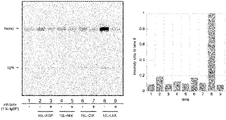
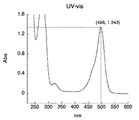
- Test 1-2 Gel fluorescent labeling of labeled IgG using PyOx-IgG binding peptide UV-Vis spectral analysis of fractions of gel filtration chromatography by Nanodrop TM UV-Vis spectral analysis of labeled Herceptin Test
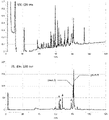
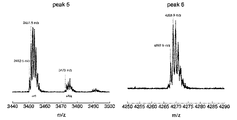
- Example 1-3 HPLC analysis results of trypsin / Lys-C digested FL-labeled Herceptin MALDI-TOF-MS (ultraflex) analysis of peak 5 and peak 6 Crystal structure of 15L-lgBP-Herceptin complex
- Test 2-2 Gel fluorescence labeling of labeled IgG using PyOx-IgG binding peptide C4: PyOx-C4-IgBPC2: PyOx-C2-IgBP Test
- Example 2-3 HPLC analysis results of trypsin / Lys-C digested FL-labeled Herceptin
- the present invention provides the following peptides as one embodiment.
- the peptides of the present disclosure are: Equation (I): X 1 -X 2 -X 3 -X 4 -X 5 -X 6 -X 7 -X 8 -X 9 -X 10 -X 11 -X 12 -X 13 -X 14 -X 15 -X 16 -X 17 -X 18 -X 19 -X 20 (I) (SEQ ID NO: 1) [During the ceremony, X 1 is absent or is any amino acid residue other than Cys when X 2 to X 5 are present. X 2 is absent or is any amino acid residue other than Cys when X 3 to X 5 are present.
- X 3 is absent or is any amino acid residue other than Cys when X 4 to X 5 are present.
- X 4 is absent or is any amino acid residue other than Cys when X 5 is present.
- X 5 is absent or is any amino acid residue other than Cys.
- X 6 is an amino acid residue selected from the group consisting of Cys, 2-aminobutanoic acid, and S-methylcysteine.
- X 7 is an amino acid residue selected from the group consisting of Ala and Thr.
- X 8 is any aromatic amino acid residue
- X 9 is a His residue
- X 10 is Lys, Val, Leu, Arg, Ornithine, 2,4-diaminobutanoic acid (Dbu), N6-acetyllysine, N5-acetylornithine, 2-amino-4-acetylaminobutanoic acid, 2,3-diamino From propionic acid (Dap), 2-amino-3,3-dimethylbutanoic acid, 2-amino-4,4-dimethylpentanoic acid, 3-cyclohexylalanine and amino acid residues represented by the following formula (I) -1.
- X 15 is a Trp residue
- X 16 is an amino acid residue selected from the group consisting of Cys, 2-aminobutanoic acid and S-methylcysteine, where at least one of X 6 and X 16 is a Cys residue
- X 17 is an amino acid residue that is absent or is selected from the group consisting of Thr, Ser, Val and 2-aminobutanoic acid
- X 18 is an amino acid residue selected from the group consisting of Phe, His, Tyr, homocysteine (Hcy), 3-cyclohexylalanine and homophenylalanine when X 18 is absent or is present.
- X 19 is absent, or when X 17-18 is present, His, Tyr, Ala, Phe, Trp, 3- ( 2-pyridyl) alanine, 3- (3-pyridyl) alanine and 3- ( 4-Pyridyl) An amino acid residue selected from the group consisting of alanine.
- X 20 is absent, or is any amino acid residue other than Cys when X 17 to X 19 are present. At least one (eg, 1-3, 1-2, 1) group below in one amino acid residue selected from X 1 to X 5 , X 7 to X 15 , and X 17 to X 20 .
- the peptides of the present disclosure are capable of binding IgG (eg, human IgG, rabbit IgG).
- IgG eg, human IgG, rabbit IgG.
- the binding affinity of the peptide of the present disclosure to IgG is not particularly limited, but it is preferable that the peptide has an affinity that can function as a catalyst for promoting the acyl transfer reaction of the N-acyl-N-alkylsulfonamide acyl donor in AGOX chemistry. ..
- the dissociation constant (K d ) for the binding of the peptides and IgG of the present disclosure can be determined by surface plasmon resonance spectral analysis (eg, using the BIACORE system), eg, 1 ⁇ 10 -10 M to 1 ⁇ 10 -4 M, More preferably, 1 ⁇ 10 -9 M to 1 ⁇ 10 -5 M, still more preferably 1 ⁇ 10 -9 M to 10 -7 M.
- the peptides of the present disclosure have an IgG binding affinity of about 10-fold or more, preferably about 50-fold or more, as compared to other immunoglobulins (IgA, IgE, IgM). More preferably, it is about 200 times higher.
- the peptides of the present disclosure are capable of binding to the Fc region of IgG.
- the test for binding to the Fc region can be performed by a known method, for example, affinity measurement with Fc fragments by surface plasmon resonance method, X-ray crystal structure analysis, with existing Fc binding molecules such as protein A. For example, measurement of competition.
- amino acid sequence described in the present specification is described in the direction from the N-terminal (amino-terminal) side to the C-terminal (carboxyl-terminal) side according to the convention.
- amino acid residue means a portion of a peptide or protein molecule that corresponds to one unit of an amino acid constituting the peptide or protein. More specifically, it means a divalent group derived from an ⁇ -amino acid, which is expressed by the following formula: ..
- R 0 is a side chain of an amino acid, for example, Gly is a hydrogen atom and Ala is a methyl group.
- the "amino acid residue” is derived from a natural or unnatural ⁇ -amino acid, for example, Arg (R), Lys (K), Asp (D), Asn (N), Glu (E), and the like. Gln (Q), His (H), Pro (P), Tyr (Y), Trp (W), Ser (S), Thr (T), Gly (G), Ala (A), Met (M), Included are Cys (C), Phe (F), Leu (L), Val (V), and Ile (I), as well as amino acid residues derived from their analogs. When an optically active substance is possible, it may be either an L-form or a D-form, but an L-form is preferable.
- the analog may be, for example, a derivative in which the side chains of the above 20 kinds of amino acid residues are substituted with arbitrary substituents, and for example, a halogenated derivative of the above 20 kinds of amino acid residues (for example, , 3-Chloroalanine), 2-aminobutyric acid, norleucine, norvaline, isovalin, 2-aminoisobutyric acid, homophenylalanine, 2,3-diaminopropionic acid, 2,4-diaminobutanoic acid (Dbu), ornithine, 2-hydroxy Glycin, homoserine, hydroxylysine, hydroxyproline, 3,4-didehydroproline, homoproline, homocysteine, homomethionine, aspartic acid ester (eg, aspartic acid-methyl ester, aspartic acid-ethyl ester, aspartic acid-propyl ester, Aspartic acid-cyclohexyl ester, aspart
- Ile is used to mean both (2R * , 3R * ) -2-amino-3-methylpentanoic acid and (2R * , 3S * ) -2-amino-3-methylpentanoic acid.
- Thr is used to mean both (2R * , 3S * ) -2-amino-3-hydroxybutanoic acid and (2R * , 3R * ) -2-amino-3-hydroxybutanoic acid.
- it is a natural diastereomer (ie, (2R * , 3R * ) -2-amino-3-methylpentanoic acid for Ile, (2R * , 3S * ) -2-amino-3 for Thr. -Hydroxybutanoic acid) is used.
- the "arbitrary substituent" includes, for example, a halogen atom such as fluorine, chlorine, bromine, iodine, an alkyl group, an aryl group, an alkoxy group, an aryloxy group, an alkoxycarbonyl group, an acyloxy group, an acyl group, and the like.
- each amino acid residue can be replaced with an amino acid residue having similar properties based on the difference in its side chain (conservative substitution).
- the aliphatic hydrophobic amino acids Val, Leu, Ile, 2-aminobutyric acid (Abu), norleucine (Nle), norvaline (Nva), and isovaline (Iva) can be substituted with each other.
- Gly, Ala and 2-aminoisobutyric acid (Aib), whose side chains are hydrogen atoms or methyl groups, can be replaced with each other.
- the neutral polar amino acids Asn and Gln can be replaced with each other.
- 2,4-Diaminobutanoic acid (Dbu), and ornithine (Orn) can be replaced with each other.
- Pro and homoproline (homoPro) can be replaced with each other.
- aromatic amino acid residues examples include Ph, Tyr, Trp, 2-amino-3- (1-naphthyl) propionic acid, 2-amino-3- (2-naphthyl) propionic acid, 2-methyl.
- alkylene group having 1 to 4 carbon atoms in the definition of K 1 means a linear divalent saturated hydrocarbon group having 1 to 4 carbon atoms.
- alkylene include methylene, dimethylene, trimethylene and tetramethylene.
- X 1 of the peptides of the present disclosure is absent, or is any amino acid residue (eg, Arg residue) other than Cys when X 2 to X 5 are present. In one embodiment of the invention, the peptide X 1 of the present disclosure is absent.
- X 2 of the peptides of the present disclosure is absent, or any amino acid residue other than Cys (eg, Lys residue, Arg residue) when X 3 to X 5 are present. Basic). In one embodiment of the invention, the peptide X2 of the present disclosure is absent.
- X 3 of the peptides of the present disclosure is absent, or any amino acid residue other than Cys when X 4-5 is present ( eg, Gly, Arg, Ser, etc.) Amino acid residue selected from the group consisting of Ala and 2-aminoisobutyric acid).
- X4-5 of the peptides of the present disclosure where X3 is an amino acid residue selected from the group consisting of Gly, Arg, and Ser.
- the peptide X3 of the present disclosure is absent.
- X 4 of the peptides of the present disclosure is absent, or any amino acid residue other than Cys when X 5 is present (eg, Pro, Lys, homocysteine, Gly, Amino acid residues selected from the group consisting of Asp and homoproline residues, preferably Pro residues).
- the peptide X5 of the present disclosure is present and the peptide X4 of the present disclosure is an amino acid residue selected from the group consisting of Pro, Lys, homocysteine, Gly, and Asp. be.
- the peptide X4 of the present disclosure is absent.
- the peptide X5 of the present disclosure is absent or any amino acid residue other than Cys (eg Asp, Asn, Arg, Glu, Ser, 2-aminobutanoic acid and 2).
- -Amino acid residues selected from the group consisting of amino-3-sulfopropionic acid, preferably amino acid residues selected from the group consisting of Asp, Glu and 2-amino-3-sulfopropionic acid).
- X5 of the peptide of the present disclosure is an Asp residue.
- X6 of the peptide of the present disclosure is an amino acid residue selected from the group consisting of Cys, 2 -aminobutanoic acid, and S-methylcysteine. In one embodiment of the invention, X6 of the peptide of the present disclosure is a Cys residue.
- the peptide X7 of the present disclosure is an amino acid residue selected from the group consisting of Ala and Thr. In one embodiment of the invention, X7 of the peptide of the present disclosure is an Ala residue.
- the peptide X8 of the present disclosure comprises any aromatic amino acid residue (eg, Tyr, Trp, 2-amino-3- (1-naphthyl) propionic acid, 2-amino-3).
- -Amino acid selected from the group consisting of (2-naphthyl) propionic acid, 2-methylamino-3- (1H-indole-3-yl) propionic acid and amino acid residues represented by the following formula (I) -2.
- Residue formula (I) -2: ).
- the peptide X8 of the present disclosure is a Tyr or Trp residue.
- X8 of the peptide of the present disclosure is a Tyr residue.
- X 9 of the peptide of the present disclosure is a His residue.
- the peptides X10 of the present disclosure are Lys, Val, Leu, Arg, ornithine, 2,4-diaminobutanoic acid (Dbu), N6-acetyllysine, N5-acetylornithin, 2-.
- the peptide X10 of the present disclosure is selected from the group consisting of Lys, Leu, Arg, 2,4-diaminobutanoic acid (Dbu), 2,3-diaminopropionic acid (Dap). Amino acid residue.
- the peptide X10 of the present disclosure is a Lys residue, 2,4-diaminobutanoic acid (Dbu), or 2,3-diaminopropionic acid (Dap) residue. In one embodiment of the invention, X10 of the peptide of the present disclosure is a Lys residue.
- the peptide X11 of the present disclosure is any D-amino acid except Gly and Cys (eg, D-Ile, D-Pro, D-Arg, D-Ser and D-Lys). Amino acid residues selected from the group consisting of. In one embodiment of the invention, X 11 of the peptide of the present disclosure is a Gly residue.
- the peptide X12 of the present disclosure is an amino acid residue selected from the group consisting of Glu, Gln and Asn. In one embodiment of the invention, X12 of the peptide of the present disclosure is a Glu residue.
- X13 of the peptide of the present disclosure is a Leu residue.
- X14 of the peptide of the present disclosure is an amino acid residue selected from the group consisting of Val and Ile. In one embodiment of the invention, X 14 is a Val residue.
- X15 of the peptide of the present disclosure is a Trp residue.
- the peptide X16 of the present disclosure is an amino acid residue selected from the group consisting of Cys, 2-aminobutanoic acid and S-methylcysteine.
- X16 of the peptide of the present disclosure is a Cys residue.
- the peptide X17 of the present disclosure is absent or is an amino acid residue selected from the group consisting of Thr, Ser, Val and 2-aminobutanoic acid. In one embodiment of the invention, X 17 of the peptide of the present disclosure is a Thr residue.
- the peptide X 18 of the present disclosure is absent, or when X 17 is present, from Ph, His, Tyr, homocysteine (Hcy), 3-cyclohexylalanine and homophenylalanine. Amino acid residues selected from the group consisting of. In one embodiment of the invention, the peptide X18 of the present disclosure is absent. In one embodiment of the invention, the peptide X 17 of the present disclosure is present, X 18 is an amino acid residue selected from the group consisting of Phe, His, homocysteine (Hcy) and homophenylalanine. In one embodiment of the invention, the peptide X 17 of the present disclosure is present, where X 18 is a Phe residue.
- the peptide X 19 of the present disclosure is absent, or His, Tyr, Ala, Ph, Trp, 3- (2-pyridyl) when X 17-18 are present.
- An amino acid residue selected from the group consisting of alanine, 3- (3-pyridyl) alanine and 3- (4-pyridyl) alanine.
- the peptides of the present disclosure, X 17 -X 18 are present, where X 19 is a His or Tyr residue.
- the peptides of the present disclosure, X 17 -X 18 are present, where X 19 is a His residue.
- the peptide X 20 of the present disclosure is absent or is any amino acid residue other than Cys (eg, Lys residue) when X 17 -X 19 are present. In one embodiment of the invention, X 20 is absent.
- amino acid residues X 1 to X 20 are conjugated to the PyOx group.
- the peptides of the present disclosure comprise (or consist of) an amino acid sequence selected from: At least one (eg, 1-4, 1-3, 1-2, 1) PyOx groups are conjugated in one amino acid residue (preferably X 10 ) other than the Cys residue. It is a peptide that is present.
- the correspondence with the amino acid residue (X 1 to X 20 ) of SEQ ID NO: 1 is shown, and the blank may indicate the absence of the amino acid residue.
- conjugated means that at least one (eg, 1-4, 1-3, 1-2, 1) PyOx groups are directly or via a linker. , Means that it is bound to an amino acid residue.
- the PyOx group is conjugated to the N-terminus or C-terminus, or the side chain of an amino acid residue. In one embodiment, the PyOx group is conjugated to the side chain of an amino acid residue.
- the peptide of the present disclosure comprises at least one PyOx group at one amino acid residue selected from X 2 , X 4 , X 8 to X 10 , and X 20 . I'm gated.
- the peptides of the present disclosure are conjugated at least one of the PyOx groups at one amino acid residue selected from X 2 , X 4 , X 10 and X 20 . There is.
- the peptides of the present disclosure have at least one PyOx group conjugated at one amino acid residue selected from X 8 to X 10 (preferably X 10 ). ..
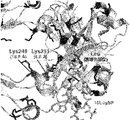
- the results of the Examples of the present application suggest that the modification of the antibody using the peptide of the present disclosure specifically modifies the 249th and 251st lysines of the heavy chain of Herceptin (SEQ ID NO: 36). .. According to the crystal structure of the complex of the antibody-binding peptide 15L- lgBP of FIG. 6 of the present application and Herceptin, the amino acid residue at the position corresponding to X8 to X10 of the peptide of the present disclosure is 249 in the tertiary structure.
- the peptides of the present disclosure comprise (or consist of) an amino acid sequence selected from: X 10 is an amino acid residue conjugated with at least one (for example, 1 to 4, 1 to 3, 1 to 2, 1) PyOx group.
- X 10 is an amino acid residue conjugated with at least one (for example, 1 to 4, 1 to 3, 1 to 2, 1) PyOx group.
- the correspondence with the amino acid residue of SEQ ID NO: 1 (X 1 to X 20 ) is shown, and the blank may indicate the absence of the amino acid residue.
- the structure of the "linker” is not particularly limited, and examples thereof include a linker containing a group derived from a commonly used peptide chemical conjugation method.
- Examples of chemical conjugation methods include carbodiimide chemistry, reductive amination, cyanylation chemistry (eg CDAP chemistry), maleimide chemistry, hydrazide chemistry, ester chemistry, and N-hydroxysuccinimide chemistry, click chemistry, etc.
- chemical conjugation methods include carbodiimide chemistry, reductive amination, cyanylation chemistry (eg CDAP chemistry), maleimide chemistry, hydrazide chemistry, ester chemistry, and N-hydroxysuccinimide chemistry, click chemistry, etc.
- CDAP chemistry cyanylation chemistry
- maleimide chemistry eg CDAP chemistry
- hydrazide chemistry e.g., hydrazide chemistry
- ester chemistry e.g N-hydroxysuccinimi
- the "linker” is a substituted or unsubstituted alkylene group having 1 to 20 carbon atoms, a substituted or unsubstituted alkenylene group having 2 to 20 carbon atoms, a substituted or unsubstituted alkylene group having 2 to 20 carbon atoms.
- one amino acid residue selected from the amino acid residues conjugated by the PyOx group eg, X 1 to X 5 , X 10 and X 20 ) (preferably X 10 ).
- the structure selected from the following can be mentioned.
- one amino acid residue selected from the amino acid residues conjugated by the PyOx group (eg, X 1 to X 5 , X 10 and X 20 ) (preferably X 10 ). )) Is the following structure. ).
- one amino acid residue selected from the amino acid residues conjugated by the PyOx group eg, X 1 to X 5 , X 10 and X 20 ) (preferably X 10 ).
- the structure selected from the following can be mentioned. ).
- one amino acid residue selected from the amino acid residues conjugated by the PyOx group eg, X 1 to X 5 , X 10 and X 20 ) (preferably X 10 ).
- Structure can be selected from the following: and ,(Preferably ).
- the peptides X6 and X16 of the present disclosure are Cys residues.
- X 6 and X 16 of the peptides of the present disclosure are Cys residues, forming a disulfide bond between the Cys residue of X 6 and the Cys residue of X 16 .
- the sulfide groups in the Cys residues of X 6 and X 16 are linked by a divalent group represented by the following formula (I) -3.
- the peptides of the present disclosure, X 6 and X 16 are Cys residues, forming a disulfide bond between the Cys residue of X 6 and the Cys residue of X 16 .
- the peptides of the present disclosure are N-terminally acetylated, C-terminally amidated, or N-terminally acetylated and C-terminally amidated. .. In one embodiment of the invention, the peptides of the present disclosure are acetylated at the N-terminus and amidated at the C-terminus.
- the method for producing the peptide of the present invention is not particularly limited, and the peptide can be produced according to a known method. For example, it can be produced by a known method according to the method of the embodiment of the present application.
- the present invention comprises at least one (eg, 1-4, 1-3, 1-2, 1) group below in a solvent:
- the modification method of the present disclosure can be carried out, for example, by mixing the antibody and the N-acyl-N-alkylsulfonamide in a solvent in the presence of the peptide.
- the peptide binds to an antibody and promotes an acyl transfer reaction from the N-acyl-N-alkylsulfonamide to the nucleophilic amino acid of the antibody, and functions as a catalyst in AGOX chemistry. Can be done.
- examples of “antibodies” include IgG, IgD, IgA, IgE, IgM, and may be fragments thereof containing a binding site (for example, Fc region) of the peptide.
- a binding site for example, Fc region
- the antibody can be modified in a controllable manner at the modification site and the number of modified molecules.
- the "antibody” may be either a polyclonal antibody or a monoclonal antibody, and is preferably a monoclonal antibody.
- the "antibody” is rabbit, human, or humanized immunoglobulin G (IgG, eg, IgG1, IgG2 or IgG4).
- IgG refers to mammals such as primates such as humans and chimpanzees, laboratory animals such as rats, mice, and rabbits, domestic animals such as pigs, cows, horses, sheep, and goats, and dogs and animals. It may contain IgG of pet animals such as cats, preferably human IgG (IgG1, IgG2, IgG3 or IgG4).
- the IgG herein is more preferably human IgG1, IgG2, or IgG4, or rabbit IgG, and particularly preferably human IgG1, IgG2, or IgG4.
- the antibody can be obtained by known means. For example, it can be obtained by immunizing an animal with a polypeptide as an antigen and collecting and purifying an antibody produced in vivo by using a method usually practiced in this field.
- the origin of the antigen is not limited to humans, and it is also possible to immunize an animal with an antigen derived from a non-human animal such as a mouse or a rat.
- the antibody applicable to human diseases can be selected by testing the crossing property between the obtained antibody that binds to the heterologous antigen and the human antigen.
- the anti-HER2 antibody can be obtained by appropriately referring to the description of, for example, US Pat. No. 5,821,337, US Pat. No. 5,725,856.
- the modification method of the present disclosure is an antibody modification method using the peptide of the present disclosure. Since the peptides of the present disclosure can bind to IgG (eg, the Fc region), the peptides of the present disclosure can be used to controlly modify the antibody at the modification site and the number of modified molecules.
- IgG eg, the Fc region
- the results of the Examples of the present application suggest that the 249th and 251st lysines of the heavy chain of Herceptin (SEQ ID NO: 36) are specifically modified by the antibody modification method using the peptide of the present disclosure. rice field.
- the modification method of the present disclosure may be able to control the modification site and the number of modified molecules by using the peptide of the present disclosure.
- the "payload” is not particularly limited and means a substance moiety to be conjugated to an antibody by the modification method of the present disclosure.
- anticancer agents antiinflammatory agents, antifungal agents, antibacterial agents, antiparasitic agents, antiviral agents, anesthetics, biophysical probes, fluorophores, spin labels, infrared probes, affinity probes, chelating agents, spectroscopy.
- Probes radioactive probes, lipid molecules, polyethylene glycols, polymers, spin labels, DNA, RNA, proteins, peptides, surfaces, antibodies, antibody fragments, nanoparticles, quantum dots, liposomes, PLGA particles, saccharides or polysaccharides, etc. ..
- the payload can be retained in the N-acyl-N-alkylsulfonamide via a linker, but the method is not particularly limited and can be carried out using methods known in the art, eg, Tamura, T. et al. Song, Z .; Amaike, K .; Lee, S .; Yin, S .; Kiyonaka, S .; Hamachi, I. Affinity-Guided Oxime Chemistry for Selective Protein Acylation in Live Tissue Systems. J. Am. Chem. Soc.
- the "solvent” is an aqueous solvent and is not particularly limited as long as it forms a bond between the antibody and the payload.
- a buffer solution for example, HEPES buffer, Tris buffer
- the pH of the solvent is not particularly limited as long as the bond between the antibody and the payload is formed, but the pH is preferably 6 to 8.5 from the viewpoint of good reaction rate and prevention of non-specific antibody modification. 5.5 to 8.2 are more preferable.
- the reaction temperature of the modification method of the present disclosure is not particularly limited as long as it forms a bond between the antibody and the payload, but is, for example, 1 ° C to 45 ° C, preferably 4 ° C to 40 ° C, and more preferably 20 ° C to 20 ° C. It is 40 ° C., and even more preferably 25 ° C. to 37 ° C.
- the mixing ratio of the peptide, the antibody, and the N-acyl-N-alkylsulfonamide is not particularly limited.
- the antibody: the peptide 1: 0.01 to 1: 100 in molar ratio.
- the antibody: the peptide 1: 0.1 to 1:10 in molar ratio.
- the antibody: the N-acyl-N-alkylsulfonamide 1: 0.01 to 1: 1000 in molar ratio.
- the antibody: the N-acyl-N-alkylsulfonamide 1: 0.1 to 1: 100 in molar ratio.
- the reaction time is not limited as long as the binding between the antibody and the payload is formed, but can be 1 minute to 24 hours, preferably 10 minutes to 10 hours, and more preferably 30 minutes to 5 hours. ..
- the modification method of the present disclosure is used for a method of producing a conjugate of an antibody and a payload.
- the production method may further comprise, if necessary, purifying the resulting complex after treating the antibody with a tethering N-acyl-N-alkylsulfonamide.
- the purification step can be performed by a method known in the art, for example, gel filtration chromatography, ion exchange column chromatography, affinity chromatography, reverse phase column chromatography, chromatography such as HPLC, and the like.
- the tethering N-acyl-N-alkylsulfonamide is of formula (II) :.
- L indicates a linker; Pr indicates the payload; R 1 is independently optionally substituted with 1 to 3 halos, C 1-3 alkyl, optionally substituted with 1 to 3 halos, C 1-3 alkoxy, halo, and. Selected from -NO 2 (preferably -NO 2 ); n is an integer selected from 0 to 5 (preferably 1 to 3)] Have.
- the tethering N-acyl-N-alkylsulfonamide is of formula (II) -a :. [During the ceremony, L indicates a linker; Pr indicates payload] Have.
- the linker of L is not particularly limited as long as it forms a bond between the antibody and Pr (payload), and includes the type of payload and the conjugate of the antibody and the payload obtained by the modification method of the present disclosure. It can be selected depending on the purpose of use.
- the linker of L may be a substituted or unsubstituted alkylene group having 1 to 20 carbon atoms, a substituted or unsubstituted alkenylene group having 2 to 20 carbon atoms, a substituted or unsubstituted alkynylene group having 2 to 20 carbon atoms, or a substituted moiety.
- an unsubstituted or unsubstituted cycloalkylene group having 3 to 10 carbon atoms a substituted or unsubstituted cycloalkenylene group having 3 to 10 carbon atoms, a substituted or unsubstituted arylene group having 6 to 14 carbon atoms, and a substituted or unsubstituted 5 member.
- the method for producing the N-acyl-N-alkylsulfonamide that retains the payload is not particularly limited, and the N-acyl-N-alkylsulfonamide can be produced according to a known method. For example, it can be produced by a known method according to the method of the embodiment of the present application.
- alkyl groups include methyl group, ethyl group, n-propyl group, isopropyl group, n-butyl group, isobutyl group, sec-butyl group, tert-butyl group, n-pentyl group and isopentyl group.
- Neopentyl group 1,2-dimethylpropyl group, n-hexyl group, 1,3-dimethylbutyl group, 1-isopropylpropyl group, 1,2-dimethylbutyl group, n-heptyl group, 1,4-dimethylpentyl Group, 2-methyl-1-isopropylpropyl group, 1-ethyl-3-methylbutyl group, n-octyl group, 2-ethylhexyl group, 3-methyl-1-isopropylbutyl group, 2-methyl-1-isopropyl group, Examples thereof include 1-tert-butyl-2-methylpropyl group.
- alkylene group examples include a divalent group as an example of the above alkyl group.
- substituent of the alkylene group include -OH, halo, and C 1-3 alkoxy, and the number of the alkylene group is one or several (for example, 1). It can be substituted with ⁇ 3) substituents.
- examples of the alkenyl group include a vinyl group, an allyl group, an isopropenyl group, a 1-butenyl group, a 2-butenyl group, a 2-methyl-2-propenyl group, a 1-methyl-2-propenyl group, and 2 -Methyl-1-propenyl group, pentenyl group, 1-hexenyl group, 3,3-dimethyl-1-butenyl group and the like can be mentioned.
- Examples of the alkenylene group include a divalent group as an example of the alkenyl group.
- substituted or unsubstituted alkenylene group having 2 to 20 carbon atoms examples include -OH, halo, and C1-3 alkoxy, and the number of alkenylene groups is one or several (for example, 1). It can be substituted with ⁇ 3) substituents.
- examples of the alkynyl group include ethynyl group, 1-propynyl group, 2-propynyl group, 1-butynyl group, 2-butynyl group, 3-butynyl group, 3-methyl-1-propynyl group and 2-.
- examples thereof include a methyl-3-propynyl group, a pentynyl group, a 1-hexynyl group, a 3-methyl-1-butynyl group, and a 3,3-dimethyl-1-butynyl group.
- examples of the alkynylene group include a divalent group of the above-mentioned alkynyl group.
- substituted or unsubstituted alkynylene group having 2 to 20 carbon atoms examples include -OH, halo, and C1-3 alkoxy, and the number of alkynylene groups is one or several (for example, 1). It can be substituted with ⁇ 3) substituents.
- examples of the cycloalkyl group include a cyclopropyl group, a cyclobutyl group, a cyclopentyl group, a cyclohexyl group, a cycloheptyl group, a cyclooctyl group and the like.
- examples of the cycloalkylene group include a divalent group as the example of the cycloalkyl group.
- examples of the substituent of the cycloalkylene group include -OH, halo, C 1-3 alkyl, and C 1-3 alkoxy, and cycloalkylene. The group can be substituted with one or several (eg 1-3) substituents.
- examples of the cycloalkenyl group include a cyclopropenyl group, a cyclobutenyl group, a cyclopentenyl group, a cyclopentadienyl group, a cyclohexenyl group, a cyclohexadienyl group, a cycloheptenyl group, a cyclooctenyl group and the like.
- examples of the cycloalkenylene group include a divalent group as an example of the cycloalkenyl group.
- examples of the substituent of the cycloalkenylene group include -OH, halo, C 1-3 alkyl, and C 1-3 alkoxy, and cycloalkenylene.
- the group can be substituted with one or several (eg 1-3) substituents.
- examples of the aryl group include a phenyl group, a 1-naphthyl group, a 2-naphthyl group, a 1-anthrasenyl group, a 2-anthrasenyl group, a 9-anthrasenyl group and the like.
- examples of the arylene group include a divalent group as an example of the above aryl group.
- substituted or unsubstituted arylene group having 6 to 14 carbon atoms examples include -OH, halo, C 1-3 alkyl, and C 1-3 alkoxy, and the arylene group is 1 Alternatively, it can be substituted with several (eg, 1 to 3) substituents.
- the heteroaryl group has 1 to 6 heteroatoms selected from a nitrogen atom, an oxygen atom and a sulfur atom in addition to a carbon atom as atoms constituting the ring, and the atom constituting the ring. It is an aromatic heterocycle having a number of 3 to 14, and includes a monocyclic ring and a fused ring.
- heteroaryl groups are 2-thienyl group, 4-pyridyl group, 3-pyridyl group, 2-pyridyl group, 1-pyridyl group, 2-furyl group, 2-pyrimidinyl group, 2-benzothiazolyl group, 1- Examples thereof include an imidazolyl group, a 1-pyrazolyl group, a benzotriazole-1-yl group, a 7-azabenzotriazole-1-yl group and the like.
- heteroarylene group include a divalent group as an example of the above heteroaryl group.
- substituted or unsubstituted 5- to 10-membered heteroarylene group examples include -OH, halo, C 1-3 alkyl, and C 1-3 alkoxy, and the hetero arylene is mentioned.
- the group can be substituted with one or several (eg 1-3) substituents.
- halo means fluoro, chloro, bromo or iodine.
- C 1-3 alkyl means a linear or branched saturated hydrocarbon group having 1 to 3 carbon atoms.
- Examples of “C 1-3 alkyl” include methyl, ethyl, propyl and isopropyl.
- C 1-3 alkoxy means a linear or branched-chain alkoxy having 1 to 3 carbon atoms.
- Examples of “C 1-3 Alkoxy” include methoxy, ethoxy, propoxy and isopropoxy.
- esters group examples include methyl ester, ethyl ester, 1-propyl ester, 2-propyl ester, pivaloyloxymethyl ester, acetyloxymethyl ester, cyclohexyl acetyloxymethyl ester, and 1-methylcyclohexyl.
- examples thereof include carbonyloxymethyl ester, ethyloxycarbonyloxy-1-ethyl ester and cyclohexyloxycarbonyloxy-1-ethyl ester.
- Test Example 1-1 Synthesis of IgG-binding peptide / PyOx-IgG-binding peptide 15L-IgBP (SEQ ID NO: 91) was synthesized as an IgG-binding peptide.
- the following four types of PyOx-IgG-binding peptides (15L-XGP (SEQ ID NO: 92), 15L-NtX (SEQ ID NO: 93), 15L-CtX (SEQ ID NO: 94), and 15L-L6X (SEQ ID NO: 95) was synthesized. The sequence of each synthesized peptide is shown below.
- Each peptide of SEQ ID NO: 91 to SEQ ID NO: 95 was synthesized by the Fmoc solid-phase synthesis method using an automatic peptide synthesizer Prelude TM . Specifically, the following method was followed for the PyOx-IgG-binding peptides of SEQ ID NOs: 92 to 95.
- the Rink amide resin (40 ⁇ mol) was swollen with DMF and then treated with 20% piperidine / DMF twice for 10 minutes to deprotect the Fmoc group. The resin was washed with DMF and Fmoc-amino acid (5eq.) Was condensed with HATU (5eq.), HOAt (5eq.), DIPEA (10eq.).
- the cycle of deprotection and condensation was repeated, and the peptide chain length was extended to the desired length.
- the N-terminal was treated with acetic anhydride (3eq.) And DIEA (3eq.) For 15 minutes in a DMF solvent for acetyl capping.
- Trifluoroacetic acid was volatilized by a nitrogen stream, and diethyl ether was added under ice-cooling to precipitate a crude peptide.
- Test Example 1-2 In vitro Labeling of Herceptin An in vitro labeling experiment of an anti-Her2 humanized monoclonal antibody (Herceptin), which is a therapeutic drug for breast cancer, using four types of PyOx-IgG binding peptides of Test Example 1-1. Was done.
- NASA acyl donor having the following structure is designated as Compound 1. As shown in the reaction formula below, this compound 1 is synthesized from 4-nitrobenzene sulfonamide via compound 1-1 (Compound 1-1) and compound 1-2 (Compound 1-2).
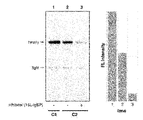
- Herceptin (1 ⁇ M) was added to a 1.5 mL Eppendorf tube (with 15 L-lgBP (10 ⁇ M) in the case of inhibitory conditions) and preincubated in HEPES buffer (50 mM, pH 7.4) for 10 minutes. PyOx-IgG binding peptide (1 ⁇ M) was added, then acyl donor (NASA-FL) (10 ⁇ M) was added, and the mixture was incubated at 37 ° C. for 3 hours. SDS sample buffer (containing 250 mM DTT) was added 5 times and boiled at 95 ° C. for 5 minutes. The mixture was allowed to stand at 4 ° C. for 2.5 hours, and then SDS-polyacrylamide gel electrophoresis (detection 12.5% AA, 10 ⁇ L load, LAS4000) was performed. The results are shown in FIG.
- Test Example 1-3 Modification site analysis of FL-modified Herceptin
- modification site analysis of FL (Fluorescein) labeled antibody is performed by peptide mapping method. I did it.
- HPLC Analysis and MALDI-TOF-MS Analysis 900 ⁇ L of enzymatic digest was analyzed by HPLC followed by MALDI-TOF-MS (ultraflex).
- the peak area ratios (%) of each of peaks 1 to 6 were 7.78, 4.19, 10.7, 11.6, 22.1, and 43.7 (%), respectively. The ratio was calculated assuming that the sum of the peak areas of 1 to 6 was 100%. Table 1 shows the main peaks of fluorescent HPLC and their attribution.
- the amino acid sequence of Herceptin is shown below.
- T1-T30 Peptide sequences produced by tryptic cleavage of Herceptin: T1-T30 are shown below.
- MS / MS analysis was performed to identify the modified site.
- the classification of fragment peptides in MS / MS analysis is as follows.
- MS / MS analysis identified a peptide fragment [226-251] with advanced FL modification to Lys249. All MS / MS peaks were detected in the y fragment except y1, and all b fragments were identified except b1 and b10.
- peak 6 data for clearly determining the modification site could not be obtained by MS / MS analysis. This is because it is difficult to analyze fragments of molecules having a molecular weight exceeding 4000 due to the principle of MS analysis.
- the peak attributed to y9 is also strong and highly reliable.
- FIG. 6 shows the crystal structure of the 15L-lgBP-Herceptin complex. From the crystal structure, it was found that these two Lys249 and Lys251 were present in the vicinity of the antibody binding site of the peptide used as the ligand (18.8 and 6.8 ⁇ from the derivatization site, respectively). Since 44 Lys residues are present in Herceptin, it is suggested that the site specificity is extremely high. Further, the crystal structure has a sequence of 15L-lgBP. It is shown that the amino acid residue in the underlined portion is present in the vicinity of the 249th and 251st lysines in the tertiary structure.
- Test Example 2-2 In vitro labeling of Herceptin ⁇ Method> A HEPES buffer (50 mM, pH 7.4) solution (80 ⁇ L) of Herceptin (1 ⁇ M) was added to a 1.5 mL Eppendorf tube (along with 15 L-lgBP (20 ⁇ M) under inhibitory conditions). PyOx-C4-IgBP (2 ⁇ M) or PyOx-C2-IgBP (2 ⁇ M) was added thereto, and then acyl donor (NASA-FL) (10 ⁇ M) was added, and the mixture was incubated at 37 ° C. for 3 hours. 20 ⁇ L of 5-fold concentrated SDS sample buffer (containing 250 mM DTT) was added, and the mixture was boiled at 95 ° C. for 5 minutes. After returning this to room temperature, SDS-polyacrylamide gel electrophoresis (detection 12.5% acrylamide gel, 10 ⁇ L load, LAS4000) was performed. The results are shown in FIG.
- Dialysis A sample solution was placed in a dialysis membrane (Spectra / Por® 6 Pre-wetted Diarysis Tubing (MWCO: 10 kDa)) and immersed in a dialysate (50 mM NH 4 HCO 3 (pH 7.8)).
- a dialysis membrane Spectra / Por® 6 Pre-wetted Diarysis Tubing (MWCO: 10 kDa)
- a dialysate 50 mM NH 4 HCO 3 (pH 7.8)
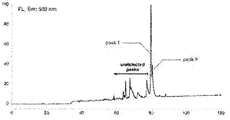
- HPLC conditions: 0.1% TFA-containing acetonitrile: 0.1% TFA-containing water 0: 100 ⁇ 60: 40 (120 minutes, linear gradient), flow velocity 0.5% / min, fluorescence excitation wavelength 490 nm, fluorescence detection Wavelength 520 nm The results are shown in FIG.
- the peptides of the invention can be used for the modification of IgG as catalysts in AGOX chemistry.
Landscapes
- Chemical & Material Sciences (AREA)
- Organic Chemistry (AREA)
- Health & Medical Sciences (AREA)
- General Health & Medical Sciences (AREA)
- Biochemistry (AREA)
- Biophysics (AREA)
- Life Sciences & Earth Sciences (AREA)
- Genetics & Genomics (AREA)
- Medicinal Chemistry (AREA)
- Molecular Biology (AREA)
- Proteomics, Peptides & Aminoacids (AREA)
- Immunology (AREA)
- Analytical Chemistry (AREA)
- Peptides Or Proteins (AREA)
Priority Applications (1)
| Application Number | Priority Date | Filing Date | Title |
|---|---|---|---|
| JP2022557016A JPWO2022080385A1 (cg-RX-API-DMAC7.html) | 2020-10-13 | 2021-10-12 |
Applications Claiming Priority (2)
| Application Number | Priority Date | Filing Date | Title |
|---|---|---|---|
| JP2020172768 | 2020-10-13 | ||
| JP2020-172768 | 2020-10-13 |
Publications (1)
| Publication Number | Publication Date |
|---|---|
| WO2022080385A1 true WO2022080385A1 (ja) | 2022-04-21 |
Family
ID=81208226
Family Applications (1)
| Application Number | Title | Priority Date | Filing Date |
|---|---|---|---|
| PCT/JP2021/037776 Ceased WO2022080385A1 (ja) | 2020-10-13 | 2021-10-12 | ペプチド、およびペプチドを用いる抗体の修飾 |
Country Status (2)
| Country | Link |
|---|---|
| JP (1) | JPWO2022080385A1 (cg-RX-API-DMAC7.html) |
| WO (1) | WO2022080385A1 (cg-RX-API-DMAC7.html) |
Cited By (2)
| Publication number | Priority date | Publication date | Assignee | Title |
|---|---|---|---|---|
| JP2024519031A (ja) * | 2021-05-17 | 2024-05-08 | バイオヘイブン・セラピューティクス・リミテッド | コンジュゲート療法エンハンサーを含む組成物 |
| WO2024186075A1 (ko) * | 2023-03-03 | 2024-09-12 | 서강대학교산학협력단 | 근접 효과 기반 위치 선택적 항체 표지를 이용한 항체-약물 접합체의 합성 방법 |
Citations (2)
| Publication number | Priority date | Publication date | Assignee | Title |
|---|---|---|---|---|
| WO2016186206A1 (ja) * | 2015-05-20 | 2016-11-24 | 国立大学法人鹿児島大学 | IgG結合ペプチドによる抗体の特異的修飾 |
| WO2019240288A1 (ja) * | 2018-06-14 | 2019-12-19 | 味の素株式会社 | 抗体に対する親和性物質、および生体直交性官能基を有する化合物またはその塩 |
-
2021
- 2021-10-12 JP JP2022557016A patent/JPWO2022080385A1/ja active Pending
- 2021-10-12 WO PCT/JP2021/037776 patent/WO2022080385A1/ja not_active Ceased
Patent Citations (2)
| Publication number | Priority date | Publication date | Assignee | Title |
|---|---|---|---|---|
| WO2016186206A1 (ja) * | 2015-05-20 | 2016-11-24 | 国立大学法人鹿児島大学 | IgG結合ペプチドによる抗体の特異的修飾 |
| WO2019240288A1 (ja) * | 2018-06-14 | 2019-12-19 | 味の素株式会社 | 抗体に対する親和性物質、および生体直交性官能基を有する化合物またはその塩 |
Non-Patent Citations (2)
| Title |
|---|
| HAYASHI YOSHIO, MUGURUMA, KYOHEI: "Basic research on antibody-dependent drug delivery technology using antibody-binding peptides,", DRUG DELIVERY SYSTEM., NIHON D D S GAKKAI, JAPAN, vol. 35, no. 3, 25 July 2020 (2020-07-25), Japan , XP055921158, ISSN: 0913-5006, DOI: 10.2745/dds.35.191 * |
| TOMONORI TAMURA, ZHINING SONG, KAZUMA AMAIKE, SHIN LEE, SIFEI YIN, SHIGEKI KIYONAKA, ITARU HAMACHI: "Affinity-Guided Oxime Chemistry for Selective Protein Acylation in Live Tissue Systems", JOURNAL OF THE AMERICAN CHEMICAL SOCIETY, AMERICAN CHEMICAL SOCIETY, vol. 139, no. 40, 11 October 2017 (2017-10-11), pages 14181 - 14191, XP055429449, ISSN: 0002-7863, DOI: 10.1021/jacs.7b07339 * |
Cited By (2)
| Publication number | Priority date | Publication date | Assignee | Title |
|---|---|---|---|---|
| JP2024519031A (ja) * | 2021-05-17 | 2024-05-08 | バイオヘイブン・セラピューティクス・リミテッド | コンジュゲート療法エンハンサーを含む組成物 |
| WO2024186075A1 (ko) * | 2023-03-03 | 2024-09-12 | 서강대학교산학협력단 | 근접 효과 기반 위치 선택적 항체 표지를 이용한 항체-약물 접합체의 합성 방법 |
Also Published As
| Publication number | Publication date |
|---|---|
| JPWO2022080385A1 (cg-RX-API-DMAC7.html) | 2022-04-21 |
Similar Documents
| Publication | Publication Date | Title |
|---|---|---|
| JP7076152B2 (ja) | IgG結合ペプチドによる抗体の特異的修飾 | |
| US12492224B2 (en) | Bicyclic peptide ligands specific for PD-L1 | |
| JP7291395B2 (ja) | IgG結合ペプチド、及び該ペプチドによる抗体の特異的修飾 | |
| KR102755988B1 (ko) | Mt1-mmp에 대한 결합용 펩티드 리간드 | |
| CN110437320B (zh) | 多肽 | |
| CN109475642A (zh) | 赖氨酸缀合的免疫球蛋白 | |
| CN108602878A (zh) | C端赖氨酸缀合免疫球蛋白 | |
| CN102665768B (zh) | 肽清除剂 | |
| JP7667765B2 (ja) | がんイメージング及びがん放射線治療のための組成物及び方法 | |
| CN108136043B (zh) | 蛋白质缀合物 | |
| CA2965754A1 (en) | Bicyclic peptide ligands specific for mt1-mmp | |
| CN113544155A (zh) | 经修饰用于转谷氨酰胺酶缀合的抗体、其缀合物以及方法和用途 | |
| Wong et al. | Realizing serine/threonine ligation: scope and limitations and mechanistic implication thereof | |
| Hoffmann et al. | PK modulation of haptenylated peptides via non-covalent antibody complexation | |
| US20240366775A1 (en) | Human transferrin receptor binding antibody-peptide conjugate | |
| Dengl et al. | Hapten-directed spontaneous disulfide shuffling: a universal technology for site-directed covalent coupling of payloads to antibodies | |
| KR20210098488A (ko) | 글루타민-함유 경쇄 c-말단 연장부를 포함하는 항체, 그의 접합체, 및 방법 및 용도 | |
| Enyedi et al. | Development of cyclic NGR peptides with thioether linkage: structure and dynamics determining deamidation and bioactivity | |
| Ekblad et al. | Synthesis and chemoselective intramolecular crosslinking of a HER2‐binding affibody | |
| JP7795810B2 (ja) | プレターゲットイメージングおよび治療用pnaプローブ | |
| WO2023022234A1 (ja) | ヒトトランスフェリンレセプター結合ペプチド | |
| Manea et al. | Design, structural, and immuno‐analytical properties of antigenic bioconjugates comprising a β‐amyloid‐plaque specific epitope | |
| Järver et al. | Chemical synthesis and evaluation of a backbone‐cyclized minimized 2‐helix Z‐domain | |
| TWI787151B (zh) | 藉由IgG結合肽之抗體之特異性裝飾 | |
| Iwamoto | Development of Monobody Variants for Functional Mirror-Image Protein Therapeutics |
Legal Events
| Date | Code | Title | Description |
|---|---|---|---|
| 121 | Ep: the epo has been informed by wipo that ep was designated in this application |
Ref document number: 21880123 Country of ref document: EP Kind code of ref document: A1 |
|
| ENP | Entry into the national phase |
Ref document number: 2022557016 Country of ref document: JP Kind code of ref document: A |
|
| NENP | Non-entry into the national phase |
Ref country code: DE |
|
| 122 | Ep: pct application non-entry in european phase |
Ref document number: 21880123 Country of ref document: EP Kind code of ref document: A1 |