WO2022059166A1 - 有機コア材及びその製造方法 - Google Patents
有機コア材及びその製造方法 Download PDFInfo
- Publication number
- WO2022059166A1 WO2022059166A1 PCT/JP2020/035461 JP2020035461W WO2022059166A1 WO 2022059166 A1 WO2022059166 A1 WO 2022059166A1 JP 2020035461 W JP2020035461 W JP 2020035461W WO 2022059166 A1 WO2022059166 A1 WO 2022059166A1
- Authority
- WO
- WIPO (PCT)
- Prior art keywords
- core material
- organic core
- resin
- prepreg
- fiber cloth
- Prior art date
- Legal status (The legal status is an assumption and is not a legal conclusion. Google has not performed a legal analysis and makes no representation as to the accuracy of the status listed.)
- Ceased
Links
Images


Classifications
-
- B—PERFORMING OPERATIONS; TRANSPORTING
- B29—WORKING OF PLASTICS; WORKING OF SUBSTANCES IN A PLASTIC STATE IN GENERAL
- B29C—SHAPING OR JOINING OF PLASTICS; SHAPING OF MATERIAL IN A PLASTIC STATE, NOT OTHERWISE PROVIDED FOR; AFTER-TREATMENT OF THE SHAPED PRODUCTS, e.g. REPAIRING
- B29C70/00—Shaping composites, i.e. plastics material comprising reinforcements, fillers or preformed parts, e.g. inserts
- B29C70/04—Shaping composites, i.e. plastics material comprising reinforcements, fillers or preformed parts, e.g. inserts comprising reinforcements only, e.g. self-reinforcing plastics
- B29C70/28—Shaping operations therefor
- B29C70/30—Shaping by lay-up, i.e. applying fibres, tape or broadsheet on a mould, former or core; Shaping by spray-up, i.e. spraying of fibres on a mould, former or core
- B29C70/34—Shaping by lay-up, i.e. applying fibres, tape or broadsheet on a mould, former or core; Shaping by spray-up, i.e. spraying of fibres on a mould, former or core and shaping or impregnating by compression, i.e. combined with compressing after the lay-up operation
-
- B—PERFORMING OPERATIONS; TRANSPORTING
- B32—LAYERED PRODUCTS
- B32B—LAYERED PRODUCTS, i.e. PRODUCTS BUILT-UP OF STRATA OF FLAT OR NON-FLAT, e.g. CELLULAR OR HONEYCOMB, FORM
- B32B5/00—Layered products characterised by the non- homogeneity or physical structure, i.e. comprising a fibrous, filamentary, particulate or foam layer; Layered products characterised by having a layer differing constitutionally or physically in different parts
- B32B5/22—Layered products characterised by the non- homogeneity or physical structure, i.e. comprising a fibrous, filamentary, particulate or foam layer; Layered products characterised by having a layer differing constitutionally or physically in different parts characterised by the presence of two or more layers which are next to each other and are fibrous, filamentary, formed of particles or foamed
- B32B5/24—Layered products characterised by the non- homogeneity or physical structure, i.e. comprising a fibrous, filamentary, particulate or foam layer; Layered products characterised by having a layer differing constitutionally or physically in different parts characterised by the presence of two or more layers which are next to each other and are fibrous, filamentary, formed of particles or foamed one layer being a fibrous or filamentary layer
- B32B5/26—Layered products characterised by the non- homogeneity or physical structure, i.e. comprising a fibrous, filamentary, particulate or foam layer; Layered products characterised by having a layer differing constitutionally or physically in different parts characterised by the presence of two or more layers which are next to each other and are fibrous, filamentary, formed of particles or foamed one layer being a fibrous or filamentary layer another layer next to it also being fibrous or filamentary
- B32B5/262—Layered products characterised by the non- homogeneity or physical structure, i.e. comprising a fibrous, filamentary, particulate or foam layer; Layered products characterised by having a layer differing constitutionally or physically in different parts characterised by the presence of two or more layers which are next to each other and are fibrous, filamentary, formed of particles or foamed one layer being a fibrous or filamentary layer another layer next to it also being fibrous or filamentary characterised by one fibrous or filamentary layer being a woven fabric layer
- B32B5/263—Layered products characterised by the non- homogeneity or physical structure, i.e. comprising a fibrous, filamentary, particulate or foam layer; Layered products characterised by having a layer differing constitutionally or physically in different parts characterised by the presence of two or more layers which are next to each other and are fibrous, filamentary, formed of particles or foamed one layer being a fibrous or filamentary layer another layer next to it also being fibrous or filamentary characterised by one fibrous or filamentary layer being a woven fabric layer next to one or more woven fabric layers
-
- H—ELECTRICITY
- H10—SEMICONDUCTOR DEVICES; ELECTRIC SOLID-STATE DEVICES NOT OTHERWISE PROVIDED FOR
- H10W—GENERIC PACKAGES, INTERCONNECTIONS, CONNECTORS OR OTHER CONSTRUCTIONAL DETAILS OF DEVICES COVERED BY CLASS H10
- H10W70/00—Package substrates; Interposers; Redistribution layers [RDL]
- H10W70/60—Insulating or insulated package substrates; Interposers; Redistribution layers
- H10W70/67—Insulating or insulated package substrates; Interposers; Redistribution layers characterised by their insulating layers or insulating parts
- H10W70/69—Insulating materials thereof
- H10W70/695—Organic materials
-
- B—PERFORMING OPERATIONS; TRANSPORTING
- B32—LAYERED PRODUCTS
- B32B—LAYERED PRODUCTS, i.e. PRODUCTS BUILT-UP OF STRATA OF FLAT OR NON-FLAT, e.g. CELLULAR OR HONEYCOMB, FORM
- B32B27/00—Layered products comprising a layer of synthetic resin
- B32B27/06—Layered products comprising a layer of synthetic resin as the main or only constituent of a layer, which is next to another layer of the same or of a different material
- B32B27/08—Layered products comprising a layer of synthetic resin as the main or only constituent of a layer, which is next to another layer of the same or of a different material of synthetic resin
-
- B—PERFORMING OPERATIONS; TRANSPORTING
- B32—LAYERED PRODUCTS
- B32B—LAYERED PRODUCTS, i.e. PRODUCTS BUILT-UP OF STRATA OF FLAT OR NON-FLAT, e.g. CELLULAR OR HONEYCOMB, FORM
- B32B27/00—Layered products comprising a layer of synthetic resin
- B32B27/18—Layered products comprising a layer of synthetic resin characterised by the use of special additives
- B32B27/20—Layered products comprising a layer of synthetic resin characterised by the use of special additives using fillers, pigments, thixotroping agents
-
- B—PERFORMING OPERATIONS; TRANSPORTING
- B32—LAYERED PRODUCTS
- B32B—LAYERED PRODUCTS, i.e. PRODUCTS BUILT-UP OF STRATA OF FLAT OR NON-FLAT, e.g. CELLULAR OR HONEYCOMB, FORM
- B32B33/00—Layered products characterised by particular properties or particular surface features, e.g. particular surface coatings; Layered products designed for particular purposes not covered by another single class
-
- B—PERFORMING OPERATIONS; TRANSPORTING
- B32—LAYERED PRODUCTS
- B32B—LAYERED PRODUCTS, i.e. PRODUCTS BUILT-UP OF STRATA OF FLAT OR NON-FLAT, e.g. CELLULAR OR HONEYCOMB, FORM
- B32B5/00—Layered products characterised by the non- homogeneity or physical structure, i.e. comprising a fibrous, filamentary, particulate or foam layer; Layered products characterised by having a layer differing constitutionally or physically in different parts
- B32B5/02—Layered products characterised by the non- homogeneity or physical structure, i.e. comprising a fibrous, filamentary, particulate or foam layer; Layered products characterised by having a layer differing constitutionally or physically in different parts characterised by structural features of a fibrous or filamentary layer
- B32B5/024—Woven fabric
-
- B—PERFORMING OPERATIONS; TRANSPORTING
- B32—LAYERED PRODUCTS
- B32B—LAYERED PRODUCTS, i.e. PRODUCTS BUILT-UP OF STRATA OF FLAT OR NON-FLAT, e.g. CELLULAR OR HONEYCOMB, FORM
- B32B5/00—Layered products characterised by the non- homogeneity or physical structure, i.e. comprising a fibrous, filamentary, particulate or foam layer; Layered products characterised by having a layer differing constitutionally or physically in different parts
- B32B5/22—Layered products characterised by the non- homogeneity or physical structure, i.e. comprising a fibrous, filamentary, particulate or foam layer; Layered products characterised by having a layer differing constitutionally or physically in different parts characterised by the presence of two or more layers which are next to each other and are fibrous, filamentary, formed of particles or foamed
- B32B5/24—Layered products characterised by the non- homogeneity or physical structure, i.e. comprising a fibrous, filamentary, particulate or foam layer; Layered products characterised by having a layer differing constitutionally or physically in different parts characterised by the presence of two or more layers which are next to each other and are fibrous, filamentary, formed of particles or foamed one layer being a fibrous or filamentary layer
- B32B5/26—Layered products characterised by the non- homogeneity or physical structure, i.e. comprising a fibrous, filamentary, particulate or foam layer; Layered products characterised by having a layer differing constitutionally or physically in different parts characterised by the presence of two or more layers which are next to each other and are fibrous, filamentary, formed of particles or foamed one layer being a fibrous or filamentary layer another layer next to it also being fibrous or filamentary
-
- C—CHEMISTRY; METALLURGY
- C08—ORGANIC MACROMOLECULAR COMPOUNDS; THEIR PREPARATION OR CHEMICAL WORKING-UP; COMPOSITIONS BASED THEREON
- C08J—WORKING-UP; GENERAL PROCESSES OF COMPOUNDING; AFTER-TREATMENT NOT COVERED BY SUBCLASSES C08B, C08C, C08F, C08G or C08H
- C08J5/00—Manufacture of articles or shaped materials containing macromolecular substances
- C08J5/24—Impregnating materials with prepolymers which can be polymerised in situ, e.g. manufacture of prepregs
-
- H—ELECTRICITY
- H05—ELECTRIC TECHNIQUES NOT OTHERWISE PROVIDED FOR
- H05K—PRINTED CIRCUITS; CASINGS OR CONSTRUCTIONAL DETAILS OF ELECTRIC APPARATUS; MANUFACTURE OF ASSEMBLAGES OF ELECTRICAL COMPONENTS
- H05K1/00—Printed circuits
- H05K1/02—Details
- H05K1/03—Use of materials for the substrate
-
- H—ELECTRICITY
- H05—ELECTRIC TECHNIQUES NOT OTHERWISE PROVIDED FOR
- H05K—PRINTED CIRCUITS; CASINGS OR CONSTRUCTIONAL DETAILS OF ELECTRIC APPARATUS; MANUFACTURE OF ASSEMBLAGES OF ELECTRICAL COMPONENTS
- H05K1/00—Printed circuits
- H05K1/02—Details
- H05K1/03—Use of materials for the substrate
- H05K1/0313—Organic insulating material
-
- H—ELECTRICITY
- H10—SEMICONDUCTOR DEVICES; ELECTRIC SOLID-STATE DEVICES NOT OTHERWISE PROVIDED FOR
- H10W—GENERIC PACKAGES, INTERCONNECTIONS, CONNECTORS OR OTHER CONSTRUCTIONAL DETAILS OF DEVICES COVERED BY CLASS H10
- H10W70/00—Package substrates; Interposers; Redistribution layers [RDL]
- H10W70/60—Insulating or insulated package substrates; Interposers; Redistribution layers
-
- H—ELECTRICITY
- H10—SEMICONDUCTOR DEVICES; ELECTRIC SOLID-STATE DEVICES NOT OTHERWISE PROVIDED FOR
- H10W—GENERIC PACKAGES, INTERCONNECTIONS, CONNECTORS OR OTHER CONSTRUCTIONAL DETAILS OF DEVICES COVERED BY CLASS H10
- H10W70/00—Package substrates; Interposers; Redistribution layers [RDL]
- H10W70/60—Insulating or insulated package substrates; Interposers; Redistribution layers
- H10W70/67—Insulating or insulated package substrates; Interposers; Redistribution layers characterised by their insulating layers or insulating parts
- H10W70/68—Shapes or dispositions thereof
-
- H—ELECTRICITY
- H10—SEMICONDUCTOR DEVICES; ELECTRIC SOLID-STATE DEVICES NOT OTHERWISE PROVIDED FOR
- H10W—GENERIC PACKAGES, INTERCONNECTIONS, CONNECTORS OR OTHER CONSTRUCTIONAL DETAILS OF DEVICES COVERED BY CLASS H10
- H10W70/00—Package substrates; Interposers; Redistribution layers [RDL]
- H10W70/60—Insulating or insulated package substrates; Interposers; Redistribution layers
- H10W70/67—Insulating or insulated package substrates; Interposers; Redistribution layers characterised by their insulating layers or insulating parts
- H10W70/69—Insulating materials thereof
-
- H—ELECTRICITY
- H10—SEMICONDUCTOR DEVICES; ELECTRIC SOLID-STATE DEVICES NOT OTHERWISE PROVIDED FOR
- H10W—GENERIC PACKAGES, INTERCONNECTIONS, CONNECTORS OR OTHER CONSTRUCTIONAL DETAILS OF DEVICES COVERED BY CLASS H10
- H10W99/00—Subject matter not provided for in other groups of this subclass
-
- B—PERFORMING OPERATIONS; TRANSPORTING
- B32—LAYERED PRODUCTS
- B32B—LAYERED PRODUCTS, i.e. PRODUCTS BUILT-UP OF STRATA OF FLAT OR NON-FLAT, e.g. CELLULAR OR HONEYCOMB, FORM
- B32B2260/00—Layered product comprising an impregnated, embedded, or bonded layer wherein the layer comprises an impregnation, embedding, or binder material
- B32B2260/02—Composition of the impregnated, bonded or embedded layer
- B32B2260/021—Fibrous or filamentary layer
- B32B2260/023—Two or more layers
-
- B—PERFORMING OPERATIONS; TRANSPORTING
- B32—LAYERED PRODUCTS
- B32B—LAYERED PRODUCTS, i.e. PRODUCTS BUILT-UP OF STRATA OF FLAT OR NON-FLAT, e.g. CELLULAR OR HONEYCOMB, FORM
- B32B2260/00—Layered product comprising an impregnated, embedded, or bonded layer wherein the layer comprises an impregnation, embedding, or binder material
- B32B2260/04—Impregnation, embedding, or binder material
- B32B2260/046—Synthetic resin
-
- B—PERFORMING OPERATIONS; TRANSPORTING
- B32—LAYERED PRODUCTS
- B32B—LAYERED PRODUCTS, i.e. PRODUCTS BUILT-UP OF STRATA OF FLAT OR NON-FLAT, e.g. CELLULAR OR HONEYCOMB, FORM
- B32B2305/00—Condition, form or state of the layers or laminate
- B32B2305/07—Parts immersed or impregnated in a matrix
- B32B2305/076—Prepregs
-
- B—PERFORMING OPERATIONS; TRANSPORTING
- B32—LAYERED PRODUCTS
- B32B—LAYERED PRODUCTS, i.e. PRODUCTS BUILT-UP OF STRATA OF FLAT OR NON-FLAT, e.g. CELLULAR OR HONEYCOMB, FORM
- B32B2307/00—Properties of the layers or laminate
- B32B2307/70—Other properties
- B32B2307/732—Dimensional properties
- B32B2307/737—Dimensions, e.g. volume or area
- B32B2307/7375—Linear, e.g. length, distance or width
- B32B2307/7376—Thickness
-
- B—PERFORMING OPERATIONS; TRANSPORTING
- B32—LAYERED PRODUCTS
- B32B—LAYERED PRODUCTS, i.e. PRODUCTS BUILT-UP OF STRATA OF FLAT OR NON-FLAT, e.g. CELLULAR OR HONEYCOMB, FORM
- B32B2457/00—Electrical equipment
-
- B—PERFORMING OPERATIONS; TRANSPORTING
- B32—LAYERED PRODUCTS
- B32B—LAYERED PRODUCTS, i.e. PRODUCTS BUILT-UP OF STRATA OF FLAT OR NON-FLAT, e.g. CELLULAR OR HONEYCOMB, FORM
- B32B2457/00—Electrical equipment
- B32B2457/08—PCBs, i.e. printed circuit boards
Definitions
- This disclosure relates to organic core materials and their manufacturing methods.
- Patent Document 1 discloses a wiring board for realizing a high density of the wiring layer.
- Patent Document 2 discloses a printed wiring board and a semiconductor device for realizing excellent connection reliability.
- the prepreg used in the production of organic core materials contains fiber cloth such as glass cloth as a reinforcing material.
- Paragraph [0057] of Patent Document 2 describes that an organic core material is produced through a step of sandwiching a plurality of prepregs with a metal foil and press-molding them. According to the study by the present inventors, the fiber cloth existing in the prepreg causes waviness on the surface of the organic core material obtained by press molding. This surface waviness can cause a decrease in yield in the manufacture of semiconductor packages.
- connection yield between the wiring and the solder bumps tends to decrease due to the influence of the surface waviness of the organic core material. ..
- SAP Semi Adaptive Procedure
- the present disclosure provides an organic core material and a method for manufacturing the same, which are useful for achieving a higher density and higher reliability of a semiconductor package.
- first and second prepregs are used.
- the first prepreg has a first fiber cloth and a first resin layer composed of the first resin component and in which the first fiber cloth is embedded.
- the second prepreg has a second fiber cloth and a second resin layer composed of the second resin component and in which the second fiber cloth is embedded.
- the second prepreg is richer in resin than the first prepreg. That is, the content of the second resin component based on the mass of the second prepreg is higher than the content of the first resin component based on the mass of the first prepreg.
- the content of the second resin component based on the mass of the second prepreg is, for example, 60% by mass or more.
- the first aspect of the method for producing an organic core material according to the present disclosure includes a step of preparing a plurality of first prepregs, a step of preparing at least two second prepregs, a second prepreg, and a plurality of prepregs. It includes a step of heating while applying a pressing force in the thickness direction of a laminate comprising a first prepreg and a second prepreg in this order (hereinafter, referred to as a “heat pressing step” in some cases).
- a heating pressing force in the thickness direction of a laminate comprising a first prepreg and a second prepreg in this order hereinafter, referred to as a “heat pressing step” in some cases.
- this manufacturing method includes a step of preparing a plurality of first prepregs, a step of preparing at least two second prepregs, and a step in the thickness direction of the first laminate of the plurality of first prepregs.
- an organic core material having a sufficiently flat surface By using such an organic core, fine wiring can be formed with high accuracy.
- the fact that the surface of the organic core is sufficiently flat can be indicated by measuring the thickness of the organic core at a plurality of points and showing that the standard deviation of the measured values is sufficiently small.
- the organic core material according to the present disclosure has a standard deviation of thickness of, for example, 3.5 ⁇ m or less at four points corresponding to the vertices of a square having a side of 50 mm in a plan view.
- the first aspect of the organic core material according to the present disclosure has a laminated structure including a first layer and a second layer.
- the first layer has a first fiber cloth and a first resin layer composed of the first resin component and in which the first fiber cloth is embedded.
- the second layer has a second fiber cloth and a second resin layer composed of the second resin component and in which the second fiber cloth is embedded.
- the second layer is richer in resin component than the first layer.
- the organic core material according to the first aspect has a laminated structure including a second layer, a plurality of first layers, and a second layer in this order, and is based on the mass of the second layer.
- the content of the second resin component is higher than the content of the first resin component based on the mass of the first layer.
- the organic core material has a sufficiently flat surface because the second layer rich in the resin component is arranged near the surface of the organic core material. Such an organic core is useful for realizing high density and high reliability of a semiconductor package to a higher degree.
- the fiber cloth and the resin layer are alternately arranged in the vertical cross section, and the standard deviation of the thickness at four points corresponding to the vertices of a square having a side of 50 mm in a plan view is obtained. It is 3.5 ⁇ m or less.
- a fiber cloth thinner than the fiber cloth arranged in the central portion of the organic core material is arranged near the surface of the organic core material (see FIG. 2 (c)). ..
- an organic core material useful for achieving a high density and high reliability of a semiconductor package and a method for manufacturing the same are provided.
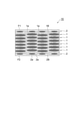
- FIG. 1 is a cross-sectional view schematically showing an embodiment of the organic core material according to the present disclosure.
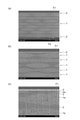
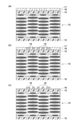
- 2 (a) to 2 (c) are SEM photographs showing an enlarged cross section of the organic core material according to the embodiment of the present disclosure.
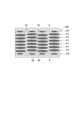
- FIG. 3 is a cross-sectional view schematically showing a state in which a metal foil is arranged on the surface of a laminate containing the first and second prepregs.
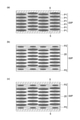
- 4 (a) to 4 (c) are cross-sectional views schematically showing a manufacturing process of the organic core material shown in FIG. 1.
- 5 (a) to 5 (c) are cross-sectional views schematically showing a process of manufacturing a fine wiring board using the organic core material according to the present disclosure.
- FIG. 6 (a) to 6 (c) are cross-sectional views schematically showing a process of manufacturing a fine wiring board using the organic core material according to the present disclosure.
- FIG. 7 is a cross-sectional view schematically showing a fine wiring board manufactured by using the organic core material according to the present disclosure.
- FIG. 1 is a cross-sectional view schematically showing an organic core material according to this embodiment.
- the organic core material 10 shown in FIG. 1 has a laminated structure including a first layer 1 and a second layer 2. That is, the organic core material 10 has a laminated structure including a second layer 2, a plurality of first layers 1, and a second layer 2 in this order.
- FIG. 1 illustrates an embodiment in which the first layer 1 is 6 layers, the number of layers of the first layer 1 is not limited to 6 layers.
- the second layer 2 constituting the surfaces F1 and F2 of the organic core material 10 may not be a single layer, but may be a plurality of layers, respectively.
- the thickness of the organic core material 10 is, for example, 500 to 1600 ⁇ m, and may be 600 to 1400 ⁇ m. When the thickness is 500 ⁇ m or more, the warp of the organic core material 10 is suppressed and the handleability tends to be good. On the other hand, when the thickness is 1600 ⁇ m or less, it tends to be possible to suppress the deterioration of handleability due to the weight.
- the thickness of the organic core material 10 can be adjusted by, for example, the number of layers of the first layer 1 or may be adjusted by the number of layers of the second layer 2.
- the width of the organic core material 10 is, for example, 200 to 1300 mm from the viewpoint of productivity.
- the first layer 1 has a first fiber cloth 1a and a first resin layer 1B composed of a first resin component and in which the first fiber cloth 1a is embedded.
- the second layer 2 has a second fiber cloth 2a and a second resin layer 2B composed of a second resin component and in which the second fiber cloth 2a is embedded.
- the fiber cloths 1a and 2a are composed of weft threads (wavy lines in FIG. 1) and warp threads (ellipses in FIG. 1).
- the second layer 2 is richer in resin component than the first layer 1. That is, the content of the second resin component based on the mass of the second layer is higher than the content of the first resin component based on the mass of the first layer.
- the first layer 1 is a cured prepreg P1
- the second layer 2 is a cured prepreg P2 (see FIG. 3).
- a prepreg P2 richer in resin component than prepreg P1 may be used.
- a prepreg P2 having a relatively thick second resin layer 2b may be used, or a second fiber cloth may be used.
- a prepreg P2 having a relatively thin 2a may be used.
- the alternate long and short dash line in FIG. 1 indicates the boundary between layers.
- FIG. 2A is an SEM photograph showing the entire configuration in the thickness direction from the surface F1 to the surface F2 of the organic core material.
- FIG. 2 (b) is an SEM photograph showing the surface F1 side enlarged from FIG. 2 (a)
- FIG. 2 (c) is an SEM photograph showing the surface F1 side enlarged from FIG. 2 (b).
- a second layer 2 (cured body of the second prepreg) is arranged in the vicinity of the surfaces F1 and F2, respectively, and eight layers of the first layer 1 (cured body of the first prepreg) are arranged between them. ing. It should be noted that the resin components of the adjacent prepregs are often integrated after curing, and the boundary between the two may not be grasped even by observing with an SEM photograph.
- FIGS. 2 (a) and 2 (c) show an example in which a fiber cloth 2a thinner than the fiber cloth 1a arranged in the center of the organic core material is arranged near the surface of the organic core material. It shows.
- the fiber cloths 1a and 2a are, for example, woven fabrics or non-woven fabrics containing inorganic fibers.
- the fibers constituting the fiber cloth natural fibers such as paper and cotton linter; inorganic fibers such as glass fiber and asbestos; organic fibers such as aramid, polyimide, polyvinyl alcohol, polyester, tetrafluoroethylene and acrylic; and a mixture thereof are used.
- glass fiber is preferable from the viewpoint of flame retardancy.
- the glass fiber include a woven cloth using E glass, C glass, D glass, S glass and the like, a glass woven cloth in which short fibers are bonded with an organic binder; and a mixture of glass fiber and cellulose fiber. More preferably, it is a glass woven fabric using E glass. It may be glass fiber, carbon fiber or a combination thereof.
- the fiber cloth has the shape of, for example, a woven fabric, a non-woven fabric, a robink, a chopped strand mat, a surfaced mat, or the like.
- the material and shape are selected according to the intended use or performance of the molded product, and one type may be used alone, or two or more types of materials and shapes may be combined, if necessary.
- the thickness of the fiber cloths 1a and 2a is, for example, 0.01 to 0.5 mm, and from the viewpoint of formability and enabling high-density wiring, 0.015 to 0.2 mm or 0.02 to 0.15 mm. May be. From the viewpoint of heat resistance, moisture resistance, processability, etc., the fiber cloth is preferably surface-treated with a silane coupling agent or the like, or mechanically opened.
- the first and second resin layers 1B and 2B are made of a cured product of a thermosetting resin composition. These layers contain organic components and optionally inorganic components (eg, inorganic fillers) as resin components. In the layers 1 and 2, the components excluding the inorganic fiber component (fiber cloth) can be regarded as the resin component.
- the content of the resin component in the first layer 1 may be 20 to 90% by mass with respect to the mass of the first layer 1, or 20 to 80% by mass from the viewpoint of reducing the linear expansion coefficient. It may be 30 to 90% by mass from the viewpoint of reducing voids after lamination, and may be 40 to 90% by mass from the viewpoint of further improving the flatness of the substrate material.
- the second layer 2 is richer in resin component than the first layer 1. That is, the content of the resin component in the second layer 2 may be 60 to 95% by mass with respect to the mass of the second layer 2, and is 60 to 80% by mass from the viewpoint of reducing the linear expansion coefficient. It may be 65 to 95% by mass from the viewpoint of reducing voids after lamination, and may be 70 to 95% by mass from the viewpoint of further improving the flatness of the substrate material.
- the content of organic components in layers 1 and 2 can be calculated by a method such as ash content measurement.
- the ash content measurement is a method of calculating the ratio of the organic component in the resin component by carbonizing the organic component at a high temperature.
- An example of an inorganic component is an inorganic filler.
- the components excluding the inorganic filler may be regarded as resin components.
- the mass ratio of the resin component contained in the layers 1 and 2 can be calculated from the microscopic image of the cross section of the organic core material 10.
- the image of the cross section is binarized, and the area ratio of the fiber cloths 1a and 2a and the resin layers 1b and 2b is calculated.
- the area ratio is calculated as the volume ratio.
- the mass ratio can be calculated by multiplying the volume ratios of the fiber cloths 1a and 2a and the resin layers 1b and 2b by the specific weights of the fiber cloths 1a and 2a and the resin layers 1b and 2b, respectively.
- the mass ratio of the resin component is calculated from the mass ratio.
- a method for calculating the mass ratio of the resin component will be described for a prepreg in which the fiber cloth is a glass cloth and the resin layer uses a resin component containing an epoxy resin and molten silica as main components.
- the specific gravity of the glass cloth is about 2 to 3 g / cm 3
- the specific gravity of the epoxy resin and the resin containing molten silica as a main component is about 0.8 to 2.5 g / cm 3 .
- the mass ratio of the resin component is calculated from the mass ratio, it is about 29% by mass to about 65% by mass.
- the mass ratio of the resin component For a prepreg using a glass cloth having a specific gravity of 2.6 g / cm 3 for a fiber cloth, an epoxy resin having a specific gravity of 1.8 g / cm 3 for a resin component, and a resin component containing molten silica as a main component, the mass ratio of the resin component.
- the ratio of the area of the resin component to the total cross-sectional area of the prepreg is 69% or more, the mass ratio of the resin component is 60% by mass or more.
- the organic core material 10 Since the second layer 2 rich in the resin component is arranged near the surface of the organic core material 10, the organic core material 10 has sufficiently flat surfaces F1 and F2.
- the organic core material 10 is useful for achieving a higher density and higher reliability of a semiconductor package.
- the flatness of the surface of the organic core material 10 can be evaluated by measuring the thickness of the organic core material 10 at a plurality of different positions and measuring the standard deviation thereof.
- the standard deviation of the thickness of the organic core material 10 may be 4 ⁇ m or less, 3.5 ⁇ m or less, 3 ⁇ m or less, 2.5 ⁇ m or less, 2 ⁇ m or less, or 0.1 ⁇ m or more.
- the standard deviation of the thickness of the organic core material 10 is the value ⁇ calculated by the following formula from the thicknesses T 1 , T 2 , ..., T n of the organic core material 10 at any n positions. There may be.
- the position where the thickness of the organic core material 10 is measured can be selected, for example, by dividing the entire main surface of the organic core material 10 into a plurality of regions having an area of 2500 mm 2 and selecting one or more from each region. The entire main surface of the organic core material 10 is divided so that the number of the plurality of regions having an area of 2500 mm 2 is maximized.
- the thickness is measured, for example, using a micrometer.
- the standard deviation of the thickness at four points corresponding to the vertices of a square having a side of 50 mm is, for example, 3.5 ⁇ m or less, and 3 ⁇ m or less, 2.5 ⁇ m or less, or 2 ⁇ m or less.
- the standard deviation of the thickness at the four points corresponding to the vertices of a square having a side of 70 mm is, for example, 5.0 ⁇ m or less, 4.5 ⁇ m or less, 4.0 ⁇ m or less, or 3.6 ⁇ m or less, and 0. It may be 1 ⁇ m or more.
- the prepreg is produced, for example, by impregnating a thermosetting resin composition with a fiber cloth and then subjecting it to a heat treatment.
- a film of a thermosetting resin composition may be prepared in advance, a fiber cloth may be sandwiched between a pair of films, and then heat treatment may be performed to produce a prepreg.
- the thermosetting resin composition is B-staged.
- the prepreg is preferably subjected to a cooling step for cooling the prepreg.
- the prepreg may be cooled by natural cooling, or may be cooled by using a cooling device such as a blower or a cooling roll.
- the temperature of the prepreg after cooling is usually 5 to 80 ° C, preferably 8 to 50 ° C, more preferably 10 to 30 ° C, and even more preferably room temperature.
- the thickness of one prepreg is not particularly limited, but is preferably 20 to 150 ⁇ m, more preferably 60 to 120 ⁇ m, for example.
- thermosetting resin contained in the thermosetting resin composition examples include epoxy resin, phenol resin, unsaturated imide resin, cyanate resin, isocyanate resin, benzoxazine resin, oxetane resin, unsaturated polyester resin, and allyl resin. , Dicyclopentadiene resin, silicone resin, modified silicone resin, triazine resin, melamine resin, urea resin, furan resin and the like. Further, without being particularly limited to these, known thermosetting resins can be used. These may be used alone or in combination of two or more. Among these, epoxy resin, unsaturated imide resin, and modified silicone resin are preferable.
- the epoxy resin is not particularly limited, but for example, bisphenol type epoxy resin such as bisphenol A type epoxy resin, bisphenol F type epoxy resin, bisphenol S type epoxy resin; alicyclic epoxy resin; aliphatic chain.
- Epoxy resin Novolak type epoxy resin such as phenol novolak type epoxy resin, cresol novolak type epoxy resin, bisphenol A novolak type epoxy resin, bisphenol F novolak type epoxy resin; phenol aralkyl type epoxy resin; stillben type epoxy resin; dicyclopentadiene Type epoxy resin; naphthalen skeleton-containing epoxy resin such as naphthol novolac type epoxy resin and naphthol aralkyl type epoxy resin; biphenyl type epoxy resin; biphenyl aralkyl type epoxy resin; xylylene type epoxy resin; dihydroanthracene type epoxy resin and the like. From these, a naphthalene skeleton-containing epoxy resin may be selected, or a naphthol aralkyl type epoxy resin may
- the unsaturated imide resin examples include a maleimide resin, an addition reaction product of a maleimide resin and a monoamine compound, and a reaction product of a maleimide resin, a monoamine compound, and a diamine compound.
- the maleimide compound is not particularly limited, and is, for example, bis (4-maleimidephenyl) methane, polyphenylmethane maleimide, bis (4-maleimidephenyl) ether, 3,3'-dimethyl-5,5.
- a monoamine compound having an acidic substituent for example, a hydroxyl group, a carboxy group, etc.
- an acidic substituent for example, a hydroxyl group, a carboxy group, etc.
- o-aminophenol for example, a hydroxyl group, a carboxy group, etc.
- M-aminobenzoic acid, p-aminobenzoic acid, o-aminobenzenesulfonic acid, m-aminobenzenesulfonic acid, p-aminobenzenesulfonic acid 3,5-dihydroxyaniline, 3,5-dicarboxyaniline, etc.
- diamine compound a diamine compound having at least two benzene rings is preferable, and a diamine compound having at least two benzene rings linearly between two amino groups is more preferable, and 4,4'-diamino.
- unsaturated imide resin for example, the maleimide compound described in JP-A-2018-165340 can also be used.
- the resin layers 1b and 2b include a curing agent, a curing accelerator, an inorganic filler, an organic filler, a coupling agent, a leveling agent, an antioxidant, a flame retardant, and the like, if necessary. It is preferable to contain at least one selected from a flame retardant aid, a rocking modifier, a thickener, a thixotropic agent, a flexible material, a surfactant, a photopolymerization initiator and the like.
- the thickness accuracy can be improved without high filling, so that the content of the inorganic filler can be, for example, 10 to 60% by volume.
- the upper limit value may be 70% by volume or 80% by volume.
- modified silicone compound modified silicone resin
- thermosetting resins curing agents, curing accelerators, inorganic fillers, heat.
- Thermosetting containing at least one selected from the group consisting of plastic resins, elastomers, organic fillers, flame retardants, ultraviolet absorbers, antioxidants, photopolymerization initiators, fluorescent whitening agents, adhesion improvers and the like.
- a sex resin composition or the like can also be used.
- both terminal amino-modified silicone compounds are preferable, specifically, (A) siloxane diamine represented by the following general formula (1), and (B) at least two N-substituted maleimides in the molecular structure.
- a maleimide compound having a group (C) a two-terminal amino-modified silicone compound obtained by reacting an amine compound having an acidic substituent represented by the following general formula (2), the details of which are described in International Publication No. 2012/099133. It's a street.
- the plurality of R 1s independently represent an alkyl group, a phenyl group or a substituted phenyl group, and may be the same or different from each other
- the plurality of R 2s independently represent an alkyl group and a phenyl group, respectively. It represents a group or a substituted phenyl group and may be the same or different from each other
- R 3 and R 4 independently represent an alkyl group, a phenyl group or a substituted phenyl group, respectively
- R 5 and R 6 are independently divalent. Indicates an organic group.
- n represents an integer of 2 to 50.
- each independently indicates a hydroxyl group, a carboxyl group or a sulfonic acid group
- x is an integer of 1 to 5
- y is an integer of 0 to 4
- x + y 5.
- the manufacturing method according to this embodiment includes the following steps. (A1) Step of preparing a plurality of first prepregs P1 (B1) Step of preparing at least two second prepregs P2 (C1) A second prepreg P2, a plurality of first prepregs P1, and a first A step of heating while applying a pressing force in the thickness direction of the laminated body 10P provided with the second prepreg P2 in this order.
- FIG. 3 is a cross-sectional view schematically showing a state in which a metal foil is arranged on the surface of a laminated body containing prepregs P1 and P2.
- the first prepreg P1 has a first fiber cloth 1a and a first resin layer 1b composed of a first resin component and in which the first fiber cloth 1a is embedded.
- the second prepreg P2 has a second fiber cloth 2a and a second resin layer 2b composed of a second resin component and in which the second fiber cloth 2a is embedded.
- the second prepreg P2 is richer in resin component than the first prepreg P1.
- the first prepreg P1 is cured to form the first layer 1.
- the second prepreg P2 is cured to form the second layer 2.
- the hot pressing step of the step (C1) is carried out using, for example, a multi-stage press, a multi-stage vacuum press, continuous forming, or an autoclave forming machine.
- the metal leaf 5 may be arranged on the surface of the laminated body 10P, respectively.
- the hot press temperature is, for example, 100 to 250 ° C.
- the heating and pressurizing time after the temperature rise is, for example, 0.1 to 5 hours.
- the organic core material after heating and pressurization may be further heated if necessary.
- the laminate 10P is continuously pressurized from the temperature rise to the heating and pressurization at the hot press temperature.
- the pressure applied to the laminated body 10P from the temperature rise to the heating and pressurization at the hot press temperature may be, for example, 0.2 to 10 MPa.
- the metal foil 5 is etched to obtain the organic core material 10.
- the metal leaf 5 can be removed by etching using, for example, ferric chloride solution, ammonium persulfate, or the like.
- this manufacturing method includes the following steps.
- (A2) Step of preparing a plurality of first prepregs P1 (B2) Step of preparing at least two second prepregs P2 (C2) Laminated body 20P (first laminate) composed of a plurality of first prepregs P1.
- Step of heating while applying a pressing force in the thickness direction of the body) (D2) A laminated body 30P (second laminated body) including a second prepreg P2, a laminated body 20P, and a second prepreg P2 in this order. ) The process of heating while applying pressing force in the thickness direction
- the heat pressing step of the step (C2) may be carried out in a state where the metal foils 5 are arranged on both sides of the laminated body 20P. Then, after etching the metal foil 5, the second prepreg P2 is arranged on the surface of the laminated body 20 (the cured body of the laminated body 20P) (see FIG. 4B). Further, the metal foil 5 is arranged on the surface of the second prepreg P2 (see FIG. 4 (c)). In the step (D2), a hot pressing step is carried out on the laminated body P30. Then, by etching the metal foil 5, the organic core material 10 is obtained.
- the step (D2) is carried out under conditions suitable for the curing treatment of the second prepreg P2. It is possible to further suppress the surface waviness of the organic core material 10.
- the metal foil 5 on the surface of the organic core material 10 may not be etched, and the metal foil 5 may be subjected to circuit processing to manufacture a printed wiring board.
- the metal of the metal foil 5 may be copper, gold, silver, nickel, platinum, molybdenum, ruthenium, aluminum, tungsten, iron, titanium, chromium, or at least one of these metal elements from the viewpoint of conductivity.
- the alloy containing the alloy is preferable, copper and aluminum are more preferable, and copper is more preferable.
- circuit processing for example, after forming a resist pattern on the surface of the metal foil, removing the unnecessary metal foil by etching, peeling the resist pattern, and then drilling. This can be done by forming the necessary through holes, forming the resist pattern again, applying plating to make the through holes conductive, and finally peeling off the resist pattern.
- a semiconductor package can be manufactured by mounting a semiconductor chip, memory, etc. at a predetermined position on a printed wiring board. Since the semiconductor package using the organic core material of the present embodiment has a small variation in thickness, the yield at the time of mounting the semiconductor chip tends to be improved.
- a build-up film layer can be formed on the printed wiring board. Circuit patterns can be formed on the printed wiring board or on the build-up film layer.
- a subtractive method a full additive method, a semi-additive method (SAP: Semi Adaptive Process), a modified semi-additive method (m-SAP: modified Semi Adaptive Process), or the like can be used (see FIGS. 5 to 7). ..
- a prepreg was prepared according to the following procedure.
- 24 g of silicone diamine (trade name "KF-8010", manufactured by Shinetsu Silicone)
- 240 g of bis (4-maleimidephenyl) methane 240 g
- propylene glycol monomethyl ether 400 g
- the mixture was charged and reacted at 115 ° C. for 4 hours, then heated to 130 ° C. and concentrated under normal pressure to obtain a solution having a resin content of 60% by mass.
- the obtained varnish was impregnated and coated on E glass having a thickness of 0.1 mm by adjusting the gap, and dried by heating at 150 ° C. for 10 minutes to prepare a prepreg having a resin content of 50% by mass. Further, the obtained varnish was impregnated and coated on E glass having a thickness of 0.015 mm by adjusting the gap, and dried by heating at 150 ° C. for 10 minutes to prepare a prepreg having a resin content of 70% by mass.
- the resin content of the prepreg contained all the components other than the glass cloth constituting the prepreg, and was calculated including the components of the silica slurry.
- the measurement of the mass ratio of the resin content was calculated by dividing the difference between the masses of the prepreg and the glass cloth by the mass of the prepreg. The adjustment of the gap width during the impregnation coating was repeated until the prepregs having the mass ratios of the resin components of 50% by mass and 70% by mass were obtained.
- Stainless steel plate (thickness 1.8 mm), 270 mm square size copper foil on the outside (thickness 5 ⁇ m, manufactured by Mitsui Mining & Smelting Co., Ltd.), and 265 mm square size cushion material on the outside (thickness 0.2 mm, Oji)
- Five sheets of paper, KS190), and 260 mm square copper foil (thickness 12 ⁇ m, manufactured by Mitsui Mining & Smelting Co., Ltd.) are placed on both sides, and a press device (manufactured by Meiki Seisakusho, MHPC-VF-350) is placed.
- the obtained organic core material was immersed in an aqueous solution of ammonium persulfate to etch the copper foil (see FIG. 4 (b)).
- One prepreg having a 250 mm square size resin content of 70% by mass was placed on the upper surface and the lower surface of the etched organic core material.
- a 270 mm square size copper foil was placed outside the prepreg having a resin component mass ratio of 70 mass% (see FIG. 4 (c)).
- Five cushioning materials were placed, and 260 mm square copper foil (thickness 12 ⁇ m, made by Mitsui Mining & Smelting Co., Ltd.) was placed on both sides.
- the holding time at a pressure of 3 MPa, a vacuum degree of 40 hPa, a temperature rise rate of 4 ° C./min, and a temperature of 240 ° C. is 85.
- An organic core material was obtained through a step of heating and pressurizing under the condition of minutes.
- Examples 3 and 4 After producing the prepreg in the same manner as in Example 1, the mass ratio of the resin content of 250 mm square size is 70% by mass on the upper surface and the lower surface of the prepreg having the mass ratio of the resin content of 250 mm square size of 6 stacked. The prepregs of were placed one by one. A 270 mm square size copper foil (thickness 5 ⁇ m, manufactured by Mitsui Mining & Smelting Co., Ltd.) was placed outside the prepreg having a resin content of 70% by mass (see FIG. 3).
- Five cushioning materials were placed, and 260 mm square copper foil (thickness 12 ⁇ m, made by Mitsui Mining & Smelting Co., Ltd.) was placed on both sides.
- the holding time at a pressure of 3 MPa, a vacuum degree of 40 hPa, a temperature rise rate of 4 ° C./min, and a temperature of 240 ° C. is 85.
- An organic core material was obtained through a step of heating and pressurizing under the condition of minutes.
- the organic core material obtained by the above method was evaluated according to the following evaluation method. The results are shown in Table 1.
- ⁇ Calculation of standard deviation of thickness of 50 mm square size The range of 150 mm square size at the center of the organic core material of 250 mm square size (square with a side of 250 mm in a plan view) was divided into 9 areas of 50 mm square, and the standard deviation value of the thickness of 9 areas was calculated. In the case of a large package for servers, it is assumed that the chip size will be about 50 mm square, and 50 mm square is set within the standard deviation calculation range. The outside of the center 150 mm square size was not used for evaluation because the resin contained in the prepreg flowed out to the outside of the prepreg and the organic core material became thin.
- the thickness of four points at the four corners of a 50 mm square area was measured.
- the standard deviation value was calculated using the thickness values of the four points as the population.
- the maximum value among the standard deviation values calculated from the nine areas is shown in Table 1 as the standard deviation value of each organic core material.
- ⁇ Calculation of thickness standard deviation of 70 mm square size The range of 140 mm square size at the center of the organic core material of 250 mm square size (square with a side of 250 mm in a plan view) was divided into four areas of 70 mm square, and the standard deviation values of the thicknesses of the four areas were calculated. Since the UV irradiation range at the time of forming the photoresist pattern in the copper wiring forming step is 70 mm square, 70 mm square was set as the range for calculating the standard deviation. Using a micrometer, the thickness of four points at the four corners of the 70 mm square area was measured. The standard deviation value was calculated using the thickness values of the four points as the population. The maximum value among the standard deviation values calculated from the four areas is shown in Table 1 as the standard deviation value of each organic core material.
- An organic core material having a size of 250 mm square (a square having a side of 250 mm in a plan view) was prepared.
- the central region (range of 150 mm square size) of this organic core material was cut into a 30 mm square size with a cutting machine.
- Refine Saw Excel A (manufactured by Refine Tech Co., Ltd.) was used for cutting. After cutting, the substrate surface was washed by immersing it in a 10 mass% sulfuric acid aqueous solution for 1 minute. Then, it was washed with pure water.
- a chip with a solder bump has a structure in which copper pillars are arranged on the surface of a silicon wafer and solders are arranged on an end face different from that of the silicon wafer of the copper pillars. Copper pillars and solder are collectively called solder bumps.
- the size of each configuration was as follows. ⁇ Chip size with solder bump: 25 mm square ⁇ Silicon wafer thickness: 725 ⁇ 25 ⁇ m ⁇ Solder bump pitch: 150 ⁇ m -Copper pillar height: 45 ⁇ m ⁇ Solder bump height: 15 ⁇ m ⁇ Solder diameter: 75 ⁇ m
- Copper wiring was formed in the organic core material by the semi-additive method.
- the copper foil of the organic core material was immersed in an aqueous solution of ammonium persulfate and etched.
- a build-up film manufactured by Ajinomoto Fine-Techno Co., Ltd., GX92
- a vacuum laminator manufactured by Nikko Materials Co., Ltd., V-130
- the conditions were a pressure of 0.5 MPa, a vacuuming time of 15 seconds, a pressurizing time of 60 seconds, and a temperature of 50 ° C.
- a seed layer 16 was formed on the surface of one of the build-up film layers by a sputtering method (FIG. 5 (b)).
- the seed layer 16 has a two-layer structure consisting of a titanium layer of 25 nm and a copper layer of 150 nm.
- a photoresist film (RY-5107UT, manufactured by Hitachi Kasei Co., Ltd.) of the photosensitive resin composition was laminated on the seed layer.
- the conditions were a pressure of 0.5 MPa, a vacuuming time of 15 seconds, a pressurizing time of 60 seconds, and a temperature of 50 ° C.
- the photosensitive resin layer 17 was formed on the surface of the seed layer 16 (FIG. 5 (c)).
- a square area with a side of 70 mm was irradiated with UV to expose it.
- a 1% by mass aqueous solution of sodium carbonate was sprayed and developed using a spin developer (ultra-high pressure spin developer manufactured by Blue Ocean Technology Co., Ltd.).
- a plasma asher AP series batch type plasma processing device manufactured by Nordson Advanced Technology Co., Ltd.
- oxygen plasma was applied to the resist pattern to remove the resist residue during development.
- a copper wiring 18 having a wiring width / space width (L / S) 2 ⁇ m / 2 ⁇ m was formed by an electrolytic copper plating method (FIG. 6 (b)).
- the wiring height was 3 ⁇ m.
- a 2.38% by mass aqueous solution of TMAH (tetramethylammonium hydroxide) was sprayed on a spin developer to peel off the resist (FIG. 6 (c)).
- the seed layer 16 exposed by peeling the resist was removed by etching (FIG. 7).
- the copper layer was removed by immersing it in an aqueous solution of a copper etching solution (manufactured by Mitsubishi Gas Chemical Company, WLC-C2) and pure water at a mass ratio of 1: 1 at 23 ° C.
- the titanium layer was removed by immersing it in an aqueous solution of a titanium etching solution (manufactured by Mitsubishi Gas Chemical Company, WLC-T) and a 23% aqueous ammonia solution at a mass ratio of 50: 1 at 23 ° C. for 65 seconds, and then washing with pure water. ..
- a titanium etching solution manufactured by Mitsubishi Gas Chemical Company, WLC-T
- a 23% aqueous ammonia solution at a mass ratio of 50: 1 at 23 ° C. for 65 seconds
- Wiring yield is 75% or more and 100% or less
- an organic core material useful for achieving a high density and high reliability of a semiconductor package and a method for manufacturing the same are provided.
Landscapes
- Engineering & Computer Science (AREA)
- Chemical & Material Sciences (AREA)
- Textile Engineering (AREA)
- Materials Engineering (AREA)
- Microelectronics & Electronic Packaging (AREA)
- Chemical Kinetics & Catalysis (AREA)
- Health & Medical Sciences (AREA)
- Medicinal Chemistry (AREA)
- Polymers & Plastics (AREA)
- Organic Chemistry (AREA)
- Manufacturing & Machinery (AREA)
- Composite Materials (AREA)
- Mechanical Engineering (AREA)
- Laminated Bodies (AREA)
- Reinforced Plastic Materials (AREA)
Priority Applications (6)
| Application Number | Priority Date | Filing Date | Title |
|---|---|---|---|
| PCT/JP2020/035461 WO2022059166A1 (ja) | 2020-09-18 | 2020-09-18 | 有機コア材及びその製造方法 |
| KR1020237011220A KR20230069944A (ko) | 2020-09-18 | 2021-09-15 | 유기 코어재 및 그 제조 방법, 유기 코어재를 포함하는 적층체, 및 배선판 |
| PCT/JP2021/033953 WO2022059711A1 (ja) | 2020-09-18 | 2021-09-15 | 有機コア材及びその製造方法、有機コア材を含む積層体、並びに配線板 |
| JP2022550588A JP7746998B2 (ja) | 2020-09-18 | 2021-09-15 | 有機コア材及びその製造方法、有機コア材を含む積層体、並びに配線板 |
| US18/245,348 US20230356498A1 (en) | 2020-09-18 | 2021-09-15 | Organic core material, production method for same, laminate including organic core material, and circuit board |
| TW110134532A TWI910228B (zh) | 2020-09-18 | 2021-09-16 | 有機芯材及其製造方法、包含有機芯材之積層體、以及配線板 |
Applications Claiming Priority (1)
| Application Number | Priority Date | Filing Date | Title |
|---|---|---|---|
| PCT/JP2020/035461 WO2022059166A1 (ja) | 2020-09-18 | 2020-09-18 | 有機コア材及びその製造方法 |
Publications (1)
| Publication Number | Publication Date |
|---|---|
| WO2022059166A1 true WO2022059166A1 (ja) | 2022-03-24 |
Family
ID=80776032
Family Applications (2)
| Application Number | Title | Priority Date | Filing Date |
|---|---|---|---|
| PCT/JP2020/035461 Ceased WO2022059166A1 (ja) | 2020-09-18 | 2020-09-18 | 有機コア材及びその製造方法 |
| PCT/JP2021/033953 Ceased WO2022059711A1 (ja) | 2020-09-18 | 2021-09-15 | 有機コア材及びその製造方法、有機コア材を含む積層体、並びに配線板 |
Family Applications After (1)
| Application Number | Title | Priority Date | Filing Date |
|---|---|---|---|
| PCT/JP2021/033953 Ceased WO2022059711A1 (ja) | 2020-09-18 | 2021-09-15 | 有機コア材及びその製造方法、有機コア材を含む積層体、並びに配線板 |
Country Status (5)
| Country | Link |
|---|---|
| US (1) | US20230356498A1 (https=) |
| JP (1) | JP7746998B2 (https=) |
| KR (1) | KR20230069944A (https=) |
| TW (1) | TWI910228B (https=) |
| WO (2) | WO2022059166A1 (https=) |
Families Citing this family (3)
| Publication number | Priority date | Publication date | Assignee | Title |
|---|---|---|---|---|
| CN115485829A (zh) * | 2020-04-21 | 2022-12-16 | 京瓷株式会社 | 电子部件、电子设备以及电子部件的制造方法 |
| KR20250121006A (ko) * | 2022-12-07 | 2025-08-11 | 가부시끼가이샤 레조낙 | 금속장 적층판, 프린트 배선판 및 반도체 패키지 |
| CN120239650A (zh) * | 2022-12-07 | 2025-07-01 | 株式会社力森诺科 | 覆金属层叠板、印刷线路板及半导体封装体 |
Citations (2)
| Publication number | Priority date | Publication date | Assignee | Title |
|---|---|---|---|---|
| JPH0697670A (ja) * | 1992-02-26 | 1994-04-08 | Risho Kogyo Co Ltd | 多層プリント配線用基板 |
| JP2007110044A (ja) * | 2005-10-17 | 2007-04-26 | Kyocera Chemical Corp | 銅張り積層板 |
Family Cites Families (6)
| Publication number | Priority date | Publication date | Assignee | Title |
|---|---|---|---|---|
| JPH02155726A (ja) * | 1988-12-09 | 1990-06-14 | Sumitomo Bakelite Co Ltd | 熱硬化性樹脂積層板の製造方法 |
| JPH05261861A (ja) * | 1992-03-19 | 1993-10-12 | Shin Kobe Electric Mach Co Ltd | 積層板 |
| JP2985642B2 (ja) * | 1994-02-23 | 1999-12-06 | 松下電工株式会社 | 金属張り積層板の製造方法 |
| JP6109569B2 (ja) | 2010-05-07 | 2017-04-05 | 住友ベークライト株式会社 | 回路基板用エポキシ樹脂組成物、プリプレグ、積層板、樹脂シート、プリント配線板用積層基材、プリント配線板、及び半導体装置 |
| JP2014167053A (ja) * | 2013-02-28 | 2014-09-11 | 3M Innovative Properties Co | 高熱伝導性プリプレグ、プリプレグを用いた配線板および多層配線板、ならびに多層配線板を用いた半導体装置 |
| JP6133227B2 (ja) | 2014-03-27 | 2017-05-24 | 新光電気工業株式会社 | 配線基板及びその製造方法 |
-
2020
- 2020-09-18 WO PCT/JP2020/035461 patent/WO2022059166A1/ja not_active Ceased
-
2021
- 2021-09-15 US US18/245,348 patent/US20230356498A1/en active Pending
- 2021-09-15 JP JP2022550588A patent/JP7746998B2/ja active Active
- 2021-09-15 WO PCT/JP2021/033953 patent/WO2022059711A1/ja not_active Ceased
- 2021-09-15 KR KR1020237011220A patent/KR20230069944A/ko active Pending
- 2021-09-16 TW TW110134532A patent/TWI910228B/zh active
Patent Citations (2)
| Publication number | Priority date | Publication date | Assignee | Title |
|---|---|---|---|---|
| JPH0697670A (ja) * | 1992-02-26 | 1994-04-08 | Risho Kogyo Co Ltd | 多層プリント配線用基板 |
| JP2007110044A (ja) * | 2005-10-17 | 2007-04-26 | Kyocera Chemical Corp | 銅張り積層板 |
Also Published As
| Publication number | Publication date |
|---|---|
| US20230356498A1 (en) | 2023-11-09 |
| TW202212151A (zh) | 2022-04-01 |
| TWI910228B (zh) | 2026-01-01 |
| WO2022059711A1 (ja) | 2022-03-24 |
| JPWO2022059711A1 (https=) | 2022-03-24 |
| KR20230069944A (ko) | 2023-05-19 |
| JP7746998B2 (ja) | 2025-10-01 |
Similar Documents
| Publication | Publication Date | Title |
|---|---|---|
| JP7746998B2 (ja) | 有機コア材及びその製造方法、有機コア材を含む積層体、並びに配線板 | |
| JP5569270B2 (ja) | プリプレグ、金属張積層板、プリント配線板及び半導体装置 | |
| TWI433773B (zh) | 積層板,電路板及半導體裝置 | |
| JP6206035B2 (ja) | 金属張積層板、プリント配線基板、および半導体装置 | |
| WO2022059716A1 (ja) | 半導体パッケージ用基板材料を製造する方法、プリプレグ、及び半導体パッケージ用基板材料 | |
| TW201811556A (zh) | 覆金屬積層板、印刷線路板及半導體封裝體 | |
| JP7351315B2 (ja) | 金属張り積層板の製造方法、金属張り積層板、プリント配線板及び半導体パッケージ、並びにコアレス基板形成用支持体及び半導体再配線層形成用支持体 | |
| TW202033361A (zh) | 積層板、印刷線路板、半導體封裝體及積層板的製造方法 | |
| JP5594128B2 (ja) | プリント配線板用樹脂組成物、プリプレグ、積層板、樹脂シート、プリント配線板及び半導体装置 | |
| KR20240053065A (ko) | 반도체 패키지용 기판 재료를 제조하는 방법, 프리프레그, 및 프리프레그의 응용 | |
| JP5256681B2 (ja) | 半導体装置、半導体装置用プリント配線板及び銅張積層板 | |
| TW202417553A (zh) | 預浸體、積層板、印刷線路板及半導體封裝體 | |
| JP5293654B2 (ja) | 回路基板用樹脂組成物、プリプレグ、積層板、プリント配線板、及び半導体装置 | |
| JP2022164680A (ja) | プリプレグ及びその製造方法、積層板、プリント配線板並びに半導体パッケージ | |
| JP7529188B1 (ja) | 金属張積層板、プリント配線板及び半導体パッケージ並びにこれらの製造方法 | |
| JP2012158645A (ja) | プリント配線板用エポキシ樹脂組成物、プリプレグ、金属張積層板、樹脂シート、プリント配線板及び半導体装置 | |
| WO2025173767A1 (ja) | 半導体パッケージ | |
| WO2025258595A1 (ja) | 金属張積層板の製造方法、金属張積層板、プリント配線板及びその製造方法、半導体パッケージ及びその製造方法 | |
| JP5211624B2 (ja) | 半導体装置の製造方法および半導体装置用プリント配線板の製造方法 | |
| TW202212119A (zh) | 積層板、印刷線路板、半導體封裝體及積層板的製造方法 |
Legal Events
| Date | Code | Title | Description |
|---|---|---|---|
| 121 | Ep: the epo has been informed by wipo that ep was designated in this application |
Ref document number: 20954151 Country of ref document: EP Kind code of ref document: A1 |
|
| NENP | Non-entry into the national phase |
Ref country code: DE |
|
| 122 | Ep: pct application non-entry in european phase |
Ref document number: 20954151 Country of ref document: EP Kind code of ref document: A1 |
|
| NENP | Non-entry into the national phase |
Ref country code: JP |