WO2022039223A1 - 神経系血管バリアーの可逆的開口剤 - Google Patents
神経系血管バリアーの可逆的開口剤 Download PDFInfo
- Publication number
- WO2022039223A1 WO2022039223A1 PCT/JP2021/030373 JP2021030373W WO2022039223A1 WO 2022039223 A1 WO2022039223 A1 WO 2022039223A1 JP 2021030373 W JP2021030373 W JP 2021030373W WO 2022039223 A1 WO2022039223 A1 WO 2022039223A1
- Authority
- WO
- WIPO (PCT)
- Prior art keywords
- nervous system
- vascular barrier
- cypa
- therapeutic agent
- system vascular
- Prior art date
- Legal status (The legal status is an assumption and is not a legal conclusion. Google has not performed a legal analysis and makes no representation as to the accuracy of the status listed.)
- Ceased
Links
Images



Classifications
-
- A—HUMAN NECESSITIES
- A61—MEDICAL OR VETERINARY SCIENCE; HYGIENE
- A61K—PREPARATIONS FOR MEDICAL, DENTAL OR TOILETRY PURPOSES
- A61K38/00—Medicinal preparations containing peptides
- A61K38/16—Peptides having more than 20 amino acids; Gastrins; Somatostatins; Melanotropins; Derivatives thereof
-
- A—HUMAN NECESSITIES
- A61—MEDICAL OR VETERINARY SCIENCE; HYGIENE
- A61P—SPECIFIC THERAPEUTIC ACTIVITY OF CHEMICAL COMPOUNDS OR MEDICINAL PREPARATIONS
- A61P9/00—Drugs for disorders of the cardiovascular system
-
- A—HUMAN NECESSITIES
- A61—MEDICAL OR VETERINARY SCIENCE; HYGIENE
- A61K—PREPARATIONS FOR MEDICAL, DENTAL OR TOILETRY PURPOSES
- A61K38/00—Medicinal preparations containing peptides
- A61K38/16—Peptides having more than 20 amino acids; Gastrins; Somatostatins; Melanotropins; Derivatives thereof
- A61K38/43—Enzymes; Proenzymes; Derivatives thereof
- A61K38/52—Isomerases (5)
-
- A—HUMAN NECESSITIES
- A61—MEDICAL OR VETERINARY SCIENCE; HYGIENE
- A61K—PREPARATIONS FOR MEDICAL, DENTAL OR TOILETRY PURPOSES
- A61K45/00—Medicinal preparations containing active ingredients not provided for in groups A61K31/00 - A61K41/00
- A61K45/06—Mixtures of active ingredients without chemical characterisation, e.g. antiphlogistics and cardiaca
-
- A—HUMAN NECESSITIES
- A61—MEDICAL OR VETERINARY SCIENCE; HYGIENE
- A61P—SPECIFIC THERAPEUTIC ACTIVITY OF CHEMICAL COMPOUNDS OR MEDICINAL PREPARATIONS
- A61P43/00—Drugs for specific purposes, not provided for in groups A61P1/00-A61P41/00
-
- C—CHEMISTRY; METALLURGY
- C07—ORGANIC CHEMISTRY
- C07K—PEPTIDES
- C07K14/00—Peptides having more than 20 amino acids; Gastrins; Somatostatins; Melanotropins; Derivatives thereof
- C07K14/435—Peptides having more than 20 amino acids; Gastrins; Somatostatins; Melanotropins; Derivatives thereof from animals; from humans
- C07K14/46—Peptides having more than 20 amino acids; Gastrins; Somatostatins; Melanotropins; Derivatives thereof from animals; from humans from vertebrates
- C07K14/47—Peptides having more than 20 amino acids; Gastrins; Somatostatins; Melanotropins; Derivatives thereof from animals; from humans from vertebrates from mammals
-
- C—CHEMISTRY; METALLURGY
- C12—BIOCHEMISTRY; BEER; SPIRITS; WINE; VINEGAR; MICROBIOLOGY; ENZYMOLOGY; MUTATION OR GENETIC ENGINEERING
- C12N—MICROORGANISMS OR ENZYMES; COMPOSITIONS THEREOF; PROPAGATING, PRESERVING, OR MAINTAINING MICROORGANISMS; MUTATION OR GENETIC ENGINEERING; CULTURE MEDIA
- C12N9/00—Enzymes; Proenzymes; Compositions thereof; Processes for preparing, activating, inhibiting, separating or purifying enzymes
- C12N9/90—Isomerases (5.)
-
- A—HUMAN NECESSITIES
- A61—MEDICAL OR VETERINARY SCIENCE; HYGIENE
- A61K—PREPARATIONS FOR MEDICAL, DENTAL OR TOILETRY PURPOSES
- A61K9/00—Medicinal preparations characterised by special physical form
- A61K9/0012—Galenical forms characterised by the site of application
- A61K9/0019—Injectable compositions; Intramuscular, intravenous, arterial, subcutaneous administration; Compositions to be administered through the skin in an invasive manner
Definitions
- the present invention relates to a drug that reversibly opens the nervous system vascular barrier.
- adult nervous system tissues such as the brain and retina are barriers formed by tissue-specific differentiated blood vessels such as the blood-brain barrier (BBB) and blood-retinal barrier (BRB) (hereinafter, “nervous system”). It is separated from other tissues by a “systematic vascular barrier”), and the movement of substances between blood and nervous tissue parenchyma is strongly restricted.
- BBB blood-brain barrier
- BRB blood-retinal barrier
- Such a nervous system vascular barrier is induced during ontogeny and is basically closed in adults, but the optimal tissue microenvironment for the normal functioning of neurons by finely regulating its barrier function. Is maintained.
- neural tissue parenchyma which is a lesion, and is a disease. It also has the aspect of making it intractable.
- Non-Patent Document 1 a method of opening with a proteinase such as matrix metalloproteinase (see Non-Patent Document 1) is also disclosed, but it destroys the nervous system vascular barrier forming molecule and causes the nervous system vascular barrier. Temporary and reversible openings were difficult.
- the present inventors first narrowed down the analysis of the control mechanism of the nervous system vascular barrier to the mechanism by which the nervous system vascular barrier is opened by hypoxic stimulation. As a result, claudin-5 disappeared from the cell membrane of vascular endothelial cells by hypoxic stimulation, and as a result, a cascade in which the nervous system vascular barrier was opened was clarified and reported (see Non-Patent Document 2).
- ADAM12 and ADAM17 are molecules that work relatively specifically in the process of opening the nervous system vascular barrier by hypoxic stimulation
- basidin is a nervous system that is stimulated by various stimuli such as inflammatory stimulation as well as hypoxic stimulation. It was reported that it is a molecule that works in common in the process of opening the vascular barrier (see Patent Document 1, Non-Patent Documents 3 and 4).
- CypA cyclophilin A
- CypA is a substance specified as an intracellular molecule that binds to cyclosporin A, which is a drug that suppresses the activation of T lymphocytes.
- CypA is also expressed in cell types other than T lymphocytes, is also a molecule that is secreted extracellularly and functions, and is secreted extracellularly and binds to basidin. .. CypA, which works extracellularly, has been shown to be involved in several biological phenomena such as modification of inflammatory processes.
- Such cyclophilin A is conjugated with a compound that promotes transport across the blood-brain barrier such as transferrin receptor-binding antibody and used as a neuroprotective agent (see Patent Document 2), and the cyclophilin A / MMP9 pathway is based on apoE4. It has been reported that it is involved in the degradation of blood-brain barrier constituent molecules (see Non-Patent Document 5) and that cyclophilin A and transferrin (CD147) are involved in apoptosis during subepithelial hemorrhage (see Non-Patent Document 6). ing. However, it has not been known so far that cyclophilin A reversibly opens the nervous system vascular barrier.
- An object of the present invention is to provide a reversible opening agent for a nervous system vascular barrier.
- CypA cyclophilin A
- the present invention is as follows.
- the polypeptide ligand is (1) A polypeptide consisting of the amino acid sequence shown in SEQ ID NO: 1.
- [5] To be administered simultaneously or sequentially with at least one therapeutic agent selected from a therapeutic agent for neurodegenerative diseases, a therapeutic agent for retinal diseases, a therapeutic agent for mental diseases, a therapeutic agent for central nervous system tumors, and a therapeutic agent for epilepsy.
- a therapeutic agent for neurodegenerative diseases selected from a therapeutic agent for neurodegenerative diseases, a therapeutic agent for retinal diseases, a therapeutic agent for mental diseases, a therapeutic agent for central nervous system tumors, and a therapeutic agent for epilepsy.
- the reversible opening agent for a nervous system vascular barrier according to any one of the above [1] to [4] for use.
- the subject includes a reversible opening agent for a nervous system vascular barrier containing a ligand having an agonistic action on basidin as an active ingredient, a therapeutic agent for neurodegenerative diseases, a therapeutic agent for retinal diseases, a therapeutic agent for mental diseases, and a central nervous system tumor.
- a method comprising the step of simultaneously or sequentially administering at least one therapeutic agent selected from a therapeutic agent and an epilepsy therapeutic agent.
- Use of a ligand having an agonistic action on basidin for producing a reversible opening agent for a nervous system vascular barrier.
- the reversible opening agent for the nervous system vascular barrier of the present invention By using the reversible opening agent for the nervous system vascular barrier of the present invention, it becomes possible to reversibly open the nervous system vascular barrier.
- FIG. 1a is a diagram showing the results of fluorescent immunostaining
- FIG. 1b is a diagram showing the results of quantifying the claudin-5 signal on the cell membrane
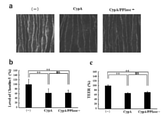
- FIG. 1c is a diagram showing the transdermal electrical resistance value (TEER) of the cell monolayer. It is a figure which shows the result of having measured. It is a figure which shows the result at the time of processing with CypA 300ng / ml with PPIase activity (CypA in the figure) or no PPIase activity (CypA / PPIase- in the figure) in Example 2.
- FIG. 1a is a diagram showing the results of fluorescent immunostaining
- FIG. 1b is a diagram showing the results of quantifying the claudin-5 signal on the cell membrane
- FIG. 1c is a diagram showing the transdermal electrical resistance value (TEER) of the cell monolayer. It is a figure which shows the result of having measured. It is a figure which shows the result at the time of
- FIG. 2a is a diagram showing the results of fluorescent immunostaining
- FIG. 2b is a diagram showing the results of quantifying the claudin-5 signal on the cell membrane
- FIG. 2c is a diagram showing the results of measuring the TEER of the cell monolayer. Is. It is a figure which shows the result at the time of processing with time with CypA 300ng / ml in Example 3.
- FIG. 3a is a diagram showing the results of fluorescent immunostaining
- FIG. 3b is a diagram showing the results of quantifying the claudin-5 signal on the cell membrane
- FIG. 3c is a diagram showing the results of measuring the TEER of the cell monolayer. Is.
- FIG. 4a is a diagram showing the results of fluorescent immunostaining
- FIG. 4b is a diagram showing the results of dye leakage of an intravenously injected tracer.
- FIG. 5 is a diagram showing the results of intravenous administration of doxorubicin to mice with or without CypA pretreatment in Example 5 and observing the uptake of doxorubicin into the cerebrum, liver and kidney with a laser confocal microscope.
- FIG. 5 is a diagram showing the results of intravenous administration of doxorubicin to mice with or without CypA premedication in Example 5 to quantify the uptake of doxorubicin into the cerebrum, liver and kidney.
- Vasidin in the present specification is a glycoprotein belonging to the immunoglobulin superfamily localized in the cell membrane, and is EMMPRIN (extracellular matrix metalloproteinase inducer), CD147 (cluster of differentiation 147), HT7, OX-47, or for.
- EMMPRIN extracellular matrix metalloproteinase inducer
- CD147 cluster of differentiation 147
- HT7 HT7
- OX-47 OX-47
- Basisdin is known to be a receptor for cyclophilin A (CypA), which is a member of cyclophilin having peptidyl-prolyl cis-trans isomerase (PPIase) activity.
- CypA cyclophilin A
- PPIase peptidyl-prolyl cis-trans isomerase
- the basingin is preferably human basingin, and the human basingin can be mentioned as SEQ ID NO: 2-4, respectively, in National Center for Biotechnology Information (NCBI), accession numbers NP_001719.2, NP_940991, NP_940992. It is published as 1.
- NCBI National Center for Biotechnology Information
- the ligand having an agonistic action on basidin in the present specification is not particularly limited as long as it is a compound having an action of binding to basidin and reversibly opening the nervous system vascular barrier.
- the ligand may be any of a polypeptide, antibody, protein, nucleic acid, and small molecule compound, but a polypeptide is preferred.
- polypeptide ligand the following polypeptides or salts thereof can be more preferably mentioned.
- Cyclophilin A is a substance identified as an intracellular molecule that binds to cyclosporin A, which is a drug that suppresses the activation of T lymphocytes.
- the amino acid sequence of such cyclosporine is available from the NCBI website, and is published as Accession No. NP_066953.1 (SEQ ID NO: 1).
- CypA may be CypA having peptidyl-prolyl cis-trans isomerase (PPIase) activity or CypA not having PPIase activity, but PPIase may be used from the viewpoint of further reducing side effects. CypA having no activity can be preferably mentioned.
- amino acid sequence in which one or several amino acids are added, substituted, deleted and / or inserted is, for example, 1 to 20, preferably 1 to 10, more preferably 1 to 3, and even more preferably. Means an amino acid sequence in which one or two, most preferably one, any number of amino acids have been added, substituted, deleted and / or inserted.
- amino acid sequence having at least 80% or more identity with the amino acid sequence shown in SEQ ID NO: 1 means that the sequence identity with the amino acid sequence shown in SEQ ID NO: 1 is 80% or more, preferably 90% or more. It is more preferably 95% or more, still more preferably 98% or more.
- polypeptide may be a natural polypeptide or a modified polypeptide.
- Modified polypeptides include, for example, D-form or L-form peptides; ⁇ -peptides, ⁇ -peptides, or ⁇ -peptides; N-methylpeptides; Azapeptides; one or more urea bonds, thiourea bonds, carbamate bonds, or sulfonyls. Examples include polypeptides having one or more amide (ie, peptide) bonds substituted with urea bonds, polypeptides modified by the addition of biochemical functional groups.
- the C-terminal of the polypeptide may be any of a carboxyl group (-COOH), a carboxylate (-COO-), an amide (-CONH 2 ) or an ester (-COOR).
- R in the ester includes C1-6 alkyl groups such as methyl, ethyl, n-propyl, isopropyl or n-butyl, C3-8 cycloalkyl groups such as cyclopentyl and cyclohexyl, and C6-12aryl such as phenyl and ⁇ -naphthyl. Examples include phenyl-C1-2 alkyl groups such as groups, benzyls and phenethyl.
- the salt in the "polypeptide or its salt” in the present specification is not particularly limited as long as it is a pharmacologically acceptable salt.
- inorganic salts such as hydrochlorides, sulfates and phosphates; organic acid salts such as acetates and citrates; alkali metal salts such as sodium salts and potassium salts; alkalis such as magnesium salts and calcium salts.
- An example can be an earth metal salt or the like.
- the CypA may be commercially available, may be prepared by a known genetic engineering method based on the base sequence encoding CypA, or may be prepared by a known amino acid synthesis method based on the information of the amino acid sequence of CypA. You may.
- the method for producing the polypeptide is not particularly limited, and the polypeptide can be produced according to a known peptide synthesis method based on the amino acid sequence information of the polypeptide.
- the peptide synthesis method may be, for example, either a solid phase synthesis method or a liquid phase synthesis method.
- the above-mentioned polypeptide is prepared by using the solid-phase synthesis method
- the above-mentioned poly by using a solid-phase synthesis method such as Fmoc method (fluorenylmethyloxycarbonyl method) or tBoc method (t-butyloxycarbonyl method).
- the above-mentioned polypeptide of interest can be prepared by condensing the peptide or amino acid that can constitute the peptide with the residual portion and removing the protecting group (if the product has a protecting group).
- APEX396 manufactured by Advanced Chemtech
- 433A manufactured by Applied Biosystems
- PS3 manufactured by Protein Technologies
- 9050 manufactured by Perceptive
- PSSM-8 manufactured by Shimadzu
- the resin used in the solid-phase synthesis method is not particularly limited, and examples thereof include “Rink amide AM Resin”, “Fmoc-AA-Wang Resin”, and "AA-2-Cl-Trt Resin”.
- the above-mentioned polypeptide when the above-mentioned polypeptide is prepared by the liquid phase synthesis method, the above-mentioned polypeptide can be prepared by a method of stepwise condensing N-protected amino acid derivatives one residue at a time. Depending on the presence or absence of a protecting group, a method such as a dicyclohexylcarbodiimide (DCC) method, an active ester method, or a mixed acid anhydride method can be used.
- DCC dicyclohexylcarbodiimide
- WSC ⁇ HCl 1-ethyl-3- (3-dimethylaminopropyl) carbodiimide hydrochloride
- BOP 1-ethyl-3- (3-dimethylaminopropyl) carbodiimide hydrochloride
- DIPCDI diisopropyl.
- DIPCDI carbodiimide
- a commercially available product can be purchased and used.
- the term "nervous system vascular barrier” as used herein means a mechanism that limits the exchange of substances between blood and interstitial fluid of the nervous system, such as the blood-brain barrier that restricts the exchange of substances between blood and interstitial fluid of the brain, and blood and retina.
- the blood-brain barrier which limits the exchange of substances with tissue fluid, can be preferably mentioned.
- the nervous system blood vessel is a blood vessel of the nervous system tissue, and does not include a blood vessel in a tissue other than the nervous system tissue.
- reversible opening of the nervous system vascular barrier means that the mechanism for restricting substance exchange between the blood and the interstitial fluid of the nervous system does not function or is reduced, and the blood and the interstitial fluid of the nervous system It means that material exchange is possible temporarily and reversibly.
- a reversible opening means that the nervous system vascular barrier does not remain open, but can be restored to a state in which the exchange of substances between blood and the tissue fluid of the nervous system is restricted after a lapse of a predetermined time. Means to open like.
- the term "temporary" can be defined as an elapsed time of 0.2 to 24 hours after administration of the reversible opening agent for the nervous system vascular barrier of the present invention to a subject, and the lower limit is 0.2 to 24 hours.
- 0.5 hours, 1 hour, 2 hours, 3 hours, 4 hours, 5 hours, or 6 hours can be mentioned, and the upper limit is 20 hours, 18 hours, 16 hours, 12 hours, 10 hours, or 9 hours. Can be mentioned.
- the reversible opening agent for the nervous system vascular barrier of the present invention comprises at least one therapeutic agent selected from a neurodegenerative disease therapeutic agent, a retinal disease therapeutic agent, a mental disease therapeutic agent, a central nervous system tumor therapeutic agent, and an epilepsy therapeutic agent. It may be intended to be administered in combination with each other or sequentially.
- a therapeutic agent selected from a neurodegenerative disease therapeutic agent, a retinal disease therapeutic agent, a mental disease therapeutic agent, a central nervous system tumor therapeutic agent, and an epilepsy therapeutic agent. It may be intended to be administered in combination with each other or sequentially.
- the term “ad in combination” means that two or more agents are simultaneously administered to the same subject.
- administered in combination means that two or more agents are sequentially administered to the same subject, that is, sequentially or individually at regular intervals.
- the reversible opening of the nervous system vascular barrier with a reversible opening agent is 12 hours, 11 hours, 10 hours, 9 hours, 8 hours, 6 hours, 4 hours, 3 hours, 2 hours, It lasts for 1 hour, 30 minutes, 15 minutes, 10 minutes, or 5 minutes.
- the "fixed interval" when administered sequentially or individually at regular intervals can be 0.5 minutes to 10 hours, and the lower limit is, for example, 1 minute, 2 minutes, 3 minutes, 5 minutes. Minutes, 10 minutes, 15 minutes, 30 minutes, 1 hour, 2 hours and 3 hours can be mentioned, and the upper limit can be 8 hours, 6 hours, 5 hours, 4 hours and 3 hours.
- the opening agent for the nervous system vascular barrier of the present invention may contain, as an active ingredient, a ligand having an agonistic action on basidin, and if necessary, a usual pharmaceutically acceptable carrier, binding agent, and stabilizing agent.
- compounding ingredients include water, physiological saline, animal fats and oils, vegetable oils, lactose, starch, gelatin, crystalline cellulose, gum, talc, magnesium stearate, hydroxypropyl cellulose, and polyalkylene glycol.
- Polyvinyl alcohol and glycerin can be mentioned.
- the method for administering the opening agent for the nervous system vascular barrier of the present invention is not particularly limited as long as the desired opening effect of the nervous system vascular barrier of the present invention can be obtained, and is intravenous administration, oral administration, intravitreal administration, and intramuscular administration. Examples thereof include administration, subcutaneous administration, transdermal administration, nasal administration, and pulmonary administration.
- the dose of the opening agent for the nervous system vascular barrier of the present invention is not particularly limited, and can be appropriately adjusted depending on the physical condition, medical condition, body weight, age, sex, etc. of the subject or the subject animal.
- the dose may be, for example, 0.01 ⁇ g to 100 g / kg body weight per day, more preferably 0.1 ⁇ g to 10 g / kg body weight, still more preferably 1 ⁇ g to 1 g / kg body weight, and simply per day. It may be administered in multiple doses or in multiple doses (eg, 2-4 doses).
- the therapeutic agent is not particularly limited as long as it is at least one therapeutic agent selected from a neurodegenerative disease therapeutic agent, a retinal disease therapeutic agent, a psychiatric disorder therapeutic agent, a central nervous system tumor therapeutic agent, and an epilepsy therapeutic agent.
- therapeutic agents for neurodegenerative diseases include nerves such as Alzheimer's disease, Parkinson's disease, Huntington's disease, muscle atrophic lateral sclerosis, spinocerebellar degeneration, multiple sclerosis, severe myasthenia, cerebral infarction, and vascular dementia.
- Therapeutic agents for degenerative diseases can be mentioned.
- Treatments for retinal diseases include diabetic retinopathy, age-related macular degeneration, retinal edema, retinal detachment, proliferative vitreous retinopathy, uveitis, eye infections, retinopathy of prematurity, neovascular macular degeneration or retinal choroidal membrane.
- therapeutic agents for retinal diseases such as inflammation.
- therapeutic agent for psychiatric disorders include therapeutic agents for psychiatric disorders such as depression, schizophrenia, and panic disorder.
- Examples of the therapeutic agent for central nervous system tumors include therapeutic agents for central nervous system tumors such as glioma, central nervous system malignant lymphoma, polymorphic glioblastoma, and glioma.
- Such therapeutic agents may include small molecule compounds, antisense oligonucleotides, ribozymes or proteins, polypeptides or peptides.
- the administration target of the opening agent for the nervous system vascular barrier of the present invention is not particularly limited, and examples thereof include mammals such as humans, monkeys, cows, horses, sheep, pigs, dogs, cats, rats, mice, and hamsters. ..
- Example 1 In vitro system analysis using a monolayer culture of a mouse cerebral vascular endothelial cell line (1)
- the present inventors have previously clarified and reported the cascade that "the disappearance of claudin-5 from the cell membrane of vascular endothelial cells opens the vascular barrier" as described above. Therefore, the expression level of claudin-5 by administration of CypA was examined.
- mouse brain microvascular endothelial cell line bEnd. 3 cells (obtained from American Type Culture Collection) in Dulbecco's modified Eagle's medium containing 4500 mg / L glucose (Sigma-Aldrich) supplemented with 10% FBS (fetal bovine serum) at 37 ° C. under 5% CO 2 . It was grown as a single layer in. Such a monolayer-cultured bEnd. CypA (200, 300, or 400 ng / ml: BioVendor receiver and diagnostic Products) was added to the culture supernatant of 3 cells and incubated for 3 hours. After that, bEnd.
- CypA 200, 300, or 400 ng / ml: BioVendor receiver and diagnostic Products
- Fluorescent immunostaining was performed by the following method. First, the cultured bEnd. The 3 cells were fixed in 100% methanol at room temperature for 5 minutes and incubated with 10% Non-Immune Goat Serum (Invitrogen) for 30 minutes to block non-specific binding of the antibody. The cells were then reacted with a rabbit polyclonal antibody against claudin-5 (1/25 diluted Invitrogen) at 4 ° C. overnight. Then, the cells were washed with phosphate buffered saline (PBS), and the cells were incubated with Alexa Fluor 488 goat anti-rabbit IgG (1/200 diluted Eugene) at room temperature for 1 hour under light protection.
- PBS phosphate buffered saline
- the stained cells were mounted on a Fluoromount (Diagnostic BioSystems) and observed under a Zeiss LSM5 Pascal laser confocal microscope (Carl Zeiss).
- the fluorescence intensity of claudin-5 on the plasma membrane was measured using the operation menu installed in LSM5 pascal6, 7.3.
- the fields of the culture dish were randomly photographed and five straight lines were drawn on each photograph.
- the fluorescence intensity at the point of the cell membrane intersecting the drawn straight line was quantified.
- the average value of the fluorescence intensity was calculated at about 80 points as the expression level of claudin-5 on the cell membrane of each monolayer. All experiments were performed independently in 3 separate sessions.
- FIG. 1a The results of fluorescent immunostaining are shown in FIG. 1a, and the results of quantifying the claudin-5 signal on the cell membrane are shown in FIG. 1b.
- FIG. 1c The results of measuring the TEER of the 3-cell monolayer are shown in FIG. 1c.
- FIGS. 1a and 1b showed that claudin-5 levels on the cell membrane were significantly reduced 3 hours after CypA administration.
- CypA administration showed a correlation with claudin-5 levels on the cell membrane, and a significant decrease in barrier function occurred 3 hours after CypA administration. From these results, bEnd. It was confirmed that the barrier of the 3-cell monolayer was opened.
- Example 2 In vitro system analysis using a monolayer culture of a mouse cerebral vascular endothelial cell line (2)) CypA is known to have PPIase activity. Therefore, whether or not PPIase activity is involved in the action of CypA to open the barrier was investigated using CypA lacking PPIase activity.
- Example 3 In vitro system analysis using a monolayer culture of a mouse cerebral vascular endothelial cell line (3), the same experiment as in Example 1 was performed by changing the treatment time of CypA. That is, the concentration of CypA was set to 300 ng / ml, CypA was incubated for 1, 3, 6, 9, and 12 hours after administration, and then fluorescent immunostaining, quantification of claudin-5 signal on the cell membrane, bEnd. The TEER of a 3-cell monolayer was measured.
- FIG. 3a The results of fluorescent immunostaining are shown in FIG. 3a, and the results of quantifying the claudin-5 signal on the cell membrane are shown in FIG. 3b.
- the results of measuring the TEER of the 3-cell monolayer over time are shown in FIG. 3c.
- 3a and 3b show that claudin-5 levels on the cell membrane were significantly reduced 3 hours after CypA administration, but restored to pre-CypA stimulation levels 6 hours later.
- CypA administration showed an inverse correlation with claudin-5 levels on the cell membrane, a significant decrease in barrier function occurred 3 hours after CypA administration, and recovery to the state before CypA stimulation was performed 6 hours later. From these results, bEnd. It was confirmed that the barrier of the 3-cell monolayer was opened. Furthermore, it was also confirmed that the open barrier restored its barrier function after several hours in the form of self-limiting.
- Example 4 In vivo system analysis using mouse retinal tissue
- the retina is a tissue formed in the form of budding of the central nervous system during ontogeny, and is a part of the central nervous system like the brain. Since the vascular system of the retina can be observed and evaluated two-dimensionally over the entire length in the long axis direction, the retina was used as an analysis material as a representative of the central nervous system in this example.
- CypA was injected once intravenously (200 ⁇ g / kg) into 7-week-old male C57B6 / N mice (Nippon SLC Co., Ltd.). Changes in the expression level of claudin-5 localized in the endothelial cell membrane of the retinal vasculature and the permeability of the retinal vasculature were measured 3, 6, or 24 hours after injection into the vitreous. Changes in claudin-5 expression were measured by fluorescent immunostaining with a rabbit polyclonal antibody against claudin-5 as in Example 1. The measurement of the permeability of the retinal vascular system was performed as follows.
- PFA paraformaldehyde
- the permeability of the retinal vasculature (an index of blood-retinal barrier function) can be measured. It was measured. The experiment was conducted 3 times or more independently.
- the expression level of claudin-5 in the cell membrane of peripheral microvascular endothelial cells was found to decrease 3 hours after intravenous injection of CypA, but they were physiological levels at 24 hours. Recovered to.
- the leakage of the dye of the tracer injected intravenously was enhanced 3 hours after the injection of CypA, and after 6 hours, the leakage was reduced as compared with 3 hours later, 24 hours later. It later returned to undetectable physiological levels.
- Example 5 Analysis of drug uptake into neural tissue parenchyma
- CypA and the therapeutic agent may be administered in combination to reversibly open the nervous system vascular barrier and allow the therapeutic agent to reach the parenchyma of the nervous tissue. I answered if there was any and conducted the following experiment.
- Doxorubicin was intravenously administered to mice without CypA pretreatment and mice with pretreatment, and the uptake of doxorubicin into the cerebrum (Cerebrum), liver (Liver) and kidney (Kidney) was observed 3 hours later. In addition, the fluorescence emitted by doxorubicin was used to evaluate the uptake of doxorubicin into the cerebrum, liver and kidney.
- Doxorubicin hydrochloride (6.25 mg / kg; FUJIFILM Wako Pure Chemical Corporation), an anticancer drug with low intracerebral transferability, was injected into the tail vein of mice with or without pre-injection of CypA (200 ⁇ g / kg). Was injected into. Pre-injection of CypA was performed intravenously 3 hours prior to injection of doxorubicin. Mice were sacrificed 3 hours after injection of doxorubicin hydrochloride, cerebrum, liver and kidneys were harvested and cryoembedded in OCT compound. Next, a frozen section having a thickness of 30 ⁇ m was prepared and observed under an LSM710 laser confocal microscope (Carl Zeiss). The fluorescence of doxorubicin was excited by an argon laser at 488 nm, and the emission was observed through a 530 nm long pass filter.
- FIG. 5 shows the cerebrum, liver and kidney of mice without CypA pretreatment. Fluorescent findings.
- the lower rows (e, f, g, h) are the cerebrum, liver, and kidney of mice pre-administered with CypA, where e is the HE staining findings of the cerebrum, and f, g, h are the cerebrum, liver, and kidney. Doxorubicin fluorescence findings.
- FIG. 6 is a graph quantifying the uptake of doxorubicin in each of the cerebrum, liver and kidney in FIG. As is clear from FIG.
- the present invention makes it possible to reach the nerve tissue with a drug that cannot reach the nerve tissue by the current medical / pharmaceutical technology. This means that the choice of drugs that can be used to treat neurological disorders has been greatly expanded, and that it can be used in the medical industry by removing the large barrier that has always been blocked during the drug discovery process, that is, the barrier of being unable to pass through the nervous system vascular barrier. Is.
Landscapes
- Health & Medical Sciences (AREA)
- Life Sciences & Earth Sciences (AREA)
- Chemical & Material Sciences (AREA)
- General Health & Medical Sciences (AREA)
- Medicinal Chemistry (AREA)
- Veterinary Medicine (AREA)
- Pharmacology & Pharmacy (AREA)
- Public Health (AREA)
- Animal Behavior & Ethology (AREA)
- Engineering & Computer Science (AREA)
- Bioinformatics & Cheminformatics (AREA)
- Organic Chemistry (AREA)
- Epidemiology (AREA)
- Gastroenterology & Hepatology (AREA)
- Proteomics, Peptides & Aminoacids (AREA)
- Genetics & Genomics (AREA)
- Zoology (AREA)
- Chemical Kinetics & Catalysis (AREA)
- Nuclear Medicine, Radiotherapy & Molecular Imaging (AREA)
- General Chemical & Material Sciences (AREA)
- Immunology (AREA)
- Wood Science & Technology (AREA)
- Molecular Biology (AREA)
- Biochemistry (AREA)
- Cardiology (AREA)
- Biophysics (AREA)
- Toxicology (AREA)
- Biomedical Technology (AREA)
- Biotechnology (AREA)
- Microbiology (AREA)
- Heart & Thoracic Surgery (AREA)
- General Engineering & Computer Science (AREA)
- Medicines That Contain Protein Lipid Enzymes And Other Medicines (AREA)
Priority Applications (3)
| Application Number | Priority Date | Filing Date | Title |
|---|---|---|---|
| US18/021,633 US20230302082A1 (en) | 2020-08-21 | 2021-08-19 | Agent for reversible opening of neural vascular barrier |
| EP21858367.2A EP4201425A4 (en) | 2020-08-21 | 2021-08-19 | REVERSIBLE OPENING AGENT FOR VASCULAR BARRIER OF NERVOUS SYSTEM |
| JP2022543991A JP7761277B2 (ja) | 2020-08-21 | 2021-08-19 | 神経系血管バリアーの可逆的開口剤 |
Applications Claiming Priority (2)
| Application Number | Priority Date | Filing Date | Title |
|---|---|---|---|
| JP2020139886 | 2020-08-21 | ||
| JP2020-139886 | 2020-08-21 |
Publications (1)
| Publication Number | Publication Date |
|---|---|
| WO2022039223A1 true WO2022039223A1 (ja) | 2022-02-24 |
Family
ID=80323509
Family Applications (1)
| Application Number | Title | Priority Date | Filing Date |
|---|---|---|---|
| PCT/JP2021/030373 Ceased WO2022039223A1 (ja) | 2020-08-21 | 2021-08-19 | 神経系血管バリアーの可逆的開口剤 |
Country Status (4)
| Country | Link |
|---|---|
| US (1) | US20230302082A1 (https=) |
| EP (1) | EP4201425A4 (https=) |
| JP (1) | JP7761277B2 (https=) |
| WO (1) | WO2022039223A1 (https=) |
Citations (3)
| Publication number | Priority date | Publication date | Assignee | Title |
|---|---|---|---|---|
| JP2008530029A (ja) | 2005-02-10 | 2008-08-07 | ザ・ユニヴァーシティ・オヴ・ウェスタン・オーストラリア | 神経保護剤およびそれらの使用方法 |
| WO2017073232A1 (ja) | 2015-10-29 | 2017-05-04 | 国立大学法人山口大学 | 神経系血管バリアー破綻抑制剤及び神経系疾患治療剤 |
| JP2018502840A (ja) * | 2014-12-10 | 2018-02-01 | ジェネンテック, インコーポレイテッド | 血液脳関門受容体抗体及び使用方法 |
Family Cites Families (3)
| Publication number | Priority date | Publication date | Assignee | Title |
|---|---|---|---|---|
| AU2006212721A1 (en) * | 2005-02-10 | 2006-08-17 | The University Of Western Australia | Neuroprotective agents and methods of their use |
| WO2010146150A1 (en) * | 2009-06-19 | 2010-12-23 | INSERM (Institut National de la Santé et de la Recherche Médicale) | Method and pharmaceutical composition for use in the treatment of neurodegenerative disorders |
| US20160220649A1 (en) * | 2013-09-13 | 2016-08-04 | Fundación Pública Andaluza Progreso Y Salud | Combinations of aggregating proteins and molecular chaperone proteins for the treatment of proteinopathies or conformational diseases |
-
2021
- 2021-08-19 EP EP21858367.2A patent/EP4201425A4/en active Pending
- 2021-08-19 JP JP2022543991A patent/JP7761277B2/ja active Active
- 2021-08-19 WO PCT/JP2021/030373 patent/WO2022039223A1/ja not_active Ceased
- 2021-08-19 US US18/021,633 patent/US20230302082A1/en active Pending
Patent Citations (3)
| Publication number | Priority date | Publication date | Assignee | Title |
|---|---|---|---|---|
| JP2008530029A (ja) | 2005-02-10 | 2008-08-07 | ザ・ユニヴァーシティ・オヴ・ウェスタン・オーストラリア | 神経保護剤およびそれらの使用方法 |
| JP2018502840A (ja) * | 2014-12-10 | 2018-02-01 | ジェネンテック, インコーポレイテッド | 血液脳関門受容体抗体及び使用方法 |
| WO2017073232A1 (ja) | 2015-10-29 | 2017-05-04 | 国立大学法人山口大学 | 神経系血管バリアー破綻抑制剤及び神経系疾患治療剤 |
Non-Patent Citations (10)
| Title |
|---|
| AM. J. PATHOL., vol. 170, 2007, pages 1389 - 1397 |
| CRITICAL CARE MEDICINE, vol. 43, no. 9, September 2015 (2015-09-01), pages e369 - 381 |
| DANG, BAOQI; LI, HAIYING; XU, XIANG; SHEN, HAITAO; WANG, YANG; GAO, ANJU; HE, WEICHUN; WANG, ZHONG; CHEN, GANG: "Cyclophilin A/Cluster of Differentiation 147 Interactions Participate in Early Brain Injury After Subarachnoid Hemorrhage in Rats", CRITICAL CARE MEDICINE, vol. 43, no. 9, 1 September 2015 (2015-09-01), US , pages e369 - e381, XP009534642, ISSN: 1530-0293, DOI: 10.1097/CCM.0000000000001146 * |
| JAMA NEUROL, vol. 70, no. 9, pages 1198 - 1200 |
| KANDA, TAKASHI: "Blood-Brain Barrier and Blood-Nerve Barrier", YAMAGUCHI MEDICAL JOURNAL, vol. 54, no. 1, 1 January 2005 (2005-01-01), JP , pages 5 - 11, XP009534266, ISSN: 0513-1731, DOI: 10.2342/ymj.54.5 * |
| NEUROSCIENCE LETTERS, vol. 649, 2017, pages 7 - 13 |
| PAN PENGYU, ZHAO HENGLI, ZHANG XUAN, LI QIANG, QU JIE, ZUO SHILUN, YANG FAN, LIANG GUOBIAO, ZHANG JOHN H., LIU XIN, HE HAIYANG, FE: "Cyclophilin a signaling induces pericyte-associated blood-brain barrier disruption after subarachnoid hemorrhage", JOURNAL OF NEUROINFLAMMATION, vol. 17, no. 1, 1 December 2020 (2020-12-01), XP055902196, DOI: 10.1186/s12974-020-1699-6 * |
| SCIENTIFIC REPORT, vol. 5, 2015, pages 12796 |
| SCIENTIFIC REPORT, vol. 6, 2016, pages 38445 |
| See also references of EP4201425A4 |
Also Published As
| Publication number | Publication date |
|---|---|
| US20230302082A1 (en) | 2023-09-28 |
| JPWO2022039223A1 (https=) | 2022-02-24 |
| EP4201425A1 (en) | 2023-06-28 |
| EP4201425A4 (en) | 2024-09-04 |
| JP7761277B2 (ja) | 2025-10-28 |
Similar Documents
| Publication | Publication Date | Title |
|---|---|---|
| EP0929569B1 (en) | Methods of alleviating neuropathic pain using prosaposin-derived peptides | |
| US10330671B2 (en) | Modulation of synaptic maintenance | |
| JP4806258B2 (ja) | 脳移行活性を有するポリペプチド、およびその利用 | |
| Alfonsetti et al. | Neurotrophic factor-based pharmacological approaches in neurological disorders | |
| US20250255939A1 (en) | Methods and compositions for inducing neural plasticity | |
| US20210008118A1 (en) | Method for enhancing migration of stem cells into cancer cells | |
| Huang et al. | Advanced therapies for traumatic central nervous system injury: delivery strategy reinforced efficient microglial manipulation | |
| Wang et al. | Targeted delivery of type I TGF-β receptor-mimicking peptide to fibrotic kidney for improving kidney fibrosis therapy via enhancing the inhibition of TGF-β1/Smad and p38 MAPK pathways | |
| US6849602B1 (en) | Compositions for alleviating neuropathic pain with prosaposin receptor agonists | |
| JP2020536065A (ja) | 興奮性神経毒性に関連した損傷の治療用ペプチド組成物 | |
| US20150133387A1 (en) | Modulation of Synaptogenesis | |
| KR20040008177A (ko) | 신경 사 단백질 세그먼트를 사용하여 세포 사멸을억제하는 방법 | |
| WO2022039223A1 (ja) | 神経系血管バリアーの可逆的開口剤 | |
| CN120738121A (zh) | 基于外泌体的脑细胞特异性靶向递送 | |
| US20130196925A1 (en) | Compositions and methods useful in enhancement of memory | |
| JP2003530299A (ja) | 標的化薬物送達のための方法および組成物 | |
| TW202003015A (zh) | C端腦部多巴胺神經滋養因子(cdnf)及中腦星狀細胞-衍生之神經滋養因子(manf)片段、包含彼之醫藥組成物及其用途 | |
| Zhang et al. | Expression of N-Terminal Cysteine Aβ42 and Conjugation to Generate Fluorescent and Biotinylated Aβ42 | |
| JP2023533407A (ja) | 中枢神経系への分子輸送系 | |
| WO2024185897A1 (ja) | インスリンフラグメントタグ、及び医薬組成物 | |
| EP1541166B1 (en) | Preventing cell death using segments of neural thread proteins | |
| WO2024199436A1 (zh) | 具有延长的半衰期和提高的稳定性的多肽活性分子 | |
| JP2025540675A (ja) | オクタデカニューロペプチド(odn)およびその合成誘導体を含む組成物、ならびに食物摂取、肥満、体重、吐き気および嘔吐の調節のための使用方法 | |
| CN120459272A (zh) | 一种用于抑制阿尔茨海默病星形胶质细胞gfap向神经元跨细胞转运的多肽阻断剂及其应用 |
Legal Events
| Date | Code | Title | Description |
|---|---|---|---|
| 121 | Ep: the epo has been informed by wipo that ep was designated in this application |
Ref document number: 21858367 Country of ref document: EP Kind code of ref document: A1 |
|
| ENP | Entry into the national phase |
Ref document number: 2022543991 Country of ref document: JP Kind code of ref document: A |
|
| NENP | Non-entry into the national phase |
Ref country code: DE |
|
| ENP | Entry into the national phase |
Ref document number: 2021858367 Country of ref document: EP Effective date: 20230321 |