WO2022024790A1 - ビニルアルコール系重合体 - Google Patents
ビニルアルコール系重合体 Download PDFInfo
- Publication number
- WO2022024790A1 WO2022024790A1 PCT/JP2021/026687 JP2021026687W WO2022024790A1 WO 2022024790 A1 WO2022024790 A1 WO 2022024790A1 JP 2021026687 W JP2021026687 W JP 2021026687W WO 2022024790 A1 WO2022024790 A1 WO 2022024790A1
- Authority
- WO
- WIPO (PCT)
- Prior art keywords
- mass
- vinyl alcohol
- vinyl
- based polymer
- vinyl acetate
- Prior art date
- Legal status (The legal status is an assumption and is not a legal conclusion. Google has not performed a legal analysis and makes no representation as to the accuracy of the status listed.)
- Ceased
Links
Images

Classifications
-
- C—CHEMISTRY; METALLURGY
- C09—DYES; PAINTS; POLISHES; NATURAL RESINS; ADHESIVES; COMPOSITIONS NOT OTHERWISE PROVIDED FOR; APPLICATIONS OF MATERIALS NOT OTHERWISE PROVIDED FOR
- C09K—MATERIALS FOR MISCELLANEOUS APPLICATIONS, NOT PROVIDED FOR ELSEWHERE
- C09K8/00—Compositions for drilling of boreholes or wells; Compositions for treating boreholes or wells, e.g. for completion or for remedial operations
- C09K8/42—Compositions for cementing, e.g. for cementing casings into boreholes; Compositions for plugging, e.g. for killing wells
- C09K8/46—Compositions for cementing, e.g. for cementing casings into boreholes; Compositions for plugging, e.g. for killing wells containing inorganic binders, e.g. Portland cement
- C09K8/467—Compositions for cementing, e.g. for cementing casings into boreholes; Compositions for plugging, e.g. for killing wells containing inorganic binders, e.g. Portland cement containing additives for specific purposes
- C09K8/487—Fluid loss control additives; Additives for reducing or preventing circulation loss
-
- C—CHEMISTRY; METALLURGY
- C04—CEMENTS; CONCRETE; ARTIFICIAL STONE; CERAMICS; REFRACTORIES
- C04B—LIME, MAGNESIA; SLAG; CEMENTS; COMPOSITIONS THEREOF, e.g. MORTARS, CONCRETE OR LIKE BUILDING MATERIALS; ARTIFICIAL STONE; CERAMICS; REFRACTORIES; TREATMENT OF NATURAL STONE
- C04B24/00—Use of organic materials as active ingredients for mortars, concrete or artificial stone, e.g. plasticisers
- C04B24/24—Macromolecular compounds
- C04B24/26—Macromolecular compounds obtained by reactions only involving carbon-to-carbon unsaturated bonds
- C04B24/2623—Polyvinylalcohols; Polyvinylacetates
-
- C—CHEMISTRY; METALLURGY
- C08—ORGANIC MACROMOLECULAR COMPOUNDS; THEIR PREPARATION OR CHEMICAL WORKING-UP; COMPOSITIONS BASED THEREON
- C08F—MACROMOLECULAR COMPOUNDS OBTAINED BY REACTIONS ONLY INVOLVING CARBON-TO-CARBON UNSATURATED BONDS
- C08F18/00—Homopolymers and copolymers of compounds having one or more unsaturated aliphatic radicals, each having only one carbon-to-carbon double bond, and at least one being terminated by an acyloxy radical of a saturated carboxylic acid, of carbonic acid or of a haloformic acid
- C08F18/02—Esters of monocarboxylic acids
- C08F18/04—Vinyl esters
-
- C—CHEMISTRY; METALLURGY
- C08—ORGANIC MACROMOLECULAR COMPOUNDS; THEIR PREPARATION OR CHEMICAL WORKING-UP; COMPOSITIONS BASED THEREON
- C08F—MACROMOLECULAR COMPOUNDS OBTAINED BY REACTIONS ONLY INVOLVING CARBON-TO-CARBON UNSATURATED BONDS
- C08F8/00—Chemical modification by after-treatment
- C08F8/12—Hydrolysis
-
- C—CHEMISTRY; METALLURGY
- C04—CEMENTS; CONCRETE; ARTIFICIAL STONE; CERAMICS; REFRACTORIES
- C04B—LIME, MAGNESIA; SLAG; CEMENTS; COMPOSITIONS THEREOF, e.g. MORTARS, CONCRETE OR LIKE BUILDING MATERIALS; ARTIFICIAL STONE; CERAMICS; REFRACTORIES; TREATMENT OF NATURAL STONE
- C04B2103/00—Function or property of ingredients for mortars, concrete or artificial stone
- C04B2103/46—Water-loss or fluid-loss reducers, hygroscopic or hydrophilic agents, water retention agents
-
- C—CHEMISTRY; METALLURGY
- C04—CEMENTS; CONCRETE; ARTIFICIAL STONE; CERAMICS; REFRACTORIES
- C04B—LIME, MAGNESIA; SLAG; CEMENTS; COMPOSITIONS THEREOF, e.g. MORTARS, CONCRETE OR LIKE BUILDING MATERIALS; ARTIFICIAL STONE; CERAMICS; REFRACTORIES; TREATMENT OF NATURAL STONE
- C04B2111/00—Mortars, concrete or artificial stone or mixtures to prepare them, characterised by specific function, property or use
- C04B2111/00474—Uses not provided for elsewhere in C04B2111/00
- C04B2111/00724—Uses not provided for elsewhere in C04B2111/00 in mining operations, e.g. for backfilling; in making tunnels or galleries
Definitions
- the present invention relates to a vinyl alcohol-based polymer useful as an additive for oil country cement.
- Oil well cement used for cementing oil wells, gas wells, steam wells for geothermal power generation, etc. is filled in the gap between the steel pipe and the well to protect the steel pipe (casing).
- a fluid loss reducing agent is added because the water content is lost from the cement slurry (fluid loss) due to the high pressure at the time of injection and the heat in the ground, and the fluidity and the strength after curing are impaired.
- PVA polyvinyl alcohol-based polymer
- Patent Documents 1 and 2 describe PVA used as a fluid loss reducing agent, but the fluid loss reducing performance required for a cement slurry injected under high temperature and high pressure is insufficient.
- the present invention is to provide a vinyl alcohol-based polymer useful as an additive for oil well cement.
- the present invention has a permeability of 1% by mass of an aqueous solution of 660 nm obtained by saponifying a homopolymer of a vinyl ester monomer or a copolymer of a vinyl ester monomer and a polyfunctional monomer.
- It is a vinyl alcohol-based polymer in which the difference (AB) between A) and the 1% by mass aqueous solution at 430 nm in permeability (B) is 5 to 25.
- the vinyl alcohol-based polymer preferably has a transmittance of 95% or less in the entire wavelength region of 200 nm to 800 nm of a 1% by mass aqueous solution, and preferably has a yellow index of 10 or less.
- Vinyl alcohol-based polymers are usefully used as additives for oil country tubular goods cement.
- a vinyl alcohol-based polymer useful as an additive for oil well cement is provided.
- the vinyl alcohol-based polymer of the present invention is a 1% by mass aqueous solution of 660 nm obtained by saponifying a homopolymer of a vinyl ester monomer or a copolymer of a vinyl ester monomer and a polyfunctional monomer.
- the difference (AB) between the permeability (A) of the above and the permeability (B) of the 1% by mass aqueous solution at 430 nm is 5 to 25.
- the vinyl ester monomer may be, for example, vinyl acetate, vinyl propionate, vinyl butyrate, vinyl valerate, vinyl caprate, vinyl laurate, vinyl stearate, vinyl benzoate, vinyl pivalate and the like, and these may be used. Mixtures of may be used. From the viewpoint of easiness of polymerization, it is preferable to use vinyl acetate.
- a compound having two or more polymerizable unsaturated bonds in the molecule can be used, for example, ethanediol divinyl ether and propanediol di.
- divinyl ethers such as vinyl ether, butanediol divinyl ether, ethylene glycol divinyl ether, diethylene glycol divinyl ether, triethylene glycol divinyl ether, polyethylene glycol divinyl ether, propylene glycol divinyl ether, polypropylene glycol divinyl ether, and divinyl sulfonic acid compounds.
- diene compounds such as pentadiene, hexadiene, heptadiene, octadiene, nonadien, and decaziene, glycerin diallyl ether, diethylene glycol diallyl ether, ethylene glycol diallyl ether, triethylene glycol diallyl ether, polyethylene glycol diallyl ether, trimethylpropandiallyl ether, and pentaerythritol.
- Dialyl ether compounds such as diallyl ether.
- Triallyl ether compounds such as glycerin triallyl ether, trimethylolpropane triallyl ether, pentaerythritol triallyl ether.
- Tetraallyl ether compounds such as pentaerythritol tetraallyl ether.
- Monomer containing an allyl ester group such as diallyl phthalate, diallyl maleate, diallyl itaconic acid, diallyl terephthalate, and diallyl adipate.
- a monomer containing a diallylamine compound such as diallylamine and diallylmethylamine, and an allylamino group such as triallylamine.
- a monomer containing an allylammonium group such as a diallylammonium salt such as diallyldimethylammonium chloride.
- monomers containing two or more allyl groups such as triallyl isocyanurate, 1,3-diallyl urea, triallyl phosphate, and diallyl disulfide.
- Monomers having (meth) acrylamide such as N, N'-methylenebis (meth) acrylamide and N, N'-ethylenebis (meth) acrylamide, divinylbenzene, trivinylbenzene and the like can also be mentioned.
- a compound having a carbonyl group or an amide group in the molecule is preferable, and a triallyl isocyanurate is particularly preferable, from the viewpoint of reactivity with a vinyl ester monomer, resistance to decomposition in a saponification reaction, and the like. Is preferred.
- the amount of copolymerization is 100 mol% of the structural unit derived from the vinyl alcohol unit in the vinyl alcohol-based polymer, whereas the structural unit derived from the polyfunctional monomer is used. It is preferably 0.001 to 1.0 mol%, more preferably 0.005 to 0.5 mol%, and even more preferably 0.01 to 0.2 mol%.
- the copolymerization amount of the polyfunctional monomer can be calculated by the following procedure using the trace total nitrogen analyzer TN-2100H (Nittoseiko Analytech Co., Ltd.).
- a sample of vinyl alcohol polymer is collected on a quartz board, set on the auto boat controller ABC-210 (Nittoseiko Analytech Co., Ltd.), automatically inserted into an electric furnace, and burned in an argon / oxygen stream. ..
- the NO gas generated at this time is measured with a chemiluminescence detector.
- a calibration curve is prepared in advance with a standard solution (N-pyridine / toluene), and the nitrogen concentration is calculated from the calibration curve.
- the method for polymerizing the vinyl ester monomer and the vinyl ester monomer and the polyfunctional monomer is not particularly limited, and a known polymerization method such as solution polymerization, suspension polymerization, or bulk polymerization may be used. Can be done. From the viewpoint of ease of operation and the availability of a solvent common to the saponification reaction to be the next step, it is preferable to use a solution polymerization method in alcohol, and it is particularly preferable to use methanol as the alcohol.
- the vinyl alcohol-based polymer of the present invention is obtained by saponifying a homopolymer of a vinyl ester monomer obtained by the above method or a copolymer of a vinyl ester monomer and a polyfunctional monomer. It is a thing.
- the saponification reaction is carried out by dissolving a homopolymer of a vinyl ester monomer or a copolymer of a vinyl ester monomer and a polyfunctional monomer in alcohol, and adding an alkali catalyst or an acid catalyst.
- the alcohol include methanol, ethanol, butanol and the like. Since it is a solvent common to the polymerization method, the use of methanol is particularly preferable.
- the concentration of the homopolymer of the vinyl ester monomer or the copolymer of the vinyl ester monomer and the polyfunctional monomer in the alcohol is preferably 5 to 80% in terms of solid content concentration.
- an alkali metal hydroxide such as sodium hydroxide, potassium hydroxide, sodium methylate, sodium ethyllate, or potassium methylate, or an alkali catalyst such as alcoholate
- the acid catalyst can be used as an acid catalyst.
- An aqueous inorganic acid solution such as hydrochloric acid or sulfuric acid, or an organic acid such as p-toluenesulfonic acid can be used.
- the amount of these catalysts used is preferably 0.1 to 100 mmol equivalent with respect to the vinyl ester monomer unit.
- the reaction temperature during saponification is preferably in the range of 10 to 70 ° C, more preferably in the range of 30 to 50 ° C.
- the reaction time is preferably 1 to 10 hours.
- the degree of saponification of the vinyl alcohol polymer is preferably 70 to 99 mol%. By adjusting the degree of saponification within this range, a sufficient fluid loss reduction effect can be obtained. From the viewpoint of the effect of reducing fluid loss, the saponification degree is more preferably 75 to 98 mol%.
- the "saponification degree" in the present specification indicates a value calculated by measuring according to JIS K6726 "3.5 saponification degree".
- the difference (AB) between the transmittance (A) at 660 nm of the 1% by mass aqueous solution of the vinyl alcohol-based polymer of the present invention and the transmittance (B) at 430 nm of the 1% by mass aqueous solution is 5 to 25.
- the cause of the decrease in transmittance is mainly due to the absorption and scattering of light.
- the transmittance at 660 nm is generally an index indicating turbidity, and when a turbid liquid is irradiated with light, it is scattered by turbid particles and the transmitted light is reduced.
- the value of the transmittance at 660 nm depends on the abundance of fine particles of the crosslinked vinyl alcohol-based polymer that is insoluble in water, and the larger the abundance of fine particles, the more scattered the particles, so that the value of the transmittance becomes smaller.
- the value of the transmittance at 430 nm depends on scattering and absorption.
- the presence of crosslinked PVA fine particles insoluble in water scattered at these wavelengths is important for the effect of reducing fluid loss.
- the difference in transmittance (AB) is less than 5 because there is almost no scattering in a 1% aqueous solution.
- the difference in transmittance (AB) exceeds 25, a gel that causes adhesion is generated, which makes production extremely difficult.
- the transmittance of the 1% by mass aqueous solution of the vinyl alcohol polymer of the present invention in the entire wavelength region of 200 nm to 800 nm is preferably 95% or less, more preferably 93% or less, still more preferably 90% or less. ..
- the value of the transmittance in the entire wavelength region of 200 nm to 800 nm depends on the scattering of the vinyl alcohol-based polymer in water, and means the presence of fine particles of the crosslinked vinyl alcohol-based polymer scattered in the entire wavelength region. ..
- the vinyl alcohol-based polymer scattered in the entire wavelength region reduces the fluid loss, and by adjusting to the above range, the effect of reducing the fluid loss is improved.
- the amount of copolymerization with the polyfunctional comonomer and the conversion rate of the monomer may be appropriately adjusted.
- the transmittance of the vinyl alcohol polymer can be measured by the following procedure.
- the yellow index of the vinyl alcohol-based polymer of the present invention is preferably 10 or less, more preferably 8 or less.
- the yellow index is an index showing the yellowness of the vinyl alcohol polymer.
- the vinyl alcohol-based polymer having a high yellow index contains a low-molecular-weight vinyl alcohol-based polymer. Since the presence of a small molecule vinyl alcohol polymer is not preferable from the viewpoint of the effect of reducing fluid loss, it is preferable to adjust the yellow index to this range.
- the value of the yellow index can be adjusted by the degree of saponification, the amount of copolymerization of the polyfunctional monomer, the amount of the solvent at the time of polymerization, and the like.
- the yellow index can be measured by the following procedure.
- the value of the XYZ display system is obtained by using a colorimetric color difference meter (ZE 2000, Nippon Denshoku Kogyo Co., Ltd.) with the vinyl alcohol polymer as a powder.
- the value of YI is JIS K7373: 2006 Plastic-How to determine the degree of yellowness and degree of yellowing. It can be calculated from the calculation method (using auxiliary Illuminant C).
- the vinyl alcohol-based polymer of the present invention may be copolymerized with a vinyl ester monomer and another monomer copolymerizable with the polyfunctional monomer as long as the effect of the present invention is not impaired.
- these other monomers include ⁇ -olefin monomers such as ethylene and propylene, methyl (meth) acrylate, ethyl (meth) acrylate, butyl (meth) acrylate, and (meth) acrylate 2.
- -(Meta) acrylic acid alkyl ester monomer such as ethylhexyl, unsaturated amide monomer such as (meth) acrylamide, N-methylolacrylamide, (meth) acrylic acid, crotonic acid, maleic acid, itaconic acid, fumaric acid
- unsaturated carboxylic acid monomers such as, alkyl (methyl, ethyl, propyl, etc.) ester monomers of unsaturated carboxylic acids, anhydrides of unsaturated carboxylic acids such as maleic anhydride, sodium and potassium of unsaturated carboxylic acids.
- glycidyl group-containing monomer such as allyl glycidyl ether, glycidyl (meth) acrylate, sulfonic acid group-containing monomer such as 2-acrylamide-2-methylpropanesulfonic acid or a salt thereof, acid phospho
- acid phospho examples thereof include a phosphate group-containing monomer such as oxyethyl methacrylate and acid phosphooxypropyl methacrylate, and an alkyl vinyl ether monomer.
- the viscosity average degree of polymerization of the vinyl alcohol polymer is preferably 1000 to 10000, more preferably 1500 to 6000, and even more preferably 2000 to 5000. By adjusting the viscosity average degree of polymerization to these ranges, a sufficient effect of reducing fluid loss can be obtained, and the cement slurry does not become highly viscous and the fluidity does not decrease.
- P indicates the viscosity average degree of polymerization.
- the vinyl alcohol-based polymer of the present invention is suitably used as an additive for oil well cement.
- the method of adding the vinyl alcohol polymer to the cement slurry is not particularly limited, and a fixed method such as a method of mixing with a dry cement composition in advance or a method of mixing when forming a cement slurry is used.
- cement reference weight refers to the weight of the additive in a dry form added to the cement composition based only on the solid content of the cement.
- Example 1 In a polymerization can equipped with a reflux condenser, a dropping funnel, and a stirrer, 100 parts by mass of vinyl acetate, 0.16 parts by mass of triallyl isocyanurate, 67.0 parts by mass of methanol, and 0.005 parts by mass of parloyl NPP (Nippon Yushi) The parts were charged and polymerized at boiling point for 5 hours while stirring under a nitrogen stream. Polymerization was stopped when the conversion of vinyl acetate reached 50%, and the unreacted vinyl acetate monomer was removed from the polymerization system by a conventional method to obtain a methanol solution of vinyl acetate resin.
- a methanol solution of sodium hydroxide (converted to 0.01 mol of sodium hydroxide with respect to vinyl acetate) was added to the methanol solution of the vinyl acetate resin obtained above, and a saponification reaction was carried out at 45 ° C. for 50 minutes.
- the obtained reaction solution was heated and dried to obtain PVA according to Example 1 having a saponification degree of 80 mol%.
- the "saponification degree” was measured and calculated according to JIS K6726 "3.5 saponification degree".
- the dried PVA was first pulverized by a pulverizer and then sieved using a sieve having an opening of 500 ⁇ m.
- the sieving product was crushed again with a crusher and mixed well with the previous sieving product.
- PVA having a particle size of 500 ⁇ m or more and 0.1% by mass and 75 ⁇ m or less and 12.4% by mass was obtained.
- the time until the particle ratio of 500 ⁇ m or more becomes 30% by mass or less in the primary pulverization, and the approximate time until the particle ratio of 500 ⁇ m or more becomes 5% by mass or less in the re-pulverization of the sieve product It was confirmed by a preliminary test and carried out at each time.
- Example 2 Using the methanol solution of the vinyl acetate resin obtained in Example 1, the addition amount of the methanol solution of sodium hydroxide was adjusted so that the saponification degree of PVA was 88 mol%, in the same manner as in Example 1. PVA was obtained.
- the particle size of the dried PVA was adjusted by a pulverizer in the same manner as in Example 1, and the particle size was adjusted to 0.2% by mass of 500 ⁇ m or more and 10.5% by mass of 75 ⁇ m or less.
- Example 3 Using the methanol solution of the vinyl acetate resin obtained in Example 1, PVA was obtained in the same manner as in Example 1 except that the saponification degree of PVA was changed to 98 mol%.
- the particle size of the dried PVA was adjusted by a pulverizer in the same manner as in Example 1 to obtain PVA having a particle size adjusted to 0.1% by mass of 500 ⁇ m or more and 13.8% by mass of 75 ⁇ m or less.
- Example 4 In a polymerization can equipped with a reflux condenser, a dropping funnel, and a stirrer, 100 parts by mass of vinyl acetate, 0.33 parts by mass of triallyl isocyanurate, 150.0 parts by mass of methanol, and 0.013 parts by mass of parloyl NPP (Nippon Yushi) The parts were charged and polymerized at boiling point for 5 hours while stirring under a nitrogen stream. Polymerization was stopped when the conversion of vinyl acetate reached 69%, and the unreacted vinyl acetate monomer was removed from the polymerization system by a conventional method to obtain a methanol solution of vinyl acetate resin.
- a methanol solution of sodium hydroxide (converted to 0.01 mol of sodium hydroxide with respect to vinyl acetate) was added to the methanol solution of the vinyl acetate resin obtained above, and a saponification reaction was carried out at 45 ° C. for 50 minutes. The obtained reaction solution was heated and dried to obtain PVA according to Example 4 having a saponification degree of 80 mol%.
- the dried PVA was first pulverized by a pulverizer and then sieved using a sieve having an opening of 500 ⁇ m.
- the sieving product was crushed again with a crusher and mixed well with the previous sieving product.
- PVA having a particle size adjusted to 0.1% by mass of 500 ⁇ m or more and 10.8% by mass of 75 ⁇ m or less was obtained.
- Example 5 In a polymerization can equipped with a reflux condenser, a dropping funnel, and a stirrer, 100 parts by mass of vinyl acetate, 0.04 parts by mass of triallyl isocyanurate, 21.0 parts by mass of methanol, and 0.003 parts by mass of parloyl NPP (Nippon Yushi) The parts were charged and polymerized at boiling point for 5 hours while stirring under a nitrogen stream. Polymerization was stopped when the conversion of vinyl acetate reached 50%, and the unreacted vinyl acetate monomer was removed from the polymerization system by a conventional method to obtain a methanol solution of vinyl acetate resin.
- a methanol solution of sodium hydroxide (converted to 0.012 mol of sodium hydroxide with respect to vinyl acetate) was added to the methanol solution of the vinyl acetate resin obtained above, and a saponification reaction was carried out at 45 ° C. for 50 minutes. The obtained reaction solution was heated and dried to obtain PVA according to Example 5 having a saponification degree of 80 mol%.
- the particle size of the dried PVA was adjusted by a pulverizer in the same manner as in Example 1 to obtain PVA having a particle size adjusted to 0.1% by mass of 500 ⁇ m or more and 11.2% by mass of 75 ⁇ m or less.
- Example 6 100 parts by mass of vinyl acetate, 0.09 parts by mass of triallyl isocyanurate, 43.0 parts by mass of methanol, and 0.04 of parloyl NPP (Nippon Yushi) in a polymerization can equipped with a reflux condenser, a dropping funnel, and a stirrer. The parts were charged by mass, and the polymerization was carried out at boiling point for 5 hours while stirring under a nitrogen stream. Polymerization was stopped when the conversion of vinyl acetate reached 55%, and the unreacted vinyl acetate monomer was removed from the polymerization system by a conventional method to obtain a methanol solution of vinyl acetate resin.
- a methanol solution of sodium hydroxide (converted to 0.01 mol of sodium hydroxide with respect to vinyl acetate) was added to the methanol solution of vinyl acetate obtained above, and a saponification reaction was carried out at 45 ° C. for 90 minutes. The obtained reaction solution was heated and dried to obtain PVA according to Example 6 having a saponification degree of 81.0 mol%.
- the particle size of the dried PVA was adjusted by a pulverizer in the same manner as in Example 1, and the particle size was adjusted to 0.1% by mass of 500 ⁇ m or more and 12.1% by mass of 75 ⁇ m or less.
- Comparative Example 1 In a polymerization can equipped with a reflux condenser, a dropping funnel, and a stirrer, 100 parts by mass of vinyl acetate, 22.0 parts by mass of methanol, and 0.0013 parts by mass of Parloyl NPP (Nippon Yushi) were charged and stirred under a nitrogen stream. However, the polymerization was carried out at the boiling point for 7 hours. Polymerization was stopped when the conversion of vinyl acetate reached 69%, and the unreacted vinyl acetate monomer was removed from the polymerization system by a conventional method to obtain a methanol solution of vinyl acetate resin.
- a methanol solution of sodium hydroxide (converted to 0.013 mol of sodium hydroxide with respect to vinyl acetate) was added to the methanol solution of the vinyl acetate resin obtained above, and a saponification reaction was carried out at 45 ° C. for 50 minutes. The obtained reaction solution was heated and dried to obtain PVA according to Comparative Example 1 having a saponification degree of 99 mol%.
- the particle size of the dried PVA was adjusted by a pulverizer in the same manner as in Example 1 to obtain PVA having a particle size adjusted to 0.1% by mass of 500 ⁇ m or more and 13.8% by mass of 75 ⁇ m or less.
- Comparative Example 2 In a polymerization can equipped with a reflux condenser, a dropping funnel, and a stirrer, 100 parts by mass of vinyl acetate, 67.0 parts by mass of methanol, and 0.015 parts by mass of parloyl NPP (Nippon Yushi) were charged and stirred under a nitrogen stream. However, the polymerization was carried out at the boiling point for 10 hours. Polymerization was stopped when the conversion of vinyl acetate reached 90%, and the unreacted vinyl acetate monomer was removed from the polymerization system by a conventional method to obtain a methanol solution of vinyl acetate resin.
- a methanol solution of sodium hydroxide (converted to 0.018 mol of sodium hydroxide with respect to vinyl acetate) was added to the methanol solution of the vinyl acetate resin obtained above, and a saponification reaction was carried out at 45 ° C. for 90 minutes.
- the obtained reaction solution was heated and dried to obtain PVA according to Comparative Example 2 having a saponification degree of 98 mol%.
- the particle size of the dried PVA was adjusted by a pulverizer in the same manner as in Example 1 to obtain PVA having a particle size adjusted to 0.2% by mass of 500 ⁇ m or more and 11.1% by mass of 75 ⁇ m or less.
- Comparative Example 3 In a polymerization can equipped with a reflux condenser, a dropping funnel, and a stirrer, 100 parts by mass of vinyl acetate, 2.7 parts by mass of dimethylmaleic acid (DMM), 50.4 parts by mass of methanol, and pearloyle NPP (Nippon Yushi) 0. 018 parts by mass was charged, and polymerization was carried out at boiling point for 9 hours while stirring under a nitrogen stream. Polymerization was stopped when the conversion of vinyl acetate reached 92%, and the unreacted vinyl acetate monomer was removed from the polymerization system by a conventional method to obtain a methanol solution of vinyl acetate resin.
- DDM dimethylmaleic acid
- pearloyle NPP Nippon Yushi
- a methanol solution of sodium hydroxide (converted to 0.014 mol of sodium hydroxide with respect to vinyl acetate) was added to the methanol solution of the vinyl acetate resin obtained above, and a saponification reaction was carried out at 45 ° C. for 50 minutes.
- the obtained reaction solution was heated and dried to obtain PVA according to Comparative Example 3 having a saponification degree of 72 mol%.
- the particle size of the dried PVA was adjusted by a pulverizer in the same manner as in Example 1 to obtain PVA having a particle size adjusted to 0.1% by mass of 500 ⁇ m or more and 12.2% by mass of 75 ⁇ m or less.
- Comparative Example 4 In a polymerization can equipped with a reflux condenser, a dropping funnel, and a stirrer, 100 parts by mass of vinyl acetate, 0.16 parts by mass of triallyl cyanurate (TAC), 67.0 parts by mass of methanol, and 0 of pearloyle NPP (Nippon Yushi) .003 parts by mass was charged, and polymerization was carried out at boiling point for 5 hours while stirring under a nitrogen stream. Polymerization was stopped when the conversion of vinyl acetate reached 45%, and the unreacted vinyl acetate monomer was removed from the polymerization system by a conventional method to obtain a methanol solution of vinyl acetate resin.
- TAC triallyl cyanurate
- a methanol solution of sodium hydroxide (converted to 0.01 mol of sodium hydroxide with respect to vinyl acetate) was added to the methanol solution of the vinyl acetate resin obtained above, and a saponification reaction was carried out at 45 ° C. for 50 minutes. The obtained reaction solution was heated and dried to obtain PVA according to Comparative Example 4 having a saponification degree of 80 mol%.
- the particle size of the dried PVA was adjusted by a pulverizer in the same manner as in Example 1 to obtain PVA having a particle size adjusted to 0.1% by mass of 500 ⁇ m or more and 12.7% by mass of 75 ⁇ m or less.
- ⁇ Amount of polyfunctional monomer copolymerization of PVA> For the PVAs according to Examples 1 to 6 and Comparative Examples 1 to 4 obtained above, the amount of copolymerization of the polyfunctional monomer was calculated by the following method. The copolymerization amount of the polyfunctional monomer was calculated by the following procedure using a trace total nitrogen analyzer TN-2100H (Nittoseiko Analytech Co., Ltd.). A sample of vinyl alcohol polymer is collected on a quartz board, set on the auto boat controller ABC-210 (Nittoseiko Analytech Co., Ltd.), automatically inserted into an electric furnace, and burned in an argon / oxygen stream. .. The NO gas generated at this time was measured with a chemiluminescence detector.
- a calibration curve was prepared in advance with a standard solution (N-pyridine / toluene), and the nitrogen concentration was calculated from the calibration curve.
- Measurement conditions Reaction tube: Double tube for ABC Electric furnace temperature Inlet Temp: 800 °C, Outlet Temp: 900 °C Gas flow rate: Ar: 300mL / min, O 2 : 300mL / min, Ozone: 300mL / min Sample amount: Approximately 9 to 15 mg
- YI (Yellow Index)> YI (yellow index) was measured for PVA according to Examples 1 to 6 and Comparative Examples 1 to 4 obtained above.
- the yellow index was measured by the following procedure.
- the value of the XYZ display system was obtained by using an apparatus (ZE 2000, Nippon Denshoku Kogyo Co., Ltd.) with the vinyl alcohol polymer as a powder.
- the value of YI is JIS K7373: 2006 Plastic-How to determine the degree of yellowness and degree of yellowing. It was calculated from the calculation method (using auxiliary Illuminant C).
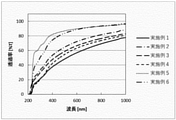
- 1 and 2 are diagrams showing the transmittances of vinyl alcohol-based polymers at wavelengths of 200 nm to 1000 nm in Examples 1 to 6 and Comparative Examples 1 to 4, respectively.
- a vinyl alcohol-based polymer having a transmittance of 95% or less in the entire wavelength region of 200 nm to 800 nm of a 1% by mass aqueous solution can significantly reduce the fluid loss of oil country tubular goods even at high temperatures. It turned out to be possible.
- FIG. 2 the effect was not obtained in the comparative example.
Landscapes
- Chemical & Material Sciences (AREA)
- Engineering & Computer Science (AREA)
- Organic Chemistry (AREA)
- Ceramic Engineering (AREA)
- Materials Engineering (AREA)
- Life Sciences & Earth Sciences (AREA)
- General Life Sciences & Earth Sciences (AREA)
- Chemical Kinetics & Catalysis (AREA)
- Structural Engineering (AREA)
- Inorganic Chemistry (AREA)
- Medicinal Chemistry (AREA)
- Polymers & Plastics (AREA)
- Health & Medical Sciences (AREA)
- General Chemical & Material Sciences (AREA)
- Addition Polymer Or Copolymer, Post-Treatments, Or Chemical Modifications (AREA)
Priority Applications (2)
| Application Number | Priority Date | Filing Date | Title |
|---|---|---|---|
| JP2022540171A JP7629018B2 (ja) | 2020-07-31 | 2021-07-15 | ビニルアルコール系重合体 |
| US18/011,736 US20230313021A1 (en) | 2020-07-31 | 2021-07-15 | Vinyl alcohol-based polymer |
Applications Claiming Priority (2)
| Application Number | Priority Date | Filing Date | Title |
|---|---|---|---|
| JP2020131222 | 2020-07-31 | ||
| JP2020-131222 | 2020-07-31 |
Publications (1)
| Publication Number | Publication Date |
|---|---|
| WO2022024790A1 true WO2022024790A1 (ja) | 2022-02-03 |
Family
ID=80036828
Family Applications (1)
| Application Number | Title | Priority Date | Filing Date |
|---|---|---|---|
| PCT/JP2021/026687 Ceased WO2022024790A1 (ja) | 2020-07-31 | 2021-07-15 | ビニルアルコール系重合体 |
Country Status (3)
| Country | Link |
|---|---|
| US (1) | US20230313021A1 (https=) |
| JP (1) | JP7629018B2 (https=) |
| WO (1) | WO2022024790A1 (https=) |
Cited By (1)
| Publication number | Priority date | Publication date | Assignee | Title |
|---|---|---|---|---|
| JPWO2023238675A1 (https=) * | 2022-06-08 | 2023-12-14 |
Citations (7)
| Publication number | Priority date | Publication date | Assignee | Title |
|---|---|---|---|---|
| JPS55104301A (en) * | 1979-02-02 | 1980-08-09 | Kureha Chem Ind Co Ltd | Hydrophilic nonionic rigid gel |
| JP2000157625A (ja) * | 1998-11-26 | 2000-06-13 | Seed Co Ltd | ポリビニルアルコール製医療用ヒドロゲル及びその製造方法 |
| JP2003221267A (ja) * | 2002-01-30 | 2003-08-05 | Sumitomo Chem Co Ltd | モルタル防水用エマルジョン及びセメント組成物 |
| JP2016079308A (ja) * | 2014-10-17 | 2016-05-16 | 株式会社クラレ | 懸濁重合用分散安定剤及びその製造方法 |
| WO2017099082A1 (ja) * | 2015-12-09 | 2017-06-15 | 日本合成化学工業株式会社 | セメント混和剤 |
| WO2017195855A1 (ja) * | 2016-05-13 | 2017-11-16 | デンカ株式会社 | 油井セメント用添加剤並びに該油井セメント用添加剤を用いたセメント組成物及びセメントスラリー |
| JP2020079197A (ja) * | 2018-02-22 | 2020-05-28 | デンカ株式会社 | ビニルアルコール系重合体及び該ビニルアルコール系重合体を用いたセメントスラリー |
Family Cites Families (4)
| Publication number | Priority date | Publication date | Assignee | Title |
|---|---|---|---|---|
| US4314032A (en) * | 1978-10-26 | 1982-02-02 | Kureha Kagaku Kogyo Kabushiki Kaisha | Crosslinked polyvinyl alcohol gel |
| DE10346973A1 (de) * | 2003-10-09 | 2005-05-04 | Wacker Polymer Systems Gmbh | Modifizierte Polyvinylalkohole enthaltende Polymerzusammensetzungen |
| US7731793B2 (en) * | 2006-06-13 | 2010-06-08 | Sekisui Specialty Chemicals America, Llc | Fluid loss additive with improved rheological properties |
| EP3315561A4 (en) * | 2015-09-25 | 2019-03-20 | Sekisui Plastics Co., Ltd. | HYDROGEL AND METHOD FOR THE PRODUCTION THEREOF |
-
2021
- 2021-07-15 US US18/011,736 patent/US20230313021A1/en not_active Abandoned
- 2021-07-15 WO PCT/JP2021/026687 patent/WO2022024790A1/ja not_active Ceased
- 2021-07-15 JP JP2022540171A patent/JP7629018B2/ja active Active
Patent Citations (7)
| Publication number | Priority date | Publication date | Assignee | Title |
|---|---|---|---|---|
| JPS55104301A (en) * | 1979-02-02 | 1980-08-09 | Kureha Chem Ind Co Ltd | Hydrophilic nonionic rigid gel |
| JP2000157625A (ja) * | 1998-11-26 | 2000-06-13 | Seed Co Ltd | ポリビニルアルコール製医療用ヒドロゲル及びその製造方法 |
| JP2003221267A (ja) * | 2002-01-30 | 2003-08-05 | Sumitomo Chem Co Ltd | モルタル防水用エマルジョン及びセメント組成物 |
| JP2016079308A (ja) * | 2014-10-17 | 2016-05-16 | 株式会社クラレ | 懸濁重合用分散安定剤及びその製造方法 |
| WO2017099082A1 (ja) * | 2015-12-09 | 2017-06-15 | 日本合成化学工業株式会社 | セメント混和剤 |
| WO2017195855A1 (ja) * | 2016-05-13 | 2017-11-16 | デンカ株式会社 | 油井セメント用添加剤並びに該油井セメント用添加剤を用いたセメント組成物及びセメントスラリー |
| JP2020079197A (ja) * | 2018-02-22 | 2020-05-28 | デンカ株式会社 | ビニルアルコール系重合体及び該ビニルアルコール系重合体を用いたセメントスラリー |
Cited By (2)
| Publication number | Priority date | Publication date | Assignee | Title |
|---|---|---|---|---|
| JPWO2023238675A1 (https=) * | 2022-06-08 | 2023-12-14 | ||
| WO2023238675A1 (ja) * | 2022-06-08 | 2023-12-14 | デンカ株式会社 | ポリビニルアルコール系重合体 |
Also Published As
| Publication number | Publication date |
|---|---|
| US20230313021A1 (en) | 2023-10-05 |
| JP7629018B2 (ja) | 2025-02-12 |
| TW202216948A (zh) | 2022-05-01 |
| JPWO2022024790A1 (https=) | 2022-02-03 |
Similar Documents
| Publication | Publication Date | Title |
|---|---|---|
| JP7303786B2 (ja) | 油井セメント用添加剤及び該油井セメント用添加剤を用いたセメントスラリー | |
| JP2024133104A (ja) | ポリビニルアルコール系重合体 | |
| EP3456796B1 (en) | Additive for oil well cement, and cement composition and cement slurry both including said additive for oil well cement | |
| WO2022024790A1 (ja) | ビニルアルコール系重合体 | |
| WO2023238675A1 (ja) | ポリビニルアルコール系重合体 | |
| JP7561854B2 (ja) | ポリビニルアルコール系重合体 | |
| JP7780011B2 (ja) | ポリビニルアルコール系重合体 | |
| TWI920117B (zh) | 乙烯醇系聚合物 |
Legal Events
| Date | Code | Title | Description |
|---|---|---|---|
| 121 | Ep: the epo has been informed by wipo that ep was designated in this application |
Ref document number: 21849442 Country of ref document: EP Kind code of ref document: A1 |
|
| ENP | Entry into the national phase |
Ref document number: 2022540171 Country of ref document: JP Kind code of ref document: A |
|
| NENP | Non-entry into the national phase |
Ref country code: DE |
|
| 122 | Ep: pct application non-entry in european phase |
Ref document number: 21849442 Country of ref document: EP Kind code of ref document: A1 |