WO2022019306A1 - ブタ肺胞マクロファージ不死化培養細胞株、ブタ肺胞マクロファージ不死化培養細胞株の製造方法、ブタ肺胞マクロファージ不死化培養細胞株の調製用試薬及びワクチンの製造方法 - Google Patents
ブタ肺胞マクロファージ不死化培養細胞株、ブタ肺胞マクロファージ不死化培養細胞株の製造方法、ブタ肺胞マクロファージ不死化培養細胞株の調製用試薬及びワクチンの製造方法 Download PDFInfo
- Publication number
- WO2022019306A1 WO2022019306A1 PCT/JP2021/027164 JP2021027164W WO2022019306A1 WO 2022019306 A1 WO2022019306 A1 WO 2022019306A1 JP 2021027164 W JP2021027164 W JP 2021027164W WO 2022019306 A1 WO2022019306 A1 WO 2022019306A1
- Authority
- WO
- WIPO (PCT)
- Prior art keywords
- cell line
- immortalized
- cultured
- alveolar macrophage
- pam
- Prior art date
- Legal status (The legal status is an assumption and is not a legal conclusion. Google has not performed a legal analysis and makes no representation as to the accuracy of the status listed.)
- Ceased
Links
Images





Classifications
-
- C—CHEMISTRY; METALLURGY
- C07—ORGANIC CHEMISTRY
- C07K—PEPTIDES
- C07K14/00—Peptides having more than 20 amino acids; Gastrins; Somatostatins; Melanotropins; Derivatives thereof
- C07K14/005—Peptides having more than 20 amino acids; Gastrins; Somatostatins; Melanotropins; Derivatives thereof from viruses
- C07K14/01—DNA viruses
- C07K14/025—Papovaviridae, e.g. papillomavirus, polyomavirus, SV40, BK virus, JC virus
-
- C—CHEMISTRY; METALLURGY
- C12—BIOCHEMISTRY; BEER; SPIRITS; WINE; VINEGAR; MICROBIOLOGY; ENZYMOLOGY; MUTATION OR GENETIC ENGINEERING
- C12N—MICROORGANISMS OR ENZYMES; COMPOSITIONS THEREOF; PROPAGATING, PRESERVING, OR MAINTAINING MICROORGANISMS; MUTATION OR GENETIC ENGINEERING; CULTURE MEDIA
- C12N5/00—Undifferentiated human, animal or plant cells, e.g. cell lines; Tissues; Cultivation or maintenance thereof; Culture media therefor
- C12N5/0006—Modification of the membrane of cells, e.g. cell decoration
-
- C—CHEMISTRY; METALLURGY
- C12—BIOCHEMISTRY; BEER; SPIRITS; WINE; VINEGAR; MICROBIOLOGY; ENZYMOLOGY; MUTATION OR GENETIC ENGINEERING
- C12N—MICROORGANISMS OR ENZYMES; COMPOSITIONS THEREOF; PROPAGATING, PRESERVING, OR MAINTAINING MICROORGANISMS; MUTATION OR GENETIC ENGINEERING; CULTURE MEDIA
- C12N5/00—Undifferentiated human, animal or plant cells, e.g. cell lines; Tissues; Cultivation or maintenance thereof; Culture media therefor
- C12N5/06—Animal cells or tissues; Human cells or tissues
-
- C—CHEMISTRY; METALLURGY
- C12—BIOCHEMISTRY; BEER; SPIRITS; WINE; VINEGAR; MICROBIOLOGY; ENZYMOLOGY; MUTATION OR GENETIC ENGINEERING
- C12N—MICROORGANISMS OR ENZYMES; COMPOSITIONS THEREOF; PROPAGATING, PRESERVING, OR MAINTAINING MICROORGANISMS; MUTATION OR GENETIC ENGINEERING; CULTURE MEDIA
- C12N5/00—Undifferentiated human, animal or plant cells, e.g. cell lines; Tissues; Cultivation or maintenance thereof; Culture media therefor
- C12N5/10—Cells modified by introduction of foreign genetic material
Definitions
- the present invention relates to a method for producing a porcine alveolar macrophage immortalized cell line, a method for producing a porcine alveolar macrophage immortalized cell line, and a method for producing a reagent and a vaccine for preparing a porcine alveolar macrophage immortalized cell line.
- PRRS Porcine reproducive and respiratory syndrome
- PRRS Porcine reproducive and respiratory syndrome
- ASF African swine fever
- ASVV African swine fever virus
- Pig breeding / respiratory disorder syndrome virus (porcine reproducive and respiratory syndrome virus, hereinafter referred to as "PRRSV") that causes PPRS and ASFV are used to inject pig serum or organ emulsion into predetermined cells to indicate the cytopathic effect. Can be detected and separated.
- PRRSV respiratory disorder syndrome virus
- the cells used for virus isolation by cultured cells are porcine alveolar macrophages (PAM), which are highly sensitive to PRRSV and the like. Since PAM is usually obtained by lung lavage of 6-12 week old piglets, it requires a great deal of labor to prepare and involves the sacrifice of piglets. In addition, since PAM is a primary cultured cell, it has poor division and proliferation ability, and subculture is extremely difficult.
- PAM porcine alveolar macrophages
- MA104 cells are also used to isolate the virus.
- MA104 is a cell line derived from the monkey kidney.
- MA104 has the advantage of being easy to prepare due to its high proliferative capacity.
- MA104 is derived from a monkey that is not a host such as PRRSV, its sensitivity to PRRSV and the like is low. Although susceptibility can be increased by adapting PRRSV to MA104, MA104 is not suitable for the isolation of new wild strains such as PRRSV.
- Non-Patent Document 1 discloses a PAM in which the SV40 large T antigen (SV40T) gene, which is a cell carcinogenesis-inducing factor, has been introduced by a gene recombination technique.
- Patent Document 1 discloses a cell line in which the SV40T gene is introduced into PAM using a transposon and is sensitive to PRRSV.
- SV40T SV40 large T antigen
- Non-Patent Document 1 is not sensitive to PPRSV. Therefore, it cannot be used for separating PRRSV. Since the cell line disclosed in Patent Document 1 requires macrophage-colony stimulating factor (M-CSF) to increase, it is necessary to examine conditions such as the optimum concentration of M-CSF.
- M-CSF macrophage-colony stimulating factor
- the present invention has been made in view of the above circumstances, and is a method for producing a porcine alveolar macrophage immortalized cell line and a porcine alveolar macrophage immortalized cell line, which are highly sensitive to PRRSV and ASFV and are easy to prepare.
- the purpose is to provide.
- Another object of the present invention is to provide a reagent for preparing a porcine alveolar macrophage immortalized cell line, which is useful for preparing the porcine alveolar macrophage immortalized cell line.
- LTR Long Thermal Repeat
- a retroviral vector used when introducing the SV40T gene into a cell. Since it causes tumorigenesis, transposons are used to avoid the use of retroviral vectors.
- the inventor has conducted extensive research and found that a pig alveolar macrophage immortalized cultured cell line highly sensitive to PRRSV and ASFV can be established by using pig serum for culturing primary culture PAM even if a retroviral vector is used. Find out and complete the invention.
- the porcine alveolar macrophage immortalized cultured cell line according to the first aspect of the present invention is: Has a viral long-end repeat, Expresses a cell immortalization-inducing gene, Susceptible to at least one of the pig breeding and respiratory distress syndrome virus and the African swine fever virus.
- the cell immortalization-inducing gene is SV40 large T antigen gene, It may be that.
- the viral long-term repeat sequence A viral long-term repeat of the Moloney murine leukemia virus, It may be that.
- the method for producing an immortalized porcine alveolar macrophage cell line according to the second aspect of the present invention is A culture step in which primary cultured alveolar macrophages collected from pigs are cultured in a medium containing pig serum, and Introducing the cell immortalization-inducing gene into the cells cultured in the culture step, and including.
- the cell immortalization-inducing gene is SV40 large T antigen gene, It may be that.
- the cell immortalization-inducing gene is Introduced into the cells with viral long-term repeats, It may be that.
- the primary cultured alveolar macrophages are cultured for 10 to 24 hours. It may be that.
- the reagent for preparing an immortalized cell line of porcine alveolar macrophages according to the third aspect of the present invention is Contains porcine serum.
- the method for producing a vaccine according to the fourth aspect of the present invention is as follows.
- a porcine alveolar macrophage immortalized cultured cell line that is highly sensitive to PRRSV and ASFV and is easy to prepare can be obtained. Further, according to the present invention, there is provided a reagent for preparing a porcine alveolar macrophage immortalized cell line, which is useful for preparing the porcine alveolar macrophage immortalized cell line. Further, according to the present invention, there is provided a method for producing a vaccine using the porcine alveolar macrophage immortalized cultured cell line.
- (A) is a figure which shows the phagocytic ability of the PAM cultured cell line which concerns on Example.
- (B) is a figure which shows the fluorescence intensity of the PAM cultured cell line which concerns on an Example cultured at 4 degreeC and 37 degreeC. It is a figure which shows the fluorescence intensity of the PAM cultured cell line which concerns on an Example labeled via a CD163 molecule. It is a figure which shows the expression of SV40T in the immortalized PAM bulk cell cultured in the presence or absence of pig serum.
- the porcine alveolar macrophage immortalized cultured cell line (hereinafter, also simply referred to as “cell line”) according to the present embodiment is sensitive to at least one of PRRSV and ASFV.
- PRRSV and the like means “PRRSV or ASFV”.
- “Sensitive to PRRSV and the like” means that it can be a host cell infected with PPRSV and the like. Morphological changes (cytopathic effect) are observed in cultured cells infected with PRRSV or the like. The presence or absence of the cytopathic effect can be determined by observing cells exposed to PRRSV or the like with a microscope or the like. The susceptibility of the cell line to PRRSV and the like can be evaluated by a known method such as a plaque assay and a 50% tissue culture infection amount (TCID 50) based on the cytopathic effect.
- TCID 50 tissue culture infection amount
- the cell immortalization-inducing gene is integrated with the LTR in the genome of the cell line according to the present embodiment by transformation. As a result, the cell line is immortalized because it stably expresses the cell immortalization-inducing gene.
- the cell immortalization-inducing gene include SV40T gene, human telomerase reverse transcriptase (hTERT) gene, human papillomavirus (HPV) -E6 gene or E7 gene, Cdk-4 gene, Bmi-1 gene and the like. Be done.
- the cell immortalization-inducing gene may be a tumor suppressor gene, for example, siRNA or shRNA expression plasmid DNA that knocks down p53 and RB (retinoblastoma protein).
- the cell immortalization inducing gene is the SV40T gene.
- the method for producing a cell line includes a culture step and an introduction step.
- the primary culture PAM collected from pigs is cultured in a medium containing pig serum.
- the pig is a piglet.
- the age of the piglet is not particularly limited, but is, for example, 1 to 15 weeks, 1 to 10 weeks, 1 to 6 weeks, or 1 to 3 weeks.
- the pig is a 2 week old pig.
- PAM can be obtained from pigs via known methods such as lung lavage.
- the medium is not particularly limited as long as it is a medium in which PAM can be cultured.
- Pig serum may be collected from pigs or commercially available ones may be used.
- the concentration of porcine serum in the medium is, for example, 3-20%, 5-15% or 8-12%.
- the concentration of porcine serum in the medium is preferably 10%.
- the medium may contain fetal bovine serum, non-essential amino acids, buffer, sodium pyruvate, antibiotics and the like in addition to porcine serum.
- the culture conditions are appropriately set, and are, for example, 37 ° C. and 5% CO 2 conditions.
- the culture time of the primary culture PAM in the culture step is not particularly limited, and is, for example, 8 to 48 hours, 9 to 36 hours, or 10 to 24 hours.
- the cell immortalization-inducing gene is introduced into the PAM cultured in the culture step.
- the SV40T gene as a cell immortalization inducing gene is introduced into the PAM together with the LTR.
- the LTR is a retrovirus LTR that is a single-strand RNA virus.
- the LTR is a repeat sequence possessed by the retrovirus and contains an enhancer sequence, a promoter sequence, a transcription initiation sequence, a transcription terminator sequence, a polyadenylation signal and the like necessary for gene expression of the retrovirus.
- the LTR includes 5'LTR and 3'LTR.
- the LTR contains the U3, R and U5 regions involved in the transcription of viral genes, reverse transcription from the viral genome, and integration of double-stranded DNA synthesized through reverse transcription into host DNA.
- the U3 region has enhancer / promoter activity and is transcribed from the R region of the 5'LTR to the R region of the 3'LTR by RNA polymerase II of the host cell.
- the packaging signal sequence is known as the ⁇ sequence.
- the packaging signal sequence is a non-coding cis-acting sequence required for capsid formation of retroviral RNA strands and packaging into viral particles in the formation of viral particles.
- a retroviral vector is used for the transformation of the gene into PAM in the introduction step.
- the retrovirus vector may be a vector such as oncoretrovirus and lentivirus included in the retrovirus.
- the retroviral vector used for gene transfer has at least a 5'LTR, a packaging signal sequence, an SV40T gene and a 3'LTR in its genome. Gene products such as gag gene, pol gene and env gene may be supplied from packaging cells carrying these genes.
- the LTR and packaging signal sequence of the above retrovirus vector is not particularly limited as long as it is a sequence derived from a retrovirus and a gene can be introduced into PAM. These sequences may be of the same virus-derived sequence, but may be used in combination with different virus-derived sequences that can form virus particles and integrate into the genome of the cell when combined with appropriate packaging cells. You may.
- the "retrovirus-derived LTR” means that the sequence is a retrovirus LTR, a fragment of a retrovirus LTR, or a mutation introduced into the fragment, and the sequence is a retrovirus LTR. Includes being artificially designed and manufactured based on the sequence.
- the LTR and packaging signal sequence contained in the retrovirus vector according to the present embodiment include, for example, Moloney murine leukemia virus (MMLV), mouse embryonic stem cell virus (MESV), mouse stem cell virus (MSCV), which belong to onco-retrovirus. And may be a sequence derived from myeloid proliferative sarcoma virus (MPSV), splenic focal localization virus (SFFV) and the like.
- the LTR of the retroviral vector is preferably an LTR of MMLV or an LTR derived from MMLV.
- the LTR and the packaging signal sequence contained in the retrovirus vector according to the present embodiment are, for example, human immunodeficiency virus (HIV-1, HIV-2) belonging to lentivirus, monkey immunodeficiency virus (SIV), cat. It may be a sequence derived from the immunodeficiency virus (FIV), horse infectious anemia virus (EIAV), and goat arthritis encephalitis virus (CAEV).
- HIV-1 human immunodeficiency virus
- SIV monkey immunodeficiency virus
- FMV immunodeficiency virus
- EIAV horse infectious anemia virus
- CAEV goat arthritis encephalitis virus
- the LTR possessed by the retroviral vector according to the present embodiment may be an LTR having a mutated sequence.
- the U3 region of the 3'LTR or 5'LTR may be replaced with an enhancer sequence and a promoter sequence derived from a virus other than the virus from which the LTR sequence is derived.
- envelope genes of other viruses may be used to increase the efficiency of introduction into PAM (pseudotyping).
- PAM proteaseudotyping
- VSV-G G protein of vesicular stomatitis virus, which binds to phospholipids and the like expressed on the surface of most mammalian cells and mediates the intracellular invasion of viral vectors, is preferable.
- a retroviral vector packaging plasmid in which the SV40T gene is cloned and a vesicular inflammation virus G protein expression plasmid are introduced into the retroviral vector packaging cell.
- the cells into which the plasmid has been introduced are cultured, and the retroviral vector for expressing SV40T produced in the culture supernatant is collected.
- PAM is inoculated with a retroviral vector for expressing SV40T.
- a retroviral vector for expressing SV40T In the post-inoculation culture, cells that survive without dying appear.
- a cell line can be obtained by cloning the cell line from these cells by a known method.
- the cell line according to this embodiment is a monocyte lineage cell. Whether or not the cell is monocyte lineage can be confirmed by evaluating a known marker specific to the monocyte lineage cell. Markers for monocyte lineage cells include, for example, CD163, CD11b, CD68 and the like. In particular, CD163 is preferable as a marker for monocyte lineage cells because it serves as a receptor for PRRSV. Monocyte lineage cells can also be confirmed by NaF-inhibited non-specific esterase activity.
- the cell line according to this embodiment maintains the characteristics of macrophages.
- Characteristics of macrophages are, for example, phagocytic ability, nitric oxide production, cytokine production and the like.
- the characteristics of macrophages can be evaluated by a known method, a commercially available kit, or the like.
- the cell line according to this embodiment shows sensitivity equal to or higher than that of primary cultured PAM to various PRRSVs including field isolates. Therefore, the cell line is useful for the isolation and detection of PRRSV. In addition, the cell line can be used for monitoring the development of PRRS, diagnosing PRRS, and developing a vaccine for preventing PRRS.
- the cell line according to this embodiment is also sensitive to ASFV, as shown in Test Example 5 below. Therefore, the cell line is useful for the isolation and detection of ASFV. The cell line is also useful for monitoring the development of ASFV, diagnosing ASFV, and developing vaccines for preventing ASFV.
- the reagent for preparing a PAM immortalized cell line according to this embodiment contains porcine serum.
- Pig serum can be obtained from blood collected from pigs by a known method.
- porcine serum can be obtained as a supernatant obtained by allowing porcine blood to stand unmixed with an anticoagulant, agglutinating blood clots, and then centrifuging at gravitational acceleration without hemolysis.
- Pig serum may be purified using filter filtration or the like and sterilized by gamma ray irradiation or the like.
- the reagent for preparing a PAM immortalized cultured cell line is preferably provided as a reagent to be added to the medium.
- Reagents for preparing PAM immortalized cell lines may be provided as the above medium.
- the reagent for preparation may contain a medium, amino acids, non-essential amino acids, buffers, nutritional substances, antibiotics and the like in addition to pig serum.
- the reagent for preparing a PAM immortalized cultured cell line according to the present embodiment is suitable for preparing and culturing the PAM immortalized cultured cell line according to the first embodiment.
- the method for producing a vaccine according to the present embodiment includes an infection step, a proliferation step, and an acquisition step.
- the infection step the PAM immortalized cultured cell line according to the first embodiment is infected with PRRS or the like. Infection may be carried out by a known method, for example, PRRS or the like may be inoculated into a medium containing a PAM immortalized cultured cell line.
- PRRS and the like are propagated by culturing an infected PAM immortalized cultured cell line.
- the culture conditions of the PAM immortalized cultured cell line are appropriately set, for example, 5% CO 2 conditions at 37 ° C.
- the culture period is arbitrary, but is, for example, 1 to 10 days, 2 to 8 days, or 3 to 7 days.
- the propagated PRRS etc. are acquired.
- PRRS or the like may be separated from the PAM immortalized cultured cell line or the medium in which the PAM immortalized cultured cell line is cultured, and the separated PRRS or the like may be further purified and concentrated.
- the separation method such as PRRS include filtration of a medium, disruption of cells, and centrifugation, and may be concentrated using ammonium sulfate, a resin column, polyethylene glycol salting out, or the like.
- the obtained PRRS or the like may be used as a live vaccine, attenuated and used, or used as an inactivated vaccine. Further, as long as it has immunogenicity, a part of the obtained PRRS or the like, for example, a protein, a polypeptide, a sugar, a glycoprotein, a lipid, a nucleic acid or the like may be used as a vaccine.
- the attenuated virus is a virus whose toxicity is reduced compared to the virus before attenuation.
- Virus attenuation can be performed by known methods.
- the attenuated virus is, for example, propagated in the presence of a mutagen, adapted to cultured cells by continuous passage in vitro, propagated under conditions deviating from the natural growth environment such as high temperature conditions, and the like. Obtainable.
- the cultured cells used for acclimatization by continuous passage may be the above-mentioned PAM immortalized cultured cell line, but may be another cell, for example, MA104 or the like.
- an attenuated virus can also be obtained by deleting or recombining a specific gene of the virus by using genome editing, gene modification technology, or the like.
- Virus inactivation can be performed using a known method.
- the inactivating method include formaldehyde treatment, UV irradiation, X-ray irradiation, electron beam irradiation, gamma ray irradiation, alkylation treatment, ethylene-imine treatment, thimerosal treatment, ⁇ -propiolactone treatment and glutaraldehyde treatment.
- the vaccine according to this embodiment may contain a pharmacologically acceptable carrier.
- the carrier include stabilizers, excipients, preservatives, surfactants, chelating agents, binders and the like.
- the vaccine according to this embodiment may contain a pharmacologically acceptable medium. Examples of the medium include water, physiological saline, phosphate buffer, Tris-HCl buffer, and the like.
- the vaccine according to the present embodiment may be mixed with an immunostimulant (assistant) or may be used in combination with the immunostimulant.
- immunostimulant include inorganic substances such as aluminum gel adjuvant; microorganisms such as BCG, alumyldipeptide, alum, pertussis toxin and cholera toxin; or substances derived from microorganisms; surfactants such as saponin and deoxycholic acid.
- Activator Emulsion of oily substances such as mineral oil, vegetable oil and animal oil; Alum; Vitamin-E acetate lysate and the like.
- the form of the vaccine is not particularly limited, and may be, for example, a suspension form or a lyophilized form.
- the vaccine according to this embodiment can be administered by intramuscular injection, subcutaneous injection, or intranasal, intratracheal, oral, or intradermal administration.
- the vaccine is administered to animals that can be infected with PRRS and the like, and is particularly administered to 1-week-old, 3-week-old, 6-week-old, or 10-week-old pigs.
- the dose is adjusted accordingly.
- the number of doses of the vaccine is arbitrary, and the boost effect may be obtained by one or a plurality of doses.
- the SV40T gene was amplified by PCR (polymerase chain reaction) using cDNA synthesized from mRNA extracted from 293T cells derived from human kidney according to a conventional method.
- the base sequences of the forward primer and the reverse primer are shown in SEQ ID NOs: 1 and 2, respectively.
- the SV40T gene was cloned into the retroviral vector packaging plasmid pMXs (manufactured by Cell Biolab) to construct pMXs-SV40T.
- the composition and base sequence of pMXs-SV40T are shown in FIG. 1 and SEQ ID NO: 3, respectively.
- Retrovirus vector packaging cell Platinum using pMXs-SV40T and vesicular stomatitis virus G protein expression plasmid pCMV-VSV-G (manufactured by Cell Biolab) using plasmid transfer reagent TransIT-293 (manufactured by Mirus Bio). -Introduced to GP (manufactured by Cell Biolab).
- SV40T produced in the culture supernatant by culturing the cells into which the plasmid was introduced in a high glucose D-MEM medium (manufactured by Fujifilm Wako Pure Chemical Industries, Ltd.) containing 10% fetal bovine serum (manufactured by Capricone) and an antibiotic.
- the retroviral vector for expression was recovered.
- PAM immortalization and cloning Primary cultured PAMs collected from 2-week-old PRRSV-negative piglets are obtained from 10% bovine fetal serum (manufactured by Capricone), 10% pig serum (manufactured by Citiva), non-essential amino acids (manufactured by Nakaraitesk), and pyruvate. Resuspended in RPMI1640 medium (manufactured by Fujifilm Wako Junyaku Co., Ltd.) containing sodium (manufactured by Nakaraitesk), HEPES (manufactured by Nakaraitesk) and antibiotics, and seeded on a cell culture plate, and seeded at 37 ° C., 5% CO.
- the cells were cultured under two conditions. The next day, PAM was inoculated with a retroviral vector for expressing SV40T, and further culturing was continued. While many cells are dying, the surviving cell population is grouped into bulk cells, 12 clone cell lines are randomly cloned from the bulk cells, and 5 clones with a high growth rate are immortalized PAM cells. Selected as a stock.
- Test Example 1 Evaluation of PRRSV susceptibility
- PRRSV Zoetis vaccine strain
- vaccine strain Z in addition to the Zoetis vaccine strain (hereinafter referred to as “vaccine strain Z”), three PRRSV strains (Beringer Ingelheim vaccine strain (hereinafter referred to as “vaccine strain B”), The susceptibility to the field isolate PGL9 and the field isolate 156-K) was evaluated by the same method.
- untreated primary cultured PAM primary cultured PAM
- monkey kidney-derived MA104 cells used in the development of vaccine strain Z
- the susceptibility of 31 both manufactured by ATCC was evaluated by the same method.
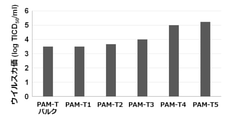
- FIG. 2 shows the virus titers of PAM-T1 to T5.
- FIG. 3 shows the virus titer of each virus in each cell.
- PAM-T4 and PAM-T5 showed sufficient susceptibility to both viruses.
- PAM-T4 and PAM-T5 showed the same sensitivity to the field isolates PGL9 and 156-K as the primary cultured PAM.
- PAM-T4 and PAM-T5 showed high susceptibility to vaccine strains Z, PGL-9 and 156-K.
- Vaccine strain B is a virus attenuated by MA104 and conditioned in monkey cells, and therefore exhibits high susceptibility to MA104. No virus infection was confirmed in the immortalized PAM cell lines 3D4 / 2, 3D4 / 21 and 3D4 / 31 disclosed in Non-Patent Document 1.
- Test Example 2 Evaluation of PRRSV proliferativeness A certain number of primary cultures PAM, MA104, PAM-T4 and PAM-T5 were inoculated with PRRSV vaccine strain Z, vaccine strain B, PGL9 and 156-K at a multiple infection degree of 0.01. Then, the culture supernatant was collected over time. Virus proliferation was assessed by determining virus titers in all collected culture supernatants by the TCID 50 assay described above using MA104 cells.
- FIG. 4 shows the time course of the virus titer of each virus for each cell.
- PAM-T4 and PAM-T5 showed a proliferative property equal to or higher than that of primPAM.
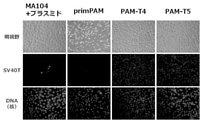
- Test Example 3 Analysis of basic cell line properties (confirmation of SV40T antigen expression) Primary culture PAM seeded on a cell culture plate, MA104 into which an SV40T expression plasmid had been introduced in advance, and PAM-T4 and PAM-T5 were fixed with Mildform 10N (manufactured by Fujifilm Wako Pure Chemical Industries, Ltd.) and 0.3% bovine serum. Membrane permeation was performed with Triton X-100 diluted 0.5% with an albumin-containing sterile phosphate buffered saline (PBS / BSA) solution.
- PBS / BSA albumin-containing sterile phosphate buffered saline
- esterase staining The non-specific esterase activity of PAM-T4 was evaluated using an esterase staining kit (manufactured by Muto Kagaku Co., Ltd.). Immortalized cell line PAM-T4 prepared as a smear using Cytospin 4 (Thermo Fisher Scientific), a cell collector and centrifuge, was fixed with the formalin-acetone buffered fixative included in the kit, and then with the ⁇ -NB reaction solution. After treatment, the presence or absence of brown granules was observed under a microscope. Then, the cells were treated with NaF, and the presence or absence of brown granules was observed again under a microscope.
- the phagocytic ability of PAM-T4 was measured by pH indicator pHrodo Green E. et al. Evaluation was made using the coli BioParticles Conjugate for Phagocytosis kit (manufactured by Thermo Fisher Scientific). After adding pHrodo BioParticles to the culture supernatant of PAM-T4 and PK-15 cells derived from porcine kidney seeded on a cell culture plate and culturing under 37 ° C. and 5% CO 2 conditions, the fluorescence signal was transmitted under a fluorescence microscope. Observed.
- the medium for PK-15 cells was E-MEM medium (manufactured by Fujifilm Wako Pure Chemical Industries, Ltd.) containing 10% fetal bovine serum (manufactured by Capricone) and antibiotics.
- PAM-T4 reacted with pHrodo BioParticles under the condition of 4 ° C. and PAM-T4 additionally cultured under the condition of 37 ° C. and 5% CO 2 after the reaction under the same conditions were added to 1% sodium azide and 0.5%, respectively.
- the cells were resuspended in a BSA-containing PBS solution (FACS buffer), and the fluorescence intensity of each cell was measured and analyzed using a BD FACS caliber (manufactured by BD Bioscience).
- PAM-T4 was resuspended in FACS buffer.
- the cells are reacted with an anti-porcine CD163 molecule mouse monoclonal antibody (clone 2A10 / 11, manufactured by Bio-Rad) or a mouse IgG1 isotype control antibody (clone MG1-45, manufactured by Bio-Legend) diluted 100-fold with FACS buffer.
- an anti-porcine CD163 molecule mouse monoclonal antibody clone 2A10 / 11, manufactured by Bio-Rad
- a mouse IgG1 isotype control antibody clone MG1-45, manufactured by Bio-Legend
- the CD163 molecule expressed on the cell surface was fluorescently labeled by reacting with an anti-mouse IgG1 phycoerythrin-labeled secondary antibody (clone RMG1-1, manufactured by BioLegend) diluted 1000-fold with FACS buffer.
- the fluorescence intensity of each labeled cell was measured and
- FIG. 7A shows an image taken with a fluorescence microscope in the evaluation of phagocytic ability.
- the signal of the fluorescent probe that emits light when phagocytosed was not confirmed in PK-15, but was confirmed in PAM-T4.
- FIG. 7B shows the fluorescence intensity measured for PAM-T4. An increase in fluorescence intensity was observed in PAM-T4 cultured at 37 ° C, as opposed to culture at 4 ° C, where many of the cells' physiological functions were attenuated. From these facts, it was shown that PAM-T4 has a clear phagocytic ability which is a characteristic of macrophages.
- FIG. 8 shows the fluorescence intensity of the labeled cells. It was shown that PAM-T4 stably expresses the CD163 molecule on the cell surface.
- the CD163 molecule is a surface marker of monocyte lineage cells and functions as a receptor for PRRSV. This also indicates that PAM-T4 is a monocyte lineage cell and has high sensitivity to PRRSV.
- Test Example 4 Immortalization with and without porcine serum Immortalization prepared in the same manner as the above-mentioned cell line establishment, except that the cells are cultured in a medium containing no porcine serum, except for the effect of PAM bulk cells on the expression of CD163 molecule.
- the bulk cells of PAM were cultured.
- the cells were seeded on a cell culture plate together with bulk cells of PAM immortalized in the presence of 10% bovine serum, fixed with Mildform 10N (manufactured by Fujifilm Wako Pure Chemical Industries, Ltd.), and diluted to 0.5% with PBS / BSA solution.
- Membrane permeation treatment was performed using Triton X-100.
- Test Example 5 Evaluation of ASFV susceptibility
- a 10-fold serial dilution series of stock solution of ASFV wild strain was prepared, inoculated into an immortalized PAM cell line (PAM-T4 and its subclone PAM-T43), and cultured for 4 days. ..
- the cytopathic effect was evaluated by observing with a microscope.
- both cell lines were inoculated with ASFV, and three days later, erythrocytes separated from pig blood were added, and the presence or absence of a hemad adsorption reaction (HAD) was observed under a microscope.
- HAD hemad adsorption reaction
- PAM-T43 was issued to the Budapest Treaty on June 16, 2021 at the National Institute of Technology and Evaluation Patent Biological Deposit Center (Room 122, Kazusakamatari, Kisarazu City, Chiba Prefecture, Japan 292-0818). Under the regulations, it is entrusted with the entrustment number NITE BP-03482.
- the present invention is useful for the pig farming industry, especially for monitoring the outbreak status of pig breeding / respiratory disorder syndrome and African swine fever and for vaccine development.
Landscapes
- Health & Medical Sciences (AREA)
- Life Sciences & Earth Sciences (AREA)
- Engineering & Computer Science (AREA)
- Chemical & Material Sciences (AREA)
- Genetics & Genomics (AREA)
- Organic Chemistry (AREA)
- Biomedical Technology (AREA)
- Zoology (AREA)
- Wood Science & Technology (AREA)
- Bioinformatics & Cheminformatics (AREA)
- Biotechnology (AREA)
- General Health & Medical Sciences (AREA)
- Biochemistry (AREA)
- Cell Biology (AREA)
- General Engineering & Computer Science (AREA)
- Microbiology (AREA)
- Virology (AREA)
- Gastroenterology & Hepatology (AREA)
- Biophysics (AREA)
- Medicinal Chemistry (AREA)
- Molecular Biology (AREA)
- Proteomics, Peptides & Aminoacids (AREA)
- Micro-Organisms Or Cultivation Processes Thereof (AREA)
Priority Applications (1)
| Application Number | Priority Date | Filing Date | Title |
|---|---|---|---|
| JP2022538023A JP7730563B2 (ja) | 2020-07-22 | 2021-07-20 | ブタ肺胞マクロファージ不死化培養細胞株、ブタ肺胞マクロファージ不死化培養細胞株の製造方法、ブタ肺胞マクロファージ不死化培養細胞株の調製用試薬及びワクチンの製造方法 |
Applications Claiming Priority (2)
| Application Number | Priority Date | Filing Date | Title |
|---|---|---|---|
| JP2020-125310 | 2020-07-22 | ||
| JP2020125310 | 2020-07-22 |
Publications (1)
| Publication Number | Publication Date |
|---|---|
| WO2022019306A1 true WO2022019306A1 (ja) | 2022-01-27 |
Family
ID=79729168
Family Applications (1)
| Application Number | Title | Priority Date | Filing Date |
|---|---|---|---|
| PCT/JP2021/027164 Ceased WO2022019306A1 (ja) | 2020-07-22 | 2021-07-20 | ブタ肺胞マクロファージ不死化培養細胞株、ブタ肺胞マクロファージ不死化培養細胞株の製造方法、ブタ肺胞マクロファージ不死化培養細胞株の調製用試薬及びワクチンの製造方法 |
Country Status (2)
| Country | Link |
|---|---|
| JP (1) | JP7730563B2 (https=) |
| WO (1) | WO2022019306A1 (https=) |
Cited By (3)
| Publication number | Priority date | Publication date | Assignee | Title |
|---|---|---|---|---|
| CN118389443A (zh) * | 2024-04-25 | 2024-07-26 | 上海交通大学 | 猪GSDMD敲除细胞系的构建方法及在PDCoV感染中的应用 |
| WO2025065909A1 (zh) * | 2023-09-25 | 2025-04-03 | 南京农业大学 | 表达Cre基因猪骨髓巨噬细胞系的构建方法及其应用 |
| WO2025182870A1 (ja) * | 2024-02-26 | 2025-09-04 | 国立研究開発法人農業・食品産業技術総合研究機構 | 不死化カワイノシシマクロファージ |
Citations (2)
| Publication number | Priority date | Publication date | Assignee | Title |
|---|---|---|---|---|
| JP2017500029A (ja) * | 2013-12-12 | 2017-01-05 | インターベット インターナショナル ベー. フェー. | 不死化ブタ肺胞マクロファージ |
| CN109517797A (zh) * | 2018-07-25 | 2019-03-26 | 中国农业科学院哈尔滨兽医研究所(中国动物卫生与流行病学中心哈尔滨分中心) | 表达猪繁殖障碍与呼吸综合症病毒受体cd163的猪永生化肺泡巨噬细胞细胞系及其应用 |
-
2021
- 2021-07-20 JP JP2022538023A patent/JP7730563B2/ja active Active
- 2021-07-20 WO PCT/JP2021/027164 patent/WO2022019306A1/ja not_active Ceased
Patent Citations (2)
| Publication number | Priority date | Publication date | Assignee | Title |
|---|---|---|---|---|
| JP2017500029A (ja) * | 2013-12-12 | 2017-01-05 | インターベット インターナショナル ベー. フェー. | 不死化ブタ肺胞マクロファージ |
| CN109517797A (zh) * | 2018-07-25 | 2019-03-26 | 中国农业科学院哈尔滨兽医研究所(中国动物卫生与流行病学中心哈尔滨分中心) | 表达猪繁殖障碍与呼吸综合症病毒受体cd163的猪永生化肺泡巨噬细胞细胞系及其应用 |
Non-Patent Citations (2)
| Title |
|---|
| WANG TONG-YUN, LIU YONG-GANG, LI LIANG, WANG GANG, WANG HAI-MING, ZHANG HONG-LIANG, ZHAO SHI-FEI, GAO JIA-CONG, AN TONG-QING, TIAN: "Porcine alveolar macrophage CD163 abundance is a pivotal switch for porcine reproductive and respiratory syndrome virus infection", ONCOTARGET, IMPACT JOURNALS LLC, UNITED STATES, vol. 9, no. 15, 23 February 2018 (2018-02-23), United States , pages 12174 - 12185, XP055899617, ISSN: 1949-2553, DOI: 10.18632/oncotarget.24040 * |
| WEINGARTL H M; SABARA M; PASICK J; VAN MOORLEHEM E; BABIUK L: "Continuous porcine cell lines developed from alveolar macrophages: Partial characterization and virus susceptibility", JOURNAL OF VIROLOGICAL METHODS, ELSEVIER BV, NL, vol. 104, no. 2, 1 July 2002 (2002-07-01), NL , pages 203 - 216, XP002604365, ISSN: 0166-0934, DOI: 10.1016/S0166-0934(02)00085-X * |
Cited By (3)
| Publication number | Priority date | Publication date | Assignee | Title |
|---|---|---|---|---|
| WO2025065909A1 (zh) * | 2023-09-25 | 2025-04-03 | 南京农业大学 | 表达Cre基因猪骨髓巨噬细胞系的构建方法及其应用 |
| WO2025182870A1 (ja) * | 2024-02-26 | 2025-09-04 | 国立研究開発法人農業・食品産業技術総合研究機構 | 不死化カワイノシシマクロファージ |
| CN118389443A (zh) * | 2024-04-25 | 2024-07-26 | 上海交通大学 | 猪GSDMD敲除细胞系的构建方法及在PDCoV感染中的应用 |
Also Published As
| Publication number | Publication date |
|---|---|
| JPWO2022019306A1 (https=) | 2022-01-27 |
| JP7730563B2 (ja) | 2025-08-28 |
Similar Documents
| Publication | Publication Date | Title |
|---|---|---|
| ES2926513T3 (es) | Métodos para evaluar la presencia o ausencia de virus competente en replicación | |
| JP3866760B2 (ja) | 一過性トランスフェクションによる高力価のヘルパーフリーのレトロウイルスの生産 | |
| RU2729385C2 (ru) | Биопроизводство лентивирусных векторов | |
| JP6916209B2 (ja) | 特に免疫応答に関与する細胞への、rnaの転移のためのウイルス粒子 | |
| JP7730563B2 (ja) | ブタ肺胞マクロファージ不死化培養細胞株、ブタ肺胞マクロファージ不死化培養細胞株の製造方法、ブタ肺胞マクロファージ不死化培養細胞株の調製用試薬及びワクチンの製造方法 | |
| CN119286938B (zh) | PSR.Syn.CD19.CD38 CAR-T细胞的制备方法及其细胞和应用 | |
| Gao et al. | Rapid adaptation of a recombinant vesicular stomatitis virus to a targeted cell line | |
| Galli et al. | Essential role of human T cell leukemia virus type 1 orf-I in lethal proliferation of CD4+ cells in humanized mice | |
| Goldeck et al. | Establishment of systems to enable isolation of porcine monoclonal antibodies broadly neutralizing the porcine reproductive and respiratory syndrome virus | |
| McCurley et al. | HIV transmitted/founder vaccines elicit autologous tier 2 neutralizing antibodies for the CD4 binding site | |
| CN103946385B (zh) | 作为对抗hiv-1的疫苗的嵌合非整合型慢病毒基因组 | |
| EP1468094A1 (en) | Method of transducing es cells | |
| WO2023072178A1 (en) | Methods for developing a cell line for producing virus in suspension cell culture | |
| CN112714790A (zh) | 用于生产vsv-g假型逆转录病毒载体颗粒或其病毒颗粒的ldlr阴性包装细胞系 | |
| Gómez et al. | Immunogenicity, security and protection against small ruminant lentivirus (SRLV) challenge in sheep, induced by intranasal immunization with a recombinant Sendai virus vector expressing SRLV gag-P25 | |
| Gros et al. | Endogenous cytotoxic T-cell response contributes to the long-term antiretroviral protection induced by a short period of antibody-based immunotherapy of neonatally infected mice | |
| EP3604502B1 (en) | Stable production of virulent enterovirus 71 and use thereof | |
| WO2010009465A2 (en) | Htlv-ii vector and methods of use | |
| Sugahara et al. | Identification of a protective CD4+ T-cell epitope in p15 gag of Friend murine leukemia virus and role of the MA protein targeting the plasma membrane in immunogenicity | |
| JP4649145B2 (ja) | ワクチン製造用株化細胞およびウイルス | |
| Chan et al. | A novel human suspension culture packaging cell line for production of high–titre retroviral vectors | |
| Avidan et al. | Effect of non-H-2-linked genes on anti-virus immune responses and long-term survival in mice persistently infected with E-55+ murine leukemia virus | |
| JP2001097885A (ja) | ネコ・レトロウイルスワクチン、およびその調製方法 | |
| Fu et al. | Development and Application of Respiratory Pseudovirus Packaging System | |
| Schatz et al. | Generation of Antibodies Selectively Recognizing Epitopes in a Formaldehyde-Fixed Cell-Surface Antigen Using Virus-like Particle Display and Hybridoma Technology. Antibodies 2023, 12, 57 |
Legal Events
| Date | Code | Title | Description |
|---|---|---|---|
| 121 | Ep: the epo has been informed by wipo that ep was designated in this application |
Ref document number: 21844622 Country of ref document: EP Kind code of ref document: A1 |
|
| ENP | Entry into the national phase |
Ref document number: 2022538023 Country of ref document: JP Kind code of ref document: A |
|
| NENP | Non-entry into the national phase |
Ref country code: DE |
|
| 122 | Ep: pct application non-entry in european phase |
Ref document number: 21844622 Country of ref document: EP Kind code of ref document: A1 |