WO2022018979A1 - 金属部材およびそれを備える装置を用いたゴム材料の加工方法 - Google Patents
金属部材およびそれを備える装置を用いたゴム材料の加工方法 Download PDFInfo
- Publication number
- WO2022018979A1 WO2022018979A1 PCT/JP2021/021063 JP2021021063W WO2022018979A1 WO 2022018979 A1 WO2022018979 A1 WO 2022018979A1 JP 2021021063 W JP2021021063 W JP 2021021063W WO 2022018979 A1 WO2022018979 A1 WO 2022018979A1
- Authority
- WO
- WIPO (PCT)
- Prior art keywords
- rubber material
- metal member
- mass
- contact
- rubber
- Prior art date
- Legal status (The legal status is an assumption and is not a legal conclusion. Google has not performed a legal analysis and makes no representation as to the accuracy of the status listed.)
- Ceased
Links
Images

Classifications
-
- B—PERFORMING OPERATIONS; TRANSPORTING
- B29—WORKING OF PLASTICS; WORKING OF SUBSTANCES IN A PLASTIC STATE IN GENERAL
- B29C—SHAPING OR JOINING OF PLASTICS; SHAPING OF MATERIAL IN A PLASTIC STATE, NOT OTHERWISE PROVIDED FOR; AFTER-TREATMENT OF THE SHAPED PRODUCTS, e.g. REPAIRING
- B29C48/00—Extrusion moulding, i.e. expressing the moulding material through a die or nozzle which imparts the desired form; Apparatus therefor
- B29C48/25—Component parts, details or accessories; Auxiliary operations
- B29C48/36—Means for plasticising or homogenising the moulding material or forcing it through the nozzle or die
- B29C48/50—Details of extruders
- B29C48/505—Screws
- B29C48/51—Screws with internal flow passages, e.g. for molten material
- B29C48/515—Screws with internal flow passages, e.g. for molten material for auxiliary fluids, e.g. foaming agents
-
- B—PERFORMING OPERATIONS; TRANSPORTING
- B29—WORKING OF PLASTICS; WORKING OF SUBSTANCES IN A PLASTIC STATE IN GENERAL
- B29B—PREPARATION OR PRETREATMENT OF THE MATERIAL TO BE SHAPED; MAKING GRANULES OR PREFORMS; RECOVERY OF PLASTICS OR OTHER CONSTITUENTS OF WASTE MATERIAL CONTAINING PLASTICS
- B29B7/00—Mixing; Kneading
- B29B7/30—Mixing; Kneading continuous, with mechanical mixing or kneading devices
- B29B7/34—Mixing; Kneading continuous, with mechanical mixing or kneading devices with movable mixing or kneading devices
- B29B7/38—Mixing; Kneading continuous, with mechanical mixing or kneading devices with movable mixing or kneading devices rotary
- B29B7/40—Mixing; Kneading continuous, with mechanical mixing or kneading devices with movable mixing or kneading devices rotary with single shaft
- B29B7/42—Mixing; Kneading continuous, with mechanical mixing or kneading devices with movable mixing or kneading devices rotary with single shaft with screw or helix
-
- B—PERFORMING OPERATIONS; TRANSPORTING
- B29—WORKING OF PLASTICS; WORKING OF SUBSTANCES IN A PLASTIC STATE IN GENERAL
- B29B—PREPARATION OR PRETREATMENT OF THE MATERIAL TO BE SHAPED; MAKING GRANULES OR PREFORMS; RECOVERY OF PLASTICS OR OTHER CONSTITUENTS OF WASTE MATERIAL CONTAINING PLASTICS
- B29B7/00—Mixing; Kneading
- B29B7/30—Mixing; Kneading continuous, with mechanical mixing or kneading devices
- B29B7/58—Component parts, details or accessories; Auxiliary operations
- B29B7/64—Stripping the material from the rollers
-
- B—PERFORMING OPERATIONS; TRANSPORTING
- B29—WORKING OF PLASTICS; WORKING OF SUBSTANCES IN A PLASTIC STATE IN GENERAL
- B29C—SHAPING OR JOINING OF PLASTICS; SHAPING OF MATERIAL IN A PLASTIC STATE, NOT OTHERWISE PROVIDED FOR; AFTER-TREATMENT OF THE SHAPED PRODUCTS, e.g. REPAIRING
- B29C48/00—Extrusion moulding, i.e. expressing the moulding material through a die or nozzle which imparts the desired form; Apparatus therefor
- B29C48/022—Extrusion moulding, i.e. expressing the moulding material through a die or nozzle which imparts the desired form; Apparatus therefor characterised by the choice of material
-
- B—PERFORMING OPERATIONS; TRANSPORTING
- B29—WORKING OF PLASTICS; WORKING OF SUBSTANCES IN A PLASTIC STATE IN GENERAL
- B29C—SHAPING OR JOINING OF PLASTICS; SHAPING OF MATERIAL IN A PLASTIC STATE, NOT OTHERWISE PROVIDED FOR; AFTER-TREATMENT OF THE SHAPED PRODUCTS, e.g. REPAIRING
- B29C48/00—Extrusion moulding, i.e. expressing the moulding material through a die or nozzle which imparts the desired form; Apparatus therefor
- B29C48/25—Component parts, details or accessories; Auxiliary operations
- B29C48/36—Means for plasticising or homogenising the moulding material or forcing it through the nozzle or die
- B29C48/50—Details of extruders
- B29C48/505—Screws
- B29C48/507—Screws characterised by the material or their manufacturing process
-
- B—PERFORMING OPERATIONS; TRANSPORTING
- B29—WORKING OF PLASTICS; WORKING OF SUBSTANCES IN A PLASTIC STATE IN GENERAL
- B29C—SHAPING OR JOINING OF PLASTICS; SHAPING OF MATERIAL IN A PLASTIC STATE, NOT OTHERWISE PROVIDED FOR; AFTER-TREATMENT OF THE SHAPED PRODUCTS, e.g. REPAIRING
- B29C48/00—Extrusion moulding, i.e. expressing the moulding material through a die or nozzle which imparts the desired form; Apparatus therefor
- B29C48/25—Component parts, details or accessories; Auxiliary operations
- B29C48/36—Means for plasticising or homogenising the moulding material or forcing it through the nozzle or die
- B29C48/50—Details of extruders
- B29C48/68—Barrels or cylinders
- B29C48/6801—Barrels or cylinders characterised by the material or their manufacturing process
-
- B—PERFORMING OPERATIONS; TRANSPORTING
- B29—WORKING OF PLASTICS; WORKING OF SUBSTANCES IN A PLASTIC STATE IN GENERAL
- B29C—SHAPING OR JOINING OF PLASTICS; SHAPING OF MATERIAL IN A PLASTIC STATE, NOT OTHERWISE PROVIDED FOR; AFTER-TREATMENT OF THE SHAPED PRODUCTS, e.g. REPAIRING
- B29C48/00—Extrusion moulding, i.e. expressing the moulding material through a die or nozzle which imparts the desired form; Apparatus therefor
- B29C48/25—Component parts, details or accessories; Auxiliary operations
- B29C48/92—Measuring, controlling or regulating
-
- B—PERFORMING OPERATIONS; TRANSPORTING
- B29—WORKING OF PLASTICS; WORKING OF SUBSTANCES IN A PLASTIC STATE IN GENERAL
- B29C—SHAPING OR JOINING OF PLASTICS; SHAPING OF MATERIAL IN A PLASTIC STATE, NOT OTHERWISE PROVIDED FOR; AFTER-TREATMENT OF THE SHAPED PRODUCTS, e.g. REPAIRING
- B29C2948/00—Indexing scheme relating to extrusion moulding
- B29C2948/92—Measuring, controlling or regulating
- B29C2948/92504—Controlled parameter
- B29C2948/92704—Temperature
-
- B—PERFORMING OPERATIONS; TRANSPORTING
- B29—WORKING OF PLASTICS; WORKING OF SUBSTANCES IN A PLASTIC STATE IN GENERAL
- B29C—SHAPING OR JOINING OF PLASTICS; SHAPING OF MATERIAL IN A PLASTIC STATE, NOT OTHERWISE PROVIDED FOR; AFTER-TREATMENT OF THE SHAPED PRODUCTS, e.g. REPAIRING
- B29C48/00—Extrusion moulding, i.e. expressing the moulding material through a die or nozzle which imparts the desired form; Apparatus therefor
- B29C48/25—Component parts, details or accessories; Auxiliary operations
- B29C48/88—Thermal treatment of the stream of extruded material, e.g. cooling
- B29C48/911—Cooling
- B29C48/9135—Cooling of flat articles, e.g. using specially adapted supporting means
- B29C48/914—Cooling drums
-
- B—PERFORMING OPERATIONS; TRANSPORTING
- B29—WORKING OF PLASTICS; WORKING OF SUBSTANCES IN A PLASTIC STATE IN GENERAL
- B29K—INDEXING SCHEME ASSOCIATED WITH SUBCLASSES B29B, B29C OR B29D, RELATING TO MOULDING MATERIALS OR TO MATERIALS FOR MOULDS, REINFORCEMENTS, FILLERS OR PREFORMED PARTS, e.g. INSERTS
- B29K2021/00—Use of unspecified rubbers as moulding material
Definitions
- the present invention relates to a metal member and a method for processing a rubber material using a device provided with the metal member.
- various metal members are provided in a processing device for kneading a rubber material, extruding or rolling the rubber material after kneading, and the like.
- Such members include a screw for extruding the rubber material, a barrel (or cylinder) that houses the screw, and a calendar roll (or simply a roll) for rolling the rubber material into a sheet. Also referred to as), side guides provided at the ends of the calendar roll, and the like.
- the surface of these members is plated with chrome or the like to prevent the rubber material from adhering to the surface.
- Patent Document 2 describes that the member has a surface in contact with the rubber material, and the contact angle of the surface in contact with the rubber material is synthesized by reducing the molecular weight of the rubber composition used for the rubber material.
- a member that comes into contact with a rubber material is described, which is characterized by having a temperature of 40 ° or more when a test liquid rubber capable of maintaining a liquid state at room temperature is placed.
- An object of the present invention is to provide a metal member to which a rubber material does not easily adhere to various types of rubber materials in a wide temperature range.
- the present inventors have reached the present invention as a result of diligent studies to solve the above problems.
- the metal member according to one aspect of the present invention is a metal member having a surface in contact with the rubber material. At least a part of the surface of the metal member in contact with the rubber material is made of an alloy containing cobalt and chromium. A fluid passage is provided for adjusting the temperature of at least a part of the surface of the metal member in contact with the rubber material.
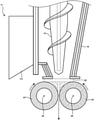
- FIG. 1 is a diagram schematically showing an example of a configuration of a rubber material processing apparatus including a metal member according to an embodiment of the present invention.
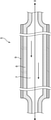
- FIG. 2 is a diagram showing a schematic cross section of a calendar roll which is an example of a metal member according to an embodiment of the present invention.
- FIG. 3 is a diagram showing a schematic cross section of a calendar roll which is another example of the metal member according to the embodiment of the present invention.
- Patent Document 1 or Patent Document 2 is a technique for preventing the rubber material from adhering to the member of the processing apparatus by giving a feature to the surface structure of the member in contact with the rubber material. be.
- the rubber material adheres during processing. It was found that there are cases where it cannot be prevented. That is, unless the metal member of the device is changed according to the type of rubber material and the surface temperature of the metal member is not adjusted to an appropriate level, the rubber material frequently adheres to the metal member, and finally rubber production is performed. It can also lead to a decrease in the production of goods. Therefore, there is a need for a metal member that can reduce the restrictions on the operation of such a rubber material processing device.
- the present inventors have conducted various studies on metal members to which the rubber material is difficult to adhere regardless of the type of rubber material and in a wide temperature range, and focused on the constituent elements on the surface of the metal member. Completed the invention.
- the metal member according to the present embodiment is a metal member having a surface in contact with the rubber material, and at least a part of the surface of the metal member in contact with the rubber material is made of an alloy containing cobalt and chromium.
- the metal member comprises a fluid passage for controlling the temperature of at least a portion of the surface in contact with the rubber material.
- the metal member according to this embodiment has a wide temperature range, and it is difficult for the rubber material to adhere to various types of rubber materials.
- the surface of the metal member in contact with the rubber material (hereinafter, also referred to as “the surface portion of the metal member in contact with the rubber material”) is made of cobalt, which makes it difficult to cause oxidation or corrosion, and a hard metal having excellent scratch resistance and wear resistance.
- the surface portion of the metal member in contact with the rubber material is made of cobalt, which makes it difficult to cause oxidation or corrosion, and a hard metal having excellent scratch resistance and wear resistance.
- an alloy containing chromium which is a material, it is possible to prevent adhesion to various types of rubber materials.
- the surface portion of the metal member is wide even when the surface temperature of the metal member is adjusted to various temperatures by utilizing the fluid passage. Has an effect of preventing adhesion to rubber materials in the temperature range.
- the "metal member” in the present specification is a member having a surface in contact with the rubber material, and specifically, a member provided in an apparatus for kneading, extruding and / or rolling the rubber material.
- the metal member is preferably a screw that extrudes the rubber material, a barrel that is the housing of the screw and forms a flow path for the rubber material, a calendar roll of a roller head that rolls the rubber material, and an end of the calendar roll. It is one of the side guides provided in.
- the metal member is more preferably a calendar roll of the roller head from the viewpoint that it is provided at the most downstream of the processing process in the apparatus for processing the rubber material and the rubber material is likely to adhere.
- the "rubber material” in the present specification includes a rubber component such as styrene-butadiene rubber (SBR), butadiene rubber (BR), natural rubber (NR), and chloroprene rubber as a main component, and refers to a metal member according to the present embodiment. It means a material to be kneaded, extruded and / or rolled using the equipment provided.
- the rubber material may contain a filler, an oil, a resin component, a pressure-sensitive adhesive, a vulcanizing agent, a vulcanization accelerator, an antioxidant, an antioxidant and the like as auxiliary components.
- the metal member according to the present embodiment can more effectively exert the effect of preventing the rubber material from adhering.
- Silica is added to the rubber material to reinforce the chemical structure of the rubber during vulcanization.
- the silane coupling agent is added to the rubber material to further enhance the reinforcing effect of silica.
- the silane coupling agent include (bis (triethoxysilylpropyl) polysulfide) such as TESPT and TESPD, trimethoxysilylpropanethiol, 3-octanoylthio-1-propyltriethoxysilane and the like.
- the rubber material contains silica and a silane coupling agent
- an unreacted silane coupling agent that did not bind to silica during kneading forms a film on the surface of the metal member in the extrusion and / or rolling steps.
- the rubber material is more likely to adhere to the metal member.
- silica is harder than other rubber material additives such as carbon black
- contact with the rubber material containing silica causes scratches, wear, etc. on the surface of the metal member. Defects are likely to occur. Since the surface of the metal member has scratches, wear, etc., the unreacted silane coupling agent is easily bonded and / or accumulated on the surface, so that the rubber material is more likely to adhere to the metal member.
- the metal member according to the present embodiment since the surface thereof is excellent in scratch resistance and wear resistance, it is possible to prevent the formation of a film on the surface of the metal member of the silane coupling agent, and it is possible to prevent the formation of a film on the surface of the metal member. Adhesion of rubber material can be effectively prevented.
- the metal member according to the present embodiment can more effectively exert the effect of preventing the adhesion of the rubber material even when an acid is used in the production of the rubber material or the raw material thereof.
- an acid particularly sulfuric acid
- the residual acid reacts with the surface of the metal member and oxidizes. Similar to scratches and wear, when the surface of the metal member is oxidized, the unreacted silane coupling agent added with silica easily forms a film on the surface of the metal member, resulting in more adhesion of the rubber material to the metal member. It becomes easier to do.
- the metal member according to the present embodiment since the surface thereof is hard to oxidize, it is possible to prevent the formation of a film of the silane coupling agent on the surface of the metal member, and the adhesion of the rubber material to the surface of the metal member is effective. Can be prevented.
- the device provided with the metal member according to the present embodiment that is, the device for processing the rubber material is not particularly limited, but for example, an device for kneading a raw material containing raw rubber as a main component used for tires and the like, and a device for kneading the rubber material after kneading.
- examples thereof include screw extruders for extrusion and / or rolling, conical twin screw extruders, roller head screw extruders, calendar rolls, open rolls and the like.
- FIG. 1 schematically shows an example of the configuration of a rubber material processing apparatus including a metal member according to the present embodiment.
- each reference numeral represents a rubber material processing device 1, a hopper 2, a screw 3, a barrel 4, a calendar roll 5, a side guide 6, and a rotation axis X.
- the rubber material processing device 1 includes a hopper 2, a screw 3, a barrel 4, a pair of calendar rolls 5, and a pair of side guides 6.
- the rubber material after kneading is put into the hopper 2.
- the screw 3 is driven to rotate to push out the rubber material after kneading.
- the barrel 4 is a housing for accommodating the screw 3 and forms a flow path for the rubber material.
- the pair of calendar rolls 5 are rotationally driven so as to entrain the extruded rubber material, thereby rolling the rubber material into a sheet shape.
- the pair of side guides 6 are provided at both ends of the calendar roll 5 along the X direction of the rotation axis to control the width of the extruded rubber material.
- Each of these metal members has a surface that comes into contact with the rubber material, and it is possible to provide a fluid passage for adjusting the metal member to an appropriate temperature inside or near the surface thereof.
- FIG. 2 shows a schematic cross section of a calendar roll which is an example of a metal member according to the present embodiment.
- each reference numeral represents a calendar roll 5, a calendar roll surface portion (surface portion of a metal member in contact with a rubber material) 5', a fluid passage 7, and a rotation axis X.
- the cross-sectional view of FIG. 2 is a cross-sectional view taken along the rotation axis X direction of the calendar roll 5.
- the calendar roll 5 metal member
- the fluid passage 7 is a passage for passing a fluid such as water adjusted to a specific temperature.
- a fluid such as water adjusted to a specific temperature.
- the term "preset temperature range” means that the surface of a metal member is not too hot and / or is cold when the metal member is used, depending on the type of rubber material and the type and size of the metal member. Any temperature range that is judged to be appropriate is sufficient. Such a temperature range is preferably 20 ° C. or higher and 90 ° C. or lower. The temperature range is more preferably 30 ° C. or higher, still more preferably 40 ° C. or higher. Further, the temperature range is more preferably 80 ° C. or lower, still more preferably 60 ° C. or lower. By setting the temperature of the surface of the metal member in contact with the rubber material to 20 ° C. or higher, corrosion of the surface of the metal member can be prevented. By setting the temperature of the surface of the metal member in contact with the rubber material to 90 ° C. or lower, it is possible to prevent the occurrence of rubber burning in the processing of the rubber material.
- the temperature of the fluid passing through the fluid passage 7 may be the same as the preset temperature of the surface of the metal member, or may be set to a temperature in consideration of heat exchange between the fluid and the metal member. In either case, a temperature sensor may be provided near the surface of the metal member in contact with the rubber material, and the temperature of the fluid may be controlled so that the temperature within the set temperature range is always maintained.
- the position of the fluid passage 7 is provided so as to penetrate the central portion along the rotation axis X of the calendar roll 5 in FIG. 2, but is provided at a position where the temperature of the surface of the metal member in contact with the rubber material can be adjusted. If so, the specific position is not limited. For example, depending on the type and size of the metal member, the type of rubber material, the set temperature, and the like, fluid passages 7 having various shapes may be provided at one or more locations inside and / or on the surface of the metal member. It may be provided.
- the fluid passage 7 may be formed in a spiral shape centered on the roller shaft core (see, for example, JP-A-8-39594).
- the fluid passage 7 may be provided in an internal space extending along the axis of rotation to the vicinity of the tip of the screw.
- a fluid passage 7 may be provided along the surface of the housing.
- a fluid passage 7 may be provided so that cooled water or the like can flow into the voids existing therein (see, for example, Japanese Patent Application Laid-Open No. 8-309826). ..
- the calendar roll surface portion 5' (the surface portion of the metal member in contact with the rubber material) is made of an alloy containing cobalt and chromium. Specifically, by including cobalt, which is less likely to be oxidized or corroded, in the composition of the alloy on the surface portion, it is easier to bond to the oxidized metal surface, especially when the rubber material contains a silane coupling agent. It is possible to make the coupling reaction of the silane coupling agent less likely to occur. Furthermore, by combining chrome, which is a hard metal, with the alloy, the hardness of the alloy forming the calendar roll surface portion 5'(the surface portion of the metal member in contact with the rubber material) is improved, which is one of the causes of adhesion of the rubber material.
- the mass ratio in the composition of the alloy forming the calendar roll surface portion 5'(the surface portion of the metal member in contact with the rubber material) is not particularly limited, but the mass ratio containing a large amount of cobalt to chromium is preferable. This is because, when focusing on the suppression of adhesion of the rubber material, by containing a large amount of cobalt with respect to chromium, the silane coupling agent becomes more difficult to bond, especially when the rubber material contains a silane coupling agent. Is.
- the calendar roll surface portion 5' (the surface portion of the metal member in contact with the rubber material) may be an alloy containing cobalt in an amount of 60% by mass or more and 80% by mass or less and chromium in an amount of 20% by mass or more and 40% by mass or less. good.
- the alloy containing cobalt and chromium of the calendar roll surface portion 5'(the surface portion of the metal member in contact with the rubber material) preferably further contains one or more selected from tungsten, molybdenum, boron and carbon.
- the surface portion of the calendar roll 5'(the surface portion of the metal member in contact with the rubber material) contains 39% by mass or more and 71% by mass or less of cobalt, 8% by mass or more and 35% by mass or less of chromium, and tungsten.
- Molybdenum, boron and carbon are preferably one or more elements containing 0.1% by mass or more and 30% by mass or less.
- the hardness of the alloy can be increased and the effect of preventing surface damage can be enhanced.
- the total amount of these elements added is more preferably 1% by mass or more, still more preferably 5% by mass or more.
- the above-mentioned effects can be exhibited by setting the total addition amount of these elements to 0.1% by mass or more. Further, by setting the total addition amount to 30% by mass or less, it is possible to prevent the alloy from becoming brittle.
- iron, silicon, nickel, aluminum, vanadium, niobium, and manganese are added to the alloy containing cobalt and chromium in the surface portion of the calendar roll 5'(the surface portion of the metal member that comes into contact with the rubber material). It may have been done. For example, in the case of iron, it can be added in an amount of 20% by mass or less. The lower limit is not particularly limited, but it is preferable to add it in an amount of 1% by mass or more.
- an alloy forming the calendar roll surface portion 5'(the surface portion of the metal member in contact with the rubber material) can be produced at a relatively low cost. By adding iron in an amount of 1% by mass or more, such an effect on cost can be exhibited.
- iron By adding iron in an amount of 20% by mass or less, deterioration of oxidation resistance and hardness can be suppressed.
- silicon, aluminum or vanadium it can be added in an amount of 5% by mass or less.
- the lower limit is not particularly limited, but it is preferable to add in an amount of 0.1% by mass or more.
- silicon, aluminum or vanadium By adding silicon, aluminum or vanadium to the alloy, the toughness of the alloy forming the calendar roll surface portion 5'(the surface portion of the metal member in contact with the rubber material) can be improved. By adding these elements in an amount of 0.1% by mass or more, such an effect can be satisfactorily exhibited.
- nickel it can be added in an amount of 25% by mass or less, and the lower limit thereof is not particularly limited, but it is preferable to add nickel in an amount of 0.1% by mass or more.
- niobium or manganese it can be added in an amount of 5% by mass or less, and the lower limit thereof is not particularly limited, but it is preferable to add it in an amount of 0.1% by mass or more.
- the oxidation resistance of the alloy forming the calendar roll surface portion 5' (the surface portion of the metal member in contact with the rubber material) can be further improved.
- these elements in an amount of 0.1% by mass or more, such an effect can be satisfactorily exhibited.
- nickel in an amount of 25% by mass or less or niobium or manganese in an amount of 5% by mass or less it is possible to prevent the material cost from becoming excessively high.
- the surface roughness Ra is more preferably 0.2 ⁇ m or more, still more preferably Ra 0.3 ⁇ m or more.
- the surface roughness Ra is more preferably 0.8 ⁇ m or less, still more preferably 0.5 ⁇ m or less.
- the surface roughness Ra By setting the surface roughness Ra to 1.0 ⁇ m or less, it is possible to prevent the rubber material from entering the gaps on the surface.
- the value of the surface roughness Ra can be adjusted by performing cutting, buffing, vanishing, roller finishing, electrolytic polishing, wrapping, liquid honing, shot blasting, edging and the like.
- the surface roughness Ra can be measured by a contact type surface roughness meter.
- the metal member according to the present embodiment is not all the surface (or surface portion) of the metal member that comes into contact with the rubber material, but at least a part of the surface (or surface portion) of the metal member that comes into contact with the rubber material. It may be made of an alloy containing cobalt and chromium.
- the metal member according to the present embodiment may be made of an alloy containing cobalt and chromium not only on the surface portion of the metal member but also on the entire metal member. Even in this case, the alloy constituting the metal member can contain other elements arbitrarily contained as described above in the same mass ratio.
- Such metal members can be manufactured by methods generally applied by those skilled in the art, such as casting, forging, and can making.
- FIG. 3 shows a schematic cross section of a calendar roll, which is another example of the metal member according to the present embodiment.
- each reference numeral represents a calendar roll 5, a fluid passage 7, a metal base material 8, a covering layer 9, and a rotation axis X.
- the calendar roll 5 is composed of a metal base material 8 and a coating layer 9 formed on the surface of the metal base material 8 in contact with the rubber material, and includes a fluid passage 7 inside.
- the fluid passage 7 is a passage for passing a fluid such as water adjusted to a specific temperature as described above.
- a fluid such as water adjusted to a specific temperature as described above.
- the metal base material 8 is made of steel usually used as a base metal, for example, carbon steel, chrome molybdenum steel, stainless steel, etc., and is not particularly limited. Of these, the metal base material 8 has a high heat transfer rate, so that it is easy to control the temperature, and it is relatively inexpensive and easy to process, and it can maintain the strength as various metal members. Carbon steel or chrome molybdenum steel is preferred.
- the coating layer 9 is made of an alloy containing cobalt and chromium. Regarding the mass ratio of these elements, and the types of other elements that may be optionally contained and the mass ratio when they are contained, the calendar roll surface portion 5'(the surface of the metal member in contact with the rubber material) of the above-described embodiment is described. The same applies to the case of (part).
- the coating layer 9 is not limited, but can be formed by plating, thermal spraying, welding (for example, overlay welding), physical vapor deposition (PVD: Physical Vapor Deposition) such as a sputtering method, or the like.
- PVD Physical Vapor Deposition
- the thickness of the coating layer 9 may be set to an appropriate thickness based on the type of rubber material, the type and size of the metal member, the replacement period, and the like.
- the thickness of the covering layer 9 can be 0.01 mm or more.
- the upper limit of the thickness of the coating layer 9 is not particularly limited.
- the preferable numerical value of the surface roughness Ra of the coating layer 9 is also the same as in the case of the calendar roll surface portion 5'(the surface portion of the metal member in contact with the rubber material) of the above-described embodiment.
- the coating layer 9 in the metal member according to the present embodiment is formed not on the entire surface of the metal base material 8 in contact with the rubber material, but on at least a part of the surface of the metal base material 8 in contact with the rubber material. May be.
- the method for processing a rubber material according to the present embodiment is a method for processing a rubber material using a device provided with a metal member according to the above-described embodiment, and is in contact with the rubber material by passing a fluid through the above-mentioned fluid passage. It includes a step of adjusting the temperature of at least a part of the surface of the surface of the metal member of the above-described embodiment to a preset temperature range, a step of extruding the rubber material, and / or a step of rolling the rubber material.
- the rubber material can be extruded and / or rolled for various types of rubber materials even when the surface temperature of the metal member is adjusted to a wide range by using the fluid passage. At that time, it is possible to prevent the rubber material from adhering to the surface of the metal member. In addition, by adjusting the surface temperature of the metal member to the temperature at which the rubber material is most difficult to adhere according to the type of metal member and the rubber material used, the effect of preventing the adhesion of the rubber material is maximized. You can also. Extrusion and / or rolling of the rubber material can be performed by rotationally driving a metal member such as a screw or a calender roll with a motor or the like by a usual method.
- Patent Document 2 also describes a technique of coating a mold release promoting layer in order to promote mold release of a rubber material, but according to the metal member in the present embodiment, the constituent elements themselves on the surface of the metal member are used. Since it has an effect of preventing adhesion of the rubber material, it is not necessary to further cover such a mold release promoting layer. Further, by suppressing the adhesion of the rubber material, the frequency of cleaning the metal member and the like is reduced.
- the metal member according to one aspect of the present invention is a metal member having a surface in contact with a rubber material. At least a part of the surface of the metal member in contact with the rubber material is made of an alloy containing cobalt and chromium. A fluid passage is provided for adjusting the temperature of at least a part of the surface of the metal member in contact with the rubber material.
- a metal member having such a configuration has a wide temperature range, and it is difficult for the rubber material to adhere to various types of rubber materials.
- the rubber material preferably contains silica and a silane coupling agent.
- the rubber material contains silica and a silane coupling agent, the effect of preventing the rubber material of the metal member in the present embodiment from adhering can be more effectively exhibited.
- the alloy further contains one or more selected from tungsten, molybdenum, boron and carbon.
- the hardness of the alloy on the surface of the metal member in the present embodiment can be increased, and the effect of preventing the surface damage of the metal member can be enhanced.
- a metal member having such a configuration can further improve the effect of preventing the rubber material from adhering to the metal member by reducing the contact area between the surface of the metal member and the rubber material, and the rubber material is a metal. It is possible to prevent the member from entering the gap on the surface of the member.
- the above-mentioned metal member is composed of a coating layer of an alloy containing cobalt and chromium on at least a part of the surface in contact with the metal base material and the rubber material.
- the above-mentioned metal member further includes a metal base material and a coating layer formed on the metal base material, and the coating layer is made of an alloy containing the cobalt and chromium, and the rubber material. It is more preferable that the metal member is formed on at least a part of the surface of the metal member in contact with the metal member.
- a preferable metal base material, a method for forming the coating layer, a location where the coating layer is formed, a thickness, and the like can be selected according to the type of the metal member.
- the metal member includes a screw that pushes out the rubber material, a barrel that is a housing of the screw and forms a flow path of the rubber material, a calendar roll of a roller head that rolls the rubber material, and an end portion of the calendar roll. It is more preferable to be one selected from the side guides provided in.
- the rubber material is particularly likely to adhere to the above member, so that the effect of preventing the adhesion of the rubber material of the metal member in the present embodiment can be more effectively exhibited. ..
- the method for processing a rubber material according to another aspect of the present invention is a method for processing a rubber material using an apparatus provided with a metal member according to the above-mentioned one aspect.
- the rubber material is extruded and / or extruded for various types of rubber materials even when the surface temperature of the metal member is adjusted to a wide range by using a fluid passage.
- a fluid passage When rolling, it is possible to prevent the rubber material from adhering to the surface of the metal member.
- an acid is used in the rubber material or its raw material at the time of production.
- the metal member of the silane coupling agent is difficult to oxidize according to the processing method of the rubber material in the present embodiment.
- the formation of a film on the surface can be prevented, and the adhesion of the rubber material to the surface of the metal member can be effectively prevented.
- the temperature range is more preferably 20 ° C. or higher and 90 ° C. or lower.
- the temperature range is more preferably 30 ° C. or higher and 60 ° C. or lower.
- a roller head twin-screw extruder (manufactured by Kobe Steel, Ltd., "TSR125") (screw) imitating an actual machine equipped with a calendar roll according to Example 1 or Comparative Example 1 to Comparative Example 3. Tip diameter 125 mm, roll diameter 177 mm) was used.
- the calendar roll is set to various cooling water temperatures (adjusted temperature on the surface of the calendar roll) and driven to rotate, and using various types of rubber materials, the roll gap is 3 mm, the roll rotation speed is 3 rpm, and extrusion is performed on two rolls. Extrusion rolling was performed under the condition that the extrusion load of the rubber in the direction was 20 kN. After that, the effect of preventing the adhesion of the rubber material was evaluated by visually confirming the adhesion state of the rolled sheet to each calendar roll.
- Example 1 a calendar roll was used in which the metal base material was made of carbon steel S25C and the coating layer was made of cobalt and chromium.
- Comparative Example 1 a calendar roll in which the metal base material was made of carbon steel S25C and the coating layer was made of chromium was used.
- Comparative Example 2 a calendar roll in which the metal base material was made of carbon steel S25C and the coating layer was made of chromium and carbon was used.
- Comparative Example 3 a calendar roll in which the metal base material was made of carbon steel S25C and the coating layer was made of cobalt, tungsten and carbon was used.
- the raw materials of various rubber materials used for the evaluation and their mass ratios are as shown below.
- the mass ratio indicates the mass ratio when the total amount of the rubber components as the main component is 100 parts by mass, except for the case of the re-kneaded rubber material.
- the following raw materials were kneaded with a 14 L capacity meshing mixer (Mixtron BB mixer, "BB14IM” manufactured by Kobe Steel, Ltd.) to prepare a rubber material for evaluation.
- the kneading conditions for various rubber materials are also shown below.
- SBR Sstyrene butadiene rubber
- BR butadiene rubber
- Silica 80 parts by mass Silane coupling agent 6.4 parts by mass
- Phenolic resin 10 parts by mass Mineral process oil for rubber 15 parts by mass Zinc oxide 3 parts by mass Steer 2 parts by mass of acid
- 6PPD N-phenyl-N'-(1,3-dimethylbutyl) -p-phenylenediamine
- Paraffin wax 1 part by mass Kneading conditions After putting the raw materials into the mixer, The mixture was kneaded at a rotor rotation speed of 50 rpm until it reached 130 ° C., kneaded at a constant temperature of 130 ° C. for 2 minutes, and then kneaded at 50 rpm until it reached 150 ° C. and discharged. The total kneading time was about 4 minutes and 30 seconds.
- Rubber material No. 3 Rubber material No. 2 (Re-kneading) 239 parts by mass Silica 10 parts by mass Carbon black 9 parts by mass Anti-aging agent 6PPD (N-phenyl-N'-(1,3-dimethylbutyl) -p-phenylenediamine) 2 parts by mass Anti-aging agent TMQ (2,2,4-trimethyl-1,2-dihydroquinoline polymer) 2 parts by mass Zinc oxide 2 parts by mass Paraffin wax 2 parts by mass Vulcanization accelerator DPG (1,3-diphenylguanidine) 1.5 parts by mass Kneading Conditions: After the raw materials were put into the mixer, they were kneaded at a rotor rotation speed of 50 rpm until the temperature reached 140 ° C., and further kneaded at 25 rpm until the temperature reached 155 ° C. and discharged. The total kneading time was 3 minutes.
- Rubber material No. 6 Rubber material No. 5 (Re-kneading) 143 parts by mass Carbon black 12 parts by mass Phenol resin 9 parts by mass Zinc oxide 5 parts by mass Kneading conditions: After the raw materials were put into the mixer, they were kneaded at a rotor rotation speed of 40 rpm until the temperature reached 130 ° C. and then discharged. The total kneading time was 1 minute and 30 seconds.
- Natural rubber (NR) 50 parts by mass Styrene-butadiene rubber (SBR) 30 parts by mass butadiene rubber (BR) 20 parts by mass Carbon black 64 parts by mass Phenol resin 10 parts by mass Mineral process oil for rubber 21 parts by mass (SBR oil spread) include) Kneading conditions: After the raw materials were put into the mixer, they were kneaded at a rotor rotation speed of 50 rpm until the temperature reached 157 ° C. and then discharged. The total kneading time was 2 minutes and 20 seconds.
- Rubber Material No. 8 Rubber material No. 7 (Re-kneading) 195 parts by mass Accelerator CBG (N-cyclohexyl-2-benzothiazolyl sulphenamide) 1 part by mass Adhesive HMMM (hexamethoxymethylmelamine) 1.3 parts by mass Sulfur 2.5 parts by mass Kneading conditions : After the raw materials were put into the mixer, they were kneaded at a rotor rotation speed of 30 rpm until the temperature reached 100 ° C. and discharged. The total kneading time was 1 minute and 30 seconds.
- the specific evaluation of the adhesion prevention effect of the rubber material is that after each rubber material is extruded and rolled, A: the rolled sheet does not adhere to the calendar roll, B: the rolled sheet adheres but peels off by its own weight. C: The rolled sheet adhered but peeled off by hand, and D: the rolled sheet adhered and could not be operated.
- Table 1 The evaluation results are summarized in Table 1 below. The evaluation when multiple tests are performed shows the average evaluation category. In addition, "B +" indicates an evaluation category between A and B, and "C +" indicates an evaluation category between B and C. Further, when the test was performed a plurality of times and the evaluation category of D was obtained even once, that is, when the extruder became inoperable, the evaluation category was set to "D". "-" Indicates unmeasured.
- Example 1 which is an example of the present invention did not fall into the evaluation category of "D" for all types of rubber materials at all cooling water temperatures. That is, by making the surface of the calendar roll that comes into contact with the rubber material an alloy containing cobalt and chromium, it is possible to prevent the rubber material from adhering to the calendar roll over a wide temperature range and against various types of rubber materials. Do you get it.
- Comparative Example 1 there are many calendar rolls of Comparative Example 1 in which the coating layer is made of chromium (or a calendar roll of Comparative Example 2 in which the coating layer is made of chromium and carbon).
- Example 1 the rubber material No. 1 containing silica and a silane coupling agent as the raw material thereof. 1 to No. Rubber material No. 4 composed of not only 4 but also other raw materials. 5 to No. In contrast to 8, it was a good evaluation category over a wide temperature range.
- Comparative Example 3 is an example in which a coating layer in which tungsten is combined with a constituent element is formed in order to make the roll harder in consideration of scratch resistance and wear resistance due to silica. As can be seen from the result of No. 1, the adhesion of the rubber material could hardly be prevented.
- rubber is processed regardless of the type of rubber material to be processed and in a wide temperature range. It is possible to exert the effect of preventing material adhesion.
Landscapes
- Engineering & Computer Science (AREA)
- Mechanical Engineering (AREA)
- Manufacturing & Machinery (AREA)
- Processing And Handling Of Plastics And Other Materials For Molding In General (AREA)
- Extrusion Moulding Of Plastics Or The Like (AREA)
- Laminated Bodies (AREA)
Abstract
本発明に係る金属部材は、ゴム材料と接触する表面を有する金属部材であり、前記ゴム材料と接触する前記金属部材の表面の少なくとも一部が、コバルトとクロムとを含む合金からなり、前記ゴム材料と接触する前記金属部材の表面の少なくとも一部の温度を調節するための流体通路を備える。
Description
本発明は、金属部材と、当該金属部材を備える装置を用いたゴム材料の加工方法に関する。
一般的に、ゴム材料の混練、混練後のゴム材料の押出または圧延等を行う加工装置には、様々な金属部材が備えられている。このような部材としては、ゴム材料を押し出すためのスクリュー、スクリューが収容される筐体であるバレル(またはシリンダとも称する)、ゴム材料を圧延してシート状にするためのカレンダーロール(または単にロールとも称する)、カレンダーロールの端部に設けられるサイドガイド等が挙げられる。通常、これらの部材の表面には、ゴム材料の付着を防止するためのクロムめっき等が施されている。
さらに、加工装置に備えられる部材の表面にゴム材料が付着することを防止する技術として、例えばゴム材料と接触する表面等を特徴的な構造にする技術がある。例えば、特許文献1には、ゴムと接触する金属表面を有するゴム加工装置において、前記金属表面の表面粗度がRa=5~50μmの範囲内であることを特徴とするゴム加工装置が記載されている。また、特許文献2には、ゴム材料と接触する表面を有する部材であり、前記ゴム材料と接する表面の接触角が、当該ゴム材料に使用されるゴム組成物の分子量を小さくして合成することで常温で液体状態を維持可能な試験用の液状ゴムを載せた場合に40°以上とされていることを特徴とするゴム材料と接触する部材が記載されている。
本発明は、幅広い温度範囲において、かつ様々な種類のゴム材料に対し、ゴム材料が付着し難い金属部材を提供することを目的とする。
本発明者らは、上記課題を解決すべく鋭意検討を行った結果、本発明に到達した。
すなわち、本発明の一局面に係る金属部材は、ゴム材料と接触する表面を有する金属部材であり、
前記ゴム材料と接触する前記金属部材の表面の少なくとも一部が、コバルトとクロムとを含む合金からなり、
前記ゴム材料と接触する前記金属部材の表面の少なくとも一部の温度を調節するための流体通路を備える。
前記ゴム材料と接触する前記金属部材の表面の少なくとも一部が、コバルトとクロムとを含む合金からなり、
前記ゴム材料と接触する前記金属部材の表面の少なくとも一部の温度を調節するための流体通路を備える。
上述したような特許文献1または特許文献2に記載の技術は、ゴム材料と接触する部材の表面構造に特徴を持たせることによって、ゴム材料が加工装置の部材に付着することを防止する技術である。
しかしながら、金属部材の表面構成元素とゴム材料の種類とさらには当該金属部材に備えられる流体通路により調節される金属部材表面温度とを、適切に選択して組み合わさなければ、加工時にゴム材料の付着を防止できない場合が生じることが分かった。すなわち、ゴム材料の種類に合わせて装置の金属部材を変更し、かつ、適切な金属部材表面温度に調節しなければ、ゴム材料が金属部材に頻繁に付着してしまい、最終的にはゴム製造物の生産低下にも繋がり得る。そのため、このようなゴム材料の加工装置の運転の際の制限を低減可能な金属部材が求められる。
そこで、本発明者らは、ゴム材料の種類に関わらず、かつ幅広い温度範囲において、ゴム材料が付着し難い金属部材について様々な研究を重ね、その金属部材の表面の構成元素について着目し、本発明を完成した。
以下、本発明の実施形態について、詳細に説明する。なお、本発明の範囲はここで説明する実施形態に限定されるものではなく、本発明の趣旨を損なわない範囲で種々の変更をすることができる。
<金属部材>
本実施形態に係る金属部材は、ゴム材料と接触する表面を有する金属部材であり、前記ゴム材料と接触する前記金属部材の表面の少なくとも一部が、コバルトとクロムとを含む合金からなる。さらに、当該金属部材は、ゴム材料と接触する表面の少なくとも一部の温度を調節するための流体通路を備える。
本実施形態に係る金属部材は、ゴム材料と接触する表面を有する金属部材であり、前記ゴム材料と接触する前記金属部材の表面の少なくとも一部が、コバルトとクロムとを含む合金からなる。さらに、当該金属部材は、ゴム材料と接触する表面の少なくとも一部の温度を調節するための流体通路を備える。
本実施形態に係る金属部材は、幅広い温度範囲において、かつ様々な種類のゴム材料に対し、ゴム材料が付着し難い。
すなわち、ゴム材料と接触する金属部材の表面(以下、「ゴム材料と接触する金属部材の表面部分」とも称する)を、酸化や腐食を起こし難くするコバルトと耐傷や耐摩耗効果に優れた硬い金属であるクロムとを含む合金にすることによって、様々な種類のゴム材料に対する付着を防止することができる。さらに、当該金属部材の表面をこのような合金構成にすることによって、流体通路を利用して金属部材の表面温度を様々な温度に調節した場合であっても、当該金属部材の表面部分は幅広い温度範囲においてゴム材料に対する付着防止効果を有する。
本明細中における「金属部材」とは、ゴム材料と接触する表面を有する部材であり、具体的には、ゴム材料の混練、押出および/または圧延等の加工を行う装置に備えられる部材であればよい。例えば、金属部材は、好ましくは、ゴム材料を押し出すスクリュー、当該スクリューの筐体でありゴム材料の流路を形成するバレル、ゴム材料を圧延するローラーヘッドのカレンダーロール、および、カレンダーロールの端部に設けられるサイドガイドから選択されるいずれかである。これらのうち、ゴム材料の加工を行う装置において加工プロセスの最も下流に備えられており、ゴム材料の付着が生じ易いという観点から、金属部材はローラーヘッドのカレンダーロールであるとより好ましい。
本明細書における「ゴム材料」とは、スチレンブタジエンゴム(SBR)、ブタジエンゴム(BR)、天然ゴム(NR)、クロロプレンゴム等のゴム成分を主成分として含み、本実施形態に係る金属部材を備える装置を用い、混練、押出および/または圧延等の加工が行われる材料を意味する。ゴム材料は、主成分のゴム成分以外にも、充填剤、オイル、樹脂成分、粘着剤、加硫剤、加硫促進剤、老化防止剤、酸化防止剤等を補助成分として含んでもよい。
本実施形態に係る金属部材は、ゴム材料がシリカとシランカップリング剤とをさらに含む場合、ゴム材料の付着防止効果をより効果的に発揮させることができる。シリカは、加硫時におけるゴムの化学構造を補強するためにゴム材料に添加される。シランカップリング剤は、シリカによる補強効果をさらに高めるためにゴム材料に添加される。シランカップリング剤としては、例えばTESPTやTESPD等の(ビス(トリエトキシシリルプロピル)ポリスルフィド)、トリメトキシシリルプロパンチオール、3-オクタノイルチオ-1-プロピルトリエトキシシラン等を挙げることができる。
ゴム材料がシリカとシランカップリング剤とを含む場合、押出および/または圧延の工程において、混練時にシリカに結合しなかった未反応のシランカップリング剤によって金属部材の表面に被膜が形成され、その結果金属部材にゴム材料がより付着し易くなる。詳細には、シリカはカーボンブラック等の他のゴム材料の添加物と比較してより硬いため、金属部材の表面がシリカを含むゴム材料と接触することにより、金属部材の表面に傷、摩耗等の欠陥が生じ易くなる。そして、金属部材の表面が傷、摩耗等を有することにより、当該表面に未反応のシランカップリング剤が容易に結合および/または蓄積されていくため、金属部材にゴム材料がより付着し易くなってしまう。本実施形態に係る金属部材によれば、その表面が耐傷や耐摩耗効果に優れているため、シランカップリング剤の金属部材の表面への被膜の形成を防ぐことができ、金属部材表面へのゴム材料の付着を効果的に防止することができる。
さらに、本実施形態に係る金属部材は、ゴム材料またはその原材料の製造時に酸が使用されている場合も、ゴム材料の付着防止効果をより効果的に発揮させることができる。特に、ゴム材料がシリカを含む場合は、シリカの製造時において酸、特に硫酸が使用されている場合が多い。このような場合、ゴム材料の押出および/または圧延等の工程において、残留している酸が金属部材の表面と反応して酸化させてしまう。傷や摩耗と同様に、金属部材の表面が酸化すると、シリカと共に添加される未反応のシランカップリング剤により金属部材の表面へ容易に被膜が形成され、その結果金属部材にゴム材料がより付着し易くなる。本実施形態に係る金属部材によれば、その表面が酸化し難いため、シランカップリング剤の金属部材表面への被膜の形成を防ぐことができ、金属部材表面へのゴム材料の付着を効果的に防止することができる。
本実施形態に係る金属部材を備える装置、すなわちゴム材料の加工装置は、特に限定されないが、例えばタイヤ等に用いられる原料ゴムを主成分とする原材料を混練する装置、ならびに混練後のゴム材料を押出および/または圧延するスクリュー押出機、コニカルツインスクリュー押出機、ローラヘッド・スクリュー押出機、カレンダーロール、オープンロール等が挙げられる。
例えば、図1に、本実施形態に係る金属部材を備えるゴム材料の加工装置の構成の1例を模式的に示す。図1において各符号は、ゴム材料の加工装置1、ホッパー2、スクリュー3、バレル4、カレンダーロール5、サイドガイド6および回転軸Xを表している。ゴム材料の加工装置1は、ホッパー2と、スクリュー3と、バレル4と、一対のカレンダーロール5と、一対のサイドガイド6とを備える。ホッパー2は、その内部に混練後のゴム材料が投入される。スクリュー3は、回転駆動することによって、混練後のゴム材料を押し出す。バレル4は、スクリュー3を収容する筐体であり、かつゴム材料の流路を形成する。一対のカレンダーロール5は、押し出されたゴム材料を巻き込むように回転駆動することによって、ゴム材料をシート状に圧延する。一対のサイドガイド6は、カレンダーロール5の回転軸X方向に沿った両方の端部に設けられ、押し出されたゴム材料の幅を制御する。これらの金属部材は、いずれもゴム材料と接触する表面を有しており、その内部や表面近傍等において当該金属部材を適切な温度に調整するための流体通路を設けることが可能である。
本実施形態に係る金属部材について、図2および図3を用いてより具体的に説明する。図2は、本実施形態に係る金属部材の1例であるカレンダーロールの概略断面を示す。図2において各符号は、カレンダーロール5、カレンダーロール表面部分(ゴム材料と接触する金属部材の表面部分)5’、流体通路7および回転軸Xを表している。図2の断面図は、カレンダーロール5の回転軸X方向に沿った断面図である。図2に示すように、カレンダーロール5(金属部材)は、ゴム材料と接触するカレンダーロール表面部分5’(ゴム材料と接触する金属部材の表面部分)を有しており、内部に流体通路7を備える。
流体通路7は、特定の温度に調整した水等の流体を通過させるための通路である。流体通路7を用いることによってカレンダーロール表面部分5’(ゴム材料と接触する金属部材の表面部分)の温度を予め設定した温度範囲に調節する。
本明細書において「予め設定した温度範囲」とは、ゴム材料の種類、ならびに、金属部材の種類および大きさ等に応じて、金属部材を使用する際、その表面が高温過ぎずおよび/または低温過ぎず適切と判断される温度範囲であればよい。このような温度範囲は、好ましくは20℃以上90℃以下である。当該温度範囲は、より好ましくは30℃以上、さらに好ましくは40℃以上である。また、当該温度範囲は、より好ましくは80℃以下、さらに好ましくは60℃以下である。ゴム材料と接触する金属部材の表面の温度を20℃以上にすることによって、金属部材表面の腐食等を防止することができる。ゴム材料と接触する金属部材の表面の温度を90℃以下にすることによって、ゴム材料の加工にあたり、ゴム焼けの発生を防止することができる。
流体通路7を通過する流体の温度は、この金属部材の表面の予め設定した温度と同じ温度としてもよいし、または流体と金属部材との熱交換を考慮した温度に設定してもよい。いずれの場合においても、ゴム材料と接触する金属部材の表面近傍に温度センサを設け、常時設定温度範囲内の温度が維持されるように流体の温度を制御してもよい。
流体通路7の位置は、図2ではカレンダーロール5の回転軸Xに沿って中心部を貫通するように設けられるが、ゴム材料と接触する金属部材の表面の温度を調節可能な位置に設けられていれば、具体的な位置は限定されない。例えば、金属部材の種類および大きさ、ゴム材料の種類、ならびに設定される温度等に応じて、金属部材の内部および/または表面等に1箇所または複数箇所において、様々な形状の流体通路7が設けられていてもよい。例えば、カレンダーロールにおいて、ローラ軸芯を中心とした螺旋状に流体通路7が形成されていてもよい(例えば特開平8-39594号公報参照)。例えば、金属部材がスクリューである場合、その回転軸に沿ってスクリュー先端近傍まで伸びた内部空間に流体通路7が設けられていてもよい。または、例えば金属部材がバレルである場合、筐体の表面に沿って流体通路7が設けられていてもよい。あるいは、例えば金属部材がサイドガイドである場合、その内部に存在する空隙に冷却された水等が流入するように流体通路7が設けられていてもよい(例えば特開平8-309826号公報参照)。
カレンダーロール表面部分5’(ゴム材料と接触する金属部材の表面部分)は、コバルトとクロムとを含む合金からなる。具体的には、当該表面部分における合金の構成に酸化や腐食が起こり難いコバルトを含ませることによって、特にゴム材料がシランカップリング剤を含む場合において、酸化した金属表面に対してより結合し易くなるシランカップリング剤のカップリング反応を起こり難くすることができる。さらに、硬い金属であるクロムを当該合金に組み合わせることにより、カレンダーロール表面部分5’(ゴム材料と接触する金属部材の表面部分)を形成する合金の硬度を向上し、ゴム材料の付着原因の1つである金属部材の表面部分の傷や摩耗を防止することができる。カレンダーロール表面部分5’(ゴム材料と接触する金属部材の表面部分)を形成する合金の構成における質量比は特に限定されないが、クロムに対してコバルトが多く含有される質量比が好ましい。これは、ゴム材料の付着の抑制に着目した場合、クロムに対してコバルトを多く含有させることによって、特にゴム材料がシランカップリング剤を含む場合において、シランカップリング剤がより結合し難くなるためである。例えば、カレンダーロール表面部分5’(ゴム材料と接触する金属部材の表面部分)は、コバルトを60質量%以上80質量%以下、クロムを20質量%以上40質量%以下で含む合金であってもよい。
さらに、カレンダーロール表面部分5’(ゴム材料と接触する金属部材の表面部分)のコバルトとクロムとを含む合金は、タングステン、モリブデン、ホウ素および炭素から選択される1つ以上をさらに含むと好ましい。これらの元素を含む場合、カレンダーロール表面部分5’(ゴム材料と接触する金属部材の表面部分)は、コバルトを39質量%以上71質量%以下、クロムを8質量%以上35質量%以下、タングステン、モリブデン、ホウ素および炭素から選択される1つ以上の元素を0.1質量%以上30質量%以下で含む合金であると好ましい。タングステン、モリブデン、ホウ素および炭素から選択される元素を添加することによって、合金の硬度を高め、表面損傷を防止する効果を高めることができる。これらの元素の合計添加量は、より好ましくは1質量%以上、さらに好ましくは5質量%以上である。これらの元素は、その合計添加量を0.1質量%以上にすることによって前述した効果を発揮させることができる。さらに、その合計添加量を30質量%以下にすることによって合金が脆くなってしまうことを防止することができる。
カレンダーロール表面部分5’(ゴム材料と接触する金属部材の表面部分)のコバルトとクロムとを含む合金には、鉄、ケイ素、ニッケル、アルミ、バナジウム、ニオブ、マンガン等の他の金属等が添加されていてもよい。例えば、鉄の場合、20質量%以下で添加することができる。下限値は特に限定されないが、1質量%以上で添加すると好ましい。合金に鉄を添加することによって、カレンダーロール表面部分5’(ゴム材料と接触する金属部材の表面部分)を形成する合金を比較的安価に製造することができる。鉄を1質量%以上で添加することによって、このようなコスト面における効果を発揮させることができる。鉄を20質量%以下で添加することによって、耐酸化性や硬度の低下を抑制することができる。あるいは、例えば、ケイ素、アルミまたはバナジウムの場合、5質量%以下で添加することができる。その下限値は特に限定されないが、0.1質量%以上で添加すると好ましい。合金にケイ素、アルミまたはバナジウムを添加することによって、カレンダーロール表面部分5’(ゴム材料と接触する金属部材の表面部分)を形成する合金の靭性を向上することができる。これらの元素を0.1質量%以上で添加することによって、このような効果を良好に発揮させることができる。また、これらの元素を5質量%以下で添加することによって、合金が脆くなってしまう恐れを防止することができる。さらに、例えば、ニッケルの場合、25質量%以下で添加することができ、その下限値は特に限定されないが、0.1質量%以上で添加すると好ましい。また、例えば、ニオブまたはマンガンの場合、5質量%以下で添加することができ、その下限値は特に限定されないが、0.1質量%以上で添加すると好ましい。合金にニッケル、ニオブまたはマンガンを添加することによって、カレンダーロール表面部分5’(ゴム材料と接触する金属部材の表面部分)を形成する合金の耐酸化性をさらに向上させることができる。これらの元素を0.1質量%以上で添加することによって、このような効果を良好に発揮させることができる。ニッケルを25質量%以下またはニオブまたはマンガンを5質量%以下で添加することによって、材料費が過度に高価となることを抑制することができる。
さらに、カレンダーロール表面部分5’(ゴム材料と接触する金属部材の表面部分)の表面粗さRaは、Ra=0.1μm以上1.0μm以下の範囲であると好ましい。表面粗さRaは、より好ましくは0.2μm以上、さらに好ましくはRa0.3μm以上である。また、表面粗さRaは、より好ましくは0.8μm以下、さらに好ましくは0.5μm以下である。表面粗さRaを0.1μm以上にすることによって、金属部材表面とゴム材料との接触面積を減少させ、金属部材へのゴム材料の付着防止効果をより向上することができる。表面粗さRaを1.0μm以下にすることによって、ゴム材料が表面の隙間に入り込むことを防ぐことができる。表面粗さRaの数値は、切削加工、バフ仕上げ、バニシ仕上げ、ローラー仕上げ、電解研磨、ラップ仕上げ、液体ホーニング、ショットブラスト加工、エッジング処理等を行うことによって調整することができる。なお、本明細書において、表面粗さRaは、接触式表面粗さ計によって測定することができる。
なお、本実施形態に係る金属部材は、ゴム材料と接触する金属部材の表面(または表面部分)の全てではなく、当該ゴム材料と接触する金属部材の表面(または表面部分)の少なくとも一部がコバルトとクロムとを含む合金からなっていればよい。
さらに、本実施形態に係る金属部材は、金属部材の表面部分だけでなく、金属部材全体がコバルトとクロムとを含む合金からなっていてもよい。この場合においても、金属部材を構成する合金は、前述したような任意で含まれる他の元素を同様の質量比で含むことができる。このような金属部材は、鋳造、鍛造、製缶等の一般的に当業者によって適用される方法によって製造することができる。
次いで、他の例として、本実施形態に係る金属部材の別の1例であるカレンダーロールの概略断面を図3に示す。図3において各符号は、カレンダーロール5、流体通路7、金属母材8、被覆層9および回転軸Xを表している。図3に示すように、カレンダーロール5は、金属母材8と、金属母材8におけるゴム材料と接触する表面に形成された被覆層9とからなっており、内部に流体通路7を備える。
流体通路7は、前述したとおり特定の温度に調整した水等の流体を通過させるための通路である。流体通路7を用いることによってゴム材料と接触する被覆層9(ゴム材料と接触する金属部材の表面部分)の温度を予め設定した温度範囲に調節する。
金属母材8は、通常下地金属として使用される鋼鉄、例えば炭素鋼、クロムモリブデン鋼、ステンレス鋼等からなり、特に限定されない。これらのうち、熱伝達率が高いため温度を制御し易い点、かつ比較的安価で加工が容易である上に様々な金属部材としての強度を維持することができる点から、金属母材8は炭素鋼またはクロムモリブデン鋼が好ましい。
被覆層9は、コバルトとクロムとを含む合金からなる。これらの元素の質量比、および任意で含んでもよい他の元素の種類とそれらを含む場合の質量比については、前述した実施形態のカレンダーロール表面部分5’(ゴム材料と接触する金属部材の表面部分)における場合と同様である。
被覆層9は、限定されることはないが、めっき、溶射、溶接(例えば肉盛溶接)、スパッタリング法等の物理蒸着(PVD:Physical Vapor Deposition)等により形成することができる。例えば、ケナメタルステライト社製の「ステライト」(登録商標)、「トリバロイ」(登録商標)、「アルティメット」(登録商標)、エイワ社製の「コバリオン」(登録商標)、Arcam社製の「ASTM F75 CoCr アロイ」等の市販の合金を用いて形成することができる。
被覆層9の厚さは、ゴム材料の種類、金属部材の種類および大きさ、ならびに取り換え期間等に基づき、適切な厚さに設定すればよい。例えば、被覆層9の厚さは、0.01mm以上とすることができる。被覆層9の厚さの上限は特に限定されない。
被覆層9の表面粗さRaの好ましい数値についても、前述した実施形態のカレンダーロール表面部分5’(ゴム材料と接触する金属部材の表面部分)における場合と同様である。
なお、本実施形態に係る金属部材における被覆層9は、金属母材8のゴム材料と接触する表面の全てではなく、当該金属母材8のゴム材料と接触する表面の少なくとも一部において形成されていてもよい。
<ゴム材料の加工方法>
本実施形態に係るゴム材料の加工方法は、前述の実施形態の金属部材を備える装置を用いたゴム材料の加工方法であって、前述の流体通路に流体を通過させることによりゴム材料と接触する前述の実施形態の金属部材の表面の少なくとも一部の温度を予め設定した温度範囲に調節する工程と、ゴム材料を押し出す工程および/またはゴム材料を圧延する工程とを含む。
本実施形態に係るゴム材料の加工方法は、前述の実施形態の金属部材を備える装置を用いたゴム材料の加工方法であって、前述の流体通路に流体を通過させることによりゴム材料と接触する前述の実施形態の金属部材の表面の少なくとも一部の温度を予め設定した温度範囲に調節する工程と、ゴム材料を押し出す工程および/またはゴム材料を圧延する工程とを含む。
本実施形態に係る方法によると、様々な種類のゴム材料に対し、流体通路を利用して金属部材の表面温度を幅広い温度に調節した場合であっても、ゴム材料の押出および/または圧延を行う際、金属部材表面へのゴム材料の付着を防止することができる。また、金属部材の種類および使用するゴム材料等に合わせて、金属部材の表面温度を最もゴム材料が付着し難い温度に調節することによって、ゴム材料の付着防止の効果を最大限に発揮させることもできる。ゴム材料の押出および/または圧延は、スクリュー、カレンダーロール等の金属部材を通常の方法によりモーター等で回転駆動等させることによって行うことができる。
上述してきたように、本実施形態における金属部材によると、ゴム材料と接触する金属部材の表面部分の構成元素をコバルトとクロムとを含む合金にすることによって、幅広い温度範囲において、かつ様々な種類のゴム材料に対し付着を防止することができる。例えば、特許文献2には、ゴム材料の離型を促進するために離型促進層を被覆する技術も記載されているが、本実施形態における金属部材によると、金属部材表面の構成元素自体がゴム材料の付着防止効果を有するため、このような離型促進層をさらに被覆する必要はない。また、ゴム材料の付着が抑制されることにより、金属部材の洗浄頻度等も減少する。
以上、本発明の概要について説明したが、本実施形態における金属部材およびゴム材料の加工方法をまとめると下記の通りである。
本発明の一局面に係る金属部材は、ゴム材料と接触する表面を有する金属部材であり、
前記ゴム材料と接触する前記金属部材の表面の少なくとも一部が、コバルトとクロムとを含む合金からなり、
前記ゴム材料と接触する前記金属部材の表面の少なくとも一部の温度を調節するための流体通路を備える。
前記ゴム材料と接触する前記金属部材の表面の少なくとも一部が、コバルトとクロムとを含む合金からなり、
前記ゴム材料と接触する前記金属部材の表面の少なくとも一部の温度を調節するための流体通路を備える。
このような構成を有する金属部材は、幅広い温度範囲において、かつ様々な種類のゴム材料に対し、ゴム材料が付着し難い。
前述の金属部材において、前記ゴム材料は、シリカとシランカップリング剤とを含むことが好ましい。
前記ゴム材料がシリカとシランカップリング剤とを含む場合、本実施形態における金属部材のゴム材料の付着防止効果をより効果的に発揮させることができる。
前述の金属部材において、前記合金は、タングステン、モリブデン、ホウ素および炭素から選択される1つ以上をさらに含むことがより好ましい。
このような構成を有する金属部材によれば、本実施形態における金属部材の表面における合金の硬度を高め、当該金属部材の表面損傷を防止する効果を高めることができる。
前述の金属部材において、前記ゴム材料と接触する前記金属部材の表面の少なくとも一部の表面粗さRaが、Ra=0.1μm以上1.0μm以下であることがさらに好ましい。
このような構成を有する金属部材は、金属部材表面とゴム材料との接触面積を減少させることにより、金属部材へのゴム材料の付着防止効果をより向上させることができ、かつ、ゴム材料が金属部材の表面の隙間に入り込むことを防ぐことができる。
前述の金属部材は、金属母材と前記ゴム材料と接触する表面の少なくとも一部において前記コバルトとクロムとを含む合金の被覆層とからなることがより好ましい。換言すれば、前述の金属部材は、金属母材と前記金属母材に形成された被覆層とをさらに備え、かつ、前記被覆層は、前記コバルトとクロムとを含む合金からなり、前記ゴム材料と接触する前記金属部材の表面の少なくとも一部に形成されていることがより好ましい。
このような構成を有する金属部材によれば、金属部材の種類に応じて、好ましい金属母材、被覆層の形成方法、被覆層の形成箇所、厚さ等を選択することができる。
前記金属部材は、前記ゴム材料を押し出すスクリュー、前記スクリューの筐体であり前記ゴム材料の流路を形成するバレル、前記ゴム材料を圧延するローラーヘッドのカレンダーロール、および、前記カレンダーロールの端部に設けられるサイドガイドから選択されるいずれかであることがさらに好ましい。
前記金属部材が上記の部材から選択される場合、上記の部材はゴム材料の付着が特に生じ易いため、本実施形態における金属部材のゴム材料の付着防止効果をより効果的に発揮させることができる。
本発明の別の局面に係るゴム材料の加工方法は、前述の一局面に係る金属部材を備える装置を用いたゴム材料の加工方法であって、
前記流体通路に流体を通過させることにより前記ゴム材料と接触する前記金属部材の表面の少なくとも一部の温度を予め設定した温度範囲に調節する工程と、
前記ゴム材料を押し出す工程および/または前記ゴム材料を圧延する工程と、を含む。
前記流体通路に流体を通過させることにより前記ゴム材料と接触する前記金属部材の表面の少なくとも一部の温度を予め設定した温度範囲に調節する工程と、
前記ゴム材料を押し出す工程および/または前記ゴム材料を圧延する工程と、を含む。
このようなゴム材料の加工方法によると、様々な種類のゴム材料に対し、流体通路を利用して金属部材の表面温度を幅広い温度に調節した場合であっても、ゴム材料の押出および/または圧延を行う際、金属部材表面へのゴム材料の付着を防止することができる。
前述のゴム材料の加工方法において、前記ゴム材料またはその原材料は、製造時に酸が使用されていることが好ましい。
前記ゴム材料またはその原材料の製造時に酸が使用されている場合であっても、本実施形態におけるゴム材料の加工方法によれば、金属部材表面が酸化し難いため、シランカップリング剤の金属部材表面への被膜の形成を防ぐことができ、金属部材表面へのゴム材料の付着を効果的に防止することができる。
前述のゴム材料の加工方法において、前記温度範囲は、20℃以上90℃以下であることがより好ましい。
このようなゴム材料の加工方法によると、金属部材表面の腐食等を防止することができ、かつ、ゴム材料の加工にあたりゴム焼けの発生を防止することができる。
前述のゴム材料の加工方法において、前記温度範囲は、30℃以上60℃以下であることがさらに好ましい。
このようなゴム材料の加工方法によると、より確実に、金属部材表面の腐食等を防止することができ、かつ、ゴム材料の加工にあたりゴム焼けの発生を防止することができる。
以下に、実施例により本発明をさらに具体的に説明するが、本発明は実施例により何ら限定されるものではない。
本実施例では、実施例1または比較例1~比較例3のいずれかのカレンダーロールを備える実機に模したローラーヘッド二軸スクリュー押出機((株)神戸製鋼所製、「TSR125」)(スクリュー先端径125mm、ロール径177mm)を用いた。カレンダーロールを様々な冷却水温度(カレンダーロール表面の調節温度)に設定して回転駆動させ、様々な種類のゴム材料を用いて、ロールギャップ3mm、ロール回転速度3rpm、かつ、ロール2本に対する押出方向のゴムの押出荷重20kNの条件下にて押出圧延を行った。その後、各カレンダーロールに対する圧延シートの付着状況を目視にて確認することにより、ゴム材料の付着防止効果を評価した。
具体的には、実施例1では、金属母材が炭素鋼S25Cからなり、被覆層がコバルトとクロムからなるカレンダーロールを用いた。比較例1では、金属母材が炭素鋼S25Cからなり、被覆層がクロムからなるカレンダーロールを用いた。比較例2では、金属母材が炭素鋼S25Cからなり、被覆層がクロムと炭素からなるカレンダーロールを用いた。比較例3では、金属母材が炭素鋼S25Cからなり、被覆層がコバルトとタングステンと炭素からなるカレンダーロールを用いた。これら実施例1および比較例1~比較例3の被覆層は、各々の構成元素からなる市販の溶射材を用いて、同じ表面粗さRa、かつ同じ厚さに調整しながら金属母材上に成膜した。
評価に用いた各種ゴム材料の原材料およびその質量比は、以下に示す通りである。質量比は、再混錬のゴム材料の場合を除き、主成分であるゴム成分の合計量を100質量部とした場合の質量比を示している。以下の原材料を14Lの容量の噛合式ミキサ((株)神戸製鋼所製、MIXTRON BBミキサ、「BB14IM」)で混練することにより、評価用のゴム材料とした。各種ゴム材料の混練条件についても、以下に示す。
(ゴム材料No.1)
スチレンブタジエンゴム(SBR) 70質量部
ブタジエンゴム(BR) 30質量部
シリカ 80質量部
シランカップリング剤 6.4質量部
フェノール樹脂 10質量部
ゴム用鉱物系プロセスオイル 15質量部
酸化亜鉛 3質量部
ステアリン酸 2質量部
老化防止剤6PPD(N-フェニル-N’-(1,3-ジメチルブチル)-p-フェニレンジアミン) 1.5質量部
パラフィンワックス 1質量部
混練条件:原材料をミキサに投入後、ロータ回転速度50rpmで130℃になるまで混練し、2分間にわたり130℃の一定温度で混練後、さらに50rpmで150℃になるまで混練して排出した。合計混練時間は約4分30秒であった。
スチレンブタジエンゴム(SBR) 70質量部
ブタジエンゴム(BR) 30質量部
シリカ 80質量部
シランカップリング剤 6.4質量部
フェノール樹脂 10質量部
ゴム用鉱物系プロセスオイル 15質量部
酸化亜鉛 3質量部
ステアリン酸 2質量部
老化防止剤6PPD(N-フェニル-N’-(1,3-ジメチルブチル)-p-フェニレンジアミン) 1.5質量部
パラフィンワックス 1質量部
混練条件:原材料をミキサに投入後、ロータ回転速度50rpmで130℃になるまで混練し、2分間にわたり130℃の一定温度で混練後、さらに50rpmで150℃になるまで混練して排出した。合計混練時間は約4分30秒であった。
(ゴム材料No.2)
スチレンブタジエンゴム(SBR) 90質量部
ブタジエンゴム(BR) 10質量部
シリカ 90質量部
シランカップリング剤 9質量部
ゴム用鉱物系プロセスオイル 39質量部(SBRの油展分を含む)
ステアリン酸 1質量部
混練条件:原材料をミキサに投入後、ロータ回転速度40rpmで155℃になるまで混練して排出した。合計混練時間は3分10秒であった。
スチレンブタジエンゴム(SBR) 90質量部
ブタジエンゴム(BR) 10質量部
シリカ 90質量部
シランカップリング剤 9質量部
ゴム用鉱物系プロセスオイル 39質量部(SBRの油展分を含む)
ステアリン酸 1質量部
混練条件:原材料をミキサに投入後、ロータ回転速度40rpmで155℃になるまで混練して排出した。合計混練時間は3分10秒であった。
(ゴム材料No.3)
ゴム材料No.2(再混練) 239質量部
シリカ 10質量部
カーボンブラック 9質量部
老化防止剤6PPD(N-フェニル-N’-(1,3-ジメチルブチル)-p-フェニレンジアミン) 2質量部
老化防止剤TMQ(2,2,4-トリメチル-1,2-ジヒドロキノリン重合体) 2質量部
酸化亜鉛 2質量部
パラフィンワックス 2質量部
加硫促進剤DPG(1,3-ジフェニルグアニジン) 1.5質量部
混練条件:原材料をミキサに投入後、ロータ回転速度50rpmで140℃になるまで混練し、さらに25rpmで155℃になるまで混練して排出した。合計混練時間は3分であった。
ゴム材料No.2(再混練) 239質量部
シリカ 10質量部
カーボンブラック 9質量部
老化防止剤6PPD(N-フェニル-N’-(1,3-ジメチルブチル)-p-フェニレンジアミン) 2質量部
老化防止剤TMQ(2,2,4-トリメチル-1,2-ジヒドロキノリン重合体) 2質量部
酸化亜鉛 2質量部
パラフィンワックス 2質量部
加硫促進剤DPG(1,3-ジフェニルグアニジン) 1.5質量部
混練条件:原材料をミキサに投入後、ロータ回転速度50rpmで140℃になるまで混練し、さらに25rpmで155℃になるまで混練して排出した。合計混練時間は3分であった。
(ゴム材料No.4)
スチレンブタジエンゴム(SBR) 90質量部
ブタジエンゴム(BR) 10質量部
シリカ 100質量部
シランカップリング剤 9質量部
ゴム用鉱物系プロセスオイル 39質量部(SBRの油展分を含む)
ステアリン酸 1質量部
カーボンブラック 9質量部
酸化亜鉛 2質量部
老化防止剤6PPD(N-フェニル-N’-(1,3-ジメチルブチル)-p-フェニレンジアミン) 2質量部
老化防止剤TMQ(2,2,4-トリメチル-1,2-ジヒドロキノリン重合体) 2質量部
パラフィンワックス 1質量部
促進剤DPG(1,3-ジフェニルグアニジン) 1.5質量部
混練条件:原材料をミキサに投入後、ロータ回転速度40rpmで135℃になるまで混練し、さらに35rpmで155℃になるまで混練して排出した。合計混練時間は3分30秒であった。
スチレンブタジエンゴム(SBR) 90質量部
ブタジエンゴム(BR) 10質量部
シリカ 100質量部
シランカップリング剤 9質量部
ゴム用鉱物系プロセスオイル 39質量部(SBRの油展分を含む)
ステアリン酸 1質量部
カーボンブラック 9質量部
酸化亜鉛 2質量部
老化防止剤6PPD(N-フェニル-N’-(1,3-ジメチルブチル)-p-フェニレンジアミン) 2質量部
老化防止剤TMQ(2,2,4-トリメチル-1,2-ジヒドロキノリン重合体) 2質量部
パラフィンワックス 1質量部
促進剤DPG(1,3-ジフェニルグアニジン) 1.5質量部
混練条件:原材料をミキサに投入後、ロータ回転速度40rpmで135℃になるまで混練し、さらに35rpmで155℃になるまで混練して排出した。合計混練時間は3分30秒であった。
(ゴム材料No.5)
天然ゴム(NR) 100質量部
カーボンブラック 39質量部
ゴム用鉱物系プロセスオイル 2質量部
老化防止剤6PPD(N-フェニル-N’-(1,3-ジメチルブチル)-p-フェニレンジアミン) 1質量部
ステアリン酸亜鉛 1質量部
混練条件:原材料をミキサに投入後、ロータ回転速度65rpmで153℃になるまで混練して排出した。合計混練時間は1分45秒であった。
天然ゴム(NR) 100質量部
カーボンブラック 39質量部
ゴム用鉱物系プロセスオイル 2質量部
老化防止剤6PPD(N-フェニル-N’-(1,3-ジメチルブチル)-p-フェニレンジアミン) 1質量部
ステアリン酸亜鉛 1質量部
混練条件:原材料をミキサに投入後、ロータ回転速度65rpmで153℃になるまで混練して排出した。合計混練時間は1分45秒であった。
(ゴム材料No.6)
ゴム材料No.5(再混練) 143質量部
カーボンブラック 12質量部
フェノール樹脂 9質量部
酸化亜鉛 5質量部
混練条件:原材料をミキサに投入後、ロータ回転速度40rpmで130℃になるまで混練して排出した。合計混練時間は1分30秒であった。
ゴム材料No.5(再混練) 143質量部
カーボンブラック 12質量部
フェノール樹脂 9質量部
酸化亜鉛 5質量部
混練条件:原材料をミキサに投入後、ロータ回転速度40rpmで130℃になるまで混練して排出した。合計混練時間は1分30秒であった。
(ゴム材料No.7)
天然ゴム(NR) 50質量部
スチレンブタジエンゴム(SBR) 30質量部
ブタジエンゴム(BR) 20質量部
カーボンブラック 64質量部
フェノール樹脂 10質量部
ゴム用鉱物系プロセスオイル 21質量部(SBRの油展分含む)
混練条件:原材料をミキサに投入後、ロータ回転速度50rpmで157℃になるまで混練して排出した。合計混練時間は2分20秒であった。
天然ゴム(NR) 50質量部
スチレンブタジエンゴム(SBR) 30質量部
ブタジエンゴム(BR) 20質量部
カーボンブラック 64質量部
フェノール樹脂 10質量部
ゴム用鉱物系プロセスオイル 21質量部(SBRの油展分含む)
混練条件:原材料をミキサに投入後、ロータ回転速度50rpmで157℃になるまで混練して排出した。合計混練時間は2分20秒であった。
(ゴム材料No.8)
ゴム材料No.7(再混練) 195質量部
促進剤CBG(N-シクロヘキシル-2-ベンゾチアゾリルスルフェンアミド) 1質量部
接着剤HMMM(ヘキサメトキシメチルメラミン) 1.3質量部
硫黄 2.5質量部
混練条件:原材料をミキサに投入後、ロータ回転速度30rpmで100℃になるまで混練して排出した。合計混練時間は1分30秒であった。
ゴム材料No.7(再混練) 195質量部
促進剤CBG(N-シクロヘキシル-2-ベンゾチアゾリルスルフェンアミド) 1質量部
接着剤HMMM(ヘキサメトキシメチルメラミン) 1.3質量部
硫黄 2.5質量部
混練条件:原材料をミキサに投入後、ロータ回転速度30rpmで100℃になるまで混練して排出した。合計混練時間は1分30秒であった。
ゴム材料の付着防止効果の具体的な評価は、各ゴム材料が押出圧延された後、カレンダーロールに対して、A:圧延シートが付着しない、B:圧延シートが付着するが自重ではがれる、C:圧延シートが付着するが手ではがれる、および、D:圧延シートが付着して運転できない、との4つの評価区分に分けることによって行った。評価結果を以下の表1にまとめて示す。複数回試験を行った場合における評価は、その平均の評価区分を示している。なお、「B+」はAとBとの間の評価区分、「C+」はBとCとの間の評価区分を示す。また、複数回試験を行い一度でもDの評価区分が出た場合、すなわち押出機が運転不可能となってしまった場合は「D」の評価区分とした。「‐」は未測定を示す。

上記表1に示すように、本発明例である実施例1のみが、全ての冷却水温度かつ全ての種類のゴム材料において、「D」の評価区分とならなかった。すなわち、ゴム材料と接触するカレンダーロールの表面をコバルトとクロムとを含む合金にすることにより、幅広い温度範囲にわたり、かつ様々な種類のゴム材料に対してカレンダーロールに対するゴム材料の付着を防止できることが分かった。
従来的に、被覆層がクロムからなる比較例1のカレンダーロール(または被覆層がクロムと炭素からなる比較例2のカレンダーロール)が多く存在している。比較例1の評価結果と比較すると、実施例1では、その原材料にシリカとシランカップリング剤とを含むゴム材料No.1~No.4だけでなく他の原材料からなるゴム材料No.5~No.8に対し、幅広い温度範囲にわたり良好な評価区分となっていた。また、比較例3は、シリカによる耐傷や耐摩耗を考慮してロールをより硬くするためタングステンを構成元素に組み合わせた被覆層が形成された例であるが、ゴム材料No.1の結果から分かる通り、ゴム材料の付着をほとんど防止できなかった。
この出願は、2020年7月22日に出願された日本国特許出願特願2020-125671号および2020年12月10日に出願された日本国特許出願特願2020-204866号を基礎とするものであり、その内容は、本願に含まれるものである。
本発明を表現するために、前述において具体例等を参照しながら実施形態および実施例を通して本発明を適切かつ十分に説明したが、当業者であれば前述の実施形態および実施例を変更および/または改良することは容易になし得ることであると認識すべきである。したがって、当業者が実施する変更形態または改良形態が、請求の範囲に記載された請求項の権利範囲を離脱するレベルのものでない限り、当該変更形態または当該改良形態は、当該請求項の権利範囲に包括されると解釈される。
本発明によれば、ゴム材料の加工装置に備えられるスクリュー、バレル、カレンダーロール、サイドガイド等の金属部材に関する技術分野において、加工するゴム材料の種類に関わらず、かつ、幅広い温度範囲において、ゴム材料付着防止効果を発揮させることができる。
Claims (10)
- ゴム材料と接触する表面を有する金属部材であり、
前記ゴム材料と接触する前記金属部材の表面の少なくとも一部が、コバルトとクロムとを含む合金からなり、
前記ゴム材料と接触する前記金属部材の表面の少なくとも一部の温度を調節するための流体通路を備える、金属部材。 - 前記ゴム材料は、シリカとシランカップリング剤とを含む、請求項1に記載の金属部材。
- 前記合金は、タングステン、モリブデン、ホウ素および炭素から選択される1つ以上をさらに含む、請求項1または2に記載の金属部材。
- 前記ゴム材料と接触する前記金属部材の表面の少なくとも一部の表面粗さRaが、Ra=0.1μm以上1.0μm以下である、請求項1に記載の金属部材。
- 前記金属部材は、金属母材と前記金属母材に形成された被覆層とをさらに備え、かつ、前記被覆層は、前記コバルトとクロムとを含む合金からなり、前記ゴム材料と接触する前記金属部材の表面の少なくとも一部に形成されている、請求項1に記載の金属部材。
- 前記金属部材は、前記ゴム材料を押し出すスクリュー、前記スクリューの筐体であり前記ゴム材料の流路を形成するバレル、前記ゴム材料を圧延するローラーヘッドのカレンダーロール、および、前記カレンダーロールの端部に設けられるサイドガイドから選択されるいずれかである、請求項1に記載の金属部材。
- 請求項1に記載の金属部材を備える装置を用いたゴム材料の加工方法であって、
前記流体通路に流体を通過させることにより前記ゴム材料と接触する前記金属部材の表面の少なくとも一部の温度を予め設定した温度範囲に調節する工程と、
前記ゴム材料を押し出す工程および/または前記ゴム材料を圧延する工程と、を含む、ゴム材料の加工方法。 - 前記ゴム材料またはその原材料は、製造時に酸が使用されている、請求項7に記載のゴム材料の加工方法。
- 前記温度範囲は、20℃以上90℃以下である、請求項7に記載のゴム材料の加工方法。
- 前記温度範囲は、30℃以上60℃以下である、請求項9に記載のゴム材料の加工方法。
Priority Applications (2)
| Application Number | Priority Date | Filing Date | Title |
|---|---|---|---|
| US17/999,837 US20230173733A1 (en) | 2020-07-22 | 2021-06-02 | Metal member, and method for processing rubber material using device comprising said metal member |
| CN202180049596.2A CN115803173A (zh) | 2020-07-22 | 2021-06-02 | 金属构件、以及使用具备其的装置的橡胶材料的加工方法 |
Applications Claiming Priority (4)
| Application Number | Priority Date | Filing Date | Title |
|---|---|---|---|
| JP2020-125671 | 2020-07-22 | ||
| JP2020125671 | 2020-07-22 | ||
| JP2020-204866 | 2020-12-10 | ||
| JP2020204866A JP7592479B2 (ja) | 2020-07-22 | 2020-12-10 | 金属部材およびそれを備える装置を用いたゴム材料の加工方法 |
Publications (1)
| Publication Number | Publication Date |
|---|---|
| WO2022018979A1 true WO2022018979A1 (ja) | 2022-01-27 |
Family
ID=79728649
Family Applications (1)
| Application Number | Title | Priority Date | Filing Date |
|---|---|---|---|
| PCT/JP2021/021063 Ceased WO2022018979A1 (ja) | 2020-07-22 | 2021-06-02 | 金属部材およびそれを備える装置を用いたゴム材料の加工方法 |
Country Status (4)
| Country | Link |
|---|---|
| US (1) | US20230173733A1 (ja) |
| CN (1) | CN115803173A (ja) |
| TW (1) | TWI786693B (ja) |
| WO (1) | WO2022018979A1 (ja) |
Citations (2)
| Publication number | Priority date | Publication date | Assignee | Title |
|---|---|---|---|---|
| JPH02173412A (ja) * | 1988-12-26 | 1990-07-04 | Sumitomo Rubber Ind Ltd | 金属製圧延ロール |
| JP2014034123A (ja) * | 2012-08-07 | 2014-02-24 | Kobe Steel Ltd | ゴム材料と接触する部材 |
Family Cites Families (11)
| Publication number | Priority date | Publication date | Assignee | Title |
|---|---|---|---|---|
| JPS55166234A (en) * | 1979-06-12 | 1980-12-25 | Kobe Steel Ltd | Noncontact type extruding machine with roller die |
| DE3633966A1 (de) * | 1986-10-06 | 1988-04-07 | Hoechst Ag | Verfahren zum extrudieren einer thermoplast-schmelze |
| DE3734328C2 (de) * | 1987-10-10 | 1995-04-20 | Reifenhaeuser Masch | Beschichtungsverfahren für eine Kunststoff-Schneckenstrangpresse |
| US5013823A (en) * | 1988-12-02 | 1991-05-07 | Kureha Kagaku Kogyo K.K. | Poly(arylene sulfide) sheet and production process thereof |
| FR2698820A1 (fr) * | 1992-12-07 | 1994-06-10 | Sedepro | Procédé et appareil de mélangeage en continu de caoutchouc. |
| JPH091631A (ja) * | 1995-06-16 | 1997-01-07 | Kobe Steel Ltd | ローラヘッド押出機のシート幅調整装置 |
| DE10126124A1 (de) * | 2000-06-01 | 2001-12-06 | Sumitomo Chemical Co | Strangpreßmaschine |
| EP1448355B1 (fr) * | 2001-05-16 | 2008-11-19 | Société de Technologie Michelin | Appareillage de coextrusion de melanges caoutchouteux |
| US7128853B2 (en) * | 2002-09-11 | 2006-10-31 | Mitsuboshi Belting Ltd. | Method and apparatus for manufacturing a rubber sheet containing short fibers |
| WO2012010693A1 (en) * | 2010-07-23 | 2012-01-26 | Lanxess Deutschland Gmbh | Extruder with integrated die plate and method for degasing polymer mixtures |
| CN102161222B (zh) * | 2011-01-05 | 2013-11-06 | 鑫永铨股份有限公司 | 硅胶的连续押出、压延方法 |
-
2021
- 2021-06-02 CN CN202180049596.2A patent/CN115803173A/zh active Pending
- 2021-06-02 WO PCT/JP2021/021063 patent/WO2022018979A1/ja not_active Ceased
- 2021-06-02 US US17/999,837 patent/US20230173733A1/en active Pending
- 2021-06-22 TW TW110122746A patent/TWI786693B/zh active
Patent Citations (2)
| Publication number | Priority date | Publication date | Assignee | Title |
|---|---|---|---|---|
| JPH02173412A (ja) * | 1988-12-26 | 1990-07-04 | Sumitomo Rubber Ind Ltd | 金属製圧延ロール |
| JP2014034123A (ja) * | 2012-08-07 | 2014-02-24 | Kobe Steel Ltd | ゴム材料と接触する部材 |
Also Published As
| Publication number | Publication date |
|---|---|
| TWI786693B (zh) | 2022-12-11 |
| CN115803173A (zh) | 2023-03-14 |
| US20230173733A1 (en) | 2023-06-08 |
| TW202204116A (zh) | 2022-02-01 |
Similar Documents
| Publication | Publication Date | Title |
|---|---|---|
| TWI619567B (zh) | 離心鑄造製複合輥及其製造方法 | |
| EP3050637B1 (en) | Centrifugally cast, hot-rolling composite roll | |
| EP3089839B1 (en) | Centrifugal cast composite metal product | |
| JP5594441B2 (ja) | 複合ロールおよび圧延方法 | |
| US20070261767A1 (en) | Thermal spray coated work rolls for use in metal and metal alloy sheet manufacture | |
| KR101785182B1 (ko) | 롤 외층재 및 열간 압연용 복합 롤 | |
| TW201840398A (zh) | 輥軋用複合輥及其製造方法 | |
| EP3167091A1 (fr) | Tôle d'acier laminée à chaud et procédé de fabrication associé | |
| TWI633193B (zh) | 模具用鋼 | |
| WO2013057914A1 (ja) | 耐疲労性に優れた熱間圧延用遠心鋳造製ロール外層材および熱間圧延用遠心鋳造製複合ロール | |
| JP7592479B2 (ja) | 金属部材およびそれを備える装置を用いたゴム材料の加工方法 | |
| TWI786693B (zh) | 金屬構件、及使用具備該金屬構件之裝置的橡膠材料之加工方法 | |
| JP7392330B2 (ja) | 金型用鋼及び金型 | |
| JP5703718B2 (ja) | 熱間圧延用遠心鋳造製ロール外層材および複合ロール | |
| WO2014024383A1 (ja) | ゴム材料と接触する部材 | |
| JP2004277818A (ja) | プラスチック成形用の快削性金型用鋼 | |
| JP5516545B2 (ja) | 耐疲労性に優れた熱間圧延用遠心鋳造製ロール外層材および熱間圧延用遠心鋳造製複合ロール | |
| JP5451190B2 (ja) | 圧延用ロール及びその製造方法 | |
| JP4883400B2 (ja) | 鋳造用部材 | |
| JP6862311B2 (ja) | 車両用スライドドアのガイドローラ | |
| JP7278157B2 (ja) | 片状黒鉛鋳鉄材およびその切削加工方法、ならびに片状黒鉛鋳鉄部材およびその製造方法 | |
| JP2001200335A (ja) | 圧延用ロール | |
| JP5327342B2 (ja) | 耐疲労性に優れた熱間圧延用遠心鋳造製ロール外層材および熱間圧延用遠心鋳造製複合ロール | |
| JP4569122B2 (ja) | 熱間圧延用ロール外層材および熱間圧延用複合ロール | |
| JPH01278906A (ja) | ホットランテーブルローラ及びコイラー用ピンチロール |
Legal Events
| Date | Code | Title | Description |
|---|---|---|---|
| 121 | Ep: the epo has been informed by wipo that ep was designated in this application |
Ref document number: 21846762 Country of ref document: EP Kind code of ref document: A1 |
|
| DPE1 | Request for preliminary examination filed after expiration of 19th month from priority date (pct application filed from 20040101) | ||
| NENP | Non-entry into the national phase |
Ref country code: DE |
|
| 122 | Ep: pct application non-entry in european phase |
Ref document number: 21846762 Country of ref document: EP Kind code of ref document: A1 |