WO2022004657A1 - 内視鏡用可撓管、内視鏡型医療機器、及びこれらの製造方法 - Google Patents
内視鏡用可撓管、内視鏡型医療機器、及びこれらの製造方法 Download PDFInfo
- Publication number
- WO2022004657A1 WO2022004657A1 PCT/JP2021/024361 JP2021024361W WO2022004657A1 WO 2022004657 A1 WO2022004657 A1 WO 2022004657A1 JP 2021024361 W JP2021024361 W JP 2021024361W WO 2022004657 A1 WO2022004657 A1 WO 2022004657A1
- Authority
- WO
- WIPO (PCT)
- Prior art keywords
- group
- flexible tube
- coupling agent
- endoscope
- bond
- Prior art date
- Legal status (The legal status is an assumption and is not a legal conclusion. Google has not performed a legal analysis and makes no representation as to the accuracy of the status listed.)
- Ceased
Links
- 0 *c1ccc(C=C)cc1 Chemical compound *c1ccc(C=C)cc1 0.000 description 3
Images
Classifications
-
- A—HUMAN NECESSITIES
- A61—MEDICAL OR VETERINARY SCIENCE; HYGIENE
- A61L—METHODS OR APPARATUS FOR STERILISING MATERIALS OR OBJECTS IN GENERAL; DISINFECTION, STERILISATION OR DEODORISATION OF AIR; CHEMICAL ASPECTS OF BANDAGES, DRESSINGS, ABSORBENT PADS OR SURGICAL ARTICLES; MATERIALS FOR BANDAGES, DRESSINGS, ABSORBENT PADS OR SURGICAL ARTICLES
- A61L29/00—Materials for catheters, medical tubing, cannulae, or endoscopes or for coating catheters
- A61L29/04—Macromolecular materials
- A61L29/06—Macromolecular materials obtained otherwise than by reactions only involving carbon-to-carbon unsaturated bonds
-
- A—HUMAN NECESSITIES
- A61—MEDICAL OR VETERINARY SCIENCE; HYGIENE
- A61L—METHODS OR APPARATUS FOR STERILISING MATERIALS OR OBJECTS IN GENERAL; DISINFECTION, STERILISATION OR DEODORISATION OF AIR; CHEMICAL ASPECTS OF BANDAGES, DRESSINGS, ABSORBENT PADS OR SURGICAL ARTICLES; MATERIALS FOR BANDAGES, DRESSINGS, ABSORBENT PADS OR SURGICAL ARTICLES
- A61L29/00—Materials for catheters, medical tubing, cannulae, or endoscopes or for coating catheters
- A61L29/02—Inorganic materials
-
- A—HUMAN NECESSITIES
- A61—MEDICAL OR VETERINARY SCIENCE; HYGIENE
- A61B—DIAGNOSIS; SURGERY; IDENTIFICATION
- A61B1/00—Instruments for performing medical examinations of the interior of cavities or tubes of the body by visual or photographical inspection, e.g. endoscopes; Illuminating arrangements therefor
- A61B1/005—Flexible endoscopes
-
- A—HUMAN NECESSITIES
- A61—MEDICAL OR VETERINARY SCIENCE; HYGIENE
- A61L—METHODS OR APPARATUS FOR STERILISING MATERIALS OR OBJECTS IN GENERAL; DISINFECTION, STERILISATION OR DEODORISATION OF AIR; CHEMICAL ASPECTS OF BANDAGES, DRESSINGS, ABSORBENT PADS OR SURGICAL ARTICLES; MATERIALS FOR BANDAGES, DRESSINGS, ABSORBENT PADS OR SURGICAL ARTICLES
- A61L29/00—Materials for catheters, medical tubing, cannulae, or endoscopes or for coating catheters
- A61L29/08—Materials for coatings
- A61L29/085—Macromolecular materials
-
- A—HUMAN NECESSITIES
- A61—MEDICAL OR VETERINARY SCIENCE; HYGIENE
- A61L—METHODS OR APPARATUS FOR STERILISING MATERIALS OR OBJECTS IN GENERAL; DISINFECTION, STERILISATION OR DEODORISATION OF AIR; CHEMICAL ASPECTS OF BANDAGES, DRESSINGS, ABSORBENT PADS OR SURGICAL ARTICLES; MATERIALS FOR BANDAGES, DRESSINGS, ABSORBENT PADS OR SURGICAL ARTICLES
- A61L29/00—Materials for catheters, medical tubing, cannulae, or endoscopes or for coating catheters
- A61L29/14—Materials characterised by their function or physical properties, e.g. lubricating compositions
-
- B—PERFORMING OPERATIONS; TRANSPORTING
- B29—WORKING OF PLASTICS; WORKING OF SUBSTANCES IN A PLASTIC STATE IN GENERAL
- B29C—SHAPING OR JOINING OF PLASTICS; SHAPING OF MATERIAL IN A PLASTIC STATE, NOT OTHERWISE PROVIDED FOR; AFTER-TREATMENT OF THE SHAPED PRODUCTS, e.g. REPAIRING
- B29C63/00—Lining or sheathing, i.e. applying preformed layers or sheathings of plastics; Apparatus therefor
- B29C63/02—Lining or sheathing, i.e. applying preformed layers or sheathings of plastics; Apparatus therefor using sheet or web-like material
- B29C63/04—Lining or sheathing, i.e. applying preformed layers or sheathings of plastics; Apparatus therefor using sheet or web-like material by folding, winding, bending or the like
- B29C63/06—Lining or sheathing, i.e. applying preformed layers or sheathings of plastics; Apparatus therefor using sheet or web-like material by folding, winding, bending or the like around tubular articles
-
- B—PERFORMING OPERATIONS; TRANSPORTING
- B32—LAYERED PRODUCTS
- B32B—LAYERED PRODUCTS, i.e. PRODUCTS BUILT-UP OF STRATA OF FLAT OR NON-FLAT, e.g. CELLULAR OR HONEYCOMB, FORM
- B32B1/00—Layered products having a non-planar shape
- B32B1/08—Tubular products
-
- B—PERFORMING OPERATIONS; TRANSPORTING
- B32—LAYERED PRODUCTS
- B32B—LAYERED PRODUCTS, i.e. PRODUCTS BUILT-UP OF STRATA OF FLAT OR NON-FLAT, e.g. CELLULAR OR HONEYCOMB, FORM
- B32B15/00—Layered products comprising a layer of metal
- B32B15/04—Layered products comprising a layer of metal comprising metal as the main or only constituent of a layer, which is next to another layer of the same or of a different material
- B32B15/08—Layered products comprising a layer of metal comprising metal as the main or only constituent of a layer, which is next to another layer of the same or of a different material of synthetic resin
- B32B15/09—Layered products comprising a layer of metal comprising metal as the main or only constituent of a layer, which is next to another layer of the same or of a different material of synthetic resin comprising polyesters
-
- C—CHEMISTRY; METALLURGY
- C08—ORGANIC MACROMOLECULAR COMPOUNDS; THEIR PREPARATION OR CHEMICAL WORKING-UP; COMPOSITIONS BASED THEREON
- C08J—WORKING-UP; GENERAL PROCESSES OF COMPOUNDING; AFTER-TREATMENT NOT COVERED BY SUBCLASSES C08B, C08C, C08F, C08G or C08H
- C08J5/00—Manufacture of articles or shaped materials containing macromolecular substances
- C08J5/12—Bonding of a preformed macromolecular material to the same or other solid material such as metal, glass, leather, e.g. using adhesives
Definitions
- the present invention relates to a flexible tube for an endoscope, an endoscopic medical device, and a method for manufacturing these.
- An endoscope is a medical device for observing a patient's body cavity, digestive tract, esophagus, etc. Since it is inserted into the body and used, it is desired that the organ is not damaged and the patient does not feel pain or discomfort.
- a spiral tube formed by spirally winding a softly bending metal strip is adopted as the flexible tube constituting the insertion portion of the endoscope. Further, the periphery thereof is coated with a flexible resin, and devised so as not to irritate or damage the inner surface of the esophagus, gastrointestinal tract, body cavity and the like.
- Patent Document 1 describes a flexible tube for an endoscope in which the outer periphery of a flexible tube material in which a mesh tube is fitted on the outer periphery of the spiral tube is coated with the outer skin of a thermoplastic elastic body.
- Patent Document 2 describes the flexible tube base for an endoscope having a flexible tube base material made of a metal and a resin coating layer covering the outer periphery of the flexible tube base material.
- a primer layer containing a specific silane compound is provided between the material and the resin coating layer, and the resin coating layer contains a polyurethane elastomer at least on the side in contact with the primer layer, so that the resin coating layer is flexible. It is described that it is difficult to peel off from the tube base material.
- the flexible tube that constitutes the insertion part of the endoscope needs to be cleaned and disinfected with chemicals after each use.
- a sterilization level of cleanliness that exceeds disinfection is required. Therefore, the flexible tube for an endoscope is required to have a high degree of durability to withstand repeated sterilization treatments.
- the cleaning durability of the flexible tube for example, in Patent Document 3, in a flexible tube for an endoscope in which the surface of the flexible tube material is coated with an outer skin, polybutylene is formed on a hard segment of a polyester elastomer constituting the outer skin. It is described that by using naphthalate, deterioration of the outer skin due to a cleaning solution or a disinfecting solution can be suppressed, and durability against sterilization using an autoclave can be improved.
- Improving the adhesion between the flexible tube base material and the coating layer thereof is an important requirement for the durability of the endoscope product, and further improvement of the adhesion is required.
- chemistry using hydrogen peroxide plasma, ethylene oxide gas, etc. instead of autoclave treatment has also become widespread. More recently, sterilization using ozone water traces of ozone (O 3) was dissolved in water has come to be performed. This ozone water produces strong active species such as hydroxyl radical, and its oxidizing power is stronger than that of hydrogen peroxide gas. Therefore, a fluororesin is known as an organic material that can withstand sterility treatment with ozone water.
- the present invention can sufficiently maintain the adhesion between the flexible tube base material and the coating layer covering it even after repeated bending operations, and by a strong sterilization treatment with ozone water. It is also an object of the present invention to provide a flexible tube for an endoscope in which the adhesion between the flexible tube base material and the coating layer is unlikely to decrease, and an endoscopic medical device using the flexible tube. Another object of the present invention is to provide a method for manufacturing the flexible tube for an endoscope and the endoscopic medical device.
- polyester incorporating a naphthalene structure as a constituent material of the coating layer (skin) constituting the flexible tube for an endoscope, and can be used for an endoscope.
- a primer layer containing at least one of an aluminum alkoxide compound, a zirconium alkoxide compound, a titanium alkoxide compound and a specific silane coupling agent is provided on the outer periphery of the flexible tube base material, and the primer layer is interposed through the primer layer. It has been found that the above-mentioned problems can be solved by providing the above-mentioned coating layer, and the present invention has been completed.
- a flexible tube for an endoscope having a flexible tube base material made of metal as a constituent material and a coating layer covering the outer periphery of the flexible tube base material.
- a primer layer containing at least one of a silane coupling agent, an aluminum alkoxide compound, a zirconium alkoxide compound and a titanium alkoxide compound is provided between the flexible tube base material and the coating layer, and the coating layer is at least a primer.
- a flexible tube for an endoscope containing polyester having a naphthalene structure on the side in contact with the layer.
- the silane coupling agent does not include vinylsilane coupling agent, (meth) acrylic silane coupling agent, epoxysilane coupling agent, aminosilane coupling agent and sulfanylsilane coupling agent.
- LL 1 represents a monovalent substituent or an n1-valent linking group.
- L 1 represents a single bond or a divalent linking group.
- Y 1 ⁇ Y 3 represents a substituent.
- n1 is an integer of 1 to 4.
- Y 1 to Y 3 is a group selected from an alkoxy group and a hydroxy group and n1 is 1, all of LL 1 , LL 1- L 1 and Y 1 to Y 3 are alkoxy. It does not indicate a group selected from a group and a hydroxy group.
- the compound represented by the general formula (1) does not include a vinylsilane coupling agent, a (meth) acrylicsilane coupling agent, an epoxysilane coupling agent, an aminosilane coupling agent and a sulfanylsilane coupling agent.
- LL 1a is a hydrogen atom, an alicyclic group, a heterocyclic group, a hydroxy group, a sulfanyl group, an isocyanato group, a thiocyanato group, a ureido group, a cyano group, an acid anhydride group, an azide group, a carboxy group, an acyl group, and the like.
- L 2 is a single bond, an alkylene group, an alkenylene group, an alkynylene group, an arylene group, -O-, -S-, -NR a- , an ester bond, a thioester bond, an amide bond, a thioamide bond or a sulfonyl group, or a group thereof.
- a divalent group consisting of a combination of two or more bonds is shown.
- L 3 to L 5 are single bond, alkylene group, alkenylene group, alkynylene group, arylene group, -O-, -S-, -NR a- , ester bond, thioester bond, amide bond, thioamide bond, urea bond, thiourea.
- a divalent group consisting of a bond or a sulfonyl group or a combination of two or more of these groups or bonds is shown.
- LL 1b is a single bond, an alkylene group, an alkenylene group, an alkynylene group, an arylene group, -O-, -S-, -NR a- , a divalent heterocyclic group, an amide bond, an ester bond, a thioester bond, and a divalent group.
- a divalent group consisting of a phosphate group, a phosphandiyl group, a sulfonyl group, or a combination of two or more of these groups or bonds is shown.
- LL 1c is an n2-valent alkane, an n2-valent alken, an n2-valent alkin, an n2-valent allene, an n2-valent heterocyclic group, a trivalent phosphate group, a phosphantriyl group or an isocyanurate group, or These groups, alkylene group, alkenylene group, alkynylene group, arylene group, -O-, -S-, -NR a- , ester bond, thioester bond, amide bond, thioamide bond and sulfonyl group group or bond
- the n2 valent group consisting of a combination of two or more is shown.
- Ra represents a hydrogen atom or a substituent.
- Y 4 , Y 7 , Y 10 and Y 13 indicate a hydroxy group or an alkoxy group.
- Y 5 , Y 6 , Y 8 , Y 9 , Y 11 , Y 12 , Y 14 and Y 15 indicate a hydroxy group, an alkoxy group, an alkyl group or a ketooxime group.
- n2 is 3 or 4.
- the compounds represented by any of the above general formulas (2) to (4) include vinylsilane coupling agents, (meth) acrylicsilane coupling agents, epoxysilane coupling agents, aminosilane coupling agents and sulfanylsilanes. Coupling agent is not included.
- R 2a represents a hydrogen atom, an alkyl group, a cycloalkyl group, an acyl group, an alkenyl group, an aryl group, a phosphonate group, or -SO 2 R S1.
- RS1 indicates a substituent.
- m1 is an integer of 0 to 2.
- R 2b represents a hydrogen atom, an alkyl group, a cycloalkyl group, an acyl group, an alkenyl group, an aryl group, a phosphonate group, or -SO 2 R S2.
- RS2 indicates a substituent.
- m2 is an integer of 0 to 3.
- R 2c represents a hydrogen atom, an alkyl group, a cycloalkyl group, an acyl group, an alkenyl group, an aryl group, a phosphonate group, or -SO 2 R S3.
- RS3 indicates a substituent.
- m3 is an integer of 0 to 3.
- ⁇ 11> The flexible tube for an endoscope according to any one of ⁇ 1> to ⁇ 10>, wherein the metal constituting the flexible tube base material has a passivation film on the surface.
- ⁇ 12> The endoscopic medical device having the flexible tube for an endoscope according to any one of ⁇ 1> to ⁇ 11>.
- ⁇ 13> A step of forming a primer layer containing at least one of a silane coupling agent, an aluminum alkoxide compound, a zirconium alkoxide compound and a titanium alkoxide compound on at least the outer periphery of a flexible tube base material made of a metal, and the above-mentioned flexible tube.
- a method for producing a flexible tube for an endoscope which comprises a step of forming a coating layer on the primer layer formed on the outer periphery of the base material by using a coating layer forming material containing polyester having a naphthalene structure.
- the silane coupling agent does not include vinylsilane coupling agent, (meth) acrylic silane coupling agent, epoxysilane coupling agent, aminosilane coupling agent and sulfanylsilane coupling agent.
- ⁇ 14> A step of obtaining a flexible tube for an endoscope by the method for manufacturing a flexible tube for an endoscope according to ⁇ 13>, and A method for manufacturing an endoscopic medical device, which comprises a step of incorporating the obtained flexible tube for an endoscope into an insertion portion of the endoscopic medical device.
- a method for manufacturing an endoscopic medical device which comprises incorporating the flexible tube for an endoscope according to any one of ⁇ 1> to ⁇ 11> into an insertion portion of the endoscopic medical device.
- the "metal alkoxide compound (specifically, for example, an aluminum alkoxide compound, a zirconium alkoxide compound and a titanium alkoxide compound described later)" has a structure in which at least one alkoxy group is bonded to a metal atom.
- This alkoxy group may have a substituent.
- the substituent may be monovalent or divalent (eg, an alkylidene group).
- two alkoxy groups bonded to one metal atom may be bonded to each other to form a ring.
- the flexible tube for an endoscope of the present invention can sufficiently maintain the adhesion between the flexible tube base material and the coating layer covering it even after repeated bending operations, and is strongly sterilized with ozone water. Even with the treatment, the adhesion between the flexible tube base material and the coating layer is unlikely to decrease.
- the endoscopic medical device of the present invention is a device provided with a flexible tube for an endoscope having the above-mentioned excellent characteristics. Further, according to the method for manufacturing a flexible tube for an endoscope of the present invention, the flexible tube for an endoscope of the present invention having the above characteristics can be obtained. According to the method for manufacturing an endoscopic medical device of the present invention, it is possible to obtain an endoscopic medical device provided with the flexible tube for an endoscope of the present invention having the above-mentioned characteristics.
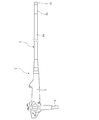
- FIG. 1 is an external view showing the configuration of an electronic endoscope.
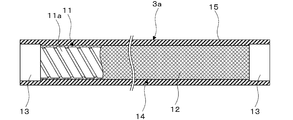
- FIG. 2 is a partial cross-sectional view showing a schematic configuration of a flexible tube for an endoscope.
- the flexible tube for an endoscope of the present invention (hereinafter, the flexible tube for an endoscope may be simply referred to as a “flexible tube”) is a flexible tube base material made of a metal and the flexible tube.
- a flexible tube for an endoscope having a coating layer covering the outer periphery of the flexible tube base material, and a silane coupling agent, an aluminum alkoxide compound, and a zirconium alkoxide between the flexible tube base material and the coating layer. It has a primer layer containing at least one of a compound and a titanium alkoxide compound, and the coating layer contains at least a polyester having a naphthalene structure on the side in contact with the primer layer.
- silane coupling agent includes vinylsilane coupling agent, (meth) acrylicsilane coupling agent, epoxysilane coupling agent, aminosilane coupling agent and sulfanylsilane coupling agent. I can't.
- a primer layer (not shown) is provided on the outer periphery of the flexible tube base material.
- the primer layer contains at least one of a silane coupling agent, an aluminum alkoxide compound, a zirconium alkoxide compound and a titanium alkoxide compound, and from the viewpoint of peel resistance and sterilization durability, the aluminum alkoxide compound, the zirconium alkoxide compound and the like. It is preferable to contain at least one of the titanium alkoxide compounds, and more preferably to contain the titanium alkoxide compound.
- silane coupling agent As the silane coupling agent used in the present invention, a normal silane coupling agent applicable as a primer layer for a flexible tube for an endoscope can be widely adopted. However, this silane coupling agent does not include vinylsilane coupling agent, (meth) acrylic silane coupling agent, epoxysilane coupling agent, aminosilane coupling agent and sulfanylsilane coupling agent. As shown in [Example] described later, the present inventors have clarified as an experimental fact that the desired effect cannot be obtained when these silane coupling agents are used.
- the "(meth) acrylic silane coupling agent” means a silane coupling agent having a (meth) acryloyl group.
- the "epoxysilane coupling agent” means a silane coupling agent having an epoxy group.
- the "aminosilane coupling agent” means a silane coupling agent having an amino group (-NH 2 groups).
- the "sulfanylsilane coupling agent” means a silane coupling agent having a sulfanyl group (mercapto group) (-SH group).
- the silane coupling agent preferably contains a compound represented by the following general formula (1).
- the ratio of the content of the compound represented by the following general formula (1) in the silane coupling agent is not particularly limited, and can be, for example, 60% by mass or more, preferably 80% by mass or more, and 90% by mass. % Or more is more preferable, 95% by mass or more is further preferable, and 100% by mass may be used.
- LL 1 represents a monovalent substituent or an n1-valent linking group.
- L 1 represents a single bond or a divalent linking group.
- Y 1 ⁇ Y 3 represents a substituent.
- n1 is an integer of 1 to 4.
- LL 1 indicates a monovalent substituent
- n1 is an integer of 2 to 4
- LL 1 indicates a 2- to tetravalent linking group.
- at least one of Y 1 to Y 3 is a group selected from an alkoxy group and a hydroxy group.
- all of LL 1 , LL 1- L 1 and Y 1 to Y 3 do not indicate a group selected from an alkoxy group and a hydroxy group.
- the compound represented by the general formula (1) preferably contains a compound represented by any of the following general formulas (2) to (4), and from the viewpoint of peel resistance and sterility durability, the following general formula is used. It is more preferable to contain the compound represented by (3) or (4).
- LL 1a is a hydrogen atom, an alicyclic group, a heterocyclic group, a hydroxy group, a sulfanyl group, an isocyanato group, a thiocyanato group, a ureido group, a cyano group, an acid anhydride group, an azide group, a carboxy group, an acyl group, and the like. It shows a thiocarbamoyl group, a phosphate group, a phosphanyl group, a sulfonic acid group or a sulfamoyl group.
- L 3 to L 5 are single bond, alkylene group, alkenylene group, alkynylene group, arylene group, -O-, -S-, -NR a- , ester bond, thioester bond, amide bond, thioamide bond, urea bond, thiourea.
- a divalent group consisting of a bond or a sulfonyl group or a combination of two or more of these groups or bonds is shown.
- LL 1b is a single bond, an alkylene group, an alkenylene group, an alkynylene group, an arylene group, -O-, -S-, -NR a- , a divalent heterocyclic group, an amide bond, an ester bond, a thioester bond, and a divalent group.
- a divalent group consisting of a phosphate group (a divalent group obtained by removing two hydrogen atoms from phosphoric acid), a phosphandiyl group or a sulfonyl group, or a combination of two or more of these groups or bonds is shown.
- LL 1c is an n2-valent alkane, an n2-valent alken, an n2-valent alkin, an n2-valent allene, an n2-valent heterocyclic group, a trivalent phosphate group, a phosphantriyl group or an isocyanurate group, or Two or more of these groups and an alkylene group, an alkenylene group, an alkynylene group, an arylene group, -O-, -S-, -NR a- , an ester bond, a thioester bond, an amide bond, a thioamide bond and a sulfonyl group.
- n2 valence consisting of a combination of a group or a bond of is shown.
- Ra represents a hydrogen atom or a substituent, and preferably represents a hydrogen atom.
- Y 4 , Y 7 , Y 10 and Y 13 indicate a hydroxy group or an alkoxy group.
- Y 5 , Y 6 , Y 8 , Y 9 , Y 11 , Y 12 , Y 14 and Y 15 indicate a hydroxy group, an alkoxy group, an alkyl group or a ketooxime group.
- n2 is 3 or 4.
- fitting structure LL 1a in the order of L 2.
- LL 1a e.g., hydroxy group, sulfanyl group, thiocyanato group, a ureido group , Acid anhydride group, carboxy group, acyl group, carbamoyl group
- these groups are preferentially understood as the group represented by LL 1a.
- L 2 is a combination of two or more of an alkylene group, an alkenylene group, an alkynylene group, an arylene group, -O-, -S-, -NR a- , an ester bond, a thioester bond, an amide bond, a thioamide bond and a sulfonyl group. In some cases, it is solved so that the number of groups (bonds) constituting this combination is the smallest. Taking the example compound K-11 described later as an example, LL 1a represents a thiocyanato group and L 2 represents an alkylene group.
- L 3 and L 4 are selected so that the number of combinations of groups (bonds) represented by L 3 and the number of combinations of groups (bonds) represented by L 4 are minimized.
- L 3 indicates an alkylene group
- L 4 indicates an alkylene group
- LL 1b indicates a combination of an ester bond and —O—.
- L 3 indicates an alkylene group
- L 4 indicates an alkylene group
- LL 1b indicates a combination of two ester bonds and an alkaneylene group.
- L 3 and L 4 shall indicate a single bond.
- the structure is applied in the order of L 5 and LL 1 c.
- L 5 is selected so that the number of combinations of the groups represented by L 5 is minimized.
- LL 1c - (L 5) n2 - applicable to structures, one group (e.g., n2 monovalent alkane) in the case of the, n2 amino and L 5 denote the single bond.
- the alicyclic group that can be obtained as LL 1a is preferably an alicyclic hydrocarbon group, and the alicyclic hydrocarbon group may be any of a cycloalkyl group, a cycloalkenyl group and a cycloalkynyl group.
- the number of carbon atoms of the cycloalkyl group is preferably 3 to 20, more preferably 4 to 15, and even more preferably 5 to 10.
- the number of carbon atoms of the cycloalkenyl group and the cycloalkynyl group is preferably 6 to 20, more preferably 6 to 15, more preferably 6 to 10, and even more preferably 6.
- the heterocycle constituting the heterocyclic group that can be taken as LL 1a may be a saturated or unsaturated aliphatic heterocycle or an aromatic heterocycle, and may be a monocyclic ring or a fused ring. It may also be a bridge ring.
- Examples of the hetero atom constituting the heterocycle include an oxygen atom, a nitrogen atom and a sulfur atom.
- the number of heteroatoms contained in one heterocycle is not particularly limited, but is preferably 1 to 3, and more preferably 1 or 2.
- the number of carbon atoms in the heterocycle is preferably 2 to 10, more preferably 4 or 5.
- the heterocycle is preferably a 3- to 7-membered ring, more preferably a 3- to 6-membered ring, and even more preferably a 3- to 5-membered ring.
- Specific examples of the heterocycle include an epoxy ring, a 3,4-epoxycyclohexane ring, a furan ring and a thiophene ring.
- the number of carbon atoms of the acyl group that can be obtained as LL 1a is preferably 0 to 40, more preferably 0 to 30, more preferably 0 to 20, more preferably 0 to 15, and even more preferably 0 to 10.
- the acyl group includes a formyl group, a carbamoyl group, an alkylcarbonyl group, an alkenylcarbonyl group and an arylcarbonyl group.
- anhydrous maleic acid group such as 3,4-dihydro-2,5-frangionyl and succinic anhydride.
- examples include groups, glutaric anhydride groups, adipic anhydride groups and citraconic anhydride groups.
- the alkylene group that can be taken as L 2 may be either linear or branched.
- the number of carbon atoms of the alkylene group is preferably 1 to 30, more preferably 1 to 25, more preferably 1 to 20, and even more preferably 1 to 15.
- Specific examples of the alkylene group include methylene, ethylene, isopropylene, butylene, pentylene, cyclohexylene, heptylene, octylene, nonylene, decylen and undecylen.
- the alkenylene group that can be taken as L 2 may be either linear or branched.
- the number of carbon atoms of the alkenylene group is preferably 2 to 20, more preferably 2 to 15, more preferably 2 to 10, and even more preferably 2 to 6.
- Specific examples of the alkenylene group include ethenylene and propenylene.
- the alkynylene group that can be taken as L 2 may be either linear or branched.
- the number of carbon atoms of the alkynylene group is preferably 2 to 20, more preferably 2 to 15, more preferably 2 to 10, and even more preferably 2 to 6.
- Specific examples of the alkynylene group include ethynylene and propynylene.
- the number of carbon atoms of the arylene group which can be taken as L 2 is preferably 6 to 20, more preferably 6 to 15, more preferably 6 to 12, more preferably 6 to 10.
- Specific examples of the arylene group include phenylene and naphthylene.
- L 2 a -NR can take as L 2 a - as the substituent in R a of an alkyl group (preferably having 1 to 12 carbon atoms, more preferably 1 to 8 carbon atoms), an alkenyl group (preferably 2 to 12 carbon atoms, More preferably 2 to 8 carbon atoms), an alkynyl group (preferably 2 to 12 carbon atoms, more preferably 2 to 8 carbon atoms), an aryl group (preferably 6 to 20 carbon atoms, more preferably 6 to 10 carbon atoms). ) And heterocyclic groups.
- an alkyl group preferably having 1 to 12 carbon atoms, more preferably 1 to 8 carbon atoms
- an alkenyl group preferably 2 to 12 carbon atoms, More preferably 2 to 8 carbon atoms
- an alkynyl group preferably 2 to 12 carbon atoms, more preferably 2 to 8 carbon atoms
- an aryl group preferably 6 to 20 carbon atoms, more preferably 6 to 10 carbon atoms.
- the heterocycle constituting the heterocyclic group which can be adopted as R a the heterocycle constituting the heterocyclic group which can be adopted as LL 1a can be mentioned, and the preferred form is the same as the preferable form of the heterocyclic group which can be adopted as LL 1a.
- Is. Examples of -NR a- include -NH-.
- L 2 the group or a divalent group formed by combining the coupling of two or more (hereinafter, also referred to as "group formed in combination can be taken as L 2".) Constituting, or linking combined
- the number of is preferably 2 to 8, more preferably 2 to 6, and even more preferably 2 to 4.
- the molecular weight of possible combinational comprising group as L 2 is preferably 20 to 1000, more preferably 30 to 500, more preferably 40 to 200.
- Examples of the combined group that can be taken as L 2 include urea bond, thiourea bond, carbamate group, sulfonamide bond, arylene-alkylene, -O-alkylene, -NR a -alkylene, amide bond-alkylene, and -S.
- alkylene-O-amide bond-alkylene alkylene-amide bond-alkylene, alkylene-amide bond-alkylene, alkenylene-amide bond-alkylene, alkylene-ester bond-alkylene, arylene-ester bond-alkylene,-(alkylene-O)-, alkylene- Examples thereof include O- (alkylene-O) -alkylene (“(alkylene-O)” is a repeating unit), arylene-sulfonyl-O-alkylene and ester bond-alkylene (abbreviated as “group”). It may be described in the same manner below.)
- alkylene group which can be taken as the L 2, alkenylene group, alkynylene group, an arylene group and -NR a - - L 3 ⁇ alkylene group which may take as L 5, alkenylene group, alkynylene group, an arylene group and -NR a a it can be mentioned, preferred forms are also an alkylene group which may take as L 2, alkenylene group, alkynylene group, an arylene group and -NR a - is the same as the preferred embodiment.
- the alkylene group that can be taken as LL 1b may be linear, branched or cyclic.
- the number of carbon atoms of the alkylene group is preferably 1 to 30, more preferably 1 to 25, still more preferably 1 to 20, and even more preferably 1 to 15.
- Specific examples of the alkylene group include methylene, ethylene, isopropylene, butylene, pentylene, cyclohexylene, heptylene, octylene, nonylene, decylen and undecylen.
- the alkenylene group that can be taken as LL 1b may be linear, branched or cyclic.
- the number of carbon atoms of the alkenylene group is preferably 2 to 20, more preferably 2 to 15, more preferably 2 to 10, and even more preferably 2 to 6.
- Specific examples of the alkenylene group include ethenylene and propenylene.
- the alkynylene group that can be taken as LL 1b may be linear, branched or cyclic.
- the number of carbon atoms of the alkynylene group is preferably 2 to 20, more preferably 2 to 15, more preferably 2 to 10, and even more preferably 2 to 6.
- Specific examples of the alkynylene group include ethynylene and propynylene.
- Arylene group which may take as LL 1b may include an arylene group which can be taken as L 2, the same as the preferred form of the arylene group which may take the preferred form as L 2.
- heterocycle constituting the divalent heterocyclic group that can be adopted as LL 1b a heterocycle constituting the heterocyclic group that can be adopted as LL 1a can be mentioned, and the preferred form is also the heterocyclic group that can be adopted as LL 1a. It is the same as the form.
- -NR a which can be taken as LL 1b -
- The, -NR can take as the L 2 a - can be exemplified
- -NR a that can take the preferred form as L 2 - is the same as that of the preferred embodiment.
- LL 1b the group or made by combining the coupling of two or more divalent group (hereinafter, also referred to as "group combinations which can be taken as LL 1b".) Constituting, or linking are combined
- the number of is preferably 2 to 8, more preferably 2 to 6, and even more preferably 2 to 4.
- the molecular weight of the group of the combination that can be obtained as LL 1b is preferably 20 to 1000, more preferably 30 to 500, and even more preferably 40 to 200.
- Examples of the group of the combination that can be taken as LL 1b include urea bond, carbonate group, sulfone amide bond, disulfide bond, ester bond-alkenylene-ester bond,-(alkylene-O)-and-O- (alkylene-O). )-("(Alkylene-O)" is a repeating unit).
- the trivalent alkane that is, the alkanetriyl group preferably has 1 to 20 carbon atoms, more preferably 3 to 15 carbon atoms, more preferably 4 to 12 carbon atoms, and 5 to 10 carbon atoms. Is even more preferable.
- the tetravalent alkane that is, the alkanetetrayl group preferably has 1 to 20 carbon atoms, more preferably 3 to 15 carbon atoms, more preferably 4 to 12 carbon atoms, and 5 to 10 carbon atoms. Is even more preferable.
- the trivalent alkene that is, the alkentelyyl group preferably has 2 to 20 carbon atoms, more preferably 3 to 15 carbon atoms, more preferably 4 to 12 carbon atoms, and 5 to 10 carbon atoms. Is even more preferable.
- the tetravalent alkene that is, the alkenetetrayl group preferably has 2 to 20 carbon atoms, more preferably 3 to 15 carbon atoms, more preferably 4 to 12 carbon atoms, and 5 to 10 carbon atoms. Is even more preferable.
- the trivalent alkyne that is, the alkyne triyl group preferably has 3 to 20 carbon atoms, more preferably 3 to 15 carbon atoms, more preferably 4 to 12 carbon atoms, and 5 to 10 carbon atoms. Is even more preferable.
- the tetravalent alkyne that is, the alkynetetrayl group preferably has 3 to 20 carbon atoms, more preferably 3 to 15 carbon atoms, more preferably 4 to 12 carbon atoms, and 5 to 10 carbon atoms. Is even more preferable.
- the trivalent arene that is, the arene triyl group preferably has 6 to 20 carbon atoms, more preferably 6 to 15 carbon atoms, more preferably 6 to 12 carbon atoms, and 6 to 10 carbon atoms. Is more preferable.
- Specific examples of the arene triyl group include benzene triyl and naphthalene triyl.
- the tetravalent arene that is, the arene tetrayl group preferably has 6 to 20 carbon atoms, more preferably 6 to 15 carbon atoms, more preferably 6 to 12 carbon atoms, and 6 to 10 carbon atoms. Is more preferable.
- Specific examples of the arene tetrayl group include benzenetetrayl and naphthalenetetrayl.
- heterocycle constituting the n2-valent heterocyclic group that can be adopted as LL 1c examples include a heterocycle constituting the heterocyclic group that can be adopted as LL 1a , and a preferred form is also a preferred form of the heterocycle that can be adopted as LL 1c. Is the same as.
- -NR a which can be taken as LL 1c -
- The, -NR can take as the L 2 a - can be exemplified
- -NR a that can take the preferred form as L 2 - is the same as that of the preferred embodiment.
- an alkylene group an alkenylene group, an alkynylene group, an arylene group, -O-, -S-, -NR a- , an ester bond, a thioester bond, an amide bond, a thioamide bond and a sulfonyl group.
- the number of combined groups or bonds constituting the n2-valent group (hereinafter, also referred to as "combined group that can be obtained as LL 1c "), which is a combination of two or more of these groups or bonds, is 2 to 8 are preferable, 2 to 6 are more preferable, and 2 to 4 are even more preferable.
- the molecular weight of the combined group that can be obtained as LL 1c is preferably 20 to 1000, more preferably 30 to 500, and even more preferably 40 to 200.
- the combined groups that can be taken as LL 1c include, for example, a glycerol group, a trimethylolpropyl group, a 1,3,5-triazine group and an isocyanul group (1,3,5-triazine-2,4,6 (1H). , 3H, 5H) -trion-1,3,5-triyl group).
- the alkyl group constituting the alkoxy group that can be taken as Y 4 to Y 15 may be linear, branched or cyclic, and may have a combination of these forms.
- the alkyl group is preferably a linear alkyl group.
- the number of carbon atoms of the alkyl group constituting the alkoxy group is preferably 1 to 15, more preferably 1 to 10, more preferably 1 to 5, and even more preferably 1 or 2.
- Specific examples of the alkyl group constituting the alkoxy group include methyl, ethyl, propyl, t-butyl, pentyl and cyclohexyl.
- Examples of the alkyl group that can be taken as Y 5 , Y 6 , Y 8 , Y 9 , Y 11 , Y 12 , Y 14 and Y 15 include an alkyl group that constitutes an alkoxy group that can be taken as Y 4 to Y 15.
- the preferred form is the same as the preferred form of the alkyl group constituting the alkoxy group which can be taken as Y 4 to Y 15.
- the ketooxime group is a substituent having the following structure.
- R 11 and R 12 indicate a substituent, and * indicates a bond to a silicon atom.
- R 11 and R 12 can take, and a substituted group in the R a, the same as the preferred form of the substituent which may take the preferred form as R a.
- ketooxime group examples include a dimethyl keto oxime group, a methyl ethyl keto oxime group, a diethyl keto oxime group and the like.
- the silane coupling agent may have a substituent within a range that does not impair the effect of the present invention.
- substituents include a group that can be taken as the above-mentioned LL 1a , an alkyl group, an alkenyl group, an alkynyl group and an aryl group. Further, examples of this substituent include an unsubstituted silyl group and a substituted silyl group having no alkoxy group or hydroxy group as a substituent.
- LL 1a or L 2 and at least one of Y 5 and Y 6 may be connected to each other to form a ring.
- the number of ring-constituting atoms in this ring is preferably 3 to 10, more preferably 4 to 8, and even more preferably 5 or 6.
- LL 1b or L 3 and at least one of Y 8 and Y 9 may be connected to each other to form a ring.
- the number of ring-constituting atoms in this ring is preferably 3 to 10, more preferably 4 to 8, and even more preferably 5 or 6.
- LL 1b or L 4 and at least one of Y 11 and Y 12 may be connected to each other to form a ring.
- the number of ring-constituting atoms in this ring is preferably 3 to 10, more preferably 4 to 8, and even more preferably 5 or 6. Further, two or more of these rings may be formed at the same time.
- LL 1c or L 5 and at least one of Y 13 and Y 14 may be connected to each other to form a ring.
- the number of ring-constituting atoms in this ring is preferably 3 to 10, more preferably 4 to 8, and even more preferably 5 or 6.
- LL 1a represents a hydrogen atom, an alicyclic group, a heterocyclic group, a hydroxy group, a sulfanyl group, a thiocyanato group, an acid anhydride group, a carboxy group, an acyl group or a sulfonic acid group. ..
- L 2 has an alkylene group, an alkenylene group, an alkynylene group, an arylene group, -O-, -S-, -NR a- , an ester bond, a thioester bond, an amide bond or a sulfonyl group, or 2 of these groups or bonds. It is preferable to indicate a divalent group consisting of two or more combinations.
- LL 1a represents a hydrogen atom, a hydroxy group, a carboxylic acid anhydride group, a carboxy group, an acyl group or a sulfonic acid group.
- L 2 represents an alkylene group, an alkenylene group, —O—, —NR a ⁇ , an ester bond or an amide bond, or a divalent group consisting of a combination of two or more of these groups or bonds.
- Y 4 ⁇ Y 6 is alkoxy or hydroxy group, and more preferably all of Y 4 ⁇ Y 6 is an alkoxy group or a hydroxy group.
- LL 1b is an alkylene group, an alkenylene group, an arylene group, —O—, —S—, an ester bond, a thioester bond, an amide bond or a sulfonyl group, or a combination of two or more of these groups or bonds. It is preferable to indicate a divalent group consisting of. Further, L 3 and L 4 form a single bond, an alkylene group, an alkenylene group, an alkynylene group, an arylene group, —O—, —S—, an ester bond, a thioester bond, an amide bond or a sulfonyl group, or a group or bond thereof. It is preferable to show a divalent group consisting of two or more in combination, and more preferably to show a single bond, an alkylene group, an alkenylene group, —O—, an ester bond or an amide bond.
- Y 7 to Y 9 are alkoxy groups or hydroxy groups.
- Y 10 to Y 12 are alkoxy groups or hydroxy groups.
- n2 is 3 and LL 1c represents an isocyanurate group. Further, it is preferable that L 5 exhibits an alkylene group.
- Y 13 ⁇ Y 15 is an alkoxy group or a hydroxy group, and more preferably all of Y 13 ⁇ Y 15 is an alkoxy group or a hydroxy group.
- n2 is preferably 3.
- the compound of the general formula (1) used in the present invention is a single molecule and contributes to the adhesion between the flexible tube base material and the resin coating layer, and the layer thickness of the primer layer is much larger than that of the ordinary adhesive layer. Thin (in other words, I can't recall the concept of thickness). That is, the primer layer containing the compound of the general formula (1) is different from the adhesive layer that requires a certain layer thickness and softness for adhesion between the flexible tube base material and the resin coating layer. Therefore, the primer layer does not substantially affect the elasticity of the flexible tube, and the flexible tube of the present invention is also excellent in elasticity.
- containing the silane coupling agent includes a form in which the silane coupling agent is contained in a state of reacting with the flexible tube base material and a state in which the silane coupling agent is contained in a state of reacting with the coating layer. It is a meaning that includes the form. That is, for example, at least a part of the silane coupling agent is hydrolyzed to expose the hydroxy group, which reacts with the constituent metal of the flexible tube base material or with the group on the surface of the coating layer. Can exist.
- a part of the silane coupling agent is present in the form of a salt or an ion.
- the form of the ion include a form in which a group capable of forming an anion (anionic group) exists as an anion.
- the salt form include a form in which the anionic group exists as a salt-type group having an alkali metal ion such as sodium ion or potassium ion as a counter cation. The same applies to the metal alkoxide compound described later.
- silane coupling agent examples include methyl and Et indicates ethyl.
- () in the structure of the compound of K-20 represents a repeating unit having a repeating number of 6 to 9.
- () represents a repeating unit having a repeating number of 6 to 9.
- R represents an alkyl group.
- Alkoxide compound As the aluminum alkoxide compound used in the present invention, ordinary aluminum alkoxide compounds applicable as a primer layer for a flexible tube for an endoscope can be widely adopted.
- the aluminum alkoxide compound preferably contains at least one compound represented by the following general formula (a) or (b), and more preferably contains at least one compound represented by the following general formula (a). preferable.
- the ratio of the total content of the compounds represented by the following general formulas (a) or (b) in the aluminum alkoxide compound is not particularly limited, and can be, for example, 60% by mass or more, and 80% by mass or more. It is preferably 90% by mass or more, more preferably 95% by mass or more, and may be 100% by mass.
- R 1a represents a hydrogen atom, an alkyl group, a cycloalkyl group, an acyl group, an aryl group, or an unsaturated aliphatic group.
- the alkyl group that can be taken as R 1a includes a linear alkyl group, a branched alkyl group, and an aralkyl group.
- the alkyl group preferably has 1 to 20 carbon atoms, more preferably 1 to 15 carbon atoms, further preferably 1 to 10 carbon atoms, particularly preferably 1 to 8 carbon atoms, and preferably 7 to 30 carbon atoms in the case of an aralkyl group.
- this alkyl group examples include, for example, methyl, ethyl, propyl, isopropyl, butyl, sec-butyl, isobutyl, tert-butyl, pentyl, hexyl, heptyl, octyl, decyl, tridecyl, octadecyl, benzyl, and phenethyl. Can be mentioned. It is also preferable that the alkyl group that can be obtained as R 1a has an oxylan ring.
- the number of ring members of the cycloalkyl group (cycloalkyl group having a structure in which an oxylan ring is condensed) in the epoxy cycloalkylalkyl group that can be taken as R 1a is preferably 4 to 8, more preferably 5 or 6, and 6 (that is, epoxy). It is a cyclohexyl group), which is more preferable.
- the alkyl group that can be obtained as R 1a preferably has a group selected from an amino group, an isocyanato group, a mercapto group, an ethylenically unsaturated group, and an acid anhydride group.
- the cycloalkyl group that can be taken as R 1a preferably has 3 to 20 carbon atoms, more preferably 3 to 15 carbon atoms, still more preferably 3 to 10 carbon atoms, and particularly preferably 3 to 8 carbon atoms.
- Preferred specific examples of this cycloalkyl group include, for example, cyclopropyl, cyclopentyl, and cyclohexyl.
- the acyl group that can be obtained as R 1a preferably has 2 to 40 carbon atoms, more preferably 2 to 30 carbon atoms, further preferably 2 to 20 carbon atoms, and particularly preferably 2 to 18 carbon atoms.
- the aryl group that can be obtained as R 1a preferably has 6 to 20 carbon atoms, more preferably 6 to 15 carbon atoms, further preferably 6 to 12 carbon atoms, and particularly preferably 6 to 10 carbon atoms.
- Preferred specific examples of this aryl group include, for example, phenyl and naphthyl, with phenyl being even more preferred.
- the unsaturated aliphatic group that can be obtained as R 1a preferably has 1 to 5 carbon-carbon unsaturated bonds, more preferably 1 to 3, further preferably 1 or 2, and particularly preferably 1. preferable.
- the unsaturated aliphatic group may contain a heteroatom, and is preferably a hydrocarbon group.
- the number of carbon atoms is preferably 2 to 20, more preferably 2 to 15, further preferably 2 to 10, further preferably 2 to 8, and preferably 2 to 5. ..
- the unsaturated aliphatic group is more preferably an alkenyl group or an alkynyl group.
- R 1a is preferably a hydrogen atom, an alkyl group, a cycloalkyl group, or an aryl group, and more preferably an alkyl group or a cycloalkyl group.
- the compound of the general formula (a) has two or more R 1a , the two R 1a may be connected to each other to form a ring.
- R 2a represents a hydrogen atom, an alkyl group, a cycloalkyl group, an acyl group, an alkenyl group, an aryl group, a phosphonate group (phosphonic acid group), or -SO 2 R S1.
- RS1 indicates a substituent.
- the alkyl group, cycloalkyl group, acyl group, and aryl group that can be taken as R 2a are synonymous with the alkyl group, cycloalkyl group, acyl group, and aryl group that can be taken as R 1a, respectively, and the preferred form of each group. Is the same. Further, it is also preferable that the alkyl group that can be taken as R 2a has an amino group as a substituent.
- the alkenyl group that can be taken as R 2a includes a linear alkenyl group and a branched alkenyl group.
- the alkenyl group preferably has 2 to 18 carbon atoms, more preferably 2 to 7, and even more preferably 2 to 5.
- Preferred specific examples of this alkenyl group include, for example, vinyl, allyl, butenyl, pentenyl and hexenyl.
- the alkenyl group is preferably a substituted alkenyl group.
- RP1 and RP2 indicate a hydrogen atom or a substituent, and the substituent is preferably an alkyl group or a phosphonate group.
- Alkyl group which may take as R P1 and R P2 are as defined alkyl group which may take as R 1a described above, the preferred form of the alkyl groups are the same.
- Phosphonate group, which may take as R P1 and R P2 are the same as the phosphonate group can take as R 2a, a preferred form also the same.
- R P1 or R P2 is a phosphonate group
- R P1 and R P2 constituting the phosphonate group is preferably an alkyl group.
- the phosphonate group that can be taken as R 2a it is preferable that both RP1 and RP2 are alkyl groups, or RP1 is a hydrogen atom and RP2 is a phosphonate group. Since the phosphonate group is tautomerized with the phosphite group (phosphorous acid group), the phosphonate group in the present invention means to include the phosphite group.
- R S1 can take as R 2a, alkyl group or an aryl group is preferred as R S1.
- Preferred embodiments of the alkyl group and an aryl group which may take as R S1, respectively, may be mentioned preferred form of the alkyl and aryl groups which can be taken as R 1a described above.
- R S1 is phenyl having as a substituent an alkyl group is preferable.
- the preferred form of this alkyl group is the same as the preferred form of the alkyl group that can be taken as R 1a described above.
- the two R 2a may be connected to each other to form a ring.
- two R 2a may be linked to each other to form a ring.
- M1 is an integer of 0 to 2.
- OR 2a has an acetonato structure.
- This acetonato structure means a structure in which one hydrogen ion is removed from a compound having a structure in which acetone or acetone has a substituent and is coordinated with Al. The coordinate atom coordinated to this Al is usually an oxygen atom.
- a structure coordinated to Al as a coordinating atom (that is, an acetylacetonato structure) is preferable.
- the above-mentioned "having an acetylacetone structure as a basic structure” means that, in addition to the above-mentioned acetylacetone structure, a structure in which a hydrogen atom of the above-mentioned acetylacetone structure is substituted with a substituent is included.
- Examples of the form in which OR 2a has an acetonato structure include compounds A-2 and A-3, which will be described later. In the above general formulas (a) and (b), it is preferable that at least one of OR 2a has an acetato structure.
- the acetic acid structure is obtained by removing one hydrogen ion from acetic acid or an acetic acid ester or a compound having a substituent (including a form in which the methyl group of acetic acid has an alkyl group as a substituent).
- the coordinate atom coordinated to this Al is usually an oxygen atom.
- alkyl group which may be an alkyl group having 1 to 10 carbon atoms, and more preferably an alkyl group having 1 to 4 carbon atoms.)
- a structure in which one ion is removed and an oxygen atom is coordinated to Al as a coordinating atom that is, an alkylacetoacetate structure
- the above-mentioned "based on the alkylacetacetate structure” means that, in addition to the above-mentioned alkylacetate-acetate structure, the above-mentioned structure in which the hydrogen atom of the above-mentioned alkylacetate-acetate structure is substituted with a substituent is included.
- Examples of the form in which OR 2a has an acetato structure include compounds A-3, A-4, and A-5, which will be described later.
- Each group that can be taken as R 1a or R 2a may have an anionic group having a counter cation (salt-type substituent) as a substituent.
- the anionic group means a group capable of forming an anion.
- Examples of the anionic group having a counter cation include a carboxylic acid ion group having an ammonium ion as a counter cation.
- the counter cation may be present in the compound represented by the above general formula (a) or (b) so that the charge of the entire compound becomes zero. This also applies to the compound represented by the general formula (c) or (d) and the compound represented by the general formula (e) or (f), which will be described later.
- zirconium alkoxide compound As the zirconium alkoxide compound used in the present invention, a normal zirconium alkoxide compound applicable as a primer layer for a flexible tube for an endoscope can be widely adopted.
- the zirconium alkoxide compound preferably contains at least one compound represented by the following general formula (c) or (d), and more preferably contains at least one compound represented by the following general formula (c). preferable.
- the ratio of the total content of the compounds represented by the following general formula (c) or (d) in the zirconium alkoxide compound is not particularly limited, and can be, for example, 60% by mass or more, and 80% by mass or more. It is preferably 90% by mass or more, more preferably 95% by mass or more, and may be 100% by mass.
- R 1b represents a hydrogen atom, an alkyl group, a cycloalkyl group, an acyl group, an aryl group, or an unsaturated aliphatic group.
- an alkyl group, a cycloalkyl group, an acyl group, an aryl group and an unsaturated aliphatic group for example, an alkyl group, a cycloalkyl group, an acyl group, an aryl group and an unsaturated fat which can be taken as R 1a of the above general formula (a).
- a family group can be adopted.
- R 2b represents a hydrogen atom, an alkyl group, a cycloalkyl group, an acyl group, an alkenyl group, an aryl group, a phosphonate group, or -SO 2 R S2.
- RS2 indicates a substituent.
- an alkyl group, a cycloalkyl group, an acyl group, an alkenyl group, an aryl group and a phosphonate group for example, an alkyl group, a cycloalkyl group, an acyl group, an alkenyl group, an aryl group, which can be taken as R 2a of the above general formula (a), A phosphonate group can be adopted.
- R S2 for example, it can be adopted a substituent which can be taken as R S1 of the general formula (a).
- M2 is an integer from 0 to 3.
- OR 2b has an acetonato structure.
- This acetonato structure is synonymous with the acetonato structure described by the general formula (a).
- Examples of the form in which OR 2b has an acetonato structure include compounds Z-3 and Z-6 described later.
- OR 2b has an acetato structure.
- This acetato structure is synonymous with the acetato structure described by the general formula (a).
- Z-7 described later can be mentioned.
- the compound Z-5 corresponds to the form in which R 2b is an acyl group in the general formula (c). Further, in the above general formulas (c) and (d), it is preferable that at least one of OR 2b has a lactoto structure.
- This lacto structure means a structure in which a lactic acid ion (lactoto) is used as a basic structure, and one hydrogen ion is removed from the lactic acid ion (lactoto) to coordinate with Zr.
- the above-mentioned "having a lactic acid ion as a basic structure” means that, in addition to the above-mentioned lactic acid ion, a structure in which a hydrogen atom of the above-mentioned lactic acid ion is substituted with a substituent is included.
- the coordinate atom coordinated to this Zr is usually an oxygen atom. Examples of the form in which OR 2b has a lactoto structure include compound Z-4 described later.
- zirconium alkoxide compound used in the present invention is not limited thereto.
- Tetrapropoxyzirconium also known as zirconium tetra n-propoxide
- Tetrabutoxyzirconium also known as zirconium tetra n-butoxide
- Zirconium Tetraacetylacetonate Zirconium Tributoxymonoacetylacetone
- Zirconium Tributoxy Ethyl Acetate
- Zirconium Monobutoxy Acetylacetone Bis (Ethyl Acetacetate)
- Zirconium tributoxy monostearate also known as zirconium stearate tri-n-butoxide
- Zirconium Stearate Zirconium Lactate Ammonium Salt
- titanium alkoxide compound As the titanium alkoxide compound used in the present invention, a normal titanium alkoxide compound applicable as a primer layer for a flexible tube for an endoscope can be widely adopted.
- the titanium alkoxide compound preferably contains at least one compound represented by the following general formula (e) or (f), and more preferably contains at least one compound represented by the following general formula (e). preferable.
- the ratio of the total content of the compounds represented by the following general formula (e) or (f) in the titanium alkoxide compound is not particularly limited, and can be, for example, 60% by mass or more, and 80% by mass or more. It is preferably 90% by mass or more, more preferably 95% by mass or more, and may be 100% by mass.
- R 1c represents a hydrogen atom, an alkyl group, a cycloalkyl group, an acyl group, an aryl group, or an unsaturated aliphatic group.
- an alkyl group, a cycloalkyl group, an acyl group, an aryl group and an unsaturated aliphatic group for example, an alkyl group, a cycloalkyl group, an acyl group, an aryl group and an unsaturated fat which can be taken as R 1a of the above general formula (a).
- a family group can be adopted.
- R 2c represents a hydrogen atom, an alkyl group, a cycloalkyl group, an acyl group, an alkenyl group, an aryl group, a phosphonate group, or -SO 2 R S3.
- RS3 indicates a substituent.
- an alkyl group, a cycloalkyl group, an acyl group, an alkenyl group, an aryl group and a phosphonate group for example, an alkyl group, a cycloalkyl group, an acyl group, an alkenyl group, an aryl group, which can be taken as R 2a of the above general formula (a), A phosphonate group can be adopted.
- R S3 for example, it can be adopted a substituent which can be taken as R S1 of the general formula (a).
- M3 is an integer from 0 to 3.
- the compound represented by the above general formula (e) or (f) preferably contains at least one atom of N, P and S.
- N When the compound represented by the general formula (e) or (f) has N, it is preferable to have this N as an amino group.
- P When the compound represented by the general formula (e) or (f) has P, it is preferable to have this P as a phosphate group (phosphoric acid group) or a phosphonate group (phosphonic acid group).
- the compound represented by the general formula (e) or (f) has S, it is preferable to have this S as a sulfonyl group (-SO 2-).
- the compound represented by the above general formula (e) or (f) has an acyl group as R 2c , that is, has the above-mentioned acetato structure as OR 2c.
- titanium alkoxide compound used in the present invention is not limited thereto.
- Isopropyltriisostearoyl titanate Isopropyltridodecylbenzenesulfonyl titanate
- Isopropyltrioctanoyl titanate Isopropyltri (dioctylphosphite) Titanate
- Isopropyltricumylphenyltitanate Isopropyltri (N- Aminoethyl-Aminoethyl) Titanate
- Isopropyldimethacryl Isostearoyl Titanate
- Isopropylisostearoyl Diacrylic Titanate Isobutyltrimethyl Titanate Diisostearoylethylene
- the content of the silane coupling agent and the metal alkoxide compound in the primer layer is not particularly limited, and is preferably 90% by mass or more, more preferably 95% by mass or more, further preferably 97% by mass or more, and 99% by mass in total. The above is particularly preferable, and it can be 100% by mass.
- the silane coupling agent, the aluminum alkoxide compound, the zirconium alkoxide compound, and the titanium alkoxide compound contained in the primer layer may be one kind or two or more kinds, respectively.
- the primer layer contains additives such as a surfactant, a thickener, a leveling agent, a stabilizer and an antifoaming agent within a range that does not impair the effects of the present invention. You may be doing it.
- the primer layer may be a single layer or a plurality of layers, and is preferably a single layer.
- the flexible tube of the present invention has a coating layer on the outer periphery of the flexible tube base material provided with the primer layer.
- the coating layer may be a single layer or a multi-layer structure having two or more layers, and a single layer is preferable.
- the coating layer is a single layer in the present invention, the coating layer of the single layer contains polyester having a naphthalene structure.
- the coating layer has a multi-layer structure of two or more layers, at least the outermost layer contains polyester having a naphthalene structure. That is, in the present invention, the coating layer contains polyester having a naphthalene structure in the outermost layer.
- polyester having a naphthalene structure examples include a polyester resin having a naphthalene structure and a polyester elastomer having a naphthalene structure.
- polyester having a naphthalene structure examples include a polyester composed of a dicarboxylic acid component containing a naphthalene dicarboxylic acid component and a diol component.
- a specific example of the dicarboxylic acid component preferable as the naphthalene dicarboxylic acid component is the 2,6-naphthalene dicarboxylic acid component.
- the polyester resin having a naphthalene structure preferably has a naphthalene dicarboxylic acid component.
- the polyester resin having a naphthalene dicarboxylic acid component may have a dicarboxylic acid component other than the naphthalene dicarboxylic acid component as the dicarboxylic acid component.
- the dicarboxylic acid component other than the naphthalene dicarboxylic acid component is not particularly limited, and those usually used as the dicarboxylic acid component constituting the polyester resin can be widely applied.
- terephthalic acid isophthalic acid, phthalic acid (ortho), 5-sodium sulfoisophthalic acid, oxalic acid, succinic acid, adipic acid, sebacic acid, azelaic acid, dodecanedioic acid, dimer acid, maleic acid, fumaric acid
- phthalic acid ortho
- 5-sodium sulfoisophthalic acid oxalic acid
- succinic acid adipic acid, sebacic acid, azelaic acid
- dodecanedioic acid dimer acid
- maleic acid fumaric acid
- dicarboxylic acid components can be used.
- polyester resin having a naphthalene structure those usually used as a diol component constituting the polyester resin can be widely applied.
- a diol component constituting the polyester resin For example, configurations derived from ethylene glycol, diethylene glycol, 1,3-propanediol, 1,4-butanediol, neopentyl glycol, 1,6-hexanediol, cyclohexanedimethanol, triethylene glycol, bisphenol A, bisphenol S and the like. Ingredients are mentioned. One or more of these diol components can be used.
- the polyester resin having the naphthalene structure may contain a hydroxycarboxylic acid component as a component.
- a hydroxycarboxylic acid component examples include components derived from ⁇ -caprolactone, lactic acid, 4-hydroxybenzoic acid and the like. One or more of these hydroxycarboxylic acid components are used.
- the polyester resin having the naphthalene structure may be a homopolymer composed of the above components or a copolymer, and further contains a small amount of trifunctional compound components such as trimellitic acid, trimesic acid, pyromellitic acid, trimethylolpropane, glycerin, and pentaerythritol. It may be contained. Further, as the polyester resin having the naphthalene structure, two or more kinds of homopolymers or copolymers composed of the above components may be used in combination.
- the polyester elastomer having a naphthalene structure preferably has a naphthalene dicarboxylic acid component. More preferably, a hard segment composed of a crystalline polyester chain containing a dicarboxylic acid component containing a naphthalenedicarboxylic acid component and a low molecular weight diol component, and at least one of the following soft segments (i) to (iii). It is a copolymer composed of.
- a soft segment composed of aliphatic polyester chains (Ii) A soft segment composed of an aliphatic polymer diol component, (Iii) A soft segment composed of a polyester chain composed of an aliphatic polymer diol component and a dicarboxylic acid component containing an aromatic dicarboxylic acid. That is, the naphthalene structure is formed in one or both of the hard segment and the soft segment. It may be installed, preferably at least in the hard segment.
- a specific example of the dicarboxylic acid component preferable as the naphthalene dicarboxylic acid component is the 2,6-naphthalenedicarboxylic acid component.
- a polyester elastomer having a naphthalene structure in the hard segment will be described below.
- the hard segment has a naphthalene dicarboxylic acid component.
- the hard segment has a naphthalenedicarboxylic acid component
- all of the dicarboxylic acid components of the hard segment may be a naphthalenedicarboxylic acid component, and the hard segment may have a dicarboxylic acid component other than the naphthalenedicarboxylic acid component.
- dicarboxylic acid component other than the naphthalene dicarboxylic acid component constituting the hard segment those usually used as the dicarboxylic acid component constituting the hard segment of a general polyester elastomer can be widely applied.
- a dicarboxylic acid component other than the naphthalene dicarboxylic acid component described in the description of the polyester resin having a naphthalene structure can be mentioned, and one or more of these dicarboxylic acid components can be contained.
- the dicarboxylic acid component other than the naphthalenedicarboxylic acid component constituting the hard segment preferably contains an aromatic dicarboxylic acid component (dicarboxylic acid component having an aromatic ring), and 50 of the dicarboxylic acid components other than the naphthalenedicarboxylic acid component.
- the aromatic dicarboxylic acid component is in an amount of mass% or more (preferably 70% by mass or more, more preferably 80% by mass or more, still more preferably 90% by mass or more). It is also preferable that all of the dicarboxylic acid components other than the naphthalene dicarboxylic acid component constituting the hard segment are aromatic dicarboxylic acid components.
- diol component constituting the hard segment those usually used as the diol component constituting the polyester resin can be widely applied.
- the diol component described in the polyester resin having a naphthalene structure can be mentioned, and one or more of those diol components can be contained.
- the hard segment may have one or more of the hydroxycarboxylic acid components described in the description of the polyester resin having a naphthalene structure as a constituent component.
- the hard segment may be a homopolymer or a copolymer composed of the constituents described above.
- the dicarboxylic acid component constituting the aliphatic polyester chain is not particularly limited as long as it is an aliphatic dicarboxylic acid component.
- it has components derived from oxalic acid, succinic acid, adipic acid, sebacic acid, azelaic acid, dodecanedioic acid, dimer acid, maleic acid, fumaric acid, itaconic acid, citraconic acid, mesaconic acid, cyclohexanedicarboxylic acid and the like. be able to.
- Aliphatic polyester chains can have one or more of these dicarboxylic acid components.
- the diol component of the aliphatic polyester chain constituting the soft segment is not particularly limited as long as it is an aliphatic diol component.
- examples thereof include aliphatic diol components derived from glycol, 1,5-pentanediol, 1,6-hexanediol, decamethylene glycol, cyclohexanedimethanol and the like.
- the aliphatic polyester chain has an aliphatic polymer diol component as a diol component.
- the aliphatic polymer diol component include polyalkylene glycols such as polyethylene glycol, polypropylene glycol, and polytetramethylene ether glycol, and one or more of these aliphatic polymer diol components can be contained.
- the polyalkylene glycol is a compound represented by HO-[(CH 2 ) m O] n-H.
- m is preferably 1 to 12, more preferably 2 to 10, further preferably 2 to 8, and even more preferably 2 to 6.
- n is preferably 5 to 100, more preferably 10 to 50.
- the soft segment is (ii) an amorphous soft segment derived from an aliphatic polymer diol
- the aliphatic polymer diol is not particularly limited as long as it is an aliphatic polymer diol.
- examples thereof include polyalkylene glycols such as polyethylene glycol, polypropylene glycol and polytetramethylene ether glycol.
- the polyester elastomer can have a structure having an aliphatic polymer diol component derived from one or more of these as a soft segment.
- the structure of the polyalkylene glycol is as described above.
- the soft segment is a soft segment composed of a polyester chain composed of (iii) an aliphatic polymer diol component and a dicarboxylic acid component containing an aromatic dicarboxylic acid
- the aliphatic polymer diol component is particularly limited.
- the constituent components derived from the aliphatic polymer diol described in (ii) above can be mentioned.
- examples of the aromatic dicarboxylic acid component include components derived from naphthalene dicarboxylic acid.
- the dicarboxylic acid component includes the dicarboxylic acid component described in (i) above.
- polyesters having a naphthalene structure examples include TQB-KET30 (manufactured by Teijin Chemicals Ltd.) and Perprene EN type (manufactured by Toyobo Co., Ltd.).
- One type of polyester having a naphthalene structure may be used alone, or two or more types may be used in combination.
- the content of polyester having a naphthalene structure in the coating layer and when the coating layer is a multi-layer, the content of polyester having a naphthalene structure in the outermost layer is 50% by mass or more. It is more preferably 60% by mass or more, still more preferably 70% by mass or more, still more preferably 80% by mass or more, still more preferably 90% by mass or more.
- the coating layer when the coating layer is a single layer, the coating layer may be a layer made of polyester having a naphthalene structure, and when the coating layer is a plurality of layers, the outermost layer is a layer made of polyester having a naphthalene structure. There may be.
- the coating layer when the coating layer is a single layer and the outermost layer when the coating layer is a multi-layer is a blend of a polyester having a naphthalene structure and a polymer other than the polyester having a naphthalene structure, as this polymer.
- a polyester having a naphthalene structure and a polymer other than the polyester having a naphthalene structure, as this polymer.
- Such polymers include polyesters, polyurethanes and polyamides that do not have a naphthalene structure.
- the coating layer can appropriately contain various commonly used additives as long as the effects of the present invention are not impaired.
- additives include heat-resistant stabilizers, inorganic fillers, impact enhancers, plasticizers, lubricants, metal soaps, photoresistant aids and colorants.
- the content of the above-mentioned additive in the coating layer can also be appropriately adjusted.
- Such an additive may be derived from the polyester material having a naphthalene structure to be used, or may be added separately from the polyester having a naphthalene structure.
- the layers other than the outermost layer also contain polyester having a naphthalene structure.
- each of the above polymers that can be used for the coating layer of the present invention preferably has a molecular weight of 10,000 to 1,000,000, more preferably 20,000 to 500,000, and even more preferably 50,000 to 300,000.
- the molecular weight of the polymer constituting the coating layer means the weight average molecular weight unless otherwise specified.
- the weight average molecular weight can be measured as a polystyrene-equivalent molecular weight by gel permeation chromatography (GPC). Specific measurement conditions are shown below.
- a GPC device HLC-8220 (trade name, manufactured by Tosoh Corporation), chloroform as an eluent, G3000HXL + G2000HXL (both trade name, manufactured by Tosoh Corporation) as an eluent, RI (differential refractometer) at 23 ° C. and a flow rate of 1 mL / min. Refractometer) Can be measured by gel permeation chromatography detected by a detector.
- the number average molecular weight can be measured under the same conditions as the weight average molecular weight described above. In the present specification, when the numerical range of the weight average molecular weight of the compound is described, this numerical range is also preferable as the numerical range of the number average molecular weight of this compound.
- the flexible tube base material and the coating layer are brought into close contact with each other via the primer layer, so that the flexible tube base material and the coating layer covering the flexible tube base material are in close contact with each other even if the bending operation is repeated.
- Sufficient properties can be maintained, and the adhesion between the flexible tube base material and the coating layer is unlikely to decrease even by strong sterility treatment with ozone water. The reason for this is not clear, but it is thought to be as follows. Since the polyester having a naphthalene structure has a high affinity with a specific silane coupling agent or a metal alkoxide compound, it can be firmly bonded to the flexible tube base material via the primer layer, and also has a naphthalene structure.
- the naphthalene structure Due to the planar structure of the naphthalene ring, which is characteristic of molecules, it is considered that an arrangement that is difficult to peel off due to bending motion can be taken. Further, the naphthalene structure is considered to have a barrier property that inhibits the migration and permeation of active species expressing a sterilizing function such as hydroxyl radical into the coating layer, based on the size of the molecular area.
- a polyester having such a structure is bonded to a flexible tube base material via a metal alkoxide compound or the like, not only the bonding between the coating layer and the flexible tube base material is enhanced to a high level, but also ⁇ in some cases. It is considered that the naphthalene structure can be arranged in the coating layer at a position where the transfer and permeation of the active species can be effectively inhibited due to the - ⁇ interaction and the like.
- a top coat layer (not shown) is arranged on the outer periphery of the coating layer 15 if necessary.
- the material of the top coat layer is not particularly limited, but urethane paint, acrylic paint, fluorine paint, silicone paint, epoxy paint, polyester paint and the like are applied.
- the main purpose of using the topcoat layer is to protect or polish the surface of the flexible tube, to impart slipperiness, and to impart chemical resistance. Therefore, the topcoat layer preferably has a high elastic modulus, a smooth surface, and excellent chemical resistance.
- a primer layer is first formed on the outer periphery of the flexible tube base material.
- a silane coupling agent for the primer layer, at least one of a silane coupling agent, an aluminum alkoxide compound, a zirconium alkoxide compound and a titanium alkoxide compound is dissolved in a solvent to prepare a coating liquid, and this coating liquid is applied to the outer periphery of the flexible tube base material.
- the coating film is dried by a conventional method (for example,).
- an alcohol solvent such as methanol or ethanol
- a ketone solvent such as acetone or methyl ethyl ketone
- an ester solvent such as ethyl acetate
- a hydrocarbon solvent such as toluene, or a mixture thereof
- the silane coupling agent has an alkoxy group.
- the pH of the coating liquid is not particularly limited, but may be appropriately adjusted to be acidic (for example, pH 1 to 4 at 25 ° C.) or alkaline (for example, pH 9 to 11 at 25 ° C.) by using a pH adjuster. ..
- the content of the silane coupling agent, the aluminum alkoxide compound, the zirconium alkoxide compound, and the titanium alkoxide compound in at least one coating liquid is not particularly limited, and can be, for example, 0.01 to 2% by mass. It is preferably 05% by mass or more and less than 1.5% by mass, and more preferably 0.1% by mass or more and less than 1.0% by mass.
- the coating liquid may contain at least one of a silane coupling agent, an aluminum alkoxide compound, a zirconium alkoxide compound and a titanium alkoxide compound, a solvent and a pH adjuster, as well as a surfactant and a catalyst.
- the coating liquid is more preferably composed of at least one of a silane coupling agent, an aluminum alkoxide compound, a zirconium alkoxide compound and a titanium alkoxide compound, and a solvent.
- the flexible tube base material is degreased and washed with an alkaline solution, a surfactant aqueous solution, an organic solvent, or the like. Further, after the above washing, it is preferable to further wash with water or warm water. Further, it is preferable to dry (for example, at 100 ° C. for 10 minutes) after washing with the above water or warm water.
- the production of a flexible tube for an endoscope of the present invention includes a step of forming a coating layer.
- the coating layer is formed on the primer layer formed on the outer periphery of the flexible tube base material (so as to be in contact with the primer layer) by using a coating layer forming material containing polyester having a naphthalene structure.
- a coating layer forming material containing polyester having a naphthalene structure included in the coating layer.
- the coating layer itself can be formed by a conventional method using the coating layer forming material.
- the coating layer is formed by extruding the coating layer forming material (forming temperature: 150 to 250 ° C.). Can be done.
- the coating layer forming material contains a component other than polyester having a naphthalene structure
- the component used for the coating layer forming material is kneaded by a twin-screw kneader and the mixture is extruded and coated.
- a coating layer can be formed.
- the flexible tube of the present invention can be widely applied to endoscopic medical devices.
- endoscopic medical devices can be applied to an endoscope equipped with a clip or a wire at the tip of the endoscope, or an instrument equipped with a basket or a brush.
- Endoscopic medical devices are medical devices that have an endoscope as a basic structure, as well as remote-operated medical devices that have a flexible insertion part and are used by being introduced into the body. And broadly includes medical equipment.
- the endoscope-type medical device of the present invention has the flexible tube for an endoscope of the present invention incorporated in the insertion portion thereof.
- the method for manufacturing an endoscope-type medical device of the present invention is a flexible tube for an endoscope obtained by the method for manufacturing a flexible tube for an endoscope of the present invention or a flexible tube for an endoscope of the present invention. Is included in the insertion part of the endoscopic medical device.
- the electronic endoscope incorporates a flexible tube for an endoscope, and is used as a medical device for observing the inside of the body cavity by inserting the flexible tube into the body cavity.
- the electronic endoscope 2 is attached to an insertion portion 3 inserted into a body cavity, a main body operation portion 5 connected to a base end portion of the insertion portion 3, a processor device, and a light source device. It has a universal cord 6 to be connected.
- the insertion portion 3 is a flexible tube 3a connected to the main body operation part 5, an angle part 3b connected to the flexible tube 3a, and an imaging device (not shown) for intrabody cavity imaging connected to the tip thereof. Is composed of a tip portion 3c with a built-in portion.
- the flexible tube 3a which occupies most of the length of the insertion portion 3, has flexibility over almost the entire length thereof, and in particular, the portion to be inserted into the body cavity or the like has a more flexible structure.
- the flexible tube has a flexible tube base material having a metal as a constituent material as the innermost layer.
- the flexible tube base material 14 is a tubular net body formed by braiding a metal wire around a spiral tube 11 formed by spirally winding a metal strip 11a on the innermost side. It is preferable that the 12 is covered and the bases 13 are fitted to both ends thereof. It is preferable that the surface of the metal constituting the flexible tube base material 14 is passivated in order to prevent corrosion. That is, it is preferable that the flexible tube base material 14 has a passivation film on the outer periphery thereof. This passivation process can be performed by a conventional method.
- the metal surface A passivation film can be formed on the surface.
- the metal constituting the flexible tube base material 14 is preferably stainless steel.
- the surface of stainless steel is usually in a state where chromium and oxygen are combined to form a passivation film.
- the coating layer 15 is formed to have a substantially uniform thickness in the longitudinal direction (axial direction) of the flexible tube base material 14.
- the thickness of the coating layer 15 is, for example, 0.1 to 0.6 mm, and the outer diameter D of the flexible tube 3a is, for example, 1.7 to 13.5 mm, preferably 3.0 to 8.0 mm. ..
- the outer diameter of the flexible tube base material 14 is, for example, 1.6 to 12.5 mm, preferably 2.2 to 7.8 mm.
- the thickness of the covering layer 15 is preferably 0.1 to 0.3 mm, and the outer diameter D of the flexible tube 3a is 3.0 to 5.0 mm.
- the outer diameter of the flexible tube base material 14 is 2.4 to 4.8 mm.
- polyesters having a naphthalene structure shown in Tables 1-1 to 1-3 below (hereinafter, at least one of Tables 1-1 to 1-3 is referred to as Table 1). R) was used.
- the samples prepared as follows were used. A composition prepared by blending polyester (R) having a naphthalene structure and other polymer (Q) shown in Table 1 below at the ratio shown in Table 1 below, and having a barrel temperature and a die temperature set to 220 ° C.
- a flexible tube base material was prepared in which a spiral tube 11 was formed by using a metal strip 11a made of stainless steel, and the spiral tube 11 was covered with a tubular net body 12 woven with stainless steel fibers. ..
- This flexible tube base material has a length of 80 cm and a diameter of 12 mm.
- a passivation layer is formed on the surface of this stainless steel flexible tube by an annealing treatment (heat treatment) at the time of forming the spiral tube and the tubular formation.
- the coating layer forming material prepared above was extruded and coated on the outer periphery of the flexible tube base material provided with the primer layer (molding temperature: 220 ° C.) to prepare a flexible tube for an endoscope having a coating layer.
- the thickness of the coating layer was 0.4 mm.
- a 1 cm wide notch was made perpendicular to the axial direction (length direction).
- a 10 cm long notch was made along the axial direction of the flexible tube so that the notch reached the flexible tube base material from both ends of the notch.
- a 90 ° peeling test was performed on this flexible tube using a peeling tester (trade name: FGS-500TV, manufactured by Nidec Sympo Co., Ltd.). The end of the notch was grasped and peeled off at a constant speed of 2 mm / min in the axial direction, and the peeling strength was measured (measured value X1 (N / cm)). The peel strength was measured with a force gauge.
- Equation 1 100 ⁇ X1 / Y1 (%) ⁇ Evaluation criteria> AA: 80% or more A: 60% or more, less than 80% B: 40% or more, less than 60% C: 20% or more, less than 40% D: less than 20% (including completely peeled state)
- the flexible tube for an endoscope prepared above was subjected to ozone water treatment. Specifically, a flexible tube for an endoscope is installed in the flow path of an ozone water generator ("OWM-10L10P" (trade name) manufactured by Ecodesign Co., Ltd.), and ozone water having an ozone concentration of 3 ppm is applied at a flow velocity of 1 L. The flow treatment was performed at / minute for 3 hours.
- OMM-10L10P trade name
- the flexible tube for the endoscope after the ozone water treatment was subjected to the above bending operation, and the flexible tube for the endoscope after the bending operation was cut in the same manner as above, and the peeling strength was measured.
- Equation 2 100 ⁇ X2 / Y1 (%) In (Equation 2), Y1 is synonymous with Y1 in Equation 1).
- T-1 Tetra n-butyl titanate (trade name: Organix TA-21, manufactured by Matsumoto Fine Chemical Co., Ltd.)
- T-2 n-Butyl titanate dimer (trade name: Organix TA-23, manufactured by Matsumoto Fine Chemical Co., Ltd.)
- T-3) Isopropyltriisostearoyl titanate (trade name: Plenact TTS, manufactured by Ajinomoto Fine Techno Co., Ltd.)
- T-4 Dioctylvis (ditridecyl) phosphate titanate (trade name: Plenact 46B, manufactured by Ajinomoto Fine-Techno)
- T-5 Diisopropylbis (dioctylpyrophosphate) titanate (trade name: Plenact 38S, manufactured by Ajinomoto Fine-Techno)
- T-6 Bis (dioctylpyrophosphate) oxyacetate titanate (trade name: Plenact 138S, manufactured by Ajinomoto Fine-Techno)
- T-7) Bis (dioctylpyrophosphate) ethylene titanate (trade name: Plenact 238S, manufactured by Ajinomoto Fine-Techno)
- T-8) Isopropyltri (N-aminoethyl-aminoethyl) titanate (trade name: Plenact 44, manufactured by Ajinomoto Fine-Techno)
- T-9) Isopropyltridodecylbenzenesulfonyl titanate (trade name: Plenact 9SA, manufactured by Ajinomoto Fine-Techno)
- T-10) Titanium di-2-ethylhexoxybis (2-ethyl-3-hydroxyhexoxide) (trade name: Organix TC-201, manufactured by Matsumoto Fine Chemical Co., Ltd.)
- A-1 Aluminum sec-butoxide (trade name: ASBD, manufactured by Kawaken Fine Chemicals Co., Ltd.)
- A-2) Aluminum trisacetylacetonate (trade name: Organix AL-3100, manufactured by Matsumoto Fine Chemical Co., Ltd.)
- A-3 Aluminum bisethylacetate acetate Monoacetylacetonate (trade name: Organix AL-3200, manufactured by Matsumoto Fine Chemical Co., Ltd.)
- A-4 Aluminum trisethylacetacetate (trade name: Organix AL-3215, manufactured by Matsumoto Fine Chemical Co., Ltd.)
- A-5) Aluminum octadecylacetacetate diisopropylate (trade name: Plenact AL-M, manufactured by Ajinomoto Fine-Techno)
- Z-1 Zirconium Tetra n-propoxide (trade name: Organix ZA-45, manufactured by Matsumoto Fine Chemical Co., Ltd.)
- Z-2 Zirconium tetra n-butoxide (trade name: Organix ZA-65, manufactured by Matsumoto Fine Chemical Co., Ltd.)
- Z-3) Zirconium tetraacetylacetonate (trade name: Organix ZC-150, manufactured by Matsumoto Fine Chemical Co., Ltd.)
- Z-4 Zirconium lactate ammonium salt (trade name: Organix ZC-300, manufactured by Matsumoto Fine Chemical Co., Ltd.)
- Z-5) Zirconium stearate tri-n-butoxide (trade name: Olgatics ZC-320, manufactured by Matsumoto Fine Chemical Co., Ltd.)
- Comparative Example 1 since neither the silane coupling agent nor the metal alkoxide compound specified in the present invention was used, the peel resistance and the sterility durability were unacceptable. In Comparative Examples 2 to 6, at least the sterility durability was unacceptable because a silane coupling agent not satisfying the provisions of the present invention was used. It is considered that this is because the sterility durability of the silane coupling agent that does not satisfy the provisions of the present invention is low, or the bond between the silane coupling agent and at least one of the flexible tube base material and the coating layer is easily broken.
Landscapes
- Health & Medical Sciences (AREA)
- Life Sciences & Earth Sciences (AREA)
- Chemical & Material Sciences (AREA)
- Animal Behavior & Ethology (AREA)
- General Health & Medical Sciences (AREA)
- Public Health (AREA)
- Veterinary Medicine (AREA)
- Epidemiology (AREA)
- Engineering & Computer Science (AREA)
- Chemical Kinetics & Catalysis (AREA)
- Inorganic Chemistry (AREA)
- Surgery (AREA)
- Manufacturing & Machinery (AREA)
- Polymers & Plastics (AREA)
- Biophysics (AREA)
- Radiology & Medical Imaging (AREA)
- Optics & Photonics (AREA)
- Biomedical Technology (AREA)
- Heart & Thoracic Surgery (AREA)
- Medical Informatics (AREA)
- Molecular Biology (AREA)
- Nuclear Medicine, Radiotherapy & Molecular Imaging (AREA)
- Pathology (AREA)
- Physics & Mathematics (AREA)
- Organic Chemistry (AREA)
- Mechanical Engineering (AREA)
- Medicinal Chemistry (AREA)
- Materials Engineering (AREA)
- Endoscopes (AREA)
- Instruments For Viewing The Inside Of Hollow Bodies (AREA)
Abstract
Description
この問題に対処した技術として、特許文献1には、螺旋管の外周に網状管を被嵌した可撓管素材の外周に、熱可塑性弾性体の外皮を被覆した内視鏡用可撓管において、無機物と有機物の両方に密着する機能を持つシラン系、チタネート系、アルミニウム系、ジルコニウム系等のカップリング剤を仲立ちとして上記可撓管素材と上記外皮とを密着形成したことが記載されている。また特許文献2には、金属を構成材料とする可撓管基材と、この可撓管基材の外周を覆う樹脂被覆層とを有する内視鏡用可撓管において、上記可撓管基材と上記樹脂被覆層との間に特定のシラン化合物を含むプライマー層を有し、上記樹脂被覆層が、少なくともプライマー層と接する側にポリウレタンエラストマーを含むことにより、上記樹脂被覆層が上記可撓管基材から剥離しにくいことが記載されている。
可撓管の洗浄耐久性に関し、例えば、特許文献3には、可撓管素材表面に外皮を被覆してなる内視鏡用可撓管において、外皮を構成するポリエステルエラストマーのハードセグメントにポリブチレンナフタレートを使用することにより、洗浄液又は消毒液による外皮の劣化が抑えられ、オートクレーブを用いた滅菌処理に対する耐久性も向上し得ることが記載されている。
また、内視鏡用可撓管の滅菌耐久性に関し、近年、内視鏡用可撓管の湿熱劣化を抑える観点から、オートクレーブ処理に代えて、過酸化水素プラズマ、エチレンオキシドガスなどを用いた化学的な滅菌処理も広く行われるようになってきた。さらに最近では、微量のオゾン(O3)を水に溶解したオゾン水を用いた滅菌処理が行われるようになってきた。このオゾン水はヒドロキシラジカルなどの強力な活性種を生じ、その酸化力は過酸化水素ガスよりも強い。したがって、オゾン水による滅菌処理に耐える有機材料としては、フッ素系樹脂が知られている程度である。
<1>
金属を構成材料とする可撓管基材と、この可撓管基材の外周を覆う被覆層とを有する内視鏡用可撓管であって、
上記可撓管基材と上記被覆層との間に、シランカップリング剤、アルミニウムアルコキシド化合物、ジルコニウムアルコキシド化合物及びチタンアルコキシド化合物の少なくとも1種を含むプライマー層を有し、上記被覆層が、少なくともプライマー層と接する側にナフタレン構造を有するポリエステルを含む、内視鏡用可撓管。
ただし、上記シランカップリング剤には、ビニルシランカップリング剤、(メタ)アクリルシランカップリング剤、エポキシシランカップリング剤、アミノシランカップリング剤及びスルファニルシランカップリング剤は含まれない。
<2>
上記シランカップリング剤が、下記一般式(1)で表される化合物を含む、<1>に記載の内視鏡用可撓管。

ただし、Y1~Y3のうちの少なくとも1つがアルコキシ基及びヒドロキシ基から選ばれる基であり、n1が1である場合、LL1、LL1-L1及びY1~Y3の全てがアルコキシ基及びヒドロキシ基から選ばれる基を示すことはない。上記一般式(1)で表される化合物には、ビニルシランカップリング剤、(メタ)アクリルシランカップリング剤、エポキシシランカップリング剤、アミノシランカップリング剤及びスルファニルシランカップリング剤は含まれない。
<3>
上記一般式(1)で表される化合物が、下記一般式(2)~(4)のいずれかで表される化合物を含む、<2>に記載の内視鏡用可撓管。

L2は単結合、アルキレン基、アルケニレン基、アルキニレン基、アリーレン基、-O-、-S-、-NRa-、エステル結合、チオエステル結合、アミド結合、チオアミド結合若しくはスルホニル基又はこれらの基若しくは結合を2つ以上組合せてなる2価の基を示す。
L3~L5は単結合、アルキレン基、アルケニレン基、アルキニレン基、アリーレン基、-O-、-S-、-NRa-、エステル結合、チオエステル結合、アミド結合、チオアミド結合、ウレア結合、チオウレア結合若しくはスルホニル基又はこれらの基若しくは結合を2つ以上組合せてなる2価の基を示す。
LL1bは、単結合、アルキレン基、アルケニレン基、アルキニレン基、アリーレン基、-O-、-S-、-NRa-、2価の複素環基、アミド結合、エステル結合、チオエステル結合、2価のリン酸基、ホスファンジイル基若しくはスルホニル基又はこれらの基若しくは結合を2つ以上組み合わせてなる2価の基を示す。
LL1cは、n2価のアルカン、n2価のアルケン、n2価のアルキン、n2価のアレーン、n2価の複素環基、3価のリン酸基、ホスファントリイル基若しくはイソシアヌレート基、又は、これらの基と、アルキレン基、アルケニレン基、アルキニレン基、アリーレン基、-O-、-S-、-NRa-、エステル結合、チオエステル結合、アミド結合、チオアミド結合及びスルホニル基のうちの基若しくは結合を2つ以上組み合わせてなるn2価の基を示す。
Raは、水素原子又は置換基を示す。
Y4、Y7、Y10及びY13はヒドロキシ基又はアルコキシ基を示す。Y5、Y6、Y8、Y9、Y11、Y12、Y14及びY15はヒドロキシ基、アルコキシ基、アルキル基又はケトオキシム基を示す。
n2は3又は4である。
ただし、上記一般式(2)~(4)のいずれかで表される化合物には、ビニルシランカップリング剤、(メタ)アクリルシランカップリング剤、エポキシシランカップリング剤、アミノシランカップリング剤及びスルファニルシランカップリング剤は含まれない。
<4>
上記アルミニウムアルコキシド化合物が、下記一般式(a)又は(b)で表される化合物を含む、<1>~<3>のいずれか1つに記載の内視鏡用可撓管。
一般式(a): R1a m1-Al-(OR2a)3-m1
一般式(b): O-[Al-(OR2a)2]2
R1aは水素原子、アルキル基、シクロアルキル基、アシル基、アリール基、又は不飽和脂肪族基を示す。
R2aは水素原子、アルキル基、シクロアルキル基、アシル基、アルケニル基、アリール基、ホスホネート基、又は-SO2RS1を示す。RS1は置換基を示す。
m1は0~2の整数である。
<5>
上記一般式(a)及び(b)において、OR2aの少なくとも1つがアセトナト構造又はアセタト構造を有する、<4>に記載の内視鏡用可撓管。
<6>
上記ジルコニウムアルコキシド化合物が、下記一般式(c)又は(d)で表される化合物を含む、<1>~<5>のいずれか1つに記載の内視鏡用可撓管。
一般式(c): R1b m2-Zr-(OR2b)4-m2
一般式(d): O-[Zr-(OR2b)3]2
R1bは水素原子、アルキル基、シクロアルキル基、アシル基、アリール基、又は不飽和脂肪族基を示す。
R2bは水素原子、アルキル基、シクロアルキル基、アシル基、アルケニル基、アリール基、ホスホネート基、又は-SO2RS2を示す。RS2は置換基を示す。
m2は0~3の整数である。
<7>
上記一般式(c)及び(d)において、OR2bの少なくとも1つが、アセトナト構造、アセタト構造又はラクタト構造を有する、<6>に記載の内視鏡用可撓管。
<8>
上記チタンアルコキシド化合物が、一般式(e)又は(f)で表される化合物を含む、<1>~<7>のいずれか1つに記載の内視鏡用可撓管。
一般式(e): R1c m3-Ti-(OR2c)4-m3
一般式(f): O-[Ti-(OR2c)3]2
R1cは水素原子、アルキル基、シクロアルキル基、アシル基、アリール基、又は不飽和脂肪族基を示す。
R2cは水素原子、アルキル基、シクロアルキル基、アシル基、アルケニル基、アリール基、ホスホネート基、又は-SO2RS3を示す。RS3は置換基を示す。
m3は0~3の整数である。
<9>
上記一般式(e)又は(f)で表される化合物が、N、P及びSの少なくとも1種の原子を含む、<8>に記載の内視鏡用可撓管。
<10>
上記可撓管基材を構成する金属がステンレススチールである、<1>~<9>のいずれか1つに記載の内視鏡用可撓管。
<11>
上記可撓管基材を構成する金属が表面に不動態皮膜を有する、<1>~<10>のいずれか1項に記載の内視鏡用可撓管。
<12>
<1>~<11>のいずれか1つに記載の内視鏡用可撓管を有する内視鏡型医療機器。
<13>
金属を構成材料とする可撓管基材の少なくとも外周に、シランカップリング剤、アルミニウムアルコキシド化合物、ジルコニウムアルコキシド化合物及びチタンアルコキシド化合物の少なくとも1種を含むプライマー層を形成する工程、及び
上記可撓管基材の外周に形成された上記プライマー層上に、ナフタレン構造を有するポリエステルを含む被覆層形成材料を用いて被覆層を形成する工程
を含む、内視鏡用可撓管の製造方法。
ただし、上記シランカップリング剤には、ビニルシランカップリング剤、(メタ)アクリルシランカップリング剤、エポキシシランカップリング剤、アミノシランカップリング剤及びスルファニルシランカップリング剤を含まれない。
<14>
<13>に記載の内視鏡用可撓管の製造方法により内視鏡用可撓管を得る工程、及び、
得られた内視鏡用可撓管を内視鏡型医療機器の挿入部に組み込む工程
を含む、内視鏡型医療機器の製造方法。
<15>
<1>~<11>のいずれか1つに記載の内視鏡用可撓管を内視鏡型医療機器の挿入部に組み込むことを含む、内視鏡型医療機器の製造方法。
本明細書の説明において、特に断りがない限り、化合物を示す一般式に複数の同一符号の基が存在する場合、これらは互いに同一であっても異なってもよい。また、各基が示す基(例えば、アルキル基)はさらに置換基を有していてもよい。
また、本明細書の説明において、「~」とは、その前後に記載される数値を下限値及び上限値として含む意味で使用される。
ただし、本発明において、単に「シランカップリング剤」という場合には、ビニルシランカップリング剤、(メタ)アクリルシランカップリング剤、エポキシシランカップリング剤、アミノシランカップリング剤及びスルファニルシランカップリング剤は含まれない。
本発明において、可撓管基材の外周には、プライマー層(図示せず)が設けられている。このプライマー層を設けることにより、可撓管基材と、その外周を覆って設けられる後述する被覆層との密着性を効果的に高めることができる。本発明において、このプライマー層は、シランカップリング剤、アルミニウムアルコキシド化合物、ジルコニウムアルコキシド化合物及びチタンアルコキシド化合物の少なくとも1種を含み、剥離耐性及び滅菌耐久性の点から、アルミニウムアルコキシド化合物、ジルコニウムアルコキシド化合物及びチタンアルコキシド化合物の少なくとも1種を含むことが好ましく、チタンアルコキシド化合物を含むことがより好ましい。
本発明に用いられるシランカップリング剤としては、内視鏡用可撓管のプライマー層として適用可能な通常のシランカップリング剤を広く採用することができる。ただし、このシランカップリング剤には、ビニルシランカップリング剤、(メタ)アクリルシランカップリング剤、エポキシシランカップリング剤、アミノシランカップリング剤及びスルファニルシランカップリング剤は含まれない。後述する[実施例]に示すように、これらのシランカップリング剤を用いた場合に目的の効果が得られないことを、本発明者らは実験事実として明らかにしている。
「ビニルシランカップリング剤」とは、ビニル基(CH2=CH-)を有し、このビニル基が直にケイ素原子に結合しているシランカップリング剤を意味する。すなわち、例えば、後述の一般式(2)で、「LL1a-L2-」は「CH2=CH-」を採らない。
「(メタ)アクリルシランカップリング剤」とは、(メタ)アクリロイル基を有するシランカップリング剤を意味する。
「エポキシシランカップリング剤」とは、エポキシ基を有するシランカップリング剤を意味する。
「アミノシランカップリング剤」とは、アミノ基(-NH2基)を有するシランカップリング剤を意味する。
「スルファニルシランカップリング剤」とは、スルファニル基(メルカプト基)(-SH基)を有するシランカップリング剤を意味する。

ただし、Y1~Y3のうちの少なくとも1つがアルコキシ基及びヒドロキシ基から選ばれる基である。n1が1である場合、LL1、LL1-L1及びY1~Y3の全てがアルコキシ基及びヒドロキシ基から選ばれる基を示すことはない。

L2は単結合、アルキレン基、アルケニレン基、アルキニレン基、アリーレン基、-O-、-S-、-NRa-、エステル結合(-C(=O)-O-、-O-C(=O)-)、チオエステル結合(-S(=O)-O-、-O-S(=O)-)、アミド結合(-NH-C(=O)-、-C(=O)-NH-)、チオアミド結合(-NH-S(=O)-、-S(=O)-NH-)若しくはスルホニル基又はこれらの基若しくは結合を2つ以上組合せてなる2価の基を示す。
L3~L5は単結合、アルキレン基、アルケニレン基、アルキニレン基、アリーレン基、-O-、-S-、-NRa-、エステル結合、チオエステル結合、アミド結合、チオアミド結合、ウレア結合、チオウレア結合若しくはスルホニル基又はこれらの基若しくは結合を2つ以上組み合わせてなる2価の基を示す。
LL1bは、単結合、アルキレン基、アルケニレン基、アルキニレン基、アリーレン基、-O-、-S-、-NRa-、2価の複素環基、アミド結合、エステル結合、チオエステル結合、2価のリン酸基(リン酸から水素原子を2個取り除いた2価の基)、ホスファンジイル基若しくはスルホニル基又はこれらの基若しくは結合を2つ以上組み合わせてなる2価の基を示す。
LL1cは、n2価のアルカン、n2価のアルケン、n2価のアルキン、n2価のアレーン、n2価の複素環基、3価のリン酸基、ホスファントリイル基若しくはイソシアヌレート基、又は、これらの基と、アルキレン基、アルケニレン基、アルキニレン基、アリーレン基、-O-、-S-、-NRa-、エステル結合、チオエステル結合、アミド結合、チオアミド結合及びスルホニル基のうちの2つ以上の基若しくは結合とを組み合わせてなるn2価の基を示す。
Raは、水素原子又は置換基を示し、水素原子を示すことが好ましい。
Y4、Y7、Y10及びY13はヒドロキシ基又はアルコキシ基を示す。Y5、Y6、Y8、Y9、Y11、Y12、Y14及びY15はヒドロキシ基、アルコキシ基、アルキル基又はケトオキシム基を示す。
n2は3又は4である。
なお、アミド結合中の一部の構造(「-NH-」)を取り出して-NRa-と解さず、エステル結合中の一部の構造(「-O-」)を取り出して「-O-」と解さない。また、酸無水物基が複素環を有する場合でも、この酸無水物基を複素環基とは解さない。
ただし、LL1aで表される基及びLL1aで表される基等とL2で表される結合との組合せのいずれにも解せる基(例えば、ヒドロキシ基、スルファニル基、チオシアナト基、ウレイド基、酸無水物基、カルボキシ基、アシル基、カルバモイル基)がある場合には、これらの基は、LL1aで表される基として優先して解する。またL2がアルキレン基、アルケニレン基、アルキニレン基、アリーレン基、-O-、-S-、-NRa-、エステル結合、チオエステル結合、アミド結合、チオアミド結合及びスルホニル基の2つ以上の組合せである場合は、この組合せを構成する基(結合)の数が最も少なくなるように解する。
後述の例示化合物K-11を例に取って説明すると、LL1aはチオシアナト基を示し、L2はアルキレン基を示す。
後述の例示化合物K-24を例に取って説明すると、L3はアルキレン基を示し、L4はアルキレン基を示し、LL1bはエステル結合と-O-との組合せを示す。また後述の例示化合物K-25を例に取って説明すると、L3はアルキレン基を示し、L4はアルキレン基を示し、LL1bは2つのエステル結合とアルケニレン基との組合せを示す。
ただし、-L3-LL1b-L4-に該当する構造が、1種類の基(例えば、アルキレン基)である場合には、L3及びL4は単結合を示すものとする。
ただし、LL1c-(L5)n2-に該当する構造が、1種類の基(例えば、n2価のアルカン)である場合には、n2個のL5は単結合を示すものとする。
-NRa-としては、例えば、-NH-が挙げられる。
また、L2として採り得る組合わせてなる基の分子量は、20~1000が好ましく、30~500がより好ましく、40~200がさらに好ましい。
L2として採り得る組合わせてなる基としては、例えば、ウレア結合、チオウレア結合、カルバメート基、スルホンアミド結合、アリーレン-アルキレン、-O-アルキレン、-NRa-アルキレン、アミド結合-アルキレン、-S-アルキレン、アルキレン-O-アミド結合-アルキレン、アルキレン-アミド結合-アルキレン、アルケニレン-アミド結合-アルキレン、アルキレン-エステル結合-アルキレン、アリーレン-エステル結合-アルキレン、-(アルキレン-O)-、アルキレン-O-(アルキレン-O)-アルキレン(「(アルキレン-O)」はいずれも繰り返し単位)、アリーレン-スルホニル-O-アルキレン及びエステル結合-アルキレンが挙げられる(「基」を省略して記載している。以下同様に記載することもある。)。
また、LL1bとして採り得る組合わせの基の分子量は、20~1000が好ましく、30~500がより好ましく、40~200がさらに好ましい。
LL1bとして採り得る組合わせの基としては、例えば、ウレア結合、カーボネート基、スルホンアミド結合、ジスルフィド結合、エステル結合-アルケニレン-エステル結合、-(アルキレン-O)-及び-O-(アルキレン-O)-(「(アルキレン-O)」はいずれも繰り返し単位)が挙げられる。
また、LL1cとして採り得る組合わせてなる基の分子量は、20~1000が好ましく、30~500がより好ましく、40~200がさらに好ましい。
LL1cとして採り得る組合わせてなる基としては、例えば、グリセロール基、トリメチロールプロピル基、1,3,5-トリアジン基及びイソシアヌル基(1,3,5-トリアジン-2,4,6(1H,3H,5H)-トリオン-1,3,5-トリイル基)が挙げられる。

R11及びR12が採り得る置換基として、上記Raにおける置換基が挙げられ、好ましい形態もRaとして採り得る置換基の好ましい形態と同じである。
また、例えば、後述するように、プライマー層がpHを酸性又はアルカリ性に調製した塗布液を用いて形成された場合には、シランカップリング剤の一部が、塩又はイオンの形態として存在していてもよい。上記イオンの形態としては、例えば、アニオンを形成し得る基(アニオン性基)がアニオンとして存在する形態が挙げられる。また、上記塩の形態としては、上記アニオン性基が、ナトリウムイオン、カリウムイオン等のアルカリ金属イオン等を対カチオンとして有する塩型の基として存在する形態が挙げられる。
これらのことは後述する金属アルコキシド化合物についても同様である。
下記構造中、Meはメチル、Etはエチルを示す。また、K-20の化合物の構造中における( )は繰り返し数6~9の繰り返し単位を表している。K-26の化合物の構造中における( )は繰り返し数6~9の繰り返し単位を表している。
なお、下記化学構造式中、ケイ素原子に結合する置換基としてアルコキシ基を示している化合物について、このアルコキシ基の一部又は全部がヒドロキシ基である構造を有する化合物もシランカップリング剤の具体例として挙げられる。例示化合物中、Rはアルキル基を示す。
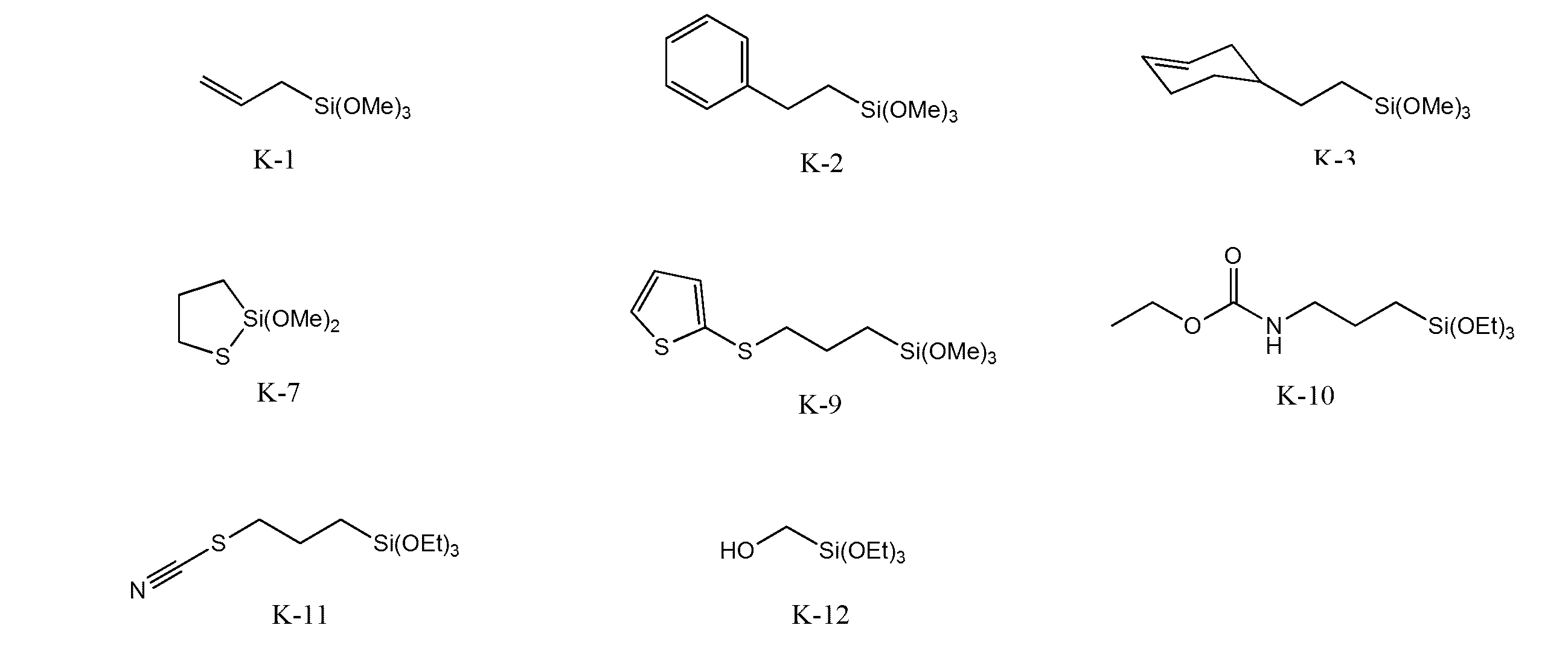


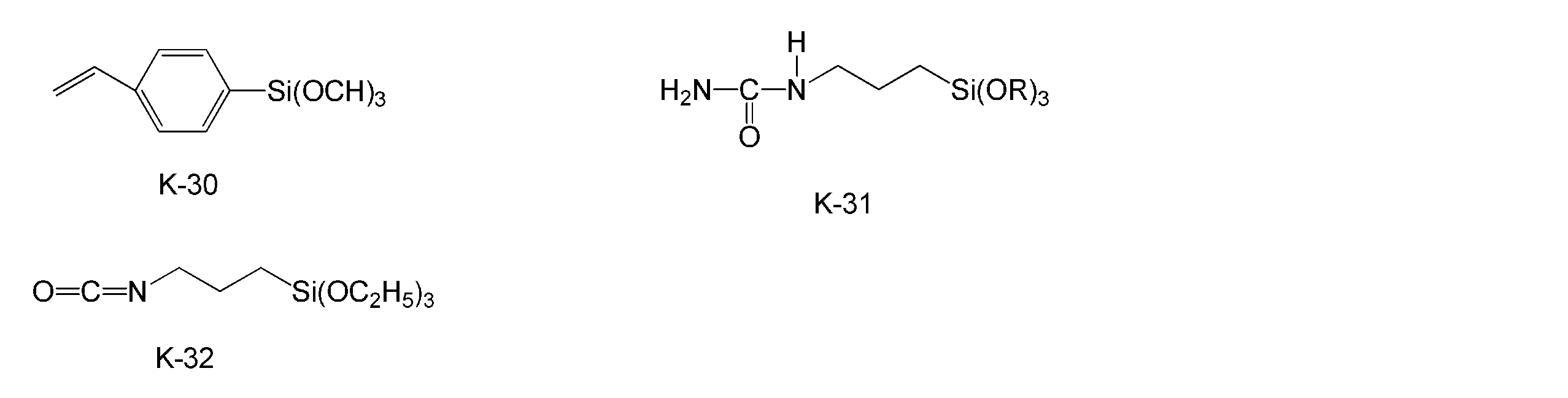
本発明に用いられるアルミニウムアルコキシド化合物としては、内視鏡用可撓管のプライマー層として適用可能な通常のアルミニウムアルコキシド化合物を広く採用することができる。
一般式(b): O-[Al-(OR2a)2]2
R1aとして採り得るアルキル基は、直鎖アルキル基及び分岐アルキル基並びにアラルキル基を含む。このアルキル基の炭素数は1~20が好ましく、1~15がより好ましく、1~10がさらに好ましく、1~8が特に好ましいが、アラルキル基の場合は7~30が好ましい。このアルキル基の好ましい具体例として、例えば、メチル、エチル、プロピル、イソプロピル、ブチル、sec-ブチル、イソブチル、tert-ブチル、ペンチル、ヘキシル、ヘプチル、オクチル、デシル、トリデシル、オクタデシル、ベンジル、及びフェネチルが挙げられる。
R1aとして採り得るアルキル基はオキシラン環を有していることも好ましい。R1aとして採り得るエポキシシクロアルキルアルキル基におけるシクロアルキル基(オキシラン環が縮合した構造のシクロアルキル基)の環員数は4~8が好ましく、5又は6がより好ましく、6であること(すなわちエポキシシクロヘキシル基であること)がさらに好ましい。
また、R1aとして採り得るアルキル基はアミノ基、イソシアナト基、メルカプト基、エチレン性不飽和基、及び酸無水物基から選ばれる基を有することも好ましい。
一般式(a)の化合物がR1aを2つ以上有する場合、2つのR1aは互いに連結して環を形成していてもよい。
R2aとして採り得るアルキル基、シクロアルキル基、アシル基、及びアリール基は、それぞれ、R1aとして採り得るアルキル基、シクロアルキル基、アシル基、及びアリール基と同義であり、各基の好ましい形態も同じである。また、R2aとして採り得るアルキル基は、置換基としてアミノ基を有することも好ましい。
R2aとして採り得るホスホネート基は、RP1及びRP2がともにアルキル基であるか、又は、RP1が水素原子で、RP2がホスホネート基であることが好ましい。
なお、ホスホネート基はホスファイト基(亜リン酸基)と互変異性であるため、本発明においてホスホネート基は、ホスファイト基を含む意味である。
上記の一般式(a)及び(b)において、OR2aの少なくとも1つがアセタト構造を有することが好ましい。本発明において、アセタト構造は、酢酸若しくは酢酸エステル又はこれらが置換基(酢酸のメチル基が置換基としてアルキル基を有する形態を含む)を有した構造の化合物から水素イオンが1つ除かれてAlに配位している構造を意味する。このAlに配位する配位原子は通常は酸素原子である。このアセタト構造は、アルキルアセトアセタート構造(「CH3-C(=O)-CH2-C(=O)-O-Ralk」(Ralkはアルキル基(好ましくは炭素数1~20のアルキル基であり、炭素数1~10のアルキル基であってもよく、より好ましくは炭素数1~4のアルキル基であってもよい。)を示す。))を基本構造とし、そこから水素イオンが1つ除かれて、酸素原子を配位原子としてAlに配位している構造(すなわちアルキルアセトアセタト構造)が好ましい。上記の「アルキルアセトアセタート構造を基本構造とする」とは、上記アルキルアセトアセタート構造の他、上記アルキルアセトアセタート構造の水素原子が置換基で置換された構造を含む意味である。OR2aがアセタト構造を有する形態として、例えば、後述する化合物A-3、A―4、及びA―5が挙げられる。
アルミニウムトリエチレート
アルミニウムトリイソプロピレート
アルミニウムトリsec-ブチレート
アルミニウムトリス(エチルアセトアセテート)
エチルアセトアセテートアルミニウムジイソプロピレート
アルミニウムモノアセチルアセトネートビス(エチルアセトアセテート)
アルミニウムトリス(アセチルアセトネート)
ジイソプロポキシアルミニウム-9-オクタデセニルアセトアセテート
アルミニウムジイソプロポキシモノエチルアセトアセテート
モノsec-ブトキシアルミニウムジイソプロピレート
ジエチルアセトアセテートアルミニウムイソプロピレート
アルミニウムビスエチルアセトアセテートモノアセチルアセトネート
アルミニウムオクタデシルアセトアセテートジイソプロピレート
本発明に用いられるジルコニウムアルコキシド化合物としては、内視鏡用可撓管のプライマー層として適用可能な通常のジルコニウムアルコキシド化合物を広く採用することができる。
一般式(d): O-[Zr-(OR2b)3]2
アルキル基、シクロアルキル基、アシル基、アリール基及び不飽和脂肪族基として、例えば、上記一般式(a)のR1aとして採り得るアルキル基、シクロアルキル基、アシル基、アリール基及び不飽和脂肪族基を採用することができる。
アルキル基、シクロアルキル基、アシル基、アルケニル基、アリール基及びホスホネート基として、例えば、上記一般式(a)のR2aとして採り得るアルキル基、シクロアルキル基、アシル基、アルケニル基、アリール基、ホスホネート基を採用することができる。また、RS2として採り得る置換基として、例えば、上記一般式(a)のRS1として採り得る置換基を採用することができる。
また、上記の一般式(c)において、OR2bの少なくとも1つがアセタト構造を有することが好ましい。このアセタト構造は、一般式(a)で説明したアセタト構造と同義である。OR2bがアセタト構造を有する形態として、例えば、後述するZ-7が挙げられる。なお、化合物Z-5は、一般式(c)において、R2bがアシル基である形態に相当する。
また、上記の一般式(c)及び(d)において、OR2bの少なくとも1つがラクタト構造を有することが好ましい。このラクタト構造は、乳酸イオン(ラクタート)を基本構造とし、そこから水素イオンが1つ除かれてZrに配位している構造を意味する。上記の「乳酸イオンを基本構造とする」とは、上記乳酸イオンの他、上記乳酸イオンの水素原子が置換基で置換された構造を含む意味である。このZrに配位する配位原子は通常は酸素原子である。OR2bがラクタト構造を有する形態として、例えば、後述する化合物Z-4が挙げられる。
テトラプロポキシジルコニウム(別名 ジルコニウムテトラn-プロポキシド)
テトラブトキシジルコニウム(別名 ジルコニウムテトラn-ブトキシド)
ジルコニウムテトラアセチルアセトネート
ジルコニウムトリブトキシモノアセチルアセトネート
ジルコニウムジブトキシビス(アセチルアセトネート)
ジルコニウムジブトキシビス(エチルアセトアセテート)
ジルコニウムトリブトキシエチルアセトアセテート
ジルコニウムモノブトキシアセチルアセトネートビス(エチルアセトアセテート)
ジルコニウムトリブトキシモノステアレート(別名 ステアリン酸ジルコニウムトリn-ブトキシド)
ステアリン酸ジルコニウム
ジルコニウムラクテートアンモニウム塩
ジルコニウムモノアセチルアセトネート
本発明に用いられるチタンアルコキシド化合物としては、内視鏡用可撓管のプライマー層として適用可能な通常のチタンアルコキシド化合物を広く採用することができる。
一般式(f): O-[Ti-(OR2c)3]2
アルキル基、シクロアルキル基、アシル基、アリール基及び不飽和脂肪族基として、例えば、上記一般式(a)のR1aとして採り得るアルキル基、シクロアルキル基、アシル基、アリール基及び不飽和脂肪族基を採用することができる。
アルキル基、シクロアルキル基、アシル基、アルケニル基、アリール基及びホスホネート基として、例えば、上記一般式(a)のR2aとして採り得るアルキル基、シクロアルキル基、アシル基、アルケニル基、アリール基、ホスホネート基を採用することができる。また、RS3として採り得る置換基として、例えば、上記一般式(a)のRS1として採り得る置換基を採用することができる。
一般式(e)又は(f)で表される化合物がPを有する場合、このPをホスフェート基(リン酸基)又はホスホネート基(ホスホン酸基)として有することが好ましい。
一般式(e)又は(f)で表される化合物がSを有する場合、このSをスルホニル基(-SO2-)として有することが好ましい。
また、上記の一般式(e)又は(f)で表される化合物は、R2cとしてアシル基を有すること、すなわち、OR2cとして上述のアセタト構造を有することも好ましい。
イソプロピルトリイソステアロイルチタネート
イソプロピルトリドデシルベンゼンスルホニルチタネート
イソプロピルトリオクタノイルチタネート
イソプロピルトリ(ジオクチルホスファイト)チタネート
イソプロピルトリス(ジオクチルピロホスフェート)チタネート
イソプロピルトリ(ジオクチルスルフェート)チタネート
イソプロピルトリクミルフェニルチタネート
イソプロピルトリ(N-アミノエチル-アミノエチル)チタネート
イソプロピルジメタクリルイソステアロイルチタネート
イソプロピルイソステアロイルジアクリルチタネート
イソブチルトリメチルチタネート
ジイソステアロイルエチレンチタネート
ジイソプロピルビス(ジオクチルピロホスフェート)チタネート
ジオクチルビス(ジトリデシルホスフェート)チタネート
ジクミルフェニルオキシアセテートチタネート
ビス(ジオクチルピロホスフェート)オキシアセテートチタネート
ビス(ジオクチルピロホスフェート)エチレンチタネート
テトライソプロピルチタネート
テトラブチルチタネート
テトラオクチルチタネート
テトラステアリルチタネート
テトライソプロピルビス(ジオクチルホスファイト)チタネート
テトラオクチルビス(ジ-トリデシルホスファイト)チタネート
テトラ(2,2-ジアリルオキシメチル-1-ブチル)ビス(ジ-トリデシル)ホスファイトチタネート
ブチルチタネートダイマー
チタンテトラアセチルアセトネート
チタンエチルアセトアセテート
チタンオクチレングリコレート
チタニウムジ-2-エチルヘキソキシビス(2-エチル-3-ヒドロキシヘキソキシド)
プライマー層中に含有される、シランカップリング剤、アルミニウムアルコキシド化合物、ジルコニウムアルコキシド化合物及びチタンアルコキシド化合物は、それぞれ、1種でも2種以上であってもよい。
プライマー層は、シランカップリング剤及び金属アルコキシド化合物の他に、本発明の効果を損なわない範囲内で、界面活性剤、増粘剤、レベリング剤、安定剤及び消泡剤等の添加剤を含有していてもよい。
なお、プライマー層は単層でも複層であってもよく、単層であることが好ましい。
本発明の可撓管は、プライマー層が設けられた可撓管基材の外周に被覆層を有する。
本発明において、被覆層は単層でも2層以上の複層構造でもよく、単層が好ましい。本発明において被覆層が単層の場合には、この単層の被覆層にはナフタレン構造を有するポリエステルが含まれる。また、被覆層が2層以上の複層構造の場合には、少なくとも最外層にナフタレン構造を有するポリエステルが含まれる。すなわち、本発明において被覆層は、最外層にナフタレン構造を有するポリエステルを含む。
ナフタレン構造を有するポリエステルとして、ナフタレン構造を有するポリエステル樹脂、及びナフタレン構造を有するポリエステルエラストマーが挙げられる。
上記ナフタレン構造を有するポリエステルとして、好ましくはナフタレンジカルボン酸成分を含むジカルボン酸成分とジオール成分とから構成されるポリエステルが挙げられる。
上記ナフタレンジカルボン酸成分として好ましいジカルボン酸成分の具体例は、2,6-ナフタレンジカルボン酸成分である。
ナフタレン構造を有するポリエステル樹脂は、ナフタレンジカルボン酸成分を有することが好ましい。ナフタレンジカルボン酸成分を有するポリエステル樹脂は、ジカルボン酸成分として、ナフタレンジカルボン酸成分以外のジカルボン酸成分を有してもよい。
ナフタレンジカルボン酸成分以外の上記ジカルボン酸成分は特に制限されず、ポリエステル樹脂を構成するジカルボン酸成分として通常用いられるものを広く適用できる。例えば、テレフタル酸、イソフタル酸、フタル酸(オルト体)、5-ナトリウムスルホイソフタル酸、シュウ酸、コハク酸、アジピン酸、セバシン酸、アゼライン酸、ドデカン二酸、ダイマー酸、マレイン酸、フマル酸、イタコン酸、シトラコン酸、メサコン酸及びシクロヘキサンジカルボン酸等に由来する構成成分が挙げられる。これらのジカルボン酸成分の1種又は2種以上を使用することができる。
また上記ナフタレン構造を有するポリエステル樹脂として、上記成分からなるホモポリマー又はコポリマーを2種以上併用してもよい。
ナフタレン構造を有するポリエステルエラストマーは、ナフタレンジカルボン酸成分を有することが好ましい。より好ましくは、ナフタレンジカルボン酸成分を含むジカルボン酸成分と低分子ジオール成分とを構成成分とする結晶性ポリエステル鎖からなるハードセグメントと、下記(i)~(iii)の少なくともいずれかのソフトセグメントとにより構成された共重合体である。
(i)脂肪族ポリエステル鎖から構成されたソフトセグメント、
(ii)脂肪族ポリマージオール成分から構成されたソフトセグメント、
(iii)脂肪族ポリマージオール成分と芳香族ジカルボン酸を含むジカルボン酸成分とにより構成されたポリエステル鎖から構成されるソフトセグメント
すなわち、ナフタレン構造は、ハードセグメントとソフトセグメントのいずれか一方、又は両方に導入されていてよく、好ましくは少なくともハードセグメントに導入される。
上記ナフタレンジカルボン酸成分として好ましいジカルボン酸成分の具体例は、2,6-ナフタレンジカルボン酸成分である。ハードセグメントがナフタレン構造を有するポリエステルエラストマーについて以下に説明する。
上記ハードセグメントは、上記で説明した構成成分からなるホモポリマーでも、コポリマーでもよい。
本発明において、被覆層を構成するポリマーの分子量は、特に断らない限り、重量平均分子量を意味する。重量平均分子量は、ゲル浸透クロマトグラフィー(GPC)によってポリスチレン換算の分子量として計測することができる。以下に具体的な測定条件を示す。
GPC装置HLC-8220(商品名、東ソー社製)を用いて、溶離液としてクロロホルム、カラムとしてG3000HXL+G2000HXL(いずれも商品名、東ソー社製)を用い、23℃、流量1mL/minで、RI(示差屈折率)検出器で検出するゲルパーミエーションクロマトグラフィーで測定できる。
本願明細書において、数平均分子量は上記重量平均分子量と同じ条件で測定することができる。本願明細書において、化合物の重量平均分子量の数値範囲を記載する場合、この数値範囲はこの化合物の数平均分子量の数値範囲としても好ましいものである。
ナフタレン構造を有するポリエステルは、特定のシランカップリング剤又は金属アルコキシド化合物と親和性が高いことから、プライマー層を介して可撓管基材と強固に結着することができ、またナフタレン構造を有する分子に特徴的な、ナフタレン環の平面構造に起因して曲げ動作に対して剥離しにくい配置をとることができると考えられる。
さらにナフタレン構造は、その分子面積の大きさから、ヒドロキシラジカル等の滅菌機能を発現する活性種の上記被覆層内の移行及び浸透を阻害するバリア特性を有していると考えられる。かかる構造を有するポリエステルを、金属アルコキシド化合物等を介して可撓管基材と接合すると、被覆層と可撓管基材との結着を高度なレベルへと高めるだけでなく、場合によってはπ-π相互作用等も要因として、被覆層中、ナフタレン構造が、上記活性種の移行及び浸透を効果的に阻害できる位置に配することができると考えられる。
本発明の可撓管において、被覆層15の外周には、必要によりトップコート層(図示せず)が配される。トップコート層の材料は特に制限されないが、ウレタン塗料、アクリル塗料、フッ素塗料、シリコーン塗料、エポキシ塗料、ポリエステル塗料などが適用される。
トップコート層を使用する主な目的は、可撓管表面の保護又は艶出し、滑り性の付与、そして耐薬品性の付与である。そのため、トップコート層としては弾性率が高く、かつ表面が平滑になり、耐薬品性に優れるものが好ましい。
(プライマー層の形成)
本発明の可撓管の製造において、可撓管基材の外周にはまず、プライマー層が形成される。プライマー層は、シランカップリング剤、アルミニウムアルコキシド化合物、ジルコニウムアルコキシド化合物及びチタンアルコキシド化合物の少なくとも1種を溶媒に溶解して塗布液を調製し、この塗布液を可撓管基材の外周に塗布したり、スプレーしたり、あるいはこの塗布液中に可撓管基材を浸漬したりするなどして可撓管基材の少なくとも外周に塗布膜を形成した後、塗布膜を常法により乾燥(例えば100℃~170℃の高温乾燥等)することによって形成することができる。
塗布液に用いる溶媒としては、メタノール、エタノールなどのアルコール系溶媒、アセトン、メチルエチルケトンなどのケトン系溶媒、酢酸エチルなどのエステル系溶媒、トルエンなどの炭化水素系溶媒又はこれらの混合液を用いることができる。また、これらの溶媒に対して、アルミニウムアルコキシド化合物、ジルコニウムアルコキシド化合物及びチタンアルコキシド化合物の少なくとも1種が有するアルコキシ基の加水分解を促進させるため、水を混合することが好ましい。シランカップリング剤がアルコキシ基を有する場合も同様である。また、塗布液のpHは特に制限されないが、例えば、pH調整剤を用いることにより、酸性(例えば25℃におけるpH1~4)又はアルカリ性(例えば25℃におけるpH9~11)に適宜調製してもよい。
シランカップリング剤、アルミニウムアルコキシド化合物、ジルコニウムアルコキシド化合物及びチタンアルコキシド化合物の少なくとも1種の塗布液中の含有量は特に制限されず、例えば、0.01~2質量%とすることができ、0.05質量%以上1.5質量%未満が好ましく、0.1質量%以上1.0質量%未満とすることがより好ましい。
塗布液中には、シランカップリング剤、アルミニウムアルコキシド化合物、ジルコニウムアルコキシド化合物及びチタンアルコキシド化合物の少なくとも1種、溶媒及びpH調整剤の他にも、界面活性剤及び触媒等を含んでもよい。塗布液はより好ましくは、シランカップリング剤、アルミニウムアルコキシド化合物、ジルコニウムアルコキシド化合物及びチタンアルコキシド化合物の少なくとも1種と溶媒とで構成される。
本発明においては、本発明の効果を損なわない範囲で、可撓管基材の外周の一部に、プライマー層で覆われていない部分があってもよい(すなわち、プライマー層の一部に欠陥が生じていてもよい。)。
本発明の内視鏡用可撓管の製造は、被覆層の形成工程を含む。この被覆層の形成工程は、上記可撓管基材の外周に形成されたプライマー層上に(プライマー層に接するように)、ナフタレン構造を有するポリエステルを含む被覆層形成材料を用いて被覆層を形成することを含む。被覆層形成材料を用いて被覆層を形成すること自体は常法により行うことができ、例えば、被覆層形成材料を押出被覆(形成温度:150~250℃)することにより被覆層を形成することができる。なお、上記被覆層形成材料がナフタレン構造を有するポリエステル以外の成分を含有する場合、例えば、被覆層形成材料に用いる成分を二軸混錬機により混錬して、この混合物を押出被覆することにより被覆層を形成することができる。
本発明の可撓管は、内視鏡型医療機器に対して広く適用することができる。例えば、内視鏡の先端にクリップ又はワイヤーを装備したもの、あるいはバスケット又はブラシを装備した器具に適用することもできる。なお、内視鏡型医療機器とは、内視鏡を基本構造とする医療機器のほか、遠隔操作型の医療機器など、挿入部が可撓性を有し、体内に導入して用いられる医療及び診療機器を広く含む意味である。
本発明の内視鏡型医療機器は、その挿入部に本発明の内視鏡用可撓管が組み込まれている。すなわち、本発明の内視鏡型医療機器の製造方法は、本発明の内視鏡用可撓管又は本発明の内視鏡用可撓管の製造方法により得た内視鏡用可撓管を、内視鏡型医療機器の挿入部に組み込むことを含むものである。
可撓管は、最内層として金属を構成材料とする可撓管基材を有する。
図2に示すように、可撓管基材14は、最内側に金属帯片11aを螺旋状に巻回することにより形成される螺旋管11に、金属線を編組してなる筒状網体12を被覆して両端に口金13をそれぞれ嵌合した形態とすることが好ましい。可撓管基材14を構成する金属は、腐蝕を防ぐために、その表面に不動態化処理が施されていることが好ましい。すなわち、可撓管基材14はその外周に不動態皮膜を有することが好ましい。この不動態化処理は常法により行うことができる。例えば、硝酸などの強力な酸化剤を含む溶液に浸漬したり、空気(酸素)中若しくは水(水蒸気)中で加熱したり、酸化剤を含む溶液中で陽極酸化したりすることにより、金属表面に不動態皮膜を形成することができる。
可撓管基材14を構成する金属は、ステンレススチールが好ましい。ステンレススチール表面は通常、クロムと酸素が結合して不動態皮膜が形成された状態にある。しかし、可撓管基材14の構成材料としてステンレススチールを使用する場合であっても、ステンレススチール表面全体に、より均一な不動態皮膜をより確実に形成させるために、ステンレススチールに上述した不動態化処理を施すことが好ましい。
実施例1~28及び32については、後記表1-1~1-3(以下、表1-1~1-3の少なくとも1つを表1と称する。)に記載のナフタレン構造を有するポリエステル(R)を使用した。
実施例29~31については、以下のようにして調製した試料を用いた。
後記表1記載のナフタレン構造を有するポリエステル(R)及びその他のポリマー(Q)を、後記表1の割合で配合して調製した組成物を、バレル温度及びダイ温度を220℃に設定した二軸混練機(テクノベル社製KZW15-30MG、商品名)に導入し、スクリュー回転数100rpmで混練を行った。二軸混練機から吐出された溶融状態のストランドを水槽中で冷却後、ペレタイザーでカットすることでペレット形状の試料を得た。
実施例及び比較例に用いた可撓管基材を、図2を参照して記載する。
ステンレススチール製の金属帯片11aを用いて螺旋管11を形成し、この螺旋管11を、ステンレススチール製の繊維を織り込んだ筒状網体12で被覆した形態の可撓管基材を用意した。この可撓管基材は、長さ80cm、直径12mmである。このステンレススチール製可撓管は、螺旋管及び筒状網体の形成時におけるアニール処理(加熱処理)により、表面に不動態層が形成されている。
水とエタノールとを質量比5:75で混合した溶液に、下記表1に記載のプライマー層形成成分を8.9g/kgの濃度となるように溶解させ、プライマー層形成用塗布液とした。
上記の可撓管基材を、7.5%水酸化ナトリウム水溶液中に、60℃で1分間浸漬させて洗浄した後、蒸留水ですすいだ。この可撓管基材を、100℃のオーブンで10分間乾燥させた後、上記で調製したプライマー層形成用塗布液に、常温で1分間浸漬させた後、160℃のオーブン中で10分間乾燥した。こうして、外周および内周にプライマー層を有する可撓管基材を調製した。
プライマー層を設けた可撓管基材の外周に、上記で準備した被覆層形成材料を押出被覆し(成形温度:220℃)、被覆層を有した内視鏡用可撓管を作製した。被覆層の厚さは0.4mmであった。
上記作製した内視鏡用可撓管に対して曲げ操作を行った。
具体的には、内視鏡用可撓管の長さ方向の中央(可撓管の片方の末端から軸方向に40cmの位置)に円柱状の棒をあてて、曲率半径5cmでU字状に折り曲げた後、直線状に戻した。この動作を1往復として、5000往復行った。
曲げ操作後の内視鏡用可撓管の被覆層に対し、可撓管の片方の末端から軸方向に40cmの位置(長さ方向の中央)に、可撓管基材に切込みが到達するように、軸方向(長さ方向)に垂直に1cm幅の切込みを入れた。この切込みの両末端から、可撓管基材に切込みが到達するように、可撓管の軸方向に沿って長さ10cmの切込みを入れた。
この可撓管に対して、剥離試験機(商品名FGS-500TV、日本電産シンポ社製)を用いて、90°剥離試験を行った。切込みの端を掴んで、軸方向に2mm/分の一定速度で引き剥がし、剥離強度を測定した(測定値X1(N/cm))。剥離強度はフォースゲージにより測定した。
上記曲げ操作を行っていない内視鏡用可撓管に対しても、上記90°剥離試験を行い、剥離強度を測定した(測定値Y1(N/cm))。下記式1)から得られる値(%)を、下記基準に当てはめ評価した。「C」以上が合格である。
式1) 100×X1/Y1(%)
<評価基準>
AA:80%以上
A:60%以上、80%未満
B:40%以上、60%未満
C:20%以上、40%未満
D:20%未満(完全に剥離した状態を含む)
上記で作製した内視鏡用可撓管をオゾン水処理に付した。
具体的には、内視鏡用可撓管を、オゾン水発生装置(エコデザイン社製「OWM-10L10P」(商品名))の流路内に設置し、オゾン濃度3ppmのオゾン水を流速1L/分で3時間流し処理を行った。
オゾン水処理後の内視鏡用可撓管を上記曲げ操作に付して、曲げ操作後の内視鏡用可撓管に対して、上記と同様にして切込みを入れ、剥離強度を測定した(測定値X2(N/cm))。下記式2)から得られる値(%)を、下記基準に当てはめ評価した。「C」以上が合格である。
式2) 100×X2/Y1(%)
(式2)中、Y1は、式1)のY1と同義である。)
<評価基準>
A:80%以上
B:60%以上、80%未満
C:40%以上、60%未満
D:40%未満(処理中に剥離してしまった状態を含む)


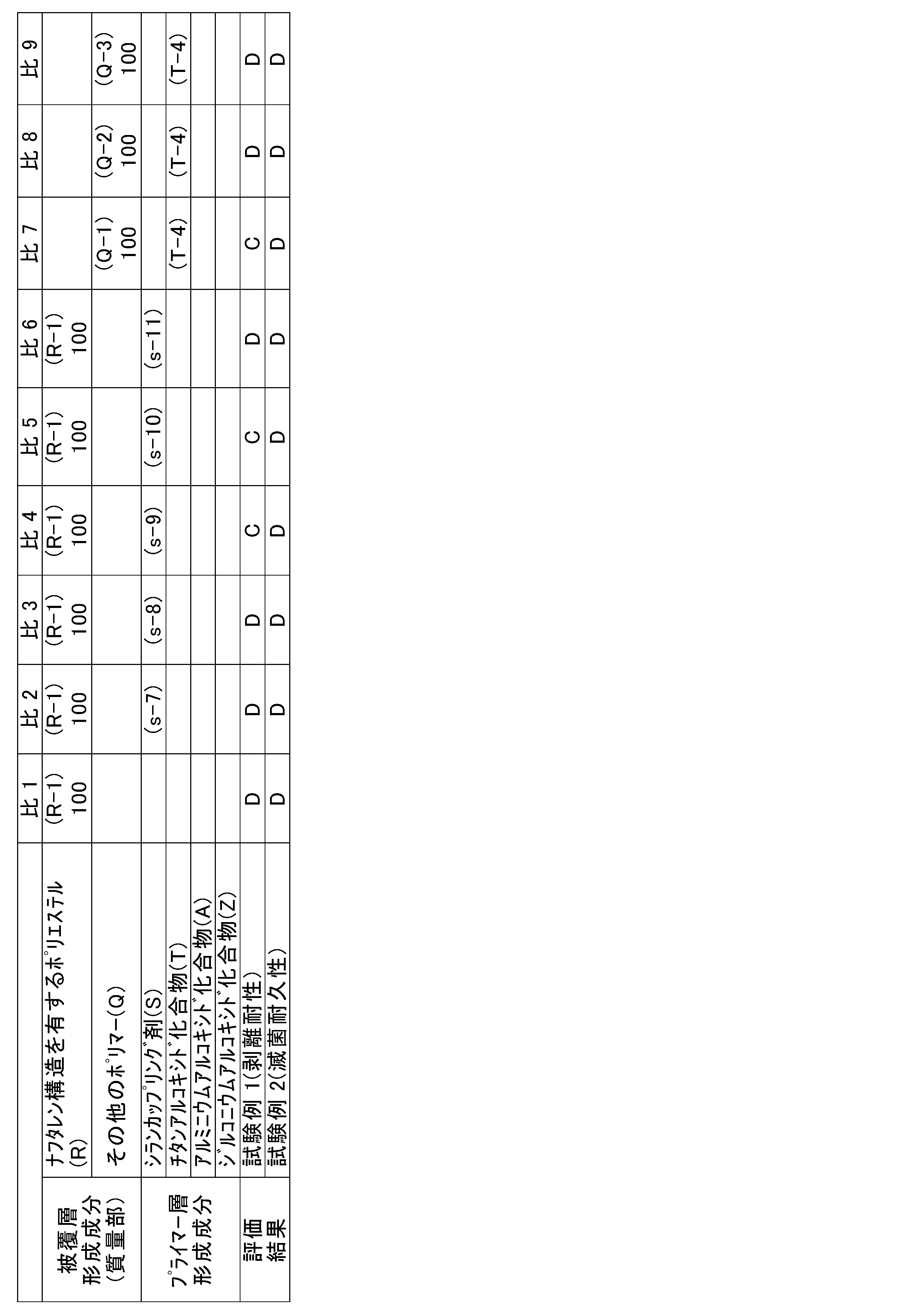
実:実施例
比:比較例
(R-1)ポリブチレンナフタレートを構造単位に有するポリエステルエラストマー(東洋紡社製、商品名「ペルプレンEN-5000」、重量平均分子量119,000)
(R-2)ポリブチレンナフタレートを構造単位に有するポリエステルエラストマー(東洋紡社製、商品名「ペルプレンEN-1000」、重量平均分子量131,000)
(Q-1)ポリブチレンテレフタレートを構造単位に有するポリエステルエラストマー(東洋紡社製、商品名「ペルプレンP-280B」、重量平均分子量128,000)
(Q-2)エーテル系ポリウレタンエラストマー(日本ポリウレタン社製、商品名「ミラクトランE574PNAT」)、重量平均分子量145,000)
(Q-3)ポリアミドエラストマー(アルケマ社製、商品名「ペバックス7233」、重量平均分子量48,000)
-実施例で使用した化合物-
(S-1):p-スチリルトリメトキシシラン(商品名:KBM-1403、信越化学工業社製)
(S-2):3-ウレイドプロピルトリアルコキシシラン(商品名:KBE-585A、信越化学工業社製)
(S-3):3-イソシアネートプロピルトリエトキシシラン(商品名:KBM-9007N、信越化学工業社製)
(S-4):ビス(3-トリメトキシシリルプロピル)フマレート(商品名「SIB1834.5」、Gelest社製)
(S-5):トリス(トリメトキシシリルプロピル)イソシアヌレート(商品名:KBM-9659、信越化学工業社製)
(S-6):3-トリメトキシシリルプロピルコハク酸無水物(商品名:X-12-967C、信越化学工業社製)
-比較例で使用した化合物-
(s-7):ビニルトリメトキシシラン(商品名:KBM-1003、信越化学工業社製)
(s-8):(3-メタクリロキシプロピル)トリメトキシシラン(商品名:KBM-503、信越化学工業社製)
(s-9):3-グリシドキシプロピルトリメトキシシラン(商品名:KBM-403、信越化学工業社製)
(s-10):3-アミノプロピルトリメトキシシラン(商品名:KBM-903、信越化学工業社製)
(s-11):3-メルカプトプロピルトリメトキシシラン(商品名:KBM-803、信越化学工業社製)
(T-1):テトラn-ブチルチタネート(商品名:オルガチックスTA-21、マツモトファインケミカル社製)


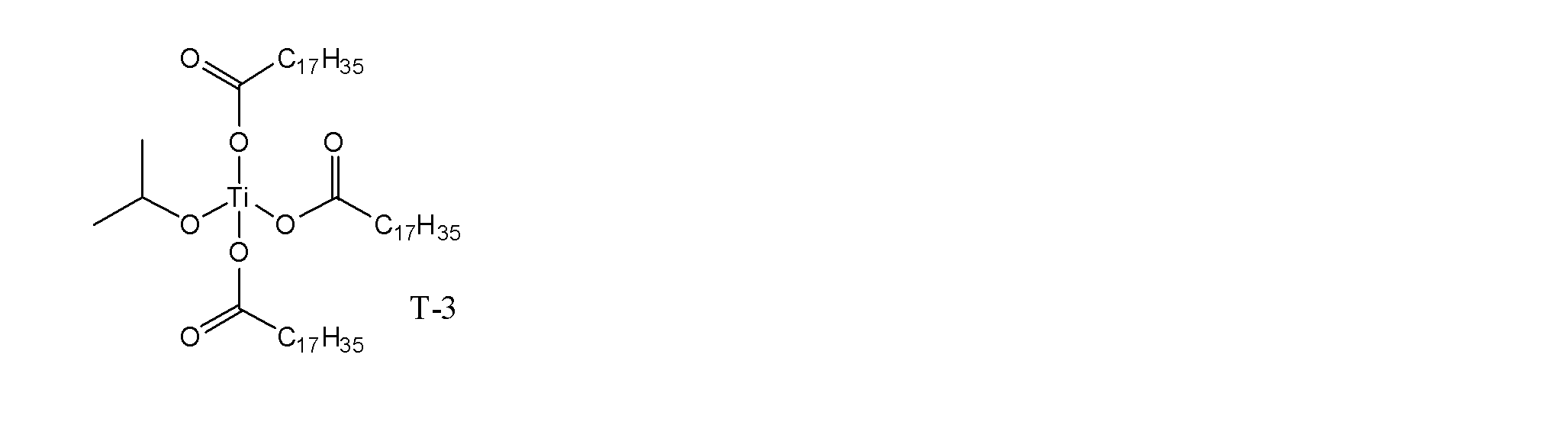

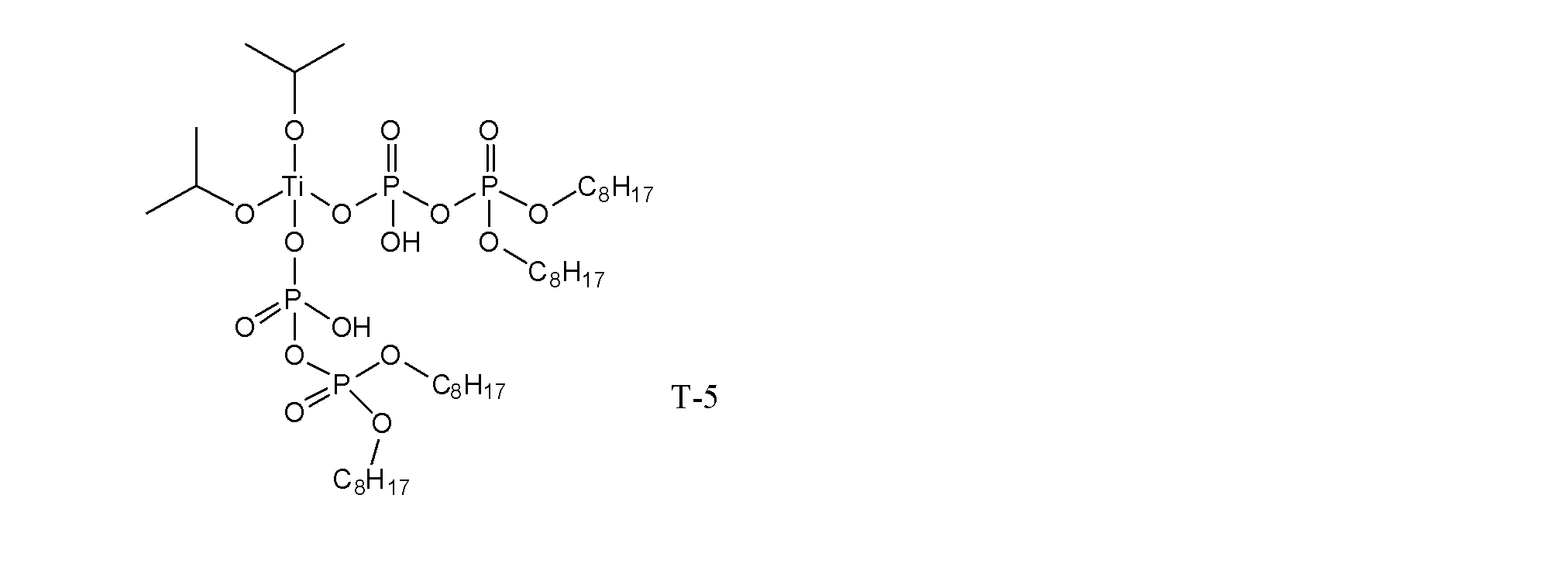
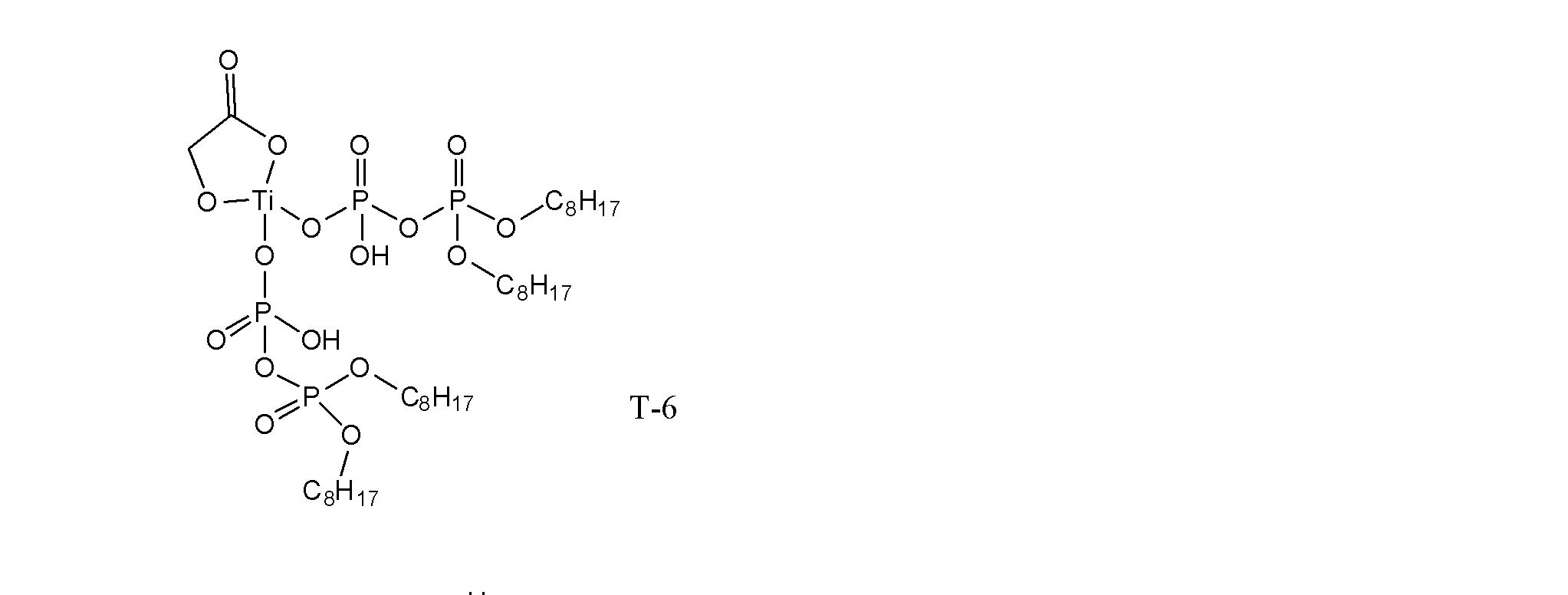
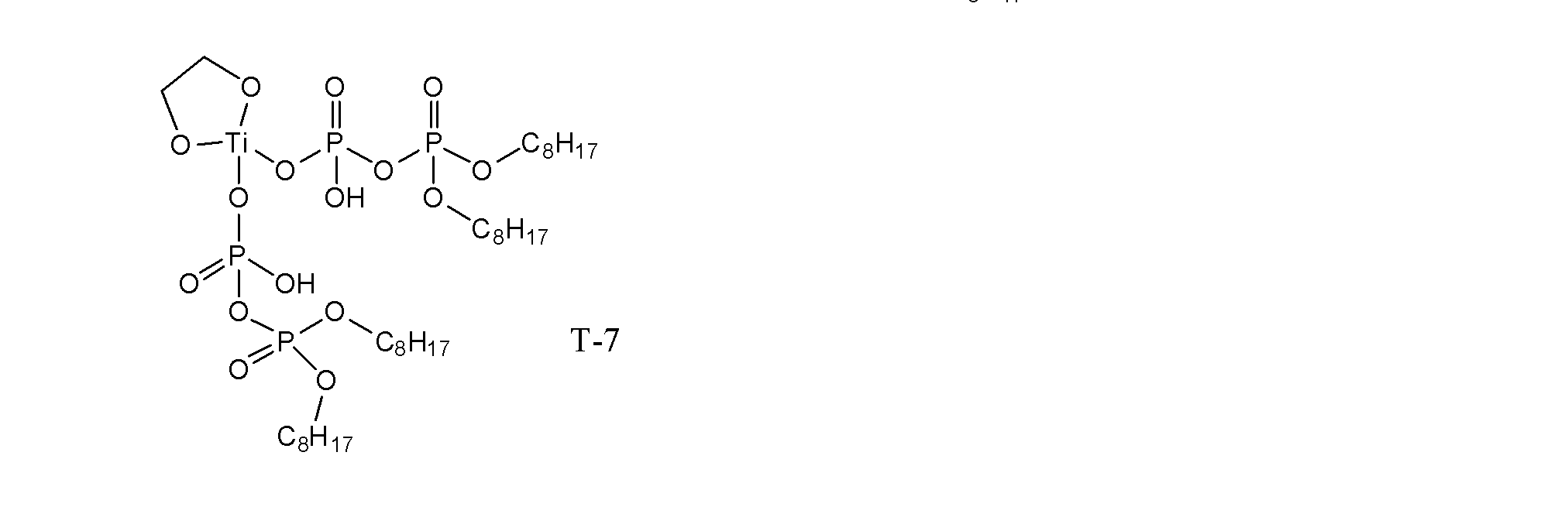
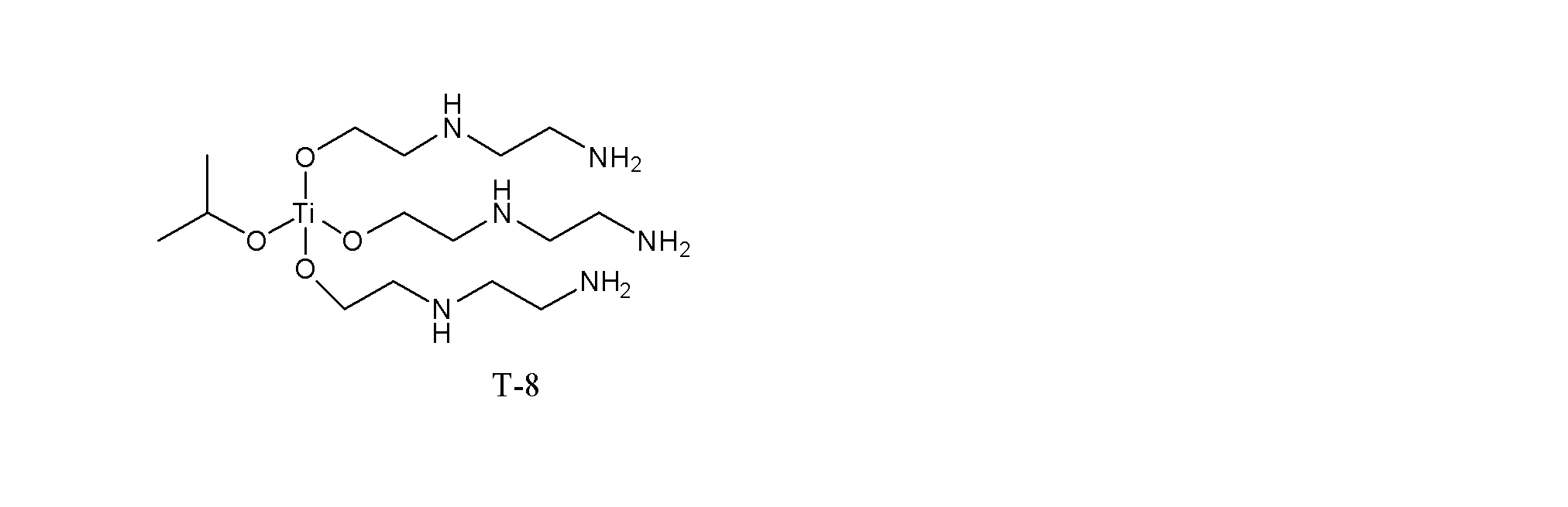
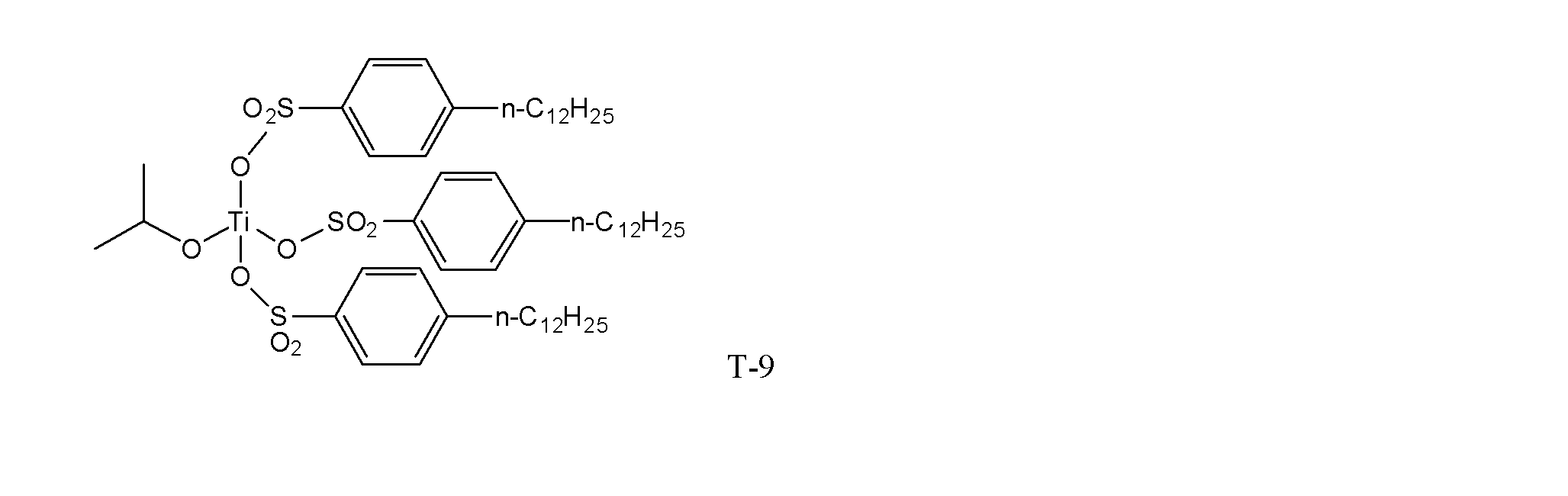

(A-1):アルミニウムsec-ブトキシド(商品名:ASBD、川研ファインケミカル社製)


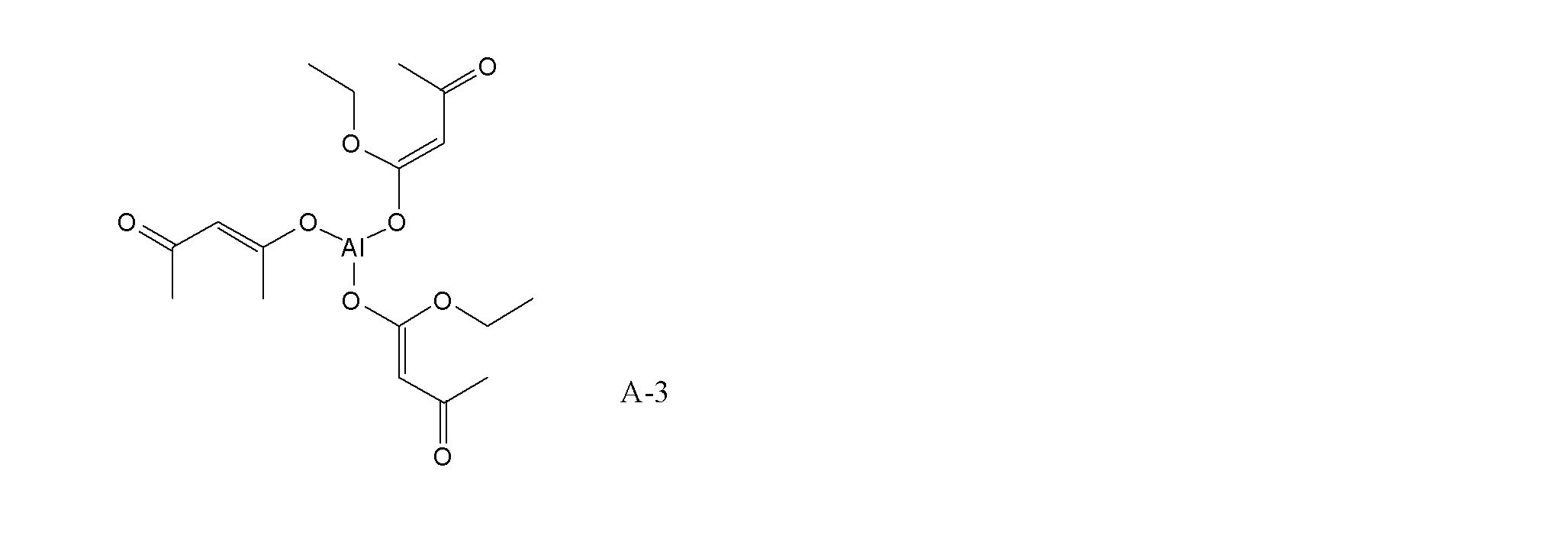
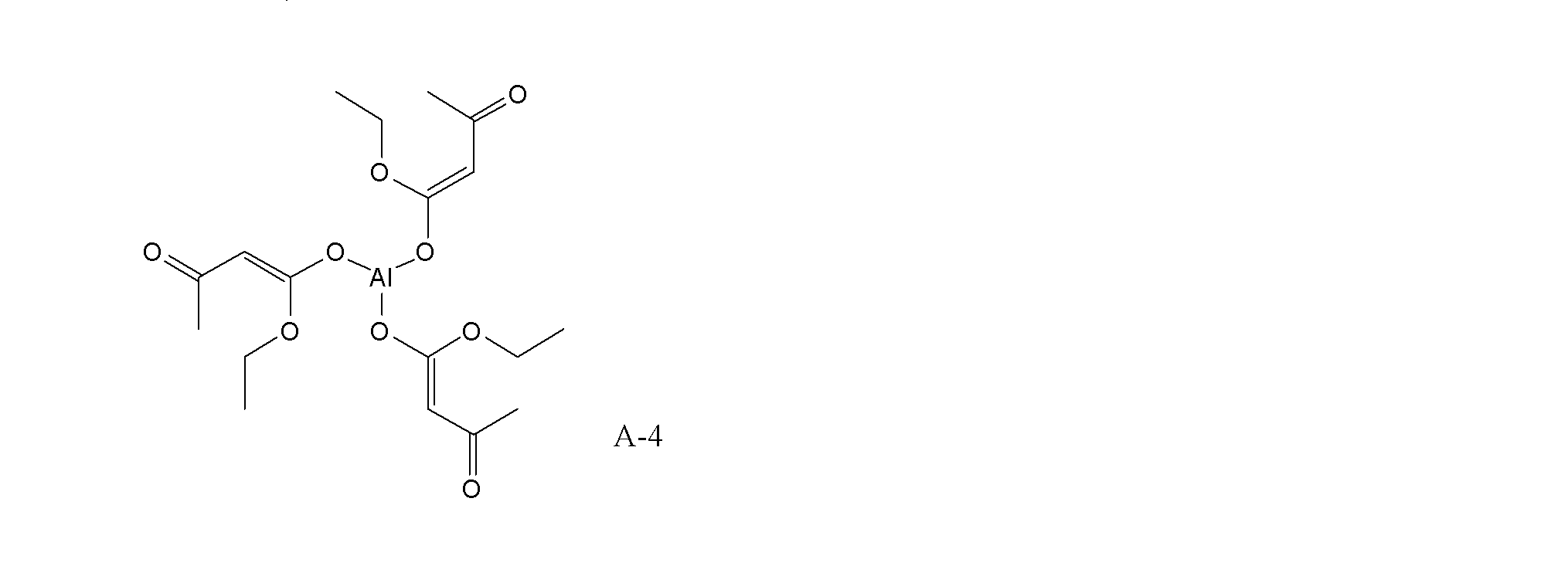
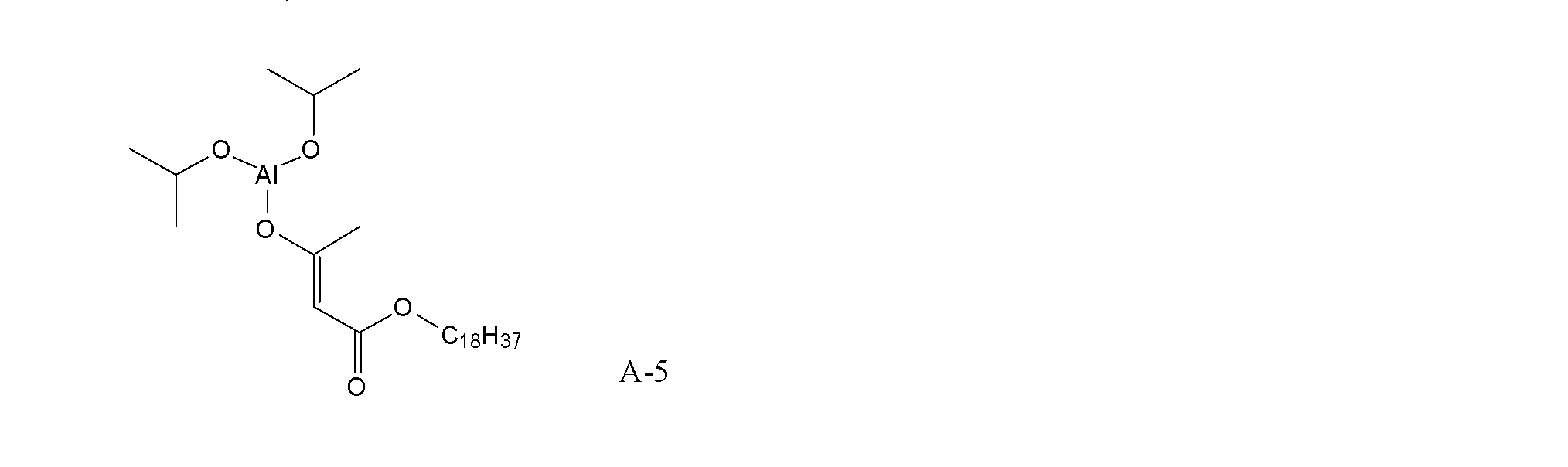
(Z-1):ジルコニウムテトラn-プロポキシド(商品名:オルガチックスZA-45、マツモトファインケミカル社製)
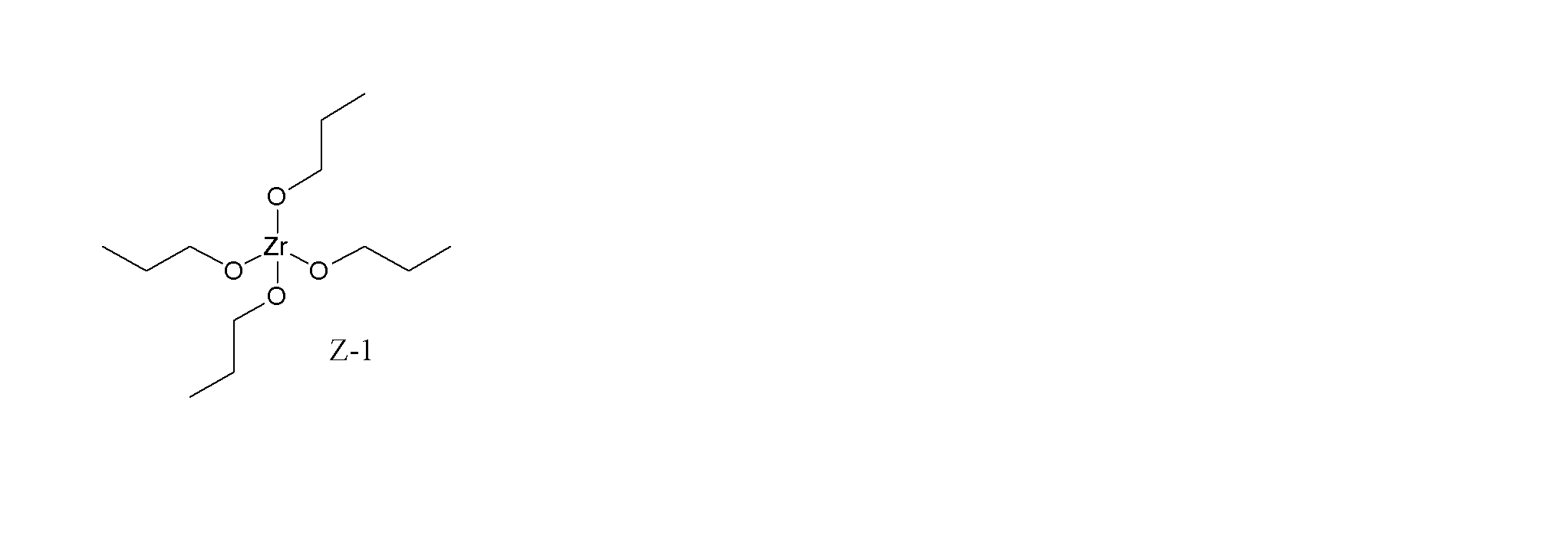
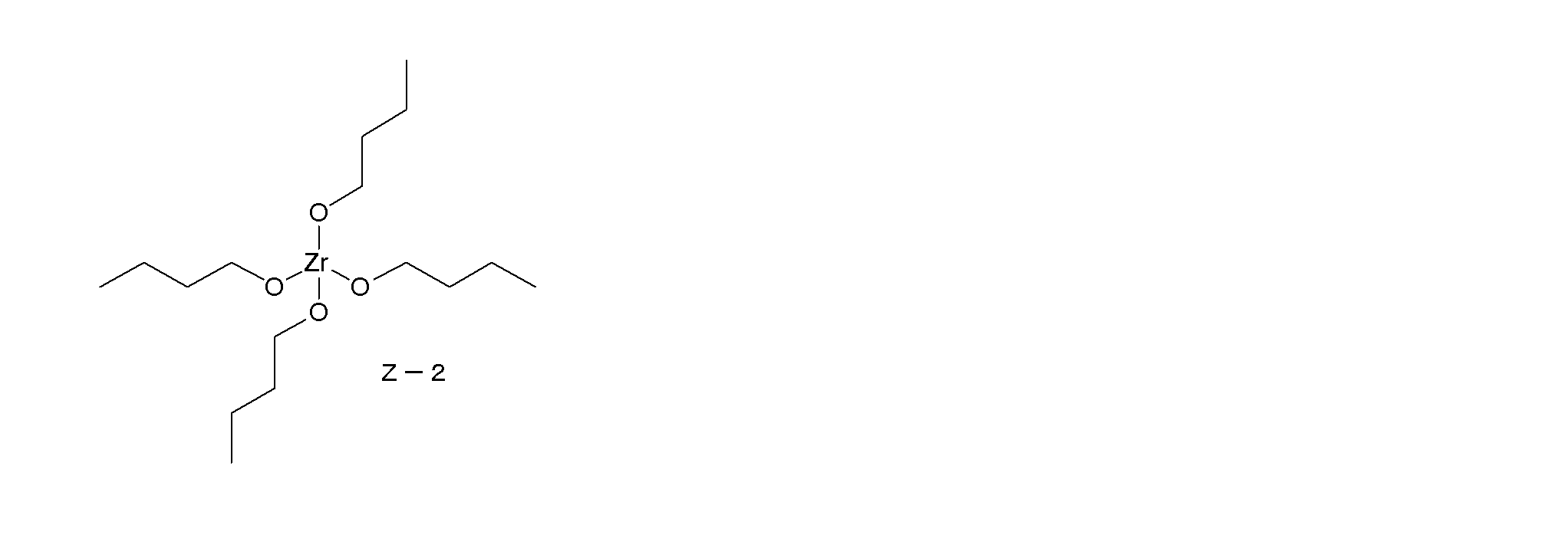

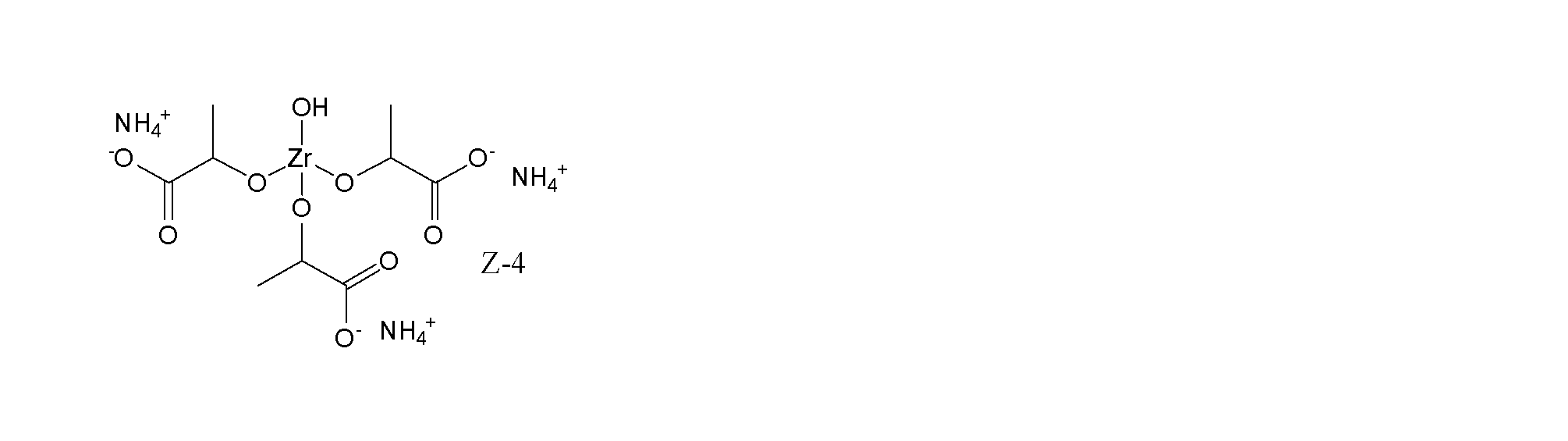


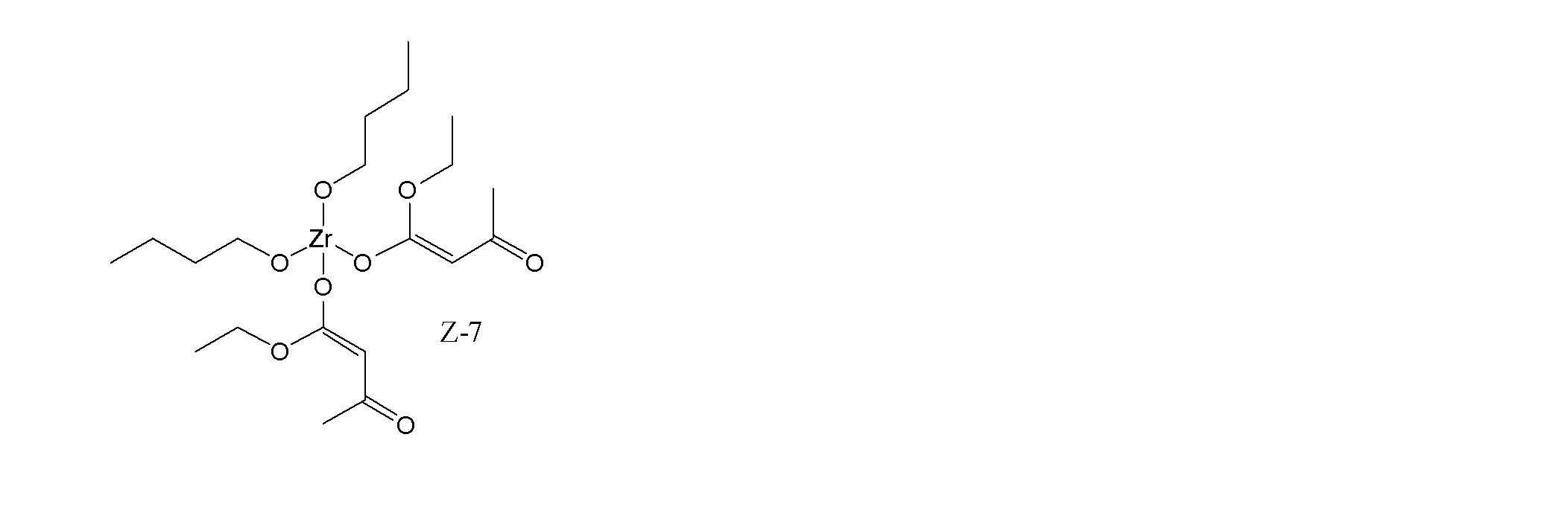
比較例2~6は、本発明の規定を満たさないシランカップリング剤を用いたため、少なくとも滅菌耐久性が不合格であった。これは、本発明の規定を満たさないシランカップリング剤の滅菌耐久性が低い、又はシランカップリング剤と可撓管基材及び被覆層の少なくとも一方との結合が切断され易いためと考えられる。
比較例7~9の結果から、本発明で規定する金属アルコキシド化合物を用いても、被覆層にナフタレン構造を有するポリエステルを用いなければ剥離耐性及び滅菌耐久性が不合格であることがわかる。
これに対して、本発明の実施例1~32は、剥離耐性及び滅菌耐久性がすべて合格であった。特に、実施例7~32の結果から、プライマー層に本発明で規定する金属アルコキシド化合物を用いることにより、滅菌耐久性をより高度なレベル(すべて「B」評価以上)へと高められることがわかる。
3 挿入部
3a 可撓管
3b アングル部
3c 先端部
5 本体操作部
6 ユニバーサルコード
11 螺旋管
11a 金属帯片
12 筒状網体
13 口金
14 可撓管基材
15 被覆層
Claims (15)
- 金属を構成材料とする可撓管基材と、該可撓管基材の外周を覆う被覆層とを有する内視鏡用可撓管であって、
前記可撓管基材と前記被覆層との間に、シランカップリング剤、アルミニウムアルコキシド化合物、ジルコニウムアルコキシド化合物及びチタンアルコキシド化合物の少なくとも1種を含むプライマー層を有し、前記被覆層が、少なくともプライマー層と接する側にナフタレン構造を有するポリエステルを含む、内視鏡用可撓管。
ただし、前記シランカップリング剤には、ビニルシランカップリング剤、(メタ)アクリルシランカップリング剤、エポキシシランカップリング剤、アミノシランカップリング剤及びスルファニルシランカップリング剤は含まれない。 - 前記シランカップリング剤が、下記一般式(1)で表される化合物を含む、請求項1に記載の内視鏡用可撓管。

ただし、Y1~Y3のうちの少なくとも1つがアルコキシ基及びヒドロキシ基から選ばれる基であり、n1が1である場合、LL1、LL1-L1及びY1~Y3の全てがアルコキシ基及びヒドロキシ基から選ばれる基を示すことはない。前記一般式(1)で表される化合物には、ビニルシランカップリング剤、(メタ)アクリルシランカップリング剤、エポキシシランカップリング剤、アミノシランカップリング剤及びスルファニルシランカップリング剤は含まれない。 - 前記一般式(1)で表される化合物が、下記一般式(2)~(4)のいずれかで表される化合物を含む、請求項2に記載の内視鏡用可撓管。

L2は単結合、アルキレン基、アルケニレン基、アルキニレン基、アリーレン基、-O-、-S-、-NRa-、エステル結合、チオエステル結合、アミド結合、チオアミド結合若しくはスルホニル基又はこれらの基若しくは結合を2つ以上組合せてなる2価の基を示す。
L3~L5は単結合、アルキレン基、アルケニレン基、アルキニレン基、アリーレン基、-O-、-S-、-NRa-、エステル結合、チオエステル結合、アミド結合、チオアミド結合、ウレア結合、チオウレア結合若しくはスルホニル基又はこれらの基若しくは結合を2つ以上組合せてなる2価の基を示す。
LL1bは、単結合、アルキレン基、アルケニレン基、アルキニレン基、アリーレン基、-O-、-S-、-NRa-、2価の複素環基、アミド結合、エステル結合、チオエステル結合、2価のリン酸基、ホスファンジイル基若しくはスルホニル基又はこれらの基若しくは結合を2つ以上組み合わせてなる2価の基を示す。
LL1cは、n2価のアルカン、n2価のアルケン、n2価のアルキン、n2価のアレーン、n2価の複素環基、3価のリン酸基、ホスファントリイル基若しくはイソシアヌレート基、又は、これらの基と、アルキレン基、アルケニレン基、アルキニレン基、アリーレン基、-O-、-S-、-NRa-、エステル結合、チオエステル結合、アミド結合、チオアミド結合及びスルホニル基のうちの基若しくは結合を2つ以上組み合わせてなるn2価の基を示す。
Raは、水素原子又は置換基を示す。
Y4、Y7、Y10及びY13はヒドロキシ基又はアルコキシ基を示す。Y5、Y6、Y8、Y9、Y11、Y12、Y14及びY15はヒドロキシ基、アルコキシ基、アルキル基又はケトオキシム基を示す。
n2は3又は4である。
ただし、前記一般式(2)~(4)のいずれかで表される化合物には、ビニルシランカップリング剤、(メタ)アクリルシランカップリング剤、エポキシシランカップリング剤、アミノシランカップリング剤及びスルファニルシランカップリング剤は含まれない。 - 前記アルミニウムアルコキシド化合物が、下記一般式(a)又は(b)で表される化合物を含む、請求項1~3のいずれか1項に記載の内視鏡用可撓管。
一般式(a): R1a m1-Al-(OR2a)3-m1
一般式(b): O-[Al-(OR2a)2]2
R1aは水素原子、アルキル基、シクロアルキル基、アシル基、アリール基、又は不飽和脂肪族基を示す。
R2aは水素原子、アルキル基、シクロアルキル基、アシル基、アルケニル基、アリール基、ホスホネート基、又は-SO2RS1を示す。RS1は置換基を示す。
m1は0~2の整数である。 - 前記一般式(a)及び(b)において、OR2aの少なくとも1つがアセトナト構造又はアセタト構造を有する、請求項4に記載の内視鏡用可撓管。
- 前記ジルコニウムアルコキシド化合物が、下記一般式(c)又は(d)で表される化合物を含む、請求項1~5のいずれか1項に記載の内視鏡用可撓管。
一般式(c): R1b m2-Zr-(OR2b)4-m2
一般式(d): O-[Zr-(OR2b)3]2
R1bは水素原子、アルキル基、シクロアルキル基、アシル基、アリール基、又は不飽和脂肪族基を示す。
R2bは水素原子、アルキル基、シクロアルキル基、アシル基、アルケニル基、アリール基、ホスホネート基、又は-SO2RS2を示す。RS2は置換基を示す。
m2は0~3の整数である。 - 前記一般式(c)及び(d)において、OR2bの少なくとも1つが、アセトナト構造、アセタト構造又はラクタト構造を有する、請求項6に記載の内視鏡用可撓管。
- 前記チタンアルコキシド化合物が、一般式(e)又は(f)で表される化合物を含む、請求項1~7のいずれか1項に記載の内視鏡用可撓管。
一般式(e): R1c m3-Ti-(OR2c)4-m3
一般式(f): O-[Ti-(OR2c)3]2
R1cは水素原子、アルキル基、シクロアルキル基、アシル基、アリール基、又は不飽和脂肪族基を示す。
R2cは水素原子、アルキル基、シクロアルキル基、アシル基、アルケニル基、アリール基、ホスホネート基、又は-SO2RS3を示す。RS3は置換基を示す。
m3は0~3の整数である。 - 前記一般式(e)又は(f)で表される化合物が、N、P及びSの少なくとも1種の原子を含む、請求項8に記載の内視鏡用可撓管。
- 前記可撓管基材を構成する金属がステンレススチールである、請求項1~9のいずれか1項に記載の内視鏡用可撓管。
- 前記可撓管基材を構成する金属が表面に不動態皮膜を有する、請求項1~10のいずれか1項に記載の内視鏡用可撓管。
- 請求項1~11のいずれか1項に記載の内視鏡用可撓管を有する内視鏡型医療機器。
- 金属を構成材料とする可撓管基材の少なくとも外周に、シランカップリング剤、アルミニウムアルコキシド化合物、ジルコニウムアルコキシド化合物及びチタンアルコキシド化合物の少なくとも1種を含むプライマー層を形成する工程、及び
前記可撓管基材の外周に形成された前記プライマー層上に、ナフタレン構造を有するポリエステルを含む被覆層形成材料を用いて被覆層を形成する工程
を含む、内視鏡用可撓管の製造方法。
ただし、前記シランカップリング剤には、ビニルシランカップリング剤、(メタ)アクリルシランカップリング剤、エポキシシランカップリング剤、アミノシランカップリング剤及びスルファニルシランカップリング剤は含まれない。 - 請求項13に記載の内視鏡用可撓管の製造方法により内視鏡用可撓管を得る工程、及び、
得られた内視鏡用可撓管を内視鏡型医療機器の挿入部に組み込む工程
を含む、内視鏡型医療機器の製造方法。 - 請求項1~11のいずれか1項に記載の内視鏡用可撓管を内視鏡型医療機器の挿入部に組み込むことを含む、内視鏡型医療機器の製造方法。
Priority Applications (3)
| Application Number | Priority Date | Filing Date | Title |
|---|---|---|---|
| JP2022533995A JP7434555B2 (ja) | 2020-06-29 | 2021-06-28 | 内視鏡用可撓管、内視鏡型医療機器、及びこれらの製造方法 |
| CN202180043899.3A CN115996830B (zh) | 2020-06-29 | 2021-06-28 | 内窥镜用挠性管、内窥镜型医疗器材及它们的制造方法 |
| US18/147,302 US20230135925A1 (en) | 2020-06-29 | 2022-12-28 | Flexible tube for endoscope, endoscopic medical device, and methods for producing the same |
Applications Claiming Priority (2)
| Application Number | Priority Date | Filing Date | Title |
|---|---|---|---|
| JP2020-111755 | 2020-06-29 | ||
| JP2020111755 | 2020-06-29 |
Related Child Applications (1)
| Application Number | Title | Priority Date | Filing Date |
|---|---|---|---|
| US18/147,302 Continuation US20230135925A1 (en) | 2020-06-29 | 2022-12-28 | Flexible tube for endoscope, endoscopic medical device, and methods for producing the same |
Publications (1)
| Publication Number | Publication Date |
|---|---|
| WO2022004657A1 true WO2022004657A1 (ja) | 2022-01-06 |
Family
ID=79316223
Family Applications (1)
| Application Number | Title | Priority Date | Filing Date |
|---|---|---|---|
| PCT/JP2021/024361 Ceased WO2022004657A1 (ja) | 2020-06-29 | 2021-06-28 | 内視鏡用可撓管、内視鏡型医療機器、及びこれらの製造方法 |
Country Status (4)
| Country | Link |
|---|---|
| US (1) | US20230135925A1 (ja) |
| JP (1) | JP7434555B2 (ja) |
| CN (1) | CN115996830B (ja) |
| WO (1) | WO2022004657A1 (ja) |
Families Citing this family (1)
| Publication number | Priority date | Publication date | Assignee | Title |
|---|---|---|---|---|
| JP7112524B2 (ja) * | 2019-01-16 | 2022-08-03 | 富士フイルム株式会社 | 内視鏡用可撓管、内視鏡型医療機器、及びこれらの製造方法 |
Citations (5)
| Publication number | Priority date | Publication date | Assignee | Title |
|---|---|---|---|---|
| JP2004242963A (ja) * | 2003-02-14 | 2004-09-02 | Pentax Corp | 内視鏡管路部品および内視鏡 |
| JP2007144783A (ja) * | 2005-11-28 | 2007-06-14 | Nakato Kenkyusho:Kk | 水素バリヤー性被覆物、成形体及び水素バリヤー性被覆物の製造方法 |
| JP2008070900A (ja) * | 2001-10-16 | 2008-03-27 | Ppg Ind Ohio Inc | ポリマーエレクトロクロミックデバイス |
| JP2008308511A (ja) * | 2007-06-12 | 2008-12-25 | Toho Titanium Co Ltd | 光触媒膜用接着層の形成用組成物、光触媒膜用接着層、光触媒膜用接着層の形成方法及び光触媒構造体 |
| WO2019013243A1 (ja) * | 2017-07-12 | 2019-01-17 | 富士フイルム株式会社 | 内視鏡用可撓管、内視鏡型医療機器、及びこれらの製造方法 |
Family Cites Families (4)
| Publication number | Priority date | Publication date | Assignee | Title |
|---|---|---|---|---|
| JP5935656B2 (ja) * | 2012-10-25 | 2016-06-15 | 三菱瓦斯化学株式会社 | 医療用多層容器 |
| KR20150128809A (ko) * | 2013-03-06 | 2015-11-18 | 미츠비시 가스 가가쿠 가부시키가이샤 | 산소 흡수성 의료용 다층 용기 및 바이오 의약의 보존 방법 |
| CN105074306B (zh) * | 2013-03-27 | 2017-03-15 | 富士胶片株式会社 | 内窥镜用挠性管及其制造方法 |
| JP6511614B2 (ja) * | 2017-08-02 | 2019-05-15 | 株式会社新技術研究所 | 金属と樹脂の複合材 |
-
2021
- 2021-06-28 CN CN202180043899.3A patent/CN115996830B/zh active Active
- 2021-06-28 WO PCT/JP2021/024361 patent/WO2022004657A1/ja not_active Ceased
- 2021-06-28 JP JP2022533995A patent/JP7434555B2/ja active Active
-
2022
- 2022-12-28 US US18/147,302 patent/US20230135925A1/en active Pending
Patent Citations (5)
| Publication number | Priority date | Publication date | Assignee | Title |
|---|---|---|---|---|
| JP2008070900A (ja) * | 2001-10-16 | 2008-03-27 | Ppg Ind Ohio Inc | ポリマーエレクトロクロミックデバイス |
| JP2004242963A (ja) * | 2003-02-14 | 2004-09-02 | Pentax Corp | 内視鏡管路部品および内視鏡 |
| JP2007144783A (ja) * | 2005-11-28 | 2007-06-14 | Nakato Kenkyusho:Kk | 水素バリヤー性被覆物、成形体及び水素バリヤー性被覆物の製造方法 |
| JP2008308511A (ja) * | 2007-06-12 | 2008-12-25 | Toho Titanium Co Ltd | 光触媒膜用接着層の形成用組成物、光触媒膜用接着層、光触媒膜用接着層の形成方法及び光触媒構造体 |
| WO2019013243A1 (ja) * | 2017-07-12 | 2019-01-17 | 富士フイルム株式会社 | 内視鏡用可撓管、内視鏡型医療機器、及びこれらの製造方法 |
Also Published As
| Publication number | Publication date |
|---|---|
| JP7434555B2 (ja) | 2024-02-20 |
| JPWO2022004657A1 (ja) | 2022-01-06 |
| US20230135925A1 (en) | 2023-05-04 |
| CN115996830B (zh) | 2025-05-13 |
| CN115996830A (zh) | 2023-04-21 |
Similar Documents
| Publication | Publication Date | Title |
|---|---|---|
| JP6966549B2 (ja) | 内視鏡用可撓管、内視鏡型医療機器、及びこれらの製造方法 | |
| JP7434555B2 (ja) | 内視鏡用可撓管、内視鏡型医療機器、及びこれらの製造方法 | |
| JP7162121B2 (ja) | 内視鏡用接着剤及びその硬化物、並びに内視鏡及びその製造方法 | |
| JP7461493B2 (ja) | 内視鏡用可撓管、内視鏡型医療機器、及びこれらの製造方法 | |
| JP7697976B2 (ja) | 内視鏡用可撓管、内視鏡型医療機器、及びこれらの製造方法 | |
| WO2022137987A1 (ja) | 積層体及び医療機器 | |
| JP7425850B2 (ja) | 内視鏡用可撓管、内視鏡型医療機器、及びこれらの製造方法 | |
| JP7112524B2 (ja) | 内視鏡用可撓管、内視鏡型医療機器、及びこれらの製造方法 | |
| JP7411088B2 (ja) | 内視鏡用可撓管、内視鏡型医療機器、内視鏡用可撓管を構成する被覆材料の製造方法、及び内視鏡用可撓管の製造方法 | |
| JP2002224021A (ja) | 内視鏡用可撓管 | |
| JP7038234B2 (ja) | 内視鏡用可撓管、内視鏡型医療機器、及びこれらの製造方法 | |
| US12575715B2 (en) | Flexible tube for endoscope, endoscopic medical device, and methods for producing the same | |
| JP2002224018A (ja) | 内視鏡用可撓管 |
Legal Events
| Date | Code | Title | Description |
|---|---|---|---|
| 121 | Ep: the epo has been informed by wipo that ep was designated in this application |
Ref document number: 21834482 Country of ref document: EP Kind code of ref document: A1 |
|
| ENP | Entry into the national phase |
Ref document number: 2022533995 Country of ref document: JP Kind code of ref document: A |
|
| NENP | Non-entry into the national phase |
Ref country code: DE |
|
| 122 | Ep: pct application non-entry in european phase |
Ref document number: 21834482 Country of ref document: EP Kind code of ref document: A1 |
|
| WWG | Wipo information: grant in national office |
Ref document number: 202180043899.3 Country of ref document: CN |