WO2021250797A1 - 情報処理装置、情報提示システム、情報処理方法、及び情報処理プログラム - Google Patents
情報処理装置、情報提示システム、情報処理方法、及び情報処理プログラム Download PDFInfo
- Publication number
- WO2021250797A1 WO2021250797A1 PCT/JP2020/022768 JP2020022768W WO2021250797A1 WO 2021250797 A1 WO2021250797 A1 WO 2021250797A1 JP 2020022768 W JP2020022768 W JP 2020022768W WO 2021250797 A1 WO2021250797 A1 WO 2021250797A1
- Authority
- WO
- WIPO (PCT)
- Prior art keywords
- information
- content
- priority
- attribute
- person
- Prior art date
- Legal status (The legal status is an assumption and is not a legal conclusion. Google has not performed a legal analysis and makes no representation as to the accuracy of the status listed.)
- Ceased
Links
Images







Classifications
-
- G—PHYSICS
- G06—COMPUTING OR CALCULATING; COUNTING
- G06Q—INFORMATION AND COMMUNICATION TECHNOLOGY [ICT] SPECIALLY ADAPTED FOR ADMINISTRATIVE, COMMERCIAL, FINANCIAL, MANAGERIAL OR SUPERVISORY PURPOSES; SYSTEMS OR METHODS SPECIALLY ADAPTED FOR ADMINISTRATIVE, COMMERCIAL, FINANCIAL, MANAGERIAL OR SUPERVISORY PURPOSES, NOT OTHERWISE PROVIDED FOR
- G06Q50/00—Information and communication technology [ICT] specially adapted for implementation of business processes of specific business sectors, e.g. utilities or tourism
- G06Q50/10—Services
Definitions
- This disclosure relates to an information processing device, an information presentation system, an information processing method, and an information processing program.
- the content information which is the information about the content to be presented to the customer and the template information which shows the template including the area for displaying the information contained in the content information are generated.
- a system for generating image data in which content information and an area included in a template are associated with each other has been proposed. See, for example, Patent Document 1. According to this system, the content according to the customer's taste can be reflected on the screen designed according to the customer's taste and presented to the customer.
- This disclosure was made to solve the above problems, and aims to present information so that the satisfaction of multiple people can be enhanced.
- the information processing device includes an attribute acquisition unit that acquires the attributes of a plurality of people detected by the person detection unit, which is a device that acquires information about a person in a predetermined area, and an attribute acquisition unit that acquires the attributes of the person in advance.
- the priority information is acquired from the priority information storage unit that stores the priority information, which is information indicating the priority, and the priority of the attribute acquired by the attribute acquisition unit is acquired by referring to the priority information.
- the content information is acquired from the priority acquisition unit and the content information storage unit that stores the content information that is information about the content in advance, and is acquired by the attribute and the priority acquisition unit acquired by the attribute acquisition unit. It is characterized by having a content determination unit that determines content for a plurality of people to be transmitted to an information presenting device that presents information based on the priority and the content information.
- the information processing method includes a step of acquiring the attributes of a plurality of people detected by a person detection unit, which is a device for acquiring information about a person in a predetermined area, and a priority of the attributes of the person in advance.
- the priority of the attribute acquired in the step of acquiring the priority information from the priority information storage unit that stores the priority information, which is information indicating the above, and acquiring the attribute by referring to the priority information.
- the content information is acquired from the acquisition step and the content information storage unit that stores the content information that is information about the content in advance, and the information is based on the acquired attribute, the acquired priority, and the content information. It is characterized by having a step of determining the content for the plurality of people to be transmitted to the information presenting device for presenting the information.
- information can be presented so as to increase the satisfaction of a plurality of people.
- FIG. 3 is a functional block diagram schematically showing a configuration of an information processing apparatus and an information presentation system according to the first embodiment. It is explanatory drawing which shows the outline of the processing of the information processing apparatus which concerns on Embodiment 1.
- FIG. It is a figure which shows the example of the hardware composition of the information processing apparatus which concerns on Embodiment 1.
- FIG. It is a flowchart which shows the operation of the information processing apparatus which concerns on Embodiment 1.
- FIG. FIG. 3 is a functional block diagram schematically showing a configuration of an information processing apparatus and an information presentation system according to the second embodiment. It is a figure which shows the example of the personal information referred to by the information processing apparatus which concerns on Embodiment 2 in a tabular form.
- FIG. 3 is a functional block diagram schematically showing a configuration of an information processing apparatus and an information presentation system according to the third embodiment. It is explanatory drawing which shows the outline of the processing of the information processing apparatus which concerns on Embodiment 3.
- FIG. 3 is a functional block diagram schematically showing a configuration of an information processing apparatus and an information presentation system according to the third embodiment. It is explanatory drawing which shows the outline of the processing of the information processing apparatus which concerns on Embodiment 3.
- FIG. 3 is a functional block diagram schematically showing a configuration of an information processing apparatus and an information presentation system according to the fourth embodiment. It is explanatory drawing which shows the outline of the processing of the information processing apparatus which concerns on Embodiment 4.
- FIG. It is a flowchart which shows the operation of the information processing apparatus which concerns on Embodiment 4.
- It is a functional block diagram which shows schematic structure of the information presentation system which concerns on Embodiment 5.
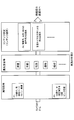
- FIG. 1 is a functional block diagram schematically showing the configurations of the information processing apparatus 11 and the information presentation system 1 according to the first embodiment.
- the information processing device 11 is a device capable of implementing the information processing method according to the first embodiment.
- the information presentation system 1 includes an information processing device 11, a camera 20 which is an image pickup device, a priority information storage unit 50 which is a storage device, and a content information storage unit 60 which is a storage device.
- the information presenting device 30 is provided.
- the information processing apparatus 11 has an attribute acquisition unit 110, a priority acquisition unit 120, and a content determination unit 130.
- the information presenting device 30 has a display device 31 for displaying an image and a speaker 32 as an audio output unit for outputting audio.
- the information presentation device 30 is, for example, a digital signage.
- the information processing device 11 is, for example, a computer.
- the information processing device 11 may be connected to the camera 20 and the information presenting device 30 via a network. Further, the information processing apparatus 11 may be connected to the priority information storage unit 50 and the content information storage unit 60 via a network. Further, the priority information storage unit 50 and the content information storage unit 60 may be a part of the information processing device 11.
- FIG. 1 shows an elevator 90, a passage 80 extending in front of the elevator 90, and a plurality of people P1 to P4 in front of the entrance / exit of the elevator 90.
- people P1 to P4 are users of the elevator 90 or passersby moving through the passage 80.
- the camera 20 is a human detection unit as a device for acquiring information about a person in a predetermined area.
- the camera 20 photographs an area in front of the entrance / exit of the elevator 90 and acquires image pickup data which is information about one or more people in this area.
- the attribute acquisition unit 110 receives the image pickup data (that is, video) transmitted from the camera 20 and acquires each attribute of the person P1 to P4 based on the image pickup data.
- the attribute acquisition unit 110 is an attribute identification unit that performs recognition processing of each face, height, clothes, personal belongings, etc. of people P1 to P4.
- the attribute acquisition unit 110 estimates each attribute of the persons P1 to P4 based on the result of the recognition process. In the example of FIG. 1, the attribute acquisition unit 110 acquires the attributes of people P1 to P4 in the area in front of the entrance / exit of the elevator 90.
- Attributes include, for example, one or more of age, gender, height, disability, race, clothing, whether or not they are employees, and so on.
- Age, gender, and race can be determined, for example, based on the results of face recognition processing.
- the presence or absence of a gait disorder can be determined, for example, based on the determination result of whether or not a wheelchair is used.
- the presence or absence of a visually impaired person can be determined based on, for example, a determination result of whether or not a white cane used by a visually impaired person is used.
- Whether or not an employee is an employee can be determined based on, for example, the clothes of a person.
- the attributes can include a person's hobbies and tastes. Specific examples of the attributes are shown in FIG. 6, which will be described later, for example.
- the priority information storage unit 50 stores priority information, which is information indicating the priority of a person's attribute, in advance.
- the priority is expressed, for example, numerically. The higher the priority value, the higher the priority. Specific examples of priorities are shown, for example, in FIG. 7, which will be described later.
- the priority acquisition unit 120 acquires the priority of the attributes of the persons P1 to P4 provided by the attribute acquisition unit 110 with reference to the priority information stored in the priority information storage unit 50.
- the priority acquisition unit 120 provides the content determination unit 130 with the priority of the attributes of the persons P1 to P4.
- the content information storage unit 60 stores content information, which is information related to the content, in advance.
- the content includes one or both of a video display content for displaying an image on the information presentation device 30 and an audio output content for the information presentation device 30 to output audio.
- the content information of the content for video display includes the font of the characters included in the content for video display, the size of the characters, the color of the characters, the content of the text, the presence or absence of frigana of the characters, the language, and the display position on the screen. Contains information of one or more of. Specific examples of the content information are shown in FIG. 8 described later, for example.
- the content determination unit 130 is for persons P1 to P4 transmitted to the information presenting device 30 that presents information based on the priority of the attributes of persons P1 to P4 and the content information acquired by the priority acquisition unit 120. Determine (eg, select) the content of.
- the text is displayed at a low position on the screen of the display device 31 of the information presentation device 30.
- the display position of the text By moving the display position of the text closer to the position of the wheelchair user's eye level, it is possible to increase the satisfaction of the wheelchair user with the provision of the content.
- a voice message is output from the speaker 32 of the information presenting device 30.
- a voice message By outputting a voice message, information can be appropriately provided to the visually impaired, and the satisfaction of the visually impaired with the provision of the content can be enhanced.
- the font of the characters displayed on the display device 31 of the information presentation device 30 is changed to a universal design (UI) font and the size of the characters is increased.
- UI universal design
- the kanji displayed on the display device 31 of the information presentation device 30 is added with furigana.
- furigana it is possible to display content that is easy for young children to understand, and it is possible to increase the satisfaction of young children with the provision of content.
- FIG. 2 is an explanatory diagram showing an outline of processing of the information processing apparatus 11 according to the first embodiment.
- the attribute acquisition unit 110 acquires information about a person in a predetermined area.
- the attribute acquisition unit 110 acquires attributes for each of the persons P1 to P4.
- the age, gender, clothes, personal belongings, disability, etc. of the person are acquired as attributes.
- the priority acquisition unit 120 acquires the priority of the attribute acquired by the attribute acquisition unit 110 with reference to the priority information stored in the priority information storage unit 50.
- the content determination unit 130 refers to the content information stored in the content information storage unit 60, and causes the information presenting device 30 to present information based on the acquired attributes, their priorities, and the content information. Determine the content for the person P1 to P4 to be transmitted.
- the information processing apparatus 11 first transmits the content for outputting the audio information for the visually impaired person P4, and then the wheelchair user P2. Therefore, the content for displaying the text is transmitted to the lower side of the screen of the display device 31, and then the content for displaying the text in large size characters is transmitted to the display device 31 for the elderly person P3. Next, the content for displaying the text in normal size characters for the person P1 is transmitted.
- the information presenting device 30 outputs or displays the received contents in order. By doing so, it is possible to increase the overall satisfaction level, that is, the overall satisfaction level, of the person P1 to P4 with respect to the presentation of information by the information presentation device 30 by the person P1 to P4.
- FIG. 3 is a diagram showing an example of the hardware configuration of the information processing apparatus 11 according to the first embodiment.
- the information processing apparatus 11 includes a processor 901 as an information processing unit that performs various arithmetic processes and various hardware control processes, a memory 902 that is a main storage device, and an HDD (hard disk drive). ) Or a storage device 903 which is an auxiliary storage device such as an SSD (Solid State Drive).
- the information processing device 11 has a communication interface 904 which is a network interface for communicating via a network 905 such as the Internet, an external storage device 908 which is an external device, a camera 906, and a display 907. ing.
- the information processing device 11 is configured by, for example, a processing circuit.
- the information processing apparatus 11 may be configured by a computer including a processor 901 and a memory 902 for executing an information processing program which is a software program.
- the information processing program is installed in the information processing apparatus 11 from a computer-readable information recording medium that records information or by downloading via a network.
- the storage device 903 or the memory 902 stores an information processing program which is a software program for causing the information processing device 11 to execute the information processing method according to the first embodiment. By executing this information processing program, the processor 901 can execute the information processing method according to the first embodiment.
- the hardware configuration shown in FIG. 3 can also be applied to the information processing devices and learning devices of the second to fifth embodiments described later.
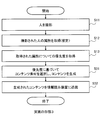
- FIG. 4 is a flowchart showing the operation of the information processing apparatus 11 according to the first embodiment.
- a person is photographed by the camera 20 (step S11).
- the attribute acquisition unit 110 acquires the attributes of the plurality of photographed persons (step S12).
- the priority acquisition unit 120 refers to the priority information stored in the priority information storage unit 50, and acquires the priority of the attributes of a plurality of people acquired by the attribute acquisition unit 110 (step). S13).
- the content determination unit 130 is based on the attributes acquired by the attribute acquisition unit 110, the priority of each attribute acquired by the priority acquisition unit 120, and the content information stored in the content information storage unit 60.
- Content for a plurality of people is determined (for example, selected) (step S14), and this content is transmitted to the information presenting device 30 (step S15).
- the content is selected based on the respective attributes of the persons P1 to P4 and their priorities, and the priority is set.
- the content is transmitted to the information presenting device 30 so that the content for a person having a high attribute is presented preferentially. Therefore, when a plurality of people (for example, a plurality of customers, a plurality of passersby, etc.) P1 to P4 having different attributes pass in front of the information presenting device 30, the content of the content becomes the people P1 to P4. It can be properly viewed and the overall satisfaction of people P1 to P4 can be enhanced.
- FIG. 5 is a functional block diagram schematically showing the configurations of the information processing apparatus 12 and the information presentation system 2 according to the second embodiment.
- the information processing device 12 is a device capable of implementing the information processing method according to the second embodiment.
- components that are the same as or correspond to the components shown in FIG. 1 are designated by the same reference numerals as those shown in FIG.
- the person detection unit of the information presentation system 2 according to the second embodiment is a device carried by people P1 and P4, and has an IC card 22 as an identification information storage device for storing information for identifying people P1 and P4. It has a card reader 21 as a reading device for reading information stored in the IC card 22. Further, the information presentation system 2 according to the second embodiment has an attribute information storage unit 40 that stores personal information including a person's attribute in advance.
- the attribute acquisition unit 111 identifies an individual based on the information stored in the IC card 22, and acquires the attribute information indicating the attribute of the identified individual from the attribute information storage unit 40.
- the identification information storage device is not limited to the IC card, and may be another device such as an RFID (radio frequency identification identifier), that is, a device provided with an RF tag. Further, the reading device may be another device such as a scanner for RF tags.
- RFID radio frequency identification identifier
- FIG. 6 is a diagram showing an example of personal information of the attribute information storage unit 40 referred to by the information processing apparatus 12 according to the second embodiment in a table format.
- the attributes of each person include age, gender, whether or not they are employees, the language used, whether or not they have color vision deficiency, and whether or not they are elevator users. The presence or absence of visual impairment, the presence or absence of hearing impairment, and the presence or absence of wheelchair use are indicated.
- the personal information prepared in advance is not limited to the example of FIG.
- FIG. 7 is a diagram showing an example of priority information of the priority information storage unit 50 referred to by the information processing apparatus 12 according to the second embodiment in a table format.
- the priority for each detection item of the attribute is shown numerically.
- the higher the priority value the higher the priority.
- the priority for the attribute of being totally blind is "10", which is the highest priority
- the priority for the attribute of being an elevator user is "6", which is the next priority.
- the ranking is high.
- the priority for the attribute that the visual impairment is amblyopia is "5", which is the next highest priority
- the priority for the attribute that the color vision deficiency is "4" is the next highest priority. expensive.
- the priority information prepared in advance is not limited to the example of FIG. 7.
- FIG. 8 is a diagram showing an example of the content information of the content information storage unit 60 referred to by the information processing apparatus 12 according to the second embodiment in a table format.
- attributes age, gender, nationality, whether or not the employee is an employee, color vision deficiency, presence / absence of elevator use, visual impairment, font type, font size, font color, content content, frigana.
- Information on the presence / absence, language, display position in the screen of the display device 31, and presence / absence of audio output is stored.
- the priority information prepared in advance is not limited to the example of FIG.
- FIG. 9 is an explanatory diagram showing an outline of processing of the information processing apparatus according to the second embodiment.
- the attribute acquisition unit 112 is a person P1 or P4 who passes through the card reader 21 in a predetermined area.
- the attribute acquisition unit 111 acquires attributes from the attribute information storage unit 40 for each of the persons P1 and P4.
- the age, gender, employee status, language used, color vision deficiency, elevator use, visual impairment, hearing impairment, wheelchair use The presence or absence of, etc. are acquired as attributes.
- the priority acquisition unit 120 acquires the priority of the attribute acquired by the attribute acquisition unit 111 with reference to the priority information stored in the priority information storage unit 50.
- the content determination unit 130 refers to the content information stored in the content information storage unit 60, and causes the information presenting device 30 to present information based on the acquired attributes, their priorities, and the content information. Determine the content for the person P1 and P4 to be transmitted.
- FIG. 10 is a flowchart showing the operation of the information processing apparatus 12 according to the second embodiment.
- a person is detected by the card reader 21 (step S21).
- the attribute acquisition unit 111 acquires each of the detected attributes of one or more persons (step S22).
- the priority acquisition unit 120 acquires the priority of the attribute of the person P acquired by the attribute acquisition unit 111 with reference to the priority information stored in the priority information storage unit 50 (step S13). ).
- the content determination unit 130 is based on the attributes acquired by the attribute acquisition unit 111, the priority of each attribute acquired by the priority acquisition unit 120, and the content information stored in the content information storage unit 60.
- Content for one or more people is determined (for example, selected) (step S14), and this content is transmitted to the information presenting device 30 (step S15).
- the content is selected based on the respective attributes of the persons P1 and P4 and their priorities, and the priority is set.
- the content is transmitted to the information presenting device 30 so that the content for a person having a high attribute is presented preferentially. Therefore, when a plurality of people (for example, a plurality of customers, a plurality of passersby, etc.) P1 and P4 having different attributes pass in front of the information presenting device 30, the content of the content becomes the person P1 and P4. It can be properly viewed and the overall satisfaction of people P1 and P4 can be enhanced.
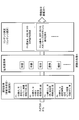
- FIG. 11 is a functional block diagram schematically showing the configurations of the information processing apparatus 13 and the information presentation system 3 according to the third embodiment.
- the information processing device 13 is a device capable of implementing the information processing method according to the third embodiment.
- components that are the same as or correspond to the components shown in FIG. 1 are designated by the same reference numerals as those shown in FIG.
- the information presentation system 3 includes a content information storage unit 61 that stores content materials and adjustment information instead of the content information storage unit 60 that stores content, and a content determination unit that selects content.
- a content determination unit 131 for generating content from a plurality of content materials and adjustment information for adjusting a video of one content material or a combination of two or more content materials among a plurality of content materials is provided instead of 130. In that respect, it differs from the information presentation system 1 according to the first embodiment. Further, the content information storage unit 61 and the content determination unit 131 may be applied to the second embodiment.
- FIG. 12 is an explanatory diagram showing an outline of processing of the information processing apparatus 13 according to the third embodiment.
- the attribute acquisition unit 110 acquires information about a person in a predetermined area.
- the attribute acquisition unit 110 acquires attributes for each of the persons P1 to P4.
- the priority acquisition unit 120 acquires the priority of the attribute acquired by the attribute acquisition unit 110 with reference to the priority information stored in the priority information storage unit 50.
- the content determination unit 131 refers to the content material and adjustment information stored in the content information storage unit 61, and presents information based on the acquired attributes, their priority, the content material, and the adjustment information. Generates content for people P1 to P4 to be transmitted to the information presenting device 30.
- the content information storage unit 61 stores photographic images, texts, screen designs, audio parts, and the like as content materials that are parts of the content. Further, in the content information storage unit 61, as adjustment information, a character font, a character size, a character color, a sentence content, and a character frigana included in one content material or a combination of the two or more content materials. The presence / absence, language, display position, screen color, information indicating the highlighted part, layout, etc. are stored. For example, the content determination unit 131 generates content based on the content material for outputting audio information for the visually impaired person P4 and the adjustment information, and transmits the content to the information presenting device 30. Further, the content determination unit 131 generates and transmits content using, for example, content material for displaying a sentence on the lower side of the screen of the display device 31 and adjustment information for the person P2 who is a wheelchair user. ..
- FIG. 13 is a flowchart showing the operation of the information processing apparatus 13 according to the third embodiment.
- the processing of steps S11 to S13 is the same as that of FIG.
- the content determination unit 131 has the attributes acquired by the priority acquisition unit 120, the priority of each attribute acquired by the priority acquisition unit 120, and the content material information and adjustments stored in the content information storage unit 61.
- content for a plurality of people is determined (for example, generated) (step S31), and this content is transmitted to the information presenting device 30 (step S32).
- the content is obtained from the content material and the adjustment information based on the respective attributes of the persons P1 to P4 and their priorities.
- the content is transmitted to the information presenting device 30 so that the content for a person who is generated and has a high priority attribute is presented preferentially. Therefore, when a plurality of people (for example, a plurality of customers, a plurality of passersby, etc.) P1 to P4 having different attributes pass in front of the information presenting device 30, the content of the content becomes the people P1 to P4. It can be properly viewed and the overall satisfaction of people P1 to P4 can be enhanced.
- the types of content that can be provided increase, so that it is possible to present appropriate content to people P1 to P4.
- FIG. 14 is a functional block diagram schematically showing the configurations of the information processing apparatus 14 and the information presentation system 4 according to the fourth embodiment.
- the information processing device 14 is a device capable of implementing the information processing method according to the fourth embodiment.
- components that are the same as or correspond to the components shown in FIG. 1 are designated by the same reference numerals as those shown in FIG.
- the information presentation system 4 according to the fourth embodiment is provided with a camera 24 for photographing a plurality of people P1 to P4 in an area away from the entrance / exit of the elevator 90, and the attribute acquisition unit 112 is the person P1 to P4. It differs from the information presentation system 1 according to the first embodiment in that the destination is estimated. Further, the point that the camera 24 is provided and the point that the attribute acquisition unit 112 estimates the destination of the people P1 to P4 may be applied to the first to third embodiments.
- the attribute acquisition unit 112 receives the image pickup data (that is, video) transmitted from the camera 24, acquires each attribute of the person P1 to P4 based on the image pickup data, and moves the person P1 to P4 (FIG. 14) is detected. In FIG. 14, the attribute acquisition unit 112 estimates that the persons P3 and P4 among the persons P1 to P4 move to the area in front of the entrance / exit of the elevator 90.
- FIG. 15 is an explanatory diagram showing an outline of processing of the information processing apparatus 14 according to the fourth embodiment.
- the attribute acquisition unit 112 acquires information about people P1 to P4 in a predetermined area, and estimates a person who moves in front of the entrance / exit of the elevator 90.
- the attribute acquisition unit 112 acquires attributes for persons P1 to P4 or persons P3 and P4.
- the age, gender, clothes, personal belongings, disability, etc. of the person are acquired as attributes.
- the priority acquisition unit 120 acquires the priority of the attribute acquired by the attribute acquisition unit 112 with reference to the priority information stored in the priority information storage unit 50.
- the content determination unit 130 refers to the content information stored in the content information storage unit 60, and causes the information presenting device 30 to present information based on the acquired attributes, their priorities, and the content information. Determine the content for the person P3 and P4 to be transmitted.
- FIG. 16 is a flowchart showing the operation of the information processing apparatus 14 according to the fourth embodiment.
- the cameras 24 take pictures of people P1 to P4 (step S11).
- the attribute acquisition unit 112 selects people P3 and P4 heading for the target information presenting device 30 installed in front of the entrance / exit of the elevator 90 (step S41).
- the attribute acquisition unit 112 acquires the attributes of the selected people P3 and P4 (step S12).
- the priority acquisition unit 120 acquires the priority of the attributes of the persons P3 and P4 acquired by the attribute acquisition unit 112 with reference to the priority information stored in the priority information storage unit 50 (). Step S13).
- the content determination unit 130 is based on the attributes acquired by the attribute acquisition unit 112, the priority of each attribute acquired by the priority acquisition unit 120, and the content information stored in the content information storage unit 60.
- Content for a plurality of people is determined (for example, selected) (step S14), and this content is transmitted to the information presenting device 30 (step S15).
- the content is selected based on the respective attributes of the persons P3 and P4 and their priorities, and the priority is set.
- the content is transmitted to the information presenting device 30 so that the content for a person having a high attribute is presented preferentially. Therefore, when a plurality of people (for example, a plurality of customers, a plurality of passersby, etc.) P3 and P4 having different attributes pass in front of the information presenting device 30, the content of the content becomes the person P3 and P4. It can be properly viewed and the overall satisfaction of people P3 and P4 can be enhanced.
- the content of the content is the person P3, shortly before the person P3, P4 passes in front of the information presenting device 30. It is possible to switch to an appropriate one for P4 and increase overall satisfaction.
- FIG. 17 is a functional block diagram schematically showing the configuration of the information presentation system 5 according to the fifth embodiment.
- components that are the same as or correspond to the components shown in FIG. 1 are designated by the same reference numerals as those shown in FIG.
- the information presentation system 5 according to the fifth embodiment is different from the information presentation system 1 according to the first embodiment in that it has a learning device 70.
- the learning device 70 can also be applied to the second to fourth embodiments. However, when the learning device 70 is applied to the second or fourth embodiment, a surveillance camera (corresponding to the camera 20 in FIG. 17) which is another camera for photographing the area in front of the entrance / exit of the elevator 90 is used. It is necessary to prepare.
- FIG. 18 is a functional block diagram schematically showing the configuration of the learning device 70 shown in FIG.
- the learning device 70 has a data acquisition unit 71 and a model generation unit 72.
- the model generation unit 72 has a reward calculation unit 73 and a function update unit 74.
- the learning device 70 is connected to a trained model storage unit 75 that stores the generated trained model.
- the trained model storage unit 75 may be connected to the learning device 70 via the information processing device 11 or via a network with the information processing device 11. Further, the trained model storage unit 75 may be a part of the information processing device 15.
- the learning device 70 is composed of, for example, a processor 901 and a memory 902 as shown in FIG.
- the data acquisition unit 71 photographs the persons P1 to P4 in front of the information presenting device 30 with a surveillance camera, and acquires the number of persons P1 to P4, the viewing time, the attributes, the information indicating the presented contents, and the like.
- the reward calculation unit 73 calculates content parameters that increase the number of viewers most based on, for example, the number of people who have viewed the content presented by the information presentation device 30, viewing time, attributes, and content, and the function update unit 73. 74 updates the function used for content selection or generation based on the calculation result. Create the applied content. After displaying the content, the number of people who actually watched the content is measured, reinforcement learning is performed, and the trained model is stored in the trained model storage unit 75.
- the information processing device 11 processes the attribute acquisition unit 110, the priority acquisition unit 120, and the content determination unit 130 so that the information presentation device 30 displays the content that increases the number of viewers most. Update.
- the processes of the attribute acquisition unit 110, the priority acquisition unit 120, and the content determination unit 130 are updated based on the result of machine learning.
- the content is appropriately viewed by the people P1 to P4, and the overall satisfaction of the person can be enhanced.
Landscapes
- Business, Economics & Management (AREA)
- Tourism & Hospitality (AREA)
- Health & Medical Sciences (AREA)
- Economics (AREA)
- General Health & Medical Sciences (AREA)
- Human Resources & Organizations (AREA)
- Marketing (AREA)
- Primary Health Care (AREA)
- Strategic Management (AREA)
- Physics & Mathematics (AREA)
- General Business, Economics & Management (AREA)
- General Physics & Mathematics (AREA)
- Engineering & Computer Science (AREA)
- Theoretical Computer Science (AREA)
- Management, Administration, Business Operations System, And Electronic Commerce (AREA)
- Information Retrieval, Db Structures And Fs Structures Therefor (AREA)
Priority Applications (3)
| Application Number | Priority Date | Filing Date | Title |
|---|---|---|---|
| PCT/JP2020/022768 WO2021250797A1 (ja) | 2020-06-10 | 2020-06-10 | 情報処理装置、情報提示システム、情報処理方法、及び情報処理プログラム |
| JP2022506714A JPWO2021250797A1 (https=) | 2020-06-10 | 2020-06-10 | |
| JP2022194562A JP7523512B2 (ja) | 2020-06-10 | 2022-12-06 | 情報処理装置、情報提示システム、情報処理方法、及び情報処理プログラム |
Applications Claiming Priority (1)
| Application Number | Priority Date | Filing Date | Title |
|---|---|---|---|
| PCT/JP2020/022768 WO2021250797A1 (ja) | 2020-06-10 | 2020-06-10 | 情報処理装置、情報提示システム、情報処理方法、及び情報処理プログラム |
Publications (1)
| Publication Number | Publication Date |
|---|---|
| WO2021250797A1 true WO2021250797A1 (ja) | 2021-12-16 |
Family
ID=78845517
Family Applications (1)
| Application Number | Title | Priority Date | Filing Date |
|---|---|---|---|
| PCT/JP2020/022768 Ceased WO2021250797A1 (ja) | 2020-06-10 | 2020-06-10 | 情報処理装置、情報提示システム、情報処理方法、及び情報処理プログラム |
Country Status (2)
| Country | Link |
|---|---|
| JP (2) | JPWO2021250797A1 (https=) |
| WO (1) | WO2021250797A1 (https=) |
Cited By (1)
| Publication number | Priority date | Publication date | Assignee | Title |
|---|---|---|---|---|
| KR102521156B1 (ko) * | 2022-06-08 | 2023-04-13 | 레어엔터프라이즈 주식회사 | 디지털 사이니지를 이용한 방문객 유형 분석 및 이를 이용한 지능형 콘텐츠 제공 장치 |
Families Citing this family (1)
| Publication number | Priority date | Publication date | Assignee | Title |
|---|---|---|---|---|
| JP2025049229A (ja) * | 2023-09-21 | 2025-04-03 | ソフトバンクグループ株式会社 | システム |
Citations (6)
| Publication number | Priority date | Publication date | Assignee | Title |
|---|---|---|---|---|
| JP2011053767A (ja) * | 2009-08-31 | 2011-03-17 | Nippon Hoso Kyokai <Nhk> | コンテンツ表示システム、携帯端末、表示端末、およびサーバ |
| JP2017116693A (ja) * | 2015-12-24 | 2017-06-29 | カシオ計算機株式会社 | コンテンツ再生装置、コンテンツ再生方法及びプログラム |
| JP2018072617A (ja) * | 2016-10-31 | 2018-05-10 | 大日本印刷株式会社 | 表示制御装置、表示システム、表示制御方法、及びコンピュータプログラム |
| JP2019051568A (ja) * | 2017-09-14 | 2019-04-04 | 大日本印刷株式会社 | 案内装置、案内システム、案内方法及びプログラム |
| JP2019185201A (ja) * | 2018-04-04 | 2019-10-24 | ギリア株式会社 | 強化学習システム |
| WO2020044734A1 (ja) * | 2018-08-28 | 2020-03-05 | 清水建設株式会社 | 情報提供システムおよび情報提供方法 |
Family Cites Families (1)
| Publication number | Priority date | Publication date | Assignee | Title |
|---|---|---|---|---|
| JP2017084083A (ja) | 2015-10-28 | 2017-05-18 | 株式会社日立製作所 | 送客管理装置、および送客管理方法 |
-
2020
- 2020-06-10 JP JP2022506714A patent/JPWO2021250797A1/ja active Pending
- 2020-06-10 WO PCT/JP2020/022768 patent/WO2021250797A1/ja not_active Ceased
-
2022
- 2022-12-06 JP JP2022194562A patent/JP7523512B2/ja active Active
Patent Citations (6)
| Publication number | Priority date | Publication date | Assignee | Title |
|---|---|---|---|---|
| JP2011053767A (ja) * | 2009-08-31 | 2011-03-17 | Nippon Hoso Kyokai <Nhk> | コンテンツ表示システム、携帯端末、表示端末、およびサーバ |
| JP2017116693A (ja) * | 2015-12-24 | 2017-06-29 | カシオ計算機株式会社 | コンテンツ再生装置、コンテンツ再生方法及びプログラム |
| JP2018072617A (ja) * | 2016-10-31 | 2018-05-10 | 大日本印刷株式会社 | 表示制御装置、表示システム、表示制御方法、及びコンピュータプログラム |
| JP2019051568A (ja) * | 2017-09-14 | 2019-04-04 | 大日本印刷株式会社 | 案内装置、案内システム、案内方法及びプログラム |
| JP2019185201A (ja) * | 2018-04-04 | 2019-10-24 | ギリア株式会社 | 強化学習システム |
| WO2020044734A1 (ja) * | 2018-08-28 | 2020-03-05 | 清水建設株式会社 | 情報提供システムおよび情報提供方法 |
Cited By (1)
| Publication number | Priority date | Publication date | Assignee | Title |
|---|---|---|---|---|
| KR102521156B1 (ko) * | 2022-06-08 | 2023-04-13 | 레어엔터프라이즈 주식회사 | 디지털 사이니지를 이용한 방문객 유형 분석 및 이를 이용한 지능형 콘텐츠 제공 장치 |
Also Published As
| Publication number | Publication date |
|---|---|
| JPWO2021250797A1 (https=) | 2021-12-16 |
| JP7523512B2 (ja) | 2024-07-26 |
| JP2023014402A (ja) | 2023-01-26 |
Similar Documents
| Publication | Publication Date | Title |
|---|---|---|
| US10529109B1 (en) | Video stream customization using graphics | |
| CN102934458B (zh) | 兴趣度估计装置以及兴趣度估计方法 | |
| CN106249982B (zh) | 显示控制方法、显示控制装置以及控制程序 | |
| JP7523512B2 (ja) | 情報処理装置、情報提示システム、情報処理方法、及び情報処理プログラム | |
| US11463618B2 (en) | Apparatus for providing information and method of providing information, and non-transitory storage medium | |
| TWI758837B (zh) | 展示對象的控制方法與裝置、電子設備及記錄媒體 | |
| JP5489197B2 (ja) | 電子広告装置・方法及びプログラム | |
| JP7110738B2 (ja) | 情報処理装置、プログラム及び情報処理システム | |
| KR102419240B1 (ko) | 제품의 영양 성분에 대한 정보를 제공하는 방법 | |
| JP7052328B2 (ja) | 表示制御装置、プログラム、表示システム及び表示制御方法 | |
| US11301615B2 (en) | Information processing device using recognition difficulty score and information processing method | |
| JP2023100112A (ja) | 画像選択システム | |
| EP1327238A1 (en) | Adaptive presentation system | |
| JP2022132019A (ja) | コメントアート管理システム、コメントアート管理方法、コメントアート管理プログラム、およびコンピュータ読取可能な記録媒体 | |
| JPWO2021250797A5 (https=) | ||
| US12175795B2 (en) | Device and method for determining engagement of a subject | |
| JP2019164843A (ja) | 制御プログラム | |
| CN113469725A (zh) | 信息处理装置、信息处理系统及信息处理方法 | |
| JP2023183825A (ja) | 案内システム、方法及びプログラム | |
| JP7819538B2 (ja) | 画像処理装置、画像処理方法、プログラム | |
| US7925061B2 (en) | Person imaging apparatus, method of controlling same and control program therefor | |
| JP2017116693A (ja) | コンテンツ再生装置、コンテンツ再生方法及びプログラム | |
| JP2017203878A (ja) | 画像処理システム、画像処理方法およびプログラム | |
| JP7711370B2 (ja) | 表示装置、表示方法及びプログラム | |
| JP7665965B2 (ja) | 表示装置、表示方法及びプログラム |
Legal Events
| Date | Code | Title | Description |
|---|---|---|---|
| 121 | Ep: the epo has been informed by wipo that ep was designated in this application |
Ref document number: 20939617 Country of ref document: EP Kind code of ref document: A1 |
|
| ENP | Entry into the national phase |
Ref document number: 2022506714 Country of ref document: JP Kind code of ref document: A |
|
| NENP | Non-entry into the national phase |
Ref country code: DE |
|
| 122 | Ep: pct application non-entry in european phase |
Ref document number: 20939617 Country of ref document: EP Kind code of ref document: A1 |