WO2021241115A1 - 劣化推定装置、モデル生成装置、劣化推定方法、モデル生成方法、及びプログラム - Google Patents
劣化推定装置、モデル生成装置、劣化推定方法、モデル生成方法、及びプログラム Download PDFInfo
- Publication number
- WO2021241115A1 WO2021241115A1 PCT/JP2021/016928 JP2021016928W WO2021241115A1 WO 2021241115 A1 WO2021241115 A1 WO 2021241115A1 JP 2021016928 W JP2021016928 W JP 2021016928W WO 2021241115 A1 WO2021241115 A1 WO 2021241115A1
- Authority
- WO
- WIPO (PCT)
- Prior art keywords
- storage battery
- charge
- data
- measurement data
- training
- Prior art date
- Legal status (The legal status is an assumption and is not a legal conclusion. Google has not performed a legal analysis and makes no representation as to the accuracy of the status listed.)
- Ceased
Links
Images







Classifications
-
- H—ELECTRICITY
- H02—GENERATION; CONVERSION OR DISTRIBUTION OF ELECTRIC POWER
- H02J—ELECTRIC POWER NETWORKS; CIRCUIT ARRANGEMENTS OR SYSTEMS FOR SUPPLYING OR DISTRIBUTING ELECTRIC POWER; SYSTEMS FOR STORING ELECTRIC ENERGY
- H02J7/00—Circuit arrangements for charging or discharging batteries or for supplying loads from batteries
- H02J7/80—Circuit arrangements for charging or discharging batteries or for supplying loads from batteries including monitoring or indicating arrangements
- H02J7/84—Control of state of health [SOH]
-
- G—PHYSICS
- G01—MEASURING; TESTING
- G01R—MEASURING ELECTRIC VARIABLES; MEASURING MAGNETIC VARIABLES
- G01R31/00—Arrangements for testing electric properties; Arrangements for locating electric faults; Arrangements for electrical testing characterised by what is being tested not provided for elsewhere
- G01R31/36—Arrangements for testing, measuring or monitoring the electrical condition of accumulators or electric batteries, e.g. capacity or state of charge [SoC]
- G01R31/367—Software therefor, e.g. for battery testing using modelling or look-up tables
-
- G—PHYSICS
- G01—MEASURING; TESTING
- G01R—MEASURING ELECTRIC VARIABLES; MEASURING MAGNETIC VARIABLES
- G01R31/00—Arrangements for testing electric properties; Arrangements for locating electric faults; Arrangements for electrical testing characterised by what is being tested not provided for elsewhere
- G01R31/36—Arrangements for testing, measuring or monitoring the electrical condition of accumulators or electric batteries, e.g. capacity or state of charge [SoC]
- G01R31/378—Arrangements for testing, measuring or monitoring the electrical condition of accumulators or electric batteries, e.g. capacity or state of charge [SoC] specially adapted for the type of battery or accumulator
-
- G—PHYSICS
- G01—MEASURING; TESTING
- G01R—MEASURING ELECTRIC VARIABLES; MEASURING MAGNETIC VARIABLES
- G01R31/00—Arrangements for testing electric properties; Arrangements for locating electric faults; Arrangements for electrical testing characterised by what is being tested not provided for elsewhere
- G01R31/36—Arrangements for testing, measuring or monitoring the electrical condition of accumulators or electric batteries, e.g. capacity or state of charge [SoC]
- G01R31/385—Arrangements for measuring battery or accumulator variables
-
- G—PHYSICS
- G01—MEASURING; TESTING
- G01R—MEASURING ELECTRIC VARIABLES; MEASURING MAGNETIC VARIABLES
- G01R31/00—Arrangements for testing electric properties; Arrangements for locating electric faults; Arrangements for electrical testing characterised by what is being tested not provided for elsewhere
- G01R31/36—Arrangements for testing, measuring or monitoring the electrical condition of accumulators or electric batteries, e.g. capacity or state of charge [SoC]
- G01R31/392—Determining battery ageing or deterioration, e.g. state of health
-
- G—PHYSICS
- G06—COMPUTING OR CALCULATING; COUNTING
- G06N—COMPUTING ARRANGEMENTS BASED ON SPECIFIC COMPUTATIONAL MODELS
- G06N3/00—Computing arrangements based on biological models
- G06N3/02—Neural networks
- G06N3/04—Architecture, e.g. interconnection topology
- G06N3/044—Recurrent networks, e.g. Hopfield networks
- G06N3/0442—Recurrent networks, e.g. Hopfield networks characterised by memory or gating, e.g. long short-term memory [LSTM] or gated recurrent units [GRU]
-
- H—ELECTRICITY
- H01—ELECTRIC ELEMENTS
- H01M—PROCESSES OR MEANS, e.g. BATTERIES, FOR THE DIRECT CONVERSION OF CHEMICAL ENERGY INTO ELECTRICAL ENERGY
- H01M10/00—Secondary cells; Manufacture thereof
- H01M10/42—Methods or arrangements for servicing or maintenance of secondary cells or secondary half-cells
-
- H—ELECTRICITY
- H01—ELECTRIC ELEMENTS
- H01M—PROCESSES OR MEANS, e.g. BATTERIES, FOR THE DIRECT CONVERSION OF CHEMICAL ENERGY INTO ELECTRICAL ENERGY
- H01M10/00—Secondary cells; Manufacture thereof
- H01M10/42—Methods or arrangements for servicing or maintenance of secondary cells or secondary half-cells
- H01M10/48—Accumulators combined with arrangements for measuring, testing or indicating the condition of cells, e.g. the level or density of the electrolyte
-
- G—PHYSICS
- G01—MEASURING; TESTING
- G01R—MEASURING ELECTRIC VARIABLES; MEASURING MAGNETIC VARIABLES
- G01R31/00—Arrangements for testing electric properties; Arrangements for locating electric faults; Arrangements for electrical testing characterised by what is being tested not provided for elsewhere
- G01R31/36—Arrangements for testing, measuring or monitoring the electrical condition of accumulators or electric batteries, e.g. capacity or state of charge [SoC]
- G01R31/382—Arrangements for monitoring battery or accumulator variables, e.g. SoC
- G01R31/3842—Arrangements for monitoring battery or accumulator variables, e.g. SoC combining voltage and current measurements
-
- G—PHYSICS
- G06—COMPUTING OR CALCULATING; COUNTING
- G06N—COMPUTING ARRANGEMENTS BASED ON SPECIFIC COMPUTATIONAL MODELS
- G06N20/00—Machine learning
-
- G—PHYSICS
- G06—COMPUTING OR CALCULATING; COUNTING
- G06N—COMPUTING ARRANGEMENTS BASED ON SPECIFIC COMPUTATIONAL MODELS
- G06N3/00—Computing arrangements based on biological models
- G06N3/02—Neural networks
- G06N3/08—Learning methods
- G06N3/09—Supervised learning
-
- Y—GENERAL TAGGING OF NEW TECHNOLOGICAL DEVELOPMENTS; GENERAL TAGGING OF CROSS-SECTIONAL TECHNOLOGIES SPANNING OVER SEVERAL SECTIONS OF THE IPC; TECHNICAL SUBJECTS COVERED BY FORMER USPC CROSS-REFERENCE ART COLLECTIONS [XRACs] AND DIGESTS
- Y02—TECHNOLOGIES OR APPLICATIONS FOR MITIGATION OR ADAPTATION AGAINST CLIMATE CHANGE
- Y02E—REDUCTION OF GREENHOUSE GAS [GHG] EMISSIONS, RELATED TO ENERGY GENERATION, TRANSMISSION OR DISTRIBUTION
- Y02E60/00—Enabling technologies; Technologies with a potential or indirect contribution to GHG emissions mitigation
- Y02E60/10—Energy storage using batteries
Definitions
- the present invention relates to a deterioration estimation device, a model generation device, a deterioration estimation method, a model generation method, and a program.
- a storage battery is used as a power source for a moving body such as a vehicle.
- a storage battery is used to temporarily store surplus electric power.
- Patent Document 1 describes that the SOC and SOH of the storage battery at the first time point are used to estimate the SOH at the second time point after that. Further, in Patent Document 2, the SOH of the second time point is estimated by using the SOH of the storage battery at the first time point and the time series data relating to the state of the storage battery between the first time point and the second time point after that. It is stated that.
- An example of an object of the present invention is to estimate the future SOH of a storage battery with high accuracy.
- the number of charge / discharge is ⁇ (where ⁇ ) with the training measurement data showing the result of measuring the state of the storage battery when the number of charge / discharge is ⁇ i to ⁇ j (where j ⁇ i) as an input value.
- a storage processing unit that stores a plurality of models generated by machine learning of training data with SOH as a target value indicating the deterioration state of the storage battery at the time of> ⁇ j) in the storage unit.
- the calculation measurement data which is the result of measuring the state when the charge / discharge frequency of the target storage battery to be processed is ⁇ i to ⁇ j is acquired, and the calculation measurement data is input to each of the plurality of models.
- a calculation unit that calculates the estimation result of the SOH transition of the target storage battery, and Equipped with ⁇ i to ⁇ j are the same values in the plurality of models, and ⁇ is provided as a deterioration estimation device different from each other in the plurality of models.
- the training measurement data showing the result of measuring the state of the storage battery when the number of charge / discharge times is ⁇ i is used as an input value, and the storage battery when the number of charge / discharge times is ⁇ (where ⁇ > ⁇ i) is used.
- a storage processing unit that stores a plurality of models generated by machine learning of training data with SOH as a target value indicating the deterioration state of the storage unit, and a storage unit.
- the target A calculation unit that calculates the SOH estimation result of the storage battery, Equipped with ⁇ i is the same value in the plurality of models, and ⁇ is provided as a deterioration estimation device different from each other in the plurality of models.
- the measured data for training showing the results of state was measured battery when the charging and discharging times are alpha i from alpha j (except j ⁇ i), the charge and discharge count beta (but beta Training data acquisition unit that acquires the training data prepared separately for ⁇ , which is training data with SOH as a target value indicating the deterioration state of the storage battery at the time of> ⁇ j), and By machine learning the training data for each value of ⁇ , the target storage battery when the number of charges and discharges is ⁇ is obtained from the measurement data for calculation indicating the state when the number of charges and discharges of the target storage battery is ⁇ i to ⁇ j.
- a model generator that generates a model for calculating the estimated value of SOH for each of multiple ⁇ s, A model generator is provided.
- the storage battery when the number of charge / discharge times is ⁇ (where ⁇ > ⁇ i ) is used as an input value as training measurement data showing the result of measuring the state of the storage battery when the number of charge / discharge times is ⁇ i.
- Training data acquisition unit that acquires the training data prepared separately for ⁇ , which is training data with SOH as a target value indicating the deterioration state of
- the SOH of the target storage battery when the number of charge / discharge times is ⁇ is obtained from the calculation measurement data indicating the state when the number of charge / discharge times of the target storage battery is ⁇ i.
- a model generator that generates a model for calculating estimated values for each of multiple ⁇ s, A model generator is provided.
- the computer When the number of charge / discharge is ⁇ (where ⁇ > ⁇ j ) with the training measurement data showing the result of measuring the state of the storage battery when the number of charge / discharge is ⁇ i to ⁇ j (where j ⁇ i) as an input value.
- the calculation measurement data which is the result of measuring the state when the charge / discharge frequency of the target storage battery to be processed is ⁇ i to ⁇ j is acquired, and the calculation measurement data is input to each of the plurality of models.
- ⁇ i to ⁇ j are the same values in the plurality of models, and ⁇ is provided as a deterioration estimation method different from each other in the plurality of models.
- the computer SOH indicating the deterioration state of the storage battery when the number of charge / discharge times is ⁇ (where ⁇ > ⁇ i ), using the training measurement data showing the result of measuring the state of the storage battery when the number of charge / discharge times is ⁇ i as an input value.
- Storage processing to store multiple models generated by machine learning of training data with the target value in the storage unit By acquiring the calculation measurement data which is the result of measuring the state when the charge / discharge frequency of the target storage battery to be processed is ⁇ i , and inputting the calculation measurement data into each of the plurality of models, the calculation data is input.
- a calculation process for calculating the estimation result of the SOH transition of the target storage battery, and And ⁇ i has the same value in the plurality of models, and ⁇ provides deterioration estimation methods different from each other in the plurality of models.
- the computer When the number of charge / discharge is ⁇ (where ⁇ > ⁇ j ) with the training measurement data showing the result of measuring the state of the storage battery when the number of charge / discharge is ⁇ i to ⁇ j (where j ⁇ i) as an input value.
- Training data acquisition processing for acquiring the training data prepared separately for ⁇ which is training data with SOH as a target value indicating the deterioration state of the storage battery,
- the target storage battery when the number of charges and discharges is ⁇ is obtained from the measurement data for calculation indicating the state when the number of charges and discharges of the target storage battery is ⁇ i to ⁇ j.
- a model generation process that generates a model for calculating the estimated value of SOH for each of multiple ⁇ s, A model generation method for performing the above is provided.
- a model generation process that generates a model for calculating an estimated value for each of multiple ⁇ s, A model generation method for performing the above is provided.
- the computer When the number of charge / discharge is ⁇ (where ⁇ > ⁇ j ) with the training measurement data showing the result of measuring the state of the storage battery when the number of charge / discharge is ⁇ i to ⁇ j (where j ⁇ i) as an input value.
- a storage processing function that stores a plurality of models generated by machine learning of training data with SOH as a target value, which indicates the deterioration state of the storage battery, in the storage unit.
- the calculation measurement data which is the result of measuring the state when the charge / discharge frequency of the target storage battery to be processed is ⁇ i to ⁇ j is acquired, and the calculation measurement data is input to each of the plurality of models.
- the computer SOH indicating the deterioration state of the storage battery when the number of charge / discharge times is ⁇ (where ⁇ > ⁇ i ), using the training measurement data showing the result of measuring the state of the storage battery when the number of charge / discharge times is ⁇ i as an input value.
- a storage processing function that stores multiple models generated by machine learning of training data with the target value in the storage unit, and By acquiring the calculation measurement data which is the result of measuring the state when the charge / discharge frequency of the target storage battery to be processed is ⁇ i , and inputting the calculation measurement data into each of the at least one model.
- a calculation processing function for calculating the estimation result of the SOH transition of the target storage battery, and To have ⁇ i has the same value in the plurality of models, and ⁇ provides programs different from each other in the plurality of models.
- the computer When the number of charge / discharge is ⁇ (where ⁇ > ⁇ j ) with the training measurement data showing the result of measuring the state of the storage battery when the number of charge / discharge is ⁇ i to ⁇ j (where j ⁇ i) as an input value.
- the training data acquisition function for acquiring the training data prepared separately for ⁇ , which is the training data with SOH as the target value indicating the deterioration state of the storage battery, By machine learning the training data for each value of ⁇ , when the number of charge / discharge times of the target storage battery is ⁇ i to ⁇ j , from the calculation measurement data indicating the state, the target storage battery when the number of charge / discharge times is ⁇
- a model generation function that generates a model for calculating the estimated value of SOH for each of multiple ⁇ s, Is provided.
- the computer SOH indicating the deterioration state of the storage battery when the number of charge / discharge times is ⁇ (where ⁇ > ⁇ i ), using the training measurement data showing the result of measuring the state of the storage battery when the number of charge / discharge times is ⁇ i as an input value.
- the training data acquisition function that acquires the training data prepared separately for ⁇ , which is the training data with the target value of By machine learning the training data for each value of ⁇ , the SOH of the target storage battery when the number of charges and discharges is ⁇ is estimated from the calculation measurement data indicating the state when the number of charges and discharges of the target storage battery is ⁇ i.
- a model generation function that generates a model for calculating values for each of multiple ⁇ s, Is provided.
- the future SOH of the storage battery can be estimated with high accuracy.
- FIG. 1 is a diagram for explaining the usage environment of the model generation device 10 and the deterioration estimation device 20 according to the embodiment.
- the model generation device 10 and the deterioration estimation device 20 are used together with the storage battery 30.
- the deterioration estimation device 20 may be a BMS (Battery Management System) of the storage battery 30, or may be a device different from the BMS of the storage battery 30.
- BMS Battery Management System
- the storage battery 30 supplies electric power to the device 40.
- the deterioration estimation device 20 and the storage battery 30 are provided in the device 40.
- the device 40 is a vehicle such as an electric vehicle.
- the storage battery 30 is a household storage battery
- the device 40 is an electric device used at home.
- the storage battery 30 is located outside the device 40.
- the storage battery 30 may be connected to the grid power grid.
- the storage battery 30 is used to level the supplied electric power.
- the device 40 stores electric power when there is surplus electric power, and supplies electric power when the electric power is unpredictable.
- the deterioration estimation device 20 estimates the deterioration state of the storage battery 30, that is, SOH (State Of Health) using a model.
- the model generation device 10 generates and updates at least one of the models used by the deterioration estimation device 20 by using machine learning, for example, a neural network.
- the SOH is, for example, "current full charge capacity (Ah) / initial full charge capacity (Ah) x 100 (%)".
- the model generator 10 acquires measured values (hereinafter referred to as actual data) of data relating to the state of the storage batteries 30 from the plurality of storage batteries 30. A part of the actual data is used as training data for machine learning, and at least a part of the remaining actual data is used to verify the model.
- the actual data is at least the result of measuring the transition of the state of the storage battery 30 during charging / discharging when the number of times of charging / discharging of the storage battery 30 is ⁇ i to ⁇ j (however, j ⁇ i) (hereinafter referred to as measurement data).
- measurement data includes, for example, current, voltage, and temperature.
- the actual data may include SOH at ⁇ different from each other for one measurement data.
- the actual data shows the measurement data such as current, voltage, and temperature at a certain charge / discharge frequency, and the transition of SOH at the subsequent charge / discharge frequency.
- one actual data includes measurement data when the number of charge / discharge is ⁇ i to ⁇ j (for example, 1 ⁇ ⁇ i ⁇ 10 and 1 ⁇ j ⁇ 100), and the number of charge / discharge is ⁇ . It contains SOH measured at ⁇ 1 , ⁇ 2 , ..., ⁇ k (for example, 200, 300, 7) After j.
- the actual data includes information for specifying the type (for example, product name or model number) of the storage battery 30.
- the model generation device 10 can generate a model for each type of the storage battery 30.
- the deterioration estimation device 20 can acquire a model corresponding to the type of the storage battery 30 to which the deterioration estimation device 20 is connected from the model generation device 10 and use it. Therefore, the accuracy of estimating the SOH of the storage battery 30 by the deterioration estimation device 20 is high.
- the data collecting device 50 is a device for collecting actual data, and acquires actual data from each of the plurality of storage batteries 30.
- the storage battery 30 managed by the data collecting device 50 is used mainly for the purpose of collecting actual data.
- the actual data may be further acquired from the deterioration estimation device 20.
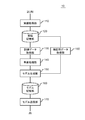
- FIG. 2 is a diagram showing an example of the functional configuration of the model generator 10.
- the model generation device 10 includes a training data acquisition unit 130 and a model generation unit 150.
- the training data acquisition unit 130 acquires a plurality of training data.
- each of the training data has the training measurement data including the transition of the current, the voltage, and the temperature in a certain charge / discharge cycle of the storage battery as the input value, and the training SOH which is the SOH of the storage battery as the target value.
- the model generation unit 150 generates a model by machine learning a plurality of training data. This model calculates the SOH of the target storage battery from the calculation measurement data including the current, voltage, and temperature of the target storage battery to be processed.
- the training data acquisition unit 130 acquires training data from ⁇ i described above for each combination of ⁇ j and ⁇ .
- each of the data constituting a certain training data has the same ⁇ i to ⁇ j and ⁇ .
- the model generation unit 150 generates a model for each ⁇ described above. That is, the training data acquisition unit 130 generates a plurality of models, and all of these plurality of models use the training measurement data, which is the measurement data of the storage battery when the number of charge / discharge times is ⁇ i to ⁇ j, as an input value.
- the model generation unit 150 uses a plurality of machine learning algorithms (for example, LSTM (Long Short-Term Memory), DNN (Deep Neural Network), LR (Linear Regression), etc.) for a plurality of ⁇ s. You may generate a model. In this case, the deterioration estimation device 20 also uses these plurality of models. Further, the model generation unit 150 may use a machine learning algorithm different from the other ⁇ s in at least one ⁇ . In other words, the model generation unit 150 may generate a model for each ⁇ by using the machine learning algorithm optimal for the ⁇ .
- LSTM Long Short-Term Memory
- DNN Deep Neural Network
- LR Linear Regression
- the training measurement data may be only current, voltage, and temperature.
- the calculation measurement data input to the model is only current, voltage, and temperature.
- the model generation device 10 further includes a preprocessing unit 140.
- the preprocessing unit 140 uses n sets of training measurement data (for example,). By processing into a matrix of ( ⁇ j ⁇ ⁇ i +1) ⁇ m) ⁇ n and processing the matrix, one-dimensional data consisting of z data is generated.
- the model generation unit 150 generates a model using this one-dimensional data as an input value.
- the preprocessing unit 140 uses a digital filter when generating a one-dimensional model. A detailed example of this process will be described later.
- the plurality of models generated by the model generation unit 150 are stored in the model storage unit 160. Then, the plurality of models stored in the model storage unit 160 are transmitted to the deterioration estimation device 20 by the model transmission unit 170.
- the model storage unit 160 and the model transmission unit 170 are a part of the model generation device 10. However, at least one of the model storage unit 160 and the model transmission unit 170 may be an external device of the model generation device 10.
- the model generation device 10 further includes a performance acquisition unit 110, a performance storage unit 120, a training data acquisition unit 130, and a verification data acquisition unit 180.
- the performance acquisition unit 110 acquires the above-mentioned performance data from at least one of the deterioration estimation device 20 and the data collection device 50 and stores it in the performance storage unit 120.
- the achievement acquisition unit 110 stores the achievement data in association with the information for specifying the acquisition destination of the achievement data.
- the performance acquisition unit 110 may store the performance data in association with the information indicating the type of the storage battery 30 for which the performance data is measured.
- the performance storage unit 120 stores each of the plurality of performance data in association with information indicating whether or not the data is used as training data. This association may be performed according to the input from the user, or may be performed by the achievement acquisition unit 110.
- the training data acquisition unit 130 reads out the data used as the training data among the actual data from the actual data storage unit 120.
- the model generation unit 150 generates a model for each type of the storage battery 30
- the training data acquisition unit 130 reads out the training data for each type of model.
- the verification data acquisition unit 180 reads at least a part of the actual data that is not used as training data in order to verify the model generated by the model generation unit 150.
- the model generation unit 150 verifies this model.
- the model generation unit 150 periodically updates the model.
- the model transmission unit 170 transmits data for updating the model to the deterioration estimation device 20.
- FIG. 3 is a diagram showing an example of the functional configuration of the deterioration estimation device 20.
- the deterioration estimation device 20 includes a storage processing unit 210 and a calculation unit 240.
- the storage processing unit 210 acquires a plurality of models from the model generation device 10 and stores them in the model storage unit 220.
- the storage processing unit 210 acquires data for updating the model from the model generation device 10
- the storage processing unit 210 updates the model stored in the model storage unit 220 by using this data. This update process is preferably repeated.
- the model storage unit 220 is a part of the deterioration estimation device 20.
- the model storage unit 220 may be an external device of the deterioration estimation device 20.
- the calculation unit 240 calculates the estimation result of the transition of the SOH of the storage battery 30 managed by the deterioration estimation device 20 by using a plurality of models in which the model storage unit 220 is stored.
- the data input to the model (hereinafter referred to as measurement data for calculation) is the measurement data when the number of times of charging / discharging of the storage battery 30 is ⁇ i to ⁇ j. Includes voltage and temperature. For example, if the input data for generating the model is only current, voltage, and temperature, the measurement data for calculation is only current, voltage, and temperature.
- the deterioration estimation device 20 includes a display processing unit 250.
- the display processing unit 250 causes the display 260 to display the SOH of the storage battery 30 calculated by the calculation unit 240.
- the display 260 is arranged at a position visible to the user of the device 40.
- the display 260 is provided inside the vehicle (for example, in front of the driver's seat or diagonally in front).
- the deterioration estimation device 20 further includes a calculation data acquisition unit 230, a data storage unit 270, and a data transmission unit 280.
- the calculation data acquisition unit 230 acquires calculation measurement data from the storage battery 30.
- the data storage unit 270 stores the data acquired by the calculation data acquisition unit 230 together with the number of charges / discharges at that time (that is, ⁇ i to ⁇ j described above). After that, the calculation data acquisition unit 230 uses data for specifying the SOH when the number of charges / discharges reaches a predetermined value ( ⁇ 1 , ⁇ 2 , ..., ⁇ k described above) (for example, even the SOH itself). Good) also remembers. Then, the data transmission unit 280 transmits at least a part of the measurement data for calculation to the model generation device 10 together with the data for specifying the SOH described above. This data is treated as actual data.
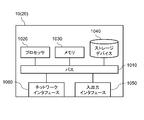
- FIG. 4 is a diagram showing a hardware configuration example of the model generator 10.
- the model generator 10 includes a bus 1010, a processor 1020, a memory 1030, a storage device 1040, an input / output interface 1050, and a network interface 1060.
- the bus 1010 is a data transmission path for the processor 1020, the memory 1030, the storage device 1040, the input / output interface 1050, and the network interface 1060 to transmit and receive data to each other.
- the method of connecting the processors 1020 and the like to each other is not limited to the bus connection.
- the processor 1020 is a processor realized by a CPU (Central Processing Unit), a GPU (Graphics Processing Unit), or the like.
- the memory 1030 is a main storage device realized by a RAM (RandomAccessMemory) or the like.
- the storage device 1040 is an auxiliary storage device realized by an HDD (Hard Disk Drive), SSD (Solid State Drive), memory card, ROM (Read Only Memory), or the like.
- the storage device 1040 realizes each function of the model generation device 10 (for example, a performance acquisition unit 110, a training data acquisition unit 130, a preprocessing unit 140, a model generation unit 150, a model transmission unit 170, and a verification data acquisition unit 180).
- the program module When the processor 1020 reads each of these program modules into the memory 1030 and executes them, each function corresponding to the program module is realized.
- the storage device 1040 also functions as a performance storage unit 120 and a model storage unit 160.
- the input / output interface 1050 is an interface for connecting the model generation device 10 and various input / output devices.
- the network interface 1060 is an interface for connecting the model generator 10 to the network.
- This network is, for example, LAN (Local Area Network) or WAN (Wide Area Network).
- the method of connecting the network interface 1060 to the network may be a wireless connection or a wired connection.
- the model generation device 10 may communicate with the deterioration estimation device 20 and the data acquisition device 50 via the network interface 1060.
- the hardware configuration of the deterioration estimation device 20 is the same as the example shown in FIG.
- the storage device stores a program module that realizes each function of the deterioration estimation device 20 (for example, a storage processing unit 210, a calculation data acquisition unit 230, a calculation unit 240, a display 260, and a data transmission unit 280). ..
- the storage device also functions as a model storage unit 220 and a data storage unit 270.
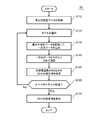
- FIG. 5 is a flowchart showing an example of a model generation process performed by the model generation device 10. Apart from the processing shown in this figure, the performance acquisition unit 110 repeatedly acquires the performance data and updates the performance storage unit 120.
- step S10 the actual data is classified into training data and other data.
- the training data acquisition unit 130 of the model generation device 10 reads the training data from the performance storage unit 120 (step S20).
- the pre-processing unit 140 performs pre-processing on the training data, and converts the training measurement data (that is, input data) included in the training data into one-dimensional data.
- a digital filter (described later) is used (step S30). A detailed example of step S30 will be described with reference to other figures.
- the model generation unit 150 generates a model using the training data after being converted in step S30. (Step S40).
- the model generation unit 150 reads out the data that was not used as the training data among the actual data from the actual storage unit 120, and verifies the accuracy of the model calculated in step S40 using this data. Specifically, the model generation unit 150 inputs data including current, voltage, and temperature to the generated model, and obtains an estimation result of SOH. Then, the difference between this estimation result and the actual value of SOH read from the actual storage unit 120 is calculated (step S50). When this difference (that is, an error) is equal to or less than the reference value (step S60: Yes), the model generation unit 150 stores the generated model in the model storage unit 160 (step S70).
- step S50 exceeds the reference value (step S60: No)
- step S60 the processing after step S30 is repeated.
- the preprocessing unit 140 changes the value of the digital filter used in the preprocessing as necessary.
- the model generation unit 150 optimizes the coefficients between the neural networks of the neural network as needed. These two processes may be performed each time, or only one of them may be performed.
- the model generation unit 150 when the value of the digital filter used in the preprocessing is changed, the model generation unit 150 also stores the changed digital filter value in the model storage unit 160. Then, the model transmission unit 170 transmits the value of this digital filter to the deterioration estimation device 20. Then, the storage processing unit 210 of the deterioration estimation device 20 stores the model and the value of the digital filter in the model storage unit 220. As a result, the calculation unit 240 of the deterioration estimation device 20 can perform the same conversion process as in step S30.
- An example of the timing for transmitting the value of the digital filter is when the model is transmitted to the deterioration estimation device 20.
- the model generation unit 150 may generate a plurality of models for one ⁇ by using a plurality of machine learning algorithms. In this case, the model generation unit 150 performs the processes shown in steps S30 to S60 for each of the plurality of machine learning algorithms. Then, in step S70, the model generation unit 150 stores these a plurality of models in the model storage unit 160.
- the model generation unit 150 may generate a model for each ⁇ by using the machine learning algorithm optimal for the ⁇ . Also in this case, the processes shown in steps S30 to S60 are performed for each of the plurality of machine learning algorithms. Then, in step S70, the model generation unit 150 stores the model with the smallest error calculated in step S60, that is, the model with the highest accuracy, in the model storage unit 160.
- the model generator 10 performs the process shown in FIG. 5 for each ⁇ described above. Further, when the model generation device 10 generates a model for each type of the storage battery 30, the process shown in FIG. 5 is performed for each of these types and for each ⁇ described above.
- the model generation device 10 may perform the above-mentioned processing on a plurality of combinations of ⁇ i and ⁇ j. In this case, the model generation device 10 generates the above-mentioned model for each combination of a plurality of ⁇ i and ⁇ j which are different from each other.
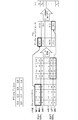
- FIG. 6 is a diagram for explaining a first example of preprocessing (step S30 in FIG. 5) performed by the preprocessing unit 140 of the model generation device 10.
- the preprocessing unit 140 uses a matrix of (( ⁇ j ⁇ ⁇ i +1) ⁇ m) ⁇ n for n sets of training measurement data obtained in each of ⁇ i to ⁇ j.
- m is the number of types of data (parameters) included in the training measurement data.
- the preprocessing unit 140 performs a conversion process of reducing the number of dimensions to a small number at least once by processing the matrix with a digital filter. As a result, one-dimensional data to be input data is generated.
- the digital filter is a matrix.
- the preprocessing unit 140 performs the following (1) and (2) at least once as the conversion process.
- (1) From the matrix to be processed, a submatrix having the same number of rows and columns as the digital filter is cut out.
- (2) A digital filter is calculated on a submatrix, and the value obtained by adding each component of the calculation result is used as a component of the processed matrix.
- the operation performed here is, for example, multiplication, but may be addition, subtraction, or division, or may be a combination of four arithmetic operations as appropriate.
- the positions of the components of the matrix after processing correspond to the positions where the submatrix is cut out. For example, the value calculated using the upper left submatrix is a component of the first row and first column of the processed matrix. Further, the value calculated using the lower right submatrix becomes the lower right component of the processed matrix.
- the preprocessing unit 140 performs at least one of the rows and columns of the matrix to be processed by adding a dummy value to the outer circumference of the matrix to be processed before (1).
- the dummy values added here are all the same value (for example, 0). However, this process does not have to be performed.
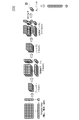
- FIG. 7 and 8 are diagrams for explaining a second example of the pre-processing (step S30 in FIG. 5) performed by the pre-processing unit 140 of the model generation device 10.
- the preprocessing unit 140 prepares a plurality of digital filters for one conversion process, and generates a converted matrix for each of the plurality of digital filters. For example, when three digital filters are used in a certain conversion process, the number of matrices after conversion is three times the number of matrices before conversion.
- the preprocessing unit 140 repeats this processing, at any stage, the plurality of transformed matrices are all one row and one column. Then, the preprocessing unit 140 generates one-dimensional data as input data by arranging the data in one row and one column.
- FIG. 9 is a flowchart showing an example of the SOH calculation process of the storage battery 30 performed by the deterioration estimation device 20.
- FIG. 10 is a diagram for explaining a main part of the process shown in FIG.
- the storage battery 30 generates measurement data for calculation at least every time the storage battery 30 repeats charging and discharging. Then, when the number of charge / discharge times reaches the above-mentioned ⁇ j , the deterioration estimation device 20 performs the process shown in this figure.
- the model generation device 10 When the model generation device 10 generates the above-mentioned model for each combination of a plurality of ⁇ i and ⁇ j which are different from each other, the model generation device 10 shows in this figure each time the number of charge / discharge reaches ⁇ j. Perform processing.
- the calculation data acquisition unit 230 of the deterioration estimation device 20 acquires calculation measurement data from the storage battery 30 (step S110 in FIG. 9). Further, the calculation unit 240 reads out a plurality of models from the model storage unit 220. Then, the calculation unit 240 calculates the estimated value of SOH when the number of charge / discharge reaches ⁇ 1 , ⁇ 2 , ..., ⁇ k, respectively, using a plurality of models.
- the calculation unit 240 selects a model that has not been processed yet (step S120 in FIG. 9). Next, the calculation unit 240 generates the converted data by performing the same conversion processing as the preprocessing performed by the preprocessing unit 140 of the model generation device 10 on the measurement data for calculation (step S130 in FIG. 9). ).
- the calculation unit 240 obtains output data by inputting this one-dimensional data into the model stored in the model storage unit 220. As shown in FIG. 10, this output data has the same data structure (1 ⁇ 1 matrix in the example shown in this figure) as the target value of the training data when the model is generated (step S140). The calculation unit 240 uses this output data as an estimated value of SOH when the number of charge / discharge cycles becomes ⁇ (step S150).
- the calculation unit 240 performs the processes shown in steps S130 to S160 for each of a plurality of models (for each of a plurality of ⁇ s) (step S160). After that, the display processing unit 250 displays the estimated result of the calculated SOH transition on the display 260 (step S170).
- the model storage unit 220 may store a plurality of models generated by using a plurality of machine learning algorithms for each combination of ⁇ i to ⁇ j and ⁇ .
- the calculation unit 240 performs the processes shown in steps S130 to S160 for each of these plurality of models. Therefore, the calculation unit 240 will calculate the estimated value of SOH for each model. Then, the calculation unit 240 uses the average value or the weighted average value of these plurality of estimated values as the estimated value of SOH in the combination of ⁇ i to ⁇ j and ⁇ .
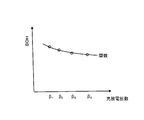
- FIG. 11 is a diagram showing an example of data displayed on the display 260 in step S180.
- the model used by the calculation unit 240 calculates the estimated value of the SOH of the storage battery 30 when the number of charge / discharge cycles becomes ⁇ .
- these four models are optimized so that the SOH can be calculated accurately at the assigned charge / discharge frequency ( ⁇ ). Therefore, the SOH estimates for each of ⁇ 1 , ⁇ 2 , ⁇ 3 , and ⁇ 4 have high accuracy.
- the calculation unit 240 may define a function for calculating the estimated value of SOH from the number of charge / discharge cycles using the calculated values of each of the plurality of models.
- the deterioration estimation device 20 calculates the SOH of the storage battery 30 using the model generated by the model generation device 10.
- the model used by the calculation unit 240 calculates the estimated value of the SOH of the storage battery 30 when the number of charge / discharge cycles becomes ⁇ .
- the ⁇ s of the plurality of models are different from each other. That is, the plurality of models are optimized so that the SOH can be calculated accurately at the assigned charge / discharge frequency ( ⁇ ). Therefore, it is possible to accurately calculate the estimated value of SOH at a plurality of charge / discharge times.
- the model generation device 10 can generate a model if there are current, voltage, and temperature of the storage battery 30 as input values of training data. Therefore, the number of parameters of the storage battery 30 required for the deterioration estimation device 20 to calculate the SOH of the storage battery 30 can be set to a minimum of three (current, voltage, and temperature). Therefore, when estimating the SOH of the storage battery 30 using machine learning, the amount of calculation required for the deterioration estimation device 20 is reduced.
- the model generation device 10 may have a function of the deterioration estimation device 20.
- a cloud service can provide the customer with an estimated value of SOH.
- the training measurement data and the calculation measurement data are data obtained when the number of charge / discharge cycles is ⁇ i to ⁇ j.
- the training measurement data and the calculation measurement data are both data when the number of charge / discharge cycles is ⁇ i. Therefore, according to this modification, the deterioration estimation device can update the deterioration estimation result every time the number of charge / discharge cycles is increased by 1.
- FIGS. 12 to 14 are diagrams for explaining an example of data processing according to this modification. 12, 13 and 14 correspond to FIGS. 6, 8 and 10 of the embodiment, respectively.
- the preprocessing unit 140 of the model generation device 10 is placed on the outer periphery of the matrix composed of training measurement data before (1) described with reference to FIG. Processing is performed to expand at least one of the rows and columns of the matrix by adding dummy data.
- a row of dummy data is added above the first row, a row of dummy data is added below the bottom row of the target row, and further in the leftmost column.
- a column of dummy values is added on the left side.
- the dummy data added here all have the same value (for example, 0).
- the calculation unit 240 of the deterioration estimation device 20 also performs a process for calculating the estimated value of SOH after adding dummy data to the outer circumference of the matrix composed of the measurement data for calculation.
- the deterioration estimation device 20 may calculate the estimated value of SOH at a specific ⁇ .
- the model generator 10 may generate a plurality of models in which ⁇ is the same as each other and ⁇ i is different from each other.
- the deterioration estimation device 20 uses these plurality of models, the deterioration estimation device 20 reaches the charge / discharge count when the charge / discharge count reaches ⁇ each time the charge / discharge count of the storage battery 30 increases (that is, each time ⁇ i increases).
- the estimated value of SOH of the storage battery 30 can be updated.
- Model generation device 10
- Deterioration estimation device 30
- Storage battery 40
- Equipment 50 Data collection device 110
- Results acquisition unit 120
- Results storage unit 130
- Training data acquisition unit 140
- Pre-processing unit 150
- Model generation unit 160
- Model transmission unit 180
- Verification data acquisition Unit 210
- Model storage unit 230
- Calculation data acquisition unit 240
- Calculation unit 250
- Display processing unit 260
- Display 270 Data storage unit 280 Data transmission unit
Landscapes
- Physics & Mathematics (AREA)
- Engineering & Computer Science (AREA)
- General Physics & Mathematics (AREA)
- Theoretical Computer Science (AREA)
- Software Systems (AREA)
- General Engineering & Computer Science (AREA)
- Artificial Intelligence (AREA)
- Data Mining & Analysis (AREA)
- Evolutionary Computation (AREA)
- Mathematical Physics (AREA)
- Computing Systems (AREA)
- Manufacturing & Machinery (AREA)
- General Chemical & Material Sciences (AREA)
- Chemical & Material Sciences (AREA)
- Chemical Kinetics & Catalysis (AREA)
- Electrochemistry (AREA)
- Computer Vision & Pattern Recognition (AREA)
- Medical Informatics (AREA)
- Life Sciences & Earth Sciences (AREA)
- Health & Medical Sciences (AREA)
- Power Engineering (AREA)
- Biomedical Technology (AREA)
- Biophysics (AREA)
- Computational Linguistics (AREA)
- General Health & Medical Sciences (AREA)
- Molecular Biology (AREA)
- Charge And Discharge Circuits For Batteries Or The Like (AREA)
- Tests Of Electric Status Of Batteries (AREA)
- Secondary Cells (AREA)
Priority Applications (3)
| Application Number | Priority Date | Filing Date | Title |
|---|---|---|---|
| CN202180038308.3A CN115698738A (zh) | 2020-05-25 | 2021-04-28 | 劣化推定装置、模型生成装置、劣化推定方法、模型生成方法及程序 |
| EP21812723.1A EP4160784A4 (en) | 2020-05-25 | 2021-04-28 | Deterioration estimation device, model generation device, deterioration estimation method, model generation method, and program |
| US17/999,834 US20230213585A1 (en) | 2020-05-25 | 2021-04-28 | Deterioration estimation apparatus, model generation apparatus, deterioration estimation method, model generation method, and non-transitory computer-readable storage medium |
Applications Claiming Priority (2)
| Application Number | Priority Date | Filing Date | Title |
|---|---|---|---|
| JP2020-090373 | 2020-05-25 | ||
| JP2020090373A JP7457575B2 (ja) | 2020-05-25 | 2020-05-25 | 劣化推定装置、モデル生成装置、劣化推定方法、モデル生成方法、及びプログラム |
Publications (1)
| Publication Number | Publication Date |
|---|---|
| WO2021241115A1 true WO2021241115A1 (ja) | 2021-12-02 |
Family
ID=78745276
Family Applications (1)
| Application Number | Title | Priority Date | Filing Date |
|---|---|---|---|
| PCT/JP2021/016928 Ceased WO2021241115A1 (ja) | 2020-05-25 | 2021-04-28 | 劣化推定装置、モデル生成装置、劣化推定方法、モデル生成方法、及びプログラム |
Country Status (5)
| Country | Link |
|---|---|
| US (1) | US20230213585A1 (https=) |
| EP (1) | EP4160784A4 (https=) |
| JP (1) | JP7457575B2 (https=) |
| CN (1) | CN115698738A (https=) |
| WO (1) | WO2021241115A1 (https=) |
Cited By (7)
| Publication number | Priority date | Publication date | Assignee | Title |
|---|---|---|---|---|
| WO2023286650A1 (ja) * | 2021-07-15 | 2023-01-19 | 恒林日本株式会社 | 電池劣化推定装置の検証方法、装置、デバイス、媒体及び電池劣化推定計算モデル |
| WO2023189368A1 (ja) * | 2022-03-30 | 2023-10-05 | ヌヴォトンテクノロジージャパン株式会社 | 蓄電池の劣化推定装置、及び蓄電池の劣化推定方法 |
| JP2023151093A (ja) * | 2022-03-31 | 2023-10-16 | 本田技研工業株式会社 | モデル評価装置、フィルタ生成装置、モデル評価方法、フィルタ生成方法及びプログラム |
| WO2024105837A1 (ja) * | 2022-11-17 | 2024-05-23 | 恒林日本株式会社 | 機械学習モデル生成装置、及び蓄電池の特性値算出装置 |
| EP4382939A1 (en) * | 2022-12-09 | 2024-06-12 | Kabushiki Kaisha Toshiba | Information processing device, information processing method, computer-readable medium, and information processing system |
| WO2024134735A1 (ja) * | 2022-12-19 | 2024-06-27 | 恒林日本株式会社 | 機械学習モデル生成装置、及び蓄電池の特性値算出装置 |
| JP2024532750A (ja) * | 2022-01-14 | 2024-09-10 | エルジー エナジー ソリューション リミテッド | バッテリー状態推定方法およびその方法を提供するバッテリーシステム |
Families Citing this family (5)
| Publication number | Priority date | Publication date | Assignee | Title |
|---|---|---|---|---|
| EP4478068A4 (en) * | 2022-02-07 | 2025-06-04 | Denso Corporation | SECONDARY BATTERY STATE DETECTION DEVICE, LEARNING UNIT, AND SECONDARY BATTERY STATE DETECTION METHOD |
| WO2023181101A1 (ja) * | 2022-03-22 | 2023-09-28 | 株式会社 東芝 | 情報処理装置、情報処理方法、情報処理システム及びコンピュータプログラム |
| WO2024013794A1 (ja) * | 2022-07-11 | 2024-01-18 | 恒林日本株式会社 | 深層学習モデル生成装置、及び蓄電池の特性値算出装置 |
| JP2024018139A (ja) * | 2022-07-29 | 2024-02-08 | 株式会社Gsユアサ | 推定装置、推定方法及びコンピュータプログラム |
| EP4624953A1 (en) * | 2024-03-25 | 2025-10-01 | Sonova AG | Determining parameters of a rechargeable battery of a portable device |
Citations (10)
| Publication number | Priority date | Publication date | Assignee | Title |
|---|---|---|---|---|
| JP2006220616A (ja) * | 2005-02-14 | 2006-08-24 | Denso Corp | 車両用蓄電装置の内部状態検出方式 |
| WO2017094759A1 (ja) * | 2015-11-30 | 2017-06-08 | 積水化学工業株式会社 | 診断用周波数決定方法、蓄電池劣化診断方法、診断用周波数決定システムおよび蓄電池劣化診断装置 |
| WO2018147194A1 (ja) * | 2017-02-07 | 2018-08-16 | 日本電気株式会社 | 蓄電池制御装置、充放電制御方法、及び記録媒体 |
| WO2019021099A1 (ja) * | 2017-07-25 | 2019-01-31 | 株式会社半導体エネルギー研究所 | 蓄電システム、電子機器及び車両、並びに推定方法 |
| JP2019113524A (ja) * | 2017-10-17 | 2019-07-11 | ザ ボード オブ トラスティーズ オブ ザ レランド スタンフォード ジュニア ユニバーシティー | リチウムイオン電池の容量低下と寿命予測のためのデータ駆動モデル |
| WO2019181729A1 (ja) | 2018-03-20 | 2019-09-26 | 株式会社Gsユアサ | 劣化推定装置、コンピュータプログラム及び劣化推定方法 |
| WO2019181728A1 (ja) | 2018-03-20 | 2019-09-26 | 株式会社Gsユアサ | 劣化推定装置、コンピュータプログラム及び劣化推定方法 |
| JP2020071070A (ja) * | 2018-10-29 | 2020-05-07 | 本田技研工業株式会社 | 学習装置、学習方法、及びプログラム |
| JP2020090373A (ja) | 2018-12-07 | 2020-06-11 | 日本海上工事株式会社 | 板状体の吊り枠装置および敷設工法 |
| US20200203780A1 (en) * | 2018-12-21 | 2020-06-25 | Samsung Electronics Co., Ltd. | Method and system for predicting onset of capacity fading in a battery |
Family Cites Families (14)
| Publication number | Priority date | Publication date | Assignee | Title |
|---|---|---|---|---|
| CN107340476B (zh) * | 2016-04-29 | 2021-01-26 | 株式会社日立制作所 | 电池的电气状态监测系统和电气状态监测方法 |
| CN107329088B (zh) * | 2016-04-29 | 2021-05-14 | 株式会社日立制作所 | 电池的健康状态诊断装置和方法 |
| KR102726191B1 (ko) * | 2016-10-05 | 2024-11-06 | 삼성전자주식회사 | 배터리 상태 추정 장치 및 방법 |
| KR102794443B1 (ko) * | 2016-11-16 | 2025-04-11 | 삼성전자주식회사 | 배터리 상태를 추정하는 방법 및 장치 |
| KR101792975B1 (ko) * | 2017-04-25 | 2017-11-02 | 한국기술교육대학교 산학협력단 | 수치적 시뮬레이션 데이터 기반 배터리의 수명 상태 예측 방법 |
| WO2019162749A1 (en) * | 2017-12-07 | 2019-08-29 | Yazami Ip Pte. Ltd. | Method and system for online assessing state of health of a battery |
| CN108414937A (zh) * | 2017-12-08 | 2018-08-17 | 国网北京市电力公司 | 充电电池荷电状态确定方法及装置 |
| WO2020027203A1 (ja) * | 2018-07-31 | 2020-02-06 | 本田技研工業株式会社 | 推定システム、推定装置、推定方法、プログラム、及び記憶媒体 |
| WO2020044713A1 (ja) * | 2018-08-28 | 2020-03-05 | 本田技研工業株式会社 | 診断装置、診断方法、及びプログラム |
| CN110068774B (zh) * | 2019-05-06 | 2021-08-06 | 清华四川能源互联网研究院 | 锂电池健康状态的估计方法、装置及存储介质 |
| KR102731011B1 (ko) * | 2019-06-05 | 2024-11-19 | 삼성에스디아이 주식회사 | 배터리의 충방전 사이클에 따른 용량 변화 예측방법 및 예측시스템 |
| CN110346734B (zh) * | 2019-06-19 | 2021-07-20 | 江苏大学 | 一种基于机器学习的锂离子动力电池健康状态估算方法 |
| CN110659722B (zh) * | 2019-08-30 | 2023-07-18 | 江苏大学 | 基于AdaBoost-CBP神经网络的电动汽车锂离子电池健康状态估算方法 |
| CN111090047B (zh) * | 2019-12-09 | 2022-01-28 | 泉州装备制造研究所 | 一种基于多模型融合的锂电池健康状态估计方法 |
-
2020
- 2020-05-25 JP JP2020090373A patent/JP7457575B2/ja active Active
-
2021
- 2021-04-28 US US17/999,834 patent/US20230213585A1/en not_active Abandoned
- 2021-04-28 WO PCT/JP2021/016928 patent/WO2021241115A1/ja not_active Ceased
- 2021-04-28 CN CN202180038308.3A patent/CN115698738A/zh active Pending
- 2021-04-28 EP EP21812723.1A patent/EP4160784A4/en not_active Withdrawn
Patent Citations (10)
| Publication number | Priority date | Publication date | Assignee | Title |
|---|---|---|---|---|
| JP2006220616A (ja) * | 2005-02-14 | 2006-08-24 | Denso Corp | 車両用蓄電装置の内部状態検出方式 |
| WO2017094759A1 (ja) * | 2015-11-30 | 2017-06-08 | 積水化学工業株式会社 | 診断用周波数決定方法、蓄電池劣化診断方法、診断用周波数決定システムおよび蓄電池劣化診断装置 |
| WO2018147194A1 (ja) * | 2017-02-07 | 2018-08-16 | 日本電気株式会社 | 蓄電池制御装置、充放電制御方法、及び記録媒体 |
| WO2019021099A1 (ja) * | 2017-07-25 | 2019-01-31 | 株式会社半導体エネルギー研究所 | 蓄電システム、電子機器及び車両、並びに推定方法 |
| JP2019113524A (ja) * | 2017-10-17 | 2019-07-11 | ザ ボード オブ トラスティーズ オブ ザ レランド スタンフォード ジュニア ユニバーシティー | リチウムイオン電池の容量低下と寿命予測のためのデータ駆動モデル |
| WO2019181729A1 (ja) | 2018-03-20 | 2019-09-26 | 株式会社Gsユアサ | 劣化推定装置、コンピュータプログラム及び劣化推定方法 |
| WO2019181728A1 (ja) | 2018-03-20 | 2019-09-26 | 株式会社Gsユアサ | 劣化推定装置、コンピュータプログラム及び劣化推定方法 |
| JP2020071070A (ja) * | 2018-10-29 | 2020-05-07 | 本田技研工業株式会社 | 学習装置、学習方法、及びプログラム |
| JP2020090373A (ja) | 2018-12-07 | 2020-06-11 | 日本海上工事株式会社 | 板状体の吊り枠装置および敷設工法 |
| US20200203780A1 (en) * | 2018-12-21 | 2020-06-25 | Samsung Electronics Co., Ltd. | Method and system for predicting onset of capacity fading in a battery |
Non-Patent Citations (1)
| Title |
|---|
| See also references of EP4160784A4 |
Cited By (11)
| Publication number | Priority date | Publication date | Assignee | Title |
|---|---|---|---|---|
| WO2023286650A1 (ja) * | 2021-07-15 | 2023-01-19 | 恒林日本株式会社 | 電池劣化推定装置の検証方法、装置、デバイス、媒体及び電池劣化推定計算モデル |
| JP2024532750A (ja) * | 2022-01-14 | 2024-09-10 | エルジー エナジー ソリューション リミテッド | バッテリー状態推定方法およびその方法を提供するバッテリーシステム |
| JP7810491B2 (ja) | 2022-01-14 | 2026-02-03 | エルジー エナジー ソリューション リミテッド | バッテリー状態推定方法およびその方法を提供するバッテリーシステム |
| WO2023189368A1 (ja) * | 2022-03-30 | 2023-10-05 | ヌヴォトンテクノロジージャパン株式会社 | 蓄電池の劣化推定装置、及び蓄電池の劣化推定方法 |
| JP2023151093A (ja) * | 2022-03-31 | 2023-10-16 | 本田技研工業株式会社 | モデル評価装置、フィルタ生成装置、モデル評価方法、フィルタ生成方法及びプログラム |
| JP7459161B2 (ja) | 2022-03-31 | 2024-04-01 | 本田技研工業株式会社 | モデル評価装置、フィルタ生成装置、モデル評価方法、フィルタ生成方法及びプログラム |
| WO2024105837A1 (ja) * | 2022-11-17 | 2024-05-23 | 恒林日本株式会社 | 機械学習モデル生成装置、及び蓄電池の特性値算出装置 |
| EP4382939A1 (en) * | 2022-12-09 | 2024-06-12 | Kabushiki Kaisha Toshiba | Information processing device, information processing method, computer-readable medium, and information processing system |
| JP2024082908A (ja) * | 2022-12-09 | 2024-06-20 | 株式会社東芝 | 情報処理装置、情報処理方法、プログラムおよび情報処理システム |
| JP7767261B2 (ja) | 2022-12-09 | 2025-11-11 | 株式会社東芝 | 情報処理装置、情報処理方法、プログラムおよび情報処理システム |
| WO2024134735A1 (ja) * | 2022-12-19 | 2024-06-27 | 恒林日本株式会社 | 機械学習モデル生成装置、及び蓄電池の特性値算出装置 |
Also Published As
| Publication number | Publication date |
|---|---|
| JP2021185354A (ja) | 2021-12-09 |
| EP4160784A1 (en) | 2023-04-05 |
| JP7457575B2 (ja) | 2024-03-28 |
| EP4160784A4 (en) | 2024-01-17 |
| US20230213585A1 (en) | 2023-07-06 |
| CN115698738A (zh) | 2023-02-03 |
Similar Documents
| Publication | Publication Date | Title |
|---|---|---|
| WO2021241115A1 (ja) | 劣化推定装置、モデル生成装置、劣化推定方法、モデル生成方法、及びプログラム | |
| US11293987B2 (en) | Battery capacity prediction system using charge and discharge cycles of a battery to predict capacity variations, and associated method | |
| EP4556921A1 (en) | Method and system for estimating state of health of battery, and device and medium | |
| US20230029810A1 (en) | Battery model construction method and battery degradation prediction device | |
| CN110333450B (zh) | 电池开路电压预估方法及系统 | |
| US20230213587A1 (en) | Method and System for Efficiently Monitoring Battery Cells of a Device Battery in an External Central Processing Unit Using a Digital Twin | |
| US20150369874A1 (en) | Method and apparatus for learning and estimating battery state information | |
| CN110658460B (zh) | 一种电池包的电池寿命预测方法及装置 | |
| JP2017004955A (ja) | バッテリ状態推定装置及び方法 | |
| JP6405942B2 (ja) | 電池パックの異常判定装置 | |
| JP2019132666A (ja) | 組電池の状態推定装置及び組電池の状態推定方法 | |
| GB2556076A (en) | Method | |
| JP6455914B2 (ja) | 蓄電残量推定装置、蓄電池の蓄電残量を推定する方法、及びコンピュータプログラム | |
| CN118386926A (zh) | 动力电池充电方法、装置、设备、存储介质及车辆 | |
| WO2022102532A1 (ja) | データ処理装置、モデル生成装置、データ処理方法、モデル生成方法、及びプログラム | |
| WO2021210526A1 (ja) | 残容量推定装置、モデル生成装置、残容量推定方法、モデル生成方法、及びプログラム | |
| US20210194259A1 (en) | Method for determining parameters of a simplified model of an energy storage system, control method using such a model and associated device | |
| CN119224623A (zh) | 一种储能电池寿命评价方法及相关装置 | |
| JP2019158835A (ja) | 推定装置および推定方法 | |
| WO2022075215A1 (ja) | データ処理システム、モデル生成装置、データ処理方法、モデル生成方法、及びプログラム | |
| CN114441969A (zh) | 电池荷电状态估算方法及装置 | |
| EP4545990A1 (en) | Method and system for predicting sohc for electric vehicle (ev) | |
| WO2026018527A1 (ja) | 電池劣化推定システム、電池劣化推定プログラム | |
| JP2023030559A (ja) | 蓄電池の放電及び充電に関連する処理方法、処理装置、及び、処理プログラム | |
| CN116160914A (zh) | 汽车电池满电容量更新方法、装置、设备及存储介质 |
Legal Events
| Date | Code | Title | Description |
|---|---|---|---|
| 121 | Ep: the epo has been informed by wipo that ep was designated in this application |
Ref document number: 21812723 Country of ref document: EP Kind code of ref document: A1 |
|
| NENP | Non-entry into the national phase |
Ref country code: DE |
|
| ENP | Entry into the national phase |
Ref document number: 2021812723 Country of ref document: EP Effective date: 20230102 |