WO2021215086A1 - 電池 - Google Patents
電池 Download PDFInfo
- Publication number
- WO2021215086A1 WO2021215086A1 PCT/JP2021/005349 JP2021005349W WO2021215086A1 WO 2021215086 A1 WO2021215086 A1 WO 2021215086A1 JP 2021005349 W JP2021005349 W JP 2021005349W WO 2021215086 A1 WO2021215086 A1 WO 2021215086A1
- Authority
- WO
- WIPO (PCT)
- Prior art keywords
- active material
- material layer
- negative electrode
- solid electrolyte
- layer
- Prior art date
- Legal status (The legal status is an assumption and is not a legal conclusion. Google has not performed a legal analysis and makes no representation as to the accuracy of the status listed.)
- Ceased
Links
Images




Classifications
-
- H—ELECTRICITY
- H01—ELECTRIC ELEMENTS
- H01M—PROCESSES OR MEANS, e.g. BATTERIES, FOR THE DIRECT CONVERSION OF CHEMICAL ENERGY INTO ELECTRICAL ENERGY
- H01M10/00—Secondary cells; Manufacture thereof
- H01M10/05—Accumulators with non-aqueous electrolyte
- H01M10/058—Construction or manufacture
- H01M10/0585—Construction or manufacture of accumulators having only flat construction elements, i.e. flat positive electrodes, flat negative electrodes and flat separators
-
- H—ELECTRICITY
- H01—ELECTRIC ELEMENTS
- H01M—PROCESSES OR MEANS, e.g. BATTERIES, FOR THE DIRECT CONVERSION OF CHEMICAL ENERGY INTO ELECTRICAL ENERGY
- H01M4/00—Electrodes
- H01M4/02—Electrodes composed of, or comprising, active material
- H01M4/36—Selection of substances as active materials, active masses, active liquids
- H01M4/362—Composites
- H01M4/366—Composites as layered products
-
- H—ELECTRICITY
- H01—ELECTRIC ELEMENTS
- H01M—PROCESSES OR MEANS, e.g. BATTERIES, FOR THE DIRECT CONVERSION OF CHEMICAL ENERGY INTO ELECTRICAL ENERGY
- H01M10/00—Secondary cells; Manufacture thereof
- H01M10/05—Accumulators with non-aqueous electrolyte
- H01M10/052—Li-accumulators
-
- H—ELECTRICITY
- H01—ELECTRIC ELEMENTS
- H01M—PROCESSES OR MEANS, e.g. BATTERIES, FOR THE DIRECT CONVERSION OF CHEMICAL ENERGY INTO ELECTRICAL ENERGY
- H01M10/00—Secondary cells; Manufacture thereof
- H01M10/05—Accumulators with non-aqueous electrolyte
- H01M10/052—Li-accumulators
- H01M10/0525—Rocking-chair batteries, i.e. batteries with lithium insertion or intercalation in both electrodes; Lithium-ion batteries
-
- H—ELECTRICITY
- H01—ELECTRIC ELEMENTS
- H01M—PROCESSES OR MEANS, e.g. BATTERIES, FOR THE DIRECT CONVERSION OF CHEMICAL ENERGY INTO ELECTRICAL ENERGY
- H01M10/00—Secondary cells; Manufacture thereof
- H01M10/05—Accumulators with non-aqueous electrolyte
- H01M10/056—Accumulators with non-aqueous electrolyte characterised by the materials used as electrolytes, e.g. mixed inorganic/organic electrolytes
- H01M10/0561—Accumulators with non-aqueous electrolyte characterised by the materials used as electrolytes, e.g. mixed inorganic/organic electrolytes the electrolyte being constituted of inorganic materials only
- H01M10/0562—Solid materials
-
- H—ELECTRICITY
- H01—ELECTRIC ELEMENTS
- H01M—PROCESSES OR MEANS, e.g. BATTERIES, FOR THE DIRECT CONVERSION OF CHEMICAL ENERGY INTO ELECTRICAL ENERGY
- H01M4/00—Electrodes
- H01M4/02—Electrodes composed of, or comprising, active material
- H01M4/13—Electrodes for accumulators with non-aqueous electrolyte, e.g. for lithium-accumulators; Processes of manufacture thereof
-
- H—ELECTRICITY
- H01—ELECTRIC ELEMENTS
- H01M—PROCESSES OR MEANS, e.g. BATTERIES, FOR THE DIRECT CONVERSION OF CHEMICAL ENERGY INTO ELECTRICAL ENERGY
- H01M4/00—Electrodes
- H01M4/02—Electrodes composed of, or comprising, active material
- H01M4/13—Electrodes for accumulators with non-aqueous electrolyte, e.g. for lithium-accumulators; Processes of manufacture thereof
- H01M4/133—Electrodes based on carbonaceous material, e.g. graphite-intercalation compounds or CFx
-
- H—ELECTRICITY
- H01—ELECTRIC ELEMENTS
- H01M—PROCESSES OR MEANS, e.g. BATTERIES, FOR THE DIRECT CONVERSION OF CHEMICAL ENERGY INTO ELECTRICAL ENERGY
- H01M4/00—Electrodes
- H01M4/02—Electrodes composed of, or comprising, active material
- H01M4/13—Electrodes for accumulators with non-aqueous electrolyte, e.g. for lithium-accumulators; Processes of manufacture thereof
- H01M4/134—Electrodes based on metals, Si or alloys
-
- H—ELECTRICITY
- H01—ELECTRIC ELEMENTS
- H01M—PROCESSES OR MEANS, e.g. BATTERIES, FOR THE DIRECT CONVERSION OF CHEMICAL ENERGY INTO ELECTRICAL ENERGY
- H01M4/00—Electrodes
- H01M4/02—Electrodes composed of, or comprising, active material
- H01M4/36—Selection of substances as active materials, active masses, active liquids
-
- H—ELECTRICITY
- H01—ELECTRIC ELEMENTS
- H01M—PROCESSES OR MEANS, e.g. BATTERIES, FOR THE DIRECT CONVERSION OF CHEMICAL ENERGY INTO ELECTRICAL ENERGY
- H01M4/00—Electrodes
- H01M4/02—Electrodes composed of, or comprising, active material
- H01M4/36—Selection of substances as active materials, active masses, active liquids
- H01M4/362—Composites
- H01M4/364—Composites as mixtures
-
- H—ELECTRICITY
- H01—ELECTRIC ELEMENTS
- H01M—PROCESSES OR MEANS, e.g. BATTERIES, FOR THE DIRECT CONVERSION OF CHEMICAL ENERGY INTO ELECTRICAL ENERGY
- H01M4/00—Electrodes
- H01M4/02—Electrodes composed of, or comprising, active material
- H01M4/36—Selection of substances as active materials, active masses, active liquids
- H01M4/38—Selection of substances as active materials, active masses, active liquids of elements or alloys
-
- H—ELECTRICITY
- H01—ELECTRIC ELEMENTS
- H01M—PROCESSES OR MEANS, e.g. BATTERIES, FOR THE DIRECT CONVERSION OF CHEMICAL ENERGY INTO ELECTRICAL ENERGY
- H01M4/00—Electrodes
- H01M4/02—Electrodes composed of, or comprising, active material
- H01M4/36—Selection of substances as active materials, active masses, active liquids
- H01M4/38—Selection of substances as active materials, active masses, active liquids of elements or alloys
- H01M4/381—Alkaline or alkaline earth metals elements
- H01M4/382—Lithium
-
- H—ELECTRICITY
- H01—ELECTRIC ELEMENTS
- H01M—PROCESSES OR MEANS, e.g. BATTERIES, FOR THE DIRECT CONVERSION OF CHEMICAL ENERGY INTO ELECTRICAL ENERGY
- H01M4/00—Electrodes
- H01M4/02—Electrodes composed of, or comprising, active material
- H01M4/36—Selection of substances as active materials, active masses, active liquids
- H01M4/38—Selection of substances as active materials, active masses, active liquids of elements or alloys
- H01M4/386—Silicon or alloys based on silicon
-
- H—ELECTRICITY
- H01—ELECTRIC ELEMENTS
- H01M—PROCESSES OR MEANS, e.g. BATTERIES, FOR THE DIRECT CONVERSION OF CHEMICAL ENERGY INTO ELECTRICAL ENERGY
- H01M4/00—Electrodes
- H01M4/02—Electrodes composed of, or comprising, active material
- H01M4/36—Selection of substances as active materials, active masses, active liquids
- H01M4/38—Selection of substances as active materials, active masses, active liquids of elements or alloys
- H01M4/387—Tin or alloys based on tin
-
- H—ELECTRICITY
- H01—ELECTRIC ELEMENTS
- H01M—PROCESSES OR MEANS, e.g. BATTERIES, FOR THE DIRECT CONVERSION OF CHEMICAL ENERGY INTO ELECTRICAL ENERGY
- H01M4/00—Electrodes
- H01M4/02—Electrodes composed of, or comprising, active material
- H01M4/36—Selection of substances as active materials, active masses, active liquids
- H01M4/58—Selection of substances as active materials, active masses, active liquids of inorganic compounds other than oxides or hydroxides, e.g. sulfides, selenides, tellurides, halogenides or LiCoFy; of polyanionic structures, e.g. phosphates, silicates or borates
- H01M4/583—Carbonaceous material, e.g. graphite-intercalation compounds or CFx
- H01M4/587—Carbonaceous material, e.g. graphite-intercalation compounds or CFx for inserting or intercalating light metals
-
- H—ELECTRICITY
- H01—ELECTRIC ELEMENTS
- H01M—PROCESSES OR MEANS, e.g. BATTERIES, FOR THE DIRECT CONVERSION OF CHEMICAL ENERGY INTO ELECTRICAL ENERGY
- H01M4/00—Electrodes
- H01M4/02—Electrodes composed of, or comprising, active material
- H01M4/62—Selection of inactive substances as ingredients for active masses, e.g. binders, fillers
-
- H—ELECTRICITY
- H01—ELECTRIC ELEMENTS
- H01M—PROCESSES OR MEANS, e.g. BATTERIES, FOR THE DIRECT CONVERSION OF CHEMICAL ENERGY INTO ELECTRICAL ENERGY
- H01M4/00—Electrodes
- H01M4/02—Electrodes composed of, or comprising, active material
- H01M2004/021—Physical characteristics, e.g. porosity, surface area
-
- H—ELECTRICITY
- H01—ELECTRIC ELEMENTS
- H01M—PROCESSES OR MEANS, e.g. BATTERIES, FOR THE DIRECT CONVERSION OF CHEMICAL ENERGY INTO ELECTRICAL ENERGY
- H01M4/00—Electrodes
- H01M4/02—Electrodes composed of, or comprising, active material
- H01M2004/026—Electrodes composed of, or comprising, active material characterised by the polarity
- H01M2004/027—Negative electrodes
-
- H—ELECTRICITY
- H01—ELECTRIC ELEMENTS
- H01M—PROCESSES OR MEANS, e.g. BATTERIES, FOR THE DIRECT CONVERSION OF CHEMICAL ENERGY INTO ELECTRICAL ENERGY
- H01M2300/00—Electrolytes
- H01M2300/0017—Non-aqueous electrolytes
- H01M2300/0065—Solid electrolytes
- H01M2300/0068—Solid electrolytes inorganic
-
- Y—GENERAL TAGGING OF NEW TECHNOLOGICAL DEVELOPMENTS; GENERAL TAGGING OF CROSS-SECTIONAL TECHNOLOGIES SPANNING OVER SEVERAL SECTIONS OF THE IPC; TECHNICAL SUBJECTS COVERED BY FORMER USPC CROSS-REFERENCE ART COLLECTIONS [XRACs] AND DIGESTS
- Y02—TECHNOLOGIES OR APPLICATIONS FOR MITIGATION OR ADAPTATION AGAINST CLIMATE CHANGE
- Y02E—REDUCTION OF GREENHOUSE GAS [GHG] EMISSIONS, RELATED TO ENERGY GENERATION, TRANSMISSION OR DISTRIBUTION
- Y02E60/00—Enabling technologies; Technologies with a potential or indirect contribution to GHG emissions mitigation
- Y02E60/10—Energy storage using batteries
-
- Y—GENERAL TAGGING OF NEW TECHNOLOGICAL DEVELOPMENTS; GENERAL TAGGING OF CROSS-SECTIONAL TECHNOLOGIES SPANNING OVER SEVERAL SECTIONS OF THE IPC; TECHNICAL SUBJECTS COVERED BY FORMER USPC CROSS-REFERENCE ART COLLECTIONS [XRACs] AND DIGESTS
- Y02—TECHNOLOGIES OR APPLICATIONS FOR MITIGATION OR ADAPTATION AGAINST CLIMATE CHANGE
- Y02P—CLIMATE CHANGE MITIGATION TECHNOLOGIES IN THE PRODUCTION OR PROCESSING OF GOODS
- Y02P70/00—Climate change mitigation technologies in the production process for final industrial or consumer products
- Y02P70/50—Manufacturing or production processes characterised by the final manufactured product
Definitions
- This disclosure relates to batteries.
- Carbon material is mainly used as the negative electrode active material for the negative electrode of the battery.
- an alloy-based material such as silicon as a negative electrode active material.
- Patent Document 1 describes an all-solid-state battery in which a mixed material of a solid electrolyte containing Li, P and S, a carbon material as a negative electrode active material, and an alloy-based material as a negative electrode active material is used for the negative electrode active material layer. It is disclosed.
- the negative electrode has a negative electrode current collector and a negative electrode active material layer located between the negative electrode current collector and the solid electrolyte layer.
- the negative electrode active material layer includes a first active material layer and a second active material layer located between the first active material layer and the solid electrolyte layer.
- the first active material layer contains a material that alloys with Li as the first active material.
- the second active material layer contains a second active material and a solid electrolyte, and does not contain a material that alloys with Li. Provide batteries.
- both energy density and safety can be achieved at the same time.
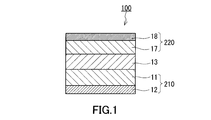
- FIG. 1 is a cross-sectional view showing a schematic configuration of a battery according to an embodiment.
- FIG. 2 is a cross-sectional view showing a detailed configuration of the negative electrode.
- FIG. 3 is a cross-sectional view showing the configuration of the negative electrode in the first modification.
- FIG. 4 is a cross-sectional view showing the configuration of the negative electrode in the modified example 2.
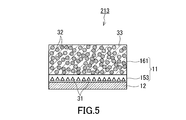
- FIG. 5 is a cross-sectional view showing the configuration of the negative electrode in the modified example 3.
- FIG. 6 is a cross-sectional view showing the configuration of the negative electrode in Comparative Example 1.
- FIG. 7 is a cross-sectional view showing the configuration of the negative electrode in Comparative Example 2.
- the alloy-based active material When the alloy-based active material is contained in the negative electrode, the alloy-based active material expands and contracts due to the insertion reaction and the desorption reaction of lithium ions, and the volume of the negative electrode changes significantly. When the particles of the alloy-based active material are large, the particles of the alloy-based active material may penetrate the solid electrolyte layer, which is an insulating layer, as the particles expand. In this case, the function of the battery is lost.
- Solid-state batteries are subject to stricter restrictions on the expansion of the negative electrode active material than batteries using liquid electrolytes.
- One way to solve the above problem is to increase the thickness of the solid electrolyte layer, which is the insulating layer.
- the solid electrolyte layer does not contribute to the energy density of the battery, increasing the thickness of the solid electrolyte layer lowers the energy density of the battery.
- the battery according to the first aspect of the present disclosure is With the positive electrode With the negative electrode A solid electrolyte layer located between the positive electrode and the negative electrode, With The negative electrode has a negative electrode current collector and a negative electrode active material layer located between the negative electrode current collector and the solid electrolyte layer.
- the negative electrode active material layer includes a first active material layer and a second active material layer located between the first active material layer and the solid electrolyte layer.
- the first active material layer contains a material that alloys with Li as the first active material.
- the second active material layer contains a second active material and a solid electrolyte, and does not contain a material that alloys with Li.
- the second active material layer functions as a buffer layer between the first active material layer and the electrolyte layer.
- the first active material layer contains a material that alloys with Li, the energy density of the battery is increased. Therefore, according to the present embodiment, both energy density and safety can be achieved at the same time.
- the second active material may contain a carbon material. Since the expansion coefficient of the carbon material during charging is relatively small, the safety of the battery can be improved by using the carbon material as the second active material.
- the carbon material may contain graphite.
- Graphite is suitable as a second active material because it has a smaller expansion coefficient during the insertion reaction of lithium ions than an alloy-based active material.
- the first active material is at least one selected from the group consisting of silicon, tin, and titanium. It may be included. If these materials are used as the first active material, the energy density of the battery can be increased.
- the first active material layer may be thinner than the second active material layer.
- the first active material layer does not have to contain the second active material. According to such a configuration, a sufficient discharge capacity of the first active material layer can be secured.
- the first active material layer does not have to contain the solid electrolyte. According to such a configuration, a sufficient discharge capacity of the first active material layer can be secured.
- the solid electrolyte may have lithium ion conductivity. According to such a configuration, the lithium ion conductivity of the negative electrode active material layer can be enhanced.
- FIG. 1 is a cross-sectional view showing a schematic configuration of the battery 100 according to the embodiment.
- the battery 100 includes a positive electrode 220, a negative electrode 210, and an electrolyte layer 13.
- the positive electrode 220 has a positive electrode active material layer 17 and a positive electrode current collector 18.
- the positive electrode active material layer 17 is arranged between the electrolyte layer 13 and the positive electrode current collector 18.
- the positive electrode active material layer 17 is in electrical contact with the positive electrode current collector 18.
- the positive electrode current collector 18 is a member having a function of collecting electric power from the positive electrode active material layer 17.
- Examples of the material of the positive electrode current collector 18 include aluminum, aluminum alloy, stainless steel, copper, nickel and the like.
- the positive electrode current collector 18 may be made of aluminum or an aluminum alloy. The dimensions, shape, and the like of the positive electrode current collector 18 can be appropriately selected according to the application of the battery 100.
- the positive electrode active material layer 17 contains a positive electrode active material and a solid electrolyte.
- a material having a property of occluding and releasing metal ions such as lithium ions can be used.
- a lithium-containing transition metal oxide, a transition metal fluoride, a polyanion material, a fluorinated polyanion material, a transition metal sulfide, a transition metal oxysulfide, a transition metal oxynitride, or the like can be used.
- the manufacturing cost can be reduced and the average discharge voltage can be increased.
- the positive electrode active material may contain Li and at least one element selected from the group consisting of Mn, Co, Ni and Al.
- Examples of such a material include Li (NiCoAl) O 2 , Li (NiCoMn) O 2 , LiCoO 2, and the like.
- the positive electrode active material has, for example, the shape of particles.
- the shape of the particles of the positive electrode active material is not particularly limited.
- the shape of the particles of the positive electrode active material can be needle-like, spherical, elliptical spherical or scaly.
- the median diameter of the particles of the positive electrode active material may be 0.1 ⁇ m or more and 100 ⁇ m or less.
- the median diameter of the particles of the positive electrode active material is 0.1 ⁇ m or more, the positive electrode active material and the solid electrolyte can form a good dispersed state in the positive electrode 220. As a result, the charge / discharge characteristics of the battery 100 are improved.
- the median diameter of the particles of the positive electrode active material is 100 ⁇ m or less, the lithium diffusion in the particles of the positive electrode active material becomes fast. Therefore, the battery 100 can operate at a high output.
- the solid electrolyte of the positive electrode 220 at least one selected from the group consisting of a sulfide solid electrolyte, an oxide solid electrolyte, a halide solid electrolyte, a polymer solid electrolyte and a complex hydride solid electrolyte may be used.
- the oxide solid electrolyte has excellent high potential stability. By using the oxide solid electrolyte, the charge / discharge efficiency of the battery 100 can be further improved.
- 30 ⁇ v1 ⁇ 95 may be satisfied with respect to the volume ratio “v1: 100 ⁇ v1” of the positive electrode active material and the solid electrolyte.
- the energy density of the battery 100 is sufficiently secured.
- v1 ⁇ 95 is satisfied, operation at high output becomes possible.
- the thickness of the positive electrode 220 may be 10 ⁇ m or more and 500 ⁇ m or less. When the thickness of the positive electrode 220 is 10 ⁇ m or more, the energy density of the battery 100 is sufficiently secured. When the thickness of the positive electrode 220 is 500 ⁇ m or less, operation at high output is possible.
- the median diameter of the particle group of the solid electrolyte may be 100 ⁇ m or less.
- the positive electrode active material and the solid electrolyte can form a good dispersed state in the positive electrode 220. Therefore, the charge / discharge characteristics of the battery 100 are improved.
- the "median diameter” means the particle size when the cumulative volume in the volume-based particle size distribution is equal to 50%.
- the volume-based particle size distribution is measured, for example, by a laser diffraction measuring device or an image analyzer.
- the electrolyte layer 13 is located between the positive electrode 220 and the negative electrode 210.
- the electrolyte layer 13 is a layer containing an electrolyte.
- the electrolyte is, for example, a solid electrolyte.
- the electrolyte layer 13 can be a solid electrolyte layer.
- the electrolyte layer 13 may contain at least one selected from the group consisting of a halide solid electrolyte, a sulfide solid electrolyte, an oxide solid electrolyte, a polymer solid electrolyte and a complex hydride solid electrolyte as the solid electrolyte.
- the electrolyte layer 13 may have a multi-layer structure.
- the composition of the material of the layer in contact with the negative electrode 220 may be different from the composition of the material of the layer in contact with the positive electrode 220.
- the layer in contact with the negative electrode 220 may be made of a sulfide solid electrolyte having excellent reduction resistance.
- the layer in contact with the positive electrode 220 may be made of a halide solid electrolyte having excellent oxidation resistance.
- the solid electrolyte contained in the electrolyte layer 13 has, for example, the shape of particles.
- the shape of the particles is not particularly limited, and is, for example, needle-shaped, spherical, or elliptical spherical.
- the thickness of the electrolyte layer 13 may be 1 ⁇ m or more and 300 ⁇ m or less. When the thickness of the electrolyte layer 13 is 1 ⁇ m or more, a short circuit between the positive electrode 220 and the negative electrode 210 can be reliably prevented. When the thickness of the electrolyte layer 13 is 300 ⁇ m or less, operation at high output can be realized.
- the negative electrode 210 includes a negative electrode active material layer 11 and a negative electrode current collector 12.
- the negative electrode active material layer 11 is arranged between the electrolyte layer 13 and the negative electrode current collector 12.
- the negative electrode active material layer 11 is in electrical contact with the negative electrode current collector 12.
- the negative electrode current collector 12 is a member having a function of collecting electric power from the negative electrode active material layer 11.
- Examples of the material of the negative electrode current collector 12 include aluminum, aluminum alloy, stainless steel, copper, nickel and the like.
- the negative electrode current collector 12 may be made of nickel. The dimensions, shape, and the like of the negative electrode current collector 12 can be appropriately selected according to the application of the battery 100.
- FIG. 2 is a cross-sectional view showing a detailed configuration of the negative electrode 210.
- the negative electrode active material layer 11 includes a first active material layer 150 and a second active material layer 160.
- the second active material layer 160 is located between the first active material layer 150 and the electrolyte layer 13.
- the first active material layer 150 contains a material that alloys with Li as the first active material 31.
- the second active material layer 160 contains the second active material 32 and the solid electrolyte 33, and does not contain a material that alloys with Li.
- the first active material 31 is unevenly distributed in the vicinity of the negative electrode current collector 12.
- the negative electrode active material layer 11 has the above structure, the following effects can be obtained. That is, even if the first active material 31 contained in the first active material layer 150 expands during the lithium ion insertion reaction, the second active material layer 160 containing no material to alloy with Li is the first active material layer 160. It functions as a buffer layer between the material layer 150 and the electrolyte layer 13. As a result, it is possible to prevent the first active material 31 from expanding and penetrating the electrolyte layer 13. Further, since the first active material layer 150 contains a material that alloys with Li, the energy density of the battery 100 is increased. Therefore, according to the present embodiment, both energy density and safety can be achieved at the same time.
- Does not contain the material that alloys with Li means that the material that alloys with Li is not intentionally added. For example, when the mass of the material alloying with Li is 1% or less with respect to the total mass of the active material contained in the second active material layer 160, the material alloying with Li is added to the second active material layer 160. It is considered not to be added intentionally.
- the first active material layer 150 is in contact with the negative electrode current collector 12. However, the first active material layer 150 may be separated from the negative electrode current collector 12. Another layer may be provided between the first active material layer 150 and the negative electrode current collector 12. The first active material layer 150 is also in contact with the second active material layer 160. However, the first active material layer 150 may be separated from the second active material layer 160. Another layer may be provided between the first active material layer 150 and the second active material layer 160. The second active material layer 160 is in contact with the electrolyte layer 13.
- Both the first active material 31 and the second active material 32 have the property of occluding and releasing lithium ions.
- the theoretical capacity (unit: mAh / g) of the first active material 31 is larger than the theoretical capacity of the second active material 32.
- the expansion coefficient (volume expansion coefficient) of the first active material 31 during charging is larger than the expansion rate of the second active material 32 during charging.
- the first active material 31 contains, for example, at least one selected from the group consisting of silicon, tin, and titanium. These are materials that alloy with Li and all have a higher theoretical capacity than carbon materials. If these materials are used as the first active material 31, the energy density of the battery 100 can be increased.
- the material to alloy with Li is typically a metal or metalloid.
- the metal or metalloid may be a simple substance. It is not essential that the material alloying with Li is a simple metal or a metalloid.
- the material to be alloyed with Li may be a compound containing an element to be alloyed with Li. Such compounds, silicon oxide represented by SiOx (0 ⁇ x ⁇ 2) , tin oxide represented by SnO or SnO 2 and the like.
- the second active material 32 may be at least one selected from the group consisting of carbon materials, metal materials, oxides, nitrides, tin compounds, silicon compounds and titanium compounds, excluding materials that alloy with Li. Compounds such as LTO (Li 4 Ti 5 O 12 ) can be used as the second active material 32.
- the metal material may be a simple substance metal or an alloy. Examples of the metal material include lithium metal. Examples of the carbon material include graphite, coke, graphitizing carbon, carbon fiber, spherical carbon, amorphous carbon and the like. Since the expansion coefficient of the carbon material during charging is relatively small, the safety of the battery 100 can be enhanced by using the carbon material as the second active material 32.
- the second active material 32 typically contains graphite. Graphite is suitable as the second active material 32 because it has a smaller expansion coefficient during the insertion reaction of lithium ions than the alloy-based active material.
- Alloy-based active material means an active material that alloys with lithium.
- Alloy-based material means a material that alloys with lithium.
- Both the first active material 31 and the second active material 32 may have the shape of particles.
- the particles of the first active material 31 and the particles of the second active material 32 may have a spherical shape, an elliptical spherical shape, a fibrous shape, or a scaly shape.
- the first active material layer 150 contains both the first active material 31 and the second active material 32.
- the difference in expansion coefficient between the first active material layer 150 and the second active material layer 160 due to charging and discharging can be reduced.
- the ratio (M2 / M1) of the mass M2 of the second active material 32 to the mass M1 of the first active material 31 is, for example, greater than 0 and in the range of 20 or less.
- the mass M1 of the first active material 31 is the mass when elements other than the element alloying with Li (oxygen and the like) are ignored.
- the solid electrolyte 33 is also contained in the first active material layer 150. According to such a configuration, the ionic conductivity of the first active material layer 150 can be improved.
- the composition of the solid electrolyte contained in the first active material layer 150 may be the same as or different from the composition of the solid electrolyte contained in the second active material layer 160.
- the second active material layer 160 may contain only a material other than the material alloying with Li as the negative electrode active material. According to such a configuration, the safety of the battery 100 is further enhanced.
- each of the first active material layer 150 and the second active material layer 160 is not particularly limited. According to the example of FIG. 2, the first active material layer 150 and the second active material layer 160 have, for example, the same thickness. However, the first active material layer 150 may be thicker than the second active material layer 160. The first active material layer 150 may be thinner than the second active material layer 160.
- the discharge capacities of the first active material layer 150 and the second active material layer 160 are not particularly limited.
- the first active material layer 150 and the second active material layer 160 have, for example, equal discharge capacities.
- the solid electrolyte 33 has lithium ion conductivity.
- the solid electrolyte 33 contains the solid electrolyte 33 in the negative electrode active material layer 11, the lithium ion conductivity of the negative electrode active material layer 11 can be enhanced.
- the solid electrolyte 33 at least one selected from the group consisting of a sulfide solid electrolyte, an oxide solid electrolyte, a halide solid electrolyte, a polymer solid electrolyte and a complex hydride solid electrolyte can be used.
- Examples of the sulfide solid electrolyte include Li 2 SP 2 S 5 , Li 2 S-SiS 2 , Li 2 SB 2 S 3 , Li 2 S-GeS 2 , Li 3.25 Ge 0.25 P 0.75 S 4 , Li 10 GeP 2 S 12 and the like can be used.
- LiX, Li 2 O, MO q, like Li p MO q may be added.
- the element X in “LiX” is at least one element selected from the group consisting of F, Cl, Br, and I.
- the element M in “MO q " and “Li p MO q " is at least one element selected from the group consisting of P, Si, Ge, B, Al, Ga, In, Fe, and Zn.
- P and q in "MO q " and "Li p MO q " are independent natural numbers, respectively.
- oxide solid electrolyte examples include a NASICON type solid electrolyte typified by LiTi 2 (PO 4 ) 3 and its elemental substituent, a (LaLi) TiO 3 based perovskite type solid electrolyte, Li 14 ZnGe 4 O 16 , Li.
- a compound of a polymer compound and a lithium salt can be used.
- the polymer compound may have an ethylene oxide structure.
- the polymer compound can contain a large amount of lithium salts, so that the ionic conductivity can be further increased.
- the lithium salt LiPF 6, LiBF 4, LiSbF 6, LiAsF 6, LiSO 3 CF 3, LiN (SO 2 CF 3) 2, LiN (SO 2 C 2 F 5) 2, LiN (SO 2 CF 3) ( SO 2 C 4 F 9 ), LiC (SO 2 CF 3 ) 3 and the like can be used.
- the lithium salt one lithium salt selected from these may be used alone, or a mixture of two or more lithium salts selected from these may be used.
- LiBH 4- LiI LiBH 4- P 2 S 5 and the like
- LiBH 4- LiI LiBH 4- P 2 S 5 and the like
- the halide solid electrolyte is a solid electrolyte containing halogen.
- the halide solid electrolyte is represented by, for example, the following composition formula (1).
- ⁇ , ⁇ , and ⁇ are independently larger than 0.
- M contains at least one element selected from the group consisting of metallic elements other than Li and metalloid elements.
- X comprises at least one selected from the group consisting of F, Cl, Br, and I.
- Metalloid elements include B, Si, Ge, As, Sb, and Te. Metal elements include all elements included in groups 1 to 12 of the periodic table except hydrogen, and 13 excluding B, Si, Ge, As, Sb, Te, C, N, P, O, S, and Se. Includes all elements from groups to groups 16.
- a metal element is a group of elements that can become cations when an inorganic compound is formed with a halogen or a halogen compound.
- Li 3 YX 6 , Li 2 MgX 4 , Li 2 FeX 4 , Li (Al, Ga, In) X 4 , Li 3 (Al, Ga, In) X 6 and the like can be used.
- the solid electrolyte 33 may be an inorganic solid electrolyte. Since the inorganic solid electrolyte is excellent in electrochemical stability, it is suitable for the solid electrolyte 33.
- examples of the inorganic solid electrolyte include a sulfide solid electrolyte, an oxide solid electrolyte, a halide solid electrolyte, and a complex hydride solid electrolyte, as described above.
- the solid electrolyte 33 may contain a sulfide solid electrolyte or may be composed of a sulfide solid electrolyte. Since the sulfide solid electrolyte has excellent reduction resistance, it is suitable as a solid electrolyte used for the negative electrode active material layer 11.
- the sulfide solid electrolyte is highly flexible, if the sulfide solid electrolyte is contained in the negative electrode active material layer 11, the expansion and contraction of the alloy-based active material may be absorbed by the sulfide solid electrolyte.
- the first active material 31 and the second active material 32 may each have a particle shape.
- the “particle of the negative electrode active material” means one or both of the particles of the first active material 31 and the particles of the second active material 32.
- the median diameter of the particles of the negative electrode active material may be 0.1 ⁇ m or more and 100 ⁇ m or less.
- the median diameter of the particles of the negative electrode active material is 0.1 ⁇ m or more, the particles of the negative electrode active material and the solid electrolyte can form a good dispersed state in the negative electrode 210. This improves the charge / discharge characteristics of the battery 100.
- the median diameter of the particles of the negative electrode active material is 100 ⁇ m or less, the lithium diffusion in the particles of the negative electrode active material becomes fast. Therefore, the battery 100 can operate at a high output.
- the median diameter of the particles of the negative electrode active material may be larger than the median diameter of the particles of the solid electrolyte 33 contained in the negative electrode 210. As a result, a good dispersed state of the negative electrode active material and the solid electrolyte 33 can be formed.
- the volume ratio of the negative electrode active material to the solid electrolyte 33 in the negative electrode 210 is represented by "v2: 100-v2"
- the volume ratio v2 of the negative electrode active material may satisfy 30 ⁇ v2 ⁇ 95.
- 30 ⁇ v2 is satisfied, the energy density of the battery 100 is sufficiently secured.
- v2 ⁇ 95 is satisfied, operation at high output becomes possible.
- the thickness of the negative electrode 210 may be 10 ⁇ m or more and 500 ⁇ m or less. When the thickness of the negative electrode 210 is 10 ⁇ m or more, the energy density of the battery 100 is sufficiently secured. When the thickness of the negative electrode 210 is 500 ⁇ m or less, operation at high output is possible.
- a non-aqueous electrolyte solution or a gel electrolyte is applied to at least one of the positive electrode active material layer 17, the electrolyte layer 13, and the negative electrode active material layer 11 for the purpose of facilitating the transfer of lithium ions and improving the output characteristics of the battery.
- an ionic liquid may be contained.
- the non-aqueous electrolyte solution contains a non-aqueous solvent and a lithium salt dissolved in the non-aqueous solvent.
- the non-aqueous solvent include a cyclic carbonate solvent, a chain carbonate solvent, a cyclic ether solvent, a chain ether solvent, a cyclic ester solvent, a chain ester solvent, and a fluorine solvent.
- the cyclic carbonate solvent include ethylene carbonate, propylene carbonate, butylene carbonate and the like.
- Examples of the chain carbonate ester solvent include dimethyl carbonate, ethyl methyl carbonate, diethyl carbonate and the like.
- Examples of the cyclic ether solvent include tetrahydrofuran, 1,4-dioxane, 1,3-dioxolane and the like.
- Examples of the chain ether solvent include 1,2-dimethoxyethane and 1,2-diethoxyethane.
- Examples of the cyclic ester solvent include ⁇ -butyrolactone and the like.
- Examples of the chain ester solvent include methyl acetate.
- the fluorine solvent include fluoroethylene carbonate, methyl fluoropropionate, fluorobenzene, fluoroethyl methyl carbonate, fluorodimethylene carbonate and the like.
- non-aqueous solvent one non-aqueous solvent selected from these may be used alone, or a mixture of two or more non-aqueous solvents selected from these may be used.
- the non-aqueous electrolytic solution may contain at least one fluorine solvent selected from the group consisting of fluoroethylene carbonate, methyl fluoropropionate, fluorobenzene, fluoroethyl methyl carbonate, and fluorodimethylene carbonate.
- the lithium salt LiPF 6, LiBF 4, LiSbF 6, LiAsF 6, LiSO 3 CF 3, LiN (SO 2 CF 3) 2, LiN (SO 2 C 2 F 5) 2, LiN (SO 2 CF 3) ( SO 2 C 4 F 9 ), LiC (SO 2 CF 3 ) 3 and the like.
- the lithium salt one lithium salt selected from these may be used alone, or a mixture of two or more lithium salts selected from these may be used.
- the concentration of lithium salt is, for example, in the range of 0.5 to 2 mol / liter.
- a polymer material containing a non-aqueous electrolyte solution can be used.
- the polymer material at least one selected from the group consisting of polymers having polyethylene oxide, polyacrylic nitrile, polyvinylidene fluoride, polymethyl methacrylate, and ethylene oxide bonds may be used.
- the cations that make up the ionic liquid are aliphatic quaternary salts such as tetraalkylammonium and tetraalkylphosphonium, and fats such as pyrrolidiniums, morpholiniums, imidazoliniums, tetrahydropyrimidiniums, piperaziniums, and piperidiniums. It may be a nitrogen-containing heterocyclic aromatic cation such as group cyclic ammonium, pyridiniums, imidazoliums and the like.
- the ionic liquid may contain a lithium salt.
- At least one of the positive electrode active material layer 17, the electrolyte layer 13, and the negative electrode active material layer 11 may contain a binder for the purpose of improving the adhesion between the particles.
- the binder is used to improve the binding property of the material constituting the electrode.
- the binder polyvinylidene fluoride, polytetrafluoroethylene, polyethylene, polypropylene, aramid resin, polyamide, polyimide, polyamideimide, polyacrylic nitrile, polyacrylic acid, polyacrylic acid methyl ester, polyacrylic acid ethyl ester, poly Acrylic acid hexyl ester, polymethacrylic acid, polymethacrylic acid methyl ester, polymethacrylic acid ethyl ester, polymethacrylic acid hexyl ester, polyvinylacetate, polyvinylpyrrolidone, polyether, polyether sulfone, hexafluoropolypropylene, styrene butad
- the binders include tetrafluoroethylene, hexafluoroethylene, hexafluoropropylene, perfluoroalkyl vinyl ether, vinylidene fluoride, chlorotrifluoroethylene, ethylene, propylene, pentafluoropropylene, fluoromethyl vinyl ether, acrylic acid, and hexadiene. Copolymers of two or more materials selected from the above can be used. Further, two or more kinds selected from these may be mixed and used as a binder.
- At least one of the positive electrode active material layer 17 and the negative electrode active material layer 11 may contain a conductive auxiliary agent for the purpose of enhancing electron conductivity.
- the conductive auxiliary agent include graphites of natural graphite or artificial graphite, carbon blacks such as acetylene black and Ketjen black, conductive fibers such as carbon fibers or metal fibers, and metal powders such as carbon fluoride and aluminum.
- conductive whiskers such as zinc oxide or potassium titanate, conductive metal oxides such as titanium oxide, conductive polymer compounds such as polyaniline, polypyrrole, polythiophene and the like can be used.
- the battery 100 of the present embodiment is an all-solid-state battery
- the battery 100 does not contain an electrolytic solution, a gel electrolyte, and an ionic liquid.
- the battery 100 in the present embodiment can be configured as a battery having various shapes such as a coin type, a cylindrical type, a square type, a sheet type, a button type, a flat type, and a laminated type.
- the negative electrode active material layer 11 may be formed by a wet method, a dry method, or a combination of a wet method and a dry method.
- the wet method the slurry containing the raw material is applied onto the negative electrode current collector 12.
- the dry method the raw material powder is compression-molded together with the negative electrode current collector 12.
- the positive electrode active material layer 17 can also be formed by these methods.
- FIG. 3 is a cross-sectional view showing the configuration of the negative electrode 211 in the modified example 1.
- the negative electrode active material layer 11 has a first active material layer 151 and a second active material layer 161.
- the first active material layer 151 is thinner than the second active material layer 161. According to such a configuration, the safety of the battery 100 can be further enhanced.
- the ratio T1 / T2 is in the range of 1/2 to 1/20 in one example.
- each layer may be the average value of any plurality of points in the cross section including the center of gravity when the battery 100 is viewed in a plan view.
- the material contained in the first active material layer 151 and the material contained in the second active material layer 161 are as described with reference to FIG.
- FIG. 4 is a cross-sectional view showing the configuration of the negative electrode 212 in the modified example 2.
- the negative electrode active material layer 11 has a first active material layer 152 and a second active material layer 161.
- the first active material layer 152 does not contain the second active material 32.
- the first active material layer 152 may contain only the first active material 31 as the negative electrode active material. According to such a configuration, a sufficient discharge capacity of the first active material layer 152 can be secured. This contributes to the improvement of the energy density of the battery 100.
- Does not contain the second active material 32 means that the second active material 32 is not intentionally added.
- the first active material layer 152 is thinner than the second active material layer 161. Therefore, the negative electrode 212 has an excellent balance between energy density and safety.
- FIG. 5 is a cross-sectional view showing the configuration of the negative electrode 213 in the modified example 3.
- the negative electrode active material layer 11 has a first active material layer 153 and a second active material layer 161.
- the first active material layer 153 contains the first active material 31 and does not contain the solid electrolyte 33.
- the first active material layer 152 may contain only the first active material 31 as the negative electrode active material. According to such a configuration, a sufficient discharge capacity of the first active material layer 153 can be secured. This contributes to the improvement of the energy density of the battery 100.
- the first active material layer 153 may be formed by forming an alloy-based active material on the surface of the negative electrode current collector 12 by a dry method.
- the dry method include thin film deposition and sputtering.
- Does not contain solid electrolyte 33 means that the solid electrolyte 33 is not intentionally added.
- the first active material layer 153 is thinner than the second active material layer 161. Therefore, the negative electrode 213 has an excellent balance between energy density and safety.
- Example 1 [Preparation of material A1 for the first active material layer]
- Graphite and Si were mixed in a mortar at a mass ratio of 4: 1 in a glove box having an Ar atmosphere with a dew point of ⁇ 60 ° C. or lower to obtain a mixture.
- a mixture of graphite and Si and a sulfide solid electrolyte were mixed at a mass ratio of 7: 3.
- material A1 was obtained.
- graphite and Si powdery ones were used.
- a copper foil was laminated on the layer of material A1.
- a laminate of a negative electrode current collector, a negative electrode active material layer and an electrolyte layer was obtained.
- metal In thickness 200 ⁇ m
- metal Li thickness 300 ⁇ m
- metal In thickness 200 ⁇ m
- the battery of Example 1 was produced by sealing the insulating outer cylinder using an insulating ferrule and blocking the inside of the insulating outer cylinder from the outside air atmosphere.
- the negative electrode of the battery of Example 1 had the structure described with reference to FIG.
- Example 2 [Preparation of material A2 for the first active material layer] Graphite and Si were mixed in a mortar at a mass ratio of 1: 1 in a glove box having an Ar atmosphere with a dew point of ⁇ 60 ° C. or lower to obtain a mixture. Then, a mixture of graphite and Si and a sulfide solid electrolyte were mixed at a mass ratio of 7: 3. As a result, material A2 was obtained.
- a battery of Example 2 was made in the same manner as in Example 1 except that 8 mg of material B2 was used in place of 5 mg of material B1 and 2 mg of material A2 was used in place of 5 mg of material A1.
- the negative electrode of the battery of Example 2 had the structure described with reference to FIG.
- Example 3 [Preparation of material A3 for the first active material layer] Si and the sulfide solid electrolyte were mixed at a mass ratio of 7: 3 in a glove box having an Ar atmosphere with a dew point of ⁇ 60 ° C. or lower. As a result, material A3 was obtained.
- a battery of Example 3 was made in the same manner as in Example 1 except that 9 mg of material B3 was used in place of 5 mg of material B1 and 1 mg of material A3 was used in place of 5 mg of material A1.
- the negative electrode of the battery of Example 3 had the structure described with reference to FIG.
- Example 4 [Preparation of material A4 for the first active material layer] Only Si was prepared as the material A4 in a glove box having an Ar atmosphere with a dew point of ⁇ 60 ° C. or lower.
- a battery of Example 4 was made in the same manner as in Example 1 except that 9 mg of material B4 was used in place of 5 mg of material B1 and 1 mg of material A4 was used in place of 5 mg of material A1.
- the negative electrode of the battery of Example 4 had the structure described with reference to FIG.
- Comparative Example 1 [Preparation of material a1 for the first active material layer] Graphite and a sulfide solid electrolyte were mixed at a mass ratio of 7: 3 in a glove box having an Ar atmosphere with a dew point of ⁇ 60 ° C. or lower. As a result, the material a1 was obtained.
- a battery of Comparative Example 1 was prepared in the same manner as in Example 1 except that 5 mg of material b1 was used in place of 5 mg of material B1 and 5 mg of material a1 was used in place of 5 mg of material A1.
- FIG. 6 is a cross-sectional view showing the configuration of the negative electrode 300 of the battery in Comparative Example 1.
- the negative electrode 300 has a negative electrode current collector 312 and a negative electrode active material layer 311.
- the negative electrode active material layer 311 has a first active material layer 350 and a second active material layer 360.
- the negative electrode current collector 312, the first active material layer 350, and the second active material layer 360 are laminated in this order.
- the first active material layer 350 contains only graphite as the negative electrode active material.
- the second active material layer 360 contains graphite and Si as the negative electrode active material.
- a battery of Comparative Example 2 was prepared in the same manner as in Example 1 except that 10 mg of material c1 was used in place of 5 mg of material B1 and 5 mg of material A1.
- FIG. 7 is a cross-sectional view showing the configuration of the negative electrode 301 of the battery in Comparative Example 2.
- the negative electrode 301 has a negative electrode current collector 312 and a negative electrode active material layer 311.
- the negative electrode active material layer 311 is provided on the negative electrode current collector 312.
- the negative electrode active material layer 311 contains graphite and Si as the negative electrode active material. Graphite and Si are uniformly distributed in the negative electrode active material layer 311.
- the battery was placed in a constant temperature bath at 25 ° C.
- Constant current charging was performed at a current value of 380 ⁇ A, which is a 0.05 C rate (20 hour rate) with respect to the theoretical capacity of the battery, and charging was completed at a voltage of ⁇ 0.62 V.
- the batteries of Comparative Examples 1 and 2 lost their battery functions during charging.
- Si which is an alloy-based active material
- the alloy-based active material expands due to the insertion of lithium ions into Si during charging, the expanded alloy-based active material penetrates the electrolyte layer, and the alloy-based active material is the lithium indium alloy, which is the positive electrode active material, and the inside. It is presumed that a short circuit occurred.
- the battery of the present disclosure can be used as, for example, an all-solid-state lithium secondary battery.
Landscapes
- Chemical & Material Sciences (AREA)
- Chemical Kinetics & Catalysis (AREA)
- Electrochemistry (AREA)
- General Chemical & Material Sciences (AREA)
- Engineering & Computer Science (AREA)
- Materials Engineering (AREA)
- Composite Materials (AREA)
- Manufacturing & Machinery (AREA)
- Inorganic Chemistry (AREA)
- Physics & Mathematics (AREA)
- Condensed Matter Physics & Semiconductors (AREA)
- General Physics & Mathematics (AREA)
- Secondary Cells (AREA)
- Battery Electrode And Active Subsutance (AREA)
Priority Applications (4)
| Application Number | Priority Date | Filing Date | Title |
|---|---|---|---|
| JP2022516856A JP7603237B2 (ja) | 2020-04-24 | 2021-02-12 | 電池 |
| CN202180027817.6A CN115380402A (zh) | 2020-04-24 | 2021-02-12 | 电池 |
| EP21792319.2A EP4141988A1 (en) | 2020-04-24 | 2021-02-12 | Battery |
| US18/047,182 US20230061385A1 (en) | 2020-04-24 | 2022-10-17 | Battery |
Applications Claiming Priority (2)
| Application Number | Priority Date | Filing Date | Title |
|---|---|---|---|
| JP2020-077678 | 2020-04-24 | ||
| JP2020077678 | 2020-04-24 |
Related Child Applications (1)
| Application Number | Title | Priority Date | Filing Date |
|---|---|---|---|
| US18/047,182 Continuation US20230061385A1 (en) | 2020-04-24 | 2022-10-17 | Battery |
Publications (1)
| Publication Number | Publication Date |
|---|---|
| WO2021215086A1 true WO2021215086A1 (ja) | 2021-10-28 |
Family
ID=78270521
Family Applications (1)
| Application Number | Title | Priority Date | Filing Date |
|---|---|---|---|
| PCT/JP2021/005349 Ceased WO2021215086A1 (ja) | 2020-04-24 | 2021-02-12 | 電池 |
Country Status (5)
| Country | Link |
|---|---|
| US (1) | US20230061385A1 (https=) |
| EP (1) | EP4141988A1 (https=) |
| JP (1) | JP7603237B2 (https=) |
| CN (1) | CN115380402A (https=) |
| WO (1) | WO2021215086A1 (https=) |
Families Citing this family (1)
| Publication number | Priority date | Publication date | Assignee | Title |
|---|---|---|---|---|
| KR102903845B1 (ko) * | 2020-08-31 | 2025-12-23 | 삼성에스디아이 주식회사 | 전고체 이차전지용 양극층, 이를 포함하는 전고체 이차전지 및 그 제조방법 |
Citations (3)
| Publication number | Priority date | Publication date | Assignee | Title |
|---|---|---|---|---|
| JP2016225187A (ja) | 2015-06-01 | 2016-12-28 | トヨタ自動車株式会社 | 全固体二次電池用積層体 |
| JP2019079713A (ja) * | 2017-10-25 | 2019-05-23 | トヨタ自動車株式会社 | 固体電池用負極活物質層 |
| JP2019160407A (ja) * | 2018-03-07 | 2019-09-19 | トヨタ自動車株式会社 | 全固体電池 |
Family Cites Families (4)
| Publication number | Priority date | Publication date | Assignee | Title |
|---|---|---|---|---|
| JP5218808B2 (ja) | 2007-06-11 | 2013-06-26 | トヨタ自動車株式会社 | リチウムイオン電池 |
| KR20110034031A (ko) * | 2008-10-31 | 2011-04-04 | 히다치 막셀 가부시키가이샤 | 비수 2차 전지 |
| JP2012022794A (ja) | 2010-07-12 | 2012-02-02 | Sanyo Electric Co Ltd | 非水電解質二次電池用負極及び非水電解質二次電池 |
| JP7063653B2 (ja) * | 2018-02-20 | 2022-05-09 | 三星電子株式会社 | 全固体型二次電池 |
-
2021
- 2021-02-12 JP JP2022516856A patent/JP7603237B2/ja active Active
- 2021-02-12 EP EP21792319.2A patent/EP4141988A1/en not_active Withdrawn
- 2021-02-12 WO PCT/JP2021/005349 patent/WO2021215086A1/ja not_active Ceased
- 2021-02-12 CN CN202180027817.6A patent/CN115380402A/zh active Pending
-
2022
- 2022-10-17 US US18/047,182 patent/US20230061385A1/en active Pending
Patent Citations (3)
| Publication number | Priority date | Publication date | Assignee | Title |
|---|---|---|---|---|
| JP2016225187A (ja) | 2015-06-01 | 2016-12-28 | トヨタ自動車株式会社 | 全固体二次電池用積層体 |
| JP2019079713A (ja) * | 2017-10-25 | 2019-05-23 | トヨタ自動車株式会社 | 固体電池用負極活物質層 |
| JP2019160407A (ja) * | 2018-03-07 | 2019-09-19 | トヨタ自動車株式会社 | 全固体電池 |
Also Published As
| Publication number | Publication date |
|---|---|
| US20230061385A1 (en) | 2023-03-02 |
| CN115380402A (zh) | 2022-11-22 |
| JPWO2021215086A1 (https=) | 2021-10-28 |
| EP4141988A1 (en) | 2023-03-01 |
| JP7603237B2 (ja) | 2024-12-20 |
Similar Documents
| Publication | Publication Date | Title |
|---|---|---|
| JP7182114B2 (ja) | 固体電解質材料、および、電池 | |
| JP7199038B2 (ja) | 負極材料およびそれを用いた電池 | |
| JP7316564B2 (ja) | 電池 | |
| JP7316571B2 (ja) | 固体電解質材料、および、電池 | |
| JP7145439B2 (ja) | 電池 | |
| JP7535703B2 (ja) | 電池 | |
| WO2019146294A1 (ja) | 電池 | |
| WO2019135320A1 (ja) | 固体電解質材料、および、電池 | |
| WO2019135346A1 (ja) | 正極材料、および、電池 | |
| WO2019135323A1 (ja) | 電池 | |
| WO2019135344A1 (ja) | 固体電解質材料、および、電池 | |
| JP7624631B2 (ja) | 電池 | |
| WO2019146296A1 (ja) | 正極材料およびそれを用いた電池 | |
| US20220384813A1 (en) | Coated positive electrode active material, positive electrode material, battery, and method for producing coated positive electrode active material | |
| US20240250291A1 (en) | Positive electrode material, battery using the same, and method for charging battery | |
| WO2023007939A1 (ja) | 負極材料、負極および電池及びそれらの製造方法 | |
| US20230061385A1 (en) | Battery | |
| US20230090463A1 (en) | Battery | |
| JP7769986B2 (ja) | 固体電解質材料およびそれを用いた電池 | |
| JP7804863B2 (ja) | 電池 | |
| US20230361426A1 (en) | Battery and method for manufacturing the same | |
| US20250029993A1 (en) | Composite active material particle, battery, and method for manufacturing composite active material particle | |
| US20250046781A1 (en) | Battery and production method for battery | |
| US20250029987A1 (en) | Composite active material particle, battery, and method for manufacturing composite active material particle | |
| WO2023223581A1 (ja) | 電池 |
Legal Events
| Date | Code | Title | Description |
|---|---|---|---|
| 121 | Ep: the epo has been informed by wipo that ep was designated in this application |
Ref document number: 21792319 Country of ref document: EP Kind code of ref document: A1 |
|
| ENP | Entry into the national phase |
Ref document number: 2022516856 Country of ref document: JP Kind code of ref document: A |
|
| ENP | Entry into the national phase |
Ref document number: 2021792319 Country of ref document: EP Effective date: 20221124 |
|
| NENP | Non-entry into the national phase |
Ref country code: DE |