WO2021201184A1 - 情報処理装置、収容容器、および、プログラム - Google Patents
情報処理装置、収容容器、および、プログラム Download PDFInfo
- Publication number
- WO2021201184A1 WO2021201184A1 PCT/JP2021/014068 JP2021014068W WO2021201184A1 WO 2021201184 A1 WO2021201184 A1 WO 2021201184A1 JP 2021014068 W JP2021014068 W JP 2021014068W WO 2021201184 A1 WO2021201184 A1 WO 2021201184A1
- Authority
- WO
- WIPO (PCT)
- Prior art keywords
- information
- deterioration
- housing
- internal
- container
- Prior art date
- Legal status (The legal status is an assumption and is not a legal conclusion. Google has not performed a legal analysis and makes no representation as to the accuracy of the status listed.)
- Ceased
Links
Images





Classifications
-
- F—MECHANICAL ENGINEERING; LIGHTING; HEATING; WEAPONS; BLASTING
- F25—REFRIGERATION OR COOLING; COMBINED HEATING AND REFRIGERATION SYSTEMS; HEAT PUMP SYSTEMS; MANUFACTURE OR STORAGE OF ICE; LIQUEFACTION SOLIDIFICATION OF GASES
- F25D—REFRIGERATORS; COLD ROOMS; ICE-BOXES; COOLING OR FREEZING APPARATUS NOT OTHERWISE PROVIDED FOR
- F25D17/00—Arrangements for circulating cooling fluids; Arrangements for circulating gas, e.g. air, within refrigerated spaces
- F25D17/04—Arrangements for circulating cooling fluids; Arrangements for circulating gas, e.g. air, within refrigerated spaces for circulating air, e.g. by convection
- F25D17/042—Air treating means within refrigerated spaces
-
- G—PHYSICS
- G01—MEASURING; TESTING
- G01N—INVESTIGATING OR ANALYSING MATERIALS BY DETERMINING THEIR CHEMICAL OR PHYSICAL PROPERTIES
- G01N21/00—Investigating or analysing materials by the use of optical means, i.e. using sub-millimetre waves, infrared, visible or ultraviolet light
- G01N21/62—Systems in which the material investigated is excited whereby it emits light or causes a change in wavelength of the incident light
- G01N21/63—Systems in which the material investigated is excited whereby it emits light or causes a change in wavelength of the incident light optically excited
- G01N21/64—Fluorescence; Phosphorescence
-
- A—HUMAN NECESSITIES
- A23—FOODS OR FOODSTUFFS; TREATMENT THEREOF, NOT COVERED BY OTHER CLASSES
- A23B—PRESERVATION OF FOODS, FOODSTUFFS OR NON-ALCOHOLIC BEVERAGES; CHEMICAL RIPENING OF FRUIT OR VEGETABLES
- A23B7/00—Preservation of fruit or vegetables; Chemical ripening of fruit or vegetables
- A23B7/04—Freezing; Subsequent thawing; Cooling
-
- F—MECHANICAL ENGINEERING; LIGHTING; HEATING; WEAPONS; BLASTING
- F25—REFRIGERATION OR COOLING; COMBINED HEATING AND REFRIGERATION SYSTEMS; HEAT PUMP SYSTEMS; MANUFACTURE OR STORAGE OF ICE; LIQUEFACTION SOLIDIFICATION OF GASES
- F25D—REFRIGERATORS; COLD ROOMS; ICE-BOXES; COOLING OR FREEZING APPARATUS NOT OTHERWISE PROVIDED FOR
- F25D11/00—Self-contained movable devices, e.g. domestic refrigerators
- F25D11/003—Transport containers
-
- G—PHYSICS
- G01—MEASURING; TESTING
- G01N—INVESTIGATING OR ANALYSING MATERIALS BY DETERMINING THEIR CHEMICAL OR PHYSICAL PROPERTIES
- G01N33/00—Investigating or analysing materials by specific methods not covered by groups G01N1/00 - G01N31/00
- G01N33/0004—Gaseous mixtures, e.g. polluted air
- G01N33/0009—General constructional details of gas analysers, e.g. portable test equipment
- G01N33/0027—General constructional details of gas analysers, e.g. portable test equipment concerning the detector
- G01N33/0036—General constructional details of gas analysers, e.g. portable test equipment concerning the detector specially adapted to detect a particular component
-
- A—HUMAN NECESSITIES
- A23—FOODS OR FOODSTUFFS; TREATMENT THEREOF, NOT COVERED BY OTHER CLASSES
- A23B—PRESERVATION OF FOODS, FOODSTUFFS OR NON-ALCOHOLIC BEVERAGES; CHEMICAL RIPENING OF FRUIT OR VEGETABLES
- A23B7/00—Preservation of fruit or vegetables; Chemical ripening of fruit or vegetables
- A23B7/14—Preserving or ripening with chemicals not covered by group A23B7/08 or A23B7/10
- A23B7/144—Preserving or ripening with chemicals not covered by group A23B7/08 or A23B7/10 in the form of gases, e.g. fumigation; Compositions or apparatus therefor
- A23B7/148—Preserving or ripening with chemicals not covered by group A23B7/08 or A23B7/10 in the form of gases, e.g. fumigation; Compositions or apparatus therefor in a controlled atmosphere, e.g. partial vacuum, comprising only CO2, N2, O2 or H2O
-
- A—HUMAN NECESSITIES
- A23—FOODS OR FOODSTUFFS; TREATMENT THEREOF, NOT COVERED BY OTHER CLASSES
- A23B—PRESERVATION OF FOODS, FOODSTUFFS OR NON-ALCOHOLIC BEVERAGES; CHEMICAL RIPENING OF FRUIT OR VEGETABLES
- A23B7/00—Preservation of fruit or vegetables; Chemical ripening of fruit or vegetables
- A23B7/14—Preserving or ripening with chemicals not covered by group A23B7/08 or A23B7/10
- A23B7/144—Preserving or ripening with chemicals not covered by group A23B7/08 or A23B7/10 in the form of gases, e.g. fumigation; Compositions or apparatus therefor
- A23B7/152—Preserving or ripening with chemicals not covered by group A23B7/08 or A23B7/10 in the form of gases, e.g. fumigation; Compositions or apparatus therefor in a controlled atmosphere comprising other gases in addition to CO2, N2, O2 or H2O ; Elimination of such other gases
Definitions
- This disclosure relates to information processing devices, storage containers, and programs.
- Patent Document 1 describes a CCD camera that images the surface to be inspected in synchronization with a pulse light source, compares the illuminance of a dark part in the captured image with a predetermined threshold value, and emits a damage detection signal when the illuminance is lower than this.
- a configuration including a damage detection device is disclosed.
- a housing In a storage container such as a container for storing perishables, a housing is provided, and perishables may be stored inside the housing.
- the housing deteriorates, and holes or gaps are formed in the housing. In this case, it becomes difficult to maintain the environment inside the housing in the originally planned environment, and the freshness of the perishables in the housing decreases.
- An object of the present disclosure is to make it possible to grasp the state of deterioration of a housing containing perishables.
- the information processing apparatus of the present disclosure includes an internal information acquisition means for acquiring internal information which is information about the inside of a housing for accommodating fresh products in a refrigerated state or a frozen state, and the internal information acquired by the internal information acquisition means.
- An information processing device including a deterioration information generating means for generating information about deterioration of the housing based on the above. According to this information processing device, it is possible to grasp the state of deterioration of the housing that houses the perishables.
- the internal information acquisition means acquires atmosphere information which is information about the atmosphere inside the housing as the internal information, and the deterioration information generating means obtains information about the deterioration based on the atmosphere information. Can be characterized by producing. In this case, by obtaining the information about the atmosphere inside the housing, it is possible to generate the information about the deterioration of the housing. Further, the internal information acquisition means acquires perishable state information which is information about the state of the perishables housed in the housing as the internal information, and the deterioration information generating means obtains the perishables state information. Based on the above, it is possible to generate information about the deterioration.
- the internal information acquisition means acquires operation status information as the internal information, which is information about the operation status of the air conditioner that air-conditions the inside of the housing
- the deterioration information generation means acquires the internal information. It is possible to generate information about the deterioration based on the operation status information acquired by the means. In this case, it is possible to generate information on the deterioration of the housing by obtaining information on the operating status of the air conditioner that air-conditions the inside of the housing.
- the internal information acquisition means further acquires atmosphere information which is information about the atmosphere inside the housing, and the deterioration information generating means obtains the operating status information and the atmosphere acquired by the internal information acquisition means. It can be characterized by generating information about the deterioration based on the information. In this case, it is possible to generate information on deterioration of the housing by obtaining information on the operating status of the air conditioner that air-conditions the inside of the housing and information on the atmosphere inside the housing. Further, the internal information acquisition means acquires a photographed image obtained by photographing the inside of the housing as the internal information, and the deterioration information generating means analyzes the photographed image to obtain the deterioration. It can be characterized by generating the information of.
- the deterioration information generation means can be characterized in that information about the deterioration is generated based on the internal information acquired by the internal information acquisition means when the housing is in a specific situation. In this case, the accuracy of this information when outputting the information indicating that the housing is deteriorated is higher than the case where the information about deterioration is generated based on the internal information obtained when the housing is not in a specific situation. Can be enhanced. Further, the deterioration information generating means is characterized in that information about the deterioration is generated based on the internal information acquired by the internal information acquisition means when another housing is placed on the housing.
- the deterioration information generating means can be characterized in that information about the deterioration is generated based on the internal information acquired by the internal information acquiring means while the housing is being transported. In this case, it is possible to generate information about the deterioration of the housing based on the internal information obtained in a situation where the housing is likely to be distorted. Further, in the deterioration information generating means, the housing is deteriorated when the internal information includes information indicating that a predetermined specific event has occurred more than a predetermined number of times. It can be characterized by generating information indicating that.
- the housing is compared with the case where the information indicating that the housing is deteriorated is generated. It is possible to improve the accuracy of this information when outputting the information indicating that the is deteriorated.
- the deterioration information generating means can be characterized in that information about the deterioration is generated for each of a plurality of locations inside the housing. In this case, it is possible to individually grasp the state of deterioration of the housing for each of the plurality of locations inside the housing. Further, it may be characterized by further including an output means for outputting the information about the deterioration generated by the deterioration information generating means to a predetermined output destination.
- the generated information about the deterioration can be output to a predetermined output destination.
- the internal information acquisition means acquires information about the heat recirculation rate of the housing as the internal information, and the deterioration information generating means obtains information about the deterioration of the housing based on the change in the heat recirculation rate.
- the internal information acquisition means acquires the operating status of the device that processes the gas inside the housing as the internal information, and the deterioration information generating means is based on the change in the operating status. It can be characterized by generating information about the deterioration of the housing. In this case, it is possible to generate information on the deterioration of the housing based on the operating status of the equipment that processes the gas inside the housing.
- the storage container of the present disclosure includes a housing that stores fresh products in a refrigerated or frozen state, and an information processing device that processes information about the housing. It is a container, and the information processing device is a storage container configured by the information processing device according to any one of the above. According to this storage container, it is possible to grasp the state of deterioration of the housing that stores perishables.
- the program of the present disclosure has an internal information acquisition function for acquiring internal information which is information about the inside of a housing in which fresh products are stored in a refrigerated state or a frozen state, and the above-mentioned. It is a program for realizing a deterioration information generation function for generating information about deterioration of the housing based on the internal information acquired by the internal information acquisition function, and a computer. According to this program, it will be possible to grasp the deterioration status of the housing that houses fresh produce.
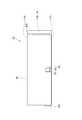
- FIG. 1 is a diagram showing an example of a container 10 according to the present embodiment.
- This container 10 which is an example of a storage container, is a container 10 used for transporting fresh products, and is transported to a transportation destination in a state of being mounted on a transportation device such as a ship, an aircraft, or a vehicle.
- perishables refers to products that are sold in a state where freshness is emphasized and temperature is controlled. Examples of perishable products include fruits and vegetables, fresh fish, and meat. Here, examples of fruits and vegetables include vegetables and fruits.
- fresh products include beverages such as milk and non-food products such as fresh flowers.
- a detection unit 12 for detecting the quality of the gas in the container 10 is provided.
- the detection unit 12 includes a plurality of collection members 30 for collecting gas and a detection unit 40 as main components. Further, in the present embodiment, an information processing device 100 is provided that processes the detection result obtained by the detection unit 40 and controls the valve 700 and the like, which will be described later.
- the air conditioner 200 is provided to set the temperature inside the container 10 to a predetermined temperature.
- the air conditioner 200 supplies cooled air to the inside of the container 10, and the inside of the container 10 is in a refrigerated state or a frozen state.
- the container 10 of the present embodiment stores fresh produce in a refrigerated or frozen state.
- the plurality of collecting members 30 are used to collect the gas in the container 10.
- the collecting member 30 is installed at each of a plurality of different locations. More specifically, the plurality of collecting members 30 are arranged so that the positions of the containers 10 in the longitudinal direction are different from each other.
- the plurality of collecting members 30 may be arranged in a state where the positions of the container 10 in the lateral direction are shifted. Further, the plurality of collecting members 30 may be arranged in a state where the positions in the height direction are shifted.
- the collecting member 30 is installed at a plurality of places, and the gas at each of the plurality of places is collected by the collecting member 30.
- the container 10 is provided with a rectangular parallelepiped housing 11 that partitions the inside of the container 10 and the outside of the container 10. The plurality of collecting members 30 are supported by the housing 11.
- the "housing 11" refers to a portion having a function of forming a main part of the container 10 and forming a space for accommodating an object.
- a fresh product is housed inside the housing 11.
- the shape of the housing 11 is not limited to a rectangular parallelepiped or a cube, and may be, for example, a dome shape or a spherical shape. Further, the housing 11 is not limited to being composed of one component, and may be configured by combining a plurality of components.
- the housing 11 of the present embodiment is composed of a ceiling portion 11A, a side wall portion 11B, and a bottom portion 11C.
- a fresh product (not shown) is housed in a rectangular parallelepiped space 90 surrounded by a ceiling portion 11A, a side wall portion 11B, and a bottom portion 11C.
- the perishable product is housed in the space 90 in a refrigerated or frozen state.
- Each of the collecting members 30 is made of a resin material. Further, each of the collecting members 30 is composed of a flexible tubular member. Thereby, in the present embodiment, the position of the collecting member 30 can be adjusted. More specifically, each of the collecting members 30 has a suction port 31A at the tip thereof for sucking gas, and in the present embodiment, the position of the suction port 31A is obtained by deforming the collecting member 30. Can be adjusted.
- the collecting member 30 is supported by the housing 11, and the end on the side opposite to the side supported by the housing 11 is a free end.
- the position of the end portion located on the free end side can be adjusted.
- each of the collecting members 30 is provided in a wound form, and the length of the collecting member 30 can be changed by unwinding the collecting member 30 and by winding the collecting member 30. Can be done. Further, the collecting member 30 hangs down, and the gas collecting position moves in the vertical direction by unwinding the collecting member 30 and by winding the collecting member 30.
- the detection unit 12 is provided with a detection unit 40 that detects the quality of the gas collected by the collection member 30.
- the detection unit 40 is not provided corresponding to each of the plurality of collection members 30, and the number of the detection units 40 installed is smaller than the number of the plurality of collection members 30 installed.
- a plurality of collecting members 30 are installed more than the detection unit 40.
- the detection unit 40 is shared.
- the detection unit 40 as an example of the detection means is provided with a freshness sensor S1 and an environment sensor S2.
- the signals from the freshness sensor S1 and the environment sensor S2 are output to the information processing device 100. In other words, the signal from the detection unit 40 is transmitted to the information processing device 100.
- the freshness sensor S1 obtains information about the freshness of fresh produce.
- a gas sensor that detects a predetermined specific gas such as ethylene gas or carbon dioxide can be mentioned as an example.
- Ethylene gas and carbon dioxide increase around the perishables when the perishables are vegetables and fruits and as the perishables deteriorate. By detecting this ethylene gas and carbon dioxide, it is possible to grasp that the freshness of perishables is decreasing.
- a sensor for grasping the fluorescence characteristics of a fresh product can be mentioned. More specifically, as the freshness sensor S1, for example, a sensor that grasps the chlorophyll fluorescence of a fresh product can be mentioned. Perishables such as fruits and vegetables may contain substances that fluoresce when exposed to light with a short wavelength such as ultraviolet light, and by measuring this fluorescence, the freshness of the perishables can be grasped.
- the freshness sensor S1 is installed at a position facing the fresh product.
- the freshness sensor S1 may be used to measure the respiration rate of the perishable product. More specifically, as the freshness sensor S1, one or both of a sensor for detecting oxygen and a sensor for detecting carbon dioxide may be installed, and this sensor may be used to measure the respiration rate of a fresh product. ..
- the respiration of fresh products such as fruits and vegetables is a chain of enzymatic chemical reactions, and the higher the respiration rate (carbon dioxide generation or oxygen consumption per unit time), the more the freshness of the fresh products decreases. , Is an index.
- a near-infrared sensor may be used as the freshness sensor S1. Chlorophyll contained in perishables is decomposed due to the decrease in freshness (aging) of perishables, and the absorption characteristics change. From the range of this change, it is possible to estimate the decrease in freshness of perishables.
- the near-infrared sensor When a near-infrared sensor is used as the freshness sensor S1, for example, the near-infrared sensor is installed at a position facing the fresh product.
- a sensor that measures the electrical resistance of a fresh product may be used as the freshness sensor S1.
- cell destruction occurs as the freshness decreases, and the electrical resistance of the fresh product decreases as the cell destruction occurs. By obtaining the range of this decrease in electrical resistance, it is possible to grasp the decrease in freshness of perishables.
- the sensor When a sensor for measuring the electrical resistance of a fresh product is used as the freshness sensor S1, the sensor is arranged in contact with the fresh product.
- the environment sensor S2 obtains information about the environment inside the housing 11. Examples of the environment sensor S2 include a temperature sensor and a humidity sensor. Further, as the environment sensor S2, a component detection sensor that detects a specific component contained in the gas can be mentioned. In addition, as the environmental sensor S2, a pressure sensor can be mentioned.
- the detection unit 40 is installed outside the container 10.
- the gas collected by the collecting member 30 moves to the outside of the container 10 and is supplied to the detection unit 40 provided outside the container 10.
- the gas collected by the collecting member 30 moves to the outside of the housing 11 that houses the fresh product and is supplied to the detection unit 40 provided on the outside.
- the detection unit 40 is not limited to the outside of the housing 11, but may be provided inside the housing 11 as described later. Further, as described above, when the detection unit 40 is composed of a sensor for grasping the fluorescence characteristics, the detection unit 40 is arranged in the housing 11 at a position facing the perishable product.
- a common pipeline 50 (hereinafter, referred to as “common pipeline 50”) into which the gas collected by each of the collecting members 30 flows is provided.
- the gas collected by each of the plurality of collecting members 30 flows into the common pipeline 50 and is supplied to the detection unit 40 through the common pipeline 50.
- a compressor or a pump (not shown) for sending the gas collected by the collecting member 30 to the detection unit 40 is provided.
- the housing 11 is provided with an opening 12X for sending the gas collected by the collecting member 30 to the outside of the container 10.
- the housing 11 is provided with an opening 12X for connecting the inside and the outside of the container 10.
- the common pipeline 50 is provided from the inside to the outside of the housing 11 through the opening 12X.
- the gas collected by the collecting member 30 is supplied to the detection unit 40 through the opening 12X.
- the space 90 in the housing 11 is connected to the detection unit 40 via the collecting member 30 and the common pipeline 50.
- a plurality of connecting portions 55 for connecting the collecting member 30 and the common pipeline 50 are provided.
- the detection unit 40 is provided on the downstream side of the connection unit 55 located on the most downstream side in the moving direction of the gas toward the detection unit 40.
- each of the connecting portions 55 between the collecting member 30 and the common pipeline 50 is provided with a valve 700 for connecting the collecting member 30 and the common pipeline 50 and blocking the connection.
- the valve 700 is composed of, for example, a solenoid valve.
- Each of the valves 700 is controlled by a control unit 201 (described later), and each of the connection units 55 opens and closes the valve.
- control unit 201 opens, for example, only one valve 700 among the plurality of valves 700 provided. Further, the control unit 201 sequentially switches the valves 700 to be opened. As a result, in the present embodiment, gas is sequentially supplied to the detection unit 40 from a part of the collection members 30 among the plurality of collection members 30. In this case, in the present embodiment, it is possible to generate information about the deterioration of the housing 11 for each of the plurality of locations inside the housing 11 (details will be described later).
- FIG. 2 is a diagram showing a hardware configuration of the information processing device 100.
- the information processing device 100 is provided with a CPU (Central Processing Unit) 101, a ROM (Read Only Memory) 102, and a RAM (Random Access Memory) 103 as an example of a processor. Further, the information processing device 100 is provided with a storage device 105 which is composed of a hard disk device or the like and stores information. Further, the information processing device 100 is provided with a communication device 104 (communication I / F) for communicating with the outside. In addition, the information processing device 100 is provided with an input device used for inputting information such as a keyboard and a mouse, and a display device such as a liquid crystal display.
- a display device such as a liquid crystal display.
- the ROM 102 and the storage device 105 store a program executed by the CPU 101.
- the CPU 101 reads a program stored in the ROM 102 or the storage device 105, and executes the program using the RAM 103 as a work area.
- the program executed by the CPU 101 is stored in a computer-readable recording medium such as a magnetic recording medium (magnetic tape, magnetic disk, etc.), an optical recording medium (optical disk, etc.), an optical magnetic recording medium, or a semiconductor memory. In the state, it can be provided to the information processing apparatus 100. Further, the program executed by the CPU 101 may be provided to the information processing apparatus 100 by using a communication means such as the Internet.
- a computer-readable recording medium such as a magnetic recording medium (magnetic tape, magnetic disk, etc.), an optical recording medium (optical disk, etc.), an optical magnetic recording medium, or a semiconductor memory. In the state, it can be provided to the information processing apparatus 100. Further, the program executed by the CPU 101 may be provided to the information processing apparatus 100 by using a communication means such as the Internet.
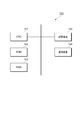
- FIG. 3 is a functional block diagram showing the functions of the information processing device 100. Note that FIG. 3 shows a functional unit related to the generation of information on the deterioration of the housing 11.
- the information processing device 100 of the present embodiment includes a control unit 201, an internal information acquisition unit 202, a deterioration information generation unit 203, and an output unit 204. These functional units are realized by the CPU 101 executing a program stored in the ROM 102 (see FIG. 2) or the storage device 105.
- the control unit 201 controls each unit provided in the container 10, such as opening and closing the valve 700.
- the internal information acquisition unit 202 as an example of the internal information acquisition means acquires internal information which is information about the inside of the housing 11.
- the "internal information" refers to information obtained about the inside of the housing 11.
- the internal information includes not only the information itself obtained from the inside of the housing 11, but also information about devices and the like that can affect the inside of the housing 11, such as information about the air conditioner 200.
- the deterioration information generation unit 203 as an example of the deterioration information generation means generates information about the deterioration of the housing 11.
- the output unit 204 as an example of the output means outputs the information about the deterioration of the housing 11 generated by the deterioration information generation unit 203.
- the internal information acquisition unit 202 acquires internal information that is information about the inside of the housing 11. Then, in the present embodiment, the deterioration information generation unit 203 generates information about the deterioration of the housing 11 based on the internal information acquired by the internal information acquisition unit 202.
- the internal information acquisition unit 202 acquires atmosphere information, which is information about the internal atmosphere of the housing 11, as internal information, for example. Then, the deterioration information generation unit 203 generates information about the deterioration of the housing 11 based on this atmosphere information.
- the internal information acquisition unit 202 acquires information output from, for example, the environment sensor S2 as atmosphere information. Specifically, the internal information acquisition unit 202 acquires output information such as a temperature sensor, a humidity sensor, a component detection sensor, and a pressure sensor as atmosphere information. Then, the deterioration information generation unit 203 generates information about the deterioration of the housing 11 based on the information output from the temperature sensor, the humidity sensor, the component detection sensor, the pressure sensor, and the like.
- the deterioration information generation unit 203 generates information indicating that the housing 11 is deteriorated when, for example, the temperature inside the housing 11 is larger than a predetermined threshold value. More specifically, the deterioration information generation unit 203 generates information indicating that the housing 11 is deteriorated when the temperature obtained by the temperature sensor is larger than a predetermined threshold value.
- the deterioration information generation unit 203 generates information indicating that the housing 11 is deteriorated, for example, when the humidity inside the housing 11 is larger or smaller than a predetermined threshold value. More specifically, the deterioration information generation unit 203 generates information indicating that the housing 11 is deteriorated when the humidity obtained by the humidity sensor is larger or smaller than a predetermined threshold value. do.
- air conditioning is performed by the air conditioner 200, and the temperature inside the housing 11 is kept lower than a predetermined temperature. Further, in the present embodiment, air conditioning is performed by the air conditioning device 200, and the humidity inside the housing 11 is maintained within a predetermined range. On the other hand, if the housing 11 deteriorates and, for example, holes or gaps are formed in the housing 11, the inside of the housing 11 is affected by the outside air.
- the temperature inside the housing 11 may be higher or lower than the originally planned temperature, or the humidity inside the housing 11 may be higher or lower than the originally planned humidity.
- the deterioration information generation unit 203 in such a situation, generates information indicating that the housing 11 is deteriorated.
- the housing 11 for generating information about deterioration is not limited to the housing 11 provided in the container 10.
- the housing 11 for which information about deterioration is to be generated may be a housing 11 installed at a location other than the container 10.
- the housing 11 for generating information about deterioration may be, for example, a housing 11 constituting a warehouse or the like.
- the housing 11 constituting the container 10 may deteriorate with the passage of time.
- the housing 11 may have holes or gaps.
- the heat insulating material provided in the housing 11 may be deteriorated, or the flow path provided in the housing 11 may be blocked. Further, by repeatedly opening and closing the door provided in the container 10, a gap may be formed in the housing 11.
- the inside of the housing 11 may not reach an appropriate temperature.
- the humidity may not reach the humidity planned for the main body.
- information about the deterioration of the housing 11 is generated, and the administrator or the like obtains this information so that the administrator or the like can grasp that the housing 11 has deteriorated. can.
- the deterioration information generation unit 203 indicates that the housing 11 is deteriorated when, for example, the component value detected by the component detection sensor is smaller or larger than a predetermined threshold value. Information may be generated. Here, if holes or gaps are formed in the housing 11, the amount of the specific gas in the housing 11 decreases or increases. In such a case, the deterioration information generation unit 203 generates information indicating that the housing 11 is deteriorated.
- carbon dioxide and oxygen are supplied into the housing 11, and the concentration of carbon dioxide and the concentration of oxygen in the housing 11 are a specific ratio. May be adjusted to. In this case, if holes or gaps are formed in the housing 11, the ratio will be different and the concentrations of carbon dioxide and oxygen will change.
- the component detection sensor detects that the concentration of carbon dioxide or oxygen is changing. In this case, the deterioration information generation unit 203 generates information indicating that the housing 11 is deteriorated.
- the internal information acquisition unit 202 may acquire, for example, perishables state information as internal information.
- the perishables state information refers to information about the state of the perishables housed in the housing 11.
- the deterioration information generation unit 203 generates information about the deterioration of the housing 11 based on the perishable product state information.
- the internal information acquisition unit 202 acquires, for example, the information output from the freshness sensor S1 as fresh product state information. Then, the deterioration information generation unit 203 generates information about deterioration based on this information output from the freshness sensor S1.
- the deterioration information generation unit 203 has deteriorated the housing 11 when, for example, the information output from the freshness sensor S1 is information indicating that the deterioration of the perishable product is progressing. Generate information that indicates that. More specifically, in the deterioration information generation unit 203, for example, when the concentration of ethylene gas or carbon dioxide output from the freshness sensor S1 exceeds a predetermined threshold value, the housing 11 deteriorates. Generate information indicating that you are.
- a relationship table describing the relationship between the number of days elapsed since the installation of the perishable product in the housing 11 is started and the threshold value regarding the gas concentration is generated in advance.
- This generation table is stored in the storage device 105 (see FIG. 2).
- gas concentration concentration of ethylene gas or carbon dioxide
- the administrator or the like is asked to input information about the installation date when the perishables are actually installed in the housing 11, and the deterioration information generation unit 203 starts from this installation date. , Calculate and grasp the number of days elapsed until the day when the information about the gas concentration was acquired. Then, the deterioration information generation unit 203 refers to the generation table and reads out and acquires the threshold value corresponding to the grasped number of elapsed days. Then, the deterioration information generation unit 203 determines whether or not the acquired gas concentration is higher than the acquired threshold value, and if the gas concentration is larger than the threshold value, the housing 11 is deteriorated. Generate the information to be shown.
- the temperature inside the housing 11 rises, which makes it easy for the perishable product to deteriorate.
- more ethylene gas and carbon dioxide are released from the perishable product, and the concentration of ethylene gas and carbon dioxide increases even though the number of days elapsed since the perishable product was installed is still small. sell.
- the deterioration information generation unit 203 indicates that the housing 11 has deteriorated. To generate.
- the deterioration information generation unit 203 indicates, for example, information indicating that the housing 11 has deteriorated when the fluorescence characteristics of the perishable product output from the freshness sensor S1 satisfy a predetermined condition.
- the degree of freshness of the perishable product can be grasped by measuring the fluorescence characteristics such as chlorophyll fluorescence as described above.
- the fluorescence characteristic of the perishable product output from the freshness sensor S1 satisfies a predetermined condition, information indicating that the housing 11 has deteriorated is generated.
- the deterioration information generation unit 203 acquires the information about the fluorescence characteristic from the freshness sensor S1
- the deterioration information generation unit 203 acquires the information about the fluorescence characteristic from the installation date when the perishable product is actually installed in the housing 11 as described above. Calculate and grasp the number of days elapsed until the day.
- the deterioration information generation unit 203 refers to the relational table and reads out and acquires the threshold value corresponding to the grasped number of elapsed days. Then, the deterioration information generation unit 203 generates information indicating that the housing 11 is deteriorated when the numerical value specified by the acquired information on the fluorescence characteristics is larger or smaller than the acquired threshold value. do.
- the internal information acquisition unit 202 may acquire the operation status information which is the information about the operation status of the air conditioner 200 from the air conditioner 200, and this operation status information may be used as the internal information. Then, in this case, the deterioration information generation unit 203 generates information about deterioration based on the operation status information acquired by the internal information acquisition unit 202.
- the internal information acquisition unit 202 acquires, for example, the power consumption of the air conditioner 200 as internal information.
- the internal information acquisition unit 202 acquires, for example, the power consumption of the air conditioner 200 as operating status information.
- the deterioration information generation unit 203 generates information about deterioration based on the power consumption acquired by the internal information acquisition unit 202.
- the deterioration information generation unit 203 generates information indicating that the container 10 has deteriorated, for example, when the power consumption is larger than a predetermined threshold value.
- the power consumption is large, it is assumed that the temperature inside the housing 11 does not decrease due to the holes and gaps generated in the housing 11, and thus the air conditioner 200 is operating more than necessary. Will be done.
- the deterioration information generation unit 203 generates information indicating that the housing 11 is deteriorated.
- the operation status information for example, information on the temperature of the cooling air supplied from the air conditioner 200 into the housing 11 may be acquired. More specifically, in this case, for example, information about the set temperature of the cooling air is acquired from the air conditioner 200. Then, the deterioration information generation unit 203 provides information indicating that the housing 11 is deteriorated when, for example, the temperature specified by the acquired information about the set temperature is smaller than a predetermined threshold value. Generate. If there are holes or gaps in the housing 11, the temperature inside the housing 11 rises, and the set temperature is changed by the air conditioner 200 to set a lower set temperature. There are times. In this case, the deterioration information generation unit 203 generates information indicating that the housing 11 is deteriorated.
- the operation status information the rotation speed of the fan provided in the air conditioner 200, the operation status of the compressor, and the like may be grasped.
- the operating status information is not limited to the air conditioner 200, and the operating status of a supply device (not shown) that supplies carbon dioxide or oxygen into the housing 11 may be grasped. Then, in this case, the deterioration information generation unit 203 generates information indicating that the housing 11 is deteriorated when the grasped operating condition satisfies a specific condition. More specifically, as described above, for example, when the power consumption of the supply device exceeds a predetermined threshold value, the deterioration information generation unit 203 generates information indicating that the housing 11 is deteriorated. do.
- the supply device is used to supply carbon dioxide and oxygen into the housing 11, and as described above, the concentration of carbon dioxide and the concentration of oxygen in the housing 11 become a specific ratio. May be adjusted. In this case, if holes or gaps are formed in the housing 11, the concentration of carbon dioxide or oxygen does not reach a predetermined concentration, and the power consumption of the supply device increases. In this case, in the present embodiment, similarly to the above, the deterioration information generation unit 203 generates information indicating that the housing 11 is deteriorated.
- the internal information acquisition unit 202 may acquire both the above-mentioned operating status information and atmosphere information as internal information.
- the deterioration information generation unit 203 generates information about the deterioration of the housing 11 based on both the operation status information and the atmosphere information.
- the deterioration information generation unit 203 for example, the temperature obtained by the temperature sensor is higher than the threshold value even though the air conditioner 200 is operating for a predetermined time. In this case, information indicating that the housing 11 has deteriorated is generated. Further, the deterioration information generation unit 203 determines, for example, when the temperature obtained by the temperature sensor is higher than the threshold value even though the power consumption of the air conditioner 200 is larger than the predetermined threshold value. Generates information indicating that the body 11 is deteriorating.
- the deterioration information generation unit 203 is, for example, information indicating that the information obtained by the freshness sensor S1 is deteriorated even though the air conditioner 200 is operating normally. In some cases, information indicating that the housing 11 has deteriorated may be generated.
- the internal information acquisition unit 202 may acquire a photographed image obtained by photographing the inside of the housing 11 as internal information.
- an image sensor (not shown) for photographing the inside of the housing 11 is installed inside the housing 11.
- the image pickup device is composed of, for example, a CCD (Charge Coupled Device) or a CMOS (Complementary Metal Oxide Semiconductor).
- the deterioration information generation unit 203 analyzes the captured image acquired by the image sensor and generates information about the deterioration of the housing 11.
- the deterioration information generation unit 203 analyzes the captured image and determines whether or not a hole or a gap is formed in the housing 11. More specifically, when a hole or a gap is generated in the housing 11, the brightness of that portion increases. Therefore, in the deterioration information generation unit 203, for example, when the brightness of a part of the captured image is increased. , It is determined that a hole or a gap is formed in the housing 11. Then, in this case, the deterioration information generation unit 203 generates information indicating that the housing 11 is deteriorated.
- a light ray from a light source may be applied to the inner wall surface of the housing 11 and the reflected light may be received, and the result of this light reception may be acquired as internal information. If there are holes or gaps in the housing 11, the reflected light cannot be obtained or the reflected light is weakened, so that it can be grasped that the housing 11 has holes or gaps.
- the deterioration information generation unit 203 may generate information about deterioration based on the internal information acquired by the internal information acquisition unit 202 when the housing 11 is in a specific situation. More specifically, as described above, the internal information acquisition unit 202 acquires information such as perishable product status information, operating status information, atmosphere information, and captured images as internal information. The deterioration information generation unit 203 may generate information about deterioration based on the information acquired by the internal information acquisition unit 202 when the housing 11 is in a specific situation.
- the deterioration information generation unit 203 provides information about deterioration based on the internal information acquired by the internal information acquisition unit 202 when another housing 11 is placed on the housing 11, for example. To generate. In other words, the deterioration information generation unit 203 generates information about deterioration based on the internal information acquired by the internal information acquisition unit 202 when another container 10 is placed on the container 10. In other words, the deterioration information generation unit 203 generates information about deterioration based on the internal information acquired by the internal information acquisition unit 202 when the container 10 is in the actual use state.
- the deterioration information generation unit 203 provides information on the deterioration of the container 10 based on the internal information obtained under the condition that the housing 11 is distorted and the holes and gaps generated in the housing 11 are expanding. Can be generated.
- the weight of the other housing 11 makes it easy for the target housing 11 located below to be distorted. In this case, if a hole or a gap is formed in the target housing 11, the hole or the gap expands.
- the situation where holes or gaps are formed in the housing 11 is reflected by the internal information acquired by the internal information acquisition unit 202.
- the deterioration information generation unit 203 can easily generate information indicating that deterioration has occurred.
- Whether or not another housing 11 is placed on the housing 11 can be determined by, for example, installing a load cell in each of the housings 11 and obtaining an output from the load cell. It is possible to determine whether or not another housing 11 is placed on the body 11. Further, for example, an administrator or the like is asked to input information indicating that another housing 11 is placed on the housing 11, and based on this input information, the top of the housing 11 It may be determined whether or not another housing 11 is mounted on the.
- the deterioration information generation unit 203 may generate information on the deterioration of the housing 11 based on the internal information acquired by the internal information acquisition unit 202 while the container 10 is being transported. In this case, the container 10 is placed on a cargo ship or the like, an external force acts on the housing 11, and internal information can be obtained in a situation where the housing 11 is likely to be distorted.
- the situation where holes or gaps are formed in the housing 11 is reflected by the internal information acquired by the internal information acquisition unit 202. Then, in this case, similarly to the above, even if the holes and gaps generated in the housing 11 are small, the deterioration information generation unit 203 can easily generate information indicating that deterioration has occurred.
- Whether or not the housing 11 is transported can be determined based on, for example, the degree of change in the position specified by the position information obtained by GPS per unit time. More specifically, in this case, GPS is installed in the container 10. Then, the degree of change per unit time of the position specified by the position information obtained by this GPS is grasped, and if this degree exceeds a predetermined threshold value, it is determined that the container 10 is being transported. do.
- the deterioration information generation unit 203 deteriorates the housing 11 when the internal information includes information indicating that a predetermined specific event has occurred more than a predetermined number of times. You may generate information that indicates that you are doing so. More specifically, in the deterioration information generation unit 203, for example, when the internal information includes information indicating that the temperature in the container 10 has exceeded the threshold value three times, the housing 11 is deteriorated. Generate information that indicates that.
- the deterioration information generation unit 203 analyzes the internal information obtained by the internal information acquisition unit 202. Then, the deterioration information generation unit 203 indicates that the housing 11 has deteriorated when the internal information includes, for example, information indicating that the temperature in the container 10 has exceeded the threshold value three times. Generate information. In this case, for example, the housing 11 is deteriorated as compared with the case where the information indicating that the housing 11 is deteriorated is generated based on the information indicating that the temperature in the container 10 has exceeded the threshold value once. The accuracy of the information indicating that the information is correct is increased.
- the deterioration information generation unit 203 may generate information on deterioration at each of a plurality of locations inside the housing 11. More specifically, in the configuration example of the present embodiment, as described above, valves 700 are provided in each of the connecting portions 55 between the collecting member 30 and the common pipeline 50, and are individually provided for each installation location of the collecting member 30. In addition, gas can be supplied to the detection unit 40. In this case, the internal information acquisition unit 202 can acquire internal information for each of a plurality of locations inside the housing 11.
- the deterioration information generation unit 203 generates information about deterioration based on each of the internal information acquired by the internal information acquisition unit 202. In this case, the deterioration information generation unit 203 generates information indicating whether or not the housing 11 has deteriorated at each location where the collection member 30 is installed. In other words, in this case, the deterioration information generation unit 203 individually generates information indicating whether or not the housing 11 has deteriorated at each of the plurality of locations inside the housing 11.
- the deterioration information generation unit 203 generates information indicating the degree of deterioration in place of the information indicating that the housing 11 is deteriorated, or in addition to the information indicating that the housing 11 is deteriorated. You may.
- the deterioration information generation unit 203 may generate information indicating the degree of deterioration according to the degree of numerical values or the like specified by the internal information acquired by the internal information acquisition unit 202. More specifically, the deterioration information generation unit 203 may, for example, grasp the degree of deterioration with a numerical value in the range of 0 to 100 and output this numerical value.
- the deterioration information generation unit 203 generates information about the deterioration of the housing 11.
- the output unit 204 (see FIG. 3) outputs the information about the deterioration to a predetermined output destination.
- the output unit 204 outputs information about deterioration to, for example, a personal computer (personal computer) or a mobile terminal of the administrator of the container 10. Further, for example, when the container 10 is provided with a display device, the output unit 204 outputs information about deterioration to the display device. As a result, the administrator of the container 10 and the like can know information about the deterioration of the container 10.
- the output unit 204 when the output unit 204 outputs information indicating that the housing 11 has deteriorated, the output unit 204 may further output information indicating a warning. In addition, the output unit 204 may output information prompting the inspection of the housing 11.
- the housing 11 since the deterioration of the housing 11 itself is not directly detected, it is assumed that the housing 11 is not actually deteriorated. In other words, it is assumed that the perishables are deteriorated due to factors other than the deterioration of the housing 11.
- the installation position of the detection unit 40 is not limited to this, and may be provided inside the container 10 as shown in FIG. 4 (a diagram showing another configuration example of the container 10).
- the installation of the collecting member 30 is canceled, and the detection unit 40 is provided at each of the locations where the collecting member 30 is installed.
- information on the deterioration of the housing 11 can be generated for each of the plurality of locations.
- the information processing device 100 provided in the container 10 acquires the internal information and generates the information about the deterioration of the housing 11.
- the information processing device 100 is installed separately from the container 10, and the information processing device 100 installed separately from the container 10 acquires internal information and generates information about deterioration of the housing 11. You may go.
- the present invention is not limited to this, and the information obtained by the detection unit 40 is provided in the detection unit 40. It may be temporarily stored in the memory or the like. Then, for example, the stored information may be provided to the information processing apparatus 100 from this memory at a specific timing such as the timing when the fresh food in the container 10 is unloaded.
- the deterioration information generation unit 203 may generate information about deterioration of the housing 11 based on a plurality of internal information obtained by the internal information acquisition unit 202. More specifically, the deterioration information generation unit 203 may generate information about deterioration of the housing 11 based on a plurality of internal information sequentially acquired by the internal information acquisition unit 202.
- the deterioration information generation unit 203 generates information about the deterioration of the housing 11 based on each of the plurality of internal information sequentially acquired by the internal information acquisition unit 202 and obtained in chronological order. You may. More specifically, in this case, the deterioration information generation unit 203 sequentially acquires the internal information acquired by the internal information acquisition unit 202. Then, the deterioration information generation unit 203 generates information indicating that the housing 11 is deteriorated when the latest internal information acquired is information indicating that the housing 11 is deteriorated. Output. In this case, the inside of the housing 11 is substantially constantly monitored, and if the housing 11 deteriorates, the administrator or the like is notified at an earlier timing that the housing 11 has deteriorated. Can provide information.
- the outputs from each of the plurality of containers 10 may be acquired from the detection unit 40 installed in each container 10, and the obtained plurality of outputs may be compared. Then, when the content of one output is different from the content of each of the other plurality of outputs, the container 10 in which the detection unit 40 that has obtained this one output is installed may be specified. In this case, it becomes possible to detect that an abnormality such as deterioration of the housing 11 has occurred in the specified container 10.
- the detection result by the detection unit 40 obtained in this one container 10 is obtained.
- the detection result by the detection unit 40 obtained in each of the other containers 10 will be different. In this case, it is assumed that an abnormality such as deterioration of the housing 11 has occurred in this one container 10, and in this process of the present embodiment, it becomes possible to grasp that the abnormality has occurred.
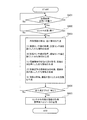
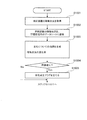
- FIG. 6 is a flowchart showing an example of the flow of processing implemented in this embodiment.
- the air conditioner 200 is operating normally (step S601). In other words, it is determined whether or not a device such as a refrigerator is operating normally. Then, if it is operating normally, it is determined whether or not the door of the container 10 is closed (step S602). Then, when it is determined in step S602 that the door of the container 10 is closed, the internal information acquisition unit 202 performs the internal information acquisition process, and the deterioration information generation unit 203 performs the deterioration information generation process ( Step S603).
- the internal information acquisition unit 202 and the deterioration information generation unit 203 perform the following processes (A) to (E).
- the internal information acquisition unit 202 and the deterioration information generation unit 203 acquire the freshness sensor value which is the value obtained by the freshness sensor S1 and generate the deterioration information based on the freshness sensor value.
- the internal information acquisition unit 202 and the deterioration information generation unit 203 acquire the environment sensor value, which is the value obtained by the environment sensor S2, and generate the deterioration information based on the environment sensor value.
- the internal information acquisition unit 202 and the deterioration information generation unit 203 acquire the operating status of the air conditioner 200 and generate deterioration information based on the operating status.
- the internal information acquisition unit 202 and the deterioration information generation unit 203 acquire the operating status of the supply device that supplies carbon dioxide and the like to the container 10, and generate deterioration information based on the operating status.
- the internal information acquisition unit 202 and the deterioration information generation unit 203 acquire an image obtained by the image sensor and generate deterioration information based on the image.
- step S603 When the deterioration information generation unit 203 determines in step S603 that the container 10 has deteriorated, the deterioration information generation unit 203 has a flag indicating that the container 10 has deteriorated in step S603. Set the deterioration establishment flag. Then, in step S604, it is determined whether or not the deterioration establishment flag is set, and if the deterioration establishment flag is set, the process proceeds to step S605.
- step S605 the inside of the container 10 is photographed by using the image sensor provided in the container 10, and the image inside the container 10 is acquired. Further, in the process of step S605, data indicating that the deterioration establishment flag is set (meaning that the container 10 has deteriorated) and that the deterioration has occurred is transmitted to the administrator.
- the data indicating that deterioration has occurred include, for example, the number of deterioration establishment flags, the information acquired by the internal information acquisition unit 202, the image obtained by the image sensor, and the like. As a result, the administrator can grasp the point that the container 10 has deteriorated and the degree of deterioration.
- the internal information acquisition unit 202 acquires information for a plurality of voyages. .. Further, in the present embodiment, the larger the number of the above-mentioned deterioration establishment flags notified to the administrator, the higher the possibility that the container 10 is actually deteriorated, and the larger the number of the deterioration establishment flags, the more the container 10 is. Increases the certainty that it is actually deteriorating.
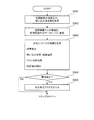
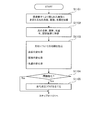
- FIG. 7 is a flowchart showing the flow of processing executed in the freshness sensor value acquisition process and the deterioration information generation process based on the freshness sensor value in (A).
- the freshness sensor S1 grasps the concentrations of ethylene gas, oxygen, carbon dioxide, and the like (step S701). Further, in the present embodiment, the fluorescence characteristic is grasped by the freshness sensor S1 (step S701). Then, in the present embodiment, the internal information acquisition unit 202 acquires these information sequentially output from the freshness sensor S1 and stores these information in the storage device 105 (see FIG. 2) (step S702).
- the internal information acquisition unit 202 reads information from the storage device 105 every time a predetermined fixed time elapses, and based on this information, generates an index for deterioration of the container 10. (Step S703). Specifically, the internal information acquisition unit 202 generates information on the rate of increase in ethylene gas, for example, as an index on the deterioration of the container 10. Specifically, the internal information acquisition unit 202 provides information on the rate of increase in ethylene gas based on the concentration of ethylene gas at a specific timing and the concentration of ethylene gas at a specific timing prior to this specific timing. To generate.
- the internal information acquisition unit 202 reads out information about the concentration of ethylene gas from the storage device 105. Then, the internal information acquisition unit 202 generates information about the rate of increase of ethylene gas based on the concentration of ethylene gas at a specific timing and the concentration of ethylene gas at a specific timing prior to this specific timing. ..
- step S704 the deterioration information generation unit 203 determines whether or not the rate of increase in ethylene gas exceeds a predetermined threshold value. Then, when the rate of increase of ethylene gas exceeds a predetermined threshold value, the deterioration information generation unit 203 determines that the container 10 has deteriorated, and indicates that the container 10 has deteriorated. A deterioration establishment flag, which is a flag, is set (step S705). After the process of step S705, the processes after step S701 are performed again. Further, even when it is determined in step S704 that the rate of increase in ethylene gas does not exceed a predetermined threshold value, the processes after step S701 are performed again.
- information on the rate of increase in respiratory volume may be generated as an index of deterioration of the container 10.
- the internal information acquisition unit 202 generates information such as the rate of decrease in acidity concentration and the rate of increase in dioxide concentration as information on the rate of increase in respiratory volume.
- the internal information acquisition unit 202 reduces the acidity concentration based on the acidity concentration and carbon dioxide concentration at a specific timing and the acidity concentration and carbon dioxide concentration at a specific timing prior to this specific timing. Generate information such as the rate and the rate of increase in carbon dioxide concentration.
- step S704 the deterioration information generation unit 203 determines whether or not the rate of increase in respiratory volume (rate of decrease in acidity concentration, rate of increase in carbon dioxide concentration) exceeds a predetermined threshold value. do. Then, when the rate of increase in respiratory volume exceeds a predetermined threshold value, the deterioration information generation unit 203 determines that the container 10 has deteriorated and sets a deterioration establishment flag (step S705).
- rate of increase in respiratory volume rate of decrease in acidity concentration, rate of increase in carbon dioxide concentration
- step S703 information on the rate of decrease in fluorescence characteristics may be generated as an index of deterioration of the container 10.
- the internal information acquisition unit 202 reduces the fluorescence characteristics based on, for example, the value of the chlorophyll fluorescence amount at a specific timing and the value of the chlorophyll fluorescence amount at a specific timing prior to this specific timing. Generate information about rates.
- step S704 the deterioration information generation unit 203 determines whether or not the reduction rate of the fluorescence characteristic exceeds a predetermined threshold value. Then, when the deterioration rate of the fluorescence characteristic exceeds a predetermined threshold value, the deterioration information generation unit 203 determines that the container 10 has deteriorated and sets a deterioration establishment flag (step S705).
- FIG. 8 is a flowchart showing the flow of the environment sensor value acquisition process and the deterioration information generation process based on the environment sensor value (B).
- the environment sensor S2 sequentially outputs information about the outside temperature, the inside temperature, the humidity, the gas component value, and the atmospheric pressure (step S801).
- the outside temperature refers to the temperature outside the container 10
- the inside temperature refers to the temperature inside the container 10
- the humidity refers to the humidity inside the container 10.
- the gas component value refers to the value of various components contained in the gas inside the container 10
- the atmospheric pressure refers to the atmospheric pressure inside the container 10.
- step S802 the internal information acquisition unit 202 acquires these information sequentially output from the environment sensor S2 and sequentially stores them in the storage device 105 (see FIG. 2). Further, although not shown, in this process, the internal information acquisition unit 202 also acquires information about the set temperature set by the administrator or the like, and stores the information of the set temperature in the storage device 105 as well.
- the internal information acquisition unit 202 generates an index for deterioration of the container 10 based on the above information stored in the storage device 105. Specifically, the internal information acquisition unit 202 generates information about, for example, the heat recirculation rate as an index for deterioration of the container 10. Specifically, the internal information acquisition unit 202 generates information about the heat recirculation rate by using the following equation (1) every time a predetermined fixed time elapses. Equation (1) ... (Cooling capacity of air conditioner 200) / (Outside temperature-Inside temperature)
- the internal information acquisition unit 202 changes the heat recirculation rate based on the heat recirculation rate generated at a specific timing and the heat recirculation rate generated at a specific timing prior to this specific timing. Find the rate.
- the internal information acquisition unit 202 acquires a new heat recirculation rate by using the equation (1) every time a predetermined fixed time elapses, and further obtains a new rate of change.
- step S804 the deterioration information generation unit 203 determines whether or not the newly obtained rate of change exceeds a predetermined threshold value (step S804). Then, when the rate of change exceeds the threshold value, the deterioration information generation unit 203 determines that the container 10 has deteriorated and sets a deterioration establishment flag (step S805). Similar to the above, in the present embodiment, after the process of step S805, the processes after step S801 are performed again. Further, even when it is determined in step S804 that the rate of change does not exceed the threshold value, the processes after step S801 are performed again.
- the heat recirculation rate when there is no significant change in the state of the container 10, the heat recirculation rate is substantially constant.
- the heat recirculation rate changes.
- the deterioration of the container 10 is grasped by grasping the change in the heat recirculation rate.
- the internal information acquisition unit 202 has the cooling capacity based on the information about the air supplied from the air conditioner 200 to the inside of the container 10 and the information about the air conditioner 200. To grasp. Specifically, when the internal information acquisition unit 202 grasps the cooling capacity based on the information about air, the internal information acquisition unit 202 grasps the cooling capacity by using, for example, the following equation (2). Equation (2): (Suction temperature-Blowout temperature) x Air volume (mass flow rate) x Specific heat
- the suction temperature refers to the temperature of the gas sucked by the air conditioner 200, and the blowout temperature is discharged from the air conditioner 200.
- the air volume refers to the amount of gas discharged from the air conditioner 200.
- Equation (3) Refrigerant circulation amount (compressor discharge amount (volume) x number of revolutions x refrigerant density) x specific enthalpy difference of the refrigerant at the inlet and outlet of the evaporator
- the refrigerant density is, for example, the compressor suction temperature and the pressure. Grasp based on. The specific enthalpy is grasped based on the compressor suction pressure and the evaporator inlet / outlet temperature.
- the internal information acquisition unit 202 generates information about the humidity inside the container 10, for example, as an index about the deterioration of the container 10. Specifically, the internal information acquisition unit 202 receives information about the humidity obtained from the storage device 105 (see FIG. 2) at a specific timing, and at a specific timing prior to this specific timing. Get information about the humidity obtained in.
- the internal information acquisition unit 202 generates an index for deterioration of the container 10 based on the acquired information on the two humidity. Specifically, the internal information acquisition unit 202 generates information about the rate of change in humidity based on the information about these two humiditys. Then, the deterioration information generation unit 203 determines in the next step S804 whether or not the generated rate of change exceeds a predetermined threshold value. Then, when the rate of change exceeds a predetermined threshold value, the deterioration information generation unit 203 sets a deterioration establishment flag (step S805).
- the humidity inside the container 10 is kept constant, and when the humidity inside the container 10 changes, it is assumed that holes or gaps are formed in the container 10.
- the humidity inside the container 10 rises when the outside air enters the inside through the holes or gaps in the container 10.
- the temperature outside the refrigerator is lower than the temperature inside the refrigerator, if the air outside the refrigerator enters the refrigerator through the holes or gaps in the container 10, the humidity inside the container 10 decreases.
- the deterioration of the container 10 is grasped by grasping the change in the humidity inside the container 10.
- the internal information acquisition unit 202 acquires, for example, information about the component value of the gas inside the container 10 as an index for the deterioration of the container 10. Specifically, the internal information acquisition unit 202 grasps, for example, a gas component value at a specific timing and a gas component value at a specific timing prior to the specific timing. Then, the internal information acquisition unit 202 acquires the rate of change of this component value.
- the process proceeds to step S804, and the deterioration information generation unit 203 determines whether or not this rate of change exceeds a predetermined threshold value. Then, when the rate of change exceeds a predetermined threshold value, the deterioration information generation unit 203 sets a deterioration establishment flag (step S805).
- the container 10 may be provided with a supply device for supplying oxygen or carbon dioxide, and in this case, the component value of the gas inside the container 10 is kept constant. In this case, if the component value fluctuates, it is assumed that the container 10 has holes or gaps. Therefore, in the present embodiment, as described above, when the rate of change exceeds a predetermined threshold value, a deterioration establishment flag is set.
- the internal information acquisition unit 202 generates information about the pressure inside the container 10, for example, as an index about the deterioration of the container 10. Specifically, the internal information acquisition unit 202 determines the rate of change of this pressure based on the internal pressure of the container 10 at a specific timing and the pressure of the container 10 at a specific timing prior to this specific timing. grasp.
- step S804 the deterioration information generation unit 203 determines whether or not the grasped rate of change exceeds a predetermined threshold value. Then, when the grasped rate of change exceeds a predetermined threshold value, the deterioration information generation unit 203 sets a deterioration establishment flag in the same manner as described above (step S805).
- the container 10 is provided with a supply device that supplies oxygen, carbon dioxide, and the like, and the inside of the container 10 is pressurized by this supply device, and the air inside the container 10 is discharged from the container 10. It is discharged to the outside of.
- the inside of the container 10 is in a pressurized state or a depressurized state.
- the pressurized state or the depressurized state is not maintained, and the pressure inside the container 10 changes.
- the change in pressure is detected to grasp the deterioration of the container 10.
- FIG. 9 is a flowchart showing the flow of the process of acquiring the operating status of the air conditioner 200 and the process of generating deterioration information based on the operating status of the air conditioner 200 (C).
- the internal information acquisition unit 202 sequentially acquires information such as power consumption, suction temperature, set temperature, control temperature, fan rotation speed, and compressor operating status of the air conditioner 200 from the air conditioner 200. (Step S901). Then, each time the internal information acquisition unit 202 acquires these information from the air conditioner 200, the acquired data is stored in the storage device 105 (see FIG. 2) in a state of being associated with each other. Register in the sheet (step S902).
- the internal information acquisition unit 202 generates an index for deterioration of the container 10 based on the information registered in the data sheet (step S903). Specifically, the internal information acquisition unit 202 generates information on, for example, the difference in power consumption as an index on the deterioration of the container 10. Specifically, the internal information acquisition unit 202 first grasps the estimated power consumption of the air conditioner 200 at a specific timing. The internal information acquisition unit 202 grasps the estimated power consumption based on various information such as the initial performance of the air conditioner 200, the temperature outside the refrigerator, the temperature inside the refrigerator, and the cooling capacity. Further, the internal information acquisition unit 202 acquires the actual power consumption of the air conditioner 200 at this specific timing. The actual power consumption refers to the power actually used by the air conditioner 200.
- the internal information acquisition unit 202 generates the difference between the estimated power consumption and the actual power consumption as an index for deterioration of the container 10. It should be noted that this generation is performed every time a predetermined fixed time elapses, as described above. Then, in step S904, the deterioration information generation unit 203 determines whether or not this difference exceeds a predetermined threshold value. Then, when this difference exceeds a predetermined threshold value, the deterioration information generation unit 203 sets a deterioration establishment flag in the same manner as described above (step S905). When holes or gaps are formed in the container 10, the actual power consumption increases, and the assumed power consumption and the actual power consumption deviate from each other. In the present embodiment, this deviation is detected to detect the deterioration of the container 10.
- step S905 the processes after the process of step S901 are performed again. Further, even if it is determined in step S904 that the difference does not exceed a predetermined threshold value, the processing after the processing in step S901 is performed again.
- the internal information acquisition unit 202 acquires, for example, information on the suction temperature and information on the control temperature as an index for deterioration of the container 10.
- the internal information acquisition unit 202 acquires information about the suction temperature
- the internal information acquisition unit 202 acquires an assumed value of the suction temperature and an actually measured value of the suction temperature.
- the internal information acquisition unit 202 calculates and acquires the estimated value of the suction temperature based on various information such as the outside temperature and the blowout temperature, for example. Further, the internal information acquisition unit 202 acquires the actually measured value based on the output from the sensor (not shown). Next, the internal information acquisition unit 202 obtains the difference between the assumed value and the actually measured value as an index for deterioration of the container 10.
- the deterioration information generation unit 203 performs a determination process in step S904 to determine whether or not this difference exceeds a predetermined threshold value. Then, when the difference exceeds the threshold value, the deterioration information generation unit 203 sets the deterioration establishment flag in the same manner as described above (step S905).
- the above assumed value and the above measured value are close to each other.
- the amount of heat entering from the outside to the inside of the container 10 increases, the measured value of the suction temperature rises, and the difference between the assumed value and the measured value. Becomes larger. In the present embodiment, the deterioration of the container 10 is grasped based on this difference.
- the internal information acquisition unit 202 acquires information about the control temperature as an index for deterioration of the container 10
- the internal information acquisition unit 202 acquires the control temperature itself.
- the deterioration information generation unit 203 acquires a set temperature which is a preset temperature for the temperature inside the container 10.
- the control temperature is a temperature set by the control unit (not shown) that controls the air conditioner 200, and when the temperature inside the container 10 is higher than the set temperature, this control temperature is set. It will be lower than the set temperature.
- the internal information acquisition unit 202 obtains the control temperature, the set temperature, and the difference as an index for deterioration of the container 10. Then, the deterioration information generation unit 203 performs a determination process in step S904 to determine whether or not this difference exceeds a predetermined threshold value. Then, when the difference exceeds a predetermined threshold value, the deterioration information generation unit 203 sets a deterioration establishment flag (step S905).
- the state of the container 10 is kept in equilibrium in the short term, and the control temperature and the set temperature are close to each other.
- the control temperature is lower than the set temperature, and a difference is generated between the two. In this process, the deterioration of the container 10 is grasped by grasping this difference.
- step S903 information on the rotation speed of the fan provided in the air conditioner 200 may be generated as an index of deterioration of the container 10.
- information on the operating status of the air conditioner device 200 which is an example of the device that processes the gas inside the container 10, may be generated as an index of the deterioration of the container 10.
- the deterioration information generation unit 203 determines in step S904 whether or not this difference exceeds a predetermined threshold value, and if it exceeds, sets a deterioration establishment flag in step S905.
- the rotation speed of the fan is affected by the temperature inside the refrigerator, the temperature outside the refrigerator, and the like, and based on this information, the above-mentioned assumed value for the rotation speed can be obtained. Further, when a hole or a gap is formed in the container 10, heat enters from the outside to the inside of the container 10, for example, and the fan rotates at a rotation speed higher than the assumed value. In this process, the deterioration of the container 10 is grasped by obtaining the difference between this assumed value and the actual rotation speed.
- the rotation speed of the fan is used, but in addition to this, the presence or absence of deterioration of the container 10 may be determined by obtaining the difference between the estimated operating time of the fan and the actual operating time of the fan. ..
- the fan may rotate for a time longer than the assumed operation time. Deterioration of the container 10 can also be grasped by obtaining the difference between the assumed operation time and the actual operation time.
- information on the operation of the compressor may be generated as an index on the deterioration of the container 10.
- information on the operating time of the compressor is generated.
- the difference between the estimated operating time and the actual operating time is acquired, and this difference is used as an index for deterioration of the container 10.
- the deterioration information generation unit 203 determines in step S904 whether or not this difference exceeds a predetermined threshold value. Then, when the difference exceeds this threshold value, the deterioration information generation unit 203 sets the deterioration establishment flag in step S905 in the same manner as described above.
- the heat entering from the outside to the inside of the container 10 increases, and the compressor operates for a time longer than the assumed time.
- the deterioration of the container 10 is grasped by obtaining the difference between the estimated time and the actual operation time which is the actual operation time.
- the estimated rotation speed (estimated refrigerant discharge amount) and the actual rotation speed (actual refrigerant discharge amount) of the compressor are obtained. It may be. Then, the deterioration of the container 10 may be grasped based on whether the difference between the assumed rotation speed and the actual rotation speed exceeds a predetermined threshold value.
- FIG. 10 is a flowchart showing the flow of the process of acquiring the operating status of the supply device and the process of generating deterioration information based on the operating status of the supply device (D).
- the internal information acquisition unit 202 acquires the operating status of the supply device from the supply device at predetermined fixed time intervals (step S1001). Specifically, the internal information acquisition unit 202 acquires information on, for example, the operating time of the supply device per unit time and the rotation speed (generated gas amount) of the pump as the operating status.
- the internal information acquisition unit 202 sequentially registers the acquired information in the data sheet stored in the storage device 105 (see FIG. 2) (step S1002).
- the supply device can be regarded as a device that processes the gas inside the container 10.
- step S1002 information about the operating status of this device is registered in the data sheet. There is.
- the internal information acquisition unit 202 generates an index for deterioration of the container 10 in the same manner as described above. Specifically, the internal information acquisition unit 202 generates a rate of change in the operating status of the supply device as an index for deterioration of the container 10. Specifically, the internal information acquisition unit 202 obtains the rate of change between the operating status at a specific timing and the operating status at a specific timing prior to the specific timing.
- the internal information acquisition unit 202 changes, for example, between the operating time per unit time at a specific timing and the operating time per unit time at a specific timing prior to this specific timing. Find the rate. Further, the deterioration information generation unit 203 obtains, for example, the rate of change between the rotation speed of the pump at a specific timing and the rotation speed of the pump at a specific timing prior to the specific timing.
- step S1004 the deterioration information generation unit 203 determines whether or not the obtained rate of change exceeds a predetermined threshold value. Then, when the rate of change exceeds a predetermined threshold value, the deterioration information generation unit 203 sets a deterioration establishment flag (step S1005).
- the deterioration of the container is grasped based on the rate of change has been described, but as in the above, the assumed value for the operating status is obtained, and based on the difference between this assumed value and the actually measured value. You may grasp the deterioration of the container.
- step S1005 After the processing of step S1005, the same as above is performed, and the processing after step S1001 is performed again. Further, even when it is determined in step S1004 that the rate of change does not exceed a predetermined threshold value, the processes after step S1001 are performed again.
- FIG. 11 is a flowchart showing a flow of an image acquisition process obtained by the image element (E) and a process of generating deterioration information based on the image.
- the internal information acquisition unit 202 analyzes the image output from the image sensor every time a predetermined fixed time elapses, and registers the analysis result in the storage device 105 (see FIG. 2). do.
- the internal information acquisition unit 202 analyzes the image obtained by the image sensor and grasps the number of points, the area, and the amount of light contained in the image (step S1101). Next, the internal information acquisition unit 202 registers the number of points, the area, and the amount of light in the storage device 105 after associating them with the information indicating the timing at which the information is obtained (step S1102). The internal information acquisition unit 202 performs the processes of steps S1101 and S1102 at predetermined fixed time intervals.
- step S1101 information about the number of places where the light enters, the area of the place where the light enters, and the brightness at the place where the light enters is acquired. Then, in step S1102, these information acquired by the internal information acquisition unit 202 are registered in the storage device 105 after being associated with the time information.
- the internal information acquisition unit 202 generates an index for deterioration of the container 10 based on the above-mentioned information such as points, area, and light amount registered in the storage device 105 (step S1103). Specifically, the internal information acquisition unit 202 is based on, for example, the above-mentioned score obtained at a specific timing and the score obtained at a specific timing prior to the specific timing. The rate of change of points is obtained, and this rate of change is used as an index for deterioration of the container 10.
- the internal information acquisition unit 202 changes the area based on, for example, the above-mentioned area obtained at a specific timing and the area obtained at a specific timing prior to the specific timing. The rate is obtained, and this rate of change is used as an index for deterioration of the container 10. Further, the internal information acquisition unit 202 determines the rate of change of the light amount based on, for example, the amount of light obtained at a specific timing and the amount of light obtained at a specific timing prior to this specific timing. The rate of change is used as an index for deterioration of the container 10.
- step S1104 the deterioration information generation unit 203 determines whether the rate of change obtained in step S1103 exceeds a predetermined threshold value. Then, when the deterioration information generation unit 203 determines that the rate of change exceeds a predetermined threshold value, it determines that the container 10 has deteriorated and sets a deterioration establishment flag (step S1105).
- step S1105 is the same as above, and the processing after step S1101 is performed again. Further, even when it is determined in step S1104 that the rate of change does not exceed a predetermined threshold value, the processes after step S1101 are performed again.
- the image sensor is installed so that a structurally weak portion of the container 10 is photographed.
- each of the embodiments described above can be grasped as follows.
- (1) Based on the internal information acquisition unit 202 that acquires internal information that is information about the inside of the housing 11 that stores fresh food in a refrigerated or frozen state, and the internal information acquired by the internal information acquisition unit 202.
- An information processing device 100 including a deterioration information generation unit 203 that generates information about deterioration of the housing 11. According to the information processing device 100, it is possible to grasp the state of deterioration of the housing 11 that houses the perishables.
- (2) the internal information acquisition unit 202 acquires the atmosphere information which is the information about the internal atmosphere of the housing 11 as the internal information, and the deterioration information generation unit 203 describes the deterioration based on the atmosphere information.
- the internal information acquisition unit 202 acquires the perishable product status information which is information about the perishable product status housed in the housing 11 as internal information
- the deterioration information generation unit 203 acquires the perishable product status. Based on the information, generate information about deterioration. In this case, by obtaining the information about the state of the perishables housed in the housing 11, it is possible to generate the information about the deterioration of the housing 11.
- the internal information acquisition unit 202 acquires the operation status information, which is the information about the operation status of the air conditioner 200 that air-conditions the inside of the housing 11, as the internal information, and the deterioration information generation unit 203 receives the deterioration information generation unit 203. Based on the operation status information acquired by the internal information acquisition unit 202, information on deterioration is generated. In this case, by obtaining information on the operating status of the air conditioner 200 that air-conditions the inside of the housing 11, it is possible to generate information on the deterioration of the housing 11.
- the internal information acquisition unit 202 further acquires atmosphere information which is information about the internal atmosphere of the housing 11, and the deterioration information generation unit 203 further acquires the operating status information acquired by the internal information acquisition unit 202. And generate information about deterioration based on atmosphere information. In this case, it is possible to generate information on the deterioration of the housing 11 by obtaining information on the operating status of the air conditioner 200 that air-conditions the inside of the housing 11 and information on the atmosphere inside the housing 11. can.
- the internal information acquisition unit 202 acquires a photographed image obtained by photographing the inside of the housing 11 as internal information, and the deterioration information generation unit 203 analyzes the photographed image and deteriorates. Generate information about.
- the deterioration information generation unit 203 generates information about deterioration based on the internal information acquired by the internal information acquisition unit 202 when the housing 11 is in a specific situation. In this case, as compared with the case where the information about deterioration is generated based on the internal information obtained when the housing 11 is not in a specific situation, this information when outputting the information indicating that the housing 11 is deteriorated is used. The accuracy can be improved.
- the deterioration information generation unit 203 generates information about deterioration based on the internal information acquired by the internal information acquisition unit 202 when the other housing 11 is placed on the housing 11. .. In this case, it is possible to generate information about the deterioration of the housing 11 based on the internal information obtained under the condition that the housing 11 is likely to be distorted. (9) Further, the deterioration information generation unit 203 generates information about deterioration based on the internal information acquired by the internal information acquisition unit 202 while the housing 11 is being transported. In this case, it is possible to generate information about the deterioration of the housing 11 based on the internal information obtained under the condition that the housing 11 is likely to be distorted.
- the deterioration information generation unit 203 deteriorates the housing 11 when the internal information includes information indicating that a predetermined specific event has occurred more than a predetermined number of times. Generate information that indicates that you are doing it. In this case, when the internal information includes information indicating that a predetermined specific event has occurred only once, the housing 11 is compared with the case where the information indicating that the housing 11 is deteriorated is generated. It is possible to improve the accuracy of this information when outputting the information indicating that the body 11 is deteriorated. (11) Further, the deterioration information generation unit 203 generates information about deterioration for each of a plurality of locations inside the housing 11.
- an output unit 204 for outputting information about deterioration generated by the deterioration information generation unit 203 to a predetermined output destination is further provided.
- the generated information about the deterioration can be output to a predetermined output destination.
- the internal information acquisition unit 202 acquires information about the heat recirculation rate of the housing 11 as internal information
- the deterioration information generation unit 203 describes the deterioration of the housing 11 based on the change in the heat recirculation rate. Generate information.
- the internal information acquisition unit 202 acquires the operating status of the device that processes the gas inside the housing 11 as internal information
- the deterioration information generating unit 203 acquires the operating status of the housing based on the change in the operating status. Generates information about the deterioration of 11. In this case, it is possible to generate information about the deterioration of the housing 11 based on the operating status of the device that processes the gas inside the housing 11.
- the container 10 includes a housing 11 for accommodating fresh products in a refrigerated or frozen state and an information processing device 100 for processing information about the housing 11, and the information processing device 100 is described in (1).
- the container 10 configured by the information processing apparatus 100. According to the container 10, it is possible to grasp the state of deterioration of the housing 11 that houses the perishables.
- the internal information acquisition function that acquires internal information that is information about the inside of the housing 11 that stores fresh produce in a refrigerated or frozen state, and the internal information acquired by the internal information acquisition function.
- a program for realizing a deterioration information generation function for generating information about deterioration of 11 and a computer According to this program, it is possible to grasp the deterioration status of the housing 11 that houses the perishables.
- each configuration described above is not limited to the above-described embodiment and its modification, and can be changed without departing from the spirit.
- various changes in form and details are possible without departing from the purpose and scope of the claims.
- a part of each configuration described above may be omitted, or other functions may be added to each configuration described above.
- the configuration included in one embodiment may be replaced with the configuration included in another embodiment, or the configuration included in one embodiment may be replaced with another embodiment. It may be added.
Landscapes
- Engineering & Computer Science (AREA)
- Chemical & Material Sciences (AREA)
- Life Sciences & Earth Sciences (AREA)
- Health & Medical Sciences (AREA)
- Physics & Mathematics (AREA)
- Combustion & Propulsion (AREA)
- Analytical Chemistry (AREA)
- Biochemistry (AREA)
- General Health & Medical Sciences (AREA)
- General Physics & Mathematics (AREA)
- Immunology (AREA)
- Pathology (AREA)
- Food Science & Technology (AREA)
- Mechanical Engineering (AREA)
- General Engineering & Computer Science (AREA)
- Thermal Sciences (AREA)
- Medicinal Chemistry (AREA)
- Nuclear Medicine, Radiotherapy & Molecular Imaging (AREA)
- Wood Science & Technology (AREA)
- Zoology (AREA)
- Polymers & Plastics (AREA)
- General Chemical & Material Sciences (AREA)
- Chemical Kinetics & Catalysis (AREA)
- Cold Air Circulating Systems And Constructional Details In Refrigerators (AREA)
- Devices That Are Associated With Refrigeration Equipment (AREA)
- Testing Resistance To Weather, Investigating Materials By Mechanical Methods (AREA)
Priority Applications (3)
| Application Number | Priority Date | Filing Date | Title |
|---|---|---|---|
| EP21781748.5A EP4130616A4 (en) | 2020-03-31 | 2021-03-31 | Information processing device, storage container, and program |
| US17/915,974 US11927531B2 (en) | 2020-03-31 | 2021-03-31 | Information processing device, storage container, and non-transitory computer readable medium |
| CN202180022754.5A CN115398167B (zh) | 2020-03-31 | 2021-03-31 | 信息处理装置、收纳容器和程序 |
Applications Claiming Priority (2)
| Application Number | Priority Date | Filing Date | Title |
|---|---|---|---|
| JP2020-065238 | 2020-03-31 | ||
| JP2020065238 | 2020-03-31 |
Publications (1)
| Publication Number | Publication Date |
|---|---|
| WO2021201184A1 true WO2021201184A1 (ja) | 2021-10-07 |
Family
ID=77928638
Family Applications (1)
| Application Number | Title | Priority Date | Filing Date |
|---|---|---|---|
| PCT/JP2021/014068 Ceased WO2021201184A1 (ja) | 2020-03-31 | 2021-03-31 | 情報処理装置、収容容器、および、プログラム |
Country Status (5)
| Country | Link |
|---|---|
| US (1) | US11927531B2 (https=) |
| EP (1) | EP4130616A4 (https=) |
| JP (2) | JP7121320B2 (https=) |
| CN (1) | CN115398167B (https=) |
| WO (1) | WO2021201184A1 (https=) |
Families Citing this family (3)
| Publication number | Priority date | Publication date | Assignee | Title |
|---|---|---|---|---|
| CN117806394B (zh) * | 2024-02-29 | 2024-05-07 | 四川参盘供应链科技有限公司 | 基于生鲜冷链运输的温度时效控制系统 |
| WO2026070934A1 (ja) * | 2024-09-27 | 2026-04-02 | ダイキン工業株式会社 | 空気組成調節装置、輸送用冷凍装置、および輸送用コンテナ |
| JP2026060688A (ja) * | 2024-09-27 | 2026-04-08 | ダイキン工業株式会社 | 空気組成調節装置および輸送用コンテナ |
Citations (6)
| Publication number | Priority date | Publication date | Assignee | Title |
|---|---|---|---|---|
| JPS6150049A (ja) * | 1984-08-06 | 1986-03-12 | Osaka Shosen Mitsui Senpaku Kk | 赤外線映像装置の熱画像による冷凍コンテナの断熱性能試験方法 |
| JP2001194318A (ja) | 2000-01-14 | 2001-07-19 | Ishikawajima Harima Heavy Ind Co Ltd | 損傷検出装置及び方法 |
| JP2009018770A (ja) * | 2007-07-13 | 2009-01-29 | Central Japan Railway Co | 機器モニタリングデータ解析システム |
| JP2012026675A (ja) * | 2010-07-26 | 2012-02-09 | Daikin Industries Ltd | 冷凍装置 |
| JP2017089913A (ja) * | 2015-11-04 | 2017-05-25 | 三菱電機株式会社 | 冷蔵庫及びそれを含むネットワークシステム |
| WO2018074603A1 (ja) * | 2016-10-20 | 2018-04-26 | ちきゅうにやさしい株式会社 | 遮熱構造及び遮熱構造を付加する方法 |
Family Cites Families (13)
| Publication number | Priority date | Publication date | Assignee | Title |
|---|---|---|---|---|
| JP2000355213A (ja) * | 1999-06-11 | 2000-12-26 | Mitsubishi Heavy Ind Ltd | 車両用空調装置 |
| JP2001041640A (ja) * | 1999-07-29 | 2001-02-16 | Matsushita Refrig Co Ltd | 冷蔵庫 |
| US8959036B2 (en) | 2010-03-10 | 2015-02-17 | Apl Limited | Real time monitoring of ship cargo |
| CN103940957A (zh) * | 2013-01-23 | 2014-07-23 | 海尔集团公司 | 气味检测装置、检测系统及检测方法 |
| CN107250693B (zh) * | 2015-02-27 | 2019-11-05 | 大金工业株式会社 | 集装箱用制冷装置 |
| US20160350715A1 (en) * | 2015-05-29 | 2016-12-01 | Eugenio Minvielle | Nutrition Based Food System and Method |
| WO2017015709A1 (en) * | 2015-07-27 | 2017-02-02 | Mitsubishi Australia Ltd | Monitoring state of produce within transport containers |
| EP3430335B1 (en) * | 2016-03-18 | 2022-11-30 | Carrier Corporation | Cargo transport system for perishable products |
| ITUA20161809A1 (it) * | 2016-03-18 | 2017-09-18 | Biomed Srl | Sistema e metodo per il trasporto di beni |
| EP3437043A1 (en) * | 2016-03-28 | 2019-02-06 | Carrier Corporation | Programmable freshness proxy sensors and alarms for managing cold chain quality |
| US20190281867A1 (en) * | 2016-07-22 | 2019-09-19 | Carrier Corporation | Cold chain spoilage recognition and management system |
| CN107202778B (zh) * | 2017-04-20 | 2019-06-21 | 浙江工商大学 | 一种青菜新鲜度的荧光检测方法 |
| WO2019103045A1 (ja) * | 2017-11-22 | 2019-05-31 | ダイキン工業株式会社 | 気密性評価装置、庫内空気調節装置、及び冷凍装置 |
-
2021
- 2021-03-31 WO PCT/JP2021/014068 patent/WO2021201184A1/ja not_active Ceased
- 2021-03-31 US US17/915,974 patent/US11927531B2/en active Active
- 2021-03-31 JP JP2021059844A patent/JP7121320B2/ja active Active
- 2021-03-31 EP EP21781748.5A patent/EP4130616A4/en active Pending
- 2021-03-31 CN CN202180022754.5A patent/CN115398167B/zh active Active
-
2022
- 2022-08-04 JP JP2022124915A patent/JP2022153648A/ja active Pending
Patent Citations (6)
| Publication number | Priority date | Publication date | Assignee | Title |
|---|---|---|---|---|
| JPS6150049A (ja) * | 1984-08-06 | 1986-03-12 | Osaka Shosen Mitsui Senpaku Kk | 赤外線映像装置の熱画像による冷凍コンテナの断熱性能試験方法 |
| JP2001194318A (ja) | 2000-01-14 | 2001-07-19 | Ishikawajima Harima Heavy Ind Co Ltd | 損傷検出装置及び方法 |
| JP2009018770A (ja) * | 2007-07-13 | 2009-01-29 | Central Japan Railway Co | 機器モニタリングデータ解析システム |
| JP2012026675A (ja) * | 2010-07-26 | 2012-02-09 | Daikin Industries Ltd | 冷凍装置 |
| JP2017089913A (ja) * | 2015-11-04 | 2017-05-25 | 三菱電機株式会社 | 冷蔵庫及びそれを含むネットワークシステム |
| WO2018074603A1 (ja) * | 2016-10-20 | 2018-04-26 | ちきゅうにやさしい株式会社 | 遮熱構造及び遮熱構造を付加する方法 |
Non-Patent Citations (1)
| Title |
|---|
| See also references of EP4130616A4 |
Also Published As
| Publication number | Publication date |
|---|---|
| EP4130616A1 (en) | 2023-02-08 |
| JP2022153648A (ja) | 2022-10-12 |
| JP2021162301A (ja) | 2021-10-11 |
| CN115398167B (zh) | 2024-05-10 |
| US20230117594A1 (en) | 2023-04-20 |
| CN115398167A (zh) | 2022-11-25 |
| JP7121320B2 (ja) | 2022-08-18 |
| EP4130616A4 (en) | 2023-09-06 |
| US11927531B2 (en) | 2024-03-12 |
Similar Documents
| Publication | Publication Date | Title |
|---|---|---|
| JP2022153648A (ja) | 情報処理装置、収容容器、および、プログラム | |
| KR102490828B1 (ko) | 스마트 농산물 저장 시스템 및 방법 | |
| US11827080B2 (en) | Heated gas detector | |
| EP2856046B1 (en) | Automatic shutdown systems for refrigerated cargo containers | |
| CN109074541A (zh) | 包括检测器的ad-hoc无线网状网络的易腐产品状态系统 | |
| US11854368B2 (en) | Refrigerated cargo monitoring | |
| US20200293984A1 (en) | Cargo transport system for perishable products | |
| CN111374259B (zh) | 气调系统 | |
| EP3328749A1 (en) | Monitoring state of produce within transport containers | |
| WO2016108953A1 (en) | Methods and systems for monitoring a leak rate of a transport unit | |
| JP6495462B2 (ja) | 冷蔵庫及び管理システム | |
| US12290078B2 (en) | Internal air adjustment device | |
| WO2018009947A1 (en) | System method and apparatus for enclosure environmental control | |
| CN105431693B (zh) | 用于制冷系统的制冷剂液位监控 | |
| CN108369051B (zh) | 用于检查容器内的适当气流的方法和系统 | |
| US20190039011A1 (en) | Atmosphere control for cargo storage spaces | |
| JP2022180385A (ja) | 検知装置 | |
| JP7751215B2 (ja) | コンテナシステム | |
| CN107667268A (zh) | 货物‑中立诊断系统、具有货物‑中立诊断系统的气候控制的移动货物集装箱和方法 | |
| EP4513404A1 (en) | A device and method for monitoring perishable goods | |
| CN117760156A (zh) | 冰箱的控制方法、控制装置、冰箱和存储介质 |
Legal Events
| Date | Code | Title | Description |
|---|---|---|---|
| 121 | Ep: the epo has been informed by wipo that ep was designated in this application |
Ref document number: 21781748 Country of ref document: EP Kind code of ref document: A1 |
|
| NENP | Non-entry into the national phase |
Ref country code: DE |
|
| ENP | Entry into the national phase |
Ref document number: 2021781748 Country of ref document: EP Effective date: 20221031 |
|
| WWG | Wipo information: grant in national office |
Ref document number: 11202253606N Country of ref document: SG |