WO2021201046A1 - 多価ヒドロキシ樹脂、エポキシ樹脂、それらの製造方法、それらを用いたエポキシ樹脂組成物及び硬化物 - Google Patents
多価ヒドロキシ樹脂、エポキシ樹脂、それらの製造方法、それらを用いたエポキシ樹脂組成物及び硬化物 Download PDFInfo
- Publication number
- WO2021201046A1 WO2021201046A1 PCT/JP2021/013709 JP2021013709W WO2021201046A1 WO 2021201046 A1 WO2021201046 A1 WO 2021201046A1 JP 2021013709 W JP2021013709 W JP 2021013709W WO 2021201046 A1 WO2021201046 A1 WO 2021201046A1
- Authority
- WO
- WIPO (PCT)
- Prior art keywords
- epoxy resin
- resin
- hydroxy resin
- general formula
- epoxy
- Prior art date
- Legal status (The legal status is an assumption and is not a legal conclusion. Google has not performed a legal analysis and makes no representation as to the accuracy of the status listed.)
- Ceased
Links
- 0 CC(*OCC1OC1)OCCC1(CC(C#N)=CC=CC1)O*C(C)(C)OCC(CO*OC1(C=CC2)C=C(*)CC12O*C(C)(C)OCC1OC1)O Chemical compound CC(*OCC1OC1)OCCC1(CC(C#N)=CC=CC1)O*C(C)(C)OCC(CO*OC1(C=CC2)C=C(*)CC12O*C(C)(C)OCC1OC1)O 0.000 description 1
Images


Classifications
-
- C—CHEMISTRY; METALLURGY
- C07—ORGANIC CHEMISTRY
- C07C—ACYCLIC OR CARBOCYCLIC COMPOUNDS
- C07C255/00—Carboxylic acid nitriles
- C07C255/49—Carboxylic acid nitriles having cyano groups bound to carbon atoms of six-membered aromatic rings of a carbon skeleton
- C07C255/50—Carboxylic acid nitriles having cyano groups bound to carbon atoms of six-membered aromatic rings of a carbon skeleton to carbon atoms of non-condensed six-membered aromatic rings
-
- C—CHEMISTRY; METALLURGY
- C07—ORGANIC CHEMISTRY
- C07C—ACYCLIC OR CARBOCYCLIC COMPOUNDS
- C07C253/00—Preparation of carboxylic acid nitriles
- C07C253/30—Preparation of carboxylic acid nitriles by reactions not involving the formation of cyano groups
-
- C—CHEMISTRY; METALLURGY
- C08—ORGANIC MACROMOLECULAR COMPOUNDS; THEIR PREPARATION OR CHEMICAL WORKING-UP; COMPOSITIONS BASED THEREON
- C08G—MACROMOLECULAR COMPOUNDS OBTAINED OTHERWISE THAN BY REACTIONS ONLY INVOLVING UNSATURATED CARBON-TO-CARBON BONDS
- C08G59/00—Polycondensates containing more than one epoxy group per molecule; Macromolecules obtained by polymerising compounds containing more than one epoxy group per molecule using curing agents or catalysts which react with the epoxy groups
- C08G59/02—Polycondensates containing more than one epoxy group per molecule
- C08G59/04—Polycondensates containing more than one epoxy group per molecule of polyhydroxy compounds with epihalohydrins or precursors thereof
-
- C—CHEMISTRY; METALLURGY
- C08—ORGANIC MACROMOLECULAR COMPOUNDS; THEIR PREPARATION OR CHEMICAL WORKING-UP; COMPOSITIONS BASED THEREON
- C08G—MACROMOLECULAR COMPOUNDS OBTAINED OTHERWISE THAN BY REACTIONS ONLY INVOLVING UNSATURATED CARBON-TO-CARBON BONDS
- C08G59/00—Polycondensates containing more than one epoxy group per molecule; Macromolecules obtained by polymerising compounds containing more than one epoxy group per molecule using curing agents or catalysts which react with the epoxy groups
- C08G59/18—Macromolecules obtained by polymerising compounds containing more than one epoxy group per molecule using curing agents or catalysts which react with the epoxy groups ; e.g. general methods of curing
- C08G59/20—Macromolecules obtained by polymerising compounds containing more than one epoxy group per molecule using curing agents or catalysts which react with the epoxy groups ; e.g. general methods of curing characterised by the epoxy compounds used
- C08G59/22—Di-epoxy compounds
- C08G59/24—Di-epoxy compounds carbocyclic
-
- C—CHEMISTRY; METALLURGY
- C08—ORGANIC MACROMOLECULAR COMPOUNDS; THEIR PREPARATION OR CHEMICAL WORKING-UP; COMPOSITIONS BASED THEREON
- C08G—MACROMOLECULAR COMPOUNDS OBTAINED OTHERWISE THAN BY REACTIONS ONLY INVOLVING UNSATURATED CARBON-TO-CARBON BONDS
- C08G59/00—Polycondensates containing more than one epoxy group per molecule; Macromolecules obtained by polymerising compounds containing more than one epoxy group per molecule using curing agents or catalysts which react with the epoxy groups
- C08G59/18—Macromolecules obtained by polymerising compounds containing more than one epoxy group per molecule using curing agents or catalysts which react with the epoxy groups ; e.g. general methods of curing
- C08G59/20—Macromolecules obtained by polymerising compounds containing more than one epoxy group per molecule using curing agents or catalysts which react with the epoxy groups ; e.g. general methods of curing characterised by the epoxy compounds used
- C08G59/22—Di-epoxy compounds
- C08G59/24—Di-epoxy compounds carbocyclic
- C08G59/245—Di-epoxy compounds carbocyclic aromatic
-
- C—CHEMISTRY; METALLURGY
- C08—ORGANIC MACROMOLECULAR COMPOUNDS; THEIR PREPARATION OR CHEMICAL WORKING-UP; COMPOSITIONS BASED THEREON
- C08G—MACROMOLECULAR COMPOUNDS OBTAINED OTHERWISE THAN BY REACTIONS ONLY INVOLVING UNSATURATED CARBON-TO-CARBON BONDS
- C08G59/00—Polycondensates containing more than one epoxy group per molecule; Macromolecules obtained by polymerising compounds containing more than one epoxy group per molecule using curing agents or catalysts which react with the epoxy groups
- C08G59/18—Macromolecules obtained by polymerising compounds containing more than one epoxy group per molecule using curing agents or catalysts which react with the epoxy groups ; e.g. general methods of curing
- C08G59/40—Macromolecules obtained by polymerising compounds containing more than one epoxy group per molecule using curing agents or catalysts which react with the epoxy groups ; e.g. general methods of curing characterised by the curing agents used
- C08G59/62—Alcohols or phenols
Definitions
- the present invention provides an epoxy resin, an intermediate thereof, a curing agent, and an epoxy resin composition using them, which provide a cured product having excellent flame retardancy, moisture resistance, heat resistance, adhesiveness to a metal substrate, and the like. It relates to a material and a cured product thereof, and is preferably used as an insulating material in the electric and electronic fields such as a printed wiring board and a semiconductor encapsulation.
- Patent Document 1 proposes an epoxy compound of a phenol aralkyl resin for the purpose of improving moisture resistance and impact resistance, but it is not sufficient in terms of heat resistance and flame retardancy.
- Patent Document 2 discloses a method of adding a phosphoric acid ester-based flame retardant.
- the method using a phosphoric acid ester-based flame retardant does not have sufficient moisture resistance.
- the phosphoric acid ester is hydrolyzed in a high temperature and high humidity environment, which lowers the reliability as an insulating material.
- Patent Document 4 proposes an example in which an aralkyl type epoxy resin having a biphenyl structure is applied to a semiconductor encapsulating material as a method for improving flame retardancy without containing phosphorus atoms and halogen atoms. Not enough in terms of flammability. Moreover, it is still not sufficient in terms of heat resistance.
- Japanese Unexamined Patent Publication No. 63-238122 Japanese Unexamined Patent Publication No. 9-235449 Japanese Unexamined Patent Publication No. 10-182792 Japanese Unexamined Patent Publication No. 11-14066
- an object of the present invention is to obtain a cured product having excellent heat resistance, low thermal expansion property, moisture resistance, etc., and a polyvalent hydroxy resin and an epoxy thereof, which are useful for applications such as lamination, molding, casting, and adhesion. It is an object of the present invention to provide resins, methods for producing them, epoxy resin compositions using them, and cured products thereof.
- the present invention is a novel polyvalent hydroxy resin represented by the following general formula (1).
- A independently represents a divalent aromatic group.
- n represents a number from 1 to 10.
- the present invention is a novel epoxy resin represented by the following general formula (3).
- A independently represents a divalent aromatic group.
- n indicates a number from 1 to 10
- m indicates a number from 1 to 15.
- the present invention is a method for producing a novel epoxy resin represented by the general formula (3), which comprises reacting a polyvalent hydroxy resin represented by the general formula (1) with epichlorohydrin.
- the present invention is an epoxy resin composition in which at least one of the above epoxy resin or polyvalent hydroxy resin is blended as an essential component of an epoxy resin component or a curing agent component, and the epoxy resin composition. It is a cured product obtained by curing an object.
- the cured product obtained by curing the epoxy resin composition obtained from the epoxy resin or polyvalent hydroxy resin of the present invention has excellent heat resistance, low thermal expansion property and moisture resistance, and is laminated, molded and cast. , Can be suitably used for applications such as bonding.
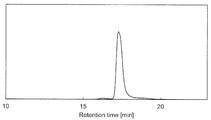
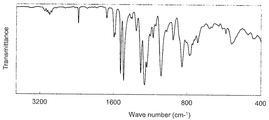
- GPC chart of multivalent hydroxy resin A GPC chart of multivalent hydroxy resin B IR spectrum of polyvalent hydroxy resin B GPC chart of multivalent hydroxy resin D GPC chart of multivalent hydroxy resin E GPC chart of multivalent hydroxy resin F GPC chart of multivalent hydroxy resin G Epoxy resin B GPC chart IR spectrum of epoxy resin B
- the polyvalent hydroxy resin of the present invention is represented by the general formula (1).
- A independently represents a divalent aromatic group.
- the divalent aromatic group include a benzene ring, a naphthalene ring, or the following formula (4).
- the bisphenylene group represented by is mentioned.
- Y is a direct bond, oxygen atom, sulfur atom, -SO 2- , -CO-, -COO-, -CONH-, -CH 2- , -C (CH 3 ) 2- , - ⁇ -, 9,9-Fluolenyl group is shown.
- ⁇ indicates a phenylene group.
- R 1 and R 2 independently represent a hydrogen atom, an alkyl group having 1 to 8 carbon atoms, an aryl group, an alkoxy group, an aralkyl group or a halogen atom.
- A is preferably an unsubstituted or methyl group-substituted benzene ring, naphthalene ring, or biphenyl ring.
- n indicates the average number of repetitions, which is 1 to 10, but preferably 1 to 5.
- the polyvalent hydroxy resin of the present invention has a hydroxyl group equivalent of preferably 130 to 1000 g / eq. , More preferably 150-600 g / eq. Is.
- the melting point (or softening point) is preferably 40 to 250 ° C, more preferably 60 to 200 ° C.
- Such a multivalent hydroxy resin can be obtained by reacting an aromatic dihydroxy compound with a benzonitrile compound represented by the general formula (2).
- the aromatic dihydroxy compound is an alkyl group-substituted or unsubstituted divalent dihydroxybenzene having 1 to 6 carbon atoms, dihydroxynaphthalene, or the following formula (5).
- hydroquinone 2,5-dimethylhydroquinone, 2,3,5-trimethylhydroquinone, resorcinol, catechol, 1,5-naphthalenediol, 1,6-naphthalenediol, 1,7-naphthalenediol, 2,6 -Naphthalenediol, 2,7-naphthalenediol, bisphenol A, bisphenol F, 3,3', 5,5'-tetramethyl-4,4'-dihydroxydiphenylmethane, 3,3', 5,5'-tetramethyl Examples thereof include -4,4'-dihydroxybiphenyl, 4,4'-dihydroxydiphenyl ether, 4,4'-dihydroxybenzophenone, 4,4'-dihydroxydiphenylsulfone, 4,4'-dihydroxydiphenylsulfide, fluorenbisphenol and the like.
- the dihydroxybenzenes are preferably 1,4-dihydroxyforms or 1,3-dihydroxyforms, and the dihydroxynaphthalenes are 1,5-dihydroxyforms and 1,6-dihydroxyforms.
- a 2,6-dihydroxy compound or a 2,7-dihydroxy compound is preferable, and the bisphenol compound is preferably a 4,4'-dihydroxy compound.
- these dihydroxy substituents are in an amount of 50 mol% or more.
- dihydroxybenzenes dihydroxynaphthalene, and dihydroxybiphenyls are preferable from the viewpoints of heat resistance, moisture resistance, flame retardancy, and the like.
- the above aromatic dihydroxy compounds may be used alone or in combination of two or more.
- X is a halogen atom, and examples thereof include a fluorine atom, a chlorine atom, a bromine atom, and an iodine atom, but a fluorine atom or a chlorine atom is preferable.
- the 2,6-position is preferable as the substitution position of the halogen atom. Specific examples thereof include 2,6-difluorobenzonitrile, 2,6-dichlorobenzonitrile, and 2,6-dibromobenzonitrile. Even when a halogen substituent other than the 2,6-position is mixed and used, it is preferable that the halogen-substituted compound at the 2,6-position is 50 mol% or more in the benzonitrile compound.
- an excess amount of the bisphenol compound is used with respect to the benzonitrile compound.
- the amount of the benzonitrile compound used is in the range of 0.1 to 0.9 mol, preferably in the range of 0.1 to 0.6 mol, with respect to 1 mol of the aromatic dihydroxy compound. If it is more than this, the softening point of the resin becomes high and the molding workability is hindered. If it is less than this, the amount of the aromatic dihydroxy compound used excessively increases after the reaction is completed.
- the remaining excess amount of the aromatic dihydroxy compound can be used as it is as a raw material or a curing agent for an epoxy resin without removing it, but since the content of the resin of the general formula (1) or (3) is reduced, it has heat resistance. , The effect of improving characteristics such as moisture resistance and flame retardancy is reduced.
- This reaction is often carried out in the presence of a basic catalyst, with tertiary amine compounds, quaternary ammonium compounds, imidazole compounds, tertiary phosphine compounds, quaternary phosphonium compounds, and alkali metal hydroxide compounds, alkaline earth hydroxides.
- a basic catalyst with tertiary amine compounds, quaternary ammonium compounds, imidazole compounds, tertiary phosphine compounds, quaternary phosphonium compounds, and alkali metal hydroxide compounds, alkaline earth hydroxides.
- At least one compound selected from the group consisting of a metal compound, an alkali metal carbonate, and an alkali metal hydrogen carbonate can be used.
- tertiary amine compound examples include triethylamine, tri-n-propylamine, triisopropylamine, tri-n-butylamine, tri-sec-butylamine, tri-n-hexylamine, dimethylbenzylamine, diethylbenzylamine, and g.
- examples thereof include tribenzylamine, 1,8-diazabicyclo [5.4.0] undece-7-ene and the like.
- Examples of the quaternary ammonium compound include tetramethylammonium hydroxide, tetraethylammonium hydroxide, tetra-n-propylammonium hydroxide, tetra-n-butylammonium hydroxide, trimethylbenzylammonium hydroxide, and triethylbenzylammonium hydroxide.
- Quaternary ammonium chloride compounds tetramethylammonium chloride, tetraethylammonium chloride, tetra-n-propylammonium chloride, tetra-n-butylammonium chloride, trimethylbenzylammonium chloride, triethylbenzylammonium chloride and other quaternary ammonium chloride compounds.
- Quaternary ammonium bromide compounds such as tetramethylammonium bromide, tetraethylammonium bromide, tetra-n-propylammonium bromide, tetra-n-butylammonium bromide, trimethylbenzylammonium bromide, triethylbenzylammonium bromide, etc.
- Examples include quaternary ammonium iodide compounds such as tetramethylammonium iodide, tetraethylammonium iodide, tetra-n-propylammonium iodide, tetra-n-butylammonium iodide, trimethylbenzylammonium iodide, and triethylbenzylammonium iodide. be able to.
- imidazole compound examples include 2-methylimidazole, 2-ethylimidazole, 2-phenylimidazole and 2-ethyl-4-methylimidazole, 1- (2', 4', 6'-trimethylbenzoyl) -2-ethylimidazole, 1- (2', 6'-dichlorobenzoyl) -2-methylimidazole, 1- (2', 4', 6'-trimethylbenzoyl) -2-methylimidazole, 1- (2', 4', 6' -Trimethylbenzoyl) -2-phenylimidazole and the like can be mentioned.
- Examples of the tertiary phosphine compound include triethylphosphine, tri-n-butylphosphine, triphenylphosphine, and trinonylphenylphosphine.
- Examples of the quaternary phosphonium compound include quaternary phosphonium hydroxide compounds such as tetramethylphosphonium hydroxide; tetramethylphosphonium chloride, tetra-n-butylphosphonium chloride, tetraphenylphosphonium chloride, tetra-n-butylphosphonium bromide, and the like.
- Tertiary halogenated phosphonium compounds such as methyltriphenylphosphonium bromide, -n-butyltriphenylphosphonium bromide, methyltriphenylphosphonium bromide, ethyltriphenylphosphonium bromide; quaternary phosphonium acetate such as ethyltriphenylphosphonium acetate Compounds and the like can be mentioned.
- alkali metal hydroxide compound examples include lithium hydroxide, sodium hydroxide, potassium hydroxide and the like.
- alkaline earth metal hydroxide examples include magnesium hydroxide, calcium hydroxide and barium hydroxide.
- alkali metal carbonate examples include lithium carbonate, sodium carbonate, potassium carbonate and the like
- alkali metal hydrogen carbonate examples include lithium hydrogen carbonate, sodium hydrogen carbonate, potassium hydrogen carbonate and the like.
- Each of these basic catalysts may be dissolved alone or in water or a solvent in advance, and then put into the reaction system.
- the ratio of the basic catalyst used is usually 0.001 to 10 mol%, preferably 0.05 to 5 mol%, based on 1 mol of the phenolic hydroxyl group of the aromatic dihydroxy compound.
- this reaction is carried out at 10 to 250 ° C. for 1 to 20 hours.
- alcohols such as methanol, ethanol, propanol, butanol, ethylene glycol, methyl cellosolve and ethyl cellosolve, benzene, toluene, chlorobenzene, dichlorobenzene and the like can be used.
- the catalyst is removed by a method such as neutralization or washing with water, and if necessary, the remaining solvent is removed from the system by a method such as washing with water or distillation under reduced pressure to obtain a hydroxy resin.
- the unreacted aromatic dihydroxy compound may or may not be removed from the system by a method such as washing with water or distillation under reduced pressure.
- the epoxy resin represented by the general formula (3) of the present invention is It is obtained by reacting the polyvalent hydroxy resin represented by the general formula (1) with epichlorohydrin.
- a and n are synonymous with the formula (1) representing a multivalent hydroxy resin as a raw material.
- m represents a number from 1 to 15, preferably 1.1 to 6 as an average value.
- the epoxy resin of the present invention has an epoxy equivalent of 180 to 1200 g / eq. , More preferably 200-650 g / eq. Is.
- the melting point (or softening point) is preferably 40 to 250 ° C, more preferably 60 to 200 ° C.
- the melt viscosity at 150 ° C. is preferably 0.1 to 10 Pa ⁇ s, more preferably 0.1 to 5 Pa ⁇ s.
- This reaction can be carried out in the same manner as a normal epoxidation reaction.
- the polyvalent hydroxy resin represented by the above general formula (1) is preferably 50 to 150 ° C. in the presence of an alkali metal hydroxide such as sodium hydroxide and potassium hydroxide.
- an alkali metal hydroxide such as sodium hydroxide and potassium hydroxide.
- the amount of the alkali metal hydroxide used is in the range of 0.8 to 2 mol, preferably 0.9 to 1.2 mol, with respect to 1 mol of the hydroxyl group in the polyvalent hydroxy resin.
- epichlorohydrin is used in excess with respect to the hydroxyl group in the polyvalent hydroxy resin, but is usually in the range of 1.5 to 15 mol, preferably 2 to 8 mol, with respect to 1 mol of the hydroxyl group in the polyvalent hydroxy resin.
- a quaternary ammonium salt or the like can be added during the reaction. Examples of the quaternary ammonium salt include tetramethylammonium chloride, tetrabutylammonium chloride, benzyltriethylammonium chloride and the like, and the amount of the quaternary ammonium salt added is in the range of 0.1 to 2.0 wt% with respect to the polyvalent hydroxy resin. Is preferable.
- a polar solvent such as dimethyl sulfoxide or diglyme may be used, and the amount added thereof is preferably in the range of 10 to 200 wt% with respect to the polyvalent hydroxy resin. If it is less than this, the effect of addition is small, and if it is more than this, the volumetric efficiency is lowered, which is economically unfavorable.
- This epoxy resin is mainly composed of the one represented by the general formula (3), and is a compound in which one or more naphthylmethane groups are added to the aromatic ring of the novel polyvalent hydroxy resin of the general formula (1).
- a glycidyl etherified product may be contained.
- the epoxy group in the epoxy resin of the present invention may be oligomerized as an ether bond.
- the epoxy resin composition of the present invention comprises an epoxy resin and a curing agent, and the epoxy resin represented by the general formula (3) as an epoxy resin component or the polyvalent hydroxy represented by the above general formula (1) as a curing agent component. It contains at least one of the resins as an essential ingredient.
- any curing agent generally known as an epoxy resin curing agent can be used.
- an epoxy resin curing agent there are dicyandiamides, polyhydric phenols, acid anhydrides, aromatics and aliphatic amines.
- the polyhydric phenols include, for example, bisphenol A, bisphenol F, bisphenol S, fluorene bisphenol, 4,4'-biphenol, 2,2'-biphenol, hydroquinone, resorcin, naphthalenediol and the like.
- divalent phenols tris- (4-hydroxyphenyl) methane, 1,1,2,2-tetrakis (4-hydroxyphenyl) ethane, phenol novolac, o-cresol novolac, naphthol novolac, polyvinylphenol, etc.
- polyhydric phenolic compounds synthesized by condensing agents such as formaldehyde, acetaldehyde, benzaldehyde, p-hydroxybenzaldehyde, p-xylylene glycol, etc., which are divalent phenols such as diols, and the acid anhydride is anhydrous.
- phthalic acid tetrahydrophthalic anhydride, methyltetrahydrophthalic anhydride, hexahydrophthalic anhydride, methylhexahydrophthalic anhydride, hymicic bisphenol anhydride, nagic acid anhydride, trimellitic anhydride and the like.
- amines include aromatic amines such as 4,4'-diaminodiphenylmethane, 4,4'-diaminodiphenylpropane, 4,4'-diaminodiphenylsulfone, m-phenylenediamine, and p-xylylenediamine.
- aromatic amines such as 4,4'-diaminodiphenylmethane, 4,4'-diaminodiphenylpropane, 4,4'-diaminodiphenylsulfone, m-phenylenediamine, and p-xylylenediamine.
- aliphatic amines such as ethylenediamine, hexamethylenediamine, diethylenetriamine, and triethylenetetramine, or polyvalent hydroxy resins represented by the general formula (1).
- the blending amount of the epoxy resin of the present invention is preferably in the range of 5 to 100 wt%, more preferably in the range
- any ordinary epoxy resin having two or more epoxy groups in the molecule can be used.
- divalent phenols such as bisphenol A, bisphenol S, fluorene bisphenol, 4,4'-biphenol, 2,2'-biphenol, hydroquinone, resorcin, or tris- (4-hydroxyphenyl) methane. , 1,1,2,2-tetrakis (4-hydroxyphenyl) ethane, phenol novolac, o-cresol novolac and other trivalent or higher phenols, or tetrabromobisphenol A and other halogenated bisphenols.
- the blending amount of the multivalent hydroxy resin of the present invention is preferably in the range of 5 to 100 wt%, more preferably in the range of 50 to 100 wt%, in the entire epoxy resin.
- polyester and polyamide are included in the epoxy resin composition of the present invention containing one or both of the epoxy resin represented by the general formula (3) and the polyhydric hydroxy resin represented by the general formula (1) as essential components.
- polyester and polyamide are included in the epoxy resin composition of the present invention containing one or both of the epoxy resin represented by the general formula (3) and the polyhydric hydroxy resin represented by the general formula (1) as essential components.
- Polyethylene, Polyurethane, Polyurethane, Petroleum Resin, Indenkumaron Resin, Phenoxy Resin and other oligomers or polymer compounds may be appropriately blended, or inorganic fillers, pigments, hardeners, shake-modifying agents, cups, etc. Additives such as a ring agent and a fluidity improver may be blended.
- examples of the inorganic filler include spherical or crushed fused silica, silica powder such as crystalline silica, alumina powder, glass powder, mica, talc, calcium carbonate, alumina, hydrated alumina, and the like, and pigments.
- examples include organic or inorganic extender pigments and scaly pigments.
- examples of the rocking denaturing agent include silicon-based, castor oil-based, aliphatic amide wax, polyethylene oxide wax, organic bentonite-based, and the like.
- a conventionally known curing accelerator can be used. Examples include amines, imidazoles, organic phosphines, Lewis acids and the like.
- the amount to be added is usually in the range of 0.2 to 5 parts by weight with respect to 100 parts by weight of the epoxy resin.
- the resin composition of the present invention includes a release agent such as carnauba wax and OP wax, a coupling agent such as ⁇ -glycidoxypropyltrimethoxysilane, and a colorant such as carbon black. Flame retardants such as antimony oxide, low stress agents such as silicone oil, lubricants such as calcium stearate, and the like can be used.
- the cured product of the present invention can be obtained by molding the epoxy resin composition by a method such as casting, compression molding, or transfer molding.
- the temperature at the time of molding is usually in the range of 120 to 220 ° C.
- Example 1 (Production of Multivalent Hydroxy Resin A) After dissolving 128.1 g of hydroquinone in 700 g of N-methylpyrrolidone (NMP) in a 2 L 4-port separable flask, 139.3 g of potassium carbonate was added, and the temperature was raised to 120 ° C. with stirring under a nitrogen stream. Then, 50.0 g of 2,6-dichlorobenzonitrile was added, the temperature was raised to 150 ° C., and the reaction was carried out for 6 hours. After neutralizing by adding 121.1 g of acetic acid to the reaction solution, NMP was distilled off under reduced pressure.
- NMP N-methylpyrrolidone
- MIBK methyl isobutyl ketone
- melt viscosity uses CAP2000H manufactured by BROOKFIELD, and the GPC measurement is performed by the apparatus: HLC-8320 (manufactured by Tosoh Corporation) and the columns: TSKgel SuperHZ2500 x 2 and TSKgel SuperHZ2000 x 2 (both are Tosoh Corporation).
- HLC-8320 manufactured by Tosoh Corporation
- TSKgel SuperHZ2500 x 2 both are Tosoh Corporation
- TSKgel SuperHZ2000 x 2 both are Tosoh Corporation.
- the procedure was carried out under the conditions of solvent: tetrahydrofuran, flow velocity: 0.35 ml / min, temperature: 40 ° C., and detector: RI.
- Example 2 (Production of Multivalent Hydroxy Resin B) After dissolving 80.0 g of hydroquinone in 700 g of N-methylpyrrolidone (NMP) in a 2 L 4-port separable flask, 119.4 g of potassium carbonate was added, and the temperature was raised to 120 ° C. with stirring under a nitrogen stream. Then, 50.0 g of 2,6-dichlorobenzonitrile was added, the temperature was raised to 150 ° C., and the reaction was carried out for 6 hours. After neutralizing by adding 103.8 g of acetic acid to the reaction solution, NMP was distilled off under reduced pressure.
- NMP N-methylpyrrolidone
- Example 3 (Production of Multivalent Hydroxy Resin C) After dissolving 128 g of resorcinol in 700 g of NMP in a 2 L 4-port separable flask, 139.3 g of potassium carbonate was added, and the temperature was raised to 120 ° C. with stirring under a nitrogen stream. Then, 50 g of 2,6-dichlorobenzonitrile was added, the temperature was raised to 150 ° C., and the reaction was carried out for 6 hours. After neutralizing by adding 121.1 g of acetic acid to the reaction solution, NMP was distilled off under reduced pressure.
- Example 4 (Production of Multivalent Hydroxy Resin D) After 99.5 g of 2,7-dihydroxynaphthalene was dissolved in 700 g of NMP in a 2 L 4-port separable flask, 85 g of potassium carbonate was added, and the temperature was raised to 120 ° C. with stirring under a nitrogen stream. Then, 35.6 g of 2,6-dichlorobenzonitrile was added, the temperature was raised to 150 ° C., and the reaction was carried out for 6 hours. After neutralizing by adding 73.9 g of acetic acid to the reaction solution, NMP was distilled off under reduced pressure. After 500 mL of MIBK was added to the reaction solution to dissolve the product, the product salt was removed by washing with water.
- Example 5 (Production of Multivalent Hydroxy Resin E) After dissolving 73.5 g of 1,5-dihydroxynaphthalene in 250 g of NMP in a 1 L 4-port separable flask, 21.6 g of potassium carbonate was added, and the temperature was raised to 120 ° C. with stirring under a nitrogen stream. Then, 26.1 g of 2,6-dichlorobenzonitrile was added, the temperature was raised to 150 ° C., and the reaction was carried out for 5 hours. After neutralizing by adding 21.6 g of acetic acid to the reaction solution, NMP was distilled off under reduced pressure. After 500 mL of MIBK was added to the reaction solution to dissolve the product, the product salt was removed by washing with water.
- Example 6 (Production of Multivalent Hydroxy Resin F) After dissolving 112.9 g of 4,4'-dihydroxybiphenyl in 500 g of NMP in a 1 L 4-port separable flask, 49.8 g of potassium carbonate was added, and the temperature was raised to 120 ° C. with stirring under a nitrogen stream. Then, 52.1 g of 2,6-dichlorobenzonitrile was added, the temperature was raised to 145 ° C., and the reaction was carried out for 6 hours. After neutralizing by adding 43.2 g of acetic acid to the reaction solution, NMP was distilled off under reduced pressure. After 500 mL of MIBK was added to the reaction solution to dissolve the product, the product salt was removed by washing with water.
- Example 7 (Production of Multivalent Hydroxy Resin G) After dissolving 38.2 g of 4,4'-dihydroxydiphenyl ether in 500 g of NMP in a 1 L 4-port separable flask, 23.9 g of potassium carbonate was added, and the temperature was raised to 120 ° C. with stirring under a nitrogen stream. Then, 25.0 g of 2,6-dichlorobenzonitrile was added, the temperature was raised to 145 ° C., and the reaction was carried out for 6 hours. After neutralizing by adding 20.8 g of acetic acid to the reaction solution, NMP was distilled off under reduced pressure. After 500 mL of MIBK was added to the reaction solution to dissolve the product, the product salt was removed by washing with water.
- Example 8 Manufacturing of Epoxy Resin A 15 g of the multivalent hydroxy resin A obtained in Example 1 was dissolved in 130 g of epichlorohydrin and 33 g of diglyme, and 7.8 g of a 48% sodium hydroxide aqueous solution was added dropwise at 60 ° C. over 4 hours under reduced pressure (about 100 mmHg). During this period, the produced water was removed from the system by azeotropic boiling with epichlorohydrin, and the distilled epichlorohydrin was returned to the system. After completion of the dropping, the reaction was continued for another 1 hour.
- the hydrolyzable chlorine is obtained by dissolving 0.5 g of a resin sample in 30 ml of 1,4-dioxane, boiling and refluxing it in 5 ml of a 1N-KOH / methanol solution for 30 minutes, and performing potentiometric titration with a silver nitrate solution. Obtained by doing.
- Example 9 Manufacturing of Epoxy Resin B 22 g of the polyhydric hydroxy resin B obtained in Example 2 was dissolved in 142 g of epichlorohydrin and 36 g of jiglime, and the reaction was carried out in the same manner as in Example 8 using 8.1 g of a 48% sodium hydroxide aqueous solution to obtain a viscous epoxy resin at room temperature. 26 g was obtained (epoxy resin B). The epoxy equivalent of the obtained epoxy resin B was 290 g / eq. The melt viscosity at 150 ° C. was 0.54 Pa ⁇ s. The GPC chart is shown in FIG. 8, and the infrared absorption spectrum is shown in FIG.
- Example 10 Manufacturing of Epoxy Resin C
- 30 g of the polyhydric hydroxy resin C obtained in Example 3 was dissolved in 260 g of epichlorohydrin and 65 g of jiglime, and the reaction was carried out in the same manner as in Example 8 using 15.6 g of a 48% sodium hydroxide aqueous solution to obtain a viscous epoxy resin at room temperature.
- 36 g was obtained (epoxy resin C).
- the epoxy equivalent of the obtained epoxy resin C is 242 g / eq.
- the melt viscosity at 150 ° C. was 0.22 Pa ⁇ s.
- Example 11 Manufacturing of Epoxy Resin D
- 50 g of the polyhydric hydroxy resin D obtained in Example 4 was dissolved in 340 g of epichlorohydrin and 85 g of jiglime, and the reaction was carried out in the same manner as in Example 8 using 19.6 g of a 48% sodium hydroxide aqueous solution.
- the epoxy equivalent of the obtained epoxy resin D is 227 g / eq.
- the melt viscosity at 150 ° C. was 0.61 Pa ⁇ s.
- Example 12 Manufacturing of Epoxy Resin E 45 g of the polyhydric hydroxy resin E obtained in Example 5 was dissolved in 400 g of epichlorohydrin and 60 g of jiglime, and the reaction was carried out in the same manner as in Example 8 using 24.2 g of a 48% sodium hydroxide aqueous solution, and 38 g of a solid epoxy resin at room temperature.
- the epoxy equivalent of the obtained epoxy resin E was 224 g / eq.
- the melt viscosity at 150 ° C. was 0.19 Pa ⁇ s.
- Example 13 Manufacturing of Epoxy Resin F
- 50 g of the polyhydric hydroxy resin F obtained in Example 6 was dissolved in 260 g of epichlorohydrin and 65 g of jiglime, and the reaction was carried out in the same manner as in Example 8 using 15.2 g of a 48% sodium hydroxide aqueous solution, and 35 g of a solid epoxy resin at room temperature.
- the epoxy equivalent of the obtained epoxy resin F is 317 g / eq.
- the melting point was 179.5 ° C.
- Examples 14 to 20 and Comparative Example 1 Polyhydric hydroxy resin or epoxy resin synthesized in Examples 1 to 13, o-cresol novolac type epoxy resin (epoxy equivalent 197, softening point 54 ° C., melt viscosity 90 mPa ⁇ s at 150 ° C.; EOCN-1020, Nippon Kayaku (Epoxy resin H), phenol novolac (OH equivalent 104, softening point 83 ° C., melt viscosity at 150 ° C. 0.3 Pa ⁇ s; BRG-557, manufactured by Aika Kogyo; hydroxy resin H) was used as a curing accelerator. Triphenylphosphine was used to prepare a resin composition according to the formulation shown in Table 1.
- test pieces After molding (150 ° C., 5 minutes) using this, post-cure (175 ° C., 4 hours) was performed to obtain test pieces, which were subjected to various physical property tests.
- the test method is as follows.
- the glass transition point and the coefficient of thermal expansion were determined using a TMA7100 type thermomechanical measuring device manufactured by Hitachi High-Tech Science Co., Ltd. under the condition of a heating rate of 10 ° C./min.
- the pyrolysis temperature and residual coal rate are determined by the TG / DTA7300 type thermal weight measuring device manufactured by Hitachi High-Tech Science Co., Ltd. under the condition of a nitrogen stream and a heating rate of 10 ° C./min when the weight is reduced by 5 wt%.
- the residual coal rate at 700 ° C.
- the water absorption rate was defined as the rate of change in weight when a test piece having a diameter of 50 mm and a thickness of 3 mm was used and was allowed to absorb moisture for 100 hours under the conditions of 85 ° C. and 85% RH after post-cure. The results are shown in Table 1.
- the polyvalent hydroxy resin of the present invention is excellent in heat resistance, low thermal expansion, moisture resistance, etc., and are printed wiring. It is suitably used for insulating materials in the electrical and electronic fields such as plates and semiconductor encapsulation.
Landscapes
- Chemical & Material Sciences (AREA)
- Organic Chemistry (AREA)
- Chemical Kinetics & Catalysis (AREA)
- Health & Medical Sciences (AREA)
- Medicinal Chemistry (AREA)
- Polymers & Plastics (AREA)
- Epoxy Resins (AREA)
Priority Applications (3)
| Application Number | Priority Date | Filing Date | Title |
|---|---|---|---|
| CN202180025769.7A CN115380023B (zh) | 2020-03-31 | 2021-03-30 | 多羟基树脂、环氧树脂、它们的制造方法、使用它们的环氧树脂组合物以及固化物 |
| CN202411422729.8A CN119161272A (zh) | 2020-03-31 | 2021-03-30 | 多羟基树脂、环氧树脂、它们的制造方法、使用它们的环氧树脂组合物以及固化物 |
| JP2022512593A JPWO2021201046A1 (https=) | 2020-03-31 | 2021-03-30 |
Applications Claiming Priority (2)
| Application Number | Priority Date | Filing Date | Title |
|---|---|---|---|
| JP2020-062976 | 2020-03-31 | ||
| JP2020062976 | 2020-03-31 |
Publications (1)
| Publication Number | Publication Date |
|---|---|
| WO2021201046A1 true WO2021201046A1 (ja) | 2021-10-07 |
Family
ID=77930372
Family Applications (1)
| Application Number | Title | Priority Date | Filing Date |
|---|---|---|---|
| PCT/JP2021/013709 Ceased WO2021201046A1 (ja) | 2020-03-31 | 2021-03-30 | 多価ヒドロキシ樹脂、エポキシ樹脂、それらの製造方法、それらを用いたエポキシ樹脂組成物及び硬化物 |
Country Status (4)
| Country | Link |
|---|---|
| JP (1) | JPWO2021201046A1 (https=) |
| CN (2) | CN115380023B (https=) |
| TW (1) | TWI883160B (https=) |
| WO (1) | WO2021201046A1 (https=) |
Cited By (3)
| Publication number | Priority date | Publication date | Assignee | Title |
|---|---|---|---|---|
| JP2023033883A (ja) * | 2021-08-30 | 2023-03-13 | 日鉄ケミカル&マテリアル株式会社 | エポキシ樹脂、その組成物および硬化物 |
| WO2023149493A1 (ja) * | 2022-02-04 | 2023-08-10 | 日鉄ケミカル&マテリアル株式会社 | エポキシ樹脂、エポキシ樹脂組成物およびエポキシ樹脂硬化物 |
| CN120888269A (zh) * | 2025-09-30 | 2025-11-04 | 先禾新材料(苏州)有限公司 | 一种疏水防护胶及其制备方法 |
Families Citing this family (1)
| Publication number | Priority date | Publication date | Assignee | Title |
|---|---|---|---|---|
| CN116574258B (zh) * | 2023-05-26 | 2025-08-29 | 电子科技大学 | 一种印制电路基板用耐高温树脂预聚体、聚合物及其制备方法 |
Citations (3)
| Publication number | Priority date | Publication date | Assignee | Title |
|---|---|---|---|---|
| JPS62143925A (ja) * | 1985-12-19 | 1987-06-27 | Idemitsu Kosan Co Ltd | 新規重合体およびその製造法 |
| CN105218403A (zh) * | 2015-09-30 | 2016-01-06 | 中国人民解放军国防科学技术大学 | 芳醚腈基树脂单体及其合成方法 |
| CN109517197A (zh) * | 2018-11-14 | 2019-03-26 | 广东汕头超声电子股份有限公司覆铜板厂 | 一种高频高速腈基树脂覆铜板的成型工艺 |
Family Cites Families (5)
| Publication number | Priority date | Publication date | Assignee | Title |
|---|---|---|---|---|
| JPS61238369A (ja) * | 1985-04-16 | 1986-10-23 | Idemitsu Kosan Co Ltd | ポリシアノアリ−ルエ−テル塗膜の形成方法 |
| JPS62145054A (ja) * | 1985-12-19 | 1987-06-29 | Idemitsu Kosan Co Ltd | 新規二価フエノ−ルおよびその製造法 |
| JP6138607B2 (ja) * | 2012-10-29 | 2017-05-31 | 新日鉄住金化学株式会社 | エポキシ樹脂及び該エポキシ樹脂の製造方法 |
| CN105754089B (zh) * | 2016-05-12 | 2017-11-24 | 绵阳鸿琪新材料科技有限公司 | 一种耐高温聚芳醚腈树脂的合成方法 |
| CN110305312B (zh) * | 2019-07-05 | 2021-11-23 | 电子科技大学 | 一种高分子量聚芳醚腈的合成方法 |
-
2021
- 2021-03-30 JP JP2022512593A patent/JPWO2021201046A1/ja active Pending
- 2021-03-30 WO PCT/JP2021/013709 patent/WO2021201046A1/ja not_active Ceased
- 2021-03-30 CN CN202180025769.7A patent/CN115380023B/zh active Active
- 2021-03-30 CN CN202411422729.8A patent/CN119161272A/zh active Pending
- 2021-03-31 TW TW110111814A patent/TWI883160B/zh active
Patent Citations (3)
| Publication number | Priority date | Publication date | Assignee | Title |
|---|---|---|---|---|
| JPS62143925A (ja) * | 1985-12-19 | 1987-06-27 | Idemitsu Kosan Co Ltd | 新規重合体およびその製造法 |
| CN105218403A (zh) * | 2015-09-30 | 2016-01-06 | 中国人民解放军国防科学技术大学 | 芳醚腈基树脂单体及其合成方法 |
| CN109517197A (zh) * | 2018-11-14 | 2019-03-26 | 广东汕头超声电子股份有限公司覆铜板厂 | 一种高频高速腈基树脂覆铜板的成型工艺 |
Non-Patent Citations (3)
| Title |
|---|
| GUO HENG, ZHANG JIANDONG, CHEN ZHIRAN, WEI JUNJI, ZHAO RUI, LIU XIAOBO: "Effect of functional nitrile groups on curing behaviors and thermal properties of epoxy resins as advanced matrix materials", SCIENCE AND ENGINEERING OF COMPOSITE MATERIALS, FREUND PUBLISHING, TEL AVIV,, IS, vol. 19, no. 4, 1 December 2012 (2012-12-01), IS , pages 347 - 350, XP055924557, ISSN: 0792-1233, DOI: 10.1515/secm-2012-0021 * |
| HE QINGYI, XU TONG, QIAN HUIDONG, ZHENG JIFU, SHI CE, LI YUNQI, ZHANG SUOBO: "Enhanced proton conductivity of sulfonated poly(p-phenylene-co-aryl ether ketone) proton exchange membranes with controlled microblock structure", JOURNAL OF POWER SOURCES, ELSEVIER, AMSTERDAM, NL, vol. 278, 1 March 2015 (2015-03-01), AMSTERDAM, NL, pages 590 - 598, XP055924554, ISSN: 0378-7753, DOI: 10.1016/j.jpowsour.2014.12.135 * |
| LIAO, WEILIN; ZENG, XIAOJUN; CUI, GUODI; WANG, SHEN: "Curing reaction and kinetic research of E-PCE resin", HUAXUE YU NIANHE = CHEMISTRY AND ADHESION, vol. 2, 1998, CN , pages 78 - 80, XP009536028, ISSN: 1001-0017 * |
Cited By (4)
| Publication number | Priority date | Publication date | Assignee | Title |
|---|---|---|---|---|
| JP2023033883A (ja) * | 2021-08-30 | 2023-03-13 | 日鉄ケミカル&マテリアル株式会社 | エポキシ樹脂、その組成物および硬化物 |
| JP7662456B2 (ja) | 2021-08-30 | 2025-04-15 | 日鉄ケミカル&マテリアル株式会社 | エポキシ樹脂、その組成物および硬化物 |
| WO2023149493A1 (ja) * | 2022-02-04 | 2023-08-10 | 日鉄ケミカル&マテリアル株式会社 | エポキシ樹脂、エポキシ樹脂組成物およびエポキシ樹脂硬化物 |
| CN120888269A (zh) * | 2025-09-30 | 2025-11-04 | 先禾新材料(苏州)有限公司 | 一种疏水防护胶及其制备方法 |
Also Published As
| Publication number | Publication date |
|---|---|
| CN115380023A (zh) | 2022-11-22 |
| TWI883160B (zh) | 2025-05-11 |
| CN119161272A (zh) | 2024-12-20 |
| CN115380023B (zh) | 2025-04-11 |
| TW202144324A (zh) | 2021-12-01 |
| JPWO2021201046A1 (https=) | 2021-10-07 |
Similar Documents
| Publication | Publication Date | Title |
|---|---|---|
| JP5320130B2 (ja) | 多価ヒドロキシ樹脂、エポキシ樹脂、それらの製造方法、エポキシ樹脂組成物及びその硬化物 | |
| WO2021201046A1 (ja) | 多価ヒドロキシ樹脂、エポキシ樹脂、それらの製造方法、それらを用いたエポキシ樹脂組成物及び硬化物 | |
| JP6073754B2 (ja) | エポキシ樹脂組成物及びその硬化物 | |
| JP7277136B2 (ja) | エポキシ樹脂、エポキシ樹脂組成物、及びその硬化物 | |
| CN111378094B (zh) | 环氧树脂、环氧树脂组合物及树脂硬化物 | |
| JP5734603B2 (ja) | フェノール性樹脂、エポキシ樹脂、それらの製造方法、エポキシ樹脂組成物及び硬化物 | |
| JP2019214736A (ja) | 多価ヒドロキシ樹脂、エポキシ樹脂、それらの製造方法、エポキシ樹脂組成物及びその硬化物 | |
| JP5548792B2 (ja) | 多価ヒドロキシ樹脂、その製造方法、エポキシ樹脂組成物及びその硬化物 | |
| JP5139914B2 (ja) | 多価ヒドロキシ樹脂、エポキシ樹脂、それらの製造法、それらを用いたエポキシ樹脂組成物及び硬化物 | |
| JP7847415B2 (ja) | 多価ヒドロキシ樹脂、エポキシ樹脂、エポキシ樹脂組成物、及びその硬化物 | |
| JP7662456B2 (ja) | エポキシ樹脂、その組成物および硬化物 | |
| JP7515316B2 (ja) | エポキシ樹脂組成物及びその硬化物 | |
| JP7572226B2 (ja) | 多価ヒドロキシ樹脂、エポキシ樹脂、それらの製造方法、それらを用いたエポキシ樹脂組成物及び硬化物 | |
| JP7824037B2 (ja) | 多価ヒドロキシ樹脂、エポキシ樹脂、それらの製造方法、それらを用いたエポキシ樹脂組成物及び硬化物 | |
| TW202337945A (zh) | 環氧樹脂、環氧樹脂組成物及環氧樹脂硬化物 | |
| KR20240026887A (ko) | 에폭시 수지, 에폭시 수지 조성물, 및 그 경화물 | |
| TW202340293A (zh) | 環氧樹脂、多元羥基樹脂、環氧樹脂組成物、及環氧樹脂硬化物以及多元羥基樹脂的製造方法 | |
| JP4813201B2 (ja) | インドール骨格含有エポキシ樹脂、エポキシ樹脂組成物及びその硬化物 | |
| JP2023004199A (ja) | エポキシ樹脂、その製造方法、ジヒドロキシ化合物、それらを用いたエポキシ樹脂組成物及び硬化物 |
Legal Events
| Date | Code | Title | Description |
|---|---|---|---|
| 121 | Ep: the epo has been informed by wipo that ep was designated in this application |
Ref document number: 21780027 Country of ref document: EP Kind code of ref document: A1 |
|
| DPE1 | Request for preliminary examination filed after expiration of 19th month from priority date (pct application filed from 20040101) | ||
| ENP | Entry into the national phase |
Ref document number: 2022512593 Country of ref document: JP Kind code of ref document: A |
|
| NENP | Non-entry into the national phase |
Ref country code: DE |
|
| 122 | Ep: pct application non-entry in european phase |
Ref document number: 21780027 Country of ref document: EP Kind code of ref document: A1 |
|
| WWG | Wipo information: grant in national office |
Ref document number: 202180025769.7 Country of ref document: CN |