WO2021199271A1 - ストレス発散度算出装置、ストレス発散度算出方法、及びコンピュータ読み取り可能な記録媒体 - Google Patents
ストレス発散度算出装置、ストレス発散度算出方法、及びコンピュータ読み取り可能な記録媒体 Download PDFInfo
- Publication number
- WO2021199271A1 WO2021199271A1 PCT/JP2020/014794 JP2020014794W WO2021199271A1 WO 2021199271 A1 WO2021199271 A1 WO 2021199271A1 JP 2020014794 W JP2020014794 W JP 2020014794W WO 2021199271 A1 WO2021199271 A1 WO 2021199271A1
- Authority
- WO
- WIPO (PCT)
- Prior art keywords
- stress
- amount
- term stress
- short
- term
- Prior art date
- Legal status (The legal status is an assumption and is not a legal conclusion. Google has not performed a legal analysis and makes no representation as to the accuracy of the status listed.)
- Ceased
Links
Images






Classifications
-
- A—HUMAN NECESSITIES
- A61—MEDICAL OR VETERINARY SCIENCE; HYGIENE
- A61B—DIAGNOSIS; SURGERY; IDENTIFICATION
- A61B5/00—Measuring for diagnostic purposes; Identification of persons
- A61B5/16—Devices for psychotechnics; Testing reaction times ; Devices for evaluating the psychological state
- A61B5/165—Evaluating the state of mind, e.g. depression, anxiety
-
- A—HUMAN NECESSITIES
- A61—MEDICAL OR VETERINARY SCIENCE; HYGIENE
- A61B—DIAGNOSIS; SURGERY; IDENTIFICATION
- A61B5/00—Measuring for diagnostic purposes; Identification of persons
- A61B5/02—Detecting, measuring or recording for evaluating the cardiovascular system, e.g. pulse, heart rate, blood pressure or blood flow
- A61B5/0205—Simultaneously evaluating both cardiovascular conditions and different types of body conditions, e.g. heart and respiratory condition
-
- A—HUMAN NECESSITIES
- A61—MEDICAL OR VETERINARY SCIENCE; HYGIENE
- A61B—DIAGNOSIS; SURGERY; IDENTIFICATION
- A61B5/00—Measuring for diagnostic purposes; Identification of persons
- A61B5/48—Other medical applications
- A61B5/486—Biofeedback
-
- A—HUMAN NECESSITIES
- A61—MEDICAL OR VETERINARY SCIENCE; HYGIENE
- A61B—DIAGNOSIS; SURGERY; IDENTIFICATION
- A61B5/00—Measuring for diagnostic purposes; Identification of persons
- A61B5/72—Signal processing specially adapted for physiological signals or for diagnostic purposes
- A61B5/7271—Specific aspects of physiological measurement analysis
- A61B5/7275—Determining trends in physiological measurement data; Predicting development of a medical condition based on physiological measurements, e.g. determining a risk factor
Definitions
- the present invention relates to a stress divergence degree calculation device, a stress divergence degree calculation method, and a computer-readable recording medium.
- Patent Document 1 discloses a karaoke system that supports stress relief by singing.
- the stress value of the user is detected from the heartbeat of the karaoke user, and the stress relieving value by singing is calculated.
- Patent Document 1 the stress value is detected at the time of login operation and logout operation by the user, and the difference is calculated as the stress relief value. In this case, the stress relieving value within the period of the two timings can be grasped. However, in daily life, the timing of stress release is unknown. Therefore, in the invention of Patent Document 1, there is a possibility that the stress release degree in daily life cannot be calculated accurately.
- an example of an object of the present invention is to provide a stress release degree calculation device, a stress release degree calculation method, and a computer-readable recording medium that accurately calculate the stress release degree in daily life.
- the stress release degree calculation device in one aspect of the present invention is used.
- the short-term stress calculation unit that calculates the short-term stress value, which is the stress that the subject has in the first period
- a long-term stress calculation unit that calculates a long-term stress value that is longer than the first period and is the stress that the subject has in the second period including the first period
- a short-term stress change amount calculation unit that calculates the change amount of the short-term stress of the subject based on the difference of the short-term stress values calculated at different timings
- a long-term stress change amount calculation unit that calculates the change amount of the long-term stress of the person to be measured based on the difference of the long-term stress values calculated at different timings.
- a stress radiant exit calculation unit that calculates the stress radiant degree indicating the stress radiant degree of the person to be measured based on the change amount of the short-term stress and the long-term stress change amount.
- the stress release degree calculation method in one aspect of the present invention is used.
- the short-term stress value which is the stress that the subject had in the first period
- a step of calculating a long-term stress value which is a stress
- the computer-readable recording medium in one aspect of the present invention is used.
- the stress release degree in daily life can be calculated accurately.
- FIG. 1 is a diagram showing short-term stress and long-term stress on the time axis.
- FIG. 2 is a diagram conceptually showing short-term stress and long-term stress.
- FIG. 3 is a block diagram showing a schematic configuration of a stress release degree calculation device.
- FIG. 4 is a block diagram showing a specific configuration of the stress release degree calculation device.
- FIG. 5 is a diagram showing the relationship between the degree of stress divergence and the short-term stress change amount and the long-term stress change amount.
- FIG. 6 is a diagram for explaining a method of calculating a short-term stress tolerance.
- FIG. 7 is a diagram showing an example of a correspondence table referred to when calculating the stress degree.
- FIG. 1 is a diagram showing short-term stress and long-term stress on the time axis.
- FIG. 2 is a diagram conceptually showing short-term stress and long-term stress.
- FIG. 3 is a block diagram showing a schematic configuration of a stress release degree calculation device.
- FIG. 8 is a diagram showing an example of a display screen when notifying the stress release degree.
- FIG. 9 is a diagram showing an example of a message according to the degree of stress release.
- FIG. 10 is a diagram showing an example of a display screen when notifying the allowable remaining amount of stress.
- FIG. 11 is a diagram showing an example of a display screen of a stress relieving method according to the degree of stress.
- FIG. 12 is a diagram showing an example of a display screen when notifying various information regarding stress.
- FIG. 13 is a flow chart showing the main operations of the stress release degree calculation device.
- FIG. 14 is a flow chart showing an operation when calculating the short-term stress value and the short-term stress change amount.
- FIG. 15 is a flow chart showing an operation when calculating a long-term stress value and a long-term stress change amount.
- FIG. 16 is a flow chart showing an operation when calculating the stress release degree.
- FIG. 17 is a flow chart showing an operation when calculating the stress tolerance.
- FIG. 18 is a flow chart showing an operation when calculating the short-term stress allowable remaining amount, the long-term stress allowable remaining amount, and the stress degree.
- FIG. 19 is a block diagram showing an example of a computer that realizes a stress release degree calculation device.
- the stress release degree calculation device is a device that manages the stress of a subject, and hereinafter, the subject is referred to as a subject to be measured.
- the stress radiant exitance calculation device can calculate short-term stress, which is a short-term stress stimulus, and long-term stress, which is a long-term stress stimulus, held by the subject.
- FIG. 1 is a diagram showing short-term stress and long-term stress on the time axis.
- Short-term stress is the stress that the subject has in the first period.
- the first period is, for example, a period of several hours or one day.
- Long-term stress is the stress that the subject has during the second period.
- the second period is longer than the first period and includes the first period, for example, several days, several weeks, or several months.
- the second period includes the first period, for example, when the first period is a period from timing A to timing B, the second period is at least a period from before timing A to after timing B. It means that there is.
- FIG. 2 is a diagram conceptually showing short-term stress and long-term stress. The mechanism by which the subject accumulates stress will be conceptually described with reference to FIG. In this description, it is assumed that the subject has a short-term stress container 104 for storing the short-term stress 102 and a long-term stress container 105 for storing the long-term stress 103.
- acute stress a stress stimulus (hereinafter referred to as acute stress) 101 for several seconds or several minutes, for example, the acute stress 101 first accumulates in the short-term stress container 104. That is, the person to be measured will have the short-term stress 102 by continuing to store the acute stress 101 in the short-term stress container 104.
- the amount that the short-term stress container 104 can store the short-term stress 102 is the amount that the subject can hold the short-term stress 102, and is called the "short-term stress tolerance".
- the short-term stress tolerance When the subject continues to accumulate the short-term stress 102, the amount of the short-term stress 102 exceeds the short-term stress tolerance. Then, the short-term stress 102 overflows from the short-term stress container 104. The overflowing short-term stress 102 will be accumulated in the long-term stress container 105. That is, when the person to be measured cannot hold the short-term stress 102 in the short-term stress container 104, the person to be measured will have the long-term stress 103.
- the amount from the current amount of short-term stress 102 to the amount of short-term stress allowance is called "short-term stress allowable remaining amount”. Further, when the person to be measured performs, for example, coping (stress coping), the stress 106 released by the coping is discharged from the short-term stress container 104.
- the amount that the long-term stress container 105 can store the long-term stress 103 is the amount that the subject can hold the long-term stress 103, and is called the "long-term stress tolerance".
- the amount of the long-term stress 103 exceeds the long-term stress tolerance. Then, the long-term stress 103 overflows from the long-term stress container 105. In this case, the subject may suffer from symptoms that interfere with daily life, such as mental illness.
- the amount until the long-term stress 103 reaches the long-term stress permissible amount is called the "long-term stress permissible remaining amount”. Further, when the person to be measured performs, for example, coping, the stress 107 corresponding to the divergence is discharged from the long-term stress container 105.
- FIG. 3 is a block diagram showing a schematic configuration of the stress release degree calculation device 15.
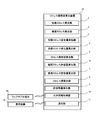
- the stress divergence degree calculation device 15 includes a short-term stress calculation unit 1, a long-term stress calculation unit 2, a short-term stress change amount calculation unit 3, a long-term stress change amount calculation unit 4, and a stress divergence degree calculation unit 5. There is.
- the short-term stress calculation unit 1 calculates the short-term stress value, which is the stress that the subject has in the first period.
- the short-term stress value is conceptually explained with reference to FIG. 2, and is the amount of short-term stress 102 accumulated in the short-term stress container 104 in the first period.
- the long-term stress calculation unit 2 calculates the long-term stress value, which is the stress that the subject has in the second period including the first period, which is longer than the first period.
- the long-term stress value is conceptually explained with reference to FIG. 2, and is the amount of long-term stress 103 accumulated in the long-term stress container 105 during the second period.
- the short-term stress change amount calculation unit 3 calculates the short-term stress change amount of the person to be measured based on the difference between the short-term stress values calculated at different timings.
- the long-term stress change amount calculation unit 4 calculates the long-term stress change amount of the person to be measured based on the difference between the long-term stress values calculated at different timings.
- the stress release degree calculation unit 5 calculates the stress release degree indicating the stress release degree of the person to be measured based on the change amount of the short-term stress and the change amount of the long-term stress.
- This stress release degree calculation device 15 can accurately calculate the stress release degree in daily life.
- the person to be measured can grasp his / her own stress situation from the calculated stress release degree.
- FIG. 4 is a block diagram showing a specific configuration of the stress release degree calculation device 15.
- the stress divergence calculation device 15 includes a short-term stress calculation unit 1, a long-term stress calculation unit 2, a short-term stress change amount calculation unit 3, a long-term stress change amount calculation unit 4, and a stress divergence calculation unit 5, as well as a short-term stress tolerance. It includes a calculation unit 6, a long-term stress tolerance calculation unit 7, a stress degree calculation unit 8, an allowable remaining amount calculation unit 9, a biological information acquisition unit 10, and a notification unit 11.
- the biometric information acquisition unit 10 acquires the biometric information of the person to be measured.
- biological information include information on the amount of sweating, skin temperature, body movement, heartbeat, electrocardiogram, pulse wave, pulse, blood pressure, respiration, pupil, brain wave, myoelectric or gastric electricity of the subject.
- the biometric information may be one of these pieces of information, or may be a combination of two or more pieces of information.
- the biological information is detected by the wearable terminal 20 worn on the person to be measured.
- the wearable terminal 20 includes a sensor that detects a biological signal of a person to be measured. Examples of the sensor include an electrode for measuring an electrocardiogram or an optical sensor that optically detects the movement of blood when the biological information is a heart rate.
- the wearable terminal 20 acquires the biological signal output by the sensor, the wearable terminal 20 calculates biological information such as heart rate, skin temperature, skin electrical reaction, and acceleration using the biological signal, and the calculated biological information is used as a stress release degree calculation device.
- the biometric information acquisition unit 10 acquires biometric information transmitted from the wearable terminal 20.
- the biological information acquisition unit 10 may be configured to receive a biological signal from the wearable terminal 20 and calculate the biological information from the received biological signal.
- the short-term stress calculation unit 1 calculates the short-term stress value using machine learning from the biometric information acquired by the biometric information acquisition unit 10.
- a calculation method for example, “T. Umematsu, A. Sano, S. Taylor, R. Picard,” Improving Students' Daily Life Stress Forecasting using LSTM Neural Networks. "P.1-4., 2019 IEEE EMBS International Conference on Biomedical & Health Informatics (BHI), 2019. ”, Or“ S. A. Taylor et al., “Personalized Multitask Learning for Predicting Tomorrow's Mood, Stress, and Health,” IEEE Transactions on Affective The method described in "pp. 1-14, 2017” can be mentioned.
- the long-term stress calculation unit 2 calculates the long-term stress value from biometric information or a questionnaire conducted in advance.
- the same method as the method of calculating the short-term stress value can be given.
- other methods for calculating long-term stress values from biological information "A. Sano,” Measuring College Students'Sleep, Stress, Mental Health and Wellbeing with Wearable Sensors and Mobile Phones ", Massachusetts Institute of , 2015. ”or“ Y. Nakashima et al., ”An Effectiveness Comparison between the Use of Activity State Data and That of Activity Magnitude Data in Chronic Stress Recognition,“ ACII workshop, 2019 ” ..
- a specific example of the questionnaire is the Perceived Stress Scale (PSS) questionnaire (URL: http://www.shinyo.pro/blog/upload-images/20175218835.jpg).
- PSS Perceived Stress Scale
- the questionnaire result is input to the stress release degree calculation device 15 at the timing when the stress release degree calculation device 15 starts stress management, for example.
- the long-term stress calculation unit 2 calculates the score of the PSS questionnaire and calculates it as the long-term stress value from the score.
- Specific examples of the PSS questionnaire score calculation method include "S. Cohen, R. C. Kessler, and L. U. Gordon,” Measuring Stress: A Guide for Health and Social Engineers, "Oxford University Press, 1997. ”.
- the short-term stress change amount calculation unit 3 calculates the short-term stress change amount of the person to be measured based on the difference between the short-term stress values calculated at different timings. Specifically, when the change amount of the short-term stress value is the decrease amount, the short-term stress change amount calculation unit 3 calculates the short-term stress change amount as the short-term stress release amount which is the amount of the short-term stress released by the subject. .. Further, when the change amount of the short-term stress value is an increase amount, the short-term stress change amount calculation unit 3 calculates the short-term stress change amount as the short-term stress accumulation amount which is the amount of the short-term stress accumulated by the subject. ..
- the long-term stress change amount calculation unit 4 calculates the long-term stress change amount of the person to be measured based on the difference between the long-term stress values calculated at different timings. Specifically, when the change amount of the long-term stress value is the decrease amount, the long-term stress change amount calculation unit 4 calculates the long-term stress change amount as the long-term stress divergence amount which is the amount of the long-term stress radiated by the subject. do. Further, when the amount of change in the long-term stress value is an increase amount, the long-term stress change amount calculation unit 4 calculates the long-term stress change amount as the long-term stress accumulation amount which is the amount in which the long-term stress of the subject is accumulated. ..
- the stress divergence calculation unit 5 stresses the subject based on the short-term stress change amount calculated by the short-term stress change amount calculation unit 3 and the long-term stress change amount calculated by the long-term stress change amount calculation unit 4. Calculate the stress divergence degree, which indicates the divergence degree.
- the stress release degree is expressed in 1 to 9 stages, and it is assumed that the higher the value, the better the stress release.
- the stress divergence degree is calculated by the relationship between the long-term stress change amount ⁇ l and the short-term stress change amount ⁇ s.
- the long-term stress change amount ⁇ l is decreasing (when ⁇ l ⁇ 0)
- the long-term stress is diverged
- the long-term stress change amount ⁇ l is the long-term stress divergence amount.
- the amount of long-term stress released is the amount of long-term stress released by the subject.
- the long-term stress change amount ⁇ l is increasing (when ⁇ l> 0)
- the long-term stress is accumulated, and the long-term stress change amount ⁇ l is the long-term stress accumulation amount.
- the long-term stress accumulation amount is the amount of accumulated long-term stress of the subject.
- the short-term stress release amount is the amount of short-term stress released by the subject.
- the long-term stress change amount ⁇ l and the short-term stress change amount ⁇ s are the divergence amounts, and the larger the divergence amounts ⁇ l and ⁇ s, the higher the stress divergence degree. Further, the long-term stress change amount ⁇ l and the short-term stress change amount ⁇ s are accumulated amounts, and the larger the accumulated amounts ⁇ l and ⁇ s, the lower the stress divergence degree.
- FIG. 5 is a diagram showing the relationship between the degree of stress divergence and the short-term stress change amount ⁇ s and the long-term stress change amount ⁇ l. As described above, the stress release degree is represented by 9 levels (1) to (9). FIG. 5 (1) has the lowest stress release degree, and FIG. 5 (9) has the highest stress release degree.
- the subject when long-term stress exceeds the long-term stress allowance, the subject may suffer from symptoms that interfere with daily life, such as mental illness.
- the degree of stress release of the subject is higher when long-term stress is released than when short-term stress is released. Therefore, the larger the long-term stress release amount ⁇ l than the short-term stress release amount ⁇ s or the short-term stress accumulation amount ⁇ s, the higher the stress release degree. Further, the larger the long-term stress accumulation amount ⁇ l than the short-term stress release amount ⁇ s or the short-term stress accumulation amount ⁇ s, the lower the stress release degree.
- FIG. 5 is an example of the stress divergence degree calculated by the stress divergence degree calculation unit 5, and the stress divergence degree is not limited to this.
- the degree of stress release may be divided into 9 or more stages or less.
- the stress release degree By calculating the stress release degree, it becomes easier for the person to be measured to find a stress release method that suits them, and it becomes easier to manage their mental health. In addition, since the person to be measured can grasp whether the short-term stress is released or the long-term stress is released, it becomes easier to find a more effective stress release method.
- the short-term stress allowance calculation unit 6 calculates the short-term stress allowance indicating the short-term stress amount that the subject can tolerate based on the short-term stress value and the long-term stress value.
- the short-term stress allowance calculation unit 6 will explain how to calculate the short-term stress allowance.
- the short-term stress allowance calculation unit 6 calculates the maximum value among the short-term stress values calculated by the short-term stress calculation unit 1 as the short-term stress allowance before the increase in the long-term stress value.
- FIG. 6 is a diagram for explaining a method of calculating the short-term stress tolerance.
- the horizontal axis of the graph shown in FIG. 6 represents time, and the vertical axis represents stress value.
- the solid line in FIG. 6 shows the transition of the long-term stress value, and the broken line of the alternate long and short dash line shows the transition of the short-term stress value.
- the short-term stress allowance calculation unit 6 calculates the short-term stress allowance based on the timing at which the long-term stress value rises. For example, the short-term stress tolerance calculation unit 6 sets the period during which the amount of increase from the long-term stress value calculated at a certain timing to the long-term stress value calculated immediately after that is within a predetermined amount (period A in FIG. 6). The maximum value of the short-term stress value in (FIG. 6, the straight line shown by the solid line in FIG. 6) is calculated as the short-term stress tolerance.
- the method for determining the period A in FIG. 6 is not limited to this.
- the period until the long-term stress value, which has remained unchanged or has decreased, may be set as the period A in FIG.
- the maximum value of the short-term stress value in the period A is set as the short-term stress tolerance, but the short-term stress value is not limited to this.
- the integrated value, the average value, or the median value of the short-term stress values in the period A may be used as the short-term stress tolerance.
- the short-term stress allowance is calculated based on the maximum value, integrated value, and the short-term stress value in a period long enough to calculate the long-term stress value.
- the mean or median may be the short-term stress tolerance.
- the person to be measured can grasp the stress allowance according to the current situation. That is, the person to be measured can infer that the degree of influence on the mind and body differs depending on the situation even if the stress is felt at the same event, and it becomes easy to prevent excessive stress.
- the long-term stress tolerance calculation unit 7 calculates the long-term stress tolerance indicating the long-term stress amount that the subject can tolerate based on the long-term stress value when it is determined that there is no problem in the health condition of the subject. ..
- the long-term stress tolerance calculation unit 7 detects, for example, long-term stress values that can be determined to be in a healthy state, and calculates the maximum value, average value, or median value of them as the long-term stress tolerance.
- This long-term stress value may be calculated from biological information or may be calculated from the score of the PSS questionnaire.
- the health condition refers to a condition in which there is no physical or mental problem based on past achievements such as work achievements, medical examination achievements, and medical treatment achievements.
- the work record means a state in which the employee can work at the same time as usual without being significantly late.
- the health examination record refers to a state in which the health condition has not deteriorated compared to the previous result, or a state in which the BMI is within the normal value.
- the medical treatment record refers to a state in which there is no or decreased hospital visit record.
- the long-term stress allowance may be a long-term stress value immediately before going to the hospital or a long-term stress value immediately before the health is impaired. Not limited to just before, it may be the maximum long-term stress value in a certain period up to that point.
- the allowable remaining amount calculation unit 9 calculates the long-term stress allowable remaining amount and the short-term stress allowable remaining amount described above using FIG. Specifically, the allowable remaining amount calculation unit 9 calculates the remaining amount of short-term stress until the short-term stress allowable amount is reached, that is, the difference between the current short-term stress value and the short-term stress allowable amount. Calculated as a quantity. Further, the allowable remaining amount calculation unit 9 calculates the remaining amount of long-term stress until the long-term stress allowable amount is reached, that is, the difference between the current long-term stress value and the long-term stress allowable amount as the long-term stress allowable remaining amount. do.
- the allowable remaining amount calculation unit 9 calculates the difference between the stress value and the stress allowable amount as the stress excess amount. Specifically, when the short-term stress value exceeds the short-term stress allowable amount, the allowable remaining amount calculation unit 9 calculates the difference between the short-term stress value and the short-term stress allowable amount as the short-term stress excess amount. When the long-term stress value exceeds the long-term stress allowable amount, the allowable remaining amount calculation unit 9 calculates the difference between the long-term stress value and the long-term stress allowable amount as the long-term stress excess amount.
- the person to be measured can grasp how much stress he / she can have. As a result, the person to be measured can appropriately manage his / her own schedule while managing his / her own mental health.
- the stress degree calculation unit 8 indicates the stress degree of the person to be measured based on the remaining amount of short-term stress until the short-term stress tolerance is reached and the remaining amount of long-term stress until the long-term stress tolerance is reached. Calculate the degree. Specifically, after the allowable remaining amount calculation unit 9 calculates the short-term stress allowable remaining amount and the long-term stress allowable remaining amount, the stress degree calculation unit 8 is, for example, at the timing when the long-term stress calculation unit 2 calculates the long-term stress value. , The degree of stress against the stress of the person to be measured is calculated from the correspondence table shown in FIG.
- FIG. 7 is a diagram showing an example of a correspondence table referred to when calculating the stress degree.
- FIG. 7 shows the correspondence between the long-term stress allowable remaining amount and the short-term stress allowable remaining amount and the stress degree.
- the stress tolerance is higher in the order of H (31-100%), M (6-30%), L (0-5%).
- H (31-100%) the stress tolerance is stress tolerance. It represents 31 to 100% of the capacity.
- "%" is used as an example of the unit of the allowable remaining amount of stress.
- the stress degree calculation unit 8 calculates the stress degree in 9 stages of AI. "A” has the lowest stress level, and “I” has the highest stress level. For example, the stress degree calculation unit 8 calculates “A”, which has a low stress level, in the case of “H (31-100%)”, which has a large short-term stress allowable remaining amount and a long-term stress allowable remaining amount, respectively.
- the notification unit 11 displays management information based on the long-term stress value and the short-term stress value on, for example, the display device 21.
- the display device 21 is, for example, a PC, a smartphone, a tablet terminal, or the like. Further, the display device 21 is a display unit of the wearable terminal 20, and the notification unit 11 may notify the wearable terminal 20.
- the notification unit 11 displays at least one of the stress divergence degree and the information based on the stress divergence degree as the management information on the display device 21.
- FIG. 8 is a diagram showing an example of a display screen when notifying the stress release degree.
- the stress release degree is indicated by a face mark.
- This figure shows whether stress is accumulated or released for an event.
- the "meeting" event on 8/20 shows that stress is accumulating.
- the notification unit 11 displays, as information based on the stress release degree, a message prompting the user to release the stress according to the current stress release degree, such as the message surrounded by the square in FIG.
- the time-series graph based on the stress divergence degree is displayed in association with event information such as "meeting” and "going out", but only the time-series based on the stress divergence degree is displayed. It is not necessary to display the event information.
- the notification unit 11 may display a message according to the stress release degree as information based on the stress release degree as shown in FIG.
- FIG. 9 is a diagram showing an example of a message according to the degree of stress release.
- the divergence degrees 1 to 9 in FIG. 9 correspond to (1) to (9) in FIG. 5, and the divergence degree 1 in FIG. 9 corresponds to (1) in FIG.
- the notification unit 11 provides management information such as a short-term stress allowable remaining amount until the short-term stress allowable amount is reached and a long-term stress remaining amount until the long-term stress allowable amount is reached. At least one of the allowable stress remaining amount may be displayed on the display device 21.
- FIG. 10 is a diagram showing an example of a display screen when notifying the allowable remaining amount of stress.
- the remaining charge of the battery may be displayed as an image to display the allowable remaining amount of stress.
- the stress allowable remaining amount in FIG. 10 may be a short-term stress allowable remaining amount or a long-term stress allowable remaining amount.
- An image of water pooling may be displayed on the water tank to display the allowable remaining amount of stress.
- the notification unit 11 may display at least one of the stress level and the information based on the stress level on the display device 21 as the management information.
- the information based on the stress level is, for example, information for relieving the stress of the person to be measured.
- FIG. 11 is a diagram showing an example of a display screen of a stress relieving method according to the degree of stress.
- a message is displayed according to the stress level of AI explained in FIG. 7, and a stress coping plan is proposed to the person to be measured.
- the color of the text display may be changed according to the stress level, for example, the higher the stress level, the more attention may be displayed in red.
- the stress level is low, for example, in the case of "B"
- the content that encourages the person to be measured is displayed, such as "Are you feeling a little tired? Let's keep healthy with a proper break! You may.
- the notification unit 11 displays the short-term stress value, the time series indicating the long-term stress value, and the event of the person to be measured as management information on the display device 21 in association with each other.
- FIG. 12 is a diagram showing an example of a display screen when notifying various information related to stress.
- the event information is a meeting, going out, etc., and is taken out from the scheduler information associated with the individual subject, for example.
- the schedule information may be taken out automatically, or the subject may manually input the event and describe it freely. Further, for exercise or rest, it is determined whether the wearable terminal 20 is exercising or resting by estimating information on the movement of a person from the biological information (acceleration or the like) of the wearable terminal 20.
- an example of displaying the allowable remaining amount may be displayed on the screen, or the stress level, the stress coping method, etc. may be displayed, but only a part of the allowable remaining amount may be displayed. ..
- FIG. 12 not only the actual value but also the predicted value after "Now" indicating the present is displayed.
- a method of calculating this predicted value for example, there is a method of using a model in which a feature amount related to stress obtained from biological information is input and the correct answer is learned as a stress value of the next day or later. This predicted value does not have to be displayed.
- the person to be measured can grasp his / her own stress situation from the display screens shown in FIGS. 8 to 12. By knowing the degree of stress release, the person to be measured can easily find a stress release method that suits them. In addition, the subject can grasp how much stress he / she will have for which event and can manage his / her own scheduling. Furthermore, by grasping the allowable remaining amount of stress, the person to be measured can grasp how much stress there is no problem (whether there is any adverse effect on the mind and body). In addition, the person to be measured can grasp his / her stress state step by step by checking the message.
- the stress release degree calculation device 15 includes a short-term stress allowance calculation unit 6, a long-term stress allowance calculation unit 7, a stress degree calculation unit 8, a allowable remaining amount calculation unit 9, and a notification unit 11. Although it is described as a thing, it is not necessary to have each of these parts. That is, the stress release degree calculation device 15 may have at least a function of calculating the stress release degree based on the short-term stress value and the long-term stress value.
- FIG. 13 to 18 are flow charts showing the operation of the stress release degree calculation device 15.
- the stress management method is implemented by operating the stress release degree calculation device 15. Therefore, the description of the stress management method in the present embodiment will be replaced with the following description of the operation of the stress divergence degree calculation device 15.
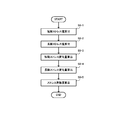
- FIG. 13 is a flow chart showing the main operations of the stress release degree calculation device 15.
- the short-term stress calculation unit 1 calculates the short-term stress value, which is the stress that the subject has in the first period (S0-1).
- the long-term stress calculation unit 2 calculates the long-term stress value, which is the stress that the subject has in the second period (S0-2).
- the short-term stress change amount calculation unit 3 executes the processing of S0-1 at different timings, and calculates the short-term stress change amount of the subject based on the difference between the short-term stress values calculated at different timings ( S0-3).
- the long-term stress change amount calculation unit 4 executes the process of S0-2 at different timings, and calculates the change amount of the long-term stress of the person to be measured based on the difference of the long-term stress values calculated at different timings ( S0-4).
- the stress release degree calculation unit 5 shows the stress release degree of the person to be measured based on the change amount of the short-term stress calculated in S0-3 and the change amount of the long-term stress calculated in S0-4. Calculate the degree (S0-5).
- the specific stress divergence calculation device 15 for calculating the short-term stress value, the long-term stress value, the short-term stress change amount, the long-term stress change amount, and the stress divergence degree is specified. The operation will be described.
- FIG. 14 is a flow chart showing an operation when calculating the short-term stress value and the short-term stress change amount.
- the short-term stress calculation unit 1 determines whether the first period has passed (S1). When the S1 is executed for the first time, the short-term stress calculation unit 1 determines whether or not the first period has elapsed since the stress management was started. Further, when the execution of S1 is the second time or later, the short-term stress calculation unit 1 determines whether the first period has elapsed since the short-term stress value was calculated immediately before.
- the short-term stress value It is possible to calculate the short-term stress value if there is biometric information for the first period. Therefore, when biometric information is acquired on a regular basis, even if a certain period (first period) has not passed since the short-term stress value was calculated immediately before, the first period goes back from the timing of calculating the short-term stress value. If the biometric information for the period can be obtained, the short-term stress value is calculated.
- the short-term stress calculation unit 1 calculates the short-term stress value from the biometric information acquired by the biometric information acquisition unit 10 by the above method (S2).
- the biological information acquisition unit 10 may acquire biological information at the timing of calculating the short-term stress value, or may acquire the biological information on a regular basis.
- the short-term stress change amount calculation unit 3 calculates the short-term stress change amount by the above method (S3). At this time, since the short-term stress value is calculated only once, if the short-term stress change amount cannot be calculated, S3 is not executed. Further, in S3, the short-term stress change amount calculation unit 3 calculates the short-term stress divergence amount when the short-term stress value calculated in S2 is smaller than the short-term stress value calculated immediately before that. , If it is increasing, calculate the short-term stress accumulation amount.
- each process may be executed in an independent flow.
- FIG. 15 is a flow chart showing an operation when calculating a long-term stress value and a long-term stress change amount.
- the long-term stress calculation unit 2 determines whether the second period has passed (S11). When the long-term stress calculation unit 2 executes S11 for the first time, the long-term stress calculation unit 2 determines whether or not the second period has elapsed since the stress management was started. Further, when the execution of S11 is the second time or later, the long-term stress calculation unit 2 determines whether the second period has elapsed since the long-term stress value was calculated immediately before.
- the long-term stress value can be calculated if there is biometric information for the second period. Therefore, when biometric information is acquired on a regular basis, even if a certain period (second period) has not passed since the long-term stress value was calculated immediately before, the second period goes back from the timing of calculating the long-term stress value. If biometric information can be obtained, the long-term stress value is calculated.
- the long-term stress calculation unit 2 calculates the long-term stress value (S12).
- the long-term stress calculation unit 2 calculates the long-term stress value by the above method from the biometric information acquired by the biometric information acquisition unit 10 or the score of the questionnaire conducted in advance.
- the score of the questionnaire may be calculated at the timing of calculating the long-term stress value, or may be calculated when the questionnaire result is input to the stress divergence degree calculation device 15.
- the long-term stress change amount calculation unit 4 calculates the long-term stress change amount by the above method (S13). At this time, since the long-term stress value is calculated only once, if the long-term stress divergence amount cannot be calculated, S13 is not executed. Further, in S13, when the long-term stress value calculated in S12 is smaller than the long-term stress value calculated immediately before, the long-term stress change amount calculation unit 4 calculates and increases the long-term stress divergence amount. If so, calculate the amount of long-term stress accumulation.
- each process may be executed in an independent flow.
- FIG. 16 is a flow chart showing an operation when calculating the stress release degree.
- the stress divergence calculation unit 5 determines whether the short-term stress change amount and the long-term stress change amount have been calculated (S21). When calculated (S21: YES), as described with reference to FIG. 5, the stress divergence degree is calculated from the short-term stress change amount and the long-term stress change amount (S22). If it is not calculated (S21: NO), this flow ends without calculating the stress release degree.
- the stress release degree calculation device 15 can accurately calculate the stress release degree in daily life, so that the person to be measured can grasp how much stress is released. For example, by notifying the person to be measured of the calculated short-term stress value, long-term stress value, and stress divergence degree as management information, the person to be measured can grasp the stress state that he / she has. Examples of the notification method include screen output and audio output described with reference to FIGS. 8, 9, and 12.
- FIG. 17 is a flow chart showing an operation when calculating the stress tolerance.
- the short-term stress allowance calculation unit 6 determines whether the long-term stress value has increased (S23). For example, the short-term stress allowance calculation unit 6 determines whether the amount of increase from the long-term stress value calculated at a certain timing to the long-term stress value calculated immediately after that is within a predetermined amount. When the long-term stress value increases (S23: YES), the short-term stress allowance calculation unit 6 determines the short-term stress value during the period when the increase in the long-term stress value is within a predetermined amount (period A in FIG. 6). The maximum value is detected (S24), and the maximum value is calculated as the short-term stress tolerance (S25).
- the long-term stress allowance calculation unit 7 calculates the long-term stress allowance (S26). For example, the long-term stress tolerance calculation unit 7 detects long-term stress values that can be determined to be in a healthy state, and calculates the maximum value, average value, or median value of them as the long-term stress tolerance. After calculating the long-term stress tolerance, this flow ends. When the long-term stress value has not risen (S23: NO), it can be calculated by taking the maximum value or the average value in the past fixed period at the timing of calculating the long-term stress allowance, so the long-term stress allowance calculation unit 7 The long-term stress tolerance is calculated (S26). The long-term stress tolerance calculation process of S26 may be a different flow from this process.
- FIG. 18 is a flow chart showing an operation when calculating the short-term stress allowable remaining amount, the long-term stress allowable remaining amount, and the stress degree.
- the stress release degree calculation device 15 may periodically execute the flow shown in FIG. 18, or may be executed when the operation for starting the stress degree calculation by the person to be measured is received.
- the allowable remaining amount calculation unit 9 calculates the short-term stress allowable remaining amount (S31). Specifically, the allowable remaining amount calculation unit 9 calculates the remaining amount of short-term stress until the short-term stress allowable amount is reached, that is, the difference between the current short-term stress value and the short-term stress allowable amount. Calculated as a quantity. Next, the allowable remaining amount calculation unit 9 calculates the long-term stress allowable remaining amount (S32). Specifically, the allowable remaining amount calculation unit 9 determines the remaining amount of long-term stress until the long-term stress allowable amount is reached, that is, the difference between the current long-term stress value and the long-term stress allowable amount. Calculated as a quantity.
- the stress degree calculation unit 8 calculates the stress degree based on the short-term stress allowable remaining amount calculated in S31 and the long-term stress allowable remaining amount calculated in S32 (S33). For example, the stress degree calculation unit 8 calculates the stress degree for the stress of the person to be measured from the correspondence table shown in FIG. 7 at the timing when the long-term stress calculation unit 2 calculates the long-term stress value.
- the short-term stress allowable remaining amount, the long-term stress allowable remaining amount, and the stress degree are calculated by a series of processes, but each process may be an independent flow.
- the stress divergence calculation device 15 further calculates the stress allowable amount, the stress allowable remaining amount, and the stress degree, and notifies the measured person of these as management information, so that the measured person can determine his / her own stress state. It can be grasped in more detail. Examples of the notification method include screen output and audio output described with reference to FIGS. 10 to 12.
- the program in this embodiment may be any program that causes a computer to execute each step shown in FIGS. 13 to 18.
- the computer processor includes a short-term stress calculation unit 1, a long-term stress calculation unit 2, a short-term stress change amount calculation unit 3, a long-term stress change amount calculation unit 4, a stress divergence degree calculation unit 5, and a short-term stress tolerance. It functions as a capacity calculation unit 6, a long-term stress tolerance calculation unit 7, a stress degree calculation unit 8, an allowable remaining amount calculation unit 9, a biological information acquisition unit 10, and a notification unit 11 to perform processing.
- computers include smartphones and tablet terminal devices.
- the program in the present embodiment may be executed by a computer system constructed by a plurality of computers.
- each computer has a short-term stress calculation unit 1, a long-term stress calculation unit 2, a short-term stress change amount calculation unit 3, a long-term stress change amount calculation unit 4, and a stress divergence degree calculation unit 5.
- FIG. 19 is a block diagram showing an example of a computer that realizes the stress release degree calculation device 15.
- the computer 110 includes a CPU (Central Processing Unit) 111, a main memory 112, a storage device 113, an input interface 114, a display controller 115, a data reader / writer 116, and a communication interface 117. And. Each of these parts is connected to each other via a bus 121 so as to be capable of data communication.
- the computer 110 may include a GPU (Graphics Processing Unit) or an FPGA (Field-Programmable Gate Array) in addition to the CPU 111 or in place of the CPU 111.
- the CPU 111 expands the programs (codes) of the present embodiment stored in the storage device 113 into the main memory 112 and executes them in a predetermined order to perform various operations.
- the main memory 112 is typically a volatile storage device such as a DRAM (Dynamic Random Access Memory).
- the program in the present embodiment is provided in a state of being stored in a computer-readable recording medium 120.
- the program in the present embodiment may be distributed on the Internet connected via the communication interface 117.
- the storage device 113 include a semiconductor storage device such as a flash memory in addition to a hard disk.
- the input interface 114 mediates data transmission between the CPU 111 and an input device 118 such as a keyboard and mouse.
- the display controller 115 is connected to the display device 119 and controls the display on the display device 119.
- the data reader / writer 116 mediates data transmission between the CPU 111 and the recording medium 120, reads a program from the recording medium 120, and writes a processing result in the computer 110 to the recording medium 120.
- the communication interface 117 mediates data transmission between the CPU 111 and another computer.
- the recording medium 120 include a general-purpose semiconductor storage device such as CF (CompactFlash (registered trademark)) and SD (SecureDigital), a magnetic storage medium such as a flexible disk, or a CD-.
- CF CompactFlash (registered trademark)
- SD Secure Digital
- magnetic storage medium such as a flexible disk
- CD- CompactDiskReadOnlyMemory
- optical storage media such as ROM (CompactDiskReadOnlyMemory).
- the short-term stress calculation unit that calculates the short-term stress value, which is the stress that the subject has in the first period
- a long-term stress calculation unit that calculates a long-term stress value that is longer than the first period and is the stress that the subject has in the second period including the first period
- a short-term stress change amount calculation unit that calculates the change amount of the short-term stress of the subject based on the difference of the short-term stress values calculated at different timings
- a long-term stress change amount calculation unit that calculates the change amount of the long-term stress of the person to be measured based on the difference of the long-term stress values calculated at different timings.
- a stress radiant exit calculation unit that calculates the stress radiant degree indicating the stress radiant degree of the person to be measured based on the change amount of the short-term stress and the long-term stress change amount.
- a stress exit calculation device that calculates the stress radiant degree indicating the stress radiant degree of the person to be measured based on the change amount of the short-term stress and the long-term stress change
- the stress radiant exitance calculation device (Appendix 2) The stress radiant exitance calculation device according to Appendix 1.
- the short-term stress change amount calculation unit When the amount of change in the short-term stress value is the amount of decrease, the amount of change in short-term stress is calculated as the amount of short-term stress divergence, which is the amount of the subject radiating short-term stress. When the amount of change in the short-term stress value is an increase amount, the short-term stress change amount is calculated by calculating the short-term stress accumulation amount, which is the amount in which the subject has accumulated short-term stress.
- the long-term stress change amount calculation unit When the amount of change in the long-term stress value is a decrease amount, the amount of change in the long-term stress is calculated as the amount of long-term stress divergence, which is the amount of the person to be measured radiating the long-term stress. When the amount of change in the long-term stress value is an increase amount, the long-term stress change amount is calculated as the long-term stress accumulation amount, which is the amount in which the long-term stress of the subject is accumulated. Stress release degree calculation device.
- Appendix 4 The stress radiant exitance calculation device according to Appendix 2 or Appendix 3.
- the degree of stress release becomes higher as the amount of long-term stress release is larger than the amount of short-term stress accumulation. Stress release degree calculation device.
- the stress radiant exitance calculation device according to Appendix 7.
- the biological information includes at least one of the sweating amount, skin temperature, body movement, heartbeat, electrocardiogram, pulse wave, pulse, blood pressure, respiration, pupil, brain wave, myoelectric or gastric electric information of the subject. , Stress release degree calculation device.
- the amount of change in the long-term stress value is a decrease amount
- the amount of change in the long-term stress is calculated as the amount of long-term stress divergence, which is the amount of the person to be measured radiating the long-term stress.
- the long-term stress change amount is calculated as the long-term stress accumulation amount, which is the amount in which the long-term stress of the subject is accumulated. How to calculate the degree of stress release.
- Appendix 11 The method for calculating the degree of stress release according to Appendix 10.
- the degree of stress release becomes higher as the amount of long-term stress release is larger than the amount of short-term stress release. How to calculate the degree of stress release.
- Appendix 12 The method for calculating the stress release degree according to Appendix 10 or Appendix 11, wherein the stress release degree is calculated.
- the degree of stress release becomes higher as the amount of long-term stress release is larger than the amount of short-term stress accumulation. How to calculate the degree of stress release.
- the method for calculating the degree of stress release according to Appendix 15 includes at least one of the sweating amount, skin temperature, body movement, heartbeat, electrocardiogram, pulse wave, pulse, blood pressure, respiration, pupil, brain wave, myoelectric or gastric electric information of the subject. , How to calculate the degree of stress release.
- Appendix 18 The computer-readable recording medium according to Appendix 17, which is a computer-readable recording medium.
- the step of calculating the amount of change in short-term stress When the amount of change in the short-term stress value is the amount of decrease, the amount of change in short-term stress is calculated as the amount of short-term stress divergence, which is the amount of the subject radiating short-term stress.
- the short-term stress change amount is calculated by calculating the short-term stress accumulation amount, which is the amount in which the subject has accumulated short-term stress.
- the amount of change in the long-term stress value is a decrease amount
- the amount of change in the long-term stress is calculated as the amount of long-term stress divergence, which is the amount of the person to be measured radiating the long-term stress.
- the long-term stress change amount is calculated as the long-term stress accumulation amount, which is the amount in which the long-term stress of the subject is accumulated.
- Appendix 19 The computer-readable recording medium according to Appendix 18, which is a computer-readable recording medium.
- the degree of stress release becomes higher as the amount of long-term stress release is larger than the amount of short-term stress release.
- Appendix 20 A computer-readable recording medium according to Appendix 18 or Appendix 19.
- the degree of stress release becomes higher as the amount of long-term stress release is larger than the amount of short-term stress accumulation.
- a computer-readable recording medium A computer-readable recording medium.
- the computer-readable recording medium according to Appendix 23.
- the biological information includes at least one of the sweating amount, skin temperature, body movement, heartbeat, electrocardiogram, pulse wave, pulse, blood pressure, respiration, pupil, brain wave, myoelectric or gastric electric information of the subject. , A computer-readable recording medium.
Landscapes
- Health & Medical Sciences (AREA)
- Life Sciences & Earth Sciences (AREA)
- Engineering & Computer Science (AREA)
- Public Health (AREA)
- Molecular Biology (AREA)
- Pathology (AREA)
- Physics & Mathematics (AREA)
- Biomedical Technology (AREA)
- Heart & Thoracic Surgery (AREA)
- Medical Informatics (AREA)
- Biophysics (AREA)
- Surgery (AREA)
- Animal Behavior & Ethology (AREA)
- General Health & Medical Sciences (AREA)
- Veterinary Medicine (AREA)
- Psychiatry (AREA)
- Physiology (AREA)
- Cardiology (AREA)
- Child & Adolescent Psychology (AREA)
- Developmental Disabilities (AREA)
- Educational Technology (AREA)
- Hospice & Palliative Care (AREA)
- Psychology (AREA)
- Social Psychology (AREA)
- Pulmonology (AREA)
- Artificial Intelligence (AREA)
- Computer Vision & Pattern Recognition (AREA)
- Biodiversity & Conservation Biology (AREA)
- Signal Processing (AREA)
- Measurement Of The Respiration, Hearing Ability, Form, And Blood Characteristics Of Living Organisms (AREA)
Priority Applications (3)
| Application Number | Priority Date | Filing Date | Title |
|---|---|---|---|
| US17/911,459 US20230101907A1 (en) | 2020-03-31 | 2020-03-31 | Stress release degree calculation apparatus, stress release degree calculationmethod, and computer readable recording medium |
| PCT/JP2020/014794 WO2021199271A1 (ja) | 2020-03-31 | 2020-03-31 | ストレス発散度算出装置、ストレス発散度算出方法、及びコンピュータ読み取り可能な記録媒体 |
| JP2022512987A JP7416215B2 (ja) | 2020-03-31 | 2020-03-31 | ストレス発散度算出装置、ストレス発散度算出方法、及びプログラム |
Applications Claiming Priority (1)
| Application Number | Priority Date | Filing Date | Title |
|---|---|---|---|
| PCT/JP2020/014794 WO2021199271A1 (ja) | 2020-03-31 | 2020-03-31 | ストレス発散度算出装置、ストレス発散度算出方法、及びコンピュータ読み取り可能な記録媒体 |
Publications (1)
| Publication Number | Publication Date |
|---|---|
| WO2021199271A1 true WO2021199271A1 (ja) | 2021-10-07 |
Family
ID=77928218
Family Applications (1)
| Application Number | Title | Priority Date | Filing Date |
|---|---|---|---|
| PCT/JP2020/014794 Ceased WO2021199271A1 (ja) | 2020-03-31 | 2020-03-31 | ストレス発散度算出装置、ストレス発散度算出方法、及びコンピュータ読み取り可能な記録媒体 |
Country Status (3)
| Country | Link |
|---|---|
| US (1) | US20230101907A1 (https=) |
| JP (1) | JP7416215B2 (https=) |
| WO (1) | WO2021199271A1 (https=) |
Families Citing this family (1)
| Publication number | Priority date | Publication date | Assignee | Title |
|---|---|---|---|---|
| US20230144812A1 (en) * | 2020-03-31 | 2023-05-11 | Nec Corporation | Stress tolerable amount calculation apparatus, stress tolerable amount calculation method, and computer readable recording medium |
Citations (5)
| Publication number | Priority date | Publication date | Assignee | Title |
|---|---|---|---|---|
| JP2018011892A (ja) * | 2016-07-22 | 2018-01-25 | 日本電気株式会社 | ストレス耐性評価装置、ストレス耐性評価方法およびストレス耐性評価プログラム |
| JP2018126422A (ja) * | 2017-02-10 | 2018-08-16 | 株式会社東芝 | 電子機器、方法及びプログラム |
| JP2019004924A (ja) * | 2017-06-20 | 2019-01-17 | 株式会社東芝 | システム及び方法 |
| WO2019159252A1 (ja) * | 2018-02-14 | 2019-08-22 | 日本電気株式会社 | 生体信号を用いるストレス推定装置およびストレス推定方法 |
| US20190328316A1 (en) * | 2018-04-27 | 2019-10-31 | Samsung Electronics Company, Ltd. | Bio-Sensing Based Monitoring Of Health |
Family Cites Families (3)
| Publication number | Priority date | Publication date | Assignee | Title |
|---|---|---|---|---|
| JPH04180730A (ja) * | 1990-11-16 | 1992-06-26 | Atsufuku Takara | ストレスレベル測定装置 |
| WO2017078759A1 (en) * | 2015-11-06 | 2017-05-11 | Lifeq Global Limited | Non-invasive physiological quantification of stress levels |
| WO2017136772A1 (en) * | 2016-02-03 | 2017-08-10 | Angilytics Inc. | Non-invasive and non-occlusive blood pressure monitoring devices and methods |
-
2020
- 2020-03-31 WO PCT/JP2020/014794 patent/WO2021199271A1/ja not_active Ceased
- 2020-03-31 US US17/911,459 patent/US20230101907A1/en active Pending
- 2020-03-31 JP JP2022512987A patent/JP7416215B2/ja active Active
Patent Citations (5)
| Publication number | Priority date | Publication date | Assignee | Title |
|---|---|---|---|---|
| JP2018011892A (ja) * | 2016-07-22 | 2018-01-25 | 日本電気株式会社 | ストレス耐性評価装置、ストレス耐性評価方法およびストレス耐性評価プログラム |
| JP2018126422A (ja) * | 2017-02-10 | 2018-08-16 | 株式会社東芝 | 電子機器、方法及びプログラム |
| JP2019004924A (ja) * | 2017-06-20 | 2019-01-17 | 株式会社東芝 | システム及び方法 |
| WO2019159252A1 (ja) * | 2018-02-14 | 2019-08-22 | 日本電気株式会社 | 生体信号を用いるストレス推定装置およびストレス推定方法 |
| US20190328316A1 (en) * | 2018-04-27 | 2019-10-31 | Samsung Electronics Company, Ltd. | Bio-Sensing Based Monitoring Of Health |
Also Published As
| Publication number | Publication date |
|---|---|
| JPWO2021199271A1 (https=) | 2021-10-07 |
| JP7416215B2 (ja) | 2024-01-17 |
| US20230101907A1 (en) | 2023-03-30 |
Similar Documents
| Publication | Publication Date | Title |
|---|---|---|
| US11568993B2 (en) | System and method of predicting a healthcare event | |
| CN116195002A (zh) | 基于睡眠反应监测的睡眠障碍预测系统和方法 | |
| JP2023537223A (ja) | 状況に応じたパーソナライズされた不眠症治療投薬計画、システム、及び方法 | |
| Clarke et al. | mstress: A mobile recommender system for just-in-time interventions for stress | |
| CN109922718B (zh) | 用于提供动态唤醒警报的方法、装置和计算机程序产品 | |
| JP7502192B2 (ja) | うつ状態を推定する装置、方法及びそのためのプログラム | |
| JP2004254827A (ja) | 睡眠状態判定装置 | |
| US20210358628A1 (en) | Digital companion for healthcare | |
| JP2017086477A (ja) | 生活リズムリコメンド装置 | |
| WO2024055931A1 (zh) | 运动推荐方法、睡眠推荐方法及其装置、电子设备及存储介质 | |
| EP3788630A1 (en) | Interactive scheduler and monitor | |
| JP7456495B2 (ja) | ストレス管理装置、ストレス管理方法、及びプログラム | |
| JP7416215B2 (ja) | ストレス発散度算出装置、ストレス発散度算出方法、及びプログラム | |
| JP7416216B2 (ja) | ストレス許容量算出装置、ストレス許容量算出方法、及びプログラム | |
| CN107533583A (zh) | 精神损害监测系统 | |
| CN120319494A (zh) | 一种基于ai的个性化疼痛管理系统及方法 | |
| JP2017097614A (ja) | 運動管理システム、方法及びプログラム | |
| JP7135521B2 (ja) | 行動変容支援装置、端末およびサーバ | |
| Morales et al. | A Biomarker-Based Model to Assist the Identification of Stress in Health Workers Involved in Coping with COVID-19 | |
| JP7298685B2 (ja) | リハビリ支援システム、およびリハビリ支援方法 | |
| CN119807897B (zh) | 卧位变化提醒方法、装置、介质及电子设备 | |
| JP7119755B2 (ja) | 健康管理装置、健康管理方法、及びプログラム | |
| JP7704193B2 (ja) | 学習装置、判定装置、学習済みモデル生成方法及びプログラム | |
| JP7759000B2 (ja) | 推定装置、指標統計値算出方法、プログラム及び記録媒体 | |
| Coelho et al. | A bipolar disorder monitoring system based on wearable device and smartphone |
Legal Events
| Date | Code | Title | Description |
|---|---|---|---|
| 121 | Ep: the epo has been informed by wipo that ep was designated in this application |
Ref document number: 20928233 Country of ref document: EP Kind code of ref document: A1 |
|
| ENP | Entry into the national phase |
Ref document number: 2022512987 Country of ref document: JP Kind code of ref document: A |
|
| NENP | Non-entry into the national phase |
Ref country code: DE |
|
| 122 | Ep: pct application non-entry in european phase |
Ref document number: 20928233 Country of ref document: EP Kind code of ref document: A1 |