WO2021187392A1 - モルホリノ核酸を含むヘテロ核酸 - Google Patents
モルホリノ核酸を含むヘテロ核酸 Download PDFInfo
- Publication number
- WO2021187392A1 WO2021187392A1 PCT/JP2021/010214 JP2021010214W WO2021187392A1 WO 2021187392 A1 WO2021187392 A1 WO 2021187392A1 JP 2021010214 W JP2021010214 W JP 2021010214W WO 2021187392 A1 WO2021187392 A1 WO 2021187392A1
- Authority
- WO
- WIPO (PCT)
- Prior art keywords
- nucleic acid
- double
- strand
- acid strand
- acid complex
- Prior art date
- Legal status (The legal status is an assumption and is not a legal conclusion. Google has not performed a legal analysis and makes no representation as to the accuracy of the status listed.)
- Ceased
Links
Images







Classifications
-
- C—CHEMISTRY; METALLURGY
- C12—BIOCHEMISTRY; BEER; SPIRITS; WINE; VINEGAR; MICROBIOLOGY; ENZYMOLOGY; MUTATION OR GENETIC ENGINEERING
- C12N—MICROORGANISMS OR ENZYMES; COMPOSITIONS THEREOF; PROPAGATING, PRESERVING, OR MAINTAINING MICROORGANISMS; MUTATION OR GENETIC ENGINEERING; CULTURE MEDIA
- C12N15/00—Mutation or genetic engineering; DNA or RNA concerning genetic engineering, vectors, e.g. plasmids, or their isolation, preparation or purification; Use of hosts therefor
- C12N15/09—Recombinant DNA-technology
- C12N15/11—DNA or RNA fragments; Modified forms thereof; Non-coding nucleic acids having a biological activity
- C12N15/113—Non-coding nucleic acids modulating the expression of genes, e.g. antisense oligonucleotides; Antisense DNA or RNA; Triplex- forming oligonucleotides; Catalytic nucleic acids, e.g. ribozymes; Nucleic acids used in co-suppression or gene silencing
-
- A—HUMAN NECESSITIES
- A61—MEDICAL OR VETERINARY SCIENCE; HYGIENE
- A61P—SPECIFIC THERAPEUTIC ACTIVITY OF CHEMICAL COMPOUNDS OR MEDICINAL PREPARATIONS
- A61P21/00—Drugs for disorders of the muscular or neuromuscular system
- A61P21/04—Drugs for disorders of the muscular or neuromuscular system for myasthenia gravis
-
- A—HUMAN NECESSITIES
- A61—MEDICAL OR VETERINARY SCIENCE; HYGIENE
- A61K—PREPARATIONS FOR MEDICAL, DENTAL OR TOILETRY PURPOSES
- A61K31/00—Medicinal preparations containing organic active ingredients
- A61K31/70—Carbohydrates; Sugars; Derivatives thereof
- A61K31/7088—Compounds having three or more nucleosides or nucleotides
- A61K31/713—Double-stranded nucleic acids or oligonucleotides
-
- A—HUMAN NECESSITIES
- A61—MEDICAL OR VETERINARY SCIENCE; HYGIENE
- A61P—SPECIFIC THERAPEUTIC ACTIVITY OF CHEMICAL COMPOUNDS OR MEDICINAL PREPARATIONS
- A61P43/00—Drugs for specific purposes, not provided for in groups A61P1/00-A61P41/00
-
- C—CHEMISTRY; METALLURGY
- C12—BIOCHEMISTRY; BEER; SPIRITS; WINE; VINEGAR; MICROBIOLOGY; ENZYMOLOGY; MUTATION OR GENETIC ENGINEERING
- C12N—MICROORGANISMS OR ENZYMES; COMPOSITIONS THEREOF; PROPAGATING, PRESERVING, OR MAINTAINING MICROORGANISMS; MUTATION OR GENETIC ENGINEERING; CULTURE MEDIA
- C12N15/00—Mutation or genetic engineering; DNA or RNA concerning genetic engineering, vectors, e.g. plasmids, or their isolation, preparation or purification; Use of hosts therefor
- C12N15/09—Recombinant DNA-technology
- C12N15/11—DNA or RNA fragments; Modified forms thereof; Non-coding nucleic acids having a biological activity
- C12N15/113—Non-coding nucleic acids modulating the expression of genes, e.g. antisense oligonucleotides; Antisense DNA or RNA; Triplex- forming oligonucleotides; Catalytic nucleic acids, e.g. ribozymes; Nucleic acids used in co-suppression or gene silencing
- C12N15/1136—Non-coding nucleic acids modulating the expression of genes, e.g. antisense oligonucleotides; Antisense DNA or RNA; Triplex- forming oligonucleotides; Catalytic nucleic acids, e.g. ribozymes; Nucleic acids used in co-suppression or gene silencing against growth factors, growth regulators, cytokines, lymphokines or hormones
-
- C—CHEMISTRY; METALLURGY
- C12—BIOCHEMISTRY; BEER; SPIRITS; WINE; VINEGAR; MICROBIOLOGY; ENZYMOLOGY; MUTATION OR GENETIC ENGINEERING
- C12N—MICROORGANISMS OR ENZYMES; COMPOSITIONS THEREOF; PROPAGATING, PRESERVING, OR MAINTAINING MICROORGANISMS; MUTATION OR GENETIC ENGINEERING; CULTURE MEDIA
- C12N2310/00—Structure or type of the nucleic acid
- C12N2310/10—Type of nucleic acid
- C12N2310/11—Antisense
-
- C—CHEMISTRY; METALLURGY
- C12—BIOCHEMISTRY; BEER; SPIRITS; WINE; VINEGAR; MICROBIOLOGY; ENZYMOLOGY; MUTATION OR GENETIC ENGINEERING
- C12N—MICROORGANISMS OR ENZYMES; COMPOSITIONS THEREOF; PROPAGATING, PRESERVING, OR MAINTAINING MICROORGANISMS; MUTATION OR GENETIC ENGINEERING; CULTURE MEDIA
- C12N2310/00—Structure or type of the nucleic acid
- C12N2310/10—Type of nucleic acid
- C12N2310/20—Type of nucleic acid involving clustered regularly interspaced short palindromic repeats [CRISPR]
-
- C—CHEMISTRY; METALLURGY
- C12—BIOCHEMISTRY; BEER; SPIRITS; WINE; VINEGAR; MICROBIOLOGY; ENZYMOLOGY; MUTATION OR GENETIC ENGINEERING
- C12N—MICROORGANISMS OR ENZYMES; COMPOSITIONS THEREOF; PROPAGATING, PRESERVING, OR MAINTAINING MICROORGANISMS; MUTATION OR GENETIC ENGINEERING; CULTURE MEDIA
- C12N2310/00—Structure or type of the nucleic acid
- C12N2310/30—Chemical structure
- C12N2310/31—Chemical structure of the backbone
- C12N2310/314—Phosphoramidates
-
- C—CHEMISTRY; METALLURGY
- C12—BIOCHEMISTRY; BEER; SPIRITS; WINE; VINEGAR; MICROBIOLOGY; ENZYMOLOGY; MUTATION OR GENETIC ENGINEERING
- C12N—MICROORGANISMS OR ENZYMES; COMPOSITIONS THEREOF; PROPAGATING, PRESERVING, OR MAINTAINING MICROORGANISMS; MUTATION OR GENETIC ENGINEERING; CULTURE MEDIA
- C12N2310/00—Structure or type of the nucleic acid
- C12N2310/30—Chemical structure
- C12N2310/32—Chemical structure of the sugar
- C12N2310/323—Chemical structure of the sugar modified ring structure
- C12N2310/3233—Morpholino-type ring
-
- C—CHEMISTRY; METALLURGY
- C12—BIOCHEMISTRY; BEER; SPIRITS; WINE; VINEGAR; MICROBIOLOGY; ENZYMOLOGY; MUTATION OR GENETIC ENGINEERING
- C12N—MICROORGANISMS OR ENZYMES; COMPOSITIONS THEREOF; PROPAGATING, PRESERVING, OR MAINTAINING MICROORGANISMS; MUTATION OR GENETIC ENGINEERING; CULTURE MEDIA
- C12N2310/00—Structure or type of the nucleic acid
- C12N2310/30—Chemical structure
- C12N2310/34—Spatial arrangement of the modifications
- C12N2310/341—Gapmers, i.e. of the type ===---===
-
- C—CHEMISTRY; METALLURGY
- C12—BIOCHEMISTRY; BEER; SPIRITS; WINE; VINEGAR; MICROBIOLOGY; ENZYMOLOGY; MUTATION OR GENETIC ENGINEERING
- C12N—MICROORGANISMS OR ENZYMES; COMPOSITIONS THEREOF; PROPAGATING, PRESERVING, OR MAINTAINING MICROORGANISMS; MUTATION OR GENETIC ENGINEERING; CULTURE MEDIA
- C12N2310/00—Structure or type of the nucleic acid
- C12N2310/30—Chemical structure
- C12N2310/35—Nature of the modification
- C12N2310/351—Conjugate
- C12N2310/3515—Lipophilic moiety, e.g. cholesterol
-
- C—CHEMISTRY; METALLURGY
- C12—BIOCHEMISTRY; BEER; SPIRITS; WINE; VINEGAR; MICROBIOLOGY; ENZYMOLOGY; MUTATION OR GENETIC ENGINEERING
- C12N—MICROORGANISMS OR ENZYMES; COMPOSITIONS THEREOF; PROPAGATING, PRESERVING, OR MAINTAINING MICROORGANISMS; MUTATION OR GENETIC ENGINEERING; CULTURE MEDIA
- C12N2310/00—Structure or type of the nucleic acid
- C12N2310/30—Chemical structure
- C12N2310/35—Nature of the modification
- C12N2310/352—Nature of the modification linked to the nucleic acid via a carbon atom
-
- C—CHEMISTRY; METALLURGY
- C12—BIOCHEMISTRY; BEER; SPIRITS; WINE; VINEGAR; MICROBIOLOGY; ENZYMOLOGY; MUTATION OR GENETIC ENGINEERING
- C12N—MICROORGANISMS OR ENZYMES; COMPOSITIONS THEREOF; PROPAGATING, PRESERVING, OR MAINTAINING MICROORGANISMS; MUTATION OR GENETIC ENGINEERING; CULTURE MEDIA
- C12N2320/00—Applications; Uses
- C12N2320/10—Applications; Uses in screening processes
- C12N2320/11—Applications; Uses in screening processes for the determination of target sites, i.e. of active nucleic acids
-
- C—CHEMISTRY; METALLURGY
- C12—BIOCHEMISTRY; BEER; SPIRITS; WINE; VINEGAR; MICROBIOLOGY; ENZYMOLOGY; MUTATION OR GENETIC ENGINEERING
- C12N—MICROORGANISMS OR ENZYMES; COMPOSITIONS THEREOF; PROPAGATING, PRESERVING, OR MAINTAINING MICROORGANISMS; MUTATION OR GENETIC ENGINEERING; CULTURE MEDIA
- C12N2320/00—Applications; Uses
- C12N2320/30—Special therapeutic applications
- C12N2320/32—Special delivery means, e.g. tissue-specific
Definitions
- the present invention relates to a double-stranded nucleic acid complex containing morpholinoethanol, a composition containing the same, and the like.
- oligonucleotides have attracted attention in the ongoing development of drugs called nucleic acid drugs, and especially in view of the high selectivity and low toxicity of target genes, nucleic acid drugs that utilize the antisense method. Development is being actively promoted.
- the antisense method uses a partial sequence of mRNA or miRNA transcribed from a target gene as the target sense strand, and an oligonucleotide complementary to it (antisense oligonucleotide: often referred to as "ASO (Antisense Oligonucleotide)" in the present specification. This is a method comprising selectively modifying or inhibiting the expression of a protein encoded by a target gene or the activity of miRNA by introducing the above into a cell.
- ASO Antisense Oligonucleotide
- the present inventors have prepared a double-stranded nucleic acid complex (heteroduplex oligonucleotide (HDO)) in which an antisense oligonucleotide and its complementary strand are annealed.
- HDO heteroduplex oligonucleotide
- the mechanism of action of the above double-stranded nucleic acid complex is not limited, but it is considered to be partially as follows. That is, when introduced into a cell, an RNA region complementary to a part of the antisense oligonucleotide in the complementary strand is cleaved by RNase H to release the antisense oligonucleotide, and then this antisense oligonucleotide is released. For example, it can act to alter the activity or function of the transcript (see, eg, Patent Document 2). This is called the "RNase H-dependent pathway", and it is desirable that the nucleic acid moiety is not modified in order for cleavage by RNase H to occur. On the other hand, if the nucleic acid moiety is not modified, it may be degraded by a nucleic acid-degrading enzyme in vivo and may not exhibit sufficient activity.
- nucleic acid degrading enzymes in the living body while maintaining the activity of the double-stranded nucleic acid complex.
- the present inventor has found that a double-stranded nucleic acid complex containing morpholinoethanol can have an excellent antisense effect.
- the present inventor also found that a double-stranded nucleic acid complex containing an antisense oligonucleotide composed only of morpholino nucleic acids, which has no activity due to the RNase H-dependent pathway, has an unexpected antisense effect. I found.
- the first nucleic acid strand can hybridize to at least a part of the target gene or its transcript, has an antisense effect on the target gene or its transcript, and provides at least two morpholino nucleic acids.
- the first nucleic acid strand can specifically bind to a particular target molecule, has at least one effect of aptamer, decoy, and bait on the target molecule, and contains at least two morpholino nucleic acids.
- the double-stranded nucleic acid complex in which the second nucleic acid strand contains a base sequence complementary to the first nucleic acid strand, and the first nucleic acid strand is annealed to the second nucleic acid strand.
- [3] The double-stranded nucleic acid complex according to [1] or [2], which does not contain four consecutive natural ribonucleosides.
- [4] The double-stranded nucleic acid complex according to any one of [1] to [3], wherein 33% or more of the nucleic acids in the first nucleic acid strand are morpholinoethanol.
- [5] The double-stranded nucleic acid complex according to [4], wherein 100% of the nucleic acids in the first nucleic acid strand are morpholinoethanol.
- [6] The second nucleic acid strand according to any one of [1] to [5], wherein the second nucleic acid strand is bound to a functional moiety having a function selected from a labeling function, a purification function, and a delivery function to a target.
- Double-stranded nucleic acid complex [7] The double-stranded nucleic acid complex according to [6], wherein the functional moiety is a lipid.
- [8] The double-stranded nucleic acid complex according to [7], wherein the lipid is cholesterol or an analog thereof, or tocopherol or an analog thereof.
- [11] In the subject, at least one of the following functions: Suppresses or enhances the expression level of transcripts or translations of target genes, Inhibits the function of transcripts or translations of target genes, Control RNA splicing and inhibit the binding of target genes to proteins, The double-stranded nucleic acid complex according to any one of [1] to [10]. [12] The double-stranded nucleic acid complex according to [11] for exon skipping, exon inclusion, steric blocking, and RNA expression enhancement. [13] The double-stranded nucleic acid complex according to any one of [1] to [12] for intrathecal or intracerebroventricular administration.
- a pharmaceutical composition containing the double-stranded nucleic acid complex according to any one of [1] to [13] as an active ingredient includes the disclosure of Japanese Patent Application No. 2020-045137, which is the basis of the priority of the present application.
- the present invention provides a double-stranded nucleic acid complex having a novel structure.
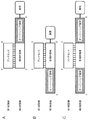
- FIG. 1A and 1B are schematic views showing an example in which the second nucleic acid chain contains a lipid in a specific embodiment of the nucleic acid complex according to the present invention.
- 2A to 2C are schematic views showing an example in which the second nucleic acid chain contains a lipid and contains a complementary region and an overhang region in a specific embodiment of the nucleic acid complex according to the present invention.
- FIG. 3 is a diagram showing an example of a general mechanism of the antisense method.
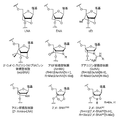
- FIG. 4 is a diagram showing the structure of various natural or non-natural nucleotides.
- FIG. 5 is a diagram showing the structures of various bridged nucleic acids.
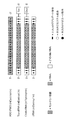
- FIG. 6 shows the chemical modification and structure of the oligonucleotides used in Examples 1 and 2.
- PBS refers to the PBS-administered group
- PMO refers to the single-stranded antisense oligonucleotide (ASO) -administered group
- ASO antisense oligonucleotide
- TocHDO refers to the tocopherol-linked heteroduplex oligonucleotide-administered group
- CholHDO refers to the cholesterol-bound heteroduplex. Refers to the main-strand oligonucleotide administration group.
- FIG. 8 shows the exon skipping effect on the cerebral cortex (A), hippocampus (B), cerebellum (C), brain stem (D), and striatum (E) by intraventricular administration of heteronucleic acid PMO.
- HDO refers to a ligand-free heteroduplex oligonucleotide-administered group.
- the meanings of PBS, PMO, TocHDO, and CholHDO are the same as in FIG.
- FIG. 9 shows the antisense effect on the frontal cortex, occipital cortex, linear body, hippocampus, brain stem, and cerebellum by intracerebroventricular administration of heteronucleic acid containing no morpholinoethanol.
- ASO refers to a single-stranded oligonucleotide administration group that does not contain a ligand-free morpholinoethanol.
- PBS refers to the PBS-administered group
- CholHDO control refers to the cholesterol-bound heteroduplex oligonucleotide-administered group that does not contain morpholinoethanol.
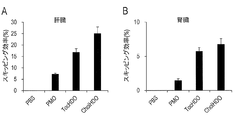
- FIG. 10 shows the exon skipping effect on the liver (A) and kidney (B) by systemic administration of heteronucleic acid PMO.
- the meanings of PBS, PMO, TocHDO, and CholHDO are the same as in FIG.
- FIG. 11 shows the chemical modification and structure of the oligonucleotide used in Example 4.
- FIG. 12 shows the exon skipping effect on the cerebellum (A), brain stem (B), and striatum (C) by intracerebroventricular administration of heteronucleic acid PMO.
- CholHDO DNA gap
- CholHDO full OMe
- 3'Chol default
- C3 default
- ASO PMO miDystrophin
- the administration group of the heteroduplex oligonucleotide including gap), Chol-cRNA (full OMe), 3'Chol-cRNA (default), and C3-cRNA (default) is shown.
- FIG. 13 shows the exon skipping effect in the hippocampus (A), posterior cortex (B), and cervical spine (C) by intracerebroventricular administration of heteronucleic acid PMO.
- the meanings of PBS and PMO are the same as in FIG. HDO (default), CholHDO (default), CholHDO (DNA gap), CholHDO (full OMe), 3'Chol (default), and C3 (default) contain ASO PMO (mDystrophin) as the first nucleic acid strand.
- Nucleic acid strands are cRNA (default), Chol-cRNA (default), Chol-cRNA (DNA gap), Chol-cRNA (full OMe), 3'Chol-cRNA (default), and C3-cRNA (default), respectively.
- the administration group of the heteroduplex oligonucleotide containing is shown.
- the invention is a double-stranded nucleic acid complex comprising a first nucleic acid strand and a second nucleic acid strand, wherein the first nucleic acid strand is hybridized to at least a portion of a target gene or transcript thereof. It is capable of soybeans, has an antisense effect on the target gene or its transcript, and contains at least two morpholino nucleic acids, wherein the second nucleic acid strand is a base complementary to the first nucleic acid strand. It relates to the double-stranded nucleic acid complex comprising a sequence and the first nucleic acid strand being annealed to the second nucleic acid strand.
- the invention is a double-stranded nucleic acid complex comprising a first nucleic acid strand and a second nucleic acid strand, wherein the first nucleic acid strand can specifically bind to a particular target molecule.
- the first nucleic acid strand can specifically bind to a particular target molecule.
- the first nucleic acid strand is annealed to the second nucleic acid strand, relating to the double-stranded nucleic acid complex.
- the "target gene” is a gene to which the first nucleic acid strand of the double-stranded nucleic acid complex of the present invention can bind.
- the "target molecule” is a molecule (for example, peptide, protein, nucleic acid, etc.) that can be a target of the double-stranded nucleic acid complex of the present invention.
- a “target gene” or “target molecule” is, for example, a gene or molecule that can be the antisense effect of the double-stranded nucleic acid complex of the present invention, or a target of an aptamer, decoy, or bait.
- the type of the target gene is not particularly limited as long as it is expressed in vivo, but for example, a gene derived from an organism into which the double-stranded nucleic acid complex according to the present invention is introduced, for example, a gene whose expression is increased in various diseases. Can be mentioned.
- the dystrophin gene the scavenger receptor B1 (scavenger receptor B1: often referred to herein as "SR-B1") gene
- the DMPK distrophia myotonica-protein kinase gene
- metastasis-related lung adenocarcinoma transcript 1 examples include genes (metastasis associated lung adenocarcinoma transcript1: often referred to as "Malat1" in the present specification).
- the dystrophin gene encodes a dystrophin protein, and exon skipping, which skips abnormal exons in Duchenne muscular dystrophy, is known to be effective in its treatment.
- the DMPK gene encodes myotonin protein kinase and is known as the causative gene for myotonic dystrophy, which is the most common muscular dystrophy in adults. Abnormal elongation has been attributed to the disease.
- SR-B1 is an evolutionarily conserved bitransmembrane protein belonging to the CD36 family, which has a long extracellular region and two short intracellular regions, each containing an amino-terminus and a carboxyl-terminus.
- Malat1 is a long non-coding RNA (lncRNA) that is highly expressed in malignant tumors such as lung cancer, and is known to stay in the nucleus of muscle cells.
- lncRNA long non-coding RNA
- target transcript refers to any RNA that is a direct target of the nucleic acid complex of the present invention and is synthesized by RNA polymerase.
- transcription product of target gene is applicable.
- non-coding RNA non-coding RNA
- ncRNA non-coding RNA
- mRNA transcribed from a target gene including mature mRNA, mRNA precursor, unmodified mRNA, etc.
- long non-coding It may include RNA (lncRNA), natural antisense RNA.
- transcripts of the target gene for example, pre-mRNA which is a transcript of dystrophin gene, DMPK mRNA which is a transcript of DMPK gene, SR-B1 mRNA which is a transcript of SR-B1 gene, and transcript of Malat1 gene.
- pre-mRNA which is a transcript of dystrophin gene
- DMPK mRNA which is a transcript of DMPK gene
- SR-B1 mRNA which is a transcript of SR-B1 gene
- Malat1 non-coding RNA is mentioned.
- target transcript examples include the exon 23 / intron 23 boundary region of Dystrophin pre-mRNA (GenBank accession number: NC_000086.7), for example, positions 83803482 to 83803566, for example 83803512 to 83803536.
- SEQ ID NO: 5 shows the base sequence of mouse SR-B1 mRNA
- SEQ ID NO: 6 shows the base sequence of human SR-B1 mRNA.
- SEQ ID NO: 7 shows the base sequence of mouse malat1 non-coding RNA
- SEQ ID NO: 8 shows the base sequence of human Malat1 non-coding RNA.
- SEQ ID NO: 9 shows the base sequence of mouse DMPK mRNA
- SEQ ID NO: 10 shows the base sequence of human DMPK mRNA.
- the base sequence of mRNA is replaced with the base sequence of DNA.
- Nucleotide sequence information of these genes and transcripts can be obtained from known databases such as the NCBI (National Center for Biotechnology Information) database.
- the base sequence of a known antisense drug can also be used.
- it is a therapeutic drug for muscle tonic dystrophy, and is known as a therapeutic drug for dystrophin gene pre -
- the base sequence shown by SEQ ID NO: 15 constituting Casimersen (Sarepta) may be used.
- the term "antisense oligonucleotide (ASO)" includes a complementary base sequence capable of hybridizing to all or part of a target transcript, for example, an arbitrary target region, and the target gene thereof by an antisense effect. Refers to a single-stranded oligonucleotide that can control the expression of the transcript or the level of the target transcript.
- the first nucleic acid strand functions as an ASO, and its target region is 3'UTR, 5'UTR, exon, intron, coding region, translation initiation region, translation termination region, or It may contain any other nucleic acid region.
- the target region of the target transcript is at least 8 bases long, for example 8-40 bases, 10-35 bases, 12-25 bases, 13-20 bases, 14-19 bases, or 15-18 bases. Can be long.
- the "antisense effect” refers to the effect of ASO hybridizing to a target transcript (eg, RNA sense strand) to regulate the expression or editing of the target transcript.
- a target transcript eg, RNA sense strand
- Regulation the expression or editing of a target transcript means the expression of the target gene or the expression level of the target transcript (in the present specification, the "expression level of the target transcript” is often referred to as the "level of the target transcript”.
- Suppression or reduction, enhancement of (denoted), inhibition of translation, inhibition of translation product function, regulation of RNA splicing (eg, splicing switch, exon inclusion, exon skipping, etc.), degradation of transcript, or binding of target gene to protein Includes inhibition of (see Figure 3).
- RNA oligonucleotide in post-transcriptional inhibition of a target gene, when an RNA oligonucleotide is introduced into the cell as ASO, ASO forms a partial double strand by annealing with mRNA, which is a transcript of the target gene. This partial double strand acts as a cover to prevent translation by the ribosome, thereby inhibiting the expression of the target protein encoded by the target gene at the translational level (steric blocking, Fig. 3 outside dashed line x mark). ).
- a partial DNA-RNA heteroduplex is formed.
- the mRNA of the target gene is degraded and the expression of the protein encoded by the target gene is inhibited at the expression level (Fig. 3, dashed line).
- antisense effects can also be achieved by targeting introns in pre-mRNA.
- antisense effects can also be achieved by targeting miRNAs. In this case, inhibition of the function of the miRNA can increase the expression of the gene whose expression is normally regulated by the miRNA. In one embodiment, the regulation of target transcript expression may be a reduction in the amount of target transcript.
- translation product of a target gene means any polypeptide that is a direct target of the nucleic acid complex of the present invention and is synthesized by translation of the target transcript or transcript of the target gene. Refers to protein.
- the translation product of the target gene include DMPK protein which is a translation product of DMPK gene, SR-B1 protein which is a translation product of SR-B1 gene, and Malat1 protein which is a translation product of Malat1 gene.
- aptamer refers to a nucleic acid molecule that specifically binds to a specific target molecule intracellularly, on the cell membrane, or extracellularly, for example, on the cell membrane or extracellularly. Aptamers can be produced by a method known in the art, for example, an in vitro sorting method using a SELEX (systematic evolution of ligands by exponential enrichment) method.
- SELEX systematic evolution of ligands by exponential enrichment
- the term "decoy” refers to a nucleic acid having a sequence of binding sites of a transcription factor (for example, NF-kB) or a similar sequence, and the transcription factor is introduced into a cell as a “decoy”. It suppresses the action (if it is a transcription activator, it suppresses transcription, if it is a transcription inhibitor, it promotes transcription). Decoy nucleic acids can be easily designed based on the information on the binding sequence of the target transcription factor.
- a transcription factor for example, NF-kB
- bait refers to a nucleic acid molecule that specifically binds to a specific target molecule in the cell and modifies the function of the target molecule.
- Targets that interact with bait are also called “prey”.
- nucleic acid or “nucleic acid molecule” means a nucleoside or nucleotide if it is a monomer, an oligonucleotide if it is an oligomer, or a polynucleotide if it is a polymer.
- Nucleoside generally refers to a molecule consisting of a combination of a base and a sugar.
- the sugar portion of the nucleoside is usually composed of, but not limited to, pentoflanosyl sugar, and specific examples thereof include ribose and deoxyribose.
- the base moiety (nucleobase) of the nucleoside is usually a heterocyclic base moiety. Examples thereof include, but are not limited to, adenine, cytosine, guanine, thymine, or uracil, and other modified nucleobases (modified bases).
- Nucleotide refers to a molecule in which a phosphate group is covalently bonded to the sugar portion of the nucleoside.
- a phosphate group is usually linked to the hydroxyl group at the 2', 3', or 5'position of the sugar.
- oligonucleotide refers to a linear oligomer formed by covalently linking several to several tens of hydroxyl groups and phosphate groups of a sugar moiety between adjacent nucleotides.
- polynucleotide refers to a linear polymer formed by linking several tens or more, preferably several hundreds or more, of nucleotides more than an oligonucleotide by the covalent bond.
- phosphate groups are generally considered to form nucleoside-to-nucleoside bonds.
- nucleic acid chain or a simple “chain” means an oligonucleotide or a polynucleotide.
- Nucleic acid chains can be made into full-length or partial chains, for example, by chemical synthesis using an automated synthesizer, or by enzymatic steps with polymerases, ligases, or restriction reactions. Nucleic acid chains can include native and / or non-natural nucleotides.
- naturally nucleoside refers to a nucleoside that exists in nature. Examples thereof include ribonucleosides composed of ribose and the bases such as adenine, cytosine, guanine or uracil, and deoxyribonucleosides composed of deoxyribose and the bases such as adenine, cytosine, guanine or thymine.
- ribonucleoside found in RNA and the deoxyribonucleoside found in DNA are often referred to herein as "DNA nucleoside” and "RNA nucleoside", respectively.
- naturally occurring nucleotide refers to a naturally occurring nucleotide that has a phosphate group covalently bonded to the sugar moiety of the natural nucleoside.
- a ribonucleotide known as a constituent unit of RNA in which a phosphate group is bound to a ribonucleoside and a deoxyribonucleotide known as a constituent unit of DNA in which a phosphate group is bound to a deoxyribonucleoside can be mentioned.
- non-natural nucleoside means any nucleoside other than the natural nucleoside.
- modified nucleosides and nucleoside mimetics are included.
- modified nucleoside means a nucleoside having a modified sugar moiety and / or a modified nucleobase. Nucleic acid chains containing unnatural oligonucleotides are often due to desirable properties such as enhanced cell uptake, enhanced affinity for nucleic acid targets, increased stability in the presence of nucleases, or increased inhibitory activity. , Preferable over natural type.
- the term “mimic” refers to a functional group that replaces a sugar, a nucleobase, and / or a nucleoside bond. In general, mimetics are used in place of sugar or sugar-nucleoside binding combinations, and nucleobases are maintained for hybridization to the target of choice.
- the term “nucleoside mimic” as used herein means to replace a sugar at one or more positions of an oligomer compound, to replace a sugar and a base, or to bond between monomer subunits constituting the oligomer compound. Contains structures used to replace.
- oligomer compound is meant a polymer of linked monomer subunits that are at least hybridizable to a region of a nucleic acid molecule.
- nucleoside mimetics include morpholino, cyclohexenyl, cyclohexyl, tetrahydropyranyl, bicyclic or tricyclic sugar mimetics, such as nucleoside mimetics having non-furanose sugar units.
- Figure 4 shows the structure of various natural or non-natural nucleotides.
- bicyclic nucleoside refers to a modified nucleoside containing a bicyclic sugar moiety.
- Nucleic acids containing bicyclic sugar moieties are generally referred to as bridged nucleic acids (BNAs).
- BNAs bridged nucleic acids
- a nucleoside containing a bicyclic sugar moiety may be referred to as a "crosslinked nucleoside”.
- FIG. 5 exemplifies some of the crosslinked nucleic acids.
- Bicyclic sugars may be sugars in which a carbon atom at the 2'position and a carbon atom at the 4'position are crosslinked by two or more atoms. Examples of bicyclic sugars are known to those of skill in the art.
- One subgroup of bicyclic sugar-containing nucleic acids (BNAs) is 4'-(CH 2 ) p -O-2', 4'-(CH 2 ) p -CH 2 -2', 4'-( CH 2 ) p -S-2', 4'-(CH 2 ) p -OCO-2', 4'-(CH 2 ) n -N (R 3 ) -O- (CH 2 ) m -2'[
- p, m and n represent integers 1 to 4, integers 0 to 2 and integers 1 to 3, respectively; and
- R 3 is a hydrogen atom, an alkyl group, an alkenyl group, a cycloalkyl group, respectively.
- hydroxyl group protecting group an alkyl group, an alkenyl group, a cycloalkyl group, an aryl group, an aralkyl group, an acyl group, and a sulfonyl group for nucleic acid synthesis.
- R 4 and R 5 are identical to each other They may be different, each of which is a hydroxyl group, a hydroxyl group protected by a protective group for nucleic acid synthesis, a mercapto group, a mercapto group protected by a protective group for nucleic acid synthesis, an amino group, 1-5. Is substituted with an alkoxy group having a carbon atom of, an alkylthio group having 1 to 5 carbon atoms, a cyanoalkoxy group having 1 to 6 carbon atoms, or an alkyl group having 1 to 5 carbon atoms.
- non-natural nucleotide refers to any nucleotide other than the natural nucleotide, and includes modified nucleotides and nucleotide mimetics.
- modified nucleotide means a nucleotide having any one or more of a modified sugar moiety, a modified nucleoside-linked bond, and a modified nucleobase.
- nucleotide mimetic as used herein includes a structure used to replace a nucleoside and a bond at one or more positions of an oligomer compound.
- Peptide nucleic acid (PNA) is a nucleotide mimetic having a main chain in which N- (2-aminoethyl) glycine is bound by an amide bond instead of sugar.
- Nucleic acid chains containing unnatural oligonucleotides herein often include, for example, enhanced cell uptake, enhanced affinity for nucleic acid targets, increased stability in the presence of nucleases, or increased inhibitory activity. Has the desired properties of. Therefore, it is preferable to natural nucleotides.
- modified nucleoside bond refers to a nucleoside bond that has a substitution or arbitrary change from a naturally occurring nucleoside bond (that is, a phosphodiester bond).
- Modified nucleoside bonds include phosphorus-containing nucleoside bonds containing a phosphorus atom and non-phosphorus-containing nucleoside bonds containing no phosphorus atom.
- Typical phosphorus-containing nucleoside bonds include phosphodiester bonds, phosphorothioate bonds, phosphorodithioate bonds, phosphotriester bonds, alkylphosphonate bonds, alkylthiophosphonate bonds, borane phosphate bonds, phosphorodiamidates and the like.
- the phosphorothioate bond is an internucleoside bond in which the non-crosslinked oxygen atom of the phosphodiester bond is replaced with a sulfur atom.
- Methods for preparing phosphorus-containing and non-phosphorus-containing bonds are well known.
- Modified nucleoside linkages are preferably those with higher nuclease resistance than naturally occurring nucleoside linkages.
- the nucleoside-to-nucleoside bond may be chiral-controlled.
- chiral controlled is intended to be present in a single diastereomer with respect to a chiral center, eg, a chiral-bound phosphorus.
- Chiral-controlled internucleoside bonds may be completely chiral pure or have high chiral purity, such as 90% de, 95% de, 98% de, 99% de, 99.5% de, 99.8. It may have a chiral purity of% de, 99.9% de, or higher.
- chiral purity refers to the proportion of one diastereomer in a mixture of diastereomers, expressed as the diastereomeric excess rate (% de) (the diastereomers of interest-other diastereomers). Defined as stereomer) / (total diastereomer) x 100 (%).
- the nucleoside-to-nucleoside bond may be a chiral-controlled phosphorothioate bond with an Rp or Sp configuration.
- Methods for preparing chiral-controlled nucleoside bonds are known, for example, chiral-controlled phosphorothioate bonds in the Rp or Sp configuration include Naoki Iwamoto et al., Angelw. Chem. Int. Ed. Engl. 2009, 48 ( 3), 496-9, Natsuhisa Oka et al., J. Am. Chem. Soc. 2003, 125, 8307-8317, Natsuhisa Oka et al., J. Am. Chem. Soc.
- the Sp-positioned chiral-controlled phosphorothioate binding is more stable than that of the Rp-positioned, and / or the Sp-positioned chirally controlled ASO promotes target RNA cleavage by RNase H1. , Brings a more sustained response in vivo.
- modified nucleobase or “modified nucleobase” means any nucleobase other than adenine, cytosine, guanine, thymine, or uracil.
- modified nucleobases include 5-methylcytosine, 5-fluorocytosine, 5-bromocytosine, 5-iodocytosine, N4-methylcytosine, N6-methyladenine, 8-bromoadenine, N2-methylguanine, or 8 -Bromoguanine, but not limited to.
- a preferred modified nucleobase is 5-methylcytosine.
- Unmodified nucleobase or “unmodified nucleobase” is synonymous with natural nucleobase and is purine bases adenine (A) and guanine (G), and pyrimidine bases thymine (T) and cytosine (C). ), And uracil (U).
- modified sugar has a substitution and / or any change from a natural sugar moiety (ie, a sugar moiety found in DNA (2'-H) or RNA (2'-OH)).
- the nucleic acid chain may contain one or more modified nucleosides, optionally containing modified sugars.
- Sugar-modified nucleosides can impart enhanced nuclease stability, increased binding affinity, or some other beneficial biological property to the nucleic acid strand.
- the nucleoside may contain a chemically modified ribofuranose ring moiety.
- Examples of chemically modified ribofuranose rings include, but are not limited to, bicyclic nucleic acids (crosslinked nucleic acids, BNAs) by the addition of substituents (including 5'and 2'substituted groups) and the cross-linking of nongeminal ring atoms. ), S, N (R), or C (R1) (R2) (R, R1 and R2 of the ribosyl ring oxygen atom, respectively, independently H, C 1- C 12 alkyl, or protective group (Represented), and combinations thereof can be mentioned.
- BNAs crosslinked nucleic acids
- nucleosides having a modified sugar moiety are, but are not limited to, 5'-vinyl, 5'-methyl (R or S), 4'-S, 2'-F (2'). -Fluoroside groups), 2'-OCH 3 (2'-OMe group or 2'-O-methyl group), and nucleosides containing 2'-O (CH 2 ) 2 OCH 3 substituents.
- Substituents at the 2'position are also allyl, amino, azide, thio, -O-allyl, -OC 1 -C 10 alkyl, -OCF 3 , -O (CH 2 ) 2 SCH 3 , -O (CH 2 ).
- Rm and Rn can be selected, and each Rm and Rn can be independently H or substituted or replaced. It is an unsubstituted C 1- C 10 alkyl.
- "2'-modified sugar” means a furanosyl sugar modified at the 2'position.
- the modification can be performed so that the nucleotides in the same strand can independently undergo different modifications.
- the same nucleotides have modified nucleoside bonds (eg, phosphorothioate bonds) and are further modified sugars (eg, 2'-O-methyl modified sugars or bicyclics).
- the same nucleotide can also have a modified nucleobase (eg, 5-methylcytosine) and further have a modified sugar (eg, 2'-O-methyl modified sugar or bicyclic sugar).
- the number, type and position of unnatural nucleotides in the nucleic acid strand can affect the antisense effect provided by the nucleic acid complex of the present invention.
- the choice of modification may differ depending on the sequence of the target gene, etc., but those skilled in the art will explain the literature related to the antisense method (for example, WO2007 / 143315, WO2008 / 043753, and WO2008 / 049085). Suitable embodiments can be determined by reference.
- the measured value thus obtained is not significantly lower than the measured value of the unmodified nucleic acid complex (eg,).
- the measured value obtained after the modification is 70% or more, 80% or more or 90% or more of the measured value of the nucleic acid complex before the modification), the related modification can be evaluated.
- the term "complementary" means that a nucleobase is a so-called Watson-Crick base pair (natural base pair) or non-Watson-Crick base pair (Hoogsteen base pair) via a hydrogen bond. It means a relationship that can form equality).
- the first nucleic acid strand does not necessarily have to be completely complementary to all or part of the target transcript (eg, transcript of the target gene) and has a base sequence of at least 70%, preferably at least 70%. It is acceptable to have at least 80%, and even more preferably at least 90% (eg, 95%, 96%, 97%, 98%, or 99% or more) complementarity.
- the complementary region in the second nucleic acid strand does not necessarily have to be completely complementary to all or part of the first nucleic acid strand, with a base sequence of at least 70%, preferably at least 80%. Even more preferably, it is acceptable if it has at least 90% complementarity (eg, 95%, 96%, 97%, 98%, or 99% or more).
- tocopherol is a methylated derivative of tocolol and is a fat-soluble vitamin (vitamin E) having a cyclic structure called chromane.
- vitamin E fat-soluble vitamin
- Tocorol has a strong antioxidant effect, and therefore, as an antioxidant in the living body, has a function of eliminating free radicals generated by metabolism and protecting cells from damage.
- tocopherols consisting of ⁇ -tocopherol, ⁇ -tocopherol, ⁇ -tocopherol, and ⁇ -tocopherol, based on the position of the methyl group that binds to chroman.
- the tocopherol in the present specification may be any tocopherol.
- Examples of tocopherol relatives include various unsaturated analogs of tocopherol, such as ⁇ -tocotrienols, ⁇ -tocotrienols, ⁇ -tocotrienols, and ⁇ -tocotrienols.
- the tocopherol is ⁇ -tocopherol.
- Cholesterol is a kind of sterol, which is also called steroid alcohol, and is particularly abundant in animals. Cholesterol plays an important role in the metabolic process in the living body, and in animal cells, it is also a major constituent of the cell membrane system together with phospholipids. Cholesterol analogs refer to, but are not limited to, various cholesterol metabolites and analogs that are alcohols with a sterol skeleton, such as, but not limited to, cholesterol, lanosterol, celebrosterol, dehydrocholesterol, and coprostanol. Etc. are included.
- analog refers to a compound having the same or similar basic skeleton and having similar structures and properties. Analogs include, for example, biosynthetic intermediates, metabolites, compounds with substituents and the like. Whether or not a compound is an analog of another compound can be determined by those skilled in the art based on common general technical knowledge.
- the term "subject” refers to a subject to which the double-stranded nucleic acid complex or pharmaceutical composition of the present invention is applied.
- Subjects include organs, tissues, and cells as well as individuals. If the subject is an individual, any animal, including humans, can be applicable. For example, other than humans, various livestock, poultry, pets, experimental animals and the like can be mentioned.
- the subject may be, but is not limited to, an individual who needs to reduce the expression level of the target transcript or control splicing (for example, exon skipping).
- the double-stranded nucleic acid complex of the present invention contains a first nucleic acid strand and a second nucleic acid strand.
- the specific composition of each nucleic acid chain is shown below.
- the first nucleic acid strand comprises a base sequence capable of hybridizing to all or part of the target gene or its transcript and provides an antisense effect on the target gene or its transcript. It is a main-strand oligonucleotide chain.
- the first nucleic acid strand is a single-stranded oligonucleotide strand that is capable of specifically binding to a particular target molecule and has at least one effect of aptamer, decoy, and bait on the target molecule. be.
- the second nucleic acid chain is a single-stranded oligonucleotide chain containing a base sequence complementary to the first nucleic acid chain. Further, in the double-stranded nucleic acid complex, the second nucleic acid strand is annealed to the first nucleic acid strand via hydrogen bonds of complementary base pairs. Examples of this embodiment are International Publication No. 2013/089283, Nishina K, et. Al., Nature Communication, 2015, 6: 7969, and Asami Y, et al., Drug Discoveries & Therapeutics. 2016; 10 ( 5): There are heteroduplex oligonucleotides (HDOs) disclosed in 256-262 (FIGS. 1A and 1B).
- HDOs heteroduplex oligonucleotides
- the second nucleic acid strand may further comprise at least one overhang region located on one or both of the 5'end and 3'end of the complementary region.
- the "overhang region” is a region adjacent to a complementary region, and when the first nucleic acid strand and the second nucleic acid strand are annealed to form a double-stranded structure, the 5'end of the second nucleic acid strand is the first.
- a second nucleic acid that extends beyond the 3'end of the nucleic acid strand and / or the 3'end of the second nucleic acid strand extends beyond the 5'end of the first nucleic acid strand, that is, protruding from the double-stranded structure.
- the overhang region in the second nucleic acid strand may be located on the 5'end side of the complementary region (Fig. 2A) or on the 3'end side (Fig. 2B).
- the overhang region in the second nucleic acid strand may be located on the 5'end and 3'end sides of the complementary region (Fig. 2C).
- the base sequence of the first nucleic acid chain since the base sequence of the first nucleic acid chain is complementary to the base sequence of all or part of the target transcript, it can hybridize (or anneal) to the target transcript.
- Nucleotide sequence complementarity can be determined by using a BLAST program or the like. Those skilled in the art can easily determine the conditions (temperature, salt concentration, etc.) under which the two strands can hybridize in consideration of the complementarity between the strands.
- those skilled in the art can easily design an antisense nucleic acid complementary to the target transcript, for example, based on the information on the base sequence of the target gene.
- the hybridization conditions may be various stringent conditions such as low stringent conditions and high stringent conditions.
- the low stringent conditions may be relatively low temperature and high salt concentration conditions, such as 30 ° C., 2 ⁇ SSC, 0.1% SDS.
- the high stringent conditions may be relatively high temperature and low salt concentration conditions, such as 65 ° C., 0.1 ⁇ SSC, 0.1% SDS.
- the stringency of hybridization can be adjusted by changing conditions such as temperature and salt concentration.
- 1 ⁇ SSC comprises 150 mM sodium chloride and 15 mM sodium citrate.
- the base lengths of the first and second nucleic acid chains are not particularly limited, but are at least 8 bases long, at least 9 bases long, at least 10 bases long, at least 11 bases long, at least 12 bases long, at least 13 bases long, and at least. It may be 14 bases long, or at least 15 bases long.
- the base lengths of the first and second nucleic acid chains are 40 bases or less, 35 bases or less, 30 bases or less, 25 bases or less, 24 bases or less, 23 bases or less, 22 bases or less. , 21 bases or less, 20 bases or less, 19 bases or less, 18 bases or less, 17 bases or less, or 16 bases or less.
- the first nucleic acid chain and the second nucleic acid chain may have the same length or different lengths (for example, one of them may be 1 to 3 bases shorter or longer).
- the double-stranded structure formed by the first nucleic acid strand and the second nucleic acid strand may contain a bulge.
- the choice of length can be determined by the balance between the intensity of the antisense effect and the specificity of the nucleic acid strand to the target, among other factors such as cost, synthesis yield and the like.
- the total base length of the first nucleic acid chain and the second nucleic acid chain is that of the nucleic acid bound to the above base length. It may be the one to which the base length is added.
- the base length of the nucleic acid to be bound is not limited, but may be, for example, at least 10 base length, at least 15 base length, or at least 20 base length, and 100 base length or less, 80 base length or less, 60 base length or less. , 40 bases or less, or 30 bases or less.
- the nucleosides in the first and second nucleic acid chains may be natural nucleosides (deoxyribonucleosides, ribonucleosides, or both) and / or unnatural nucleosides.
- the nucleoside-linked bond in the first and second nucleic acid chains may be a naturally occurring nucleoside-linked bond and / or a modified nucleoside-linked bond.
- at least one, at least two, or at least three nucleoside linkages from the ends (5'end, 3'end or both ends) of the first and / or second nucleic acid strands are modified between nucleosides. It is preferably a bond.
- the binding between two nucleosides from the end of a nucleic acid chain means the binding between nucleosides closest to the end of the nucleic acid chain and the binding between nucleosides adjacent to and opposite to the end.
- binding between modified nucleosides in the terminal region of the nucleic acid chain is preferable because it can suppress or inhibit undesired degradation of the nucleic acid chain.
- all nucleoside linkages of the first and / or second nucleic acid strands may be modified nucleoside linkages.
- the modified nucleoside bond may be a phosphorothioate bond.
- the first nucleic acid chain and the second nucleic acid chain may contain a nucleoside mimetic or a nucleotide mimetic in whole or in part.
- Nucleotide mimetics may be peptide nucleic acids and / or morpholinoethanols.
- the first nucleic acid strand is at least 2, at least 3, at least 4, at least 5, at least 6, at least 7, at least 8, at least 9, at least 10, at least 11, at least 12, At least 13, at least 14, at least 15, at least 16, at least 17, at least 18, at least 19, at least 20, at least 21, at least 22, at least 23, at least 24, or at least Contains 25 morpholino nucleic acids. In one embodiment, 25% or more, 33% or more, 40% or more, 50% or more, 60% or more, 70% or more, 80% or more, 90% or more, 95% or more or 100 of the nucleic acids in the first nucleic acid chain. % Is a morpholino nucleic acid.
- the binding between nucleosides between morpholinoethanols is not limited, but some or all of them may be phosphorodiamidate bindings.
- the first nucleic acid strand does not contain at least four contiguous nucleosides recognized by RNase H when hybridized to the target transcript.
- regions containing consecutive nucleosides of 4 to 20 bases, 5 to 16 bases, or 6 to 12 bases are recognized by RNase H.
- nucleosides recognized by RNase H include natural deoxyribonucleosides.
- the "at least four consecutive nucleosides" recognized by RNase H can be easily determined by one of ordinary skill in the art, for example, by examining whether or not they are cleaved by RNase H.
- the natural ribonucleoside of the first nucleic acid chain is less than half of the total length or is not contained.
- all nucleosides may be composed of ribonucleosides and / or modified nucleosides. All nucleosides of the second nucleic acid chain may be composed of deoxyribonucleosides and / or modified nucleosides and may not contain ribonucleosides. In one embodiment, all nucleosides of the second nucleic acid chain may be composed of deoxyribonucleosides and / or modified nucleosides.
- At least one, at least two, at least three, or at least four nucleosides from the end (5'end, 3'end, or both ends) of the second nucleic acid chain may be modified nucleosides.
- the modified nucleoside may contain a modified sugar and / or a modified nucleobase.
- the modified sugar may be a 2'-modified sugar (eg, a sugar containing a 2'-O-methyl group).
- the modified nucleobase can also be 5-methylcytosine.
- the second nucleic acid chain is a modified nucleoside having a length of 2 to 7 bases or a length of 3 to 5 bases (for example, a modified nucleoside containing a 2'-modified sugar), a length of 4 to 15 bases, or 8 to 12 bases in order from the 5'end. From long (possibly linked with modified nucleoside bonds) ribonucleosides or deoxyribonucleosides, and modified nucleosides 2-7 or 3-5 bases in length (eg, modified nucleosides containing 2'-modified sugars). It may be configured.
- At least one (for example, three) nucleoside linkages from the 3'end of the second nucleic acid strand may be modified nucleoside linkages such as phosphorothioate bonds with high RNase resistance.
- modified nucleoside linkages such as phosphorothioate bonds with high RNase resistance.
- At least one (for example, three) nucleosides from the 3'end of the second nucleic acid chain may be, for example, modified nucleosides such as 2'F-RNA and 2'-OMe having high RNase resistance.
- modified nucleosides such as 2'F-RNA and 2'-OMe having high RNase resistance.
- the first nucleic acid chain and the second nucleic acid chain may contain any combination of the above-mentioned modified nucleoside linkage and modified nucleoside.
- the first nucleic acid strand and / or the second nucleic acid strand constituting the double-stranded nucleic acid complex of the present invention may be a mixmer.
- the term "mixed-mer” refers to a nucleic acid chain containing alternating natural and non-natural nucleosides of periodic or random segment length and free of four or more consecutive deoxyribonucleosides and ribonucleosides. ..
- the mixmer in which the unnatural nucleoside is a crosslinked nucleoside and the natural nucleoside is a deoxyribonucleoside is particularly referred to as "BNA / DNA mixmer".
- the mixmer in which the unnatural nucleoside is a peptide nucleic acid and the natural nucleoside is a deoxyribonucleoside is particularly referred to as a "peptide nucleic acid / DNA mixmer".
- the mixmer in which the unnatural nucleoside is a morpholinonucleic acid and the natural nucleoside is a deoxyribonucleoside is particularly referred to as a "morpholinonucleic acid / DNA mixmer”.
- Mixmers are not restricted to containing only two nucleosides. Mixmers can include any number of types of nucleosides, whether natural or modified nucleosides or mimics of nucleosides.
- the crosslinked nucleoside may further comprise a modified nucleobase (eg, 5-methylcytosine).
- the first nucleic acid strand and the second nucleic acid strand may be bound via a cleaving (cleavable) or non-cleavable (uncleavable) linker.
- the first nucleic acid strand and the second nucleic acid strand can be linked via a linker to form a single strand.
- the linker can be any polymer. For example, polynucleotides, polypeptides, alkylenes and the like can be mentioned.
- the linker may be composed of natural nucleotides such as DNA and RNA or non-natural nucleotides such as peptide nucleic acids and morpholinoethanols.
- the linker consists of nucleic acid
- the chain length of the linker can be at least 1 base, for example, 3 to 10 bases or 4 to 6 bases. It preferably has a chain length of 4 bases.
- the linker can take the form of a hinge (hairpin loop).
- the position of the linker can be either on the 5'side or the 3'side of the first nucleic acid strand, but for example, in the case of a configuration in which the second nucleic acid strand is bound to the 5'side of the first nucleic acid strand, The 5'end of the first nucleic acid strand and the 3'end of the second nucleic acid strand will be linked via a linker. Further details of the cleavable or non-cleavable linker are as described below for functional moieties.
- the functional moiety may be bound to the first nucleic acid chain and / or the second nucleic acid chain, for example, the second nucleic acid chain.
- the binding of the first and / or second nucleic acid strand to the functional moiety may be a direct bond or an indirect bond via another substance, but in certain embodiments.
- it is preferable that the first nucleic acid chain and / or the second nucleic acid chain is directly bonded to the functional portion by a covalent bond, an ionic bond, a hydrogen bond, etc., and a more stable bond can be obtained. , Covalent bonds are more preferred.
- the structure of the "functional moiety" is not particularly limited, and a desired function is imparted to the double-stranded nucleic acid complex to which it binds. Desired functions include labeling function, purification function and delivery function to the target. Examples of the portion that imparts the labeling function include compounds such as fluorescent protein and luciferase. Examples of the portion that imparts the purification function include compounds such as biotin, avidin, His tag peptide, GST tag peptide, and FLAG tag peptide.
- the first nucleic acid strand and / or the second nucleic acid strand As a functional portion, it is preferable that a molecule having an activity of delivering the double-stranded nucleic acid complex in a certain embodiment to a target site is bound to the syllabary.
- parts that provide the function of delivery to the target include lipids, antibodies, aptamers, ligands for specific receptors, and the like.
- the first and / or second nucleic acid strand is bound to a lipid.
- Lipids include tocopherols, cholesterol, fatty acids, phospholipids and their relatives; folic acid, vitamin C, vitamin B1, vitamin B2; estradiol, androstane and their relatives; steroids and their relatives; LDLR, SRBI or LRP1 / 2 ligands; FK-506, and cyclosporin; lipids described in PCT / JP2019 / 12077 and PCT / JP2019 / 10392, but are not limited thereto.
- Lipids, tocopherol or its analog and / or cholesterol or its analog substituted or unsubstituted C 1 ⁇ 30 alkyl group, substituted or unsubstituted C 2 ⁇ 30 alkenyl group, or an alkoxy group of C 1 ⁇ 30 that are not substituted or substituted or.
- the group may be a hydroxy group, a halogen atom or an alkyl group having 1 to 3 carbon atoms.
- the second nucleic acid chain bonded to the substituted or unsubstituted alkyl group may have a group represented by the following general formula (I).
- R x is a linear alkylene group having 3 to 24 carbon atoms, preferably 6 to 14 or 9 to 13 carbon atoms.
- the second nucleic acid chain attached to the substituted or unsubstituted alkyl group may have a group represented by the following general formula (II).
- R y is a linear alkylene group having 1 to 15, preferably 3 to 15, 6 to 14 or 9 to 13 carbon atoms.
- the functional portion may be linked to the 5'end, 3'end, or both ends of the first and / or second nucleic acid strands.
- the functional moiety may be linked to nucleotides inside the first and / or second nucleic acid strands.
- the first nucleic acid chain and / or the second nucleic acid chain contains two or more functional portions such as lipids, which may be linked to multiple positions of the first nucleic acid chain and / or the second nucleic acid chain. And / or may be linked as a group to one position of the first nucleic acid chain and / or the second nucleic acid chain.
- One functional moiety may be linked to each of the 5'end and 3'end of the first and / or second nucleic acid strands.
- the bond between the first nucleic acid chain and / or the second nucleic acid chain and the functional moiety may be a direct bond or an indirect bond mediated by another substance.
- the functional moiety is preferably directly attached to the first and / or second nucleic acid strand via covalent, ionic, hydrogen, etc., and more preferably.
- a covalent bond is more preferable from the viewpoint that a stable bond can be obtained.
- the functional moiety may also be attached to the first and / or second nucleic acid strand via a cleavable or uncleavable linker.
- “Cleaving linker” means a linking group that is cleaved under physiological conditions, for example, intracellularly or in an animal body (eg, in a human body).
- the cleaving linker is selectively cleaved by an endogenous enzyme such as a nuclease.
- Cleavable linkers include amide, ester, phosphodiester one or both esters, phosphate esters, carbamate, and disulfide bonds, as well as natural DNA linkers.
- Non-cleavable linker means a linker that is not cleaved under physiological conditions, for example, intracellularly or in an animal body (for example, in a human body).
- Non-cleavable linkers include, but are not limited to, phosphorothioate bonds and linkers composed of modified or unmodified deoxyribonucleosides linked by phosphorothioate bonds or modified or unmodified ribonucleosides.
- the linker is a nucleic acid such as DNA or an oligonucleotide
- the chain length is not particularly limited, but is usually 2 to 20 bases, 3 to 10 bases, or 4 to 6 bases.
- linker As a specific example of the linker, there is a linker represented by the following formula (I).
- L 2 is an substituted or unsubstituted C 1 to C 12 alkylene group (eg, propylene, hexylene, dodecylene), a substituted or unsubstituted C 3 to C 8 cycloalkylene group (eg, cyclohexyl).
- C 1 to C 12 alkylene group eg, propylene, hexylene, dodecylene
- C 3 to C 8 cycloalkylene group eg, cyclohexyl
- the linker represented by formula (III) is an alkylene group of C 3 to C 6 in which L 2 is not substituted (eg, propylene, hexylene),-(CH 2 ) 2- O-( CH 2) 2 -O- (CH 2 ) 2 -O- (CH 2) 3 -, or - (CH 2) 2 -O- ( CH 2) 2 -O- (CH 2) 2 -O- (CH 2 ) 2 -O- (CH 2 ) 3- , L 3 is -NH-, and L 4 and L 5 are bonds.
- L 2 is not substituted (eg, propylene, hexylene),-(CH 2 ) 2- O-( CH 2) 2 -O- (CH 2 ) 2 -O- (CH 2) 3 -, or - (CH 2) 2 -O- ( CH 2) 2 -O- (CH 2) 2 -O- (CH 2 ) 2 -O- (CH 2 ) 3-
- L 3 is -NH-
- L 4 and L 5
- the antisense effect of the first nucleic acid strand on the target transcript can be measured by a method known in the art. For example, after introducing the double-stranded nucleic acid complex into cells or the like, measurement may be performed by using a known technique such as Northern blotting, quantitative PCR, or Western blotting. By measuring the expression level of the target gene or the level of the target transcript in a specific tissue (for example, the amount of mRNA or RNA such as microRNA, cDNA amount, protein amount, etc.), the double-stranded nucleic acid complex is formed at those sites. It is possible to determine whether or not the target gene expression is suppressed by the body. Further, for example, in the case of exon skipping, the effect can be determined by comparing the product produced by exon skipping with the product without exon skipping.
- a known technique such as Northern blotting, quantitative PCR, or Western blotting.
- the double-stranded nucleic acid complex of the present invention has been described, but the double-stranded nucleic acid complex of the present invention is not limited to the above-mentioned exemplary embodiment.
- the double-stranded nucleic acid complex of the present invention can be produced by a person skilled in the art by appropriately selecting a known method. Although not limited, it usually starts with designing and manufacturing each of the first and second nucleic acid strands constituting the double-stranded nucleic acid complex.
- the first nucleic acid strand is designed based on the base sequence information of the target transcript (for example, the base sequence of the target gene), and the second nucleic acid strand is designed as a complementary strand thereof.
- each nucleic acid chain may be synthesized using, for example, a commercially available automatic nucleic acid synthesizer such as GE Healthcare, Thermo Fisher Scientific, or Beckman Coulter. After that, the obtained oligonucleotide can be purified by using a reverse phase column or the like.
- a commercially available automatic nucleic acid synthesizer such as GE Healthcare, Thermo Fisher Scientific, or Beckman Coulter.
- the first nucleic acid strand may be produced according to the above method.
- the second nucleic acid chain to which the functional moiety is bound can be produced by performing the above synthesis and purification using the nucleic acid species to which the functional moiety is bound in advance.
- a second nucleic acid chain may be produced by carrying out the above synthesis and purification using a nucleic acid species to which a functional moiety is preliminarily bound.
- the functional moiety may be bound to the second nucleic acid chain produced by carrying out the above synthesis and purification by a known method.
- a double-stranded nucleic acid complex in which a target functional portion is bound can be produced by performing annealing described later on the first nucleic acid strand and the second nucleic acid strand.
- nucleic acids produced by this method are mixed in a suitable buffer solution, denatured at about 90 ° C to 98 ° C for several minutes (eg 5 minutes), and then the nucleic acids are annealed at about 30 ° C to 70 ° C for about 1 to 8 hours. Therefore, one of the double-stranded nucleic acid complexes of the present invention can be produced.
- the nucleic acid chain can be obtained by ordering from various manufacturers (for example, GeneDesign, Inc.) by designating the base sequence and the modification site and type.
- the annealing step can be performed by allowing the mixture to stand at room temperature (about 10 ° C.
- the first nucleic acid chain and the second nucleic acid chain are each dissolved in a buffer solution (for example, phosphate buffered saline) or water at about 70 ° C. to 98 ° C., the two obtained solutions are mixed, and the mixed solution is about.
- a part of the present invention is held at 70 ° C. to 98 ° C. for several minutes (for example, 5 minutes), and then the mixture is held at about 30 ° C. to 70 ° C. (or 30 ° C. to 50 ° C.) for about 1 to 8 hours.
- the double-stranded nucleic acid complex of the embodiment may be prepared.
- the first nucleic acid chain and the second nucleic acid chain can also be dissolved in a buffer solution (for example, phosphate buffered saline) or water at room temperature (about 10 ° C. to about 35 ° C.), respectively.
- a buffer solution for example, phosphate buffered saline
- water at room temperature (about 10 ° C. to about 35 ° C.), respectively.
- the annealing conditions (time and temperature) at the time of preparing the double-stranded nucleic acid complex are not limited to the above conditions.
- conditions suitable for promoting the annealing of nucleic acid chains are well known in the art.
- the double-stranded nucleic acid complex of the present invention has at least one of the following actions: a target gene that suppresses or enhances the expression level of a transcript or translation product of the target gene. It may be for inhibiting the function of a transcript or translation product of, controlling RNA splicing, and inhibiting the binding of a target gene to a protein, such as for exon skipping.
- the double-stranded nucleic acid complex of the present invention may be for at least one of the following actions: exon skipping, exon inclusion, steric blocking, and RNA expression enhancement.
- the double-stranded nucleic acid complex of the present invention exerts the above-mentioned action in a specific tissue such as brain, spinal cord, kidney, liver, lung, intestinal tract, spleen, adrenal gland, eye, retina, skin, peripheral nerve, for example, brain. It may be.
- the brain may be any one of the cerebrum, diencephalon, brain stem, and cerebellum, and may be, for example, any one or more of the cerebrum (cerebral cortex, etc.), brain stem, brain, hippocampus, and linear body.
- the double-stranded nucleic acid complex of the present invention may be used to exert the above-mentioned action in tissues other than muscle tissue including myocardium and skeletal muscle.
- the double-stranded nucleic acid complex of the present invention is for disease or prevention.
- Diseases include, for example, muscular dystrophy (Duschenne muscular dystrophy, myotonic dystrophy type 1 (DM1), Fukuyama muscular dystrophy, facial scapulohumeral muscular dystrophy, limb band muscular dystrophy, etc.), congenital myopathy, primary age-related tauopathy ( PART), Alzheimer's disease (AD), progressive supranuclear palsy (PSP), corticobasal degeneration / corticobasal syndrome (CBD), pick disease, frontotemporal dementia, neuroencapsular disease, Myotonic dystrophy (SMA), myotonic dystrophy (ALS), Huntington's disease, hereditary spinal cerebral degeneration (SCA), multilineage atrophy, hereditary spastic antiparalysis, multiple sclerosis, brain Examples include infarction, epilepsy and encephalitis.
- the invention relates to a pharmaceutical composition.
- the pharmaceutical composition of the present invention contains the double-stranded nucleic acid complex described herein as an active ingredient.
- the pharmaceutical compositions described herein may be those used for the use of the double-stranded nucleic acid complexes described herein.
- the pharmaceutical composition of the present invention may essentially consist of the double-stranded nucleic acid complex described herein. That is, the pharmaceutical composition of the present invention may further contain an auxiliary component such as a carrier in addition to the double-stranded nucleic acid complex described herein. Further, the pharmaceutical composition of the present invention may consist only of the double-stranded nucleic acid complex described in the present specification.
- compositions of the present invention may contain an active ingredient and a carrier.
- a carrier for example
- the pharmaceutical composition of the present invention contains at least the double-stranded nucleic acid complex described herein as an active ingredient.
- the pharmaceutical composition of the present invention can contain two or more of the double-stranded nucleic acid complexes.
- the amount (content) of the double-stranded nucleic acid complex contained in the pharmaceutical composition includes the type of the double-stranded nucleic acid complex, the site to be delivered (for example, the brain), the dosage form of the pharmaceutical composition, and the pharmaceutical composition. It depends on the dose and the type of carrier described later. Therefore, it may be determined as appropriate in consideration of each condition.
- the single dose pharmaceutical composition is adjusted to contain an effective amount of the double-stranded nucleic acid complex.
- the "effective amount” means an amount required for the double-stranded nucleic acid complex to exert its function as an active ingredient.
- the "effective amount” may be one that gives little or no adverse side effects to the organism to which it is applied.
- Subject information is various individual information of a living body to which the pharmaceutical composition is applied. For example, if the subject is a human, it includes age, body weight, gender, diet, health condition, disease progression and severity, drug sensitivity, presence or absence of concomitant drugs, and the like.
- composition of the present invention can include a pharmaceutically acceptable carrier.
- “Pharmaceutically acceptable carrier” refers to an additive commonly used in the field of pharmaceutical technology.
- examples include tonicity agents, sedatives, bulking agents, disintegrants, buffers, coatings, lubricants, colorants, sweeteners, thickeners, flavoring agents, solubilizers, and other additives.
- the solvent may be, for example, water or any other pharmaceutically acceptable aqueous solution, or a pharmaceutically acceptable organic solvent.
- aqueous solution include physiological saline, isotonic solution containing glucose and other auxiliary agents, phosphate buffer solution, and sodium acetate buffer solution.
- auxiliary agent include D-sorbitol, D-mannose, D-mannitol, sodium chloride, low-concentration nonionic surfactants, polyoxyethylene sorbitan fatty acid esters, and the like.
- the above carrier is used to avoid or suppress the decomposition of the double-stranded nucleic acid complex, which is an active ingredient, by an enzyme or the like in vivo, facilitate the formulation and administration method, and maintain the dosage form and drug efficacy. It is a thing and may be used as needed.
- the dosage form of the pharmaceutical composition of the present invention exerts the pharmacological effect of the active ingredient in vivo without inactivating the double-stranded nucleic acid complex described in the present specification, which is the active ingredient, by decomposition or the like. There is no particular limitation as long as it is a possible form.
- the specific dosage form differs depending on the administration method and / or prescription conditions. Since the administration method can be roughly divided into parenteral administration and oral administration, a dosage form suitable for each administration method may be used.
- the preferred dosage form is a liquid preparation that can be directly administered to the target site or systemically administered via the circulatory system.
- liquid preparations include injections.
- the injection is appropriately combined with the above-mentioned excipients, elixirs, emulsifiers, suspensions, surfactants, stabilizers, pH adjusters and the like, and is mixed in a unit dose form required for generally accepted pharmaceutical practice.
- Can be formulated by. Others may be ointments, plasters, cataplasms, transdermal agents, lotions, inhalants, aerosols, eye drops, and suppositories.
- preferred dosage forms include solids (including tablets, capsules, drops, troches), granules, powders, powders, liquids (drinks for internal use, emulsions, syrups). ). If it is a solid agent, it may be made into a dosage form with a coating known in the art, for example, sugar-coated tablets, gelatin-encapsulated tablets, enteric-coated tablets, film-coated tablets, double tablets, and multi-layer tablets. be able to.
- each of the above dosage forms may be within the range of dosage forms known in the art for each dosage form, and are not particularly limited.
- the method for producing the pharmaceutical composition of the present invention may be formulated according to a conventional method in the art.
- the administration may be systemic administration or topical administration.
- the route of administration may be oral administration or parenteral administration.
- parenteral administration include intravenous administration, intraarterial administration, blood transfusion administration, intraperitoneal administration, intraventricular administration, intrathecal administration, intraocular administration, intramuscular administration, and subcutaneous administration (implantable continuous subcutaneous administration). Included), intradermal administration, intravesical administration, intravaginal administration, rectal administration, inhalation or nasal instillation, and tracheal / bronchial administration.
- intraventricular administration or intrathecal administration which is the target site, is suitable.
- the dosage or ingestion may be, for example, 0.00001 mg / kg / day to 10000 mg / kg / day or 0.001 mg / kg / day of the contained double-stranded nucleic acid complex.
- the dose should be 100 mg / kg / day.
- the pharmaceutical composition may be administered in a single dose or in multiple doses. In the case of multiple doses, it can be administered daily or at appropriate time intervals (for example, at intervals of 1 day, 2 days, 3 days, 1 week, 2 weeks, 1 month), for example, 2 to 20 times.
- the single dose of the above double-stranded nucleic acid complex is, for example, 0.001 mg / kg or more, 0.005 mg / kg or more, 0.01 mg / kg or more, 0.25 mg / kg or more, 0.5 mg / kg or more, 1 mg / kg.
- ⁇ kg or more 2.5 mg / kg or more, 0.5 mg / kg or more, 1.0 mg / kg or more, 2.0 mg / kg or more, 3.0 mg / kg or more, 4.0 mg / kg or more, 5 mg / kg or more, 10 mg / kg or more, 20 mg / kg or more, 30 mg / kg or more, 40 mg / kg or more, 50 mg / kg or more, 75 mg / kg or more, 100 mg / kg or more, 150 mg / kg or more, 200 mg / kg or more, 300 mg / kg or more, 400 mg / kg or more, or It can be 500 mg / kg or more, for example, any amount contained in the range of 0.001 mg / kg to 500 mg / kg (for example, 0.001 mg / kg, 0.01 mg / kg, 0.1 mg / kg, 1 mg / kg, 5 mg / kg, 10 mg / kg, 50 mg / kg, 100 mg / kg, or 200 mg / kg) can be appropriately
- the double-stranded nucleic acid complex of the present invention may be administered at a dose of 0.01 to 10 mg / kg (for example, about 6.25 mg / kg) four times at a frequency of twice a week.
- the double-stranded nucleic acid complex is administered at a dose of 0.05 to 30 mg / kg (for example, about 25 mg / kg) 2 to 4 times at a frequency of 1 to 2 times a week, for example, twice a week. May be good.
- toxicity for example, avoiding a decrease in platelets
- the load on the subject can be reduced as compared with a single administration at a higher dose.
- the pharmaceutical composition has an additive inhibitory effect inside the cell even after repeated administration.
- the effectiveness can be improved by setting a certain administration interval (for example, half a day or more).
- the invention provides an antisense effect on a target gene or transcript thereof, including administering to a subject the nucleic acid complex or composition described herein, or against a target molecule. It relates to a method of producing at least one effect of an aptamer, a decoy, and a bait. The method may be a method of treating or preventing a disease of a subject.
- Example 1 Exon skipping effect in the brain by systemic administration of heteronucleic acid PMO
- an antisense oligonucleotide phosphologiamidate morpholino oligomer (hereinafter, also referred to as “PMO”) targeting (exon skipping) the exon 23 / intron 23 boundary region of an mdx mouse (Duchenne-type muscular dystrophy model mouse) is also described.
- PMO phosphologiamidate morpholino oligomer
- the exon skipping effect in the cerebral was evaluated by multiple administrations of a double-stranded nucleic acid complex consisting of tocopherol or a cholesterol-bound complementary strand.
- the double-stranded nucleic acid agent was compared with the single-stranded antisense oligonucleotide (ASO) control.
- the control (ASO) was a 25-mer single-stranded morpholinoethanol targeting exon 23 / intron 23 of the pre-mRNA of the mouse dystrophin gene (dystrophin).
- This ASO is composed entirely of morpholinoethanol for 25 mer, and all nucleoside-to-nucleoside bonds are phosphorodiamidate bonds.
- This morpholinoethanol has a base sequence complementary to positions 83803536 to 83803512 of mouse Dystrophin pre-mRNA (GenBank accession number: NC_000086.7).
- a tocopherol-binding heteroduplex which is a double-stranded nucleic acid agent is used.
- Oligonucleotides Tocopherol-conjugated heteroduplex oligonucleotide, TocHDO
- cholesterol-linked heteroduplex oligonucleotides CholHDO
- the first nucleic acid chain and the second nucleic acid chain are mixed in equal molar amounts, the solution is heated at 95 ° C. for 5 minutes, then cooled to 37 ° C. and held for 1 hour, whereby the nucleic acid chain is annealed and described above.
- a double-stranded nucleic acid agent was prepared.
- the annealed nucleic acid was stored at 4 ° C or on ice.
- the prepared double-stranded nucleic acid agents are referred to as TocHDO and CholHDO.
- oligonucleotides used in Example 1 are shown in Table 1 and FIG. All oligonucleotides were manufactured by GeneDesign, Inc. (Osaka, Japan).
- PBS alone or ASO PMO mDystrophin
- RNA expression analysis Two weeks after the final administration of the nucleic acid agent, the mice were dissected and the cerebrum was removed. Subsequently, mRNA was extracted from each tissue with Isogen II (manufactured by Nippon Gene). One-Step RT-PCR was performed on 1 ⁇ g of the extracted total RNA using the Qiagen One Step RT-PCR Kit (manufactured by Qiagen). Reaction solutions were prepared according to the protocol included with the kit. LifeECO (manufactured by Bioer Technology) was used as the thermal cycler. The RT-PCR program used is as follows.
- forward primer 5'-ATCCAGCAGTCAGAAAGCAAA-3' (SEQ ID NO: 3)
- Reverse primer 5'-CAGCCATCCATTTCTGTAAGG-3' (SEQ ID NO: 4)
- skipping efficiency A / (A + B) x 100
- Example 2 Exon skipping effect in the brain by intracerebroventricular administration of heteronucleic acid PMO
- two mdx mice consist of an antisense oligonucleotide (PMO) targeting (exon skipping) the exon 23 / intron 23 boundary region and a tocopherol or cholesterol-bound complementary strand.
- PMO antisense oligonucleotide
- nucleic acid agent used in this example is the same as the nucleic acid agent prepared in Example 1. However, for comparison, a ligand-free cRNA was prepared, and this and ASO PMO (mDystrophin) were annealed in the same manner as in Example 1.
- the prepared double-stranded nucleic acid agent is called HDO.
- oligonucleotides used in Example 2 are shown in Table 2 and FIG. All oligonucleotides were manufactured by GeneDesign, Inc. (Osaka, Japan).
- the nucleic acid agent was intraventricularly administered to the left ventricle of the mouse in an amount of 10 ⁇ L (10 nmol as the amount of nucleic acid).
- mice injected with PBS alone, PMO alone, or ligand-free HDO instead of double-stranded nucleic acid agents were also generated.
- RNA expression analysis Two weeks after the final administration of the nucleic acid agent, the mice were dissected and the cerebrum, cerebellum, hippocampus, striatum, and brain stem were removed. Subsequently, mRNA was extracted from each tissue with Isogen II (manufactured by Nippon Gene). One-Step RT-PCR was performed on 1 ⁇ g of the extracted total RNA using the Qiagen One Step RT-PCR Kit (manufactured by Qiagen). Reaction solutions were prepared according to the protocol included with the kit. LifeECO (manufactured by Bioer Technology) was used as the thermal cycler. The RT-PCR program used and the forward and reverse primers used for RT-PCR are as described in Example 1.
- Comparative Example 1 Antisense effect in the brain by intracerebroventricular administration of nucleic acid containing no morpholinoethanol]
- Comparative Example 1 the antisense effect in the brain by a single intracerebroventricular administration of a double-stranded nucleic acid complex consisting of an antisense oligonucleotide targeting malat 1 of C57BL / 6 mice and tocopherol or a cholesterol-bound complementary strand was exhibited. evaluated.
- nucleic acid agent A 16-mer single-stranded LNA / DNA gapmer (ASO (mMalat1)) (first nucleic acid strand) targeting malat1 non-coding RNA was prepared.
- This LNA / DNA gapmer is a 16-base long oligonucleotide containing 3 LNA nucleosides at the 5'end and 3 LNA nucleosides at the 3'end, and 10 DNA nucleosides in between.
- This LNA / DNA gapmer has a base sequence complementary to positions 1316 to 1331 of mouse malat1 non-coding RNA (SEQ ID NO: 1).
- a complementary RNA strand (Chol-cRNA (mMalat1)) (second nucleic acid strand) having a base sequence complementary to this ASO and covalently bound to cholesterol at the 5'end was prepared.
- the second strand is a 16-base long oligonucleotide containing three 2'-O-methyl modified ribonucleosides at both ends and 10 ribonucleosides in between.
- the first and second chains are mixed in equimolar amounts, the solution is heated at 95 ° C. for 5 minutes, then cooled to 37 ° C. and held for 1 hour, thereby annealing the nucleic acid strand and double-stranded nucleic acid.
- the agent was prepared.
- the annealed nucleic acid was stored at room temperature, 4 ° C. or on ice.
- the prepared double-stranded nucleic acid agent is called CholHDO (control).
- Table 3 shows the sequences, chemical modifications, and structures of the oligonucleotides used in Comparative Example 1. All oligonucleotides were manufactured by GeneDesign, Inc. (Osaka, Japan).
- RNA expression analysis Seven days after the final administration of the nucleic acid agent, the mice were perfused with PBS, and then the mice were dissected and each part of the brain was removed. Subsequently, mRNA was extracted from each tissue according to a protocol using a high-throughput fully automatic nucleic acid extractor MagNA Pure 96 (Roche Life Sciences). The cDNA was synthesized using the Transcriptor Universal cDNA Master (Roche Life Sciences) according to the protocol. Quantitative RT-PCR was performed by TaqMan (Roche Life Sciences). The primers used in quantitative RT-PCR were products designed and manufactured by Thermo Fisher Scientific based on varying gene numbers. The amplification conditions (temperature and time) were as follows: [95 ° C for 10 seconds, 60 ° C for 30 seconds, and 72 ° C for 1 second] x 45 cycles.
- the expression level of mRNA (malat1) / the expression level of mRNA (ACTB; internal standard gene) were calculated, respectively, and the relative expression level was obtained.
- the average value and standard error of the relative expression level were calculated.
- the results of each group were compared, and the results were evaluated by t-test.
- Example 3 Exon skipping effect on liver and kidney by systemic administration of heteronucleic acid PMO
- mdx mice Duchenne muscular dystrophy model mice
- PMO antisense oligonucleotide
- RNA expression analysis was performed using the liver or kidney instead of the cerebrum.
- Example 4 Exon skipping effect by intracerebroventricular administration of heteronucleic acid PMO containing various complementary strands
- a double-stranded nucleic acid consisting of an antisense oligonucleotide (PMO) targeting (exon skipping) the exon 23 / intron 23 boundary region of an mdx mouse (Duchenne muscular dystrophy model mouse) and various complementary strands.
- PMO antisense oligonucleotide
- the exon skipping effect of a single intraventricular administration of the complex was evaluated.
- oligonucleotides used in Example 4 are shown in Table 4 and FIG. All oligonucleotides were manufactured by GeneDesign, Inc. (Osaka, Japan).
- Heteroduplex oligonucleotides containing ASO PMO (mDystrophin) shown in Table 4 as the first nucleic acid strand and various complementary strands shown in Table 4 as the second nucleic acid strand were prepared.
- the nucleic acid agent was intraventricularly administered to the left ventricle of the mouse in an amount of 10 ⁇ L (10 nmole as the amount of nucleic acid).
- mice injected with PBS alone or PMO alone (instead of double-stranded nucleic acid agents) were also generated.
- the methods for preparing other nucleic acid agents, in vivo administration, and RNA expression analysis were as described in Example 1.
- FIGS. 12 to 13 ASO PMO (mDystrophin) shown in Table 4 is contained as the first nucleic acid strand, and cRNA (default), Chol-cRNA (default), and Chol-cRNA (DNA gap) shown in Table 4 are included as the second nucleic acid strand. ), Chol-cRNA (full OMe), 3'Chol-cRNA (default), and heteroduplex oligonucleotides containing C3-cRNA (default) HDO (default), CholHDO (default), CholHDO (DNA gap), respectively. ), CholHDO (full OMe), 3'Chol (default), and C3 (default).
- CholHDO DNA gap
- CholHDO full OMe
- 3'Chol default
- C3 default
- All publications, patents and patent applications cited herein are incorporated herein by reference in their entirety.
Landscapes
- Health & Medical Sciences (AREA)
- Life Sciences & Earth Sciences (AREA)
- Engineering & Computer Science (AREA)
- Genetics & Genomics (AREA)
- Chemical & Material Sciences (AREA)
- Biomedical Technology (AREA)
- Molecular Biology (AREA)
- Organic Chemistry (AREA)
- Bioinformatics & Cheminformatics (AREA)
- General Health & Medical Sciences (AREA)
- Biotechnology (AREA)
- General Engineering & Computer Science (AREA)
- Zoology (AREA)
- Wood Science & Technology (AREA)
- Biochemistry (AREA)
- Public Health (AREA)
- Veterinary Medicine (AREA)
- Medicinal Chemistry (AREA)
- Pharmacology & Pharmacy (AREA)
- Animal Behavior & Ethology (AREA)
- Biophysics (AREA)
- Plant Pathology (AREA)
- Microbiology (AREA)
- Physics & Mathematics (AREA)
- Epidemiology (AREA)
- Chemical Kinetics & Catalysis (AREA)
- Nuclear Medicine, Radiotherapy & Molecular Imaging (AREA)
- General Chemical & Material Sciences (AREA)
- Endocrinology (AREA)
- Physical Education & Sports Medicine (AREA)
- Orthopedic Medicine & Surgery (AREA)
- Neurology (AREA)
- Pharmaceuticals Containing Other Organic And Inorganic Compounds (AREA)
- Medicines That Contain Protein Lipid Enzymes And Other Medicines (AREA)
Priority Applications (3)
| Application Number | Priority Date | Filing Date | Title |
|---|---|---|---|
| US17/906,444 US20230174981A1 (en) | 2020-03-16 | 2021-03-12 | Heteronucleic acid containing morpholino nucleic acid |
| EP21770458.4A EP4123023A4 (en) | 2020-03-16 | 2021-03-12 | Heteronucleic acid containing morpholino nucleic acid |
| JP2022508332A JPWO2021187392A1 (https=) | 2020-03-16 | 2021-03-12 |
Applications Claiming Priority (2)
| Application Number | Priority Date | Filing Date | Title |
|---|---|---|---|
| JP2020-045137 | 2020-03-16 | ||
| JP2020045137 | 2020-03-16 |
Publications (1)
| Publication Number | Publication Date |
|---|---|
| WO2021187392A1 true WO2021187392A1 (ja) | 2021-09-23 |
Family
ID=77771533
Family Applications (1)
| Application Number | Title | Priority Date | Filing Date |
|---|---|---|---|
| PCT/JP2021/010214 Ceased WO2021187392A1 (ja) | 2020-03-16 | 2021-03-12 | モルホリノ核酸を含むヘテロ核酸 |
Country Status (4)
| Country | Link |
|---|---|
| US (1) | US20230174981A1 (https=) |
| EP (1) | EP4123023A4 (https=) |
| JP (1) | JPWO2021187392A1 (https=) |
| WO (1) | WO2021187392A1 (https=) |
Cited By (3)
| Publication number | Priority date | Publication date | Assignee | Title |
|---|---|---|---|---|
| WO2024071362A1 (ja) * | 2022-09-30 | 2024-04-04 | 国立大学法人東京医科歯科大学 | 神経系送達促進剤 |
| WO2024106545A1 (ja) * | 2022-11-18 | 2024-05-23 | 国立大学法人東京医科歯科大学 | 髄腔内投与のためのヘテロ核酸 |
| WO2026034445A1 (ja) * | 2024-08-05 | 2026-02-12 | 日本新薬株式会社 | ホスホロジアミデートモルフォリノオリゴ核酸(pmo)とポリアニオンとを含む、pmo複合体 |
Citations (9)
| Publication number | Priority date | Publication date | Assignee | Title |
|---|---|---|---|---|
| WO2007143315A2 (en) | 2006-05-05 | 2007-12-13 | Isis Pharmaceutical, Inc. | Compounds and methods for modulating expression of pcsk9 |
| WO2008043753A2 (en) | 2006-10-09 | 2008-04-17 | Santaris Pharma A/S | Rna antagonist compounds for the modulation of pcsk9 |
| WO2008049085A1 (en) | 2006-10-18 | 2008-04-24 | Isis Pharmaceuticals, Inc. | Antisense compounds |
| WO2013089283A1 (en) | 2011-12-16 | 2013-06-20 | National University Corporation Tokyo Medical And Dental University | Chimeric double-stranded nucleic acid |
| WO2014192310A1 (en) | 2013-05-30 | 2014-12-04 | National University Corporation Tokyo Medical And Dental University | Double-stranded agents for delivering therapeutic oligonucleotides |
| JP2016526529A (ja) * | 2013-06-16 | 2016-09-05 | 国立大学法人 東京医科歯科大学 | エクソンスキッピング効果を有する二本鎖アンチセンス核酸 |
| WO2018062510A1 (ja) | 2016-09-29 | 2018-04-05 | 国立大学法人東京医科歯科大学 | オーバーハングを有する二本鎖核酸複合体 |
| JP2019523754A (ja) * | 2016-05-24 | 2019-08-29 | サレプタ セラピューティクス, インコーポレイテッド | ホスホロジアミダートモルホリノオリゴマーを調製するためのプロセス |
| JP2020045137A (ja) | 2018-09-19 | 2020-03-26 | 東洋製罐グループホールディングス株式会社 | 二重容器及びその製造方法 |
Family Cites Families (3)
| Publication number | Priority date | Publication date | Assignee | Title |
|---|---|---|---|---|
| EP1638557A4 (en) * | 2003-06-27 | 2007-11-07 | Univ Tel Aviv Future Tech Dev | INHIBITORS OF GLYCOGEN SYNTHASE KINASE-3 |
| JP6707028B2 (ja) * | 2013-12-09 | 2020-06-10 | ベイラー カレッジ オブ メディスンBaylor College Of Medicine | 心筋細胞新生におけるhippo及びジストロフィン複合体シグナル伝達 |
| WO2018165541A1 (en) * | 2017-03-10 | 2018-09-13 | The Board Of Regents Of The University Of Texas System | Treatment of fuchs' endothelial corneal dystrophy |
-
2021
- 2021-03-12 EP EP21770458.4A patent/EP4123023A4/en active Pending
- 2021-03-12 US US17/906,444 patent/US20230174981A1/en active Pending
- 2021-03-12 JP JP2022508332A patent/JPWO2021187392A1/ja active Pending
- 2021-03-12 WO PCT/JP2021/010214 patent/WO2021187392A1/ja not_active Ceased
Patent Citations (11)
| Publication number | Priority date | Publication date | Assignee | Title |
|---|---|---|---|---|
| WO2007143315A2 (en) | 2006-05-05 | 2007-12-13 | Isis Pharmaceutical, Inc. | Compounds and methods for modulating expression of pcsk9 |
| WO2008043753A2 (en) | 2006-10-09 | 2008-04-17 | Santaris Pharma A/S | Rna antagonist compounds for the modulation of pcsk9 |
| WO2008049085A1 (en) | 2006-10-18 | 2008-04-24 | Isis Pharmaceuticals, Inc. | Antisense compounds |
| WO2013089283A1 (en) | 2011-12-16 | 2013-06-20 | National University Corporation Tokyo Medical And Dental University | Chimeric double-stranded nucleic acid |
| JP2015502134A (ja) * | 2011-12-16 | 2015-01-22 | 国立大学法人 東京医科歯科大学 | キメラ2重鎖核酸 |
| WO2014192310A1 (en) | 2013-05-30 | 2014-12-04 | National University Corporation Tokyo Medical And Dental University | Double-stranded agents for delivering therapeutic oligonucleotides |
| JP2016524588A (ja) * | 2013-05-30 | 2016-08-18 | 国立大学法人 東京医科歯科大学 | 治療用オリゴヌクレオチドを送達するための二本鎖剤 |
| JP2016526529A (ja) * | 2013-06-16 | 2016-09-05 | 国立大学法人 東京医科歯科大学 | エクソンスキッピング効果を有する二本鎖アンチセンス核酸 |
| JP2019523754A (ja) * | 2016-05-24 | 2019-08-29 | サレプタ セラピューティクス, インコーポレイテッド | ホスホロジアミダートモルホリノオリゴマーを調製するためのプロセス |
| WO2018062510A1 (ja) | 2016-09-29 | 2018-04-05 | 国立大学法人東京医科歯科大学 | オーバーハングを有する二本鎖核酸複合体 |
| JP2020045137A (ja) | 2018-09-19 | 2020-03-26 | 東洋製罐グループホールディングス株式会社 | 二重容器及びその製造方法 |
Non-Patent Citations (13)
| Title |
|---|
| "GenBank", Database accession no. NC _000086.7 |
| ANASTASIA KHVOROVA ET AL., NAT. BIOTECHNOL., vol. 35, no. 3, 2017, pages 238 - 248 |
| ASAMI Y ET AL., DRUG DISCOVERIES &THERAPEUTICS, vol. 10, no. 5, 2016, pages 256 - 262 |
| ASAMI Y ET AL.: "Drug delivery system of therapeutic oligonucleotides", DRUG DISCOVERIES & THERAPEUTICS, vol. 10, no. 5, 2016, pages 256 - 262, XP055634473, DOI: 10.5582/ddt.2016.01065 |
| NAOKI IWAMOTO ET AL., ANGEW. CHEM. INT. ED. ENGL., vol. 48, no. 3, 2009, pages 496 - 9 |
| NAOKI IWAMOTO ET AL., NAT. BIOTECHNOL,, vol. 35, no. 9, 2017, pages 845 - 851 |
| NATSUHISA OKA ET AL., J. AM. CHEM. SOC., vol. 125, 2003, pages 8307 - 8317 |
| NATSUHISA OKA ET AL., J. AM. CHEM. SOC., vol. 130, 2008, pages 16031 - 16037 |
| NISHINA K, NATURE COMMUNICATION, vol. 6, 2015, pages 7969 |
| NISHINA K: "DNA/RNA heteroduplex oligonucleotide for highly efficient gene silencing", NATURE COMMUNICATION, vol. 6, 2015, pages 7969, XP055834307, DOI: 10.1038/ncomms8969 |
| See also references of EP4123023A4 |
| YOHEI NUKAGA ET AL., J. ORG. CHEM., vol. 77, 2012, pages 7913 - 7922 |
| YOHEI NUKAGA ET AL., J. ORG. CHEM., vol. 81, 2016, pages 2753 - 2762 |
Cited By (3)
| Publication number | Priority date | Publication date | Assignee | Title |
|---|---|---|---|---|
| WO2024071362A1 (ja) * | 2022-09-30 | 2024-04-04 | 国立大学法人東京医科歯科大学 | 神経系送達促進剤 |
| WO2024106545A1 (ja) * | 2022-11-18 | 2024-05-23 | 国立大学法人東京医科歯科大学 | 髄腔内投与のためのヘテロ核酸 |
| WO2026034445A1 (ja) * | 2024-08-05 | 2026-02-12 | 日本新薬株式会社 | ホスホロジアミデートモルフォリノオリゴ核酸(pmo)とポリアニオンとを含む、pmo複合体 |
Also Published As
| Publication number | Publication date |
|---|---|
| JPWO2021187392A1 (https=) | 2021-09-23 |
| EP4123023A1 (en) | 2023-01-25 |
| EP4123023A4 (en) | 2024-07-17 |
| US20230174981A1 (en) | 2023-06-08 |
Similar Documents
| Publication | Publication Date | Title |
|---|---|---|
| JP7687682B2 (ja) | 筋疾患治療用医薬組成物 | |
| JP7554488B2 (ja) | 血液脳関門通過型ヘテロ2本鎖核酸 | |
| EP4389891A1 (en) | Modified heteronucleic acid containing morpholino nucleic acid | |
| US11260134B2 (en) | Double-stranded nucleic acid complex having overhang | |
| WO2019177061A1 (ja) | 核酸複合体 | |
| JPWO2019181946A1 (ja) | 毒性が軽減した核酸 | |
| WO2021187392A1 (ja) | モルホリノ核酸を含むヘテロ核酸 | |
| JP2025156522A (ja) | 修飾ヘテロ核酸 | |
| JP7737667B2 (ja) | 核酸複合体 | |
| WO2021157730A1 (ja) | 核酸医薬とその使用 | |
| WO2024071099A1 (ja) | 5'-シクロプロピレン修飾を含む核酸分子 | |
| JP6934695B2 (ja) | 核酸医薬とその使用 | |
| EP4349986A1 (en) | Heteronucleic acid containing scpbna or amna | |
| EP4403191A1 (en) | Heteronucleic acid including 2'-modified nucleoside | |
| WO2024005156A1 (ja) | 核酸医薬の毒性軽減剤 | |
| WO2023127848A1 (ja) | Ebv関連疾患を標的とする核酸医薬 | |
| WO2023080225A1 (ja) | 脊髄小脳失調症治療用医薬組成物 |
Legal Events
| Date | Code | Title | Description |
|---|---|---|---|
| 121 | Ep: the epo has been informed by wipo that ep was designated in this application |
Ref document number: 21770458 Country of ref document: EP Kind code of ref document: A1 |
|
| DPE1 | Request for preliminary examination filed after expiration of 19th month from priority date (pct application filed from 20040101) | ||
| ENP | Entry into the national phase |
Ref document number: 2022508332 Country of ref document: JP Kind code of ref document: A |
|
| NENP | Non-entry into the national phase |
Ref country code: DE |
|
| ENP | Entry into the national phase |
Ref document number: 2021770458 Country of ref document: EP Effective date: 20221017 |