WO2021166159A1 - 受信装置、通信システム、および記録媒体 - Google Patents
受信装置、通信システム、および記録媒体 Download PDFInfo
- Publication number
- WO2021166159A1 WO2021166159A1 PCT/JP2020/006781 JP2020006781W WO2021166159A1 WO 2021166159 A1 WO2021166159 A1 WO 2021166159A1 JP 2020006781 W JP2020006781 W JP 2020006781W WO 2021166159 A1 WO2021166159 A1 WO 2021166159A1
- Authority
- WO
- WIPO (PCT)
- Prior art keywords
- retransmission
- image data
- retransmissions
- wireless communication
- memory
- Prior art date
- Legal status (The legal status is an assumption and is not a legal conclusion. Google has not performed a legal analysis and makes no representation as to the accuracy of the status listed.)
- Ceased
Links
Images




Classifications
-
- H—ELECTRICITY
- H04—ELECTRIC COMMUNICATION TECHNIQUE
- H04L—TRANSMISSION OF DIGITAL INFORMATION, e.g. TELEGRAPHIC COMMUNICATION
- H04L1/00—Arrangements for detecting or preventing errors in the information received
- H04L1/08—Arrangements for detecting or preventing errors in the information received by repeating transmission, e.g. Verdan system
-
- H—ELECTRICITY
- H04—ELECTRIC COMMUNICATION TECHNIQUE
- H04L—TRANSMISSION OF DIGITAL INFORMATION, e.g. TELEGRAPHIC COMMUNICATION
- H04L1/00—Arrangements for detecting or preventing errors in the information received
- H04L1/12—Arrangements for detecting or preventing errors in the information received by using return channel
- H04L1/16—Arrangements for detecting or preventing errors in the information received by using return channel in which the return channel carries supervisory signals, e.g. repetition request signals
- H04L1/18—Automatic repetition systems, e.g. Van Duuren systems
- H04L1/1829—Arrangements specially adapted for the receiver end
- H04L1/1854—Scheduling and prioritising arrangements
-
- H—ELECTRICITY
- H04—ELECTRIC COMMUNICATION TECHNIQUE
- H04L—TRANSMISSION OF DIGITAL INFORMATION, e.g. TELEGRAPHIC COMMUNICATION
- H04L1/00—Arrangements for detecting or preventing errors in the information received
- H04L1/12—Arrangements for detecting or preventing errors in the information received by using return channel
- H04L1/16—Arrangements for detecting or preventing errors in the information received by using return channel in which the return channel carries supervisory signals, e.g. repetition request signals
- H04L1/1607—Details of the supervisory signal
- H04L1/1628—List acknowledgements, i.e. the acknowledgement message consisting of a list of identifiers, e.g. of sequence numbers
-
- H—ELECTRICITY
- H04—ELECTRIC COMMUNICATION TECHNIQUE
- H04L—TRANSMISSION OF DIGITAL INFORMATION, e.g. TELEGRAPHIC COMMUNICATION
- H04L1/00—Arrangements for detecting or preventing errors in the information received
- H04L1/12—Arrangements for detecting or preventing errors in the information received by using return channel
- H04L1/16—Arrangements for detecting or preventing errors in the information received by using return channel in which the return channel carries supervisory signals, e.g. repetition request signals
- H04L1/1607—Details of the supervisory signal
- H04L1/1642—Formats specially adapted for sequence numbers
-
- H—ELECTRICITY
- H04—ELECTRIC COMMUNICATION TECHNIQUE
- H04L—TRANSMISSION OF DIGITAL INFORMATION, e.g. TELEGRAPHIC COMMUNICATION
- H04L1/00—Arrangements for detecting or preventing errors in the information received
- H04L1/12—Arrangements for detecting or preventing errors in the information received by using return channel
- H04L1/16—Arrangements for detecting or preventing errors in the information received by using return channel in which the return channel carries supervisory signals, e.g. repetition request signals
- H04L1/18—Automatic repetition systems, e.g. Van Duuren systems
- H04L1/1825—Adaptation of specific ARQ protocol parameters according to transmission conditions
-
- H—ELECTRICITY
- H04—ELECTRIC COMMUNICATION TECHNIQUE
- H04N—PICTORIAL COMMUNICATION, e.g. TELEVISION
- H04N21/00—Selective content distribution, e.g. interactive television or video on demand [VOD]
- H04N21/40—Client devices specifically adapted for the reception of or interaction with content, e.g. set-top-box [STB]; Operations thereof
- H04N21/43—Processing of content or additional data, e.g. demultiplexing additional data from a digital video stream; Elementary client operations, e.g. monitoring of home network or synchronising decoder's clock; Client middleware
- H04N21/442—Monitoring of processes or resources, e.g. detecting the failure of a recording device, monitoring the downstream bandwidth, the number of times a movie has been viewed, the storage space available from the internal hard disk
-
- H—ELECTRICITY
- H04—ELECTRIC COMMUNICATION TECHNIQUE
- H04N—PICTORIAL COMMUNICATION, e.g. TELEVISION
- H04N21/00—Selective content distribution, e.g. interactive television or video on demand [VOD]
- H04N21/60—Network structure or processes for video distribution between server and client or between remote clients; Control signalling between clients, server and network components; Transmission of management data between server and client, e.g. sending from server to client commands for recording incoming content stream; Communication details between server and client
- H04N21/63—Control signaling related to video distribution between client, server and network components; Network processes for video distribution between server and clients or between remote clients, e.g. transmitting basic layer and enhancement layers over different transmission paths, setting up a peer-to-peer communication via Internet between remote STB's; Communication protocols; Addressing
- H04N21/637—Control signals issued by the client directed to the server or network components
- H04N21/6375—Control signals issued by the client directed to the server or network components for requesting retransmission, e.g. of data packets lost or corrupted during transmission from server
-
- H—ELECTRICITY
- H04—ELECTRIC COMMUNICATION TECHNIQUE
- H04W—WIRELESS COMMUNICATION NETWORKS
- H04W28/00—Network traffic management; Network resource management
- H04W28/02—Traffic management, e.g. flow control or congestion control
- H04W28/04—Error control
Definitions
- the present invention relates to a receiving device, a communication system, and a recording medium.
- the endoscopic system includes a scope and processor device.
- An image sensor is built in the tip of the insertion portion of the scope.
- the processor device performs signal processing on the image pickup signal acquired by the image pickup device. The user can observe the image (endoscopic image) displayed on the monitor and can save the image. Scopes and processors are typically connected to each other with signal cables.
- a wireless endoscopy system that wirelessly connects the scope and processor has been devised.
- restrictions on operations caused by cables are reduced, and operability is improved.
- the wireless endoscopy system is affected by interference and the like, and wireless communication cannot be performed. Therefore, blackout of the displayed image, distortion of the image, or the like may occur, or data may be lost in the saved image. This effect needs to be reduced.
- the transmitting device of the wireless endoscopy system transmits a wireless packet having a header area including a sequence number.
- the receiving device of the wireless endoscopy system determines whether or not data (frame) has been lost by checking the sequence number of the received wireless packet.
- a technique for stopping image updates in the event of data loss has been disclosed. In that technique, frames that were successfully received before data loss was detected are substituted for display.
- a system has been proposed in which compressed video data generated by compressing video information is distributed in real time. For example, in the system disclosed in Patent Document 1, the compressed video data recorded in the backup memory is retransmitted as recording data in response to a retransmission request received from the receiving device at a predetermined cycle.
- the communication band of the communication required for the real-time display in which the receiving device displays the compressed video data in real time after receiving the compressed video data may be compressed by the communication related to the retransmission of the compressed video data.
- the present invention is a receiving device, a communication system, and a recording medium capable of preferentially performing communication necessary for real-time display of displaying wirelessly communicated data in real time after receiving the data and efficiently retransmitting the data.
- the purpose is to provide.
- the receiving device includes a wireless communication device, a memory, and one or more processors.
- the wireless communication device receives image data transmitted by a transmitting device and including a sequence number.
- the physical rate of the wireless communication device and the communication rate of the image data are recorded in the memory.
- the one or more processors execute a recording process of recording the sequence number of the image data received by the wireless communication device in the memory.
- the one or more processors execute an image output process that outputs the image data received by the wireless communication device to the monitor.
- the one or more processors execute a specific process for identifying a retransmission candidate based on the sequence number recorded in the memory.
- the retransmission candidate is the image data transmitted by the transmitting device and not received by the wireless communication device.
- the one or more processors executes a calculation process for calculating the maximum number of retransmissions based on the physical rate and the communication rate recorded in the memory.
- the upper limit of retransmission is the upper limit of the number of image data for which retransmission is required.
- the one or more processors executes a setting process for setting a retransmission allowable number that is equal to or less than the retransmission upper limit number.
- the one or more processors use the wireless communication device to obtain the same number as the retransmission allowable number.
- a retransmission request process for transmitting a retransmission request for requesting retransmission of the retransmission candidate to the transmission device is executed.
- the one or more processors may execute the retransmission request process during the blanking period.
- the blanking period is a period from the first timing to the second timing.
- the first timing is after the first transmission of the Nth frame data including the one or more image data is completed.
- the second timing is after the first timing and before the first transmission of the N + 1th frame data including one or more of the image data is started.
- N is an integer greater than or equal to 1.
- the one or more processors may perform one or more of the retransmission request processes during the blanking period after the first transmission of the Kth frame data including the one or more image data is completed.
- the retransmission request of the Mth frame data including the image data of the above may be transmitted to the transmission device.
- M is an integer of 1 or more
- K is an integer of M + 1 or more.
- the one or more processors may further execute a confirmation process for confirming the number of successful retransmissions.
- the number of successful retransmissions is the number of successful retransmission candidates after the retransmission request has been transmitted.
- the one or more processors may set the number of successful retransmissions as the allowable number of retransmissions in the setting process.
- the plurality of processors may increase the allowable number of retransmissions by executing the setting process again.
- the one or more processors may further execute a confirmation process for confirming the number of successful retransmissions.
- the number of successful retransmissions is the number of successful retransmission candidates after the retransmission request has been transmitted.
- the one or more processors may perform the setting process again to perform the above. The allowable number of retransmissions may be increased.
- the communication system includes a transmitting device and a receiving device.
- the transmitting device includes an image acquisition unit, a first memory, a first wireless communication device, and one or more first processors.
- the image acquisition unit acquires image data.
- the image data acquired by the image acquisition unit is temporarily recorded in the first memory.
- the first wireless communication device transmits the image data including the sequence number to the receiving device, and receives a retransmission request from the receiving device for requesting retransmission of the image data.
- the one or more first processors transmit the image data requested by the retransmission request to the first wireless communication.
- the retransmission process of transmitting to the receiving device is executed.
- the receiver comprises a second radio communicator, a second memory, and one or more second processors.
- the second wireless communication device receives the image data from the transmission device.
- the physical rate of the second wireless communication device and the communication rate of the image data are recorded in the second memory.
- the one or more second processors execute a recording process of recording the sequence number of the image data received by the second wireless communication device in the second memory.
- the one or more second processors execute an image output process for outputting the image data received by the second wireless communication device to a monitor.
- the one or more second processors execute a specific process for identifying a retransmission candidate based on the sequence number recorded in the second memory.
- the retransmission candidate is the image data transmitted by the transmitting device and not received by the second wireless communication device.
- the one or more second processors execute a calculation process for calculating the maximum number of retransmissions based on the physical rate and the communication rate recorded in the second memory.
- the upper limit of retransmission is the upper limit of the number of image data for which retransmission is required.
- the one or more second processors execute a setting process for setting a retransmission allowable number which is equal to or less than the retransmission upper limit number.
- the one or more second processors use the second wireless communication device to perform the retransmission.
- a retransmission request process for transmitting a retransmission request for requesting retransmission of the same number of retransmission candidates as the allowable number to the transmission device is executed.
- a program for causing one or more processors of the receiving device to execute recording processing, image output processing, specific processing, calculation processing, setting processing, and retransmission request processing is recorded.
- a computer-readable non-temporary recording medium is provided.
- the receiver comprises a wireless communicator, memory, and one or more processors.
- the wireless communication device receives image data transmitted by a transmitting device and including a sequence number.
- the physical rate of the wireless communication device and the communication rate of the image data are recorded in the memory.
- the one or more processors executes the recording process of recording the sequence number of the image data received by the wireless communication device in the memory.
- the one or more processors execute the image output process of outputting the image data received by the wireless communication device to the monitor.
- the one or more processors execute the specific process of identifying a retransmission candidate based on the sequence number recorded in the memory.
- the retransmission candidate is the image data transmitted by the transmitting device and not received by the wireless communication device.
- the one or more processors executes the calculation process of calculating the maximum number of retransmissions based on the physical rate and the communication rate recorded in the memory.
- the upper limit of retransmission is the upper limit of the number of image data for which retransmission is required.
- the one or more processors executes the setting process for setting the allowable number of retransmissions which is equal to or less than the upper limit of retransmissions.
- the one or more processors use the wireless communication device to obtain the same number as the retransmission allowable number.
- the retransmission request process for transmitting a retransmission request for requesting retransmission of the retransmission candidate to the transmission device is executed.
- the receiving device, the communication system, and the recording medium can preferentially perform the communication necessary for the real-time display and efficiently retransmit the data.
- FIG. 1 shows the configuration of the communication system 1 according to the first embodiment of the present invention.
- the communication system 1 shown in FIG. 1 has a transmitting device 10 and a receiving device 20.
- the transmitting device 10 and the receiving device 20 carry out wireless communication with each other.
- the transmitting device 10 continuously transmits image data to the receiving device 20.
- the receiving device 20 receives and records the image data from the transmitting device 10. Further, the receiving device 20 transmits a retransmission request for requesting the retransmission of the image data that could not be received to the transmitting device 10.
- the receiving device 20 outputs the received image data to the monitor 30 for real-time display in which the image data is displayed in real time after being received.
- displaying the image data in real time means displaying the newly received image data of one frame in the order of the received frames at each timing of the change of the synchronization signal indicating the display start timing.
- FIG. 2 shows the configuration of the transmission device 10.
- the transmission device 10 shown in FIG. 2 includes an image acquisition unit 100, an image data generation unit 101, a memory 102 (first memory), a communication unit 103 (first wireless communication device), and a retransmission processing unit 104.
- the image acquisition unit 100 acquires image data.
- the image data acquired by the image acquisition unit 100 is temporarily recorded in the memory 102.
- the communication unit 103 transmits the image data including the sequence number to the receiving device 20, and receives the retransmission request from the receiving device 20 for requesting the retransmission of the image data.
- the retransmission processing unit 104 executes a retransmission process of transmitting the image data requested by the retransmission request to the receiving device 20 by using the communication unit 103. ..
- the image acquisition unit 100 is a device such as an image sensor.
- the image acquisition unit 100 acquires image data in frame units and outputs the image data to the image data generation unit 101.
- the image acquisition unit 100 may be a communication interface into which image data output from an image sensor of an external device is input.
- the image data generation unit 101 compresses one frame of image data acquired from the image acquisition unit 100 as necessary. Further, the image data generation unit 101 generates image data (divided data) for communication by dividing the compressed image data into communication units and encoding them. The image data generation unit 101 adds header information including at least a sequence number to the image data. For example, the sequence number is an integer of 1 or more. The sequence numbers of the two image data transmitted continuously are consecutive. The sequence number is used to confirm the continuity of the image data. After that, the image data generation unit 101 outputs the image data to the memory 102 and the communication unit 103. Compression, division, and coding of image data is not mandatory.
- the memory 102 is a volatile or non-volatile recording medium for backing up image data.
- the memory 102 RAM (Random Access Memory), DRAM (DynamicRandom Access Memory), SRAM (Static Random Access Memory), EEPROM (Electrically Erasable Programmable Read-Only Memory), FRAM (registered trademark) (Ferroelectric Random Access Memory) , And at least one of the flash memories.
- the memory 102 stores the image data output from the image data generation unit 101.
- the memory 102 outputs the image data having the sequence number to the communication unit 103.
- the memory 102 deletes the image data having the sequence number.
- the communication unit 103 is a wireless communication device.
- the communication unit 103 is connected to the antenna element 105.
- the communication unit 103 transmits the image data output from the image data generation unit 101 to the receiving device 20 in real time.
- transmitting the image data in real time means that the newly generated one-frame image data is processed immediately after being generated and transmitted in the order of generation.
- the circuit of the transmission device 10 may generate a synchronization signal indicating the transmission start timing, and the newly generated one-frame image data is generated in the order of the frames generated by the communication unit 103 for each timing of the change of the synchronization signal. You may send it. Further, the timing of this synchronization signal may be matched with the synchronization signal indicating the display start timing generated by the receiving device 20.
- the communication unit 103 outputs a data deletion request to the memory 102.
- the communication unit 103 When the retransmission request is received from the receiving device 20, the communication unit 103 outputs the retransmission request to the retransmission processing unit 104.
- the retransmission processing unit 104 outputs a data request including the sequence number included in the retransmission request to the memory 102, and outputs the image data having the sequence number from the memory 102 to the communication unit 103.
- the retransmission processing unit 104 retransmits the image data to the receiving device 20 by controlling the communication unit 103.
- the priority of resending image data is lower than the priority of real-time transmission of image data.
- a method may be used in which the priority of retransmission and the priority of real-time transmission are different by changing the QoS (Quality of Service) of real-time transmission.
- the communication end button (not shown in FIG. 2) is pressed, the communication unit 103 transmits a end notification for terminating the real-time transmission to the receiving device 20.
- the transmitting device 10 may have an antenna element 105.
- the image data generation unit 101 and the retransmission processing unit 104 may be composed of at least one of a processor and a logic circuit.
- the processor is at least one of a CPU (Central Processing Unit), a DSP (Digital Signal Processor), and a GPU (Graphics Processing Unit).
- the logic circuit is at least one of an ASIC (Application Specific Integrated Circuit) and an FPGA (Field-Programmable Gate Array).
- the image data generation unit 101 and the retransmission processing unit 104 may include one or more processors.
- the image data generation unit 101 and the retransmission processing unit 104 can include one or more logic circuits.
- the image data generation unit 101 and the retransmission processing unit 104 may read the program and execute the read program.
- the program includes instructions that define the operations of the image data generation unit 101 and the retransmission processing unit 104. That is, the functions of the image data generation unit 101 and the retransmission processing unit 104 may be realized by software.
- the program may be provided by a "computer-readable recording medium” such as flash memory.
- the program may be transmitted from the computer holding the program to the transmission device 10 via the transmission medium or by the transmission wave in the transmission medium.
- a "transmission medium” for transmitting a program is a medium having a function of transmitting information.
- the medium having a function of transmitting information includes a network (communication network) such as the Internet and a communication line (communication line) such as a telephone line.
- the above-mentioned program may realize a part of the above-mentioned function. Further, the above-mentioned program may be a difference file (difference program). The combination of the program already recorded in the computer and the difference program may realize the above-mentioned function.
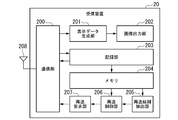
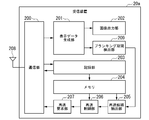
- FIG. 3 shows the configuration of the receiving device 20.
- the receiving device 20 shown in FIG. 3 includes a communication unit 200 (second wireless communication device), a display data generation unit 201, an image output unit 202, a recording unit 203, a memory 204 (second memory), and a retransmission candidate extraction unit 205. , A retransmission control unit 206, and a retransmission request unit 207.
- the communication unit 200 receives the image data transmitted by the transmission device 10 and including the sequence number.
- the physical rate of the communication unit 200 and the communication rate of the image data are recorded in the memory 204.
- the recording unit 203 executes a recording process of recording the sequence number of the image data received by the communication unit 200 in the memory 204.
- the image output unit 202 executes an image output process for outputting the image data received by the communication unit 200 to the monitor 30.
- the retransmission candidate extraction unit 205 executes a specific process for specifying the retransmission candidate based on the sequence number recorded in the memory 204.
- the retransmission candidate is image data transmitted by the transmitting device 10 and not received by the communication unit 200.
- the retransmission control unit 206 executes a calculation process for calculating the maximum number of retransmissions based on the physical rate and the communication rate recorded in the memory 204.
- the upper limit of retransmission is the upper limit of the number of image data that is required to be resent.
- the retransmission control unit 206 executes, for example, a setting process for setting the allowable number of retransmissions which is 1 or more and the upper limit of retransmissions or less.
- the retransmission requesting unit 207 requests the same number of retransmission candidates as the allowable number of retransmissions by using the communication unit 200.
- the retransmission request process for transmitting the retransmission request of the above to the transmission device 10 is executed.
- the communication unit 200 is a wireless communication device.
- the communication unit 200 is connected to the antenna element 208.
- the communication unit 200 performs wireless communication with the communication unit 103 of the transmission device 10.
- the communication unit 200 receives the image data (real-time image data) transmitted in real time from the transmission device 10. Further, the communication unit 200 receives the image data (retransmitted image data) retransmitted from the transmission device 10.
- the communication unit 200 outputs the received real-time image data to the display data generation unit 201 and the recording unit 203. Further, the communication unit 200 outputs the received retransmission image data to the recording unit 203.
- the communication unit 200 When the reception completion instruction is output from the recording unit 203, the communication unit 200 generates a reception completion notification and transmits the reception completion notification to the transmission device 10.
- the reception completion instruction indicates that the time allocated for receiving one frame of image data has elapsed.
- the image data of one frame is composed of a plurality of divided image data.
- the reception completion notification includes the sequence number of the real-time image data or the resent image data that was correctly received.
- the communication unit 200 When a retransmission request instruction for requesting the retransmission of image data to the transmission device 10 is output from the retransmission request unit 207, the communication unit 200 generates a retransmission request and transmits the retransmission request to the transmission device 10.
- the retransmission request includes the sequence number of the real-time image data or the retransmission image data that could not be received correctly.
- the communication unit 200 outputs the current physical rate and communication rate (required rate) to the recording unit 203.
- the physical rate indicates the maximum data rate that the current communication unit 200 can communicate with per unit time.
- the physical rate is determined by the communication unit 200 based on the modulation method, the coding rate, the communication channel width, the number of streams, and the like.
- the communication rate indicates the data rate required for real-time communication of image data.
- the communication rate is determined by the communication unit 200 based on the compression rate of the image data, the size of the header and footer given to the image data, the communication overhead, the margin required for the retransmission time, and the like. After the end notification is received from the transmitting device 10, real-time transmission is not performed. Therefore, the communication rate becomes 0.
- the physical rate may be recorded in the memory 204 in advance.
- the display data generation unit 201 decodes the real-time image data output from the communication unit 200. Further, the display data generation unit 201 generates one frame of image data by combining two or more real-time image data. The display data generation unit 201 outputs the generated image data to the image output unit 202.
- the image output unit 202 outputs image data to the monitor 30 via a video communication interface (not shown in FIG. 3).
- the monitor 30 displays the image indicated by the image data.
- the receiving device 20 may have a monitor.
- a communication error may occur and the divided real-time image data in one frame of image data may not be acquired by the specified time.
- the receiving device 20 detects the omission of the image data by using the sequence number of the image data, and performs an error display indicating that the omission of the image data has occurred.
- the receiving device 20 does not update the display, and displays the image that was correctly displayed in the past on the monitor 30 again.
- the recording unit 203 records the real-time image data and the retransmission image data output from the communication unit 200 in the memory 204. As a result, the sequence number included in each image data is recorded in the memory 204.
- the recording unit 203 records the physical rate and the communication rate acquired from the communication unit 200 in the memory 204. When the time allotted for receiving the image data of one frame has elapsed, the recording unit 203 outputs the reception completion instruction to the communication unit 200.
- the memory 102 is a non-volatile recording medium for storing image data.
- the memory 102 is at least one of EEPROM, FRAM, and flash memory. Physical and communication rates may be recorded in volatile memory such as RAM or DRAM.
- the retransmission candidate extraction unit 205 confirms the continuity of the sequence numbers based on the sequence numbers recorded in the memory 204. Missing sequence numbers occur in places where the sequence numbers are not consecutive. The image data having the missing sequence number was transmitted from the transmission device 10, but was not correctly recorded in the memory 204. The retransmission candidate extraction unit 205 extracts the sequence number of the image data that could not be recorded correctly. As a result, the retransmission candidate extraction unit 205 identifies the retransmission candidate. The retransmission candidate extraction unit 205 outputs the retransmission candidate information including the extracted sequence number to the retransmission control unit 206.
- the retransmission control unit 206 selects the same number of sequence numbers as the allowable retransmission number from the sequence numbers included in the retransmission candidate information output from the retransmission candidate extraction unit 205.
- the retransmission control unit 206 may preferentially select the sequence number of the image data transmitted before the other image data. Alternatively, the retransmission control unit 206 may randomly select a sequence number.
- the retransmission control unit 206 outputs a sequence number list including the selected sequence number to the retransmission request unit 207.
- the retransmission request unit 207 outputs a retransmission request instruction including a sequence number list output from the retransmission control unit 206 to the communication unit 200.
- the retransmission request unit 207 transmits the retransmission request to the transmission device 10 by controlling the communication unit 200.
- the display data generation unit 201, the image output unit 202, the recording unit 203, the retransmission candidate extraction unit 205, the retransmission control unit 206, and the retransmission request unit 207 may be composed of at least one of a processor and a logic circuit.
- the display data generation unit 201, the image output unit 202, the recording unit 203, the retransmission candidate extraction unit 205, the retransmission control unit 206, and the retransmission request unit 207 may include one or more processors.
- the display data generation unit 201, the image output unit 202, the recording unit 203, the retransmission candidate extraction unit 205, the retransmission control unit 206, and the retransmission request unit 207 may include one or more logic circuits.
- the display data generation unit 201, the image output unit 202, the recording unit 203, the retransmission candidate extraction unit 205, the retransmission control unit 206, and the retransmission request unit 207 may read the program and execute the read program.
- the program is realized in the same manner as the program that realizes the functions of the image data generation unit 101 and the retransmission processing unit 104 of the transmission device 10.
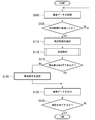
- FIG. 4 shows a process relating to the entire recording of image data and retransmission of image data.
- Step S100 The recording unit 203 records the real-time image data and the retransmission image data acquired from the communication unit 200 in the memory 204. As a result, the sequence number included in each image data is recorded in the memory 204. Step S100 corresponds to the recording process.
- Step S105 After step S100, the retransmission candidate extraction unit 205 waits until a predetermined time in one frame period elapses by using a timer or the like not shown in FIG.
- the predetermined time is the time allotted for receiving one frame of image data.
- Steps S100 and S105 are repeatedly executed until a predetermined time elapses. When the predetermined time has elapsed, step S110 is executed.
- Step S110 The retransmission candidate extraction unit 205 confirms the continuity of the sequence numbers based on the sequence numbers recorded in the memory 204.
- the retransmission candidate extraction unit 205 extracts the sequence number of the image data that could not be recorded correctly.
- the extracted sequence number indicates image data that is a candidate for retransmission.
- the retransmission candidate extraction unit 205 outputs the retransmission candidate information including the extracted sequence number to the retransmission control unit 206.
- Step S110 corresponds to the specific process.
- Step S115 After step S110, the retransmission control unit 206 calculates the retransmission upper limit number based on the physical rate and the required rate recorded in the memory 204, and sets the retransmission allowable number.
- the retransmission control unit 206 is a retransmission candidate extraction unit. Select all the sequence numbers included in the retransmission candidate information output from 205.
- the retransmission control unit 206 sets the retransmission candidate information. From the included sequence numbers, select the same number of sequence numbers as the allowable number of retransmissions. The retransmission control unit 206 outputs a sequence number list including the selected sequence number to the retransmission request unit 207. Step S115 corresponds to the calculation process and the setting process.
- Step S116 After step S115, the retransmission request unit 207 determines whether or not the number of retransmission requests calculated in step 115 is 0. If the retransmission request unit 207 determines that the number of retransmission requests is 0, step S125 is executed. If the retransmission request unit 207 determines that the number of retransmission requests is 1 or more, step S120 is executed.
- Step S120 The retransmission request unit 207 outputs a retransmission request instruction including a sequence number list output from the retransmission control unit 206 to the communication unit 200.
- the retransmission request unit 207 transmits a retransmission request instruction to the transmission device 10 by controlling the communication unit 200.
- Step S120 corresponds to the retransmission request processing.
- Step S125 After step S120, the image output unit 202 outputs one frame of image data generated by the display data generation unit 201 to the monitor 30. Step S125 corresponds to the image output process. Step S125 may be executed before step S110, step S115, or step S120 is executed.
- Step S130 After step S125, a condition for terminating the process is determined.
- the communication unit 200 receives the end notification from the transmission device 10, the process shown in FIG. 4 ends. If the communication unit 200 has not received the end notification from the transmitting device 10, step S100 is executed in the frame period next to the current frame period.
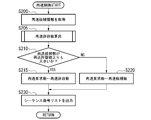
- FIG. 5 shows the details of the process in step S115. Hereinafter, the details of the process in step S115 will be described.
- Step S200 The retransmission control unit 206 acquires the retransmission candidate information from the retransmission candidate extraction unit 205.
- Step S205 After step S200, the retransmission control unit 206 calculates the allowable retransmission number.
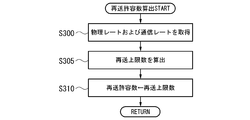
- FIG. 6 shows the details of the process in step S205.
- Step S300 The retransmission control unit 206 acquires the physical rate and the communication rate from the memory 204.
- Step S305 After step S300, the retransmission control unit 206 calculates the maximum number of retransmissions based on the physical rate and the communication rate. For example, the maximum number of retransmissions is expressed by the following equation (1).
- ULN (PR-CR) / DL (1)
- ULN indicates the maximum number of retransmissions
- PR indicates the physical rate
- CR indicates the communication rate.
- DL indicates the data length of one divided image data. The maximum number of retransmissions is calculated based on the difference between the physical rate and the communication rate.
- the retransmission control unit 206 may extract only the integer part of the calculated number and use the integer part as the retransmission upper limit number. Step S305 corresponds to the calculation step.
- the data length DL in the equation (1) depends on the compression process executed by the image data generation unit 101 of the transmission device 10.
- the data length DL is a preset fixed length.
- the memory 102 stores the data length DL in advance.
- the retransmission control unit 206 acquires the data length DL from the memory 102.
- the data length DL changes for each frame period.
- the communication unit 103 of the transmission device 10 transmits the data length notification including the data length DL to the reception device 20 at the beginning of the frame period.
- the communication unit 200 of the receiving device 20 receives the data length notification and outputs it to the recording unit 203.
- the recording unit 203 records the data length DL included in the data length notification output from the communication unit 200 in the memory 204.
- the retransmission control unit 206 acquires the data length DL from the memory 102.
- Step S310 After step S305, the retransmission control unit 206 sets the retransmission upper limit number calculated in step S305 as the retransmission allowable number.
- the retransmission control unit 206 may set an integer that is 1 or more and smaller than the upper limit of retransmission as the allowable retransmission number.
- Step S310 corresponds to the setting step. After step S310, step S210 shown in FIG. 5 is executed.
- Step S210 After step S310, the retransmission control unit 206 compares the number of retransmission candidates with the number of allowable retransmissions.
- the number of retransmission candidates is the same as the number of sequence numbers included in the retransmission candidate information acquired from the retransmission candidate extraction unit 205.
- the number of retransmission candidates is an integer of 0 or more. If the number of retransmission candidates exceeds the allowable number of retransmissions, step S215 is executed. If the number of retransmission candidates is equal to or less than the allowable number of retransmissions, step S220 is executed.
- Step S215) If the number of retransmission candidates exceeds the allowable number of retransmissions, it is highly possible that the communication band required for all retransmissions of the image data that could not be received cannot be secured. Therefore, the retransmission control unit 206 sets the retransmission allowable number as the number of retransmission requests. When the number of retransmission candidates exceeds the maximum number of retransmissions, the number of retransmission requests is set to the same number as the allowable number of retransmissions. The allowable number of retransmissions is the same as the maximum number of retransmissions calculated in step S305. Therefore, when the number of retransmission candidates exceeds the maximum number of retransmissions, the number of retransmission requests is set to the same number as the maximum number of retransmission requests.
- Step S220 When the number of retransmission candidates is equal to or less than the allowable retransmission number, it is possible to secure the communication band required for all retransmissions of the image data that could not be received. Therefore, the retransmission control unit 206 sets the number of retransmission candidates as the number of retransmission requests. If the number of retransmission candidates does not exceed the maximum number of retransmission candidates, the number of retransmission requests is set to the same number as the number of retransmission candidates.
- Step S230 After step S215 or step S220, the retransmission control unit 206 selects the same number of sequence numbers as the number of retransmission requests from the sequence numbers included in the retransmission candidate information. The retransmission control unit 206 outputs a sequence number list including the selected sequence number to the retransmission request unit 207.
- the receiving device 20 when the number of image data that could not be received exceeds the allowable number of retransmissions, the receiving device 20 requests the transmitting device 10 to retransmit the same number of image data as the allowable number of retransmissions. Therefore, the communication system 1 can preferentially perform the communication required for the real-time display and efficiently retransmit the data.
- the receiving device 20 shown in FIG. 3 is changed to the receiving device 20a shown in FIG.
- FIG. 7 shows the configuration of the receiving device 20a.
- the receiving device 20a shown in FIG. 7 includes a communication unit 200, a display data generation unit 201, an image output unit 202, a recording unit 203, a memory 204, a retransmission candidate extraction unit 205, a retransmission control unit 206, a retransmission request unit 207, and a blanking. It has a period detection unit 209. The description of the same configuration as that shown in FIG. 3 will be omitted.
- the blanking period detection unit 209 may be composed of at least one of a processor and a logic circuit.
- the blanking period detection unit 209 can include one or more processors.
- the blanking period detection unit 209 may include one or more logic circuits.
- the blanking period detection unit 209 may read the program and execute the read program.
- the display data generation unit 201 generates a synchronization signal and outputs the display vertical blanking signal included in the synchronization signal to the blanking period detection unit 209.
- the blanking period detection unit 209 detects the start timing of the blanking period based on the vertical blanking signal output from the display data generation unit 201. When the timing is detected, the blanking period detection unit 209 outputs timing information indicating the start of the blanking period to the retransmission candidate extraction unit 205.
- the blanking period occurs between the display period of one frame of image data and the display period of the next one frame of image data.
- the retransmission candidate extraction unit 205, the retransmission control unit 206, and the retransmission request unit 207 stop the processing related to the retransmission control until the blanking period is started.
- the timing information is output from the blanking period detection unit 209 to the retransmission candidate extraction unit 205.
- the retransmission candidate extraction unit 205 starts processing.
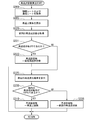
- the process shown in FIG. 4 is changed to the process shown in FIG.
- the flow of processing executed by the receiving device 20a will be described with reference to FIG.
- the description of the same process as that shown in FIG. 4 will be omitted.
- Step S105a Step S105 shown in FIG. 4 is changed to step S105a.
- the blanking period detection unit 209 determines whether or not the blanking period has started based on the vertical blanking signal output from the display data generation unit 201. Steps S100 and S105a are repeated until the blanking period begins.
- the blanking period detection unit 209 determines that the blanking period has started, the blanking period detection unit 209 outputs the timing information to the retransmission candidate extraction unit 205.
- Step S110 When the timing information is output from the blanking period detection unit 209, the retransmission candidate extraction unit 205 executes step S110. Step S110, step S115, step S120, and step S125 are performed during the blanking period.
- the receiving device 20a When the receiving device 20a cannot receive the image data in the frame period, the receiving device 20a transmits the retransmission request of the image data to the transmitting device 10 in the blanking period included in the frame period in which the image data is received. do.
- the receiving device 20a may transmit the retransmission request of the image data to the transmitting device 10 during the blanking period included in the frame period after the frame period in which the image data is received.
- the retransmission candidate extraction unit 205 executes the specific process during the blanking period.
- the retransmission control unit 206 executes the calculation process and the setting process during the blanking period.
- the retransmission request unit 207 executes the retransmission request processing during the blanking period.
- the blanking period is a period from the first timing to the second timing.
- the first timing is after the first transmission (real-time transmission) of the Nth frame data including one or more image data is completed. This first transmission does not include the retransmission of image data according to the retransmission request.
- the second timing is after the first timing and before the first transmission of the N + 1th frame data including one or more image data is started.
- N is an integer greater than or equal to 1.
- the Nth frame data is the image data of one frame transmitted in the Nth frame period
- the N + 1th frame data is the image data of one frame transmitted in the N + 1th frame period.
- the retransmission request unit 207 executes the retransmission request process during the blanking period after the first transmission of the Kth frame data including the one or more image data is completed, so that the retransmission request unit 207 contains the one or more image data.
- the second frame data retransmission request may be transmitted to the transmission device 10.
- M is an integer greater than or equal to 1.
- K is an integer greater than or equal to M + 1.
- the M-th frame data is one frame of image data transmitted in the M-th frame period
- the K-th frame data is one-frame image data transmitted in the K-th frame period.
- the K-th frame period is a frame period after the M-th frame period.
- the receiving device 20a requests the transmitting device 10 to retransmit the image data during the blanking period. Therefore, the communication system 1 can preferentially perform the communication required for the real-time display and efficiently retransmit the data.
- the communication system 1 of the second embodiment has a transmitting device 10 shown in FIG. 2 and a receiving device 20 shown in FIG.
- the retransmission control unit 206 further executes a confirmation process for confirming the number of successful retransmissions, in addition to the calculation process and the setting process in the first embodiment.
- the number of successful retransmissions is the number of retransmission candidates that have been successfully received after the retransmission request has been transmitted.
- the retransmission control unit 206 sets the number of successful retransmissions as the allowable retransmission number in the setting process.
- the flow of processing executed by the receiving device 20 will be described.
- the receiving device 20 executes the processes shown in FIGS. 4, 5, and 9.
- the process shown in FIG. 6 is changed to the process shown in FIG.
- the description of the processing shown in FIGS. 4 and 5 will be omitted.
- the details of the processing shown in FIG. 9 will be described.
- the description of the same process as that shown in FIG. 6 will be omitted.
- Step S320 After step S305, the retransmission control unit 206 acquires the number of successful retransmissions based on the previously generated sequence number list and the sequence number recorded in the memory 204.
- the sequence number list contains the sequence number of the image data requested to be resent.
- the previously generated sequence number list is a sequence number list generated in the frame period immediately before the current frame period.
- the retransmission control unit 206 compares the sequence number (first sequence number) included in the sequence number list with the sequence number (second sequence number) recorded in the memory 204.
- the retransmission control unit 206 acquires the number of the second sequence number that matches the first sequence number as the number of successful retransmissions.
- the number of successful retransmissions is an integer of 0 or more. Step S320 corresponds to the confirmation process.
- Step S321 After step S320, the retransmission control unit 206 determines whether or not the number of successful retransmissions calculated in step S320 is 0. If the retransmission control unit 206 determines that the number of successful retransmissions is 0, step S322 is executed. If the retransmission control unit 206 determines that the number of successful retransmissions is 1 or more, step S325 is executed.
- Step S322 The retransmission control unit 206 sets the minimum retransmission allowable number (for example, 1) as the retransmission allowable number.
- the minimum allowable number of retransmissions may be a predetermined value other than 1.
- Step S325) the retransmission control unit 206 calculates the retransmission success probability based on the number of successful retransmissions calculated in step S320 and the number of previous retransmission requests.
- the number of previous retransmission requests is the number of sequence numbers included in the previously generated sequence number list.
- PS indicates the probability of successful retransmission
- SN indicates the number of successful retransmissions
- RN indicates the number of retransmission requests.
- Step S330 the retransmission control unit 206 determines whether or not the retransmission success probability calculated in step S325 is 100%. If the retransmission control unit 206 determines that the retransmission success probability is 100%, step S310 is executed. If the retransmission control unit 206 determines that the retransmission success probability is not 100%, step S335 is executed.
- Step S335 The retransmission control unit 206 sets the number of successful retransmissions acquired in step S320 as the allowable retransmission number.
- Step S335 corresponds to the setting step. After step S335, step S210 shown in FIG. 5 is executed.
- the previous retransmission success probability is not 100%, the number of previous retransmission successes is smaller than the number of previous retransmission requests.
- the number of retransmission requests is equal to or less than the allowable number of retransmissions. If the probability of successful retransmission is not 100%, the number of successful retransmissions in the previous time is smaller than the allowable number of retransmissions in the previous time. Since the number of successful retransmissions is set as the allowable number of retransmissions in step S335, the new allowable number of retransmissions is smaller than the number of allowable retransmissions of the previous time. However, even when the probability of successful retransmission is 0%, the lower limit of the allowable number of retransmissions is set to 1. As a result, it is possible to monitor whether or not the situation is such that retransmission can be executed.
- the source of the interference signal or the like may approach the vicinity of the transmitting device 10 or the receiving device 20, and the communication state may deteriorate momentarily.
- the receiving device 20 reduces the new allowable retransmission number from the previous allowable retransmission number by setting the previous successful retransmission number as the allowable retransmission number.
- the communication system 1 can efficiently retransmit the data.
- the flow of processing executed by the receiving device 20 will be described.
- the receiving device 20 executes the processes shown in FIGS. 4, 5, and 10.
- the process shown in FIG. 9 is changed to the process shown in FIG.
- the description of the processing shown in FIGS. 4 and 5 will be omitted.
- the details of the processing shown in FIG. 10 will be described.
- the description of the same process as that shown in FIG. 9 will be omitted.
- Step S340 When the retransmission control unit 206 determines in step S330 that the retransmission success probability is 100%, the retransmission control unit 206 has a larger number of successful retransmissions acquired in step S320 than the upper limit of retransmissions calculated in step S305. Judge whether or not. For example, when the physical rate is changed from the previous time and the retransmission control unit 206 determines that the number of successful retransmissions is larger than the maximum number of retransmissions, step S310 is executed. If the retransmission control unit 206 determines that the number of successful retransmissions is equal to or less than the maximum number of retransmissions, step S345 is executed.
- Step S345 The retransmission control unit 206 sets the number obtained by adding the predetermined number A to the number of successful retransmissions acquired in step S320 as the allowable retransmission number.
- the predetermined number A is an integer of 1 or more.
- the predetermined number A is adjusted so that the allowable number of retransmissions does not exceed the maximum number of retransmissions.
- Step S345 corresponds to the setting step. After step S345, step S210 shown in FIG. 5 is executed.
- step S345 is executed.
- step S345 the number obtained by adding the predetermined number A to the previous number of successful retransmissions is set as the new allowable number of retransmissions.
- the previous retransmission success probability is 100%, the number of previous retransmission successes is the same as the number of previous retransmission requests. Therefore, the new allowable number of retransmissions is larger than the number of previous retransmission requests.
- step S345 is executed, the retransmission allowance increases.
- the receiving device 20 can restore the allowable number of retransmissions while confirming the influence of the image data on the real-time transmission. Therefore, the receiving device 20 can reduce the influence on the real-time transmission of the image data.
- the receiving device, the communication system, and the recording medium can preferentially perform communication necessary for real-time display and efficiently retransmit data.
- Communication system 10 Transmission device 20, 20a Receiver device 30 Monitor 100 Image acquisition unit 101 Image data generation unit 102, 204 Memory 103, 200 Communication unit 104 Retransmission processing unit 105, 208 Antenna element 201 Display data generation unit 202 Image output unit 203 Recording unit 205 Retransmission candidate extraction unit 206 Retransmission control unit 207 Retransmission request unit 209 Blanking period detection unit
Landscapes
- Engineering & Computer Science (AREA)
- Signal Processing (AREA)
- Computer Networks & Wireless Communication (AREA)
- Multimedia (AREA)
- Databases & Information Systems (AREA)
- Detection And Prevention Of Errors In Transmission (AREA)
- Mobile Radio Communication Systems (AREA)
- Two-Way Televisions, Distribution Of Moving Picture Or The Like (AREA)
Priority Applications (3)
| Application Number | Priority Date | Filing Date | Title |
|---|---|---|---|
| JP2022501508A JP7286868B2 (ja) | 2020-02-20 | 2020-02-20 | 受信装置、通信システム、および記録媒体 |
| PCT/JP2020/006781 WO2021166159A1 (ja) | 2020-02-20 | 2020-02-20 | 受信装置、通信システム、および記録媒体 |
| US17/851,419 US11689320B2 (en) | 2020-02-20 | 2022-06-28 | Reception device, communication system, and recording medium |
Applications Claiming Priority (1)
| Application Number | Priority Date | Filing Date | Title |
|---|---|---|---|
| PCT/JP2020/006781 WO2021166159A1 (ja) | 2020-02-20 | 2020-02-20 | 受信装置、通信システム、および記録媒体 |
Related Child Applications (1)
| Application Number | Title | Priority Date | Filing Date |
|---|---|---|---|
| US17/851,419 Continuation US11689320B2 (en) | 2020-02-20 | 2022-06-28 | Reception device, communication system, and recording medium |
Publications (1)
| Publication Number | Publication Date |
|---|---|
| WO2021166159A1 true WO2021166159A1 (ja) | 2021-08-26 |
Family
ID=77392241
Family Applications (1)
| Application Number | Title | Priority Date | Filing Date |
|---|---|---|---|
| PCT/JP2020/006781 Ceased WO2021166159A1 (ja) | 2020-02-20 | 2020-02-20 | 受信装置、通信システム、および記録媒体 |
Country Status (3)
| Country | Link |
|---|---|
| US (1) | US11689320B2 (https=) |
| JP (1) | JP7286868B2 (https=) |
| WO (1) | WO2021166159A1 (https=) |
Families Citing this family (2)
| Publication number | Priority date | Publication date | Assignee | Title |
|---|---|---|---|---|
| CN113473086B (zh) * | 2021-07-06 | 2022-09-06 | 阿波罗智联(北京)科技有限公司 | 视频播放的方法、装置、电子设备、智慧高速大屏 |
| US20240056226A1 (en) * | 2022-08-09 | 2024-02-15 | Cisco Technology, Inc. | Adaptive harq selection in high density environments |
Citations (2)
| Publication number | Priority date | Publication date | Assignee | Title |
|---|---|---|---|---|
| JP2006054721A (ja) * | 2004-08-12 | 2006-02-23 | Sony Corp | 受信装置および方法、記録媒体、プログラム、並びに通信システム |
| JP2017208707A (ja) * | 2016-05-18 | 2017-11-24 | 株式会社ソニー・インタラクティブエンタテインメント | 情報処理装置、情報処理システム、撮像装置、ヘッドマウントディスプレイ、および情報処理方法 |
Family Cites Families (5)
| Publication number | Priority date | Publication date | Assignee | Title |
|---|---|---|---|---|
| TW201519596A (zh) * | 2013-07-11 | 2015-05-16 | Interdigital Patent Holdings | 智慧HARQ WiFi系統及方法 |
| JP2015095705A (ja) | 2013-11-11 | 2015-05-18 | 株式会社 日立産業制御ソリューションズ | 映像監視システム |
| JP6917983B2 (ja) * | 2016-05-06 | 2021-08-11 | 株式会社Nttドコモ | 端末、無線通信方法及び基地局 |
| US10973008B2 (en) * | 2018-03-12 | 2021-04-06 | Apple Inc. | Wireless device preferred bandwidth part configuration and duty cycle indication |
| US10863389B2 (en) * | 2018-03-12 | 2020-12-08 | Apple Inc. | Network assisted wireless device preferred bandwidth part configuration |
-
2020
- 2020-02-20 JP JP2022501508A patent/JP7286868B2/ja active Active
- 2020-02-20 WO PCT/JP2020/006781 patent/WO2021166159A1/ja not_active Ceased
-
2022
- 2022-06-28 US US17/851,419 patent/US11689320B2/en active Active
Patent Citations (2)
| Publication number | Priority date | Publication date | Assignee | Title |
|---|---|---|---|---|
| JP2006054721A (ja) * | 2004-08-12 | 2006-02-23 | Sony Corp | 受信装置および方法、記録媒体、プログラム、並びに通信システム |
| JP2017208707A (ja) * | 2016-05-18 | 2017-11-24 | 株式会社ソニー・インタラクティブエンタテインメント | 情報処理装置、情報処理システム、撮像装置、ヘッドマウントディスプレイ、および情報処理方法 |
Also Published As
| Publication number | Publication date |
|---|---|
| US11689320B2 (en) | 2023-06-27 |
| JPWO2021166159A1 (https=) | 2021-08-26 |
| JP7286868B2 (ja) | 2023-06-05 |
| US20220329356A1 (en) | 2022-10-13 |
Similar Documents
| Publication | Publication Date | Title |
|---|---|---|
| US9661685B2 (en) | Wireless communication system and communication device therefor | |
| JP7286868B2 (ja) | 受信装置、通信システム、および記録媒体 | |
| CN111432169B (zh) | 视频传输方法、装置、设备和系统 | |
| CN109199354B (zh) | 一种心率数据采集方法及心率测量设备 | |
| JP5690457B1 (ja) | 無線通信システム及び通信方法 | |
| US10390017B2 (en) | Compressed image data transmitting device, compressed image data transmitting and receiving system, compressed image data transmitting method, and non-transitory medium saving program | |
| JP2001268093A (ja) | データ伝送装置 | |
| US10764616B2 (en) | Image transmission apparatus, image transmission method, and recording medium | |
| US20190356352A1 (en) | Communication system, communication apparatus, communication method, hopping pattern determining method and program | |
| US11184502B2 (en) | Communication system, reception terminal, communication method, and recording medium | |
| JPH11331261A (ja) | パケット通信装置 | |
| JP2006121282A (ja) | 無線通信装置及び無線通信システム | |
| CN107454462B (zh) | 一种数据传输方法、装置及系统 | |
| US11316627B2 (en) | Communication system, transmission device, communication method, and recording medium | |
| JP2006094270A (ja) | 無線通信方法および無線通信システム | |
| CN116015563B (zh) | 数据传输丢包处理方法、装置、设备及介质 | |
| CN115209001B (zh) | 一种视频播放方法、装置及系统 | |
| US9596519B2 (en) | Wireless transmission terminal, wireless receiving terminal, wireless communication system, wireless communication method, and computer readable storage device | |
| CN110691218A (zh) | 音频数据传输方法、装置、电子设备及可读存储介质 | |
| KR101203421B1 (ko) | 의료기기를 이용한 의료 영상 제공 시스템 및 방법 | |
| CN116269151A (zh) | 内窥镜图像调试系统及方法 | |
| CN113824851A (zh) | 图像处理方法、装置、存储介质及电子设备 | |
| JP4245095B2 (ja) | 画像送信装置 | |
| CN116705280A (zh) | 一种超声图像的远程传输控制系统及方法 | |
| US10581558B2 (en) | Data transmission method and apparatus, and first device |
Legal Events
| Date | Code | Title | Description |
|---|---|---|---|
| 121 | Ep: the epo has been informed by wipo that ep was designated in this application |
Ref document number: 20919500 Country of ref document: EP Kind code of ref document: A1 |
|
| ENP | Entry into the national phase |
Ref document number: 2022501508 Country of ref document: JP Kind code of ref document: A |
|
| NENP | Non-entry into the national phase |
Ref country code: DE |
|
| 122 | Ep: pct application non-entry in european phase |
Ref document number: 20919500 Country of ref document: EP Kind code of ref document: A1 |