WO2021149296A1 - チャットボット制御装置、チャットボット制御方法、及びチャットボット制御装置システム - Google Patents
チャットボット制御装置、チャットボット制御方法、及びチャットボット制御装置システム Download PDFInfo
- Publication number
- WO2021149296A1 WO2021149296A1 PCT/JP2020/033387 JP2020033387W WO2021149296A1 WO 2021149296 A1 WO2021149296 A1 WO 2021149296A1 JP 2020033387 W JP2020033387 W JP 2020033387W WO 2021149296 A1 WO2021149296 A1 WO 2021149296A1
- Authority
- WO
- WIPO (PCT)
- Prior art keywords
- scenario
- chat
- chatbot
- user
- external system
- Prior art date
- Legal status (The legal status is an assumption and is not a legal conclusion. Google has not performed a legal analysis and makes no representation as to the accuracy of the status listed.)
- Ceased
Links
Images





Classifications
-
- H—ELECTRICITY
- H04—ELECTRIC COMMUNICATION TECHNIQUE
- H04L—TRANSMISSION OF DIGITAL INFORMATION, e.g. TELEGRAPHIC COMMUNICATION
- H04L51/00—User-to-user messaging in packet-switching networks, transmitted according to store-and-forward or real-time protocols, e.g. e-mail
- H04L51/02—User-to-user messaging in packet-switching networks, transmitted according to store-and-forward or real-time protocols, e.g. e-mail using automatic reactions or user delegation, e.g. automatic replies or chatbot-generated messages
-
- G—PHYSICS
- G06—COMPUTING OR CALCULATING; COUNTING
- G06F—ELECTRIC DIGITAL DATA PROCESSING
- G06F13/00—Interconnection of, or transfer of information or other signals between, memories, input/output devices or central processing units
-
- G—PHYSICS
- G06—COMPUTING OR CALCULATING; COUNTING
- G06F—ELECTRIC DIGITAL DATA PROCESSING
- G06F8/00—Arrangements for software engineering
- G06F8/30—Creation or generation of source code
-
- H—ELECTRICITY
- H04—ELECTRIC COMMUNICATION TECHNIQUE
- H04L—TRANSMISSION OF DIGITAL INFORMATION, e.g. TELEGRAPHIC COMMUNICATION
- H04L51/00—User-to-user messaging in packet-switching networks, transmitted according to store-and-forward or real-time protocols, e.g. e-mail
- H04L51/04—Real-time or near real-time messaging, e.g. instant messaging [IM]
-
- H—ELECTRICITY
- H04—ELECTRIC COMMUNICATION TECHNIQUE
- H04L—TRANSMISSION OF DIGITAL INFORMATION, e.g. TELEGRAPHIC COMMUNICATION
- H04L51/00—User-to-user messaging in packet-switching networks, transmitted according to store-and-forward or real-time protocols, e.g. e-mail
- H04L51/04—Real-time or near real-time messaging, e.g. instant messaging [IM]
- H04L51/046—Interoperability with other network applications or services
Definitions
- the present invention relates to a chatbot control device, a chatbot control method, and a chatbot control device system.
- chatbots which are programs that operate on this message service and automatically perform conversations through text and voice, have become widespread. is doing.
- the chatbot operates to detect a specific word or phrase from the message input by the user and output a response prepared in advance to match it.
- Some chatbots are operated by messenger service accounts assigned for advertising or commercial use, such as companies and stores, and users can use various services through the exchange of natural messages and support chatbots. It is possible to perform a predetermined task in response to the reception.
- Patent Document 1 states that "development support system 1 defines meta information of a plurality of design information 240, respectively, and a plurality of first information 220.
- the second information 230 which defines the relationship between the plurality of first information
- the third information 320 which defines the template of the dialogue component prepared for the work commonly performed by the plurality of design information.
- a dialogue scenario information generation unit 310 that generates the above, and a dialogue scenario information processing unit 311 that operates the chat device 4 based on each dialogue component and each dialogue scenario information. ”A technique is described.
- Patent Document 1 in system development, dialogue parts for each work of design information related to development and dialogue scenario information for each work unit based on each design information are generated, and each dialogue part and each dialogue scenario information are used. Based on this, a technique for supporting a user's system development work by operating a chat device is described. However, in the technique described in Patent Document 1, it is necessary to generate a chat scenario for smoothing the flow of dialogue between the user and the chatbot in cooperation with various external systems that store the information requested by the user. .. And for this purpose, it is necessary to create a unique control device (program) for each use case. On the other hand, since the demand for SNS and API cooperation has been increasing in recent years, it is required to develop these scenarios more easily and to quickly develop services by chatbots.
- chatbots it is conceivable to support recruiting activities through chatbots.
- a chatbot is used by a user who is looking for a job to conduct a hearing (examination of career), and the user who has passed the hearing is introduced to a company recruiting human resources.
- a company has a large number of stores and is looking for human resources who meet different conditions (predetermined qualifications, work schedule, prescribed language ability) for each store, to conduct hearings with candidates. It is necessary to prepare in advance as many chat scenarios as the number of stores multiplied by the number of conditions.
- the created chat scenario needs to be updated for the new status or conditions. Applying traditional chatbots to such cases would require enormous development resources and manpower to create and maintain a large number of chat scenarios.
- the present invention can acquire information necessary for an appropriate chat scenario to correspond to the user from an external system in response to user input in a chat session, and can dynamically generate a chat scenario.
- the purpose is to provide a bot.
- one of the typical chatbot control devices of the present invention generates a chat scenario based on the first input from the user in a chat session between the user and the chatbot. Based on the chat scenario creation data, using an external data acquisition unit that acquires chat scenario creation data from a predetermined external system and a predetermined scenario-making logic that defines a chat scenario generation pattern. It includes a scenario generation unit that generates a first chat scenario that specifies a transition of a dialogue between a user and the chat bot, and a scenario execution unit that executes the first chat scenario in the chat session.
- a chat capable of dynamically generating a chat scenario by acquiring information necessary for an appropriate chat scenario corresponding to the user from an external system in response to user input in a chat session.
- a bot can be provided.
- FIG. 1 is a diagram showing a computer system for carrying out an embodiment of the present invention.
- FIG. 2 is a diagram showing an example of a configuration of a chatbot control system according to an embodiment of the present invention.
- FIG. 3 is a diagram showing an example of the logical structure of the chatbot according to the embodiment of the present invention.
- FIG. 4 is a diagram showing an example of a definition structure that defines the operation of the chat session according to the embodiment of the present invention.
- FIG. 5 is a diagram showing an example of a nested structure of a chat session according to an embodiment of the present invention.
- FIG. 6 is a flowchart showing the flow of the chat session control method according to the embodiment of the present invention.
- FIG. 1 is a diagram showing a computer system for carrying out an embodiment of the present invention.
- FIG. 2 is a diagram showing an example of a configuration of a chatbot control system according to an embodiment of the present invention.
- FIG. 3 is a diagram showing an example of the logical structure of
- FIG. 7 is a diagram showing a first generation pattern of scenario-making logic in the chat scenario generation process according to the embodiment of the present invention.
- FIG. 8 is a diagram showing a second generation pattern of the scenario-making logic in the chat scenario generation process according to the embodiment of the present invention.
- FIG. 9 is a diagram showing a third generation pattern of the scenario-making logic in the chat scenario generation process according to the embodiment of the present invention.
- FIG. 10 is a diagram showing an example of a chat session control delegation process according to the embodiment of the present invention.
- FIG. 11 is a diagram showing a specific example when the chat session control means according to the embodiment of the present invention is applied to facility reservation.
- FIG. 12 is a drawing showing an example of interaction with a chatbot when the chat session control means according to the embodiment of the present invention is applied to facility reservation.
- the main components of the computer system 300 include one or more processors 302, memory 304, terminal interface 312, storage interface 314, I / O (input / output) device interface 316, and network interface 318. These components may be interconnected via memory bus 306, I / O bus 308, bus interface unit 309, and I / O bus interface unit 310.
- the computer system 300 may include one or more general purpose programmable central processing units (CPUs) 302A and 302B collectively referred to as processors 302.
- processors 302. the computer system 300 may include a plurality of processors, and in another embodiment, the computer system 300 may be a single CPU system.
- Each processor 302 may execute an instruction stored in memory 304 and include an onboard cache.
- the memory 304 may include a random access semiconductor memory, a storage device, or a storage medium (either volatile or non-volatile) for storing data and programs.
- the memory 304 may store all or part of the programs, modules, and data structures that perform the functions described herein.
- the memory 304 may store the chatbot control application 350.
- the chatbot control application 350 may include instructions or descriptions that perform functions described below on the processor 302.
- the chatbot control application 350 replaces or in addition to a processor-based system, semiconductor devices, chips, logic gates, circuits, circuit cards, and / or other physical hardware. It may be implemented in hardware via the device. In certain embodiments, the chatbot control application 350 may include data other than instructions or descriptions. In certain embodiments, a camera, sensor, or other data input device (not shown) may be provided to communicate directly with the bus interface unit 309, processor 302, or other hardware of the computer system 300. ..
- the computer system 300 may include a processor 302, a memory 304, a display system 324, and a bus interface unit 309 that communicates between the I / O bus interface unit 310.
- the I / O bus interface unit 310 may be connected to an I / O bus 308 for transferring data to and from various I / O units.
- the I / O bus interface unit 310, via the I / O bus 308, is a plurality of I / O interface units 312, 314, 316, also known as I / O processors (IOPs) or I / O adapters (IOAs). And 318 may be communicated.
- IOPs I / O processors
- IOAs I / O adapters
- the display system 324 may include a display controller, display memory, or both.
- the display controller can provide video, audio, or both data to the display device 326.
- the computer system 300 may also include devices such as one or more sensors configured to collect the data and provide the data to the processor 302.
- the computer system 300 includes a biometric sensor that collects heart rate data, stress level data, etc., an environment sensor that collects humidity data, temperature data, pressure data, etc., and a motion sensor that collects acceleration data, exercise data, etc. May include. Other types of sensors can also be used.
- the display system 324 may be connected to a stand-alone display screen, a display device 326 such as a television, tablet, or portable device.
- the I / O interface unit has a function of communicating with various storages or I / O devices.
- the terminal interface unit 312 may be a user output device such as a video display device or a speaker TV, or a user input device such as a keyboard, mouse, keypad, touchpad, trackball, button, light pen, or other pointing device.
- a user I / O device 320 can be attached.
- the user inputs input data and instructions to the user I / O device 320 and the computer system 300 by operating the user input device using the user interface, and receives the output data from the computer system 300. May be good.
- the user interface may be displayed on the display device via the user I / O device 320, reproduced by the speaker, or printed via the printer, for example.
- the storage interface 314 is an array of disk drives or other storage devices configured to appear as a single disk drive, although one or more disk drives or a direct access storage device 322 (usually a magnetic disk drive storage device). It may be). In certain embodiments, the storage device 322 may be implemented as any secondary storage device. The contents of the memory 304 are stored in the storage device 322 and may be read out from the storage device 322 as needed.
- the I / O device interface 316 may provide an interface to other I / O devices such as printers and fax machines.
- the network interface 318 may provide a communication path so that the computer system 300 and other devices can communicate with each other. This communication path may be, for example, network 330.
- the computer system 300 is a device that receives a request from another computer system (client) that does not have a direct user interface, such as a multi-user mainframe computer system, a single user system, or a server computer. There may be.
- the computer system 300 may be a desktop computer, a portable computer, a laptop computer, a tablet computer, a pocket computer, a telephone, a smartphone, or any other suitable electronic device.
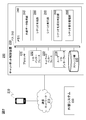
- FIG. 2 is a diagram showing an example of the configuration of the chatbot control system 200 according to the present invention.
- the chatbot control system 200 mainly includes a mobile terminal 210, a communication network 215, an external system 220, and a chatbot control device 230.
- the mobile terminal 210, the external system 220, and the chatbot control device 230 are connected via the communication network 215.
- the communication network 215 may include, for example, a local area network (LAN), a wide area network (WAN), a satellite network, a cable network, a Wi-Fi network, or any combination thereof.
- the connection between the external system 220 and the chatbot control device 230 may be wired or wireless.
- the mobile terminal 210 is a terminal used by an individual user, and may be, for example, a personal computer, a mobile terminal such as a smartphone, a tablet personal computer, or the like.
- the user uses a predetermined communication application (SNS, mail, message function, etc.) or a browser of the mobile terminal 210 to interact with the chatbot provided by the chatbot control device 230 via the communication network 215 (message exchange, etc.). ) May be performed.
- a user desires to interact with an arbitrary chatbot such as a travel information chatbot, a restaurant reservation chatbot, or a personnel recruitment chatbot via an SNS application installed on the mobile terminal 210. You can receive the service of.
- the external system 220 is a system that stores data for creating a chat scenario for generating a chat scenario.
- the external system 220 may be, for example, a system composed of a remote personal computer, a server, a storage device, a database, a cloud-type storage, or a combination thereof.
- FIG. 2 one external system 220 is shown for convenience of explanation, but in reality, the chatbot control device 230 is connected to a large number of external systems and is required according to the content and purpose of the chat scenario. It is possible to access various external systems and acquire desired chat scenario creation data.
- the external system 220 may store different data depending on the purpose of use.
- the external system 220 may store a list of restaurants in a predetermined area and information such as specialty dishes, price range, business hours, and current reservation status of each restaurant. ..
- the external system 220 uses, for example, a list of stores recruiting human resources and the conditions (number of people, qualifications) of the human resources recruited by each store. , Workable days of the week) may be stored.
- the information stored in these external systems 220 becomes data for creating a chat scenario for generating a chat scenario described later.
- the chatbot control device 230 is a computing device for executing the chatbot control means according to the present invention.
- the chatbot control device 230 may be, for example, a desktop computer, a server computer, a laptop computer, a tablet computer, a workstation, a mobile terminal, or another type of computing device, and is not particularly limited in the present invention.
- the chatbot control device 230 is an I / O for controlling communication between the processor 231 for executing the instruction stored in the memory 240 and the internal / external device of the chatbot control device 230.
- It includes a memory 240 for storing a functional unit for executing each of the functions of the above, and a bus 212 for controlling communication between both of these components.
- data for creating a chat scenario for generating a chat scenario based on a first input from the user is stored outside a predetermined value.
- the user and the chat bot execute the chat session based on the chat scenario creation data by using the external data acquisition unit 242 acquired from the system 220 and the predetermined scenario formation logic that defines the generation pattern of the chat scenario.
- a scenario generation unit 244 that generates a first chat scenario that specifies the transition of the dialogue, a scenario execution unit 246 that executes the first chat scenario in a chat session, and a scenario that determines whether or not the chat scenario generation is successful.
- Each functional unit included in the chatbot control device 230 may be a software module constituting the chatbot control application 350 in the computer system 300 shown in FIG. 1, and is an independent dedicated hardware device. May be good. Further, the above-mentioned functional unit may be implemented in the same computing environment, or may be implemented in a distributed computing environment. For example, an external data acquisition unit 242 that acquires data for creating a chat scenario from an external system 220 and a scenario generation unit 244 that generates a first chat scenario are mounted on the chatbot control device 230, and other functional units are provided. It can also be configured to be implemented on a remote server.
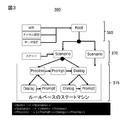
- FIG. 3 is a diagram showing an example of the logical structure 360 of the chatbot according to the embodiment of the present invention.
- the chatbot according to the embodiment of the present invention is composed of three layers: a root control (bot control) 365, a scenario control (scenario control) 370, and a process control (process control) 375.
- a root control bot control
- scenario control scenario control
- process control process control
- the route control 365 controls the selection of the chat scenario to be developed in the chat session from the plurality of chat scenarios.
- the route control 365 determines the user's intention (what kind of information or service the user desires) by processing the dialogue with the user by a predetermined natural language processing means or intent analysis means, for example. After that, the route control 365 compares the determined user intention with a plurality of (for example, prepared in advance) chat scenarios, selects and executes a scenario satisfying a predetermined similarity criterion. If another scenario is already being executed, the route control 365 may insert an interrupt to move to the newly selected scenario, and execute the newly selected scenario after the already executing scenario is completed. You may.
- Scenario control 370 controls the transition of events in the chat scenario.
- the scenario control 370 executes each event (activity, prompt, etc.) in the running scenario according to the scenario definition structure that defines the transition of the scenario. Further, the transition of the scenario here proceeds according to the data (vector) that records the information of the dialogue between the user and the chatbot as a numerical value. For example, if it is determined that the dialogue between the user and the chatbot matches a predetermined state, the scenario control 370 may execute appropriate event processing according to the state.
- Process control 370 controls the processing in the event in the chat scenario, and is a logical framework (interface) for a specific work or business unit in the scenario.
- the process control 370 may determine the next event or execute the processing of the activity in the scenario based on the dialogue state by the dialog input to the user for a specific prompt, for example.
- FIG. 4 is a diagram showing an example of a definition structure 400 that defines the operation of the chat session according to the embodiment of the present invention.
- the definition structure 400 according to the embodiment of the present invention is a data structure that defines a transition (that is, a flow) of a chat session in a chat session.
- definition structures corresponding to a plurality of different use cases are prepared in advance, and the storage unit (for example, the storage unit 235 shown in FIG. 2) is provided with a definition structure. It will be saved. Then, as will be described later, when the chat scenario creation data is acquired from the external system (for example, the external system 220 shown in FIG.
- the definition structure 400 is information that specifies how to convert the scenario creation data into a scenario.
- the definition structure 400 is composed of a module portion 420, a slot portion 440, and a step portion 460.
- the module unit 420 functions as a function for specifying which program to use in the scenario.
- the module unit 420 may specify a program that defines a dialog, an utterance, a prompt, an activity, a branch point of the dialogue, and the like used in the scenario.
- the slot unit 440 defines a storage destination for storing the information acquired in the chat session.
- the information acquired in the chat session is, for example, information input from a user who interacts with the chatbot, and differs depending on the use case of the chat session. This information may be configured as the interactive state described above. For hiring chat scenarios, this information may include information about the user's name, desired job, and background, and for restaurant reservations, this information may include the user's desired food and time of day. , Area, etc. may be included.
- the storage destination defined in the slot unit 440 is the memory area in the network storage, but it is also possible to store the information acquired in the chat session in the local storage device.
- the step unit 460 defines the events in the chat scenario and defines the transitions in the chat scenario one by one.
- the events defined in step 460 include types such as prompts, activities, scripts, and sub-scenarios.
- a prompt is a scenario event that speaks to a user and waits for a reply from the user (for example, "What's your name?").
- An activity is a scenario event that speaks to a user and continues to the next process without waiting for a reply (for example, "I'm clever. Search for a store.”).
- a script is a scenario event that calls a given function (accessing an external system, searching the Internet, etc.).
- the sub-scenario is to call a new sub-scenario, which is a sub-scenario, in the main scenario that is already being executed (for example, in the main scenario of restaurant reservation, the process of determining the content of the course meal).
- the definition structure 400 defines a rule that defines the behavior of the chat scenario. These rules specify, for example, in which slot the information obtained from the user is stored, and which chat event (prompt, script, etc.) to transition to next depending on the interaction state stored in the slot. May be specified.
- the chat session between the user and the chatbot is defined by the module unit 420, the slot unit 440, the step unit 460, and the chat rule included in the definition structure, and the flow of the dialogue is controlled.
- FIG. 5 is a diagram showing an example of a nested structure of a chat session according to an embodiment of the present invention.
- a nested chat session is possible.
- the nested structure here means that the scenario in the chat session is recursively repeated and described.
- the chat scenario according to the present invention includes a main scenario, which is a static scenario called at startup, and an arbitrary number of sub-scenarios, which are sub-scenarios called in the main scenario.
- the main scenario 525 that controls the basic behavior of the session is called and executed (for example, based on the definition structure).
- the main scenario 525 includes a plurality of scenario events such as prompts, dialogs, activities, scripts, etc. that define the transition of the dialogue with the user.
- the chatbot calls and executes the sub-scenario 550 corresponding to the dialogue state in the main scenario.
- the number of sub-scenarios called here is not limited to one, and a plurality of sub-scenarios may be called at the same time and executed in parallel.
- the chat session returns to the main scenario.
- the main scenario for determining the user's intention (what kind of service etc. is desired) may be called.
- a sub-scenario dedicated to restaurant reservation may be called.
- information about what kind of food, price range, or area the user wants may be acquired by a plurality of chat events (prompts, etc.), and a process of reserving a restaurant may be performed. .. After that, when the process ends, this sub-scenario may end and the chat session may return to the main scenario.
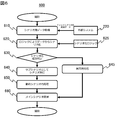
- FIG. 6 is a flowchart showing the flow of the chat session control method 600 according to the embodiment of the present invention.
- the chat session control method 600 seamlessly acquires the information necessary for an appropriate chat scenario for dealing with the user from the external system in response to the user input in the chat session, and operates the chat scenario. This is a process for generating information, and may be performed by, for example, the chatbot control device 230 shown in FIG.
- step 610 data for creating a chat scenario is acquired from a predetermined external system 220.
- the acquisition of the chat scenario creation data may be performed by, for example, the above-mentioned external data acquisition unit (for example, the external data acquisition unit 242 shown in FIG. 2).
- the data for creating the chat scenario here may be performed based on the first input from the user in the chat session. This first input may be, for example, a reply to a prompt presented to the user by the chatbot in the chat scenario (main scenario), and if the dialogue state with the user satisfies the similarity criterion with respect to the predetermined dialogue state. It may be the case when it is judged.
- chat scenario creation data is to be acquired from which external system 220 may be made based on the first input.
- the external data acquisition unit stores the information about the restaurant that can be reserved. Information on stores that can be booked at Japanese-style restaurants may be obtained by requesting access to a Japanese-style restaurant by a predetermined API (Application Programming Information) or RPA (Robotic Process Automation) means.
- RPA is a program that acts on behalf of or automates predetermined tasks and processes. In the present invention, by using RPA, arbitrary processing such as acquisition of data from an external system and scenario registration can be performed more efficiently without human intervention.
- a chat scenario (for example, the first chat scenario) is generated from the chat scenario creation data acquired in step 610 using a predetermined scenario-making logic 625.
- This chat scenario generation may be performed by, for example, the above-mentioned scenario generation unit (for example, the scenario generation unit 244 shown in FIG. 2).
- This scenario-making logic 625 defines how to generate a chat scenario using the chat scenario creation data acquired from the external system 220, and is based on the characteristics of the acquired chat scenario creation data and the like. It specifies one of a plurality of generation patterns.
- This scenario-making logic 625 may be stored in the storage unit 235 shown in FIG. 2, for example, or may be defined as a module in the main scenario. The details of chat scenario generation by the scenario-making logic 625 will be described later.
- step 630 it is determined whether or not the generation of the chat scenario is successful.
- This chat scenario success determination may be performed by, for example, the scenario success determination unit described above (for example, the scenario success determination unit 250 shown in FIG. 2). More specifically, the chat scenario conversion success determination compares the chat scenario generated in step 620 (for example, the first chat scenario) with the success determination data that specifies the definition structure according to the chatbot control device. If the chat scenario satisfies a predetermined similarity criterion with respect to the success determination data, it is determined that the generation of this chat scenario is successful, and the chat scenario is transferred to the execution unit.
- the comparison between this chat scenario and the definition structure may be carried out by so-called structural analysis or comparison of regular expressions.
- step 645 it is determined that the generation of the chat scenario has not been successful, and an error message indicating that the generation has not been successful is notified to a predetermined notification destination (chatbot administrator, etc.).
- step 640 if it is determined that the chat scenario generated in step 620 was successfully generated, the chat scenario is executed as a sub-scenario in the main scenario that is already being executed.
- the execution of the sub-scenario here may use the nesting structure described above. That is, in the main scenario, the chat scenario may be called and executed as a sub-scenario.
- step 650 the processes in the chat scenario executed in step 640 are executed in order.
- prompts, activities, scripts, etc. in a chat scenario are performed, and the dialogue between the user and the chatbot proceeds according to the transition rules defined in the chat scenario.
- further sub-scenarios may be called.
- the process of acquiring the necessary data from the predetermined external system may be performed as a further sub-scenario.
- the scenario delegation process described later may be performed as a further sub-scenario.
- step 660 when the processing of the chat scenario, which is the sub-scenario executed in steps 640 to 650, is completed, the processing of the chat session returns to the main session, and the processing of the main scenario proceeds. If a further sub-scenario is being executed in the sub-scenario, the chat session processing returns to the parent scenario of the sub-scenario whose processing has been completed, instead of the main scenario.
- the latest data is obtained by acquiring the chat scenario creation data from the predetermined external system based on the user's input, and dynamically generating and executing the chat scenario based on the chat scenario creation data. It is possible to provide a chat scenario based on the above in real time, and it is possible to respond to users more flexibly and efficiently.
- the chat scenario generation process 700 is generated by using a predetermined scenario-making logic.
- this scenario-making logic defines how to generate a chat scenario using the chat scenario creation data acquired from an external system, and is based on the characteristics of the acquired chat scenario creation data and the like. It specifies one of the generation patterns of.
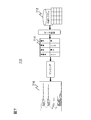
- FIG. 7 is a diagram showing a first generation pattern 710 of the scenario-making logic in the chat scenario generation process according to the embodiment of the present invention.
- the external data acquisition unit for example, the external data acquisition unit 242 shown in FIG. 2
- the chat scenario creation data 714 for generating the chat scenario is acquired from the predetermined external system 712.
- the chat scenario creation data 714 may be information on a specific product (product name, characteristics, price, export necessity, etc.).
- the scenario generation unit puts the acquired chat scenario creation data 714 into a definition structure 716 prepared in advance.
- a chat scenario may be generated by mapping.
- This definition structure 716 is, for example, selected from the definition structures prepared in advance and corresponding to a plurality of different use cases according to the use case (for example, product order) of the acquired chat scenario creation data 714. It may be.
- the mapping here means that, for example, the items (product name, characteristics, price, export necessity, etc.) included in the acquired chat scenario creation data 714 are inserted in the places associated with each other in the definition structure 716. Means to do.
- FIG. 8 is a diagram showing a second generation pattern 720 of the scenario-making logic in the chat scenario generation process according to the embodiment of the present invention.
- the external data acquisition unit for example, the external data acquisition unit 242 shown in FIG. 2
- the chat scenario creation data 724 for generating the chat scenario is acquired from the predetermined external system 726.
- the chat scenario creation data 724 may be information on a specific product (product name, characteristics, price, export necessity, etc.).
- the scenario generation unit (for example, the scenario generation unit 244 shown in FIG. 2) prepares the acquired chat scenario creation data 724 in advance in a predetermined format. It may be converted into a chat scenario based on 726.
- This predetermined form may define, for example, a rule that defines the transition from a particular dialogue state to a subsequent dialogue state.
- the predetermined format 726 has item choices in the chat scenario creation data 724 (for example, YES, NO, etc., which are user responses to confirmation of product model number, characteristics, export necessity).
- the rule of the transition of the next transition destination by each option may be specified.
- this predetermined form 726 is obtained from the external system 722 along with the chat scenario creation data 724.
- this predetermined form 726 may be an automated telephone exchange script that is pre-created to address the customer over the phone and defines the transition of the dialogue (eg, "Payment of Invoices". 1 for inquiries about cancellation, 2 for inquiries about cancellation ... ", etc.).
- the predetermined form 726 according to the present invention is not necessarily limited to the one stored in advance in the external system 722, and may be generated in a neural network or the like trained using past dialogue information as learning data. It may be created by the administrator of the chatbot.
- chat scenario creation data 724 based on the transition rules defined in this predetermined format 726, the external system 722 even if there is no pre-created definition structure. You can dynamically generate chat scenarios based on the latest information on.
- FIG. 9 is a diagram showing a third generation pattern 730 of the scenario-making logic in the chat scenario generation process according to the embodiment of the present invention.
- the chat scenario creation data for generating the chat scenario is already in the form of the chat scenario definition structure, and is stored in the external system 722 as the chat scenario 734. It is assumed that. This is because the external system employs an API or the like that stores the stored information as a chat scenario, or the chat scenario generated by the chat scenario generation process according to the embodiment of the present invention is stored in the external system. It corresponds to the case where there is.
- the external data acquisition unit (for example, the external data acquisition unit 242 shown in FIG. 2) is with the user.
- the chat scenario 734 is acquired based on the first input from the user.
- the acquired chat scenario 734 may be executed as a sub-scenario in the main scenario being executed in the chat session.
- the external system can be used in the chat session without using a pre-generated definition structure or a predetermined format. You can directly embed chat scenarios based on the latest state.
- chat session control delegation process according to the embodiment of the present invention will be described with reference to FIG.
- FIG. 10 is a diagram showing an example of a chat session control delegation process 1000 according to an embodiment of the present invention.
- the processing of the chat scenario according to the embodiment of the present invention can be delegated to a predetermined external system.
- This chat session control delegation process is effective, for example, when information is acquired from a user in a chat scenario, some process is performed in the external system based on the information, and the result of the process is returned to the scenario.
- the chat session control delegation process 1000 shown in FIG. 10 may be performed by, for example, the scenario delegation management unit 250 shown in FIG.
- the chat session control delegation process 1000 may be started, for example, based on the scenario delegation trigger information that triggers the delegation of the chat scenario to the external system 220.
- the scenario delegation trigger information may be, for example, information indicating that processing in the external system 220 is required, information indicating that the dialogue state of the chat scenario matches a predetermined dialogue state, or the like.
- This scenario delegation trigger information may be transferred from, for example, a running chatbot to the scenario delegation management unit.
- step 1010 it is determined whether or not scenario control delegation to a predetermined external system 220 is possible. This determination may be made based on the status of available computing resources of the external system 220, the processing currently being executed by the external system 220, and the like. For example, if it is determined that a chat scenario that meets a predetermined similarity criterion (for example, the same chat scenario) with respect to the scenario to be delegated is already being executed in the external system 220, even if the delegation is stopped. good. On the other hand, if a chat scenario satisfying a predetermined similarity criterion with respect to the scenario to be delegated is not already being executed in the external system 220, the delegation process proceeds, and this process may proceed to step 1020.
- a predetermined similarity criterion for example, the same chat scenario
- a start ID for starting the chat scenario to be delegated may be issued.
- This start ID may be, for example, dedicated unique key information (character string or the like).
- this start ID also includes user information interacting with the chatbot in the target chat scenario, and the dialogue can be seamlessly transferred by using the user information at the start of the scenario. ..
- step 1030 the start ID of the chat scenario to be delegated and the control of the chat scenario (dedicated API for controlling the scenario, permission, etc.) are delegated to the external system 220.
- This delegation of control is carried out, for example, by executing the API of the external system 220 or registering the data in the database of the external system 220.
- the scenario delegation management unit waits for a scenario start request from the external system 220.
- This scenario start request includes the start ID issued in step 1020, and is information requesting permission to start the chat scenario. Further, this scenario start request may be made, for example, via the API for starting the external system 220.
- the scenario delegation management unit periodically monitors the state of the external system 220 (processing in progress, available computing resources, etc.), and when the state of the external system 220 reaches a predetermined state (sufficient). The scenario may be started when computing resources become available (for example).
- the present invention is not limited to this, and the external system 220 itself has a plurality of desired chat scenarios. You may choose from the available chat scenarios.
- the external system 220 may transmit a scenario ID that identifies a desired chat scenario as a scenario start request together with the start ID.
- step 1050 when the scenario delegation management unit determines that the scenario start request from the external system 220 has been received, this process proceeds to step 1060. If the scenario delegation management unit determines that the scenario start request from the external system 220 has not been received (for example, within a predetermined time such as 1 minute, 5 minutes, 1 hour, etc.), the process proceeds to step 1040. You may return and continue to wait, or you may cancel the delegation process.
- step 1060 the scenario delegation management unit determines whether or not the start ID included in the received scenario start request matches the start ID issued to the external system 220 in step 1020.
- the scenario delegation management unit determines that the start ID from the external system matches the start ID issued to the external system 220 in step 1020.
- this process proceeds to step 1070. Further, when the scenario delegation management unit determines that the start ID from the external system does not match the start ID issued to the external system 220 in step 1020, this process ends.
- the scenario delegation management unit provides information on the user who starts the scenario (the user who is interacting with the chatbot in the scenario) based on the start ID included in the received scenario start request. For example, it is acquired from the slot defined in the chat scenario, and the acquired information is transmitted to the external system 220.
- This information may be, for example, information that the user has input in a dialogue so far, information that specifies a desired service, or the like.
- the scenario delegation management unit causes the external system 220 to start the chat scenario to be delegated.
- the scenario delegation management unit may, for example, transmit information or the like permitting the start of the scenario to the external system 220.
- step 1090 the external system 220 executes the chat scenario to be delegated to the user corresponding to the user information acquired in step 1070.
- the delegated control of the scenario is returned from the external system 220 to the chatbot control device (for example, the chatbot control device 230 shown in FIG. 2).
- the chatbot control device can delegate the control of a specific chat scenario to a predetermined external system.
- a predetermined external system for example, when some processing (hearing in personnel recruitment, etc.) is performed in the external system for the user who is interacting with the chatbot, or when the service requested by the user is directly provided to the external system ( For hotel reservations, etc.), by delegating control of chat scenarios to an external system, it is possible to more efficiently respond to user needs.
- chat session control means according to the embodiment of the present invention is applied to facility reservation.
- FIG. 11 is a diagram showing a specific example 1100 when the chat session control means according to the embodiment of the present invention is applied to facility reservation.
- the chat scenario generation process according to the embodiment of the present invention can be applied to various fields, and one example thereof is facility reservation for rental conference rooms, public institutions, events, and the like. This corresponds to, for example, a situation in which a user who wishes to reserve a facility can be interviewed (confirmation of the purpose of use, etc.) through communication with a chatbot, and a user who passes the hearing can reserve the facility.
- a user applying for a facility reservation starts a dialogue with a chatbot via a predetermined SNS tool, and transmits the reservation application to the chatbot control device 230.
- the reservation application here may be a message composed of natural languages such as "I am looking for a conference room” or "I want to play tennis”.
- this application may include information that specifies what conditions the user is looking for (contents, number of people, usage, reservation time, etc.).
- the chatbot control device 230 searches for a facility that satisfies the desired condition of the reservation application received in step 1110.
- the chatbot control device 230 may perform the search on a database (for example, a facility master) stored in the external system 230. After that, the information of the searched facility is transmitted to the user, the desired facility is selected by the user, and the information is returned to the chatbot control device 230.
- the chatbot control device 230 acquires the reservation contents (number of people, usage, desired time, usage qualification) from the user and acquires it from the database (for example, hearing master) of the external system 220. Hearing (examination) is conducted using the hearing criteria. If the result of the hearing is pass, the present process proceeds to step 1140, and if the result of the hearing is unsuccessful, the present process is terminated.
- the chatbot control device 230 dynamically generates a chat scenario for acquiring the reservation content based on the facility selected by the user according to the chat scenario generation process according to the embodiment of the present invention. You may. This chat scenario may be generated, for example, based on information obtained from a database of an external system.
- step 1140 the chatbot control device 230 transmits the result of the hearing performed in step 1130 to the external system 220.
- the external system 1150 acquires the result of the hearing.
- step 1160 the information of the passed user is registered in the reservation management system of the external system 220 by, for example, a predetermined RPA (Robotics Process Automation) means. Further, here, the answer wording to be sent to the user may be obtained from the reservation management system.
- RPA Robots Process Automation
- step 1170 as a result of the hearing, the user's status (pass, recruitment, additional hearing, etc.) and the response wording to be sent to the user (URL for adjusting the reservation schedule of the facility) are stored in the hearing database of the external system 220. be registered. Further, in step 1180, the external system 220 transmits the result of the hearing, the status of the user, and the response wording to be sent to the user to the chatbot control device 230.
- step 1190 the chatbot control device 230 transmits the user's status and the answer wording to be sent to the user as a result of the hearing acquired from the external system 220, and guides the reservation schedule adjustment of the facility.
- chat scenario based on the latest information (facility information, conditions of the facility being recruited) of the external system 220 and providing it to the user in real time, it differs for each facility. It is not necessary to generate a chat scenario in advance, and it is not necessary to update the chat scenario every time the situation on the facility side changes. Therefore, the labor of manually developing the scenario can be saved, and the user can be dealt with more quickly and flexibly.
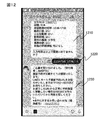
- FIG. 12 is a drawing showing an example of a screen of dialogue 1200 in a chat session between a user and a chatbot when the chat session control means according to the embodiment of the present invention is applied to facility reservation.
- the dialogue 1200 between the user and the chatbot includes the first utterance 1210 from the chatbot, the utterance 1220 from the user, and the second utterance 1230 from the chatbot.
- the chatbot sends a prompt utterance so that the user can confirm the information acquired from the user in the dialogue (not shown) so far.
- This information may include confirmation of the user's desired facility, use, number of people, usage qualification, etc., as shown in FIG. 12, for example.
- the chat scenario for acquiring such information from the user may be, for example, a scenario dynamically generated based on the above-mentioned chat scenario generation process.
- the user who received the first utterance 1210 from the chatbot returns a message to the effect of determining this content to the chatbot as the utterance 1220 from the user.
- the chatbot starts the above-mentioned scenario delegation control in order to conduct a hearing to examine the information (reservation details, etc.) received from the user, and sends a message to the user to wait in the second utterance from the chatbot. It is transmitted as 1230.
- the information (reservation details, etc.) received from the user is transmitted to a predetermined external system, and the control of the scenario is delegated to the external system. Then, after the hearing in the external system is completed, the scenario delegation control session ends, and the control of the scenario returns to the chatbot control device.
- chat scenario dynamic generation process and the scenario control delegation process As described above, by using the chat scenario dynamic generation process and the scenario control delegation process according to the embodiment of the present invention, it is possible to provide a chat scenario based on the latest data in real time, which is more flexible and efficient. It is possible to deal with users as a target.
- Chatbot control system 210 Mobile terminal 212 Bus 215 Communication network 220 External system 231 Processor 232 I / O interface 233 Network interface 234 User I / O interface 235 Storage unit 240 Memory 242 External data acquisition unit 244 Scenario generation unit 246 Scenario execution unit 248 Scenario Creation Success Judgment Department 250 Scenario Delegation Management Department
Landscapes
- Engineering & Computer Science (AREA)
- Computer Networks & Wireless Communication (AREA)
- Signal Processing (AREA)
- Theoretical Computer Science (AREA)
- General Engineering & Computer Science (AREA)
- Software Systems (AREA)
- Physics & Mathematics (AREA)
- General Physics & Mathematics (AREA)
- Information Transfer Between Computers (AREA)
- Stored Programmes (AREA)
Priority Applications (2)
| Application Number | Priority Date | Filing Date | Title |
|---|---|---|---|
| US17/793,898 US11799804B2 (en) | 2020-01-24 | 2020-09-03 | Chat bot control device, chat bot control method, and chat bot control device system |
| US18/369,160 US12021802B2 (en) | 2020-01-24 | 2023-09-16 | Chat bot control device, chat bot control method, and chat bot control device system |
Applications Claiming Priority (2)
| Application Number | Priority Date | Filing Date | Title |
|---|---|---|---|
| JP2020010185A JP7405629B2 (ja) | 2020-01-24 | 2020-01-24 | チャットボット制御装置、チャットボット制御方法、及びチャットボット制御装置システム |
| JP2020-010185 | 2020-01-24 |
Related Child Applications (2)
| Application Number | Title | Priority Date | Filing Date |
|---|---|---|---|
| US17/793,898 A-371-Of-International US11799804B2 (en) | 2020-01-24 | 2020-09-03 | Chat bot control device, chat bot control method, and chat bot control device system |
| US18/369,160 Continuation US12021802B2 (en) | 2020-01-24 | 2023-09-16 | Chat bot control device, chat bot control method, and chat bot control device system |
Publications (1)
| Publication Number | Publication Date |
|---|---|
| WO2021149296A1 true WO2021149296A1 (ja) | 2021-07-29 |
Family
ID=76991842
Family Applications (1)
| Application Number | Title | Priority Date | Filing Date |
|---|---|---|---|
| PCT/JP2020/033387 Ceased WO2021149296A1 (ja) | 2020-01-24 | 2020-09-03 | チャットボット制御装置、チャットボット制御方法、及びチャットボット制御装置システム |
Country Status (3)
| Country | Link |
|---|---|
| US (2) | US11799804B2 (https=) |
| JP (1) | JP7405629B2 (https=) |
| WO (1) | WO2021149296A1 (https=) |
Cited By (2)
| Publication number | Priority date | Publication date | Assignee | Title |
|---|---|---|---|---|
| CN115249359A (zh) * | 2021-09-16 | 2022-10-28 | 达闼科技(北京)有限公司 | 讲解方法、机器人、电子设备和存储介质 |
| CN115941782A (zh) * | 2023-01-09 | 2023-04-07 | 杭州实在智能科技有限公司 | 基于rpa与聊天机器人的消息推送方法及系统 |
Families Citing this family (7)
| Publication number | Priority date | Publication date | Assignee | Title |
|---|---|---|---|---|
| JP7582443B2 (ja) * | 2020-07-21 | 2024-11-13 | 日本電気株式会社 | タッチポイント装置、タッチポイントシステム、タッチポイント方法および記憶媒体 |
| JP7475291B2 (ja) * | 2021-01-13 | 2024-04-26 | ウイングアーク1st株式会社 | チャットボット制御装置およびチャットボット制御方法 |
| JP7007007B1 (ja) | 2021-09-29 | 2022-02-14 | 株式会社オアース | 自動応答プログラム構築システム |
| JP7808488B2 (ja) * | 2022-03-03 | 2026-01-29 | 株式会社キーエンス | シナリオ管理装置、シナリオ管理プログラム、記録媒体およびシナリオ管理方法 |
| JP7840612B2 (ja) * | 2022-02-07 | 2026-04-06 | 株式会社日立システムズ | シナリオ検査システム、シナリオ検査方法、およびプログラム |
| US20240257024A1 (en) * | 2023-01-30 | 2024-08-01 | Automation Anywhere, Inc. | Centralized milestone recordation for robotic process automation systems |
| JP7624637B1 (ja) | 2023-11-06 | 2025-01-31 | 株式会社Zeals | シナリオ生成装置、シナリオ生成方法、およびシナリオ生成プログラム |
Citations (2)
| Publication number | Priority date | Publication date | Assignee | Title |
|---|---|---|---|---|
| JP2018142054A (ja) * | 2017-02-27 | 2018-09-13 | 株式会社日立製作所 | 開発支援システムおよび方法 |
| JP2019049900A (ja) * | 2017-09-11 | 2019-03-28 | 富士ゼロックス株式会社 | 情報処理装置及びプログラム |
Family Cites Families (17)
| Publication number | Priority date | Publication date | Assignee | Title |
|---|---|---|---|---|
| US8972494B2 (en) | 2006-01-19 | 2015-03-03 | International Business Machines Corporation | Scheduling calendar entries via an instant messaging interface |
| US9043407B1 (en) | 2009-06-12 | 2015-05-26 | Avaya Inc. | Interactive user interface to communication-enabled business process platforms method and apparatus |
| US8818926B2 (en) * | 2009-09-29 | 2014-08-26 | Richard Scot Wallace | Method for personalizing chat bots |
| US9378290B2 (en) * | 2011-12-20 | 2016-06-28 | Microsoft Technology Licensing, Llc | Scenario-adaptive input method editor |
| US9647968B2 (en) | 2015-03-25 | 2017-05-09 | Pypestream Inc | Systems and methods for invoking chatbots in a channel based communication system |
| US10469665B1 (en) * | 2016-11-01 | 2019-11-05 | Amazon Technologies, Inc. | Workflow based communications routing |
| US10796217B2 (en) * | 2016-11-30 | 2020-10-06 | Microsoft Technology Licensing, Llc | Systems and methods for performing automated interviews |
| US11580350B2 (en) * | 2016-12-21 | 2023-02-14 | Microsoft Technology Licensing, Llc | Systems and methods for an emotionally intelligent chat bot |
| US10366168B2 (en) * | 2017-01-12 | 2019-07-30 | Microsoft Technology Licensing, Llc | Systems and methods for a multiple topic chat bot |
| US20180203851A1 (en) * | 2017-01-13 | 2018-07-19 | Microsoft Technology Licensing, Llc | Systems and methods for automated haiku chatting |
| US20180324116A1 (en) * | 2017-05-08 | 2018-11-08 | Alexandru George VADUVA | Method and system for organizing chat content |
| US11586960B2 (en) * | 2017-05-09 | 2023-02-21 | Visa International Service Association | Autonomous learning platform for novel feature discovery |
| US20230308405A1 (en) * | 2018-08-30 | 2023-09-28 | Livechat Software S.A | Intelligent System Enabling Automated Scenario-Based Responses in Customer Service |
| US11379883B2 (en) * | 2019-08-09 | 2022-07-05 | SOCI, Inc. | Systems, devices, and methods for dynamically generating, distributing, and managing online communications |
| US11544744B2 (en) * | 2019-08-09 | 2023-01-03 | SOCI, Inc. | Systems, devices, and methods for autonomous communication generation, distribution, and management of online communications |
| US11444893B1 (en) * | 2019-12-13 | 2022-09-13 | Wells Fargo Bank, N.A. | Enhanced chatbot responses during conversations with unknown users based on maturity metrics determined from history of chatbot interactions |
| US20220358539A1 (en) * | 2021-05-05 | 2022-11-10 | Alexey Bozhin | Systems and methods for managing advertisements in social networks |
-
2020
- 2020-01-24 JP JP2020010185A patent/JP7405629B2/ja active Active
- 2020-09-03 WO PCT/JP2020/033387 patent/WO2021149296A1/ja not_active Ceased
- 2020-09-03 US US17/793,898 patent/US11799804B2/en active Active
-
2023
- 2023-09-16 US US18/369,160 patent/US12021802B2/en active Active
Patent Citations (2)
| Publication number | Priority date | Publication date | Assignee | Title |
|---|---|---|---|---|
| JP2018142054A (ja) * | 2017-02-27 | 2018-09-13 | 株式会社日立製作所 | 開発支援システムおよび方法 |
| JP2019049900A (ja) * | 2017-09-11 | 2019-03-28 | 富士ゼロックス株式会社 | 情報処理装置及びプログラム |
Cited By (4)
| Publication number | Priority date | Publication date | Assignee | Title |
|---|---|---|---|---|
| CN115249359A (zh) * | 2021-09-16 | 2022-10-28 | 达闼科技(北京)有限公司 | 讲解方法、机器人、电子设备和存储介质 |
| CN115249359B (zh) * | 2021-09-16 | 2023-03-31 | 达闼科技(北京)有限公司 | 讲解方法、机器人、电子设备和存储介质 |
| CN115941782A (zh) * | 2023-01-09 | 2023-04-07 | 杭州实在智能科技有限公司 | 基于rpa与聊天机器人的消息推送方法及系统 |
| CN115941782B (zh) * | 2023-01-09 | 2023-06-13 | 杭州实在智能科技有限公司 | 基于rpa与聊天机器人的消息推送方法及系统 |
Also Published As
| Publication number | Publication date |
|---|---|
| US20240007422A1 (en) | 2024-01-04 |
| JP7405629B2 (ja) | 2023-12-26 |
| JP2021117690A (ja) | 2021-08-10 |
| US20230132894A1 (en) | 2023-05-04 |
| US12021802B2 (en) | 2024-06-25 |
| US11799804B2 (en) | 2023-10-24 |
Similar Documents
| Publication | Publication Date | Title |
|---|---|---|
| JP7405629B2 (ja) | チャットボット制御装置、チャットボット制御方法、及びチャットボット制御装置システム | |
| JP2021117690A5 (https=) | ||
| US11488601B2 (en) | Dependency graph conversation modeling for use in conducting human-to-computer dialog sessions with a computer-implemented automated assistant | |
| US11409425B2 (en) | Transactional conversation-based computing system | |
| US10469665B1 (en) | Workflow based communications routing | |
| CN109716325B (zh) | 计算机化的自然语言查询意图分派 | |
| EP3622392B1 (en) | Facilitating user device and/or agent device actions during a communication session | |
| EP2860944B1 (en) | Network appliance architecture for unified communication services | |
| CN110720090A (zh) | 通过个体命令调用自动化助理来执行多个任务 | |
| US11620656B2 (en) | System and method for personalization as a service | |
| US20230359956A1 (en) | Distributed Actor-Based Information System and Method | |
| CN101495965A (zh) | 语义富对象的动态用户体验 | |
| US11837215B1 (en) | Interacting with a virtual assistant to receive updates | |
| US12530615B2 (en) | Intelligent oversight of multi-party engagements | |
| US10929485B1 (en) | Bot search and dispatch engine | |
| US20250173043A1 (en) | Assisting user(s) in interactions with large language model(s) | |
| US12547380B1 (en) | Application creation environment using multi- modality interface options | |
| US20250190703A1 (en) | Intelligent Interface for Automation Multitasking | |
| CN110447026B (zh) | 用于在新的域中提供自动化助理的开发人员平台 | |
| US12602209B1 (en) | Constrained generative framework application development environment | |
| JP7509302B1 (ja) | サーバ装置、サーバ装置の制御方法及びプログラム | |
| US20260126962A1 (en) | Application creation environment using multi-modality interface options | |
| US20250307718A1 (en) | Orchestration of booking matching | |
| Patel et al. | A Standard Proposed Voice-Based Application for Virtual Assistance on Cloud Service Platforms |
Legal Events
| Date | Code | Title | Description |
|---|---|---|---|
| 121 | Ep: the epo has been informed by wipo that ep was designated in this application |
Ref document number: 20915561 Country of ref document: EP Kind code of ref document: A1 |
|
| NENP | Non-entry into the national phase |
Ref country code: DE |
|
| 122 | Ep: pct application non-entry in european phase |
Ref document number: 20915561 Country of ref document: EP Kind code of ref document: A1 |