WO2021131304A1 - 解析処理装置、解析処理方法、及び解析処理プログラム - Google Patents
解析処理装置、解析処理方法、及び解析処理プログラム Download PDFInfo
- Publication number
- WO2021131304A1 WO2021131304A1 PCT/JP2020/040316 JP2020040316W WO2021131304A1 WO 2021131304 A1 WO2021131304 A1 WO 2021131304A1 JP 2020040316 W JP2020040316 W JP 2020040316W WO 2021131304 A1 WO2021131304 A1 WO 2021131304A1
- Authority
- WO
- WIPO (PCT)
- Prior art keywords
- standing
- passengers
- passenger
- analysis
- vehicle
- Prior art date
- Legal status (The legal status is an assumption and is not a legal conclusion. Google has not performed a legal analysis and makes no representation as to the accuracy of the status listed.)
- Ceased
Links
Images


Classifications
-
- G—PHYSICS
- G08—SIGNALLING
- G08B—SIGNALLING SYSTEMS, e.g. PERSONAL CALLING SYSTEMS; ORDER TELEGRAPHS; ALARM SYSTEMS
- G08B21/00—Alarms responsive to a single specified undesired or abnormal condition and not otherwise provided for
- G08B21/02—Alarms for ensuring the safety of persons
-
- G—PHYSICS
- G08—SIGNALLING
- G08B—SIGNALLING SYSTEMS, e.g. PERSONAL CALLING SYSTEMS; ORDER TELEGRAPHS; ALARM SYSTEMS
- G08B21/00—Alarms responsive to a single specified undesired or abnormal condition and not otherwise provided for
- G08B21/02—Alarms for ensuring the safety of persons
- G08B21/04—Alarms for ensuring the safety of persons responsive to non-activity, e.g. of elderly persons
- G08B21/0438—Sensor means for detecting
- G08B21/0469—Presence detectors to detect unsafe condition, e.g. infrared sensor, microphone
-
- G—PHYSICS
- G06—COMPUTING OR CALCULATING; COUNTING
- G06V—IMAGE OR VIDEO RECOGNITION OR UNDERSTANDING
- G06V20/00—Scenes; Scene-specific elements
- G06V20/50—Context or environment of the image
- G06V20/59—Context or environment of the image inside of a vehicle, e.g. relating to seat occupancy, driver state or inner lighting conditions
- G06V20/593—Recognising seat occupancy
-
- G—PHYSICS
- G06—COMPUTING OR CALCULATING; COUNTING
- G06V—IMAGE OR VIDEO RECOGNITION OR UNDERSTANDING
- G06V40/00—Recognition of biometric, human-related or animal-related patterns in image or video data
- G06V40/10—Human or animal bodies, e.g. vehicle occupants or pedestrians; Body parts, e.g. hands
- G06V40/103—Static body considered as a whole, e.g. static pedestrian or occupant recognition
-
- G—PHYSICS
- G08—SIGNALLING
- G08B—SIGNALLING SYSTEMS, e.g. PERSONAL CALLING SYSTEMS; ORDER TELEGRAPHS; ALARM SYSTEMS
- G08B21/00—Alarms responsive to a single specified undesired or abnormal condition and not otherwise provided for
- G08B21/02—Alarms for ensuring the safety of persons
- G08B21/04—Alarms for ensuring the safety of persons responsive to non-activity, e.g. of elderly persons
- G08B21/0438—Sensor means for detecting
- G08B21/0492—Sensor dual technology, i.e. two or more technologies collaborate to extract unsafe condition, e.g. video tracking and RFID tracking
Definitions
- the present disclosure relates to an analysis processing apparatus, an analysis processing method, and an analysis processing program.
- An object of the present disclosure is to provide an analysis processing apparatus, an analysis processing method, and an analysis processing program capable of adjusting the analysis cycle from an extrinsic factor and suppressing the cost related to the analysis.
- the analysis processing device is an analysis processing device for analyzing the body displacement of the passenger in the vehicle, and is based on the recognition data including the state of the passenger in the vehicle, and the sitting state of the passenger.
- a calculation unit that calculates the standing state of the passenger, and a cycle determination unit that determines the analysis cycle of the vehicle according to a function that changes the analysis cycle according to the sitting and standing states of the passengers in the vehicle.
- the configuration includes.
- the analysis cycle can be adjusted from external factors, and the cost related to analysis can be suppressed.
- the method according to the present embodiment relates to a method for adjusting an analysis cycle for performing an analysis on the body displacement of a passenger in a vehicle.
- the vehicle is assumed to be a train, a bus, or the like on which a large number of passengers board.
- the body displacement of the passenger is not limited to a fall, and the body displacement in the direction of gravity due to an extrinsic factor is assumed.
- Examples of external factors include factors such as external force, changes due to interaction with others, and changes in the external environment. Due to such external factors, the joint moments cannot be balanced, and the body unintentionally moves in the direction of gravity, resulting in unintended changes in the joint moments of the passengers. In this embodiment, such body displacement is analyzed.
- the analysis cycle is adaptively changed in order to reduce the calculation resources required for the fall detection in the vehicle.
- the change in the analysis cycle takes into consideration the influence from external changes, that is, from other than the person in question, based on the situation inside the vehicle.
- the analysis cycle is reduced, that is, the analysis frequency is increased.
- the analysis cycle is increased, that is, the analysis frequency is decreased.
- the standing state is easily affected by external changes, and the sitting state is less susceptible to external changes.
- a function that changes the analysis cycle depending on the standing and sitting states is introduced.
- the calculation resource and the power consumption are reduced by changing the analysis cycle in this way.
- FIG. 1 is a block diagram showing a configuration of an analysis processing system 100 according to an embodiment of the present disclosure.
- the analysis processing device 110 the sensor group 111, and the monitoring center 112 are connected via the network N.
- FIG. 2 is a block diagram showing the hardware configuration of the analysis processing device 110.
- the analysis processing device 110 includes a CPU (Central Processing Unit) 11, a ROM (Read Only Memory) 12, a RAM (Random Access Memory) 13, a storage 14, an input unit 15, a display unit 16, and a communication interface. It has (I / F) 17.
- the configurations are connected to each other via a bus 19 so as to be communicable with each other.
- the CPU 11 is a central arithmetic processing unit that executes various programs and controls each part. That is, the CPU 11 reads the program from the ROM 12 or the storage 14, and executes the program using the RAM 13 as a work area. The CPU 11 controls each of the above configurations and performs various arithmetic processes according to the program stored in the ROM 12 or the storage 14. In the present embodiment, the analysis processing program is stored in the ROM 12 or the storage 14.
- the ROM 12 stores various programs and various data.
- the RAM 13 temporarily stores a program or data as a work area.
- the storage 14 is composed of a storage device such as an HDD (Hard Disk Drive) or an SSD (Solid State Drive), and stores various programs including an operating system and various data.
- the input unit 15 includes a pointing device such as a mouse and a keyboard, and is used for performing various inputs.
- the display unit 16 is, for example, a liquid crystal display and displays various types of information.
- the display unit 16 may adopt a touch panel method and function as an input unit 15.
- the communication interface 17 is an interface for communicating with other devices such as terminals, and for example, standards such as Ethernet (registered trademark), FDDI, and Wi-Fi (registered trademark) are used.
- Ethernet registered trademark
- FDDI FDDI
- Wi-Fi registered trademark
- the analysis processing device 110 is installed in the vehicle, receives the recognition data of the sensor group 111, and analyzes the body displacement of the passenger in the vehicle.
- the analysis processing device 110 appropriately transmits the analysis cycle and the analysis result to the monitoring center 112.
- the monitoring center 112 receives the analysis cycle and the analysis result from the analysis processing device 110, and performs necessary operations and the like.
- the sensor group 111 is a group of various sensors installed in the vehicle, and transmits recognition data to the analysis processing device 110.
- the sensor group 111 includes an infrared sensor that detects the number of passengers when getting on and off, an image sensor that captures passengers in the vehicle, a pressure-sensitive sensor that detects sitting, a capacitance sensor, and the like.
- a camera that captures the entrance / exit is also included in the sensor group 111.
- the recognition data is the detection result of these sensors.
- the analysis processing device 110 includes a storage unit 120, a calculation unit 121, a period determination unit 122, and an analysis unit 123.
- the analysis processing device 110 receives the recognition data from the sensor group 111 and stores it in the storage unit 120.
- the recognition data is sequentially received from the sensor group 111 and updated.
- the calculation unit 121 calculates the number of passengers from the detection result of the infrared sensor or the like in the recognition data or the result of counting the number of passengers at the entrance / exit using the camera image.
- the calculation unit 121 calculates the number of seated passengers, which is the number of seated passengers, by using the detection result of the pressure sensor or the like in the recognition data. Further, the calculation unit 121 calculates the number of standing passengers, which is the number of standing passengers, from the number of passengers and the number of seated passengers.
- the cycle determination unit 122 determines the analysis cycle of the vehicle according to a function that changes the analysis cycle according to the seated and standing states of the passengers in the vehicle.
- the function includes a standing passenger function and a sitting passenger function as defined in the following equation (1). ... (1)
- f A ( ⁇ A , ⁇ A ) is a standing passenger function
- f B ( ⁇ B , ⁇ B ) is a sitting passenger function
- ⁇ A is the number of standing passengers
- ⁇ A is the risk of standing passengers
- ⁇ B is the number of seated passengers
- ⁇ B is the risk of sitting passengers.
- the standing passenger function is referred to as f A and the sitting passenger function is referred to as f B.
- the standing passenger function f A reduces the analysis cycle as the number of standing passengers ⁇ A increases. That is, the frequency of analysis increases.
- the seated customer function f B increases the analysis cycle as the number of seated people ⁇ B increases. That is, the frequency of analysis decreases.
- the standing passenger risk ⁇ A and the sitting passenger risk ⁇ B may be determined in advance by experiments or the like, and may be variable depending on the congestion situation, the number of people ratio, and the like.
- the cycle determination unit 122 determines the analysis cycle according to the following equation (1-1), with the term relating to the seated passenger in equation (1) being 1. ... (1-1)
- the cycle determination unit 122 determines the analysis cycle to be 0 by setting the term related to the standing passenger in Eq. (1) to 0 and the following Eq. (1-2) as in the case of only seated passengers and no passengers. .. When the analysis cycle is set to 0, it is determined that the analysis is not performed or is performed at regular intervals for a long period of time. ... (1-2)
- the cycle determination unit 122 controls so as to call attention to the vehicle according to the determined analysis cycle.
- the cycle determination unit 122 controls, for example, to call attention to the vehicle when the determined analysis cycle is smaller than a predetermined value.
- an instruction from the monitoring center 112 that has received the analysis cycle may be used to call attention. This helps prevent the passengers of the vehicle from tipping over.
- the cycle determination unit 122 increases the analysis cycle in response to the detection of the seating of the passenger in the standing position. To detect seating, the recognition data of the storage unit 120, which is updated each time, may be monitored. The increase in the analysis cycle may be recalculated using the above equation (1), or may be increased by a predetermined amount.
- the analysis unit 123 analyzes the body displacement of the passenger in the vehicle according to the analysis cycle determined by the cycle determination unit 122. Since the analysis is not the main point of the present embodiment, the details will be omitted.
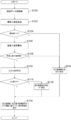
- FIG. 3 is a flowchart showing the flow of the analysis cycle determination process in the analysis process by the analysis processing device 110.
- the analysis cycle determination process is performed by the CPU 11 reading the analysis processing program from the ROM 12 or the storage 14, expanding the analysis processing program into the RAM 13 and executing the program.
- the CPU 11 functions as each part of the analysis processing device 110.
- recognition data is received from the sensor group 111, and the recognition data is stored in the storage unit 120 in advance.
- step S100 the CPU 11 acquires recognition data from the storage unit 120.
- the necessary detection result of the recognition data may be appropriately acquired before the necessary processing.
- step S102 the CPU 11 calculates the number of passengers getting on and off from the detection result of the infrared sensor or the like in the recognition data.
- the number of passengers counting result obtained from the camera image in the recognition data may be used as the number of passengers getting on and off.
- step S104 the CPU 11 determines from the number of passengers getting on and off whether or not the number of passengers is> 0, and if the number of passengers is> 0, the process proceeds to step S106, and if the number of passengers is not> 0, the process proceeds to step S112. Transition.
- step S106 the CPU 11 calculates the number of seated passengers, which is the number of passengers sitting, by using the detection result of the pressure sensor or the like in the recognition data.
- step S110 the CPU 11 calculates the number of standing passengers, which is the number of standing passengers, from the number of passengers and the number of seated passengers.
- the number of standing people may be simply obtained by subtracting the number of seated people from the number of passengers, but the consistency of the number of standing people may be determined by using the detection result of the image sensor or the like in the recognition data.
- step S112 CPU 11 has the section standing customer function f A is set to 0.
- step S114 the CPU 11 determines whether or not the passengers are only standing passengers, and if there are only standing passengers, the process proceeds to step S116, and if the passengers are not only standing passengers, the process proceeds to step S118.
- the number of passengers the number of standing passengers, it may be determined that there are only standing passengers.
- step S116 the CPU 11 sets the term of the sitting customer function f B to 1.
- step S118 the CPU 11 determines the analysis cycle of the vehicle according to the function of the above equation (1) using the standing passenger function f A and the sitting passenger function f B.
- the analysis processing system 100 According to the analysis processing system 100 according to the embodiment of the present disclosure, it is possible to adjust the analysis cycle from external factors and suppress the cost related to the analysis.
- the number of people such as the number of standing people and the number of seated people was used for the function, but the function is not limited to this.
- the number of standing people and the number of seated people may be replaced with the standing density and the sitting density.
- the standing density and the sitting density may be calculated by using the vehicle data including the vehicle size information and the detection result of the image sensor or the like of the recognition data.
- the standing passenger function in the function of Eq. (1) may include individual stability according to the fall risk of the passenger in the standing position.
- the standing passenger function is f A ( ⁇ A , ⁇ A , ⁇ A ) or the like.
- Individual stability is a variable that increases or decreases depending on, for example, the individual physique of the passenger, the estimated age, the position in the vehicle, and the position of the handrail and the ring. When used in a function, these variables for individual passengers may be found to find the total individual stability of the entire vehicle.
- the standing passenger function increases the analysis cycle as the individual stability increases. When individual stability is used, for example, individual stability may be calculated using recognition data or the like before step S118.
- each individual stability is ⁇ A ⁇ B.
- Individual stability may be designed to increase or decrease within a range that satisfies the magnitude relationship.
- the standing passenger function and the sitting passenger function in the function of the equation (1) may include mutual interference with respect to the surrounding situation of the passenger.
- the standing passenger function is f A ( ⁇ A , ⁇ A , ⁇ A )
- the sitting passenger function is f B ( ⁇ B , ⁇ B , ⁇ B ), and the like.
- Mutual coherence varies depending on the degree of congestion around the passenger. It also varies depending on whether the passengers around each of the passengers are standing or sitting. When used in a function, these variables for individual passengers may be found to determine the total interfering of the entire vehicle. Each function increases the analysis cycle as the mutual coherence is lower.
- the mutual coherence may be calculated using recognition data or the like before step S118.
- the relationship of mutual coherence is ⁇ A > ⁇ B.
- the mutual coherence may be designed to increase or decrease within a range that satisfies the magnitude relationship.
- the function of the equation (1) may further include a common risk function C according to the traveling situation of the vehicle.
- the common risk function C is designed to change, for example, according to the driving scene of the vehicle.
- the function of Eq. (1) may be C ⁇ f A ⁇ f B or the like.
- the traveling scene is the speed of the vehicle, the traveling condition such as whether the brake is applied, the route condition such as whether the point where the vehicle is traveling is flat or curved, and the like. For example, in the case of a curve, body displacement that causes shaking and changes the joint moment is likely to occur, so a risk function that reduces the analysis cycle may be used.
- the mutual coherence for example, the mutual coherence may be calculated using recognition data or the like before step S118.
- Eq. (1) may be a function in which the individual stability, mutual coherence, and common risk function C described above are appropriately combined.
Landscapes
- Engineering & Computer Science (AREA)
- Physics & Mathematics (AREA)
- General Physics & Mathematics (AREA)
- Multimedia (AREA)
- Theoretical Computer Science (AREA)
- Business, Economics & Management (AREA)
- Emergency Management (AREA)
- Human Computer Interaction (AREA)
- Health & Medical Sciences (AREA)
- General Health & Medical Sciences (AREA)
- Gerontology & Geriatric Medicine (AREA)
- Seats For Vehicles (AREA)
- Emergency Alarm Devices (AREA)
- Alarm Systems (AREA)
- Traffic Control Systems (AREA)
Priority Applications (2)
| Application Number | Priority Date | Filing Date | Title |
|---|---|---|---|
| CN202080090099.2A CN114868166B (zh) | 2019-12-25 | 2020-10-27 | 解析处理装置、解析处理方法以及解析处理程序 |
| US17/808,272 US11810438B2 (en) | 2019-12-25 | 2022-06-22 | Analysis processing device and analysis processing method |
Applications Claiming Priority (2)
| Application Number | Priority Date | Filing Date | Title |
|---|---|---|---|
| JP2019-234963 | 2019-12-25 | ||
| JP2019234963A JP7143836B2 (ja) | 2019-12-25 | 2019-12-25 | 解析処理装置、解析処理方法、及び解析処理プログラム |
Related Child Applications (1)
| Application Number | Title | Priority Date | Filing Date |
|---|---|---|---|
| US17/808,272 Continuation US11810438B2 (en) | 2019-12-25 | 2022-06-22 | Analysis processing device and analysis processing method |
Publications (1)
| Publication Number | Publication Date |
|---|---|
| WO2021131304A1 true WO2021131304A1 (ja) | 2021-07-01 |
Family
ID=76574006
Family Applications (1)
| Application Number | Title | Priority Date | Filing Date |
|---|---|---|---|
| PCT/JP2020/040316 Ceased WO2021131304A1 (ja) | 2019-12-25 | 2020-10-27 | 解析処理装置、解析処理方法、及び解析処理プログラム |
Country Status (4)
| Country | Link |
|---|---|
| US (1) | US11810438B2 (https=) |
| JP (1) | JP7143836B2 (https=) |
| CN (1) | CN114868166B (https=) |
| WO (1) | WO2021131304A1 (https=) |
Cited By (1)
| Publication number | Priority date | Publication date | Assignee | Title |
|---|---|---|---|---|
| US20220144200A1 (en) * | 2020-11-12 | 2022-05-12 | Toyoda Gosei Co., Ltd. | Vehicle occupant protection system |
Citations (3)
| Publication number | Priority date | Publication date | Assignee | Title |
|---|---|---|---|---|
| JP2012226635A (ja) * | 2011-04-21 | 2012-11-15 | Renesas Electronics Corp | 車両の衝突予防安全装置 |
| JP2014192630A (ja) * | 2013-03-26 | 2014-10-06 | Panasonic Corp | 映像受信装置及び受信映像の画像認識方法 |
| JP2016062414A (ja) * | 2014-09-19 | 2016-04-25 | クラリオン株式会社 | 車内監視装置及び車内監視システム |
Family Cites Families (16)
| Publication number | Priority date | Publication date | Assignee | Title |
|---|---|---|---|---|
| JP2007001381A (ja) * | 2005-06-22 | 2007-01-11 | Oki Electric Ind Co Ltd | 列車混雑率情報の収集及び提供システム |
| JP5061373B2 (ja) | 2008-11-06 | 2012-10-31 | Necフィールディング株式会社 | 車両内犯罪防止システム、車両内犯罪防止方法および車両内犯罪防止プログラム |
| US20100299177A1 (en) * | 2009-05-22 | 2010-11-25 | Disney Enterprises, Inc. | Dynamic bus dispatching and labor assignment system |
| CN102933136A (zh) * | 2010-06-07 | 2013-02-13 | 阿弗科迪瓦公司 | 利用网络服务的精神状态分析 |
| CN103325230A (zh) * | 2013-07-04 | 2013-09-25 | 深圳市元征科技股份有限公司 | 一种控制车辆的方法及系统 |
| JP5946477B2 (ja) * | 2014-01-07 | 2016-07-06 | 本田技研工業株式会社 | 乗員判定装置および乗員判定方法 |
| CN106157613A (zh) * | 2015-04-28 | 2016-11-23 | 苏州市大创信息运用有限公司 | 基于乘客、站点、车辆位置耦合的公交客流计数管理方法 |
| US20170068863A1 (en) * | 2015-09-04 | 2017-03-09 | Qualcomm Incorporated | Occupancy detection using computer vision |
| JP6675860B2 (ja) * | 2015-11-04 | 2020-04-08 | 株式会社日立製作所 | データ処理方法およびデータ処理システム |
| EP3473521B1 (de) * | 2017-10-20 | 2020-04-29 | MAGNA STEYR Fahrzeugtechnik AG & Co KG | Personenbeförderungsfahrzeug |
| US10740632B2 (en) * | 2018-02-19 | 2020-08-11 | Robert Bosch Gmbh | Occupant detection system and method for transportation vehicle |
| JP7161318B2 (ja) * | 2018-06-20 | 2022-10-26 | 矢崎総業株式会社 | 乗車人数監視システム |
| DE102018215513A1 (de) * | 2018-09-12 | 2020-03-12 | Zf Friedrichshafen Ag | Anordnung von TOF-Sensoren zur Erfassung eines Passagierraums eines Peoplemovers, Auswerteeinrichtung zum Wahrnehmen eines Passagierraums eines Peoplemovers und Wahrnehmungssystem zum Wahrnehmen eines Blockierens einer Passagiertür eines Peoplemovers, einer Anzahl von Passagieren in dem Peoplemover und von Positionen, Körperposen und Aktivitäten der Passagiere |
| DE102018216761A1 (de) * | 2018-09-28 | 2020-04-02 | Zf Friedrichshafen Ag | Vorrichtung und Verfahren zur Erkennung eines Ist-Zustandes eines Innenraums eines Peoplemovers |
| KR20200136522A (ko) * | 2019-05-27 | 2020-12-08 | 현대자동차주식회사 | 차량 및 그 제어방법 |
| US12420783B2 (en) * | 2021-11-08 | 2025-09-23 | Intel Corporation | Analyzing in-vehicle safety based on a digital twin |
-
2019
- 2019-12-25 JP JP2019234963A patent/JP7143836B2/ja active Active
-
2020
- 2020-10-27 CN CN202080090099.2A patent/CN114868166B/zh active Active
- 2020-10-27 WO PCT/JP2020/040316 patent/WO2021131304A1/ja not_active Ceased
-
2022
- 2022-06-22 US US17/808,272 patent/US11810438B2/en active Active
Patent Citations (3)
| Publication number | Priority date | Publication date | Assignee | Title |
|---|---|---|---|---|
| JP2012226635A (ja) * | 2011-04-21 | 2012-11-15 | Renesas Electronics Corp | 車両の衝突予防安全装置 |
| JP2014192630A (ja) * | 2013-03-26 | 2014-10-06 | Panasonic Corp | 映像受信装置及び受信映像の画像認識方法 |
| JP2016062414A (ja) * | 2014-09-19 | 2016-04-25 | クラリオン株式会社 | 車内監視装置及び車内監視システム |
Cited By (1)
| Publication number | Priority date | Publication date | Assignee | Title |
|---|---|---|---|---|
| US20220144200A1 (en) * | 2020-11-12 | 2022-05-12 | Toyoda Gosei Co., Ltd. | Vehicle occupant protection system |
Also Published As
| Publication number | Publication date |
|---|---|
| JP7143836B2 (ja) | 2022-09-29 |
| US20220319292A1 (en) | 2022-10-06 |
| CN114868166B (zh) | 2024-09-20 |
| JP2021103470A (ja) | 2021-07-15 |
| CN114868166A (zh) | 2022-08-05 |
| US11810438B2 (en) | 2023-11-07 |
Similar Documents
| Publication | Publication Date | Title |
|---|---|---|
| US12556813B1 (en) | Configuration of optical sensor devices in vehicles based on thermal data | |
| Huynh et al. | Optimization of an accelerometer and gyroscope‐based fall detection algorithm | |
| US10410607B2 (en) | Information display apparatus that superposes information on an imaged image and displays the information and the imaged image, and related information display system, control method and program | |
| JP2021530823A (ja) | ニューラルネットワークのトレーニング方法、視線追跡方法及び装置並びに電子機器 | |
| CN111935319A (zh) | 一种基于车辆终端系统的监控处理方法、系统及相关设备 | |
| US20180173184A1 (en) | Graph-based data analysis for sensor networks | |
| US11216330B2 (en) | Methods and systems for managing an electronic device | |
| CN113615166B (zh) | 事故检测装置及事故检测方法 | |
| EP3223252A1 (en) | System and method for monitoring abnormal behavior | |
| JP2020525879A (ja) | 低コストフォースセンシングデバイスのための超低電力モード | |
| KR20150021842A (ko) | 시스템 사용성 증진 장치, 방법 및 휴대 기기 | |
| WO2021131304A1 (ja) | 解析処理装置、解析処理方法、及び解析処理プログラム | |
| EP3401846B1 (en) | Method and device for analyzing sensor data | |
| CN110826413B (zh) | 一种输电线路防振锤故障检测方法及其系统、存储介质 | |
| WO2021159359A1 (zh) | 无人驾驶车辆操作系统的数据采集方法和装置 | |
| JP7214437B2 (ja) | 情報処理装置、情報処理方法及びプログラム | |
| WO2018101429A1 (ja) | 情報処理装置、情報収集方法、及びプログラム | |
| CN115391054A (zh) | 车机系统的资源分配方法及车机系统 | |
| KR101573118B1 (ko) | 현장 의료 진단을 위한 스마트 단말 | |
| CN117982133A (zh) | 跌倒检测方法、装置、设备和存储介质 | |
| CN111325231A (zh) | 神经网络模型融合方法及应用其的电子装置 | |
| KR101851253B1 (ko) | 사용자 단말에 관한 상황 인식 기반의 전력 소모 절감 장치 및 방법 | |
| KR20240087375A (ko) | 엣지컴퓨팅을 통해 차량번호를 검지하고 주의차량에 대한 알람을 제공하는 방법 및 시스템 | |
| KR102348313B1 (ko) | 승강기 제어 장치 | |
| US12231780B2 (en) | System and method for flicker avoidance in multi-frame multi-exposure image captures |
Legal Events
| Date | Code | Title | Description |
|---|---|---|---|
| 121 | Ep: the epo has been informed by wipo that ep was designated in this application |
Ref document number: 20905670 Country of ref document: EP Kind code of ref document: A1 |
|
| NENP | Non-entry into the national phase |
Ref country code: DE |
|
| 122 | Ep: pct application non-entry in european phase |
Ref document number: 20905670 Country of ref document: EP Kind code of ref document: A1 |