WO2021106289A1 - 解析システム及び解析方法 - Google Patents
解析システム及び解析方法 Download PDFInfo
- Publication number
- WO2021106289A1 WO2021106289A1 PCT/JP2020/031470 JP2020031470W WO2021106289A1 WO 2021106289 A1 WO2021106289 A1 WO 2021106289A1 JP 2020031470 W JP2020031470 W JP 2020031470W WO 2021106289 A1 WO2021106289 A1 WO 2021106289A1
- Authority
- WO
- WIPO (PCT)
- Prior art keywords
- circadian rhythm
- unit
- user
- analysis
- autonomic nerve
- Prior art date
- Legal status (The legal status is an assumption and is not a legal conclusion. Google has not performed a legal analysis and makes no representation as to the accuracy of the status listed.)
- Ceased
Links
Images









Classifications
-
- A—HUMAN NECESSITIES
- A61—MEDICAL OR VETERINARY SCIENCE; HYGIENE
- A61B—DIAGNOSIS; SURGERY; IDENTIFICATION
- A61B5/00—Measuring for diagnostic purposes; Identification of persons
- A61B5/02—Detecting, measuring or recording for evaluating the cardiovascular system, e.g. pulse, heart rate, blood pressure or blood flow
- A61B5/024—Measuring pulse rate or heart rate
- A61B5/02438—Measuring pulse rate or heart rate with portable devices, e.g. worn by the patient
-
- A—HUMAN NECESSITIES
- A61—MEDICAL OR VETERINARY SCIENCE; HYGIENE
- A61B—DIAGNOSIS; SURGERY; IDENTIFICATION
- A61B5/00—Measuring for diagnostic purposes; Identification of persons
- A61B5/0002—Remote monitoring of patients using telemetry, e.g. transmission of vital signals via a communication network
-
- A—HUMAN NECESSITIES
- A61—MEDICAL OR VETERINARY SCIENCE; HYGIENE
- A61B—DIAGNOSIS; SURGERY; IDENTIFICATION
- A61B5/00—Measuring for diagnostic purposes; Identification of persons
- A61B5/01—Measuring temperature of body parts ; Diagnostic temperature sensing, e.g. for malignant or inflamed tissue
-
- A—HUMAN NECESSITIES
- A61—MEDICAL OR VETERINARY SCIENCE; HYGIENE
- A61B—DIAGNOSIS; SURGERY; IDENTIFICATION
- A61B5/00—Measuring for diagnostic purposes; Identification of persons
- A61B5/02—Detecting, measuring or recording for evaluating the cardiovascular system, e.g. pulse, heart rate, blood pressure or blood flow
- A61B5/0205—Simultaneously evaluating both cardiovascular conditions and different types of body conditions, e.g. heart and respiratory condition
-
- A—HUMAN NECESSITIES
- A61—MEDICAL OR VETERINARY SCIENCE; HYGIENE
- A61B—DIAGNOSIS; SURGERY; IDENTIFICATION
- A61B5/00—Measuring for diagnostic purposes; Identification of persons
- A61B5/02—Detecting, measuring or recording for evaluating the cardiovascular system, e.g. pulse, heart rate, blood pressure or blood flow
- A61B5/0205—Simultaneously evaluating both cardiovascular conditions and different types of body conditions, e.g. heart and respiratory condition
- A61B5/02055—Simultaneously evaluating both cardiovascular condition and temperature
-
- A—HUMAN NECESSITIES
- A61—MEDICAL OR VETERINARY SCIENCE; HYGIENE
- A61B—DIAGNOSIS; SURGERY; IDENTIFICATION
- A61B5/00—Measuring for diagnostic purposes; Identification of persons
- A61B5/103—Measuring devices for testing the shape, pattern, colour, size or movement of the body or parts thereof, for diagnostic purposes
- A61B5/11—Measuring movement of the entire body or parts thereof, e.g. head or hand tremor or mobility of a limb
- A61B5/1118—Determining activity level
-
- A—HUMAN NECESSITIES
- A61—MEDICAL OR VETERINARY SCIENCE; HYGIENE
- A61B—DIAGNOSIS; SURGERY; IDENTIFICATION
- A61B5/00—Measuring for diagnostic purposes; Identification of persons
- A61B5/40—Detecting, measuring or recording for evaluating the nervous system
- A61B5/4029—Detecting, measuring or recording for evaluating the nervous system for evaluating the peripheral nervous systems
- A61B5/4035—Evaluating the autonomic nervous system
-
- A—HUMAN NECESSITIES
- A61—MEDICAL OR VETERINARY SCIENCE; HYGIENE
- A61B—DIAGNOSIS; SURGERY; IDENTIFICATION
- A61B5/00—Measuring for diagnostic purposes; Identification of persons
- A61B5/48—Other medical applications
- A61B5/4806—Sleep evaluation
- A61B5/4815—Sleep quality
-
- A—HUMAN NECESSITIES
- A61—MEDICAL OR VETERINARY SCIENCE; HYGIENE
- A61B—DIAGNOSIS; SURGERY; IDENTIFICATION
- A61B5/00—Measuring for diagnostic purposes; Identification of persons
- A61B5/48—Other medical applications
- A61B5/4857—Indicating the phase of biorhythm
-
- A—HUMAN NECESSITIES
- A61—MEDICAL OR VETERINARY SCIENCE; HYGIENE
- A61B—DIAGNOSIS; SURGERY; IDENTIFICATION
- A61B5/00—Measuring for diagnostic purposes; Identification of persons
- A61B5/48—Other medical applications
- A61B5/486—Biofeedback
-
- A—HUMAN NECESSITIES
- A61—MEDICAL OR VETERINARY SCIENCE; HYGIENE
- A61B—DIAGNOSIS; SURGERY; IDENTIFICATION
- A61B5/00—Measuring for diagnostic purposes; Identification of persons
- A61B5/68—Arrangements of detecting, measuring or recording means, e.g. sensors, in relation to patient
- A61B5/6801—Arrangements of detecting, measuring or recording means, e.g. sensors, in relation to patient specially adapted to be attached to or worn on the body surface
- A61B5/6813—Specially adapted to be attached to a specific body part
- A61B5/6822—Neck
-
- A—HUMAN NECESSITIES
- A61—MEDICAL OR VETERINARY SCIENCE; HYGIENE
- A61B—DIAGNOSIS; SURGERY; IDENTIFICATION
- A61B5/00—Measuring for diagnostic purposes; Identification of persons
- A61B5/68—Arrangements of detecting, measuring or recording means, e.g. sensors, in relation to patient
- A61B5/6801—Arrangements of detecting, measuring or recording means, e.g. sensors, in relation to patient specially adapted to be attached to or worn on the body surface
- A61B5/6813—Specially adapted to be attached to a specific body part
- A61B5/6825—Hand
- A61B5/6826—Finger
-
- A—HUMAN NECESSITIES
- A61—MEDICAL OR VETERINARY SCIENCE; HYGIENE
- A61B—DIAGNOSIS; SURGERY; IDENTIFICATION
- A61B5/00—Measuring for diagnostic purposes; Identification of persons
- A61B5/74—Details of notification to user or communication with user or patient; User input means
- A61B5/742—Details of notification to user or communication with user or patient; User input means using visual displays
-
- A—HUMAN NECESSITIES
- A61—MEDICAL OR VETERINARY SCIENCE; HYGIENE
- A61B—DIAGNOSIS; SURGERY; IDENTIFICATION
- A61B5/00—Measuring for diagnostic purposes; Identification of persons
- A61B5/24—Detecting, measuring or recording bioelectric or biomagnetic signals of the body or parts thereof
- A61B5/25—Bioelectric electrodes therefor
- A61B5/251—Means for maintaining electrode contact with the body
- A61B5/257—Means for maintaining electrode contact with the body using adhesive means, e.g. adhesive pads or tapes
- A61B5/259—Means for maintaining electrode contact with the body using adhesive means, e.g. adhesive pads or tapes using conductive adhesive means, e.g. gels
-
- A—HUMAN NECESSITIES
- A61—MEDICAL OR VETERINARY SCIENCE; HYGIENE
- A61B—DIAGNOSIS; SURGERY; IDENTIFICATION
- A61B5/00—Measuring for diagnostic purposes; Identification of persons
- A61B5/68—Arrangements of detecting, measuring or recording means, e.g. sensors, in relation to patient
- A61B5/6801—Arrangements of detecting, measuring or recording means, e.g. sensors, in relation to patient specially adapted to be attached to or worn on the body surface
- A61B5/6802—Sensor mounted on worn items
- A61B5/681—Wristwatch-type devices
Definitions
- the present invention relates to an analysis system and an analysis method for analyzing physical information.
- Patent Document 1 discloses a drowsiness prediction device that takes into consideration daytime activity, time, and sleep state.
- the drowsiness predictor described in Patent Document 1 measures the sleep state-related value related to the sleep state of the subject, and measures the daytime activity-related value related to the daytime activity of the subject.
- the drowsiness prediction device described in Patent Document 1 calculates the accumulated drowsiness level predicted to be accumulated by the subject's sleep history and daytime activity based on the sleep state-related value and the daytime activity-related value, and determines the accumulated drowsiness degree according to the time. Calculate the degree of drowsiness of the biological rhythm based on the changing biological rhythm.
- the drowsiness predictor described in Patent Document 1 calculates the total drowsiness corresponding to the time based on the accumulated drowsiness and the biological rhythm drowsiness.
- the analysis system of one aspect of the present invention is An analysis system that analyzes physical information
- the biometric data acquisition unit that acquires the biometric data of the user
- a circadian rhythm calculation unit that calculates the average circadian rhythm of the user
- An autonomic nerve analysis unit that performs autonomic nerve analysis based on fluctuations in biological data
- a weighting coefficient calculation unit that calculates a weighting coefficient that weights the autonomic nerve analysis result analyzed by the autonomic nerve analysis unit based on the measurement time when the user's biological data is measured and the cycle of the average circadian rhythm.
- a body information analysis unit that weights the autonomic nerve analysis result by the weighting coefficient calculated by the weighting coefficient calculation unit and estimates a change in the circadian rhythm with respect to the average circadian rhythm based on the weighted autonomic nerve analysis result. To be equipped.
- the analysis method of one aspect of the present invention is It is an analysis method that analyzes physical information by computer.
- the step of calculating the average circadian rhythm of the user A step of calculating a weighting coefficient that weights the autonomic nerve analysis result based on the measurement time of measuring the biometric data of the user and the cycle of the average circadian rhythm.
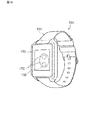
- FIG. 3 It is a block diagram which shows the schematic structure of an example of the analysis system of Embodiment 3 which concerns on this invention. It is a schematic diagram of an example of a grip type measuring device. It is a schematic diagram of an example of a neck-mounted measuring device. It is a schematic diagram of an example of a wristwatch type measuring device. It is a schematic diagram of an example of a chest-attached type measuring device.
- the circadian rhythm is a 24-hour cycle rhythm provided by an organism, and examples thereof include daily blood pressure, body temperature, heart rate, and fluctuations in hormone secretion. Circadianism is thought to correlate with the autonomic nervous system and sleep.
- Patent Document 1 discloses a drowsiness prediction device that takes into consideration daytime activity, time, and sleep state.
- the drowsiness prediction device described in Patent Document 1 measures the sleep state-related value and the daytime activity-related value, and calculates the accumulated drowsiness degree.
- a large amount of data is acquired from the user, which is a burden on the user.
- the drowsiness prediction device described in Patent Document 1 calculates the degree of drowsiness, and does not disclose analysis of circadian rhythm or improvement of sleep quality by adjusting circadian rhythm.
- the analysis system of one aspect of the present invention is An analysis system that analyzes physical information
- the biometric data acquisition unit that acquires the biometric data of the user
- a circadian rhythm calculation unit that calculates the average circadian rhythm of the user
- An autonomic nerve analysis unit that performs autonomic nerve analysis based on fluctuations in biological data
- a weighting coefficient calculation unit that calculates a weighting coefficient that weights the autonomic nerve analysis result analyzed by the autonomic nerve analysis unit based on the measurement time when the user's biological data is measured and the cycle of the average circadian rhythm.
- a body information analysis unit that weights the autonomic nerve analysis result by the weighting coefficient calculated by the weighting coefficient calculation unit and estimates a change in the circadian rhythm with respect to the average circadian rhythm based on the weighted autonomic nerve analysis result. To be equipped.
- the biological data may include at least heart rate or pulse rate.
- the circadian rhythm calculation unit may calculate the average circadian rhythm based on the biometric data acquired by the biometric data acquisition unit.
- the average circadian rhythm can be calculated more accurately based on the biological data.
- the analysis system further includes an input unit for inputting sleep information of the user.
- the circadian rhythm calculation unit may calculate the average circadian rhythm based on the sleep information input by the input unit.
- the average circadian rhythm can be easily calculated based on the sleep information, and the physical information can be easily analyzed.
- the weighting coefficient calculation unit compares when the measurement time is in the range of a period of -1/8 or more and 3/8 or less of the maximum value peak of the average circadian rhythm, and when the measurement time is in the other range. Therefore, the weighting coefficient may be increased.
- the physical information analysis unit may correct the weighted autonomic nerve analysis result when the user's heart rate or pulse rate is larger than a predetermined threshold value.
- the physical information analysis unit is based on at least one of the time difference of the maximum value peak of the circadian rhythm, the time difference of the minimum value peak, the decrease in amplitude, and the multimodification with respect to the average circadian rhythm.
- the change in rhythm may be estimated.
- the physical information of the user can be analyzed in more detail.
- the physical information analysis unit may further estimate the sleep quality and activity suitability of the user based on the weighted autonomic nerve analysis result.
- the physical information of the user can be analyzed in more detail.
- the analysis system further comprises a presentation unit that presents presentation information including advice for improving the circadian rhythm.
- the physical information analysis unit may create the presented information based on the change in the circadian rhythm.
- the physical information analysis unit calculates the predicted circadian rhythm based on the weighted autonomic nerve analysis result, and then calculates the predicted circadian rhythm.
- the presented information may include the average circadian rhythm and the predicted circadian rhythm.
- the analysis system may further include a notification unit that notifies the timing of measuring the biological data.
- the biological data acquisition unit may be built in a stick-on type or wear-on type measuring device.
- the measuring device can be easily attached to the user, and biometric data can be easily acquired.
- the measuring device is a device attached or worn on the user's neck, and may include a temperature control unit that controls the temperature of the user's neck.
- the analysis system further includes an activity amount measuring unit that measures the activity amount data of the user.
- the physical information analysis unit may correct the weighted autonomic nerve analysis result based on the activity amount data measured by the activity amount measurement unit.
- the circadian rhythm can be estimated based on the highly reliable autonomic nerve analysis result, so that the estimation accuracy of the circadian rhythm can be improved.
- the analysis system of one aspect of the present invention is An analysis system that analyzes physical information With one or more measuring devices, With one or more control terminals communicating with the one or more measuring devices, A server that communicates with the one or more control terminals, With The one or more measuring devices
- the biometric data acquisition unit that acquires the biometric data of the user
- a first communication unit that transmits the biometric data acquired by the biometric data acquisition unit to the one or more control terminals
- a first communication unit Have,
- the one or more control terminals A presentation section that presents presentation information to improve circadian rhythm
- a second communication unit that transmits the biometric data to the server and receives the presented information from the server.
- the server A circadian rhythm calculation unit that calculates the average circadian rhythm of the user, An autonomic nerve analysis unit that performs autonomic nerve analysis based on fluctuations in the biometric data of the user among the biometric data, A weighting coefficient calculation unit that calculates a weighting coefficient that weights the autonomic nerve analysis result analyzed by the autonomic nerve analysis unit based on the measurement time when the user's biological data is measured and the cycle of the average circadian rhythm.
- the autonomic nerve analysis result is weighted by the weighting coefficient calculated by the weighting coefficient calculation unit, the change of the circadian rhythm with respect to the average circadian rhythm is estimated based on the weighted autonomic nerve analysis result, and the change of the circadian rhythm is estimated.
- the physical information analysis unit that creates the presented information based on A third communication unit that receives the biometric data from the control terminal and transmits the presented information to the control terminal. Have.
- the analysis method of one aspect of the present invention is It is an analysis method that analyzes physical information by computer.
- the step of calculating the average circadian rhythm of the user A step of calculating a weighting coefficient that weights the autonomic nerve analysis result based on the measurement time of measuring the biometric data of the user and the cycle of the average circadian rhythm.
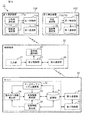
- FIG. 1 is a block diagram showing a schematic configuration of an example of the analysis system 1A according to the first embodiment of the present invention.
- the analysis system 1A includes a measuring device 10, a control terminal 20, and a server 30.
- the analysis system 1A is a system that analyzes the physical information of the user.
- the analysis system 1A estimates and analyzes changes in the user's circadian rhythm as physical information.
- the measuring device 10 is a device that measures the biometric data of the user.
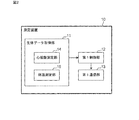
- FIG. 2 is a block diagram showing a schematic configuration of a measuring device 10 in the analysis system 1A of the first embodiment according to the present invention. As shown in FIGS. 1 and 2, the measuring device 10 includes a biological data acquisition unit 11, a first control unit 12, and a first communication unit 13.
- the biometric data acquisition unit 11 acquires the biometric data of the user.
- the biometric data includes, for example, diurnal variation of vital information of at least one of body temperature, heart rate, pulse rate, respiration, electroencephalogram, and blood pressure.
- the biometric data acquisition unit 11 acquires biometric data including at least the heart rate.
- the biometric data acquisition unit 11 may acquire biometric data including a pulse rate instead of the heart rate.
- the heart rate and the pulse rate are easy to measure, and the accuracy of analysis of physical information is good.
- the biometric data acquisition unit 11 acquires the biometric data when the user is awake multiple times. For example, the biometric data acquisition unit 11 acquires biometric data five or more times a day.
- the user As a measurement condition for biological data, it is preferable that the user is in a sitting position and in a resting state. Resting means a state of being quiet without moving. By measuring the biological data when the user is in a resting state, it is possible to improve the estimation accuracy of the circadian rhythm based on the biological data described later. In addition, it is preferable to acquire biometric data while avoiding exercise (including walking), eating, bathing, and the like.
- the biological data acquisition unit 11 includes a heart rate measurement unit 14 and a body temperature measurement unit 15.
- the heart rate measuring unit 14 is a heart rate sensor that measures the user's heart rate.
- an electrocardiographic sensor or a cardiac pulsation sensor can be used.
- the body temperature measuring unit 15 is a body temperature sensor that measures the user's body temperature.
- a chip thermistor or a resistance temperature detector can be used.
- the measuring device 10 provided with the sheet-type body motion sensor may be installed under the mattress, and the body motion data output wirelessly may be received by the control terminal 20 and transmitted to the server 30.
- the server 30 can perform autonomic nerve analysis of the heart rate.
- the biological data acquisition unit 11 may have a pulse sensor.
- a pulse rate sensor a photoelectric pulse wave sensor, a piezoelectric pulse wave sensor, and an oxygen saturation sensor can be used.
- the biometric data acquisition unit 11 acquires the time data when the biometric data is acquired.
- the time data includes the measurement time at which the biological data was measured.
- the biometric data and time data acquired by the biometric data acquisition unit 11 are transmitted to the first control unit 12.
- the first control unit 12 comprehensively controls the components of the measuring device 10.
- the first control unit 12 includes, for example, a memory for storing a program and a processing circuit (not shown) corresponding to a processor such as a CPU (Central Processing Unit).
- the processor executes the program stored in the memory.
- the first control unit 12 controls the biological data acquisition unit 11 and the first communication unit 13.
- the first control unit 12 stores the biometric data and the time data from the biometric data acquisition unit 11 in the memory and transmits the biometric data and the time data to the first communication unit 13.
- the first communication unit 13 transmits biometric data and time data to the control terminal 20.
- the first communication unit 13 has a predetermined communication standard (for example, LAN, Wi-Fi (registered trademark), Bluetooth (registered trademark), USB, HDMI (registered trademark), CAN (controller area network), SPI (Serial). Includes a circuit that communicates with the control terminal 20 in accordance with Peripheral Interface)).
- the control terminal 20 communicates with the measuring device 10 and the server 30.
- the control terminal 20 functions as a repeater that relays the measuring device 10 and the server 30, and controls the measuring device 10.
- the control terminal 20 is, for example, a smartphone or the like.
- the control terminal 20 transmits the data acquired by the control terminal 20 to the server 30.
- the control terminal 20 receives the physical information of the user analyzed by the server 30 from the server 30 and displays it.
- the control terminal 20 includes an input unit 21, a presentation unit 22, a second control unit 23, and a second communication unit 24.
- the input unit 21 is a device that receives input from the user. User information is input to the input unit 21. In the first embodiment, the input unit 21 inputs the sleep information of the user.
- the sleep information includes information on the user's bedtime and wake-up time.
- the bedtime and wake-up time may be the time of the day or the day before, or may be the average time of several days. Further, the bedtime and the wake-up time may be standard times recognized by the user.
- the user's bedtime and wake-up time are used for a simple calculation of the average circadian rhythm, which will be described later.
- a comment from the user may be input to the input unit 21.
- the user can record the information on the user's behavior by inputting a comment on his / her behavior into the input unit 21.
- the input unit 21 may have a selection type button. Input can be simplified by associating comments with selectable buttons. As a result, the user's operation can be simplified and the troublesomeness can be reduced. For example, things that easily affect autonomic nervous activity and body temperature include walking, exercise, eating, bathing, and sleeping, as well as going out and working, feeling cold and warm, feeling and tiredness, and drowsiness. By making the comment correspond to the selection type button, it is possible to simplify the comment input. Further, the user may freely input a comment in the input unit 21.
- the measurement conditions can be limited by inputting these contents before and after the measurement of the biological data.
- the estimation accuracy can be improved by using the content of the comment as a measurement condition in the autonomic nerve analysis.
- Autonomic function is affected by gender and age. The older the user, the more significantly the autonomic nervous function declines. That is, the older the user, the lower the total power. Therefore, in order to correct the autonomic nerve analysis result by gender and age, information on the user's gender and age may be input to the input unit 21.
- the information input by the input unit 21 is transmitted to the second control unit 23.
- the presentation unit 22 is a device that presents presentation information.
- the presented information includes the user's physical information analyzed by the server 30 (for example, changes in circadian rhythm and / or autonomic nerve analysis results), and / or improvement advice based on the physical information analysis results.
- the presentation unit 22 presents the presentation information by screen display, voice, and / or vibration.
- the presentation unit 22 is composed of, for example, a display, a speaker, and / or a vibrator.
- the presentation unit 22 also functions as a notification unit for notifying the acquisition timing of biological data by the measuring device 10.
- the notification unit notifies the timing of acquiring biometric data when the user is awake.
- the notification unit notifies the timing of acquiring biometric data when the user is in a resting state.
- the notification unit may notify the timing of acquiring biometric data after presenting the presentation information instructing the user to take a resting state.
- the notification unit may notify a message confirming whether or not the user is in a resting state before acquiring the biological data.
- the notification unit notifies the timing of acquiring the biometric data after confirming the input from the user to the input unit 21. This makes it possible to acquire biometric data at a timing suitable for the user's measurement.
- the second control unit 23 comprehensively controls the components of the control terminal 20.
- the second control unit 23 includes, for example, a memory for storing a program and a processing circuit (not shown) corresponding to a processor such as a CPU (Central Processing Unit).
- a processor such as a CPU (Central Processing Unit).
- the processor executes the program stored in the memory.
- the second control unit 23 controls the input unit 21, the presentation unit 22, and the second communication unit 24.
- the second communication unit 24 communicates with the measuring device 10 and the server 30.
- the second communication unit 24 uses a predetermined communication standard (for example, LAN, Wi-Fi (registered trademark), Bluetooth (registered trademark), USB, HDMI (registered trademark), CAN (controller area network), SPI (Serial). Includes a circuit that communicates with the server 30 in accordance with Peripheral Interface)).
- a predetermined communication standard for example, LAN, Wi-Fi (registered trademark), Bluetooth (registered trademark), USB, HDMI (registered trademark), CAN (controller area network), SPI (Serial).
- the second communication unit 24 receives the biological data and the time data sent from the measuring device 10.
- the second communication unit 24 transmits the biological data and the time data to the server 30.
- the second communication unit 24 transmits information such as sleep information input by the input unit 21 to the server 30.
- the server 30 analyzes the physical information of the user based on the biological data and the time data received from the control terminal 20, and transmits the analysis result to the control terminal 20.
- the server 30 includes a storage unit 31, a circadian rhythm calculation unit 32, an autonomic nerve analysis unit 33, a weighting coefficient calculation unit 34, a physical information analysis unit 35, a third control unit 36, and a third communication unit 37.
- the storage unit 31 stores biological data, time data, sleep information, etc. received by the third communication unit 37.
- the storage unit 31 stores the physical information (circadian rhythm, autonomic nerve analysis result, etc.) analyzed by the physical information analysis unit 35.
- the storage unit 31 can be realized by, for example, a hard disk (HDD), SSD, RAM, DRAM, ferroelectric memory, flash memory, magnetic disk, or a combination thereof.
- the circadian rhythm calculation unit 32 calculates the average circadian rhythm of the user based on the biometric data and the time data acquired by the biometric data acquisition unit 11.
- the average circadian rhythm means the average circadian rhythm of a user, and is different for each user.
- the calculation error may be large, and it is also affected by changes in the user's bedtime, wake-up time, and daytime behavior.
- the circadian rhythm may change on weekdays and holidays.
- the circadian rhythm calculation unit 32 calculates the average circadian rhythm based on the sleep information until the biological data for one week or more is accumulated.
- the circadian rhythm calculation unit 32 replaces the average circadian rhythm calculated based on the sleep information with the average circadian rhythm calculated based on the biometric data.
- the circadian rhythm calculation unit 32 replaces the average circadian rhythm calculated based on sleep information with the average circadian rhythm calculated based on biological data.
- the circadian rhythm calculation unit 32 does not replace the average circadian rhythm calculated based on sleep information with the average circadian rhythm calculated based on biological data, but instead performs the average circadian rhythm calculated based on sleep information. You may use it as it is.
- the circadian rhythm calculation unit 32 may correct the average circadian rhythm calculated based on the sleep information by using the average circadian rhythm calculated based on the biological data.
- FIG. 3 is a diagram showing an example of average circadian rhythm.
- the horizontal axis of FIG. 3 indicates time, and the vertical axis indicates body temperature.
- FIG. 3 shows an example of average circadian rhythm based on the user's body temperature as biological data.
- an exemplary average circadian rhythm based on body temperature has a maximum peak and a minimum peak, and fluctuates periodically.
- the average circadian rhythm may be categorized by type. If the classification is too fine, the influence of the error becomes strong, and the correlation may be lost. Therefore, about 4 to 8 is appropriate as the number of classifications.
- average circadian rhythm can be categorized by cycle and / or peak time of temperature fluctuations. The period means the interval between the minimum peaks of body temperature fluctuations or the interval between the maximum peaks of body temperature fluctuations.
- circadian rhythm for example, as a classification based on the difference between the maximum value peak and the minimum value peak of body temperature, the morning type (maximum value peak time: around 16:00, the minimum value peak time: around 4 o'clock), the night type ( Maximum peak time: around 22:00, minimum peak time: around 10:00), inverted morning type (maximum peak time: around 4 o'clock, minimum peak time: around 16:00), inverted night type (maximum peak time) : Around 10 o'clock, minimum peak time: around 22:00).
- there are constant type around 24 hours), short cycle type (around 20 hours), long period type (around 28 hours), unknown type (clear cycle cannot be confirmed), etc. Can be classified.
- circadian rhythm usually includes one maximum peak and one minimum peak in one day.
- multimodalization including two or more maximum peaks and / or minimum peaks may occur in one day. Multi-peaking is also regarded as a kind of disorder of circadian rhythm.
- circadian rhythm was described by the fluctuation of body temperature, but the present invention is not limited to this.
- Circadianism is calculated by fluctuations in biological data.
- circadian rhythm may be calculated by heart rate, pulse rate, and the like.
- the autonomic nerve analysis unit 33 performs autonomic nerve analysis based on fluctuations in biological data.
- the autonomic nerve analysis unit 33 performs the autonomic nerve analysis based on the fluctuation of the user's heart rate in the biological data.
- the autonomic nerve analysis unit 33 calculates an autonomic nerve activity index (LF, HF, LF / HF, TP, ccvTP) based on the fluctuation of the heart rate when the user is awake.
- LF is a low frequency component.
- HF is a high frequency component.
- LF / HF is (ratio of low frequency component / high frequency component).
- ccvTP is a value obtained by correcting TP with the heart rate during the measurement time.
- the autonomic nerve analysis unit 33 calculates at least one of LF, HF, LF / HF, TP, and ccvTP as an autonomic nerve activity index.
- the weighting coefficient calculation unit 34 calculates a weighting coefficient K that weights the autonomic nerve analysis result analyzed by the autonomic nerve analysis unit 33 based on the measurement time when the user's biological data is measured and the cycle of the average circadian rhythm.
- the weighting coefficient calculation unit 34 calculates the weighting coefficient K based on the measurement time at which the user's heart rate is measured and the cycle of the average circadian rhythm.
- the weighting coefficient K is calculated based on the measurement time of the heart rate and the period of the maximum peak of the average circadian rhythm.
- the weighting coefficient K is calculated so that when the measurement time of the heart rate is in a predetermined time range including the maximum value peak of the average circadian rhythm, it is larger than when it is in the other time range.
- the autonomic nerve analysis result can be weighted by the weighting coefficient K.
- the weighting means adjusting the reliability of the autonomic nerve analysis result.
- the value of the weighting coefficient K increases as the reliability increases, and decreases as the reliability decreases.
- the maximum peak time of circadian rhythm can be an index for determining the sleep quality of the user. Therefore, the weighting coefficient calculation unit 34 makes the weighting coefficient near the maximum peak time of the circadian rhythm larger than the weighting coefficient at other times.
- the weighting coefficient K near the maximum peak time of the circadian rhythm may be set to “1”, and the weighting coefficient K at other times may be set to “0”.
- the physical information analysis unit 35 weights the autonomic nerve analysis result by the weighting coefficient K calculated by the weighting coefficient calculation unit 34, and estimates the change in the circadian rhythm with respect to the average circadian rhythm based on the weighted autonomic nerve analysis result. As a result, the physical information analysis unit 35 analyzes the disorder of the circadian rhythm as one of the physical information.
- LF / HF is used as an autonomic nerve activity index
- the LF / HF weighted by the weighting coefficient K is called a correction LF / HF.
- this corrected LF / HF becomes large, the circadian rhythm is often disturbed on the same day or several days later (1 to 3 days later).
- the minimum peak time of the average circadian rhythm is around 4 o'clock
- the minimum peak time of the circadian rhythm on the same day or several days later (1 to 3 days later) is delayed to around 7 o'clock.
- the correction LF / HF becomes large, the amplitude decrease tends to occur.
- the disturbance of circadian rhythm is estimated by using any of the autonomic nerve activity indexes of LF, HF, LF / HF, TP, and ccvTP. be able to.
- the TP or ccvTP weighted by the weighting coefficient K is called a correction TP or a correction ccvTP.
- the circadian rhythm is often disturbed on the same day or several days later (1 to 3 days later). For example, in the circadian rhythm on the same day or several days later (1 to 3 days later), the amplitude decreases and the minimum peak time is delayed.
- Disturbances in circadian rhythm include deviation of maximum peak time, deviation of minimum peak time, decrease in amplitude, and multi-peakation. These may occur independently, but they are often combined. For example, when the disturbance of the circadian rhythm is temporary (several days or less), the deviation of the peak time and the decrease of the amplitude are likely to occur at the same time.
- the physical information analysis unit 35 can estimate the change in the circadian rhythm on the day or several days after the average circadian rhythm based on the autonomic nerve analysis result weighted by the weighting coefficient K.
- the physical information analysis unit 35 estimates that the changes in the circadian rhythm include a deviation in the maximum peak time, a deviation in the minimum peak time, a decrease in amplitude, and multimodulation.
- the physical information analysis unit 35 creates presentation information for improving the circadian rhythm based on the estimated change in the circadian rhythm. For example, the physical information analysis unit 35 calculates the predicted circadian rhythm based on the weighted autonomic nerve analysis result. Predictive circadian rhythm means circadian rhythm after several hours or days, and indicates a prediction of how much circadian rhythm changes with respect to average circadian rhythm.
- the presented information includes an average circadian rhythm and a predicted circadian rhythm.
- the presented information is stored in the storage unit 31 and transmitted to the control terminal 20 via the third communication unit 37.
- the control terminal 20 presents the presentation information to the presentation unit 22.
- the user can know the change (disturbance) of the circadian rhythm with respect to the average circadian rhythm by looking at the presentation information of the presentation unit 22.
- the physical information analysis unit 35 may create presentation information including improvement advice for adjusting the circadian rhythm.
- Improvement advice includes suggestions such as breathing, stretching, yoga, aromatherapy, acupuncture (paste type such as acupuncture), exercise, and walking.
- the physical information (circadian rhythm, autonomic nerve analysis result, etc.) analyzed by the physical information analysis unit 35 and the presented information are stored in the storage unit 31.
- the physical information analysis unit 35 can estimate the REM sleep cycle, sleep depth, bedtime, wake-up time, sleep time, etc. based on the change in circadian rhythm, and analyze the quality of sleep.
- the third control unit 36 comprehensively controls the components of the server 30.
- the third control unit 36 includes, for example, a memory for storing a program and a processing circuit (not shown) corresponding to a processor such as a CPU (Central Processing Unit).
- the processor executes the program stored in the memory.
- the third control unit 36 controls the storage unit 31, the circadian rhythm calculation unit 32, the autonomic nerve analysis unit 33, the weighting coefficient calculation unit 34, the physical information analysis unit 35, and the third communication unit 37.
- the third communication unit 37 communicates with the control terminal 20.
- the third communication unit 37 uses a predetermined communication standard (for example, LAN, Wi-Fi (registered trademark), Bluetooth (registered trademark), USB, HDMI (registered trademark), CAN (controller area network), SPI (Serial). Includes a circuit that communicates with the control terminal 20 in accordance with Peripheral Interface)).
- a predetermined communication standard for example, LAN, Wi-Fi (registered trademark), Bluetooth (registered trademark), USB, HDMI (registered trademark), CAN (controller area network), SPI (Serial).
- the third communication unit 37 receives the biological data, the time data, and the sleep information sent from the control terminal 20.
- the third communication unit 37 transmits the physical information and the presented information to the control terminal 20.
- the analysis system 1A calculates the average circadian rhythm on the server 30 based on the biological data measured by the measuring device 10 or the sleep information input to the control terminal 20.
- the analysis system 1A performs autonomic nerve analysis based on the heart rate of the biological data, and weights the autonomic nerve analysis result by the weighting coefficient K.
- the analysis system 1A estimates and analyzes the change in the circadian rhythm with respect to the average circadian rhythm based on the weighted autonomic nerve analysis result.
- the circadian rhythm calculation unit 32 simply calculates the first circadian rhythm based on the user's sleep information (bedtime and wake-up time) until the biometric data for one week or more is acquired, and sets the first circadian rhythm as the average circadian. Use as a rhythm.
- the circadian rhythm calculation unit 32 calculates the second circadian rhythm based on the biometric data for one week or more, and uses the second circadian rhythm as the average circadian rhythm. In this way, until the biological data is sufficiently accumulated, the first circadian rhythm that is simply calculated based on the sleep information of the user is set as the average circadian rhythm.
- the second circadian rhythm calculated based on the biometric data is set as the average circadian rhythm.
- the sleep information used for the simple calculation of the first circadian rhythm is the information of the bedtime and the wake-up time of the day or the previous day.
- the sleep information used for the simple calculation of the first circadian rhythm is not limited to the bedtime and wake-up time of the day or the previous day.
- the sleep information used for the simple calculation of the first circadian rhythm may be the information of the average bedtime and the average wake-up time for several days, or the standard bedtime and wake-up time information recognized by the user. May be.
- the circadian rhythm calculation unit 32 calculates the average circadian rhythm using the user's body temperature as biological data.
- the average circadian rhythm may be calculated using a heart rate, a pulse rate, or the like in addition to the body temperature.
- FIG. 4 shows a flowchart of an example of calculation of the average circadian rhythm in the analysis system 1A of the first embodiment according to the present invention.
- step ST11 the circadian rhythm calculation unit 32 determines whether or not there is sleep information of the user. Specifically, the circadian rhythm calculation unit 32 determines whether or not sleep information is stored in the storage unit 31. If there is no sleep information, the flow proceeds to step ST12. If there is sleep information, the flow proceeds to step ST14.
- step ST12 the circadian rhythm calculation unit 32 acquires sleep information. Specifically, the circadian rhythm calculation unit 32 transmits instruction information to the control terminal 20 via the third communication unit 37, and causes the presentation unit 22 of the control terminal 20 to present an instruction for acquiring sleep information.
- the user inputs sleep information to the input unit 21 according to the instructions presented to the presentation unit 22.
- the user inputs the bedtime and the wake-up time into the input unit 21.
- the sleep information input by the input unit 21 is transmitted to the server 30 via the second communication unit 24 and stored in the storage unit 31 of the server 30.
- step ST12 the presentation information prompting the user to input the sleep information is presented by the presentation unit 22 of the control terminal 20, and the user is made to input the sleep information to the input unit 21 to acquire the sleep information.
- the circadian rhythm calculation unit 32 calculates the first circadian rhythm based on the sleep information.
- the first circadian rhythm is a circadian rhythm that is simply calculated based on the user's bedtime and wake-up time.
- Circadian rhythm correlates with the user's bedtime and wake-up time.
- the bedtime and wake-up time of a night-time user tend to be relatively late, so that the peak time of circadian rhythm tends to be late.
- the circadian rhythm calculation unit 32 creates in advance a correlation formula or a correlation table showing the correlation between the bedtime, the wake-up time, and the circadian rhythm, and stores it in the storage unit 31.
- the circadian rhythm calculation unit 32 reads out the correlation formula or the correlation table from the storage unit 31, and calculates the first circadian rhythm based on the sleep information input by the user and the correlation formula or the correlation table.
- the sleep information is input by the user, it is not necessary to ask the user to input it again.
- a long period of time for example, 3 months or more
- the user's lifestyle may change and the bedtime and wake-up time may change. Therefore, input may be requested regularly (for example, every 3 months). ..
- the user may be requested to input sleep information (bedtime and wake-up time) multiple times. Thereby, the average bedtime and the average wake-up time may be calculated.
- the correlation formula or correlation table showing the correlation between bedtime, wake-up time, and circadian rhythm may be created based on the sleep information of a plurality of users.
- sleep information of a plurality of users may be accumulated in the storage unit 31 of the server 30, and a correlation formula or a correlation table may be created based on the accumulated sleep information.
- step ST14 the biometric data acquisition unit 11 acquires biometric data and time data.
- the circadian rhythm calculation unit 32 reads biometric data and time data from the storage unit 31.
- the circadian rhythm calculation unit 32 calculates the second circadian rhythm based on the biological data and the time data. Specifically, the biometric data measured when the user is awake is organized by the measurement time, the cycle of change of the biometric data, the time of the maximum value peak and the minimum value peak of the biometric data, and the amplitude of the change of the biometric data.
- the second circadian rhythm is estimated by calculating. In order to improve the estimation accuracy of the circadian rhythm, the number of biometric data acquired by the biometric data acquisition unit 11 in one day is preferably 5 or more.
- step ST16 the circadian rhythm calculation unit 32 determines whether or not there is biometric data for one week or more. Specifically, the circadian rhythm calculation unit 32 determines whether or not biometric data for one week or longer is stored in the storage unit 31. If there is no biometric data for more than a week, the flow proceeds to step ST17. If there is biometric data for one week or longer, the flow proceeds to step ST18.
- the circadian rhythm calculation unit 32 sets the first circadian rhythm as the average circadian rhythm. That is, when the biological data for one week or more is not accumulated in the storage unit 31, the circadian rhythm calculation unit 32 sets the first circadian rhythm, which is simply calculated based on the sleep information, as the average circadian rhythm.
- step ST18 the circadian rhythm calculation unit 32 sets the second circadian rhythm as the average circadian rhythm. That is, when the biometric data for one week or more is accumulated in the storage unit 31, the circadian rhythm calculation unit 32 sets the second circadian rhythm calculated based on the biometric data as the average circadian rhythm.
- the circadian rhythm calculation unit 32 uses the first circadian rhythm based on the sleep information as the average circadian rhythm when the biological data is not accumulated. Then, when biological data for one week or more is accumulated, the first circadian rhythm is replaced with the second circadian rhythm, and the second circadian rhythm is used as the average circadian rhythm.
- FIG. 5 is a diagram showing a flowchart of an example of the method for analyzing physical information according to the first embodiment of the present invention.
- step ST21 the presentation unit 22 notifies the acquisition timing of the biological data.
- the server 30 transmits the timing information for acquiring the biological data to the control terminal 20.
- the presentation unit 22 presents the presentation information instructing the user to acquire the biometric data. As a result, it is possible to notify the user of the timing of acquiring the biometric data and urge the user to acquire the biometric data by the measuring device 10.
- the criteria for determining the timing of acquiring biometric data are the time zone in which the autonomic nerve analysis result is of high importance (for example, the time zone in which the circadian rhythm is near the maximum peak), and that it can be estimated to be in a resting state (for example, activity).
- the amount is small, the heart rate or pulse rate is stable, and the body temperature is stable).
- the control terminal 20 may prompt the user to be in a resting state by the presenting unit 22 and let the user determine whether the user is in a resting state. For example, the control terminal 20 displays a message "Please rest for 5 minutes" on the presentation unit 22, and 5 minutes after displaying the message, a message "Please start measurement if it is in a resting state”. May be displayed.
- the biometric data acquisition unit 11 acquires the biometric data of the user.
- the biometric data acquisition unit 11 acquires the user's body temperature and heart rate as biometric data.
- step ST23 the biological data acquisition unit 11 acquires time data. Specifically, the biological data acquisition unit 11 acquires the measurement time when the biological data is acquired.
- the biometric data and time data acquired by the biometric data acquisition unit 11 are transmitted to the server 30 via the control terminal 20.
- the autonomic nerve analysis unit 33 performs autonomic nerve analysis based on the fluctuation of the user's biological data. Specifically, the autonomic nerve analysis unit 33 calculates an autonomic nerve activity index based on the fluctuation of the heart rate in the biological data acquired in step ST22. The autonomic nerve analysis unit 33 calculates at least one of LF, HF, LF / HF, TP, and ccvTP as an autonomic nerve activity index. The autonomic nerve analysis unit 33 organizes the calculated autonomic nerve activity index with time data. Specifically, the autonomic nerve analysis unit 33 organizes the autonomic nerve activity index by the measurement time when the heart rate is measured.
- step ST25 the physical information analysis unit 35 acquires the average circadian rhythm.
- the circadian rhythm calculation unit 32 calculates the average circadian rhythm based on the method shown in FIG.
- the body information analysis unit 35 acquires the average circadian rhythm calculated by the circadian rhythm calculation unit 32.
- the weighting coefficient calculation unit 34 calculates the weighting coefficient K based on the time data and the cycle of the average circadian rhythm.
- the weighting coefficient calculation unit 34 weights the autonomic nerve analysis result analyzed by the autonomic nerve analysis unit 33 based on the measurement time when the user's biological data (heart rate) is measured and the cycle of the average circadian rhythm. Is calculated.
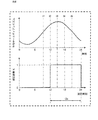
- FIG. 6 is a diagram showing an example of the relationship between the period of the average circadian rhythm and the weighting coefficient K.
- the reliability of the autonomic nerve analysis result is increased when the measurement time is in the predetermined time range Qs including the maximum value peak of the average circadian rhythm, and the time range is increased.
- the reliability of the autonomic nerve analysis result is lowered.
- the weighting coefficient K is set to "1"
- the weighting coefficient K is set to "0".
- the autonomic nerve analysis result based on the biological data measured in the predetermined time range Qs is highly reliable data for determining the sleep quality of the user. That is, by using the autonomic nerve analysis result in a predetermined time range Qs, the estimation accuracy of the change in the circadian rhythm can be improved.
- the predetermined time range Qs is preferably set in a period of -1/8 or more and 3/8 or less of the maximum value peak of the average circadian rhythm.
- the "range of cycles of -1/8 or more and 3/8 or less of the peak of the maximum value” is -1 / with reference to the peak position when one cycle of the average circadian rhythm graph is divided into eight equal parts in the time direction. It means a range corresponding to 8 or more and 3/8 or less. More preferably, the predetermined time range Qs is set in a period having a period of 1/4 or less of the maximum peak of the average circadian rhythm.
- biometric data is acquired at five timings t1 to t5 between 9:00 and 21:00 in a day.
- the timings t1, t2, t3, t4 and t5 indicate about 9:00, about 12:00, about 15:00, about 18:00 and about 21:00, respectively.
- the maximum peak time of the average circadian rhythm is around 15:00. Therefore, the predetermined time range Qs is set in the range from 12:00 to 24:00.
- the weighting coefficient calculation unit 34 sets the weighting coefficient K at the first timing t1 to "0", and sets the weighting coefficient K at the second to fifth timings t2 to t5 to "1".
- the calculation of the weighting coefficient K shown in FIG. 6 is an example, and the calculation of the weighting coefficient K by the weighting coefficient calculation unit 34 is not limited to this.
- the weighting coefficient K may be set to a different value in a plurality of time ranges.
- the weighting coefficient K may be set to gradually increase or decrease with reference to the maximum peak time of the average circadian rhythm.
- step ST27 the physical information analysis unit 35 weights the autonomic nerve analysis result based on the weighting coefficient K. Specifically, the physical information analysis unit 35 multiplies the autonomic nerve activity index calculated by the autonomic nerve analysis unit 33 by the weighting coefficient K. In the case of the example shown in FIG. 6, the autonomic nerve activity index outside the predetermined time range Qs becomes “0”, and only the autonomic nerve activity index within the predetermined time range Qs remains.
- the autonomic nerve analysis results based on the biological data acquired in the resting state are used for estimating the fatigue state.
- the autonomic nerve analysis result based on the biological data acquired in a state where the sympathetic nerve is enhanced and the heart rate is greatly increased, such as exercise and drinking that are not in a resting state reduces the estimation accuracy of the fatigue state. Therefore, the physical information analysis unit 35 may correct the weighted autonomic nerve analysis result when the user's heart rate is larger than a predetermined threshold value. For example, the physical information analysis unit 35 performs weighted autonomic nerve analysis when the user's normal (average / median) heart rate is increased by a certain amount (for example, 20% increase from the average value). The result may be corrected.
- the weighted autonomic nerve analysis result is multiplied by the correction coefficient K1.
- the correction coefficient K1 may be 0.5.
- the reliability can be lowered by multiplying the weighted autonomic nerve analysis result by the correction coefficient K1.
- the correction coefficient K1 may be changed according to the rate of increase in heart rate. For example, if the heart rate increases at 20% or more and less than 40% in normal times, the correction coefficient K1 is set to 0.5, and if the heart rate increases at 40 or more and less than 60% in normal times, the correction coefficient K1 is set. It may be set to 0.25.
- correction coefficient K1 may be calculated by the following equation of equation 1.
- the constant a is set to an arbitrary value.
- the constant a is 5 or more and 20 or less.
- step ST28 the physical information analysis unit 35 estimates the change in the circadian rhythm with respect to the average circadian rhythm based on the weighted autonomic nerve analysis result. For example, the physical information analysis unit 35 predicts that the circadian rhythm will be disturbed when the weighted autonomic nerve analysis result exceeds a predetermined threshold value Sa.
- the predetermined threshold value Sa is determined based on the average value H1 and the standard deviation ⁇ of the autonomic nerve analysis results before weighting.
- the predetermined threshold value Sa is calculated by the following equation (2).
- the constant b is set to an arbitrary value.
- the constant b is set to 1.5.
- the constant b is not limited to 1.5 and may be set to another value.
- the body information analysis unit 35 determines that the weighted autonomic nerve analysis result exceeds a predetermined threshold value Sa, it predicts that the circadian rhythm on the day or a few days later will deviate from the average circadian rhythm.
- the amount of deviation of the circadian rhythm when the predetermined threshold value Sa is exceeded is calculated by, for example, the following equation (3).
- the deviation amount Va is indicated by the deviation of the maximum peak time of the circadian rhythm.
- C is the power of the constant b.
- c and d are set to arbitrary values, respectively.
- the physical information analysis unit 35 may set a plurality of threshold values Sa.
- the constant b is set to a different numerical value.
- the deviation amounts Va1, Va2, and Va3 of the circadian rhythm with respect to the average circadian rhythm when the first threshold value Sa1, the second threshold value Sa2, and the third threshold value Sa3 are exceeded can also be calculated by the mathematical formula of Equation 3.
- a correspondence table between the first threshold value Sa1, the second threshold value Sa2, and the third threshold value Sa3 and the deviation amounts Va1, Va2, and Va3 may be created and stored in the storage unit 31. In this case, the physical information analysis unit 35 can easily calculate the deviation amount of the circadian rhythm by referring to the correspondence table when each threshold value is exceeded.
- the estimation accuracy of the change in circadian rhythm can be improved by using the data for several days rather than the data for one day. That is, when the autonomic nerve analysis result weighted using the data for several days exceeds the threshold value, the estimation accuracy of the disturbance of the circadian rhythm is improved as compared with the case of the data for one day. Moreover, the degree of the disturbance becomes large.
- the physical information analysis unit 35 may also use the change in the biological data on the day when the biological data is measured (estimated result of the circadian rhythm up to that point) in the analysis. This makes it possible to improve the estimation accuracy of changes in circadian rhythm.
- the physical information analysis unit 35 estimates the change (disturbance) of the circadian rhythm with respect to the average circadian rhythm based on the weighted autonomic nerve analysis result.
- step ST29 the physical information analysis unit 35 analyzes the change in circadian rhythm. Specifically, the physical information analysis unit 35 calculates the predicted circadian rhythm after several hours or days based on the weighted autonomic nerve analysis result. The physical information analysis unit 35 creates presentation information including an average circadian rhythm and a predicted circadian rhythm.
- the physical information analysis unit 35 transmits the presented information to the control terminal 20.
- the control terminal 20 presents the presented information by the presenting unit 22.
- the user can know the change in the circadian rhythm by looking at the presentation information presented to the presentation unit 22.
- the physical information analysis unit 35 may create presentation information including advice for improving the circadian rhythm based on the change in the circadian rhythm. For example, when the physical information analysis unit 35 estimates a disorder of circadian rhythm, a decrease in sleep quality, and a decrease in activity suitability, it may create presentation information including improvement advice and / or an autonomic nerve analysis result target value. Good.
- the physical information analysis unit 35 when the corrected LF / HF is high, the physical information analysis unit 35 provides breathing method, stretching, yoga, aromatherapy, acupuncture (attached type such as circular skin acupuncture), etc. together with the autonomic nerve analysis result target value as improvement advice. suggest.
- the physical information analysis unit 35 proposes improvement advice such as exercise and walking together with the autonomic nerve analysis result target value.
- the physical information analysis unit 35 can also perform autonomic nerve analysis again after the user has given the above improvement advice, and determine whether or not the target value of the autonomic nerve analysis result has been achieved.
- the weighted autonomic nerve analysis result for example, an autonomic nerve activity index such as corrected TP and corrected LF / HF
- a change in sleep quality occurs along with a change in circadian rhythm.
- Indicators of sleep quality include, for example, sleep time, time or percentage of light sleep in sleep time (eg, awakening, REM sleep, non-REM sleep stage 1, etc.), REM sleep cycle, number / frequency of awakenings, and bedtime. There is a difference between sleep time and wake-up time.
- the one having a particularly high correlation with the weighted autonomic nerve analysis result is the ratio of light sleep to the sleep time.
- the weighted autonomic analysis results are large, the proportion of light sleep increases.
- the weighted autonomic nerve analysis result for example, corrected TP, corrected LF / HF
- the quality of sleep changes after the change of circadian rhythm occurs (for example, after 1 to 3 days), and the quality of sleep. Changes in circadian rhythm may occur after the change in.
- the circadian rhythm is disturbed or the quality of sleep deteriorates, the daytime performance of the next day or later will deteriorate. Whether or not it is suitable for demonstrating performance is expressed by activity suitability.
- the activity suitability may be calculated from the circadian rhythm up to the previous day, the quality of sleep, and the autonomic nerve analysis results (LF / HF, TP not weighted) up to the day.
- Factors that reduce activity suitability are disturbance of circadian rhythm up to the previous day, deterioration of sleep quality, and reduction of unweighted TP on the day.
- LF / HF also has an effect, but since the LF / HF value suitable for exhibiting performance varies greatly among individuals, LF / HF can also be added to the factor of activity suitability calculation by accumulating user data. ..
- the corrected TP correlates with the quality of sleep after that day. For example, the higher the corrected TP, the more likely it is that the quality of sleep will deteriorate.
- the results of autonomic nerve analysis correlate with the degree of activity suitability. For example, the higher the unweighted TP, the higher the activity suitability. The higher the activity suitability, the more suitable for the activity.
- the corrected LF / HF correlates with the disturbance of circadian rhythm after that date. For example, when the corrected LF / HF is high, the circadian rhythm is easily disturbed.
- the physical information analysis unit 35 can analyze changes in circadian rhythm and calculate physical information such as sleep quality and activity suitability.
- the analysis system 1A can estimate and analyze changes in the circadian rhythm by carrying out the above steps ST21 to ST29.
- FIG. 7 shows an example of the correlation between the autonomic nerve analysis results, changes in circadian rhythm, and the rate of light sleep.
- FIG. 8 shows an example of determining the proportion of light sleep based on the autonomic nerve analysis result and the change in circadian rhythm.
- ccvTP is used as the result of autonomic nerve analysis.
- ccvTP represents the amount of activity of the autonomic nerve.
- healthy and young people have a high ccvTP value, which gradually decreases with age.
- the ccvTP value is high in healthy people and low in people with fatigue and stress.
- the ccvTP is weighted by the weighting coefficient K and then normalized so that the average value is 0 and the threshold value is 1.
- the ccvTP that is weighted by the weighting coefficient K and then normalized is referred to as a normalized ccvTP.
- the weighting coefficient K is set to "1" within a period of -1/8 or more and 3/8 or less of the maximum value peak of the average circadian rhythm, and the other ranges are set to "0".
- the normalized ccvTP in FIGS. 7 and 8 means the maximum value in the period of -1/8 or more and 3/8 or less of the maximum value peak of the average circadian rhythm.
- the threshold value of the normalized ccvTP may be set to a different value depending on the user.
- the threshold is set to 30%. When the ratio of light sleep is 30% or less of the threshold value, it is determined that sleep is deep.
- the threshold for the rate of light sleep may be set to a different value depending on the user.
- the normalized ccvTP when the normalized ccvTP is a threshold value of 1 or more and the ratio of light sleep is a threshold value of 30% or more (see region A1 of FIG. 8), it is determined that the normalized ccvTP is high and the sleep is light. be able to. Further, when the normalized ccvTP is less than the threshold value 1 and the ratio of light sleep is less than the threshold value 30% (see region A2 in FIG. 8), it can be determined that the normalized ccvTP is low and the sleep is deep. Further, in FIG. 8, in the regions A3 and A4 other than the regions A1 and A2, an erroneous determination is made.
- the quality of sleep can be determined from the normalized ccvTP based on the correlation between the normalized ccvTP and the quality of sleep.
- FIG. 9 shows an example of the correlation between the autonomic nerve analysis result and the time lag of circadian rhythm.
- FIG. 10 shows an example of determining the time lag between the autonomic nerve analysis result and the circadian rhythm.
- LF / HF is used as the result of autonomic nerve analysis.
- LF / HF is a corrected LF / HF weighted by a weighting coefficient K.
- the weighting coefficient K is set to "1" within a period of -1/8 or more and 3/8 or less of the maximum value peak of the average circadian rhythm, and the other ranges are set to "0".
- the corrected LF / HF means the maximum value in the period of -1/8 or more and 3/8 or less of the maximum value peak of the average circadian rhythm.
- the threshold value of the correction LF / HF is set to 6. When the value of the correction LF / HF becomes the threshold value 6 or more, it is determined that the correction LF / HF is high.
- the threshold value of the correction LF / HF may be set to a different value depending on the user.
- the time lag of the circadian rhythm in FIGS. 9 and 10 means a time lag from the predicted circadian rhythm calculated based on the corrected LF / HF with respect to the average circadian rhythm.
- the threshold value for the time lag of the circadian rhythm is set to 2h. When the time lag of the circadian rhythm is 2 hours or more, it is determined that the time lag of the circadian rhythm is large. If it is difficult to determine the peak due to a decrease in the amplitude or multi-peakation of the circadian rhythm, the uniform time shift is set to -10h.
- the threshold value of the time lag of the circadian rhythm may be set to a different value depending on the user.
- the time lag of the circadian rhythm may be the average of the lags between the minimum peak time and the maximum peak time immediately after the corrected LF / HF measurement and the respective peak times of the next day.
- the correction LF / HF is the threshold value 6 or more and the time difference of the circadian rhythm is the threshold value 2h or more (see regions B1 and B2 in FIG. 10)
- the correction LF / HF is high and the circadian rhythm. It can be determined that the time lag of is large.
- the corrected LF / HF is less than the threshold value 6 and the time lag of the circadian rhythm is less than the threshold value 2h (see region B3 in FIG. 10)
- it is determined that the corrected LF / HF is low and the time lag of the circadian rhythm is small. can do.
- regions B4 to B6 other than regions B1 to B3, an erroneous determination is made.
- the time lag of the circadian rhythm can be determined based on the autonomic nerve analysis result of the corrected LF / HF.
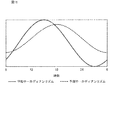
- FIG. 11 shows an example of the output displayed by the analysis system of the first embodiment according to the present invention.
- the presentation unit 22 presents the presentation information for improving the circadian rhythm created by the physical information analysis unit 35.
- the presentation unit 22 is presented with presentation information including an average circadian rhythm and a predicted circadian rhythm.
- the user can know the change (disturbance) of the circadian rhythm with respect to the average circadian rhythm by looking at the presentation information of the presentation unit 22.
- the analysis system 1A includes a biological data acquisition unit 11, a circadian rhythm calculation unit 32, an autonomic nerve analysis unit 33, a weighting coefficient calculation unit 34, and a physical information analysis unit 35.
- the biological data acquisition unit 11 acquires biological data.
- the circadian rhythm calculation unit 32 calculates the average circadian rhythm of the user.
- the autonomic nerve analysis unit 33 performs autonomic nerve analysis based on fluctuations in biological data.
- the weighting coefficient calculation unit 34 calculates a weighting coefficient K that weights the autonomic nerve analysis result analyzed by the autonomic nerve analysis unit based on the measurement time when the user's biological data is measured and the cycle of the average circadian rhythm.
- the body information analysis unit 35 weights the autonomic nerve analysis result by the weighting coefficient K calculated by the weighting coefficient calculation unit 34, and estimates the change in the circadian rhythm with respect to the average circadian rhythm based on the weighted autonomic nerve analysis result. .. With such a configuration, it is possible to analyze changes in circadian rhythm as one of the physical information. In addition, there is an advantage that the burden on the user when analyzing physical information is small.
- the circadian rhythm calculation unit 32 calculates the average circadian rhythm based on the biometric data acquired by the biometric data acquisition unit 11. With such a configuration, the average circadian rhythm can be accurately calculated based on the biological data.
- the analysis system 1A includes an input unit 21 for inputting the sleep information of the user.
- the circadian rhythm calculation unit 32 calculates the average circadian rhythm of the user based on the sleep information input by the input unit 21.
- the average circadian rhythm can be easily calculated based on the sleep information.
- the biometric data is not sufficiently accumulated, the average circadian rhythm can be calculated based on the sleep information of the user. If there is little information on biometric data, there may be errors in the calculation of circadian rhythm. Therefore, for example, the error in analyzing the physical information can be reduced by calculating the average circadian rhythm based on the sleep information of the user until the biological data for one week or more is accumulated.
- the weighting coefficient calculation unit 34 weights when the measurement time is in the range of the period of -1/8 or more and 3/8 or less of the maximum value peak of the average circadian rhythm, as compared with the case where the measurement time is in the other range. Increase the coefficient K. With such a configuration, the physical information of the user can be analyzed with higher accuracy. By increasing the weighting of the autonomic nerve analysis result in the range of the period of -1/8 or more and 3/8 or less of the maximum value peak of the average circadian rhythm, the physical information can be analyzed with higher accuracy.
- the autonomic nerve analysis results in the period range of -1/8 or more and 3/8 or less of the maximum value peak of circadian rhythm have a high correlation with the disturbance of circadian rhythm. Therefore, by increasing the weighting coefficient in this range, the estimation accuracy of the change in the circadian rhythm can be improved.
- the weighting coefficient K may be set for each user or may be set according to the type of autonomic nerve analysis result.
- the physical information analysis unit 35 corrects the weighted autonomic nerve analysis result when the user's heart rate is larger than a predetermined threshold value.
- the physical information analysis unit 35 determines the circadian rhythm based on at least one of the time difference of the maximum peak of the circadian rhythm, the time difference of the minimum peak, the decrease in the amplitude, and the multimodification with respect to the average circadian rhythm. Estimate the change in. As a result, physical information can be analyzed with higher accuracy.
- the circadian rhythm is disturbed, there are cases where the maximum peak time shift, such as jet lag and shift work, and the minimum peak time shift occur, and there is a decrease in amplitude that does not cause a decrease in body temperature at night. .. By estimating these separately, it is possible to improve the estimation accuracy of the influence on the quality of sleep and the like.
- the physical information analysis unit 35 estimates the sleep quality and activity suitability of the user based on the weighted autonomic nerve analysis result. With such a configuration, more detailed physical information of the user can be analyzed.
- the analysis system 1A includes a presentation unit 22 that presents presentation information including advice for improving circadian rhythm.
- the physical information analysis unit 35 creates the presented information based on the change in the circadian rhythm. With such a configuration, the user's circadian rhythm can be improved by presenting the user with advice for improving the circadian rhythm.
- the physical information analysis unit 35 calculates the predicted circadian rhythm based on the weighted autonomic nerve analysis result.
- the presented information includes an average circadian rhythm and a predicted circadian rhythm. With such a configuration, it is possible to present the average circadian rhythm and the predicted circadian rhythm to the user and notify the change of the circadian rhythm.
- the analysis system 1A includes a notification unit 22 that notifies the timing of measuring biological data.
- a notification unit 22 that notifies the timing of measuring biological data.
- the analysis system 1A includes the measuring device 10, the control terminal 20, and the server 30 has been described, but the present invention is not limited to this.
- the analysis system 1A may realize these components with one device or may be realized with a plurality of devices.
- the measuring device 10 and the control terminal 20 may be integrally formed.
- the measuring device 10, the control terminal 20, and the server 30 may be integrally formed.
- the measuring device 10 and the server 30 may be integrally formed.
- the components constituting the analysis system 1A may be realized by devices other than the measuring device 10, the control terminal 20, and the server 30.
- the components included in the measuring device 10, the control terminal 20, and the server 30 may be included in other devices.
- the measuring device 10 may include an input unit 21, a presentation unit 22, and / or an autonomic nerve analysis unit 33.
- the control terminal 20 may have a biological data acquisition unit 11, a circadian rhythm calculation unit 32, an autonomic nerve analysis unit 33, and / or a weighting coefficient calculation unit 34.
- the server 30 may have an input unit 21 and / or a presentation unit 22.
- the measuring device 10, the control terminal 20, and the server 30 may include elements other than the components shown in FIG. Alternatively, the measuring device 10, the control terminal 20, and the server 30 may reduce the components shown in FIG.
- the analysis system 1A may include one or more measuring devices 10 and one or more control terminals 20.
- the analysis system 1A includes a plurality of measuring devices 10 and / or a plurality of control terminals 20
- the information acquired by the plurality of measuring devices 10 and / or the plurality of control terminals 20 can be aggregated in the server 30. Since the server 30 can analyze the physical information using the information obtained from a plurality of users, the estimation accuracy of the physical information can be improved.
- the biological data includes, but is not limited to, the diurnal variation of at least one vital information of body temperature, heart rate, pulse rate, respiration, electroencephalogram, and blood pressure.
- the biometric data may include data other than these.
- the measuring device 10 includes the autonomic nerve analysis unit 33, that is, when the measuring device 10 performs autonomic nerve analysis based on the heart rate, the autonomic nerve activity indexes (LF, HF, LF / HF, etc.) are used as biological data.
- TP, ccvTP may be included.
- the analysis system 1A analyzes physical information using the heart rate as biological data
- the present invention is not limited to this.
- the analysis system 1A may analyze physical information using at least heart rate or pulse rate as biological data. As a result, biological data can be easily acquired, and the accuracy of analysis of physical information can be improved.
- the physical information analysis unit 35 has described an example of correcting the weighted autonomic nerve analysis result when the heart rate of the user is larger than a predetermined threshold value, but the present invention is not limited to this.
- the physical information analysis unit 35 may correct the weighted autonomic nerve analysis result when the pulse rate of the user is larger than a predetermined threshold value.
- the analysis method has described an example in which each step is executed by the components included in the measuring device 10, the control terminal 20, and the server 30, but the analysis method is not limited thereto.
- Each step of the analysis method may be performed on a computer.
- a computer includes a processor and a memory that stores programs executed by the processor.
- the average circadian rhythm may be calculated based on biometric data without using sleep information.
- the circadian rhythm calculation unit 32 may calculate the average circadian rhythm when biological data for one week or more is accumulated. That is, the circadian rhythm calculation unit 32 does not have to calculate the average circadian rhythm until the biological data for one week or more is accumulated.
- the average circadian rhythm may be calculated based on sleep information without using biological data.
- the average circadian rhythm may be calculated based on information other than sleep information.
- the input unit 21 may be made to input information indicating whether the type is morning type or night type.
- the circadian rhythm calculation unit 32 may calculate the first circadian rhythm based on the type of information input by the user.
- the circadian rhythm calculation unit 32 only needs to be able to calculate the average circadian rhythm of the user, and can use arbitrary information.
- the analysis method has described an example including steps ST21 to ST29, but the analysis method is not limited to this. As the steps of the analysis method, other steps may be added, some steps may be reduced, or a plurality of steps may be carried out in one step.
- the biological data acquisition unit 11 may be provided with a device capable of acquiring biological data.
- the biological data acquisition unit 11 may include a pulse rate measurement unit, an activity amount measurement unit, and the like.
- the biometric data acquisition unit 11 has described an example of acquiring biometric data when the user is awake, but the present invention is not limited to this.
- the biometric data acquisition unit 11 may acquire the biometric data of the user during sleep.
- the circadian rhythm calculation unit 32 can calculate the average circadian rhythm using the biometric data of the user during sleep in addition to the biometric data of the user when he / she is awake. As a result, it is possible to calculate an average circadian rhythm that is more suitable for the user.
- the presentation unit 22 also functions as a notification unit
- the present invention is not limited to this.
- the presentation unit 22 and the notification unit may be separate components.
- the circadian rhythm calculation unit 32 has described an example of calculating the average circadian rhythm using the fluctuation of the user's body temperature, but the present invention is not limited to this.
- the circadian rhythm calculation unit 32 may calculate the average circadian rhythm using the heart rate, pulse rate, or autonomic nerve activity index.
- the autonomic nerve analysis unit 33 has described an example in which the autonomic nerve analysis is performed based on the fluctuation of the user's heart rate, but the present invention is not limited to this.
- the autonomic nerve analysis unit 33 may perform the autonomic nerve analysis based on the fluctuation of the pulse rate of the user.
- the time data is not limited to this.
- the time data acquired by the control terminal 20 may be used as the time data.
- the control terminal 20 transmits an instruction to start measurement to the measuring device 10, and receives measurement data from the measuring device 10. At this time, the control terminal 20 may add the time data and the input information of the control terminal 20 to the measurement data and transmit the measurement data to the server 30.
- FIG. 12 is a block diagram showing a schematic configuration of an example of the analysis system 1B according to the second embodiment of the present invention.
- the second embodiment is different from the first embodiment in that the activity amount measuring unit 16 is provided.
- the analysis system 1B further includes an activity amount measuring unit 16.
- the measuring device 10A includes an activity measuring unit 16.
- the activity amount measuring unit 16 is an activity amount meter that measures the activity amount of the user.
- the activity measuring unit 16 is, for example, an acceleration sensor.
- the activity amount measuring unit 16 is controlled by the first control unit 12.
- the user's activity data measured by the activity measuring unit 16 is transmitted to the first control unit 12.
- the first control unit 12 transmits the activity amount data to the control terminal 20 via the first communication unit 13.
- the control terminal 20 receives the activity amount data from the measuring device 10A by the second communication unit 24, and transmits the activity amount data to the server 30.
- the following processing can be realized by providing the analysis system 1B with the activity amount measuring unit 16.
- the circadian rhythm calculation unit 32 may calculate the first circadian rhythm based on the activity amount data. For example, the circadian rhythm calculation unit 32 estimates the user's bedtime and wake-up time based on the activity data, and calculates the first circadian rhythm based on the estimated user's bedtime and wake-up time. For example, the circadian rhythm calculation unit 32 determines that the user has gone to bed when the activity amount data is smaller than the predetermined threshold value and the activity amount data is smaller than the predetermined threshold value for a predetermined time, and the bedtime To estimate.
- the circadian rhythm calculation unit 32 determines that the user has woken up when the activity amount data becomes larger than a predetermined threshold value, and estimates the wake-up time.
- the activity meter is an accelerometer
- the posture can be judged from the acceleration information, so the judgment accuracy can be improved by combining the activity amount and the posture. it can.
- the circadian rhythm calculation unit 32 reads out from the storage unit 31 a correlation formula or a correlation table showing the correlation between the bedtime, the wake-up time, and the circadian rhythm.
- the circadian rhythm calculation unit 32 calculates the first circadian rhythm using the estimated bedtime and wake-up time of the user and the read correlation formula or correlation table.
- the threshold value of the activity data for estimating the bedtime and the threshold value of the activity data for estimating the wake-up time may be different or the same.
- steps ST11 to ST13 shown in FIG. 4 of the first embodiment may be replaced with the simple arithmetic processing of the first circadian rhythm based on the above-mentioned activity amount data.
- the circadian rhythm calculation unit 32 may perform a simple calculation of the first circadian rhythm based on both the sleep information and the activity amount data.
- the measuring device 10A may determine whether or not the user is in a resting state based on the activity amount data, and may acquire the user's biometric data by the biometric data acquisition unit 11 when the user is in the resting state. For example, the measuring device 10A determines that the user is not in a resting state when the activity amount data is larger than a predetermined threshold value, and determines that the user is in a resting state when the activity amount data is equal to or less than a predetermined threshold value. The determination is made by the first control unit 12. In the measuring device 10A, the biometric data acquisition unit 11 acquires biometric data when the user is in a resting state.
- the measuring device 10A transmits information indicating that the user is not in a resting state to the control terminal 20 via the first communication unit 13.
- the control terminal 20 creates presentation information for urging the user to be in a resting state based on the information indicating that the user is not in a resting state, and presents the presented information to the presenting unit 22.
- the measuring device 10A transmits information indicating that the user is in a resting state to the control terminal 20 via the first communication unit 13.
- the control terminal 20 notifies the user of the timing of acquiring biometric data by the notification unit based on the information indicating that the user is in a resting state.
- biometric data can be acquired when the user is in a resting state.
- the accuracy of autonomic nerve analysis is improved, and the estimation accuracy of changes in circadian rhythm is improved.
- the physical information analysis unit 35 may correct the weighted autonomic nerve analysis result based on the activity data. For example, the physical information analysis unit 35 acquires activity data via the control terminal 20. The physical information analysis unit 35 reduces the correction coefficient K1 when the activity data is larger than a predetermined threshold value. Alternatively, the physical information analysis unit 35 may adjust the correction coefficient K1 based on the intelligence of the heart rate data and the activity amount data.
- the correction coefficient K1 can be changed according to the cause of the increase in heart rate, and the accuracy of the autonomic nerve analysis result can be improved.
- the activity amount measuring unit 16 is included in the measuring device 10A
- the present invention is not limited to this.
- the activity amount measuring unit 16 may be included in the control terminal 20.
- the present invention is not limited to this.
- the control terminal 20 or the server 30 may determine whether or not the user is in a resting state based on the activity data.
- control terminal 20 is provided with the activity measuring unit 16 and GPS (Global Positioning System)
- GPS Global Positioning System
- the second control unit 23 calculates the acceleration and position of the user based on the activity data measured by the activity measurement unit 16 and the GPS information, and calculates the exercise intensity and movement history of the user.
- the user's behavior can be analyzed, so that the user can save the trouble of inputting information to the input unit 21.
- the control terminal 20 may control the measuring device 10 so as to start the measurement of biological data by the user's input (for example, pressing the start button) to the input unit 21. Measurement of biometric data is preferably performed when the user is at rest. Therefore, the control terminal 20 determines whether or not a large body movement has occurred during the measurement based on the activity amount data (acceleration) measured by the activity amount measuring unit 16. Then, when it is determined that there has been a large body movement, the presentation unit 22 presents a warning alert or the like. Further, when there is a possibility that the accuracy of calculation of the autonomic nerve activity index is significantly reduced, the measurement may be redone automatically.
- control terminal 20 may determine the resting state of the user from the activity data (acceleration) and automatically start the measurement by the measuring device 10A.
- the control terminal 20 may determine that it is in a resting state if a large change in activity data (acceleration) has not occurred for a predetermined time, and may automatically start measurement by the measuring device 10A.
- control terminal 20 may constantly measure the activity amount data (acceleration) and calculate the exercise intensity.
- the control terminal 20 may determine from the exercise intensity whether it is walking, exercising, or resting before and after the measurement, and may determine the reliability of the analysis result. For example, if the control terminal 20 determines that it is exercising immediately before, the reliability of the measurement may be lowered. Since it takes time for the control terminal 20 to reach a resting state after exercising or walking, the measurement may not be started at a predetermined time. Further, the heart rate / pulse rate may be measured at all times, a time zone in which the resting state continues for the time required for analysis during or after the measurement may be extracted, and the analysis may be performed using the data in that time zone.
- FIG. 13 is a block diagram showing a schematic configuration of an example of the analysis system 1C according to the third embodiment of the present invention.
- FIG. 14 is a schematic view of an example of a gripping type measuring device.
- the third embodiment is different from the second embodiment in that the first measuring device 10B and the second measuring device 10C are provided. Further, in the third embodiment, the first measuring device 10B is a gripping type device.
- the analysis system 1C includes a first measuring device 10B and a second measuring device 10C.
- the first measuring device 10B includes a biological data acquisition unit 11a, a first control unit 12a, and a first communication unit 13a.
- the biological data acquisition unit 11a includes a heart rate measurement unit 14 and a pulse rate measurement unit 17.
- the heart rate data measured by the heart rate measuring unit 14 and the pulse rate data measured by the pulse rate measuring unit 17 are transmitted to the first control unit 12a.
- the first control unit 12a transmits the heart rate data and the pulse rate data to the control terminal 20 via the first communication unit 13a.
- the second measuring device 10C includes a biological data acquisition unit 11b, an activity amount measuring unit 16, a first control unit 12b, and a first communication unit 13b.
- the biological data acquisition unit 11b has a body temperature measurement unit 15.
- the body temperature data measured by the body temperature measuring unit 15 and the activity amount data measured by the activity amount measuring unit 16 are transmitted to the first control unit 12b.
- the first control unit 12b transmits the body temperature data and the activity amount data to the control terminal 20 via the first communication unit 13b.
- the first control units 12a and 12b and the first communication units 13a and 13b in the first measurement device 10B and the second measurement device 10C are the same as those of the first control unit 12 and the first communication unit 13 of the first embodiment. Therefore, detailed description will be omitted.
- the first measuring device 10B is a gripping type measuring device.
- the biological data acquisition unit 11a for detecting the heart rate and the pulse rate attaches the electrocardiographic sensors (electrocardiographic electrodes) 14A and 14B and the photoelectric pulse wave sensor 17A to a portable gripping type housing. ing.
- the first measuring device 10B is a gripping type measuring device capable of acquiring an electrocardiographic signal and a photoelectric pulse wave signal and measuring a heart rate and a pulse rate body temperature by grasping the first measuring device 10B.
- the first measuring device 10B has a main body 110 formed in a substantially spheroidal shape that the user holds with the thumb of one hand (for example, the right hand) and the other four fingers at the time of measurement.
- a plate-shaped flange 118 is projected in a direction substantially orthogonal to the convex direction of the stopper 111 (that is, laterally).
- the collar portion 118 is provided so as to extend along the axial direction of the main body portion 110 (that is, from the base end portion side to the tip end portion side).
- the first electrocardiographic electrode 14A is arranged so that when the main body 110 is gripped by one hand (for example, the right hand), the fingers (for example, the index finger and / or the middle finger) of the other hand come into contact with each other. ..
- the first electrocardiographic electrode 14A may be arranged so as to come into contact with the thumb of one hand (for example, the right hand).
- a second electrocardiographic electrode 14B formed in an elliptical shape, for example, for detecting an electrocardiographic signal is arranged on the front surface (and / or the back surface) of the collar 118. .. That is, the second electrocardiographic electrode 14B pinches (holds) the collar portion 118 with the fingers (for example, the thumb and the index finger) of the other hand (for example, the left hand), so that the fingers of the other hand (for example, the thumb) are pinched. And / or are arranged so as to come into contact with the index finger).
- the first electrocardiographic electrode 14A and the second electrocardiographic electrode 14B come into contact with the user's left and right hands (fingertips). Acquires an electrocardiographic signal according to the potential difference between the user's left and right hands.
- a photoelectric pulse wave sensor 17A is arranged in the main body 110.
- the photoelectric pulse wave sensor 17A has a light emitting element and a light receiving element, and acquires a photoelectric pulse wave signal from the fingertip of the thumb regulated by the stopper portion 111.
- the photoelectric pulse wave sensor 17A is a sensor that optically detects a photoelectric pulse wave signal by utilizing the absorption characteristics of hemoglobin in blood.
- the analysis system 1C may include a plurality of measuring devices 10B and 10C.
- the first measuring device 10B may be composed of a gripping type device. That is, the biological data acquisition unit 11a (heart rate measurement unit 14 and pulse rate measurement unit 17) may be attached to a grip-type measuring device. Thereby, the heart rate and the pulse rate can be easily measured.
- the first measuring device 10B is a gripping type device
- the present invention is not limited to this.
- the second measuring device 10C may be a gripping type device.
- the biological data acquisition unit 11a may have either a heart rate measurement unit 14 or a pulse rate measurement unit 17.
- the biological data acquisition unit 11a may have a body temperature measurement unit 15.
- the second measuring device 10C includes the activity amount measuring unit 16
- the present invention is not limited to this.
- the first measuring device 10B may include the activity amount measuring unit 16, or the control terminal 20 may include the activity amount measuring unit 16.
- the measuring device is a wearable device or a stick-on device
- FIGS. 15 to 17 Since the configuration of the analysis system of the fourth embodiment is the same as the configuration of the analysis system 1B of the second embodiment shown in FIG. 12, detailed description thereof will be omitted.
- FIG. 15 is a schematic view of an example of the neck-mounted measuring device 10D.
- the measuring device 10D is arranged at both ends of a substantially U-shaped neckband 120 that is elastically attached so as to sandwich the neck from the back side of the user's neck. It is provided with a pair of sensor units 121 and 122 that come into contact with both sides of the user's neck.
- the sensor unit 122 (121) mainly has an electrocardiographic electrode (conductive cloth) 14C formed in a rectangular planar shape.
- one sensor unit 122 has a photoelectric pulse wave sensor 17B in addition to the above configuration.
- the photoelectric pulse wave sensor 17B optically detects the photoelectric pulse wave signal by utilizing the absorption characteristic of hemoglobin in blood.
- the neck-worn device is worn around the user's neck.
- the neck-worn device can be configured to measure the pulse rate with a photoelectric pulse wave sensor or to measure the heart rate with an electrocardiographic sensor having a plurality of electrocardiographic electrodes.
- the neck-worn type has a relatively large sense of discomfort when exercising, but it does not cause much discomfort in daily life.
- the measurement stability is second only to the chest attachment type, and autonomic nerve activity measurement is sufficiently possible.
- the body surface temperature near the carotid artery is close to the core body temperature, and it is possible to estimate the core body temperature as in the case of the chest attachment type, and the circadian rhythm can be estimated from the core body temperature.
- the measuring device 10D may include a temperature control unit that controls the temperature of the user's neck. For example, when the decrease from the maximum value peak of the circadian rhythm does not occur, that is, when the amplitude is small, the user's body temperature is lowered by cooling the neck by cooling by the temperature control unit, and the circadian rhythm is disturbed (amplitude decrease). It can be suppressed. Further, since the quality of sleep is deteriorated if the core body temperature is not lowered at the time of falling asleep, the core body temperature can be lowered by cooling the neck by the temperature control unit, and the sleep onset can be promoted.
- the temperature controller has, for example, a Peltier element, a fan, and / or a blower as cooling components. As a result, the neck can be cooled by utilizing the Perche effect, the air blown to the neck, and the heat of vaporization of water.
- the neck is warmed by heating by the temperature control unit to raise the user's body temperature and disturb the circadian rhythm (amplitude decrease). It can be suppressed.
- the temperature control unit has, for example, a resistor, an infrared device, and / or a heater resistor as components for heating. As a result, the neck can be warmed by radiating infrared rays to the neck or by directly heating the neck.
- the temperature control unit may have at least one of cooling and heating functions.
- FIG. 16 is a schematic view of an example of the wristwatch type measuring device 10E.
- the wristwatch-type measuring device 10E has a main body 130, a belt 131 attached to the main body 130, and a pulse wave sensing unit 132 arranged on the back surface of the main body 130.
- a photoelectric pulse wave sensor 17C is arranged on the inner surface side of the pulse wave sensing unit 132. Therefore, when the user attaches the wristwatch-type measuring device 10E to the wrist of one hand (for example, the left hand), the photoelectric pulse wave sensor 17C comes into contact with the wrist of the user, and the pulse wave number is measured.
- FIG. 17 is a schematic view of an example of the chest-attached type measuring device 10F.
- the measuring device 10F includes a main body 140 that can be attached to the user's chest and two (or two or more) electrocardiographic electrodes (gel electrodes) that are detachably attached to the main body 140. ) 14D and.
- the measuring device 10F is attached (mounted) to the chest, and the electrocardiographic electrode (gel electrode) 14D is brought into contact with the chest. By doing so, the electrocardiographic signal is detected by the electrocardiographic electrode (gel electrode) 14D.
- the electrocardiographic electrode 14D for example, silver / silver chloride, conductive gel, conductive rubber, conductive plastic, metal, conductive cloth, a capacitive coupling electrode whose metal surface is coated with an insulating layer, or the like can be used.
- the metal for example, stainless steel, Au and the like which are resistant to corrosion and have little metal allergy are preferable.
- the conductive cloth for example, a woven fabric, a knitted fabric, or a non-woven fabric made of a conductive yarn having conductivity is used.
- the conductive yarn for example, one in which the surface of the resin yarn is plated with Ag or the like, one in which the surface is coated with carbon nanotubes, or one in which the surface of the resin yarn is coated with a conductive polymer such as PEDOT can be used. Further, a conductive polymer yarn having conductivity may be used.
- the chest-attached device preferably has a configuration in which the heart rate is measured by an electrocardiographic sensor having a plurality of electrocardiographic electrodes.
- the chest-attached device has high measurement stability.
- core temperature core body temperature
- circadian rhythm from the core body temperature. It is also possible to fix it to the chest with a belt instead of the adhesive tape.
- the wearable device is attached to the neck and the arm has been described, but the present invention is not limited to this.
- the wearable device may be worn on other than the neck and arms.
- the wearable device may be worn on the chest.
- a stick-on device is attached to the chest has been described, but the present invention is not limited to this.
- the stick-on device may be stuck on other than the chest.
- the stick-on device may be stuck on the neck or arm. Even in such a configuration, the effects described in the wearable and stickable devices shown in FIGS. 15 to 17 can be obtained.
- the wearable device and the stick-on device include the electrocardiographic electrodes 14C and 14D as the heart rate measuring unit 14 and the photoelectric pulse wave sensors 17B and 17C as the pulse rate measuring unit 17.
- the wearable device and the stick-on device may include a body temperature measuring unit 15 and / or an activity measuring unit 16. As a result, data on body temperature and / or activity amount can be easily acquired as biometric data of the user.
- the analysis system of the present invention can be applied to, for example, analysis of user's physical information.
Landscapes
- Health & Medical Sciences (AREA)
- Life Sciences & Earth Sciences (AREA)
- Molecular Biology (AREA)
- Engineering & Computer Science (AREA)
- General Health & Medical Sciences (AREA)
- Pathology (AREA)
- Biomedical Technology (AREA)
- Heart & Thoracic Surgery (AREA)
- Medical Informatics (AREA)
- Biophysics (AREA)
- Surgery (AREA)
- Animal Behavior & Ethology (AREA)
- Physics & Mathematics (AREA)
- Public Health (AREA)
- Veterinary Medicine (AREA)
- Cardiology (AREA)
- Physiology (AREA)
- Neurology (AREA)
- Neurosurgery (AREA)
- Pulmonology (AREA)
- Biodiversity & Conservation Biology (AREA)
- Dentistry (AREA)
- Oral & Maxillofacial Surgery (AREA)
- Computer Networks & Wireless Communication (AREA)
- Measuring And Recording Apparatus For Diagnosis (AREA)
- Measurement Of The Respiration, Hearing Ability, Form, And Blood Characteristics Of Living Organisms (AREA)
- Measuring Pulse, Heart Rate, Blood Pressure Or Blood Flow (AREA)
Priority Applications (3)
| Application Number | Priority Date | Filing Date | Title |
|---|---|---|---|
| CN202080081608.5A CN114746006B (zh) | 2019-11-25 | 2020-08-20 | 解析系统以及解析方法 |
| JP2021561163A JP7276787B2 (ja) | 2019-11-25 | 2020-08-20 | 解析システム及び解析方法 |
| US17/750,847 US20220280107A1 (en) | 2019-11-25 | 2022-05-23 | Analysis system and analysis method |
Applications Claiming Priority (2)
| Application Number | Priority Date | Filing Date | Title |
|---|---|---|---|
| JP2019212476 | 2019-11-25 | ||
| JP2019-212476 | 2019-11-25 |
Related Child Applications (1)
| Application Number | Title | Priority Date | Filing Date |
|---|---|---|---|
| US17/750,847 Continuation US20220280107A1 (en) | 2019-11-25 | 2022-05-23 | Analysis system and analysis method |
Publications (1)
| Publication Number | Publication Date |
|---|---|
| WO2021106289A1 true WO2021106289A1 (ja) | 2021-06-03 |
Family
ID=76130444
Family Applications (1)
| Application Number | Title | Priority Date | Filing Date |
|---|---|---|---|
| PCT/JP2020/031470 Ceased WO2021106289A1 (ja) | 2019-11-25 | 2020-08-20 | 解析システム及び解析方法 |
Country Status (4)
| Country | Link |
|---|---|
| US (1) | US20220280107A1 (https=) |
| JP (1) | JP7276787B2 (https=) |
| CN (1) | CN114746006B (https=) |
| WO (1) | WO2021106289A1 (https=) |
Cited By (2)
| Publication number | Priority date | Publication date | Assignee | Title |
|---|---|---|---|---|
| WO2024090350A1 (ja) * | 2022-10-24 | 2024-05-02 | サントリーホールディングス株式会社 | 情報処理装置、情報処理方法及びプログラム |
| WO2026022996A1 (ja) * | 2024-07-25 | 2026-01-29 | Ntt株式会社 | 生体刺激システム |
Families Citing this family (2)
| Publication number | Priority date | Publication date | Assignee | Title |
|---|---|---|---|---|
| WO2018066342A1 (ja) * | 2016-10-07 | 2018-04-12 | 株式会社村田製作所 | 把持型脈波測定装置 |
| US12583405B2 (en) * | 2024-05-10 | 2026-03-24 | Toyota Motor North America, Inc. | Vehicle modifications to optimize an occupant's condition |
Citations (2)
| Publication number | Priority date | Publication date | Assignee | Title |
|---|---|---|---|---|
| US20160342764A1 (en) * | 2015-05-19 | 2016-11-24 | Universidad De Vigo | System, computer-implemented method and computer program product for individualized multiple-disease quantitative risk assessment |
| WO2019012742A1 (ja) * | 2017-07-13 | 2019-01-17 | 株式会社村田製作所 | 疲労回復支援装置 |
Family Cites Families (6)
| Publication number | Priority date | Publication date | Assignee | Title |
|---|---|---|---|---|
| US20050015122A1 (en) * | 2003-06-03 | 2005-01-20 | Mott Christopher Grey | System and method for control of a subject's circadian cycle |
| JP4882766B2 (ja) * | 2007-01-30 | 2012-02-22 | 株式会社デンソー | 覚醒度算出装置 |
| WO2013112951A2 (en) * | 2012-01-26 | 2013-08-01 | Vanda Pharmaceuticals Inc. | Treatment of circadian rhythm disorders |
| JP2016014542A (ja) * | 2014-07-01 | 2016-01-28 | セイコーエプソン株式会社 | 生体情報処理システム及び生体情報処理システムの制御方法 |
| CN108697391A (zh) * | 2016-02-18 | 2018-10-23 | Curaegis科技公司 | 警觉性预测系统和方法 |
| US10709601B2 (en) * | 2016-09-02 | 2020-07-14 | John Adair | Personal cooling and heating device |
-
2020
- 2020-08-20 JP JP2021561163A patent/JP7276787B2/ja active Active
- 2020-08-20 CN CN202080081608.5A patent/CN114746006B/zh active Active
- 2020-08-20 WO PCT/JP2020/031470 patent/WO2021106289A1/ja not_active Ceased
-
2022
- 2022-05-23 US US17/750,847 patent/US20220280107A1/en not_active Abandoned
Patent Citations (2)
| Publication number | Priority date | Publication date | Assignee | Title |
|---|---|---|---|---|
| US20160342764A1 (en) * | 2015-05-19 | 2016-11-24 | Universidad De Vigo | System, computer-implemented method and computer program product for individualized multiple-disease quantitative risk assessment |
| WO2019012742A1 (ja) * | 2017-07-13 | 2019-01-17 | 株式会社村田製作所 | 疲労回復支援装置 |
Cited By (2)
| Publication number | Priority date | Publication date | Assignee | Title |
|---|---|---|---|---|
| WO2024090350A1 (ja) * | 2022-10-24 | 2024-05-02 | サントリーホールディングス株式会社 | 情報処理装置、情報処理方法及びプログラム |
| WO2026022996A1 (ja) * | 2024-07-25 | 2026-01-29 | Ntt株式会社 | 生体刺激システム |
Also Published As
| Publication number | Publication date |
|---|---|
| JPWO2021106289A1 (https=) | 2021-06-03 |
| CN114746006B (zh) | 2025-08-08 |
| CN114746006A (zh) | 2022-07-12 |
| JP7276787B2 (ja) | 2023-05-18 |
| US20220280107A1 (en) | 2022-09-08 |
Similar Documents
| Publication | Publication Date | Title |
|---|---|---|
| JP6920434B2 (ja) | 疲労回復支援装置 | |
| US20220280107A1 (en) | Analysis system and analysis method | |
| EP4171360B1 (en) | Systems and methods for multi-component health scoring | |
| CN115251849B (zh) | 基于生理信息的睡眠评分 | |
| US11986313B2 (en) | Method and system for monitoring and improving sleep pattern of user | |
| CN114080180A (zh) | 检测和测量打鼾 | |
| EP3671757A1 (en) | System and method for determining a level of alertness | |
| JP7250647B2 (ja) | 仮眠補助システム、および、仮眠補助用プログラム | |
| JP2016016144A (ja) | 生体情報処理システム及び生体情報処理システムの制御方法 | |
| US20230270378A1 (en) | Electronic device for sleep monitoring and operating method thereof | |
| JP2014039586A (ja) | 睡眠改善支援装置 | |
| KR101218629B1 (ko) | 실시간 심박 측정을 통한 수면의 질 결정 장치 및 방법 | |
| JP2020507404A (ja) | 妊娠可能な期間を目立たずに決定するためのシステム及び方法 | |
| WO2016076253A1 (ja) | 睡眠状態判定装置、睡眠状態判定方法及びプログラム | |
| US20220395181A1 (en) | System and methods for sensor-based detection of sleep characteristics and generating animation depiction of the same | |
| US9968293B1 (en) | Detecting and estimating sleep stages | |
| JP2019069207A (ja) | 眠気算出装置 | |
| WO2025078721A1 (en) | Wearable health measurement device and a method for determining a health status of a user | |
| JP2019136526A (ja) | 睡眠状態判定装置及び睡眠状態判定方法 | |
| JP2019024644A (ja) | 評価システム | |
| KR20250101351A (ko) | 비침습적으로 측정된 심부체온을 이용한 수면 평가장치 | |
| JP2021026329A (ja) | 睡眠改善システム、睡眠改善方法、睡眠改善装置及びコンピュータプログラム |
Legal Events
| Date | Code | Title | Description |
|---|---|---|---|
| 121 | Ep: the epo has been informed by wipo that ep was designated in this application |
Ref document number: 20892439 Country of ref document: EP Kind code of ref document: A1 |
|
| ENP | Entry into the national phase |
Ref document number: 2021561163 Country of ref document: JP Kind code of ref document: A |
|
| NENP | Non-entry into the national phase |
Ref country code: DE |
|
| 122 | Ep: pct application non-entry in european phase |
Ref document number: 20892439 Country of ref document: EP Kind code of ref document: A1 |
|
| WWG | Wipo information: grant in national office |
Ref document number: 202080081608.5 Country of ref document: CN |