WO2021079894A1 - 情報管理システム、車両情報管理サーバ、情報管理方法、プログラム及びコンピュータ可読記憶媒体 - Google Patents
情報管理システム、車両情報管理サーバ、情報管理方法、プログラム及びコンピュータ可読記憶媒体 Download PDFInfo
- Publication number
- WO2021079894A1 WO2021079894A1 PCT/JP2020/039478 JP2020039478W WO2021079894A1 WO 2021079894 A1 WO2021079894 A1 WO 2021079894A1 JP 2020039478 W JP2020039478 W JP 2020039478W WO 2021079894 A1 WO2021079894 A1 WO 2021079894A1
- Authority
- WO
- WIPO (PCT)
- Prior art keywords
- user
- unit
- battery
- users
- information
- Prior art date
- Legal status (The legal status is an assumption and is not a legal conclusion. Google has not performed a legal analysis and makes no representation as to the accuracy of the status listed.)
- Ceased
Links
Images






Classifications
-
- G—PHYSICS
- G06—COMPUTING OR CALCULATING; COUNTING
- G06Q—INFORMATION AND COMMUNICATION TECHNOLOGY [ICT] SPECIALLY ADAPTED FOR ADMINISTRATIVE, COMMERCIAL, FINANCIAL, MANAGERIAL OR SUPERVISORY PURPOSES; SYSTEMS OR METHODS SPECIALLY ADAPTED FOR ADMINISTRATIVE, COMMERCIAL, FINANCIAL, MANAGERIAL OR SUPERVISORY PURPOSES, NOT OTHERWISE PROVIDED FOR
- G06Q50/00—Information and communication technology [ICT] specially adapted for implementation of business processes of specific business sectors, e.g. utilities or tourism
- G06Q50/10—Services
Definitions
- the present invention relates to an information management system, a vehicle information management server, an information management method, a program, and a computer-readable storage medium.
- Patent Document 1 Japanese Unexamined Patent Publication No. 2012-123518
- fuel consumption or electricity cost greatly depends not only on the driving mode of the user but also on the specifications of the vehicle and the usage environment of the vehicle. Therefore, for users who have no choice but to have higher fuel consumption or electricity cost than other users, the presentation of information indicating the fuel consumption or electricity cost of other users motivates them to reduce the fuel consumption or electricity cost. It is not always the case.
- an information management system includes, for example, a storage unit that stores electricity cost-related values related to electricity costs of a plurality of users who use an electric vehicle for each user.
- the above-mentioned information management system includes, for example, a condition determination unit that determines extraction conditions for extracting at least a part of electricity cost-related values of a plurality of users stored in the storage unit.
- the above-mentioned information management system includes, for example, an extraction unit that extracts at least a part of the electricity cost-related values of a plurality of users stored in the storage unit based on the extraction conditions determined by the condition determination unit.
- the extraction conditions are, for example, (i) the position or area where the user uses the electric vehicle, (ii) the attribute of the position or area where the user uses the electric vehicle, and (iii) the electric vehicle. Includes the condition that at least one of the attributes of (iv) and the attributes of the user (iv) satisfies a predetermined condition relating to the item.
- the above information management system may include a sorting unit that sorts at least a part of the electricity cost-related values of a plurality of users extracted by the extraction unit.
- an information management system includes, for example, a power information acquisition unit that acquires power information regarding the power or the amount of power consumed by each of a plurality of users who use the power supply device.
- the above-mentioned information management system includes, for example, an environment information acquisition unit that acquires environment information regarding an environment in which each of a plurality of users consumes power.
- the above-mentioned information management system includes, for example, a rating unit that rates at least a part of a plurality of users.
- the rating unit determines, for example, an index value that determines the value of an index related to the power consumption or power consumption of at least some users based on the power information acquired by the power information acquisition unit. Has a part.
- the rating unit has, for example, a plurality of environmental information related to the environment in which power is consumed based on the environmental information acquired by the environmental information acquisition unit and the index value determined by the index value determination unit. It has a rank determination unit that determines the rank of at least a part of users in at least one of the categories.
- the rank may be a rank, a grade, or a class.
- the environment is defined as (i) the geographical location or area where the power supply device is used, (ii) the attribute of the geographical location or area where the power supply device is used, and (iii) the power. It may be at least one of the attributes of the electrical device that uses the power supplied by the supply device and (iv) each attribute of the plurality of users.
- each of the plurality of categories includes (i) the geographical location or area where the power supply device is used, (ii) the attribute of the geographical location or area where the power supply device is used, and so on. It may be classified based on (iii) the attributes of the electrical equipment that uses the power supplied by the power supply device, and (iv) at least one of the respective attributes of the plurality of users.
- the power supply device may be mounted on a mobile body.
- the index may be an index related to the moving distance of the moving body per unit power consumption or an index related to the deterioration of the power supply device per unit power consumption.
- the power supply device may be a replaceable power storage device that is detachably mounted on a mobile body.
- the index is an index related to the moving distance of the moving body during the one-time replacement of the power supply device, or the deterioration of the power supply device during the one-time replacement of the power supply device. It may be a related indicator.
- the above information management system may include a rank notification unit that notifies the first user included in at least a part of the users of the rank of the first user determined by the rank determination unit.
- the rank notification unit may notify the first user of information indicating a change in the rank of the first user.
- the above information management system may include a history information acquisition unit that acquires history information indicating the usage history of the power supply device by the first user.
- the above-mentioned information management system may include a timing determination unit that determines the timing of notifying the first user of the rank based on the history information acquired by the history information acquisition unit.
- the history information acquisition unit may acquire history information from a replenishment device that supplies energy or an energy source to the power supply device.
- the above information management system may include a category extraction unit that extracts a category in which the rank of the first user satisfies a predetermined condition from a plurality of categories.
- the rank notification unit may notify the first user of information indicating the rank of the first user in the category extracted by the category extraction unit.
- a vehicle information management server configured to recognize information indicating a criterion for determining whether the fuel consumption or the electric cost of each vehicle is high or low according to the fuel consumption or the electric cost of each of the plurality of vehicles, for example. It has a processing element.
- the vehicle information management server is configured so that, for example, a predetermined information processing terminal device recognizes and outputs information indicating a determination criterion recognized by the first support calculation processing element. To be equipped.
- an information management method has, for example, a storage stage in which the electricity cost-related values related to the electricity costs of a plurality of users who use the electric vehicle are stored in a storage device for each user.
- the above-mentioned information management method has, for example, a condition determination stage for determining extraction conditions for extracting at least a part of the electricity cost-related values of a plurality of users stored in the storage stage.
- the above-mentioned information management method has, for example, an extraction step of extracting at least a part of the electricity cost-related values of a plurality of users stored in the storage device based on the extraction conditions determined in the condition determination step.
- the extraction conditions are, for example, (i) a position or area where the user uses the electric vehicle, (ii) an attribute of the position or area where the user uses the electric vehicle, and (iii) the electric vehicle. Includes the condition that at least one of the attributes of (iv) and the attributes of the user (iv) satisfies a predetermined condition relating to the item.
- an information management method has, for example, a power information acquisition step of acquiring power information regarding the power consumed or the amount of power consumed by each of a plurality of users who use the power supply device.
- the above-mentioned information management method has, for example, an environment information acquisition stage in which each of a plurality of users acquires environment information regarding an environment in which power is consumed.
- the above information management method has, for example, a rating step of rating at least a part of a plurality of users.
- the rating stage is an index value that determines, for example, the power consumption of at least some users or the value of an index related to the power consumption amount based on the power information acquired in the power information acquisition stage. Includes decision stage.
- the rating stage is related to the environment in which power is consumed based on, for example, the environmental information acquired in the environmental information acquisition stage and the index value determined in the index value determination stage. Includes a rank determination step that determines the rank of at least some users in at least one of a plurality of categories.
- the program is provided.
- a non-transitory computer-readable medium containing the above program may be provided.
- the above program may be a program for causing the computer to function as an information management system according to the first or second aspect.
- the above program may be a program for causing a computer to execute an information processing procedure in the information management system according to the first or second aspect.
- the above program may be a program for causing a computer to execute the information management method according to the fourth or fifth aspect.
- the computer stores the electricity cost-related values related to the electricity costs of a plurality of users who use the electric vehicle in the storage device for each user, and the storage stage and the plurality of uses stored in the storage stage.
- a condition determination stage for determining an extraction condition for extracting at least a part of a person's electricity cost-related value, and an electricity cost-related relationship for a plurality of users stored in a storage device based on the extraction conditions determined in the condition determination stage. It may be a program for executing an extraction step of extracting at least a part of the value.
- the extraction conditions are (i) the position or area where the user uses the electric vehicle, (ii) the attribute of the position or area where the user uses the electric vehicle, (iii) the attribute of the electric vehicle, and , (Iv) At least one item of the user's attribute may include a condition that satisfies a predetermined condition relating to the item.
- a computer-readable storage medium that stores the above program may be provided.
- the computer-readable storage medium described above may be a non-temporary computer-readable medium.
- An example of the system configuration of the battery management system 100 is shown schematically.
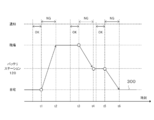
- An example of ranking processing by the battery management system 100 is shown schematically.
- An example of notification processing by the battery management system 100 is shown schematically.
- An example of the internal configuration of the management server 110 is shown schematically.
- An example of the internal configuration of the category classification unit 450 is shown schematically.
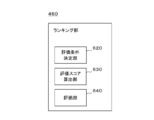
- An example of the internal configuration of the ranking unit 460 is shown schematically.
- An example of the internal configuration of the notification unit 470 is shown schematically.
- An example of the system configuration of the computer 3000 is shown schematically.
- FIG. 1 schematically shows an example of the system configuration of the battery management system 100.
- FIG. 2 schematically shows an example of ranking processing by the battery management system 100.
- FIG. 3 schematically shows an example of notification processing by the battery management system 100.
- the battery management system 100 includes a management server 110.
- the battery management system 100 may further include at least one of the battery station 120 and the battery station 140.
- the battery management system 100 may include three or more battery stations.
- the management server 110 may send and receive information to and from each other via the communication network 10.
- the battery station 120 is arranged inside the area 12.
- the battery station 140 is arranged inside the area 14. Area 12 and area 14 may have different geographical ranges from each other.
- one or more battery stations may be arranged inside the area 12.
- one or more battery stations may be arranged inside the area 14.
- the user 22 and the user 24 routinely use the battery station 120
- the user 42 and the user 44 routinely use the battery station 140.
- the details of the battery management system 100 will be described.
- the frequency of use of the battery station 120 by the user 22 and the user 24 is higher than the frequency of use of the battery station 140 by the user 22 and the user 24.
- the frequency of use of the battery station 140 by the user 42 and the user 44 is higher than the frequency of use of the battery station 120 by the user 42 and the user 44.
- the battery station 120 may be used by a user 22 and another user different from the user 24, and the battery station 140 may be used by another user different from the user 42 and the user 44. At least one of the user 22 and the user 24 may occasionally utilize the battery station 140. At least one of the user 42 and the user 44 may occasionally utilize the battery station 120.
- the user 22 uses the electric motorcycle 60 to move to the installation location of the battery station 120 in order to use the battery 50 charged in the battery station 120.
- the user 22 takes out the used battery 50 mounted on the electric motorcycle 60 from the electric motorcycle 60 and stores the used battery 50 in the battery station 120. ..
- the user 22 takes out the charged battery 50 stored in the battery station 120 from the battery station 120 and attaches the charged battery 50 to the electric motorcycle 60.
- the user 22 can use the electric motorcycle 60 by the electric power supplied from the charged battery 50.
- Other users also use the battery 50 and the electric motorcycle 60 by the same procedure as the user 22.
- the battery management system 100 ranks at least a part of the user 22, the user 24, the user 42, and the user 44. In one embodiment, the battery management system 100 rates all managed users. In another embodiment, the battery management system 100 ranks the users who want to be rated among the users to be managed. The battery management system 100 does not have to perform rating processing for users who do not wish to be rated among the users to be managed. Further, the battery management system 100 may or may not perform the rating process of the user whose rating intention is unknown.
- the battery management system 100 determines the ranks of at least a part of the user 22, the user 24, the user 42, and the user 44.
- the rank of each user is represented by a ranking.
- the ranks of the users are different from each other.
- the rank of each user is represented by grade or rank. In this case, multiple users may belong to the same grade or class.
- the battery management system 100 stores information related to electricity costs of users 22, users 24, users 42, and users 44 (sometimes referred to as electricity cost-related information) in a storage device for each user.
- the battery management system 100 determines extraction conditions for extracting at least a part of the electricity cost-related information of each user stored in the storage device.
- the above extraction conditions include (i) a position or area where each user uses the electric motorcycle 60, (ii) an attribute of the position or the area, (iii) an attribute of the electric motorcycle 60, and (iv) each. Includes the condition that at least one of the user's attributes satisfies a predetermined condition for that matter.
- the battery management system 100 extracts at least a part of the power cost-related information of a plurality of users stored in the storage device based on the above extraction conditions.
- the battery management system 100 may sort the extracted power cost related information.
- the power cost-related information of the user's electric motorcycle 60 that meets the specific conditions or the power cost-related information of the electric motorcycle 60 that meets the specific conditions is extracted from the power cost-related information about all users. Can be done. Further, according to the present embodiment, the extracted power cost-related information is sorted in ascending or descending order based on, for example, a value corresponding to the power cost. This improves visibility.
- the battery management system 100 determines the rank of at least a part of the user 22, the user 24, the user 42, and the user 44 in each of the plurality of subdivided categories. According to the present embodiment, even a user who has difficulty in obtaining a high ranking among all users to be rated can obtain a high ranking in a subdivided category.
- the battery management system 100 can encourage more users to take specific actions by appropriately selecting an algorithm for determining a user's rank.
- Examples of the above algorithm include an algorithm in which the lower the electricity cost, the higher the ranking, and an algorithm in which the smaller the deterioration of the battery 50, the higher the ranking.
- the rank in the category of "for large vehicles" is calculated, so that even a user who uses a large vehicle maintains the motivation to drive the vehicle so as to reduce the electricity cost. be able to.
- the communication network 10 transmits information between a plurality of communication devices.
- the communication network 10 transmits information between the management server 110 and at least one of the battery station 120 and the battery station 140.
- the communication network 10 may be a transmission line for wired communication, a transmission line for wireless communication, or a combination of a transmission line for wireless communication and a transmission line for wired communication.
- the communication network 10 may include a wireless communication network, the Internet, a P2P network, a dedicated line, a VPN, a power line communication line, and the like.
- the communication network 10 may include a wireless packet communication network, the Internet, a P2P network, a dedicated line, a VPN, a power line communication line, a vehicle-to-vehicle communication line, a road-to-vehicle communication line, and the like.
- the communication method in the wireless communication network may be a mobile communication method such as (i) 3G method, LTE method, 4G method, and (ii) Bluetooth (registered trademark), Zigbee (registered trademark), NFC (Near Field). It may be a short-range wireless system such as Communication), a wireless LAN system such as WiFi (registered trademark), a wireless MAN system such as WiMAX (registered trademark), or a wireless data communication system such as a wireless WAN system.
- the area 12 and the area 14 may be administrative divisions such as municipalities, or may be areas inside a predetermined virtual boundary. At least one battery station may be arranged inside each of the area 12 and the area 14.
- the battery 50 supplies electric power to the electric motorcycle 60.
- the battery 50 may be mounted on the electric motorcycle 60.
- the battery 50 may be detachably mounted on the electric motorcycle 60.
- the battery 50 may be a replaceable power storage device.
- the battery 50 may be a portable power storage device.
- the battery 50 is charged by the battery station 120 or the battery station 140.
- the battery 50 is charged, for example, by at least one of the battery station 120 and the battery station 140.
- the battery 50 may be housed in at least one of the battery station 120 and the battery station 140.
- the battery 50 may have a storage device (not shown) such as a memory or a hard disk.
- the battery 50 stores at least one of the running history of the electric motorcycle 60, the operation history of the electric motorcycle 60, the history of the electric power output by the battery 50, and the history of the remaining capacity of the battery 50 in the above storage device. May be stored.
- the electric motorcycle 60 consumes the electric power supplied by the battery 50. More specifically, the electric motorcycle 60 moves using the electric power supplied by the battery 50.
- the electric motorcycle 60 may store at least one of the traveling history and the operation history of the electric motorcycle 60 in the above storage device.
- the communication terminal 70 is used by each user.
- the communication terminal 70 may function as an interface between each part of the battery management system 100 and each user.
- the communication terminal 70 receives input from each user.
- the communication terminal 70 transmits various requests to the management server 110 based on the input from each user.
- the communication terminal 70 outputs information to each user. For example, the communication terminal 70 outputs the information received from the management server 110 to each user.
- the communication terminal 70 may be any device that can send and receive information to and from each part of the battery management system 100 (for example, the management server 110) via the communication network 10, and the details thereof are not particularly limited.
- Examples of the communication terminal 70 include a personal computer and a mobile terminal.
- Examples of the mobile terminal include a mobile phone, a smartphone, a PDA, a tablet, a notebook computer or a laptop computer, a wearable computer, and the like.
- the management server 110 executes a rating process (sometimes referred to as a ranking process) in the battery management system 100.
- the management server 110 may notify each user of the result of the rating process for each user. Details of the management server 110 will be described later.
- the management server 110 is configured to recognize information indicating a criterion for determining whether the fuel consumption or the electricity cost of each vehicle is high or low according to the fuel consumption or the electricity cost of each of the plurality of vehicles.
- the second support calculation processing element configured to recognize and output the information indicating the determination criterion recognized by the first support calculation processing element to a predetermined information processing terminal device may be provided.
- the first support calculation processing element recognizes, for example, a driving index value that is an index of the driving mode of each vehicle and fuel consumption or electricity cost, and then, of each vehicle, according to the fuel consumption or electricity cost of each of the plurality of vehicles. It is configured to recognize the reference value that is the criterion for judging the high or low fuel consumption or electricity cost.
- the second support calculation processing element is, for example, a reference driving index based on the driving index value of one or more reference vehicles extracted from a plurality of vehicles based on the reference value recognized by the first support calculation processing element. After recognizing the value, the reference operation information regarding the reference operation index value is recognized and output to the predetermined information processing terminal device based on the communication with the predetermined information processing terminal device.
- the battery station 120 and the battery station 140 accommodate one or more batteries 50. Further, the battery station 120 and the battery station 140 charge one or more batteries 50. The battery station 120 and the battery station 140 may transmit various information about one or more batteries 50 housed in each battery station to the management server 110.
- the battery station uses the identification information of the battery 50, the identification information of the user who stores the battery 50 in the battery station, and the time when the battery 50 is stored in the battery station. At least one of the information indicating the above and the information indicating the remaining capacity when the battery 50 is stored in the battery station is transmitted to the management server 110.
- the battery station has at least the identification information of the user who stored the battery 50 in the battery station, the information indicating the time when the battery 50 was stored in the battery station, and the remaining capacity when the battery 50 is stored in the battery station. It may be associated and transmitted to the management server 110.
- the battery station when the battery 50 is removed from the battery station, the battery station has the identification information of the battery 50, the identification information of the user who removed the battery 50 from the battery station, and the battery 50 removed from the battery station. At least one of the information indicating the time and the information indicating the remaining capacity when the battery 50 is taken out from the battery station is transmitted to the management server 110.
- the battery station has at least the identification information of the user who took out the battery 50 from the battery station, the information indicating the time when the battery 50 was taken out from the battery station, and the remaining capacity when the battery 50 was taken out from the battery station. It may be associated and transmitted to the management server 110.
- Each part of the battery management system 100 may be realized by hardware, may be realized by software, or may be realized by a combination of hardware and software.
- the components realized by the software are programs that define the operations related to the components in an information management system having a general configuration. It may be realized by starting.
- the program may be stored in a computer-readable medium such as a CD-ROM, DVD-ROM, memory, or hard disk, or may be stored in a storage device connected to a network.
- the program may be installed on a computer that constitutes at least a portion of the battery management system 100 from a computer-readable medium or a storage device connected to a network. By executing the program, the computer may function as at least a part of each part of the battery management system 100.
- the program that causes the computer to function as at least a part of each part of the battery management system 100 may include a module that defines the operation of each part of the battery management system 100. These programs or modules work on data processing devices, input devices, output devices, storage devices, etc. to make the computer function as each part of the battery management system 100, or to make the computer perform information processing methods in each part of the battery management system 100. Let it run.
- the information processing described in the program functions as a concrete means in which the software related to the program and various hardware resources of the battery management system 100 cooperate with each other when the program is read into the computer. .. Then, the above-mentioned specific means realizes the calculation or processing of information according to the purpose of use of the computer in the present embodiment, whereby the battery management system 100 according to the purpose of use is constructed.
- the information management method in each part of the battery management system 100 has, for example, a storage stage in which information related to electricity costs of a plurality of users who use an electric vehicle is stored in a storage device for each user.
- the above-mentioned management method has, for example, a condition determination stage for determining extraction conditions for extracting at least a part of electricity cost-related information of a plurality of users stored in the storage stage.
- the above-mentioned management method has, for example, an extraction step of extracting at least a part of the electricity cost-related information of a plurality of users stored in the storage device based on the extraction conditions determined in the condition determination step.
- the extraction conditions are (i) the position or area where the user uses the electric vehicle, (ii) the attribute of the position or area where the user uses the electric vehicle, and (iii) the attribute of the electric vehicle. And (iv) include the condition that at least one item of the user's attribute satisfies a predetermined condition relating to the item.
- the information management method in each part of the battery management system 100 includes, for example, a power information acquisition stage for acquiring power information regarding the power consumed or the amount of power consumed by each of a plurality of users who use the power supply device.
- the above-mentioned information management method has, for example, an environment information acquisition stage in which each of a plurality of users acquires environment information regarding an environment in which power is consumed.
- the above information management method has, for example, a rating step of rating at least a part of a plurality of users.
- the above-mentioned rating stage may include an index determination stage for determining the value of an index related to the power consumption or power consumption of at least some users based on the power information acquired in the power information acquisition stage.
- the above rating stage is at least one of one or more categories related to the environment in which power is consumed, based on the environmental information acquired in the environmental information acquisition stage and the value of the index determined in the index determination stage. May include a rank determination step that determines the rank of at least some of the users in.
- Area 12 may be an example of a geographical location or area where the power supply device is used.
- the area 14 may be an example of a geographical location or area where the power supply device is used.
- the user 22 may be an example of a user and a first user.
- the user 24 may be an example of a user and a first user.
- the user 42 may be an example of a user and a first user.
- the user 44 may be an example of a user and a first user.
- the battery 50 may be an example of a power supply device and a power storage device.
- the electric motorcycle 60 may be an example of a vehicle, an electric vehicle, an electric device, and a mobile body.
- the battery management system 100 may be an example of an information management system.
- the management server 110 may be an example of an information management system and a vehicle information management server.
- the battery station 120 may be an example of a replenishment device.
- the battery station 140 may be an example of a replenishment device.
- the information related to electricity cost may be an example of the value related to electricity cost.
- the details of the management server 110 will be described by exemplifying the case where the management server 110 acquires various states relating to each user, each battery, or each electric motorcycle via the battery station 120 or the battery station 140. Was done.
- the management server 110 is not limited to this embodiment.
- the management server 110 acquires various states regarding each user, each battery, or each electric motorcycle, for example, via the communication terminal 70 of each user.
- the management server 110 acquires various states relating to each user, each battery or each electric bike via each battery or each electric bike. To do.
- the details of the battery management system 100 have been described by taking as an example a case where the power supply device is the battery 50 and the battery station 120 and the battery station 140 supply electric energy to the battery 50.
- the battery management system 100 is not limited to this embodiment.
- the power supply device may be a power generation device.
- the power generation device may be a fuel cell.
- the battery station 120 and the battery station 140 may refuel the power generation device.
- electrical energy may be an example of energy.
- Fuel may be an example of an energy source.
- the details of the battery management system 100 have been described by taking the case where the electric device is the electric motorcycle 60 as an example.
- the electrical equipment is not limited to the electric motorcycle 60.
- the electric device may be a mobile body powered by an electric motor, or may be a stationary power storage device.
- Examples of moving objects include automobiles, motorcycles, standing vehicles having a power unit, ships, and flying objects.
- Examples of automobiles include gasoline vehicles, diesel vehicles, electric vehicles, fuel cell vehicles, hybrid vehicles, small commuter vehicles, electric carts, and the like.
- Examples of motorcycles include motorcycles, three-wheeled motorcycles, and electric bicycles.
- Examples of ships include ships, hovercraft, personal watercraft, submarines, submersibles, and underwater scooter.
- the flying object include an airplane, an airship or a balloon, a balloon, a helicopter, a drone, and the like.
- the details of the battery management system 100 have been described by taking as an example a case where the electricity cost or an index related to the electricity cost is associated with the user.
- the battery management system 100 is not limited to this embodiment.
- electricity costs or indicators related to electricity costs may be associated with the battery 50 or the electric bike 60.
- the information processing that uses the user's identification information as a key may be replaced with the information processing that uses the identification information of the battery 50 or the electric motorcycle 60 as a key.
- the ranking of the user 22 among the users who use the battery station 120 on a daily basis is determined.
- the management server 110 extracts, for example, a user who has used the battery station 120 five times or more in the past as a user who uses the battery station 120 on a daily basis.
- the management server 110 calculates the rank of the user 22 for each evaluation period.
- the evaluation period is one day. Further, in the present embodiment, the management server 110 calculates the rank of the user 22 by using the mileage per exchange as an evaluation index. In FIG. 2, white circles indicate the rank of the user 22 in each evaluation period.
- the rank is not calculated during the evaluation periods P4 and P6. This indicates that the battery 50 was not replaced. Further, when the battery 50 is replaced a plurality of times during a single evaluation period, the rank of the user 22 may be calculated by averaging or weighted averaging the mileage per replacement in each replacement.
- the rank of each user is determined for a plurality of users who use a single battery station on a daily basis.
- the user ranking process is not limited to this embodiment. According to another embodiment, for example, the rank of each user is determined for a plurality of users who routinely use the plurality of battery stations.
- the rank was determined for each user.
- the user ranking process is not limited to this embodiment.
- a plurality of users are treated as a single group, and the rank is determined for each group.
- a ranking competition is realized between the user who uses the battery station 120 on a daily basis and the user who uses the battery station 140 on a daily basis.
- the management server 110 estimates the behavior pattern of the user 22 by referring to the replacement history of the battery 50 in the battery station 120 and the like.
- the management server 110 may estimate the behavior pattern of the user 22 by using a statistical method.
- the user 22 departs from home at time t1 and arrives at work at time t2.
- User 22 stays at work from time t2 to time t3.
- the user 22 leaves the workplace at time t3 and arrives at the battery station 120 at time t4.
- the user 22 departs from the battery station 120 at time t5 and arrives at home at time t6.
- the management server 110 notifies the user 22 of the result of the ranking process in a predetermined period before the time t1, the time t3, and the time t5.
- the management server 110 does not notify the user 22 of the result of the ranking process when the user 22 is moving by using the electric motorcycle 60. As a result, the user 22 can drive the electric motorcycle 60 more safely.
- FIG. 4 schematically shows an example of the internal configuration of the management server 110.
- the management server 110 includes, for example, a communication control unit 420, a data collection unit 430, a data storage unit 440, a category classification unit 450, a ranking unit 460, and a notification unit 470.
- the communication control unit 420 controls communication between the management server 110 and at least one of the battery station 120 and the battery station 140.
- the communication control unit 420 may control the communication between the management server 110 and the communication terminal 70 of each user.
- the data collection unit 430 collects various types of data. Further, the data storage unit 440 stores the data collected by the data collection unit 430. The data storage unit 440 may store information related to electricity costs of each user.
- the data collection unit 430 may collect various types of data via at least one of the battery station 120 and the battery station 140.
- the data collection unit 430 may collect various types of data via the communication terminal 70 of each user.
- the data collection unit 430 acquires information (sometimes referred to as electric power information) regarding the electric power [kW] or the electric energy [kWh] consumed by each user who uses the battery 50. For example, the data collection unit 430 provides information indicating the SOC when the user 22 takes out the battery 50 from the battery station 120 and information indicating the SOC when the user 22 stores the battery 50 in the battery station 120. , Obtained from battery station 120.
- the data collecting unit 430 provides information indicating the mileage of the electric motorcycle 60 between the time when the user 22 takes out the battery 50 from the battery station 120 and the time when the user 22 stores the battery 50 in the battery station 120. To get. For example, when information indicating the movement history of the electric motorcycle 60 is recorded in a storage device (not shown) provided in the battery 50, the battery station 120 is set when the battery 50 is housed in the battery station 120. Acquires the data stored in the storage device. The battery station 120 transmits information indicating the movement history of the electric motorcycle 60 taken out from the storage device of the battery 50 to the management server 110. As a result, the data collection unit 430 can acquire information indicating the mileage of the electric motorcycle 60.
- the method by which the data collection unit 430 acquires information indicating the mileage of the electric motorcycle 60 is not limited to the above embodiment.
- the data collecting unit 430 may acquire information indicating the movement history of the communication terminal 70 of the user 22 from the communication terminal 70 of the user 22.
- the data collecting unit 430 may analyze the movement history of the communication terminal 70 to determine the mileage of the electric motorcycle 60. For example, the data collection unit 430 regards a period in which the statistic of the moving speed of the communication terminal 70 of the user 22 is larger than a predetermined value as a period in which the user 22 is using the electric bike 50, and considers the communication terminal.
- the mileage of the electric bike 60 is determined based on the movement history of the 70.
- the data collection unit 430 acquires information (sometimes referred to as environmental information) regarding the environment in which each user using the battery 50 consumes power.
- the environmental information includes (i) information indicating a geographical position or area where the battery 50 is used, (ii) information indicating an attribute of the geographical position or area where the battery 50 is used, and (iii) an electric motorcycle 60.
- Information indicating the attributes of the above and (iv) at least one of the information indicating the attributes of each user may be included.
- the geographical location or area where the battery 50 is used includes identification information of the battery station 120 whose frequency of use by each user is larger than a predetermined value, and information indicating the location of the battery station (referred to as location information). ), Identification information of the area where the battery station is located, etc. are exemplified.
- location information information indicating the location of the battery station.
- Identification information of the area where the battery station is located, etc. are exemplified.
- the area identification information or the like may be used as a geographical position or area where the battery 50 is used, and (ii) all the identification information or position information of the plurality of battery stations 120 described above, the battery station is arranged.
- the identification information of all the areas is used as the geographical location or area where the battery 50 is used.
- Examples of the attributes of the geographical location or area where the battery 50 is used include population, speed limit, degree of congestion, gradient, and climate.
- Examples of the attributes of the electric motorcycle 60 include the type of the electric motorcycle 60, the use of the electric motorcycle 60, and the like.
- the attributes of the user include the usage mode of electric power by the user, the driving pattern of the user, the family composition of the user, the occupation, age, weight of the user, the presence or absence of passengers, the number of passengers, and the loading per time.
- the amount, the mileage per time, and the like are exemplified.
- Examples of how the electric power is used include statistics on the output of the battery 50.
- Examples of the traveling pattern include a statistic of the speed of the electric motorcycle 60, a statistic of the acceleration of the electric motorcycle 60, and the like.
- statistics include mean value, mode value, percentile, range, minimum value, maximum value, variance, unbiased variance, standard deviation, skewness, and kurtosis.
- Examples of the percentile include the first quartile (25th percentile), the median (50th percentile), the third quartile (75th percentile), and the like.
- the data collection unit 430 acquires information (sometimes referred to as history information) indicating the usage history of the battery 50 by each user.
- history information (i) information indicating the time when the power supply by the battery 50 is started, (ii) the time when the power supply by the battery 50 is started, and the position of the battery 50 at the time are associated with each other.
- Information (iii) information indicating the time when the power supply by the battery 50 was stopped, (iv) the time when the power supply by the battery 50 was stopped, and the position of the battery 50 at that time are associated with each other.
- the position of the battery 50 may be represented by the position of the user, the position of the electric motorcycle 60, the position of the communication terminal 70, or the position of the battery station.
- the position where the battery 50 is removed from the electric motorcycle 60 may be the position of the battery station where the battery 50 is housed.
- the time when the battery 50 is removed from the electric motorcycle 60 the time when the battery 50 removed from the electric motorcycle 60 is stored in the battery station may be used.
- the category classification unit 450 analyzes various data related to each user collected by the data collection unit 430 and determines one or more categories to which each user belongs. Details of the category classification unit 450 will be described later.
- the ranking unit 460 ranks at least a part of a plurality of users. For example, the ranking unit 460 first determines the conditions for evaluating superiority or inferiority among one or more users to be rated. Next, the ranking unit 460 calculates a score (sometimes referred to as an evaluation score) for evaluating superiority or inferiority among users. Next, the ranking unit 460 determines the rank of each user. At this time, the ranking unit 460 may determine the rank of each user by comparing with all the users to be rated, and compared with all the other users belonging to the category to which each user belongs, The rank of each user may be determined. Details of the ranking unit 460 will be described later.
- the ranking unit 460 first determines the extraction conditions for extracting at least a part of the electricity cost related information of each user stored in the data collection unit 430.
- the above extraction conditions include (i) a position or area where each user uses the electric motorcycle 60, (ii) a position or an attribute where each user uses the electric motorcycle 60, and (iii) an attribute of the electric motorcycle 60. And (iv) include the condition that at least one item of each user's attribute satisfies a predetermined condition relating to the item.
- the ranking unit 460 extracts at least a part of the electricity cost-related information of each user stored in the data collection unit 430.
- the ranking unit 460 rearranges the extracted power cost-related information. Thereby, the ranking unit 460 can rate at least a part of a plurality of users.
- the notification unit 470 notifies the user of the rank of the user determined by the ranking unit 460. Details of the notification unit 470 will be described later.
- the data collection unit 430 may be an example of a power information acquisition unit, an environmental information acquisition unit, and a history information acquisition unit.
- the category classification unit 450 may be an example of an environmental information acquisition unit.
- the ranking unit 460 may be an example of a rating unit.
- the notification unit 470 may be an example of the rank notification unit.
- the category may be an example of environmental information.
- FIG. 5 schematically shows an example of the internal configuration of the category classification unit 450.
- the category classification unit 450 includes an action pattern determination unit 520, an area attribute determination unit 530, a use attribute determination unit 540, and a user attribute determination unit 550.
- Each category is classified according to the environment in which the user consumes power.
- Each category includes, for example, (i) the geographical location or area where the battery 50 is used, (ii) the attributes of the geographical location or area where the battery 50 is used, (iii) the attributes of the electric bike 60, and. , (Iv) Classified based on at least one of the respective attributes of the plurality of users.
- the category classification unit 450 may, for example, (i) a geographical position or area where the battery 50 is used, (ii) an attribute of the geographical position or area where the battery 50 is used, and (iii) an attribute of the electric motorcycle 60. , And (iv) by classifying each user based on at least one of the user's attributes, one or more categories to which each user belongs are determined.
- the categories are for vehicles, stationary, long-distance, short-distance, personal, corporate, family, single, flat, mountainous, cold, warm, and specific administrative divisions. For resident, repeater of a specific battery station, etc. are exemplified.
- the behavior pattern determination unit 520 determines the behavior pattern of each user. For example, the behavior pattern determination unit 520 acquires information indicating at least one of the user's position history and the battery station usage history by the user. The behavior pattern determination unit 520 analyzes at least one of the user's position history and the battery station usage history by the user, and determines the behavior pattern of the user.
- the user's behavior pattern may be information in which information indicating the time and information indicating the estimated position of the user at the time are associated with each other.
- the user's behavior pattern may further include information indicating at least one of the user's estimated speed, estimated acceleration, and estimated movement direction at the time mentioned above.
- the position history of the user may be represented by the position history of the battery 50, the electric motorcycle 60, or the communication terminal 70 used by the user.
- the position history may be information in which the information indicating the time and the information indicating the position at the time are associated with each other.
- the above position history may be generated by using a known self-position estimation technique using a GPS signal, a radio signal, a rotary encoder, an acceleration detector, or the like.
- the usage history of the battery station may be information in which the identification information or location information of the battery station is associated with the information indicating the time when the battery station is used.
- the usage history of the battery station further includes information indicating that the battery 50 has been taken out of the battery station at the above time, or information indicating that the battery 50 has been stored in the battery station at the above time. May include.
- the usage history of the battery station may further include information indicating the remaining capacity of the battery 50 at the above time.
- the behavior pattern determination unit 520 determines one or more categories to which the user belongs by classifying the above users based on the behavior pattern of the user. More specifically, the behavior pattern determination unit 520 determines the geographical position or area where the battery 50 is used based on the behavior pattern of the user. The behavior pattern determination unit 520 determines one or more categories to which each user belongs by classifying each user based on the geographical position or area where the battery 50 is used.
- each user is categorized by a battery station whose frequency of use is greater than a predetermined value.
- each user is categorized by administrative division, including battery stations whose frequency of use is greater than a predetermined value.
- each user is classified by area having an arbitrary shape, including a battery station whose frequency of use is greater than a predetermined value.
- the behavior pattern determination unit 520 transmits information indicating the user's behavior pattern to at least one of the area attribute determination unit 530, the usage attribute determination unit 540, and the user attribute determination unit 550. Further, the action pattern determination unit 520 stores the user's identification information in the data storage unit 440 in association with each identification information of one or more categories to which the user belongs.
- the area attribute determination unit 530 acquires information indicating the geographical position or area where the battery 50 is used from the action pattern determination unit 520.
- the area attribute determination unit 530 determines the attribute of the geographical position or area where the battery 50 is used.
- the area attribute determination unit 530 determines, for example, the attribute of the geographical position or area where the battery 50 is used by referring to the DB in which the position of an arbitrary area and the attribute are associated with each other.
- the area attribute determination unit 530 determines one or more categories to which each user belongs by classifying each user based on the attribute of the geographical position or area where each user uses the battery 50. To do.
- the area attribute determination unit 530 associates the identification information of the user with the identification information of each of the one or more categories to which the user belongs, and stores the identification information in the data storage unit 440.
- the use attribute determination unit 540 determines the use of the battery 50.
- applications of the battery 50 include electric vehicles, hybrid vehicles, and stationary power supplies. Other examples of applications of the battery 50 include large vehicles, medium-sized vehicles, small vehicles, and the like.
- the use attribute determination unit 540 determines the use attribute of the battery 50.
- the usage attributes of the battery 50 are determined based on the output statistics of the battery 50, the outside air temperature statistics of the battery 50, and the like.
- the usage attribute determination unit 540 determines one or more categories to which each user belongs by classifying each user based on the usage attribute of the battery 50.
- the usage attribute determination unit 540 associates the identification information of the user with the identification information of each of one or more categories to which the user belongs, and stores the identification information in the data storage unit 440.
- the user attribute determination unit 550 acquires information indicating the behavior pattern of each user from the behavior pattern determination unit 520.
- the user attribute determination unit 550 determines the attribute of the user based on the user's behavior pattern.
- the user attribute determination unit 550 may determine the above-mentioned user attributes with reference to the data collection unit 430.
- the user attribute determination unit 550 stores the user's identification information in the data storage unit 440 in association with each identification information of one or more categories to which the user belongs.
- the behavior pattern determination unit 520 may be an example of the environmental information acquisition unit.
- the area attribute determination unit 530 may be an example of the environment information acquisition unit.
- the usage attribute determination unit 540 may be an example of the environment information acquisition unit.
- the user attribute determination unit 550 may be an example of the environment information acquisition unit.
- FIG. 6 schematically shows an example of the internal configuration of the ranking unit 460.
- the ranking unit 460 includes an evaluation condition determination unit 620, an evaluation score calculation unit 630, and an evaluation unit 640.
- the evaluation condition determination unit 620 determines the conditions for evaluating the rank of each user. For example, the evaluation condition determination unit 620 determines at least one of the evaluation period and the evaluation index. Examples of the evaluation period include one day, one week, and one month.
- the evaluation index is an index related to the distance traveled by the electric motorcycle 60 per unit power consumption (sometimes referred to as electricity cost [km / kWh]), or deterioration of the battery 50 per unit power consumption. It may be a related indicator.
- an index related to the moving distance of the electric motorcycle 60 per unit power consumption an index related to the moving distance of the electric motorcycle 60 while the battery 50 is replaced once, and an ignition switch of the electric motorcycle 60 are turned on. After that, an index related to electric energy in the period until the ignition switch of the electric motorcycle 60 is turned off (sometimes referred to as a driving cycle) is exemplified.
- Indicators related to the deterioration of the battery 50 per unit power consumption include an index related to the deterioration of the battery 50 during one replacement of the battery 50 and an index related to the deterioration of the battery 50 per driving cycle. Etc. are exemplified.
- the evaluation score calculation unit 630 calculates the value of the evaluation index (sometimes referred to as a score) in each evaluation period according to the conditions determined by the evaluation condition determination unit 620.
- the evaluation score calculation unit 630 may calculate the score in each evaluation period with reference to the data storage unit 440.
- the evaluation score calculation unit 630 may calculate the score in each evaluation period for at least some users based on the power information acquired by the data collection unit 430.
- the evaluation index is the amount during which the battery 50 is replaced a predetermined number of times, and when the number of replacements of the battery 50 within a single evaluation period is less than the predetermined number of times, the evaluation score calculation unit 630 Does not have to calculate the score.
- the evaluation index is the amount during which the battery 50 is replaced a predetermined number of times, and when the number of replacements of the battery 50 within a single evaluation period exceeds the predetermined number of times, the evaluation score calculation unit 630 , The score may be adjusted based on the appropriate algorithm.
- the evaluation unit 640 determines the rank of each of one or more users to be ranked.
- the evaluation unit 640 determines the rank of each user based on the value of the evaluation index calculated by the evaluation score calculation unit 630.
- the evaluation unit 640 may determine the rank of each user in at least one of the one or more categories to which each user belongs.
- the evaluation unit 640 may determine the rank of each user in each of the one or more categories to which each user belongs. Thereby, based on the environment in which each user consumes power and the score of each user, the rank of the user in at least one of a plurality of categories related to the environment in which power is consumed is determined.
- the evaluation score calculation unit 630 may be an example of the index value determination unit.
- the evaluation unit 640 may be an example of a rank determination unit.
- the evaluation index may be an example of an index related to power consumption or power consumption.
- the ranking method in the ranking unit 460 is not limited to this embodiment.
- the ranking unit 460 first determines the extraction conditions for extracting at least a part of the electricity cost-related information of each user stored in the data collection unit 430.
- the above extraction conditions include (i) a position or area where each user uses the electric motorcycle 60, (ii) a position or an attribute where each user uses the electric motorcycle 60, and (iii) an attribute of the electric motorcycle 60. And (iv) include the condition that at least one item of each user's attribute satisfies a predetermined condition relating to the item.
- the ranking unit 460 extracts at least a part of the electricity cost-related information of each user stored in the data collection unit 430.
- the ranking unit 460 rearranges the extracted power cost-related information. As a result, the rank of each user is determined.
- FIG. 7 schematically shows an example of the internal configuration of the notification unit 470.
- the notification unit 470 includes a notification content determination unit 720 and a notification timing determination unit 730.
- the notification content determination unit 720 determines the content of the above notification. For example, the notification content determination unit 720 determines to create a notification including the identification information of the user to be notified and the information indicating the rank of the user. The notification content determination unit 720 may decide to create a notification including information indicating a change in rank.
- the notification content determination unit 720 provides identification information of the user, identification information of at least one category among one or more categories to which the user belongs, and information indicating the rank of the user for each category. You may decide to create a notification that includes. For example, the notification content determination unit 720 extracts a category in which the rank of the user satisfies a predetermined condition from one or more categories to which the user belongs. The notification content determination unit 720 creates a notification including the user identification information, the extracted category identification information, and the information indicating the rank of the user in the extracted category.
- the predetermined condition may be a condition that the rank of the above user exceeds the predetermined standard.
- the predetermined condition is that the rank of the user is equal to or higher than the predetermined value or larger than the predetermined value.
- the predetermined condition states that the user's rank is equal to or higher than the predetermined grade or class. It is a condition.
- the notification content determination unit 720 targets users whose overall rank is lower than a predetermined standard for notification processing. In another embodiment, the notification content determination unit 720 targets a user whose rank fluctuation pattern satisfies a predetermined condition for notification processing. For example, a user whose rank decrease rate is larger than a predetermined value is targeted for notification processing. As a result, the amount of calculation can be reduced as compared with the case where all users are targeted for notification processing. In addition, since the notification is given at the timing when the motivation is likely to decrease, the effect of the notification becomes remarkable. As a result, energy can be used efficiently.
- the notification timing determination unit 730 determines the timing for transmitting the notification to the user. For example, the notification timing determination unit 730 acquires information indicating the behavior pattern of each user from the behavior pattern determination unit 520.
- the notification timing determination unit 730 analyzes the behavior pattern of the user, and sets the time before the time when the user starts moving, the time when the notification is transmitted, and the time when the user moves. Determine when the notification is sent so that the length of the period between the start time and the start time is less than a predetermined value.
- the notification timing determination unit 730 may analyze the user's behavior pattern and determine the time when the notification is transmitted so that the notification is not transmitted while the user is moving. In still another embodiment, the notification timing determination unit 730 may control a program running on the communication terminal 70 of the user to be notified so that the notification is not output while the user is moving. ..
- the notification content determination unit 720 may be an example of a category extraction unit.
- the notification timing determination unit 730 may be an example of a history information acquisition unit and a timing determination unit.
- the user to be notified may be an example of the first user.
- the behavior pattern may be an example of historical information.
- FIG. 8 shows an example of a computer 3000 in which a plurality of aspects of the present invention may be embodied in whole or in part.
- the management server 110 is realized by the computer 3000.
- the program installed on the computer 3000 causes the computer 3000 to function as an operation associated with the device according to an embodiment of the present invention or as one or more "parts" of the device, or the operation or the one or more "parts".
- a unit can be run and / or a computer 3000 can be run a process according to an embodiment of the invention or a stage of the process.
- Such a program may be executed by the CPU 3012 to cause the computer 3000 to perform a specific operation associated with some or all of the blocks of the flowcharts and block diagrams described herein.
- the computer 3000 includes a CPU 3012, a RAM 3014, a GPU 3016, and a display device 3018, which are connected to each other by a host controller 3010.
- the computer 3000 also includes an input / output unit such as a communication interface 3022, a hard disk drive 3024, a DVD-ROM drive 3026, and an IC card drive, which are connected to the host controller 3010 via the input / output controller 3020.
- the computer also includes legacy I / O units such as the ROM 3030 and keyboard 3042, which are connected to the I / O controller 3020 via an I / O chip 3040.
- the CPU 3012 operates according to the programs stored in the ROM 3030 and the RAM 3014, thereby controlling each unit.
- the GPU 3016 acquires the image data generated by the CPU 3012 in a frame buffer or the like provided in the RAM 3014 or itself so that the image data is displayed on the display device 3018.
- Hard disk drive 3024 stores programs and data used by CPU 3012 in computer 3000.
- the DVD-ROM drive 3026 reads the program or data from the DVD-ROM 3001 and provides the program or data to the hard disk drive 3024 via the RAM 3014.
- the IC card drive reads the program and data from the IC card and / or writes the program and data to the IC card.
- the ROM 3030 stores in it a boot program or the like executed by the computer 3000 at the time of activation, and / or a program depending on the hardware of the computer 3000.
- the input / output chip 3040 may also connect various input / output units to the input / output controller 3020 via a parallel port, a serial port, a keyboard port, a mouse port, and the like.
- the program is provided by a computer-readable storage medium such as a DVD-ROM 3001 or an IC card.
- the program is read from a computer-readable storage medium, installed on a hard disk drive 3024, RAM 3014, or ROM 3030, which is also an example of a computer-readable storage medium, and executed by the CPU 3012.
- the information processing described in these programs is read by the computer 3000 and provides a link between the program and the various types of hardware resources described above.
- the device or method may be configured to implement the operation or processing of information in accordance with the use of computer 3000.
- the CPU 3012 executes a communication program loaded in the RAM 3014, and performs communication processing on the communication interface 3022 based on the processing described in the communication program. You may order.
- the communication interface 3022 reads and reads transmission data stored in a transmission buffer area provided in a recording medium such as a RAM 3014, a hard disk drive 3024, a DVD-ROM 3001, or an IC card. The data is transmitted to the network, or the received data received from the network is written to the reception buffer area or the like provided on the recording medium.
- the CPU 3012 makes the RAM 3014 read all or necessary parts of a file or database stored in an external recording medium such as a hard disk drive 3024, a DVD-ROM drive 3026 (DVD-ROM3001), or an IC card. Various types of processing may be performed on the data on the RAM 3014. The CPU 3012 may then write back the processed data to an external recording medium.
- an external recording medium such as a hard disk drive 3024, a DVD-ROM drive 3026 (DVD-ROM3001), or an IC card.
- Various types of processing may be performed on the data on the RAM 3014.
- the CPU 3012 may then write back the processed data to an external recording medium.
- the CPU 3012 describes various types of operations, information processing, conditional judgment, conditional branching, unconditional branching, and information retrieval described in various parts of the present disclosure with respect to the data read from the RAM 3014. Various types of processing may be performed, including / replacement, etc., and the results are written back to RAM 3014. Further, the CPU 3012 may search for information in a file, a database, or the like in the recording medium. For example, when a plurality of entries each having an attribute value of the first attribute associated with the attribute value of the second attribute are stored in the recording medium, the CPU 3012 is the first of the plurality of entries. The attribute value of the attribute of is searched for the entry that matches the specified condition, the attribute value of the second attribute stored in the entry is read, and the first attribute that satisfies the predetermined condition is selected. You may get the attribute value of the associated second attribute.
- the program or software module described above may be stored on or on a computer-readable storage medium near the computer 3000.
- a recording medium such as a hard disk or RAM provided in a dedicated communication network or a server system connected to the Internet can be used as a computer-readable storage medium, whereby the above program can be transmitted via the network. Provided to computer 3000.
Landscapes
- Business, Economics & Management (AREA)
- Tourism & Hospitality (AREA)
- Health & Medical Sciences (AREA)
- Economics (AREA)
- General Health & Medical Sciences (AREA)
- Human Resources & Organizations (AREA)
- Marketing (AREA)
- Primary Health Care (AREA)
- Strategic Management (AREA)
- Physics & Mathematics (AREA)
- General Business, Economics & Management (AREA)
- General Physics & Mathematics (AREA)
- Engineering & Computer Science (AREA)
- Theoretical Computer Science (AREA)
- Charge And Discharge Circuits For Batteries Or The Like (AREA)
- Electric Propulsion And Braking For Vehicles (AREA)
Priority Applications (2)
| Application Number | Priority Date | Filing Date | Title |
|---|---|---|---|
| JP2021553477A JPWO2021079894A1 (https=) | 2019-10-21 | 2020-10-21 | |
| JP2024206462A JP2025028993A (ja) | 2019-10-21 | 2024-11-27 | 情報管理システム、車両情報管理サーバ、情報管理方法、プログラム及びコンピュータ可読記憶媒体 |
Applications Claiming Priority (2)
| Application Number | Priority Date | Filing Date | Title |
|---|---|---|---|
| JP2019192312 | 2019-10-21 | ||
| JP2019-192312 | 2019-10-21 |
Publications (1)
| Publication Number | Publication Date |
|---|---|
| WO2021079894A1 true WO2021079894A1 (ja) | 2021-04-29 |
Family
ID=75620121
Family Applications (1)
| Application Number | Title | Priority Date | Filing Date |
|---|---|---|---|
| PCT/JP2020/039478 Ceased WO2021079894A1 (ja) | 2019-10-21 | 2020-10-21 | 情報管理システム、車両情報管理サーバ、情報管理方法、プログラム及びコンピュータ可読記憶媒体 |
Country Status (2)
| Country | Link |
|---|---|
| JP (2) | JPWO2021079894A1 (https=) |
| WO (1) | WO2021079894A1 (https=) |
Citations (6)
| Publication number | Priority date | Publication date | Assignee | Title |
|---|---|---|---|---|
| WO2010001865A1 (ja) * | 2008-06-30 | 2010-01-07 | ローム株式会社 | 車両の走行情報記録装置 |
| JP2011027507A (ja) * | 2009-07-23 | 2011-02-10 | Navitime Japan Co Ltd | ナビゲーションシステム、ナビゲーション装置、ナビゲーションサーバ、および、燃費比較方法 |
| JP2013002873A (ja) * | 2011-06-14 | 2013-01-07 | Denso Corp | 車両管理システム |
| WO2015045071A1 (ja) * | 2013-09-26 | 2015-04-02 | 株式会社日立システムズ | 車両の実燃費情報提供システム及び車両の実燃費情報提供方法 |
| WO2017126102A1 (ja) * | 2016-01-22 | 2017-07-27 | ボルボ トラック コーポレーション | 運転評価装置、運転評価方法、基準データ提供方法、基準データ提供装置及び基準データ提供プログラム |
| JP2019066977A (ja) * | 2017-09-29 | 2019-04-25 | 本田技研工業株式会社 | 電力課金システム及び電力課金方法 |
-
2020
- 2020-10-21 WO PCT/JP2020/039478 patent/WO2021079894A1/ja not_active Ceased
- 2020-10-21 JP JP2021553477A patent/JPWO2021079894A1/ja active Pending
-
2024
- 2024-11-27 JP JP2024206462A patent/JP2025028993A/ja active Pending
Patent Citations (6)
| Publication number | Priority date | Publication date | Assignee | Title |
|---|---|---|---|---|
| WO2010001865A1 (ja) * | 2008-06-30 | 2010-01-07 | ローム株式会社 | 車両の走行情報記録装置 |
| JP2011027507A (ja) * | 2009-07-23 | 2011-02-10 | Navitime Japan Co Ltd | ナビゲーションシステム、ナビゲーション装置、ナビゲーションサーバ、および、燃費比較方法 |
| JP2013002873A (ja) * | 2011-06-14 | 2013-01-07 | Denso Corp | 車両管理システム |
| WO2015045071A1 (ja) * | 2013-09-26 | 2015-04-02 | 株式会社日立システムズ | 車両の実燃費情報提供システム及び車両の実燃費情報提供方法 |
| WO2017126102A1 (ja) * | 2016-01-22 | 2017-07-27 | ボルボ トラック コーポレーション | 運転評価装置、運転評価方法、基準データ提供方法、基準データ提供装置及び基準データ提供プログラム |
| JP2019066977A (ja) * | 2017-09-29 | 2019-04-25 | 本田技研工業株式会社 | 電力課金システム及び電力課金方法 |
Also Published As
| Publication number | Publication date |
|---|---|
| JP2025028993A (ja) | 2025-03-05 |
| JPWO2021079894A1 (https=) | 2021-04-29 |
Similar Documents
| Publication | Publication Date | Title |
|---|---|---|
| US12007244B2 (en) | Displaying charging options for an electric vehicle | |
| US10613149B2 (en) | Managing apparatus, computer-readable storage medium, management method and production method | |
| CN109808541B (zh) | 一种电动汽车充电方法及系统 | |
| CN107284241B (zh) | 提供车辆的电池显示状态的服务器及设置显示状态的设备 | |
| US11293771B2 (en) | Display device, display method and control device | |
| JP6345662B2 (ja) | 情報処理システム、情報処理方法、情報処理装置および情報処理装置の制御プログラム | |
| CN113085655B (zh) | 一种车载电动汽车综合服务系统 | |
| JP2018019483A (ja) | 車両の走行可能距離算出システムおよび走行可能距離算出方法 | |
| CN106871918B (zh) | 电动车路线规划方法及装置 | |
| CN110816319A (zh) | 车辆信息处理系统及方法 | |
| US20220164722A1 (en) | Systems and methods for data-driven energy management of a vehicle fleet with electric vehicles | |
| CN113879182A (zh) | 车辆能量管理控制方法、系统、设备及介质 | |
| US12174678B2 (en) | Information processing device, computer-readable storage medium, and information processing method | |
| Jiang et al. | A multi-period analysis of taxi drivers' behaviors based on GPS trajectories | |
| CN109858951A (zh) | 新能源汽车加电或换电需求的预测 | |
| CN113505150A (zh) | 一种充电站信息的推送方法、服务器、介质及计算机设备 | |
| Sinha et al. | Intelligent Electric Vehicles: Leveraging AI-IoT for Sustainable Mobility | |
| WO2021079894A1 (ja) | 情報管理システム、車両情報管理サーバ、情報管理方法、プログラム及びコンピュータ可読記憶媒体 | |
| JP7617011B2 (ja) | 制御装置、保管装置、プログラム、及び、制御方法 | |
| JP2022117137A (ja) | 情報処理装置、情報処理方法及び情報処理システム | |
| JP2021069241A (ja) | 制御装置、充電装置、プログラム、及び、制御方法 | |
| Bi et al. | Research on Data Extraction and Analysis of Software Defect in IoT Communication Software. | |
| KR20230170305A (ko) | 차량 운행지수 평가 방법 및 장치 | |
| US20240027220A1 (en) | Simulation apparatus, simulation method, and storage medium | |
| CN120764868A (zh) | 电动车队组合换电调度方法、装置、设备及存储介质 |
Legal Events
| Date | Code | Title | Description |
|---|---|---|---|
| 121 | Ep: the epo has been informed by wipo that ep was designated in this application |
Ref document number: 20879604 Country of ref document: EP Kind code of ref document: A1 |
|
| ENP | Entry into the national phase |
Ref document number: 2021553477 Country of ref document: JP Kind code of ref document: A |
|
| NENP | Non-entry into the national phase |
Ref country code: DE |
|
| 122 | Ep: pct application non-entry in european phase |
Ref document number: 20879604 Country of ref document: EP Kind code of ref document: A1 |