WO2021065762A1 - 電子レンジ用包装袋 - Google Patents
電子レンジ用包装袋 Download PDFInfo
- Publication number
- WO2021065762A1 WO2021065762A1 PCT/JP2020/036513 JP2020036513W WO2021065762A1 WO 2021065762 A1 WO2021065762 A1 WO 2021065762A1 JP 2020036513 W JP2020036513 W JP 2020036513W WO 2021065762 A1 WO2021065762 A1 WO 2021065762A1
- Authority
- WO
- WIPO (PCT)
- Prior art keywords
- paper
- packaging bag
- microwave oven
- barrier layer
- packaging
- Prior art date
- Legal status (The legal status is an assumption and is not a legal conclusion. Google has not performed a legal analysis and makes no representation as to the accuracy of the status listed.)
- Ceased
Links
Images
Classifications
-
- B—PERFORMING OPERATIONS; TRANSPORTING
- B65—CONVEYING; PACKING; STORING; HANDLING THIN OR FILAMENTARY MATERIAL
- B65D—CONTAINERS FOR STORAGE OR TRANSPORT OF ARTICLES OR MATERIALS, e.g. BAGS, BARRELS, BOTTLES, BOXES, CANS, CARTONS, CRATES, DRUMS, JARS, TANKS, HOPPERS, FORWARDING CONTAINERS; ACCESSORIES, CLOSURES, OR FITTINGS THEREFOR; PACKAGING ELEMENTS; PACKAGES
- B65D33/00—Details of, or accessories for, sacks or bags
- B65D33/01—Ventilation or drainage of bags
-
- B—PERFORMING OPERATIONS; TRANSPORTING
- B65—CONVEYING; PACKING; STORING; HANDLING THIN OR FILAMENTARY MATERIAL
- B65D—CONTAINERS FOR STORAGE OR TRANSPORT OF ARTICLES OR MATERIALS, e.g. BAGS, BARRELS, BOTTLES, BOXES, CANS, CARTONS, CRATES, DRUMS, JARS, TANKS, HOPPERS, FORWARDING CONTAINERS; ACCESSORIES, CLOSURES, OR FITTINGS THEREFOR; PACKAGING ELEMENTS; PACKAGES
- B65D77/00—Packages formed by enclosing articles or materials in preformed containers, e.g. boxes, cartons, sacks or bags
- B65D77/10—Container closures formed after filling
- B65D77/12—Container closures formed after filling by collapsing and flattening the mouth portion of the container and securing without folding, e.g. by pressure-sensitive adhesive, heat-sealing, welding or applying separate securing members
-
- B—PERFORMING OPERATIONS; TRANSPORTING
- B65—CONVEYING; PACKING; STORING; HANDLING THIN OR FILAMENTARY MATERIAL
- B65D—CONTAINERS FOR STORAGE OR TRANSPORT OF ARTICLES OR MATERIALS, e.g. BAGS, BARRELS, BOTTLES, BOXES, CANS, CARTONS, CRATES, DRUMS, JARS, TANKS, HOPPERS, FORWARDING CONTAINERS; ACCESSORIES, CLOSURES, OR FITTINGS THEREFOR; PACKAGING ELEMENTS; PACKAGES
- B65D81/00—Containers, packaging elements, or packages, for contents presenting particular transport or storage problems, or adapted to be used for non-packaging purposes after removal of contents
- B65D81/34—Containers, packaging elements, or packages, for contents presenting particular transport or storage problems, or adapted to be used for non-packaging purposes after removal of contents for packaging foodstuffs or other articles intended to be cooked or heated within the package
Definitions
- the present invention relates to a packaging bag for a microwave oven having a steam venting seal that quickly explodes when the internal pressure rises due to microwave heating.
- Patent Document 1 discloses a packaging bag for a microwave oven that seals a plastic film by heat-sealing it.
- This microwave oven packaging bag is provided with a foldable branch (flap) on one side.
- the branch portion is provided with a steam venting seal portion that automatically peels off the film when the internal vapor pressure rises due to heating.
- the packaging material used is required to have characteristics such as not allowing steam to pass through and having excellent sealing property, and a plastic film is widely used.
- the plastic film is easily available and can be easily formed into a bag shape by heat sealing.
- the present invention has been made in view of such conventional circumstances, and an object of the present invention is to provide a packaging bag for a microwave oven capable of reducing plastic materials having a large environmental load as much as possible.
- the packaging bag for a microwave oven of the present invention is a packaging bag for a microwave oven which is formed in a bag shape by heat-welding the peripheral edge portion of the packaging material and has a steam venting seal portion.
- the paper packaging material is characterized in that the thickness of the paper base material is 50% or more of the total thickness.
- the use of plastic can be significantly reduced.
- the thickness of the paper base material is set to 50% or more of the total thickness, the effect of reducing plastics (petroleum-derived products) is large.
- the present invention it is possible to provide a packaging bag for a microwave oven capable of significantly reducing a plastic material having a large environmental load.
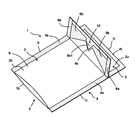
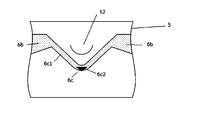
- FIG. 1 It is a perspective view which shows an example of the packaging bag for a microwave oven. It is a figure which shows another example of the packaging bag for a microwave oven, and is the figure which enlarges and shows the vicinity of the vapor vent seal part of the packaging for a microwave oven.
- the packaging bag 1 for a microwave oven of the present embodiment is a bag-shaped flexible packaging material 9.
- the microwave oven packaging bag 1 includes a front surface portion 2 and a back surface portion 3.
- the front surface portion 2 and the back surface portion 3 are welded by heat sealing in the sealing portion 4.
- the seal portion 4 includes a top seal portion 4t formed along the upper side 1t of the packaging bag 1 and a side seal portion 4s formed along the right side 1r or the left side 1l.
- the lower side 1b of the packaging bag 1 is not welded before the contents are stored, and is welded after the contents are stored in the microwave oven packaging bag 1 to form the bottom seal portion 4b.
- the sealing portion 4 is provided on the entire circumference of the microwave oven packaging bag 1, and the inside of the microwave oven packaging bag 1 is sealed.
- the packaging bag for a microwave oven of the present invention is characterized in that a paper packaging material mainly composed of a paper base material is used as the packaging material 9.
- the paper base material is a single-layer or multi-layer paper obtained by a general manufacturing method, and is a sheet composed of pulp, a filler, and various auxiliaries.
- pulp chemical pulp such as kraft pulp and sulfite pulp, mechanical pulp such as stone grind pulp and thermomechanical pulp, and non-wood fibers obtained from kenaf, bamboo, hemp and the like can be used as appropriate. Although it can be blended and used, it is preferable to use chemical pulp.
- filler known fillers such as talc, kaolin, clay, heavy calcium carbonate, light calcium carbonate, titanium oxide, zeolite, white carbon, and synthetic resin filler can be used.
- a sulfuric acid band and various anionic, cationic, nonionic, or amphoteric yield improvers, drainage improvers, paper strength enhancers, internal sizing agents, and other papermaking aids are used as needed.
- a dye, a fluorescent whitening agent, a pH adjusting agent, an antifoaming agent, a pitch control agent, a slime control agent and the like can be added as needed.
- the paper base material is, for example, wood pulp (chemical pulp, mechanical pulp), non-wood pulp, used paper pulp, etc., and fillers added as needed and other chemicals are dispersed in water to make a paper material. It is manufactured by spraying it on the wire of a papermaking machine, dehydrating it, and drying it. It is also possible to treat the paper surface with a size press or the like by using various chemicals such as polyvinyl alcohol, various starches, and surface sizing agents alone or in combination of two or more in order to impart strength and water resistance as needed. Yes, it is also possible to perform calendar processing or the like to adjust the unevenness of the paper.
- a paper packaging material mainly composed of a paper base material is used as the packaging material 9
- water vapor leakage and ensuring sealing properties become major problems. Therefore, in the present invention, a paper packaging material having a water vapor barrier layer provided on the surface of the paper base material is used.
- water vapor barrier resin used for the water vapor barrier layer examples include various copolymers such as styrene / butadiene type, styrene / acrylic type, ethylene / vinyl acetate type, butadiene / methyl methacrylate type, vinyl acetate / butyl acrylate type, and malean anhydride.
- examples thereof include acid copolymers, acrylic acid / methyl methacrylate-based copolymers, and polyamide resins, and these can be used alone or in combination of two or more.
- a water-soluble polymer such as polyvinyl alcohol can be used in combination with the above resin as long as there is no problem with the water vapor barrier property.
- the water vapor barrier layer may contain a pigment.
- pigments include inorganic pigments such as kaolin, clay, heavy calcium carbonate, light calcium carbonate, talc, titanium dioxide, barium sulfate, calcium sulfate, zinc oxide, silicic acid, silicate, colloidal silica, and organic pigments. These can be used alone or in combination of two or more.
- the water vapor barrier layer can be formed by preparing a water-based paint containing the water vapor barrier resin or the like and applying the water vapor barrier layer.
- the coating method of the water vapor barrier layer is not particularly limited, and a known coating apparatus can be used. For example, a blade coater, a bar coater, a roll coater, an air knife coater, a reverse roll coater, a curtain coater, a spray coater, a size press coater, a gate roll coater and the like can be mentioned.
- the coating amount of the water vapor barrier layer is preferably 3 g / m 2 or more and 50 g / m 2 or less in terms of dry weight, and specifically, for example, 3,4,5,6,7,8,9,10, It is 20, 30, 40, 50 g / m 2 , and may be in the range between any two of the numerical values exemplified here. If the coating amount of the water vapor barrier layer is less than 3 g / m 2 , the gaps between the paper fibers cannot be sufficiently filled and sufficient water vapor barrier properties cannot be obtained, and the gas barrier layer described later is a paper base material. In some cases, it may not be possible to obtain sufficient gas barrier properties. On the other hand, if it is more than 50 g / m 2, it takes a long time to dry at the time of coating, and there is a possibility that problems such as cracks in the coating layer may occur.
- the packaging bag 1 for a microwave oven of the present embodiment is characterized in that the packaging material 9 to be used is not provided with a barrier property by laminating a barrier film, but is provided by coating.
- a barrier film for example, it has a structure of paper / barrier film / sealant, and a certain thickness of the barrier film is required. Therefore, the proportion of resin increases, and it is difficult to achieve 50% or more of paper.
- the water vapor barrier layer is formed by coating as described above, it becomes paper / water vapor barrier coating / (gas barrier coating /) sealant /, and the barrier film becomes unnecessary, and the ratio of paper is 50% or more. Achieved. That is, by forming the water vapor barrier layer by coating, the thickness of the water vapor barrier layer can be reduced as compared with the case of laminating a film, and the ratio of the thickness of the paper base material can be increased. ..
- a water-soluble polymer can be used for the gas barrier layer, and the water-soluble polymer includes fully saponified polyvinyl alcohol, partially saponified polyvinyl alcohol, ethylene copolymerized polyvinyl alcohol, polyvinylpyrrolidone, starch, methyl cellulose, carboxymethyl cellulose, and alginate. Examples include sodium and the like.
- the coating amount of the gas barrier layer is preferably 0.2 g / m 2 or more and 20 g / m 2 or less in terms of dry weight, and specifically, for example, 0.2, 0.3, 0.4, 0.5. , 0.6, 0.7, 0.8, 0.9, 1.0, 2.0, 3.0, 4.0, 5.0, 6.0, 7.0, 8.0, 9 It is 0.0, 10, 11, 12 , 13, 14, 15, 16, 17, 18, 19, 20 g / m 2, and may be in the range between any two of the numerical values exemplified here. If the coating amount of the gas barrier layer is less than 0.2 g / m 2 , the gas barrier property may be insufficient.
- the coating method of the gas barrier layer is the same as that of the water vapor barrier layer described above, and is not particularly limited, and a known coating apparatus can be used.
- the gas barrier layer When forming the gas barrier layer, it is preferable to coat the paper, the water vapor barrier layer, and the gas barrier layer in this order. This makes it possible to prevent the gas barrier layer from being deteriorated due to the influence of moisture from the surface side.
- a sealant layer such as polyethylene, polypropylene, or polyvinyl acetate polymer can be provided on the paper barrier packaging material in which the water vapor barrier layer and the gas barrier layer are provided on the paper base material as described above.
- Particularly preferred as the material for the sealant layer is linear low density polyethylene.
- the thickness of the paper base material is preferably 50% or more of the thickness of the entire paper packaging material.
- the thickness of the paper base material is preferably 50% or more to 90% or less of the total thickness of the paper packaging material, and specifically, for example, 50, 60. , 70, 80, 90%, and may be in the range between any two of the numerical values exemplified here.
- the weight of the paper base material is also preferably 50% or more of the total weight of the paper packaging material.
- the thickness of the entire paper packaging material is preferably 250 ⁇ m or less and 50 ⁇ m or more, and more preferably 200 ⁇ m or less and 70 ⁇ m or more.
- the thickness of the paper base material is preferably 250 ⁇ m or less and 30 ⁇ m or more, more preferably 200 ⁇ m or less and 50 ⁇ m or more, and 150 ⁇ m or less and 70 ⁇ m or more. Is more preferable. If the thickness of the paper packaging material is too thick, problems such as difficulty in smooth expansion of the packaging bag for a microwave oven may occur. Further, if the thickness of the paper packaging material is too thick, there is a problem that bag making becomes difficult. In particular, if the shape has a flap (folded back), it will be difficult to make a bag if it is too thick.
- the sealant layer must be made thin in order to satisfy the thickness of the paper base material of 50% or more, and bag making cannot be performed. Further, when used in a microwave oven (when the packaging bag is heated in a sealed state), the sealant layer is easily peeled off during heating, so that the thickness of the sealant layer is 10 ⁇ m or more, preferably 20 ⁇ m or more, and the upper limit is It is 100 ⁇ m.
- the thickness of the paper base material is 50% or more of the total thickness, it may be bonded to a film other than the sealant layer.
- the film may be laminated on the outside of the paper substrate, or the film may be laminated between the paper substrate and the sealant layer.
- the front surface portion 2 includes a front surface lower portion 2d and a front surface upper portion 2u.
- the lower front portion 2d and the upper front portion 2u are respectively welded to the back surface portion 3.
- the lower front surface 2d and the upper front surface 2u are connected by a gassho portion (flap) 5 formed by being overlapped with each other in a folded state.
- the front lower portion 2d and the front upper portion 2u are welded in the pair of side seal portions 6a, the pair of end seal portions 6b, and the steam vent seal portion 6c.
- the side seal portion 6a is provided at a position along the right side 1r and the left side 1l in the gassho portion 5.
- the end seal portion 6b is provided so as to connect the side seal portion 6a and the steam vent seal portion 6c.
- the width of the end seal portion 6b narrows from the side seal portion 6a toward the steam vent seal portion 6c.
- the steam vent seal portion 6c has a substantially V shape in which the inner edge 6c1 is curved toward the inside of the packaging bag 1.
- a notch 12 is provided at a position outside the packaging bag 1 and adjacent to the inner edge 6c1 with respect to the inner edge 6c1.
- the internal pressure of the packaging bag 1 rises due to the steam generated from the moisture contained in the contents 11, which is an abbreviation for the steam vent seal portion 6c.
- the seal is peeled off near the V-shaped tip to form a steam flow path, and steam is discharged to the outside through the steam flow path.
- the steam is discharged to the outside from each of the end of the gassho portion 5 and the notch 12.
- the packaging bag 10 for a microwave oven of the present embodiment uses a paper packaging material mainly composed of a paper base material, it is possible to significantly reduce the use of plastic. Further, by providing a water vapor barrier layer or a sealant layer on the surface of the paper base material, it is possible to prevent steam leakage and the like, and it is also possible to secure sufficient sealing properties.
- the configuration, shape, etc. of the microwave oven packaging bag are not limited to those of the above embodiment, and can be applied to all microwave oven packaging bags.
- the thickness of the sealant layer is thinner than the thickness of the other seal portions, steam can be reliably discharged from the steam port. You can let it escape. Further, by thinning the sealant layer of the vapor release seal portion, for example, peeling easily occurs between the gas barrier layer and the sealant layer, and stable vapor release is possible while ensuring the sealing property.
- Packaging bag 1 Packaging bag 2 Front part 3 Back part 4 Seal part 5 Gassho part (flap) 6a Side seal part 6b End seal part 6c Steam vent seal part 9 Packaging material
Landscapes
- Engineering & Computer Science (AREA)
- Mechanical Engineering (AREA)
- Life Sciences & Earth Sciences (AREA)
- Food Science & Technology (AREA)
- Package Specialized In Special Use (AREA)
- Bag Frames (AREA)
- Packages (AREA)
Abstract
【課題】 環境負荷の大きなプラスチック材料を大幅に削減することが可能な電子レンジ用包装袋を提供する。 【解決手段】 包装材の周縁部を熱溶着して袋状に形成されるとともに、蒸気抜きシール部を有する電子レンジ用包装袋である。紙製包装材において、紙基材の厚さが全体の厚さの50%以上である。紙基材の厚さが30μm~250μmである。紙製包装材は、紙基材の表面に水蒸気バリア層を有する。水蒸気バリア層は水性塗料を塗布することにより形成されたものである。紙製包装材は、ガスバリア層を有し、紙基材上に水蒸気バリア層、ガスバリア層の順に形成されていてもよい。紙製包装材が、さらにシーラント層を有していてもよい。
Description
本発明は、マイクロ波加熱による内圧上昇時に速やかに開裂する蒸気抜きシール部を有する電子レンジ用包装袋に関する。
従来、フィルム製の電子レンジ用包装袋において、加熱による内部の蒸気圧上昇により、自動的にフィルムを部分的に剥離させて蒸気を抜く技術が提案されている(例えば、特許文献1参照)。
特許文献1には、プラスチックフィルムをヒートシールすることにより密封する電子レンジ用包装袋が開示される。この電子レンジ用包装袋では、倒伏可能な分岐部(フラップ)が片面に設けられている。分岐部には、加熱による内部の蒸気圧上昇により、自動的にフィルムを剥離させる蒸気抜きシール部が設けられる。
ところで、前述の電子レンジ用包装袋においては、使用する包装材に、蒸気を通さないこと、シール性に優れること等の特性が要求され、プラスチックフィルムが広く用いられている。プラスチックフィルムは入手が容易で、ヒートシールにより容易に袋状に形成することが可能である。
しかしながら、昨今の環境問題への関心の高まりとともに、プラスチックの削減が叫ばれており、電子レンジ用包装袋においても例外ではない。
本発明は、このような従来の事情に鑑みてなされたものであり、環境負荷の大きなプラスチック材料を可能な限り削減することが可能な電子レンジ用包装袋を提供することを目的とする。
前述の目的を達成するために、本発明の電子レンジ用包装袋は、包装材の周縁部を熱溶着して袋状に形成されるとともに、蒸気抜きシール部を有する電子レンジ用包装袋であって、前記紙製包装材において、紙基材の厚さが全体の厚さの50%以上であることを特徴とする。
電子レンジ用包装袋を形成するための包装材を紙基材を主体とする紙製包装材とすることで、プラスチックの使用が大幅に削減される。特に、紙基材の厚さを全体の厚さの50%以上とすることで、プラスチック(石油由来製品)の削減効果が大きい。
本発明によれば、環境負荷の大きなプラスチック材料を大幅に削減することが可能な電子レンジ用包装袋を提供することができる。
以下、本発明を適用した電子レンジ用包装袋の実施形態について図面を参照して説明する。
図1に示すように、本実施形態の電子レンジ用包装袋1は、可撓性を有する包装材9が袋状に形成されたものである。電子レンジ用包装袋1は、前面部2と、背面部3を備える。前面部2と背面部3は、シール部4において、ヒートシールによって溶着されている。シール部4は、包装袋1の上辺1tに沿って形成されたトップシール部4tと、右側辺1r又は左側辺1lに沿って形成されたサイドシール部4sを備える。包装袋1の下辺1bは、内容物の収容前は溶着されておらず、内容物を電子レンジ用包装袋1に収容した後に溶着されてボトムシール部4bが形成される。これによって電子レンジ用包装袋1の全周にシール部4が設けられ、電子レンジ用包装袋1の内部が密閉される。
ここで、本発明の電子レンジ用包装袋では、包装材9として、紙基材を主体とする紙製包装材を用いたことが大きな特徴である。
紙基材は、一般的な製造方法で得られた単層、あるいは多層の紙であり、パルプ、填料、各種助剤からなるシートである。パルプとしては、クラフトパルプ、サルファイトパルプ等の化学パルプ、ストーングラインドパルプ、サーモメカニカルパルプ等の機械パルプ、ケナフ、竹、麻等から得られた非木材繊維等を用いることができ、これらを適宜配合して用いることが可能であるが、化学パルプを用いることが好ましい。
填料としては、タルク、カオリン、クレー、重質炭酸カルシウム、軽質炭酸カルシウム、酸化チタン、ゼオライト、ホワイトカーボン、合成樹脂填料等の公知の填料を使用することができる。また、硫酸バンドや各種のアニオン性、カチオン性、ノニオン性あるいは、両性の歩留まり向上剤、濾水性向上剤、紙力増強剤や内添サイズ剤等の抄紙用内添助剤を必要に応じて使用することができる。さらに、染料、蛍光増白剤、pH調整剤、消泡剤、ピッチコントロール剤、スライムコントロール剤等も必要に応じて添加することができる。
紙基材は、例えば、木材パルプ(化学パルプ、機械パルプ)、非木材パルプ、古紙パルプ等と必要に応じて添加した填料やその他薬品等を水に分散して紙料とし、この紙料を抄紙機のワイヤー上に噴射した後、脱水、乾燥することで製造される。また、必要に応じて強度や耐水性を付与するために、各種ポリビニルアルコール、各種デンプン、表面サイズ剤などの薬品を単独又は2種類以上組み合わせてサイズプレス等で紙表面を処理することも可能であり、紙の凹凸を整えるカレンダー処理等を施すことも可能である。
ただし、紙基材を主体とする紙製包装材を包装材9として使用した場合、水蒸気の漏れやシール性の確保が大きな問題となる。そこで、本発明では、紙基材の表面に水蒸気バリア層を設けた紙製包装材を用いることとする。
水蒸気バリア層に用いる水蒸気バリア性樹脂としては、例えばスチレン・ブタジエン系、スチレン・アクリル系、エチレン・酢酸ビニル系、ブタジエン・メチルメタクリレート系、酢酸ビニル・ブチルアクリレート系等の各種共重合体、無水マレイン酸共重合体、アクリル酸・メチルメタクリレート系共重合体、ポリアミド樹脂等を挙げることができ、これらを単独あるいは2種類以上混合して使用することができる。なお、水蒸気バリア性に問題がない程度であれば、ポリビニルアルコール等の水溶性高分子を前記の樹脂と併用することも可能である。
水蒸気バリア層には顔料を含有させてもよい。顔料としてはカオリン、クレー、重質炭酸カルシウム、軽質炭酸カルシウム、タルク、二酸化チタン、硫酸バリウム、硫酸カルシウム、酸化亜鉛、珪酸、珪酸塩、コロイダルシリカ等の無機顔料や、有機顔料等を挙げることができ、これらを単独または2種類以上混合して使用することができる。
水蒸気バリア層は、前記水蒸気バリア性樹脂等を含む水性塗料を調製し、これを塗布することにより形成することができる。水蒸気バリア層の塗工方法については特に限定されるものではなく、公知の塗工装置を用いることができる。例えば、ブレードコーター、バーコーター、ロールコーター、エアナイフコーター、リバースロールコーター、カーテンコーター、スプレーコーター、サイズプレスコーター、ゲートロールコーター等が挙げられる。
水蒸気バリア層の塗工量は、乾燥重量で3g/m2以上50g/m2以下とすることが好ましく、具体的には例えば、3,4,5,6,7,8,9,10,20,30,40,50g/m2であり、ここで例示した数値の何れか2つの間の範囲であっても良い。水蒸気バリア層の塗工量が3g/m2未満であると、紙繊維の隙間を十分に埋めることができず、十分な水蒸気バリア性が得られなくなることや、後述のガスバリア層が紙基材にまで浸透して、十分なガスバリア性が得られなくなることがある。一方、50g/m2より多いと、塗工時に乾燥に長時間を要し、塗工層に割れが生ずる等の問題が生ずるおそれがある。
本実施形態の電子レンジ用包装袋1では、使用する包装材9において、バリアフィルムをラミネートしてバリア性を付与したわけではなく、塗布(コーティング)によって付与したことが大きな特徴である。バリアフィルムを使用する場合、例えば、紙/バリアフィルム/シーラントという構成になり、バリアフィルムの厚みがある程度必要となるため、樹脂の割合が増え、紙50%以上を達成することが困難である。これに対して、前記のように水蒸気バリア層を塗布により形成すると、紙/水蒸気バリア塗工/(ガスバリア塗工/)シーラント/となり、バリアフィルムが不要となって、紙の割合50%以上が達成される。すなわち、水蒸気バリア層を塗布により形成することで、フィルムをラミネートする場合に比べて水蒸気バリア層の厚さを薄くすることができ、紙基材の厚さの比率を大きくすることが可能である。
また、水蒸気バリア層に加えてガスバリア層を形成することも可能である。ガスバリア層には水溶性高分子が使用可能であり、水溶性高分子としては、完全ケン化ポリビニルアルコール、部分ケン化ポリビニルアルコール、エチレン共重合ポリビニルアルコール、ポリビニルピロリドン、デンプン、メチルセルロース、カルボキシメチルセルロース、アルギン酸ナトリウム等を挙げることができる。
ガスバリア層の塗工量は、乾燥重量で0.2g/m2以上20g/m2以下とすることが好ましく、具体的には例えば、0.2,0.3,0.4,0.5,0.6,0.7,0.8,0.9,1.0,2.0,3.0,4.0,5.0,6.0,7.0,8.0,9.0,10,11,12,13,14,15,16,17,18,19,20g/m2であり、ここで例示した数値の何れか2つの間の範囲であっても良い。ガスバリア層の塗工量が0.2g/m2未満であると、ガスバリア性が不十分になるおそれがある。一方、20g/m2より多いと、塗工時に乾燥に長時間を要し、塗工層に割れが生ずる等の問題が生ずるおそれがある。ガスバリア層の塗工方法は、先の水蒸気バリア層と同様であり、特に限定されるものではなく、公知の塗工装置を用いることができる。
ガスバリア層を形成する場合、紙、水蒸気バリア層、ガスバリア層の順にコーティングすることが好ましい。これにより、表面側からの水分が影響してガスバリア層を劣化することを防ぐことができる。
さらに、前記のように紙基材上に水蒸気バリア層やガスバリア層を設けた紙製バリア包装材料に、ポリエチレン、ポリプロピレン、ポリ酢酸ビニル重合体などのシーラント層を設けることができる。シーラント層の材料として特に好ましいのは、直鎖状低密度ポリエチレンである。シーラント層を設けることにより、紙製包装材のシール性を確保することが可能である。シーラント層の積層方法については特に制限されるものではなく、従来の溶融押し出しラミネート法やフィルムを用いたドライラミネート法、直接溶融コート法等方法を用いることができる。
前述の紙製包装材においては、紙の占める割合が大きいほどプラスチックの削減効果が大きい。このような観点から、紙基材の厚さは、紙製包装材全体の厚さの50%以上であることが好ましい。前記水蒸気バリア層の形成等を考えると、紙基材の厚さは、紙製包装材全体の厚さの50%以上~90%以下であることが好ましく、具体的には例えば、50、60、70、80、90%であり、ここで例示した数値の何れか2つの間の範囲であっても良い。紙製基材の重量についても、紙製包装材全体の重量の50%以上であることが好ましい。
また、紙製包装材全体の厚さは、250μm以下50μm以上であることが好ましく、200μm以下70μm以上であることがより好ましい。紙基材の厚さは、250μm以下30μm以上であることが好ましく、200μm以下50μm以上であることがより好ましく、150μm以下70μm以上。であることがさらに好ましい。紙製包装材の厚さが厚すぎると、電子レンジ用包装袋として円滑な膨張が難しくなる等の問題が生ずるおそれがある。また、紙製包装材の厚さが厚すぎると、製袋が難しくなるという問題もある。特に、フラップ(折り返し)のある形状では、厚すぎると製袋し難くなる。
逆に、紙基材の厚さが薄いと、紙基材の厚さ50%以上を満たすためには、シーラント層を薄くせざるを得ず、製袋できなくなる。また、電子レンジで使用する場合(包装袋を密閉した状態で加熱する場合)、加熱中にシーラント層が剥がれ易くなるため、シーラント層の厚みは、10μm以上、好ましくは20μm以上であり、上限は100μmである。
さらに、紙基材の厚さが全体の厚さの50%以上となる範囲内において、シーラント層以外のフィルムと貼り合わせても良い。例えば、紙基材の外側にフィルムをラミネートしてもよいし、紙基材とシーラント層の間にフィルムをラミネートしてもよい。
本実施形態の電子レンジ用包装袋10において、図1に示すように、前面部2は、前面下部2dと前面上部2uを備える。前面下部2dと前面上部2uは、それぞれ、背面部3に溶着されている。前面下部2dと前面上部2uは、互いに折り返された状態で重ね合わされて形成された合掌部(フラップ)5において連結されている。図1に示すように、合掌部5においては、一対のサイドシール部6a、一対のエンドシール部6b、及び蒸気抜きシール部6cにおいて前面下部2dと前面上部2uが溶着されている。サイドシール部6aは、合掌部5において、右側辺1r及び左側辺1lに沿った位置に設けられている。エンドシール部6bは、サイドシール部6aと蒸気抜きシール部6cを連結するように設けられている。エンドシール部6bは、サイドシール部6aから蒸気抜きシール部6cに向かって幅が狭くなっている。蒸気抜きシール部6cは、その内側縁6c1が包装袋1の内側に向かって湾曲する略V字形状になっている。内側縁6c1よりも包装袋1の外側であってかつ内側縁6c1に隣接した位置には切込12が設けられている。
内容物が充填された電子レンジ用包装袋1を電子レンジで加熱すると、内容物11に含まれる水分から生じた蒸気によって包装袋1の内圧が上昇し、これによって、蒸気抜きシール部6cの略V字形状の先端近傍においてシールが剥がれて、蒸気流路が形成され、蒸気流路を通じて蒸気が外部に放出される。蒸気は、合掌部5の端部と、切込12のそれぞれから外部に放出される。
以上の通り、本実施形態の電子レンジ用包装袋10では、紙基材を主体とする紙製包装材を用いているので、プラスチックの使用を大幅に削減することが可能である。また、紙基材の表面に水蒸気バリア層やシーラント層を設けることで、蒸気漏れ等を防止することができ、十分なシール性を確保することも可能である。
以上、本発明を適用した実施形態について説明してきたが、本発明がこの実施形態に限定されるものではなく、本発明の要旨を逸脱しない範囲で、種々の変更が可能であることは言うまでもない。
例えば、電子レンジ用包装袋の構成、形状等は先の実施形態のものに限られず、電子レンジ用包装袋全般に適用可能である。
また、図2に示すように、蒸気抜きシール部の先端に、シーラント層の厚みが他のシール部の厚みより薄くなるポイントシール(強圧シール)6c2を設けることで、蒸気口から確実に蒸気を逃がすことができる。また、蒸気抜きシール部のシーラント層を薄くすることで、例えばガスバリア層とシーラント層の間で剥離が起こり易くなり、シール性を確保しつつ、安定した蒸気抜けが可能となる。
1 包装袋
2 前面部
3 背面部
4 シール部
5 合掌部(フラップ)
6a サイドシール部
6b エンドシール部
6c 蒸気抜きシール部
9 包装材
2 前面部
3 背面部
4 シール部
5 合掌部(フラップ)
6a サイドシール部
6b エンドシール部
6c 蒸気抜きシール部
9 包装材
Claims (7)
- 包装材の周縁部を熱溶着して袋状に形成されるとともに、蒸気抜きシール部を有する電子レンジ用包装袋であって、
前記紙製包装材において、紙基材の厚さが全体の厚さの50%以上であることを特徴とする電子レンジ用包装袋。 - 前記紙基材の厚さが30μm~250μmであることを特徴とする請求項1記載の電子レンジ用包装袋。
- 前記紙製包装材は、紙基材の表面に水蒸気バリア層を有することを特徴とする請求項1または2記載の電子レンジ用包装袋。
- 前記水蒸気バリア層は水性塗料を塗布することにより形成されたものであることを特徴とする請求項3記載の電子レンジ用包装袋。
- 前記紙製包装材は、ガスバリア層を有し、紙基材上に水蒸気バリア層、ガスバリア層の順に形成されていることを特徴とする請求項3または4記載の電子レンジ用包装材。
- 紙製包装材が、さらにシーラント層を有することを特徴とする請求項3から5のいずれか1項記載の電子レンジ用包装袋。
- フラップを有し、当該フラップに蒸気抜きシール部が形成されていることを特徴とする請求項1から6のいずれか1項記載の電子レンジ用包装袋。
Priority Applications (1)
| Application Number | Priority Date | Filing Date | Title |
|---|---|---|---|
| CN202080059695.4A CN114269660B (zh) | 2019-09-30 | 2020-09-28 | 微波炉用包装袋 |
Applications Claiming Priority (2)
| Application Number | Priority Date | Filing Date | Title |
|---|---|---|---|
| JP2019-180659 | 2019-09-30 | ||
| JP2019180659A JP7333501B2 (ja) | 2019-09-30 | 2019-09-30 | 電子レンジ用包装袋 |
Publications (1)
| Publication Number | Publication Date |
|---|---|
| WO2021065762A1 true WO2021065762A1 (ja) | 2021-04-08 |
Family
ID=75272161
Family Applications (1)
| Application Number | Title | Priority Date | Filing Date |
|---|---|---|---|
| PCT/JP2020/036513 Ceased WO2021065762A1 (ja) | 2019-09-30 | 2020-09-28 | 電子レンジ用包装袋 |
Country Status (4)
| Country | Link |
|---|---|
| JP (1) | JP7333501B2 (ja) |
| CN (1) | CN114269660B (ja) |
| TW (1) | TWI864124B (ja) |
| WO (1) | WO2021065762A1 (ja) |
Families Citing this family (1)
| Publication number | Priority date | Publication date | Assignee | Title |
|---|---|---|---|---|
| CN115108156B (zh) * | 2022-07-04 | 2023-09-15 | 江苏省瑞达包装有限公司 | 一种高阻隔性包装袋的生产工艺 |
Citations (7)
| Publication number | Priority date | Publication date | Assignee | Title |
|---|---|---|---|---|
| JPH1191837A (ja) * | 1997-09-19 | 1999-04-06 | Dainippon Printing Co Ltd | 包装体 |
| JP2005320023A (ja) * | 2004-05-07 | 2005-11-17 | Toyo Seikan Kaisha Ltd | 平置き型の電子レンジ用包装袋 |
| JP2011140326A (ja) * | 2010-01-07 | 2011-07-21 | Dainippon Printing Co Ltd | 開封補助摘みを有するパウチ |
| JP2013079469A (ja) * | 2011-10-04 | 2013-05-02 | Techno World:Kk | ガスバリア紙状体及びそれを用いた包装体 |
| JP2015189071A (ja) * | 2014-03-28 | 2015-11-02 | 大日本印刷株式会社 | 積層体 |
| JP2017124851A (ja) * | 2016-01-13 | 2017-07-20 | 日本製紙株式会社 | 紙製容器 |
| JP2017214129A (ja) * | 2016-06-02 | 2017-12-07 | 東洋製罐株式会社 | 電子レンジ用パウチ |
Family Cites Families (10)
| Publication number | Priority date | Publication date | Assignee | Title |
|---|---|---|---|---|
| JPH10193518A (ja) * | 1997-01-14 | 1998-07-28 | Dainippon Printing Co Ltd | プラスチック製袋 |
| US7048975B1 (en) * | 1999-10-15 | 2006-05-23 | Kao Corporation | Pulp molded container |
| CN100551791C (zh) * | 2003-07-24 | 2009-10-21 | 凸版印刷株式会社 | 具有除蒸气功能的包装袋 |
| CN201193134Y (zh) * | 2008-02-26 | 2009-02-11 | 胡海川 | Pvdc高阻隔液体食品软包装材料及包装袋 |
| JPWO2011040547A1 (ja) * | 2009-09-30 | 2013-02-28 | 日本製紙株式会社 | 紙製バリア材料 |
| JP5331265B1 (ja) * | 2011-11-10 | 2013-10-30 | 日本製紙株式会社 | 紙製バリア包装材料 |
| JP6282026B2 (ja) * | 2012-02-13 | 2018-02-21 | キョーラク株式会社 | 包装袋 |
| JP6031829B2 (ja) * | 2012-05-30 | 2016-11-24 | 大日本印刷株式会社 | 包装材料及びそれよりなる紙容器 |
| JP2014009413A (ja) * | 2012-06-29 | 2014-01-20 | Nippon Paper Industries Co Ltd | 紙製バリア包装材料 |
| CN109789959B (zh) * | 2016-09-23 | 2020-08-11 | 东洋制罐株式会社 | 微波炉加热用包装袋 |
-
2019
- 2019-09-30 JP JP2019180659A patent/JP7333501B2/ja active Active
-
2020
- 2020-09-28 CN CN202080059695.4A patent/CN114269660B/zh active Active
- 2020-09-28 WO PCT/JP2020/036513 patent/WO2021065762A1/ja not_active Ceased
- 2020-09-30 TW TW109134300A patent/TWI864124B/zh active
Patent Citations (7)
| Publication number | Priority date | Publication date | Assignee | Title |
|---|---|---|---|---|
| JPH1191837A (ja) * | 1997-09-19 | 1999-04-06 | Dainippon Printing Co Ltd | 包装体 |
| JP2005320023A (ja) * | 2004-05-07 | 2005-11-17 | Toyo Seikan Kaisha Ltd | 平置き型の電子レンジ用包装袋 |
| JP2011140326A (ja) * | 2010-01-07 | 2011-07-21 | Dainippon Printing Co Ltd | 開封補助摘みを有するパウチ |
| JP2013079469A (ja) * | 2011-10-04 | 2013-05-02 | Techno World:Kk | ガスバリア紙状体及びそれを用いた包装体 |
| JP2015189071A (ja) * | 2014-03-28 | 2015-11-02 | 大日本印刷株式会社 | 積層体 |
| JP2017124851A (ja) * | 2016-01-13 | 2017-07-20 | 日本製紙株式会社 | 紙製容器 |
| JP2017214129A (ja) * | 2016-06-02 | 2017-12-07 | 東洋製罐株式会社 | 電子レンジ用パウチ |
Also Published As
| Publication number | Publication date |
|---|---|
| JP7333501B2 (ja) | 2023-08-25 |
| JP2021054501A (ja) | 2021-04-08 |
| CN114269660A (zh) | 2022-04-01 |
| TWI864124B (zh) | 2024-12-01 |
| TW202114914A (zh) | 2021-04-16 |
| CN114269660B (zh) | 2023-12-15 |
Similar Documents
| Publication | Publication Date | Title |
|---|---|---|
| RU2211177C2 (ru) | Слоистые упаковочные материалы и полученные из них упаковочные контейнеры | |
| CA2784232C (en) | A paper or paperboard substrate, a process for production of the substrate and a package formed of the substrate | |
| US10899119B2 (en) | Method of producing a packaging material for a retortable package | |
| JP2014009413A (ja) | 紙製バリア包装材料 | |
| CN113382861A (zh) | 纸制阻隔材料 | |
| TR201806881T4 (tr) | Bir paketleme haznesine yönelik bir paketleme katmanının yanı sıra paketleme katmanından üretilen paketleme hazneleri. | |
| EP3184694A1 (en) | Rainproof paper sack | |
| JP2017124851A (ja) | 紙製容器 | |
| WO2021065762A1 (ja) | 電子レンジ用包装袋 | |
| JP7843110B2 (ja) | 包装用紙 | |
| JP2022024906A (ja) | ヒートシール紙及び包装材 | |
| EP4486946A1 (en) | A method for manufacturing a barrier layer for a paper or paperboard based packaging laminate | |
| SE2250284A1 (en) | A method for manufacturing a paper or paperboard based packaging laminate | |
| JP2013147001A (ja) | 紙製バリア包装材料 | |
| JP6492600B2 (ja) | 紙製バリア包材材料 | |
| JP6838407B2 (ja) | 電子写真用転写シートおよびその使用方法 | |
| JP2013144363A (ja) | 紙製バリア包装材料 | |
| JP2023107689A (ja) | ヒートシール紙及び包装材 | |
| JP7485487B2 (ja) | 紙製バリア材料、バリア原紙、および紙製バリア材料の製造方法 | |
| JP7531740B1 (ja) | 紙製バリア材料の製造方法 | |
| JPH1138557A (ja) | 写真感光材料包装用紙材及びその製造方法並びにそれを用いた写真感光材料包装体 | |
| JP2025524624A (ja) | 板紙ベースの包装用積層体を製造する方法 |
Legal Events
| Date | Code | Title | Description |
|---|---|---|---|
| 121 | Ep: the epo has been informed by wipo that ep was designated in this application |
Ref document number: 20872940 Country of ref document: EP Kind code of ref document: A1 |
|
| NENP | Non-entry into the national phase |
Ref country code: DE |
|
| 122 | Ep: pct application non-entry in european phase |
Ref document number: 20872940 Country of ref document: EP Kind code of ref document: A1 |