WO2021044627A1 - 細胞に光を照射する方法 - Google Patents
細胞に光を照射する方法 Download PDFInfo
- Publication number
- WO2021044627A1 WO2021044627A1 PCT/JP2019/035255 JP2019035255W WO2021044627A1 WO 2021044627 A1 WO2021044627 A1 WO 2021044627A1 JP 2019035255 W JP2019035255 W JP 2019035255W WO 2021044627 A1 WO2021044627 A1 WO 2021044627A1
- Authority
- WO
- WIPO (PCT)
- Prior art keywords
- light
- fluorescence
- irradiating
- therapeutic
- irradiation
- Prior art date
- Legal status (The legal status is an assumption and is not a legal conclusion. Google has not performed a legal analysis and makes no representation as to the accuracy of the status listed.)
- Ceased
Links
Images


Classifications
-
- A—HUMAN NECESSITIES
- A61—MEDICAL OR VETERINARY SCIENCE; HYGIENE
- A61N—ELECTROTHERAPY; MAGNETOTHERAPY; RADIATION THERAPY; ULTRASOUND THERAPY
- A61N5/00—Radiation therapy
- A61N5/06—Radiation therapy using light
- A61N5/0613—Apparatus adapted for a specific treatment
- A61N5/062—Photodynamic therapy, i.e. excitation of an agent
-
- A—HUMAN NECESSITIES
- A61—MEDICAL OR VETERINARY SCIENCE; HYGIENE
- A61B—DIAGNOSIS; SURGERY; IDENTIFICATION
- A61B1/00—Instruments for performing medical examinations of the interior of cavities or tubes of the body by visual or photographical inspection, e.g. endoscopes; Illuminating arrangements therefor
- A61B1/00002—Operational features of endoscopes
- A61B1/00004—Operational features of endoscopes characterised by electronic signal processing
- A61B1/00009—Operational features of endoscopes characterised by electronic signal processing of image signals during a use of endoscope
-
- A—HUMAN NECESSITIES
- A61—MEDICAL OR VETERINARY SCIENCE; HYGIENE
- A61B—DIAGNOSIS; SURGERY; IDENTIFICATION
- A61B1/00—Instruments for performing medical examinations of the interior of cavities or tubes of the body by visual or photographical inspection, e.g. endoscopes; Illuminating arrangements therefor
- A61B1/04—Instruments for performing medical examinations of the interior of cavities or tubes of the body by visual or photographical inspection, e.g. endoscopes; Illuminating arrangements therefor combined with photographic or television appliances
- A61B1/043—Instruments for performing medical examinations of the interior of cavities or tubes of the body by visual or photographical inspection, e.g. endoscopes; Illuminating arrangements therefor combined with photographic or television appliances for fluorescence imaging
-
- A—HUMAN NECESSITIES
- A61—MEDICAL OR VETERINARY SCIENCE; HYGIENE
- A61B—DIAGNOSIS; SURGERY; IDENTIFICATION
- A61B5/00—Measuring for diagnostic purposes; Identification of persons
- A61B5/0059—Measuring for diagnostic purposes; Identification of persons using light, e.g. diagnosis by transillumination, diascopy, fluorescence
- A61B5/0071—Measuring for diagnostic purposes; Identification of persons using light, e.g. diagnosis by transillumination, diascopy, fluorescence by measuring fluorescence emission
-
- A—HUMAN NECESSITIES
- A61—MEDICAL OR VETERINARY SCIENCE; HYGIENE
- A61B—DIAGNOSIS; SURGERY; IDENTIFICATION
- A61B5/00—Measuring for diagnostic purposes; Identification of persons
- A61B5/0059—Measuring for diagnostic purposes; Identification of persons using light, e.g. diagnosis by transillumination, diascopy, fluorescence
- A61B5/0082—Measuring for diagnostic purposes; Identification of persons using light, e.g. diagnosis by transillumination, diascopy, fluorescence adapted for particular medical purposes
- A61B5/0084—Measuring for diagnostic purposes; Identification of persons using light, e.g. diagnosis by transillumination, diascopy, fluorescence adapted for particular medical purposes for introduction into the body, e.g. by catheters
- A61B5/0086—Measuring for diagnostic purposes; Identification of persons using light, e.g. diagnosis by transillumination, diascopy, fluorescence adapted for particular medical purposes for introduction into the body, e.g. by catheters using infrared radiation
-
- A—HUMAN NECESSITIES
- A61—MEDICAL OR VETERINARY SCIENCE; HYGIENE
- A61K—PREPARATIONS FOR MEDICAL, DENTAL OR TOILETRY PURPOSES
- A61K41/00—Medicinal preparations obtained by treating materials with wave energy or particle radiation ; Therapies using these preparations
- A61K41/0057—Photodynamic therapy with a photosensitizer, i.e. agent able to produce reactive oxygen species upon exposure to light or radiation, e.g. UV or visible light; photocleavage of nucleic acids with an agent
-
- A—HUMAN NECESSITIES
- A61—MEDICAL OR VETERINARY SCIENCE; HYGIENE
- A61K—PREPARATIONS FOR MEDICAL, DENTAL OR TOILETRY PURPOSES
- A61K41/00—Medicinal preparations obtained by treating materials with wave energy or particle radiation ; Therapies using these preparations
- A61K41/0057—Photodynamic therapy with a photosensitizer, i.e. agent able to produce reactive oxygen species upon exposure to light or radiation, e.g. UV or visible light; photocleavage of nucleic acids with an agent
- A61K41/008—Two-Photon or Multi-Photon PDT, e.g. with upconverting dyes or photosensitisers
-
- A—HUMAN NECESSITIES
- A61—MEDICAL OR VETERINARY SCIENCE; HYGIENE
- A61N—ELECTROTHERAPY; MAGNETOTHERAPY; RADIATION THERAPY; ULTRASOUND THERAPY
- A61N5/00—Radiation therapy
- A61N5/06—Radiation therapy using light
- A61N5/0601—Apparatus for use inside the body
-
- A—HUMAN NECESSITIES
- A61—MEDICAL OR VETERINARY SCIENCE; HYGIENE
- A61B—DIAGNOSIS; SURGERY; IDENTIFICATION
- A61B18/00—Surgical instruments, devices or methods for transferring non-mechanical forms of energy to or from the body
- A61B2018/00982—Surgical instruments, devices or methods for transferring non-mechanical forms of energy to or from the body combined with or comprising means for visual or photographic inspections inside the body, e.g. endoscopes
-
- A—HUMAN NECESSITIES
- A61—MEDICAL OR VETERINARY SCIENCE; HYGIENE
- A61B—DIAGNOSIS; SURGERY; IDENTIFICATION
- A61B5/00—Measuring for diagnostic purposes; Identification of persons
- A61B5/48—Other medical applications
- A61B5/4836—Diagnosis combined with treatment in closed-loop systems or methods
-
- A—HUMAN NECESSITIES
- A61—MEDICAL OR VETERINARY SCIENCE; HYGIENE
- A61N—ELECTROTHERAPY; MAGNETOTHERAPY; RADIATION THERAPY; ULTRASOUND THERAPY
- A61N5/00—Radiation therapy
- A61N5/06—Radiation therapy using light
- A61N2005/0658—Radiation therapy using light characterised by the wavelength of light used
- A61N2005/0659—Radiation therapy using light characterised by the wavelength of light used infrared
Definitions
- the present invention relates to a method of irradiating cells with a step of administering a fluorescent agent to the cells and irradiating them with a predetermined light.
- PDT Photodynamic Therapy
- tumor-affinitive photosensitizers administered into the body gather in cancer cells by utilizing the property of gathering in cancer cells rather than normal cells and the property of activating and releasing active oxygen when irradiated with laser light. Cancer cells are selectively destroyed by a chemical reaction generated by irradiating a tumor-affinitive photosensitizer with laser light.
- Japanese Patent Application Laid-Open No. 2017-71654 states that a human antibody (EGFR antibody drug Vectibix) is labeled with a fluorescent dye (IRDye700) in the body in three molecules per molecule of the antibody (binding). ), A method of killing (destroying) cancer cells by administering a fluorescent agent (Pan-IR700) and irradiating it with near-infrared light, so-called Photoimmunotherapy (PIT) is disclosed.
- near-infrared light having a wavelength of 660 to 710 nm is emitted at least 1 J / cm with respect to the fluorescent drug by utilizing the property that the fluorescent drug administered into the body specifically binds to the protein of cancer cells. Irradiate up to 2.
- the fluorescent dye absorbs light and vibrates the molecule of the antibody, thereby damaging the cancer cell membrane and causing the cancer cells to rupture, and the cells scattered due to the rupture are activated by the surrounding normal cells. Only cancer cells are selectively killed by inducing an immune response by normal cells such as.
- the detailed principle, method, and various conditions of PIT are disclosed in Japanese Patent Application Laid-Open No. 2017-71654.
- the present invention has been made in view of the above circumstances, and an object of the present invention is to provide a method of irradiating cells that can surely kill cancer cells by light irradiation in PIT.
- a method of irradiating light to the cells according to an aspect of the present invention for achieving the above object a drug administration step of administering a fluorescent agent to a cell, the larger 50 mW / cm 2 or less light intensity than 0 mW / cm 2 to the cells It has a light irradiation step of irradiating the predetermined light of the above up to at least 1 J / cm 2.
- the figure which shows the outline of the composition of the fluorescent agent administered to the cell of FIG. A flowchart showing a method of irradiating therapeutic light using the light irradiation system of FIG.
- the cells were irradiated with a treatment light having a light intensity of 25 mW / cm 2, a treatment light having a light intensity of 50 mW / cm 2, a treatment light having a light intensity of 100 mW / cm 2, and a treatment light having a light intensity of 300 mW / cm 2 .
- Chart showing the relationship between light intensity and cell damage rate in cases A flowchart showing a modified example in which the fluorescence intensity measurement step of FIG. 3 is performed after irradiating the therapeutic light to a predetermined amount of light.
- FIG. 1 is a diagram showing a light irradiation system used in the method of irradiating cells of the present embodiment with light
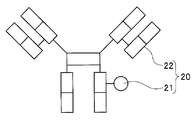
- FIG. 2 is a diagram showing an outline of the configuration of a fluorescent agent administered to the cells of FIG.
- the light irradiation system 100 used for the above-mentioned PIT has a main part composed of an endoscope 1 and a processor 50.
- the endoscope 1 has an insertion portion 10 to be inserted into the subject.
- An objective optical system 4 for observing the inside of the subject in the observation range H and an illumination optical system 2 for supplying illumination light I into the subject are provided on the tip surface 10s of the insertion portion 10 so as to face the tip surface 10s. ing.
- the image pickup device 5 is provided at the imaging position of the objective optical system 4 in the insertion portion 10.
- a light guide 3 for supplying illumination light I to the illumination optical system 2 is provided in the insertion portion 10.
- a light emitting element such as an LED may be used in the configuration for supplying the illumination light I into the subject.
- the insertion portion 10 is provided with a channel 6 that opens to the tip surface 10s, and the treatment light irradiation device 7 can be freely inserted and removed from the channel 6.
- the therapeutic light irradiation device 7 is a cancer cell to which the fluorescent agent 20 in the subject is administered in a state where the treatment light irradiation device 7 is inserted from a proximal end side insertion port (not shown) of the channel 6 and protrudes into the subject from the tip of the channel 6 ( C is irradiated with therapeutic light L, which is a predetermined light (hereinafter, simply referred to as a cell).
- the therapeutic light L includes near-infrared light.
- the fluorescent agent 20 as shown in FIG. 2, Pan in which a human antibody (EGFR antibody drug Vectibix) 22 is labeled (bound) with a fluorescent dye (IRDye700) 21 in three molecules per molecule of the antibody. -IR700 can be mentioned.
- the fluorescent agent 20 is not limited to Pan-IR700.
- the cells C may be irradiated with the therapeutic light L by using the light guide 3 and the illumination optical system 2 without using the therapeutic light irradiation device 7.
- the processor 50 includes an illumination light source unit 51, a therapeutic light source unit 52, and an image processing unit 53.
- the illumination light source unit 51 supplies the illumination light I to the illumination optical system 2 by supplying the illumination light I to the light guide 3.
- the therapeutic light source unit 52 supplies the therapeutic light L to the therapeutic light irradiation device 7. Further, the therapeutic light source unit 52 is electrically connected to the image processing unit 53, and supplies the therapeutic light L to the therapeutic light irradiation device 7 based on the image determination described later in the image processing unit 53.
- the image processing unit 53 is electrically connected to the image sensor 5. Further, the image processing unit 53 uses the image of the cell C imaged by the image pickup device 5 to measure the intensity data of the fluorescence from the fluorescent agent 20 accompanying the irradiation of the cell C with the therapeutic light L, and the intensity data. Is compared with a predetermined value, and then it is determined whether or not the therapeutic light source unit 52 is continuously irradiated with the therapeutic light L.
- the therapeutic light source unit 52 may be built in the processor 50 or externally attached.
- the fluorescence intensity data is displayed on a monitor (not shown), and the operator determines whether to continuously irradiate the therapeutic light L from the fluorescence intensity data displayed on the monitor. You may.
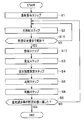
- FIG. 3 is a flowchart showing a method of irradiating therapeutic light using the light irradiation system of FIG.
- step S1 a drug administration step of administering the fluorescent agent 20 shown in FIG. 2 to the cells C is performed.
- fluorescence is performed by a local route, an injection, an oral route, an ocular route, a sublingual route, a rectal route, a transdermal route, an intranasal route, a vaginal route, an inhalation route, or the like.
- the drug 20 is administered, for example, in the observation range H of the objective optical system 4 of the endoscope 1.
- the administration of the fluorescent agent 20 is not limited to the method using the endoscope 1.
- step S2 in a state where the illumination light I is supplied from the illumination optical system 2 to the observation range H of the objective optical system 4 and the cell C in the subject, the light intensity (irradiation power density) is 0 mW with respect to the cell C.
- a light irradiation step of irradiating the therapeutic light L larger than / cm 2 and 50 mW / cm 2 or less from the therapeutic light source unit 52 to at least 1 J / cm 2 using the therapeutic light irradiation device 7 is performed.
- the irradiation of the therapeutic light L up to at least 1 J / cm 2 is based on the minimum total irradiation amount condition for exerting the therapeutic effect disclosed in Japanese Patent Application Laid-Open No. 2017-71654. The reason why the light intensity is largely 50 mW / cm 2 or less than 0 mW / cm 2 will be described later.
- step S3 a method for estimating the injury occurrence rate (hereinafter referred to as cytotoxicity), which is the rate of death to cell C, will be described.
- cytotoxicity the injury occurrence rate
- the fluorescent dye 21 of the fluorescent agent 20 is irradiated with near-infrared light which is the therapeutic light L, the fluorescent dye 21 not only vibrates the molecule of the antibody 22 but also fluoresces as described above when the light is absorbed. Emit. The fluorescence disappears after a certain period of time. Therefore, the cytotoxic rate can be estimated by monitoring the rate of decrease in fluorescence after fluorescence disappearance during or after PIT.
- step S3 after the therapeutic light L is irradiated, the fluorescence generated from the fluorescent dye 21 due to the irradiation of the therapeutic light L from the cells C to the fluorescent agent 20 is emitted from the image sensor 5 using the objective optical system 4. Performs a light receiving step.
- step S4 after starting the irradiation of the therapeutic light L, the image processing unit 53 performs a fluorescence intensity measurement step of measuring the received fluorescence intensity data.
- the acquisition of fluorescence intensity data is performed during the treatment of irradiating the cells C with the therapeutic light L.
- step S5 the image processing unit 53 performs a comparison step of comparing the fluorescence intensity data with a predetermined value.
- the image processing unit 53 performs a comparison step of comparing whether the fluorescence attenuation rate (fluorescence reduction rate) exceeds a predetermined value, for example, about 70%, from the acquired fluorescence intensity data.
- step S6 the image processing unit 53 determines whether the therapeutic light L is irradiated to the cells C from the therapeutic light source unit 52 to a predetermined amount of light, specifically, at least 1 J / cm 2.
- steps S2 to S6 are repeated.
- the process proceeds to step S7, and a notification step is performed to notify the operator that the treatment light L has been irradiated up to 1 J / cm 2. ..
- Specific examples of the notification method include known sounds, lights, and displays.
- step S8 after irradiation with the therapeutic light L, the image processing unit 53 continues the therapeutic light L until the fluorescence reduction rate obtained from the intensity data becomes about 70% when the fluorescence reduction rate is smaller than about 70%. It is determined that the irradiation is to be performed, and an instruction is given to the therapeutic light source unit 52. On the other hand, when the fluorescence reduction rate reaches about 70%, a determination step of determining that further irradiation of the therapeutic light L is unnecessary is performed.
- step S9 on the other hand, if the fluorescence reduction rate does not reach about 70%, it is considered that the therapeutic effect is low, and the process returns to step S2, and steps S2 to S9 are repeated.
- the cell C death rate can be estimated from the acquired fluorescence reduction rate. That is, the cell C mortality rate can be monitored by monitoring the fluorescence reduction rate.
- step S2 of FIG. 3 the reason why the light intensity is largely 50 mW / cm 2 or less than 0 mW / cm 2 to the cell C, comparison steps and step S8 in step S5 in FIG. 3,
- the grounds for setting the fluorescence reduction rate used for comparison to about 70% in the determination step of step S9 are shown with reference to FIGS. 4 and 5.
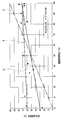
- FIG. 4 is a chart showing the relationship between the fluorescence attenuation rate and the cell damage rate when the cells are irradiated with therapeutic light having a light intensity of 50 mW / cm 2 or less and therapeutic light having a light intensity of 100 mW / cm 2 or more.
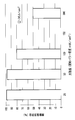
- FIG. 5 shows a treatment light having a light intensity of 25 mW / cm 2, a treatment light having a light intensity of 50 mW / cm 2, a treatment light having a light intensity of 100 mW / cm 2, and a treatment light having a light intensity of 300 mW / cm 2 . It is a chart which showed the relationship between the light intensity and the cell damage rate at the time of irradiating with light.
- the chart of the experimental data in FIG. 4 shows that A431 gallbladder cancer mice were administered with Pan-IR700, which is a fluorescent agent 20, and had a therapeutic light L having a light intensity of 50 mW / cm 2 or less and a light intensity of 100 mW / cm 2 or more. The comparison with the case of irradiating with the therapeutic light is shown.
- the total amount of irradiation is the same regardless of whether the treatment light L having a light intensity of 50 mW / cm 2 or less is irradiated or the treatment light L having a light intensity of 100 mW / cm 2 or more is irradiated. That is, when the therapeutic light L having a light intensity of 50 mW / cm 2 or less is irradiated, the irradiation time to the cell C is longer than when the therapeutic light L having a light intensity of 100 mW / cm 2 or more is irradiated.
- the amount of fluorescence generated and the amount of vibration of the antibody 22 may differ between the case of irradiating the therapeutic light L having a light intensity of 50 mW / cm 2 or less and the case of irradiating the therapeutic light L having a light intensity of 100 mW / cm 2 or more. I know.
- the vibration amount of the antibody 22 is defined by the fact that the fluorescent dye 21 absorbs the light after irradiating the fluorescent agent 20 administered into the body with the therapeutic light L to at least 1 J / cm 2 in PIT. Refers to the amount of vibration of the molecule of.
- the fluorescence reduction rate fluorescence attenuation rate
- the cell damage rate is 100% as shown by the one-point chain line A in FIG. If so, the cell damage rate becomes 100%, and if fluorescence cannot be detected, it should be possible to determine that all cells C have disappeared.
- the case of irradiating the therapeutic light L with a light intensity of 50 mW / cm 2 or less is shown by the solid line B
- the case of irradiating the therapeutic light L with a light intensity of 100 mW / cm 2 or more is shown by the solid line D.
- the cell damage rate is 100%.
- the cytotoxicity rate can be monitored by monitoring the fluorescence reduction rate, that is, it can be used as an index of the therapeutic effect.
- the chart of the experimental data in FIG. 5 shows that A431 gallbladder cancer mice were administered with Pan-IR700, which is a fluorescent agent 20, at 300 ⁇ g / mouse, and one day after the administration, at each irradiation intensity shown in FIG.
- the cells C are irradiated with light up to the same total amount (100 J / cm 2 ), and one day later, the tumor tissue is excised, and the tissue damage ratio is calculated from the pathological image of the tumor cross section.
- the light irradiation at light intensities of 25 mW / cm 2 and 50 mW / cm 2 is higher than the light irradiation at light intensities of 100 mW / cm 2 and 300 mW / cm 2.
- the injury rate was large.
- the PIT when irradiating the treatment beam L in cell C, the light intensity of the therapeutic light L is set to be larger 50 mW / cm 2 or less than 0 mW / cm 2, at least 1J up / cm 2 showed that light irradiation to the cells C.
- the cell damage rate can be set to almost 100%, so that a higher cell-killing effect can be expected in PIT.
- the cell C is irradiated with the therapeutic light L having a lower intensity than the conventional one, the effect on the living body is reduced due to the low intensity, and the cell C can be surely killed.
- the fluorescent agent 20 bound to the cell C absorbs light as described above, but the normal cells around the cancer cell reflect the light.
- the therapeutic effect had to be observed using an endoscope or the like.
- the fluorescence intensity measurement using the objective optical system 4, the image sensor 5, and the image processing unit 53 is performed. It can be performed in real time without being affected by the halation associated with the irradiation of the therapeutic light L.
- the treatment of the cell C by the irradiation of the therapeutic light L and the measurement of the fluorescence intensity can be performed at the same time. Furthermore, since the site where the fluorescent agent 20 is accumulated in the cell C is easily visible and the site can be reliably irradiated with the therapeutic light L, it is possible to carry out reliable phototherapy for the cell C.
- the cytotoxicity rate can be monitored by monitoring the fluorescence reduction rate as described above.
- the fluorescence reduction rate does not reach a predetermined value as a result of monitoring after irradiation of a certain total amount, it is possible to immediately irradiate the cells C with the therapeutic light L again during the treatment.
- cancer cells in PIT, can be killed by reliable light irradiation, and the therapeutic effect can be monitored by monitoring the fluorescence reduction rate. It is possible to provide a method of irradiating cells with light, which can be performed immediately.
- FIG. 6 is a flowchart showing a modified example in which the fluorescence intensity measurement step of FIG. 3 is performed after irradiating the therapeutic light to a predetermined amount of light.
- the fluorescence intensity data may be acquired after irradiating the therapeutic light L to a predetermined amount of light, that is, after the treatment of the cell C.
- step S1 when PIT is performed, first, in step S1, a drug administration step of administering the fluorescent drug 20 shown in FIG. 2 to the cells C is performed.
- step S2 in a state where the illumination light I is supplied from the illumination optical system 2 to the observation range H of the objective optical system 4 and the cell C in the subject, the light intensity (irradiation power density) is 0 mW with respect to the cell C.
- a light irradiation step of irradiating the therapeutic light L larger than / cm 2 and 50 mW / cm 2 or less from the therapeutic light source unit 52 to at least 1 J / cm 2 using the therapeutic light irradiation device 7 is performed.
- step S16 the image processing unit 53 determines whether the therapeutic light L has irradiated the cells C to a predetermined amount of light, specifically, at least 1 J / cm 2.
- steps S2 and S16 are repeated.
- the process proceeds to step S17, and the operator is notified that the treatment light L has been irradiated to 1 J / cm 2. Perform the announcement step.
- Specific examples of the notification method include known sounds, lights, and displays.
- step S3 a light receiving step is performed in which the image pickup device 5 receives the fluorescence generated from the fluorescent dye 21 as the cell C irradiates the fluorescent agent 20 with the therapeutic light L.
- step S4 the image processing unit 53 performs a fluorescence intensity measurement step of measuring the fluorescence intensity data.
- step S5 the image processing unit 53 performs a comparison step of comparing the fluorescence intensity data with a predetermined value. Specifically, the image processing unit 53 performs a comparison step of comparing whether the fluorescence attenuation rate (fluorescence reduction rate) exceeds a predetermined value of about 70% from the fluorescence intensity data.
- step S8 after the irradiation of the treatment light L, the image processing unit 53 re-irradiates the treatment light L until the fluorescence reduction rate obtained from the intensity data is smaller than about 70% and becomes about 70%. It is determined that the treatment light source unit 52 should be instructed, and on the other hand, when the fluorescence reduction rate reaches about 70%, a determination step of determining that further irradiation of the therapeutic light L is unnecessary is performed.
- step S9 on the other hand, if the fluorescence reduction rate does not reach about 70%, it is considered that the therapeutic effect is low, and the process returns to step S2, step S2, step S16, step S17, step S3, step S4, step S5, step. S8 and step S9 are repeated. That is, the therapeutic light is re-irradiated.
- the death rate of cell C can be estimated from the fluorescence reduction rate.
- the light intensity is not limited to such a mode, and the light intensity is gradually increased so as to reach a predetermined light intensity 1 minute after the start of irradiation, for example.
- An increasing light irradiation method may be used.
- a light irradiation method in which the light intensity is gradually reduced from 1 minute before the end of the irradiation may be used. Gradually increasing or decreasing the light can be expected to cause less damage to normal cells.
Landscapes
- Health & Medical Sciences (AREA)
- Life Sciences & Earth Sciences (AREA)
- Engineering & Computer Science (AREA)
- Biomedical Technology (AREA)
- General Health & Medical Sciences (AREA)
- Veterinary Medicine (AREA)
- Animal Behavior & Ethology (AREA)
- Public Health (AREA)
- Pathology (AREA)
- Biophysics (AREA)
- Molecular Biology (AREA)
- Surgery (AREA)
- Radiology & Medical Imaging (AREA)
- Nuclear Medicine, Radiotherapy & Molecular Imaging (AREA)
- Chemical & Material Sciences (AREA)
- Physics & Mathematics (AREA)
- Medical Informatics (AREA)
- Heart & Thoracic Surgery (AREA)
- Biochemistry (AREA)
- Medicinal Chemistry (AREA)
- Pharmacology & Pharmacy (AREA)
- Epidemiology (AREA)
- Optics & Photonics (AREA)
- Signal Processing (AREA)
- Endoscopes (AREA)
- Medicines That Contain Protein Lipid Enzymes And Other Medicines (AREA)
- Radiation-Therapy Devices (AREA)
Priority Applications (3)
| Application Number | Priority Date | Filing Date | Title |
|---|---|---|---|
| JP2021543926A JPWO2021044627A1 (https=) | 2019-09-06 | 2019-09-06 | |
| PCT/JP2019/035255 WO2021044627A1 (ja) | 2019-09-06 | 2019-09-06 | 細胞に光を照射する方法 |
| US17/550,725 US20220096862A1 (en) | 2019-09-06 | 2021-12-14 | Method for irradiating cells with light, method for controlling medical device, and medical device |
Applications Claiming Priority (1)
| Application Number | Priority Date | Filing Date | Title |
|---|---|---|---|
| PCT/JP2019/035255 WO2021044627A1 (ja) | 2019-09-06 | 2019-09-06 | 細胞に光を照射する方法 |
Related Child Applications (1)
| Application Number | Title | Priority Date | Filing Date |
|---|---|---|---|
| US17/550,725 Continuation US20220096862A1 (en) | 2019-09-06 | 2021-12-14 | Method for irradiating cells with light, method for controlling medical device, and medical device |
Publications (1)
| Publication Number | Publication Date |
|---|---|
| WO2021044627A1 true WO2021044627A1 (ja) | 2021-03-11 |
Family
ID=74853124
Family Applications (1)
| Application Number | Title | Priority Date | Filing Date |
|---|---|---|---|
| PCT/JP2019/035255 Ceased WO2021044627A1 (ja) | 2019-09-06 | 2019-09-06 | 細胞に光を照射する方法 |
Country Status (3)
| Country | Link |
|---|---|
| US (1) | US20220096862A1 (https=) |
| JP (1) | JPWO2021044627A1 (https=) |
| WO (1) | WO2021044627A1 (https=) |
Families Citing this family (1)
| Publication number | Priority date | Publication date | Assignee | Title |
|---|---|---|---|---|
| DE102020117579A1 (de) * | 2020-07-03 | 2022-01-05 | Hoya Corporation | Endoskopisches Beleuchtungssystem für ein Fluoreszenzmittel |
Citations (6)
| Publication number | Priority date | Publication date | Assignee | Title |
|---|---|---|---|---|
| JP2000515779A (ja) * | 1996-07-19 | 2000-11-28 | セラテクノロジーズ アール アンド ディー インコーポレーテッド | 光力学的処置のための走査光源を使用した照射装置 |
| JP2001198230A (ja) * | 2000-01-21 | 2001-07-24 | Matsushita Electric Ind Co Ltd | レーザ装置 |
| JP2001259057A (ja) * | 2000-03-16 | 2001-09-25 | Toshiba Medical Supply Co Ltd | 光線力学治療用光照射装置 |
| JP2013208331A (ja) * | 2012-03-30 | 2013-10-10 | Keio Gijuku | 温度調整を伴う光線力学的治療システム |
| JP2015531619A (ja) * | 2012-08-03 | 2015-11-05 | セルカ ソリューションズ,エルエルシー | 診断装置、治療装置及びそれらの使用 |
| WO2016080096A1 (ja) * | 2014-11-19 | 2016-05-26 | シャープ株式会社 | 光線力学治療装置 |
Family Cites Families (4)
| Publication number | Priority date | Publication date | Assignee | Title |
|---|---|---|---|---|
| AU2003900176A0 (en) * | 2003-01-16 | 2003-01-30 | Rofin Australia Pty Ltd | Photodynamic therapy light source |
| ES2407531T3 (es) * | 2009-04-22 | 2013-06-12 | Radiancy Inc. | Dispositivo de tratamiento cutáneo que utiliza luz y temperatura |
| CA2841120C (en) * | 2011-07-11 | 2020-10-27 | The United States Of America, As Represented By The Secretary, Department Of Health And Human Services | Antibody-ir700 conjugates for photodynamic therapy |
| JP5977913B1 (ja) * | 2015-03-26 | 2016-08-24 | オリンパス株式会社 | 画像処理装置 |
-
2019
- 2019-09-06 JP JP2021543926A patent/JPWO2021044627A1/ja active Pending
- 2019-09-06 WO PCT/JP2019/035255 patent/WO2021044627A1/ja not_active Ceased
-
2021
- 2021-12-14 US US17/550,725 patent/US20220096862A1/en active Pending
Patent Citations (6)
| Publication number | Priority date | Publication date | Assignee | Title |
|---|---|---|---|---|
| JP2000515779A (ja) * | 1996-07-19 | 2000-11-28 | セラテクノロジーズ アール アンド ディー インコーポレーテッド | 光力学的処置のための走査光源を使用した照射装置 |
| JP2001198230A (ja) * | 2000-01-21 | 2001-07-24 | Matsushita Electric Ind Co Ltd | レーザ装置 |
| JP2001259057A (ja) * | 2000-03-16 | 2001-09-25 | Toshiba Medical Supply Co Ltd | 光線力学治療用光照射装置 |
| JP2013208331A (ja) * | 2012-03-30 | 2013-10-10 | Keio Gijuku | 温度調整を伴う光線力学的治療システム |
| JP2015531619A (ja) * | 2012-08-03 | 2015-11-05 | セルカ ソリューションズ,エルエルシー | 診断装置、治療装置及びそれらの使用 |
| WO2016080096A1 (ja) * | 2014-11-19 | 2016-05-26 | シャープ株式会社 | 光線力学治療装置 |
Also Published As
| Publication number | Publication date |
|---|---|
| JPWO2021044627A1 (https=) | 2021-03-11 |
| US20220096862A1 (en) | 2022-03-31 |
Similar Documents
| Publication | Publication Date | Title |
|---|---|---|
| Yun et al. | Light in diagnosis, therapy and surgery | |
| JP6554089B2 (ja) | 組織酸素化の測定用の器具、システムおよびメソッド | |
| US11583694B2 (en) | Treatment method | |
| EP2666516A1 (en) | Laser therapy apparatus, laser therapy system and assessment method | |
| JP2003525074A (ja) | 長時間にわたる光力学的療法のリアルタイムでの監視 | |
| CN208114647U (zh) | 激光消融、光动力协同治疗装置 | |
| JP2025107251A (ja) | 治療システム | |
| JP4966640B2 (ja) | 光線力学的治療装置およびその使用方法 | |
| WO2016017349A1 (ja) | レーザー治療器 | |
| WO2021044627A1 (ja) | 細胞に光を照射する方法 | |
| WO2019244977A1 (ja) | 腫瘍治療法 | |
| JP7850470B2 (ja) | 癌治療用装置 | |
| JP2006167046A (ja) | 癌治療状況評価方法および装置ならびに癌治療方法および装置 | |
| US9034023B2 (en) | Dynamic colorectal PDT application | |
| US20210379396A1 (en) | Treatment method and treatment system | |
| JP2011001307A (ja) | 5−アミノレブリン酸による子宮頸がん判定・治療システム | |
| JP5265186B2 (ja) | 光照射による皮膚又は皮下軟部組織の血管性病変治療又は診断用薬剤 | |
| CN117222450A (zh) | 光治疗辅助方法和光治疗辅助装置 | |
| RU2184578C1 (ru) | Способ фотодинамической терапии опухоли | |
| US20230277868A1 (en) | Phototherapy method, phototherapy device, and phototherapy system | |
| JP2008017899A (ja) | 蛍光診断方法 | |
| JP7754413B2 (ja) | 光線力学療法治療支援装置 | |
| JP2012050511A (ja) | 内視鏡用フード及びフード付き内視鏡 | |
| CN113796835A (zh) | 一种医学荧光成像的调节方法、系统及存储介质 | |
| JP6623544B2 (ja) | 腫瘍部位の診断装置、撮像方法 |
Legal Events
| Date | Code | Title | Description |
|---|---|---|---|
| 121 | Ep: the epo has been informed by wipo that ep was designated in this application |
Ref document number: 19944058 Country of ref document: EP Kind code of ref document: A1 |
|
| ENP | Entry into the national phase |
Ref document number: 2021543926 Country of ref document: JP Kind code of ref document: A |
|
| NENP | Non-entry into the national phase |
Ref country code: DE |
|
| 122 | Ep: pct application non-entry in european phase |
Ref document number: 19944058 Country of ref document: EP Kind code of ref document: A1 |