WO2021014535A1 - 吸音材、吸音性向上塗液、及び吸音性向上シート - Google Patents
吸音材、吸音性向上塗液、及び吸音性向上シート Download PDFInfo
- Publication number
- WO2021014535A1 WO2021014535A1 PCT/JP2019/028667 JP2019028667W WO2021014535A1 WO 2021014535 A1 WO2021014535 A1 WO 2021014535A1 JP 2019028667 W JP2019028667 W JP 2019028667W WO 2021014535 A1 WO2021014535 A1 WO 2021014535A1
- Authority
- WO
- WIPO (PCT)
- Prior art keywords
- base material
- sound absorbing
- mass
- sound
- resin
- Prior art date
- Legal status (The legal status is an assumption and is not a legal conclusion. Google has not performed a legal analysis and makes no representation as to the accuracy of the status listed.)
- Ceased
Links
Images


Classifications
-
- G—PHYSICS
- G10—MUSICAL INSTRUMENTS; ACOUSTICS
- G10K—SOUND-PRODUCING DEVICES; METHODS OR DEVICES FOR PROTECTING AGAINST, OR FOR DAMPING, NOISE OR OTHER ACOUSTIC WAVES IN GENERAL; ACOUSTICS NOT OTHERWISE PROVIDED FOR
- G10K11/00—Methods or devices for transmitting, conducting or directing sound in general; Methods or devices for protecting against, or for damping, noise or other acoustic waves in general
- G10K11/16—Methods or devices for protecting against, or for damping, noise or other acoustic waves in general
-
- G—PHYSICS
- G10—MUSICAL INSTRUMENTS; ACOUSTICS
- G10K—SOUND-PRODUCING DEVICES; METHODS OR DEVICES FOR PROTECTING AGAINST, OR FOR DAMPING, NOISE OR OTHER ACOUSTIC WAVES IN GENERAL; ACOUSTICS NOT OTHERWISE PROVIDED FOR
- G10K11/00—Methods or devices for transmitting, conducting or directing sound in general; Methods or devices for protecting against, or for damping, noise or other acoustic waves in general
- G10K11/16—Methods or devices for protecting against, or for damping, noise or other acoustic waves in general
- G10K11/162—Selection of materials
- G10K11/165—Particles in a matrix
-
- G—PHYSICS
- G10—MUSICAL INSTRUMENTS; ACOUSTICS
- G10K—SOUND-PRODUCING DEVICES; METHODS OR DEVICES FOR PROTECTING AGAINST, OR FOR DAMPING, NOISE OR OTHER ACOUSTIC WAVES IN GENERAL; ACOUSTICS NOT OTHERWISE PROVIDED FOR
- G10K11/00—Methods or devices for transmitting, conducting or directing sound in general; Methods or devices for protecting against, or for damping, noise or other acoustic waves in general
- G10K11/16—Methods or devices for protecting against, or for damping, noise or other acoustic waves in general
- G10K11/162—Selection of materials
- G10K11/168—Plural layers of different materials, e.g. sandwiches
Definitions
- the present invention relates to a sound absorbing material, a sound absorbing liquid, and a sound absorbing sheet.
- a single-layer sound-absorbing structure made of melt-blown non-woven fabric is known (for example, Patent Document 1).
- the sound absorbing characteristics are insufficient, especially in the low frequency region.
- the present invention has been made in view of the above circumstances, and an object of the present invention is to provide a sound absorbing material having excellent sound absorbing characteristics in a low frequency region.
- the present invention comprises a first substrate layer having communication holes and a composite layer provided on the first substrate layer, wherein the composite layer contains at least one of porous particles and hollow particles, and a binder resin. Provide a sound absorbing material.
- the present invention includes a first base material layer having communication holes and a composite sheet provided on the first base material layer, and the composite sheet has at least porous particles and hollow particles on a supporting base material.
- a sound absorbing material provided with a composite layer containing a binder resin as well as one side.
- the sound absorbing material may further include a second base material layer having communication holes under the first base material layer.
- the sound absorbing material may further include a third base material layer having communication holes on the composite layer.
- the thickness of the sound absorbing material may be 1 to 100 mm.
- the present invention provides a sound absorption improving sheet provided with at least one of porous particles and hollow particles and a composite layer containing a binder resin on a supporting base material.
- the present invention provides a sound-absorbing coating solution containing at least one of porous particles and hollow particles, a binder resin and a liquid medium.
- FIG. 1 is a schematic cross-sectional view of a sound absorbing material according to an embodiment.
- the sound absorbing material 10 includes a first base material layer 2 having communication holes and a composite layer 1 provided on the first base material layer 2.
- the composite layer 1 contains at least one of porous particles and hollow particles, and a binder resin.
- FIG. 2 is a schematic cross-sectional view of the sound absorbing material according to another embodiment.
- the sound absorbing material 20 includes a first base material layer 2 having communication holes and a composite sheet 4 provided on the first base material layer 2.
- the composite sheet 4 includes a composite layer 1 containing at least one of porous particles and hollow particles and a binder resin on the support base material 3.
- Sound (sound energy) incident from the composite layer side is dissipated as heat energy when passing through the sound absorbing material. As a result, sound attenuation is observed.
- Base layer examples of the base material layer having communication holes include a resin foam, a non-woven fabric, a polymer porous body, and a porous ceramic. Of these, the base material layer may be a resin foam or a non-woven fabric from the viewpoint of excellent sound absorption characteristics in the low frequency region. When there are a plurality of base material layers, each base material layer may be made of the same material or may be made of different materials.
- the material of the resin foam examples include polyethylene resin, polypropylene resin, polyurethane resin, polyester resin, acrylic resin, polystyrene resin, melamine resin, silicone resin, natural rubber, synthetic rubber and the like. From the viewpoint of heat resistance, flame retardancy, etc., the material of the resin foam may be melamine resin.
- Examples of the fibers constituting the non-woven fabric include organic fibers and inorganic fibers.
- Examples of the organic fiber include polyolefin fibers such as polyethylene (low density or high density), polypropylene, copolymerized polyethylene, and copolymerized polypropylene, polyethylene terephthalate, polytrimethylene terephthalate, polybutylene terephthalate, polyethylene naphthalate, and polybutylene naphthalate.
- Such as polyester fiber, acrylic fiber, polyurethane fiber, acetate fiber, polyamide fiber, nylon fiber, rayon fiber, natural fiber such as wool and the like can be mentioned.
- examples of the inorganic fiber include glass fiber, metal fiber, ceramic fiber, carbon fiber and the like.
- the fibers constituting the non-woven fabric may contain one kind or two or more kinds of these.
- the thickness of the base material layer can be 0.1 to 50 mm, 0.5 to 20 mm, or 2.0 to 10 mm from the viewpoint of excellent sound absorption characteristics in the low frequency region. Good.
- the first base material layer and the second base material layer may have the same thickness or may have different thicknesses. When there are a plurality of base material layers, the thickness of the base material layer on the incident side of the sound may be thinner than the thickness of the other base material layers from the viewpoint of excellent sound absorption characteristics in the low frequency region.
- the basis weight of the base material layer can be 10 to 1000 g / m 2 , 30 to 700 g / m 2 , or 50 to 500 g / m 2 from the viewpoint of excellent sound absorption characteristics in the low frequency region. You may.
- each base material layer may have the same density or may have different densities.
- the density of the base material layer can be 0.005 to 1.0 g / cm 3 or 0.007 to 0.5 g / cm 3 from the viewpoint of excellent sound absorption characteristics in the low frequency region, and may be 0. It may be 0.01 to 0.25 g / cm 3 .
- each base material layer may have the same density or may have different densities.
- the composite layer contains at least one of the porous particles and the hollow particles, and hereinafter, the porous particles and the hollow particles are collectively referred to as “sound absorbing particles”.
- porous particles contained in the composite layer include inorganic porous particles, organic porous particles, and composite porous particles (organic-inorganic composite porous particles) containing both of them.
- Examples of the constituent materials of the inorganic porous particles include metal oxides (including composite oxides), hydroxides, nitrides, carbides, carbonates, borates, sulfates, silicates, phosphates and the like.
- metal oxides such as silica, titanium oxide, zinc oxide, alumina, zircon oxide, tin oxide, magnesium oxide and potassium titanate, hydroxides such as aluminum hydroxide, magnesium hydroxide and calcium hydroxide, Nitridees such as silicon nitride, titanium nitride and aluminum nitride, carbides such as silicon carbide and titanium carbide, carbonates such as calcium carbonate and magnesium carbonate, borates such as aluminum borate and magnesium borate, sulfuric acid such as calcium sulfate and magnesium sulfate. Examples thereof include salts, silicates such as calcium silicate and magnesium silicate, and phosphates such as calcium phosphate.
- glass, zeolite, airgel and the like can also be used as
- constituent materials of the organic porous particles include charcoal, activated carbon, polymer porous sintered body, resin foam, or resin porous body such as (meth) acrylic acid ester-based, styrene-based, silicone-based, and nylon-based. Can be mentioned.
- hollow particles contained in the composite layer examples include inorganic hollow particles, organic hollow particles, and composite hollow particles (organic-inorganic composite hollow particles) containing both of them.
- the hollow particle may be a single hollow particle having one pore inside the particle, or may be a multi-hollow particle having a plurality of pores.
- constituent materials of the inorganic hollow particles include silica, glass, silas, pearlite, alumina, fly ash, shale, obsidian, and volcanic rock.
- the constituent materials of the organic hollow particles include styrene resins such as crosslinked styrene-acrylic resin, (meth) acrylic resins such as crosslinked polymethyl methacrylate and acrylonitrile-acrylic resin, phenolic resins, fluororesins, and polyamide resins. , Polygon-based resin, polycarbonate-based resin, polyether-based resin, polyvinylidene chloride-based resin, epoxy-based resin, urea-based resin and the like.
- one type may be used alone, or two or more types may be used in combination.
- the average particle size D50 of the sound absorbing particles can be 0.1 to 1000 ⁇ m and may be 1 to 100 ⁇ m from the viewpoint of dispersibility in the composite layer and sound absorbing characteristics in the low frequency region.
- the average particle size D50 of the sound absorbing particles can be measured by, for example, a laser diffraction / scattering method.
- the specific surface area of the sound absorbing particles can be 1 to 2000 g / m 2 and may be 2 to 1000 g / m 2 from the viewpoint of dispersibility in the composite layer and sound absorbing characteristics in the low frequency region.
- the specific surface area can be measured by the BET method.
- a gas adsorption amount measuring device Autosorb-iQ (Autosorb is a registered trademark) manufactured by Kantachrome Instruments Japan GK
- Autosorb-iQ Autosorb is a registered trademark
- the bulk density of the sound absorbing particles can be 0.05 to 1.0 g / m 3 from the viewpoint of dispersibility in the composite layer and sound absorbing characteristics in the low frequency region, and is 0.10 to 0.75 g / m. It may be 3 .
- the bulk density can be measured by a mercury press-fitting method or the like.
- a porosimeter manufactured by Shimadzu Micromerics, Autopore 9520 type
- the content of the sound absorbing particles in the composite layer can be 10 to 99% by volume, and may be 20 to 90% by mass, based on the total mass of the composite layer from the viewpoint of sound absorbing characteristics in the low frequency region. ..
- the binder resin has a function of binding sound absorbing particles.
- the binder resin include epoxy resin, silicone resin, phenol resin, urea resin, melamine resin, polyurethane resin, polyethylene resin, polypropylene resin, polystyrene resin, polyester resin, and acrylic resin (mainly structures of acrylic acid ester or methacrylic acid ester).
- Polymers included as a unit polyvinyl chloride resin, polyvinyl acetate resin, polyamide resin, polyimide resin, cellulose resin, polyvinyl chloride resin (for example, ethylene-vinyl chloride copolymer resin) and the like.
- acrylic acid-based resin polymer containing acrylic acid, acrylate, methacrylic acid, methacrylic acid as a structural unit
- polyvinyl alcohol polyethylene oxide
- polyethylene glycol polyethylene glycol
- silicone resin acrylic resin, phenol resin and polyester resin, and polyvinyl chloride resin can be preferably used from the viewpoint of heat resistance, flame retardancy, and toughness.
- Examples of the cellulosic resin include hydroxypropylmethyl cellulose, carboxymethyl cellulose ammonium, hydroxyethyl methyl cellulose and the like.
- Examples of the polyvinyl-based resin include polyvinyl alcohol and polyvinylpyrrolidone.
- acrylic acid-based resin examples include polyacrylic acid, acrylic acid copolymer polymer, polyacrylic acid salt, and acrylate copolymer polymer.
- the content of the binder resin in the composite layer can be 10 to 1000 parts by mass with respect to 100 parts by mass of the sound absorbing particles from the viewpoint of the binding property of the sound absorbing particles, the strength of the composite layer, and the like. It may be 500 parts by mass.
- the thickness of the composite layer can be 1 to 1000 ⁇ m, 5 to 500 ⁇ m, 10 to 250 ⁇ m, or 20 to 100 ⁇ m from the viewpoint of excellent sound absorption characteristics in the low frequency region. You may. Further, from the viewpoint of excellent sound absorption characteristics in the low frequency region, the ratio of the thickness of the composite layer to the thickness of the base material layer (thickness of the base material layer / thickness of the composite layer) may be 1 to 20000. It can be 10 to 10000 or 100 to 1000.
- the composite layer may be provided on the supporting base material.
- the support base material can be used as a support for the composite layer when it is difficult to form the composite layer on the base material layer.
- Examples of the supporting base material include high-density non-woven fabrics, resin films, metal films and the like.
- the support base material and the composite layer provided on the support base material are collectively called a composite sheet. Since the composite sheet can improve the sound absorption characteristics by laminating it on the target, it can be said to be a sound absorption improving sheet.
- Examples of the fibers constituting the non-woven fabric include the fibers exemplified in the above-mentioned base material layer section.
- the thickness of the supporting base material can be 1 to 500 ⁇ m and may be 5 to 250 ⁇ m from the viewpoint of being able to support the composite layer and not impairing the sound absorption characteristics in the low frequency region.
- the basis weight of the supporting base material can be 10 to 500 g / m 2 , 20 to 250 g / m 2 , or 30 to 200 g / m 2 from the viewpoint of excellent sound absorption characteristics in the low frequency region. You may.
- the density of the supporting base material can be 0.01 to 1.0 g / cm 3 or 0.1 to 0.5 g / cm 3 from the viewpoint of supporting the composite layer.
- the sound absorbing material may further include another base material layer having communication holes from the viewpoint of improving the sound absorbing effect in the low frequency region and adjusting the sound absorbing frequency peak. That is, the sound absorbing material may include a second base material layer having further communication holes under the first base material layer in addition to the first base material layer and the composite layer, and further provide communication holes on the composite layer.
- the third base material layer may be provided. The matters described in the above section of the base material layer can be applied to these other base material layers.
- the sound absorbing material may be provided with an adhesive layer between the above layers, if necessary.
- the sound absorbing material may have an adhesive layer between the first base material layer and the second base material layer, the supporting base material (composite sheet), the first base material layer, and the like.
- the adhesive layer vinyl acetate resin, ethylene / vinyl acetate copolymer resin, isobutene / maleic anhydride copolymer resin, acrylic copolymer resin, acrylic monomer, acrylic oligomer, styrene / butadiene rubber copolymer, vinyl chloride resin, etc.
- Layers containing adhesive components such as chloroprene rubber, nitrile rubber, urethane resin, silylated urethane resin, epoxy resin, modified epoxy resin, polyethylene resin, ionomer resin, silicone resin, modified silicone resin, water glass, silicate, etc., or paper, cloth , A laminate having layers containing these adhesive components on both sides of a support composed of a non-woven fabric, a fiber, a resin film, a metal tape, or the like. Each adhesive layer may be composed of the same material or may be composed of different materials.
- the thickness of the adhesive layer is not particularly limited, but may be 0.01 to 500 ⁇ m, and may be 1 to 250 ⁇ m. Each adhesive layer may have the same thickness or may have different thicknesses.
- the thickness of the sound absorbing material can be 1 to 100 mm, may be 2 to 50 mm, or may be 5 to 30 mm from the viewpoint of expressing sound absorbing characteristics, workability of the material, space saving, and the like. Good.
- the sound absorbing characteristics of the sound absorbing material can be adjusted according to the configuration of each layer and the mode of lamination.
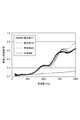
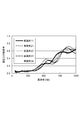
- the vertically incident sound absorption coefficient of the sound absorbing material measured in accordance with JIS A 1405-1 can be, for example, as follows.
- the vertically incident sound absorbing coefficient can be 0.4 or more at 1000 Hz, and may be 0.5 or more.
- the vertically incident sound absorption coefficient can be 0.25 or more at 750 Hz, and may be 0.3 or more.
- the vertically incident sound absorption coefficient can be 0.1 or more at 500 Hz, and may be 0.15 or more.
- the vertically incident sound absorbing coefficient can be 0.5 or more at 1000 Hz, and may be 0.6 or more.
- the vertically incident sound absorption coefficient can be 0.2 or more at 750 Hz, and may be 0.4 or more.
- the vertically incident sound absorption coefficient can be 0.1 or more at 500 Hz, and may be 0.2 or more.
- the sound absorbing material 10 shown in FIG. 1 can be manufactured by applying a coating liquid for forming a composite layer 1 on the first base material layer 2.
- both layers may be bonded by the adhesive layer, or both layers may be laminated without being bonded.
- both layers may be bonded using a coating liquid for forming the composite layer, but both layers are laminated without being bonded. May be good.
- the sound absorbing material 20 shown in FIG. 2 is manufactured by laminating a composite sheet 4 obtained by applying a coating liquid for forming a composite layer 1 on a support base material 3 and a first base material layer 2. can do.
- the composite sheet and the first base material layer may be adhered by the adhesive layer, but they may be laminated without being adhered.
- the laminate constituting the sound absorbing material may be used in a state of being housed in the housing.
- the coating liquid for forming the composite layer contains sound absorbing particles, a binder resin and a liquid medium. Since this coating liquid can improve the sound absorption characteristics of the target, it can be said to be a sound absorption improving coating liquid.
- the binder resin is as illustrated in the section of the composite layer above.
- the coating liquid may further contain a curing agent.
- the curing agent is not particularly limited, and may be appropriately changed depending on the type of the thermosetting resin.
- the thermosetting resin is an epoxy resin
- a known epoxy resin curing agent can be used as the curing agent.
- the epoxy resin curing agent include amine-based curing agents, acid anhydride-based curing agents, and polyamide-based curing agents. From the viewpoint of reactivity, amine-based curing agents and polyamide-based curing agents are preferably used. Can be done.
- liquid medium examples include water and an organic solvent.
- the organic solvent is not particularly limited as long as it can disperse the aerogel particles, and is, for example, aromatic hydrocarbons such as toluene, xylene, mesityrene, cumene, and p-simene; and fats such as hexane, heptane, and pentane.
- Group Hydrocarbons Ethers such as diethyl ether, tetrahydrofuran, 1,4-dioxane; Alcohols such as methanol, ethanol, isopropanol (isopropyl alcohol), butanol, ethylene glycol, diethylene glycol, propylene glycol; Acetone, methyl ethyl ketone, methyl isobutyl Ketones such as ketones, cyclohexanones, 4-hydroxy-4-methyl-2-pentanones; esters such as methyl acetate, ethyl acetate, butyl acetate; N, N-dimethylformamide, N, N-dimethylacetamide, N-methyl Examples thereof include amides such as pyrrolidone.
- alcohols and ketones can be used from the viewpoint of volatility, boiling point and the like, and alcohols can be particularly preferably used. Alcohols and ketones are easy to mix with water, water-based resins and the like, and are therefore suitable for use in combination with their components.
- the coating liquid may contain a thickener, a fibrous substance, a pigment, a leveling agent, a film forming aid, and the like as other components.
- the content of the sound absorbing particles in the coating liquid can be 1 to 50% by mass from the viewpoint of dispersibility, viscosity of the coating liquid, etc., but may be 5 to 50% by mass.
- the content of the binder resin in the coating liquid can be 50 to 5000 parts by mass with respect to 100 parts by mass of the sound absorbing particles from the viewpoint of the binding property of the sound absorbing particles and the strength of the composite layer. It may be 1000 parts by mass.
- the sound absorbing material has excellent sound absorbing characteristics in the low frequency region. Therefore, the sound absorbing material can be suitably used in applications such as automobiles, railroad vehicles, aircraft, ships, buildings such as houses, electronic devices, and precision machines.
- the low frequency region referred to here can be a region having a frequency of 1000 Hz or less, may be a region of 800 Hz or less, may be a region of 750 Hz or less, or may be a region of 500 Hz or less. ..
- Hydroxypropyl methylcellulose manufactured by Matsumoto Oil & Fat Co., Ltd., product name: MP-3000
- isopropyl alcohol manufactured by Wako Pure Chemical Industries, Ltd., reagent
- pure water is 3500 parts by mass
- acrylic emulsion DIC Co., Ltd., product name: DV-759EF, solid content 40 wt% was mixed by 5000 parts by mass, particles 1 by 100 parts by mass, and particles 5 by 4500 parts by mass to obtain a coating liquid 1.
- Hydroxypropyl methylcellulose manufactured by Matsumoto Oil & Fat Co., Ltd., product name: MP-3000
- isopropyl alcohol manufactured by Wako Pure Chemical Industries, Ltd., reagent
- acrylic emulsion manufactured by Wako Pure Chemical Industries, Ltd.
- Hydroxypropyl methylcellulose manufactured by Matsumoto Oil & Fat Co., Ltd., product name: MP-3000
- isopropyl alcohol manufactured by Wako Pure Chemical Industries, Ltd., reagent
- acrylic emulsion manufactured by Wako Pure Chemical Industries, Ltd.
- a coating liquid 4 was mixed by 5000 parts by mass, particles 1 by 100 parts by mass, and particles 5 by 4500 parts by mass to obtain a coating liquid 4.
- Hydroxypropyl methylcellulose manufactured by Matsumoto Oil & Fat Co., Ltd., product name: MP-4000
- isopropyl alcohol manufactured by Wako Pure Chemical Industries, Ltd., reagent
- diethylene glycol manufactured by Wako Pure Chemical Industries, Ltd., 30 parts by mass of reagent
- 530 parts by mass of pure water 270 parts by mass of ethylene-vinyl chloride copolymer resin emulsion (manufactured by Sumika Chemtex Co., Ltd., product name: Sumi Elite 1010, solid content 50 wt%)
- Hydroxypropyl methylcellulose (manufactured by Matsumoto Oil & Fat Co., Ltd., product name: MP-4000) by 10 parts by mass, isopropyl alcohol (manufactured by Wako Pure Chemical Industries, Ltd., reagent) by 15 parts by mass, diethylene glycol (manufactured by Wako Pure Chemical Industries, Ltd., 30 parts by mass of reagent), 320 parts by mass of pure water, 170 parts by mass of ethylene-vinyl chloride copolymer resin emulsion (manufactured by Sumika Chemtex Co., Ltd., product name: Sumi Elite 1010, solid content 50 wt%), particles 2. 100 parts by mass was mixed to obtain a coating liquid 8.
- Hydroxypropyl methylcellulose (manufactured by Matsumoto Oil & Fat Co., Ltd., product name: MP-4000) by 10 parts by mass, isopropyl alcohol (manufactured by Wako Pure Chemical Industries, Ltd., reagent) by 15 parts by mass, diethylene glycol (manufactured by Wako Pure Chemical Industries, Ltd., 30 parts by mass of reagent), 320 parts by mass of pure water, 170 parts by mass of ethylene-vinyl chloride copolymer resin emulsion (manufactured by Sumika Chemtex Co., Ltd., product name: Sumi Elite 1010, solid content 50 wt%), particles 3 100 parts by mass was mixed to obtain a coating liquid 9.
- Hydroxypropyl methylcellulose (manufactured by Matsumoto Oil & Fat Co., Ltd., product name: MP-4000) by 10 parts by mass, isopropyl alcohol (manufactured by Wako Pure Chemical Industries, Ltd., reagent) by 15 parts by mass, diethylene glycol (manufactured by Wako Pure Chemical Industries, Ltd., 30 parts by mass of reagent), 320 parts by mass of pure water, 170 parts by mass of ethylene-vinyl chloride copolymer resin emulsion (manufactured by Sumika Chemtex Co., Ltd., product name: Sumi Elite 1010, solid content 50 wt%), particles 4 100 parts by mass was mixed to obtain a coating liquid 10.
- isopropyl alcohol manufactured by Wako Pure Chemical Industries, Ltd., reagent
- diethylene glycol manufactured by Wako Pure Chemical Industries, Ltd., 30 parts by mass of reagent
- 320 parts by mass of pure water 170 parts by mass of ethylene-
- Adhesive layer The following adhesive layers were prepared. Double-sided tape: 3M Japan Ltd., PGD-100, thickness 0.12 mm Spray glue: 3M Japan Ltd., spray glue 77
- ⁇ Making sound absorbing material> A sound absorbing material having the configurations shown in each table was produced.
- the coating liquids 1 to 11 are applied to the base material layer or the supporting base material using a film applicator so as to have a predetermined thickness, and the obtained coating film is applied at 60 ° C. to 10 to 60. Obtained by drying for minutes.
- the coating liquid was applied on the base material layer, then another base material layer was laminated, and heat treatment was performed under the above conditions.
- the vertical incident sound absorption coefficient was measured according to the following. Sound was incident from the layer side described above in the table.
- Device name 4206 type impedance tube (Bruel Care) Measurement method: Vertically incident sound absorption coefficient (based on JIS A 1405-1) Measurement range: 50 to 1600 Hz
- FIGS. 3 to 12 are diagrams showing the vertical incident sound absorption coefficient of each Example and Comparative Example. As shown in the figure, it can be seen that the sound absorbing material of the example is excellent in sound absorbing characteristics in the low frequency region.
Landscapes
- Physics & Mathematics (AREA)
- Engineering & Computer Science (AREA)
- Acoustics & Sound (AREA)
- Multimedia (AREA)
- Laminated Bodies (AREA)
Priority Applications (4)
| Application Number | Priority Date | Filing Date | Title |
|---|---|---|---|
| PCT/JP2019/028667 WO2021014535A1 (ja) | 2019-07-22 | 2019-07-22 | 吸音材、吸音性向上塗液、及び吸音性向上シート |
| JP2021534027A JP7683480B2 (ja) | 2019-07-22 | 2020-07-20 | 吸音材 |
| PCT/JP2020/028096 WO2021015168A1 (ja) | 2019-07-22 | 2020-07-20 | 吸音材、吸音性向上塗液、及び吸音性向上シート |
| TW109124533A TW202112536A (zh) | 2019-07-22 | 2020-07-21 | 吸音材料、吸音性提高塗液、及吸音性提高片材 |
Applications Claiming Priority (1)
| Application Number | Priority Date | Filing Date | Title |
|---|---|---|---|
| PCT/JP2019/028667 WO2021014535A1 (ja) | 2019-07-22 | 2019-07-22 | 吸音材、吸音性向上塗液、及び吸音性向上シート |
Publications (1)
| Publication Number | Publication Date |
|---|---|
| WO2021014535A1 true WO2021014535A1 (ja) | 2021-01-28 |
Family
ID=74193420
Family Applications (2)
| Application Number | Title | Priority Date | Filing Date |
|---|---|---|---|
| PCT/JP2019/028667 Ceased WO2021014535A1 (ja) | 2019-07-22 | 2019-07-22 | 吸音材、吸音性向上塗液、及び吸音性向上シート |
| PCT/JP2020/028096 Ceased WO2021015168A1 (ja) | 2019-07-22 | 2020-07-20 | 吸音材、吸音性向上塗液、及び吸音性向上シート |
Family Applications After (1)
| Application Number | Title | Priority Date | Filing Date |
|---|---|---|---|
| PCT/JP2020/028096 Ceased WO2021015168A1 (ja) | 2019-07-22 | 2020-07-20 | 吸音材、吸音性向上塗液、及び吸音性向上シート |
Country Status (3)
| Country | Link |
|---|---|
| JP (1) | JP7683480B2 (https=) |
| TW (1) | TW202112536A (https=) |
| WO (2) | WO2021014535A1 (https=) |
Cited By (1)
| Publication number | Priority date | Publication date | Assignee | Title |
|---|---|---|---|---|
| CN117818159A (zh) * | 2023-12-25 | 2024-04-05 | 广东薄可涂环保科技有限公司 | 一种隔音防水材料及其制备方法 |
Families Citing this family (2)
| Publication number | Priority date | Publication date | Assignee | Title |
|---|---|---|---|---|
| CN114495883B (zh) * | 2022-01-25 | 2025-04-29 | 瑞声光电科技(常州)有限公司 | 吸音材料块及其制备方法和应用该吸音材料块的扬声器箱 |
| JP2023162637A (ja) * | 2022-04-27 | 2023-11-09 | 国立大学法人東海国立大学機構 | 遮音材、遮音シートおよび航空機用遮音材 |
Citations (5)
| Publication number | Priority date | Publication date | Assignee | Title |
|---|---|---|---|---|
| JPH11219187A (ja) * | 1997-05-27 | 1999-08-10 | Matsushita Electric Works Ltd | 吸音材及びその製造方法、並びに防音構造 |
| JP2015197662A (ja) * | 2014-04-03 | 2015-11-09 | パナソニックIpマネジメント株式会社 | 断熱吸音材及び配管 |
| JP2016155370A (ja) * | 2015-02-19 | 2016-09-01 | 名古屋油化株式会社 | 通気性調節シート、成形性通気性調節シート及び吸音材 |
| WO2018066169A1 (ja) * | 2016-10-03 | 2018-04-12 | 名古屋油化株式会社 | 吸音性表皮材、吸音材、及びそれらの製造方法 |
| JP2018087891A (ja) * | 2016-11-29 | 2018-06-07 | 東洋紡株式会社 | 吸音構造体 |
Family Cites Families (4)
| Publication number | Priority date | Publication date | Assignee | Title |
|---|---|---|---|---|
| DE19702240A1 (de) * | 1997-01-24 | 1998-07-30 | Hoechst Ag | Mehrschichtige Verbundmaterialien, die mindestens eine aerogelhaltige Schicht und mindestens eine weitere Schicht aufweisen, Verfahren zu ihrer Herstellung sowie ihre Verwendung |
| KR101428426B1 (ko) * | 2013-12-19 | 2014-08-07 | 현대자동차주식회사 | 내열성 및 성형성이 개선된 흡차음재 및 이의 제조방법 |
| KR101789371B1 (ko) * | 2015-02-13 | 2017-10-23 | 주식회사 엘지화학 | 실리카 에어로겔 함유 블랑켓의 제조방법 및 이에 따라 제조된 실리카 에어로겔 함유 블랑켓 |
| WO2019079695A1 (en) * | 2017-10-19 | 2019-04-25 | 3M Innovative Properties Company | ACOUSTIC ARTICLE AND ASSOCIATED METHODS |
-
2019
- 2019-07-22 WO PCT/JP2019/028667 patent/WO2021014535A1/ja not_active Ceased
-
2020
- 2020-07-20 WO PCT/JP2020/028096 patent/WO2021015168A1/ja not_active Ceased
- 2020-07-20 JP JP2021534027A patent/JP7683480B2/ja active Active
- 2020-07-21 TW TW109124533A patent/TW202112536A/zh unknown
Patent Citations (5)
| Publication number | Priority date | Publication date | Assignee | Title |
|---|---|---|---|---|
| JPH11219187A (ja) * | 1997-05-27 | 1999-08-10 | Matsushita Electric Works Ltd | 吸音材及びその製造方法、並びに防音構造 |
| JP2015197662A (ja) * | 2014-04-03 | 2015-11-09 | パナソニックIpマネジメント株式会社 | 断熱吸音材及び配管 |
| JP2016155370A (ja) * | 2015-02-19 | 2016-09-01 | 名古屋油化株式会社 | 通気性調節シート、成形性通気性調節シート及び吸音材 |
| WO2018066169A1 (ja) * | 2016-10-03 | 2018-04-12 | 名古屋油化株式会社 | 吸音性表皮材、吸音材、及びそれらの製造方法 |
| JP2018087891A (ja) * | 2016-11-29 | 2018-06-07 | 東洋紡株式会社 | 吸音構造体 |
Cited By (1)
| Publication number | Priority date | Publication date | Assignee | Title |
|---|---|---|---|---|
| CN117818159A (zh) * | 2023-12-25 | 2024-04-05 | 广东薄可涂环保科技有限公司 | 一种隔音防水材料及其制备方法 |
Also Published As
| Publication number | Publication date |
|---|---|
| WO2021015168A1 (ja) | 2021-01-28 |
| TW202112536A (zh) | 2021-04-01 |
| JP7683480B2 (ja) | 2025-05-27 |
| JPWO2021015168A1 (https=) | 2021-01-28 |
Similar Documents
| Publication | Publication Date | Title |
|---|---|---|
| JP7683480B2 (ja) | 吸音材 | |
| CN104428830B (zh) | 装饰性吸声片及包括该装饰性吸声片的吸声式隔声板 | |
| CN102057421B (zh) | 多层吸声片材 | |
| US20030134553A1 (en) | Sound absorbing article | |
| JP2013044983A (ja) | 吸音材 | |
| JP2017007097A (ja) | 断熱吸音材 | |
| JP2010018961A (ja) | 吸音及び遮音複合材料 | |
| JP3931426B2 (ja) | 吸音材及びその製造方法、並びに防音構造 | |
| JP2025032202A (ja) | 吸音材 | |
| CN101625856B (zh) | 多频吸声泡沫贴面材料制备方法 | |
| JP2000008260A (ja) | 吸音材 | |
| JP2003220657A (ja) | 機能性シート及び機能性シート形成用コーティング組成物 | |
| WO2023276151A1 (ja) | 吸音材及び車両部材 | |
| CN203020405U (zh) | 一种汽车发动机舱 | |
| WO2020213685A1 (ja) | 吸音材 | |
| CN217021723U (zh) | 一种释放负离子的实木生态板 | |
| CN206124356U (zh) | 木纹贴面冲孔铝蜂窝板 | |
| US20060014455A1 (en) | Sound absorbing article | |
| JP4508524B2 (ja) | 遮音用含浸不織布及び遮音用含浸不織布の製造方法 | |
| JP2005063994A (ja) | 電磁波吸収材料 | |
| CN210048692U (zh) | 具有吸音结构的胶带 | |
| JP2022066830A (ja) | 吸音材 | |
| CN203267395U (zh) | 磁感性吸音产品 | |
| JP2020044677A (ja) | 断熱部材およびそれを用いた内装部品 | |
| TW202141463A (zh) | 吸音材、吸音性提升構件及車輛構件 |
Legal Events
| Date | Code | Title | Description |
|---|---|---|---|
| 121 | Ep: the epo has been informed by wipo that ep was designated in this application |
Ref document number: 19938482 Country of ref document: EP Kind code of ref document: A1 |
|
| NENP | Non-entry into the national phase |
Ref country code: DE |
|
| 32PN | Ep: public notification in the ep bulletin as address of the adressee cannot be established |
Free format text: NOTING OF LOSS OF RIGHTS PURSUANT TO RULE 112(1) EPC (EPO FORM 1205 DATED 24.05.2022) |
|
| NENP | Non-entry into the national phase |
Ref country code: JP |
|
| 122 | Ep: pct application non-entry in european phase |
Ref document number: 19938482 Country of ref document: EP Kind code of ref document: A1 |