WO2020235514A1 - 着用物サイズ取得システム、着用物サイズ取得プログラム、着用物選択支援方法、及びコンピュータ読み取り可能な非一時的記憶媒体 - Google Patents
着用物サイズ取得システム、着用物サイズ取得プログラム、着用物選択支援方法、及びコンピュータ読み取り可能な非一時的記憶媒体 Download PDFInfo
- Publication number
- WO2020235514A1 WO2020235514A1 PCT/JP2020/019575 JP2020019575W WO2020235514A1 WO 2020235514 A1 WO2020235514 A1 WO 2020235514A1 JP 2020019575 W JP2020019575 W JP 2020019575W WO 2020235514 A1 WO2020235514 A1 WO 2020235514A1
- Authority
- WO
- WIPO (PCT)
- Prior art keywords
- size
- estimated
- wear
- biological information
- target person
- Prior art date
- Legal status (The legal status is an assumption and is not a legal conclusion. Google has not performed a legal analysis and makes no representation as to the accuracy of the status listed.)
- Ceased
Links
Images



Classifications
-
- G—PHYSICS
- G06—COMPUTING OR CALCULATING; COUNTING
- G06Q—INFORMATION AND COMMUNICATION TECHNOLOGY [ICT] SPECIALLY ADAPTED FOR ADMINISTRATIVE, COMMERCIAL, FINANCIAL, MANAGERIAL OR SUPERVISORY PURPOSES; SYSTEMS OR METHODS SPECIALLY ADAPTED FOR ADMINISTRATIVE, COMMERCIAL, FINANCIAL, MANAGERIAL OR SUPERVISORY PURPOSES, NOT OTHERWISE PROVIDED FOR
- G06Q30/00—Commerce
- G06Q30/06—Buying, selling or leasing transactions
- G06Q30/0601—Electronic shopping [e-shopping]
- G06Q30/0623—Electronic shopping [e-shopping] by investigating goods or services
-
- A—HUMAN NECESSITIES
- A41—WEARING APPAREL
- A41H—APPLIANCES OR METHODS FOR MAKING CLOTHES, e.g. FOR DRESS-MAKING OR FOR TAILORING, NOT OTHERWISE PROVIDED FOR
- A41H1/00—Measuring aids or methods
- A41H1/02—Devices for taking measurements on the human body
-
- A—HUMAN NECESSITIES
- A61—MEDICAL OR VETERINARY SCIENCE; HYGIENE
- A61B—DIAGNOSIS; SURGERY; IDENTIFICATION
- A61B5/00—Measuring for diagnostic purposes; Identification of persons
- A61B5/05—Detecting, measuring or recording for diagnosis by means of electric currents or magnetic fields; Measuring using microwaves or radio waves
- A61B5/053—Measuring electrical impedance or conductance of a portion of the body
- A61B5/0537—Measuring body composition by impedance, e.g. tissue hydration or fat content
-
- A—HUMAN NECESSITIES
- A61—MEDICAL OR VETERINARY SCIENCE; HYGIENE
- A61B—DIAGNOSIS; SURGERY; IDENTIFICATION
- A61B5/00—Measuring for diagnostic purposes; Identification of persons
- A61B5/103—Measuring devices for testing the shape, pattern, colour, size or movement of the body or parts thereof, for diagnostic purposes
- A61B5/107—Measuring physical dimensions, e.g. size of the entire body or parts thereof
- A61B5/1072—Measuring physical dimensions, e.g. size of the entire body or parts thereof measuring distances on the body, e.g. measuring length, height or thickness
-
- A—HUMAN NECESSITIES
- A61—MEDICAL OR VETERINARY SCIENCE; HYGIENE
- A61B—DIAGNOSIS; SURGERY; IDENTIFICATION
- A61B5/00—Measuring for diagnostic purposes; Identification of persons
- A61B5/103—Measuring devices for testing the shape, pattern, colour, size or movement of the body or parts thereof, for diagnostic purposes
- A61B5/107—Measuring physical dimensions, e.g. size of the entire body or parts thereof
- A61B5/1075—Measuring physical dimensions, e.g. size of the entire body or parts thereof for measuring dimensions by non-invasive methods, e.g. for determining thickness of tissue layer
-
- A—HUMAN NECESSITIES
- A61—MEDICAL OR VETERINARY SCIENCE; HYGIENE
- A61B—DIAGNOSIS; SURGERY; IDENTIFICATION
- A61B5/00—Measuring for diagnostic purposes; Identification of persons
- A61B5/48—Other medical applications
- A61B5/4869—Determining body composition
-
- A—HUMAN NECESSITIES
- A61—MEDICAL OR VETERINARY SCIENCE; HYGIENE
- A61B—DIAGNOSIS; SURGERY; IDENTIFICATION
- A61B5/00—Measuring for diagnostic purposes; Identification of persons
- A61B5/48—Other medical applications
- A61B5/4869—Determining body composition
- A61B5/4872—Body fat
-
- G—PHYSICS
- G01—MEASURING; TESTING
- G01G—WEIGHING
- G01G19/00—Weighing apparatus or methods adapted for special purposes not provided for in the preceding groups
- G01G19/44—Weighing apparatus or methods adapted for special purposes not provided for in the preceding groups for weighing persons
- G01G19/50—Weighing apparatus or methods adapted for special purposes not provided for in the preceding groups for weighing persons having additional measuring devices, e.g. for height
-
- G—PHYSICS
- G06—COMPUTING OR CALCULATING; COUNTING
- G06Q—INFORMATION AND COMMUNICATION TECHNOLOGY [ICT] SPECIALLY ADAPTED FOR ADMINISTRATIVE, COMMERCIAL, FINANCIAL, MANAGERIAL OR SUPERVISORY PURPOSES; SYSTEMS OR METHODS SPECIALLY ADAPTED FOR ADMINISTRATIVE, COMMERCIAL, FINANCIAL, MANAGERIAL OR SUPERVISORY PURPOSES, NOT OTHERWISE PROVIDED FOR
- G06Q30/00—Commerce
- G06Q30/06—Buying, selling or leasing transactions
- G06Q30/0601—Electronic shopping [e-shopping]
- G06Q30/0621—Electronic shopping [e-shopping] by configuring or customising goods or services
-
- G—PHYSICS
- G01—MEASURING; TESTING
- G01G—WEIGHING
- G01G19/00—Weighing apparatus or methods adapted for special purposes not provided for in the preceding groups
- G01G19/44—Weighing apparatus or methods adapted for special purposes not provided for in the preceding groups for weighing persons
Definitions
- This disclosure relates to a wear size acquisition system, a wear size acquisition program, and a wear selection support method.
- the size of clothing such as clothes worn by a person is determined based on information such as height, abdominal circumference, and shoulder width. Therefore, when purchasing clothes at a store, the clerk measures the abdominal circumference and shoulder width of the purchaser, but these measurements are complicated work for the clerk. It is also difficult for the purchaser himself to measure the abdominal circumference, shoulder width, etc. without the assistance of others. On the other hand, values related to the whole body such as height and weight can be measured relatively easily. However, since clothes are generally worn on the upper or lower body like jackets and pants, the size of clothes cannot be accurately determined from the measured values for the whole body.
- a device that acquires body shape data representing a three-dimensional shape of the outer shape of the body and acquires body information of the subject.
- the body information acquisition device disclosed in Japanese Patent Application Laid-Open No. 2016-123589 generates a parallel projection image in which the three-dimensional shape of the subject's body represented by the body shape data is projected in parallel, and the body shape data is obtained.
- One or more specific Y positions for which physical information should be acquired are set, and the length of the parallel projection image in the direction orthogonal to the Y axis at the specific Y position is acquired as one of the physical information of the subject.
- Patent Document 1 the method of measuring the three-dimensional shape of the body as disclosed in Patent Document 1 has many measurement parts, requires time for measurement and arithmetic processing, and is complicated, and the person to be measured wears clothes. If it is, the body measurement information of the person to be measured cannot be acquired correctly. Further, in order to measure the three-dimensional shape of the body, for example, a 3D scanner capable of scanning a person is required, and new capital investment is required.
- the present disclosure discloses a wear size acquisition system that can easily obtain a more appropriate wear size for the wearer of the wear, a wear size acquisition program, a wear selection support method, and a computer-readable non-temporary memory.
- the purpose is to provide a medium.
- the biological information acquisition means for acquiring the target person's biological information indicating the biological information of the estimated target person corresponds to the wear size indicating the size of the wear worn by the estimated target person.
- the estimation target person Based on the storage means that stores the attached plurality of biological information, the subject biometric information acquired by the biometric information acquisition means, and the plurality of biometric information stored in the storage means, the estimation target person The wear size estimation means for estimating the wear size is provided.
- the wear size of the estimated target person is estimated based on the target person's biological information indicating the biological information of the estimated target person. Therefore, according to this configuration, the wearer is more suitable for the wearer of the wearer. You can easily get the size.
- the wearer size estimation means corresponds to the biological information that is close to the target person's biological information among the plurality of biological information stored in the storage means.
- the wear size may be estimated as the wear size of the estimation target person.
- the wear size of the estimated target person can be easily estimated from the target person's biological information indicating the biological information of the estimated target person.
- the above-mentioned wear size acquisition system includes an appropriateness calculation means for calculating the appropriateness of the wear size estimated by the wear size estimation means for the person to be estimated.
- the appropriateness calculation means uses the plurality of biological information stored in the storage means to estimate the wear size estimated by the wear size estimation means.
- the probability of being the wearer size of the person may be calculated as the appropriateness.
- the appropriateness calculation means corresponds to the biological information included in a predetermined range based on the target person's biological information among the plurality of biological information stored in the storage means.
- the probability may be calculated from the proportion or distribution of the attached wear size.
- the appropriateness calculation means is the difference between the representative value of the biometric information in the wear size estimated by the estimation means and the target person's biometric information, or the estimated wear.
- the degree of correction which is the difference between the representative value of the dimensions in the object size and the dimensions obtained from the subject's biological information, may be calculated as the appropriateness.
- the appropriateness calculation means calculates the wear size estimated by the wear size estimation means based on a plurality of biological information stored in the storage means.
- the probability of being the wear size of the person may be calculated, and the appropriateness calculation means may calculate the representative value based on the biological information and the probability.
- the wear size of the estimated target person estimated by the wear size estimation means may be displayed on the image display means.
- the estimated target person can confirm the wear size suitable for himself / herself.
- the time when the wear size of the estimated target person changes is estimated based on the previously acquired biological information of the subject and the newly acquired biological information of the subject.
- a means for estimating the time of size change may be provided.
- the estimated target person can recognize the change in his / her body shape and the appropriate wear size accompanying this.
- the clothing may be the clothing of the estimated target person.
- the storage means stores a plurality of biological information associated with each wear size as a database, and the database is a new new item to which the wear size is associated. Biometric information may be added and updated.
- the database is updated sequentially, and the accuracy of estimating the wear size of the person to be estimated can be improved.
- the subject biometric information is biometric information measured by a body composition analyzer that measures the body composition based on the biometric impedance of the estimated subject, and the biometric information is the fat content.
- Fat mass, defatted mass, muscle mass, visceral fat mass, visceral fat level, visceral fat area, subcutaneous fat mass, basal metabolic rate, bone mass, body water content, BMI, intracellular fluid volume, extracellular fluid volume At least one piece of information may be used.
- the wear size of the person to be estimated can be estimated from the biometric information calculated from the bioimpedance.
- the estimation target person acquired a computer by a plurality of biological information associated with the wear size indicating the size of the wear worn by the estimation target person and the biological information acquisition means. It functions as a wear size estimation means for estimating the wear size of the estimation target person based on the biological information of the above.
- One aspect of the wear selection support method is based on a plurality of biometric information associated with a wear size indicating the size of the wear worn by the customer and the biometric information of the customer acquired by the biometric information acquisition means.
- the store clerk who provides the wear to the customer can recognize the customer who needs the support for selecting the wear, so that the business can be performed efficiently.
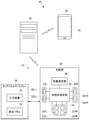
- FIG. 1 is a diagram showing a wear size acquisition system of the first embodiment.
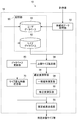
- FIG. 2 is a functional block diagram of the wear size acquisition system of the first embodiment.
- FIG. 3 is a schematic diagram of the garment size database of the first embodiment.
- FIG. 4 is a flowchart of the wear size acquisition method of the first embodiment.
- FIG. 5 is a diagram showing a wear size acquisition system of the second embodiment.
- FIG. 6 is a functional block diagram of the wear size acquisition system of the second embodiment.
- FIG. 7 is a flowchart of the wear size acquisition method of the second embodiment.
- FIG. 1 is a diagram showing a wear size acquisition system of the present embodiment.
- the wear size acquisition system 10 includes a measuring device 12, a store terminal 14 which is an information processing device, and a server 16.
- the measuring device 12 is a body composition analyzer that measures the body composition based on the bioimpedance of the person to be measured.
- the measuring device 12 of the present embodiment is installed in each store that sells clothes and is used by a garment purchaser (hereinafter referred to as “customer”) to measure the body composition of the customer. That is, the person to be measured in this embodiment is a customer, and is an estimated target person whose estimated clothing size, which will be described later, is estimated.
- the measuring device 12 of the present embodiment includes a touch panel display 20 and a main body 30.
- the touch panel display 20 is provided at the upper end of a support column that rises from the main body 30.
- the main body 30 is provided with a platform 32 on which the person to be measured rests, a right hand grip 33R, and a left hand grip 33L. Then, the person to be measured stands barefoot on the platform 32, holds the right hand grip 33R with the right hand, and holds the left hand grip 33L with the left hand to measure the body composition.
- the details of the measuring device 12 will be described below.
- the touch panel display 20 includes a display panel 21 such as a liquid crystal display panel, and an input device 22 such as a touch sensor that receives touch input integrally with the display panel 21.
- an input device 22 such as a touch sensor that receives touch input integrally with the display panel 21.
- an input device such as a button or a switch independent of the display panel 21 may be used.
- the measurement result by the measuring device 12 and the garment size estimation result hereinafter referred to as “clothes size estimation result”
- the main body portion 30 includes a body composition measuring unit 31 and a weight measuring unit 34, as well as the above-mentioned platform 32, right hand grip 33R, and left hand grip 33L.
- the mount 32 includes a right foot energizing electrode 321R, a right foot measuring electrode 322R, a left foot energizing electrode 321L, and a left foot measuring electrode 322L.
- the right hand grip 33R includes a right hand energizing electrode 331R and a right hand measuring electrode 332R
- the left hand grip 33L includes a left hand energizing electrode 331L and a left hand measuring electrode 332L.
- the body weight measuring unit 34 is provided with a load cell for measuring the body weight.
- the load cell is composed of a strain-causing body of a metal member that deforms according to a load and a strain gauge attached to the strain-causing body.
- the resistance value (output value) of the strain gauge changes according to its expansion and contraction.
- the body composition measuring unit 31 calculates the body weight from the difference between the output value (zero point) of the load cell when no load is applied and the output value when a load is applied.
- the configuration for measuring the body weight using the load cell may be the same as that of a general weight scale.
- Age, gender, and height are input to the body composition measurement unit 31 as biological information of the person to be measured. These biological information are input to the body composition measuring unit 31 via the touch panel display 20.
- the body composition measuring unit 31 may be input with biological information acquired by means provided by another device.
- another device is a device that estimates the height, age, gender, etc. of the person to be measured by analyzing an image of the person to be measured by a camera, and the body composition measuring unit 31 obtains this estimation result as a living body. It may be entered as information.
- other biological information of the person to be measured may be input to the body composition measuring unit 31.
- the body composition measuring unit 31 has a current supply function for passing a weak current of a predetermined frequency from each current-carrying electrode to a predetermined part of the body of the person to be measured, and a potential difference measuring function for measuring a potential difference generated in a current path. It is equipped with a bioimpedance calculation function that calculates the bioimpedance of the user's whole body and each body part based on each value of various currents and potential differences.
- the bioimpedance of the whole body and each body part of the person to be measured is measured by the body composition measuring unit 31 as follows, for example.
- a current is supplied using the left hand energizing electrode 331L and the left foot energizing electrode 321L, and in the current path flowing through the left hand, the left arm, the chest, the abdomen, the left leg, and the left foot, the left hand is used.
- the potential difference between the left hand measuring electrode 332L in contact and the left foot measuring electrode 322L in contact with the left foot is measured.
- a current is supplied using the left hand energizing electrode 331L and the left foot energizing electrode 321L, and the left foot is in the current path flowing through the left hand, the left arm, the chest, the abdomen, the left leg, and the left foot.
- the potential difference between the left foot measurement electrode 322L in contact with the right foot and the right foot measurement electrode 322R in contact with the right foot is measured.
- a current is supplied using the right hand energizing electrode 331R and the right foot energizing electrode 321R, and in the current path flowing through the right hand, the right arm, the chest, the abdomen, the right leg, and the right foot, the left hand is used.
- the potential difference between the left-hand measurement electrode 332L in contact and the right-hand measurement electrode 332R in contact with the right hand is measured.
- a current is supplied using the left hand energizing electrode 331L and the left foot energizing electrode 321L, and in the current path flowing through the left hand, the left arm, the chest, the abdomen, the left leg, and the left foot, the left hand is used.
- the potential difference between the left-hand measurement electrode 332L in contact and the right-hand measurement electrode 332R in contact with the right hand is measured.
- the body composition measuring unit 31 applies the input biometric information of the person to be measured, the body weight measured by the weight measuring unit 34, and each calculated bioimpedance to a predetermined regression equation to calculate the whole body. And the body composition measurement value for each body part is calculated.
- the body composition measuring unit 31 uses body composition measurement values such as fat ratio, fat mass, defatted fat mass, muscle mass, visceral fat mass, visceral fat level, visceral fat area, subcutaneous fat mass, basal metabolic rate, bone mass, and body. Calculate the water content, BMI, intracellular fluid volume, and extracellular fluid volume.
- the configuration related to the calculation of the body composition measurement value the same configuration as that of a general body composition meter can be used.
- the biological information of the person to be measured input to the body composition measuring unit 31 and the body composition measured value calculated by the body composition measuring unit 3 are collectively referred to as the subject's biological information or body composition data.
- the measuring device 12 is measured with the person to be measured barefoot.
- the measuring device 12 of the present embodiment is used by the customer of the store, the measuring device 12 is necessarily barefoot on the main body 30. It is not necessary, and for example, the measurement may be performed on the main body 30 while wearing socks or shoes. In this case, the bioimpedance is not measured using the energizing electrodes and the measuring electrodes of the right leg and the left leg, and the bioinformation of the person to be measured is acquired.
- the measuring device 12 does not have to measure the bioimpedance using all of the current-carrying electrodes and the measuring electrodes of the right hand, the left hand, the right leg and the left leg, and the measuring device 12 can be used from the right hand, the left hand, the right leg and the left leg.
- the bioimpedance may be measured using at least two or more energizing electrodes and measuring electrodes.
- the measuring device 12 has a communication function with other information processing devices such as the server 16, and transmits the measurement result by the measuring device 12 to the server 16 and receives the clothes size estimation result from the server 16. To do.
- the store terminal 14 is an information processing device including a touch panel display 15, a computer capable of executing an application program, internal storage such as a flash memory, and various connectors. Further, the store terminal 14 includes a wireless communication device for connecting to the Internet and a short-range communication device for connecting to another nearby device, receives the clothes size estimation result from the server 16, and receives the clothes size estimation result, and the touch panel display 15 Display on.
- the store terminal 14 is possessed by a store clerk, and is, for example, a portable information processing device such as a smartphone or tablet terminal, but is not limited to this, and other information such as a desktop type or laptop type personal computer or the like. It may be a processing device.
- the server 16 is a computer including a CPU (Central Processing Unit) capable of executing a program, a storage device such as an HDD (Hard Disk Drive), a communication device for connecting to the Internet or an intranet, and an information processing device including various connectors. Is.
- the server 16 of the present embodiment can send and receive data to and from the measuring device 12 and the store terminal 14, estimates the customer's clothes size and the like based on the target person's biological information received from the measuring device 12, and wears clothes. The size estimation result is transmitted to the measuring device 12 and the store terminal 14.
- the server 16 may be installed in each store, or may be installed in each predetermined area where a plurality of stores exist.
- FIG. 2 is a functional block diagram of the wear size acquisition system 10 of the present embodiment.
- the wear size acquisition system 10 includes a storage unit 50, a body composition data acquisition unit 52, a clothing size estimation unit 54, an appropriateness calculation unit 56, an estimation result transmission unit 58, and a database update unit 60.
- each function shown in FIG. 2 is realized by, for example, a computer included in the server 16 executing a clothing size estimation program stored in the storage unit 50.
- Each part of the wear size acquisition system 10 shown in FIG. 2 may be realized by individual hardware such as an ASIC (Application Specific Integrated Circuit).
- ASIC Application Specific Integrated Circuit
- the person to be measured by the measuring device 12 is referred to as an estimation target person.
- the garment size estimation program may be provided to the server 16 by being downloaded from the communication network by the server 16, or may be provided to the server 16 via a non-temporary recording medium.
- the storage unit 50 stores a plurality of biological information (body composition data) associated with clothing sizes (size data) indicating the size of clothing worn by the estimated target person. Specifically, the storage unit 50 stores a plurality of body composition data associated with each size data as a size database 62.
- the following mathematical formulas (1) to (3) are mathematical formulas representing the size database 62, DB indicates the database, BC indicates the body composition data, and CS indicates the size data. Further, n is an integer, and the body composition data and the size data having the same value of n are in a corresponding relationship. As described above, the size database 62 is a set having n combinations of body composition data and size data.
- FIG. 3 is a diagram schematically showing the size database 62.
- clothes sizes are associated with each body composition data.
- a combination of two types of body composition data elements X and Y is used as each body composition data, and in FIG. 3, the value of each body composition data is expressed as (Xn, Yn).
- X O, Y O is the subject biometric information acquired by the measurement device 12, not included in size database 62.
- the body composition data elements X and Y are, for example, fat ratio, fat mass, lean mass, muscle mass, visceral fat mass, visceral fat level, visceral fat area, subcutaneous fat mass, basal metabolic rate, bone mass, and body water content. , BMI, intracellular fluid volume, and extracellular fluid volume.
- the size database 62 may be provided for each weight and height of the estimated target person, for example.
- the body composition data is not limited to the combination of two types of body composition data elements X and Y, but is a combination of one type of body composition data element X or three or more types of body composition data X, Y, Z, ... It suffices that the clothes size is associated with each body composition data.
- the body composition data element may be a value that can be input to the measuring device 12 by the estimation target person, or another value as long as it is another value that can be calculated from the bioimpedance measured by the measuring device 12.
- the garment size of the present embodiment is, for example, a size represented by S (Small), M (Medium), L (Large), etc., but is not limited to this, and other notations may be used. It may be a numerical value, a numerical range or a ratio used for estimating the size of clothes such as abdominal circumference and chest circumference. Further, the garment size may be a size that changes according to the wearer's body shape such as Y, A and AB, or may be a garment type such as straight, slim and bootcut.
- the body composition data acquisition unit 52 acquires the subject biometric information indicating the body composition data of the estimated subject acquired by the measuring device 12 via the communication line.
- the clothing size estimation unit 54 estimates the clothing size of the estimated target person based on the subject's biological information acquired by the body composition data acquisition unit 52 and a plurality of body composition data stored in the storage unit 50. That is, the clothing size estimation unit 54 uses the size data corresponding to the body composition data having the strongest relationship with the body composition data of the estimation target person as the clothing size of the estimation target person in the multidimensional space centered on the body composition data. presume.
- Clothes size estimation unit 54 of the present embodiment as an example, a plurality of body composition data stored in the storage unit 50 (Xn, Yn) of the target biological information (X O, Y O) in the vicinity with respect to The clothing size corresponding to a certain body composition data is estimated as the clothing size of the estimation target person.
- the clothing size of the estimated target person can be easily estimated from the subject's biological information indicating the body composition data of the estimated target person.
- This calculation procedure is extracted as an example, the subject biometric information (X O, Y O) of one of the body composition data which is closest relative (Xn, Yn).
- processing is necessarily subject biometric information (X O, Y O) closest to the to be body composition data to (Xn, Yn) may not be extracted.
- body composition data (Xn, Yn) are the subject biometric information (X O, Y O) if the nearest relative is the body composition data (Xn, Yn) Arithmetic processing that does not extract may be performed.
- the size data corresponding to the body composition data having the smallest Euclidean distance from the subject's biological information is estimated as the clothing size of the estimated subject.
- the following formula (4) is an example of the formula for calculating the Euclidean distance.
- the subject biometric information (X O, Y O) for body composition data to the (X 3, Y 3) is most Euclidean distance is smaller, the garment size is estimated to be "S".
- the ratio is the largest among the neighborhood data group (hereinafter, also referred to as “cluster”), which is a set of body composition data considered to be the vicinity of the subject's biological information.
- the size data is estimated as the clothing size of the estimation target person.
- the neighborhood data group kDB is represented by the following mathematical formula (5).
- the method for determining the cluster is not particularly limited, but may be, for example, body composition data included within a predetermined Euclidean distance from the subject's biological information.
- the estimation method (2) estimates the largest size data among the size data included in the mathematical formula (5) as the clothing size of the person to be estimated.
- the subject biometric information (X O, Y O) size data D 1 of the nearest relative is estimated as garment size estimation subject.
- the size data may be weighted by the Euclidean distance from the subject's biological information.
- Count modify_x is a value obtained by weighting the Euclidean distance to the number k x of the clothes size x included in the kDB. Then, the size data having the largest value of Count modify_x is estimated as the clothing size of the estimated target person.
- one cluster (density-based cluster) is a maximum set of body composition data satisfying the conditions represented by the following formulas (7) to (9). ).
- the largest size data is estimated as the clothing size of the estimated target person in the density-based cluster including the subject's biological information.
- the clothes size estimated by the clothes size estimation unit 54 (hereinafter referred to as “estimated clothes size”) is output to the appropriateness calculation unit 56.
- the appropriateness calculation unit 56 calculates the appropriateness for the estimated target person of the estimated clothing size. Since the estimated clothing size is estimated from the subject's biological information in the body composition data of the estimated subject, the estimation result may not be appropriate. Therefore, the appropriateness calculation unit 56 calculates the appropriateness of the estimated clothing size, and the estimated target person who is the customer or the store clerk confirms the result, so that the estimated wear size is the estimated target person. You can judge whether it fits or not. This allows the estimated target person to select the optimum clothing with the help of himself or the clerk.
- the appropriateness calculation unit 56 of the present embodiment includes a match probability calculation unit 64 and a correction degree calculation unit 66.
- the match probability calculation unit 64 calculates the probability that the estimated clothing size is the clothing size of the estimated target person (hereinafter referred to as “match probability”) as an appropriateness based on a plurality of body composition data stored in the storage unit 50. To do. That is, the match probability is an index indicating whether the estimated clothing size is suitable for the estimated target person. The more suitable the estimated clothing size is to the person to be estimated, the larger the value of the matching probability becomes.
- the match probability calculation unit 64 of the present embodiment is associated with the body composition data included in a predetermined range based on the subject's biological information among the plurality of body composition data stored in the storage unit 50. Calculate the match probability from the proportion or distribution of clothing size. As a result, the appropriateness calculation unit 56 can easily determine whether or not the estimated clothing size is appropriate.
- N t be the number of size data that is the same as the estimated clothing size
- N f be the number of size data that is different from the estimated clothing size.
- the match probability Pt is calculated as in the following mathematical formula (10).
- the subject biometric information (X O, Y O) is a cluster that contains is indicated by one-dot chain line. And since there are seven body composition data of S size and two body composition data of M size included in this cluster, the matching probability of the estimated clothing size "S" is about 78%. Will be done.
- the cluster may contain multiple types of clothing sizes that are different from the estimated clothing size.
- the probabilities of being included in the cluster for different types of garment sizes are also calculated.
- the match probability calculation unit 64 also calculates the probability that the “S” clothing size is included in the cluster and the probability that the “L” clothing size is included.
- the estimated clothing size of the subject biometric information belonging to this cluster is "M", and the matching probability is 70%.
- the probability of the garment size of "S” is 10%
- the probability of the garment size of "L” is 20%.
- the clothing size of the estimated target person is estimated to be M size, which is close to L size.
- the probability of the garment size of "S” may be given a minus sign
- the probability of the garment size of "L” may be given a plus sign to identify the probability for each garment size. ..
- (2) of the cluster belongs calculation target biological information from the difference of the distribution of body composition data for each size included in a cluster, the probability distribution of body composition data which is the same size data and the estimated clothing size and p t,
- p) when the probability distribution of the body composition data of the cluster is p is expressed by the following equation (11).
- the match probability P t is calculated by the following mathematical formula (12) using the difference KL ( pt
- the correction degree calculation unit 66 is the difference between the representative value of the body composition data in the estimated clothing size and the subject's biological information, or the representative value of the dimension in the estimated clothing size (hereinafter referred to as "estimated dimension") and the subject's living body.
- the degree of correction which is the difference from the dimensions obtained from the information (hereinafter referred to as “subject biometric information dimensions”), is calculated as the appropriateness. That is, the degree of correction is an index showing how far the body shape of the estimated target person is from the typical body shape suitable for the estimated clothing size.
- the appropriateness calculation unit 56 can easily determine whether or not the estimated clothing size is appropriate.
- the body composition data in the estimated clothing size and the representative values of the estimated dimensions are stored in advance in the size database 62 as an example.
- the target person's biological information dimension can be obtained, for example, by acquiring the body shape data corresponding to the target person's biological information from a database in which the body composition data and the reference body shape data are stored in association with each other.
- the size m is an estimated clothing size, and is any of "S", “M”, and “L” in this embodiment. Further, BC m and med may be representative values of the estimated dimensions in the size m, and BC t may be the biological information dimensions of the subject.
- the degree of correction M m and t is expressed as a percentage (%) as an example, and the larger this value is, the more the correction is made. Is required.
- the degree of correction M m and t is expressed in length (cm) as an example, and the larger this value is, the more A fix is needed.
- the correction degree calculation unit 66 attaches a label indicating that “correction is required” to the estimated garment size when the calculated correction degree is equal to or more than a predetermined threshold value, and the correction degree is less than the above threshold value. In some cases, it may be labeled as “no modification required”. If "correction is required”, the clerk will assist in selecting clothes as described later. Further, the degree of correction is displayed on the touch panel display 20 of the measuring device 12, and the estimation target person can confirm it. The estimation target person who has confirmed the degree of correction selects the necessity of correction by himself / herself through the touch panel display 20. May be good.
- the representative value of the estimated dimension is acquired from the size database 62 as described above, but is not limited to this, and may be calculated based on the body composition data and the matching probability described above.
- a conventional technique it is also possible to calculate a representative value of an estimated dimension by inputting body composition data as a variable for a predetermined function.
- this function was obtained by a statistical method, and there is a possibility that the function may include strange data in this statistic, and the calculation of the representative value using the function lowers the estimation accuracy of the representative value. there is a possibility.
- the estimation accuracy of the representative value of the estimated dimension can be further improved by weighting the data having a statistically high appearance rate and the data having a low appearance rate using the match probability to calculate the representative value of the estimated dimension.
- using the match probability to calculate the representative value of the estimated dimension means that the representative value is calculated by taking into account the degree of deviation between the body shape of the person to be estimated and the size of the clothes. More specifically, when the estimated clothing size is calculated as "S", the lower the matching probability, the closer the body shape of the estimated subject is to the clothing size "M”. Therefore, by using the match probability to calculate the representative value of the estimated dimension, the representative value is calculated as a more appropriate value corresponding to the person to be estimated, that is, a value close to the clothing size “M”.
- Equations (14) and (15) are examples of formulas for calculating typical arm dimensions of clothing, where L arm is the length of the long axis of the arm , FAT arm is the amount of fat in the arm , and WEIGHT arm is the weight of the arm. Yes, these values are stored in advance in the size database 62 for each garment size as an average value.
- the representative value of the estimated dimension is calculated by the mathematical formula (14), and the match probability P t is calculated in advance. If it is less than the predetermined match probability, the representative value of the estimated dimension is calculated by the mathematical formula (15).
- the match probability P t may be added as a variable of the function as in the following mathematical formula (16).
- the appropriateness such as the matching probability and the correction degree calculated by the appropriateness calculation unit 56 in this way is output to the estimation result transmission unit 58 together with the estimated clothing size.
- the estimation result transmission unit 58 transmits the estimated clothing size estimated by the clothing size estimation unit 54, the matching probability calculated by the appropriateness calculation unit 56, and the correction degree to the measuring device 12 and the store terminal 14 via the communication line. To do.
- the database update unit 60 adds (registers) new body composition data associated with the size data to the size database 62 and updates it.
- An information processing device that can access the size database 62 is predetermined, and a combination of body composition data and size data newly added to the database from the information processing device is input to the database update unit 60.
- the size database 62 is sequentially updated, and the estimation accuracy of the estimated clothing size of the estimated target person is improved.
- the size database 62 is updated by, for example, the service operator (provider) of the wear size acquisition system 10. In the size database 62, the combination of the registered body composition data and the size data may be deleted.
- FIG. 4 is a flowchart showing the flow of the clothes size estimation process (clothes size estimation program) executed by the server 16.
- step S100 the body composition data acquisition unit 52 determines whether or not the subject biometric information has been input from the measuring device 12, and in the case of an affirmative determination, the process proceeds to step S102 assuming that the subject biometric information has been acquired. In the case of a negative judgment, the state waits until the subject's biological information is input.
- the estimation target person selects to execute the clothing size estimation process via the touch panel display 20 of the measuring device 12.
- the estimation target person who is a customer of the store inputs identification information for identifying the customer such as a member number in the store and his / her name.
- step S102 the clothing size estimation unit 54 estimates the clothing size of the estimated target person based on the body composition data included in the size database 62 and the acquired biological information of the target person.
- the appropriateness calculation unit 56 calculates the matching probability and the correction degree as the appropriateness for the estimated target person of the estimated clothing size.
- the estimation result transmission unit 58 transmits the estimated clothing size, the matching probability, and the degree of correction to the measuring device 12 and the store terminal 14.
- the touch panel display 20 of the measuring device 12 and the touch panel display 15 of the store terminal 14 display the estimated clothing size, the matching probability, and the degree of correction.
- the store terminal 14 displays the time when the customer measured with the measuring device 12, the identification information input by the customer, and the like. This allows the clerk to identify the customer who made the estimated garment size estimate.
- the estimated clothing size and the like are not always transmitted to the store terminal 14, and may be, for example, when any of the following conditions is satisfied.
- the clerk can call out to the customer and provide clothing selection support only when the customer deems it necessary.
- even a customer who does not want the store clerk or the store to know his / her body composition data, estimated clothing size, etc. can use this system.
- the conditions (1) and (5) are cases where the customer is considered to be uncertain about the purchase of clothes.
- the determination of the predetermined times T1 and T2 is based on, for example, the elapsed time since the customer's face was recognized by the camera installed in the store and the customer completed the measurement or entered the store. It is done by measuring the elapsed time.
- the estimated clothing size may not be suitable for the customer, and in such a case, the selection support by the clerk is required.
- the condition (4) is when the customer feels that the estimated garment size may not be appropriate.
- (6) is a case where the customer wants to purchase clothes by consulting with the clerk himself regardless of the suitability of the estimated clothes size. When the customer selects "transmission of estimated clothing size" and the conditions (1) to (5) are satisfied, the estimated clothing size and the like may be transmitted to the store terminal 14.
- the estimated clothing size estimated by the clothing size estimation unit 54, the matching probability calculated by the appropriateness calculation unit 56, and the degree of correction may be output by the information processing device, and are connected to, for example, the measuring device 12 or the store terminal 14. It may be printed on the recording medium by the printing apparatus. Further, only the estimated clothing size may be transmitted to the measuring device 12, and the estimated clothing size, the matching probability, and the degree of correction may be transmitted to the store terminal 14.
- the clothing size acquisition system 10 of the present embodiment estimates the clothing size of the estimated target person based on the subject's biological information indicating the body composition data of the estimated target person, and the estimated clothing size is calculated. Ask the person to be estimated whether it is appropriate. Therefore, the clothing size acquisition system 10 of the present embodiment can easily acquire the appropriate clothing size for the customer who is the purchaser of the clothing.
- the size database 62 of the present embodiment may be provided not only once but also in plurality. This is because, depending on the manufacturer, brand, etc., the notation of the size of the clothes may be different, or even if the notation is the same as that of other manufacturers, the actual dimensions of the clothes may be slightly different. Therefore, the size database 62 may be provided for each garment manufacturer, brand, and fashion category. In the case of this form, when the presumed target person who is a customer performs measurement by the measuring device 12, the name of the garment manufacturer or brand handled by the store is displayed on the touch panel display 20. Then, the estimation target person selects the manufacturer or brand of the clothes he / she wants to purchase, and causes the wear size acquisition system 10 to execute the clothes size estimation process. As a result, the garment size acquisition system 10 executes the garment size estimation process using the size database 62 corresponding to the selected manufacturer or brand.
- the size database 62 may be provided for each store.
- the store clerk may generate or update the size database 62 via the store terminal 14. Specifically, only clothes of manufacturers and brands handled in stores are registered in the size database 62, and clothes of manufacturers and brands that are no longer handled or are out of stock are deleted from the size database 62.
- the clothing size acquisition system 10 including the size database 62 for each manufacturer and brand estimates clothes of manufacturers and brands that are recommended to be purchased according to the biological information of the target person and the past purchase history. It may be presented to the estimated target along with the size.
- the mode in which the server 16 executes the clothes size estimation process has been described, but the present invention is not limited to this, and the measuring device 12 has the function shown in FIG. 2 and even if the clothes size estimation process is executed. Good.
- the measuring device 12 and the store terminal 14 can transmit and receive data by short-range communication such as Bluetooth (registered trademark), and the estimated garment size and appropriateness calculated by the measuring device 12 are measured by the measuring device. It is transmitted from 12 to the store terminal 14.
- the server 16 stores the size database 62 and includes a database update unit 60 to sequentially update the size database 62. Then, the measuring device 12 acquires and stores a new size database 62 from the server 16 via the store terminal 14.
- FIG. 5 is a schematic configuration diagram of the wear size acquisition system 10 of the present embodiment.
- the main body 30 is provided with a simple input / output unit 35 for displaying power on / off, function switching, and measurement results.
- data can be transmitted and received between the information processing device (hereinafter referred to as "user terminal") 18 such as a smartphone possessed by the estimation target person and the measurement device 12 by short-range communication, and the target person's biological information by the measurement device 12 Is transmitted to the user terminal 18.
- the information processing device hereinafter referred to as "user terminal”
- user terminal 18 such as a smartphone possessed by the estimation target person and the measurement device 12 by short-range communication
- the target person biometric information of the estimation target person is transmitted to the server 16, and the clothes size estimation process is performed by the server 16. ..
- the estimated clothing size calculated by the server 16 is transmitted to the user terminal 18 and displayed on the touch panel display 19 of the user terminal 18.
- FIG. 6 is a functional block diagram showing the electrical configuration of the wear size acquisition system 10 of the present embodiment.
- the same functional blocks as those in FIG. 2 in FIG. 6 are designated by the same reference numerals, and the description thereof will be omitted.
- the wear size acquisition system 10 of the present embodiment includes a user database 68 in the storage unit 50.
- the user database 68 is provided for each estimation target person, and the estimation result of the clothing size estimation process performed by the estimation target person in the past and the target person's biological information are stored together with the date. Therefore, the body composition data acquisition unit 52 stores the subject biometric information in the user database 68 every time the subject biometric information is acquired. In addition, each time the estimated clothing size is estimated, the clothing size estimation unit 54 also stores the estimated clothing size in the user database 68 in association with the subject biometric information used for the estimation.
- the wear size acquisition system 10 of the present embodiment includes a size change time estimation unit 70.
- the size change time estimation unit 70 is a time when the clothing size of the estimated target person changes based on the previously acquired target person's biological information and the newly acquired target person's biological information (hereinafter referred to as "size change time"). .) Is estimated.
- the size change time estimation unit 70 estimates the timing at which the clothing size is likely to change from the change tendency of the body composition data of the estimation target person. That is, the size change time is an index showing the change in the body shape of the estimated target person, and the estimated target person can recognize the change in his / her own body shape by checking the size change time.
- the size change time estimation unit 70 will change the clothing size of the estimated subject in the future by extrapolation based on the approximation line between the previously acquired subject biometric information and the newly acquired subject biometric information, for example. Estimate when to do it. Then, the estimated size change time is output to the estimation result transmission unit 58.
- the estimation result transmission unit 58 transmits the size change time to the user terminal 18 together with the estimated clothing size and the like.
- FIG. 7 is a flowchart showing the flow of the clothes size estimation process (clothes size estimation program) executed by the server 16 of the present embodiment.
- step S200 the body composition data acquisition unit 52 determines whether or not the subject biometric information has been input from the user terminal 18 by the measuring device 12, and in the case of affirmative determination, it is assumed that the subject biometric information has been acquired in step S202. Move to. In the case of a negative judgment, the state waits until the subject's biological information is input.
- step S202 the body composition data acquisition unit 52 stores the acquired biological information of the subject in the user database 68.
- step S204 the clothing size estimation unit 54 estimates the clothing size of the estimated target person based on the body composition data included in the size database 62 and the acquired biological information of the target person.
- the appropriateness calculation unit 56 calculates the matching probability and the correction degree as the appropriateness for the estimated target person of the estimated clothing size.
- the size change time estimation unit 70 estimates the size change time.
- the estimation result transmission unit 58 transmits the estimated clothing size, the matching probability, the degree of correction, and the size change time to the user terminal 18 of the estimation target person.
- the touch panel display 19 of the user terminal 18 displays the estimated clothing size, the matching probability, the degree of correction, and the size change time. Therefore, the estimation target person can recognize the clothes size suitable for himself / herself, and can recognize the change time when the clothes size is estimated to change due to the change in body shape.
- the size change time may be displayed as "no change in clothing size". .. In other words, when the garment size changes within the predetermined period, the change time is displayed.
- the wear size acquisition system 10 of the present embodiment may transmit (notify) the estimated clothing size and size change time of the estimated target person to the information processing device of the store registered in advance by the estimated target person.
- the store clerk can assist in selecting more appropriate clothes without having to measure the body shape of the estimated target person when the estimated target person visits the store.
- the estimated clothing size, size change time, and the like may be transmitted to the information processing device of the store when any of the following conditions is satisfied, for example.
- (1) When the estimated clothing size at the time of the previous purchase of the estimated target person or the actually purchased clothing size is different from the new estimated clothing size, and the matching probability of the new estimated clothing size is the predetermined value P or more
- (2) Estimated When the values required to determine the size of clothing, such as the input values such as height and abdominal circumference of the subject at the time of the previous measurement and the biological information of the subject, have changed to the extent that the clothing size needs to be changed.
- the present disclosure is not limited to this, and socks, gloves, shoes, hats, ski boots, as long as the clothing is worn by the presumed target person. , Snowboard shoes, and other clothing.
- the clothing size acquisition system 10 may provide a means for the estimation target person to give feedback as to whether or not the result of the estimated clothing size is appropriate together with the calculated matching probability.
- the subject biometric information of the estimated target person and the clothing size determined to be appropriate by the estimated target person are registered in the size database 62.
- information on clothes actually tried on or purchased by the estimated target person may be further added to the feedback information.
- the store terminal 14 or the user terminal 18 may execute the clothes size estimation process.
- the store terminal 14 or the user terminal 18 receives the target person's biological information from the measuring device 12, and executes the clothing size estimation process based on the target person's biological information.
- the size database 62 is appropriately downloaded from the server 16 to the store terminal 14 or the user terminal 18, and stored in the store terminal 14 or the user terminal 18.
- the user database 68 of the second embodiment may be stored in the user terminal 18 instead of being stored in the server 16.
- the size data is associated with each of the plurality of body composition data in the size database 62, and further, the design data relating to the design of the garment including at least one such as color and pattern is provided for each body composition data. May be associated with.
- clothing design data that is assumed to be suitable for the body shape estimated from the body composition that is the subject's biological information is associated with each of the plurality of body composition data together with the size data.
- contraction colors are associated as colors (design data)
- for body composition data in which the estimated body shape is thick Is associated with stripes as a pattern (design data).
- the design data together with the estimated size data is displayed on the touch panel display 20 of the measuring device 12 and presented to the estimation target person.
- a plurality of design data may be associated with one body composition data, and one or more design data may be presented to the estimation target person based on the past purchase history of the estimation target person.
- the mode in which the garment size estimation unit 54 estimates the garment size has been described, but the present invention is not limited to this, and the garment size estimation unit 54 is the same as the method for estimating the garment size of the estimation target person described above.
- the design of the garment may be estimated based on the subject biometric information of the estimated subject.
- the storage unit 50 stores a database (hereinafter referred to as "design database") in which design data is associated with each of a plurality of body composition data. Then, the garment size estimation unit 54 estimates from the above-mentioned (1) Euclidean distance, (2) neighborhood data group, and (3) density-based cluster, for example, based on the subject's biological information and the design database. Estimate the clothing design of the person to be estimated using, etc.
- the estimated size data is displayed on the touch panel display 20 of the measuring device 12 and presented to the estimation target person.
- the number of design data estimated to belong to the estimation target person may be plural, and one or more design data may be presented to the estimation target person based on the past purchase history of the estimation target person.
- the appropriateness calculation unit 56 uses the same method as the method of determining whether the clothing size of the estimated target person estimated by the clothing size estimating unit 54 described above is appropriate for the estimated target person. , You may ask if the presumed garment design is appropriate for the presumed subject. As a matter of course, the appropriateness calculation unit 56 may obtain only the match probability out of the above-mentioned match probability and correction degree.
- Wear size acquisition system 12 Measuring device 50 Storage unit (storage means) 52 Body composition data acquisition unit (biological information acquisition means) 54 Clothes size estimation unit (wear size estimation means) 56 Appropriateness calculation unit (appropriateness calculation means) 62 size database (database) 70 Size change time estimation unit (size change time estimation means)
Landscapes
- Health & Medical Sciences (AREA)
- Life Sciences & Earth Sciences (AREA)
- Engineering & Computer Science (AREA)
- Physics & Mathematics (AREA)
- Biophysics (AREA)
- Business, Economics & Management (AREA)
- Medical Informatics (AREA)
- Heart & Thoracic Surgery (AREA)
- Molecular Biology (AREA)
- Surgery (AREA)
- Animal Behavior & Ethology (AREA)
- General Health & Medical Sciences (AREA)
- Public Health (AREA)
- Veterinary Medicine (AREA)
- Biomedical Technology (AREA)
- Pathology (AREA)
- Accounting & Taxation (AREA)
- Finance (AREA)
- General Physics & Mathematics (AREA)
- Strategic Management (AREA)
- Development Economics (AREA)
- Economics (AREA)
- Marketing (AREA)
- General Business, Economics & Management (AREA)
- Textile Engineering (AREA)
- Theoretical Computer Science (AREA)
- Oral & Maxillofacial Surgery (AREA)
- Dentistry (AREA)
- Nuclear Medicine, Radiotherapy & Molecular Imaging (AREA)
- Radiology & Medical Imaging (AREA)
- Measurement Of The Respiration, Hearing Ability, Form, And Blood Characteristics Of Living Organisms (AREA)
- Measurement And Recording Of Electrical Phenomena And Electrical Characteristics Of The Living Body (AREA)
Priority Applications (3)
| Application Number | Priority Date | Filing Date | Title |
|---|---|---|---|
| CN202080037650.7A CN113853157B (zh) | 2019-05-20 | 2020-05-18 | 穿着物尺寸获取系统、穿着物尺寸获取程序、穿着物选择辅助方法以及计算机可读非暂时性存储介质 |
| EP20808921.9A EP3973804A4 (en) | 2019-05-20 | 2020-05-18 | Clothing size acquisition system, clothing size acquisition program, clothing selection assistance method, and computer-readable non-transitory storage medium |
| US17/524,919 US20220076311A1 (en) | 2019-05-20 | 2021-11-12 | Clothing size acquisition system, clothing size acquisition program, clothing selection assistance method, and computer-readable non-transitory storage medium |
Applications Claiming Priority (2)
| Application Number | Priority Date | Filing Date | Title |
|---|---|---|---|
| JP2019-094551 | 2019-05-20 | ||
| JP2019094551A JP7586453B2 (ja) | 2019-05-20 | 2019-05-20 | 着用物サイズ取得システム、着用物サイズ取得プログラム、及び着用物選択支援方法 |
Related Child Applications (1)
| Application Number | Title | Priority Date | Filing Date |
|---|---|---|---|
| US17/524,919 Continuation US20220076311A1 (en) | 2019-05-20 | 2021-11-12 | Clothing size acquisition system, clothing size acquisition program, clothing selection assistance method, and computer-readable non-transitory storage medium |
Publications (1)
| Publication Number | Publication Date |
|---|---|
| WO2020235514A1 true WO2020235514A1 (ja) | 2020-11-26 |
Family
ID=73454343
Family Applications (1)
| Application Number | Title | Priority Date | Filing Date |
|---|---|---|---|
| PCT/JP2020/019575 Ceased WO2020235514A1 (ja) | 2019-05-20 | 2020-05-18 | 着用物サイズ取得システム、着用物サイズ取得プログラム、着用物選択支援方法、及びコンピュータ読み取り可能な非一時的記憶媒体 |
Country Status (5)
| Country | Link |
|---|---|
| US (1) | US20220076311A1 (https=) |
| EP (1) | EP3973804A4 (https=) |
| JP (1) | JP7586453B2 (https=) |
| CN (1) | CN113853157B (https=) |
| WO (1) | WO2020235514A1 (https=) |
Families Citing this family (3)
| Publication number | Priority date | Publication date | Assignee | Title |
|---|---|---|---|---|
| JP7539342B2 (ja) * | 2021-05-14 | 2024-08-23 | ユニ・チャーム株式会社 | 情報処理装置、情報処理方法及び情報処理プログラム |
| JP7223061B2 (ja) * | 2021-06-04 | 2023-02-15 | 株式会社Zozo | 情報処理装置、情報処理方法及び情報処理プログラム |
| JP7553662B1 (ja) * | 2023-07-13 | 2024-09-18 | 株式会社Zozo | 情報処理装置、情報処理方法及び情報処理プログラム |
Citations (6)
| Publication number | Priority date | Publication date | Assignee | Title |
|---|---|---|---|---|
| JP2010204697A (ja) * | 2007-05-18 | 2010-09-16 | Nec Corp | 衣類選択支援システム、衣類選択支援方法および衣類選択支援プログラム |
| JP2014018444A (ja) * | 2012-07-19 | 2014-02-03 | Tanita Corp | 生体測定装置及び体画像作成プログラム |
| US20160180447A1 (en) * | 2014-12-20 | 2016-06-23 | Ebay Inc. | Virtual shopping |
| JP2016123589A (ja) | 2014-12-26 | 2016-07-11 | オムロン株式会社 | 身体情報取得装置および身体情報取得方法 |
| JP2018124946A (ja) * | 2017-02-03 | 2018-08-09 | 有限会社Primavera | 3dボディスキャナーと型紙自動作成ソフトを使ったアパレルのビジネスモデル |
| JP2019094551A (ja) | 2017-11-28 | 2019-06-20 | Tdk株式会社 | 軟磁性圧粉磁心の製造方法および軟磁性圧粉磁心 |
Family Cites Families (21)
| Publication number | Priority date | Publication date | Assignee | Title |
|---|---|---|---|---|
| JP3474534B2 (ja) * | 2000-12-15 | 2003-12-08 | 寿代 石丸 | 靴型設計方法および靴型設計装置 |
| JP2004029909A (ja) * | 2002-06-21 | 2004-01-29 | Casio Comput Co Ltd | 商品案内装置およびプログラム |
| US7421306B2 (en) * | 2004-09-16 | 2008-09-02 | Sanghati, Llc | Apparel size service |
| JP4101821B2 (ja) * | 2005-06-06 | 2008-06-18 | 株式会社タニタ | 腹部インピーダンス式体組成計 |
| JP2007265077A (ja) * | 2006-03-29 | 2007-10-11 | Nomura Research Institute Ltd | 子供衣類管理装置および子供衣類管理システム |
| US8095426B2 (en) * | 2008-02-19 | 2012-01-10 | Size Me Up, Inc. | System and method for comparative sizing between a well-fitting source item and a target item |
| WO2011050205A1 (en) * | 2009-10-23 | 2011-04-28 | True Fit Corp. | System and method for providing consumers with personalized information about products |
| US8429025B2 (en) * | 2010-03-17 | 2013-04-23 | Amanda Fries | Method, medium, and system of ascertaining garment size of a particular garment type for a consumer |
| US20110295711A1 (en) * | 2010-06-01 | 2011-12-01 | Rouben Mazmanyan | Apparel Fit Advisory Service |
| AU2011282632B2 (en) * | 2010-07-28 | 2015-01-22 | True Fit Corporation | Determining a likelihood of suitability based on historical data |
| US8478663B2 (en) * | 2010-07-28 | 2013-07-02 | True Fit Corporation | Fit recommendation via collaborative inference |
| WO2012016057A1 (en) * | 2010-07-29 | 2012-02-02 | True Fit Corporation | Enabling proxy shopping |
| US11062377B1 (en) * | 2011-07-25 | 2021-07-13 | Secret Sauce Partners, Inc. | Fit prediction |
| JP5948092B2 (ja) * | 2012-03-05 | 2016-07-06 | 東芝テック株式会社 | 試着装置及び試着プログラム |
| JP5256362B1 (ja) * | 2012-03-30 | 2013-08-07 | 楽天株式会社 | 情報処理装置、情報処理方法、情報処理プログラム及び記録媒体 |
| CN102819805A (zh) * | 2012-05-23 | 2012-12-12 | 北京酷绅服装有限公司 | 一种根据身高和体重自动选尺寸的方法和系统 |
| US10664901B2 (en) * | 2012-08-03 | 2020-05-26 | Eyefitu Ag | Garment fitting system and method |
| US20140063056A1 (en) * | 2012-08-29 | 2014-03-06 | Koskar Inc. | Apparatus, system and method for virtually fitting wearable items |
| KR20160086715A (ko) * | 2015-01-12 | 2016-07-20 | 삼성전자주식회사 | 웨어러블 생체 정보 측정 장치 및 이를 이용한 생체 정보 측정 방법 |
| KR101595810B1 (ko) * | 2015-09-11 | 2016-02-19 | 주식회사 디오텍 | 생체 정보 측정을 위한 장치 및 컴퓨터-판독가능 매체에 저장된 컴퓨터 프로그램 |
| CN109741390A (zh) * | 2018-12-18 | 2019-05-10 | 维沃移动通信有限公司 | 一种尺码推荐方法及移动终端 |
-
2019
- 2019-05-20 JP JP2019094551A patent/JP7586453B2/ja active Active
-
2020
- 2020-05-18 WO PCT/JP2020/019575 patent/WO2020235514A1/ja not_active Ceased
- 2020-05-18 EP EP20808921.9A patent/EP3973804A4/en active Pending
- 2020-05-18 CN CN202080037650.7A patent/CN113853157B/zh active Active
-
2021
- 2021-11-12 US US17/524,919 patent/US20220076311A1/en active Pending
Patent Citations (6)
| Publication number | Priority date | Publication date | Assignee | Title |
|---|---|---|---|---|
| JP2010204697A (ja) * | 2007-05-18 | 2010-09-16 | Nec Corp | 衣類選択支援システム、衣類選択支援方法および衣類選択支援プログラム |
| JP2014018444A (ja) * | 2012-07-19 | 2014-02-03 | Tanita Corp | 生体測定装置及び体画像作成プログラム |
| US20160180447A1 (en) * | 2014-12-20 | 2016-06-23 | Ebay Inc. | Virtual shopping |
| JP2016123589A (ja) | 2014-12-26 | 2016-07-11 | オムロン株式会社 | 身体情報取得装置および身体情報取得方法 |
| JP2018124946A (ja) * | 2017-02-03 | 2018-08-09 | 有限会社Primavera | 3dボディスキャナーと型紙自動作成ソフトを使ったアパレルのビジネスモデル |
| JP2019094551A (ja) | 2017-11-28 | 2019-06-20 | Tdk株式会社 | 軟磁性圧粉磁心の製造方法および軟磁性圧粉磁心 |
Non-Patent Citations (1)
| Title |
|---|
| See also references of EP3973804A4 |
Also Published As
| Publication number | Publication date |
|---|---|
| CN113853157A (zh) | 2021-12-28 |
| EP3973804A4 (en) | 2023-06-28 |
| CN113853157B (zh) | 2026-02-03 |
| JP7586453B2 (ja) | 2024-11-19 |
| EP3973804A1 (en) | 2022-03-30 |
| US20220076311A1 (en) | 2022-03-10 |
| JP2020190043A (ja) | 2020-11-26 |
Similar Documents
| Publication | Publication Date | Title |
|---|---|---|
| WO2020235514A1 (ja) | 着用物サイズ取得システム、着用物サイズ取得プログラム、着用物選択支援方法、及びコンピュータ読み取り可能な非一時的記憶媒体 | |
| US6975961B1 (en) | System having digital weighing scale device and method for outputting diet information transmitted through internet network | |
| US9934527B2 (en) | Shoe selection support system | |
| US20140224552A1 (en) | Body weight management device | |
| KR20160046616A (ko) | 체지방을 측정하는 방법 및 장치 | |
| CN108289637B (zh) | 生成矫正产品推荐 | |
| EP3238611A1 (en) | A method and device for estimating a condition of a person | |
| JP2010227408A (ja) | 体組成計、測定結果出力方法および測定結果出力プログラム | |
| JP7681918B2 (ja) | 体内測定システム及びプログラム | |
| US20210369140A1 (en) | Body shape data acquisition system, body shape data acquisition program, and computer-readable non-transitory storage medium | |
| JP2020190043A5 (https=) | ||
| JP2005125059A (ja) | 体脂肪計および体脂肪率推定プログラム | |
| JP2025147191A (ja) | 測定装置 | |
| JP2017021725A (ja) | 健康管理支援装置、健康管理支援システム及び健康管理支援方法 | |
| KR101689553B1 (ko) | 체성분 측정 결과를 보정하기 위한 체성분 측정 장치 및 서버 | |
| JP2003265427A (ja) | 健康管理装置 | |
| Ola-Afolayan et al. | Statistical modelling of key body dimensions in developing a size chart for the full-figured, pear-shaped South African women | |
| JP2022013775A (ja) | オンラインフィッティングシステム及びプログラム | |
| KR20240015783A (ko) | 라이프 스타일 정보에 기초한 부위별 착용감 예측 장치 및 방법, 컴퓨터 판독가능 기록 매체 및 컴퓨터 프로그램 | |
| JP7770016B2 (ja) | 被計測者登録装置、生体情報測定装置、被計測者登録プログラム、被計測者登録方法、被計測者登録システム、及びコンピュータ読み取り可能な非一時的記憶媒体 | |
| TWI664952B (zh) | 穿戴式體重檢測系統及計算體重變化量的方法 | |
| US12140470B2 (en) | Biometric information measuring device | |
| JP7521767B2 (ja) | 生体情報測定装置及び生体情報測定方法 | |
| US11576452B2 (en) | System and method to select wearable items | |
| JP7303473B2 (ja) | 処理選択プログラム、処理選択システム、および処理選択方法 |
Legal Events
| Date | Code | Title | Description |
|---|---|---|---|
| 121 | Ep: the epo has been informed by wipo that ep was designated in this application |
Ref document number: 20808921 Country of ref document: EP Kind code of ref document: A1 |
|
| NENP | Non-entry into the national phase |
Ref country code: DE |
|
| ENP | Entry into the national phase |
Ref document number: 2020808921 Country of ref document: EP Effective date: 20211220 |