WO2020203491A1 - 化合物、重合性組成物、硬化物、光学フィルム、偏光板および画像表示装置 - Google Patents
化合物、重合性組成物、硬化物、光学フィルム、偏光板および画像表示装置 Download PDFInfo
- Publication number
- WO2020203491A1 WO2020203491A1 PCT/JP2020/013119 JP2020013119W WO2020203491A1 WO 2020203491 A1 WO2020203491 A1 WO 2020203491A1 JP 2020013119 W JP2020013119 W JP 2020013119W WO 2020203491 A1 WO2020203491 A1 WO 2020203491A1
- Authority
- WO
- WIPO (PCT)
- Prior art keywords
- compound
- substituent
- group
- formula
- liquid crystal
- Prior art date
- Legal status (The legal status is an assumption and is not a legal conclusion. Google has not performed a legal analysis and makes no representation as to the accuracy of the status listed.)
- Ceased
Links
Images
Classifications
-
- C—CHEMISTRY; METALLURGY
- C09—DYES; PAINTS; POLISHES; NATURAL RESINS; ADHESIVES; COMPOSITIONS NOT OTHERWISE PROVIDED FOR; APPLICATIONS OF MATERIALS NOT OTHERWISE PROVIDED FOR
- C09K—MATERIALS FOR MISCELLANEOUS APPLICATIONS, NOT PROVIDED FOR ELSEWHERE
- C09K19/00—Liquid crystal materials
- C09K19/04—Liquid crystal materials characterised by the chemical structure of the liquid crystal components, e.g. by a specific unit
- C09K19/06—Non-steroidal liquid crystal compounds
- C09K19/08—Non-steroidal liquid crystal compounds containing at least two non-condensed rings
- C09K19/30—Non-steroidal liquid crystal compounds containing at least two non-condensed rings containing saturated or unsaturated non-aromatic rings, e.g. cyclohexane rings
- C09K19/3001—Cyclohexane rings
- C09K19/3066—Cyclohexane rings in which the rings are linked by a chain containing carbon and oxygen atoms, e.g. esters or ethers
- C09K19/3068—Cyclohexane rings in which the rings are linked by a chain containing carbon and oxygen atoms, e.g. esters or ethers chain containing -COO- or -OCO- groups
-
- G—PHYSICS
- G02—OPTICS
- G02B—OPTICAL ELEMENTS, SYSTEMS OR APPARATUS
- G02B5/00—Optical elements other than lenses
- G02B5/30—Polarising elements
- G02B5/3016—Polarising elements involving passive liquid crystal elements
-
- C—CHEMISTRY; METALLURGY
- C07—ORGANIC CHEMISTRY
- C07C—ACYCLIC OR CARBOCYCLIC COMPOUNDS
- C07C69/00—Esters of carboxylic acids; Esters of carbonic or haloformic acids
- C07C69/74—Esters of carboxylic acids having an esterified carboxyl group bound to a carbon atom of a ring other than a six-membered aromatic ring
- C07C69/75—Esters of carboxylic acids having an esterified carboxyl group bound to a carbon atom of a ring other than a six-membered aromatic ring of acids with a six-membered ring
-
- C—CHEMISTRY; METALLURGY
- C07—ORGANIC CHEMISTRY
- C07C—ACYCLIC OR CARBOCYCLIC COMPOUNDS
- C07C69/00—Esters of carboxylic acids; Esters of carbonic or haloformic acids
- C07C69/74—Esters of carboxylic acids having an esterified carboxyl group bound to a carbon atom of a ring other than a six-membered aromatic ring
- C07C69/753—Esters of carboxylic acids having an esterified carboxyl group bound to a carbon atom of a ring other than a six-membered aromatic ring of polycyclic acids
-
- C—CHEMISTRY; METALLURGY
- C07—ORGANIC CHEMISTRY
- C07C—ACYCLIC OR CARBOCYCLIC COMPOUNDS
- C07C69/00—Esters of carboxylic acids; Esters of carbonic or haloformic acids
- C07C69/76—Esters of carboxylic acids having a carboxyl group bound to a carbon atom of a six-membered aromatic ring
- C07C69/84—Esters of carboxylic acids having a carboxyl group bound to a carbon atom of a six-membered aromatic ring of monocyclic hydroxy carboxylic acids, the hydroxy groups and the carboxyl groups of which are bound to carbon atoms of a six-membered aromatic ring
- C07C69/90—Esters of carboxylic acids having a carboxyl group bound to a carbon atom of a six-membered aromatic ring of monocyclic hydroxy carboxylic acids, the hydroxy groups and the carboxyl groups of which are bound to carbon atoms of a six-membered aromatic ring with esterified hydroxyl and carboxyl groups
-
- C—CHEMISTRY; METALLURGY
- C08—ORGANIC MACROMOLECULAR COMPOUNDS; THEIR PREPARATION OR CHEMICAL WORKING-UP; COMPOSITIONS BASED THEREON
- C08F—MACROMOLECULAR COMPOUNDS OBTAINED BY REACTIONS ONLY INVOLVING CARBON-TO-CARBON UNSATURATED BONDS
- C08F20/00—Homopolymers and copolymers of compounds having one or more unsaturated aliphatic radicals, each having only one carbon-to-carbon double bond, and only one being terminated by only one carboxyl radical or a salt, anhydride, ester, amide, imide or nitrile thereof
- C08F20/02—Monocarboxylic acids having less than ten carbon atoms, Derivatives thereof
- C08F20/10—Esters
- C08F20/26—Esters containing oxygen in addition to the carboxy oxygen
- C08F20/30—Esters containing oxygen in addition to the carboxy oxygen containing aromatic rings in the alcohol moiety
-
- C—CHEMISTRY; METALLURGY
- C09—DYES; PAINTS; POLISHES; NATURAL RESINS; ADHESIVES; COMPOSITIONS NOT OTHERWISE PROVIDED FOR; APPLICATIONS OF MATERIALS NOT OTHERWISE PROVIDED FOR
- C09K—MATERIALS FOR MISCELLANEOUS APPLICATIONS, NOT PROVIDED FOR ELSEWHERE
- C09K19/00—Liquid crystal materials
- C09K19/04—Liquid crystal materials characterised by the chemical structure of the liquid crystal components, e.g. by a specific unit
- C09K19/06—Non-steroidal liquid crystal compounds
- C09K19/34—Non-steroidal liquid crystal compounds containing at least one heterocyclic ring
- C09K19/3491—Non-steroidal liquid crystal compounds containing at least one heterocyclic ring having sulfur as hetero atom
-
- C—CHEMISTRY; METALLURGY
- C09—DYES; PAINTS; POLISHES; NATURAL RESINS; ADHESIVES; COMPOSITIONS NOT OTHERWISE PROVIDED FOR; APPLICATIONS OF MATERIALS NOT OTHERWISE PROVIDED FOR
- C09K—MATERIALS FOR MISCELLANEOUS APPLICATIONS, NOT PROVIDED FOR ELSEWHERE
- C09K19/00—Liquid crystal materials
- C09K19/04—Liquid crystal materials characterised by the chemical structure of the liquid crystal components, e.g. by a specific unit
- C09K19/06—Non-steroidal liquid crystal compounds
- C09K19/34—Non-steroidal liquid crystal compounds containing at least one heterocyclic ring
- C09K19/3491—Non-steroidal liquid crystal compounds containing at least one heterocyclic ring having sulfur as hetero atom
- C09K19/3497—Non-steroidal liquid crystal compounds containing at least one heterocyclic ring having sulfur as hetero atom the heterocyclic ring containing sulfur and nitrogen atoms
-
- C—CHEMISTRY; METALLURGY
- C09—DYES; PAINTS; POLISHES; NATURAL RESINS; ADHESIVES; COMPOSITIONS NOT OTHERWISE PROVIDED FOR; APPLICATIONS OF MATERIALS NOT OTHERWISE PROVIDED FOR
- C09K—MATERIALS FOR MISCELLANEOUS APPLICATIONS, NOT PROVIDED FOR ELSEWHERE
- C09K19/00—Liquid crystal materials
- C09K19/04—Liquid crystal materials characterised by the chemical structure of the liquid crystal components, e.g. by a specific unit
- C09K2019/0444—Liquid crystal materials characterised by the chemical structure of the liquid crystal components, e.g. by a specific unit characterized by a linking chain between rings or ring systems, a bridging chain between extensive mesogenic moieties or an end chain group
- C09K2019/0448—Liquid crystal materials characterised by the chemical structure of the liquid crystal components, e.g. by a specific unit characterized by a linking chain between rings or ring systems, a bridging chain between extensive mesogenic moieties or an end chain group the end chain group being a polymerizable end group, e.g. -Sp-P or acrylate
-
- C—CHEMISTRY; METALLURGY
- C09—DYES; PAINTS; POLISHES; NATURAL RESINS; ADHESIVES; COMPOSITIONS NOT OTHERWISE PROVIDED FOR; APPLICATIONS OF MATERIALS NOT OTHERWISE PROVIDED FOR
- C09K—MATERIALS FOR MISCELLANEOUS APPLICATIONS, NOT PROVIDED FOR ELSEWHERE
- C09K19/00—Liquid crystal materials
- C09K19/04—Liquid crystal materials characterised by the chemical structure of the liquid crystal components, e.g. by a specific unit
- C09K19/06—Non-steroidal liquid crystal compounds
- C09K19/08—Non-steroidal liquid crystal compounds containing at least two non-condensed rings
- C09K19/30—Non-steroidal liquid crystal compounds containing at least two non-condensed rings containing saturated or unsaturated non-aromatic rings, e.g. cyclohexane rings
- C09K19/3001—Cyclohexane rings
- C09K19/3066—Cyclohexane rings in which the rings are linked by a chain containing carbon and oxygen atoms, e.g. esters or ethers
- C09K19/3068—Cyclohexane rings in which the rings are linked by a chain containing carbon and oxygen atoms, e.g. esters or ethers chain containing -COO- or -OCO- groups
- C09K2019/3075—Cy-COO-Ph
-
- C—CHEMISTRY; METALLURGY
- C09—DYES; PAINTS; POLISHES; NATURAL RESINS; ADHESIVES; COMPOSITIONS NOT OTHERWISE PROVIDED FOR; APPLICATIONS OF MATERIALS NOT OTHERWISE PROVIDED FOR
- C09K—MATERIALS FOR MISCELLANEOUS APPLICATIONS, NOT PROVIDED FOR ELSEWHERE
- C09K2219/00—Aspects relating to the form of the liquid crystal [LC] material, or by the technical area in which LC material are used
- C09K2219/03—Aspects relating to the form of the liquid crystal [LC] material, or by the technical area in which LC material are used in the form of films, e.g. films after polymerisation of LC precursor
Definitions
- the present invention relates to compounds, polymerizable compositions, cured products, optical films, polarizing plates and image display devices.
- Optical films such as optical compensation sheets and retardation films are used in various image display devices for eliminating image coloring and expanding the viewing angle.
- a stretched birefringent film has been used as the optical film, but in recent years, it has been proposed to use an optical film having an optically anisotropic layer made of a liquid crystal compound instead of the stretched birefringent film.
- an optically anisotropic layer for example, in Patent Document 1, "a polymerizable composition containing one or more kinds of polymerizable rod-shaped liquid crystal compounds exhibiting a smectic phase is immobilized in a state of exhibiting a smectic phase.
- the present inventors have found that the tilt angle of liquid crystal molecules can be reduced by using a compound having a predetermined structure, and have completed the present invention. That is, it was found that the above problem can be achieved by the following configuration.
- P-Sp-Z-G 1- (X 1- Cy 1 ) n- (X 2- A 1 ) m-X 3- A 2- (I)
- Sp is one or more of —CH 2- that constitutes a single bond, a linear or branched alkylene group having 1 to 12 carbon atoms, or a linear or branched alkylene group having 1 to 12 carbon atoms.
- Q represents a valent linking group and Q represents a substituent.
- Z is a single bond, -O-, -S-, -NH-, -N (Q)-, -CO-, -COO-, -OCO-, -CO-NH-, or -NH-CO- Represents, and Q represents a substituent.
- X 1 , X 2 and X 3 independently represent a single bond, -COO-, -OCO-, -CO-NH-, or -NH-CO-, respectively.
- G 1 represents an aromatic ring which may have a substituent or a 1,4-cyclohexylene group which may have a substituent.
- Cy 1 represents a 1,4-cyclohexylene group which may have a substituent.
- a 1 represents an aromatic ring which may have a substituent.
- a 2 represents an aromatic ring or a cyclohexane ring which may have a substituent R, and the substituent R is a linear or branched alkoxy group having 1 to 11 carbon atoms and 1 to 12 carbon atoms. Represents a linear or branched alkyl group or —Z—Sp—P, and Z and Sp are the same as described above, respectively.
- a 2 is a 6-membered aromatic ring, it does not have a substituent R at the para position with respect to the bonding position with X 3 .
- the substituent R is ⁇ Z—Sp—P
- the two Zs, Sps and Ps that will be present in the formula may be the same or different from each other.
- n represents 0 or 1
- m represents an integer of 0 to 2
- n + m represents an integer of 1 to 3.
- P represents a polymerizable group.
- a 2 is an aromatic ring having —Z—Sp-P as the substituent R
- one of the two Ps present in the formula represents a polymerizable group and the other is a hydrogen atom. Or represents a polymerizable group.
- G 1 is an aromatic ring which may have a substituent
- n is 0, and m is 1
- X 3 is -COO-, -OCO-, -CO-NH.
- G 1 is an aromatic ring which may have a substituent R
- n is 1
- m is 0, and
- a 2 is an aromatic ring which may have a substituent R.
- Q represents a substituent.
- Z is a single bond, among the divalent linking groups constituting Sp, the atom adjacent to G 1 is not an oxygen atom.
- the polymerizable composition according to [15] which contains a polymerizable liquid crystal compound different from the above compound.
- the present invention it is possible to provide a compound capable of reducing the tilt angle of liquid crystal molecules, and a polymerizable composition, cured product, optical film, polarizing plate and image display device using the compound.
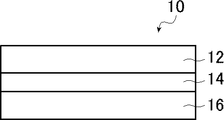
- FIG. 1A is a schematic cross-sectional view showing an example of the optical film of the present invention.
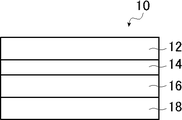
- FIG. 1B is a schematic cross-sectional view showing an example of the optical film of the present invention.
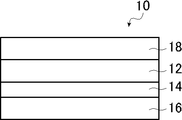
- FIG. 1C is a schematic cross-sectional view showing an example of the optical film of the present invention.
- the present invention will be described in detail.
- the description of the constituent elements described below may be based on typical embodiments of the present invention, but the present invention is not limited to such embodiments.
- the numerical range represented by using "-" means the range including the numerical values before and after "-" as the lower limit value and the upper limit value.
- a substance corresponding to each component may be used alone or in combination of two or more.
- the content of the component refers to the total content of the substances used in combination unless otherwise specified.
- the compound of the present invention is a compound represented by the following formula (I) (hereinafter, also abbreviated as “compound (I)”).
- compound (I) P-Sp-Z-G 1- (X 1- Cy 1 ) n- (X 2- A 1 ) m-X 3- A 2- (I)
- the tilt angle of the liquid crystal molecule can be reduced by using the compound (I).
- the polymerizable liquid crystal compound is generally polymerized after orientation from the viewpoint of fixing the orientation state, but the curing shrinkage accompanying this polymerization causes distortion in the liquid crystal molecules, resulting in a tilt angle. it is conceivable that. Therefore, in the present invention, the compound (I) penetrates into the gaps and layers of the polymerizable liquid crystal compound and participates in the polymerization reaction after the orientation, thereby causing the distortion of the liquid crystal molecules observed during the polymerization of the liquid crystal compound alone. It is considered that the tilt angle of the liquid crystal molecules could be reduced because it could be suppressed.
- the composition of the above formula (I) will be described in detail for the compound of the present invention.
- the compound of the present invention is a compound represented by the following formula (I).
- P-Sp-Z-G 1- (X 1- Cy 1 ) n- (X 2- A 1 ) m-X 3- A 2- (I)
- Sp constitutes a single bond, a linear or branched alkylene group having 1 to 12 carbon atoms, or a linear or branched alkylene group having 1 to 12 carbon atoms.
- CH 2- is -O-, -S-, -NH-, -N (Q)-, -CO-, -COO-, -OCO-, -CO-NH-, or -NH- It represents a divalent linking group substituted with CO-, and Q represents a substituent.
- Z is a single bond, -O-, -S-, -NH-, -N (Q)-, -CO-, -COO-, -OCO-, -CO-NH. -Or -NH-CO-, and Q represents a substituent.
- X 1 , X 2 and X 3 independently represent a single bond, -COO-, -OCO-, -CO-NH-, or -NH-CO-, respectively.
- G 1 represents an aromatic ring which may have a substituent or a 1,4-cyclohexylene group which may have a substituent.
- Cy 1 represents a 1,4-cyclohexylene group which may have a substituent.
- a 1 represents an aromatic ring which may have a substituent.
- a 2 represents an aromatic ring or a cyclohexane ring which may have a substituent R, and the substituent R is a linear or branched form having 1 to 11 carbon atoms. Represents an alkoxy group, a linear or branched alkyl group having 1 to 12 carbon atoms, or —Z—Sp—P, and Z and Sp are the same as described above, respectively.
- a 2 is a 6-membered aromatic ring, it does not have a substituent R at the para position with respect to the bonding position with X 3 .
- the substituent R is ⁇ Z—Sp—P
- the two Zs, Sps and Ps that will be present in the formula may be the same or different from each other.
- n represents 0 or 1
- m represents an integer of 0 to 2
- n + m represents an integer of 1 to 3. If m is 2, the two X 2 and A 1 that will be present in the equation may be the same or different from each other.
- P represents a polymerizable group.
- a 2 is an aromatic ring having —Z—Sp-P as the substituent R
- one of the two Ps present in the formula represents a polymerizable group and the other is a hydrogen atom. Or represents a polymerizable group.
- G 1 is an aromatic ring which may have a substituent
- n is 0, and m is 1
- X 3 is ⁇ COO ⁇ , ⁇ . Represents OCO-, -CO-NH-, or -NH-CO-.
- G 1 is an aromatic ring which may have a substituent, n is 1, m is 0, and A 2 has a substituent R.
- Z is a single bond, -S-, -NH-, -N (Q)-, -CO-, -COO-, -OCO-, -CO-NH-, or , -NH-CO-, and Q represents a substituent.
- Z is a single bond, among the divalent linking groups constituting Sp, the atom adjacent to G 1 is not an oxygen atom.
- examples of the linear or branched alkylene group having 1 to 12 carbon atoms represented by one aspect of Sp include a methylene group, an ethylene group, a propylene group, a butylene group, a pentylene group and a hexylene group. , Methylhexylene group, heptylene group and the like are preferable.
- one or more of -CH 2- constituting a linear or branched alkylene group having 1 to 12 carbon atoms is -O-, -S-, -NH-, -N.
- Q It may be a divalent linking group substituted with-, -CO-, -COO-, -OCO-, -CO-NH-, or -NH-CO-, and is represented by Q.
- substituents include the same substituents that G 1 may have, which will be described later.
- Sp in the above formula (I) is preferably a linear or branched alkylene group having 1 to 3 carbon atoms because the tilt angle of the liquid crystal molecule can be made smaller.
- Z is a single bond, -O-, -S-, -NH-, -N (Q)-, -CO-, -COO-, -OCO-, -CO-NH-, Alternatively, it represents -NH-CO- and Q represents a substituent.
- the substituent represented by Q include the same substituents that G 1 may have, which will be described later.
- a single bond, -CO-, -COO-, -OCO-, -CO-NH-, or -NH-CO- is preferable because it facilitates synthesis.
- G 1, which will be described later is an aromatic ring which may have a substituent, it is preferably a single bond.
- X 1 , X 2 and X 3 independently represent a single bond, -COO-, -OCO-, -CO-NH-, or -NH-CO-, respectively.
- X 1 when n in the above formula (I) is 1 and G 1 described later is an aromatic ring which may have a substituent, it is preferably a single bond.
- n in the above formula (I) when n in the above formula (I) is 1 and G 1 described later is an aromatic ring which may have a substituent, it is preferably -COO- or -OCO-.
- X 2 when m in the above formula (I) is 1 or 2, it is preferable that X 2 is -COO- or -OCO-.
- m in the above formula (I) when m in the above formula (I) is 0, it is preferably -COO- or -OCO- regardless of the type of G 1 described later, and m is 1 or 2. In some cases, it is preferably a single bond.
- examples of the aromatic ring represented by one aspect of G 1 include aromatic hydrocarbon rings such as a benzene ring, a naphthalene ring, an anthracene ring, and a phenanthroline ring; a furan ring, a thiophene ring, and the like.
- examples of the substituent which the aromatic ring or the 1,4-cyclohexylene group may have include an alkyl group, an alkoxy group, a halogen atom and the like.
- the alkyl group for example, a linear, branched or cyclic alkyl group having 1 to 18 carbon atoms is preferable, and an alkyl group having 1 to 8 carbon atoms (for example, a methyl group, an ethyl group, a propyl group or an isopropyl group) is preferable.
- N-butyl group, isobutyl group, sec-butyl group, t-butyl group, cyclohexyl group, etc.) is more preferable, and an alkyl group having 1 to 4 carbon atoms is more preferable, and a methyl group or an ethyl group is used. Is particularly preferable.
- an alkoxy group for example, an alkoxy group having 1 to 18 carbon atoms is preferable, and an alkoxy group having 1 to 8 carbon atoms (for example, a methoxy group, an ethoxy group, an n-butoxy group, a methoxyethoxy group, etc.) is more preferable, and carbon.
- halogen atom examples include a fluorine atom, a chlorine atom, a bromine atom, an iodine atom and the like, and among them, a fluorine atom and a chlorine atom are preferable.
- G 1 is preferably a 1,4-cyclohexylene group which may have a substituent because the tilt angle of the liquid crystal molecule can be made smaller. Further, it is preferable that G 1 is an aromatic ring which may have a substituent because the tilt angle of the liquid crystal molecule can be made smaller.
- Cy 1 represents a 1,4-cyclohexylene group which may have a substituent.
- substituents include the same substituents that G 1 may have.
- examples of the aromatic ring represented by A 1 include the same aromatic ring shown in one aspect of G 1 described above.
- examples of the substituent that the aromatic ring may have include the same substituents that G 1 may have.
- a 2 represents an aromatic ring or a cyclohexane ring which may have a substituent R, but has a substituent R because the tilt angle of the liquid crystal molecule can be made smaller. It is preferably an aromatic ring which may be present, and more preferably a benzene ring which may have a substituent R.
- examples of the aromatic ring shown by one aspect of A 2 include the same aromatic ring shown by one aspect of A 1 described above.
- R A 2 is as described above, a linear or branched alkoxy group having 1 to 11 carbon atoms, straight of 1 to 12 carbon atoms Represents a chain or branched alkyl group or -Z-Sp-P.
- Z and Sp are the same as those described above, and P will be described later.
- the linear or branched alkoxy group having 1 to 11 carbon atoms specifically, for example, a methoxy group, an ethoxy group, a propoxy group, a butoxy group, a pentyloxy group, a hexyloxy group, and a heptyloxy group.
- Examples include groups, octyloxy groups, decyloxy groups and the like.
- Specific examples of the linear or branched alkyl group having 1 to 12 carbon atoms include a methyl group, an ethyl group, a propyl group, an isopropyl group, an n-butyl group, an isobutyl group, and a sec-butyl group.
- Groups, t-butyl groups, cyclohexyl groups and the like can be mentioned.
- substituents R -Z-Sp-P is preferable because the durability of the cured product of the present invention, which will be described later, is improved.
- the substituent R is —Z—Sp—P, Z, Sp and P, which are two in the formula (I), may be the same or different from each other. ..
- a 2 is preferably a 6-membered aromatic ring having a substituent R at the ortho-position or meta-position with respect to the bonding position with X 3 . Further, it is preferable that A 2 is an unsubstituted 6-membered aromatic ring.
- n 0 or 1
- m represents an integer of 0 to 2
- n + m represents an integer of 1 to 3.
- the two X 2 and A 1 that are present in the equation may be the same or different from each other.
- the total of n and m is preferably 1 or 2, and more preferably 1 because the tilt angle of the liquid crystal molecules can be made smaller.
- m is preferably 0 or 1, and more preferably 0, because the tilt angle of the liquid crystal molecules can be made smaller.
- n is preferably 0 or 1 because the tilt angle of the liquid crystal molecules can be made smaller.
- P represents a polymerizable group.
- a 2 is an aromatic ring having —Z—Sp-P as the substituent R
- one of the two Ps present in the formula represents a polymerizable group and the other is a hydrogen atom.
- the polymerizable group a polymerizable group capable of radical polymerization or cationic polymerization is preferable.
- the radically polymerizable group a generally known radically polymerizable group can be used, and preferred examples thereof include an acryloyloxy group and a methacryloyloxy group.
- the acryloyloxy group is generally faster in terms of polymerization rate, and the acryloyloxy group is preferable from the viewpoint of improving productivity, but the methacryloyloxy group can also be used as the polymerizable group in the same manner.
- a generally known cationically polymerizable group can be used, and specifically, an alicyclic ether group, a cyclic acetal group, a cyclic lactone group, a cyclic thioether group, a spiroorthoester group, and , Vinyloxy group and the like.
- an alicyclic ether group or a vinyloxy group is preferable, and an epoxy group, an oxetanyl group, or a vinyloxy group is particularly preferable.
- the polymerizable group is preferably a polymerizable group represented by any of the following formulas (P-1) to (P-9).
- the method for synthesizing compound (I) is not particularly limited, and a general synthesis method can be adopted.
- a general synthesis method can be adopted.
- a method using an alcohol as a raw material acid chlorination, tosylation, benzenesulfonylation, mesylation, a condensing agent, etc. can be mentioned, and the amidation reaction is used.
- a method using amine as a raw material instead of alcohol can be mentioned.
- Examples of the solvent used for the reaction, post-treatment and purification include ester solvents such as methyl acetate, ethyl acetate and butyl acetate; ether solvents such as tetrahydrofuran, dioxane and diethyl ether; toluene, xylene, n-hexane and n.
- -Carbonite-based solvents such as heptane and cyclohexane
- halogen-based solvents such as methylene chloride and chloroform
- alcohol-based solvents such as methanol, ethanol and isopropyl alcohol
- water and other general-purpose solvents can be mentioned.
- Examples of the base used in the reaction include triethylamine, diisopropylethylamine, pyridine, dimethylaminopyridine, N-methylimidazole and the like.
- isolation and purification can be performed using general methods such as liquid separation, crystallization, recrystallization, and silica gel column chromatography.
- separation and purification can be performed using hydrochloric acid water, sodium bicarbonate water, saline solution or the like.
- isolation and purification can be performed using the general-purpose solvent described above.
- the polymerizable composition of the present invention is a polymerizable composition containing the above-mentioned compound (I).
- the polymerizable composition of the present invention preferably contains a polymerizable liquid crystal compound different from the above-mentioned compound (I).
- the polymerizable liquid crystal compound means a liquid crystal compound having a polymerizable group.
- liquid crystal compounds can be classified into rod-shaped type and disk-shaped type according to their shape. Furthermore, there are low molecular weight and high molecular weight types, respectively.
- a polymer generally refers to a polymer having a degree of polymerization of 100 or more (polymer physics / phase transition dynamics, by Masao Doi, p. 2, Iwanami Shoten, 1992).
- any liquid crystal compound can be used, but it is preferable to use a rod-shaped liquid crystal compound or a discotic liquid crystal compound, and it is more preferable to use a rod-shaped liquid crystal compound.
- the polymerizable liquid crystal compound preferably has two or more polymerizable groups in one molecule from the viewpoint of immobilization of the above-mentioned liquid crystal compound.
- the type of the polymerizable group is not particularly limited, and a functional group capable of an addition polymerization reaction is preferable, and a polymerizable ethylenically unsaturated group or a ring-polymerizable group is preferable. More specifically, an acryloyl group, a methacryloyl group, a vinyl group, a styryl group, an allyl group and the like are preferably mentioned, and an acryloyl group and a methacryloyl group are more preferable.
- the polymerizable group of the polymerizable liquid crystal compound is different from the polymerizable group of the compound (I) described above because the tilt angle of the liquid crystal molecule can be made smaller. Is preferable.
- rod-shaped liquid crystal compound for example, those described in claim 1 of JP-A No. 11-513019 and paragraphs [0026] to [00998] of JP-A-2005-289980 can be preferably used, and disco
- tick liquid crystal compound for example, those described in paragraphs [0020] to [0067] of JP2007-108732 and paragraphs [0013] to [0108] of JP2010-2404038 are preferably used. However, it is not limited to these.
- the polymerizable smectic liquid crystal compound is a compound having a polymerizable group and showing a liquid crystal state of the smectic phase.
- the liquid crystal state exhibited by the polymerizable smectic liquid crystal compound is preferably a higher-order smectic phase.
- the higher-order smectic phase referred to here is smectic A phase, smectic B phase, smectic D phase, smectic E phase, smectic F phase, smectic G phase, smectic H phase, smectic I phase, smectic J phase, smectic K phase.
- the smectic A phase, the smectic B phase, the smectic F phase, the smectic I phase, the slanted smectic F phase and the slanted smectic I phase, and the smectic A phase and the mectic B phase are more preferable.
- Examples of such polymerizable smectic liquid crystal compounds include those described in paragraphs [0043] to [0055] of JP2013-033249.
- a liquid crystal compound having a reverse wavelength dispersion can be used as the polymerizable liquid crystal compound.
- the liquid crystal compound having "reverse wavelength dispersibility" in the present specification is a retardation film produced by using the liquid crystal compound, and the in-plane retardation (Re) value at a specific wavelength (visible light range) is measured. In this case, the Re value becomes the same or higher as the measurement wavelength becomes larger.
- the reverse wavelength dispersible liquid crystal compound is not particularly limited as long as it can form a reverse wavelength dispersible film as described above.
- the compounds represented by the following formulas (1) to (22) are preferably mentioned as the polymerizable liquid crystal compound, and specifically, the following formula (1)
- Examples of K (side chain structure) in (22) include compounds having the side chain structures shown in Tables 1 to 3 below.
- "*" shown in the side chain structure of K represents the bonding position with the aromatic ring.
- the groups adjacent to the acryloyloxy group and the methacryloyl group are propylene groups (methyl groups are ethylene groups, respectively). It represents a substituted group) and represents a mixture of positional isomers with different methyl group positions.
- a forward wavelength dispersible liquid crystal compound can be used as the polymerizable liquid crystal compound.
- a forward wavelength dispersive liquid crystal compound together with the reverse wavelength dispersive liquid crystal compound described above.
- the liquid crystal compound having "forward wavelength dispersibility" means that the in-plane retardation (Re) value at a specific wavelength (visible light range) of a retardation film produced using the liquid crystal compound is measured. In this case, the Re value decreases as the measurement wavelength increases.
- Examples of the forward wavelength-dispersible liquid crystal compound preferably include compounds represented by the following formulas (30) to (53), and specifically, K (specifically, K (30) to (53) in the following formulas (30) to (53).
- Examples of the side chain structure) include compounds having the side chain structures shown in Tables 2 and 3, respectively.
- "*" shown in the side chain structure of K represents the bonding position with the benzene ring, piperazine ring or cyclohexane ring in the following formulas (30) to (53).
- the groups adjacent to the acryloyloxy group and the methacryloyl group are propylene groups (methyl groups are ethylene groups, respectively). It represents a substituted group) and represents a mixture of positional isomers with different methyl group positions.
- the polymerizable composition of the present invention preferably contains a polymerization initiator.
- the polymerization initiator used is preferably a photopolymerization initiator capable of initiating a polymerization reaction by irradiation with ultraviolet rays.
- Examples of the photopolymerization initiator include ⁇ -carbonyl compounds (described in US Pat. No. 2,376,661 and US Pat. No. 2,376,670), acidoin ether (described in US Pat. No. 2,448,828), and ⁇ -hydrogen-substituted fragrance.
- Group acidoine compounds described in US Pat. No. 2722512
- polynuclear quinone compounds described in US Pat. Nos.
- the polymerization initiator is preferably an oxime type polymerization initiator, and specific examples thereof are described in paragraphs [0049] to [0052] of International Publication No. 2017/170443. Agents are mentioned.
- the polymerizable composition of the present invention preferably contains a solvent from the viewpoint of workability for forming a cured product (for example, an optically anisotropic layer) of the present invention described later.
- a solvent from the viewpoint of workability for forming a cured product (for example, an optically anisotropic layer) of the present invention described later.
- the solvent include ketones (eg, acetone, 2-butanone, methylisobutylketone, cyclohexanone, cyclopentanone, etc.), ethers (eg, dioxane, tetrahydrofuran, etc.), and aliphatic hydrocarbons.
- the polymerizable composition of the present invention preferably contains a leveling agent from the viewpoint of keeping the surface of the cured product of the present invention described later smooth and facilitating orientation control.
- a leveling agent a fluorine-based leveling agent or a silicon-based leveling agent is preferable because it has a high leveling effect on the amount of addition, and a fluorine-based leveling agent is less likely to cause crying (bloom, bleed). Is more preferable.
- Specific examples of the leveling agent include the compounds described in paragraphs [0079] to [0102] of JP-A-2007-069471, and the general formulas described in JP-A-2013-047204.
- the compound represented by I) (particularly the compound described in paragraphs [0020] to [0032]) and the compound represented by the general formula (I) described in JP2012-211306 (particularly [0022] -The compound described in paragraph [0029], the liquid crystal orientation promoter represented by the general formula (I) described in JP-A-2002-129162 (particularly [0076] to [0078] and [0082]- Compounds described in paragraph [0084], compounds represented by general formulas (I), (II) and (III) described in JP-A-2005-09948 (particularly paragraphs [0092] to [0996]).
- the polymerizable composition of the present invention may contain an orientation control agent, if necessary.
- the orientation control agent can form various orientation states such as homeotropic orientation (vertical orientation), tilt orientation, hybrid orientation, and cholesteric orientation in addition to homogenius orientation, and can make a specific orientation state more uniform and more uniform. It can be realized by precise control.
- orientation control agent that promotes homogenous orientation for example, a low molecular weight orientation control agent or a high molecular weight orientation control agent can be used.
- the low-molecular-weight orientation control agent include paragraphs [0009] to [0083] of JP-A-2002-20363, paragraphs [0111]-[0120] of JP-A-2006-106662, and JP-A-2012.
- paragraphs [0021] to [0029] of JP No. 211306 can be referred to, and this content is incorporated in the present specification.
- orientation control agent for forming or promoting homeotropic orientation examples include boronic acid compounds and onium salt compounds. Specifically, paragraphs [0023] to [0032] of JP-A-2008-225281. , Paragraphs [0052] to [0058] of JP2012-208397A, paragraphs [0024] to [0055] of JP2008-026730, and [0043] to [0055] of JP2016-193869. The compounds described in paragraphs and the like can be taken into account, the contents of which are incorporated herein by reference.
- the cholesteric orientation can be realized by adding a chiral agent to the composition of the present invention, and the turning direction of the cholesteric orientation can be controlled by the direction of the chiral property.
- the pitch of the cholesteric orientation can be controlled according to the orientation regulating force of the chiral agent.
- the content is preferably 0.01 to 10% by mass, more preferably 0.05 to 5% by mass, based on the total solid content mass in the composition.
- the content is in this range, a uniform and highly transparent cured product can be obtained without precipitation, phase separation, orientation defects, etc., while achieving the desired orientation state.
- These orientation control agents can further impart a polymerizable functional group, particularly a polymerizable functional group polymerizable with the compound (I) contained in the composition of the present invention.
- the polymerizable composition of the present invention may contain components other than those described above, and examples thereof include surfactants, tilt angle control agents, orientation aids, plasticizers, and cross-linking agents.
- the cured product of the present invention is a cured product obtained by curing the above-mentioned polymerizable composition of the present invention.
- the polymerizable composition of the present invention contains, for example, a polymerizable liquid crystal compound different from the compound (I) together with the compound (I) described above, by polymerizing the polymerizable composition of the present invention.
- An optically anisotropic layer can be formed as a cured product.
- Examples of the method for forming the cured product include a method in which the above-mentioned polymerizable composition of the present invention is used to obtain a desired orientation state and then immobilized by polymerization.
- the polymerization conditions are not particularly limited, but it is preferable to use ultraviolet rays in the polymerization by light irradiation.
- the irradiation amount is preferably 10 mJ / cm 2 to 50 J / cm 2 , more preferably 20 mJ / cm 2 to 5 J / cm 2 , and even more preferably 30 mJ / cm 2 to 3 J / cm 2. , 50-1000 mJ / cm 2 is particularly preferable.
- the cured product can be formed on an arbitrary support in the optical film of the present invention described later or on a polarizer in the polarizing plate of the present invention described later.
- the cured product of the present invention is preferably an optically anisotropic layer satisfying the following formula (II). 0.50 ⁇ Re (450) / Re (550) ⁇ 1.00 ... (II)
- Re (450) represents the in-plane lettering of the optically anisotropic layer at a wavelength of 450 nm
- Re (550) represents the in-plane letter of the optically anisotropic layer at a wavelength of 550 nm.
- an optically anisotropic layer is preferably a positive A plate or a positive C plate, and more preferably a positive A plate.
- the positive A plate (positive A plate) and the positive C plate (positive C plate) are defined as follows.
- the refractive index in the slow axis direction in the film plane (the direction in which the refractive index in the plane is maximized) is nx
- the refractive index in the direction orthogonal to the slow phase axis in the plane in the plane is ny
- the refraction in the thickness direction is nz
- the positive A plate satisfies the relation of the formula (A1)
- the positive C plate satisfies the relation of the formula (C1).
- the positive A plate shows a positive value for Rth
- the positive C plate shows a negative value for Rth.
- ⁇ includes not only the case where both are completely the same, but also the case where both are substantially the same.
- “Substantially the same” means that, for example, in the positive A plate, (ny-nz) x d (where d is the thickness of the film) is -10 to 10 nm, preferably -5 to 5 nm. It is included in “ny ⁇ nz”, and when (nx-nz) xd is -10 to 10 nm, preferably -5 to 5 nm, it is also included in "nx ⁇ nz”.
- (nx ⁇ ny) ⁇ d (where d is the thickness of the film) is 0 to 10 nm, preferably 0 to 5 nm, it is also included in “nx ⁇ ny”.
- Re (550) is preferably 100 to 180 nm, more preferably 120 to 160 nm, and 130 to 150 nm from the viewpoint of functioning as a ⁇ / 4 plate. It is more preferably 130 to 140 nm, and particularly preferably 130 to 140 nm.
- the " ⁇ / 4 plate” is a plate having a ⁇ / 4 function, and specifically, a function of converting linearly polarized light having a specific wavelength into circularly polarized light (or converting circularly polarized light into linearly polarized light). It is a plate having.
- the optical film of the present invention is an optical film having a cured product of the present invention.
- 1A, 1B and 1C (hereinafter, these drawings are abbreviated as "FIG. 1" when no particular distinction is required) are schematic cross-sectional views showing an example of the optical film of the present invention, respectively.
- FIG. 1 is a schematic view, and the thickness relationship and positional relationship of each layer do not always match the actual ones, and the support, alignment film, and hard coat layer shown in FIG. 1 all have an arbitrary configuration. It is a member.
- the optical film 10 shown in FIG. 1 has a support 16, an alignment film 14, and an optically anisotropic layer 12 as a cured product in this order. Further, as shown in FIG.
- the optical film 10 may have a hard coat layer 18 on the side opposite to the side where the alignment film 14 of the support 16 is provided, and as shown in FIG. 1C, the optical film 10 may have a hard coat layer 18.
- the hard coat layer 18 may be provided on the side of the optically anisotropic layer 12 opposite to the side on which the alignment film 14 is provided.
- the cured product of the optical film of the present invention is the cured product of the present invention described above.
- the thickness of the cured product is not particularly limited, but when used as an optically anisotropic layer, it is preferably 0.1 to 10 ⁇ m, preferably 0.5 to 5 ⁇ m. Is more preferable.
- the optical film of the present invention may have a support as a base material for forming a cured product.
- a support is preferably transparent, and specifically, the light transmittance is preferably 80% or more.
- Such a support examples include a glass substrate and a polymer film, and examples of the polymer film material are cellulose-based polymers; acrylic-based polymers having acrylic acid ester polymers such as polymethylmethacrylate and lactone ring-containing polymers.
- the thickness of the support is not particularly limited, but is preferably 5 to 60 ⁇ m, more preferably 5 to 30 ⁇ m.
- the optical film of the present invention has any of the above-mentioned supports, it is preferable that the optical film has an alignment film between the support and the cured product.
- the support described above may also serve as an alignment film.
- the alignment film generally contains a polymer as a main component.
- the polymer material for the alignment film has been described in many documents, and many commercially available products are available.
- the polymer material used in the present invention is preferably polyvinyl alcohol or polyimide, or a derivative thereof. Particularly modified or unmodified polyvinyl alcohol is preferable.
- the alignment film for example, the alignment film described in International Publication No. 01/88574, p. 43, line 24 to p. 49, line 8; ], And the like; a liquid crystal alignment film formed by the liquid crystal alignment agent described in Japanese Patent Application Laid-Open No. 2012-155308; and the like.
- a photoalignment film as the alignment film because it is possible to prevent surface deterioration by not contacting the surface of the alignment film when the alignment film is formed.
- the photoalignment film is not particularly limited, but is a polymer material such as a polyamide compound or a polyimide compound described in paragraphs [0024] to [0043] of International Publication No. 2005/096041; A liquid crystal alignment film formed by a liquid crystal alignment agent having a photo-oriented group; a trade name LPP-JP265CP manufactured by Polyimide, etc. can be used.
- the thickness of the alignment film is not particularly limited, but from the viewpoint of alleviating the surface irregularities that may exist on the support and forming an optically anisotropic layer having a uniform film thickness, 0. It is preferably 01 to 10 ⁇ m, more preferably 0.01 to 1 ⁇ m, and even more preferably 0.01 to 0.5 ⁇ m.
- the optical film of the present invention preferably has a hard coat layer in order to impart physical strength to the film.
- the hard coat layer may be provided on the side opposite to the side where the alignment film of the support is provided (see FIG. 1B), and the side where the alignment film of the optically anisotropic layer is provided. May have a hard coat layer on the opposite side (see FIG. 1C).
- the hard coat layer those described in paragraphs [0190] to [0196] of JP-A-2009-98658 can be used.
- the optical film of the present invention preferably contains an ultraviolet (UV) absorber in consideration of the influence of external light (particularly ultraviolet rays).
- the ultraviolet absorber may be contained in the cured product of the present invention, or may be contained in a member other than the cured product constituting the optical film of the present invention.
- a support is preferably mentioned.
- the ultraviolet absorber any conventionally known one capable of exhibiting ultraviolet absorption can be used.
- a benzotriazole-based or hydroxyphenyltriazine-based ultraviolet absorber may be used from the viewpoint of obtaining the ultraviolet absorbing ability (ultraviolet blocking ability) used in an image display device because of its high ultraviolet absorbing ability.
- two or more kinds of ultraviolet absorbers having different maximum absorption wavelengths can be used in combination.
- the ultraviolet absorber include compounds described in paragraphs [0258] to [0259] of JP2012-18395, paragraphs [0055] to [0105] of JP2007-72163. Examples thereof include the compounds described in.
- Tinuvin 400, Tinuvin 405, Tinuvin 460, Tinuvin 477, Tinuvin 479, Tinuvin 1577 can be used as commercially available products.
- the polarizing plate of the present invention has the above-mentioned optical film of the present invention and a polarizer. Further, the polarizing plate of the present invention can be used as a circular polarizing plate when the optically anisotropic layer as the cured product of the present invention described above is a ⁇ / 4 plate (positive A plate).
- the slow axis of the ⁇ / 4 plate and the polarizing element described later is preferably 30 to 60 °, more preferably 40 to 50 °, further preferably 42 to 48 °, and particularly preferably 45 °.
- the "slow axis" of the ⁇ / 4 plate means the direction in which the refractive index becomes maximum in the plane of the ⁇ / 4 plate
- the "absorption axis" of the polarizer means the direction in which the absorbance is highest. To do.
- the polarizer of the polarizing plate of the present invention is not particularly limited as long as it is a member having a function of converting light into specific linearly polarized light, and conventionally known absorption type polarizers and reflection type polarizers can be used. ..
- absorption type polarizer an iodine-based polarizer, a dye-based polarizer using a dichroic dye, a polyene-based polarizer, and the like are used. Iodine-based polarized light and dye-based polarized light include coated and stretched polarized light, and both can be applied.
- the reflective polarizer a polarizer in which thin films having different birefringences are laminated, a wire grid type polarizer, a polarizer in which a cholesteric liquid crystal having a selective reflection region and a 1/4 wave plate are combined, and the like are used.
- a polymer containing a polyvinyl alcohol-based resin (-CH 2- CHOH- as a repeating unit.
- the thickness of the polarizer is not particularly limited, but is preferably 3 ⁇ m to 60 ⁇ m, more preferably 5 ⁇ m to 30 ⁇ m, and even more preferably 5 ⁇ m to 15 ⁇ m.
- an adhesive layer may be arranged between the cured product of the optical film of the present invention and the polarizer.
- the pressure-sensitive adhesive that can be used in the present invention include, but are not limited to, a polyvinyl alcohol-based pressure-sensitive adhesive.
- the image display device of the present invention is an image display device having the optical film of the present invention or the polarizing plate of the present invention.
- the display element used in the image display device of the present invention is not particularly limited, and examples thereof include a liquid crystal cell, an organic electroluminescence (hereinafter abbreviated as “EL”) display panel, and a plasma display panel.
- EL organic electroluminescence
- a liquid crystal cell and an organic EL display panel are preferable, and a liquid crystal cell is more preferable.
- the image display device of the present invention is preferably a liquid crystal display device using a liquid crystal cell as a display element and an organic EL display device using an organic EL display panel as a display element, and the liquid crystal display device is preferable. More preferred.
- the liquid crystal display device which is an example of the image display device of the present invention is a liquid crystal display device having the above-mentioned polarizing plate of the present invention and a liquid crystal cell.
- the polarizing plate of the present invention among the polarizing plates provided on both sides of the liquid crystal cell, it is preferable to use the polarizing plate of the present invention as the polarizing plate on the front side, and the polarizing plate of the present invention as the polarizing plate on the front side and the rear side. Is more preferable to use.
- the liquid crystal cells constituting the liquid crystal display device will be described in detail below.
- the liquid crystal cell used in the liquid crystal display device is preferably a VA (Vertical Element) mode, an OCB (Optically Compensated Bend) mode, an IPS (In-Plane-Switching) mode, or a TN (Twisted Nematic) mode. It is not limited to these.
- the TN mode liquid crystal cell the rod-shaped liquid crystal molecules are substantially horizontally oriented when no voltage is applied, and are further twisted to 60 to 120 °.
- the TN mode liquid crystal cell is most often used as a color TFT liquid crystal display device, and has been described in many documents.
- the rod-shaped liquid crystal molecules are substantially vertically oriented when no voltage is applied.
- VA mode liquid crystal cell In the VA mode liquid crystal cell, (1) a VA mode liquid crystal cell in a narrow sense in which rod-shaped liquid crystal molecules are oriented substantially vertically when no voltage is applied and substantially horizontally when a voltage is applied (Japanese Patent Laid-Open No. 2-). In addition to (described in Japanese Patent Application Laid-Open No. 176625), (2) a liquid crystal cell (SID97, Digital of technique. Papers (Proceedings) 28 (1997) 845 in which the VA mode is multi-domainized for expanding the viewing angle).
- the rod-shaped liquid crystal molecules are oriented substantially parallel to the substrate, and the liquid crystal molecules respond in a plane by applying an electric field parallel to the substrate surface.
- the display is black when no electric field is applied, and the absorption axes of the pair of upper and lower polarizing plates are orthogonal to each other.
- Methods for reducing leakage light during black display in an oblique direction and improving the viewing angle by using an optical compensation sheet are described in JP-A-10-54982, JP-A-11-202323, and JP-A-9-292522. It is disclosed in JP-A-11-133408, JP-A-11-305217, JP-A-10-307291, and the like.
- Organic EL display device examples include, for example, from the visual side, a ⁇ / 4 plate (positive A plate) composed of a polarizer, an optically anisotropic layer of the present invention, and an organic EL.
- a mode having a display panel in this order is preferably mentioned.
- the organic EL display panel is a display panel configured by using an organic EL element having an organic light emitting layer (organic electroluminescence layer) sandwiched between electrodes (between a cathode and an anode).
- the configuration of the organic EL display panel is not particularly limited, and a known configuration is adopted.
- Example 3 A white solid compound A-3 represented by the following formula A-3 was obtained according to the same procedure as in Example 1 except that 2-methoxyphenol was used instead of phenol.
- the 1 1 H-NMR of the obtained compound A-3 is shown below.
- 1 1 H-NMR (CDCl 3 ): ⁇ 7.18 (dt, 1H), 6.90-7.02 (m, 3H), 6.44 (d, 1H), 6.14 (dd, 1H) 5.88 (dd, 1H), 4.28-4.39 (m, 4H), 3.81 (s, 3H), 2.51 (tt, 1H), 2.12-2-31 (m) , 3H) 1.95-2.07 (m, 2H), 1.77-1.92 (m, 4H), 1.34-1.63 (m, 4H), 0.97-1.20 (M, 6H).
- the obtained organic layer was washed with water (25 mL), 1N hydrochloric acid (25 mL), saturated aqueous sodium hydrogen carbonate (25 mL), and saturated brine (25 mL) in this order, and Glauber's salt was added.
- the obtained organic layer was filtered to collect the filtrate, and then dibutylhydroxytoluene (0.16 g, 0.73 mmol) was added, and the solvent was distilled off from the filtrate under reduced pressure.
- the obtained residue was purified by flash column chromatography to obtain Compound 5 (6.55 g).
- Example 6 A white solid compound A-6 represented by the following formula A-6 was obtained according to the same procedure as in Example 1 except that 3-methoxyphenol was used instead of phenol.
- the 1 1 H-NMR of the obtained compound A-6 is shown below.
- 1 1 H-NMR (CDCl 3 ): ⁇ 7.26 (t, 1H), 6.78 (dd, 1H), 6.60-6.68 (m, 2H), 6.43 (dd, 1H) , 6.16 (dd, 1H), 5.87 (dd, 1H), 4.29-4.39 (m, 4H), 3.78 (s, 3H), 2.46 (tt, 1H), 2.12-2.31 (m, 3H), 1.96-2.07 (m, 2H), 1.77-1.91 (m, 4H), 1.35-1.61 (m, 4H) ), 0.96-1.19 (m, 6H).
- Example 8 A white solid compound A-8 represented by the following formula A-8 was obtained according to the same procedure as in Example 7 except that compound 5 was used instead of phenol.
- the 1 1 H-NMR of the obtained compound A-8 is shown below.
- 1 1 H-NMR (CDCl 3 ): ⁇ 7.99 (dd, 1H), 7.65 (dt, 1H), 7.33 (dt, 2H), 7.09 (dd, 1H), 6.44 (Dd, 1H), 6.43 (dd, 1H), 6.16 (dd, 1H), 6.15 (dd, 1H), 5.87 (dd, 1H), 5.86 (dd, 1H) 4.44-4.52 (m, 4H), 4.14 (dt, 4H), 2.53 (tt, 1H), 2.17-2.29 (m, 3H), 1.96-2 .06 (m, 2H), 1.69-1.92 (m, 8H), 1.25-1.64 (m, 4H), 0.96-1.20 (m, 6H).
- Example 9 A white solid compound A-9 represented by the following formula A-9 was obtained according to the same procedure as in Example 7 except that 1-naphthol was used instead of phenol.
- the 1 1 H-NMR of the obtained compound A-9 is shown below.
- 1 1 H-NMR (CDCl 3 ): ⁇ 7.81-7.89 (m, 2H), 7.72 (d, 1H), 7.42-7.53 (m, 3H), 7.22 ( dd, 1H), 6.42 (dd, 1H), 6.12 (dd, 1H), 5.83 (dd, 1H), 4.05-4.24 (m, 4H), 2.65 (tt) , 1H), 2.14-2.38 (m, 3H), 1.59-2.04 (m, 10H), 1.28-1.50 (m, 4H), 0.93-1.28 (M, 6H).
- Example 11 A white solid compound A-11 represented by the following formula A-11 was obtained according to the same procedure as in Example 10 except that 4-cyclohexylphenol was used instead of 4-phenylphenol.
- the 1 1 H-NMR of the obtained compound A-11 is shown below.
- 1 1 H-NMR (CDCl 3 ): ⁇ 7.19 (d, 2H), 6.96 (d, 2H), 6.42 (dd, 1H), 6.13 (dd, 1H), 5.83 (Dd, 1H) 4.08-4.25 (m, 4H), 2.43-2.59 (m, 2H), 2.03-2.40 (m, 6H), 1.15-1 .92 (m, 13H).
- Example 14 A white solid compound A-14 represented by the following formula A-14 was obtained according to the same procedure as in Example 10 except that 2-hydroxyethyl methacrylate was used instead of 2-hydroxyethyl acrylate.
- the 1 1 H-NMR of the obtained compound A-14 is shown below.
- N-methylimidazole (1.9 g) was added dropwise thereto, and 2,6-di-tert-butyl-p-cresol (0.25 g) was added.
- a solution of compound 11 (39.5 g, 0.104 mol) in ethyl acetate (30 mL) was added dropwise to the reaction solution, and then triethylamine (21.1 g, 0.21 mol) was added dropwise to an internal temperature of 30 to 40 ° C. Reacted for 2 hours.
- methanol (5.7 mL) was added dropwise, and the mixture was stirred for 15 to 30 minutes. Subsequently, water (34 mL) and ethyl acetate (28 mL) were added, and dust removal filtration was performed.
- Example 16 A white solid compound A-16 represented by the following formula A-16 was obtained according to the same procedure as in Example 15 except that methacryloyl chloride was used instead of acryloyl chloride.
- the 1 1 H-NMR of the obtained compound A-16 is shown below.
- 1 1 H-NMR (CDCl 3 ): ⁇ 7.4 (t, 2H), 7.2-7.3 (m, 3H), 7.1 (d, 2H), 7.0 (d, 2H), 6 .1 (s, 1H), 5.55 (s, 1H), 4.3 (t, 2H), 3.0 (t, 2H), 2.5-2.65 (m, 2H), 2. 3 (m, 4H), 1.9 (s, 3H), 1.6-1.7 (m, 4H).
- Example 17 A white solid compound A-17 represented by the following formula A-17 was obtained according to the same procedure as in Example 15 except that o-methoxyphenol was used instead of phenol.
- the 1 1 H-NMR of the obtained compound A-17 is shown below.
- 1 1 H-NMR (CDCl 3 ): ⁇ 7.2-7.3 (m, 3H), 6.9-7.1 (m, 5H), 6.4 (d, 1H), 6.1 ( dd, 1H), 5.80 (d, 1H), 4.35 (t, 2H), 3.8 (s, 3H), 3.0 (t, 3H), 2.5-2.7 (m) , 2H), 2.2-2.4 (m, 4H), 1.6-1.8 (m, 4H).
- the following composition was applied onto a substrate with an alignment film by a spin coating method.
- the coating film formed on the substrate with the alignment film is heated to 150 ° C. with warm air, then cooled to 105 ° C., and coated with ultraviolet rays of 10 mJ / cm 2 at a wavelength of 365 nm using a high-pressure mercury lamp in a nitrogen atmosphere.
- ultraviolet rays 10 mJ / cm 2 at a wavelength of 365 nm using a high-pressure mercury lamp in a nitrogen atmosphere.
- the tilt angle is a value measured as it is on a positive A plate on a substrate with an alignment film produced by using AxoScan OPMF-1 (manufactured by Optoscience) and using light having a wavelength of 550 nm.
- A has a tilt angle of less than 7.0 °
- B has a tilt angle of 7.0 ° or more and less than 9.3 °
- C has a tilt angle of 9.3 ° or more and 10. Less than 0 °
- “D” indicates a tilt angle of 10.0 ° or more.
- the following composition was applied onto a substrate with an alignment film by a spin coating method.
- the coating film formed on the substrate with the alignment film is heated to 150 ° C. with warm air, then cooled to 105 ° C., and coated with ultraviolet rays of 10 mJ / cm 2 at a wavelength of 365 nm using a high-pressure mercury lamp in a nitrogen atmosphere.
- ultraviolet rays 10 mJ / cm 2 at a wavelength of 365 nm using a high-pressure mercury lamp in a nitrogen atmosphere.
- Example 20 and 21 An optical film containing the positive A plate was prepared in the same manner as in Example 18 except that the method for forming the positive A plate was changed to the method and composition shown below.
- the following composition was applied onto a substrate with an alignment film by a spin coating method.
- the coating film formed on the substrate with the alignment film is heated to 150 ° C. with warm air, then cooled to 105 ° C., and coated with ultraviolet rays of 10 mJ / cm 2 at a wavelength of 365 nm using a high-pressure mercury lamp in a nitrogen atmosphere.
- ultraviolet rays 10 mJ / cm 2 at a wavelength of 365 nm using a high-pressure mercury lamp in a nitrogen atmosphere.
- Examples 22 to 26 and Comparative Examples 8 to 9 An optical film containing the positive A plate was prepared in the same manner as in Example 18 except that the method for forming the positive A plate was changed to the method and composition shown below.
- the following composition was applied onto a substrate with an alignment film by a spin coating method.
- the coating film formed on the substrate with the alignment film is heated to 150 ° C. with warm air, then cooled to 60 ° C., and coated with ultraviolet rays of 10 mJ / cm 2 at a wavelength of 365 nm using a high-pressure mercury lamp in a nitrogen atmosphere.
- ultraviolet rays 10 mJ / cm 2 at a wavelength of 365 nm using a high-pressure mercury lamp in a nitrogen atmosphere.
- composition ⁇ -The following polymerizable liquid crystal compound L-4 46.00 parts by mass-The following polymerizable liquid crystal compound L-5 46.00 parts by mass-The compound shown in Table 7 below 8.00 part by mass-The above polymerization initiator PI-1 0. 50 parts by mass, the above leveling agent T-1 0.20 parts by mass, cyclopentanone 235.00 parts by mass ⁇ ⁇
- the group adjacent to the acryloyloxy group in the structural formulas of the polymerizable liquid crystal compound L-4 and the polymerizable liquid crystal compound L-5 shown below represents a propylene group (a group in which a methyl group is replaced with an ethylene group).
- the polymerizable liquid crystal compounds L-4 and L-5 represent a mixture of positional isomers having different methyl group positions.
- Examples 27 to 61 and Comparative Examples 10 to 16 An optical film containing the positive A plate was prepared in the same manner as in Example 18 except that the method for forming the positive A plate was changed to the method and composition shown below.
Landscapes
- Chemical & Material Sciences (AREA)
- Organic Chemistry (AREA)
- Crystallography & Structural Chemistry (AREA)
- Engineering & Computer Science (AREA)
- Materials Engineering (AREA)
- Physics & Mathematics (AREA)
- General Physics & Mathematics (AREA)
- Optics & Photonics (AREA)
- Health & Medical Sciences (AREA)
- Chemical Kinetics & Catalysis (AREA)
- Medicinal Chemistry (AREA)
- Polymers & Plastics (AREA)
- Addition Polymer Or Copolymer, Post-Treatments, Or Chemical Modifications (AREA)
- Polarising Elements (AREA)
- Liquid Crystal (AREA)
- Organic Low-Molecular-Weight Compounds And Preparation Thereof (AREA)
- Electroluminescent Light Sources (AREA)
- Devices For Indicating Variable Information By Combining Individual Elements (AREA)
Priority Applications (3)
| Application Number | Priority Date | Filing Date | Title |
|---|---|---|---|
| CN202080025535.8A CN113646296B (zh) | 2019-03-29 | 2020-03-24 | 化合物、聚合性组合物、固化物、光学膜、偏振片及图像显示装置 |
| JP2021511510A JP7259012B2 (ja) | 2019-03-29 | 2020-03-24 | 化合物、重合性組成物、硬化物、光学フィルム、偏光板および画像表示装置 |
| US17/486,096 US11732191B2 (en) | 2019-03-29 | 2021-09-27 | Compound, polymerizable composition, cured product, optical film, polarizing plate, and image display device |
Applications Claiming Priority (4)
| Application Number | Priority Date | Filing Date | Title |
|---|---|---|---|
| JP2019068589 | 2019-03-29 | ||
| JP2019-068589 | 2019-03-29 | ||
| JP2019-219424 | 2019-12-04 | ||
| JP2019219424 | 2019-12-04 |
Related Child Applications (1)
| Application Number | Title | Priority Date | Filing Date |
|---|---|---|---|
| US17/486,096 Continuation US11732191B2 (en) | 2019-03-29 | 2021-09-27 | Compound, polymerizable composition, cured product, optical film, polarizing plate, and image display device |
Publications (1)
| Publication Number | Publication Date |
|---|---|
| WO2020203491A1 true WO2020203491A1 (ja) | 2020-10-08 |
Family
ID=72669119
Family Applications (1)
| Application Number | Title | Priority Date | Filing Date |
|---|---|---|---|
| PCT/JP2020/013119 Ceased WO2020203491A1 (ja) | 2019-03-29 | 2020-03-24 | 化合物、重合性組成物、硬化物、光学フィルム、偏光板および画像表示装置 |
Country Status (4)
| Country | Link |
|---|---|
| US (1) | US11732191B2 (https=) |
| JP (1) | JP7259012B2 (https=) |
| CN (1) | CN113646296B (https=) |
| WO (1) | WO2020203491A1 (https=) |
Cited By (3)
| Publication number | Priority date | Publication date | Assignee | Title |
|---|---|---|---|---|
| WO2021060424A1 (ja) * | 2019-09-27 | 2021-04-01 | 富士フイルム株式会社 | 光学異方性層、光学フィルム、偏光板および画像表示装置 |
| WO2021060437A1 (ja) * | 2019-09-27 | 2021-04-01 | 富士フイルム株式会社 | 光学異方性層、光学フィルム、偏光板および画像表示装置 |
| WO2025205556A1 (ja) * | 2024-03-27 | 2025-10-02 | 富士フイルム株式会社 | 液晶組成物、光学異方性膜、光学フィルム、偏光板および画像表示装置 |
Families Citing this family (1)
| Publication number | Priority date | Publication date | Assignee | Title |
|---|---|---|---|---|
| CN113646296B (zh) * | 2019-03-29 | 2024-11-29 | 富士胶片株式会社 | 化合物、聚合性组合物、固化物、光学膜、偏振片及图像显示装置 |
Citations (4)
| Publication number | Priority date | Publication date | Assignee | Title |
|---|---|---|---|---|
| JP2013152439A (ja) * | 2011-12-26 | 2013-08-08 | Asahi Glass Co Ltd | 液晶配向膜およびその製造方法ならびに液晶配向膜を用いた光学素子および光記録媒体処理装置 |
| JP2013216591A (ja) * | 2012-04-05 | 2013-10-24 | Dic Corp | 飽和環構造を有する重合性化合物 |
| JP2015200861A (ja) * | 2013-09-11 | 2015-11-12 | 富士フイルム株式会社 | 光学異方性層とその製造方法、積層体とその製造方法、偏光板、液晶表示装置及び有機el表示装置 |
| JP2017226616A (ja) * | 2016-06-22 | 2017-12-28 | Dic株式会社 | 重合性化合物及び光学異方体 |
Family Cites Families (3)
| Publication number | Priority date | Publication date | Assignee | Title |
|---|---|---|---|---|
| JP6823011B2 (ja) * | 2017-06-30 | 2021-01-27 | 富士フイルム株式会社 | 重合性化合物、重合性化合物の製造方法、重合性組成物、光学異方性膜、光学フィルム、偏光板および画像表示装置 |
| CN113646296B (zh) * | 2019-03-29 | 2024-11-29 | 富士胶片株式会社 | 化合物、聚合性组合物、固化物、光学膜、偏振片及图像显示装置 |
| CN114521213B (zh) * | 2019-09-27 | 2024-05-14 | 富士胶片株式会社 | 聚合性液晶组合物、固化物、光学膜、偏振片及图像显示装置 |
-
2020
- 2020-03-24 CN CN202080025535.8A patent/CN113646296B/zh active Active
- 2020-03-24 JP JP2021511510A patent/JP7259012B2/ja active Active
- 2020-03-24 WO PCT/JP2020/013119 patent/WO2020203491A1/ja not_active Ceased
-
2021
- 2021-09-27 US US17/486,096 patent/US11732191B2/en active Active
Patent Citations (4)
| Publication number | Priority date | Publication date | Assignee | Title |
|---|---|---|---|---|
| JP2013152439A (ja) * | 2011-12-26 | 2013-08-08 | Asahi Glass Co Ltd | 液晶配向膜およびその製造方法ならびに液晶配向膜を用いた光学素子および光記録媒体処理装置 |
| JP2013216591A (ja) * | 2012-04-05 | 2013-10-24 | Dic Corp | 飽和環構造を有する重合性化合物 |
| JP2015200861A (ja) * | 2013-09-11 | 2015-11-12 | 富士フイルム株式会社 | 光学異方性層とその製造方法、積層体とその製造方法、偏光板、液晶表示装置及び有機el表示装置 |
| JP2017226616A (ja) * | 2016-06-22 | 2017-12-28 | Dic株式会社 | 重合性化合物及び光学異方体 |
Non-Patent Citations (1)
| Title |
|---|
| DATABASE CAS [online] 15 August 2003 (2003-08-15), retrieved from STN Database accession no. 566947-31-7 * |
Cited By (9)
| Publication number | Priority date | Publication date | Assignee | Title |
|---|---|---|---|---|
| WO2021060424A1 (ja) * | 2019-09-27 | 2021-04-01 | 富士フイルム株式会社 | 光学異方性層、光学フィルム、偏光板および画像表示装置 |
| WO2021060437A1 (ja) * | 2019-09-27 | 2021-04-01 | 富士フイルム株式会社 | 光学異方性層、光学フィルム、偏光板および画像表示装置 |
| JPWO2021060437A1 (https=) * | 2019-09-27 | 2021-04-01 | ||
| JPWO2021060424A1 (https=) * | 2019-09-27 | 2021-04-01 | ||
| JP7282189B2 (ja) | 2019-09-27 | 2023-05-26 | 富士フイルム株式会社 | 光学異方性層、光学フィルム、偏光板および画像表示装置 |
| JP7282190B2 (ja) | 2019-09-27 | 2023-05-26 | 富士フイルム株式会社 | 光学異方性層、光学フィルム、偏光板および画像表示装置 |
| US12325816B2 (en) | 2019-09-27 | 2025-06-10 | Fujifilm Corporation | Optically anisotropic layer, optical film, polarizing plate, and image display device |
| US12332520B2 (en) | 2019-09-27 | 2025-06-17 | Fujifilm Corporation | Optically anisotropic layer, optical film, polarizing plate, and image display device |
| WO2025205556A1 (ja) * | 2024-03-27 | 2025-10-02 | 富士フイルム株式会社 | 液晶組成物、光学異方性膜、光学フィルム、偏光板および画像表示装置 |
Also Published As
| Publication number | Publication date |
|---|---|
| CN113646296A (zh) | 2021-11-12 |
| CN113646296B (zh) | 2024-11-29 |
| JP7259012B2 (ja) | 2023-04-17 |
| JPWO2020203491A1 (https=) | 2020-10-08 |
| US11732191B2 (en) | 2023-08-22 |
| US20220010209A1 (en) | 2022-01-13 |
Similar Documents
| Publication | Publication Date | Title |
|---|---|---|
| JP7500813B2 (ja) | 重合性液晶組成物、重合性液晶組成物の製造方法、光学異方性膜、光学フィルム、偏光板および画像表示装置 | |
| JP7033223B2 (ja) | 重合性液晶化合物、重合性液晶化合物の製造方法、重合性液晶組成物、光学異方性膜、光学フィルム、偏光板および画像表示装置 | |
| CN105916894B (zh) | 聚合性化合物、聚合性组合物、薄膜及投影图像显示用半透半反镜 | |
| JP7259012B2 (ja) | 化合物、重合性組成物、硬化物、光学フィルム、偏光板および画像表示装置 | |
| JP2016053149A (ja) | 重合性化合物、ポリマー、重合性組成物、フィルム、および投映像表示用ハーフミラー | |
| US10519374B2 (en) | Polymerizable composition containing polymerizable compound, film, half mirror for displaying projection image, and polymerizable compound | |
| JP7382414B2 (ja) | 光学異方性層、光学フィルム、偏光板、画像表示装置 | |
| WO2019117082A1 (ja) | 光配向性共重合体、光配向膜および光学積層体 | |
| JP6823011B2 (ja) | 重合性化合物、重合性化合物の製造方法、重合性組成物、光学異方性膜、光学フィルム、偏光板および画像表示装置 | |
| JP7068436B2 (ja) | 光学フィルム、偏光板および画像表示装置 | |
| JPWO2020022422A1 (ja) | 重合性液晶組成物、光学異方性膜、光学フィルム、偏光板および画像表示装置 | |
| US20220011488A1 (en) | Compound, polymerizable composition, cured product, optical film, polarizing plate, and image display device | |
| JP7340617B2 (ja) | 重合性液晶組成物、化合物、光学異方性膜、光学フィルム、偏光板および画像表示装置 | |
| JP7523281B2 (ja) | 重合体、重合性液晶組成物、光学異方性膜、光学フィルム、偏光板および画像表示装置 | |
| JP7538237B2 (ja) | 液晶組成物、化合物、光学異方性膜、光学フィルム、偏光板および画像表示装置 | |
| JP2021124620A (ja) | 重合性液晶組成物、化合物、光学異方性膜、光学フィルム、偏光板および画像表示装置 | |
| JP6944582B2 (ja) | 混晶、重合性液晶組成物、光学異方性膜、光学フィルム、偏光板および画像表示装置 | |
| JP6975308B2 (ja) | 重合性液晶組成物、光学異方性膜、光学フィルム、偏光板および画像表示装置 | |
| JP6910527B2 (ja) | 重合性液晶組成物、光学異方性膜、光学フィルム、偏光板および画像表示装置 | |
| WO2021060426A1 (ja) | 重合性液晶組成物、光学異方性膜、光学フィルム、偏光板および画像表示装置 | |
| JP7012622B2 (ja) | 化合物、組成物、硬化物、光学フィルム、偏光板および画像表示装置 | |
| JP7291651B2 (ja) | 順波長分散性液晶化合物、重合性液晶組成物、硬化物、光学フィルム、偏光板および画像表示装置 | |
| WO2024176869A1 (ja) | 重合性液晶組成物、光学異方性膜、光学フィルム、偏光板、画像表示装置および重合性液晶組成物の製造方法 | |
| WO2019151324A1 (ja) | 液晶性組成物、側鎖型高分子液晶性化合物、光吸収異方性膜、積層体および画像表示装置 |
Legal Events
| Date | Code | Title | Description |
|---|---|---|---|
| 121 | Ep: the epo has been informed by wipo that ep was designated in this application |
Ref document number: 20785095 Country of ref document: EP Kind code of ref document: A1 |
|
| ENP | Entry into the national phase |
Ref document number: 2021511510 Country of ref document: JP Kind code of ref document: A |
|
| NENP | Non-entry into the national phase |
Ref country code: DE |
|
| 122 | Ep: pct application non-entry in european phase |
Ref document number: 20785095 Country of ref document: EP Kind code of ref document: A1 |