WO2020189587A1 - 伝送装置 - Google Patents
伝送装置 Download PDFInfo
- Publication number
- WO2020189587A1 WO2020189587A1 PCT/JP2020/011288 JP2020011288W WO2020189587A1 WO 2020189587 A1 WO2020189587 A1 WO 2020189587A1 JP 2020011288 W JP2020011288 W JP 2020011288W WO 2020189587 A1 WO2020189587 A1 WO 2020189587A1
- Authority
- WO
- WIPO (PCT)
- Prior art keywords
- frame
- node
- transmission right
- completion
- transmission
- Prior art date
- Legal status (The legal status is an assumption and is not a legal conclusion. Google has not performed a legal analysis and makes no representation as to the accuracy of the status listed.)
- Ceased
Links
Images




Classifications
-
- H—ELECTRICITY
- H04—ELECTRIC COMMUNICATION TECHNIQUE
- H04L—TRANSMISSION OF DIGITAL INFORMATION, e.g. TELEGRAPHIC COMMUNICATION
- H04L7/00—Arrangements for synchronising receiver with transmitter
- H04L7/04—Speed or phase control by synchronisation signals
- H04L7/08—Speed or phase control by synchronisation signals the synchronisation signals recurring cyclically
-
- H—ELECTRICITY
- H04—ELECTRIC COMMUNICATION TECHNIQUE
- H04L—TRANSMISSION OF DIGITAL INFORMATION, e.g. TELEGRAPHIC COMMUNICATION
- H04L12/00—Data switching networks
- H04L12/28—Data switching networks characterised by path configuration, e.g. LAN [Local Area Networks] or WAN [Wide Area Networks]
- H04L12/40—Bus networks
- H04L12/407—Bus networks with decentralised control
- H04L12/417—Bus networks with decentralised control with deterministic access, e.g. token passing
Definitions
- An embodiment of the present invention relates to a transmission device.
- a transmission right for each node such as an implied token passing method in which a transmitting node is specified and patrolled is provided.
- a managed transmission protocol is known.
- Some of the implicit token passing transmission protocols set a specific synchronization node, send a synchronization frame to notify the start timing of implicit token passing, and transfer the transmission right to another node. For this reason, some send a completion frame notifying the transfer of transmission rights.
- a synchronization frame sent every cycle from a management node called a synchronization node is received by another node entering the network, and the synchronization frame initiates the implementation token passing. Do.
- Each node in the network transmits data when its own transmission right is obtained.
- the transfer of the transmission right is a timeout when the completion frame transmitted at the end of the transmission data of each node is received, or when the completion frame cannot be received for a certain period of time from the reception of the completion frame of the previous node. By doing so, it was implemented in the form of being acquired by the next node.
- the completion frame cannot be received due to a transient abnormality, and when a timeout occurs, the control cycle may not be satisfied. Further, when the reception of the synchronization frame fails due to a transient abnormality, the data cannot be transmitted and there is a possibility that data loss may occur.
- This embodiment has been made in view of the above, and is a case where the completion frame or the synchronization frame cannot be normally received due to a transient abnormality in the implicit token passing method network.
- the purpose of the present invention is to provide a transmission device capable of continuing implied token passing while minimizing the influence on the control cycle due to a transient abnormality or the like.
- the transmission device of the embodiment has the current transmission right as a node constituting the implicit token passing system network, and has a synchronization node number that identifies the synchronization node and a node that exists in the network.
- Network survival node map information that is information on the synchronization frame including the network survival node map information that is the information of the transmission right node number that identifies the node that has the transmission right and the node that is considered to exist in the network.
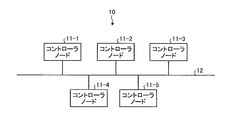
- FIG. 1 is a schematic block diagram of the control communication network of the embodiment.
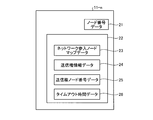
- FIG. 2 is an explanatory diagram of a main part configuration of the controller node.
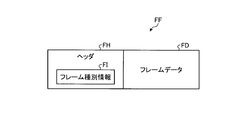
- FIG. 3 is a diagram illustrating a common format of various frames used in the embodiment.
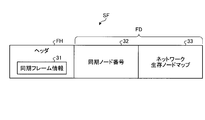
- FIG. 4 is an explanatory diagram of an example of the data format of the synchronization frame.
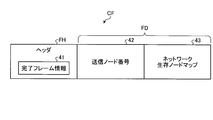
- FIG. 5 is an explanatory diagram of the first example of the data format of the completion frame CF.
- FIG. 6 is an explanatory diagram of an example of the data format of the reminder frame.
- FIG. 7 is an operation explanatory view of the first embodiment.
- FIG. 8 is a flowchart of the synchronization node processing of the controller node that functions as the synchronization node.
- FIG. 9 is a diagram (No.
- FIG. 10 is an explanatory diagram of a second example of the completion frame CF.
- FIG. 11 is a diagram (No. 2) for explaining the data frame transmission operation of the controller node.
- FIG. 12 is an explanatory diagram when a plurality of controller nodes fail to receive the synchronization frame.
- All the nodes including the synchronization node entering the network receive the completion frame CF notifying the transfer of the transmission right transmitted by the node that had the transmission right last time, and then the node that has the transmission right this time is completed. Detects the timeout of the time until the frame CF is received.
- the time-out is detected when the reception of the completion frame CF or the synchronization frame notifying the start timing of implicit token passing fails due to a transient abnormality.
- the node that has the transmission right next time will acquire the transmission right.
- the reminder frame is transmitted only once from the synchronization node to the node having the current transmission right in the network.
- the node with the current transmission right that received the reminder frame immediately transmits the data frame, and the node with the identifier indicating that the reminder frame has been received in the completion frame CF and the remaining transmission right that has not yet acquired the transmission right.
- the transmission right is transferred to the node that should have the transmission right next time.
- the remaining nodes and synchronization nodes that did not receive the reminder frame perform timeout detection of the completion frame CF again.
- the reminder frame is received instead of transmitting the reminder frame each time the node that fails to receive the synchronization frame obtains the transmission right.
- the transmission right is updated according to the information of the node having the remaining transmission right added to the completion frame CF.
- the completion frame CF is transmitted to the node that has the transmission right at that time before the timeout is detected.
- transmission of the completed frame CF can be promoted, and implied token passing can be continued while minimizing the influence on the control cycle due to a transient abnormality or the like.
- implicit token passing it becomes possible to realize communication within a fixed cycle in the control network.
- FIG. 1 is a schematic block diagram of a control communication network of the first embodiment.
- the control communication network 10 is formed between a plurality of controller nodes 11-1 to 11-5 and controller nodes 11-1 to 11-5 to which controlled devices, sensors, etc. (not shown) are connected (five in FIG. 1). It is provided with a control LAN 12 which is connected so as to be able to communicate.
- any one of the controller nodes 11-1 to 11-5 functions as a synchronization node (synchronization controller node). Then, the synchronization node is responsible for managing the control cycle by transmitting the synchronization frame SF, which will be described later, which determines the transmission cycle, at the beginning of each control cycle.
- FIG. 2 is an explanatory diagram of a main part configuration of the controller node.
- a node number (node number data) 21 uniquely defined in the control communication network 10 is preset for each of the controller nodes 11-n (n: 1 to 5). ing.
- FIG. 3 is a diagram illustrating a common format of various frames used in the embodiment.
- the frame FF includes a frame header FH and a frame data FD.
- the frame header FH includes a frame type information FI indicating a frame type such as a synchronization frame, a completion frame, and a reminder frame, which will be described later, and although not shown, the IP address of the source and one or more destinations. It has header information such as an IP address.
- a frame type information FI indicating a frame type such as a synchronization frame, a completion frame, and a reminder frame, which will be described later, and although not shown, the IP address of the source and one or more destinations. It has header information such as an IP address.
- the frame data FD includes various data corresponding to the frame type information FI. Therefore, the length of the frame data FD differs depending on the type of frame.
- the controller node 11-n has a network control function for controlling entry / exit to / from the control communication network 10 using the node number 21, control of the transmission order in the control communication network 10, and a synchronization node as a starting point. Periodic transmission, etc. is carried out.
- the controller node 11-n has a memory 22.
- the network entry node map data 23 indicating all the controller nodes participating in the control communication network 10
- the transmission right information data 24 of the entire control communication network 10 and the current transmission right are stored. It stores the transmission right node number data 25 of the controller node and the timeout time data 26 that stores the timeout time for receiving the completed frame.
- the controller node 11-X which has become the synchronization controller node, transmits the synchronization frame SF that determines the transmission cycle at the beginning of each transmission cycle.
- FIG. 4 is an explanatory diagram of an example of the data format of the synchronization frame.
- the synchronization frame SF is a synchronization frame information data 31 that functions as a frame type information FI indicating that it is a synchronization frame SF, a synchronization node number data 32 that stores a synchronization node number, and control communication at the time of sending the synchronization frame. It includes network surviving node map data 33 indicating all controller nodes that are recognized as existing (surviving) in the network 10.
- each controller node that receives the synchronization frame SF starts implied token passing based on the received synchronization frame SF. Then, the controller node having the transmission right transmits the data frame DF.
- the controller node having the transmission right After transmitting the data frame DF, the controller node having the transmission right transmits the completion frame CF in order to indicate to other controller nodes that its transmission right is completed.
- FIG. 5 is an explanatory diagram of the first example of the data format of the completion frame CF.
- the completion frame CF of the first example is the completion frame information data 41 that functions as the frame type information FI indicating that it is the completion frame CF, and the node number data for specifying the controller node that is the source of the completion frame CF.
- the other controller node that received the completion frame CF confirms which controller node had the previous transmission right, and the transmission right is transferred to the controller node that has the next transmission right.
- the transmission right is transferred to the controller node having the next transmission right by transmitting the completion frame CF, but the controller node having the next transmission right fails to receive the completion frame CF due to a transient abnormality or the like. Then, as it is, the transmission right cannot be transferred until the time-out time for receiving the completed frame has elapsed.
- the reminder frame RF is transmitted from the synchronous controller node to the controller node having the current transmission right.
- FIG. 6 is an explanatory diagram of an example of the data format of the reminder frame.
- the reminder frame RF is a reminder frame information data 51 that functions as a frame type information FI indicating that the reminder frame RF is a reminder frame RF, and a controller having a transmission right that is a transmission target of the reminder frame RF.
- the transmission right node number data 52 of the reminder frame RF stores the node number of the controller node having the current transmission right, and the controller node receiving the reminder frame RF is the node of the controller node having the current transmission right. Check the number.
- the controller node whose node number is checked is the controller node corresponding to the node number
- the data frame is transmitted (retransmitted), and the completion frame CF is transmitted after the data frame is transmitted.
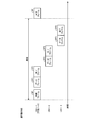
- FIG. 7 is an operation explanatory view of the first embodiment.
- synchronous controller node 11-1 (denoted as CN11-1 in the figure), controller node 11-2 (denoted as CN11-2 in the figure), and controller node 11-3 (FIG. 7). Only CN11-3) is shown, and the transmission right is transferred in the order of controller node 11-1 ⁇ controller node 11-2 ⁇ controller node 11-3.
- the controller node 11-1 as the synchronization node transmits the synchronization frame data SF at the beginning of the operation cycle, and synchronizes with the transmission timing of the synchronization frame data, the data frame DF1 and the data.
- the completion frame CF1 indicating that the transmission of the frame DF1 is completed is transmitted.
- the controller node 11-2 receives the completion frame CF1, it recognizes that it is the one who has the next transmission right, and indicates that the transmission of the data frame DF2 and the data frame DF2 is completed.
- the completion frame CF2 is transmitted.
- controller node 11-3 when the controller node 11-3 receives the completion frame CF2, it recognizes that it has the next transmission right, and completes indicating that the data frame DF3 and the data frame DF3 have been transmitted.
- the frame CF3 is transmitted. As a result, data can be transmitted and received normally.
- the controller node 11-1 as the synchronization node that has acquired the transmission right again transmits the synchronization frame data SF at the beginning of the operation cycle, and the processing is continued in the same manner thereafter.
- FIG. 8 is a processing flowchart of the synchronization node processing of the controller node that functions as the synchronization node.
- the controller node functioning as the synchronization node is the controller node 11-1 will be described as an example.
- the controller node 11-1 which functions as a synchronization node, transmits a synchronization frame SF (step S11). At the same time, the controller node 11-1 starts counting the completion timeout time, which is the maximum time for waiting for the transmission of the completion frame from the controller node that will have the transmission right next.
- step S12 determines whether or not the completion frame has been received from the controller node that currently has the transmission right. In the determination of step S12, when the completion frame is received (step S12; Yes), it means that the transmission process of the controller node that currently has the transmission right is completed, so the process proceeds to step S18.
- step S12 if the completion frame has not yet been received (step S12; No), has a predetermined time (half the time of the completion timeout in the example of FIG. 8) has elapsed among the completion timeout times? It is determined whether or not (step S13). In the determination of step S13, if a predetermined time has not yet elapsed among the completion timeout times (step S13; No), the process proceeds to step S12 again, and the process shifts to the standby state waiting for the completion frame reception.
- step S13 if a predetermined time has elapsed from the completion timeout time (step S13; Yes), a completion frame indicating that the transmission process has been completed for the controller node currently having the transmission right.
- a reminder frame RF is transmitted to request transmission of CF (including retransmission) (step S14).
- step S15 the controller node 11-1 functioning as the synchronization node determines whether or not the completion frame CF from the controller node having the transmission right has been received. In the determination of step S15, when the completion frame CF is received, the process proceeds to step S18.
- step S15 if the completion frame CF has not yet been received, the controller node 11-1 determines whether or not the completion timeout time has elapsed (step S16).
- step S16 if the completion timeout time has not yet elapsed (step S16; No), the process proceeds to step S15 again, and the process shifts to the standby state waiting for the completion frame reception.
- step S16 when the completion timeout time elapses (step S16; Yes), the controller node that should currently have the transmission right becomes the controller node that should acquire the transmission right next.
- the transmission right information is updated (step S17).
- step S18 if the transmission processing of all the controller nodes is not yet completed, or if it cannot be considered that the transmission processing of all the controller nodes is completed even by updating the transmission right information (step S18), The process proceeds to step S12 again, and the above-mentioned process is repeated.
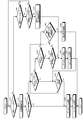
- FIG. 9 is a diagram (No. 1) for explaining the data frame transmission operation of the controller node.
- FIG. 9 shows an operation in which the transmission right information is not updated by transmitting the data frame DF and the completion frame CF by the reminder frame RF by the controller node having the transmission right to receive the reminder frame RF. Represents.
- the controller node first determines whether or not the synchronization frame SF has been received from the synchronization controller node (step S31).
- step S31 when the synchronization frame SF is received from the synchronization controller node (step S31; Yes), the controller node creates transmission right information from the received synchronization frame SF (step S32). Subsequently, the controller node determines whether or not the created transmission right information is its own transmission right (step S33).
- step S33 if the created transmission right information is its own transmission right (step S33; Yes), the controller node generates a data frame DF and transmits it (step S34).
- the controller node when the transmission of the data frame DF is completed, the controller node generates the completion frame CF, transmits the data frame DF, and ends the process (step S35).
- step S33 if the created transmission right information is not its own transmission right (step S33; No), the controller node determines whether or not the completion frame has been received from another controller node having the transmission right. Determine (step S36). That is, it is determined whether or not another controller having the transmission right has notified that the transmission of the data frame has been completed.
- step S36 when the completion frame is received from another controller node having the transmission right (step S36; Yes), the controller node includes the transmission node number data and network survival included in the received completion frame. Based on the node map data, it is determined whether or not the controller node to acquire the transmission right next is the own node (step S37).
- step S37 if the controller node that acquires the transmission right next is not itself, the process shifts to step S36 again, and then the reception of the completion frame from the other controller node that has acquired the transmission right is received. It will be in a standby state to do.
- step S37 if the controller node to acquire the transmission right next is itself (step S37; Yes), the controller node generates and transmits a data frame (step S34).
- the controller node when the transmission of the data frame is completed, the controller node generates a completion frame, transmits the data frame, and ends the process (step S35).
- step S36 if the completion frame has not yet been received from the other controller node having the transmission right (step S36; No), the synchronization controller node receives the completion frame from the controller node having the transmission right yet. It is determined whether or not the reminder frame transmitted by the synchronization controller node has been received due to the fact that the synchronization controller node has not been received (step S38).
- step S38 when the reminder frame from the synchronization controller node is received (step S38; Yes), the controller node has the transmission right node number included in the reminder frame as its own transmission right node number. Whether or not it is determined (step S39).
- step S39 if the transmission right node number included in the reminder frame is the transmission right node number corresponding to itself (step S39; Yes), the controller node should acquire the transmission right next.
- a data frame DF is generated and transmitted assuming that the controller node is itself or the completion frame CF has not been reached (step S40).
- the controller node when the transmission of the data frame is completed, the controller node generates a completion frame, transmits the data frame, and ends the process (step S41).
- step S42 when the completion timeout time has elapsed, it is determined that the timing for forcibly updating the transmission right has been reached, and the transmission right should be acquired next based on the previously received synchronization frame.
- the transmission right information is updated so that the transmission right has been acquired by the controller node (step S43).
- step S37 determines whether or not the controller node to acquire the transmission right next is itself based on the updated transmission right information. In the determination of step S37, if the controller node that acquires the transmission right next is not itself, the process shifts to step S36 again, and then the reception of the completion frame from the other controller node that has acquired the transmission right is received. It will be in a standby state to do.
- step S37 if the controller node to acquire the transmission right next is itself (step S37; Yes), the controller node generates and transmits a data frame (step S34).
- step S31 if the synchronization frame has not yet been received from the synchronization controller node (step S31; No), the controller node may have failed to receive the synchronization frame, so that the synchronization is performed. It is determined whether or not the reminder frame transmitted by the controller node has been received (step S44).
- step S44 when the reminder frame from the synchronization controller node is received (step S44; Yes), the controller node has the transmission right node number included in the reminder frame as its own transmission right node number. Whether or not it is determined (step S45).
- step S45 if the transmission right node number included in the reminder frame is not the transmission right node number corresponding to itself (step S45; No), the controller node receives the synchronization frame from the synchronization controller node. Assuming that it is time to wait, the process proceeds to step S31, and the above-described process is repeated.
- step S45 if the transmission right node number included in the reminder frame is the transmission right node number corresponding to itself (step S45; Yes), the controller node should then acquire the transmission right. Assuming that the controller node is itself, transmission right information is created from the received reminder frame RF (step S46). Then, the controller node generates and transmits the data frame DF (step S40).
- the controller node when the transmission of the data frame is completed, the controller node generates a completion frame, transmits the data frame, and ends the process (step S41).
- the controller node that should have acquired the transmission right is processing as if it has not acquired the transmission right, or the completion frame CF
- data frames and completion frames can be transmitted without waiting for the completion timeout time to elapse by receiving a reminder frame from the controller node functioning as a synchronization node. Therefore, implicit token passing can be continued while suppressing the influence on the control cycle due to a transient abnormality or the like.
- the controller node having the transmission right to receive the reminder frame RF updates the transmission right information by transmitting the data frame DF and the completion frame CF by the reminder frame RF. It shows the operation when it is performed.
- FIG. 10 is an explanatory diagram of a second example of the completion frame CF.
- the completion frame CF of the second example is the completion frame information data 41 that functions as the frame type information FI indicating that the completion frame CF is the completion frame CF, and the node number data for identifying the controller node that is the source of the completion frame CF.
- FIG. 11 is a diagram (No. 2) for explaining the data frame transmission operation of the controller node.
- the controller node first determines whether or not a synchronization frame has been received from the synchronization controller node (step S51).
- step S51 when the synchronization frame is received from the synchronization controller node (step S51; Yes), the controller node creates transmission right information from the received synchronization frame (step S52). Subsequently, the controller node determines whether or not the created transmission right information is its own transmission right (step S53).
- step S53 if the created transmission right information is its own transmission right (step S53; Yes), the controller node generates a data frame and transmits it (step S54). Subsequently, when the transmission of the data frame is completed, the controller node generates a completion frame, transmits the data frame, and ends the process (step S55).
- step S53 if the created transmission right information is not its own transmission right (step S53; No), the controller node determines whether or not the completion frame has been received from another controller node having the transmission right. Determine (step S56). That is, it is determined whether or not another controller having the transmission right has notified that the transmission of the data frame has been completed.
- step S56 when the completion frame is received from another controller node having the transmission right (step S56; Yes), the controller node includes the reminder frame correspondence identification code data 44 in the received completion frame. Whether or not it is determined (step S57).
- step S57 if the received completion frame does not include the reminder frame correspondence identification code data (step S57; No), the process proceeds to step S58.
- step S57 if the received completion frame contains the corresponding identification code data (step S57; Yes), the transmission right is sent to the controller node that should acquire the transmission right next based on the completion frame. Updates the transmission right information in order to assume that has been acquired (step S59).
- the controller node determines whether or not the controller node to acquire the transmission right next is itself based on the transmission node number data and the network surviving node map data included in the completion frame (step S58). ).
- step S58 if the controller node that acquires the transmission right next is not itself, the process shifts to step S56 again, and then the reception of the completion frame from the other controller node that acquired the transmission right is received. It will be in a standby state to do.
- step S58 if the controller node to acquire the transmission right next is itself (step S58; Yes), the controller node generates and transmits a data frame (step S54). Subsequently, when the transmission of the data frame is completed, the controller node generates a completion frame, transmits the data frame, and ends the process (step S55).
- step S56 if the completion frame has not yet been received from the other controller node having the transmission right (step S56; No), the synchronization controller node receives the completion frame from the controller node having the transmission right yet. It is determined whether or not the reminder frame transmitted by the synchronization controller node has been received due to the fact that the synchronization controller node has not received the reminder frame (step S60).
- step S60 when the reminder frame from the synchronization controller node is received (step S60; Yes), the controller node has the transmission right node number included in the reminder frame as its own transmission right node number. Whether or not it is determined (step S61).
- step S61 if the transmission right node number included in the reminder frame is the transmission right node number corresponding to itself (step S61; Yes), the controller node should acquire the transmission right next. Assuming that the controller node is itself, a data frame is generated and transmitted (step S62). Then, the controller node generates a completion frame CF in which the reminder frame correspondence identification code data corresponding to the received reminder frame RF is set (step S63). Subsequently, the controller node transmits the generated completion frame and ends the process (step S64).
- step S65 if the completion timeout time has elapsed (step S65; Yes), it is determined that the timing for forcibly updating the transmission right has been reached, and the next is based on the previously received synchronization frame SF.
- the transmission right information is updated in order to assume that the transmission right has been acquired by the controller node that should acquire the transmission right (step S66).
- step S58 the controller node determines whether or not the controller node to acquire the transmission right next is itself based on the updated transmission right information. In the determination of step S58, if the controller node that acquires the transmission right next is not itself, the process shifts to step S56 again, and then the reception of the completion frame from the other controller node that acquired the transmission right is received. It will be in a standby state to do.
- step S58 if the controller node to acquire the transmission right next is itself (step S58; Yes), the controller node generates and transmits a data frame (step S54).
- step S51 if the synchronization frame has not yet been received from the synchronization controller node (step S51; No), the controller node may have failed to receive the synchronization frame. It is determined whether or not the reminder frame transmitted by the controller node has been received (step S67).
- step S67 when the reminder frame from the synchronization controller node is received (step S67; Yes), the controller node has the transmission right node number included in the reminder frame as its own transmission right node number. Whether or not it is determined (step S68).
- step S68 if the transmission right node number included in the reminder frame is the transmission right node number corresponding to itself (step S68; Yes), the controller node creates transmission right information from the received reminder frame. (Step S69), the process proceeds to step S62, and the same process as described above is repeated below.
- step S67 when the reminder frame RF from the synchronization controller node has not yet been received (step S67; No), and in the determination of step S68, the transmission right node number included in the reminder frame corresponds to the transmission right. If it is not a node number (step S68; No), it is determined whether or not a completion frame has been received from another controller node having a transmission right (step S70).
- step S70 when the completion frame is received from another controller node having the transmission right (step S70; Yes), the controller node includes the prompt frame corresponding identification code data in the received completion frame. It is determined whether or not (step S71).
- step S71 if the received completion frame CF does not include the reminder frame corresponding identification code data (step S57; No), the process proceeds to step S51.
- step S71 if the received completion frame CF contains the corresponding identification code data (step S71; Yes), the controller node that should acquire the transmission right next based on the completion frame CF
- the transmission right information is updated (step S72) in order to assume that the transmission right has been acquired, the process shifts to step S58 again, and the same process as described above is repeated thereafter.
- the controller node that should have acquired the transmission right is processing as if it has not acquired the transmission right, or the completion frame CF
- the data frame and the completion frame can be transmitted without waiting for the completion timeout time to elapse. Therefore, implied token passing can be continued while suppressing the influence on the control cycle due to a transient abnormality or the like.
- the completion frame CF includes the reminder frame correspondence identification code data that can be identified as the completion frame CF corresponding to the corresponding reminder frame RF. ,
- the transmission right information can be reliably updated by receiving the completed frame, and more reliability can be ensured.
- Second Embodiment In the first embodiment, the transfer of the transmission right is not completed and the influence on the control cycle is dealt with by the fact that any of the controller nodes cannot receive the completion frame CF.
- the second embodiment is for reducing the inability to transmit frames and data loss due to failure to receive synchronization frames from the synchronization controller node.
- controller node in the network fails to receive the synchronization frame SF from the synchronization controller node.
- the controller node that fails to receive the synchronization frame SF cannot start implicit token passing itself, and cannot transmit the data frame DF and the completion frame CF in the cycle.
- the transmission right is acquired by receiving the reminder frame RF from the synchronization controller node as in the first embodiment, and the transmission right is acquired. Can participate in the patrol of.
- FIG. 12 is an explanatory diagram when a plurality of controller nodes fail to receive the synchronization frame.
- FIG. 12 shows an example in which the controller node 11-2 and the controller node 11-3 fail to receive the synchronization frame.
- the controller node 11-2 has failed to receive the synchronization frame SF, so it does not recognize that it is participating in implied token passing. Therefore, after receiving the completion frame of the controller node 11-1, the controller node 11-2 does not transmit the data frame DF until the reminder frame RF from the synchronization controller node is received.
- controller node 11-3 has failed to receive the synchronization frame SF, so it does not recognize that it is participating in implied token passing. Therefore, after receiving the completion frame of the controller node 11-2, the data frame DF is not transmitted until the reminder frame RF from the synchronization controller node is received.
- the token when there are a plurality of nodes in the network that fail to receive the synchronization frame in the same cycle, the token can be patrolled by the reminder frame, but the result is completed. It may take as long as or longer than the timeout time, and the influence on the control cycle cannot be suppressed.
- the controller node (in the case of the above example, the controller nodes 11-2 and 11-3) that has received the reminder frame RF is the reminder frame reception identifier data 43 included in the completion frame CF. Is set, and the transmission right information of the node in the network is copied to the transmission right node information 45 in the completion frame CF, and the completion frame CF is transmitted.
- each controller node that has received the completion frame CF checks the reminder frame reception identifier data 43, and if it is "1", the network has the transmission right node information 45 in the completion frame CF in its own memory 22. Copy to entry node map data 23.
- the controller node whose network entry node map data 23 has not been updated that is, the controller node which has failed to receive the synchronization frame SF and has not been able to update its own network entry node map data 23, is possessed here.
- the network entry node map data 23 can be updated to wait for the acquisition of the transmission right.
- the controller node 11-3 can transmit the data frame DF without waiting for the reception of the reminder frame RF after receiving the completion frame CF of the controller node 11-2.
- the synchronization controller node simply transmits a reminder frame RF to one controller node, and there is no data loss in the cycle, and the synchronization frame SF is given to the control cycle.
- the impact can also be minimized.
- the transmission device of this embodiment includes a control device such as a CPU, a storage device such as a ROM (Read Only Memory) and a RAM, an external storage device such as an HDD and a CD drive device, and a display device such as a display device. It is equipped with an input device and has a hardware configuration that uses a normal computer.
- a control device such as a CPU
- a storage device such as a ROM (Read Only Memory) and a RAM
- an external storage device such as an HDD and a CD drive device
- a display device such as a display device. It is equipped with an input device and has a hardware configuration that uses a normal computer.
- the program executed by the transmission device of this embodiment is a file in an installable format or an executable format, and is a CD-ROM, a USB memory, a memory card, a semiconductor memory device such as an SSD (Solid State Drive), or a DVD (Digital). It is provided by being recorded on a computer-readable recording medium such as Versatile Disk).
- the program executed by the transmission device of the present embodiment may be stored on a computer connected to a network such as the Internet and provided by downloading via the network. Further, the program executed by the transmission device of the present embodiment may be configured to be provided or distributed via a network such as the Internet. Further, the program executed by the transmission device of the present embodiment may be configured to be provided by incorporating it into a ROM or the like in advance.
Landscapes
- Engineering & Computer Science (AREA)
- Computer Networks & Wireless Communication (AREA)
- Signal Processing (AREA)
- Small-Scale Networks (AREA)
Abstract
Description
ネットワーク内の各ノードは、自身の送信権が得られるタイミングでデータを送信する。
まず実施形態の原理について説明する。
ネットワークに参入している同期ノードを含む全てのノードは、前回送信権を持っていたノードが送信した送信権の移行を通知する完了フレームCFを受信してから、今回送信権を持つノードの完了フレームCFを受信するまでの時間のタイムアウト検知を実施する。
ひいては、インプリシット・トークンパッシングにおいて、制御ネットワーク内において一定周期内での通信を実現することが可能となる。
図1は、実施形態の制御用通信ネットワークの概要構成ブロック図である。
制御用通信ネットワーク10は、図示しない被制御装置、センサ等が接続された複数(図1では、5個)のコントローラノード11-1~11-5と、コントローラノード11-1~11-5間を通信可能に接続した制御LAN12と、を備えている。
コントローラノード11-n(n:1~5)のそれぞれには、IPアドレスやMACアドレスとは別に、当該制御用通信ネットワーク10内で一意に定められるノード番号(ノード番号データ)21が予め設定されている。
図3は、実施形態で用いる各種フレームの共通フォーマットを説明する図である。
フレームFFは、フレームヘッダFH及びフレームデータFDを備えている。
コントローラノード11-nは、このノード番号21を用いて制御用通信ネットワーク10への参入/離脱を制御するネットワーク制御機能、制御用通信ネットワーク10内での送信順の制御、同期ノードを起点とした周期伝送等を実施している。
同期フレームSFは、同期フレームSFであることを表すフレーム種別情報FIとして機能する同期フレーム情報データ31と、同期ノード番号を格納した同期ノード番号データ32と、当該同期フレームの送出時点で制御用通信ネットワーク10に存在(生存)していると認識している全てのコントローラノードを示すネットワーク生存ノードマップデータ33と、を備えている。
そして、送信権を有するコントローラノードが、データフレームDFを送信することとなる。
第1の例の完了フレームCFは、完了フレームCFであることを表すフレーム種別情報FIとして機能する完了フレーム情報データ41と、当該完了フレームCFの送信元のコントローラノードを特定するためのノード番号データが格納された送信ノード番号データ42と、当該完了フレームの送出時点で制御用通信ネットワーク10に存在(生存)していると認識している全てのコントローラノードを示すネットワーク生存ノードマップデータ43と、を備えている。
催促フレームRFは、図6に示すように、催促フレームRFであることを表すフレーム種別情報FIとして機能する催促フレーム情報データ51と、当該催促フレームRFの送信対象である送信権を持っているコントローラノードを特定するための送信権ノード番号データ52と、当該催促フレームRFの送出時点で制御用通信ネットワーク10において存在(生存)が確認されている全てのコントローラノードを示すネットワーク生存ノードマップデータ53と、を備えている。
図7においては、理解の容易のため同期コントローラノード11-1(図中、CN11-1と表記)、コントローラノード11-2(図中、CN11-2と表記)及びコントローラノード11-3(図中、CN11-3と表記)のみを示しており、送信権は、コントローラノード11-1→コントローラノード11-2→コントローラノード11-3の順番で移ってゆくものとする。
これらの結果、正常にデータの送受信がなされることとなる。
以下においては、同期ノードとして機能するコントローラノードがコントローラノード11-1である場合を例として説明する。
これと同時にコントローラノード11-1は、次に送信権を有することとなるコントローラノードからの完了フレームの送信を待つ最大時間である完了タイムアウト時間のカウントを開始する。
ステップS12の判断において、完了フレームを受信した場合には(ステップS12;Yes)、現在送信権を持っていたコントローラノードの送信処理が完了したということであるので処理をステップS18に移行する。
ステップS13の判断において、未だ完了タイムアウト時間のうち所定の時間が経過していない場合には(ステップS13;No)、処理を再びステップS12に移行し、完了フレーム受信待ちとして待機状態となる。
ステップS15の判断において、完了フレームCFを受信した場合には、処理をステップS18に移行する。
図9は、コントローラノードのデータフレーム送信動作について説明する図(その1)である。
続いてコントローラノードは、作成した送信権情報が自分の送信権であるか否かを判断する(ステップS33)。
ステップS37の判断において、次に送信権を取得するコントローラノードが自分ではない場合には、再び処理をステップS36に移行し、次に送信権を取得した他のコントローラノードからの完了フレームの受信を行うべく待機状態となる。
そして、コントローラノードは、データフレームDFを生成し送信する(ステップS40)。
以上の説明のように、図9に示した様な動作によれば、送信権を獲得しているはずのコントローラノードが送信権を獲得していないとして処理を行っているか、あるいは、完了フレームCFの不達となっている場合には、同期ノードとして機能しているコントローラノードからの催促フレームを受信することにより、完了タイムアウト時間が経過を待つことなくデータフレーム及び完了フレームの送信を行うことができるので、一過性の異常等による制御周期に対する影響を抑制しつつ、インプリシット・トークンパッシングを継続することができる。
以下の説明においては、図9の動作の場合と異なり、催促フレームRFを受信した送信権を有するコントローラノードにより、当該催促フレームRFによるデータフレームDF及び完了フレームCFの送信によって送信権情報の更新を行う場合の動作を表している。
図10において、図5と同様の部分には、同一の符号を付すものとする。
第2の例の完了フレームCFは、完了フレームCFであることを表すフレーム種別情報FIとして機能する完了フレーム情報データ41と、当該完了フレームCFの送信元のコントローラノードを特定するためのノード番号データが格納された送信ノード番号データ42と、当該完了フレームCFの送信を行うこととなった催促フレームを特定するための催促フレーム対応識別符号データ44と、当該完了フレームの送出時点で制御用通信ネットワーク10に存在(生存)していると認識している全てのコントローラノードを示すネットワーク生存ノードマップデータ43と、を備えている。
コントローラノードは、まず同期コントローラノードから同期フレームを受信したか否かを判断する(ステップS51)。
続いてコントローラノードは、作成した送信権情報が自分の送信権であるか否かを判断する(ステップS53)。
続いてコントローラノードは、データフレームの送信が完了すると、完了フレームを生成し、送信して処理を終了する(ステップS55)。
続いてコントローラノードは、データフレームの送信が完了すると、完了フレームを生成し、送信して処理を終了する(ステップS55)。
そして、コントローラノードは、受信した催促フレームRFに対応する催促フレーム対応識別符号データをセットした完了フレームCFを生成する(ステップS63)。
続いてコントローラノードは、生成した完了フレームを送信して処理を終了する(ステップS64)。
ステップS58の判断において、次に送信権を取得するコントローラノードが自分ではない場合には、再び処理をステップS56に移行し、次に送信権を取得した他のコントローラノードからの完了フレームの受信を行うべく待機状態となる。
上記第1実施形態においては、いずれかのコントローラノードが完了フレームCFを受信できないことによる送信権の移行未完及び制御周期に対する影響に対応するものであったが、本第2実施形態は、同期コントローラノードからの同期フレームの受信に失敗したことによるフレームの送信不能及びデータ損失を低減するためのものである。
この場合、同期フレームSFの受信に失敗したコントローラノードは、インプリシット・トークンパッシングの開始自体が行えず、当該周期において、データフレームDF及び完了フレームCFを送信することができない。
図12は、複数のコントローラノードが同期フレームの受信に失敗した場合の説明図である。
図12においては、コントローラノード11-2、コントローラノード11-3が同期フレームの受信に失敗した場合の例を示している。
また、本実施形態の伝送装置で実行されるプログラムを、ROM等に予め組み込んで提供するように構成してもよい。
Claims (8)
- インプリシット・トークンパッシング方式のネットワークを構成するノードとして現在の送信権を有し、かつ、
同期ノードを特定する同期ノード番号及び前記ネットワークに存在しているノードの情報であるネットワーク生存ノードマップ情報を含む同期フレームあるいは送信権を有しているノードを特定する送信権ノード番号及び前記ネットワークに存在しているノードの情報であるネットワーク生存ノードマップ情報を含む催促フレームを受信した場合に、
データフレームを送信し、前記データフレームの送信の後に、送信元のノードを特定する送信ノード番号及び前記ネットワークに存在しているノードの情報であるネットワーク生存ノードマップ情報を含む完了フレームを送信する伝送装置。 - 前記催促フレームを受信した場合に、当該催促フレームに基づいて送信権情報を作成し、自己が前記送信権を取得しているか否かを判断する、
請求項1記載の伝送装置。 - さらに前記完了フレームは、受信した前記催促フレームを識別するための催促フレーム識別符号データを含む、
請求項1又は請求項2記載の伝送装置。 - 前記催促フレーム識別符号データが含まれた前記完了フレームを受信した場合に、当該完了フレームに含まれる前記ネットワーク生存ノードマップ情報で、自己が保有しているネットワーク生存ノードマップ情報を更新する、
請求項3記載の伝送装置。 - 前記伝送装置は、さらに同期ノードとして機能する場合に、所定周期毎に、前記同期フレームを送信する、
請求項1乃至請求項4のいずれか一項記載の伝送装置。 - 前回の前記同期フレームの送信時から所定の時間が経過し、かつ、現在の送信権を有する他の伝送装置からの前記完了フレームを受信していない場合に、前記催促フレームを送信する、
請求項5記載の伝送装置。 - 前記催促フレームを送信するまでの所定の時間は、前回の前記同期フレームの送信時から前記完了フレームの受信を待つ最大時間である所定の完了タイムアウト時間よりも短い時間に設定されている、
請求項6記載の伝送装置。 - 前記催促フレームを送信するまでの所定の時間は、完了タイムアウト時間の半分の時間に設定されている、
請求項7記載の伝送装置。
Priority Applications (4)
| Application Number | Priority Date | Filing Date | Title |
|---|---|---|---|
| CN202080002218.4A CN112262550B (zh) | 2019-03-15 | 2020-03-13 | 传送装置 |
| KR1020207031583A KR102503186B1 (ko) | 2019-03-15 | 2020-03-13 | 전송 장치 |
| US17/428,078 US11646865B2 (en) | 2019-03-15 | 2020-03-13 | Transmission device |
| JP2021507323A JP7146066B2 (ja) | 2019-03-15 | 2020-03-13 | 伝送装置 |
Applications Claiming Priority (2)
| Application Number | Priority Date | Filing Date | Title |
|---|---|---|---|
| JP2019-048781 | 2019-03-15 | ||
| JP2019048781 | 2019-03-15 |
Publications (1)
| Publication Number | Publication Date |
|---|---|
| WO2020189587A1 true WO2020189587A1 (ja) | 2020-09-24 |
Family
ID=72520828
Family Applications (1)
| Application Number | Title | Priority Date | Filing Date |
|---|---|---|---|
| PCT/JP2020/011288 Ceased WO2020189587A1 (ja) | 2019-03-15 | 2020-03-13 | 伝送装置 |
Country Status (5)
| Country | Link |
|---|---|
| US (1) | US11646865B2 (ja) |
| JP (1) | JP7146066B2 (ja) |
| KR (1) | KR102503186B1 (ja) |
| CN (1) | CN112262550B (ja) |
| WO (1) | WO2020189587A1 (ja) |
Citations (2)
| Publication number | Priority date | Publication date | Assignee | Title |
|---|---|---|---|---|
| JP2016096397A (ja) * | 2014-11-12 | 2016-05-26 | 株式会社東芝 | 伝送局、データ伝送システム、伝送局の制御方法及びプログラム |
| JP2016178463A (ja) * | 2015-03-19 | 2016-10-06 | 株式会社東芝 | 伝送システムおよび伝送局 |
Family Cites Families (6)
| Publication number | Priority date | Publication date | Assignee | Title |
|---|---|---|---|---|
| JP3289416B2 (ja) * | 1993-08-05 | 2002-06-04 | 三菱電機株式会社 | トークンパッシング方式lanのデータ転送方法 |
| JP3351744B2 (ja) | 1998-09-10 | 2002-12-03 | 株式会社東芝 | データ伝送システム |
| CN102710480B (zh) * | 2008-12-25 | 2015-11-18 | 三菱电机株式会社 | 通信管理装置、通信装置以及通信方法 |
| US8953645B2 (en) * | 2009-11-11 | 2015-02-10 | Mitsubishi Electric Corporation | Communication system, communication apparatus and time synchronization method |
| EP3026515B1 (en) * | 2014-02-27 | 2021-04-07 | Fuji Electric Co., Ltd. | Programmable controller system |
| JP2017163288A (ja) * | 2016-03-08 | 2017-09-14 | 株式会社東芝 | 伝送装置 |
-
2020
- 2020-03-13 CN CN202080002218.4A patent/CN112262550B/zh active Active
- 2020-03-13 WO PCT/JP2020/011288 patent/WO2020189587A1/ja not_active Ceased
- 2020-03-13 JP JP2021507323A patent/JP7146066B2/ja active Active
- 2020-03-13 US US17/428,078 patent/US11646865B2/en active Active
- 2020-03-13 KR KR1020207031583A patent/KR102503186B1/ko active Active
Patent Citations (2)
| Publication number | Priority date | Publication date | Assignee | Title |
|---|---|---|---|---|
| JP2016096397A (ja) * | 2014-11-12 | 2016-05-26 | 株式会社東芝 | 伝送局、データ伝送システム、伝送局の制御方法及びプログラム |
| JP2016178463A (ja) * | 2015-03-19 | 2016-10-06 | 株式会社東芝 | 伝送システムおよび伝送局 |
Also Published As
| Publication number | Publication date |
|---|---|
| US11646865B2 (en) | 2023-05-09 |
| CN112262550A (zh) | 2021-01-22 |
| JPWO2020189587A1 (ja) | 2020-09-24 |
| KR102503186B1 (ko) | 2023-02-23 |
| CN112262550B (zh) | 2022-09-27 |
| US20220140992A1 (en) | 2022-05-05 |
| JP7146066B2 (ja) | 2022-10-03 |
| KR20200139764A (ko) | 2020-12-14 |
Similar Documents
| Publication | Publication Date | Title |
|---|---|---|
| JP4268969B2 (ja) | 無線通信網を介したメディアメッセージアップロード制御方法 | |
| US8937869B2 (en) | Communication device, communication system, and communication fault detection method | |
| JP6265058B2 (ja) | ネットワーク伝送システム、そのマスタノード、スレーブノード | |
| CN114363357B (zh) | 一种基于Gossip的分布式数据库网络连接管理方法 | |
| US10523547B2 (en) | Methods, systems, and computer readable media for multiple bidirectional forwarding detection (BFD) session optimization | |
| CN105959078B (zh) | 一种集群时间同步方法、集群及时间同步系统 | |
| CN108259618B (zh) | 一种同步的数据交互处理方法及装置 | |
| US10091288B2 (en) | Ordered execution of tasks | |
| CN108718282B (zh) | 报文序列号的确定方法及装置 | |
| KR101689077B1 (ko) | 시간 동기화 방법 및 그 장치 | |
| US10680930B2 (en) | Method and apparatus for communication in virtual network | |
| CN112104531B (zh) | 一种备份实现方法及装置 | |
| US20210029228A1 (en) | Point-to-Point Database Synchronization Over a Transport Protocol | |
| JP7146066B2 (ja) | 伝送装置 | |
| KR20100104832A (ko) | 중간 노드 장치, 중간 노드 장치의 제어 방법, 및 네트워크시스템 | |
| US20110255470A1 (en) | Data processing device, system and method for data processing, recording medium with program recorded therein, data transfer device, system and method for data transfer, and recording medium with program recorded therein | |
| JP4413733B2 (ja) | 折り返し試験システム、折り返し試験方法、及びセンター装置、並びにプログラム | |
| CN106453633A (zh) | 一种非稳定通信链路中多节点通信方法 | |
| CN116805916B (zh) | 一种基于IPv6的异地局域网通信方法及系统 | |
| CN112511265B (zh) | 一种bfd报文长度切换的方法、装置及储存介质 | |
| CN111866363A (zh) | 摄像机远程升级方法、装置、电子设备及可读存储介质 | |
| JP6413670B2 (ja) | データベースシステム | |
| JP6572487B2 (ja) | 再生システム、及び、再生システムの制御方法 | |
| JP2019016987A (ja) | 通信システム、管理装置、端末装置、通信方法、及びプログラム | |
| JP2025143869A (ja) | 通信装置、通信方法及び通信プログラム |
Legal Events
| Date | Code | Title | Description |
|---|---|---|---|
| ENP | Entry into the national phase |
Ref document number: 20207031583 Country of ref document: KR Kind code of ref document: A |
|
| 121 | Ep: the epo has been informed by wipo that ep was designated in this application |
Ref document number: 20772979 Country of ref document: EP Kind code of ref document: A1 |
|
| ENP | Entry into the national phase |
Ref document number: 2021507323 Country of ref document: JP Kind code of ref document: A |
|
| NENP | Non-entry into the national phase |
Ref country code: DE |
|
| 122 | Ep: pct application non-entry in european phase |
Ref document number: 20772979 Country of ref document: EP Kind code of ref document: A1 |