WO2020158828A1 - 脳心血管イベントの将来の発生リスクの評価方法、算出方法、評価装置、算出装置、評価プログラム、算出プログラム、記録媒体、評価システムおよび端末装置 - Google Patents
脳心血管イベントの将来の発生リスクの評価方法、算出方法、評価装置、算出装置、評価プログラム、算出プログラム、記録媒体、評価システムおよび端末装置 Download PDFInfo
- Publication number
- WO2020158828A1 WO2020158828A1 PCT/JP2020/003269 JP2020003269W WO2020158828A1 WO 2020158828 A1 WO2020158828 A1 WO 2020158828A1 JP 2020003269 W JP2020003269 W JP 2020003269W WO 2020158828 A1 WO2020158828 A1 WO 2020158828A1
- Authority
- WO
- WIPO (PCT)
- Prior art keywords
- evaluation
- value
- concentration
- control unit
- amino acids
- Prior art date
- Legal status (The legal status is an assumption and is not a legal conclusion. Google has not performed a legal analysis and makes no representation as to the accuracy of the status listed.)
- Ceased
Links
Images















Classifications
-
- G—PHYSICS
- G16—INFORMATION AND COMMUNICATION TECHNOLOGY [ICT] SPECIALLY ADAPTED FOR SPECIFIC APPLICATION FIELDS
- G16H—HEALTHCARE INFORMATICS, i.e. INFORMATION AND COMMUNICATION TECHNOLOGY [ICT] SPECIALLY ADAPTED FOR THE HANDLING OR PROCESSING OF MEDICAL OR HEALTHCARE DATA
- G16H50/00—ICT specially adapted for medical diagnosis, medical simulation or medical data mining; ICT specially adapted for detecting, monitoring or modelling epidemics or pandemics
- G16H50/50—ICT specially adapted for medical diagnosis, medical simulation or medical data mining; ICT specially adapted for detecting, monitoring or modelling epidemics or pandemics for simulation or modelling of medical disorders
-
- A—HUMAN NECESSITIES
- A61—MEDICAL OR VETERINARY SCIENCE; HYGIENE
- A61B—DIAGNOSIS; SURGERY; IDENTIFICATION
- A61B5/00—Measuring for diagnostic purposes; Identification of persons
- A61B5/02—Detecting, measuring or recording for evaluating the cardiovascular system, e.g. pulse, heart rate, blood pressure or blood flow
- A61B5/0205—Simultaneously evaluating both cardiovascular conditions and different types of body conditions, e.g. heart and respiratory condition
- A61B5/02055—Simultaneously evaluating both cardiovascular condition and temperature
-
- A—HUMAN NECESSITIES
- A61—MEDICAL OR VETERINARY SCIENCE; HYGIENE
- A61B—DIAGNOSIS; SURGERY; IDENTIFICATION
- A61B5/00—Measuring for diagnostic purposes; Identification of persons
- A61B5/145—Measuring characteristics of blood in vivo, e.g. gas concentration or pH-value ; Measuring characteristics of body fluids or tissues, e.g. interstitial fluid or cerebral tissue
-
- A—HUMAN NECESSITIES
- A61—MEDICAL OR VETERINARY SCIENCE; HYGIENE
- A61B—DIAGNOSIS; SURGERY; IDENTIFICATION
- A61B5/00—Measuring for diagnostic purposes; Identification of persons
- A61B5/72—Signal processing specially adapted for physiological signals or for diagnostic purposes
- A61B5/7271—Specific aspects of physiological measurement analysis
- A61B5/7275—Determining trends in physiological measurement data; Predicting development of a medical condition based on physiological measurements, e.g. determining a risk factor
-
- G—PHYSICS
- G01—MEASURING; TESTING
- G01N—INVESTIGATING OR ANALYSING MATERIALS BY DETERMINING THEIR CHEMICAL OR PHYSICAL PROPERTIES
- G01N33/00—Investigating or analysing materials by specific methods not covered by groups G01N1/00 - G01N31/00
- G01N33/48—Biological material, e.g. blood, urine; Haemocytometers
-
- G—PHYSICS
- G01—MEASURING; TESTING
- G01N—INVESTIGATING OR ANALYSING MATERIALS BY DETERMINING THEIR CHEMICAL OR PHYSICAL PROPERTIES
- G01N33/00—Investigating or analysing materials by specific methods not covered by groups G01N1/00 - G01N31/00
- G01N33/48—Biological material, e.g. blood, urine; Haemocytometers
- G01N33/50—Chemical analysis of biological material, e.g. blood, urine; Testing involving biospecific ligand binding methods; Immunological testing
- G01N33/68—Chemical analysis of biological material, e.g. blood, urine; Testing involving biospecific ligand binding methods; Immunological testing involving proteins, peptides or amino acids
-
- G—PHYSICS
- G01—MEASURING; TESTING
- G01N—INVESTIGATING OR ANALYSING MATERIALS BY DETERMINING THEIR CHEMICAL OR PHYSICAL PROPERTIES
- G01N33/00—Investigating or analysing materials by specific methods not covered by groups G01N1/00 - G01N31/00
- G01N33/48—Biological material, e.g. blood, urine; Haemocytometers
- G01N33/50—Chemical analysis of biological material, e.g. blood, urine; Testing involving biospecific ligand binding methods; Immunological testing
- G01N33/68—Chemical analysis of biological material, e.g. blood, urine; Testing involving biospecific ligand binding methods; Immunological testing involving proteins, peptides or amino acids
- G01N33/6893—Chemical analysis of biological material, e.g. blood, urine; Testing involving biospecific ligand binding methods; Immunological testing involving proteins, peptides or amino acids related to diseases not provided for elsewhere
-
- G—PHYSICS
- G16—INFORMATION AND COMMUNICATION TECHNOLOGY [ICT] SPECIALLY ADAPTED FOR SPECIFIC APPLICATION FIELDS
- G16H—HEALTHCARE INFORMATICS, i.e. INFORMATION AND COMMUNICATION TECHNOLOGY [ICT] SPECIALLY ADAPTED FOR THE HANDLING OR PROCESSING OF MEDICAL OR HEALTHCARE DATA
- G16H50/00—ICT specially adapted for medical diagnosis, medical simulation or medical data mining; ICT specially adapted for detecting, monitoring or modelling epidemics or pandemics
- G16H50/30—ICT specially adapted for medical diagnosis, medical simulation or medical data mining; ICT specially adapted for detecting, monitoring or modelling epidemics or pandemics for calculating health indices; for individual health risk assessment
-
- G—PHYSICS
- G16—INFORMATION AND COMMUNICATION TECHNOLOGY [ICT] SPECIALLY ADAPTED FOR SPECIFIC APPLICATION FIELDS
- G16H—HEALTHCARE INFORMATICS, i.e. INFORMATION AND COMMUNICATION TECHNOLOGY [ICT] SPECIALLY ADAPTED FOR THE HANDLING OR PROCESSING OF MEDICAL OR HEALTHCARE DATA
- G16H50/00—ICT specially adapted for medical diagnosis, medical simulation or medical data mining; ICT specially adapted for detecting, monitoring or modelling epidemics or pandemics
- G16H50/70—ICT specially adapted for medical diagnosis, medical simulation or medical data mining; ICT specially adapted for detecting, monitoring or modelling epidemics or pandemics for mining of medical data, e.g. analysing previous cases of other patients
-
- G—PHYSICS
- G01—MEASURING; TESTING
- G01N—INVESTIGATING OR ANALYSING MATERIALS BY DETERMINING THEIR CHEMICAL OR PHYSICAL PROPERTIES
- G01N2800/00—Detection or diagnosis of diseases
- G01N2800/28—Neurological disorders
- G01N2800/2871—Cerebrovascular disorders, e.g. stroke, cerebral infarct, cerebral haemorrhage, transient ischemic event
-
- G—PHYSICS
- G01—MEASURING; TESTING
- G01N—INVESTIGATING OR ANALYSING MATERIALS BY DETERMINING THEIR CHEMICAL OR PHYSICAL PROPERTIES
- G01N2800/00—Detection or diagnosis of diseases
- G01N2800/32—Cardiovascular disorders
-
- G—PHYSICS
- G01—MEASURING; TESTING
- G01N—INVESTIGATING OR ANALYSING MATERIALS BY DETERMINING THEIR CHEMICAL OR PHYSICAL PROPERTIES
- G01N2800/00—Detection or diagnosis of diseases
- G01N2800/50—Determining the risk of developing a disease
Definitions
- the present invention relates to an evaluation method, a calculation method, an evaluation device, a calculation device, an evaluation program, a calculation program, a recording medium, an evaluation system and a terminal device of a future risk of occurrence of a cerebral cardiovascular event.
- Heart diseases such as myocardial infarction and brain diseases such as cerebral infarction and cerebral hemorrhage account for the second and third leading causes of death in Japan.
- cerebral cardiovascular events it is considered that one of the main etiological factors is a decrease in vascular function represented by arteriosclerosis originating from metabolic syndrome.
- amino acids are the main existences of metabolic pathways among metabolites in the body. Amino acids are abundant in blood among metabolites, and their physical properties are relatively similar to each other. Therefore, amino acids have favorable properties as targets for biomarkers, such as high-precision analysis.
- Non-patent Documents 1-4 disclose the difference in plasma amino acid concentration distribution.
- Patent Document 1 has been published regarding a method for evaluating a future state of a cardiovascular event by utilizing the concentration of amino acids in blood.
- the present invention has been made in view of the above, and an evaluation method, a calculation method, an evaluation device, and a calculation method that can provide highly reliable information that can be used as a reference for knowing the future risk of a cardiovascular event.
- An object is to provide an apparatus, an evaluation program, a calculation program, a recording medium, an evaluation system, and a terminal device.
- the evaluation method according to the present invention comprises at least two amino acids of Gly, Cit, Trp, Met, Val, His, Pro and Tyr in blood to be evaluated. Or the value of the formula calculated using the concentration value or the formula including the variable in which the concentration value is substituted, the risk of future occurrence of cerebral cardiovascular events for the evaluation target. It is characterized by including an evaluation step for evaluating.
- a cerebral cardiovascular event includes aortic dissection, coronary artery disease (myocardial infarction, heart failure, PCI (percutaneous coronary angioplasty), etc.), cerebrovascular disorder (stroke (cerebral infarction, intracerebral hemorrhage). , Subarachnoid hemorrhage) etc.) etc. are included.
- the evaluation method according to the present invention is characterized in that the at least two amino acids include Gly.
- the evaluation method according to the present invention is characterized in that the at least two amino acids include Cit and/or Trp.
- the evaluation method according to the present invention is characterized in that the at least two amino acids include Met and/or Val.
- the evaluation method according to the present invention is characterized in that the evaluation step is executed by the control unit of the information processing apparatus including the control unit.
- the calculation method according to the present invention provides a concentration value of at least two amino acids of Gly, Cit, Trp, Met, Val, His, Pro and Tyr in blood to be evaluated and a variable into which the concentration value is substituted.
- a formula for evaluating a future risk of occurrence of a cerebral cardiovascular event including, a calculation step of calculating a value of the formula is included.
- the calculation method according to the present invention is characterized in that the at least one and the at least two amino acids include Gly.
- the calculation method according to the present invention is characterized in that the at least two amino acids include Cit and/or Trp.
- the calculation method according to the present invention is characterized in that the at least two amino acids include Met and/or Val.
- the calculation method according to the present invention is characterized in that the calculation step is executed in the control unit of the information processing apparatus including the control unit.
- the evaluation device is an evaluation device including a control unit, wherein the control unit is at least one of Gly, Cit, Trp, Met, Val, His, Pro and Tyr in blood to be evaluated.
- the evaluation target is evaluated for the future of a cardiovascular event. It is characterized by comprising an evaluation means for evaluating the risk of occurrence.
- the evaluation device is communicably connected via a network to a terminal device that provides the concentration data relating to the concentration value or the value of the equation, and the control unit is transmitted from the terminal device.
- the evaluation means further comprises: a data receiving means for receiving the concentration data or the value of the expression; and a result transmitting means for transmitting the evaluation result obtained by the evaluating means to the terminal device, wherein the evaluating means receives the data. It is characterized in that the density value included in the density data received by the means or the value of the equation is used.
- the calculation device is a calculation device including a control unit, wherein the control unit is at least one of Gly, Cit, Trp, Met, Val, His, Pro, and Tyr in blood to be evaluated.
- a calculating means for calculating a value of the above expression using an expression for evaluating a future risk of occurrence of a cerebral cardiovascular event including a concentration value of two amino acids and a variable into which the concentration value is substituted is provided.
- the evaluation program according to the present invention is an evaluation program to be executed by an information processing device including a control unit, and is Gly, Cit, Trp, Met in blood to be evaluated for execution by the control unit. , Val, His, Pro and Tyr, the concentration value of at least two amino acids, or an equation including a variable into which the concentration value is substituted and a value of the equation calculated using the concentration value, It is characterized by including an evaluation step of evaluating a future risk of occurrence of a cerebral cardiovascular event for the evaluation target.
- the calculation program according to the present invention is a calculation program to be executed by an information processing apparatus including a control unit, and is Gly, Cit, Trp, Met in blood to be evaluated, which is to be executed by the control unit. , Val, His, Pro and Tyr, and a formula for assessing a future risk of developing a cardiovascular event including a concentration value of at least two amino acids and a variable into which the concentration value is substituted. It is characterized by including a calculation step for calculating the value of.
- the recording medium according to the present invention is a computer-readable recording medium recording the evaluation program or the calculation program.
- the recording medium according to the present invention is a non-transitory computer-readable recording medium and includes programmed instructions for causing an information processing device to execute the evaluation method or the calculation method. Is characterized by.
- An evaluation system is an evaluation system configured by communicably connecting an evaluation device including a control unit and a terminal device including a control unit via a network, wherein the control of the terminal device is performed.
- the part includes concentration data relating to concentration values of at least two amino acids of Gly, Cit, Trp, Met, Val, His, Pro and Tyr in blood to be evaluated, or a variable into which the concentration values are substituted.
- a data transmission unit that transmits the formula and the value of the formula calculated using the concentration value to the evaluation device, and receives the evaluation result regarding the future risk of the occurrence of a cerebral cardiovascular event transmitted from the evaluation device.
- Result receiving means wherein the control unit of the evaluation device receives the concentration data transmitted from the terminal device or the value of the formula, and the concentration received by the data receiving means. Using the concentration value included in the data or the value of the formula, for the evaluation target, an evaluation means for evaluating the future risk of the occurrence of a cerebral cardiovascular event, and the evaluation result obtained by the evaluation means. And a result transmitting means for transmitting to the terminal device.
- the terminal device is a terminal device including a control unit, wherein the control unit includes a result acquisition unit that acquires an evaluation result regarding a future occurrence risk of a cerebral cardiovascular event, and the evaluation result.
- the control unit includes a result acquisition unit that acquires an evaluation result regarding a future occurrence risk of a cerebral cardiovascular event, and the evaluation result.
- the terminal device is communicably connected via a network with an evaluation device that evaluates a future risk of occurrence of a cerebral cardiovascular event
- the control unit has concentration data relating to the concentration value or the It is characterized by comprising data transmission means for transmitting the value of the equation to the evaluation device, and the result acquisition means receiving the evaluation result transmitted from the evaluation device.
- FIG. 1 is a principle configuration diagram showing the basic principle of the first embodiment.
- FIG. 2 is a principle configuration diagram showing the basic principle of the second embodiment.
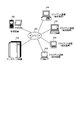
- FIG. 3 is a diagram showing an example of the overall configuration of the present system.
- FIG. 4 is a diagram showing another example of the overall configuration of the present system.
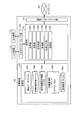
- FIG. 5 is a block diagram showing an example of the configuration of the evaluation device 100 of the present system.
- FIG. 6 is a diagram showing an example of information stored in the density data file 106a.
- FIG. 7 is a diagram showing an example of information stored in the index state information file 106b.
- FIG. 8 is a diagram showing an example of information stored in the designated index state information file 106c.
- FIG. 9 is a diagram showing an example of information stored in the expression file 106d1.
- FIG. 1 is a principle configuration diagram showing the basic principle of the first embodiment.
- FIG. 2 is a principle configuration diagram showing the basic principle of the second embodiment.
- FIG. 3 is a diagram showing
- FIG. 10 is a diagram showing an example of information stored in the evaluation result file 106e.
- FIG. 11 is a block diagram showing the configuration of the evaluation unit 102d.
- FIG. 12 is a block diagram showing an example of the configuration of the client device 200 of this system.
- FIG. 13 is a block diagram showing an example of the configuration of the database device 400 of this system.
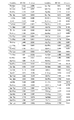
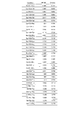
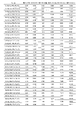
- FIG. 14 is a diagram showing the values of HR/SD and C-index.
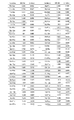
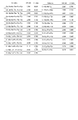
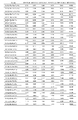
- FIG. 15 is a diagram showing combinations of amino acids and values of HR/SD and C-index.
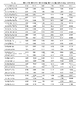
- FIG. 16 is a diagram showing combinations of amino acids and values of HR/SD and C-index.
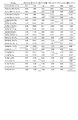
- FIG. 17 is a diagram showing the combinations of amino acids and the values of HR/SD and C-index.
- FIG. 18 is a diagram showing values of HR/SD and C-index.
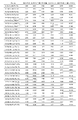
- FIG. 19 is a diagram showing combinations of amino acids and values of HR/SD and C-index.
- FIG. 20 is a diagram showing combinations of amino acids and values of HR/SD and C-index.
- FIG. 21 is a diagram showing combinations of amino acids and values of HR/SD and C-index.
- FIG. 22 is a diagram showing combinations of amino acids and values of HR/SD and C-index.
- FIG. 23 is a diagram showing combinations of amino acids and values of HR/SD and C-index.
- FIG. 24 is a diagram showing combinations of amino acids and values of HR/SD and C-index.
- FIG. 25 is a diagram showing combinations of amino acids and values of HR/SD and C-index.
- FIG. 26 is a diagram showing combinations of amino acids and values of HR/SD and C-index.
- FIG. 27 is a diagram showing combinations of amino acids and values of HR/SD and C-index.
- FIG. 28 is a diagram showing combinations of amino acids and values of HR/SD and C-index.
- FIG. 29 is a diagram showing combinations of amino acids and values of HR/SD and C-index.
- FIG. 30 is a diagram showing combinations of amino acids and values of HR/SD and C-index.
- FIG. 31 is a diagram showing the combinations of amino acids and the values of HR/SD and C-index.
- FIG. 32 is a diagram showing amino acid combinations and HR/SD and C-index values.
- FIG. 33 is a diagram showing combinations of amino acids and values of HR/SD and C-index.
- FIG. 34 is a diagram showing the relative risk regarding the occurrence of each event.
- FIG. 35 is a diagram showing a relative risk regarding the occurrence of each event.
- FIG. 36 is a diagram showing a relative risk regarding the occurrence of each event.
- FIG. 37 is a diagram showing a relative risk regarding the occurrence of each event.
- FIG. 38 is a diagram showing a relative risk regarding the occurrence of each event.
- FIG. 39 is a diagram showing a relative risk regarding the occurrence of each event.
- FIG. 40 is a diagram showing a relative risk regarding the occurrence of each event.
- FIG. 41 is a diagram showing a relative risk regarding the occurrence of each event.
- FIG. 42 is a diagram showing a relative risk regarding the occurrence of each event.
- FIG. 43 is a diagram showing a relative risk regarding the occurrence of each event.
- An embodiment (second embodiment) of a terminal device will be described in detail with reference to the drawings. The present invention is not limited to these embodiments.
- FIG. 1 is a principle configuration diagram showing the basic principle of the first embodiment.
- At least two amino acids of Gly, Cit, Trp, Met, Val, His, Pro and Tyr in blood eg, including plasma or serum
- the density data including the density value of is acquired (step S11).
- concentration data measured by a company or the like that performs concentration value measurement may be acquired.
- concentration data may be obtained by measuring the concentration value from blood collected from the subject to be evaluated, for example, by the following measuring method (A), (B), or (C).
- the unit of the concentration value may be, for example, a molar concentration, a weight concentration, or an enzyme activity, or may be obtained by adding, subtracting, multiplying, or dividing an arbitrary constant to these concentrations.
- A Plasma is separated from blood by centrifuging the collected blood sample. All plasma samples are stored frozen at ⁇ 80° C. until the time of measurement of concentration values.
- acetonitrile is added for deproteinization, and if necessary, impurities such as phospholipids are removed by solid-phase extraction or the like, and the labeling reagent (3-aminopyridyl-N-hydroxysuccinimidin is used.
- the labeling reagent 3-aminopyridyl-N-hydroxysuccinimidin is used.
- Precolumn derivatization with (diyl carbamate) and analyzing the concentration values by liquid chromatography mass spectrometry (including tandem mass spectrometry) WO 2003/069328, WO 2005/116629. See).
- Plasma is separated from blood by centrifuging the collected blood sample. All plasma samples are stored frozen at ⁇ 80° C. until the time of measurement of concentration values.
- sulfosalicylic acid is added for deproteinization, and then the concentration value is analyzed by an amino acid analyzer based on the post-column derivatization method using a ninhydrin reagent.
- C The collected blood sample is subjected to blood cell separation using a membrane, a MEMS (Micro Electro Mechanical Systems) technique, or the principle of centrifugation to separate plasma or serum from blood. Plasma or serum samples for which concentration values are not measured immediately after obtaining plasma or serum are frozen and stored at ⁇ 80° C. until measurement of concentration values.
- a molecule that reacts with or binds to a target blood substance such as an enzyme or an aptamer is used, and the concentration value is analyzed by quantifying a substance that increases or decreases due to substrate recognition or a spectroscopic value.
- step S12 using the concentration value included in the concentration data acquired in step S11, the risk of future occurrence of a cerebro-cardiovascular event is evaluated (predicted) for the evaluation target (step S12).
- the future risk of occurrence of a cerebral cardiovascular event for the evaluation target includes, for example, cerebral cardiovascular events including stroke and myocardial infarction in the future (for example, within 10 years after blood collection). Evaluate the risks that occur.
- data such as missing values and outliers may be removed from the density data obtained in step S11.
- the concentration data of the evaluation target is acquired in step S11, and the concentration value included in the concentration data acquired in step S11 is used in step S12 to determine the cerebral cardiovascular event of the evaluation target.
- Assess future risk of development in short, obtain information for assessing future risk of development of cerebral cardiovascular events for the evaluation target). This makes it possible to provide highly reliable information that can be used as a reference for knowing the future risk of occurrence of a cerebral cardiovascular event for the evaluation target.
- step S12 the value of the formula is calculated using a formula including a concentration value included in the concentration data acquired in step S11 and a variable into which the concentration value is substituted, so that the cerebral cardiovascular event for the evaluation target is calculated.
- the risk of future occurrence of may be assessed.
- the concentration value included in the concentration data may be determined to reflect the future risk of the occurrence of a cerebrocardiovascular event for the evaluation target, and further, the concentration value may be determined by, for example, the method described below. It may be converted, and the converted value may be determined to reflect the future risk of the occurrence of a cerebrocardiovascular event for the evaluation target (the same applies to the value of the expression). In other words, the concentration value or the converted value itself may be treated as the evaluation result regarding the future risk of the occurrence of a cerebrocardiovascular event for the evaluation target (the same applies to the value of the expression).
- the conversion method will be described below. In the following description, the density value is converted, but the same applies to the value of the equation.
- the range of possible density values is a predetermined range (for example, a range from 0.0 to 1.0, a range from 0.0 to 10.0, a range from 0.0 to 100.0, or -10.0
- a predetermined conversion method e.g., exponential conversion, logarithmic conversion, or the like. Convert the density value by performing conversion such as angle conversion, square root conversion, probit conversion, reciprocal conversion, Box-Cox conversion, or power conversion), or by combining these calculations with the density value. You may.
- the value of an exponential function with the concentration value as the index and the number of Napiers as the base (specifically, the probability p that the future risk of a cerebral cardiovascular event is in a predetermined state (for example, a high risk state) is defined.
- the natural logarithm ln (p/(1 ⁇ p)) is equal to the concentration value, and the value of p/(1 ⁇ p) may be further calculated.
- a value (specifically, the value of the probability p) obtained by dividing 1 by the sum of 1 and the value may be further calculated.
- the density value may be converted such that the converted value under a specific condition becomes a specific value.
- the density value may be converted such that the converted value is 5.0 when the specificity is 40% and the converted value is 8.0 when the specificity is 95%.
- the distribution of concentration values may be normalized for each amino acid, and then the concentration values may be deviated so that the average is 50 and the standard deviation is 10.
- the value of the equation may be converted into a deviation value so that the average is 50 and the standard deviation is 10. Also, these conversions may be performed by gender or age.
- concentration value in this specification may be the concentration value itself or a value obtained by converting the concentration value.
- value of the expression in the present specification may be the value of the expression itself or a value after the value of the expression is converted.
- the predetermined ruler is for evaluating the risk of future occurrence of cerebral cardiovascular events, and is, for example, a ruler with a scale, and "the range of the concentration value or the value after the conversion can be taken.
- the predetermined mark corresponds to the density value or the value after conversion, and is, for example, a circle mark or a star mark (the same applies to the value of the formula).
- the concentration value included in the concentration data is lower than or equal to or lower than a predetermined value (mean value ⁇ 1SD, 2SD, 3SD, N quantile, N percentile, or cutoff value at which clinical significance is recognized).
- a predetermined value mean value ⁇ 1SD, 2SD, 3SD, N quantile, N percentile, or cutoff value at which clinical significance is recognized.
- the risk of future occurrence of a cardiovascular event in the evaluation target may be evaluated (the same applies to the value of the expression).
- the deviation value may be used instead of the density value itself.
- the future evaluation of the cerebral cardiovascular event for the evaluation target is performed. Occurrence risk may be evaluated (same for the value of the formula).
- the future risk of the occurrence of a cerebrocardiovascular event for the evaluation target may be qualitatively evaluated.
- the concentration value included in the concentration data and one or more preset threshold values or "the concentration value included in the concentration data, an expression including a variable into which the concentration value is substituted, and a preset value
- One or more thresholds can be used to classify the evaluation target into any one of a plurality of categories defined at least in consideration of the degree of future risk of developing a cardiovascular event. Good.
- multiple categories include a category for assigning targets with a high risk of occurrence, a category for assigning targets with a low risk of occurrence, and a category for assigning targets with a moderate risk of occurrence. May be.
- the plurality of categories may include a category for assigning an object with a high risk of occurrence and a category for assigning an object with a low risk of occurrence.
- the density value or the value of the formula may be converted by, for example, the above-mentioned method, and the converted value may be used to classify the evaluation target into any one of a plurality of sections.
- the format used for evaluation is not particularly limited, but may be the following format, for example.
- -Linear models such as multiple regression, linear discriminant, principal component analysis and canonical discriminant analysis based on least squares method
- Generalized linear models such as logistic regression based on maximum likelihood method-Semi-parametric model such as Cox proportional hazards model
- generalized linear model generalized linear mixed model considering random effects such as inter-individual difference and institutional difference
- K-means method cluster analysis such as hierarchical cluster analysis Formulas created ⁇ MCMC (Markov chain Monte Carlo method)
- Bayesian networks formulas created based on Bayesian statistics such as hierarchical Bayesian formulas, formulas created by class classification such as support vector machines and decision trees, fractional formulas, etc.
- a coefficient and a constant term are added to each variable, but the coefficient and the constant term are preferably real numbers, and more preferably May be any value that belongs to the range of the 99% confidence interval of the coefficient and constant term obtained from the data to perform the various classifications, and more preferably, the value obtained from the data to perform the various classifications. Any value may be used as long as it belongs to the range of 95% confidence interval of the determined coefficient and constant term. Further, the value of each coefficient and its confidence interval may be obtained by multiplying it by a real number, and the value of the constant term and its confidence interval may be obtained by adding, subtracting, multiplying, and dividing an arbitrary real constant.
- linear discriminant equation When using a logistic regression equation, linear discriminant equation, multiple regression equation, etc. during evaluation, linear conversion (constant addition, constant multiplication) and monotonic increase (decrease) conversion (eg logit conversion) change the evaluation performance. However, since these are equivalent to before conversion, those after these conversions may be used.
- fractional equation means that the numerator of the relevant fractional expression is represented by the sum of variables A, B, C,... And/or the denominator of the relevant fractional expression is the sum of variables a, b, c,. Is represented by. Further, the fractional equation also includes the sum of the fractional equations ⁇ , ⁇ , ⁇ ,... Of such a configuration (such as ⁇ + ⁇ ). The fractional formula also includes a divided fractional formula. It should be noted that each of the variables used in the numerator and denominator may have an appropriate coefficient. Further, the variables used for the numerator and denominator may be duplicated. Also, each fractional expression may have an appropriate coefficient.
- the value of the coefficient of each variable and the value of the constant term may be real numbers.
- the positive and negative signs of the correlation with the objective variable are generally reversed, but since their correlation is maintained, Since the evaluation performance can be considered to be equivalent, the numerator variable includes the numerator variable and the denominator variable interchanged.
- the following values relating to other biological information may be further used. Further, in the equation used when evaluating the risk of future occurrence of a cerebral cardiovascular event, in addition to the variable in which the concentration value included in the concentration data is substituted, the following values relating to other biological information are substituted 1
- One or more variables may also be included. Examples of other biometric information include the following.
- Physical index measurement results (height, weight, waist circumference, BMI) Glucose metabolism index measurement results (blood glucose level, HbA1c, HOMA-IR, insulin) Liver function index measurement results (AST, ALT, ⁇ GTP) Lipid metabolism index measurement results (T-cho, LDL, HDL, TG) Nutrition-related index measurement results (total protein, albumin) Blood count index measurement results (red blood cells, white blood cells, hematocrit, platelets, lymphocytes, monocytes, neutrophils, eosinophils, basophils) Inflammation-related index measurement results (CRP) Visceral fat related index measurement results (visceral fat area) Aortic velocity related index measurement result ECG test result MRI, MRA test result Central blood pressure related index measurement result Carotid artery echo/terminal glycation end product test result Body fat measurement result Interview result of disease history (hypertension, dyslipidemia, diabetes, stroke, angina pectoris/myocardial infarction, gout
- FIG. 2 is a principle configuration diagram showing the basic principle of the second embodiment.
- the description overlapping with the first embodiment may be omitted.
- the case of using the value of the formula or the value after conversion thereof is described as an example when evaluating the future risk of occurrence of a cerebral cardiovascular event, but, for example, the concentration value included in the concentration data Alternatively, the converted value (for example, deviation value) may be used.
- the control unit obtains in advance the concentration value of at least two amino acids of Gly, Cit, Trp, Met, Val, His, Pro and Tyr in the blood of the subject of evaluation (eg, an individual such as an animal or a human).
- the subject of evaluation eg, an individual such as an animal or a human.
- step S21 may be created based on the expression creating process (step 1 to step 4) described below.
- the outline of the expression creating process will be described. Note that the processing described here is merely an example, and the method of creating an expression is not limited to this.
- step 1 from the index state information, a plurality of different formula creation methods (principal component analysis, discriminant analysis, support vector machine, multiple regression analysis, Cox regression analysis, logistic regression analysis, k-means method, cluster analysis, determination)
- a plurality of candidate expressions may be created in combination with (including those related to multivariate analysis such as trees).
- a group of cerebral cardiovascular events a group of subjects in which cerebral cardiovascular events occurred after a certain period of time after blood collection
- a group without cerebral cardiovascular events Cerebral cardiovascular events after a certain period of time after blood collection
- Multiple groups using multiple different algorithms for index status information which is multivariate data composed of concentration data and index data obtained by analyzing blood obtained from subjects that did not occur
- the candidate expressions may be simultaneously created in parallel.
- two different candidate expressions may be created by simultaneously performing discriminant analysis and logistic regression analysis using different algorithms.
- the candidate expression may be created by converting the index state information using the candidate expression created by performing the principal component analysis and performing the discriminant analysis on the converted index status information. As a result, the optimum formula for evaluation can be finally created.
- the candidate formula created using principal component analysis is a linear formula that includes each variable that maximizes the variance of all concentration data.
- the candidate formula created using discriminant analysis is a higher-order formula (including exponent and logarithm) that includes each variable that minimizes the ratio of the sum of variances in each group to the variance of all concentration data. is there.
- the candidate expression created using the support vector machine is a high-order expression (including a kernel function) including each variable that maximizes the boundary between groups.
- the candidate formula created by using the multiple regression analysis is a high-order formula including each variable that minimizes the sum of distances from all the concentration data.
- the candidate formula created by using the Cox regression analysis is a linear model including a logarithmic hazard ratio, and is a linear formula including each variable and its coefficient that maximize the likelihood of the model.
- the candidate expression created by using the logistic regression analysis is a linear model that represents the logarithmic odds of the probability, and is a linear expression that includes each variable that maximizes the likelihood of the probability.
- the k-means method searches k neighborhoods of each concentration data, defines the most common group of the neighboring points as the belonging group of the data, and the group to which the inputted concentration data belongs. This is a method of selecting a variable that best matches the group defined as.
- the cluster analysis is a method of clustering (grouping) points that are closest to each other in all the density data.
- the decision tree is a method in which the variables are ranked and the group of concentration data is predicted from the patterns that the variables having the higher ranking can take.
- the control unit verifies (mutual verification) the candidate formula created in step 1 based on a predetermined verification method (step 2).
- the verification of the candidate formula is performed for each candidate formula created in step 1.
- step 2 based on at least one of the bootstrap method, the holdout method, the N-fold method, the leave one-out method, etc., the discriminant rate, sensitivity, specificity, information amount criterion, ROC_AUC( The area under the curve of the receiver characteristic curve) or the like may be verified. This makes it possible to create a candidate formula having high predictability or robustness in consideration of the index state information and the evaluation condition.
- the discriminant rate means that the evaluation object having a negative true state is correctly evaluated as negative by the evaluation method according to the present embodiment, and the evaluation object having a positive true state is evaluated by the evaluation method according to the present embodiment. This is the percentage that is correctly evaluated as positive.
- the sensitivity is a ratio of correctly evaluating an evaluation target whose true state is positive as positive by the evaluation method according to the present embodiment.
- the specificity is a rate at which an evaluation target whose true state is negative is correctly evaluated as negative by the evaluation method according to the present embodiment.
- the Akaike information criterion is a criterion indicating how well the observed data match the statistical model in the case of regression analysis, etc., and is “ ⁇ 2 ⁇ (maximum log likelihood of statistical model)+2 ⁇ (statistical model).
- the model with the minimum value defined by the number of free parameters of model) is judged to be the best.
- the value of is 1 in complete discrimination, and the closer the value is to 1, the higher the discrimination.
- the predictability is the average of the discrimination rate, sensitivity, and specificity obtained by repeating the verification of the candidate formula.
- Robustness is the variance of discrimination rate, sensitivity, and specificity obtained by repeating verification of candidate formulas.
- the control unit selects a variable of the candidate formula based on a predetermined variable selection method, thereby selecting a combination of concentration data included in the index state information used when creating the candidate formula.
- the variables may be selected for each candidate expression created in step 1. Thereby, the variable of the candidate formula can be appropriately selected. Then, the step 1 is executed again using the index state information including the concentration data selected in the step 3. Further, in the step 3, the variable of the candidate expression may be selected from the verification result in the step 2 based on at least one of the stepwise method, the best path method, the neighborhood search method, and the genetic algorithm.
- the best path method is a method in which the variables included in the candidate formula are sequentially reduced one by one and the variables are selected by optimizing the evaluation index given by the candidate formula.
- control unit repeatedly executes the above-described step 1, step 2 and step 3 and, based on the verification result accumulated by this, a candidate to be used for evaluation from a plurality of candidate expressions.
- an expression used for evaluation is created (step 4). It should be noted that, for the selection of the candidate formula, for example, there is a case where the optimum formula is selected from the candidate formulas created by the same formula creating method, and a case where the optimum formula is selected from all the candidate formulas.
- the process related to the creation of the candidate formula, the verification of the candidate formula, and the selection of the variable of the candidate formula is systematized (systemized) based on the index state information.
- the blood amino acid concentration is used for multivariate statistical analysis, and the variable selection method and cross validation are combined to select the optimal and robust set of variables, and the formula with high evaluation performance is used.
- FIG. 3 is a diagram showing an example of the overall configuration of the present system.
- FIG. 4 is a diagram showing another example of the overall configuration of this system.
- the present system includes an evaluation device 100 that evaluates the future risk of a cardiovascular event in an individual subject to evaluation, and a client device 200 that provides individual concentration data (the terminal device of the present invention). (Corresponding to) and are communicably connected via the network 300.
- the client device 200 that is a source of data used for evaluation and the client device 200 that is a destination of evaluation results may be different.
- the present system is, in addition to the evaluation device 100 and the client device 200, a database device that stores index state information used when an expression is created by the evaluation device 100, an expression used at the time of evaluation, and the like. 400 may be communicably connected via the network 300.
- FIG. 5 is a block diagram showing an example of the configuration of the evaluation device 100 of the present system, and conceptually shows only the portion related to the present invention in the configuration.
- the evaluation device 100 is configured to control the evaluation device through a control unit 102 such as a CPU (Central Processing Unit) that controls the evaluation device as a whole, a communication device such as a router, and a wired or wireless communication line such as a dedicated line. It comprises a communication interface unit 104 communicatively connected to the network 300, a storage unit 106 for storing various databases, tables and files, and an input/output interface unit 108 connected to the input device 112 and the output device 114. These units are communicatively connected via an arbitrary communication path.
- the evaluation device 100 may be configured in the same housing as various analysis devices (for example, amino acid analysis device).
- an evaluation unit 102d described later is used. Further, it may be characterized in that the result obtained by the evaluation unit 102d is output using the configuration.
- the communication interface unit 104 mediates communication between the evaluation device 100 and the network 300 (or communication device such as router). That is, the communication interface unit 104 has a function of communicating data with another terminal via a communication line.
- the input/output interface unit 108 connects to the input device 112 and the output device 114.
- the output device 114 a monitor (including a home-use television), a speaker, or a printer can be used (hereinafter, the output device 114 may be referred to as the monitor 114).
- the input device 112 may be a keyboard, a mouse, a microphone, or a monitor that realizes a pointing device function in cooperation with the mouse.
- the storage unit 106 is a storage means, and for example, a memory device such as a RAM (Random Access Memory)/ROM (Read Only Memory), a fixed disk device such as a hard disk, a flexible disk, an optical disk, or the like can be used.
- the storage unit 106 stores a computer program for giving instructions to the CPU and performing various processes in cooperation with an OS (Operating System). As illustrated, the storage unit 106 stores a concentration data file 106a, an index state information file 106b, a designated index state information file 106c, a formula related information database 106d, and an evaluation result file 106e.
- the concentration data file 106a stores concentration data.
- FIG. 6 is a diagram showing an example of information stored in the density data file 106a. As shown in FIG. 6, the information stored in the concentration data file 106a is configured by associating an individual number for uniquely identifying an individual (sample) to be evaluated with the concentration data. Although the density data is treated as a numerical value, that is, a continuous scale in FIG. 6, the density data may be a nominal scale or an ordinal scale. In the case of nominal scale or ordinal scale, analysis may be performed by giving an arbitrary numerical value to each state. Further, the concentration data may be combined with a value (see above) related to other biological information.
- FIG. 7 is a diagram showing an example of information stored in the index state information file 106b.
- the information stored in the index state information file 106b is, as shown in FIG. 7, an index related to the individual number and an index (index T1, index T2, index T3,...) Representing the risk of future occurrence of a cardiovascular event.
- the data (T) and the density data are associated with each other.
- the index data and the concentration data are treated as numerical values (that is, a continuous scale), but the index data and the concentration data may be a nominal scale or an ordinal scale. In the case of nominal scale or ordinal scale, analysis may be performed by giving an arbitrary numerical value to each state.
- the index data is a known index or the like that serves as a marker of a future risk of occurrence of a cerebral cardiovascular event, and numerical data may be used.
- the designated index state information file 106c stores the index state information designated by the designation unit 102b described later.
- FIG. 8 is a diagram showing an example of information stored in the designated index state information file 106c. As shown in FIG. 8, the information stored in the designated index state information file 106c is configured by associating the individual number, the designated index data, and the designated concentration data with each other.
- the expression related information database 106d is composed of an expression file 106d1 that stores expressions created by the expression creating unit 102c described later.
- the expression file 106d1 stores an expression used for evaluation.
- FIG. 9 is a diagram showing an example of information stored in the expression file 106d1. As shown in FIG. 9, the information stored in the expression file 106d1 mutually includes a rank, an expression, a threshold value corresponding to each expression creating method, and a verification result of each expression (for example, a value of each expression). It is configured in association.
- FIG. 10 is a diagram showing an example of information stored in the evaluation result file 106e.
- the information stored in the evaluation result file 106e includes the individual number, the concentration data of the individual, and the evaluation result regarding the future risk of the occurrence of a cerebral cardiovascular event (for example, the value of the formula calculated by the calculation unit 102d1 described later, which will be described later).
- the value after conversion by the conversion unit 102d2, the position information generated by the generation unit 102d3 described later, the classification result obtained by the classification unit 102d4 described later, and the like) are associated with each other.
- control unit 102 has an internal memory for storing a control program such as an OS, a program defining various processing procedures, required data, and the like, and various information processing based on these programs. To execute. As shown in the figure, the control unit 102 roughly includes an acquisition unit 102a, a designation unit 102b, an expression creation unit 102c, an evaluation unit 102d, a result output unit 102e, and a transmission unit 102f.
- the control unit 102 removes data with missing values, removes data with many outliers, and data with missing values from the index status information sent from the database device 400 and the density data sent from the client device 200. It also performs data processing such as the removal of variables with a large number of variables.
- the acquisition unit 102a acquires information (specifically, concentration data, index state information, formula, etc.). For example, the acquisition unit 102a acquires the information by receiving the information (specifically, the concentration data, the index state information, the formula, etc.) transmitted from the client device 200 or the database device 400 via the network 300. You may go.
- the acquisition unit 102a may receive the data used for the evaluation transmitted from the client device 200 different from the client device 200 that is the transmission destination of the evaluation result.
- the acquisition unit 102a causes the information recorded on the recording medium (specifically, Specifically, the information may be obtained by reading the concentration data, the index state information, the formula, etc.) via the mechanism.
- the designating unit 102b designates index data and concentration data to be targets for creating the formula.
- the formula creation unit 102c creates a formula based on the index status information acquired by the acquisition unit 102a and the index status information specified by the specification unit 102b. If the expression is stored in advance in a predetermined storage area of the storage unit 106, the expression creating unit 102c may create the expression by selecting a desired expression from the storage unit 106. The formula creating unit 102c may create the formula by selecting and downloading a desired formula from another computer device (for example, the database device 400) that stores the formula in advance.
- another computer device for example, the database device 400
- the evaluation unit 102d uses an expression obtained in advance (for example, an expression created by the expression creation unit 102c or an expression acquired by the acquisition unit 102a) and an expression using the concentration value included in the concentration data acquired by the acquisition unit 102a. By calculating the value of, the risk of future occurrence of a cardiovascular event in the individual is evaluated.
- the evaluation unit 102d may evaluate the risk of future occurrence of a cerebral cardiovascular event for the individual by using the concentration value included in the concentration data or a value (for example, a deviation value) obtained by converting the concentration value.
- FIG. 11 is a block diagram showing the configuration of the evaluation unit 102d, and conceptually shows only the portion related to the present invention in the configuration.
- the evaluation unit 102d further includes a calculation unit 102d1, a conversion unit 102d2, a generation unit 102d3, and a classification unit 102d4.
- the calculation unit 102d1 calculates the value of the expression using an expression including at least the density value included in the density data and the variable into which the density value is substituted.
- the evaluation unit 102d may store the value of the expression calculated by the calculation unit 102d1 as an evaluation result in a predetermined storage area of the evaluation result file 106e.
- the conversion unit 102d2 converts the value of the formula calculated by the calculation unit 102d1 by the above-described conversion method, for example.
- the evaluation unit 102d may store the value converted by the conversion unit 102d2 as an evaluation result in a predetermined storage area of the evaluation result file 106e. Further, the conversion unit 102d2 may convert the density value included in the density data by, for example, the conversion method described above.
- the generation unit 102d3 uses the value of the formula calculated by the calculation unit 102d1 or the conversion unit 102d2 to calculate the position information regarding the position of the predetermined mark on the predetermined ruler that is visibly displayed on a display device such as a monitor or a physical medium such as paper. It is generated by using the value after the conversion by the method (which may be the density value or the value after the conversion of the density value).
- the evaluation unit 102d may store the position information generated by the generation unit 102d3 as an evaluation result in a predetermined storage area of the evaluation result file 106e.
- the classification unit 102d4 uses the value of the formula calculated by the calculation unit 102d1 or the value after conversion by the conversion unit 102d2 (which may be the concentration value or the value after conversion of the concentration value) to identify the individual as a cardiovascular event. Categorize into one of a number of categories defined with at least a degree of future risk.
- the result output unit 102e outputs the processing result (including the evaluation result obtained by the evaluation unit 102d) in each processing unit of the control unit 102 to the output device 114.
- the transmission unit 102f transmits the evaluation result to the client device 200 that is the transmission source of the concentration data of the individual, and transmits the formula created by the evaluation device 100 and the evaluation result to the database device 400.
- the transmission unit 102f may transmit the evaluation result to the client device 200 different from the client device 200 that is the transmission source of the data used for the evaluation.
- FIG. 12 is a block diagram showing an example of the configuration of the client device 200 of the present system, and conceptually shows only the portion related to the present invention in the configuration.
- the client device 200 includes a control unit 210, a ROM 220, an HD (Hard Disk) 230, a RAM 240, an input device 250, an output device 260, an input/output IF 270, and a communication IF 280, and these units are connected via arbitrary communication paths. Connected so that communication is possible.
- the client device 200 is an information processing device to which peripheral devices such as a printer, a monitor, and an image scanner are connected as necessary (for example, a known personal computer, workstation, home game device, Internet TV, PHS (Personal Handyphone System)). It may be based on a terminal, a mobile terminal, a mobile communication terminal, an information processing terminal such as a PDA (Personal Digital Assistant), or the like.
- the input device 250 is a keyboard, a mouse, a microphone, or the like.
- the monitor 261 described later also realizes a pointing device function in cooperation with the mouse.
- the output device 260 is an output unit that outputs information received via the communication IF 280, and includes a monitor (including a home-use television) 261 and a printer 262. In addition, a speaker or the like may be provided in the output device 260.
- the input/output IF 270 is connected to the input device 250 and the output device 260.
- the communication IF 280 connects the client device 200 and the network 300 (or a communication device such as a router) so that they can communicate with each other.
- the client device 200 is connected to the network 300 via a communication device such as a modem or TA (Terminal Adapter) or router and a telephone line, or via a dedicated line. Accordingly, the client device 200 can access the evaluation device 100 according to the predetermined communication protocol.
- a communication device such as a modem or TA (Terminal Adapter) or router and a telephone line, or via a dedicated line.
- TA Terminal Adapter
- the control unit 210 includes a reception unit 211 and a transmission unit 212.
- the receiving unit 211 receives various kinds of information such as the evaluation result transmitted from the evaluation device 100 via the communication IF 280.
- the transmission unit 212 transmits various information such as individual concentration data to the evaluation device 100 via the communication IF 280.
- the control unit 210 may implement all or any part of the processing performed by the control unit by a CPU and a program that is interpreted and executed by the CPU.
- the ROM 220 or the HD 230 stores a computer program for giving instructions to the CPU in cooperation with the OS and performing various processes.
- the computer program is executed by being loaded in the RAM 240, and configures the control unit 210 in cooperation with the CPU.
- the computer program may be recorded in an application program server connected to the client apparatus 200 via an arbitrary network, and the client apparatus 200 may download all or a part of the program as necessary. ..
- all or any part of the processing performed by the control unit 210 may be realized by hardware such as a wired logic.
- the control unit 210 has an evaluation unit 210a (including a calculation unit 210a1, a conversion unit 210a2, a generation unit 210a3, and a classification unit 210a4) having the same function as the function of the evaluation unit 102d included in the evaluation device 100. May be provided. Then, in the case where the control unit 210 includes the evaluation unit 210a, the evaluation unit 210a uses the value of the expression (in the conversion unit 210a2 according to the information included in the evaluation result transmitted from the evaluation device 100). The density value may be converted), position information corresponding to the value of the expression or the converted value (which may be the density value or the converted value of the density value) may be generated by the generation unit 210a3, and the classification unit 210a4 may be used. In, the value of the equation or the value after conversion (the concentration value or the value after conversion of the concentration value may be used) may be used to classify the individual into any one of a plurality of categories.
- the network 300 has a function of connecting the evaluation apparatus 100, the client apparatus 200, and the database apparatus 400 to each other so that they can communicate with each other.
- the Internet for example, the Internet, an intranet, a LAN (Local Area Network) (including both wired and wireless), etc. Is.
- the network 300 includes a VAN (Value-Added Network), a personal computer communication network, a public telephone network (including both analog and digital), a private line network (including both analog and digital), and a CATV ( Community Antenna Television) network, mobile circuit switching network or mobile packet switching network (IMT (International Mobile Telecommunication) 2000 system, GSM (registered trademark) (Global System for Personal Computer) DPC (PDCC) system or PDC system. Methods, etc.), wireless calling networks, local wireless networks such as Bluetooth (registered trademark), PHS networks, satellite communication networks (CS (Communication Satellite), BS (Broadcasting Satellite) or ISDB (Integrated Services Digital Broadcasting). ) And the like) and the like.
- VAN Value-Added Network
- PHS Global System for Personal Computer
- CS Common Service Satellite
- BS Broadcasting Satellite
- ISDB Integrated Services Digital Broadcasting
- FIG. 13 is a block diagram showing an example of the configuration of the database apparatus 400 of the present system, and conceptually shows only the portion related to the present invention in the configuration.
- the database device 400 has a function of storing index state information used when an expression is created by the evaluation device 100 or the database device, an expression created by the evaluation device 100, an evaluation result obtained by the evaluation device 100, and the like.
- the database device 400 includes a control unit 402 such as a CPU that controls the database device in general, a communication device such as a router, and a wired or wireless communication circuit such as a dedicated line.
- a communication interface unit 404 that communicatively connects the device to the network 300, a storage unit 406 that stores various databases, tables, files (for example, Web page files), and an input device 412 and an output device 414 that are connected.
- an output interface unit 408, and these units are communicably connected via an arbitrary communication path.
- the storage unit 406 is a storage means, and for example, a memory device such as RAM/ROM, a fixed disk device such as a hard disk, a flexible disk, an optical disk, or the like can be used.
- the storage unit 406 stores various programs used for various processes.
- the communication interface unit 404 mediates communication between the database device 400 and the network 300 (or a communication device such as a router). That is, the communication interface unit 404 has a function of communicating data with other terminals via a communication line.
- the input/output interface unit 408 connects to the input device 412 and the output device 414.
- the output device 414 may be a monitor (including a home-use television), a speaker, or a printer.
- As the input device 412 a keyboard, a mouse, a microphone, or a monitor that realizes a pointing device function in cooperation with a mouse can be used.
- the control unit 402 has an internal memory for storing a control program such as an OS, a program that defines various processing procedures, and required data, and executes various information processing based on these programs. As shown in the figure, the control unit 402 roughly includes a transmission unit 402a and a reception unit 402b.
- the transmission unit 402a transmits various kinds of information such as index state information and expressions to the evaluation device 100.
- the receiving unit 402b receives various types of information transmitted from the evaluation device 100, such as expressions and evaluation results.
- the evaluation device 100 executes acquisition of concentration data, calculation of formula values, classification into individual sections, and transmission of evaluation results, and the client device 200 receives evaluation results.
- the client device 200 includes the evaluation unit 210a, it is sufficient for the evaluation device 100 to calculate the value of the expression. For example, conversion of the value of the expression, position information
- the evaluation device 100 and the client device 200 may appropriately share and execute the processes such as the generation and the classification into individuals.
- the evaluation unit 210a converts the expression value in the conversion unit 210a2, or the expression value or the converted value in the generation unit 210a3.
- the classification unit 210a4 may classify an individual into any one of a plurality of sections using the value of the expression or the value after conversion.
- the evaluation unit 210a When the client device 200 receives the converted value from the evaluation device 100, the evaluation unit 210a generates the position information corresponding to the converted value in the generation unit 210a3 or converts the position information in the classification unit 210a4. The latter value may be used to classify the individual into one of a plurality of categories. Further, when the client device 200 receives the value of the expression or the value after conversion and the position information from the evaluation device 100, the evaluation unit 210a uses the value of the expression or the value after conversion in the classification unit 210a4. Individuals may be classified into any one of a plurality of categories.
- the evaluation device, the calculation device, the evaluation method, the calculation method, the evaluation program, the calculation program, the recording medium, the evaluation system, and the terminal device according to the present invention are not limited to the above-described second embodiment, and are described in the claims. It may be implemented in various different embodiments within the scope of the technical idea.
- all or part of the processes described as being automatically performed may be manually performed, or the processes described as being manually performed. All or part of the above can be automatically performed by a known method.
- all or any part of the processing functions of the evaluation apparatus 100 may be realized by a CPU and a program interpreted and executed by the CPU.
- the hardware may be realized by wired logic.
- the program is recorded in a non-transitory computer-readable recording medium containing programmed instructions for causing the information processing apparatus to execute the evaluation method or the calculation method according to the present invention, and the evaluation is performed as necessary. It is mechanically read by the device 100. That is, a computer program for giving instructions to the CPU and performing various processes in cooperation with the OS is recorded in the storage unit 106 such as the ROM or the HDD (Hard Disk Drive). This computer program is executed by being loaded in the RAM, and constitutes a control unit in cooperation with the CPU.
- this computer program may be stored in an application program server connected to the evaluation apparatus 100 via an arbitrary network, and it is possible to download all or part of it as necessary.
- the evaluation program or the calculation program according to the present invention may be stored in a non-transitory computer-readable recording medium, or may be configured as a program product.
- the "recording medium” includes a memory card, a USB (Universal Serial Bus) memory, an SD (Secure Digital) card, a flexible disk, a magneto-optical disk, a ROM, an EPROM (Erasable Programmable Read Only, EEPROM). Erasable and Programmable Read Only Memory (registered trademark), CD-ROM (Compact Disc Read Only Memory), MO (Magneto-Optical Disc, etc.), DVD (Digital-Optical Disc), DVD (Digital-Britical), DVD (Digital Versatile, etc.) It shall include any "portable physical medium”.
- a "program” is a data processing method described in any language or description method, regardless of the format such as source code or binary code. Note that the "program” is not necessarily limited to a single configuration, and it achieves its function in cooperation with a plurality of modules or libraries that are distributed and configured, or with a separate program represented by an OS. Including things. Note that known configurations and procedures can be used for the specific configuration and reading procedure for reading the recording medium in each device shown in the embodiments, and the installation procedure after reading.
- Various databases and the like stored in the storage unit 106 are memory devices such as RAM and ROM, fixed disk devices such as hard disks, flexible disks, and storage means such as optical disks, and are used for various processes and website provision. Stores programs, tables, databases, files for web pages, and the like.
- the evaluation device 100 may be configured as an information processing device such as a known personal computer or workstation, or may be configured as the information processing device to which any peripheral device is connected. Further, the evaluation device 100 may be realized by installing software (including a program, data, or the like) for realizing the evaluation method or the calculation method of the present invention in the information processing device.
- the specific form of the dispersion/integration of the devices is not limited to that shown in the drawings, and all or a part of the devices may be functionally or physically arranged in arbitrary units according to various additions or functional loads. It can be distributed and integrated. That is, the above-described embodiments may be implemented in any combination, or the embodiments may be selectively implemented.
- Linearity is obtained by substituting the measured free amino acid concentration in blood into the formulas (three formulas shown below) for determining the presence/absence of a cardiovascular event described in Patent Document 1 (JP 2013-178238A).
- the predictor value was obtained.
- the hazard ratio (HR/SD) per standard deviation and C-index of the value of the obtained linear predictor with respect to the occurrence of cerebral cardiovascular events were calculated.
- the calculation result is shown in FIG.
- C-index is an index representing the accuracy of the prognosis prediction proposed by Harrell et al., and is a non-representation indicating how much the magnitude relationship between the event occurrence probability predicted from the model and the actual event occurrence probability matches. It is a parametric indicator.
- FIGS. 15 to 17 show the combination of two amino acids in the Cox proportional hazards model consisting of two amino acids, in which the value of HR/SD or C-index is higher than that shown in FIG. 14, and HR/SD. And C-index values are shown.
- Example 1 5479 residents who took blood samples in the morning or afternoon and performed a medical examination in 2008 or 2009 eight hours or more after eating a meal were targeted. Of these, 104 were out of 5479, stroke was 50, myocardial infarction was 35, and PCI was 19.
- Blood was measured by extracting all combinations of two amino acids selected from 13 kinds of amino acids (Gly, Gln, His, Thr, Cit, Pro, Tyr, Val, Met, Lys, Ile, Phe and Trp).
- the free amino acid concentration was substituted into the Cox proportional hazards model corresponding to each extracted combination to obtain the linear predictor values for the model.
- the HR/SD and C-index of the obtained linear predictor values were calculated with respect to the presence or absence of a cerebral cardiovascular event during the follow-up period.
- 21 and 22 show combinations of two amino acids showing higher HR/SD or C-index than those shown in FIG. 21 and 22 show a combination of two amino acids in a Cox proportional hazards model consisting of two amino acids in which HR/SD or C-index is higher than the value shown in FIG. 14, and HR/SD and C. The value of -index is shown.
- a linear predictor of the model was obtained by extracting all combinations of two amino acids selected from the 13 kinds of amino acids, substituting the measured blood free amino acid concentrations into the Cox proportional hazard model corresponding to each extracted combination. Got the value of.
- the HR/SD and C-index of the obtained linear predictor values were calculated with respect to the presence or absence of a cerebral cardiovascular event during the follow-up period.
- FIG. 23 shows combinations of two amino acids showing higher HR/SD or C-index than those shown in FIG.
- FIG. 23 shows a combination of two amino acids in a Cox proportional hazard model consisting of two amino acids in which HR/SD or C-index is higher than the value shown in FIG. 18, and HR/SD and C-index of Values are shown.
- a linear predictor of the model was obtained by extracting all combinations of three amino acids selected from the 19 kinds of amino acids, substituting the measured blood free amino acid concentrations into the Cox proportional hazard model corresponding to each extracted combination. Got the value of.
- the HR/SD and C-index of the obtained linear predictor values were calculated with respect to the presence or absence of a cerebral cardiovascular event during the follow-up period.
- FIG. 24 shows combinations of three amino acids showing higher HR/SD or C-index than those shown in FIGS. 21 and 22.
- FIG. 24 shows a combination of 3 amino acids in a Cox proportional hazards model consisting of 3 amino acids, in which HR/SD or C-index is higher than those shown in FIGS. 21 and 22, and HR/SD and C. The value of -index is shown.
- a linear predictor of the model was obtained by extracting all combinations of three amino acids selected from the 19 kinds of amino acids, substituting the measured blood free amino acid concentrations into the Cox proportional hazard model corresponding to each extracted combination. Got the value of.
- the HR/SD and C-index of the obtained linear predictor values were calculated with respect to the presence or absence of a cerebral cardiovascular event during the follow-up period.
- FIG. 25 shows combinations of three amino acids showing higher HR/SD or C-index than those shown in FIG.
- FIG. 25 shows a combination of 3 amino acids in a Cox proportional hazard model consisting of 3 amino acids in which HR/SD or C-index is higher than the value shown in FIG. 23, and HR/SD and C-index are It is shown.
- FIG. 26 shows combinations of three amino acids showing higher HR/SD or C-index than those shown in FIG.
- FIG. 26 shows a combination of 3 amino acids in a Cox proportional hazards model consisting of 3 amino acids in which HR/SD or C-index is higher than the value shown in FIG. 24, and HR/SD and C-index. Values are shown.
- a linear predictor of the model was obtained by extracting all combinations of three amino acids selected from the 13 kinds of amino acids, substituting the measured blood free amino acid concentrations into the Cox proportional hazard model corresponding to each extracted combination. Got the value of.
- the HR/SD and C-index of the obtained linear predictor values were calculated with respect to the presence or absence of a cerebral cardiovascular event during the follow-up period.
- FIG. 27 shows combinations of three amino acids showing higher HR/SD or C-index than those shown in FIG.
- FIG. 27 shows a combination of 3 amino acids in a Cox proportional hazards model consisting of 3 amino acids in which HR/SD or C-index is higher than the value shown in FIG. 25, and HR/SD and C-index are It is shown.
- a model was obtained by extracting all combinations of 4 or more and 6 or less amino acids selected from the 13 kinds of amino acids, and substituting the measured blood free amino acid concentration into the Cox proportional hazard model corresponding to each extracted combination.
- the value of the linear predictor of was obtained.
- the HR/SD and C-index of the obtained linear predictor values were calculated with respect to the presence or absence of a cerebral cardiovascular event during the follow-up period.
- FIG. 28 shows combinations of 4 or more and 6 or less amino acids showing higher HR/SD or C-index than the values shown in FIG. FIG.
- the 40% points and 95% points of the values of the linear predictor of the model described in Example 9 were set as cutoff values, and the rank classification of the subjects was performed. Specifically, subjects having a linear predictor value of less than 40% were classified into rank A, subjects having a score of 40% or more and less than 95% were classified into rank B, and subjects having a value of 95% or more were classified into rank C, respectively.
- the relative risk of the subject corresponding to rank B to the subject corresponding to rank A, and the subject corresponding to rank A, regarding the occurrence or non-occurrence of cerebral cardiovascular events during the follow-up period was calculated.
- the relative risk of a subject corresponding to rank B to a subject corresponding to rank A and a subject corresponding to rank A with respect to the presence or absence of a cerebrovascular event during the follow-up period was calculated.
- the relative risk of the subject corresponding to rank B to the subject corresponding to rank A, and the subject corresponding to rank A with respect to the occurrence of a cardiovascular event during the follow-up period was calculated.
- Figure 34 shows the calculated relative risks.
- FIG. 34 when subjects are ranked according to the value of the linear predictor of the Cox proportional hazards model described in Example 9, the subjects corresponding to rank A and the subjects corresponding to rank B and rank A are shown.
- the relative risk regarding the occurrence of a cerebrovascular event, the relative risk regarding the occurrence of a cerebrovascular event, and the relative risk regarding the occurrence of a cardiovascular event of the subject corresponding to rank C with respect to the corresponding subject are shown.
- the 40% points and 95% points of the values of the linear predictors of the model described in Example 10 were set as cutoff values, and the rank classification of the subjects was performed. Specifically, subjects having a linear predictor value of less than 40% were classified into rank A, subjects having a score of 40% or more and less than 95% were classified into rank B, and subjects having a value of 95% or more were classified into rank C, respectively.
- the relative risk of the subject corresponding to rank B to the subject corresponding to rank A, and the subject corresponding to rank A, regarding the occurrence or non-occurrence of cerebral cardiovascular events during the follow-up period was calculated.
- the relative risk of a subject corresponding to rank B to a subject corresponding to rank A and a subject corresponding to rank A with respect to the presence or absence of a cerebrovascular event during the follow-up period was calculated.
- the relative risk of the subject corresponding to rank B to the subject corresponding to rank A, and the subject corresponding to rank A with respect to the occurrence of a cardiovascular event during the follow-up period was calculated.
- the calculated relative risks are shown in FIGS. 35 to 43. 35 to 43, the subjects corresponding to rank B and the subjects corresponding to rank A when the subjects are classified into ranks based on the values of the linear predictors of the Cox proportional hazards model described in Example 10.
- the relative risk of occurrence of a cerebral cardiovascular event, the relative risk of occurrence of a cerebral vascular event, and the relative risk of occurrence of a cardiovascular event of a subject corresponding to rank A with respect to a subject corresponding to rank A are shown.
- the present invention can be widely implemented in many industrial fields, particularly in the fields of pharmaceuticals, foods, medical care, and the like, and in particular, bioinformatics for predicting future occurrence risk of cerebral cardiovascular events and the like. It is extremely useful in the field.
- Evaluation device (including calculation device) 102 control unit 102a acquisition unit 102b designation unit 102c expression creation unit 102d evaluation unit 102d1 calculation unit 102d2 conversion unit 102d3 generation unit 102d4 classification unit 102e result output unit 102f transmission unit 104 communication interface unit 106 storage unit 106a concentration data file 106b index status information File 106c Designated index status information file 106d Formula related information database 106d1 Formula file 106e Evaluation result file 108 Input/output interface unit 112 Input device 114 Output device 200 Client device (terminal device (information communication terminal device)) 300 network 400 database device
Landscapes
- Health & Medical Sciences (AREA)
- Life Sciences & Earth Sciences (AREA)
- Engineering & Computer Science (AREA)
- Biomedical Technology (AREA)
- Public Health (AREA)
- Medical Informatics (AREA)
- General Health & Medical Sciences (AREA)
- Pathology (AREA)
- Molecular Biology (AREA)
- Physics & Mathematics (AREA)
- Chemical & Material Sciences (AREA)
- Hematology (AREA)
- Urology & Nephrology (AREA)
- Immunology (AREA)
- Data Mining & Analysis (AREA)
- Primary Health Care (AREA)
- Veterinary Medicine (AREA)
- Animal Behavior & Ethology (AREA)
- Surgery (AREA)
- Heart & Thoracic Surgery (AREA)
- Epidemiology (AREA)
- Biophysics (AREA)
- Physiology (AREA)
- Databases & Information Systems (AREA)
- Cardiology (AREA)
- General Physics & Mathematics (AREA)
- Analytical Chemistry (AREA)
- Medicinal Chemistry (AREA)
- Biochemistry (AREA)
- Food Science & Technology (AREA)
- Cell Biology (AREA)
- Proteomics, Peptides & Aminoacids (AREA)
- Biotechnology (AREA)
- Microbiology (AREA)
- Pulmonology (AREA)
- Optics & Photonics (AREA)
- Artificial Intelligence (AREA)
- Computer Vision & Pattern Recognition (AREA)
- Psychiatry (AREA)
- Signal Processing (AREA)
Abstract
本実施形態では、評価対象の血液中のGly、Cit、Trp、MetおよびValのうちの少なくとも1つのアミノ酸の濃度値ならびに前記濃度値が代入される変数を含むCox比例ハザードモデルを用いて算出された前記モデルの値を用いて、前記評価対象について、脳心血管イベントの将来の発生リスクを評価する。
Description
本発明は、脳心血管イベントの将来の発生リスクの評価方法、算出方法、評価装置、算出装置、評価プログラム、算出プログラム、記録媒体、評価システムおよび端末装置に関するものである。
心筋梗塞などの心疾患、脳梗塞および脳出血などの脳疾患は、日本における死因の第2位、第3位を占めている。脳心血管イベントと総称されるこれらの疾患はいずれも、メタボリックシンドロームに端を発する動脈硬化などに代表される血管の機能低下が主病因の一つであると考えられている。
脳心血管イベントの予防のためには、メタボリックシンドロームなどに起因する病因の早期発見と病因に応じた適切な介入が必要である。病因の発見にはバイオマーカーを活用することが有用であると考えられる。
バイオマーカーとして、生体内の代謝物の中でも代謝経路の中心的存在であるアミノ酸が着目されている。アミノ酸は代謝物の中でも血中に多量に存在しており、また、その物性は比較的互いに類似している。そのため、アミノ酸は、高精度で分析が可能であるといった、バイオマーカーの対象として好ましい性質を有している。
ここで、血漿中のアミノ酸濃度分布の差異が将来の脳心血管イベントのリスク因子であることが報告されている(非特許文献1-4)。また、先行特許として、血液中のアミノ酸の濃度を利用して心血管イベントの将来の状態を評価する方法に関する特許文献1が公開されている。
Ruiz-Canela M. et al. Clin. Chem. 2016, 62, 582-592
Shah SH. et al. Circ. Cardiovasc. Genet. 2010, 3, 207-214
Shah SH. et al. Am. Heart. J. 2012, 163, 844-850
Magnusson M. et al. 2013, Eur. Heart. J. 34, 198201989
しかしながら、血液中のアミノ酸濃度を利用した、脳心血管イベントの将来の発生リスクに関する判定技術の開発には、更なる精度が求められているという問題点があった。
本発明は、上記に鑑みてなされたもので、脳心血管イベントの将来の発生リスクを知る上で参考となり得る信頼性の高い情報を提供することができる評価方法、算出方法、評価装置、算出装置、評価プログラム、算出プログラム、記録媒体、評価システムおよび端末装置を提供することを目的とする。
上述した課題を解決し、目的を達成するために、本発明にかかる評価方法は、評価対象の血液中のGly、Cit、Trp、Met、Val、His、ProおよびTyrのうちの少なくとも2つのアミノ酸の濃度値、または、前記濃度値が代入される変数を含む式および前記濃度値を用いて算出された前記式の値を用いて、前記評価対象について、脳心血管イベントの将来の発生リスクを評価する評価ステップを含むことを特徴とする。
ここで、本明細書において、脳心血管イベントには、大動脈解離、冠動脈疾患(心筋梗塞、心不全、PCI(経皮的冠動脈形成術)実施など)、脳血管障害(脳卒中(脳梗塞、脳内出血、くも膜下出血)など)などが含まれる。
また、本明細書では各種アミノ酸を主に略称で表記するが、それらの正式名称は以下の通りである。
(略称) (正式名称)
Ala Alanine
Arg Arginine
Asn Asparagine
Cit Citrulline
Gln Glutamine
Gly Glycine
His Histidine
Ile Isoleucine
Leu Leucine
Lys Lysine
Met Methionine
Orn Ornithine
Phe Phenylalanine
Pro Proline
Ser Serine
Thr Threonine
Trp Tryptophan
Tyr Tyrosine
Val Valine
(略称) (正式名称)
Ala Alanine
Arg Arginine
Asn Asparagine
Cit Citrulline
Gln Glutamine
Gly Glycine
His Histidine
Ile Isoleucine
Leu Leucine
Lys Lysine
Met Methionine
Orn Ornithine
Phe Phenylalanine
Pro Proline
Ser Serine
Thr Threonine
Trp Tryptophan
Tyr Tyrosine
Val Valine
また、本発明にかかる評価方法は、前記少なくとも2つのアミノ酸はGlyを含むことを特徴とする。
また、本発明にかかる評価方法は、前記少なくとも2つのアミノ酸はCitおよび/またはTrpを含むことを特徴とする。
また、本発明にかかる評価方法は、前記少なくとも2つのアミノ酸はMetおよび/またはValを含むことを特徴とする。
また、本発明にかかる評価方法は、前記評価ステップが、制御部を備えた情報処理装置の前記制御部において実行されることを特徴とする。
また、本発明にかかる算出方法は、評価対象の血液中のGly、Cit、Trp、Met、Val、His、ProおよびTyrのうちの少なくとも2つのアミノ酸の濃度値ならびに前記濃度値が代入される変数を含む脳心血管イベントの将来の発生リスクを評価するための式を用いて、前記式の値を算出する算出ステップを含むことを特徴とする。
また、本発明にかかる算出方法は、前記少なくとも1つ前記少なくとも2つのアミノ酸はGlyを含むことを特徴とする。
また、本発明にかかる算出方法は、前記少なくとも2つのアミノ酸はCitおよび/またはTrpを含むことを特徴とする。
また、本発明にかかる算出方法は、前記少なくとも2つのアミノ酸はMetおよび/またはValを含むことを特徴とする。
また、本発明にかかる算出方法は、前記算出ステップが、制御部を備えた情報処理装置の前記制御部において実行されることを特徴とする。
また、本発明にかかる評価装置は、制御部を備える評価装置であって、前記制御部が、評価対象の血液中のGly、Cit、Trp、Met、Val、His、ProおよびTyrのうちの少なくとも2つのアミノ酸の濃度値、または、前記濃度値が代入される変数を含む式および前記濃度値を用いて算出された前記式の値を用いて、前記評価対象について、脳心血管イベントの将来の発生リスクを評価する評価手段を備えることを特徴とする。
また、本発明にかかる評価装置は、前記濃度値に関する濃度データまたは前記式の前記値を提供する端末装置とネットワークを介して通信可能に接続され、前記制御部が、前記端末装置から送信された前記濃度データまたは前記式の前記値を受信するデータ受信手段と、前記評価手段で得られた評価結果を前記端末装置へ送信する結果送信手段と、をさらに備え、前記評価手段が、前記データ受信手段で受信した前記濃度データに含まれている前記濃度値または前記式の前記値を用いることを特徴とする。
また、本発明にかかる算出装置は、制御部を備える算出装置であって、前記制御部が、評価対象の血液中のGly、Cit、Trp、Met、Val、His、ProおよびTyrのうちの少なくとも2つのアミノ酸の濃度値ならびに前記濃度値が代入される変数を含む脳心血管イベントの将来の発生リスクを評価するための式を用いて、前記式の値を算出する算出手段を備えることを特徴とする。
また、本発明にかかる評価プログラムは、制御部を備える情報処理装置において実行させるための評価プログラムであって、前記制御部において実行させるための、評価対象の血液中のGly、Cit、Trp、Met、Val、His、ProおよびTyrのうちの少なくとも2つのアミノ酸の濃度値、または、前記濃度値が代入される変数を含む式および前記濃度値を用いて算出された前記式の値を用いて、前記評価対象について、脳心血管イベントの将来の発生リスクを評価する評価ステップを含むことを特徴とする。
また、本発明にかかる算出プログラムは、制御部を備える情報処理装置において実行させるための算出プログラムであって、前記制御部において実行させるための、評価対象の血液中のGly、Cit、Trp、Met、Val、His、ProおよびTyrのうちの少なくとも2つのアミノ酸の濃度値ならびに前記濃度値が代入される変数を含む脳心血管イベントの将来の発生リスクを評価するための式を用いて、前記式の値を算出する算出ステップを含むことを特徴とする。
また、本発明にかかる記録媒体は、前記評価プログラムまたは前記算出プログラムを記録したコンピュータ読み取り可能な記録媒体である。具体的には、本発明にかかる記録媒体は、一時的でないコンピュータ読み取り可能な記録媒体であって、情報処理装置に前記評価方法または前記算出方法を実行させるためのプログラム化された命令を含むことを特徴とする。
また、本発明にかかる評価システムは、制御部を備える評価装置と制御部を備える端末装置とをネットワークを介して通信可能に接続して構成される評価システムであって、前記端末装置の前記制御部が、評価対象の血液中のGly、Cit、Trp、Met、Val、His、ProおよびTyrのうちの少なくとも2つのアミノ酸の濃度値に関する濃度データ、または、前記濃度値が代入される変数を含む式および前記濃度値を用いて算出された前記式の値を前記評価装置へ送信するデータ送信手段と、前記評価装置から送信された、脳心血管イベントの将来の発生リスクに関する評価結果を受信する結果受信手段と、を備え、前記評価装置の前記制御部が、前記端末装置から送信された前記濃度データまたは前記式の前記値を受信するデータ受信手段と、前記データ受信手段で受信した前記濃度データに含まれている前記濃度値または前記式の前記値を用いて、前記評価対象について、脳心血管イベントの将来の発生リスクを評価する評価手段と、前記評価手段で得られた前記評価結果を前記端末装置へ送信する結果送信手段と、を備えることを特徴とする。
また、本発明にかかる端末装置は、制御部を備えた端末装置であって、前記制御部が、脳心血管イベントの将来の発生リスクに関する評価結果を取得する結果取得手段を備え、前記評価結果が、評価対象の血液中のGly、Cit、Trp、Met、Val、His、ProおよびTyrのうちの少なくとも2つのアミノ酸の濃度値、または、前記濃度値が代入される変数を含む式および前記濃度値を用いて算出された前記式の値を用いて、前記評価対象について、脳心血管イベントの将来の発生リスクを評価した結果であることを特徴とする。
また、本発明にかかる端末装置は、脳心血管イベントの将来の発生リスクを評価する評価装置とネットワークを介して通信可能に接続されており、前記制御部が、前記濃度値に関する濃度データまたは前記式の前記値を前記評価装置へ送信するデータ送信手段を備え、前記結果取得手段が、前記評価装置から送信された前記評価結果を受信することを特徴とする。
本発明によれば、脳心血管イベントの将来の発生リスクを知る上で参考となり得る信頼性の高い情報を提供することができるという効果を奏する。
以下に、本発明にかかる評価方法および算出方法の実施形態(第1実施形態)ならびに本発明にかかる評価装置、算出装置、評価方法、算出方法、評価プログラム、算出プログラム、記録媒体、評価システムおよび端末装置の実施形態(第2実施形態)を、図面に基づいて詳細に説明する。なお、本発明はこれらの実施形態により限定されるものではない。
[第1実施形態]
[1-1.第1実施形態の概要]
ここでは、第1実施形態の概要について図1を参照して説明する。図1は第1実施形態の基本原理を示す原理構成図である。
[1-1.第1実施形態の概要]
ここでは、第1実施形態の概要について図1を参照して説明する。図1は第1実施形態の基本原理を示す原理構成図である。
まず、評価対象(例えば動物またはヒトなどの個体)から採取した血液(例えば血漿または血清などを含む)中のGly、Cit、Trp、Met、Val、His、ProおよびTyrのうちの少なくとも2つのアミノ酸の濃度値を含む濃度データを取得する(ステップS11)。
ここで、ステップS11では、例えば、濃度値測定を行う企業等が測定した濃度データを取得してもよい。また、評価対象から採取した血液から、例えば以下の(A)、(B)、または(C)などの測定方法により濃度値を測定することで濃度データを取得してもよい。ここで、濃度値の単位は、例えばモル濃度、重量濃度又は酵素活性であってもよく、これらの濃度に任意の定数を加減乗除することで得られるものでもよい。
(A)採取した血液サンプルを遠心することにより血液から血漿を分離する。全ての血漿サンプルは、濃度値の測定時まで-80℃で凍結保存する。濃度値測定時には、アセトニトリルを添加し除蛋白処理を行った後、必要に応じて固層抽出等によりリン脂質等の夾雑物を除去し、標識試薬(3-アミノピリジル-N-ヒドロキシスクシンイミジルカルバメート)を用いてプレカラム誘導体化を行い、そして、液体クロマトグラフィー質量分析法(タンデム質量分析法を含む)により濃度値を分析する(国際公開第2003/069328号、国際公開第2005/116629号を参照)。
(B)採取した血液サンプルを遠心することにより血液から血漿を分離する。全ての血漿サンプルは、濃度値の測定時まで-80℃で凍結保存する。濃度値測定時には、スルホサリチル酸を添加し除蛋白処理を行った後、ニンヒドリン試薬を用いたポストカラム誘導体化法を原理としたアミノ酸分析計により濃度値を分析する。
(C)採取した血液サンプルを、膜やMEMS(Micro Electro Mechanical Systems)技術または遠心分離の原理を用いて血球分離を行い、血液から血漿または血清を分離する。血漿または血清取得後すぐに濃度値の測定を行わない血漿または血清サンプルは、濃度値の測定時まで-80℃で凍結保存する。濃度値測定時には、酵素やアプタマーなど、標的とする血中物質と反応または結合する分子等を用い、基質認識によって増減する物質や分光学的値を定量等することにより濃度値を分析する。
(A)採取した血液サンプルを遠心することにより血液から血漿を分離する。全ての血漿サンプルは、濃度値の測定時まで-80℃で凍結保存する。濃度値測定時には、アセトニトリルを添加し除蛋白処理を行った後、必要に応じて固層抽出等によりリン脂質等の夾雑物を除去し、標識試薬(3-アミノピリジル-N-ヒドロキシスクシンイミジルカルバメート)を用いてプレカラム誘導体化を行い、そして、液体クロマトグラフィー質量分析法(タンデム質量分析法を含む)により濃度値を分析する(国際公開第2003/069328号、国際公開第2005/116629号を参照)。
(B)採取した血液サンプルを遠心することにより血液から血漿を分離する。全ての血漿サンプルは、濃度値の測定時まで-80℃で凍結保存する。濃度値測定時には、スルホサリチル酸を添加し除蛋白処理を行った後、ニンヒドリン試薬を用いたポストカラム誘導体化法を原理としたアミノ酸分析計により濃度値を分析する。
(C)採取した血液サンプルを、膜やMEMS(Micro Electro Mechanical Systems)技術または遠心分離の原理を用いて血球分離を行い、血液から血漿または血清を分離する。血漿または血清取得後すぐに濃度値の測定を行わない血漿または血清サンプルは、濃度値の測定時まで-80℃で凍結保存する。濃度値測定時には、酵素やアプタマーなど、標的とする血中物質と反応または結合する分子等を用い、基質認識によって増減する物質や分光学的値を定量等することにより濃度値を分析する。
つぎに、ステップS11で取得した濃度データに含まれる濃度値を用いて、評価対象について脳心血管イベントの将来の発生リスクを評価(予測)する(ステップS12)。ここで、評価対象について脳心血管イベントの将来の発生リスクを評価するとは、例えば、評価対象が将来(例えば、採血してから10年以内に)、脳卒中および心筋梗塞を含む脳心血管イベントを発生するリスクを評価すること、などである。なお、ステップS12を実行する前に、ステップS11で取得した濃度データから欠損値や外れ値などのデータを除去してもよい。
以上、第1実施形態によれば、ステップS11では評価対象の濃度データを取得し、ステップS12では、ステップS11で取得した濃度データに含まれる濃度値を用いて、評価対象について脳心血管イベントの将来の発生リスクを評価する(要するに、評価対象について脳心血管イベントの将来の発生リスクを評価するための情報を取得する)。これにより、評価対象について脳心血管イベントの将来の発生リスクを知る上で参考となり得る信頼性の高い情報を提供することができる。
なお、ステップS12では、ステップS11で取得した濃度データに含まれる濃度値および当該濃度値が代入される変数を含む式を用いて当該式の値を算出することで、評価対象について脳心血管イベントの将来の発生リスクを評価してもよい。
また、濃度データに含まれる濃度値が評価対象についての脳心血管イベントの将来の発生リスクを反映したものであると決定してもよく、さらに、当該濃度値を例えば以下に挙げた手法などで変換し、変換後の値が評価対象についての脳心血管イベントの将来の発生リスクを反映したものであると決定してもよい(式の値についても同様。)。換言すると、当該濃度値または変換後の値そのものを、評価対象についての脳心血管イベントの将来の発生リスクに関する評価結果として扱ってもよい(式の値についても同様。)。ここで、変換の手法について、以下に説明する。なお、以下の説明は、濃度値を変換対象としたものであるが、式の値に対しても同様である。
濃度値の取り得る範囲が所定範囲(例えば0.0から1.0までの範囲、0.0から10.0までの範囲、0.0から100.0までの範囲、または-10.0から10.0までの範囲、など)に収まるようにするためなどに、例えば、濃度値に対して任意の値を加減乗除したり、濃度値を所定の変換手法(例えば、指数変換、対数変換、角変換、平方根変換、プロビット変換、逆数変換、Box-Cox変換、またはべき乗変換など)で変換したり、また、濃度値に対してこれらの計算を組み合わせて行ったりすることで、濃度値を変換してもよい。例えば、濃度値を指数としネイピア数を底とする指数関数の値(具体的には、脳心血管イベントの将来の発生リスクが所定の状態(例えばリスクが高い状態など)である確率pを定義したときの自然対数ln(p/(1-p))が濃度値と等しいとした場合におけるp/(1-p)の値)をさらに算出してもよく、また、算出した指数関数の値を1と当該値との和で割った値(具体的には確率pの値)をさらに算出してもよい。
また、特定の条件のときの変換後の値が特定の値となるように、濃度値を変換してもよい。例えば、特異度が40%のときの変換後の値が5.0となり且つ特異度が95%のときの変換後の値が8.0となるように濃度値を変換してもよい。
また、アミノ酸ごとに、濃度値の分布を正規分布化した後、平均が50且つ標準偏差が10となるように濃度値を偏差値化してもよい。なお、平均が50且つ標準偏差が10となるように式の値を偏差値化してもよい。
また、これらの変換は、男女別または年齢別に行ってもよい。
濃度値の取り得る範囲が所定範囲(例えば0.0から1.0までの範囲、0.0から10.0までの範囲、0.0から100.0までの範囲、または-10.0から10.0までの範囲、など)に収まるようにするためなどに、例えば、濃度値に対して任意の値を加減乗除したり、濃度値を所定の変換手法(例えば、指数変換、対数変換、角変換、平方根変換、プロビット変換、逆数変換、Box-Cox変換、またはべき乗変換など)で変換したり、また、濃度値に対してこれらの計算を組み合わせて行ったりすることで、濃度値を変換してもよい。例えば、濃度値を指数としネイピア数を底とする指数関数の値(具体的には、脳心血管イベントの将来の発生リスクが所定の状態(例えばリスクが高い状態など)である確率pを定義したときの自然対数ln(p/(1-p))が濃度値と等しいとした場合におけるp/(1-p)の値)をさらに算出してもよく、また、算出した指数関数の値を1と当該値との和で割った値(具体的には確率pの値)をさらに算出してもよい。
また、特定の条件のときの変換後の値が特定の値となるように、濃度値を変換してもよい。例えば、特異度が40%のときの変換後の値が5.0となり且つ特異度が95%のときの変換後の値が8.0となるように濃度値を変換してもよい。
また、アミノ酸ごとに、濃度値の分布を正規分布化した後、平均が50且つ標準偏差が10となるように濃度値を偏差値化してもよい。なお、平均が50且つ標準偏差が10となるように式の値を偏差値化してもよい。
また、これらの変換は、男女別または年齢別に行ってもよい。
なお、本明細書における濃度値は、濃度値そのものであってもよく、濃度値を変換した後の値であってもよい。また、本明細書における式の値は、式の値そのものであってもよく、式の値を変換した後の値であってもよい。
また、モニタ等の表示装置または紙等の物理媒体に視認可能に示される所定の物差し上における所定の目印の位置に関する位置情報を、濃度データに含まれる濃度値または当該濃度値を変換した場合にはその変換後の値を用いて生成し、生成した位置情報が評価対象についての脳心血管イベントの将来の発生リスクを反映したものであると決定してもよい(式の値についても同様。)。なお、所定の物差しとは、脳心血管イベントの将来の発生リスクを評価するためのものであり、例えば、目盛りが示された物差しであって、「濃度値または変換後の値の取り得る範囲または当該範囲の一部分」における上限値と下限値に対応する目盛りが少なくとも示されたもの、などである(式の値についても同様。)。また、所定の目印とは、濃度値または変換後の値に対応するものであり、例えば、丸印または星印などである(式の値についても同様。)。
また、濃度データに含まれる濃度値が、所定値(平均値±1SD、2SD、3SD、N分位点、Nパーセンタイルまたは臨床的意義の認められたカットオフ値など)より低いもしくは所定値以下の場合または所定値以上もしくは所定値より高い場合に、評価対象について脳心血管イベントの将来の発生リスクを評価してもよい(式の値についても同様。)。その際、濃度値そのものではなく、偏差値を用いてもよい。例えば、偏差値が平均値-2SD未満の場合(偏差値<30の場合)または偏差値が平均値+2SDより高い場合(偏差値>70の場合)に、評価対象について脳心血管イベントの将来の発生リスクを評価してもよい(式の値についても同様。)。
また、評価対象についての脳心血管イベントの将来の発生リスクを定性的に評価してもよい。具体的には、「濃度データに含まれる濃度値および予め設定された1つまたは複数の閾値」または「濃度データに含まれる濃度値、当該濃度値が代入される変数を含む式および予め設定された1つまたは複数の閾値」を用いて、評価対象を、脳心血管イベントの将来の発生リスクの程度を少なくとも考慮して定義された複数の区分のうちのどれか1つに分類してもよい。なお、複数の区分には、発生リスクが高い対象を属させるための区分、発生リスクが低い対象を属させるための区分および発生リスクが中程度である対象を属させるための区分が含まれていてもよい。また、複数の区分には、発生リスクが高い対象を属させるための区分および発生リスクが低い対象を属させるための区分が含まれていてもよい。また、濃度値または式の値を例えば上述した手法で変換し、変換後の値を用いて評価対象を複数の区分のうちのどれか1つに分類してもよい。
また、評価の際に用いる式について、その形式は特に問わないが、例えば、以下に示す形式のものでもよい。
・最小二乗法に基づく重回帰式、線形判別式、主成分分析、正準判別分析などの線形モデル
・最尤法に基づくロジスティック回帰などの一般化線形モデル
・Cox比例ハザードモデルなどによるセミパラメトリックな生存時間解析法に基づくリスク予測モデル
・一般化線形モデルに加えて個体間差、施設間差などの変量効果を考慮した一般化線形混合モデル
・K-means法、階層的クラスタ解析などクラスタ解析で作成された式
・MCMC(マルコフ連鎖モンテカルロ法)、ベイジアンネットワーク、階層ベイズ法などベイズ統計に基づき作成された式
・サポートベクターマシンや決定木などクラス分類により作成された式
・分数式など上記のカテゴリに属さない手法により作成された式
・異なる形式の式の和で示されるような式
・最小二乗法に基づく重回帰式、線形判別式、主成分分析、正準判別分析などの線形モデル
・最尤法に基づくロジスティック回帰などの一般化線形モデル
・Cox比例ハザードモデルなどによるセミパラメトリックな生存時間解析法に基づくリスク予測モデル
・一般化線形モデルに加えて個体間差、施設間差などの変量効果を考慮した一般化線形混合モデル
・K-means法、階層的クラスタ解析などクラスタ解析で作成された式
・MCMC(マルコフ連鎖モンテカルロ法)、ベイジアンネットワーク、階層ベイズ法などベイズ統計に基づき作成された式
・サポートベクターマシンや決定木などクラス分類により作成された式
・分数式など上記のカテゴリに属さない手法により作成された式
・異なる形式の式の和で示されるような式
また、評価の際に用いる式を、例えば、本出願人による国際出願である国際公開第2004/052191号に記載の方法又は本出願人による国際出願である国際公開第2006/098192号に記載の方法で作成してもよい。なお、これらの方法で得られた式であれば、入力データとしての濃度データに含まれる濃度値の単位に因らず、当該式を脳心血管イベントの将来の発生リスクを評価するのに好適に用いることができる。
ここで、重回帰式、多重ロジスティック回帰式、正準判別関数などにおいては各変数に係数及び定数項が付加されるが、この係数及び定数項は、好ましくは実数であれば構わず、より好ましくは、データから前記の各種分類を行うために得られた係数及び定数項の99%信頼区間の範囲に属する値であれば構わず、さらに好ましくは、データから前記の各種分類を行うために得られた係数及び定数項の95%信頼区間の範囲に属する値であれば構わない。また、各係数の値及びその信頼区間は、それを実数倍したものでもよく、定数項の値及びその信頼区間は、それに任意の実定数を加減乗除したものでもよい。ロジスティック回帰式、線形判別式、重回帰式などを評価の際に用いる場合、線形変換(定数の加算、定数倍)及び単調増加(減少)の変換(例えばlogit変換など)は評価性能を変えるものではなく変換前と同等であるので、これらの変換が行われた後のものを用いてもよい。
また、分数式とは、当該分数式の分子が変数A,B,C,・・・の和で表わされ及び/又は当該分数式の分母が変数a,b,c,・・・の和で表わされるものである。また、分数式には、このような構成の分数式α,β,γ,・・・の和(例えばα+βのようなもの)も含まれる。また、分数式には、分割された分数式も含まれる。なお、分子や分母に用いられる変数にはそれぞれ適当な係数がついても構わない。また、分子や分母に用いられる変数は重複しても構わない。また、各分数式に適当な係数がついても構わない。また、各変数の係数の値や定数項の値は、実数であれば構わない。ある分数式と、当該分数式において分子の変数と分母の変数が入れ替えられたものとでは、目的変数との相関の正負の符号が概して逆転するものの、それらの相関性は保たれるが故に、評価性能も同等と見做せるので、分数式には、分子の変数と分母の変数が入れ替えられたものも含まれる。
そして、脳心血管イベントの将来の発生リスクを評価する際、濃度データに含まれる濃度値以外に、以下に示す他の生体情報に関する値をさらに用いてもよい。また、脳心血管イベントの将来の発生リスクを評価する際に用いる式には、濃度データに含まれる濃度値が代入される変数以外に、以下に示す他の生体情報に関する値が代入される1つまたは複数の変数がさらに含まれていてもよい。他の生体情報としては、例えば以下のようなものが挙げられる。
体格指標測定結果(身長、体重、腹囲、BMI)
糖代謝指標測定結果(血糖値、HbA1c、HOMA-IR、インスリン)
肝機能指標測定結果(AST、ALT、γGTP)
脂質代謝指標測定結果(T-cho、LDL、HDL、TG)
栄養関連指標測定結果(総蛋白、アルブミン)
血算指標測定結果(赤血球、白血球、ヘマトクリット、血小板、リンパ球、単球、好中球、好酸球、好塩基球)
炎症関連指標測定結果(CRP)
内臓脂肪関連指標測定結果(内臓脂肪面積)
大動脈派速度関連指標測定結果
心電図検査結果
MRI,MRA検査結果
中心血圧関連指標測定結果
頸動脈エコー・終末糖化産物検査結果
体脂肪測定結果
疾患既往の問診結果(高血圧症、脂質異常症、糖尿病、脳卒中、狭心症・心筋梗塞、痛風、がんなど)
SNPsデータおよびエクソームシークエンスデータなどのゲノム情報
体格指標測定結果(身長、体重、腹囲、BMI)
糖代謝指標測定結果(血糖値、HbA1c、HOMA-IR、インスリン)
肝機能指標測定結果(AST、ALT、γGTP)
脂質代謝指標測定結果(T-cho、LDL、HDL、TG)
栄養関連指標測定結果(総蛋白、アルブミン)
血算指標測定結果(赤血球、白血球、ヘマトクリット、血小板、リンパ球、単球、好中球、好酸球、好塩基球)
炎症関連指標測定結果(CRP)
内臓脂肪関連指標測定結果(内臓脂肪面積)
大動脈派速度関連指標測定結果
心電図検査結果
MRI,MRA検査結果
中心血圧関連指標測定結果
頸動脈エコー・終末糖化産物検査結果
体脂肪測定結果
疾患既往の問診結果(高血圧症、脂質異常症、糖尿病、脳卒中、狭心症・心筋梗塞、痛風、がんなど)
SNPsデータおよびエクソームシークエンスデータなどのゲノム情報
[第2実施形態]
[2-1.第2実施形態の概要]
ここでは、第2実施形態の概要について図2を参照して説明する。図2は第2実施形態の基本原理を示す原理構成図である。なお、本第2実施形態の説明では、上述した第1実施形態と重複する説明を省略する場合がある。特に、ここでは、脳心血管イベントの将来の発生リスクを評価する際に、式の値またはその変換後の値を用いるケースを一例として記載しているが、例えば、濃度データに含まれる濃度値又はその変換後の値(例えば偏差値など)を用いてもよい。
[2-1.第2実施形態の概要]
ここでは、第2実施形態の概要について図2を参照して説明する。図2は第2実施形態の基本原理を示す原理構成図である。なお、本第2実施形態の説明では、上述した第1実施形態と重複する説明を省略する場合がある。特に、ここでは、脳心血管イベントの将来の発生リスクを評価する際に、式の値またはその変換後の値を用いるケースを一例として記載しているが、例えば、濃度データに含まれる濃度値又はその変換後の値(例えば偏差値など)を用いてもよい。
制御部は、評価対象(例えば動物やヒトなどの個体)の血液中の、Gly、Cit、Trp、Met、Val、His、ProおよびTyrのうちの少なくとも2つのアミノ酸の濃度値を含む予め取得した濃度データに含まれる当該濃度値および当該濃度値が代入される変数を含む予め記憶部に記憶された式を用いて式の値を算出することで、評価対象について脳心血管イベントの将来の発生リスクを評価する(ステップS21)。これにより、脳心血管イベントの将来の発生リスクを知る上で参考となり得る信頼性の高い情報を提供することができる。
なお、ステップS21で用いられる式は、以下に説明する式作成処理(工程1~工程4)に基づいて作成されたものでもよい。ここで、式作成処理の概要について説明する。なお、ここで説明する処理はあくまでも一例であり、式の作成方法はこれに限定されない。
まず、制御部は、濃度データと脳心血管イベントの将来の発生リスクを表す指標に関する指標データとを含む予め記憶部に記憶された指標状態情報(欠損値や外れ値などを持つデータが事前に除去されているものでもよい)から所定の式作成手法に基づいて、候補式(例えば、y=a1x1+a2x2+・・・+anxn、y:指標データ、xi:濃度データ、ai:定数、i=1,2,・・・,n)を作成する(工程1)。
なお、工程1において、指標状態情報から、複数の異なる式作成手法(主成分分析や判別分析、サポートベクターマシン、重回帰分析、Cox回帰分析、ロジスティック回帰分析、k-means法、クラスター解析、決定木などの多変量解析に関するものを含む。)を併用して複数の候補式を作成してもよい。具体的には、脳心血管イベント発生群(採血から一定期間経過後に脳心血管イベントが発生した被験者からなる群)および脳心血管イベント非発生群(採血から一定期間経過後に脳心血管イベントが発生しなかった被験者からなる群)から得た血液を分析して得た濃度データおよび指標データから構成される多変量データである指標状態情報に対して、複数の異なるアルゴリズムを利用して複数群の候補式を同時並行的に作成してもよい。例えば、異なるアルゴリズムを利用して判別分析およびロジスティック回帰分析を同時に行い、2つの異なる候補式を作成してもよい。また、主成分分析を行って作成した候補式を利用して指標状態情報を変換し、変換した指標状態情報に対して判別分析を行うことで候補式を作成してもよい。これにより、最終的に、評価に最適な式を作成することができる。
ここで、主成分分析を用いて作成した候補式は、全ての濃度データの分散を最大にするような各変数を含む一次式である。また、判別分析を用いて作成した候補式は、各群内の分散の和の全ての濃度データの分散に対する比を最小にするような各変数を含む高次式(指数や対数を含む)である。また、サポートベクターマシンを用いて作成した候補式は、群間の境界を最大にするような各変数を含む高次式(カーネル関数を含む)である。また、重回帰分析を用いて作成した候補式は、全ての濃度データからの距離の和を最小にするような各変数を含む高次式である。また、Cox回帰分析を用いて作成した候補式は、対数ハザード比を含む線形モデルで、そのモデルの尤度を最大とするような各変数とその係数を含む1次式であるである。また、ロジスティック回帰分析を用いて作成した候補式は、確率の対数オッズを表す線形モデルであり、その確率の尤度を最大にするような各変数を含む一次式である。また、k-means法とは、各濃度データのk個近傍を探索し、近傍点の属する群の中で一番多いものをそのデータの所属群と定義し、入力された濃度データの属する群と定義された群とが最も合致するような変数を選択する手法である。また、クラスター解析とは、全ての濃度データの中で最も近い距離にある点同士をクラスタリング(群化)する手法である。また、決定木とは、変数に序列をつけて、序列が上位である変数の取りうるパターンから濃度データの群を予測する手法である。
式作成処理の説明に戻り、制御部は、工程1で作成した候補式を、所定の検証手法に基づいて検証(相互検証)する(工程2)。候補式の検証は、工程1で作成した各候補式に対して行う。なお、工程2において、ブートストラップ法やホールドアウト法、N-フォールド法、リーブワンアウト法などのうち少なくとも1つに基づいて、候補式の判別率や感度、特異度、情報量基準、ROC_AUC(受信者特性曲線の曲線下面積)などのうち少なくとも1つに関して検証してもよい。これにより、指標状態情報や評価条件を考慮した予測性または頑健性の高い候補式を作成することができる。
ここで、判別率とは、真の状態が陰性である評価対象を本実施形態にかかる評価手法で正しく陰性と評価し、真の状態が陽性である評価対象を本実施形態にかかる評価手法で正しく陽性と評価している割合である。また、感度とは、真の状態が陽性である評価対象を本実施形態にかかる評価手法で正しく陽性と評価している割合である。また、特異度とは、真の状態が陰性である評価対象を本実施形態にかかる評価手法で正しく陰性と評価している割合である。また、赤池情報量規準とは、回帰分析などの場合に、観測データが統計モデルにどの程度一致するかを表す基準であり、「-2×(統計モデルの最大対数尤度)+2×(統計モデルの自由パラメータ数)」で定義される値が最小となるモデルを最もよいと判断する。また、ROC_AUCは、2次元座標上に(x,y)=(1-特異度,感度)をプロットして作成される曲線である受信者特性曲線(ROC)の曲線下面積として定義され、ROC_AUCの値は完全な判別では1となり、この値が1に近いほど判別性が高いことを示す。また、予測性とは、候補式の検証を繰り返すことで得られた判別率や感度、特異性を平均したものである。また、頑健性とは、候補式の検証を繰り返すことで得られた判別率や感度、特異性の分散である。
式作成処理の説明に戻り、制御部は、所定の変数選択手法に基づいて候補式の変数を選択することで、候補式を作成する際に用いる指標状態情報に含まれる濃度データの組み合わせを選択する(工程3)。なお、工程3において、変数の選択は、工程1で作成した各候補式に対して行ってもよい。これにより、候補式の変数を適切に選択することができる。そして、工程3で選択した濃度データを含む指標状態情報を用いて再び工程1を実行する。また、工程3において、工程2での検証結果からステップワイズ法、ベストパス法、近傍探索法、遺伝的アルゴリズムのうち少なくとも1つに基づいて候補式の変数を選択してもよい。なお、ベストパス法とは、候補式に含まれる変数を1つずつ順次減らしていき、候補式が与える評価指標を最適化することで変数を選択する方法である。
式作成処理の説明に戻り、制御部は、上述した工程1、工程2および工程3を繰り返し実行し、これにより蓄積した検証結果に基づいて、複数の候補式の中から評価の際に用いる候補式を選出することで、評価の際に用いる式を作成する(工程4)。なお、候補式の選出には、例えば、同じ式作成手法で作成した候補式の中から最適なものを選出する場合と、すべての候補式の中から最適なものを選出する場合とがある。
以上、説明したように、式作成処理では、指標状態情報に基づいて、候補式の作成、候補式の検証および候補式の変数の選択に関する処理を一連の流れで体系化(システム化)して実行することにより、脳心血管イベントの将来の発生リスクの評価に最適な式を作成することができる。換言すると、式作成処理では、アミノ酸の血中濃度を多変量の統計解析に用い、最適でロバストな変数の組を選択するために変数選択法とクロスバリデーションとを組み合わせて、評価性能の高い式を抽出する。
[2-2.第2実施形態の構成]
ここでは、第2実施形態にかかる評価システム(以下では本システムと記す場合がある。)の構成について、図3から図14を参照して説明する。なお、本システムはあくまでも一例であり、本発明はこれに限定されない。特に、ここでは、脳心血管イベントの将来の発生リスクを評価する際に、式の値またはその変換後の値を用いるケースを一例として記載しているが、例えば、濃度データに含まれる濃度値又はその変換後の値(例えば偏差値など)を用いてもよい。
ここでは、第2実施形態にかかる評価システム(以下では本システムと記す場合がある。)の構成について、図3から図14を参照して説明する。なお、本システムはあくまでも一例であり、本発明はこれに限定されない。特に、ここでは、脳心血管イベントの将来の発生リスクを評価する際に、式の値またはその変換後の値を用いるケースを一例として記載しているが、例えば、濃度データに含まれる濃度値又はその変換後の値(例えば偏差値など)を用いてもよい。
まず、本システムの全体構成について図3および図4を参照して説明する。図3は本システムの全体構成の一例を示す図である。また、図4は本システムの全体構成の他の一例を示す図である。本システムは、図3に示すように、評価対象である個体について脳心血管イベントの将来の発生リスクを評価する評価装置100と、個体の濃度データを提供するクライアント装置200(本発明の端末装置に相当)とを、ネットワーク300を介して通信可能に接続して構成されている。
なお、本システムにおいて、評価に用いられるデータの提供元となるクライアント装置200と評価結果の提供先となるクライアント装置200は別々のものであってもよい。本システムは、図4に示すように、評価装置100やクライアント装置200の他に、評価装置100で式を作成する際に用いる指標状態情報や、評価の際に用いる式などを格納したデータベース装置400を、ネットワーク300を介して通信可能に接続して構成されてもよい。
つぎに、本システムの評価装置100の構成について図5から図11を参照して説明する。図5は、本システムの評価装置100の構成の一例を示すブロック図であり、該構成のうち本発明に関係する部分のみを概念的に示している。
評価装置100は、当該評価装置を統括的に制御するCPU(Central Processing Unit)等の制御部102と、ルータ等の通信装置および専用線等の有線または無線の通信回線を介して当該評価装置をネットワーク300に通信可能に接続する通信インターフェース部104と、各種のデータベースやテーブルやファイルなどを格納する記憶部106と、入力装置112や出力装置114に接続する入出力インターフェース部108と、で構成されており、これら各部は任意の通信路を介して通信可能に接続されている。ここで、評価装置100は、各種の分析装置(例えばアミノ酸分析装置等)と同一筐体で構成されてもよい。例えば、血液中のアミノ酸の濃度値を算出(測定)し、算出した値を出力(印刷やモニタ表示など)する構成(ハードウェアおよびソフトウェア)を備えた小型分析装置において、後述する評価部102dをさらに備え、当該評価部102dで得られた結果を前記構成を用いて出力すること、を特徴とするものでもよい。
通信インターフェース部104は、評価装置100とネットワーク300(またはルータ等の通信装置)との間における通信を媒介する。すなわち、通信インターフェース部104は、他の端末と通信回線を介してデータを通信する機能を有する。
入出力インターフェース部108は、入力装置112や出力装置114に接続する。ここで、出力装置114には、モニタ(家庭用テレビを含む)の他、スピーカやプリンタを用いることができる(なお、以下では、出力装置114をモニタ114として記載する場合がある。)。入力装置112には、キーボードやマウスやマイクの他、マウスと協働してポインティングデバイス機能を実現するモニタを用いることができる。
記憶部106は、ストレージ手段であり、例えば、RAM(Random Access Memory)・ROM(Read Only Memory)等のメモリ装置や、ハードディスクのような固定ディスク装置、フレキシブルディスク、光ディスク等を用いることができる。記憶部106には、OS(Operating System)と協働してCPUに命令を与え各種処理を行うためのコンピュータプログラムが記録されている。記憶部106は、図示の如く、濃度データファイル106aと、指標状態情報ファイル106bと、指定指標状態情報ファイル106cと、式関連情報データベース106dと、評価結果ファイル106eと、を格納する。
濃度データファイル106aは、濃度データを格納する。図6は、濃度データファイル106aに格納される情報の一例を示す図である。濃度データファイル106aに格納される情報は、図6に示すように、評価対象である個体(サンプル)を一意に識別するための個体番号と、濃度データとを相互に関連付けて構成されている。ここで、図6では、濃度データを数値、すなわち連続尺度として扱っているが、濃度データは名義尺度や順序尺度でもよい。なお、名義尺度や順序尺度の場合は、それぞれの状態に対して任意の数値を与えることで解析してもよい。また、濃度データに、他の生体情報に関する値(上記参照)を組み合わせてもよい。
図5に戻り、指標状態情報ファイル106bは、式を作成する際に用いる指標状態情報を格納する。図7は、指標状態情報ファイル106bに格納される情報の一例を示す図である。指標状態情報ファイル106bに格納される情報は、図7に示すように、個体番号と、脳心血管イベントの将来の発生リスクを表す指標(指標T1、指標T2、指標T3・・・)に関する指標データ(T)と、濃度データと、を相互に関連付けて構成されている。ここで、図7では、指標データおよび濃度データを数値(すなわち連続尺度)として扱っているが、指標データおよび濃度データは名義尺度や順序尺度でもよい。なお、名義尺度や順序尺度の場合は、それぞれの状態に対して任意の数値を与えることで解析してもよい。また、指標データは、脳心血管イベントの将来の発生リスクのマーカーとなる既知の指標などであり、数値データを用いてもよい。
図5に戻り、指定指標状態情報ファイル106cは、後述する指定部102bで指定した指標状態情報を格納する。図8は、指定指標状態情報ファイル106cに格納される情報の一例を示す図である。指定指標状態情報ファイル106cに格納される情報は、図8に示すように、個体番号と、指定した指標データと、指定した濃度データと、を相互に関連付けて構成されている。
図5に戻り、式関連情報データベース106dは、後述する式作成部102cで作成した式を格納する式ファイル106d1で構成される。式ファイル106d1は、評価の際に用いる式を格納する。図9は、式ファイル106d1に格納される情報の一例を示す図である。式ファイル106d1に格納される情報は、図9に示すように、ランクと、式と、各式作成手法に対応する閾値と、各式の検証結果(例えば各式の値)と、を相互に関連付けて構成されている。
図5に戻り、評価結果ファイル106eは、後述する評価部102dで得られた評価結果を格納する。図10は、評価結果ファイル106eに格納される情報の一例を示す図である。評価結果ファイル106eに格納される情報は、個体番号と、個体の濃度データと、脳心血管イベントの将来の発生リスクに関する評価結果(例えば、後述する算出部102d1で算出した式の値、後述する変換部102d2による変換後の値、後述する生成部102d3で生成した位置情報または後述する分類部102d4で得られた分類結果、など)と、を相互に関連付けて構成されている。
図5に戻り、制御部102は、OS等の制御プログラム・各種の処理手順等を規定したプログラム・所要データなどを格納するための内部メモリを有し、これらのプログラムに基づいて種々の情報処理を実行する。制御部102は、図示の如く、大別して、取得部102aと指定部102bと式作成部102cと評価部102dと結果出力部102eと送信部102fとを備えている。制御部102は、データベース装置400から送信された指標状態情報やクライアント装置200から送信された濃度データに対して、欠損値のあるデータの除去・外れ値の多いデータの除去・欠損値のあるデータの多い変数の除去などのデータ処理も行う。
取得部102aは、情報(具体的には、濃度データや指標状態情報、式など)を取得する。例えば、取得部102aは、クライアント装置200やデータベース装置400から送信された情報(具体的には、濃度データや指標状態情報、式など)を、ネットワーク300を介して受信することで、情報の取得を行ってもよい。なお、取得部102aは、評価結果の送信先のクライアント装置200とは異なるクライアント装置200から送信された評価に用いられるデータを受信してもよい。また、例えば、記録媒体に記録されている情報の読み出しを行うための機構(ハードウェアおよびソフトウェアを含む)を評価装置100が備える場合、取得部102aは、記録媒体に記録されている情報(具体的には、濃度データや指標状態情報、式など)を当該機構を介して読み出すことで、情報の取得を行ってもよい。指定部102bは、式を作成するにあたり対象とする指標データおよび濃度データを指定する。
式作成部102cは、取得部102aで取得した指標状態情報や指定部102bで指定した指標状態情報に基づいて式を作成する。なお、式が予め記憶部106の所定の記憶領域に格納されている場合には、式作成部102cは、記憶部106から所望の式を選択することで、式を作成してもよい。また、式作成部102cは、式を予め格納した他のコンピュータ装置(例えばデータベース装置400)から所望の式を選択しダウンロードすることで、式を作成してもよい。
評価部102dは、事前に得られた式(例えば、式作成部102cで作成した式または取得部102aで取得した式など)および取得部102aで取得した濃度データに含まれる濃度値を用いて式の値を算出することで、個体について脳心血管イベントの将来の発生リスクを評価する。なお、評価部102dは、濃度データに含まれる濃度値又は当該濃度値の変換後の値(例えば偏差値)を用いて個体について脳心血管イベントの将来の発生リスクを評価してもよい。
ここで、評価部102dの構成について図11を参照して説明する。図11は、評価部102dの構成を示すブロック図であり、該構成のうち本発明に関係する部分のみを概念的に示している。評価部102dは、算出部102d1と変換部102d2と生成部102d3と分類部102d4とをさらに備えている。
算出部102d1は、濃度データに含まれる濃度値および当該濃度値が代入される変数を少なくとも含む式を用いて当該式の値を算出する。なお、評価部102dは、算出部102d1で算出した式の値を評価結果として評価結果ファイル106eの所定の記憶領域に格納してもよい。
変換部102d2は、算出部102d1で算出した式の値を例えば上述した変換手法などで変換する。なお、評価部102dは、変換部102d2による変換後の値を評価結果として評価結果ファイル106eの所定の記憶領域に格納してもよい。また、変換部102d2は、濃度データに含まれている濃度値を例えば上述した変換手法などで変換してもよい。
生成部102d3は、モニタ等の表示装置または紙等の物理媒体に視認可能に示される所定の物差し上における所定の目印の位置に関する位置情報を、算出部102d1で算出した式の値または変換部102d2による変換後の値(濃度値または当該濃度値の変換後の値でもよい)を用いて生成する。なお、評価部102dは、生成部102d3で生成した位置情報を評価結果として評価結果ファイル106eの所定の記憶領域に格納してもよい。
分類部102d4は、算出部102d1で算出した式の値または変換部102d2による変換後の値(濃度値または当該濃度値の変換後の値でもよい)を用いて、個体を、脳心血管イベントの将来の発生リスクの程度を少なくとも考慮して定義された複数の区分のうちのどれか1つに分類する。
結果出力部102eは、制御部102の各処理部での処理結果(評価部102dで得られた評価結果を含む)等を出力装置114に出力する。
送信部102fは、個体の濃度データの送信元のクライアント装置200に対して評価結果を送信したり、データベース装置400に対して、評価装置100で作成した式や評価結果を送信したりする。なお、送信部102fは、評価に用いられるデータの送信元のクライアント装置200とは異なるクライアント装置200に対して評価結果を送信してもよい。
つぎに、本システムのクライアント装置200の構成について図12を参照して説明する。図12は、本システムのクライアント装置200の構成の一例を示すブロック図であり、該構成のうち本発明に関係する部分のみを概念的に示している。
クライアント装置200は、制御部210とROM220とHD(Hard Disk)230とRAM240と入力装置250と出力装置260と入出力IF270と通信IF280とで構成されており、これら各部は任意の通信路を介して通信可能に接続されている。クライアント装置200は、プリンタ・モニタ・イメージスキャナ等の周辺装置を必要に応じて接続した情報処理装置(例えば、既知のパーソナルコンピュータ・ワークステーション・家庭用ゲーム装置・インターネットTV・PHS(Personal Handyphone System)端末・携帯端末・移動体通信端末・PDA(Personal Digital Assistant)等の情報処理端末など)を基にしたものであってもよい。
入力装置250はキーボードやマウスやマイク等である。なお、後述するモニタ261もマウスと協働してポインティングデバイス機能を実現する。出力装置260は、通信IF280を介して受信した情報を出力する出力手段であり、モニタ(家庭用テレビを含む)261およびプリンタ262を含む。この他、出力装置260にスピーカ等を設けてもよい。入出力IF270は入力装置250や出力装置260に接続する。
通信IF280は、クライアント装置200とネットワーク300(またはルータ等の通信装置)とを通信可能に接続する。換言すると、クライアント装置200は、モデムやTA(Terminal Adapter)やルータなどの通信装置および電話回線を介して、または専用線を介してネットワーク300に接続される。これにより、クライアント装置200は、所定の通信規約に従って評価装置100にアクセスすることができる。
制御部210は、受信部211および送信部212を備えている。受信部211は、通信IF280を介して、評価装置100から送信された評価結果などの各種情報を受信する。送信部212は、通信IF280を介して、個体の濃度データなどの各種情報を評価装置100へ送信する。
制御部210は、当該制御部で行う処理の全部または任意の一部を、CPUおよび当該CPUにて解釈して実行するプログラムで実現してもよい。ROM220またはHD230には、OSと協働してCPUに命令を与え、各種処理を行うためのコンピュータプログラムが記録されている。当該コンピュータプログラムは、RAM240にロードされることで実行され、CPUと協働して制御部210を構成する。また、当該コンピュータプログラムは、クライアント装置200と任意のネットワークを介して接続されるアプリケーションプログラムサーバに記録されてもよく、クライアント装置200は、必要に応じてその全部または一部をダウンロードしてもよい。また、制御部210で行う処理の全部または任意の一部を、ワイヤードロジック等によるハードウェアで実現してもよい。
ここで、制御部210は、評価装置100に備えられている評価部102dが有する機能と同様の機能を有する評価部210a(算出部210a1、変換部210a2、生成部210a3および分類部210a4を含む)を備えていてもよい。そして、制御部210に評価部210aが備えられている場合には、評価部210aは、評価装置100から送信された評価結果に含まれている情報に応じて、変換部210a2で式の値(濃度値でもよい)を変換したり、生成部210a3で式の値または変換後の値(濃度値または当該濃度値の変換後の値でもよい)に対応する位置情報を生成したり、分類部210a4で式の値または変換後の値(濃度値または当該濃度値の変換後の値でもよい)を用いて個体を複数の区分のうちのどれか1つに分類したりしてもよい。
つぎに、本システムのネットワーク300について図3、図4を参照して説明する。ネットワーク300は、評価装置100とクライアント装置200とデータベース装置400とを相互に通信可能に接続する機能を有し、例えばインターネットやイントラネットやLAN(Local Area Network)(有線/無線の双方を含む)等である。なお、ネットワーク300は、VAN(Value-Added Network)や、パソコン通信網や、公衆電話網(アナログ/デジタルの双方を含む)や、専用回線網(アナログ/デジタルの双方を含む)や、CATV(Community Antenna TeleVision)網や、携帯回線交換網または携帯パケット交換網(IMT(International Mobile Telecommunication)2000方式、GSM(登録商標)(Global System for Mobile Communications)方式またはPDC(Personal Digital Cellular)/PDC-P方式等を含む)や、無線呼出網や、Bluetooth(登録商標)等の局所無線網や、PHS網や、衛星通信網(CS(Communication Satellite)、BS(Broadcasting Satellite)またはISDB(Integrated Services Digital Broadcasting)等を含む)等でもよい。
つぎに、本システムのデータベース装置400の構成について図13を参照して説明する。図13は、本システムのデータベース装置400の構成の一例を示すブロック図であり、該構成のうち本発明に関係する部分のみを概念的に示している。
データベース装置400は、評価装置100または当該データベース装置で式を作成する際に用いる指標状態情報や、評価装置100で作成した式、評価装置100で得られた評価結果などを格納する機能を有する。図13に示すように、データベース装置400は、当該データベース装置を統括的に制御するCPU等の制御部402と、ルータ等の通信装置および専用線等の有線または無線の通信回路を介して当該データベース装置をネットワーク300に通信可能に接続する通信インターフェース部404と、各種のデータベースやテーブルやファイル(例えばWebページ用ファイル)などを格納する記憶部406と、入力装置412や出力装置414に接続する入出力インターフェース部408と、で構成されており、これら各部は任意の通信路を介して通信可能に接続されている。
記憶部406は、ストレージ手段であり、例えば、RAM・ROM等のメモリ装置や、ハードディスクのような固定ディスク装置や、フレキシブルディスクや、光ディスク等を用いることができる。記憶部406には、各種処理に用いる各種プログラム等を格納する。通信インターフェース部404は、データベース装置400とネットワーク300(またはルータ等の通信装置)との間における通信を媒介する。すなわち、通信インターフェース部404は、他の端末と通信回線を介してデータを通信する機能を有する。入出力インターフェース部408は、入力装置412や出力装置414に接続する。ここで、出力装置414には、モニタ(家庭用テレビを含む)の他、スピーカやプリンタを用いることができる。また、入力装置412には、キーボードやマウスやマイクの他、マウスと協働してポインティングデバイス機能を実現するモニタを用いることができる。
制御部402は、OS等の制御プログラム・各種の処理手順等を規定したプログラム・所要データなどを格納するための内部メモリを有し、これらのプログラムに基づいて種々の情報処理を実行する。制御部402は、図示の如く、大別して、送信部402aと受信部402bを備えている。送信部402aは、指標状態情報や式などの各種情報を、評価装置100へ送信する。受信部402bは、評価装置100から送信された、式や評価結果などの各種情報を受信する。
なお、本説明では、評価装置100が、濃度データの取得から、式の値の算出、個体の区分への分類、そして評価結果の送信までを実行し、クライアント装置200が評価結果の受信を実行するケースを例として挙げたが、クライアント装置200に評価部210aが備えられている場合は、評価装置100は式の値の算出を実行すれば十分であり、例えば式の値の変換、位置情報の生成および個体の区分への分類などの処理は、評価装置100とクライアント装置200とで適宜分担して実行してもよい。
例えば、クライアント装置200は、評価装置100から式の値を受信した場合には、評価部210aは、変換部210a2で式の値を変換したり、生成部210a3で式の値または変換後の値に対応する位置情報を生成したり、分類部210a4で式の値または変換後の値を用いて個体を複数の区分のうちのどれか1つに分類したりしてもよい。
また、クライアント装置200は、評価装置100から変換後の値を受信した場合には、評価部210aは、生成部210a3で変換後の値に対応する位置情報を生成したり、分類部210a4で変換後の値を用いて個体を複数の区分のうちのどれか1つに分類したりしてもよい。
また、クライアント装置200は、評価装置100から式の値または変換後の値と位置情報とを受信した場合には、評価部210aは、分類部210a4で式の値または変換後の値を用いて個体を複数の区分のうちのどれか1つに分類してもよい。
例えば、クライアント装置200は、評価装置100から式の値を受信した場合には、評価部210aは、変換部210a2で式の値を変換したり、生成部210a3で式の値または変換後の値に対応する位置情報を生成したり、分類部210a4で式の値または変換後の値を用いて個体を複数の区分のうちのどれか1つに分類したりしてもよい。
また、クライアント装置200は、評価装置100から変換後の値を受信した場合には、評価部210aは、生成部210a3で変換後の値に対応する位置情報を生成したり、分類部210a4で変換後の値を用いて個体を複数の区分のうちのどれか1つに分類したりしてもよい。
また、クライアント装置200は、評価装置100から式の値または変換後の値と位置情報とを受信した場合には、評価部210aは、分類部210a4で式の値または変換後の値を用いて個体を複数の区分のうちのどれか1つに分類してもよい。
[2-3.他の実施形態]
本発明にかかる評価装置、算出装置、評価方法、算出方法、評価プログラム、算出プログラム、記録媒体、評価システムおよび端末装置は、上述した第2実施形態以外にも、特許請求の範囲に記載した技術的思想の範囲内において種々の異なる実施形態にて実施されてよいものである。
本発明にかかる評価装置、算出装置、評価方法、算出方法、評価プログラム、算出プログラム、記録媒体、評価システムおよび端末装置は、上述した第2実施形態以外にも、特許請求の範囲に記載した技術的思想の範囲内において種々の異なる実施形態にて実施されてよいものである。
また、第2実施形態において説明した各処理のうち、自動的に行われるものとして説明した処理の全部または一部を手動的に行うこともでき、あるいは、手動的に行われるものとして説明した処理の全部または一部を公知の方法で自動的に行うこともできる。
このほか、上記文献中や図面中で示した処理手順、制御手順、具体的名称、各処理の登録データや検索条件等のパラメータを含む情報、画面例、データベース構成については、特記する場合を除いて任意に変更することができる。
また、評価装置100に関して、図示の各構成要素は機能概念的なものであり、必ずしも物理的に図示の如く構成されていることを要しない。
例えば、評価装置100が備える処理機能、特に制御部102にて行われる各処理機能については、その全部または任意の一部を、CPUおよび当該CPUにて解釈実行されるプログラムにて実現してもよく、また、ワイヤードロジックによるハードウェアとして実現してもよい。尚、プログラムは、情報処理装置に本発明にかかる評価方法または算出方法を実行させるためのプログラム化された命令を含む一時的でないコンピュータ読み取り可能な記録媒体に記録されており、必要に応じて評価装置100に機械的に読み取られる。すなわち、ROMまたはHDD(Hard Disk Drive)などの記憶部106などには、OSと協働してCPUに命令を与え、各種処理を行うためのコンピュータプログラムが記録されている。このコンピュータプログラムは、RAMにロードされることによって実行され、CPUと協働して制御部を構成する。
また、このコンピュータプログラムは評価装置100に対して任意のネットワークを介して接続されたアプリケーションプログラムサーバに記憶されていてもよく、必要に応じてその全部または一部をダウンロードすることも可能である。
また、本発明にかかる評価プログラムまたは算出プログラムを、一時的でないコンピュータ読み取り可能な記録媒体に格納してもよく、また、プログラム製品として構成することもできる。ここで、この「記録媒体」とは、メモリーカード、USB(Universal Serial Bus)メモリ、SD(Secure Digital)カード、フレキシブルディスク、光磁気ディスク、ROM、EPROM(Erasable Programmable Read Only Memory)、EEPROM(Electrically Erasable and Programmable Read Only Memory)(登録商標)、CD-ROM(Compact Disc Read Only Memory)、MO(Magneto-Optical disk)、DVD(Digital Versatile Disk)、および、Blu-ray(登録商標) Disc等の任意の「可搬用の物理媒体」を含むものとする。
また、「プログラム」とは、任意の言語または記述方法にて記述されたデータ処理方法であり、ソースコードまたはバイナリコード等の形式を問わない。なお、「プログラム」は必ずしも単一的に構成されるものに限られず、複数のモジュールやライブラリとして分散構成されるものや、OSに代表される別個のプログラムと協働してその機能を達成するものをも含む。なお、実施形態に示した各装置において記録媒体を読み取るための具体的な構成および読み取り手順ならびに読み取り後のインストール手順等については、周知の構成や手順を用いることができる。
記憶部106に格納される各種のデータベース等は、RAM、ROM等のメモリ装置、ハードディスク等の固定ディスク装置、フレキシブルディスク、および、光ディスク等のストレージ手段であり、各種処理やウェブサイト提供に用いる各種のプログラム、テーブル、データベース、および、ウェブページ用ファイル等を格納する。
また、評価装置100は、既知のパーソナルコンピュータまたはワークステーション等の情報処理装置として構成してもよく、また、任意の周辺装置が接続された当該情報処理装置として構成してもよい。また、評価装置100は、当該情報処理装置に本発明の評価方法または算出方法を実現させるソフトウェア(プログラムまたはデータ等を含む)を実装することにより実現してもよい。
更に、装置の分散・統合の具体的形態は図示するものに限られず、その全部または一部を、各種の付加等に応じてまたは機能負荷に応じて、任意の単位で機能的または物理的に分散・統合して構成することができる。すなわち、上述した実施形態を任意に組み合わせて実施してもよく、実施形態を選択的に実施してもよい。
2008年から2010年までの間に地域住民に健診を実施し、その際に採取した血液より前述のアミノ酸分析法(A)で血中遊離アミノ酸濃度を測定した。この住民の集団に対し、脳心血管イベント(脳卒中(脳梗塞、脳内出血、くも膜下出血)、心筋梗塞、又は、PCI実施)の発生有無の追跡調査を、健診実施時期から2018年まで最長10年間行った。この集団のうち、午前中に採血を行いかつ食事摂取後8時間以上経過してから健診を実施した4039名の住民を対象とした。このうち、イベント発生例は4039名中64名で、脳卒中発生例は32例、心筋梗塞発生例は22例、PCI実施例は10例であった。
測定した血中遊離アミノ酸濃度を、前記特許文献1(特開2013-178238号公報)に記載の心血管イベント発生有無を判別するための式(以下に示す3つの式)に代入して、線形予測子の値を得た。得られた線形予測子の値の、脳心血管イベント発生に対する、標準偏差当たりのハザード比(HR/SD)およびC-indexを算出した。算出結果を図14に示す。ここで、C-indexは、Harrellらが提唱する予後予測の精度を表す指標であり、モデルから予測されるイベント発生確率と実際のイベント発生確率の大小関係がどの程度一致しているかを表すノンパラメトリックな指標である。
ロジスティック回帰式:0.3452-0.009171*Ser-0.01119*Thr+0.006555*Lys+0.01067*Arg-0.03345*Trp
線形判別式:-0.5164+0.0018*Pro-0.004*Thr+0.0038*Orn+0.0026*Arg-0.0074*Trp
Cox比例ハザードモデル:0.0042*Pro-0.0133*Thr+0.0075*Lys+0.0137*Cit-0.0279*Trp
ロジスティック回帰式:0.3452-0.009171*Ser-0.01119*Thr+0.006555*Lys+0.01067*Arg-0.03345*Trp
線形判別式:-0.5164+0.0018*Pro-0.004*Thr+0.0038*Orn+0.0026*Arg-0.0074*Trp
Cox比例ハザードモデル:0.0042*Pro-0.0133*Thr+0.0075*Lys+0.0137*Cit-0.0279*Trp
また、19種類のアミノ酸(Thr、Ser、Asn、Gln、Pro、Gly、Ala、Cit、Val、Met、Ile、Leu、Tyr、Phe、His、Trp、Orn、LysおよびArg)から選択される2つのアミノ酸のすべての組合せを抽出し、測定した血中遊離アミノ酸濃度を、抽出した各組合せに対応するCox比例ハザードモデルに代入して、モデルの線形予測子の値を得た。得られた線形予測子の値の、追跡期間中の脳心血管イベントの発生有無に対する、HR/SDおよびC-indexを算出した。図14に示す値よりHR/SDまたはC-indexが高い値を示す2つのアミノ酸の組合せを、図15から図17に示す。図15から図17には、2つのアミノ酸からなるCox比例ハザードモデルであってHR/SDまたはC-indexの値が図14に示す値よりも高いものにおける2つのアミノ酸の組合せと、HR/SDおよびC-indexの値が示されている。
実施例1に記載した集団のうち、午前中または午後に採血を行いかつ食事摂取後8時間以上経過してから2008年または2009年に健診を実施した5479名の住民を対象とした。このうち、イベント発生例は5479名中104名で、脳卒中発生例は50例、心筋梗塞発生例は35例、PCI実施例は19例であった。
測定した血中遊離アミノ酸濃度を、実施例1に記載した特許文献1に記載の3つの式に代入して、線形予測子の値を得た。得られた線形予測子の値の、脳心血管イベント発生に対する、HR/SDおよびC-indexを算出した。算出結果を図18に示す。
また、前記19種類のアミノ酸から選択される2つのアミノ酸のすべての組合せを抽出し、測定した血中遊離アミノ酸濃度を、各組合せに対応するCox比例ハザードモデルに代入して、モデルの線形予測子の値を得た。得られた線形予測子の値の、追跡期間中の脳心血管イベントの発生有無に対する、HR/SDおよびC-indexを算出した。図18に示す値よりもHR/SDまたはC-indexが高い値を示す2つのアミノ酸の組み合わせを、図19および図20に示す。図19および図20には、2つのアミノ酸からなるCox比例ハザードモデルであってHR/SDまたはC-indexの値が図18に示す値よりも高いものにおける2つのアミノ酸の組合せと、HR/SDおよびC-indexの値が示されている。
実施例1に記載した4039名の住民を対象とした。
13種類のアミノ酸(Gly、Gln、His、Thr、Cit、Pro、Tyr、Val、Met、Lys、Ile、PheおよびTrp)から選択される2つのアミノ酸のすべての組合せを抽出し、測定した血中遊離アミノ酸濃度を、抽出した各組合せに対応するCox比例ハザードモデルに代入して、モデルの線形予測子の値を得た。得られた線形予測子の値の、追跡期間中の脳心血管イベントの発生有無に対する、HR/SDおよびC-indexを算出した。図14に示す値よりもHR/SDまたはC-indexが高い値を示す2つのアミノ酸の組合せを、図21および図22に示す。図21および図22には、2つのアミノ酸からなるCox比例ハザードモデルであってHR/SDまたはC-indexが図14に示す値よりも高いものにおける2つのアミノ酸の組合せと、HR/SDおよびC-indexの値が示されている。
実施例2に記載した5479名の住民を対象とした。
前記13種類のアミノ酸から選択される2つのアミノ酸のすべての組合せを抽出し、測定した血中遊離アミノ酸濃度を、抽出した各組合せに対応するCox比例ハザードモデルに代入して、モデルの線形予測子の値を得た。得られた線形予測子の値の、追跡期間中の脳心血管イベントの発生有無に対する、HR/SDおよびC-indexを算出した。図18に示す値よりもHR/SDまたはC-indexが高い値を示す2つのアミノ酸の組合せを、図23に示す。図23には、2つのアミノ酸からなるCox比例ハザードモデルであってHR/SDまたはC-indexが図18に示す値よりも高いものにおける2つのアミノ酸の組合せと、HR/SDおよびC-indexの値が示されている。
実施例1に記載した4039名の住民を対象とした。
前記19種類のアミノ酸から選択される3つのアミノ酸のすべての組合せを抽出し、測定した血中遊離アミノ酸濃度を、抽出した各組合せに対応するCox比例ハザードモデルに代入して、モデルの線形予測子の値を得た。得られた線形予測子の値の、追跡期間中の脳心血管イベントの発生有無に対する、HR/SDおよびC-indexを算出した。図21および図22に示す値よりもHR/SDまたはC-indexが高い値を示す3つのアミノ酸の組合せを、図24に示す。図24には、3つのアミノ酸からなるCox比例ハザードモデルであってHR/SDまたはC-indexが図21および図22に示す値よりも高いものにおける3つのアミノ酸の組合せと、HR/SDおよびC-indexの値が示されている。
実施例2に記載した5479名の住民を対象とした。
前記19種類のアミノ酸から選択される3つのアミノ酸のすべての組合せを抽出し、測定した血中遊離アミノ酸濃度を、抽出した各組合せに対応するCox比例ハザードモデルに代入して、モデルの線形予測子の値を得た。得られた線形予測子の値の、追跡期間中の脳心血管イベントの発生有無に対する、HR/SDおよびC-indexを算出した。図23に示す値よりもHR/SDまたはC-indexが高い値を示す3つのアミノ酸の組合せを、図25に示す。図25には、3つのアミノ酸からなるCox比例ハザードモデルであってHR/SDまたはC-indexが図23に示す値よりも高いものにおける3つのアミノ酸の組合せと、HR/SDおよびC-indexが示されている。
実施例1に記載した4039名の住民を対象とした。
前記13種類のアミノ酸から選択される3つのアミノ酸のすべての組合せを抽出し、測定した血中遊離アミノ酸濃度を、抽出した各組合せに対応するCox比例ハザードモデルに代入してモデルの線形予測子の値を得た。得られた線形予測子の値の、追跡期間中の脳心血管イベントの発生有無に対する、HR/SDおよびC-indexを算出した。図24に示す値よりもHR/SDまたはC-indexが高い値を示す3つのアミノ酸の組合せを、図26に示す。図26には、3つのアミノ酸からなるCox比例ハザードモデルであってHR/SDまたはC-indexが図24に示す値よりも高いものにおける3つのアミノ酸の組合せと、HR/SDおよびC-indexの値が示されている。
実施例2に記載した5479名の住民を対象とした。
前記13種類のアミノ酸から選択される3つのアミノ酸のすべての組合せを抽出し、測定した血中遊離アミノ酸濃度を、抽出した各組合せに対応するCox比例ハザードモデルに代入して、モデルの線形予測子の値を得た。得られた線形予測子の値の、追跡期間中の脳心血管イベントの発生有無に対する、HR/SDおよびC-indexを算出した。図25に示す値よりもHR/SDまたはC-indexが高い値を示す3つのアミノ酸の組合せを、図27に示す。図27には、3つのアミノ酸からなるCox比例ハザードモデルであってHR/SDまたはC-indexが図25に示す値よりも高いものにおける3つのアミノ酸の組合せと、HR/SDおよびC-indexが示されている。
実施例1に記載した4039名の住民を対象とした。
前記13種類のアミノ酸から選択される4つ以上6つ以下のアミノ酸のすべての組合せを抽出し、測定した血中遊離アミノ酸濃度を、抽出した各組合せに対応するCox比例ハザードモデルに代入してモデルの線形予測子の値を得た。得られた線形予測子の値の、追跡期間中の脳心血管イベントの発生有無に対する、HR/SDおよびC-indexを算出した。図26に示す値よりもHR/SDまたはC-indexが高い値を示す4つ以上6つ以下のアミノ酸の組合せを、図28に示す。図28には、4つ以上6つ以下のアミノ酸からなるCox比例ハザードモデルであってHR/SDまたはC-indexが図26に示す値よりも高いものにおける4つ以上6つ以下のアミノ酸の組合せと、HR/SDおよびC-indexの値が示されている。
実施例2に記載した5479名の住民を対象とした。
前記13種類のアミノ酸から選択される4つ以上6つ以下のアミノ酸のすべての組合せを抽出し、測定した血中遊離アミノ酸濃度を、抽出した各組合せに対応するCox比例ハザードモデルに代入して、モデルの線形予測子の値を得た。得られた線形予測子の値の、追跡期間中の脳心血管イベントの発生有無に対する、HR/SDおよびC-indexを算出した。図27に示す値よりもHR/SDまたはC-indexが高い値を示す4つ以上6つ以下のアミノ酸の組合せを、図29から図33に示す。図29から図33には、4つ以上6つ以下のアミノ酸からなるCox比例ハザードモデルであってHR/SDまたはC-indexが図27に示す値よりも高いものにおける4つ以上6つ以下のアミノ酸の組合せと、HR/SDおよびC-indexが示されている。
実施例1に記載した4039名の住民を対象とした。
実施例9に記載のモデルの線形予測子の値の40%点、95%点をそれぞれカットオフ値として設定し、被験者のランク分類を行った。具体的には線形予測子の値が40%点未満の被験者をランクA、40%点以上95%点未満の被験者をランクB、95%点以上の被験者をランクCにそれぞれ分類を行った。
4つ以上6つ以下のアミノ酸の各組合せについて、追跡期間中の脳心血管イベントの発生有無に関する、ランクAに該当する被験者に対するランクBに該当する被験者の相対リスクと、ランクAに該当する被験者に対するランクCに該当する被験者の相対リスクを算出した。
4つ以上6つ以下のアミノ酸の各組合せについて、追跡期間中の脳血管イベントの発生有無に関する、ランクAに該当する被験者に対するランクBに該当する被験者の相対リスクと、ランクAに該当する被験者に対するランクCに該当する被験者の相対リスクを算出した。
4つ以上6つ以下のアミノ酸の各組合せについて、追跡期間中の心血管イベントの発生有無に関する、ランクAに該当する被験者に対するランクBに該当する被験者の相対リスクと、ランクAに該当する被験者に対するランクCに該当する被験者の相対リスクを算出した。
算出した相対リスクを図34に示す。図34には、実施例9に記載のCox比例ハザードモデルの線形予測子の値に基づき被験者のランク分類を行ったときの、ランクAに該当する被験者に対するランクBに該当する被験者とランクAに該当する被験者に対するランクCに該当する被験者の、脳心血管イベントの発生に関する相対リスク、脳血管イベントの発生に関する相対リスクおよび心血管イベントの発生に関する相対リスクが示されている。
実施例2に記載した5479名の住民を対象とした。
実施例10に記載のモデルの線形予測子の値の40%点、95%点をそれぞれカットオフ値として設定し、被験者のランク分類を行った。具体的には線形予測子の値が40%点未満の被験者をランクA、40%点以上95%点未満の被験者をランクB、95%点以上の被験者をランクCにそれぞれ分類を行った。
4つ以上6つ以下のアミノ酸の各組合せについて、追跡期間中の脳心血管イベントの発生有無に関する、ランクAに該当する被験者に対するランクBに該当する被験者の相対リスクと、ランクAに該当する被験者に対するランクCに該当する被験者の相対リスクを算出した。
4つ以上6つ以下のアミノ酸の各組合せについて、追跡期間中の脳血管イベントの発生有無に関する、ランクAに該当する被験者に対するランクBに該当する被験者の相対リスクと、ランクAに該当する被験者に対するランクCに該当する被験者の相対リスクを算出した。
4つ以上6つ以下のアミノ酸の各組合せについて、追跡期間中の心血管イベントの発生有無に関する、ランクAに該当する被験者に対するランクBに該当する被験者の相対リスクと、ランクAに該当する被験者に対するランクCに該当する被験者の相対リスクを算出した。
算出した相対リスクを図35から図43に示す。図35から図43には、実施例10に記載のCox比例ハザードモデルの線形予測子の値に基づき被験者のランク分類を行ったときの、ランクAに該当する被験者に対するランクBに該当する被験者とランクAに該当する被験者に対するランクCに該当する被験者の、脳心血管イベントの発生に関する相対リスク、脳血管イベントの発生に関する相対リスクおよび心血管イベントの発生に関する相対リスクが示されている。
以上のように、本発明は、産業上の多くの分野、特に医薬品や食品、医療などの分野で広く実施することができ、特に、脳心血管イベントの将来の発生リスク予測などを行うバイオインフォマティクス分野において極めて有用である。
100 評価装置(算出装置を含む)
102 制御部
102a 取得部
102b 指定部
102c 式作成部
102d 評価部
102d1 算出部
102d2 変換部
102d3 生成部
102d4 分類部
102e 結果出力部
102f 送信部
104 通信インターフェース部
106 記憶部
106a 濃度データファイル
106b 指標状態情報ファイル
106c 指定指標状態情報ファイル
106d 式関連情報データベース
106d1 式ファイル
106e 評価結果ファイル
108 入出力インターフェース部
112 入力装置
114 出力装置
200 クライアント装置(端末装置(情報通信端末装置))
300 ネットワーク
400 データベース装置
102 制御部
102a 取得部
102b 指定部
102c 式作成部
102d 評価部
102d1 算出部
102d2 変換部
102d3 生成部
102d4 分類部
102e 結果出力部
102f 送信部
104 通信インターフェース部
106 記憶部
106a 濃度データファイル
106b 指標状態情報ファイル
106c 指定指標状態情報ファイル
106d 式関連情報データベース
106d1 式ファイル
106e 評価結果ファイル
108 入出力インターフェース部
112 入力装置
114 出力装置
200 クライアント装置(端末装置(情報通信端末装置))
300 ネットワーク
400 データベース装置
Claims (19)
- 評価対象の血液中のGly、Cit、Trp、Met、Val、His、ProおよびTyrのうちの少なくとも2つのアミノ酸の濃度値、または、前記濃度値が代入される変数を含む式および前記濃度値を用いて算出された前記式の値を用いて、前記評価対象について、脳心血管イベントの将来の発生リスクを評価する評価ステップを含むこと
を特徴とする評価方法。 - 前記少なくとも2つのアミノ酸はGlyを含むこと
を特徴とする請求項1に記載の評価方法。 - 前記少なくとも2つのアミノ酸はCitおよび/またはTrpを含むこと
を特徴とする請求項1または2に記載の評価方法。 - 前記少なくとも2つのアミノ酸はMetおよび/またはValを含むこと
を特徴とする請求項1から3のいずれか1つに記載の評価方法。 - 前記評価ステップは、制御部を備えた情報処理装置の前記制御部において実行されること
を特徴とする請求項1から4のいずれか1つに記載の評価方法。 - 評価対象の血液中のGly、Cit、Trp、Met、Val、His、ProおよびTyrのうちの少なくとも2つのアミノ酸の濃度値ならびに前記濃度値が代入される変数を含む脳心血管イベントの将来の発生リスクを評価するための式を用いて、前記式の値を算出する算出ステップを含むこと
を特徴とする算出方法。 - 前記少なくとも2つのアミノ酸はGlyを含むこと
を特徴とする請求項6に記載の算出方法。 - 前記少なくとも2つのアミノ酸はCitおよび/またはTrpを含むこと
を特徴とする請求項6または7に記載の算出方法。 - 前記少なくとも2つのアミノ酸はMetおよび/またはValを含むこと
を特徴とする請求項6から8のいずれか1つに記載の算出方法。 - 前記算出ステップは、制御部を備えた情報処理装置の前記制御部において実行されること
を特徴とする請求項6から9のいずれか1つに記載の算出方法。 - 制御部を備える評価装置であって、
前記制御部は、
評価対象の血液中のGly、Cit、Trp、Met、Val、His、ProおよびTyrのうちの少なくとも2つのアミノ酸の濃度値、または、前記濃度値が代入される変数を含む式および前記濃度値を用いて算出された前記式の値を用いて、前記評価対象について、脳心血管イベントの将来の発生リスクを評価する評価手段
を備えること
を特徴とする評価装置。 - 前記濃度値に関する濃度データまたは前記式の前記値を提供する端末装置とネットワークを介して通信可能に接続され、
前記制御部は、
前記端末装置から送信された前記濃度データまたは前記式の前記値を受信するデータ受信手段と、
前記評価手段で得られた評価結果を前記端末装置へ送信する結果送信手段と、
をさらに備え、
前記評価手段は、前記データ受信手段で受信した前記濃度データに含まれている前記濃度値または前記式の前記値を用いること
を特徴とする請求項11に記載の評価装置。 - 制御部を備える算出装置であって、
前記制御部は、
評価対象の血液中のGly、Cit、Trp、Met、Val、His、ProおよびTyrのうちの少なくとも2つのアミノ酸の濃度値ならびに前記濃度値が代入される変数を含む脳心血管イベントの将来の発生リスクを評価するための式を用いて、前記式の値を算出する算出手段
を備えること
を特徴とする算出装置。 - 制御部を備える情報処理装置において実行させるための評価プログラムであって、
前記制御部において実行させるための、
評価対象の血液中のGly、Cit、Trp、Met、Val、His、ProおよびTyrのうちの少なくとも2つのアミノ酸の濃度値、または、前記濃度値が代入される変数を含む式および前記濃度値を用いて算出された前記式の値を用いて、前記評価対象について、脳心血管イベントの将来の発生リスクを評価する評価ステップ
を含むこと
を特徴とする評価プログラム。 - 制御部を備える情報処理装置において実行させるための算出プログラムであって、
前記制御部において実行させるための、
評価対象の血液中のGly、Cit、Trp、Met、Val、His、ProおよびTyrのうちの少なくとも2つのアミノ酸の濃度値ならびに前記濃度値が代入される変数を含む脳心血管イベントの将来の発生リスクを評価するための式を用いて、前記式の値を算出する算出ステップ
を含むこと
を特徴とする算出プログラム。 - 請求項14または15に記載のプログラムを記録したコンピュータ読み取り可能な記録媒体。
- 制御部を備える評価装置と制御部を備える端末装置とをネットワークを介して通信可能に接続して構成される評価システムであって、
前記端末装置の前記制御部は、
評価対象の血液中のGly、Cit、Trp、Met、Val、His、ProおよびTyrのうちの少なくとも2つのアミノ酸の濃度値に関する濃度データ、または、前記濃度値が代入される変数を含む式および前記濃度値を用いて算出された前記式の値を前記評価装置へ送信するデータ送信手段と、
前記評価装置から送信された、脳心血管イベントの将来の発生リスクに関する評価結果を受信する結果受信手段と、
を備え、
前記評価装置の前記制御部は、
前記端末装置から送信された前記濃度データまたは前記式の前記値を受信するデータ受信手段と、
前記データ受信手段で受信した前記濃度データに含まれている前記濃度値または前記式の前記値を用いて、前記評価対象について、脳心血管イベントの将来の発生リスクを評価する評価手段と、
前記評価手段で得られた前記評価結果を前記端末装置へ送信する結果送信手段と、
を備えること
を特徴とする評価システム。 - 制御部を備えた端末装置であって、
前記制御部は、
脳心血管イベントの将来の発生リスクに関する評価結果を取得する結果取得手段
を備え、
前記評価結果は、評価対象の血液中のGly、Cit、Trp、Met、Val、His、ProおよびTyrのうちの少なくとも2つのアミノ酸の濃度値、または、前記濃度値が代入される変数を含む式および前記濃度値を用いて算出された前記式の値を用いて、前記評価対象について、脳心血管イベントの将来の発生リスクを評価した結果であること
を特徴とする端末装置。 - 脳心血管イベントの将来の発生リスクを評価する評価装置とネットワークを介して通信可能に接続されており、
前記制御部は、前記濃度値に関する濃度データまたは前記式の前記値を前記評価装置へ送信するデータ送信手段を備え、
前記結果取得手段は、前記評価装置から送信された前記評価結果を受信すること
を特徴とする請求項18に記載の端末装置。
Priority Applications (4)
| Application Number | Priority Date | Filing Date | Title |
|---|---|---|---|
| JP2020569699A JP7669695B2 (ja) | 2019-01-29 | 2020-01-29 | 取得方法、算出方法、評価装置、算出装置、評価プログラム、算出プログラム、記録媒体および評価システム |
| KR1020217023775A KR20210119989A (ko) | 2019-01-29 | 2020-01-29 | 뇌 심혈관 이벤트의 장래의 발생 리스크의 평가 방법, 산출 방법, 평가 장치, 산출 장치, 평가 프로그램, 산출 프로그램, 기록 매체, 평가 시스템 및 단말 장치 |
| SG11202108176PA SG11202108176PA (en) | 2019-01-29 | 2020-01-29 | Evaluating method, calculating method, evaluating apparatus, calculating apparatus, evaluating program, calculating program, recording medium, evaluating system, and terminal apparatus for future risk of developing cerebral and cardiovascular events |
| JP2024119557A JP2024144614A (ja) | 2019-01-29 | 2024-07-25 | 脳心血管イベントの将来の発生リスクの評価方法、算出方法、評価装置、算出装置、評価プログラム、算出プログラム、記録媒体、評価システムおよび端末装置 |
Applications Claiming Priority (2)
| Application Number | Priority Date | Filing Date | Title |
|---|---|---|---|
| JP2019-013477 | 2019-01-29 | ||
| JP2019013477 | 2019-01-29 |
Publications (1)
| Publication Number | Publication Date |
|---|---|
| WO2020158828A1 true WO2020158828A1 (ja) | 2020-08-06 |
Family
ID=71840153
Family Applications (1)
| Application Number | Title | Priority Date | Filing Date |
|---|---|---|---|
| PCT/JP2020/003269 Ceased WO2020158828A1 (ja) | 2019-01-29 | 2020-01-29 | 脳心血管イベントの将来の発生リスクの評価方法、算出方法、評価装置、算出装置、評価プログラム、算出プログラム、記録媒体、評価システムおよび端末装置 |
Country Status (4)
| Country | Link |
|---|---|
| JP (2) | JP7669695B2 (ja) |
| KR (1) | KR20210119989A (ja) |
| SG (1) | SG11202108176PA (ja) |
| WO (1) | WO2020158828A1 (ja) |
Citations (6)
| Publication number | Priority date | Publication date | Assignee | Title |
|---|---|---|---|---|
| US20110104818A1 (en) * | 2007-08-29 | 2011-05-05 | The Cleveland Clinic Foundation | Carbamylated proteins and risk of cardiovascular disease |
| JP2012520463A (ja) * | 2009-03-10 | 2012-09-06 | デューク ユニバーシティ | 冠動脈疾患および心血管イベントのリスクの予測 |
| JP2013178238A (ja) * | 2012-01-31 | 2013-09-09 | Ajinomoto Co Inc | 心血管イベントの評価方法、心血管イベント評価装置、心血管イベント評価方法、心血管イベント評価プログラム、心血管イベント評価システムおよび情報通信端末装置 |
| WO2014168125A1 (ja) * | 2013-04-09 | 2014-10-16 | 味の素株式会社 | 生活習慣病指標の評価方法、生活習慣病指標評価装置、生活習慣病指標評価方法、生活習慣病指標評価プログラム、生活習慣病指標評価システム、および情報通信端末装置 |
| WO2016056631A1 (ja) * | 2014-10-08 | 2016-04-14 | 味の素株式会社 | 評価方法、評価装置、評価プログラム、評価システム、及び端末装置 |
| JP2016075644A (ja) * | 2014-10-09 | 2016-05-12 | 有限会社ピコデバイス | パーキンソン病の早期診断方法 |
Family Cites Families (2)
| Publication number | Priority date | Publication date | Assignee | Title |
|---|---|---|---|---|
| KR102362919B1 (ko) | 2016-07-08 | 2022-02-16 | 아지노모토 가부시키가이샤 | 경도 인지 장해 또는 알츠하이머형 인지증의 평가 방법 |
| JP7336850B2 (ja) | 2016-12-01 | 2023-09-01 | 味の素株式会社 | 癌モニタリングの方法、算出方法、評価装置、算出装置、評価プログラム、算出プログラム、および評価システム |
-
2020
- 2020-01-29 WO PCT/JP2020/003269 patent/WO2020158828A1/ja not_active Ceased
- 2020-01-29 JP JP2020569699A patent/JP7669695B2/ja active Active
- 2020-01-29 KR KR1020217023775A patent/KR20210119989A/ko active Pending
- 2020-01-29 SG SG11202108176PA patent/SG11202108176PA/en unknown
-
2024
- 2024-07-25 JP JP2024119557A patent/JP2024144614A/ja not_active Abandoned
Patent Citations (6)
| Publication number | Priority date | Publication date | Assignee | Title |
|---|---|---|---|---|
| US20110104818A1 (en) * | 2007-08-29 | 2011-05-05 | The Cleveland Clinic Foundation | Carbamylated proteins and risk of cardiovascular disease |
| JP2012520463A (ja) * | 2009-03-10 | 2012-09-06 | デューク ユニバーシティ | 冠動脈疾患および心血管イベントのリスクの予測 |
| JP2013178238A (ja) * | 2012-01-31 | 2013-09-09 | Ajinomoto Co Inc | 心血管イベントの評価方法、心血管イベント評価装置、心血管イベント評価方法、心血管イベント評価プログラム、心血管イベント評価システムおよび情報通信端末装置 |
| WO2014168125A1 (ja) * | 2013-04-09 | 2014-10-16 | 味の素株式会社 | 生活習慣病指標の評価方法、生活習慣病指標評価装置、生活習慣病指標評価方法、生活習慣病指標評価プログラム、生活習慣病指標評価システム、および情報通信端末装置 |
| WO2016056631A1 (ja) * | 2014-10-08 | 2016-04-14 | 味の素株式会社 | 評価方法、評価装置、評価プログラム、評価システム、及び端末装置 |
| JP2016075644A (ja) * | 2014-10-09 | 2016-05-12 | 有限会社ピコデバイス | パーキンソン病の早期診断方法 |
Non-Patent Citations (5)
Also Published As
| Publication number | Publication date |
|---|---|
| JP2024144614A (ja) | 2024-10-11 |
| JPWO2020158828A1 (ja) | 2021-11-25 |
| KR20210119989A (ko) | 2021-10-06 |
| SG11202108176PA (en) | 2021-08-30 |
| JP7669695B2 (ja) | 2025-04-30 |
Similar Documents
| Publication | Publication Date | Title |
|---|---|---|
| Li et al. | GlycoMine: a machine learning-based approach for predicting N-, C-and O-linked glycosylation in the human proteome | |
| JP7643598B2 (ja) | 取得方法、算出方法、評価装置、算出装置、評価プログラム、算出プログラム、記録媒体、評価システム | |
| US20190228844A1 (en) | Evaluating method, evaluating apparatus, evaluating program product, evaluating system, and terminal apparatus for colorectal cancer | |
| US12282024B2 (en) | Evaluating method of ketosis in postpartum dairy cows | |
| JP7543251B2 (ja) | アミロイドベータの脳内への蓄積の評価を補助する方法、算出方法、評価装置、算出装置、評価プログラム、算出プログラム、記録媒体、評価システムおよび端末装置 | |
| JP7595611B2 (ja) | 癌モニタリングの方法、算出方法、評価装置、算出装置、評価プログラム、算出プログラム、および評価システム | |
| JP7669695B2 (ja) | 取得方法、算出方法、評価装置、算出装置、評価プログラム、算出プログラム、記録媒体および評価システム | |
| JP7093163B2 (ja) | 取得方法、算出方法、評価装置、算出装置、評価プログラム、算出プログラム、および評価システム | |
| KR102875963B1 (ko) | 면역 체크 포인트 저해제의 약리 작용의 평가 방법, 산출 방법, 평가 장치, 산출 장치, 평가 프로그램, 산출 프로그램, 기록 매체, 평가 시스템 및 단말 장치 | |
| WO2023195447A1 (ja) | 免疫チェックポイント阻害剤単剤の薬理作用と比較した、免疫チェックポイント阻害剤と併用薬としての抗がん剤との組み合わせの相対的な薬理作用の評価方法、算出方法、評価装置、算出装置、評価プログラム、算出プログラム、記録媒体、評価システム、および端末装置 | |
| JP7729341B2 (ja) | 取得方法、算出方法、評価装置、算出装置、評価プログラム、算出プログラム、記録媒体、評価システムおよび端末装置 | |
| JP7435855B2 (ja) | 取得方法、算出方法、評価装置、算出装置、評価プログラム、算出プログラム、記録媒体、及び評価システム | |
| JP7435856B2 (ja) | 取得方法、算出方法、評価装置、算出装置、評価プログラム、算出プログラム、記録媒体、及び評価システム | |
| KR102475008B1 (ko) | 당뇨병 환자에서의 췌장암의 평가 방법, 산출 방법, 평가 장치, 산출 장치, 평가 프로그램, 산출 프로그램, 평가 시스템 및 단말 장치 | |
| WO2019194144A1 (ja) | 乳癌の評価方法、算出方法、評価装置、算出装置、評価プログラム、算出プログラム、記録媒体、評価システム、及び端末装置 | |
| JP7093162B2 (ja) | 取得方法、算出方法、評価装置、算出装置、評価プログラム、算出プログラム、および評価システム | |
| JP2022046807A (ja) | 取得方法、算出方法、評価装置、算出装置、評価プログラム、算出プログラム、および評価システム | |
| Arab et al. | Lost in translation: five grand challenges for proteomic biomarker discovery |
Legal Events
| Date | Code | Title | Description |
|---|---|---|---|
| 121 | Ep: the epo has been informed by wipo that ep was designated in this application |
Ref document number: 20747774 Country of ref document: EP Kind code of ref document: A1 |
|
| ENP | Entry into the national phase |
Ref document number: 2020569699 Country of ref document: JP Kind code of ref document: A |
|
| NENP | Non-entry into the national phase |
Ref country code: DE |
|
| 122 | Ep: pct application non-entry in european phase |
Ref document number: 20747774 Country of ref document: EP Kind code of ref document: A1 |