WO2020158599A1 - 店舗案内サービスシステム - Google Patents
店舗案内サービスシステム Download PDFInfo
- Publication number
- WO2020158599A1 WO2020158599A1 PCT/JP2020/002492 JP2020002492W WO2020158599A1 WO 2020158599 A1 WO2020158599 A1 WO 2020158599A1 JP 2020002492 W JP2020002492 W JP 2020002492W WO 2020158599 A1 WO2020158599 A1 WO 2020158599A1
- Authority
- WO
- WIPO (PCT)
- Prior art keywords
- unit
- floor map
- store
- guidance
- shopping list
- Prior art date
- Legal status (The legal status is an assumption and is not a legal conclusion. Google has not performed a legal analysis and makes no representation as to the accuracy of the status listed.)
- Ceased
Links
Images







Classifications
-
- G—PHYSICS
- G01—MEASURING; TESTING
- G01C—MEASURING DISTANCES, LEVELS OR BEARINGS; SURVEYING; NAVIGATION; GYROSCOPIC INSTRUMENTS; PHOTOGRAMMETRY OR VIDEOGRAMMETRY
- G01C21/00—Navigation; Navigational instruments not provided for in groups G01C1/00 - G01C19/00
- G01C21/26—Navigation; Navigational instruments not provided for in groups G01C1/00 - G01C19/00 specially adapted for navigation in a road network
-
- G—PHYSICS
- G06—COMPUTING OR CALCULATING; COUNTING
- G06Q—INFORMATION AND COMMUNICATION TECHNOLOGY [ICT] SPECIALLY ADAPTED FOR ADMINISTRATIVE, COMMERCIAL, FINANCIAL, MANAGERIAL OR SUPERVISORY PURPOSES; SYSTEMS OR METHODS SPECIALLY ADAPTED FOR ADMINISTRATIVE, COMMERCIAL, FINANCIAL, MANAGERIAL OR SUPERVISORY PURPOSES, NOT OTHERWISE PROVIDED FOR
- G06Q30/00—Commerce
- G06Q30/06—Buying, selling or leasing transactions
-
- G—PHYSICS
- G06—COMPUTING OR CALCULATING; COUNTING
- G06Q—INFORMATION AND COMMUNICATION TECHNOLOGY [ICT] SPECIALLY ADAPTED FOR ADMINISTRATIVE, COMMERCIAL, FINANCIAL, MANAGERIAL OR SUPERVISORY PURPOSES; SYSTEMS OR METHODS SPECIALLY ADAPTED FOR ADMINISTRATIVE, COMMERCIAL, FINANCIAL, MANAGERIAL OR SUPERVISORY PURPOSES, NOT OTHERWISE PROVIDED FOR
- G06Q50/00—Information and communication technology [ICT] specially adapted for implementation of business processes of specific business sectors, e.g. utilities or tourism
- G06Q50/10—Services
-
- G—PHYSICS
- G08—SIGNALLING
- G08G—TRAFFIC CONTROL SYSTEMS
- G08G1/00—Traffic control systems for road vehicles
- G08G1/005—Traffic control systems for road vehicles including pedestrian guidance indicator
Definitions
- the present invention relates to a store guidance service system that creates a shopping list in response to a user's request, plots the selling place of the items on the shopping list on the floor map of the store, and provides the user with the shopping place.
- Patent Document 1 discloses a technique in which when a user creates a product list in advance using his or her own mobile communication terminal and sends the list to an information distribution device, the information distribution device returns the product placement guidance information to the mobile communication terminal. Have been described.
- Patent Document 1 it is necessary for the user to create the product list by himself, which is troublesome.
- An object of the present invention is to provide a store guidance service system capable of providing a total service from creation of a shopping list to guidance of a selling place.
- a store guide service system is a store guide service system that supports a user's shopping at a store, and uses an artificial intelligence to automatically interact with the user, and the automatic response unit.
- a shopping list creating unit that decides items to be purchased by the user and creates a shopping list in which the items are listed, a product sold in the store, and a selling place of the product.
- An article database that stores the item, a floor map storage unit that stores a floor map image of the store, and a product that is highly related to the item in the shopping list, is searched from the item database, and the sales place of the searched item is displayed.
- a retrieval unit for extracting and a guidance floor map creation unit for creating a guidance floor map image by drawing a mark or a store name for identifying the position of the extracted selling place on the floor map image.
- the present invention By using the present invention as a store guide service system provided in, for example, a retail store such as a supermarket or a large-scale complex facility, the present invention lists the items desired by the user and further describes the selling place thereof. Since the guide floor map image is created and printed, the user does not need to search for the desired item by shopping with the printed guide floor map image, which is a waste of labor. And you can save time. In other words, users can shop efficiently.
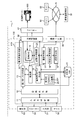
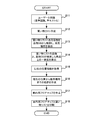
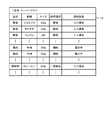
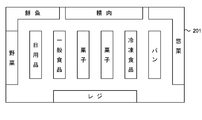
- FIG. 1 It is a figure for explaining the outline of the present invention. It is a block diagram which shows an example of an internal structure of a store guidance service system. It is the flowchart which showed the flow of processing of the store guide service system. It is the figure which showed an example of the data structure of the goods database in 1st embodiment. It is a figure showing an example of a floor map image in a first embodiment. It is a figure showing an example of a shopping list in a first embodiment. It is a figure showing an example of a guidance floor map image which a guidance floor map creation part in a first embodiment created. It is the figure which showed an example of the guide sheet in 1st embodiment. FIG.
- FIG. 6 is a diagram showing an example of a guide sheet when a mirror image is printed on the front surface of a sheet. It is the figure which showed an example of the data structure of the goods database in 2nd embodiment. It is a figure showing an example of a floor map image in a second embodiment. It is the figure which showed an example of the shopping list in 2nd embodiment. It is a figure showing an example of the guidance floor map image which the guidance floor map creation part in a second embodiment created. It is a figure showing an example of a guide sheet in a second embodiment. It is a figure showing an example of a guide sheet in a second embodiment. It is the figure which showed an example at the time of overlapping the guide sheet in 2nd embodiment. It is a figure showing an example of a guide sheet in a second embodiment. It is a figure showing an example of a guide sheet in a second embodiment.
- FIG. 1 is a diagram for briefly explaining the outline of the present invention.
- a user customer who visits a large-scale commercial facility or a supermarket points to the microphone provided in the store guidance service system 1 installed at a predetermined position in the facility, wants to visit the store, wants to eat, and wants to eat. Talk about requests such as things.
- the store guidance service system 1 collects the user's utterance with a microphone, and artificial intelligence recognizes the voice collected by the microphone and converts it into text. Then, based on the textualized contents, a shopping list in which the items to be purchased by the user are written is created, and the stores where the items can be purchased are searched from the items database.
- the item database stores detailed information of items handled by each store.
- the store guidance service system 1 creates a route (route) from the user's current position to the store where the items on the shopping list are sold, and draws the route on the floor map image to create a guide floor map image.
- the guide sheet 9 is an example of a printed image.
- FIG. 2 is a block diagram showing an example of the internal configuration of the store guidance service system 1.
- the store guidance service system 1 has at least a computer 100.
- the store guidance service system 1 has a form including a computer 100 and a printer (an example of a printing unit) 41.
- the computer 100 has a control unit 110, an input section 51, a microphone 52, a display section 53, a speaker 54, a communication interface section (hereinafter referred to as “communication I/F section”) 55, and the like.
- the control unit 110 includes a processor, a RAM (Random Access Memory), a ROM (Read Only Memory), and the like.
- the processor is a CPU (Central Processing Unit), MPU, ASIC, or the like.
- the processor executes a control program stored in a ROM or the like, so that the input/output control unit 11, the automatic response unit 12, the shopping list creation unit 13, the search unit 14, and the guidance floor map creation unit 16 are provided.
- the communication control unit 17 the current position acquisition unit 18, the route creation unit 19, the storage unit 20, the number image creation unit 22, the product database control unit (hereinafter referred to as “product DB control unit”) 23, and the print control unit 56. Function. That is, the control unit 110 executes various programs to cause the computer 100 to realize the store guidance service function.
- each of the above units of the control unit 110 may be configured by a hardware circuit without depending on the operation based on the control program.
- the input unit 51 is composed of a keyboard, a touch panel, etc., and receives text input from the user.
- the microphone 52 inputs the voice of the user.
- the display unit 53 is, for example, an LCD (liquid crystal display), and is a display that displays characters and images.
- the speaker 54 outputs voice and music.
- the input/output control unit 11 controls input/output of analog signals and digital signals to/from the input unit 51, the microphone 52, the display unit 53, and the speaker 54.
- the automatic response unit 12 performs an automatic response process to a user's inquiry. Specifically, the automatic response unit 12 speech-recognizes the voice signal collected by the microphone 52 and converts it into text, and interprets the intention of the user's utterance content from the text data. Further, the automatic response unit 12 generates an answer to the interpreted speech content and outputs the answer data to the input/output control unit 11. The input/output control unit 11 converts the response data into an electric signal and outputs the electrical signal to the speaker 54, so that the speaker 54 outputs a voice based on the response data.
- Automatic response unit 12 is configured using artificial intelligence technology. Since the automatic response process can be performed using a well-known technique, detailed description will be omitted.
- the shopping list creation unit 13 decides items to be purchased by the user based on the utterance content of the user and creates a shopping list.
- the search unit 14 searches a product database (hereinafter, referred to as “product DB”) 15 for a product that is highly related to the product on the shopping list, and extracts a selling place of the searched product.
- product DB 15 An example of the data structure of the goods DB 15 is shown in FIG.
- the product DB 15 stores, for example, the product item, category, size, place of sale, and product detail information, and the staff of the store uses the store PC 900 to appropriately add or change the information.
- the search unit 14 searches the product DB 15 for a product that is highly related to the product on the shopping list, and then calculates the degree of coincidence between the product and the searched product.
- a product with a high degree of matching indicates that the product matches the user's request.
- the guidance floor map creation unit 16 draws the sales location searched by the search unit 14 in the floor map image 201 and creates a guidance floor map image to be provided to the user.
- the storage unit 20 stores the floor map image 201.
- FIG. 5 is a diagram showing an example of the floor map image 201.
- the floor map image 201 is an image showing a floor map installed in a supermarket where the store guide service system 1 is installed.
- the communication I/F unit 55 includes a communication module and the like, and transmits/receives various data to/from an external mobile communication terminal 91 or a server 92 via a network N such as a LAN connected to the communication I/F unit 55. ..
- the communication control unit 17 controls data transmission/reception with respect to the communication I/F unit 55.
- the network N is a wireless LAN and the mobile communication terminal 91 is connected to the network N via a wireless LAN access point.
- the current position acquisition unit 18 specifies the current position of the user from the strength of the radio wave emitted from the mobile communication terminal 91 when the mobile communication terminal 91 owned by the user connects to the wireless LAN access point, for example.
- the installation location of the microphone 52 or the speaker 54 may be the current location.
- the route creation unit 19 creates a route from the current position of the user acquired by the current position acquisition unit 18 to the sales place searched by the search unit 14. Further, the guidance floor map creation unit 16 draws the route created by the route creation unit on the floor map image 201.
- the number image creation unit 22 assigns a number to each user and creates a mirror image of that number.
- the print control unit 56 performs print control on the printer 41. Specifically, the shopping list created by the shopping list creation unit 13, the guidance floor map image created by the guidance floor map creation unit 16, and the mirror image created by the number image creation unit 22 are accepted and printed on the printer 41. Perform processing to
- analysis database 31 stores and stores the shopping list created by the shopping list creation unit 13 and the guidance floor map image created by the guidance floor map creation unit 16.
- product DB control unit 23 controls reading and writing of data to the product DB 15.
- FIG. 3 is a flowchart showing the flow of processing of the store guidance service system 1.
- the user who visits the store speaks to the microphone 52 about the purpose of the visit and requests for what he wants, what he wants to eat, and the like.
- the input/output control unit 11 converts the voice signal collected by the microphone 52 into a digital signal and outputs the digital signal to the automatic response unit 12.
- the automatic response unit 12 recognizes voice data by voice and converts it into text, and interprets the intention of the user's utterance content from the text data.
- the automatic response unit 12 generates an answer to the interpreted utterance content, outputs the answer data to the input/output control unit 11, and the speaker 54 outputs a voice based on the answer data. This establishes a conversation between the user and the store guidance service system 1 (S11). Note that the automatic response unit 12 makes a predetermined statement by the user when the dialog with the user is within a predetermined time or when a predetermined operation is performed via the input unit 51 (pressing the reset button). If the answer is yes (eg, "Please start from the beginning"), the automatic response unit 12 resets the content of the utterance with the user and returns the process to START.
- the automatic response unit 12 makes a predetermined statement by the user when the dialog with the user is within a predetermined time or when a predetermined operation is performed via the input unit 51 (pressing the reset button). If the answer is yes (eg, "Please start from the beginning"), the automatic response unit 12 resets the content of the utterance with the user and returns the process to START.
- FIG. 6 is a diagram showing an example of a shopping list created by the shopping list creating unit 13.
- the search unit 14 searches the product DB 15 for a product that is highly related to the product included in the shopping list, and extracts the selling place (S13).
- the search unit 14 first searches the product DB 15 for “potato” and extracts “vegetables” as the selling place of “potato”.
- the search unit 14 extracts from the product DB 15 the sales locations of the other items “onion”, “carrot”, “beef”, and “curry roux”.
- the search unit 14 calculates the degree of coincidence between the item on the shopping list and the item stored in the item DB 15 (S14), and the current position acquisition unit 18 acquires the current position of the user (S15).
- the route creation unit 19 creates a route from the current position of the user to the sales place extracted by the search unit 14 (S16), and the guidance floor map creation unit 16 displays the route creation unit 19 on the floor map image 201.
- a route map image for guidance is created by drawing in the created route (S17).
- FIG. 7 is a diagram showing an example of the guidance floor map image 202 created by the guidance floor map creation unit 16.
- the guidance floor map creation unit 16 places the current position mark 211 on the floor map image 201 based on the current position of the user acquired by the current position acquisition unit 18. Further, the guidance floor map creation unit 16 arranges the route line 212 based on the route created by the route creation unit 19. Further, the guidance floor map creation unit 16 may arrange the numbers 213 in the order of passage.
- the route creation unit 19 creates a route that allows the user to drop in from the sales place extracted by the search unit 14 and close to the user's current position.
- FIG. 8 is a diagram showing an example of the guide sheet 203.
- the print control unit 56 prints each item in the same color so that the items on the shopping list 301 and the selling place in the guidance floor map image 202 can be immediately confirmed. For example, referring to FIG. 8, since “potato”, “carrot”, and “onion” in the shopping list are sold at “vegetables”, the print control unit 56 displays these characters in the same color (for example, red) To print. Further, since the selling place of "curry roux" in the shopping list is "general food", the print control unit 56 prints these characters in a color different from that of "potato” or "vegetable” (for example, blue). By printing the item and the place of sale of the item in the same color, the user can easily find the place of sale of each item in the shopping list.
- the communication control unit 17 may cause the communication I/F unit 55 to transmit the data of the shopping list 301 and the guidance floor map image 202 to the designated communication portable terminal.
- the communication control unit 17 causes the communication I/F unit 55 to upload the shopping list 301 and the guidance floor map image 202 to any of the servers 92 connected to the network N, and carries the URL of the upload destination. You may make it transmit it to the communication terminal 91.
- the user can confirm the shopping list 301 and the guidance floor map image 202 by accessing the received upload destination URL.
- the store guidance service system 1 can also interact with multiple users at the same time.
- the printer 41 successively prints the guide sheets for a plurality of users, the user cannot know which guide sheet is his or her own. Therefore, when the printer 41 causes the plurality of users to continuously print the guide sheets, the print control unit 56 may print the reception numbers given to the users on the guide sheets.
- the printer 41 is a type that ejects the printing paper with the printing surface facing down
- the user can remove it from the ejection tray of the printer 41. You need to pick up the information sheet and check the reception number.
- the printer 41 has a discharge mechanism (so-called face-down discharge mechanism) that discharges the printing paper with the printing surface facing down
- the receipt number may be printed on the back surface of the paper.
- face-down discharge mechanism that discharges the printing paper with the printing surface facing down
- the receipt number may be printed on the back surface of the paper.
- double-sided printing is performed, so the printing speed becomes slower than in single-sided printing.
- the printer 41 has a discharge mechanism that discharges printing paper with the printing surface facing down.
- the number image creation unit 22 creates a mirror character image of the reception number, and the print control unit 56 causes the printer 41 to print the created mirror character image on the front surface of the paper, that is, the same surface as the guide floor map image. At this time, the number image creating unit 22 creates the mirror character image in bold characters so that the user can easily recognize it.
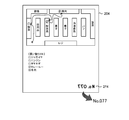
- FIG. 9 is a diagram showing an example of the guide sheet 204 when the mirror character image 214 is printed on the surface of the paper.
- the analysis DB 31 accumulates and stores the shopping list 301 created by the shopping list creation unit 13 and the guidance floor map image 202 created by the guidance floor map creation unit 16. When storing these pieces of information, the analysis DB 31 also stores detailed information necessary for analyzing the date and time when the information was created, the weather, and the like. By storing it together with the detailed information, it can be used as a reference when predicting the flow of customers and considering store layout.
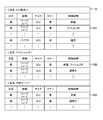
- FIG. 10 is a diagram showing an example of the data structure of the goods DB 15 in the present embodiment. For the sake of simplicity, only the item information of a plurality of shoe stores is shown.
- FIG. 11 is a diagram showing an example of the floor map image 201.
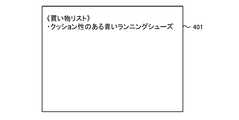
- FIG. 12 is a diagram showing an example of the shopping list created by the shopping list creating unit 13.
- the search unit 14 first searches the product DB 15 for a product that is highly related to “blue running shoes with high cushioning properties”. Specifically, the product DB 15 is searched for products based on the keywords "cushioning property", "blue", and "running shoes”. Then, when the search unit 14 searches for a product, the selling place of the product is extracted.
- the search unit 14 includes a product 151 including all the keywords “cushioning”, “blue”, and “running shoes”, a product 152 including the keywords “cushioning” and “running shoes”, “blue” and “blue”.
- the product 153 including the keyword “running shoes” is detected.
- three stores of “XYZ shoe store”, “STU shoes”, and “PQR mart” are extracted as the sale places of the products 151 to 153, and the names of these three stores are output to the shopping list creation unit 13.
- the shopping list creation unit 13 adds the store name to the shopping list 401.
- the search unit 14 calculates the degree of coincidence between the items on the shopping list (that is, “blue running shoes with cushioning properties”) and the detected products 151 to 153.
- the calculation of the degree of coincidence will be described later in detail.
- the current position acquisition unit 18 acquires the current position of the user, and the route creation unit 19 creates a route from the current position of the user to the sales place extracted by the search unit 14.
- the guidance floor map creation unit 16 draws the route created by the route creation unit 19 on the floor map image 201 to create a guidance floor map.
- FIG. 13 is a diagram showing an example of the guidance floor map images 501 and 502 created by the guidance floor map creation unit 16.
- the guidance floor map creation unit 16 places the current position mark 511 on the guidance floor map image 501 or 502 based on the current position of the user acquired by the current position acquisition unit 18.
- the current position mark 511 is arranged on the guidance floor map image 501.
- the guidance floor map creation unit 16 arranges route lines 512, 513, 514, and 515 based on the route created by the route creation unit 19.
- the guidance floor map creation unit 16 draws the store name extracted by the search unit 14 in the floor map image.
- all store names may be written in advance. In this case, the character size of the store name is increased, the thickness is increased, or the color is changed so that the user can easily see the sales place (place of the store) extracted by the search unit 14. Perform processing. Alternatively, a cross mark or a strikethrough is put on the name of the store that does not apply. This makes it easier for the user to confirm the desired store location.
- the guide floor map creation unit 16 draws the route line with a thin line, a dotted line, or the like so that the guide floor map image is easy to see.
- the print control unit 56 causes the printer 41 to print the guide sheets 503 and 504 in which the shopping list 401 and the guide floor map images 501 and 502 are combined.
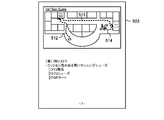
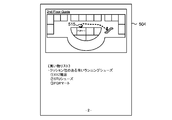
- 14 and 15 are views showing examples of the guide sheets 503 and 504.
- the guidance floor map creating unit 16 draws each route line with a line having a predetermined darkness or thickness, and also at each floor.
- the floor map images 201 are created with the same size.
- the print control unit 56 causes the printer 41 to print the guidance floor map images 501 and 502 of each floor at the same position on different sheets.
- the predetermined darkness means a darkness at which the route line described on the lower guide sheet can be seen through the upper guide sheet when the two guide sheets are stacked.
- the predetermined thickness means a thickness such that when two guide sheets are stacked, the route line described on the lower guide sheet can be seen through the upper guide sheet.
- the user can see the route lines 512, 513 on the first floor and Along with 514, the route line 515 on the second floor and the store name can be seen through. This makes it easier for the user to understand the route even if the route spans multiple floors.
- the shopping list creation unit 13 matches the items on the shopping list (that is, “blue running shoes with cushioning properties”) with the products 151 to 153 detected by the search unit 14.
- the “recommendation degree” is determined according to the calculation result (for example, the higher the degree of coincidence, the higher the “recommendation degree”), write. By writing the degree of matching thus calculated as the degree of recommendation, the user can easily know whether or not there is a desired product in the store.
- the recommendation degree is described as being represented by the number of stars, but in addition to this, it may be distinguished by the size and color of the characters of the store name.
- the number of stars corresponding to the recommendation degree is plotted at the position of the store in the guide floor map images 501 and 502, the size of the star is changed, and the mark is displayed. You may make it distinguish by changing the kind of.
- the shopping list creation unit 13 creates a shopping list based on the contents of the user's utterance that have been converted into text by the automatic response unit 12, and the item on the shopping list is, for example, "blue cushioned running shoes for advanced users".
- the item on the shopping list is, for example, "blue cushioned running shoes for advanced users”.
- the communication control unit 17 searches the Internet N for a product corresponding to “blue cushioning running shoes for advanced users”.
- the product DB control unit 23 adds the keyword “for advanced users” to the detailed description of the product.
- the product DB control unit 23 sends a message to the store PC 900 as to whether or not the keyword “for advanced users” may be added to the detailed description of the product. Then, the store staff may look at the message and send back a message to the effect that additional writing is possible, so that the product DB control unit 23 may update the detailed description of the product in the product DB 15. By updating the detailed information of the product in this way, the staff of the store does not need to input the detailed information of the product DB 15 one by one, and the labor of the work can be saved.
- the microphone 52 and the speaker 54 are described as being installed in the store, but the store guidance service system 1 is made available via the mobile communication terminal in which the dedicated application is downloaded. Good.
- the microphone of the mobile communication terminal accepts it, and if it is text, the input unit of the mobile communication terminal accepts it, and the data accepted by the mobile communication terminal is transmitted to the input/output control unit 11.
- the store guidance service system 1 performs a series of processes, and the communication I/F unit 55 transmits the shopping list and the guidance floor map image to the mobile communication terminal.
- the user can shop by displaying the shopping list and the guide floor map image on the display unit of the mobile communication terminal.
Landscapes
- Business, Economics & Management (AREA)
- Engineering & Computer Science (AREA)
- Physics & Mathematics (AREA)
- General Physics & Mathematics (AREA)
- Radar, Positioning & Navigation (AREA)
- Remote Sensing (AREA)
- Strategic Management (AREA)
- Tourism & Hospitality (AREA)
- Finance (AREA)
- Economics (AREA)
- Accounting & Taxation (AREA)
- Theoretical Computer Science (AREA)
- Marketing (AREA)
- General Business, Economics & Management (AREA)
- Automation & Control Theory (AREA)
- Primary Health Care (AREA)
- Human Resources & Organizations (AREA)
- General Health & Medical Sciences (AREA)
- Health & Medical Sciences (AREA)
- Development Economics (AREA)
- Navigation (AREA)
- Management, Administration, Business Operations System, And Electronic Commerce (AREA)
- Traffic Control Systems (AREA)
Abstract
ユーザーは、店舗案内サービスシステム1のマイクに来店した目的や、欲しいもの、食べたいもの等の要望を話す。店舗案内サービスシステム(1)では、マイクが集音した音声信号は自動応答部(12)が音声認識してテキスト化し、買い物リスト作成部(13)が買い物リストを作成する。そして検索部(14)が買い物リストに含まれる品物の販売場所を品物DBから検索する。次に、経路作成部(19)がユーザーの現在位置から検索部が検索した品物の販売場所までの経路を作成し、案内用フロアマップ作成部(16)がフロアマップ画像上に経路作成部が作成した経路を描き入れて案内用フロアマップ画像を作成する。最後に、印刷制御部(56)は買い物リストと案内用フロアマップ画像を合成した案内シートをプリンター(41)に印刷させる。
Description
本発明は、ユーザーの要望を聞いて買い物リストを作成し、更に店舗のフロアマップ上に買い物リストにある品物の販売場所をプロットしてユーザーに提供する店舗案内サービスシステムに関するものである。
大型商業施設に来店した顧客は、購入した商品や自身のニーズにあった商品を考え、その商品を販売している店舗を確認して、その店舗場所を探す必要がある。商業施設の規模が大きくなればなるほど、店舗を探しながら徒歩で回るには、相当の労力が必要になってくる。
特許文献1には、予めユーザーが自身の携帯通信端末にて商品リストを作成し、そのリストを情報配信装置へ送信すると、情報配信装置が商品の配置案内情報を携帯通信端末へ返信する技術が記載されている。
しかしながら、特許文献1にはユーザー自身で商品リストを作成する必要があり、手間が掛かっていた。
本発明は、買い物リストの作成から販売場所の案内までのトータルサービスが可能な店舗案内サービスシステムを提供することを目的とする。
本発明の一局面に係る店舗案内サービスシステムは、ユーザーの店舗での買い物を支援する店舗案内サービスシステムであって、人工知能を用いて、ユーザーと対話を行う自動応答部と、前記自動応答部が行った対話に基づいて、前記ユーザーが購入する品物を決定し、当該品物をリスト化した買い物リストを作成する買い物リスト作成部と、前記店舗に販売されている商品と、当該商品の販売場所を記憶する品物データベースと、前記店舗のフロアマップ画像を記憶するフロアマップ記憶部と、前記買い物リストにある品物と関連性の高い商品を前記品物データベースから検索し、検索された商品の販売場所を抽出する検索部と、前記フロアマップ画像上に、前記抽出された販売場所の位置を特定する印又は店舗名を描き入れて案内用フロアマップ画像を作成する案内用フロアマップ作成部と、備える。
本発明を、例えばスーパーマーケット等の小売店舗や大型複合施設等で提供される店舗案内サービスシステムとして利用することで、本発明により、ユーザーの所望する品物がリストアップされ、更にその販売場所が記載された案内用フロアマップ画像が作成されて印刷されるため、ユーザーは印刷された案内用フロアマップ画像を持って買い物をすることで所望する品物を探して歩く必要がなくなり、その分の無駄な労力と時間を省くことができる。つまり、ユーザーは効率的に買い物をすることができる。
以下、本発明の一実施形態にかかる店舗案内サービスシステムについて図面を参照して説明する。
<第一の実施の形態>
図1は、本発明の概要を簡単に説明するための図である。例えば、大型商業施設又はスーパーマーケットに来店したユーザー(顧客)は、施設内の予め定められた位置に設置された店舗案内サービスシステム1が備えるマイクに向かって、来店した目的や、欲しいもの、食べたいもの等の要望を話す。
図1は、本発明の概要を簡単に説明するための図である。例えば、大型商業施設又はスーパーマーケットに来店したユーザー(顧客)は、施設内の予め定められた位置に設置された店舗案内サービスシステム1が備えるマイクに向かって、来店した目的や、欲しいもの、食べたいもの等の要望を話す。
店舗案内サービスシステム1は、ユーザーの発話をマイクで集音し、人工知能がマイクの集音した音声認識してテキスト化する。そして、テキスト化された内容に基づいてユーザーが購入すべき品物を記した買い物リストを作成し、その品物が購入可能な店舗を品物データベースから検索する。品物データベースは、各店舗が取り扱っている品物の詳細情報を記憶している。
更に、店舗案内サービスシステム1は、ユーザーの現在位置から買い物リストにある品物の販売店舗までの経路(ルート)を作成してフロアマップ画像上に描き入れて案内用フロアマップ画像を作成し、プリンターが案内用フロアマップ画像と買い物リストを案内シート9として印刷する。案内シート9は、印刷された画像の一例である。ユーザーはこのフロアマップを見て買い物をすることで、欲しいものを売っている店舗を探して歩く必要がなくなり、効率よく買い物をすることができる。
図2は、店舗案内サービスシステム1の内部構成の一例を示すブロック図である。店舗案内サービスシステム1は、少なくともコンピューター100を有する。本実施形態では、店舗案内サービスシステム1は、コンピューター100とプリンター(印刷部の一例)41とを有する形態とする。
コンピューター100は、制御ユニット110、入力部51、マイク52、表示部53、スピーカー54、通信インターフェース部(以下「通信I/F部」と記す)55等を有する。
制御ユニット110は、プロセッサー、RAM(Random Access Memory)及びROM(Read Only Memory)等から構成される。プロセッサーは、CPU(Central Processing Unit)、MPU、又はASIC等である。この制御ユニット110は、プロセッサーがROM等に記憶された制御プログラムを実行することにより、入出力制御部11、自動応答部12、買い物リスト作成部13、検索部14、案内用フロアマップ作成部16、通信制御部17、現在位置取得部18、経路作成部19、記憶部20、番号画像作成部22、品物データベース制御部(以下「品物DB制御部」と記す)23、及び印刷制御部56として機能する。つまり、制御ユニット110が各種プログラムを実行することによって、コンピューター100に店舗案内サービス機能を実現させる。
尚、制御ユニット110の上記各部は、制御プログラムに基づく動作によらず、それぞれハード回路により構成されてもよい。
入力部51は、キーボードやタッチパネル等で構成され、ユーザーからテキスト入力を受け付ける。マイク52は、ユーザーの音声を入力する。表示部53は、例えばLCD(liquid crystal display)であり、文字や画像を表示するディスプレイである。スピーカー54は、音声や音楽を出力する。そして、入出力制御部11は、入力部51、マイク52、表示部53及びスピーカー54に対するアナログ信号やデジタル信号の入出力を制御する。
自動応答部12は、ユーザーの問い合わせに対する自動応答処理を行う。具体的には、自動応答部12は、マイク52が集音した音声信号を音声認識してテキスト化し、そのテキストデータからユーザーの発話内容の意図を解釈する。更に、自動応答部12は解釈した発話内容に対する回答を生成し、その回答データを入出力制御部11へ出力する。入出力制御部11は回答データを電気信号に変換してスピーカー54へ出力することで、スピーカー54は回答データに基づいた音声を出力する。
自動応答部12は人工知能技術を用いて構成される。そして、自動応答処理は、周知の技術を用いて行うことができるため、詳細な説明は省略する。
買い物リスト作成部13は、ユーザーの発話内容に基づいてユーザーの購入物品を決定して買い物リストを作成する。
検索部14は、買い物リストにある品物と関連性の高い商品を品物データベース(以下「品物DB」と記す)15から検索し、検索された商品の販売場所を抽出する。品物DB15のデータ構成の一例を図4に示す。品物DB15は、例えば、商品の品目、部類、サイズ、販売場所、商品詳細情報を記憶し、店舗用パソコン900を使用して店舗のスタッフが適宜情報の追加変更を行う。
更に、検索部14は、買い物リストにある品物と関連性の高い商品を品物DB15から検索した後、品物と検索した商品との一致度を算出する。一致度が高い商品はユーザーの要望により合致した商品であることを示す。
案内用フロアマップ作成部16は、検索部14が検索した販売場所をフロアマップ画像201に描き入れて、ユーザーに提供するための案内用フロアマップ画像を作成する。記憶部20はフロアマップ画像201を記憶する。図5はフロアマップ画像201の一例を示した図である。フロアマップ画像201は、店舗案内サービスシステム1が設置されているスーパーマーケットに設置されたフロアマップを示す画像である。
通信I/F部55は、通信モジュール等から構成され、通信I/F部55に接続されたLAN等のネットワークNを介して外部の携帯通信端末91やサーバー92と種々のデータの送受信を行う。通信制御部17は、通信I/F部55に対するデータ送受信の制御を行う。本実施形態では、上記ネットワークNを無線LANとし、携帯通信端末91は、無線LANアクセスポイントを介して上記ネットワークNに接続される例を説明する。
現在位置取得部18は、例えば、ユーザーが所有する携帯通信端末91が無線LANアクセスポイントに接続したときに、当該携帯通信端末91から発せられる電波の強度からユーザーの現在位置を特定する。ユーザーが携帯通信端末91を所有していない場合は、マイク52やスピーカー54の設置場所を現在位置としてもよい。
経路作成部19は、現在位置取得部18が取得したユーザーの現在位置から、検索部14が検索した販売場所までの経路を作成する。更に案内用フロアマップ作成部16は、経路作成部が作成した経路をフロアマップ画像201上に描き入れる。
番号画像作成部22は、ユーザー毎に番号を付与してその番号の鏡文字画像を作成する。印刷制御部56は、プリンター41に対する印刷制御を行う。具体的には、買い物リスト作成部13が作成した買い物リスト、案内用フロアマップ作成部16が作成した案内用フロアマップ画像及び番号画像作成部22が作成した鏡文字画像を受け付けてプリンター41に印刷させる処理を行う。
分析用データベース(以下「分析用DB」と記す)31は、買い物リスト作成部13が作成した買い物リストと、案内用フロアマップ作成部16が作成した案内用フロアマップ画像を蓄積して記憶する。品物DB制御部23は、品物DB15に対するデータの読み出し、書き込み等を制御する。
図3は、店舗案内サービスシステム1の処理の流れを示したフローチャートである。ここでは、店舗案内サービスシステム1がスーパーマーケットに設置されている例を説明する。来店したユーザーは、マイク52に向かって、来店した目的や、欲しいもの、食べたいもの等の要望を話す。マイク52が集音した音声信号は入出力制御部11がデジタル信号に変換して自動応答部12へ出力する。自動応答部12は音声データを音声認識してテキスト化し、そのテキストデータからユーザーの発話内容の意図を解釈する。
更に、自動応答部12は、解釈した発話内容に対する回答を生成して、その回答データを入出力制御部11へ出力し、スピーカー54が回答データに基づいた音声を出力する。これにより、ユーザーと店舗案内サービスシステム1との間の会話を成立せる(S11)。尚、自動応答部12が、ユーザーとの対話が予め定められた時間内、または入力部51を介して予め定められた操作がなされた(リセットボタンの押下)、ユーザーが予め定められた発言をした(例えば「最初からお願いします」等)と判断した場合は、自動応答部12はユーザーとの発話内容をリセットして、処理をSTARTに戻す。
そして、買い物リスト作成部13がテキスト化された内容に基づいて買い物リストを作成する(S12)。図6は、買い物リスト作成部13が作成した買い物リストの一例を示した図である。
続いて、検索部14が買い物リストに含まれる品物と関連性の高い商品を品物DB15から検索し、その販売場所を抽出する(S13)。
図4に示す品物DB15のデータ構成図と、図6に示す買い物リスト301を用いて具体的に説明する。検索部14は、まず「ジャガイモ」を品物DB15から検索し、「ジャガイモ」の販売場所として「野菜」を抽出する。検索部14は、その他の品目である「タマネギ」、「ニンジン」、「牛肉」及び「カレールー」の販売場所を品物DB15より抽出する。
続いて、検索部14が買い物リストの品物と品物DB15が記憶する商品との一致度を算出し(S14)、現在位置取得部18がユーザーの現在位置を取得する(S15)。
そして、経路作成部19が、ユーザーの現在位置から検索部14が抽出した販売場所までの経路を作成し(S16)、案内用フロアマップ作成部16がフロアマップ画像201上に経路作成部19が作成した経路を描き入れて案内用フロアマップ画像を作成する(S17)。
図7は、案内用フロアマップ作成部16が作成した案内用フロアマップ画像202の一例を示した図である。まず案内用フロアマップ作成部16は、現在位置取得部18が取得したユーザーの現在位置に基づいて、フロアマップ画像201に現在位置マーク211を配置する。更に、案内用フロアマップ作成部16は、経路作成部19が作成した経路に基づいて経路線212を配置する。また、案内用フロアマップ作成部16は、経由する順番に番号213を配置してもよい。例えば、経路作成部19は、検索部14が抽出した販売場所であって、ユーザーの現在位置から近い販売場所からユーザーが立ち寄り可能に経路を作成する。
最後に、印刷制御部56は買い物リスト301と案内用フロアマップ画像202を合成した案内シートをプリンター41に印刷させる(S18)。図8は、案内シート203の一例を示した図である。ユーザーはこの案内シート203を手にして買い物をすることで、店内を歩いて探すことなく即座に必要な品物を見つけることができる。
尚、印刷制御部56は、買い物リスト301の品物と、案内用フロアマップ画像202内における販売場所が即座に確認できるように、お互いを同じ色で印刷させる。図8を例に説明すると、買い物リストの「ジャガイモ」、「ニンジン」及び「タマネギ」は、販売場所は「野菜」であるため、印刷制御部56はこれらの文字を同じ色(例えば赤色)で印刷させる。また、買い物リストの「カレールー」の販売場所は「一般食品」であるため、印刷制御部56はこれらの文字を「ジャガイモ」や「野菜」とは異なる色(例えば青色)で印刷させる。このように品物とその販売場所を同じ色で印刷することで、ユーザーは買い物リストの各品物の販売場所を簡単に見つけることができる。
そして、通信制御部17が通信I/F部55に対して、指定された通信携帯端末へ買い物リスト301と案内用フロアマップ画像202のデータを送信させるようにしてもよい。または、通信制御部17が通信I/F部55に対して、買い物リスト301と案内用フロアマップ画像202をネットワークNに接続されたサーバー92の何れかにアップロードさせ、そのアップロード先のURLを携帯通信端末91に送信させるようにしてもよい。ユーザーは受信したアップロード先のURLにアクセスすることで、買い物リスト301と案内用フロアマップ画像202を確認することができる。
店舗案内サービスシステム1は、複数のユーザーと同時に対話することも可能である。プリンター41が複数のユーザーに対して連続してそれぞれ案内シートを印刷した場合、ユーザーはどの案内シートが自分自身のものか分からなくなる。そこで、印刷制御部56は、プリンター41に複数のユーザーに対して連続してそれぞれ案内シートを印刷させる場合に、案内シートに各ユーザーに付与した受付番号を印刷させるようにしてもよい。
しかし、プリンター41が印刷面を下にした状態で印刷用紙を排出するタイプである場合、案内シートが印刷された面(表)に受付番号が印刷されると、ユーザーはプリンター41の排出トレイから案内シートを手に取って、受付番号を確認する必要がある。
そこで、プリンター41が印刷面を下にした状態で印刷用紙を排出する排出機構(いわゆるフェイスダウン方式の排出機構)を有する場合、用紙の裏面に受付番号を印刷することとしてもよい。しかし、用紙の裏面に受付番号を印刷する場合、両面印刷になるため、片面印刷に比べて印刷速度が遅くなってしまう。本実施形態では、プリンター41が印刷面を下にした状態で印刷用紙を排出する排出機構を有する例を説明する。
そのため、番号画像作成部22が受付番号の鏡文字画像を作成し、印刷制御部56は作成された鏡文字画像を用紙の表面、つまり案内用フロアマップ画像と同じ面にプリンター41に印刷させる。この際、番号画像作成部22は、鏡文字画像をユーザーが視認しやすいように太文字で作成する。
図9は、用紙の表面に鏡文字画像214が印刷された場合の案内シート204の一例を示した図である。印刷制御部56が用紙の表面に鏡文字画像214を印刷させることで、プリンター41の排出トレイに裏面が上の状態で排出されても、表面に印刷された鏡文字が裏面に透けて見え、ユーザーは排出トレイの用紙を手にとって確認しなくても、即座に受付番号を確認することができる。
更に、分析用DB31は、買い物リスト作成部13が作成した買い物リスト301と案内用フロアマップ作成部16が作成した案内用フロアマップ画像202を蓄積して記憶する。分析用DB31は、これらの情報を記憶する際に、情報を作成した日時、天候等の分析に必要な詳細情報も同時に記憶する。詳細情報と共に記憶することで、顧客の流れの予測や店舗配置を考える際の参考にすることができる。
<第二の実施の形態>
第一の実施の形態では、スーパーマーケットに設置された店舗案内サービスシステム1について説明した。第二の実施の形態では、複数の業種の店舗が出店している大型複合施設に設置された店舗案内サービスシステム1について説明する。
第一の実施の形態では、スーパーマーケットに設置された店舗案内サービスシステム1について説明した。第二の実施の形態では、複数の業種の店舗が出店している大型複合施設に設置された店舗案内サービスシステム1について説明する。
図10は、本実施の形態における品物DB15のデータ構成の一例を示した図である。説明を簡単にするために、複数の靴販売店の品物情報のみを示している。
図11は、フロアマップ画像201の一例を示した図である。また図12は、買い物リスト作成部13が作成した買い物リストの一例を示した図である。検索部14はまず「クッション性の高い青いランニングシューズ」と関連性の高い商品を品物DB15から検索する。具体的には、「クッション性」、「青」、「ランニングシューズ」というキーワードを元に、商品を品物DB15から検索する。そして、検索部14が商品を検索したら、その商品の販売場所を抽出する。
例えば、検索部14は、「クッション性」、「青」、「ランニングシューズ」の全てのキーワードを含む商品151、「クッション性」及び「ランニングシューズ」のキーワードを含む商品152、「青」及び「ランニングシューズ」のキーワードを含む商品153を検出する。そして、商品151~153の販売場所として「XYZ靴店」、「STUシューズ」及び「PQRマート」の三店舗を抽出し、この三店舗名を買い物リスト作成部13へ出力する。買い物リスト作成部13は、買い物リスト401に店舗名を追記する。
続いて、検索部14は、買い物リストの品物(つまり「クッション性のある青いランニングシューズ」)と検出した商品151~153との一致度を算出する。この一致度の算出については、後ほど詳しく説明する。
その後、現在位置取得部18がユーザーの現在位置を取得し、経路作成部19がユーザーの現在位置から検索部14が抽出した販売場所までの経路を作成する。案内用フロアマップ作成部16がフロアマップ画像201上に経路作成部19が作成した経路を描き入れて案内用フロアマップを作成する。
図13は、案内用フロアマップ作成部16が作成した案内用フロアマップ画像501及び502の一例を示した図である。まず案内用フロアマップ作成部16は、現在位置取得部18が取得したユーザーの現在位置に基づいて、案内用フロアマップ画像501又は502に現在位置マーク511を配置する。本実施の形態では、案内用フロアマップ画像501に現在位置マーク511が配置されている。更に、案内用フロアマップ作成部16は、経路作成部19が作成した経路に基づいて経路線512、513、514及び515を配置する。
また、案内用フロアマップ作成部16は、フロアマップ画像内に検索部14が抽出した店舗名を描き入れる。尚、記憶部20が記憶するフロアマップ画像201には、予め全ての店舗名が書かれていてもよい。この場合、検索部14が抽出した販売場所(販売店の場所)がユーザーに視認しやすいように、該当店舗名の文字サイズを大きくする、または太さを太くするか、もしくは色を変える等の処理を行う。あるいは、該当しない店舗名の上にバツ印や取り消し線を入れる。こうすることで、ユーザーは目的の店舗位置が確認しやすくなる。
また、フロアマップ画像201に全店舗の店舗名と共に各店舗の情報(電話番号や開店時間等)が記載されていてもよい。この場合、フロアマップ画像201に更に経路線が描かれると情報過多となり、見にくいフロアマップとなる可能性がある。そこで、案内用フロアマップ作成部16は経路線を薄い線、点線等で描く等して、案内用フロアマップ画像が見やすくなるようにする。
最後に、印刷制御部56は買い物リスト401と案内用フロアマップ画像501及び502を合成した案内シート503及び504をプリンター41に印刷させる。図14及び図15は、案内シート503及び504の一例を示した図である。ユーザーはこの案内シート503及び504を手にして買い物をすることで、店内を歩いて探すことなく即座に必要な品物を見つけることができる。
経路作成部19が作成した経路が複数のフロアに跨がっている場合、案内用フロアマップ作成部16は、各経路線を予め定められた濃さ又は太さの線で描き入れると共に、各階のフロアマップ画像201のサイズを同じにして作成する。更に、印刷制御部56は、プリンター41に、各階の案内用フロアマップ画像501及び502をそれぞれ異なる用紙の同じ位置に印刷させる。予め定められた濃さとは、2枚の案内シートを重ねたときに、下側の案内シートに記載されている経路線が、上側の案内シートを透かして見える程度の濃度をいう。予め定められた太さとは、2枚の案内シートを重ねたときに、下側の案内シートに記載されている経路線が、上側の案内シートを透かして見える程度の太さをいう。
こうすることで、図16に示すように、案内シート503と504を重ねたとき(例えば、上に案内シート503、下に案内シート504とする)、ユーザーは一階の経路線512、513及び514と共に、二階の経路線515や店名を透かして見ることができる。こうすることで、経路が複数のフロアに跨がっている場合でも、ユーザーは経路をより理解しやすくなる。
また、図17に示す案内シート505のように、買い物リスト作成部13は、買い物リストの品物(つまり「クッション性のある青いランニングシューズ」)と検索部14が検出した商品151~153との一致度の算出結果を簡単にユーザーが視認できるように、算出結果に応じて「おすすめ度」を決定し(例えば、一致度が高いものほど「おすすめ度」が高い)、星の数や数字等で表記する。このように算出された一致度をおすすめ度として表記することで、ユーザーはその店舗に希望する商品があるかを容易に知ることができる。
尚、本実施の形態では、おすすめ度を星の数で表記することとして説明したが、この他に、店舗名の文字の大きさや色で区別するようにしてもよい。また、図18に示す案内シート506のように、案内用フロアマップ画像501及び502での店舗の位置におすすめ度に応じた星の数をプロットしたり、星の大きさを変化させたり、印の種類を変えたりする等して区別するようにしてもよい。
買い物リスト作成部13が自動応答部12によってテキスト化されたユーザーの発話内容に基づいて買い物リストを作成するが、その買い物リストの品物が例えば「クッション性のある青い上級者用のランニングシューズ」であったとする。検索部14がこの品物を品物DB15から検索した結果、「クッション性」、「青」及び「ランニングシューズ」に該当する商品は検出したが「上級者用」というキーワードに一致する商品が検出できなかった場合、通信制御部17は「クッション性のある青い上級者用のランニングシューズ」に該当する商品をインターネットN上から検索する。
検出された品物と同じ商品が、品物DB15に既に記憶されている場合、その商品の詳細説明に「上級者用」というキーワードが抜けている可能性が高い。そこで、品物DB制御部23は、その商品の詳細説明に「上級者用」というキーワードを追記する。
または、品物DB制御部23が、店舗用パソコン900へ当該商品の詳細説明に「上級者用」というキーワードを追記してよいか否かのメッセージを送信する。そして、店舗のスタッフがそのメッセージを見て、追記してよい旨のメッセージを返信することで、品物DB制御部23が品物DB15の当該商品の詳細説明を更新するようにしてもよい。このように商品の詳細情報が更新されることで、店舗のスタッフが品物DB15の詳細情報を逐一細かく入力する必要がなくなり、作業の手間を省くことができる。
尚、上記実施の形態において図1~図18を用いて説明した構成及び処理は、本発明の一実施の形態に過ぎず、本発明をその構成及び処理に限定する趣旨のものではない。
上記の実施の形態では、少なくともマイク52やスピーカー54が店舗内に設置されているとして説明したが、専用アプリケーションがダウンロードされた携帯通信端末を介して店舗案内サービスシステム1を利用可能なようにしてもよい。この場合、ユーザーの要望は音声の場合は携帯通信端末のマイク、文字の場合は携帯通信端末の入力部が受け付け、携帯通信端末が受け付けたデータを入出力制御部11へ送信する。
店舗案内サービスシステム1は一連の処理を行い、通信I/F部55が買い物リストと案内用フロアマップ画像を携帯通信端末に送信する。ユーザーは携帯通信端末の表示部に買い物リストと案内用フロアマップ画像を表示させて買い物を行うことができる。
Claims (12)
- ユーザーの店舗での買い物を支援する店舗案内サービスシステムであって、
人工知能を用いて、ユーザーと対話を行う自動応答部と、
前記自動応答部が行った対話に基づいて、前記ユーザーが購入する品物を決定し、当該品物をリスト化した買い物リストを作成する買い物リスト作成部と、
前記店舗に販売されている商品と、当該商品の販売場所を記憶する品物データベースと、
前記店舗のフロアマップ画像を記憶するフロアマップ記憶部と、
前記買い物リストにある品物と関連性の高い商品を前記品物データベースから検索し、検索された商品の販売場所を抽出する検索部と、
前記フロアマップ画像上に、前記抽出された販売場所の位置を特定する印又は店舗名を描き入れて案内用フロアマップ画像を作成する案内用フロアマップ作成部と、備えた店舗案内サービスシステム。 - ユーザーの現在位置を取得する現在位置取得部と、
前記取得した現在位置から、前記検索部が抽出した販売場所までの経路を作成する経路作成部と、を更に備え、
前記案内用フロアマップ作成部は、前記フロアマップ画像上に前記経路作成部が作成した経路を描き入れる請求項1に記載の店舗案内サービスシステム。 - 前記品物データベースは、前記店舗に販売されている商品の詳細情報を更に記憶するものであり、
前記検索部は、前記買い物リストにある品物と関連性の高い商品を前記品物データベースから検索した後、当該品物と当該検索した商品との一致度を算出するものであり、
前記案内用フロアマップ作成部は、前記一致度に応じて、前記販売場所の位置を特定する印又は店舗名を視覚的に区別して前記フロアマップ画像上に描き入れる請求項1に記載の店舗案内サービスシステム。 - 外部の携帯通信端末にデータの送受信が可能な通信部を更に備え、前記通信部は、前記買い物リスト及び前記案内用フロアマップ画像を前記携帯通信端末へ送信する請求項1に記載の店舗案内サービスシステム。
- 前記買い物リスト及び前記案内用フロアマップ画像を蓄積して記憶する分析用データベースを更に備えた請求項1に記載の店舗案内サービスシステム。
- 前記通信部は、インターネットを介してネットワーク通信を行うものであり、
前記インターネット上のサイトから所定の単語を検索して検索結果を受信する通信処理を前記通信部に行わせる通信制御部と、を更に備え、
前記検索部が、前記買い物リストにある品物を前記品物データベースから検索できなかった場合、前記通信制御部は前記通信部に当該品物を前記インターネット上から検索させて検索結果を受信させ、当該検索結果に前記品物データベースが記憶する商品が含まれている場合、前記品物データベースが記憶する当該商品の詳細情報を更新する品物データベース制御部を更に備えた請求項4に記載の店舗案内サービスシステム。 - 前記買い物リストと前記案内用フロアマップ画像を用紙に印刷する印刷部を更に備えた請求項2に記載の店舗案内サービスシステム。
- 前記買い物リストと前記案内用フロアマップ画像を前記印刷部が印刷する際に、当該買い物リストに含まれる各品物の文字の色と、当該品物の販売場所を特定する印又は店舗名の色とを一致させて印刷させる印刷制御部を更に備えた請求項7に記載の店舗案内サービスシステム。
- 前記印刷部は、印刷面を下にした状態で印刷用紙を排出する排出機構を備え、
ユーザー毎に番号を付与し、当該番号の鏡文字画像を作成する番号画像作成部を更に備え、
前記印刷制御部は、前記印刷部に複数のユーザーに対して連続してそれぞれの案内シートを印刷させる場合に、前記案内用フロアマップ画像の印刷面と同じ面に、前記案内用フロアマップ画像と共に前記番号の鏡文字画像を前記印刷部により印刷させる請求項8に記載の店舗案内サービスシステム。 - 前記経路作成部が作成した経路に複数のフロアが含まれている場合、前記案内用フロアマップ作成部は当該経路を予め定められた太さ又は予め定められた濃さの線で描き入れると共に、各階の案内用フロアマップ画像のサイズを同じにして作成し、
前記印刷制御部は、前記印刷部に、前記各階の案内用フロアマップ画像をそれぞれ異なる用紙の同じ位置に印刷させる請求項8に記載の店舗案内サービスシステム。 - 前記案内用フロアマップ作成部は、前記予め定められた太さを、前記各階の案内用フロアマップ画像がそれぞれに印刷された前記異なる各用紙を重ねたときに、下側の用紙に記載されている経路線が、上側の用紙を透かして見える程度の太さとして、前記経路の線を作成する請求項10に記載の店舗案内サービスシステム。
- 前記案内用フロアマップ作成部は、前記予め定められた濃さを、前記各階の案内用フロアマップ画像がそれぞれに印刷された前記異なる各用紙を重ねたときに、下側の用紙に記載されている経路線が、上側の用紙を透かして見える程度の濃さとして、前記経路の線を作成する請求項10に記載の店舗案内サービスシステム。
Priority Applications (1)
| Application Number | Priority Date | Filing Date | Title |
|---|---|---|---|
| JP2020569579A JPWO2020158599A1 (ja) | 2019-01-29 | 2020-01-24 | 店舗案内サービスシステム |
Applications Claiming Priority (2)
| Application Number | Priority Date | Filing Date | Title |
|---|---|---|---|
| JP2019013239 | 2019-01-29 | ||
| JP2019-013239 | 2019-01-29 |
Publications (1)
| Publication Number | Publication Date |
|---|---|
| WO2020158599A1 true WO2020158599A1 (ja) | 2020-08-06 |
Family
ID=71840943
Family Applications (1)
| Application Number | Title | Priority Date | Filing Date |
|---|---|---|---|
| PCT/JP2020/002492 Ceased WO2020158599A1 (ja) | 2019-01-29 | 2020-01-24 | 店舗案内サービスシステム |
Country Status (2)
| Country | Link |
|---|---|
| JP (1) | JPWO2020158599A1 (ja) |
| WO (1) | WO2020158599A1 (ja) |
Cited By (1)
| Publication number | Priority date | Publication date | Assignee | Title |
|---|---|---|---|---|
| JP2023157577A (ja) * | 2022-04-15 | 2023-10-26 | 東芝テック株式会社 | 情報処理端末、及び情報処理プログラム |
Citations (6)
| Publication number | Priority date | Publication date | Assignee | Title |
|---|---|---|---|---|
| JP2002288297A (ja) * | 2001-03-27 | 2002-10-04 | Sanyo Electric Co Ltd | 店舗用情報出力装置及び店舗用情報配信・出力システム |
| JP2005165629A (ja) * | 2003-12-02 | 2005-06-23 | Nec Infrontia Corp | Pos装置、posシステムおよび管理装置 |
| JP2006235685A (ja) * | 2005-02-22 | 2006-09-07 | Fujitsu Ten Ltd | 買い物支援システム、買い物支援方法、及び情報処理装置 |
| JP3149424U (ja) * | 2009-01-14 | 2009-03-26 | 大阪シーリング印刷株式会社 | 店舗用商品運搬具 |
| JP2012185550A (ja) * | 2011-03-03 | 2012-09-27 | Toshiba Tec Corp | 情報端末装置及び制御プログラム |
| JP2017126223A (ja) * | 2016-01-14 | 2017-07-20 | シャープ株式会社 | システム、サーバ、装置、端末、システムの制御方法、サーバの制御方法、サーバのプログラム、および、端末のプログラム |
-
2020
- 2020-01-24 WO PCT/JP2020/002492 patent/WO2020158599A1/ja not_active Ceased
- 2020-01-24 JP JP2020569579A patent/JPWO2020158599A1/ja active Pending
Patent Citations (6)
| Publication number | Priority date | Publication date | Assignee | Title |
|---|---|---|---|---|
| JP2002288297A (ja) * | 2001-03-27 | 2002-10-04 | Sanyo Electric Co Ltd | 店舗用情報出力装置及び店舗用情報配信・出力システム |
| JP2005165629A (ja) * | 2003-12-02 | 2005-06-23 | Nec Infrontia Corp | Pos装置、posシステムおよび管理装置 |
| JP2006235685A (ja) * | 2005-02-22 | 2006-09-07 | Fujitsu Ten Ltd | 買い物支援システム、買い物支援方法、及び情報処理装置 |
| JP3149424U (ja) * | 2009-01-14 | 2009-03-26 | 大阪シーリング印刷株式会社 | 店舗用商品運搬具 |
| JP2012185550A (ja) * | 2011-03-03 | 2012-09-27 | Toshiba Tec Corp | 情報端末装置及び制御プログラム |
| JP2017126223A (ja) * | 2016-01-14 | 2017-07-20 | シャープ株式会社 | システム、サーバ、装置、端末、システムの制御方法、サーバの制御方法、サーバのプログラム、および、端末のプログラム |
Cited By (1)
| Publication number | Priority date | Publication date | Assignee | Title |
|---|---|---|---|---|
| JP2023157577A (ja) * | 2022-04-15 | 2023-10-26 | 東芝テック株式会社 | 情報処理端末、及び情報処理プログラム |
Also Published As
| Publication number | Publication date |
|---|---|
| JPWO2020158599A1 (ja) | 2021-10-21 |
Similar Documents
| Publication | Publication Date | Title |
|---|---|---|
| US10540707B2 (en) | Commercial information providing system and commercial information providing method | |
| US8359227B2 (en) | Real-time sales support and learning tool | |
| US20140214534A1 (en) | Restaurant menu generation and in-restaurant promotions | |
| TW202001777A (zh) | 儲存程式之可移動型儲存媒體、資訊處理方法、資訊處理裝置以及資訊處理系統 | |
| KR20120013044A (ko) | 모바일 검색을 위한 모바일 시스템, 검색 시스템 및 검색 결과 제공 방법 | |
| JP2009252152A (ja) | 地域情報無線配信方法及び装置及びコンピュータ読取可能な記録媒体 | |
| US8307303B2 (en) | Order terminal, computer-readable storage medium, and order method | |
| US20200068040A1 (en) | System and method for providing contents | |
| US9747630B2 (en) | System and method for enabling online ordering using unique identifiers | |
| JP2022096661A (ja) | 情報処理装置、システム、プログラム、及び方法 | |
| JP2007286701A (ja) | 電子ショッピングモールシステム及び電子ショッピングモールシステム用コンピュータ装置 | |
| KR101678660B1 (ko) | 사용자 로그 기반 상품 추천 방법, 이를 위한 시스템 및 장치 | |
| JPWO2020158599A1 (ja) | 店舗案内サービスシステム | |
| US20040073572A1 (en) | Retail merchandise shelf location directory system | |
| US11615146B2 (en) | Information processing device, information processing system, and control method thereof | |
| US20230122259A1 (en) | Advertisement print method and advertisement print system | |
| US11392646B2 (en) | Information processing device, information processing terminal, and information processing method | |
| JP2004341784A (ja) | リコメンドサービスシステム,方法およびプログラム | |
| JP4708288B2 (ja) | サービス連携サーバ、方法、システム、プログラム、及び、記録媒体 | |
| JP2022018724A (ja) | 情報処理装置、情報処理方法、及び情報処理プログラム | |
| KR101444238B1 (ko) | 모바일 문자 화면에서 제공되는 광고 시스템 | |
| TW202605563A (zh) | 控制裝置 | |
| KR20250120710A (ko) | 광고 콘텐츠를 생성하는 방법, 서버 및 사용자 단말 | |
| KR101363523B1 (ko) | 모바일 문자 화면에서 제공되는 광고 시스템 | |
| KR20160119030A (ko) | 사용자 로그 기반 상품 추천 방법, 이를 위한 시스템 및 장치 |
Legal Events
| Date | Code | Title | Description |
|---|---|---|---|
| 121 | Ep: the epo has been informed by wipo that ep was designated in this application |
Ref document number: 20748567 Country of ref document: EP Kind code of ref document: A1 |
|
| ENP | Entry into the national phase |
Ref document number: 2020569579 Country of ref document: JP Kind code of ref document: A |
|
| NENP | Non-entry into the national phase |
Ref country code: DE |
|
| 122 | Ep: pct application non-entry in european phase |
Ref document number: 20748567 Country of ref document: EP Kind code of ref document: A1 |