WO2020158017A1 - 炭素合金鋼板および炭素合金鋼板の製造方法 - Google Patents
炭素合金鋼板および炭素合金鋼板の製造方法 Download PDFInfo
- Publication number
- WO2020158017A1 WO2020158017A1 PCT/JP2019/031818 JP2019031818W WO2020158017A1 WO 2020158017 A1 WO2020158017 A1 WO 2020158017A1 JP 2019031818 W JP2019031818 W JP 2019031818W WO 2020158017 A1 WO2020158017 A1 WO 2020158017A1
- Authority
- WO
- WIPO (PCT)
- Prior art keywords
- steel sheet
- mass
- carbon alloy
- alloy steel
- grain boundary
- Prior art date
- Legal status (The legal status is an assumption and is not a legal conclusion. Google has not performed a legal analysis and makes no representation as to the accuracy of the status listed.)
- Ceased
Links
Images


Classifications
-
- C—CHEMISTRY; METALLURGY
- C21—METALLURGY OF IRON
- C21D—MODIFYING THE PHYSICAL STRUCTURE OF FERROUS METALS; GENERAL DEVICES FOR HEAT TREATMENT OF FERROUS OR NON-FERROUS METALS OR ALLOYS; MAKING METAL MALLEABLE, e.g. BY DECARBURISATION OR TEMPERING
- C21D9/00—Heat treatment, e.g. annealing, hardening, quenching or tempering, adapted for particular articles; Furnaces therefor
- C21D9/46—Heat treatment, e.g. annealing, hardening, quenching or tempering, adapted for particular articles; Furnaces therefor for sheet metals
-
- C—CHEMISTRY; METALLURGY
- C22—METALLURGY; FERROUS OR NON-FERROUS ALLOYS; TREATMENT OF ALLOYS OR NON-FERROUS METALS
- C22C—ALLOYS
- C22C38/00—Ferrous alloys, e.g. steel alloys
-
- C—CHEMISTRY; METALLURGY
- C22—METALLURGY; FERROUS OR NON-FERROUS ALLOYS; TREATMENT OF ALLOYS OR NON-FERROUS METALS
- C22C—ALLOYS
- C22C38/00—Ferrous alloys, e.g. steel alloys
- C22C38/18—Ferrous alloys, e.g. steel alloys containing chromium
-
- C—CHEMISTRY; METALLURGY
- C22—METALLURGY; FERROUS OR NON-FERROUS ALLOYS; TREATMENT OF ALLOYS OR NON-FERROUS METALS
- C22C—ALLOYS
- C22C38/00—Ferrous alloys, e.g. steel alloys
- C22C38/18—Ferrous alloys, e.g. steel alloys containing chromium
- C22C38/40—Ferrous alloys, e.g. steel alloys containing chromium with nickel
- C22C38/58—Ferrous alloys, e.g. steel alloys containing chromium with nickel with more than 1.5% by weight of manganese
Definitions
- the present invention relates to a steel plate of medium/high carbon alloy-added steel (hereinafter simply referred to as “carbon alloy steel plate”) used as a material for machine components, saws, blades, tools, dies, etc. It relates to a manufacturing method.
- the carbon alloy steel sheet for this purpose is used by being subjected to heat treatment such as quenching and tempering after being processed into a desired shape by punching, laser processing or cutting. Since it is required to have very high strength after heat treatment, medium/high carbon steel to which alloying elements are added is used.
- the present invention relates to such a carbon alloy steel sheet and a method for manufacturing the carbon alloy steel sheet.
- Carbon alloy steel plates are generally hard and inferior in workability and manufacturability of steel plates.
- the steel sheet after hot rolling becomes extremely hard, it is difficult to pass through the process of removing oxide scale on the surface generated by hot rolling (pickling, polishing, shot blasting, etc.) as it is.
- the tension of the line is insufficient, the shearing ability of the shear is insufficient, and the plate is broken due to bending in the line.
- Patent Document 1 discloses a method for manufacturing a hot-rolled steel sheet containing 0.2 mass% or more of C. In this manufacturing method, a high-carbon hot-rolled steel sheet having excellent workability is manufactured by controlling the structure using the heat retained by the hot-rolled steel sheet.
- One aspect of the present invention has been made in view of the above problems, and a grain boundary oxide layer having a certain amount of thickness has a finding that mechanical properties are not affected, and that a steel sheet after annealing is passed through.
- a method for manufacturing a carbon alloy steel sheet that can eliminate the step of removing the grain boundary oxide layer or reduce the amount of removal in the step of removing the grain boundary oxide layer from the knowledge of softening of the steel sheet. With the goal.
- a method for producing a carbon alloy steel sheet according to an aspect of the present invention is: C: 0.25 to 1.2% by mass, Si ⁇ 1.0% by weight, Mn ⁇ 2.0% by mass. %, Cr: 2.0 to 10.0% by mass, P ⁇ 0.03% by mass, and S ⁇ 0.03% by mass, a carbon alloy steel sheet is annealed after hot rolling and before oxide scale removal. Is the way to do it.
- a carbon alloy steel sheet according to one embodiment of the present invention has a C: 0.25 to 1.2 mass%, a Cr: 2.0 to 10.0 mass%, and P ⁇ 0.03.
- the softening of the carbon alloy steel sheet may be performed only by annealing at a temperature in a constant temperature range before removing the oxide scale after hot rolling, so that the cooling control for softening is easy. ..
- the carbon alloy steel sheet according to one embodiment of the present invention has C: 0.25 to 1.2% by mass, Si ⁇ 1.0% by mass, Mn ⁇ 2.0% by mass, Cr: 2.0 to 10.0% by mass. %, P ⁇ 0.03 mass %, S ⁇ 0.03 mass %, Mo ⁇ 4.0 mass %, Ni ⁇ 2.0 mass %, V ⁇ 0.5 mass %, Nb ⁇ 0.5 mass %, It contains Ti ⁇ 0.3% and W ⁇ 4.0 mass %, and the balance is Fe and unavoidable impurities.
- the carbon alloy steel sheet of one embodiment of the present invention has C: 0.25 to 1.2% by mass, Cr: 2.0 to 10.0% by mass, P ⁇ 0.03% by mass, and S ⁇ 0. It suffices if the content is 03% by mass.
- Steel plates with a C content of 0.25% by mass or more and 1.2% by mass or less are medium/high carbon steel plates used for machine components, saws, blades, tools, etc.
- the strength of the hot rolled material is relatively low even if an alloy element is added, and manufacturability is less likely to be a problem, so it was excluded from the present embodiment.
- C exceeds 1.2% by weight, the volume fraction of carbides increases, and even if annealing is performed, it does not soften sufficiently.
- Cr has the effect of improving hardenability and temper softening resistance, and also has the effect of improving strength and wear resistance. It is necessary to add 2.0 mass% or more in order to impart necessary characteristics to a saw, a blade, a tool and the like. However, if a large amount of Cr is added, the spheroidization of carbides will be delayed and the hot rolled material will not soften due to annealing, so the upper limit is 10.0 mass %.
- the carbon alloy steel sheet according to one aspect of the present invention has Si ⁇ 1.0 wt%, Mn ⁇ 2.0 wt%, Mo ⁇ 4.0 wt%, and Ni ⁇ 2.0 wt% as selective elements. , V ⁇ 0.5% by mass, Nb ⁇ 0.5% by mass, Ti ⁇ 0.3% by mass, and W ⁇ 4.0% by mass may be included.
- V ⁇ 0.5% by mass, Nb ⁇ 0.5% by mass, Ti ⁇ 0.3% by mass, and W ⁇ 4.0% by mass may be included.
- the significance of the content of each selective element contained in the carbon alloy steel sheet will be described.
- Si has a deoxidizing effect.
- the base steel is hardened by solid solution strengthening, so that the hot rolled material is not softened by annealing.
- the limit of the amount of Si added for softening the hot rolled material by annealing is about 1.0 mass %.
- Mn has an effect of improving hardenability, but if it is added in an amount of more than 2.0% by mass, the spheroidization of carbides due to annealing is delayed and the base iron is hardened by solid solution strengthening. Does not soften.
- Mo is added as needed.
- Mo has the effect of improving the hardenability, and has the effect of increasing the toughness of the steel sheet when added together with Ni. Further, Mo has the effect of improving strength and wear resistance by forming a special carbide. Mo can be added up to 4.0 mass% in order to exhibit the above effects.
- Ni has the effect of improving the toughness and improves the hardenability like Mn, but the addition of 2.0 mass% or more has a small effect of improving the toughness for the cost.
- V and Nb are effective in refining the austenite crystal grain size during quenching.
- the addition amounts of V and Nb are each 0.5% by mass.
- Ti has the effect of refining the austenite grain size during quenching. In order to exert the effect on the refinement of the old ⁇ crystal grain size, the Ti addition amount of 0.3% is sufficient.
- W has the effect of improving strength and wear resistance by forming a special carbide. If W is added in excess, the hot-rolled material does not soften even if annealed. Therefore, the amount of W added is preferably 4.0% by mass or less.
- the hot rolling conditions of the carbon alloy steel sheet according to one aspect of the present invention are as follows: the slab heating temperature is 1200°C to 1350°C, the finishing rolling temperature is 800°C to 950°C, and the winding temperature is 500°C to It is 700°C.
- ⁇ Slab heating temperature 1200°C or higher is required to solution heat the slab. Even if the slab heating temperature is higher than 1350° C., there is no effect on the material, but it leads to cost increase such as iron loss due to oxide scale and fuel cost for heating to high temperature.
- finish rolling temperature When the finish rolling temperature is lower than 800°C, the deformation resistance becomes high and the stripability in hot rolling deteriorates. If the finish rolling temperature is higher than 950°C, the oxide scale on the surface layer becomes thick, and there is a high concern that surface defects will occur.
- the hot-rolled TOP part is a term indicating the position in the longitudinal direction of the steel sheet manufactured in the hot-rolling process.
- the first rolled portion is referred to as a "hot rolled TOP portion”
- the last rolled portion is referred to as a "hot rolled END portion”. Since the hot-rolled TOP portion comes into contact with the mandrel (core for winding the steel plate) during winding, it is likely to be rapidly cooled. For this reason, when the coiling temperature is low, there is an increased concern that martensite will be generated in the hot-rolled TOP portion that is rapidly cooled to a lower temperature.
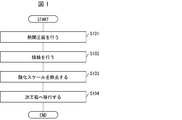
- a method for manufacturing a carbon alloy steel sheet according to one aspect of the present invention includes the steps shown in FIG. 1.
- the method for manufacturing a carbon alloy steel sheet is started, and the process proceeds to step S (hereinafter, “step” is omitted) 101.
- step S101 hot rolling is performed, and the process proceeds to S102.
- S102 annealing is performed, and the process proceeds to S103.
- S103 oxide scale is removed, and the process proceeds to S104.
- S104 the process moves to the next step and ends.
- the annealing in S102 is performed under the condition that the temperature is soaked in the temperature range of 570° C. to 720° C. for 5 to 40 hours and then cooled to room temperature.
- Carbon alloy steel sheets containing at least C: 0.25 to 1.2% by mass, Cr: 2.0 to 10.0% by mass, P ⁇ 0.03% by mass, and S ⁇ 0.03% by mass were compared. It is hard. This is because when the alloying element is added to the medium/high carbon steel, the metal structure of the hot rolled material is mainly fine pearlite or bainite structure and the strength (hardness) is increased.
- cooling control for softening is easy.
- the cooling control for softening can be simplified, the hard steel plate can be softened, and the stripability of the next process can be secured.
- a hot-rolled steel sheet can produce relatively soft low-alloy steel, but the steel sheet targeted by the method of the present embodiment has a large amount of alloy.
- the hot-rolled steel sheet is extremely hard and cannot be passed through the scale removing step as it is after hot rolling. The method of the present embodiment solves such a problem.
- annealing is performed soaking in the temperature range of 570° C. to 720° C. for 5 to 40 hours. At temperatures lower than 570° C., spheroidization/coarsening of carbide does not proceed and softening does not occur. On the other hand, when the temperature is higher than 720° C., it is softened by annealing, but is kept at a high temperature in the state where oxide scale is present on the surface of the steel sheet, and therefore decarburization of the steel sheet surface layer is caused by oxygen in the oxide scale. Grain boundary oxidation becomes remarkable. Therefore, annealing in the temperature range of 570° C. to 720° C. is appropriate in order to moderate the decarburization and grain boundary oxidation of the steel sheet surface and to soften the steel sheet to the extent possible in the next step.
- the soaking time is shorter than 5 hours, the spheroidization and coarsening of the carbide does not proceed and the softening does not occur. On the other hand, the effect of softening is saturated even when soaking for more than 40 hours.
- Anneal and cold-roll as necessary to adjust the thickness and material required for various applications. That is, cold rolling may be performed to adjust the plate thickness to a desired value. When cold rolling becomes difficult before the desired sheet thickness due to work hardening of cold rolling, annealing may be appropriately performed and cold rolling may be added after softening. The above annealing and cold rolling may be performed multiple times.
- the annealing applied to the hot-rolled sheet is mainly for the purpose of passing the sheet in the pickling process for removing the oxidized scale and performing cold rolling after the pickling.
- the steel sheet product needs to be further softened, it can be annealed after removing the oxide scale or after cold rolling.
- the annealing temperature is set to a temperature range of 570°C to 720°C and the soaking time is set to 5 to 40 hours.
- the depth of the grain boundary oxide layer formed on the surface layer of the steel sheet can be set to 8 ⁇ m or less.
- a steel sheet having a grain boundary oxide layer depth of 8 ⁇ m or less is a steel sheet having the same tensile strength or impact value as the steel sheet from which the grain boundary oxide layer has been removed. Further, even if the depth of the grain boundary oxide layer is 8 ⁇ m or more, grinding can be performed so that the depth of the grain boundary oxide layer is 8 ⁇ m or less.
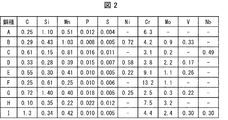
- FIG. 2 is a diagram showing the chemical composition of the steel sheet used in the examples of the present invention.
- the numerical value shown in FIG. 2 has shown the mass %.
- FIG. 3 is a diagram showing an example of the formation state of the grain boundary oxide layer 1 and the ferrite deoxidized layer 2 in the carbon alloy steel sheet 10.
- the sample steel with the chemical composition shown in Fig. 2 is made into a slab by continuous casting at a slab heating temperature of 1300°C, and after rough rolling, hot rolling finishing temperature: 800 to 950°C, finishing rolling is completed, and then a coiling temperature is set. : Winding was performed at 500 to 700°C. The plate thickness of the hot rolled material at this time is about 3.5 mm.
- the obtained hot rolled sheet was annealed without removing the oxide scale on the surface of the steel sheet.
- the soaking temperature was changed from 540 to 780° C. and the soaking time was changed from 3 to 60 hours.
- the conditions relating to the production of each steel sheet and the results of the following tests are shown in FIG.
- the Vickers hardness (HV) was measured and the bendability test was performed on the steel sheet after hot rolling (hot rolled sheet). Further, the Vickers hardness (HV) and the depth of the grain boundary oxide layer of the surface layer (in other words, the thickness of the grain boundary oxide layer) of the annealed steel sheet (annealed plate) were measured.
- the bendability of the hot-rolled material in the plate thickness section was evaluated as ⁇ when it was broken after 10 reciprocations after repeating three-point bending of R50 mm, and as x when it was not broken.
- the hardness of the hot-rolled material after annealing was evaluated as ⁇ when it was 400 HV or less, and as ⁇ when it was greater than 400 HV. Further, when the depth of the grain boundary oxide layer was 8 ⁇ m or less, it was marked with ⁇ , and when deeper than 8 ⁇ m, it was marked with x.
- the steel sheets using steel type F contained a large amount of Cr, so the depth of the grain boundary oxide layer in the surface layer was small, but the steel sheet did not soften.
- the steel plate using steel type H did not break in the bendability test because the steel plate contained a small amount of C.
- Steel plates using steel type I contained a large amount of C, so the depth of the grain boundary oxide layer in the surface layer was small, but the steel plates did not soften.
- the depth of the grain boundary oxide layer was 8 ⁇ m or less, and it was found that it was softened to less than 400 HV.
- the steel sheet as an invention example of the present invention had good tensile strength and impact resistance.
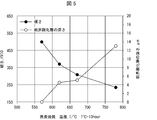
- FIG. 5 shows the relationship between the annealing temperature and the hardness of the steel sheet or the depth of the grain boundary oxide layer
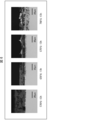
- FIG. 6 shows the cross section of the steel sheet.
- the steel sheet shown in FIG. 5 was prepared by the following method. First, the steel type B shown in FIG. 2 was melted, forged, and then cut to obtain a steel ingot having a thickness of 30 mm, a width of 150 mm, and a length of 50 mm. Next, after heating the steel ingot to 1300° C., finish rolling was performed at a hot rolling finishing temperature of 850° C. for 30 minutes to obtain a steel plate having a thickness of 4.5 mm. Then, the hot-rolled steel sheet was rapidly cooled from 850° C. to 550° C., then gradually cooled from 550° C. to room temperature, and polished to a steel sheet having a thickness of 3.5 mm.
- the obtained steel sheet was oxidized in the atmosphere at 850° C. for 30 minutes, held at 550° C. for 1 minute, and then gradually cooled. Then, the obtained steel sheet was annealed by soaking at 570°C, 620°C, 670°C, or 780°C for 13 hours.
- both steel sheets had Vickers hardness of 400 HV or less and the depth of the grain boundary oxide layer was 8 ⁇ m or less.
- a steel sheet was obtained that can be easily passed through the scale removing step and can be reduced in the removal amount in the grain boundary oxide layer removing step.
- the Vickers hardness was as high as 500 HV, and the steel sheet could not be passed through the scale removal process.
- the temperature of soaking the steel sheet was 780° C.
- the Vickers hardness was 400 HV or less, but the depth of the grain boundary oxide layer was about 13 ⁇ m, and the thickness of the grain boundary oxide layer was thick.
Landscapes
- Chemical & Material Sciences (AREA)
- Engineering & Computer Science (AREA)
- Materials Engineering (AREA)
- Mechanical Engineering (AREA)
- Metallurgy (AREA)
- Organic Chemistry (AREA)
- Physics & Mathematics (AREA)
- Thermal Sciences (AREA)
- Crystallography & Structural Chemistry (AREA)
- Heat Treatment Of Sheet Steel (AREA)
Abstract
粒界酸化層の除去工程を省略、または粒界酸化層の除去工程における除去量を削減する。本発明の一態様の炭素合金鋼板の製造方法では、C:0.25~1.2質量%、Cr:2.0~10.0質量%、P≦0.03質量%、およびS≦0.03質量%を含む炭素合金鋼板について、熱間圧延後の酸化スケール除去前に上記炭素合金鋼板を570~720℃まで昇温し、5~40時間均熱することにより焼鈍を実施し、室温に冷却する。
Description
本発明は、機械構成部品や鋸、刃物、工具、および金型などの素材として使用される中・高炭素合金添加鋼の鋼板(以下、単に「炭素合金鋼板」という)、および炭素合金鋼板の製造方法に関する。本用途の炭素合金鋼板は打抜き、レーザー加工や切削などにより所望の形状に加工された後、焼入れ焼戻しなどの熱処理を施して使用される。熱処理後には非常に高強度であることが要求されるため、合金元素が添加された中・高炭素鋼が用いられる。本発明は、このような炭素合金鋼板および炭素合金鋼板の製造方法に関する。
炭素合金鋼板は一般に硬質であり、加工性および鋼板の製造性に劣る。特に熱間圧延後の鋼板が非常に硬質になるため、そのままでは熱間圧延にて生成した表面の酸化スケールを除去する工程(酸洗、研摩やショットブラストなど)を通板することが困難な場合が多い。例えば、硬質な鋼板ではラインの張力不足、シャーの切断能力不足、ライン内での曲げによる板の破断発生などが生じる。
特許文献1には、0.2質量%以上のCを含有する熱延鋼板の製造方法が開示されている。この製造方法では、熱延鋼板の保有熱を利用して組織制御することで、加工性に優れる高炭素熱延鋼板を製造する。
また、この製造方法では、熱間圧延の仕上圧延後に、ランアウトテーブル上で、中間温度550~650℃に冷却し、巻取温度600~700℃で巻き取る。このとき、[巻取温度]≧[中間温度+20℃]の条件を満たす。次に、巻取後、20分以内に徐冷カバーに装入して、600~720℃にて10h以上滞留させる。
しかしながら、上述の従来の熱延鋼板の製造方法では、ランアウトテーブル上にて復熱により[巻取温度]≧[中間温度+20℃]とする必要があり、軟質化のための冷却制御が煩雑であるという問題点がある。また、上記の熱延鋼板の製造方法では、軟質化のために、徐冷カバーおよび徐冷カバーを設置するための設備が必要であり、また、徐冷カバーに装入した状態にて10h以上設置するスペースの確保も必要となるという問題点もある。
また、従来の技術では、鋼板が硬質のため、鋼板の酸化層を除去せずに焼鈍工程を実施する必要がある。その結果、焼鈍工程において炭素合金鋼板の表面に粒界酸化層が形成される。そのため、研磨、切削などにより機械的に粒界酸化層を除去する必要があった。
本発明の一態様は、以上の問題点に鑑みて為されたものであり、一定量の厚さの粒界酸化層は、機械的性質に影響を及ぼさない知見、および焼鈍後の鋼板を通板するために、鋼板の軟質化の知見から、粒界酸化層の除去工程を省略、または粒界酸化層の除去工程における除去量を削減することができる炭素合金鋼板の製造方法を実現することを目的とする。
上記の課題を解決するために、本発明の一態様に係る炭素合金鋼板の製造方法は、C:0.25~1.2質量%、Si≦1.0重量%、Mn≦2.0質量%、Cr:2.0~10.0質量%、P≦0.03質量%、およびS≦0.03質量%を含む炭素合金鋼板について、熱間圧延後の酸化スケール除去前に焼鈍を実施する方法である。
上記の課題を解決するために、本発明の一態様に係る炭素合金鋼板は、C:0.25~1.2質量%、Cr:2.0~10.0質量%、P≦0.03質量%、およびS≦0.03質量%を含む炭素合金鋼板であって、当該炭素合金鋼板の表面に形成された粒界酸化層の深さが、8μm以下である構成である。
C:0.25~1.2質量%、Si≦1.0重量%、Mn≦2.0質量%、Cr:2.0~10.0質量%、P≦0.03質量%、およびS≦0.03質量%を含む炭素合金鋼板は、比較的硬質である。また、上記方法では、炭素合金鋼板の軟質化は、熱間圧延後の酸化スケール除去前に一定温度域の温度にて焼鈍を行うだけで良いので、軟質化のための冷却制御が簡単である。
〔化学成分〕
本発明の一態様に係る炭素合金鋼板は、C:0.25~1.2質量%、Si≦1.0重量%、Mn≦2.0質量%、Cr:2.0~10.0質量%、P≦0.03質量%、S≦0.03質量%、Mo≦4.0質量%、Ni≦2.0質量%、V≦0.5質量%、Nb≦0.5質量%、Ti≦0.3%、W≦4.0質量%を含有し、残部がFeおよび不可避的不純物からなる。以下、炭素合金鋼板に含まれる各元素の含有量の意義について説明する。なお、本発明の一態様の炭素合金鋼板は、C:0.25~1.2質量%、Cr:2.0~10.0質量%、P≦0.03質量%、およびS≦0.03質量%を含んでいればよい。
本発明の一態様に係る炭素合金鋼板は、C:0.25~1.2質量%、Si≦1.0重量%、Mn≦2.0質量%、Cr:2.0~10.0質量%、P≦0.03質量%、S≦0.03質量%、Mo≦4.0質量%、Ni≦2.0質量%、V≦0.5質量%、Nb≦0.5質量%、Ti≦0.3%、W≦4.0質量%を含有し、残部がFeおよび不可避的不純物からなる。以下、炭素合金鋼板に含まれる各元素の含有量の意義について説明する。なお、本発明の一態様の炭素合金鋼板は、C:0.25~1.2質量%、Cr:2.0~10.0質量%、P≦0.03質量%、およびS≦0.03質量%を含んでいればよい。
Cが0.25質量%以上、1.2質量%以下の鋼板は、機械構成部品や鋸、刃物、工具などに使用される中・高炭素鋼板となる。Cが0.25質量%未満の鋼板では、合金元素が添加されても熱延材の強度が比較的低く、製造性が問題になることは少ないため本実施形態の対象外とした。Cが1.2重量%を超えると、炭化物の体積分率が高くなり、焼鈍を施しても十分に軟質化しない。
Crは、焼入れ性および焼戻し軟化抵抗を向上させる効果を有し、強度や耐摩耗性を向上させる効果を持つ。鋸、刃物、工具などで必要な特性を付与するためには2.0質量%以上の添加が必要である。しかしながら、Crを多量に添加すると炭化物の球状化を遅らせ、焼鈍により熱延材が軟質化しないため、上限は10.0質量%である。
P、Sは、それぞれ靭性に悪影響を与えるため、含有量は少ないほうが望ましいが、材質上弊害のないPおよびSのそれぞれの添加量の水準は概ね0.03質量%以下である。
〔化学成分(選択元素)〕
次に、本発明の一態様に係る炭素合金鋼板は、選択元素として、Si≦1.0重量%、Mn≦2.0質量%、Mo≦4.0質量%、Ni≦2.0質量%、V≦0.5質量%、Nb≦0.5質量%、Ti≦0.3質量%、およびW≦4.0質量%のうち1種以上を含んでも良い。以下、炭素合金鋼板に含まれる各選択元素の含有量の意義について説明する。
次に、本発明の一態様に係る炭素合金鋼板は、選択元素として、Si≦1.0重量%、Mn≦2.0質量%、Mo≦4.0質量%、Ni≦2.0質量%、V≦0.5質量%、Nb≦0.5質量%、Ti≦0.3質量%、およびW≦4.0質量%のうち1種以上を含んでも良い。以下、炭素合金鋼板に含まれる各選択元素の含有量の意義について説明する。
Siには、脱酸効果がある。Siの添加量が多いと固溶強化により地鉄を硬化させるため焼鈍により熱延材が軟質化しない。焼鈍により熱延材を軟質化させるためのSiの添加量の限界は1.0質量%程度である。
Mnには、焼入れ性を向上させる効果あるが、2.0質量%を越えて添加すると焼鈍による炭化物の球状化を遅らせるとともに、固溶強化により地鉄を硬化させるため、焼鈍により熱延材が軟質化しない。
Moは、必要に応じて添加する。Moは、焼入れ性を向上させる効果を有し、Niとの複合添加で鋼板の強靭性を高める効果を有する。また、Moは、特殊炭化物を形成することによって、強度および耐摩耗性を向上させる効果を持つ。上記の効果を発揮するためMoは4.0質量%まで添加可能である。
Niは、靭性を向上させる効果があり、Mnと同様に焼入れ性を向上させるが、2.0質量%以上の添加はコストの割に靭性向上の効果が薄い。
V、Nbは、それぞれ焼入れ時のオーステナイト結晶粒径の微細化に効果を有する。旧γ結晶粒径微細化に対する効果を発揮するためにはV、Nbのそれぞれの添加量は0.5質量%で十分である。
Tiは、焼入れ時のオーステナイト結晶粒径の微細化に効果を有する。旧γ結晶粒径微細化に対する効果を発揮するためにはTi添加量は0.3%で十分である。
Wは、特殊炭化物を形成することによって、強度および耐摩耗性を向上させる効果を持つ。Wを過剰に添加すると焼鈍を施しても熱延材が軟質化しないため、Wの添加量は4.0質量%以下であることが好ましい。
〔熱間圧延(熱延)条件〕
本発明の一態様に係る炭素合金鋼板の熱延条件は、スラブ加熱温度が、1200℃~1350℃であり、仕上圧延温度が、800℃~950℃であり、巻取温度が、500℃~700℃である。
本発明の一態様に係る炭素合金鋼板の熱延条件は、スラブ加熱温度が、1200℃~1350℃であり、仕上圧延温度が、800℃~950℃であり、巻取温度が、500℃~700℃である。
スラブを溶体化するためには、スラブ加熱温度:1200℃以上が必要である。スラブ加熱温度を1350℃以上の高温にしても材質に及ぼす影響は無いが、酸化スケールによる鉄のロスや高温に加熱するための燃料費などコストアップに繋がる。
仕上圧延温度が800℃を下回ると、変形抵抗が高くなり、熱間圧延における通板性が劣化する。仕上圧延温度が950℃を上回ると、表層の酸化スケールが厚くなり、表面疵の発生の懸念が高くなる。
巻取温度が500℃を下回ると、熱延TOP部において、硬質なマルテンサイト組織が生成する懸念が高まる。熱延TOP部にてマルテンサイト組織が生成すると巻取り時にマンドレルに噛み込んだ際に割れる危険性がある。また、巻取温度が700℃を超えると、冷却に時間を要すため、生産性を阻害する要因になる。
なお、熱延TOP部とは熱延工程にて製造される鋼板の長手方向の位置を示す用語である。一つの熱延コイルの中で、最初に圧延された部分を「熱延TOP部」、最後に圧延された部分を「熱延END部」という。熱延TOP部は巻取り時にマンドレル(鋼板を巻取る心金)に接触するため、急冷されやすい。このため、巻取り温度が低いと、さらに低温に急冷される熱延TOP部ではマルテンサイトを生成する懸念が高まる。
〔焼鈍条件〕
また、本発明の一態様に係る炭素合金鋼板の製造方法では、上記熱間圧延を行った後、酸化スケール除去前に焼鈍を実施する。本発明の一態様に係る炭素合金鋼板の製造方法は、図1に示す各工程を含む。まず、炭素合金鋼板の製造方法を開始し、ステップS(以下、「ステップ」は省略する)101に進む。S101では、熱間圧延を行い、S102に進む。S102では、焼鈍を行い、S103に進む。S103では、酸化スケールの除去を行い、S104に進む。S104では、次工程に移行し、終了となる。上記S102の焼鈍は、570℃~720℃の温度範囲で5~40時間均熱後に室温まで冷却するという条件下で実施される。
また、本発明の一態様に係る炭素合金鋼板の製造方法では、上記熱間圧延を行った後、酸化スケール除去前に焼鈍を実施する。本発明の一態様に係る炭素合金鋼板の製造方法は、図1に示す各工程を含む。まず、炭素合金鋼板の製造方法を開始し、ステップS(以下、「ステップ」は省略する)101に進む。S101では、熱間圧延を行い、S102に進む。S102では、焼鈍を行い、S103に進む。S103では、酸化スケールの除去を行い、S104に進む。S104では、次工程に移行し、終了となる。上記S102の焼鈍は、570℃~720℃の温度範囲で5~40時間均熱後に室温まで冷却するという条件下で実施される。
C:0.25~1.2質量%、Cr:2.0~10.0質量%、P≦0.03質量%、およびS≦0.03質量%を少なくとも含む炭素合金鋼鋼板は、比較的硬質である。なぜなら、中・高炭素鋼に合金元素が添加されると、熱延材の金属組織は微細パーライトもしくはベイナイト組織が主体となり、強度(硬さ)が高くなるからである。
また、炭素合金鋼板の軟質化は、熱間圧延後の酸化スケール除去前に焼鈍を行うだけで良いので、軟質化のための冷却制御が簡単である。以上により、軟質化のための冷却制御を簡単にし、硬質な鋼板を軟質化し、次工程の通板性を確保することができる。
なお、従来の方法(熱間圧延後にスケール除去を行う方法)では熱延鋼板が比較的軟質な低合金鋼は製造可能であるが、本実施形態の方法が対象としている鋼板は合金量が多く、熱延鋼板が非常に硬質であり、熱延後にそのままスケール除去工程の通板ができないという問題がある。本実施形態の方法は、このような問題を解決するものである。
本実施形態では、570℃~720℃の温度範囲で5~40時間均熱する焼鈍を施す。570℃よりも低温では、炭化物の球状化・粗大化が進まず、軟質化しない。一方、720℃よりも高温の場合、焼鈍により軟質化するが、鋼板表面に酸化スケールが存在する状態にて、高温に保持されるため、酸化スケール中の酸素に起因して鋼板表層の脱炭や粒界酸化が顕著になる。このため、鋼板表層の脱炭や粒界酸化を適度に抑えつつ、次工程の通板が可能な程度に軟質化するには、570℃~720℃の温度範囲での焼鈍が適正である。
また、均熱時間が5時間より短いと、炭化物の球状化・粗大化が進まず、軟質化しない。一方、40時間を超えて均熱しても、軟質化の効果は飽和する。
必要に応じて焼鈍および冷間圧延を施して、各種用途の素材として必要な板厚や材質に調整される。すなわち、所望の板厚に調整するため、冷間圧延を施しても良い。冷間圧延の加工硬化により所望の板厚になる前に冷間圧延が困難になった場合は、適宜焼鈍を施して、軟質化後に冷間圧延を追加しても良い。以上のような焼鈍および冷間圧延は複数回施しても良い。
熱延板に施した焼鈍は、主に酸化したスケールを除去するための酸洗工程の通板、および酸洗後に冷間圧延を施すことを目的としたものである。なお、鋼板製品として、更なる軟質化が必要な場合、酸化スケール除去後、もしくは冷間圧延後に焼鈍を施すことができる。
次に、焼鈍温度を570℃~720℃の温度範囲とし、均熱時間を5~40時間とする。
ここで、焼鈍温度を570℃~720℃の温度範囲とすることにより、鋼板表層に形成れる粒界酸化層の深さを8μm以下にすることができる。粒界酸化層の深さが8μm以下である鋼板は、粒界酸化層を除去した鋼板と同等の引張強さまたは衝撃値を備えた鋼板となる。また、粒界酸化層の深さが8μm以上であっても、粒界酸化層の深さを8μm以下となるよう研削すればよいため、粒界酸化層の除去工程における除去量を削減することができる。
〔実施例〕
図2は、本発明の実施例において用いた鋼板の化学組成を示す図である。なお、図2に示す数値は、質量%を示している。図3は、炭素合金鋼板10における粒界酸化層1およびフェライト脱酸層2の形成状態の一例を示す図である。
図2は、本発明の実施例において用いた鋼板の化学組成を示す図である。なお、図2に示す数値は、質量%を示している。図3は、炭素合金鋼板10における粒界酸化層1およびフェライト脱酸層2の形成状態の一例を示す図である。
図2に示す化学成分の供試鋼をスラブ加熱温度:1300℃で連続鋳造にて鋳片とし、粗圧延後、熱延仕上温度:800~950℃で仕上圧延を終了した後、巻取温度:500~700℃で巻き取りを行った。このときの熱延材の板厚は、約3.5mmである。
次に、得られた熱延板について、鋼板表面の酸化スケールを除去せずに焼鈍を施した。焼鈍の際には、均熱温度を540~780℃、均熱時間を3~60hの間で変化させた。各鋼板の製造に関する条件および下記の試験の結果を図4に示す。
(調査方法)
熱延後の鋼板(熱延板)について、ビッカース硬さ(HV)の測定および曲げ性試験を行った。また、焼鈍後の鋼板(焼鈍板)について、ビッカース硬さ(HV)および表層の粒界酸化層の深さ(換言すれば、粒界酸化層の厚さ)を測定した。熱延材の板厚断面における曲げ性は、R50mmの繰り返し3点曲げを行い、10往復後に破断した場合を○、破断しなかった場合を×とした。また、焼鈍後の熱延材の硬さは400HV以下の場合を○、400HVより大きい場合を×とした。また、粒界酸化層の深さが8μm以下の場合を○、8μmより深い場合を×とした。
熱延後の鋼板(熱延板)について、ビッカース硬さ(HV)の測定および曲げ性試験を行った。また、焼鈍後の鋼板(焼鈍板)について、ビッカース硬さ(HV)および表層の粒界酸化層の深さ(換言すれば、粒界酸化層の厚さ)を測定した。熱延材の板厚断面における曲げ性は、R50mmの繰り返し3点曲げを行い、10往復後に破断した場合を○、破断しなかった場合を×とした。また、焼鈍後の熱延材の硬さは400HV以下の場合を○、400HVより大きい場合を×とした。また、粒界酸化層の深さが8μm以下の場合を○、8μmより深い場合を×とした。
図4に示すように、No.13、16、および24の鋼板は、鋼種に関わらず焼鈍温度(均熱温度)が高いため、軟質化はしているが、表層の粒界酸化層の深さが大きくなった。一方、No.5の鋼板は、焼鈍温度が低いため、表層の粒界酸化層の深さが小さくなったが、軟質化しなかった。
No.1の鋼板は、焼鈍時間が短時間であるため、表層の粒界酸化層の深さが小さくなったが、軟質化しなかった。一方、No.10の鋼板は、焼鈍時間(均熱時間)が長時間であるため、軟質化はしているが、表層の粒界酸化層の深さが大きくなった。
鋼種Fを使用した鋼板(No.17および18)は、Crを多く含むため、表層の粒界酸化層の深さが小さくなったが、鋼板が軟質化しなかった。
鋼種Gを使用した鋼板(No.20および21)は、Siを多く含むため、表層の粒界酸化層の深さが小さくなったが、鋼板が軟質化しなかった。
鋼種Hを使用した鋼板(No.21)は、鋼板に含まれるCが少ないため、曲げ性試験において破断しなかった。
鋼種Iを使用した鋼板(No.23および24)は、Cを多く含むため、表層の粒界酸化層の深さが小さくなったが、鋼板が軟質化しなかった。
図4に示すように、本発明の発明例(備考欄参照)の鋼板では、粒界酸化層の深さが8μm以下であり、400HV未満に軟質化したことが分かる。なお、本発明の発明例としての鋼板は、引張強さおよび衝撃耐性が良好であった。
また、焼鈍温度と、鋼板の硬さまたは粒界酸化層の深さと、の関係を図5に示し、当該鋼板の断面の様子を図6に示す。
図5に示す鋼板は、以下の方法により調製した。
まず図2の鋼種Bを溶製、および鍛造した後、切断することによって厚さ30mm、幅150mm、および長さ50mmの鋼塊を得た。次に鋼塊を1300℃に加熱した後、熱延仕上温度850℃で30分間仕上圧延を行い厚さが4.5mmの鋼板を得た。そして、熱延鋼板を850℃から550℃まで急冷した後、550℃から常温まで徐冷し、厚さが3.5mmの鋼板となるよう研磨した。
まず図2の鋼種Bを溶製、および鍛造した後、切断することによって厚さ30mm、幅150mm、および長さ50mmの鋼塊を得た。次に鋼塊を1300℃に加熱した後、熱延仕上温度850℃で30分間仕上圧延を行い厚さが4.5mmの鋼板を得た。そして、熱延鋼板を850℃から550℃まで急冷した後、550℃から常温まで徐冷し、厚さが3.5mmの鋼板となるよう研磨した。
その後、得られた鋼板を850℃にて30分間大気酸化させた後、550℃で1分間保持した後、徐冷した。そして、得られた鋼板に対して、570℃、620℃、670℃、または780℃にて13時間均熱することにより焼鈍を行った。
620℃および670℃にて13時間均熱した鋼板では、どちらの鋼板もビッカース硬さが400HV以下であり、粒界酸化層の深さも8μm以下であった。これによりスケール除去工程にて通板が容易、かつ、粒界酸化層の除去工程における除去量を削減することができる鋼板が得られた。
また、鋼板を均熱する温度が570℃では、粒界酸化層は発生しなかったが、ビッカース硬さが500HVと硬く、スケール除去工程にて通板できない鋼板となった。一方、鋼板を均熱する温度が780℃では、ビッカース硬さが400HV以下であったが、粒界酸化層の深さが約13μm程度と粒界酸化層の厚さが厚い鋼板となった。
〔付記事項〕
本発明は上述した各実施形態に限定されるものではなく、請求項に示した範囲で種々の変更が可能であり、異なる実施形態にそれぞれ開示された技術的手段を適宜組み合わせて得られる実施形態についても本発明の技術的範囲に含まれる。さらに、各実施形態にそれぞれ開示された技術的手段を組み合わせることにより、新しい技術的特徴を形成することができる。
本発明は上述した各実施形態に限定されるものではなく、請求項に示した範囲で種々の変更が可能であり、異なる実施形態にそれぞれ開示された技術的手段を適宜組み合わせて得られる実施形態についても本発明の技術的範囲に含まれる。さらに、各実施形態にそれぞれ開示された技術的手段を組み合わせることにより、新しい技術的特徴を形成することができる。
1 粒界酸化層
2 フェライト脱酸層
10 炭素合金鋼板
2 フェライト脱酸層
10 炭素合金鋼板
Claims (5)
- C:0.25~1.2質量%、Cr:2.0~10.0質量%、P≦0.03質量%、およびS≦0.03質量%を含む炭素合金鋼板について、熱間圧延後の酸化スケール除去前に上記炭素合金鋼板を570~720℃まで昇温し、5~40時間均熱することにより焼鈍を実施し、室温に冷却することを特徴とする炭素合金鋼板の製造方法。
- 上記焼鈍は、570℃~720℃の温度範囲で5~40時間均熱後に室温まで冷却するという条件下で実施されることを特徴とする請求項1に記載の炭素合金鋼板の製造方法。
- 上記炭素合金鋼板が、Si≦1.0重量%、Mn≦2.0質量%、Mo≦4.0質量%、Ni≦2.0質量%、V≦0.5質量%、Nb≦0.5質量%、Ti≦0.3質量%、およびW≦4.0質量%のうち1種以上を含むことを特徴とする請求項1または2に記載の炭素合金鋼板の製造方法。
- C:0.25~1.2質量%、Cr:2.0~10.0質量%、P≦0.03質量%、およびS≦0.03質量%を含む炭素合金鋼板であって、
当該炭素合金鋼板の表面に形成された粒界酸化層の深さが、8μm以下であることを特徴とする炭素合金鋼板。 - Si≦1.0重量%、Mn≦2.0質量%、Mo≦4.0質量%、Ni≦2.0質量%、V≦0.5質量%、Nb≦0.5質量%、Ti≦0.3質量%、およびW≦4.0質量%のうち1種以上を含むことを特徴とする請求項4に記載の炭素合金鋼板。
Applications Claiming Priority (3)
| Application Number | Priority Date | Filing Date | Title |
|---|---|---|---|
| JP2018042240 | 2018-03-08 | ||
| JP2019017249A JP2019157267A (ja) | 2018-03-08 | 2019-02-01 | 炭素合金鋼板および炭素合金鋼板の製造方法 |
| JP2019-017249 | 2019-02-01 |
Publications (1)
| Publication Number | Publication Date |
|---|---|
| WO2020158017A1 true WO2020158017A1 (ja) | 2020-08-06 |
Family
ID=67995834
Family Applications (1)
| Application Number | Title | Priority Date | Filing Date |
|---|---|---|---|
| PCT/JP2019/031818 Ceased WO2020158017A1 (ja) | 2018-03-08 | 2019-08-13 | 炭素合金鋼板および炭素合金鋼板の製造方法 |
Country Status (3)
| Country | Link |
|---|---|
| JP (1) | JP2019157267A (ja) |
| TW (1) | TW202030343A (ja) |
| WO (1) | WO2020158017A1 (ja) |
Families Citing this family (1)
| Publication number | Priority date | Publication date | Assignee | Title |
|---|---|---|---|---|
| WO2023053822A1 (ja) * | 2021-09-28 | 2023-04-06 | 株式会社不二越 | 合金鋼、それを用いた電食防止部品およびその製造方法 |
Citations (4)
| Publication number | Priority date | Publication date | Assignee | Title |
|---|---|---|---|---|
| JPH05222448A (ja) * | 1992-02-10 | 1993-08-31 | Kawasaki Steel Corp | 冷延鋼帯の製造方法 |
| WO2007116599A1 (ja) * | 2006-03-31 | 2007-10-18 | Jfe Steel Corporation | ファインブランキング加工性に優れた鋼板およびその製造方法 |
| JP2009197256A (ja) * | 2008-02-19 | 2009-09-03 | Nisshin Steel Co Ltd | 高炭素鋼板の製造方法 |
| JP2010174304A (ja) * | 2009-01-28 | 2010-08-12 | Jfe Steel Corp | ダイクエンチ用鋼板 |
-
2019
- 2019-02-01 JP JP2019017249A patent/JP2019157267A/ja active Pending
- 2019-08-13 TW TW108128806A patent/TW202030343A/zh unknown
- 2019-08-13 WO PCT/JP2019/031818 patent/WO2020158017A1/ja not_active Ceased
Patent Citations (4)
| Publication number | Priority date | Publication date | Assignee | Title |
|---|---|---|---|---|
| JPH05222448A (ja) * | 1992-02-10 | 1993-08-31 | Kawasaki Steel Corp | 冷延鋼帯の製造方法 |
| WO2007116599A1 (ja) * | 2006-03-31 | 2007-10-18 | Jfe Steel Corporation | ファインブランキング加工性に優れた鋼板およびその製造方法 |
| JP2009197256A (ja) * | 2008-02-19 | 2009-09-03 | Nisshin Steel Co Ltd | 高炭素鋼板の製造方法 |
| JP2010174304A (ja) * | 2009-01-28 | 2010-08-12 | Jfe Steel Corp | ダイクエンチ用鋼板 |
Also Published As
| Publication number | Publication date |
|---|---|
| JP2019157267A (ja) | 2019-09-19 |
| TW202030343A (zh) | 2020-08-16 |
Similar Documents
| Publication | Publication Date | Title |
|---|---|---|
| JP5292698B2 (ja) | 極軟質高炭素熱延鋼板およびその製造方法 | |
| JP5070149B2 (ja) | ばね用線材及びその製造方法 | |
| JP5050433B2 (ja) | 極軟質高炭素熱延鋼板の製造方法 | |
| JP4963479B2 (ja) | 高炭素鋼板の製造方法 | |
| KR20120107148A (ko) | 냉간 가공성과 담금질성이 우수한 열연 강판 및 그 제조 방법 | |
| JP5640931B2 (ja) | 加工性及び焼入性に優れた中炭素冷延鋼板とその製造方法 | |
| JP6065121B2 (ja) | 高炭素熱延鋼板およびその製造方法 | |
| JP4465057B2 (ja) | 精密打抜き用高炭素鋼板 | |
| JP5280324B2 (ja) | 精密打抜き用高炭素鋼板 | |
| JP6460883B2 (ja) | 加工性に優れた熱処理鋼線の製造方法 | |
| JPH08337843A (ja) | 打抜き加工性に優れた高炭素熱延鋼板及びその製造方法 | |
| JP5796781B2 (ja) | ばね加工性に優れた高強度ばね用鋼線材およびその製造方法、並びに高強度ばね | |
| JP5418544B2 (ja) | 高強度、高疲労強度の薄鋼帯板と無端状鋼帯及びその製造方法 | |
| JP3474545B2 (ja) | 機械部品 | |
| WO2016158562A1 (ja) | 疲労特性に優れた熱処理鋼線 | |
| WO2020158017A1 (ja) | 炭素合金鋼板および炭素合金鋼板の製造方法 | |
| JP3422864B2 (ja) | 加工性の優れたステンレス鋼およびその製造方法 | |
| JP3422865B2 (ja) | 高強度マルテンサイト系ステンレス鋼部材の製造方法 | |
| JP5896673B2 (ja) | せん断加工部品用熱延鋼板およびせん断加工部品用鋼板の製造法 | |
| JP4696753B2 (ja) | 打抜き加工性に優れた高炭素冷延鋼板の製造方法および高炭素冷延鋼板 | |
| JP7631008B2 (ja) | 高炭素鋼板 | |
| JP7229827B2 (ja) | 高炭素鋼板の製造方法 | |
| JP3371952B2 (ja) | 酸洗工程を省略できる軟質な加工用高炭素鋼板の製造法 | |
| JPH11131137A (ja) | 高炭素熱延鋼板の製造方法 | |
| JP3543200B2 (ja) | メタルソー基板用鋼板の製造方法 |
Legal Events
| Date | Code | Title | Description |
|---|---|---|---|
| 121 | Ep: the epo has been informed by wipo that ep was designated in this application |
Ref document number: 19913695 Country of ref document: EP Kind code of ref document: A1 |
|
| NENP | Non-entry into the national phase |
Ref country code: DE |
|
| 122 | Ep: pct application non-entry in european phase |
Ref document number: 19913695 Country of ref document: EP Kind code of ref document: A1 |