WO2020149110A1 - 車両用制御ユニット - Google Patents
車両用制御ユニット Download PDFInfo
- Publication number
- WO2020149110A1 WO2020149110A1 PCT/JP2019/050353 JP2019050353W WO2020149110A1 WO 2020149110 A1 WO2020149110 A1 WO 2020149110A1 JP 2019050353 W JP2019050353 W JP 2019050353W WO 2020149110 A1 WO2020149110 A1 WO 2020149110A1
- Authority
- WO
- WIPO (PCT)
- Prior art keywords
- unit
- control unit
- function
- importance
- vehicle
- Prior art date
- Legal status (The legal status is an assumption and is not a legal conclusion. Google has not performed a legal analysis and makes no representation as to the accuracy of the status listed.)
- Ceased
Links
Images


Classifications
-
- B—PERFORMING OPERATIONS; TRANSPORTING
- B60—VEHICLES IN GENERAL
- B60R—VEHICLES, VEHICLE FITTINGS, OR VEHICLE PARTS, NOT OTHERWISE PROVIDED FOR
- B60R16/00—Electric or fluid circuits specially adapted for vehicles and not otherwise provided for; Arrangement of elements of electric or fluid circuits specially adapted for vehicles and not otherwise provided for
- B60R16/02—Electric or fluid circuits specially adapted for vehicles and not otherwise provided for; Arrangement of elements of electric or fluid circuits specially adapted for vehicles and not otherwise provided for electric constitutive elements
- B60R16/023—Electric or fluid circuits specially adapted for vehicles and not otherwise provided for; Arrangement of elements of electric or fluid circuits specially adapted for vehicles and not otherwise provided for electric constitutive elements for transmission of signals between vehicle parts or subsystems
- B60R16/0231—Circuits relating to the driving or the functioning of the vehicle
- B60R16/0232—Circuits relating to the driving or the functioning of the vehicle for measuring vehicle parameters and indicating critical, abnormal or dangerous conditions
-
- B—PERFORMING OPERATIONS; TRANSPORTING
- B60—VEHICLES IN GENERAL
- B60R—VEHICLES, VEHICLE FITTINGS, OR VEHICLE PARTS, NOT OTHERWISE PROVIDED FOR
- B60R16/00—Electric or fluid circuits specially adapted for vehicles and not otherwise provided for; Arrangement of elements of electric or fluid circuits specially adapted for vehicles and not otherwise provided for
- B60R16/02—Electric or fluid circuits specially adapted for vehicles and not otherwise provided for; Arrangement of elements of electric or fluid circuits specially adapted for vehicles and not otherwise provided for electric constitutive elements
- B60R16/023—Electric or fluid circuits specially adapted for vehicles and not otherwise provided for; Arrangement of elements of electric or fluid circuits specially adapted for vehicles and not otherwise provided for electric constitutive elements for transmission of signals between vehicle parts or subsystems
-
- B—PERFORMING OPERATIONS; TRANSPORTING
- B60—VEHICLES IN GENERAL
- B60R—VEHICLES, VEHICLE FITTINGS, OR VEHICLE PARTS, NOT OTHERWISE PROVIDED FOR
- B60R16/00—Electric or fluid circuits specially adapted for vehicles and not otherwise provided for; Arrangement of elements of electric or fluid circuits specially adapted for vehicles and not otherwise provided for
- B60R16/02—Electric or fluid circuits specially adapted for vehicles and not otherwise provided for; Arrangement of elements of electric or fluid circuits specially adapted for vehicles and not otherwise provided for electric constitutive elements
- B60R16/03—Electric or fluid circuits specially adapted for vehicles and not otherwise provided for; Arrangement of elements of electric or fluid circuits specially adapted for vehicles and not otherwise provided for electric constitutive elements for supply of electrical power to vehicle subsystems or for
- B60R16/0315—Electric or fluid circuits specially adapted for vehicles and not otherwise provided for; Arrangement of elements of electric or fluid circuits specially adapted for vehicles and not otherwise provided for electric constitutive elements for supply of electrical power to vehicle subsystems or for using multiplexing techniques
Definitions
- the present disclosure relates to a vehicle control unit that controls various functions mounted on a vehicle.
- Patent Document 1 discloses a technique of suppressing a temperature rise by periodically detecting voltages of a plurality of battery stacks and controlling a current in a system in which a plurality of battery stacks are connected. There is. Therefore, if the technique disclosed in Patent Document 1 is applied to the above-described integrated system, it is possible to appropriately control the current supplied to various devices, and to suppress the temperature rise of the entire system. Conceivable.
- Patent Document 1 is a technology that specifies a battery stack that is likely to suppress the current based on the detection result of the voltage of the battery stack and suppresses the current supplied to the specified battery stack. That is, in Patent Document 1, the plurality of battery stacks have an equal relationship with each other, and the current supplied to each of the battery stacks is suppressed if the current is likely to be suppressed. Therefore, even if the technique of Patent Document 1 is applied to the integrated system described above, it is only possible to suppress the current supplied to the function that is likely to suppress the current, and the flexibility according to the importance of each function. Control cannot be performed.
- a vehicle control unit includes a plurality of functional units mounted on a vehicle, a temperature detection unit that detects a temperature, and a control unit that controls the operation of the functional unit. Then, the degree of importance is set for each of the functional units, and the control unit limits the operation of the functional unit having the set low degree of importance according to the temperature detected by the temperature detection unit. Executes motion restriction processing.
- the importance is set for each of the plurality of functional units mounted on the vehicle, and the importance of each of the functional units with high importance is not restricted.
- the function of the low functional part is restricted. As a result, it is possible to preferentially limit less important functions while avoiding the limitation of more important functions. Can be appropriately controlled according to
- FIG. 1 is a diagram schematically showing a configuration example of a vehicle control unit according to the present embodiment
- FIG. 2 is a diagram schematically showing an example of setting importance levels for a plurality of functional units according to the present embodiment
- FIG. 3 is a diagram showing an example of specifications of a plurality of functional units according to the present embodiment
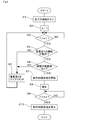
- FIG. 4 is a flowchart schematically showing an operation example of the vehicle control unit according to the present embodiment.
- the vehicle control unit 10 illustrated in FIG. 1 is mounted on a moving body such as a vehicle, and includes a main control unit 11, a wireless communication unit 12, a sound output unit 13, a meter function unit 14, and an infotainment function unit.
- a temperature sensor 16 and the like are provided.
- the vehicle control unit 10 constructs a so-called integrated cockpit system that centrally controls a plurality of functions mounted on a moving body such as a vehicle, and a plurality of functions can be controlled by one control unit. Is configured.
- the main controller 11 is an example of a controller and also an example of a functional unit.
- the main control unit 11 is mainly composed of, for example, a microcomputer, and controls the overall operation of the vehicle control unit 10 based on a control program stored in the program memory 17.
- the wireless communication unit 12 is an example of a functional unit.
- the wireless communication unit 12 includes, for example, a well-known wireless communication module and the like, and connects the vehicle control unit 10 to an external device in a wireless communication manner.
- a well-known wireless communication standard such as Bluetooth (registered trademark) or WiFi (registered trademark) can be considered, but is not limited thereto.
- the sound output unit 13 is an example of a functional unit.
- the sound output unit 13 includes, for example, a well-known speaker 13a and an amplifier, and outputs various sounds from the speaker 13a based on a sound output signal supplied from the main control unit 11. Further, the main control unit 11 can adjust the volume of the sound output from the speaker 13a by adjusting the amplifier of the sound output unit 13.
- the meter function unit 14 is an example of a function unit.
- the meter function unit 14 outputs meter system image information such as the traveling speed of the vehicle and the rotation speed of the engine to the meter of the meter unit 14a based on the output signal of the meter system image provided from the main control unit 11. ..
- the infotainment function unit 15 is an example of a function unit.
- the infotainment function unit 15 outputs infotainment video information such as a movie to the display screen of the infotainment unit 15a based on the output signal of the infotainment video provided from the main control unit 11.
- the temperature sensor 16 is an example of a temperature detection unit.
- the temperature sensor 16 includes, for example, a well-known temperature thermistor, and detects the internal temperature of the vehicle control unit 10 or the ambient temperature of the vehicle control unit 10.
- vehicle control unit 10 virtually implements various processing units such as the operation restriction processing execution unit 21 and the notification processing unit 22 by software based on the execution of the control program by the main control unit 11.
- processing units such as the operation restriction process execution unit 21 and the notification processing unit 22 may be configured by hardware, or may be configured by a combination of software and hardware.
- the operation restriction process execution unit 21 is a processing unit that executes an operation restriction process for restricting the operation of a functional unit having a low importance set according to the temperature detected by the temperature sensor 16. Details of the operation restriction process will be described later.
- the notification processing unit 22 is an example of the notification unit, and when the main control unit 11 starts an operation restriction process, which will be described later, notifies that effect, that is, the operation restriction process is started.
- the notification processing by the notification processing unit 22 may be an auditory notification mode in which a sound is notified via the speaker 13a, or a visual notification is performed by an image via the meter unit 14a or the infotainment unit 15a. It may be a notification mode or a combination of an auditory notification mode and a visual notification mode.
- a plurality of functional units 11 to 15 are evaluated by a plurality of viewpoints, in this case, legal conformity, user recognition, user demand, and internal influence. Has been.
- the evaluation value is 0 for "not applicable”, 1 for “almost not applicable”, 2 for “relatively not applicable”, 3 for “relatively applicable”, and “generally applicable”. It can be set in multiple stages of 4 points of "corresponding" and 5 points of "corresponding”.
- ⁇ Legal compliance is an evaluation item that is evaluated based on whether it is stipulated that the functions should be operated according to the regulations of the law.
- the function of outputting the video information of the meter system to the meter of the meter unit 14a while the vehicle is traveling is of the importance that the operation should be continued as much as possible even under severe conditions such as high temperature environment. It is a high function, and it is recommended by law to continue its operation as much as possible. Therefore, from the viewpoint of legal compliance, the evaluation values of the main control unit 11 and the meter function unit 14, which are responsible for the operation of this function, are 5 points.
- User cognition is an evaluation item that is evaluated based on whether or not the user can easily recognize the effect of a function operation when it is restricted.
- the function of outputting the meter-based image information to the meter of the meter unit 14a may be because the meter unit 14a may be located in front of the driver's seat, and if the operation of this function is limited, the image may be viewed. The effect disappears, and the user can easily recognize the effect. Therefore, the evaluation values of the main control unit 11 and the meter function unit 14, which are responsible for the operation of this function, are 5 points.
- the evaluation value of the sound output unit 13 that carries out the operation of this function is 5 points.
- the function of outputting infotainment video information to the display screen of the infotainment unit 15a makes the video invisible when the operation of this function is limited, and the user can easily recognize the effect. Therefore, the evaluation value of the infotainment function unit 15 which is responsible for the operation of this function is 3 points. Note that the infotainment-type video information is less important than the meter-type video information described above from the viewpoint of traveling of the vehicle. Therefore, the evaluation value of the infotainment function unit 15 is lower than the evaluation value of the meter function unit 14 described above.
- -User requestability is an evaluation item that is evaluated based on whether or not the operation of a function is requested by the user. If the operation of the function requested by the user is restricted, the operation of the function is restricted regardless of the user's request, so that the user can easily recognize the effect. Therefore, higher evaluation values are set for the functions that the user requires to operate. In the example of FIG. 2, the user is required to have a function of outputting video information of the meter system to the meter of the meter unit 14a. Therefore, the evaluation values of the main control unit 11 and the meter function unit 14 that are responsible for the operation of this function are 5 points.
- the vehicle control unit 10 can accept a request for operation of a function from a user via an operation input unit (not shown). That is, the user can input to the vehicle control unit 10 a request for a function to be preferentially operated or a function not to be restricted in operation through an operation input unit (not shown).
- the internal influence is an evaluation item that is evaluated based on whether or not other elements constituting the vehicle control unit 10 are affected when the operation of the function is limited. For example, when the operation of this control function of the main control unit 11 is restricted, the operation of other elements of the vehicle control unit 10 is also restricted, and the influence thereof is exerted. Therefore, the evaluation value of the main controller 11 is 5 points. On the other hand, with respect to the functional units 12 to 15 other than the main control unit 11, even if the operation of the function is limited, the influence on other elements is slight or none. Therefore, the evaluation values of the functional units 12 to 15 other than the main control unit 11 are all 0 in this case.
- the multiple functional units 11 to 15 included in the vehicle control unit 10 are evaluated based on multiple viewpoints as described above. Then, the sum of the evaluation values based on such a plurality of viewpoints is set as the importance of the functional unit.
- the importance of the main controller 11 is “20”
- the importance of the wireless communication unit 12 is “2”
- the importance of the sound output unit 13 is “6”
- the importance of the meter function unit 14 is “15”.
- the importance level of the infotainment function unit 15 is “4”.
- the specifications of the plurality of functional units 11 to 15 included in the vehicle control unit 10 are different from each other.
- the main control unit 11 has an upper limit value of a temperature range in which the operation is allowed to be 75° C., and an adjustable range of supplied power is 3.5 W to 2.0 W from 5.5 W. Has become.
- the wireless communication unit 12 has an upper limit value of a temperature range in which the operation is allowed to be 65° C., and an adjustable range of supplied power is 1.0 W from 1.0 W to 2.0 W.
- the sound output unit 13 has an upper limit value of the temperature range in which the operation is allowed to be 65° C., and an adjustable range of the supplied power is 10.0 W from 10.0 W to 20.0 W.
- the meter function unit 14 has an upper limit value of the temperature range in which the operation is allowed to be 75° C., and an adjustable range of the supplied power is 0.0 W, that is, it is not adjustable.
- the infotainment function unit 15 has an upper limit value of the temperature range in which the operation is allowed to be 65° C., and an adjustable range of the supplied power is 5.0 W from 10.0 W to 15.0 W.
- the content of the restriction when restricting the operation of the plurality of functional units 11 to 15 included in the vehicle control unit 10 is set as follows.
- the function of the main control unit 11 controls the overall operation of the vehicle control unit 10, it is basically set so as not to be restricted.
- the function of the wireless communication unit 12 when the function of the wireless communication unit 12 is limited, the sensitivity of transmission and reception is reduced by suppressing the power supplied to the wireless communication unit 12. Alternatively, when the function of the wireless communication unit 12 is limited, the power supply to the wireless communication unit 12 is stopped.
- the volume of the output voice is suppressed by suppressing the power supplied to the sound output unit 13.
- the power supply to the sound output unit 13 is stopped.
- the function of the meter function unit 14 is basically set so as not to be restricted because the adjustable range of the supplied power is 0.0 W and cannot be adjusted.
- the power supplied to the infotainment function unit 15 is suppressed to reduce the clock, that is, the drawing speed or the response speed.
- the power supply to the infotainment function unit 15 is stopped.
- the main control unit 11 performs an operation restriction process for restricting the operation of the function unit having a low importance set according to the temperature detected by the temperature sensor 16. It is configured to run.
- an operation restriction process for restricting the operation of the function unit having a low importance set according to the temperature detected by the temperature sensor 16. It is configured to run.
- a case will be described as an example in which the operation of the infotainment function unit 15 having a lower importance than the main control unit 11 and the meter function unit 14 is restricted.
- the main control unit 11 when activated from the sleep state, the main control unit 11 activates a plurality of functional units 12 to 15 in this case (S1).
- the main control unit 11 may activate some of the predetermined functional units instead of all the functional units.
- the main control unit 11 sets a numerical value 1 to the importance variable X for the infotainment function unit 15 (S2).
- the main control unit 11 determines whether or not the temperature T detected by the temperature sensor 16 exceeds the reference temperature K1 for the infotainment function unit 15 (S3).
- the reference temperature K1 for the infotainment function part 15 can be appropriately changed and set, and for example, the upper limit value of the allowable operating temperature of the vehicle control unit 10 or each function part, for example, the infotainment function part 15 can be set.
- the temperature may be set, or a predetermined temperature, for example, about 5° C. lower than the upper limit of the allowable operating temperature of the vehicle control unit 10 or each functional unit, for example, the infotainment functional unit 15, may be set.
- the main control unit 11 waits as it is. On the other hand, when the temperature T detected by the temperature sensor 16 exceeds the reference temperature K1 for the infotainment function unit 15 (S3: YES), the main control unit 11 sets the value of the importance variable X at that time. It is confirmed whether or not the infotainment function unit 15 for which the degree of importance is set is operating (S4). In this case, the importance level of the infotainment function unit 15 is set to 4. Therefore, when the value of the importance variable X at that time is not 4, the main control unit 11 makes a negative determination in step S4, and proceeds to step S5. After shifting to step S5, the main control unit 11 increments the value of the importance variable X, that is, increases it by 1, and shifts to step S3.
- step S6 the main control unit 11 confirms whether or not the adjustable range of the supplied power is set in the infotainment function unit 15 that makes a positive determination in step S4. That is, the main control unit 11 confirms whether or not it is possible to limit the operation of the functional unit that makes an affirmative determination in step S4.
- the main control unit 11 increments the value of the importance variable X when the adjustable range of the supplied power is not set in the infotainment function unit 15 that has made a positive determination in step S4 (S5), Control goes to step S3.
- the main control unit 11 restricts the operation of the infotainment function unit 15 when the adjustable range of the supplied power is set in the infotainment function unit 15 that makes a positive determination in step S4.
- the process is started (S7).
- the electric power supplied to the infotainment function part 15 that is determined to be affirmative in step S4 is adjusted so as to be suppressed, and the operation of the infotainment function part 15 is restricted.
- the main control unit 11 notifies that effect, that is, the operation restriction process of the infotainment function unit 15 is started (S8). ..
- the main control unit 11 determines whether or not the temperature T detected by the temperature sensor 16 is lower than the reference temperature K2 for stopping the operation restriction process (S9).
- the reference temperature K2 for stopping the operation restriction process can be appropriately changed and set, and for example, the lower limit value of the operation allowable temperature of the vehicle control unit 10 or each functional unit, for example, the infotainment functional unit 15. May be set, or a predetermined temperature, for example, about 5° C. higher than the lower limit of the operation allowable temperature of the vehicle control unit 10 or each functional unit, for example, the infotainment functional unit 15, may be set.
- the main control unit 11 When the temperature T detected by the temperature sensor 16 is not lower than the reference temperature K2 for stopping the operation restriction process (S9: NO), the main control unit 11 performs the operation restriction process of the infotainment function unit 15. To continue. Further, at this time, the main control unit 11 sets another function unit having a low degree of importance set, in this case, the wireless communication unit 12 having a degree of importance of 2 set, or 6 as a degree of importance. Similarly, the sound output unit 13 may perform the operation restriction process. In this way, by sequentially restricting the operation of the set function units of relatively low importance, the temperature T detected by the temperature sensor 16, that is, the internal temperature of the vehicle control unit 10, or Therefore, the temperature around the vehicle control unit 10 can be reduced more quickly.
- the importance levels are set for the plurality of functional units 11 to 15 mounted on the vehicle, and the operation of the functional units having a relatively high importance level is not restricted and is important.
- the operation of the function unit which is relatively infrequent, is restricted. As a result, it is possible to preferentially limit the functions of relatively low importance while avoiding the restrictions of the functions of relatively high importance. It can be controlled appropriately according to the importance of the function.
- the notification processing unit 22 can notify that the operation control process has been started by the main control unit 11. According to this configuration, the user can recognize that the operation of the functional unit mounted on the vehicle is intentionally limited based on the notification processing performed by the notification processing unit 22. It is possible to avoid erroneously recognizing that a malfunction has occurred.
- comparison is made with respect to a functional unit that is required to operate while the vehicle is traveling, for example, a functional unit that is requested to be operated by the user or a functional unit that is recommended to operate by law.
- a functional unit that is required to operate while the vehicle is traveling for example, a functional unit that is requested to be operated by the user or a functional unit that is recommended to operate by law.
- the vehicle control unit 10 it is of low importance for functional units that are not required to operate while the vehicle is traveling, such as functional units that are not required to be operated by the user and functional units that are not recommended to operate by law.
- By setting the degree it is possible to suppress the increase of the internal temperature or the ambient temperature of the vehicle control unit 10 by limiting the operation of the unimportant function while continuing the operation of the important function as much as possible.
- the functional unit included in the vehicle control unit 10 is not limited to the functional unit illustrated in the above-described embodiment, and various functional units may be applied as long as the functional unit can be installed in the vehicle. it can.
- the method of setting the degree of importance with respect to a plurality of functional units is not limited to the method exemplified in the above-described embodiment.
- the type of vehicle, the law, the user's preference, the functional units installed in the vehicle, etc. can be adopted according to the nature of the above.
- control unit and the method thereof described in the present disclosure are realized by a dedicated computer provided by configuring a processor and a memory programmed to execute one or more functions embodied by a computer program. , May be realized.
- control unit and the method described in the present disclosure may be realized by a dedicated computer provided by configuring a processor with one or more dedicated hardware logic circuits.
- control unit and the method thereof described in the present disclosure are based on a combination of a processor and a memory programmed to execute one or a plurality of functions and a processor configured by one or more hardware logic circuits. It may be implemented by one or more dedicated computers configured.
- the computer program may be stored in a computer-readable non-transition tangible recording medium as an instruction executed by the computer.
Landscapes
- Engineering & Computer Science (AREA)
- Mechanical Engineering (AREA)
- Automation & Control Theory (AREA)
- Control Of Driving Devices And Active Controlling Of Vehicle (AREA)
Priority Applications (1)
| Application Number | Priority Date | Filing Date | Title |
|---|---|---|---|
| US17/373,913 US20210339691A1 (en) | 2019-01-16 | 2021-07-13 | Vehicle control unit |
Applications Claiming Priority (2)
| Application Number | Priority Date | Filing Date | Title |
|---|---|---|---|
| JP2019-005161 | 2019-01-16 | ||
| JP2019005161A JP2020111278A (ja) | 2019-01-16 | 2019-01-16 | 車両用制御ユニット |
Related Child Applications (1)
| Application Number | Title | Priority Date | Filing Date |
|---|---|---|---|
| US17/373,913 Continuation US20210339691A1 (en) | 2019-01-16 | 2021-07-13 | Vehicle control unit |
Publications (1)
| Publication Number | Publication Date |
|---|---|
| WO2020149110A1 true WO2020149110A1 (ja) | 2020-07-23 |
Family
ID=71614345
Family Applications (1)
| Application Number | Title | Priority Date | Filing Date |
|---|---|---|---|
| PCT/JP2019/050353 Ceased WO2020149110A1 (ja) | 2019-01-16 | 2019-12-23 | 車両用制御ユニット |
Country Status (3)
| Country | Link |
|---|---|
| US (1) | US20210339691A1 (https=) |
| JP (1) | JP2020111278A (https=) |
| WO (1) | WO2020149110A1 (https=) |
Citations (3)
| Publication number | Priority date | Publication date | Assignee | Title |
|---|---|---|---|---|
| WO1993004896A1 (fr) * | 1991-09-03 | 1993-03-18 | Nippondenso Co., Ltd. | Unite de regroupement de modules de commande pour etre montee sur un vehicule |
| JPH0937459A (ja) * | 1995-07-24 | 1997-02-07 | Nissan Motor Co Ltd | 電気自動車の電源供給システム |
| JP2003072487A (ja) * | 2001-09-05 | 2003-03-12 | Auto Network Gijutsu Kenkyusho:Kk | 車載電源制御装置 |
Family Cites Families (7)
| Publication number | Priority date | Publication date | Assignee | Title |
|---|---|---|---|---|
| JP3624831B2 (ja) * | 2000-12-28 | 2005-03-02 | 株式会社デンソー | 車両用電源装置及びエンジン駆動規制支援装置 |
| US20020140548A1 (en) * | 2001-03-30 | 2002-10-03 | Medius, Inc. | Method and apparatus for a vehicular wireless network |
| EP1777116A1 (en) * | 2005-10-19 | 2007-04-25 | C.R.F. Società Consortile per Azioni | A system for managing the supply of electrical energy in a motor vehicle |
| JP6094260B2 (ja) * | 2013-02-27 | 2017-03-15 | 株式会社デンソー | 異常検出保護回路 |
| US9828925B2 (en) * | 2013-03-13 | 2017-11-28 | Paccar Inc | Hierarchical vehicle de-rate and notification system |
| JP2017121864A (ja) * | 2016-01-07 | 2017-07-13 | 株式会社オートネットワーク技術研究所 | 給電中継回路、副電池モジュール、電源システム |
| EP3726499B1 (en) * | 2017-12-15 | 2023-09-20 | Nissan Motor Co., Ltd. | Driving assistance method and driving assistance device |
-
2019
- 2019-01-16 JP JP2019005161A patent/JP2020111278A/ja active Pending
- 2019-12-23 WO PCT/JP2019/050353 patent/WO2020149110A1/ja not_active Ceased
-
2021
- 2021-07-13 US US17/373,913 patent/US20210339691A1/en active Pending
Patent Citations (3)
| Publication number | Priority date | Publication date | Assignee | Title |
|---|---|---|---|---|
| WO1993004896A1 (fr) * | 1991-09-03 | 1993-03-18 | Nippondenso Co., Ltd. | Unite de regroupement de modules de commande pour etre montee sur un vehicule |
| JPH0937459A (ja) * | 1995-07-24 | 1997-02-07 | Nissan Motor Co Ltd | 電気自動車の電源供給システム |
| JP2003072487A (ja) * | 2001-09-05 | 2003-03-12 | Auto Network Gijutsu Kenkyusho:Kk | 車載電源制御装置 |
Also Published As
| Publication number | Publication date |
|---|---|
| JP2020111278A (ja) | 2020-07-27 |
| US20210339691A1 (en) | 2021-11-04 |
Similar Documents
| Publication | Publication Date | Title |
|---|---|---|
| KR102479072B1 (ko) | 탑승자 단말 및 디스트랙션 확인을 통한 컨텐츠 표시 방법 | |
| JP6675487B2 (ja) | 車両制御装置 | |
| US11586202B2 (en) | Automatic driving safety interaction system | |
| US10451710B1 (en) | User identification method and user identification apparatus | |
| US20200114932A1 (en) | Vehicle and method of outputting information therefor | |
| US20220314794A1 (en) | Apparatus and method for controlling vehicle | |
| CN105468354A (zh) | 移动设备与车辆间的传感器合成和仲裁的方法及装置 | |
| US10828983B2 (en) | Fuel control regulator system with acoustic pliability | |
| WO2020184088A1 (ja) | 表示制御装置、表示装置、表示制御システム及び信頼性判定プログラム | |
| CN119630549A (zh) | 用于车辆操作系统的场境感知安全特征 | |
| CN104866088A (zh) | 汽车娱乐主机、汽车娱乐主机控制方法及装置 | |
| WO2020149110A1 (ja) | 車両用制御ユニット | |
| US12499865B2 (en) | Noise control method and noise control device | |
| US11589175B2 (en) | Frustration-based diagnostics | |
| KR102719976B1 (ko) | 터치 입력에 기반한 동작 방법 및 그 전자 장치 | |
| CN112867635B (zh) | 车辆用控制装置 | |
| CN113460289A (zh) | 一种用于飞行器的俯仰配平反馈的方法、系统和装置 | |
| CN113939423A (zh) | 车辆用装置 | |
| CN114056262A (zh) | 车载显示逻辑方法、装置、智能汽车及可读存储介质 | |
| CN113939424A (zh) | 车辆用装置 | |
| WO2020184074A1 (ja) | 車両用装置 | |
| KR102945443B1 (ko) | 전원 공급을 제어하는 방법 및 이를 이용한 전자 장치 | |
| WO2018131380A1 (ja) | 車両制御装置 | |
| US20150291110A1 (en) | Electronic circuit | |
| KR20250015624A (ko) | 폴더블 전자 장치 및 이의 화면 운용 방법 |
Legal Events
| Date | Code | Title | Description |
|---|---|---|---|
| 121 | Ep: the epo has been informed by wipo that ep was designated in this application |
Ref document number: 19910887 Country of ref document: EP Kind code of ref document: A1 |
|
| NENP | Non-entry into the national phase |
Ref country code: DE |
|
| 122 | Ep: pct application non-entry in european phase |
Ref document number: 19910887 Country of ref document: EP Kind code of ref document: A1 |