WO2020145685A1 - 클라미도모나스 변이주 및 이의 용도 - Google Patents
클라미도모나스 변이주 및 이의 용도 Download PDFInfo
- Publication number
- WO2020145685A1 WO2020145685A1 PCT/KR2020/000394 KR2020000394W WO2020145685A1 WO 2020145685 A1 WO2020145685 A1 WO 2020145685A1 KR 2020000394 W KR2020000394 W KR 2020000394W WO 2020145685 A1 WO2020145685 A1 WO 2020145685A1
- Authority
- WO
- WIPO (PCT)
- Prior art keywords
- gene
- chlamydomonas
- seq
- mutant
- zep
- Prior art date
- Legal status (The legal status is an assumption and is not a legal conclusion. Google has not performed a legal analysis and makes no representation as to the accuracy of the status listed.)
- Ceased
Links
Images









Classifications
-
- C—CHEMISTRY; METALLURGY
- C12—BIOCHEMISTRY; BEER; SPIRITS; WINE; VINEGAR; MICROBIOLOGY; ENZYMOLOGY; MUTATION OR GENETIC ENGINEERING
- C12N—MICROORGANISMS OR ENZYMES; COMPOSITIONS THEREOF; PROPAGATING, PRESERVING, OR MAINTAINING MICROORGANISMS; MUTATION OR GENETIC ENGINEERING; CULTURE MEDIA
- C12N15/00—Mutation or genetic engineering; DNA or RNA concerning genetic engineering, vectors, e.g. plasmids, or their isolation, preparation or purification; Use of hosts therefor
- C12N15/09—Recombinant DNA-technology
- C12N15/63—Introduction of foreign genetic material using vectors; Vectors; Use of hosts therefor; Regulation of expression
- C12N15/79—Vectors or expression systems specially adapted for eukaryotic hosts
-
- C—CHEMISTRY; METALLURGY
- C12—BIOCHEMISTRY; BEER; SPIRITS; WINE; VINEGAR; MICROBIOLOGY; ENZYMOLOGY; MUTATION OR GENETIC ENGINEERING
- C12N—MICROORGANISMS OR ENZYMES; COMPOSITIONS THEREOF; PROPAGATING, PRESERVING, OR MAINTAINING MICROORGANISMS; MUTATION OR GENETIC ENGINEERING; CULTURE MEDIA
- C12N9/00—Enzymes; Proenzymes; Compositions thereof; Processes for preparing, activating, inhibiting, separating or purifying enzymes
- C12N9/14—Hydrolases (3)
- C12N9/16—Hydrolases (3) acting on ester bonds (3.1)
- C12N9/22—Ribonucleases [RNase]; Deoxyribonucleases [DNase]
-
- C—CHEMISTRY; METALLURGY
- C12—BIOCHEMISTRY; BEER; SPIRITS; WINE; VINEGAR; MICROBIOLOGY; ENZYMOLOGY; MUTATION OR GENETIC ENGINEERING
- C12N—MICROORGANISMS OR ENZYMES; COMPOSITIONS THEREOF; PROPAGATING, PRESERVING, OR MAINTAINING MICROORGANISMS; MUTATION OR GENETIC ENGINEERING; CULTURE MEDIA
- C12N1/00—Microorganisms; Compositions thereof; Processes of propagating, maintaining or preserving microorganisms or compositions thereof; Processes of preparing or isolating a composition containing a microorganism; Culture media therefor
- C12N1/12—Unicellular algae; Culture media therefor
-
- A—HUMAN NECESSITIES
- A23—FOODS OR FOODSTUFFS; TREATMENT THEREOF, NOT COVERED BY OTHER CLASSES
- A23K—FODDER
- A23K10/00—Animal feeding-stuffs
- A23K10/10—Animal feeding-stuffs obtained by microbiological or biochemical processes
- A23K10/16—Addition of microorganisms or extracts thereof, e.g. single-cell proteins, to feeding-stuff compositions
-
- A—HUMAN NECESSITIES
- A23—FOODS OR FOODSTUFFS; TREATMENT THEREOF, NOT COVERED BY OTHER CLASSES
- A23K—FODDER
- A23K10/00—Animal feeding-stuffs
- A23K10/30—Animal feeding-stuffs from material of plant origin, e.g. roots, seeds or hay; from material of fungal origin, e.g. mushrooms
-
- A—HUMAN NECESSITIES
- A23—FOODS OR FOODSTUFFS; TREATMENT THEREOF, NOT COVERED BY OTHER CLASSES
- A23K—FODDER
- A23K20/00—Accessory food factors for animal feeding-stuffs
- A23K20/10—Organic substances
- A23K20/158—Fatty acids; Fats; Products containing oils or fats
-
- A—HUMAN NECESSITIES
- A23—FOODS OR FOODSTUFFS; TREATMENT THEREOF, NOT COVERED BY OTHER CLASSES
- A23L—FOODS, FOODSTUFFS OR NON-ALCOHOLIC BEVERAGES, NOT OTHERWISE PROVIDED FOR; PREPARATION OR TREATMENT THEREOF
- A23L33/00—Modifying nutritive qualities of foods; Dietetic products; Preparation or treatment thereof
- A23L33/10—Modifying nutritive qualities of foods; Dietetic products; Preparation or treatment thereof using additives
-
- A—HUMAN NECESSITIES
- A23—FOODS OR FOODSTUFFS; TREATMENT THEREOF, NOT COVERED BY OTHER CLASSES
- A23L—FOODS, FOODSTUFFS OR NON-ALCOHOLIC BEVERAGES, NOT OTHERWISE PROVIDED FOR; PREPARATION OR TREATMENT THEREOF
- A23L33/00—Modifying nutritive qualities of foods; Dietetic products; Preparation or treatment thereof
- A23L33/10—Modifying nutritive qualities of foods; Dietetic products; Preparation or treatment thereof using additives
- A23L33/115—Fatty acids or derivatives thereof; Fats or oils
-
- A—HUMAN NECESSITIES
- A61—MEDICAL OR VETERINARY SCIENCE; HYGIENE
- A61K—PREPARATIONS FOR MEDICAL, DENTAL OR TOILETRY PURPOSES
- A61K8/00—Cosmetics or similar toiletry preparations
- A61K8/18—Cosmetics or similar toiletry preparations characterised by the composition
- A61K8/96—Cosmetics or similar toiletry preparations characterised by the composition containing materials, or derivatives thereof of undetermined constitution
- A61K8/97—Cosmetics or similar toiletry preparations characterised by the composition containing materials, or derivatives thereof of undetermined constitution from algae, fungi, lichens or plants; from derivatives thereof
- A61K8/9706—Algae
- A61K8/9722—Chlorophycota or Chlorophyta [green algae], e.g. Chlorella
-
- C—CHEMISTRY; METALLURGY
- C07—ORGANIC CHEMISTRY
- C07K—PEPTIDES
- C07K14/00—Peptides having more than 20 amino acids; Gastrins; Somatostatins; Melanotropins; Derivatives thereof
- C07K14/405—Peptides having more than 20 amino acids; Gastrins; Somatostatins; Melanotropins; Derivatives thereof from algae
-
- C—CHEMISTRY; METALLURGY
- C11—ANIMAL OR VEGETABLE OILS, FATS, FATTY SUBSTANCES OR WAXES; FATTY ACIDS THEREFROM; DETERGENTS; CANDLES
- C11B—PRODUCING, e.g. BY PRESSING RAW MATERIALS OR BY EXTRACTION FROM WASTE MATERIALS, REFINING OR PRESERVING FATS, FATTY SUBSTANCES, e.g. LANOLIN, FATTY OILS OR WAXES; ESSENTIAL OILS; PERFUMES
- C11B1/00—Production of fats or fatty oils from raw materials
- C11B1/02—Pretreatment
- C11B1/04—Pretreatment of vegetable raw material
-
- C—CHEMISTRY; METALLURGY
- C11—ANIMAL OR VEGETABLE OILS, FATS, FATTY SUBSTANCES OR WAXES; FATTY ACIDS THEREFROM; DETERGENTS; CANDLES
- C11B—PRODUCING, e.g. BY PRESSING RAW MATERIALS OR BY EXTRACTION FROM WASTE MATERIALS, REFINING OR PRESERVING FATS, FATTY SUBSTANCES, e.g. LANOLIN, FATTY OILS OR WAXES; ESSENTIAL OILS; PERFUMES
- C11B1/00—Production of fats or fatty oils from raw materials
- C11B1/06—Production of fats or fatty oils from raw materials by pressing
-
- C—CHEMISTRY; METALLURGY
- C11—ANIMAL OR VEGETABLE OILS, FATS, FATTY SUBSTANCES OR WAXES; FATTY ACIDS THEREFROM; DETERGENTS; CANDLES
- C11B—PRODUCING, e.g. BY PRESSING RAW MATERIALS OR BY EXTRACTION FROM WASTE MATERIALS, REFINING OR PRESERVING FATS, FATTY SUBSTANCES, e.g. LANOLIN, FATTY OILS OR WAXES; ESSENTIAL OILS; PERFUMES
- C11B1/00—Production of fats or fatty oils from raw materials
- C11B1/10—Production of fats or fatty oils from raw materials by extracting
-
- C—CHEMISTRY; METALLURGY
- C12—BIOCHEMISTRY; BEER; SPIRITS; WINE; VINEGAR; MICROBIOLOGY; ENZYMOLOGY; MUTATION OR GENETIC ENGINEERING
- C12N—MICROORGANISMS OR ENZYMES; COMPOSITIONS THEREOF; PROPAGATING, PRESERVING, OR MAINTAINING MICROORGANISMS; MUTATION OR GENETIC ENGINEERING; CULTURE MEDIA
- C12N15/00—Mutation or genetic engineering; DNA or RNA concerning genetic engineering, vectors, e.g. plasmids, or their isolation, preparation or purification; Use of hosts therefor
- C12N15/09—Recombinant DNA-technology
- C12N15/11—DNA or RNA fragments; Modified forms thereof; Non-coding nucleic acids having a biological activity
-
- C—CHEMISTRY; METALLURGY
- C12—BIOCHEMISTRY; BEER; SPIRITS; WINE; VINEGAR; MICROBIOLOGY; ENZYMOLOGY; MUTATION OR GENETIC ENGINEERING
- C12N—MICROORGANISMS OR ENZYMES; COMPOSITIONS THEREOF; PROPAGATING, PRESERVING, OR MAINTAINING MICROORGANISMS; MUTATION OR GENETIC ENGINEERING; CULTURE MEDIA
- C12N15/00—Mutation or genetic engineering; DNA or RNA concerning genetic engineering, vectors, e.g. plasmids, or their isolation, preparation or purification; Use of hosts therefor
- C12N15/09—Recombinant DNA-technology
- C12N15/11—DNA or RNA fragments; Modified forms thereof; Non-coding nucleic acids having a biological activity
- C12N15/113—Non-coding nucleic acids modulating the expression of genes, e.g. antisense oligonucleotides; Antisense DNA or RNA; Triplex- forming oligonucleotides; Catalytic nucleic acids, e.g. ribozymes; Nucleic acids used in co-suppression or gene silencing
-
- C—CHEMISTRY; METALLURGY
- C12—BIOCHEMISTRY; BEER; SPIRITS; WINE; VINEGAR; MICROBIOLOGY; ENZYMOLOGY; MUTATION OR GENETIC ENGINEERING
- C12N—MICROORGANISMS OR ENZYMES; COMPOSITIONS THEREOF; PROPAGATING, PRESERVING, OR MAINTAINING MICROORGANISMS; MUTATION OR GENETIC ENGINEERING; CULTURE MEDIA
- C12N15/00—Mutation or genetic engineering; DNA or RNA concerning genetic engineering, vectors, e.g. plasmids, or their isolation, preparation or purification; Use of hosts therefor
- C12N15/09—Recombinant DNA-technology
- C12N15/87—Introduction of foreign genetic material using processes not otherwise provided for, e.g. co-transformation
- C12N15/90—Stable introduction of foreign DNA into chromosome
- C12N15/902—Stable introduction of foreign DNA into chromosome using homologous recombination
-
- C—CHEMISTRY; METALLURGY
- C12—BIOCHEMISTRY; BEER; SPIRITS; WINE; VINEGAR; MICROBIOLOGY; ENZYMOLOGY; MUTATION OR GENETIC ENGINEERING
- C12N—MICROORGANISMS OR ENZYMES; COMPOSITIONS THEREOF; PROPAGATING, PRESERVING, OR MAINTAINING MICROORGANISMS; MUTATION OR GENETIC ENGINEERING; CULTURE MEDIA
- C12N9/00—Enzymes; Proenzymes; Compositions thereof; Processes for preparing, activating, inhibiting, separating or purifying enzymes
- C12N9/0004—Oxidoreductases (1.)
- C12N9/0071—Oxidoreductases (1.) acting on paired donors with incorporation of molecular oxygen (1.14)
- C12N9/0077—Oxidoreductases (1.) acting on paired donors with incorporation of molecular oxygen (1.14) with a reduced iron-sulfur protein as one donor (1.14.15)
-
- C—CHEMISTRY; METALLURGY
- C12—BIOCHEMISTRY; BEER; SPIRITS; WINE; VINEGAR; MICROBIOLOGY; ENZYMOLOGY; MUTATION OR GENETIC ENGINEERING
- C12N—MICROORGANISMS OR ENZYMES; COMPOSITIONS THEREOF; PROPAGATING, PRESERVING, OR MAINTAINING MICROORGANISMS; MUTATION OR GENETIC ENGINEERING; CULTURE MEDIA
- C12N9/00—Enzymes; Proenzymes; Compositions thereof; Processes for preparing, activating, inhibiting, separating or purifying enzymes
- C12N9/10—Transferases (2.)
- C12N9/12—Transferases (2.) transferring phosphorus containing groups, e.g. kinases (2.7)
- C12N9/1241—Nucleotidyltransferases (2.7.7)
-
- C—CHEMISTRY; METALLURGY
- C12—BIOCHEMISTRY; BEER; SPIRITS; WINE; VINEGAR; MICROBIOLOGY; ENZYMOLOGY; MUTATION OR GENETIC ENGINEERING
- C12P—FERMENTATION OR ENZYME-USING PROCESSES TO SYNTHESISE A DESIRED CHEMICAL COMPOUND OR COMPOSITION OR TO SEPARATE OPTICAL ISOMERS FROM A RACEMIC MIXTURE
- C12P23/00—Preparation of compounds containing a cyclohexene ring having an unsaturated side chain containing at least ten carbon atoms bound by conjugated double bonds, e.g. carotenes
-
- C—CHEMISTRY; METALLURGY
- C12—BIOCHEMISTRY; BEER; SPIRITS; WINE; VINEGAR; MICROBIOLOGY; ENZYMOLOGY; MUTATION OR GENETIC ENGINEERING
- C12P—FERMENTATION OR ENZYME-USING PROCESSES TO SYNTHESISE A DESIRED CHEMICAL COMPOUND OR COMPOSITION OR TO SEPARATE OPTICAL ISOMERS FROM A RACEMIC MIXTURE
- C12P7/00—Preparation of oxygen-containing organic compounds
- C12P7/64—Fats; Fatty oils; Ester-type waxes; Higher fatty acids, i.e. having at least seven carbon atoms in an unbroken chain bound to a carboxyl group; Oxidised oils or fats
-
- C—CHEMISTRY; METALLURGY
- C12—BIOCHEMISTRY; BEER; SPIRITS; WINE; VINEGAR; MICROBIOLOGY; ENZYMOLOGY; MUTATION OR GENETIC ENGINEERING
- C12Y—ENZYMES
- C12Y207/00—Transferases transferring phosphorus-containing groups (2.7)
- C12Y207/07—Nucleotidyltransferases (2.7.7)
- C12Y207/07027—Glucose-1-phosphate adenylyltransferase (2.7.7.27), i.e. ADP-glucose pyrophosphorylase
-
- A—HUMAN NECESSITIES
- A23—FOODS OR FOODSTUFFS; TREATMENT THEREOF, NOT COVERED BY OTHER CLASSES
- A23V—INDEXING SCHEME RELATING TO FOODS, FOODSTUFFS OR NON-ALCOHOLIC BEVERAGES AND LACTIC OR PROPIONIC ACID BACTERIA USED IN FOODSTUFFS OR FOOD PREPARATION
- A23V2002/00—Food compositions, function of food ingredients or processes for food or foodstuffs
-
- A—HUMAN NECESSITIES
- A23—FOODS OR FOODSTUFFS; TREATMENT THEREOF, NOT COVERED BY OTHER CLASSES
- A23V—INDEXING SCHEME RELATING TO FOODS, FOODSTUFFS OR NON-ALCOHOLIC BEVERAGES AND LACTIC OR PROPIONIC ACID BACTERIA USED IN FOODSTUFFS OR FOOD PREPARATION
- A23V2250/00—Food ingredients
- A23V2250/20—Natural extracts
- A23V2250/202—Algae extracts
-
- C—CHEMISTRY; METALLURGY
- C12—BIOCHEMISTRY; BEER; SPIRITS; WINE; VINEGAR; MICROBIOLOGY; ENZYMOLOGY; MUTATION OR GENETIC ENGINEERING
- C12N—MICROORGANISMS OR ENZYMES; COMPOSITIONS THEREOF; PROPAGATING, PRESERVING, OR MAINTAINING MICROORGANISMS; MUTATION OR GENETIC ENGINEERING; CULTURE MEDIA
- C12N2310/00—Structure or type of the nucleic acid
- C12N2310/10—Type of nucleic acid
- C12N2310/20—Type of nucleic acid involving clustered regularly interspaced short palindromic repeats [CRISPR]
-
- C—CHEMISTRY; METALLURGY
- C12—BIOCHEMISTRY; BEER; SPIRITS; WINE; VINEGAR; MICROBIOLOGY; ENZYMOLOGY; MUTATION OR GENETIC ENGINEERING
- C12N—MICROORGANISMS OR ENZYMES; COMPOSITIONS THEREOF; PROPAGATING, PRESERVING, OR MAINTAINING MICROORGANISMS; MUTATION OR GENETIC ENGINEERING; CULTURE MEDIA
- C12N2800/00—Nucleic acids vectors
- C12N2800/80—Vectors containing sites for inducing double-stranded breaks, e.g. meganuclease restriction sites
-
- C—CHEMISTRY; METALLURGY
- C12—BIOCHEMISTRY; BEER; SPIRITS; WINE; VINEGAR; MICROBIOLOGY; ENZYMOLOGY; MUTATION OR GENETIC ENGINEERING
- C12R—INDEXING SCHEME ASSOCIATED WITH SUBCLASSES C12C - C12Q, RELATING TO MICROORGANISMS
- C12R2001/00—Microorganisms ; Processes using microorganisms
- C12R2001/89—Algae ; Processes using algae
-
- C—CHEMISTRY; METALLURGY
- C12—BIOCHEMISTRY; BEER; SPIRITS; WINE; VINEGAR; MICROBIOLOGY; ENZYMOLOGY; MUTATION OR GENETIC ENGINEERING
- C12Y—ENZYMES
- C12Y114/00—Oxidoreductases acting on paired donors, with incorporation or reduction of molecular oxygen (1.14)
- C12Y114/15—Oxidoreductases acting on paired donors, with incorporation or reduction of molecular oxygen (1.14) with reduced iron-sulfur protein as one donor, and incorporation of one atom of oxygen (1.14.15)
Definitions
- the present invention relates to a microalgae having a vegetable oil production capacity with an enhanced antioxidant pigment content and uses thereof, specifically, to a composition comprising the microalgae and a method for producing vegetable oil using the microalgae.
- Essential fatty acids linoleic acid (omega-6) and ⁇ -linoleic acid (omega-3) must be consumed through food. These essential fatty acids are responsible for growth in the human body and play an important role in the regeneration, reproduction, and red blood cell structure of the skin and the formation and maintenance of cell membrane structures in the retina of the eye and the central nervous system. These essential fatty acids can be consumed through animal and vegetable oils.
- Animal oil contains animal fat as a raw material, has a high saturated fat content, and contains a lot of meat fat, butter, cheese, mayonnaise, cream, cocoa, processed oil, and ramen. Saturated fat forms part of the human subcutaneous fat layer, and an appropriate amount of subcutaneous fat is essential, but it has the property of synthesizing with cholesterol, which increases the level of low-density cholesterol that is bad for the body and increases the risk of cardiovascular disease or stroke.
- fish oil has a high content of unsaturated fatty acids and is rich in omega-3 containing DHA and EPA, but fish oil also has problems of storage and acidity, and it is an environment for large fish species such as tuna and salmon, which are the main raw materials for omega-3.
- oils such as soybean oil, canola oil, corn oil, safflower oil, and the like.
- vegetable oils have a high content of polyunsaturated fatty acd, so they are easily oxidized during manufacturing or storage, and as a result, free radicals, that is, free radicals are produced.
- oxidized fat enters the body, it causes inflammation, causes cell changes, and oxidizes and scatters cholesterol in the arteries, causing vascular disease.
- a method of artificially forming a hardened oil in a solid state by adding hydrogen to a vegetable fat in a liquid state was sought.
- typical hardened oils such as margarine have a problem in that trans fats, which are known to be harmful to the body, are produced during processing.
- edible oils such as soybean oil, corn oil, and sunflower seed oil
- omega-6 fatty acids which are caused by excessive intake through the diet, resulting in the omega-3 and omega-6 levels in the body. It is causing health problems such as persistent inflammation by breaking down the ratio.
- vegetable oils obtained from these higher plants have a problem that they cannot be free from GMO and pesticide contamination problems of raw materials due to commercial mass production of crops.
- microalgae are attracting attention as an alternative source of vegetable oil.
- Vegetable oil extracted from microalgae has an excellent fatty acid profile that other oils do not. Specifically, the amount of monounsaturated fat was 13 g higher than that of olive oil at 9.9 g per spoon, and the saturated fat content was compared with olive oil (14%), canola oil (7%), and coconut oil (87%). Therefore, it is very low in the level of 4% in comparison to the microalgae.
- the oil extracted from the microalgae like fish oil, contains abundant EPA and DHA consisting of omega-3 fatty acids, so it is a good substitute for fish oil and has the potential to be used as a source of omega-3 fatty acids.
- microalgal oil also has a problem that it is easy to be discarded due to the high content of unsaturated fatty acids, and many studies and attempts have been made to compensate for these shortcomings.
- olive oil contains antioxidants such as vitamin E, so it has been reported that the shelf life is longer than other vegetable oils.
- the problem of acid lungs can be solved, it may be used in various food, cosmetic and pharmaceutical fields in the form of oil. Therefore, there is a need for a new aspect of the approach to improve properties such as storage period of vegetable oil obtained from microalgae.
- the object of the present invention is to provide a functionally superior vegetable oil, especially a vegetable oil with a high unsaturated fatty acid content, stably and efficiently on an industrial scale, a novel strain having improved lipid production capacity, a composition using the same and a method for producing vegetable oil It is intended to provide.
- the present inventors have developed a new Chlamydo Monas strain that produces vegetable oils with enhanced antioxidant pigment content using genetic scissors, without introducing external DNA, and using this method Confirmed to complete the present invention.
- the mutant strain of the present invention is a xanthophyll-based pigment, which has a differentiated property from a wild-type strain in that it has the ability to generate axanthine, and the lipid production capacity in addition to the pigment is superior to that of the wild-type strain, and the cell growth rate is fast.
- As a strain that provides vegetable oil it has very advantageous industrial properties.
- the invention is adenine between SEQ ID NO: 1 Chlamydomonas lane in ZEP gene sequence of the hard tiahyi (Chlamydomonas reinhardtii) 816 beonjjae nucleotide and 817th nucleotide shown by (A);
- the nucleotide sequence is inserted ZEP mutation shown in SEQ ID NO: 5, and Cloud shown as shown in SEQ ID NO: 2
- Pseudomonas lane hard tiahyi adenine A between the 116th nucleotide and the 117th nucleotide in the AGP gene sequence (Chlamydomonas reinhardtii) ) Inserted;
- 115th nucleotide is deleted, there is provided a Chlamydomonas lane hard tiahyi (Chlamydomonas reinhardtii) mutant to 116th base comprises an
- the mutant strain may be characterized by having improved lipid production capacity and zeaxanthin and lutein production capacity compared to the wild-type strain.
- the present invention provides a culture of the mutant strain.
- the present invention provides a cosmetic composition comprising at least one selected from the group consisting of the mutant strain and cultures thereof.
- the present invention provides a food or food additive composition comprising at least one selected from the group consisting of the above mutant strains and cultures thereof.
- the present invention provides a composition for feed or feed additives comprising at least one selected from the group consisting of the above mutant strains and cultures thereof.
- the present invention provides a method for producing vegetable oil comprising culturing the mutant strain.
- the present invention provides a method for producing unsaturated fatty acids comprising culturing the mutant strain.
- the present invention provides a method for producing a raw material for food or feed, including culturing the mutant strain.
- the present invention provides the use of the above mutant strains for preparing food, feed, food raw materials, or feed raw materials.
- the present invention is represented by one of to the 800th base to 820th base in the ZEP gene sequence of Chlamydomonas lane hard tiahyi (Chlamydomonas reinhardtii) as shown in SEQ ID NO: 1 as a target mutant genes, and SEQ ID NO: 2 Chlamydomonas lane hard tiahyi AGP gene sequence from 100 to 120 th and the base in the target increased capability oil production including the ZEP gene and the AGP gene mutation which comprises mutations the AGP gene Chlamydomonas lane (Chlamydomonas reinhardtii) It provides a method for producing a mutant strain ( Chlamydomonas reinhardtii ).
- Mutation of the gene is a single guide RNA containing the sequence of the target gene (single guide RNA; sgRNA) expression of polynucleotides and Chlamydomonas lane hard tiahyi (Chlamydomonas reinhardtii) with a recombinant vector containing the mRNA encoding the Cas proteins which Cells can be transformed.
- sgRNA single guide RNA containing the sequence of the target gene
- Chlamydomonas lane hard tiahyi Chlamydomonas reinhardtii
- the genetic mutation is Chlamydomonas lane adenine (A) between the hard tiahyi 816th nucleotide and 817th nucleotide sequence of the gene from ZEP (Chlamydomonas reinhardtii) as shown in SEQ ID NO: 1; The base sequence represented by SEQ ID NO: 3; Or ZEP mutation is a nucleotide sequence shown in SEQ ID NO: 5 is inserted, and SEQ ID NO: 2 Chlamydomonas lane hard tiahyi adenine between the 116th nucleotide and the 117th nucleotide in the AGP gene sequence (Chlamydomonas reinhardtii) (A represented by ) Inserted; 115th nucleotide and 116th nucleotide deletion that may include one of ZEP gene and the AGP mutant gene comprising a substitution mutation in the AGP thymine (T).
- A Chlamydomonas lane
- the mutation location capable of knocking out the ZEP gene and the AGP gene without introduction of external DNA in the microalgae Chlamydomonas Reinhardtii was identified, and accordingly, a new mutant strain including simultaneous knockout was developed.
- the mutant strain including the mutation of the above region it has a marked increase in the amount of xiaxanthin, an industrially useful pigment, and has improved lipid production capacity, and has a faster cell growth rate compared to the wild-type Chlamydomonas strain.
- it has an advantageous property to provide a useful material using microalgae.
- the novel microalgae of the present invention are free from the risk of GMO because they do not contain external genes, and the vegetable oil extracted from the microalgae of the present invention has a high xanthophyll pigment content such as lutein and zeaxanthin having antioxidant activity, Since it has excellent oil preservation and stability, it can be effectively used in industries such as food, medicine, and cosmetics.
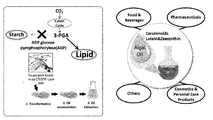
- FIG. 1 is a diagram illustrating an overall technique of a method for producing ZEP and AGP genetically corrected Chlamydomonas mutant strains according to an embodiment of the present invention.
- Figure 2a, 2b and 2c are each Chlamydomonas lane hard tiahyi mutant ⁇ Z1 of ZEP genetic information (2a), Chlamydomonas lane hard tiahyi mutant ⁇ Z2 of ZEP genetic information (2b) and Chlamydomonas lane on the hard tiahyi mutant ⁇ Z3 ZEP Gene information (2c) is shown.
- 3A and 3B show mutations in ZEP gene induced by DNA-free RGEN RNP [3a: RGEN-transfected cell and wild type mutation (insertion and deletion; indel) frequency targeted for each sgRNA] It was measured by targeted deep sequencing. Indel frequency was measured to about 0.46%.
- 3b Representative mutant DNA sequence (RGEN3) obtained from the most efficient third sgRNA observed in the targeted deep sequencing analysis of a confirmed in the target sequence by targeted deep sequencing analysis As a result of confirming various indel patterns, it appeared 3 nt upstream of the PAM sequence.
- Figure 4 shows the result of confirming the target DNA sequence change of the actual ZEP gene location in three ZEP mutants generated by DNA-free RGEN RNPs through Sanger sequencing [a: wildtype, b : ZEP mutant 1 ( ⁇ Z1), c: ZEP mutant 2 ( ⁇ Z2) d. ZEP mutant 3 ( ⁇ Z3)].
- FIG 5 shows the Cas9 protein sequence used in one embodiment of the present invention.
- Figure 6a, 6b and 6c are Chlamydomonas lane hard tiahyi cw15 wild-type micro-algae, Chlamydomonas lane hard tiahyi mutant ⁇ Z1, ⁇ Z2, a photograph showing the morphological characteristics of ⁇ Z3
- 6a ZEP hundreds to study gene knockout Measurement of chlorophyll (Chl) fluorescence for colonies
- 6b Photo cultured in colony on solid TAP medium containing agar
- AGP ADP glucose pyrophosphorylase
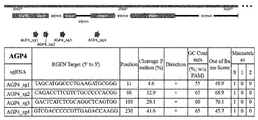
- Figure 8a Chlamydomonas lane and AGP (ADP glucose pyrophosphorylase) of hard tiahyi showing the location and features of the four sgRNA table for the target gene, Figure 8b on two AGP mutants generated by the DNA-free RGEN RNP It is the result of confirming the target DNA sequence change of the actual AGP gene position.
- AGP ADP glucose pyrophosphorylase
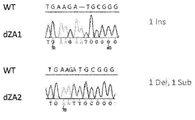
- Figures 9a and 9b shows the sequence information on the gene of each AGP Chlamydomonas lane hard tiahyi dZA1 dZA2 mutant and mutant. Red-colored sequences refer to sequences inserted, deleted, or substituted in the mutant strain, respectively.
- dZA2 mutant strain 11 is a wild type Chlamydomonas lane hard tiahyi cw15, dZA1 mutants, the result confirmed the growth characteristics of dZA2 mutant strain in accordance with an embodiment of the invention: that represents the (number of cells per volume, cells / ml) growth curve over time graph.
- Figure 12a, 12b, 12c and 12d shows the result of analysis of the wild type Chlamydomonas lane hard tiahyi cw15, Chlamydomonas lane hard tiahyi mutant dZA1, coloring matters dZA2 according to one embodiment of the invention: 12a.
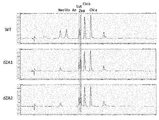
- HPLC analysis graph showing the profile of the pigment of each strain (neo: neoxanthin, vio: violaxanthin), an: antheraxanthin, lut: lutein, zea: zeaxanthin ), chl a: Chlorophyll a (chlorophyll a), chl b: Chlorophyll b (chlorophyll b); 12b.A graph confirming the content of each strain's pigment (lutein and zeaxanthin); 12c.Content of lutein over time (weight per volume) , mg/L) analysis graph; 12d.A graph confirming the content of zeaxanthin over time (weight per volume, mg/L).
- Figure 13a and 13b is a comparison of the lipid-producing properties of the wild type Chlamydomonas lane hard tiahyi cw15, dZA1 mutants and mutant dZA2 according to one embodiment of the invention graph: 13a. TAG lipid content analysis result using Nile red solution; 13b. Total lipid content analysis by organic solvent extraction (g/L).
- the present invention relates to a Chlamydomonas reinhardtii mutant.
- Chlamydomonas reinhardtia of the present invention is a single-celled green algae (Chlorophyta), eukaryotic that is distributed in various environments such as fresh water and the ocean, and has a doubling time of 6-8 hours. In addition, it is one of the most widely used microalgae model systems, and can be produced in a bioreactor.
- the mutant strain of the present invention can be produced by knocking out the ZEP ( Zeaxanthin epoxidase ) gene and AGP ( ADP glucose pyrophosphorylase ) gene by using RGNE RNPs and CRISPR gene scissors technology rather than general mutagenesis.
- the mutant strain of the present invention may include a mutation at a specific position of the Zeaxanthin epoxidase ( ZEP ) gene and ADP glucose pyrophosphorylase ( AGP ) gene.
- mutants of the present invention can be identified through mutation sites of the ZEP ( Zeaxanthin epoxidase ) gene and AGP ( ADP glucose pyrophosphorylase ) gene. , It is possible to produce mutant strains from wild-type Chlamydomonas Reinhardtii microalgae.
- ZEP Zeaxanthin epoxidase
- AGP ADP glucose pyrophosphorylase
- variation indicates that the base sequence is changed by insertion, deletion, or substitution of the base in the original base sequence.
- insertion variation occurs when some bases are inserted between the original base sequences.
- the number of bases to be inserted may be different depending on the variation, and thus is not limited.
- deletion variation refers to a variation in which the base is absent from the original base sequence
- substitution variation means that the original base is replaced with another base without changing the number in the original base sequence.
- Mutants of the invention may include Chlamydomonas lane hard tiahyi some base inserted mutation inserted between the 816th nucleotide and the 817th nucleotide in the ZEP gene sequence (Chlamydomonas reinhardtii) as shown in SEQ ID NO: 1, through this, ZEP gene can be knocked out.
- the wild type Chlamydomonas lane hard tiahyi Chlamydomonas reinhardtii
- SEQ ID NO: 1 The gene sequence represented by SEQ ID NO: 3;
- the mutant strain of the present invention is adenine (A) between the 816 th base and the 817 th base in the ZEP gene sequence (SEQ ID NO: 1);
- it may include a ZEP gene mutation is inserted nucleotide sequence represented by SEQ ID NO: 5.
- mutants of the present invention is inserted into a portion base between at AGP gene sequence of Chlamydomonas lane hard tiahyi (Chlamydomonas reinhardtii) as shown in SEQ ID NO: 2116th nucleotide and 117th nucleotide, deletion and / or a substituted variation It may contain, and through this it can knock out the AGP gene.
- the wild type Chlamydomonas lane hard tiahyi Chlamydomonas reinhardtii
- AGP gene sequence of cw15 SEQ ID NO: 2) adenine (A) between the 116th nucleotide and the 117th nucleotide in the inserted or;
- Variants containing deletions of the 115th base and AGP gene mutations in which the 116th base was substituted with thymine (T) were prepared, and it was confirmed that the AGP gene was effectively knocked out in each of the above mutants.
- the present invention has a very large technical feature in that an AGP gene knockout variant can be obtained when a mutation occurs between the 115th base and the 117th base in the AGP gene sequence of SEQ ID NO:2.
- the mutant strain is inserted between the 116th base and the 117th base in the AGP gene sequence (SEQ ID NO: 2), adenine (A);
- the 115th base may be deleted, and the 116th base may include a genetic variation substituted with thymine (T).
- the mutant strain of the present invention may include the mutated AGP gene of SEQ ID NO: 9 or SEQ ID NO: 10.
- the mutant strain of the present invention may include ZEP and AGP gene mutations at the same time.
- the mutant strain of the present invention is a mutated ZEP gene represented by SEQ ID NO: 4, SEQ ID NO: 6, or SEQ ID NO: 8; And a mutated AGP gene represented by SEQ ID NO: 9 or SEQ ID NO: 10.
- the ZEP gene variant of SEQ ID NO: 8; And a ZEP / AGP double gene knockout variant strain comprising the AGP gene variant represented by SEQ ID NO: 9 was designated as dZA1 (double ZEP / AGP mutant 1), and the ZEP gene variant of SEQ ID NO: 8; And a double gene knockout mutant strain comprising the AGP gene variant represented by SEQ ID NO: 10 was designated as dZA2 (double ZEP / AGP mutant 2).
- the present inventors have also said is deposited with the one selected a mutant Chlamydomonas rain hard tiahyi double ZEP / AGP mutant 1 (dZA1 ) mutant October 15th 2018 at Korea Research Institute of Bioscience and Biotechnology Biological Resource Center (KCTC), accession number KCTC 13659BP was granted.
- KCTC Chlamydomonas rain hard tiahyi double ZEP / AGP mutant 1
- the vegetable oil derived from the mutant strain of the present invention can provide an oil having a higher content of xanthophyll-based pigments having antioxidant properties such as lutein and zeaxanthin than oils derived from wild-type strains, high functionality, and improved storage stability. In that sense, it is more industrially utilized.
- the mutant strain comprising the double knockout of the present invention has a fast growth rate compared to a wild-type strain, and can be used very effectively to produce or provide microalgae-derived materials on an industrial scale.
- the mutants of the present invention are viable in dim light and can be specifically cultured under light conditions ranging from 10 to 2,000 ⁇ mol photons/m 2 s. Photosynthesis is not possible in complete darkness, where the mutant is less than the light-light condition, and the cell may be damaged by light stress in the light condition that is too high.
- the mutant strain of the present invention is cultivated under the above conditions, there is an advantage of having a high growth rate while having a high content of xyaxanthin in the mutant strain.
- the mutant strain of the present invention can grow appropriately in a growth environment (brightness condition, temperature condition, medium, etc.) capable of culturing normal Chlamydomonas reinhardtia algae.
- a growth environment (brightness condition, temperature condition, medium, etc.) capable of culturing normal Chlamydomonas reinhardtia algae.
- it has excellent lipid-producing ability even at low luminosity, and it can be used industrially as a vegetable oil-producing microorganism due to its fast cell growth rate, and its density in the colony is relatively low compared to other algae even under high luminosity, which makes it possible to It has the effect of excellent pigment production efficiency.
- the Chlamydomonas reinhardtiai wild type produced little xyanthin, but the mutant strain of the present invention can produce xiaxanthin unlike the wild type, and has a lipid production capacity of 10 to 20% or more and a fast growth rate of 20% or more. Therefore, it is very suitable as a vegetable oil producing strain.
- the mutant strain of the present invention can be cultured according to the culture conditions of the general Chlamydomonas rainhardtia , and specifically, a culture medium capable of culturing algae under weak light conditions can be used.
- a culture target that is, it contains a nutritional substance required by a microorganism that becomes a culture medium, and a substance for a specific purpose may be added and mixed.
- the medium is also referred to as a culture medium or a culture medium, and is a concept including both natural medium, synthetic medium, or selective medium.
- the Chlamydomonas rainhardtii mutant can be cultured according to a conventional culture method.
- the mutant strain of the present invention may be cultured with a photosynthetic medium, HS medium or TAP medium, and may further include a carbon source.
- a photosynthetic medium for example, it may be cultured with a photosynthetic medium, HS medium or TAP medium, and may further include a carbon source.
- the mutant strain of the present invention in the culture composition composition environment of Table 1 or Table 2 in the Examples of the present invention, it was confirmed that the mutant strain of the present invention has excellent production capacity of the vegetable oil with enhanced antioxidant pigment content.
- the pH of the culture medium is not particularly limited as long as Chlamydomonas Reinhardthia is a viable and growable range, for example, pH 6 or higher, specifically pH 6 to pH 9, and pH 7.0 or higher to pH 8.0 or lower. It can have an optimal growth rate.
- the mutant strain of the present invention can be produced by directly introducing RGEN RNP into a target sequence in a ZEP gene and an AGP gene using CRISPR gene scissors technology.
- the Chlamydomonas reinhardtia mutant strain of the present invention can accumulate a xanthine xanthophyll-based pigment and lipid in cells with high content, so that the pigment or lipid containing the pigment derived from the mutant of the present invention is food, feed, It can be effectively used as a raw material for medicines.
- the present invention provides a culture of the Chlamydomonas Reinhardtia mutant.
- the present invention provides a composition comprising at least one selected from the group consisting of the Chlamydomonas Reinhardthia mutant and cultures thereof.
- the composition may be a cosmetic composition, food composition, food additive composition, feed composition, feed additive composition, pharmaceutical composition, food raw material composition, feed raw material composition or pharmaceutical raw material composition.
- culture refers to a medium in which a specific microorganism has been cultured, that is, a medium after cultivation, wherein the culture includes a residue derived from the Chlamydomonas rainhardtii mutant or after removing the mutant after culturing it. All inclusive.
- the culture of the present invention includes all of the concentrate, drying, and extract of the culture medium after the culture, followed by concentration, drying and extraction of the culture medium.
- the culture may include by-products thereof, the formulation is not limited, and may be, for example, liquid or solid.
- the medium is a liquid or solid substance containing nutrients required by a microorganism to be cultured, that is, a culture target to cultivate a characteristic microorganism, and a substance for special purposes may be further added and mixed.
- the medium is also called a culture medium or a culture medium, and includes both natural and synthetic media.
- the medium is a concept including both a complete medium or a selective medium.
- the pH of the medium may be a range in which the Chlamydomonas Reinhardtia mutants can be grown , for example, pH 6 or higher, preferably pH 6 to pH 9.
- the present invention relates to a composition
- a composition comprising at least one selected from the group consisting of a strain of Chlamydomonas reinhardtiai, a culture of the mutant, a dried product of the mutant or culture, and an extract thereof.
- the mutant strain of the present invention has the property of generating xanthophyll-based pigments and lipids containing zeaxanthin and accumulating in the body.
- the composition may be a vegetable oil composition.
- the Chlamydomonas Reinhardtii mutant As a result of measuring the content of xyaxanthin in the total pigment per cell of the Chlamydomonas Reinhardtii wild-type bird, the Chlamydomonas Reinhardtii mutant, the wild type in the case of the Chlamydomonas Reinhardtii mutant Compared with, it was confirmed that the content of xyaxanthin in the pigment was remarkably high and the lipid production capacity was also excellent (FIGS. 12B, 13A and 13B ).
- the composition may be used as a raw material for food or feed, and may be used as an oral administration or an oral administration preparation. As an example, it may be used as a formulation for oral or injection administration. Therefore, the composition of the present invention may be a composition for oral administration in that the composition or the composition containing the extract may be supplied orally contained in food, medicine or feed.
- oral preparations can obtain tablets or tablets of sugars by blending the active ingredient with a solid excipient and then grinding it and adding a suitable adjuvant to the granular mixture.
- excipients examples include sugars including lactose, dextrose, sucrose, sorbitol, mannitol, xylitol, erythritol and maltitol, and starches including cellulose starch, wheat starch, rice starch and potato starch, cellulose, etc. Fillers such as cellulose, gelatin, polyvinylpyrrolidone and the like may be included, including methyl cellulose, sodium carboxymethylcellulose and hydroxypropylmethyl-cellulose. In addition, if necessary, cross-linked polyvinylpyrrolidone, agar, alginic acid or sodium alginate may be added as a disintegrant.
- the composition may be used for promoting human and animal health.
- the mutant strain of the present invention since the mutant strain of the present invention has the ability to produce a vegetable oil with an enhanced antioxidant pigment content, it does not perform well in acidification, and it can provide an oil having superior antioxidant activity, etc., than vegetable oil derived from conventional microalgae. , It can be effectively used as a raw material for health functional food, feed or pharmaceuticals.
- the composition may be added to the food or feed to achieve a special purpose use, in this aspect it may be a food composition, food additive composition, feed composition or feed additive composition.
- the composition is used in feed or food, it is possible to maintain or enhance the health of the body by pigments and lipids, including zeaxanthin produced by the Chlamydomonas Reinhardtia mutant and accumulated in cells.
- "for additives” includes all components that are added to the food or feed in addition to the main raw material, and specifically, it is an active active material having functionality in food or feed, or food and drug safety added for coloring, preservation, etc. in processed foods It may be a food additive defined by the agency.
- the food may be a health functional food. More specifically, it may be a health functional food for eye health.
- composition for food or food additives may further include other active ingredients in a range that does not impair the activity of the Chlamydomonas Reinhardtii mutant of the present invention, the culture of the mutant, the dried product thereof and the extract thereof.
- additional components such as a carrier may be further included.
- the composition for feed may be prepared in the form of fermented feed, blended feed, pellet form, and silage.
- the fermentation feed includes the Chlamydomonas Reinhardthia mutant strain of the present invention, the dried cells of the mutant strain, the culture of the mutant strain and extracts thereof, and may additionally be prepared by including various microorganisms or enzymes.
- the blended feed may be prepared by mixing various types of general feed, the mutant strain of the present invention, the dried cells of the mutant strain, the culture of the algae, and extracts thereof.
- Feed in the form of pellets may be prepared by formulating the fermented feed or blended feed into a pellet machine.
- Silage can be prepared by mixing a cultivar feed with a Chlamydomonas Reinhardtii mutant, a dry cell of the mutant, a culture of the mutant and/or an extract thereof, but the use of the composition of the present invention is not limited thereto. .
- the composition is mixed with a carrier and a fragrance commonly used in the food or pharmaceutical field, and tablets, troches, capsules, elixirs, syrups, powders , It can be prepared and administered in the form of a suspension (suspension) or granules (granule).
- a carrier a binder, a lubricant, a disintegrant, an excipient, a solubilizer, a dispersant, a stabilizer, a suspending agent, etc. can be used.
- oral, parenteral or application methods may be used, but preferably, oral administration is preferred.
- the dosage can be appropriately selected according to the absorbance of the active ingredient in the body, the rate of inactivation and excretion, the age, sex, and condition of the recipient.
- the pH of the composition can be easily changed depending on the manufacturing conditions, such as a drug and food used in the composition.
- the composition is 0.001 to 99.99% by weight of any one selected from the group consisting of Chlamydomonas Reinhardtii mutants, cultures of the mutants, dried products of the mutants or cultures, and extracts of the mutants or cultures based on the total weight of the composition. It may contain 0.1 to 99% by weight, the content of the active ingredient can be appropriately adjusted according to the method of use and purpose of the composition.
- the Chlamydomonas Reinhardtia mutant may be included in the composition in its own or dried form, and the culture of the algae may be included in the composition in a concentrated or dried form.
- the dried material refers to the dried form of the algae or its culture, and may be in the form of a powder prepared by lyophilization.
- the extract is obtained by extracting from a strain of Chlamydomonas reinhardtii of the present invention, a culture medium or a dried product thereof, an extract using a solvent, etc., obtained by crushing the Chlamydomonas reinhardtii mutant of the present invention Includes.
- the pigment accumulated in the cells of the Chlamydomonas reinhardthia mutant of the present invention may be extracted and separated by physical or chemical methods.
- the extraction process can be carried out by a conventional method, for example, by adding an extraction solvent and homogenizing, crushing the cells to extract the target pigment. After extraction, the algae crushed material is removed by centrifugation, and the extraction solvent can be removed by distillation under reduced pressure. In addition, it may further include a conventional purification process. Since the pigment has an insoluble property in water, it can be more easily extracted from the algae of the present invention.
- Chlamydomonas lane hard tiahyi mutant strain of the present invention because of the high production capability of the xanthophylls, in particular Jia xanthine at a low light intensity, the mutants and compositions comprising thereof, a by-product is improved physical activity, body Functional Oil and degradation prevention effect
- the xanthophyll pigment is known to have a macular degeneration inhibitory effect, antioxidant, anti-cancer effect, etc.
- the composition of the present invention is for maintaining physical health, specifically Xanthophyll pigment and unsaturated fatty acids may be used as a raw material included in food, health functional food, medicine or feed for the purpose of maintaining, preventing or improving deterioration of body functions.
- another object of the present invention is to provide a method for producing vegetable oil using the Chlamydomonas Reinhardtia mutant of the present invention.
- the production method may include culturing the Chlamydomonas reinhardthia mutant strain of the present invention.
- another object of the present invention is to provide a method for producing a raw material for a drug, food, or feed, comprising culturing the mutant strain of Chlamydomonas reinhardthia of the present invention.
- Cells using the mutant strain of the present invention have a high growth rate, so that a target material can be quickly recovered, and have a high content of xanthine production capacity and lipid production capacity, so that the storage period is long and effectively utilized to provide vegetable oils with excellent antioxidant activity. It has a very big advantage in that it can.
- the production method may further include, after the culturing step, separating the Chlamydomonas lanehardtia mutants of the present invention from the culture.
- the isolated algae may be subjected to further processing steps including drying.
- the production method may further include; separating the lipid from the culture of the strain of Chlamydomonas reinhardthiai of the present invention. Separation of the lipid may be performed using a known method for separating metabolites from microalgae. Since it is characterized by excellent in the ability to produce xanthophyll-based pigments having lipids and antioxidants produced from the mutants of Chlamydomonas Reinhardtia of the present invention, it is not limited to the above-known methods. Examples include an enzyme method, an ultrasonic extraction method, and a mechanical extraction method, but are not limited thereto.
- the culture can be performed in a medium of pH 6.0 to 8.0. In addition, it can be carried out under weak light conditions, specifically light conditions in the range of 10 to 2,000 ⁇ mol photons/m 2 s.
- the pigment production ability is excellent even at a low light intensity, which can increase the amount of zeaxanthin in the body, and thus, it is possible to achieve excellent zeaxanthin accumulation without administering high-intensity energy. It can be used effectively.
- the production method may further include a concentration step of increasing the content of algae after cultivation, and a drying step of drying by further reducing the moisture of the algae after the concentration step.
- concentration step or the drying step is not necessarily required, and can be generally performed using a concentration and drying method and a machine commonly used in the field to which the present invention pertains.
- the production method may further include the step of purifying the material separated from the culture, which may be performed by a conventional purification method in the art.
- the vegetable oil after each step can be used as a raw material for food, health functional food, cosmetics or pharmaceuticals.
- the vegetable oil production method of the present invention may be performed by employing other methods within a range not impairing the effects of the present invention.
- the contents of the mutant strain and composition may also be applied to the production method of the present invention.
- the present invention is to subject to Chlamydomonas lane hard tiahyi 810 to 820th bases in the sequence of the gene ZEP (Chlamydomonas reinhardtii) as shown in SEQ ID NO: 1 as the target mutant gene ZEP; And oil production including the ZEP gene and the AGP gene mutation, which comprises the in AGP gene sequence of Chlamydomonas lane hard tiahyi (Chlamydomonas reinhardtii) as shown in SEQ ID NO: 2, the 100 to 120th nucleotide in the target of mutation the AGP gene an increased Chlamydomonas lane hard tiahyi (Chlamydomonas reinhardtii) mutant there is provided a method for producing ability.
- the present invention provides the use of the above mutant strains for producing food, feed, food raw materials, or feed raw materials.
- the present invention provides the use of the above mutant strains for preparing cosmetic, coloring, oil, or raw materials thereof.
- the contents of the mutant strain and composition may be applied to the production method and use of the present invention.
- the mutation is a single guide RNA containing the sequence of the target gene; cell (single guide RNA sgRNA) expression of polynucleotides and not shown climb with a recombinant vector containing the mRNA encoding the Cas proteins Pseudomonas lane hard tiahyi to (Chlamydomonas reinhardtii) It may be performed by transforming.
- the mutation is Chlamydomonas lane adenine (A) between the hard tiahyi 816th nucleotide and 817th nucleotide sequence of the gene from ZEP (Chlamydomonas reinhardtii) as shown in SEQ ID NO: 1; The base sequence represented by SEQ ID NO: 3; Or ZEP mutation is a nucleotide sequence shown in SEQ ID NO: 5 is inserted, and SEQ ID NO: 2 Chlamydomonas lane hard tiahyi adenine between the 116th nucleotide and the 117th nucleotide in the AGP gene sequence (Chlamydomonas reinhardtii) (A represented by ) Inserted;
- the 115th base deletion and the 116th base may include those with ZEP gene and AGP gene variation, which include AGP gene variation substituted with thymine (T).
- the microalgae are free from the risk of GMO because they do not contain an external gene, and the vegetable oil extracted from the microalgae of the present invention has xanthophylls such as lutein and zeaxanthin having antioxidant activity Since the pigment content is high, the oil has excellent preservation and stability, it can be effectively used in industries such as food, medicine, and cosmetics.
- cultivation of clomidomonas algae was performed according to the following medium and culture conditions, unless otherwise specified.
- culture was performed by supplying 5% CO 2 in a minimal medium, HS medium.
- a minimal medium HS medium.
- the medium having the composition shown in Table 1 was autoclaved and autoclaved, cells were grown in a vigorous growth stage to grow to a concentration of 10 6 cells/mL in the culture medium to start growth.
- the culture vessel was supplied with air using a glass column as shown in FIG. 11, and air was supplied from the bottom (Bubble).
- acetic acid was added to the TAP medium and cultured.
- the culture vessel was cultured in a large volume using a glass flask or bottle, as shown in FIG. 12, and stirred using a magnetic bar. Fluorescent lamps were used to provide light with a light intensity of 70 uE.
- Example 2 Using the CRISPR gene scissors technology (CRISPR-Cas9 RNP) ZEP Gene knockout Chlamydomonas mutant production
- sgRNAs Five sgRNAs were carefully designed within half of the coding sequence region of the ZEP gene, which differs from any other target sites by 3 nucleotides (nt) in the whole genome and has an out-of-frame score higher than 66.
- 'CDS (coding sequence) position' refers to the relative position of the cleavage point in the RNA transcript.
- Direction + is the same direction as the target sequence, that is, the same sequence is the sequence of RGEN,-is the target sequence and the reverse direction, that is, the sequence that is coupled to the target sequence (target sequence) is complementary to each other (reverse complement) Means sequence.
- 'Out-of-frame Score' refers to the possibility of frameshift-induced deletion that occurs when broken double-stranded DNA is repaired by a microhomology-mediated end joining (MMEJ) pathway.
- MMEJ microhomology-mediated end joining
- '# of the target-off site' refers to the number of mismatched sequences throughout the entire genome.
- Cas9 protein recombinant Cas9 protein was expressed using E.coli , and then purified and prepared.
- the chlamydomonas cells were placed in a 50 ml flask at 25° C. using the TAP medium of Table 2 to provide light using a fluorescent lamp with a light intensity of 70 uE, and cultured by shaking at 90 rpm.
- the concentration of the cells was measured using a spectrophotometer, and cells at a time of actively culturing at 0.3 to 0.5 at OD 750 were used.
- the front 20 bp is a portion that binds the target sequence of DNA, and the rest of the sequence is complexed with Cas9 protein. Sequence to make, the front 20 bp depends on the target sequence, depends on the target sequence in Table 3) and nuclease-free water, and incubated at room temperature for 10 minutes.
- the bound RNPs complex is a Biorad Gene Pulser Xcell TM Electroporation System in a 4 mm electroporation cuvette with 50 x 10 4 wild-type Chlamydomonas Reinhardtii cw15 mt (CC-4349) cells.
- CC-4349 Chlamydomonas Reinhardtii cw15 mt cells.
- gDNA was extracted after incubation in dark conditions for 12 hours, and analyzed by targeted deep sequencing (targeted deep sequencing), some 2000
- the cells were diluted and plated on a TAP agar plate to obtain a single colony.
- 3A and 3B are results of confirming the mutation of the ZEP gene induced by RGEN-RNPs by target deep sequencing.
- 3B is a result of deep sequencing of a target, and after transforming experiments using RNP, when all cells are collected and gDNA is extracted and analyzed, all mutations occurring in the DNA strand of the target site are analyzed for the pattern and frequency (frequency) ).
- FIG. 3B shows patterns of mutations actually identified at the target site through deep sequencing of the target. Since a large size change such as insertion of 42 bp or more is difficult to find using the principle of deep sequencing of the target, a single colony actually obtained (single colony) may be different from the variation.
- the red circles in FIG. 6A indicate putative ZEP knockout mutants grown on TAP agar medium under weak light (50 ⁇ mol photons/m 2 s) conditions.
- NPQ/4 images were measured with Imaging PAM (Walz).
- Single cell colonies of wild type (WT) and ⁇ ZEP mutants were grown on minimal agar medium under weak light (50 ⁇ mol photons/m 2 s) conditions (FIGS. 6A and 6B ).
- Three mutant strains ( ⁇ Z1 , ⁇ Z2 , ⁇ Z3 ) with increased macular pigment content among the colonies thus identified were selected, and the target DNA sequence changes of the actual ZEP gene positions in three ZEP mutants generated by RGEN RNPs was confirmed through Sanger sequencing (FIGS. 2A, 2B and 2C).
- Chlamydomonas rain hard tiahyi ZEP mutation 1 ( ⁇ Z1) to (Chlamydomonas reinhardtii ZEP mutant 1 ( ⁇ Z1)) in the mutant Korea Research Institute of Bioscience and Biotechnology Biological Resource Center (KCTC) was named 2017 It was deposited on March 22, 2014, and was given accession number KCTC 13230BP.
- mutant Z1 was used for double gene correction.
- Example 3 Climadomonas using the CRISPR gene scissors technique (CRISPR-Cas9 RNP) AGP ( ADP glucose pyrophosphorylase ) Gene knockout Chlamydomonas mutant production
- sgRNA was constructed using Cas-Designer (www.rgenome.net) to construct four sgRNAs that induce microhomology-driven frame shift mutations.
- the four sgRNAs designed to target the AGP gene are shown in Table 4 below (see Table 3 for the meaning of each item).
- AGP4 RGEN Target (5' to 3') Position Cleavage Position (%) Direction GC Contents Out of frame score Mismatches sgRNA (%, w/o PAM) 0
- sgRNA eg, SEQ ID NO: 15
- the front 20 bp is a portion that binds to the target sequence of DNA, the rest of the sequence is Cas9 protein and The sequence for making the complex, the front 20 bp depends on the target sequence, depends on the target sequence in Table 3) was mixed in nuclease-free water and incubated at room temperature for 10 minutes.
- the bound RNP complex was transformed using a Biorad Gene Pulser Xcell TM Electroporation System (Voltage 600V, Capacity 50uF) in a 4mm electroporation cuvette with 50 x 10 4 Chlamydomonas cells. After conversion, after incubation for 12 hours in dark conditions, gDNA was extracted and analyzed by deep sequencing. Some were diluted with 2000 cells and plated on TAP agar plates to obtain a single colony.
- FIG. 7 shows the gene information and target sequence of AGP of wild-type Chlamydomonas Reinhardtia birds.
- Figure 8b is a result of confirming the target DNA sequence changes of the actual AGP gene position in two variants.
- 9A and 9B show target DNA sequence changes of AGP gene positions in the dZA1 and dZA2 mutants selected through the gene correction confirmed through Sanger sequencing.
- 10A is a photograph comparing the color of the wild-type Chlamydomonas strain and the ZEP /AGP double knockout mutants of the present invention generated by CRISPR-Cas9 RNP at the same concentration.
- the starch discoloration reaction using a Lugol solution in a nitrogen-depleted environment of cells was compared to confirm whether AGP knockout was well performed.
- the ZEP /AGP double knockout mutants rapidly increase the number of cells per volume compared to the wild type.
- the dZA1 mutant showed a rapid growth rate of 20% compared to wild-type birds.
- Example 5 ZEP/AGP Analysis of lipid and pigment content of mutant strains of gene knockout
- the cell pigment profile of each strain was analyzed using HPLC.
- the separated single colonies were cultured in TAP medium for 70 days in 70 ⁇ mol photons/m 2 s conditions, and specific culture conditions were performed as in the culture conditions of Example 1.
- the harvested algae were analyzed by extracting the pigment using 90% acetone and centrifuging the supernatant again using a nylon filter and injecting it in HPLC. Specifically, in order to separate the pigment, the total flow rate of the solvent was set to 1.2 mL per minute, and Tris of pH 8.0 was uniformly reduced from 84% to 0% of acetonitrile from 0 to 15 minutes, Methanol and ethyl acetate started at 2% and increased to 68% and 32%, respectively, until the 15th minute.
- the ratio of the solvent was maintained for 3 minutes (15 minutes to 18 minutes), then returned to the ratio at the beginning of each solvent for 1 minute (18 minutes to 19 minutes), followed by the remaining 6 minutes Maintained and post-run.
- the pump used was Shimadzu LC-20A Prominence, and the column was Watera Spherisorb TMS5 (DS1 4.6 x 250 mm, 5 ⁇ m Cartridge Column, USA), and the column temperature was maintained at 40°C.
- the detector used a photodiode array detector (photodiode array detector: SPD-M20A, Shimadzu) to analyze the data, and carotenoid pigments, including zeaxanthin, were detected at 445 nm and chlorophyll a at 670 nm. DHL (Agern Alle, Horsholm) , Denmark) The concentrations were determined using standard curves quantifying carotenoids and chlorophyll a and b purchased as standards.
- Figure 12a is a graph analyzing the pigment profile of wild-type (WT) strains and dZA1 and dZA2 mutants ( ZEP / AGP double knockout mutants generated by CRISPR-Cas9 RNP), and Figure 12b shows the content of lutein and zeaxanthin per cell. It is a comparison graph. In the wild-type strain, the content of zeaxanthin is almost non-existent, but in the mutant strain according to the present invention, it can be confirmed that the content of zeaxanthin in the cell was significantly increased. In addition, the contents of lutein and zeaxanthin per volume were checked over time, and are shown in FIGS. 12C and 12D, respectively.
- mutant strains of the present invention have different mycological characteristics in wild-type strain and pigment production capacity.
- the lipid content of wild type and mutant strains of the present invention was analyzed in a nitrogen-depleted environment.
- the lipid content of wild-type strains and dZA1 and dZA2 mutants was measured using a Nile Red staining solution capable of measuring TAG (Triacylglycerol) (FIG. 13A), and the content of total cell lipids extracted using an organic solvent extraction method was measured. (FIG. 13B).
- the dZA1 and dZA2 mutants of the present invention have an improved lipid production capacity of about 10 to 20% or more compared to the wild type. It can be seen that the content of antioxidant pigments such as lutein and zeaxanthin is also high and has excellent properties.
Landscapes
- Life Sciences & Earth Sciences (AREA)
- Chemical & Material Sciences (AREA)
- Engineering & Computer Science (AREA)
- Health & Medical Sciences (AREA)
- Organic Chemistry (AREA)
- Genetics & Genomics (AREA)
- Zoology (AREA)
- Biotechnology (AREA)
- Wood Science & Technology (AREA)
- Bioinformatics & Cheminformatics (AREA)
- Microbiology (AREA)
- Molecular Biology (AREA)
- Biomedical Technology (AREA)
- Biochemistry (AREA)
- General Engineering & Computer Science (AREA)
- General Health & Medical Sciences (AREA)
- Polymers & Plastics (AREA)
- Food Science & Technology (AREA)
- Oil, Petroleum & Natural Gas (AREA)
- Mycology (AREA)
- Medicinal Chemistry (AREA)
- Biophysics (AREA)
- Chemical Kinetics & Catalysis (AREA)
- Physics & Mathematics (AREA)
- Plant Pathology (AREA)
- Animal Husbandry (AREA)
- Nutrition Science (AREA)
- General Chemical & Material Sciences (AREA)
- Botany (AREA)
- Physiology (AREA)
- Veterinary Medicine (AREA)
- Gastroenterology & Hepatology (AREA)
- Proteomics, Peptides & Aminoacids (AREA)
- Birds (AREA)
- Epidemiology (AREA)
- Animal Behavior & Ethology (AREA)
- Public Health (AREA)
- Tropical Medicine & Parasitology (AREA)
- Virology (AREA)
- Cell Biology (AREA)
Abstract
본 발명은 개선된 오일 생산능을 갖는 신규 클라미도모나스 균주에 관한 것으로, 본 발명의 균주는 종래 균주와 비교해서 지질 생산능이 우수하고, 세포 생장 속도가 빨라 식물성 오일과 같은 미세조류 내 유용한 성분을 제공하는 균주로서 유용한 균학적 특성을 갖는다. 특히, 세포 내 루테인 및 지아잔틴 등의 항산화 색소 함량이 높아 안정성 및 보존 기간 등이 향상된 식물성 오일을 제공할 수 있어, 식물성 오일을 활용할 수 있는, 식품, 의약품 및 화장품 등의 산업에서 효과적으로 사용될 수 있다.
Description
본 발명은 항산화 색소 함량이 증진된 식물성 오일 생산능을 갖는 미세조류 및 이의 용도에 관한 것으로, 구체적으로 상기 미세조류를 포함하는 조성물 및 상기 미세조류를 이용하여 식물성 오일을 생산하는 방법에 관한 것이다.
필수지방산인 리놀레산(오메가-6)과 α-리놀레산(오메가-3)은 반드시 식품을 통해 섭취해야 한다. 이들 필수지방산은 인체 내에서 성장을 담당하며 피부의 재생, 생식, 적혈구 구조를 유지하고 눈의 망막, 중추신경계의 세포막 구조의 생성과 유지에 중요한 역할을 하고 있다. 이러한 필수지방산은 동물성 오일과 식물성 오일을 통해서 섭취할 수 있다.
동물성 오일은 동물성 지방이 원료로, 포화지방의 함량이 높으며, 육류 지방, 버터, 치즈, 마요네즈, 크림, 코코아, 가공기름, 라면 등에 많이 포함되어 있다. 포화지방은 인체 피하지방층의 일부를 이루며 적당량의 피하지방은 반드시 필요하나, 콜레스테롤과 합성하는 성질이 있어 과다 섭취할 경우 몸에 나쁜 저밀도 콜레스테롤 수치를 높이고 심혈관 질환이나 뇌졸중 발병 위험을 높인다. 동물성 오일 중에서도 어유는 불포화 지방산의 함량이 높고, DHA와 EPA를 포함하는 오메가-3가 풍부하나, 어유 또한 보관 및 산폐의 문제가 있으며 오메가-3의 주요 원료를 쓰이는 참치, 연어 등 대형 어종에는 환경오염으로 인해 고농도의 수은, 다이옥신, 폴리염화비닐 등과 같은 독소가 함유에 따른 어유의 안정성 문제 및 어족자원 고갈로 인한 공급의 문제가 있어, 불포화 지방산의 안정적이고 새로운 공급 방안을 모색할 필요가 있다.
불포화 지방산의 다른 공급원으로 시판되는 콩기름, 카놀라유, 옥수수기름, 홍화유 등과 같은 식물성 오일이 있다. 다만, 식물성 오일은 다중불포화지방산(polyunsaturated fatty acd)의 함량이 높기 때문에 제조나 보관 과정에서 쉽게 산화(oxidized)가 일어나고 그 결과로 자유라디칼 즉, 활성산소가 만들어지는 문제가 있다. 산화된 지방은 몸속에 들어가면 염증을 유발하고 세포의 변화를 초래하며 동맥 속 콜레스테롤을 산화, 산패시켜 혈관 질환을 일으킨다.
이러한 문제점을 해결하기 위해, 액체상태인 식물성 지방을 수소를 첨가해 인위적으로 고체상태의 경화유로 만드는 방법이 모색되었다. 그러나, 마가린과 같은 대표적인 경화유는 가공 과정에서 몸에 해로운 것으로 알려진 트랜스 지방이 생성되는 문제를 가지고 있다. 또한, 우리가 흔하게 섭취하는 식용유(콩기름, 옥수수기름, 해바라기씨 기름 등)에는 매우 많은 양의 오메가-6 지방산이 함유되어 있는데, 식생활을 통한 과도한 섭취로 인해 체내의 오메가-3와 오메가-6의 비율을 무너뜨려 지속적인 염증 유발등의 건강 문제를 야기하고 있다. 또한, 이러한 고등식물로부터 얻는 식물성 오일은 작물의 상업적 대량생산으로 인한 원료의 GMO, 농약 오염 문제에서도 자유로울 수 없다는 문제를 안고있다.
또 다른 시도로, 식물성 오일의 대체 공급원으로 미세조류가 주목을 받고 있다. 미세조류로부터 추출된 식물성 오일은 다른 유래의 오일에는 없는 우수한 지방산 프로필을 갖는다. 구체적으로, 단일 불포화 지방의 양이 올리브 오일이 한 스푼 당 9.9 g인데 비해 13g으로 높으며, 포화 지방의 함량은 올리브 오일(14%), 캐놀라 오일(7%), 코코넛 오일(87%)과 비교해서, 미세조류에는 와 비교해서, 4% 수준으로 매우 낮다. 또한, 미세조류에서 추출한 오일은 어유와 마찬가지로 풍부한 EPA와 DHA로 구성된 오메가-3 지방산을 함유하고 있어, 어유의 휼륭한 대체제이자 오메가-3 지방산의 원천으로 사용될 가능성을 갖는다.
그러나, 미세조류 오일도 역시 불포화 지방산의 함량이 높아 산폐되기 쉬운 문제를 가지고 있으며, 이러한 단점을 보완하기 위해 많은 연구 및 시도가 있었다. 일 예로, 올리브유는 비타민E 등의 항산화제를 포함하고 있어 보존 기간이 다른 식물성 오일에 비해 더 길다는 보고가 있다. 미세조류에서도 이와 같이, 산폐가 나타나는 문제를 해결할 수 있다면, 오일의 형태로 다양한 식품, 화장품 및 의약품 분야에서 활용될 수 있을 것이다. 따라서, 미세조류로부터 얻어지는 식물성 오일의 저장기간 등의 특성을 향상시키기 위한 새로운 측면에서의 접근이 필요하다.
본 발명의 목적은 기능적으로 우수한 식물성 오일, 특히 불포화 지방산 함량이 높은 식물성 오일을 산업적 규모에서 안정적이고 효율적으로 제공하기 위해서, 개선된 지질생산능을 갖는 신규한 균주 및 이를 이용한 조성물 및 식물성 오일 생산방법을 제공하기 위한 것이다.
상기한 목적을 달성하기 위해서, 본 발명자들은 외부 DNA를 도입시키지 않고, 유전자 가위를 이용해서 항산화 색소의 함량이 증진된 식물성 오일을 생산하는 신규 클라미도 모나스 균주를 개발하였고, 이를 이용한 식물성 오일 생산방법을 확인하여 본 발명을 완성하였다. 특히, 본 발명의 변이주는 잔토필계 색소로서, 지아잔틴 생성능을 갖는다는 점에서 야생형 균주와 차별적 성질을 가지며, 상기 색소 외에 지질생산능도 야생형 균주와 비교해서 우수하고, 세포의 생장속도가 빨라, 식물성 오일을 제공하는 균주로서 산업적으로 매우 유리한 특성을 갖는다.
이러한 측면에서, 본 발명은 서열번호 1로 표시되는 클라미도모나스 레인하드티아이(Chlamydomonas reinhardtii)의 ZEP 유전자 서열에서 816번째 염기와 817번째 염기 사이에 아데닌(A); 서열번호 3으로 표시되는 염기서열; 또는 서열번호 5로 표시되는 염기서열이 삽입된 ZEP 유전자 변이, 및 서열번호 2로 표시되는 클라미도모나스 레인하드티아이(Chlamydomonas reinhardtii)의 AGP 유전자 서열에서 116번째 염기와 117번째 염기 사이에 아데닌(A)삽입되거나; 또는 115번째 염기가 결실되고, 116번째 염기가 티민(T)으로 치환된 AGP 유전자 변이를 포함하는 클라미도모나스 레인하드티아이(Chlamydomonas reinhardtii) 변이주를 제공한다.
상기 변이주는 상기 변이주는 야생형 균주와 비교해서 개선된 지질생산능 및 지아잔틴(zeaxanthin) 및 루테인(lutein)을 생산능을 가지는 것을 특징으로 하는 것 일 수 있다.
또한, 본 발명은 상기 변이주의 배양물을 제공한다.
또한, 본 발명은 상기 변이주 및 이의 배양물로 이루어진 군에서 선택된 하나 이상을 포함하는 화장료 조성물을 제공한다.
또한, 본 발명은 상기 변이주 및 이의 배양물로 이루어진 군에서 선택된 하나 이상을 포함하는 식품 또는 식품첨가제용 조성물 을 제공한다.
또한, 본 발명은 상기 변이주 및 이의 배양물로 이루어진 군에서 선택된 하나 이상을 포함하는 사료 또는 사료첨가제용 조성물을 제공한다.
또한, 본 발명은 상기 변이주를 배양하는 것을 포함하는 식물성 오일 생산방법을 제공한다.
또한, 상기 식물성 오일은 불포화 지방산을 다량으로 포함하고 있다는 측면에서, 본 발명은 상기 변이주를 배양하는 것을 포함하는 불포화 지방산 생산방법을 제공한다.
또한, 본 발명은 상기 변이주를 배양하는 것;을 포함하는 식품 또는 사료의 원료 생산방법을 제공한다.
또한, 본 발명은 식품, 사료, 식품 원료, 또는 사료 원료를 제조하기위한 상기 변이주의 용도를 제공한다.
또한, 본 발명은 서열번호 1로 표시되는 클라미도모나스 레인하드티아이(Chlamydomonas reinhardtii)의 ZEP 유전자 서열에서 800번째 염기 내지 820번째 염기를 표적으로하여 유전자를 변이시키는 것, 및 서열번호 2로 표시되는 클라미도모나스 레인하드티아이(Chlamydomonas reinhardtii)의 AGP 유전자 서열에서 100 내지 120번째 염기를 표적으로하여 AGP 유전자를 변이시키는 것을 포함하는 ZEP 유전자 및 AGP 유전자 변이를 포함하는 오일 생산능이 증가된 클라미도모나스 레인하드티아이(Chlamydomonas reinhardtii) 변이주를 제조하는 방법을 제공한다.
상기 유전자의 변이는 유전자를 표적하는 서열을 포함하는 단일 가이드 RNA(single guide RNA; sgRNA) 발현시키는 폴리뉴클레오티드 및 Cas 단백질을 코딩하는 mRNA를 포함하는 재조합 벡터로 클라미도모나스 레인하드티아이(Chlamydomonas reinhardtii) 세포를 형질전환하여 수행될 수 있다.
상기 유전자 변이는 서열번호 1로 표시되는 클라미도모나스 레인하드티아이(Chlamydomonas reinhardtii)의 ZEP 유전자 서열에서 816번째 염기와 817번째 염기 사이에 아데닌(A); 서열번호 3으로 표시되는 염기서열; 또는 서열번호 5로 표시되는 염기서열이 삽입된 ZEP 유전자 변이와, 서열번호 2로 표시되는 클라미도모나스 레인하드티아이(Chlamydomonas reinhardtii)의 AGP 유전자 서열에서 116번째 염기와 117번째 염기 사이에 아데닌(A)삽입되거나; 115번째 염기 결실 및 116번째 염기가 티민(T)으로 치환된 AGP 유전자 변이를 포함하는 것인 ZEP 유전자 및 AGP 유전자 변이를 포함할 수 있다.
본 발명을 통해 미세조류 클라미도모나스 레인하드티아이에서 외부 DNA의 도입이 없는 ZEP 유전자와 AGP 유전자를 동시에 녹아웃 시킬 수 있는 변이 위치를 밝히고, 이에 따라 동시 녹아웃을 포함하는 새로운 변이주를 개발하였다. 상기 부위의 변이를 포함하는 변이주의 세포 특성을 확인한 결과 산업적으로 유용한 색소인 지아잔틴 생산량의 현저한 증가와 동시에 개선된 지질 생산능을 가지며, 야생형 클라미도모나스 균주와 비교해서 세포 성장속도가 빨라, 산업적으로 미세조류를 이용한 유용 물질을 제공하는데 유리한 특성을 갖는다. 특히, 본 발명의 신규 미세조류는 외부 유전자를 포함하지 않아 GMO의 위험으로부터 자유롭고, 본 발명의 미세조류로부터 추출된 식물성 오일에는 항산화 활성을 갖는 루테인 및 지아잔틴과 같은 잔토필계 색소 함량이 높아, 오일의 보존성 및 안정성이 우수하므로 식품, 의약품 및 화장품 등의 산업에서 효과적으로 활용될 수 있다.
도 1은 본 발명의 일 실시예에 따라 ZEP 및 AGP 유전자 교정된 클라미도모나스 변이주의 제작 방법에 대한 전반적인 기술을 설명하는 도이다.
도 2a, 2b 및 2c는 각각 클라미도모나스 레인하드티아이 변이주 ΔZ1의 ZEP 유전자 정보(2a), 클라미도모나스 레인하드티아이 변이주 ΔZ2의 ZEP 유전자 정보(2b) 및 클라미도모나스 레인하드티아이 변이주 ΔZ3의 ZEP 유전자 정보(2c)를 나타낸다.
도 3a 및 3b는 DNA-free RGEN RNP에 의해 유도된 ZEP 유전자의 돌연변이를 나타낸 것이다[3a: 각 sgRNA에 대한 RGEN-트랜스펙션된 세포 및 야생형의 돌연변이 (삽입 및 결실; indel) 빈도가 표적화된 심층 서열화(Targeted deep sequencing)에 의해 측정되었다. Indel 빈도는 약 0.46%까지 측정되었다. 3b: a의 표적화된 심층 서열화(Targeted deep sequencing) 분석 결과에서 관찰된 가장 효율이 높은 세 번째 sgRNA로부터 얻어진 대표적인 돌연변이체 DNA 서열(RGEN3) 표적화된 심층 서열화(Targeted deep sequencing) 분석으로 타겟 서열에서 확인된 다양한 indel 패턴을 확인한 결과이다, PAM 서열의 3nt 상류에서 나타났다.
도 4는 DNA-free RGEN RNPs에 의해 발생된 세 개의 ZEP 돌연변이체에서 실제적인 ZEP 유전자 위치의 표적 DNA 서열 변화를 생어 분석법(Sanger sequencing)을 통해 확인한 결과를 나타낸다[a: 야생형(wildtype), b: ZEP mutant 1(ΔZ1), c: ZEP mutant 2(ΔZ2) d. ZEP mutant 3 (ΔZ3)].
도 5는 본 발명의 일 실시예에서 사용된 Cas9 단백질 서열을 나타낸다.
도 6a, 6b 및 6c는 클라미도모나스 레인하드티아이 cw15 야생형 미세조류, 클라미도모나스 레인하드티아이 변이주 ΔZ1, ΔZ2, ΔZ3의 형태적인 특성을 나타내는 사진이다[6a: ZEP 유전자 녹아웃을 연구하기 위한 수백 개의 콜로니들에 대한 클로로필(Chl) 형광의 측정, 6b: 한천이 들어간 고체 TAP 배지에서 콜로니(Colony) 상태로 배양된 사진, 6c: HS 배지에서 액체 배양한 후 동일한 농도(OD750=1)로 맞췄을 때의 상태를 보여주는 사진].
도 7은 야생형 클라미도모나스 레인하드티아이 cw15의 AGP(ADP glucose pyrophosphorylase) 유전자의 서열정보를 나타낸다.
도 8a는 클라미도모나스 레인하드티아이의 AGP(ADP glucose pyrophosphorylase) 유전자를 표적하기 위한 네 개의 sgRNA의 위치 및 특징을 보여주는 표이고, 도 8b는 DNA-free RGEN RNP에 의해 발생된 두 개의 AGP 변이주에서 실제적인 AGP 유전자 위치의 표적 DNA 서열 변화 확인한 결과이다.
도 9a 및 9b는 각각 클라미도모나스 레인하드티아이 dZA1 변이주와 dZA2 변이주의 AGP 유전자에 대한 서열정보를 나타낸다. 붉은색으로 표시된 서열은 각각 변이주에 삽입(insertion), 결실(deletion) 또는 치환(substitution)된 서열을 의미한다.
도 10은 야생형 클라미도모나스 레인하드티아이 cw15, dZA1 변이주, dZA2 변이주의 형태적인 특성을 확인한 결과이다: a. 액체배지(TAP)에서 배양 후 동일한 농도로 맞췄을 때의 색 표현형 비교; b. 3일간 질소 고갈 후 동일 농도에서 루골 용액에 반응 시켰을 때 전분(Starch)에 의한 변색반응.
도 11은 본 발명의 일 실시예에 따라 야생형 클라미도모나스 레인하드티아이 cw15, dZA1 변이주, dZA2 변이주의 생장 특성을 확인한 결과이다: 시간에 따른 성장곡선(부피 당 세포 수, cells/ml)을 나타내는 그래프.
도 12a, 12b, 12c 및 12d는 본 발명의 일 실시예에 따라 야생형 클라미도모나스 레인하드티아이 cw15, 클라미도모나스 레인하드티아이 변이주 dZA1, dZA2의 색소를 분석한 결과를 나타낸다: 12a. 각 균주의 색소의 프로파일을 나타내는 HPLC 분석 그래프(neo: 네오잔틴(neoxanthin), vio: 비올라잔틴(violaxanthin), an: 안테라잔틴(antheraxanthin), lut: 루테인(lutein), zea: 지아잔틴(zeaxanthin), chl a: 엽록소 a(chlorophyll a), chl b: 엽록소 b(chlorophyll b); 12b. 각 균주의 색소(루테인 및 지아잔틴) 함량을 확인한 그래프; 12c. 시간에 따른 루테인의 함량(부피당 무게, mg/L) 분석 그래프; 12d. 시간에 따른 지아잔틴의 함량(부피당 무게, mg/L)을 확인한 그래프.
도 13a 및 13b는 본 발명의 일 실시예에 따라 야생형 클라미도모나스 레인하드티아이 cw15, dZA1 변이주 및 변이주 dZA2의 지질 생산 특성을 비교한 그래프이다: 13a. Nile red solution을 이용한 TAG 지질 함량 분석 결과; 13b. 유기 용매 추출법을 통한 전체 지질 함량 분석 (g/L).
본 발명은 다양한 변경을 가할 수 있고 여러 가지 형태를 가질 수 있는 바, 이하에서 기술하는 특정 실시예 및 설명은 본 발명의 이해를 돕기 위한 것일 뿐, 본 발명을 특정한 개시 형태에 대해 한정하려는 것이 아니다. 본 발명의 범위는 본 발명의 사상 및 기술 범위에 포함되는 모든 변경, 균등물 내지 대체물을 포함하는 것으로 이해되어야 한다.
이하, 본 발명을 실시예에 의해 상세히 설명한다.
본 발명은 클라미도모나스 레인하드티아이(Chlamydomonas reinhardtii) 변이주에 관한 것이다.
본 발명의 클라미도모나스 레인하드티아이는 단세포 녹조류(Chlorophyta)로서 민물, 해양 등의 다양한 환경에 분포하는 진핵생물이며, 6~8시간의 분열시간(doubling time)을 가진다. 또한, 가장 널리 보급되어 있는 미세조류 모델 시스템들 중 하나로, 바이오리액터에서 생산이 가능하다.
본 발명의 변이주는 일반적인 돌연변이 처리가 아닌 RGNE RNPs, 크리스퍼 유전자 가위 기술을 이용하여 ZEP(Zeaxanthin epoxidase) 유전자와 AGP(ADP glucose pyrophosphorylase) 유전자를 이중으로 녹아웃시켜 제작될 수 있다. 이러한 측면에서, 본 발명의 변이주는 ZEP(Zeaxanthin epoxidase) 유전자와 AGP(ADP glucose pyrophosphorylase) 유전자의 특정 위치에서 변이를 포함하는 것 일 수 있다. 크리스퍼 유전자 가위 기술을 이용하는 경우 원하는 유전자의 위치에 특이적으로 유전자 녹아웃이 가능하므로, 본 발명의 변이주는 ZEP(Zeaxanthin epoxidase) 유전자와 AGP(ADP glucose pyrophosphorylase) 유전자의 변이 위치를 통해서 특정될 수 있고, 야생형 클라미도모나스 레인하드티아이 미세조류로부터 변이주의 생산이 가능하다.
본 발명에서 "변이"란 원래의 염기서열에 염기의 삽입, 결실, 또는 치환 등에 의하여 염기서열이 달라지는 것을 나타내는 것으로, 구체적으로 "삽입 변이"란 일부의 염기가 원래의 염기서열 사이로 삽입되어 발생되는 변이를 의미하는 것으로, 상기 삽입되는 염기의 개수는 변이에 따라 상이할 수 있고, 이에 따라 제한되지 않는다. "결실 변이"란 원래의 염기서열에서 염기가 없어지는 변이를 의미하며, "치환 변이"란 원래의 염기서열에서 수의 변화 없이 원래의 염기가 다른 하나의 염기로 바뀌는 것을 의미한다.
본 발명의 변이주는 서열번호 1로 표시되는 클라미도모나스 레인하드티아이(Chlamydomonas reinhardtii)의 ZEP 유전자 서열에서 816번째 염기와 817번째 염기 사이에 일부 염기가 삽입된 삽입 변이를 포함할 수 있고, 이를 통해서 ZEP 유전자를 녹아웃 시킬 수 있다.
본 발명은 일 실시예에서, 야생형 클라미도모나스 레인하드티아이(Chlamydomonas reinhardtii) cw15의 ZEP 유전자 서열(서열번호 1)에서 816번째 염기와 817번째 염기 사이에 아데닌(A); 서열번호 3으로 표시되는 염기서열; 또는 서열번호 5로 표시되는 염기서열이 삽입된 ZEP 유전자 변이를 포함할 수 있고, 상기 각 변이주에서 ZEP 유전자가 효과적으로 넉아웃 된 것을 확인하였다. 따라서, 본 발명의 변이주는 ZEP 유전자 서열(서열번호 1)에서 816번째 염기와 817번째 염기 사이에 아데닌(A); 서열번호 3으로 표시되는 염기서열; 또는 서열번호 5로 표시되는 염기서열이 삽입된 ZEP 유전자 변이를 포함할 수 있다.
또한, 본 발명의 변이주는 서열번호 2로 표시되는 클라미도모나스 레인하드티아이(Chlamydomonas reinhardtii)의 AGP 유전자 서열에서 116번째 염기와 117번째 염기 사이에 일부 염기가 삽입, 결실 및/또는 치환된 변이를 포함할 수 있고, 이를 통해서 AGP 유전자를 녹아웃 시킬 수 있다.
본 발명은 일 실시예에서, 야생형 클라미도모나스 레인하드티아이(Chlamydomonas reinhardtii) cw15의 AGP 유전자 서열(서열번호 2)에서 116번째 염기와 117번째 염기 사이에 아데닌(A)이 삽입되거나; 115번째 염기의 결실 및 116번째 염기가 티민(T)으로 치환된 AGP 유전자 변이를 포함하는 변이주를 제조하였고, 상기 각 변이주에서 AGP 유전자가 효과적으로 녹아웃된 것을 확인하였다.
본 발명의 일 실시예서 서열번호 2의 AGP 유전자 서열에서 4개의 타겟 부위를 선정하여, sgRNA를 설계하고 이를 이용해서, Cas9을 통한 유전자 교정을 시도한 결과, 다른 타겟부위를 이용한 경우 AGP 유전자의 녹아웃이 발생하지 않았으나, 서열번호 2의 서열에서 100번째 염기부터 연속하는 20 내지 30개의 염기를 타겟으로하는 경우, 바람직하게는 115번째 염기 내지 117번째 염기 사이에 변이를 발생시킨 경우에만 AGP 유전자가 효과적으로 녹아웃되었다. 따라서, 본 발명은 상기 서열번호 2의 AGP 유전자 서열에서 115번째 염기 내지 117번째 염기 사이에 변이가 발생하는 경우 AGP 유전자 녹아웃 변이주를 얻을 수 있다는 점에 매우 큰 기술적 특징이 있다.
본 발명의 일 실시예에 따른, 변이주는 AGP 유전자 서열(서열번호 2)에서 116번째 염기와 117번째 염기 사이에 아데닌(A)삽입되거나; 서열번호 2의 AGP 유전자 서열에서 115번째 염기가 결실되고 116번째 염기가 티민(T)으로 치환된 유전자 변이를 포함할 수 있다. 구체적인 예로, 본 발명의 변이주는 서열번호 9 또는 서열번호 10의 변이된 AGP 유전자를 포함할 수 있다.
바람직하게, 본 발명의 변이주는 ZEP 및 AGP 유전자 변이를 동시에 포함하는 것 일 수 있다. 구체적으로, 서열번호 1로 표시되는 클라미도모나스 레인하드티아이(Chlamydomonas reinhardtii)의 ZEP 유전자 서열에서 816번째 염기와 817번째 염기 사이에 아데닌(A); 서열번호 3으로 표시되는 염기서열; 또는 서열번호 5로 표시되는 염기서열이 삽입된 ZEP 유전자 변이; 및 서열번호 2로 표시되는 클라미도모나스 레인하드티아이(Chlamydomonas reinhardtii)의 AGP 유전자 서열에서 116번째 염기와 117번째 염기 사이에 아데닌(A)삽입되거나; 115번째 염기가 결실되고 116번째 염기가 티민(T)으로 치환된 AGP 유전자 변이를 포함하는 클라미도모나스 레인하드티아이 변이주 일 수 있다.
보다 구체적인 예로, 본 발명의 변이주는 서열번호 4, 서열번호 6, 또는 서열번호 8로 표시되는 변이된 ZEP 유전자; 및 서열번호 9 또는 서열번호 10으로 표시되는 변이된 AGP 유전자를 포함하는 것 일 수 있다.
본 발명의 구체적인 일 실시예에서, 서열번호 8의 ZEP 유전자 변이; 및 서열번호 9로 표시되는 AGP 유전자 변이를 포함하는 ZEP/AGP 이중 유전자 녹아웃 변이주를 dZA1(double ZEP/AGP mutant 1)으로 명명하였고, 서열번호 8의 ZEP 유전자 변이; 및 서열번호 10으로 표시되는 AGP 유전자 변이를 포함하는 이중 유전자 녹아웃 변이주를 dZA2(double ZEP/AGP mutant 2)로 명명하였다.
본 발명자는 또한, 상기 선발된 변이주 중 클라미도모나스 레인하드티아이 double ZEP/AGP mutant 1(dZA1) 변이주를 한국생명공학연구원 생명자원센터(KCTC)에 2018년 10월 15일자로 기탁되어, 수탁번호 KCTC 13659BP를 부여받았다.
상기 두 변이주 모두 ZEP/AGP 이중 유전자 녹아웃이 효과적으로 이루어져 루테인 및 지아잔틴 생산과 동시에 향상된 지질 생상능을 가짐을 확인하였다. 특히, 본 발명의 변이주 유래의 식물성 오일은 루테인 및 지아잔틴과 같은 항산화능을 갖는 잔토필계 색소의 함량이 야생형 균주 유래의 오일보다 높아, 기능성이 높고, 보관 안전성성이 향상된 오일을 제공할 수 있다는 점에서 산업적으로 활용도가 더욱 높다. 또한, 본 발명의 이중 녹아웃을 포함하는 변이주는 야생형 균주와 비교해서 생장 속도가 빨라, 산업적인 규모로 미세조류 유래 물질을 생산 또는 제공하는데 매우 효과적으로 사용할 수 있다.
본 발명의 변이주는 약광(dim light)에서 생존 가능하고, 구체적으로 10 내지 2,000 μmol photons/m2s 범위의 광도 조건 하에서 배양될 수 있다. 상기 변이주가 약광 조건 이하인 완전한 어둠에서는 광합성을 할 수 없고, 너무 높은 광 조건에서는 광 스트레스에 의해 세포가 데미지를 입을 수 있다. 상기 조건에서 본 발명의 변이주를 배양하는 경우, 변이주 내 지아잔틴 함량이 높으면서도, 우수한 생장률을 갖는 장점이 있다.
본 발명의 변이주는 통상의 클라미도모나스 레인하드티아이 조류를 배양할 수 있는 생장환경(광도 조건, 온도 조건, 배지 등) 내에서 적절한 성장을 할 수 있다. 또한, 낮은 광도에서도 우수한 지질 생산능을 가지며, 세포 생장속도도 빨라 식물성 오일 생산 미생물로 산업적으로 효과적으로 사용될 수 있고, 고광도 하에서도 군집 내의 밀도가 다른 조류와 비교해서 상대적으로 낮아, 단일 세포 내 광합성에 의한 색소 생산 효율이 우수한 효과를 갖는다. 구체적으로 클라미도모나스 레인하드티아이 야생형은 지아잔틴을 거의 생산하지 못하였으나, 본 발명의 변이주는 야생형과 달리 지아잔틴을 생산할 수 있고, 10 내지 20% 이상의 지질 생산능 및 20% 이상의 빠른 생장속도를 가지므로, 식물성 오일 생산 균주로서 매우 적합하다.
본 발명의 변이주는 일반적인 클라미도모나스 레인하드티아이의 배양 조건에 따라 배양할 수 있고, 구체적으로 약한 광도 조건에서 조류를 배양할 수 있는 배양 배지를 사용할 수 있다. 특정 미생물을 배양하기 위하여 배양대상 즉 배양체가 되는 미생물이 필요로 하는 영양물질을 포함하는 것으로 특수한 목적을 위한 물질이 추가로 첨가되어 혼합된 것일 수 있다. 상기 배지는 배양기 또는 배양액이라고도 하며, 천연 배지, 합성 배지 또는 선택 배지를 모두 포함하는 개념이다. 상기 클라미도모나스 레인하드티아이 변이주는 통상의 배양방법에 따라 배양할 수 있다. 예를 들면, 광합성 배지인 HS 배지 또는 TAP 배지로 배양할 수 있으며, 탄소원을 추가로 포함할 수 있다. 일 구현예에 있어서, 본 발명의 실시예 내 표 1 또는 표 2의 배양액 조성환경에서, 본 발명의 변이주가 항산화 색소 함량이 증진된 식물성 오일의 우수한 생산능을 가짐을 확인하였다.
상기 배양배지의 pH는 클라미도모나스 레인하드티아이가 생존 및 성장 가능한 범위라면 특별히 제한되지 않고, 일 예로 pH 6 이상, 구체적으로 pH 6 내지 pH 9에서 생존가능하며, pH 7.0 이상 내지 pH 8.0 미만에서 최적의 성장률을 가질 수 있다.
본 발명의 변이주는 크리스퍼 유전자 가위 기술을 이용하여 ZEP 유전자 및 AGP 유전자 내 타겟 서열에 직접 RGEN RNP로 도입함으로써 제작할 수 있다.
본 발명의 클라미도모나스 레인하드티아이 변이주는 세포 내에 지아잔틴 잔토필계 색소 및 지질을 고함량으로 축적할 수 있어, 본 발명의 변이주 유래의 상기 색소 또는 상기 색소를 포함하는 지질을 식품, 사료, 의약품 등의 원료로 효과적으로 사용될 수 있다.
이러한 측면에서, 본 발명은 상기 클라미도모나스 레인하드티아이 변이주의 배양물을 제공한다.
또한, 본 발명은 상기 클라미도모나스 레인하드티아이 변이주 및 이의 배양물로 이루어진 군에서 선택된 하나 이상을 포함하는 조성물을 제공한다. 상기 조성물은 화장료 조성물, 식품 조성물, 식품 첨가제용 조성물, 사료 조성물, 사료 첨가제용 조성물, 의약 조성물, 식품 원료 조성물, 사료의 원료 조성물 또는 의약 원료 조성물 일 수 있다.
본 발명에서 "배양물"이란 특정 미생물이 배양된 배지, 즉 배양 후 배지를 의미하는 것으로, 상기 배양물은 상기 클라미도모나스 레인하드티아이 변이주를 포함하거나 또는 이를 배양한 후 변이주를 제거한 잔여물을 모두 포함한다. 본 발명의 배양물은 배양 후 배양배지를 농축, 건조, 추출한 배양물의 농축물, 건조물 및 추출물을 모두 포함한다. 또한, 상기 배양물은 그의 부산물을 포함할 수 있고, 그 제형이 한정되지 아니하며, 일 예로 액체 또는 고체일 수 있다.
상기 배지는 특성 미생물을 배양하기 위하여 배양대상 즉 배양체가 되는 미생물이 필요로 하는 영양물질을 포함하는 액체 또는 고형의 물질로, 특수한 목적을 위한 물질이 추가로 첨가되어 혼합될 수 있다. 상기 배지는 배양기 또는 배양액이라고도 하며, 천연배지 또는 합성배지를 모두 포함한다. 또한, 상기 배지는 완전배지 또는 선택배지를 모두 포함하는 개념이다. 상기 배지의 pH는 클라미도모나스 레인하드티아이 변이주가 생장 가능한 범위일 수 있고, 일 예로 pH 6 이상, 바람직하게는 pH 6 내지 pH 9 일 수 있다.
또한, 본 발명의 클라미도모나스 레인하드티아이 변이주, 상기 변이주의 배양물, 상기 변이주 또는 배양물의 건조물 및 이의 추출물로 이루어진 군에서 선택된 하나 이상을 포함하는 조성물에 관한 것이다.
본 발명의 변이주는 지아잔틴을 포함하는 잔토필계 색소 및 지질을 생성하여 체내 축적하는 특성을 가지는 바, 이러한 측면에서 상기 조성물은 식물성 오일 조성물일 수 있다.
본 발명의 일 실시예에 따라, 클라미도모나스 레인하드티아이 야생형 조류, 클라미도모나스 레인하드티아이 변이주 각 세포당 총 색소 내 지아잔틴의 함량을 측정한 결과, 클라미도모나스 레인하드티아이 변이주의 경우 야생형과 비교해서 색소 중 지아잔틴의 함량이 현저하게 높고, 지질 생산능도 우수한 것을 확인할 수 있었다(도 12b, 도 13a 및 도 13b).
상기 조성물은 식품 또는 사료의 원료로 사용될 수 있고, 경구 투여 또는 경구 외 투여 제제로 사용될 수 있다. 일 예로, 경구 또는 주사제 투여를 위한 제제로 사용될 수 있다. 따라서, 본 발명의 조성물은 상기 조성물 또는 추출물을 포함하는 조성물은 식품, 의약품 또는 사료 등에 포함되는 경구로 공급될 수 있다는 점에서 경구 투여용 조성물일 수 있다.
경구 투여용 조성물의 경우, 분말, 과립, 정제, 환제, 당의정제, 캡슐제, 액제, 겔제, 시럽제, 슬러리제, 현탁액 등으로 당업계에 공지된 방법을 이용하여 제형화된 경구용 제제에 포함될 수 있다. 예를 들어, 경구용 제제는 활성성분을 고체 부형제와 배합한 다음 이를 분쇄하고 적합한 보조제를 첨가한 후 과립 혼합물로 가공함으로써 정제 또는 당의 정제물을 수득할 수 있다. 적합한 부형제의 예로는 락토즈, 덱스트로즈, 수크로즈, 솔비톨, 만니톨, 자일리톨, 에리스리톨 및 말티톨 등을 포함하는 당류와 옥수수 전분, 밀 전분, 쌀 전분 및 감자 전분 등을 포함하는 전분류, 셀룰로즈, 메틸 셀룰로즈, 나트륨 카르복시메틸셀룰로오즈 및 하이드록시프로필메틸-셀룰로즈 등을 포함하는 셀룰로즈류, 젤라틴, 폴리비닐피롤리돈 등과 같은 충전제가 포함될 수 있다. 또한, 경우에 따라 가교결합 폴리비닐피롤리돈, 한천, 알긴산 또는 나트륨 알기네이트 등을 붕해제로 첨가할 수 있다.
상기 조성물은 인간 및 동물의 건강 증진을 위한 용도로 사용될 수 있다. 구체적으로 본 발명의 변이주는 항산화 색소 함량이 증진된 식물성 오일 생산능을 가지므로 산폐가 잘 되지 않고, 기능성으로 항산화 활성 등이 종래의 미세조류 유래의 식물성 오일보다 우수한 오일을 제공할 수 있어, 식품, 건강기능식품, 사료 또는 의약품 등의 원료로서 효과적으로 이용될 수 있다.
또한, 상기 조성물은 식품 또는 사료에 특별한 목적 용도를 달성하기 위하여 첨가될 수 있으므로, 이러한 측면에서 식품 조성물, 식품첨가제용 조성물, 사료 조성물 또는 사료첨가제용 조성물일 수 있다. 상기 조성물이 사료 또는 식품에 사용되는 경우, 클라미도모나스 레인하드티아이 변이주에 의해 생산되고 세포에 축적된 지아잔틴을 비롯한 색소 및 지질에 의하여 체내 건강을 유지 또는 강화할 수 있다.
본 발명에서 "첨가제용"은 식품 또는 사료에 주원료가 외에 첨가되는 구성이라면 모두 포함되며, 구체적인 예로 식품 또는 사료에서 기능성을 갖는 유효 활성물질 또는 가공식품에서 착색, 보존 등을 위해 첨가되는 식품 의약품 안전처에서 정의하고 있는 식품첨가물일 수 있다. 상기 식품은 건강 기능성 식품일 수 있다. 보다 구체적으로, 눈 건강을 위한 건강 기능성 식품일 수 있다.
상기 식품용 또는 식품첨가제용 조성물; 또는 사료용 또는 사료첨가제용 조성물은 본 발명의 클라미도모나스 레인하드티아이 변이주, 상기 변이주의 배양물, 이의 건조물 및 이의 추출물의 활성을 해치지 않는 범위에서 다른 유효성분을 더 포함할 수 있다. 또한, 담체 등의 부가 성분을 더 포함할 수 있다.
본 발명에서 사료용 조성물은 발효사료, 배합사료, 펠렛형태 및 사일레지(silage) 등의 형태로 제조될 수 있다. 상기 발효사료는 본 발명의 클라미도모나스 레인하드티아이 변이주, 상기 변이주의 건조 균체, 상기 변이주의 배양물 및 이의 추출물을 포함하고, 추가적으로 여러 가지 미생물 균 또는 효소들을 포함하여 제조할 수 있다. 상기 배합사료는 여러 종류의 일반 사료와 본 발명의 변이주, 상기 변이주의 건조 균체, 상기 조류의 배양물 및 이의 추출물을 포함하여, 혼합하여 제조될 수 있다. 펠렛 형태의 사료는 상기 발효사료 또는 배합사료를 펠렛기로 제형화하여 제조될 수 있다. 사일레지는 청예사료와 클라미도모나스 레인하드티아이 변이주, 상기 변이주의 건조 균체, 상기 변이주의 배양물 및/또는 이의 추출물을 혼합하여 제조될 수 있으나, 본 발명의 조성물의 사용이 이에 제한되는 것은 아니다.
상기 조성물은 식품 또는 약제학적 분야에서 통상적으로 사용하는 담체 및 향료와 혼합하여 정제 (tablet), 트로키(troche), 캡슐(capsule), 엘릭실(elixir), 시럽(syrup), 산제 (powder), 현탁제(suspension) 또는 과립제(granule) 등의 형태로 제조 및 투여될 수 있다. 담체로는 결합제, 활탁제, 붕해제, 부형제, 가용화제, 분산제, 안정화제, 현탁화제 등을 사용할 수 있다. 투여방식은 경구, 비경구 또는 도포법을 사용할 수 있으나, 바람직하게는 경구 투여하는 것이 바람직하다. 또한, 투여용량은 체내에서 활성성분의 흡수도, 불활성율 및 배설속도, 피투여자의 연령, 성별, 상태 등에 따라 적절히 선택할 수 있다. 상기 조성물의 pH는 조성물이 사용되는 약제, 식품 등의 제조조건 등에 따라서 용이하게 변경 가능하다.
상기 조성물은 조성물 총 중량에 대하여 클라미도모나스 레인하드티아이 변이주, 상기 변이주의 배양물, 상기 변이주 또는 배양물의 건조물 및 상기 변이주 또는 배양물의 추출물로 이루어진 군에서 선택된 어느 하나를 0.001 내지 99.99 중량%, 바람직하게는 0.1 내지 99 중량%로 포함할 수 있고, 상기 조성물의 사용방법 및 사용목적에 따라 유효성분의 함량을 적절히 조절할 수 있다.
상기 클라미도모나스 레인하드티아이 변이주는 그 자체 또는 건조된 형태로 조성물에 포함될 수 있고, 상기 조류의 배양물은 농축 또는 건조된 형태로 조성물에 포함될 수 있다. 또한, 상기 건조물은 상기 조류 또는 그 배양물의 건조된 형태를 의미하는 것으로, 동결건조 등에 의해 제조된 분말 형태일 수 있다.
또한, 상기 추출물은 본 발명의 클라미도모나스 레인하드티아이 변이주, 이의 배양액 또는 이의 건조물로부터 추출하여 얻어진 것을 의미하는 것으로, 용매 등을 이용한 추출물, 본 발명의 클라미도모나스 레인하드티아이 변이주를 파쇄하여 얻어진 것을 포함한다. 구체적으로 본 발명의 클라미도모나스 레인하드티아이 변이주의 세포 내에 축적된 색소를 물리적 또는 화학적 방법으로 추출 및 분리한 것일 수 있다.
상기 추출과정은 통상의 방법에 의하여 수행될 수 있고, 일 예로 추출용매를 가하고 균질화한 후, 균체를 파쇄하여 목적 색소를 추출할 수 있다. 추출 후에는 원심분리하여 조류의 파쇄물을 제거하고, 추출용매는 감압증류 등의 방법으로 제거할 수 있다. 또한 통상의 정제공정을 더 포함할 수 있다. 상기 색소의 경우 물에 녹지않는 성질을 가지므로, 본 발명의 조류로부터 더욱 용이하게 추출될 수 있다.
본 발명의 클라미도모나스 레인하드티아이 변이주는 낮은 광도에서 잔토필, 특히 지아잔틴의 우수한 생산능을 가지므로, 상기 변이주 및 이의 부산물을 포함하는 조성물은 신체 활성 향상, 체기능성 유지 및 저하 예방 효과를 가진다. 구체적으로, 상기 잔토필 색소는 황반변성 억제 효과, 항산화, 항암 효과 등이 있는 것으로 알려져 있고, 미세조류 유래 식물성 오일은 불포화 지방산을 효과적인 공급처이므로, 본 발명의 조성물은 신체건강 유지용, 구체적으로 상기 잔토필 색소 및 불포화 지방산이 관여하는 신체 기능의 유지, 저하 예방 또는 향상을 용도로 식품, 건강 기능식품, 의약품 또는 사료 등에 포함되는 원료로 이용될 수 있다.
또한, 본 발명의 다른 목적은 본 발명의 클라미도모나스 레인하드티아이 변이주를 이용한 식물성 오일 생산방법을 제공하는 것이다. 상기 생산방법은 본 발명의 클라미도모나스 레인하드티아이 변이주를 배양하는 것을 포함할 수 있다.
또한, 본 발명의 또 다른 목적은 본 발명의 클라미도모나스 레인하드티아이 변이주를 배양하는 것을 포함하는 의약품, 식품 또는 사료의 원료 생산방법을 제공하는 것이다.
본 발명의 변이주를 이용하는 세포의 생장속도가 빨라 목적 물질의 빠른 회수가 가능하고, 고함량의 지아잔틴 생산능 및 지질 생산능을 가지므로 보관 기간이 길고, 항산화 활성이 우수한 식물성 오일 제공하는데 효과적으로 활용할 수 있다는 점에서 매우 큰 장점이 있다.
또한, 상기 생산방법은 상기 배양 단계 이후에, 배양물로부터 본 발명의 클라미도모나스 레인하드티아이 변이주를 분리하는 것;을 더 포함할 수 있다. 상기 분리된 조류는 건조를 포함한 가공 단계를 더 거칠 수 있다.
또한, 상기 생산방법은 본 발명의 클라미도모나스 레인하드티아이 변이주의 배양물로부터 지질을 분리하는 것;을 더 포함할 수 있다. 상기 지질의 분리는 미세조류로부터 대사 물질을 분리하는 공지의 방법을 사용하여 수행할 수 있다. 본 발명의 클라미도모나스 레인하드티아이 변이주로부터 생산되는 지질 및 항산화능을 갖는 잔토필계 색소 생산능이 우수한데 특징이 있는 것이므로, 상기 공지된 방법에 제한되지 않는다. 일 예로 효소법, 초음파 추출법, 기계 추출법 등이 있으며 이에 한정되지 않는다.
상기 배양은 pH 6.0 내지 8.0 조건의 배지에서 수행될 수 있다. 또한, 약광 조건, 구체적으로 10 내지 2,000 μmol photons/m2s 범위의 광도 조건 하에서 수행될 수 있다. 본 발명의 클라미도모나스 레인하드티아이 변이주의 경우 낮은 광도에서도 색소 생산능이 우수하여, 체내 지아잔틴 함량을 높일 수 있는 바, 고광도의 에너지를 투여하지 않고도 우수한 지아잔틴 축적을 달성할 수 있어, 산업적으로 효과적으로 이용될 수 있다.
상기 생산방법은 배양 단계 외에, 배양 후 조류의 함량을 높이는 농축 단계, 농축 단계를 거친 조류의 수분을 더욱 감소시킴으로써 건조시키는 건조 단계를 더 포함할 수 있다. 그러나 농축단계 또는 건조 단계가 반드시 필요한 것이 아니며, 일반적으로 본 발명이 속하는 분야에서 통상적으로 사용되는 농축 및 건조 방법, 기계를 사용하여 수행할 수 있다.
상기 생산방법은 배양물로부터 분리된 물질을 정제하는 단계를 더 포함하여 수행할 수 있고, 이는 본 발명이 속하는 기술분야에서 통상의 정제방법에 의하여 수행될 수 있다.
상기 각 단계를 거친 식물성 오일은 식품, 건강기능성 식품, 화장품 또는 약제 등의 원료로 사용될 수 있다.
본 발명의 식물성 오일 생산방법은 본 발명의 효과를 해치지 않는 범위 내에서 다른 방법을 채용하여 수행될 수 있다. 상기 변이주 및 조성물에 대한 내용은 본 발명의 생산방법에도 준용될 수 있다.
또한, 본 발명은 서열번호 1로 표시되는 클라미도모나스 레인하드티아이(Chlamydomonas reinhardtii)의 ZEP 유전자 서열에서 810 내지 820번째 염기를 표적으로하여 ZEP 유전자를 변이시키는 것; 및 서열번호 2로 표시되는 클라미도모나스 레인하드티아이(Chlamydomonas reinhardtii)의 AGP 유전자 서열에서 100 내지 120번째 염기를 표적으로하여 AGP 유전자를 변이시키는 것을 포함하는 ZEP 유전자 및 AGP 유전자 변이를 포함하는 오일 생산능이 증가된 클라미도모나스 레인하드티아이(Chlamydomonas reinhardtii) 변이주를 제조하는 방법을 제공한다.
또한, 본 발명은 식품, 사료, 식품 원료, 또는 사료 원료를 제조하기 위한 상기 변이주의 용도를 제공한다.
또한, 본 발명은 화장료, 색소, 오일, 또는 이들의 원료를 제조하기 위한 상기 변이주의 용도를 제공한다.
상기 변이주 및 조성물에 대한 내용은 본 발명의 생산방법 및 용도에도 준용될 수 있다.
상기 유전자 변이는 유전자를 표적하는 서열을 포함하는 단일 가이드 RNA(single guide RNA; sgRNA) 발현시키는 폴리뉴클레오티드 및 Cas 단백질을 코딩하는 mRNA를 포함하는 재조합 벡터로 클라미도모나스 레인하드티아이(Chlamydomonas reinhardtii) 세포를 형질전환하여 수행되는 것 일 수 있다.
보다 구체적으로, 상기 유전자 변이는 서열번호 1로 표시되는 클라미도모나스 레인하드티아이(Chlamydomonas reinhardtii)의 ZEP 유전자 서열에서 816번째 염기와 817번째 염기 사이에 아데닌(A); 서열번호 3으로 표시되는 염기서열; 또는 서열번호 5로 표시되는 염기서열이 삽입된 ZEP 유전자 변이와, 서열번호 2로 표시되는 클라미도모나스 레인하드티아이(Chlamydomonas reinhardtii)의 AGP 유전자 서열에서 116번째 염기와 117번째 염기 사이에 아데닌(A)삽입되거나; 115번째 염기 결실 및 116번째 염기가 티민(T)으로 치환된 AGP 유전자 변이를 포함하는 것인 ZEP 유전자 및 AGP 유전자 변이를 포함하는 것 일 수 있다.
본 발명의 변이주 제조방법에 의하는 경우, 미세조류는 외부 유전자를 포함하지 않아 GMO의 위험으로부터 자유롭고, 본 발명의 미세조류로부터 추출된 식물성 오일에는 항산화 활성을 갖는 루테인 및 지아잔틴과 같은 잔토필계 색소 함량이 높아, 오일의 보존성 및 안정성이 우수하므로 식품, 의약품 및 화장품 등의 산업에서 효과적으로 활용될 수 있다.
이하에서, 실시예에 따라 본 발명을 더욱 상세히 설명하는바, 하기 실시예는 본 발명을 예시하는 것일 뿐, 본 발명의 내용이 하기 실시예에 의해 한정되는 것으로 해석되지 않는다.
실시예 1. 균주의 배양
본 발명의 일 실시예에서 클로미도모나스 조류의 배양은 특별히 언급하지 않는 한, 다음의 배지 및 배양조건에 따라서 수행되었다.
1-1) 독립영양 배양
광합성만을 이용하여 외부의 탄소원 공급이 없는 상태로 배양하는 독립영양 배양(Autotrophic culture)을 하는 경우 최소 배지인 HS 배지에서 5% CO2를 공급하여 배양하였다. 하기 표 1과 같은 조성을 가진 배지를 만든 뒤 오토클레이브에서 고압살균하고, 활발한 성장기(growth stage)에 있는 세포를 이용하여 배양액에 106cell/mL의 농도가 되도록 만들어 성장을 시작하였다. 배양용기는 도 11과 같이 유리로 된 컬럼(column)을 사용하여 아래에서 공기(Bubble)를 공급하고 양 옆에서 200uE의 광도로 형광등을 이용해 빛을 주었다.

2) 혼합영양 배양
광합성과 탄소원을 같이 공급하여 배양하는 혼합영양 배양(Mixotrophic culture)의 경우는 TAP 배지에서 아세트산(acetic acid)을 첨가하여 배양하였다. 하기 표 2와 같은 조성을 가진 배지를 만든 뒤 오토클레이브로 고압/살균하고, 활발한 성장기(growth stage)에 있는 세포를 이용하여 배양액에 106cell/mL의 농도가 되도록 만들어 성장을 시작하였다. 배양용기는 도 12와 같이 유리로 된 플라스크 또는 병(bottle)을 사용하여 큰 부피(volume)로 배양하였으며 자성 막대(magnetic bar)를 이용하여 저어주었다. 70uE의 광도로 형광등을 이용해 빛을 함께 주었다.

실시예 2. 크리스퍼 유전자 가위 기술(CRISPR-Cas9 RNP)을 이용한
ZEP
유전자 녹아웃 클라미도모나스 변이주 제작
클라미도모나스 레인하드티아이(Chlamydomonas reinhardtii)의 ZEP 유전자(phytozome: Cre02.g082550 또는 NCBI: AY211267.1)[https://phytozome.jgi.doe.gov/pz/portal.html#!gene?search=1&detail=1&method=4614&searchText=transcriptid:30785220; 2번 염색체 중 1244277-1250969의 위치에 존재]를 표적하기 위해 sgRNA는 Cas-Designer (www.rgenome.net)을 이용하여 미세상동성-유도된(microhomology-driven) 구조 이동 돌연변이(frame shift mutation)를 유도하는 다섯 개의 sgRNA을 디자인하였으며, 이를 In vitro 전사(transcription) 방법을 통해 합성하였다. Cas-디자이너(www.rgenome.net/cas-designer/)를 사용하여 ZEP 유전자를 표적하기 위해 제작된 다섯 개의 sgRNA의 타켓 서열은 다음 표 3과 같다.

전체 게놈에서 3 뉴클레오타이드(nt)만큼 어떠한 다른 표적 부위들과 상이하고 66보다 더 높은 프레임-외 스코어를 가진 ZEP 유전자의 코딩 서열 영역의 절반 내에서 5개의 sgRNA를 신중하게 디자인하였다. 'CDS(코딩 서열) 위치'는 RNA 전사물에서 절단 지점의 상대적인 위치를 의미한다. Direction의 +는 타겟 서열과 동일한 방향, 즉 같은 시퀀스가 RGEN의 시퀀스이며, -는 타겟 서열과 역 방향, 즉 표적 서열(target sequence)과 결합되어 있는 서열인 서로 상보적인(reverse complement)한 관계의 서열을 의미한다. '프레임-외 스코어(Out-of-frame Score)'는 깨진 이중-가닥 DNA가 미세 상동성-매개된 단부 연결(MMEJ) 경로에 의해 수선될 때 발생하는 프레임쉬프트-유도 결실의 가능성을 가리킨다. '표적-오프 부위의 #'은 전체 게놈을 통틀어 미스매치된 서열의 수를 의미한다. 타겟서열에 나머지 sgRNA 서열 (Gttttagagctagaaatagcaagttaaaataaggctagtccgttatcaacttgaaaaagtggcaccgagtcggtgc) 연결하면 전체 sgRNA를 나타낸다.
Cas9 단백질 경우 E.coli를 이용하여 재조합 Cas9 단백질(recombinant Cas9 protein)을 발현시켜 정제를 거쳐 준비하였다. 실험에 사용된 야생형 클라미도모나스 레인하드티아이 cw15 mt (CC-4349)은 Chlamydomonas Resource Center(www.chlamycollection.org)로부터 확보하였다[http://www.chlamycollection.org/product/cc-4349-cw15-mt-goodenough-330a/].
클라미도모나스 세포는 표 2의 TAP 배지를 이용해 25℃에서 50ml 플라스크에 담아 70uE의 광도로 형광등을 이용해 빛을 제공하고, 90rpm으로 흔들어 주면서(shaking) 배양하였다. 세포의 농도는 분광 광도계(spectrophotometer)를 이용하여 측정하며 OD750에서 0.3 ~ 0.5 정도의 활발히 배양 중인 시기의 세포를 사용하였다.
RNP 복합체를 만들기 위해 100㎍의 Cas9 단백질(도 5, 서열번호 13)은 70㎍의 sgRNA(서열번호 14, 앞 쪽 20bp가 DNA의 표적서열과 결합하는 부분이고, 나머지 서열은 Cas9 단백질과 복합체를 만들기 위한 서열, 앞쪽 20bp는 표적서열에 따라 표 3의 표적서열에 따라 달라짐)와 뉴클레아제-프리(nuclease-free) 물에서 섞고, 10분간 상온에서 인큐베이션 하였다. 결합된 RNPs 복합체는 50 x 104개의 야생형 클라미도모나스 레인하드티아이 cw15 mt(CC-4349) 세포와 함께 4mm 전기천공(Electroporation) 큐벳(cuvette)에서 Biorad Gene Pulser XcellTM 전기천공 시스템(Electroporation System)을 이용하여(Voltage 600V, Capacity 50uF), 전기충격을 통해 형질 전환시킨 뒤, 12시간 동안 암조건에서 인큐베이션 한 후에 gDNA를 추출하여, 표적 심층 시퀀싱(targeted deep sequencing)으로 분석하였으며, 일부는 2000개의 세포로 희석(dilution)하여 TAP 한천 평판(agar plate)에 도말하여 단일 콜로니(single colony)를 얻었다.
도 3a 및 3b는 표적 심층 시퀀싱에 의해 RGEN-RNPs에 의해 유도된 ZEP 유전자의 돌연변이를 확인한 결과이다. 가장 형질전환 효율이 높은 세 번째 sgRNA(0.456%)에 의해 유도된 단일 콜로니(single colony)를 분리하여 표적 유전자(target gene)의 돌연변이를 확인하였다. 도 3b는 표적 심층 시퀀싱의 결과로, RNP를 이용한 형질전환 실험 후 전체 세포를 모으고 gDNA를 뽑아서 분석했을 때 전체 세포를 대상으로 표적 부위의 DNA 가닥에서 일어나는 모든 변이를 분석하여 그 패턴과 빈도(frequency)를 알 수 있다. 다만, 도 3b는 표적 심층 시퀀싱을 통해 표적 부위에서 실제로 확인된 변이의 패턴들을 나타내는데, 42bp 이상의 삽입(insertion)과 같은 큰 사이즈 변화는 표적 심층 시퀀싱의 원리로는 찾아내기 어려우므로, 실제로 얻어진 단일 콜로니(single colony)의 변이와 차이가 있을 수 있다.
이렇게 ZEP 유전자 특이적 녹아웃 돌연변이체를 DNA 없는 RGEN RNP를 사용하여 생성한 후에, 페트리 디쉬에서 모든 세포에 대해 Chl 형광을 측정하였고 여러 개의 추정되는 ZEP 녹아웃 세포주를 선별하였다.
도 6a에서 적색 원형은 약광(50 μmol photons/m2s) 조건 하에서 TAP 아가 배지 상에서 성장한 추정되는 ZEP 녹아웃 돌연변이체를 가리킨다. NPQ/4 영상은 Imaging PAM(Walz)으로 측정되었다. 야생형(WT) 및 ΔZEP 돌연변이주의 단일 세포 콜로니들이 약광(50 μmol photons/m2s) 조건 하에서 최소 한천 배지 상에서 성장하였다(도 6a 및 6b). 이렇게 확인된 콜로니 중 황반색소 함량이 증가된 변이주 3개(△Z1, △Z2, △Z3)를 선별하였으며, RGEN RNPs에 의해 발생된 세 개의 ZEP 돌연변이체에서 실제적인 ZEP 유전자 위치의 표적 DNA 서열 변화를 생어 염기서열 분석(Sanger sequencing)을 통해 확인하였다(도 2a, 2b 및 도 2c).
도 6b에 나타낸 바와 같이, 동일한 조건의 광도 하에서 TAP 한천 평판에서 야생형 클라미도모나스 레인하드티아이 cw15, 그리고 변이주 △Z1, △Z2, △Z3의 콜로니가 서로 유사한 형태와 크기로 자란 것을 확인할 수 있었다. 또한, HS 배지에서 광합성을 통해 액체 배양된 세포들 경우, 같은 세포수의 농도에서 야생형 클라미도모나스 레인하드티아이 조류는 녹색을 띄는 것에 비해 변이주 △Z1, △Z2, △Z3은 풀색 톤의 유사한 녹색을 띠는 것을 확인할 수 있다(도 6c).
선발된 변이주 중 변이주 Z1는 클라미도모나스 레인하드티아이 ZEP 변이 1 (△Z1)(Chlamydomonas reinhardtii ZEP mutant 1(△Z1))로 명명하였으며, 상기 변이주는 한국생명공학연구원 생명자원센터(KCTC)에 2017년 3월 22일자로 기탁되어, 수탁번호 KCTC 13230BP를 부여 받았다.
이후, 이중 유전자 교정을 위해 변이주 Z1을 이용하였다.
실시예 3. 클라미도모나스에서 크리스퍼 유전자 가위 기술(CRISPR-Cas9 RNP)을 이용한
AGP
(
ADP glucose pyrophosphorylase
) 유전자 녹아웃 클라미도모나스 변이주 제조
AGP 유전자를 표적하기 위해 sgRNA는 Cas-Designer(www.rgenome.net)를 이용하여 미세상동성-유도된(microhomology-driven) 구조 이동 돌연변이(frame shift mutation)를 유도하는 네 개의 sgRNA를 제작하였다. AGP 유전자를 표적하기 위해 제작된 네 개의 sgRNA는 다음 표 4와 같다(각 항목의 의미는 표 3 참고).
| AGP4 | RGEN Target (5' to 3') | Position | Cleavage Position (%) | Direction | GC Contents | Out of frame Score | Mismatches | ||
| sgRNA | (%, w/o PAM) | 0 | 1 | 2 | |||||
| AGP4_sg1 | TAGCATGGCCCTGAAGATGCGGG | 100 | 4.6 | + | 55 | 48.9 | 1 | 0 | 0 |
| AGP4_sg2 | CAGACCTTCGTCTGCCCCCACGG | 149 | 12.9 | + | 65 | 68.9 | 1 | 0 | 0 |
| AGP4_sg3 | GACTCATCTCGCAGGCTCAGTGG | 229 | 20.1 | + | 60 | 70.1 | 1 | 0 | 0 |
| AGP4_sg4 | GTCGACCCCCGTTGAGACCAAGG | 393 | 41.6 | + | 65 | 45.7 | 1 | 0 | 0 |
RNP 복합체를 만들기 위해 100㎍의 Cas9 단백질(도 5, 서열번호 13)과 70㎍의 sgRNA(예: 서열번호 15, 앞 쪽 20bp가 DNA의 표적서열과 결합하는 부분이고, 나머지 서열은 Cas9 단백질과 복합체를 만들기 위한 서열, 앞쪽 20bp는 표적서열에 따라 표 3의 표적서열에 따라 달라짐)를 뉴클레아제-없는(nuclease-free) 물에서 섞고, 10분간 상온에서 인큐베이션하였다. 결합된 RNP 복합체는 50 x 104개의 클라미도모나스(Chlamydomonas) 세포와 함께 4mm 전기천공 큐벳(cuvette)에서 Biorad Gene Pulser XcellTM 전기천공 시스템(Electroporation System)을 이용하여(Voltage 600V, Capacity 50uF) 형질전환 시킨 뒤, 12시간 동안 암조건 인큐베이션 한 후에 gDNA 추출하여 딥 시퀀싱(deep sequencing)하여 분석하였다. 일부는 2000개의 세포로 희석(dilution)하여 TAP 아가 플레이트에 도말하여 단일 콜로니(colony)를 얻었다.
도 7은 야생형 클라미도모나스 레인하드티아이 조류의 AGP의 유전자 정보 및 타겟 서열을 나타낸다. 도 8b는 두 개의 변이주에서 실제적인 AGP 유전자 위치의 표적 DNA 서열 변화를 확인한 결과이다. 또한, 도 9a 및 9b에서 생어 서열분석법(Sanger sequencing)을 통해 확인한 상기 유전자 교정을 통해서 선별된 dZA1과 dZA2 변이주에서 AGP 유전자 위치의 표적 DNA 서열 변화를 보여준다.
실시예 4.
ZEP/AGP
이중 유전자 녹아웃의 변이주의 세포적 특성 분석
상기에서 단일 콜로니로 분리된 두 개의 ZEP/AGP 이중 녹아웃의 변이주(dZA1 및 dZA2)의 세포적 특성을 확인하였다.
도 10의 a는 동일한 농도에서 야생형 클라미도모나스 균주와 CRISPR-Cas9 RNP에 의해 발생한 본 발명의 ZEP/AGP 이중 녹아웃 변이주들의 색을 비교한 사진이다.
또한, 세포들의 질소고갈 환경에서 루골 용액을 이용한 전분(starch) 변색 반응을 비교하여, AGP 녹아웃이 잘 이루어졌는지 확인하였다. 질소가 충분한 배지와 질소 고갈 배지에서 각각 세포를 배양하여 건강한 상태의 세포를 획득하였다. OD750 = 1인 세포 배양액 1ml에 루골용액 1μl를 넣고, 30초 동안 세포를 균일하게 섞어준 후, 질소 조건에 따라 루골용액에 반응한 색깔을 비교하였다.
질소 고갈 조건에서 세포는 스트레스를 받아 세포 내에 전분과 지질을 축적하는데, 야생형 균주의 경우 질소 고갈 조건에서 세포 내 전분이 루골 용액으로 염색되어 보라색을 나타내는 것을 확인할 수 있다. 그러나, ZEP/AGP 이중 녹아웃 변이주들은 AGP 유전자의 녹아웃으로 인해 전분 합성이 저해되어, 질소 고갈 환경에서도 루골에 의한 변색반응이 일어나지 않았다. 따라서, 도 10의 b에 나타낸 바와같이, 본 발명의 ZEP/AGP 이중 녹아웃 변이주에서 AGP 녹아웃이 잘 된 것을 확인할 수 있다.
클라미도모나스 레인하드티아이 cw15 야생형 조류와 ZEP/AGP 이중 녹아웃 변이주의 세포 성장률을 비교하기 위해 혼합영양배지인 TAP 배지에서 50μmol photons/m2의 광도 조건에서 배양 실험을 하였다. 초기 접종 세포 수는 1x10⁶cells/ml로하고, 72시간 동안 12시간 간격으로 세포수를 측정하여 성장 곡선을 그렸다.
도 11에 나타낸 바와 같이, ZEP/AGP 이중 녹아웃 변이주들은 야생형과 비교해서 부피당 세포수가 빠르게 증가하는 것을 알 수 있다. 특히, dZA1 변이주는 야생형 조류와 비교해서 20%의 빠른 성장률을 나타내는 것을 확인할 수 있다.
실시예 5.
ZEP/AGP
이중 유전자 녹아웃의 변이주의 지질과 색소 함량 분석
본 발명의 변이주와 야생형 균주의 색소 함량의 차이를 비교하기 위해서 HPLC를 이용해 각 균주들의 세포 색소 프로파일을 분석하였다.
분리된 단일 콜로니들을 TAP 배지에서 70 μmol photons/m2s 조건으로 3일 동안 배양하였고, 구체적인 배양 조건은 실시예 1의 배양 조건과 같이 수행하였다. 수확된 조류들을 90% 아세톤을 사용하여 색소를 추출하고 원심분리한 상층액을 다시 나일론 필터를 이용하여 여과한 후 HPLC에 주입하여 분석하였다. 구체적으로, 색소를 분리하기 위해 용매의 총 유속은 분당 1.2mL로 하였고, 제0분 내지 제15분까지 pH 8.0의 Tris는 14%, 아세토니트릴은 84%로부터 0%까지 각각 균일하게 감소시키고, 메탄올과 에틸아세테이트는 2%로 시작하여 제15분까지 각각 68%, 32%까지 증가시켰다. 이후 3분 동안(제15분 내지 18분) 이 용매 비율을 그대로 유지시킨 다음, 1분 동안(제18분 내지 제19분) 각 용매의 비율을 시작할 때의 비율로 되돌린 다음 나머지 6분간 그대로 유지하며 포스트-런(postrun)을 하였다. 펌프는 Shimadzu사의 LC-20A Prominence를, 컬럼은 Watera Spherisorb TMS5(DS1 4.6 x 250 mm, 5μm Cartridge Column, USA)를 사용하였고, 컬럼의 온도는 40 ℃로 유지하였다. 검출기는 포토다이오드 어레이 검출기(photodiode array detector: SPD-M20A, Shimadzu)를 사용하여 데이터를 분석하였고, 지아잔틴을 비롯한 카로티노이드 색소들은 445nm에서, 엽록소 a는 670nm에서 검출된 결과를 DHL(Agern Alle, Horsholm, Denmark)에서 구입한 카로티노이드와 엽록소 a, b를 정량한 표준곡선을 스탠다드로 사용하여 농도를 구하였다.
도 12a는 야생형(WT) 균주와 dZA1 및 dZA2 변이주(CRISPR-Cas9 RNP에 의해 발생한 ZEP/AGP 이중 녹아웃 변이주)의 색소 프로파일을 분석한 그래프이고, 도 12b는 한 세포당 루테인 및 지아잔틴의 함량을 비교한 그래프이다. 야생형 균주에서는 지아잔틴의 함량이 거의 존재하지 않으나, 본 발명에 따른 변이주에서는 세포 내 지아잔틴의 함량이 매우 크게 증가한 것을 확인할 수 있다. 또한, 시간의 따라 부피 당 루테인 및 지아잔틴의 함량을 확인하여 도 12c 및 12d에 각각 나타내었다. 야생형 균주의 경우, 역시 지아잔틴을 전혀 생성하지 못하였고, 각 변이주에서만 시간의 경과에 따라 지아잔틴 함량이 증가하는 것을 확인할 수 있다. 따라서, 본 발명의 변이주가 야생형 균주와 색소 생산능에서 상이한 균학적 특성을 가짐을 알 수 있다.
또한, ZEP/AGP 이중 유전자 녹아웃의 변이주의 지질 생산능을 확인하기 위해서, 질소 고갈 환경에서 야생형과 본 발명의 각 변이주들의 지질 함량을 분석하였다. TAG(Triacylglycerol)을 측정할 수 있는 나일 레드 염색 용액을 이용해서 야생형 균주 및 dZA1 및 dZA2 변이주의 지질 함량을 각각 측정하였고(도 13a), 유기 용매 추출법을 이용해서 추출한 전체 세포 지질의 함량을 측정하였다(도 13b).
도 13a 및 13b에 나타낸 바와 같이, 본 발명의 dZA1 및 dZA2 변이주가 야생형과 비교해서 약 10 내지 20% 이상의 향상된 지질 생산능을 가짐을 알 수 있고, 도 12의 결과와 종합하면, 지질 내 포함된 루테인 및 지아잔틴과 같은 항산화 색소의 함량도 높아, 우수한 성질을 가짐을 알 수 있다.
[수탁번호]
기탁기관명 : 한국생명공학연구원
수탁번호 : KCTC13659BP
수탁일자 : 20181015


기탁기관명 : 한국생명공학연구원
수탁번호 : KCTC13230BP
수탁일자 : 20170322
Claims (15)
- 서열번호 1로 표시되는 클라미도모나스 레인하드티아이(Chlamydomonas reinhardtii)의 ZEP 유전자 서열에서 816번째 염기와 817번째 염기 사이에 아데닌(A); 서열번호 3으로 표시되는 염기서열; 또는 서열번호 5로 표시되는 염기서열이 삽입된 ZEP 유전자 변이, 및서열번호 2로 표시되는 클라미도모나스 레인하드티아이(Chlamydomonas reinhardtii)의 AGP 유전자 서열에서 116번째 염기와 117번째 염기 사이에 아데닌(A)삽입되거나; 115번째 염기 결실 및 116번째 염기가 티민(T)으로 치환된 AGP 유전자 변이를 포함하는 클라미도모나스 레인하드티아이(Chlamydomonas reinhardtii) 변이주.
- 제1항에 있어서,서열번호 4, 서열번호 6, 또는 서열번호 8로 표시되는 ZEP 변이 유전자; 및서열번호 9; 또는 서열번호 10으로 표시되는 AGP 변이 유전자를 포함하는 클라미도모나스 레인하드티아이 변이주.
- 제1항 또는 제2항에 있어서,상기 변이주는 야생형 균주와 비교해서 개선된 지질생산능 및 지아잔틴(zeaxanthin) 및 루테인(lutein)을 생산능을 가지는 것을 특징으로하는, 클라미도모나스 레인하드티아이 변이주.
- 제1항에 있어서,서열번호 4로 표시되는 ZEP 변이 유전자; 및서열번호 9 또는 서열번호 10으로 표시되는 AGP 변이 유전자를 포함하는 클라미도모나스 레인하드티아이 변이주.
- 제1항 내지 제4항 중 어느 한 항에 따른 변이주의 배양물.
- 제1항 내지 제4항 중 어느 한 항에 따른 변이주 및 이의 배양물로 이루어진 군에서 선택된 하나 이상을 포함하는 화장료 조성물.
- 제1항 내지 제4항 중 어느 한 항에 따른 변이주 및 이의 배양물로 이루어진 군에서 선택된 하나 이상을 포함하는 식품 또는 식품첨가제용 조성물.
- 제1항 내지 제4항 중 어느 한 항에 따른 변이주 및 이의 배양물로 이루어진 군에서 선택된 하나 이상을 포함하는 사료 또는 사료첨가제용 조성물.
- 제1항 내지 제4항 중 어느 한 항에 따른 변이주를 배양하는 것을 포함하는 식물성 오일 생산방법.
- 제9항에 있어서,상기 변이주 및/또는 상기 변이주의 배양물로부터 지질을 분리하는 것을 포함하는 식물성 오일 생산방법.
- 제1항 내지 제4항 중 어느 한 항에 따른 변이주를 배양하는 것;을 포함하는 식품의 원료 생산방법.
- 제1항 내지 제4항 중 어느 한 항에 따른 변이주를 배양하는 것;을 포함하는 사료의 원료 생산방법.
- 서열번호 1로 표시되는 클라미도모나스 레인하드티아이(Chlamydomonas reinhardtii)의 ZEP 유전자 서열에서 810 내지 820번째 염기를 표적으로하여 ZEP 유전자를 변이시키는 것; 및서열번호 2로 표시되는 클라미도모나스 레인하드티아이(Chlamydomonas reinhardtii)의 AGP 유전자 서열에서 100 내지 120번째 염기를 표적으로하여 AGP 유전자를 변이시키는 것을 포함하는 ZEP 유전자 및 AGP 유전자 변이를 포함하는 오일 생산능이 증가된 클라미도모나스 레인하드티아이(Chlamydomonas reinhardtii) 변이주를 제조하는 방법.
- 제13항에 있어서,상기 유전자의 변이는 유전자를 표적하는 서열을 포함하는 단일 가이드 RNA(single guide RNA; sgRNA) 발현시키는 폴리뉴클레오티드 및 Cas 단백질을 코딩하는 mRNA를 포함하는 재조합 벡터로 클라미도모나스 레인하드티아이(Chlamydomonas reinhardtii) 세포를 형질전환하여 수행되는 것인, ZEP 유전자 및 AGP 유전자 변이를 포함하는 오일 생산능이 증가된 클라미도모나스 레인하드티아이(Chlamydomonas reinhardtii) 변이주를 제조하는 방법.
- 제13항에 있어서,상기 유전자 변이는 서열번호 1로 표시되는 클라미도모나스 레인하드티아이(Chlamydomonas reinhardtii)의 ZEP 유전자 서열에서 816번째 염기와 817번째 염기 사이에 아데닌(A); 서열번호 3으로 표시되는 염기서열; 또는 서열번호 5로 표시되는 염기서열이 삽입된 ZEP 유전자 변이와,서열번호 2로 표시되는 클라미도모나스 레인하드티아이(Chlamydomonas reinhardtii)의 AGP 유전자 서열에서 116번째 염기와 117번째 염기 사이에 아데닌(A)삽입되거나; 115번째 염기 결실 및 116번째 염기가 티민(T)으로 치환된 AGP 유전자 변이를 포함하는 것인 ZEP 유전자 및 AGP 유전자 변이를 포함하는 오일 생산능이 증가된 클라미도모나스 레인하드티아이(Chlamydomonas reinhardtii) 변이주.
Priority Applications (1)
| Application Number | Priority Date | Filing Date | Title |
|---|---|---|---|
| US17/421,965 US12325852B2 (en) | 2019-01-09 | 2020-01-09 | Chlamydomonas mutant and use thereof |
Applications Claiming Priority (2)
| Application Number | Priority Date | Filing Date | Title |
|---|---|---|---|
| KR10-2019-0002969 | 2019-01-09 | ||
| KR1020190002969A KR102286087B1 (ko) | 2019-01-09 | 2019-01-09 | 클라미도모나스 변이주 및 이의 용도 |
Publications (1)
| Publication Number | Publication Date |
|---|---|
| WO2020145685A1 true WO2020145685A1 (ko) | 2020-07-16 |
Family
ID=71521714
Family Applications (1)
| Application Number | Title | Priority Date | Filing Date |
|---|---|---|---|
| PCT/KR2020/000394 Ceased WO2020145685A1 (ko) | 2019-01-09 | 2020-01-09 | 클라미도모나스 변이주 및 이의 용도 |
Country Status (3)
| Country | Link |
|---|---|
| US (1) | US12325852B2 (ko) |
| KR (1) | KR102286087B1 (ko) |
| WO (1) | WO2020145685A1 (ko) |
Families Citing this family (2)
| Publication number | Priority date | Publication date | Assignee | Title |
|---|---|---|---|---|
| CN117327742B (zh) * | 2023-10-12 | 2024-06-28 | 深圳大学 | 一种促进衣藻叶绿体基因组高效替换与同质化的技术方法 |
| KR20250156261A (ko) * | 2024-04-24 | 2025-11-03 | 한양대학교 산학협력단 | 케토-카로테노이드 생산능이 향상된 클라미도모나스 레인하디티 변이 균주 |
Citations (2)
| Publication number | Priority date | Publication date | Assignee | Title |
|---|---|---|---|---|
| US20130203133A1 (en) * | 2011-10-27 | 2013-08-08 | Washington University | Buoyant triacylglycerol-filled green algae and methods therefor |
| KR20170121688A (ko) * | 2016-04-22 | 2017-11-02 | 한양대학교 산학협력단 | Rgen rnp를 이용하여 개발된 클라미도모나스 변이주 및 이를 이용한 색소 생산방법 |
Family Cites Families (3)
| Publication number | Priority date | Publication date | Assignee | Title |
|---|---|---|---|---|
| US9650642B2 (en) | 2008-02-08 | 2017-05-16 | Algenol Biotech LLC | Genetically modified cyanobacteria for the production of ethanol |
| KR101134294B1 (ko) | 2010-02-22 | 2012-04-13 | 한국에너지기술연구원 | 미세조류로부터 오일 추출 및 바이오디젤 전환 방법 |
| CA3203397A1 (en) * | 2011-12-27 | 2013-07-04 | Nuseed Global Innovation Ltd | Processes for producing lipids |
-
2019
- 2019-01-09 KR KR1020190002969A patent/KR102286087B1/ko active Active
-
2020
- 2020-01-09 WO PCT/KR2020/000394 patent/WO2020145685A1/ko not_active Ceased
- 2020-01-09 US US17/421,965 patent/US12325852B2/en active Active
Patent Citations (2)
| Publication number | Priority date | Publication date | Assignee | Title |
|---|---|---|---|---|
| US20130203133A1 (en) * | 2011-10-27 | 2013-08-08 | Washington University | Buoyant triacylglycerol-filled green algae and methods therefor |
| KR20170121688A (ko) * | 2016-04-22 | 2017-11-02 | 한양대학교 산학협력단 | Rgen rnp를 이용하여 개발된 클라미도모나스 변이주 및 이를 이용한 색소 생산방법 |
Non-Patent Citations (3)
| Title |
|---|
| BAEK, KWANGRYU L: "DNA-free two- gene knockout in Chlamydomonas reinhardtii via CRISPR-Cas9 ribonucleoproteins", SCIENTIFIC REPORTS, 2016, pages 1 - 7, XP055435475, DOI: 10.1038/srep30620 * |
| LI, YANTAO: "Chiamydomonas starchless mutant defective in ADP-glucose pyrophosphorylase hyper-accumulates triacylglycerol", METABOLIC ENGINEERING, 2010, pages 387 - 391, XP027079426, DOI: 10.1016/j.ymben.2010.02.002 * |
| SIAUT MAGALI; CUINé STéPHAN; CAGNON CAROLINE; FESSLER BORIS; NGUYEN MAI; CARRIER PATRICK; BEYLY AUDREY; BEISSON FRED; TRIANTAPHY: "Oil accumulation in the model green alga Chlamydomonas reinhardtii: characterization, variability between common laboratory strains and relationship with starch reserves", BMC BIOTECHNOLOGY, vol. 11, no. 7, 21 January 2011 (2011-01-21), pages 1 - 15, XP021087838 * |
Also Published As
| Publication number | Publication date |
|---|---|
| US20220403320A1 (en) | 2022-12-22 |
| KR20200086789A (ko) | 2020-07-20 |
| US12325852B2 (en) | 2025-06-10 |
| KR102286087B1 (ko) | 2021-08-05 |
Similar Documents
| Publication | Publication Date | Title |
|---|---|---|
| US20210198680A1 (en) | Heterotrophic Production Methods for Microbial Biomass and Bioproducts | |
| US10973246B2 (en) | Chlamydomonas mutants produced using RGEN RNP and method for preparing pigment using the same | |
| AU2012285803B2 (en) | Eicosapentaenoic acid-producing microorganisms, fatty acid compositions, and methods of making and uses thereof | |
| KR102445369B1 (ko) | 미세조류로부터 기능성 오일을 추출하는 방법 및 기능성 오일을 포함하는 유화액 | |
| WO2022124590A1 (ko) | 신규한 스키조키트리움 속 균주 및 이를 이용한 다중불포화지방산 생산방법 | |
| WO2017209510A1 (ko) | 두나리엘라 변이주 및 이를 이용한 색소 생산 방법 | |
| WO2020045765A1 (ko) | 클라미도모나스 변이주 및 이의 제조방법 | |
| US12325852B2 (en) | Chlamydomonas mutant and use thereof | |
| KR102913028B1 (ko) | 신규 두나리엘라 살리나 및 이의 용도 | |
| WO2024039163A1 (ko) | 고함량의 단백질, 항산화 색소 및 오메가-3 지방산을 포함하는 바이오매스를생산하는 신규한 스키조키트리움 속 균주 및 이의 용도 | |
| AU2007357796B2 (en) | Over-production of dihomo gamma linolenic acid by a mutant strain of Parietochloris incisa | |
| KR102603612B1 (ko) | 아스타잔틴 및 루테인 생산능을 가지는 클라미도모나스속 kiost-2 균주 및 이의 배양방법 | |
| WO2025226044A1 (ko) | 케토-카로티노이드 생산능이 향상된 클라미도모나스 레인하디티 변이 균주 | |
| WO2017183936A1 (ko) | Rgen rnp를 이용한 미세조류의 교정 방법 | |
| WO2023204396A1 (ko) | 펩신 소화율이 우수한 고단백 미세조류 바이오매스, 배양 방법 및 이의 용도 | |
| WO2024150941A1 (ko) | 신규한 스키조키트리움 속 균주 및 이를 이용한 아라키돈산을 함유한 오일 생산 방법 | |
| WO2023080400A1 (ko) | 세포 내 오일 함유량이 높은 신규한 스키조키트리움 속 균주 및 이를 이용한 오메가3를 함유한 오일 생산방법 | |
| WO2026009204A1 (ko) | 조단백질 함량이 향상된 효모 돌연변이 균주 hsy-ngm-029 및 이의 제조방법 | |
| WO2019092421A1 (en) | Microorganism | |
| GB2571506A (en) | Microorganism |
Legal Events
| Date | Code | Title | Description |
|---|---|---|---|
| 121 | Ep: the epo has been informed by wipo that ep was designated in this application |
Ref document number: 20737884 Country of ref document: EP Kind code of ref document: A1 |
|
| NENP | Non-entry into the national phase |
Ref country code: DE |
|
| 122 | Ep: pct application non-entry in european phase |
Ref document number: 20737884 Country of ref document: EP Kind code of ref document: A1 |
|
| WWG | Wipo information: grant in national office |
Ref document number: 17421965 Country of ref document: US |