WO2020137759A1 - 吸収性物品 - Google Patents
吸収性物品 Download PDFInfo
- Publication number
- WO2020137759A1 WO2020137759A1 PCT/JP2019/049686 JP2019049686W WO2020137759A1 WO 2020137759 A1 WO2020137759 A1 WO 2020137759A1 JP 2019049686 W JP2019049686 W JP 2019049686W WO 2020137759 A1 WO2020137759 A1 WO 2020137759A1
- Authority
- WO
- WIPO (PCT)
- Prior art keywords
- adhesive
- pressure
- sensitive adhesive
- absorbent article
- nonwoven fabric
- Prior art date
- Legal status (The legal status is an assumption and is not a legal conclusion. Google has not performed a legal analysis and makes no representation as to the accuracy of the status listed.)
- Ceased
Links
Images
Classifications
-
- A—HUMAN NECESSITIES
- A61—MEDICAL OR VETERINARY SCIENCE; HYGIENE
- A61F—FILTERS IMPLANTABLE INTO BLOOD VESSELS; PROSTHESES; DEVICES PROVIDING PATENCY TO, OR PREVENTING COLLAPSING OF, TUBULAR STRUCTURES OF THE BODY, e.g. STENTS; ORTHOPAEDIC, NURSING OR CONTRACEPTIVE DEVICES; FOMENTATION; TREATMENT OR PROTECTION OF EYES OR EARS; BANDAGES, DRESSINGS OR ABSORBENT PADS; FIRST-AID KITS
- A61F13/00—Bandages or dressings; Absorbent pads
- A61F13/15—Absorbent pads, e.g. sanitary towels, swabs or tampons for external or internal application to the body; Supporting or fastening means therefor; Tampon applicators
- A61F13/56—Supporting or fastening means
- A61F13/5605—Supporting or fastening means specially adapted for sanitary napkins or the like
- A61F13/5611—Supporting or fastening means specially adapted for sanitary napkins or the like using fastening strips, e.g. adhesive, on the undergarment-facing side
-
- A—HUMAN NECESSITIES
- A61—MEDICAL OR VETERINARY SCIENCE; HYGIENE
- A61F—FILTERS IMPLANTABLE INTO BLOOD VESSELS; PROSTHESES; DEVICES PROVIDING PATENCY TO, OR PREVENTING COLLAPSING OF, TUBULAR STRUCTURES OF THE BODY, e.g. STENTS; ORTHOPAEDIC, NURSING OR CONTRACEPTIVE DEVICES; FOMENTATION; TREATMENT OR PROTECTION OF EYES OR EARS; BANDAGES, DRESSINGS OR ABSORBENT PADS; FIRST-AID KITS
- A61F13/00—Bandages or dressings; Absorbent pads
- A61F13/15—Absorbent pads, e.g. sanitary towels, swabs or tampons for external or internal application to the body; Supporting or fastening means therefor; Tampon applicators
- A61F13/45—Absorbent pads, e.g. sanitary towels, swabs or tampons for external or internal application to the body; Supporting or fastening means therefor; Tampon applicators characterised by the shape
- A61F13/47—Sanitary towels, incontinence pads or napkins
- A61F13/472—Sanitary towels, incontinence pads or napkins specially adapted for female use
-
- A—HUMAN NECESSITIES
- A61—MEDICAL OR VETERINARY SCIENCE; HYGIENE
- A61F—FILTERS IMPLANTABLE INTO BLOOD VESSELS; PROSTHESES; DEVICES PROVIDING PATENCY TO, OR PREVENTING COLLAPSING OF, TUBULAR STRUCTURES OF THE BODY, e.g. STENTS; ORTHOPAEDIC, NURSING OR CONTRACEPTIVE DEVICES; FOMENTATION; TREATMENT OR PROTECTION OF EYES OR EARS; BANDAGES, DRESSINGS OR ABSORBENT PADS; FIRST-AID KITS
- A61F13/00—Bandages or dressings; Absorbent pads
- A61F13/15—Absorbent pads, e.g. sanitary towels, swabs or tampons for external or internal application to the body; Supporting or fastening means therefor; Tampon applicators
- A61F13/45—Absorbent pads, e.g. sanitary towels, swabs or tampons for external or internal application to the body; Supporting or fastening means therefor; Tampon applicators characterised by the shape
- A61F13/47—Sanitary towels, incontinence pads or napkins
- A61F13/476—Sanitary towels, incontinence pads or napkins characterised by encircling the crotch region of the undergarment, e.g. with flaps
-
- A—HUMAN NECESSITIES
- A61—MEDICAL OR VETERINARY SCIENCE; HYGIENE
- A61F—FILTERS IMPLANTABLE INTO BLOOD VESSELS; PROSTHESES; DEVICES PROVIDING PATENCY TO, OR PREVENTING COLLAPSING OF, TUBULAR STRUCTURES OF THE BODY, e.g. STENTS; ORTHOPAEDIC, NURSING OR CONTRACEPTIVE DEVICES; FOMENTATION; TREATMENT OR PROTECTION OF EYES OR EARS; BANDAGES, DRESSINGS OR ABSORBENT PADS; FIRST-AID KITS
- A61F13/00—Bandages or dressings; Absorbent pads
- A61F13/15—Absorbent pads, e.g. sanitary towels, swabs or tampons for external or internal application to the body; Supporting or fastening means therefor; Tampon applicators
- A61F13/51—Absorbent pads, e.g. sanitary towels, swabs or tampons for external or internal application to the body; Supporting or fastening means therefor; Tampon applicators characterised by the outer layers of the pads
- A61F13/514—Backsheet, i.e. the impermeable cover or layer furthest from the skin
-
- A—HUMAN NECESSITIES
- A61—MEDICAL OR VETERINARY SCIENCE; HYGIENE
- A61F—FILTERS IMPLANTABLE INTO BLOOD VESSELS; PROSTHESES; DEVICES PROVIDING PATENCY TO, OR PREVENTING COLLAPSING OF, TUBULAR STRUCTURES OF THE BODY, e.g. STENTS; ORTHOPAEDIC, NURSING OR CONTRACEPTIVE DEVICES; FOMENTATION; TREATMENT OR PROTECTION OF EYES OR EARS; BANDAGES, DRESSINGS OR ABSORBENT PADS; FIRST-AID KITS
- A61F13/00—Bandages or dressings; Absorbent pads
- A61F13/15—Absorbent pads, e.g. sanitary towels, swabs or tampons for external or internal application to the body; Supporting or fastening means therefor; Tampon applicators
- A61F13/56—Supporting or fastening means
- A61F13/5605—Supporting or fastening means specially adapted for sanitary napkins or the like
- A61F13/5616—Supporting or fastening means specially adapted for sanitary napkins or the like using flaps, e.g. adhesive, for attachment to the undergarment
-
- A—HUMAN NECESSITIES
- A61—MEDICAL OR VETERINARY SCIENCE; HYGIENE
- A61L—METHODS OR APPARATUS FOR STERILISING MATERIALS OR OBJECTS IN GENERAL; DISINFECTION, STERILISATION OR DEODORISATION OF AIR; CHEMICAL ASPECTS OF BANDAGES, DRESSINGS, ABSORBENT PADS OR SURGICAL ARTICLES; MATERIALS FOR BANDAGES, DRESSINGS, ABSORBENT PADS OR SURGICAL ARTICLES
- A61L15/00—Chemical aspects of, or use of materials for, bandages, dressings or absorbent pads
- A61L15/16—Bandages, dressings or absorbent pads for physiological fluids such as urine or blood, e.g. sanitary towels, tampons
- A61L15/42—Use of materials characterised by their function or physical properties
- A61L15/58—Adhesives
-
- A—HUMAN NECESSITIES
- A61—MEDICAL OR VETERINARY SCIENCE; HYGIENE
- A61F—FILTERS IMPLANTABLE INTO BLOOD VESSELS; PROSTHESES; DEVICES PROVIDING PATENCY TO, OR PREVENTING COLLAPSING OF, TUBULAR STRUCTURES OF THE BODY, e.g. STENTS; ORTHOPAEDIC, NURSING OR CONTRACEPTIVE DEVICES; FOMENTATION; TREATMENT OR PROTECTION OF EYES OR EARS; BANDAGES, DRESSINGS OR ABSORBENT PADS; FIRST-AID KITS
- A61F13/00—Bandages or dressings; Absorbent pads
- A61F13/15—Absorbent pads, e.g. sanitary towels, swabs or tampons for external or internal application to the body; Supporting or fastening means therefor; Tampon applicators
- A61F13/15203—Properties of the article, e.g. stiffness or absorbency
- A61F2013/15284—Properties of the article, e.g. stiffness or absorbency characterized by quantifiable properties
- A61F2013/15569—Adhesivity
-
- A—HUMAN NECESSITIES
- A61—MEDICAL OR VETERINARY SCIENCE; HYGIENE
- A61F—FILTERS IMPLANTABLE INTO BLOOD VESSELS; PROSTHESES; DEVICES PROVIDING PATENCY TO, OR PREVENTING COLLAPSING OF, TUBULAR STRUCTURES OF THE BODY, e.g. STENTS; ORTHOPAEDIC, NURSING OR CONTRACEPTIVE DEVICES; FOMENTATION; TREATMENT OR PROTECTION OF EYES OR EARS; BANDAGES, DRESSINGS OR ABSORBENT PADS; FIRST-AID KITS
- A61F13/00—Bandages or dressings; Absorbent pads
- A61F13/15—Absorbent pads, e.g. sanitary towels, swabs or tampons for external or internal application to the body; Supporting or fastening means therefor; Tampon applicators
- A61F13/51—Absorbent pads, e.g. sanitary towels, swabs or tampons for external or internal application to the body; Supporting or fastening means therefor; Tampon applicators characterised by the outer layers of the pads
- A61F13/514—Backsheet, i.e. the impermeable cover or layer furthest from the skin
- A61F13/51401—Backsheet, i.e. the impermeable cover or layer furthest from the skin characterised by the material
- A61F2013/51441—Backsheet, i.e. the impermeable cover or layer furthest from the skin characterised by the material being a fibrous material
- A61F2013/51452—Backsheet, i.e. the impermeable cover or layer furthest from the skin characterised by the material being a fibrous material being nonwovens
-
- A—HUMAN NECESSITIES
- A61—MEDICAL OR VETERINARY SCIENCE; HYGIENE
- A61F—FILTERS IMPLANTABLE INTO BLOOD VESSELS; PROSTHESES; DEVICES PROVIDING PATENCY TO, OR PREVENTING COLLAPSING OF, TUBULAR STRUCTURES OF THE BODY, e.g. STENTS; ORTHOPAEDIC, NURSING OR CONTRACEPTIVE DEVICES; FOMENTATION; TREATMENT OR PROTECTION OF EYES OR EARS; BANDAGES, DRESSINGS OR ABSORBENT PADS; FIRST-AID KITS
- A61F13/00—Bandages or dressings; Absorbent pads
- A61F13/15—Absorbent pads, e.g. sanitary towels, swabs or tampons for external or internal application to the body; Supporting or fastening means therefor; Tampon applicators
- A61F13/51—Absorbent pads, e.g. sanitary towels, swabs or tampons for external or internal application to the body; Supporting or fastening means therefor; Tampon applicators characterised by the outer layers of the pads
- A61F13/514—Backsheet, i.e. the impermeable cover or layer furthest from the skin
- A61F13/51456—Backsheet, i.e. the impermeable cover or layer furthest from the skin characterised by its properties
- A61F2013/5147—Backsheet, i.e. the impermeable cover or layer furthest from the skin characterised by its properties the outer layer being adhesive itself
Definitions
- the present invention relates to absorbent articles.
- Absorbent articles that include an adhesive for attaching the absorbent article to underwear are known.
- an absorbent body is interposed between a liquid-permeable top sheet and a liquid-impermeable back sheet, and a slip-preventing pressure-sensitive adhesive layer (pressure-sensitive adhesive) with a hot melt adhesive is provided on the outer surface side.
- a provided insertable disposable absorbent article is disclosed.
- a hot melt adhesive having a viscosity of 5000 to 10000 cps when heated at 140° C. is used to prevent displacement on the outer surface of the non-woven fabric arranged on the outer surface side of the liquid impermeable back sheet.
- An adhesive layer is formed.
- the reason for the upper limit value/lower limit value of the viscosity range is as follows.
- the viscosity when heated at 140° C. is less than 5000 cps, the hot melt adhesive often penetrates into the nonwoven fabric, and a large amount of hot melt adhesive is required to obtain the desired adhesive strength.
- the viscosity when heated at 140° C. exceeds 10,000 cps, the hot melt adhesive does not penetrate into the inside of the nonwoven fabric and remains on the surface of the nonwoven fabric, which may adhere to the underwear when the absorbent article after use is removed. Become.
- Patent Document 1 by applying a pressure-sensitive adhesive (hot melt adhesive) having a viscosity of about 5000 to 10,000 cps at around 140° C. to a nonwoven fabric, it is possible to obtain appropriate impregnation of the pressure-sensitive adhesive into the nonwoven fabric.
- a pressure-sensitive adhesive hot melt adhesive
- the inventor of the present application conducted a test on an adhesive having a viscosity within the above viscosity range, the following results were found.
- the test is to apply an adhesive having a viscosity of 5300 cps at 140° C. to a non-woven fabric positioned on the outer surface side of the back sheet of the absorbent article, attach the absorbent article to underwear, and apply the adhesive to the underwear.
- the temperature at the time of impregnation of the pressure-sensitive adhesive becomes low, and the viscosity of the pressure-sensitive adhesive becomes too low, so that the pressure-sensitive adhesive cannot be sufficiently impregnated even if it is attempted to impregnate the nonwoven fabric. Therefore, the pressure-sensitive adhesive enters between the constituent fibers of the non-woven fabric like a root of a tree and hardens, so that the anchor effect that makes it difficult to peel off is insufficient.
- the adhesive force between the adhesive and the non-woven fabric loses the adhesive force between the underwear and the adhesive, and the adhesive is peeled off from the non-woven fabric (absorbent article). It is thought to have been left in.
- An object of the present invention is to provide an absorbent article having an adhesive that can be stably adhered to underwear when the absorbent article is attached, and that is unlikely to remain in the underwear (resulting in adhesive residue) when the absorbent article is peeled off. It is in.
- the absorbent article of the present invention is an absorbent article including (1) a non-skin-side non-woven fabric, and a clothing-fixing pressure-sensitive adhesive applied to the non-skin-side surface of the non-woven fabric,
- the pressure-sensitive adhesive includes an impregnated portion impregnated in the nonwoven fabric, the ratio of the thickness of the impregnated portion to the thickness of the pressure-sensitive adhesive is 30 to 80%, and the storage elastic modulus of the pressure-sensitive adhesive is An absorbent article having a viscosity of 1.0 ⁇ 10 4 to 2.0 ⁇ 10 5 Pa at 50° C.
- the ratio of the thickness of the impregnated portion to the thickness of the pressure-sensitive adhesive (hereinafter, also referred to as “impregnation rate”) is set to 30% or more. Therefore, in the impregnated portion, the adhesive can be appropriately diffused and permeated between the constituent fibers of the nonwoven fabric. That is, it is possible to enhance the anchor effect of the impregnated portion with respect to the nonwoven fabric by entwining the constituent fibers and the adhesive. Accordingly, when the absorbent article is peeled off from the underwear, it is possible to prevent the pressure-sensitive adhesive from peeling off from the surface of the nonwoven fabric, or the surface portion of the nonwoven fabric from peeling off from the nonwoven fabric together with the pressure-sensitive adhesive.
- the adhesive residue can be suppressed.
- the thickness of the portion of the pressure-sensitive adhesive excluding the impregnated portion that is, the thickness of the pressure-sensitive adhesive on the surface of the nonwoven fabric can be set to an appropriate thickness. Therefore, it is possible to prevent the joining force from becoming too low due to a lack of a portion of the adhesive that contributes to adhesion with the underwear.
- the storage elastic modulus of the pressure-sensitive adhesive is further specified.
- the storage elastic modulus indicates how much energy due to the load applied to the adhesive is stored without being dissipated, and indicates the ratio that retains elastic properties in the cross-sectional direction perpendicular to the load (its value). Is measured, for example, by applying a load to the adhesive with a rheometer).
- the lower the storage elastic modulus of the pressure-sensitive adhesive the more difficult it is for the adhesive to retain its elastic properties, and the higher the storage elastic modulus, the easier it becomes for it to retain its elastic properties. Therefore, if the storage elastic modulus is too low, the elastic properties of the pressure-sensitive adhesive are too low, and the pressure-sensitive adhesive may be torn off due to the shearing force between the absorbent article and the clothing.
- the storage elastic modulus of the pressure-sensitive adhesive is 1.0 ⁇ 10 4 to 2 at 50° C. (a typical value) that can be assumed when the absorbent article is stored. It is set to 0.0 ⁇ 10 5 Pa.
- the storage elastic modulus is not too low, the shape of the pressure-sensitive adhesive can be stably maintained, and since the storage elastic modulus is not too high, the non-woven fabric is provided with an appropriate pressure-sensitive adhesive force and the non-woven fabric Can be stably adhered to.
- the absorbent article according to the present invention may be (2) the absorbent article according to the above (1), wherein tan ⁇ of the pressure-sensitive adhesive is 1.0 to 5.0 at 80°C.
- tan ⁇ which is a value obtained by dividing the loss elastic modulus of the adhesive by the storage elastic modulus of the adhesive is specified.
- tan ⁇ is the ratio of the loss elastic modulus, which is a measure of the amount of energy dissipated by the load applied to the adhesive, and the storage elastic modulus, which is a measure of the amount of energy that is stored without being dissipated ( These values are measured, for example, by applying a load to the adhesive with a rheometer).
- tan ⁇ indicates whether the pressure-sensitive adhesive has a strong viscous property or a strong elastic property.
- the larger tan ⁇ the more viscous the adhesive is, and the easier it is to impregnate the nonwoven fabric.
- the smaller tan ⁇ the more elastic the adhesive is, and the more difficult it is to impregnate the nonwoven fabric. Therefore, if tan ⁇ is too small, it may be difficult to impregnate the nonwoven fabric with the pressure-sensitive adhesive immediately after being applied. If tan ⁇ is too large, the pressure-sensitive adhesive may impregnate the nonwoven fabric too much immediately after being applied.
- tan ⁇ is set to 1.0 to 5.0 at 80° C., which is a temperature (representative value) when the pressure-sensitive adhesive applied onto the nonwoven fabric is impregnated into the nonwoven fabric. .. Since tan ⁇ is neither too small nor too large, the nonwoven fabric can be appropriately impregnated with the adhesive. Thereby, the anchor effect of the impregnated portion with respect to the nonwoven fabric can be further enhanced.
- the tan ⁇ of the pressure-sensitive adhesive is 0.20 to 0.90 at 40° C.
- the storage elastic modulus of the pressure-sensitive adhesive is 2.0 ⁇ 10 at 40° C.
- the absorbent article according to (1) or (2) above which has a viscosity of 4 to 2.0 ⁇ 10 5 Pa, may be used.
- tan ⁇ and the storage elastic modulus are set within the above numerical ranges at 40° C. (a typical value thereof) that can be assumed when the absorbent article is used. Therefore, the adhesive can be in a state where the viscous property and the elastic property are balanced. This makes it possible to almost completely prevent the non-woven fabric from being impregnated with the adhesive when the absorbent article is stored after it is manufactured, etc. Can stick to.
- the tan ⁇ of the pressure-sensitive adhesive is 0.8 to 4.0 at 75° C.
- the storage elastic modulus of the pressure-sensitive adhesive is 1.0 ⁇ 10 5 at 75° C.
- the absorbent article according to any one of (1) to (3) above, which has a pressure of 3 to 2.0 ⁇ 10 4 Pa, may be used.
- the temperature (representative value) is 75° C. when the pressure-sensitive adhesive applied onto the non-woven fabric is impregnated into the non-woven fabric and the temperature of the pressure-sensitive adhesive is relatively likely to decrease.
- the tan ⁇ and the storage elastic modulus are within the above numerical range.
- the pressure-sensitive adhesive can be maintained at an appropriate hardness, the in-plane diffusion of the nonwoven fabric can be suppressed, and the impregnation can be promoted in the thickness direction of the nonwoven fabric.
- the impregnation rate of the pressure-sensitive adhesive can be set within the above-mentioned predetermined numerical range.
- the amount of the adhesive applied to the non-woven fabric is within the above-mentioned numerical range, which is a more appropriate amount. Therefore, an appropriate amount of the pressure-sensitive adhesive can be impregnated into the nonwoven fabric, whereby the anchor effect of the impregnated portion on the nonwoven fabric can be enhanced. In addition to that, an appropriate amount of the pressure-sensitive adhesive can be left on the surface of the non-woven fabric, thereby increasing the tackiness of the impregnated portion.
- the absorbent article when the absorbent article is attached to underwear, the absorbent article can be stably adhered to the underwear, and when the absorbent article is peeled from the underwear, the adhesive is peeled from the surface of the nonwoven fabric, etc. Can be suppressed.
- the coating amount is less than 20 g/m 2 , when the pressure-sensitive adhesive is impregnated in the nonwoven fabric, the amount of the pressure-sensitive adhesive remaining on the surface of the nonwoven fabric is reduced, and sufficient adhesive strength may not be obtained. If the coating amount exceeds 200 g/m 2 , the thickness of the pressure-sensitive adhesive exposed on the surface of the non-woven fabric increases, and the pressure-sensitive adhesive may be torn off on the way and adhere to the underwear.
- the nonwoven fabric includes, in the thickness direction, a low-density layer having a low fiber density and a high-density layer having a high fiber density, and at least a part of the impregnated portion is
- the high density layer is impregnated from the surface of the non-woven fabric.
- at least a part of the impregnated portion is impregnated to the high density layer of the nonwoven fabric. Therefore, in the impregnated portion, the adhesive can be more diffused and more permeated between the constituent fibers of the non-woven fabric due to the capillary phenomenon.
- the anchor effect of the impregnated portion with respect to the nonwoven fabric can be further enhanced. Therefore, when the absorbent article is peeled from the underwear, it is possible to prevent the pressure-sensitive adhesive from peeling from the surface of the nonwoven fabric.
- the absorbent article according to the present invention has the above-mentioned (1) to (6), wherein the absorbent article has a compressed portion, and at least a part of the impregnated portion overlaps with the compressed portion in a plan view.
- the absorbent article according to any one of the items may be used.
- at least a part of the impregnated portion overlaps the compressed portion, that is, the portion having a high fiber density. Therefore, the constituent fiber and the pressure-sensitive adhesive can be entangled with each other so that the pressure-sensitive adhesive can be more diffused and more permeated between the constituent fibers of the nonwoven fabric in the impregnated portion. That is, the anchor effect on the nonwoven fabric can be further enhanced. Therefore, when the absorbent article is peeled from the underwear, it is possible to prevent the pressure-sensitive adhesive from peeling from the surface of the nonwoven fabric.
- the absorbent article of the present invention is (8) further provided with a protective sheet arranged on the non-skin side of the pressure-sensitive adhesive to protect the pressure-sensitive adhesive, and the peel strength between the protective sheet and the pressure-sensitive adhesive is The absorbent article according to any one of (1) to (7) above, which is smaller than the peel strength between the adhesive and the nonwoven fabric.
- the peel strength between the protective sheet (eg, release sheet or individual wrapping sheet) and the pressure-sensitive adhesive is smaller than the peel strength between the pressure-sensitive adhesive and the nonwoven fabric. Therefore, when peeling the absorbent article from the protective sheet, the protective sheet can be peeled from the adhesive without peeling the adhesive from the nonwoven fabric. This can prevent the pressure-sensitive adhesive from peeling off from the surface of the nonwoven fabric.
- the absorbent article of the present invention has a fold line, and the thickness of the impregnated portion at a position overlapping the fold line in the thickness direction is the fold line and the thickness.
- the absorbent article according to any one of the above (1) to (8), which is thicker than the thickness of the impregnated portion at a position not overlapping in the direction, may be used.
- the portion of the impregnated portion that overlaps the folding line in the thickness direction, that is, the folding line overlapping portion has a relatively large thickness. That is, in the fold line overlapping portion, a portion in which the adhesive is further diffused and further permeated between the constituent fibers of the nonwoven fabric is formed.
- the constituent fibers and the pressure-sensitive adhesive can be entangled to further improve the anchor effect on the nonwoven fabric at the fold line overlapping portion, and the fold line overlapping portion can be made difficult to peel from the nonwoven fabric. Further, along with that, it is possible to make it difficult to peel off not only the fold line overlapping portion but also a peripheral portion continuous to the fold line overlapping portion from the nonwoven fabric. Therefore, when the absorbent article is peeled from the underwear, it is possible to prevent the pressure-sensitive adhesive from peeling from the surface of the nonwoven fabric.
- an absorbent article having an adhesive which can be stably adhered to underwear when an absorbent article is attached and which is unlikely to remain in the underwear when adhesive article is peeled off (adhesive residue is unlikely to occur).
- absorbent article according to the present embodiment will be described by taking a sanitary napkin as an example.
- the absorbent article of the present invention is not limited to that example, and can be applied to various absorbent articles without departing from the spirit of the present invention.
- absorbent articles include panty liners, light incontinence pads, and disposable diapers.
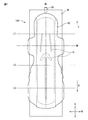
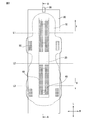
- FIGS. 1 and 2 are a plan view and a rear view showing a state in which an individual wrapping body 100 including a sanitary napkin 10 according to the embodiment is developed.
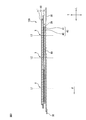
- 3 is a sectional view taken along the line AA in FIG. 2, and
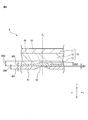
- FIG. 4 is an enlarged sectional view of a portion X in FIG.
- the individual wrapping body 100 includes a sanitary napkin 10 and a wrapping sheet 30, and the sanitary napkin 10 is detachably fixed to the substantially rectangular wrapping sheet 30.
- the sanitary napkin 10 has a longitudinal direction L, a width direction W, and a thickness direction T that are orthogonal to each other.
- the upper side and the upper side of the drawing are the front side and the front side (F) of the sanitary napkin 10 (the longitudinal direction L), and the lower side and the lower side of the sanitary napkin 10 are the (longitudinal direction).
- the sanitary napkin 10 is provided with a pair of flap portions extending to both outer sides in the width direction W at a portion slightly forward of the center in the longitudinal direction L.
- the sanitary napkin 10 further includes a pair of hip flap portions, which are provided at a rear portion in the longitudinal direction L and extend outward on both sides in the width direction W.
- the sanitary napkin 10 has a longitudinal axis CL (imaginary line) extending through the center of the width direction W in the longitudinal direction L, and a width axis CW extending through the center of the flap portion in the longitudinal direction L in the width direction W (imaginary line). ) Has.
- the direction and side toward the longitudinal axis CL are inward and inward in the width direction W, and the away direction and side are outward and outward in the width direction W.
- the direction and the side toward the width direction axis CW are defined as the inward direction and the inner side in the longitudinal direction L, and the direction and the side away are defined as the outward direction and the outer side in the longitudinal direction L.
- plan view Viewing the sanitary napkin 10 placed on a plane including the longitudinal direction L and the width direction W from the upper side in the thickness direction T is called “plan view”, and the shape grasped in plan view is called “plan shape”. .. "Skin side” and “non-skin side” mean the side relatively close to the wearer's skin surface and the side far from the skin surface in the thickness direction T when the sanitary napkin 10 is worn, respectively. Note that these definitions are commonly used for each material of the sanitary napkin 10 and the packaging sheet 30.
- the sanitary napkin 10 includes a liquid-permeable topsheet 11, a liquid-impermeable backsheet 13, and liquid-absorption and liquid-retention properties arranged between the topsheet 11 and the backsheet 13.
- the absorbent body 12 having a sex.
- the topsheet 11 constitutes the skin-side surface of the sanitary napkin 10
- the backsheet 13 constitutes the non-skin-side surface of the sanitary napkin 10.
- the absorbent body 12 includes an absorbent core and a core wrap covering the absorbent core.
- the non-skin side surface of the topsheet 11 and the skin side surface of the absorber 12 are bonded together with an adhesive or the like, and the nonskin side surface of the absorber 12 and the skin side surface of the backsheet 13 are adhesive or the like.
- the peripheral portion of the non-skin side surface of the topsheet 11 (including the flap portion and the hip flap portion) and the peripheral portion of the skin side surface of the backsheet 13 (including the flap portion and the hip flap portion) are joined with an adhesive.
- the absorbent body 12 does not include core wrap.
- a plurality of absorbers are laminated as the absorber 12.
- the sanitary napkin 10 further includes a cover sheet (not shown) that covers the back sheet 13 on the non-skin side of the back sheet 13, and the cover sheet constitutes the non-skin surface. ..
- the sheet constituting the non-skin side surface of the sanitary napkin 10 (eg, the back sheet 13 or the cover sheet) is formed of a non-woven fabric. Therefore, in the present embodiment, the back sheet 13 is made of a non-woven fabric. In another embodiment, when the cover sheet constitutes the non-skin side surface of the sanitary napkin 10, the cover sheet is made of non-woven fabric and the back sheet 13 is made of non-woven fabric or a sheet other than non-woven fabric.
- the sanitary napkin 10 includes the squeezing portion 14 in a region where the topsheet 11 overlaps the absorber 12 in the thickness direction T.
- the squeezing portion 14 is formed in a region that comes into contact with the excretory opening of the wearer when it is worn, that is, on both sides in the width direction W of the excretory opening contact area and at the rear side of the longitudinal direction L thereof.
- the compressed portion 14 is formed by compressing the topsheet 11 and the absorbent body 12 from the skin side toward the non-skin side. Therefore, the pressing unit 14 has a shape in which the topsheet 11 and the absorber 12 are recessed from the topsheet 11 side toward the absorber 12 side, and joins at least the topsheet 11 and the absorber 12.
- the position, shape, and number of the compression units 14 are arbitrary. In another embodiment, the pressing unit 14 does not include the topsheet 11.
- the sanitary napkin 10 includes a plurality of adhesives 40 and 50.
- the plurality of adhesives 40, 50 are applied to the non-skin side surface of the back sheet 13 (nonwoven fabric) that constitutes the non-skin side surface.
- the plurality of adhesives 40 are for fixing clothes (underwear), and fix the sanitary napkin 10 to the skin side of the clothes (underwear).
- the plurality of adhesives 40 extend intermittently or continuously along the longitudinal direction L at the center of the sanitary napkin 10 in the width direction W, and are arranged at predetermined intervals in the width direction W.
- the plurality of adhesives 50 are for fixing clothing (underwear), and fix the pair of flap portions to the non-skin side of the clothing (underwear) and the pair of hip flap portions to the skin side of the clothing (underwear), respectively.
- the plurality of adhesives 50 extend intermittently or continuously along the longitudinal direction L in each of the pair of flap portions and each of the pair of hip flap portions, and are arranged at predetermined intervals in the width direction W.
- the pattern of the plurality of adhesives 40 and 50 is arbitrary. At least a part of the adhesive 40 overlaps the compression unit 14 in a plan view.
- the plurality of adhesives 40, 50 are applied to the non-skin side surface of the cover sheet (nonwoven fabric) that constitutes the non-skin side surface of the sanitary napkin 10.
- the side of the plurality of adhesives 40 opposite to the back sheet 13 (or cover sheet) is covered with the release sheet 20 (protective sheet).
- the release sheet 20 is fixed to the packaging sheet 30 with a plurality of adhesives 60. Therefore, the sanitary napkin 10 is fixed to the packaging sheet 30 via the plurality of adhesives 40, the release sheet 20, and the plurality of adhesives 60.
- the peel strength between the release sheet 20 (protective sheet) and the pressure sensitive adhesive 40 is smaller than the peel strength between the pressure sensitive adhesive 40 and the back sheet 13 (nonwoven fabric). That is, the peel strength between the adhesive 40 and the back sheet 13 (nonwoven fabric) is relatively strong.
- the side of the plurality of adhesives 40 opposite to the back sheet 13 (or cover sheet) is covered with the packaging sheet 30 (protective sheet).
- the sanitary napkin 10 and the packaging sheet 30 are folded by the following method.
- the individual wrapping body 100 includes a pair of longitudinal fold lines (not shown) that extend slightly along the longitudinal direction L, passing slightly outside both end edges of the absorbent body 4 in the width direction W,
- the sanitary napkin 10 is divided into four substantially equal parts in the longitudinal direction L, extends in the width direction W, and has a plurality of width direction folding lines L1, L2, L3 arranged at intervals in the longitudinal direction L.
- the folding method first, in a state where the sanitary napkin 10 is fixed to the packaging sheet 30 (FIG.
- a widthwise direction W of only the sanitary napkin 10 is taken at a position of a pair of longitudinal folding lines (not shown). Both ends of the sheet are folded on the surface sheet 11.
- separate release sheets are arranged on the adhesive 50 of the pair of flap portions and the adhesive 50 of the pair of hip flap portions, respectively.
- the rear ends of the packaging sheet 30 and the sanitary napkin 10 in the longitudinal direction L at the widthwise folding line L3 are folded onto the topsheet 11.
- the partially folded back side of the packaging sheet 30 and the sanitary napkin 10 in the longitudinal direction L is folded onto the topsheet 11.
- the further rear part of the packaging sheet 30 and the sanitary napkin 10 on the rear side in the longitudinal direction L is folded on the topsheet 11.
- the tab 35 arranged on the front edge of the packaging sheet 30 in the longitudinal direction L is attached to the folded packaging sheet 30.
- the individual wrapping body 100 in which the sanitary napkin 10 is individually wrapped with the packaging sheet 30 is formed.
- the adhesive 40 includes an impregnated portion 45 that is impregnated in the nonwoven fabric of the back sheet 13, and an exposed portion 41 that is a portion of the adhesive 40 other than the impregnated portion 45. It can be said that the exposed portion 41 is a portion exposed on the non-skin side surface of the nonwoven fabric of the back sheet 13.
- the adhesive 50 also includes an impregnated portion that is impregnated into the nonwoven fabric of the back sheet 13 and an exposed portion that is a portion other than the impregnated portion of the adhesive 50, similar to the adhesive 40.
- the non-skin side surface of the sanitary napkin 10 is formed of a cover sheet
- the impregnated portion 45 is impregnated in the nonwoven fabric of the cover sheet
- the exposed portion 41 is the non-skin side of the nonwoven fabric of the cover sheet. Exposed on the surface.
- the thickness of adhesive 40 (dimension in thickness direction T) is D40
- the thickness of impregnated portion 45 is (dimension in thickness direction T) D45
- the ratio of the thickness D45 of the impregnated portion 45 to the thickness D40 of the adhesive 40 is 30 to 80%, preferably 40 to 70%. Therefore, the pressure-sensitive adhesive 40 can appropriately diffuse and permeate the pressure-sensitive adhesive between the constituent fibers of the back sheet 13 (nonwoven fabric) in the impregnated portion.
- the ratio of the thickness D41 of the exposed portion 41 to the thickness D40 of the adhesive 40 is 20 to 70%, preferably 30 to 60%. If the ratio of the thickness D41 of the exposed portion 41 is too low, the adhesive force is lowered and it becomes difficult to bond it to the underwear, and if it is too high, it is too thick and the shear force between the underwear and the backsheet 13 easily breaks. Therefore, the pressure-sensitive adhesive 40 can secure an appropriate thickness at the exposed portion 41 so that it can adhere to other members.
- the thickness of the backsheet 13 (dimension in the thickness direction T) is D13.
- the ratio of the thickness D45 of the impregnated portion 45 to the thickness D13 of the back sheet 13 is, for example, 30 to 100%, and preferably 50 to 100%. Therefore, the impregnated portion 45 is deeply impregnated into the back sheet 13 (nonwoven fabric). Therefore, even when the adhesive 40 is adhered to another member and pulled, it is possible to prevent the surface portion of the back sheet 13 from peeling off from the back sheet 13 together with the adhesive 40. If the ratio of the thickness D45 of the impregnated portion 45 is too low, the anchoring effect of the pressure-sensitive adhesive 40 on the backsheet 13 is reduced.
- the adhesive 40 is folded together with the back sheet 13 by folding the sanitary napkin 10 at each of the plurality of widthwise folding lines L1, L2, L3, and thus the adhesive 40 is placed on the back sheet. It becomes easier to penetrate into the inside of 13. Therefore, at the position of each folding line in the width direction, a recessed portion 51 in which the exposed portion 41 of the adhesive 40 is recessed toward the absorber 12 side is formed, and the impregnated portion 45 deeply impregnates into the absorber 12 side. Is formed.
- the thickness of the folding line overlapping portion 52 is D52.
- the thickness D52 of the folding line overlapping portion 52 of the impregnated portion 45 is larger than the thickness D45 of the peripheral impregnated portion 45 that does not overlap the widthwise folding line (D52>D45). Therefore, in the fold line overlapping portion 52, it is possible to form a portion in which the pressure-sensitive adhesive is further diffused and further permeated between the constituent fibers of the back sheet 13 (nonwoven fabric). Therefore, the anchor effect of the impregnated portion 45 with respect to the back sheet 13 can be further improved.
- the thickness D52 of the folding line overlapping portion 52 is preferably larger than the thickness D51 of the recess 51.
- the sanitary napkin 10 When the sanitary napkin 10 is expanded from the individually packaged state to the unfolded state, wrinkles may be formed because the absorbent body 12 exists in the portion where the widthwise folding lines L1 to L3 are located. Many. Therefore, it is difficult to join the sanitary napkin 10 to the underwear without wrinkles. Therefore, by making the thickness D51 of the recessed portion 51 in the exposed portion 41 relatively thin and reducing the bonding strength of the recessed portion 51 that is easily broken due to wrinkles, the recessed portion 51 is broken and adhesive residue occurs. Can be suppressed. In addition to this, by making the thickness D52 of the folding line overlapping portion 52 in the impregnated portion 45 relatively thick, the anchor effect of the impregnated portion 45 with respect to the back sheet 13 can be further improved.
- the absorbent body 12 As the material of the topsheet 11, the absorbent body 12, and the backsheet 13, known materials that are generally used in the sanitary napkin 10 can be used.
- Examples of the material of the surface sheet 11 include non-woven fabric, woven fabric, synthetic resin film having liquid permeation holes formed therein, and a composite sheet of these.
- Examples of the constituent fibers of the non-woven fabric include natural fibers, regenerated fibers, inorganic fibers, synthetic resin fibers and the like.
- Examples of the type of non-woven fabric include air-through non-woven fabric, spun lace non-woven fabric, spun bond non-woven fabric, and point bond non-woven fabric.
- the basis weight of the topsheet 11, e.g., 5g / m 2 ⁇ 100g / m 2 can be mentioned, 20g / m 2 ⁇ 50g / m 2 is preferred.
- the thickness of the topsheet 11 is, for example, 0.2 to 5 mm.
- Examples of the material of the absorbent body 12 include water absorbent fibers such as pulp fibers and synthetic fibers, and super absorbent polymers (SAP).
- the basis weight of the superabsorbent polymer for example, an 5 ⁇ 500g / m 2, preferably 10 ⁇ 400g / m 2.
- the thickness of the absorber 4 is, for example, 1 to 50 mm, preferably 5 to 30 mm.
- the material of the absorbent core include the above-described water-absorbent fibers and superabsorbent polymers, and the material of the core wrap is a liquid-permeable material such as tissue. Hydrophilic fibers are mentioned.
- the material of the absorbent core of the absorbent body 12 is 90% by weight or more, preferably 95% by weight or more is a super absorbent polymer (SAP).
- Examples of the material of the back sheet 13 include a non-woven fabric using fibers that have been subjected to a hydrophobic treatment or a waterproof treatment, a nonwoven fabric subjected to a hydrophobic treatment or a waterproof treatment, a composite sheet of a non-woven fabric and a synthetic resin film, and the like.
- Examples of the constituent fibers of the non-woven fabric include natural fibers, regenerated fibers, synthetic resin fibers, and inorganic fibers.
- Examples of the type of non-woven fabric include SMS non-woven fabric, air-through non-woven fabric, spun lace non-woven fabric, spun bond non-woven fabric, and point bond non-woven fabric.
- the thickness of the back sheet 13 is, for example, 0.2 to 5 mm.
- a cover sheet is used as a sheet that constitutes the non-skin side surface of the sanitary napkin 10
- the material for example, the same material as the material of the back sheet 13 described above can be used. ..
- a non-stretchable synthetic resin film may be used as the back sheet 13.
- the types of nonwoven fabrics for the back sheet 13 are preferably SMS nonwoven fabrics and air-through nonwoven fabrics.
- a spunbond layer that is a low-density layer having a low fiber density, a meltblown layer that is a high-density layer having a high fiber density, and a spunbond layer that is a low-density layer having a low fiber density. are stacked in this order. Further, since the air-through nonwoven fabric is conveyed while being in contact with the mesh belt at the time of manufacturing, a high-density layer having a high fiber density is formed on the one surface side and the fiber is formed on the other surface side. A low density layer with low density is formed.
- the impregnated portion 45 is impregnated into the high-density layer from the surface of such a nonwoven fabric, whereby the anchor effect of the impregnated portion 45 with respect to the back sheet 13 can be enhanced.
- known materials that can be used in the sanitary napkin 10 can be used.
- a thermoplastic adhesive example: hot Melt adhesive
- a known material generally used in the sanitary napkin 10 can be used.
- a base material of paper or resin sheet coated with a silicone resin release material are listed.
- known materials generally used in the sanitary napkin 10 can be used, and examples thereof include synthetic resin film, paper, and non-woven fabric.
- the adhesive 40 contains an olefin base polymer as a main component and a rubber base polymer for performance adjustment.
- the adhesive is an olefin-based base polymer (eg, poly- ⁇ -olefin based on ethylene, propene and/or butene, preferably atactic poly- ⁇ -olefin (APAO), and , Ethylene/ ⁇ -olefin and propylene/ ⁇ -olefin copolymers, preferably copolymers of ethylene with propene, 1-butene, 1-hexene, 1-octene, or combinations thereof) and rubber systems It is composed of a base polymer (eg, SBS (styrene/butadiene/styrene) polymer, SIS (styrene/isoprene/styrene) polymer, etc.), tackifier, oil, wax and the like.
- SBS styrene/butadiene/styrene
- a rubber base polymer is relatively increased, or a monomer having a high molecular weight is used as an olefin base polymer. It is preferable to choose.
- the adhesive 40 contains 30 to 80% by mass of the olefin base polymer, or the adhesive 40 contains 0 to 30% by mass of the rubber base polymer and 30 to 60% by mass of the olefin base polymer. %contains.
- the adhesive further contains tackifier, oil, and wax. They are effective for application suitability, that is, stability of pressure-sensitive adhesive physical properties (eg, viscosity, elasticity) in the pressure-sensitive adhesive storage tank, and especially for preventing oxidation of the pressure-sensitive adhesive at high temperatures and preventing deterioration over time. ..
- the tackifier include (exemplification: copolymer and terpolymer of terpene, compatible resin such as polyterpene resin, or mixture thereof).
- wax examples include olefin wax modified with carboxylic acid or carboxylic anhydride.
- oil examples include paraffin oil, naphthene oil, and aromatic oil. The mass ratio thereof is, for example, 20 to 50 mass% with respect to the base polymer.
- the following method may be mentioned.
- a rubber-based base polymer is mixed with an olefin-based base polymer to prepare a mixture, and a tackifier, an oil, and a wax are blended as necessary, and further. If necessary, various additives are added.
- the pressure-sensitive adhesive is manufactured by heating the agents mixed with the respective components and mixing them while melting.
- the pressure-sensitive adhesive can be produced by charging the above components into a melt-mixing pot equipped with a stirrer and heating and mixing.
- the storage modulus of the pressure-sensitive adhesive of the pressure-sensitive adhesive 40 has the following temperature characteristics.
- the storage elastic modulus shows how much energy due to the load applied to the adhesive is stored without being dissipated, and indicates the ratio that retains elastic properties in the cross-sectional direction perpendicular to the load (the value thereof). Is measured by applying a load to the adhesive in a dynamic viscoelasticity measuring device such as a rheometer).
- the storage modulus of the adhesive at 80° C. is 8.0 ⁇ 10 2 to 1.5 ⁇ 10 4 Pa, preferably 9.0 ⁇ 10 2 to 1.0 ⁇ 10 4 Pa. Further, the storage elastic modulus of the pressure-sensitive adhesive at 75° C.
- 80° C. is a temperature (a typical value or a lower limit value) when the pressure-sensitive adhesive which is melted at a predetermined temperature (eg, 100 to 110° C.) and is actually applied onto the nonwoven fabric is impregnated into the nonwoven fabric. Can be considered. Further, 75° C. is a time when the sanitary napkin 10 is melted at a predetermined temperature and actually impregnated into the nonwoven fabric by impregnation into the nonwoven fabric, and when the sanitary napkin 10 is conveyed at high speed.
- the storage modulus of the pressure-sensitive adhesive at 50° C. is 1.0 ⁇ 10 4 to 2.0 ⁇ 10 5 Pa, preferably 1.5 ⁇ 10 4 to 1.0 ⁇ 10 5 Pa. ..
- 50° C. can be considered as (a typical value of) a temperature range that can be assumed when the sanitary napkin 10 is stored.
- the storage modulus of the pressure-sensitive adhesive at 40° C. is 2.0 ⁇ 10 4 to 2.0 ⁇ 10 5 Pa, preferably 3.0 ⁇ 10 4 to 1.5 ⁇ 10 5 Pa. .. It should be noted that 40° C. can be considered as (a typical value of) a temperature range that can be assumed when the sanitary napkin 10 is used.
- the sanitary napkin 10 can be put to practical use.
- the tan ⁇ of the adhesive of the adhesive 40 has the following temperature characteristics.
- tan ⁇ is the ratio of the loss elastic modulus, which is a measure of the amount of energy dissipated by the load applied to the adhesive, and the storage elastic modulus, which is a measure of the amount of energy that is stored without being dissipated ( These values are measured by applying a load to the pressure-sensitive adhesive in a dynamic viscoelasticity measuring device such as a rheometer).
- the tan ⁇ of the pressure-sensitive adhesive at 80° C. is 1.0 to 5.0, preferably 1.2 to 4.0.
- the tan ⁇ of the pressure-sensitive adhesive is 0.8 to 4.0, preferably 0.85 to 3.5 at 75°C.
- the tan ⁇ of the pressure-sensitive adhesive is 0.2 to 1.0 at 50° C., preferably 0.25 to 0.95.
- the tan ⁇ of the pressure-sensitive adhesive is 0.20 to 0.90 at 40° C., and preferably 0.25 to 85.
- the meanings of 80°C, 75°C, 50°C, and 40°C are as described above.
- the amount of the adhesive 40 applied to the back sheet 13 is, for example, 20 to 200 g/m 2 .
- the coating amount is preferably 30 to 100 g/m 2 . Therefore, an appropriate amount of the adhesive can be impregnated into the nonwoven fabric, and an appropriate amount of the adhesive can remain on the surface of the nonwoven fabric.
- the peeling strength of the adhesive is, for example, 0.7 to 8 N/25 mm, and preferably 1 to 6 N/25 mm. If the peel strength is less than 0.7 N/25 mm, the adhesive 40 may peel from the underwear while the sanitary napkin 10 is being worn. On the other hand, when the peel strength is more than 8 N/25 mm, the adhesive 40 may be easily peeled from the underwear when the sanitary napkin 10 is removed.
- the pressure sensitive adhesive 40 of the present embodiment is not necessarily greatly influenced by the value of melt viscosity, but has the following tendency, for example.
- the melt viscosity at 120° C. is, for example, 3000 to 40000 mPa ⁇ s, and preferably 4000 to 10000 mPa ⁇ s.
- the pressure-sensitive adhesive 40 has a melt viscosity at 140° C. of, for example, 1000 to 20000 mPa ⁇ s, and preferably 2000 to 5000 mPa ⁇ s.
- a pressure-sensitive adhesive exhibiting such a tendency is used, it becomes easy to impregnate an appropriate amount of the pressure-sensitive adhesive into the nonwoven fabric, and it becomes easy to leave an appropriate amount of the pressure-sensitive adhesive on the surface of the nonwoven fabric. If the melt viscosity is too low, the exposed portion of the nonwoven fabric cannot be formed to a sufficient thickness, and if it is too high, the impregnated portion cannot be formed to a sufficient thickness.
- the ratio of the thickness of the impregnated portion 45 to the thickness of the adhesive 40 (preferably including the adhesive 50, the same applies hereinafter), that is, the impregnation rate is , 30 to 80%.
- the storage modulus of the adhesive 40 is 1.0 ⁇ 10 4 to 2.0 ⁇ 10 5 Pa at 50° C.
- the sanitary napkin 10 has an impregnation rate of 30% or more. Therefore, in the impregnation part 45, the pressure-sensitive adhesive 40 can be appropriately diffused and permeated between the constituent fibers of the back sheet 13 (or cover sheet, the same applies hereinafter) which is a non-woven fabric.
- the adhesive 40 is peeled off from the surface of the back sheet 13, or the surface portion of the back sheet 13 is peeled off in layers to separate from the back sheet 13 together with the pressure sensitive adhesive 40. Can be suppressed. That is, the adhesive residue can be suppressed.
- the thickness of the exposed portion 41 which is the portion of the adhesive 40 excluding the impregnated portion 45, that is, the portion of the adhesive 40 on the surface of the back sheet 13 is set to an appropriate thickness. You can Therefore, it is possible to prevent the joining force from becoming too low due to the lack of a portion of the adhesive 40 that contributes to the adhesion with the underwear.
- the sanitary napkin 10 further defines the storage elastic modulus of the adhesive 40. However, the lower the storage elastic modulus of the pressure-sensitive adhesive 40, the more difficult it becomes to retain elastic properties, and the higher the storage elastic modulus, the easier it becomes to retain elastic properties.
- the storage elastic modulus of the adhesive 40 is set to 1.0 ⁇ 10 4 to 2.0 ⁇ 10 5 Pa at 50° C.
- the shape of the pressure-sensitive adhesive 40 can be stably maintained, and since the storage elastic modulus is not too high, the sanitary napkin 10 is provided with an appropriate adhesive force, The adhesive 40 can be stably adhered to the sanitary napkin 10. Due to the above, an adhesive that can be stably adhered to underwear when the sanitary napkin 10 (absorbent article) is attached, and does not remain in the underwear when the sanitary napkin 10 (absorbent article) is peeled off (no adhesive residue occurs). It is possible to provide the sanitary napkin 10 (absorbent article) having the.
- the tan ⁇ of the pressure-sensitive adhesive 40 is 1.0 to 5.0 at 80°C.
- the tan ⁇ loss elastic modulus/storage elastic modulus
- tan ⁇ indicates whether the pressure-sensitive adhesive 40 has a strong viscous property or a strong elastic property. The larger the tan ⁇ , the more viscous the adhesive 40 is, and the more easily the back sheet 13 (nonwoven fabric) is impregnated. The smaller the tan ⁇ , the more elastic the adhesive 40 is, the more difficult it is to impregnate the back sheet 13.
- tan ⁇ is set to 1.0 to 4.0 at 80°C. Therefore, since tan ⁇ is neither too small nor too large, the back sheet 13 can be appropriately impregnated with the adhesive 40. Thereby, the anchor effect of the impregnated portion 45 with respect to the back sheet 13 can be further enhanced.
- the tan ⁇ of the pressure sensitive adhesive 40 is 0.20 to 0.90 at 40° C.
- the storage elastic modulus of the pressure sensitive adhesive 40 is 2.0 ⁇ 10 4 to 2 at 40° C. It is 0.0 ⁇ 10 5 Pa.
- the adhesive 40 can be in a state in which the viscous property and the elastic property are balanced. Thereby, when the sanitary napkin 10 is stored after manufacturing, the impregnation of the adhesive 40 into the back sheet 13 (nonwoven fabric) can be almost stopped. Furthermore, when the sanitary napkin 10 is used, the sanitary napkin 10 can be stably adhered to the clothes with the adhesive 40.
- the tan ⁇ of the pressure-sensitive adhesive 40 is 0.8 to 4.0 at 75° C.
- the storage elastic modulus of the pressure-sensitive adhesive 40 is 1.0 ⁇ 10 3 to 2 at 75° C. It is 0.0 ⁇ 10 4 Pa.
- tan ⁇ and the storage elastic modulus are set to the above numerical ranges at the stage of 75° C. during the impregnation of the back sheet 13 (nonwoven fabric) with the adhesive 40 actually applied onto the back sheet 13.
- the pressure-sensitive adhesive 40 can be maintained at an appropriate hardness, diffusion in the in-plane direction of the backsheet 13 can be suppressed, and impregnation in the thickness direction T of the backsheet 13 can proceed. This can further enhance the effect of appropriately impregnating the back sheet 13 with the adhesive 40.
- the impregnation rate of the pressure-sensitive adhesive 40 can be within the above-mentioned predetermined numerical range.
- the amount of the adhesive 40 applied to the back sheet 13 is 20 to 200 g/m 2 . Therefore, it is possible to impregnate the back sheet 13 with an appropriate amount of the adhesive 40, and thereby the anchor effect of the impregnated portion 45 to the back sheet 13 can be enhanced. In addition to that, an appropriate amount of the adhesive 40 can be left on the surface of the back sheet 13, and thus the adhesiveness of the impregnated portion 45 can be enhanced. As a result, when the sanitary napkin 10 is attached to the underwear, the sanitary napkin 10 can be stably adhered to the underwear, and when the sanitary napkin 10 is peeled from the underwear, the adhesive 40 is applied to the backsheet 13.
- the coating amount is less than 20 g/m 2 , when the pressure-sensitive adhesive 40 is impregnated into the back sheet 13, the pressure-sensitive adhesive 40 remaining on the surface of the back sheet 13 decreases, and sufficient adhesive strength may not be obtained. is there. If the coating amount exceeds 200 g/m 2 , the thickness of the pressure sensitive adhesive 40 exposed on the surface of the back sheet 13 becomes large, and therefore the pressure sensitive adhesive 40 may be torn off and adhere to the underwear.
- the backsheet 13 (nonwoven fabric) includes a low density layer having a low fiber density and a high density layer having a high fiber density in the thickness direction T, and at least a part of the impregnated portion 45. Impregnate the high-density layer from the surface of the back sheet 13. Examples of the high-density layer include a melt blown layer of SMS non-woven fabric and a layer of the air-through non-woven fabric on the side in contact with the belt. As described above, in the sanitary napkin 10 (absorbent article), at least a part of the impregnated portion 45 impregnates the high-density layer of the backsheet 13.
- the adhesive 40 can be more diffused and more permeated between the constituent fibers of the backsheet 13 due to the capillary phenomenon. That is, by entwining the constituent fibers and the adhesive 40, the anchor effect of the impregnated portion 45 with respect to the back sheet 13 can be further enhanced. Therefore, when the sanitary napkin 10 is peeled off from the underwear, it is possible to prevent the adhesive 40 from peeling off the surface of the back sheet 13.
- the impregnated portion 45 overlaps the compressed portion 14 in a plan view. That is, at least a part of the impregnated portion 45 overlaps with a portion having a high fiber density. Therefore, the constituent fibers and the pressure sensitive adhesive 40 are entangled with each other so that the pressure sensitive adhesive 40 can be more diffused and more permeated between the constituent fibers of the back sheet 13 (nonwoven fabric) in the impregnated portion 45. That is, the anchor effect on the back sheet 13 can be further enhanced. Therefore, when the sanitary napkin 10 (absorbent article) is peeled off from the underwear, it is possible to prevent the adhesive 40 from peeling off the surface of the backsheet 13.
- a release sheet 20 as a protective sheet (however, when the release sheet 20 is not used and the adhesive 40 is directly adhered to the packaging sheet 30, the packaging sheet 30, the same applies hereinafter)
- the peel strength between the adhesive 40 and the back sheet 13 (nonwoven fabric) is smaller than that between the adhesive 40 and the back sheet 13 (nonwoven fabric). Therefore, when the sanitary napkin 10 (absorbent article) is peeled from the release sheet 20, the release sheet 20 can be peeled from the pressure sensitive adhesive 40 without peeling the pressure sensitive adhesive 40 from the back sheet 13. Thereby, it is possible to prevent the adhesive 40 from peeling off from the surface of the backsheet 13.
- the thickness D52 of the impregnated portion 45 at a position overlapping at least one of the folding lines L1 to L3 in the thickness direction T is a position not overlapping at least one of the folding lines L1 to L3 in the thickness direction T. Is greater than the thickness D45 of the impregnated portion 45 in FIG. That is, the portion of the impregnated portion 45 that overlaps at least one of the folding lines L1 to L3 in the thickness direction T, that is, the folding line overlapping portion 52 has a relatively large thickness. Therefore, in the fold line overlapping portion 52, a portion in which the adhesive 40 is more diffused and more permeated between the constituent fibers of the back sheet 13 (nonwoven fabric) is formed.
- the constituent fibers and the adhesive 40 can be entangled to further improve the anchor effect of the folding line overlapping portion 52 with respect to the back sheet 13, and the folding line overlapping portion 52 is less likely to be peeled from the back sheet 13. can do.
- the folding line overlapping portion 52 not only the folding line overlapping portion 52, but also a peripheral portion continuing to the folding line overlapping portion 52 can be made difficult to peel from the back sheet 13. Therefore, when the sanitary napkin 10 (absorbent article) is peeled off from the underwear, it is possible to prevent the adhesive 40 from peeling off the surface of the backsheet 13.
- Impregnation rate of adhesive was determined by the following procedure. First, the back sheet (spunbond nonwoven fabric, basis weight 20 g/m 2 , thickness 1.5 mm) was coated with the adhesive described in Examples 1 to 3 on the non-skin side, at 140° C. A napkin for use was prepared. Next, the back sheet (nonwoven fabric) impregnated with the adhesive was removed from the sanitary napkin and frozen with liquid nitrogen. Next, the frozen nonwoven fabric was cut by vertically applying a razor to the surface coated with the adhesive.
- the cross-sectional shape of the adhesive was assumed to be a rectangle having the length in the plane direction of the adhesive at the position of the surface of the non-woven fabric in the cross-sectional photograph, and having the cross-sectional area of the adhesive grasped in the cross-sectional photograph. .. Then, the thickness of the entire pressure-sensitive adhesive and the thickness of the pressure-sensitive adhesive impregnated into the nonwoven fabric were determined from the rectangle.
- the thickness of the exposed portion of the non-woven fabric that is, the thickness of the exposed portion (also referred to as "surface film thickness") is (thickness of the entire pressure-sensitive adhesive)-(impregnated into the non-woven fabric). The thickness of the adhesive).
- the melt viscosity of the pressure-sensitive adhesive was measured by JAI 7-991, method B. Specifically, a No. 27 rotor was used using a Brookfield RVT viscometer (Analog Viscometer RVT115, manufactured by Brooksfield).
- the storage elastic modulus G′, loss elastic modulus G′′, and tan ⁇ of the pressure-sensitive adhesive were measured according to JIS K 6394.
- a dynamic viscoelasticity measuring device (DVA-200 manufactured by IT Measurement Control Co., Ltd.) was measured.
- Adhesive residue test (use test) The adhesive residue test of the pressure-sensitive adhesive was conducted by the following procedure. First, the back sheet (spunbond nonwoven fabric, basis weight 20 g/m 2 , thickness 1.5 mm) was coated with the adhesive described in Examples 1 to 3 on the non-skin side, at 140° C. A napkin for use was prepared. Two types of basis weight of the adhesive were prepared. The product length of this sanitary napkin is 420 mm, and the product width is 160 mm including the pair of flap portions.
- peel strength (A) between the protective sheet and the adhesive and the peel strength (B) between the nonwoven fabric and the adhesive were measured by the following procedure. First, the same non-woven fabric as the back sheet was coated with and impregnated with a pressure-sensitive adhesive at the same temperature during the production of the sanitary napkin.
- the non-woven fabric coated with an adhesive and the release sheet (A) or the cloth adhesive tape (Nitto cloth adhesive tape No. 750 manufactured by Nitto Denko CS System Co., Ltd.) (B) were bonded together.
- a pressure of 25 g/cm 2 was applied to the laminate of the bonded non-woven fabric and the release sheet (A) or the gum tape (B), and the laminate was left for 2 hours.
- a tensile tester AG-1kNI manufactured by Shimadzu Corporation
- one chuck holds the longitudinal end of the nonwoven fabric, and the other chuck holds the release sheet (A) or the gum tape (B).
- the non-woven fabric and the nylon fabric were peeled off by sandwiching the longitudinal ends and setting the distance between chucks at the start of peeling to 20 mm and the tensile (peeling) speed to 500 mm/min, and the peel strength was measured.
- the maximum value of the measured load values was defined as the peel strength (A) or the peel strength (B) (N/25 mm).
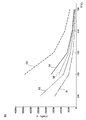
- Example 5 is a graph of a viscosity curve showing the melt viscosity of the pressure-sensitive adhesive.
- the vertical axis represents the melt viscosity ⁇ (mPa ⁇ s), and the horizontal axis represents the temperature T (°C).
- Example 1 is G1 (dotted line)
- Example 2 is G2 (solid line)
- Example 3 is G3 (thick broken line)
- Comparative Example 1 is G4 (thick solid line)
- Comparative Example 2 is G5 ( Broken line).
- the melt viscosity of the pressure-sensitive adhesive at 120° C. is as follows. In Examples 1 to 3, the pressures were 4950 mPa ⁇ s, 8400 mPa ⁇ s and 34050 mPa ⁇ s, respectively.
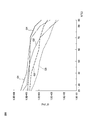
- FIG. 6 is a graph showing the storage elastic modulus of the adhesive.
- the vertical axis represents the storage elastic modulus G'(Pa)
- the horizontal axis represents the temperature T (°C).
- the storage elastic modulus of the pressure-sensitive adhesive is in the following numerical range at each temperature.
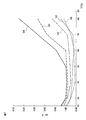
- FIG. 7 is a graph showing tan ⁇ of the pressure-sensitive adhesive.
- the vertical axis represents tan ⁇
- the horizontal axis represents temperature T (°C).
- the tan ⁇ of the pressure-sensitive adhesive is in the following numerical range at each temperature. At 80° C., it was within the range of 1.0 to 5.0 in Examples 1 to 3 and outside the range of 1.0 to 5.0 in Comparative Examples 1 and 2 except for Comparative Example 2. ..
- Comparative Example 1 the pressure-sensitive adhesive was not impregnated into the nonwoven fabric (backside sheet), so the pressure-sensitive adhesive was peeled off from the nonwoven fabric, and adhesive residue was generated.
- Comparative Example 2 the pressure-sensitive adhesive was excessively impregnated into the non-woven fabric (rear sheet), and the thickness of the exposed portion was reduced, so that the adhesive strength was weakened and the user commented that the sanitary napkin was displaced from the underwear. there were.
- the pressure-sensitive adhesive has low viscosity even at room temperature, the pressure-sensitive adhesive is easily torn, and a small amount of adhesive residue occurs.
- ⁇ indicates that there is no adhesive residue
- ⁇ indicates that there is adhesive residue.
- ⁇ means that the numerical value falls within the predetermined range
- ⁇ indicates that the numerical value may not fall within the predetermined range depending on the temperature
- ⁇ indicates that the numerical value does not fall within the predetermined range. Show.
- the storage elastic modulus is preferably in the range of 8.0 ⁇ 10 2 to 1.5 ⁇ 10 4 Pa at 80° C., and in the range of 1.0 ⁇ 10 3 to 2.0 ⁇ 10 4 Pa at 75° C. It was found that the range of 2.0 ⁇ 10 4 to 2.0 ⁇ 10 5 Pa at 40° C. is preferable.
- the tan ⁇ of the pressure-sensitive adhesive is preferably in the range of 1.0 to 5.0 at 80° C. and 0.8 to 4.0 at 75° C. It has been found that a range is preferred, at 50° C. a range of 0.2 to 1.0 is preferred and at 40° C. a range of 0.20 to 0.90 is preferred.
Landscapes
- Health & Medical Sciences (AREA)
- Epidemiology (AREA)
- Animal Behavior & Ethology (AREA)
- Veterinary Medicine (AREA)
- Engineering & Computer Science (AREA)
- Public Health (AREA)
- General Health & Medical Sciences (AREA)
- Life Sciences & Earth Sciences (AREA)
- Biomedical Technology (AREA)
- Vascular Medicine (AREA)
- Heart & Thoracic Surgery (AREA)
- Dermatology (AREA)
- Hematology (AREA)
- Chemical & Material Sciences (AREA)
- Materials Engineering (AREA)
- Absorbent Articles And Supports Therefor (AREA)
Abstract
吸収性物品の装着時に下着に安定的に粘着でき、かつ、吸収性物品の剥離時に下着に残り難い(糊残りが生じ難い)粘着剤を有する吸収性物品を提供する。吸収性物品(例示:生理用ナプキン10)は、非肌側に配置された不織布(例示:裏面シート13)と、不織布の非肌側の表面に塗布された着衣固定用の粘着剤(40)と、を含む。粘着剤は、不織布内に含浸している含浸部(45)を含む。粘着剤の厚さに対する含浸部の厚さの割合は、30~80%である。粘着剤の貯蔵弾性率は、50℃において、1.0×10⁴~2.0×10⁵Paである。
Description
本発明は吸収性物品に関する。
吸収性物品を下着に貼り付けるための粘着剤を備える吸収性物品が知られている。例えば、特許文献1には、透液性表面シートと不透液性裏面シートとの間に吸収体が介在されるとともに、外面側にホットメルト接着剤によるズレ止め用粘着層(粘着剤)が設けられた挿入式使い捨て吸収性物品が開示されている。この吸収性物品では、例えば、140℃加温時の粘度が5000~10000cpsであるホットメルト接着剤を用いて、不透液性裏面シートの外面側に配置された不織布の外面に、ズレ止め用粘着層が形成される。特許文献1によれば、上記の粘度範囲の上限値・下限値の理由は以下のとおりである。140℃加温時の粘度が5000cps未満である場合、ホットメルト接着剤が不織布へ浸透することが多くなり、所望の接着力を得るためには多量のホットメルト接着剤が必要となる。一方、140℃加温時の粘度が10000cpsを超える場合、ホットメルト接着剤が不織布内部に浸透しないで不織布の表面上に残る状態となり、使用後の吸収性物品を除くとき下着に付着することとなる。
上記特許文献1によれば、140℃付近における粘度が5000~10000cpsの粘着剤(ホットメルト接着剤)を不織布に塗布することにより、粘着剤の不織布内への適度な含浸が得られる、とされる。しかし、本件の発明者が、上記の粘度範囲内の粘度を有する粘着剤について、試験を行ったところ、以下の結果を見出した。ただし、試験とは、140℃での粘度5300cpsの粘着剤を、吸収性物品の裏面シートの外面側に位置する不織布に塗布し、その吸収性物品を下着へ装着して粘着剤を下着に貼り合わせ、その後、吸収性物品を下着から剥離する試験である。その試験の結果、吸収性物品を下着から剥離したとき、下着に粘着剤が残る現象、すなわち糊残り現象が生じることが判明した。本件の発明者の検討によれば、その理由は、以下のように考えられる。溶融された粘着剤が不織布に塗布されると、すぐに冷め始めて、不織布上では約110~100℃の粘着剤になる。そのため、粘着剤の含浸時の温度が低くなり、粘着剤の粘性が低下し過ぎて、その後に粘着剤が不織布内に含浸しようとしても十分に含浸できない。それゆえ、粘着剤が不織布の構成繊維の間に木の根のように入り込んで硬化することで剥がれ難くなるアンカー効果が不足することになる。その結果、吸収性物品を下着から剥離するとき、粘着剤と不織布との接合力が、下着と粘着剤との間の接合力に負けて、粘着剤が不織布(吸収性物品)から剥がれて下着に残ってしまったと考えられる。
このように、本件の発明者の検討によれば、特許文献1のように高温の領域の特性に基づいて粘着剤を調整しても、実際の吸収性物品の不織布上へ塗布された粘着剤が不織布内で如何に含浸するかを検証しないと、粘着剤が有効に使用し得るか判断することは難しい。例えば、特許文献1の粘着剤は、上記のように、実際に不織布上へ塗布されると、その不織布内へ十分に含浸できず、糊残りを生じさせている。不織布内へ粘着剤を安定的に含浸させ、糊残りを生じさせないような粘着剤を得るためには、粘着剤に対して更に改善の余地がある。
本発明の目的は、吸収性物品の装着時に下着に安定的に粘着でき、かつ、吸収性物品の剥離時に下着に残り難い(糊残りが生じ難い)粘着剤を有する吸収性物品を提供することにある。
本発明の吸収性物品は、(1)非肌側に配置された不織布と、前記不織布の非肌側の表面に塗布された着衣固定用の粘着剤と、を含む吸収性物品であって、前記粘着剤は、前記不織布内に含浸している含浸部を含み、前記粘着剤の厚さに対する前記含浸部の厚さの割合は、30~80%であり、前記粘着剤の貯蔵弾性率は、50℃において、1.0×10⁴~2.0×10⁵Paである、吸収性物品。
本吸収性物品では、粘着剤の厚さに対する含浸部の厚さの割合(以下、「含浸率」ともいう。)を30%以上としている。そのため、含浸部において、不織布の構成繊維の間に粘着剤を適度に拡散させ、浸透させることができる。すなわち、構成繊維と粘着剤とを絡ませて、不織布に対する含浸部のアンカー効果を高めることができる。それにより、吸収性物品を下着から剥離するとき、粘着剤が不織布の表面から剥離したり、不織布の表面部分が剥離して粘着剤と共に不織布から離脱したりすることを抑制できる。すなわち、糊残りを抑制できる。それと共に、含浸率を80%以下としているため、粘着剤における含浸部を除いた部分、すなわち粘着剤における不織布の表面上の部分の厚さを適度な厚さにすることができる。そのため、粘着剤のうちの下着との粘着に寄与する部分が不足することにより接合力が低くなり過ぎることを抑制できる。
ここで、本吸収性物品では、粘着剤の貯蔵弾性率を更に規定している。ただし、貯蔵弾性率は、粘着剤に加わる荷重によるエネルギーをどれだけ散逸させずに貯蔵しているかを示し、荷重に垂直な断面方向に弾性的な特性を保持する割合を示している(その値は、例えば、レオメーターで粘着剤に荷重を加えて測定される)。そして、粘着剤は、貯蔵弾性率が低いほど、弾性的な性質を保持し難くなり、貯蔵弾性率が高いほど、弾性的な性質を保持し易くなる。したがって、貯蔵弾性率が低過ぎると、粘着剤の弾性的な性質が低過ぎて、吸収性物品と着衣との間のせん断力により、粘着剤が千切れるおそれがある。一方、貯蔵弾性率が高過ぎると、粘着剤の弾性的な性質が高過ぎて、粘着剤の粘着性が低下し、吸収性物品を着衣に固定できないおそれがある。
そこで、本吸収性物品では、吸収性物品を保管するときに想定し得る温度領域(の代表的な値)である50℃において、粘着剤の貯蔵弾性率を、1.0×10⁴~2.0×10⁵Paとしている。それにより、貯蔵弾性率が低過ぎないため、粘着剤の形状を安定的に保持することができ、貯蔵弾性率が高過ぎないため、不織布に適度な粘着力を付与して、粘着剤を不織布に安定的に粘着させることができる。
以上により、吸収性物品の装着時に安定的に下着に粘着でき、かつ、吸収性物品の剥離時に下着に残り難い(糊残りが生じ難い)粘着剤を有する吸収性物品を提供できる。
本発明の吸収性物品は、(2)前記粘着剤のtanδは、80℃において、1.0~5.0である、上記(1)に記載の吸収性物品、でもよい。
本吸収性物品では、粘着剤の損失弾性率を粘着剤の貯蔵弾性率で除した値であるtanδを規定している。ただし、tanδは、粘着剤に加わる荷重によるエネルギーが散逸する程度の目安になる損失弾性率と、そのエネルギーが散逸せずに貯蔵される程度の目安になる貯蔵弾性率と、の比である(それらの値は、例えば、レオメーターで粘着剤に荷重を加えて測定される)。tanδは、粘着剤が、粘性的な性質が強いか、弾性的な性質が強いか、の目安を示している。そして、tanδが大きいほど粘着剤は粘性的であり、不織布に含浸し易くなり、tanδが小さいほど粘着剤は弾性的であり、不織布に含浸し難くなる。したがって、tanδが小さ過ぎると、粘着剤は塗布された直後から不織布に含浸し難くなるおそれがある。tanδが大き過ぎると、粘着剤は塗布された直後から不織布に含浸し過ぎるおそれがある。
そこで、本吸収性物品では、不織布上へ塗布された粘着剤が不織布内に含浸するときの温度(の代表的な値)である80℃において、tanδを、1.0~5.0としている。tanδが小さ過ぎず、大き過ぎないため、粘着剤を不織布に適度に含浸させることができる。それにより、不織布に対する含浸部のアンカー効果をより高めることができる。
本発明の吸収性物品は、(3)前記粘着剤のtanδは、40℃において、0.20~0.90であり、前記粘着剤の貯蔵弾性率は、40℃において、2.0×10⁴~2.0×10⁵Paである、上記(1)又は(2)に記載の吸収性物品、でもよい。
本吸収性物品では、吸収性物品を使用するときに想定し得る温度領域(の代表な値)である40℃において、tanδ及び貯蔵弾性率を、上記の数値範囲内にしている。それゆえ、粘着剤を、粘性的な性質と弾性的な性質とがバランスした状態にすることができる。それにより、吸収性物品を製造後に保管するときなどで、粘着剤の不織布内への含浸をほぼ止めることができ、吸収性物品を使用するときに、粘着剤で吸収性物品を着衣に安定的に粘着することができる。
本吸収性物品では、吸収性物品を使用するときに想定し得る温度領域(の代表な値)である40℃において、tanδ及び貯蔵弾性率を、上記の数値範囲内にしている。それゆえ、粘着剤を、粘性的な性質と弾性的な性質とがバランスした状態にすることができる。それにより、吸収性物品を製造後に保管するときなどで、粘着剤の不織布内への含浸をほぼ止めることができ、吸収性物品を使用するときに、粘着剤で吸収性物品を着衣に安定的に粘着することができる。
本発明の吸収性物品は、(4)前記粘着剤のtanδは、75℃において、0.8~4.0であり、前記粘着剤の貯蔵弾性率は、75℃において、1.0×10³~2.0×10⁴Paである、上記(1)乃至(3)のいずれか一項に記載の吸収性物品、でもよい。
本吸収性物品では、不織布上へ塗布された粘着剤が不織布内に含浸するときであって、粘着剤の温度が相対的に低下し易いときの温度(の代表的な値)である75℃において、tanδ及び貯蔵弾性率を、上記の数値範囲としている。それゆえ、粘着剤を適度な硬さに維持して、不織布の面内方向の拡散を抑制でき、不織布の厚さ方向へ含浸を進めることができる。それにより、粘着剤を不織布に適度に含浸させる効果をより高めることができる。それらの結果、粘着剤の含浸率を上記の所定の数値範囲にすることができる。
本吸収性物品では、不織布上へ塗布された粘着剤が不織布内に含浸するときであって、粘着剤の温度が相対的に低下し易いときの温度(の代表的な値)である75℃において、tanδ及び貯蔵弾性率を、上記の数値範囲としている。それゆえ、粘着剤を適度な硬さに維持して、不織布の面内方向の拡散を抑制でき、不織布の厚さ方向へ含浸を進めることができる。それにより、粘着剤を不織布に適度に含浸させる効果をより高めることができる。それらの結果、粘着剤の含浸率を上記の所定の数値範囲にすることができる。
本発明の吸収性物品は、(5)前記粘着剤の前記不織布への塗布量は20~200g/m2である、上記(1)乃至(4)のいずれか一項に記載の吸収性物品、でもよい。
本吸収性物品では、粘着剤の不織布への塗布量を、より適切な量である上記の数値範囲としている。そのため、適度な量の粘着剤を不織布内に含浸させることができ、それにより、不織布に対する含浸部のアンカー効果を高めることができる。それに加えて、適度な量の粘着剤を不織布の表面に残存させることができ、それにより、含浸部の粘着性を高めることができる。その結果、吸収性物品を下着に装着するとき、吸収性物品を下着に安定的に粘着させることができると共に、吸収性物品を下着から剥離するとき、粘着剤が不織布の表面から剥離すること等を抑制できる。
なお、塗布量が20g/m2未満では、粘着剤が不織布内に含浸したとき、不織布の表面に残存する粘着剤が少なくなり、十分な接着強度が得られないおそれがある。塗布量が200g/m2を超えると、不織布の表面に露出する粘着剤の厚さが大きくなるため、粘着剤が途中でちぎれて下着に付着するおそれがある。
本発明の吸収性物品は、(6)前記不織布は、厚さ方向に、繊維密度が低い低密度層と、繊維密度が高い高密度層と、を含み、前記含浸部の少なくとも一部は、前記不織布の表面から前記高密度層に含浸する、上記(1)乃至(5)のいずれか一項に記載の吸収性物品、でもよい。
本吸収性物品では、含浸部の少なくとも一部が不織布の高密度層まで含浸している。そのため、含浸部において、毛管現象により、不織布の構成繊維の間に粘着剤をより拡散させ、より浸透させることができる。すなわち、構成繊維と粘着剤とを絡ませて、不織布に対する含浸部のアンカー効果をより高めることができる。そのため、吸収性物品を下着から剥離するとき、粘着剤が不織布の表面から剥離すること等を抑制できる。
本吸収性物品では、含浸部の少なくとも一部が不織布の高密度層まで含浸している。そのため、含浸部において、毛管現象により、不織布の構成繊維の間に粘着剤をより拡散させ、より浸透させることができる。すなわち、構成繊維と粘着剤とを絡ませて、不織布に対する含浸部のアンカー効果をより高めることができる。そのため、吸収性物品を下着から剥離するとき、粘着剤が不織布の表面から剥離すること等を抑制できる。
本発明の吸収性物品は、(7)前記吸収性物品は、圧搾部を有し、前記含浸部の少なくとも一部は、平面視で前記圧搾部と重なる、上記(1)乃至(6)のいずれか一項に記載の吸収性物品、でもよい。
本吸収性物品では、含浸部の少なくとも一部が圧搾部、すなわち繊維密度が高い部分に重なっている。そのため、構成繊維と粘着剤とを絡ませて、含浸部において、不織布の構成繊維の間に粘着剤をより拡散させ、より浸透させることができる。すなわち、不織布に対するアンカー効果をより高めることができる。そのため、吸収性物品を下着から剥離するとき、粘着剤が不織布の表面から剥離すること等を抑制できる。
本吸収性物品では、含浸部の少なくとも一部が圧搾部、すなわち繊維密度が高い部分に重なっている。そのため、構成繊維と粘着剤とを絡ませて、含浸部において、不織布の構成繊維の間に粘着剤をより拡散させ、より浸透させることができる。すなわち、不織布に対するアンカー効果をより高めることができる。そのため、吸収性物品を下着から剥離するとき、粘着剤が不織布の表面から剥離すること等を抑制できる。
本発明の吸収性物品は、(8)前記粘着剤の非肌側に配置され、前記粘着剤を保護するための保護シートを更に備え、前記保護シートと前記粘着剤との間の剥離強度は、前記粘着剤と前記不織布との間の剥離強度よりも小さい、上記(1)乃至(7)のいずれか一項に記載の吸収性物品、でもよい。
本吸収性物品では、保護シート(例示:剥離シート又は個包装シート)と粘着剤との間の剥離強度が、記粘着剤と不織布との間の剥離強度よりも小さい。そのため、吸収性物品を保護シートから剥離するとき、粘着剤が不織布から剥離することなく、保護シートを粘着剤から剥がすことができる。それにより、粘着剤が不織布の表面から剥離すること等を抑制できる。
本吸収性物品では、保護シート(例示:剥離シート又は個包装シート)と粘着剤との間の剥離強度が、記粘着剤と不織布との間の剥離強度よりも小さい。そのため、吸収性物品を保護シートから剥離するとき、粘着剤が不織布から剥離することなく、保護シートを粘着剤から剥がすことができる。それにより、粘着剤が不織布の表面から剥離すること等を抑制できる。
本発明の吸収性物品は、(9)前記吸収性物品は折り線を有しており、前記折り線と厚さ方向に重なる位置での前記含浸部の厚さは、前記折り線と厚さ方向に重ならない位置での前記含浸部の厚さよりも大きい、上記(1)乃至(8)のいずれか一項に記載の吸収性物品、でもよい。
本吸収性物品では、含浸部における折り線と厚さ方向に重なる部分、すなわち折り線重複部の厚さが相対的に大きい。すなわち、その折り線重複部において、不織布の構成繊維の間に粘着剤をより拡散させ、より浸透させた部分が形成される。そのため、構成繊維と粘着剤とを絡ませて、その折り線重複部での、不織布に対するアンカー効果をより向上させることができ、その折り線重複部を不織布から剥離し難くすることができる。また、それと共に、その折り線重複部だけでなく、その折り線重複部に連なる周囲の部分を不織布から剥離し難くすることができる。そのため、吸収性物品を下着から剥離するとき、粘着剤が不織布の表面から剥離すること等を抑制できる。
本吸収性物品では、含浸部における折り線と厚さ方向に重なる部分、すなわち折り線重複部の厚さが相対的に大きい。すなわち、その折り線重複部において、不織布の構成繊維の間に粘着剤をより拡散させ、より浸透させた部分が形成される。そのため、構成繊維と粘着剤とを絡ませて、その折り線重複部での、不織布に対するアンカー効果をより向上させることができ、その折り線重複部を不織布から剥離し難くすることができる。また、それと共に、その折り線重複部だけでなく、その折り線重複部に連なる周囲の部分を不織布から剥離し難くすることができる。そのため、吸収性物品を下着から剥離するとき、粘着剤が不織布の表面から剥離すること等を抑制できる。
本発明により、吸収性物品の装着時に下着に安定的に粘着でき、かつ、吸収性物品の剥離時に下着に残り難い(糊残りが生じ難い)粘着剤を有する吸収性物品を提供することが可能となる。
以下、本実施形態に係る吸収性物品について、生理用ナプキンを例に挙げて説明する。ただし、本発明の吸収性物品は、その例に限定されるものでは無く、本発明の趣旨を逸脱しない限り、種々の吸収性物品に対して適用可能である。吸収性物品としては、例えばパンティライナー、軽失禁パッド、使い捨ておむつが挙げられる。
まず、本実施形態に係る生理用ナプキン10の構成について説明する。図1及び図2は、それぞれ実施形態に係る生理用ナプキン10を含む個包装体100を展開した状態を示す平面図及び背面図である。図3は、図2におけるAA線に沿った断面図であり、図4は、図3におけるX部分の拡大断面図である。個包装体100は、生理用ナプキン10と包装シート30とから構成され、生理用ナプキン10は略矩形状の包装シート30に取り外し可能に固定される。生理用ナプキン10は、互いに直交する長手方向L、幅方向W及び厚さ方向Tを有する。図1及び図2において、図に向って上方及び上側が生理用ナプキン10の(長手方向Lの)前方及び前側(F)であり、図に向って下方及び下側が生理用ナプキン10の(長手方向Lの)後方及び後側(B)である。生理用ナプキン10は、長手方向Lの中央やや前方よりの部分に、幅方向Wの両外側に延出する一対のフラップ部を備える。本実施形態では更に、生理用ナプキン10は、長手方向Lの後方の部分に、幅方向Wの両外側に延出する一対のヒップフラップ部を備える。生理用ナプキン10は、幅方向Wの中心を通り長手方向Lに延びる長手方向軸線CL(仮想線)と、フラップ部の長手方向Lの中心を通り幅方向Wに延びる幅方向軸線CW(仮想線)を有する。長手方向軸線CLに向かう向き及び側を幅方向Wの内向き及び内側とし、遠ざかる向き及び側を幅方向Wの外向き及び外側とする。幅方向軸線CWに向かう向き及び側を長手方向Lの内向き及び内側とし、遠ざかる向き及び側を長手方向Lの外向き及び外側とする。長手方向L及び幅方向Wを含む平面上に置いた生理用ナプキン10を厚さ方向Tの上方側から見ることを「平面視」といい、平面視で把握される形状を「平面形状」という。「肌側」及び「非肌側」とは生理用ナプキン10の装着時に、厚さ方向Tにおいて相対的に装着者の肌面に近い側及び肌面から遠い側をそれぞれ意味する。なお、これらの定義は生理用ナプキン10の各資材及び包装シート30に共通に用いる。
本実施形態では、生理用ナプキン10は、液透過性の表面シート11と、液不透過性の裏面シート13と、表面シート11と裏面シート13との間に配置された液吸収性及び液保持性の吸収体12と、を備える。表面シート11は生理用ナプキン10の肌側の表面を構成し、裏面シート13は生理用ナプキン10の非肌側の表面を構成する。吸収体12は、吸収性コアと、それを被覆するコアラップと、を含む。表面シート11の非肌側の面と吸収体12の肌側の面とは接着剤等で接合され、吸収体12の非肌側の面と裏面シート13の肌側の面とは接着剤等で接合される。表面シート11の非肌側の面の周縁部分(フラップ部及びヒップフラップ部を含む)と裏面シート13の肌側の面の周縁部分(フラップ部及びヒップフラップ部を含む)とは接着剤で接合される。別の実施形態では、吸収体12は、コアラップを含まない。更に別の実施形態では、吸収体12として、複数の吸収体が積層される。更に別の実施形態では、生理用ナプキン10は、裏面シート13の非肌側に更に裏面シート13を覆うカバーシート(図示されず)を備えており、カバーシートが非肌側の表面を構成する。ただし、生理用ナプキン10の非肌側の表面を構成するシート(例示:裏面シート13又はカバーシート)は不織布で形成される。したがって、本実施形態では、裏面シート13は不織布で形成される。別の実施形態において、カバーシートが生理用ナプキン10の非肌側の表面を構成する場合には、カバーシートは不織布で形成され、裏面シート13は不織布又は不織布以外のシートで形成される。
本実施形態では、生理用ナプキン10は、表面シート11が吸収体12と厚さ方向Tに重なる領域に圧搾部14を備える。圧搾部14は、装着時に着用者の排泄口に当接する領域、すなわち排泄口当接域の幅方向Wの両側や、その長手方向Lの後側に形成される。圧搾部14は、表面シート11及び吸収体12を肌側から非肌側へ向かって圧搾して形成される。よって、圧搾部14は、表面シート11及び吸収体12が、表面シート11側から吸収体12側へ向かって窪んだ形状を有し、少なくとも表面シート11と吸収体12とを接合する。ただし、圧搾部14の位置や形状や数は任意である。別の実施形態では、圧搾部14は、表面シート11を含まない。
本実施形態では、生理用ナプキン10は、複数の粘着剤40、50を備える。複数の粘着剤40、50は、非肌側の表面を構成する裏面シート13(不織布)における、非肌側の表面に塗布されている。複数の粘着剤40は、着衣(下着)固定用であり、生理用ナプキン10を着衣(下着)の肌側に固定する。複数の粘着剤40は、生理用ナプキン10の幅方向Wの中央部において、長手方向Lに沿って間欠的又は連続的に延び、幅方向Wに所定間隔で配置される。複数の粘着剤50は、着衣(下着)固定用であり、一対のフラップ部を着衣(下着)の非肌側に、一対のヒップフラップ部を着衣(下着)の肌側にそれぞれ固定する。複数の粘着剤50は、一対のフラップ部の各々、及び、一対のヒップフラップ部の各々において、長手方向Lに沿って間欠的又は連続的に延び、幅方向Wに所定間隔で配置される。ただし、複数の粘着剤40、50のパターンは任意である。粘着剤40の少なくとも一部は、平面視で圧搾部14と重なる。別の実施形態では、複数の粘着剤40、50は、生理用ナプキン10の非肌側の表面を構成するカバーシート(不織布)における、非肌側の表面に塗布されている。
本実施形態では、複数の粘着剤40における裏面シート13(又はカバーシート)と反対の側は剥離シート20(保護シート)で被覆される。剥離シート20は複数の粘着剤60で包装シート30に固定される。したがって、生理用ナプキン10は、複数の粘着剤40、剥離シート20、及び複数の粘着剤60を介して包装シート30に固定されている。なお、剥離シート20(保護シート)と粘着剤40との間の剥離強度は、粘着剤40と裏面シート13(不織布)との間の剥離強度よりも小さい。すなわち、粘着剤40と裏面シート13(不織布)との間の剥離強度は相対的に強い。別の実施形態では、複数の粘着剤40における裏面シート13(又はカバーシート)と反対の側は包装シート30(保護シート)で被覆される。
本実施形態では、生理用ナプキン10が包装シート30で個包装された個包装体100とするときには、以下の方法で、生理用ナプキン10及び包装シート30を折り畳む。ただし、図1の状態で、個包装体100は、吸収体4の幅方向Wの両端縁のやや外側を通り、長手方向Lに沿って延びる一対の長手方向折り線(図示されず)と、生理用ナプキン10を長手方向Lに略四等分し、幅方向Wに沿って延び、長手方向Lに間隔を空けて並んだ複数の幅方向折り線L1、L2、L3と、を有する。そして、折り畳み方法は、まず、生理用ナプキン10を包装シート30に固定した状態(図1)で、一対の長手方向折り線(図示されず)の位置で、生理用ナプキン10のみの幅方向Wの両端部を、表面シート11上に折り畳む。次いで、一対のフラップ部の粘着剤50上、及び、一対のヒップフラップ部の粘着剤50上に、それぞれ別の剥離シート(図示されず)を配置する。次いで、幅方向折り線L3の位置で、包装シート30及び生理用ナプキン10の長手方向Lの後側の端部を、表面シート11上に折り畳む。次いで、幅方向折り線L2の位置で、一部折り畳まれた包装シート30及び生理用ナプキン10の長手方向Lの後側の部分を、表面シート11上に折り畳む。次いで、幅方向折り線L1の位置で、更に折り畳まれた包装シート30及び生理用ナプキン10の長手方向Lの後側の部分を、表面シート11上に折り畳む。次いで、包装シート30の長手方向Lの前側の端縁に配置されたタブ35を折り畳まれた包装シート30に貼り付ける。以上により、生理用ナプキン10が包装シート30で個包装された個包装体100を形成する。
本実施形態では、粘着剤40は、裏面シート13の不織布内に含浸している含浸部45と、粘着剤40における含浸部45以外の部分である露出部41と、を含む。露出部41は、裏面シート13の不織布の非肌側の表面上に露出した部分ということもできる。粘着剤50も、図示しないが、粘着剤40と同様に、裏面シート13の不織布内に含浸している含浸部と、粘着剤50における含浸部以外の部分である露出部と、を含む。別の実施形態として、生理用ナプキン10の非肌側の表面をカバーシートで構成する場合、含浸部45はカバーシートの不織布内に含浸し、露出部41はカバーシートの不織布の非肌側の表面上に露出している。
ここで、図4に示すように、粘着剤40の厚さ(厚さ方向Tの寸法)をD40とし、含浸部45の厚さ(厚さ方向Tの寸法)をD45とし、露出部41の厚さ(厚さ方向Tの寸法)をD41(D41=D40-D45)とする。その場合、粘着剤40の厚さD40に対する含浸部45の厚さD45の割合は、30~80%であり、好ましくは、40~70%である。したがって、粘着剤40は、含浸部において裏面シート13(不織布)の構成繊維の間に粘着剤を適度に拡散させ、浸透させることができる。すなわち、裏面シート13の構成繊維と粘着剤40とを絡ませて、裏面シート13に対する含浸部45のアンカー効果を高めることができる。一方、粘着剤40の厚さD40に対する露出部41の厚さD41の割合は、20~70%であり、好ましくは、30~60%である。露出部41の厚さD41の割合が、低過ぎると粘着力が低下して下着と接合し難くなり、高過ぎると厚過ぎて下着と裏面シート13との間の剪断力で千切れ易くなる。したがって、粘着剤40は、露出部41において他の部材に粘着し得る適度な厚さを確保できる。
本実施形態では、裏面シート13の厚さ(厚さ方向Tの寸法)をD13とする。その場合、裏面シート13の厚さD13に対する含浸部45の厚さD45の割合は、例えば30~100%が挙げられ、好ましくは50~100%である。したがって、含浸部45は、裏面シート13(不織布)内に深く含浸していることになる。そのため、粘着剤40が他の部材に粘着して引っ張られても、裏面シート13の表面部分が剥離して粘着剤40と共に、裏面シート13から離脱することを抑制できる。含浸部45の厚さD45の割合が低すぎると、裏面シート13に対する粘着剤40のアンカー効果が低下する。
本実施形態では、複数の幅方向折り線L1、L2、L3の各々の位置では、生理用ナプキン10が折られることにより、粘着剤40が裏面シート13と共に折られるので、粘着剤40が裏面シート13の内部へより浸透し易くなる。そのため、各幅方向折り線の位置では、粘着剤40の露出部41が吸収体12側に窪んだ窪み部51が形成され、含浸部45が吸収体12側により深く含浸した折り線重複部52が形成される。ここで、含浸部45において、折り線重複部52の厚さ(厚さ方向Tの寸法)をD52とする。この場合、含浸部45の折り線重複部52の厚さD52は、幅方向折り線と重複しない周辺の含浸部45の厚さD45よりも大きい(D52>D45)。したがって、折り線重複部52において、裏面シート13(不織布)の構成繊維の間に粘着剤をより拡散させ、より浸透させた部分を形成できる。そのため、裏面シート13に対する含浸部45のアンカー効果をより向上できる。なお、露出部41の窪み部51の厚さ(厚さ方向Tの寸法)をD51とすると、折り線重複部52の厚さD52は、窪み部51の厚さD51より大きいことが好ましい。生理用ナプキン10を個包装されている状態から展開された状態にした場合、幅方向折り線L1~L3の位置する部分には、吸収体12が存在することから、皺が入っていることが多い。そのため、生理用ナプキン10を皺なく下着に接合することが難しい。そこで、露出部41における窪み部51の厚さD51を相対的に薄くし、皺により千切れ易くなった窪み部51の接合強度を落とすことで、窪み部51が千切れて糊残りが生じる事態を抑制できる。それに加えて、含浸部45における折り線重複部52の厚さD52を相対的に厚くすることで、裏面シート13に対する含浸部45のアンカー効果をより向上できる。
本実施形態において、表面シート11、吸収体12、裏面シート13の材料としては、生理用ナプキン10で一般的に用い得る公知の材料を使用できる。
表面シート11の材料としては、例えば不織布、織布、液透過孔が形成された合成樹脂フィルム、これらの複合シートが挙げられる。不織布の構成繊維としては、例えば天然繊維、再生繊維、無機繊維、合成樹脂繊維等が挙げられる。不織布の種類としては、エアスルー不織布、スパンレース不織布、スパンボンド不織布、ポイントボンド不織布が挙げられる。表面シート11の坪量としては、例えば5g/m2~100g/m2が挙げられ、20g/m2~50g/m2が好ましい。表面シート11の厚さとしては、例えば0.2~5mmが挙げられる。
吸収体12の材料としては、例えばパルプ繊維や合成繊維のような吸水性繊維、高吸水性ポリマー(SAP)が挙げられる。吸収体12の吸水性繊維の坪量としては、例えば10~1000g/m2が挙げられ、150~1000g/m2が好ましい。高吸水性ポリマーの坪量としては、例えば5~500g/m2が挙げられ、10~400g/m2が好ましい。吸収体4の厚さは、例えば1~50mmが挙げられ、5~30mmが好ましい。吸収体4が吸収性コアとコアラップとを備える場合、吸収性コアの材料としては、上記の吸水性繊維及び高吸水性ポリマーが挙げられ、コアラップの材料としては、ティッシュのような液透過性の親水性繊維が挙げられる。別の実施形態では、吸収体12の吸収性コアの材料は、90質量%以上、好ましくは95質量%以上が高吸水性ポリマー(SAP)である。
裏面シート13の材料としては、例えば、疎水処理又は防水処理を施し繊維を用いた不織布、疎水処理又は防水処理を施した不織布、不織布と合成樹脂フィルムとの複合シート等が挙げられる。不織布の構成繊維としては、例えば天然繊維、再生繊維、合成樹脂繊維、無機繊維等が挙げられる。不織布の種類としては、SMS不織布、エアスルー不織布、スパンレース不織布、スパンボンド不織布、ポイントボンド不織布が挙げられる。裏面シート13の坪量としては、例えば10g/m2~500g/m2が挙げられ、20g/m2~300g/m2が好ましい。坪量が低すぎると、粘着剤40が含浸したとき、裏面シート13の強度が弱い場合には、下着と裏面シート13との間の剪断力で、裏面シート13ごと粘着剤40が剥離されるおそれがある。坪量が高過ぎると、粘着剤40が含浸したとき、粘着剤40の強度が弱い場合には、下着と裏面シートとの間の剪断力で、粘着剤40が千切れるおそれがある。裏面シート13の厚さとしては、例えば0.2~5mmが挙げられる。別の実施形態として、生理用ナプキン10の非肌側の表面を構成するシートとしてカバーシートを用いる場合、その材料としては、例えば上記された裏面シート13の材料と同様の材料を用いることができる。その場合、裏面シート13として、非伸縮性の合成樹脂フィルムを用いてもよい。
裏面シート13の不織布の種類としては、SMS不織布及びエアスルー不織布が好ましい。SMS不織布では、厚さ方向Tに、繊維密度が低い低密度層であるスパンボンド層と、繊維密度が高い高密度層であるメルトブローン層と、繊維密度が低い低密度層であるスパンボンド層と、がこの順に積層される。また、エアスルー不織布は、製造時に一方の面がメッシュ状のベルトに接しつつ、搬送されるので、その一方の面の側に繊維密度が高い高密度層が形成され、他方の面の側に繊維密度が低い低密度層が形成される。その場合、含浸部45の少なくとも一部が、そのような不織布の表面から高密度層に含浸することで、裏面シート13に対する含浸部45のアンカー効果を高めることができる。
各資材(例示:表面シート11、吸収体12、裏面シート13)間の接合用の接着剤としては、生理用ナプキン10で用い得る公知の材料を使用でき、例えば熱可塑性接着剤(例示:ホットメルト接着剤)が挙げられる。また、剥離シート20の材料としては、生理用ナプキン10で一般的に使用される公知の材料を用いることができ、例えば、紙や樹脂シートの基材にシリコーン樹脂系の剥離材を塗布したものが挙げられる。また、包装シート30の材料としては、生理用ナプキン10で一般的に使用される公知の材料を用いることができ、例えば、合成樹脂フィルムや紙、不織布が挙げられる。
本実施形態では、粘着剤40は、オレフィン系ベースポリマーを主成分として含有し、ゴム系ベースポリマーを性能調整のために含有する。具体的には、その粘着剤は、オレフィン系ベースポリマー(例示:好ましくは、エチレン、プロペン及び/又はブテンに基づくポリ-α-オレフィン、好ましくは、アタクチックポリ-α-オレフィン(APAO)、並びに、エチレン/α-オレフィン及びプロピレン/α-オレフィンコポリマー、好ましくは、エチレンとプロペン、1-ブテン、1-ヘキセン、1-オクテンとのコポリマー、又は、それらの組合せからなるポリマー)、及び、ゴム系ベースポリマー(例示:SBS(スチレン・ブタジエン・スチレン)系ポリマー、SIS(スチレン・イソプレン・スチレン)系ポリマー、など)、タッキファイヤー、オイル、ワックス等から構成される。その粘着剤において、貯蔵弾性率の上限値を高くするためには、例えば、ゴム系のベースポリマーを相対的に多くする、もしくは、オレフィン系のベースポリマーで使用されるモノマーとして分子量が高いものを選ぶことが好ましい。貯蔵弾性率の下限値を低くするためには、例えば、ゴム系のベースポリマーを相対的に少なくする、もしくは、オレフィン系のベースポリマーで使用されるモノマーとして分子量が低いものを選ぶことが好ましい。好ましくは粘着剤50についても同様である(以下、同様)。
本実施形態では、粘着剤40は、オレフィン系ベースポリマーを30~80質量%含有する、もしくは、粘着剤40は、ゴム系ベースポリマーを0~30質量%及びオレフィン系ベースポリマーを30~60質量%含有する。また、その粘着剤は、タッキファイヤー、オイル、ワックスを更に含有する。それらは、塗布適正、すなわち、粘着剤貯蔵タンク内での粘着剤の物性(例示:粘度、弾性)の安定性、特に、粘着剤の高温時の酸化防止や経年劣化防止のために有効である。タッキファイヤーとしては、例えば、(例示:テルペンのコポリマー及びターポリマー、ポリテルペン樹脂のような相溶性樹脂又はその混合物)。ワックスとしては、例えば、カルボン酸又はカルボン酸無水物で変性されたオレフィンワックスが挙げられる。オイルとしては、例えば、パラフィン系オイル、ナフテン系オイル及び芳香族系オイルが挙げられる。それらの質量比としては、例えば、ベースポリマーに対して20~50質量%が挙げられる。
粘着剤40の製造方法としては、例えば、以下の方法が挙げられる。ベースポリマーとしてオレフィン系のベースポリマー及びゴム系のベースポリマーを用いる場合、まず、オレフィン系ベースポリマーにゴム系ベースポリマーを混ぜて調合し、必要に応じてタッキファイヤー、オイル、ワックスを配合し、更に必要に応じて種々の添加剤を配合する。そして、各成分を配合された剤を加熱して溶融しつつ混合することで粘着剤を製造する。具体的には、上記の各成分を攪拌機付きの溶融混合釜に投入し、加熱混合することで粘着剤を製造できる。
本実施形態では、粘着剤40の粘着剤の貯蔵弾性率は、以下のような温度特性を有する。ただし、貯蔵弾性率は、粘着剤に加わる荷重によるエネルギーをどれだけ散逸させずに貯蔵しているかを示し、荷重に垂直な断面方向に弾性的な特性を保持する割合を示している(その値は、例えば、レオメーターのような動的粘弾性測定装置において粘着剤に荷重を加えて測定される)。粘着剤の貯蔵弾性率は、80℃において、8.0×102~1.5×104Paであり、好ましくは、9.0×102~1.0×104Paである。更に、粘着剤の貯蔵弾性率は、75℃において、1.0×103~2.0×104Paであり、好ましくは、2.0×103~2.0×104Paである。なお、80℃は、所定温度(例示:100~110℃)で溶融され、実際に不織布上へ塗布された粘着剤が不織布内に含浸するときの温度(の代表的な値又は下限の値)と考えることができる。また、75℃は、所定温度で溶融され、実際に不織布上へ塗布された粘着剤が不織布内に含浸するときであって、生理用ナプキン10が高速に搬送されているときなど、粘着剤の温度が相対的に低下し易いときの温度(の代表的な値又は下限の値)と考えることができる。また、粘着剤の貯蔵弾性率は、50℃において、1.0×104~2.0×105Paであり、好ましくは、1.5×104~1.0×105Paである。なお、50℃は、生理用ナプキン10を保管するときに想定し得る温度領域(の代表的な値)と考えることができる。また、粘着剤の貯蔵弾性率は、40℃において、2.0×104~2.0×105Paであり、好ましくは、3.0×104~1.5×105Paである。なお、40℃は、生理用ナプキン10を使用するときに想定し得る温度領域(の代表的な値)と考えることができる。すなわち、生理用ナプキン10を体温よりも少し上の温度で管理することで、生理用ナプキン10を実使用に耐えるようにできる。ただし、複数の粘着剤40のすべてが上記特性を満たす必要はなく、複数の粘着剤40の少なくとも80%の粘着剤40が満たせばよく、好ましくは90%の粘着剤40が満たせばよく、更に好ましくは95%の粘着剤40が満たせばよい。好ましくは、複数の粘着剤50についても同様である。
本実施形態では、粘着剤40の粘着剤のtanδは、以下のような温度特性を有する。ただし、tanδは、粘着剤に加わる荷重によるエネルギーが散逸する程度の目安になる損失弾性率と、そのエネルギーが散逸せずに貯蔵される程度の目安になる貯蔵弾性率と、の比である(それらの値は、例えば、レオメーターのような動的粘弾性測定装置において粘着剤に荷重を加えて測定される)。粘着剤のtanδは、80℃において、1.0~5.0であり、好ましくは、1.2~4.0である。更に、粘着剤のtanδは、75℃において、0.8~4.0であり、好ましくは、0.85~3.5である。また、粘着剤のtanδは、50℃において、0.2~1.0であり、好ましくは、0.25~0.95である。また、粘着剤のtanδは、40℃において、0.20~0.90であり、好ましくは、0.25~85である。なお、80℃、75℃、50℃、40℃の意味は上記のとおりである。ただし、複数の粘着剤40のすべてが上記特性を満たす必要はなく、複数の粘着剤40の少なくとも80%の粘着剤40が満たせばよく、好ましくは90%の粘着剤40が満たせばよく、更に好ましくは95%の粘着剤40が満たせばよい。好ましくは、複数の粘着剤50についても同様である。
本実施形態では、粘着剤40の裏面シート13への塗布量は、例えば、20~200g/m2が挙げられる。その塗布量は、好ましくは、30~100g/m2である。そのため、適度な量の粘着剤を不織布内に含浸させることができ、適度な量の粘着剤を不織布の表面に残存させることができる。
本実施形態では、粘着剤の剥離強度(カナキン生地を使用して測定:後述)は、例えば、0.7~8N/25mmが挙げられ、好ましくは、1~6N/25mmである。剥離強度が0.7N/25mm未満の場合、生理用ナプキン10の装着中に粘着剤40が下着から剥離するおそれがある。一方、剥離強度が8N/25mm超の場合、生理用ナプキン10の取り外し時に粘着剤40が下着から剥離し易くなるおそれがある。
本実施形態の粘着剤40は、必ずしも溶融粘度の値に大きく影響されるものではないが、例えば以下の傾向を有する。120℃の溶融粘度は、例えば3000~40000mPa・sが挙げられ、4000~10000mPa・sが好ましい。粘着剤40は、140℃の溶融粘度は、例えば1000~20000mPa・sが挙げられ、2000~5000mPa・sが好ましい。このような傾向を示す粘着剤を用いると、適度な量の粘着剤を不織布内に含浸させ易くなり、適度な量の粘着剤を不織布の表面に残存させ易くなる。溶融粘度が低すぎると、不織布の露出部を十分な厚さに形成できず、高過ぎると含浸部を十分な厚さに形成できない。
本実施形態において、生理用ナプキン10(吸収性物品)は、粘着剤40(好ましくは粘着剤50を含む、以下同じ)の厚さに対する含浸部45の厚さの割合、すなわち、含侵率は、30~80%である。そして、粘着剤40の貯蔵弾性率は、50℃において、1.0×10⁴~2.0×10⁵Paである。
このように生理用ナプキン10では、含浸率を30%以上としている。そのため、含浸部45において、不織布である裏面シート13(又はカバーシート、以下同じ)の構成繊維の間に粘着剤40を適度に拡散させ、浸透させることができる。すなわち、構成繊維と粘着剤40とを絡ませて、裏面シート13(不織布)に対する含浸部45のアンカー効果を高めることができる。それにより、生理用ナプキン10を下着から剥離するとき、粘着剤40が裏面シート13の表面から剥離したり、裏面シート13の表面部分が層状に剥離して粘着剤40と共に裏面シート13から離脱したりすることを抑制できる。すなわち、糊残りを抑制できる。それと共に、含浸率を80%以下としているため、粘着剤40における含浸部45を除いた部分、すなわち粘着剤40における裏面シート13の表面上の部分である露出部41の厚さを適度な厚さにすることができる。そのため、粘着剤40のうちの下着との粘着に寄与する部分が不足することにより接合力が低くなり過ぎることを抑制できる。
ここで、生理用ナプキン10は、粘着剤40の貯蔵弾性率を更に規定している。ただし、粘着剤40は、貯蔵弾性率が低いほど、弾性的な性質を保持し難くなり、貯蔵弾性率が高いほど、弾性的な性質を保持し易くなる。したがって、貯蔵弾性率が低過ぎると、粘着剤40の弾性的な性質が低過ぎて、生理用ナプキン10と着衣との間のせん断力により、粘着剤40が千切れるおそれがある。一方、貯蔵弾性率が高過ぎると、粘着剤40の弾性的な性質が高過ぎて、粘着剤40の粘着性が低下し、生理用ナプキン10を着衣に固定できないおそれがある。そこで、生理用ナプキン10では、粘着剤40の貯蔵弾性率を、50℃において、1.0×10⁴~2.0×10⁵Paとしている。それにより、貯蔵弾性率が低過ぎないため、粘着剤40の形状を安定的に保持することができ、貯蔵弾性率が高過ぎないため、生理用ナプキン10に適度な粘着力を付与して、粘着剤40を生理用ナプキン10に安定的に粘着させることができる。
以上により、生理用ナプキン10(吸収性物品)の装着時に安定的に下着に粘着でき、かつ、生理用ナプキン10(吸収性物品)の剥離時に下着に残らない(糊残りが生じない)粘着剤を有する生理用ナプキン10(吸収性物品)を提供できる。
本実施形態では好ましい態様として、粘着剤40のtanδは、80℃において、1.0~5.0である。
このように生理用ナプキン10(吸収性物品)では、粘着剤40のtanδ(損失弾性率/貯蔵弾性率)を規定している。ただし、tanδは、粘着剤40が、粘性的な性質が強いか、弾性的な性質が強いか、の目安を示す。そして、tanδが大きいほど粘着剤40は粘性的であり、裏面シート13(不織布)に含浸し易くなり、tanδが小さいほど粘着剤40は弾性的であり、裏面シート13に含浸し難くなる。したがって、tanδが小さ過ぎると、粘着剤40は塗布された直後から裏面シート13に含浸し難くなるおそれがある。tanδが大き過ぎると、粘着剤40は塗布された直後から裏面シート13に含浸し過ぎるおそれがある。そこで、生理用ナプキン10では、tanδを、80℃において1.0~4.0としている。それゆえ、tanδが小さ過ぎず、大き過ぎないため、粘着剤40を裏面シート13に適度に含浸させることができる。それにより、裏面シート13に対する含浸部45のアンカー効果をより高めることができる。
このように生理用ナプキン10(吸収性物品)では、粘着剤40のtanδ(損失弾性率/貯蔵弾性率)を規定している。ただし、tanδは、粘着剤40が、粘性的な性質が強いか、弾性的な性質が強いか、の目安を示す。そして、tanδが大きいほど粘着剤40は粘性的であり、裏面シート13(不織布)に含浸し易くなり、tanδが小さいほど粘着剤40は弾性的であり、裏面シート13に含浸し難くなる。したがって、tanδが小さ過ぎると、粘着剤40は塗布された直後から裏面シート13に含浸し難くなるおそれがある。tanδが大き過ぎると、粘着剤40は塗布された直後から裏面シート13に含浸し過ぎるおそれがある。そこで、生理用ナプキン10では、tanδを、80℃において1.0~4.0としている。それゆえ、tanδが小さ過ぎず、大き過ぎないため、粘着剤40を裏面シート13に適度に含浸させることができる。それにより、裏面シート13に対する含浸部45のアンカー効果をより高めることができる。
本実施形態では好ましい態様として、粘着剤40のtanδは、40℃において、0.20~0.90であり、粘着剤40の貯蔵弾性率は、40℃において、2.0×10⁴~2.0×10⁵Paである。
このように、tanδ及び貯蔵弾性率を40℃で上記の数値範囲内にすることで、粘着剤40を、粘性的な性質と弾性的な性質とがバランスした状態にすることができる。それにより、生理用ナプキン10を製造後に保管するときなどで、粘着剤40の裏面シート13(不織布)内への含浸をほぼ止めることができる。更に、生理用ナプキン10を使用するときに、粘着剤40で生理用ナプキン10を着衣に安定的に粘着することができる。
このように、tanδ及び貯蔵弾性率を40℃で上記の数値範囲内にすることで、粘着剤40を、粘性的な性質と弾性的な性質とがバランスした状態にすることができる。それにより、生理用ナプキン10を製造後に保管するときなどで、粘着剤40の裏面シート13(不織布)内への含浸をほぼ止めることができる。更に、生理用ナプキン10を使用するときに、粘着剤40で生理用ナプキン10を着衣に安定的に粘着することができる。
本実施形態では好ましい態様として、粘着剤40のtanδは、75℃において、0.8~4.0であり、粘着剤40の貯蔵弾性率は、75℃において、1.0×10³~2.0×10⁴Paである。
このように、75℃という、実際に裏面シート13上へ塗布された粘着剤40が裏面シート13(不織布)内に含浸する途中の段階において、tanδ及び貯蔵弾性率を上記の数値範囲とすることで、粘着剤40を適度な硬さに維持して、裏面シート13の面内方向の拡散を抑制でき、裏面シート13の厚さ方向Tへ含浸を進めることができる。それにより、粘着剤40を裏面シート13に適度に含浸させる効果をより高めることができる。それらの結果、粘着剤40の含浸率を上記の所定の数値範囲にすることができる。
このように、75℃という、実際に裏面シート13上へ塗布された粘着剤40が裏面シート13(不織布)内に含浸する途中の段階において、tanδ及び貯蔵弾性率を上記の数値範囲とすることで、粘着剤40を適度な硬さに維持して、裏面シート13の面内方向の拡散を抑制でき、裏面シート13の厚さ方向Tへ含浸を進めることができる。それにより、粘着剤40を裏面シート13に適度に含浸させる効果をより高めることができる。それらの結果、粘着剤40の含浸率を上記の所定の数値範囲にすることができる。
本実施形態では好ましい態様として、粘着剤40の裏面シート13(不織布)への塗布量は20~200g/m2である。
そのため、適度な量の粘着剤40を裏面シート13内に含浸させることができ、それにより、裏面シート13に対する含浸部45のアンカー効果を高めることができる。それに加えて、適度な量の粘着剤40を裏面シート13の表面に残存させることができ、それにより、含浸部45の粘着性を高めることができる。その結果、生理用ナプキン10を下着に装着するとき、生理用ナプキン10を下着に安定的に粘着させることができると共に、生理用ナプキン10を下着から剥離するとき、粘着剤40が裏面シート13の表面から剥離すること等を抑制できる。なお、塗布量が20g/m2未満では、粘着剤40が裏面シート13内に含浸したとき、裏面シート13の表面に残存する粘着剤40が少なくなり、十分な接着強度が得られないおそれがある。塗布量が200g/m2を超えると、裏面シート13の表面に露出する粘着剤40の厚さが大きくなるため、粘着剤40が途中でちぎれて下着に付着するおそれがある。
そのため、適度な量の粘着剤40を裏面シート13内に含浸させることができ、それにより、裏面シート13に対する含浸部45のアンカー効果を高めることができる。それに加えて、適度な量の粘着剤40を裏面シート13の表面に残存させることができ、それにより、含浸部45の粘着性を高めることができる。その結果、生理用ナプキン10を下着に装着するとき、生理用ナプキン10を下着に安定的に粘着させることができると共に、生理用ナプキン10を下着から剥離するとき、粘着剤40が裏面シート13の表面から剥離すること等を抑制できる。なお、塗布量が20g/m2未満では、粘着剤40が裏面シート13内に含浸したとき、裏面シート13の表面に残存する粘着剤40が少なくなり、十分な接着強度が得られないおそれがある。塗布量が200g/m2を超えると、裏面シート13の表面に露出する粘着剤40の厚さが大きくなるため、粘着剤40が途中でちぎれて下着に付着するおそれがある。
本実施形態では好ましい態様として、裏面シート13(不織布)は、厚さ方向Tに、繊維密度が低い低密度層と、繊維密度が高い高密度層と、を含み、含浸部45の少なくとも一部は、裏面シート13の表面から高密度層に含浸する。高密度層としては、例えば、SMS不織布のメルトブローン層、エアスルー不織布におけるベルトに接した側の層が挙げられる。
このように生理用ナプキン10(吸収性物品)では、含浸部45の少なくとも一部が裏面シート13の高密度層まで含浸している。そのため、含浸部45において、毛管現象により、裏面シート13の構成繊維の間に粘着剤40をより拡散させ、より浸透させることができる。すなわち、構成繊維と粘着剤40とを絡ませて、裏面シート13に対する含浸部45のアンカー効果をより高めることができる。そのため生理用ナプキン10を下着から剥離するとき、粘着剤40が裏面シート13の表面から剥離すること等を抑制できる。
このように生理用ナプキン10(吸収性物品)では、含浸部45の少なくとも一部が裏面シート13の高密度層まで含浸している。そのため、含浸部45において、毛管現象により、裏面シート13の構成繊維の間に粘着剤40をより拡散させ、より浸透させることができる。すなわち、構成繊維と粘着剤40とを絡ませて、裏面シート13に対する含浸部45のアンカー効果をより高めることができる。そのため生理用ナプキン10を下着から剥離するとき、粘着剤40が裏面シート13の表面から剥離すること等を抑制できる。
本実施形態では好ましい態様として、含浸部45の少なくとも一部は、平面視で圧搾部14と重なる。すなわち、含浸部45の少なくとも一部が、繊維密度が高い部分と重なっている。そのため、構成繊維と粘着剤40とを絡ませて、含浸部45において、裏面シート13(不織布)の構成繊維の間に粘着剤40をより拡散させ、より浸透させることができる。すなわち、裏面シート13に対するアンカー効果をより高めることができる。そのため、生理用ナプキン10(吸収性物品)を下着から剥離するとき、粘着剤40が裏面シート13の表面から剥離すること等を抑制できる。
本実施形態では好ましい態様として、保護シートとしての剥離シート20(ただし、剥離シート20を用いず、粘着剤40が直接包装シート30に接着する場合には、包装シート30、以下同じ)と粘着剤40との間の剥離強度は、粘着剤40と裏面シート13(不織布)との間の剥離強度よりも小さい。
そのため、生理用ナプキン10(吸収性物品)を剥離シート20から剥離するとき、粘着剤40が裏面シート13から剥離することなく、剥離シート20を粘着剤40から剥がすことができる。それにより、粘着剤40が裏面シート13の表面から剥離すること等を抑制できる。
そのため、生理用ナプキン10(吸収性物品)を剥離シート20から剥離するとき、粘着剤40が裏面シート13から剥離することなく、剥離シート20を粘着剤40から剥がすことができる。それにより、粘着剤40が裏面シート13の表面から剥離すること等を抑制できる。
本実施形態では好ましい態様として、折り線L1~L3の少なくとも一本と厚さ方向Tに重なる位置での含浸部45の厚さD52は、折り線L1~L3と厚さ方向Tに重ならない位置での含浸部45の厚さD45よりも大きい。すなわち、含浸部45における折り線L1~L3の少なくとも一本と厚さ方向Tに重なる部分、すなわち折り線重複部52の厚さが相対的に大きい。したがって、その折り線重複部52において、裏面シート13(不織布)の構成繊維の間に粘着剤40をより拡散させ、より浸透させた部分が形成される。そのため、構成繊維と粘着剤40とを絡ませて、その折り線重複部52での、裏面シート13に対するアンカー効果をより向上させることができ、その折り線重複部52を裏面シート13から剥離し難くすることができる。また、それと共に、その折り線重複部52だけでなく、その折り線重複部52に連なる周囲の部分を裏面シート13から剥離し難くすることができる。そのため、生理用ナプキン10(吸収性物品)を下着から剥離するとき、粘着剤40が裏面シート13の表面から剥離すること等を抑制できる。
以下、実施例及び比較例を例示して本発明を更に具体的に説明するが、本発明はこのような実施例のみに限定されるものではない。
1.試料について
(1)実施例1~3の試料
実施例1~3の試料として、上記の実施形態の粘着剤を準備した。ただし、各試料の詳細は以下のとおりである。
・実施例1は、オレフィン系ベースポリマーを主成分として含有し、ゴム系ベースポリマーを更に含有する。
・実施例2は、オレフィン系ベースポリマーを主成分として含有し、ゴム系ベースポリマーを更に含有する。
・実施例3は、オレフィン系ベースポリマーを主成分として含有し、ゴム系ベースポリマーを更に含有する。
ただし、実施例1~3の試料は、互いに、オレフィン系ベースポリマーとゴム系ベースポリマーとの質量比及び/又は材料が異なる。
(2)比較例1、2の試料
比較例1~2の試料として、上記実施形態の粘着剤とは異なる粘着剤を準備した。ただし、各試料の詳細は以下のとおりである。
・比較例1は、ゴム系ベースポリマーを主成分として含有し、オレフィン系ベースポリマーを更に含有する。
・比較例2は、オレフィン系ベースポリマーを主成分として含有する粘着剤であり、ゴム系ベースポリマーを含有していない。
ただし、比較例1、2の試料は、実施例1~3の試料と比較して、オレフィン系ベースポリマーとゴム系ベースポリマーとの質量比及び/又は材料が異なる。
(3)塗布量
実施例1~3、比較例1、2の試料(粘着剤)は、不織布(裏面シート)に塗布されるときには、坪量20~200g/m2の範囲内で塗布された。
(2)評価方法
(2-1)粘着剤の含浸率
粘着剤の含浸率を以下の手順で求めた。まず、裏面シート(スパンボンド不織布、坪量20g/m2、厚さ1.5mm)の非肌面側に実施例1~3に記載した粘着剤を140℃にて塗布した上記実施形態の生理用ナプキンを作製した。次に、粘着剤が含浸した裏面シート(不織布)を生理用ナプキンから取り外し、液体窒素で凍結させた。次に、凍結させた不織布を、粘着剤の塗付された表面に垂直にカミソリを当てて切断した。続いて、走査型電子顕微鏡にて切断された不織布の断面写真を撮影し、不織布に含浸している粘着剤の厚さ、すなわち含浸部の厚さ、及び、粘着剤全体位の厚さを特定した。含浸率は(不織布に含浸している粘着剤の厚さ)/(粘着剤全体の厚さ)で算出した。なお、不織布の表面や、粘着剤の表面や、不織布と粘着剤との境界が、凹凸を有する場合、断面写真におい凹凸を粗さ曲線と見なして、その平均線をそれら表面や境界とした。そして、粘着剤の断面形状を、断面写真における不織布の表面の位置での粘着剤の平面方向の長さを有し、かつ、断面写真で把握される粘着剤の断面積を有する矩形と仮定した。そして、その矩形から粘着剤全体の厚さ、及び、不織布に含浸している粘着剤の厚さ、を決定した。なお、不織布の表面上に露出している部分の厚さ、すなわち露出部の厚さ(「表面膜厚」ともいう。)は、(粘着剤全体位の厚さ)-(不織布に含浸している粘着剤の厚さ)とした。
(2-2)粘着剤の溶融粘度
JAI 7-1991、B法にて粘着剤の溶融粘度を測定した。具体的には、ブルックフィールドRVT型粘度計(ブルックスフィールド社製、アナログ粘度計RVT115)を用いて、27番のローターを使用した。
(2-3)粘着剤の貯蔵弾性率G’、損失弾性率G”、tanδ
JIS K 6394に準拠して粘着剤の貯蔵弾性率G’、損失弾性率G”、及びtanδを測定した。本実施形態では、動的粘弾性測定装置(アイティー計測制御社製、DVA-200)にて測定した。試験温度は0~120℃、昇温条件5℃/分、変形方法としてせん断、周波数10Hzとした。
(2-4)糊残り試験(使用テスト)
粘着剤の糊残り試験を以下の手順で行った。まず、裏面シート(スパンボンド不織布、坪量20g/m2、厚さ1.5mm)の非肌面側に実施例1~3に記載した粘着剤を140℃にて塗布した上記実施形態の生理用ナプキンを作製した。なお、粘着剤の坪量は2種作成した。この生理用ナプキンの製品長は420mm、製品幅は一対のフラップ部まで含めて160mmである。次に、実際に使用者10人に生理用ナプキンを夜22時から朝6時までの8時間装着してもらい、使用後に生理用ナプキンを下着から剥がし、下着に粘着剤が残った現象の発生確率を調査した。以下の表1では{(糊残りの発生回数)/10(人)}×100(%)で示した。
(2-5)粘着剤の剥離強度
粘着剤の剥離強度を以下の手順で測定した。まず、裏面シートと同一の不織布に、生理用ナプキンの製造時の同様の温度で粘着剤を塗布し、含浸させた。次に、粘着剤を塗布した不織布と、JISL0803準拠試験用被着生地(カナキン3号)と、を温度40℃、湿度60%の雰囲気中で30分間を放置したる。次に、不織布とカナキン生地とを貼り合わせた。続いて、貼り合わされた不織布とカナキン生地との積層体に、温度40℃、湿度60%の雰囲気中で、25g/cm2の圧力をかけて30分間放置した。その後、引張試験機(株式会社島津製作所製 AG-1kNI)を使用して、一方のチャックで不織布の長手方向の端部を挟持し、他方のチャックでカナキン生地の長手方向の端部を挟持して、剥離開始時のチャック間距離を20mmとし、引張(剥離)速度を300mm/分として、不織布とカナキン生地とを剥離して、剥離強度を測定した。ただし、測定された荷重値の最大値を剥離強度(N/25mm)とした。
(2-6)保護シートと粘着剤との間の剥離強度(A)及び不織布と粘着剤との間の剥離強度(B)
保護シートと粘着剤との間の剥離強度(A)及び不織布と粘着剤との間の剥離強度(B)を以下の手順で測定した。まず、裏面シートと同一の不織布に、生理用ナプキンの製造時の同様の温度で粘着剤を塗布し、含浸させた。次に、粘着剤を塗布した不織布と剥離シート(A)又は布粘着テープ(日東電工CSシステム株式会社製 Nitto布粘着テープNo.750)(B)とを貼り合わせた。続いて、貼り合わされた不織布と剥離シート(A)又はガムテープ(B)との積層体に、25g/cm2の圧力をかけて2時間放置した。その後、引張試験機(株式会社島津製作所製 AG-1kNI)を使用して、一方のチャックで不織布の長手方向の端部を挟持し、他方のチャックで剥離シート(A)又はガムテープ(B)の長手方向の端部を挟持して、剥離開始時のチャック間距離を20mmとし、引張(剥離)速度を500mm/分として、不織布とナイロン生地とを剥離して、剥離強度を測定した。ただし、測定された荷重値の最大値を剥離強度(A)又は剥離強度(B)(N/25mm)とした。
(3)結果
(3-1)粘着剤の含浸率及び表面膜厚
実施例1~3では、含浸率は、30~80%の範囲内であった。一方、比較例1、2では、含浸率は、比較例2の坪量20g/m2の場合を除いて、30~80%の範囲外であった。
また、実施例1~3では、表面膜厚(露出部の厚さ)は、10~50μmの範囲内であった。一方、比較例1、2では、表面膜厚は、比較例1の坪量20g/m2の場合を除いて、10~50μmの範囲外であった。
(3-2)粘着剤の溶融粘度
図5は、粘着剤の溶融粘度を示す粘度曲線のグラフである。縦軸は、溶融粘度η(mPa・s)を示し、横軸は温度T(℃)を示す。ただし、グラフ中、実施例1はG1(一点鎖線)、実施例2はG2(実線)、実施例3はG3(太破線)、比較例1はG4(太実線)、比較例2はG5(破線)、である。図6、図7において同じである。粘着剤の溶融粘度は、120℃において、それぞれ以下のとおりである。実施例1~3では、それぞれ4950mPa・s、8400mPa・s、34050mPa・sとなった。一方、比較例1、2では、それぞれ16500mPa・s、11500mPa・sとなった。したがって、実施例、比較例の溶融粘度はいずれも、3000~40000mPa・sの範囲内であった。
(3-3)粘着剤の貯蔵弾性率G’、損失弾性率G”、tanδ
(a)貯蔵弾性率G’
図6は、粘着剤の貯蔵弾性率を示すグラフである。縦軸は貯蔵弾性率G’(Pa)を示し、横軸は温度T(℃)を示す。粘着剤の貯蔵弾性率は、各温度で以下のような数値範囲となる。80℃において、実施例1~3では、8.0×10²~1.5×10⁴Paの範囲内であり、比較例1、2では、8.0×10²~1.5×10⁴Paの範囲外であった。75℃において、実施例1~3では、1.0×10³~2.0×10⁴Paの範囲内であり、比較例1、2では、1.0×10³~2.0×10⁴Paの範囲外であった。50℃において、実施例1~3では、1.0×10⁴~2.0×10⁵Paの範囲内であり、比較例1、2では、比較例1を除いて1.0×10⁴~2.0×10⁵Paの範囲外であった。40℃において、実施例1~3では、2.0×10⁴~2.0×10⁵Paの範囲内であり、比較例1、2では、比較例1を除いて2.0×10⁴~2.0×10⁵Paの範囲外であった。
(b)tanδ
図7は、粘着剤のtanδを示すグラフである。縦軸はtanδを示し、横軸は温度T(℃)を示す。粘着剤のtanδは、各温度で以下のような数値範囲となる。80℃において、実施例1~3では、1.0~5.0の範囲内であり、比較例1、2では、比較例2を除いて1.0~5.0の範囲外であった。75℃において、実施例1~3では、0.8~4.0の範囲内であり、比較例1、2では、0.8~4.0の範囲外であった。50℃において、実施例1~3では、0.2~1.0の範囲内であり、比較例1、2では、比較例1を除いて0.2~1.0の範囲外であった。40℃において、実施例1~3では、0.20~0.90の範囲内であり、比較例1、2では、比較例1を除いて0.20~0.90の範囲外であった。
(3-4)糊残り試験(使用者テスト)
実施例1~3の粘着剤では糊残りが発生しなかったが、比較例1、2の粘着剤では糊残りが発生してしまった。比較例1については、粘着剤が不織布(裏面シート)内に含浸しなかったことにより、粘着剤が不織布から剥がれて、糊残りが発生した。比較例2については、粘着剤が不織布(裏面シート)内に含浸し過ぎて、露出部の厚さが薄くなったため、接着強度が弱くなり、使用者から生理用ナプキンが下着からズレるという声があった。それに加えて、常温でも粘着剤の粘性が低いことから粘着剤が千切れやすく、少量ではあるが、糊残りが発生した。
(3-5)粘着剤の剥離強度
実施例1~3では、粘着剤の剥離強度は、0.7~8N/25mmの範囲内であった。一方、比較例1、2では、粘着剤の剥離強度は、比較例1の坪量20g/m2の場合を除いて、0.7~8N/25mmの範囲外であった。
(3-6-1)保護シートと粘着剤との間の剥離強度(A)
実施例1~3及び比較例1、2では、保護シートと粘着剤との間の剥離強度(A)は、いずれも、0.1~0.6N/25mmの範囲内であった。
(3-6-2)不織布と粘着剤との間の剥離強度(B)
実施例1~3及び比較例1、2では、いずれも、不織布と粘着剤との間の剥離強度が強すぎて、ガムテープの粘着力では粘着剤を不織布から剥がせず、粘着剤が不織布の一部と共にガムテープに引っ張られて、不織布が破断された。すなわち、材料が破壊された状態となった(材破)。

ただし、表1において、糊残り試験において、〇は糊残りが無いことを、×は糊残りが有ることをそれぞれ示す。貯蔵弾性率及びtanδにおいて、〇は数値が所定範囲に入ることを、△は温度によっては数値が所定範囲に入らない場合があることを、×は数値が所定範囲内に入らないことを、それぞれ示す。
(4)まとめ
糊残り試験(使用者テスト)の結果に示されるように、実施例1~3の試料(粘着剤)を生理用ナプキンに用いることで、下着に糊残りを生じさせないようにできることが判明した。そのときの実施例1~3の試料の含浸率から、粘着剤の含浸率は30~80%の範囲がよいことが分かった。また、そのときの実施例1~3の試料の貯蔵弾性率から、粘着剤の貯蔵弾性率は、50℃において、1.0×104~2.0×105Paの範囲がよいことが分かった。貯蔵弾性率は、好ましく、80℃において、8.0×10²~1.5×10⁴Paの範囲が好ましく、75℃において、1.0×10³~2.0×10⁴Paの範囲が好ましく、40℃において、2.0×10⁴~2.0×10⁵Paの範囲が好ましいことが分かった。また、そのときの実施例1~3の試料のtanδから、粘着剤のtanδは、80℃において、1.0~5.0の範囲が好ましく、75℃において、0.8~4.0の範囲が好ましく、50℃において、0.2~1.0の範囲が好ましく、40℃において、0.20~0.90の範囲が好ましいことが分かった。また、そのときの実施例1~3の試料の剥離強度から、粘着剤の剥離強度は、0.7~8N/25mmのであることが確認された。また、そのときの実施例1~3の試料における保護シートと粘着剤との間の剥離強度(A)と保護シートと粘着剤との間の剥離強度(A)から、[保護シートと粘着剤との間の剥離強度(A)]<[保護シートと粘着剤との間の剥離強度(A)]であることが確認された。また、上記の結果から、溶融粘度では、実施例と比較例とに必ずしも大きな相違があるとは言えないことが分かった。
糊残り試験(使用者テスト)の結果に示されるように、実施例1~3の試料(粘着剤)を生理用ナプキンに用いることで、下着に糊残りを生じさせないようにできることが判明した。そのときの実施例1~3の試料の含浸率から、粘着剤の含浸率は30~80%の範囲がよいことが分かった。また、そのときの実施例1~3の試料の貯蔵弾性率から、粘着剤の貯蔵弾性率は、50℃において、1.0×104~2.0×105Paの範囲がよいことが分かった。貯蔵弾性率は、好ましく、80℃において、8.0×10²~1.5×10⁴Paの範囲が好ましく、75℃において、1.0×10³~2.0×10⁴Paの範囲が好ましく、40℃において、2.0×10⁴~2.0×10⁵Paの範囲が好ましいことが分かった。また、そのときの実施例1~3の試料のtanδから、粘着剤のtanδは、80℃において、1.0~5.0の範囲が好ましく、75℃において、0.8~4.0の範囲が好ましく、50℃において、0.2~1.0の範囲が好ましく、40℃において、0.20~0.90の範囲が好ましいことが分かった。また、そのときの実施例1~3の試料の剥離強度から、粘着剤の剥離強度は、0.7~8N/25mmのであることが確認された。また、そのときの実施例1~3の試料における保護シートと粘着剤との間の剥離強度(A)と保護シートと粘着剤との間の剥離強度(A)から、[保護シートと粘着剤との間の剥離強度(A)]<[保護シートと粘着剤との間の剥離強度(A)]であることが確認された。また、上記の結果から、溶融粘度では、実施例と比較例とに必ずしも大きな相違があるとは言えないことが分かった。
10 生理用ナプキン(吸収性物品)
13 裏面シート(不織布)
40 粘着剤
45 含浸部
13 裏面シート(不織布)
40 粘着剤
45 含浸部
Claims (9)
- 非肌側に配置された不織布と、前記不織布の非肌側の表面に塗布された着衣固定用の粘着剤と、を含む吸収性物品であって、
前記粘着剤は、前記不織布内に含浸している含浸部を含み、
前記粘着剤の厚さに対する前記含浸部の厚さの割合は、30~80%であり、
前記粘着剤の貯蔵弾性率は、50℃において、1.0×10⁴~2.0×10⁵Paである、
吸収性物品。 - 前記粘着剤のtanδは、80℃において、1.0~5.0である、
請求項1に記載の吸収性物品。 - 前記粘着剤のtanδは、40℃において、0.20~0.90であり、
前記粘着剤の貯蔵弾性率は、40℃において、2.0×10⁴~2.0×10⁵Paである、
請求項1又は2に記載の吸収性物品。 - 前記粘着剤のtanδは、75℃において、0.8~4.0であり、
前記粘着剤の貯蔵弾性率は、75℃において、1.0×10³~2.0×10⁴Paである、
請求項1乃至3のいずれか一項に記載の吸収性物品。 - 前記粘着剤の前記不織布への塗布量は20~200g/m2である、
請求項1乃至4のいずれか一項に記載の吸収性物品。 - 前記不織布は、厚さ方向に、繊維密度が低い低密度層と、繊維密度が高い高密度層と、を含み、
前記含浸部の少なくとも一部は、前記不織布の表面から前記高密度層に含浸する、
請求項1乃至5のいずれか一項に記載の吸収性物品。 - 前記吸収性物品は、圧搾部を有し、
前記含浸部の少なくとも一部は、平面視で前記圧搾部と重なる、
請求項1乃至6のいずれか一項に記載の吸収性物品。 - 前記粘着剤の非肌側に配置され、前記粘着剤を保護するための保護シートを更に備え、
前記保護シートと前記粘着剤との間の剥離強度は、前記粘着剤と前記不織布との間の剥離強度よりも小さい、
請求項1乃至7のいずれか一項に記載の吸収性物品。 - 前記吸収性物品は折り線を有しており、
前記折り線と厚さ方向に重なる位置での前記含浸部の厚さは、前記折り線と厚さ方向に重ならない位置での前記含浸部の厚さよりも大きい、
請求項1乃至8のいずれか一項に記載の吸収性物品。
Priority Applications (2)
| Application Number | Priority Date | Filing Date | Title |
|---|---|---|---|
| KR1020217019498A KR102844712B1 (ko) | 2018-12-28 | 2019-12-18 | 흡수성 물품 |
| CN201980086831.6A CN113271902A (zh) | 2018-12-28 | 2019-12-18 | 吸收性物品 |
Applications Claiming Priority (2)
| Application Number | Priority Date | Filing Date | Title |
|---|---|---|---|
| JP2018248427A JP7090542B2 (ja) | 2018-12-28 | 2018-12-28 | 吸収性物品 |
| JP2018-248427 | 2018-12-28 |
Publications (1)
| Publication Number | Publication Date |
|---|---|
| WO2020137759A1 true WO2020137759A1 (ja) | 2020-07-02 |
Family
ID=71126205
Family Applications (1)
| Application Number | Title | Priority Date | Filing Date |
|---|---|---|---|
| PCT/JP2019/049686 Ceased WO2020137759A1 (ja) | 2018-12-28 | 2019-12-18 | 吸収性物品 |
Country Status (4)
| Country | Link |
|---|---|
| JP (1) | JP7090542B2 (ja) |
| KR (1) | KR102844712B1 (ja) |
| CN (1) | CN113271902A (ja) |
| WO (1) | WO2020137759A1 (ja) |
Families Citing this family (2)
| Publication number | Priority date | Publication date | Assignee | Title |
|---|---|---|---|---|
| JP2024149261A (ja) * | 2023-04-07 | 2024-10-18 | 王子ホールディングス株式会社 | 吸収性物品 |
| JP2024149260A (ja) * | 2023-04-07 | 2024-10-18 | 王子ホールディングス株式会社 | 吸収性物品 |
Citations (4)
| Publication number | Priority date | Publication date | Assignee | Title |
|---|---|---|---|---|
| JP2001507253A (ja) * | 1996-11-25 | 2001-06-05 | キンバリー クラーク ワールドワイド インコーポレイテッド | ポリシロキサン接着剤配合物 |
| JP2002355266A (ja) * | 2001-06-04 | 2002-12-10 | Daio Paper Corp | 挿入式使い捨て吸収性物品 |
| JP2005305135A (ja) * | 2004-03-23 | 2005-11-04 | Kao Corp | 吸収性物品 |
| JP2010535572A (ja) * | 2007-08-10 | 2010-11-25 | ザ プロクター アンド ギャンブル カンパニー | 吸収性コア |
Family Cites Families (4)
| Publication number | Priority date | Publication date | Assignee | Title |
|---|---|---|---|---|
| JP5512417B2 (ja) * | 2010-06-29 | 2014-06-04 | ヘンケルジャパン株式会社 | ホットメルト接着剤 |
| JP5685118B2 (ja) * | 2011-03-17 | 2015-03-18 | 日東電工株式会社 | 粘着テープ |
| CN107614643B (zh) * | 2015-04-17 | 2020-06-16 | 汉高知识产权控股有限责任公司 | 热熔粘合剂及其用途 |
| CN111150559B (zh) | 2018-11-08 | 2022-08-19 | 尤妮佳股份有限公司 | 吸收性物品 |
-
2018
- 2018-12-28 JP JP2018248427A patent/JP7090542B2/ja active Active
-
2019
- 2019-12-18 CN CN201980086831.6A patent/CN113271902A/zh active Pending
- 2019-12-18 WO PCT/JP2019/049686 patent/WO2020137759A1/ja not_active Ceased
- 2019-12-18 KR KR1020217019498A patent/KR102844712B1/ko active Active
Patent Citations (4)
| Publication number | Priority date | Publication date | Assignee | Title |
|---|---|---|---|---|
| JP2001507253A (ja) * | 1996-11-25 | 2001-06-05 | キンバリー クラーク ワールドワイド インコーポレイテッド | ポリシロキサン接着剤配合物 |
| JP2002355266A (ja) * | 2001-06-04 | 2002-12-10 | Daio Paper Corp | 挿入式使い捨て吸収性物品 |
| JP2005305135A (ja) * | 2004-03-23 | 2005-11-04 | Kao Corp | 吸収性物品 |
| JP2010535572A (ja) * | 2007-08-10 | 2010-11-25 | ザ プロクター アンド ギャンブル カンパニー | 吸収性コア |
Also Published As
| Publication number | Publication date |
|---|---|
| JP2020103857A (ja) | 2020-07-09 |
| JP7090542B2 (ja) | 2022-06-24 |
| KR20210107010A (ko) | 2021-08-31 |
| KR102844712B1 (ko) | 2025-08-08 |
| CN113271902A (zh) | 2021-08-17 |
Similar Documents
| Publication | Publication Date | Title |
|---|---|---|
| KR101513244B1 (ko) | 흡수성물품 | |
| KR101755675B1 (ko) | 개별 포장 흡수성 물품 | |
| US8864731B2 (en) | Absorbent article | |
| JP4533653B2 (ja) | 吸収性物品 | |
| KR101730193B1 (ko) | 피포장 흡수성 물품 | |
| AU2018202572A1 (en) | Adhesive and use for attachment to microfiber garments | |
| CN101259061A (zh) | 堆叠的吸收制品组合件 | |
| US20110270210A1 (en) | Disposable sanitary absorbent article assembly including an integrated disposal sheet | |
| EP3409251A1 (en) | Stretchable structure for absorbent article, and method for producing same | |
| JP7090542B2 (ja) | 吸収性物品 | |
| KR101756987B1 (ko) | 개별 포장 흡수성 물품 | |
| JP6174977B2 (ja) | 吸収性物品 | |
| KR101138081B1 (ko) | 흡수성 물품 | |
| JP4619159B2 (ja) | 吸収性物品 | |
| JP4498610B2 (ja) | 改良された機械的に歪可能な複合積層構造 | |
| US20150038938A1 (en) | Adhesive and Use for Attachment to Microfiber Garments | |
| JP4986544B2 (ja) | 吸収性物品 | |
| CN101283942A (zh) | 堆叠的吸收制品组合件 | |
| EP4129254A1 (en) | Individually packaged absorbent article | |
| JP2878700B2 (ja) | 吸収性物品 | |
| JP2003024375A (ja) | 吸収性物品用バックシート |
Legal Events
| Date | Code | Title | Description |
|---|---|---|---|
| 121 | Ep: the epo has been informed by wipo that ep was designated in this application |
Ref document number: 19905135 Country of ref document: EP Kind code of ref document: A1 |
|
| NENP | Non-entry into the national phase |
Ref country code: DE |
|
| 122 | Ep: pct application non-entry in european phase |
Ref document number: 19905135 Country of ref document: EP Kind code of ref document: A1 |