WO2020116472A1 - 機能性構造体 - Google Patents
機能性構造体 Download PDFInfo
- Publication number
- WO2020116472A1 WO2020116472A1 PCT/JP2019/047295 JP2019047295W WO2020116472A1 WO 2020116472 A1 WO2020116472 A1 WO 2020116472A1 JP 2019047295 W JP2019047295 W JP 2019047295W WO 2020116472 A1 WO2020116472 A1 WO 2020116472A1
- Authority
- WO
- WIPO (PCT)
- Prior art keywords
- functional
- functional structure
- substance
- metal
- fine particles
- Prior art date
- Legal status (The legal status is an assumption and is not a legal conclusion. Google has not performed a legal analysis and makes no representation as to the accuracy of the status listed.)
- Ceased
Links
Images

Classifications
-
- B—PERFORMING OPERATIONS; TRANSPORTING
- B01—PHYSICAL OR CHEMICAL PROCESSES OR APPARATUS IN GENERAL
- B01J—CHEMICAL OR PHYSICAL PROCESSES, e.g. CATALYSIS OR COLLOID CHEMISTRY; THEIR RELEVANT APPARATUS
- B01J29/00—Catalysts comprising molecular sieves
- B01J29/04—Catalysts comprising molecular sieves having base-exchange properties, e.g. crystalline zeolites
- B01J29/06—Crystalline aluminosilicate zeolites; Isomorphous compounds thereof
- B01J29/40—Crystalline aluminosilicate zeolites; Isomorphous compounds thereof of the pentasil type, e.g. types ZSM-5, ZSM-8 or ZSM-11, as exemplified by patent documents US3702886, GB1334243 and US3709979, respectively
- B01J29/42—Crystalline aluminosilicate zeolites; Isomorphous compounds thereof of the pentasil type, e.g. types ZSM-5, ZSM-8 or ZSM-11, as exemplified by patent documents US3702886, GB1334243 and US3709979, respectively containing iron group metals, noble metals or copper
- B01J29/46—Iron group metals or copper
-
- B—PERFORMING OPERATIONS; TRANSPORTING
- B01—PHYSICAL OR CHEMICAL PROCESSES OR APPARATUS IN GENERAL
- B01J—CHEMICAL OR PHYSICAL PROCESSES, e.g. CATALYSIS OR COLLOID CHEMISTRY; THEIR RELEVANT APPARATUS
- B01J29/00—Catalysts comprising molecular sieves
- B01J29/04—Catalysts comprising molecular sieves having base-exchange properties, e.g. crystalline zeolites
- B01J29/06—Crystalline aluminosilicate zeolites; Isomorphous compounds thereof
- B01J29/65—Crystalline aluminosilicate zeolites; Isomorphous compounds thereof of the ferrierite type, e.g. types ZSM-21, ZSM-35 or ZSM-38, as exemplified by patent documents US4046859, US4016245 and US4046859, respectively
- B01J29/66—Crystalline aluminosilicate zeolites; Isomorphous compounds thereof of the ferrierite type, e.g. types ZSM-21, ZSM-35 or ZSM-38, as exemplified by patent documents US4046859, US4016245 and US4046859, respectively containing iron group metals, noble metals or copper
- B01J29/68—Iron group metals or copper
-
- B—PERFORMING OPERATIONS; TRANSPORTING
- B01—PHYSICAL OR CHEMICAL PROCESSES OR APPARATUS IN GENERAL
- B01J—CHEMICAL OR PHYSICAL PROCESSES, e.g. CATALYSIS OR COLLOID CHEMISTRY; THEIR RELEVANT APPARATUS
- B01J29/00—Catalysts comprising molecular sieves
- B01J29/04—Catalysts comprising molecular sieves having base-exchange properties, e.g. crystalline zeolites
- B01J29/06—Crystalline aluminosilicate zeolites; Isomorphous compounds thereof
- B01J29/70—Crystalline aluminosilicate zeolites; Isomorphous compounds thereof of types characterised by their specific structure not provided for in groups B01J29/08 - B01J29/65
- B01J29/72—Crystalline aluminosilicate zeolites; Isomorphous compounds thereof of types characterised by their specific structure not provided for in groups B01J29/08 - B01J29/65 containing iron group metals, noble metals or copper
- B01J29/76—Iron group metals or copper
Definitions
- the present invention relates to a functional structure including a carrier (skeleton body) having a porous structure and a functional substance.
- Catalysts are used in a wide variety of applications such as the automotive and resource fields.
- a ceramic carrier is arranged on the surface of a base ceramic, and both the main catalyst component and the co-catalyst component are carried on the ceramic carrier.
- Ceramic catalyst bodies have been proposed. In this ceramic catalyst body, a large number of pores formed by lattice defects in the crystal lattice are formed on the surface of the ceramic carrier made of ⁇ -alumina, and the main catalyst component made of Ce-Zr, Pt, etc. is the ceramic carrier.
- has a structure in which it is directly supported in the vicinity of the surface Patent Document 1.
- Patent Document 2 a catalyst structure in which a metal catalyst is formed on a porous carrier (for example, porous silica) has been reported.
- the automobile exhaust gas treatment catalyst (so-called three-way catalyst) may be heated by the heat generated by the engine because it is located near the engine. Further, a catalyst for the reverse shift reaction in C1 chemistry requires high temperature for the progress of the reaction, and therefore is usually used after being heated.
- the catalyst particles move within the carrier due to high temperature heat, and the catalyst particles tend to aggregate (sinter).
- the effective surface area of the catalyst decreases and the catalyst activity decreases, so that the life of the catalyst particles becomes shorter than usual.
- the carrier deteriorates at high temperatures.
- the surface area of ordinary porous silica may be significantly reduced at high temperatures (Patent Document 3). Then, such a decrease in the surface area increases the possibility that the catalyst particles come into contact with each other, and promotes aggregation.
- Patent Documents 4 and 5 there is reported a technique in which amorphous silica-coated metal fine particles are produced by an emulsion method in order to suppress agglomeration of a catalyst, and then the particles are hydrothermally treated so that the metal fine particles are included in zeolite. Has been done.
- Amorphous silica-coated metal fine particles are prepared by the emulsion method by adding a reducing agent to an emulsion obtained by mixing a surfactant and a metal source in an organic solvent to form metal fine particles, and then adding a silane coupling agent. Then, it is achieved by forming a silica layer on the surface of the metal fine particles.
- the metal particles are produced by the emulsion method, the particle size of the obtained particles is affected by the size of droplets when emulsified and the ease of aggregation of the metal particles. Generally, it is difficult for a base metal to maintain the state of nanoparticles.
- References 4 and 5 describe particles having a nano-sized particle size in the examples only for the sample of the noble metal, and for the sample of the base metal and its oxide that easily aggregate, the nano-sized particle size. No particles having a are disclosed. Further, in the cited references 4 and 5, in the emulsion method, an organic solvent, a surfactant and the like remain, and reagents and the like used when forming a zeolite structure become impurities, which may adversely affect the thermal stability of the zeolite. It has been reported.
- An object of the present invention is to provide a functional structure having high heat resistance and capable of realizing a long life by suppressing functional deterioration of a functional substance even when used for a long time at high temperature. ..
- the inventors of the present invention have conducted extensive studies to achieve the above object, and as a result, have a skeleton that is a carrier having a porous structure composed of a zeolite-type compound and at least one functional substance existing in the skeleton. And the skeleton has passages communicating with each other, the average inner diameter of the passage is 0.54 nm or less, the functional substance is present in at least the passage of the skeleton.
- the gist of the present invention is as follows.
- the passage is one of one-dimensional pores, two-dimensional pores and three-dimensional pores of the skeleton structure of the zeolite type compound, and one of the one-dimensional pores, the two-dimensional pores and the three-dimensional pores.
- the functional substance is a catalytic substance, The functional structure according to any one of [1] to [3], wherein the carrier supports the at least one catalyst substance.
- the catalyst substance is metal oxide fine particles.
- the content of the at least one functional substance existing in the carrier is higher than the content of the at least one other functional substance retained on the outer surface of the carrier.
- the zeolite-type compound has one or more skeleton structures selected from the group consisting of LTA, AFX, LEV, FER and CHA. The described functional structure.
- the present invention it is possible to provide a functional structure having high heat resistance and capable of achieving a long life by suppressing functional deterioration of a functional substance even when used for a long time at high temperature. ..
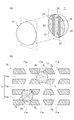
- FIG. 1 is a schematic view showing an internal structure of a functional structure according to an embodiment of the present invention
- FIG. 1A is a perspective view (a part thereof is shown in a cross section).
- 1B is a partially enlarged sectional view.
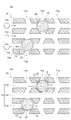
- 2 is a partially enlarged cross-sectional view for explaining an example of the function of the functional structure of FIG. 1,
- FIG. 2(a) is a screen function, and
- FIG. 2(b) is a diagram illustrating a catalyst function. ..
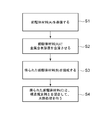
- FIG. 3 is a flowchart showing an example of a method for manufacturing the functional structure of FIG.
- FIG. 4 is a schematic diagram showing a modified example of the functional structure of FIG.
- FIG. 1 is a diagram schematically showing a configuration of a functional structure according to an embodiment of the present invention, in which (a) is a perspective view (a part thereof is shown in cross section), and (b) is a partially enlarged cross section. It is a figure. Note that the functional structure in FIG. 1 shows an example thereof, and the shape, dimensions, etc. of each component according to the present invention are not limited to those in FIG.
- the functional structure 1 is composed of a skeleton body 10 which is a carrier having a porous structure composed of a zeolite type compound, and at least one functional substance contained in the skeleton body 10. And 20.
- the functional substance 20 is a substance that exerts one or more functions by itself or in cooperation with the skeleton body 10. Further, specific examples of the above functions include a catalytic function, a light emitting (or fluorescent) function, an absorptive function, an identifying function and the like.
- the functional substance 20 is preferably a catalytic substance having a catalytic function, for example.
- the skeleton body 10 is a carrier that supports the catalyst substance.
- the plurality of functional substances 20, 20,... are included in the porous structure of the skeleton body 10.
- the catalyst substance, which is an example of the functional substance 20, is preferably at least one of metal oxide fine particles and metal fine particles.
- the metal oxide fine particles and the metal fine particles will be described later in detail.
- the functional substance 20 may be particles containing a metal oxide, a metal alloy, or a composite material thereof.
- the skeleton body 10 has a porous structure, and as shown in FIG. 1( b ), preferably has a plurality of holes 11 a, 11 a,...
- the average inner diameter of the passage 11 is 0.54 nm or less.
- the functional substance 20 exists in at least the passage 11 of the skeleton body 10, and preferably is retained in at least the passage 11 of the skeleton body 10.
- the movement of the functional substance 20 in the skeleton body 10 is regulated, and the aggregation of the functional substances 20, 20 is effectively prevented.
- the reduction of the effective surface area of the functional substance 20 can be effectively suppressed, and the function of the functional substance 20 is maintained for a long period of time. That is, according to the functional structure 1, it is possible to suppress the deterioration of the function due to the aggregation of the functional substance 20, and it is possible to extend the life of the functional structure 1.
- the functional structure 1 since the functional structure 1 has a long life, the frequency of exchanging the functional structure 1 can be reduced, the amount of used functional structure 1 to be discarded can be significantly reduced, and resource saving can be achieved. be able to.
- the functional structure when the functional structure is used in a fluid (for example, heavy oil or reformed gas such as NOx), there is a possibility that external force may be applied from the fluid.
- a fluid for example, heavy oil or reformed gas such as NOx
- the functional substance is only held in an attached state on the outer surface of the skeleton body 10
- the functional substance is likely to be separated from the outer surface of the skeleton body 10 due to the influence of the external force from the fluid.
- the functional substance 20 since the functional substance 20 is held in at least the passage 11 of the skeleton body 10, even if the functional substance 20 is affected by the external force due to the fluid, the functional substance 20 is removed from the skeleton body 10. It is hard to come off.
- the fluid flows into the passage 11 from the hole 11 a of the skeleton body 10, so the speed of the fluid flowing in the passage 11 is the flow passage resistance (friction force). Therefore, it is considered that the speed becomes slower than the speed of the fluid flowing on the outer surface of the skeleton body 10. Due to the influence of the flow path resistance, the pressure that the functional substance 20 held in the passage 11 receives from the fluid becomes lower than the pressure that the functional substance 20 receives from the fluid outside the skeleton body 10. Therefore, it is possible to effectively prevent the functional substance 20 existing in the skeleton body 11 from coming off, and it is possible to stably maintain the function of the functional substance 20 for a long period of time.
- the flow path resistance as described above increases as the passage 11 of the skeleton body 10 has a plurality of bends and branches and the inside of the skeleton body 10 has a more complicated three-dimensional structure. Conceivable.
- the average inner diameter of the passages 11 in the skeleton body 10 is 0.54 nm or less, the heat resistance of the carrier itself when used in a high temperature environment (800° C. or higher) such as automobile exhaust gas treatment or reverse shift reaction Is significantly improved, and the aggregation of catalyst particles can be suppressed.
- the average inner diameter DF of the passage 11 formed in the skeleton body 10 is calculated from the average value of the short diameter and the long diameter of the hole 11a constituting any one of a one-dimensional hole, a two-dimensional hole and a three-dimensional hole described later. Is calculated.
- the average inner diameter D F of the passage 11 is preferably 0.54 nm or less, more preferably 0.50 nm or less, still more preferably 0.47 nm or less and 0.45 nm or less. When the average inner diameter of the passage 11 is within the above range, the heat resistance of the skeleton body 10 is improved.
- the average inner diameter D F is preferably 0.30 nm or more, more preferably 0.32 nm or more. When the average inner diameter of the passage 11 is within the above range, the raw material for the catalytic reaction can be efficiently introduced into the skeleton body 10.
- the passage 11 includes one of the one-dimensional hole, the two-dimensional hole, and the three-dimensional hole defined by the skeletal structure of the zeolite-type compound, and the one-dimensional hole, the two-dimensional hole, and the three-dimensional hole. It is preferable to have a different diameter expanded portion 12 than any of them, and at this time, the functional substance 20 is preferably present in at least the diameter expanded portion 12, and is included in at least the diameter expanded portion 12. Is more preferable.
- the one-dimensional hole here means a tunnel-type or cage-type hole forming a one-dimensional channel, or a plurality of tunnel-type or cage-type holes forming a plurality of one-dimensional channels (a plurality of one-dimensional holes). Channel).
- a two-dimensional hole refers to a two-dimensional channel in which a plurality of one-dimensional channels are two-dimensionally connected, and a three-dimensional hole is a three-dimensional channel in which a plurality of one-dimensional channels is three-dimensionally connected. Point to.
- Inclusion refers to a state in which the functional substance 20 is included in the skeleton body 10.
- the functional substance 20 and the skeleton body 10 do not necessarily have to be in direct contact with each other, and another substance (for example, a surfactant or the like) is interposed between the functional substance 20 and the skeleton body 10.
- the functional substance 20 may be indirectly held by the skeleton body 10 with the intervening.
- FIG. 1B shows a case where the functional substance 20 is included in the diameter-expanded portion 12, the functional substance 20 is not limited to this configuration, and the functional substance 20 has a part thereof expanded-diameter portion. It may be held in the passage 11 in a state of protruding to the outside of 12. Further, the functional substance 20 may be partially embedded in a portion of the passage 11 other than the expanded diameter portion 12 (for example, an inner wall portion of the passage 11) or may be held by fixing or the like. In addition, it is preferable that the expanded diameter portion 12 communicates with the plurality of holes 11a, 11a composing any one of the one-dimensional hole, the two-dimensional hole, and the three-dimensional hole. Accordingly, a separate passage different from the one-dimensional hole, the two-dimensional hole, or the three-dimensional hole is provided inside the skeleton body 10, so that the function of the functional substance 20 can be further exerted.
- the passage 11 is three-dimensionally formed inside the skeleton body 10 including a branch portion or a confluence portion, and the expanded diameter portion 12 is provided at the branch portion or the confluence portion of the passage 11. preferable.
- the inner diameter D E of the expanded diameter portion 12 is, for example, 0.5 nm to 50 nm, preferably 1.1 nm to 40 nm, and more preferably 1.1 nm to 3.3 nm.
- the inner diameter D E of the expanded diameter portion 12 depends on, for example, the pore diameter of the precursor material (A) described later and the average particle diameter D C of the functional substance 20 to be included.
- the inner diameter D E of the expanded diameter portion 12 has a size capable of including the functional substance 20.
- Skeleton body 10 is composed of a zeolite type compound.
- the zeolite-type compound include zeolite (aluminosilicate), cation-exchanged zeolite, silicate compounds such as silicalite, aluminoborate, aluminoarsenate, zeolite analog compounds such as germanate, molybdenum phosphate, etc.
- the phosphate-based zeolite analogs of Among them, the zeolite type compound is preferably a silicate compound.
- the skeletal structure of the zeolite-type compound is represented by ABW, ACO, AEI, AEN, AFO, AFT, AFV, AFX, APC, APD, ASV, ATN, ATO, ATT, ATV, AVL, AWO, AWW, BIK, BOF, BRE, BSV, CAS, CDO, CGF, CGS, CHA, CHI, DAC, DDR, DFT, EAB, EDI, EEI, EPI, ERI, ESV, ETL, EUO, FER, GIS, GOO, IFY, IHW, IRN, ITE, ITH, ITW, JBW, JOZ, JSN, JSW, KFI, LAU, LEV, LOV, LTA, LTJ, MEL, MER, MFS, MON, MTF, MTT, MVY, MWF, NAB, NAT, NPO, It is selected from NPT, NSI, OBW,
- the functional substance 20 is at least one of metal oxide fine particles and metal fine particles (hereinafter, may be collectively referred to as “fine particles”) will be described in detail.
- the fine particles 20 may be primary particles or may be secondary particles formed by aggregating the primary particles.
- the average particle diameter D C of the fine particles 20, that is, The average particle diameter of the metal oxide fine particles and the average particle diameter of the metal fine particles are preferably larger than the average inner diameter D F of the passage 11 and not more than the inner diameter D E of the expanded diameter portion 12 (D F ⁇ D C ⁇ D). E ).
- Such fine particles 20 are preferably included in the expanded diameter portion 12 in the passage 11, and the movement of the fine particles 20 in the skeleton body 10 is restricted. Therefore, even when the fine particles 20 receive an external force from the fluid, the movement of the fine particles 20 in the skeleton body 10 is suppressed, and the expanded diameter portions 12, 12,... It is possible to effectively prevent the fine particles 20, 20,...
- the average particle diameter D C of the metal oxide fine particles 20 is preferably 0.1 nm to 50 nm in both primary particles and secondary particles,
- the thickness is more preferably 0.1 nm or more and less than 30 nm, still more preferably 0.4 nm to 14.0 nm, and particularly preferably 1.0 nm to 3.3 nm.
- the ratio (D C /D F ) of the average particle diameter D C of the metal oxide fine particles 20 to the average inner diameter D F of the passage 11 is preferably 0.06 to 500, more preferably 0.1 to 36. Is more preferable, 1.1 to 36 is more preferable, and 1.7 to 4.5 is particularly preferable.
- the metal element (M) of the metal oxide fine particles is contained in the functional structure 1 in an amount of 0.5 to 2.5 mass %. It is more preferable that the content of the functional structure 1 is 0.5 to 1.5% by mass.
- the metal element (M) is Co
- the content (mass %) of the Co element is represented by (mass of Co element)/(mass of all elements of the functional structure 1) ⁇ 100.
- the metal oxide fine particles may be composed of a metal oxide, for example, may be composed of a single metal oxide, or may be composed of a mixture of two or more kinds of metal oxides. Good.
- the “metal oxide” (as a material) constituting the metal oxide fine particles includes a metal oxide containing one kind of metal element (M) and two or more kinds of metal elements (M). It is a general term for oxides containing one or more kinds of metal elements (M).
- metal oxides examples include cobalt oxide (CoO x ), nickel oxide (NiO x ), iron oxide (FeO x ), copper oxide (CuO x ), zirconium oxide (ZrO x ), and cerium oxide (CeO x ). ), aluminum oxide (AlO x ), niobium oxide (NbO x ), titanium oxide (TiO x ), bismuth oxide (BiO x ), molybdenum oxide (MoO x ), vanadium oxide (VO x ), chromium oxide (CrO x ). Etc., and it is preferable to use any one or more of the above as a main component.
- the average particle diameter D C of the metal fine particles 20 is preferably 0.08 to 30 nm, more preferably both primary particles and secondary particles. Is 0.08 nm or more and less than 25 nm, more preferably 0.4 nm to 11.0 nm, and particularly preferably 0.8 to 2.7 nm.
- the ratio (D C /D F ) of the average particle diameter D C of the metal fine particles 20 to the average inner diameter D F of the passage 11 is preferably 0.05 to 300, more preferably 0.1 to 30. , More preferably 1.1 to 30, and particularly preferably 1.4 to 3.6.
- the metal element (M) of the metal fine particles is preferably contained in an amount of 0.5 to 7.6 mass% with respect to the functional structure 1, 0.5 To 6.9% by mass is more preferable, 0.5 to 2.5% by mass is more preferable, and 0.5 to 1.5% by mass is more preferable. Most preferred.
- the fine metal particles may be made of a metal that is not oxidized, and may be made of a single metal or a mixture of two or more kinds of metals.
- metal (as a material) constituting the metal fine particles is a simple metal containing one kind of metal element (M) and an alloy formed of two or more kinds of metal element (M). Or a mixture and is a general term for metals containing one or more metal elements.
- Such a metal examples include platinum (Pt), palladium (Pd), ruthenium (Ru), nickel (Ni), cobalt (Co), molybdenum (Mo), tungsten (W), iron (Fe), chromium ( Cr), cerium (Ce), copper (Cu), magnesium (Mg), aluminum (Al) and the like can be mentioned, and it is preferable to use any one or more of the above as a main component.
- the functional substance 20 is preferably metal oxide fine particles from the viewpoint of durability.
- the ratio of the silicon (Si) forming the skeleton body 10 to the metal element (M) forming the fine particles 20 is preferably 10 to 1000, and more preferably 50 to 200. Is more preferable. When the ratio is more than 1000, the activity as a functional substance may not be sufficiently obtained such as low activity. On the other hand, if the ratio is smaller than 10, the ratio of the fine particles 20 tends to be too large, and the strength of the skeleton body 10 tends to decrease.
- the fine particles 20 referred to here are fine particles held or carried inside the skeleton body 10, and do not include fine particles attached to the outer surface of the skeleton body 10.
- the functional structure 1 includes the skeleton body 10 having a porous structure and at least one functional substance 20 contained in the skeleton body.
- the functional structure 1 exhibits a function according to the functional substance 20 when the functional substance 20 existing in the skeleton comes into contact with the fluid. Specifically, the fluid in contact with the outer surface 10a of the functional structure 1 flows into the skeleton 10 through the holes 11a formed in the outer surface 10a, is guided into the passage 11, and passes through the passage 11. It moves and goes out of the functional structure 1 through the other hole 11a.
- the functional structure 1 has a molecular sieving ability because the skeleton has a porous structure.
- the molecular sieving ability of the functional structure 1 will be described with reference to FIG. 2(a), taking as an example the case where the fluid is a liquid containing benzene, propylene and mesitylene.
- a compound for example, benzene, propylene
- a compound composed of molecules having a size equal to or smaller than the pore diameter of the pore 11 a, in other words, equal to or smaller than the inner diameter of the passage 11, enters the skeleton body 10.
- a compound (for example, mesitylene) composed of a molecule having a size larger than the pore diameter of the pore 11 a cannot penetrate into the skeleton body 10.
- the reaction of the compound that cannot enter the skeleton body 10 is restricted, and the compound that can enter the skeleton body 10 can react. it can.
- the functional material 20 is preferably included in the expanded diameter portion 12 of the passage 11.
- the average particle diameter D C of the functional material 20 is greater than the average internal diameter D F of the passage 11, and if smaller than the inner diameter D E of the enlarged diameter portion 12 (D F ⁇ D C ⁇ D E), functional A small passage 13 is formed between the substance 20 and the expanded diameter portion 12. Therefore, as shown by the arrow in FIG. 2B, the fluid that has entered the small passage 13 comes into contact with the functional substance 20. Since each functional substance 20 is included in the expanded diameter portion 12, its movement within the skeleton body 10 is restricted. This prevents aggregation of the functional substances 20 in the skeleton body 10. As a result, a large contact area between the functional substance 20 and the fluid can be stably maintained.
- the heat resistance of the carrier itself when used in a high temperature environment such as automobile exhaust gas treatment or reverse shift reaction. Is significantly improved, and the aggregation of catalyst particles can be suppressed.
- the functional substance 20 when the functional substance 20 is nickel oxide (NiOx) fine particles, the functional substance 20 can be used as a catalyst for a dry reforming reaction, for example.
- This dry reforming reaction is represented by the following reaction formula, in which CO 2 and CH 4 are used as raw materials, and synthetic gas (CO and H 2) that is a raw material for various petrochemical products (lower alcohols, hydrocarbons, etc.) is used. 2 ) is manufactured. CO 2 +CH 4 ⁇ 2CO+2H 2
- FIG. 3 is a flowchart showing a method of manufacturing the functional structure 1 of FIG.
- an example of a method for producing a functional structure will be described, taking as an example the case where the functional substance contained in the skeleton is metal oxide fine particles.
- Step S1 preparation process
- a precursor material (A) for obtaining a skeleton body having a porous structure composed of a zeolite type compound is prepared.
- the precursor material (A) is preferably a regular mesoporous substance, and can be appropriately selected according to the type (composition) of the zeolite type compound constituting the skeleton of the functional structure.
- the ordered mesoporous substance has pores with a pore diameter of 1 to 50 nm that are one-dimensional, two-dimensional, or It is preferable that the compound has a three-dimensionally uniform size and a regularly developed Si—O skeleton.
- Such a regular mesoporous substance can be obtained as various synthesized products depending on the synthesis conditions. Specific examples of the synthesized products include, for example, SBA-1, SBA-15, SBA-16, KIT-6, FSM-. 16, MCM-41 and the like, among which MCM-41 is preferable.
- the pore size of SBA-1 is 10 to 30 nm
- the pore size of SBA-15 is 6 to 10 nm
- the pore size of SBA-16 is 6 nm
- the pore size of KIT-6 is 9 nm
- the pore size of FSM-16 is 3 nm. .About.5 nm
- the pore size of MCM-41 is 1 to 10 nm.
- ordered mesoporous substances include mesoporous silica, mesoporous aluminosilicate, mesoporous metallosilicate, and the like.
- the precursor material (A) may be a commercially available product or a synthetic product.
- the precursor material (A) can be synthesized by a known method for synthesizing ordered mesoporous substances. For example, a mixed solution containing a raw material containing the constituent elements of the precursor material (A) and a templating agent for defining the structure of the precursor material (A) is prepared, and the pH is adjusted if necessary. , Hydrothermal treatment (hydrothermal synthesis). Thereafter, the precipitate (product) obtained by the hydrothermal treatment is recovered (for example, filtered), washed and dried if necessary, and further calcined to obtain a powdery regular mesopore substance. A precursor material (A) is obtained.
- the solvent of the mixed solution for example, water, an organic solvent such as alcohol, or a mixed solvent thereof can be used.
- the raw material is selected according to the type of skeleton, and examples thereof include silica agents such as tetraethoxysilane (TEOS), fumed silica, and quartz sand.
- TEOS tetraethoxysilane
- various surfactants, block copolymers, etc. can be used, and it is preferable to select them according to the kind of the synthetic substance of the ordered mesoporous substance.
- a surfactant such as hexadecyltrimethylammonium bromide.
- the hydrothermal treatment can be performed, for example, in a closed container at 80 to 800° C. for 5 hours to 240 hours under treatment conditions of 0 to 2000 kPa.
- the firing treatment can be performed, for example, in air at 350 to 850° C. for 2 to 30 hours.
- Step S2 Impregnation process
- the prepared precursor material (A) is impregnated with the metal-containing solution to obtain the precursor material (B).
- the metal-containing solution may be a solution containing a metal component (for example, a metal ion) corresponding to the metal element (M) forming the metal oxide fine particles of the functional structure. It can be prepared by dissolving a metal salt containing M). Examples of such metal salts include metal salts such as chlorides, hydroxides, oxides, sulfates and nitrates, with nitrates being preferred.
- a metal salt containing M examples include metal salts such as chlorides, hydroxides, oxides, sulfates and nitrates, with nitrates being preferred.
- the solvent for example, water, an organic solvent such as alcohol, or a mixed solvent thereof can be used.
- the method of impregnating the precursor material (A) with the metal-containing solution is not particularly limited, but, for example, before the firing step described below, a plurality of metal-containing solutions are mixed while stirring the powdery precursor material (A). It is preferable to add it in small portions in small portions.
- a surfactant as an additive is added in advance to the precursor material (A) before the metal-containing solution is added. It is preferable to add it.
- Such an additive has a function of covering the outer surface of the precursor material (A), and prevents the metal-containing solution added thereafter from adhering to the outer surface of the precursor material (A). It is considered that the contained solution is more likely to penetrate into the inside of the pores of the precursor material (A).
- nonionic surfactants such as polyoxyethylene oleyl ether, polyoxyethylene alkyl ether, and polyoxyethylene alkylphenyl ether. Since these surfactants have a large molecular size and cannot penetrate into the pores of the precursor material (A), they do not adhere to the inside of the pores, and the metal-containing solution may not penetrate into the pores. Not considered to interfere.
- a method of adding the nonionic surfactant for example, it is preferable to add 50 to 500% by mass of the nonionic surfactant to the precursor material (A) before the firing step described later.
- the amount of the nonionic surfactant added to the precursor material (A) is less than 50% by mass, the above-mentioned suppressing action is difficult to be exhibited, and the nonionic surfactant is added to the precursor material (A) in an amount of 500. Adding more than mass% is not preferable because the viscosity increases too much. Therefore, the amount of the nonionic surfactant added to the precursor material (A) is set to a value within the above range.
- the amount of the metal-containing solution added to the precursor material (A) is the amount of the metal element (M) contained in the metal-containing solution with which the precursor material (A) is impregnated (that is, the precursor material (B It is preferable to appropriately adjust in consideration of the amount of the metal element (M) contained in (). For example, before the firing step described below, the addition amount of the metal-containing solution added to the precursor material (A) is based on the metal element (M) contained in the metal-containing solution added to the precursor material (A). It is preferable that the precursor material (A) is adjusted to a ratio of silicon (Si) (atomic number ratio Si/M) of 10 to 1000, preferably 50 to 200. Is more preferable.
- the metal element (M) of the metal oxide fine particles is at least 0.5 to 7.6 mass% with respect to the functional structure. Can be included.
- the amount of the metal element (M) existing inside the pores is the same as the metal concentration of the metal-containing solution, the presence or absence of the above-mentioned additive, and other conditions such as temperature and pressure. If so, it is approximately proportional to the amount of the metal-containing solution added to the precursor material (A).
- the amount of the metal element (M) contained in the precursor material (B) is proportional to the amount of the metal element forming the metal oxide fine particles contained in the skeleton of the functional structure. Therefore, by controlling the addition amount of the metal-containing solution to be added to the precursor material (A) within the above range, the inside of the pores of the precursor material (A) can be sufficiently impregnated with the metal-containing solution. The amount of metal oxide fine particles to be incorporated in the skeleton of the functional structure can be adjusted.
- a cleaning treatment may be carried out, if necessary.
- the cleaning solution water, an organic solvent such as alcohol, or a mixed solution thereof can be used.
- a cleaning treatment is performed if necessary, and then a drying treatment is further performed.
- the drying treatment include natural drying for about overnight and high temperature drying at 150° C. or lower.
- the baking treatment described below is performed in a state where a large amount of water contained in the metal-containing solution and water contained in the cleaning solution remain in the precursor material (A), regular mesopores of the precursor material (A) are obtained. Since the skeletal structure of the substance may be destroyed, it is preferable to dry it sufficiently.
- Step S3 firing process
- the precursor material (B) in which the metal-containing solution is impregnated with the precursor material (A) for obtaining a skeleton body having a porous structure composed of a zeolite-type compound is fired to obtain the precursor material (C ) Get.
- the firing treatment is preferably carried out, for example, in air at 350 to 850° C. for 2 to 30 hours.
- the metal component impregnated in the pores of the ordered mesoporous substance undergoes crystal growth to form metal oxide fine particles in the pores.
- Step S4 hydrothermal treatment step
- a mixed solution in which the precursor material (C) and the structure directing agent are mixed is prepared, and the precursor material (C) obtained by firing the precursor material (B) is hydrothermally treated to obtain functionality. Get the structure.
- the structure directing agent is a template agent for defining the skeletal structure of the skeleton of the functional structure, and for example, a surfactant can be used.
- the structure directing agent is preferably selected according to the skeleton structure of the skeleton of the functional structure, for example, TPABr, pyridine, TMAOH, TMAOH, piperidine, ethylenediamine, represented by the following formula (1) and formula (2)
- Surfactants such as amine compounds are suitable.
- OH ⁇ which is a counter anion of the amine compound represented by the following formulas (1) and (2) may be one kind such as Br ⁇ and Cl ⁇ , and may be used by appropriately combining two or more kinds. Good.
- the mixing of the precursor material (C) and the structure directing agent may be carried out during the main hydrothermal treatment step or before the hydrothermal treatment step.
- the method for preparing the mixed solution is not particularly limited, and the precursor material (C), the structure directing agent, and the solvent may be mixed at the same time, or the precursor material (C) and the structure defining agent may be mixed in the solvent.
- the agent and the agent may be dispersed in respective individual solutions, and then the respective dispersed solutions may be mixed.
- the solvent for example, water, an organic solvent such as alcohol, or a mixed solvent thereof can be used.
- the pH of the mixed solution is preferably adjusted with an acid or a base before hydrothermal treatment.
- the hydrothermal treatment can be carried out by a known method, and for example, it is preferably carried out in a closed container at 80 to 800° C. for 5 hours to 240 hours under treatment conditions of 0 to 2000 kPa. Further, the hydrothermal treatment is preferably performed in a basic atmosphere.
- the reaction mechanism here is not always clear, by performing hydrothermal treatment using the precursor material (C) as a raw material, the skeleton structure of the precursor material (C) as a regular mesopore substance gradually collapses, A new skeleton structure (porous structure) as a skeleton of the functional structure is formed by the action of the structure directing agent while the positions of the metal oxide fine particles inside the pores of the precursor material (C) are generally maintained. Is formed.
- the functional structure thus obtained comprises a skeleton body having a porous structure and metal oxide fine particles contained in the skeleton body, and the skeleton body has a passage in which a plurality of pores communicate with each other due to the porous structure. And at least a part of the metal oxide fine particles is held in the passage of the skeleton.
- a mixed solution of the precursor material (C) and the structure directing agent is prepared and the precursor material (C) is hydrothermally treated.
- the precursor material (C) may be hydrothermally treated without mixing the precursor material (C) and the structure directing agent.
- the precipitate (functional structure) obtained after the hydrothermal treatment is recovered (for example, filtered), and then washed, dried and calcined if necessary.
- the cleaning solution water, an organic solvent such as alcohol, or a mixed solution thereof can be used.
- the drying treatment include natural drying for about overnight and high temperature drying at 150° C. or lower. Note that if the baking treatment is performed in a state where a large amount of water remains in the precipitate, the skeleton structure as the skeleton of the functional structure may be broken, so it is preferable to sufficiently dry. Further, the firing treatment can be performed, for example, in air at 350 to 850° C. for 2 to 30 hours.
- the structure directing agent attached to the functional structure is burned off.
- the functional structure may be used as it is without subjecting the recovered precipitate to baking treatment, depending on the purpose of use.
- the environment in which the functional structure is used is a high temperature environment of an oxidizing atmosphere
- the structure directing agent is burned out by exposing it to the environment for use for a certain period of time, and the functional structure similar to that in the case of firing treatment is used. Since the body is obtained, it can be used as it is.
- the functional structure can be formed in the same manner as above when the functional substance is the metal fine particles. It can be made. For example, after obtaining a functional structure having metal oxide particles as described above, by performing a reduction treatment under a reducing gas atmosphere such as hydrogen gas, a functional structure having metal fine particles in the skeleton is obtained. Obtainable. In this case, the metal oxide fine particles contained in the skeleton are reduced, and the metal fine particles corresponding to the metal element (M) forming the metal oxide fine particles are formed.
- a reducing gas atmosphere such as hydrogen gas
- metal element (M) contained in the metal-containing solution with which the precursor material (A) is impregnated is a metal species that is not easily oxidized (for example, a noble metal)
- metal fine particles are formed in the firing step (step S3).
- FIG. 4 is a schematic diagram showing a modified example of the functional structure 1 of FIG.
- the functional structure 1 of FIG. 1 shows a case in which the skeleton body 10 and the functional substance 20 contained in the skeleton body 10 are provided, but the structure is not limited to this configuration and is shown in, for example, FIG.
- the functional structure 2 may further include another functional substance 30 held on the outer surface 10 a of the skeleton body 10.
- the functional substance 30 is a substance that exhibits one or more functions.
- the function of the other functional substance 30 may be the same as or different from the function of the functional substance 20.
- Specific examples of the function of the other functional substance 30 are the same as those described for the functional substance 20, and among them, it is preferable that the functional substance 30 has a catalytic function.
- the functional substance 30 is a catalytic substance.
- the material of the other functional substance 30 may be the same as or different from the material of the functional substance 20. Good. According to this configuration, the content of the functional substance retained in the functional structure 2 can be increased, and the functional performance of the functional substance can be further promoted.
- the content of the functional substance 20 contained in the skeleton body 10 is larger than the content of the other functional substance 30 retained on the outer surface 10a of the skeleton body 10. Thereby, the function of the functional substance 20 held inside the skeleton body 10 becomes dominant, and the function of the functional substance is stably exhibited.
- the following substances were used according to the type of precursor material (A) (“type of precursor material (A): surfactant”).
- type of precursor material (A) surfactant
- Tables 1 and 2 the amines of the above formulas (1) and (2) are referred to as “Amine1” and “Amine2”, respectively.
- MCM-41 hexadecyltrimethylammonium bromide (CTAB) (manufactured by Wako Pure Chemical Industries, Ltd.)
- SBA-1 Pluronic P123 (manufactured by BASF)
- metal salt containing the metal element (M) is dissolved in water according to the metal element (M) constituting the metal oxide fine particles of the types shown in Tables 1 and 2 to prepare a metal-containing aqueous solution.
- metal salt the following metal salts were used depending on the type of the metal oxide fine particles (“metal oxide fine particles: metal salt”).
- CoO x Cobalt (II) nitrate hexahydrate (manufactured by Wako Pure Chemical Industries, Ltd.)
- NiO x Nickel (II) nitrate hexahydrate (manufactured by Wako Pure Chemical Industries, Ltd.)
- FeO x iron (III) nitrate nonahydrate (manufactured by Wako Pure Chemical Industries, Ltd.)
- the metal-containing aqueous solution is added little by little over a plurality of times, and the precursor material (B) is dried at room temperature (20° C. ⁇ 10° C.) for 12 hours or more.
- polyoxyethylene (15) oleyl ether (NIKKOL BO-15V, manufactured by Nikko Chemicals Co., Ltd.) as an additive was added to the precursor material (A) before addition of the metal-containing aqueous solution.
- a pretreatment of adding the aqueous solution was performed, and then the metal-containing aqueous solution was added as described above.
- the addition amount of the metal-containing aqueous solution added to the precursor material (A) is the ratio of silicon (Si) constituting the precursor material (A) to the metal element (M) contained in the metal-containing aqueous solution ( The value when converted to the atomic number ratio Si/M) was adjusted to 100.
- precursor material (B) impregnated with the metal-containing aqueous solution obtained as described above was baked in air at 600° C. for 24 hours to obtain a precursor material (C).
- Comparative Example 1 In Comparative Example 1, a functional structure was obtained in the same manner as in Example 2 except that the structure directing agent was not used.
- the metal oxide is iron oxide fine particles (FeOx) in the above examples
- a cross section is cut out by FIB (focused ion beam) processing, and SEM (SU8020, manufactured by Hitachi High-Technologies Corporation), EDX ( Cross-sectional elemental analysis was performed using X-Max, manufactured by Horiba Ltd.).
- Fe element was detected from the inside of the skeleton.
- the average particle diameter D C of the substance was used. The results are shown in Table 1.
- iron oxide fine particles of various sizes randomly exist within the range of particle diameters of about 50 nm to 400 nm, whereas in Examples 3, 5, 13, 15, 23, 25, 33, 35. It was found that iron oxide fine particles having a particle size of 1 to 20 nm are present in the skeleton body in the functional structural bodies of Nos., 43 and 45 in a uniform dispersed state and in a very high dispersion state.
- the heat resistance index indicates the degree of suppression of the decrease in crystallinity of the skeleton body before and after heating, and the larger the heat resistance index, the higher the crystallinity. Specifically, the heat resistance was evaluated based on the following criteria. If it is 90% or more, it is judged that the heat resistance is good and " ⁇ " If it is 70% or more and less than 90%, it is judged that the heat resistance is fair and " ⁇ " If it is less than 70%, it is judged that the heat resistance is insufficient and "x"
- the catalytic activity was evaluated under the following conditions. First, 0.2 g of the functional structure was charged into a normal pressure flow reactor, and nitrogen gas (N 2 ) was used as a carrier gas (5 ml/min) at 400° C. for 2 hours. A model substance) was decomposed.
- the analyzer includes TRACE 1310GC (made by Thermo Fisher Scientific Co., detector: thermal conductivity detector, hydrogen flame ionization detector), TRACE DSQ (made by Thermo Fisher Scientific Co., detector: Mass detector, ionization method: EI (ion source temperature 250°C, MS transfer line temperature 320°C) was used.
- the yield of the above compound by the functional structure after heating was maintained at 60% or more as compared with the yield of the above compound by the functional structure before heating.
Landscapes
- Chemical & Material Sciences (AREA)
- Crystallography & Structural Chemistry (AREA)
- Engineering & Computer Science (AREA)
- Materials Engineering (AREA)
- Organic Chemistry (AREA)
- Chemical Kinetics & Catalysis (AREA)
- Catalysts (AREA)
- Silicates, Zeolites, And Molecular Sieves (AREA)
Abstract
高い耐熱性を有し、高温で長期間使用しても機能性物質の機能低下を抑制して長寿命化を実現することができる機能性構造体を提供する。機能性構造体は、ゼオライト型化合物で構成される多孔質構造の担体と、前記担体に内在する少なくとも1つの機能性物質と、を備え、前記担体が、互いに連通する通路を有し、前記機能性物質が、前記担体の少なくとも前記通路に存在し、前記通路の平均内径が0.54nm以下である。
Description
本発明は、多孔質構造の担体(骨格体)と機能性物質とを備える機能性構造体に関する。
触媒は、自動車分野、資源分野などの多岐にわたる用途で使用されている。例えば自動車分野においては、ディーゼルエンジンを搭載した車両の排気ガス用触媒構造体として、基材セラミック表面にセラミック担体を配置し、該セラミック担体に主触媒成分及び助触媒成分の双方を担持してなるセラミック触媒体が提案されている。このセラミック触媒体では、γ-アルミナからなるセラミック担体の表面に、結晶格子中の格子欠陥等からなる多数の細孔が形成されており、Ce-Zr、Pt等からなる主触媒成分がセラミック担体の表面近傍に直接担持された構成を有している(特許文献1)。
また、多孔質担体(例えば多孔質シリカなど)に金属触媒を形成した触媒構造体が報告されている(特許文献2)。
ところで、自動車排ガス処理触媒(いわゆる三元触媒)は、エンジン近傍に配置されるため、エンジンの発熱によって加熱されることがある。また、C1ケミストリーにおける逆シフト反応の触媒では、その反応の進行に高温を要するため、通常、加熱して使用する。
以上のように、高温条件に配置された触媒構造体では、高温の熱に起因して触媒粒子が担体内で移動し、触媒粒子同士の凝集(シンタリング)が発生し易い。触媒粒子同士の凝集が生じると、触媒としての有効表面積が減少することで触媒活性が低下することから寿命が通常よりも短くなる。また、高温では担体も劣化する。例えば通常の多孔質シリカは高温では、表面積が著しく減少することがある(特許文献3)。そして、このような表面積の減少により、触媒粒子同士の接触可能性が高くなり、凝集が促進される。
このように触媒粒子同士の凝集の進行が速くなると、触媒構造体自体を短期間で交換・再生しなければならず、交換作業が煩雑であると共に、省資源化を図ることができないという問題がある。また、このような機能の経年的な低下の抑制或いは防止は、触媒分野のみならず様々な技術分野での課題として挙げられており、機能の長期的な維持を図るべく解決策が望まれている。例えば特許文献4、5において、触媒の凝集を抑制するために、エマルション法によりアモルファスシリカ被覆金属微粒子を作製し、次いでこの粒子を水熱処理することで、ゼオライトに金属微粒子を包摂させた技術が報告されている。エマルション法によるアモルファスシリカ被覆金属微粒子の作製は、有機溶媒中で界面活性剤と金属源を混合した乳濁液に、還元剤を加えることによって金属微粒子を形成させた後に、シランカップリング剤を添加して金属微粒子表面にシリカ層を形成することで達成される。しかしながら、エマルション法により金属粒子を作製する場合、得られる粒子の粒子サイズは、エマルション化した際の液滴のサイズと、金属粒子の凝集のしやすさにより影響を受ける。一般的に、卑金属はナノ粒子の状態を維持することが困難である。引用文献4、5でナノサイズの粒径を有する粒子について記載しているのは、実施例においては、貴金属の試料のみであり、凝集しやすい卑金属とその酸化物の試料についてナノサイズの粒径を有する粒子は開示されていない。また、引用文献4、5において、エマルション法では、有機溶媒、界面活性剤などが残留し、ゼオライト構造を形成する際に使用する試薬等が不純物となり、ゼオライトの熱安定性に悪影響を与えることも報告されている。
本発明の目的は、高い耐熱性を有し、高温で長期間使用しても機能性物質の機能低下を抑制して長寿命化を実現することができる機能性構造体を提供することにある。
本発明者らは、上記目的を達成するために鋭意研究を重ねた結果、ゼオライト型化合物で構成される多孔質構造の担体である骨格体と、前記骨格体に内在する少なくとも1つの機能性物質と、を備え、前記骨格体が、互いに連通する通路を有し、前記通路の平均内径は、0.54nm以下であり、前記機能性物質が、前記骨格体の少なくとも前記通路に存在していることによって、高温で長期間使用しても機能性物質の機能低下を抑制し、長寿命化を実現できる機能性構造体が得られることを見出し、かかる知見に基づき本発明を完成させるに至った。
すなわち、本発明の要旨構成は、以下のとおりである。
[1]ゼオライト型化合物で構成される多孔質構造の担体と、
前記担体に内在する少なくとも1つの機能性物質と、
を備え、
前記担体が、互いに連通する通路を有し、
前記機能性物質が、前記担体の少なくとも前記通路に存在し、
前記通路の平均内径が0.54nm以下であることを特徴とする機能性構造体。
[2]前記通路は、前記ゼオライト型化合物の骨格構造の一次元孔、二次元孔及び三次元孔のうちのいずれかと、前記一次元孔、前記二次元孔及び前記三次元孔のうちのいずれとも異なる拡径部とを有し、かつ
前記機能性物質が、少なくとも前記拡径部に存在していることを特徴とする、[1]に記載の機能性構造体。
[3]前記拡径部は、前記一次元孔、前記二次元孔及び前記三次元孔のうちのいずれかを構成する複数の孔同士を連通している、[2]に記載の機能性構造体。
[4]前記機能性物質は、触媒物質であり、
前記担体は、前記少なくとも1つの触媒物質を担持することを特徴とする、[1]~[3]のいずれかに記載の機能性構造体。
[5]前記触媒物質は、金属酸化物微粒子であることを特徴とする、[4]に記載の機能性構造体。
[6]前記金属酸化物微粒子の平均粒径が、前記通路の平均内径よりも大きく、且つ前記拡径部の内径以下であることを特徴とする、[5]に記載の機能性構造体。
[7]前記金属酸化物微粒子の平均粒径が、0.1nm~50nmであることを特徴とする、[5]又は[6]に記載の機能性構造体。
[8]前記通路の平均内径に対する前記金属酸化物微粒子の平均粒径の割合が、0.06~500であることを特徴とする、[5]~[7]のいずれかに記載の機能性構造体。
[9]前記触媒物質は、金属微粒子であることを特徴とする、[4]に記載の機能性構造体。
[10]前記金属微粒子の平均粒径が、前記通路の平均内径よりも大きく、且つ前記拡径部の内径以下であることを特徴とする、[9]に記載の機能性構造体。
[11]前記金属微粒子の平均粒径が、0.08nm~30nmであることを特徴とする、[9]又は[10]に記載の機能性構造体。
[12]前記通路の平均内径に対する前記金属微粒子の平均粒径の割合が、0.05~300であることを特徴とする、[9]~[11]のいずれかに記載の機能性構造体。
[13]前記拡径部の内径は、0.50nm~50nmであることを特徴とする、[2]~[12]のいずれかに記載の機能性構造体。
[14]前記担体の外表面に保持された少なくとも1つの他の機能性物質を更に備えることを特徴とする、[1]~[13]のいずれかに記載の機能性構造体。
[15]前記担体に内在する前記少なくとも1つの機能性物質の含有量が、前記担体の外表面に保持された前記少なくとも1つの他の機能性物質の含有量よりも多いことを特徴とする、[14]に記載の機能性構造体。
[16]前記ゼオライト型化合物は、ケイ酸塩化合物であることを特徴とする、[1]~[15]のいずれかに記載の機能性構造体。
[17]前記ゼオライト型化合物は、LTA、AFX、LEV、FERおよびCHAからなる群から選択される1種以上の骨格構造を備えることを特徴とする、[1]~[16]のいずれかに記載の機能性構造体。
本発明によれば、高い耐熱性を有し、高温で長期間使用しても機能性物質の機能低下を抑制して長寿命化を実現することができる機能性構造体を提供することができる。
以下、本発明の実施形態を、図面を参照しながら詳細に説明する。
[機能性構造体の構成]
図1は、本発明の実施形態に係る機能性構造体の構成を概略的に示す図であり、(a)は斜視図(一部を横断面で示す。)、(b)は部分拡大断面図である。なお、図1における機能性構造体は、その一例を示すものであり、本発明に係る各構成の形状、寸法等は、図1のものに限られないものとする。
図1は、本発明の実施形態に係る機能性構造体の構成を概略的に示す図であり、(a)は斜視図(一部を横断面で示す。)、(b)は部分拡大断面図である。なお、図1における機能性構造体は、その一例を示すものであり、本発明に係る各構成の形状、寸法等は、図1のものに限られないものとする。
図1(a)に示されるように、機能性構造体1は、ゼオライト型化合物で構成される多孔質構造の担体である骨格体10と、該骨格体10に内在する少なくとも1つの機能性物質20とを備える。
機能性物質20は、単独で、または骨格体10と協働することで、一又は複数の機能を発揮する物質である。また、上記機能の具体例としては、触媒機能、発光(または蛍光)機能、吸光機能、識別機能等が挙げられる。機能性物質20は、例えば触媒機能を有する触媒物質であることが好ましい。なお、機能性物質20が触媒物質であるとき、骨格体10は、触媒物質を担持する担体である。
機能性構造体1において、複数の機能性物質20,20,・・・は、骨格体10の多孔質構造の内部に包接されている。機能性物質20の一例である触媒物質は、好ましくは金属酸化物微粒子および金属微粒子の少なくとも一方である。金属酸化物微粒子および金属微粒子については、詳しくは後述する。また、機能性物質20は、金属酸化物や金属の合金、またはこれらの複合材料を含む粒子であってもよい。
骨格体10は、多孔質構造であり、図1(b)に示すように、好適には複数の孔11a,11a,・・・が形成されることにより、互いに連通する通路11を有する。通路11の平均内径は、0.54nm以下である。ここで機能性物質20は、骨格体10の少なくとも通路11に存在しており、好ましくは骨格体10の少なくとも通路11に保持されている。
このような構成により、骨格体10内での機能性物質20の移動が規制され、機能性物質20、20同士の凝集が有効に防止されている。その結果、機能性物質20としての有効表面積の減少を効果的に抑制することができ、機能性物質20の機能は長期にわたって持続する。すなわち、機能性構造体1によれば、機能性物質20の凝集による機能の低下を抑制でき、機能性構造体1としての長寿命化を図ることができる。また、機能性構造体1の長寿命化により、機能性構造体1の交換頻度を低減でき、使用済みの機能性構造体1の廃棄量を大幅に低減することができ、省資源化を図ることができる。
通常、機能性構造体を、流体(例えば、重質油や、NOx等の改質ガスなど)の中で用いる場合、流体から外力を受ける可能性がある。この場合、機能性物質が、骨格体10の外表面に付着状態で保持されているだけであると、流体からの外力の影響で骨格体10の外表面から離脱しやすいという問題がある。これに対し、機能性構造体1では、機能性物質20は骨格体10の少なくとも通路11に保持されているため、流体による外力の影響を受けたとしても、骨格体10から機能性物質20が離脱しにくい。すなわち、機能性構造体1が流体内にある場合、流体は骨格体10の孔11aから、通路11内に流入するため、通路11内を流れる流体の速さは、流路抵抗(摩擦力)により、骨格体10の外表面を流れる流体の速さに比べて、遅くなると考えられる。このような流路抵抗の影響により、通路11内に保持された機能性物質20が流体から受ける圧力は、骨格体10の外部において機能性物質が流体から受ける圧力に比べて低くなる。そのため、骨格体11に内在する機能性物質20が離脱することを効果的に抑制でき、機能性物質20の機能を長期的に安定して維持することが可能となる。なお、上記のような流路抵抗は、骨格体10の通路11が、曲がりや分岐を複数有し、骨格体10の内部がより複雑で三次元的な立体構造となっているほど、大きくなると考えられる。
ここで特に、骨格体10において通路11の平均内径が0.54nm以下であると、自動車排ガス処理や逆シフト反応などの高温環境下(800℃以上)で使用する場合に、担体自体の耐熱性が格段に向上し、触媒粒子の凝集も抑制することができる。
なお、骨格体10に形成された通路11の平均内径DFは、後述の一次元孔、二次元孔及び三次元孔のうちのいずれかを構成する孔11aの短径及び長径の平均値から算出される。通路11の平均内径DFは、好ましくは0.54nm以下、より好ましくは0.50nm以下、更に好ましくは0.47nm以下、0.45nm以下である。通路11の平均内径が上記範囲内であると、骨格体10の耐熱性が向上する。また、平均内径DFは、好ましくは0.30nm以上、より好ましくは0.32nm以上である。通路11の平均内径が上記範囲内であると、触媒反応の原料を骨格体10内部へ効率的に導入することが可能となる。
また、通路11は、ゼオライト型化合物の骨格構造によって画定される一次元孔、二次元孔及び三次元孔のうちのいずれかと、上記一次元孔、上記二次元孔及び上記三次元孔のうちのいずれとも異なる拡径部12とを有していることが好ましく、このとき、機能性物質20は、少なくとも拡径部12に存在していることが好ましく、少なくとも拡径部12に包接されていることがより好ましい。ここでいう一次元孔とは、一次元チャンネルを形成しているトンネル型またはケージ型の孔、もしくは複数の一次元チャンネルを形成しているトンネル型またはケージ型の複数の孔(複数の一次元チャンネル)を指す。また、二次元孔とは、複数の一次元チャンネルが二次元的に連結された二次元チャンネルを指し、三次元孔とは、複数の一次元チャンネルが三次元的に連結された三次元チャンネルを指す。
これにより、機能性物質20の骨格体10内での移動がさらに規制され、機能性物質20の離脱や、機能性物質20、20同士の凝集をさらに有効に防止することができる。包接とは、機能性物質20が骨格体10に内包されている状態を指す。このとき機能性物質20と骨格体10とは、必ずしも直接的に互いが接触している必要はなく、機能性物質20と骨格体10との間に他の物質(例えば、界面活性剤等)が介在した状態で、機能性物質20が骨格体10に間接的に保持されていてもよい。
これにより、機能性物質20の骨格体10内での移動がさらに規制され、機能性物質20の離脱や、機能性物質20、20同士の凝集をさらに有効に防止することができる。包接とは、機能性物質20が骨格体10に内包されている状態を指す。このとき機能性物質20と骨格体10とは、必ずしも直接的に互いが接触している必要はなく、機能性物質20と骨格体10との間に他の物質(例えば、界面活性剤等)が介在した状態で、機能性物質20が骨格体10に間接的に保持されていてもよい。
図1(b)では機能性物質20が拡径部12に包接されている場合を示しているが、この構成だけには限定されず、機能性物質20は、その一部が拡径部12の外側にはみ出した状態で通路11に保持されていてもよい。また、機能性物質20は、拡径部12以外の通路11の部分(例えば通路11の内壁部分)に部分的に埋設され、または固着等によって保持されていてもよい。
また、拡径部12は、上記一次元孔、上記二次元孔及び上記三次元孔のうちのいずれかを構成する複数の孔11a,11a同士を連通しているのが好ましい。これにより、骨格体10の内部に、一次元孔、二次元孔又は三次元孔とは異なる別途の通路が設けられるので、機能性物質20の機能をより発揮させることができる。
また、拡径部12は、上記一次元孔、上記二次元孔及び上記三次元孔のうちのいずれかを構成する複数の孔11a,11a同士を連通しているのが好ましい。これにより、骨格体10の内部に、一次元孔、二次元孔又は三次元孔とは異なる別途の通路が設けられるので、機能性物質20の機能をより発揮させることができる。
また、通路11は、骨格体10の内部に、分岐部または合流部を含んで三次元的に形成されており、拡径部12は、通路11の上記分岐部または合流部に設けられるのが好ましい。
拡径部12の内径DEは、例えば0.5nm~50nmであり好ましくは1.1nm~40nm、より好ましくは1.1nm~3.3nmである。拡径部12の内径DEは、例えば後述する前駆体材料(A)の細孔径、及び包接される機能性物質20の平均粒径DCに依存する。拡径部12の内径DEは、機能性物質20を包接し得る大きさである。
骨格体10は、ゼオライト型化合物で構成される。ゼオライト型化合物としては、例えば、ゼオライト(アルミノケイ酸塩)、陽イオン交換ゼオライト、シリカライト等のケイ酸塩化合物、アルミノホウ酸塩、アルミノヒ酸塩、ゲルマニウム酸塩等のゼオライト類縁化合物、リン酸モリブデン等のリン酸塩系ゼオライト類似物質などが挙げられる。中でも、ゼオライト型化合物はケイ酸塩化合物であることが好ましい。
ゼオライト型化合物の骨格構造は、構造コードで、ABW、ACO、AEI、AEN、AFO、AFT、AFV、AFX、APC、APD、ASV、ATN、ATO、ATT、ATV、AVL、AWO、AWW、BIK、BOF、BRE、BSV、CAS、CDO、CGF、CGS、CHA、CHI、DAC、DDR、DFT、EAB、EDI、EEI、EPI、ERI、ESV、ETL、EUO、FER、GIS、GOO、IFY、IHW、IRN、ITE、ITH、ITW、JBW、JOZ、JSN、JSW、KFI、LAU、LEV、LOV、LTA、LTJ、MEL、MER、MFS、MON、MTF、MTT、MVY、MWF、NAB、NAT、NPO、NPT、NSI、OBW、OWE、PAU、PHI、PON、RHO、RON、RSN、RTEなどの中から選択される。好ましくはLTA、AFX、LEV、FER、CHAである。
以下、機能性物質20が金属酸化物微粒子および金属微粒子の少なくとも一方(以下、総称して「微粒子」ということがある。)である場合について詳しく説明する。
機能性物質20が上記微粒子である場合、微粒子20は一次粒子である場合と、一次粒子が凝集して形成した二次粒子である場合とがあるが、微粒子20の平均粒径DC、すなわち金属酸化物微粒子の平均粒径や金属微粒子の平均粒径は、好ましくは通路11の平均内径DFよりも大きく、且つ拡径部12の内径DE以下である(DF<DC≦DE)。このような微粒子20は、通路11内では、好適には拡径部12に包接されており、骨格体10内での微粒子20の移動が規制される。よって、微粒子20が流体から外力を受けた場合であっても、骨格体10内での微粒子20の移動が抑制され、骨格体10の通路11に分散配置された拡径部12、12、・・のそれぞれに包接された微粒子20、20、・・同士が接触するのを有効に防止することができる。
機能性物質20が金属酸化物微粒子である場合には、金属酸化物微粒子20の平均粒径DCは、一次粒子および二次粒子のいずれの場合も、好ましくは0.1nm~50nmであり、より好ましくは0.1nm以上30nm未満であり、さらに好ましくは0.4nm~14.0nm、特に好ましくは1.0nm~3.3nmである。また、通路11の平均内径DFに対する金属酸化物微粒子20の平均粒径DCの割合(DC/DF)は、好ましくは0.06~500であり、より好ましくは0.1~36であり、更に好ましくは1.1~36であり、特に好ましくは1.7~4.5である。
また、機能性物質20が金属酸化物微粒子である場合、金属酸化物微粒子の金属元素(M)は、機能性構造体1に対して0.5~2.5質量%含有されているのが好ましく、機能性構造体1に対して0.5~1.5質量%含有されているのがより好ましい。例えば、金属元素(M)がCoである場合、Co元素の含有量(質量%)は、(Co元素の質量)/(機能性構造体1の全元素の質量)×100で表される。
上記金属酸化物微粒子は、金属酸化物で構成されていればよく、例えば、単一の金属酸化物で構成されていてもよく、あるいは2種以上の金属酸化物の混合物で構成されていてもよい。なお、本明細書において、金属酸化物微粒子を構成する(材質としての)「金属酸化物」は、1種の金属元素(M)を含む金属酸化物と、2種以上の金属元素(M)を含む金属複合酸化物とを含む意味であり、1種以上の金属元素(M)を含む酸化物の総称である。
このような金属酸化物としては、例えば酸化コバルト(CoOx)、酸化ニッケル(NiOx)、酸化鉄(FeOx)、酸化銅(CuOx)、酸化ジルコニウム(ZrOx)、酸化セリウム(CeOx)、酸化アルミニウム(AlOx)、酸化ニオブ(NbOx)、酸化チタン(TiOx)、酸化ビスマス(BiOx)、酸化モリブデン(MoOx)、酸化バナジウム(VOx)、酸化クロム(CrOx)等が挙げられ、上記のいずれか1種以上を主成分とすることが好ましい。
また、機能性物質20が金属微粒子である場合には、金属微粒子20の平均粒径DCは、一次粒子および二次粒子のいずれの場合も、好ましくは0.08~30nmであり、より好ましくは0.08nm以上25nm未満であり、さらに好ましくは0.4nm~11.0nmであり、特に好ましくは0.8~2.7nmである。また、通路11の平均内径DFに対する金属微粒子20の平均粒径DCの割合(DC/DF)は、好ましくは0.05~300であり、より好ましくは0.1~30であり、更に好ましくは1.1~30であり、特に好ましくは1.4~3.6である。
機能性物質20が金属微粒子である場合、金属微粒子の金属元素(M)は、機能性構造体1に対して0.5~7.6質量%で含有されているのが好ましく、0.5~6.9質量%で含有されているのがより好ましく、0.5~2.5質量%で含有されているのがさらに好ましく0.5~1.5質量%で含有されているのが最も好ましい。
上記金属微粒子は、酸化されていない金属で構成されていればよく、例えば、単一の金属で構成されていてもよく、あるいは2種以上の金属の混合物で構成されていてもよい。なお、本明細書において、金属微粒子を構成する(材質としての)「金属」は、1種の金属元素(M)を含む単体金属と、2種以上の金属元素(M)で形成される合金または混合物とを含む意味であり、1種以上の金属元素を含む金属の総称である。
このような金属としては、例えば白金(Pt)、パラジウム(Pd)、ルテニウム(Ru)、ニッケル(Ni)、コバルト(Co)、モリブデン(Mo)、タングステン(W)、鉄(Fe)、クロム(Cr)、セリウム(Ce)、銅(Cu)、マグネシウム(Mg)、アルミニウム(Al)等が挙げられ、上記のいずれか1種以上を主成分とすることが好ましい。
なお、機能性物質20は、耐久性の観点では、金属酸化物微粒子であることが好ましい。
また、微粒子20を構成する金属元素(M)に対する、骨格体10を構成するケイ素(Si)の割合(原子数比Si/M)は、10~1000であるのが好ましく、50~200であるのがより好ましい。上記割合が1000より大きいと、活性が低いなど、機能性物質としての作用が十分に得られない可能性がある。一方、上記割合が10よりも小さいと、微粒子20の割合が大きくなりすぎて、骨格体10の強度が低下する傾向がある。なお、ここでいう微粒子20は、骨格体10の内部に保持され、または担持された微粒子をいい、骨格体10の外表面に付着した微粒子を含まない。
[機能性構造体の機能]
機能性構造体1は、上記のとおり、多孔質構造の骨格体10と、骨格体に内在する少なくとも1つの機能性物質20とを備える。機能性構造体1は、骨格体に内在する機能性物質20が流体と接触することにより、機能性物質20に応じた機能を発揮する。具体的に、機能性構造体1の外表面10aに接触した流体は、外表面10aに形成された孔11aから骨格体10内部に流入して通路11内に誘導され、通路11内を通って移動し、他の孔11aを通じて機能性構造体1の外部へ出る。流体が通路11内を通って移動する経路において、通路11に保持された機能性物質20と接触することによって、機能性物質20の機能に応じた反応(例えば、触媒反応)が生じる。また、機能性構造体1は、骨格体が多孔質構造であることにより、分子篩能を有する。
機能性構造体1は、上記のとおり、多孔質構造の骨格体10と、骨格体に内在する少なくとも1つの機能性物質20とを備える。機能性構造体1は、骨格体に内在する機能性物質20が流体と接触することにより、機能性物質20に応じた機能を発揮する。具体的に、機能性構造体1の外表面10aに接触した流体は、外表面10aに形成された孔11aから骨格体10内部に流入して通路11内に誘導され、通路11内を通って移動し、他の孔11aを通じて機能性構造体1の外部へ出る。流体が通路11内を通って移動する経路において、通路11に保持された機能性物質20と接触することによって、機能性物質20の機能に応じた反応(例えば、触媒反応)が生じる。また、機能性構造体1は、骨格体が多孔質構造であることにより、分子篩能を有する。
まず、機能性構造体1の分子篩能について、図2(a)を用いて、流体がベンゼン、プロピレン及びメシチレンを含む液体である場合を例として説明する。図2(a)に示すように、孔11aの孔径以下、言い換えれば、通路11の内径以下の大きさを有する分子で構成される化合物(例えば、ベンゼン、プロピレン)は、骨格体10内に浸入することができる。一方、孔11aの孔径を超える大きさを有する分子で構成される化合物(例えば、メシチレン)は、骨格体10内へ浸入することができない。このように、流体が複数種類の化合物を含んでいる場合に、骨格体10内に浸入することができない化合物の反応は規制され、骨格体10内に浸入することができる化合物を反応させることができる。
反応によって骨格体10内で生成した化合物のうち、孔11aの孔径以下の大きさを有する分子で構成される化合物のみが孔11aを通じて骨格体10の外部へ出ることができ、反応生成物として得られる。一方、孔11aから骨格体10の外部へ出ることができない化合物は、骨格体10の外部へ出ることができる大きさの分子で構成される化合物に変換させれば、骨格体10の外部へ出すことができる。このように、機能性構造体1を用いることにより、特定の反応生成物を選択的に得ることができる。
機能性構造体1では、図2(b)に示すように、好適には通路11の拡径部12に機能性物質20が包接されている。機能性物質20の平均粒径DCが、通路11の平均内径DFよりも大きく、拡径部12の内径DEよりも小さい場合には(DF<DC<DE)、機能性物質20と拡径部12との間に小通路13が形成される。そこで、図2(b)中の矢印に示すように、小通路13に浸入した流体が機能性物質20と接触する。各機能性物質20は、拡径部12に包接されているため、骨格体10内での移動が制限されている。これにより、骨格体10内における機能性物質20同士の凝集が防止される。その結果、機能性物質20と流体との大きな接触面積を安定して維持することができる。
ここで特に、骨格体10において通路11の平均内径が0.54nm以下であると、自動車排ガス処理や逆シフト反応などの高温環境下(800℃以上)で使用する場合に、担体自体の耐熱性が格段に向上し、触媒粒子の凝集も抑制することができる。
次に、機能性物質20が触媒機能を有する場合について説明する。具体的に、機能性物質20が酸化ニッケル(NiOx)微粒子である場合、機能性物質20は例えばドライリフォーミング反応の触媒として用いることができる。このドライリフォーミング反応は、以下の反応式で表されるものであり、CO2とCH4を原料として、各種石油化学製品(低級アルコール、炭化水素等)の原料となる合成ガス(COおよびH2)を製造するものである。
CO2+CH4→2CO+2H2
CO2+CH4→2CO+2H2
[機能性構造体の製造方法]
図3は、図1の機能性構造体1の製造方法を示すフローチャートである。以下、骨格体に内在する機能性物質が金属酸化物微粒子である場合を例に、機能性構造体の製造方法の一例を説明する。
図3は、図1の機能性構造体1の製造方法を示すフローチャートである。以下、骨格体に内在する機能性物質が金属酸化物微粒子である場合を例に、機能性構造体の製造方法の一例を説明する。
(ステップS1:準備工程)
図3に示すように、先ず、ゼオライト型化合物で構成される多孔質構造の骨格体を得るための前駆体材料(A)を準備する。前駆体材料(A)は、好ましくは規則性メソ細孔物質であり、機能性構造体の骨格体を構成するゼオライト型化合物の種類(組成)に応じて適宜選択できる。
図3に示すように、先ず、ゼオライト型化合物で構成される多孔質構造の骨格体を得るための前駆体材料(A)を準備する。前駆体材料(A)は、好ましくは規則性メソ細孔物質であり、機能性構造体の骨格体を構成するゼオライト型化合物の種類(組成)に応じて適宜選択できる。
ここで、機能性構造体の骨格体を構成するゼオライト型化合物がケイ酸塩化合物である場合には、規則性メソ細孔物質は、細孔径1~50nmの細孔が1次元、2次元または3次元に均一な大きさかつ規則的に発達したSi-O骨格からなる化合物であることが好ましい。このような規則性メソ細孔物質は、合成条件によって様々な合成物として得られるが、合成物の具体例としては、例えばSBA-1、SBA-15、SBA-16、KIT-6、FSM-16、MCM-41等が挙げられ、中でもMCM-41が好ましい。なお、SBA-1の細孔径は10~30nm、SBA-15の細孔径は6~10nm、SBA-16の細孔径は6nm、KIT-6の細孔径は9nm、FSM-16の細孔径は3~5nm、MCM-41の細孔径は1~10nmである。また、このような規則性メソ細孔物質としては、例えばメソポーラスシリカ、メソポーラスアルミノシリケート、メソポーラスメタロシリケート等が挙げられる。
前駆体材料(A)は、市販品および合成品のいずれであってもよい。前駆体材料(A)を合成する場合には、公知の規則性メソ細孔物質の合成方法により行うことができる。例えば、前駆体材料(A)の構成元素を含有する原料と、前駆体材料(A)の構造を規定するための鋳型剤とを含む混合溶液を調製し、必要に応じてpHを調整して、水熱処理(水熱合成)を行う。その後、水熱処理により得られた沈殿物(生成物)を回収(例えば、ろ別)し、必要に応じて洗浄および乾燥し、さらに焼成することで、粉末状の規則性メソ細孔物質である前駆体材料(A)が得られる。ここで、混合溶液の溶媒としては、例えば水、またはアルコール等の有機溶媒、若しくはこれらの混合溶媒等を用いることができる。また、原料は、骨格体の種類に応じて選択されるが、例えばテトラエトキシシラン(TEOS)等のシリカ剤、フュームドシリカ、石英砂等が挙げられる。また、鋳型剤としては、各種界面活性剤、ブロックコポリマー等を用いることができ、規則性メソ細孔物質の合成物の種類に応じて選択することが好ましく、例えばMCM-41を作製する場合にはヘキサデシルトリメチルアンモニウムブロミド等の界面活性剤が好適である。水熱処理は、例えば、密閉容器内で、80~800℃、5時間~240時間、0~2000kPaの処理条件で行うことができる。焼成処理は、例えば、空気中で、350~850℃、2~30時間の処理条件で行うことができる。
(ステップS2:含浸工程)
次に、準備した前駆体材料(A)に、金属含有溶液を含浸させ、前駆体材料(B)を得る。
次に、準備した前駆体材料(A)に、金属含有溶液を含浸させ、前駆体材料(B)を得る。
金属含有溶液は、機能性構造体の金属酸化物微粒子を構成する金属元素(M)に対応する金属成分(例えば、金属イオン)を含有する溶液であればよく、例えば、溶媒に、金属元素(M)を含有する金属塩を溶解させることにより調製できる。このような金属塩としては、例えば、塩化物、水酸化物、酸化物、硫酸塩、硝酸塩等の金属塩が挙げられ、中でも硝酸塩が好ましい。溶媒としては、例えば水、またはアルコール等の有機溶媒、若しくはこれらの混合溶媒等を用いることができる。
前駆体材料(A)に金属含有溶液を含浸させる方法は、特に限定されないが、例えば、後述する焼成工程の前に、粉末状の前駆体材料(A)を撹拌しながら、金属含有溶液を複数回に分けて少量ずつ添加することが好ましい。また、前駆体材料(A)の細孔内部に金属含有溶液がより浸入し易くなる観点から、前駆体材料(A)に、金属含有溶液を添加する前に予め、添加剤として界面活性剤を添加しておくことが好ましい。このような添加剤は、前駆体材料(A)の外表面を被覆する働きがあり、その後に添加される金属含有溶液が前駆体材料(A)の外表面に付着することを抑制し、金属含有溶液が前駆体材料(A)の細孔内部により浸入し易くなると考えられる。
このような添加剤としては、例えばポリオキシエチレンオレイルエーテル、ポリオキシエチレンアルキルエーテル、ポリオキシエチレンアルキルフェニルエーテル等の非イオン性界面活性剤が挙げられる。これらの界面活性剤は、分子サイズが大きく前駆体材料(A)の細孔内部には浸入できないため、細孔の内部に付着することは無く、金属含有溶液が細孔内部に浸入することを妨げないと考えられる。非イオン性界面活性剤の添加方法としては、例えば、後述する焼成工程の前に、非イオン性界面活性剤を、前駆体材料(A)に対して50~500質量%添加するのが好ましい。非イオン性界面活性剤の前駆体材料(A)に対する添加量が50質量%未満であると上記の抑制作用が発現し難く、非イオン性界面活性剤を前駆体材料(A)に対して500質量%よりも多く添加すると粘度が上がりすぎるので好ましくない。よって、非イオン性界面活性剤の前駆体材料(A)に対する添加量を上記範囲内の値とする。
また、前駆体材料(A)に添加する金属含有溶液の添加量は、前駆体材料(A)に含浸させる金属含有溶液中に含まれる金属元素(M)の量(すなわち、前駆体材料(B)に内在させる金属元素(M)の量)を考慮して、適宜調整することが好ましい。例えば、後述する焼成工程の前に、前駆体材料(A)に添加する金属含有溶液の添加量を、前駆体材料(A)に添加する金属含有溶液中に含まれる金属元素(M)に対する、前駆体材料(A)を構成するケイ素(Si)の比(原子数比Si/M)に換算して、10~1000となるように調整することが好ましく、50~200となるように調整することがより好ましい。例えば、前駆体材料(A)に金属含有溶液を添加する前に、添加剤として界面活性剤を前駆体材料(A)に添加した場合、前駆体材料(A)に添加する金属含有溶液の添加量を、原子数比Si/Mに換算して50~200とすることで、金属酸化物微粒子の金属元素(M)を、機能性構造体に対して少なくとも0.5~7.6質量%で含有させることができる。前駆体材料(B)の状態で、その細孔内部に存在する金属元素(M)の量は、金属含有溶液の金属濃度や、上記添加剤の有無、その他温度や圧力等の諸条件が同じであれば、前駆体材料(A)に添加する金属含有溶液の添加量に概ね比例する。また、前駆体材料(B)に内在する金属元素(M)の量は、機能性構造体の骨格体に内在する金属酸化物微粒子を構成する金属元素の量と比例関係にある。したがって、前駆体材料(A)に添加する金属含有溶液の添加量を上記範囲に制御することにより、前駆体材料(A)の細孔内部に金属含有溶液を十分に含浸させることができ、ひいては、機能性構造体の骨格体に内在させる金属酸化物微粒子の量を調整することができる。
前駆体材料(A)に金属含有溶液を含浸させた後は、必要に応じて、洗浄処理を行ってもよい。洗浄溶液として、水、またはアルコール等の有機溶媒、若しくはこれらの混合溶液を用いることができる。また、前駆体材料(A)に金属含有溶液を含浸させ、必要に応じて洗浄処理を行った後、さらに乾燥処理を施すことが好ましい。乾燥処理としては、一晩程度の自然乾燥や、150℃以下の高温乾燥が挙げられる。なお、金属含有溶液に含まれる水分や、洗浄溶液の水分が、前駆体材料(A)に多く残った状態で、後述の焼成処理を行うと、前駆体材料(A)の規則性メソ細孔物質としての骨格構造が壊れる恐れがあるので、十分に乾燥するのが好ましい。
(ステップS3:焼成工程)
次に、ゼオライト型化合物で構成される多孔質構造の骨格体を得るための前駆体材料(A)に金属含有溶液が含浸された前駆体材料(B)を焼成して、前駆体材料(C)を得る。
次に、ゼオライト型化合物で構成される多孔質構造の骨格体を得るための前駆体材料(A)に金属含有溶液が含浸された前駆体材料(B)を焼成して、前駆体材料(C)を得る。
焼成処理は、例えば、空気中で、350~850℃、2~30時間の処理条件で行うことが好ましい。このような焼成処理により、規則性メソ細孔物質の孔内に含浸された金属成分が結晶成長して、孔内で金属酸化物微粒子が形成される。
(ステップS4:水熱処理工程)
次いで、前駆体材料(C)と構造規定剤とを混合した混合溶液を調製し、前記前駆体材料(B)を焼成して得られた前駆体材料(C)を水熱処理して、機能性構造体を得る。
次いで、前駆体材料(C)と構造規定剤とを混合した混合溶液を調製し、前記前駆体材料(B)を焼成して得られた前駆体材料(C)を水熱処理して、機能性構造体を得る。
構造規定剤は、機能性構造体の骨格体の骨格構造を規定するための鋳型剤であり、例えば界面活性剤を用いることができる。構造規定剤は、機能性構造体の骨格体の骨格構造に応じて選択することが好ましく、例えばTPABr、ピリジン、TMAOH、TMAdaOH、ピペリジン、エチレンジアミン、下記(1)式及び(2)式で表されるアミン化合物等の界面活性剤が好適である。なお、下記(1)式及び(2)式で表されるアミン化合物の対アニオンであるOH-は、Br-、Cl-など1種であってもよく、2種以上を適宜組み合わせて用いてもよい。


前駆体材料(C)と構造規定剤との混合は、本水熱処理工程時に行ってもよいし、水熱処理工程の前に行ってもよい。また、上記混合溶液の調製方法は、特に限定されず、前駆体材料(C)と、構造規定剤と、溶媒とを同時に混合してもよいし、溶媒に前駆体材料(C)と構造規定剤とをそれぞれ個々の溶液に分散させた状態にした後に、それぞれの分散溶液を混合してもよい。溶媒としては、例えば水、またはアルコール等の有機溶媒、若しくはこれらの混合溶媒等を用いることができる。また、混合溶液は、水熱処理を行う前に、酸または塩基を用いてpHを調整しておくことが好ましい。
水熱処理は、公知の方法で行うことができ、例えば、密閉容器内で、80~800℃、5時間~240時間、0~2000kPaの処理条件で行うことが好ましい。また、水熱処理は、塩基性雰囲気下で行われることが好ましい。
ここでの反応メカニズムは必ずしも明らかではないが、前駆体材料(C)を原料として水熱処理を行うことにより、前駆体材料(C)の規則性メソ細孔物質としての骨格構造は次第に崩れるが、前駆体材料(C)の細孔内部での金属酸化物微粒子の位置は概ね維持されたまま、構造規定剤の作用により、機能性構造体の骨格体としての新たな骨格構造(多孔質構造)が形成される。このようにして得られた機能性構造体は、多孔質構造の骨格体と、骨格体に内在する金属酸化物微粒子を備え、さらに骨格体はその多孔質構造により複数の孔が互いに連通した通路を有し、金属酸化物微粒子はその少なくとも一部分が骨格体の通路に保持されている。
また、本実施形態では、上記水熱処理工程において、前駆体材料(C)と構造規定剤とを混合した混合溶液を調製して、前駆体材料(C)を水熱処理しているが、これに限らず、前駆体材料(C)と構造規定剤とを混合すること無く、前駆体材料(C)を水熱処理してもよい。
水熱処理後に得られる沈殿物(機能性構造体)は、回収(例えば、ろ別)後、必要に応じて洗浄、乾燥および焼成することが好ましい。洗浄溶液としては、水、またはアルコール等の有機溶媒、若しくはこれらの混合溶液を用いることができる。乾燥処理としては、一晩程度の自然乾燥や、150℃以下の高温乾燥が挙げられる。なお、沈殿物に水分が多く残った状態で、焼成処理を行うと、機能性構造体の骨格体としての骨格構造が壊れる恐れがあるので、十分に乾燥するのが好ましい。また、焼成処理は、例えば、空気中で、350~850℃、2~30時間の処理条件で行うことができる。このような焼成処理により、機能性構造体に付着していた構造規定剤が焼失する。また、機能性構造体は、使用目的に応じて、回収後の沈殿物を焼成処理することなくそのまま用いることもできる。例えば、機能性構造体の使用する環境が、酸化性雰囲気の高温環境である場合には、使用環境に一定時間晒すことで、構造規定剤は焼失し、焼成処理した場合と同様の機能性構造体が得られるので、そのまま使用することが可能となる。
以上、機能性物質が金属酸化物微粒子である場合の機能性構造体の製造方法を例に説明してきたが、機能性物質が金属微粒子である場合も概ね上記と同様に、機能性構造体を作製することができる。例えば、上記のようにして金属酸化物粒子を有する機能性構造体を得た後、水素ガス等の還元ガス雰囲気下で還元処理することで、骨格体に金属微粒子が内在する機能性構造体を得ることができる。この場合、骨格体に内在する金属酸化物微粒子が還元され、金属酸化物微粒子を構成する金属元素(M)に対応した金属微粒子が形成される。あるいは、前駆体材料(A)に含浸させる金属含有溶液に含まれる金属元素(M)を、酸化され難い金属種(例えば、貴金属)とすることにより、焼成工程(ステップS3)にて金属微粒子を結晶成長させることができ、その後に水熱処理を行うことで、骨格体に金属微粒子が内在する機能性構造体を得ることができる。
[機能性構造体1の変形例]
図4は、図1の機能性構造体1の変形例を示す模式図である。
図1の機能性構造体1は、骨格体10と、骨格体10に内在する機能性物質20とを備える場合を示しているが、この構成だけには限定されず、例えば、図4に示すように、機能性構造体2が、骨格体10の外表面10aに保持された他の機能性物質30を更に備えていてもよい。
図4は、図1の機能性構造体1の変形例を示す模式図である。
図1の機能性構造体1は、骨格体10と、骨格体10に内在する機能性物質20とを備える場合を示しているが、この構成だけには限定されず、例えば、図4に示すように、機能性構造体2が、骨格体10の外表面10aに保持された他の機能性物質30を更に備えていてもよい。
この機能性物質30は、一又は複数の機能を発揮する物質である。他の機能性物質30が有する機能は、機能性物質20が有する機能と同一であってもよいし、異なっていてもよい。他の機能性物質30が有する機能の具体例は、機能性物質20について説明したものと同様であり、中でも触媒機能を有することが好ましく、このとき機能性物質30は触媒物質である。また、機能性物質20,30の双方が同一の機能を有する物質である場合、他の機能性物質30の材料は、機能性物質20の材料と同一であってもよいし、異なっていてもよい。本構成によれば、機能性構造体2に保持された機能性物質の含有量を増大することができ、機能性物質の機能発揮を更に促進することができる。
この場合、骨格体10に内在する機能性物質20の含有量は、骨格体10の外表面10aに保持された他の機能性物質30の含有量よりも多いことが好ましい。これにより、骨格体10の内部に保持された機能性物質20による機能が支配的となり、安定的に機能性物質の機能が発揮される。
以上、本発明の実施形態に係る機能性構造体について述べたが、本発明は上記実施形態に限定されるものではなく、本発明の技術思想に基づいて各種の変形および変更が可能である。
(実施例1~50)
[前駆体材料(A)の合成]
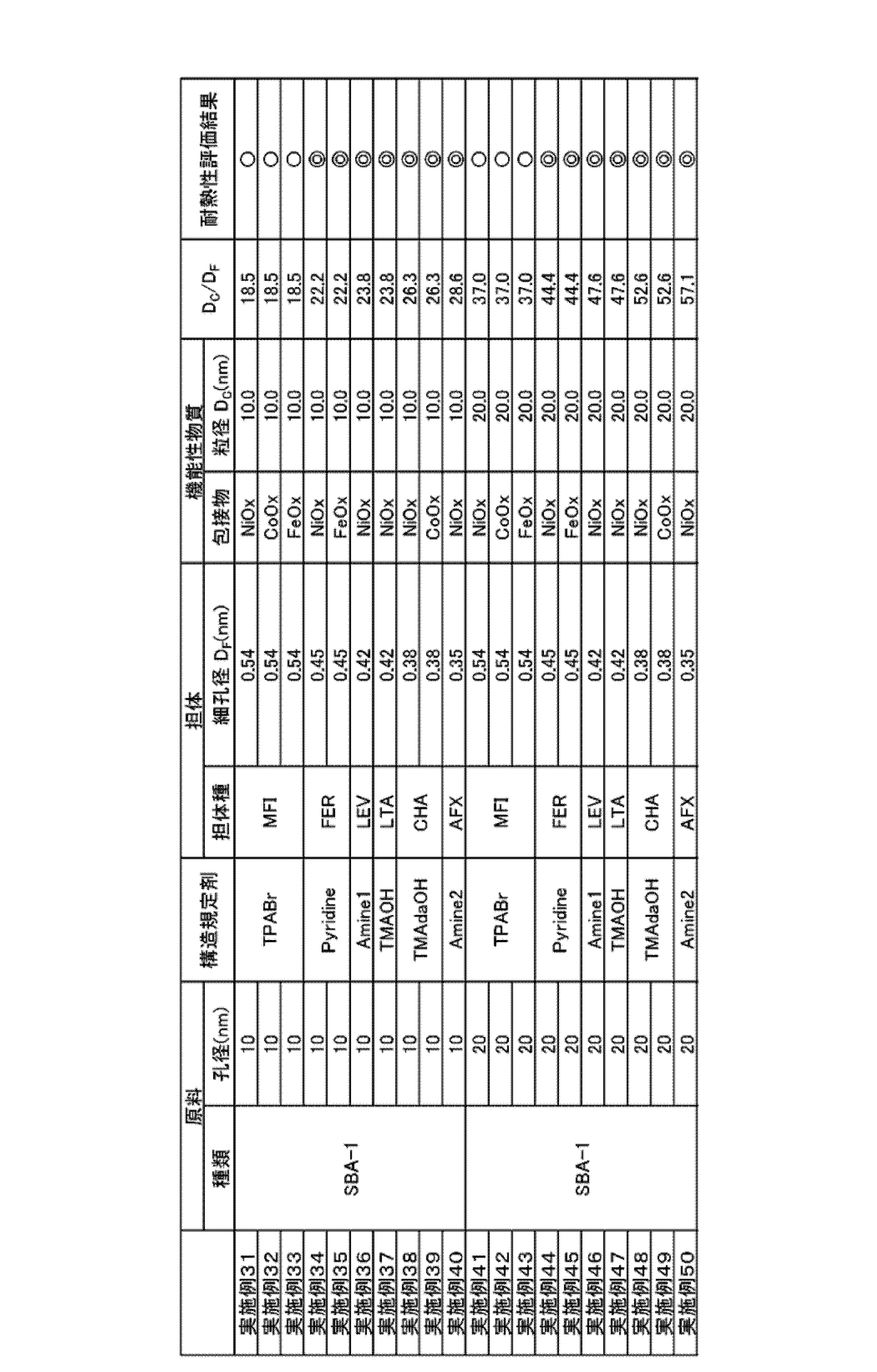
シリカ剤(テトラエトキシシラン(TEOS)、和光純薬工業株式会社製)と、構造規定剤(鋳型剤)としての界面活性剤とを混合した混合水溶液を作製し、適宜pH調整を行い、密閉容器内で、80~350℃、100時間、水熱処理を行った。その後、生成した沈殿物をろ別し、水およびエタノールで洗浄し、さらに600℃、24時間、空気中で焼成して、表1~2に示される種類および孔径の前駆体材料(A)を得た。なお、構造規定剤(界面活性剤)は、前駆体材料(A)の種類に応じて(「前駆体材料(A)の種類:界面活性剤」)以下のものを用いた。なお、表1~2中、上記(1)式および(2)式のアミンをそれぞれ「Amine1」および「Amine2」と表記する。
・MCM-41:ヘキサデシルトリメチルアンモニウムブロミド(CTAB)(和光純薬工業株式会社製)
・SBA-1:Pluronic P123(BASF社製)
[前駆体材料(B)および(C)の作製]
次に、表1~2に示される種類の金属酸化物微粒子を構成する金属元素(M)に応じて、該金属元素(M)を含有する金属塩を、水に溶解させて、金属含有水溶液を調製した。なお、金属塩は、金属酸化物微粒子の種類に応じて(「金属酸化物微粒子:金属塩」)以下のものを用いた。
・CoOx:硝酸コバルト(II)六水和物(和光純薬工業株式会社製)
・NiOx:硝酸ニッケル(II)六水和物(和光純薬工業株式会社製)
・FeOx:硝酸鉄(III)九水和物(和光純薬工業株式会社製)
次に、表1~2に示される種類の金属酸化物微粒子を構成する金属元素(M)に応じて、該金属元素(M)を含有する金属塩を、水に溶解させて、金属含有水溶液を調製した。なお、金属塩は、金属酸化物微粒子の種類に応じて(「金属酸化物微粒子:金属塩」)以下のものを用いた。
・CoOx:硝酸コバルト(II)六水和物(和光純薬工業株式会社製)
・NiOx:硝酸ニッケル(II)六水和物(和光純薬工業株式会社製)
・FeOx:硝酸鉄(III)九水和物(和光純薬工業株式会社製)
次に、粉末状の前駆体材料(A)に、金属含有水溶液を複数回に分けて少量ずつ添加し、室温(20℃±10℃)で12時間以上乾燥させて、前駆体材料(B)を得た。
なお、実施例全てについて、金属含有水溶液を添加する前の前駆体材料(A)に対して、添加剤としてのポリオキシエチレン(15)オレイルエーテル(NIKKOL BO-15V、日光ケミカルズ株式会社製)の水溶液を添加する前処理を行い、その後、上記のように金属含有水溶液を添加した。
また、前駆体材料(A)に添加する金属含有水溶液の添加量は、該金属含有水溶液中に含まれる金属元素(M)に対する、前駆体材料(A)を構成するケイ素(Si)の比(原子数比Si/M)に換算したときの数値が、100になるように調整した。
次に、上記のようにして得られた金属含有水溶液を含浸させた前駆体材料(B)を、600℃、24時間、空気中で焼成して、前駆体材料(C)を得た。
[機能性構造体の合成]
上記のようにして得られた前駆体材料(C)と表1~2に示す構造規定剤とを混合して混合水溶液を作製し、密閉容器内で、40~350℃、pH7~12、5~240時間の条件で、水熱処理を行った。その後、生成した沈殿物をろ別し、水洗し、100℃で12時間以上乾燥させ、さらに600℃、24時間、空気中で焼成した。その後、焼成物を回収し、表1~2に示す骨格体と機能性物質としての金属微粒子とを有する機能性構造体を得た。
上記のようにして得られた前駆体材料(C)と表1~2に示す構造規定剤とを混合して混合水溶液を作製し、密閉容器内で、40~350℃、pH7~12、5~240時間の条件で、水熱処理を行った。その後、生成した沈殿物をろ別し、水洗し、100℃で12時間以上乾燥させ、さらに600℃、24時間、空気中で焼成した。その後、焼成物を回収し、表1~2に示す骨格体と機能性物質としての金属微粒子とを有する機能性構造体を得た。
(比較例1)
比較例1では、構造規定剤を用いないこと以外、実施例2と同様にして機能性構造体を得た。
比較例1では、構造規定剤を用いないこと以外、実施例2と同様にして機能性構造体を得た。
[評価]
上記実施例および比較例の機能性構造体について、以下に示す条件で、各種特性評価を行った。
上記実施例および比較例の機能性構造体について、以下に示す条件で、各種特性評価を行った。
[A]断面観察
上記実施例および比較例の機能性構造体について、粉砕法にて観察試料を作製し、透過電子顕微鏡(TEM)(TITAN G2、FEI社製)を用いて、断面観察を行った。
上記実施例および比較例の機能性構造体について、粉砕法にて観察試料を作製し、透過電子顕微鏡(TEM)(TITAN G2、FEI社製)を用いて、断面観察を行った。
その結果、上記実施例および比較例の機能性構造体では、ゼオライトからなる骨格体の内部に機能性物質が内在し、保持されていることが確認された。
また、上記実施例のうち金属酸化物が酸化鉄微粒子(FeOx)である機能性構造体について、FIB(集束イオンビーム)加工により断面を切り出し、SEM(SU8020、日立ハイテクノロジーズ社製)、EDX(X-Max、堀場製作所製)を用いて断面元素分析を行った。その結果、骨格体内部からFe元素が検出された。
上記TEMとSEM/EDXによる断面観察の結果から、骨格体内部に酸化鉄微粒子が存在していることが確認された。
[B]骨格体の通路の平均内径および機能性物質の平均粒径
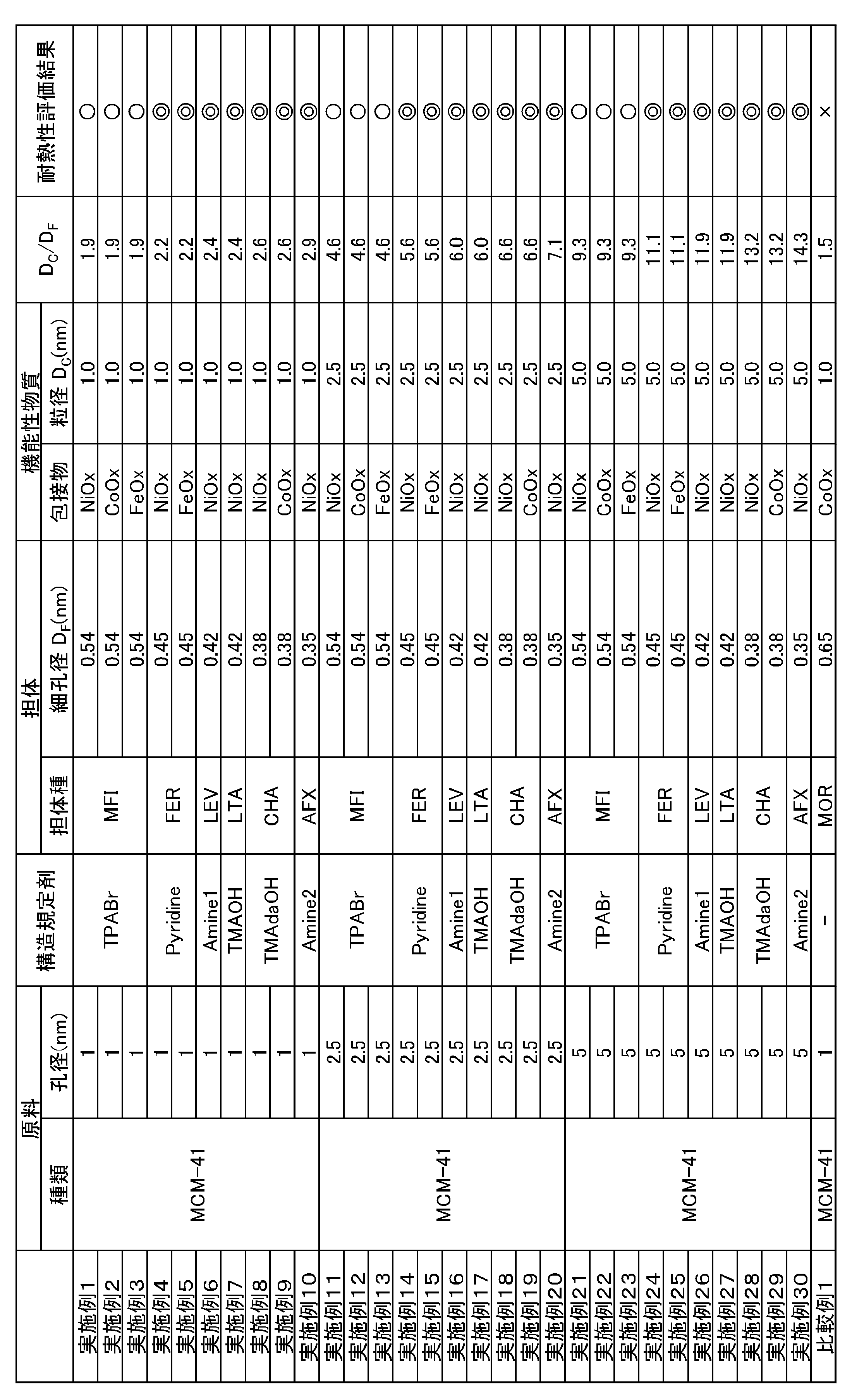
上記評価[A]で行った断面観察により撮影したTEM画像にて、骨格体の通路を、任意に500個選択し、それぞれの長径および短径を測定し、その平均値からそれぞれの内径を算出し(N=500)、さらに内径の平均値を求めて、骨格体の通路の平均内径DFとした。また、機能性物質についても同様に、上記TEM画像から、機能性物質を、任意に500個選択し、それぞれの粒径を測定して(N=500)、その平均値を求めて、機能性物質の平均粒径DCとした。結果を表1に示す。
上記評価[A]で行った断面観察により撮影したTEM画像にて、骨格体の通路を、任意に500個選択し、それぞれの長径および短径を測定し、その平均値からそれぞれの内径を算出し(N=500)、さらに内径の平均値を求めて、骨格体の通路の平均内径DFとした。また、機能性物質についても同様に、上記TEM画像から、機能性物質を、任意に500個選択し、それぞれの粒径を測定して(N=500)、その平均値を求めて、機能性物質の平均粒径DCとした。結果を表1に示す。
また、機能性物質の平均粒径及び分散状態を確認するため、SAXS(小角X線散乱)を用いて分析した。SAXSによる測定は、Spring-8のビームラインBL19B2を用いて行った。得られたSAXSデータは、Guinier近似法により球形モデルでフィッティングを行い、粒径を算出した。粒径は、金属酸化物が酸化鉄微粒子である実施例3、5、13、15、23、25、33、35、43および45の機能性構造体について測定した。また、比較対象として、市販品である酸化鉄微粒子(Wako製)をSEMにて観察、測定した。
この結果、市販品では粒径約50nm~400nmの範囲で様々なサイズの酸化鉄微粒子がランダムに存在しているのに対し、実施例3、5、13、15、23、25、33、35、43および45の機能性構造体では、いずれも骨格体内部に、粒径1~20nmの酸化鉄微粒子が、粒径が揃いかつ非常に高い分散状態で存在していることが分かった。
[C]性能評価
上記実施例および比較例の機能性構造体について、機能性物質(触媒物質)の性能を評価した。結果を表1に示す。
上記実施例および比較例の機能性構造体について、機能性物質(触媒物質)の性能を評価した。結果を表1に示す。
(1)耐熱性(寿命)
実施例及び比較例に示した機能性構造体について、800℃で12時間、空気雰囲気化で加熱し、その加熱前後の機能性構造体をそれぞれ、D8 Advance(ブルカー社)により測定し、XRDパターンを得た。得られた加熱前の機能性構造体のXRDパターンにおいて、2θ=15°以下で最も高い強度を有するピーク(以下、「メインピーク」という。)を代表値として採用し、この値を用いて、以下の式から耐熱性指数を算出した。
耐熱性指数=(加熱後XRDメインピーク強度の値/加熱前メインピークXRD強度の値)×100
実施例及び比較例に示した機能性構造体について、800℃で12時間、空気雰囲気化で加熱し、その加熱前後の機能性構造体をそれぞれ、D8 Advance(ブルカー社)により測定し、XRDパターンを得た。得られた加熱前の機能性構造体のXRDパターンにおいて、2θ=15°以下で最も高い強度を有するピーク(以下、「メインピーク」という。)を代表値として採用し、この値を用いて、以下の式から耐熱性指数を算出した。
耐熱性指数=(加熱後XRDメインピーク強度の値/加熱前メインピークXRD強度の値)×100
なお、この耐熱性指数は、加熱前後における骨格体の結晶性の低下抑制の程度を示しており、大きいほど結晶性が高いことを意味している。具体的には、以下の基準に基づき耐熱性の良否を判断した。
90%以上であれば、耐熱性が良好と判断して「◎」
70%以上90%未満であれば、耐熱性がまずまずと判断して「○」
70%未満であれば、耐熱性が不十分と判断して「×」
90%以上であれば、耐熱性が良好と判断して「◎」
70%以上90%未満であれば、耐熱性がまずまずと判断して「○」
70%未満であれば、耐熱性が不十分と判断して「×」
(2)触媒活性
実施例1~30より、ゼオライトの細孔径を0.54nm以下とすることで耐熱性が発現することが分かった。続いて、機能性構造体を650℃で12時間、空気雰囲気化で加熱し、その加熱前後の活性を確認することとした。ここでは、サンプルとして耐熱性が○評価の実施例1~3、耐熱性が◎評価の実施例4~5を選択した。
実施例1~30より、ゼオライトの細孔径を0.54nm以下とすることで耐熱性が発現することが分かった。続いて、機能性構造体を650℃で12時間、空気雰囲気化で加熱し、その加熱前後の活性を確認することとした。ここでは、サンプルとして耐熱性が○評価の実施例1~3、耐熱性が◎評価の実施例4~5を選択した。
触媒活性は、次の条件で評価した。まず、機能性構造体を、常圧流通式反応装置に0.2g充填し、窒素ガス(N2)をキャリアガス(5ml/min)とし、400℃、2時間、ブチルベンゼン(重質油のモデル物質)の分解反応を行った。
反応終了後に、回収した生成ガスおよび生成液を、ガスクロマトグラフィー(GC)、ガスクロマトグラフィー質量分析法(GC/MS)により成分分析した。なお、分析装置には、TRACE 1310GC(サーモフィッシャーサイエンティフィック株式会社製、検出器:熱伝導度検出器、水素炎イオン化検出器)、TRACE DSQ(サーモフィッシャーサイエンティフィック株式会社製、検出器:質量検出器、イオン化方法:EI(イオン源温度250℃、MSトランスファーライン温度320℃)を用いた。
さらに、上記成分分析の結果に基づき、ブチルベンゼンよりも分子量が小さい化合物(具体的には、ベンゼン、トルエン、エチルベンゼン、スチレン、クメン、メタン、エタン、エチレン、プロパン、プロピレン、ブタン、ブテン等)の収率(mol%)を求めた。上記化合物の収率は、反応開始前のブチルベンゼンの物質量(mol)に対する、生成液中に含まれるブチルベンゼンよりも分子量が小さい化合物の物質量の総量(mol)の百分率(mol%)として算出した。
評価の結果、加熱後の機能性構造体による上記化合物の収率が、加熱前の機能性構造体による上記化合物の収率に比べて、60%以上維持されていた。
(1)耐熱性(寿命)および(2)触媒活性の評価結果から、細孔径0.54nm以下で耐熱性が向上し、0.45nm以下で更に耐熱性が向上することがわかり、一定の触媒活性も維持していることが判明した。
1 機能性構造体
10 骨格体
10a 外表面
11 通路
11a 孔
12 拡径部
20 機能性物質
30 機能性物質
DC 平均粒径
DF 平均内径
DE 内径
10 骨格体
10a 外表面
11 通路
11a 孔
12 拡径部
20 機能性物質
30 機能性物質
DC 平均粒径
DF 平均内径
DE 内径
Claims (17)
- ゼオライト型化合物で構成される多孔質構造の担体と、
前記担体に内在する少なくとも1つの機能性物質と、
を備え、
前記担体が、互いに連通する通路を有し、
前記機能性物質が、前記担体の少なくとも前記通路に存在し、
前記通路の平均内径が0.54nm以下であることを特徴とする機能性構造体。 - 前記通路は、前記ゼオライト型化合物の骨格構造の一次元孔、二次元孔及び三次元孔のうちのいずれかと、前記一次元孔、前記二次元孔及び前記三次元孔のうちのいずれとも異なる拡径部とを有し、かつ
前記機能性物質が、少なくとも前記拡径部に存在していることを特徴とする、請求項1に記載の機能性構造体。 - 前記拡径部は、前記一次元孔、前記二次元孔及び前記三次元孔のうちのいずれかを構成する複数の孔同士を連通している、請求項2に記載の機能性構造体。
- 前記機能性物質は、触媒物質であり、
前記担体は、前記少なくとも1つの触媒物質を担持することを特徴とする、請求項1~3のいずれか1項に記載の機能性構造体。 - 前記触媒物質は、金属酸化物微粒子であることを特徴とする、請求項4に記載の機能性構造体。
- 前記金属酸化物微粒子の平均粒径が、前記通路の平均内径よりも大きく、且つ前記拡径部の内径以下であることを特徴とする、請求項5に記載の機能性構造体。
- 前記金属酸化物微粒子の平均粒径が、0.1nm~50nmであることを特徴とする、請求項5又は6に記載の機能性構造体。
- 前記通路の平均内径に対する前記金属酸化物微粒子の平均粒径の割合が、0.06~500であることを特徴とする、請求項5~7のいずれか1項に記載の機能性構造体。
- 前記触媒物質は、金属微粒子であることを特徴とする、請求項4に記載の機能性構造体。
- 前記金属微粒子の平均粒径が、前記通路の平均内径よりも大きく、且つ前記拡径部の内径以下であることを特徴とする、請求項9に記載の機能性構造体。
- 前記金属微粒子の平均粒径が、0.08nm~30nmであることを特徴とする、請求項9又は10に記載の機能性構造体。
- 前記通路の平均内径に対する前記金属微粒子の平均粒径の割合が、0.05~300であることを特徴とする、請求項9~11のいずれか1項に記載の機能性構造体。
- 前記拡径部の内径は、0.50nm~50nmであることを特徴とする、請求項2~12のいずれか1項に記載の機能性構造体。
- 前記担体の外表面に保持された少なくとも1つの他の機能性物質を更に備えることを特徴とする、請求項1~13のいずれか1項に記載の機能性構造体。
- 前記担体に内在する前記少なくとも1つの機能性物質の含有量が、前記担体の外表面に保持された前記少なくとも1つの他の機能性物質の含有量よりも多いことを特徴とする、請求項14に記載の機能性構造体。
- 前記ゼオライト型化合物は、ケイ酸塩化合物であることを特徴とする、請求項1~15のいずれか1項に記載の機能性構造体。
- 前記ゼオライト型化合物は、LTA、AFX、LEV、FERおよびCHAからなる群から選択される1種以上の骨格構造を備えることを特徴とする、請求項1~16のいずれか1項に記載の機能性構造体。
Priority Applications (1)
| Application Number | Priority Date | Filing Date | Title |
|---|---|---|---|
| JP2020559939A JP7644926B2 (ja) | 2018-12-03 | 2019-12-03 | 機能性構造体 |
Applications Claiming Priority (2)
| Application Number | Priority Date | Filing Date | Title |
|---|---|---|---|
| JP2018-226921 | 2018-12-03 | ||
| JP2018226921 | 2018-12-03 |
Publications (1)
| Publication Number | Publication Date |
|---|---|
| WO2020116472A1 true WO2020116472A1 (ja) | 2020-06-11 |
Family
ID=70974617
Family Applications (1)
| Application Number | Title | Priority Date | Filing Date |
|---|---|---|---|
| PCT/JP2019/047295 Ceased WO2020116472A1 (ja) | 2018-12-03 | 2019-12-03 | 機能性構造体 |
Country Status (2)
| Country | Link |
|---|---|
| JP (1) | JP7644926B2 (ja) |
| WO (1) | WO2020116472A1 (ja) |
Citations (5)
| Publication number | Priority date | Publication date | Assignee | Title |
|---|---|---|---|---|
| WO2010097108A1 (en) * | 2009-02-27 | 2010-09-02 | Haldor Topsøe A/S | Process for the preparation of hybrid zeolite or zeolite-like materials |
| JP2014534902A (ja) * | 2011-10-21 | 2014-12-25 | アイジーティエル・テクノロジー・リミテッドIGTL Technology Ltd | 担持活性金属触媒および前駆体を製造および形成する方法 |
| JP2016529190A (ja) * | 2013-07-05 | 2016-09-23 | ダンマークス・テクニスケ・ユニヴェルシテット | ゼオライト及びゼオ型を製造する方法 |
| JP2017515785A (ja) * | 2014-04-10 | 2017-06-15 | ダンマークス・テクニスケ・ユニヴェルシテット | ゼオライト及びゼオタイプに金属ナノ粒子を組み入れる一般的方法 |
| JP2017128480A (ja) * | 2016-01-20 | 2017-07-27 | 日揮触媒化成株式会社 | 金属粒子を内包したゼオライト |
-
2019
- 2019-12-03 WO PCT/JP2019/047295 patent/WO2020116472A1/ja not_active Ceased
- 2019-12-03 JP JP2020559939A patent/JP7644926B2/ja active Active
Patent Citations (5)
| Publication number | Priority date | Publication date | Assignee | Title |
|---|---|---|---|---|
| WO2010097108A1 (en) * | 2009-02-27 | 2010-09-02 | Haldor Topsøe A/S | Process for the preparation of hybrid zeolite or zeolite-like materials |
| JP2014534902A (ja) * | 2011-10-21 | 2014-12-25 | アイジーティエル・テクノロジー・リミテッドIGTL Technology Ltd | 担持活性金属触媒および前駆体を製造および形成する方法 |
| JP2016529190A (ja) * | 2013-07-05 | 2016-09-23 | ダンマークス・テクニスケ・ユニヴェルシテット | ゼオライト及びゼオ型を製造する方法 |
| JP2017515785A (ja) * | 2014-04-10 | 2017-06-15 | ダンマークス・テクニスケ・ユニヴェルシテット | ゼオライト及びゼオタイプに金属ナノ粒子を組み入れる一般的方法 |
| JP2017128480A (ja) * | 2016-01-20 | 2017-07-27 | 日揮触媒化成株式会社 | 金属粒子を内包したゼオライト |
Non-Patent Citations (1)
| Title |
|---|
| LAPRUNE, DAVID ET AL.: "Highly Dispersed Nickel Particles Encapsulated in Multi-hollow Silicalite- 1 Single Crystal Nanolloxes:E:ffects of Siliceous Deposits and Phosphorous Species on the Catalytic Performances", CHEMCATCHEM, vol. 9, 2017, pages 2297 - 2307, XP055391961 * |
Also Published As
| Publication number | Publication date |
|---|---|
| JPWO2020116472A1 (ja) | 2021-12-09 |
| JP7644926B2 (ja) | 2025-03-13 |
Similar Documents
| Publication | Publication Date | Title |
|---|---|---|
| JP7282027B2 (ja) | アンモニア分解触媒構造体及び燃料電池 | |
| JP7306990B2 (ja) | Coシフトもしくは逆シフト触媒構造体及びその製造方法、coシフトまたは逆シフト反応装置、二酸化炭素と水素の製造方法、並びに一酸化炭素と水の製造方法 | |
| CN110678261B (zh) | 合成气体制造用催化剂结构体、具备该合成气体制造用催化剂结构体的合成气体制造装置以及合成气体制造用催化剂结构体的制造方法 | |
| US20200114337A1 (en) | Structured catalyst for aromatic hydrocarbon production, aromatic hydrocarbon producing device including the structured catalyst for aromatic hydrocarbon production, method for producing structured catalyst for aromatic hydrocarbon production, and method for producing aromatic hydrocarbon | |
| JP7361604B2 (ja) | フィッシャー・トロプシュ合成触媒構造体、その製造方法及び該触媒構造体を用いた液体炭化水素の製造方法、並びに該触媒構造体を有する炭化水素製造装置 | |
| JP7366432B2 (ja) | 触媒構造体およびその製造方法、ならびに該触媒構造体を用いた炭化水素の製造方法 | |
| JP7366431B2 (ja) | 触媒構造体およびその製造方法、ならびに該触媒構造体を用いた炭化水素の製造方法 | |
| JP7407713B2 (ja) | 軽質炭化水素合成触媒構造体、軽質炭化水素製造装置及び軽質炭化水素の製造方法 | |
| JP2018202410A (ja) | N2o分解用触媒構造体及びその製造方法、並びに該n2o分解用触媒構造体を有するn2o除去装置 | |
| JP7644926B2 (ja) | 機能性構造体 | |
| JP7613687B2 (ja) | 機能性構造体の前駆体および機能性構造体 | |
| CN113164943B (zh) | 合成气体制造用催化剂结构体及其前体以及合成气体制造装置及合成气体制造用催化剂结构体的制造方法 | |
| JP7812526B2 (ja) | 機能性構造体 | |
| JP7449525B2 (ja) | 機能性構造体及びその製造方法 | |
| JP7269168B2 (ja) | 水素化分解用触媒構造体、その水素化分解用触媒構造体を備える水素化分解装置及び水素化分解用触媒構造体の製造方法 | |
| JP7327910B2 (ja) | Co処理用触媒構造体及びその製造方法、並びに該co処理用触媒構造体を有するco処理装置 | |
| WO2020116469A1 (ja) | 機能性構造体 | |
| JP2020089813A (ja) | フィッシャー・トロプシュ合成触媒構造体およびその製造方法、ならびに該触媒構造体を用いた炭化水素の製造方法 | |
| JP2018202401A (ja) | 自動車用還元触媒構造体及びその製造方法ならびに自動車の排気ガス処理装置 |
Legal Events
| Date | Code | Title | Description |
|---|---|---|---|
| 121 | Ep: the epo has been informed by wipo that ep was designated in this application |
Ref document number: 19892245 Country of ref document: EP Kind code of ref document: A1 |
|
| ENP | Entry into the national phase |
Ref document number: 2020559939 Country of ref document: JP Kind code of ref document: A |
|
| NENP | Non-entry into the national phase |
Ref country code: DE |
|
| 122 | Ep: pct application non-entry in european phase |
Ref document number: 19892245 Country of ref document: EP Kind code of ref document: A1 |