WO2020114049A1 - 自修复材料用可聚合低共熔溶剂、导电弹性体及制备方法 - Google Patents
自修复材料用可聚合低共熔溶剂、导电弹性体及制备方法 Download PDFInfo
- Publication number
- WO2020114049A1 WO2020114049A1 PCT/CN2019/108315 CN2019108315W WO2020114049A1 WO 2020114049 A1 WO2020114049 A1 WO 2020114049A1 CN 2019108315 W CN2019108315 W CN 2019108315W WO 2020114049 A1 WO2020114049 A1 WO 2020114049A1
- Authority
- WO
- WIPO (PCT)
- Prior art keywords
- self
- eutectic solvent
- hydrogen bond
- conductive elastomer
- healing
- Prior art date
- Legal status (The legal status is an assumption and is not a legal conclusion. Google has not performed a legal analysis and makes no representation as to the accuracy of the status listed.)
- Ceased
Links
Images




Classifications
-
- C—CHEMISTRY; METALLURGY
- C08—ORGANIC MACROMOLECULAR COMPOUNDS; THEIR PREPARATION OR CHEMICAL WORKING-UP; COMPOSITIONS BASED THEREON
- C08F—MACROMOLECULAR COMPOUNDS OBTAINED BY REACTIONS ONLY INVOLVING CARBON-TO-CARBON UNSATURATED BONDS
- C08F222/00—Copolymers of compounds having one or more unsaturated aliphatic radicals, each having only one carbon-to-carbon double bond, and at least one being terminated by a carboxyl radical and containing at least one other carboxyl radical in the molecule; Salts, anhydrides, esters, amides, imides, or nitriles thereof
- C08F222/02—Acids; Metal salts or ammonium salts thereof, e.g. maleic acid or itaconic acid
-
- C—CHEMISTRY; METALLURGY
- C08—ORGANIC MACROMOLECULAR COMPOUNDS; THEIR PREPARATION OR CHEMICAL WORKING-UP; COMPOSITIONS BASED THEREON
- C08F—MACROMOLECULAR COMPOUNDS OBTAINED BY REACTIONS ONLY INVOLVING CARBON-TO-CARBON UNSATURATED BONDS
- C08F120/00—Homopolymers of compounds having one or more unsaturated aliphatic radicals, each having only one carbon-to-carbon double bond, and only one being terminated by only one carboxyl radical or a salt, anhydride, ester, amide, imide or nitrile thereof
- C08F120/02—Monocarboxylic acids having less than ten carbon atoms; Derivatives thereof
- C08F120/52—Amides or imides
- C08F120/54—Amides, e.g. N,N-dimethylacrylamide or N-isopropylacrylamide
-
- C—CHEMISTRY; METALLURGY
- C08—ORGANIC MACROMOLECULAR COMPOUNDS; THEIR PREPARATION OR CHEMICAL WORKING-UP; COMPOSITIONS BASED THEREON
- C08F—MACROMOLECULAR COMPOUNDS OBTAINED BY REACTIONS ONLY INVOLVING CARBON-TO-CARBON UNSATURATED BONDS
- C08F120/00—Homopolymers of compounds having one or more unsaturated aliphatic radicals, each having only one carbon-to-carbon double bond, and only one being terminated by only one carboxyl radical or a salt, anhydride, ester, amide, imide or nitrile thereof
- C08F120/02—Monocarboxylic acids having less than ten carbon atoms; Derivatives thereof
- C08F120/52—Amides or imides
- C08F120/54—Amides, e.g. N,N-dimethylacrylamide or N-isopropylacrylamide
- C08F120/56—Acrylamide; Methacrylamide
-
- C—CHEMISTRY; METALLURGY
- C08—ORGANIC MACROMOLECULAR COMPOUNDS; THEIR PREPARATION OR CHEMICAL WORKING-UP; COMPOSITIONS BASED THEREON
- C08F—MACROMOLECULAR COMPOUNDS OBTAINED BY REACTIONS ONLY INVOLVING CARBON-TO-CARBON UNSATURATED BONDS
- C08F220/00—Copolymers of compounds having one or more unsaturated aliphatic radicals, each having only one carbon-to-carbon double bond, and only one being terminated by only one carboxyl radical or a salt, anhydride ester, amide, imide or nitrile thereof
- C08F220/02—Monocarboxylic acids having less than ten carbon atoms; Derivatives thereof
- C08F220/04—Acids; Metal salts or ammonium salts thereof
- C08F220/06—Acrylic acid; Methacrylic acid; Metal salts or ammonium salts thereof
-
- C—CHEMISTRY; METALLURGY
- C08—ORGANIC MACROMOLECULAR COMPOUNDS; THEIR PREPARATION OR CHEMICAL WORKING-UP; COMPOSITIONS BASED THEREON
- C08F—MACROMOLECULAR COMPOUNDS OBTAINED BY REACTIONS ONLY INVOLVING CARBON-TO-CARBON UNSATURATED BONDS
- C08F220/00—Copolymers of compounds having one or more unsaturated aliphatic radicals, each having only one carbon-to-carbon double bond, and only one being terminated by only one carboxyl radical or a salt, anhydride ester, amide, imide or nitrile thereof
- C08F220/02—Monocarboxylic acids having less than ten carbon atoms; Derivatives thereof
- C08F220/52—Amides or imides
- C08F220/54—Amides, e.g. N,N-dimethylacrylamide or N-isopropylacrylamide
-
- C—CHEMISTRY; METALLURGY
- C08—ORGANIC MACROMOLECULAR COMPOUNDS; THEIR PREPARATION OR CHEMICAL WORKING-UP; COMPOSITIONS BASED THEREON
- C08F—MACROMOLECULAR COMPOUNDS OBTAINED BY REACTIONS ONLY INVOLVING CARBON-TO-CARBON UNSATURATED BONDS
- C08F220/00—Copolymers of compounds having one or more unsaturated aliphatic radicals, each having only one carbon-to-carbon double bond, and only one being terminated by only one carboxyl radical or a salt, anhydride ester, amide, imide or nitrile thereof
- C08F220/02—Monocarboxylic acids having less than ten carbon atoms; Derivatives thereof
- C08F220/52—Amides or imides
- C08F220/54—Amides, e.g. N,N-dimethylacrylamide or N-isopropylacrylamide
- C08F220/56—Acrylamide; Methacrylamide
-
- C—CHEMISTRY; METALLURGY
- C08—ORGANIC MACROMOLECULAR COMPOUNDS; THEIR PREPARATION OR CHEMICAL WORKING-UP; COMPOSITIONS BASED THEREON
- C08F—MACROMOLECULAR COMPOUNDS OBTAINED BY REACTIONS ONLY INVOLVING CARBON-TO-CARBON UNSATURATED BONDS
- C08F220/00—Copolymers of compounds having one or more unsaturated aliphatic radicals, each having only one carbon-to-carbon double bond, and only one being terminated by only one carboxyl radical or a salt, anhydride ester, amide, imide or nitrile thereof
- C08F220/02—Monocarboxylic acids having less than ten carbon atoms; Derivatives thereof
- C08F220/52—Amides or imides
- C08F220/54—Amides, e.g. N,N-dimethylacrylamide or N-isopropylacrylamide
- C08F220/58—Amides, e.g. N,N-dimethylacrylamide or N-isopropylacrylamide containing oxygen in addition to the carbonamido oxygen, e.g. N-methylolacrylamide, N-(meth)acryloylmorpholine
-
- C—CHEMISTRY; METALLURGY
- C08—ORGANIC MACROMOLECULAR COMPOUNDS; THEIR PREPARATION OR CHEMICAL WORKING-UP; COMPOSITIONS BASED THEREON
- C08K—Use of inorganic or non-macromolecular organic substances as compounding ingredients
- C08K3/00—Use of inorganic substances as compounding ingredients
- C08K3/28—Nitrogen-containing compounds
-
- C—CHEMISTRY; METALLURGY
- C08—ORGANIC MACROMOLECULAR COMPOUNDS; THEIR PREPARATION OR CHEMICAL WORKING-UP; COMPOSITIONS BASED THEREON
- C08K—Use of inorganic or non-macromolecular organic substances as compounding ingredients
- C08K5/00—Use of organic ingredients
- C08K5/16—Nitrogen-containing compounds
- C08K5/17—Amines; Quaternary ammonium compounds
- C08K5/19—Quaternary ammonium compounds
-
- C—CHEMISTRY; METALLURGY
- C08—ORGANIC MACROMOLECULAR COMPOUNDS; THEIR PREPARATION OR CHEMICAL WORKING-UP; COMPOSITIONS BASED THEREON
- C08K—Use of inorganic or non-macromolecular organic substances as compounding ingredients
- C08K5/00—Use of organic ingredients
- C08K5/49—Phosphorus-containing compounds
- C08K5/50—Phosphorus bound to carbon only
Definitions
- the invention relates to the field of ionic liquids.
- the invention relates to a polymerizable eutectic solvent for self-healing materials, a conductive elastomer, and a preparation method thereof.
- the eutectic solvent is a subset of ionic liquids. It has the advantages of low vapor pressure, non-aqueous biocompatibility, non-combustibility, chemical stability, and high solubility of ionic liquids. It also has low cost and low toxicity. , 100% atomic utilization rate and environmental friendliness in the preparation process, and is expected to replace ionic liquids in the future.
- eutectic solvents are mainly used in areas such as capturing carbon dioxide, dissolving metal oxides, dissolving drugs and purification, catalysts, electrodeposition, material preparation, and processing biopolymers.
- the present invention is to overcome the defects of the prior art and provide a polymerizable eutectic solvent for self-healing materials.
- Another object of the present invention is to provide a self-healing conductive elastomer.
- the self-repairing conductive elastomer prepared by the invention has high light transmittance, conductivity, high tensile performance and fast self-repairing performance, and its self-repairing ability is excellent at -30°C to 60°C.
- Another object of the present invention is to provide a method for preparing the self-healing conductive elastomer.
- a polymerizable eutectic solvent for self-healing materials obtained by reacting a hydrogen bond acceptor with a hydrogen bond donor at 60 to 100°C.
- the hydrogen bond donor includes a double bond-containing carboxylic acid monomer and acrylamide
- the molar ratio of the hydrogen bond donor to the hydrogen bond acceptor is not less than 1:1
- the molar ratio of the acrylamide monomer to double bond-containing carboxylic acid monomer is not less than 1:1.
- the inventor found through experiments that when the hydrogen bond donor is a double bond-containing carboxylic acid monomer and acrylamide monomer and the molar ratio of the hydrogen bond donor to the hydrogen bond acceptor is not less than 1:1, the When the molar ratio of acrylamide monomer to double bond-containing carboxylic acid monomer is not less than 1:1, the polymerizable eutectic solvent prepared from the hydrogen bond acceptor and hydrogen bond donor can be used to prepare self-healing Functional material, which can be cured under the action of an initiator to obtain a transparent elastomer, which has a self-healing function.
- the molar ratio of acrylamide monomers, double bond-containing carboxylic acid monomers and hydrogen bond acceptors is crucial for the formation of polymerizable eutectic solvents that can be used to prepare self-healing materials. If the amount of the body or the hydrogen bond acceptor is not suitable, it is difficult to form a eutectic solvent, and if the ratio of acrylamide and double bond-containing carboxylic acid monomer is inappropriate, there is no self-repairing function.
- the molar ratio of the hydrogen bond acceptor to the double bond-containing carboxylic acid monomer and acrylamide monomer is 2:1:1 to 2:1:5.
- the double bond-containing carboxylic acid monomer is one or more of acrylic acid, methacrylic acid, maleic acid, itaconic acid, citraconic acid, and aconitic acid.
- the double bond-containing carboxylic acid monomer is acrylic acid or maleic acid.
- the acrylamide monomers are acrylamide, methacrylamide, diacetone acrylamide, N-isopropyl acrylamide, N-hydroxyethyl acrylamide, N,N-dimethyl Acrylamide, N-methylol acrylamide.
- the acrylamide monomer is acrylamide.
- the hydrogen bond acceptor is choline chloride, anhydrous betaine, betaine monohydrate, ammonium chloride, methyltriphenylphosphonium bromide, benzyltriphenylphosphonium chloride , N, N-diethyl ethanol ammonium chloride and one or more.
- a self-healing conductive elastomer comprising: a polymerizable eutectic solvent for the self-healing material, a cross-linking agent and an initiator, the molar ratio of the cross-linking agent to the hydrogen bond donor is 0.5:100-5: 100; the amount of the initiator is 0.5% to 5% of the total mass of the polymerizable eutectic solvent and the crosslinking agent, and the crosslinking agent is a multifunctional acrylate monomer or resin.
- Self-healing conductive elastomer can be prepared by mixing the eutectic solvent and cross-linking agent, and there is no need to add conductive nano-materials during the preparation process.
- the addition of an appropriate amount of cross-linking agent can further improve the flexibility of the self-repairing conductive elastomer.
- the repairing conductive elastomer has transparent appearance, good conductivity, excellent self-repairing performance and good environmental stability.
- the crosslinking agent is tripropylene glycol diacrylate, polyethylene glycol diacrylate, dipropylene glycol diacrylate, 1,6-hexanediol diacrylate, neopentyl glycol
- diacrylate diethylene glycol diphthalate, trimethylolpropane triacrylate, pentaerythritol tetraacrylate, etc.
- the initiator is a thermal initiator or a photoinitiator.
- the photoinitiator is one of benzoin and derivative photoinitiators, benzyl photoinitiators, alkyl benzophenone photoinitiators, and acylphosphine oxide photoinitiators.
- the benzoin and derivative photoinitiator may be benzoin, benzoin dimethyl ether, benzoin ether, benzoin isopropyl ether, benzoin butyl ether, and the like.
- the benzyl initiator may be diphenylethanone, ⁇ , ⁇ -dimethoxy- ⁇ -phenylacetophenone and the like.
- the alkyl ketones may be ⁇ , ⁇ -diethoxyacetophenone, ⁇ -hydroxyalkyl ketone, ⁇ -aminoalkyl ketone, and the like.
- the acylphosphine oxide may be aroylphosphine oxide, bisbenzoylphenylphosphine oxide, or the like.
- the photoinitiator may be 1173 (2-hydroxy-2-methyl-1-phenylacetone), 184 (1-hydroxycyclohexylphenyl ketone), TPO-L (2,4, 6-trimethylbenzoylphenylphosphonic acid ethyl ester), 819DW (phenylbis(2,4,6-trimethylbenzoyl)phosphine oxide), 2959(2-hydroxy-4'-(2 -One or more of hydroxyethoxy)-2-methylphenylacetone).
- the thermal initiator is an organic peroxide initiator or an azo initiator.
- the organic peroxide initiator is benzoyl peroxide, lauroyl peroxide, cumene hydrogen peroxide, tert-butyl hydroperoxide, di-tert-butyl peroxide, dicumyl peroxide , One or more of tert-butyl peroxybenzoate, tert-butyl peroxypivalate.
- the azo initiator is azobisisobutyronitrile or azobisisoheptanonitrile.
- the preparation method of the self-repairing conductive elastomer includes the following steps:
- Step S3 Preparation of self-repairing conductive elastomer: Pour the mixed solution of conductive elastomer prepolymer described in step S2 into a vessel, and cure or thermally cure under ultraviolet light irradiation to obtain a self-repairing conductive elastomer.
- the curing energy of the ultraviolet light is 2Kw.
- the curing time of the ultraviolet light is 5-30 minutes.
- the beneficial effect of the present invention is that the present invention discovers and selects carboxylic acid monomers and acrylamide monomers containing double bonds as hydrogen bond donors and hydrogen bond acceptors by exploring and screening hydrogen bond donors.
- a polymerizable eutectic solvent that can be used to prepare self-healing materials can be obtained; a polymerizable eutectic solvent is mixed with a crosslinking agent and an initiator in a specific ratio to obtain conductive with self-healing function Elastomer, the obtained conductive elastomer has high light transmittance, better conductivity, stretchability, flexibility and excellent self-healing performance, and has excellent self-healing ability at -30°C ⁇ 60°C, and self-healing
- the conductive elastomer has good environmental stability, simple preparation method, low pollution and low cost.
- FIG. 1 is a comparison diagram of a self-repairing conductive elastomer of Example 15 placed on a school badge sheet.
- FIG. 2 is a test chart of the self-repairing ability of the self-repairing conductive elastomer of Example 15.
- FIG. 3 is a test chart of the conductive performance of the self-repairing conductive elastomer of Example 15.
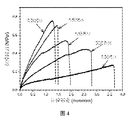
- FIG. 4 is a stress-strain curve diagram of the self-repairing conductive elastomer of Examples 15-19.
- FIG. 5 is a differential scanning calorimetry analysis diagram of the self-healing conductive elastomer of Example 15.
- FIG. 5 is a differential scanning calorimetry analysis diagram of the self-healing conductive elastomer of Example 15.
- Example 6 is an appearance view of the self-repairing conductive elastomer of Example 15 after being frozen for 7 days.
- Example 7 is a stress-strain curve diagram of the self-repairing conductive elastomer of Example 15 before and after freezing.
- a polymerizable eutectic solvent for self-healing materials is as follows: 13.96g hydrogen bond acceptor choline chloride, 5.8035g hydrogen bond donor maleic acid and 3.554g hydrogen bond donor acrylamide at 60 The reaction was stirred at °C for 4h to obtain a clear and transparent polymerizable eutectic solvent.
- the glass transition temperature of the polymerizable eutectic solvent measured by differential scanning calorimetry is -104.2°C.
- a polymerizable eutectic solvent for self-healing materials is as follows: 13.96g hydrogen bond acceptor choline chloride, 3.6g hydrogen bond donor acrylic acid and 3.554g hydrogen bond donor acrylamide at 60°C Stir the reaction for 4h to obtain a clear and transparent polymerizable eutectic solvent.
- a polymerizable eutectic solvent for self-healing materials is as follows: 13.96g hydrogen bond acceptor choline chloride and 4.3g hydrogen bond donor methacrylic acid and 3.554g hydrogen bond donor acrylamide at 60 The reaction was stirred at °C for 4h to obtain a clear and transparent polymerizable eutectic solvent.
- a polymerizable eutectic solvent for self-healing materials is as follows: 13.96g hydrogen bond acceptor choline chloride and 6.5g hydrogen bond donor citraconic acid and 3.554g hydrogen bond donor acrylamide at 60 The reaction was stirred at °C for 4h to obtain a clear and transparent polymerizable eutectic solvent.
- a polymerizable eutectic solvent for self-healing materials is as follows: 13.96g hydrogen bond acceptor choline chloride and 8.7g hydrogen bond donor aconitic acid and 3.554g hydrogen bond donor acrylamide at 60 The reaction was stirred at °C for 4h to obtain a clear and transparent polymerizable eutectic solvent.
- a polymerizable eutectic solvent for self-healing materials is as follows: 13.96g hydrogen bond acceptor choline chloride, 5.8035g hydrogen bond donor maleic acid and 4.25g hydrogen bond donor methacrylamide The reaction was stirred at 60°C for 4h to obtain a clear and transparent polymerizable eutectic solvent.
- a polymerizable eutectic solvent for self-healing materials is as follows: 13.96g hydrogen bond acceptor choline chloride, 5.8035g hydrogen bond donor maleic acid and 8.45g hydrogen bond donor diacetone acrylamide The reaction was stirred at 60°C for 4h to obtain a clear and transparent polymerizable eutectic solvent.
- a polymerizable eutectic solvent for self-healing materials the preparation process is as follows: 13.96g hydrogen bond acceptor choline chloride, 5.8035g hydrogen bond donor maleic acid and 5.65g hydrogen bond donor N-isopropyl The acrylamide was stirred at 60°C for 4 h to obtain a clear and transparent polymerizable eutectic solvent.
- a polymerizable eutectic solvent for self-healing materials the preparation process is as follows: 13.96g hydrogen bond acceptor choline chloride, 5.8035g hydrogen bond donor maleic acid and 5.75g hydrogen bond donor N-hydroxyethyl The acrylamide was stirred at 60°C for 4 h to obtain a clear and transparent polymerizable eutectic solvent.
- a polymerizable eutectic solvent for self-healing materials the preparation process is as follows: 13.96g hydrogen bond acceptor choline chloride, 5.8035g hydrogen bond donor maleic acid and 4.95g hydrogen bond donor N,N- The dimethyl acrylamide was stirred at 60°C for 4 hours to obtain a clear and transparent polymerizable eutectic solvent.
- a polymerizable eutectic solvent for self-healing materials the preparation process is as follows: 25.7g hydrogen bond acceptor methyltriphenylphosphonium bromide and 5.8035g hydrogen bond donor maleic acid and 3.554g hydrogen bond donor Acrylamide was stirred at 60°C for 4 h to obtain a clear and transparent polymerizable eutectic solvent.
- a polymerizable eutectic solvent for self-healing materials is as follows: 5.35g hydrogen bond acceptor ammonium chloride, 5.8035g hydrogen bond donor maleic acid and 3.554g hydrogen bond donor acrylamide at 60°C The reaction was stirred for 4 hours to obtain a clear and transparent polymerizable eutectic solvent.
- a self-healing material polymerizable eutectic solvent is as follows: 13.96g hydrogen bond acceptor choline chloride and 5.8035g hydrogen bond donor maleic acid and 7.108g hydrogen bond donor acrylamide at 60 The reaction was stirred at °C for 4h to obtain a clear and transparent polymerizable eutectic solvent.
- a polymerizable eutectic solvent for self-healing materials is as follows: 13.96g hydrogen bond acceptor choline chloride, 5.8035g hydrogen bond donor maleic acid and 17.77g hydrogen bond donor acrylamide at 60 The reaction was stirred at °C for 4h to obtain a clear and transparent polymerizable eutectic solvent.
- a self-repairing conductive elastomer the preparation process is as follows:
- step S3 Preparation of self-repairing conductive elastomer: take 4.83 g of the transparent conductive elastomer prepolymer mixed solution described in step S2, pour it into a polytetrafluoroethylene petri dish (radius 3 cm), and cure under ultraviolet light (2Kw) for 5 min, A transparent self-healing conductive elastomer is obtained.
- a self-repairing conductive elastomer the preparation process is as follows:
- step S3 Preparation of self-repairing conductive elastomer: take 4.83 g of the transparent conductive elastomer prepolymer mixed solution described in step S2, pour it into a polytetrafluoroethylene petri dish (radius 3 cm), and cure under ultraviolet light (2Kw) for 5 min, A self-healing conductive elastomer is obtained.
- a self-repairing conductive elastomer the preparation process is as follows:
- step S3 Preparation of self-repairing conductive elastomer: take 4.83 g of the transparent conductive elastomer prepolymer mixed solution described in step S2, pour it into a polytetrafluoroethylene petri dish (radius 3 cm), and cure under ultraviolet light (2Kw) for 5 min, A transparent self-healing conductive elastomer is obtained.
- a self-repairing conductive elastomer the preparation process is as follows:
- step S3 Preparation of self-healing conductive elastomer: take 4.83 g of the transparent conductive elastomer prepolymer mixed solution described in step S2, pour it into a polytetrafluoroethylene petri dish (radius 3 cm), and cure under ultraviolet light (2Kw) for 5 min. A transparent self-healing conductive elastomer is obtained.
- a self-repairing conductive elastomer the preparation process is as follows:
- step S3 Preparation of self-repairing conductive elastomer: take 4.83 g of the transparent conductive elastomer prepolymer mixed solution described in step S2, pour it into a polytetrafluoroethylene petri dish (radius 3 cm), and cure under ultraviolet light (2Kw) for 5 min, A transparent self-healing conductive elastomer is obtained.
- a self-repairing conductive elastomer the preparation process is as follows:
- step S3 Preparation of self-repairing conductive elastomer: take 4.83 g of the transparent conductive elastomer prepolymer mixed solution described in step S2, pour it into a polytetrafluoroethylene petri dish (radius 3 cm), and cure under ultraviolet light (2Kw) for 5 min, A transparent self-healing conductive elastomer is obtained.
- a self-repairing conductive elastomer the preparation process is as follows:
- step S3 Preparation of self-repairing conductive elastomer: take 4.83 g of the transparent conductive elastomer prepolymer mixed solution described in step S2, pour it into a polytetrafluoroethylene petri dish (radius 3 cm), and cure under ultraviolet light (2Kw) for 5 min, A transparent self-healing conductive elastomer is obtained.
- a self-repairing conductive elastomer the preparation process is as follows:
- step S3 Preparation of self-healing conductive elastomer: take 4.83 g of the transparent conductive elastomer prepolymer mixed solution described in step S2, pour it into a polytetrafluoroethylene petri dish (radius 3 cm), and cure under ultraviolet light (2Kw) for 5 min. A transparent self-healing conductive elastomer is obtained.
- FIG. 1 is a comparison diagram of the self-healing conductive elastomer prepared in Example 15 placed on the school badge sheet.
- the self-healing conductive elastomer prepared in Examples 15-22 was cut with a blade and cut into two pieces, and then the two pieces of self-healing conductive elastomer after cutting were pieced together.
- the experimental results showed that the pieced together 2
- the self-repairing conductive elastomer will immediately bond itself, and it will not break when it is stretched after standing for a period of time. After standing for 48h, the mechanical properties are equivalent to the raw materials.
- 2 is a self-repairing conductive elastomer self-repairing ability test chart of Example 15,
- FIG. 2a is a self-repairing conductive elastomer prepared in Example 15;
- FIG. 2b is two separate self-repairing conductive elastomers obtained by cutting the self-repairing conductive elastomer Repair the conductive elastomer;
- Figure 2c shows the state of two separate self-repairing conductive elastomers put together, and then immediately clamp one of the self-repairing conductive elastomers with tweezers, and make the other self-repairing conductive elastomer in the air
- Figure 2d shows the state of the self-repairing conductive elastomer when two pieces of self-repairing conductive elastomer are left standing for 48h, and then the two sides of the self-repairing conductive elastomer are clamped with two tweezers and pulled.
- the self-repairing conductive elastomer prepared in Examples 15-22 was cut into long strips, and the two ends were connected to wires. A small electric light bulb was installed on the wire, and the light was glowing, indicating that the self-repairing conductive elastomer prepared by the present invention has conductive properties.
- the elongated self-repairing conductive elastomer is stretched, the brightness of the light bulb will be slightly darkened, but it still emits light. After rebound, the brightness of the light bulb becomes brighter again, indicating that the self-repairing conductive elastomer described in the present invention can achieve flexible stretching. And it still has conductivity during stretching.
- FIG. 3 is a test chart of the conductive performance of the self-repairing conductive elastomer of Example 15.
- FIG. 3 is a test chart of the conductive performance of the self-repairing conductive elastomer of Example 15.
- the self-repairing conductive elastomer prepared in Examples 15-19 was subjected to a stress-strain test, and the stress-strain curve is shown in FIG. 4. It can be seen from FIG. 4 that the self-healing conductive elastomer prepared by the present invention is an elastomer with better resilience.
- the self-healing conductive elastomer prepared according to the method described in Example 15 was cut into two pieces, and then the two self-healing conductive pieces cut off After putting together the elastomers, put them in the freezing layer of the refrigerator at a temperature of -25°C ⁇ -23°C and freeze them for 7 days. After 7 days, take them out.
- the two self-healing conductive elastomers cut off are bonded together again, and the cracks are not very strong. Obviously, as shown in Figure 6.
- the stress-strain test of the self-repairing conductive elastomer was carried out, as shown in Figure 7, and it was found that the stress-strain curve of the self-repairing conductive elastomer after 7 days of freezing treatment and the stress-strain of the original self-repairing conductive elastomer
- the graphs are substantially the same, indicating that the self-healing conductive elastomer prepared by the present invention still has good self-healing ability at extremely low temperature, and the mechanical properties after self-healing are equivalent to the raw materials.
Landscapes
- Chemical & Material Sciences (AREA)
- Health & Medical Sciences (AREA)
- Chemical Kinetics & Catalysis (AREA)
- Medicinal Chemistry (AREA)
- Polymers & Plastics (AREA)
- Organic Chemistry (AREA)
- Polymerisation Methods In General (AREA)
Abstract
本发明公开了一种自修复材料用可聚合低共熔溶剂、导电弹性体及其制备方法,所述可聚合低共熔溶剂由氢键受体与氢键供体于60~100℃反应得到,所述氢键供体包括含双键的羧酸类单体和丙烯酰胺类单体,所述氢键供体与氢键受体的摩尔比不小于1:1,且所述丙烯酰胺类单体与含双键的羧酸类单体摩尔比不小于1:1,自修复导电弹性体包括可聚合低共熔溶剂、交联剂和引发剂。利用所述低共熔溶剂制备出的自修复导电弹性体外观透明、导电性好、自修复性能在-30℃~60℃均优异且环境稳定性好,且制备过程中无需添加导电纳米材料。
Description
本发明涉及离子液体领域,具体地,本发明涉及一种自修复材料用可聚合低共熔溶剂、导电弹性体及其制备方法。
低共熔溶剂是离子液体的一个子集,在继承离子液体低蒸气压、非水生物相容性、不燃性、化学稳定性、高溶解能力等优点的基础上,还具有成本低、低毒、制备过程100%的原子利用率和环境友好性等特点,并有望在将来替代离子液体。目前低共熔溶剂主要应用在如捕捉二氧化碳、溶解金属氧化物、溶解药物和提纯、催化剂、电沉积、材料制备和处理生物高分子等方面。但目前的研究对于可聚合低共熔溶剂在聚合物的制备方面报道相对较少,目前尚无报道可聚合低共熔溶剂可用于直接制备自修复弹性体。
高透明、可拉伸、导电、快速自修复弹性体材料具有很强的可塑性,尤其在导电电极、制动器、传感器、扬声器和柔性显示薄膜等领域具有非常大的应用空间。近年来,可弯曲拉伸的柔性电子产品的快速发展对于透明、可拉伸、导电、快速自修复弹性体的透明度、柔韧性、拉伸性能、导电性和在各种环境下的自修复性能提出了更高的要求。目前报道的自修复导电材料制备一般采用纳米导电颗粒(如聚吡咯、PEDOT:PSS、石墨烯、纳米碳管等)复合柔性聚合物(如聚氨酯(PU)、聚二甲基硅氧烷等(PDMS)等)的方法,但该方法存在较大的缺陷,一是制备过程纳米导电颗粒的加入使得自修复材料透明度大大降低,限制了自修复材料的使用;二是目前绝大部分的研究集中在自修复导电水凝胶的探索上,而对不含水分的离子凝胶弹性体涉及极少,而众所周知,水凝胶的机械性能差,且在自然环境中无法保持其自身水分导致性能下降;三是目前自修复材料的制备过程复杂,大都涉及有机溶剂的使用,且成本高,对自修复材料的发展起到了一定的限制作用。因此需要探索一种新型的自修复材料,既可以保证高的透光性、导电性、高拉伸性能和快速的自修复性能,又能实现 较低的成本和较好的环境稳定性。
发明内容
基于此,本发明在于克服现有技术的缺陷,提供一种自修复材料用可聚合低共熔溶剂。
本发明的另一目的在于提供一种自修复导电弹性体。本发明制备出的自修复导电弹性体具有高的透光性、导电性、高拉伸性能和快速的自修复性能,且其自修复能力在-30℃~60℃均优异。
本发明的另一目的在于提供所述自修复导电弹性体的制备方法。
其技术方案如下:
一种自修复材料用可聚合低共熔溶剂,由氢键受体与氢键供体于60~100℃反应得到,所述氢键供体包括含双键的羧酸类单体和丙烯酰胺类单体,所述氢键供体与氢键受体的摩尔比不小于1:1,且所述丙烯酰胺类单体与含双键的羧酸类单体摩尔比不小于1:1。
发明人通过实验发现,当氢键供体为含双键的羧酸类单体和丙烯酰胺类单体且所述氢键供体与氢键受体的摩尔比不小于1:1、所述丙烯酰胺类单体与含双键的羧酸类单体摩尔比不小于1:1时,由氢键受体和氢键供体制备得到的可聚合低共熔溶剂能够用于制备具有自修复功能的材料,其可以在引发剂作用下固化得到透明的弹性体,该弹性体具有自修复功能。本发明中丙烯酰胺类单体、含双键的羧酸类单体与氢键受体的摩尔比对是否能形成可用于制备自修复材料的可聚合低共熔溶剂至关重要,氢键供体或者氢键受体的用量若不合适,则难以形成低共熔溶剂,丙烯酰胺、含双键的羧酸类单体的比例若不合适,则没有自修复功能。
在其中一个实施例中,所述氢键受体与含双键的羧酸类单体和丙烯酰胺类单体的摩尔比2:1:1~2:1:5。
在其中一个实施例中,所述含双键的羧酸类单体为丙烯酸、甲基丙烯酸、马来酸、衣康酸、柠康酸、乌头酸中的一种或多种。
在其中一个实施例中,所述含双键的羧酸类单体为丙烯酸或马来酸。
在其中一个实施例中,所述丙烯酰胺类单体为丙烯酰胺、甲基丙烯酰胺、 双丙酮丙烯酰胺、N-异丙基丙烯酰胺、N-羟乙基丙烯酰胺、N,N-二甲基丙烯酰胺、N-羟甲基丙烯酰胺。
在其中一个实施例中,所述丙烯酰胺类单体为丙烯酰胺。
在其中一个实施例中,所述氢键受体为氯化胆碱、无水甜菜碱、一水甜菜碱、氯化铵、甲基三苯基溴化磷、苄基三苯基氯化磷、N,N-二乙基乙醇氯化铵等中的一种或多种。
一种自修复导电弹性体,包括:所述自修复材料用可聚合低共熔溶剂、交联剂和引发剂,所述交联剂与氢键供体的摩尔比为0.5:100~5:100;所述引发剂用量为可聚合低共熔溶剂和交联剂总质量的0.5%~5%,所述交联剂为多官能度丙烯酸酯单体或树脂。
利用所述低共熔溶剂与交联剂混合可制备自修复导电弹性体,且制备过程中无需添加导电纳米材料,适量交联剂的加入能够进一步提高自修复导电弹性体的柔韧性,所得自修复导电弹性体外观透明、导电性好、自修复性能优异且环境稳定性好。
在其中一个实施例中,所述交联剂为二缩三丙二醇二丙烯酸酯、聚乙二醇二丙烯酸酯、二丙二醇二丙烯酸酯、1,6-己二醇二丙烯酸酯、新戊二醇二丙烯酸酯、邻苯二甲酸二乙二醇二丙烯酸酯、三羟甲基丙烷三丙烯酸酯、季戊四醇四丙烯酸酯等中的一种或多种。
在其中一个实施例中,所述引发剂为热引发剂或光引发剂。
在其中一个实施例中,所述光引发剂为苯偶姻及衍生物光引发剂、苯偶酰类光引发剂、烷基苯酮类光引发剂、酰基磷氧化物光引发剂中的一种或多种。具体的,所述苯偶姻及衍生物光引发剂可以为安息香、安息香双甲醚、安息香乙醚、安息香异丙醚、安息香丁醚等。所述苯偶酰类引发剂可以为二苯基乙酮、α,α-二甲氧基-α-苯基苯乙酮等。所述烷基苯酮类可以为α,α-二乙氧基苯乙酮、α-羟烷基苯酮、α-胺烷基苯酮等。所述酰基磷氧化物可以为芳酰基膦氧化物、双苯甲酰基苯基氧化膦等。更具体的,所述光引发剂可以为1173(2-羟基-2-甲基-1-苯基丙酮)、184(1-羟基环己基苯基甲酮)、TPO-L(2,4,6-三甲基苯甲酰基苯基膦酸乙酯)、819DW(苯基双(2,4,6-三甲基苯甲酰基)氧化膦)、2959(2-羟基-4'-(2- 羟乙氧基)-2-甲基苯丙酮)中的一种或多种。
所述热引发剂为有机过氧化物引发剂或偶氮类引发剂。具体的,所述有机过氧化物引发剂为过氧化苯甲酰、过氧化月桂酰、异丙苯过氧化氢、叔丁基过氧化氢、过氧化二叔丁基、过氧化二异丙苯、过氧化苯甲酸叔丁酯、过氧化叔戊酸叔丁基酯中的一种或多种。所述偶氮类引发剂为偶氮二异丁腈或偶氮二异庚腈。
所述的自修复导电弹性体的制备方法,包括如下步骤:
S1、制备可聚合低共熔溶剂:将氢键受体和氢键供体于60~100℃下反应3~5h得到澄清透明的可聚合低共熔溶剂;
S2、制备导电弹性体预聚物混合溶液:将交联剂、引发剂与所述可聚合低共熔溶剂混合均匀,搅拌1~3h得到导电弹性体预聚物混合溶液;
S3、制备自修复导电弹性体:将步骤S2所述导电弹性体预聚物混合溶液倒入器皿中,并在紫外光照射下固化或进行热固化,得到自修复导电弹性体。
在其中一个实施例中,所述紫外光的固化能量为2Kw。
在其中一个实施例中,所述紫外光的固化时间为5min-30min。
本发明的有益效果在于:本发明通过对氢键供体进行探究和筛选,发现当选用含双键的羧酸类单体和丙烯酰胺类单体作为氢键供体,并与氢键受体按照特定比例搭配时,可得到能够用于制备自修复材料的可聚合低共熔溶剂;将可聚合低共熔溶剂与交联剂和引发剂按特定比例混合,能够得到具有自修复功能的导电弹性体,所得导电弹性体具有高的透光性、较好的导电性、拉伸性、柔韧性以及优异的自修复性能,在-30℃~60℃均具有优异自修复能力,且自修复导电弹性体环境稳定性好,制备方法简单,污染小,成本低。
图1为实施例15自修复导电弹性体放置于校徽图纸片上的比对图。
图2为实施例15自修复导电弹性体自修复能力测试图。
图3为实施例15自修复导电弹性体导电性能测试图。
图4为实施例15-19自修复导电弹性体应力-应变曲线图。
图5为实施例15自修复导电弹性体差示扫描量热分析图。
图6为实施例15自修复导电弹性体冷冻7天后的外观图。
图7为实施例15自修复导电弹性体冷冻前和冷冻后应力-应变曲线图。
为使本发明的目的、技术方案及优点更加清楚明白,以下结合附图及具体实施方式,对本发明进行进一步的详细说明。应当理解的是,此处所描述的具体实施方式仅用以解释本发明,并不限定本发明的保护范围。
实施例1
一种自修复材料用可聚合低共熔溶剂,其制备过程如下:将13.96g氢键受体氯化胆碱和5.8035g氢键供体马来酸和3.554g氢键供体丙烯酰胺于60℃下搅拌反应4h得到澄清透明的可聚合低共熔溶剂。
经差示扫描量热分析测得所述可聚合低共熔溶剂的玻璃化转变温度为-104.2℃。
实施例2
一种自修复材料用可聚合低共熔溶剂,其制备过程如下:将13.96g氢键受体氯化胆碱和3.6g氢键供体丙烯酸和3.554g氢键供体丙烯酰胺于60℃下搅拌反应4h得到澄清透明的可聚合低共熔溶剂。
实施例3
一种自修复材料用可聚合低共熔溶剂,其制备过程如下:将13.96g氢键受体氯化胆碱和4.3g氢键供体甲基丙烯酸和3.554g氢键供体丙烯酰胺于60℃下搅拌反应4h得到澄清透明的可聚合低共熔溶剂。
实施例4
一种自修复材料用可聚合低共熔溶剂,其制备过程如下:将13.96g氢键受体氯化胆碱和6.5g氢键供体柠康酸和3.554g氢键供体丙烯酰胺于60℃下搅拌反应4h得到澄清透明的可聚合低共熔溶剂。
实施例5
一种自修复材料用可聚合低共熔溶剂,其制备过程如下:将13.96g氢键受体氯化胆碱和8.7g氢键供体乌头酸和3.554g氢键供体丙烯酰胺于60℃下搅拌反应4h得到澄清透明的可聚合低共熔溶剂。
实施例6
一种自修复材料用可聚合低共熔溶剂,其制备过程如下:将13.96g氢键受体氯化胆碱和5.8035g氢键供体马来酸和4.25g氢键供体甲基丙烯酰胺于60℃下搅拌反应4h得到澄清透明的可聚合低共熔溶剂。
实施例7
一种自修复材料用可聚合低共熔溶剂,其制备过程如下:将13.96g氢键受体氯化胆碱和5.8035g氢键供体马来酸和8.45g氢键供体双丙酮丙烯酰胺于60℃下搅拌反应4h得到澄清透明的可聚合低共熔溶剂。
实施例8
一种自修复材料用可聚合低共熔溶剂,其制备过程如下:将13.96g氢键受体氯化胆碱和5.8035g氢键供体马来酸和5.65g氢键供体N-异丙基丙烯酰胺于60℃下搅拌反应4h得到澄清透明的可聚合低共熔溶剂。
实施例9
一种自修复材料用可聚合低共熔溶剂,其制备过程如下:将13.96g氢键受体氯化胆碱和5.8035g氢键供体马来酸和5.75g氢键供体N-羟乙基丙烯酰胺于60℃下搅拌反应4h得到澄清透明的可聚合低共熔溶剂。
实施例10
一种自修复材料用可聚合低共熔溶剂,其制备过程如下:将13.96g氢键受体氯化胆碱和5.8035g氢键供体马来酸和4.95g氢键供体N,N-二甲基丙烯酰胺于60℃下搅拌反应4h得到澄清透明的可聚合低共熔溶剂。
实施例11
一种自修复材料用可聚合低共熔溶剂,其制备过程如下:将25.7g氢键受体甲基三苯基溴化磷和5.8035g氢键供体马来酸和3.554g氢键供体丙烯酰胺于60℃下搅拌反应4h得到澄清透明的可聚合低共熔溶剂。
实施例12
一种自修复材料用可聚合低共熔溶剂,其制备过程如下:将5.35g氢键受体氯化铵和5.8035g氢键供体马来酸和3.554g氢键供体丙烯酰胺于60℃下搅拌反应4h得到澄清透明的可聚合低共熔溶剂。
实施例13
一种自修复材料用可聚合低共熔溶剂,其制备过程如下:将13.96g氢键受体氯化胆碱和5.8035g氢键供体马来酸和7.108g氢键供体丙烯酰胺于60℃下搅拌反应4h得到澄清透明的可聚合低共熔溶剂。
实施例14
一种自修复材料用可聚合低共熔溶剂,其制备过程如下:将13.96g氢键受体氯化胆碱和5.8035g氢键供体马来酸和17.77g氢键供体丙烯酰胺于60℃下搅拌反应4h得到澄清透明的可聚合低共熔溶剂。
往实施例1-10、实施例12、实施例13所制得的低共熔溶剂中加入0.25g的2-羟基-4'-(2-羟乙氧基)-2-甲基苯丙酮,搅拌2h,混合均匀,然后倒入聚四氟乙烯培养皿(半径3cm)中,并在紫外光(2Kw)下固化5min,得到外观透明的弹性体。往实施例11、实施例14所制得的低共熔溶剂中加入0.35g的2-羟基-4'-(2-羟乙氧基)-2-甲基苯丙酮,搅拌2h,混合均匀,然后倒入聚四氟乙烯培养皿(半径3cm)中,并在紫外光(2Kw)下固化5min,得到外观透明的弹性体。
用刀片切割上述制得的弹性体,将其切成两块,然后再将两块弹性体拼凑在一起,再取出观察弹性体。结果发现,实施例1-14所制备的低共熔溶剂在引发剂和紫外光辐照下制备得到的弹性体在切割后弹性体立马又粘连在一起了,连接处有裂痕,但两块弹性体不分离。由此可见,本实施1-14所述的可聚合低共熔溶剂固化后具有快速的自修复能力,可用于制备自修复材料。
实施例15
一种自修复导电弹性体,制备过程如下:
S1、制备可聚合低共熔溶剂:将13.96g氢键受体氯化胆碱和5.8035g氢键供体马来酸和3.554g氢键供体丙烯酰胺于60℃下搅拌反应4h得到澄清透明的可聚合低共熔溶剂。
S2、制备导电弹性体预聚物混合溶液:将0.17g的聚乙二醇二丙烯酸酯、0.23g的2-羟基-4'-(2-羟乙氧基)-2-甲基苯丙酮与所述低共熔溶剂混合均匀,搅拌反应2h得到透明导电弹性体预聚物混合溶液。
S3、制备自修复导电弹性体:取4.83g步骤S2所述透明导电弹性体预聚物混合 溶液倒入聚四氟乙烯培养皿(半径3cm)中,并在紫外光(2Kw)下固化5min,得到透明自修复导电弹性体。
实施例16
一种自修复导电弹性体,制备过程如下:
S1、制备可聚合低共熔溶剂:将13.96g氢键受体氯化胆碱和5.8035g氢键供体马来酸和3.554g氢键供体丙烯酰胺于60℃下搅拌反应4h得到澄清透明的可聚合低共熔溶剂。
S2、制备导电弹性体预聚物混合溶液:将0.34g的聚乙二醇二丙烯酸酯、0.24g的2-羟基-4'-(2-羟乙氧基)-2-甲基苯丙酮与所述低共熔溶剂混合均匀,搅拌反应2h得到透明导电弹性体预聚物混合溶液。
S3、制备自修复导电弹性体:取4.83g步骤S2所述透明导电弹性体预聚物混合溶液倒入聚四氟乙烯培养皿(半径3cm)中,并在紫外光(2Kw)下固化5min,得到自修复导电弹性体。
实施例17
一种自修复导电弹性体,制备过程如下:
S1、制备可聚合低共熔溶剂:将13.96g氢键受体氯化胆碱和5.8035g氢键供体马来酸和3.554g氢键供体丙烯酰胺于60℃下搅拌反应4h得到澄清透明的可聚合低共熔溶剂。
S2、制备导电弹性体预聚物混合溶液:将0.51g的聚乙二醇二丙烯酸酯、0.24g的2-羟基-4'-(2-羟乙氧基)-2-甲基苯丙酮与所述低共熔溶剂混合均匀,搅拌反应2h得到透明导电弹性体预聚物混合溶液。
S3、制备自修复导电弹性体:取4.83g步骤S2所述透明导电弹性体预聚物混合溶液倒入聚四氟乙烯培养皿(半径3cm)中,并在紫外光(2Kw)下固化5min,得到透明自修复导电弹性体。
实施例18
一种自修复导电弹性体,制备过程如下:
S1、制备可聚合低共熔溶剂:将13.96g氢键受体氯化胆碱和5.8035g氢键供体马来酸和3.554g氢键供体丙烯酰胺于60℃下搅拌反应4h得到澄清透明的可聚 合低共熔溶剂。
S2、制备导电弹性体预聚物混合溶液:将0.68g的聚乙二醇二丙烯酸酯、0.24g的2-羟基-4'-(2-羟乙氧基)-2-甲基苯丙酮与所述低共熔溶剂混合均匀,搅拌反应2h得到透明导电弹性体预聚物混合溶液。
S3、制备自修复导电弹性体:取4.83g步骤S2所述透明导电弹性体预聚物混合溶液倒入聚四氟乙烯培养皿(半径3cm)中,并在紫外光(2Kw)下固化5min,得到透明自修复导电弹性体。
实施例19
一种自修复导电弹性体,制备过程如下:
S1、制备可聚合低共熔溶剂:将13.96g氢键受体氯化胆碱和5.8035g氢键供体马来酸和7.108g氢键供体丙烯酰胺于60℃下搅拌反应4h得到澄清透明的可聚合低共熔溶剂。
S2、制备导电弹性体预聚物混合溶液:将0.17g的聚乙二醇二丙烯酸酯、0.27g的2-羟基-4'-(2-羟乙氧基)-2-甲基苯丙酮与所述低共熔溶剂混合均匀,搅拌反应2h得到透明导电弹性体预聚物混合溶液。
S3、制备自修复导电弹性体:取4.83g步骤S2所述透明导电弹性体预聚物混合溶液倒入聚四氟乙烯培养皿(半径3cm)中,并在紫外光(2Kw)下固化5min,得到透明自修复导电弹性体。
实施例20
一种自修复导电弹性体,制备过程如下:
S1、制备可聚合低共熔溶剂:将13.96g氢键受体氯化胆碱和5.8035g氢键供体马来酸和3.554g氢键供体丙烯酰胺于60℃下搅拌反应4h得到澄清透明的可聚合低共熔溶剂。
S2、制备导电弹性体预聚物混合溶液:将0.21g的新戊二醇二丙烯酸酯、0.23g的2-羟基-4'-(2-羟乙氧基)-2-甲基苯丙酮与所述低共熔溶剂混合均匀,搅拌反应2h得到透明导电弹性体预聚物混合溶液。
S3、制备自修复导电弹性体:取4.83g步骤S2所述透明导电弹性体预聚物混合溶液倒入聚四氟乙烯培养皿(半径3cm)中,并在紫外光(2Kw)下固化5min, 得到透明自修复导电弹性体。
实施例21
一种自修复导电弹性体,制备过程如下:
S1、制备可聚合低共熔溶剂:将13.96g氢键受体氯化胆碱和5.8035g氢键供体马来酸和3.554g氢键供体丙烯酰胺于60℃下搅拌反应4h得到澄清透明的可聚合低共熔溶剂。
S2、制备导电弹性体预聚物混合溶液:将1.2g的二丙二醇二丙烯酸酯、0.74g的2-羟基-2-甲基-1-苯基丙酮与所述低共熔溶剂混合均匀,搅拌反应2h得到透明导电弹性体预聚物混合溶液。
S3、制备自修复导电弹性体:取4.83g步骤S2所述透明导电弹性体预聚物混合溶液倒入聚四氟乙烯培养皿(半径3cm)中,并在紫外光(2Kw)下固化5min,得到透明自修复导电弹性体。
实施例22
一种自修复导电弹性体,制备过程如下:
S1、制备可聚合低共熔溶剂:将13.96g氢键受体氯化胆碱和5.8035g氢键供体马来酸和3.554g氢键供体丙烯酰胺于60℃下搅拌反应4h得到澄清透明的可聚合低共熔溶剂。
S2、制备导电弹性体预聚物混合溶液:将0.17g的聚乙二醇二丙烯酸酯、1.15g的2-羟基-4'-(2-羟乙氧基)-2-甲基苯丙酮与所述低共熔溶剂混合均匀,搅拌反应2h得到透明导电弹性体预聚物混合溶液。
S3、制备自修复导电弹性体:取4.83g步骤S2所述透明导电弹性体预聚物混合溶液倒入聚四氟乙烯培养皿(半径3cm)中,并在紫外光(2Kw)下固化5min,得到透明自修复导电弹性体。
本发明中,实施例15-22均能够制备得到透明的圆形弹性体(外观透明,具有弹性),将其放在学校校徽(华南理工大学)图纸片上,可清晰地看到校徽图案,圆形弹性体透明度极高,图1为使用实施例15所制备的自修复导电弹性体放置于校徽图纸片上的比对图。
用刀片对实施例15-22制备得到的自修复导电弹性体进行切割,切成2块, 然后再将切割后的2块自修复导电弹性体拼凑在一起,实验结果显示,拼凑在一起的2块自修复导电弹性体立马会自行粘合在一起,静置一段时间后对其进行拉伸时,也不会断,静置48h后,力学性能与原材料相当。图2为实施例15自修复导电弹性体自修复能力测试图,图2a为实施例15制备的自修复导电弹性体;图2b为对该自修复导电弹性体切割所得到的2块分开的自修复导电弹性体;图2c为2块分开的自修复导电弹性体拼凑在一起后,然后立马用镊子夹住其中一块自修复导电弹性体,并使另一块悬空时的自修复导电弹性体的状态;图2d为将2块拼凑的自修复导电弹性体静置48h后用两个镊子分别夹住自修复导电弹性体两侧并拉扯时的自修复导电弹性体的状态。
将实施例15-22制备得到的自修复导电弹性体切成长条状,两端与导线相连,导线上安装小型电灯泡,通电,灯泡发光,表明本发明制备的自修复导电弹性体具有导电性能,拉伸长条状自修复导电弹性体,灯泡的亮度会有稍许变暗,但仍然发光,回弹后灯泡亮度又变亮,表明本发明所述的自修复导电弹性体能够实现柔性拉伸,且拉伸过程中仍具有导电性。图3为实施例15自修复导电弹性体导电性能测试图。
对实施例15-19制备得到的自修复导电弹性体进行应力-应变测试,应力-应变曲线见图4。从图4可知,本发明所制备的自修复导电弹性体为具有较好回弹性的弹性体。
对实施例15所述的自修复导电弹性体进行差示扫描量热分析,曲线图见图5,从图5可知,实施例所得的自修复导电弹性体的玻璃化转变温度为-98.6℃,由此可知,本发明所述的自修复导电弹性体在很低的温度下都可以保持高弹态,分子链可以宽温度范围下运动,可以在低温下自修复。
为进一步考察本发明所述的自修复导电弹性体在低温下的修复能力,将按实施例15所述方法制备得到的自修复导电弹性体切成两块,然后将切断的2块自修复导电弹性体拼凑在一起后放入温度为-25℃~-23℃冰箱冰冻层中冰冻7天,7天后取出,切断的两块自修复导电弹性体又粘合在了一起,且裂缝处不是很明显,如图6所示。对该自修复导电弹性体进行应力-应变测试,如图7所示,经测发现,冷冻处理7天后的自修复导电弹性体的应力-应变曲线图与原自修复 导电弹性体的应力-应变曲线图大体相同,表明本发明制备的自修复导电弹性体在极低温度下仍具有较好的自修复能力,且自修复后力学性能与原材料相当。
以上所述实施例的各技术特征可以进行任意的组合,为使描述简洁,未对上述实施例中的各个技术特征所有可能的组合都进行描述,然而,只要这些技术特征的组合不存在矛盾,都应当认为是本说明书记载的范围。
以上所述实施例仅表达了本发明的几种实施方式,其描述较为具体和详细,但并不能因此而理解为对发明专利范围的限制。应当指出的是,对于本领域的普通技术人员来说,在不脱离本发明构思的前提下,还可以做出若干变形和改进,这些都属于本发明的保护范围。因此,本发明专利的保护范围应以所附权利要求为准。
Claims (10)
- 一种自修复材料用可聚合低共熔溶剂,其特征在于,由氢键受体与氢键供体于60~100℃反应得到,所述氢键供体包括含双键的羧酸类单体和丙烯酰胺类单体,所述氢键供体与氢键受体的摩尔比不小于1:1,且所述丙烯酰胺类单体与含双键的羧酸类单体摩尔比不小于1:1。
- 根据权利要求1所述的自修复材料用可聚合低共熔溶剂,其特征在于,所述氢键受体与含双键的羧酸类单体和丙烯酰胺类单体的摩尔比2:1:1~2:1:5。
- 根据权利要求1所述的自修复材料用可聚合低共熔溶剂,其特征在于,所述含双键的羧酸类单体为丙烯酸、甲基丙烯酸、马来酸、衣康酸、柠康酸、乌头酸中的一种或多种。
- 根据权利要求3所述的自修复材料用可聚合低共熔溶剂,其特征在于,所述含双键的羧酸类单体为丙烯酸或马来酸。
- 根据权利要求1所述的自修复材料用可聚合低共熔溶剂,其特征在于,所述丙烯酰胺类单体为丙烯酰胺、甲基丙烯酰胺、双丙酮丙烯酰胺、N-异丙基丙烯酰胺、N-羟乙基丙烯酰胺、N,N-二甲基丙烯酰胺、N-羟甲基丙烯酰胺。
- 根据权利要求5所述的自修复材料用可聚合低共熔溶剂,其特征在于,所述丙烯酰胺类单体为丙烯酰胺。
- 根据权利要求1所述的自修复材料用可聚合低共熔溶剂,其特征在于,所述氢键受体为氯化胆碱、无水甜菜碱、一水甜菜碱、氯化铵、甲基三苯基溴化磷、苄基三苯基氯化磷、N,N-二乙基乙醇氯化铵等中的一种或多种。
- 一种自修复导电弹性体,其特征在于,包括:所述自修复材料用可聚合低共熔溶剂、交联剂和引发剂,所述交联剂与氢键供体的摩尔比为0.5:100~5:100;所述引发剂用量为可聚合低共熔溶剂和交联剂总质量的0.5%~5%,所述交联剂为多官能度丙烯酸酯单体或树脂。
- 根据权利要求8所述的自修复导电弹性体,其特征在于,所述引发剂为热引发剂或光引发剂。
- 权利要求8或9所述的自修复导电弹性体的制备方法,其特征在于,包括如下步骤:S1、制备可聚合低共熔溶剂:将氢键受体和氢键供体于60~100℃下反应3~5h 得到澄清透明的可聚合低共熔溶剂;S2、制备导电弹性体预聚物混合溶液:将交联剂、引发剂与所述可聚合低共熔溶剂混合均匀,搅拌1~3h得到导电弹性体预聚物混合溶液;S3、制备自修复导电弹性体:将步骤S2所述导电弹性体预聚物混合溶液倒入器皿中,并在紫外光照射下固化或进行热固化,得到自修复导电弹性体。
Applications Claiming Priority (2)
| Application Number | Priority Date | Filing Date | Title |
|---|---|---|---|
| CN201811465819.XA CN111253520B (zh) | 2018-12-03 | 2018-12-03 | 自修复材料用可聚合低共熔溶剂、导电弹性体及制备方法 |
| CN201811465819.X | 2018-12-03 |
Publications (1)
| Publication Number | Publication Date |
|---|---|
| WO2020114049A1 true WO2020114049A1 (zh) | 2020-06-11 |
Family
ID=70953641
Family Applications (1)
| Application Number | Title | Priority Date | Filing Date |
|---|---|---|---|
| PCT/CN2019/108315 Ceased WO2020114049A1 (zh) | 2018-12-03 | 2019-09-26 | 自修复材料用可聚合低共熔溶剂、导电弹性体及制备方法 |
Country Status (2)
| Country | Link |
|---|---|
| CN (1) | CN111253520B (zh) |
| WO (1) | WO2020114049A1 (zh) |
Cited By (3)
| Publication number | Priority date | Publication date | Assignee | Title |
|---|---|---|---|---|
| CN112708014A (zh) * | 2020-12-23 | 2021-04-27 | 华南理工大学 | 可循环可自修复的透明导电弹性体及其制备方法与应用 |
| CN118791758A (zh) * | 2024-08-13 | 2024-10-18 | 中国科学院兰州化学物理研究所 | 一种低共熔溶剂及其制备和应用、凝胶的增强增韧方法及双网络凝胶的制备 |
| CN118834321A (zh) * | 2024-08-15 | 2024-10-25 | 浙江大学 | 一种自愈合无水凝胶材料及其制备方法和应用 |
Families Citing this family (32)
| Publication number | Priority date | Publication date | Assignee | Title |
|---|---|---|---|---|
| CN111863994A (zh) * | 2020-07-01 | 2020-10-30 | 珠海格力电器股份有限公司 | 具有透明导电带的光伏组件 |
| CN111524990B (zh) * | 2020-07-06 | 2020-09-18 | 杭州纤纳光电科技有限公司 | 一种透明汇流带和光伏组件及其制备方法 |
| CN112011012B (zh) * | 2020-08-13 | 2022-01-18 | 华南理工大学 | Pdes在耐压缩自修复三维立体传感器中的应用、三维立体传感器及其制备方法与应用 |
| CN112316860B (zh) * | 2020-10-13 | 2022-04-12 | 华南农业大学 | 一种生物质基水凝胶及其制备方法和应用 |
| CN112599863B (zh) * | 2020-12-12 | 2022-10-25 | 同济大学 | 一种可修复离子凝胶电解质及其制备方法和应用 |
| CN112745446B (zh) * | 2020-12-23 | 2022-02-18 | 华南理工大学 | 一种高机械强度透明导电弹性体及其制备方法与应用 |
| CN112876611B (zh) * | 2021-01-21 | 2022-03-15 | 湖北理工学院 | 一种采用多糖低共熔溶剂混合物溶液前端聚合制备导电多糖复合物水凝胶的方法 |
| CN113201098A (zh) * | 2021-06-03 | 2021-08-03 | 哈尔滨工程大学 | 一种基于类离子液体的高透明度导电聚氨酯的制备方法 |
| CN113621100B (zh) * | 2021-08-24 | 2023-08-01 | 华南理工大学 | 可聚合低共熔溶剂及所制得的干式离子导体及其制备方法 |
| CN113683888B (zh) * | 2021-08-25 | 2022-12-09 | 香港中文大学(深圳) | 高介电常数复合弹性体及其制备方法和柔性设备 |
| CN114349899B (zh) * | 2021-12-10 | 2023-05-30 | 深圳大学 | 一种自粘附导电凝胶及其制备方法 |
| CN114262403B (zh) * | 2021-12-17 | 2023-01-31 | 江南大学 | 一种高透明自修复自粘导电弹性材料及其制备方法 |
| CN114736392B (zh) * | 2022-03-01 | 2025-01-14 | 武汉轻工大学 | 一种高强度自愈合水凝胶及其制备方法 |
| CN114507412B (zh) * | 2022-03-16 | 2023-06-16 | 青岛科技大学 | 一种基于可聚合深共晶溶剂的导电复合材料及其制备方法与应用 |
| CN114907507B (zh) * | 2022-06-09 | 2023-08-04 | 南京林业大学 | 基于可聚合疏水低共熔溶剂水下自修复弹性体及合成方法 |
| CN115010862B (zh) * | 2022-07-04 | 2023-09-12 | 南京林业大学 | 一种纤维素基离子导电弹性体的制备方法 |
| CN115368509B (zh) * | 2022-07-07 | 2024-06-04 | 大连工业大学 | 一种自愈、抗冻、自粘性且具有双折射特性的导电离子水凝胶及其制备方法与应用 |
| CN115594784B (zh) * | 2022-10-31 | 2023-09-22 | 山东大学 | 一种潜在发光可聚合低共熔溶剂及其制备方法和应用 |
| CN115651118B (zh) * | 2022-11-11 | 2023-08-04 | 南京林业大学 | 水下自粘附、自修复的透明离子导电弹性体及其合成方法 |
| CN115894965B (zh) * | 2022-11-24 | 2024-12-10 | 武汉轻工大学 | 一种马来酸丙烯酰胺共聚水凝胶及其制备方法 |
| CN116239857B (zh) * | 2022-12-25 | 2025-04-29 | 上海应用技术大学 | 一种抗冻导电凝胶及其制备与应用 |
| CN116026411A (zh) * | 2023-01-09 | 2023-04-28 | 华南理工大学 | 光电双模柔性纤维在压力-温度传感器中的应用 |
| CN116200843B (zh) * | 2023-01-09 | 2024-05-17 | 华南理工大学 | 光学自愈合柔性光纤的制备方法、光学自愈合柔性光纤及其应用 |
| CN116217980A (zh) * | 2023-03-16 | 2023-06-06 | 四川大学 | 一种具有生物传感性能与抗菌作用的共析凝胶及其制备方法 |
| CN116285454B (zh) * | 2023-03-22 | 2024-09-03 | 中南大学 | 一种可聚合单体型低共熔溶剂及其聚合所得粘合剂及其制备方法 |
| CN116515038B (zh) * | 2023-04-28 | 2025-03-04 | 西安理工大学 | MXene-聚低共熔基导电弹性体的制备方法及应用 |
| CN116496436B (zh) * | 2023-04-28 | 2024-07-05 | 西安理工大学 | 多氢键网络基自修复高透明导电弹性体的制备方法及应用 |
| CN116789955B (zh) * | 2023-06-25 | 2025-09-16 | 山东中康国创先进印染技术研究院有限公司 | 基于可聚合低共熔溶剂和烷烃的界面聚合方法、聚酰胺膜及其制备方法 |
| CN117844337B (zh) * | 2023-11-16 | 2025-08-12 | 河南省科学院化学研究所 | 一种缺陷自主触发限域流动自修复防腐涂层材料及其制备方法 |
| CN117700624B (zh) * | 2024-02-06 | 2024-04-12 | 广东工业大学 | 一种基于超分子深共晶溶液的超粘附阻尼材料及其制备方法 |
| CN118686016A (zh) * | 2024-06-13 | 2024-09-24 | 深圳劲嘉集团股份有限公司 | 环保型湿敏变色检测纸制备方法及实时监测系统 |
| CN119039561B (zh) * | 2024-08-26 | 2025-10-10 | 北京理工大学 | 一种超柔离子液体导电自修复聚氨酯弹性体及其制备方法 |
Citations (4)
| Publication number | Priority date | Publication date | Assignee | Title |
|---|---|---|---|---|
| CN106632775A (zh) * | 2016-09-13 | 2017-05-10 | 西安交通大学 | 一种力学性能优良、高透光且自愈合的离子液体凝胶的制备方法 |
| CN107177024A (zh) * | 2017-05-23 | 2017-09-19 | 广州纽楷美新材料科技有限公司 | 可聚合低共熔溶剂在制备透明导电弹性体中的应用 |
| CN108468207A (zh) * | 2018-06-21 | 2018-08-31 | 东华大学 | 一种石墨烯耐久整理织物的制备方法 |
| CN108623727A (zh) * | 2018-05-30 | 2018-10-09 | 雷周玥 | 一种聚电解质弹性体、制备方法及其应用 |
Family Cites Families (4)
| Publication number | Priority date | Publication date | Assignee | Title |
|---|---|---|---|---|
| GB201410093D0 (en) * | 2014-06-06 | 2014-07-23 | Univ Leicester | Solder flux |
| CN107417553A (zh) * | 2017-05-23 | 2017-12-01 | 广州纽楷美新材料科技有限公司 | 可聚合低共熔溶剂 |
| CN108797153B (zh) * | 2018-06-21 | 2020-08-11 | 东华大学 | 一种基于低共熔溶剂的功能染色方法 |
| CN108797115B (zh) * | 2018-06-21 | 2020-08-04 | 东华大学 | 一种基于低共熔溶剂的织物多功能耐久后整理方法 |
-
2018
- 2018-12-03 CN CN201811465819.XA patent/CN111253520B/zh active Active
-
2019
- 2019-09-26 WO PCT/CN2019/108315 patent/WO2020114049A1/zh not_active Ceased
Patent Citations (4)
| Publication number | Priority date | Publication date | Assignee | Title |
|---|---|---|---|---|
| CN106632775A (zh) * | 2016-09-13 | 2017-05-10 | 西安交通大学 | 一种力学性能优良、高透光且自愈合的离子液体凝胶的制备方法 |
| CN107177024A (zh) * | 2017-05-23 | 2017-09-19 | 广州纽楷美新材料科技有限公司 | 可聚合低共熔溶剂在制备透明导电弹性体中的应用 |
| CN108623727A (zh) * | 2018-05-30 | 2018-10-09 | 雷周玥 | 一种聚电解质弹性体、制备方法及其应用 |
| CN108468207A (zh) * | 2018-06-21 | 2018-08-31 | 东华大学 | 一种石墨烯耐久整理织物的制备方法 |
Cited By (4)
| Publication number | Priority date | Publication date | Assignee | Title |
|---|---|---|---|---|
| CN112708014A (zh) * | 2020-12-23 | 2021-04-27 | 华南理工大学 | 可循环可自修复的透明导电弹性体及其制备方法与应用 |
| CN112708014B (zh) * | 2020-12-23 | 2022-02-18 | 华南理工大学 | 可循环可自修复的透明导电弹性体及其制备方法与应用 |
| CN118791758A (zh) * | 2024-08-13 | 2024-10-18 | 中国科学院兰州化学物理研究所 | 一种低共熔溶剂及其制备和应用、凝胶的增强增韧方法及双网络凝胶的制备 |
| CN118834321A (zh) * | 2024-08-15 | 2024-10-25 | 浙江大学 | 一种自愈合无水凝胶材料及其制备方法和应用 |
Also Published As
| Publication number | Publication date |
|---|---|
| CN111253520B (zh) | 2021-07-02 |
| CN111253520A (zh) | 2020-06-09 |
Similar Documents
| Publication | Publication Date | Title |
|---|---|---|
| WO2020114049A1 (zh) | 自修复材料用可聚合低共熔溶剂、导电弹性体及制备方法 | |
| CN112552446B (zh) | 一种高透明自修复固体材料及其制备方法与应用 | |
| CN107177024B (zh) | 可聚合低共熔溶剂在制备透明导电弹性体中的应用 | |
| CN109320673B (zh) | 一种自修复柔性水凝胶电敏材料及其制备方法和应用 | |
| CN112920429B (zh) | 一种聚乙烯醇/无机盐/聚丙烯酰胺水凝胶及其制备方法与应用 | |
| Li et al. | A stretchable and self-healable conductive hydrogels based on gelation/polyacrylamide/polypyrrole for all-in-one flexible supercapacitors with high capacitance | |
| CN112341573B (zh) | 一种多功能复合水凝胶的制备方法及应用 | |
| CN112795029A (zh) | 双网络柔性导电粘附抗冻水凝胶的制备方法和应用 | |
| CN106633111A (zh) | 一种高强度聚乙烯醇基双网络水凝胶的制备方法 | |
| Wang et al. | Rapid preparation of dynamic-crosslinked nanocomposite hydrogel sensors with efficiency self-healing and adhesion properties for elderly health and sleep management | |
| CN115368509A (zh) | 一种自愈、抗冻、自粘性且具有双折射特性的导电离子水凝胶及其制备方法与应用 | |
| CN110595347A (zh) | 一种低杨氏模量水凝胶柔性应变传感器 | |
| CN114507412B (zh) | 一种基于可聚合深共晶溶剂的导电复合材料及其制备方法与应用 | |
| CN110527112A (zh) | 离子导电双网络水凝胶及其制备方法和应用 | |
| CN114940729A (zh) | 一种具有抗溶胀特性的高强度微相分离离子凝胶及其制备方法 | |
| CN112521655B (zh) | 一种高强度多层级水凝胶及其制备方法和应用 | |
| Wu et al. | Highly Conductive, Transparent, Adhesive, and Self‐Healable Ionogel Based on a Deep Eutectic Solvent with Widely Adjustable Mechanical Strength | |
| CN113621100A (zh) | 可聚合低共熔溶剂及所制得的干式离子导体及其制备方法 | |
| CN116396448A (zh) | 一种可聚合深共晶凝胶及其制备方法与应用 | |
| CN113185715B (zh) | 一种自愈合导电聚乙烯醇基水凝胶及其制备方法与应用 | |
| Zhang et al. | High-performance poly (acrylic acid) hydrogels formed with a block copolymer crosslinker containing amino-acid derivatives | |
| CN111978611B (zh) | 一种高强度导电自愈合的橡胶复合材料及其制备方法 | |
| CN115850583A (zh) | 一种水凝胶组合物及其制备方法与应用 | |
| CN105949789A (zh) | 一种硅橡胶基柔性可变形导电发热复合膜的制备方法 | |
| CN118562242A (zh) | 一种高强韧、高粘附、抗冻可训练增强凝胶 |
Legal Events
| Date | Code | Title | Description |
|---|---|---|---|
| 121 | Ep: the epo has been informed by wipo that ep was designated in this application |
Ref document number: 19894153 Country of ref document: EP Kind code of ref document: A1 |
|
| NENP | Non-entry into the national phase |
Ref country code: DE |
|
| 32PN | Ep: public notification in the ep bulletin as address of the adressee cannot be established |
Free format text: NOTING OF LOSS OF RIGHTS PURSUANT TO RULE 112(1) EPC (EPO FORM 1205 DATED 21/09/2021) |
|
| 122 | Ep: pct application non-entry in european phase |
Ref document number: 19894153 Country of ref document: EP Kind code of ref document: A1 |