WO2020067079A1 - 3-メチルシクロアルケノン類の製造方法 - Google Patents
3-メチルシクロアルケノン類の製造方法 Download PDFInfo
- Publication number
- WO2020067079A1 WO2020067079A1 PCT/JP2019/037435 JP2019037435W WO2020067079A1 WO 2020067079 A1 WO2020067079 A1 WO 2020067079A1 JP 2019037435 W JP2019037435 W JP 2019037435W WO 2020067079 A1 WO2020067079 A1 WO 2020067079A1
- Authority
- WO
- WIPO (PCT)
- Prior art keywords
- catalyst
- zirconium oxide
- mass
- reaction
- packed bed
- Prior art date
- Legal status (The legal status is an assumption and is not a legal conclusion. Google has not performed a legal analysis and makes no representation as to the accuracy of the status listed.)
- Ceased
Links
Images

Classifications
-
- C—CHEMISTRY; METALLURGY
- C07—ORGANIC CHEMISTRY
- C07C—ACYCLIC OR CARBOCYCLIC COMPOUNDS
- C07C45/00—Preparation of compounds having >C = O groups bound only to carbon or hydrogen atoms; Preparation of chelates of such compounds
- C07C45/61—Preparation of compounds having >C = O groups bound only to carbon or hydrogen atoms; Preparation of chelates of such compounds by reactions not involving the formation of >C = O groups
- C07C45/62—Preparation of compounds having >C = O groups bound only to carbon or hydrogen atoms; Preparation of chelates of such compounds by reactions not involving the formation of >C = O groups by hydrogenation of carbon-to-carbon double or triple bonds
-
- C—CHEMISTRY; METALLURGY
- C07—ORGANIC CHEMISTRY
- C07C—ACYCLIC OR CARBOCYCLIC COMPOUNDS
- C07C45/00—Preparation of compounds having >C = O groups bound only to carbon or hydrogen atoms; Preparation of chelates of such compounds
- C07C45/61—Preparation of compounds having >C = O groups bound only to carbon or hydrogen atoms; Preparation of chelates of such compounds by reactions not involving the formation of >C = O groups
- C07C45/65—Preparation of compounds having >C = O groups bound only to carbon or hydrogen atoms; Preparation of chelates of such compounds by reactions not involving the formation of >C = O groups by splitting-off hydrogen atoms or functional groups; by hydrogenolysis of functional groups
- C07C45/66—Preparation of compounds having >C = O groups bound only to carbon or hydrogen atoms; Preparation of chelates of such compounds by reactions not involving the formation of >C = O groups by splitting-off hydrogen atoms or functional groups; by hydrogenolysis of functional groups by dehydration
-
- C—CHEMISTRY; METALLURGY
- C07—ORGANIC CHEMISTRY
- C07C—ACYCLIC OR CARBOCYCLIC COMPOUNDS
- C07C45/00—Preparation of compounds having >C = O groups bound only to carbon or hydrogen atoms; Preparation of chelates of such compounds
- C07C45/61—Preparation of compounds having >C = O groups bound only to carbon or hydrogen atoms; Preparation of chelates of such compounds by reactions not involving the formation of >C = O groups
- C07C45/67—Preparation of compounds having >C = O groups bound only to carbon or hydrogen atoms; Preparation of chelates of such compounds by reactions not involving the formation of >C = O groups by isomerisation; by change of size of the carbon skeleton
- C07C45/68—Preparation of compounds having >C = O groups bound only to carbon or hydrogen atoms; Preparation of chelates of such compounds by reactions not involving the formation of >C = O groups by isomerisation; by change of size of the carbon skeleton by increase in the number of carbon atoms
- C07C45/72—Preparation of compounds having >C = O groups bound only to carbon or hydrogen atoms; Preparation of chelates of such compounds by reactions not involving the formation of >C = O groups by isomerisation; by change of size of the carbon skeleton by increase in the number of carbon atoms by reaction of compounds containing >C = O groups with the same or other compounds containing >C = O groups
- C07C45/74—Preparation of compounds having >C = O groups bound only to carbon or hydrogen atoms; Preparation of chelates of such compounds by reactions not involving the formation of >C = O groups by isomerisation; by change of size of the carbon skeleton by increase in the number of carbon atoms by reaction of compounds containing >C = O groups with the same or other compounds containing >C = O groups combined with dehydration
-
- B—PERFORMING OPERATIONS; TRANSPORTING
- B01—PHYSICAL OR CHEMICAL PROCESSES OR APPARATUS IN GENERAL
- B01J—CHEMICAL OR PHYSICAL PROCESSES, e.g. CATALYSIS OR COLLOID CHEMISTRY; THEIR RELEVANT APPARATUS
- B01J21/00—Catalysts comprising the elements, oxides, or hydroxides of magnesium, boron, aluminium, carbon, silicon, titanium, zirconium, or hafnium
- B01J21/02—Boron or aluminium; Oxides or hydroxides thereof
- B01J21/04—Alumina
-
- B—PERFORMING OPERATIONS; TRANSPORTING
- B01—PHYSICAL OR CHEMICAL PROCESSES OR APPARATUS IN GENERAL
- B01J—CHEMICAL OR PHYSICAL PROCESSES, e.g. CATALYSIS OR COLLOID CHEMISTRY; THEIR RELEVANT APPARATUS
- B01J21/00—Catalysts comprising the elements, oxides, or hydroxides of magnesium, boron, aluminium, carbon, silicon, titanium, zirconium, or hafnium
- B01J21/06—Silicon, titanium, zirconium or hafnium; Oxides or hydroxides thereof
- B01J21/066—Zirconium or hafnium; Oxides or hydroxides thereof
-
- C—CHEMISTRY; METALLURGY
- C07—ORGANIC CHEMISTRY
- C07B—GENERAL METHODS OF ORGANIC CHEMISTRY; APPARATUS THEREFOR
- C07B61/00—Other general methods
-
- C—CHEMISTRY; METALLURGY
- C07—ORGANIC CHEMISTRY
- C07C—ACYCLIC OR CARBOCYCLIC COMPOUNDS
- C07C2601/00—Systems containing only non-condensed rings
- C07C2601/18—Systems containing only non-condensed rings with a ring being at least seven-membered
Definitions
- the present invention relates to a method for producing 3-methylcycloalkenones, which are macrocyclic ketones, and particularly to a method for producing 3-methylcyclopentadecenone, which is a synthetic intermediate of muscone useful as a fragrance.
- the present invention also relates to a method for producing muscone.
- Patent Document 1 a method of intramolecular cyclization using an organic zinc compound
- Patent Document 2 a method of intramolecular cyclization using titanium tetrachloride and tributylamine and dehydration with an acid catalyst
- Patent Document 3 Method for intramolecular cyclization of 2,15-hexadecandione in the gas phase in the presence of 5 to 15% by mass of water based on the amount of catalyst, using any of TiO 2 , CeO 2 , and ThO 2 as a catalyst
- Patent Document 3 a method of intramolecular cyclization of 2,15-hexadecandione in the gas phase using any of ZnO, CaO, and MgO as a catalyst
- Non-Patent Document 2 a method of synthesizing 3-methylcyclopentenone by intramolecular cyclization of 2,5-hexanedione (see Non-Patent Document 2) is known. ing.
- Patent Document 1 since the method described in Patent Document 1 is a liquid phase reaction, in order to suppress intermolecular condensation, a large dilution system (the raw material 2,15-hexadecandione concentration in the examples is about 0.2 wt / vol% ) And the use of an expensive auxiliary agent of ethyl zinc iodide in an equivalent amount or more is not economical. Similarly, the method described in Non-patent Document 1 also requires a large dilution system (the raw material 2,15-hexadecandione concentration is at most about 1.3 wt / vol%) and uses an equivalent or more of an auxiliary agent. Therefore, it is not an economical manufacturing method.
- Patent Literature 2 is a method in which a reaction is performed in a gas phase using any of TiO 2 , CeO 2 , and ThO 2 as a catalyst in order to suppress intermolecular condensation.
- Patent Document 3 is a method in which a reaction is performed in the gas phase using any of ZnO, CaO, and MgO as a catalyst.
- Non-Patent Document 2 is an intramolecular gas-phase aldol condensation reaction using 2,5-hexanedione as a raw material using a catalyst containing zirconium oxide, but using a diketone having 6 carbon atoms as a raw material.
- the intramolecular reaction is a very advantageous reaction.
- Non-Patent Document 3 discloses an example of an intramolecular aldol condensation reaction using 2,5-hexanedione as a raw material. 3-methylcyclopentenone is easily obtained in high yield. Therefore, it can be said that the method described in Non-Patent Document 2 discloses a completely different kind of production method from the production method of a macrocyclic ketone in which an intramolecular reaction is difficult.
- the present inventors have conducted intensive studies to solve the above-mentioned problems, and as a result, in the presence of a catalyst containing zirconium oxide, the target 3-methylcycloalkenones were unexpectedly efficiently converted from the corresponding diketone by a gas phase reaction in the presence of a catalyst containing zirconium oxide. It was found that it can be manufactured. This cannot be foreseen at all from the results (conversion 99%, selectivity 0%, yield 0%) of using zirconium oxide as a catalyst disclosed in Comparative Example 2 of Patent Document 3, and zirconium oxide. The experimental results with the catalyst were quite unexpected. The present inventors have further studied based on these findings, and have finally completed the present invention.
- the present invention relates to the following [1] to [21].
- [1] In the presence of a catalyst containing zirconium oxide, at least 0.2 times the mass of the following general formula (1) based on the catalyst: (In the formula (1), n represents 8, 9, 10, 11, or 12) Including an intramolecular condensation reaction of a diketone represented by the following general formula (2): (In the formula (2), one of the three double lines, a solid line and a dotted line, represents a double bond and the other two represent a single bond, and the arrangement of the double bond may be either cis or trans; n is the same as n in the general formula (1).
- the diketone represented by the general formula (1) is 2,15-hexadecanedione, and the 3-methylcycloalkenones represented by the general formula (2) generated by an intramolecular condensation reaction are 3-ketones.
- the catalyst is charged into a reactor, and the diketone represented by the general formula (1) is continuously added to the reactor in an amount of 0.01 to 50 g / hr with respect to 1 g of the catalyst charged in the reactor.
- the catalyst is charged into a reactor, and 2,15-hexadecanedione is continuously supplied to the reactor in an amount of 0.01 to 50 g / hr with respect to 1 g of the catalyst charged in the reactor.
- the method for producing muscone according to [8] or [9], wherein the catalyst is zirconium oxide alone.
- the method for producing muscone according to [8] or [9], wherein the catalyst further includes a metal oxide other than zirconium oxide.
- a 3-methylcyclopentadecenone-containing liquid containing 3-methylcyclopentadecenone is produced by the production method according to [6] or [7], From the 3-methylcyclopentadecenone-containing liquid, 2,15-hexadecandione as a raw material is removed by crystallization and separated.
- the present invention relates to the following [1] to [7].
- [1] In the presence of a zirconium oxide catalyst, the following general formula (1) (In the formula (1), n represents 8, 9, 10, 11, or 12) Wherein the diketone represented by the formula is subjected to an intramolecular condensation reaction in the gas phase, characterized by the following general formula (2): (In the formula (2), of the three double lines of the solid line and the dotted line, one represents a double bond and the other two represent a single bond. The double bond may be either cis or trans.
- a diketone represented by the general formula (1) is subjected to an intramolecular condensation reaction in a gas phase in the presence of a zirconium oxide catalyst containing a metal oxide, and is represented by the general formula (2).
- the production method according to [3], wherein the content of alumina is 10% by mass or less based on the total weight of the catalyst.
- the diketone represented by the general formula (1) is 2,15-hexadecanedione, and the 3-methylcycloalkenones represented by the general formula (2), which are formed by an intramolecular condensation reaction, are 3-methylcycloalkenones.
- the catalyst is charged into a reactor, and the diketone represented by the general formula (1) is continuously added to the reactor in an amount of 0.01 to 50 g / hr with respect to 1 g of the catalyst charged in the reactor.
- a 3-methylcyclopentadecenone-containing liquid is produced by the production method of [5] or [6], and the starting material, 2,15-hexadecandione, is produced from the 3-methylcyclopentadecenone-containing liquid.
- the starting material, 2,15-hexadecandione is produced from the 3-methylcyclopentadecenone-containing liquid.
- 3-methylcycloalkenones can be produced from the corresponding diketone with higher reaction efficiency than the conventional production method. Further, according to a preferred embodiment of the present invention, it is possible to produce 3-methylcycloalkenones from the corresponding diketone at a high conversion and a high selectivity while maintaining a high raw material supply amount.
- FIG. 2 is a diagram schematically showing an example of a production apparatus that can be effectively used in the method for producing 3-methylcycloalkenones of the present invention.
- the diketone used as a starting compound in the present invention has the following general formula (1): (In the formula (1), n represents 8, 9, 10, 11, or 12) It is represented by The diketone used as a starting compound in the present invention is specifically 2,13-tetradecandione, 2,14-pentadecandione, 2,15-hexadecandione, 2,16-heptadecandione, 2,17-octadecanedione It is. In the present invention, only one of the diketones shown above may be used alone, or two or more may be used in combination. The method for producing the raw material diketone is not particularly limited.
- a diketone produced by reacting an aliphatic halide with a ketone in the presence of a base may be used.
- a muscone useful as a fragrance is obtained by hydrogenating 3-methylcyclopentadecenones obtained by an intramolecular condensation reaction. be able to.
- the amount of the diketone used as a starting compound in the present invention is at least 0.2 times the mass of the catalyst, preferably at least 0.3 times the mass, more preferably at least 1 time the mass.
- the desired 3-methylcycloalkenones can be produced with high reaction efficiency. Further, the desired 3-methylcycloalkenones can be produced at a high conversion rate and a high selectivity while maintaining a high raw material supply amount.
- the amount of the diketone to be used is preferably 1,000 times by mass or less, more preferably 500 times by mass or less with respect to the catalyst, in order to maintain a high conversion.
- the catalyst used in the present invention may be a single component composed of zirconium oxide (also referred to as zirconium dioxide (ZrO 2 ) or zirconia), or one or more of zirconium oxide and other components. May be included.
- zirconium oxide also referred to as zirconium dioxide (ZrO 2 ) or zirconia
- the catalyst may be a physical mixture of zirconium oxide and other components, and the zirconium oxide and other components form a complex. You may.
- zirconium oxide and other components form a composite, the form of the composite is not particularly limited.
- zirconium oxide and other components may be in a state of being composited at the atomic level, or zirconium oxide may be in a state in which other components are supported on the surface of the zirconium oxide to form a composite.
- the method for producing the composite of zirconium oxide and other components is not particularly limited. For example, it can be produced by an impregnation method, a kneading method or a coprecipitation method described in Non-Patent Document 4.
- Other components are not particularly limited, and include, for example, SO 4 , PO 4 , B 2 O 3, and metal oxides (excluding zirconium oxide).
- the metal oxide include Al 2 O 3 (alumina), SiO 2 , WO 3 , CaO, MgO, BeO, Na 2 O, K 2 O, Li 2 O, Cs 2 O, TiO 2 , CeO 2 , VO 2, V 2 O 5 , Cr 2 O 3, MnO, MnO 2, Mn 2 O 3, Fe 2 O 3, Co 3 O 4, NiO, CuO, Ga 2 O 3, GeO 2, Rb 2 O, SrO, Y 2 O 3, Nb 2 O 5, In 2 O 3, SnO 2, MoO 3, Sb 2 O 5, ThO 2, CdO, ZnO, BaO, Ta 2 O 5, Bi 2 O 3, La 2 O 3, Pr 2 O 3, Nd 2 O 3, Sm 2 O 3, Eu 2 O 3, Gd 2 O 3, Tb 2 O 3, Dy 2 O 3, Ho 2 O 3, Tm 2 O 3, Yb 2 O 3 and Lu 2 O 3 .
- Al 2 O 3 is preferable in terms of reactivity and stability.
- the amount of the metal oxide contained in the catalyst is not particularly limited, but is preferably 10% by mass or less, more preferably 5% by mass or less, and particularly preferably 3% by mass or less based on the total weight of the catalyst. is there.
- the zirconium oxide or the catalyst containing zirconium oxide used as the catalyst may be unfired or may be used after being subjected to a firing treatment.
- the temperature at which the catalyst is calcined is preferably from 400 to 1000 ° C., more preferably from 600 to 900 ° C., and particularly preferably from 700 to 900 ° C.
- the firing time is preferably from 1 to 48 hours, more preferably from 2 to 36 hours, and particularly preferably from 3 to 12 hours.
- the crystal structure of zirconium oxide or a catalyst containing zirconium oxide used as the catalyst is not particularly limited, and any one of monoclinic, tetragonal, cubic, and amorphous can be used.
- As the shape of zirconium oxide or a catalyst containing zirconium oxide used as a catalyst either a powder or a molded body can be used, but from the viewpoint of handling, a molded body is preferably used.
- the size and shape of the compact are not particularly limited.
- a molded article having a size of about 1 to 10 mm, preferably about 1 to 5 mm, such as a pellet (short columnar), a sphere, a cube, a rectangular parallelepiped, a disk, an oval sphere, or a cylinder can be used.
- the BET specific surface area of zirconium oxide or a catalyst containing zirconium oxide used as a catalyst is not particularly limited, but is preferably from 10 m 2 / g to 200 m 2 / g, more preferably from 10 m 2 / g to 100 m 2. / G or less. In general, when the firing temperature is increased, the specific surface area tends to decrease.
- the reactor is not particularly limited, and any device can be used as long as it can perform the vaporization of the raw material diketone, the contact with the catalyst, and the intramolecular condensation reaction.
- a catalyst packed bed reactor is preferably used as the reactor.
- the catalyst packed bed reactor is a reactor in which a cylindrical vessel is filled with a catalyst in a layered manner, a raw material is supplied from one end, and a reaction product is taken out from the other end.
- FIG. 1 is a diagram schematically showing an example of a catalyst packed bed reactor.
- the raw material is supplied from a line 1 for supplying the raw material, the raw material is gasified by a vaporizer (with a heater) 2, and the raw material is continuously supplied from an end of a reactor (with a heater) 3 filled with a catalyst.
- a vaporizer with a heater
- the raw material and the catalyst can be brought into contact with each other in a gaseous state to cause a reaction.
- the product can be continuously withdrawn from the other end of the reactor (with heater) 3 filled with the catalyst, cooled by the condenser 4 and collected in the reaction product receiver 5.
- the inner diameter and length of the catalyst-packed bed reactor are not particularly limited, and may be a size suitable for each situation.
- a zirconium oxide used as a catalyst in a tubular reactor, or a catalyst containing zirconium oxide is packed in a layered manner
- the raw material diketone gasified by a vaporizer or the like is continuously supplied from one end of the catalyst packed bed reactor, and the raw material diketone and a catalyst containing zirconium oxide or zirconium oxide used as a catalyst are used.
- the raw material diketone and a catalyst containing zirconium oxide or zirconium oxide used as a catalyst are used.
- the raw material diketone may be used as it is, or may be used after being dissolved in a solvent.
- a solvent hydrocarbons are generally used, and aliphatic hydrocarbons having 6 to 14 carbon atoms are particularly preferable, but are not particularly limited as long as they are inert to the reaction. Specific examples include toluene, xylene, mesitylene, decane, dodecane, isododecane, decalin, and tetradecane.
- the amount of the solvent used is not particularly limited, but is 0 to 100 times, preferably 5 to 50 times, particularly preferably 5 to 30 times the mass of the starting diketone.
- the carrier gas may be any gas that is inert to the reaction, and is not particularly limited. For example, nitrogen or carbon dioxide can be used. If the amount of the carrier gas used is too large, it is not economical, and if the amount is too small, the side reaction cannot be controlled.
- the temperature of the vaporizer for converting the raw material diketone into a gaseous state that is, the temperature of the evaporating section is usually 250 to 500 ° C., but is not particularly limited to this range, and may be any temperature at which the raw material diketone is completely vaporized. .
- the amount of the raw material diketone supplied to the reactor when the raw material diketone is continuously supplied to the reactor and the intramolecular condensation reaction is performed can be appropriately adjusted according to the type of the raw material diketone, the type and the structure of the reactor, and the like.
- the raw material diketone is used in an amount of 0.01 to 50 g / hr, preferably 0.05 to 20 g / hr, particularly preferably 0.05 to 5 g / hr per 1 g of the catalyst charged in the reactor.
- an intramolecular condensation reaction can be efficiently performed.
- intramolecular condensation can be performed with high reaction efficiency even when the feed rate of the raw material is increased as described above. Further, according to a preferred embodiment of the present invention, it is possible to produce 3-methylcycloalkenones with high conversion and high selectivity with high reaction efficiency even when the feed rate of the raw material is increased.
- reaction temperature is preferably in the range of 250 to 500 ° C, particularly preferably 300 to 450 ° C.
- reaction product liquid The main composition of this reaction product (hereinafter also referred to as reaction product liquid) is the solvent used, 3-methylcycloalkenones, and unreacted starting diketone.
- the 3-methylcycloalkenones and unreacted starting diketone can be separated from the obtained reaction product solution by a known separation technique such as crystallization separation or distillation. Unreacted diketone recovered from the obtained reaction product liquid by a known separation method such as crystallization separation or distillation can be recycled.
- the 3-methylcycloalkenones thus obtained are represented by the following general formula (2) (In the formula (2), one of the three double lines, a solid line and a dotted line, represents a double bond and the other two represent a single bond, and the arrangement of the double bond may be either cis or trans; n has the same meaning as n in the general formula (1). It is represented by Specifically, (E) -3-methyl-2-cycloalkenone, (Z) -3-methyl-2-cycloalkenone, (E) -3-methyl-3-cycloalkenone, (Z) -3- Methyl-3-cycloalkenone or 3-methylene-cycloalkanone.
- the main composition of the reaction product is a mixture containing the solvent used, 3-methylcyclopentadecenone, and unreacted 2,15-hexadecanedione. Liquid containing methylcyclopentadecenone.
- 3-Methylcyclopentadecenones after removing unreacted 2,15-hexadecanedione from the reaction product liquid containing 3-methylcyclopentadecenones by crystallization or distillation, etc.,
- the 3-methylcyclopentadecenone-containing liquid containing the obtained solvent as it is, or the 3-methylcyclopentadecenone-containing liquid obtained by replacing the used solvent with an appropriate solvent, is obtained by hydrogenating the olefin portion by a known method. You can be guided to Muscon.
- a liquid containing 3-methylcyclopentadecenones which is a reaction product liquid, is used as it is, that is, a liquid containing 3-methylcyclopentadecenones containing the used solvent and unreacted 2,15-hexadecanedione, or
- a 3-methylcyclopentadecenone-containing liquid in which the used solvent is substituted with an appropriate solvent may be derivatized to a muscon by hydrogenating the olefin moiety by a known method. Olefin moiety of 3-methylcyclopentadecenone The method for hydrogenating is not particularly limited.
- the olefin portion may be hydrogenated in the presence of a palladium catalyst as in the method described in Patent Document 2, or the olefin portion may be hydrogenated in the presence of a ruthenium catalyst as in the method described in Patent Document 3.
- the present invention provides an intramolecular condensation reaction of 2,15-hexadecanedione in a gas phase in an amount of 0.2 times or more the mass of the catalyst in the presence of a catalyst containing zirconium oxide, whereby the following general formula (2) '): (Wherein, of the three double lines of the solid line and the dotted line, one represents a double bond, the other two represent a single bond, the arrangement of the double bond may be either cis or trans, and n ′ is 10 is shown.) Producing a 3-methylcyclopentadecenone-containing liquid containing 3-methylcyclopentadecenone represented by A method for producing muscone, which includes hydrogenating 3-methylcyclopentadecenone contained in the liquid containing 3-methylcyclopentadecenone, is also included.
- the present invention provides an intramolecular condensation reaction of 2,15-hexadecanedione in a gas phase in an amount of 0.2 times or more the mass of the catalyst in the presence of a catalyst containing zirconium oxide, whereby the following general formula (2) '): (Wherein, of the three double lines of the solid line and the dotted line, one represents a double bond, the other two represent a single bond, the arrangement of the double bond may be either cis or trans, and n ′ is 10 is shown.) Producing a 3-methylcyclopentadecenone-containing liquid containing 3-methylcyclopentadecenone represented by From the 3-methylcyclopentadecenone-containing liquid, 2,15-hexadecanedione as a raw material is removed by crystallization separation, A method for producing muscone, which includes hydrogenating a liquid containing 3-methylcyclopentadecenones excluding the 2,15-hexadecandione, is also included.
- W 0 number of moles of the raw material (the total number of moles of starting material fed to the reactor)
- W 1 number of remaining moles of raw material (number of moles of raw material remaining in reaction product)
- W a molar number of the target product (corresponding 3-methylcycloalkenones) in the reaction product
- Example 1 70 g of magnetic Raschig ring (manufactured by Totoquenge Co., Ltd.) is filled in the lower part of the catalyst packed bed reactor (21.5 mm ⁇ , length 700 mm), and unfired zirconium oxide pellets (Daiichi Rare Element Chemical Industry Co., Ltd.) are used as a catalyst in the upper part. 100 g (5 mm ⁇ , BET specific surface area: 63.6 m 2 / g), and 70 g of a magnetic Raschig ring was further filled on the top. A vaporizer was installed above the catalyst packed bed reactor, the vaporizer was heated to 340 ° C, and the catalyst packed bed reactor was heated to 340 ° C.
- Example 2 70 g of magnetic Raschig ring (manufactured by Totoquenge Co., Ltd.) is filled in the lower part of the catalyst packed bed reactor (21.5 mm ⁇ , length 700 mm), and unfired zirconium oxide pellets (Daiichi Rare Element Chemical Industry Co., Ltd.) are used as a catalyst in the upper part. 100 g (5 mm ⁇ , BET specific surface area: 63.6 m 2 / g), and 70 g of a magnetic Raschig ring was further filled on the top. A vaporizer was installed above the catalyst packed bed reactor, the vaporizer was heated to 340 ° C, and the catalyst packed bed reactor was heated to 340 ° C.
- Example 3 The lower part of the catalyst packed bed reactor (21.5 mm ⁇ , 700 mm in length) was filled with 85 g of magnetic Raschig ring (manufactured by Totokage Co., Ltd.), and the upper part thereof was unfired zirconium oxide pellets as a catalyst (Daiichi Kagaku Kagaku Kogyo Co., Ltd.) 20 g (5 mm ⁇ , BET specific surface area: 63.6 m 2 / g), and further 85 g of a magnetic Raschig ring was filled on the upper part.
- a vaporizer was installed above the catalyst packed bed reactor, the vaporizer was heated to 340 ° C, and the catalyst packed bed reactor was heated to 340 ° C.
- Example 4 The lower part of the catalyst packed bed reactor (21.5 mm ⁇ , 700 mm in length) was filled with 85 g of magnetic Raschig ring (manufactured by Totokage Co., Ltd.), and the upper part thereof was unfired zirconium oxide pellets as a catalyst (Daiichi Kagaku Kagaku Kogyo Co., Ltd.) 20 g (5 mm ⁇ , BET specific surface area: 63.6 m 2 / g), and further 85 g of a magnetic Raschig ring was filled on the upper part.
- a vaporizer was installed above the catalyst packed bed reactor, the vaporizer was heated to 340 ° C, and the catalyst packed bed reactor was heated to 340 ° C.
- Example 5 The lower part of the catalyst packed bed reactor (21.5 mm ⁇ , 700 mm in length) was filled with 85 g of magnetic Raschig ring (manufactured by Totokage Co., Ltd.), and the upper part thereof was unfired zirconium oxide pellets as a catalyst (Daiichi Kagaku Kagaku Kogyo Co., Ltd.) 20 g (5 mm ⁇ , BET specific surface area: 63.6 m 2 / g), and further 85 g of a magnetic Raschig ring was filled on the upper part.
- a vaporizer was installed above the catalyst packed bed reactor, the vaporizer was heated to 300 ° C, and the catalyst packed bed reactor was heated to 300 ° C.
- Example 6 85 g of magnetic Raschig ring (manufactured by Totoquenge) is filled in the lower part of the catalyst packed bed reactor (21.5 mm ⁇ , 700 mm in length), and 20 g of zirconium oxide pellets (manufactured by Daiichi Kagaku Kagaku Kogyo Co., Ltd.) are used as a catalyst on the upper part. (5 mm ⁇ , BET specific surface area: 63.6 m 2 / g) which had been subjected to a baking treatment in air at 700 ° C. for 3 hours, and further filled with 85 g of a magnetic Raschig ring.
- a vaporizer was installed above the catalyst packed bed reactor, the vaporizer was heated to 300 ° C, and the catalyst packed bed reactor was heated to 300 ° C. While flowing nitrogen at 30 L / hr as a carrier gas, a xylene solution in which 3.15% by mass of 2,15-hexadecandione was dissolved was introduced into the catalyst packed bed reactor through a vaporizer at a rate of 27 g / hr. A condensation reaction was performed. The reaction product was cooled to 10 ° C. or lower and collected. This reaction was performed for 20 hours. The amount of 2,15-hexadecandione used was 1.0 times the mass of the catalyst. The collected reaction product was analyzed by gas chromatography to determine the conversion, the selectivity for 3-methylcyclopentadecenone, and the yield. The results are shown in Table 1 below.
- Example 7 85 g of magnetic Raschig ring (manufactured by Totoquenge) is filled in the lower part of the catalyst packed bed reactor (21.5 mm ⁇ , 700 mm in length), and 20 g of zirconium oxide pellets (manufactured by Daiichi Kagaku Kagaku Kogyo Co., Ltd.) are used as a catalyst on the upper part. (5 mm ⁇ , BET specific surface area: 63.6 m 2 / g) which had been calcined in air at 900 ° C. for 3 hours were filled, and the upper portion thereof was filled with 85 g of a magnetic Raschig ring.
- a vaporizer was installed above the catalyst packed bed reactor, the vaporizer was heated to 300 ° C, and the catalyst packed bed reactor was heated to 300 ° C. While flowing nitrogen at 30 L / hr as a carrier gas, a xylene solution in which 3.15% by mass of 2,15-hexadecandione was dissolved was introduced into the catalyst packed bed reactor through a vaporizer at a rate of 27 g / hr. A condensation reaction was performed. The reaction product was cooled to 10 ° C. or lower and collected. This reaction was performed for 20 hours. The amount of 2,15-hexadecandione used was 1.0 times the mass of the catalyst. The collected reaction product was analyzed by gas chromatography to determine the conversion, the selectivity for 3-methylcyclopentadecenone, and the yield. The results are shown in Table 1 below.
- Example 8 A lower part of a catalyst packed bed reactor (21.5 mm ⁇ , length 700 mm) is filled with 85 g of magnetic Raschig ring (manufactured by Totoquenge Co., Ltd.), and a zirconium oxide pellet containing 0.24% by mass of alumina as a catalyst as an upper part of the catalyst ( 20 g (5 mm ⁇ , BET specific surface area: 80.5 m 2 / g), which had been calcined at 550 ° C. for 3 hours in air, was filled with a magnetic Raschig ring on the upper part. 85 g were charged.
- a vaporizer was installed above the catalyst packed bed reactor, the vaporizer was heated to 300 ° C, and the catalyst packed bed reactor was heated to 300 ° C.
- Example 9 A lower part of a catalyst packed bed reactor (21.5 mm ⁇ , length 700 mm) is filled with 85 g of magnetic Raschig ring (manufactured by Totoquenge Co., Ltd.), and a zirconium oxide pellet containing 0.24% by mass of alumina as a catalyst as an upper part of the catalyst ( 20 g (5 mm ⁇ , BET specific surface area: 80.5 m 2 / g), which had been calcined at 800 ° C. for 3 hours in the air, was filled with magnetic Raschig rings on the upper part. 85 g were charged.
- a vaporizer was installed above the catalyst packed bed reactor, the vaporizer was heated to 340 ° C, and the catalyst packed bed reactor was heated to 340 ° C. While flowing nitrogen at 30 L / hr as a carrier gas, a xylene solution in which 3.15% by mass of 2,15-hexadecandione was dissolved was introduced into the catalyst packed bed reactor through a vaporizer at a rate of 27 g / hr. A condensation reaction was performed. The reaction product was cooled to 10 ° C. or lower and collected. This reaction was performed for 20 hours. The amount of 2,15-hexadecandione used was 1.0 times the mass of the catalyst. The collected reaction product was analyzed by gas chromatography to determine the conversion, the selectivity for 3-methylcyclopentadecenone, and the yield. The results are shown in Table 1 below.
- Example 10 A lower part of a catalyst packed bed reactor (21.5 mm ⁇ , length 700 mm) is filled with 85 g of magnetic Raschig ring (manufactured by Totoquenge Co., Ltd.), and a zirconium oxide pellet containing 0.70% by mass of alumina as a catalyst as an upper part of the catalyst ( 20 g (5 mm ⁇ , BET specific surface area: 89.3 m 2 / g), which had been calcined at 550 ° C. for 3 hours in air, was filled with magnetic Raschig rings on the upper part. 85 g were charged.
- a vaporizer was installed above the catalyst packed bed reactor, the vaporizer was heated to 300 ° C, and the catalyst packed bed reactor was heated to 300 ° C. While flowing nitrogen at 30 L / hr as a carrier gas, a xylene solution in which 3.15% by mass of 2,15-hexadecandione was dissolved was introduced into the catalyst packed bed reactor through a vaporizer at a rate of 27 g / hr. A condensation reaction was performed. The reaction product was cooled to 10 ° C. or lower and collected. This reaction was performed for 20 hours. The amount of 2,15-hexadecandione used was 1.0 times the mass of the catalyst. The collected reaction product was analyzed by gas chromatography to determine the conversion, the selectivity for 3-methylcyclopentadecenone, and the yield. The results are shown in Table 1 below.
- Example 11 A lower part of a catalyst packed bed reactor (21.5 mm ⁇ , length 700 mm) was filled with 85 g of magnetic Raschig ring (manufactured by Totoquenge Co., Ltd.), and the upper part thereof was calcined at 800 ° C. for 3 hours in air as a catalyst.
- a vaporizer was installed above the catalyst packed bed reactor, the vaporizer was heated to 340 ° C, and the catalyst packed bed reactor was heated to 340 ° C. While flowing nitrogen at 30 L / hr as a carrier gas, a xylene solution in which 3.15% by mass of 2,15-hexadecandione was dissolved was introduced into the catalyst packed bed reactor through a vaporizer at a rate of 27 g / hr. A condensation reaction was performed. The reaction product was cooled to 10 ° C. or lower and collected. This reaction was performed for 20 hours. The amount of 2,15-hexadecandione used was 1.0 times the mass of the catalyst. The collected reaction product was analyzed by gas chromatography to determine the conversion, the selectivity for 3-methylcyclopentadecenone, and the yield. The results are shown in Table 1 below.
- Example 12 A lower part of a catalyst packed bed reactor (21.5 mm ⁇ , length 700 mm) was filled with 85 g of magnetic Raschig ring (manufactured by Totoquenge Co., Ltd.), and the upper part thereof was calcined at 800 ° C. for 3 hours in air as a catalyst.
- a vaporizer was installed above the catalyst packed bed reactor, the vaporizer was heated to 340 ° C, and the catalyst packed bed reactor was heated to 340 ° C. While flowing nitrogen at 30 L / hr as a carrier gas, a xylene solution in which 3.15% by mass of 2,15-hexadecandione was dissolved was introduced into the catalyst packed bed reactor through a vaporizer at a rate of 27 g / hr. A condensation reaction was performed. The reaction product was cooled to 10 ° C. or lower and collected. This reaction was performed for 20 hours. The amount of 2,15-hexadecandione used was 2.0 times the mass of the catalyst. The collected reaction product was analyzed by gas chromatography to determine the conversion, the selectivity for 3-methylcyclopentadecenone, and the yield. The results are shown in Table 1 below.
- Example 13 A lower part of a catalyst packed bed reactor (21.5 mm ⁇ , 700 mm in length) is filled with 85 g of magnetic Raschig ring (manufactured by Totoquenge Co., Ltd.), and a zirconium oxide pellet containing 1.01% by mass of alumina as a catalyst as an upper part of the catalyst ( 10 g (5 mm ⁇ , BET specific surface area: 106 m 2 / g), which has been calcined in air at 800 ° C. for 3 hours, is filled with 85 g of a magnetic Raschig ring on the upper part. did.
- a vaporizer was installed above the catalyst packed bed reactor, the vaporizer was heated to 340 ° C, and the catalyst packed bed reactor was heated to 340 ° C. While flowing nitrogen at 30 L / hr as a carrier gas, a xylene solution in which 3.15% by mass of 2,15-hexadecandione was dissolved was introduced into the catalyst packed bed reactor through a vaporizer at a rate of 27 g / hr. A condensation reaction was performed. The reaction product was cooled to 10 ° C. or lower and collected. This reaction was performed for 20 hours. The amount of 2,15-hexadecandione used was 2.0 times the mass of the catalyst. The collected reaction product was analyzed by gas chromatography to determine the conversion, the selectivity for 3-methylcyclopentadecenone, and the yield. The results are shown in Table 1 below.
- Example 14 A lower part of the catalyst packed bed reactor (21.5 mm ⁇ , length 700 mm) is filled with 85 g of magnetic Raschig ring (manufactured by Totoquenge Co., Ltd.), and a zirconium oxide pellet containing 2.98% by mass of alumina as a catalyst (upper part) as a catalyst ( 10 g (5 mm ⁇ , BET specific surface area: 182 m 2 / g) of 10 g (made by Daiichi Kagaku Kagaku Kogyo Co., Ltd.) that has been calcined in air at 800 ° C. for 3 hours is filled, and 85 g of a magnetic Raschig ring is further filled on top of it. did.
- a vaporizer was installed above the catalyst packed bed reactor, the vaporizer was heated to 340 ° C, and the catalyst packed bed reactor was heated to 340 ° C. While flowing nitrogen at 30 L / hr as a carrier gas, a xylene solution in which 3.15% by mass of 2,15-hexadecandione was dissolved was introduced into the catalyst packed bed reactor through a vaporizer at a rate of 27 g / hr. A condensation reaction was performed. The reaction product was cooled to 10 ° C. or lower and collected. This reaction was performed for 20 hours. The amount of 2,15-hexadecandione used was 2.0 times the mass of the catalyst. The collected reaction product was analyzed by gas chromatography to determine the conversion, the selectivity for 3-methylcyclopentadecenone, and the yield. The results are shown in Table 1 below.
- Example 15 A lower part of a catalyst packed bed reactor (21.5 mm ⁇ , length 700 mm) was filled with 85 g of magnetic Raschig ring (manufactured by Totoquenge Co., Ltd.), and the upper part thereof was calcined at 800 ° C. for 3 hours in air as a catalyst.
- a pellet of zirconium oxide containing 0.76% by mass of alumina (manufactured by Daiichi Kagaku Kagaku Kogyo Co., Ltd.) is filled with 10 g (2 mm ⁇ , BET specific surface area of 31.1 m 2 / g), and further 85 g of a magnetic Raschig ring is filled on the upper part. did.
- a vaporizer was installed above the catalyst packed bed reactor, the vaporizer was heated to 400 ° C, and the catalyst packed bed reactor was heated to 380 ° C. While flowing nitrogen at 12 L / hr as a carrier gas, a xylene solution in which 3.15 mass% of 2,15-hexadecandione was dissolved was introduced into the catalyst packed bed reactor through a vaporizer at a rate of 77 g / hr. A condensation reaction was performed. The reaction product was cooled to 10 ° C. or lower and collected. This reaction was performed for 20 hours. The amount of 2,15-hexadecandione used was 5.6 times the mass of the catalyst. The collected reaction product was analyzed by gas chromatography to determine the conversion, the selectivity for 3-methylcyclopentadecenone, and the yield. The results are shown in Table 1 below.
- Example 16 A lower part of a catalyst packed bed reactor (21.5 mm ⁇ , length 700 mm) was filled with 85 g of magnetic Raschig ring (manufactured by Totoquenge Co., Ltd.), and the upper part thereof was calcined at 800 ° C. for 3 hours in air as a catalyst.
- a 20 g (2 mm ⁇ , BET specific surface area: 31.1 m 2 / g) zirconium oxide pellet containing 0.76% by mass of alumina is filled, and further 85 g of a magnetic Raschig ring is filled on top of the pellet. did.
- a vaporizer was installed above the catalyst packed bed reactor, the vaporizer was heated to 410 ° C, and the catalyst packed bed reactor was heated to 392 ° C. While flowing nitrogen at 24 L / hr as a carrier gas, a xylene solution in which 7.04% by mass of 2,15-hexadecanedione was dissolved was introduced into the catalyst packed bed reactor through a vaporizer at a rate of 142 g / hr. A condensation reaction was performed. The reaction product was cooled to 10 ° C. or lower and collected. This reaction was performed for 100 hours. The amount of 2,15-hexadecandione used was 50.0 times the mass of the catalyst. The collected reaction product was analyzed by gas chromatography to determine the conversion, the selectivity for 3-methylcyclopentadecenone, and the yield. The results are shown in Table 1 below.
- Example 17 Method for producing muscone
- the reaction product solution obtained in Example 16 was concentrated, 1200 g of heptane was charged, and the mixture was warmed to 50 ° C. Thereafter, the mixture was slowly cooled to precipitate unreacted 2,15-hexadecandione. After cooling to ⁇ 10 ° C., the precipitated crystals were separated by filtration to obtain 1690 g of a heptane solution containing 3-methylcyclopentadecenone.
- the heptane solution contained 614 g of 3-methylcyclopentadecenone and did not contain 2,15-hexadecandione.
- the weight of the obtained crystals after drying was 132 g, and the content of 2,15-hexadecandione was 123 g. 138 g of a heptane solution containing 3-methylcyclopentadecenones thus obtained was collected and concentrated, and then 0.1 g of 5% by mass palladium carbon as a catalyst and 80 g of 2-propanol as a solvent were added.
- the reaction was carried out at 25 ° C. for 20 hours under 0 MPa hydrogen pressure. After the reaction, 5 mass% palladium carbon as a catalyst was removed by filtration, concentrated, and then subjected to precision distillation to obtain 40 g of muscone having a purity of 99 mass%.
- the present invention provides an efficient method for producing muscone useful as a perfume and 3-methylcyclopentadecenone and 3-methylcycloalkenones, which are synthetic intermediates of muscone.
Landscapes
- Chemical & Material Sciences (AREA)
- Organic Chemistry (AREA)
- Chemical Kinetics & Catalysis (AREA)
- Engineering & Computer Science (AREA)
- Materials Engineering (AREA)
- Organic Low-Molecular-Weight Compounds And Preparation Thereof (AREA)
- Low-Molecular Organic Synthesis Reactions Using Catalysts (AREA)
- Catalysts (AREA)
Abstract
本発明は、3-メチルシクロアルケノン類の製造方法及びムスコンの製造方法に関する。酸化ジルコニウム触媒の存在下、下記一般式(1)(式(1)中、nは8、9、10、11、又は12を示す) で示されるジケトンを気相で分子内縮合反応させることにより、3-メチルシクロアルケノン類を反応効率よく製造することができる。この方法で製造された、3-メチルシクロペンタデセノン類は公知の方法で水素化することで、ムスコンを効率的に製造することができる。
Description
本発明は、大環状ケトンである3-メチルシクロアルケノン類の製造方法、特に香料として有用なムスコンの合成中間体である3-メチルシクロペンタデセノン類の製造方法に関する。また、本発明は、ムスコンの製造方法に関する。
従来から、大環状ケトンを合成する試みは行われており、特に香料として重要なムスコンの合成中間体である3-メチルシクロペンタデセノン類を2,15-ヘキサデカンジオンより合成する方法が知られている。例えば、有機亜鉛化合物を用いて分子内環化させる方法(特許文献1参照);四塩化チタン及びトリブチルアミンを用いて分子内環化し、酸触媒にて脱水させる方法(非特許文献1参照);2,15-ヘキサデカンジオンを気相にて触媒量に対して5~15質量%の水の存在下、触媒としてTiO2、CeO2、及びThO2のいずれかを用いて分子内環化させる方法(特許文献2参照);2,15-ヘキサデカンジオンを気相にて、触媒としてZnO、CaO、及びMgOのいずれかを用いて分子内環化させる方法(特許文献3参照)等が知られている。
また、酸化ジルコニウム触媒を用いた分子内気相アルドール反応の例としては、2,5-ヘキサンジオンを分子内環化して3-メチルシクロペンテノンを合成する方法(非特許文献2参照)が知られている。
また、酸化ジルコニウム触媒を用いた分子内気相アルドール反応の例としては、2,5-ヘキサンジオンを分子内環化して3-メチルシクロペンテノンを合成する方法(非特許文献2参照)が知られている。
しかしながら、上記の種々の3-メチルシクロペンタデセノン類の製造方法では、(i)当量以上の助剤の使用、(ii)特殊な触媒の使用、(iii)大希釈系、(iv)収率が低い、(v)原料供給量が低く反応効率が悪い等の問題点があった。
例えば、特許文献1に記載の方法は液相反応であることから、分子間縮合を抑制するために大希釈系(実施例での原料2,15-ヘキサデカンジオン濃度は約0.2wt/vol%)とする必要があり、かつ、ヨウ化エチル亜鉛という高価な助剤を当量以上使用することから、経済的ではない。
非特許文献1に記載の方法も、同様に大希釈系(原料2,15-ヘキサデカンジオン濃度は最大で約1.3wt/vol%)とする必要があり、かつ、当量以上の助剤を使用することから、経済的な製造方法とは言えない。
特許文献2に記載された方法は、分子間縮合を抑制するために、気相にて触媒としてTiO2、CeO2、及びThO2のいずれかを用いて反応を行う方法である。しかし、触媒にアルカリ金属などをドーピングする等の特殊な処理を必要とし、触媒に対する原料2,15-ヘキサデカンジオンの供給量も少なく(実施例での原料2,15-ヘキサデカンジオンの供給量は触媒1gに対し1時間あたり0.01g(LHSV=0.01))、反応効率が悪く経済的ではない。
特許文献3に記載された方法は、気相にて触媒としてZnO、CaO、及びMgOのいずれかを用いて反応を行う方法である。しかし、触媒に対する原料2,15-ヘキサデカンジオンの供給量が少なく(実施例での原料2,15-ヘキサデカンジオンの供給量は触媒1gに対し1時間あたり約0.025g(LHSV=0.025))、反応効率が悪く経済的な製造方法ではない。
例えば、特許文献1に記載の方法は液相反応であることから、分子間縮合を抑制するために大希釈系(実施例での原料2,15-ヘキサデカンジオン濃度は約0.2wt/vol%)とする必要があり、かつ、ヨウ化エチル亜鉛という高価な助剤を当量以上使用することから、経済的ではない。
非特許文献1に記載の方法も、同様に大希釈系(原料2,15-ヘキサデカンジオン濃度は最大で約1.3wt/vol%)とする必要があり、かつ、当量以上の助剤を使用することから、経済的な製造方法とは言えない。
特許文献2に記載された方法は、分子間縮合を抑制するために、気相にて触媒としてTiO2、CeO2、及びThO2のいずれかを用いて反応を行う方法である。しかし、触媒にアルカリ金属などをドーピングする等の特殊な処理を必要とし、触媒に対する原料2,15-ヘキサデカンジオンの供給量も少なく(実施例での原料2,15-ヘキサデカンジオンの供給量は触媒1gに対し1時間あたり0.01g(LHSV=0.01))、反応効率が悪く経済的ではない。
特許文献3に記載された方法は、気相にて触媒としてZnO、CaO、及びMgOのいずれかを用いて反応を行う方法である。しかし、触媒に対する原料2,15-ヘキサデカンジオンの供給量が少なく(実施例での原料2,15-ヘキサデカンジオンの供給量は触媒1gに対し1時間あたり約0.025g(LHSV=0.025))、反応効率が悪く経済的な製造方法ではない。
また、非特許文献2に記載の方法は、酸化ジルコニウムを含む触媒を用いた2,5-ヘキサンジオンを原料として用いた分子内気相アルドール縮合反応であるが、炭素数6のジケトンを原料に用いた分子内反応が非常に有利な反応である。2,5-ヘキサンジオンを原料として用いた分子内アルドール縮合反応の例として、例えば非特許文献3があるが、塩基として安価なリン酸カリウムを用いた低希釈条件の液相反応でも、目的とする3-メチルシクロペンテノンが高収率で容易に得られる。よって、非特許文献2に記載の方法は、分子内反応が困難な大環状ケトンの製造方法とは全く別の種類の製造方法を開示したものであると言える。
Tetrahedron 2002,58,8269-8280
Catalysis Communications 2017,92,105-108
Green Chemistry 2015,17,2393-2397
触媒学会、「触媒講座第5巻(工学編1)触媒設計」、第1版、株式会社講談社、1985年12月10日、p.39-45
上記従来技術の問題点を解決し、気相反応で反応効率のよい大環状ケトンの製造方法を提供することが望ましい。
本発明者らは、上記課題を解決するために鋭意検討した結果、酸化ジルコニウムを含む触媒の存在下、気相反応によって対応するジケトンから予想外に反応効率よく目的の3-メチルシクロアルケノン類を製造できることを見出した。なお、このことは特許文献3の比較例2で開示されている酸化ジルコニウムを触媒に使用した結果(転化率99%、選択率0%、収率0%)からは全く予見できず、酸化ジルコニウム触媒を用いた実験結果は全く予想外のものであった。本発明者らは、これらの知見に基づき、さらに研究を重ね、ついに本発明を完成させた。
すなわち、本発明は、下記の〔1〕~〔21〕に関する。
〔1〕酸化ジルコニウムを含む触媒の存在下、前記触媒に対して0.2倍質量以上の下記一般式(1):

(式(1)中、nは8、9、10、11、又は12を示す)
で表されるジケトンを気相で分子内縮合反応させることを含む、下記一般式(2):

(式(2)中、実線と点線の3つの二重線のうち、1つは二重結合、残りの2つは単結合を示し、二重結合の配置はシス又はトランスのどちらでもよく、nは一般式(1)におけるnと同じである。)
で表される3-メチルシクロアルケノン類の製造方法。
〔2〕前記触媒が、酸化ジルコニウム単体である、前記〔1〕に記載の製造方法。
〔3〕前記触媒が、酸化ジルコニウム以外の金属酸化物をさらに含む、前記〔1〕に記載の製造方法。
〔4〕前記金属酸化物がアルミナである、前記〔3〕に記載の製造方法。
〔5〕アルミナの含有量が、触媒総重量に対して10質量%以下である、前記〔4〕に記載の製造方法。
〔6〕前記一般式(1)で表されるジケトンが2,15-ヘキサデカンジオンであり、分子内縮合反応により生成する前記一般式(2)で表される3-メチルシクロアルケノン類が3-メチルシクロペンタデセノン類である、前記〔1〕~〔5〕のいずれか1項に記載の製造方法。
〔7〕前記触媒を反応器に充填し、反応器に充填した触媒1gに対して、前記一般式(1)で示されるジケトンを、0.01~50g/hrの量で反応器に連続的に供給して分子内縮合反応させることを含む、前記〔1〕~〔6〕のいずれか1項に記載の製造方法。
〔8〕酸化ジルコニウムを含む触媒の存在下、触媒に対して0.2倍質量以上の2,15-ヘキサデカンジオンを、気相で分子内縮合反応させることにより、下記一般式(2’):

(式中、実線と点線の3つの二重線のうち、1つは二重結合、残りの2つは単結合を示し、二重結合の配置はシス又はトランスのどちらでもよく、n’は10を示す。)
で表される3-メチルシクロペンタデセノン類を製造し、
得られた3-メチルシクロペンタデセノン類を水素化すること
を含む、ムスコンの製造方法。
〔9〕前記触媒を反応器に充填し、反応器に充填した触媒1gに対して、2,15-ヘキサデカンジオンを、0.01~50g/hrの量で反応器に連続的に供給して分子内縮合反応させることを含む、前記〔8〕に記載のムスコンの製造方法。
〔10〕前記触媒が、酸化ジルコニウム単体である、前記〔8〕又は〔9〕に記載のムスコンの製造方法。
〔11〕前記触媒が、酸化ジルコニウム以外の金属酸化物をさらに含む、前記〔8〕又は〔9〕に記載のムスコンの製造方法。
〔12〕前記金属酸化物がアルミナである、前記〔11〕に記載のムスコンの製造方法。
〔13〕アルミナの含有量が、触媒総重量に対して10質量%以下である、前記〔12〕に記載のムスコンの製造方法。
〔14〕前記〔6〕又は〔7〕に記載の製造方法により3-メチルシクロペンタデセノン類を含む3-メチルシクロペンタデセノン類含有液を生成し、
この3-メチルシクロペンタデセノン類含有液から原料である2,15-ヘキサデカンジオンを晶析分離して除き、
その2,15-ヘキサデカンジオンを除いた3-メチルシクロペンタデセノン類含有液を水素化すること
を含む、ムスコンの製造方法。
〔15〕酸化ジルコニウムを含む触媒の存在下、触媒に対して0.2倍質量以上の2,15-ヘキサデカンジオンを、気相で分子内縮合反応させることにより、下記一般式(2’):
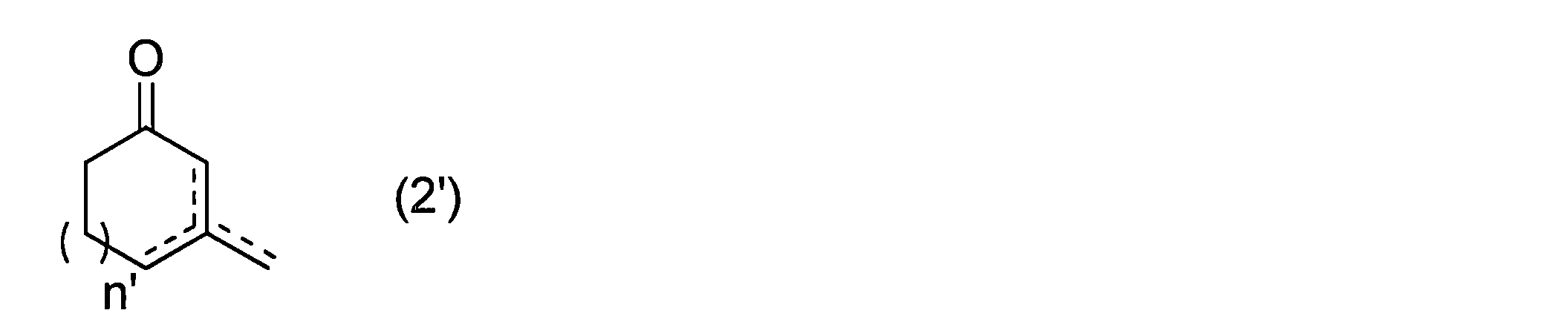
(式中、実線と点線の3つの二重線のうち、1つは二重結合、残りの2つは単結合を示し、二重結合の配置はシス又はトランスのどちらでもよく、n’は10を示す。)
で表される3-メチルシクロペンタデセノン類を含む3-メチルシクロペンタデセノン類含有液を生成し、
前記3-メチルシクロペンタデセノン類含有液に含まれる3-メチルシクロペンタデセノン類を水素化すること
を含む、ムスコンの製造方法。
〔16〕前記3-メチルシクロペンタデセノン類含有液から原料である2,15-ヘキサデカンジオンを晶析分離して除き、
前記2,15-ヘキサデカンジオンを除いた3-メチルシクロペンタデセノン類含有液を水素化すること
を含む、前記〔15〕に記載のムスコンの製造方法。
〔17〕前記触媒を反応器に充填し、反応器に充填した触媒1gに対して、2,15-ヘキサデカンジオンを、0.01~50g/hrの量で反応器に連続的に供給して分子内縮合反応させることを含む、前記〔15〕又は〔16〕に記載の製造方法。
〔18〕前記触媒が、酸化ジルコニウム単体である、前記〔15〕~〔17〕のいずれか一項に記載の製造方法。
〔19〕前記触媒が、酸化ジルコニウム以外の金属酸化物をさらに含む、前記〔15〕~〔17〕のいずれか一項に記載の製造方法。
〔20〕前記金属酸化物がアルミナである、前記〔19〕に記載の製造方法。
〔21〕アルミナの含有量が、触媒総重量に対して10質量%以下である、前記〔20〕に記載の製造方法。
〔1〕酸化ジルコニウムを含む触媒の存在下、前記触媒に対して0.2倍質量以上の下記一般式(1):
(式(1)中、nは8、9、10、11、又は12を示す)
で表されるジケトンを気相で分子内縮合反応させることを含む、下記一般式(2):
(式(2)中、実線と点線の3つの二重線のうち、1つは二重結合、残りの2つは単結合を示し、二重結合の配置はシス又はトランスのどちらでもよく、nは一般式(1)におけるnと同じである。)
で表される3-メチルシクロアルケノン類の製造方法。
〔2〕前記触媒が、酸化ジルコニウム単体である、前記〔1〕に記載の製造方法。
〔3〕前記触媒が、酸化ジルコニウム以外の金属酸化物をさらに含む、前記〔1〕に記載の製造方法。
〔4〕前記金属酸化物がアルミナである、前記〔3〕に記載の製造方法。
〔5〕アルミナの含有量が、触媒総重量に対して10質量%以下である、前記〔4〕に記載の製造方法。
〔6〕前記一般式(1)で表されるジケトンが2,15-ヘキサデカンジオンであり、分子内縮合反応により生成する前記一般式(2)で表される3-メチルシクロアルケノン類が3-メチルシクロペンタデセノン類である、前記〔1〕~〔5〕のいずれか1項に記載の製造方法。
〔7〕前記触媒を反応器に充填し、反応器に充填した触媒1gに対して、前記一般式(1)で示されるジケトンを、0.01~50g/hrの量で反応器に連続的に供給して分子内縮合反応させることを含む、前記〔1〕~〔6〕のいずれか1項に記載の製造方法。
〔8〕酸化ジルコニウムを含む触媒の存在下、触媒に対して0.2倍質量以上の2,15-ヘキサデカンジオンを、気相で分子内縮合反応させることにより、下記一般式(2’):
(式中、実線と点線の3つの二重線のうち、1つは二重結合、残りの2つは単結合を示し、二重結合の配置はシス又はトランスのどちらでもよく、n’は10を示す。)
で表される3-メチルシクロペンタデセノン類を製造し、
得られた3-メチルシクロペンタデセノン類を水素化すること
を含む、ムスコンの製造方法。
〔9〕前記触媒を反応器に充填し、反応器に充填した触媒1gに対して、2,15-ヘキサデカンジオンを、0.01~50g/hrの量で反応器に連続的に供給して分子内縮合反応させることを含む、前記〔8〕に記載のムスコンの製造方法。
〔10〕前記触媒が、酸化ジルコニウム単体である、前記〔8〕又は〔9〕に記載のムスコンの製造方法。
〔11〕前記触媒が、酸化ジルコニウム以外の金属酸化物をさらに含む、前記〔8〕又は〔9〕に記載のムスコンの製造方法。
〔12〕前記金属酸化物がアルミナである、前記〔11〕に記載のムスコンの製造方法。
〔13〕アルミナの含有量が、触媒総重量に対して10質量%以下である、前記〔12〕に記載のムスコンの製造方法。
〔14〕前記〔6〕又は〔7〕に記載の製造方法により3-メチルシクロペンタデセノン類を含む3-メチルシクロペンタデセノン類含有液を生成し、
この3-メチルシクロペンタデセノン類含有液から原料である2,15-ヘキサデカンジオンを晶析分離して除き、
その2,15-ヘキサデカンジオンを除いた3-メチルシクロペンタデセノン類含有液を水素化すること
を含む、ムスコンの製造方法。
〔15〕酸化ジルコニウムを含む触媒の存在下、触媒に対して0.2倍質量以上の2,15-ヘキサデカンジオンを、気相で分子内縮合反応させることにより、下記一般式(2’):
(式中、実線と点線の3つの二重線のうち、1つは二重結合、残りの2つは単結合を示し、二重結合の配置はシス又はトランスのどちらでもよく、n’は10を示す。)
で表される3-メチルシクロペンタデセノン類を含む3-メチルシクロペンタデセノン類含有液を生成し、
前記3-メチルシクロペンタデセノン類含有液に含まれる3-メチルシクロペンタデセノン類を水素化すること
を含む、ムスコンの製造方法。
〔16〕前記3-メチルシクロペンタデセノン類含有液から原料である2,15-ヘキサデカンジオンを晶析分離して除き、
前記2,15-ヘキサデカンジオンを除いた3-メチルシクロペンタデセノン類含有液を水素化すること
を含む、前記〔15〕に記載のムスコンの製造方法。
〔17〕前記触媒を反応器に充填し、反応器に充填した触媒1gに対して、2,15-ヘキサデカンジオンを、0.01~50g/hrの量で反応器に連続的に供給して分子内縮合反応させることを含む、前記〔15〕又は〔16〕に記載の製造方法。
〔18〕前記触媒が、酸化ジルコニウム単体である、前記〔15〕~〔17〕のいずれか一項に記載の製造方法。
〔19〕前記触媒が、酸化ジルコニウム以外の金属酸化物をさらに含む、前記〔15〕~〔17〕のいずれか一項に記載の製造方法。
〔20〕前記金属酸化物がアルミナである、前記〔19〕に記載の製造方法。
〔21〕アルミナの含有量が、触媒総重量に対して10質量%以下である、前記〔20〕に記載の製造方法。
また、本発明は、下記の〔1〕~〔7〕に関する。
〔1〕酸化ジルコニウム触媒の存在下、下記一般式(1)

(式(1)中、nは8,9,10,11、又は12を示す)
で表されるジケトンを気相で分子内縮合反応させることを特徴とする、下記一般式(2)
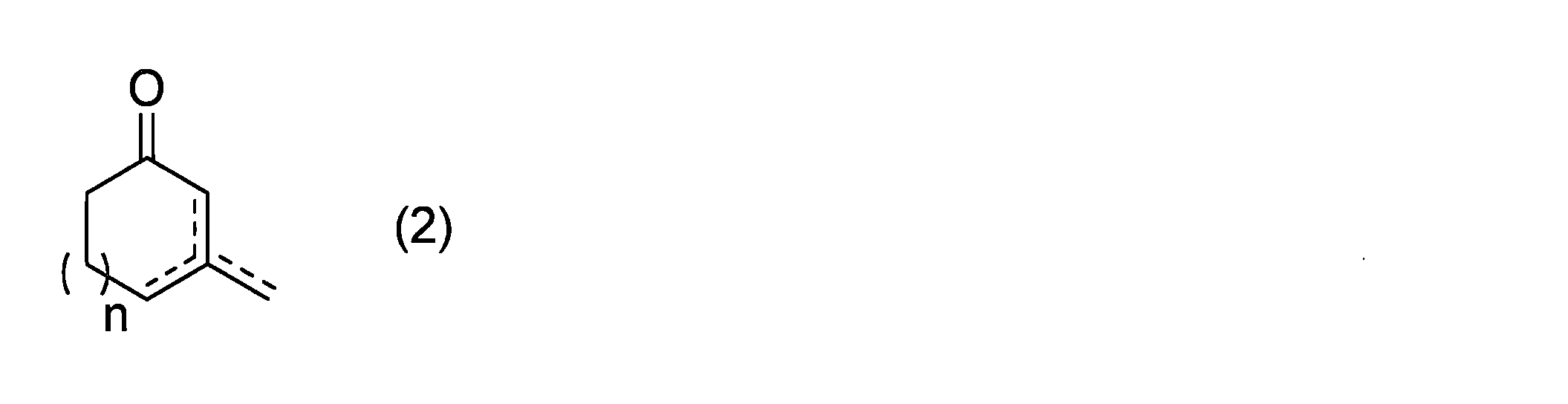
(式(2)中、実線と点線の3つの二重線のうち、1つは二重結合、残りの2つは単結合を示す。二重結合はシス、トランスどちらでもよい。nは一般式(1)と同じ。)
で表される3-メチルシクロアルケノン類の製造方法。
〔2〕金属酸化物を含む酸化ジルコニウム触媒の存在下、上記一般式(1)で表されるジケトンを気相で分子内縮合反応させることを特徴とする、上記一般式(2)で表される、前記〔1〕に記載の3-メチルシクロアルケノン類の製造方法。
〔3〕前記金属酸化物がアルミナであることを特徴とする、前記〔2〕に記載の製造方法。
〔4〕アルミナの含有量が、触媒総重量に対して10質量%以下であることを特徴とする、前記〔3〕に記載の製造方法。
〔5〕上記一般式(1)で表されるジケトンが2,15-ヘキサデカンジオンであり、分子内縮合反応により生成する上記一般式(2)で表される3-メチルシクロアルケノン類が3-メチルシクロペンタデセノン類であることを特徴とする、前記〔1〕~[4]のいずれか1項に記載の製造方法。
〔6〕前記触媒を反応器に充填し、反応器に充填した触媒1gに対して、上記一般式(1)で示されるジケトンを、0.01~50g/hrの量で反応器に連続的に供給して分子内縮合反応させることを特徴とする、前記〔1〕~〔5〕のいずれか1項に記載の製造方法。
〔7〕前記〔5〕又は〔6〕の製造方法により3-メチルシクロペンタデセノン類含有液を生成し、この3-メチルシクロペンタデセノン類含有液から原料である2,15-ヘキサデカンジオンを晶析分離して除き、その2,15-ヘキサデカンジオンを除いた3-メチルシクロペンタデセノン類含有液を、水素化することを特徴とするムスコンの製造方法。
〔1〕酸化ジルコニウム触媒の存在下、下記一般式(1)
(式(1)中、nは8,9,10,11、又は12を示す)
で表されるジケトンを気相で分子内縮合反応させることを特徴とする、下記一般式(2)
(式(2)中、実線と点線の3つの二重線のうち、1つは二重結合、残りの2つは単結合を示す。二重結合はシス、トランスどちらでもよい。nは一般式(1)と同じ。)
で表される3-メチルシクロアルケノン類の製造方法。
〔2〕金属酸化物を含む酸化ジルコニウム触媒の存在下、上記一般式(1)で表されるジケトンを気相で分子内縮合反応させることを特徴とする、上記一般式(2)で表される、前記〔1〕に記載の3-メチルシクロアルケノン類の製造方法。
〔3〕前記金属酸化物がアルミナであることを特徴とする、前記〔2〕に記載の製造方法。
〔4〕アルミナの含有量が、触媒総重量に対して10質量%以下であることを特徴とする、前記〔3〕に記載の製造方法。
〔5〕上記一般式(1)で表されるジケトンが2,15-ヘキサデカンジオンであり、分子内縮合反応により生成する上記一般式(2)で表される3-メチルシクロアルケノン類が3-メチルシクロペンタデセノン類であることを特徴とする、前記〔1〕~[4]のいずれか1項に記載の製造方法。
〔6〕前記触媒を反応器に充填し、反応器に充填した触媒1gに対して、上記一般式(1)で示されるジケトンを、0.01~50g/hrの量で反応器に連続的に供給して分子内縮合反応させることを特徴とする、前記〔1〕~〔5〕のいずれか1項に記載の製造方法。
〔7〕前記〔5〕又は〔6〕の製造方法により3-メチルシクロペンタデセノン類含有液を生成し、この3-メチルシクロペンタデセノン類含有液から原料である2,15-ヘキサデカンジオンを晶析分離して除き、その2,15-ヘキサデカンジオンを除いた3-メチルシクロペンタデセノン類含有液を、水素化することを特徴とするムスコンの製造方法。
本発明の製造方法によれば、対応するジケトンから3-メチルシクロアルケノン類を、従来の製法に比べて反応効率よく製造することができる。さらに、本発明の好ましい態様によれば、対応するジケトンから3-メチルシクロアルケノン類を高い原料供給量を保ちながらも高転化率かつ高選択率で製造することが可能である。
以下、本発明について詳細に説明する。
本発明は、酸化ジルコニウムを含む触媒の存在下、前記触媒に対して0.2倍質量以上の下記一般式(1):

(式(1)中、nは8、9、10、11、又は12を示す)
で表されるジケトンを気相で分子内縮合反応させることを含む、下記一般式(2):
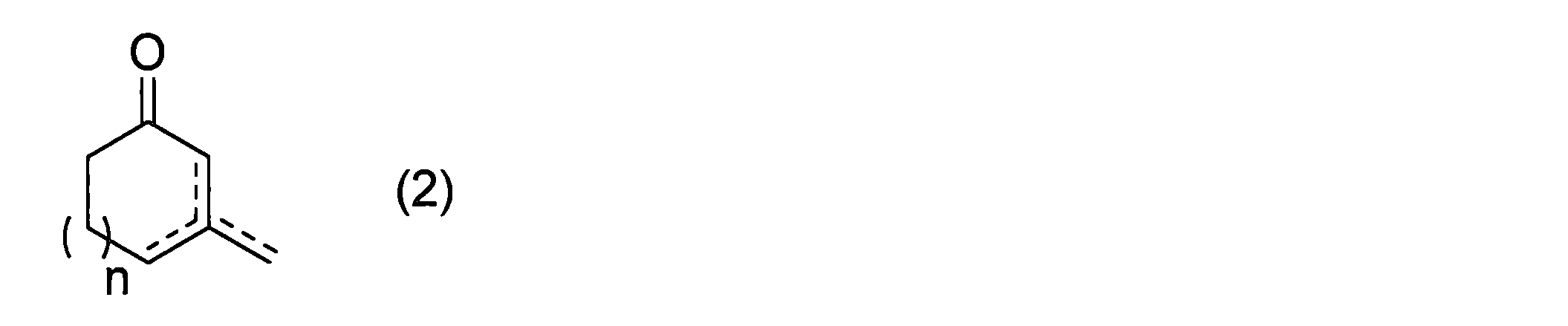
(式(2)中、実線と点線の3つの二重線のうち、1つは二重結合、残りの2つは単結合を示し、二重結合の配置はシス又はトランスのどちらでもよく、nは一般式(1)におけるnと同じである。)
で表される3-メチルシクロアルケノン類の製造方法にかかるものである。
本発明は、酸化ジルコニウムを含む触媒の存在下、前記触媒に対して0.2倍質量以上の下記一般式(1):
(式(1)中、nは8、9、10、11、又は12を示す)
で表されるジケトンを気相で分子内縮合反応させることを含む、下記一般式(2):
(式(2)中、実線と点線の3つの二重線のうち、1つは二重結合、残りの2つは単結合を示し、二重結合の配置はシス又はトランスのどちらでもよく、nは一般式(1)におけるnと同じである。)
で表される3-メチルシクロアルケノン類の製造方法にかかるものである。
<原料化合物>
本発明で原料化合物として使用するジケトンは下記一般式(1):

(式(1)中、nは8、9、10、11、又は12を示す)
で表される。
本発明で原料化合物として使用するジケトンは、具体的には2,13-テトラデカンジオン、2,14-ペンタデカンジオン、2,15-ヘキサデカンジオン、2,16-ヘプタデカンジオン、2,17-オクタデカンジオンである。本発明では、上記で示したジケトンのうち1種類のみを単独で用いてもよいし、2種類以上を併用してもよい。
原料ジケトンの製造方法は特に限定されないが、例えば、脂肪族ハロゲン化物とケトン類を塩基存在下で反応させて製造したジケトンを用いてもよい。
なお、本発明において、2,15-ヘキサデカンジオンを原料ジケトンとして用いた場合は、分子内縮合反応により得られる3-メチルシクロペンタデセノン類を水素化することにより、香料として有用なムスコンを得ることができる。
本発明で原料化合物として使用するジケトンは下記一般式(1):
(式(1)中、nは8、9、10、11、又は12を示す)
で表される。
本発明で原料化合物として使用するジケトンは、具体的には2,13-テトラデカンジオン、2,14-ペンタデカンジオン、2,15-ヘキサデカンジオン、2,16-ヘプタデカンジオン、2,17-オクタデカンジオンである。本発明では、上記で示したジケトンのうち1種類のみを単独で用いてもよいし、2種類以上を併用してもよい。
原料ジケトンの製造方法は特に限定されないが、例えば、脂肪族ハロゲン化物とケトン類を塩基存在下で反応させて製造したジケトンを用いてもよい。
なお、本発明において、2,15-ヘキサデカンジオンを原料ジケトンとして用いた場合は、分子内縮合反応により得られる3-メチルシクロペンタデセノン類を水素化することにより、香料として有用なムスコンを得ることができる。
本発明で原料化合物として使用するジケトンの量は、触媒に対して0.2倍質量以上であり、0.3倍質量以上が好ましく、1倍質量以上がより好ましい。ジケトンが触媒に対して0.2倍質量以上であると、目的の3-メチルシクロアルケノン類を反応効率よく製造することができる。また、高い原料供給量を保ちながら、目的の3-メチルシクロアルケノン類を高転化率かつ高選択率で製造することができる。なお、特に限定されないが、高転化率を維持する点で、使用するジケトンの量は、触媒に対して1000倍質量以下であることが好ましく、500倍質量以下であることがより好ましい。
<触媒>
本発明で使用される触媒としては、酸化ジルコニウム(二酸化ジルコニウム(ZrO2)、ジルコニアとも称される。)からなる単成分であってもよく、酸化ジルコニウムとその他の成分を1種又は2種以上含んでいてもよい。触媒が、酸化ジルコニウムとその他の成分を1種又は2種以上含む場合、酸化ジルコニウムとその他の成分との物理的混合物であってもよく、酸化ジルコニウムとその他の成分とが複合体を形成していてもよい。酸化ジルコニウムとその他の成分とが複合体を形成する場合、複合体の形態は特に限定されない。例えば、酸化ジルコニウムとその他の成分が原子レベルで複合している状態であってもよく、酸化ジルコニウムの表面などにその他の成分が担持されて複合体を形成している状態であってもよい。酸化ジルコニウムとその他の成分との複合体の製造方法は特に限定されない。例えば、非特許文献4に記載の含侵法、混錬法または共沈法などによって製造することができる。
その他の成分としては、特には限定されないが、たとえば、SO4、PO4、B2O3及び金属酸化物(酸化ジルコニウムを除く)等が挙げられる。金属酸化物の具体例としては、Al2O3(アルミナ)、SiO2、WO3、CaO、MgO、BeO、Na2O、K2O、Li2O、Cs2O、TiO2、CeO2、VO2、V2O5、Cr2O3、MnO、MnO2、Mn2O3、Fe2O3、Co3O4、NiO、CuO、Ga2O3、GeO2、Rb2O、SrO、Y2O3、Nb2O5、In2O3、SnO2、MoO3、Sb2O5,ThO2、CdO、ZnO、BaO、Ta2O5、Bi2O3、La2O3、Pr2O3、Nd2O3、Sm2O3、Eu2O3、Gd2O3、Tb2O3、Dy2O3、Ho2O3、Tm2O3、Yb2O3、及びLu2O3などが挙げられる。その中でも反応性及び安定性の面からAl2O3が好ましい。
本発明で使用される触媒としては、酸化ジルコニウム(二酸化ジルコニウム(ZrO2)、ジルコニアとも称される。)からなる単成分であってもよく、酸化ジルコニウムとその他の成分を1種又は2種以上含んでいてもよい。触媒が、酸化ジルコニウムとその他の成分を1種又は2種以上含む場合、酸化ジルコニウムとその他の成分との物理的混合物であってもよく、酸化ジルコニウムとその他の成分とが複合体を形成していてもよい。酸化ジルコニウムとその他の成分とが複合体を形成する場合、複合体の形態は特に限定されない。例えば、酸化ジルコニウムとその他の成分が原子レベルで複合している状態であってもよく、酸化ジルコニウムの表面などにその他の成分が担持されて複合体を形成している状態であってもよい。酸化ジルコニウムとその他の成分との複合体の製造方法は特に限定されない。例えば、非特許文献4に記載の含侵法、混錬法または共沈法などによって製造することができる。
その他の成分としては、特には限定されないが、たとえば、SO4、PO4、B2O3及び金属酸化物(酸化ジルコニウムを除く)等が挙げられる。金属酸化物の具体例としては、Al2O3(アルミナ)、SiO2、WO3、CaO、MgO、BeO、Na2O、K2O、Li2O、Cs2O、TiO2、CeO2、VO2、V2O5、Cr2O3、MnO、MnO2、Mn2O3、Fe2O3、Co3O4、NiO、CuO、Ga2O3、GeO2、Rb2O、SrO、Y2O3、Nb2O5、In2O3、SnO2、MoO3、Sb2O5,ThO2、CdO、ZnO、BaO、Ta2O5、Bi2O3、La2O3、Pr2O3、Nd2O3、Sm2O3、Eu2O3、Gd2O3、Tb2O3、Dy2O3、Ho2O3、Tm2O3、Yb2O3、及びLu2O3などが挙げられる。その中でも反応性及び安定性の面からAl2O3が好ましい。
触媒に含まれる金属酸化物の量は、特には限定されないが、好ましくは触媒総重量に対して10質量%以下であり、さらに好ましくは5質量%以下であり、特に好ましくは3質量%以下である。
触媒として使用される酸化ジルコニウム、又は酸化ジルコニウムを含む触媒は、未焼成のものを用いてもよいし、焼成処理を施してから使用してもよい。触媒へ焼成処理を施すときの温度は、400~1000℃であることが好ましく、さらに好ましくは600~900℃であり、特に好ましくは700~900℃である。また、焼成時間は1~48時間が好ましく、さらに好ましくは2~36時間であり、特に好ましくは3~12時間である。
触媒として使用される酸化ジルコニウム、又は酸化ジルコニウムを含む触媒の結晶構造は、特に限定されず、単斜晶、正方晶、立方晶、又は非晶質のいずれのものも使用することができる。
触媒として使用される酸化ジルコニウム、又は酸化ジルコニウムを含む触媒の形状は、粉末又は成形体のどちらも使用することができるが、取扱いの観点から、成形体を用いることが好ましい。成形体のサイズ及び形状は特に制限されない。例えば、1~10mm、好ましくは1~5mm程度のサイズを有するペレット状(短尺柱状)、球状、立方体状、直方体状、円盤状、楕円球状、円筒状などの成型体を用いることができる。
触媒として使用される酸化ジルコニウム、又は酸化ジルコニウムを含む触媒のBET比表面積は、特に限定されないが、好ましくは10m2/g以上200m2/g以下であり、さらに好ましくは10m2/g以上100m2/g以下である。なお、一般的には焼成温度を高くすると比表面積は小さくなる傾向がある。
触媒として使用される酸化ジルコニウム、又は酸化ジルコニウムを含む触媒は、未焼成のものを用いてもよいし、焼成処理を施してから使用してもよい。触媒へ焼成処理を施すときの温度は、400~1000℃であることが好ましく、さらに好ましくは600~900℃であり、特に好ましくは700~900℃である。また、焼成時間は1~48時間が好ましく、さらに好ましくは2~36時間であり、特に好ましくは3~12時間である。
触媒として使用される酸化ジルコニウム、又は酸化ジルコニウムを含む触媒の結晶構造は、特に限定されず、単斜晶、正方晶、立方晶、又は非晶質のいずれのものも使用することができる。
触媒として使用される酸化ジルコニウム、又は酸化ジルコニウムを含む触媒の形状は、粉末又は成形体のどちらも使用することができるが、取扱いの観点から、成形体を用いることが好ましい。成形体のサイズ及び形状は特に制限されない。例えば、1~10mm、好ましくは1~5mm程度のサイズを有するペレット状(短尺柱状)、球状、立方体状、直方体状、円盤状、楕円球状、円筒状などの成型体を用いることができる。
触媒として使用される酸化ジルコニウム、又は酸化ジルコニウムを含む触媒のBET比表面積は、特に限定されないが、好ましくは10m2/g以上200m2/g以下であり、さらに好ましくは10m2/g以上100m2/g以下である。なお、一般的には焼成温度を高くすると比表面積は小さくなる傾向がある。
<反応器>
反応器は特に限定されなく、原料ジケトンの気化、触媒への接触、及び分子内縮合反応を行うことのできる反応装置であれば、いかなる装置でも使用することができる。
その中でも、反応器として、好ましくは触媒充填層反応器が用いられる。触媒充填層反応器は、筒状の容器に触媒を層状に充填し、その一方の端部から原料を供給し、もう一方の端部から反応生成物を取り出すようにした反応器である。図1は、触媒充填層反応器の一例を模式的に示した図である。原料を供給するためのライン1から原料を供給し、気化器(ヒーター付き)2で原料を気体状にし、触媒を充填した反応器(ヒーター付き)3の端部から原料を連続的に供給して、原料と触媒とを気相状態で接触させて反応させることができる。生成物は、触媒を充填した反応器(ヒーター付き)3のもう一方の端部から連続的に取り出し、コンデンサー4により冷却して、反応生成物の受器5で捕集することができる。本発明において、触媒充填層反応器の内径及び長さなどは特に制限されず、各々の状況に適したサイズとすることができる。
触媒充填層反応器を用いて本発明を実施するにあたっては、特に制限されないが、筒状の反応器に触媒として使用される酸化ジルコニウム、又は酸化ジルコニウムを含む触媒を層状に充填し、当該反応器に気化器等で気体状にした原料ジケトンを触媒充填層反応器の一方の端部から連続的に供給して、原料であるジケトンと、触媒として使用される酸化ジルコニウム、又は酸化ジルコニウムを含む触媒を気相状態で接触させて分子内縮合反応を行なわせ、3-メチルシクロアルケノン類を含む生成物を触媒充填層反応器のもう一方の端部から連続的に取り出す方法が好ましい。
反応器は特に限定されなく、原料ジケトンの気化、触媒への接触、及び分子内縮合反応を行うことのできる反応装置であれば、いかなる装置でも使用することができる。
その中でも、反応器として、好ましくは触媒充填層反応器が用いられる。触媒充填層反応器は、筒状の容器に触媒を層状に充填し、その一方の端部から原料を供給し、もう一方の端部から反応生成物を取り出すようにした反応器である。図1は、触媒充填層反応器の一例を模式的に示した図である。原料を供給するためのライン1から原料を供給し、気化器(ヒーター付き)2で原料を気体状にし、触媒を充填した反応器(ヒーター付き)3の端部から原料を連続的に供給して、原料と触媒とを気相状態で接触させて反応させることができる。生成物は、触媒を充填した反応器(ヒーター付き)3のもう一方の端部から連続的に取り出し、コンデンサー4により冷却して、反応生成物の受器5で捕集することができる。本発明において、触媒充填層反応器の内径及び長さなどは特に制限されず、各々の状況に適したサイズとすることができる。
触媒充填層反応器を用いて本発明を実施するにあたっては、特に制限されないが、筒状の反応器に触媒として使用される酸化ジルコニウム、又は酸化ジルコニウムを含む触媒を層状に充填し、当該反応器に気化器等で気体状にした原料ジケトンを触媒充填層反応器の一方の端部から連続的に供給して、原料であるジケトンと、触媒として使用される酸化ジルコニウム、又は酸化ジルコニウムを含む触媒を気相状態で接触させて分子内縮合反応を行なわせ、3-メチルシクロアルケノン類を含む生成物を触媒充填層反応器のもう一方の端部から連続的に取り出す方法が好ましい。
<溶媒>
原料のジケトンは、そのまま使用してもよいし、溶媒に溶解して使用してもよい。溶媒としては、通常は炭化水素類が用いられ、特に炭素数6~14の脂肪族炭化水素類が好ましいが、反応に不活性なものであれば特に限定されない。具体的には、例えば、トルエン、キシレン、メシチレン、デカン、ドデカン、イソドデカン、デカリン、及びテトラデカン等が挙げられる。
溶媒の使用量は特に限定されないが、原料のジケトンに対して0~100倍質量、好ましくは5~50倍質量、特に好ましくは5~30倍質量である。
原料のジケトンは、そのまま使用してもよいし、溶媒に溶解して使用してもよい。溶媒としては、通常は炭化水素類が用いられ、特に炭素数6~14の脂肪族炭化水素類が好ましいが、反応に不活性なものであれば特に限定されない。具体的には、例えば、トルエン、キシレン、メシチレン、デカン、ドデカン、イソドデカン、デカリン、及びテトラデカン等が挙げられる。
溶媒の使用量は特に限定されないが、原料のジケトンに対して0~100倍質量、好ましくは5~50倍質量、特に好ましくは5~30倍質量である。
<キャリアーガス>
キャリアーガスは反応に不活性なガスであればよく、特に制限されないが、例えば、窒素、又は二酸化炭素を用いることができる。キャリアーガスの使用量は、多すぎると経済的ではなく、少なすぎると副反応を制御できなくなるので、通常は原料1gに対して0.2L以上20L以下で用いられる。
キャリアーガスは反応に不活性なガスであればよく、特に制限されないが、例えば、窒素、又は二酸化炭素を用いることができる。キャリアーガスの使用量は、多すぎると経済的ではなく、少なすぎると副反応を制御できなくなるので、通常は原料1gに対して0.2L以上20L以下で用いられる。
<蒸発部の温度>
原料のジケトンを気体状にする気化器の温度、すなわち蒸発部の温度は、通常は250~500℃であるが、特にこの範囲に限定されず、原料のジケトンが全量気化する温度であればよい。
原料のジケトンを気体状にする気化器の温度、すなわち蒸発部の温度は、通常は250~500℃であるが、特にこの範囲に限定されず、原料のジケトンが全量気化する温度であればよい。
<原料の供給速度>
反応器に連続的に原料のジケトンを供給させて分子内縮合反応させる時の反応器への原料のジケトンの供給量は、原料ジケトンの種類、反応器の種類及び構造などに応じて適宜調節できる。例えば、反応器に充填した触媒1gに対して、原料ジケトンを、0.01~50g/hr、好ましくは0.05~20g/hr、特に好ましくは0.05~5g/hrの量で反応器に連続して供給し、反応効率よく分子内縮合反応させることができる。本発明の製造方法によれば、上述のように原料の供給速度を高めても分子内縮合を反応効率よく行うことが可能である。さらに、本発明の好ましい態様によれば、原料の供給速度を高めても高転化率かつ高選択率で3-メチルシクロアルケノン類を反応効率よく製造することが可能である。
反応器に連続的に原料のジケトンを供給させて分子内縮合反応させる時の反応器への原料のジケトンの供給量は、原料ジケトンの種類、反応器の種類及び構造などに応じて適宜調節できる。例えば、反応器に充填した触媒1gに対して、原料ジケトンを、0.01~50g/hr、好ましくは0.05~20g/hr、特に好ましくは0.05~5g/hrの量で反応器に連続して供給し、反応効率よく分子内縮合反応させることができる。本発明の製造方法によれば、上述のように原料の供給速度を高めても分子内縮合を反応効率よく行うことが可能である。さらに、本発明の好ましい態様によれば、原料の供給速度を高めても高転化率かつ高選択率で3-メチルシクロアルケノン類を反応効率よく製造することが可能である。
<反応温度>
反応温度は低すぎると反応が進まず、高すぎると副反応が進行するため、250~500℃の範囲が好ましく、300~450℃の範囲が特に好ましい。
反応温度は低すぎると反応が進まず、高すぎると副反応が進行するため、250~500℃の範囲が好ましく、300~450℃の範囲が特に好ましい。
<生成物の捕集>
反応生成物は0℃以上60℃以下に冷却して捕集することができる。この反応生成物(以下、反応生成液ともいう)の主組成物は、使用した溶媒、3-メチルシクロアルケノン類、及び未反応の原料ジケトンである。得られた反応生成液から晶析分離や蒸留などの公知の分離手法によって3-メチルシクロアルケノン類及び未反応の原料ジケトンをそれぞれ分離することができる。
得られた反応生成液から晶析分離や蒸留などの公知の分離手法によって回収される未反応のジケトンは、循環利用することが可能である。
このようにして得られた3-メチルシクロアルケノン類は、下記一般式(2)
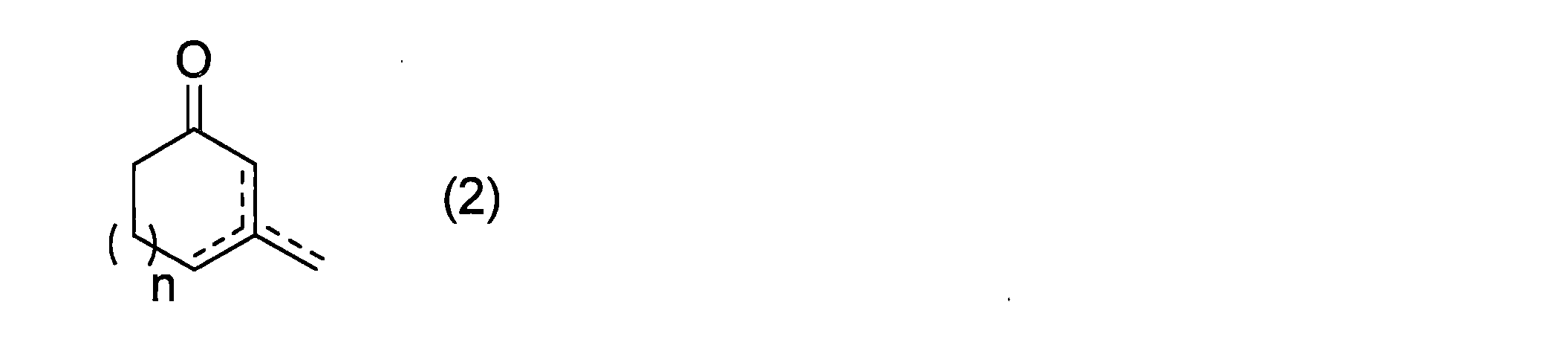
(式(2)中、実線と点線の3つの二重線のうち、1つは二重結合、残りの2つは単結合を示し、二重結合の配置はシス又はトランスのどちらでもよく、nは一般式(1)におけるnと同義である。)
で表される。具体的には、(E)-3-メチル-2-シクロアルケノン、(Z)-3-メチル-2-シクロアルケノン、(E)-3-メチル-3-シクロアルケノン、(Z)-3-メチル-3-シクロアルケノン、又は3-メチレン-シクロアルカノンである。
反応生成物は0℃以上60℃以下に冷却して捕集することができる。この反応生成物(以下、反応生成液ともいう)の主組成物は、使用した溶媒、3-メチルシクロアルケノン類、及び未反応の原料ジケトンである。得られた反応生成液から晶析分離や蒸留などの公知の分離手法によって3-メチルシクロアルケノン類及び未反応の原料ジケトンをそれぞれ分離することができる。
得られた反応生成液から晶析分離や蒸留などの公知の分離手法によって回収される未反応のジケトンは、循環利用することが可能である。
このようにして得られた3-メチルシクロアルケノン類は、下記一般式(2)
(式(2)中、実線と点線の3つの二重線のうち、1つは二重結合、残りの2つは単結合を示し、二重結合の配置はシス又はトランスのどちらでもよく、nは一般式(1)におけるnと同義である。)
で表される。具体的には、(E)-3-メチル-2-シクロアルケノン、(Z)-3-メチル-2-シクロアルケノン、(E)-3-メチル-3-シクロアルケノン、(Z)-3-メチル-3-シクロアルケノン、又は3-メチレン-シクロアルカノンである。
<ムスコンの製造方法>
原料ジケトンとして、2,15-ヘキサデカンジオンを用いた時の反応生成物の主組成物は、使用した溶媒、3-メチルシクロペンタデセノン類、及び未反応の2,15-ヘキサデカンジオンを含む3-メチルシクロペンタデセノン類含有液である。反応生成液である3-メチルシクロペンタデセノン類含有液から未反応の2,15-ヘキサデカンジオンを晶析又は蒸留などによって除いた後の3-メチルシクロペンタデセノン類は、そのまま、すなわち使用した溶媒を含む3-メチルシクロペンタデセノン類含有液のまま、又は使用した溶媒を適切な溶媒に置換した3-メチルシクロペンタデセノン類含有液を、公知の方法でオレフィン部分を水素化してムスコンに誘導することができる。あるいは、反応生成液である3-メチルシクロペンタデセノン類含有液をそのまま、すなわち使用した溶媒及び未反応の2,15-ヘキサデカンジオンを含む3-メチルシクロペンタデセノン類含有液のまま、又は使用した溶媒を適切な溶媒に置換した3-メチルシクロペンタデセノン類含有液を、公知の方法でオレフィン部分を水素化してムスコンに誘導してもよい
3-メチルシクロペンタデセノン類のオレフィン部分を水素化する方法は特に限定されない。例えば、特許文献2記載の方法のようにパラジウム触媒存在下でオレフィン部分を水素化してもよいし、特許文献3記載の方法のようにルテニウム触媒存在下でオレフィン部分を水素化してもよい。
原料ジケトンとして、2,15-ヘキサデカンジオンを用いた時の反応生成物の主組成物は、使用した溶媒、3-メチルシクロペンタデセノン類、及び未反応の2,15-ヘキサデカンジオンを含む3-メチルシクロペンタデセノン類含有液である。反応生成液である3-メチルシクロペンタデセノン類含有液から未反応の2,15-ヘキサデカンジオンを晶析又は蒸留などによって除いた後の3-メチルシクロペンタデセノン類は、そのまま、すなわち使用した溶媒を含む3-メチルシクロペンタデセノン類含有液のまま、又は使用した溶媒を適切な溶媒に置換した3-メチルシクロペンタデセノン類含有液を、公知の方法でオレフィン部分を水素化してムスコンに誘導することができる。あるいは、反応生成液である3-メチルシクロペンタデセノン類含有液をそのまま、すなわち使用した溶媒及び未反応の2,15-ヘキサデカンジオンを含む3-メチルシクロペンタデセノン類含有液のまま、又は使用した溶媒を適切な溶媒に置換した3-メチルシクロペンタデセノン類含有液を、公知の方法でオレフィン部分を水素化してムスコンに誘導してもよい
3-メチルシクロペンタデセノン類のオレフィン部分を水素化する方法は特に限定されない。例えば、特許文献2記載の方法のようにパラジウム触媒存在下でオレフィン部分を水素化してもよいし、特許文献3記載の方法のようにルテニウム触媒存在下でオレフィン部分を水素化してもよい。
すなわち、本発明は、酸化ジルコニウムを含む触媒の存在下、触媒に対して0.2倍質量以上の2,15-ヘキサデカンジオンを、気相で分子内縮合反応させることにより、下記一般式(2’):

(式中、実線と点線の3つの二重線のうち、1つは二重結合、残りの2つは単結合を示し、二重結合の配置はシス又はトランスのどちらでもよく、n’は10を示す。)
で表される3-メチルシクロペンタデセノン類を生成し、
前記3-メチルシクロペンタデセノン類を水素化すること
を含む、ムスコンの製造方法をも包含するものとする。
また、本発明は、酸化ジルコニウムを含む触媒の存在下、触媒に対して0.2倍質量以上の2,15-ヘキサデカンジオンを、気相で分子内縮合反応させることにより、下記一般式(2’):

(式中、実線と点線の3つの二重線のうち、1つは二重結合、残りの2つは単結合を示し、二重結合の配置はシス又はトランスのどちらでもよく、n’は10を示す。)
で表される3-メチルシクロペンタデセノン類を含む3-メチルシクロペンタデセノン類含有液を生成し、
前記3-メチルシクロペンタデセノン類含有液に含まれる3-メチルシクロペンタデセノン類を水素化すること
を含む、ムスコンの製造方法をも包含するものとする。
また、本発明は、酸化ジルコニウムを含む触媒の存在下、触媒に対して0.2倍質量以上の2,15-ヘキサデカンジオンを、気相で分子内縮合反応させることにより、下記一般式(2’):
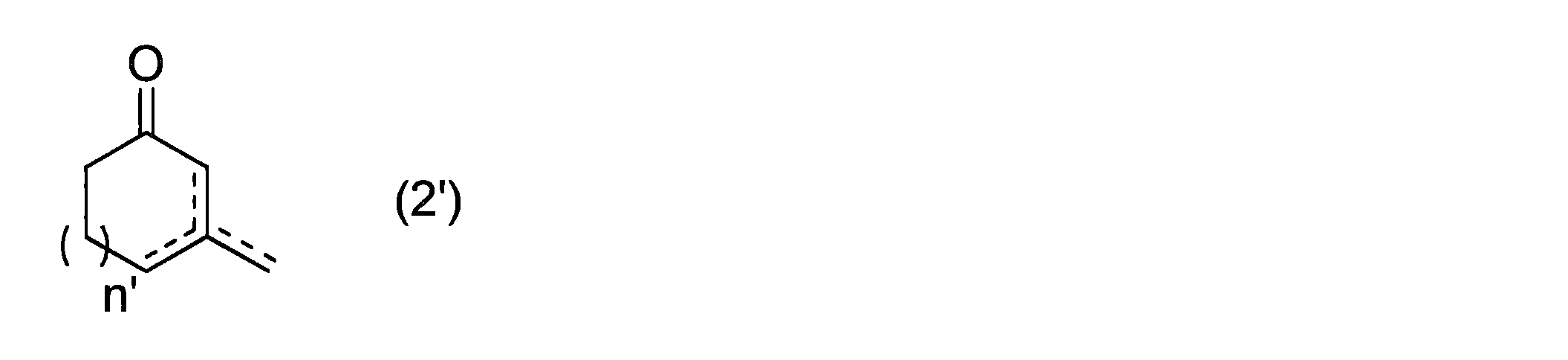
(式中、実線と点線の3つの二重線のうち、1つは二重結合、残りの2つは単結合を示し、二重結合の配置はシス又はトランスのどちらでもよく、n’は10を示す。)
で表される3-メチルシクロペンタデセノン類を含む3-メチルシクロペンタデセノン類含有液を生成し、
前記3-メチルシクロペンタデセノン類含有液から原料である2,15-ヘキサデカンジオンを晶析分離して除き、
前記2,15-ヘキサデカンジオンを除いた3-メチルシクロペンタデセノン類含有液を水素化すること
を含む、ムスコンの製造方法をも包含するものとする。
(式中、実線と点線の3つの二重線のうち、1つは二重結合、残りの2つは単結合を示し、二重結合の配置はシス又はトランスのどちらでもよく、n’は10を示す。)
で表される3-メチルシクロペンタデセノン類を生成し、
前記3-メチルシクロペンタデセノン類を水素化すること
を含む、ムスコンの製造方法をも包含するものとする。
また、本発明は、酸化ジルコニウムを含む触媒の存在下、触媒に対して0.2倍質量以上の2,15-ヘキサデカンジオンを、気相で分子内縮合反応させることにより、下記一般式(2’):
(式中、実線と点線の3つの二重線のうち、1つは二重結合、残りの2つは単結合を示し、二重結合の配置はシス又はトランスのどちらでもよく、n’は10を示す。)
で表される3-メチルシクロペンタデセノン類を含む3-メチルシクロペンタデセノン類含有液を生成し、
前記3-メチルシクロペンタデセノン類含有液に含まれる3-メチルシクロペンタデセノン類を水素化すること
を含む、ムスコンの製造方法をも包含するものとする。
また、本発明は、酸化ジルコニウムを含む触媒の存在下、触媒に対して0.2倍質量以上の2,15-ヘキサデカンジオンを、気相で分子内縮合反応させることにより、下記一般式(2’):
(式中、実線と点線の3つの二重線のうち、1つは二重結合、残りの2つは単結合を示し、二重結合の配置はシス又はトランスのどちらでもよく、n’は10を示す。)
で表される3-メチルシクロペンタデセノン類を含む3-メチルシクロペンタデセノン類含有液を生成し、
前記3-メチルシクロペンタデセノン類含有液から原料である2,15-ヘキサデカンジオンを晶析分離して除き、
前記2,15-ヘキサデカンジオンを除いた3-メチルシクロペンタデセノン類含有液を水素化すること
を含む、ムスコンの製造方法をも包含するものとする。
以下、本発明を実施例及び比較例により具体的に説明するが、本発明はこれらにより何ら限定されるものではない。
以下の実施例及び比較例において、反応生成物の測定は、ガスクロマトグラフィー法(GLC)により行った。
・使用分析機器:GC2010ガスクロマトグラフ(島津製作所製)
・カラム:Agilent社製BC-WAX(0.25mm×30m×0.3μm)
・検出器:FID
また、以下の実施例において、転化率、選択率、及び収率は、下記数式から求めた。
転化率(%)={(W0-W1)/W0}×100
選択率(%)={Wa/(W0―W1)}×100
収率(%)={Wa/W0}×100
なお、上記式中、W0、W1、及びWaの定義は下記の通りである。
W0=原料のモル数(反応器に供給した原料の総モル数)
W1=原料の残モル数(反応生成物中に残存していた原料のモル数)
Wa=反応生成物中での目的物(相当する3-メチルシクロアルケノン類)のモル数
・使用分析機器:GC2010ガスクロマトグラフ(島津製作所製)
・カラム:Agilent社製BC-WAX(0.25mm×30m×0.3μm)
・検出器:FID
また、以下の実施例において、転化率、選択率、及び収率は、下記数式から求めた。
転化率(%)={(W0-W1)/W0}×100
選択率(%)={Wa/(W0―W1)}×100
収率(%)={Wa/W0}×100
なお、上記式中、W0、W1、及びWaの定義は下記の通りである。
W0=原料のモル数(反応器に供給した原料の総モル数)
W1=原料の残モル数(反応生成物中に残存していた原料のモル数)
Wa=反応生成物中での目的物(相当する3-メチルシクロアルケノン類)のモル数
[実施例1]
触媒充填層反応器(21.5mmφ、長さ700mm)の下部に磁性ラシヒリング(トウトクエンジ社製)を70g充填し、その上部に触媒として未焼成の酸化ジルコニウムのペレット(第一稀元素化学工業株式会社製)100g(5mmφ、BET比表面積63.6m2/g)を充填し、さらにその上部に磁性ラシヒリングを70g充填した。触媒充填層反応器の上部に気化器を設置し、気化器を340℃に加熱し、触媒充填層反応器を340℃に加熱した。キャリアーガスとして窒素を12L/hrで流しながら、3.65質量%の2,15-ヘキサデカンジオンを溶解したキシレン溶液を27g/hrの速度で気化器を通して触媒充填層反応器に導入し、分子内縮合反応を行った。この反応生成物を10℃以下に冷却して捕集した。
この反応を20時間行った。2,15-ヘキサデカンジオンの使用量は、触媒に対し、0.2倍質量であった。捕集した反応生成液をガスクロマトグラフィー法で分析して、転化率、及び3-メチルシクロペンタデセノン類の選択率、並びに収率を求めた。その結果を後記する表1に示す。
触媒充填層反応器(21.5mmφ、長さ700mm)の下部に磁性ラシヒリング(トウトクエンジ社製)を70g充填し、その上部に触媒として未焼成の酸化ジルコニウムのペレット(第一稀元素化学工業株式会社製)100g(5mmφ、BET比表面積63.6m2/g)を充填し、さらにその上部に磁性ラシヒリングを70g充填した。触媒充填層反応器の上部に気化器を設置し、気化器を340℃に加熱し、触媒充填層反応器を340℃に加熱した。キャリアーガスとして窒素を12L/hrで流しながら、3.65質量%の2,15-ヘキサデカンジオンを溶解したキシレン溶液を27g/hrの速度で気化器を通して触媒充填層反応器に導入し、分子内縮合反応を行った。この反応生成物を10℃以下に冷却して捕集した。
この反応を20時間行った。2,15-ヘキサデカンジオンの使用量は、触媒に対し、0.2倍質量であった。捕集した反応生成液をガスクロマトグラフィー法で分析して、転化率、及び3-メチルシクロペンタデセノン類の選択率、並びに収率を求めた。その結果を後記する表1に示す。
[実施例2]
触媒充填層反応器(21.5mmφ、長さ700mm)の下部に磁性ラシヒリング(トウトクエンジ社製)を70g充填し、その上部に触媒として未焼成の酸化ジルコニウムのペレット(第一稀元素化学工業株式会社製)100g(5mmφ、BET比表面積63.6m2/g)を充填し、さらにその上部に磁性ラシヒリングを70g充填した。触媒充填層反応器の上部に気化器を設置し、気化器を340℃に加熱し、触媒充填層反応器を340℃に加熱した。キャリアーガスとして窒素を12L/hrで流しながら、3.65質量%の2,15-ヘキサデカンジオンを溶解したキシレン溶液を27g/hrの速度で気化器を通して触媒充填層反応器に導入し、分子内縮合反応を行った。この反応生成物を10℃以下に冷却して捕集した。
この反応を100時間行った。2,15-ヘキサデカンジオンの使用量は、触媒に対し、1.0倍質量であった。捕集した反応生成液をガスクロマトグラフィー法で分析して、転化率、及び3-メチルシクロペンタデセノン類の選択率、並びに収率を求めた。その結果を後記する表1に示す。
触媒充填層反応器(21.5mmφ、長さ700mm)の下部に磁性ラシヒリング(トウトクエンジ社製)を70g充填し、その上部に触媒として未焼成の酸化ジルコニウムのペレット(第一稀元素化学工業株式会社製)100g(5mmφ、BET比表面積63.6m2/g)を充填し、さらにその上部に磁性ラシヒリングを70g充填した。触媒充填層反応器の上部に気化器を設置し、気化器を340℃に加熱し、触媒充填層反応器を340℃に加熱した。キャリアーガスとして窒素を12L/hrで流しながら、3.65質量%の2,15-ヘキサデカンジオンを溶解したキシレン溶液を27g/hrの速度で気化器を通して触媒充填層反応器に導入し、分子内縮合反応を行った。この反応生成物を10℃以下に冷却して捕集した。
この反応を100時間行った。2,15-ヘキサデカンジオンの使用量は、触媒に対し、1.0倍質量であった。捕集した反応生成液をガスクロマトグラフィー法で分析して、転化率、及び3-メチルシクロペンタデセノン類の選択率、並びに収率を求めた。その結果を後記する表1に示す。
[実施例3]
触媒充填層反応器(21.5mmφ、長さ700mm)の下部に磁性ラシヒリング(トウトクエンジ社製)を85g充填し、その上部に触媒として未焼成の酸化ジルコニウムのペレット(第一稀元素化学工業株式会社製)20g(5mmφ、BET比表面積63.6m2/g)を充填し、さらにその上部に磁性ラシヒリングを85g充填した。触媒充填層反応器の上部に気化器を設置し、気化器を340℃に加熱し、触媒充填層反応器を340℃に加熱した。キャリアーガスとして窒素を12L/hrで流しながら、3.65質量%の2,15-ヘキサデカンジオンを溶解したキシレン溶液を27g/hrの速度で気化器を通して触媒充填層反応器に導入し、分子内縮合反応を行った。この反応生成物を10℃以下に冷却して捕集した。
この反応を20時間行った。2,15-ヘキサデカンジオンの使用量は、触媒に対し、1.0倍質量であった。捕集した反応生成液をガスクロマトグラフィー法で分析して、転化率、及び3-メチルシクロペンタデセノン類の選択率、並びに収率を求めた。その結果を後記する表1に示す。
触媒充填層反応器(21.5mmφ、長さ700mm)の下部に磁性ラシヒリング(トウトクエンジ社製)を85g充填し、その上部に触媒として未焼成の酸化ジルコニウムのペレット(第一稀元素化学工業株式会社製)20g(5mmφ、BET比表面積63.6m2/g)を充填し、さらにその上部に磁性ラシヒリングを85g充填した。触媒充填層反応器の上部に気化器を設置し、気化器を340℃に加熱し、触媒充填層反応器を340℃に加熱した。キャリアーガスとして窒素を12L/hrで流しながら、3.65質量%の2,15-ヘキサデカンジオンを溶解したキシレン溶液を27g/hrの速度で気化器を通して触媒充填層反応器に導入し、分子内縮合反応を行った。この反応生成物を10℃以下に冷却して捕集した。
この反応を20時間行った。2,15-ヘキサデカンジオンの使用量は、触媒に対し、1.0倍質量であった。捕集した反応生成液をガスクロマトグラフィー法で分析して、転化率、及び3-メチルシクロペンタデセノン類の選択率、並びに収率を求めた。その結果を後記する表1に示す。
[実施例4]
触媒充填層反応器(21.5mmφ、長さ700mm)の下部に磁性ラシヒリング(トウトクエンジ社製)を85g充填し、その上部に触媒として未焼成の酸化ジルコニウムのペレット(第一稀元素化学工業株式会社製)20g(5mmφ、BET比表面積63.6m2/g)を充填し、さらにその上部に磁性ラシヒリングを85g充填した。触媒充填層反応器の上部に気化器を設置し、気化器を340℃に加熱し、触媒充填層反応器を340℃に加熱した。キャリアーガスとして窒素を12L/hrで流しながら、3.65質量%の2,15-ヘキサデカンジオンを溶解したキシレン溶液を27g/hrの速度で気化器を通して触媒充填層反応器に導入し、分子内縮合反応を行った。この反応生成物を10℃以下に冷却して捕集した。
この反応を6時間行った。2,15-ヘキサデカンジオンの使用量は、触媒に対し、0.3倍質量であった。捕集した反応生成液をガスクロマトグラフィー法で分析して、転化率、及び3-メチルシクロペンタデセノン類の選択率、並びに収率を求めた。その結果を後記する表1に示す。
触媒充填層反応器(21.5mmφ、長さ700mm)の下部に磁性ラシヒリング(トウトクエンジ社製)を85g充填し、その上部に触媒として未焼成の酸化ジルコニウムのペレット(第一稀元素化学工業株式会社製)20g(5mmφ、BET比表面積63.6m2/g)を充填し、さらにその上部に磁性ラシヒリングを85g充填した。触媒充填層反応器の上部に気化器を設置し、気化器を340℃に加熱し、触媒充填層反応器を340℃に加熱した。キャリアーガスとして窒素を12L/hrで流しながら、3.65質量%の2,15-ヘキサデカンジオンを溶解したキシレン溶液を27g/hrの速度で気化器を通して触媒充填層反応器に導入し、分子内縮合反応を行った。この反応生成物を10℃以下に冷却して捕集した。
この反応を6時間行った。2,15-ヘキサデカンジオンの使用量は、触媒に対し、0.3倍質量であった。捕集した反応生成液をガスクロマトグラフィー法で分析して、転化率、及び3-メチルシクロペンタデセノン類の選択率、並びに収率を求めた。その結果を後記する表1に示す。
[実施例5]
触媒充填層反応器(21.5mmφ、長さ700mm)の下部に磁性ラシヒリング(トウトクエンジ社製)を85g充填し、その上部に触媒として未焼成の酸化ジルコニウムのペレット(第一稀元素化学工業株式会社製)20g(5mmφ、BET比表面積63.6m2/g)を充填し、さらにその上部に磁性ラシヒリングを85g充填した。触媒充填層反応器の上部に気化器を設置し、気化器を300℃に加熱し、触媒充填層反応器を300℃に加熱した。キャリアーガスとして窒素を30L/hrで流しながら、3.65質量%の2,15-ヘキサデカンジオンを溶解したキシレン溶液を27g/hrの速度で気化器を通して触媒充填層反応器に導入し、分子内縮合反応を行った。この反応生成物を10℃以下に冷却して捕集した。
この反応を20時間行った。2,15-ヘキサデカンジオンの使用量は、触媒に対し、1.0倍質量であった。捕集した反応生成液をガスクロマトグラフィー法で分析して、転化率、及び3-メチルシクロペンタデセノン類の選択率、並びに収率を求めた。その結果を後記する表1に示す。
触媒充填層反応器(21.5mmφ、長さ700mm)の下部に磁性ラシヒリング(トウトクエンジ社製)を85g充填し、その上部に触媒として未焼成の酸化ジルコニウムのペレット(第一稀元素化学工業株式会社製)20g(5mmφ、BET比表面積63.6m2/g)を充填し、さらにその上部に磁性ラシヒリングを85g充填した。触媒充填層反応器の上部に気化器を設置し、気化器を300℃に加熱し、触媒充填層反応器を300℃に加熱した。キャリアーガスとして窒素を30L/hrで流しながら、3.65質量%の2,15-ヘキサデカンジオンを溶解したキシレン溶液を27g/hrの速度で気化器を通して触媒充填層反応器に導入し、分子内縮合反応を行った。この反応生成物を10℃以下に冷却して捕集した。
この反応を20時間行った。2,15-ヘキサデカンジオンの使用量は、触媒に対し、1.0倍質量であった。捕集した反応生成液をガスクロマトグラフィー法で分析して、転化率、及び3-メチルシクロペンタデセノン類の選択率、並びに収率を求めた。その結果を後記する表1に示す。
[実施例6]
触媒充填層反応器(21.5mmφ、長さ700mm)の下部に磁性ラシヒリング(トウトクエンジ社製)を85g充填し、その上部に触媒として酸化ジルコニウムのペレット(第一稀元素化学工業株式会社製)20g(5mmφ、BET比表面積63.6m2/g)を空気中700℃で3時間の焼成処理を行ったものを充填し、さらにその上部に磁性ラシヒリングを85g充填した。触媒充填層反応器の上部に気化器を設置し、気化器を300℃に加熱し、触媒充填層反応器を300℃に加熱した。キャリアーガスとして窒素を30L/hrで流しながら、3.65質量%の2,15-ヘキサデカンジオンを溶解したキシレン溶液を27g/hrの速度で気化器を通して触媒充填層反応器に導入し、分子内縮合反応を行った。この反応生成物を10℃以下に冷却して捕集した。
この反応を20時間行った。2,15-ヘキサデカンジオンの使用量は、触媒に対し、1.0倍質量であった。捕集した反応生成液をガスクロマトグラフィー法で分析して、転化率、及び3-メチルシクロペンタデセノン類の選択率、並びに収率を求めた。その結果を後記する表1に示す。
触媒充填層反応器(21.5mmφ、長さ700mm)の下部に磁性ラシヒリング(トウトクエンジ社製)を85g充填し、その上部に触媒として酸化ジルコニウムのペレット(第一稀元素化学工業株式会社製)20g(5mmφ、BET比表面積63.6m2/g)を空気中700℃で3時間の焼成処理を行ったものを充填し、さらにその上部に磁性ラシヒリングを85g充填した。触媒充填層反応器の上部に気化器を設置し、気化器を300℃に加熱し、触媒充填層反応器を300℃に加熱した。キャリアーガスとして窒素を30L/hrで流しながら、3.65質量%の2,15-ヘキサデカンジオンを溶解したキシレン溶液を27g/hrの速度で気化器を通して触媒充填層反応器に導入し、分子内縮合反応を行った。この反応生成物を10℃以下に冷却して捕集した。
この反応を20時間行った。2,15-ヘキサデカンジオンの使用量は、触媒に対し、1.0倍質量であった。捕集した反応生成液をガスクロマトグラフィー法で分析して、転化率、及び3-メチルシクロペンタデセノン類の選択率、並びに収率を求めた。その結果を後記する表1に示す。
[実施例7]
触媒充填層反応器(21.5mmφ、長さ700mm)の下部に磁性ラシヒリング(トウトクエンジ社製)を85g充填し、その上部に触媒として酸化ジルコニウムのペレット(第一稀元素化学工業株式会社製)20g(5mmφ、BET比表面積63.6m2/g)を空気中900℃で3時間の焼成処理を行ったものを充填し、さらにその上部に磁性ラシヒリングを85g充填した。触媒充填層反応器の上部に気化器を設置し、気化器を300℃に加熱し、触媒充填層反応器を300℃に加熱した。キャリアーガスとして窒素を30L/hrで流しながら、3.65質量%の2,15-ヘキサデカンジオンを溶解したキシレン溶液を27g/hrの速度で気化器を通して触媒充填層反応器に導入し、分子内縮合反応を行った。この反応生成物を10℃以下に冷却して捕集した。
この反応を20時間行った。2,15-ヘキサデカンジオンの使用量は、触媒に対し、1.0倍質量であった。捕集した反応生成液をガスクロマトグラフィー法で分析して、転化率、及び3-メチルシクロペンタデセノン類の選択率、並びに収率を求めた。その結果を後記する表1に示す。
触媒充填層反応器(21.5mmφ、長さ700mm)の下部に磁性ラシヒリング(トウトクエンジ社製)を85g充填し、その上部に触媒として酸化ジルコニウムのペレット(第一稀元素化学工業株式会社製)20g(5mmφ、BET比表面積63.6m2/g)を空気中900℃で3時間の焼成処理を行ったものを充填し、さらにその上部に磁性ラシヒリングを85g充填した。触媒充填層反応器の上部に気化器を設置し、気化器を300℃に加熱し、触媒充填層反応器を300℃に加熱した。キャリアーガスとして窒素を30L/hrで流しながら、3.65質量%の2,15-ヘキサデカンジオンを溶解したキシレン溶液を27g/hrの速度で気化器を通して触媒充填層反応器に導入し、分子内縮合反応を行った。この反応生成物を10℃以下に冷却して捕集した。
この反応を20時間行った。2,15-ヘキサデカンジオンの使用量は、触媒に対し、1.0倍質量であった。捕集した反応生成液をガスクロマトグラフィー法で分析して、転化率、及び3-メチルシクロペンタデセノン類の選択率、並びに収率を求めた。その結果を後記する表1に示す。
[実施例8]
触媒充填層反応器(21.5mmφ、長さ700mm)の下部に磁性ラシヒリング(トウトクエンジ社製)を85g充填し、その上部に触媒として複合体であるアルミナ0.24質量%含む酸化ジルコニウムのペレット(第一稀元素化学工業株式会社製)20g(5mmφ、BET比表面積80.5m2/g)を空気中550℃で3時間の焼成処理を行ったものを充填し、さらにその上部に磁性ラシヒリングを85g充填した。触媒充填層反応器の上部に気化器を設置し、気化器を300℃に加熱し、触媒充填層反応器を300℃に加熱した。キャリアーガスとして窒素を30L/hrで流しながら、3.65質量%の2,15-ヘキサデカンジオンを溶解したキシレン溶液を27g/hrの速度で気化器を通して触媒充填層反応器に導入し、分子内縮合反応を行った。この反応生成物を10℃以下に冷却して捕集した。
この反応を20時間行った。2,15-ヘキサデカンジオンの使用量は、触媒に対し、1.0倍質量であった。捕集した反応生成液をガスクロマトグラフィー法で分析して、転化率、及び3-メチルシクロペンタデセノン類の選択率、並びに収率を求めた。その結果を後記する表1に示す。
触媒充填層反応器(21.5mmφ、長さ700mm)の下部に磁性ラシヒリング(トウトクエンジ社製)を85g充填し、その上部に触媒として複合体であるアルミナ0.24質量%含む酸化ジルコニウムのペレット(第一稀元素化学工業株式会社製)20g(5mmφ、BET比表面積80.5m2/g)を空気中550℃で3時間の焼成処理を行ったものを充填し、さらにその上部に磁性ラシヒリングを85g充填した。触媒充填層反応器の上部に気化器を設置し、気化器を300℃に加熱し、触媒充填層反応器を300℃に加熱した。キャリアーガスとして窒素を30L/hrで流しながら、3.65質量%の2,15-ヘキサデカンジオンを溶解したキシレン溶液を27g/hrの速度で気化器を通して触媒充填層反応器に導入し、分子内縮合反応を行った。この反応生成物を10℃以下に冷却して捕集した。
この反応を20時間行った。2,15-ヘキサデカンジオンの使用量は、触媒に対し、1.0倍質量であった。捕集した反応生成液をガスクロマトグラフィー法で分析して、転化率、及び3-メチルシクロペンタデセノン類の選択率、並びに収率を求めた。その結果を後記する表1に示す。
[実施例9]
触媒充填層反応器(21.5mmφ、長さ700mm)の下部に磁性ラシヒリング(トウトクエンジ社製)を85g充填し、その上部に触媒として複合体であるアルミナ0.24質量%含む酸化ジルコニウムのペレット(第一稀元素化学工業株式会社製)20g(5mmφ、BET比表面積80.5m2/g)を空気中800℃で3時間の焼成処理を行ったものを充填し、さらにその上部に磁性ラシヒリングを85g充填した。触媒充填層反応器の上部に気化器を設置し、気化器を340℃に加熱し、触媒充填層反応器を340℃に加熱した。キャリアーガスとして窒素を30L/hrで流しながら、3.65質量%の2,15-ヘキサデカンジオンを溶解したキシレン溶液を27g/hrの速度で気化器を通して触媒充填層反応器に導入し、分子内縮合反応を行った。この反応生成物を10℃以下に冷却して捕集した。
この反応を20時間行った。2,15-ヘキサデカンジオンの使用量は、触媒に対し、1.0倍質量であった。捕集した反応生成液をガスクロマトグラフィー法で分析して、転化率、及び3-メチルシクロペンタデセノン類の選択率、並びに収率を求めた。その結果を後記する表1に示す。
触媒充填層反応器(21.5mmφ、長さ700mm)の下部に磁性ラシヒリング(トウトクエンジ社製)を85g充填し、その上部に触媒として複合体であるアルミナ0.24質量%含む酸化ジルコニウムのペレット(第一稀元素化学工業株式会社製)20g(5mmφ、BET比表面積80.5m2/g)を空気中800℃で3時間の焼成処理を行ったものを充填し、さらにその上部に磁性ラシヒリングを85g充填した。触媒充填層反応器の上部に気化器を設置し、気化器を340℃に加熱し、触媒充填層反応器を340℃に加熱した。キャリアーガスとして窒素を30L/hrで流しながら、3.65質量%の2,15-ヘキサデカンジオンを溶解したキシレン溶液を27g/hrの速度で気化器を通して触媒充填層反応器に導入し、分子内縮合反応を行った。この反応生成物を10℃以下に冷却して捕集した。
この反応を20時間行った。2,15-ヘキサデカンジオンの使用量は、触媒に対し、1.0倍質量であった。捕集した反応生成液をガスクロマトグラフィー法で分析して、転化率、及び3-メチルシクロペンタデセノン類の選択率、並びに収率を求めた。その結果を後記する表1に示す。
[実施例10]
触媒充填層反応器(21.5mmφ、長さ700mm)の下部に磁性ラシヒリング(トウトクエンジ社製)を85g充填し、その上部に触媒として複合体であるアルミナ0.70質量%含む酸化ジルコニウムのペレット(第一稀元素化学工業株式会社製)20g(5mmφ、BET比表面積89.3m2/g)を空気中550℃で3時間の焼成処理を行ったものを充填し、さらにその上部に磁性ラシヒリングを85g充填した。触媒充填層反応器の上部に気化器を設置し、気化器を300℃に加熱し、触媒充填層反応器を300℃に加熱した。キャリアーガスとして窒素を30L/hrで流しながら、3.65質量%の2,15-ヘキサデカンジオンを溶解したキシレン溶液を27g/hrの速度で気化器を通して触媒充填層反応器に導入し、分子内縮合反応を行った。この反応生成物を10℃以下に冷却して捕集した。
この反応を20時間行った。2,15-ヘキサデカンジオンの使用量は、触媒に対し、1.0倍質量であった。捕集した反応生成液をガスクロマトグラフィー法で分析して、転化率、及び3-メチルシクロペンタデセノン類の選択率、並びに収率を求めた。その結果を後記する表1に示す。
触媒充填層反応器(21.5mmφ、長さ700mm)の下部に磁性ラシヒリング(トウトクエンジ社製)を85g充填し、その上部に触媒として複合体であるアルミナ0.70質量%含む酸化ジルコニウムのペレット(第一稀元素化学工業株式会社製)20g(5mmφ、BET比表面積89.3m2/g)を空気中550℃で3時間の焼成処理を行ったものを充填し、さらにその上部に磁性ラシヒリングを85g充填した。触媒充填層反応器の上部に気化器を設置し、気化器を300℃に加熱し、触媒充填層反応器を300℃に加熱した。キャリアーガスとして窒素を30L/hrで流しながら、3.65質量%の2,15-ヘキサデカンジオンを溶解したキシレン溶液を27g/hrの速度で気化器を通して触媒充填層反応器に導入し、分子内縮合反応を行った。この反応生成物を10℃以下に冷却して捕集した。
この反応を20時間行った。2,15-ヘキサデカンジオンの使用量は、触媒に対し、1.0倍質量であった。捕集した反応生成液をガスクロマトグラフィー法で分析して、転化率、及び3-メチルシクロペンタデセノン類の選択率、並びに収率を求めた。その結果を後記する表1に示す。
[実施例11]
触媒充填層反応器(21.5mmφ、長さ700mm)の下部に磁性ラシヒリング(トウトクエンジ社製)を85g充填し、その上部に触媒として空気中800℃で3時間の焼成処理を行った複合体であるアルミナ0.74質量%含む酸化ジルコニウムのペレット(第一稀元素化学工業株式会社製)20g(5mmφ、BET比表面積27.4m2/g)を充填し、さらにその上部に磁性ラシヒリングを85g充填した。触媒充填層反応器の上部に気化器を設置し、気化器を340℃に加熱し、触媒充填層反応器を340℃に加熱した。キャリアーガスとして窒素を30L/hrで流しながら、3.65質量%の2,15-ヘキサデカンジオンを溶解したキシレン溶液を27g/hrの速度で気化器を通して触媒充填層反応器に導入し、分子内縮合反応を行った。この反応生成物を10℃以下に冷却して捕集した。
この反応を20時間行った。2,15-ヘキサデカンジオンの使用量は、触媒に対し、1.0倍質量であった。捕集した反応生成液をガスクロマトグラフィー法で分析して、転化率、及び3-メチルシクロペンタデセノン類の選択率、並びに収率を求めた。その結果を後記する表1に示す。
触媒充填層反応器(21.5mmφ、長さ700mm)の下部に磁性ラシヒリング(トウトクエンジ社製)を85g充填し、その上部に触媒として空気中800℃で3時間の焼成処理を行った複合体であるアルミナ0.74質量%含む酸化ジルコニウムのペレット(第一稀元素化学工業株式会社製)20g(5mmφ、BET比表面積27.4m2/g)を充填し、さらにその上部に磁性ラシヒリングを85g充填した。触媒充填層反応器の上部に気化器を設置し、気化器を340℃に加熱し、触媒充填層反応器を340℃に加熱した。キャリアーガスとして窒素を30L/hrで流しながら、3.65質量%の2,15-ヘキサデカンジオンを溶解したキシレン溶液を27g/hrの速度で気化器を通して触媒充填層反応器に導入し、分子内縮合反応を行った。この反応生成物を10℃以下に冷却して捕集した。
この反応を20時間行った。2,15-ヘキサデカンジオンの使用量は、触媒に対し、1.0倍質量であった。捕集した反応生成液をガスクロマトグラフィー法で分析して、転化率、及び3-メチルシクロペンタデセノン類の選択率、並びに収率を求めた。その結果を後記する表1に示す。
[実施例12]
触媒充填層反応器(21.5mmφ、長さ700mm)の下部に磁性ラシヒリング(トウトクエンジ社製)を85g充填し、その上部に触媒として空気中800℃で3時間の焼成処理を行った複合体であるアルミナ0.74質量%含む酸化ジルコニウムのペレット(第一稀元素化学工業株式会社製)10g(5mmφ、BET比表面積27.4m2/g)を充填し、さらにその上部に磁性ラシヒリングを85g充填した。触媒充填層反応器の上部に気化器を設置し、気化器を340℃に加熱し、触媒充填層反応器を340℃に加熱した。キャリアーガスとして窒素を30L/hrで流しながら、3.65質量%の2,15-ヘキサデカンジオンを溶解したキシレン溶液を27g/hrの速度で気化器を通して触媒充填層反応器に導入し、分子内縮合反応を行った。この反応生成物を10℃以下に冷却して捕集した。
この反応を20時間行った。2,15-ヘキサデカンジオンの使用量は、触媒に対し、2.0倍質量であった。捕集した反応生成液をガスクロマトグラフィー法で分析して、転化率、及び3-メチルシクロペンタデセノン類の選択率、並びに収率を求めた。その結果を後記する表1に示す。
触媒充填層反応器(21.5mmφ、長さ700mm)の下部に磁性ラシヒリング(トウトクエンジ社製)を85g充填し、その上部に触媒として空気中800℃で3時間の焼成処理を行った複合体であるアルミナ0.74質量%含む酸化ジルコニウムのペレット(第一稀元素化学工業株式会社製)10g(5mmφ、BET比表面積27.4m2/g)を充填し、さらにその上部に磁性ラシヒリングを85g充填した。触媒充填層反応器の上部に気化器を設置し、気化器を340℃に加熱し、触媒充填層反応器を340℃に加熱した。キャリアーガスとして窒素を30L/hrで流しながら、3.65質量%の2,15-ヘキサデカンジオンを溶解したキシレン溶液を27g/hrの速度で気化器を通して触媒充填層反応器に導入し、分子内縮合反応を行った。この反応生成物を10℃以下に冷却して捕集した。
この反応を20時間行った。2,15-ヘキサデカンジオンの使用量は、触媒に対し、2.0倍質量であった。捕集した反応生成液をガスクロマトグラフィー法で分析して、転化率、及び3-メチルシクロペンタデセノン類の選択率、並びに収率を求めた。その結果を後記する表1に示す。
[実施例13]
触媒充填層反応器(21.5mmφ、長さ700mm)の下部に磁性ラシヒリング(トウトクエンジ社製)を85g充填し、その上部に触媒として複合体であるアルミナ1.01質量%含む酸化ジルコニウムのペレット(第一稀元素化学工業株式会社製)10g(5mmφ、BET比表面積106m2/g)を空気中800℃で3時間の焼成処理を行ったものを充填し、さらにその上部に磁性ラシヒリングを85g充填した。触媒充填層反応器の上部に気化器を設置し、気化器を340℃に加熱し、触媒充填層反応器を340℃に加熱した。キャリアーガスとして窒素を30L/hrで流しながら、3.65質量%の2,15-ヘキサデカンジオンを溶解したキシレン溶液を27g/hrの速度で気化器を通して触媒充填層反応器に導入し、分子内縮合反応を行った。この反応生成物を10℃以下に冷却して捕集した。
この反応を20時間行った。2,15-ヘキサデカンジオンの使用量は、触媒に対し、2.0倍質量であった。捕集した反応生成液をガスクロマトグラフィー法で分析して、転化率、及び3-メチルシクロペンタデセノン類の選択率、並びに収率を求めた。その結果を後記する表1に示す。
触媒充填層反応器(21.5mmφ、長さ700mm)の下部に磁性ラシヒリング(トウトクエンジ社製)を85g充填し、その上部に触媒として複合体であるアルミナ1.01質量%含む酸化ジルコニウムのペレット(第一稀元素化学工業株式会社製)10g(5mmφ、BET比表面積106m2/g)を空気中800℃で3時間の焼成処理を行ったものを充填し、さらにその上部に磁性ラシヒリングを85g充填した。触媒充填層反応器の上部に気化器を設置し、気化器を340℃に加熱し、触媒充填層反応器を340℃に加熱した。キャリアーガスとして窒素を30L/hrで流しながら、3.65質量%の2,15-ヘキサデカンジオンを溶解したキシレン溶液を27g/hrの速度で気化器を通して触媒充填層反応器に導入し、分子内縮合反応を行った。この反応生成物を10℃以下に冷却して捕集した。
この反応を20時間行った。2,15-ヘキサデカンジオンの使用量は、触媒に対し、2.0倍質量であった。捕集した反応生成液をガスクロマトグラフィー法で分析して、転化率、及び3-メチルシクロペンタデセノン類の選択率、並びに収率を求めた。その結果を後記する表1に示す。
[実施例14]
触媒充填層反応器(21.5mmφ、長さ700mm)の下部に磁性ラシヒリング(トウトクエンジ社製)を85g充填し、その上部に触媒として複合体であるアルミナ2.98質量%含む酸化ジルコニウムのペレット(第一稀元素化学工業株式会社製)10g(5mmφ、BET比表面積182m2/g)を空気中800℃で3時間の焼成処理を行ったものを充填し、さらにその上部に磁性ラシヒリングを85g充填した。触媒充填層反応器の上部に気化器を設置し、気化器を340℃に加熱し、触媒充填層反応器を340℃に加熱した。キャリアーガスとして窒素を30L/hrで流しながら、3.65質量%の2,15-ヘキサデカンジオンを溶解したキシレン溶液を27g/hrの速度で気化器を通して触媒充填層反応器に導入し、分子内縮合反応を行った。この反応生成物を10℃以下に冷却して捕集した。
この反応を20時間行った。2,15-ヘキサデカンジオンの使用量は、触媒に対し、2.0倍質量であった。捕集した反応生成液をガスクロマトグラフィー法で分析して、転化率、及び3-メチルシクロペンタデセノン類の選択率、並びに収率を求めた。その結果を後記する表1に示す。
触媒充填層反応器(21.5mmφ、長さ700mm)の下部に磁性ラシヒリング(トウトクエンジ社製)を85g充填し、その上部に触媒として複合体であるアルミナ2.98質量%含む酸化ジルコニウムのペレット(第一稀元素化学工業株式会社製)10g(5mmφ、BET比表面積182m2/g)を空気中800℃で3時間の焼成処理を行ったものを充填し、さらにその上部に磁性ラシヒリングを85g充填した。触媒充填層反応器の上部に気化器を設置し、気化器を340℃に加熱し、触媒充填層反応器を340℃に加熱した。キャリアーガスとして窒素を30L/hrで流しながら、3.65質量%の2,15-ヘキサデカンジオンを溶解したキシレン溶液を27g/hrの速度で気化器を通して触媒充填層反応器に導入し、分子内縮合反応を行った。この反応生成物を10℃以下に冷却して捕集した。
この反応を20時間行った。2,15-ヘキサデカンジオンの使用量は、触媒に対し、2.0倍質量であった。捕集した反応生成液をガスクロマトグラフィー法で分析して、転化率、及び3-メチルシクロペンタデセノン類の選択率、並びに収率を求めた。その結果を後記する表1に示す。
[実施例15]
触媒充填層反応器(21.5mmφ、長さ700mm)の下部に磁性ラシヒリング(トウトクエンジ社製)を85g充填し、その上部に触媒として空気中800℃で3時間の焼成処理を行った複合体であるアルミナ0.76質量%含む酸化ジルコニウムのペレット(第一稀元素化学工業株式会社製)10g(2mmφ、BET比表面積31.1m2/g)を充填し、さらにその上部に磁性ラシヒリングを85g充填した。触媒充填層反応器の上部に気化器を設置し、気化器を400℃に加熱し、触媒充填層反応器を380℃に加熱した。キャリアーガスとして窒素を12L/hrで流しながら、3.65質量%の2,15-ヘキサデカンジオンを溶解したキシレン溶液を77g/hrの速度で気化器を通して触媒充填層反応器に導入し、分子内縮合反応を行った。この反応生成物を10℃以下に冷却して捕集した。
この反応を20時間行った。2,15-ヘキサデカンジオンの使用量は、触媒に対し、5.6倍質量であった。捕集した反応生成液をガスクロマトグラフィー法で分析して、転化率、及び3-メチルシクロペンタデセノン類の選択率、並びに収率を求めた。その結果を後記する表1に示す。
触媒充填層反応器(21.5mmφ、長さ700mm)の下部に磁性ラシヒリング(トウトクエンジ社製)を85g充填し、その上部に触媒として空気中800℃で3時間の焼成処理を行った複合体であるアルミナ0.76質量%含む酸化ジルコニウムのペレット(第一稀元素化学工業株式会社製)10g(2mmφ、BET比表面積31.1m2/g)を充填し、さらにその上部に磁性ラシヒリングを85g充填した。触媒充填層反応器の上部に気化器を設置し、気化器を400℃に加熱し、触媒充填層反応器を380℃に加熱した。キャリアーガスとして窒素を12L/hrで流しながら、3.65質量%の2,15-ヘキサデカンジオンを溶解したキシレン溶液を77g/hrの速度で気化器を通して触媒充填層反応器に導入し、分子内縮合反応を行った。この反応生成物を10℃以下に冷却して捕集した。
この反応を20時間行った。2,15-ヘキサデカンジオンの使用量は、触媒に対し、5.6倍質量であった。捕集した反応生成液をガスクロマトグラフィー法で分析して、転化率、及び3-メチルシクロペンタデセノン類の選択率、並びに収率を求めた。その結果を後記する表1に示す。
[実施例16]
触媒充填層反応器(21.5mmφ、長さ700mm)の下部に磁性ラシヒリング(トウトクエンジ社製)を85g充填し、その上部に触媒として空気中800℃で3時間の焼成処理を行った複合体であるアルミナ0.76質量%含む酸化ジルコニウムのペレット(第一稀元素化学工業株式会社製)20g(2mmφ、BET比表面積31.1m2/g)を充填し、さらにその上部に磁性ラシヒリングを85g充填した。触媒充填層反応器の上部に気化器を設置し、気化器を410℃に加熱し、触媒充填層反応器を392℃に加熱した。キャリアーガスとして窒素を24L/hrで流しながら、7.04質量%の2,15-ヘキサデカンジオンを溶解したキシレン溶液を142g/hrの速度で気化器を通して触媒充填層反応器に導入し、分子内縮合反応を行った。この反応生成物を10℃以下に冷却して捕集した。
この反応を100時間行った。2,15-ヘキサデカンジオンの使用量は、触媒に対し、50.0倍質量であった。捕集した反応生成液をガスクロマトグラフィー法で分析して、転化率、及び3-メチルシクロペンタデセノン類の選択率、並びに収率を求めた。その結果を後記する表1に示す。
触媒充填層反応器(21.5mmφ、長さ700mm)の下部に磁性ラシヒリング(トウトクエンジ社製)を85g充填し、その上部に触媒として空気中800℃で3時間の焼成処理を行った複合体であるアルミナ0.76質量%含む酸化ジルコニウムのペレット(第一稀元素化学工業株式会社製)20g(2mmφ、BET比表面積31.1m2/g)を充填し、さらにその上部に磁性ラシヒリングを85g充填した。触媒充填層反応器の上部に気化器を設置し、気化器を410℃に加熱し、触媒充填層反応器を392℃に加熱した。キャリアーガスとして窒素を24L/hrで流しながら、7.04質量%の2,15-ヘキサデカンジオンを溶解したキシレン溶液を142g/hrの速度で気化器を通して触媒充填層反応器に導入し、分子内縮合反応を行った。この反応生成物を10℃以下に冷却して捕集した。
この反応を100時間行った。2,15-ヘキサデカンジオンの使用量は、触媒に対し、50.0倍質量であった。捕集した反応生成液をガスクロマトグラフィー法で分析して、転化率、及び3-メチルシクロペンタデセノン類の選択率、並びに収率を求めた。その結果を後記する表1に示す。
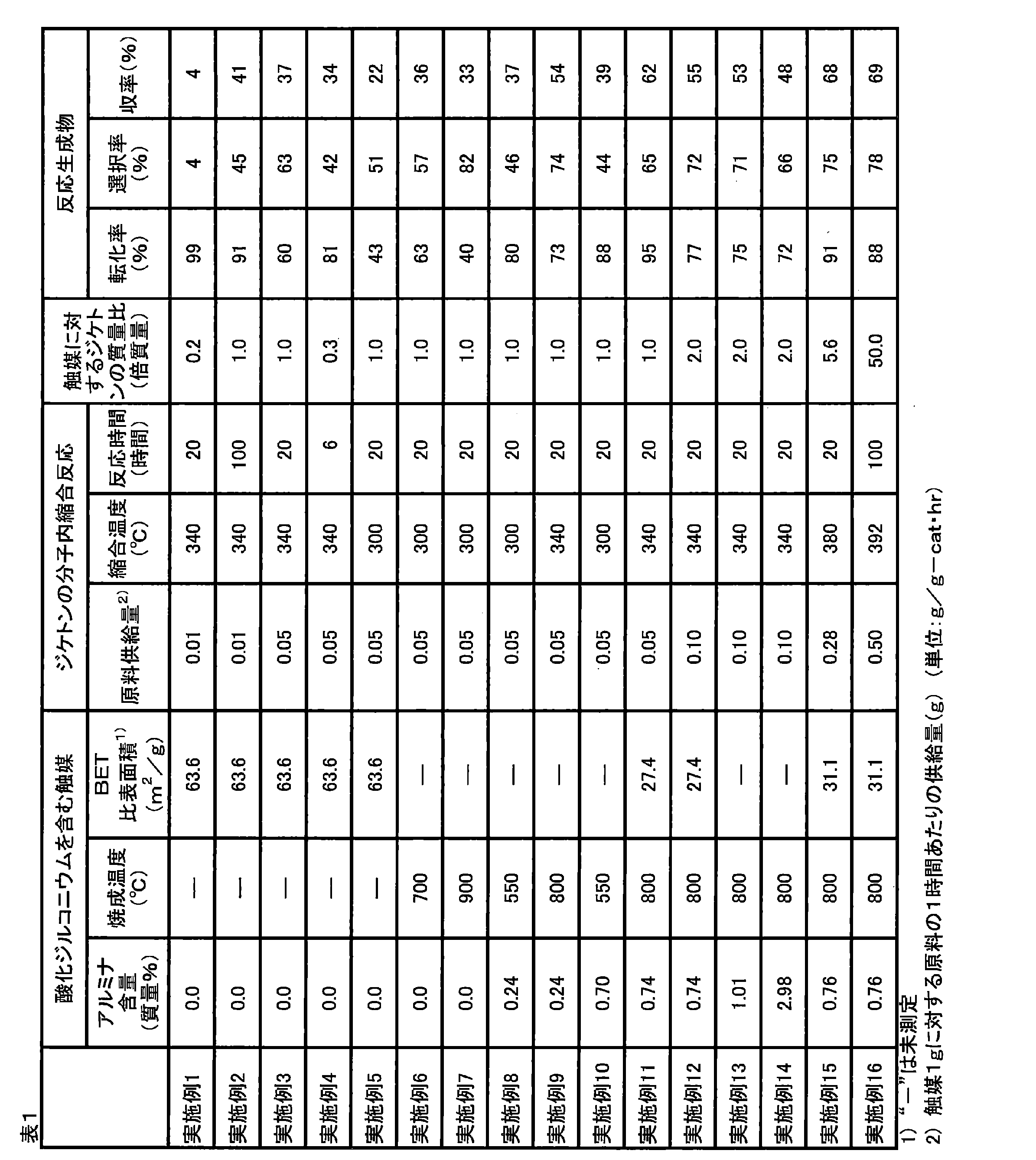
[比較例1]
触媒充填層反応器(21.5mmφ、長さ700mm)の下部に磁性ラシヒリング(トウトクエンジ社製)を70g充填し、その上部に触媒として未焼成の酸化ジルコニウムのペレット(第一稀元素化学工業株式会社製)100g(5mmφ、BET比表面積63.6m2/g)を充填し、さらにその上部に磁性ラシヒリングを70g充填した。触媒充填層反応器の上部に気化器を設置し、気化器を340℃に加熱し、触媒充填層反応器を340℃に加熱した。キャリアーガスとして窒素を12L/hrで流しながら、3.65質量%の2,15-ヘキサデカンジオンを溶解したキシレン溶液を27g/hrの速度で気化器を通して触媒充填層反応器に導入し、分子内縮合反応を行った。この反応生成物を10℃以下に冷却して捕集した。
この反応を6時間行った。2,15-ヘキサデカンジオンの使用量は、触媒に対し、0.06倍質量であった。捕集した反応生成液をガスクロマトグラフィー法で分析して、転化率、及び3-メチルシクロペンタデセノン類の選択率、並びに収率を求めた。その結果を後記する表2に示す。
触媒充填層反応器(21.5mmφ、長さ700mm)の下部に磁性ラシヒリング(トウトクエンジ社製)を70g充填し、その上部に触媒として未焼成の酸化ジルコニウムのペレット(第一稀元素化学工業株式会社製)100g(5mmφ、BET比表面積63.6m2/g)を充填し、さらにその上部に磁性ラシヒリングを70g充填した。触媒充填層反応器の上部に気化器を設置し、気化器を340℃に加熱し、触媒充填層反応器を340℃に加熱した。キャリアーガスとして窒素を12L/hrで流しながら、3.65質量%の2,15-ヘキサデカンジオンを溶解したキシレン溶液を27g/hrの速度で気化器を通して触媒充填層反応器に導入し、分子内縮合反応を行った。この反応生成物を10℃以下に冷却して捕集した。
この反応を6時間行った。2,15-ヘキサデカンジオンの使用量は、触媒に対し、0.06倍質量であった。捕集した反応生成液をガスクロマトグラフィー法で分析して、転化率、及び3-メチルシクロペンタデセノン類の選択率、並びに収率を求めた。その結果を後記する表2に示す。
[比較例2]
触媒充填層反応器(21.5mmφ、長さ700mm)の下部に磁性ラシヒリング(トウトクエンジ社製)を70g充填し、その上部に触媒として未焼成の酸化ジルコニウムのペレット(第一稀元素化学工業株式会社製)100g(5mmφ、BET比表面積63.6m2/g)を充填し、さらにその上部に磁性ラシヒリングを70g充填した。触媒充填層反応器の上部に気化器を設置し、気化器を340℃に加熱し、触媒充填層反応器を340℃に加熱した。キャリアーガスとして窒素を12L/hrで流しながら、3.65質量%の2,15-ヘキサデカンジオンを溶解したキシレン溶液を27g/hrの速度で気化器を通して触媒充填層反応器に導入し、分子内縮合反応を行った。この反応生成物を10℃以下に冷却して捕集した。
この反応を12時間行った。2,15-ヘキサデカンジオンの使用量は、触媒に対し、0.12倍質量であった。捕集した反応生成液をガスクロマトグラフィー法で分析して、転化率、及び3-メチルシクロペンタデセノン類の選択率、並びに収率を求めた。その結果を後記する表2に示す。
触媒充填層反応器(21.5mmφ、長さ700mm)の下部に磁性ラシヒリング(トウトクエンジ社製)を70g充填し、その上部に触媒として未焼成の酸化ジルコニウムのペレット(第一稀元素化学工業株式会社製)100g(5mmφ、BET比表面積63.6m2/g)を充填し、さらにその上部に磁性ラシヒリングを70g充填した。触媒充填層反応器の上部に気化器を設置し、気化器を340℃に加熱し、触媒充填層反応器を340℃に加熱した。キャリアーガスとして窒素を12L/hrで流しながら、3.65質量%の2,15-ヘキサデカンジオンを溶解したキシレン溶液を27g/hrの速度で気化器を通して触媒充填層反応器に導入し、分子内縮合反応を行った。この反応生成物を10℃以下に冷却して捕集した。
この反応を12時間行った。2,15-ヘキサデカンジオンの使用量は、触媒に対し、0.12倍質量であった。捕集した反応生成液をガスクロマトグラフィー法で分析して、転化率、及び3-メチルシクロペンタデセノン類の選択率、並びに収率を求めた。その結果を後記する表2に示す。

特許文献3に記載されている通り、触媒に酸化ジルコニウムを用いても、原料供給量が少なく、かつ反応時間が十分でない場合は、目的とする3-メチルシクロペンタデセノン類は全く得られなかった。
[実施例17]ムスコンの製造方法
実施例16で得られた反応生成液を濃縮し、ヘプタン1200gを投入し、50℃に温めた。その後ゆっくり冷却し、未反応の2,15-ヘキサデカンジオンを析出させた。-10℃まで冷却した後、析出した結晶を濾過分離して、3-メチルシクロペンタデセノン類を含むヘプタン溶液1690gを得た。ヘプタン溶液は3-メチルシクロペンタデセノン類を614g含有しており、2,15-ヘキサデカンジオンは含んでいなかった。得られた結晶の乾燥後の重量は132gであり、2,15-ヘキサデカンジオンの含有量は123gであった。
このようにして得られた、3-メチルシクロペンタデセノン類を含むヘプタン溶液138gを採取し濃縮後、触媒としての5質量%パラジウムカーボンを0.1g、溶媒としての2プロパノール80gを加え2.0MPa水素加圧下、25℃で20時間反応させた。反応後、触媒としての5質量%パラジウムカーボンを濾過分離して除き、濃縮後、精密蒸留を行うことで、純度99質量%のムスコン40gを得た。
実施例16で得られた反応生成液を濃縮し、ヘプタン1200gを投入し、50℃に温めた。その後ゆっくり冷却し、未反応の2,15-ヘキサデカンジオンを析出させた。-10℃まで冷却した後、析出した結晶を濾過分離して、3-メチルシクロペンタデセノン類を含むヘプタン溶液1690gを得た。ヘプタン溶液は3-メチルシクロペンタデセノン類を614g含有しており、2,15-ヘキサデカンジオンは含んでいなかった。得られた結晶の乾燥後の重量は132gであり、2,15-ヘキサデカンジオンの含有量は123gであった。
このようにして得られた、3-メチルシクロペンタデセノン類を含むヘプタン溶液138gを採取し濃縮後、触媒としての5質量%パラジウムカーボンを0.1g、溶媒としての2プロパノール80gを加え2.0MPa水素加圧下、25℃で20時間反応させた。反応後、触媒としての5質量%パラジウムカーボンを濾過分離して除き、濃縮後、精密蒸留を行うことで、純度99質量%のムスコン40gを得た。
本発明は、香料として有用なムスコン、ムスコンの合成中間体である3-メチルシクロペンタデセノン及び3-メチルシクロアルケノン類の効率的な製造方法を提供するものである。
1 原料を供給するためのライン
2 気化器(ヒーター付き)
3 触媒を充填した反応器(ヒーター付き)
4 コンデンサー
5 反応生成物の受器
2 気化器(ヒーター付き)
3 触媒を充填した反応器(ヒーター付き)
4 コンデンサー
5 反応生成物の受器
Claims (13)
- 酸化ジルコニウムを含む触媒の存在下、前記触媒に対して0.2倍質量以上の下記一般式(1):

(式(1)中、nは8、9、10、11、又は12を示す)
で表されるジケトンを気相で分子内縮合反応させることを含む、下記一般式(2):

(式(2)中、実線と点線の3つの二重線のうち、1つは二重結合、残りの2つは単結合を示し、二重結合の配置はシス又はトランスのどちらでもよく、nは一般式(1)におけるnと同じである。)
で表される3-メチルシクロアルケノン類の製造方法。 - 前記触媒が、酸化ジルコニウム単体である、請求項1に記載の製造方法。
- 前記触媒が、酸化ジルコニウム以外の金属酸化物をさらに含む、請求項1に記載の製造方法。
- 前記金属酸化物がアルミナである、請求項3に記載の製造方法。
- アルミナの含有量が、触媒総重量に対して10質量%以下である、請求項4に記載の製造方法。
- 前記一般式(1)で表されるジケトンが2,15-ヘキサデカンジオンであり、分子内縮合反応により生成する前記一般式(2)で表される3-メチルシクロアルケノン類が3-メチルシクロペンタデセノン類である、請求項1~5のいずれか1項に記載の製造方法。
- 前記触媒を反応器に充填し、反応器に充填した触媒1gに対して、前記一般式(1)で示されるジケトンを、0.01~50g/hrの量で反応器に連続的に供給して分子内縮合反応させることを含む、請求項1~6のいずれか1項に記載の製造方法。
- 酸化ジルコニウムを含む触媒の存在下、触媒に対して0.2倍質量以上の2,15-ヘキサデカンジオンを、気相で分子内縮合反応させることにより、下記一般式(2’):

(式中、実線と点線の3つの二重線のうち、1つは二重結合、残りの2つは単結合を示し、二重結合の配置はシス又はトランスのどちらでもよく、n’は10を示す。)
で表される3-メチルシクロペンタデセノン類を製造し、
得られた3-メチルシクロペンタデセノン類を水素化すること
を含む、ムスコンの製造方法。 - 前記触媒を反応器に充填し、反応器に充填した触媒1gに対して、2,15-ヘキサデカンジオンを、0.01~50g/hrの量で反応器に連続的に供給して分子内縮合反応させることを含む、請求項8に記載のムスコンの製造方法。
- 前記触媒が、酸化ジルコニウム単体である、請求項8又は9に記載のムスコンの製造方法。
- 前記触媒が、酸化ジルコニウム以外の金属酸化物をさらに含む、請求項8又は9に記載のムスコンの製造方法。
- 前記金属酸化物がアルミナである、請求項11に記載のムスコンの製造方法。
- アルミナの含有量が、触媒総重量に対して10質量%以下である、請求項12に記載のムスコンの製造方法。
Priority Applications (2)
| Application Number | Priority Date | Filing Date | Title |
|---|---|---|---|
| US17/278,505 US11377411B2 (en) | 2018-09-25 | 2019-09-25 | Method for producing 3-methylcycloalkenone compound |
| JP2020549246A JP7382333B2 (ja) | 2018-09-25 | 2019-09-25 | 3-メチルシクロアルケノン類の製造方法 |
Applications Claiming Priority (2)
| Application Number | Priority Date | Filing Date | Title |
|---|---|---|---|
| JP2018-179516 | 2018-09-25 | ||
| JP2018179516 | 2018-09-25 |
Publications (1)
| Publication Number | Publication Date |
|---|---|
| WO2020067079A1 true WO2020067079A1 (ja) | 2020-04-02 |
Family
ID=69953520
Family Applications (1)
| Application Number | Title | Priority Date | Filing Date |
|---|---|---|---|
| PCT/JP2019/037435 Ceased WO2020067079A1 (ja) | 2018-09-25 | 2019-09-25 | 3-メチルシクロアルケノン類の製造方法 |
Country Status (3)
| Country | Link |
|---|---|
| US (1) | US11377411B2 (ja) |
| JP (1) | JP7382333B2 (ja) |
| WO (1) | WO2020067079A1 (ja) |
Citations (3)
| Publication number | Priority date | Publication date | Assignee | Title |
|---|---|---|---|---|
| WO2010109650A1 (ja) * | 2009-03-27 | 2010-09-30 | Doya Masaharu | 3-メチル-シクロペンタデセノン類の製造方法、r/s-ムスコンの製造方法および光学活性ムスコンの製造方法 |
| JP2018087184A (ja) * | 2016-11-24 | 2018-06-07 | 国立大学法人 新潟大学 | (e)−3−メチル−2−シクロアルケノン化合物、3−ハロ−3−メチルシクロアルカノン化合物および(r)−3−メチルシクロアルカノン化合物の製造方法 |
| CN108191622A (zh) * | 2017-12-15 | 2018-06-22 | 广东省石油与精细化工研究院 | 一种dl-麝香酮的连续制备方法 |
Family Cites Families (2)
| Publication number | Priority date | Publication date | Assignee | Title |
|---|---|---|---|---|
| JPS59157047A (ja) | 1983-02-28 | 1984-09-06 | Nippon Mining Co Ltd | デヒドロムスコンの製造方法 |
| DE3918015A1 (de) | 1989-06-02 | 1990-12-06 | Basf Ag | Verfahren zur herstellung von muscon, zwischenprodukte fuer dieses verfahren sowie deren herstellung |
-
2019
- 2019-09-25 US US17/278,505 patent/US11377411B2/en active Active
- 2019-09-25 WO PCT/JP2019/037435 patent/WO2020067079A1/ja not_active Ceased
- 2019-09-25 JP JP2020549246A patent/JP7382333B2/ja active Active
Patent Citations (3)
| Publication number | Priority date | Publication date | Assignee | Title |
|---|---|---|---|---|
| WO2010109650A1 (ja) * | 2009-03-27 | 2010-09-30 | Doya Masaharu | 3-メチル-シクロペンタデセノン類の製造方法、r/s-ムスコンの製造方法および光学活性ムスコンの製造方法 |
| JP2018087184A (ja) * | 2016-11-24 | 2018-06-07 | 国立大学法人 新潟大学 | (e)−3−メチル−2−シクロアルケノン化合物、3−ハロ−3−メチルシクロアルカノン化合物および(r)−3−メチルシクロアルカノン化合物の製造方法 |
| CN108191622A (zh) * | 2017-12-15 | 2018-06-22 | 广东省石油与精细化工研究院 | 一种dl-麝香酮的连续制备方法 |
Also Published As
| Publication number | Publication date |
|---|---|
| US11377411B2 (en) | 2022-07-05 |
| JP7382333B2 (ja) | 2023-11-16 |
| JPWO2020067079A1 (ja) | 2021-08-30 |
| US20220033336A1 (en) | 2022-02-03 |
Similar Documents
| Publication | Publication Date | Title |
|---|---|---|
| CN107001197B (zh) | 由hmf生产bhmf、bhmthf、hdo和hto的方法 | |
| US7919430B2 (en) | Catalyst for oxidation or ammoxidation, and process for producing the same | |
| WO2000012209A1 (en) | Method for producing oxide catalyst for use in producing acrylonitrile or methacrylonitrile from propane or isobutane | |
| US11905239B2 (en) | Process for producing methacrylic acid or methacrylic acid esters | |
| EP2591854A1 (en) | Novel glycerol dehydration catalyst and production method therefor | |
| EP2763956B1 (en) | Processes for producing acrylic acids and acrylates | |
| US6458737B1 (en) | Catalyst for oxidizing methylbenzenes and method for producing aromatic aldehyde | |
| KR101979475B1 (ko) | 아이소뷰탄올로부터 t-뷰탄올을 제조하는 방법, 아이소뷰탄올로부터 메타크롤레인 및 메타크릴산을 제조하는 방법, 및 그들의 제조 장치 | |
| EP1937617B1 (en) | Process for preparing partial oxidation products of lower alcohols by direct oxidation of a lower alcohol and catalysts for use in that process | |
| JP2014501706A (ja) | フェニルシクロヘキサンの製造方法 | |
| WO2020067079A1 (ja) | 3-メチルシクロアルケノン類の製造方法 | |
| JP7632287B2 (ja) | ガンマブチロラクトンの製造方法およびn-メチルピロリドンの製造方法 | |
| US6433229B1 (en) | Method of producing cyclic, α, β-unsaturated ketones | |
| EP3670497B1 (en) | Method for producing dicyanocyclohexane | |
| US9120743B2 (en) | Integrated process for the production of acrylic acids and acrylates | |
| CN108976183B (zh) | 一种由糠醛气相加氢制备γ-戊内酯的方法 | |
| EP3328820A1 (de) | Verfahren zur herstellung von monoethylenglykol | |
| US8088947B2 (en) | Method for producing methacrolein and/or methacrylic acid | |
| KR100831559B1 (ko) | 메틸벤젠류 부분산화용 촉매, 그 제조방법 및 방향족알데히드의 제조방법 | |
| JP2009040768A (ja) | 不飽和アルコールの製造方法 | |
| JP2004043386A (ja) | α−ヒドロキシカルボン酸の製造方法 | |
| JP2021520386A (ja) | アミンを合成する方法 | |
| JP6839172B2 (ja) | グリシドールの合成方法 | |
| JP7842634B2 (ja) | アセトン水素化触媒及びイソプロパノールの製造方法 | |
| JP2016065015A (ja) | メタクリル酸化合物の製造方法 |
Legal Events
| Date | Code | Title | Description |
|---|---|---|---|
| 121 | Ep: the epo has been informed by wipo that ep was designated in this application |
Ref document number: 19867024 Country of ref document: EP Kind code of ref document: A1 |
|
| ENP | Entry into the national phase |
Ref document number: 2020549246 Country of ref document: JP Kind code of ref document: A |
|
| NENP | Non-entry into the national phase |
Ref country code: DE |
|
| 122 | Ep: pct application non-entry in european phase |
Ref document number: 19867024 Country of ref document: EP Kind code of ref document: A1 |