WO2020054337A1 - 潤滑剤組成物 - Google Patents
潤滑剤組成物 Download PDFInfo
- Publication number
- WO2020054337A1 WO2020054337A1 PCT/JP2019/032575 JP2019032575W WO2020054337A1 WO 2020054337 A1 WO2020054337 A1 WO 2020054337A1 JP 2019032575 W JP2019032575 W JP 2019032575W WO 2020054337 A1 WO2020054337 A1 WO 2020054337A1
- Authority
- WO
- WIPO (PCT)
- Prior art keywords
- particles
- lubricant composition
- mass
- modified
- lubricant
- Prior art date
- Legal status (The legal status is an assumption and is not a legal conclusion. Google has not performed a legal analysis and makes no representation as to the accuracy of the status listed.)
- Ceased
Links
Images
Classifications
-
- C—CHEMISTRY; METALLURGY
- C10—PETROLEUM, GAS OR COKE INDUSTRIES; TECHNICAL GASES CONTAINING CARBON MONOXIDE; FUELS; LUBRICANTS; PEAT
- C10M—LUBRICATING COMPOSITIONS; USE OF CHEMICAL SUBSTANCES EITHER ALONE OR AS LUBRICATING INGREDIENTS IN A LUBRICATING COMPOSITION
- C10M101/00—Lubricating compositions characterised by the base-material being a mineral or fatty oil
- C10M101/02—Petroleum fractions
-
- C—CHEMISTRY; METALLURGY
- C10—PETROLEUM, GAS OR COKE INDUSTRIES; TECHNICAL GASES CONTAINING CARBON MONOXIDE; FUELS; LUBRICANTS; PEAT
- C10M—LUBRICATING COMPOSITIONS; USE OF CHEMICAL SUBSTANCES EITHER ALONE OR AS LUBRICATING INGREDIENTS IN A LUBRICATING COMPOSITION
- C10M105/00—Lubricating compositions characterised by the base-material being a non-macromolecular organic compound
- C10M105/02—Well-defined hydrocarbons
- C10M105/06—Well-defined hydrocarbons aromatic
-
- C—CHEMISTRY; METALLURGY
- C10—PETROLEUM, GAS OR COKE INDUSTRIES; TECHNICAL GASES CONTAINING CARBON MONOXIDE; FUELS; LUBRICANTS; PEAT
- C10M—LUBRICATING COMPOSITIONS; USE OF CHEMICAL SUBSTANCES EITHER ALONE OR AS LUBRICATING INGREDIENTS IN A LUBRICATING COMPOSITION
- C10M105/00—Lubricating compositions characterised by the base-material being a non-macromolecular organic compound
- C10M105/08—Lubricating compositions characterised by the base-material being a non-macromolecular organic compound containing oxygen
- C10M105/32—Esters
- C10M105/38—Esters of polyhydroxy compounds
-
- C—CHEMISTRY; METALLURGY
- C10—PETROLEUM, GAS OR COKE INDUSTRIES; TECHNICAL GASES CONTAINING CARBON MONOXIDE; FUELS; LUBRICANTS; PEAT
- C10M—LUBRICATING COMPOSITIONS; USE OF CHEMICAL SUBSTANCES EITHER ALONE OR AS LUBRICATING INGREDIENTS IN A LUBRICATING COMPOSITION
- C10M107/00—Lubricating compositions characterised by the base-material being a macromolecular compound
- C10M107/02—Hydrocarbon polymers; Hydrocarbon polymers modified by oxidation
-
- C—CHEMISTRY; METALLURGY
- C10—PETROLEUM, GAS OR COKE INDUSTRIES; TECHNICAL GASES CONTAINING CARBON MONOXIDE; FUELS; LUBRICANTS; PEAT
- C10M—LUBRICATING COMPOSITIONS; USE OF CHEMICAL SUBSTANCES EITHER ALONE OR AS LUBRICATING INGREDIENTS IN A LUBRICATING COMPOSITION
- C10M107/00—Lubricating compositions characterised by the base-material being a macromolecular compound
- C10M107/20—Lubricating compositions characterised by the base-material being a macromolecular compound containing oxygen
- C10M107/30—Macromolecular compounds obtained otherwise than by reactions only involving carbon-to-carbon unsaturated bonds
- C10M107/32—Condensation polymers of aldehydes or ketones; Polyesters; Polyethers
- C10M107/34—Polyoxyalkylenes
-
- C—CHEMISTRY; METALLURGY
- C10—PETROLEUM, GAS OR COKE INDUSTRIES; TECHNICAL GASES CONTAINING CARBON MONOXIDE; FUELS; LUBRICANTS; PEAT
- C10M—LUBRICATING COMPOSITIONS; USE OF CHEMICAL SUBSTANCES EITHER ALONE OR AS LUBRICATING INGREDIENTS IN A LUBRICATING COMPOSITION
- C10M125/00—Lubricating compositions characterised by the additive being an inorganic material
- C10M125/02—Carbon; Graphite
-
- C—CHEMISTRY; METALLURGY
- C10—PETROLEUM, GAS OR COKE INDUSTRIES; TECHNICAL GASES CONTAINING CARBON MONOXIDE; FUELS; LUBRICANTS; PEAT
- C10M—LUBRICATING COMPOSITIONS; USE OF CHEMICAL SUBSTANCES EITHER ALONE OR AS LUBRICATING INGREDIENTS IN A LUBRICATING COMPOSITION
- C10M125/00—Lubricating compositions characterised by the additive being an inorganic material
- C10M125/10—Metal oxides, hydroxides, carbonates or bicarbonates
-
- C—CHEMISTRY; METALLURGY
- C10—PETROLEUM, GAS OR COKE INDUSTRIES; TECHNICAL GASES CONTAINING CARBON MONOXIDE; FUELS; LUBRICANTS; PEAT
- C10M—LUBRICATING COMPOSITIONS; USE OF CHEMICAL SUBSTANCES EITHER ALONE OR AS LUBRICATING INGREDIENTS IN A LUBRICATING COMPOSITION
- C10M169/00—Lubricating compositions characterised by containing as components a mixture of at least two types of ingredient selected from base-materials, thickeners or additives, covered by the preceding groups, each of these compounds being essential
- C10M169/04—Mixtures of base-materials and additives
Definitions
- the present invention relates to a lubricant composition. More specifically, the present invention relates to a lubricant composition in which nanodiamond particles are dispersed in an organic dispersion medium as a lubricant base.
- the friction coefficient of the sliding portion when using the lubricant as shown by the Stribeck curve, depending on the viscosity of the lubricant, the sliding speed, and the load, the fluid lubrication region, the mixed lubrication region, And over the boundary lubrication region.
- the sliding members are separated by a continuous lubricant film, and the distance between the sliding members is considerably larger than the surface roughness of the sliding members. Therefore, the frictional resistance in the fluid lubrication region is mainly due to the internal friction of the lubricant.
- the friction coefficient sharply increases, and changes to the boundary lubrication region through the mixed lubrication region.
- the frequency of solid contact between the members increases, and the portion supported by the lubricant film is extremely small.
- the surface properties of the sliding member mainly affect the frictional resistance, rather than the properties such as the wear resistance of the lubricant.
- an object of the present invention is to reduce the friction coefficient in the boundary lubrication region, suppress the seizure of the sliding member, reduce the wear amount of the sliding member, and expand the mixed lubrication region and the fluid lubrication region. It is to provide a lubricant composition.
- the present inventors have conducted intensive studies to achieve the above object, and as a result, an organic dispersion medium as a lubricant base, a surface-modified nanodiamond particles having a silane compound bonded to the surface, and a lubricant composition containing zirconia.
- an organic dispersion medium as a lubricant base, a surface-modified nanodiamond particles having a silane compound bonded to the surface, and a lubricant composition containing zirconia.
- the present invention provides a lubricant composition
- a lubricant composition comprising an organic dispersion medium as a lubricant base, surface-modified nanodiamond particles having a silane compound bonded to the surface, and zirconia.
- the organic dispersion medium as the lubricating base is preferably at least one selected from the group consisting of polyol esters, poly ⁇ -olefins, mineral oils, alkylbenzenes, and polyalkylene glycols.
- the average dispersed particle diameter D50 of the nano diamond particles is preferably 4 to 80 nm.
- the lubricant composition may have a content of the surface-modified nanodiamond particles of 0.01 to 5.0% by mass. Further, the content ratio of the surface-modified nanodiamond particles may be 0.1 to 2,000 mass ppm.
- the lubricant composition may have a zirconia content of 0.01 to 7.5% by mass. Further, the content ratio of zirconia may be 0.1 to 3000 mass ppm.
- the surface-modified nanodiamond particles have the following formula (1) [In the formula (1), R 4 represents an aliphatic hydrocarbon group having 4 to 25 carbon atoms. R 1 ′ and R 2 ′ are the same or different and are each a hydrogen atom, an aliphatic hydrocarbon group having 1 to 3 carbon atoms, or the following formula (a) (In the formula (a), R 4 is the same as above. R 3 and R 5 are the same or different and represent a hydrogen atom or an aliphatic hydrocarbon group having 1 to 3 carbon atoms. M and n are the same or different.
- region can be reduced, the seizure of a sliding member is suppressed, the wear amount of a sliding member is reduced, and a mixed lubrication area and a fluid lubrication area
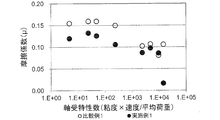
- Example 4 is a graph showing the relationship between the number of bearing characteristics and the friction coefficient for Example 1 and Comparative Example 1.
- the lubricant composition of the present invention contains an organic dispersion medium as a lubricant base, surface-modified nanodiamond particles having a silane compound bonded to the surface, and zirconia.
- the lubricant composition of the present invention includes surface-modified nanodiamond particles (surface-modified ND particles) having a silane compound bonded to the surface.
- surface-modified ND particles nanodiamond particles having a silane compound bonded to the surface.
- the nanodiamond particles (ND particles) are excellent in dispersibility and are easily nano-dispersed in an organic dispersion medium as a lubricant base.
- the surface-modified ND particles may be used alone or in combination of two or more.
- the silane compound preferably has a hydrolyzable group and an aliphatic hydrocarbon group.
- the silane compound used for the surface modification of the ND particles may be only one kind or two or more kinds.
- the silane compound preferably contains at least a compound represented by the following formula (1-1).
- R 1 , R 2 and R 3 are the same or different and represent an aliphatic hydrocarbon group having 1 to 3 carbon atoms.
- R 4 represents an aliphatic hydrocarbon group.
- Examples of the aliphatic hydrocarbon group having 1 to 3 carbon atoms in R 1 , R 2 and R 3 include a linear or branched alkyl group such as methyl, ethyl, propyl and isopropyl; vinyl and allyl And alkynyl groups such as an ethynyl group and a propynyl group. Among them, a linear or branched alkyl group is preferable.
- R 4 is an aliphatic hydrocarbon group such as methyl, ethyl, propyl, isopropyl, butyl, isobutyl, s-butyl, t-butyl, pentyl, hexyl, n-octyl, 2-ethylhexyl, nonyl, isononyl, Linear or branched alkyl groups such as decyl, isodecyl, lauryl, myristyl, isomiristyl, butyloctyl, isocetyl, hexyldecyl, stearyl (octadecyl), isostearyl, octyldecyl, octyldodecyl, isobehenyl; vinyl, allyl Linear or branched alkenyl groups such as, 1-butenyl, 7-octenyl, 8-nonenyl, 9-
- R 4 is preferably an aliphatic carbon having 4 or more carbon atoms because R 4 has higher lipophilicity and can be a greater steric hindrance, so that it has an excellent aggregation suppressing effect and can impart a higher degree of dispersibility.
- a hydrogen group is preferable, and an aliphatic hydrocarbon group having 6 or more carbon atoms is particularly preferable.
- the upper limit of the number of carbon atoms of the aliphatic hydrocarbon group is, for example, 25, preferably 20, and more preferably 12.
- a linear or branched alkyl group or alkenyl group is preferable, and a linear or branched alkyl group is particularly preferable.
- examples of the surface-modified ND particles include ND particles having a structure surface-modified with a group represented by the following formula (1).
- R 4 represents an aliphatic hydrocarbon group.
- R 1 ′ and R 2 ′ are the same or different and are a hydrogen atom, an aliphatic hydrocarbon group having 1 to 3 carbon atoms, or a group represented by the following formula (a).
- the bond with a wavy line in the formula bonds to the surface of the nanodiamond particle.
- R 4 represents an aliphatic hydrocarbon group.
- R 3 and R 5 are the same or different and each represent a hydrogen atom or an aliphatic hydrocarbon group having 1 to 3 carbon atoms.
- m and n are the same or different and each represent an integer of 0 or more. Note that a bond extending from the silicon atom to the left bonds to the oxygen atom. Further, the dashed bond bonds to the surface of the ND particle.
- Examples of the aliphatic hydrocarbon group having 1 to 3 carbon atoms for R 1 ′, R 2 ′, R 3 and R 5 in the above formula (1) include straight-chains such as methyl, ethyl, propyl and isopropyl. And a linear or branched alkenyl group such as a vinyl or allyl group; and a linear or branched alkynyl group such as an ethynyl group or a propynyl group. Among them, a linear or branched alkyl group is preferable.
- R 4 in the formula (1) correspond to R 4 in the formula (1-1). That is, R 4 in the above formula (1) is preferably an aliphatic hydrocarbon group having 4 or more carbon atoms, and particularly preferably an aliphatic hydrocarbon group having 6 or more carbon atoms.
- the upper limit of the number of carbon atoms of the aliphatic hydrocarbon group is, for example, 25, preferably 20, and more preferably 12.
- a linear or branched alkyl group or alkenyl group is preferable, and a linear or branched alkyl group is particularly preferable.
- R 4 is an aliphatic hydrocarbon group having 4 or more carbon atoms, it exhibits an affinity for an organic dispersion medium which is a lubricant base, and has an excellent aggregation suppressing effect because it can be a larger steric hindrance. Since the group containing an oxygen atom (OR 1 ′ and OR 2 ′ in the formula (1)) has an affinity for an organic dispersion medium as a lubricant, it has excellent affinity for a lubricant, More excellent dispersibility can be exhibited in the composition, and the effect of reducing the friction coefficient in the boundary lubrication region is more excellent.
- M and n are the numbers of constituent units shown in parentheses, and represent the same or different integers of 0 or more.
- the method of combining two or more constituent units may be any of random, alternating, and block.
- the surface-modified ND particles have, in addition to the group represented by the above formula (1), other functional groups such as a group represented by the following formula (1 ′), an amino group, a hydroxyl group, and a carboxyl group. It may be.
- the above-mentioned other functional groups may be only one kind, or two or more kinds.
- R 1 ′ and R 4 are the same as above.
- the bond with a wavy line in the formula bonds to the surface of the nanodiamond particle.
- a silane compound (particularly, a compound represented by the above formula (1-1)) is used as the compound to be subjected to the surface treatment
- the compound is, for example, an OR 1 group or an OR 2 group in the above formula (1-1).
- a silanol group hydrolyzable alkoxysilyl group such as OR 3 group is readily hydrolyzed, for example, one is a covalent bond and dehydration condensation with hydroxyl groups present on the surface of ND particles of silanol groups
- a silanol group of another silane compound is condensed with the remaining two silanol groups to form a siloxane bond (Si—O—Si).
- Affinity to a dispersion medium can be imparted, and more excellent dispersibility can be exhibited in the lubricant composition of the present invention.
- the lubricant composition of the present invention contains an organic dispersion medium as a lubricant base.
- an organic dispersion medium that is a lubricant base a known or commonly used organic solvent used as a lubricant base can be used.
- the organic dispersion medium as the lubricating base include polyphenyl ether, alkylbenzene, alkylnaphthalene, ester oil, glycol-based synthetic oil, polyolefin-based synthetic oil, and mineral oil.
- examples include phosphate esters, silicone oils, fluorinated oils, GTL (Gas to Liquids), mineral oils and the like.
- the organic dispersion medium as the lubricating base may be used alone or in combination of two or more.
- a polyol ester As the organic dispersion medium as the lubricating base, a polyol ester, a poly- ⁇ -olefin, a mineral oil, an alkylbenzene, and a polyalkylene glycol are preferable, from the viewpoint of the effect of reducing the wear amount of the sliding member.
- the lubricant composition of the present invention contains zirconia.
- the lubricant composition of the present invention containing the above surface-modified ND particles and zirconia has an excellent effect of reducing the coefficient of friction in the boundary lubrication region, suppresses seizure of the sliding member, reduces the wear amount of the sliding member,
- the lubrication area and the fluid lubrication area can be expanded.
- zirconia only one kind may be used, or two or more kinds may be used.
- the content ratio of the surface-modified ND particles in the lubricant composition of the present invention is, for example, 0.01 to 5.0% by mass, preferably 0.1 to 4.0% by mass, and more preferably 0.25 to 3% by mass. 0.0% by mass, more preferably 0.5 to 2.0% by mass.
- the content ratio of the surface-modified ND particles in the lubricant composition of the present invention may be, for example, 0.1 to 2000 ppm by mass, preferably 0.2 to 1000 ppm by mass, more preferably 0.1 to 1000 ppm by mass. It may be 5 to 500 ppm by mass, more preferably 1.0 to 100 ppm by mass.
- the lubricant composition of the present invention has excellent dispersibility of ND particles, the dispersibility in an organic dispersion medium as a lubricant base is excellent even in such a two-stage content ratio. For this reason, for example, the content ratio of the surface-modified ND particles in the lubricant composition of the present invention is 0.01 to 5.0% by mass at the time of distribution and 0.1 to 2000% by mass at the time of use. , At the time of distribution and at the time of use.
- the friction coefficient in the boundary lubrication region is reduced, the seizure of the sliding member is suppressed, the wear amount of the sliding member is reduced, the mixed lubrication region and the fluid lubrication region are reduced.
- the effect of expansion is better.
- the content ratio of the surface-modified ND particles can be calculated from the absorbance at 350 nm.
- the silane compound bonded to the surface of the ND particles by high-frequency inductively coupled plasma emission spectroscopy is used.
- Si can be detected and determined based on the detected amount of Si based on a dispersion having a known content.
- the content of zirconia in the lubricant composition of the present invention is, for example, 0.01 to 7.5% by mass, preferably 0.1 to 6.0% by mass, and more preferably 0.25 to 4.5% by mass. And more preferably 0.5 to 3.0% by mass.
- the content of zirconia in the lubricant composition of the present invention may be, for example, 0.1 to 3000 ppm by mass, preferably 0.2 to 1500 ppm by mass, more preferably 0.5 to 750 ppm by mass. ppm, more preferably 1 to 150 ppm by mass.
- the lubricant composition of the present invention has excellent dispersibility of ND particles, the dispersibility in an organic dispersion medium as a lubricant base is excellent even in such a two-stage content ratio.
- the content of zirconia in the lubricant composition of the present invention is 0.01 to 7.5% by mass at the time of distribution, and 0.1 to 3000 mass ppm at the time of use. It can be different from the time of use. When the content is 3000 mass ppm or less, the risk of zirconia accelerating abrasion of the sliding member can be reduced.
- the content of zirconia can be determined by detecting Zr by high frequency inductively coupled plasma emission spectroscopy (ICP emission spectroscopy) and based on the detected amount of Zr based on a dispersion having a known content.
- ICP emission spectroscopy high frequency inductively coupled plasma emission spectroscopy
- the mass ratio [former / latter] of zirconia and the above-mentioned surface-modified ND particles in the lubricant composition of the present invention is, for example, 0.2 to 3.0, preferably 0.5 to 2.0, more preferably 1 to 2.0. 0.0 to 1.5.
- the mass ratio is 0.2 or more, the effect of including zirconia can be more sufficiently exerted.
- the mass ratio is 3.0 or less, the effect of the surface-modified ND particles can be more sufficiently exerted.
- the content of the solvent in the lubricant composition of the present invention is, for example, 90 to 99.9999% by mass.
- the content ratio of the organic dispersion medium as the lubricating base in the total amount of the solvent is, for example, 60% by mass or more, preferably 70% by mass or more, more preferably 80% by mass or more, and particularly preferably 90% by mass or more.
- the surface-modified nanodiamond and zirconia are dispersed in the organic dispersion medium.
- the average dispersed particle size (D50, median size) of ND particles in the lubricant composition of the present invention is preferably 2 to 100 nm, more preferably 4 to 80 nm, further preferably 6 to 60 nm, and further preferably 10 to 40 nm. And particularly preferably 11 to 30 nm.
- the average dispersed particle diameter can be measured by a dynamic light scattering method.
- the average dispersed particle size (D50) of the ND particles in the lubricant composition of the present invention is particularly preferably 2 to 50 nm, more preferably 4 to 30 nm, still more preferably 6 to 25 nm, and particularly preferably 10 to 20 nm.
- the average dispersed particle diameter (D50) of the ND particles in the lubricant composition of the present invention is: In particular, it is preferably 5 to 100 nm, more preferably 8 to 80 nm, further preferably 10 to 60 nm, further preferably 15 to 40 nm, and particularly preferably 18 to 35 nm.
- the lubricant composition of the present invention preferably has a haze value of 5 or less, more preferably 3 or less, and still more preferably 1 or less. Since the lubricant composition of the present invention has excellent dispersibility of ND particles, a lubricant composition having the above haze value can be obtained. The haze value can be measured based on JIS K7136.
- the lubricant composition of the present invention may be composed of only the surface-modified ND particles, zirconia, and an organic dispersion medium as a lubricant base, or may contain other components.
- Other components include, for example, ND particles other than the above surface-modified ND particles, surfactants, thickeners, coupling agents, dispersants, rust inhibitors, corrosion inhibitors, freezing point depressants, defoamers, anti-foaming agents, Wear additives, preservatives, coloring agents and the like can be mentioned.
- the content ratio of the other components is, for example, 30% by mass or less, preferably 20% by mass or less, more preferably 10% by mass or less, more preferably 5% by mass or less, based on the total amount of the lubricant composition of the present invention. Particularly preferably, the content is 1% by mass or less. Therefore, the total content of the surface-modified ND particles, zirconia, and the organic dispersion medium as a lubricant base is, for example, 70% by mass or more, preferably 80% by mass or more based on the total amount of the lubricant composition of the present invention. , More preferably 90% by mass or more, further preferably 95% by mass or more, particularly preferably 99% by mass or more.
- the lubricant composition of the present invention can be produced, for example, by mixing and dispersing the above-mentioned surface-modified ND particles and zirconia and, if necessary, other components in an organic dispersion medium as a lubricant base. .
- the solvent used in the modification step may be used as it is as the organic dispersion medium in the lubricant composition, or the solvent exchange may be performed after the modification step.
- the modification step when the ND particles include ND particle aggregates in which the ND particles adhere to form the secondary particles, the reaction between the silane compound to be subjected to the surface treatment and the ND particles is performed. Is preferably performed while crushing or dispersing. Thereby, the ND particle aggregate can be disintegrated into primary particles, the surface of the ND primary particles can be modified, and as a result, the dispersibility of the surface-modified ND particles in the lubricant composition can be improved. Is possible.
- the mass ratio between the ND particles to be subjected to the reaction in the modification step and the silane compound to be subjected to the surface treatment (former: latter) is, for example, 2: 1 to 1:20.
- the concentration of the ND particles in the organic dispersion medium at the time of performing the surface treatment is, for example, 0.5 to 10% by mass, and the concentration of the compound is, for example, 5 to 40% by mass.
- the reaction time for the surface treatment is, for example, 4 to 20 hours.
- the above reaction is preferably performed while cooling the generated heat using ice water or the like.
- Examples of the method of crushing or dispersing the ND particles include a method of treating with a high shear mixer, a high shear mixer, a homomixer, a ball mill, a bead mill, a high-pressure homogenizer, an ultrasonic homogenizer, a colloid mill, a jet mill, and the like. .
- a crushing medium for example, zirconia beads.
- zirconia beads as the crushing media, a lubricant composition containing zirconia can be obtained as a result.
- the diameter of the crushing media is, for example, 15 to 500 ⁇ m, preferably 15 to 300 ⁇ m, and particularly preferably 15 to 100 ⁇ m.
- the dispersion liquid of the surface-modified ND particles is once obtained, and then the organic dispersion medium in the dispersion liquid is distilled off using an evaporator or the like. After that, a new organic dispersion medium as a lubricating base is mixed and stirred, that is, the organic dispersion medium can be also produced by exchanging the organic dispersion medium.
- a lubricant composition in which the surface-modified ND particles and zirconia are dispersed in an organic solvent as a lubricant base is obtained.
- the ND particles before the surface treatment can be produced by, for example, a detonation method.
- the detonation method includes an air-cooled detonation method and a water-cooled detonation method. Above all, the air-cooled detonation method is preferable in that ND particles having smaller primary particles than the water-cooled detonation method can be obtained.
- the detonation may be performed in an air atmosphere, or may be performed in an inert gas atmosphere such as a nitrogen atmosphere, an argon atmosphere, and a carbon dioxide atmosphere.
- ND particles used for producing the surface-modified ND particles are not limited to those obtained by the following production method.
- the container is made of, for example, iron, and the volume of the container is, for example, 0.5 to 40 m 3 .
- a mixture of trinitrotoluene (TNT) and cyclotrimethylenetrinitroamine or hexogen (RDX) can be used as explosive.
- the mass ratio between TNT and RDX (TNT / RDX) is, for example, in the range of 40/60 to 60/40.
- a detonation refers to an explosion caused by a chemical reaction in which the flame surface where the reaction occurs moves at a high speed exceeding the speed of sound.
- ND particles are generated by the action of pressure and energy of a shock wave generated by the explosion, using carbon released as a result of partial incomplete combustion of the explosive used as a raw material.
- the generated ND particles are very firmly aggregated between adjacent primary particles or crystallites due to the Coulomb interaction between crystal planes in addition to the action of van der Waals forces, thereby forming an aggregate.
- the container and the inside thereof are allowed to cool by being left at room temperature for about 24 hours to lower the temperature of the container and the inside.
- the ND particle coarse product (including the ND particle aggregate and soot generated as described above) attached to the inner wall of the container is scraped off with a spatula, and the ND particle coarse product is removed. Collect the product.
- a crude product of ND particles (crude ND particles) can be obtained.
- nanodiamond forming step a required number of times, it is possible to obtain a desired amount of a crude ND particle product.
- a strong acid is allowed to act on a crude ND particle product as a raw material, for example, in a water solvent to remove a metal oxide.
- the crude product of ND particles obtained by the detonation method easily contains a metal oxide, and this metal oxide is an oxide such as Fe, Co, or Ni derived from a container used for the detonation method.
- a metal oxide can be dissolved and removed from a crude product of ND particles by acting a strong acid in an aqueous solvent (acid treatment).
- a mineral acid is preferable, and examples thereof include hydrochloric acid, hydrofluoric acid, sulfuric acid, nitric acid, and aqua regia.
- the above strong acids may be used alone or in combination of two or more.
- the concentration of the strong acid used in the acid treatment is, for example, 1 to 50% by mass.
- the acid treatment temperature is, for example, 70 to 150 ° C.
- the acid treatment time is, for example, 0.1 to 24 hours. Further, the acid treatment can be performed under reduced pressure, normal pressure, or under pressure. After such an acid treatment, the solid content (including the nanodiamond aggregates) is washed with water, for example, by decantation.
- the oxidation treatment step is a step of removing graphite from the crude ND particle product using an oxidizing agent.
- the crude product of ND particles obtained by the detonation method contains graphite (graphite). However, this graphite does not form ND particle crystals among the carbon released by the partial explosion of the explosive used. Derived from carbon.
- graphite By allowing an oxidizing agent to act on the crude ND particle product in an aqueous solvent, graphite can be removed from the crude ND particle product. Further, by causing an oxidizing agent to act, an oxygen-containing group such as a carboxyl group or a hydroxyl group can be introduced into the ND particle surface.
- Examples of the oxidizing agent used in the oxidation treatment include chromic acid, chromic anhydride, dichromic acid, permanganic acid, perchloric acid, nitric acid, a mixture thereof, and at least one acid selected from these.
- Mixed acids with other acids for example, sulfuric acid and the like
- salts thereof for example, sulfuric acid and the like
- the use of a mixed acid is preferable because it is environmentally friendly and has excellent action of oxidizing and removing graphite.
- the mixing ratio of sulfuric acid and nitric acid in the mixed acid may be, for example, 60/40 to 95/5 even under a pressure near normal pressure (for example, 0.5 to 2 atm).
- a pressure near normal pressure for example, 0.5 to 2 atm.
- the lower limit is preferably 65/35, more preferably 70/30.
- the upper limit is preferably 90/10, more preferably 85/15, and further preferably 80/20.
- the mixing ratio is 60/40 or more, the content of sulfuric acid having a high boiling point is high, so that the reaction temperature becomes, for example, 120 ° C. or more under a pressure near normal pressure, and the efficiency of removing graphite tends to be improved. is there. If the mixing ratio is 95/5 or less, the content of nitric acid which greatly contributes to the oxidation of graphite increases, so that the efficiency of graphite removal tends to be improved.
- the amount of the oxidizing agent (particularly, the mixed acid) is, for example, 10 to 50 parts by mass, preferably 15 to 40 parts by mass, and more preferably 20 to 40 parts by mass with respect to 1 part by mass of the crude ND particle product.
- the amount of sulfuric acid used in the mixed acid is, for example, 5 to 48 parts by mass, preferably 10 to 35 parts by mass, more preferably 15 to 30 parts by mass with respect to 1 part by mass of the crude ND particle product.
- the amount of nitric acid used in the mixed acid is, for example, 2 to 20 parts by mass, preferably 4 to 10 parts by mass, and more preferably 5 to 8 parts by mass with respect to 1 part by mass of the crude ND particle product.
- a catalyst may be used together with the mixed acid.
- the efficiency of removing graphite can be further improved.
- the catalyst include copper (II) carbonate.
- the amount of the catalyst used is, for example, about 0.01 to 10 parts by mass based on 100 parts by mass of the crude ND particle product.
- the oxidation treatment temperature is, for example, 100 to 200 ° C.
- the oxidation treatment time is, for example, 1 to 24 hours.
- the oxidation treatment can be performed under reduced pressure, normal pressure, or increased pressure.
- alkali and hydrogen peroxide may act on the ND particles in an aqueous solvent. Thereby, the metal oxide remaining on the ND particles can be removed, and the separation of the primary particles from the adherend can be promoted.
- alkali used in this treatment include sodium hydroxide, ammonia, potassium hydroxide and the like.
- the concentration of the alkali is, for example, 0.1 to 10% by mass
- the concentration of hydrogen peroxide is, for example, 1 to 15% by mass
- the treatment temperature is, for example, 40 to 100 ° C.
- the treatment time is, for example, 0.5 to 5 hours.
- the alkali hydrogen peroxide treatment can be performed under reduced pressure, normal pressure, or under pressure.
- the above-mentioned oxidation treatment step or the above-mentioned alkaline peroxide treatment step it is preferable to remove the supernatant by, for example, decantation. Further, at the time of decantation, it is preferable to wash the solid content with water. Although the supernatant liquid at the beginning of the water washing is colored, it is preferable to repeatedly wash the solid content with water until the supernatant liquid is visually transparent.
- the ND particles may be subjected to a crushing treatment, if necessary.
- a crushing treatment for example, a high shear mixer, a high shear mixer, a homomixer, a ball mill, a bead mill, a high-pressure homogenizer, an ultrasonic homogenizer, a colloid mill and the like can be used.
- the crushing treatment may be performed by a wet method (for example, a crushing treatment in a state of being suspended in water or the like) or may be performed by a dry method. When the drying is performed, it is preferable to provide a drying step before the crushing treatment.
- drying process It is preferable to provide a drying step after the alkaline peroxide treatment step. For example, after evaporating the liquid component from the ND particle-containing solution obtained through the above-mentioned alkaline hydrogen peroxide treatment process using a spray drier or an evaporator, the remaining solid content generated by this is heated in a drying oven. Dry by drying. The heating and drying temperature is, for example, 40 to 150 ° C. Through such a drying step, ND particles are obtained.
- the ND particles may be subjected to an oxidation treatment (for example, oxygen oxidation) or a reduction treatment (for example, hydrogenation treatment) in a gas phase, if necessary.
- an oxidation treatment for example, oxygen oxidation
- a reduction treatment for example, hydrogenation treatment
- ND particles having many CH groups on the surface can be obtained.
- Example 1 Through the following steps, surface-modified ND particles and a lubricant composition were produced.
- a nanodiamond production process by the detonation method was performed.
- a molded explosive with an electric detonator attached was installed inside a pressure-resistant container for detonation, and the container was sealed.
- the container is made of iron and the volume of the container is 15 m 3 .
- the explosive used was 0.50 kg of a mixture of TNT and RDX.
- the mass ratio of TNT to RDX (TNT / RDX) in this explosive is 50/50.
- the electric detonator was detonated, and the explosive was detonated in the container (the production of nanodiamonds by the detonation method).
- the temperature of the container and the inside thereof were lowered by leaving the container at room temperature for 24 hours. After this cooling, the nano-diamond crude product (including the aggregate of nano-diamond particles generated by the detonation method and the soot) adhering to the inner wall of the container is scraped off with a spatula. The crude product was recovered.
- an acid treatment step was performed on the nano-diamond crude product obtained by performing the above-described production step a plurality of times. Specifically, a slurry obtained by adding 6 L of 10% by mass hydrochloric acid to 200 g of the nanodiamond crude product was subjected to a heat treatment for 1 hour under reflux under normal pressure conditions. The heating temperature in this acid treatment is 85 to 100 ° C. Next, after cooling, the solid content (including the nanodiamond aggregates and soot) was washed with water by decantation. The washing of the solid by decantation was repeatedly performed until the pH of the precipitation liquid reached 2 from the low pH side.
- an oxidation treatment step was performed. Specifically, 6 L of 98% by mass of sulfuric acid and 1 L of 69% by mass of nitric acid are added to a precipitation liquid (including nanodiamond aggregates) obtained through decantation after the acid treatment to form a slurry. This slurry was subjected to a heat treatment for 48 hours under reflux under normal pressure conditions. The heating temperature in this oxidation treatment is 140 to 160 ° C. Next, after cooling, the solid content (including the nanodiamond aggregates) was washed with water by decantation. Although the supernatant at the beginning of the washing was colored, the washing of the solid by decantation was repeated until the supernatant became visually transparent.
- 0.3 g of the nanodiamond particles obtained in the drying step are weighed into a reaction vessel, and 13.5 g of methyl isobutyl ketone (MIBK) as an organic dispersion medium and 1.2 g of hexyltrimethoxysilane as a silane compound are added thereto, followed by stirring for 10 minutes. did.
- MIBK methyl isobutyl ketone
- zirconia beads (trade name “YTZ”, manufactured by Tosoh Corporation, diameter 30 ⁇ m) was added.
- YTZ zirconia beads
- the tip of the vibrator of the ultrasonic disperser is immersed in the solution in the reaction vessel for more than 20 hours.
- the ND particles were reacted with the silane compound. It was gray at first, but gradually became smaller and dispersed well, and finally became a uniform black liquid.
- MIBK dispersion a surface-modified ND dispersion containing zirconia and surface-modified ND particles having a silane compound bonded to the surface was obtained.
- the particle size distribution of the ND particles in the obtained ND dispersion was measured by a dynamic light scattering method (non-contact back scattering method) using an apparatus manufactured by Malvern (trade name “Zetasizer @ Nano ZS”).
- the average dispersed particle size (D50) of the ND particles was 12 nm.
- a lubricant composition containing zirconia and surface-modified ND particles having a silane compound bonded to the surface was obtained.
- the nanodiamond concentration was 2.89% by mass, and the zirconia concentration was 1.34% by mass.
- the nanodiamond concentration was calculated from the absorbance at 350 nm, and the zirconia concentration was determined from ICP emission spectroscopy.
- the lubricant composition obtained in Example 1 was diluted with a polyol ester, and a friction test was performed using the lubricant composition having a nanodiamond concentration of 10 mass ppm and a zirconia concentration of 5 mass ppm as a lubricating oil sample.
- the concentration of nanodiamond and the concentration of zirconia in the diluted lubricating oil sample were determined by ICP emission spectroscopy.
- the particle size distribution of ND particles in the diluted lubricating oil sample was measured by a dynamic light scattering method (non-contact back scattering method) using an apparatus manufactured by Malvern (trade name “Zetasizer Nano ZS”).
- the average dispersed particle size (D50) was 24 nm.
- a friction test was performed using a lubricant composition consisting only of a polyol ester containing no ND particles and zirconia as a lubricant sample of Comparative Example 1.
- a ball-on-disk type sliding friction tester (“UMT-3" manufactured by Bruker) was used.
- UMT-3 ball-on-disk type sliding friction tester
- the results of the friction test are shown in Table 1 and FIG.
- the wear mark width is after the friction test.
- the friction coefficient ( ⁇ ) for condition 1 is as follows: a slip speed of 45 to 50 m at a slip speed of 0.05 m / s, a slip speed of 8 to 10 m at a slip speed of 0.01 m / s, and a slip speed of 0.005 m / s.
- the average value was calculated in the range of 4 to 5 m
- the slip speed of 0.001 m / s in the range of 2.5 to 3 m
- the average value in the range of 90 to 100 m was calculated.
- [Slip speed ⁇ viscosity / average load] was calculated as a bearing characteristic number.
- the viscosity of the polyol ester was 48 mPa ⁇ s (30 ° C.).
- Comparative Example 1 using the lubricant composition consisting solely of the polyol ester was different from Comparative Example 1 using the lubricant composition of the present invention in any of the above conditions 1 to 5. Even under the conditions, the width of the wear mark becomes narrow, and it is shown that the effect of reducing the wear amount of the sliding member can be obtained. Also, in the comparison of the bearing characteristic numbers, the friction coefficient of Example 1 was lower than that of Comparative Example 1 in each of the evaluated bearing characteristic numbers, and the effect of reducing the friction coefficient in the boundary lubrication region was not significant. It has been shown that it is possible to expand the mixed lubrication area and the fluid lubrication area. After the friction test of Example 1, seizure of the sliding member was suppressed.
- a lubricant composition comprising an organic dispersion medium as a lubricant base, surface-modified nanodiamond particles having a silane compound bonded to the surface, and zirconia.
- the organic dispersion medium as the lubricant base is at least one selected from the group consisting of polyol esters, poly ⁇ -olefins, mineral oils, alkylbenzenes, and polyalkylene glycols. object.
- the surface-modified nanodiamond particles have the following formula (1) [In the formula (1), R 4 represents an aliphatic hydrocarbon group having 4 to 25 carbon atoms. R 1 ′ and R 2 ′ are the same or different and are each a hydrogen atom, an aliphatic hydrocarbon group having 1 to 3 carbon atoms, or the following formula (a) (In the formula (a), R 4 is the same as above.
- R 3 and R 5 are the same or different and represent a hydrogen atom or an aliphatic hydrocarbon group having 1 to 3 carbon atoms.
- M and n are the same or different.
- the bond extending from the silicon atom to the left bonds to the oxygen atom, and the bond with a wavy line bonds to the surface of the nanodiamond particle.) Is a group represented by The dashed bond in the formula binds to the surface of the nanodiamond particle.
Landscapes
- Chemical & Material Sciences (AREA)
- Oil, Petroleum & Natural Gas (AREA)
- Chemical Kinetics & Catalysis (AREA)
- General Chemical & Material Sciences (AREA)
- Organic Chemistry (AREA)
- Inorganic Chemistry (AREA)
- Health & Medical Sciences (AREA)
- Emergency Medicine (AREA)
- Engineering & Computer Science (AREA)
- Lubricants (AREA)
Abstract
境界潤滑領域における摩擦係数を低減でき、摺動部材の焼き付きを抑制し、摺動部材の摩耗量を低減し、混合潤滑領域及び流体潤滑領域を広げることが可能な潤滑剤組成物を提供する。 潤滑基剤としての有機分散媒と、シラン化合物が表面に結合した表面修飾ナノダイヤモンド粒子と、ジルコニアとを含む潤滑剤組成物。前記潤滑基剤としての有機分散媒は、ポリオールエステル、ポリα-オレフィン、鉱油、アルキルベンゼン、及びポリアルキレングリコールからなる群より選択された1以上であることが好ましい。
Description
本発明は、潤滑剤組成物に関する。より詳細には、本発明は、潤滑基剤としての有機分散媒中にナノダイヤモンド粒子が分散した潤滑剤組成物に関する。本願は、2018年9月11日に日本に出願した特願2018-169387号の優先権を主張し、その内容をここに援用する。
相対的に擦れあいながら滑り合う部分(摺動部)を有する機械では、摺動部の摩耗や発熱を抑制するために、摺動部の摩擦係数を低減させる方策がとられている。上記方策として、例えば、潤滑剤の使用や摺動部材の表面加工などが行われている。上記潤滑剤の使用により摩擦係数を低減させる方法において、摩擦係数を低減させるための潤滑剤として、例えば、低粘度化された基油を用いた潤滑剤、微粒子を添加した潤滑剤などが知られている(特許文献1参照)。
ここで、潤滑剤を用いた場合の摺動部の摩擦係数は、ストライベック曲線で示されるように、潤滑剤の粘度、摺動速度、及び荷重に応じて、流体潤滑領域、混合潤滑領域、及び境界潤滑領域にわたって変化する。流体潤滑領域では、摺動部材同士が連続した潤滑剤膜で隔てられており、摺動部材間の距離は摺動部材の表面粗さに比べかなり大きい。このため、流体潤滑領域における摩擦抵抗は主に潤滑剤の内部摩擦によるものである。流体潤滑領域から、荷重が増し、摺動速度の低下又は温度上昇により潤滑剤膜が薄くなるにつれ、摩擦係数は急激に増大していき、混合潤滑領域を経て境界潤滑領域へと変動する。境界潤滑領域では、部材同士の固体接触の頻度が高くなり、潤滑剤膜により支えられている部分は極端に少なくなっている。このため、境界潤滑領域では、潤滑剤の耐摩耗性などの物性よりも、主に摺動部材の表面物性が摩擦抵抗に影響する。
しかしながら、低粘度化された基油を用いた従来の潤滑剤によれば、流体潤滑領域では摩擦係数が低下するものの、境界潤滑領域では摺動部材に焼き付きが発生する、摺動部材の摩耗が生じるという問題があった。一方、微粒子を添加した従来の潤滑剤によれば、摩擦係数が低下することがあるが、荷重が大きくかかった場合、急激に境界潤滑領域に変動するため、混合潤滑領域及び流体潤滑領域が狭い傾向があった。
従って、本発明の目的は、境界潤滑領域における摩擦係数を低減でき、摺動部材の焼き付きを抑制し、摺動部材の摩耗量を低減し、混合潤滑領域及び流体潤滑領域を広げることが可能な潤滑剤組成物を提供することにある。
本発明者らは、上記目的を達成するため鋭意検討した結果、潤滑基剤としての有機分散媒と、シラン化合物が表面に結合した表面修飾ナノダイヤモンド粒子と、ジルコニアとを含む潤滑剤組成物を用いることにより、境界潤滑領域における摩擦係数を低減でき、摺動部材の焼き付きを抑制し、摺動部材の摩耗量を低減し、混合潤滑領域及び流体潤滑領域を広げることが可能であることを見出した。本発明はこれらの知見に基づいて完成させたものである。
すなわち、本発明は、潤滑基剤としての有機分散媒と、シラン化合物が表面に結合した表面修飾ナノダイヤモンド粒子と、ジルコニアとを含む潤滑剤組成物を提供する。
上記潤滑基剤としての有機分散媒は、ポリオールエステル、ポリα-オレフィン、鉱油、アルキルベンゼン、及びポリアルキレングリコールからなる群より選択された1以上であることが好ましい。
上記潤滑剤組成物において、ナノダイヤモンド粒子の平均分散粒子径D50は4~80nmであることが好ましい。
上記潤滑剤組成物は上記表面修飾ナノダイヤモンド粒子の含有割合が0.01~5.0質量%であってもよい。また、上記表面修飾ナノダイヤモンド粒子の含有割合が0.1~2000質量ppmであってもよい。
上記潤滑剤組成物はジルコニアの含有割合が0.01~7.5質量%であってもよい。また、ジルコニアの含有割合が0.1~3000質量ppmであってもよい。
上記表面修飾ナノダイヤモンド粒子は、下記式(1)

[式(1)中、R4は、炭素数4~25の脂肪族炭化水素基を示す。R1’、R2’は同一又は異なって、水素原子、炭素数1~3の脂肪族炭化水素基、又は下記式(a)
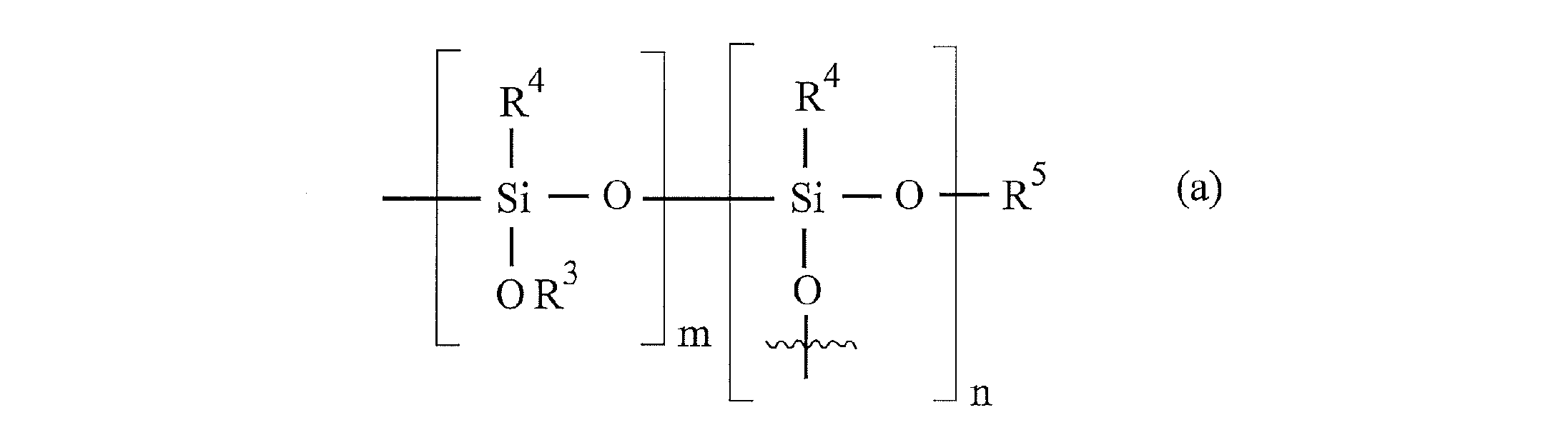
(式(a)中、R4は上記に同じ。R3、R5は同一又は異なって、水素原子、又は炭素数1~3の脂肪族炭化水素基を示す。m、nは同一又は異なって、0以上の整数を示す。なお、ケイ素原子から左に伸びる結合手が酸素原子に結合する。また、波線が付された結合手はナノダイヤモンド粒子の表面に結合する)
で表される基である。式中の波線が付された結合手がナノダイヤモンド粒子の表面に結合する]
で表される基で表面修飾されたナノダイヤモンド粒子であることが好ましい。
で表される基である。式中の波線が付された結合手がナノダイヤモンド粒子の表面に結合する]
で表される基で表面修飾されたナノダイヤモンド粒子であることが好ましい。
本発明の潤滑剤組成物によれば、境界潤滑領域における摩擦係数を低減でき、摺動部材の焼き付きを抑制し、摺動部材の摩耗量を低減し、混合潤滑領域及び流体潤滑領域を広げることができる。
本発明の潤滑剤組成物は、潤滑基剤としての有機分散媒と、シラン化合物が表面に結合した表面修飾ナノダイヤモンド粒子と、ジルコニアとを含む。
(表面修飾ナノダイヤモンド粒子)
本発明の潤滑剤組成物はシラン化合物が表面に結合した表面修飾ナノダイヤモンド粒子(表面修飾ND粒子)を含む。上記表面修飾ND粒子を用いることにより、ナノダイヤモンド粒子(ND粒子)の分散性に優れ、潤滑基剤としての有機分散媒中にナノ分散しやすい。上記表面修飾ND粒子は、一種のみを用いてもよいし二種以上を用いてもよい。
本発明の潤滑剤組成物はシラン化合物が表面に結合した表面修飾ナノダイヤモンド粒子(表面修飾ND粒子)を含む。上記表面修飾ND粒子を用いることにより、ナノダイヤモンド粒子(ND粒子)の分散性に優れ、潤滑基剤としての有機分散媒中にナノ分散しやすい。上記表面修飾ND粒子は、一種のみを用いてもよいし二種以上を用いてもよい。
上記シラン化合物としては、加水分解性基及び脂肪族炭化水素基を有することが好ましい。ND粒子の表面修飾に用いるシラン化合物は、一種のみであってもよいし、二種以上であってもよい。
上記シラン化合物としては、中でも、下記式(1-1)で表される化合物を少なくとも含有することが好ましい。

上記式(1-1)中、R1、R2、R3は、同一又は異なって、炭素数1~3の脂肪族炭化水素基を示す。R4は脂肪族炭化水素基を示す。
上記R1、R2、R3における炭素数1~3の脂肪族炭化水素基としては、例えば、メチル、エチル、プロピル、イソプロピル基等の直鎖状又は分岐鎖状アルキル基;ビニル、アリル基等の直鎖状又は分岐鎖状アルケニル基;エチニル基、プロピニル基等のアルキニル基などが挙げられる。中でも、直鎖状又は分岐鎖状アルキル基が好ましい。
上記R4は脂肪族炭化水素基であり、例えば、メチル、エチル、プロピル、イソプロピル、ブチル、イソブチル、s-ブチル、t-ブチル、ペンチル、ヘキシル、n-オクチル、2-エチルヘキシル、ノニル、イソノニル、デシル、イソデシル、ラウリル、ミリスチル、イソミリスチル、ブチルオクチル、イソセチル、ヘキシルデシル、ステアリル(オクタデシル)、イソステアリル、オクチルデシル、オクチルドデシル、イソベヘニル基等の直鎖状又は分岐鎖状アルキル基;ビニル、アリル、1-ブテニル、7-オクテニル、8-ノネニル、9-デセニル、11-ドデセニル、オレイル基等の直鎖状又は分岐鎖状アルケニル基;エチニル、プロピニル、デシニル、ペンタデシニル、オクタデシニル基等の直鎖状又は分岐鎖状アルキニル基などが挙げられる。
R4は、中でも、親油性がより高く、また、より大きな立体障害となり得ることから凝集抑制効果に優れ、より高度の分散性を付与することができる点で、炭素数4以上の脂肪族炭化水素基が好ましく、特に好ましくは炭素数6以上の脂肪族炭化水素基である。なお、脂肪族炭化水素基の炭素数の上限は、例えば25、好ましくは20、より好ましくは12である。また、脂肪族炭化水素基としては、直鎖状又は分岐鎖状のアルキル基若しくはアルケニル基が好ましく、特に好ましくは直鎖状又は分岐鎖状アルキル基である。
従って、上記表面修飾ND粒子としては、例えば、下記式(1)で表される基で表面修飾された構造を有するND粒子が挙げられる。

上記式(1)中、R4は脂肪族炭化水素基を示す。R1’、R2’は同一又は異なって、水素原子、炭素数1~3の脂肪族炭化水素基、又は下記式(a)で表される基である。式中の波線が付された結合手がナノダイヤモンド粒子の表面に結合する。
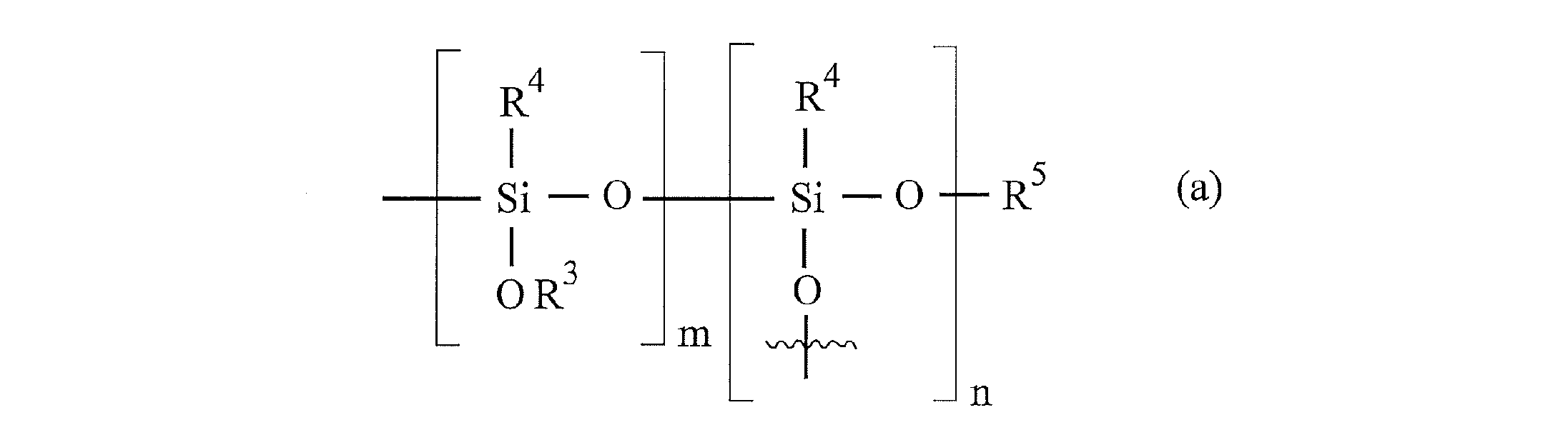
上記式(a)中、R4は脂肪族炭化水素基を示す。R3、R5は同一又は異なって、水素原子、又は炭素数1~3の脂肪族炭化水素基を示す。m、nは同一又は異なって、0以上の整数を示す。なお、ケイ素原子から左にのびる結合手が酸素原子に結合する。また、波線が付された結合手はND粒子の表面に結合する。
上記式(1)中のR1’、R2’、R3、R5における炭素数1~3の脂肪族炭化水素基としては、例えば、メチル、エチル、プロピル、イソプロピル基等の直鎖状又は分岐鎖状アルキル基;ビニル、アリル基等の直鎖状又は分岐鎖状アルケニル基;エチニル基、プロピニル基等の直鎖状又は分岐鎖状アルキニル基などが挙げられる。中でも、直鎖状又は分岐鎖状アルキル基が好ましい。
上記式(1)中のR4は式(1-1)中のR4に対応する。すなわち、上記式(1)中のR4は、炭素数4以上の脂肪族炭化水素基であることが好ましく、特に好ましくは炭素数6以上の脂肪族炭化水素基である。なお、脂肪族炭化水素基の炭素数の上限は、例えば25、好ましくは20、より好ましくは12である。また、脂肪族炭化水素基としては、直鎖状又は分岐鎖状のアルキル基若しくはアルケニル基が好ましく、特に好ましくは直鎖状又は分岐鎖状アルキル基である。
R4が、炭素数が4以上の脂肪族炭化水素基であると、潤滑基剤である有機分散媒に対する親和性を示し、また、より大きな立体障害となり得ることから凝集抑制効果に優れ、さらに、酸素原子を含む基(式(1)中のOR1’基とOR2’基)が潤滑基剤である有機分散媒に対する親和性を示すため、潤滑基剤に対する親和性に優れ、潤滑剤組成物中においてよりいっそう優れた分散性を発揮することができ、境界潤滑領域における摩擦係数低減効果により優れる。
m、nは括弧内に示される構成単位の数であり、同一又は異なって0以上の整数を示す。m、nが2以上である場合、2個以上の構成単位の結合方法としては、ランダム、交互、ブロックの何れであってもよい。
上記表面修飾ND粒子は、上記式(1)で表される基以外にも、例えば下記式(1’)で表される基、アミノ基、水酸基、カルボキシル基等などのその他の官能基を有していてもよい。上記その他の官能基は、一種のみであってもよく、二種以上であってもよい。

上記式(1’)中、R1’、R4は上記に同じ。式中の波線が付された結合手がナノダイヤモンド粒子の表面に結合する。
表面処理を施す化合物としてシラン化合物(特に、上記式(1-1)で表される化合物)を使用した場合、上記化合物は、例えば上記式(1-1)中のOR1基、OR2基、OR3基などの加水分解性アルコキシシリル基が容易に加水分解してシラノール基を形成するため、例えばシラノール基のうちの1個がND粒子の表面に存在する水酸基と脱水縮合して共有結合を形成すると共に、残りの2個のシラノール基に、他のシラン化合物のシラノール基が縮合してシロキサン結合(Si-O-Si)を形成することができ、ND粒子に潤滑基剤である有機分散媒に対する親和性を付与することができ、本発明の潤滑剤組成物中において、よりいっそう優れた分散性を発揮することができる。
(有機分散媒)
本発明の潤滑剤組成物は潤滑基剤としての有機分散媒を含む。潤滑基剤である有機分散媒としては、潤滑基剤として用いられる公知乃至慣用の有機溶媒を用いることができる。上記潤滑基剤としての有機分散媒としては、例えば、ポリフェニルエーテル、アルキルベンゼン、アルキルナフタレン、エステル油、グリコール系合成油、ポリオレフィン系合成油、鉱油などが挙げられる。より具体的には、ポリα-オレフィン、エチレン-α-オレフィン共重合体、ポリブデン、アルキルベンゼン、アルキルナフタレン、ポリアルキレングリコール、ポリフェニルエーテル、アルキル置換ジフェニルエーテル、ポリオールエステル、二塩基酸エステル、炭酸エステル、リン酸エステル、シリコーン油、フッ素化油、GTL(Gas to Liquids)、鉱油などが挙げられる。上記潤滑基剤としての有機分散媒は、一種のみを用いてもよいし、二種以上を用いてもよい。
本発明の潤滑剤組成物は潤滑基剤としての有機分散媒を含む。潤滑基剤である有機分散媒としては、潤滑基剤として用いられる公知乃至慣用の有機溶媒を用いることができる。上記潤滑基剤としての有機分散媒としては、例えば、ポリフェニルエーテル、アルキルベンゼン、アルキルナフタレン、エステル油、グリコール系合成油、ポリオレフィン系合成油、鉱油などが挙げられる。より具体的には、ポリα-オレフィン、エチレン-α-オレフィン共重合体、ポリブデン、アルキルベンゼン、アルキルナフタレン、ポリアルキレングリコール、ポリフェニルエーテル、アルキル置換ジフェニルエーテル、ポリオールエステル、二塩基酸エステル、炭酸エステル、リン酸エステル、シリコーン油、フッ素化油、GTL(Gas to Liquids)、鉱油などが挙げられる。上記潤滑基剤としての有機分散媒は、一種のみを用いてもよいし、二種以上を用いてもよい。
上記潤滑基剤としての有機分散媒としては、中でも、摺動部材の摩耗量低減効果により優れる観点から、ポリオールエステル、ポリα-オレフィン、鉱油、アルキルベンゼン、ポリアルキレングリコールが好ましい。
(ジルコニア)
本発明の潤滑剤組成物はジルコニアを含む。上記表面修飾ND粒子とジルコニアを含む本発明の潤滑剤組成物は、境界潤滑領域における摩擦係数の低減効果に優れ、摺動部材の焼き付きを抑制し、摺動部材の摩耗量を低減し、混合潤滑領域及び流体潤滑領域を広げることが可能となる。ジルコニアは、一種のみを用いてもよいし、二種以上を用いてもよい。
本発明の潤滑剤組成物はジルコニアを含む。上記表面修飾ND粒子とジルコニアを含む本発明の潤滑剤組成物は、境界潤滑領域における摩擦係数の低減効果に優れ、摺動部材の焼き付きを抑制し、摺動部材の摩耗量を低減し、混合潤滑領域及び流体潤滑領域を広げることが可能となる。ジルコニアは、一種のみを用いてもよいし、二種以上を用いてもよい。
本発明の潤滑剤組成物中の上記表面修飾ND粒子の含有割合は、例えば0.01~5.0質量%、好ましくは0.1~4.0質量%、より好ましくは0.25~3.0質量%、さらに好ましくは0.5~2.0質量%である。また、本発明の潤滑剤組成物中の上記表面修飾ND粒子の含有割合は、例えば0.1~2000質量ppmであってもよく、好ましくは0.2~1000質量ppm、より好ましくは0.5~500質量ppm、さらに好ましくは1.0~100質量ppmであってもよい。本発明の潤滑剤組成物はND粒子の分散性に優れるため、このような二段階の含有割合においても潤滑基剤としての有機分散媒中の分散性に優れる。このため、例えば本発明の潤滑剤組成物中の上記表面修飾ND粒子の含有割合について、流通時は0.01~5.0質量%とし、使用時は0.1~2000質量ppmとするなど、流通時と使用時とで異なるものとすることができる。また、上記含有割合が0.1~2000質量ppmであると、境界潤滑領域における摩擦係数の低減、摺動部材の焼き付きの抑制、摺動部材の摩耗量の低減、混合潤滑領域及び流体潤滑領域の拡張といった効果がより優れる。
上記表面修飾ND粒子の含有割合は、350nmにおける吸光度より算出することができる。なお、上記表面修飾ND粒子の含有割合が低濃度(例えば2000質量ppm以下)である場合、高周波誘導結合プラズマ発光分光分析法(ICP発光分光分析法)によりND粒子の表面に結合したシラン化合物におけるSiを検出し、含有割合が既知である分散液を基準としてSiの検出量に基づき求めることができる。
本発明の潤滑剤組成物中のジルコニアの含有割合は、例えば0.01~7.5質量%、好ましくは0.1~6.0質量%、より好ましくは0.25~4.5質量%、さらに好ましくは0.5~3.0質量%である。また、本発明の潤滑剤組成物中のジルコニアの含有割合は、例えば0.1~3000質量ppmであってもよく、好ましくは0.2~1500質量ppm、より好ましくは0.5~750質量ppm、さらに好ましくは1~150質量ppmであってもよい。本発明の潤滑剤組成物はND粒子の分散性に優れるため、このような二段階の含有割合においても潤滑基剤としての有機分散媒中の分散性に優れる。このため、例えば本発明の潤滑剤組成物中のジルコニアの含有割合について、流通時は0.01~7.5質量%とし、使用時は0.1~3000質量ppmとするなど、流通時と使用時とで異なるものとすることができる。また、上記含有割合が3000質量ppm以下であると、ジルコニアによる摺動部材の摩耗促進のおそれを低減することができる。
ジルコニアの含有割合は、高周波誘導結合プラズマ発光分光分析法(ICP発光分光分析法)によりZrを検出し、含有割合が既知である分散液を基準としてZrの検出量に基づき求めることができる。
本発明の潤滑剤組成物におけるジルコニアと上記表面修飾ND粒子の質量比[前者/後者]は、例えば0.2~3.0であり、好ましくは0.5~2.0、より好ましくは1.0~1.5である。上記質量比が0.2以上であると、ジルコニアを含むことによる効果をより充分に発揮することができる。上記質量比が3.0以下であると、上記表面修飾ND粒子による効果をより充分に発揮することができる。
本発明の潤滑剤組成物中の溶媒の含有割合は、例えば90~99.9999質量%である。そして、溶媒の総量における潤滑基剤としての有機分散媒の含有割合は、例えば60質量%以上、好ましくは70質量%以上、さら好ましくは80質量%以上、特に好ましくは90質量%以上である。
本発明の潤滑剤組成物は、上記有機分散媒中に上記表面修飾ナノダイヤモンド及びジルコニアが分散している。本発明の潤滑剤組成物中におけるND粒子の平均分散粒子径(D50、メディアン径)は、2~100nmが好ましく、より好ましくは4~80nm、さらに好ましくは6~60nm、さらに好ましくは10~40nm、特に好ましくは11~30nmである。上記平均分散粒子径は、動的光散乱法によって測定することができる。ND粒子の平均分散粒子径が上記範囲内であると、潤滑剤組成物におけるND粒子の分散性に優れ、境界潤滑領域における摩擦係数を充分に低減できる。
本発明の潤滑剤組成物中の上記表面修飾ND粒子の含有割合が0.01~5.0質量%である場合、本発明の潤滑剤組成物中におけるND粒子の平均分散粒子径(D50)は、特に、2~50nmが好ましく、より好ましくは4~30nm、さらに好ましくは6~25nm、特に好ましくは10~20nmである。
本発明の潤滑剤組成物中の上記表面修飾ND粒子の含有割合が0.1~2000質量ppmである場合、本発明の潤滑剤組成物中におけるND粒子の平均分散粒子径(D50)は、特に、5~100nmが好ましく、より好ましくは8~80nm、さらに好ましくは10~60nm、さらに好ましくは15~40nm、特に好ましくは18~35nmである。
本発明の潤滑剤組成物は、ヘイズ値が5以下であることが好ましく、より好ましくは3以下、さらに好ましくは1以下である。本発明の潤滑剤組成物はND粒子の分散性に優れるため、上記ヘイズ値の潤滑剤組成物を得ることができる。上記ヘイズ値は、JIS K 7136に基づいて測定することができる。
本発明の潤滑剤組成物は、上記表面修飾ND粒子、ジルコニア、及び潤滑基剤としての有機分散媒のみからなるものであってもよく、その他の成分を含有していてもよい。その他の成分としては、例えば、上記表面修飾ND粒子以外のND粒子、界面活性剤、増粘剤、カップリング剤、分散剤、防錆剤、腐食防止剤、凝固点降下剤、消泡剤、耐摩耗添加剤、防腐剤、着色料などが挙げられる。上記その他の成分の含有割合は、本発明の潤滑剤組成物総量に対して、例えば30質量%以下、好ましくは20質量%以下、さらに好ましくは10質量%以下、さらに好ましくは5質量%以下、特に好ましくは1質量%以下である。従って、上記表面修飾ND粒子、ジルコニア、及び潤滑基剤としての有機分散媒の合計の含有割合は、本発明の潤滑剤組成物総量に対して、例えば70質量%以上、好ましくは80質量%以上、より好ましくは90質量%以上、さらに好ましくは95質量%以上、特に好ましくは99質量%以上である。
(潤滑剤組成物の製造方法)
本発明の潤滑剤組成物は、例えば、潤滑基剤としての有機分散媒中に上記表面修飾ND粒子及びジルコニア、さらに必要に応じてその他の成分を混合し、分散させることで製造することができる。なお、有機分散媒中において、表面処理を施すシラン化合物をND粒子に反応させる工程(修飾化工程)を経て製造してもよい。この場合、修飾化工程に用いた溶媒をそのまま潤滑剤組成物における有機分散媒としてもよいし、修飾化工程の後に溶媒交換を行ってもよい。
本発明の潤滑剤組成物は、例えば、潤滑基剤としての有機分散媒中に上記表面修飾ND粒子及びジルコニア、さらに必要に応じてその他の成分を混合し、分散させることで製造することができる。なお、有機分散媒中において、表面処理を施すシラン化合物をND粒子に反応させる工程(修飾化工程)を経て製造してもよい。この場合、修飾化工程に用いた溶媒をそのまま潤滑剤組成物における有機分散媒としてもよいし、修飾化工程の後に溶媒交換を行ってもよい。
上記修飾化工程において、ND粒子中にND粒子が凝着して二次粒子を形成したND粒子凝集体が含まれる場合には、表面処理を施すシラン化合物とND粒子との反応を、ND粒子を解砕若しくは分散化しつつ行うことが好ましい。これにより、ND粒子凝集体を一次粒子にまで解砕することができ、ND一次粒子の表面を修飾することができ、結果として潤滑剤組成物中の表面修飾ND粒子の分散性を向上することが可能となるからである。
修飾化工程における反応に供するND粒子と表面処理を施すシラン化合物との質量比(前者:後者)は、例えば2:1~1:20である。また、表面処理を施す際の上記有機分散媒中のND粒子の濃度は、例えば0.5~10質量%であり、上記化合物の濃度は、例えば5~40質量%である。
表面処理のための反応時間は、例えば4~20時間である。また、上記反応は、発生する熱を、氷水などを用いて冷却しながら行うことが好ましい。
ND粒子を解砕若しくは分散化する方法としては、例えば、高剪断ミキサー、ハイシアーミキサー、ホモミキサー、ボールミル、ビーズミル、高圧ホモジナイザー、超音波ホモジナイザー、コロイドミル、ジェットミルなどにより処理する方法が挙げられる。中でも、解砕メディア(例えば、ジルコニアビーズなど)の存在下で超音波処理を施すことが好ましい。なお、解砕メディアとしてジルコニアビーズを用いることで結果としてジルコニアを含む潤滑剤組成物を得ることもできる。
上記解砕メディア(例えば、ジルコニアビーズなど)の直径は、例えば15~500μm、好ましくは15~300μm、特に好ましくは15~100μmである。
また、修飾化工程において潤滑基剤としてのものではない有機分散媒を用いた場合、一旦上記表面修飾ND粒子の分散液を得た後で、エバポレーターなどで分散液中の有機分散媒を留去した後、新たに潤滑基剤としての有機分散媒を混合して撹拌する、すなわち有機分散媒の交換によっても製造することができる。修飾化工程で表面修飾ND粒子がナノ分散した分散液を得た後、ND粒子を乾燥粉体とすることなく有機分散媒を潤滑基剤としての有機分散媒に交換する方法を採用すること、また、修飾化工程で使用した有機分散媒と潤滑基剤としての有機分散媒との濡れ性や溶解性を考慮して両有機分散媒を適宜選択することで、ND粒子が潤滑基剤としての有機分散媒中にナノ分散しやすくなる。
以上のようにして、上記表面修飾ND粒子及びジルコニアが潤滑基剤としての有機溶媒中に分散した潤滑剤組成物が得られる。
なお、表面処理前のND粒子は、例えば爆轟法によって製造することができる。上記爆轟法には、空冷式爆轟法、水冷式爆轟法が挙げられる。中でも、空冷式爆轟法が水冷式爆轟法よりも一次粒子が小さいND粒子を得ることができる点で好ましい。
爆轟は大気雰囲気下で行ってもよく、窒素雰囲気、アルゴン雰囲気、二酸化炭素雰囲気などの不活性ガス雰囲気下で行ってもよい。
ND粒子の製造方法の一例を以下に説明するが、上記表面修飾ND粒子の作製に使用するND粒子は以下の製造方法によって得られるものに限定されない。
(生成工程)
成形された爆薬に電気雷管が装着されたものを爆轟用の耐圧性容器の内部に設置し、容器内において大気組成の常圧の気体と使用爆薬とが共存する状態で、容器を密閉する。容器は例えば鉄製で、容器の容積は例えば0.5~40m3である。爆薬としては、トリニトロトルエン(TNT)とシクロトリメチレントリニトロアミンすなわちヘキソーゲン(RDX)との混合物を使用することができる。TNTとRDXの質量比(TNT/RDX)は、例えば40/60~60/40の範囲である。
成形された爆薬に電気雷管が装着されたものを爆轟用の耐圧性容器の内部に設置し、容器内において大気組成の常圧の気体と使用爆薬とが共存する状態で、容器を密閉する。容器は例えば鉄製で、容器の容積は例えば0.5~40m3である。爆薬としては、トリニトロトルエン(TNT)とシクロトリメチレントリニトロアミンすなわちヘキソーゲン(RDX)との混合物を使用することができる。TNTとRDXの質量比(TNT/RDX)は、例えば40/60~60/40の範囲である。
生成工程では、次に、電気雷管を起爆させ、容器内で爆薬を爆轟させる。爆轟とは、化学反応に伴う爆発のうち反応の生じる火炎面が音速を超えた高速で移動するものをいう。爆轟の際、使用爆薬が部分的に不完全燃焼を起こして遊離した炭素を原料として、爆発で生じた衝撃波の圧力とエネルギーの作用によってND粒子が生成する。生成したND粒子は、隣接する一次粒子ないし結晶子の間がファンデルワールス力の作用に加えて結晶面間クーロン相互作用が寄与して非常に強固に集成し、凝着体を形成する。
生成工程では、次に、室温において24時間程度放置することにより放冷し、容器及びその内部を降温させる。この放冷の後、容器の内壁に付着しているND粒子粗生成物(上述のようにして生成したND粒子の凝着体及び煤を含む)をヘラで掻き取る作業を行い、ND粒子粗生成物を回収する。以上のような方法によって、ND粒子の粗生成物(ND粒子粗生成物)を得ることができる。また、以上のようなナノダイヤモンド生成工程を必要回数行うことによって、所望量のND粒子粗生成物を取得することが可能である。
(酸処理工程)
酸処理工程では、原料であるND粒子粗生成物に例えば水溶媒中で強酸を作用させて金属酸化物を除去する。爆轟法で得られるND粒子粗生成物には金属酸化物が含まれやすく、この金属酸化物は、爆轟法に使用される容器などに由来するFe、Co、Niなどの酸化物である。例えば水溶媒中で強酸を作用させることにより、ND粒子粗生成物から金属酸化物を溶解・除去することができる(酸処理)。この酸処理に用いられる強酸としては、鉱酸が好ましく、例えば、塩酸、フッ化水素酸、硫酸、硝酸、王水が挙げられる。上記強酸は、一種を用いてもよいし、二種以上を用いてもよい。酸処理で使用される強酸の濃度は例えば1~50質量%である。酸処理温度は例えば70~150℃である。酸処理時間は例えば0.1~24時間である。また、酸処理は、減圧下、常圧下、又は加圧下で行うことが可能である。このような酸処理の後、例えばデカンテーションにより、固形分(ナノダイヤモンド凝着体を含む)の水洗を行う。沈殿液のpHが例えば2~3に至るまで、デカンテーションによる当該固形分の水洗を反復して行うのが好ましい。爆轟法で得られるND粒子粗生成物における金属酸化物の含有量が少ない場合には、以上のような酸処理を省略してもよい。
酸処理工程では、原料であるND粒子粗生成物に例えば水溶媒中で強酸を作用させて金属酸化物を除去する。爆轟法で得られるND粒子粗生成物には金属酸化物が含まれやすく、この金属酸化物は、爆轟法に使用される容器などに由来するFe、Co、Niなどの酸化物である。例えば水溶媒中で強酸を作用させることにより、ND粒子粗生成物から金属酸化物を溶解・除去することができる(酸処理)。この酸処理に用いられる強酸としては、鉱酸が好ましく、例えば、塩酸、フッ化水素酸、硫酸、硝酸、王水が挙げられる。上記強酸は、一種を用いてもよいし、二種以上を用いてもよい。酸処理で使用される強酸の濃度は例えば1~50質量%である。酸処理温度は例えば70~150℃である。酸処理時間は例えば0.1~24時間である。また、酸処理は、減圧下、常圧下、又は加圧下で行うことが可能である。このような酸処理の後、例えばデカンテーションにより、固形分(ナノダイヤモンド凝着体を含む)の水洗を行う。沈殿液のpHが例えば2~3に至るまで、デカンテーションによる当該固形分の水洗を反復して行うのが好ましい。爆轟法で得られるND粒子粗生成物における金属酸化物の含有量が少ない場合には、以上のような酸処理を省略してもよい。
(酸化処理工程)
酸化処理工程は、酸化剤を用いてND粒子粗生成物からグラファイトを除去する工程である。爆轟法で得られるND粒子粗生成物にはグラファイト(黒鉛)が含まれるが、このグラファイトは、使用爆薬が部分的に不完全燃焼を起こして遊離した炭素のうちND粒子結晶を形成しなかった炭素に由来する。ND粒子粗生成物に、水溶媒中で酸化剤を作用させることにより、ND粒子粗生成物からグラファイトを除去することができる。また、酸化剤を作用させることにより、ND粒子表面にカルボキシル基や水酸基などの酸素含有基を導入することができる。
酸化処理工程は、酸化剤を用いてND粒子粗生成物からグラファイトを除去する工程である。爆轟法で得られるND粒子粗生成物にはグラファイト(黒鉛)が含まれるが、このグラファイトは、使用爆薬が部分的に不完全燃焼を起こして遊離した炭素のうちND粒子結晶を形成しなかった炭素に由来する。ND粒子粗生成物に、水溶媒中で酸化剤を作用させることにより、ND粒子粗生成物からグラファイトを除去することができる。また、酸化剤を作用させることにより、ND粒子表面にカルボキシル基や水酸基などの酸素含有基を導入することができる。
この酸化処理に用いられる酸化剤としては、例えば、クロム酸、無水クロム酸、二クロム酸、過マンガン酸、過塩素酸、硝酸、これらの混合物や、これらから選択される少なくとも1種の酸と他の酸(例えば硫酸など)との混酸、これらの塩が挙げられる。中でも、混酸(特に、硫酸と硝酸との混酸)を使用することが、環境に優しく、且つグラファイトを酸化・除去する作用に優れる点で好ましい。
上記混酸における硫酸と硝酸との混合割合(前者/後者;質量比)は、例えば60/40~95/5であることが、常圧付近の圧力(例えば、0.5~2atm)の下でも、例えば130℃以上(特に好ましくは150℃以上。なお、上限は、例えば200℃)の温度で、効率よくグラファイトを酸化して除去することができる点で好ましい。下限は、好ましくは65/35、より好ましくは70/30である。また、上限は、好ましくは90/10、より好ましくは85/15、さらに好ましくは80/20である。上記混合割合が60/40以上であると、高沸点を有する硫酸の含有量が高いため、常圧付近の圧力下では、反応温度が例えば120℃以上となり、グラファイトの除去効率が向上する傾向がある。上記混合割合が95/5以下であると、グラファイトの酸化に大きく貢献する硝酸の含有量が多くなるため、グラファイトの除去効率が向上する傾向がある。
酸化剤(特に、上記混酸)の使用量は、ND粒子粗生成物1質量部に対して例えば10~50質量部、好ましくは15~40質量部、より好ましくは20~40質量部である。また、上記混酸中の硫酸の使用量は、ND粒子粗生成物1質量部に対して例えば5~48質量部、好ましくは10~35質量部、より好ましくは15~30質量部である。また、上記混酸中の硝酸の使用量は、ND粒子粗生成物1質量部に対して例えば2~20質量部、好ましくは4~10質量部、より好ましくは5~8質量部である。
また、酸化剤として上記混酸を使用する場合、混酸と共に触媒を使用してもよい。触媒を使用することにより、グラファイトの除去効率を一層向上させることができる。上記触媒としては、例えば、炭酸銅(II)などが挙げられる。触媒の使用量は、ND粒子粗生成物100質量部に対して例えば0.01~10質量部程度である。
酸化処理温度は例えば100~200℃である。酸化処理時間は例えば1~24時間である。酸化処理は、減圧下、常圧下、又は加圧下で行うことが可能である。
(アルカリ過水処理工程)
上記酸処理工程を経た後であっても、ND粒子に除去しきれなかった金属酸化物が残存する場合は、一次粒子間が非常に強く相互作用して集成している凝着体(二次粒子)の形態をとる。このような場合には、ND粒子に対して水溶媒中でアルカリ及び過酸化水素を作用させてもよい。これにより、ND粒子に残存する金属酸化物を除去することができ、凝着体から一次粒子の分離を促進することができる。この処理に用いられるアルカリとしては、例えば、水酸化ナトリウム、アンモニア、水酸化カリウムなどが挙げられる。アルカリ過水処理において、アルカリの濃度は例えば0.1~10質量%であり、過酸化水素の濃度は例えば1~15質量%であり、処理温度は例えば40~100℃であり、処理時間は例えば0.5~5時間である。また、アルカリ過水処理は、減圧下、常圧下、又は加圧下で行うことが可能である。
上記酸処理工程を経た後であっても、ND粒子に除去しきれなかった金属酸化物が残存する場合は、一次粒子間が非常に強く相互作用して集成している凝着体(二次粒子)の形態をとる。このような場合には、ND粒子に対して水溶媒中でアルカリ及び過酸化水素を作用させてもよい。これにより、ND粒子に残存する金属酸化物を除去することができ、凝着体から一次粒子の分離を促進することができる。この処理に用いられるアルカリとしては、例えば、水酸化ナトリウム、アンモニア、水酸化カリウムなどが挙げられる。アルカリ過水処理において、アルカリの濃度は例えば0.1~10質量%であり、過酸化水素の濃度は例えば1~15質量%であり、処理温度は例えば40~100℃であり、処理時間は例えば0.5~5時間である。また、アルカリ過水処理は、減圧下、常圧下、又は加圧下で行うことが可能である。
上記酸化処理工程あるいは上記アルカリ過水処理工程の後、例えばデカンテーションにより上澄みを除去することが好ましい。また、デカンテーションの際には、固形分の水洗を行うことが好ましい。水洗当初の上澄み液は着色しているが、上澄み液が目視で透明になるまで、当該固形分の水洗を反復して行うことが好ましい。
(解砕処理工程)
ND粒子には、必要に応じて、解砕処理を施してもよい。解砕処理には、例えば、高剪断ミキサー、ハイシアーミキサー、ホモミキサー、ボールミル、ビーズミル、高圧ホモジナイザー、超音波ホモジナイザー、コロイドミルなどを使用することができる。なお、解砕処理は湿式(例えば、水等に懸濁した状態での解砕処理)で行ってもよいし、乾式で行ってもよい。乾式で行う場合は、解砕処理前に乾燥工程を設けることが好ましい。
ND粒子には、必要に応じて、解砕処理を施してもよい。解砕処理には、例えば、高剪断ミキサー、ハイシアーミキサー、ホモミキサー、ボールミル、ビーズミル、高圧ホモジナイザー、超音波ホモジナイザー、コロイドミルなどを使用することができる。なお、解砕処理は湿式(例えば、水等に懸濁した状態での解砕処理)で行ってもよいし、乾式で行ってもよい。乾式で行う場合は、解砕処理前に乾燥工程を設けることが好ましい。
(乾燥工程)
上記アルカリ過水処理工程の後、乾燥工程を設けることが好ましい。例えば、上記アルカリ過水処理工程を経て得られたND粒子含有溶液から噴霧乾燥装置やエバポレーターなどを使用して液分を蒸発させた後、これによって生じる残留固形分を乾燥用オーブン内での加熱乾燥によって乾燥させる。加熱乾燥温度は、例えば40~150℃である。このような乾燥工程を経ることにより、ND粒子が得られる。
上記アルカリ過水処理工程の後、乾燥工程を設けることが好ましい。例えば、上記アルカリ過水処理工程を経て得られたND粒子含有溶液から噴霧乾燥装置やエバポレーターなどを使用して液分を蒸発させた後、これによって生じる残留固形分を乾燥用オーブン内での加熱乾燥によって乾燥させる。加熱乾燥温度は、例えば40~150℃である。このような乾燥工程を経ることにより、ND粒子が得られる。
また、ND粒子には、必要に応じて、気相にて酸化処理(例えば酸素酸化)や還元処理(例えば水素化処理)を施してもよい。気相にて酸化処理を施すことにより、表面にC=O基を多く有するND粒子が得られる。また、気相にて還元処理を施すことにより、表面にC-H基を多く有するND粒子が得られる。
以下に、実施例に基づいて本発明をより詳細に説明するが、本発明は実施例により限定されるものではない。
実施例1
下記工程を経て、表面修飾ND粒子及び潤滑剤組成物を製造した。
下記工程を経て、表面修飾ND粒子及び潤滑剤組成物を製造した。
(表面修飾ND粒子の作製)
まず、爆轟法によるナノダイヤモンドの生成工程を行った。本工程では、まず、成形された爆薬に電気雷管が装着されたものを爆轟用の耐圧性容器の内部に設置して容器を密閉した。容器は鉄製で、容器の容積は15m3である。爆薬としては、TNTとRDXとの混合物0.50kgを使用した。この爆薬におけるTNTとRDXの質量比(TNT/RDX)は、50/50である。次に、電気雷管を起爆させ、容器内で爆薬を爆轟させた(爆轟法によるナノダイヤモンドの生成)。次に、室温での24時間の放置により、容器およびその内部を降温させた。この放冷の後、容器の内壁に付着しているナノダイヤモンド粗生成物(上記爆轟法で生成したナノダイヤモンド粒子の凝着体と煤を含む)をヘラで掻き取る作業を行い、ナノダイヤモンド粗生成物を回収した。
まず、爆轟法によるナノダイヤモンドの生成工程を行った。本工程では、まず、成形された爆薬に電気雷管が装着されたものを爆轟用の耐圧性容器の内部に設置して容器を密閉した。容器は鉄製で、容器の容積は15m3である。爆薬としては、TNTとRDXとの混合物0.50kgを使用した。この爆薬におけるTNTとRDXの質量比(TNT/RDX)は、50/50である。次に、電気雷管を起爆させ、容器内で爆薬を爆轟させた(爆轟法によるナノダイヤモンドの生成)。次に、室温での24時間の放置により、容器およびその内部を降温させた。この放冷の後、容器の内壁に付着しているナノダイヤモンド粗生成物(上記爆轟法で生成したナノダイヤモンド粒子の凝着体と煤を含む)をヘラで掻き取る作業を行い、ナノダイヤモンド粗生成物を回収した。
上述のような生成工程を複数回行うことによって取得されたナノダイヤモンド粗生成物に対し、次に、酸処理工程を行った。具体的には、当該ナノダイヤモンド粗生成物200gに6Lの10質量%塩酸を加えて得られたスラリーに対し、常圧条件での還流下で1時間の加熱処理を行った。この酸処理における加熱温度は85~100℃である。次に、冷却後、デカンテーションにより、固形分(ナノダイヤモンド凝着体と煤を含む)の水洗を行った。沈殿液のpHが低pH側から2に至るまで、デカンテーションによる当該固形分の水洗を反復して行った。
次に、酸化処理工程を行った。具体的には、酸処理後のデカンテーションを経て得た沈殿液(ナノダイヤモンド凝着体を含む)に、6Lの98質量%硫酸と1Lの69質量%硝酸とを加えてスラリーとした後、このスラリーに対し、常圧条件での還流下で48時間の加熱処理を行った。この酸化処理における加熱温度は140~160℃である。次に、冷却後、デカンテーションにより、固形分(ナノダイヤモンド凝着体を含む)の水洗を行った。水洗当初の上澄み液は着色しているところ、上澄み液が目視で透明になるまで、デカンテーションによる当該固形分の水洗を反復して行った。
次に、上述の水洗処理を経て得られたナノダイヤモンド含有液1000mLを、噴霧乾燥装置(商品名「スプレードライヤー B-290」、日本ビュッヒ株式会社製)を使用して噴霧乾燥に付した(乾燥工程)。これにより、50gのナノダイヤモンド粉体を得た。
上記乾燥工程で得られたナノダイヤモンド粒子0.3gを反応容器に量り取り、有機分散媒としてメチルイソブチルケトン(MIBK)13.5g、シラン化合物としてヘキシルトリメトキシシラン1.2gを添加し10分間撹拌した。
撹拌後、ジルコニアビーズ(東ソー株式会社製、登録商標「YTZ」、直径30μm)36gを添加した。添加後、氷水中で冷やしながら超音波分散機(型式「UP-400s」、ヒールッシャー社製)を用い、超音波分散機の振動子の先端を反応容器内の溶液に浸けた状態で20時間超音波処理して、ND粒子とシラン化合物を反応させた。最初は灰色であったが、徐々に小粒径化し分散状態もよくなり最後は均一で黒い液体となった。これは、ND粒子凝集体から順次にND粒子が解かれ(解砕)、解離状態にあるND粒子にシラン化合物が作用して結合し、表面修飾されたND粒子がMIBK中で分散安定化しているためであると考えられる。このようにして、シラン化合物が表面に結合した表面修飾ND粒子及びジルコニアを含む表面修飾ND分散液(MIBK分散液)が得られた。
得られたND分散液中のND粒子の粒度分布を、Malvern社製の装置(商品名「ゼータサイザー ナノZS」)を使用して、動的光散乱法(非接触後方散乱法)により測定し、ND粒子の平均分散粒子径(D50)を求めたところ、12nmであった。
(潤滑剤組成物の作製)
上記で得られた表面修飾ND分散液10gにポリオールエステルを1g加えた後、撹拌混合し、ロータリーエバポレーターにより、ND粒子が乾燥粉体とならないようにMIBKを留去した。次いで、濃縮残渣にポリオールエステルを加えて、総重量を10gとし、撹拌混合し、超音波分散機(型式「UP-400s」、ヒールッシャー社製)を用い、表面修飾ND粒子をポリオールエステルに分散させた。以上のようにして、シラン化合物が表面に結合した表面修飾ND粒子及びジルコニアを含む潤滑剤組成物を得た。この時のナノダイヤモンド濃度は2.89質量%、ジルコニア濃度は1.34質量%であった。なお、ナノダイヤモンド濃度は、350nmにおける吸光度より算出し、ジルコニア濃度はICP発光分光分析法より求めた。
上記で得られた表面修飾ND分散液10gにポリオールエステルを1g加えた後、撹拌混合し、ロータリーエバポレーターにより、ND粒子が乾燥粉体とならないようにMIBKを留去した。次いで、濃縮残渣にポリオールエステルを加えて、総重量を10gとし、撹拌混合し、超音波分散機(型式「UP-400s」、ヒールッシャー社製)を用い、表面修飾ND粒子をポリオールエステルに分散させた。以上のようにして、シラン化合物が表面に結合した表面修飾ND粒子及びジルコニアを含む潤滑剤組成物を得た。この時のナノダイヤモンド濃度は2.89質量%、ジルコニア濃度は1.34質量%であった。なお、ナノダイヤモンド濃度は、350nmにおける吸光度より算出し、ジルコニア濃度はICP発光分光分析法より求めた。
(評価)
実施例1で得られた潤滑剤組成物をポリオールエステルで希釈して、ナノダイヤモンド濃度を10質量ppm、ジルコニア濃度を5質量ppmとした潤滑剤組成物を潤滑油サンプルとして摩擦試験を行った。なお、希釈した潤滑油サンプル中のナノダイヤモンド濃度及びジルコニア濃度はICP発光分光分析法より求めた。また、希釈した潤滑油サンプル中のND粒子の粒度分布を、Malvern社製の装置(商品名「ゼータサイザー ナノZS」)を使用して、動的光散乱法(非接触後方散乱法)により測定したところ、平均分散粒子径(D50)は24nmであった。また、ND粒子及びジルコニアを含まないポリオールエステルのみからなる潤滑剤組成物を比較例1の潤滑油サンプルとして摩擦試験を行った。摩擦試験は、ボールオンディスク型すべり摩擦試験機(装置名「UMT-3」、ブルカー社製)を用いた。試験片であるボール及びディスクとして、直径4mmのSUJ2製のボール、及び、直径30mm、厚さ4mmのSUJ2製のディスクを用い、いずれも焼入れ後に鏡面研磨加工(Ra=25nm以下)が施されたものである。試験開始時にディスク表面の摺動面に潤滑油サンプルを1mL滴下し、室温にて試験を行った。下記条件1~5を試験条件として、各条件について行った。なお、条件1のみ同心円上ですべり速度を変化させて試験を行った。
条件1)すべり速度0.05m/s、荷重10N、すべり50m
すべり速度0.01m/s、荷重10N、すべり10m
すべり速度0.005m/s、荷重10N、すべり5m
すべり速度0.001m/s、荷重10N、すべり3m
条件2)すべり距離0.05m/s、荷重1N、すべり100m
条件3)すべり距離0.1m/s、荷重1N、すべり100m
条件4)すべり距離0.1m/s、荷重0.5N、すべり100m
条件5)すべり距離0.15m/s、荷重0.5N、すべり100m
実施例1で得られた潤滑剤組成物をポリオールエステルで希釈して、ナノダイヤモンド濃度を10質量ppm、ジルコニア濃度を5質量ppmとした潤滑剤組成物を潤滑油サンプルとして摩擦試験を行った。なお、希釈した潤滑油サンプル中のナノダイヤモンド濃度及びジルコニア濃度はICP発光分光分析法より求めた。また、希釈した潤滑油サンプル中のND粒子の粒度分布を、Malvern社製の装置(商品名「ゼータサイザー ナノZS」)を使用して、動的光散乱法(非接触後方散乱法)により測定したところ、平均分散粒子径(D50)は24nmであった。また、ND粒子及びジルコニアを含まないポリオールエステルのみからなる潤滑剤組成物を比較例1の潤滑油サンプルとして摩擦試験を行った。摩擦試験は、ボールオンディスク型すべり摩擦試験機(装置名「UMT-3」、ブルカー社製)を用いた。試験片であるボール及びディスクとして、直径4mmのSUJ2製のボール、及び、直径30mm、厚さ4mmのSUJ2製のディスクを用い、いずれも焼入れ後に鏡面研磨加工(Ra=25nm以下)が施されたものである。試験開始時にディスク表面の摺動面に潤滑油サンプルを1mL滴下し、室温にて試験を行った。下記条件1~5を試験条件として、各条件について行った。なお、条件1のみ同心円上ですべり速度を変化させて試験を行った。
条件1)すべり速度0.05m/s、荷重10N、すべり50m
すべり速度0.01m/s、荷重10N、すべり10m
すべり速度0.005m/s、荷重10N、すべり5m
すべり速度0.001m/s、荷重10N、すべり3m
条件2)すべり距離0.05m/s、荷重1N、すべり100m
条件3)すべり距離0.1m/s、荷重1N、すべり100m
条件4)すべり距離0.1m/s、荷重0.5N、すべり100m
条件5)すべり距離0.15m/s、荷重0.5N、すべり100m
摩擦試験の結果について、表1及び図1に示した。摩耗痕幅は摩擦試験後のものである。なお、摩擦係数(μ)は、条件1については、すべり速度0.05m/sの場合はすべり45~50m、すべり速度0.01m/sの場合はすべり8~10m、すべり速度0.005m/sの場合はすべり4~5m、すべり速度0.001m/sの場合はすべり2.5~3mの範囲におけるそれぞれの平均値、その他の条件についてはすべり90~100mの範囲における平均値を算出した。[すべり速度×粘度/平均荷重]を軸受特性数として算出した。なお、ポリオールエステルの粘度は48mPa・s(30℃)とした。
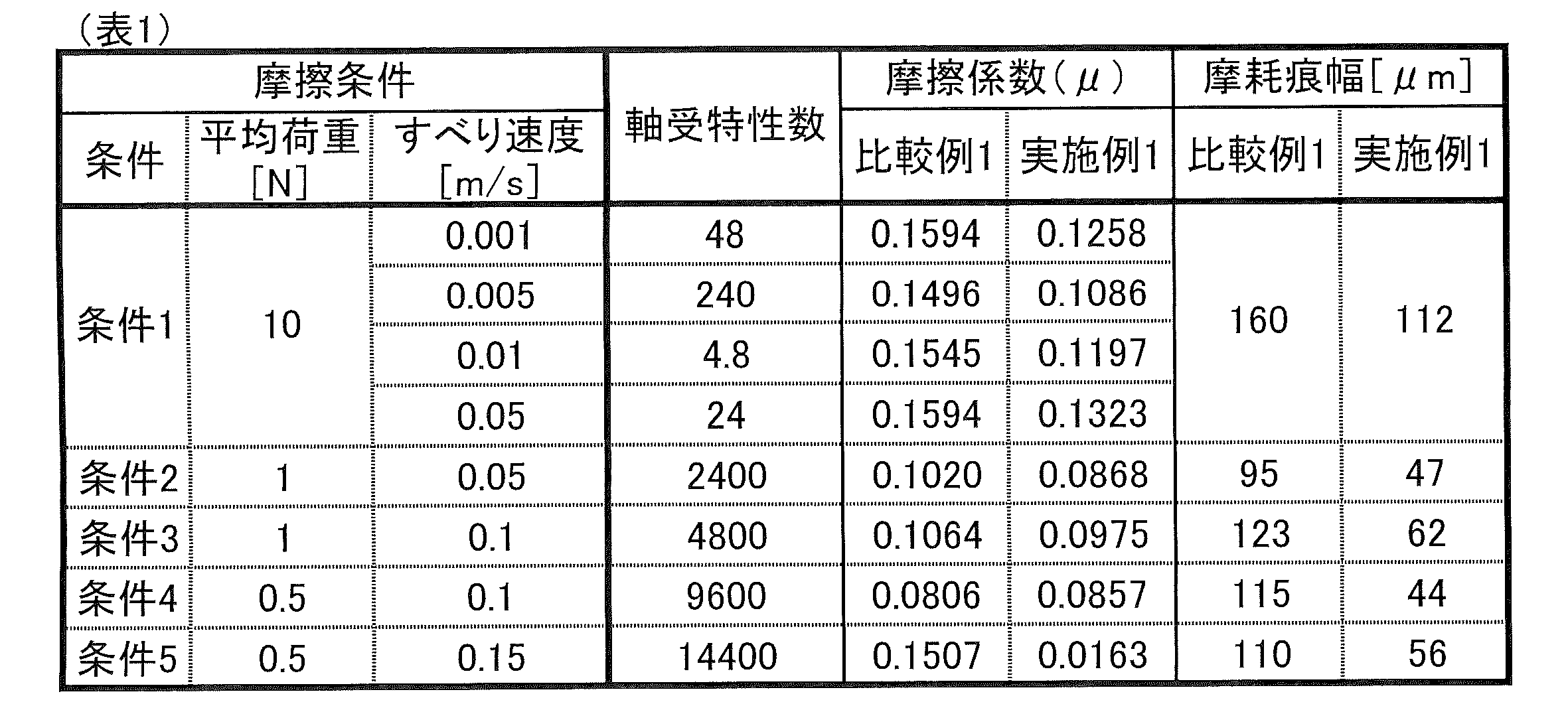
表1及び図1によれば、ポリオールエステルのみからなる潤滑剤組成物を用いた比較例1に対し、本発明の潤滑剤組成物を用いた実施例1は、上記条件1~5のいずれの条件においても摩耗痕幅は狭くなり、摺動部材の摩耗量低減の効果が得られることが示されている。また、軸受特性数での比較においても、評価を行ったいずれの軸受特性数においても、実施例1は比較例1よりも摩擦係数が低くなっており、境界潤滑領域における摩擦係数低減の効果が得られ、混合潤滑領域及び流体潤滑領域を広げることが可能であることが示されている。なお、実施例1の摩擦試験後において、摺動部材の焼き付きが抑制されていた。
以上のまとめとして、本発明の構成及びそのバリエーションを以下に付記しておく。
[1]潤滑基剤としての有機分散媒と、シラン化合物が表面に結合した表面修飾ナノダイヤモンド粒子と、ジルコニアとを含む潤滑剤組成物。
[2]上記潤滑基剤としての有機分散媒が、ポリオールエステル、ポリα-オレフィン、鉱油、アルキルベンゼン、及びポリアルキレングリコールからなる群より選択された1以上である[1]に記載の潤滑剤組成物。
[3]ナノダイヤモンド粒子の平均分散粒子径D50が4~80nmである[1]又は[2]に記載の潤滑剤組成物。
[4]上記表面修飾ナノダイヤモンド粒子の含有割合が0.01~5.0質量%である[1]~[3]のいずれか1つに記載の潤滑剤組成物。
[5]上記表面修飾ナノダイヤモンド粒子の含有割合が0.1~2000質量ppmである[1]~[3]のいずれか1つに記載の潤滑剤組成物。
[1]潤滑基剤としての有機分散媒と、シラン化合物が表面に結合した表面修飾ナノダイヤモンド粒子と、ジルコニアとを含む潤滑剤組成物。
[2]上記潤滑基剤としての有機分散媒が、ポリオールエステル、ポリα-オレフィン、鉱油、アルキルベンゼン、及びポリアルキレングリコールからなる群より選択された1以上である[1]に記載の潤滑剤組成物。
[3]ナノダイヤモンド粒子の平均分散粒子径D50が4~80nmである[1]又は[2]に記載の潤滑剤組成物。
[4]上記表面修飾ナノダイヤモンド粒子の含有割合が0.01~5.0質量%である[1]~[3]のいずれか1つに記載の潤滑剤組成物。
[5]上記表面修飾ナノダイヤモンド粒子の含有割合が0.1~2000質量ppmである[1]~[3]のいずれか1つに記載の潤滑剤組成物。
[6]ジルコニアの含有割合が0.01~7.5質量%である[1]~[5]のいずれか1つに記載の潤滑剤組成物。
[7]ジルコニアの含有割合が0.1~3000質量ppmである[1]~[5]のいずれか1つに記載の潤滑剤組成物。
[8]上記表面修飾ナノダイヤモンド粒子が、下記式(1)

[式(1)中、R4は、炭素数4~25の脂肪族炭化水素基を示す。R1’、R2’は同一又は異なって、水素原子、炭素数1~3の脂肪族炭化水素基、又は下記式(a)

(式(a)中、R4は上記に同じ。R3、R5は同一又は異なって、水素原子、又は炭素数1~3の脂肪族炭化水素基を示す。m、nは同一又は異なって、0以上の整数を示す。なお、ケイ素原子から左に伸びる結合手が酸素原子に結合する。また、波線が付された結合手はナノダイヤモンド粒子の表面に結合する)
で表される基である。式中の波線が付された結合手がナノダイヤモンド粒子の表面に結合する]
で表される基で表面修飾されたナノダイヤモンド粒子である、[1]~[7]のいずれか1つに記載の潤滑剤組成物。
[9]R4は、炭素数4以上の脂肪族炭化水素基(好ましくは炭素数6以上の脂肪族炭化水素基)である、[8]に記載の潤滑剤組成物。
[10]R4は、炭素数25以下の脂肪族炭化水素基(好ましくは炭素数12以下の脂肪族炭化水素基)である、[8]又は[9]に記載の潤滑剤組成物。
[7]ジルコニアの含有割合が0.1~3000質量ppmである[1]~[5]のいずれか1つに記載の潤滑剤組成物。
[8]上記表面修飾ナノダイヤモンド粒子が、下記式(1)
で表される基である。式中の波線が付された結合手がナノダイヤモンド粒子の表面に結合する]
で表される基で表面修飾されたナノダイヤモンド粒子である、[1]~[7]のいずれか1つに記載の潤滑剤組成物。
[9]R4は、炭素数4以上の脂肪族炭化水素基(好ましくは炭素数6以上の脂肪族炭化水素基)である、[8]に記載の潤滑剤組成物。
[10]R4は、炭素数25以下の脂肪族炭化水素基(好ましくは炭素数12以下の脂肪族炭化水素基)である、[8]又は[9]に記載の潤滑剤組成物。
[11]上記脂肪族炭化水素基は、直鎖状又は分岐鎖状のアルキル基若しくはアルケニル基(好ましくは直鎖状又は分岐鎖状アルキル基)である、[9]又は[10]に記載の潤滑剤組成物。
[12]ジルコニアと上記表面修飾ナノダイヤモンド粒子の質量比[前者/後者]が0.2~3.0である、[1]~[11]のいずれか1つに記載の潤滑剤組成物。
[13]ヘイズ値が5以下である[1]~[12]のいずれか1つに記載の潤滑剤組成物。
[12]ジルコニアと上記表面修飾ナノダイヤモンド粒子の質量比[前者/後者]が0.2~3.0である、[1]~[11]のいずれか1つに記載の潤滑剤組成物。
[13]ヘイズ値が5以下である[1]~[12]のいずれか1つに記載の潤滑剤組成物。
Claims (8)
- 潤滑基剤としての有機分散媒と、シラン化合物が表面に結合した表面修飾ナノダイヤモンド粒子と、ジルコニアとを含む潤滑剤組成物。
- 前記潤滑基剤としての有機分散媒が、ポリオールエステル、ポリα-オレフィン、鉱油、アルキルベンゼン、及びポリアルキレングリコールからなる群より選択された1以上である請求項1に記載の潤滑剤組成物。
- ナノダイヤモンド粒子の平均分散粒子径D50が4~80nmである請求項1又は2に記載の潤滑剤組成物。
- 前記表面修飾ナノダイヤモンド粒子の含有割合が0.01~5.0質量%である請求項1~3のいずれか1項に記載の潤滑剤組成物。
- 前記表面修飾ナノダイヤモンド粒子の含有割合が0.1~2000質量ppmである請求項1~3のいずれか1項に記載の潤滑剤組成物。
- ジルコニアの含有割合が0.01~7.5質量%である請求項1~5のいずれか1項に記載の潤滑剤組成物。
- ジルコニアの含有割合が0.1~3000質量ppmである請求項1~5のいずれか1項に記載の潤滑剤組成物。
- 前記表面修飾ナノダイヤモンド粒子が、下記式(1)


で表される基である。式中の波線が付された結合手がナノダイヤモンド粒子の表面に結合する]
で表される基で表面修飾されたナノダイヤモンド粒子である、請求項1~7のいずれか1項に記載の潤滑剤組成物。
Priority Applications (1)
| Application Number | Priority Date | Filing Date | Title |
|---|---|---|---|
| JP2020546800A JP7451412B2 (ja) | 2018-09-11 | 2019-08-21 | 潤滑剤組成物 |
Applications Claiming Priority (2)
| Application Number | Priority Date | Filing Date | Title |
|---|---|---|---|
| JP2018169387 | 2018-09-11 | ||
| JP2018-169387 | 2018-09-11 |
Publications (1)
| Publication Number | Publication Date |
|---|---|
| WO2020054337A1 true WO2020054337A1 (ja) | 2020-03-19 |
Family
ID=69777987
Family Applications (1)
| Application Number | Title | Priority Date | Filing Date |
|---|---|---|---|
| PCT/JP2019/032575 Ceased WO2020054337A1 (ja) | 2018-09-11 | 2019-08-21 | 潤滑剤組成物 |
Country Status (2)
| Country | Link |
|---|---|
| JP (1) | JP7451412B2 (ja) |
| WO (1) | WO2020054337A1 (ja) |
Cited By (1)
| Publication number | Priority date | Publication date | Assignee | Title |
|---|---|---|---|---|
| US20230331959A1 (en) * | 2020-10-30 | 2023-10-19 | Daicel Corporation | Nanodiamond dispersion composition |
Citations (10)
| Publication number | Priority date | Publication date | Assignee | Title |
|---|---|---|---|---|
| JPH07118683A (ja) * | 1993-09-22 | 1995-05-09 | Nippon Seiko Kk | 転がり軸受用潤滑剤 |
| CN1380363A (zh) * | 2002-05-17 | 2002-11-20 | 中山大学 | 一种纳米金刚石粒子表面处理方法 |
| WO2007148667A1 (ja) * | 2006-06-22 | 2007-12-27 | Central Glass Co., Ltd. | フッ素化ナノダイヤモンド含有組成物及びこれを使用する加熱処理製品 |
| JP2009507659A (ja) * | 2005-09-09 | 2009-02-26 | サン−ゴバン セラミックス アンド プラスティクス,インコーポレイティド | 導電性炭化水素流体 |
| JP2009242700A (ja) * | 2008-03-31 | 2009-10-22 | Jfe Steel Corp | 冷間圧延用圧延油および冷間圧延方法 |
| JP2013117016A (ja) * | 2011-11-02 | 2013-06-13 | Nanocarbon Research Institute Co Ltd | 雪氷上滑走移動用具の潤滑剤組成物及びその製造方法 |
| JP2014012803A (ja) * | 2012-07-03 | 2014-01-23 | Vision Development Co Ltd | ケイ素及び/又はフッ素を有するダイヤモンド微粒子を含む離型性に優れた摺動性樹脂部材。 |
| JP2014516102A (ja) * | 2011-05-27 | 2014-07-07 | ハワード ユニバーシティ | 表面を調整するナノ潤滑剤 |
| JP2015219125A (ja) * | 2014-05-19 | 2015-12-07 | 株式会社ダイセル | 微細ダイヤモンドの官能基定量方法 |
| WO2017199503A1 (ja) * | 2016-05-16 | 2017-11-23 | 株式会社ダイセル | 水潤滑剤組成物および水潤滑システム |
Family Cites Families (6)
| Publication number | Priority date | Publication date | Assignee | Title |
|---|---|---|---|---|
| JPH0760765B2 (ja) * | 1987-01-14 | 1995-06-28 | 日本精工株式会社 | 光硬化型磁性流体 |
| JPH0766887B2 (ja) * | 1987-01-27 | 1995-07-19 | 日本精工株式会社 | 熱硬化型磁性流体 |
| JP2010196020A (ja) | 2009-02-27 | 2010-09-09 | Toyota Central R&D Labs Inc | 水系潤滑剤組成物 |
| JP2012240891A (ja) | 2011-05-20 | 2012-12-10 | Vision Development Co Ltd | ナノカーボン・ナノコンポジット及びその製造方法 |
| KR101474466B1 (ko) | 2012-09-24 | 2014-12-19 | 엘지전자 주식회사 | 내마모성 표면처리제, 그 제조방법 및 그를 이용한 압축기 |
| CN106957711A (zh) | 2017-03-24 | 2017-07-18 | 方珺 | 纳米碳分子高性能润滑油 |
-
2019
- 2019-08-21 JP JP2020546800A patent/JP7451412B2/ja active Active
- 2019-08-21 WO PCT/JP2019/032575 patent/WO2020054337A1/ja not_active Ceased
Patent Citations (10)
| Publication number | Priority date | Publication date | Assignee | Title |
|---|---|---|---|---|
| JPH07118683A (ja) * | 1993-09-22 | 1995-05-09 | Nippon Seiko Kk | 転がり軸受用潤滑剤 |
| CN1380363A (zh) * | 2002-05-17 | 2002-11-20 | 中山大学 | 一种纳米金刚石粒子表面处理方法 |
| JP2009507659A (ja) * | 2005-09-09 | 2009-02-26 | サン−ゴバン セラミックス アンド プラスティクス,インコーポレイティド | 導電性炭化水素流体 |
| WO2007148667A1 (ja) * | 2006-06-22 | 2007-12-27 | Central Glass Co., Ltd. | フッ素化ナノダイヤモンド含有組成物及びこれを使用する加熱処理製品 |
| JP2009242700A (ja) * | 2008-03-31 | 2009-10-22 | Jfe Steel Corp | 冷間圧延用圧延油および冷間圧延方法 |
| JP2014516102A (ja) * | 2011-05-27 | 2014-07-07 | ハワード ユニバーシティ | 表面を調整するナノ潤滑剤 |
| JP2013117016A (ja) * | 2011-11-02 | 2013-06-13 | Nanocarbon Research Institute Co Ltd | 雪氷上滑走移動用具の潤滑剤組成物及びその製造方法 |
| JP2014012803A (ja) * | 2012-07-03 | 2014-01-23 | Vision Development Co Ltd | ケイ素及び/又はフッ素を有するダイヤモンド微粒子を含む離型性に優れた摺動性樹脂部材。 |
| JP2015219125A (ja) * | 2014-05-19 | 2015-12-07 | 株式会社ダイセル | 微細ダイヤモンドの官能基定量方法 |
| WO2017199503A1 (ja) * | 2016-05-16 | 2017-11-23 | 株式会社ダイセル | 水潤滑剤組成物および水潤滑システム |
Cited By (1)
| Publication number | Priority date | Publication date | Assignee | Title |
|---|---|---|---|---|
| US20230331959A1 (en) * | 2020-10-30 | 2023-10-19 | Daicel Corporation | Nanodiamond dispersion composition |
Also Published As
| Publication number | Publication date |
|---|---|
| JP7451412B2 (ja) | 2024-03-18 |
| JPWO2020054337A1 (ja) | 2021-08-30 |
Similar Documents
| Publication | Publication Date | Title |
|---|---|---|
| JP6749433B2 (ja) | 初期なじみ用潤滑剤組成物 | |
| US9752035B2 (en) | Composite lubricating material, engine oil, grease, and lubricant, and method of producing a composite lubricating material | |
| US12319887B2 (en) | Lubricant composition for initial break-in, sliding member, and sliding member manufacturing method | |
| US9404058B2 (en) | Method for producing a composite lubricating material | |
| JP6887629B2 (ja) | 水潤滑剤組成物および水潤滑システム | |
| WO2020054337A1 (ja) | 潤滑剤組成物 | |
| JP7162222B2 (ja) | 初期なじみ剤組成物および当該組成物を含む初期なじみシステム | |
| WO2020095581A1 (ja) | ナノダイヤモンド分散組成物 | |
| US11124731B2 (en) | Lubricant composition and lubricating system | |
| TWI845495B (zh) | 奈米鑽石粒子分散液 | |
| JP7129068B2 (ja) | 潤滑システムおよび潤滑システム用液剤セット | |
| JP2025177282A (ja) | アルミニウム合金製摺動部材用潤滑剤 | |
| OA18250A (en) | Composite lubricating material, engine oil, grease, and lubricating oil. |
Legal Events
| Date | Code | Title | Description |
|---|---|---|---|
| 121 | Ep: the epo has been informed by wipo that ep was designated in this application |
Ref document number: 19860346 Country of ref document: EP Kind code of ref document: A1 |
|
| ENP | Entry into the national phase |
Ref document number: 2020546800 Country of ref document: JP Kind code of ref document: A |
|
| NENP | Non-entry into the national phase |
Ref country code: DE |
|
| 122 | Ep: pct application non-entry in european phase |
Ref document number: 19860346 Country of ref document: EP Kind code of ref document: A1 |