WO2020004418A1 - ケアサポートシステム - Google Patents
ケアサポートシステム Download PDFInfo
- Publication number
- WO2020004418A1 WO2020004418A1 PCT/JP2019/025233 JP2019025233W WO2020004418A1 WO 2020004418 A1 WO2020004418 A1 WO 2020004418A1 JP 2019025233 W JP2019025233 W JP 2019025233W WO 2020004418 A1 WO2020004418 A1 WO 2020004418A1
- Authority
- WO
- WIPO (PCT)
- Prior art keywords
- staff
- information
- work
- terminal
- contractor
- Prior art date
- Legal status (The legal status is an assumption and is not a legal conclusion. Google has not performed a legal analysis and makes no representation as to the accuracy of the status listed.)
- Ceased
Links
Images


Classifications
-
- G—PHYSICS
- G16—INFORMATION AND COMMUNICATION TECHNOLOGY [ICT] SPECIALLY ADAPTED FOR SPECIFIC APPLICATION FIELDS
- G16H—HEALTHCARE INFORMATICS, i.e. INFORMATION AND COMMUNICATION TECHNOLOGY [ICT] SPECIALLY ADAPTED FOR THE HANDLING OR PROCESSING OF MEDICAL OR HEALTHCARE DATA
- G16H40/00—ICT specially adapted for the management or administration of healthcare resources or facilities; ICT specially adapted for the management or operation of medical equipment or devices
- G16H40/20—ICT specially adapted for the management or administration of healthcare resources or facilities; ICT specially adapted for the management or operation of medical equipment or devices for the management or administration of healthcare resources or facilities, e.g. managing hospital staff or surgery rooms
-
- G—PHYSICS
- G06—COMPUTING OR CALCULATING; COUNTING
- G06Q—INFORMATION AND COMMUNICATION TECHNOLOGY [ICT] SPECIALLY ADAPTED FOR ADMINISTRATIVE, COMMERCIAL, FINANCIAL, MANAGERIAL OR SUPERVISORY PURPOSES; SYSTEMS OR METHODS SPECIALLY ADAPTED FOR ADMINISTRATIVE, COMMERCIAL, FINANCIAL, MANAGERIAL OR SUPERVISORY PURPOSES, NOT OTHERWISE PROVIDED FOR
- G06Q10/00—Administration; Management
- G06Q10/06—Resources, workflows, human or project management; Enterprise or organisation planning; Enterprise or organisation modelling
-
- G—PHYSICS
- G06—COMPUTING OR CALCULATING; COUNTING
- G06Q—INFORMATION AND COMMUNICATION TECHNOLOGY [ICT] SPECIALLY ADAPTED FOR ADMINISTRATIVE, COMMERCIAL, FINANCIAL, MANAGERIAL OR SUPERVISORY PURPOSES; SYSTEMS OR METHODS SPECIALLY ADAPTED FOR ADMINISTRATIVE, COMMERCIAL, FINANCIAL, MANAGERIAL OR SUPERVISORY PURPOSES, NOT OTHERWISE PROVIDED FOR
- G06Q50/00—Information and communication technology [ICT] specially adapted for implementation of business processes of specific business sectors, e.g. utilities or tourism
- G06Q50/10—Services
- G06Q50/22—Social work or social welfare, e.g. community support activities or counselling services
Definitions
- the present invention relates to a care support system that supports a subject's daily life.
- Japanese Patent No. 5503449 discloses a family support service support system that provides a family support service using a registered worker as a worker.
- the family support service support system has a business server used by a business and a client terminal connectable to the business server. Then, the company server holds and manages user information for a plurality of users of the family support service. For a plurality of workers, maintain and manage worker information including attribute information and schedule information.
- an object of the present invention is to provide a care support system that reflects staff's intention as much as possible and can dispatch appropriate staff efficiently to a plurality of dispatch destinations.
- the care support system of the present invention is a care support system that dispatches a staff member in response to a request from a target person who supports everyday life or a caretaker who takes care of the target person.
- a contractor terminal communicably connected to a network and accepting an input operation by at least one of the target person and the caretaker; and a staff member communicably connected to the network and individually owned by the staff.
- a staff terminal that receives an input operation by, a director terminal that is communicably connected to the network and receives an input operation by a care director that manages the staff, and a cloud that is communicably connected to the network,
- the cloud contains information on work requested from the contractor terminal Based on the request information including the content of the work, recruitment information including information on the place where the work is performed and the time of the work is created, and the recruitment information can be browsed on at least some of the staff terminals.
- the application information including the information to apply for the recruitment information, determine the dispatch of staff to be dispatched to each of the places where the work is performed, and send the staff dispatch information to the director terminal as staff dispatch information, When receiving approval information for approving the dispatch of the staff based on the staff dispatch information from the director terminal, providing request information for requesting work to the staff terminal of the staff dispatched to the place where the work is performed. And provide the information of the staff dispatched to the contractor terminal as staff information That.
- the director terminal may acquire the request information from each of the contractor terminals, and may provide the cloud with recruitment information generated based on the request information. By doing so, the care director can grasp all the request information from the contractor terminal. Therefore, if a staff member is vacant due to a sudden event such as a traffic injury or illness, the care director can quickly decide to dispatch the staff member. Note that the care director may simply send a staffing instruction to the cloud.
- the request information may include schedule information indicating a work schedule. This makes it possible to recruit short-term work.
- the cloud may include a staff information management database that manages information of staff using the staff terminal. Thereby, the cloud can create the recruitment information for each staff based on the staff information.
- the staff information management database may include, for each of the staff, appropriate values obtained by quantifying at least appropriateness for work and appropriateness including skills.
- the cloud can refer staff members' applications and dispatch the staff members to the cared person who has appropriate and skill.
- the cloud acquires the appropriateness required for the work from the request information, extracts the staff appropriately matching the work from the staff information management database, and selects the staff of the extracted staff.
- the recruitment information may be browsed on a terminal. By doing so, it is possible to prevent staff without proper and skill from applying. In addition, since the staff does not browse information that cannot be applied, it is easy to confirm the recruitment information.
- the cloud acquires the appropriateness required for the work from the request information, and the appropriate value of the staff who has performed the input operation of the staff terminal that has provided the application information from the staff information management database. And generates staff dispatch information for dispatching the staff who has performed the input operation of the staff terminal that has provided the application information to an appropriate place. This makes it possible to dispatch the right person in the right place. In addition, even if the appropriateness and skills are insufficient, it is also possible to dispatch in combination with staff members with high appropriateness and skills, and to raise the appropriateness and skills of the staff while performing the work. That is, it is possible to raise the appropriateness and skills of the entire staff.
- the cloud further includes a contractor information management database that manages information on the target person and / or the caretaker, wherein the contractor information management database includes information on compatibility with staff,
- the cloud may acquire the compatibility information with the staff from the contractor information management database, and may determine an appropriate staff in consideration of the compatibility between the target person and / or the caretaker and the staff.
- the cloud assigns the staff who can perform the work based on the staff information management database to the insufficient staff.
- the staff dispatch information including the staff who has performed the staff input operation is generated. By doing so, it is possible to dispatch staff even when the number of applicants is less than the number of applicants and the recruitment is not satisfied, or when there is a sudden shortage of staff.
- the cloud obtains an evaluation for the staff who has performed the work from at least one of the staff, the target person, the caretaker, and the staff who has worked together, and as an evaluation to the staff,
- the information may be stored in the staff information management database.
- the staff information management database may further include desired information that is desired information on the work for each of the staff. By doing so, it is possible to dispatch staff to work according to the wishes of the staff, and it is possible to increase the motivation of the staff.
- the cloud may acquire information of the work content from the worker who performed the work, and may store the work content as a handover material to the next worker.
- FIG. 2 is a functional block diagram illustrating a schematic configuration of a cloud. It is a figure showing an example of a staff information management database. It is a figure showing an example of request information. It is a figure showing an example of the recruitment information displayed on the staff terminal. It is a figure showing other examples of recruitment information. It is a figure showing the details of recruitment information. It is a flowchart which shows the flow of a process in the care support system of this embodiment. It is a flow chart which shows operation of other examples of the care support system concerning the present invention. It is a figure showing other examples of a staff information management database.
- the staff refers to a worker engaged in nursing care.
- the term “care” refers to care performed for a subject regarding care. Further, it is assumed that the care recipient is living at home. In addition, the home includes an elderly residence with a service in addition to the individual residence.
- the care receiver C indicates a care recipient.
- a caretaker S is a person who takes care of the care receiver on a daily basis, such as a cohabitant of the care receiver and a caretaker of the elderly home with service.
- the care receiver and / or the caretaker S who have signed a support contract with the care support system A are collectively referred to as a contractor.
- FIG. 1 is an explanatory diagram showing a schematic configuration of an example of a care support system according to the present invention.
- the care support system A has a configuration in which a plurality of contractor terminals 100 are communicably connected via a communication network 300.
- the contractor terminal 100 can communicate with the communication network 300.
- the care receivers are classified according to the required care. For example, some care recipients have difficulty in taking care of their surroundings such as bathing and changing clothes. Some care recipients can take care of themselves, but it is difficult to prepare meals and perform housework such as cleaning.
- the care receiver may be an infant, and in this case, care for the surroundings, housework, and the like may not be necessary, and only the watching may be performed.
- the caretaker terminal 100 may be possessed by the care receiver when the care receiver can perform the communication operation by himself.
- the caretaker S carries the contractor terminal 100.
- the contractor terminal 100 is an information terminal that receives an operation input of the care receiver C or the caretaker S.
- the contractor terminal 100 can be, for example, a multifunctional portable terminal such as a tablet or a smartphone, or a notebook personal computer. Further, it may be a wearable wearable device such as a bracelet or a watch. In addition to these, a device that can provide information to the cared person C or the caretaker S and can receive an input operation of the cared person C or the caretaker S can be widely used.
- the staff terminal 400 is assumed to be a smartphone-type mobile terminal having high portability and easy to display and input information.
- the contractor terminal 100 can be connected to the care support system A by, for example, activating a program called an application. Note that when a contract for using the care support system A is made, a terminal dedicated to the care support system A may be purchased or lent.
- the care support system A includes a cloud 200, a communication network 300, a staff terminal 400, and a director terminal 500.
- the cloud 200 provides services such as information processing, storage, and distribution on the communication network 300. Although a detailed operation of the cloud 200 will be described later, the cloud 200 accumulates information from each contractor terminal 100 and performs processing based on information from the staff terminal 400 and the director terminal 500.
- the information managed by the cloud 200 includes, for example, information on the contractor terminal 100, information on the care receiver associated with the contractor terminal 100, information on work request from the contractor terminal 100, information on the staff T, information on the staff terminal 400 individual information, application information from the staff terminal 400, and the like.
- the details of the information managed by the cloud 200 will be described together with the operation description of the care support system A.
- the communication network 300 includes a communication line that can communicate with a plurality of devices.
- the communication network 300 may use, for example, a public communication network such as the Internet or a mobile phone communication network, or use a dedicated line, a dedicated antenna, or the like to determine a predetermined contractor terminal 100, cloud 200, staff, or the like.
- a communication network to which only the terminal 400 and the director terminal 500 can be connected may be used.
- the staff T carries (owns) the staff terminal 400.
- FIG. 1 illustrates three staff members T, the number of staff members is not limited to three.
- each staff member T carries the staff terminal 400. That is, in the care support system A, a plurality of staff terminals 400 can be connected to the communication network 300.
- a staff T will be described unless a staff is specified individually.
- the staff terminal 400 can access the cloud 200 and acquire various information based on the operation by the staff T. Then, the staff terminal 400 can display the acquired information on the staff terminal display unit 41 described later. Information may be distributed from the cloud 200 in some cases. Also in this case, the information from the cloud 200 can be displayed on the staff terminal display unit 41.
- the information input by the staff T at the staff terminal 400 includes information disclosed in the cloud 200, application information for applying for recruitment information transmitted from the cloud 200, and information such as the schedule and skills of the staff T. Can be. These pieces of information are transmitted to the cloud 200 via the communication network 300 and stored in the database function mounted on the storage function of the cloud 200.
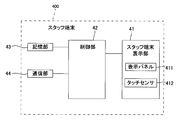
- FIG. 2 is a functional block diagram of the staff terminal.
- the staff terminal 400 includes a staff terminal display unit 41, a control unit 42, a storage unit 43, and a communication unit 44.
- the staff terminal display unit 41 includes a display panel 411 and a touch sensor 412.
- the display panel 411 displays information such as images and characters. Examples of the display panel 411 include a liquid crystal panel and an organic EL panel, but are not limited thereto.
- the touch sensor 412 is dispatched to the front of the display panel 411 and detects, for example, the position of a contact portion of the staff T with a finger. Thereby, the touch sensor 412 can detect the image touched by the finger of the staff T among the images displayed on the display panel 411. That is, the staff terminal display unit 41 is a so-called touch panel.
- the staff terminal display unit 41 is connected to the control unit 42.
- the control unit 42 controls each unit of the staff terminal 400 and processes information handled by the staff terminal 400.
- the control unit 42 includes a CPU.
- the storage unit 43 is a memory for storing a control program executed by the control unit 42 and various kinds of information, and includes, for example, a random access memory (RAM), a read only memory (ROM), and a nonvolatile memory.
- RAM random access memory
- ROM read only memory
- the communication unit 44 connects to the communication network 300 and transmits and receives information.
- the communication unit 44 is connected to the communication network 300.
- the communication unit 44 is an interface that can be connected to at least one of a wireless communication network and a wired communication network, and includes a transmission circuit, a reception circuit, an antenna, and the like.
- the staff terminal 400 for example, a multifunctional mobile terminal such as a tablet or a smartphone, or a notebook personal computer can be used. Further, it may be a wearable wearable device such as a bracelet or a watch. In addition to these, a device that can provide information to the staff T and can accept an input operation by the staff T can be widely used.
- the staff terminal 400 is assumed to be a smartphone-type mobile terminal having high portability and easy to display and input information.
- the staff terminal 400 may have a function of notifying the staff T by voice, vibration, or the like when information is acquired from the cloud 200.
- the staff terminal 400 may be installed by installing an application on an information terminal such as a smartphone, a tablet, or a personal computer owned by the staff T.
- the staff T visits the target person's home for care. Therefore, it may be difficult for the staff terminal 400 to determine the position of the staff terminal 400 only by connecting to the communication network 300. Therefore, it is desirable that the staff terminal 400 has a function of receiving a GPS (global positioning system) signal.
- the staff terminal 400 may be provided with a function of displaying a map, and may be configured to be able to provide a route guidance based on the GPS signal and information on the subject's home (address, longitude and latitude information, etc.).
- the care support system A of the present embodiment also includes a director terminal 500 which is a terminal device used by the care director D.
- the director terminal 500 is configured by a multifunctional mobile terminal such as a tablet or a smartphone, a notebook personal computer, or the like.
- the director terminal 500 is also connected to the communication network 300, like the staff terminal 400.
- the staff terminal 400 and the director terminal 500 may be able to directly transmit and receive information, or may transmit and receive information via the cloud 200.
- the director terminal 500 includes a display unit that displays information. In the following description, the display unit of the director terminal 500 will be described as the director terminal display unit 51 in order to distinguish it from the staff terminal display unit 41.
- the care director D is an instructor (supervisor) who gives instructions and advice regarding work to the staff T.
- the instruction information is transmitted from the director terminal 500 to the staff terminal 400 via the communication network 300.
- the staff T can perform an operation such as appropriate care based on the displayed instruction information.
- the care director D can operate the director terminal 500 to set and change operations in the cloud 200.
- the care director D may be artificial intelligence, and in this case, the cloud 200 may also serve as the care director D.
- the director terminal 500 acquires staff dispatch information described later.
- staff dispatch information is displayed on the director terminal display unit 51.
- the care director D confirms the dispatch of the staff T displayed on the director terminal display unit 51 and performs an operation as to whether to approve the dispatch of the staff T.
- the director terminal 500 transmits approval information for the dispatch of the staff T to the cloud 200.
- non-approval non-approval information is transmitted.
- the non-approval information may include the reason for non-approval, the staff T who has been recognized as non-approval, an alternative to dispatching staff, and the like.
- the care receiver is at home. And it is rare that a caretaker who cares for the care receiver always lives together. Therefore, in the care support system A, there is a case where the detection unit 600 including the non-contact sensor that detects the state of the cared person (for example, the physical state) without contact with the resident is provided in the room of the cared person. (See FIG. 1).
- the detection unit 600 includes a radio wave sensor and an optical sensor. In addition, a sensor other than these may be provided. Therefore, the detection unit 600 is also called a sensor box.
- a radio sensor detects the condition of the cared person by emitting and receiving radio waves.
- the radio wave type sensor is configured by, for example, a microwave Doppler sensor that radiates a microwave in the 24 GHz band and receives a reflected wave that has been reflected by the care receiver and has been Doppler shifted. Accordingly, the radio wave sensor can detect the respiratory state (respiratory rate), sleep state, heart rate, and the like of the care receiver as biological information (vital data) from the received reflected waves.
- the radio wave sensor functions as a minute movement detecting unit that detects minute movement of the care receiver.
- the radio wave type sensor emits a radio wave (microwave) and compares the frequency of the radio wave (reflected wave) reflected by the care receiver with the frequency of the radiated radio wave, thereby detecting the care receiver's frequency. It can also detect body movements (body movements). Note that the radio wave sensor may be a sensor that detects only one of body movement and micro body movement.
- the optical sensor is an imaging unit that captures an image by photographing the inside of a living room. For example, even when the amount of visible light is small, an infrared image sensor that can photograph the inside of the living room may be provided.
- the optical sensor is a sensor that monitors the life of the care receiver.
- the detection unit 600 outputs information obtained from the radio wave type sensor and the optical type sensor to the cloud 200 as information on the state of the care receiver.
- the cloud 200 can check the state (health state, activity state, etc.) of the cared person. Further, when the cloud 200 detects an abnormality of the care receiver based on the information from the detection unit 600, the cloud 200 notifies the contractor terminal 100 associated with the care receiver of information indicating that an abnormality may have occurred. I do. Further, similar information may be notified to the staff terminal 400 of the staff T who is nearby or rushes to confirm the care receiver.
- the cloud 200 includes a plurality of nodes that provide computer resources.
- the cloud 200 includes a front end to which external devices (here, the contractor terminal 100, the staff terminal 400, the director terminal 500, and the like) are connected, a node group having each function, and management for managing and controlling the node group. Including system.
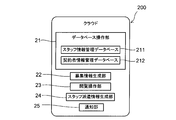
- FIG. 3 is a functional block diagram showing a schematic configuration of the cloud.
- the cloud 200 includes a database operation unit 21, a recruitment information generation unit 22, a browse operation unit 23, a staff dispatch information generation unit 24, and a notification unit 25.
- the database operation unit 21 includes, for example, a staff information management database 211 including information on the registered staff T, a contractor information management database 212 including information on the connected contractor terminal 100, and the like.
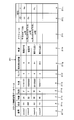
- FIG. 4 is a diagram illustrating an example of the staff information management database.
- the staff information management database 211 manages information on the staff T.
- the staff information management database 211 manages information of a pre-registered staff T (here, referred to as a registered staff).
- the staff information management database 211 manages a plurality of management items for each staff T. As shown in FIG. 4, the staff information management database 211 includes, as management items, a number field 211a, a name field 211b, an age field 211c, a gender field 211d, a work field 211e, a rank field 211f, a contractor evaluation field 211g, Column 211h, schedule column 211i, good compatibility column 211j, and compatibility failure column 211k.
- the number column 211a stores the identification number of the staff T.
- the identification number of the staff T matches the identification number of the staff terminal 400 owned by the staff T. That is, the cloud 200 can determine the staff T possessed based on the identification number of the staff terminal 400.
- the name column 211b stores the name of the staff T.
- the name of the staff T is included in the staff information sent to the contractor terminal 100.
- the age column 211c is the age of the staff T.
- the gender column 211d stores the gender of the staff T.
- men: M and women: F In the staff information management database 211 shown in FIG. 4, men: M and women: F. Note that the age and gender do not have to be registered at the request of the staff T, but if the recruitment conditions include the age and gender, the application will be invalid.
- the work column 211e indicates the type of work that each staff member T can handle.
- work that can be handled is indicated by eight numbers.
- Each digit indicates the work content that can be handled. That is, "meal assistance”, “bathing assistance”, “changing assistance”, “toilet assistance”, “cleaning”, “washing”, “cooking”, and “others” are shown. Each digit is indicated by “0” or “1”. For example, “VV” in FIG. 4 is “11111111”. Therefore, "VV" indicates that all of the above-mentioned jobs can be handled.
- the management method of the work column 211e is an example, and the management may be performed using another management method. A method of managing staff occupations (qualifications) can be widely adopted.
- the rank column 211f is an evaluation of the staff T by the care director D.
- the rank is divided into 10 stages of "1", “2", “3", “4", ..., "10” from the top.
- the rank is determined by the care director D based on the skill, ability, experience, and the like of the staff T.
- the skills include “education”, “assistance”, “management”, and the like.
- the rank is determined by comprehensively judging these skills, abilities, experiences, and the like.
- one rank column 211f is provided for each staff member T, the present invention is not limited to this. In addition to the overall rank, skills, abilities, experiences, and the like may be finely classified, and the rank may be included for each classification.
- the contractor's evaluation column 211g is a summary of the evaluation of the staff T's work by the care receiver or the caretaker S who is a contractor. For example, the evaluation is indicated by “S”, “A +”, “A”, “B +”, “B”,.
- the contractor's evaluation column 211g is a comprehensive evaluation that has been comprehensively determined based on the evaluation (feedback) from the care receiver C or the caretaker S who has visited the work so far. Evaluation criteria are notified to each contractor terminal 100 in advance, and evaluation is performed based on the criteria. Note that the contractor's evaluation column 211g is one for each staff T, but is not limited to this. In addition to the comprehensive evaluation, an evaluation for each contractor and each evaluation standard may be included. By doing so, it is possible to avoid troubles due to compatibility between the care receiver C or the caretaker S and the staff.
- the rank field 211f and the contractor's evaluation field 211g are determined based on feedback from at least one of the cared person C and the caretaker S, and information from staff members who have performed work together. Each time the work is completed, a self-evaluation, an evaluation of another staff, and an evaluation of a facility may be acquired, and the rank and the evaluation of the contractor may be updated based on the information. Further, the staff T dispatched for the work extracted at random may be evaluated. Further, other items may be included.
- the rank column 211f and the contractor's evaluation column 211g are columns for evaluating the staff T.
- the “desired” field 211h stores the work registered in advance by the staff T and the hope for the contractor.
- the request may be made freely by the staff T or may be made by the staff T by preparing the registration items in advance and having the registered items checked.
- the schedule column 211i stores the schedule of the staff T.
- the schedule for example, a periodic schedule (for example, every Monday) and a sudden schedule (for example, xx month yy day, from 9:00 to 17:00) are stored.
- the schedule column 211i also includes the names of caregivers and contractors to be treated. Further, other management items, for example, information such as the latest work amount may be included.
- the staff information management database 211 stores information that is considered when the staff dispatch information generation unit 24 decides to dispatch the staff T.
- the good compatibility column 211j and the bad compatibility column 211k indicate compatibility with other staff T. That is, in the good compatibility column 211j, the staff T who can easily perform the work in cooperation is stored. Further, in the compatibility incompatibility column 211k, a staff member T who has difficulty in performing the work in a coordinated manner is stored.
- the database operation unit 21 may be able to change the management items of the staff information management database 211.
- the change of the management item of the staff information management database 211 may be based on an instruction from the director terminal 500 (care director D). Further, even when the cloud 200 itself performs machine learning based on feedback from the contractor terminal 100, the staff terminal 400 (staff T), and the director terminal 500 (care director D), and changes a management item that is considered necessary. Good.
- the staff information management database 211 may not be provided.
- the contractor information management database 212 has the same configuration as the staff information management database 211, and thus details are omitted. Although a detailed description is omitted in the contractor information management database 212, information for specifying the contractor such as a name, an address, and a telephone number is stored for each contractor. Further, the identification number of the contractor terminal 100 may be stored.
- the contractor information management database 212 manages information on contractors who dispatch staff T in the care support system A. In other words, the contractor (contractor terminal 100) supported by the care support system A is managed by the contractor information management database 212.
- the information of the contractor who has contracted to receive the service by the care support system A is stored in the contractor information management database 212. It is preferable that the change of the information in the contractor information management database 212 is performed by an operation from the director terminal 500, but the change may be performed by the cloud 200.
- the contractor information management database 212 stores a staff T that is compatible with the care receiver C and the caretaker S and a staff T that is not compatible with the care receiver C and the caretaker S.
- compatibility with any one of the care receiver C and the caretaker S is good may be included. In this case, the case in which the care receiver C and the caretaker S have good compatibility and the opposite person do not have good compatibility are excluded.
- the request information including the information on the work requested from each contractor terminal 100 is provided to the recruitment information generation unit 22.
- the request information includes information such as the name of the contractor, the content of the required work, the required number of workers, and the time of the work.
- FIG. 5 is a diagram illustrating an example of the request information.
- the request information Rq is shown in a table format for easy understanding. However, in reality, the request information Rq may not be a table and may include necessary information.
- the cared person C is often taken care of by the caretaker S or is regularly (eg, four times a week).
- the contractor transmits, to the care support system A, request information for requesting dispatch of a staff T who can perform the missing work, in other words, the required work.
- the request information Rq is sent to the director terminal 500 via the communication network 300 for each contractor.
- the request information Rq includes a contractor and / or cared person name RqN, a period column Rq1, a time column Rq2, a work content column Rq3, a number column Rq4, and a remarks column Rq5.
- the period column Rq1 indicates a period during which the dispatch of the staff T is requested.
- the table of FIG. 5 shows an example of July 2, 2018 to July 9, 2018. In the case of a single day, date information is stored. Further, after the period is specified, the day of the week (for example, Monday, Friday, Tuesday, Saturday, Monday to Friday, etc.) may be further specified. Information that indicates the date and time when the staff T needs to be dispatched is stored.
- the time column Rq2 is the binding time of the staff T in each period. For example, in the table of FIG. 5, it is 8:00 to 14:00. In other words, it means that the work starts at 8:00 and ends at 14:00.
- the work content column Rq3 stores the content of the work required by the contractor.
- the content of the work required by the contractor includes, for example, “general care”, “meal assistance or assistance assistance”, “bathing assistance or assistance assistance”, and the like.
- the required work varies from contractor to contractor. For example, an operation such as watching over an infant may be included.
- the number of members column Rq4 corresponds to the number of staff members T required to execute required work. Note that the number of staff members is based on the staff members T having ordinary skills and experiences, and the number of staff members T with low skill levels is required to be larger than the number of staff members. In the case of the staff T having a high skill and skill, the number of staff members may be smaller than the number of staff members.
- the remarks column Rq5 is a column for describing other requests that cannot be described in the above-described columns.
- the remarks column Rq5 may describe the skill level, skill, and the like required for the work.
- the remarks column Rq5 will be separately described as needed.
- information deemed necessary for the dispatch of staff T may be provided.
- the type of request information may be determined for each contractor on the cloud 200 side, or may be determined on the contractor side.
- the request information provided from each contractor terminal 100 is provided to the recruitment information generation unit 22 of the cloud 200 after being aggregated by the director terminal 500. Thereby, the care director D can check all the request information.
- the recruitment information generation unit 22 uses the request information Rq sent from each contractor terminal 100 to determine the name of the contractor recruiting the work, the content of the recruited work, the number of staff T recruited, Get the date and time information to perform. Then, for each contractor, information on the name of the contractor and / or the cared person, the work content, the number of staff T, and the date and time is generated as recruitment information.
- the browsing operation unit 23 allows the recruitment information to be browsed using the staff terminal 400.
- the browsing operation unit 23 may share application information with a staff terminal 400 registered in advance in SNS (Social Network Service), or may send an e-mail to the staff terminal 400 registered in advance. Or by using a message service or the like.
- SNS Social Network Service
- the browsing operation unit 23 may always be able to access the recruitment information from the staff terminal 400, and may update the recruitment information as needed. At this time, the fact that the recruitment information has been updated may be transmitted to the staff terminal 400.
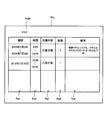
- FIG. 6 is a diagram illustrating an example of the recruitment information displayed on the staff terminal.
- the staff terminal display section 41 of the staff terminal 400 displays recruitment information RB, an application button K1, and a cancel button K2.
- the staff terminal 400 browses the recruiting information RB and can apply immediately thereafter.
- a check column Rb1 In the recruitment information RB, a check column Rb1, a contractor and / or cared person name column Rb2, a period column Rb3, a time column Rb4, a work content column Rb5, a number column Rb6, a reward column Rb7, and a remarks column Rb8 are displayed. .
- the check box Rb1 displays a square check box. The staff T who has viewed the recruitment information RB can make a selection by checking the check box Rb1.
- the name of the contractor and / or cared person is stored in the contractor and / or cared person name column Rb2.
- the period column Rb3, the time column Rb4, the work content column Rb5, the number column Rb6, and the remarks column Rb8 have the same contents as the period column Rq1, the time column Rq2, the work content column Rq3, the number column Rq4, and the remarks column Rq5 of the request information Rq. Is stored. Therefore, details are omitted.
- the reward column Rb7 is a value calculated by the cloud 200 from a predetermined reward amount. The amount of reward may differ depending on the work, or may differ depending on the region, time, and the like.
- the staff T who browses the recruitment information RB on the staff terminal 400 checks the recruitment check box if the recruitment is liked. Then, by pressing (touching) the application button K1, the application information is transmitted to the staff dispatch information generation unit 24.
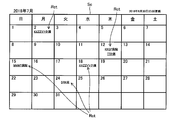
- FIG. 7 is a diagram illustrating another example of the recruitment information.
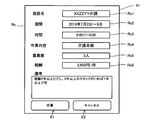
- FIG. 8 is a diagram showing details of the recruitment information.
- calendar type recruiting information Sc may be used.
- a recruitment display Rct which is a display of the work currently being recruited, is displayed at each date. Then, when the staff T selects the recruitment display Rct, the display of the staff terminal display unit 41 is switched to the detailed display Rs of the recruitment information.
- the detailed display Rs of the recruitment information includes a contractor and / or cared person name column Rs1, a period column Rs2, a time column Rs3, a work content column Rs4, a recruitment number column Rs5, a reward column Rs6, a remarks column Rs7, and an application button K1. And a cancel button K2.
- the contractor and / or cared person name column Rs1, the period column Rs2, the time column Rs3, the work content column Rs4, the recruitment number column Rs5, the remuneration column Rs6, and the remarks column Rs7 of the detailed display Rs are the same as the recruitment information RB. Therefore, detailed description is omitted.
- the recruitment display Rct is displayed together with the calendar display, so that the schedule can be easily set. It should be noted that the recruitment information Sc may be able to add the schedule of the individual staff T. By doing so, it is possible to promptly recruit work. Further, the staff T may share the information with the schedule application that the staff T uses personally on the staff terminal 400. Thereby, the convenience of the staff T can be further improved.
- the recruitment information Sc may display an application status by another staff. If there is a limit on the number of years of experience in the recruitment information as described in the remarks, the applicant may be able to clear the application conditions. By knowing the information of the staff who has applied, it is possible to check whether or not one can recruit. Further, the browsing operation unit 243 may change the browsable staff T based on the information of the applied staff T.
- the staff dispatch information generation unit 24 is provided with application information from the staff T who has viewed the recruitment information.
- Application information is sent for recruitment information. Therefore, the application information includes information included in the recruitment information.
- the application information includes information on the identification number of the recruitment information.
- the staff dispatch information generation unit 24 acquires information on the staff terminal 400 that has transmitted the application information from the application information and the staff T who has the staff terminal 400.
- the information of the staff T may be included in the application information, or the information of the staff T may be obtained by referring to the staff information management database 211 based on the identification number of the staff terminal 400 that has transmitted the application information. You may.
- the staff dispatch information generation unit 24 compares the information of the staff T with the request information, and generates staff dispatch information for dispatching an appropriate staff T.
- the staff dispatch information includes the name of the staff T, the name of the contractor and / or the cared person who performs the work, the content of the work, the date and time, and remarks. Further, information other than these may be included.
- the staffing information generation unit 24 provides the generated staffing information to the director terminal 500.
- the staff dispatch information generation unit 24 reconstructs staff dispatch when non-approval information is sent from the director terminal 500. At this time, correction information such as the reason for non-approval is obtained from the non-approval information received from the director terminal 500, and staff dispatch information is generated again based on the correction information.
- the notification unit 25 upon obtaining the approval information from the director terminal 500, provides the request information to the staff terminal 400 of the staff T included in the staff dispatch information and the information of the staff dispatched to the contractor terminal 100. To send the staff information.
- the cloud 200 has the functions described above.
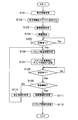
- FIG. 9 is a flowchart showing a flow of processing in the care support system of the present embodiment.
- the cloud 200 will be mainly described.
- the operation is started by receiving request information including the contents of the work required by the contractor from the contractor terminal 100 (step S101).
- the request information is sent to the director terminal 500 once.
- all the request information is collected in the director terminal 500. That is, all request information is managed by the director terminal 500.
- the director terminal 500 transmits the request information to the recruitment information generation unit 22 of the cloud 200 (Step S102).
- the request information is transmitted to the cloud 200 after being aggregated by the director terminal 500, but may be transmitted to the cloud 200 from the beginning.
- the cloud 200 can manage the request information in the director terminal 500 by transmitting the request information collectively to the director terminal 500.
- the recruitment information generation unit 22 of the cloud 200 creates the recruitment information including the required work, the number of staff, and the date and time for each contractor based on the request information (step S103).
- the recruitment information generation unit 22 transfers the recruitment information to the browsing operation unit 23.
- the browsing operation unit 23 enables browsing of the recruitment information on the staff terminal 400 possessed by the staff T, and starts browsing (step S104).
- the browsing operation unit 23 allows the recruitment information to be browsed by all staff terminals 400 connected to the communication network 300.
- the method of browsing the recruitment information may be an electronic mail, or the recruitment information may be shared using an SNS service.
- the staff dispatch information generation unit 24 confirms whether or not there is an application for the recruitment information from the staff T, that is, whether or not the application information has been acquired from the staff terminal 400 (step S105). When there is no application from the staff T (No in step S105), the staff dispatch information generation unit 24 waits until there is an application (continues step S105).
- the staff dispatch information generation unit 24 acquires the identification number of the staff terminal 400 from the application information and possesses the staff terminal 400 from the identification number. Identify the staff T that is working. Then, the staff dispatch information generation unit 24 acquires the information of the staff T from the staff information management database 211 of the database operation unit 21. The staffing information generation unit 24 generates staffing information in which the contractor and the staff T who applied for the work are allocated (step S106).
- the staff dispatch information generation unit 24 transmits the staff dispatch information to the director terminal 500 (Step S107). Then, the cloud 200 checks whether there is a reply from the director terminal 500 (step S108). If there is no reply from the director terminal 500 (No in step S108), the process waits until there is a reply from the director terminal 500 (step S108 is repeated).
- the care director D can check the staff dispatch information displayed on the director terminal display unit 51 of the director terminal 500 and determine whether the dispatched staff T is appropriate for the contractor and the work. Then, when it is determined that the information is appropriate, the director terminal 500 is operated to transmit the approval information. If it is determined that the information is not appropriate, non-approval information including the reason (for example, the distance between the house and the home of the cared person C is long) is transmitted. In addition, the non-approval information may include only the fact that the user does not approve.
- step S108 the cloud 200 checks whether the information sent from the director terminal 500 is approval information (step S109).
- the staff dispatch information generation unit 24 acquires the correction information including the inappropriate staff T and the reason thereof from the non-approval information (Ste S110). Then, the staffing information generating unit 24 generates the staffing information again with reference to the correction information (return to step S106).
- the notification unit 25 sends the request including the information of the contractor performing the work and / or the name of the care receiver, the date and time, and the content of the work.
- the information is transmitted to the staff terminal 400 that has transmitted the application information (step S111).
- the request information may be generated by the staff dispatch information generation unit 24 or may be generated by the notification unit 25.
- the notification unit 25 transmits the staff information including the information of the staff T performing the work to the contractor terminal that has sent the request information (step S112).
- a staff T can be dispatched for work required by a contractor connected by the communication network 300. At this time, the staff T can be quickly dispatched to a contractor who needs all the work. Further, the staff T can perform the work by confirming the recruitment from the contractor terminal 100 and applying by himself. Therefore, the staff T can use the free time efficiently. Further, it is possible to suppress the work from being concentrated on some staffs T due to the absence of the substitute staffs T. Further, in the care support system A, the care director D can grasp the recruitment and application of all jobs and the dispatch of the staff T. This allows the care director D to promptly respond when an accident occurs, such as the staff T being unable to go to the care receiver C due to paralysis of the transportation network or the like.
- the browsing operation unit 23 performs browsing restriction for each staff terminal 400 with reference to the work column 211e, the rank column 211f, and the contractor's evaluation column 211g of the staff information management database 211, and browses the application information. For example, for a staff member T engaged in nursing care work, information related to medical care work cannot be browsed. In addition, even if the staff T is engaged in nursing care, the browsing operation unit 23 restricts the browsing restriction to the staff T who is determined to be unable to apply based on the rank of the staff information management database 211 and the evaluation of the contractor. You may put it on. In this way, trouble caused by compatibility between the care receiver C and / or the caretaker S and the staff T can be suppressed.
- the browsing operation unit 23 checks the possible work of the staff, the rank, the evaluation of the contractor, and the like, and only at the staff terminal 400 of the staff T who determines that dispatch is possible, Make new recruitment information available. In this way, the staff T can apply for the recruitment smoothly and easily.
- a contractor recruits works with a time limit
- the present invention is not limited to this.
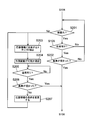
- FIG. 10 is a flowchart showing the operation of another example of the care support system according to the present invention.
- the care support system A of the present embodiment has the same configuration as the care support system A of the first embodiment. Therefore, each part of the care support system A is denoted by the same reference numeral as in the first embodiment, and detailed description is omitted.
- the flowchart shown in FIG. 10 includes steps S201 to S207 dispatched between steps S104 and S106 of the flowchart shown in FIG. Also, step S105 is included.
- the description of the same parts as the operation of the care support system A of the first embodiment will be omitted.
- the browsing operation unit 23 checks whether or not the recruitment information is within the browsing deadline (step S201). . When it is within the browsing period (Yes in step S201), the browsing operation unit 23 checks whether or not there is an application for the recruitment information (step S105). If there is no application (No in step S105), the browsing operation unit 23 returns to the confirmation (step S201) as to whether or not it is within the browsing period.
- the viewing period may be included in the request information Rq, or may be a certain time (for example, 24 hours) before the start of the work based on the information on the period of the request information and the time information. If the expiration date is not included in the request information Rq, it is preferable that the staff T apply after the application and that the staff T have a sufficient margin to prepare. Preparation also includes time to the dispatch location.
- the staff dispatch information generation unit 24 checks whether the recruitment has been filled up (step S202). When the recruitment is not filled (in the case of No in step S202), the browsing operation unit 23 confirms whether or not it is within the browsing period (return to step S201). When the recruitment is completed (Yes in step S202), the staff dispatch information generation unit 24 generates staff dispatch information (step S106).
- the staff dispatch information generation unit 24 refers to the staff information management database 211, and performs work information, rank information, contractor evaluation information, desired information, schedule information, and the like. Then, a staff T matching the conditions (for example, period, place, work content, skill level, skill) etc. included in the recruitment information is extracted (step S203). Then, the notification unit 25 transmits confirmation information for confirming whether or not the recruited work can be handled to the staff terminal 400 of the extracted staff T (step S204). Note that the notification unit 25 may be configured to receive the approval of the notification of the confirmation information from the director terminal 500 before transmitting the confirmation information.
- the confirmation information is displayed on the staff terminal display unit 41.
- the confirmation information is the same as or equivalent to the detailed display of the application information shown in FIG.
- the staff T After confirming the confirmation information displayed on the staff terminal display unit 41, the staff T transmits workable information or work impossible information including information on whether work is possible or not, based on the information displayed in the confirmation information. .
- the workable information is transmitted when work is possible, and the work impossible information is transmitted when work is not possible.
- the staff dispatch information generation unit 24 checks whether there is a reply from the staff terminal 400 (step S205). If there is no reply (No in step S205), the process waits until there is a reply (return to step S205). If there is a reply (Yes in step S205), the staffing information generation unit 24 checks whether the reply is workable information or workless information, and checks whether the recruitment is filled based on the reply (step S205). Step S206). If the recruitment has been completed (Yes in step S206), the staffing information generation unit 24 generates staffing information (step S106).
- the staffing information generation unit 24 changes the conditions for extracting staff (step S207). As a condition for extracting staff, the place where the rank is 3 or more at the time of the first extraction is changed to the rank 5 or more. Then, returning to step S203, the staff dispatch information generation unit 24 extracts the staff T from the staff information management database 211 under a new condition for extracting the staff.
- the present invention is not limited to this.
- the steps S203 to S207 are repeated to transfer the staff T to the cared person C. You may be dispatched.
- FIG. 11 is a diagram illustrating another example of the staff information management database.
- the staff information management database 211 is provided with individual ranks as well as overall ranks.
- FIG. 11 shows the rank database 213 of the staff information management database 211. As shown in FIG. 11, the rank database 213 quantifies, for example, the appropriateness of the staff for determining the rank of the care staff.
- the rank database 213 is provided for each staff and is linked to the staff information management database 211.
- the rank database 213 indicates a staff name 213N.
- the items in the rank database 213 are experience value 213a, bathing assistance 213b, meal assistance 213c, changing assistance 213d, toilet assistance 213e, cleaning 213f, washing 213g, cooking 213h, and general 213i.
- Each item is evaluated with a numerical value (evaluation value) of at least 1 to at most 5.
- a numerical value a number with about one decimal place may be used. For example, when a number up to the first decimal place is used, the evaluation value is 1.0 to 5.0.
- the experience value 213a indicates the experience value of the work as the assistant staff. The experience value is evaluated based on, for example, the number of years, the total work time, and the like.
- Each item of the change assistance 213d, the toilet assistance 213e, the cleaning 213f, the laundry 213g, and the cooking 213h includes feedback from a contractor, feedback from a care recipient and / or a family member thereof, and feedback from staff who worked together.
- the care director D makes a determination based on the information.
- information may be acquired for each operation and the evaluation may be performed. Further, the staff T dispatched for the work extracted at random may be evaluated. Further, other items may be included.
- the staff dispatch information generation unit 24 considers each item of the rank database 213 and the conditions described in the request information when selecting staff dispatch, and selects an appropriate staff. Then, staff dispatch information for dispatching the staff determined to be appropriate to the care receiver C is generated (step S106 in FIG. 9), and transmitted to the director terminal 500 (step S107 in FIG. 9).
- the director terminal 500 can access the staff information management database 211 of the cloud 200. Then, the care director D checks the staff dispatch information displayed on the director terminal display unit 51. At this time, the care director D confirms information that is difficult to judge using only the numerical values (for example, close to the house in the hope column), and if there is an inappropriate part in the staff dispatch information, disapproval including the reason is made. Submit information.
- the decision is made based on the information of the staff who applied to dispatch the staff.
- the staff information management database 211 has a staff schedule column 211i, and has schedule information on the work of the staff T.
- a staff T with a higher rank is applying for the recruited work
- a staff T with a lower rank is applying
- a staff with a higher tank and a staff with a lower rank are assigned.
- OJT On ⁇ Job ⁇ Training
- the dispatch may be set so that the staff with a lower rank works together with the staff with a higher rank.
- the change of the staff may be adjusted by the cloud 200, or may be adjusted by the care director D and reflected on the staff adjustment by the cloud 200.
- the staff dispatch information generation unit 24 checks the staff information management database 211 and suppresses the incompatible staff from being dispatched to the simultaneous caregiver's home. And generate staff information. By doing so, it is possible to suppress a decrease in work efficiency due to work performed by staff members with incompatible work. Furthermore, the staff dispatch information generation unit 24 checks the contractor information management database 212 and generates staff dispatch information so that the staff T incompatible with the care receiver or the caretaker is not dispatched to his / her home. Good. By doing so, it is possible to prevent trouble beforehand.
Landscapes
- Business, Economics & Management (AREA)
- Engineering & Computer Science (AREA)
- General Business, Economics & Management (AREA)
- Health & Medical Sciences (AREA)
- Tourism & Hospitality (AREA)
- Strategic Management (AREA)
- Human Resources & Organizations (AREA)
- Economics (AREA)
- General Health & Medical Sciences (AREA)
- Entrepreneurship & Innovation (AREA)
- Theoretical Computer Science (AREA)
- Primary Health Care (AREA)
- General Physics & Mathematics (AREA)
- Physics & Mathematics (AREA)
- Marketing (AREA)
- Biomedical Technology (AREA)
- Epidemiology (AREA)
- Medical Informatics (AREA)
- Child & Adolescent Psychology (AREA)
- Development Economics (AREA)
- Educational Administration (AREA)
- Public Health (AREA)
- Game Theory and Decision Science (AREA)
- Operations Research (AREA)
- Quality & Reliability (AREA)
- Management, Administration, Business Operations System, And Electronic Commerce (AREA)
- Medical Treatment And Welfare Office Work (AREA)
Abstract
日常の生活を支援する対象となる対象者又は前記対象者の世話をする世話者からの要求に応じてスタッフを派遣するケアサポートシステムであって、前記対象者又は前記世話者から要求される作業を募集情報としてスタッフに閲覧可能にし、募集情報に対して、スタッフからの応募に基づいて、派遣するスタッフを決定し、各々の作業を行う場所に派遣するスタッフの決定をディレクタが承認する。
Description
本発明は、対象者の日常の生活を支援するケアサポートシステムに関する。
例えば、特許5503449号公報には、登録型の労働者を作業者としてファミリーサポートサービスを提供するファミリーサポートサービス支援システムが開示されている。ファミリーサポートサービス支援システムは、事業者に使用される事業者サーバと、事業者サーバに接続可能なクライアント端末とを有する。そして、事業者サーバは、ファミリーサポートサービスの複数の利用者について、利用者情報を保持および管理する。複数の作業者について、属性情報およびスケジュール情報を含む作業者情報を保持および管理する。
そして、利用者からのファミリーサポートサービスの利用申し込みを受け付けると、利用申し込みに係る利用予定日時に業務可能な作業者を作業者候補として抽出し、当該作業者候補からの作業依頼の受諾連絡を受け付けて作業者を決定して予約を確定する。このようなシステムを用いることで、利用者に作業者を割り振る作業を簡略化できる。また、作業者も、端末を介して作業依頼を受けることができるので、サービスセンター等で待機する必要がなく、作業者の利便性も高くなる。
しかしながら、この手のサービスでは、作業者のスケジュールに基づいて、作業者を割り当てるため、作業が割り当てられる作業者と割り当てられない作業者とが偏る虞がある。また、作業者が仕事を選択することが困難であり、作業者の意欲が低下する虞がある。
そこで本発明は、スタッフの意思を可能な限り反映し、複数の派遣先に効率よく適切なスタッフを適切に派遣することができるケアサポートシステムを提供することを目的とする。
上記目的を達成するために本発明のケアサポートシステムは、日常の生活を支援する対象となる対象者又は前記対象者の世話をする世話者からの要求に応じてスタッフを派遣するケアサポートシステムであって、ネットワークに通信可能に接続されて前記対象者及び前記世話者の少なくとも一方による入力操作を受け付ける契約者端末と、前記ネットワークに通信可能に接続されて前記スタッフが個々に所持するとともに前記スタッフによる入力操作を受け付けるスタッフ端末と、前記ネットワークに通信可能に接続されて前記スタッフの管理を行うケアディレクタによる入力操作を受け付けるディレクタ端末と、前記ネットワークに通信可能に接続されたクラウドと、を含み、前記クラウドは、前記契約者端末から要求される作業の情報を含む要求情報に基づいて前記作業の内容、当該作業を行う場所及びその時間の情報を含む募集情報を作成するとともに前記募集情報を少なくとも一部の前記スタッフ端末で閲覧可能にし、前記スタッフ端末からの前記募集情報に対して応募する情報を含む応募情報に基づいて、前記作業を行う場所の各々に派遣するスタッフの派遣を決めるとともにスタッフの派遣情報をスタッフ派遣情報として前記ディレクタ端末に送信し、前記ディレクタ端末から前記スタッフ派遣情報に基づいて前記スタッフの派遣を承認する承認情報を受け付けたときに、前記作業を行う場所に派遣されるスタッフの前記スタッフ端末に作業の依頼を行う依頼情報を提供するとともに前記契約者端末に対して派遣される前記スタッフの情報をスタッフ情報として提供する。
このように構成することで、スタッフの作業を行う意思(応募)に基づいて、スタッフの派遣を決定することが可能である。そのため、スタッフが、自分の不得意とする作業やできない作業に派遣されることを抑制し、スタッフが気持ち良く作業を行うことができる。これにより、スタッフによる作業の品質を上昇することができる。
上記構成において、前記ディレクタ端末は、前記契約者端末の各々から前記要求情報を取得するとともに、前記要求情報に基づいて生成された募集情報を前記クラウドに提供するようにしてもよい。このようにすることで、ケアディレクタが、契約者端末からの要求情報を全て掌握することができる。そのため、交通傷害、疾病等の突発的な事象によってスタッフに欠員が出た場合に、ケアディレクタは、迅速にスタッフの派遣を決定することができる。なお、ケアディレクタは、クラウドにスタッフ派遣の指示を送るだけでもよい。
上記構成において、前記要求情報には、作業のスケジュールを示すスケジュール情報を含んでいてもよい。これにより、短期間の作業の募集を行うことが可能となる。
上記構成において、前記クラウドは、前記スタッフ端末を使用するスタッフの情報を管理するスタッフ情報管理データベースを備えていてもよい。これにより、クラウドは、スタッフの情報に基づいて、スタッフごとに募集情報を作成することができる。
上記構成において、前記スタッフ情報管理データベースは、少なくとも作業に対する適正、スキルを含む適正を数値化した適正値を前記スタッフごとに備えてもよい。このようにすることで、クラウドは、スタッフの応募を参照しつつ、適正、スキルにあった被介護者の元にスタッフを派遣することも可能となる。
上記構成において、前記クラウドは、前記要求情報から作業に要求される適正を取得するとともに、前記スタッフ情報管理データベースから前記作業に対する適正に合致する前記スタッフを抽出し、前記抽出されたスタッフの前記スタッフ端末で前記募集情報を閲覧可能にしてもよい。このようにすることで、適正、スキルを持たないスタッフが、応募するのを抑制できる。また、スタッフにとって、応募できない情報を閲覧しないので、募集情報の確認が容易になる。
上記構成において、前記クラウドは、前記要求情報から前記作業に要求される適正を取得するとともに、前記スタッフ情報管理データベースから前記応募情報を提供した前記スタッフ端末の入力操作を行ったスタッフの前記適正値を取得し、前記応募情報を提供した前記スタッフ端末の入力操作を行ったスタッフを適切な場所に派遣するスタッフ派遣情報を生成する。これにより、適材適所の派遣を可能とする。また、適正、スキルが不十分であったとしても、適正、スキルの高いスタッフと組み合わせて派遣することも可能であり、作業を行いながらスタッフの適正、スキルを挙げることができる。すなわち、スタッフ全体の適正、スキルの底上げが可能である。
前記クラウドは、前記対象者及び(又は)前記世話者の情報を管理する契約者情報管理データベースをさらに備え、前記契約者情報管理データベースには、スタッフとの相性の情報が含まれており、前記クラウドは、前記契約者情報管理データベースから前記スタッフとの相性の情報を取得するとともに、前記対象者及び(又は)前記世話者と前記スタッフとの相性を鑑みて適切なスタッフを決定してもよい。
上記構成において、前記クラウドは、前記作業を行う場所に派遣するスタッフの派遣を決めるときに前記スタッフが不足する場合において、前記不足したスタッフを前記スタッフ情報管理データベースに基づいて作業担当可能なスタッフを抽出するとともに、抽出したスタッフの前記スタッフ端末に対して作業の可否を問う確認情報を送信し、前記スタッフ端末から前記作業が可である作業可能情報を取得したときに、前記作業可能情報を取得した前記スタッフ入力操作を行ったスタッフを含んだスタッフ派遣情報を生成する。このようにすることで、募集数に対して応募数が少なくて募集が満たされない場合、突発的にスタッフが不足する場合等にもスタッフの派遣が可能となる。
上記構成において、前記クラウドは、スタッフ本人、前記対象者、前記世話者及び共同で作業を行ったスタッフの少なくとも1者から作業を実行したスタッフに対する評価を取得するとともに、前記スタッフへの評価として、前記スタッフ情報管理データベースに蓄積してもよい。
上記構成において、前記スタッフ情報管理データベースは、前記スタッフごとに前記作業に対する希望の情報である希望情報をさらに含んでいてもよい。このようにすることで、スタッフの希望に応じた作業に派遣することができるため、スタッフの意欲を高めることが可能である。
上記構成において、前記クラウドは、作業を行った作業者から、作業内容の情報を取得するとともに、作業内容を次の作業者への引き継ぎ資料として記憶してもよい。
本発明によると、スタッフの意思を可能な限り反映し、複数の派遣先に効率よく適切なスタッフを適切に派遣することができるケアサポートシステムを提供することが可能である。
本発明について、図面に基づいて説明する。なお、本明細書において、スタッフとは、介護に従事する従事者を指す。また、ケアとは、介護に関して対象者に対して実施される世話を指す。さらにケアの対象者は、自宅で生活を行っているものとする。なお、自宅には、個人宅以外にも、サービス付老人住宅等も含むものとする。そして、被介護者Cとは、ケアの対象者を示す。また、被介護者と同居の同居人やサービス付老人住宅の管理人等、日常的に被介護者の世話を行う者を、世話者Sとする。そして、本実施形態では、ケアサポートシステムAによるサポート契約を結んでいる被介護者及び(又は)世話者Sを合せて契約者と称する。
<第1実施形態>
〔ケアサポートシステム〕
図1は、本発明にかかるケアサポートシステムの一例の概略の構成を示す説明図である。ケアサポートシステムAは、通信ネットワーク300を介して、複数の契約者端末100が通信可能に接続されている、契約者端末100は通信ネットワーク300と通信可能な構成を有している。なお、被介護者は、必要なケアによってランクが分かれている。例えば、入浴、着替等の身の回りの世話が困難な被介護者もいるし、身の回りの世話は自分でできるが、食事の準備、掃除等の家事が困難な被介護者もいる。また、被介護者が幼児の場合もあり、この場合、身の回りの世話、家事等は、不要で、見守りだけの場合もある。そのため、ケアサポートシステムAにおいて、契約者端末100は、被介護者が自ら通信動作が可能な場合被介護者が所持していてもよい。また、被介護者が通信動作をできない場合や未成年等の場合、世話者Sが契約者端末100を所持する。契約者端末100は、被介護者C又は世話者Sの操作入力を受け付ける情報端末である。
〔ケアサポートシステム〕
図1は、本発明にかかるケアサポートシステムの一例の概略の構成を示す説明図である。ケアサポートシステムAは、通信ネットワーク300を介して、複数の契約者端末100が通信可能に接続されている、契約者端末100は通信ネットワーク300と通信可能な構成を有している。なお、被介護者は、必要なケアによってランクが分かれている。例えば、入浴、着替等の身の回りの世話が困難な被介護者もいるし、身の回りの世話は自分でできるが、食事の準備、掃除等の家事が困難な被介護者もいる。また、被介護者が幼児の場合もあり、この場合、身の回りの世話、家事等は、不要で、見守りだけの場合もある。そのため、ケアサポートシステムAにおいて、契約者端末100は、被介護者が自ら通信動作が可能な場合被介護者が所持していてもよい。また、被介護者が通信動作をできない場合や未成年等の場合、世話者Sが契約者端末100を所持する。契約者端末100は、被介護者C又は世話者Sの操作入力を受け付ける情報端末である。
契約者端末100は、例えば、タブレットやスマートフォンなどの多機能型携帯端末、ノート型パーソナルコンピュータを挙げることができる。また、ブレスレットまたは腕時計等のような装着型のウェアラブルデバイスであってもよい。これら以外にも、被介護者C又は世話者Sに情報を提供できるとともに、被介護者C又は世話者Sの入力操作を受け付けることができるデバイスを広く採用できる。ここでは、スタッフ端末400を、携帯性が高く、情報の表示および入力操作が容易なスマートフォン型の携帯端末とする。契約者端末100は、例えば、アプリケーションと呼ばれるプログラムを起動することで、ケアサポートシステムAに接続可能となっている。なお、ケアサポートシステムAを利用する契約を行ったときに、ケアサポートシステムA専用の端末を購入する又は貸与されてもよい。
図1に示すように、ケアサポートシステムAは、クラウド200と、通信ネットワーク300と、スタッフ端末400と、ディレクタ端末500と、を備える。
クラウド200は、通信ネットワーク300上における情報の処理、蓄積、配信等のサービスを提供する。クラウド200の詳細な動作は後述するが、クラウド200は、各契約者端末100からの情報を蓄積したり、スタッフ端末400、ディレクタ端末500からの情報に基づいて、処理を行う。
クラウド200が管理する情報としては、例えば、契約者端末100の情報、契約者端末100と関連付けられた被介護者の情報、契約者端末100からの作業の要求情報、スタッフTの情報、スタッフ端末400の個別情報、スタッフ端末400からの応募情報、等を挙げることができる。クラウド200で管理する情報の詳細についても、ケアサポートシステムAの動作説明とともに説明する。
通信ネットワーク300は、複数の機器と通信が可能な通信回線を備える。通信ネットワーク300は、例えば、インターネット、携帯電話通信網等の公共の通信網を用いてもよいし、専用回線、専用空中線等を用いて、予め決められた、契約者端末100、クラウド200、スタッフ端末400及びディレクタ端末500のみが接続可能な通信網であってもよい。
ケアサポートシステムAでは、スタッフTがスタッフ端末400を携帯(所有)している。図1において、3人のスタッフTを図示しているが、人数は、3人に限定されない。そして、個々のスタッフTがそれぞれスタッフ端末400を携帯する。すなわち、ケアサポートシステムAにおいて、通信ネットワーク300には、複数のスタッフ端末400が接続可能である。なお、以下の説明において、特にスタッフを個別に特定しない場合には、スタッフTとして説明する。
スタッフ端末400は、スタッフTによる操作に基づいて、クラウド200にアクセスして種々の情報を取得できる。そして、スタッフ端末400は、取得した情報を後述するスタッフ端末表示部41に表示させることが可能である。またクラウド200から情報が配信される場合もある。この場合もクラウド200からの情報をスタッフ端末表示部41に表示させることが可能である。
スタッフTがスタッフ端末400で入力する情報としては、クラウド200で公開される情報、あるいは、クラウド200から送信された募集情報に対する応募を行う応募情報、スタッフTのスケジュール、スキル等の情報を挙げることができる。なお、これらの情報は、通信ネットワーク300を介して、クラウド200に送信されて、クラウド200のストレージ機能に搭載されたデータベース機能に格納される。
<スタッフ端末400およびディレクタ端末500>
次にスタッフ端末400について、図面を参照して説明する。図2は、スタッフ端末の機能ブロック図である。図2に示すように、スタッフ端末400は、スタッフ端末表示部41と、制御部42と、記憶部43と、通信部44とを備える。
次にスタッフ端末400について、図面を参照して説明する。図2は、スタッフ端末の機能ブロック図である。図2に示すように、スタッフ端末400は、スタッフ端末表示部41と、制御部42と、記憶部43と、通信部44とを備える。
スタッフ端末表示部41は、表示パネル411と、タッチセンサ412とを備える。表示パネル411は、画像、文字等の情報を表示する。表示パネル411としては、例えば、液晶パネル、有機ELパネル等を挙げることができるが、これに限定されない。タッチセンサ412は、表示パネル411の前面に派遣されており、例えば、スタッフTの指の接触部分の位置を検知する。これにより、タッチセンサ412は、表示パネル411に表示された画像のうちスタッフTの指が接触した画像を検知できる。すなわち、スタッフ端末表示部41は、いわゆる、タッチパネルである。
スタッフ端末表示部41は、制御部42と接続される。制御部42は、スタッフ端末400の各部を制御するとともに、スタッフ端末400で取り扱われる情報の処理を行う。制御部42は、CPUを備えている。
記憶部43は、制御部42が実行する制御プログラムや各種の情報を記憶するメモリであり、例えばRAM(Random Access Memory)、ROM(Read Only Memory)、不揮発性メモリなどで構成されている。
通信部44は、通信ネットワーク300に接続して、情報を送受信する。また、通信部44は、通信ネットワーク300に接続される。なお、通信部44は、無線通信網および有線通信網の少なくとも一方と接続可能なインターフェースであり、送信回路、受信回路、アンテナ等を備える。
なお、スタッフ端末400としては、例えば、タブレットやスマートフォンなどの多機能型携帯端末、ノート型パーソナルコンピュータを挙げることができる。また、ブレスレットまたは腕時計等のような装着型のウェアラブルデバイスであってもよい。これら以外にも、スタッフTに情報を提供できるとともに、スタッフTによる入力操作を受け付けることができるデバイスを広く採用できる。ここでは、スタッフ端末400を、携帯性が高く、情報の表示および入力操作が容易なスマートフォン型の携帯端末とする。スタッフ端末400は、クラウド200から情報を取得したときに、音声、振動等でスタッフTに通知できる機能を備えていてもよい。また、スタッフTの個人所有のスマートフォン、タブレット、パーソナルコンピュータ等の情報端末にアプリケーションをインストールすることで、スタッフ端末400としてもよい。
ケアサポートシステムAにおいて、スタッフTは、対象者の自宅にケアに伺う。そのため、スタッフ端末400は、通信ネットワーク300への接続だけで、スタッフ端末400の位置を判定するのが困難な場合がある。そのため、スタッフ端末400は、GPS(global positioning system)信号を受信できる機能を有していることが望ましい。例えば、スタッフ端末400に地図を表示できる機能を備えておき、GPS信号と対象者の自宅の情報(住所、経度緯度情報等)に基づいて、道案内可能な構成であってもよい。
また、本実施形態のケアサポートシステムAは、ケアディレクタDによって使用される端末装置である、ディレクタ端末500を含んでいる。ディレクタ端末500は、スタッフ端末400と同様に、タブレットやスマートフォンなどの多機能型携帯端末、ノート型パーソナルコンピュータなどで構成されている。ディレクタ端末500もスタッフ端末400と同様、通信ネットワーク300に接続される。なお、スタッフ端末400とディレクタ端末500とは直接情報の送受信が可能であってもよいし、クラウド200を経由して情報の送受信を行ってもよい。ディレクタ端末500は、情報を表示する表示部を備えている。なお、以下の説明では、スタッフ端末表示部41と区別するために、ディレクタ端末500の表示部をディレクタ端末表示部51として説明する。
ここで、ケアディレクタDとは、スタッフTに対して、作業に関する指示や助言を与える指示者(監督者)である。例えば、ケアディレクタDがディレクタ端末500を操作して指示情報を入力すると、その指示情報がディレクタ端末500から通信ネットワーク300を介してスタッフ端末400に送信される。指示情報をスタッフ端末400のスタッフ端末表示部41に表示させることにより、スタッフTは、表示された指示情報に基づいて適切なケア等の作業を行うことができる。また、ケアディレクタDは、ディレクタ端末500を操作して、クラウド200における動作の設定および変更を行うことが可能である。なお、ケアディレクタDは、人工知能であってもよく、この場合、クラウド200がケアディレクタDを兼ねてもよい。
ディレクタ端末500は、後述するスタッフ派遣情報を取得する。ディレクタ端末500では、ディレクタ端末表示部51にスタッフ派遣情報を表示する。ケアディレクタDは、ディレクタ端末表示部51に表示されたスタッフTの派遣を確認し、スタッフTの派遣を承認するか否かの操作を行う。ディレクタ端末500は、スタッフTの派遣の承認情報をクラウド200に送信する。なお、非承認の場合には、非承認情報を送信する。なお、非承認情報には、非承認の理由、非承認と認定したスタッフT、スタッフ派遣の代替案等を含んでよい。
被介護者は、自宅にいる。そして、被介護者に対して、ケアを行ってくれる世話人が常時同居していることは少ない。そのため、ケアサポートシステムAでは、被介護者の状態(例えば身体状態)を入居者とは非接触で検知する非接触センサを備えた、検知ユニット600を、被介護者の居室に備える場合がある(図1参照)。
検知ユニット600は、電波式のセンサ、光学式のセンサを備えている。また、これら以外のセンサを備える場合もある。そのため、検知ユニット600は、センサボックスとも呼ばれる。
電波式のセンサは、電波の放射および受信によって、被介護者の状態を検知する。電波式のセンサは、例えば24GHz帯のマイクロ波を放射し、被介護者で反射されドップラーシフトした反射波を受信するマイクロ波ドップラーセンサによって構成される。これにより、電波式のセンサは、受信した反射波から、被介護者の呼吸状態(呼吸数)、睡眠状態、心拍数などを生体情報(バイタルデータ)として検出することができる。
なお、被介護者が呼吸しているとき(睡眠中も含む)、被介護者の呼吸による体の微小な動き(微体動)が生じる。このため、被介護者の呼吸状態や睡眠状態を検出することは、入居者の微体動を検出するのと同じである。このことから、電波式のセンサは、被介護者の微体動を検出する微体動検出部として機能しているとも言うことができる。
また、電波式のセンサは、電波(マイクロ波)を放射し、被介護者にて反射してきた電波(反射波)の周波数と、放射した電波の周波数とを比較することにより、被介護者の身体の動き(体動)を検出することもできる。なお、電波式のセンサは、体動および微体動のどちらか一方のみを検出するセンサであってもよい。
光学式のセンサは、居室内部を撮影して画像を取得する撮像部である。例えば、可視光の光量が少ない場合でも、居室内部を撮影できる赤外画像センサを備えていてもよい。光学のセンサは、被介護者の生活を見守るセンサである。
検知ユニット600は、電波式のセンサおよび光学式のセンサから得た情報を被介護者の状態に関する情報としてクラウド200に出力する。クラウド200は、被介護者の状態(健康状態、活動状態等)を確認できる。また、クラウド200は、検知ユニット600からの情報に基づいて、被介護者の異常を察知すると、被介護者と関連付けられた契約者端末100に異常が発生している可能性がある情報を通知する。また、近くにいるまたは被介護者の確認に駆け付けられるスタッフTのスタッフ端末400にも同様の情報を通知してもよい。
<クラウド200の詳細な構成>
次に、クラウド200について説明する。クラウド200は、計算機リソースを提供する複数のノードを含む。例えば、クラウド200は、外部機器(ここでは、契約者端末100、スタッフ端末400、ディレクタ端末500等)が接続されるフロントエンド、それぞれの機能を有するノード群、ノード群の管理及び制御を行う管理システムを含む。
次に、クラウド200について説明する。クラウド200は、計算機リソースを提供する複数のノードを含む。例えば、クラウド200は、外部機器(ここでは、契約者端末100、スタッフ端末400、ディレクタ端末500等)が接続されるフロントエンド、それぞれの機能を有するノード群、ノード群の管理及び制御を行う管理システムを含む。
図3は、クラウドの概略構成を示す機能ブロック図である。ケアサポートシステムAにおいて、クラウド200は、データベース操作部21、募集情報生成部22、閲覧操作部23、スタッフ派遣情報生成部24及び通知部25を備える。
データベース操作部21には、例えば、登録されているスタッフTの情報を含むスタッフ情報管理データベース211、接続されている契約者端末100の情報を含む契約者情報管理データベース212等が備えられる。
ここで、データベースについて図面を参照して説明する。図4は、スタッフ情報管理データベースの一例を示す図である。スタッフ情報管理データベース211は、スタッフTに関する情報を管理する。なお、スタッフ情報管理データベース211は、予め登録されているスタッフT(ここでは、登録スタッフと称する)の情報を管理する。
スタッフ情報管理データベース211は、スタッフTごとに複数の管理項目で管理する。図4に示すように、スタッフ情報管理データベース211は、管理項目として、番号欄211a、氏名欄211b、年齢欄211c、性別欄211d、作業欄211e、ランク欄211f、契約者の評価欄211g、希望欄211h、スケジュール欄211i、相性良欄211j、相性不可欄211kを備える。
番号欄211aはスタッフTの識別番号が格納される。スタッフTの識別番号は、スタッフTが所持しているスタッフ端末400の識別番号と一致する。すなわち、クラウド200は、スタッフ端末400の識別番号に基づいて、所持しているスタッフTを判別できる。
氏名欄211bは、スタッフTの氏名が格納される。本実施形態の例では、「VV」、「WW」、「XX」、「YY」の4人が登録されているが、これ以上登録されていてもよい。スタッフTの氏名は、契約者端末100に送るスタッフ情報に含まれる。年齢欄211cは、スタッフTの年齢である。性別欄211dは、スタッフTの性別が格納される。なお、図4に示すスタッフ情報管理データベース211では、男性:M、女性:Fとしている。なお、年齢及び性別は、スタッフTの希望により登録しなくてもよいが、募集条件に、年齢、性別がある場合に、応募が無効になる。
作業欄211eは、スタッフT各々の対応可能な作業の種類を示している。図4に示すスタッフ情報管理データベース211では、8個の数字で、対応可能な作業を示している。
各ケタは、対応可能な作業内容を示している。すなわち、「食事介助」、「入浴介助」、「着替介助」、「トイレ介助」、「掃除」、「洗濯」、「調理」、「その他」を示している。そして、各桁は、「0」又は「1」で示される。例えば、図4の「VV」さんは、「11111111」である。そのため、「VV」さんは、上述した仕事の全てに対応可能であることを示す。なお、作業欄211eの管理方法は、一例であり、別の管理方法を用いて管理を行ってもよい。スタッフの職種(資格)等を管理する方法を広く採用することができる。
ランク欄211fは、スタッフTに対するケアディレクタDによる評価である。ランクは上から「1」、「2」、「3」、「4」、・・・、「10」の10段階に分かれている。そして、ランクは、スタッフTのスキル、能力、経験等によって、ケアディレクタDが決定する。例えば、スキルとしては、「教育」、「補助」、「管理」等を挙げることができる。そして、これらのスキル、能力、経験等を総合的に判断してランクが決められる。なお、ランク欄211fは、スタッフTごとに1つとしているが、これに限定されない。総合ランクに加えて、スキル、能力、経験等を細かく分類し、分類ごとにランクを含んでいてもよい。
契約者の評価欄211gは、スタッフTの作業に対する契約者である被介護者またはその世話者Sからの評価を総合したものである。例えば、評価は「S」、「A+」、「A」、「B+」、「B」・・・で示される。契約者の評価欄211gは、これまで、作業に訪れた被介護者Cまたはその世話者Sである契約者からの評価(フィードバック)に基づいて、総合的に決定された総合評価である。評価の基準は、各契約者端末100に予め通知しておき、その基準に基づいて、評価されるものとする。なお、契約者の評価欄211gは、スタッフTごとに1つとしているが、これに限定されない。総合評価に加えて、契約者ごと、評価基準ごとの評価を含んでいてもよい。このようにすることで、被介護者Cまたは世話者Sとスタッフとの相性による、トラブルを避けることが可能である。
ランク欄211f及び契約者の評価欄211gは、被介護者C及び世話者Sの少なくとも一方からのフィードバック、一緒に作業を実行したスタッフからの情報に基づいて決定される。なお、作業が終了するごとに自己評価、他のスタッフの評価、施設の評価を取得し、その情報に基づいて、ランク及び契約者の評価を更新するようにしてもよい。また、ランダムに抽出された作業に対して派遣されたスタッフTの評価を行ようにしてもよい。また、これ以外の項目が含まれていてもよい。ランク欄211f及び契約者の評価欄211gは、スタッフTへの評価の欄である。
希望欄211hは、予めスタッフTから登録された作業、契約者等に対する希望が格納される。なお、希望は、スタッフTが自由に登録してもよいし、予め登録項目を用意し、その登録項目をチェックしてもらうことで、スタッフTの希望としてもよい。
スケジュール欄211iは、スタッフTのスケジュールが格納される。スケジュールとしては、例えば、周期的なスケジュール(例えば、毎週月曜日等)と、突発的なスケジュール(例えば、××月yy日、9:00~17:00等)とが格納される。なお、スケジュール欄211iには、ケア対象の介護者および契約者名も含まれていることが好ましい。また、これら以外の管理項目、例えば、直近の作業量等の情報を含んでいてもよい。スタッフ情報管理データベース211には、スタッフ派遣情報生成部24において、スタッフTの派遣を決めるときに、考慮される情報が格納される。
相性良欄211j、相性不可欄211kは、他のスタッフTとの相性を示している。すなわち、相性良欄211jには、作業を協調して実施しやすいスタッフTが格納される。また、相性不可欄211kには、作業を協調して実施するのが難しいスタッフTが格納されている。
なお、データベース操作部21は、スタッフ情報管理データベース211の管理項目を変更できてもよい。スタッフ情報管理データベース211の管理項目の変更は、ディレクタ端末500(ケアディレクタD)からの指示に基づくものであってもよい。また、クラウド200自体が契約者端末100、スタッフ端末400(スタッフT)及びディレクタ端末500(ケアディレクタD)からのフィードバックに基づいて、機械学習を行い、必要と思われる管理項目を変更してもよい。
このとき、ディレクタ端末500からの承認があった後に最終的な追加の決定が行われる。このようにすることで、スタッフ情報管理データベース211の管理項目が際限なく増加するのを抑制できる。なお、予め管理項目の上限値を決めておき、管理項目を変更する場合、ディレクタ端末500からの承認なしで管理項目を変更できるようにしてもよい。この場合であっても、データベース操作部21は、ディレクタ端末500に管理項目の変更についての情報を送信する。
なお、スタッフ端末400から応募情報として、スタッフTの上述のような情報を取得する構成の場合、スタッフ情報管理データベース211を備えていなくてもよい。
契約者情報管理データベース212は、スタッフ情報管理データベース211と同様の構成を有しているため、詳細は省略する。契約者情報管理データベース212は、詳細な説明は省略するが、契約者ごとに、名称、住所、電話番号等の契約者を特定するための情報が格納されている。また、契約者端末100の識別番号が格納されていてもよい。契約者情報管理データベース212は、ケアサポートシステムAでスタッフTを派遣する契約者の情報を管理している。換言すると、契約者情報管理データベース212で、ケアサポートシステムAでサポートする契約者(契約者端末100)を管理している。
さらに言うと、ケアサポートシステムAによるサービスを受ける契約を結んでいる契約者の情報が、契約者情報管理データベース212に格納される。なお、契約者情報管理データベース212の情報の変更は、ディレクタ端末500からの操作によって行われることが好ましいが、クラウド200が行うようにしてもよい。契約者情報管理データベース212には、被介護者C及び世話者Sと相性が良いスタッフT及び相性が良くないスタッフTを格納されている。なお、被介護者C及び世話者Sのいずれか一方と相性が良い場合も含んでよい。この場合、被介護者C及び世話者Sの相性が良い方と反対の者とは相性が良くない場合を除く。
募集情報生成部22には、各契約者端末100から要求される作業の情報を含む要求情報が提供される。要求情報には、契約者名、必要とされる作業の内容、必要な員数、作業の時間等の情報が含まれる。
ここで、要求情報の詳細について図面を参照して説明する。図5は、要求情報の一例を示す図である。図5では、理解を容易にするために要求情報Rqを表形式で示しているが、実際には、表でなくてもよく、必要な情報が含まれていればよい。
まず、要求情報が送信される背景について説明する。多くの場合、被介護者Cは、世話者Sによってケアされているか、定期的(例えば、週4回等)なケアを受けている場合が多い。しかしながら、世話者Sが自宅を空ける必要があったり、定期的なケアが受けられなくなる場合が発生する。このような場合において、契約者は、ケアサポートシステムAに対して、足りない作業、換言すると、必要とする作業を実行できるスタッフTの派遣を要求する要求情報を送信する。
要求情報Rqは、契約者ごとに、通信ネットワーク300を介してディレクタ端末500に送られる。図5に示すように要求情報Rqは、契約者及び(又は)被介護者氏名RqN、期間欄Rq1、時間欄Rq2、作業内容欄Rq3、員数欄Rq4及び備考欄Rq5を含む。期間欄Rq1は、スタッフTの派遣を要求する期間を示す。例えば、図5の表では、2018年7月2日~7月9日の例を示している。また、単日の場合、日付の情報が格納される。また、期間を指定した後、曜日(例えば、月水金、火木土、月~金等)をさらに指定してもよい。スタッフTの派遣が必要な日時がわかる情報が格納される。
時間欄Rq2は、各期間におけるスタッフTの拘束時間である。例えば、図5の表では、8:00~14:00となっている。すなわち、8:00作業開始、14:00作業終了を意味している。
作業内容欄Rq3は、契約者が必要としている作業の内容が格納される。契約者が、必要とする作業の内容として、例えば、「介護全般」、「食事介助又は介助補助」、「入浴介助又は介助補助」等が含まれる。必要とされる作業の内容は、契約者によって異なる。例えば、幼児の見守り等のような作業が含まれてもよい。
員数欄Rq4には、必要とされる作業を実行するために必要なスタッフTの人数に相当する。なお、員数は、通常のスキル及び経験を有するスタッフTを基準としたものであり、熟練度が低いスタッフTでは、員数よりも多い人数が必要となる。また、スキル、熟練度が高いスタッフTでは、員数よりも少なくてもよい場合もある。
備考欄Rq5は、その他、上述の各欄では表記できない要求を記載する欄である。例えば、備考欄Rq5には、作業に要求される熟練度、スキル等が記載される場合がある。なお、備考欄Rq5については、別途必要に応じて説明を行う。
なお、これら以外にもスタッフTの派遣に必要と思われる情報が提供される場合もある。要求情報の種類については、クラウド200側で、契約者ごとに決めたものであってもよいし、契約者側で決めたものであってもよい。なお、本実施形態のケアサポートシステムAでは、各契約者端末100から提供された要求情報は、ディレクタ端末500で集約された後、クラウド200の募集情報生成部22に提供される。これにより、全ての要求情報をケアディレクタDが確認することが可能である。
募集情報生成部22は、各契約者端末100から送られてきた要求情報Rqから、作業を募集している契約者名、募集されている作業の内容、募集されているスタッフTの人数、作業を行う日時の情報を取得する。そして、契約者ごとに契約者及び(又は)被介護者氏名、作業内容、スタッフTの員数、日時の情報を募集情報として生成する。
閲覧操作部23は、スタッフ端末400を用いて、募集情報を閲覧可能にする。閲覧操作部23は、例えば、SNS(Social Network Service)で予め登録されているスタッフ端末400に対して、応募情報を共有するようにしてもよいし、予め登録されているスタッフ端末400に電子メールやメッセージサービス等を利用して配信するようにしてもよい。
また、閲覧操作部23は、スタッフ端末400から募集情報に常にアクセス可能にしておき、随時、募集情報を更新するようにしてもよい。このとき、募集情報を更新したことをスタッフ端末400に送信するようにしてもよい。
ここで、募集情報の詳細について、図面を参照して説明する。図6は、スタッフ端末で表示された募集情報の一例を示す図である。図6に示すように、スタッフ端末400のスタッフ端末表示部41には、募集情報RBと、応募ボタンK1と、キャンセルボタンK2とが表示される。スタッフ端末400では、募集情報RBを閲覧し、その後すぐに、応募可能な構成となっている。
募集情報RBは、チェック欄Rb1、契約者及び(又は)被介護者氏名欄Rb2、期間欄Rb3、時間欄Rb4、作業内容欄Rb5、員数欄Rb6、報酬欄Rb7及び備考欄Rb8が表示される。チェック欄Rb1は、正方形状のチェックボックスが表示される。募集情報RBを閲覧したスタッフTは、チェック欄Rb1をチェックすることで、選択を行うことができる。
契約者及び(又は)被介護者氏名欄Rb2は、スタッフを募集している契約者及び(又は)被介護者氏名が格納される。期間欄Rb3、時間欄Rb4、作業内容欄Rb5、員数欄Rb6及び備考欄Rb8は、要求情報Rqの期間欄Rq1、時間欄Rq2、作業内容欄Rq3、員数欄Rq4及び備考欄Rq5と同じ内容が格納される。そのため、詳細は省略する。また、報酬欄Rb7については、予め決められた報酬額からクラウド200が算出した値である。報酬額については、作業によって異なっていてもよいし、地域、時間等によって差があってもよい。
スタッフ端末400で募集情報RBを閲覧したスタッフTは、気に入った募集がある場合、その募集のチェックボックスをチェックする。そして、応募ボタンK1を押す(触れる)ことで、応募情報をスタッフ派遣情報生成部24に送信する。
本実施形態では、募集情報として一覧表としているが、これに限定されない。図7は、募集情報の他の例を示す図である。図8は、募集情報の詳細を示す図である。図7に示すように、カレンダ型の募集情報Scを用いてもよい。そして、募集情報Scには、各日付の部分に、現在募集中の作業の表示である募集表示Rctが表示される。そして、スタッフTが募集表示Rctを選択すると、スタッフ端末表示部41の表示が、募集情報の詳細表示Rsに切り替わる。募集情報の詳細表示Rsは、契約者及び(又は)被介護者氏名欄Rs1、期間欄Rs2、時間欄Rs3、作業内容欄Rs4、募集数欄Rs5、報酬欄Rs6、備考欄Rs7、応募ボタンK1及びキャンセルボタンK2を備える。
詳細表示Rsの契約者及び(又は)被介護者氏名欄Rs1、期間欄Rs2、時間欄Rs3、作業内容欄Rs4、募集数欄Rs5、報酬欄Rs6及び備考欄Rs7は、募集情報RBと同じであるため、詳細な説明は省略する。このように、カレンダ表示と共に募集表示Rctが表示されることで、スケジュールを立てやすくなる。なお、募集情報Scには、スタッフT個人の予定を追加することができてもよい。このようにすることで、作業の募集を迅速に行うことが可能である。また、スタッフTがスタッフ端末400上で個人的に使用しているスケジュールアプリに情報を共有してもよい。これにより、スタッフTの利便性をさらに向上することが可能である。
なお、募集情報Scには、別のスタッフによる応募状況が表示されるようになっていてもよい。募集情報に、備考にあるような経験年数の制限があったとき、応募している人によって応募条件をクリアできる場合がある。応募しているスタッフの情報を知ることで、自分が募集可能であるか否か確認することが可能である。また、閲覧操作部243で、応募しているスタッフTの情報に基づいて、閲覧可能なスタッフTを変更するようにしてもよい。
そして、スタッフ派遣情報生成部24には、募集情報を閲覧したスタッフTからの応募情報が提供される。応募情報は募集情報に対して送られる。そのため、応募情報は、募集情報に含まれる情報を含む。募集情報に、個別の識別番号が振られている場合、応募情報には、募集情報の識別番号の情報が含まれる。そして、応募情報に複数の作業、日時が設定されている場合、作業の内容とその日時の情報が含まれる。また、スタッフ派遣情報生成部24は、応募情報から応募情報を送信したスタッフ端末400及びそのスタッフ端末400を所持しているスタッフTの情報を取得する。スタッフTの情報は、応募情報に含まれていてもよいし、応募情報を送信したスタッフ端末400の識別番号をもとに、スタッフ情報管理データベース211を参照して、スタッフTの情報を取得してもよい。
スタッフ派遣情報生成部24は、スタッフTの情報と要求情報とを比較し、適切なスタッフTを派遣するスタッフ派遣情報を生成する。スタッフ派遣情報には、スタッフTの氏名、作業を行う契約者及び(又は)被介護者氏名、作業の内容、日時、備考を含む。またこれら以外の情報を含んでいてもよい。スタッフ派遣情報生成部24は生成したスタッフ派遣情報をディレクタ端末500に提供する。
スタッフ派遣情報生成部24は、ディレクタ端末500から非承認情報が送られてきたときに、スタッフの派遣を再構築する。このとき、ディレクタ端末500から受け取った非承認情報から非承認の理由等の修正情報を取得し、修正情報に基づいてスタッフ派遣情報を再度生成する。
また、通知部25は、ディレクタ端末500から承認情報を取得すると、スタッフ派遣情報に含まれるスタッフTのスタッフ端末400に依頼情報を提供するとともに、契約者端末100に対して派遣されるスタッフの情報であるスタッフ情報を送信する。
クラウド200は、上述の機能を有している。
〔具体例1〕
次に、本実施形態のケアサポートシステムAの具体的な処理について図面を参照して説明する。図9は、本実施形態のケアサポートシステムにおける処理の流れを示すフローチャートである。なお、以下の説明では、クラウド200を中心に説明を行う。
次に、本実施形態のケアサポートシステムAの具体的な処理について図面を参照して説明する。図9は、本実施形態のケアサポートシステムにおける処理の流れを示すフローチャートである。なお、以下の説明では、クラウド200を中心に説明を行う。
まず、契約者端末100から契約者が必要とする作業の内容を含む要求情報を受信する(ステップS101)ことで、動作開始する。要求情報は、一旦、ディレクタ端末500に送られる。これにより、全ての要求情報が、ディレクタ端末500に集約される。つまり、全ての要求情報は、ディレクタ端末500で管理される。そして、ディレクタ端末500は、要求情報をクラウド200の募集情報生成部22に送信する(ステップS102)。なお、本具体例では、要求情報を、ディレクタ端末500で集約した後に、クラウド200に送っているが、最初からクラウド200に送信されるようにしてもよい。このとき、クラウド200は、要求情報をまとめてディレクタ端末500に送信することで、ディレクタ端末500で要求情報の管理が可能である。
クラウド200の募集情報生成部22は、要求情報に基づいて、契約者ごとに、必要とされる作業、スタッフの員数、日時の情報を含む募集情報を作成する(ステップS103)。募集情報生成部22は、募集情報を閲覧操作部23に受け渡す。閲覧操作部23は、募集情報をスタッフTが所持するスタッフ端末400で閲覧可能にし、閲覧を開始する(ステップS104)。本具体例において、閲覧操作部23は、募集情報を、通信ネットワーク300に接続される全てのスタッフ端末400で閲覧可能にする。なお、募集情報の閲覧方法としては、上述もしているが、電子メールを送信するようにしてもよいし、SNSサービスを利用して、募集情報を共有するようにしてもよい。
スタッフ派遣情報生成部24は、スタッフTから募集情報に対する応募があるか否か、すなわち、スタッフ端末400から応募情報を取得したか否かを確認する(ステップS105)。スタッフTからの応募が無い場合(ステップS105でNoの場合)、スタッフ派遣情報生成部24は応募があるまで待機する(ステップS105を継続する)。
スタッフTから募集情報に対する応募がある場合(ステップS105でYesの場合)、スタッフ派遣情報生成部24は、応募情報をからスタッフ端末400の識別番号を取得し、識別番号からスタッフ端末400を所持しているスタッフTを識別する。そして、スタッフ派遣情報生成部24は、データベース操作部21のスタッフ情報管理データベース211からスタッフTの情報を取得する。スタッフ派遣情報生成部24は、契約者及び作業に応募したスタッフTを割り振った、スタッフ派遣情報を生成する(ステップS106)。
そして、スタッフ派遣情報生成部24は、スタッフ派遣情報をディレクタ端末500に送信する(ステップS107)。そして、クラウド200は、ディレクタ端末500からの返信があるか否か確認する(ステップS108)。ディレクタ端末500からの返信が無い場合(ステップS108でNoの場合)、ディレクタ端末500からの返信があるまで待機する(ステップS108を繰り返す)。
ケアディレクタDは、ディレクタ端末500のディレクタ端末表示部51に表示されたスタッフ派遣情報を確認し、派遣されているスタッフTが契約者および作業に適切であるか判断可能である。そして、適切であると判断した場合には、ディレクタ端末500を操作して承認情報を送信する。また、適切ではないと判断した場合には、その理由(例えば、住居と被介護者Cの自宅との距離が遠い等)を含む非承認情報を送信する。なお、非承認情報は、承認しないことだけを含んでいてもよい。
ディレクタ端末500からの返信があった場合(ステップS108でYesの場合)、クラウド200は、ディレクタ端末500から送られた情報が承認情報か否か確認する(ステップS109)。ディレクタ端末500からの返信が非承認情報の場合(ステップS109でNoの場合)、スタッフ派遣情報生成部24は、非承認情報から適切ではないスタッフT及びその理由等を含む修正情報を取得する(ステップS110)。そして、スタッフ派遣情報生成部24は、修正情報を参照して、スタッフ派遣情報を再度生成する(ステップS106に戻る)。
ディレクタ端末500からの返信が承認情報である場合(ステップS109でYesの場合)、通知部25は、作業を行う契約者及び(又は)被介護者氏名、日時、作業の内容の情報を含む依頼情報を、応募情報を送信してきたスタッフ端末400に対して送信する(ステップS111)。なお、依頼情報は、スタッフ派遣情報生成部24が生成してもよいし、通知部25が生成してもよい。
さらに、通知部25は、要求情報を送ってきた契約者端末に対して、作業を実施するスタッフTの情報を含むスタッフ情報を送信する(ステップS112)。
ケアサポートシステムAでは、通信ネットワーク300で接続された契約者に必要とされる作業に対して、スタッフTを派遣ことができる。このとき、全ての作業を必要とする契約者にスタッフTを迅速に派遣できる。また、スタッフTは、契約者端末100からの募集を確認し、自分の意思で応募することで仕事を行うことができる。そのため、スタッフTは、空き時間を効率よく使うことが可能である。また、代りのスタッフTがいないことによる、仕事が一部のスタッフTに集中することも抑制できる。さらに、ケアサポートシステムAでは、全ての仕事の募集、応募、スタッフTの派遣をケアディレクタDが把握できる。これにより、交通網の麻痺等でスタッフTが被介護者Cのもとに行けなくなる等のアクシデントが発生したときに、ケアディレクタDが迅速に対応することが可能である。
[第1変形例]
上述の実施形態では、ケアサポートシステムAに対して送られた要求情報Rqを全て表示している。この場合、募集情報RBが煩雑になりやすい。また、スタッフTが従事できない作業の募集も表示される。そのため、実施できない作業の募集に対して、応募してしまう虞がある。また、契約者からの要求情報Rqの備考欄Rq6に、作業に対する熟練度、スキル等に対する要求が含まれる場合がある。このような場合において、熟練度及びスキルが足りないスタッフTが応募してしまう虞がある。
上述の実施形態では、ケアサポートシステムAに対して送られた要求情報Rqを全て表示している。この場合、募集情報RBが煩雑になりやすい。また、スタッフTが従事できない作業の募集も表示される。そのため、実施できない作業の募集に対して、応募してしまう虞がある。また、契約者からの要求情報Rqの備考欄Rq6に、作業に対する熟練度、スキル等に対する要求が含まれる場合がある。このような場合において、熟練度及びスキルが足りないスタッフTが応募してしまう虞がある。
そこで、閲覧操作部23は、スタッフ情報管理データベース211の作業欄211e、ランク欄211f、契約者の評価欄211gを参照し、スタッフ端末400毎に閲覧制限を行って、応募情報の閲覧を行う。例えば、介護業務に従事するスタッフTに対しては、医療業務にかかわる情報を閲覧できないようにする。また、介護業務に従事するスタッフTであっても、閲覧操作部23がスタッフ情報管理データベース211のランクや契約者の評価に基づいて、応募できないと判断したスタッフTに対しては、閲覧制限をかけるようにしてもよい。このようにすることで、被介護者C及び(又は)世話者Sと、スタッフTとの相性によるトラブルを抑制できる。
すなわち、閲覧操作部23は、新たな募集情報の閲覧を開始するときに、スタッフの可能作業、ランク、契約者の評価等を確認し、派遣可能と判断したスタッフTのスタッフ端末400でのみ、新しい募集情報を閲覧可能にする。このようにすることで、スタッフTが募集に対して円滑かつ簡単に応募することが可能である。
なお、本実施形態では、契約者から期限のある作業の募集がある場合について説明したが、これに限定されない。例えば、月単位、年単位等の長期間にわたる周期的(定期的)な作業の募集、常勤の作業の募集を行うことも可能である。
[第2変形例]
ケアサポートシステムAでは、作業が終了するごとに、作業を実行したスタッフTから、作業の内容を取得するとともに、作業内容を次の作業者への引き継ぎ資料として記憶してもよい。このようにすることで、次の作業者が被介護者のもとに訪れたときに、円滑に作業を実行できる。なお、作用の内容は、スタッフ端末400からの入力によって行われる。
ケアサポートシステムAでは、作業が終了するごとに、作業を実行したスタッフTから、作業の内容を取得するとともに、作業内容を次の作業者への引き継ぎ資料として記憶してもよい。このようにすることで、次の作業者が被介護者のもとに訪れたときに、円滑に作業を実行できる。なお、作用の内容は、スタッフ端末400からの入力によって行われる。
<第2実施形態>
本発明にかかるケアサポートシステムの他の例について図面を参照して説明する。図10は、本発明にかかるケアサポートシステムの他の例の動作を示すフローチャートである。なお、本実施形態のケアサポートシステムAは、第1実施形態のケアサポートシステムAと同じ構成を有している。そのため、ケアサポートシステムAの各部については、第1実施形態と同じ符号を付すとともに、詳細な説明は省略する。また、図10に示すフローチャートでは、図9に示すフローチャートのステップS104とステップS106の間に派遣されるステップS201からステップS207を備えている。また、ステップS105も含まれている。本実施形態の、ケアサポートシステムAの動作を説明するときには、第1実施形態のケアサポートシステムAの動作と同じ部分の説明は省略する。
本発明にかかるケアサポートシステムの他の例について図面を参照して説明する。図10は、本発明にかかるケアサポートシステムの他の例の動作を示すフローチャートである。なお、本実施形態のケアサポートシステムAは、第1実施形態のケアサポートシステムAと同じ構成を有している。そのため、ケアサポートシステムAの各部については、第1実施形態と同じ符号を付すとともに、詳細な説明は省略する。また、図10に示すフローチャートでは、図9に示すフローチャートのステップS104とステップS106の間に派遣されるステップS201からステップS207を備えている。また、ステップS105も含まれている。本実施形態の、ケアサポートシステムAの動作を説明するときには、第1実施形態のケアサポートシステムAの動作と同じ部分の説明は省略する。
このようなケアサポートシステムAにおいて、閲覧操作部23が募集情報の閲覧を開始した(ステップS104)後、閲覧操作部23は、募集情報の閲覧期限内であるか否か確認する(ステップS201)。閲覧期限内である場合(ステップS201でYesの場合)、閲覧操作部23は、募集情報に対して応募があったか否か確認する(ステップS105)。応募が無い場合(ステップS105でNoの場合)、閲覧操作部23は、閲覧期限内であるか否かの確認(ステップS201)に戻る。なお、閲覧期限は、要求情報Rqに含まれていてもよいし、要求情報の期間の情報及び時間の情報に基づき、作業開始よりも一定時間(例えば、24時間)手前としてもよい。閲覧期限が要求情報Rqにない場合には、スタッフTが応募した後、スタッフTが十分に準備できる程度の余裕を持ったものとして設定することが好ましい。準備には、派遣される場所までの時間も含む。
応募があった場合(ステップS105でYesの場合)、スタッフ派遣情報生成部24は募集が埋まったか否か確認する(ステップS202)。募集が埋まっていない場合(ステップS202でNoの場合)、閲覧操作部23は、閲覧期限内であるか否かの確認(ステップS201に戻る)。また、募集が埋まった場合(ステップS202でYesの場合)、スタッフ派遣情報生成部24は、スタッフ派遣情報を生成する(ステップS106)。
閲覧期限を過ぎた場合(ステップS201でNoの場合)、スタッフ派遣情報生成部24は、スタッフ情報管理データベース211を参照し、作業情報、ランク情報、契約者の評価情報、希望情報、スケジュール情報等から、募集情報に含まれる条件(例えば、期間、場所、作業内容、熟練度、スキル)等に合致するスタッフTを抽出する(ステップS203)。そして、通知部25は、抽出したスタッフTのスタッフ端末400に対して、募集されている作業に対応可能か否かを確認する確認情報を送信する(ステップS204)。なお、通知部25は、確認情報を送信する前に、ディレクタ端末500に対して、確認情報の通知の承諾を受けるようにしてもよい。
確認情報は、スタッフ端末表示部41に表示される。確認情報は、図8に示す応募情報の詳細表示と同じか同等のものである。スタッフ端末表示部41に表示された確認情報を確認したスタッフTは、確認情報に表示されている情報に基づいて、作業可能か否かの情報を含む作業可能情報又は作業不可能情報を送信する。なお、作業可能情報は作業可能な場合に送信され、作業不可能情報は作業不可能な場合に送信される。
スタッフ派遣情報生成部24は、スタッフ端末400からの返信がある否か確認する(ステップS205)。返信が無い場合(ステップS205でNoの場合)、返信があるまで待機する(ステップS205に戻る)。返信があった場合(ステップS205でYesの場合)、スタッフ派遣情報生成部24は、返信が、作業可能情報か作業不可能情報か確認し、返信に基づいて募集が埋まったか否か確認する(ステップS206)。募集が埋まった場合(ステップS206でYesの場合)、スタッフ派遣情報生成部24は、スタッフ派遣情報を生成する(ステップS106)。
募集が埋まらなかった場合(ステップS206でNoの場合)、スタッフ派遣情報生成部24は、スタッフを抽出する条件を変更する(ステップS207)。スタッフを抽出する条件としては、最初の抽出時には、ランク3以上としていたところを、ランク5以上に変更する。そして、ステップS203に戻り、スタッフ派遣情報生成部24は、新しい、スタッフを抽出する条件でスタッフ情報管理データベース211からスタッフTを抽出する。
このように、クラウド200にスタッフTを抽出する機能を備えることで、募集に対して応募が少ない場合でも、派遣されるスタッフTが不足する状態が発生するのを抑制できる。なお、本実施形態では、募集に対する応募が少ない場合として、説明しているが、これに限定されない。例えば、急病等で、被介護者Cのケアが困難になった世話者Sから、要求情報を受けたときに、ステップS203からステップS207を繰り返して、スタッフTを被介護者Cのもとに派遣するようにしてもよい。
これ以外の特徴については、第1実施形態と同じである。
<第3実施形態>
上述の例では、スタッフT(スタッフ端末400)からの応募に基づいて、スタッフT被介護者Cのもとへの派遣が決定されている。しかしながら、スタッフTの適正によっては、別の作業に割り振った方がよい場合もある。例えば、スタッフ情報管理データベース211の総合ランクにおいて、同じランクのスタッフTが複数人、同じ作業に応募している場合があるとする。そして、別の作業に対する募集を受けているものとする。このような場合のスタッフ派遣の決定動作について、新たな図面を参照して説明する。図11は、スタッフ情報管理データベースの他の例を示す図である。
上述の例では、スタッフT(スタッフ端末400)からの応募に基づいて、スタッフT被介護者Cのもとへの派遣が決定されている。しかしながら、スタッフTの適正によっては、別の作業に割り振った方がよい場合もある。例えば、スタッフ情報管理データベース211の総合ランクにおいて、同じランクのスタッフTが複数人、同じ作業に応募している場合があるとする。そして、別の作業に対する募集を受けているものとする。このような場合のスタッフ派遣の決定動作について、新たな図面を参照して説明する。図11は、スタッフ情報管理データベースの他の例を示す図である。
スタッフ情報管理データベース211は、総合ランクと共に、個別のランクが設けられている。そして、図11は、スタッフ情報管理データベース211のランクデータベース213を示している。図11に示すように、ランクデータベース213は、例えば、介護スタッフのランクを決定するためのスタッフの適正を数値化したものである。ランクデータベース213は、スタッフごとに設けられており、スタッフ情報管理データベース211とリンクしている。
ランクデータベース213には、スタッフ名213Nが示されている。そして、ランクデータベース213の各項目は、経験値213a、入浴介助213b、食事介助213c、着替介助213d、トイレ介助213e、掃除213f、洗濯213g、調理213h、総合213iである。なお、各項目は、最低1~最高5の数値(評価値)で評価する。また数値は、小数点1位程度の数字を用いてもよい。例えば、小数点1位までの数字を使う場合、評価値は、1.0~5.0である。そして、経験値213aは、介助スタッフとしての作業の経験値を示す。経験値としては、例えば、年数、延べ作業時間等に基づいて評価される。着替介助213d、トイレ介助213e、掃除213f、洗濯213g、調理213hの各項目は、契約者からのフィードバック、ケア対象者及び(又は)その家族からのフィードバック、一緒に作業を実行したスタッフからの情報に基づいてケアディレクタDが判定する。なお、作業ごとに情報を取得して、評価を行ってもよい。また、ランダムに抽出された作業に対して派遣されたスタッフTの評価を行ようにしてもよい。また、これ以外の項目が含まれていてもよい。
そして、スタッフ派遣情報生成部24は、スタッフ派遣を決定するときに、ランクデータベース213の各項目と、要求情報に記載の条件とを検討して適切なスタッフを選択する。そして、適切と判断されたスタッフを、被介護者Cのもとに派遣したスタッフ派遣情報を生成して(図9ステップS106)、ディレクタ端末500に送信する(図9ステップS107)。
また、ディレクタ端末500は、クラウド200のスタッフ情報管理データベース211にアクセス可能になっている。そして、ケアディレクタDは、ディレクタ端末表示部51に表示されている、スタッフ派遣情報を確認する。このとき、ケアディレクタDは数値だけでは、判断が困難な情報(たとえば、希望欄における家から近い等)を確認し、スタッフ派遣情報で、適切ではない部分があった場合、理由を含む非承認情報を送信する。
このようにすることで、適切なスタッフを派遣することが可能である。
[第1変形例]
本実施形態では、スタッフの派遣を応募したスタッフの情報をもとに決定している。一方で、スタッフ情報管理データベース211は、スタッフのスケジュール欄211iを備えており、スタッフTの作業に関するスケジュールの情報を備えている。
本実施形態では、スタッフの派遣を応募したスタッフの情報をもとに決定している。一方で、スタッフ情報管理データベース211は、スタッフのスケジュール欄211iを備えており、スタッフTの作業に関するスケジュールの情報を備えている。
そこで、例えば、募集されている作業に対して、ランクが高いスタッフTが応募している場合において、多少ランクが低いスタッフTが応募しているときには、タンクが高いスタッフとランクが低いスタッフとを組み合わせて派遣することで、OJT(On the Job Training)を行うようにしてもよい。なお、ランクが高い複数のスタッフから応募があったとき、スタッフ及びケアディレクタDの承諾がある場合に、ランクが高いスタッフの一部を、条件が合う別の作業に割り振るようにしてもよい。また、スタッフ及びケアディレクタDの承諾がある場合に、ランクが低いスタッフをランクが高いスタッフと一緒に作業するように派遣を設定してもよい。
スタッフの変更については、クラウド200が調整してもよいし、ケアディレクタDが調整しクラウド200がスタッフ調整に反映させてもよい。
これ以外の特徴については、第1実施形態及び第2実施形態と同じである。
[第2変形例]
スタッフ派遣情報生成部24は、契約者の自宅に複数のスタッフを派遣する場合には、スタッフ情報管理データベース211を確認して、相性が悪いスタッフが同時介護者の自宅に派遣されるのを抑制して、スタッフ情報を生成する。このようにすることで、相性の悪いスタッフが組んで作業を行うことによる、作業の効率の低下を抑制することができる。さらに、スタッフ派遣情報生成部24は、契約者情報管理データベース212を確認し、被介護者又は世話者と相性の良くないスタッフTがその自宅に派遣されないように、スタッフ派遣情報を生成してもよい。このようにすることで、トラブルを未然に防ぐことが可能である。
スタッフ派遣情報生成部24は、契約者の自宅に複数のスタッフを派遣する場合には、スタッフ情報管理データベース211を確認して、相性が悪いスタッフが同時介護者の自宅に派遣されるのを抑制して、スタッフ情報を生成する。このようにすることで、相性の悪いスタッフが組んで作業を行うことによる、作業の効率の低下を抑制することができる。さらに、スタッフ派遣情報生成部24は、契約者情報管理データベース212を確認し、被介護者又は世話者と相性の良くないスタッフTがその自宅に派遣されないように、スタッフ派遣情報を生成してもよい。このようにすることで、トラブルを未然に防ぐことが可能である。
以上、本発明の実施形態について説明したが、本発明はこの内容に限定されるものではない。また本発明の実施形態は、発明の趣旨を逸脱しない限り、種々の改変を加えることが可能である。
21 データベース操作部
22 募集情報生成部
23 閲覧操作部
24 スタッフ派遣情報生成部
25 通知部
41 スタッフ端末表示部
42 制御部
43 記憶部
44 通信部
51 ディレクタ端末表示部
100 契約者端末
200 クラウド
200 調整しクラウド
211 スタッフ情報管理データベース
211a 番号欄
211b 氏名欄
211c 年齢欄
211d 性別欄
211e 作業欄
211f ランク欄
211g 評価欄
211h 希望欄
211i スケジュール欄
212 契約者情報管理データベース
213 ランクデータベース
213a 経験値
213b 入浴介助
213c 食事介助
213d 着替介助
213e トイレ介助
213f 掃除
213g 洗濯
213h 調理
213i 総合
300 通信ネットワーク
400 スタッフ端末
411 表示パネル
412 タッチセンサ
500 ディレクタ端末
A ケアサポートシステム
D ケアディレクタ
K1 応募ボタン
K2 キャンセルボタン
RB 募集情報
Rb1 チェック欄
Rb2 契約者及び(又は)被介護者氏名名欄
Rb3 期間欄
Rb4 時間欄
Rb5 作業内容欄
Rb6 員数欄
Rb7 単価欄
Rb8 備考欄
Rct 募集表示
Rq 要求情報
Rq1 期間欄
Rq2 時間欄
Rq3 作業内容欄
Rq4 員数欄
Rq5 単価欄
Rq6 備考欄
RqN 契約者及び(又は)被介護者氏名名
Rs 詳細表示
Rs1 契約者及び(又は)被介護者氏名名欄
Rs2 期間欄
Rs3 時間欄
Rs4 作業内容欄
Rs5 募集数欄
Rs6 報酬欄
Rs7 備考欄
Sc 募集情報
22 募集情報生成部
23 閲覧操作部
24 スタッフ派遣情報生成部
25 通知部
41 スタッフ端末表示部
42 制御部
43 記憶部
44 通信部
51 ディレクタ端末表示部
100 契約者端末
200 クラウド
200 調整しクラウド
211 スタッフ情報管理データベース
211a 番号欄
211b 氏名欄
211c 年齢欄
211d 性別欄
211e 作業欄
211f ランク欄
211g 評価欄
211h 希望欄
211i スケジュール欄
212 契約者情報管理データベース
213 ランクデータベース
213a 経験値
213b 入浴介助
213c 食事介助
213d 着替介助
213e トイレ介助
213f 掃除
213g 洗濯
213h 調理
213i 総合
300 通信ネットワーク
400 スタッフ端末
411 表示パネル
412 タッチセンサ
500 ディレクタ端末
A ケアサポートシステム
D ケアディレクタ
K1 応募ボタン
K2 キャンセルボタン
RB 募集情報
Rb1 チェック欄
Rb2 契約者及び(又は)被介護者氏名名欄
Rb3 期間欄
Rb4 時間欄
Rb5 作業内容欄
Rb6 員数欄
Rb7 単価欄
Rb8 備考欄
Rct 募集表示
Rq 要求情報
Rq1 期間欄
Rq2 時間欄
Rq3 作業内容欄
Rq4 員数欄
Rq5 単価欄
Rq6 備考欄
RqN 契約者及び(又は)被介護者氏名名
Rs 詳細表示
Rs1 契約者及び(又は)被介護者氏名名欄
Rs2 期間欄
Rs3 時間欄
Rs4 作業内容欄
Rs5 募集数欄
Rs6 報酬欄
Rs7 備考欄
Sc 募集情報
Claims (12)
- 日常の生活を支援する対象となる対象者又は前記対象者の世話をする世話者からの要求に応じてスタッフを派遣するケアサポートシステムであって、
ネットワークに通信可能に接続されて前記対象者及び前記世話者の少なくとも一方による入力操作を受け付ける契約者端末と、
前記ネットワークに通信可能に接続されて前記スタッフが個々に所持するとともに前記スタッフによる入力操作を受け付けるスタッフ端末と、
前記ネットワークに通信可能に接続されて前記スタッフの管理を行うケアディレクタによる入力操作を受け付けるディレクタ端末と、
前記ネットワークに通信可能に接続されたクラウドと、を含み、
前記クラウドは、前記契約者端末から要求される作業の情報を含む要求情報に基づいて前記作業の内容、当該作業を行う場所及びその時間の情報を含む募集情報を作成するとともに前記募集情報を少なくとも一部の前記スタッフ端末で閲覧可能にし、前記スタッフ端末からの前記募集情報に対して応募する情報を含む応募情報に基づいて、前記作業を行う場所の各々に派遣するスタッフの派遣を決めるとともにスタッフの派遣情報をスタッフ派遣情報として前記ディレクタ端末に送信し、前記ディレクタ端末から前記スタッフ派遣情報に基づいて前記スタッフの派遣を承認する承認情報を受け付けたときに、前記作業を行う場所に派遣されるスタッフの前記スタッフ端末に作業の依頼を行う依頼情報を提供するとともに前記契約者端末に対して派遣される前記スタッフの情報をスタッフ情報として提供するケアサポートシステム。 - 前記ディレクタ端末は、前記複数の前記契約者端末の各々から前記要求情報を取得するとともに、前記要求情報を前記クラウドに提供する請求項1に記載のケアサポートシステム。
- 前記要求情報は、前記対象者又は前記世話者のスケジュールを示すスケジュール情報を含む請求項1又は請求項2に記載のケアサポートシステム。
- 前記クラウドは、前記スタッフの情報を管理するスタッフ情報管理データベースを備える請求項1から請求項3のいずれかに記載のケアサポートシステム。
- 前記スタッフ情報管理データベースは、少なくとも作業に対する適正、スキルを含む適正を数値化した適正値を前記スタッフごとに備える請求項4に記載のケアサポートシステム。
- 前記クラウドは、前記要求情報から作業に要求される適正を取得するとともに、前記スタッフ情報管理データベースから前記作業に対する適正に合致する前記スタッフを抽出し、前記抽出されたスタッフの前記スタッフ端末で前記募集情報を閲覧可能にする請求項5に記載のケアサポートシステム。
- 前記クラウドは、前記要求情報から前記作業に要求される適正を取得するとともに、前記スタッフ情報管理データベースから前記応募情報を提供した前記スタッフ端末の入力操作を行ったスタッフの前記適正値を取得し、前記応募情報を提供した前記スタッフ端末の入力操作を行ったスタッフを適切な場所に派遣するスタッフ派遣情報を生成する請求項5に記載のケアサポートシステム。
- 前記クラウドは、前記対象者及び(又は)前記世話者の情報を管理する契約者情報管理データベースをさらに備え、
前記契約者情報管理データベースには、スタッフとの相性の情報が含まれており、
前記クラウドは、前記契約者情報管理データベースから前記スタッフとの相性の情報を取得するとともに、前記対象者及び(又は)前記世話者と前記スタッフとの相性を鑑みて適切なスタッフを決定する請求項5から請求項7のいずれかに記載のケアサポートシステム。 - 前記スタッフ情報管理データベースは、前記スタッフごとに前記作業に対する希望の情報である希望情報をさらに含んでいる請求項3から請求項8のいずれかに記載のケアサポートシステム。
- 前記クラウドは、スタッフ本人、前記対象者、前記世話者及び共同で作業を行ったスタッフの少なくとも1者から作業を実行したスタッフに対する評価を取得するとともに、前記スタッフへの評価として、前記スタッフ情報管理データベースに蓄積する請求項3から請求項9のいずれかに記載のケアサポートシステム。
- 前記クラウドは、前記作業を行う場所に派遣するスタッフの派遣を決めるときに前記スタッフが不足する場合において、前記不足したスタッフを前記スタッフ情報管理データベースに基づいて作業担当可能なスタッフを抽出するとともに、抽出したスタッフの前記スタッフ端末に対して作業の可否を問う確認情報を送信し、前記スタッフ端末から前記作業が可である作業可能情報を取得したときに、前記作業可能情報を取得した前記スタッフ入力操作を行ったスタッフを含んでスタッフの派遣を決定する請求項1から請求項10のいずれかに記載のケアサポートシステム。
- 前記クラウドは、作業を行った作業者から、作業内容の情報を取得するとともに、作業内容を次の作業者への引き継ぎ資料として記憶する請求項1から請求項11のいずれかに記載のケアサポートシステム。
Priority Applications (1)
| Application Number | Priority Date | Filing Date | Title |
|---|---|---|---|
| JP2020527556A JP7439754B2 (ja) | 2018-06-29 | 2019-06-25 | ケアサポートシステム |
Applications Claiming Priority (2)
| Application Number | Priority Date | Filing Date | Title |
|---|---|---|---|
| JP2018125497 | 2018-06-29 | ||
| JP2018-125497 | 2018-06-29 |
Publications (1)
| Publication Number | Publication Date |
|---|---|
| WO2020004418A1 true WO2020004418A1 (ja) | 2020-01-02 |
Family
ID=68986525
Family Applications (1)
| Application Number | Title | Priority Date | Filing Date |
|---|---|---|---|
| PCT/JP2019/025233 Ceased WO2020004418A1 (ja) | 2018-06-29 | 2019-06-25 | ケアサポートシステム |
Country Status (2)
| Country | Link |
|---|---|
| JP (1) | JP7439754B2 (ja) |
| WO (1) | WO2020004418A1 (ja) |
Cited By (2)
| Publication number | Priority date | Publication date | Assignee | Title |
|---|---|---|---|---|
| WO2024224812A1 (ja) * | 2023-04-28 | 2024-10-31 | パナソニックIpマネジメント株式会社 | 支援方法、端末、支援システム、および、制御方法 |
| KR102795035B1 (ko) * | 2024-08-09 | 2025-04-15 | 주식회사 안앤락 | 요양보호 종합관리 시스템 |
Citations (4)
| Publication number | Priority date | Publication date | Assignee | Title |
|---|---|---|---|---|
| JP2001350845A (ja) * | 2000-06-09 | 2001-12-21 | Shinji Iizuka | 介護従事者のリクルート情報システム |
| JP2002149927A (ja) * | 2000-11-10 | 2002-05-24 | Hitachi Plant Eng & Constr Co Ltd | 介護業務支援システム |
| US20040039603A1 (en) * | 2002-06-21 | 2004-02-26 | Hanrahan Lawrence M. | Method and system for acquiring healthcare professionals for domestic service |
| JP2007052612A (ja) * | 2005-08-17 | 2007-03-01 | Advanced Telecommunication Research Institute International | スケジューリングシステム |
-
2019
- 2019-06-25 JP JP2020527556A patent/JP7439754B2/ja active Active
- 2019-06-25 WO PCT/JP2019/025233 patent/WO2020004418A1/ja not_active Ceased
Patent Citations (4)
| Publication number | Priority date | Publication date | Assignee | Title |
|---|---|---|---|---|
| JP2001350845A (ja) * | 2000-06-09 | 2001-12-21 | Shinji Iizuka | 介護従事者のリクルート情報システム |
| JP2002149927A (ja) * | 2000-11-10 | 2002-05-24 | Hitachi Plant Eng & Constr Co Ltd | 介護業務支援システム |
| US20040039603A1 (en) * | 2002-06-21 | 2004-02-26 | Hanrahan Lawrence M. | Method and system for acquiring healthcare professionals for domestic service |
| JP2007052612A (ja) * | 2005-08-17 | 2007-03-01 | Advanced Telecommunication Research Institute International | スケジューリングシステム |
Cited By (2)
| Publication number | Priority date | Publication date | Assignee | Title |
|---|---|---|---|---|
| WO2024224812A1 (ja) * | 2023-04-28 | 2024-10-31 | パナソニックIpマネジメント株式会社 | 支援方法、端末、支援システム、および、制御方法 |
| KR102795035B1 (ko) * | 2024-08-09 | 2025-04-15 | 주식회사 안앤락 | 요양보호 종합관리 시스템 |
Also Published As
| Publication number | Publication date |
|---|---|
| JP7439754B2 (ja) | 2024-02-28 |
| JPWO2020004418A1 (ja) | 2021-07-08 |
Similar Documents
| Publication | Publication Date | Title |
|---|---|---|
| US11240182B2 (en) | Systems and methods for automated and centralized real-time event detection and communication | |
| US11663537B1 (en) | Computerized data processing systems and methods for generating graphical user interfaces | |
| US20250349419A1 (en) | Senior living engagement and care support platforms | |
| JP6345305B1 (ja) | 接種管理プログラム、接種管理方法、および接種管理サーバ | |
| CA2763209A1 (en) | Robotic management of patient care logistics | |
| JP7068027B2 (ja) | 接種管理プログラム、接種管理方法、および接種管理サーバ | |
| JP7439754B2 (ja) | ケアサポートシステム | |
| JP6331873B2 (ja) | シフト管理システム、端末装置、情報処理システム、情報処理方法及びプログラム | |
| JP7272361B2 (ja) | ケアサポートシステム | |
| JP6390012B2 (ja) | 介護サービス支援システム及び介護サービス支援プログラム | |
| US10475535B2 (en) | Systems and methods for managing an electronic database | |
| JP6994802B1 (ja) | 動物病院管理システム、プログラムおよび方法 | |
| JP2013200773A (ja) | 情報入力支援システム、情報入力支援方法、及び情報入力支援プログラム | |
| JP7676493B2 (ja) | 透析患者管理システム及び透析患者管理方法 | |
| US12488884B2 (en) | Artificial intelligence-based medical patient service system and ecosystem | |
| JP2008250553A (ja) | 診療予約受付装置、診療予約受付プログラム、および、診療予約受付方法 | |
| US12170132B1 (en) | Systems and methods for generating electronic communications and updating electronic databases | |
| WO2021199274A1 (ja) | シフト管理システム、プログラムおよび方法 | |
| JP2002342537A (ja) | ボランティア要員の配置管理システム及び管理サーバ |
Legal Events
| Date | Code | Title | Description |
|---|---|---|---|
| 121 | Ep: the epo has been informed by wipo that ep was designated in this application |
Ref document number: 19824623 Country of ref document: EP Kind code of ref document: A1 |
|
| ENP | Entry into the national phase |
Ref document number: 2020527556 Country of ref document: JP Kind code of ref document: A |
|
| NENP | Non-entry into the national phase |
Ref country code: DE |
|
| 122 | Ep: pct application non-entry in european phase |
Ref document number: 19824623 Country of ref document: EP Kind code of ref document: A1 |