WO2019182145A1 - 射出成形機システム - Google Patents
射出成形機システム Download PDFInfo
- Publication number
- WO2019182145A1 WO2019182145A1 PCT/JP2019/012230 JP2019012230W WO2019182145A1 WO 2019182145 A1 WO2019182145 A1 WO 2019182145A1 JP 2019012230 W JP2019012230 W JP 2019012230W WO 2019182145 A1 WO2019182145 A1 WO 2019182145A1
- Authority
- WO
- WIPO (PCT)
- Prior art keywords
- defect
- injection molding
- state
- learning
- molding machine
- Prior art date
- Legal status (The legal status is an assumption and is not a legal conclusion. Google has not performed a legal analysis and makes no representation as to the accuracy of the status listed.)
- Ceased
Links
Images


Classifications
-
- G—PHYSICS
- G06—COMPUTING OR CALCULATING; COUNTING
- G06N—COMPUTING ARRANGEMENTS BASED ON SPECIFIC COMPUTATIONAL MODELS
- G06N3/00—Computing arrangements based on biological models
- G06N3/004—Artificial life, i.e. computing arrangements simulating life
- G06N3/006—Artificial life, i.e. computing arrangements simulating life based on simulated virtual individual or collective life forms, e.g. social simulations or particle swarm optimisation [PSO]
-
- B—PERFORMING OPERATIONS; TRANSPORTING
- B29—WORKING OF PLASTICS; WORKING OF SUBSTANCES IN A PLASTIC STATE IN GENERAL
- B29C—SHAPING OR JOINING OF PLASTICS; SHAPING OF MATERIAL IN A PLASTIC STATE, NOT OTHERWISE PROVIDED FOR; AFTER-TREATMENT OF THE SHAPED PRODUCTS, e.g. REPAIRING
- B29C45/00—Injection moulding, i.e. forcing the required volume of moulding material through a nozzle into a closed mould; Apparatus therefor
- B29C45/17—Component parts, details or accessories; Auxiliary operations
- B29C45/76—Measuring, controlling or regulating
- B29C45/768—Detecting defective moulding conditions
-
- G—PHYSICS
- G06—COMPUTING OR CALCULATING; COUNTING
- G06N—COMPUTING ARRANGEMENTS BASED ON SPECIFIC COMPUTATIONAL MODELS
- G06N20/00—Machine learning
-
- G—PHYSICS
- G06—COMPUTING OR CALCULATING; COUNTING
- G06N—COMPUTING ARRANGEMENTS BASED ON SPECIFIC COMPUTATIONAL MODELS
- G06N3/00—Computing arrangements based on biological models
- G06N3/02—Neural networks
- G06N3/04—Architecture, e.g. interconnection topology
- G06N3/0464—Convolutional networks [CNN, ConvNet]
-
- G—PHYSICS
- G06—COMPUTING OR CALCULATING; COUNTING
- G06N—COMPUTING ARRANGEMENTS BASED ON SPECIFIC COMPUTATIONAL MODELS
- G06N3/00—Computing arrangements based on biological models
- G06N3/02—Neural networks
- G06N3/04—Architecture, e.g. interconnection topology
- G06N3/0475—Generative networks
-
- G—PHYSICS
- G06—COMPUTING OR CALCULATING; COUNTING
- G06N—COMPUTING ARRANGEMENTS BASED ON SPECIFIC COMPUTATIONAL MODELS
- G06N3/00—Computing arrangements based on biological models
- G06N3/02—Neural networks
- G06N3/08—Learning methods
- G06N3/09—Supervised learning
-
- G—PHYSICS
- G06—COMPUTING OR CALCULATING; COUNTING
- G06N—COMPUTING ARRANGEMENTS BASED ON SPECIFIC COMPUTATIONAL MODELS
- G06N3/00—Computing arrangements based on biological models
- G06N3/02—Neural networks
- G06N3/08—Learning methods
- G06N3/092—Reinforcement learning
-
- B—PERFORMING OPERATIONS; TRANSPORTING
- B29—WORKING OF PLASTICS; WORKING OF SUBSTANCES IN A PLASTIC STATE IN GENERAL
- B29C—SHAPING OR JOINING OF PLASTICS; SHAPING OF MATERIAL IN A PLASTIC STATE, NOT OTHERWISE PROVIDED FOR; AFTER-TREATMENT OF THE SHAPED PRODUCTS, e.g. REPAIRING
- B29C2945/00—Indexing scheme relating to injection moulding, i.e. forcing the required volume of moulding material through a nozzle into a closed mould
- B29C2945/76—Measuring, controlling or regulating
- B29C2945/76929—Controlling method
- B29C2945/76939—Using stored or historical data sets
- B29C2945/76949—Using stored or historical data sets using a learning system, i.e. the system accumulates experience from previous occurrences, e.g. adaptive control
-
- G—PHYSICS
- G06—COMPUTING OR CALCULATING; COUNTING
- G06N—COMPUTING ARRANGEMENTS BASED ON SPECIFIC COMPUTATIONAL MODELS
- G06N3/00—Computing arrangements based on biological models
- G06N3/02—Neural networks
- G06N3/08—Learning methods
-
- G—PHYSICS
- G06—COMPUTING OR CALCULATING; COUNTING
- G06N—COMPUTING ARRANGEMENTS BASED ON SPECIFIC COMPUTATIONAL MODELS
- G06N7/00—Computing arrangements based on specific mathematical models
- G06N7/01—Probabilistic graphical models, e.g. probabilistic networks
Definitions
- the present invention relates to an injection molding machine system using machine learning.
- An injection molding machine generally has an injection device and a mold clamping device.
- the injection device includes, for example, a heating cylinder and a screw provided in the heating cylinder so as to be driven in a rotational direction and an axial direction.
- the mold clamping device for example, opens and closes the fixed plate with the fixed mold, the movable plate with the movable mold, and the movable mold with respect to the fixed mold. And a mold clamping mechanism. By rotating and driving the screw and supplying the resin material to the heating cylinder, the molten resin material is measured at the tip of the heating cylinder and injected into a mold cavity that is clamped to be filled.
- the movable mold is opened after the resin material is cooled and solidified, a molded product having a predetermined shape is obtained.
- ⁇ Molding conditions such as injection speed, injection stroke, cylinder temperature, mold clamping force, and pressure holding time are generally different for each molded product.
- injection molding is repeatedly performed to adjust molding conditions.
- Such adjustment of molding conditions generally requires operator skill.
- the operator determines the type (specifically, a defect type such as sink, burr, void, etc.) and adjusts the molding conditions according to the defect type. For example, if sink marks occur in the molded product, the injection speed, injection stroke, holding pressure, etc. are adjusted.
- Patent Document 1 proposes an injection molding machine system in which molding conditions are adjusted by a machine learning device that learns by so-called reinforcement learning.
- the machine learning device described in Patent Literature 1 controls an injection molding machine as an agent while learning by reinforcement learning.
- the agent when an agent selects an action when the control target is in a predetermined state (State), the control target state transitions to another state, and the agent receives a reward (Reward). .
- the agent has a value function that represents a reward that can be received in the future (ie, a cumulative reward) when it continues to determine an action according to a predetermined policy.
- the value function includes a state value function expressed only by a state, an action value function indicating how much a predetermined action is worth in a certain state, and the like. The agent learns so as to update such a value function so that the accumulated reward is maximized.
- the agent described in Patent Document 1 uses a physical quantity related to injection molding as a state, treats an operation condition (that is, a molding condition) as an action, receives a calculated reward, and proceeds with learning.
- the agent can handle various evaluation objects regarding the calculation of the reward. For example, the quality of molding can be used as the evaluation object. In this case, if the molded product is a non-defective product, a positive reward is received, and if the molded product is defective, a negative reward is received. If learning of the evaluation function is sufficiently advanced, an optimum molding condition in that state can be obtained by selecting an action (that is, a molding condition) that maximizes the output of the evaluation function for a predetermined state. it can.
- Patent Document 2 proposes an abnormality diagnosis device that learns by so-called supervised learning and diagnoses an abnormality in an injection molding machine.
- the abnormality diagnosis apparatus described in Patent Document 2 employs a machine learning device having an algorithm such as SVM or neural network, uses internal or external state data in an injection molding machine as input data, and outputs data (that is, a teacher). As the signal), abnormal or normal data of the injection molding machine is used. Examples of internal or external state data in the injection molding machine include a load on the drive unit, a frequency characteristic of the shaft, a resin pressure, an alarm occurrence history, and the like. If learning of the abnormality diagnosis apparatus is sufficiently advanced, it is possible to appropriately determine whether the injection molding machine is normal or abnormal with respect to predetermined state data.
- the injection molding machine can be operated continuously to mass-produce molded products.
- molding defects may occur.
- machine parts such as screws, backflow prevention rings, toggle links, bushes, etc. due to changes in the state of the injection molding machine due to changes in the external environment (for example, changes in the outside air temperature or changes in the machine temperature) Due to wear, molding defects may occur even under the same molding conditions. Even if a molding defect occurs, the molding conditions can be readjusted if the operator can quickly find the molding defect. However, when the operator is not near the injection molding machine, such as during night driving, molding defects may continue.
- the agent described in Patent Document 1 it is conceivable to automatically adjust the molding conditions by the agent described in Patent Document 1. If the value function is learned appropriately and sufficiently, the optimum molding conditions are calculated according to the current state of the injection molding machine, and in principle, molding defects do not continue. However, the state (State) handled by the agent described in Patent Document 1 is only a physical quantity related to injection molding. If all physical quantities are targets, there is a possibility that all the events can be handled theoretically. If any physical quantity such as the weight, dimensions, appearance, length, angle, area, volume, etc. calculated from the image data of the molded product is used as the state, the agent can set the optimum molding condition as an action. Can output.
- One of the objects of the present invention is to provide an injection molding machine system that does not consume excessive computer resources, requires less learning time and costs, and can quickly adjust molding conditions.
- an injection molding machine system includes: An agent having a machine learning device for performing reinforcement learning for obtaining a reward for learning behavior in various states and learning a value function and determining the behavior based on the value function, and a molded product based on predetermined molding conditions
- An injection molding machine system comprising: an injection molding machine for manufacturing, wherein the molding conditions are adjusted by the agent, The machine learner is As the state, using physical data obtained from the injection molding machine, and a defect type representing the type of molding defect of the molded product, As the behavior, using the molding conditions, As the reward, a defect state representing a defect degree of the molding defect is used.
- a defect determination device for measuring the molded article, and a classifier for learning by supervised learning is Output data obtained from the classifier when input data including measurement data of the molded product measured using the defect determination device is input to the learned classifier as the defect type and the defect state Is configured to be used.
- the classifier is A plurality of real data sets including the measurement data, the defect type, and the defect state for the actual molded article, and a plurality of pseudo data sets are learned,
- the pseudo data set is configured to include the measurement data obtained by processing the real data set, the defect type, and the defect state.
- the molding conditions of the injection molding machine system can be optimally adjusted by the agent.
- the physical data obtained from the injection molding machine and the defect type representing the type of molding defect of the molded product are used as the state (State).
- a molding condition is used as an action
- a defect state indicating the degree of defective molding is used as a reward.
- the agent selects the molding condition to be adjusted according to the defective type, and decides whether to increase or decrease the value of the molding condition, like an experienced operator. .
- the agent can perform learning in a relatively short time, increase the learning efficiency, and reduce the learning cost.
- the agent does not consume excessive computer resources during learning. Therefore, the injection molding machine system according to this aspect does not consume excessive computer resources, requires less time and cost for learning, and can quickly adjust molding conditions.
- the injection molding machine system includes a defect determination device that measures a molded product and a classifier that learns by supervised learning.
- the machine learner uses output data obtained when measurement data of a molded product measured by the defect determination device is input to the learned classifier as the defect type and the defect state. That is, the classifier outputs the defect type and the defect state from the measurement data of the molded product, and passes it to the agent. In other words, information is passed from the classifier to the agent without any operator intervention.
- an optimum molding condition (Action) is obtained for each molding cycle according to the state (State) in that cycle.
- the molding conditions can be automatically adjusted while continuously operating the injection molding machine.
- An example of the defect determination device is a camera. When a camera is used as the defect determination device, image data taken by the camera is an example of measurement data.
- the classifier is learned by a plurality of real data sets including measurement data, a defect type, and a defect state for a real molded product, and a plurality of pseudo data sets.
- This pseudo data set includes measurement data obtained by processing the actual data set, a defect type, and a defect state.
- a large amount of data set is necessary for proper learning for a machine learning device that learns by supervised learning.
- a pseudo data set can be obtained by processing a real data set, so that a large amount of data set necessary for learning can be obtained relatively easily.
- the learning efficiency of the classifier increases, and the classifier can output the defective type and the defective state of the molded product with high accuracy.
- FIG. 1 is a block diagram schematically showing an injection molding machine system according to an embodiment of the present invention.
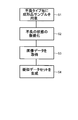
- FIG. 2 is a flowchart for explaining the processing of the generator and the operation of the operator in the injection molding machine system according to the embodiment of the present invention.
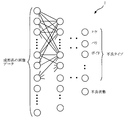
- FIG. 3 is a diagram showing a classifier in the injection molding machine system according to the embodiment of the present invention.
- FIG. 4 is a block diagram schematically showing an injection molding machine system according to an embodiment of the present invention, which includes an agent that employs an Actor-Critic algorithm.
- the injection molding machine system 1 is a system that adjusts molding conditions of the injection molding machine 2 using machine learning (that is, by so-called AI).
- the injection molding machine 2 is simply shown in FIG. 1, but is composed of a mold clamping device, an injection device and the like as in the case of a conventional injection molding machine.
- the injection molding machine 2 is provided with a take-out machine 3 for taking out a molded product molded by the injection molding machine 2 and a camera 4 for photographing the taken-out molded product. Each time a molded product is molded by the injection molding machine 2, image data of the molded product is acquired by the camera 4.
- the AI system for adjusting molding conditions in the injection molding machine system 1 is constructed on a predetermined computer and has a plurality of functional blocks.
- the AI system has an agent 6 that adjusts molding conditions for the injection molding machine 2.
- the agent 6 has a machine learner that is learned by reinforcement learning. The agent 6 will be described in detail later.
- the classifier 7 includes a machine learner that is learned by supervised learning.
- the classifier 7 determines the presence / absence of a defect in the molded product, and outputs the type of molding defect (that is, a defect type and a defect state that is the degree or degree of defect).
- the generator 8 In order to perform supervised learning, it is necessary to prepare a large number of data sets (that is, data sets) having input data and output data for the classifier 7.
- the generator 8 generates a large number of pseudo data sets including pseudo data as a data set. The contents to be worked by the operator and the processing of the generator 8 in order to prepare a large amount of data set will be described below.
- a combination of input data and output data may include any kind of data, and a combination of data that allows the classifier 7 to determine a molded product and output a defective type and a defective state. I just need it.
- the data set in this embodiment employs a combination in which input data is image data of a molded product and output data is a defective type and a defective state.
- Image data is captured by the camera 4.
- the image data may be anything, and may be a set of a plurality of image data photographed from two or three directions, or may be image data photographed from a single direction. Further, the image data may be composed of a plurality of image data in which light rays are projected from different directions. Whatever condition is adopted, the image data may be photographed by the camera 4 under a uniform condition for all molded products.
- the defect type of output data includes a plurality of data indicating the presence or absence of each defect type, including data indicating the presence or absence of sink marks with 1/0, data indicating the presence or absence of burrs with 1/0, and the like.
- the defect state is data representing the degree of defect regardless of the type of defect type.
- the failure state is data that handles only the degree of failure regardless of whether the failure type is sink or void. This data may be expressed by any numerical value. For example, a defective state of a good product can be defined as 1.0, a defective state when the degree of defect is small can be defined as -0.3, and a defective state when the degree of defect is large can be defined as -0.7.
- the operator prepares a non-defective molded product and a sample of defective molded products for each type of defective type, as shown in step S1 in FIG. For example, prepare one or more defective products with sink marks, one or more defective products with burrs, and prepare one or more samples for other defective types. prepare.
- the operator determines the numerical value of the defective state for each prepared defective sample (step S2).
- image data of each good and defective sample is acquired (step S3).
- the data set having the image data, the defect type, and the defect state obtained in this manner is obtained from real good and defective samples, and corresponds to the above-described “real data set”.
- the generator 8 processes the actual data set by calculation to generate a large amount of pseudo data sets (step S4).
- a pseudo data set is generated for each defect type.
- the generator 8 processes a sink actual data set. Specifically, the generator 8 moves the position where actual sink marks are generated by parallel movement of image processing, or changes the size of sink marks by enlargement / reduction of image processing. Process the file. When enlarging / reducing the size of the sink, the value of the defect state is also changed according to the size of the sink.
- the generator 8 obtains a pseudo data set in this way.
- the generator 8 generates pseudo data sets for other defective types as well. Note that any known method as described above may be used as a method for mechanically processing image data by image processing. Further, for the processing in the generator 8, a method using machine learning such as GAN may be used.
- the classifier 7 is a machine learner that performs supervised learning, and there are no restrictions on the type of algorithm employed.
- the classifier 7 can employ SVM, least square method, stepwise method, or the like.
- an algorithm that can express the nonlinear input / output relationship is adopted. It is preferable to do.
- the classifier 7 is composed of a neural network. As shown in FIG. 3, the classifier 7 has a multi-layer neural network, image data is given to neurons in the input layer, and defect types and states are output from the neurons in the output layer. It has come to be.
- image data is given to the classifier 7 as input, and a corresponding defect type and defect state are given as a teacher signal for learning. Thereafter, when the image data of the molded product is given to the appropriately learned classifier 7, the defect type and the defect state can be output with high accuracy.
- the injection molding machine system 1 every time the injection molding machine 2 performs injection molding, the molded product is taken out by the take-out machine 3 and photographed by the camera 4. And the image data image
- the agent 6 In general, a machine learning device that performs reinforcement learning controls a control target or an environment, and is called an agent.
- the agent determines an action at (Action) based on the state st (State) in the control target, and the state st transitions to another state st + 1 in the control target.
- the agent receives a reward rt (Reward) from the controlled object.
- the agent learns to determine an action at such that the accumulation of the reward rt received in the future is maximized.
- many agents provide a predetermined value function and update it by learning. When a predetermined state st is given, an action at which the value is maximized is determined using a value function that has been learned.
- any type of value function may be adopted as the value function.
- the learning algorithm a well-known algorithm such as Q-learning, SARSA method, TD learning, Monte Carlo method, Actor-critic method or the like can be adopted. That is, the feature of the present invention is not in the type of value function or the type of algorithm, but in what kind of data the state st, action at, and reward rt handled by the agent 6 according to the present embodiment are configured. .
- the action at handled by the agent 6 according to the present embodiment includes molding conditions such as injection speed, injection stroke, and cylinder temperature. This is because when the predetermined state st is given, the agent 6 can determine the optimum forming condition as the action at.
- the state st handled by the agent 6 according to the present embodiment includes various physical data obtained from the injection molding machine 2.
- the physical data includes various data obtained in relation to the injection molding machine, such as injection pressure, resin temperature, and outside air temperature.
- other data may be included as the state st, and other data may be added to the state st as necessary.
- the agent 6 according to the present embodiment includes a defect type output from the classifier 7 as the state st.
- the agent 6 can determine which molding condition should be adjusted according to the defect type, and the optimum molding condition is acted on under the given state st. It can be determined appropriately as at.
- the reward rt given to the agent 6 according to the present embodiment is a defective state output from the classifier 7.
- the agent 6 can perform reinforcement learning based on the state st, the action at, and the reward rt.
- the knowledge of an expert may be used to narrow down the molding conditions to be adjusted on a rule basis. For example, a rule that arbitrarily raises the action selection probability of the injection speed and the holding pressure may be given to the agent 6 for the defect of burrs and may be learned.
- the learning may be performed by letting an algorithm branch an action according to a defective type.
- the agent 6 includes an action device 10 and an evaluator 11.
- the evaluator 11 provides a state value function V (st) as a value function.
- the state value function V (st) is a function indicating how good the state st is.
- the state value function V (st) may be configured in any way. For example, it may be configured from a matrix that stores V values corresponding to each value of the state st, or may be configured from an SVM that represents an input / output relationship, a neural network, or the like.
- the state value function V (st) is updated by reinforcement learning, but may be updated by any algorithm. For example, in the case of updating by the TD learning method, the state value function V (st) can be calculated as the following one equation.
- a molding condition is determined as an action at and a molded product is obtained by injection molding.
- the classifier 7 determines a defective state for this molded product, and the evaluator 11 receives it as a reward rt.
- the next molding condition is determined for the state st including the defective type determined by the classifier 7, and the injection molding machine 2 performs injection molding.
- the state value function V (st) can be updated by one equation.
- the action unit 10 is provided with a policy ⁇ (st, at; wt) indicating which action at is determined when the state st is given.
- the policy ⁇ (st, at; wt) is a probability distribution function indicating the probability of determining the predetermined action at under the state st
- wt is an adjustment that defines the policy ⁇ (st, at; wt). It is a parameter. For example, when the policy ⁇ (st, at; wt) is expressed by a normal distribution N ( ⁇ , ⁇ ) having an average ⁇ and a standard deviation ⁇ , adjusting the adjustment parameter wt is substantially expressed as a function of wt.
- the adjustment parameter wt When the adjustment parameter wt is adjusted by learning and the policy ⁇ (st, at; wt) becomes an appropriate probability distribution function, the probability of determining an appropriate action at when a predetermined state st is given increases. The probability of determining an inappropriate action at is low.
- Examples of the adjustment method of the adjustment parameter wt include the following methods. First, the degree of whether or not the policy ⁇ (st, at; wt) is appropriate is defined as the appropriate degree et by Formula 2-1. Next, the appropriateness level Dt with history is defined as in equation 2-2 using the discount rate ⁇ . Then, the adjustment parameter wt can be updated by the equation 2-3 from the reward rt received as a defective state and the state value function V (st).
- both the state value function V (st) and the policy ⁇ (st, at; wt) converge and the TD error ⁇ t approaches zero. That is, the state is learned by reinforcement learning.
- the state st is given by the policy ⁇ (st, at; wt) in such a state, the optimum action at (that is, the optimum molding condition) can be calculated.
- the agent 6 can take a different configuration.
- an action value function Q (st, at) is provided as a value function, and an optimum action at, that is, an optimum molding condition can be determined by the action value function Q (st, at).
- the action value function Q (st, at) is an evaluation function indicating how good the predetermined action at is in the state st.
- the action value function Q (st, at) can take various configurations in the same manner as the state value function V (st).
- the behavior value function Q (st, at) may be configured from a matrix that stores Q values corresponding to the values of the state st and the behavior at, that is, a Q table.
- the behavior value function Q (st, at) can be updated by the following equation by Q learning, for example.
- the behavior value function Q (st, at) eventually converges, and the optimum molding condition can be determined using the learned behavior value function Q (st, at). That is, when a predetermined state st is given, an action “at” that maximizes the action value function Q (st, at) is searched. Such an action at is an optimum molding condition.
- the behavior value function Q (st, at) when configured from the Q table, the state st and the behavior at are handled as discrete values. If the matrix of the Q table is made large, it can be handled as a continuous value substantially, but the calculation load increases. On the other hand, for example, if the action value function Q (st, at) is constituted by a so-called function approximator such as a neural network, the state st and action at can be handled continuously and the calculation load is also increased. It is relatively small.
- the present invention is not limited to the above embodiments, and various modifications can be employed within the scope of the present invention.
- the present invention is not limited to the above-described embodiments, and modifications, improvements, and the like can be made as appropriate.
- the material, shape, dimensions, number, arrangement location, and the like of each component in the above-described embodiment are arbitrary and are not limited as long as the present invention can be achieved.
- the algorithm may explicitly update the policy (policy) as described in the actor-critical example, or may only update the value function as described in the example of Q learning. .
- the learning of the value function has been described as being actually performed by repeatedly forming.
- the value function may be learned in advance offline. Even if the shaping is not actually repeated, if a certain amount of data about the relationship between the state st, the action at, and the reward rt can be obtained in advance, the value function can be learned using this. Convergence is accelerated when learning is performed while actually forming as described above in a state in which learning of the value function is advanced to some extent.
- the input data to the classifier 7 can be modified.
- the input data to the classifier 7 is only the image data of the molded product.
- physical data related to the molded product for example, the weight of the molded product, the chromaticity of the molded product, the refractive index, etc. May be given as Thereby, it becomes possible to determine more types of defect types.
- the injection molding machine system according to the present invention can be configured as a system having a plurality of injection molding machines. That is, when the same molded product is molded by a plurality of molding machines, information may be exchanged between agents. If group reinforcement learning is performed by exchanging information, learning efficiency can be improved.
- the state st and the action at handled by the agent 6 may be handled as any data.
- the molding conditions handled as the action at actual values of injection speed, injection stroke, cylinder temperature, and the like may be handled.
- normalization is performed in advance so as to convert the numerical value range to 0 to 1, or to convert the numerical value range to -1 to 1. You may do it.
- image data photographed using the camera 4 is used for determining a defect of a molded product.
- the other defective determination device different from the camera 4 and the measurement data measured by the defective determination device are defective of the molded product. It may be used in determination or the like.
- the injection molding machine system according to the present invention does not consume excessive computer resources, requires less time and cost for learning, and can quickly adjust molding conditions.
- the present invention having this effect can be used, for example, in a system that performs injection molding of a resin material.
Landscapes
- Engineering & Computer Science (AREA)
- Theoretical Computer Science (AREA)
- Physics & Mathematics (AREA)
- Software Systems (AREA)
- Computing Systems (AREA)
- Artificial Intelligence (AREA)
- Mathematical Physics (AREA)
- Data Mining & Analysis (AREA)
- Evolutionary Computation (AREA)
- General Physics & Mathematics (AREA)
- General Engineering & Computer Science (AREA)
- Computational Linguistics (AREA)
- Biomedical Technology (AREA)
- Molecular Biology (AREA)
- General Health & Medical Sciences (AREA)
- Biophysics (AREA)
- Life Sciences & Earth Sciences (AREA)
- Health & Medical Sciences (AREA)
- Manufacturing & Machinery (AREA)
- Mechanical Engineering (AREA)
- Computer Vision & Pattern Recognition (AREA)
- Medical Informatics (AREA)
- Injection Moulding Of Plastics Or The Like (AREA)
Abstract
射出成形機システム(1)は、強化学習を行う機械学習器を有するエージェント(6)によって射出成形機(2)における成形条件を調整する。本学習では、射出成形機(2)から得られる物理データと、成形品の成形不良の種類を表す不良タイプとを状態(State)として用い、成形条件を行動(Action)として用い、成形不良の不良度合いを表す不良状態を報酬(Reward)として用いる。
Description
本発明は、機械学習を利用した射出成形機システムに関する。
射出成形機は、一般に、射出装置と型締装置とを有する。射出装置は、例えば、加熱シリンダと、加熱シリンダ内に回転方向と軸方向とに駆動可能に設けられているスクリュと、から構成される。一方、型締装置は、例えば、固定側金型が取り付けられている固定盤と、可動側金型が取り付けられている可動盤と、可動側金型を固定側金型に対して型開閉する型締機構と、から構成される。スクリュを回転駆動するとともに樹脂材料を加熱シリンダに供給することで、溶融した樹脂材料が、加熱シリンダの先端にて計量されて型締めされた金型のキャビティに射出されて充填される。そして、樹脂材料の冷却固化を待って可動金型を開くと、所定形状の成形品が得られる。
射出速度、射出ストローク、シリンダ温度、型締力、保圧時間等の成形条件は、一般に、成形品ごとに異なっている。良好な成形品を成形するために、通常、射出成形を繰り返し実施して成形条件を調整する。このような成形条件の調整(いわゆる成形条件出し)は、一般に、オペレータの熟練を要する。オペレータは、成形不良が発生しているとき、その種類(具体的には、ヒケ、バリ、ボイド等の不良タイプ)を判断し、不良タイプに応じて成形条件を調整する。例えば、成形品にヒケが生じていれば、射出速度、射出ストローク、保圧圧力等を調整する。
特許文献1では、いわゆる強化学習によって学習する機械学習器によって成形条件を調整する射出成形機システムが提案されている。特許文献1に記載の機械学習器は、強化学習により学習しながら、エージェント(Agent)として射出成形機を制御するようになっている。
一般に、強化学習においては、制御対象が所定の状態(State)にあるときにエージェントが行動(Action)を選択すると、制御対象の状態が他の状態に遷移し、エージェントが報酬(Reward)を受け取る。エージェントは、所定の方策(Policy)に従って行動を決定し続けたときに、将来に渡って受け取ることができる報酬(即ち、累積の報酬)を表す価値関数を備えている。価値関数には、状態のみにより表される状態価値関数や、ある状態において所定の行動がどのくらい価値があるのかを表す行動価値関数等が含まれる。エージェントは、このような価値関数を、累積の報酬が最大になるように更新するように、学習を重ねる。
特許文献1に記載のエージェントは、射出成形に関する物理量を状態として用い、操作条件(つまり成形条件)を行動として扱い、計算される報酬を受け取って学習を進める。エージェントは、報酬の計算に関して色々な評価対象を扱うことが可能であるが、例えば、成形の良否を評価対象として用いることができる。この場合、成形品が良品であればプラスの報酬を受け取り、成形不良であればマイナスの報酬を受け取る。評価関数の学習が十分に進めば、所定の状態に対してその評価関数の出力が最大になるような行動(即ち、成形条件)を選択すれば、その状態における最適な成形条件を得ることができる。
特許文献2では、いわゆる教師あり学習によって学習して射出成形機の異常を診断する異常診断装置が提案されている。特許文献2に記載の異常診断装置は、SVMやニューラルネットワーク等のアルゴリズムを有する機械学習器を採用し、入力データとして射出成形機における内的または外的な状態データを用い、出力データ(つまり教師信号)として射出成形機の異常または正常のデータを用いる。射出成形機における内的または外的な状態データとして、例えば、駆動部の負荷、軸の周波数特性、樹脂圧力、アラーム発生履歴、等が挙げられる。異常診断装置の学習が十分に進めば、所定の状態データに対して射出成形機が正常であるか異常であるかを適正に判定できる。
オペレータによって射出成形機の成形条件出しが完了すれば、射出成形機を連続的に運転して成形品を量産できる。しかし、特定の成形条件の下で射出成形を繰り返していると、成形不良が発生することがある。別の言い方をすると、外部環境の変化(例えば、外気温の変化や機械温度の変化)による射出成形機の状態の変化や、経年劣化によるスクリュ、逆流防止リング、トグルリンク、ブッシュ等の機械部品の摩耗により、同じ成形条件の下であっても成形不良が生じることがある。成形不良が発生しても、オペレータが成形不良を速やかに発見できれば、成形条件を再調整できる。しかし、夜間の運転等のようにオペレータが射出成形機の近くにいない場合、成形不良が継続する可能性がある。
そこで、例えば、特許文献1に記載のエージェントによって成形条件を自動的に調整することが考えられる。適切にかつ十分に価値関数が学習されていれば、射出成形機の現在の状態に応じて最適な成形条件が計算され、原理上は成形不良が継続することはない。しかし、特許文献1に記載のエージェントが扱う状態(State)は、射出成形に関する物理量だけである。仮に、あらゆる物理量が対象であれば、理論的には全ての事象に対して対応できる可能性がある。成形品の重量、寸法、成形品の画像データから算出される外観、長さ、角度、面積、体積、等々のあらゆる物理量を状態として用いれば、エージェントは、最適な成形条件を行動(Action)として出力できる。
しかし、大量の物理量を状態として扱う場合、計算機資源が過剰に必要になる。また、計算量が爆発的に増えてしまい、価値関数を適切に学習させることは有限の時間では実質的に不可能である。このことは熟練したオペレータの成形条件の調整方法を考えれば予想できる。熟練したオペレータが成形条件を調整するとき、全ての条件(即ち、射出速度、射出ストローク、シリンダ温度、保圧時間、保圧圧力等)を一斉には調整しない。オペレータは、不良タイプを判断し、その不良タイプに応じて調整すべき成形条件を選択し、その成形条件の値を大きくするのか小さくするのかを判断している。つまり、オペレータは、不良タイプに応じて調整すべき成形条件を取捨選択している。これによって速やかに成形条件を調整できる。これに対し、特許文献1に記載のエージェントは、成形条件を取捨選択するために必要な情報を有さない。そのため、エージェントは、他の物理データからそのような取捨選択と同等の判断を行うことができるように、膨大な学習を必要とすることになる。
一方、例えば、特許文献2に記載の方法を応用して成形条件を調整することも考えられる。具体的には、ニューラルネットワーク等を使用して、射出成形機に関する色々な物理データを入力データとして制御装置に与え、そのときにおいて最適な成形条件を教師データとして制御装置に与えるようにする。制御装置の学習が進めば、射出成形機に関する現在の物理データを入力すれば、最適な成形条件が制御装置から出力されるはずである。しかしながら、最適な成形条件は一般的に不明であり、学習に必要な大量の教師データを得られない。そのため、成形条件の調整は、教師あり学習による機械学習器では実施することが困難である。
本発明の目的の一つは、計算機資源を過剰に消費せず、学習に要する時間やコストが少なく、速やかに成形条件を調整できる射出成形機システムの提供である。
[1]本発明の第1の側面において、射出成形機システムは、
色々な状態における行動に対して報酬を得て価値関数を学習して前記価値関数に基づいて行動を決定する強化学習を行う機械学習器を有するエージェントと、所定の成形条件に基づいて成形品を製造する射出成形機と、を備え、前記エージェントによって前記成形条件を調整する、射出成形機システムであって、
前記機械学習器は、
前記状態として、前記射出成形機から得られる物理データと、前記成形品の成形不良の種類を表す不良タイプと、を用い、
前記行動として、前記成形条件を用い、
前記報酬として、前記成形不良の不良度合いを表す不良状態を用いる、ように構成される。
色々な状態における行動に対して報酬を得て価値関数を学習して前記価値関数に基づいて行動を決定する強化学習を行う機械学習器を有するエージェントと、所定の成形条件に基づいて成形品を製造する射出成形機と、を備え、前記エージェントによって前記成形条件を調整する、射出成形機システムであって、
前記機械学習器は、
前記状態として、前記射出成形機から得られる物理データと、前記成形品の成形不良の種類を表す不良タイプと、を用い、
前記行動として、前記成形条件を用い、
前記報酬として、前記成形不良の不良度合いを表す不良状態を用いる、ように構成される。
[2]本発明の第2の側面では、第1の側面において、
前記成形品を測定する不良判定装置と、教師あり学習により学習する分類器と、を更に備え、
前記機械学習器は、
前記不良タイプ及び前記不良状態として、前記不良判定装置を用いて測定された前記成形品の測定データを含む入力データが学習済みの前記分類器に入力されたときに前記分類器から得られる出力データを、用いる、ように構成される。
前記成形品を測定する不良判定装置と、教師あり学習により学習する分類器と、を更に備え、
前記機械学習器は、
前記不良タイプ及び前記不良状態として、前記不良判定装置を用いて測定された前記成形品の測定データを含む入力データが学習済みの前記分類器に入力されたときに前記分類器から得られる出力データを、用いる、ように構成される。
[3]本発明の第3の側面では、第2の側面において、
前記分類器は、
実物の前記成形品についての前記測定データと前記不良タイプと前記不良状態とを含む複数組の実物データセットと、複数組の疑似データセットと、によって学習され、
前記疑似データセットは、前記実物データセットを加工して得られた前記測定データと前記不良タイプと前記不良状態とを含む、ように構成される。
前記分類器は、
実物の前記成形品についての前記測定データと前記不良タイプと前記不良状態とを含む複数組の実物データセットと、複数組の疑似データセットと、によって学習され、
前記疑似データセットは、前記実物データセットを加工して得られた前記測定データと前記不良タイプと前記不良状態とを含む、ように構成される。
上記第1の側面によれば、エージェントによって射出成形機システムの成形条件を最適に調整できる。ここで、成形条件を最適に調整できるようにエージェントを適切に学習させるべく、状態(State)として、射出成形機から得られる物理データと、成形品の成形不良の種類を表す不良タイプとを用いる。また、行動(Action)として、成形条件を用い、報酬(Reward)として、成形不良の不良度合いを表す不良状態を用いる。状態に不良タイプを含めることで、エージェントは、熟練したオペレータと同様、不良タイプに応じて調整すべき成形条件を選択し、その成形条件の値を大きくするのか小さくするのかを決定することになる。これにより、エージェントは、比較的短時間で学習を実施でき、学習の効率を高め、学習のコストを低減できる。その結果、エージェントは、学習中に計算機資源を過剰に消費することもない。したがって、本側面の射出成形機システムは、計算機資源を過剰に消費せず、学習に要する時間やコストが少なく、速やかに成形条件を調整できる。
上記第2の側面によると、射出成形機システムは、成形品を測定する不良判定装置と教師あり学習により学習する分類器とを備える。機械学習器は、不良タイプと不良状態として、学習済みの分類器に対して不良判定装置で測定された成形品の測定データが入力されたときに得られる出力データを、用いる。つまり、分類器は、成形品の測定データから不良タイプと不良状態を出力し、エージェントに渡す。換言すると、オペレータが介在することなく、分類器からエージェントに情報が渡される。その結果、成形サイクルごとに、そのサイクルにおける状態(State)に応じて最適な成形条件(Action)が得られる。これにより、射出成形機を連続運転させながら、成形条件を自動で調整できることになる。なお、不良判定装置の一例として、カメラが挙げられる。不良判定装置としてカメラを用いる場合、測定データの一例として、カメラによって撮影した画像データが挙げられる。
上記第3の側面によると、分類器は、実物の成形品についての測定データと不良タイプと不良状態とを含む複数組の実物データセットと、複数組の疑似データセットと、によって学習される。この疑似データセットは、実物データセットを加工して得られた測定データと不良タイプと不良状態とを含む。一般に、教師あり学習により学習する機械学習器に対しては大量のデータセットが適正な学習のために必要になる。しかし、実物の成形不良のサンプルは、それほど多くは得られない。つまり、実物から得られる測定データと不良タイプと不良状態のデータとを含む実物データセットは、一般に、大量には得られない。しかし、本側面によると、実物データセットを加工することで疑似データセットが得られるので、学習に必要な大量のデータセットを比較的容易に得ることができる。その結果、分類器の学習の効率が高まり、分類器が精度良く成形品の不良タイプと不良状態を出力できることになる。
本実施形態に係る射出成形機システム1は、機械学習を利用して(即ち、いわゆるAIによって)射出成形機2の成形条件を調整するシステムである。射出成形機2は、図1に簡略的に示されているが、従来の射出成形機と同様、型締装置や射出装置等から構成されている。射出成形機2には、射出成形機2によって成形された成形品を取り出す取出機3と、取り出された成形品を撮影するカメラ4とが隣接して設けられている。射出成形機2において成形品が成形されるごとに、カメラ4によって成形品の画像データが取得されるようになっている。
射出成形機システム1において成形条件を調整するためのAIシステムは、所定の計算機上に構築されており、複数の機能ブロックを有する。まず、AIシステムは、射出成形機2に対して成形条件を調整するエージェント6を有する。エージェント6は、強化学習によって学習される機械学習器を有する。エージェント6については後で詳しく説明する。
AIシステムを構成している他の機能ブロックとして、分類器7と、生成器8と、が挙げられる。分類器7は、後で説明するように、教師あり学習により学習される機械学習器を有する。分類器7は、成形品について不良の有無を判定し、成形不良の種別(即ち、不良タイプと、不良の程度つまり度合いである不良状態)とを出力するようになっている。教師あり学習を実行するために、分類器7に対して、入力データと出力データとを有するデータの組(つまりデータセット)を大量に用意する必要がある。ここで、生成器8は、データセットとして擬似的なデータを含む疑似データセットを大量に生成する。大量のデータセットを用意するために、オペレータが作業すべき内容および生成器8の処理について、以下に説明する。
データセットとして、入力データと出力データの組み合わせはどのような種類のデータを含んでいてもよく、分類器7が成形品を判定して不良タイプと不良状態とを出力できるようなデータの組み合わせであればよい。本実施形態におけるデータセットは、入力データが成形品の画像データであり、出力データが不良タイプと不良状態とである、組み合わせが採用されている。画像データはカメラ4により撮影される。画像データはどのようなものであってもよく、2方向または3方向から撮影された複数の画像データのセットであってもよいし、単一の方向から撮影した画像データであってもよい。また、異なる方向から光線が投影された複数の画像データから画像データが構成されていてもよい。どのような条件が採用されたとしても、全ての成形品に対して統一された条件により画像データがカメラ4によって撮影されるようにすればよい。
出力データの不良タイプは、不良の種類ごとにその有無を表す複数個のデータを含み、ヒケの有無を1/0で示すデータ、バリの有無を1/0で示すデータ等を含む。不良状態は、不良タイプの種類に拘わらず、不良の程度を表すデータである。つまり、不良状態は、不良タイプがヒケであってもボイドであっても、その程度だけを扱うデータである。このデータはどのような数値で表現されていてもよい。例えば、良品の不良状態を1.0と定義し、不良の程度が小さい場合の不良状態を-0.3と定義し、不良の程度が大きい場合の不良状態を-0.7と定義できる。
オペレータは、図2においてステップS1で示されているように、成形品の良品と、不良タイプの種類ごとに成形品の不良品のサンプルと、を用意する。例えば、ヒケが発生している不良品を1個または複数個用意し、バリが発生している不良品を1個または複数個用意し、他の不良タイプについても1個または複数個のサンプルを用意する。オペレータは、用意した不良品のサンプルごとに不良状態の数値を定める(ステップS2)。次いで、それぞれの良品および不良品のサンプルの画像データを取得する(ステップS3)。このようにして得られる画像データと不良タイプと不良状態とを有するデータセットは、実物の良品および不良品のサンプルから得られ、上述した「実物データセット」に対応する。
生成器8は、実物データセットを計算により加工して疑似データセットを大量に生成する(ステップS4)。疑似データセットの生成は不良タイプごとに行う。例えば、生成器8は、不良タイプがヒケの不良品を対象とする場合には、ヒケの実物データセットを加工する。具体的には、生成器8は、実際のヒケが発生している位置を画像処理の平行移動により移動させたり、画像処理の拡大/縮小によりヒケの大きさを変更したりするように、画像ファイルを加工する。ヒケの大きさを拡大/縮小するときには、ヒケの大きさに応じて不良状態の値も変更する。生成器8は、このようにして疑似データセットを得る。生成器8は、他の不良タイプについても同様に、疑似データセットを生成する。なお、画像処理により機械的に画像データを加工する手法としては、上述したような任意の周知の手法を用いればよい。また、生成器8での処理には、GAN等の機械学習を用いた方法を用いても良い。
分類器7は、教師あり学習の学習を行う機械学習器であり、採用されるアルゴリズムの種類については制約はない。例えば、分類器7は、SVM、最小二乗法、ステップワイズ法等を採用できる。ただし、入力データが画像データであり且つ出力データが不良タイプと不良状態とを含むデータセットの入出力の関係は非線形になることが予想されるので、非線形な入出力関係を表現できるアルゴリズムを採用することが好ましい。本実施形態においては、分類器7はニューラルネットワークから構成されている。分類器7は、図3に示されているように、複数層のニューラルネットワークを有し、入力層のニューロンには画像データが与えられ、出力層のニューロンからは不良タイプと不良状態とが出力されるようになっている。
そして、実物データセットと疑似データセットとを含む大量のデータセットを使用して、分類器7に画像データを入力として与え、対応する不良タイプと不良状態とを教師信号として与えて学習させる。その後、適切に学習された分類器7に成形品の画像データを与えると、その不良タイプと不良状態とを精度よく出力できるようになる。本実施形態に係る射出成形機システム1では、射出成形機2において射出成形されるごとに成形品が取出機3によって取り出され、カメラ4によって撮影される。そして、カメラ4で撮影された画像データが分類器7に送られ、分類器7が不良タイプと不良状態とを出力する。
本実施形態に係るエージェント6について説明する。一般的に、強化学習する機械学習器は、制御対象あるいは環境を制御するようになっており、エージェントと呼ばれる。エージェントは、制御対象における状態st(State)に基づいて行動at(Action)を決定し、制御対象では状態stが他の状態st+1に遷移する。このとき、エージェントは制御対象から報酬rt(Reward)を受け取る。エージェントは、将来に渡って受け取る報酬rtの累積が最大になるような行動atを決定するように学習する。これを実現するために、多くのエージェントでは所定の価値関数を設けて学習により更新させる。そして所定の状態stが与えられるとき、学習が進んだ価値関数を使って、その値が最大になるような行動atを決定するようにしている。価値関数についてはどのような種類の価値関数が採用されてもよい。また、学習のアルゴリズムも、Q学習、SARSA法、TD学習、モンテカルロ法、Actor-critic法等の周知のアルゴリズムが採用され得る。つまり、本発明の特徴は、価値関数の種類やアルゴリズムの種類にはなく、本実施形態に係るエージェント6が扱う状態st、行動at、報酬rtをどのようなデータから構成しているのかにある。
本実施形態に係るエージェント6が扱う行動atは、射出速度、射出ストローク、シリンダ温度等の成形条件を含む。所定の状態stが与えられたとき、エージェント6が最適な成形条件を行動atとして決定できるようにするためである。本実施形態に係るエージェント6が扱う状態stについては、射出成形機2から得られる各種の物理データが含まれる。物理データは、射出圧力、樹脂温度、外気温、等の射出成形機に関連して得られる各種のデータを含む。状態stとして、これらの物理データ以外に他のデータが含まれてもよく、他のデータを適宜必要に応じて状態stに追加すればよい。ところで、エージェント6が最適な成形条件を決定できるようにするには、このような状態stだけでは十分でない。調整すべき成形条件を選択できるようにするために、本実施形態に係るエージェント6は、状態stとして分類器7が出力する不良タイプを含む。
状態stに不良タイプが含まれるので、エージェント6は、不良タイプに応じてどの成形条件を調整の対象とすべきか判断することが可能になり、与えられた状態st下において最適な成形条件を行動atとして適切に決定できることになる。本実施形態に係るエージェント6に与えられる報酬rtは、分類器7が出力する不良状態とする。これら状態st、行動at、報酬rtによってエージェント6は強化学習できる。ここで、不良タイプ毎に、熟練者の知識を活用して、ルールベースで調整の対象とすべき成形条件を絞り込んでもよい。たとえば、バリという不良に対して、射出速度および保圧圧力の行動選択確率を恣意的に上げるルールをエージェント6に与えて学習させてもよい。または、本実施形態の図面等に示すように、不良タイプによる行動の分岐をアルゴリズムに任せて学習させてもよい。
本実施形態に係るエージェント6をActor-critic法により強化学習させる例を説明する。この場合、図4に示されているように、エージェント6は行動器10と評価器11とから構成されることになる。Actor-critic法により行動atを決定するにあたり、評価器11において価値関数として状態価値関数V(st)を設ける。状態価値関数V(st)は、状態stがどのくらい良いのかを示す関数である。状態価値関数V(st)はどのように構成してもよい。例えば、状態stのそれぞれの値に対応してV値を格納するマトリクスから構成してもよいし、入出力関係を表すSVMやニューラルネットワーク等から構成してもよい。また、状態価値関数V(st)は強化学習によって更新することになるが、どのようなアルゴリズムによって更新してもよい。例えば、TD学習法により更新する場合には、状態価値関数V(st)は、以下の1式のようにして計算できる。
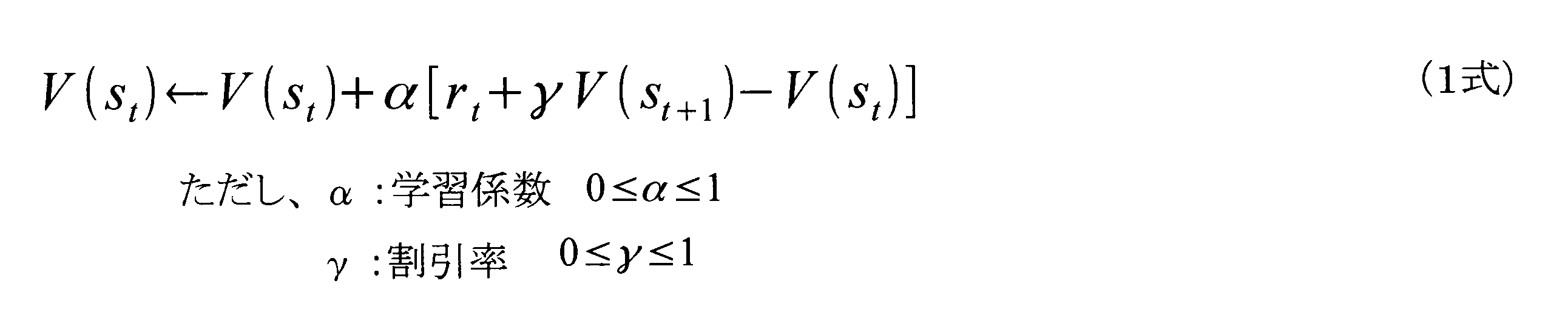
射出成形機2において所定の物理データ、不良タイプを有する所定の状態stが与えられたとき、行動atとして成形条件を決定して射出成形し成形品が得られる。この成形品に対して分類器7が不良状態を判定し、評価器11が報酬rtとして受け取る。次いで、分類器7が判定した不良タイプを含む状態stに対して次の成形条件を決定し、射出成形機2が射出成形を行う。このような成形を繰り返すことによって、1式によって状態価値関数V(st)を更新できる。
一方、行動器10には、状態stが与えられたとき、どの行動atを決定するのかを表すポリシーπ(st、at;wt)を設ける。ポリシーπ(st、at;wt)は、状態stの下で所定の行動atを決定する確率を表す確率分布関数になっており、wtは、ポリシーπ(st、at;wt)を規定する調整パラメータになっている。ポリシーπ(st、at;wt)は、例えば、平均μ、標準偏差σとする正規分布N(μ、σ)により表現すると、調整パラメータwtを調整することは、実質的にwtの関数として表現された平均μ、標準偏差σを調整することであると言える。調整パラメータwtを学習により調整して、ポリシーπ(st、at;wt)が適切な確率分布関数になると、所定の状態stが与えられたときに適切な行動atを決定する確率が高くなり、不適切な行動atを決定する確率は低くなる。調整パラメータwtの調整方法として、例えば、以下の方法が挙げられる。まず、ポリシーπ(st、at;wt)が適正であるか否かの度合いを、適正度etとして2-1式で定義する。次いで、履歴付き適正度Dtを、割引率βを使って2-2式のように定義する。そうすると、不良状態として受け取る報酬rtと、状態価値関数V(st)とから、式2-3式により調整パラメータwtを更新できる。
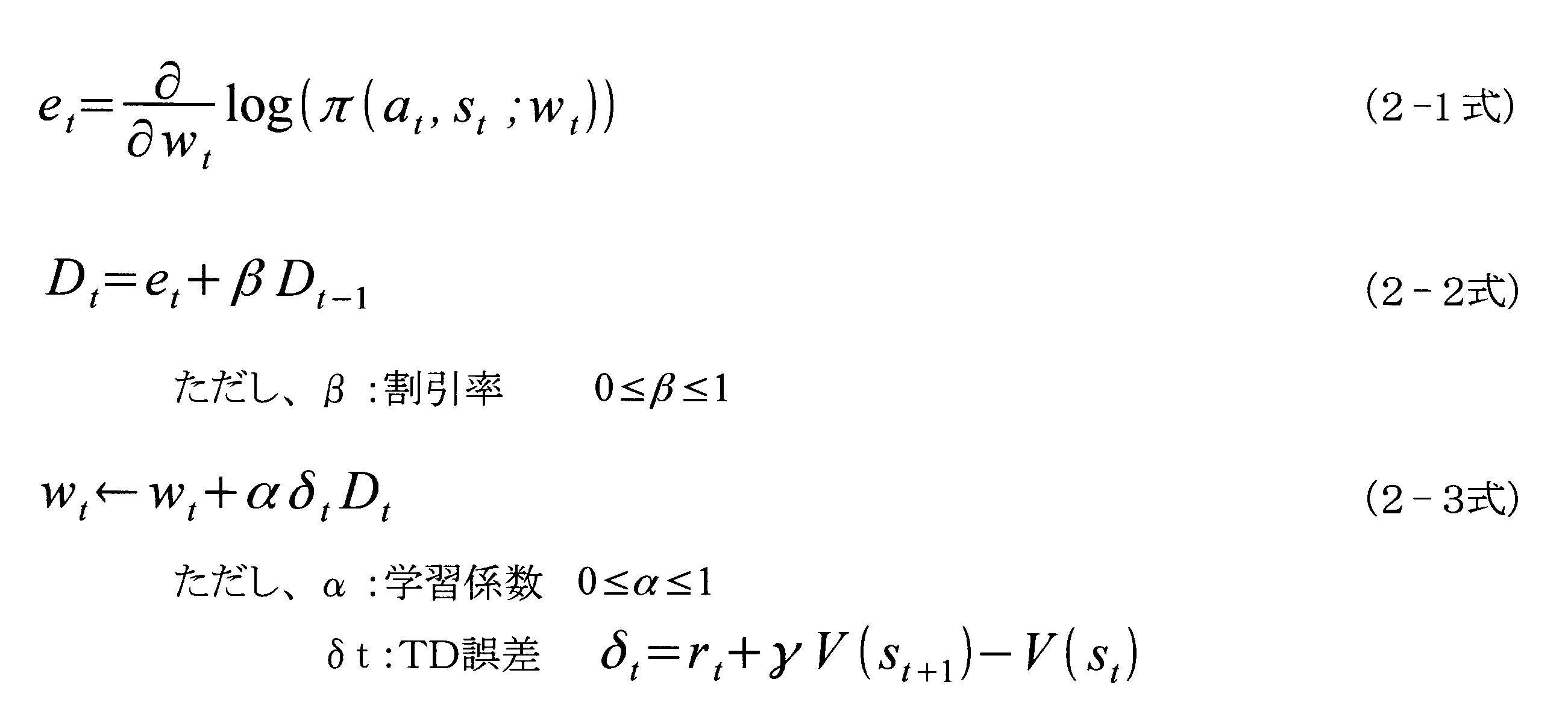
学習を繰り返すと状態価値関数V(st)もポリシーπ(st、at;wt)も、ともに収束してTD誤差δtは0に近づく。即ち、強化学習により学習された状態になる。このような状態になったポリシーπ(st、at;wt)によって状態stが与えられると、最適な行動at(つまり最適な成形条件)を計算できる。
本実施形態に係るエージェント6は、異なる構成を採ることもできる。例えば、価値関数として行動価値関数Q(st、at)を設け、この行動価値関数Q(st、at)によって最適な行動atつまり最適な成形条件を決定できる。行動価値関数Q(st、at)は、状態stにおいて、所定の行動atがどのくらい良いのかを示す評価関数である。行動価値関数Q(st、at)も、状態価値関数V(st)と同様に色々な構成をとることができる。例えば、行動価値関数Q(st、at)として状態st、行動atのそれぞれの値に対応してQ値を格納するマトリクス、つまりQテーブルから構成してもよい。行動価値関数Q(st、at)は例えばQ学習によって次式で更新できる。

射出成形を繰り返し、学習を繰り返すと、やがて行動価値関数Q(st、at)は収束し、学習された行動価値関数Q(st、at)を使って最適な成形条件を決定できる。即ち、所定の状態stが与えられたとき、行動価値関数Q(st、at)が最大となるような行動atを探す。このような行動atが、最適な成形条件となる。
なお、行動価値関数Q(st、at)をQテーブルから構成する場合、状態st、行動atを離散値として扱うことになる。Qテーブルのマトリクスを巨大にすれば、実質的に連続値として扱うこともできるが、計算負荷が大きくなってしまう。これに対し、例えば、行動価値関数Q(st、at)をニューラルネットワーク等のいわゆる関数近似器から構成するようにすれば、状態stや行動atを連続的に扱うことができ、かつ計算負荷も比較的少なくて済む。
本発明は上記各実施形態に限定されることはなく、本発明の範囲内において種々の変形例を採用できる。例えば、本発明は、上述した実施形態に限定されるものではなく、適宜、変形、改良、等が可能である。その他、上述した実施形態における各構成要素の材質、形状、寸法、数、配置箇所、等は本発明を達成できるものであれば任意であり、限定されない。
例えば、上記実施形態では、学習が収束をすることを前提として記述したが、アルゴリズムによっては、最終状態の収束が保証されなくてもよい。また、アルゴリズムは、Actor-criticの例で説明したように方策(ポリシー)を明示的に更新してもよいし、Q学習の例で説明したように価値関数の更新にとどめるようにしても良い。
更に、例えば、上記実施形態では、価値関数の学習は、実際に成形を繰り返して実施してするように説明した。つまり、実際に成形を繰り返す中での学習、つまりオンラインでの学習をするように説明した。しかし、予め価値関数をオフラインで学習させるようにしてもよい。実際に成形を繰り返さなくても、状態st、行動at、報酬rtの関係についてある程度のデータが事前に入手できれば、これを使って価値関数を学習させておくことができる。価値関数の学習をある程度進めた状態で、前記したように実際に成形を行いながら学習するようにすると収束が早くなる。
更に、他の変形例として、分類器7に対する入力データを変形することもできる。本実施形態においては、分類器7に対する入力データは成形品の画像データのみであるように説明したが、成形品に関する物理データ、例えば成形品重量、成形品の色度、屈折率等を入力データとして与えてもよい。これにより、より多くの種類の不良タイプについても判定できるようになる。
更に、本発明に係る射出成形機システムは、複数台の射出成形機を有するシステムとして構成することもできる。即ち、同じ成形品を複数台の成形機で成形する場合、エージェント同士で情報交換を行ってもよい。情報交換により群強化学習を行えば、学習効率を高めることができる。
更に、エージェント6が扱う状態st、行動atはどのようなデータとして扱ってもよい。行動atとして扱う成形条件は、射出速度、射出ストローク、シリンダ温度等について、その実際の値を扱ってもよい。また、成形条件の変更分を扱ってもよい。つまり、射出速度の変更分、射出ストロークの変更分、シリンダ温度の変更分等である。また、状態st、行動at、報酬rtの各データを扱うとき、予め正規化して数値範囲が0~1になるように変換したり、あるいは-1~1の数値範囲になるよう変換して扱うようにしてもよい。
更に、本実施形態では、カメラ4を用いて撮影した画像データが、成形品の不良判定などにおいて用いられている。しかし、本発明に係る射出成形機システムでは、成形品の外観等を測定し得る限り、カメラ4とは異なる他の不良判定装置およびその不良判定装置によって測定された測定データが、成形品の不良判定などにおいて用いられてもよい。
本出願は、2018年3月23日出願の日本特許出願(特願2018-055633)に基づくものであり、その内容はここに参照として取り込まれる。
本発明による射出成形機システムは、計算機資源を過剰に消費せず、学習に要する時間やコストが少なく、速やかに成形条件を調整できる。この効果を有する本発明は、例えば、樹脂材料の射出成形を行うシステムに利用され得る。
1 射出成形機システム
2 射出成形機
3 取出機
4 カメラ(不良判定装置)
6 エージェント
7 分類器
8 生成器
10 行動器
11 評価器
2 射出成形機
3 取出機
4 カメラ(不良判定装置)
6 エージェント
7 分類器
8 生成器
10 行動器
11 評価器
Claims (3)
- 色々な状態における行動に対して報酬を得て価値関数を学習して前記価値関数に基づいて行動を決定する強化学習を行う機械学習器を有するエージェントと、所定の成形条件に基づいて成形品を製造する射出成形機と、を備え、前記エージェントによって前記成形条件を調整する、射出成形機システムであって、
前記機械学習器は、
前記状態として、前記射出成形機から得られる物理データと、前記成形品の成形不良の種類を表す不良タイプと、を用い、
前記行動として、前記成形条件を用い、
前記報酬として、前記成形不良の不良度合いを表す不良状態を用いる、
射出成形機システム。 - 請求項1に記載の射出成形機システムであって、
前記成形品を測定する不良判定装置と、教師あり学習により学習する分類器と、を更に備え、
前記機械学習器は、
前記不良タイプ及び前記不良状態として、前記不良判定装置を用いて測定された前記成形品の測定データを含む入力データが学習済みの前記分類器に入力されたときに前記分類器から得られる出力データを、用いる、
射出成形機システム。 - 請求項2に記載の射出成形機システムにおいて、
前記分類器は、
実物の前記成形品についての前記測定データと前記不良タイプと前記不良状態とを含む複数組の実物データセットと、複数組の疑似データセットと、によって学習され、
前記疑似データセットは、前記実物データセットを加工して得られた前記測定データと前記不良タイプと前記不良状態とを含む、
射出成形機システム。
Priority Applications (3)
| Application Number | Priority Date | Filing Date | Title |
|---|---|---|---|
| US16/982,903 US12175373B2 (en) | 2018-03-23 | 2019-03-22 | Injection molding machine system |
| CN201980020714.XA CN111886121A (zh) | 2018-03-23 | 2019-03-22 | 注射成型机系统 |
| DE112019001512.5T DE112019001512T5 (de) | 2018-03-23 | 2019-03-22 | EINSPRITZGIEßMASCHINENSYSTEM |
Applications Claiming Priority (2)
| Application Number | Priority Date | Filing Date | Title |
|---|---|---|---|
| JP2018055633A JP7265318B2 (ja) | 2018-03-23 | 2018-03-23 | 機械学習器により成形条件を調整する射出成形機システム |
| JP2018-055633 | 2018-03-23 |
Publications (1)
| Publication Number | Publication Date |
|---|---|
| WO2019182145A1 true WO2019182145A1 (ja) | 2019-09-26 |
Family
ID=67987396
Family Applications (1)
| Application Number | Title | Priority Date | Filing Date |
|---|---|---|---|
| PCT/JP2019/012230 Ceased WO2019182145A1 (ja) | 2018-03-23 | 2019-03-22 | 射出成形機システム |
Country Status (5)
| Country | Link |
|---|---|
| US (1) | US12175373B2 (ja) |
| JP (1) | JP7265318B2 (ja) |
| CN (1) | CN111886121A (ja) |
| DE (1) | DE112019001512T5 (ja) |
| WO (1) | WO2019182145A1 (ja) |
Cited By (2)
| Publication number | Priority date | Publication date | Assignee | Title |
|---|---|---|---|---|
| CN114616083A (zh) * | 2019-11-08 | 2022-06-10 | Ls美创有限公司 | 基于人工智能的注塑成型系统以及成型条件生成方法 |
| JP2023148238A (ja) * | 2022-03-30 | 2023-10-13 | 住友重機械工業株式会社 | 検査装置、射出成形システム及び検査方法 |
Families Citing this family (27)
| Publication number | Priority date | Publication date | Assignee | Title |
|---|---|---|---|---|
| US10957031B1 (en) * | 2019-09-06 | 2021-03-23 | Accenture Global Solutions Limited | Intelligent defect detection from image data |
| JP7488638B2 (ja) * | 2019-10-04 | 2024-05-22 | 株式会社日本製鋼所 | 操作量決定装置、成形装置システム、成形機、コンピュータプログラム、操作量決定方法及び状態表示装置 |
| JP7344754B2 (ja) * | 2019-10-23 | 2023-09-14 | 株式会社日本製鋼所 | 学習モデル生成方法、コンピュータプログラム、設定値決定装置、成形機及び成形装置システム |
| JP7071956B2 (ja) * | 2019-12-03 | 2022-05-19 | 株式会社日本製鋼所 | 真空積層システム、真空積層システムの成形不良検出方法および真空積層システムの成形条件修正方法 |
| JP7391656B2 (ja) | 2019-12-24 | 2023-12-05 | ファナック株式会社 | 射出成形システム |
| KR102176821B1 (ko) * | 2020-02-04 | 2020-11-10 | 신희철 | 플라스틱 제조 장치 구동 제어 시스템 |
| JP7547797B2 (ja) * | 2020-06-05 | 2024-09-10 | 株式会社ジェイテクト | 成形条件決定支援装置 |
| US12036712B2 (en) | 2020-06-05 | 2024-07-16 | Jtekt Corporation | Molding conditions determination assist device and resin state estimation device |
| CN111693534B (zh) | 2020-06-12 | 2023-09-15 | 北京百度网讯科技有限公司 | 表面缺陷的检测方法、模型训练方法、装置、设备和介质 |
| US11742901B2 (en) * | 2020-07-27 | 2023-08-29 | Electronics And Telecommunications Research Institute | Deep learning based beamforming method and apparatus |
| JP7629285B2 (ja) | 2020-09-09 | 2025-02-13 | 株式会社日本製鋼所 | 機械学習方法、コンピュータプログラム、機械学習装置及び成形機 |
| KR102264066B1 (ko) * | 2021-03-17 | 2021-06-14 | 신봉근 | 인공지능과 이미지 분석에 의한 사출기 스마트 제어 시스템 및 그 운용방법 |
| JP7507712B2 (ja) * | 2021-03-18 | 2024-06-28 | 株式会社日本製鋼所 | 強化学習方法、コンピュータプログラム、強化学習装置及び成形機 |
| JP7576007B2 (ja) * | 2021-07-27 | 2024-10-30 | 株式会社日本製鋼所 | データセット作成方法、学習モデル生成方法、コンピュータプログラム及びデータセット作成装置 |
| DE102021119992B3 (de) | 2021-08-02 | 2022-12-29 | Heiko Bauer | Datengetriebenes Verfahren zum Regeln einer Fertigungsmaschine, Prozessor und zweiter Rechner, Computerprogramm |
| KR102358948B1 (ko) * | 2021-08-18 | 2022-02-08 | (주)썬컴퍼니 | Ai 기반으로 포장용 종이 상자 제조를 위한 자동화 시스템 |
| JP7546532B2 (ja) | 2021-08-31 | 2024-09-06 | 株式会社日本製鋼所 | 成形条件パラメータ調整方法、コンピュータプログラム、成形条件パラメータ調整装置及び成形機 |
| JP7650763B2 (ja) | 2021-09-13 | 2025-03-25 | 株式会社日本製鋼所 | 射出成形機、制御方法及びコンピュータプログラム |
| JP7626689B2 (ja) | 2021-09-16 | 2025-02-04 | 株式会社日本製鋼所 | 寿命推定方法、寿命推定装置及びコンピュータプログラム |
| JP2023113435A (ja) | 2022-02-03 | 2023-08-16 | 株式会社日本製鋼所 | 寿命予測方法、寿命予測装置及びコンピュータプログラム |
| CN114905709B (zh) * | 2022-04-18 | 2023-12-08 | 青岛海尔模具有限公司 | 一种注塑产品缺陷的检测修复方法及系统 |
| KR102682657B1 (ko) * | 2022-05-02 | 2024-07-09 | 주식회사 이몰디노 | 사출성형제품의 품질 관리를 위한 사출성형제품품질 분석 감시시스템 |
| JP2024072085A (ja) | 2022-11-15 | 2024-05-27 | 株式会社日本製鋼所 | 成形条件修正装置、成形機、成形条件修正方法及びコンピュータプログラム |
| JP2024080463A (ja) | 2022-12-02 | 2024-06-13 | 株式会社日本製鋼所 | プログラム、予測方法、予測装置及び表示装置 |
| JP2024080462A (ja) | 2022-12-02 | 2024-06-13 | 株式会社日本製鋼所 | 成形条件推定方法、プログラム、推定装置、表示装置及び学習モデルの生成方法 |
| JP2024082567A (ja) | 2022-12-08 | 2024-06-20 | 株式会社日本製鋼所 | 自動評価装置、自動評価方法及びコンピュータプログラム |
| CN120347968B (zh) * | 2025-03-06 | 2025-10-17 | 安徽隆光工业制刷有限公司 | 用注塑机生产注胶工业毛刷的系统及方法 |
Citations (4)
| Publication number | Priority date | Publication date | Assignee | Title |
|---|---|---|---|---|
| JPS63209917A (ja) * | 1987-02-27 | 1988-08-31 | Toshiba Corp | 射出成形支援エキスパ−トシステム |
| JPH08309814A (ja) * | 1995-05-18 | 1996-11-26 | Mitsubishi Heavy Ind Ltd | 射出成形装置 |
| JP2006048370A (ja) * | 2004-08-04 | 2006-02-16 | Kagawa Univ | パターン認識方法、それに用いられる教示データ生成方法およびパターン認識装置 |
| JP2017030152A (ja) * | 2015-07-28 | 2017-02-09 | ファナック株式会社 | 最適な操作条件を算出できる射出成形システム及び機械学習器 |
Family Cites Families (7)
| Publication number | Priority date | Publication date | Assignee | Title |
|---|---|---|---|---|
| US20050135667A1 (en) * | 2003-12-22 | 2005-06-23 | Abb Oy. | Method and apparatus for labeling images and creating training material |
| JP6294268B2 (ja) | 2015-07-31 | 2018-03-14 | ファナック株式会社 | 射出成形機の異常診断装置 |
| JP6622581B2 (ja) * | 2015-12-11 | 2019-12-18 | キヤノン株式会社 | 情報提示方法及び装置 |
| JP6506219B2 (ja) * | 2016-07-21 | 2019-04-24 | ファナック株式会社 | モータの電流指令を学習する機械学習器,モータ制御装置および機械学習方法 |
| EP3326749B2 (en) * | 2016-11-26 | 2025-11-12 | Agie Charmilles SA | Method for machining and inspecting of workpieces |
| US10234848B2 (en) * | 2017-05-24 | 2019-03-19 | Relativity Space, Inc. | Real-time adaptive control of additive manufacturing processes using machine learning |
| US10504220B2 (en) * | 2017-05-25 | 2019-12-10 | General Electric Company | Neural network feature recognition system |
-
2018
- 2018-03-23 JP JP2018055633A patent/JP7265318B2/ja active Active
-
2019
- 2019-03-22 CN CN201980020714.XA patent/CN111886121A/zh active Pending
- 2019-03-22 DE DE112019001512.5T patent/DE112019001512T5/de active Pending
- 2019-03-22 US US16/982,903 patent/US12175373B2/en active Active
- 2019-03-22 WO PCT/JP2019/012230 patent/WO2019182145A1/ja not_active Ceased
Patent Citations (4)
| Publication number | Priority date | Publication date | Assignee | Title |
|---|---|---|---|---|
| JPS63209917A (ja) * | 1987-02-27 | 1988-08-31 | Toshiba Corp | 射出成形支援エキスパ−トシステム |
| JPH08309814A (ja) * | 1995-05-18 | 1996-11-26 | Mitsubishi Heavy Ind Ltd | 射出成形装置 |
| JP2006048370A (ja) * | 2004-08-04 | 2006-02-16 | Kagawa Univ | パターン認識方法、それに用いられる教示データ生成方法およびパターン認識装置 |
| JP2017030152A (ja) * | 2015-07-28 | 2017-02-09 | ファナック株式会社 | 最適な操作条件を算出できる射出成形システム及び機械学習器 |
Cited By (6)
| Publication number | Priority date | Publication date | Assignee | Title |
|---|---|---|---|---|
| CN114616083A (zh) * | 2019-11-08 | 2022-06-10 | Ls美创有限公司 | 基于人工智能的注塑成型系统以及成型条件生成方法 |
| JP2022550811A (ja) * | 2019-11-08 | 2022-12-05 | エル エス エムトロン リミテッド | 人工知能基盤の射出成形システムおよび成形条件生成方法 |
| JP7286877B2 (ja) | 2019-11-08 | 2023-06-05 | エル エス エムトロン リミテッド | 人工知能基盤の射出成形システムおよび成形条件生成方法 |
| US12311589B2 (en) | 2019-11-08 | 2025-05-27 | Ls Mtron Ltd. | Artificial intelligence-based injection molding system, and method for creating molding conditions |
| JP2023148238A (ja) * | 2022-03-30 | 2023-10-13 | 住友重機械工業株式会社 | 検査装置、射出成形システム及び検査方法 |
| JP7784940B2 (ja) | 2022-03-30 | 2025-12-12 | 住友重機械工業株式会社 | 検査装置、射出成形システム及び検査方法 |
Also Published As
| Publication number | Publication date |
|---|---|
| US12175373B2 (en) | 2024-12-24 |
| JP2019166702A (ja) | 2019-10-03 |
| US20210001526A1 (en) | 2021-01-07 |
| JP7265318B2 (ja) | 2023-04-26 |
| CN111886121A (zh) | 2020-11-03 |
| DE112019001512T5 (de) | 2020-12-24 |
Similar Documents
| Publication | Publication Date | Title |
|---|---|---|
| WO2019182145A1 (ja) | 射出成形機システム | |
| CN108688105B (zh) | 状态判定装置 | |
| JP7781146B2 (ja) | 少なくとも1つの射出成形プロセスを制御及び/又は監視するためのコンピュータ実装方法 | |
| JP2022125288A (ja) | 異常予知装置、異常予知システム、異常予知方法及び異常予知プログラム | |
| JP6294268B2 (ja) | 射出成形機の異常診断装置 | |
| CN109693354B (zh) | 状态判定装置 | |
| JP6346128B2 (ja) | 最適な操作条件を算出できる射出成形システム及び機械学習器 | |
| DE102016008987B4 (de) | Maschinenlernverfahren und Maschinenlernvorrichtung zum Lernen von Fehlerbedingungen, und Fehlervorhersagevorrichtung und Fehlervorhersagesystem, das die Maschinenlernvorrichtung einschließt | |
| JP2024020354A (ja) | 製造工程のための予測工程管理 | |
| US11460831B2 (en) | Numerical control system | |
| US20190101305A1 (en) | Air conditioning control system | |
| CN108237669A (zh) | 用于调节成型机的方法 | |
| WO2012067727A1 (en) | Controlling a discrete-type manufacturing process with a multivariate model | |
| JP2017132260A (ja) | 射出成形における最適な操作条件を算出できるシステム | |
| Michael | Advanced process data analysis and on-line evaluation for computer-aided monitoring in polymer film industry | |
| CN115989464A (zh) | 利用人工智能的表面处理过程中的故障预测 | |
| CN111428329B (zh) | 基于模型的机器学习系统 | |
| JP2018120347A (ja) | データ分析装置およびデータ分析方法 | |
| JP2021086220A (ja) | 制御方法、制御装置、機械設備、制御プログラム、記録媒体 | |
| JP7659047B2 (ja) | 加工条件調整装置 | |
| Özçevik et al. | An embedded TensorFlow lite model for classification of chip images with respect to chip morphology depending on varying feed | |
| Wick et al. | Data driven injection moulding | |
| Demirel et al. | A web-based decision support system for quality prediction in manufacturing using ensemble of regressor chains | |
| CN119095712A (zh) | 注射成型方法、成型条件导出装置和计算机能读取的存储介质 | |
| JP2018180798A (ja) | 製造システムおよび製造方法 |
Legal Events
| Date | Code | Title | Description |
|---|---|---|---|
| 121 | Ep: the epo has been informed by wipo that ep was designated in this application |
Ref document number: 19770766 Country of ref document: EP Kind code of ref document: A1 |
|
| 122 | Ep: pct application non-entry in european phase |
Ref document number: 19770766 Country of ref document: EP Kind code of ref document: A1 |