WO2019088019A1 - 運転制御装置および運転制御方法 - Google Patents
運転制御装置および運転制御方法 Download PDFInfo
- Publication number
- WO2019088019A1 WO2019088019A1 PCT/JP2018/040096 JP2018040096W WO2019088019A1 WO 2019088019 A1 WO2019088019 A1 WO 2019088019A1 JP 2018040096 W JP2018040096 W JP 2018040096W WO 2019088019 A1 WO2019088019 A1 WO 2019088019A1
- Authority
- WO
- WIPO (PCT)
- Prior art keywords
- driving
- driving operation
- content
- vehicle
- driver
- Prior art date
- Legal status (The legal status is an assumption and is not a legal conclusion. Google has not performed a legal analysis and makes no representation as to the accuracy of the status listed.)
- Ceased
Links
Images





Classifications
-
- B—PERFORMING OPERATIONS; TRANSPORTING
- B60—VEHICLES IN GENERAL
- B60W—CONJOINT CONTROL OF VEHICLE SUB-UNITS OF DIFFERENT TYPE OR DIFFERENT FUNCTION; CONTROL SYSTEMS SPECIALLY ADAPTED FOR HYBRID VEHICLES; ROAD VEHICLE DRIVE CONTROL SYSTEMS FOR PURPOSES NOT RELATED TO THE CONTROL OF A PARTICULAR SUB-UNIT
- B60W30/00—Purposes of road vehicle drive control systems not related to the control of a particular sub-unit, e.g. of systems using conjoint control of vehicle sub-units
- B60W30/10—Path keeping
-
- B—PERFORMING OPERATIONS; TRANSPORTING
- B60—VEHICLES IN GENERAL
- B60W—CONJOINT CONTROL OF VEHICLE SUB-UNITS OF DIFFERENT TYPE OR DIFFERENT FUNCTION; CONTROL SYSTEMS SPECIALLY ADAPTED FOR HYBRID VEHICLES; ROAD VEHICLE DRIVE CONTROL SYSTEMS FOR PURPOSES NOT RELATED TO THE CONTROL OF A PARTICULAR SUB-UNIT
- B60W40/00—Estimation or calculation of non-directly measurable driving parameters for road vehicle drive control systems not related to the control of a particular sub unit, e.g. by using mathematical models
- B60W40/08—Estimation or calculation of non-directly measurable driving parameters for road vehicle drive control systems not related to the control of a particular sub unit, e.g. by using mathematical models related to drivers or passengers
- B60W40/09—Driving style or behaviour
-
- B—PERFORMING OPERATIONS; TRANSPORTING
- B60—VEHICLES IN GENERAL
- B60W—CONJOINT CONTROL OF VEHICLE SUB-UNITS OF DIFFERENT TYPE OR DIFFERENT FUNCTION; CONTROL SYSTEMS SPECIALLY ADAPTED FOR HYBRID VEHICLES; ROAD VEHICLE DRIVE CONTROL SYSTEMS FOR PURPOSES NOT RELATED TO THE CONTROL OF A PARTICULAR SUB-UNIT
- B60W50/00—Details of control systems for road vehicle drive control not related to the control of a particular sub-unit, e.g. process diagnostic or vehicle driver interfaces
- B60W50/08—Interaction between the driver and the control system
- B60W50/10—Interpretation of driver requests or demands
Definitions
- the present disclosure relates to technology for switching between a manual driving state and an automatic driving state to control the traveling of a vehicle.
- the driver In order to drive the vehicle, the driver needs to select the content of the appropriate driving operation according to the situation around the vehicle.
- the contents of the driving operation referred to here include, for example, types of operations such as acceleration / deceleration of the vehicle, braking, right / left turning, etc., operation amount, and operation timing.
- the content of the driving operation which feels appropriate according to the situation around the vehicle differs depending on the driver. For this reason, when another person gets in the passenger seat of the vehicle to drive, the driver may feel discomfort in the driving.
- Patent Document 1 discloses the following technology.
- the driver intervenes in the driving operation during the automatic driving the content of the driving operation performed by the driver is learned, and the driving operation by the driver is reflected in the driving operation by the automatic driving. As a result, automatic driving is realized in which the discomfort given to the driver is suppressed.
- Patent Document 1 there is room for improvement in terms of suppressing a sense of incongruity the driver feels during automatic driving.
- the reason why the driver intervenes in the driving operation in automatic driving is not limited to the point that the driver feels uncomfortable in the driving operation in automatic driving. For example, there are various reasons such as the driver's immediate intervention in the driving operation to avoid danger. Learning the content of the driver's driving operation performed for such a reason is not appropriate as learning for suppressing a sense of incongruity the driver feels during automatic driving.
- the present disclosure provides a technology capable of realizing automatic driving that does not give the driver a sense of discomfort.
- the operation control apparatus which is one aspect of the technique of this indication can switch the driving state of a vehicle to a manual driving state and an automatic driving state.
- the present driving control device determines the content of the driving operation according to the situation around the vehicle, and calculates the degree of confidence indicating the degree of confidence with respect to the content of the determined driving operation.
- the driving control device detects the driving operation by the driver at the time of automatic driving, the content of the driving operation by the driver is automatically made in accordance with the degree of confidence with respect to the content of the driving operation by automatic driving performed at that time. Reflect on driving operation at the time of driving.
- This technique is the same in the operation control method which is one aspect of the technique of the present disclosure.
- the driving operation at the time of automatic driving can be set to a content that does not give the driver a sense of discomfort.
- FIG. 1 shows a configuration example of a vehicle 1 equipped with a driving control device 100 according to the present embodiment.
- the vehicle 1 includes a steering wheel 2, a steering shaft 3, an accelerator pedal 4, a brake pedal 5, an in-vehicle camera 6, a navigation device 7, and the like.
- the on-vehicle camera 6 is, for example, a monocular camera or a stereo camera such as a CCD image sensor, a CMOS image sensor, a near-infrared sensor, etc., and images the periphery of the vehicle at a predetermined cycle.
- the in-vehicle camera 6 is connected to the operation control apparatus 100 in a communicable state, and outputs photographed image data to the operation control apparatus 100.
- the driving control device 100 analyzes the captured image from the on-vehicle camera 6 and detects the situation around the vehicle.
- the navigation device 7 stores map information including information on road shapes, locations of buildings and traffic lights, etc. in a predetermined storage area such as a memory.
- the navigation device 7 detects the traveling position of the vehicle 1 based on the signal received from the positioning satellite, the navigation device 7 reads map information around the detected traveling position from the storage area and presents it to the driver. Further, when the destination is set, the navigation device 7 searches for a route to the destination and presents the driver with information on the searched route.
- the navigation device 7 is connected to the operation control device 100 in a communicable state, and can output data related to navigation to the operation control device 100.
- the vehicle 1 further includes various sensors such as a vehicle speed sensor 11, an azimuth sensor 12, a steering angle sensor 13, an accelerator sensor 14, a brake sensor 15, a radar 16, a sunshine sensor 18, and a raindrop sensor 19.
- the vehicle speed sensor 11 detects the vehicle speed based on the rotational speed of the wheel or axle.
- the orientation sensor 12 is, for example, a gyro sensor, and detects the amount of change in the direction of the vehicle 1.
- the steering angle sensor 13 is attached to the steering shaft 3 and detects the steering angle of the steering wheel 2.
- the accelerator sensor 14 is attached to the accelerator pedal 4 and detects the amount of depression of the accelerator pedal 4.
- the brake sensor 15 is attached to the brake pedal 5 and detects the depression amount of the brake pedal 5.
- the radar 16 detects an object present around the vehicle, for example, by transmitting an electromagnetic wave and receiving a reflected wave that has returned.
- the radar 16 is connected to the operation control apparatus 100 in a communicable state, and outputs detection data of an object to the operation control apparatus 100.
- the driving control apparatus 100 measures the relative distance from the vehicle 1 to the object, the relative velocity of the object with respect to the vehicle 1, and the like from the detection data from the radar 16.
- the radar 16 can also detect the shape of the object if laser light is used as the electromagnetic wave.
- the sunshine sensor 18 detects the intensity of sunlight with respect to the vehicle 1.
- the raindrop sensor 19 detects the presence or absence of raindrops attached to the windshield.
- the vehicle 1 further includes various actuators such as a steering drive unit 23, an accelerator drive unit 24, and a brake drive unit 25.
- the steering drive unit 23 rotationally drives the steering shaft 3.
- the accelerator drive unit 24 drives the accelerator pedal 4.
- the brake drive unit 25 drives the brake pedal 5.
- the drive units 23 to 25 are connected to the operation control apparatus 100 in a communicable state.
- the driving control device 100 detects the situation around the vehicle based on the output values from the various sensors such as the vehicle speed sensor 11 and the output data from the on-vehicle camera 6 and the navigation device 7. Then, the driving control apparatus 100 determines the content of the driving operation in the automatic driving state based on the detection result of the situation around the vehicle.
- the operation control device 100 while detecting the outputs from the vehicle speed sensor 11, the steering angle sensor 13, the accelerator sensor 14, and the brake sensor 15, the operation control device 100 generates control signals for various actuators driven at the time of automatic driving.
- the operation control device 100 transmits the generated control signal to the actuator.
- the operation control device 100 controls the driving of the steering drive unit 23, the accelerator drive unit 24, the brake drive unit 25, and the like, and automatically drives the vehicle 1.
- the operation control apparatus 100 according to the present embodiment realizes automatic driving according to the situation around the vehicle.
- the operation control apparatus 100 also generates control signals for various actuators driven at the time of automatic operation based on the learning content of the operation operation, and transmits the generated control signals to the actuators.
- the operation control apparatus 100 according to the present embodiment realizes the automatic operation in which the learning content of the driving operation is reflected.
- the content of the driving operation at the time of automatic driving (that is, the type of operation such as acceleration / deceleration, braking, turning, etc., operation amount, operation timing, etc.) is the content of the driving operation at the time of driving by the driver (Content of operation) may be different.
- the type of driving operation performed during automatic driving for example, acceleration / deceleration, braking, right / left turning, etc.
- the amount of operation, and the operation timing may differ from those during manual driving. For this reason, the driver may feel uncomfortable with the content of the driving operation by the automatic driving. When this discomfort is increased, the driver operates the steering wheel 2 or operates the accelerator pedal 4 and the brake pedal 5.
- the driver intervenes in the driving operation by the driving control device 100.
- the driving operation by the driver performed in such a situation indicates that the driving operation determined by the driving control apparatus 100 to be appropriate during the automatic driving is diverging from the driving operation determined by the driver to be appropriate. ing.
- the content of the driving operation by the driver at the time of the automatic driving represents the content to be corrected in the driving operation by the automatic driving.
- the reason why the driver performs the driving operation during the automatic driving is not necessarily limited to the point that the driving operation during the automatic driving has a sense of discomfort.
- the reason that the driver performs the driving operation during the automatic driving also includes the point that some sudden situation (for example, jumping out of a person or an animal) has occurred. For such a reason, the driver immediately operates the steering wheel 2 or depresses the brake pedal 5 rapidly. Therefore, when learning the contents of the driving operation performed by the driver during the automatic driving due to such a sudden situation, the driving operation by the next automatic driving is reflected on the inappropriate driving operation. There is a possibility of Therefore, the operation control apparatus 100 according to the present embodiment adopts the configuration described below in order to appropriately reflect the driving operation performed by the driver during the automatic driving on the driving operation by the automatic driving.
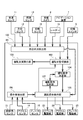
- FIG. 2 shows a configuration example of the operation control apparatus 100 according to the present embodiment.
- the driving control apparatus 100 includes a surrounding condition detecting unit 101, a driving state switching unit 102, a driving support execution unit 103, a driving operation determination unit 104, a driving operation execution unit 105, an operation amount detection unit 106, and a driving operation. And a reflection unit 107.
- each “part” included in the operation control device 100 is a functional portion that is conveniently classified to describe the function of the operation control device 100 in an easily understandable manner. Therefore, FIG.
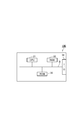
- the operation control device 100 may be configured to include at least one electronic control unit (ECU). That is, the operation control device 100 may be a processor configured to execute one or more functions embodied by a program. In the present embodiment, the operation control device 100 will be described by way of an example of a configuration including hardware as shown in FIG. 3.
- the operation control apparatus 100 includes, for example, a CPU 31, a ROM 32, a RAM 33, and an I / O unit 34.
- the CPU 31 is a processing device including, for example, an arithmetic circuit, a control circuit, and a register.
- the ROM 32 and the RAM 33 are storage devices such as a semiconductor memory.
- the I / O unit 34 is an input / output interface with an external device. These are connected to the bus B so as to be able to communicate with each other.
- the operation control apparatus 100 reads a program stored in the ROM 32, and the CPU 31 executes the read program. Operation control device 100 performs operation control processing by such composition.
- Each “unit” of the operation control device 100 can be realized as a program executed by a processor.
- the program can be stored and provided as an instruction to be executed by a processor, for example, in a non-transitory tangible storage medium readable by the processor.
- Each “unit” of the operation control apparatus 100 is not limited to the software implementation method as described above, and may be implemented by hardware.
- Each “unit” of the operation control apparatus 100 can be realized using an electronic circuit including, for example, an LSI and a memory. That is, the operation control device 100 may be an integrated circuit configured by one or more dedicated hardware logic circuits. Furthermore, each "unit" that the operation control device 100 has may be realized by combining software and hardware. That is, the operation control apparatus 100 may be one or more application specific integrated circuits configured by a combination of a processor that executes a program and one or more logic circuits.
- the surrounding condition detection unit 101 is connected to the on-vehicle camera 6, the navigation device 7, the vehicle speed sensor 11, the direction sensor 12, the radar 16, the sunshine sensor 18, the raindrop sensor 19 and the like.
- the surrounding situation detecting unit 101 detects the situation around the vehicle based on the output values from these devices, and outputs the detection result to the driving state switching unit 102 and the driving operation execution unit 105.
- the driving state switching unit 102 switches the driving state of the vehicle 1 from the automatic driving state to the manual driving state.
- the driving state switching unit 102 switches the driving state of the vehicle 1 from the manual driving state to the automatic driving state.
- the driver's seat of the vehicle 1 is provided with a switching switch 8 capable of inputting an instruction to switch the driving state of the vehicle 1.
- the operating state switching unit 102 is connected to the switching switch 8.
- the driving state switching unit 102 switches the driving state of the vehicle 1 to either the automatic driving state or the manual driving state according to the input signal of the switching switch 8. In this manner, when the driving state is set to the automatic driving state, the driving state switching unit 102 outputs the detection result of the condition around the vehicle by the surrounding condition detection unit 101 to the driving operation determination unit 104.
- the driving state switching unit 102 outputs the detection result of the condition around the vehicle by the surrounding condition detection unit 101 to the driving support execution unit 103.
- the driving support execution portion 103 supports the driving operation of the driver based on the detection result of the situation around the vehicle input from the driving state switching portion 102.
- the driving operation determination unit 104 performs the driving operation during the automatic driving based on the detection result of the situation around the vehicle input from the driving state switching unit 102. Determine the content. Further, the driving operation determination unit 104 calculates the degree of confidence indicating the size of the confidence in the determination of the content of the driving operation.
- the degree of confidence in the content of the driving operation is as follows.
- the contents of the driving operation include various elements such as an operation amount and an operation timing, in addition to the types of operations such as acceleration and deceleration of the vehicle, braking, and turning to the left and right.
- the driving operation determination unit 104 selects a setting value for each element based on the detection result (various pieces of information indicating the condition around the vehicle) by the surrounding condition detection unit 101.
- the operation control apparatus 100 stores a plurality of setting candidate values in a predetermined storage area such as a memory for each element included in the content of the operation operation.
- the driving operation determination unit 104 selects a setting value from among a plurality of setting candidate values (options) based on, for example, an evaluation value of the validity of the setting candidate value.
- the driving operation determination unit 104 determines the content of the driving operation.
- the evaluation values for the appropriateness of each of the "acceleration" and “deceleration” options may be largely different from each other. If the evaluation value for the validity of the selected option is sufficiently larger than the evaluation value for the validity of the non-selected option, the confidence in the selection of the setting candidate for the element may be considered to be high. On the other hand, if the evaluation value for the validity of the selected option does not differ much from the evaluation value for the validity of the non-selected option, it is considered that the confidence in the selection of the setting value for the element is small. It is good. The same applies to the case where the set value is selected for other elements (elements other than acceleration and deceleration) included in the content of the driving operation.
- the driving operation determination unit 104 calculates the degree of confidence for the content of the determined driving operation based on the validity used when determining the content of the driving operation.
- the driving operation determination unit 104 thus determines the content of the driving operation, and calculates the degree of confidence with respect to the determined content of the driving operation.
- the driving operation determination unit 104 outputs the content of the determined driving operation to the driving operation execution unit 105, and outputs the calculated degree of confidence to the driving operation reflection unit 107.
- the driving operation execution unit 105 controls the driving of the steering driving unit 23, the accelerator driving unit 24, and the brake driving unit 25 in accordance with the contents of the driving operation input from the driving operation determination unit 104, and operates the driving. For example, the driving operation execution unit 105 generates a control signal of the driving unit related to the driving operation among the driving units 23 to 25, and outputs the generated control signal to the driving unit. Thereby, the steering wheel 2, the accelerator pedal 4, and the brake pedal 5 are operated according to the content determined by the driving operation determination unit 104.
- the operation amount detection unit 106 detects each operation amount of the steering wheel 2, the accelerator pedal 4, and the brake pedal 5 based on the output values from the steering angle sensor 13, the accelerator sensor 14, and the brake sensor 15.
- the operation amount detection unit 106 outputs the detection result of each operation amount to the driving operation execution unit 105.
- the driving operation execution unit 105 drives the steering drive unit 23 and the accelerator so that the operation amount input from the operation amount detection unit 106 becomes the operation amount (target value) of the driving operation determined by the driving operation determination unit 104.
- the unit 24 drives the brake drive unit 25.
- the driving operation execution unit 105 realizes the contents of the driving operation determined by the driving operation determination unit 104 using various information (detection results) indicating the condition around the vehicle input from the peripheral condition detection unit 101. Do. Thereby, the operation control device 100 drives the vehicle 1 automatically.
- the driver does not need to operate the steering wheel 2, the accelerator pedal 4, and the brake pedal 5.
- the driver may depress the accelerator pedal 4 feeling discomfort with respect to the driving operation by the automatic driving.
- the driver may step on the brake pedal 5 when he / she feels dangerous for the driving operation by the automatic driving.
- the driver may operate the steering wheel 2 under such driving conditions.
- the driving operation execution unit 105 drives the respective driving units 23 to 25 in accordance with the contents of the driving operation determined by the driving operation determination unit 104.
- the driving operation execution unit 105 causes the output values from the steering angle sensor 13, the accelerator sensor 14, and the brake sensor 15 to become target values when the driving operation determined by the driving operation determination unit 104 is performed,
- the respective drive units 23 to 25 are controlled. Therefore, when the driving operation is performed by the driver, the driving operation execution unit 105 determines the presence / absence of the driving operation and the performed driving operation based on the detection value of the operation amount input from the operation amount detection unit 106. Contents can be detected. Then, the driving operation execution unit 105 outputs the detection results (information regarding the presence or absence of the driving operation by the driver and the content of the driving operation) to the driving state switching unit 102 and the driving operation reflection unit 107.
- the driving state switching unit 102 receives from the driving operation execution unit 105 a detection result indicating that the driving operation has been performed by the driver during automatic driving
- the driving state of the vehicle 1 is changed from the automatic driving state to the manual driving state Switch to
- the driving operation reflecting unit 107 receives a detection result indicating that the driving operation has been performed by the driver during automatic driving from the driving operation executing unit 105
- the driving operation reflecting unit 107 automatically performs the driving operation by the driver. It is determined whether or not to reflect the driving operation.
- the driving operation reflection unit 107 determines, based on the degree of confidence input from the driving operation determination unit 104, whether or not the content of the driving operation by the driver is to be reflected in the driving operation of automatic driving.
- the driving operation reflection unit 107 determines that the content of the driving operation by the driver is not to be reflected in the driving operation of the automatic driving.
- the degree of confidence in the content of the driving operation determined by the driving operation determination unit 104 is small, it is determined that the content of the driving operation by the driver is to be reflected in the driving operation of the automatic driving.
- the driving operation reflection unit 107 outputs the content of the driving operation by the driver to the driving operation determination unit 104.
- the driving operation reflection unit 107 performs the driving operation by the next automatic driving of the contents of the driving operation performed by the driver during the automatic driving according to the degree of confidence for the contents of the driving operation determined at the time of the automatic driving.
- the driving operation determination unit 104 learns the content of the driving operation by the driver input from the driving operation reflection unit 107 in this manner. Then, based on the learning result, the driving operation determination unit 104 determines the content of the driving operation at the time of the next automatic driving.
- the driving operation determination unit 104 learns the content of the driving operation by the driver by updating the evaluation value for the validity of the setting candidate value (option) of each element, which is used when determining the content of the driving operation. Do.
- the driving control apparatus 100 can correct the content of the driving operation by the automatic driving to the content of the driving operation that is less likely to give the driver a sense of discomfort.
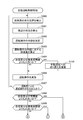
- FIGS. 4 and 5 show a flowchart of an automatic driving control process executed by the driving control apparatus 100 according to the present embodiment during automatic driving.
- the operation control device 100 To be executed.
- the driving control device 100 detects the traveling position of the vehicle 1 (S100).
- the navigation device 7 has a function of receiving a signal from a positioning satellite and detecting a traveling position of the vehicle 1. Therefore, the driving control device 100 acquires information on the traveling position detected by the navigation device 7.
- the driving control device 100 generates a traveling locus of the vehicle 1 based on the output values from the vehicle speed sensor 11 and the direction sensor 12. Then, the driving control apparatus 100 improves the accuracy of the traveling position of the vehicle 1 by matching the road shape of the map information stored in the navigation device 7 with the generated traveling locus.
- the operation control device 100 detects the situation around the vehicle 1 (S101).
- S101 is processing performed by the surrounding situation detection unit 101.
- the surrounding condition detection unit 101 analyzes the captured image input from the on-vehicle camera 6 to thereby determine the road shape, the position of the traveling division line (white line), the position of other vehicles or buildings existing around the vehicle, traffic signs, traffic lights , Detect pedestrians, etc.
- the surrounding situation detection unit 101 acquires, from the map information stored in the navigation device 7, information on the locations of buildings and traffic lights around the vehicle, the speed limit, etc., and information on the route to the destination. Also get.
- the surrounding situation detection unit 101 acquires information on the position of an object (such as an obstacle) present around the vehicle based on the output value from the radar 16, and outputs the information from the sunshine sensor 18 or the raindrop sensor 19. Based on the information about the weather.
- the driving control apparatus 100 determines the content of the driving operation (first driving operation) by the automatic driving based on the detected situation around the vehicle 1 (S102). S102 is processing performed by the driving operation determination unit 104.
- the driving operation determination unit 104 selects the setting value from among the plurality of setting candidate values stored in advance for each element, to thereby determine the content of the driving operation according to the situation around the vehicle.
- the driving operation determination unit 104 calculates the degree of confidence for the content of the determined driving operation (S103).
- S103 is processing performed by the driving operation determination unit 104.
- the content of the driving operation is determined as a relatively highly valid candidate by comparing the validity of the options of each element. That is, the content of the driving operation is not uniquely determined according to the situation around the vehicle. For example, even if it is decided to accelerate the acceleration / deceleration of the operation type which is one element of the content of the driving operation in the automatic driving, it is not that the selection of the deceleration can not be made under the situation. As a result of judging that the acceleration is relatively more appropriate than the deceleration, the acceleration is only selected.
- the degree of confidence in the content of the determined driving operation is calculated based on the degree of confidence in the selection of the setting value for each element in the process of S102.
- FIG. 6A and 6B show an example of the content and the degree of confidence of the driving operation when the vehicle is about to turn right at the intersection.
- FIG. 6A shows a situation in which another vehicle B and another vehicle C (oncoming vehicle) are approaching the intersection from the oncoming traffic lane when the host vehicle A indicated by hatching is about to turn right at the intersection. There is.
- three options can be considered: “stop”, “right turn”, and “straight ahead”.
- “Stop” means the content of the driving operation that stops before the intersection and waits until the oncoming vehicle passes the intersection.
- Light turn means the content of the driving operation of entering an intersection and making a right turn prior to the oncoming vehicle.
- “Go straight” means the content of the driving operation of going straight at the intersection currently going to enter and turning right at another intersection because the oncoming traffic lane is congested.
- the traveling route in the case of turning to the right is indicated by an arrow of a dashed dotted line
- the route in the case of going straight is indicated by an arrow of a dashed double dotted line.
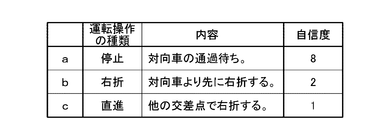
- the operation control apparatus 100 determines that the right turn option is not appropriate. Therefore, as shown in FIG. 6B, the degree of confidence when stopping is selected as the content of the driving operation is a larger value [8] compared to when turning right is selected, and the degree of confidence when selecting right turning is stopping It becomes a small value [2] compared with the case where is selected.
- the driving control apparatus 100 determines that the content of the driving operation is to stop at the intersection, and calculates the value of the degree of confidence for the determination as [8].
- FIGS. 7A and 7B also illustrate the case where the host vehicle A is about to turn to the right at an intersection.
- the situation shown in FIG. 7A is different from the situation shown in FIG. 6A.
- the other vehicle B exists in the opposite lane, the distance from the other vehicle B to the intersection is relatively long. Therefore, the own vehicle A can pass through the intersection if the other vehicle B rushes right before entering the intersection. However, if you make a quick turn to the right, there is a risk that the driver may feel uneasy.
- the other vehicle B is stopped until it passes the intersection, the waiting time of the own vehicle A becomes long because the distance from the other vehicle B to the intersection is relatively long.
- FIG. 7A it is difficult to think that the host vehicle A will go straight after giving a right turn since there is no following vehicle behind the other vehicle B.
- the operation control apparatus 100 sets the degree of confidence in the case of selecting “stop” to be stopped before the intersection and wait until the other vehicle B passes the intersection as [4].
- the operation control apparatus 100 sets the degree of confidence in the case of selecting “right turn” to enter the intersection earlier than the other vehicle B and turn right, as [3].
- the operation control apparatus 100 sets the degree of confidence to “0” when “straight ahead” is selected to go straight after giving a right turn.
- the operation control apparatus 100 determines that the content of the driving operation is to be stopped at the intersection and the value of the degree of confidence for the decision is the same as the situation shown in FIG. Calculated as [4]. In this way, the degree of confidence in the determination of the content of the driving operation becomes a largely different value.
- the degree of confidence is smaller than the switching recommendation threshold It is determined whether or not (S104).
- S104 is processing performed by the driving operation reflection unit 107.
- the switching recommendation threshold mentioned here is a predetermined threshold (second threshold) used to determine whether or not the driver is recommended to switch to the manual driving during the automatic driving.
- the degree of confidence in the content of the driving operation may be greatly reduced.
- the driving control apparatus 100 determines that the degree of confidence for the content of the determined driving operation is smaller than the switching recommendation threshold (S104: yes)
- the driver is requested to switch from the automatic driving state to the manual driving state. It is recommended against (S105).
- the driver does not necessarily switch to the manual operation. Therefore, when the driver does not switch to the manual operation, the automatic operation by the operation control device 100 is continued.
- the driving control apparatus 100 determines that the degree of confidence for the content of the determined driving operation is equal to or higher than the switching recommendation threshold (S104: no), the driver switches the automatic driving state to the manual driving state. Not recommended for As a result, in the operation control apparatus 100, the driving operation execution unit 105 controls the respective driving units 23 to 25 in accordance with the content determined in the process of S102, and carries out the driving operation (S106). Subsequently, the operation control apparatus 100 determines whether the driver has performed a driving operation (second driving operation) (S107). S107 is processing performed by the driving operation execution unit 105.
- S107 is processing performed by the driving operation execution unit 105.
- the driving control apparatus 100 detects the output values from the steering angle sensor 13, the accelerator sensor 14, and the brake sensor 15 by the operation amount detection unit 106 during automatic driving.
- the drive control device 100 controls the steering drive unit 23, the accelerator drive unit 24, and the brake drive unit 25 by the drive operation execution unit 105 while detecting these output values. Therefore, when the driver performs a driving operation, the driving control apparatus 100 can immediately detect the presence or absence of the driving operation and the content of the driving operation.
- the driving control device 100 detects the traveling position of the vehicle 1 again to continue the automatic driving (S100). ).
- the driving control apparatus 100 determines that the driving operation is being performed by the driver (S107: yes)
- the processing shifts to the processing of S108.
- the driver may have performed a driving operation in response to being recommended to switch to the manual driving.
- the driver has performed a driving operation by feeling discomfort in the content of the driving operation by the automatic driving.
- a sudden situation for example, jumping out of a person or an animal, or an object falling from a preceding vehicle
- a sudden situation for example, jumping out of a person or an animal, or an object falling from a preceding vehicle
- the driver operates the steering wheel 2 or depresses the brake pedal 5 in order to avoid the danger resulting from a sudden situation.
- the driving control device 100 executes the following determination processing.
- the driving control apparatus 100 determines whether the degree of confidence of the content of the driving operation by automatic driving performed when the driving operation by the driver is detected is larger than the learning threshold (S108).
- S108 is processing performed by the driving operation reflection unit 107.
- the learning threshold referred to here is a predetermined threshold (first threshold) used to determine whether or not to learn the content of the driver's driving operation performed during automatic driving, and is more than the switching recommendation threshold. A large value is set (first threshold> second threshold).
- first threshold predetermined threshold
- a large value is set (first threshold> second threshold).
- the degree of confidence in the content of the driving operation may be high, and as shown in FIG. 7B, the degree of confidence may be low.
- the operation control apparatus 100 is performing a driving operation with a degree of confidence [8] to stop in front of the intersection in order to wait until the other vehicle B passes the intersection. . If the driver performs a driving operation to turn right at the intersection during such automatic driving, it is highly likely that the driver has specially rushed to arrive at the destination for some reason. Therefore, even if the same situation as the situation shown in FIG. 6A occurs in the next automatic driving, it is not considered appropriate to perform the driving operation of turning to the right as in the present case. As described above, it is considered that the driving control apparatus 100 should not learn even the driving operation performed by the driver during the automatic driving.
- the operation control apparatus 100 performs the driving operation with the confidence [4] to stop before the intersection in order to wait until the other vehicle B passes the intersection. Is going. If the driver performs a driving operation to turn right at the intersection during such automatic driving, the driver will be similar to the current one when the same situation as the situation shown in FIG. 7A occurs in the next automatic driving. There is a high probability of performing a driving operation to turn right. Therefore, the operation control apparatus 100 learns the contents of the driving operation performed by the driver during the automatic driving, and the contents of the learned driving operation when the same situation occurs at the next automatic driving.
- the contents of the driving operation should be determined in a state in which As described above, it is considered that the determination as to whether or not to learn the driver's driving operation performed during the automatic driving depends on the degree of confidence in the content of the driving operation determined during the automatic driving. Therefore, in the present embodiment, an appropriate learning threshold is set in advance for the degree of confidence.
- the driving operation reflection unit 107 compares the degree of confidence in the content of the driving operation by automatic driving calculated by the driving operation determination unit 104 with the learning threshold value. The driving operation reflection unit 107 determines whether to learn the content of the driving operation by the driver based on the comparison result.
- the degree of confidence in the content of the driving operation by the automatic driving is greater than the learning threshold when the driver performs the driving operation during the automatic driving, the automatic operation is performed due to the occurrence of some sort of sudden situation. It is considered that the driver performed the driving operation while driving. That is, it is considered that the driver did not perform the driving operation because the driver felt a sense of discomfort in the content of the driving operation by the automatic driving. Therefore, when the driving control apparatus 100 determines that the degree of confidence in the content of the driving operation by automatic driving is larger than the learning threshold (S108: yes), the content of the driving operation by the driver during automatic driving is learned. do not do. Thereafter, the operation control apparatus 100 switches the operation state from the automatic operation state to the manual operation state (S112 in FIG.
- S112 is a process performed by the driving state switching unit 102.
- the driver performs a driving operation during automatic driving, if the degree of confidence in the content of the driving operation by automatic driving is equal to or less than the learning threshold value, the driver is instructed to the content of the driving operation by automatic driving. It is thought that driving operation was performed because I felt a sense of discomfort. Therefore, when it is determined that the degree of confidence with respect to the content of the driving operation by automatic driving is equal to or less than the learning threshold (S108 in FIG. 4: no), the driving control apparatus 100 executes the following determination processing. The operation control apparatus 100 determines again whether the degree of confidence is smaller than the switching recommendation threshold (S109).
- S109 is processing performed by the driving operation reflection unit 107.
- the driving control apparatus 100 recommends the driver to switch to the manual driving (S105). Therefore, the driver may start driving operation by manual driving in response to the recommendation.
- the switching recommendation threshold is set to a value smaller than the learning threshold. Therefore, even when the driver starts the driving operation in response to the recommendation to switch to the manual driving, the process in S108 is negatively determined.
- the driving operation reflection unit 107 compares the degree of confidence with the switching recommendation threshold.
- the driving control apparatus 100 learns the content of the driving operation by the driver during automatic driving (S111 in FIG. 5). That is, the driving control apparatus 100 learns the driving operation by the driver, assuming that the driving operation by the driver is a driving operation performed by feeling discomfort with respect to the automatic driving.
- the driving control apparatus 100 stores the situation around the vehicle when the driver performs the driving operation, the content of the driving operation by the automatic driving, the content of the driving operation by the driver, etc.
- the driving operation determination unit 104 determines the content of the driving operation by the next automatic driving based on the learning result. Thereby, the contents of the learned driving operation are reflected in the driving operation by the next automatic driving.
- the driving control apparatus 100 feels that the driver's driving operation is uncomfortable for automatic driving. It is determined that the driving operation is performed by As a result, the driving control device 100 is configured to learn the driving operation by the driver. Then, the operation control apparatus 100 switches the operation state from the automatic operation state to the manual operation state (S112 in FIG. 5), and ends the automatic operation control process.
- the driving control apparatus 100 determines that the degree of confidence in the content of the driving operation by the automatic driving is smaller than the switching recommendation threshold value. (S109: yes), the next determination processing is executed.
- the operation control apparatus 100 determines whether a predetermined time (for example, 30 seconds) has elapsed after determining that the degree of confidence is smaller than the switching recommendation threshold (S110 in FIG. 5). S110 is processing performed by the driving operation reflection unit 107. If the predetermined time has not passed, it is considered that the driver performed the driving operation in response to the recommendation to switch to the manual driving.
- the driving control apparatus 100 determines that the predetermined time has not elapsed after determining that the degree of confidence is smaller than the switching recommendation threshold (S110: no), driving by the driver during automatic driving is performed. Do not learn the contents of the operation. Thereafter, the operation control apparatus 100 switches the operation state from the automatic operation state to the manual operation state (S112), and ends the automatic operation control process. As described above, when the driving control apparatus 100 determines that the degree of confidence is equal to or less than the learning threshold and the degree of confidence is smaller than the switching recommendation threshold, the driving by the driver does not occur. It is determined that the operation is not a driving operation performed due to feeling discomfort with respect to automatic driving. As a result, the driving control device 100 is configured not to learn the driving operation by the driver.
- the driving control apparatus 100 determines that the predetermined time has elapsed after determining that the degree of confidence is smaller than the switching recommendation threshold (S110: yes), the driving by the driver during automatic driving is performed.
- the content of the operation is learned (S111).
- the operation control apparatus 100 switches the operation state from the automatic operation state to the manual operation state (S112), and ends the automatic operation control process.
- the driving control apparatus 100 determines that the degree of confidence is equal to or less than the learning threshold and the degree of confidence is smaller than the switching recommendation threshold, the driving operation by the driver is performed when a predetermined time has elapsed. It is determined that the driving operation has been performed by feeling discomfort with respect to the automatic driving. As a result, the driving control device 100 is configured to learn the driving operation by the driver.
- the operation control apparatus 100 determines the content of the driving operation according to the situation around the vehicle, and calculates the degree of confidence for the content of the determined driving operation. Then, when the driving operation by the driver is performed during the automatic driving, the driving control device 100 performs the driving operation by the driver according to the degree of confidence with respect to the content of the driving operation by the automatic driving performed at that time. Determine whether to learn the content. At this time, based on the comparison result of the confidence level and the learning threshold value, and the comparison result of the confidence level and the switching recommendation threshold value, the driving control apparatus 100 felt that the driving operation by the driver is uncomfortable for automatic driving. It is determined whether or not the driving operation has been performed.
- the driving control device 100 determines that the driving operation by the driver is a driving operation performed by feeling discomfort with the automatic driving, it determines that the content of the driving operation by the driver should be learned. Do. As a result, when it is determined that the driving control apparatus 100 should learn, the content of the driving operation by the driver is learned. Thereby, the driving control apparatus 100 reflects the contents of the learned driving operation by the driver in the driving operation at the next automatic driving. That is, the driving control apparatus 100 according to the present embodiment is configured to restrict the driver's override (transfer of the driving operation authority to the driver) according to the degree of confidence of the automatic driving.
- the driving control apparatus 100 erroneously displays the contents of the driving operation performed by the driver except for the case where the driver feels a sense of discomfort in the driving operation during the automatic driving. It is possible to avoid learning. As a result, the driving control apparatus 100 can realize automatic driving without giving a sense of discomfort to the driver.
Landscapes
- Engineering & Computer Science (AREA)
- Automation & Control Theory (AREA)
- Transportation (AREA)
- Mechanical Engineering (AREA)
- Human Computer Interaction (AREA)
- Physics & Mathematics (AREA)
- Mathematical Physics (AREA)
- Control Of Driving Devices And Active Controlling Of Vehicle (AREA)
- Traffic Control Systems (AREA)
Abstract
運転制御装置は、車両の運転状態を手動運転状態と自動運転状態とに切換可能である。運転制御装置は、自動運転状態において、車両周辺の状況に応じて運転操作の内容を決定すると共に、決定した運転操作の内容に対する自信度を算出する。運転制御装置は、自動運転時に運転者による運転操作を検出した場合には、その時行われている自動運転による運転操作の内容に対する自信度に応じて、運転者による運転操作の内容を、自動運転時の運転操作の内容に反映する。
Description
本開示は、手動運転状態と自動運転状態とを切り換えて車両の走行を制御する技術に関する。
運転者は、車両を運転するために、車両周辺の状況に応じて適切な運転操作の内容を選択する必要がある。ここで言う運転操作の内容は、例えば、車両の加減速、制動、右左折等の操作の種類、操作量、および操作タイミングを含む。車両周辺の状況に応じて適切と感じる運転操作の内容は、運転者によって異なる。このため、他人が運転する車両の助手席に乗車した場合には、その運転に違和感を感じることがある。
車両が自動運転される場合も同様に、車両の運転制御装置が車両周辺の状況を検出して選択する運転操作の内容と、乗車している運転者が適切と感じる運転操作の内容と、が異なることが起こり得る。その結果、自動運転中の運転操作の内容に運転者が違和感を感じた場合には、運転者が、運転制御装置による運転操作に介入することになる。そこで、特許文献1には、次のような技術が開示されている。自動運転中の運転操作に運転者が介入した場合には、運転者によって行われた運転操作の内容を学習して、自動運転による運転操作に運転者による運転操作を反映させる。これにより、運転者に与える違和感が抑制された自動運転を実現する。
しかし、特許文献1の開示技術では、自動運転中に運転者が感じる違和感を抑制する点について改善の余地がある。自動運転中の運転操作に運転者が介入する理由は、自動運転中の運転操作に運転者が違和感を感じたためという点に限らない。例えば、危険を避けるために運転者がとっさに運転操作に介入するなど、様々な理由が存在する。このような理由によって行われた運転者の運転操作の内容を学習することは、自動運転中に運転者が感じる違和感を抑制するための学習として適切ではない。
本開示は、運転者に違和感を与えない自動運転を実現可能な技術を提供する。
本開示の技術の一態様である運転制御装置は、車両の運転状態を手動運転状態と自動運転状態とに切換可能である。本運転制御装置は、自動運転状態において、車両周辺の状況に応じて運転操作の内容を決定すると共に、決定した運転操作の内容に対する自信の大きさを示す自信度を算出する。本運転制御装置は、自動運転時に運転者による運転操作を検出した場合には、その時行われている自動運転による運転操作の内容に対する自信度に応じて、運転者による運転操作の内容を、自動運転時の運転操作に反映する。この技術は、本開示の技術の一態様である運転制御方法においても同様である。
自動運転状態において算出した自信度が大きい運転操作(妥当性が高い運転操作)の最中に、運転者が運転操作を行った場合は、危険回避等のような突発的な事態が発生したことに起因して運転操作が行われた蓋然性が高い。そのため、その後の自動運転状態で同じような状況が発生しても、運転者による運転操作の内容を、自動運転時の運転操作に反映しない方が良い。一方、自動運転状態において算出した自信度が小さい運転操作(妥当性が低い運転操作)の最中に、運転者が運転操作を行った場合は、運転操作の内容に運転者が違和感を感じたことに起因して運転操作が行われた蓋然性が高い。そのため、その後の自動運転状態で同じような状況が発生した場合には、運転者による運転操作の内容を、自動運転時の運転操作に反映した方が良い。よって、本開示の技術では、自動運転時に運転者による運転操作を検出した場合、その時行われている自動運転による運転操作の内容に対する自信度に応じて、運転者による運転操作の内容を、自動運転時の運転操作に反映する構成としている。その結果、本開示の技術では、自動運転時の運転操作を、運転者に違和感を与えない内容にすることができる。
自動運転状態において算出した自信度が大きい運転操作(妥当性が高い運転操作)の最中に、運転者が運転操作を行った場合は、危険回避等のような突発的な事態が発生したことに起因して運転操作が行われた蓋然性が高い。そのため、その後の自動運転状態で同じような状況が発生しても、運転者による運転操作の内容を、自動運転時の運転操作に反映しない方が良い。一方、自動運転状態において算出した自信度が小さい運転操作(妥当性が低い運転操作)の最中に、運転者が運転操作を行った場合は、運転操作の内容に運転者が違和感を感じたことに起因して運転操作が行われた蓋然性が高い。そのため、その後の自動運転状態で同じような状況が発生した場合には、運転者による運転操作の内容を、自動運転時の運転操作に反映した方が良い。よって、本開示の技術では、自動運転時に運転者による運転操作を検出した場合、その時行われている自動運転による運転操作の内容に対する自信度に応じて、運転者による運転操作の内容を、自動運転時の運転操作に反映する構成としている。その結果、本開示の技術では、自動運転時の運転操作を、運転者に違和感を与えない内容にすることができる。
以降に、本開示の技術を実施するための形態の一例について図面を用いて説明する。
<A.構成>
図1には、本実施形態に係る運転制御装置100を搭載した車両1の構成例が示されている。車両1は、運転制御装置100に加えて、ステアリングホイール2、ステアリングシャフト3、アクセルペダル4、ブレーキペダル5、車載カメラ6、ナビゲーション装置7などを備える。
車載カメラ6は、例えば、CCDイメージセンサ、CMOSイメージセンサ、近赤外線センサ等の、単眼カメラまたはステレオカメラであり、所定の周期で車両周辺を撮影する。車載カメラ6は、通信可能な状態で運転制御装置100に接続されており、撮影画像データを運転制御装置100に出力する。これにより、運転制御装置100は、車載カメラ6からの撮影画像を解析し、車両周辺の状況を検出する。
ナビゲーション装置7は、道路形状、建物や信号機の位置等に関する情報を含む地図情報を、メモリ等の所定の記憶領域に記憶している。ナビゲーション装置7は、測位衛星から受信した信号に基づいて車両1の走行位置を検出すると、検出した走行位置の周辺の地図情報を、記憶領域から読み出して運転者に提示する。また、ナビゲーション装置7は、目的地が設定されると、目的地までの経路を探索して、探索した経路に関する情報を運転者に提示する。ナビゲーション装置7は、通信可能な状態で運転制御装置100に接続されており、ナビゲーションに関するデータを運転制御装置100に出力できる。
<A.構成>
図1には、本実施形態に係る運転制御装置100を搭載した車両1の構成例が示されている。車両1は、運転制御装置100に加えて、ステアリングホイール2、ステアリングシャフト3、アクセルペダル4、ブレーキペダル5、車載カメラ6、ナビゲーション装置7などを備える。
車載カメラ6は、例えば、CCDイメージセンサ、CMOSイメージセンサ、近赤外線センサ等の、単眼カメラまたはステレオカメラであり、所定の周期で車両周辺を撮影する。車載カメラ6は、通信可能な状態で運転制御装置100に接続されており、撮影画像データを運転制御装置100に出力する。これにより、運転制御装置100は、車載カメラ6からの撮影画像を解析し、車両周辺の状況を検出する。
ナビゲーション装置7は、道路形状、建物や信号機の位置等に関する情報を含む地図情報を、メモリ等の所定の記憶領域に記憶している。ナビゲーション装置7は、測位衛星から受信した信号に基づいて車両1の走行位置を検出すると、検出した走行位置の周辺の地図情報を、記憶領域から読み出して運転者に提示する。また、ナビゲーション装置7は、目的地が設定されると、目的地までの経路を探索して、探索した経路に関する情報を運転者に提示する。ナビゲーション装置7は、通信可能な状態で運転制御装置100に接続されており、ナビゲーションに関するデータを運転制御装置100に出力できる。
車両1は、車速センサ11、方位センサ12、操舵角センサ13、アクセルセンサ14、ブレーキセンサ15、レーダー16、日照センサ18、雨滴センサ19等の各種センサをさらに備える。
車速センサ11は、車輪あるいは車軸の回転速度に基づいて車速を検出する。方位センサ12は、例えばジャイロセンサであり、車両1の方向の変化量を検出する。操舵角センサ13は、ステアリングシャフト3に取り付けられており、ステアリングホイール2の操舵角を検出する。アクセルセンサ14は、アクセルペダル4に取り付けられており、アクセルペダル4の踏み込み量を検出する。ブレーキセンサ15は、ブレーキペダル5に取り付けられており、ブレーキペダル5の踏み込み量を検出する。これらのセンサ11~15は、通信可能な状態で運転制御装置100に接続されており、それぞれの検出データを運転制御装置100に出力する。
車速センサ11は、車輪あるいは車軸の回転速度に基づいて車速を検出する。方位センサ12は、例えばジャイロセンサであり、車両1の方向の変化量を検出する。操舵角センサ13は、ステアリングシャフト3に取り付けられており、ステアリングホイール2の操舵角を検出する。アクセルセンサ14は、アクセルペダル4に取り付けられており、アクセルペダル4の踏み込み量を検出する。ブレーキセンサ15は、ブレーキペダル5に取り付けられており、ブレーキペダル5の踏み込み量を検出する。これらのセンサ11~15は、通信可能な状態で運転制御装置100に接続されており、それぞれの検出データを運転制御装置100に出力する。
レーダー16は、例えば電磁波を送信して戻ってきた反射波を受信することにより、車両周辺に存在する物体を検出する。レーダー16は、通信可能な状態で運転制御装置100に接続されており、物体の検出データを運転制御装置100に出力する。これにより、運転制御装置100は、レーダー16からの検出データから、車両1から物体までの相対距離や、車両1に対する物体の相対速度等を測定する。なお、レーダー16は、電磁波としてレーザー光を用いれば、物体の形状も検出できる。日照センサ18は、車両1に対する太陽光の強さを検出する。雨滴センサ19は、フロントガラスに付着した雨滴の有無を検出する。これらのセンサ16,18,19は、通信可能な状態で運転制御装置100に接続されており、それぞれの検出データを運転制御装置100に出力する。
車両1は、ステアリング駆動部23、アクセル駆動部24、ブレーキ駆動部25等の各種アクチュエータをさらに備える。ステアリング駆動部23は、ステアリングシャフト3を回転駆動する。アクセル駆動部24は、アクセルペダル4を駆動する。ブレーキ駆動部25は、ブレーキペダル5を駆動する。これらの駆動部23~25は、通信可能な状態で運転制御装置100に接続されている。
例えば、運転者が、車両1の運転状態を自動運転状態に設定したとする。この場合、運転制御装置100は、車速センサ11などの上記各種センサからの出力値や、車載カメラ6やナビゲーション装置7からの出力データに基づいて、車両周辺の状況を検出する。そして、運転制御装置100は、車両周辺の状況の検出結果に基づいて、自動運転状態における運転操作の内容を決定する。さらに、運転制御装置100は、車速センサ11、操舵角センサ13、アクセルセンサ14、ブレーキセンサ15からの出力を検出しながら、自動運転時に駆動させる各種アクチュエータに対する制御信号を生成する。運転制御装置100は、生成した制御信号をアクチュエータに送信する。これにより、運転制御装置100は、ステアリング駆動部23、アクセル駆動部24、ブレーキ駆動部25等の駆動を制御し、車両1を自動運転する。このように、本実施形態に係る運転制御装置100は、車両周辺の状況に応じた自動運転を実現している。また、運転制御装置100は、運転操作の学習内容に基づいて、自動運転時に駆動させる各種アクチュエータに対する制御信号を生成し、生成した制御信号をアクチュエータに送信する。このように、本実施形態に係る運転制御装置100は、運転操作の学習内容を反映させた自動運転を実現している。
例えば、運転者が、車両1の運転状態を自動運転状態に設定したとする。この場合、運転制御装置100は、車速センサ11などの上記各種センサからの出力値や、車載カメラ6やナビゲーション装置7からの出力データに基づいて、車両周辺の状況を検出する。そして、運転制御装置100は、車両周辺の状況の検出結果に基づいて、自動運転状態における運転操作の内容を決定する。さらに、運転制御装置100は、車速センサ11、操舵角センサ13、アクセルセンサ14、ブレーキセンサ15からの出力を検出しながら、自動運転時に駆動させる各種アクチュエータに対する制御信号を生成する。運転制御装置100は、生成した制御信号をアクチュエータに送信する。これにより、運転制御装置100は、ステアリング駆動部23、アクセル駆動部24、ブレーキ駆動部25等の駆動を制御し、車両1を自動運転する。このように、本実施形態に係る運転制御装置100は、車両周辺の状況に応じた自動運転を実現している。また、運転制御装置100は、運転操作の学習内容に基づいて、自動運転時に駆動させる各種アクチュエータに対する制御信号を生成し、生成した制御信号をアクチュエータに送信する。このように、本実施形態に係る運転制御装置100は、運転操作の学習内容を反映させた自動運転を実現している。
自動運転時の運転操作の内容(すなわち、加減速や制動や右左折等の操作の種類、操作量、操作タイミングなど)は、運転者が運転したときの運転操作の内容(手動運転時の運転操作の内容)とは異なる場合がある。具体的には、自動運転時に行われる運転操作の種類(例えば加減速、制動、右左折等)、操作量、および操作タイミングは、手動運転時と異なる場合がある。このため、運転者は、自動運転による運転操作の内容に対して違和感を感じることがある。この違和感が大きくなると、運転者は、ステアリングホイール2を操作したり、アクセルペダル4やブレーキペダル5を操作したりする。つまり、自動運転中の運転操作の内容に運転者が違和感を感じた場合には、運転者が運転制御装置100による運転操作に介入することになる。このような状況で行われた運転者による運転操作は、自動運転時に運転制御装置100が適切と判断した運転操作と、運転者が適切と判断した運転操作と、が乖離していることを表している。さらに、自動運転時の運転者による運転操作の内容は、自動運転による運転操作において修正すべき内容を表している。
しかし、自動運転中に運転者が運転操作を行う理由は、必ずしも自動運転中の運転操作に違和感を感じたためという点に限らない。自動運転中に運転者が運転操作を行う理由には、何らかの突発的な事態(例えば人や動物の飛び出し等)が発生したためという点も含まれる。このような理由の場合には、運転者がとっさにステアリングホイール2を操作したり、ブレーキペダル5を急激に踏み込んだりする。従って、このような突発的な事態に起因して、自動運転中に運転者によって行われた運転操作の内容を学習した場合、次回の自動運転による運転操作に、適切でない運転操作を反映させてしまう可能性がある。
そこで、本実施形態に係る運転制御装置100は、自動運転中に運転者によって行われた運転操作を、自動運転による運転操作に適切に反映させるべく、以降に示す構成を採用している。
そこで、本実施形態に係る運転制御装置100は、自動運転中に運転者によって行われた運転操作を、自動運転による運転操作に適切に反映させるべく、以降に示す構成を採用している。
図2には、本実施形態に係る運転制御装置100の構成例が示されている。運転制御装置100は、周辺状況検出部101と、運転状態切換部102と、運転支援実行部103と、運転操作決定部104と、運転操作実行部105と、操作量検出部106と、運転操作反映部107と、を有する。なお、本実施形態では、自動運転中に運転者によって行われた運転操作を、自動運転による運転操作に反映させるために、運転制御装置100が有する機能に着目して説明する。よって、運転制御装置100が有する各「部」は、運転制御装置100が有する機能を、本開示の技術を分かりやすく説明するために便宜的に分類した機能部である。従って、図2は、運転制御装置100が、当該装置が有する各「部」に物理的に区分されていることを表すものではない。運転制御装置100は、少なくとも1つの電子制御ユニット(ECU)を備える構成であってもよい。つまり、運転制御装置100は、プログラムにより具体化された1又は複数の機能を実行するように構成されたプロセッサであってもよい。本実施形態では、運転制御装置100が、図3に示されるようなハードウェアを含む構成の場合を例に説明する。運転制御装置100は、例えばCPU31、ROM32、RAM33、およびI/Oユニット34等を備える。CPU31は、例えば演算回路、制御回路、およびレジスタ等を備える処理装置である。ROM32及びRAM33は、半導体メモリ等の記憶装置である。I/Oユニット34は、外部デバイスとの入出力インタフェースである。これらは、相互に通信可能となるようにバスBに接続されている。運転制御装置100は、例えばROM32に記憶されたプログラムを読み出し、読み出したプログラムをCPU31が実行する。運転制御装置100は、このような構成により、運転制御処理を実行する。運転制御装置100が有する各「部」は、プロセッサによって実行されるプログラムとして実現できる。また、そのプログラムは、プロセッサにより実行されるインストラクションとして、例えばプロセッサが読み取り可能な非遷移的実体的記憶媒体に記憶し提供できる。なお、運転制御装置100が有する各「部」は、上述したようにソフトウェアによる実現方法に限らず、ハードウェアによって実現してもよい。運転制御装置100が有する各「部」は、例えばLSIやメモリを含む電子回路を用いて実現できる。つまり、運転制御装置100は、1つ以上の専用ハードウェア論理回路によって構成された集積回路であってもよい。さらに、運転制御装置100が有する各「部」は、ソフトウェアおよびハードウェアを組合せることによって実現してもよい。つまり、運転制御装置100は、プログラムを実行するプロセッサと、1つ以上の論理回路と、の組み合わせにより構成された、1つ以上の特定用途向け集積回路であってもよい。
周辺状況検出部101は、車載カメラ6、ナビゲーション装置7、車速センサ11、方位センサ12、レーダー16、日照センサ18、雨滴センサ19などに接続されている。周辺状況検出部101は、これらの装置からの出力値に基づいて車両周辺の状況を検出して、運転状態切換部102および運転操作実行部105に検出結果を出力する。
運転状態切換部102は、車両1の運転状態を、自動運転状態から手動運転状態に切り換える。または、運転状態切換部102は、車両1の運転状態を、手動運転状態から自動運転状態に切り換える。例えば車両1の運転席には、車両1の運転状態の切り換え指示を入力可能な切換スイッチ8が備えられている。運転状態切換部102は、切換スイッチ8に接続されている。運転状態切換部102は、切換スイッチ8の入力信号に従って、車両1の運転状態を自動運転状態または手動運転状態の何れかに切り換える。このようにして、運転状態が自動運転状態に設定された場合は、運転状態切換部102は、周辺状況検出部101による車両周辺の状況の検出結果を、運転操作決定部104に出力する。運転状態が手動運転状態に設定された場合は、運転状態切換部102は、周辺状況検出部101による車両周辺の状況の検出結果を、運転支援実行部103に出力する。
運転状態切換部102は、車両1の運転状態を、自動運転状態から手動運転状態に切り換える。または、運転状態切換部102は、車両1の運転状態を、手動運転状態から自動運転状態に切り換える。例えば車両1の運転席には、車両1の運転状態の切り換え指示を入力可能な切換スイッチ8が備えられている。運転状態切換部102は、切換スイッチ8に接続されている。運転状態切換部102は、切換スイッチ8の入力信号に従って、車両1の運転状態を自動運転状態または手動運転状態の何れかに切り換える。このようにして、運転状態が自動運転状態に設定された場合は、運転状態切換部102は、周辺状況検出部101による車両周辺の状況の検出結果を、運転操作決定部104に出力する。運転状態が手動運転状態に設定された場合は、運転状態切換部102は、周辺状況検出部101による車両周辺の状況の検出結果を、運転支援実行部103に出力する。
運転支援実行部103は、車両1の運転状態が手動運転状態に設定された場合に、運転状態切換部102から入力された車両周辺の状況の検出結果に基づいて、運転者の運転操作を支援するための各種の処理を実行する。
運転操作決定部104は、車両1の運転状態が自動運転状態に設定された場合に、運転状態切換部102から入力された車両周辺の状況の検出結果に基づいて、自動運転中の運転操作の内容を決定する。さらに、運転操作決定部104は、運転操作の内容の決定に対する自信の大きさを示す自信度を算出する。ここで、運転操作の内容に対する自信度とは、次のようなものである。
運転操作決定部104は、車両1の運転状態が自動運転状態に設定された場合に、運転状態切換部102から入力された車両周辺の状況の検出結果に基づいて、自動運転中の運転操作の内容を決定する。さらに、運転操作決定部104は、運転操作の内容の決定に対する自信の大きさを示す自信度を算出する。ここで、運転操作の内容に対する自信度とは、次のようなものである。
まず、運転操作の内容には、車両の加減速、制動、右左折等の操作の種類に加えて、操作量や操作タイミングなど、様々な要素が含まれる。運転操作決定部104は、周辺状況検出部101による検出結果(車両周辺の状況を示す各種の情報)に基づいて、個々の要素に対する設定値を選択する。運転制御装置100は、運転操作の内容に含まれる要素ごとに、複数の設定候補値を、メモリ等の所定の記憶領域に記憶している。運転操作決定部104は、例えば、設定候補値の妥当性に対する評価値に基づいて、複数の設定候補値(選択肢)の中から、設定値を選択している。これにより、運転操作決定部104は、運転操作の内容を決定している。個々の要素に対する設定値の選択には、通常、その選択に対する自信の大きさを示す自信度が存在する。つまり、1つの要素に対する設定候補として複数の選択肢が存在し、複数の選択肢のうち、いずれかを選択した結果に対して自信度が存在する。例えば、運転操作の内容の1つである「加減速」の要素では、「加速」および「減速」の2つの選択肢が存在する。これらの選択肢の中から、加速か、減速か、を選択する場合、加速の選択はあり得るが、減速の選択はあり得ないという状況になることは稀である。よって、加速の方が減速よりも相対的に妥当性が高い場合には、加速が選択される。また、「加速」および「減速」の選択肢それぞれの妥当性に対する評価値は、互いに大きく差がある場合もあれば、あまり差がない場合もある。選択された選択肢の妥当性に対する評価値が、選択されなかった選択肢の妥当性に対する評価値よりも十分に大きければ、要素に対する設定候補の選択の自信度は大きいと考えて良い。一方、選択された選択肢の妥当性に対する評価値が、選択されなかった選択肢の妥当性に対する評価値に対して、あまり差がない場合には、要素に対する設定値の選択の自信度は小さいと考えて良い。この点については、運転操作の内容に含まれる他の要素(加減速以外の要素)について、その設定値を選択する場合においても同様である。従って、運転操作決定部104は、運転操作の内容を決定する際に用いた妥当性に基づいて、決定した運転操作の内容に対する自信度を算出する。
運転操作決定部104は、このようにして運転操作の内容を決定し、決定した運転操作の内容に対する自信度を算出する。運転操作決定部104は、決定した運転操作の内容を運転操作実行部105に出力し、算出した自信度を運転操作反映部107に出力する。
運転操作決定部104は、このようにして運転操作の内容を決定し、決定した運転操作の内容に対する自信度を算出する。運転操作決定部104は、決定した運転操作の内容を運転操作実行部105に出力し、算出した自信度を運転操作反映部107に出力する。
運転操作実行部105は、運転操作決定部104から入力された運転操作の内容に従って、ステアリング駆動部23、アクセル駆動部24、ブレーキ駆動部25の駆動を制御し、運転を操作する。例えば、運転操作実行部105は、各駆動部23~25のうち、運転操作に関連する駆動部の制御信号を生成し、生成した制御信号を駆動部に出力する。これにより、ステアリングホイール2、アクセルペダル4、ブレーキペダル5は、運転操作決定部104によって決定された内容に従って操作される。
操作量検出部106は、操舵角センサ13、アクセルセンサ14、ブレーキセンサ15からの出力値に基づいて、ステアリングホイール2、アクセルペダル4、ブレーキペダル5の各操作量を検出する。操作量検出部106は、各操作量の検出結果を運転操作実行部105に出力する。運転操作実行部105は、操作量検出部106から入力された操作量が、運転操作決定部104によって決定された運転操作の操作量(目標値)となるように、ステアリング駆動部23、アクセル駆動部24、ブレーキ駆動部25を駆動する。また、運転操作実行部105は、周辺状況検出部101から入力された車両周辺の状況を示す各種の情報(検出結果)を用いて、運転操作決定部104によって決定された運転操作の内容を実現する。これにより、運転制御装置100は、車両1を自動運転する。
操作量検出部106は、操舵角センサ13、アクセルセンサ14、ブレーキセンサ15からの出力値に基づいて、ステアリングホイール2、アクセルペダル4、ブレーキペダル5の各操作量を検出する。操作量検出部106は、各操作量の検出結果を運転操作実行部105に出力する。運転操作実行部105は、操作量検出部106から入力された操作量が、運転操作決定部104によって決定された運転操作の操作量(目標値)となるように、ステアリング駆動部23、アクセル駆動部24、ブレーキ駆動部25を駆動する。また、運転操作実行部105は、周辺状況検出部101から入力された車両周辺の状況を示す各種の情報(検出結果)を用いて、運転操作決定部104によって決定された運転操作の内容を実現する。これにより、運転制御装置100は、車両1を自動運転する。
こうして車両1を自動運転している間は、運転者は、ステアリングホイール2、アクセルペダル4、ブレーキペダル5を操作する必要は無い。しかし、例えば、運転者は、自動運転による運転操作に対して違和感を感じてアクセルペダル4を踏み込む場合がある。また、運転者は、自動運転による運転操作に対して危険を感じてブレーキペダル5を踏む場合がある。同様に、このような運転状況下では、運転者は、ステアリングホイール2を操作する場合もある。
運転操作実行部105は、運転操作決定部104によって決定された運転操作の内容に従って、各駆動部23~25を駆動する。すなわち、運転操作実行部105は、操舵角センサ13、アクセルセンサ14、ブレーキセンサ15からの出力値が、運転操作決定部104によって決定された運転操作を行った場合の目標値となるように、各駆動部23~25を制御している。よって、運転操作実行部105は、運転者によって運転操作が行われると、操作量検出部106から入力された操作量の検出値に基づいて、運転操作の有無、および、行われた運転操作の内容を検出できる。そして、運転操作実行部105は、これらの検出結果(運転者による運転操作の有無および運転操作の内容に関する情報)を、運転状態切換部102および運転操作反映部107に出力する。
運転操作実行部105は、運転操作決定部104によって決定された運転操作の内容に従って、各駆動部23~25を駆動する。すなわち、運転操作実行部105は、操舵角センサ13、アクセルセンサ14、ブレーキセンサ15からの出力値が、運転操作決定部104によって決定された運転操作を行った場合の目標値となるように、各駆動部23~25を制御している。よって、運転操作実行部105は、運転者によって運転操作が行われると、操作量検出部106から入力された操作量の検出値に基づいて、運転操作の有無、および、行われた運転操作の内容を検出できる。そして、運転操作実行部105は、これらの検出結果(運転者による運転操作の有無および運転操作の内容に関する情報)を、運転状態切換部102および運転操作反映部107に出力する。
運転状態切換部102は、運転操作実行部105から、自動運転中に運転者によって運転操作が行われた旨の検出結果が入力されると、車両1の運転状態を自動運転状態から手動運転状態に切り換える。
また、運転操作反映部107は、運転操作実行部105から、自動運転中に運転者によって運転操作が行われた旨の検出結果が入力されると、運転者による運転操作の内容を自動運転の運転操作に反映させるか否かを判定する。このとき、運転操作反映部107は、運転操作決定部104から入力された自信度に基づいて、運転者による運転操作の内容を自動運転の運転操作に反映させるか否かを判定する。例えば、運転操作決定部104が決定した運転操作の内容に対する自信度が大きくても、運転者によって運転操作が行われた場合は、人や動物の飛び出し等の突発的な事態が発生したことに起因する運転操作の蓋然性が高いと判断できる。そこで、このような場合には、運転操作反映部107は、運転者による運転操作の内容を、自動運転の運転操作には反映させないと判定する。これに対して、運転操作決定部104が決定した運転操作の内容に対する自信度が小さい場合には、運転者による運転操作の内容を、自動運転の運転操作に反映させると判定する。その結果、運転操作反映部107は、運転者による運転操作の内容を運転操作決定部104に出力する。これにより、運転操作反映部107は、自動運転時に決定された運転操作の内容に対する自信度に応じて、自動運転中に運転者によって行われた運転操作の内容を、次回の自動運転による運転操作に反映する。
運転操作決定部104は、このようにして運転操作反映部107から入力された運転者による運転操作の内容を学習する。そして、運転操作決定部104は、学習結果に基づいて、次回の自動運転時における運転操作の内容を決定する。運転操作決定部104は、例えば、運転操作の内容を決定する際に用いる、各要素の設定候補値(選択肢)の妥当性に対する評価値を更新することによって、運転者による運転操作の内容を学習する。これにより、運転制御装置100は、自動運転による運転操作の内容を、運転者に違和感を与えることの少ない運転操作の内容に修正していくことが可能となる。
また、運転操作反映部107は、運転操作実行部105から、自動運転中に運転者によって運転操作が行われた旨の検出結果が入力されると、運転者による運転操作の内容を自動運転の運転操作に反映させるか否かを判定する。このとき、運転操作反映部107は、運転操作決定部104から入力された自信度に基づいて、運転者による運転操作の内容を自動運転の運転操作に反映させるか否かを判定する。例えば、運転操作決定部104が決定した運転操作の内容に対する自信度が大きくても、運転者によって運転操作が行われた場合は、人や動物の飛び出し等の突発的な事態が発生したことに起因する運転操作の蓋然性が高いと判断できる。そこで、このような場合には、運転操作反映部107は、運転者による運転操作の内容を、自動運転の運転操作には反映させないと判定する。これに対して、運転操作決定部104が決定した運転操作の内容に対する自信度が小さい場合には、運転者による運転操作の内容を、自動運転の運転操作に反映させると判定する。その結果、運転操作反映部107は、運転者による運転操作の内容を運転操作決定部104に出力する。これにより、運転操作反映部107は、自動運転時に決定された運転操作の内容に対する自信度に応じて、自動運転中に運転者によって行われた運転操作の内容を、次回の自動運転による運転操作に反映する。
運転操作決定部104は、このようにして運転操作反映部107から入力された運転者による運転操作の内容を学習する。そして、運転操作決定部104は、学習結果に基づいて、次回の自動運転時における運転操作の内容を決定する。運転操作決定部104は、例えば、運転操作の内容を決定する際に用いる、各要素の設定候補値(選択肢)の妥当性に対する評価値を更新することによって、運転者による運転操作の内容を学習する。これにより、運転制御装置100は、自動運転による運転操作の内容を、運転者に違和感を与えることの少ない運転操作の内容に修正していくことが可能となる。
<B.自動運転制御処理>
図4および図5には、本実施形態に係る運転制御装置100が、自動運転中に実行する自動運転制御処理のフローチャートが示されている。
図4および図5に示す自動運転制御処理は、例えば切換スイッチ8を介して、運転者から、運転状態を手動運転状態から自動運転状態に切り換える指示が入力された場合に、運転制御装置100によって実行される。図4に示されるように、運転制御装置100は、自動運転制御処理を開始すると、車両1の走行位置を検出する(S100)。ナビゲーション装置7は、測位衛星からの信号を受信して車両1の走行位置を検出する機能を有している。よって、運転制御装置100は、ナビゲーション装置7が検出した走行位置に関する情報を取得する。また、運転制御装置100は、車速センサ11および方位センサ12からの出力値に基づいて、車両1の走行軌跡を生成する。そして、運転制御装置100は、ナビゲーション装置7に記憶されている地図情報の道路形状と、生成した走行軌跡とをマッチングすることによって、車両1の走行位置の精度を向上させている。
図4および図5には、本実施形態に係る運転制御装置100が、自動運転中に実行する自動運転制御処理のフローチャートが示されている。
図4および図5に示す自動運転制御処理は、例えば切換スイッチ8を介して、運転者から、運転状態を手動運転状態から自動運転状態に切り換える指示が入力された場合に、運転制御装置100によって実行される。図4に示されるように、運転制御装置100は、自動運転制御処理を開始すると、車両1の走行位置を検出する(S100)。ナビゲーション装置7は、測位衛星からの信号を受信して車両1の走行位置を検出する機能を有している。よって、運転制御装置100は、ナビゲーション装置7が検出した走行位置に関する情報を取得する。また、運転制御装置100は、車速センサ11および方位センサ12からの出力値に基づいて、車両1の走行軌跡を生成する。そして、運転制御装置100は、ナビゲーション装置7に記憶されている地図情報の道路形状と、生成した走行軌跡とをマッチングすることによって、車両1の走行位置の精度を向上させている。
続いて、運転制御装置100は、車両1の周辺の状況を検出する(S101)。S101は、周辺状況検出部101が行う処理である。周辺状況検出部101は、車載カメラ6から入力された撮影画像を解析することによって、道路形状、走行区画線(白線)の位置、車両周辺に存在する他車両や建物の位置、交通標識、信号機、歩行者等を検出する。また、周辺状況検出部101は、ナビゲーション装置7に記憶されている地図情報から、車両周辺に存在する建物や信号機の位置、制限速度等に関する情報を取得し、さらに、目的地までの経路に関する情報も取得する。また、周辺状況検出部101は、レーダー16からの出力値に基づいて、車両周辺に存在する物体(障害物等)の位置に関する情報を取得し、日照センサ18や雨滴センサ19からの出力値に基づいて、天候に関する情報を取得する。
運転制御装置100は、検出した車両1の周辺の状況に基づいて、自動運転による運転操作(第1運転操作)の内容を決定する(S102)。S102は、運転操作決定部104が行う処理である。運転操作の内容を決定するためには、車両1の加減速や、制動、右左折等の操作の種類に加えて、操作量および操作タイミング等の各要素について設定値を選択し、その内容を決定する必要がある。そこで、運転操作決定部104は、要素ごとに予め記憶しておいた複数の設定候補値の中から設定値を選択することによって、車両周辺の状況に応じた運転操作の内容を決定する。
続いて、運転制御装置100は、運転操作決定部104が、決定した運転操作の内容に対する自信度を算出する(S103)。S103は、運転操作決定部104が行う処理である。前述したように、運転操作の内容は、各要素の選択肢同士の妥当性を比較し、相対的に妥当性の高い候補に決定される。つまり、運転操作の内容は、車両周辺の状況に応じて一意に定まるものではない。例えば、自動運転における運転操作の内容の1要素である操作の種類の加減速を、加速することに決定した場合でも、その状況下で減速の選択があり得なかったわけではない。加速の方が減速よりも相対的に妥当性が高いと判断した結果、加速が選択されたものに過ぎない。選択可能な複数の選択肢の中で、1つの選択肢の妥当性に対する評価値が他の選択肢の妥当性に対する評価値よりも十分に大きい場合は、評価値が大きい選択肢を、自信を持って選択できる。一方、妥当性に対する評価値同士の差が小さい場合は、自信を持って選択できない。この点については、運転操作の内容の1要素である操作量および操作タイミングを決定する場合にも同様である。そこで、S103の処理では、S102の処理において、各要素に対する設定値の選択の自信度に基づいて、決定した運転操作の内容に対する自信度を算出する。
図6Aおよび図6Bには、交差点で車両が右折しようとしている場合における運転操作の内容および自信度の一例が示されている。図6Aには、斜線を付して示した自車両Aが交差点を右折しようとしている時に、対向車線からは他車両Bおよび他車両C(対向車)が交差点に近付いている状況が示されている。
このような状況下で自車両Aが取り得る運転操作の種類としては、「停止」、「右折」、「直進」の3つの選択肢(図中のa~c)が考えられる。「停止」は、交差点の手前で停止して対向車が交差点を通過するまで待つ運転操作の内容を意味する。「右折」は、対向車よりも先に交差点に進入し右折する運転操作の内容を意味する。「直進」は、対向車線が渋滞しているため、現在進入しようとしている交差点を直進し他の交差点で右折する運転操作の内容を意味する。なお、図6Aでは、右折する場合の走行経路を一点鎖線の矢印で表しており、直進する場合の経路を二点鎖線の矢印で表している。
このような状況下で自車両Aが取り得る運転操作の種類としては、「停止」、「右折」、「直進」の3つの選択肢(図中のa~c)が考えられる。「停止」は、交差点の手前で停止して対向車が交差点を通過するまで待つ運転操作の内容を意味する。「右折」は、対向車よりも先に交差点に進入し右折する運転操作の内容を意味する。「直進」は、対向車線が渋滞しているため、現在進入しようとしている交差点を直進し他の交差点で右折する運転操作の内容を意味する。なお、図6Aでは、右折する場合の走行経路を一点鎖線の矢印で表しており、直進する場合の経路を二点鎖線の矢印で表している。
図6Aに示す状況に対しては、運転制御装置100は、他車両Bから交差点までの距離が短いことから、交差点の手前で停止して対向車が交差点を通過するまで待つという選択肢の妥当性が高いと判断する。これに対して、運転制御装置100は、右折の選択肢の妥当性が低いと判断する。よって、図6Bに示すように、運転操作の内容として停止を選択した場合の自信度は、右折を選択した場合に比べて大きな値[8]となり、右折を選択した場合の自信度は、停止を選択した場合に比べて小さな値[2]となる。さらに、他車両Bの後に後続車両の他車両Cが存在しているものの、対向車線が渋滞しているわけではないため、右折を諦めて直進する選択肢の妥当性は低い。よって、運転操作の内容として直進を選択した場合の自信度は、停止や右折を選択した場合に比べて小さな値[1]となる。
これにより、図6Aに示す状況下では、運転制御装置100は、運転操作の内容を、交差点で停止する旨に決定し、その決定に対する自信度の値を[8]として算出する。
これにより、図6Aに示す状況下では、運転制御装置100は、運転操作の内容を、交差点で停止する旨に決定し、その決定に対する自信度の値を[8]として算出する。
図7Aおよび図7Bにも、交差点で自車両Aが右折しようとしている場合が例示されている。図7Aに示す状況は、図6Aに示した状況とは異なる。具体的には、対向車線に他車両Bが存在するものの、他車両Bから交差点までの距離は比較的長い。そのため、自車両Aは、他車両Bが交差点に進入する前に、急いで右折すれば、交差点を通過することが可能である。しかし、急いで右折すると、運転者に不安を与える虞がある。これに対して、他車両Bが交差点を通過するまで停止した場合は、他車両Bから交差点までの距離が比較的長いため、自車両Aの待ち時間が長くなってしまう。
一方、図7Aに示す状況下では、他車両Bの後には後続車両が存在していないため、自車両Aが右折を諦めて直進することは考えにくい。
一方、図7Aに示す状況下では、他車両Bの後には後続車両が存在していないため、自車両Aが右折を諦めて直進することは考えにくい。
その結果、図7Bに示すように、運転制御装置100は、交差点の手前で停止して他車両Bが交差点を通過するまで待つ「停止」を選択した場合の自信度を[4]とする。運転制御装置100は、他車両Bよりも先に交差点に進入し右折する「右折」を選択した場合の自信度を[3]とする。運転制御装置100は、右折を諦めて直進する「直進」を選択した場合の自信度を[0]とする。
これにより、図7Aに示す状況下でも、図6Aに示した状況と同様に、運転制御装置100は、運転操作の内容を、交差点で停止する旨に決定し、その決定に対する自信度の値を[4]と算出する。このように、運転操作の内容の決定に対する自信度は大きく異なった値となる。
これにより、図7Aに示す状況下でも、図6Aに示した状況と同様に、運転制御装置100は、運転操作の内容を、交差点で停止する旨に決定し、その決定に対する自信度の値を[4]と算出する。このように、運転操作の内容の決定に対する自信度は大きく異なった値となる。
以上のようにして、運転制御装置100は、自動運転中の運転操作の内容を決定し、その決定に対する自信度を算出した後(S102、S103を実行後)、自信度が切換推奨閾値より小さいか否かを判定する(S104)。S104は、運転操作反映部107が行う処理である。ここで言う切換推奨閾値とは、自動運転中に運転者に対して手動運転に切り換えることを推奨するか否かを判断するために用いる所定の閾値(第2閾値)である。自動運転状態において、例えば長時間に亘って測位衛星からの信号を受信できなくなり、車両1の走行位置の検出精度が低下した場合や、雨の日の夜間で走行区画線の位置が正しく検出できない場合などには、運転操作の内容に対する自信度が大きく低下することがある。その結果、運転制御装置100は、決定した運転操作の内容に対する自信度が切換推奨閾値より小さいと判定した場合には(S104:yes)、自動運転状態から手動運転状態への切り換えを運転者に対して推奨する(S105)。なお、運転者に対して手動運転への切り換えを推奨したとしても、運転者が手動運転に切り換えるとは限らない。従って、運転者が手動運転に切り換えない場合は、運転制御装置100による自動運転が継続されることになる。
これに対して、運転制御装置100は、決定した運転操作の内容に対する自信度が切換推奨閾値以上と判定した場合には(S104:no)、自動運転状態から手動運転状態への切り換えを運転者に対して推奨しない。その結果、運転制御装置100は、S102の処理で決定した内容に従って、運転操作実行部105が各駆動部23~25を制御し、運転操作を実施する(S106)。
続いて、運転制御装置100は、運転者によって運転操作(第2運転操作)が行われたか否かを判定する(S107)。S107は、運転操作実行部105が行う処理である。前述したように、運転制御装置100は、自動運転中は、操作量検出部106によって、操舵角センサ13、アクセルセンサ14、ブレーキセンサ15からの出力値を検出する。運転制御装置100は、これらの出力値を検出しながら、運転操作実行部105によって、ステアリング駆動部23、アクセル駆動部24、ブレーキ駆動部25を制御している。そのため、運転制御装置100は、運転者によって運転操作が行われた場合、運転操作の有無および運転操作の内容を直ちに検出できる。
続いて、運転制御装置100は、運転者によって運転操作(第2運転操作)が行われたか否かを判定する(S107)。S107は、運転操作実行部105が行う処理である。前述したように、運転制御装置100は、自動運転中は、操作量検出部106によって、操舵角センサ13、アクセルセンサ14、ブレーキセンサ15からの出力値を検出する。運転制御装置100は、これらの出力値を検出しながら、運転操作実行部105によって、ステアリング駆動部23、アクセル駆動部24、ブレーキ駆動部25を制御している。そのため、運転制御装置100は、運転者によって運転操作が行われた場合、運転操作の有無および運転操作の内容を直ちに検出できる。
その結果、運転制御装置100は、運転者によって運転操作が行われていないと判定した場合には(S107:no)、自動運転を継続するべく、再び、車両1の走行位置を検出する(S100)。
これに対して、運転制御装置100は、運転者によって運転操作が行われていると判定した場合には(S107:yes)、S108の処理に移行する。自動運転中に運転者が運転操作を行った理由としては、様々な理由が考えられる。例えば、手動運転への切り換えを推奨されたことを受けて、運転者が運転操作を行った可能性がある。あるいは、自動運転による運転操作の内容に違和感を感じて、運転者が運転操作を行った可能性もある。さらには、車両1の進行方向前方において、突発的な事態(例えば人や動物の飛び出しや、先行車両からの物体落下等)が発生することがある。このような場合には、突発的な事態に起因する危険を回避するために、運転者がステアリングホイール2を操作したり、ブレーキペダル5を踏み込んだりした可能性もある。
これに対して、運転制御装置100は、運転者によって運転操作が行われていると判定した場合には(S107:yes)、S108の処理に移行する。自動運転中に運転者が運転操作を行った理由としては、様々な理由が考えられる。例えば、手動運転への切り換えを推奨されたことを受けて、運転者が運転操作を行った可能性がある。あるいは、自動運転による運転操作の内容に違和感を感じて、運転者が運転操作を行った可能性もある。さらには、車両1の進行方向前方において、突発的な事態(例えば人や動物の飛び出しや、先行車両からの物体落下等)が発生することがある。このような場合には、突発的な事態に起因する危険を回避するために、運転者がステアリングホイール2を操作したり、ブレーキペダル5を踏み込んだりした可能性もある。
そこで、運転制御装置100は、自動運転中に運転者によって運転操作が行われていると判定した場合には(S107:yes)、次の判定処理を実行する。運転制御装置100は、運転者による運転操作が検出された時に行われている自動運転による運転操作の内容の自信度が、学習閾値よりも大きいか否かを判定する(S108)。S108は、運転操作反映部107が行う処理である。ここで言う学習閾値とは、自動運転中に行われた運転者の運転操作の内容を学習するか否かを判断するために用いる所定の閾値(第1閾値)であり、切換推奨閾値よりも大きな値が設定されている(第1閾値>第2閾値)。前述したように、運転制御装置100は、自動運転中に運転操作の内容を決定する際に、その決定に対する自信度を算出している。図6Bに示したように、運転操作の内容に対する自信度が大きい場合もあれば、図7Bに示したように、自信度が小さい場合もある。
例えば、図6Aに示した状況下では、運転制御装置100は、他車両Bが交差点を通過するまで待つために、交差点の手前で停止すると言う、自信度[8]の運転操作を行っている。このような自動運転中に、運転者が交差点を右折する運転操作を行った場合には、運転者が何かの理由で目的地への到着を特別に急いでいた可能性が高い。従って、次回の自動運転時に、図6Aに示した状況と同じ状況が発生したとしても、今回と同様に右折する運転操作を行うことが適切な操作とは考えられない。このように、運転制御装置100では、自動運転中に行われた運転者による運転操作であっても、学習するべきではないと考えられる。
例えば、図6Aに示した状況下では、運転制御装置100は、他車両Bが交差点を通過するまで待つために、交差点の手前で停止すると言う、自信度[8]の運転操作を行っている。このような自動運転中に、運転者が交差点を右折する運転操作を行った場合には、運転者が何かの理由で目的地への到着を特別に急いでいた可能性が高い。従って、次回の自動運転時に、図6Aに示した状況と同じ状況が発生したとしても、今回と同様に右折する運転操作を行うことが適切な操作とは考えられない。このように、運転制御装置100では、自動運転中に行われた運転者による運転操作であっても、学習するべきではないと考えられる。
これに対して、図7Aに示した状況下では、運転制御装置100は、他車両Bが交差点を通過するまで待つために、交差点の手前で停止すると言う、自信度[4]の運転操作を行っている。このような自動運転中に、運転者が交差点を右折する運転操作を行った場合には、次回の自動運転時に、図7Aに示した状況と同じ状況が発生すると、運転者は今回と同様に右折する運転操作を行う蓋然性が高い。従って、運転制御装置100では、自動運転中に行われた運転者による運転操作の内容を学習しておき、次回の自動運転時に、同様の状況が発生した場合には、学習した運転操作の内容を反映させた状態で、運転操作の内容を決定するべきと考えられる。
このように、自動運転中に行われた運転者による運転操作を学習するべきか否かの判定は、自動運転中に決定した運転操作の内容に対する自信度によって異なると考えられる。そこで、本実施形態では、自信度に対して予め適切な学習閾値を設定しておく構成としている。自動運転中に運転者が運転操作を行った時に、運転操作反映部107は、運転操作決定部104が算出した自動運転による運転操作の内容に対する自信度と、学習閾値と、を比較する。運転操作反映部107は、その比較結果に基づいて、運転者による運転操作の内容を学習するか否かを判定する。
このように、自動運転中に行われた運転者による運転操作を学習するべきか否かの判定は、自動運転中に決定した運転操作の内容に対する自信度によって異なると考えられる。そこで、本実施形態では、自信度に対して予め適切な学習閾値を設定しておく構成としている。自動運転中に運転者が運転操作を行った時に、運転操作反映部107は、運転操作決定部104が算出した自動運転による運転操作の内容に対する自信度と、学習閾値と、を比較する。運転操作反映部107は、その比較結果に基づいて、運転者による運転操作の内容を学習するか否かを判定する。
自動運転中に運転者が運転操作を行った時に、自動運転による運転操作の内容に対する自信度が、学習閾値よりも大きい場合には、何らかの突発的な事態が発生したことに起因して、自動運転中に運転者によって運転操作を行ったものと考えられる。つまり、自動運転による運転操作の内容に運転者が違和感を感じたために運転操作を行ったわけではないと考えられる。そこで、運転制御装置100は、自動運転による運転操作の内容に対する自信度が、学習閾値よりも大きいと判定した場合には(S108:yes)、自動運転中の運転者による運転操作の内容を学習しない。その後、運転制御装置100は、運転状態を自動運転状態から手動運転状態に切り換え(図5のS112)、自動運転制御処理を終了する。S112は、運転状態切換部102が行う処理である。
これに対して、自動運転中に運転者が運転操作を行った時に、自動運転による運転操作の内容に対する自信度が、学習閾値以下の場合には、自動運転による運転操作の内容に運転者が違和感を感じたために運転操作を行ったと考えられる。よって、運転制御装置100は、自動運転による運転操作の内容に対する自信度が、学習閾値以下と判定した場合には(図4のS108:no)、次の判定処理を実行する。運転制御装置100は、自信度が切換推奨閾値よりも小さいか否かを再度判定する(S109)。S109は、運転操作反映部107が行う処理である。前述したように、運転制御装置100は、自信度が切換推奨閾値よりも小さい場合には(S104:yes)、運転者に対して手動運転への切り換えを推奨している(S105)。よって、運転者は、その推奨を受けて手動運転による運転操作を開始する場合もある。そして、切換推奨閾値は、学習閾値よりも小さな値が設定されている。そのため、手動運転への切り換えが推奨されたことを受けて、運転者が運転操作を開始した場合も、S108の処理では、否定判定されてしまう。
これに対して、自動運転中に運転者が運転操作を行った時に、自動運転による運転操作の内容に対する自信度が、学習閾値以下の場合には、自動運転による運転操作の内容に運転者が違和感を感じたために運転操作を行ったと考えられる。よって、運転制御装置100は、自動運転による運転操作の内容に対する自信度が、学習閾値以下と判定した場合には(図4のS108:no)、次の判定処理を実行する。運転制御装置100は、自信度が切換推奨閾値よりも小さいか否かを再度判定する(S109)。S109は、運転操作反映部107が行う処理である。前述したように、運転制御装置100は、自信度が切換推奨閾値よりも小さい場合には(S104:yes)、運転者に対して手動運転への切り換えを推奨している(S105)。よって、運転者は、その推奨を受けて手動運転による運転操作を開始する場合もある。そして、切換推奨閾値は、学習閾値よりも小さな値が設定されている。そのため、手動運転への切り換えが推奨されたことを受けて、運転者が運転操作を開始した場合も、S108の処理では、否定判定されてしまう。
そこで、運転制御装置100は、S108の処理で「no」と判定された場合には、運転操作反映部107が、自信度と切換推奨閾値とを比較する。その結果、運転制御装置100は、自信度が切換推奨閾値以上と判定した場合には(S109:no)、自動運転中の運転者による運転操作の内容を学習する(図5のS111)。つまり、運転制御装置100は、運転者による運転操作が、自動運転に対して違和感を感じたことにより行った運転操作であるとして、運転者による運転操作を学習する。運転制御装置100は、例えば、運転者によって運転操作が行われた時の車両周辺の状況、自動運転による運転操作の内容、運転者による運転操作の内容等を、メモリ等の所定の記憶領域に記憶する。そして、記憶した情報は、運転操作決定部104によって学習される。運転制御装置100は、運転操作決定部104が、学習結果に基づいて、次回の自動運転による運転操作の内容を決定する。これにより、学習した運転操作の内容は、次回の自動運転による運転操作に反映される。このように、運転制御装置100は、自信度が学習閾値以下であり、且つ、自信度が切換推奨閾値以上の場合には、運転者による運転操作が、自動運転に対して違和感を感じたことにより行った運転操作であると判定する。その結果、運転制御装置100は、運転者による運転操作を学習する構成としている。
そして、運転制御装置100は、運転状態を自動運転状態から手動運転状態に切り換え(図5のS112)、自動運転制御処理を終了する。
そして、運転制御装置100は、運転状態を自動運転状態から手動運転状態に切り換え(図5のS112)、自動運転制御処理を終了する。
これに対して、運転制御装置100は、自動運転中に運転者が運転操作を行った時に、自動運転による運転操作の内容に対して自信度が、切換推奨閾値よりも小さいと判定した場合には(S109:yes)、次の判定処理を実行する。運転制御装置100は、自信度が切換推奨閾値よりも小さいと判定してから所定の時間(例えば30秒)が経過したか否かを判定する(図5のS110)。S110は、運転操作反映部107が行う処理である。
所定の時間が経過していない場合には、手動運転への切り換えが推奨されたことを受けて、運転者が運転操作を行ったものと考えられる。つまり、自動運転による運転操作の内容に運転者が違和感を感じたために運転操作を行ったわけではないと考えられる。そこで、運転制御装置100は、自信度が切換推奨閾値よりも小さいと判定してから所定の時間が経過していないと判定した場合には(S110:no)、自動運転中の運転者による運転操作の内容を学習しない。その後、運転制御装置100は、運転状態を自動運転状態から手動運転状態に切り換え(S112)、自動運転制御処理を終了する。このように、運転制御装置100は、自信度が学習閾値以下であり、且つ、自信度が切換推奨閾値より小さいと判定してから所定の時間が経過していない場合には、運転者による運転操作が、自動運転に対して違和感を感じたことにより行った運転操作でないと判定する。その結果、運転制御装置100は、運転者による運転操作を学習しない構成としている。
所定の時間が経過していない場合には、手動運転への切り換えが推奨されたことを受けて、運転者が運転操作を行ったものと考えられる。つまり、自動運転による運転操作の内容に運転者が違和感を感じたために運転操作を行ったわけではないと考えられる。そこで、運転制御装置100は、自信度が切換推奨閾値よりも小さいと判定してから所定の時間が経過していないと判定した場合には(S110:no)、自動運転中の運転者による運転操作の内容を学習しない。その後、運転制御装置100は、運転状態を自動運転状態から手動運転状態に切り換え(S112)、自動運転制御処理を終了する。このように、運転制御装置100は、自信度が学習閾値以下であり、且つ、自信度が切換推奨閾値より小さいと判定してから所定の時間が経過していない場合には、運転者による運転操作が、自動運転に対して違和感を感じたことにより行った運転操作でないと判定する。その結果、運転制御装置100は、運転者による運転操作を学習しない構成としている。
これに対して、自動運転中に運転者が運転操作を行った時に、自信度が切換推奨閾値よりも小さいと判定してから所定の時間が経過している場合には、手動運転への切り換えが推奨されたことを受けて、運転者が運転操作を行ったものとは考えにくい。つまり、自動運転による運転操作の内容に運転者が違和感を感じたために運転操作を行ったものと考えられる。
そこで、運転制御装置100は、自信度が切換推奨閾値よりも小さいと判定してから所定の時間が経過していると判定した場合には(S110:yes)、自動運転中の運転者による運転操作の内容を学習する(S111)。そして、運転制御装置100は、運転状態を自動運転状態から手動運転状態に切り換え(S112)、自動運転制御処理を終了する。このように、運転制御装置100は、自信度が学習閾値以下であり、且つ、自信度が切換推奨閾値より小さいと判定してから所定の時間が経過した場合には、運転者による運転操作が、自動運転に対して違和感を感じたことにより行った運転操作である判定する。その結果、運転制御装置100は、運転者による運転操作を学習する構成としている。
そこで、運転制御装置100は、自信度が切換推奨閾値よりも小さいと判定してから所定の時間が経過していると判定した場合には(S110:yes)、自動運転中の運転者による運転操作の内容を学習する(S111)。そして、運転制御装置100は、運転状態を自動運転状態から手動運転状態に切り換え(S112)、自動運転制御処理を終了する。このように、運転制御装置100は、自信度が学習閾値以下であり、且つ、自信度が切換推奨閾値より小さいと判定してから所定の時間が経過した場合には、運転者による運転操作が、自動運転に対して違和感を感じたことにより行った運転操作である判定する。その結果、運転制御装置100は、運転者による運転操作を学習する構成としている。
以上説明したように、本実施形態に係る運転制御装置100は、自動運転状態において、車両周辺の状況に応じて運転操作の内容を決定し、決定した運転操作の内容に対する自信度を算出する。そして、運転制御装置100は、自動運転中に運転者による運転操作が行われた場合には、その時行われている自動運転による運転操作の内容に対する自信度に応じて、運転者による運転操作の内容を学習すべきか否かを判定する。このとき運転制御装置100は、自信度と学習閾値との比較結果、および、自信度と切換推奨閾値との比較結果に基づいて、運転者による運転操作が、自動運転に対して違和感を感じたことにより行われた運転操作か否かを判定する。運転制御装置100は、運転者による運転操作が、自動運転に対して違和感を感じたことにより行った運転操作であると判定した場合、運転者による運転操作の内容を学習すべきであると判定する。その結果、運転制御装置100は、学習すべきであると判定した場合には、運転者による運転操作の内容を学習する。これにより、運転制御装置100は、学習した運転者による運転操作の内容を、次回の自動運転時の運転操作に反映する。つまり、本実施形態に係る運転制御装置100は、自動運転の自信度に応じて、運転者によるオーバーライド(運転操作の権限を運転者に移譲すること)を制限する構成としている。
この構成によれば、本実施形態に係る運転制御装置100は、自動運転中の運転操作に運転者が違和感を感じた場合以外の理由で、運転者によって行われた運転操作の内容を誤って学習してしまうことを回避できる。その結果、運転制御装置100は、運転者に違和感を与えない自動運転を実現することが可能となる。
この構成によれば、本実施形態に係る運転制御装置100は、自動運転中の運転操作に運転者が違和感を感じた場合以外の理由で、運転者によって行われた運転操作の内容を誤って学習してしまうことを回避できる。その結果、運転制御装置100は、運転者に違和感を与えない自動運転を実現することが可能となる。
以上、本開示の技術について実施形態を基に説明したが、本開示の技術は、上記実施形態に限られるものではない。本開示の技術は、その要旨を逸脱しない範囲において、種々の態様で実施できる。
1…車両、
2…ステアリングホイール、
4…アクセルペダル、
5…ブレーキペダル、
6…車載カメラ、
7…ナビゲーション装置、
11…車速センサ、
12…方位センサ、
13…操舵角センサ、
14…アクセルセンサ、
15…ブレーキセンサ、
16…レーダー、
18…日照センサ、
19…雨滴センサ、
23…ステアリング駆動部、
24…アクセル駆動部、
25…ブレーキ駆動部、
100…運転制御装置、
101…周辺状況検出部、
102…運転状態切換部、
103…運転支援実行部、
104…運転操作決定部、
105…運転操作実行部、
106…操作量検出部、
107…運転操作反映部。
2…ステアリングホイール、
4…アクセルペダル、
5…ブレーキペダル、
6…車載カメラ、
7…ナビゲーション装置、
11…車速センサ、
12…方位センサ、
13…操舵角センサ、
14…アクセルセンサ、
15…ブレーキセンサ、
16…レーダー、
18…日照センサ、
19…雨滴センサ、
23…ステアリング駆動部、
24…アクセル駆動部、
25…ブレーキ駆動部、
100…運転制御装置、
101…周辺状況検出部、
102…運転状態切換部、
103…運転支援実行部、
104…運転操作決定部、
105…運転操作実行部、
106…操作量検出部、
107…運転操作反映部。
Claims (5)
- 車両(1)の周辺の状況の検出結果に基づいて前記車両が自動運転される自動運転状態と、運転者の運転操作に従って前記車両が運転される手動運転状態と、を含む運転状態における前記車両の運転を制御する運転制御装置(100)であって、
前記車両の周辺の状況を検出する周辺状況検出部(101)と、
前記車両の周辺の状況の検出結果に基づいて、前記自動運転による第1運転操作の内容を決定し、決定した前記第1運転操作の内容に対する自信の大きさを示す自信度を算出する運転操作決定部(104)と、
前記自動運転状態において、前記運転者による第2運転操作を検出した場合には、前記車両の運転状態を、前記自動運転状態から前記手動運転状態に切り換える運転状態切換部(102)と、
前記自動運転状態において、前記第2運転操作が行われた時の前記自信度に応じて、前記第2運転操作の内容を、前記第1運転操作の内容に反映する運転操作反映部(107)と、
を備える、運転制御装置。 - 請求項1に記載の運転制御装置であって、
前記自動運転状態における前記第2運転操作の内容を学習するか否かを判定する基準値である第1閾値を有し、
前記運転操作反映部は、前記自信度が前記第1閾値よりも大きいか否かを判定し、
前記自信度が前記第1閾値よりも大きいと判定された場合には、前記第2運転操作の内容を学習せず、前記自信度が前記第1閾値以下と判定した場合には、前記第2運転操作の内容を学習することによって、前記自動運転状態における前記第2運転操作の内容を、前記第1運転操作の内容に反映する、運転制御装置。 - 請求項2に記載の運転制御装置であって、
前記自動運転状態から前記手動運転状態への切り換えを前記運転者に推奨するか否かを判定する基準値である第2閾値を有し、
前記第2閾値は前記第1閾値より小さい値に設定されており、
前記運転操作反映部は、前記自信度が前記第2閾値より小さいか否かを判定し、
前記自信度が、前記第1閾値以下であり、且つ、前記第2閾値以上と判定された場合には、前記自動運転状態における前記第2運転操作の内容を学習する、運転制御装置。 - 請求項3に記載の運転制御装置であって、
前記運転操作反映部は、前記自信度が、前記第1閾値以下であり、且つ、前記第2閾値よりも小さいと判定してから所定の時間が経過したか否かを判定し、
前記所定の時間が経過したと判定された場合には、前記自動運転状態における前記第2運転操作の内容を学習する、運転制御装置。 - 車両(1)の周辺の状況の検出結果に基づいて前記車両が自動運転される自動運転状態と、運転者の運転操作に従って前記車両が運転される手動運転状態と、を含む運転状態における前記車両の運転を制御する運転制御方法であって、
前記車両の周辺の状況を検出する工程(S101)と、
前記車両の周辺の状況の検出結果に基づいて、前記自動運転による第1運転操作の内容を決定し、決定した前記第1運転操作の内容に対する自信の大きさを示す自信度を算出する工程(S102、S103)と、
前記自動運転状態において、前記運転者による第2運転操作を検出した場合には、前記車両の運転状態を、前記自動運転状態から前記手動運転状態に切り換える工程(S112)と、
前記自動運転状態において、前記第2運転操作が行われた時の前記自信度に応じて、前記第2運転操作の内容を、前記第1運転操作の内容に反映する工程(S111)と、
を含む、運転制御方法。
Applications Claiming Priority (2)
| Application Number | Priority Date | Filing Date | Title |
|---|---|---|---|
| JP2017209609A JP6729533B2 (ja) | 2017-10-30 | 2017-10-30 | 運転制御装置、運転制御方法 |
| JP2017-209609 | 2017-10-30 |
Publications (1)
| Publication Number | Publication Date |
|---|---|
| WO2019088019A1 true WO2019088019A1 (ja) | 2019-05-09 |
Family
ID=66333081
Family Applications (1)
| Application Number | Title | Priority Date | Filing Date |
|---|---|---|---|
| PCT/JP2018/040096 Ceased WO2019088019A1 (ja) | 2017-10-30 | 2018-10-29 | 運転制御装置および運転制御方法 |
Country Status (2)
| Country | Link |
|---|---|
| JP (1) | JP6729533B2 (ja) |
| WO (1) | WO2019088019A1 (ja) |
Citations (4)
| Publication number | Priority date | Publication date | Assignee | Title |
|---|---|---|---|---|
| JP2008013069A (ja) * | 2006-07-06 | 2008-01-24 | Toyota Motor Corp | 車両用走行支援装置 |
| JP2015093569A (ja) * | 2013-11-12 | 2015-05-18 | 株式会社デンソー | 操舵制御装置 |
| JP2017134725A (ja) * | 2016-01-29 | 2017-08-03 | トヨタ自動車株式会社 | 走行経路生成装置 |
| JP2018165692A (ja) * | 2017-03-28 | 2018-10-25 | パナソニックIpマネジメント株式会社 | 運転支援方法およびそれを利用した運転支援装置、自動運転制御装置、車両、プログラム、提示システム |
-
2017
- 2017-10-30 JP JP2017209609A patent/JP6729533B2/ja active Active
-
2018
- 2018-10-29 WO PCT/JP2018/040096 patent/WO2019088019A1/ja not_active Ceased
Patent Citations (4)
| Publication number | Priority date | Publication date | Assignee | Title |
|---|---|---|---|---|
| JP2008013069A (ja) * | 2006-07-06 | 2008-01-24 | Toyota Motor Corp | 車両用走行支援装置 |
| JP2015093569A (ja) * | 2013-11-12 | 2015-05-18 | 株式会社デンソー | 操舵制御装置 |
| JP2017134725A (ja) * | 2016-01-29 | 2017-08-03 | トヨタ自動車株式会社 | 走行経路生成装置 |
| JP2018165692A (ja) * | 2017-03-28 | 2018-10-25 | パナソニックIpマネジメント株式会社 | 運転支援方法およびそれを利用した運転支援装置、自動運転制御装置、車両、プログラム、提示システム |
Also Published As
| Publication number | Publication date |
|---|---|
| JP6729533B2 (ja) | 2020-07-22 |
| JP2019081440A (ja) | 2019-05-30 |
Similar Documents
| Publication | Publication Date | Title |
|---|---|---|
| CN108216243B (zh) | 车辆用控制装置 | |
| JP6575492B2 (ja) | 自動運転システム | |
| US20200189618A1 (en) | Vehicle and control device and control method of the vehicle | |
| CN111565992A (zh) | 车辆控制装置 | |
| CN113511196B (zh) | 车辆及其控制装置 | |
| US10803307B2 (en) | Vehicle control apparatus, vehicle, vehicle control method, and storage medium | |
| CN111619566A (zh) | 车辆控制装置、车辆控制方法、车辆以及存储介质 | |
| CN111587206B (zh) | 车辆控制装置、具有该车辆控制装置的车辆以及控制方法 | |
| US11654931B2 (en) | Driving assistance device and vehicle | |
| CN115107757B (zh) | 自动驾驶车辆的路口通行方法、装置、车辆及存储介质 | |
| WO2019077669A1 (ja) | 車両制御装置 | |
| US20200384992A1 (en) | Vehicle control apparatus, vehicle, operation method of vehicle control apparatus, and non-transitory computer-readable storage medium | |
| US11440546B2 (en) | Travel control apparatus, vehicle, travel control method, and non-transitory computer-readable storage medium | |
| RU2763445C1 (ru) | Способ управления транспортным средством и устройство управления транспортным средством | |
| US11479251B2 (en) | Vehicle control method and vehicle control device | |
| WO2019202859A1 (ja) | 走行制御装置 | |
| US20230249716A1 (en) | Vehicle, control device and control method therefor | |
| JP7475386B2 (ja) | 車両制御装置 | |
| US11654955B2 (en) | Vehicle and control apparatus of vehicle | |
| JP7375678B2 (ja) | 車両制御方法、車両制御プログラム、及び車両制御システム | |
| US11260884B2 (en) | Vehicle control apparatus, vehicle, operation method of vehicle control apparatus, and non-transitory computer-readable storage medium | |
| JP7639857B2 (ja) | 車両用提示制御装置、車両用提示制御システム、及び車両用提示制御方法 | |
| US20240101112A1 (en) | Control device and control method for vehicle | |
| US20240101113A1 (en) | Control device and control method for vehicle | |
| US12162508B2 (en) | Driving assistance device, vehicle, driving assistance method, and storage medium |
Legal Events
| Date | Code | Title | Description |
|---|---|---|---|
| 121 | Ep: the epo has been informed by wipo that ep was designated in this application |
Ref document number: 18872119 Country of ref document: EP Kind code of ref document: A1 |
|
| NENP | Non-entry into the national phase |
Ref country code: DE |
|
| 122 | Ep: pct application non-entry in european phase |
Ref document number: 18872119 Country of ref document: EP Kind code of ref document: A1 |