WO2019019265A1 - 两亲性非甾体抗炎合铂纳米粒及其制备方法 - Google Patents
两亲性非甾体抗炎合铂纳米粒及其制备方法 Download PDFInfo
- Publication number
- WO2019019265A1 WO2019019265A1 PCT/CN2017/100356 CN2017100356W WO2019019265A1 WO 2019019265 A1 WO2019019265 A1 WO 2019019265A1 CN 2017100356 W CN2017100356 W CN 2017100356W WO 2019019265 A1 WO2019019265 A1 WO 2019019265A1
- Authority
- WO
- WIPO (PCT)
- Prior art keywords
- platinum
- inflammatory
- steroidal anti
- acid
- washed
- Prior art date
- Legal status (The legal status is an assumption and is not a legal conclusion. Google has not performed a legal analysis and makes no representation as to the accuracy of the status listed.)
- Ceased
Links
- 0 Cc(c(Cl)ccc1)c1N(*(N)(N)O1)c2ncccc2C1=O Chemical compound Cc(c(Cl)ccc1)c1N(*(N)(N)O1)c2ncccc2C1=O 0.000 description 4
Images

Classifications
-
- A—HUMAN NECESSITIES
- A61—MEDICAL OR VETERINARY SCIENCE; HYGIENE
- A61K—PREPARATIONS FOR MEDICAL, DENTAL OR TOILETRY PURPOSES
- A61K47/00—Medicinal preparations characterised by the non-active ingredients used, e.g. carriers or inert additives; Targeting or modifying agents chemically bound to the active ingredient
- A61K47/50—Medicinal preparations characterised by the non-active ingredients used, e.g. carriers or inert additives; Targeting or modifying agents chemically bound to the active ingredient the non-active ingredient being chemically bound to the active ingredient, e.g. polymer-drug conjugates
- A61K47/69—Medicinal preparations characterised by the non-active ingredients used, e.g. carriers or inert additives; Targeting or modifying agents chemically bound to the active ingredient the non-active ingredient being chemically bound to the active ingredient, e.g. polymer-drug conjugates the conjugate being characterised by physical or galenical forms, e.g. emulsion, particle, inclusion complex, stent or kit
- A61K47/6921—Medicinal preparations characterised by the non-active ingredients used, e.g. carriers or inert additives; Targeting or modifying agents chemically bound to the active ingredient the non-active ingredient being chemically bound to the active ingredient, e.g. polymer-drug conjugates the conjugate being characterised by physical or galenical forms, e.g. emulsion, particle, inclusion complex, stent or kit the form being a particulate, a powder, an adsorbate, a bead or a sphere
- A61K47/6927—Medicinal preparations characterised by the non-active ingredients used, e.g. carriers or inert additives; Targeting or modifying agents chemically bound to the active ingredient the non-active ingredient being chemically bound to the active ingredient, e.g. polymer-drug conjugates the conjugate being characterised by physical or galenical forms, e.g. emulsion, particle, inclusion complex, stent or kit the form being a particulate, a powder, an adsorbate, a bead or a sphere the form being a solid microparticle having no hollow or gas-filled cores
- A61K47/6929—Medicinal preparations characterised by the non-active ingredients used, e.g. carriers or inert additives; Targeting or modifying agents chemically bound to the active ingredient the non-active ingredient being chemically bound to the active ingredient, e.g. polymer-drug conjugates the conjugate being characterised by physical or galenical forms, e.g. emulsion, particle, inclusion complex, stent or kit the form being a particulate, a powder, an adsorbate, a bead or a sphere the form being a solid microparticle having no hollow or gas-filled cores the form being a nanoparticle, e.g. an immuno-nanoparticle
-
- A—HUMAN NECESSITIES
- A61—MEDICAL OR VETERINARY SCIENCE; HYGIENE
- A61K—PREPARATIONS FOR MEDICAL, DENTAL OR TOILETRY PURPOSES
- A61K31/00—Medicinal preparations containing organic active ingredients
- A61K31/185—Acids; Anhydrides, halides or salts thereof, e.g. sulfur acids, imidic, hydrazonic or hydroximic acids
- A61K31/19—Carboxylic acids, e.g. valproic acid
- A61K31/195—Carboxylic acids, e.g. valproic acid having an amino group
- A61K31/196—Carboxylic acids, e.g. valproic acid having an amino group the amino group being directly attached to a ring, e.g. anthranilic acid, mefenamic acid, diclofenac, chlorambucil
-
- A—HUMAN NECESSITIES
- A61—MEDICAL OR VETERINARY SCIENCE; HYGIENE
- A61K—PREPARATIONS FOR MEDICAL, DENTAL OR TOILETRY PURPOSES
- A61K31/00—Medicinal preparations containing organic active ingredients
- A61K31/33—Heterocyclic compounds
- A61K31/555—Heterocyclic compounds containing heavy metals, e.g. hemin, hematin, melarsoprol
-
- A—HUMAN NECESSITIES
- A61—MEDICAL OR VETERINARY SCIENCE; HYGIENE
- A61K—PREPARATIONS FOR MEDICAL, DENTAL OR TOILETRY PURPOSES
- A61K31/00—Medicinal preparations containing organic active ingredients
- A61K31/60—Salicylic acid; Derivatives thereof
-
- A—HUMAN NECESSITIES
- A61—MEDICAL OR VETERINARY SCIENCE; HYGIENE
- A61K—PREPARATIONS FOR MEDICAL, DENTAL OR TOILETRY PURPOSES
- A61K31/00—Medicinal preparations containing organic active ingredients
- A61K31/60—Salicylic acid; Derivatives thereof
- A61K31/603—Salicylic acid; Derivatives thereof having further aromatic rings, e.g. diflunisal
-
- A—HUMAN NECESSITIES
- A61—MEDICAL OR VETERINARY SCIENCE; HYGIENE
- A61K—PREPARATIONS FOR MEDICAL, DENTAL OR TOILETRY PURPOSES
- A61K31/00—Medicinal preparations containing organic active ingredients
- A61K31/63—Compounds containing para-N-benzenesulfonyl-N-groups, e.g. sulfanilamide, p-nitrobenzenesulfonyl hydrazide
- A61K31/635—Compounds containing para-N-benzenesulfonyl-N-groups, e.g. sulfanilamide, p-nitrobenzenesulfonyl hydrazide having a heterocyclic ring, e.g. sulfadiazine
-
- A—HUMAN NECESSITIES
- A61—MEDICAL OR VETERINARY SCIENCE; HYGIENE
- A61K—PREPARATIONS FOR MEDICAL, DENTAL OR TOILETRY PURPOSES
- A61K33/00—Medicinal preparations containing inorganic active ingredients
- A61K33/24—Heavy metals; Compounds thereof
- A61K33/243—Platinum; Compounds thereof
-
- A—HUMAN NECESSITIES
- A61—MEDICAL OR VETERINARY SCIENCE; HYGIENE
- A61K—PREPARATIONS FOR MEDICAL, DENTAL OR TOILETRY PURPOSES
- A61K45/00—Medicinal preparations containing active ingredients not provided for in groups A61K31/00 - A61K41/00
- A61K45/06—Mixtures of active ingredients without chemical characterisation, e.g. antiphlogistics and cardiaca
-
- A—HUMAN NECESSITIES
- A61—MEDICAL OR VETERINARY SCIENCE; HYGIENE
- A61K—PREPARATIONS FOR MEDICAL, DENTAL OR TOILETRY PURPOSES
- A61K47/00—Medicinal preparations characterised by the non-active ingredients used, e.g. carriers or inert additives; Targeting or modifying agents chemically bound to the active ingredient
- A61K47/50—Medicinal preparations characterised by the non-active ingredients used, e.g. carriers or inert additives; Targeting or modifying agents chemically bound to the active ingredient the non-active ingredient being chemically bound to the active ingredient, e.g. polymer-drug conjugates
- A61K47/51—Medicinal preparations characterised by the non-active ingredients used, e.g. carriers or inert additives; Targeting or modifying agents chemically bound to the active ingredient the non-active ingredient being chemically bound to the active ingredient, e.g. polymer-drug conjugates the non-active ingredient being a modifying agent
- A61K47/54—Medicinal preparations characterised by the non-active ingredients used, e.g. carriers or inert additives; Targeting or modifying agents chemically bound to the active ingredient the non-active ingredient being chemically bound to the active ingredient, e.g. polymer-drug conjugates the non-active ingredient being a modifying agent the modifying agent being an organic compound
- A61K47/55—Medicinal preparations characterised by the non-active ingredients used, e.g. carriers or inert additives; Targeting or modifying agents chemically bound to the active ingredient the non-active ingredient being chemically bound to the active ingredient, e.g. polymer-drug conjugates the non-active ingredient being a modifying agent the modifying agent being an organic compound the modifying agent being also a pharmacologically or therapeutically active agent, i.e. the entire conjugate being a codrug
-
- A—HUMAN NECESSITIES
- A61—MEDICAL OR VETERINARY SCIENCE; HYGIENE
- A61K—PREPARATIONS FOR MEDICAL, DENTAL OR TOILETRY PURPOSES
- A61K9/00—Medicinal preparations characterised by special physical form
- A61K9/14—Particulate form, e.g. powders, Processes for size reducing of pure drugs or the resulting products, Pure drug nanoparticles
-
- A—HUMAN NECESSITIES
- A61—MEDICAL OR VETERINARY SCIENCE; HYGIENE
- A61P—SPECIFIC THERAPEUTIC ACTIVITY OF CHEMICAL COMPOUNDS OR MEDICINAL PREPARATIONS
- A61P29/00—Non-central analgesic, antipyretic or antiinflammatory agents, e.g. antirheumatic agents; Non-steroidal antiinflammatory drugs [NSAID]
-
- A—HUMAN NECESSITIES
- A61—MEDICAL OR VETERINARY SCIENCE; HYGIENE
- A61P—SPECIFIC THERAPEUTIC ACTIVITY OF CHEMICAL COMPOUNDS OR MEDICINAL PREPARATIONS
- A61P35/00—Antineoplastic agents
Definitions
- the invention relates to an amphiphilic non-steroidal anti-inflammatory platinum nanoparticle for treating tumor, a preparation method and application thereof, and belongs to the technical field of biomedicine.
- Malignant tumors are one of the leading causes of human death, and its treatment remains one of the biggest challenges in the world today.
- clinical treatment of tumors still relies mainly on surgical intervention, radiotherapy, chemotherapy and immunotherapy.
- Chemotherapy is still one of the most commonly used methods for clinical cancer treatment.
- Platinum anti-tumor drugs are one of the most commonly used chemotherapy drugs in clinical practice, especially cisplatin, oxaliplatin and carboplatin are widely used in the treatment of malignant tumors (ovarian cancer, testicular cancer, lung cancer, bladder cancer).
- platinum antitumor drugs have the following problems: poor stability, toxic side effects (neurological toxicity, neurotoxicity and myelosuppression), rapid blood clearance and drug resistance, etc.
- the promotion of various new and improved platinum anti-tumor drugs and the use of nanotechnology for the targeted and coordinated delivery of platinum drugs have achieved the goal of enhancing anti-tumor and reducing side effects.
- lobaplatin marketed in China, heptyl platinum sold in Korea, and nedaplatin licensed in Japan all maintain a good therapeutic effect of platinum, and also reduce the corresponding toxicity; in addition, by means of nano-delivery carriers such as liposomes, Micelle, vesicles, polymers, inorganic materials, etc.
- Cyclooxygenase is a key rate-limiting enzyme in the production of inflammatory factors. After the cells are stimulated, the cell membrane is destroyed, and the phospholipids are oxidized to arachidonic acid by phospholipase, and the cyclooxygenase can catalyze the conversion of arachidonic acid to prostaglandin, thromboxane and prostacyclin to induce the occurrence of inflammatory reaction. . In recent years, COX-2 has become a new research target for cancer prevention and treatment.
- COX-2 plays an important role in tumorigenesis and development, mainly related to the following points: 1. COX-2 in ovarian cancer, gastric cancer, colon cancer, lung cancer, It is overexpressed in tumor tissues such as breast cancer, and the expression intensity is related to tumor tissue type and degree of differentiation. 2. COX-2 is usually expressed in sync with VEGF in tumor cells; when COX-2 is up-regulated, VEGF expression is also up-regulated. Promote the formation and metastasis of malignant tumors; 3.
- NSAIDs nonsteroid anti-inflammatory drugs
- COX-2 also causes up-regulation of anti-apoptotic factor BCL-2 and inhibits apoptosis of tumor cells; 4. Overexpression of COX-2 in tumor cells causes cancer Cells are less sensitive to drugs and radiation. Many of the above evidences indicate that COX-2 is highly correlated with tumors. It has been reported in the literature that COX-2 inhibitors can synergistically anti-tumor effects by inhibiting tumor cell cycle progression, inducing tumor cell apoptosis, and inhibiting tumor angiogenesis. Traditional single-agent anticancer drugs are used in combination to achieve tumor treatment, but there are many drawbacks in this mode of administration, such as the difficulty of simultaneous delivery of two drugs to effective targets; the two drugs have independent drug power in the body.
- Parameters such as parameters and biodistribution are inconvenient for the determination of drug content and efficacy evaluation in vivo. Therefore, a new strategy for combination chemotherapy has emerged – the construction of two drug complex prodrugs with anti-tumor effects, which are delivered to the drug targets in the body and then dissociated from the original drug to exert their respective effects.
- the present invention aims to increase the cellular uptake of platinum antitumor drugs, down-regulate the expression of the anti-apoptotic factor BCL-2, and shorten the repair time of damaged DNA to achieve a synergistic anti-cancer effect. It has been reported in the literature that COX-2 inhibitors are effective in reducing BCL-2 expression while reducing the self-repair time of DNA-damaged cells. Many COX-2 inhibitors have a coordinating group, which can coordinate with platinum antitumor drugs to form an amphiphilic non-steroidal anti-inflammatory platinum complex, and does not affect the coordination valence of platinum.
- the present invention provides an amphiphilic non-steroidal anti-inflammatory platinum nanoparticle to solve the toxic effects brought by a carrier in a platinum antitumor drug delivery system, platinum.
- Technical problems such as drug self-toxicity and poor reproducibility of nanoparticles.
- amphiphilic non-steroidal anti-inflammatory platinum nanoparticle characterized in that the amphiphilic non-steroidal anti-inflammatory platinum nanoparticle comprises a non-steroidal anti-inflammatory drug and a platinum antitumor drug; a non-steroidal body Anti-inflammatory drugs coordinate with platinum anti-tumor drugs, and self-assemble to form nanoparticles in aqueous solution; the amphiphilic non-steroidal anti-inflammatory platinum nanoparticles are endocytosed into tumor cells and released by hydrolysis Non-steroidal anti-inflammatory drugs and platinum anti-tumor drugs.
- the amphiphilic non-steroidal anti-inflammatory platinum nanoparticles have an average particle diameter of less than 200 nm, and more preferably, the amphiphilic non-steroidal anti-inflammatory platinum nanoparticles have an average particle diameter of 157 nm.
- the non-steroidal anti-inflammatory drug is meloxicam, meclofenamic acid, mefenamic acid, niflumic acid, flunixin, chlornixine, meloxicam, piroxicam, Diclofenac, lornoxicam, tenoxicam, nimesulide, fluninic acid, ampoxicam, flufenamic acid, amfenac, bromfenac, aceclofenac, ibuprofen, comparable Xin, sulindac, o-acetylsalicylic acid, sulprofen, flurbiprofen, etodolac, ketoprofen, naproxen, fenbufen, ketorolac, zaltoprofen, oxaprofen Qin, acemetame, etoricoxib, carprofen, pranoprofen, loxoprofen, bissalicylate, evodiamine,
- the platinum antitumor drug is cisplatin, cyclohexanediamine dinitroplatinum, cis-dichloro-1,2-cyclohexanediamine platinum, cis-dichloro-1, 4-cyclohexanediamine platinum, cis-diiododiammine platinum, picoplatin, cis-dichloro-trans-ammonia (cyclohexylamine) platinum, cis-dichloro(cyclopropylamine) One or more of platinum, cis-dichloro(cyclopentylamine)platinum, cis-diiododiammine platinum, and chloroplatinic acid.
- the invention also provides a preparation method of the amphiphilic non-steroidal anti-inflammatory platinum nanoparticle, comprising the following steps:
- the non-steroidal anti-inflammatory drug is coordinated with a platinum anti-tumor drug to obtain an amphiphilic non-steroidal anti-inflammatory platinum;
- amphiphilic non-steroidal anti-inflammatory platinum is dissolved in an organic solvent, dropped into an agitated aqueous solution, and dialyzed to remove the organic solvent to obtain an amphiphilic non-steroidal anti-inflammatory platinum nanoparticle solution.
- step (1) coordination reaction is selected from one of the following two methods:
- Method 1 Dispersing a platinum antitumor drug, a non-steroidal anti-inflammatory drug, silver nitrate and a base in an organic solvent, stirring the reaction in the dark, and removing the AgCl precipitate by centrifugation to obtain a supernatant, which is concentrated and added to the organic solvent, and then Washed with weak alkaline water and water, collected organic solvent layer, concentrated, and purified by column to obtain amphiphilic non-steroidal anti-inflammatory platinum;
- Method 2 Dispersing a platinum antitumor drug, a non-steroidal anti-inflammatory drug, silver nitrate and a base in water, stirring the reaction in the dark, and removing the AgCl precipitate by centrifugation to obtain a supernatant turbid liquid, which is lyophilized and purified by column purification. Obtained amphipathic non-steroidal anti-inflammatory platinum.
- the method for preparing the amphiphilic non-steroidal anti-inflammatory platinum nanoparticle is characterized in that: the molar ratio of the platinum antitumor drug, the non-steroidal anti-inflammatory drug, and the silver nitrate in the coordination reaction is 1: (0.5 to 1.05): (0 to 2.05). Among them, silver nitrate may not be present in the actual coordination reaction.
- the organic solvent is one or more of N,N'-dimethylformamide, dimethyl sulfoxide, N-methylpyrrolidone, ethanol, methanol, acetonitrile, acetone and tetrahydrofuran;
- the base is one or more of sodium carbonate, sodium hydrogencarbonate, sodium hydroxide, potassium hydroxide, and triethylamine.
- the aqueous solution is one or more of water, 5% glucose, and phosphate buffer.
- the invention also provides the amphiphilic non-steroidal anti-inflammatory anti-inflammatory platinum nanoparticles for preparing anti-tumor or drug-resistant tumors The application of the drug.
- Amphiphilic non-steroidal anti-inflammatory platinum nanoparticles can be administered orally, by pulmonary inhalation or by injection.
- the amphiphilic non-steroidal anti-inflammatory platinum nanoparticle provided by the invention can be self-assembled into an aqueous solution by forming an amphiphilic non-steroidal anti-inflammatory platinum-plating nanoparticle without any excipients or additives, and the non-steroidal body
- the anti-inflammatory platinum can realize the drug delivery by itself, and through the enhanced permeability and retention effect of the tumor tissue, the complex nanoparticles can enter the tumor tissue and the tumor cell more effectively, and reduce the toxic and side effects on the normal tissue cells; After the nanoparticles enter the tumor cells, the platinum drugs and the non-steroidal anti-inflammatory drugs are released by hydrolysis to enhance the anti-tumor effect.
- the high drug permeability and retention effect of the tumor tissue increase the drug intake, and after endocytosis into the tumor cells, two kinds of drugs are released, thereby exerting a synergistic anti-tumor effect.
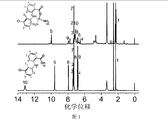
- Example 1 is a 1 H NMR spectrum of amphiphilic non-steroidal anti-inflammatory platinum synthesized in Example 1 and Example 2;
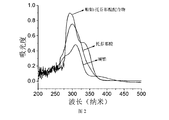
- Example 2 is an ultraviolet spectrum of amphiphilic non-steroidal anti-inflammatory platinum synthesized in Example 1 and Example 2;
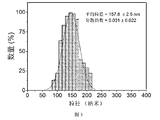
- Example 3 is a dynamic light scattering diagram of the amphiphilic non-steroidal anti-inflammatory platinum nanoparticles prepared in Example 1 and Example 2;
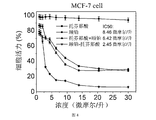
- Example 4 is a graph showing the results of inhibiting the growth of MCF-7 tumor cells by the amphiphilic non-steroidal anti-inflammatory platinum nanoparticles prepared in Example 1;
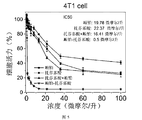
- Example 5 is a result of inhibiting the growth of 4T1 tumor cells by the amphiphilic non-steroidal anti-inflammatory platinum nanoparticles prepared in Example 1;
- Example 6 is a result of inhibiting the growth of A549 tumor cells by the amphiphilic non-steroidal anti-inflammatory platinum nanoparticles prepared in Example 1;
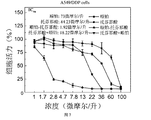
- Figure 7 is a graph showing the results of inhibition of growth of A549/DDP tumor cells by the amphiphilic non-steroidal anti-inflammatory platinum nanoparticles prepared in Example 1.
- Cisplatin 150 mg
- AgNO 3 170 mg
- tolfenamic acid 131 mg
- Na 2 CO 3 35.3 mg
- the AgCl precipitate was discarded by centrifugation, and the filtrate was concentrated, and then 50 ml of ethyl acetate was added, and then washed three times with 50 ml of 0.1 M Na 2 CO 3 , and washed three times with water, and the ethyl acetate layer was collected and dried over anhydrous sodium sulfate overnight.
- the chemical structure of the complex synthesized in this example is as shown in Formula 1.
- the 1 H NMR spectrum of the complex prepared in this example is shown in Fig. 1.
- the test solvent was d6-DMSO, and the respective absorption peaks were assigned.
- the above-mentioned synthesized amphiphilic non-steroidal anti-inflammatory platinum was dissolved in DMF, and subjected to ultraviolet scanning in the range of 200-450 nm on an ultraviolet spectrophotometer.
- the cisplatin-tolfine acid-based preparation prepared in this example was used.
- the UV spectrum of the complex is shown in Figure 2.
- the maximum UV absorption wavelength of cisplatin-tolfenamic acid is 292 nm, and there is a shoulder at around 340 nm.
- the above-prepared amphiphilic non-steroidal anti-inflammatory platinum was dissolved in DMF, dropped into an aqueous solution at room temperature, and DMF was dialyzed to obtain an amphiphilic non-steroidal anti-inflammatory platinum nanoparticle solution.
- the dynamic light scattering results of the anti-tumor nanoparticles based on the cisplatin-tonifamic acid-based complex prepared in this example are shown in Fig. 3, and the average particle diameter of the nanoparticles was 157 nm.
- CDDP 150 mg
- AgNO 3 113 mg
- tolfenamic acid 131 mg
- Na 2 CO 3 35.3 mg
- the chemical structure of the complex synthesized in this example is as shown in Formula 1.
- the 1 H NMR spectrum of the complex prepared in this example is shown in FIG.
- FIG. 2 the ultraviolet spectrum of the cisplatin-tofinal acid-based complex prepared in this example is shown in FIG. 2 , and this embodiment
- the dynamic light scattering results of the anti-tumor nanoparticles prepared based on the cisplatin-tofinal acid-based complex are shown in Fig. 3, and the average particle diameter of the nanoparticles is 157 nm.
- Chloroplatinic acid (204.9 mg), AgNO 3 (170 mg), rutaecarpine (143.7 mg) and Na 2 CO 3 (35.3 mg) were placed in a round bottom flask, and then 15 ml of DMF was added thereto, and the mixture was stirred at room temperature for 24 hours in the dark. The precipitate was discarded by centrifugation, and the filtrate was concentrated, and then 50 ml of ethyl acetate was added, and then washed three times with 50 ml of 0.1 M Na 2 CO 3 , and washed three times with water, and the ethyl acetate layer was collected and dried over anhydrous sodium sulfate overnight.
- Cisplatin 150 mg
- AgNO 3 (170 mg)
- mefenamic acid (120.6 mg)
- Na 2 CO 3 (35.3 mg)
- Cisplatin 150 mg
- AgNO 3 (170 mg)
- niflumic acid 141 mg
- Na 2 CO 3 35.3 mg
- Cisplatin 150 mg
- AgNO 3 170 mg
- flunixin 148 mg
- Na 2 CO 3 35.3 mg
- Cisplatin 150 mg
- AgNO 3 (170 mg)
- chlornitine 131.4 mg
- Na 2 CO 3 35.3 mg
- Cisplatin 150 mg
- AgNO 3 (170 mg)
- meloxicam (175.7 mg)
- Na 2 CO 3 35.3 mg
- Cisplatin 150 mg
- AgNO 3 (170 mg)
- piroxicam (165.7 mg)
- Na 2 CO 3 35.3 mg
- Cisplatin 150 mg
- AgNO 3 (170 mg)
- lornoxicam 185.6 mg
- Na 2 CO 3 35.3 mg
- Cisplatin 150 mg
- AgNO 3 170 mg
- tenoxicam 168.7 mg
- Na 2 CO 3 35.3 mg
- the AgCl precipitate was discarded by centrifugation, and the filtrate was concentrated, and then 50 ml of ethyl acetate was added, and then washed three times with 50 ml of 0.1 M Na 2 CO 3 , and washed three times with water, and the ethyl acetate layer was collected and dried over anhydrous sodium sulfate overnight.
- Cisplatin 150 mg
- AgNO 3 (170 mg)
- nimesulide 168.7 mg
- Na 2 CO 3 35.3 mg
- Cisplatin 150 mg
- AgNO 3 (170 mg)
- flunic acid 141 mg
- Na 2 CO 3 35.3 mg
- the AgCl precipitate was discarded by centrifugation, and the filtrate was concentrated, and then 50 ml of ethyl acetate was added, and then washed three times with 50 ml of 0.1 M Na 2 CO 3 , and washed three times with water, and the ethyl acetate layer was collected and dried over anhydrous sodium sulfate overnight.
- Cisplatin 150 mg
- AgNO 3 (170 mg)
- ampoxicam 223.7 mg
- Na 2 CO 3 35.3 mg
- Cisplatin 150 mg
- AgNO 3 (170 mg)
- flufenic acid 140.6 mg
- Na 2 CO 3 35.3 mg
- the AgCl precipitate was discarded by centrifugation, and the filtrate was concentrated, and then 50 ml of ethyl acetate was added, and then washed three times with 50 ml of 0.1 M Na 2 CO 3 , and washed three times with water, and the ethyl acetate layer was collected and dried over anhydrous sodium sulfate overnight.
- Cisplatin 150 mg
- AgNO 3 (170 mg)
- gentisic acid 77 mg
- Na 2 CO 3 35.3 mg
- the precipitate was discarded by centrifugation, and the filtrate was concentrated, and then 50 ml of ethyl acetate was added, and then washed three times with 50 ml of 0.1 M Na 2 CO 3 , and washed three times with water, and the ethyl acetate layer was collected and dried over anhydrous sodium sulfate overnight.
- the filtrate was filtered through a silica gel column chromatography to give a cisplatin- gentic acid complex with a yield of 53%.
- Cisplatin 150 mg
- AgNO 3 (170 mg)
- olsalazine 75.6 mg
- Na 2 CO 3 70.6 mg
- the precipitate was discarded by centrifugation, and the filtrate was concentrated, and then 50 ml of ethyl acetate was added, and then washed three times with 50 ml of 0.1 M Na 2 CO 3 , and washed three times with water, and the ethyl acetate layer was collected and dried over anhydrous sodium sulfate overnight.
- Cisplatin 150 mg
- AgNO 3 (170 mg)
- fenfluxon (190.7 mg) and Na 2 CO 3 (35.3 mg) were added to a round bottom flask, then 15 ml of DMF was added and stirred at room temperature for 24 h.
- Cisplatin 150 mg
- AgNO 3 (170 mg)
- balsalazide 178.7 mg
- Na 2 CO 3 (35.3 mg)
- Cisplatin 150 mg
- AgNO 3 170 mg
- balsalazide 178.7 mg
- Na 2 CO 3 35.3 mg
- the precipitate was discarded by centrifugation, and the filtrate was concentrated, and then 50 ml of ethyl acetate was added, and then washed three times with 50 ml of 0.1 M Na 2 CO 3 , and washed three times with water, and the ethyl acetate layer was collected and dried over anhydrous sodium sulfate overnight.
- Cisplatin 150 mg
- AgNO 3 170 mg
- bromfenac 167 mg
- Na 2 CO 3 35.3 mg
- Cisplatin 300 mg
- AgNO 3 86 mg
- etoricoxib 177.9 mg
- Cisplatin 150 mg
- AgNO 3 (170 mg)
- mesalazine 76.6 mg
- Na 2 CO 3 35.3 mg
- the amphiphilic non-steroidal anti-inflammatory platinum nanoparticles prepared in Example 1 were separately diluted with cell culture medium into solutions of different concentrations, and then separately in MCF-7 (human breast cancer cells), 4T1 (murine mammary gland).
- MCF-7 human breast cancer cells
- 4T1 murine mammary gland
- Cell carcinoma, A549 (human non-small cell lung cancer cells) and A549/DDP (cisplatin-resistant human non-small cell lung cancer cells) were cultured for 24 hours, and cell viability test was performed by MTT method. The results are shown in Fig. 4. 5.
Landscapes
- Health & Medical Sciences (AREA)
- Chemical & Material Sciences (AREA)
- Animal Behavior & Ethology (AREA)
- Medicinal Chemistry (AREA)
- Pharmacology & Pharmacy (AREA)
- Life Sciences & Earth Sciences (AREA)
- General Health & Medical Sciences (AREA)
- Public Health (AREA)
- Veterinary Medicine (AREA)
- Epidemiology (AREA)
- Bioinformatics & Cheminformatics (AREA)
- Engineering & Computer Science (AREA)
- Inorganic Chemistry (AREA)
- Organic Chemistry (AREA)
- Nuclear Medicine, Radiotherapy & Molecular Imaging (AREA)
- General Chemical & Material Sciences (AREA)
- Chemical Kinetics & Catalysis (AREA)
- Immunology (AREA)
- Nanotechnology (AREA)
- Rheumatology (AREA)
- Pain & Pain Management (AREA)
- Pharmaceuticals Containing Other Organic And Inorganic Compounds (AREA)
- Medicinal Preparation (AREA)
- Acyclic And Carbocyclic Compounds In Medicinal Compositions (AREA)
Abstract
一种两亲性非甾体抗炎合铂纳米粒及其制备方法。两亲性非甾体抗炎合铂纳米粒包括由非甾体抗炎药与铂类抗肿瘤药物配位而形成的两亲性配合物。该两亲性非甾体抗炎合铂在水溶液中可自组装形成纳米粒。该两亲性非甾体抗炎合铂纳米粒在制备抗肿瘤的药物中的应用。
Description
本发明涉及一种用于治疗肿瘤的两亲性非甾体抗炎合铂纳米粒及其制备方法和应用,属于生物医药技术领域。
恶性肿瘤是造成人类死亡的主要原因之一,它的治疗仍是当今世界最大的挑战之一。目前临床对于肿瘤的治疗仍主要依赖于手术介入、放疗、化疗和免疫治疗。其中化疗仍是临床肿瘤治疗最常用的方法之一。而铂类抗肿瘤药物是一类临床常用的化疗药物之一,尤其是顺铂,奥沙利铂和卡铂是目前临床上广泛用于治疗恶性肿瘤(卵巢癌、睾丸癌、肺癌、膀胱癌、淋巴癌、骨髓癌、黑色素瘤、结直肠癌、头颈部癌和前列腺癌等)的一线化疗药物。然而,目前临床上使用的铂类抗肿瘤药物都存在着如下问题:稳定性差、对正常组织毒副作用(肾毒性、神经毒性和骨髓抑制等)、血液清除快和耐药性等,上述这些问题推动了各种新型改良的铂类抗肿瘤药物和采用纳米技术用于铂类药物的靶向和协同递送,已达到增强抗肿瘤降低毒副作用的目的。如:中国上市的洛铂、韩国销售的庚铂和日本许可的奈达铂都保持了铂类较好的治疗效果,同时也降低了相应的毒性;另外还借助纳米递送载体如脂质体、胶束、囊泡、聚合物、无机材料等改变铂类抗肿瘤药物在体内的分布,实现铂类药物在肿瘤组织的靶向递送,以期提高药物在病灶部位的浓度并减少其在正常组织的蓄积,降低毒副作用。但是基于这些纳米载体将铂类药物递送至肿瘤细胞后,有些载体材料可能会带来不必要的毒副作用,且铂类自身的毒性作用改善并不明显,另外,该纳米递送系统的重现性较差,且不能规模化生产。因此,构建高效低毒的铂类药物递送系统是目前铂类药物研究的重要方向之一。
目前有研究表明炎症在肿瘤的发生、发展与转移等各个过程中都有一定的促进作用。环氧化酶(COX)是炎症因子产生过程中的关键限速酶。细胞受到刺激后,细胞膜遭到破坏,磷脂经磷脂酶作用氧化成花生四烯酸,而环氧化酶能催化花生四烯酸转化成前列腺素、血栓素、前列环素从而诱导炎症反应的发生。近年来,COX-2已成为肿瘤防治的研究新靶点,临床研究发现长期使用非甾体抗炎药(nonsteroid anti-inflammatory drugs,NSAID),即COX抑制剂能使结肠癌的发病率降低40-60%。COX-2在肿瘤发生发展中具有重要的作用,主要与以下几点有关:1、COX-2在卵巢癌、胃癌、结肠癌、肺癌、
乳腺癌等肿瘤组织中呈过表达状态,且表达强度与肿瘤组织类型和分化程度相关;2、肿瘤细胞内COX-2通常与VEGF同步表达;当COX-2表达上调时,VEGF表达也会上调,促进恶性肿瘤的形成与转移;3、COX-2的过表达也会造成抗凋亡因子BCL-2的表达上调,抑制肿瘤细胞凋亡;4、COX-2在肿瘤细胞内过表达造成癌细胞对药物和射线敏感性降低。上述众多证据表明,COX-2与肿瘤有高度的相关性。并有文献报道COX-2抑制剂能通过抑制肿瘤细胞周期进程,诱导肿瘤细胞凋亡,抑制肿瘤新生血管生成等多个方面的作用起到协同抗肿瘤的效果。传统的单药抗癌药物联用以达到治疗肿瘤的效果,但这种给药方式存在着诸多弊端,如两种药物很难同时递送至有效靶点;两种药物在体内有独立的药物动力学参数及生物分布等参数,为体内药物含量测定及药效评价带来不便。因此,一种联合化疗的新策略应运而生——构建两种具有抗肿瘤效果的药物配合物前药,使之递送至体内药物靶点后解离出原药,以发挥各自的药效。
因此,本发明着眼于提高铂类抗肿瘤药物的细胞摄取量,下调抗凋亡因子BCL-2的表达,缩短受损DNA修复时间来达到协同抗癌的作用。有文献报道COX-2抑制剂在有效的减少BCL-2表达同时减少DNA受损细胞的自身修复时间。而诸多COX-2抑制剂都具有可配位的基团,可以与铂类抗肿瘤药物进行配位形成两亲性非甾体抗炎合铂配合物,并且不影响铂的配位价态,还可以在水溶液中自组装形成纳米粒,因此可通过肿瘤组织的高通透性和滞留效应增加了药物摄取量,内吞进入肿瘤细胞后,释放出两类药物,从而发挥协同抗肿瘤的作用。
发明内容
目的:为了克服现有技术中存在的不足,本发明提供一种两亲性非甾体抗炎合铂纳米粒,以解决目前铂类抗肿瘤药物递送系统中载体带来的毒性作用,铂类药物自身毒性,纳米粒重现性差等技术性问题。
技术方案:为解决上述技术问题,本发明采用的技术方案为:
一种两亲性非甾体抗炎合铂纳米粒,其特征在于:所述两亲性非甾体抗炎合铂纳米粒包括非甾体抗炎药和铂类抗肿瘤药物;非甾体抗炎药与铂类抗肿瘤药物配位反应,且在水溶液中自组装形成纳米粒;所述的两亲性非甾体抗炎合铂纳米粒经内吞进入肿瘤细胞后,经水解释放出非甾体抗炎药与铂类抗肿瘤药物。
作为优选方案,所述两亲性非甾体抗炎合铂纳米粒的平均粒径小于200nm,更优选的,两亲性非甾体抗炎合铂纳米粒的平均粒径为157nm。
作为优选方案,所述非甾体抗炎药为美洛昔康、甲氯芬那酸、甲芬那酸、尼氟灭酸、氟尼辛、氯尼辛、美洛昔康、吡罗昔康、双氯芬酸、氯诺昔康、替诺昔康、尼美舒利、氟尼酸、安吡昔康、氟灭酸、氨芬酸、溴芬酸、醋氯芬酸、布洛芬、吲哚美辛、舒林酸、邻乙酰水杨酸、舒洛芬、氟比洛芬、依托度酸、酮基布洛芬、萘普生、芬布芬、酮咯酸、扎托布洛芬、奥沙普秦、阿西美辛、依托考昔、卡洛芬、普拉洛芬、洛索洛芬、双水杨酸酯、吴茱萸次碱、美沙拉嗪、二氟尼柳、柳氮磺吡啶、龙胆酸、奥沙拉秦、芬度柳、巴柳氮、水杨酸、甲氯灭酸、氟尼酸、罗美昔布、托芬那酸中的一种或几种。
作为优选方案,所述铂类抗肿瘤药物为顺铂、环己二胺二硝基合铂、顺式-二氯-1,2-环己二胺合铂、顺式-二氯-1,4-环己二胺合铂、顺式-二碘二氨合铂、吡铂、顺式-二氯-反式-氨(环己胺)合铂、顺式-二氯(环丙胺)合铂、顺式-二氯(环戊胺)合铂、顺式-二碘二氨合铂、氯铂酸中的一种或几种。
本发明还提供所述的两亲性非甾体抗炎合铂纳米粒的制备方法,包括以下步骤:
(1)非甾体抗炎药与铂类抗肿瘤药物进行配位反应,得到两亲性非甾体抗炎合铂;
(2)两亲性非甾体抗炎合铂溶解于有机溶剂中,滴入搅拌中的水溶液中,透析除去有机溶剂,即得到两亲性非甾体抗炎合铂纳米粒溶液。
具体的,所述步骤(1)配位反应选自如下两种方法中的一种:
方法一:将铂类抗肿瘤药物、非甾体抗炎药、硝酸银和碱分散于有机溶剂中,避光搅拌反应后,离心除去AgCl沉淀,得到上清液,经浓缩加入有机溶剂,再用弱碱水和水洗涤,收集有机溶剂层,浓缩,过柱纯化即得两亲性非甾体抗炎合铂;
方法二:将铂类抗肿瘤药物、非甾体抗炎药、硝酸银和碱分散于水中,避光搅拌反应后,离心除去AgCl沉淀,得到上清浊液,经冻干,过柱纯化即得两亲性非甾体抗炎合铂。
作为优选方案,所述的两亲性非甾体抗炎合铂纳米粒的制备方法,其特征在于:配位反应中铂类抗肿瘤药物、非甾体抗炎药、硝酸银的摩尔比为1:(0.5~1.05):(0~2.05)。其中的硝酸银在实际配位反应中是可以没有的。
作为优选方案,所述的有机溶剂为N,N’-二甲基甲酰胺、二甲基亚砜、N-甲基吡咯烷酮、乙醇、甲醇、乙腈、丙酮和四氢呋喃中的一种或几种;所述的碱为碳酸钠、碳酸氢钠、氢氧化钠,氢氧化钾,三乙胺中的一种或几种。
作为优选方案,所述的水溶液为水、5%葡萄糖、磷酸盐缓冲液中的一种或几种。
本发明还提供所述的两亲性非甾体抗炎合铂纳米粒在制备治疗抗肿瘤或耐药肿瘤
的药物中的应用。两亲性非甾体抗炎合铂纳米粒可通过口服方式、肺部吸入方式或注射方式给药。
有益效果:本发明提供的两亲性非甾体抗炎合铂纳米粒,两亲性非甾体抗炎合铂在水溶液中可自组装形成纳米粒,无需任何辅料或添加剂,该非甾体抗炎合铂自身即可实现药物的递送,通过肿瘤组织的渗透性增强与滞留效应,该配合物纳米粒可更有效地进入肿瘤组织和肿瘤细胞,减少对正常组织细胞的毒副作用;在配合物纳米粒进入肿瘤细胞后,经水解作用释放出铂类药物和非甾体抗炎药,达到增强抗肿瘤的作用。通过肿瘤组织的高通透性和滞留效应增加了药物摄取量,内吞进入肿瘤细胞后,释放出两类药物,从而发挥协同抗肿瘤的作用。
图1为实施例1和实施例2合成的两亲性非甾体抗炎合铂的1H NMR谱图;
图2为实施例1和实施例2合成的两亲性非甾体抗炎合铂的紫外图谱;
图3为实施例1和实施例2制备的两亲性非甾体抗炎合铂纳米粒的动态光散射图;
图4为实施例1制备的两亲性非甾体抗炎合铂纳米粒对MCF-7肿瘤细胞生长抑制作用结果图;
图5为实施例1制备的两亲性非甾体抗炎合铂纳米粒对4T1肿瘤细胞生长抑制作用结果;
图6为实施例1制备的两亲性非甾体抗炎合铂纳米粒对A549肿瘤细胞生长抑制作用结果;
图7为实施例1制备的两亲性非甾体抗炎合铂纳米粒对A549/DDP肿瘤细胞生长抑制作用结果。
下面结合附图和具体实施例对本发明作更进一步的说明。具体实施例均以本发明的技术方案为前提进行实施,包括详细的实施方式和具体的操作过程,但本发明的保护范围不限于下述实施例。
实施例1
将顺铂(150mg)、AgNO3(170mg)、托芬那酸(131mg)和Na2CO3(35.3mg)加入圆底烧瓶中,然后再加入10ml DMF,室温下避光搅拌24h。离心弃去AgCl沉淀,滤液浓缩后加入50ml乙酸乙酯,然后用50ml 0.1M Na2CO3洗涤3次,水洗3次,收集乙酸乙酯层,用无水硫酸钠干燥过夜。过滤,滤液用甲醇:氯仿=1:9的洗脱液,经硅
胶柱色谱分离得到顺铂-托芬那酸配合物,产率60%,结构式如式1所示。

本实施例合成的配合物的化学结构如式1所示。本实施例制得的配合物的1H NMR谱图如图1所示,测试溶剂为d6-DMSO,分别对各吸收峰进行了归属。
将上述合成的两亲性非甾体抗炎合铂溶解于DMF中,于紫外分光光度计上进行200-450nm的范围内紫外扫描,本实施例所制备的基于顺铂-托芬那酸的配合物的紫外图谱如图2所示,顺铂--托芬那酸的紫外最大吸收波长为292nm,且在340nm左右存在肩峰。
将上述合成的两亲性非甾体抗炎合铂溶解于DMF中,在室温下将其滴入水溶液中,透析除去DMF,得到的两亲性非甾体抗炎合铂纳米粒溶液。本实施例所制备的基于顺铂-托芬那酸的配合物的抗肿瘤纳米粒的动态光散射结果如图3所示,纳米粒的平均粒径在157nm。
实施例2
将CDDP(150mg)、AgNO3(113mg)、托芬那酸(131mg)和Na2CO3(35.3mg)加入圆底烧瓶中,然后再加入10ml水,室温下避光搅拌24h。离心弃去AgCl沉淀,滤液真空干燥,粗品用甲醇:氯仿=1:9的洗脱液,经硅胶柱色谱分离得到顺铂-托芬那酸配合物,产率53%。本实施例合成的配合物的化学结构如式1所示。本实施例制得的配合物的1H NMR谱图如图1所示,本实施例所制备的基于顺铂--托芬那酸的配合物的紫外图谱如图2所示,本实施例所制备的基于顺铂--托芬那酸的配合物的抗肿瘤纳米粒的动态光散射结果如图3所示,纳米粒的平均粒径在157nm。
实施例3
将环己二胺二硝基合铂(216.6mg)、罗美昔布(146.9mg)和NaHCO3(42mg)加入圆底烧瓶中,然后再加入15ml DMF,室温下避光搅拌24h。离心弃去AgCl沉淀,滤液浓缩后加入50ml乙酸乙酯,然后用50ml 0.1M Na2CO3洗涤3次,水洗3次,收
集乙酸乙酯层,用无水硫酸钠干燥过夜。过滤,滤液用甲醇:二氯甲烷=1:9的洗脱液,经硅胶柱色谱分离得到罗美昔布-环己二胺合铂配合物,产率63%,结构式如式2所示。

实施例4
将顺式-二氯-1,2-环己二胺合铂(190mg)、AgNO3(170mg)、氟尼酸(141mg)和Na2CO3(35.3mg)加入圆底烧瓶中,然后再加入15ml DMF,室温下避光搅拌24h。离心弃去沉淀,滤液浓缩后加入50ml乙酸乙酯,然后用50ml 0.1M Na2CO3洗涤3次,水洗3次,收集乙酸乙酯层,用无水硫酸钠干燥过夜。过滤,滤液用甲醇:乙酸乙酯=0.8:9.2的洗脱液,经硅胶柱色谱分离得到氟尼酸-环己二胺合铂配合物,产率56%,结构式如式3所示。

实施例5
将顺式-二氯-1,4-环己二胺合铂(190mg)、AgNO3(170mg)、氟尼酸(141mg)和Na2CO3(35.3mg)加入圆底烧瓶中,然后再加入15ml DMF,室温下避光搅拌24h。
离心弃去沉淀,滤液浓缩后加入50ml乙酸乙酯,然后用50ml 0.1M Na2CO3洗涤3次,水洗3次,收集乙酸乙酯层,用无水硫酸钠干燥过夜。过滤,滤液用甲醇:二氯甲烷=1:9的洗脱液,经硅胶柱色谱分离得到氟尼酸-1,4-环己二胺合铂配合物,产率56%,结构式如式4所示。

实施例6
将顺式-二碘二氨合铂(241.5mg)、AgNO3(170mg)、水杨酸(69mg)和Na2CO3(35.3mg)加入圆底烧瓶中,然后再加入15ml DMF,室温下避光搅拌24h。离心弃去沉淀,滤液浓缩后加入50ml乙酸乙酯,然后用50ml 0.1M Na2CO3洗涤3次,水洗3次,收集乙酸乙酯层,用无水硫酸钠干燥过夜。过滤,滤液用甲醇:二氯甲烷=1:9的洗脱液,经硅胶柱色谱分离得到水杨酸-顺铂配合物,产率56%,结构式如式5所示。

实施例7
将吡铂(188mg)、AgNO3(170mg)、二氟尼柳(125mg)和Na2CO3(35.3mg)加入圆底烧瓶中,然后再加入15ml DMF,室温下避光搅拌24h。离心弃去沉淀,滤液浓缩后加入50ml乙酸乙酯,然后用50ml 0.1M Na2CO3洗涤3次,水洗3次,收集乙酸乙酯层,用无水硫酸钠干燥过夜。过滤,滤液用甲醇:二氯甲烷=1:9的洗脱液,经硅胶柱色谱分离得到二氟尼柳-吡铂配合物,产率53%,结构式如式6所示。

实施例8
将氯铂酸(204.9mg)、AgNO3(170mg)、吴茱萸次碱(143.7mg)和Na2CO3(35.3mg)加入圆底烧瓶中,然后再加入15ml DMF,室温下避光搅拌24h。离心弃去沉淀,滤液浓缩后加入50ml乙酸乙酯,然后用50ml 0.1M Na2CO3洗涤3次,水洗3次,收集乙酸乙酯层,用无水硫酸钠干燥过夜。过滤,滤液用甲醇:二氯甲烷=1:9的洗脱液,经硅胶柱色谱分离得到吴茱萸次碱合铂配合物,产率73%,结构式如式7所示。

实施例9
将顺式-二氯-反式-氨(环己胺)合铂(191mg)、AgNO3(170mg)、柳氮磺吡啶(199.2mg)和Na2CO3(35.3mg)加入圆底烧瓶中,然后再加入15ml DMF,室温下避光搅拌24h。离心弃去沉淀,滤液浓缩后加入50ml乙酸乙酯,然后用50ml 0.1M Na2CO3洗涤3次,水洗3次,收集乙酸乙酯层,用无水硫酸钠干燥过夜。过滤,滤液用甲醇:二氯甲烷=1:9的洗脱液,经硅胶柱色谱分离得到柳氮磺吡啶-氨(环己胺)合铂配合物,产率55%,结构式如式8所示。

实施例10
将顺式-二氯-环丙胺合铂(161.5mg)、AgNO3(170mg)、氟芬那酸(140.6mg)和Na2CO3(35.3mg)加入圆底烧瓶中,然后再加入15ml DMF,室温下避光搅拌24h。离心弃去沉淀,滤液浓缩后加入50ml乙酸乙酯,然后用50ml 0.1M Na2CO3洗涤3次,水洗3次,收集乙酸乙酯层,用无水硫酸钠干燥过夜。过滤,滤液用甲醇:二氯甲烷=1:9的洗脱液,经硅胶柱色谱分离得到氟芬那酸-环丙胺合铂配合物,产率58%,结构式如式9所示。

实施例11
将顺式-二氯-环戊胺合铂(175.6mg)、AgNO3(170mg)、甲氯芬那酸(148mg)和Na2CO3(35.3mg)加入圆底烧瓶中,然后再加入15ml DMF,室温下避光搅拌24h。离心弃去沉淀,滤液浓缩后加入50ml乙酸乙酯,然后用50ml 0.1M Na2CO3洗涤3次,水洗3次,收集乙酸乙酯层,用无水硫酸钠干燥过夜。过滤,滤液用甲醇:二氯甲烷=1:9的洗脱液,经硅胶柱色谱分离得到甲氯芬那酸-环戊胺合铂配合物,产率58%,结构式如式10所示。

实施例12
将顺铂(150mg)、AgNO3(170mg)、甲芬那酸(120.6mg)和Na2CO3(35.3mg)加入圆底烧瓶中,然后再加入10ml DMF,室温下避光搅拌24h。离心弃去AgCl沉淀,滤液浓缩后加入50ml乙酸乙酯,然后用50ml 0.1M Na2CO3洗涤3次,水洗3次,收集乙酸乙酯层,用无水硫酸钠干燥过夜。过滤,滤液用甲醇:氯仿=1:9的洗脱液,经硅胶柱色谱分离得到顺铂-甲芬那酸配合物,产率67%,结构式如式11所示。

实施例13
将顺铂(150mg)、AgNO3(170mg)、尼氟灭酸(141mg)和Na2CO3(35.3mg)加入圆底烧瓶中,然后再加入10ml DMF,室温下避光搅拌24h。离心弃去AgCl沉淀,滤液浓缩后加入50ml乙酸乙酯,然后用50ml 0.1M Na2CO3洗涤3次,水洗3次,收集乙酸乙酯层,用无水硫酸钠干燥过夜。过滤,滤液用甲醇:氯仿=1:9的洗脱液,经硅胶柱色谱分离得到顺铂-甲芬那酸配合物,产率68%,结构式如式12所示。

实施例14
将顺铂(150mg)、AgNO3(170mg)、氟尼辛(148mg)和Na2CO3(35.3mg)加入圆底烧瓶中,然后再加入10ml DMF,室温下避光搅拌24h。离心弃去AgCl沉淀,滤液浓缩后加入50ml乙酸乙酯,然后用50ml 0.1M Na2CO3洗涤3次,水洗3次,收集乙酸乙酯层,用无水硫酸钠干燥过夜。过滤,滤液用甲醇:氯仿=1:9的洗脱液,经硅胶柱色谱分离得到顺铂-氟尼辛配合物,产率60%,结构式如式13所示。

实施例15
将顺铂(150mg)、AgNO3(170mg)、氯尼辛(131.4mg)和Na2CO3(35.3mg)加入圆底烧瓶中,然后再加入10ml DMF,室温下避光搅拌24h。离心弃去AgCl沉淀,滤液浓缩后加入50ml乙酸乙酯,然后用50ml 0.1M Na2CO3洗涤3次,水洗3次,收集乙酸乙酯层,用无水硫酸钠干燥过夜。过滤,滤液用甲醇:氯仿=1:9的洗脱液,经硅胶柱色谱分离得到顺铂-氯尼辛配合物,产率62%,结构式如式14所示。

实施例16
将顺铂(150mg)、AgNO3(170mg)、美洛昔康(175.7mg)和Na2CO3(35.3mg)加入圆底烧瓶中,然后再加入10ml DMF,室温下避光搅拌24h。离心弃去AgCl沉淀,滤液浓缩后加入50ml乙酸乙酯,然后用50ml 0.1M Na2CO3洗涤3次,水洗3次,收集乙酸乙酯层,用无水硫酸钠干燥过夜。过滤,滤液用甲醇:氯仿=1:9的洗脱液,经硅胶柱色谱分离得到顺铂-美洛昔康配合物,产率60%,结构式如式15所示。

实施例17
将顺铂(150mg)、AgNO3(170mg)、吡罗昔康(165.7mg)和Na2CO3(35.3mg)加入圆底烧瓶中,然后再加入10ml DMF,室温下避光搅拌24h。离心弃去AgCl沉淀,滤液浓缩后加入50ml乙酸乙酯,然后用50ml 0.1M Na2CO3洗涤3次,水洗3次,收集乙酸乙酯层,用无水硫酸钠干燥过夜。过滤,滤液用甲醇:氯仿=1:9的洗脱液,经硅胶柱色谱分离得到顺铂-吡罗昔康配合物,产率58%,结构式如式16所示。

实施例18
将顺式-二氯-1,2-环己二胺合铂(190mg)、AgNO3(43mg)、双氯芬酸(148mg)和Na2CO3(35.3mg)加入圆底烧瓶中,然后再加入10ml DMF,室温下避光搅拌24h。离心弃去AgCl沉淀,滤液浓缩后加入50ml乙酸乙酯,然后用50ml 0.1M Na2CO3洗涤3次,水洗3次,收集乙酸乙酯层,用无水硫酸钠干燥过夜。过滤,滤液用甲醇:氯仿=1:9的洗脱液,经硅胶柱色谱分离得到双氯芬酸-环己二胺合铂配合物,产率50%,结构式如式17所示。

实施例19
将顺铂(150mg)、AgNO3(170mg)、氯诺昔康(185.6mg)和Na2CO3(35.3mg)加入圆底烧瓶中,然后再加入10ml DMF,室温下避光搅拌24h。离心弃去AgCl沉淀,滤液浓缩后加入50ml乙酸乙酯,然后用50ml 0.1M Na2CO3洗涤3次,水洗3次,收集乙酸乙酯层,用无水硫酸钠干燥过夜。过滤,滤液用甲醇:氯仿=1:9的洗脱液,经硅胶柱色谱分离得到顺铂-氯诺昔康配合物,产率63%,结构式如式18所示。

实施例20
将顺铂(150mg)、AgNO3(170mg)、替诺昔康(168.7mg)和Na2CO3(35.3mg)加入圆底烧瓶中,然后再加入10ml DMF,室温下避光搅拌24h。离心弃去AgCl沉淀,滤液浓缩后加入50ml乙酸乙酯,然后用50ml 0.1M Na2CO3洗涤3次,水洗3次,收集乙酸乙酯层,用无水硫酸钠干燥过夜。过滤,滤液用甲醇:氯仿=1:9的洗脱液,经硅胶柱色谱分离得到顺铂-替诺昔康配合物,产率67%,结构式如式19所示。

实施例21
将顺铂(150mg)、AgNO3(170mg)、尼美舒利(168.7mg)和Na2CO3(35.3mg)加入圆底烧瓶中,然后再加入10ml DMF,室温下避光搅拌24h。离心弃去AgCl沉淀,滤液浓缩后加入50ml乙酸乙酯,然后用50ml 0.1M Na2CO3洗涤3次,水洗3次,收集乙酸乙酯层,用无水硫酸钠干燥过夜。过滤,滤液用甲醇:氯仿=1:9的洗脱液,经硅胶柱色谱分离得到顺铂-尼美舒利配合物,产率67%,结构式如式20所示。

实施例22
将顺铂(150mg)、AgNO3(170mg)、氟尼酸(141mg)和Na2CO3(35.3mg)加入圆底烧瓶中,然后再加入10ml DMF,室温下避光搅拌24h。离心弃去AgCl沉淀,滤液浓缩后加入50ml乙酸乙酯,然后用50ml 0.1M Na2CO3洗涤3次,水洗3次,收集乙酸乙酯层,用无水硫酸钠干燥过夜。过滤,滤液用甲醇:氯仿=1:9的洗脱液,经硅胶柱色谱分离得到顺铂-氟尼酸配合物,产率69%,结构式如式21所示。

实施例23
将顺铂(150mg)、AgNO3(170mg)、安吡昔康(223.7mg)和Na2CO3(35.3mg)加入圆底烧瓶中,然后再加入10ml DMF,室温下避光搅拌24h。离心弃去AgCl沉淀,滤液浓缩后加入50ml乙酸乙酯,然后用50ml 0.1M Na2CO3洗涤3次,水洗3次,收集乙酸乙酯层,用无水硫酸钠干燥过夜。过滤,滤液用甲醇:氯仿=1:9的洗脱液,经硅胶柱色谱分离得到顺铂-安吡昔康配合物,产率65%,结构式如式22所示。

实施例24
将顺铂(150mg)、AgNO3(170mg)、氟灭酸(140.6mg)和Na2CO3(35.3mg)加入圆底烧瓶中,然后再加入10ml DMF,室温下避光搅拌24h。离心弃去AgCl沉淀,滤液浓缩后加入50ml乙酸乙酯,然后用50ml 0.1M Na2CO3洗涤3次,水洗3次,收集乙酸乙酯层,用无水硫酸钠干燥过夜。过滤,滤液用甲醇:氯仿=1:9的洗脱液,经硅胶柱色谱分离得到顺铂-氟灭酸配合物,产率68%,结构式如式23所示。

实施例25
将顺铂(150mg)、AgNO3(170mg)、龙胆酸(77mg)和Na2CO3(35.3mg)加入圆底烧瓶中,然后再加入15ml DMF,室温下避光搅拌24h。离心弃去沉淀,滤液浓缩后加入50ml乙酸乙酯,然后用50ml 0.1M Na2CO3洗涤3次,水洗3次,收集乙酸乙酯层,用无水硫酸钠干燥过夜。过滤,滤液用甲醇:二氯甲烷=1:9的洗脱液,经硅胶
柱色谱分离得到顺铂-龙胆酸配合物,产率53%,结构式如式24所示。

实施例26
将顺铂(150mg)、AgNO3(170mg)、奥沙拉秦(75.6mg)和Na2CO3(70.6mg)加入圆底烧瓶中,然后再加入15ml DMF,室温下避光搅拌24h。离心弃去沉淀,滤液浓缩后加入50ml乙酸乙酯,然后用50ml 0.1M Na2CO3洗涤3次,水洗3次,收集乙酸乙酯层,用无水硫酸钠干燥过夜。过滤,滤液用甲醇:二氯甲烷=1:9的洗脱液,经硅胶柱色谱分离得到顺铂-奥沙拉秦配合物,产率49%,结构式如式25所示。

实施例27
将顺铂(150mg)、AgNO3(170mg)、芬度柳(190.7mg)和Na2CO3(35.3mg)加入圆底烧瓶中,然后再加入15ml DMF,室温下避光搅拌24h。离心弃去沉淀,滤液浓缩后加入50ml乙酸乙酯,然后用50ml 0.1M Na2CO3洗涤3次,水洗3次,收集乙酸乙酯层,用无水硫酸钠干燥过夜。过滤,滤液用甲醇:二氯甲烷=1:9的洗脱液,经硅胶柱色谱分离得到顺铂-芬度柳配合物,产率53%,结构式如式26所示。

实施例28
将顺铂(150mg)、AgNO3(170mg)、巴柳氮(178.7mg)和Na2CO3(35.3mg)加入圆底烧瓶中,然后再加入15ml DMF,室温下避光搅拌24h。离心弃去沉淀,滤液浓缩后加入50ml乙酸乙酯,然后用50ml 0.1M Na2CO3洗涤3次,水洗3次,收集乙酸乙酯层,用无水硫酸钠干燥过夜。过滤,滤液用甲醇:二氯甲烷=1:9的洗脱液,经硅胶柱色谱分离得到顺铂-巴柳氮配合物,产率52%,结构式如式27所示。

实施例29
将顺式-二氯-1,2-环己二胺合铂(190mg)、AgNO3(43mg)、氨芬酸(136.6mg)和Na2CO3(35.3mg)加入圆底烧瓶中,然后再加入10ml DMF,室温下避光搅拌24h。离心弃去AgCl沉淀,滤液浓缩后加入50ml乙酸乙酯,然后用50ml 0.1M Na2CO3洗涤3次,水洗3次,收集乙酸乙酯层,用无水硫酸钠干燥过夜。过滤,滤液用甲醇:氯仿=1:9的洗脱液,经硅胶柱色谱分离得到氨芬酸-环己二胺合铂配合物,产率49%,结构式如式28所示。

实施例30
将顺铂(150mg)、AgNO3(170mg)、溴芬酸(167mg)和Na2CO3(35.3mg)加入圆底烧瓶中,然后再加入15ml DMF,室温下避光搅拌24h。离心弃去沉淀,滤液浓缩后加入50ml乙酸乙酯,然后用50ml 0.1M Na2CO3洗涤3次,水洗3次,收集乙酸乙酯层,用无水硫酸钠干燥过夜。过滤,滤液用甲醇:二氯甲烷=1:9的洗脱液,经硅胶柱色谱分离得到顺铂-溴芬酸配合物,产率50%,结构式如式29所示。

实施例31
将顺式-二氯-1,2-环己二胺合铂(190mg)、AgNO3(43mg)、醋氯芬酸(177mg)和Na2CO3(35.3mg)加入圆底烧瓶中,然后再加入10ml DMF,室温下避光搅拌24h。离心弃去AgCl沉淀,滤液浓缩后加入50ml乙酸乙酯,然后用50ml 0.1M Na2CO3洗涤3次,水洗3次,收集乙酸乙酯层,用无水硫酸钠干燥过夜。过滤,滤液用甲醇:氯仿=1:9的洗脱液,经硅胶柱色谱分离得到醋氯芬酸-环己二胺合铂配合物,产率50%,结构式如式30所示。

实施例32
将顺式-二氯-1,2-环己二胺合铂(190mg)、AgNO3(43mg)、布洛芬(103mg)和Na2CO3(35.3mg)加入圆底烧瓶中,然后再加入10ml DMF,室温下避光搅拌24h。离心弃去AgCl沉淀,滤液浓缩后加入50ml乙酸乙酯,然后用50ml 0.1M Na2CO3洗涤3次,水洗3次,收集乙酸乙酯层,用无水硫酸钠干燥过夜。过滤,滤液用甲醇:氯仿=1:9的洗脱液,经硅胶柱色谱分离得到布洛芬-环己二胺合铂配合物,产率50%,结构式如式31所示。

实施例33
将顺式-二氯-1,2-环己二胺合铂(190mg)、AgNO3(43mg)、吲哚美辛(178.9mg)和Na2CO3(35.3mg)加入圆底烧瓶中,然后再加入10ml DMF,室温下避光搅拌24h。离心弃去AgCl沉淀,滤液浓缩后加入50ml乙酸乙酯,然后用50ml 0.1M Na2CO3洗涤3次,水洗3次,收集乙酸乙酯层,用无水硫酸钠干燥过夜。过滤,滤液用甲醇:氯仿=1:9的洗脱液,经硅胶柱色谱分离得到吲哚美辛-环己二胺合铂配合物,产率50%,结构式如式32所示。

实施例34
将顺式-二氯-1,2-环己二胺合铂(190mg)、AgNO3(43mg)、舒林酸(178.2mg)和Na2CO3(35.3mg)加入圆底烧瓶中,然后再加入10ml DMF,室温下避光搅拌24h。离心弃去AgCl沉淀,滤液浓缩后加入50ml乙酸乙酯,然后用50ml 0.1M Na2CO3洗涤3次,水洗3次,收集乙酸乙酯层,用无水硫酸钠干燥过夜。过滤,滤液用甲醇:氯仿=1:9的洗脱液,经硅胶柱色谱分离得到舒林酸-环己二胺合铂配合物,产率50%,结构式如式33所示。

实施例35
将顺式-二氯-1,2-环己二胺合铂(190mg)、AgNO3(43mg)、邻乙酰水杨酸(90mg)和Na2CO3(35.3mg)加入圆底烧瓶中,然后再加入10ml DMF,室温下避光搅拌24h。离心弃去AgCl沉淀,滤液浓缩后加入50ml乙酸乙酯,然后用50ml 0.1M Na2CO3洗涤3次,水洗3次,收集乙酸乙酯层,用无水硫酸钠干燥过夜。过滤,滤液用甲醇:氯仿=1:9的洗脱液,经硅胶柱色谱分离得到邻乙酰水杨酸-环己二胺合铂配合物,产率56%,
结构式如式34所示。

实施例36
将顺式-二氯-1,2-环己二胺合铂(190mg)、AgNO3(43mg)、舒洛芬(130mg)和Na2CO3(35.3mg)加入圆底烧瓶中,然后再加入10ml DMF,室温下避光搅拌24h。离心弃去AgCl沉淀,滤液浓缩后加入50ml乙酸乙酯,然后用50ml 0.1M Na2CO3洗涤3次,水洗3次,收集乙酸乙酯层,用无水硫酸钠干燥过夜。过滤,滤液用甲醇:氯仿=1:9的洗脱液,经硅胶柱色谱分离得到舒洛芬-环己二胺合铂配合物,产率55%,结构式如式35示。

实施例37
将顺式-二氯-1,2-环己二胺合铂(190mg)、AgNO3(43mg)、氟比洛芬(122mg)和Na2CO3(35.3mg)加入圆底烧瓶中,然后再加入10ml DMF,室温下避光搅拌24h。离心弃去AgCl沉淀,滤液浓缩后加入50ml乙酸乙酯,然后用50ml 0.1M Na2CO3洗涤3次,水洗3次,收集乙酸乙酯层,用无水硫酸钠干燥过夜。过滤,滤液用甲醇:氯仿=1:9的洗脱液,经硅胶柱色谱分离得到氟比洛芬-环己二胺合铂配合物,产率56%,结构式如式36示。

实施例38
将顺式-二氯-1,2-环己二胺合铂(190mg)、AgNO3(43mg)、依托度酸(143.7mg)和Na2CO3(35.3mg)加入圆底烧瓶中,然后再加入10ml DMF,室温下避光搅拌24h。离心弃去AgCl沉淀,滤液浓缩后加入50ml乙酸乙酯,然后用50ml 0.1M Na2CO3洗涤3次,水洗3次,收集乙酸乙酯层,用无水硫酸钠干燥过夜。过滤,滤液用甲醇:氯仿=1:9的洗脱液,经硅胶柱色谱分离得到依托度酸-环己二胺合铂配合物,产率52%,结构式如式37示。

实施例39
将顺式-二氯-1,2-环己二胺合铂(190mg)、AgNO3(43mg)、酮基布洛芬(127mg)和Na2CO3(35.3mg)加入圆底烧瓶中,然后再加入10ml DMF,室温下避光搅拌24h。离心弃去AgCl沉淀,滤液浓缩后加入50ml乙酸乙酯,然后用50ml 0.1M Na2CO3洗涤3次,水洗3次,收集乙酸乙酯层,用无水硫酸钠干燥过夜。过滤,滤液用甲醇:氯仿=1:9的洗脱液,经硅胶柱色谱分离得到酮基布洛芬-环己二胺合铂配合物,产率52%,结构式如式38示。

实施例40
将顺式-二氯-1,2-环己二胺合铂(190mg)、AgNO3(43mg)、萘普生(115mg)和Na2CO3(35.3mg)加入圆底烧瓶中,然后再加入10ml DMF,室温下避光搅拌24h。离心弃去AgCl沉淀,滤液浓缩后加入50ml乙酸乙酯,然后用50ml 0.1M Na2CO3洗涤3次,水洗3次,收集乙酸乙酯层,用无水硫酸钠干燥过夜。过滤,滤液用甲醇:氯仿=1:9的洗脱液,经硅胶柱色谱分离得到萘普生-环己二胺合铂配合物,产率56%,结构式如式39示。

实施例41
将顺式-二氯-1,2-环己二胺合铂(190mg)、AgNO3(43mg)、芬布芬(127mg)和Na2CO3(35.3mg)加入圆底烧瓶中,然后再加入10ml DMF,室温下避光搅拌24h。离心弃去AgCl沉淀,滤液浓缩后加入50ml乙酸乙酯,然后用50ml 0.1M Na2CO3洗涤3次,水洗3次,收集乙酸乙酯层,用无水硫酸钠干燥过夜。过滤,滤液用甲醇:氯仿=1:9的洗脱液,经硅胶柱色谱分离得到芬布芬-环己二胺合铂配合物,产率56%,结构式如式40示。

实施例42
将顺式-二氯-1,2-环己二胺合铂(190mg)、AgNO3(43mg)、酮咯酸(127.6mg)和Na2CO3(35.3mg)加入圆底烧瓶中,然后再加入10ml DMF,室温下避光搅拌24h。离心弃去AgCl沉淀,滤液浓缩后加入50ml乙酸乙酯,然后用50ml 0.1M Na2CO3洗涤3次,水洗3次,收集乙酸乙酯层,用无水硫酸钠干燥过夜。过滤,滤液用甲醇:氯仿=1:9的洗脱液,经硅胶柱色谱分离得到酮咯酸-环己二胺合铂配合物,产率55%,结构式如式41所示。

实施例43
将顺式-二氯-1,2-环己二胺合铂(190mg)、AgNO3(43mg)、扎托布洛芬(149mg)和Na2CO3(35.3mg)加入圆底烧瓶中,然后再加入10ml DMF,室温下避光搅拌24h。离心弃去AgCl沉淀,滤液浓缩后加入50ml乙酸乙酯,然后用50ml 0.1M Na2CO3洗涤3次,水洗3次,收集乙酸乙酯层,用无水硫酸钠干燥过夜。过滤,滤液用甲醇:氯仿=1:9的洗脱液,经硅胶柱色谱分离得到扎托布洛芬-环己二胺合铂配合物,产率52%,结构式如式42所示。

实施例44
将顺式-二氯-1,2-环己二胺合铂(190mg)、AgNO3(43mg)、奥沙普秦(146.7mg)和Na2CO3(35.3mg)加入圆底烧瓶中,然后再加入10ml DMF,室温下避光搅拌24h。离心弃去AgCl沉淀,滤液浓缩后加入50ml乙酸乙酯,然后用50ml 0.1M Na2CO3洗涤3次,水洗3次,收集乙酸乙酯层,用无水硫酸钠干燥过夜。过滤,滤液用甲醇:氯仿=1:9的洗脱液,经硅胶柱色谱分离得到奥沙普秦-环己二胺合铂配合物,产率55%,结构式如式43所示。

实施例45
将顺式-二氯-1,2-环己二胺合铂(190mg)、AgNO3(43mg)、阿西美辛(207.9mg)和Na2CO3(35.3mg)加入圆底烧瓶中,然后再加入10ml DMF,室温下避光搅拌24h。离心弃去AgCl沉淀,滤液浓缩后加入50ml乙酸乙酯,然后用50ml 0.1M Na2CO3洗涤3次,水洗3次,收集乙酸乙酯层,用无水硫酸钠干燥过夜。过滤,滤液用甲醇:氯仿=1:9的洗脱液,经硅胶柱色谱分离得到阿西美辛-环己二胺合铂配合物,产率53%,结构式如式44所示。

实施例46
将顺铂(300mg)、AgNO3(86mg)、依托考昔(177.9mg)加入圆底烧瓶中,然后再加入10ml DMF,室温下避光搅拌24h。离心弃去AgCl沉淀,滤液浓缩后加入50ml乙酸乙酯,然后用50ml饱和氯化钠洗涤3次,水洗3次,收集乙酸乙酯层,用无水硫酸钠干燥过夜。过滤,滤液用甲醇:氯仿=1:9的洗脱液,经硅胶柱色谱分离得到依托考昔-顺铂配合物,产率60%,结构式如式45所示。

实施例47
将顺式-二氯-1,2-环己二胺合铂(190mg)、AgNO3(43mg)、卡洛芬(136.8mg)和Na2CO3(35.3mg)加入圆底烧瓶中,然后再加入10ml DMF,室温下避光搅拌24h。离心弃去AgCl沉淀,滤液浓缩后加入50ml乙酸乙酯,然后用50ml 0.1M Na2CO3洗涤3次,水洗3次,收集乙酸乙酯层,用无水硫酸钠干燥过夜。过滤,滤液用甲醇:氯
仿=1:9的洗脱液,经硅胶柱色谱分离得到卡洛芬-环己二胺合铂配合物,产率56%,结构式如式46所示。

实施例48
将顺式-二氯-1,2-环己二胺合铂(190mg)、AgNO3(43mg)、普拉洛芬(127.6mg)和Na2CO3(35.3mg)加入圆底烧瓶中,然后再加入10ml DMF,室温下避光搅拌24h。离心弃去AgCl沉淀,滤液浓缩后加入50ml乙酸乙酯,然后用50ml 0.1M Na2CO3洗涤3次,水洗3次,收集乙酸乙酯层,用无水硫酸钠干燥过夜。过滤,滤液用甲醇:氯仿=1:9的洗脱液,经硅胶柱色谱分离得普拉洛芬-环己二胺合铂配合物,产率52%,结构式如式47所示。

实施例49
将顺式-二氯-1,2-环己二胺合铂(190mg)、AgNO3(43mg)、洛索洛芬(123mg)和Na2CO3(35.3mg)加入圆底烧瓶中,然后再加入10ml DMF,室温下避光搅拌24h。离心弃去AgCl沉淀,滤液浓缩后加入50ml乙酸乙酯,然后用50ml 0.1M Na2CO3洗涤3次,水洗3次,收集乙酸乙酯层,用无水硫酸钠干燥过夜。过滤,滤液用甲醇:氯仿=1:9的洗脱液,经硅胶柱色谱分离得到洛索洛芬-环己二胺合铂配合物,产率53%,结构式如式48示。

实施例50
将顺式-二氯-1,2-环己二胺合铂(190mg)、AgNO3(43mg)、双水杨酸酯(129mg)和Na2CO3(35.3mg)加入圆底烧瓶中,然后再加入10ml DMF,室温下避光搅拌24h。离心弃去AgCl沉淀,滤液浓缩后加入50ml乙酸乙酯,然后用50ml 0.1M Na2CO3洗涤3次,水洗3次,收集乙酸乙酯层,用无水硫酸钠干燥过夜。过滤,滤液用甲醇:氯仿=1:9的洗脱液,经硅胶柱色谱分离得到双水杨酸酯-环己二胺合铂配合物,产率52%,结构式如式49示。

实施例51
将顺铂(150mg)、AgNO3(170mg)、美沙拉嗪(76.6mg)和Na2CO3(35.3mg)加入圆底烧瓶中,然后再加入10ml DMF,室温下避光搅拌24h。过滤弃去AgCl沉淀,离心浓缩后加入50ml乙酸乙酯,然后用50ml 0.1M Na2CO3洗涤3次,水洗3次,收集乙酸乙酯层,用无水硫酸钠干燥过夜。过滤,滤液用甲醇:氯仿=1:9的洗脱液,经硅胶柱色谱分离得到顺铂-美沙拉嗪配合物,产率60%,结构式如式50示。

本发明用于治疗肿瘤的两亲性非甾体抗炎合铂纳米粒对癌细胞的影响实验:
将实施例1中制备的两亲性非甾体抗炎合铂纳米粒分别用细胞培养基稀释成不同浓度的溶液,然后分别于MCF-7(人源乳腺癌细胞),4T1(鼠源乳腺癌细胞),A549(人源非小细胞肺癌细胞)和A549/DDP(耐顺铂的人源非小细胞肺癌细胞)培养24小时后,采用MTT法进行细胞活力测试,结果如图4、图5、图6、图7所示。当两亲性非甾体抗炎合铂纳米粒的IC50分别为2.45,0.5,3.85和1.923μM,这些结果显示了顺铂--托芬那酸的配合物纳米粒具有很强的杀死癌细胞的能力。说明该两亲性非甾体抗炎合铂纳米粒在治疗恶性肿瘤甚至耐药肿瘤中具有极大的潜力和应用前景。
以上所述仅是本发明的优选实施方式,应当指出:对于本技术领域的普通技术人员来说,在不脱离本发明原理的前提下,还可以做出若干改进和润饰,包括原料药成盐,结构修饰以及异构体等,这些改进和润饰也应视为本发明的保护范围。
Claims (10)
- 一种两亲性非甾体抗炎合铂纳米粒,其特征在于:所述两亲性非甾体抗炎合铂纳米粒包括非甾体抗炎药和铂类抗肿瘤药物;非甾体抗炎药与铂类抗肿瘤药物配位反应,且在水溶液中自组装形成纳米粒;所述的两亲性非甾体抗炎合铂纳米粒经内吞进入肿瘤细胞后,经水解释放出非甾体抗炎药与铂类抗肿瘤药物。
- 根据权利要求1所述的两亲性非甾体抗炎合铂纳米粒,其特征在于:所述两亲性非甾体抗炎合铂纳米粒的平均粒径小于200nm,和/或;两亲性非甾体抗炎合铂纳米粒的平均粒径为157nm。
- 根据权利要求1所述的两亲性非甾体抗炎合铂纳米粒,其特征在于:所述非甾体抗炎药为美洛昔康、甲氯芬那酸、甲芬那酸、尼氟灭酸、氟尼辛、氯尼辛、美洛昔康、吡罗昔康、双氯芬酸、氯诺昔康、替诺昔康、尼美舒利、氟尼酸、安吡昔康、氟灭酸、氨芬酸、溴芬酸、醋氯芬酸、布洛芬、吲哚美辛、舒林酸、邻乙酰水杨酸、舒洛芬、氟比洛芬、依托度酸、酮基布洛芬、萘普生、芬布芬、酮咯酸、扎托布洛芬、奥沙普秦、阿西美辛、依托考昔、卡洛芬、普拉洛芬、洛索洛芬、双水杨酸酯、吴茱萸次碱、美沙拉嗪、二氟尼柳、柳氮磺吡啶、龙胆酸、奥沙拉秦、芬度柳、巴柳氮、水杨酸、甲氯灭酸、氟尼酸、罗美昔布、托芬那酸中的一种或几种。
- 根据权利要求1所述的两亲性非甾体抗炎合铂纳米粒,其特征在于:所述铂类抗肿瘤药物为顺铂、环己二胺二硝基合铂、顺式-二氯-1,2-环己二胺合铂、顺式-二氯-1,4-环己二胺合铂、顺式-二碘二氨合铂、吡铂、顺式-二氯-反式-氨(环己胺)合铂、顺式-二氯(环丙胺)合铂、顺式-二氯(环戊胺)合铂、顺式-二碘二氨合铂、氯铂酸中的一种或几种。
- 根据权利要求1-4任一项所述的两亲性非甾体抗炎合铂纳米粒的制备方法,包括以下步骤:(1)非甾体抗炎药与铂类抗肿瘤药物进行配位反应,得到两亲性非甾体抗炎合铂;(2)两亲性非甾体抗炎合铂溶解于有机溶剂中,滴入搅拌中的水溶液中,透析除去有机溶剂,即得到两亲性非甾体抗炎合铂纳米粒溶液。
- 根据权利要求5所述的两亲性非甾体抗炎合铂纳米粒的制备方法,其特征在于:所述步骤(1)配位反应选自如下两种方法中的一种:方法一:将铂类抗肿瘤药物、非甾体抗炎药、硝酸银和碱分散于有机溶剂中,避光搅拌反应后,离心除去AgCl沉淀,得到上清液,经浓缩加入有机溶剂,再用弱碱水和水洗 涤,收集有机溶剂层,浓缩,过柱纯化即得两亲性非甾体抗炎合铂;方法二:将铂类抗肿瘤药物、非甾体抗炎药、硝酸银和碱分散于水中,避光搅拌反应后,离心除去AgCl沉淀,得到上清浊液,经冻干,过柱纯化即得两亲性非甾体抗炎合铂。
- 根据权利要求6所述的两亲性非甾体抗炎合铂纳米粒的制备方法,其特征在于:配位反应中铂类抗肿瘤药物、非甾体抗炎药、硝酸银的摩尔比为1:(0.5~1.05):(0~2.05)。
- 根据权利要求6所述的两亲性非甾体抗炎合铂纳米粒的制备方法,其特征在于:所述的有机溶剂为N,N’-二甲基甲酰胺、二甲基亚砜、N-甲基吡咯烷酮、乙醇、甲醇、乙腈、丙酮和四氢呋喃中的一种或几种;所述的碱为碳酸钠、碳酸氢钠、氢氧化钠,氢氧化钾,三乙胺中的一种或几种。
- 根据权利要求5所述的两亲性非甾体抗炎合铂纳米粒的制备方法,其特征在于:所述的水溶液为水、5%葡萄糖、磷酸盐缓冲液中的一种或几种。
- 权利要求1-4任一项所述的两亲性非甾体抗炎合铂纳米粒在制备治疗抗肿瘤或耐药肿瘤的药物中的应用。
Priority Applications (1)
| Application Number | Priority Date | Filing Date | Title |
|---|---|---|---|
| US16/324,911 US20190358345A1 (en) | 2017-07-27 | 2017-09-04 | Amphiphilic nonsteroid anti-inflammatory platinum nanoparticles and preparation methods therefor |
Applications Claiming Priority (2)
| Application Number | Priority Date | Filing Date | Title |
|---|---|---|---|
| CN201710623558.9 | 2017-07-27 | ||
| CN201710623558.9A CN107296794A (zh) | 2017-07-27 | 2017-07-27 | 两亲性非甾体抗炎合铂纳米粒及其制备方法 |
Publications (1)
| Publication Number | Publication Date |
|---|---|
| WO2019019265A1 true WO2019019265A1 (zh) | 2019-01-31 |
Family
ID=60134524
Family Applications (1)
| Application Number | Title | Priority Date | Filing Date |
|---|---|---|---|
| PCT/CN2017/100356 Ceased WO2019019265A1 (zh) | 2017-07-27 | 2017-09-04 | 两亲性非甾体抗炎合铂纳米粒及其制备方法 |
Country Status (3)
| Country | Link |
|---|---|
| US (1) | US20190358345A1 (zh) |
| CN (1) | CN107296794A (zh) |
| WO (1) | WO2019019265A1 (zh) |
Families Citing this family (10)
| Publication number | Priority date | Publication date | Assignee | Title |
|---|---|---|---|---|
| NL2020121B1 (en) * | 2017-12-19 | 2019-06-26 | Linxis B V | Platinum-based functional moieties for preparing cell targeting conjugates |
| CN112891551B (zh) * | 2021-01-27 | 2023-11-17 | 中国药科大学 | 以伊立替康为载体的纳米药物及其制备方法和应用 |
| CN113509440B (zh) * | 2021-03-26 | 2022-08-30 | 中国药科大学 | 一种高包封率酮咯酸多囊脂质体制备及提高其稳定性方法 |
| CN113173882B (zh) * | 2021-04-25 | 2023-05-30 | 南开大学 | 一种吡啶基双亲性、双电性化合物及其应用 |
| CN113321667B (zh) * | 2021-05-26 | 2022-04-22 | 中国药科大学 | 氯诺昔康钠螯合物及其制备方法和应用 |
| CN116178444B (zh) * | 2021-11-26 | 2025-07-25 | 东南大学 | 二价铂配合物及其衍生物、制备方法、药物组合物和应用 |
| CN115677785A (zh) * | 2022-11-07 | 2023-02-03 | 盐城师范学院 | 一种二氟尼柳铂配合物及其制备和在制备抗癌药物中的应用 |
| CN116173231A (zh) * | 2023-01-17 | 2023-05-30 | 浙江大学杭州国际科创中心 | 一种抗肿瘤的铂药纳米复合物及其制备方法和应用 |
| CN116637072A (zh) * | 2023-05-04 | 2023-08-25 | 新乡医学院 | 一种布洛芬纳米前药包载抗肿瘤药物的双药共递送纳米胶束及其制备方法和应用 |
| CN116589502B (zh) * | 2023-05-29 | 2025-04-15 | 中国药科大学 | 一种四价铂类免疫原性死亡诱导剂及其制备方法与应用 |
Citations (2)
| Publication number | Priority date | Publication date | Assignee | Title |
|---|---|---|---|---|
| CN101469004A (zh) * | 2007-12-26 | 2009-07-01 | 南京圣和药业有限公司 | 一种铂配合物 |
| WO2015089389A1 (en) * | 2013-12-12 | 2015-06-18 | University Of Georgia Research Foundation, Inc. | Prodrug for release of cisplatin and cyclooxygenase inhibitor |
Family Cites Families (2)
| Publication number | Priority date | Publication date | Assignee | Title |
|---|---|---|---|---|
| EP2983648A4 (en) * | 2013-04-09 | 2016-10-12 | Univ Georgia | COMBINATION THERAPEUTIC NANOPARTICLES |
| CN106860872B (zh) * | 2017-01-18 | 2019-03-22 | 上海交通大学 | 用于逆转肿瘤对铂类抗癌药多药耐药性的两亲性药-药纳米颗粒药物及其制备方法与应用 |
-
2017
- 2017-07-27 CN CN201710623558.9A patent/CN107296794A/zh active Pending
- 2017-09-04 WO PCT/CN2017/100356 patent/WO2019019265A1/zh not_active Ceased
- 2017-09-04 US US16/324,911 patent/US20190358345A1/en not_active Abandoned
Patent Citations (2)
| Publication number | Priority date | Publication date | Assignee | Title |
|---|---|---|---|---|
| CN101469004A (zh) * | 2007-12-26 | 2009-07-01 | 南京圣和药业有限公司 | 一种铂配合物 |
| WO2015089389A1 (en) * | 2013-12-12 | 2015-06-18 | University Of Georgia Research Foundation, Inc. | Prodrug for release of cisplatin and cyclooxygenase inhibitor |
Non-Patent Citations (1)
| Title |
|---|
| REN, WEIFANG ET AL.: "Journal of Shenyang Pharmaceutical", THE INVESTIGATION OF THE PREPARATION AND IN VITRO PHARMACODYNAMICS OF NEW PALMOYL GLUTAMIC ACID-CISPLATIN NANOPARTICLES, vol. 33, no. 12, 31 December 2016 (2016-12-31) * |
Also Published As
| Publication number | Publication date |
|---|---|
| CN107296794A (zh) | 2017-10-27 |
| US20190358345A1 (en) | 2019-11-28 |
Similar Documents
| Publication | Publication Date | Title |
|---|---|---|
| WO2019019265A1 (zh) | 两亲性非甾体抗炎合铂纳米粒及其制备方法 | |
| Tian et al. | A cascaded copper-based nanocatalyst by modulating glutathione and cyclooxygenase-2 for hepatocellular carcinoma therapy | |
| Zhang et al. | Mitochondrial-targeting Mn3O4/UIO-TPP nanozyme scavenge ROS to restore mitochondrial function for osteoarthritis therapy | |
| Hu et al. | Defect-engineered photothermal nanozyme with NIR-II absorption induces cuproptosis-apoptosis for synergized cancer immunotherapy and fast wound healing | |
| Yang et al. | Ferrocene-based multifunctional nanoparticles for combined chemo/chemodynamic/photothermal therapy | |
| JP2012533573A (ja) | 受動型固形腫瘍標的抗癌プロドラッグ及びその調製方法 | |
| CN106860872A (zh) | 用于逆转肿瘤对铂类抗癌药多药耐药性的两亲性药‑药纳米颗粒药物及其制备方法与应用 | |
| WO2020177748A1 (zh) | 季铵化修饰紫杉烷衍生物、其药物组合物和用途 | |
| Luo et al. | A photoactivated self‐assembled nanoreactor for inducing cascade‐amplified oxidative stress toward type I photodynamic therapy in hypoxic tumors | |
| CN107445818B (zh) | 一种顺铂-氟比洛芬前药及其制备方法和应用 | |
| WO2025124615A2 (zh) | 一类白蛋白-紫杉醇孪药纳米粒的制备及应用 | |
| CN115368436A (zh) | 一种肽基铂类自组装纳米前药及其制备方法和应用 | |
| Qiu et al. | Res@ ZIF-90 suppress gastric cancer progression by disturbing mitochondrial homeostasis | |
| Yang et al. | Construction of Z-Scheme MOF-on-MOF heterostructures for mitochondria-targeted sonodynamic therapy | |
| CN103040850A (zh) | 蛋氨酸-抗肿瘤复合药物及其制备方法 | |
| CN114605475B (zh) | 轴向含有3-溴丙酮酸配体的口服Pt(Ⅳ)抗癌前药 | |
| Wu et al. | Facile synthesis of an acid-responsive cinnamaldehyde-pendant polycarbonate for enhancing the anticancer efficacy of etoposide via glutathione depletion | |
| CN110302391B (zh) | 一种葡聚糖-槲皮素聚合物载药胶束制剂及其制备方法 | |
| Lv et al. | Study on the effect of 5-aminolevulinic acid-mediated photodynamic therapy combined with cisplatin on human ovarian cancer OVCAR-3 cells | |
| CN110124057B (zh) | 一种包含谷氨酰胺修饰的环糊精的抗肿瘤药物或药物载体 | |
| Wang et al. | Mn2+-coordinated hyaluronic acid modified nanoparticles for phloretin delivery: Breast cancer treatment | |
| Ge et al. | Metal-Organic Framework: Fabrication of Nano Fluorescent Composite Materials and Treatment of Hepatocellular Carcinoma | |
| Zang et al. | Bacteria-tumor symbiosis destructible novel nanocatalysis drug delivery systems for effective tumor therapy | |
| Xue et al. | Anti-cancer potential of a new bioactive copper-based coordination polymer against cervical cancer | |
| CN115006526B (zh) | 一种光动力TiO2复合纳米粒子及其制备方法和应用 |
Legal Events
| Date | Code | Title | Description |
|---|---|---|---|
| 121 | Ep: the epo has been informed by wipo that ep was designated in this application |
Ref document number: 17919189 Country of ref document: EP Kind code of ref document: A1 |
|
| NENP | Non-entry into the national phase |
Ref country code: DE |
|
| 122 | Ep: pct application non-entry in european phase |
Ref document number: 17919189 Country of ref document: EP Kind code of ref document: A1 |