WO2018235577A1 - 情報処理装置、情報処理システム - Google Patents
情報処理装置、情報処理システム Download PDFInfo
- Publication number
- WO2018235577A1 WO2018235577A1 PCT/JP2018/021344 JP2018021344W WO2018235577A1 WO 2018235577 A1 WO2018235577 A1 WO 2018235577A1 JP 2018021344 W JP2018021344 W JP 2018021344W WO 2018235577 A1 WO2018235577 A1 WO 2018235577A1
- Authority
- WO
- WIPO (PCT)
- Prior art keywords
- identification information
- patient
- drug
- information
- processing apparatus
- Prior art date
- Legal status (The legal status is an assumption and is not a legal conclusion. Google has not performed a legal analysis and makes no representation as to the accuracy of the status listed.)
- Ceased
Links
Images




Classifications
-
- G—PHYSICS
- G16—INFORMATION AND COMMUNICATION TECHNOLOGY [ICT] SPECIALLY ADAPTED FOR SPECIFIC APPLICATION FIELDS
- G16H—HEALTHCARE INFORMATICS, i.e. INFORMATION AND COMMUNICATION TECHNOLOGY [ICT] SPECIALLY ADAPTED FOR THE HANDLING OR PROCESSING OF MEDICAL OR HEALTHCARE DATA
- G16H20/00—ICT specially adapted for therapies or health-improving plans, e.g. for handling prescriptions, for steering therapy or for monitoring patient compliance
- G16H20/10—ICT specially adapted for therapies or health-improving plans, e.g. for handling prescriptions, for steering therapy or for monitoring patient compliance relating to drugs or medications, e.g. for ensuring correct administration to patients
Definitions
- the present invention relates to information processing when administering a drug to a patient.
- a patient ID and an injection drug ID are associated in advance and stored as a drug correspondence record, and a patient ID from a first IC tag, a second
- the injection drug ID is read from the IC tag by the IC tag reader. Then, it is checked whether the combination of the patient ID and the injection drug ID read by the IC tag reader matches the combination of the patient ID and the injection drug ID in the drug correspondence record stored in advance.
- drug-administered person the drug and the patient.
- drug-administered person it is considered to be effective in preventing medical accidents due to medication errors or patient misidentification errors.
- Japanese Patent Application Laid-Open No. 2006-126930 only the comparison between the patient and the drug is made, the verification of the drug administration person is not considered, and the above three-point verification is not performed.
- an aspect of the present invention aims to reduce the work burden on the patient, drug, and drug user when performing treatment on a patient.
- One embodiment of the present invention is Patient identification information for identifying a patient, drug identification information for identifying a drug to be administered to the patient, and drug administration person identification information for identifying a drug recipient of the drug to be administered to the patient are associated with each other
- a storage unit for storing updated medication information Patient identification information, drug identification information, respectively from the first communication terminal attached to the patient, the second communication terminal attached to the drug, and the third communication terminal attached to the drug administration person by near field communication
- a receiving unit that receives drug administration person identification information; Whether or not the patient identification information, the drug identification information, and the drug administration person identification information contained in the medication information, and the patient identification information, the drug identification information, and the drug administration person identification information received by the receiving unit coincide with each other
- An information processing apparatus comprising:
- the present invention relates to a patent application of Japanese Patent Application No. 2017-120057 filed on Jun. 20, 2017 to the Japan Patent Office, and the entire contents of this application are incorporated by reference into this specification.
- the medication management system according to the embodiment is a system for automating three-point verification at a medical site using near field communication.
- BLE Bluetooth (registered trademark) Low Energy
- RFID Radio Frequency Identification
- NFC Near Field Communication
- FIG. 1 shows a medicine management system 1 according to a first embodiment.
- the information processing terminal 10 an example of the second information processing apparatus installed at the nurse station NS
- order information created based on a prescription prescribed for each patient by the doctor is It has been input and recorded.
- the order information specified by the order ID includes information on the treatment date, a patient ID identifying a patient, an injection ID identifying an injection drug (an example of a drug) to be administered to the patient, and A nurse ID identifying a nurse who should administer the injection to the patient is associated.
- the patient ID, the injection drug ID, and the patient name corresponding to the nurse ID, the contents of the injection drug, and the accompanying information of the nurse name are shown.
- Order information is an example of medication information.
- the patient ID, the injection drug ID, and the nurse ID are examples of patient identification information, drug identification information, and drug administration person identification information, respectively.
- the information processing terminal 10 is configured to be communicable with the tablet terminal 20 installed in the vicinity of the bed of the patient PA of each hospital room HW of the ward, and appropriate order information is sent to the tablet terminal 20 of each hospital room HW as necessary. Will be sent.
- the tablet terminal 20 is an example of an information processing apparatus and a first information processing apparatus.
- FIG. 3 shows a plan view of a wristband 30 worn by a patient. As shown in FIG. 3, the wristband 30 has a patient BLE terminal 101 attached near its center. Patient information 31 a such as a patient's name and a patient ID is printed on the main body 31 of the wristband 30.
- the wristband 30 is configured to be attached to the patient's wrist by inserting (setting) any two of the plurality of projections 32 in the holes 33.
- the injection drug BLE terminal 102 (an example of a second communication terminal) that performs BLE communication with the tablet terminal 20 is attached to the injection drug MD.
- the form of the injection drug BLE terminal 102 is not limited, but it may be a terminal in the form of a label, for example, and may be affixed to a container containing the injection drug, or may be bound by a cord or the like in the container. Good.
- the injection drug BLE terminal 102 may be placed on a tray attached to a container in which the injection drug is stored.
- the nurse NU is attached with a nurse BLE terminal 103 (an example of a third communication terminal) that performs BLE communication with the tablet terminal 20.
- the form of the nurse BLE terminal 103 is not limited, but it may be a card-type terminal, for example, and may be attached to the clothes of the nurse NU by a clip or a pin or attached to the neck of the nurse NU by a cord. May be
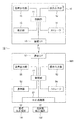
- FIG. 4 is a functional block diagram of the medication management system 1 according to the first embodiment.
- the information processing terminal 10 includes a control unit 11, an operation input unit 12, a display unit 13, a storage 14, an audio output unit 15, and a communication interface 16.
- the control unit 11 mainly includes a microcontroller, and controls the entire information processing terminal 10. For example, the control unit 11 executes software for the operator OP to input order information, and displays the execution result of the software on the display unit 13. Further, the control unit 11 records the order information input from the operation input unit 12 by the operator OP in the storage 14 through the software.
- the operation input unit 12 is an input unit by the operator OP, and includes, for example, a keyboard, a pointing device, etc., and sends input information to the control unit 11.
- the display unit 13 includes a display circuit and a display panel such as an LCD, and displays an image based on an instruction from the control unit 11.
- the audio output unit 15 includes an audio output circuit and a speaker, and outputs an audio based on an instruction from the control unit 11.
- the storage 14 records order information (see FIG. 2) input by the operator OP, and is read and written by the control unit 11 as necessary.
- the communication interface 16 includes an interface circuit for performing communication of a predetermined protocol with the communication interface 26 (described later) of the tablet terminal 20. As long as communication with the tablet terminal 20 can be performed, a communication protocol may be appropriately set regardless of wired or wireless.
- the tablet terminal 20 includes a control unit 21, an operation input unit 22, a display unit 23, a storage 24, an audio output unit 25, a communication interface 26, and a BLE communication unit 27.
- the control unit 21 is mainly configured of a microcontroller and controls the entire tablet terminal 20. For example, the control unit 21 records the order information transmitted from the information processing terminal 10 in the storage 24. Further, as described later, the control unit 21 performs a collating process (determination process) on the patient ID, the injection drug ID, and the nurse ID based on the order information recorded in the storage 24, and the collating result ( The determination result is notified via the display unit 23 and / or the audio output unit 25.
- the control unit 21 is an example of a determination unit and a notification unit.
- the communication interface 26 is an example of a first receiving unit.
- the operation input unit 22 is an input unit by the nurse NU, and includes, for example, a touch panel type input device provided on a display panel, and sends input information to the control unit 21.
- the display unit 13 includes a display circuit and a display panel such as an LCD, and displays an image based on an instruction from the control unit 21.
- the audio output unit 25 includes an audio output circuit and a speaker, and outputs an audio based on an instruction from the control unit 21.
- the storage 24 records the order information transmitted from the information processing terminal 10.
- the storage 24 is an example of a storage unit.
- the communication interface 26 includes an interface circuit for performing wireless or wired communication with a predetermined protocol with the communication interface 16 of the information processing terminal 10.
- the BLE communication unit 27 (an example of a receiving unit and a second receiving unit) functions as a BLE reader. That is, from the patient BLE terminal 101, the injection BLE terminal 102, and the nurse BLE terminal 103, the BLE communication unit 27 BLE, as a unique ID (UID), BLE for the patient ID, the injection ID, and the nurse ID, respectively. Acquire by communication. The acquired patient ID, injection drug ID, and nurse ID are used for the above-mentioned matching process by the control unit 21.
- the communication distance by BLE communication is about several meters, and the possibility of erroneously reading the UID of BLE terminals in different rooms is low.
- the patient BLE terminal 101, the injection drug BLE terminal 102, and the nurse BLE terminal 103 perform BLE communication with the recording unit (not shown) that records the patient ID, the injection drug ID, and the nurse ID, respectively.
- a communication unit (not shown) is provided.
- Each BLE terminal includes a battery for operating the communication unit.
- control unit 21 is placed in one of a power saving state and a normal state in which the processing (the collation process and the notification process) of the control unit 21 described above can be performed. It may be controlled to In the power saving state, the reception function of the BLE communication unit 27 is not limited.
- the control unit 21 controls the tablet terminal 20 on condition that the BLE communication unit 27 receives at least one of the patient ID, the injection drug ID, and the nurse ID. The status of is shifted from the power saving status to the normal status. Thereby, energy saving of the tablet terminal 20 can be achieved.
- the control unit 21 is an example of a state control unit.
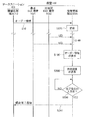
- FIG. 5 is a sequence chart of the medication management system 1 according to the present embodiment.
- FIG. 6 is a view showing an example of a screen displayed on the tablet terminal 20 in the medication management system 1 according to the present embodiment.
- order information is transmitted from the information processing terminal 10 at the nurse station NS to the tablet terminal 20 in the hospital room HW (step S10).
- the trigger for transmission of order information may be set as appropriate. For example, every time the order information list (see FIG. 2) recorded in the information processing terminal 10 is updated, the order information list may be transmitted to the tablet terminal 20 installed in each of the patient rooms HW. Alternatively, the information processing terminal 10 may transmit only the order information whose treatment date matches in the order information list to the tablet terminals 20 installed in the patient rooms HW.
- the tablet terminal 20 in the hospital room HW sends a request for order information including the patient ID to the information processing terminal 10.
- the information processing terminal 10 transmits order information including the patient ID to the tablet terminal 20 in response to the request.
- the control unit 21 of the tablet terminal 20 records the order information received in step S10 in the storage 24 (step S12).
- the tablet terminal 20 transmits the patient ID, the injection drug ID, and the nurse ID as UIDs from the patient BLE terminal 101, the injection drug BLE terminal 102, and the nurse BLE terminal 103 through the BLE communication unit 27, respectively. It acquires (step S14).
- Step S14 may be repeated until all UIDs of the patient ID, the injection drug ID, and the nurse ID are acquired.
- a predetermined display output by the display unit 23 and / or a predetermined voice output by the voice output unit 25 may be performed. .
- the nurse can recognize that the tablet terminal 20 has acquired all the UIDs, the nurse's awareness can be directed to the tablet terminal 20 that displays the collation result described later.
- the control unit 21 of the tablet terminal 20 returns the tablet terminal 20 from the sleep state to the normal state (step S16).
- the communication distance by BLE is as short as several meters, so after the nurse NU enters the room HW together with the injection drug MD for treatment for the patient PA, all the tablet terminals 20 are It is possible to obtain the UID of Therefore, when the nurse NU enters the sickroom HW for treatment, the tablet terminal 20 in the sickroom HW returns from the sleep state and starts the collation processing described later.
- the control unit 21 of the tablet terminal 20 first displays the order information recorded in the storage 24 (step S18).
- the order information may be displayed in response to a touch operation on the screen of the tablet terminal 20 from the nurse NU.
- the order information displayed here is the order information to be collated in step S20 described later.
- a plurality of pieces of order information are recorded in the storage 24, only the order information including the patient ID acquired in step S14 is displayed, and is set as a collation target in step S20 described later.
- a display example of the order information on the display unit 23 in step S18 is shown on the screen G10 of FIG. 6A.
- the control unit 21 of the tablet terminal 20 controls the patient ID, the injection drug ID and the nurse ID included in the order information to be displayed in step S18, and the patient ID and the injection drug ID received in step S14. , And the nurse ID are collated, and the collated result is displayed (step S20).
- a display example on the display unit 23 of the collation result in step S20 is shown in a screen G11 of FIG. 6B. As illustrated in the screen G11, when all the UIDs match, "OK" is displayed as the matching result. Although not shown, when at least one of the UIDs does not match, “NG” is displayed as the matching result.
- the comparison results of the UIDs of the patient ID, the injection drug ID, and the nurse ID are displayed, but the present invention is not limited thereto. It is not necessary to display the collation result of each UID, but to display the collation result as to whether or not all the UIDs match. By displaying the collation result of each UID as shown in FIG. 6B, the nurse can quickly take action when the collation result of any one of the UIDs is NG.
- the tablet terminal 20 when the nurse visually confirms that all the matching results of the patient ID, the injection drug ID, and the nurse ID are OK, the tablet terminal 20 is Touch input on a display panel or a predetermined position in the display panel. If there is this touch input (step S22: YES), the control unit 21 of the tablet terminal 20 transmits a verification completion notification in association with the order information to be treated, via the communication interface 26 (step S24). ). Although not illustrated, the information processing terminal 10 that receives the verification completion notification adds the information indicating that the treatment is completed to the order information associated with the verification completion notification so as to place the order in the storage 14 The information list may be updated.
- the three-point verification in step S20 received UIDs from all BLE terminals of the patient BLE terminal 101, the injectable drug BLE terminal 102, and the nurse BLE terminal 103. It will be done later.
- a distance (synonymous with receivable signal strength) capable of receiving a UID from each BLE terminal can be set. For example, if the distance is set to, for example, 2 to 3 m, the tablet terminal 20 can be automatically received from all BLE terminals after the nurse comes close enough to the patient to be treated. As a result, three-point matching starts automatically. It is preferable to appropriately adjust the receivable distance according to the setting of the BLE communication according to the position of the bed in the patient room and the position of the tablet terminal 20.
- each UID acquired from the patient, the injection drug, and the BLE terminal attached to the nurse By collating with the ID included in the order information, the automatic three-point collation in the medical field is realized.
- a short distance wireless communication terminal such as a BLE terminal
- the UID within the short distance is naturally received from the tablet terminal in the patient's room, and the reception becomes a trigger for the three-point verification.
- the probability of detection is low and there is no burden on the nurse at the start of the three-point check.
- the automatic three-point collation result can be recognized on the screen of the tablet terminal 20, so that the nurse can safely treat the patient.
- the received signal strength of each UID received by the BLE communication unit 27 from the patient BLE terminal 101, the injectable drug BLE terminal 102, and the nurse BLE terminal 103 is all predetermined. It is preferable to specify the received UID as a comparison target (determination target) on condition that the threshold is equal to or higher than Thereby, the reliability of the received signal of UID from each BLE terminal is improved, which in turn contributes to the improvement of the matching accuracy.
- the control unit 21 of the tablet terminal 20 checks the patient ID with the largest received signal strength among the plurality of patient IDs (check target).
- check target It is preferable to specify as. For example, when a plurality of beds are placed in one patient room and there are a plurality of patients, the tablet terminal 20 placed in the vicinity of the bed of one patient is not only the patient ID of the patient but also other patients in the same room. There is a case where a patient ID is received from a patient BLE terminal attached to. In such a case, by using the patient ID having the largest received signal strength among the plurality of received patient IDs as the collation target, the collation accuracy of the target patient ID can be improved.
- the control unit 21 of the tablet terminal 20 performs the process 2
- the above patient ID may be displayed so that the nurse NU can select and operate.
- FIG. 7 shows a medication management system 1A according to the second embodiment.
- the medication management system 1A differs from the medication management system 1 of the first embodiment in that the tablet terminal 20 is not installed near the patient's bed, but a portable communication with a function equivalent to the tablet terminal 20.
- the terminal 50 is possessed by the nurse NU.
- the portable communication terminal 50 has the same function as the tablet terminal 20 shown in FIG.
- the portable communication terminal 50 is a PDA (Personal Digital Assistance) terminal or a smartphone.
- the portable communication terminal 50 is an example of an information processing apparatus and a first information processing apparatus.
- the nurse NU makes the portable communication terminal 50 capable of receiving a signal from the BLE terminal, and then enters the patient's room. Also in the present embodiment, the flow of the entire process is the same as that shown in FIG. 5 when the portable communication terminal 50 performs the process of the tablet terminal 20, but in the present embodiment, step S16 is not It is also good.
- the portable communication terminal 50 is possessed by the nurse NU, so after the portable communication terminal 50 becomes capable of receiving the signal from the BLE terminal, the injection BLE terminal 102 and the nurse BLE are in close proximity. Reception of each UID from the terminal 103 is immediately completed. Therefore, the trigger to start the matching process is that the nurse NU approaches the patient PA and receives the patient ID from the patient BLE terminal 101.
- the medication management system 1A of the present embodiment since it is not necessary to install the tablet terminal 20 in each of the wards, the cost can be reduced. It is particularly effective when the nurse NU moves between wards to perform treatment in a large hospital having a plurality of wards.
- FIG. 8 shows a medication management system 1B according to the third embodiment.
- the medication management system 1B differs from the medication management system 1A of the second embodiment in that the nurse NU terminal 103 is not attached to the nurse NU.
- one portable communication terminal 50 can be shared by a plurality of nurses, but in the case of the present embodiment, a portable communication terminal 50A dedicated to each nurse It is assumed to use.
- a nurse ID is registered (recorded) in advance as a user ID in the portable communication terminal 50A of the present embodiment.
- FIG. 9 shows a functional block diagram of a medication management system 1B according to the third embodiment.
- the portable communication terminal 50A includes a control unit 51, an operation input unit 52, a display unit 53, a storage 54, an audio output unit 55, a communication interface 56, and a BLE communication unit 57.
- the BLE communication unit 57 receives a patient ID and an injection ID from the patient BLE terminal 101 and the injection BLE terminal 102, respectively.
- the control unit 51 collates the nurse ID included in the order information with the nurse ID registered in the portable communication terminal 50A.
- the nurse ID is recorded, for example, in the storage 54.
- FIG. 10 is a sequence chart of the medication management system 1B according to the present embodiment.
- the nurse NU enters the room after the portable communication terminal 50A can receive a signal from the BLE terminal before the patient enters the patient's room.
- step S10 order information is transmitted from the information processing terminal 10 at the nurse station NS to the portable communication terminal 50A of the nurse (step S10).
- the control unit 51 of the portable communication terminal 50A records the order information received in step S10 in the storage 54 (step S120). Steps S10 and S120 may be performed before the nurse NU performs treatment on the patient (for example, before the patient enters the patient's room).
- the portable communication terminal 50A acquires the patient ID and the injection ID as UID from the patient BLE terminal 101 and the injection BLE terminal 102 through the BLE communication unit 57 (step S140).
- control unit 51 of the portable communication terminal 50A displays the order information recorded in the storage 54 (step S180).
- the order information displayed here is the order information to be collated in step S200 described later.
- the control unit 51 of the portable communication terminal 50A controls the patient ID, the injection drug ID and the nurse ID included in the order information to be displayed in step S180, the patient ID received in step S140, and the injection.
- the medicine ID and the nurse ID registered in the portable communication terminal 50A are collated.
- the control unit 51 displays the collation result (step S200).
- the display example in step S200 may be the same as the screen G11 of FIG.
- the nurse displays the portable communication terminal 50A as an instruction to complete the three-point matching. Touch input a predetermined position in the panel or display panel.
- the control unit 51 of the portable communication terminal 50A transmits the collation completion notification in association with the order information to be the object of treatment via the communication interface 56 ( Step S240).
Landscapes
- Health & Medical Sciences (AREA)
- Engineering & Computer Science (AREA)
- Chemical & Material Sciences (AREA)
- Bioinformatics & Cheminformatics (AREA)
- Medicinal Chemistry (AREA)
- Epidemiology (AREA)
- General Health & Medical Sciences (AREA)
- Medical Informatics (AREA)
- Primary Health Care (AREA)
- Public Health (AREA)
- Medical Treatment And Welfare Office Work (AREA)
Abstract
本発明のある態様に係る情報処理装置は、患者識別情報、薬剤識別情報、および、薬剤投与者識別情報を含む投薬情報を記憶する記憶部と、近距離無線通信によって、患者に取り付けられた第1通信端末、薬剤に取り付けられた第2通信端末、および、薬剤投与者に取り付けられた第3通信端末から、それぞれ患者識別情報、薬剤識別情報、および、薬剤投与者識別情報を受信する受信部と、投薬情報に含まれる患者識別情報、薬剤識別情報、および、薬剤投与者識別情報と、受信部が受信した患者識別情報、薬剤識別情報、および、薬剤投与者識別情報とが一致するか否かを判定する判定部と、判定部による判定結果を報知する報知部と、を備える。
Description
本発明は、患者に薬剤を投与するときの情報処理に関する。
病棟において、患者の処方箋で指定された薬剤とは異なる薬剤(つまり、誤った薬剤)を当該患者に投与してしまう可能性を低下させるシステムが提案されている。
例えば、特開2006-126930号公報において提案されているシステムでは、患者IDと注射薬IDとを予め対応付けて薬剤対応レコードとして記憶しておくとともに、第1のICタグから患者ID、第2のICタグから注射薬IDをICタグ読取機により読み取る。そして、ICタグ読取機が読み取った患者ID及び注射薬IDとの組み合わせが、予め記憶しておいた薬剤対応レコード中の患者ID及び注射薬IDの組み合わせと合致するか否かを照合する。
例えば、特開2006-126930号公報において提案されているシステムでは、患者IDと注射薬IDとを予め対応付けて薬剤対応レコードとして記憶しておくとともに、第1のICタグから患者ID、第2のICタグから注射薬IDをICタグ読取機により読み取る。そして、ICタグ読取機が読み取った患者ID及び注射薬IDとの組み合わせが、予め記憶しておいた薬剤対応レコード中の患者ID及び注射薬IDの組み合わせと合致するか否かを照合する。
ところで、医師からのオーダーに対する処置について、看護師、医師等の、現場で患者に薬剤を投与する者(以下、「薬剤投与者」という。)、薬剤、および、患者の三点を照合することが、投薬ミスや患者取り違いミス等による医療事故を防止する上で有効であると考えられている。
しかし、特開2006-126930号公報に記載されたシステムでは、患者と薬剤の照合に止まり、薬剤投与者の照合について考慮されておらず、上記三点照合が行われていない。
その一方で、三点照合を確実に行うことは薬剤投与者に作業負担を掛かるため、当該負担軽減が望まれている。
しかし、特開2006-126930号公報に記載されたシステムでは、患者と薬剤の照合に止まり、薬剤投与者の照合について考慮されておらず、上記三点照合が行われていない。
その一方で、三点照合を確実に行うことは薬剤投与者に作業負担を掛かるため、当該負担軽減が望まれている。
そこで、本発明のある態様は、患者に処置を行うときに患者と薬剤と薬剤投与者の三点照合の作業負担の軽減を図ることを目的とする。
本発明のある態様は、
患者を特定する患者識別情報と、前記患者に投与すべき薬剤を特定する薬剤識別情報と、前記薬剤を前記患者に投与すべき薬剤投与者を特定する薬剤投与者識別情報と、が対応付けられた投薬情報を記憶する記憶部と、
近距離無線通信によって、患者に取り付けられた第1通信端末、薬剤に取り付けられた第2通信端末、および、薬剤投与者に取り付けられた第3通信端末から、それぞれ患者識別情報、薬剤識別情報、および、薬剤投与者識別情報を受信する受信部と、
投薬情報に含まれる患者識別情報、薬剤識別情報、および、薬剤投与者識別情報と、受信部が受信した患者識別情報、薬剤識別情報、および、薬剤投与者識別情報とが一致するか否かを判定する判定部と、
前記判定部による判定結果を報知する報知部と、
を備えた、情報処理装置である。
患者を特定する患者識別情報と、前記患者に投与すべき薬剤を特定する薬剤識別情報と、前記薬剤を前記患者に投与すべき薬剤投与者を特定する薬剤投与者識別情報と、が対応付けられた投薬情報を記憶する記憶部と、
近距離無線通信によって、患者に取り付けられた第1通信端末、薬剤に取り付けられた第2通信端末、および、薬剤投与者に取り付けられた第3通信端末から、それぞれ患者識別情報、薬剤識別情報、および、薬剤投与者識別情報を受信する受信部と、
投薬情報に含まれる患者識別情報、薬剤識別情報、および、薬剤投与者識別情報と、受信部が受信した患者識別情報、薬剤識別情報、および、薬剤投与者識別情報とが一致するか否かを判定する判定部と、
前記判定部による判定結果を報知する報知部と、
を備えた、情報処理装置である。
本発明のある態様によれば、患者に処置を行うときに患者と薬剤と薬剤投与者の三点照合の作業負担の軽減を図ることができる。
本発明は、2017年6月20日に日本国特許庁に出願された特願2017-120057の特許出願に関連しており、この出願のすべての内容がこの明細書に参照によって組み込まれる。
以下、本発明の情報処理システムのいくつかの実施形態に係る投薬管理システムについて説明する。実施形態に係る投薬管理システムは、近距離無線通信を利用して医療現場での三点照合を自動化するためのシステムである。
以下の各実施形態では、近距離無線通信の例として、BLE(Bluetooth(登録商標) Low Energy)の場合を例に挙げるが、その限りではない。RFID(Radio Frequency Identification)、NFC(Near Field Communication)等の他の近距離無線通信を利用してもよい。
以下の各実施形態では、近距離無線通信の例として、BLE(Bluetooth(登録商標) Low Energy)の場合を例に挙げるが、その限りではない。RFID(Radio Frequency Identification)、NFC(Near Field Communication)等の他の近距離無線通信を利用してもよい。
(1)第1の実施形態
(1-1)投薬管理システム1の構成
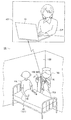
図1に、第1の実施形態に係る投薬管理システム1を示す。
投薬管理システム1では、ナースステーションNSに設置されている情報処理端末10(第2情報処理装置の一例)に、医師によって患者ごとに処方された処方箋に基づいて作成されたオーダー情報がオペレータOPによって入力され、記録されている。
(1-1)投薬管理システム1の構成
図1に、第1の実施形態に係る投薬管理システム1を示す。
投薬管理システム1では、ナースステーションNSに設置されている情報処理端末10(第2情報処理装置の一例)に、医師によって患者ごとに処方された処方箋に基づいて作成されたオーダー情報がオペレータOPによって入力され、記録されている。
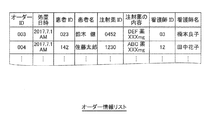
図2にオーダー情報のリストの一例を示す。
図2において、オーダーIDによって特定されるオーダー情報は、処置日付の情報と、患者を特定する患者IDと、当該患者に投与すべき注射薬(薬剤の一例)を特定する注射薬IDと、当該注射薬を当該患者に投与すべき看護師を特定する看護師IDと、が対応付けられている。図2に示す例では、患者ID、注射薬ID、および、看護師IDに対応する患者名、注射薬の内容、および、看護師名の付随情報が示されている。
オーダー情報は、投薬情報の一例である。患者ID、注射薬ID、および、看護師IDはそれぞれ、患者識別情報、薬剤識別情報、および、薬剤投与者識別情報の一例である。
情報処理端末10は、病棟の各病室HWの患者PAのベッド近傍に設置されたタブレット端末20と通信可能に構成されており、必要に応じて適切なオーダー情報が各病室HWのタブレット端末20へ送信される。タブレット端末20は、情報処理装置および第1情報処理装置の一例である。
図2において、オーダーIDによって特定されるオーダー情報は、処置日付の情報と、患者を特定する患者IDと、当該患者に投与すべき注射薬(薬剤の一例)を特定する注射薬IDと、当該注射薬を当該患者に投与すべき看護師を特定する看護師IDと、が対応付けられている。図2に示す例では、患者ID、注射薬ID、および、看護師IDに対応する患者名、注射薬の内容、および、看護師名の付随情報が示されている。
オーダー情報は、投薬情報の一例である。患者ID、注射薬ID、および、看護師IDはそれぞれ、患者識別情報、薬剤識別情報、および、薬剤投与者識別情報の一例である。
情報処理端末10は、病棟の各病室HWの患者PAのベッド近傍に設置されたタブレット端末20と通信可能に構成されており、必要に応じて適切なオーダー情報が各病室HWのタブレット端末20へ送信される。タブレット端末20は、情報処理装置および第1情報処理装置の一例である。
患者には、BLE通信を行う患者BLE端末101(第1通信端末の一例)を備えたリストバンド30が取り付けられている。上述したように、BLE通信は近距離無線通信の一例である。
図3に、患者が装着するリストバンド30の平面図を示す。図3に示すように、リストバンド30は、その中央近傍に患者BLE端末101が取り付けられている。リストバンド30の本体部31には、患者の名前や患者ID等の患者情報31aが印字されている。リストバンド30は、複数設けられている突起32のいずれか2つを孔33に挿入(セット)することで患者の手首に装着するように構成されている。
図3に、患者が装着するリストバンド30の平面図を示す。図3に示すように、リストバンド30は、その中央近傍に患者BLE端末101が取り付けられている。リストバンド30の本体部31には、患者の名前や患者ID等の患者情報31aが印字されている。リストバンド30は、複数設けられている突起32のいずれか2つを孔33に挿入(セット)することで患者の手首に装着するように構成されている。
図1を再度参照する。
注射薬MDには、タブレット端末20とBLE通信を行う注射薬BLE端末102(第2通信端末の一例)が取り付けられている。注射薬BLE端末102の形態は問わないが、例えばラベル形態の端末であって、注射薬が収容されている容器に貼付されていてもよいし、当該容器に紐等で括り付けられていてもよい。また、注射薬BLE端末102は、注射薬が収容されている容器に付属するトレーに置かれていてもよい。
注射薬MDには、タブレット端末20とBLE通信を行う注射薬BLE端末102(第2通信端末の一例)が取り付けられている。注射薬BLE端末102の形態は問わないが、例えばラベル形態の端末であって、注射薬が収容されている容器に貼付されていてもよいし、当該容器に紐等で括り付けられていてもよい。また、注射薬BLE端末102は、注射薬が収容されている容器に付属するトレーに置かれていてもよい。
看護師NUは、タブレット端末20とBLE通信を行う看護師BLE端末103(第3通信端末の一例)が取り付けられている。看護師BLE端末103の形態は問わないが、例えばカード形態の端末であって、クリップあるいはピンによって看護師NUの衣服に取り付けられていてもよいし、紐によって看護師NUの首に装着されていてもよい。
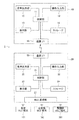
次に、図4を参照して、投薬管理システム1の機能ブロックについて説明する。図4は、第1の実施形態に係る投薬管理システム1の機能ブロック図である。
図4に示すように、情報処理端末10は、制御部11、操作入力部12、表示部13、ストレージ14、音声出力部15、および、通信インタフェース16を備える。
制御部11は、マイクロコントローラを主体として構成され、情報処理端末10の全体を制御する。例えば、制御部11は、オーダー情報をオペレータOPが入力するためのソフトウェアを実行し、ソフトウェアの実行結果を表示部13に表示する。また、制御部11は、当該ソフトウェアを通して、オペレータOPにより操作入力部12から入力されたオーダー情報をストレージ14に記録する。
図4に示すように、情報処理端末10は、制御部11、操作入力部12、表示部13、ストレージ14、音声出力部15、および、通信インタフェース16を備える。
制御部11は、マイクロコントローラを主体として構成され、情報処理端末10の全体を制御する。例えば、制御部11は、オーダー情報をオペレータOPが入力するためのソフトウェアを実行し、ソフトウェアの実行結果を表示部13に表示する。また、制御部11は、当該ソフトウェアを通して、オペレータOPにより操作入力部12から入力されたオーダー情報をストレージ14に記録する。
操作入力部12は、オペレータOPによる入力手段であり、例えば、キーボードやポインティングデバイス等を含み、入力された情報を制御部11へ送る。表示部13は、表示回路およびLCD等の表示パネルを含み、制御部11による指令に基づいて画像を表示する。音声出力部15は、音声出力回路およびスピーカを含み、制御部11による指令に基づいて音声を出力する。
ストレージ14は、オペレータOPによって入力されたオーダー情報(図2参照)を記録し、必要に応じて制御部11により読み書きされる。
通信インタフェース16は、タブレット端末20の通信インタフェース26(後述する)との間で所定のプロトコルの通信を行うためのインタフェース回路を含む。タブレット端末20と通信を行うことができれば、有線あるいは無線を問わず、通信プロトコルも適宜設定してよい。
ストレージ14は、オペレータOPによって入力されたオーダー情報(図2参照)を記録し、必要に応じて制御部11により読み書きされる。
通信インタフェース16は、タブレット端末20の通信インタフェース26(後述する)との間で所定のプロトコルの通信を行うためのインタフェース回路を含む。タブレット端末20と通信を行うことができれば、有線あるいは無線を問わず、通信プロトコルも適宜設定してよい。
図4に示すように、タブレット端末20は、制御部21、操作入力部22、表示部23、ストレージ24、音声出力部25、通信インタフェース26、および、BLE通信部27を備える。
制御部21は、マイクロコントローラを主体として構成され、タブレット端末20の全体を制御する。例えば、制御部21は、情報処理端末10から送信されるオーダー情報をストレージ24に記録する。また、制御部21は、後述するように、ストレージ24に記録されたオーダー情報に基づいて、患者ID、注射薬ID、および、看護師IDの照合処理(判定処理)を行い、その照合結果(判定結果)を、表示部23および/または音声出力部25を通して報知する。
制御部21は、判定部および報知部の一例である。通信インタフェース26は、第1受信部の一例である。
制御部21は、マイクロコントローラを主体として構成され、タブレット端末20の全体を制御する。例えば、制御部21は、情報処理端末10から送信されるオーダー情報をストレージ24に記録する。また、制御部21は、後述するように、ストレージ24に記録されたオーダー情報に基づいて、患者ID、注射薬ID、および、看護師IDの照合処理(判定処理)を行い、その照合結果(判定結果)を、表示部23および/または音声出力部25を通して報知する。
制御部21は、判定部および報知部の一例である。通信インタフェース26は、第1受信部の一例である。
操作入力部22は、看護師NUによる入力手段であり、例えば、表示パネルに設けられたタッチパネル形式の入力デバイスを含み、入力された情報を制御部21へ送る。表示部13は、表示回路およびLCD等の表示パネルを含み、制御部21による指令に基づいて画像を表示する。音声出力部25は、音声出力回路およびスピーカを含み、制御部21による指令に基づいて音声を出力する。
ストレージ24は、前述したように、情報処理端末10から送信されるオーダー情報が記録される。ストレージ24は記憶部の一例である。
ストレージ24は、前述したように、情報処理端末10から送信されるオーダー情報が記録される。ストレージ24は記憶部の一例である。
通信インタフェース26は、情報処理端末10の通信インタフェース16との間で所定のプロトコルの無線あるいは有線による通信を行うためのインタフェース回路を含む。
BLE通信部27(受信部および第2受信部の一例)は、BLEリーダとして機能する。すなわち、BLE通信部27は、患者BLE端末101、注射薬BLE端末102、および、看護師BLE端末103から、ユニークID(UID)として、それぞれ患者ID、注射薬ID、および、看護師IDをBLE通信により取得する。取得された患者ID、注射薬ID、および、看護師IDは、制御部21による上記照合処理に使用される。BLE通信による通信距離は数メートル程度であり、異なる病室にあるBLE端末のUIDを誤って読み取る可能性は低い。
BLE通信部27(受信部および第2受信部の一例)は、BLEリーダとして機能する。すなわち、BLE通信部27は、患者BLE端末101、注射薬BLE端末102、および、看護師BLE端末103から、ユニークID(UID)として、それぞれ患者ID、注射薬ID、および、看護師IDをBLE通信により取得する。取得された患者ID、注射薬ID、および、看護師IDは、制御部21による上記照合処理に使用される。BLE通信による通信距離は数メートル程度であり、異なる病室にあるBLE端末のUIDを誤って読み取る可能性は低い。
患者BLE端末101、注射薬BLE端末102、および、看護師BLE端末103は、それぞれ、患者ID、注射薬ID、および、看護師IDを記録する記録部(図示せず)と、BLE通信を行う通信部(図示せず)とを備える。各BLE端末には、通信部を動作させるための電池が内蔵されている。
なお、制御部21は、タブレット端末20の状態を、省電力状態、又は、上述した制御部21の処理(照合処理や報知する処理)が実行可能である通常状態のいずれかの状態となるように制御してもよい。省電力状態では、BLE通信部27の受信機能は制限されない。制御部21は、タブレット端末20の状態が省電力状態である場合、BLE通信部27が患者ID、注射薬ID、又は、看護師IDの少なくともいずれかを受信したことを条件として、タブレット端末20の状態を省電力状態から通常状態へ移行させる。それによって、タブレット端末20の省エネルギーを図ることができる。
制御部21は、状態制御部の一例である。
制御部21は、状態制御部の一例である。
(1-2)投薬管理システム1の動作
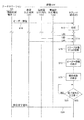
次に、投薬管理システム1の動作について、図5および図6を参照して説明する。図5は、本実施形態に係る投薬管理システム1のシーケンスチャートである。図6は、本実施形態に係る投薬管理システム1においてタブレット端末20に表示される画面例を示す図である。
次に、投薬管理システム1の動作について、図5および図6を参照して説明する。図5は、本実施形態に係る投薬管理システム1のシーケンスチャートである。図6は、本実施形態に係る投薬管理システム1においてタブレット端末20に表示される画面例を示す図である。
図5では、タブレット端末20の初期状態が省電力状態の一例としてスリープ状態である場合を想定している。
図5において、先ず、ナースステーションNSにある情報処理端末10から病室HW内のタブレット端末20に対してオーダー情報が送信される(ステップS10)。
オーダー情報の送信のトリガは適宜設定してよい。例えば、情報処理端末10に記録されたオーダー情報リスト(図2参照)が更新される毎に、各病室HWに設置されているタブレット端末20にオーダー情報リストが送信されるようにしてもよい。あるいは、情報処理端末10は、オーダー情報リストのうち、処置日付が合致するオーダー情報のみを各病室HWに設置されているタブレット端末20に送信してもよい。
別の方法として、病室HW内のタブレット端末20は、患者BLE端末101から患者IDを取得した後、当該患者IDを含むオーダー情報の要求を情報処理端末10に対して行う。情報処理端末10は、当該要求に応じてタブレット端末20に対して当該患者IDを含むオーダー情報を送信する。
図5において、先ず、ナースステーションNSにある情報処理端末10から病室HW内のタブレット端末20に対してオーダー情報が送信される(ステップS10)。
オーダー情報の送信のトリガは適宜設定してよい。例えば、情報処理端末10に記録されたオーダー情報リスト(図2参照)が更新される毎に、各病室HWに設置されているタブレット端末20にオーダー情報リストが送信されるようにしてもよい。あるいは、情報処理端末10は、オーダー情報リストのうち、処置日付が合致するオーダー情報のみを各病室HWに設置されているタブレット端末20に送信してもよい。
別の方法として、病室HW内のタブレット端末20は、患者BLE端末101から患者IDを取得した後、当該患者IDを含むオーダー情報の要求を情報処理端末10に対して行う。情報処理端末10は、当該要求に応じてタブレット端末20に対して当該患者IDを含むオーダー情報を送信する。
タブレット端末20の制御部21は、ステップS10で受信したオーダー情報をストレージ24に記録する(ステップS12)。
次いで、タブレット端末20は、BLE通信部27を通して、患者BLE端末101、注射薬BLE端末102、および、看護師BLE端末103から、それぞれ、UIDとして患者ID、注射薬ID、および、看護師IDを取得する(ステップS14)。なお、ステップS14は、患者ID、注射薬ID、および、看護師IDのすべてのUIDを取得するまで繰り返し行ってもよい。
患者ID、注射薬ID、および、看護師IDのすべてのUIDを取得した場合には、表示部23による所定の表示出力、および/または、音声出力部25による所定の音声出力を行ってもよい。それによって、看護師はタブレット端末20がすべてのUIDを取得したことを認識できるため、後述する照合結果を表示するタブレット端末20に対して、看護師の意識を向けさせることができる。
次いで、タブレット端末20は、BLE通信部27を通して、患者BLE端末101、注射薬BLE端末102、および、看護師BLE端末103から、それぞれ、UIDとして患者ID、注射薬ID、および、看護師IDを取得する(ステップS14)。なお、ステップS14は、患者ID、注射薬ID、および、看護師IDのすべてのUIDを取得するまで繰り返し行ってもよい。
患者ID、注射薬ID、および、看護師IDのすべてのUIDを取得した場合には、表示部23による所定の表示出力、および/または、音声出力部25による所定の音声出力を行ってもよい。それによって、看護師はタブレット端末20がすべてのUIDを取得したことを認識できるため、後述する照合結果を表示するタブレット端末20に対して、看護師の意識を向けさせることができる。
すべてのUIDを取得すると、タブレット端末20の制御部21は、タブレット端末20をスリープ状態から通常状態へ復帰させる(ステップS16)。
患者PAが病室HWにいることを前提とすると、BLEによる通信距離は数メートルと短いため、患者PAに対する処置のために看護師NUが注射薬MDとともに病室HWに入室した後にタブレット端末20がすべてのUIDを取得可能となる。従って、看護師NUが処置のために病室HWに入ると、当該病室HW内のタブレット端末20がスリープ状態から復帰して、後述する照合処理を開始することになる。
患者PAが病室HWにいることを前提とすると、BLEによる通信距離は数メートルと短いため、患者PAに対する処置のために看護師NUが注射薬MDとともに病室HWに入室した後にタブレット端末20がすべてのUIDを取得可能となる。従って、看護師NUが処置のために病室HWに入ると、当該病室HW内のタブレット端末20がスリープ状態から復帰して、後述する照合処理を開始することになる。
通常状態に復帰すると、タブレット端末20の制御部21は先ず、ストレージ24に記録されているオーダー情報を表示する(ステップS18)。なお、看護師NUからのタブレット端末20の画面に対するタッチ操作を受けて、オーダー情報を表示するようにしてもよい。ここで表示されるオーダー情報は、後述するステップS20での照合対象となるオーダー情報である。ストレージ24に複数のオーダー情報が記録されている場合には、ステップS14で取得した患者IDを含むオーダー情報のみを表示し、後述するステップS20での照合対象とする。
ステップS18におけるオーダー情報の表示部23での表示例を図6Aの画面G10に示す。
ステップS18におけるオーダー情報の表示部23での表示例を図6Aの画面G10に示す。
次いで、タブレット端末20の制御部21は、ステップS18で表示対象としたオーダー情報に含まれている患者ID、注射薬ID、および、看護師IDと、ステップS14で受信した患者ID、注射薬ID、および、看護師IDとを照合し、その照合結果を表示する(ステップS20)。
ステップS20における照合結果の表示部23での表示例を図6Bの画面G11に示す。画面G11に例示するように、すべてのUIDが一致すると照合結果として「OK」が表示される。図示しないが、少なくともいずれか1つのUIDが一致しない場合には、照合結果として「NG」が表示される。
ステップS20における照合結果の表示部23での表示例を図6Bの画面G11に示す。画面G11に例示するように、すべてのUIDが一致すると照合結果として「OK」が表示される。図示しないが、少なくともいずれか1つのUIDが一致しない場合には、照合結果として「NG」が表示される。
なお、図6Bに例示する画面G11では、患者ID、注射薬ID、および、看護師IDのそれぞれのUIDの照合結果を表示するようにしたが、その限りではない。個々のUIDの照合結果を表示せず、すべてのUIDが一致したか否かについての照合結果を表示するのみでもよい。図6Bに示すように個々のUIDの照合結果を表示することで、看護師が、いずれかのUIDの照合結果がNGの場合の対処を素早く行うことができる。
図5に示す例では、患者ID、注射薬ID、および、看護師IDのすべての照合結果がOKであることを看護師が目視確認した場合、三点照合の完了指示として、タブレット端末20の表示パネル、あるいは表示パネル内の所定の位置をタッチ入力する。このタッチ入力があった場合(ステップS22:YES)、タブレット端末20の制御部21は、通信インタフェース26を介して、処置の対象となるオーダー情報に対応付けて照合完了通知を送信する(ステップS24)。
図示しないが、照合完了通知を受信した情報処理端末10は、当該照合完了通知と対応付けられたオーダー情報に対して、処置が完了したことを示す情報を付加するようにしてストレージ14内のオーダー情報リストを更新してもよい。
図示しないが、照合完了通知を受信した情報処理端末10は、当該照合完了通知と対応付けられたオーダー情報に対して、処置が完了したことを示す情報を付加するようにしてストレージ14内のオーダー情報リストを更新してもよい。
以上が図5のシーケンスチャートの処理である。
図5に示したように、本実施形態では、ステップS20の三点照合は、患者BLE端末101、注射薬BLE端末102、および、看護師BLE端末103のすべてのBLE端末からのUIDを受信した後に行われる。各BLE端末からのUIDを受信可能な距離(受信可能な信号強度と同義)は設定可能である。例えば当該距離を例えば2~3m程度に設定すれば、処置対象となる患者に対して看護師が十分に近付いてからタブレット端末20が自動的にすべてのBLE端末から受信可能となり、それがトリガとなって自動的に三点照合が開始される。
BLE通信の設定によって受信可能な距離を、病室内のベッドの位置やタブレット端末20の位置に応じて適宜調節することが好ましい。
図5に示したように、本実施形態では、ステップS20の三点照合は、患者BLE端末101、注射薬BLE端末102、および、看護師BLE端末103のすべてのBLE端末からのUIDを受信した後に行われる。各BLE端末からのUIDを受信可能な距離(受信可能な信号強度と同義)は設定可能である。例えば当該距離を例えば2~3m程度に設定すれば、処置対象となる患者に対して看護師が十分に近付いてからタブレット端末20が自動的にすべてのBLE端末から受信可能となり、それがトリガとなって自動的に三点照合が開始される。
BLE通信の設定によって受信可能な距離を、病室内のベッドの位置やタブレット端末20の位置に応じて適宜調節することが好ましい。
以上説明したように、本実施形態の投薬管理システム1によれば、病室内に設置されたタブレット端末にて、患者、注射薬、および、看護師に取り付けられたBLE端末から取得した各UIDと、オーダー情報に含まれるIDとを照合することで、医療現場における自動三点照合が実現される。ここで、BLE端末のような近距離無線通信端末を利用することで、自ずと病室内のタブレット端末から近距離内のUIDを受信し、その受信が三点照合のトリガとなるため、UIDを誤検出する可能性は低く、また、三点照合の開始に当たって看護師に作業負担が生じない。
また、本実施形態の投薬管理システム1によれば、自動三点照合結果をタブレット端末20の画面で認識することができるため、看護師が安心して患者に対する処置を行うことができる。
また、本実施形態の投薬管理システム1によれば、自動三点照合結果をタブレット端末20の画面で認識することができるため、看護師が安心して患者に対する処置を行うことができる。
上述した実施形態において、タブレット端末20の制御部21は、BLE通信部27が患者BLE端末101、注射薬BLE端末102、および、看護師BLE端末103から受信した各UIDの受信信号強度がすべて所定の閾値以上であることを条件として、受信したUIDを照合対象(判定対象)として特定することが好ましい。それによって、各BLE端末からのUIDの受信信号の信頼性が向上し、引いては照合精度の向上に寄与する。
上述した実施形態において、タブレット端末20の制御部21は、BLE通信部27が複数の患者IDを受信した場合、当該複数の患者IDのうち最も受信信号強度が大きい患者IDを照合対象(判定対象)として特定することが好ましい。例えば、1つの病室内に複数のベッドが設置され、複数の患者がいる場合、ある患者のベッド近傍に設置されたタブレット端末20は、当該患者の患者IDだけでなく、同室内の他の患者に取り付けられた患者BLE端末から患者IDを受信する場合がある。その場合、受信した複数の患者IDのうち最も受信信号強度が大きい患者IDを照合対象とすることで、目的とする患者IDの照合精度を向上させることができる。
別の方法として、タブレット端末20の制御部21は、BLE通信部27が複数の患者IDを受信し、かつ所定の閾値よりも受信信号強度が高い患者IDが2以上ある場合には、当該2以上の患者IDを表示させ、看護師NUが選択操作できるように構成してもよい。
別の方法として、タブレット端末20の制御部21は、BLE通信部27が複数の患者IDを受信し、かつ所定の閾値よりも受信信号強度が高い患者IDが2以上ある場合には、当該2以上の患者IDを表示させ、看護師NUが選択操作できるように構成してもよい。
(2)第2の実施形態
次に、本発明の第2の実施形態について説明する。
図7に、第2の実施形態に係る投薬管理システム1Aを示す。投薬管理システム1Aが第1の実施形態の投薬管理システム1と異なる点は、タブレット端末20が患者のベッド近傍に設置されているのではなく、タブレット端末20に相当する機能を備えた携帯型通信端末50を看護師NUが所持していることである。携帯型通信端末50は、図4に示したタブレット端末20と同一の機能を備える。
携帯型通信端末50は、PDA(Personal Digital Assistance)端末あるいはスマートフォン等である。本実施形態では、携帯型通信端末50は、情報処理装置および第1情報処理装置の一例である。
次に、本発明の第2の実施形態について説明する。
図7に、第2の実施形態に係る投薬管理システム1Aを示す。投薬管理システム1Aが第1の実施形態の投薬管理システム1と異なる点は、タブレット端末20が患者のベッド近傍に設置されているのではなく、タブレット端末20に相当する機能を備えた携帯型通信端末50を看護師NUが所持していることである。携帯型通信端末50は、図4に示したタブレット端末20と同一の機能を備える。
携帯型通信端末50は、PDA(Personal Digital Assistance)端末あるいはスマートフォン等である。本実施形態では、携帯型通信端末50は、情報処理装置および第1情報処理装置の一例である。
携帯型通信端末50を用いて処置を行う場合、看護師NUは、携帯型通信端末50をBLE端末からの信号を受信可能な状態にしてから病室に入る。本実施形態においても全体の処理の流れは、タブレット端末20の処理を携帯型通信端末50が行うとした場合に図5で示したものと同じであるが、本実施形態ではステップS16はなくてもよい。携帯型通信端末50は看護師NUが所持しているため、携帯型通信端末50がBLE端末からの信号を受信可能な状態になった後、至近距離にある注射薬BLE端末102および看護師BLE端末103から各UIDの受信は直ちに完了する。従って、照合処理を開始するトリガは、看護師NUが患者PAに近付き、患者BLE端末101から患者IDを受信したことである。
本実施形態の投薬管理システム1Aによれば、病棟内の各病室にタブレット端末20を設置する必要がないため低コストで済む。複数の病棟を有する大きな病院において看護師NUが病棟間を移動して処置を行う場合、特に有効である。
(3)第3の実施形態
次に、本発明の第3の実施形態について説明する。
図8に、第3の実施形態に係る投薬管理システム1Bを示す。投薬管理システム1Bが第2の実施形態の投薬管理システム1Aと異なる点は、看護師NUに看護師BLE端末103が取り付けられていないことにある。
第2の実施形態の場合、複数の看護師に対して1つの携帯型通信端末50を共用することが可能であるが、本実施形態の場合は、看護師ごとに専用の携帯型通信端末50Aを使用することを前提とする。看護師NUに看護師BLE端末103を取り付けない代わりに、本実施形態の携帯型通信端末50Aには、看護師IDが予め使用者IDとして登録(記録)されている。
次に、本発明の第3の実施形態について説明する。
図8に、第3の実施形態に係る投薬管理システム1Bを示す。投薬管理システム1Bが第2の実施形態の投薬管理システム1Aと異なる点は、看護師NUに看護師BLE端末103が取り付けられていないことにある。
第2の実施形態の場合、複数の看護師に対して1つの携帯型通信端末50を共用することが可能であるが、本実施形態の場合は、看護師ごとに専用の携帯型通信端末50Aを使用することを前提とする。看護師NUに看護師BLE端末103を取り付けない代わりに、本実施形態の携帯型通信端末50Aには、看護師IDが予め使用者IDとして登録(記録)されている。
図9に、第3の実施形態に係る投薬管理システム1Bの機能ブロック図を示す。図9に示すように、携帯型通信端末50Aは、制御部51、操作入力部52、表示部53、ストレージ54、音声出力部55、通信インタフェース56、および、BLE通信部57を含む。なお、各部の機能に関し、図4に示したタブレット端末20の対応する各部と同一の機能については重複説明を省略する。
図9において、BLE通信部57は、患者BLE端末101および注射薬BLE端末102から、それぞれ患者IDおよび注射薬IDを受信する。
制御部51は、三点照合を行う場合、オーダー情報に含まれる看護師IDと、携帯型通信端末50Aに登録された看護師IDとを照合する。看護師IDは、例えば、ストレージ54に記録されている。
図9において、BLE通信部57は、患者BLE端末101および注射薬BLE端末102から、それぞれ患者IDおよび注射薬IDを受信する。
制御部51は、三点照合を行う場合、オーダー情報に含まれる看護師IDと、携帯型通信端末50Aに登録された看護師IDとを照合する。看護師IDは、例えば、ストレージ54に記録されている。
次に、図10を参照して投薬管理システム1Bの動作について説明する。図10は、本実施形態に係る投薬管理システム1Bのシーケンスチャートである。
図10に示すシーケンスチャートでは、看護師NUは、患者の病室への入室前に携帯型通信端末50AをBLE端末からの信号を受信可能な状態にしてから入室する場合を想定する。
図10に示すシーケンスチャートでは、看護師NUは、患者の病室への入室前に携帯型通信端末50AをBLE端末からの信号を受信可能な状態にしてから入室する場合を想定する。
図10において、先ず、ナースステーションNSにある情報処理端末10から看護師の携帯型通信端末50Aに対してオーダー情報が送信される(ステップS10)。携帯型通信端末50Aの制御部51は、ステップS10で受信したオーダー情報をストレージ54に記録する(ステップS120)。なお、ステップS10およびステップS120は、看護師NUが患者に対する処置を行う前(例えば、患者の病室への入室前)に行ってもよい。
看護師が患者の病室へ入室すると、携帯型通信端末50Aは、BLE通信部57を通して、患者BLE端末101および注射薬BLE端末102から、それぞれ、UIDとして患者IDおよび注射薬IDを取得する(ステップS140)。
看護師が患者の病室へ入室すると、携帯型通信端末50Aは、BLE通信部57を通して、患者BLE端末101および注射薬BLE端末102から、それぞれ、UIDとして患者IDおよび注射薬IDを取得する(ステップS140)。
次いで、携帯型通信端末50Aの制御部51は、ストレージ54に記録されているオーダー情報を表示する(ステップS180)。ここで表示されるオーダー情報は、後述するステップS200での照合対象となるオーダー情報である。
次いで、携帯型通信端末50Aの制御部51は、ステップS180で表示対象としたオーダー情報に含まれている患者ID、注射薬ID、および、看護師IDと、ステップS140で受信した患者ID、注射薬ID、および、携帯型通信端末50Aに登録されている看護師IDを照合する。そして制御部51は、その照合結果を表示する(ステップS200)。ステップS200での表示例は、図6の画面G11と同じでよい。
患者ID、注射薬ID、および、看護師IDのすべての照合結果がOKであることを看護師が目視確認した場合、看護師は、三点照合の完了指示として、携帯型通信端末50Aの表示パネル、あるいは表示パネル内の所定の位置をタッチ入力する。このタッチ入力があった場合(ステップS220:YES)、携帯型通信端末50Aの制御部51は、通信インタフェース56を介して、処置の対象となるオーダー情報に対応付けて照合完了通知を送信する(ステップS240)。
患者ID、注射薬ID、および、看護師IDのすべての照合結果がOKであることを看護師が目視確認した場合、看護師は、三点照合の完了指示として、携帯型通信端末50Aの表示パネル、あるいは表示パネル内の所定の位置をタッチ入力する。このタッチ入力があった場合(ステップS220:YES)、携帯型通信端末50Aの制御部51は、通信インタフェース56を介して、処置の対象となるオーダー情報に対応付けて照合完了通知を送信する(ステップS240)。
以上、本発明の情報処理システム、情報処理装置の一実施形態について詳細に説明したが、本発明は上記の実施形態に限定されない。また、上記の実施形態は、本発明の主旨を逸脱しない範囲において、種々の改良や変更が可能である。
例えば、上述した第1乃至第3の実施形態では、看護師が三点照合の完了指示の操作を行い、当該操作に応じて照合完了通知が送信される場合について説明したが、その限りではない。
すなわち、完了指示の操作および照合完了通知の送信は必ずしも行われなくてもよい。看護師に対して照合結果を報知してすべての処理を終了したとしても、自動的な三点照合によって医療事故を防止するという効果が発揮される。
例えば、上述した第1乃至第3の実施形態では、看護師が三点照合の完了指示の操作を行い、当該操作に応じて照合完了通知が送信される場合について説明したが、その限りではない。
すなわち、完了指示の操作および照合完了通知の送信は必ずしも行われなくてもよい。看護師に対して照合結果を報知してすべての処理を終了したとしても、自動的な三点照合によって医療事故を防止するという効果が発揮される。
1,1A,1B…投薬管理システム
10…情報処理端末
11…制御部
12…操作入力部
13…表示部
14…ストレージ
15…音声出力部
16…通信インタフェース
20…タブレット端末
21…制御部
22…操作入力部
23…表示部
24…ストレージ
25…音声出力部
26…通信インタフェース
27…BLE通信部
30…リストバンド
31…本体部
31a…患者情報
32…突起
33…孔
50…携帯型通信端末
51…制御部
52…操作入力部
53…表示部
54…ストレージ
55…音声出力部
56…通信インタフェース
57…BLE通信部
101…患者BLE端末
102…注射薬BLE端末
103…看護師BLE端末
NS…ナースステーション
OP…オペレータ
HW…病室
NU…看護師
PA…患者
MD…注射薬
10…情報処理端末
11…制御部
12…操作入力部
13…表示部
14…ストレージ
15…音声出力部
16…通信インタフェース
20…タブレット端末
21…制御部
22…操作入力部
23…表示部
24…ストレージ
25…音声出力部
26…通信インタフェース
27…BLE通信部
30…リストバンド
31…本体部
31a…患者情報
32…突起
33…孔
50…携帯型通信端末
51…制御部
52…操作入力部
53…表示部
54…ストレージ
55…音声出力部
56…通信インタフェース
57…BLE通信部
101…患者BLE端末
102…注射薬BLE端末
103…看護師BLE端末
NS…ナースステーション
OP…オペレータ
HW…病室
NU…看護師
PA…患者
MD…注射薬
Claims (9)
- 患者を特定する患者識別情報と、前記患者に投与すべき薬剤を特定する薬剤識別情報と、前記薬剤を前記患者に投与すべき薬剤投与者を特定する薬剤投与者識別情報と、が対応付けられた投薬情報を記憶する記憶部と、
近距離無線通信によって、患者に取り付けられた第1通信端末、薬剤に取り付けられた第2通信端末、および、薬剤投与者に取り付けられた第3通信端末から、それぞれ患者識別情報、薬剤識別情報、および、薬剤投与者識別情報を受信する受信部と、
前記投薬情報に含まれる患者識別情報、薬剤識別情報、および、薬剤投与者識別情報と、前記受信部が受信した患者識別情報、薬剤識別情報、および、薬剤投与者識別情報とが一致するか否かを判定する判定部と、
前記判定部による判定結果を報知する報知部と、
を備えた、情報処理装置。 - 前記受信部が前記患者識別情報、前記薬剤投与者識別情報、および、前記薬剤識別情報のすべてを受信した場合、音声出力および/または表示出力によって報知する第2報知部をさらに備えた、
請求項1に記載された情報処理装置。 - 前記判定部は、前記受信部が前記第1通信端末、前記第2通信端末、および、前記第3通信端末から受信した情報の受信信号強度がすべて所定の閾値以上であることを条件として、受信した情報を判定対象として特定する、
請求項1又は2に記載された情報処理装置。 - 前記判定部は、前記受信部が複数の患者識別情報を受信した場合、当該複数の患者識別情報のうち最も受信信号強度が大きい患者識別情報を判定対象として特定する、
請求項1~3のいずれかに記載された情報処理装置。 - 前記報知部は、患者識別情報、薬剤識別情報、および、薬剤投与者識別情報の各情報の判定結果を表示する、
請求項1~4のいずれかに記載された情報処理装置。 - 前記情報処理装置の状態を、省電力状態、又は、前記判定部および前記報知部の処理が実行可能である通常状態のいずれかの状態となるように制御する状態制御部をさらに備え、
前記状態制御部は、前記情報処理装置の状態が省電力状態である場合、前記受信部が前記患者識別情報、前記薬剤投与者識別情報、又は、前記薬剤識別情報の少なくともいずれかを受信したことを条件として、前記情報処理装置の状態を省電力状態から通常状態へ移行させる、
請求項1~5のいずれかに記載された情報処理装置。 - 患者に薬剤を投与する薬剤投与者を特定する薬剤投与者識別情報が予め使用者の識別情報として記録された情報処理装置であって、
患者を特定する患者識別情報と、前記患者に投与すべき薬剤を特定する薬剤識別情報と、前記薬剤を前記患者に投与すべき薬剤投与者を特定する薬剤投与者識別情報と、が対応付けられた投薬情報を記憶する記憶部と、
近距離無線通信によって、患者に取り付けられた第1通信端末、および、薬剤に取り付けられた第2通信端末から、それぞれ患者識別情報および薬剤識別情報を受信する受信部と、
前記投薬情報に含まれる患者識別情報、薬剤識別情報、および、薬剤投与者識別情報と、前記受信部が受信した患者識別情報、薬剤識別情報、および、前記記録された薬剤投与者識別情報とが一致するか否かを判定する判定部と、
前記判定部による判定結果を報知する報知部と、
を備えた、情報処理装置。 - 第1情報処理装置と、
前記第1情報処理装置と通信可能に構成された第2情報処理装置と、
患者に取り付けられ、近距離無線通信を行う第1通信端末と、
薬剤に取り付けられ、近距離無線通信を行う第2通信端末と、
薬剤投与者に取り付けられ、近距離無線通信を行う第3通信端末と、
を含む情報処理システムであって、
前記第2情報処理装置は、患者を特定する患者識別情報と、前記患者に投与すべき薬剤を特定する薬剤識別情報と、前記薬剤を前記患者に投与すべき薬剤投与者を特定する薬剤投与者識別情報と、が対応付けられた投薬情報を、前記第1情報処理装置に送信し、
前記第1情報処理装置は、
前記投薬情報を受信する第1受信部と、
前記第1通信端末、前記第2通信端末、および、前記第3通信端末から、それぞれ患者識別情報、薬剤識別情報、および、薬剤投与者識別情報を受信する第2受信部と、
前記投薬情報に含まれる患者識別情報、薬剤識別情報、および、薬剤投与者識別情報と、前記第2受信部が受信した患者識別情報、薬剤識別情報、および、薬剤投与者識別情報とが一致するか否かを判定する判定部と、
前記判定部による判定結果を報知する報知部と、を備えた、
情報処理システム。 - 患者に薬剤を投与する薬剤投与者を特定する薬剤投与者識別情報が予め使用者の識別情報として記録された第1情報処理装置と、
前記第1情報処理装置と通信可能に構成された第2情報処理装置と、
患者に取り付けられ、近距離無線通信を行う第1通信端末と、
薬剤に取り付けられ、近距離無線通信を行う第2通信端末と、
を含む情報処理システムであって、
前記第2情報処理装置は、患者を特定する患者識別情報と、前記患者に投与すべき薬剤を特定する薬剤識別情報と、前記薬剤を前記患者に投与すべき薬剤投与者を特定する薬剤投与者識別情報と、が対応付けられた投薬情報を、前記第1情報処理装置に送信し、
前記第1情報処理装置は、
前記投薬情報を受信する第1受信部と、
前記第1通信端末および前記第2通信端末から、それぞれ患者識別情報および薬剤識別情報、を受信する第2受信部と、
前記投薬情報に含まれる患者識別情報、薬剤識別情報、および、薬剤投与者識別情報と、前記受信部が受信した患者識別情報、薬剤識別情報、および、前記記録された薬剤投与者識別情報とが一致するか否かを判定する判定部と、
前記判定部による判定結果を報知する報知部と、を備えた、
情報処理システム。
Applications Claiming Priority (2)
| Application Number | Priority Date | Filing Date | Title |
|---|---|---|---|
| JP2017-120057 | 2017-06-20 | ||
| JP2017120057A JP2020140219A (ja) | 2017-06-20 | 2017-06-20 | 情報処理装置、情報処理システム |
Publications (1)
| Publication Number | Publication Date |
|---|---|
| WO2018235577A1 true WO2018235577A1 (ja) | 2018-12-27 |
Family
ID=64737610
Family Applications (1)
| Application Number | Title | Priority Date | Filing Date |
|---|---|---|---|
| PCT/JP2018/021344 Ceased WO2018235577A1 (ja) | 2017-06-20 | 2018-06-04 | 情報処理装置、情報処理システム |
Country Status (2)
| Country | Link |
|---|---|
| JP (1) | JP2020140219A (ja) |
| WO (1) | WO2018235577A1 (ja) |
Families Citing this family (2)
| Publication number | Priority date | Publication date | Assignee | Title |
|---|---|---|---|---|
| JP2022147192A (ja) * | 2021-03-23 | 2022-10-06 | 株式会社バイタルDx | バイタル情報収集システム、端末装置及びバイタル情報収集方法 |
| JP2024037622A (ja) * | 2022-09-07 | 2024-03-19 | 国立大学法人 東京大学 | プログラムおよび医療情報管理システム |
Citations (5)
| Publication number | Priority date | Publication date | Assignee | Title |
|---|---|---|---|---|
| JP2002083049A (ja) * | 2000-09-11 | 2002-03-22 | Seventh Dimension Design:Kk | 投薬管理システム |
| JP2004287616A (ja) * | 2003-03-19 | 2004-10-14 | Fuji Photo Film Co Ltd | 医療支援システム及び医療支援装置 |
| JP2005038265A (ja) * | 2003-07-17 | 2005-02-10 | Mitsubishi Electric Corp | 患者別医療情報確認システム |
| JP2007310759A (ja) * | 2006-05-22 | 2007-11-29 | Daikoku:Kk | 医療機器管理装置および医療機器管理方法 |
| JP2013220184A (ja) * | 2012-04-16 | 2013-10-28 | Iwata Label Co Ltd | 薬剤管理システム |
-
2017
- 2017-06-20 JP JP2017120057A patent/JP2020140219A/ja active Pending
-
2018
- 2018-06-04 WO PCT/JP2018/021344 patent/WO2018235577A1/ja not_active Ceased
Patent Citations (5)
| Publication number | Priority date | Publication date | Assignee | Title |
|---|---|---|---|---|
| JP2002083049A (ja) * | 2000-09-11 | 2002-03-22 | Seventh Dimension Design:Kk | 投薬管理システム |
| JP2004287616A (ja) * | 2003-03-19 | 2004-10-14 | Fuji Photo Film Co Ltd | 医療支援システム及び医療支援装置 |
| JP2005038265A (ja) * | 2003-07-17 | 2005-02-10 | Mitsubishi Electric Corp | 患者別医療情報確認システム |
| JP2007310759A (ja) * | 2006-05-22 | 2007-11-29 | Daikoku:Kk | 医療機器管理装置および医療機器管理方法 |
| JP2013220184A (ja) * | 2012-04-16 | 2013-10-28 | Iwata Label Co Ltd | 薬剤管理システム |
Also Published As
| Publication number | Publication date |
|---|---|
| JP2020140219A (ja) | 2020-09-03 |
Similar Documents
| Publication | Publication Date | Title |
|---|---|---|
| JP5345319B2 (ja) | 無線医療デバイスの患者への関連付けのための自動的かつ連続的で信頼性のある患者識別システム | |
| US7609155B2 (en) | System providing medical personnel with immediate critical data for emergency treatments | |
| US7843330B2 (en) | Interactive patient management system and method | |
| US12412655B2 (en) | Inventory management of portable medical treatment and guidance apparatuses | |
| US20050245995A1 (en) | Transmitting and receiving device | |
| JP2021018666A (ja) | 投薬管理システム、投薬支援装置、投薬支援方法、及び投薬支援プログラム | |
| US11837335B2 (en) | First-aid information provision system, information display device, information output device, first-aid information provision method, and recording medium | |
| TW202101364A (zh) | 個人醫療資訊系統 | |
| US20060213981A1 (en) | Portable information processing terminal apparatus | |
| JP2002119587A (ja) | 点滴スタンド装置 | |
| JP2020140219A (ja) | 情報処理装置、情報処理システム | |
| JP2008269464A (ja) | 投薬管理方法および投薬管理システム | |
| JP4584760B2 (ja) | 看護支援システムおよび携帯端末装置、管理コンピュータ | |
| US20110202369A1 (en) | Medical Information Device And Associated Methods | |
| CN114400079A (zh) | 一种危重症患者护理系统及方法 | |
| KR102303288B1 (ko) | 환자 통합 관리 시스템 | |
| JP6842009B2 (ja) | ナースコールシステム | |
| JP2003070851A (ja) | 治療管理方法及び治療管理システム | |
| KR200459058Y1 (ko) | 환자정보 보호를 위한 환자관리 시스템 | |
| JP2008061863A (ja) | 照合装置を備えた患者用ベッドおよび点滴台 | |
| JP2013257771A (ja) | 処方薬データ管理装置、処方薬データ管理システム、処方薬データ管理方法及び処方薬データ管理プログラム | |
| EP4134932B1 (en) | Testing a personal safety device | |
| JP2015197725A (ja) | 提示方法、システム、端末装置、情報開示制御方法、および情報開示システム | |
| JP5936940B2 (ja) | 誤り判定システムおよび誤り判定方法 | |
| JP6120255B2 (ja) | 医療情報通信システム |
Legal Events
| Date | Code | Title | Description |
|---|---|---|---|
| 121 | Ep: the epo has been informed by wipo that ep was designated in this application |
Ref document number: 18819650 Country of ref document: EP Kind code of ref document: A1 |
|
| NENP | Non-entry into the national phase |
Ref country code: DE |
|
| 122 | Ep: pct application non-entry in european phase |
Ref document number: 18819650 Country of ref document: EP Kind code of ref document: A1 |
|
| NENP | Non-entry into the national phase |
Ref country code: JP |