WO2018227674A1 - 去除稀土矿物中放射性钍元素的方法 - Google Patents
去除稀土矿物中放射性钍元素的方法 Download PDFInfo
- Publication number
- WO2018227674A1 WO2018227674A1 PCT/CN2017/091765 CN2017091765W WO2018227674A1 WO 2018227674 A1 WO2018227674 A1 WO 2018227674A1 CN 2017091765 W CN2017091765 W CN 2017091765W WO 2018227674 A1 WO2018227674 A1 WO 2018227674A1
- Authority
- WO
- WIPO (PCT)
- Prior art keywords
- rare earth
- crystal
- seo
- earth mineral
- mmol
- Prior art date
- Legal status (The legal status is an assumption and is not a legal conclusion. Google has not performed a legal analysis and makes no representation as to the accuracy of the status listed.)
- Ceased
Links
Images

Classifications
-
- C—CHEMISTRY; METALLURGY
- C22—METALLURGY; FERROUS OR NON-FERROUS ALLOYS; TREATMENT OF ALLOYS OR NON-FERROUS METALS
- C22B—PRODUCTION AND REFINING OF METALS; PRETREATMENT OF RAW MATERIALS
- C22B3/00—Extraction of metal compounds from ores or concentrates by wet processes
- C22B3/20—Treatment or purification of solutions, e.g. obtained by leaching
- C22B3/44—Treatment or purification of solutions, e.g. obtained by leaching by chemical processes
-
- C—CHEMISTRY; METALLURGY
- C01—INORGANIC CHEMISTRY
- C01B—NON-METALLIC ELEMENTS; COMPOUNDS THEREOF; METALLOIDS OR COMPOUNDS THEREOF NOT COVERED BY SUBCLASS C01C
- C01B19/00—Selenium; Tellurium; Compounds thereof
- C01B19/004—Oxides; Hydroxides
-
- C—CHEMISTRY; METALLURGY
- C01—INORGANIC CHEMISTRY
- C01B—NON-METALLIC ELEMENTS; COMPOUNDS THEREOF; METALLOIDS OR COMPOUNDS THEREOF NOT COVERED BY SUBCLASS C01C
- C01B19/00—Selenium; Tellurium; Compounds thereof
- C01B19/008—Salts of oxyacids of selenium or tellurium
-
- C—CHEMISTRY; METALLURGY
- C22—METALLURGY; FERROUS OR NON-FERROUS ALLOYS; TREATMENT OF ALLOYS OR NON-FERROUS METALS
- C22B—PRODUCTION AND REFINING OF METALS; PRETREATMENT OF RAW MATERIALS
- C22B59/00—Obtaining rare earth metals
-
- C—CHEMISTRY; METALLURGY
- C22—METALLURGY; FERROUS OR NON-FERROUS ALLOYS; TREATMENT OF ALLOYS OR NON-FERROUS METALS
- C22B—PRODUCTION AND REFINING OF METALS; PRETREATMENT OF RAW MATERIALS
- C22B60/00—Obtaining metals of atomic number 87 or higher, i.e. radioactive metals
- C22B60/02—Obtaining thorium, uranium, or other actinides
- C22B60/0291—Obtaining thorium, uranium, or other actinides obtaining thorium
-
- C—CHEMISTRY; METALLURGY
- C30—CRYSTAL GROWTH
- C30B—SINGLE-CRYSTAL GROWTH; UNIDIRECTIONAL SOLIDIFICATION OF EUTECTIC MATERIAL OR UNIDIRECTIONAL DEMIXING OF EUTECTOID MATERIAL; REFINING BY ZONE-MELTING OF MATERIAL; PRODUCTION OF A HOMOGENEOUS POLYCRYSTALLINE MATERIAL WITH DEFINED STRUCTURE; SINGLE CRYSTALS OR HOMOGENEOUS POLYCRYSTALLINE MATERIAL WITH DEFINED STRUCTURE; AFTER-TREATMENT OF SINGLE CRYSTALS OR A HOMOGENEOUS POLYCRYSTALLINE MATERIAL WITH DEFINED STRUCTURE; APPARATUS THEREFOR
- C30B29/00—Single crystals or homogeneous polycrystalline material with defined structure characterised by the material or by their shape
- C30B29/10—Inorganic compounds or compositions
-
- C—CHEMISTRY; METALLURGY
- C30—CRYSTAL GROWTH
- C30B—SINGLE-CRYSTAL GROWTH; UNIDIRECTIONAL SOLIDIFICATION OF EUTECTIC MATERIAL OR UNIDIRECTIONAL DEMIXING OF EUTECTOID MATERIAL; REFINING BY ZONE-MELTING OF MATERIAL; PRODUCTION OF A HOMOGENEOUS POLYCRYSTALLINE MATERIAL WITH DEFINED STRUCTURE; SINGLE CRYSTALS OR HOMOGENEOUS POLYCRYSTALLINE MATERIAL WITH DEFINED STRUCTURE; AFTER-TREATMENT OF SINGLE CRYSTALS OR A HOMOGENEOUS POLYCRYSTALLINE MATERIAL WITH DEFINED STRUCTURE; APPARATUS THEREFOR
- C30B29/00—Single crystals or homogeneous polycrystalline material with defined structure characterised by the material or by their shape
- C30B29/10—Inorganic compounds or compositions
- C30B29/46—Sulfur-, selenium- or tellurium-containing compounds
-
- C—CHEMISTRY; METALLURGY
- C30—CRYSTAL GROWTH
- C30B—SINGLE-CRYSTAL GROWTH; UNIDIRECTIONAL SOLIDIFICATION OF EUTECTIC MATERIAL OR UNIDIRECTIONAL DEMIXING OF EUTECTOID MATERIAL; REFINING BY ZONE-MELTING OF MATERIAL; PRODUCTION OF A HOMOGENEOUS POLYCRYSTALLINE MATERIAL WITH DEFINED STRUCTURE; SINGLE CRYSTALS OR HOMOGENEOUS POLYCRYSTALLINE MATERIAL WITH DEFINED STRUCTURE; AFTER-TREATMENT OF SINGLE CRYSTALS OR A HOMOGENEOUS POLYCRYSTALLINE MATERIAL WITH DEFINED STRUCTURE; APPARATUS THEREFOR
- C30B7/00—Single-crystal growth from solutions using solvents which are liquid at normal temperature, e.g. aqueous solutions
- C30B7/10—Single-crystal growth from solutions using solvents which are liquid at normal temperature, e.g. aqueous solutions by application of pressure, e.g. hydrothermal processes
-
- C—CHEMISTRY; METALLURGY
- C30—CRYSTAL GROWTH
- C30B—SINGLE-CRYSTAL GROWTH; UNIDIRECTIONAL SOLIDIFICATION OF EUTECTIC MATERIAL OR UNIDIRECTIONAL DEMIXING OF EUTECTOID MATERIAL; REFINING BY ZONE-MELTING OF MATERIAL; PRODUCTION OF A HOMOGENEOUS POLYCRYSTALLINE MATERIAL WITH DEFINED STRUCTURE; SINGLE CRYSTALS OR HOMOGENEOUS POLYCRYSTALLINE MATERIAL WITH DEFINED STRUCTURE; AFTER-TREATMENT OF SINGLE CRYSTALS OR A HOMOGENEOUS POLYCRYSTALLINE MATERIAL WITH DEFINED STRUCTURE; APPARATUS THEREFOR
- C30B7/00—Single-crystal growth from solutions using solvents which are liquid at normal temperature, e.g. aqueous solutions
- C30B7/14—Single-crystal growth from solutions using solvents which are liquid at normal temperature, e.g. aqueous solutions the crystallising materials being formed by chemical reactions in the solution
-
- C—CHEMISTRY; METALLURGY
- C01—INORGANIC CHEMISTRY
- C01P—INDEXING SCHEME RELATING TO STRUCTURAL AND PHYSICAL ASPECTS OF SOLID INORGANIC COMPOUNDS
- C01P2002/00—Crystal-structural characteristics
- C01P2002/70—Crystal-structural characteristics defined by measured X-ray, neutron or electron diffraction data
- C01P2002/72—Crystal-structural characteristics defined by measured X-ray, neutron or electron diffraction data by d-values or two theta-values, e.g. as X-ray diagram
-
- C—CHEMISTRY; METALLURGY
- C01—INORGANIC CHEMISTRY
- C01P—INDEXING SCHEME RELATING TO STRUCTURAL AND PHYSICAL ASPECTS OF SOLID INORGANIC COMPOUNDS
- C01P2004/00—Particle morphology
- C01P2004/10—Particle morphology extending in one dimension, e.g. needle-like
-
- Y—GENERAL TAGGING OF NEW TECHNOLOGICAL DEVELOPMENTS; GENERAL TAGGING OF CROSS-SECTIONAL TECHNOLOGIES SPANNING OVER SEVERAL SECTIONS OF THE IPC; TECHNICAL SUBJECTS COVERED BY FORMER USPC CROSS-REFERENCE ART COLLECTIONS [XRACs] AND DIGESTS
- Y02—TECHNOLOGIES OR APPLICATIONS FOR MITIGATION OR ADAPTATION AGAINST CLIMATE CHANGE
- Y02P—CLIMATE CHANGE MITIGATION TECHNOLOGIES IN THE PRODUCTION OR PROCESSING OF GOODS
- Y02P10/00—Technologies related to metal processing
- Y02P10/20—Recycling
Definitions
- the invention relates to an element separation method, in particular to a method for removing radioactive strontium elements from rare earth minerals.
- Rare earth elements are important strategic resources and have irreplaceable application value in various industries. With the development of economy and technology, the demand for rare earth products in the world is increasing. However, the three major rare earth minerals currently known are associated with radioactive strontium (Th) and uranium (U), so the removal and purification of radioactive pollutants in the production of rare earths is particularly important. China's second largest reserves of rare earth ore (monistry), the content of strontium is extremely large, its mass percentage can reach 20%, the existence of radioactive cesium seriously hinders the mining and refining process of rare earth industry.
- Th radioactive strontium
- U uranium
- the current industrial treatment method is: after the alizae concentrate is decomposed by alkali, the useful rare earth is extracted from the liquid, and the remaining solid residues such as ThO 2 , U and REO are used to realize the separation of the radioactive element and the rare earth element.
- the process utilizes a strong alkaline liquid, and the equipment has high requirements for anti-corrosion.
- the accumulation of a large amount of radioactive cesium during the refining process results in high radiation protection requirements for the operation process and equipment, and the large amount of waste liquid easily causes serious environmental problems; in addition, the method cannot be completely purified.
- the separation of rare earth, rare earth and cerium still requires further purification and separation.
- ⁇ is generally tetravalent, and there are subtle differences in ionic radius and extractant complexing ability with trivalent lanthanides.
- the most widely used separation process is solvent extraction.
- the method utilizes the complexation difference between the high-valent state and the low-valent state and the organic ligand to establish a multi-stage extraction system to remove the tetravalent Th element from the treated mineral aqueous solution. Even if the multi-stage extraction system has achieved large-scale industrial production, there is a big problem in the treatment of radioactive waste liquid (such as disposal and storage of organic waste liquid) after extraction, and the solvent-extracted organic waste liquid will cause serious pollution to the environment, and higher cost.
- radioactive waste liquid such as disposal and storage of organic waste liquid
- an object of the present invention is to provide a method for removing radioactive strontium in rare earth minerals, which is inexpensive, green, and highly efficient, and solidifies and removes cerium from rare earth elements by means of crystallization solidification under uniform reaction conditions.
- the present invention provides a method of removing radioactive strontium from rare earth minerals, comprising the steps of:
- the rare earth mineral is mixed with selenium dioxide (SeO 2 ) in water, and the radioactive lanthanum element (Th) in the rare earth mineral reacts with selenium dioxide to form Th(SeO 3 ) 2 , which forms a crystal after cooling and separates it. Crystals to remove radioactive cesium.
- the rare earth mineral includes a lanthanoid element and/or a lanthanoid element.
- the valence of lanthanides and/or actinides is trivalent and/or tetravalent.
- the rare earth mineral is replaced by a binary, ternary or multi-component cerium composition, and the purpose of removing the lanthanum element can also be achieved by the above method.
- the molar ratio of the lanthanide element and/or the lanthanide element to the selenium dioxide is 1:2-10. Excess selenium dioxide can adjust the size of the separation factor and increase the crystallization rate of tetravalent Th.
- the conditions of the hydrothermal method are reaction at 200 to 230 ° C for 1-3 days.
- the hydrothermal method is carried out under closed conditions.
- reaction is cooled to room temperature; room temperature is 10-40 ° C; preferably, room temperature is 20-30 ° C.
- the cooling rate is 4-10 ° C / h.
- the step of washing the crystal is further included.
- the washing liquid contains trivalent rare earth elements.
- the crystals are washed sequentially with water, alcohol, and dilute nitric acid.
- the alcohol is ethanol.
- Selenium dioxide produces selenite in water and, when washed, removes the selenite produced.
- Selenite is an inorganic salt ligand required for crystal formation and is soluble in water, so excess selenite can be removed by washing.
- the dilute nitric acid has a mass concentration of 5-10%.
- the crystal is a needle-like crystal.
- the reaction starting material is simultaneously added to the reaction vessel to be sealed and heated at a high temperature. After the reaction is completed, the solution and the crystal are taken out and separated, and then the crystal is dissolved and washed, and the solution phase and the crystal phase are diluted, thereby achieving the purpose of removing the lanthanum element in the rare earth mineral.
- the lanthanum element in the rare earth mineral can also be removed by the above method.
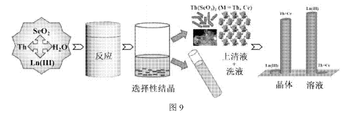
- FIG. 9 is a schematic diagram of the separation principle of the present invention. Separation of tetravalent element cerium by a hydrothermal reaction using selenium dioxide as an inorganic ligand in a hydrothermal environment to form a crystal, thereby completing separation of radioactive cesium from other rare earth elements. If a rare earth element is present in the rare earth mineral, in the hydrothermal reaction, the selenium dioxide can also oxidize the trivalent europium element to the tetravalent europium and form a solid solution of the same structure with the tetravalent europium to realize the tetravalent lanthanide element and the trivalent europium. Separation of elements.
- reaction formula of the lanthanoid or actinide element with SeO 2 is as follows:
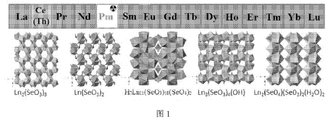
- each element can react with selenium dioxide to form a crystal (Fig. 1).
- Ln 2 (SeO 3 ) 3 is a transparent plate crystal
- Ln(SeO 3 ) 2 is an orange rod crystal
- H 7 Ln 11 (SeO 3 ) 18 (SeO 4 ) 2 is a square plate crystal
- Ln 3 (SeO 3 ) 4 (OH) is a transparent thick rod crystal
- Ln 2 (SeO 4 )(SeO 3 ) 2 (H 2 O) 2 is a bulk crystal.
- Ln represents a lanthanoid element.
- the system contains a variety of lanthanides or actinides, if there are also lanthanum or lanthanum elements in the system, when adding selenium dioxide, the two will preferentially react with selenium dioxide to form crystals, while others When the elements are present, they do not react with selenium dioxide. The remaining trivalent lanthanide ions are not converted into crystals and are only present in the solution phase.
- a mixed system containing various lanthanides and lanthanum elements will only form the crystal structure of tetravalent cerium and tetravalent cerium under the same reaction conditions, so trivalent and tetravalent elements will only produce tetravalent in this system. In the crystal structure, the trivalent metal ion does not solidify at the same time as the tetravalent.
- the present invention has at least the following advantages:
- the idea of the present invention is to establish a new separation method based on selective crystallization
- the separation process of the present invention utilizes mild hydrothermal synthesis to separate lanthanides and actinides, which is a green, efficient, and extremely low cost method;
- the tetravalent europium has a high selective crystallization rate and a high separation ratio of the trivalent and tetravalent elements, and can achieve the purpose of solidifying the tetravalent europium in the crystal in one step, and the purification method avoids the low separation ratio. Multiple separations to avoid the problem of large amounts of organic and radioactive waste liquids;
- the post-treatment mode and reagent of the present invention are inexpensive and readily available, such as washing the crystal with deionized water, ethanol, 5-10% dilute nitric acid to remove unreacted trivalent rare earth salt and excess selenite;
- the method provided by the present invention tends to form a tetravalent structure crystal in a binary, ternary, and multi-component lanthanide distribution crystallization experiment, and trivalent crystals are concentrated in a solution;
- the ruthenium removal removal rate in the solution of the present invention is close to 100%, and efficient curing separation of radioactive elements can be achieved.
- Figure 1 is a schematic view showing the structure of a crystal formed in the method of the present invention
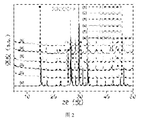
- Figure 2 is a powder diffraction diagram of the crystal obtained in Example 1 of the present invention.
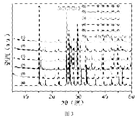
- Figure 3 is a powder diffraction diagram of the crystal obtained in Example 2 of the present invention.
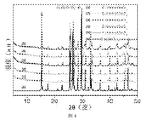
- Figure 4 is a powder diffraction diagram of the crystal obtained in Example 3 of the present invention.
- Figure 5 is a powder diffraction diagram of the crystal obtained in Example 4 of the present invention.
- Figure 6 is a powder diffraction diagram of the crystal obtained in Example 5 of the present invention.
- Figure 7 is a powder diffraction diagram of the crystal obtained in Example 6 of the present invention.
- Figure 8 is a powder diffraction diagram of the crystal obtained in Example 7 of the present invention.
- Figure 9 is a schematic illustration of the separation principle of the process of the present invention.
- rare earth minerals (Th(NO 3 ) 4 ⁇ 6H 2 O and La(NO 3 ) 4 ⁇ 6H 2 O) are substituted for rare earth minerals to verify the method and effect of the present invention for removing radioactive strontium in rare earth minerals.
- the amount of SeO 2 was adjusted to 0.4 mmol, 0.6 mmol, 0.8 mmol and 1.0 mmol, respectively, and the other conditions were unchanged, and the same reaction was carried out to obtain a crystal product.
- the resulting crystal was characterized by a powder diffractometer as shown in Fig. 2.
- the curve (6) is a powder structure map simulated by a single tested crystal structure reusing software (Ln(SeO 3 ) 2 simulated representation in the figure
- the simulation results of Ce(SeO 3 ) 2 crystals, Structure type 2 marks one of the most important characteristic peak shapes of each curve, similar to that in Fig. 3-8), and the 1-5 curve uses different concentrations of SeO 2 reaction.
- the powder diffraction patterns measured by the actually obtained crystals, the main characteristic peak shapes of the graphs are the same, that is, the peak shape of each curve is the same as the Ce(SeO 3 ) 2 crystal structure type, objectively indicating that they have the same structure.
- the type of crystal is a powder diffractometer as shown in Fig. 2.
- the curve (6) is a powder structure map simulated by a single tested crystal structure reusing software (Ln(SeO 3 ) 2 simulated representation in the figure
- the crystal was first dissolved in concentrated nitric acid, then diluted to low acidity, and the concentration of each element was measured by inductively coupled plasma mass spectrometry (ICP-Ms) and electro-coupled plasma emission spectrometer (ICP-OES). The concentration of each element was measured by -Ms and ICP-OES, and the separation factor and yield were determined. The results are shown in Table 1.
- Samples 1-5 represent the products of SeO 2 in amounts of 0.2 mmol, 0.4 mmol, 0.6 mmol, 0.8 mmol, and 1.0 mmol, respectively.
- the recovery rate is the recovery rate of Th.
- rare earth minerals (Th(NO 3 ) 4 ⁇ 6H 2 O and Eu(NO 3 ) 4 ⁇ 6H 2 O) are substituted for rare earth minerals to verify the method and effect of the present invention for removing radioactive strontium in rare earth minerals.
- the amount of SeO 2 was adjusted to 0.4 mmol, 0.6 mmol, 0.8 mmol and 1.0 mmol, respectively, and the other conditions were unchanged, and the same reaction was carried out to obtain a crystal product.
- the resulting crystal was characterized by a powder diffractometer, as shown in Fig. 3, which proved that the doping reaction produced only one type of crystal having the same structure as the Ce(SeO 3 ) 2 crystal.
- the crystal was first dissolved in concentrated nitric acid, then diluted to low acidity, and the concentration of each element was measured by inductively coupled plasma mass spectrometry (ICP-Ms) and electro-coupled plasma emission spectrometer (ICP-OES). -Ms and ICP-OES were used to determine the concentration of each element, and the separation factor and yield were determined. The results are shown in Table 2.
- Samples 1-5 represent the products of SeO 2 in amounts of 0.2 mmol, 0.4 mmol, 0.6 mmol, 0.8 mmol, and 1.0 mmol, respectively.
- rare earth elements (Th(NO 3 ) 4 ⁇ 6H 2 O and Yb(NO 3 ) 4 ⁇ 6H 2 O) are substituted for rare earth minerals to verify the method and effect of the present invention for removing radioactive strontium in rare earth minerals.
- the amount of SeO 2 was adjusted to 0.4 mmol, 0.6 mmol, 0.8 mmol and 1.0 mmol, respectively, and the other conditions were unchanged, and the same reaction was carried out to obtain a crystal product.
- FIG. 4 Crystalline (FIG. 4) generated by the powder diffraction instrument, Figure 4 shows the structure of doping only one reaction type A crystal with Ce (SeO 3) 2 crystals have the same structure.
- the crystal was first dissolved in concentrated nitric acid, then diluted to low acidity, and the concentration of each element was measured by inductively coupled plasma mass spectrometry (ICP-Ms) and electro-coupled plasma emission spectrometer (ICP-OES). The concentration of each element was measured by -Ms and ICP-OES, and the separation factor and yield were determined. The results are shown in Table 3.
- ICP-Ms inductively coupled plasma mass spectrometry
- ICP-OES electro-coupled plasma emission spectrometer
- Samples 1-5 represent the products of SeO 2 in amounts of 0.2 mmol, 0.4 mmol, 0.6 mmol, 0.8 mmol, and 1.0 mmol, respectively.
- the rare earth minerals are replaced by rare earth element crystals (Th(NO 3 ) 4 ⁇ 6H 2 O, Ce(NO 3 ) 3 ⁇ 6H 2 O and La(NO 3 ) 3 ⁇ 6H 2 O) to verify the removal of the present invention.
- Methods and effects of radioactive cesium in rare earth minerals are replaced by rare earth element crystals (Th(NO 3 ) 4 ⁇ 6H 2 O, Ce(NO 3 ) 3 ⁇ 6H 2 O and La(NO 3 ) 3 ⁇ 6H 2 O).
- 0.05 mmol of Th(NO 3 ) 4 ⁇ 6H 2 O solid, 0.05 mmol of Ce(NO 3 ) 3 ⁇ 6H 2 O solid, 0.1 mmol of La(NO 3 ) 3 ⁇ 6H 2 O and SeO 2 were respectively 1:1: 2:4,1:1:2:8,1:1:2:12,1:1:2:16,1:1:2:20 molar ratio is placed in a 10mL Teflon reactor, plus 2 mL of deionized water, sealed, heated to 230 ° C, heated for 3 days, and then cooled to room temperature (20-30 ° C) at a rate of 8.3 ° C / h to obtain a crystal product, the crystal product was washed with deionized water, and the washing liquid was collected. The volume was adjusted to a 10 mL centrifuge tube and the resulting crystalline product was washed with ethanol and 5-10% dilute nitric acid and dried at room temperature.
- FIG. 5 shows the structure of doping only one reaction type A crystal with Ce (SeO 3) 2 crystals have the same structure.
- the crystal was first dissolved in concentrated nitric acid, then diluted to low acidity, and the concentration of each element was measured by inductively coupled plasma mass spectrometry (ICP-Ms) and electro-coupled plasma emission spectrometer (ICP-OES). The concentration of each element was measured by -Ms and ICP-OES, and the separation factor and yield were determined. The results are shown in Table 4.
- ICP-Ms inductively coupled plasma mass spectrometry
- ICP-OES electro-coupled plasma emission spectrometer
- samples 1-5 represent Th(NO 3 ) 4 ⁇ 6H 2 O solids, Ce(NO 3 ) 3 ⁇ 6H 2 O solids, La(NO 3 ) 3 ⁇ 6H 2 O and SeO 2 respectively according to 1 :1:2:4,1:1:2:8,1:1:2:12,1:1:2:16,1:1:2:20 molar ratio reaction product.
- rare earth elements (Th(NO 3 ) 4 ⁇ 6H 2 O, Ce(NO 3 ) 3 ⁇ 6H 2 O, and Eu(NO 3 ) 3 ⁇ 6H 2 O) are substituted for rare earth minerals to verify the removal of the present invention. Methods and effects of radioactive cesium in rare earth minerals.
- 0.05 mmol of Th(NO 3 ) 4 ⁇ 6H 2 O solid, 0.05 mmol of Ce(NO 3 ) 3 ⁇ 6H 2 O solid, 0.1 mmol of Eu(NO 3 ) 3 ⁇ 6H 2 O and SeO 2 were respectively 1:1: 2:4,1:1:2:8,1:1:2:12,1:1:2:16,1:1:2:20 molar ratio is placed in a 10mL Teflon reactor, plus 2 mL of deionized water, sealed, heated to 230 ° C, heated for 3 days, and then cooled to room temperature (20-30 ° C) at a rate of 8.3 ° C / h to obtain a crystal product, the crystal product was washed with deionized water, and the washing liquid was collected. The volume was adjusted to a 10 mL centrifuge tube and the resulting crystalline product was washed with ethanol and 5-10% dilute nitric acid and dried at room temperature.
- FIG. 6 Crystalline (FIG. 6) generated powder diffraction instrument, Figure 6 shows the structure of doping only one reaction type A crystal with Ce (SeO 3) 2 crystals have the same structure.
- the crystal was first dissolved in concentrated nitric acid, then diluted to low acidity, and the concentration of each element was measured by inductively coupled plasma mass spectrometry (ICP-Ms) and electro-coupled plasma emission spectrometer (ICP-OES). The concentration of each element was measured by -Ms and ICP-OES, and the separation factor and the yield were determined. The results are shown in Table 5.
- ICP-Ms inductively coupled plasma mass spectrometry
- ICP-OES electro-coupled plasma emission spectrometer
- samples 1-5 represent Th(NO 3 ) 4 ⁇ 6H 2 O solids, Ce(NO 3 ) 3 ⁇ 6H 2 O solids, Eu(NO 3 ) 3 ⁇ 6H 2 O and SeO 2 respectively according to 1 :1:2:4,1:1:2:8,1:1:2:12,1:1:2:16,1:1:2:20 molar ratio reaction product.
- the rare earth minerals are replaced by rare earth element crystals (Th(NO 3 ) 4 ⁇ 6H 2 O, Ce(NO 3 ) 3 ⁇ 6H 2 O, and Yb(NO 3 ) 3 ⁇ 6H 2 O) to verify the removal of the present invention.
- Methods and effects of radioactive cesium in rare earth minerals are replaced by rare earth element crystals (Th(NO 3 ) 4 ⁇ 6H 2 O, Ce(NO 3 ) 3 ⁇ 6H 2 O, and Yb(NO 3 ) 3 ⁇ 6H 2 O).
- 0.05 mmol of Th(NO 3 ) 4 ⁇ 6H 2 O solid, 0.05 mmol of Ce(NO 3 ) 3 ⁇ 6H 2 O solid, 0.1 mmol of Yb(NO 3 ) 3 ⁇ 6H 2 O and SeO 2 were respectively 1:1: 2:4,1:1:2:8,1:1:2:12,1:1:2:16,1:1:2:20 molar ratio is placed in a 10mL Teflon reactor, plus 2 mL of deionized water, sealed, heated to 230 ° C, heated for 3 days, and then cooled to room temperature (20-30 ° C) at a rate of 8.3 ° C / h to obtain a crystal product, the crystal product was washed with deionized water, and the washing liquid was collected. The volume was adjusted to a 10 mL centrifuge tube and the resulting crystalline product was washed with ethanol and 5-10% dilute nitric acid and dried at room temperature.
- FIG. 7 shows the structure of doping only one reaction type A crystal with Ce (SeO 3) 2 crystals have the same structure.
- the crystal was first dissolved in concentrated nitric acid, then diluted to low acidity, and the concentration of each element was measured by inductively coupled plasma mass spectrometry (ICP-Ms) and electro-coupled plasma emission spectrometer (ICP-OES). The concentration of each element was measured by -Ms and ICP-OES, and the separation factor and yield were determined. The results are shown in Table 6.
- samples 1-5 represent Th(NO 3 ) 4 ⁇ 6H 2 O solids, Ce(NO 3 ) 3 ⁇ 6H 2 O solids, Yb(NO 3 ) 3 ⁇ 6H 2 O and SeO 2 respectively according to 1 :1:2:4,1:1:2:8,1:1:2:12,1:1:2:16,1:1:2:20 molar ratio reaction product.
- a monazite rare earth ore is simulated by various rare earth element crystals to verify the method and effect of removing the radioactive strontium element in the rare earth mineral of the present invention.
- Fig. 8 shows that the doping reaction produces only one type of crystal having the same structure as the Ce(SeO 3 ) 2 crystal.
- the crystal was first dissolved in concentrated nitric acid, then diluted to low acidity, and the concentration of each element was measured by inductively coupled plasma mass spectrometry (ICP-Ms) and electro-coupled plasma emission spectrometer (ICP-OES). The concentration of each element was determined by -Ms and ICP-OES, and the separation factor and yield were determined. The results are shown in Table 7.
- Samples 1-5 represent the products of the mixture and SeO 2 in a molar ratio of 1:1, 1:2, 1:3, 1:4, 1:5, respectively.
Landscapes
- Chemical & Material Sciences (AREA)
- Organic Chemistry (AREA)
- Engineering & Computer Science (AREA)
- Materials Engineering (AREA)
- Metallurgy (AREA)
- Inorganic Chemistry (AREA)
- Crystallography & Structural Chemistry (AREA)
- Geology (AREA)
- Life Sciences & Earth Sciences (AREA)
- Environmental & Geological Engineering (AREA)
- General Life Sciences & Earth Sciences (AREA)
- Manufacturing & Machinery (AREA)
- Mechanical Engineering (AREA)
- General Chemical & Material Sciences (AREA)
- Chemical Kinetics & Catalysis (AREA)
- Geochemistry & Mineralogy (AREA)
- Manufacture And Refinement Of Metals (AREA)
- Compounds Of Alkaline-Earth Elements, Aluminum Or Rare-Earth Metals (AREA)
Abstract
一种去除稀土矿物中放射性钍元素的方法,包括以下步骤:将稀土矿物与二氧化硒在水中混合,通过水热法,放射性钍元素与二氧化硒反应,冷却后形成晶体,分离出晶体,以去除放射性钍元素。该方法能耗低、分离比高、能进行一步固化分离,有效避免传统方法中分离操作冗余、有机及放射性废液量大的缺点。
Description
本发明涉及元素分离方法,尤其涉及一种去除稀土矿物中放射性钍元素的方法。
稀土元素是重要的战略性资源,在各行业都有其不可取代的应用价值;随着经济与技术发展,全世界对稀土产品的需求日益提高。然而目前已知的三种主要稀土矿物均伴生有放射性的钍(Th)和铀(U),因此稀土生产过程中放射性污染物的去除净化尤为重要。我国第二大储量稀土矿(独居石)中钍的含量极其大,其质量百分比可达20%,放射性钍的存在严重阻碍了稀土工业开采与精炼过程。
目前的工业处理方式是:独居石精矿经碱分解后,从料液中提取有用的稀土,剩余固态的ThO2、U和REO等残渣,以此实现放射性元素与稀土元素的分离。该过程利用强碱性液体,设备防腐能力要求高,精炼过程中累积大量放射性钍造成操作过程和设备的放射防护要求高,废液量大易造成严重环境问题;另外,该方法并不能完全提纯稀土,稀土与钍的分离仍需要进一步纯化分离。
钍一般为四价态,与三价镧系在离子半径和萃取剂络合能力上有细微差别,目前应用最广泛的分离工艺是溶剂萃取法。该法利用高价态和低价态与有机配体的络合差异,建立多级萃取体系,从处理后的矿物水溶液中去除四价Th元素。即使多级萃取体系已经实现大规模的工业化生产,但是萃取之后的放射性废液(如有机废液的处置、存放)处理存在较大问题,溶剂萃取的有机废液对环境会造成严重污染,并且成本较高。
另外,一些提纯能力强的电化学、离子交换、色谱分离等方法也用于四价钍和稀土元素的分离,但是这些方法存在处理规模小、处理过程复杂、设备冗余等缺点。
发明内容
为解决上述技术问题,本发明的目的是提供一种去除稀土矿物中放射性钍元素的方法,该方法廉价、绿色、高效,在均一反应条件下利用结晶固化的方式从稀土元素中固化去除钍。
本发明的提供了一种去除稀土矿物中放射性钍元素的方法,包括以下步骤:
将稀土矿物与二氧化硒(SeO2)在水中混合,通过水热法,稀土矿物中的放射性钍元素(Th)与二氧化硒反应生成Th(SeO3)2,冷却后形成晶体,分离出晶体,以去除放射性钍元素。
进一步地,稀土矿物中包括镧系元素和/或锕系元素。镧系元素和/或锕系元素的价态为三价和/或四价。将稀土矿物替换为二元、三元或多元镧锕组合物,用以上方法同样可以达到去除其中钍元素的目的。
进一步地,镧系元素和/或锕系元素与二氧化硒的摩尔比为1:2-10。过量的二氧化硒可调节分离因子大小,提高四价Th的结晶率。
进一步地,水热法的条件为在200-230℃下反应1-3天。水热法在密闭条件下进行。
进一步地,反应后冷却至室温;室温为10-40℃;优选地,室温为20-30℃。
进一步地,冷却速率为4-10℃/h。
进一步地,分离出晶体后,还包括洗涤晶体的步骤。晶体洗涤后,洗液中含有三价稀土元素,以上方法选择性生成四价结构类型产物的晶体,对相同结构的晶体和晶体洗液进分离,可达到对不同价态镧系锕系元素分离的目的。
进一步地,依次采用水、醇以及稀硝酸洗涤晶体。醇为乙醇。二氧化硒会在水中生成亚硒酸,洗涤时,可除去生成的亚硒酸。亚硒酸是生成晶体所需要的无机盐配体,且溶于水,因此过量的亚硒酸可通过洗涤去除。
进一步地,稀硝酸的质量浓度为5-10%。
进一步地,晶体为针絮状晶体。
将反应起始物同时加入反应容器中密封高温加热,反应结束后将溶液和晶体取出并分离,然后洗涤溶解晶体,同时稀释溶液相和晶体相,从而达到去除稀土矿物中钍元素的目的。
进一步地,采用上述方法,也可以除去稀土矿物中的铈元素。
图9是本发明分离原理示意图,通过水热法反应,以二氧化硒作为无机配体,在水热环境中选择性结合四价元素钍,形成晶体,完成放射性钍与其他稀土元素的分离。若稀土矿物中存在铈元素,在水热反应时,二氧化硒还可将三价铈元素氧化成四价铈并与四价钍形成相同结构的固溶体,实现四价锕系元素与三价镧系元素的分离。
本发明中,镧系元素或锕系元素与SeO2的反应式如下:
Ln(NO3)3·6H2O+SeO2→Ln2(SeO3)3
(Ln=La)
Ln(NO3)3·6H2O+SeO2→Ln(SeO3)2
(Ln=Ce)
Ln(NO3)3·6H2O+SeO2→H7Ln11(SeO3)18(SeO4)2
(Ln=Pr,Nd,Sm)
Ln(NO3)3·6H2O+SeO2→Ln3(SeO3)4(OH)
(Ln=Eu)
Ln(NO3)3·6H2O+SeO2→Ln2(SeO4)(SeO3)2(H2O)2
(Ln=Pr,Nd,Sm,Eu,Gd,
Tb,Dy,Ho,Er,Tm,Yb,Lu)
An(NO3)4·6H2O+SeO2→An(SeO3)2
(An=Th)
上述反应式在相同条件下进行,Ln代表镧系元素,An代表锕系元素,由以上反应式可看出,四价Ce元素会与二氧化硒反应生成Ce(SeO3)2,Th元素与其类似,生成相同的晶体结构类型,而其余的镧系元素在反应生成的晶体中还是三价态的。
当体系中存在单一的镧系元素,各元素可以与二氧化硒反应后形成晶体(图1)。图1中,Ln2(SeO3)3为透明片状晶体,Ln(SeO3)2为橙色棒状晶体,H7Ln11(SeO3)18(SeO4)2为方片状晶体,Ln3(SeO3)4(OH)为透明粗棒状晶体,Ln2(SeO4)(SeO3)2(H2O)2为块状晶体,以上分子式中,Ln代表镧系元素。
但当体系中含有多种镧系元素或锕系元素时,若体系中同时也存在铈元素或钍元素,当加入二氧化硒时,二者会优先与二氧化硒反应,形成晶体,而其他元素在二者存在时,则不会与二氧化硒反应,其余三价镧系离子不转化为晶体,只存在于溶液相中。含有各种镧系元素与钍元素的混合体系在相同反应条件下,只会生成四价铈与四价钍的晶体结构,因此三价与四价元素在这一体系里只会生成四价的晶体结构,三价金属离子不会与四价的同时固溶。
借由上述方案,本发明至少具有以下优点:
(1)本发明的理念是建立在选择性结晶基础上提出的全新分离方法;
(2)本发明的分离过程利用温和水热合成法分离镧系、锕系元素,是一种绿色、高效、成本极低的方法;
(3)本发明中四价钍选择性结晶率高、三价和四价元素分离比高,能够一步实现四价钍固化在晶体中的目的,这种提纯方式避免了因分离比低而造成的多次分离,避免产生大量有机与放射性废液的问题;
(4)本发明后处理方式与试剂廉价易得,如用去离子水、乙醇、5-10%稀硝酸洗涤所得晶体,以除去未反应三价稀土盐和过量亚硒酸;
(5)本发明提供的方法,在二元、三元、多元镧系锕系分布结晶实验中,趋向于形成四价结构的晶体,三价的晶体都聚集于溶液中;与传统分布结晶分离相比,本发明的溶液中的钍固化去除率接近100%,可实现放射性元素的高效固化分离。
上述说明仅是本发明技术方案的概述,为了能够更清楚了解本发明的技术手段,并可依照说明书的内容予以实施,以下以本发明的较佳实施例并配合附图详细说明如后。
图1是本发明方法中生成晶体的结构示意图;
图2是本发明实施例1所得晶体的粉末衍射图;
图3是本发明实施例2所得晶体的粉末衍射图;
图4是本发明实施例3所得晶体的粉末衍射图;
图5是本发明实施例4所得晶体的粉末衍射图;
图6是本发明实施例5所得晶体的粉末衍射图;
图7是本发明实施例6所得晶体的粉末衍射图;
图8是本发明实施例7所得晶体的粉末衍射图;
图9是本发明方法的分离原理示意图。
下面结合附图和实施例,对本发明的具体实施方式作进一步详细描述。以下实施例用于说明本发明,但不用来限制本发明的范围。
实施例1 二元镧系锕系元素的分离
本实施例以稀土元素晶体(Th(NO3)4·6H2O和La(NO3)4·6H2O)代替稀土矿物,以验证本发明去除稀土矿物中放射性钍元素的方法和效果。
将0.1mmol Th(NO3)4·6H2O固体、0.1mmol La(NO3)4·6H2O固体和0.2mmol SeO2置于10mL聚四氟乙烯反应釜中,加去离子水2mL,密封,升温至230℃,加热3天,后以8.3℃/h速率冷却至室温(20-30℃),得到晶体产物,将晶体产物用去离子水洗涤,将洗液收集到10mL离心管中定容,所得晶体产物用乙醇和5-10%稀硝酸洗涤后于室温下晾干。
按照上述方法,将SeO2的用量分别调整为0.4mmol,0.6mmol,0.8mmol和1.0mmol,其他条件不变,进行同样的反应,得到晶体产物。
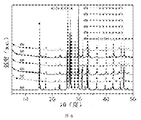
用粉末衍射仪表征生成的晶体,如图2所示,图2中,曲线(6)为单个已测试的晶体结构再利用软件模拟出的粉末结构图谱(图中Ln(SeO3)2simulated表示Ce(SeO3)2晶体的模拟结果,Structure type2标出了每条曲线的一个最重要的特征峰形,图3-8中与其类似),1-5号曲
线为使用不同浓度的SeO2反应后实际得到的晶体所测出的粉末衍射图谱,图中它们主要的特征峰形是一样的,即每条曲线的峰形和Ce(SeO3)2晶体结构类型相同,客观说明它们具有相同结构的晶体类型。
将晶体先用浓硝酸溶解,后稀释至低酸度,用电感耦合等离子体质谱仪(ICP-Ms)和电耦合等离子发射光谱仪(ICP-OES)测定各元素的浓度,将洗液同样用ICP-Ms和ICP-OES测定其各元素浓度,进而求得分离因子和产率,结果如表1所示。
表1 分离因子和产率

表1中,取样1-5分别代表SeO2的用量为0.2mmol、0.4mmol、0.6mmol、0.8mmol和1.0mmol时的产物。回收率为Th的回收率。
实施例2 二元镧系锕系元素的分离
本实施例以稀土元素晶体(Th(NO3)4·6H2O和Eu(NO3)4·6H2O)代替稀土矿物,以验证本发明去除稀土矿物中放射性钍元素的方法和效果。
将0.1mmol Th(NO3)4·6H2O固体、0.1mmol Eu(NO3)4·6H2O固体和0.2mmol SeO2置于10mL聚四氟乙烯反应釜中,加去离子水2mL,密封,升温至230℃,加热3天,后以8.3℃/h速率冷却至室温(20-30℃),得到晶体产物,将晶体产物用去离子水洗涤,将洗液收集到10mL离心管中定容,所得晶体产物用乙醇和5-10%稀硝酸洗涤后于室温下晾干。
按照上述方法,将SeO2的用量分别调整为0.4mmol,0.6mmol,0.8mmol和1.0mmol,其他条件不变,进行同样的反应,得到晶体产物。
用粉末衍射仪表征生成的晶体,如图3所示,证明该掺杂反应只生成一种结构类型的晶体,该晶体与Ce(SeO3)2晶体具有相同的结构。将晶体先用浓硝酸溶解,后稀释至低酸度,用电感耦合等离子体质谱仪(ICP-Ms)和电耦合等离子发射光谱仪(ICP-OES)测定各元素的浓度,将洗液同样用ICP-Ms和ICP-OES测定其各元素浓度,进而求得分离因子和产率,结果如表2所示。
表2 分离因子和产率

表2中,取样1-5分别代表SeO2的用量为0.2mmol、0.4 mmol、0.6 mmol、0.8 mmol和1.0mmol时的产物。
实施例3 二元镧系锕系元素的分离
本实施例以稀土元素晶体(Th(NO3)4·6H2O和Yb(NO3)4·6H2O)代替稀土矿物,以验证本发明去除稀土矿物中放射性钍元素的方法和效果。
将0.1mmol Th(NO3)4·6H2O固体、0.1mmolYb(NO3)4·6H2O固体和0.2mmol SeO2置于10mL聚四氟乙烯反应釜中,加去离子水2mL,密封,升温至230℃,加热3天,后以8.3℃/h速率冷却至室温(20-30℃),得到晶体产物,将晶体产物用去离子水洗涤,将洗液收集到10mL离心管中定容,所得晶体产物用乙醇和5-10%稀硝酸洗涤后于室温下晾干。
按照上述方法,将SeO2的用量分别调整为0.4 mmol,0.6 mmol,0.8 mmol和1.0mmol,其他条件不变,进行同样的反应,得到晶体产物。
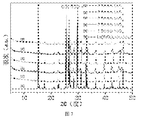
用粉末衍射仪表征生成的晶体(图4),图4表明该掺杂反应只生成一种结构类型的晶体,该晶体与Ce(SeO3)2晶体具有相同的结构。将晶体先用浓硝酸溶解,后稀释至低酸度,用电感耦合等离子体质谱仪(ICP-Ms)和电耦合等离子发射光谱仪(ICP-OES)测定各元素的浓度,将洗液同样用ICP-Ms和ICP-OES测定其各元素浓度,进而求得分离因子和产率,结果如表3所示。
表3 分离因子和产率

表3中,取样1-5分别代表SeO2的用量为0.2mmol、0.4mmol、0.6mmol、0.8mmol和1.0mmol时的产物。
从实施例1-3结果看看出,二元镧系锕系和钍可以利用分离结晶的方法进行分离,在首次分离过程中分离比可以分别达到20万、17万及9万左右。
实施例4 三元镧系锕系元素的分离
本实施例以稀土元素晶体(Th(NO3)4·6H2O、Ce(NO3)3·6H2O和La(NO3)3·6H2O)代替稀土矿物,以验证本发明去除稀土矿物中放射性钍元素的方法和效果。
将0.05mmol Th(NO3)4·6H2O固体、0.05mmol Ce(NO3)3·6H2O固体、0.1mmol La(NO3)3·6H2O和SeO2分别按照1:1:2:4,1:1:2:8,1:1:2:12,1:1:2:16,1:1:2:20的摩尔比置于10mL聚四氟乙烯反应釜中,加去离子水2mL,密封,升温至230℃,加热3天,后以8.3℃/h速率冷却至室温(20-30℃),得到晶体产物,将晶体产物用去离子水洗涤,将洗液收集到10mL离心管中定容,所得晶体产物用乙醇和5-10%稀硝酸洗涤后于室温下晾干。
用粉末衍射仪表征生成的晶体(图5),图5表明该掺杂反应只生成一种结构类型的晶体,该晶体与Ce(SeO3)2晶体具有相同的结构。将晶体先用浓硝酸溶解,后稀释至低酸度,用电感耦合等离子体质谱仪(ICP-Ms)和电耦合等离子发射光谱仪(ICP-OES)测定各元素的浓度,将洗液同样用ICP-Ms和ICP-OES测定其各元素浓度,进而求得分离因子和产率,结果如表4所示。
表4 分离因子和产率

表4中,取样1-5分别代表Th(NO3)4·6H2O固体、Ce(NO3)3·6H2O固体、La(NO3)3·6H2O和SeO2分别按照1:1:2:4,1:1:2:8,1:1:2:12,1:1:2:16,1:1:2:20的摩尔比反应后的产物。
实施例5 三元镧系锕系元素的分离
本实施例以稀土元素晶体(Th(NO3)4·6H2O、Ce(NO3)3·6H2O和Eu(NO3)3·6H2O)代替稀土矿物,以验证本发明去除稀土矿物中放射性钍元素的方法和效果。
将0.05mmol Th(NO3)4·6H2O固体、0.05mmol Ce(NO3)3·6H2O固体、0.1mmol Eu(NO3)3·6H2O和SeO2分别按照1:1:2:4,1:1:2:8,1:1:2:12,1:1:2:16,1:1:2:20的摩尔比置于10mL聚四氟乙烯反应釜中,加去离子水2mL,密封,升温至230℃,加热3天,后以8.3℃/h速率冷却至室温(20-30℃),得到晶体产物,将晶体产物用去离子水洗涤,将洗液收集到10mL离心管中定容,所得晶体产物用乙醇和5-10%稀硝酸洗涤后于室温下晾干。
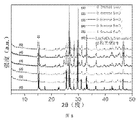
用粉末衍射仪表征生成的晶体(图6),图6表明该掺杂反应只生成一种结构类型的晶体,该晶体与Ce(SeO3)2晶体具有相同的结构。将晶体先用浓硝酸溶解,后稀释至低酸度,用电感耦合等离子体质谱仪(ICP-Ms)和电耦合等离子发射光谱仪(ICP-OES)测定各元素的浓度,将洗液同样用ICP-Ms和ICP-OES测定其各元素浓度,进而求得分离因子和产率,结果如表5所示。
表5 分离因子和产率

表5中,取样1-5分别代表Th(NO3)4·6H2O固体、Ce(NO3)3·6H2O固体、Eu(NO3)3·6H2O和SeO2分别按照1:1:2:4,1:1:2:8,1:1:2:12,1:1:2:16,1:1:2:20的摩尔比反应后的产物。
实施例6 三元镧系锕系元素的分离
本实施例以稀土元素晶体(Th(NO3)4·6H2O、Ce(NO3)3·6H2O和Yb(NO3)3·6H2O)代替稀土矿物,以验证本发明去除稀土矿物中放射性钍元素的方法和效果。
将0.05mmol Th(NO3)4·6H2O固体、0.05mmol Ce(NO3)3·6H2O固体、0.1mmol Yb(NO3)3·6H2O和SeO2分别按照1:1:2:4,1:1:2:8,1:1:2:12,1:1:2:16,1:1:2:20的摩尔比置于10mL聚四氟乙烯反应釜中,加去离子水2mL,密封,升温至230℃,加热3天,后以8.3℃/h速率冷却至室温(20-30℃),得到晶体产物,将晶体产物用去离子水洗涤,将洗液收集到10mL离心管中定容,所得晶体产物用乙醇和5-10%稀硝酸洗涤后于室温下晾干。
用粉末衍射仪表征生成的晶体(图7),图7表明该掺杂反应只生成一种结构类型的晶体,该晶体与Ce(SeO3)2晶体具有相同的结构。将晶体先用浓硝酸溶解,后稀释至低酸度,用电感耦合等离子体质谱仪(ICP-Ms)和电耦合等离子发射光谱仪(ICP-OES)测定各元素的浓度,将洗液同样用ICP-Ms和ICP-OES测定其各元素浓度,进而求得分离因子和产率,结果如表6所示。
表6 分离因子和产率

表6中,取样1-5分别代表Th(NO3)4·6H2O固体、Ce(NO3)3·6H2O固体、Yb(NO3)3·6H2O和SeO2分别按照1:1:2:4,1:1:2:8,1:1:2:12,1:1:2:16,1:1:2:20的摩尔比反应后的产物。
实施例7 多元镧系锕系元素的分离
本实施例以多种稀土元素晶体模拟独居石稀土矿,以验证本发明去除稀土矿物中放射性钍元素的方法和效果。
将0.2mmol的Ln(NO3)3·6H2O(Ln=La、Ce、Pr、Nd、Sm、Eu、Gd、Dy、Er、Yb、Y)和Th(NO3)4·6H2O的混合物,混合物中约含有20%La元素,43%Ce元素,4.5%Pr元素,16%Nd元素,3%Sm元素,0.1%Eu元素,1.5%Gd元素,0.6%Dy元素,0.2%Er元素,0.1%Yb元素,2.5%Y元素和10%Th元素)和SeO2分别按1:1,1:2,1:3,1:4,1:5比例置于10mL聚四氟乙烯反应釜中,加去离子水2mL,密封,升温至230℃,加热3天,后以8.3℃/h速率冷却至室温,晶体产物用去离子水洗涤,将洗液收集到10mL离心管中定容,所得晶体产物用乙醇和5-10%稀硝酸洗涤后于室温下晾干。
用粉末衍射仪表征生成的晶体(图8),图8表明该掺杂反应只生成一种结构类型的晶体,该晶体与Ce(SeO3)2晶体具有相同的结构。将晶体先用浓硝酸溶解,后稀释至低酸度,用电感耦合等离子体质谱仪(ICP-Ms)和电耦合等离子发射光谱仪(ICP-OES)测定各元素的浓度,将洗液同样用ICP-Ms和ICP-OES测定其各元素浓度,进而求得分离因子和产率,结果如表7所示。
表7 分离因子和产率

表7中,取样1-5分别代表混合物和SeO2分别按照1:1,1:2,1:3,1:4,1:5的摩尔比反应后的产物。
实施例4-7的结果表明,三元与多元镧系锕系元素分离体系中,四价元素与三价元素的分离比可达到1800左右。
以上所述仅是本发明的优选实施方式,并不用于限制本发明,应当指出,对于本技术领域的普通技术人员来说,在不脱离本发明技术原理的前提下,还可以做出若干改进和变型,这些改进和变型也应视为本发明的保护范围。
Claims (10)
- 一种去除稀土矿物中放射性钍元素的方法,其特征在于,包括以下步骤:将稀土矿物与二氧化硒在水中混合,通过水热法,所述稀土矿物中的放射性钍元素与二氧化硒反应,冷却后形成晶体,分离出所述晶体,以去除所述放射性钍元素。
- 根据权利要求1所述的去除稀土矿物中放射性钍元素的方法,其特征在于:所述稀土矿物中包括镧系元素和/或锕系元素。
- 根据权利要求2所述的去除稀土矿物中放射性钍元素的方法,其特征在于:所述镧系元素和/或锕系元素与二氧化硒的摩尔比为1:2-10。
- 根据权利要求1所述的去除稀土矿物中放射性钍元素的方法,其特征在于:所述水热法条件为在200-230℃下反应1-3天。
- 根据权利要求1或4所述的去除稀土矿物中放射性钍元素的方法,其特征在于:反应后冷却至室温。
- 根据权利要求4所述的去除稀土矿物中放射性钍元素的方法,其特征在于:冷却速率为4-10℃/h。
- 根据权利要求1所述的去除稀土矿物中放射性钍元素的方法,其特征在于:分离出所述晶体后,还包括洗涤所述晶体的步骤。
- 根据权利要求7所述的去除稀土矿物中放射性钍元素的方法,其特征在于:采用水、醇以及稀硝酸洗涤所述晶体。
- 根据权利要求8所述的去除稀土矿物中放射性钍元素的方法,其特征在于:所述稀硝酸的质量浓度为5-10%。
- 根据权利要求1所述的去除稀土矿物中放射性钍元素的方法,其特征在于:所述晶体为针絮状晶体。
Priority Applications (1)
| Application Number | Priority Date | Filing Date | Title |
|---|---|---|---|
| US16/300,565 US10711324B2 (en) | 2017-06-16 | 2017-07-05 | Method for removing radioactive element thorium in rare earth mineral |
Applications Claiming Priority (2)
| Application Number | Priority Date | Filing Date | Title |
|---|---|---|---|
| CN201710456615.9A CN107311118B (zh) | 2017-06-16 | 2017-06-16 | 去除稀土矿物中放射性钍元素的方法 |
| CN201710456615.9 | 2017-06-16 |
Publications (1)
| Publication Number | Publication Date |
|---|---|
| WO2018227674A1 true WO2018227674A1 (zh) | 2018-12-20 |
Family
ID=60183322
Family Applications (1)
| Application Number | Title | Priority Date | Filing Date |
|---|---|---|---|
| PCT/CN2017/091765 Ceased WO2018227674A1 (zh) | 2017-06-16 | 2017-07-05 | 去除稀土矿物中放射性钍元素的方法 |
Country Status (3)
| Country | Link |
|---|---|
| US (1) | US10711324B2 (zh) |
| CN (1) | CN107311118B (zh) |
| WO (1) | WO2018227674A1 (zh) |
Families Citing this family (2)
| Publication number | Priority date | Publication date | Assignee | Title |
|---|---|---|---|---|
| CN108956749A (zh) * | 2018-06-13 | 2018-12-07 | 国家核安保技术中心 | 放射性气体在线检测系统、装置和方法 |
| CN111074083B (zh) * | 2020-01-07 | 2021-11-26 | 青岛农业大学 | 一种从镧锕混合物中提取镧系元素的方法和应用 |
Citations (6)
| Publication number | Priority date | Publication date | Assignee | Title |
|---|---|---|---|---|
| US3511597A (en) * | 1965-12-16 | 1970-05-12 | Dow Chemical Co | Process for separating beryllium from iron,aluminum,thorium,and the rare earths |
| CN101294244A (zh) * | 2007-04-25 | 2008-10-29 | 北京有色金属研究总院 | 从硫酸稀土溶液中萃取分离四价铈、钍、氟及少铈三价稀土的工艺方法 |
| CN101886175A (zh) * | 2010-07-02 | 2010-11-17 | 湘潭市天添矿业有限公司 | 从含铀稀土渣中提取铀生产重铀酸盐的方法 |
| JP2015057507A (ja) * | 2013-08-12 | 2015-03-26 | 三菱マテリアル株式会社 | 希土類元素の分離方法 |
| CN104498739A (zh) * | 2014-12-02 | 2015-04-08 | 益阳鸿源稀土有限责任公司 | 一种稀土矿分解余渣中铀、钍、稀土的分离回收方法 |
| US20160348214A1 (en) * | 2015-06-01 | 2016-12-01 | Her Majesty The Queen In Right Of Canada As Represented By The Minister Of Natural Resources C | Process for Metals Leaching and Recovery from Radioactive Wastes |
Family Cites Families (8)
| Publication number | Priority date | Publication date | Assignee | Title |
|---|---|---|---|---|
| CN101503210B (zh) * | 2009-03-23 | 2010-12-01 | 哈尔滨工程大学 | 一种yf3纺锤形纳米结构材料的制备方法 |
| CN102936237B (zh) * | 2012-11-13 | 2014-11-26 | 中国科学院长春应用化学研究所 | 一种杯芳烃及其分离纯化钍的方法 |
| CN102994781B (zh) * | 2012-12-18 | 2014-07-16 | 中国科学院长春应用化学研究所 | 一种钍的分离纯化方法 |
| CN103451425B (zh) * | 2013-09-24 | 2014-11-26 | 兰州大学 | 一种钍与稀土元素分离方法及分离用试剂 |
| CN106145176B (zh) * | 2015-04-21 | 2019-07-16 | 永州市湘江稀土有限责任公司 | 一种碱法处理独居石的工艺 |
| CN106367590A (zh) * | 2015-07-22 | 2017-02-01 | 永州市湘江稀土有限责任公司 | 一种独居石矿综合利用回收工艺 |
| CN106191476B (zh) * | 2016-07-11 | 2018-10-09 | 苏州大学 | 一种分离镧系元素的方法 |
| CN106367621B (zh) * | 2016-09-13 | 2018-12-07 | 南昌大学 | 从低含量稀土溶液和沉淀渣中回收和循环利用有价元素的方法 |
-
2017
- 2017-06-16 CN CN201710456615.9A patent/CN107311118B/zh active Active
- 2017-07-05 WO PCT/CN2017/091765 patent/WO2018227674A1/zh not_active Ceased
- 2017-07-05 US US16/300,565 patent/US10711324B2/en not_active Expired - Fee Related
Patent Citations (6)
| Publication number | Priority date | Publication date | Assignee | Title |
|---|---|---|---|---|
| US3511597A (en) * | 1965-12-16 | 1970-05-12 | Dow Chemical Co | Process for separating beryllium from iron,aluminum,thorium,and the rare earths |
| CN101294244A (zh) * | 2007-04-25 | 2008-10-29 | 北京有色金属研究总院 | 从硫酸稀土溶液中萃取分离四价铈、钍、氟及少铈三价稀土的工艺方法 |
| CN101886175A (zh) * | 2010-07-02 | 2010-11-17 | 湘潭市天添矿业有限公司 | 从含铀稀土渣中提取铀生产重铀酸盐的方法 |
| JP2015057507A (ja) * | 2013-08-12 | 2015-03-26 | 三菱マテリアル株式会社 | 希土類元素の分離方法 |
| CN104498739A (zh) * | 2014-12-02 | 2015-04-08 | 益阳鸿源稀土有限责任公司 | 一种稀土矿分解余渣中铀、钍、稀土的分离回收方法 |
| US20160348214A1 (en) * | 2015-06-01 | 2016-12-01 | Her Majesty The Queen In Right Of Canada As Represented By The Minister Of Natural Resources C | Process for Metals Leaching and Recovery from Radioactive Wastes |
Also Published As
| Publication number | Publication date |
|---|---|
| CN107311118B (zh) | 2019-08-06 |
| US10711324B2 (en) | 2020-07-14 |
| US20190144968A1 (en) | 2019-05-16 |
| CN107311118A (zh) | 2017-11-03 |
Similar Documents
| Publication | Publication Date | Title |
|---|---|---|
| Wang et al. | A sustainable approach for advanced removal of iron from CFA sulfuric acid leach liquor by solvent extraction with P507 | |
| Gras et al. | Separation of cerium (III) from lanthanum (III), neodymium (III) and praseodymium (III) by oxidation and liquid-liquid extraction using ionic liquids | |
| Wellens et al. | Dissolution of metal oxides in an acid-saturated ionic liquid solution and investigation of the back-extraction behaviour to the aqueous phase | |
| Dupont et al. | Rare-earth recycling using a functionalized ionic liquid for the selective dissolution and revalorization of Y 2 O 3: Eu 3+ from lamp phosphor waste | |
| Um et al. | Dissolution behavior of La2O3, Pr2O3, Nd2O3, CaO and Al2O3 in sulfuric acid solutions and study of cerium recovery from rare earth polishing powder waste via two-stage sulfuric acid leaching | |
| Shakiba et al. | Application of deep eutectic solvents (DESs) as a green lixiviant for extraction of rare earth elements from caustic-treated monazite concentrate | |
| CN103014359B (zh) | 独居石渣的分离回收方法 | |
| CN103924084B (zh) | 一种利用季膦类离子液体回收废弃荧光粉中有价金属元素的方法 | |
| CN112981139B (zh) | 用于分离镍钴离子的疏水性低共熔溶剂及其制备方法和分离镍钴离子的方法 | |
| CN102312098A (zh) | 一种从废弃荧光粉中分离提纯荧光级氧化钇和氧化铕的方法 | |
| Bai et al. | Efficient extraction of lithium ions from high Mg/Li ratio brine through the synergy of TBP and hydroxyl functional ionic liquids | |
| CN109750164B (zh) | 用于乏燃料后处理中三价锕系与镧系选择性萃取分离方法 | |
| CN103014340A (zh) | 一种硫酸体系溶液中铬和铁的选择性分离方法 | |
| Zhao et al. | Extraction and separation of cerium (IV) from nitric acid solutions containing thorium (IV) and rare earths (III) by DEHEHP | |
| CN105536707A (zh) | 一种分离锂同位素的材料及其制备方法和应用 | |
| Yin et al. | Competing crystallization between lanthanide and actinide in acidic solution leading to their efficient separation | |
| CN103045881B (zh) | 一种利用离子液体萃取-超临界c02反萃技术从水相中萃取分离钍离子的方法 | |
| CN108726555B (zh) | 一种基于离子液的沉淀回收稀土的方法 | |
| Liu et al. | Synthesis of new extractant P113 for cerium (IV) extraction and higher separation over thorium from bastnaesite | |
| Huang et al. | A sulfonated ligand-aqueous two-phase system for selective extraction of thorium from mining wastewater: Process optimization, structural characterization and mechanism exploration | |
| WO2018227674A1 (zh) | 去除稀土矿物中放射性钍元素的方法 | |
| Emil-Kaya et al. | Recovery of samarium and cobalt/iron oxide from SmCo magnets through acid baking and water leaching | |
| Rout et al. | Comparison of hollow fiber membrane and solvent extraction techniques for extraction of cerium and preparation of ceria by stripping precipitation | |
| RU2495147C9 (ru) | Способ извлечения церия | |
| CN106191476B (zh) | 一种分离镧系元素的方法 |
Legal Events
| Date | Code | Title | Description |
|---|---|---|---|
| 121 | Ep: the epo has been informed by wipo that ep was designated in this application |
Ref document number: 17913552 Country of ref document: EP Kind code of ref document: A1 |
|
| NENP | Non-entry into the national phase |
Ref country code: DE |
|
| 122 | Ep: pct application non-entry in european phase |
Ref document number: 17913552 Country of ref document: EP Kind code of ref document: A1 |