WO2018221013A1 - 電子機器、プログラム、制御装置および制御方法 - Google Patents
電子機器、プログラム、制御装置および制御方法 Download PDFInfo
- Publication number
- WO2018221013A1 WO2018221013A1 PCT/JP2018/014802 JP2018014802W WO2018221013A1 WO 2018221013 A1 WO2018221013 A1 WO 2018221013A1 JP 2018014802 W JP2018014802 W JP 2018014802W WO 2018221013 A1 WO2018221013 A1 WO 2018221013A1
- Authority
- WO
- WIPO (PCT)
- Prior art keywords
- user
- display
- motion
- information
- display device
- Prior art date
- Legal status (The legal status is an assumption and is not a legal conclusion. Google has not performed a legal analysis and makes no representation as to the accuracy of the status listed.)
- Ceased
Links
Images


Classifications
-
- G—PHYSICS
- G06—COMPUTING OR CALCULATING; COUNTING
- G06F—ELECTRIC DIGITAL DATA PROCESSING
- G06F1/00—Details not covered by groups G06F3/00 - G06F13/00 and G06F21/00
- G06F1/16—Constructional details or arrangements
- G06F1/1613—Constructional details or arrangements for portable computers
- G06F1/163—Wearable computers, e.g. on a belt
-
- H—ELECTRICITY
- H04—ELECTRIC COMMUNICATION TECHNIQUE
- H04N—PICTORIAL COMMUNICATION, e.g. TELEVISION
- H04N21/00—Selective content distribution, e.g. interactive television or video on demand [VOD]
- H04N21/80—Generation or processing of content or additional data by content creator independently of the distribution process; Content per se
- H04N21/81—Monomedia components thereof
- H04N21/8166—Monomedia components thereof involving executable data, e.g. software
- H04N21/8186—Monomedia components thereof involving executable data, e.g. software specially adapted to be executed by a peripheral of the client device, e.g. by a reprogrammable remote control
-
- G—PHYSICS
- G06—COMPUTING OR CALCULATING; COUNTING
- G06F—ELECTRIC DIGITAL DATA PROCESSING
- G06F1/00—Details not covered by groups G06F3/00 - G06F13/00 and G06F21/00
- G06F1/16—Constructional details or arrangements
- G06F1/1613—Constructional details or arrangements for portable computers
- G06F1/1633—Constructional details or arrangements of portable computers not specific to the type of enclosures covered by groups G06F1/1615 - G06F1/1626
- G06F1/1684—Constructional details or arrangements related to integrated I/O peripherals not covered by groups G06F1/1635 - G06F1/1675
- G06F1/1694—Constructional details or arrangements related to integrated I/O peripherals not covered by groups G06F1/1635 - G06F1/1675 the I/O peripheral being a single or a set of motion sensors for pointer control or gesture input obtained by sensing movements of the portable computer
-
- G—PHYSICS
- G06—COMPUTING OR CALCULATING; COUNTING
- G06F—ELECTRIC DIGITAL DATA PROCESSING
- G06F1/00—Details not covered by groups G06F3/00 - G06F13/00 and G06F21/00
- G06F1/16—Constructional details or arrangements
- G06F1/1613—Constructional details or arrangements for portable computers
- G06F1/1633—Constructional details or arrangements of portable computers not specific to the type of enclosures covered by groups G06F1/1615 - G06F1/1626
- G06F1/1684—Constructional details or arrangements related to integrated I/O peripherals not covered by groups G06F1/1635 - G06F1/1675
- G06F1/1698—Constructional details or arrangements related to integrated I/O peripherals not covered by groups G06F1/1635 - G06F1/1675 the I/O peripheral being a sending/receiving arrangement to establish a cordless communication link, e.g. radio or infrared link, integrated cellular phone
-
- G—PHYSICS
- G06—COMPUTING OR CALCULATING; COUNTING
- G06F—ELECTRIC DIGITAL DATA PROCESSING
- G06F3/00—Input arrangements for transferring data to be processed into a form capable of being handled by the computer; Output arrangements for transferring data from processing unit to output unit, e.g. interface arrangements
- G06F3/01—Input arrangements or combined input and output arrangements for interaction between user and computer
- G06F3/017—Gesture based interaction, e.g. based on a set of recognized hand gestures
-
- G—PHYSICS
- G06—COMPUTING OR CALCULATING; COUNTING
- G06F—ELECTRIC DIGITAL DATA PROCESSING
- G06F3/00—Input arrangements for transferring data to be processed into a form capable of being handled by the computer; Output arrangements for transferring data from processing unit to output unit, e.g. interface arrangements
- G06F3/01—Input arrangements or combined input and output arrangements for interaction between user and computer
- G06F3/048—Interaction techniques based on graphical user interfaces [GUI]
- G06F3/0481—Interaction techniques based on graphical user interfaces [GUI] based on specific properties of the displayed interaction object or a metaphor-based environment, e.g. interaction with desktop elements like windows or icons, or assisted by a cursor's changing behaviour or appearance
-
- G—PHYSICS
- G08—SIGNALLING
- G08B—SIGNALLING SYSTEMS, e.g. PERSONAL CALLING SYSTEMS; ORDER TELEGRAPHS; ALARM SYSTEMS
- G08B6/00—Tactile signalling systems, e.g. tactile personal calling systems
-
- H—ELECTRICITY
- H04—ELECTRIC COMMUNICATION TECHNIQUE
- H04N—PICTORIAL COMMUNICATION, e.g. TELEVISION
- H04N21/00—Selective content distribution, e.g. interactive television or video on demand [VOD]
- H04N21/40—Client devices specifically adapted for the reception of or interaction with content, e.g. set-top-box [STB]; Operations thereof
- H04N21/41—Structure of client; Structure of client peripherals
- H04N21/422—Input-only peripherals, i.e. input devices connected to specially adapted client devices, e.g. global positioning system [GPS]
- H04N21/42201—Input-only peripherals, i.e. input devices connected to specially adapted client devices, e.g. global positioning system [GPS] biosensors, e.g. heat sensor for presence detection, EEG sensors or any limb activity sensors worn by the user
-
- H—ELECTRICITY
- H04—ELECTRIC COMMUNICATION TECHNIQUE
- H04N—PICTORIAL COMMUNICATION, e.g. TELEVISION
- H04N21/00—Selective content distribution, e.g. interactive television or video on demand [VOD]
- H04N21/40—Client devices specifically adapted for the reception of or interaction with content, e.g. set-top-box [STB]; Operations thereof
- H04N21/41—Structure of client; Structure of client peripherals
- H04N21/422—Input-only peripherals, i.e. input devices connected to specially adapted client devices, e.g. global positioning system [GPS]
- H04N21/42204—User interfaces specially adapted for controlling a client device through a remote control device; Remote control devices therefor
- H04N21/42206—User interfaces specially adapted for controlling a client device through a remote control device; Remote control devices therefor characterized by hardware details
- H04N21/42222—Additional components integrated in the remote control device, e.g. timer, speaker, sensors for detecting position, direction or movement of the remote control, microphone or battery charging device
-
- H—ELECTRICITY
- H04—ELECTRIC COMMUNICATION TECHNIQUE
- H04N—PICTORIAL COMMUNICATION, e.g. TELEVISION
- H04N21/00—Selective content distribution, e.g. interactive television or video on demand [VOD]
- H04N21/40—Client devices specifically adapted for the reception of or interaction with content, e.g. set-top-box [STB]; Operations thereof
- H04N21/47—End-user applications
- H04N21/478—Supplemental services, e.g. displaying phone caller identification, shopping application
- H04N21/4788—Supplemental services, e.g. displaying phone caller identification, shopping application communicating with other users, e.g. chatting
Definitions
- the present invention relates to an electronic device, a program, a control device, and a control method.
- Patent Literature 1 a user situation analysis unit that analyzes a user situation, a content information analysis unit that analyzes a content situation, and a user's empathy based on the analyzed user situation and content situation are obtained.
- an electronic apparatus including a comment generation unit that generates a comment to be inferred and a comment output unit that outputs the generated comment by voice or the like.
- Patent Document 1 outputs information such as comments based on the user situation at the time when the content is received, the information can be obtained at an appropriate timing that does not hinder the user's support. There is a problem that it is not possible.
- An object of one embodiment of the present invention is to realize an electronic device or the like that can obtain information at an appropriate timing when the user wants to obtain information without hindering the user's support.
- an electronic device is an electronic device including at least one motion detection device, at least one display device, and at least one control device, The control device displays information on the display device when a visual motion in which the user visually recognizes the display device in the electronic device is detected by the motion detection device.
- a control device is a control device that controls an electronic device, and a motion detection unit that detects a visual motion in which a user visually recognizes a display device in the electronic device. And a display control unit that displays information on the display device when the visual motion is detected.
- an electronic device control method is a method for controlling an electronic device including at least one display device, in which a user controls the display device in the electronic device. It includes a motion detection step for detecting a visual motion for visual recognition and a display control step for displaying information on the display device when the visual motion is detected.
- the electronic device or the like it is possible to obtain information at an appropriate timing when the user wants to obtain information without hindering the user's support.
- FIG. 1 is a block diagram showing a schematic configuration of a sports support system according to an embodiment of the present invention. It is an external view which shows the external appearance of the said wearable terminal. It is a flowchart which shows an example of the control method which concerns on one Embodiment of this invention.
- a wristwatch-type wearable terminal is described below as an example of the electronic device according to one embodiment of the present invention.
- a wristband type wearable terminal or the like is assumed in addition to the wristwatch type wearable terminal.
- a form to which the present invention can be applied is not limited thereto, and a smartphone The shape may be the same, or may be a glasses type, a stick type, or the like.
- each device such as a control device and a display device included in the electronic apparatus according to one aspect of the present invention may be singular or plural.
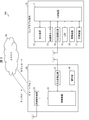
- FIG. 2 is a block diagram illustrating a schematic configuration of the sports support system 100.
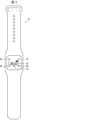
- FIG. 3 is an external view showing the external appearance of the wearable terminal (electronic device) 10.
- the sports support system 100 is a system that supports a user to actively support sports when the user watches a sport in and around the stadium.
- “the vicinity” assumes a case where a large-screen monitor is installed in a square or the like around the stadium, and the user watches a sport while watching the monitor.
- the sports support system 100 includes a wearable terminal 10, a smartphone 20, and a cloud 30.
- the wearable terminal 10 is a wristwatch type as shown in FIG. 3, and is an information terminal that can be carried around the user's wrist (body). More specifically, the wearable terminal 10 is a wearable device that is used by wearing on the wrist (body) when watching sports such as baseball or soccer, and detects the support operation for watching sports using the acceleration sensor 13. It is an apparatus for making support more enjoyable by providing feedback to the LED 15, the display device 12, and the vibration device 16 according to the content of the support operation.
- the wearable terminal 10 has various functions for supporting a user's sports support. As shown in FIGS. 2 and 3, the wearable terminal 10 includes a control device 11, a display device 12, an acceleration sensor (motion detection device) 13, a BLE communication device 14, an LED 15, a vibration device 16, and a storage device 17. .
- the wearable terminal 10 includes a control device 11, a display device 12, an acceleration sensor (motion detection device) 13, a BLE communication device 14, an LED 15, a vibration device 16, and a storage device 17.
- LED is an abbreviation for Light Emitting Diode
- BLE is an abbreviation for Bluetooth (registered trademark) Low Energy.
- the control device 11 comprehensively controls each device and each part of the wearable terminal 10.
- the display device 12 is, for example, an LCD (Liquid Crystal Display), and visualizes and displays information based on data that cannot be obtained in the stadium, such as names of pitchers and batters. Further, the display device 12 also displays the time and the remaining battery level as shown in FIG.
- the acceleration sensor 13 detects vibration of the wearable terminal 10.
- the BLE communication device 14 is a device for performing short-range wireless communication between the wearable terminal 10 and the smartphone 20. The same applies to the BLE communication device 21 described later.
- the LED 15 presents the user's support status when the control device 11 changes the emission color and light intensity. As shown in FIG. 3, five LEDs 15 are arranged so as to surround the display device 12. Specifically, two LEDs 15 are arranged symmetrically in the upper area of the display device 12 with respect to the paper surface, two symmetrically in the lower area with respect to the paper surface, and one in the center. Note that the number and arrangement of the LEDs 15 may be arbitrarily changed.
- the vibration device 16 is, for example, a vibrator, and presents a user's support situation when the type and strength of vibration change by the control device 11.
- the storage device 17 information necessary for the operation of the smartphone 20 is recorded in advance, or information generated with the operation of the smartphone 20 is recorded as needed.
- the smartphone 20 is a multi-functional mobile phone having functions such as a personal computer and a PDA (Personal Digital Assistant: personal digital assistant).
- the smartphone 20 includes a BLE communication device 21, a control device 22, a communication control device 23, and an operation unit 24.
- the control device 22 comprehensively controls each device and each part of the smartphone 20.
- the communication control device 23 is a device for exchanging data (uploading and downloading) between the smartphone 20 and the cloud 30.
- the operation unit 24 receives a user operation on the smartphone 20.
- the operation unit 24 receives an operation for setting an operation mode of the smartphone 20 (sports support system 100).
- various information to be transmitted from the smartphone 20 to the wearable terminal 10 is set to an operation mode or the like that is limited in advance to information about the team that the user is ashamed of.
- the cloud 30 is a server that stores various data of teams and players that the user is ashamed of, and exchanges the various data with the wearable terminal 10 and the smartphone 20.
- the user enjoys sports support at the stadium by utilizing the processing results of the various processes performed by the control device 11 of the wearable terminal 10 and the various data stored in the cloud 30 via the smartphone 20. be able to.
- the wearable terminal 10 is incorporated as a component of the sports support system 100, but the present invention is not limited to this case.
- data exchange performed in the sports support system 100 may be realized by the wearable terminal 10 alone.
- a supportive motion which represents a favorable operation for a specific target, but is not limited to this case.
- it may correspond to an unfavorable motion for a team that is not addictive, or may correspond to a motion that is not favorable to a team that is addictive.
- it may correspond to a motion as a general motion of the user, not a motion as a motion of the body when the user is watching a sporting event.
- FIG. 1 is a block diagram illustrating a configuration of a main part of the wearable terminal 10.
- the control device 11 includes a motion detection unit 111, a motion determination unit 112 (motion detection unit), a display content determination unit (display control unit) 113, a communication control unit 114, an information acquisition unit 115, and a vibration.
- a content determination unit 116 is provided.
- the motion detection unit 111 detects the user's action based on the detection result acquired from the acceleration sensor 13. For example, based on the detection result of the motion detection unit 111, the motion determination unit 112 determines whether the user's operation related to the detection result corresponds to a visual motion for visually recognizing the display device 12 in the wearable terminal 10. . This determination can be made based on whether or not a specific twist motion is detected by the acceleration sensor 13.
- the display content determination unit 113 determines the display content of information to be displayed on the display device 12 and performs control to display the information on the display device 12. For example, in the course of a baseball game, when the current batter has three strikes, the text information “three strikes” is displayed on the display device 12.
- the display device 12 of the wearable terminal 10 When the display device 12 of the wearable terminal 10 is visually recognized during a match between the pitcher and the batter, in addition to the name of the pitcher and the batter obtained at the baseball stadium, the battle results of both players during the battle, The result and the pitcher's ball are displayed. As a result, information based on data that cannot normally be obtained in a stadium can be easily confirmed. Moreover, as for the information displayed on the display device 12, not only the information regarding the pitcher and the batter, but also a runner stealing rate or the like may be displayed when there is a runner out. Further, not only data elements but also information for enjoying the support such as the lyrics of the batter's support song is assumed. The vibration content determination unit 116 determines the vibration content of the vibration device 16 based on the information acquired by the information acquisition unit 115.
- control device 11 sends information to the display device 12 when a specific motion of the user (for example, a support motion that operates when the user supports sports) is detected by the acceleration sensor (motion detection device) 13. It may not be displayed or the current display on the display device 12 may be maintained. Thereby, it is possible to prevent unnecessary information from being displayed when the user is cheering.
- a specific motion of the user for example, a support motion that operates when the user supports sports
- the acceleration sensor (motion detection device) 13 It may not be displayed or the current display on the display device 12 may be maintained. Thereby, it is possible to prevent unnecessary information from being displayed when the user is cheering.
- the control device 22 of the smartphone 20 provides information (viewing time) as to which information has been viewed for how long, and information (viewing frequency) as to which operation has been performed frequently to check the display in which scene.
- the user's preference may be estimated by acquiring from the wearable terminal 10 via the BLE communication device 21 and analyzing it. That is, the control device 22 may estimate the user's preference based on the frequency of the visual motion, the duration of the visual motion, and the timing at which the visual motion is detected. Thereby, it becomes possible to estimate a user's palatability by the frequency etc. which visually recognize the display apparatus 12.
- the browsing time (viewing time) of information on a specific team is long, it can be assumed that the user is a fan of that team.
- the viewing time of a specific player is long or when the number of times of displaying information is large, it can be estimated that the player is a fan of that player.
- information is displayed on the display device 12 using a natural and simple operation of visually recognizing the display device 12 as a trigger. For this reason, information can be obtained at an appropriate timing when the user wants to obtain information without hindering the user's support.
- the user's preference is judged from operations such as the user's browsing time, timing, and the number of confirmations, thereby gradually notifying information that better matches the user's preference. Will be able to.
- a device that has been used for notifying general-purpose information at the beginning of use can be customized to the user's preference each time it is used.
- an adjustment can be made to reduce the number of notifications (display of information on the display device 12) in the first half of the game so that the user can concentrate more on watching the game. is there.
- FIG. 4 is a flowchart showing an example of a control method according to an embodiment of the present invention.
- step S (hereinafter, “step” is omitted) 101
- the user sets an operation mode via the operation unit 24 of the smartphone 20, and proceeds to S102.
- the motion detection unit 111 detects a motion from the value of the acceleration sensor 13, and the process proceeds to S103.
- the motion determination unit 112 determines a user operation [for example, determines whether the user has looked into the display device 12 (whether it has been visually recognized)], and proceeds to S104.
- the information acquisition unit 115 acquires information from the external device (smart phone 20) via the communication control unit 114, and proceeds to S105.
- the information acquisition unit 115 acquires the past user operation and the type of information associated therewith from the storage device 17, and proceeds to S106.
- the display content determination unit 113 and the vibration content determination unit 116 display the display content on the display device 12 and the vibration content of the vibration device 16 from the operation mode, the user's operation, the acquired information, and the past history. And proceed to S107.
- the display content determination unit 113 displays the information of the determined display content on the display device 12, and the vibration content determination unit 116 vibrates the vibration device 16 with the determined vibration content, and becomes END.
- control blocks (particularly the motion detection unit 111, the motion determination unit 112, the display content determination unit 113, the communication control unit 114, the information acquisition unit 115, and the vibration content determination unit 116) of the control device 11 are integrated into an integrated circuit (IC chip) or the like. It may be realized by a formed logic circuit (hardware) or may be realized by software.
- the control device 11 includes a computer that executes instructions of a program that is software for realizing each function.
- the computer includes, for example, one or more processors and a computer-readable recording medium storing the program.
- the processor reads the program from the recording medium and executes the program, thereby achieving the object of the present invention.
- a CPU Central Processing Unit
- the recording medium a “non-temporary tangible medium” such as a ROM (Read Only Memory), a tape, a disk, a card, a semiconductor memory, a programmable logic circuit, or the like can be used.
- a RAM Random Access Memory
- the program may be supplied to the computer via an arbitrary transmission medium (such as a communication network or a broadcast wave) that can transmit the program.
- an arbitrary transmission medium such as a communication network or a broadcast wave
- one embodiment of the present invention can also be realized in the form of a data signal embedded in a carrier wave, in which the program is embodied by electronic transmission.
- An electronic apparatus is an electronic apparatus including at least one motion detection device, at least one display device, and at least one control device, and the control device includes the motion detection device.
- the control device includes the motion detection device.
- the electronic device is the electronic apparatus according to aspect 1, in which the control device is based on the frequency of the visual motion, the duration of the visual motion, and the timing at which the visual motion is detected. May be estimated. According to the said structure, it becomes possible to estimate a user's palatability by the frequency etc. which visually recognize a display apparatus.
- the control device does not display information on the display device when the motion detection device detects a specific motion of the user, or The current display on the display device may be maintained. According to the above configuration, it is possible to prevent unnecessary information from being displayed when the user is cheering.
- the control device in the electronic apparatus according to each aspect of the present invention may be realized by a computer.
- the control device is operated on each computer by causing the computer to operate as each unit (software element) included in the control device.
- the control program of the control device to be realized in this way and a computer-readable recording medium on which the control program is recorded also fall within the scope of the present invention.
- a control device is a control device that controls an electronic device, and a motion detection unit that detects a visual motion in which a user visually recognizes a display device in the electronic device, and the visual motion is detected.
- a display control unit that displays information on the display device.
- a control method is a control method of an electronic device including at least one display device, and a motion detection step of detecting a visual motion in which the user visually recognizes the display device in the electronic device; A display control step of displaying information on the display device when the visual motion is detected. According to the said method, the effect similar to the invention which concerns on the said aspect 1 can be acquired.
- Wearable terminals (electronic devices) 11 Control Device 12 Display Device 13 Acceleration Sensor (Motion Detection Device) 113 Display content determination unit (display control unit)
Landscapes
- Engineering & Computer Science (AREA)
- General Engineering & Computer Science (AREA)
- Theoretical Computer Science (AREA)
- Computer Hardware Design (AREA)
- General Physics & Mathematics (AREA)
- Physics & Mathematics (AREA)
- Human Computer Interaction (AREA)
- Multimedia (AREA)
- Signal Processing (AREA)
- Analytical Chemistry (AREA)
- Neurosurgery (AREA)
- General Health & Medical Sciences (AREA)
- Biophysics (AREA)
- Software Systems (AREA)
- Biomedical Technology (AREA)
- Health & Medical Sciences (AREA)
- Chemical & Material Sciences (AREA)
- Life Sciences & Earth Sciences (AREA)
- User Interface Of Digital Computer (AREA)
Abstract
ユーザの応援を阻害することなくユーザが情報を得たいと思った適切なタイミングで情報を得る。ユーザがウェアラブル端末(10)における表示装置(12)を視認する視認モーションを検出するモーション検出部(111)と、上記視認モーションが検出された場合、表示装置(12)に情報を表示させる表示内容決定部(113)と、を備えている。
Description
本発明は、電子機器、プログラム、制御装置および制御方法に関する。
従来から、ユーザの表情等から当該ユーザの感情を推定し、推定された感情に対して的確に応答する画像や音声メッセージ等を出力する電子機器の研究開発が進められている。例えば、特許文献1には、ユーザの状況を解析するユーザ状況解析部と、コンテンツの状況を解析するコンテンツ情報解析部と、解析されたユーザ状況およびコンテンツ状況に基づいてユーザの共感が得られると推測されるコメントを作成するコメント生成部と、作成されたコメントを音声等で出力するコメント出力部と、を備えた電子機器が開示されている。
しかしながら、特許文献1に開示された電子機器は、コンテンツを受信したタイミングでユーザ状況を踏まえたコメント等の情報を出力しているが、ユーザの応援を阻害しない適切なタイミングで情報を得ることができないという問題点がある。
例えば、応援に集中して手足を動かしている場合には、せっかくコメントなどの情報が電子機器に通知されても、その通知を見逃す場合があり、以上の処理に要した消費電力が無駄になる。また、通知を見逃さないように割り込みの体感を強くすればするほど、現在の応援を阻害してしまい、応援の邪魔になる。このため、ユーザの応援を阻害しない適切なタイミングで情報を通知する必要がある。
本発明の一態様は、ユーザの応援を阻害することなくユーザが情報を得たいと思った適切なタイミングで情報を得ることができる電子機器などを実現することを目的とする。
上記の課題を解決するために、本発明の一態様に係る電子機器は、少なくとも1つのモーション検出装置と、少なくとも1つの表示装置と、少なくとも1つの制御装置とを備えた電子機器であって、上記制御装置は、上記モーション検出装置により上記ユーザが上記電子機器における上記表示装置を視認する視認モーションが検出された場合、上記表示装置に情報を表示させることを特徴としている。
上記の課題を解決するために、本発明の一態様に係る制御装置は、電子機器を制御する制御装置であって、ユーザが上記電子機器における表示装置を視認する視認モーションを検出するモーション検出部と、上記視認モーションが検出された場合、上記表示装置に情報を表示させる表示制御部と、を備えていることを特徴としている。
上記の課題を解決するために、本発明の一態様に係る電子機器の制御方法は、少なくとも1つの表示装置を備えた電子機器の制御方法であって、ユーザが上記電子機器における上記表示装置を視認する視認モーションを検出するモーション検出ステップと、上記視認モーションが検出された場合、上記表示装置に情報を表示させる表示制御ステップと、を含むことを特徴としている。
本発明の一態様に係る電子機器などによれば、ユーザの応援を阻害することなくユーザが情報を得たいと思った適切なタイミングで情報を得ることができるという効果を奏する。
以下、本発明の実施の形態について、図1~図4を参照しながら詳細に説明する。説明の便宜上、特定の項目にて説明した構成と同一の機能を有する構成については、同一の符号を付記し、その説明を省略する。
なお、以下では、本発明の一態様に係る電子機器として、腕時計型のウェアラブル端末を例に挙げて説明する。本発明の一態様に係る電子機器としては、上記腕時計型のウェアラブル端末の他、リストバンド型のウェアラブル端末などが想定されるが、本発明を適用可能な形態はそれのみに限定されず、スマートフォンと同様の形態であっても良いし、メガネ型、スティック型等であってもよい。
また、以下に示す実施形態において、本発明の一態様に係る電子機器が備える制御装置、表示装置等の各装置については、単数であってもよいし、複数であってもよい。
<スポーツ応援システムの概略構成>
まず、図2を参照して、本発明の実施の一形態に係るスポーツ応援システム100の概略構成について説明する。図2は、スポーツ応援システム100の概略構成を示すブロック図である。図3は、ウェアラブル端末(電子機器)10の外観を示す外観図である。
まず、図2を参照して、本発明の実施の一形態に係るスポーツ応援システム100の概略構成について説明する。図2は、スポーツ応援システム100の概略構成を示すブロック図である。図3は、ウェアラブル端末(電子機器)10の外観を示す外観図である。
スポーツ応援システム100は、ユーザが競技場およびその周辺でスポーツ観戦をする際に、ユーザがスポーツの応援を積極的に行うよう支援するシステムである。ここで、「その周辺」とは、競技場の周辺の広場等に大画面のモニターが設置され、ユーザがそのモニターを見ながらスポーツ観戦する場合を想定している。図2に示すように、スポーツ応援システム100は、ウェアラブル端末10、スマートフォン20およびクラウド30を備えている。
ウェアラブル端末10は、図3に示すように腕時計型であり、ユーザの手首(身体)に装着して持ち歩くことができる情報端末である。より具体的には、ウェアラブル端末10は、野球やサッカー等のスポーツの観戦の際に手首(身体)に装着して使用するウェアラブル機器であり、加速度センサ13によってスポーツ観戦の応援動作を検知し、応援動作の内容に応じて、LED15、表示装置12、および振動装置16にフィードバックを行うことにより、応援をより楽しくするための機器である。
また、ウェアラブル端末10には、ユーザのスポーツ応援を支援するための各種機能が備わっている。図2および図3に示すように、ウェアラブル端末10は、制御装置11、表示装置12、加速度センサ(モーション検出装置)13、BLE通信装置14、LED15、振動装置16および記憶装置17を備えている。ここで、「LED」は、Light Emitting Diodeの略であり、また、「BLE」は、Bluetooth(登録商標) Low Energyの略である。
制御装置11は、ウェアラブル端末10の各装置および各部を統括的に制御する。表示装置12は、例えばLCD(Liquid Crystal Display)であり、例えば投手と打者の名前などの競技場内では得ることのできないデータに基づいた情報を可視化して表示する。また、表示装置12は、図3に示すように時刻や電池残量も表示する。加速度センサ13は、ウェアラブル端末10の振動を検知する。BLE通信装置14は、ウェアラブル端末10とスマートフォン20と間で近距離無線通信を行うための装置である。後述のBLE通信装置21についても同様である。
LED15は、制御装置11によって発光色および光の強さが変化することにより、ユーザの応援状況を提示する。LED15は、図3に示すように表示装置12の周囲を取り囲むように5つ配置されている。具体的には、LED15は、表示装置12の紙面向かって上側の領域に左右対称に2つ、紙面向かって下側の領域に左右対称に2つで中央に1つ、それぞれ配置されている。なお、LED15の個数・配置については任意に変更してもよい。
振動装置16は、例えばバイブレータであり、制御装置11によって振動の種類・強弱が変化することにより、ユーザの応援状況を提示する。記憶装置17は、スマートフォン20の動作に必要な情報が予め記録され、または、スマートフォン20の動作に伴って生成される情報などが随時記録される。
スマートフォン20は、パーソナルコンピュータ・PDA(Personal Digital Assistant:携帯情報端末)等の機能を併せ持った多機能の携帯電話機である。スマートフォン20は、BLE通信装置21、制御装置22、通信制御装置23、および操作部24を備えている。
制御装置22は、スマートフォン20の各装置および各部を統括的に制御する。通信制御装置23は、スマートフォン20とクラウド30との間でデータのやり取り(アップロードおよびダウンロード)を行うための装置である。操作部24は、スマートフォン20に対するユーザの操作を受付けるものであり、本実施形態では、例えば、スマートフォン20(スポーツ応援システム100)の動作モードを設定する操作を受付ける。例えば、スマートフォン20からウェアラブル端末10に送信する各種情報を、ユーザが贔屓にしているチームに関する情報に予め限定する動作モードなどに設定する。
クラウド30は、ユーザが贔屓にしているチーム・選手の各種データが格納されており、ウェアラブル端末10およびスマートフォン20との間で上記各種データのやり取りを行うサーバーである。ユーザは、ウェアラブル端末10の制御装置11が行う各種処理の処理結果、およびクラウド30に格納されている上記各種データを、スマートフォン20を介して活用することで、競技場でのスポーツ応援を満喫することができる。
なお、本実施形態では、ウェアラブル端末10がスポーツ応援システム100の構成要素として組み込まれているが、この場合に限定されない。例えば、スポーツ応援システム100で行われるデータのやり取りが、ウェアラブル端末10単体で実現されていてもよい。
また、本実施形態では、応援モーションという、特定の対象に対して好意的な動作を表す例を挙げて説明を行っているが、この場合に限定されない。例えば、贔屓でないチームに対する好意的でないモーションに対応するものであってもよいし、あるいは贔屓のチームに対しても好意的でないモーションに対応するものであってもよい。さらには、ユーザがスポーツ観戦をしているときの身体の動きとしてのモーションではなく、ユーザの身体の動き全般としてのモーションに対応するものであってもよい。
<制御装置の機能的構成>
次に、図1を参照して、ウェアラブル端末10の主要部の構成について説明する。図1は、ウェアラブル端末10の主要部の構成を示すブロック図である。図1に示すように、制御装置11は、モーション検出部111、モーション判定部112(モーション検出部)、表示内容決定部(表示制御部)113、通信制御部114、情報取得部115、および振動内容決定部116を備えている。
次に、図1を参照して、ウェアラブル端末10の主要部の構成について説明する。図1は、ウェアラブル端末10の主要部の構成を示すブロック図である。図1に示すように、制御装置11は、モーション検出部111、モーション判定部112(モーション検出部)、表示内容決定部(表示制御部)113、通信制御部114、情報取得部115、および振動内容決定部116を備えている。
モーション検出部111は、加速度センサ13から取得した検知結果に基づいて、ユーザの動作を検出する。モーション判定部112は、例えば、モーション検出部111の検出結果に基づいて、当該検出結果に係るユーザの動作が、ウェアラブル端末10における表示装置12を視認する視認モーションに該当するか否かを判定する。この判定は、特定のツイスト動作が加速度センサ13により検知されたか否かによって判定することが可能になる。
表示内容決定部113は、表示装置12に表示させる情報の表示内容を決定し、表示装置12に情報を表示させる制御を行う。例えば、野球の試合での途中経過において、現打者が三振となった場合は、表示装置12に「三振」というテキスト情報が表示される。
また、投手と打者とが対戦中にウェアラブル端末10の表示装置12を視認した際には、野球場で得られる投手と打者の名前の他に、対戦中の両者の対戦成績や、その日の打席結果や、投手の決め球等が表示される。これにより、通常、球場内では得ることができないデータに基づいた情報を容易に確認することができる。また、表示装置12に表示する情報については、投手と打者に関する情報のみではなく、出塁しているランナーがいる場合は、ランナーの盗塁率などを表示することも想定される。また、データ的な要素だけでなく、打者の応援歌の歌詞のような応援を楽しむための情報の表示も想定される。振動内容決定部116は、情報取得部115が取得した情報に基づいて、振動装置16の振動内容を決定する。
なお、制御装置11は、加速度センサ(モーション検出装置)13によりユーザの特定のモーション(例えば、ユーザがスポーツの応援をする際に動作する応援モーション)が検出された場合、表示装置12に情報を表示させないか、または表示装置12の現在の表示を維持しても良い。これにより、ユーザが応援を行っているときに不必要な情報を表示させないようにすることができる。
スマートフォン20の制御装置22は、ユーザごとに、どの情報をどの程度の時間見ていたかという情報(視認時間)や、どの場面で表示を確認する動作回数が多かったかという情報(視認の頻度)を、BLE通信装置21を介してウェアラブル端末10から取得し、解析することによって、ユーザの嗜好性を推定しても良い。すなわち、制御装置22は、視認モーションの頻度、視認モーションの継続時間および視認モーションが検出されたタイミングに基づいて、ユーザの嗜好性を推定しても良い。これにより、表示装置12を視認する頻度などによりユーザの嗜好性を推定することが可能になる。
例えば、特定のチームの情報の閲覧時間(視認時間)が長い場合は、そのチームのファンであると推測することができる。また、同様に、特定の選手の閲覧時間が長い場合や、情報を表示する回数が多い場合はその選手のファンであると推測することができる。
ウェアラブル端末10によれば、表示装置12を視認するという自然で簡単な動作をトリガとして表示装置12に情報を表示させる。このため、ユーザの応援を阻害することなくユーザが情報を得たいと思った適切なタイミングで情報を得ることができる。
また、ユーザに嗜好性の設定をさせることなく、ユーザの閲覧時間やタイミング、確認回数などの動作からユーザの嗜好性を判断することにより、次第に、よりユーザの嗜好性に合った情報を通知することができるようになる。これにより、使い始めは汎用的な情報を通知する機器であったものを、使用を重ねるごとにユーザ好みにカスタマイズすることができる。
また、試合前半はあまり表示を見ないという傾向がわかると、ユーザがより試合観戦に集中できるように、試合前半における通知(表示装置12への情報の表示)回数を減らすような調整も可能である。
<スポーツ応援システムの動作>
次に、図4に基づき、スポーツ応援システム100の動作(制御方法)の一例について説明する。図4は、本発明の実施の一形態に係る制御方法の一例を示すフローチャートである。
次に、図4に基づき、スポーツ応援システム100の動作(制御方法)の一例について説明する。図4は、本発明の実施の一形態に係る制御方法の一例を示すフローチャートである。
まず、ステップS(以下、「ステップ」は省略する)101では、ユーザがスマートフォン20の操作部24を介して動作モードを設定してS102に進む。S102では、モーション検出部111にて加速度センサ13の値からモーションを検出してS103に進む。
S103では、モーション判定部112にてユーザの操作を判定〔例えば、ユーザが表示装置12を覗いたかどうか(視認したかどうか)を判定〕して、S104に進む。S104では、情報取得部115が、通信制御部114を介して外部機器(スマートフォン20)から情報を取得してS105に進む。
S105では、情報取得部115が、記憶装置17から過去のユーザの操作と、それに関連付けられた情報の種別を取得してS106に進む。S106では、表示内容決定部113および振動内容決定部116は、動作モードと、ユーザの操作と、取得した情報と、過去の履歴から、表示装置12への表示内容、および振動装置16の振動内容を決定し、S107に進む。
S107では、表示内容決定部113は、表示装置12へ決定した表示内容の情報を表示させ、振動内容決定部116は、決定した振動内容で、振動装置16を振動させてENDとなる。
〔ソフトウェアによる実現例〕
制御装置11の制御ブロック(特にモーション検出部111、モーション判定部112、表示内容決定部113、通信制御部114、情報取得部115および振動内容決定部116)は、集積回路(ICチップ)等に形成された論理回路(ハードウェア)によって実現してもよいし、ソフトウェアによって実現してもよい。
制御装置11の制御ブロック(特にモーション検出部111、モーション判定部112、表示内容決定部113、通信制御部114、情報取得部115および振動内容決定部116)は、集積回路(ICチップ)等に形成された論理回路(ハードウェア)によって実現してもよいし、ソフトウェアによって実現してもよい。
後者の場合、制御装置11は、各機能を実現するソフトウェアであるプログラムの命令を実行するコンピュータを備えている。このコンピュータは、例えば1つ以上のプロセッサを備えていると共に、上記プログラムを記憶したコンピュータ読み取り可能な記録媒体を備えている。そして、上記コンピュータにおいて、上記プロセッサが上記プログラムを上記記録媒体から読み取って実行することにより、本発明の目的が達成される。上記プロセッサとしては、例えばCPU(Central Processing Unit)を用いることができる。上記記録媒体としては、「一時的でない有形の媒体」、例えば、ROM(Read Only Memory)等の他、テープ、ディスク、カード、半導体メモリ、プログラマブルな論理回路などを用いることができる。また、上記プログラムを展開するRAM(Random Access Memory)などをさらに備えていてもよい。また、上記プログラムは、該プログラムを伝送可能な任意の伝送媒体(通信ネットワークや放送波等)を介して上記コンピュータに供給されてもよい。なお、本発明の一態様は、上記プログラムが電子的な伝送によって具現化された、搬送波に埋め込まれたデータ信号の形態でも実現され得る。
〔まとめ〕
本発明の態様1に係る電子機器は、少なくとも1つのモーション検出装置と、少なくとも1つの表示装置と、少なくとも1つの制御装置とを備えた電子機器であって、上記制御装置は、上記モーション検出装置によりユーザが上記電子機器における上記表示装置を視認する視認モーションが検出された場合、上記表示装置に情報を表示させる構成である。上記構成によれば、表示装置を視認するという自然で簡単な動作をトリガとして表示装置に情報を表示させる。このため、ユーザの応援を阻害することなくユーザが情報を得たいと思った適切なタイミングで情報を得ることができる。
本発明の態様1に係る電子機器は、少なくとも1つのモーション検出装置と、少なくとも1つの表示装置と、少なくとも1つの制御装置とを備えた電子機器であって、上記制御装置は、上記モーション検出装置によりユーザが上記電子機器における上記表示装置を視認する視認モーションが検出された場合、上記表示装置に情報を表示させる構成である。上記構成によれば、表示装置を視認するという自然で簡単な動作をトリガとして表示装置に情報を表示させる。このため、ユーザの応援を阻害することなくユーザが情報を得たいと思った適切なタイミングで情報を得ることができる。
本発明の態様2に係る電子機器は、上記態様1において、上記制御装置は、上記視認モーションの頻度、上記視認モーションの継続時間および上記視認モーションが検出されたタイミングに基づいて、ユーザの嗜好性を推定しても良い。上記構成によれば、表示装置を視認する頻度などによりユーザの嗜好性を推定することが可能になる。
本発明の態様3に係る電子機器は、上記態様1において、上記制御装置は、上記モーション検出装置により上記ユーザの特定のモーションが検出された場合、上記表示装置に情報を表示させないか、または上記表示装置の現在の表示を維持しても良い。上記構成によれば、ユーザが応援を行っているときに不必要な情報を表示させないようにすることができる。
本発明の各態様に係る電子機器における制御装置は、コンピュータによって実現してもよく、この場合には、コンピュータを上記制御装置が備える各部(ソフトウェア要素)として動作させることにより上記制御装置をコンピュータにて実現させる制御装置の制御プログラム、およびそれを記録したコンピュータ読み取り可能な記録媒体も、本発明の範疇に入る。
本発明の態様4に係る制御装置は、電子機器を制御する制御装置であって、ユーザが上記電子機器における表示装置を視認する視認モーションを検出するモーション検出部と、上記視認モーションが検出された場合、上記表示装置に情報を表示させる表示制御部と、を備えている構成である。上記構成によれば、上記態様1に係る発明と同様の効果を得ることができる。
本発明の態様5に係る制御方法は、少なくとも1つの表示装置を備えた電子機器の制御方法であって、ユーザが上記電子機器における上記表示装置を視認する視認モーションを検出するモーション検出ステップと、上記視認モーションが検出された場合、上記表示装置に情報を表示させる表示制御ステップと、を含む方法である。上記方法によれば、上記態様1に係る発明と同様の効果を得ることができる。
〔付記事項〕
本発明は上述した各実施形態に限定されるものではなく、請求項に示した範囲で種々の変更が可能であり、異なる実施形態にそれぞれ開示された技術的手段を適宜組み合わせて得られる実施形態についても本発明の技術的範囲に含まれる。さらに、各実施形態にそれぞれ開示された技術的手段を組み合わせることにより、新しい技術的特徴を形成することができる。
本発明は上述した各実施形態に限定されるものではなく、請求項に示した範囲で種々の変更が可能であり、異なる実施形態にそれぞれ開示された技術的手段を適宜組み合わせて得られる実施形態についても本発明の技術的範囲に含まれる。さらに、各実施形態にそれぞれ開示された技術的手段を組み合わせることにより、新しい技術的特徴を形成することができる。
10 ウェアラブル端末(電子機器)
11 制御装置
12 表示装置
13 加速度センサ(モーション検出装置)
113 表示内容決定部(表示制御部)
11 制御装置
12 表示装置
13 加速度センサ(モーション検出装置)
113 表示内容決定部(表示制御部)
Claims (6)
- 少なくとも1つのモーション検出装置と、少なくとも1つの表示装置と、少なくとも1つの制御装置とを備えた電子機器であって、
上記制御装置は、上記モーション検出装置によりユーザが上記電子機器における上記表示装置を視認する視認モーションが検出された場合、上記表示装置に情報を表示させることを特徴とする電子機器。 - 上記制御装置は、上記視認モーションの頻度、上記視認モーションの継続時間および上記視認モーションが検出されたタイミングに基づいて、ユーザの嗜好性を推定することを特徴とする請求項1に記載の電子機器。
- 上記制御装置は、上記モーション検出装置により上記ユーザの特定のモーションが検出された場合、上記表示装置に情報を表示させないか、または上記表示装置の現在の表示を維持することを特徴とする請求項1に記載の電子機器。
- 請求項1から3までのいずれか1項に記載の電子機器における制御装置としてコンピュータを機能させるためのプログラム。
- 電子機器を制御する制御装置であって、
ユーザが上記電子機器における表示装置を視認する視認モーションを検出するモーション検出部と、
上記視認モーションが検出された場合、上記表示装置に情報を表示させる表示制御部と、を備えていることを特徴とする制御装置。 - 少なくとも1つの表示装置を備えた電子機器の制御方法であって、
ユーザが上記電子機器における上記表示装置を視認する視認モーションを検出するモーション検出ステップと、
上記視認モーションが検出された場合、上記表示装置に情報を表示させる表示制御ステップと、を含むことを特徴とする制御方法。
Priority Applications (2)
| Application Number | Priority Date | Filing Date | Title |
|---|---|---|---|
| JP2019521995A JPWO2018221013A1 (ja) | 2017-05-31 | 2018-04-06 | 電子機器、プログラム、制御装置および制御方法 |
| US16/606,035 US20200145733A1 (en) | 2017-05-31 | 2018-04-06 | Electronic instrument, non-transitory computer-readable storage medium, control device, and control method |
Applications Claiming Priority (4)
| Application Number | Priority Date | Filing Date | Title |
|---|---|---|---|
| JP2017-108762 | 2017-05-31 | ||
| JP2017108762 | 2017-05-31 | ||
| JP2017155908 | 2017-08-10 | ||
| JP2017-155908 | 2017-08-10 |
Publications (1)
| Publication Number | Publication Date |
|---|---|
| WO2018221013A1 true WO2018221013A1 (ja) | 2018-12-06 |
Family
ID=64456241
Family Applications (1)
| Application Number | Title | Priority Date | Filing Date |
|---|---|---|---|
| PCT/JP2018/014802 Ceased WO2018221013A1 (ja) | 2017-05-31 | 2018-04-06 | 電子機器、プログラム、制御装置および制御方法 |
Country Status (3)
| Country | Link |
|---|---|
| US (1) | US20200145733A1 (ja) |
| JP (1) | JPWO2018221013A1 (ja) |
| WO (1) | WO2018221013A1 (ja) |
Families Citing this family (1)
| Publication number | Priority date | Publication date | Assignee | Title |
|---|---|---|---|---|
| US9772183B2 (en) | 2012-06-29 | 2017-09-26 | Rudolph Technologies Inc. | Flying sensor head |
Citations (2)
| Publication number | Priority date | Publication date | Assignee | Title |
|---|---|---|---|---|
| JP2014194768A (ja) * | 2013-03-14 | 2014-10-09 | Immersion Corp | 高度なテレビジョンインタラクションのためのシステム及び方法 |
| WO2016144983A1 (en) * | 2015-03-08 | 2016-09-15 | Apple Inc. | Virtual assistant activation |
-
2018
- 2018-04-06 WO PCT/JP2018/014802 patent/WO2018221013A1/ja not_active Ceased
- 2018-04-06 JP JP2019521995A patent/JPWO2018221013A1/ja active Pending
- 2018-04-06 US US16/606,035 patent/US20200145733A1/en not_active Abandoned
Patent Citations (2)
| Publication number | Priority date | Publication date | Assignee | Title |
|---|---|---|---|---|
| JP2014194768A (ja) * | 2013-03-14 | 2014-10-09 | Immersion Corp | 高度なテレビジョンインタラクションのためのシステム及び方法 |
| WO2016144983A1 (en) * | 2015-03-08 | 2016-09-15 | Apple Inc. | Virtual assistant activation |
Also Published As
| Publication number | Publication date |
|---|---|
| JPWO2018221013A1 (ja) | 2020-05-21 |
| US20200145733A1 (en) | 2020-05-07 |
Similar Documents
| Publication | Publication Date | Title |
|---|---|---|
| JP6547977B2 (ja) | 感情状態検出に基づいて電子デバイス上で推奨を提供するためのシステム及び方法 | |
| US10133351B2 (en) | Providing haptic output based on a determined orientation of an electronic device | |
| US10261475B1 (en) | Smart watch extended system | |
| US9886093B2 (en) | Band with haptic actuators | |
| US20190089393A1 (en) | Wireless Area Network Enabled Mobile Device Accessory | |
| US10413824B2 (en) | Multi-device cooperative scorekeeping | |
| JP6508061B2 (ja) | 情報処理装置、情報処理方法、およびプログラム | |
| US10441847B2 (en) | Framework, devices, and methodologies configured to enable gamification via sensor-based monitoring of physically performed skills, including location-specific gamification | |
| US20200221174A1 (en) | Information processing apparatus, terminal apparatus, information providing system, program for causing computer to function as information processing apparatus, recording medium, and method for controlling information processing apparatus | |
| EP3304953A1 (en) | Transmitting athletic data using non-connected state of discovery signal | |
| CN105487654B (zh) | 执行多媒体文件的方法和装置 | |
| JP2023143922A (ja) | プログラム、方法、情報処理装置 | |
| JP6741746B2 (ja) | プログラム、ゲームサーバ、情報処理端末、方法およびゲームシステム | |
| WO2018221013A1 (ja) | 電子機器、プログラム、制御装置および制御方法 | |
| CN115525372B (zh) | 显示界面的方法和装置 | |
| CN108055349B (zh) | 推荐k歌音频的方法、装置和系统 | |
| CN113157090B (zh) | 电子设备的亮屏控制方法、装置及电子设备 | |
| CN110090439A (zh) | 特效显示方法、终端及计算机可读存储介质 | |
| US20200186880A1 (en) | Electronic instrument, recording medium, control device, and control method | |
| JP5750482B2 (ja) | 情報共有支援装置、活動量計測装置、及び、情報共有システム | |
| WO2018221011A1 (ja) | 電子機器、プログラム、制御装置および制御方法 | |
| JP2019136440A (ja) | 装着型ゲーム機及びゲームシステム | |
| TW201718062A (zh) | 可穿戴裝置、控制可穿戴裝置之方法及電腦可讀取媒體 | |
| JP2018137083A (ja) | 電子機器、制御装置、車両、制御プログラム及び電子機器の動作方法 | |
| JP2018037730A (ja) | 電子機器及び電子機器システムならびに制御プログラム |
Legal Events
| Date | Code | Title | Description |
|---|---|---|---|
| 121 | Ep: the epo has been informed by wipo that ep was designated in this application |
Ref document number: 18810609 Country of ref document: EP Kind code of ref document: A1 |
|
| ENP | Entry into the national phase |
Ref document number: 2019521995 Country of ref document: JP Kind code of ref document: A |
|
| NENP | Non-entry into the national phase |
Ref country code: DE |
|
| 122 | Ep: pct application non-entry in european phase |
Ref document number: 18810609 Country of ref document: EP Kind code of ref document: A1 |