WO2018143170A1 - 設計プロセス支援システム、制御方法及びプログラム - Google Patents
設計プロセス支援システム、制御方法及びプログラム Download PDFInfo
- Publication number
- WO2018143170A1 WO2018143170A1 PCT/JP2018/002893 JP2018002893W WO2018143170A1 WO 2018143170 A1 WO2018143170 A1 WO 2018143170A1 JP 2018002893 W JP2018002893 W JP 2018002893W WO 2018143170 A1 WO2018143170 A1 WO 2018143170A1
- Authority
- WO
- WIPO (PCT)
- Prior art keywords
- concept
- processing unit
- design
- improvement
- specification item
- Prior art date
- Legal status (The legal status is an assumption and is not a legal conclusion. Google has not performed a legal analysis and makes no representation as to the accuracy of the status listed.)
- Ceased
Links
Images



Classifications
-
- G—PHYSICS
- G06—COMPUTING OR CALCULATING; COUNTING
- G06F—ELECTRIC DIGITAL DATA PROCESSING
- G06F30/00—Computer-aided design [CAD]
- G06F30/10—Geometric CAD
-
- G—PHYSICS
- G06—COMPUTING OR CALCULATING; COUNTING
- G06F—ELECTRIC DIGITAL DATA PROCESSING
- G06F30/00—Computer-aided design [CAD]
- G06F30/10—Geometric CAD
- G06F30/13—Architectural design, e.g. computer-aided architectural design [CAAD] related to design of buildings, bridges, landscapes, production plants or roads
-
- G—PHYSICS
- G06—COMPUTING OR CALCULATING; COUNTING
- G06F—ELECTRIC DIGITAL DATA PROCESSING
- G06F30/00—Computer-aided design [CAD]
-
- G—PHYSICS
- G06—COMPUTING OR CALCULATING; COUNTING
- G06Q—INFORMATION AND COMMUNICATION TECHNOLOGY [ICT] SPECIALLY ADAPTED FOR ADMINISTRATIVE, COMMERCIAL, FINANCIAL, MANAGERIAL OR SUPERVISORY PURPOSES; SYSTEMS OR METHODS SPECIALLY ADAPTED FOR ADMINISTRATIVE, COMMERCIAL, FINANCIAL, MANAGERIAL OR SUPERVISORY PURPOSES, NOT OTHERWISE PROVIDED FOR
- G06Q10/00—Administration; Management
- G06Q10/06—Resources, workflows, human or project management; Enterprise or organisation planning; Enterprise or organisation modelling
-
- G—PHYSICS
- G06—COMPUTING OR CALCULATING; COUNTING
- G06Q—INFORMATION AND COMMUNICATION TECHNOLOGY [ICT] SPECIALLY ADAPTED FOR ADMINISTRATIVE, COMMERCIAL, FINANCIAL, MANAGERIAL OR SUPERVISORY PURPOSES; SYSTEMS OR METHODS SPECIALLY ADAPTED FOR ADMINISTRATIVE, COMMERCIAL, FINANCIAL, MANAGERIAL OR SUPERVISORY PURPOSES, NOT OTHERWISE PROVIDED FOR
- G06Q50/00—Information and communication technology [ICT] specially adapted for implementation of business processes of specific business sectors, e.g. utilities or tourism
- G06Q50/08—Construction
-
- G—PHYSICS
- G06—COMPUTING OR CALCULATING; COUNTING
- G06F—ELECTRIC DIGITAL DATA PROCESSING
- G06F2111/00—Details relating to CAD techniques
- G06F2111/08—Probabilistic or stochastic CAD
-
- Y—GENERAL TAGGING OF NEW TECHNOLOGICAL DEVELOPMENTS; GENERAL TAGGING OF CROSS-SECTIONAL TECHNOLOGIES SPANNING OVER SEVERAL SECTIONS OF THE IPC; TECHNICAL SUBJECTS COVERED BY FORMER USPC CROSS-REFERENCE ART COLLECTIONS [XRACs] AND DIGESTS
- Y02—TECHNOLOGIES OR APPLICATIONS FOR MITIGATION OR ADAPTATION AGAINST CLIMATE CHANGE
- Y02E—REDUCTION OF GREENHOUSE GAS [GHG] EMISSIONS, RELATED TO ENERGY GENERATION, TRANSMISSION OR DISTRIBUTION
- Y02E60/00—Enabling technologies; Technologies with a potential or indirect contribution to GHG emissions mitigation
-
- Y—GENERAL TAGGING OF NEW TECHNOLOGICAL DEVELOPMENTS; GENERAL TAGGING OF CROSS-SECTIONAL TECHNOLOGIES SPANNING OVER SEVERAL SECTIONS OF THE IPC; TECHNICAL SUBJECTS COVERED BY FORMER USPC CROSS-REFERENCE ART COLLECTIONS [XRACs] AND DIGESTS
- Y04—INFORMATION OR COMMUNICATION TECHNOLOGIES HAVING AN IMPACT ON OTHER TECHNOLOGY AREAS
- Y04S—SYSTEMS INTEGRATING TECHNOLOGIES RELATED TO POWER NETWORK OPERATION, COMMUNICATION OR INFORMATION TECHNOLOGIES FOR IMPROVING THE ELECTRICAL POWER GENERATION, TRANSMISSION, DISTRIBUTION, MANAGEMENT OR USAGE, i.e. SMART GRIDS
- Y04S40/00—Systems for electrical power generation, transmission, distribution or end-user application management characterised by the use of communication or information technologies, or communication or information technology specific aspects supporting them
- Y04S40/20—Information technology specific aspects, e.g. CAD, simulation, modelling, system security
Definitions
- the present invention relates to a design process support system, a control method, and a program.
- Non-Patent Document 1 There is a design process that considers ergonomics (for example, see Non-Patent Document 1).
- FIG. 8 By the way, as a design process of a general plant such as a power plant, there is a design process as shown in FIG. The design process shown in FIG. 8 is not coupled between the processes, and is designed based on the required plant design considered by the plant designer, so rework occurs at the end of the design process. However, there were cases where it was a big correction. In that case, design time and design cost increase.
- An object of the present invention is to provide a design process support system, a control method, and a program that can solve the above-described problems.
- the design process support system includes a concept database that stores a concept in association with each specification item and information indicating improvement or deterioration of the specification item for each different design condition, and a user And an improvement support unit for notifying a concept of design conditions that have a large influence on the specification item desired to be improved.
- the improvement support unit improves or deteriorates a specification item other than the specification item when notifying the concept of the design condition. May be notified.
- the control method stores the concept by associating each specification item with information indicating improvement or deterioration of the specification item for each different design condition, and the user performs the improvement. Informing a concept of design conditions that have a large influence on the desired specification item.
- the program stores a concept in a computer by associating each specification item with information indicating improvement or deterioration of the specification item for each different design condition; Informing the concept of the design condition that has a large influence on the specification item desired to be improved.
- the design process support system includes a concept database that stores a concept by associating each specification item with information indicating improvement or deterioration of the specification item for each different design condition, and a user And an improvement determination unit that determines whether the specification item to be improved is the specification item to be improved that is specific to an individual user or the specification item to be improved common to a plurality of users.
- the design process support system it is possible to support improvement of the design process and eliminate rework at the end of the design process.
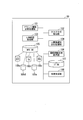
- a design process support system 1 according to the first embodiment of the present invention includes an HFE (Human Factors Engineering) processing device 10, a condition setting processing device 20, a user feedback processing device 30, and a verification process.
- HFE Human Factors Engineering
- the HFE processing device 10 is a device that identifies a request for a task.
- the HFE processing apparatus 10 includes a plant function analysis processing unit 101, a task analysis processing unit 102, a staff assignment processing unit 103, a human reliability analysis processing unit 104, and a driving experience reflection processing unit 106.
- an HFE database 105 an IT (Issue Tracking) database 107, and an improvement support unit 108.
- the processing in each processing unit may be processing by a program or processing executed by a designer.
- the plant function analysis processing unit 101 sets a target. For example, when the design process support system 1 is a power plant design process, the plant function analysis processing unit 101 sets the target to achieve the power generation amount.
- the plant function analysis processing unit 101 analyzes the function and determines a function for achieving the power generation amount set as the target.
- a function for achieving this goal is a function of dissipating heat at a high temperature using a heat sink. There are usually multiple functions to achieve this goal.
- the plant function analysis processing unit 101 determines a device or a system that supports each of a plurality of existing functions, and assigns the operation of the determined device or system to a worker or a machine.
- the task analysis processing unit 102 analyzes the task.
- the task analysis processing unit 102 specifies a task request based on the analysis result obtained by analyzing the task.
- the task request is a specific instruction system, operating device, communication, or the like that must be used to perform the task.
- a specific instruction system that must be used to perform a task is an instruction by Manager A.
- a specific operating device that must be used to perform a task is a control panel B.
- An example of a specific communication that must be used to perform a task is to obtain work information from the operator B at the site when the operator A performs work.
- the task analysis processing unit 102 decomposes a task in order to analyze what subtask is included in the task. Then, the task analysis processing unit 102 analyzes the relationship between the subtasks obtained by disassembling the tasks. For example, it is assumed that the task analysis processing unit 102 decomposes a task into subtask A and subtask B. In this case, for example, the task analysis processing unit 102 analyzes that the subtask A is an input and the subtask B is an output, that is, the relationship between the subtask A and the subtask B is a relationship between the input and the output. . Further, the task analysis processing unit 102 may analyze the subtask A and the subtask B that have been disassembled using the regular analysis.
- the angular analysis is an analysis using a table and analyzing subtask A and subtask B using a plurality of evaluation items.
- the task analysis processing unit 102 analyzes that it is necessary to make a decision about the subtask A and it is required that the lighting is bright as an environmental condition.
- the task analysis processing unit 102 analyzes that the subtask B is required to have dark illumination.
- the task analysis processing unit 102 may analyze the subtask A and the subtask B that have been disassembled using time alignment analysis.
- the time alignment analysis is to analyze a task on the time axis and analyze the relationship between the subtask A and the subtask B on the time axis. For example, the task analysis processing unit 102 analyzes that the subtask A starts processing before the subtask B.
- the task analysis processing unit 102 may analyze the decomposed subtask A and subtask B using workload analysis.
- the workload analysis is to analyze a task that needs to be completed within a predetermined time, and analyze how much the actual work time is predicted with respect to the predetermined time.
- the task analysis processing unit 102 analyzes the prediction of the actual working time as 25 minutes using workload analysis for three subtasks of subtask A, subtask B, and subtask C that need to be completed within 30 minutes.
- the task analysis processing unit 102 may predict an actual work time using advice (expert judgment) from a past experienced person.
- the task analysis processing unit 102 may analyze the subtask A and the subtask B that have been disassembled using cognitive task analysis.
- cognitive task analysis is to investigate at least 3 experienced people in advance by questionnaire to determine what kind of environmental conditions each subtask is subjected to stress. analyse.
- the task analysis performed by the task analysis processing unit 102 reflects a request from the end user.
- Personnel assignment processing unit 103 assigns personnel necessary for plant operation.
- the staff assignment processing unit 103 specifies and assigns the maximum number and the minimum number of persons necessary for the operation from the stop of the plant to the start including the maintenance staff.
- the human reliability analysis processing unit 104 generates a specific task request by performing human reliability analysis.
- Human reliability analysis is a task analysis using human error rate.
- the driving experience reflection processing unit 106 is a database that stores results when accidents have occurred in the past due to human errors.
- the driving experience reflection processing unit 106 is a database that stores information when an accident has occurred in the past due to a human error.
- One specific example of an accident is that the accident itself due to a past human error has been overlooked, and a similar accident has occurred again.
- Another specific example of the accident is that the remote controller cannot be operated because the remote controller is not set for remote operation.
- Another specific example of an accident is that a human error has occurred due to insufficient training.
- the HFE database 105 is a database that stores information necessary for the HFE processing apparatus 10 to perform HFE analysis. Specifically, the HFE database 105 stores information including information I, control C, and stuffing S.
- the information I is information necessary for performing each task.
- Control C is information indicating what kind of operating device is required to perform each task.
- the stuffing S is information indicating how many workers of what skill are required to perform each task.
- the HFE database 105 is stored in each of the plant function analysis processing unit 101, the task analysis processing unit 102, the personnel assignment processing unit 103, the human reliability analysis processing unit 104, and the driving experience reflection processing unit 106. A corresponding storage area may be provided.
- the IT database 107 stores a comment generated in the user feedback processing apparatus 30, that is, a task to be improved and a candidate for a measure for actually improving the task to be improved in association with each other. ing.
- the improvement support unit 108 presents a countermeasure plan that approaches the target value.
- the condition setting processing device 20 transmits the analysis result of the HFE processing device 10, plant restrictions, and past operation experience in a similar plant to the user feedback processing device 30.
- the condition setting processing device 20 includes a plant design processing unit 202, an emergency operation guideline processing unit 203, a probabilistic risk evaluation processing unit 204, and a plant design database 205.
- the processing in each processing unit may be processing by a program or processing executed by a designer.
- the plant design processing unit 202 informs the user feedback processing device 30 of the conditions for the user feedback processing device 30 to generate a concept, that is, the analysis result of the HFE processing device 10, plant restrictions, and past operation experience in a similar plant. Send.
- the emergency operation guideline processing unit 203 provides guidelines for operating the plant in an emergency.
- the probabilistic risk evaluation processing unit 204 converts the task request generated by the human reliability analysis processing unit 104 into statistical data using probability theory and adds it to the plant design database 205.
- the plant design database 205 stores the analysis result of the HFE processing device 10 that the plant design processing unit 202 transmits to the user feedback processing device 30, plant restrictions, and past operating experience in similar plants.
- the user feedback processing device 30 has four concepts (man machine system concept, load burden concept, usability concept, accessibility concept) based on the analysis result of the HFE processing device 10, plant restrictions, and past operation experience in a similar plant. ) To create one HF concept. The user feedback processing device 30 generates three proto machines based on the created HF concept based on an HF concept database 312 described later. The user feedback processing device 30 feeds back the generated information on the three prototype machines to the HFE processing device 10. As shown in FIG. 4, the user feedback processing device 30 includes a man-machine system concept processing unit 301, a load burden concept processing unit 302, a usability concept processing unit 303, an accessibility concept processing unit 304, and an HF concept processing unit.
- each processing unit may be processing by a program or processing executed by a designer.
- the man machine system concept processing unit 301 generates a man machine system concept based on the analysis result of the HFE processing apparatus 10.
- the load burden concept processing unit 302 generates a load burden concept based on the analysis result of the HFE processing apparatus 10.
- the usability concept processing unit 303 generates a usability concept based on the analysis result of the HFE processing apparatus 10.
- the accessibility concept processing unit 304 generates an accessibility concept based on the analysis result of the HFE processing apparatus 10.
- the HF concept processing unit 305 includes a man-machine system concept generated by the man-machine system concept processing unit 301, a load-bearing concept generated by the load-loading concept processing unit 302, a usability concept generated by the usability concept processing unit 303, and an accessibility concept process.
- the HF concept is generated based on the accessibility concept generated by the unit 304, plant constraints, and past operation experience in a similar plant.
- Each concept is stored in relation to the information I, control C, and stuffing S that have the greatest influence at the stage of generation.
- the man-machine system concept, the load burden concept, the usability concept, and the accessibility concept described above are concepts described in ISO 26800 indicating ergonomic guidelines, and examples of the concept in the embodiment of the present invention.
- the concept in the embodiment of the present invention is not limited.
- the HSI proto machine production unit 306 produces, for example, a mock-up based on the HF concept.
- the mockup manufactured by the HSI proto machine making unit 306 may be a virtual mockup.
- the HSI database 309 stores information on mockups manufactured by the HSI proto machine manufacturing unit 306.
- the mockup manufactured by the HSI proto-machine creation unit 306 is a virtual mockup, for example, it is possible to simulate the brightness of illumination, which is one of the control panel layout and work conditions.
- the operation guide creation unit 307 creates a prototype of a plant operation guide based on the HF concept.
- the operation guideline database 310 stores information on the proto-machine of the plant operation guide created by the operation guide creation unit 307.
- the training program creation unit 308 creates a training program proto machine based on the HF concept.
- the driving training database 311 stores information on the proto machine of the training program created by the training program creation unit 308.
- the concept database 313 stores four concepts (man machine system concept, load burden concept, usability concept, and accessibility concept). Each concept is stored in relation to information I, control C, and stuffing S, which have the greatest influence at the stage of generation. Each concept may be associated with a plurality of information I, control C, and stuffing S.
- HF concept database 312 stores HF concepts.
- a proto machine reflecting requests from not only the designer but also the end user of the plant is created in the upstream stage of the design process.
- the verification processing device 40 is a device that evaluates the validity of the final design. As shown in FIG. 5, the verification processing device 40 includes an HSI design processing unit 401, an operation manual development processing unit 402, a training program development processing unit 403, a verification / validity confirmation processing unit 404, and driving performance monitoring. A processing unit 405 and a verification / validity database 406 are provided. The processing in each processing unit may be processing by a program or processing executed by a designer.
- the HSI design processing unit 401 performs final HSI design and manufactures a final plant.
- the operation manual development processing unit 402 creates a final operation guide.
- the training program development processing unit 403 creates a final training program.
- the verification / validity check processing unit 404 is the final plant manufactured by the HSI design processing unit 401, the final operation guide generated by the operation manual development processing unit 402, and the final generated by the training program development processing unit 403.
- Each actual measured value of each training program is compared with, for example, a specification value, and is judged to be appropriate when the comparison result is within a predetermined range.
- the operation performance monitoring processor 405 monitors and confirms the operation of the entire plant.
- the verification / validity database 406 stores the final plant verification results.
- FIG. 6 shows the design process of the design process support system 1 and schematically shows the processing flow of the design process support system 1.
- the process of the design process support system 1 will be described on the assumption that data is already stored in each database.
- each of the plant function analysis processing unit 101, the task analysis processing unit 102, the staff assignment processing unit 103, the human reliability analysis processing unit 104, and the driving experience reflection processing unit 106 performs HFE for each current concept and each current setting. Perform analysis.
- the workload an example of specification items
- the target workload has been changed to a lower value, but the staffing concept itself has not changed.
- each of the plant function analysis processing unit 101, the task analysis processing unit 102, the staff assignment processing unit 103, the human reliability analysis processing unit 104, and the driving experience reflection processing unit 106 performs HFE for each concept and each current setting. Perform analysis.
- the target value of the workload is changed, but the conditions such as personnel are not changed, so the value of the workload is the same as the previous time.
- Each concept has three combinations of information I, control C, and stuffing S, and the effect of the combination (for example, if you change to a concept that increases the number of personnel by two, the total number of people will double and the workload will increase. Are related and stored).
- the improvement support unit 108 compares the current concept with other possible concepts, and identifies, for example, the best five concepts that have a large effect on the workload that is an improvement item.
- the target concept may be specified from the information I, control C, and stuffing S of the items that require improvement, and the concept information I, control C, and stuffing S.
- the improvement support unit 108 may notify the user of other merits and demerits such as, for example, a cost that increases as the number of personnel increases, at the same time that the workload is improved.
- the user determines which concept should be adopted by comprehensively judging other merits and demerits as well as improving the workload.
- the improvement support performed by the improvement support unit 108 has been described by taking the improvement of the workload as an example. However, it goes without saying that items other than the workload can be supported in the same manner.
- the design process support system 1 according to the first embodiment of the present invention has been described above.
- the design process support system 1 according to the first embodiment of the present invention includes a concept database that stores a concept by associating each specification item with information indicating improvement or deterioration of the specification item for each different design condition, and a user An improvement support unit that specifies the specification item desired to be improved and notifies a concept of a design condition for improving the specified specification item. In this way, the design process support system 1 can support improvement of the design process and eliminate rework at the end of the design process.
- the improvement support unit 108 notifies the improvement or deterioration of the specification items other than the specified specification item when notifying the concept of the design condition for improving the specified specification item.
- the design process support system 1 can provide the user with an optimal design process improvement plan when comprehensively determining cost, time, system scale, and the like. It should be noted that, as another embodiment of the present invention, an alternative improvement plan is not provided, and a problematic concept may be identified.
- HF design process shown in FIG. 8 as a plant design process in consideration of general human organizational factors such as a power plant, that is, HF (Human Factors).
- the HF design process proceeds in a manner that is integrated with the plant design process.
- Plant design consists of long-term processes spanning each phase from plant function analysis to design, production, testing, and operation.
- INPUT and OUTPUT of each HF design process are mutually used according to the plant design phase.
- the HF analysis result is used as the design INPUT.
- INPUT and OUTPUT of each HF design process are confirmed in design verification & validation (V & V).
- the design process support system 1 facilitates management of HF by computer system support (that is, database DB conversion, systemization).
- HF design process (HF analysis) is advanced, and the design is performed based on the analysis and design conditions of the plant designer's intention, assumption or insufficient concept (assuming)
- the design process support system 1 sets an HF concept at the time of design requirement extraction based on four basic concepts in human-centered design, and advances the HF design process. The risk of redoing and reworking is reduced.
- a design process support system 1 according to a second embodiment of the present invention will be described.
- the design process support system 1 according to the second embodiment of the present invention has the same configuration as the design process support system 1 according to the first embodiment of the present invention shown in FIG.
- the HFE processing apparatus 10 includes an improvement determination unit 109 instead of the improvement support unit 108 as illustrated in FIG.
- the improvement determination unit 109 identifies the specification item to be improved by the user, and the specified specification item is the specification item to be improved unique to the individual user, or the specification item to be improved common to a plurality of users It is determined whether it is. For example, when the human reliability analysis processing unit 104 performs human reliability analysis and an item to be improved is found for a certain user, the improvement item is specific to the user or is an improvement item common to a plurality of other users. Is not simply distinguishable. Therefore, the improvement determination unit 109 compares human reliability analysis between the user and other users for the specified specification item.
- the improvement determination part 109 determines with the item which should be improved peculiar to an individual, when the user has remove
- the design process support system 1 specifies a concept database for storing a concept by associating each specification item with information indicating improvement or deterioration of the specification item for each different design condition, and the specification item to be improved by the user. And an improvement determination unit that determines whether the specified specification item is the specification item to be improved that is specific to the individual user or the specification item to be improved common to a plurality of users. In this way, the design process support system 1 can determine whether the specification item should be improved by the user or the specification item to be improved common to a plurality of users.
- the order of processing may be changed within a range where appropriate processing is performed.
- Each of the storage units may be provided anywhere as long as appropriate information is transmitted and received.
- Each of the storage units may exist in a range in which appropriate information is transmitted and received, and data may be distributed and stored.
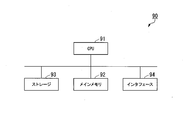
- each of the devices in the above-described three-dimensional attitude determination device 100 and the three-dimensional stacking system 1 may have a computer 90 as shown in FIG. 9, for example.
- the process described above is stored in a computer-readable recording medium (storage 93) in the form of a program, and the CPU 91 of the computer 90 reads the program into the main memory 92 and executes it to execute the above process. Is done.
- the computer-readable recording medium means a magnetic disk, a magneto-optical disk, a CD-ROM, a DVD-ROM, a semiconductor memory, or the like.
- the computer program may be distributed to the computer 90 via a communication line, and the computer 90 that has received the distribution via the interface 94 may execute the program.
- the above program may realize part of the functions described above.
- the program may be a file that can realize the above-described functions in combination with a program already recorded in the computer 90, that is, a so-called difference file (difference program).
- the design process support system it is possible to support improvement of the design process and eliminate rework at the end of the design process.
- HF concept processing unit 306 ... HSI proto machine creation unit 307... Operation guide creation unit 308... Training program creation unit 309. Database 311 ... Driving training database 312 ... HF concept database 313 ... Concept database 401 ... HSI design processing unit 402 ... Driving manual development processing unit 403 ... Training program development processing unit 404 ..Verification / validity check processing unit 405 ... Driving performance monitoring processing unit 406 ... Verification / validity database
Landscapes
- Engineering & Computer Science (AREA)
- Physics & Mathematics (AREA)
- Business, Economics & Management (AREA)
- Theoretical Computer Science (AREA)
- General Physics & Mathematics (AREA)
- Geometry (AREA)
- Economics (AREA)
- Human Resources & Organizations (AREA)
- Strategic Management (AREA)
- Computer Hardware Design (AREA)
- Tourism & Hospitality (AREA)
- Entrepreneurship & Innovation (AREA)
- Marketing (AREA)
- General Business, Economics & Management (AREA)
- Evolutionary Computation (AREA)
- General Engineering & Computer Science (AREA)
- Development Economics (AREA)
- Operations Research (AREA)
- Quality & Reliability (AREA)
- Computational Mathematics (AREA)
- Mathematical Analysis (AREA)
- Mathematical Optimization (AREA)
- Pure & Applied Mathematics (AREA)
- General Health & Medical Sciences (AREA)
- Health & Medical Sciences (AREA)
- Game Theory and Decision Science (AREA)
- Educational Administration (AREA)
- Primary Health Care (AREA)
- Architecture (AREA)
- Civil Engineering (AREA)
- Structural Engineering (AREA)
- Management, Administration, Business Operations System, And Electronic Commerce (AREA)
- Testing And Monitoring For Control Systems (AREA)
Priority Applications (2)
| Application Number | Priority Date | Filing Date | Title |
|---|---|---|---|
| EP18747829.2A EP3460733A4 (en) | 2017-01-31 | 2018-01-30 | DESIGN PROCESS SUPPORT SYSTEM, CONTROL PROCEDURE AND PROGRAM |
| US16/311,292 US20190188340A1 (en) | 2017-01-31 | 2018-01-30 | Design process support system, control method, and program |
Applications Claiming Priority (2)
| Application Number | Priority Date | Filing Date | Title |
|---|---|---|---|
| JP2017015649A JP2018124734A (ja) | 2017-01-31 | 2017-01-31 | 設計プロセス支援システム、制御方法及びプログラム |
| JP2017-015649 | 2017-01-31 |
Publications (1)
| Publication Number | Publication Date |
|---|---|
| WO2018143170A1 true WO2018143170A1 (ja) | 2018-08-09 |
Family
ID=63040614
Family Applications (1)
| Application Number | Title | Priority Date | Filing Date |
|---|---|---|---|
| PCT/JP2018/002893 Ceased WO2018143170A1 (ja) | 2017-01-31 | 2018-01-30 | 設計プロセス支援システム、制御方法及びプログラム |
Country Status (4)
| Country | Link |
|---|---|
| US (1) | US20190188340A1 (https=) |
| EP (1) | EP3460733A4 (https=) |
| JP (1) | JP2018124734A (https=) |
| WO (1) | WO2018143170A1 (https=) |
Families Citing this family (2)
| Publication number | Priority date | Publication date | Assignee | Title |
|---|---|---|---|---|
| CN111738557B (zh) * | 2020-05-25 | 2024-09-17 | 中国核电工程有限公司 | 一种用于核电厂征兆导向事故处理的给水控制策略设计方法 |
| JP7397763B2 (ja) * | 2020-06-12 | 2023-12-13 | 三菱重工業株式会社 | 設計プロセス支援システム、設計プロセス支援方法及びプログラム |
Citations (8)
| Publication number | Priority date | Publication date | Assignee | Title |
|---|---|---|---|---|
| JPH09160959A (ja) * | 1995-12-12 | 1997-06-20 | Hitachi Ltd | 設計支援方法および装置 |
| JP2002251416A (ja) * | 2001-02-23 | 2002-09-06 | Matsushita Electric Works Ltd | 設計支援装置 |
| JP2005070465A (ja) * | 2003-08-25 | 2005-03-17 | Hitoshi Kimura | 学習ドリル配信システム |
| JP2008257703A (ja) * | 2007-03-13 | 2008-10-23 | Hitachi Ltd | 設計支援方法およびそのシステム |
| JP2009054062A (ja) * | 2007-08-29 | 2009-03-12 | Hitachi-Ge Nuclear Energy Ltd | プラント設計支援方法及びその装置 |
| JP2009134623A (ja) * | 2007-11-30 | 2009-06-18 | Omron Corp | 工程改善支援装置、工程改善支援方法、工程改善支援用プログラム、および工程改善支援用プログラムを記録した記録媒体 |
| JP2011134168A (ja) * | 2009-12-25 | 2011-07-07 | Hitachi-Ge Nuclear Energy Ltd | 構造物の建設データ管理方法、建設データ管理装置および建設データ管理システム |
| WO2016051872A1 (ja) * | 2014-09-29 | 2016-04-07 | 株式会社日立製作所 | ソフトエラー率計算装置およびソフトエラー率監視方法 |
Family Cites Families (5)
| Publication number | Priority date | Publication date | Assignee | Title |
|---|---|---|---|---|
| JP2003085338A (ja) * | 2001-09-14 | 2003-03-20 | Mitsubishi Heavy Ind Ltd | 設計支援装置 |
| CN102915512A (zh) * | 2012-09-25 | 2013-02-06 | 中国核电工程有限公司 | 一种基于数字化人机界面的核电站安全操作评价方法 |
| CN102929598B (zh) * | 2012-09-25 | 2016-03-30 | 中国核电工程有限公司 | 一种提高核电站安全的人机界面设计方法 |
| CN103218689B (zh) * | 2013-04-23 | 2017-09-22 | 湖南工学院 | 操作员状态评估的可靠性分析方法及装置 |
| KR101591300B1 (ko) * | 2014-10-15 | 2016-02-04 | 한국원자력연구원 | 원전 기기의 인간 공학 적합성 평가를 위한 장치 및 방법 |
-
2017
- 2017-01-31 JP JP2017015649A patent/JP2018124734A/ja active Pending
-
2018
- 2018-01-30 US US16/311,292 patent/US20190188340A1/en not_active Abandoned
- 2018-01-30 EP EP18747829.2A patent/EP3460733A4/en not_active Withdrawn
- 2018-01-30 WO PCT/JP2018/002893 patent/WO2018143170A1/ja not_active Ceased
Patent Citations (8)
| Publication number | Priority date | Publication date | Assignee | Title |
|---|---|---|---|---|
| JPH09160959A (ja) * | 1995-12-12 | 1997-06-20 | Hitachi Ltd | 設計支援方法および装置 |
| JP2002251416A (ja) * | 2001-02-23 | 2002-09-06 | Matsushita Electric Works Ltd | 設計支援装置 |
| JP2005070465A (ja) * | 2003-08-25 | 2005-03-17 | Hitoshi Kimura | 学習ドリル配信システム |
| JP2008257703A (ja) * | 2007-03-13 | 2008-10-23 | Hitachi Ltd | 設計支援方法およびそのシステム |
| JP2009054062A (ja) * | 2007-08-29 | 2009-03-12 | Hitachi-Ge Nuclear Energy Ltd | プラント設計支援方法及びその装置 |
| JP2009134623A (ja) * | 2007-11-30 | 2009-06-18 | Omron Corp | 工程改善支援装置、工程改善支援方法、工程改善支援用プログラム、および工程改善支援用プログラムを記録した記録媒体 |
| JP2011134168A (ja) * | 2009-12-25 | 2011-07-07 | Hitachi-Ge Nuclear Energy Ltd | 構造物の建設データ管理方法、建設データ管理装置および建設データ管理システム |
| WO2016051872A1 (ja) * | 2014-09-29 | 2016-04-07 | 株式会社日立製作所 | ソフトエラー率計算装置およびソフトエラー率監視方法 |
Non-Patent Citations (1)
| Title |
|---|
| See also references of EP3460733A4 * |
Also Published As
| Publication number | Publication date |
|---|---|
| JP2018124734A (ja) | 2018-08-09 |
| US20190188340A1 (en) | 2019-06-20 |
| EP3460733A1 (en) | 2019-03-27 |
| EP3460733A4 (en) | 2020-01-08 |
Similar Documents
| Publication | Publication Date | Title |
|---|---|---|
| Gregori et al. | Digital manufacturing systems: a framework to improve social sustainability of a production site | |
| Boring | How many performance shaping factors are necessary for human reliability analysis? | |
| US20210294307A1 (en) | Assisted engineering design and development management system | |
| JP4326731B2 (ja) | リスクモニターを有する工程管理システム及びリスク表示機能を有する工程管理方法 | |
| JP2009176315A (ja) | リスクモニターを有する工程管理システム及びリスク表示機能を有する工程管理方法 | |
| CN109933934A (zh) | 一种设备维护管理方法及系统、计算机可读存储介质 | |
| Framinan et al. | Guidelines for the deployment and implementation of manufacturing scheduling systems | |
| Lux et al. | FMEA and consideration of real work situations for safer design of production systems | |
| Yin et al. | Analyzing engineering change of aircraft assembly tooling considering both duration and resource consumption | |
| WO2018143170A1 (ja) | 設計プロセス支援システム、制御方法及びプログラム | |
| US20110178935A1 (en) | Systems And Methods Of Integrated And Automated Generation Of Work Packages | |
| JP7458297B2 (ja) | 保全支援方法および保全支援装置 | |
| Tsai et al. | Reliability design optimisation for practical applications based on modelling processes | |
| Salhab et al. | Schedule compression and emerging waste in construction: an assessment of overlapping activities | |
| Kyösti et al. | Prediction of service support costs for functional products | |
| CN119439893A (zh) | 用于生产过程的多层次仿真优化与质量控制方法及系统 | |
| US20210406844A1 (en) | Method for carrying out maintenance work on a complex structural component | |
| JP2014071775A (ja) | システム開発支援装置およびシステム開発支援方法 | |
| Reed et al. | Service support system modelling language for simulation-driven development of functional products | |
| Rojas-Delgado et al. | Resource Optimization Model to Increase Efficiency in Aircraft Maintenance Operations, Using Lean Six Sigma and Linear Programming | |
| JP2022171065A (ja) | 情報管理システム、情報管理方法および情報管理プログラム | |
| Taylor | How HRA can drive plant improvement | |
| Zakaria et al. | Developing an Executive Information Site Monitoring System | |
| CN119904213A (zh) | 一种基于时间轴的冲突检查方法及系统 | |
| KR20240171551A (ko) | 디지털 트윈 기반의 제조 시스템 검증 방법, 그리고 이를 구현하기 위한 장치 |
Legal Events
| Date | Code | Title | Description |
|---|---|---|---|
| 121 | Ep: the epo has been informed by wipo that ep was designated in this application |
Ref document number: 18747829 Country of ref document: EP Kind code of ref document: A1 |
|
| ENP | Entry into the national phase |
Ref document number: 2018747829 Country of ref document: EP Effective date: 20181220 |
|
| NENP | Non-entry into the national phase |
Ref country code: DE |