WO2018074551A1 - フラビン化合物を用いたグルコース酸化還元反応及びグルコース測定用組成物 - Google Patents
フラビン化合物を用いたグルコース酸化還元反応及びグルコース測定用組成物 Download PDFInfo
- Publication number
- WO2018074551A1 WO2018074551A1 PCT/JP2017/037851 JP2017037851W WO2018074551A1 WO 2018074551 A1 WO2018074551 A1 WO 2018074551A1 JP 2017037851 W JP2017037851 W JP 2017037851W WO 2018074551 A1 WO2018074551 A1 WO 2018074551A1
- Authority
- WO
- WIPO (PCT)
- Prior art keywords
- fad
- dependent glucose
- glucose
- insoluble
- flavin
- Prior art date
- Legal status (The legal status is an assumption and is not a legal conclusion. Google has not performed a legal analysis and makes no representation as to the accuracy of the status listed.)
- Ceased
Links
- 0 Cc(c(C)c1)cc(N(*)C2N(*)C(N3)=O)c1N=C2C3=O Chemical compound Cc(c(C)c1)cc(N(*)C2N(*)C(N3)=O)c1N=C2C3=O 0.000 description 1
Images




Classifications
-
- G—PHYSICS
- G01—MEASURING; TESTING
- G01N—INVESTIGATING OR ANALYSING MATERIALS BY DETERMINING THEIR CHEMICAL OR PHYSICAL PROPERTIES
- G01N27/00—Investigating or analysing materials by the use of electric, electrochemical, or magnetic means
- G01N27/26—Investigating or analysing materials by the use of electric, electrochemical, or magnetic means by investigating electrochemical variables; by using electrolysis or electrophoresis
- G01N27/28—Electrolytic cell components
- G01N27/30—Electrodes, e.g. test electrodes; Half-cells
- G01N27/327—Biochemical electrodes, e.g. electrical or mechanical details for in vitro measurements
- G01N27/3271—Amperometric enzyme electrodes for analytes in body fluids, e.g. glucose in blood
-
- C—CHEMISTRY; METALLURGY
- C12—BIOCHEMISTRY; BEER; SPIRITS; WINE; VINEGAR; MICROBIOLOGY; ENZYMOLOGY; MUTATION OR GENETIC ENGINEERING
- C12M—APPARATUS FOR ENZYMOLOGY OR MICROBIOLOGY; APPARATUS FOR CULTURING MICROORGANISMS FOR PRODUCING BIOMASS, FOR GROWING CELLS OR FOR OBTAINING FERMENTATION OR METABOLIC PRODUCTS, i.e. BIOREACTORS OR FERMENTERS
- C12M1/00—Apparatus for enzymology or microbiology
- C12M1/34—Measuring or testing with condition measuring or sensing means, e.g. colony counters
-
- C—CHEMISTRY; METALLURGY
- C12—BIOCHEMISTRY; BEER; SPIRITS; WINE; VINEGAR; MICROBIOLOGY; ENZYMOLOGY; MUTATION OR GENETIC ENGINEERING
- C12Q—MEASURING OR TESTING PROCESSES INVOLVING ENZYMES, NUCLEIC ACIDS OR MICROORGANISMS; COMPOSITIONS OR TEST PAPERS THEREFOR; PROCESSES OF PREPARING SUCH COMPOSITIONS; CONDITION-RESPONSIVE CONTROL IN MICROBIOLOGICAL OR ENZYMOLOGICAL PROCESSES
- C12Q1/00—Measuring or testing processes involving enzymes, nucleic acids or microorganisms; Compositions therefor; Processes of preparing such compositions
- C12Q1/001—Enzyme electrodes
- C12Q1/004—Enzyme electrodes mediator-assisted
-
- C—CHEMISTRY; METALLURGY
- C12—BIOCHEMISTRY; BEER; SPIRITS; WINE; VINEGAR; MICROBIOLOGY; ENZYMOLOGY; MUTATION OR GENETIC ENGINEERING
- C12Q—MEASURING OR TESTING PROCESSES INVOLVING ENZYMES, NUCLEIC ACIDS OR MICROORGANISMS; COMPOSITIONS OR TEST PAPERS THEREFOR; PROCESSES OF PREPARING SUCH COMPOSITIONS; CONDITION-RESPONSIVE CONTROL IN MICROBIOLOGICAL OR ENZYMOLOGICAL PROCESSES
- C12Q1/00—Measuring or testing processes involving enzymes, nucleic acids or microorganisms; Compositions therefor; Processes of preparing such compositions
- C12Q1/001—Enzyme electrodes
- C12Q1/005—Enzyme electrodes involving specific analytes or enzymes
- C12Q1/006—Enzyme electrodes involving specific analytes or enzymes for glucose
-
- C—CHEMISTRY; METALLURGY
- C12—BIOCHEMISTRY; BEER; SPIRITS; WINE; VINEGAR; MICROBIOLOGY; ENZYMOLOGY; MUTATION OR GENETIC ENGINEERING
- C12Q—MEASURING OR TESTING PROCESSES INVOLVING ENZYMES, NUCLEIC ACIDS OR MICROORGANISMS; COMPOSITIONS OR TEST PAPERS THEREFOR; PROCESSES OF PREPARING SUCH COMPOSITIONS; CONDITION-RESPONSIVE CONTROL IN MICROBIOLOGICAL OR ENZYMOLOGICAL PROCESSES
- C12Q1/00—Measuring or testing processes involving enzymes, nucleic acids or microorganisms; Compositions therefor; Processes of preparing such compositions
- C12Q1/26—Measuring or testing processes involving enzymes, nucleic acids or microorganisms; Compositions therefor; Processes of preparing such compositions involving oxidoreductase
-
- C—CHEMISTRY; METALLURGY
- C12—BIOCHEMISTRY; BEER; SPIRITS; WINE; VINEGAR; MICROBIOLOGY; ENZYMOLOGY; MUTATION OR GENETIC ENGINEERING
- C12Q—MEASURING OR TESTING PROCESSES INVOLVING ENZYMES, NUCLEIC ACIDS OR MICROORGANISMS; COMPOSITIONS OR TEST PAPERS THEREFOR; PROCESSES OF PREPARING SUCH COMPOSITIONS; CONDITION-RESPONSIVE CONTROL IN MICROBIOLOGICAL OR ENZYMOLOGICAL PROCESSES
- C12Q1/00—Measuring or testing processes involving enzymes, nucleic acids or microorganisms; Compositions therefor; Processes of preparing such compositions
- C12Q1/26—Measuring or testing processes involving enzymes, nucleic acids or microorganisms; Compositions therefor; Processes of preparing such compositions involving oxidoreductase
- C12Q1/32—Measuring or testing processes involving enzymes, nucleic acids or microorganisms; Compositions therefor; Processes of preparing such compositions involving oxidoreductase involving dehydrogenase
-
- C—CHEMISTRY; METALLURGY
- C12—BIOCHEMISTRY; BEER; SPIRITS; WINE; VINEGAR; MICROBIOLOGY; ENZYMOLOGY; MUTATION OR GENETIC ENGINEERING
- C12Q—MEASURING OR TESTING PROCESSES INVOLVING ENZYMES, NUCLEIC ACIDS OR MICROORGANISMS; COMPOSITIONS OR TEST PAPERS THEREFOR; PROCESSES OF PREPARING SUCH COMPOSITIONS; CONDITION-RESPONSIVE CONTROL IN MICROBIOLOGICAL OR ENZYMOLOGICAL PROCESSES
- C12Q1/00—Measuring or testing processes involving enzymes, nucleic acids or microorganisms; Compositions therefor; Processes of preparing such compositions
- C12Q1/54—Measuring or testing processes involving enzymes, nucleic acids or microorganisms; Compositions therefor; Processes of preparing such compositions involving glucose or galactose
-
- G—PHYSICS
- G01—MEASURING; TESTING
- G01N—INVESTIGATING OR ANALYSING MATERIALS BY DETERMINING THEIR CHEMICAL OR PHYSICAL PROPERTIES
- G01N27/00—Investigating or analysing materials by the use of electric, electrochemical, or magnetic means
- G01N27/26—Investigating or analysing materials by the use of electric, electrochemical, or magnetic means by investigating electrochemical variables; by using electrolysis or electrophoresis
- G01N27/28—Electrolytic cell components
- G01N27/30—Electrodes, e.g. test electrodes; Half-cells
- G01N27/327—Biochemical electrodes, e.g. electrical or mechanical details for in vitro measurements
-
- H—ELECTRICITY
- H01—ELECTRIC ELEMENTS
- H01M—PROCESSES OR MEANS, e.g. BATTERIES, FOR THE DIRECT CONVERSION OF CHEMICAL ENERGY INTO ELECTRICAL ENERGY
- H01M4/00—Electrodes
- H01M4/86—Inert electrodes with catalytic activity, e.g. for fuel cells
- H01M4/90—Selection of catalytic material
-
- H—ELECTRICITY
- H01—ELECTRIC ELEMENTS
- H01M—PROCESSES OR MEANS, e.g. BATTERIES, FOR THE DIRECT CONVERSION OF CHEMICAL ENERGY INTO ELECTRICAL ENERGY
- H01M4/00—Electrodes
- H01M4/86—Inert electrodes with catalytic activity, e.g. for fuel cells
- H01M4/90—Selection of catalytic material
- H01M4/9008—Organic or organo-metallic compounds
-
- H—ELECTRICITY
- H01—ELECTRIC ELEMENTS
- H01M—PROCESSES OR MEANS, e.g. BATTERIES, FOR THE DIRECT CONVERSION OF CHEMICAL ENERGY INTO ELECTRICAL ENERGY
- H01M4/00—Electrodes
- H01M4/86—Inert electrodes with catalytic activity, e.g. for fuel cells
- H01M4/90—Selection of catalytic material
- H01M4/9075—Catalytic material supported on carriers, e.g. powder carriers
- H01M4/9083—Catalytic material supported on carriers, e.g. powder carriers on carbon or graphite
-
- H—ELECTRICITY
- H01—ELECTRIC ELEMENTS
- H01M—PROCESSES OR MEANS, e.g. BATTERIES, FOR THE DIRECT CONVERSION OF CHEMICAL ENERGY INTO ELECTRICAL ENERGY
- H01M8/00—Fuel cells; Manufacture thereof
- H01M8/10—Fuel cells with solid electrolytes
- H01M8/1009—Fuel cells with solid electrolytes with one of the reactants being liquid, solid or liquid-charged
-
- H—ELECTRICITY
- H01—ELECTRIC ELEMENTS
- H01M—PROCESSES OR MEANS, e.g. BATTERIES, FOR THE DIRECT CONVERSION OF CHEMICAL ENERGY INTO ELECTRICAL ENERGY
- H01M8/00—Fuel cells; Manufacture thereof
- H01M8/16—Biochemical fuel cells, i.e. cells in which microorganisms function as catalysts
-
- H—ELECTRICITY
- H01—ELECTRIC ELEMENTS
- H01M—PROCESSES OR MEANS, e.g. BATTERIES, FOR THE DIRECT CONVERSION OF CHEMICAL ENERGY INTO ELECTRICAL ENERGY
- H01M8/00—Fuel cells; Manufacture thereof
- H01M8/10—Fuel cells with solid electrolytes
- H01M2008/1095—Fuel cells with polymeric electrolytes
-
- Y—GENERAL TAGGING OF NEW TECHNOLOGICAL DEVELOPMENTS; GENERAL TAGGING OF CROSS-SECTIONAL TECHNOLOGIES SPANNING OVER SEVERAL SECTIONS OF THE IPC; TECHNICAL SUBJECTS COVERED BY FORMER USPC CROSS-REFERENCE ART COLLECTIONS [XRACs] AND DIGESTS
- Y02—TECHNOLOGIES OR APPLICATIONS FOR MITIGATION OR ADAPTATION AGAINST CLIMATE CHANGE
- Y02E—REDUCTION OF GREENHOUSE GAS [GHG] EMISSIONS, RELATED TO ENERGY GENERATION, TRANSMISSION OR DISTRIBUTION
- Y02E60/00—Enabling technologies; Technologies with a potential or indirect contribution to GHG emissions mitigation
- Y02E60/30—Hydrogen technology
- Y02E60/50—Fuel cells
Definitions
- the present invention relates to a glucose oxidation-reduction reaction using a flavin compound and a composition containing a flavin compound. More specifically, the present invention relates to a glucose measurement method using a flavin compound as a mediator of glucose oxidase or glucose dehydrogenase. The present invention also relates to a composition for measuring glucose comprising a flavin compound that can be advantageously used as a diagnostic reagent for diabetes, as a glucose sensor, and in a glucose measurement kit.
- Glucose measurement is used for blood glucose level monitoring of diabetic patients.
- glucose oxidase hereinafter also referred to as GOD
- GDH glucose dehydrogenase
- SMBG blood glucose concentration self-measurement
- CGM continuous blood glucose measurement
- Glucose oxidase is an oxidoreductase that catalyzes the reaction of oxidizing ⁇ -D-glucose to D-glucono-1,5-lactone (gluconolactone).
- Glucose oxidase uses oxygen as an electron acceptor and flavin adenine dinucleotide (FAD) as a cofactor.
- FAD flavin adenine dinucleotide
- Glucose dehydrogenase is classified as an oxidoreductase, and catalyzes a reaction for producing gluconolactone and a reduced acceptor using glucose and an electron acceptor as substrates.
- glucose dehydrogenase include nicotinamide dinucleotide-dependent GDH, nicotinamide dinucleotide phosphate-dependent GDH, pyrroloquinoline quinone (PQQ) -dependent GDH, FAD-dependent GDH (flavin-binding GDH), and the like.
- a hydrogen peroxide electrode When using GOD for glucose measurement, a hydrogen peroxide electrode can be used. In this method, a peroxide of +0.6 V (vs. Ag / AgCl) to +0.9 V (vs. Ag / AgCl) is applied to the hydrogen peroxide electrode to generate peroxidation when gluconolactone is generated from glucose. Measure hydrogen.
- This method is mainly used for SMBG and CGM. However, since this method applies a relatively high voltage, there is a problem that it is affected by impurities such as ascorbic acid contained in the measurement solution.
- a method of using an artificial electron mediator (hereinafter simply referred to as a mediator) instead of hydrogen peroxide was developed.
- a mediator an artificial electron mediator
- the oxidized mediator is reduced.
- the reduced mediator delivers electrons to the electrode and returns to the oxidized form.
- the applied voltage can be lowered as compared with the case of the hydrogen peroxide electrode.
- conventional mediators are expensive and toxic.
- typical mediators such as potassium ferricyanide are harmful when they enter the human body.
- mediators include quinones, phenazines, viologens, cytochromes, phenoxazines, phenothiazines, ferricyanides such as potassium ferricyanide, ferredoxins, ferrocene or ferrocene derivatives, osmium complexes, and the like. It was.
- Patent Document 1 describes a mediator compound in which a change in current value is suppressed before and after a reagent storage period.
- Patent Document 2 describes a biosensor using an oxidoreductase. A ferrocyan compound or the like is used as the mediator compound.
- Patent Document 3 describes an oxidation-reduction reaction using an electron transfer agent.
- Patent Document 4 Although interest in fuel cells is increasing, conventional fuel cells often use platinum, and artificial compounds such as osmium complexes are often used as electron transfer mediators. Platinum is expensive, and man-made compounds are toxic. Under such circumstances, a fuel cell using an enzyme electrode instead of platinum has been reported (for example, Patent Document 4).
- the mediator used in Patent Document 4 is a metal complex.
- FAD-dependent GDH (flavin-binding GDH) is known to incorporate FAD into the FAD binding site when a polypeptide is synthesized from the mRNA encoding it and folded.
- active FAD-dependent GDH is non-covalently bound to FAD (holoenzyme).
- FAD-dependent GDH not bound to FAD does not exist stably (apoenzyme).
- NAD-dependent GDH can also exist as an apoenzyme, and it is necessary to add NAD from the outside in order to show activity.
- FAD-dependent GOD is generally known to incorporate FAD into the FAD binding site during protein expression. However, some may exist as an apo type.
- an object of the present invention is to provide a method for electrochemical measurement of glucose and a composition for measuring glucose, which can solve the above-mentioned problems.
- an object of the present invention is to provide an improved glucose fuel cell and a power generation method.
- a flavin compound can surprisingly function as a mediator with respect to an oxidation-reduction reaction of glucose catalyzed by an enzyme. Completed.
- each compound has its own redox potential, and generally the redox potential of a free flavin compound is the flavin compound in a flavoprotein. It is on the minus side of the redox potential of (a low redox potential).
- the redox potential of free FAD ⁇ 0.219 V (vs. NHE)
- the redox potential of FAD in flavoprotein ⁇ 0 V (vs. NHE)
- an electrochemical measurement was performed on a system in which a flavoprotein and a free flavin compound were mixed, an electric current was observed. This is a surprising finding in view of the above.
- the present invention includes the following.
- a composition for measuring glucose comprising a free flavin compound and comprising purified FAD-dependent glucose oxidase or purified FAD-dependent glucose dehydrogenase, However, the composition (i) excluding an artificial electron mediator added externally, which can receive electrons from FAD-dependent glucose oxidase or FAD-dependent glucose dehydrogenase alone; (ii) does not contain an externally added water-insoluble electron mediator that can receive electrons from FAD-dependent glucose oxidase or FAD-dependent glucose dehydrogenase alone, or (iii) externally added, does not include an electron mediator having an oxidation-reduction potential of 0.3 V or more, which can receive electrons from FAD-dependent glucose oxidase or FAD-dependent glucose dehydrogenase alone.
- an anode electrode containing a free flavin compound and containing purified FAD-dependent glucose oxidase or purified FAD-dependent glucose dehydrogenase excluding an artificial electron mediator added externally, which can receive electrons from FAD-dependent glucose oxidase or FAD-dependent glucose dehydrogenase alone; (ii) does not contain an externally added water-insoluble electron mediator that can receive electrons from FAD-dependent glucose oxidase or FAD-dependent glucose dehydrogenase alone, or (iii) externally added, does not include an electron mediator having an oxidation-reduction potential of 0.3 V or more, which can receive electrons from FAD-dependent glucose oxidase or FAD-dependent glucose dehydrogenase alone.
- a glucose fuel cell comprising the anode electrode according to 2, the cathode electrode, and a fuel tank containing glucose.
- a glucose sensor having a free flavin compound and purified FAD-dependent glucose oxidase or purified FAD-dependent glucose dehydrogenase does not contain artificial electronic mediators, (ii) does not contain externally added water-insoluble electron mediators, or (iii) externally added, does not contain an electron mediator having a redox potential of 0.3 V or more, Said sensor.
- the flavin compound has the following chemical formula (I) [Wherein R 1 is absent or —CH 3 , or And when R 1 is not present, the nitrogen atom drawn by connecting R 1 forms a double bond with an adjacent carbon atom and R 2 is H; When R 2 is absent or is H and R 2 is not present, the nitrogen atom depicted by linking R 2 forms a double bond with an adjacent carbon atom; R 3 is H, a phosphate group, or Is]
- composition according to 1 or 7, wherein the flavin compound is a flavin mononucleotide, riboflavin, lumichrome, flavin adenine dinucleotide or lumiflavin, the electrode according to 2, 5, 6 or 7, 3, 5, 6 Or the battery according to 7 or the sensor according to 4, 5, 6 or 7.
- the artificial electron mediator comprises quinones, phenazines, viologens, cytochromes, thioredoxins, phenoxazines, phenothiazines, ferricyanides, ferredoxins, ferrocene, ferrocene derivatives, and metals A complex
- the water-insoluble electron mediator is ferrocene, water-insoluble quinones, water-insoluble phenazines, water-insoluble viologens, water-insoluble thioredoxins, water-insoluble phenoxazines A water-insoluble phenothiazine, a water-insoluble ferredoxin, and a water-insoluble ferrocene derivative, or, in the above (iii), further does not contain an electron mediator having a redox potential of 0.2 V or more,
- a glucose comprising a step of contacting a sample capable of containing glucose, a free flavin compound, purified FAD-dependent glucose oxidase or purified FAD-dependent glucose dehydrogenase, and measuring a current Electrochemical measurement method of However, the method (i) no artificial electron mediator capable of receiving electrons alone from FAD-dependent glucose oxidase or FAD-dependent glucose dehydrogenase is added from the outside; (ii) no externally added water-insoluble electron mediator capable of accepting electrons alone from FAD-dependent glucose oxidase or FAD-dependent glucose dehydrogenase, or (iii) An electron mediator having an oxidation-reduction potential of 0.3 V or more that can receive electrons from FAD-dependent glucose oxidase or FAD-dependent glucose dehydrogenase alone is not added from the outside.
- the method (i) no artificial electron mediator capable of receiving electrons alone from FAD-dependent glucose oxidase or FAD-dependent glucose dehydrogenase is added from the outside; (ii) no externally added water-insoluble electron mediator capable of accepting electrons alone from FAD-dependent glucose oxidase or FAD-dependent glucose dehydrogenase, or (iii)
- An electron mediator having an oxidation-reduction potential of 0.3 V or more that can receive electrons from FAD-dependent glucose oxidase or FAD-dependent glucose dehydrogenase alone is not added from the outside.
- the flavin compound has the following chemical formula (I) [Wherein R 1 is absent or —CH 3 , or And when R 1 is not present, the nitrogen atom drawn by connecting R 1 forms a double bond with an adjacent carbon atom and R 2 is H; When R 2 is absent or is H and R 2 is not present, the nitrogen atom depicted by linking R 2 forms a double bond with an adjacent carbon atom; R 3 is H, a phosphate group, or Is] 14.
- the artificial electron mediator comprises quinones, phenazines, viologens, cytochromes, thioredoxins, phenoxazines, phenothiazines, ferricyanides, ferredoxins, ferrocene, ferrocene derivatives, and metals.
- the water-insoluble electron mediator is ferrocene, water-insoluble quinones, water-insoluble phenazines, water-insoluble viologens, water-insoluble thioredoxins, water-insoluble phenoxazines , A water-insoluble phenothiazine, a water-insoluble ferredoxin, and a water-insoluble ferrocene derivative, or in the above (iii), an electron mediator having a redox potential of 0.2 V or more is not added from the outside. , The method according to any one of 10 to 15.
- the flavin compound of the present invention unlike conventional mediators such as potassium ferricyanide, is generally present in the living body and has high biocompatibility and is considered to have no toxicity or low toxicity to the human body. Therefore, the composition containing the flavin compound of the present invention and the measurement method using the flavin compound can be used for in-vivo continuous glucose measurement.
- the flavin compound of the present invention can be applied to a glucose fuel cell.
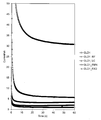
- the response electric current at the time of using AtGLD and various flavin compounds is shown.
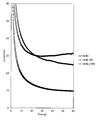
- the response electric current at the time of using GLD1 and various flavin compounds is shown.
- the response current when GOD and various flavin compounds are used is shown.
- the response current when using MpGDH and various flavin compounds is shown.
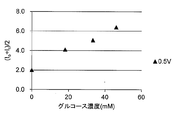
- the response current when using GLD1 and FMN is shown for samples containing various concentrations of glucose.
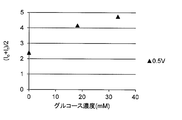
- the response currents when using GDH-M2 and FMN are shown for samples containing various concentrations of glucose.
- the response current when GLD1 and FAD are used is shown for samples containing various concentrations of glucose.
- the response currents when using GDH-M2 and RF for samples containing various concentrations of glucose are shown.
- the response current when using GLD1 and LC is shown for samples containing various concentrations of glucose.
- the present invention provides flavin compounds.
- the present invention provides a glucose measurement composition comprising a flavin compound.
- the flavin compound of the present invention functions as a mediator in a glucose redox reaction catalyzed by glucose oxidase or glucose dehydrogenase. Functioning as a mediator means that a flavin compound is involved in electron transfer.
- the flavin compound of the present invention receives an electron from GOD or GDH and becomes a reduced type, and passes the electron to the electrode. Return to oxidized form. From such a viewpoint, the flavin compound of the present invention can also be called an electron transfer mediator. In the present specification, these terms are synonymous.
- FAD-dependent GOD and GDH form a holoenzyme with the flavin compound FAD which is a coenzyme.
- GOD refers to FAD-dependent GOD unless otherwise specified.
- GDH when it is referred to as GDH, this refers to FAD-dependent GDH unless otherwise specified.
- FAD forms a complex with the enzyme by noncovalent bonding, and is usually buried in the enzyme. That is, FAD contained in the holoenzyme is not released in the solution.
- GOD and GDH which do not have a coenzyme are called apoenzymes and do not show activity against glucose.
- the flavin compound of the present invention does not include a coenzyme contained in a holoenzyme. That is, the flavin compound of the present invention exists in a state released from the enzyme. Unless otherwise specified, in the present specification, the flavin compound of the present invention refers to a free flavin compound and a free flavin compound.
- the coenzyme FAD contained in the holoenzyme of GOD or GDH does not correspond to the “flavin compound of the present invention” referred to in the present specification.
- the flavin compound of the present invention can be used by being immobilized in a solid phase such as an electrode surface. Even in such a case, the immobilized flavin compound is not contained in the holoenzyme and exists independently of the GOD or GDH enzyme. Therefore, for convenience, such an immobilized flavin compound is also included in the term “free flavin compound” in the present specification.
- Such flavin compounds that exist independently of GOD and GDH enzymes may be referred to as non-enzyme-type flavin compounds and non-enzyme-bound flavin compounds. Non-enzymatic flavin compounds and non-enzyme-bound flavin compounds may also be immobilized in a solid phase.
- the flavin compounds of the invention may be a compound of general formula I: [Wherein R 1 is absent or —CH 3 , or And when R 1 is not present, the nitrogen atom drawn by connecting R 1 forms a double bond with an adjacent carbon atom and R 2 is H; When R 2 is absent or is H and R 2 is not present, the nitrogen atom depicted by linking R 2 forms a double bond with an adjacent carbon atom; R 3 is H, a phosphate group, or Is].
- the flavin compound of the invention is riboflavin (RF) (CAS 83-88-5).
- the flavin compound of the invention is a flavin mononucleotide (FMN) (CAS 146-17-8).
- the flavin compound of the present invention is Lumichrome (LC) (CAS 1086-80-2).
- the flavin compound of the invention is a flavin adenine dinucleotide (FAD) (CAS 146-14-5).
- FAD flavin adenine dinucleotide
- the flavin compound of the present invention is lumiflavin (LF) (CAS 1088-56-8).
- flavin compounds generally have three types of redox states and three types of ionization states.
- the flavin compound of the present invention is described in a neutral and oxidized form.
- the flavin compound of the present invention can be oxidized (quinone type), semiquinone type, or reduced type (hydroquinone type).
- the flavin compound of the present invention can be neutral or anionic.
- the flavin compound of the present invention for example, the flavin compound of the present invention represented by the above chemical formula includes neutral, anionic, oxidized, semiquinone, or reduced forms. It shall be.
- a neutral and oxidized compound as a flavin compound of the present invention may change to an oxidized and anionic compound due to pH and proton exchange of the solution, Such compounds are also included in the flavin compounds of the present invention.
- the flavin compound of the present invention may be artificially synthesized or a natural product may be obtained. Moreover, what is marketed may be used.
- the flavin compounds of the invention may be used with glucose dehydrogenase (FAD-dependent GDH). In another embodiment, the flavin compounds of the invention may be used with glucose oxidase (FAD dependent GOD). In another embodiment, the composition comprising a flavin compound of the present invention further comprises glucose dehydrogenase or glucose oxidase. GDH or GOD may be free in the solution or may be immobilized on a solid phase. GDH or GOD may exist alone or may be linked to another compound or protein, such as an enzyme or an antibody.
- a composition comprising a flavin compound of the invention comprises (i) does not include an artificial electron mediator added externally and capable of receiving electrons alone from FAD-dependent glucose oxidase or FAD-dependent glucose dehydrogenase; (ii) does not contain an externally added water-insoluble electron mediator capable of accepting electrons alone from FAD-dependent glucose oxidase or FAD-dependent glucose dehydrogenase, or (iii) It does not contain an electron mediator with an oxidation-reduction potential of 0.3 V or higher, which is added from the outside and can receive electrons from FAD-dependent glucose oxidase or FAD-dependent glucose dehydrogenase alone.
- the oxidation-reduction potential is based on a silver-silver chloride electrode.
- an electrochemical measurement method and a power generation method for glucose using the flavin compound of the present invention include: (i) no artificial electron mediator capable of receiving electrons alone from FAD-dependent glucose oxidase or FAD-dependent glucose dehydrogenase is added from the outside; (ii) no externally added water-insoluble electron mediator capable of accepting electrons alone from FAD-dependent glucose oxidase or FAD-dependent glucose dehydrogenase, or (iii) An electron mediator having an oxidation-reduction potential of 0.3 V or more and capable of receiving an electron alone from FAD-dependent glucose oxidase or FAD-dependent glucose dehydrogenase is not added from the outside.
- the addition from the outside here includes addition immediately before measurement or during measurement, and addition in measurement reagent preparation.
- the compositions, electrodes, and sensors comprising the flavin compounds of the present invention are redox, added externally, capable of receiving electrons alone from FAD-dependent glucose oxidase or FAD-dependent glucose dehydrogenase.
- An electron mediator having a potential of 0.3 V or more, 0.2 V or more, 0.1 V or more, or 0 V or more, 0.8 V or less, 0.7 V or less, or 0.6 V or less is not included.
- the compositions, electrodes, and sensors comprising the flavin compounds of the present invention are externally added oxidation that can accept electrons from FAD-dependent glucose oxidase or FAD-dependent glucose dehydrogenase alone.
- Reduction potential is 0 to 0.8V, 0 to 0.7V, 0 to 0.6V, 0.1 to 0.7V, 0.2 to 0.6V, 0.3 to 0.8V, 0.3 to 0 .7V, 0.3-0.6V electron mediator is not included. In certain embodiments, these are also excluded for methods using the flavin compounds of the present invention.
- compositions, electrodes, and sensors comprising the flavin compounds of the present invention are non-water soluble, which can receive electrons from FAD-dependent glucose oxidase or FAD-dependent glucose dehydrogenase alone, added externally. Does not contain sex electron mediators.
- Water-insoluble electron mediators include ferrocene, water-insoluble quinones such as phenanthroline quinone, water-insoluble phenazines such as phenazine, water-insoluble viologens, water-insoluble thioredoxins, water-insoluble Examples include, but are not limited to, phenoxazines, water-insoluble phenothiazines, water-insoluble ferredoxins, and water-insoluble ferrocene derivatives. In certain embodiments, these are also excluded for methods using the flavin compounds of the present invention.
- compositions, electrodes, and sensors comprising the flavin compounds of the present invention do not include conventional artificial electron mediators that can accept electrons from FAD-dependent glucose oxidase or FAD-dependent glucose dehydrogenase alone. In certain embodiments, these are similarly excluded for methods using the flavin compounds of the present invention.
- Conventional artificial electron mediators that can receive electrons alone from FAD-dependent glucose oxidase or FAD-dependent glucose dehydrogenase include potassium ferricyanide, quinones, anthraquinones, and phenazines that are artificially added to the system from the outside.
- Viologens such as potassium ferricyanide, ferredoxins, ferrocene or ferrocene derivatives, osmium complexes, cobalt complexes, ruthenium complexes, iron complexes, vanadium complexes Complexes that can accept electrons from FAD-dependent glucose oxidase or FAD-dependent glucose dehydrogenase alone are mentioned.
- These compounds and derivatives include sulfonyl group, sulfo group, carbonyl group, carboxyl group, amino group, imino group, nitro group, nitroso group, hydroxy group, alkyl group (eg C1-C16 alkyl, eg methyl group), alkoxyl group
- sulfonyl group e.g C1-C16 alkyl, eg methyl group
- sulfo group carbonyl group, carboxyl group, amino group, imino group, nitro group, nitroso group, hydroxy group, alkyl group (eg C1-C16 alkyl, eg methyl group), alkoxyl group
- a plurality of functional groups such as an acyl group, a cyano group, and a halogen group may be included.
- the electron mediator compound examples include 1,1′-dimethylferrocene, ferrocenecarboxylic acid, ferrocenecarboxaldehyde, benzoquinone, hydroquinone, ferricyanide / ferrocyanide (K or Na salt such as potassium ferricyanide), ferricinium / ferrocene.
- artificial electron mediators that can accept electrons from FAD-dependent glucose oxidase or FAD-dependent glucose dehydrogenase alone are potassium ferricyanide, ferrocene, [Ni (PQ 3 )] Cl 2 , and [Ni (PQ ) 3 ] Br 2 .
- compositions, electrodes, and sensors comprising the flavin compounds of the invention comprise potassium ferricyanide, ferrocene, [Ni (PQ 3 )] Cl 2 , and [Ni (PQ) 3 ] Br 2 . Absent. In some embodiments, they are not added in the method of the present invention.
- the ruthenium complex in a system containing a ruthenium complex as a single electron mediator and a FAD-dependent GDH, the ruthenium complex is referred to as “single electron from FAD-dependent glucose oxidase or FAD-dependent glucose dehydrogenase”. It does not fall under “Receivable Artificial Electronic Mediator”. However, the presence of additional 1-mPMS in the system allows the ruthenium complex to accept electrons. Therefore, in a system that includes 1-mPMS and a ruthenium complex as an electron mediator and includes FAD-dependent GDH, the combination of 1-mPMS and ruthenium complex can transfer electrons from FAD-dependent glucose oxidase or FAD-dependent glucose dehydrogenase. Can receive.
- the present invention includes combinations of such electron mediators and flavin compounds of the present invention. That is, in one embodiment, the composition for measuring glucose of the present invention contains a free flavin compound, contains purified FAD-dependent glucose oxidase or purified FAD-dependent glucose dehydrogenase, and independently converts electrons into FAD.
- the composition of the present invention excludes artificial electron mediators that can receive electrons from FAD-dependent glucose oxidase or FAD-dependent glucose dehydrogenase alone, but from FAD-dependent glucose oxidase or FAD-dependent glucose dehydrogenase.
- composition of the present invention excludes artificial electron mediators that can receive electrons directly from FAD-dependent glucose oxidase or FAD-dependent glucose dehydrogenase. The same applies to the electrode, sensor, and method of the present invention.
- “added from the outside to the composition or measurement system” means addition at a concentration that can affect the response current in glucose concentration measurement (addition in an amount effective for glucose measurement). For example, even if a minute amount of an artificial electron mediator that does not affect the response current is added to the composition of the present invention from the outside in the glucose concentration measurement, it does not affect the glucose concentration measurement using the composition of the present invention. Are not included in the present invention. Further, the composition of the present invention does not contain an externally added artificial electron mediator means that it does not substantially contain an externally added artificial electron mediator, that is, does not affect the response current. Although it may contain a minute amount of artificial electron mediator, it does not contain a substantial amount of artificial electron mediator that affects the response current.
- a composition comprising an artificial electron mediator capable of accepting electrons from FAD-dependent glucose oxidase or FAD-dependent glucose dehydrogenase alone in a substantial amount that affects the response current is excluded from the present invention. It is burned.
- an electron is allowed to be FAD-dependent glucose oxidase or FAD-dependent in a very small amount that does not adversely affect the human body and does not affect the response current.
- an artificial electron mediator capable of receiving glucose glucose dehydrogenase is externally added to the composition of the present invention, it does not affect the glucose concentration measurement using the composition of the present invention. Is included. The same applies to the electrodes, sensors, and methods of the present invention.
- a fusion protein in which FAD-dependent GDH is linked to cytochrome International Publication No. 2017/094776.
- the fusion protein is expressed as Cytb-GDH or GDH-Cytb.
- such fusion proteins may be used as FAD-dependent GDH.
- the cytochrome portion included in the fusion protein (Cytb-GDH or the like) is a part of the fusion protein, and does not correspond to the cytochrome added from the outside in the present specification.
- a glucose measurement composition is provided that includes a free flavin compound and a purified glucose dehydrogenase-cytochrome fusion protein, provided that the composition does not include externally added cytochrome. .
- GDH and GOD can be immobilized on the solid phase by any known method.
- GDH or GOD may be immobilized on beads, membranes, or electrode surfaces.
- the immobilization method include a method using a crosslinking reagent, a method of encapsulating in a polymer matrix, a method of coating with a dialysis membrane, a photocrosslinkable polymer, a conductive polymer, a redox polymer, and the like. It may be adsorbed and fixed on top, or a combination of these may be used.
- GOD or GDH is immobilized on a carbon electrode using glutaraldehyde
- glutaraldehyde is blocked by treatment with a reagent having an amine group.
- the amount of GDH or GOD to be immobilized can be an amount that can generate an electric current necessary for electrochemical measurement or fuel cell power generation, and can be determined as appropriate.
- the flavin compound of the present invention may be present alone in a solution, or may be immobilized on a solid phase such as a bead, membrane or electrode surface.
- the immobilization method include a method using a crosslinking reagent, a method of encapsulating in a polymer matrix, a method of coating with a dialysis membrane, a photocrosslinkable polymer, a conductive polymer, a redox polymer, and the like. It may be adsorbed and fixed on top, or a combination of these may be used.
- the amount of the flavin compound to be immobilized can be an amount that can generate an electric current required for electrochemical measurement or fuel cell power generation, and can be determined as appropriate.
- the flavin compound of the present invention may be immobilized, and further GDH or GOD may be immobilized. In this case, these may be immobilized by the same or different methods.
- the final concentration of the flavin compound of the present invention added to the sample solution is not particularly limited. For example, 0.01 to 200 mM, 0.02 to 150 mM, 0.03 to 100 mM, 0.04 to 80 mM, 0.05 to 60 mM. 0.06-50 mM, 0.08-40 mM, 0.1 mM-30 mM, 0.15-20 mM, 0.2-10 mM, 0.3-5 mM, 0.4-3 mM, eg 0.05-10 mM Can be a range.
- the final concentration of the flavin compound of the present invention added to the sample solution is not particularly limited.
- the order of adding the flavin compound and other enzymes and reagents is not limited, and they may be added simultaneously or sequentially.
- the concentration of each component of the electrochemical measurement reagent can be adjusted according to the concentration range of the reduced mediator contained in the sample or estimated to be generated in the sample. it can.
- glucose dehydrogenase or glucose oxidase contained in the composition of the present invention is a purified enzyme.
- Cell extracts, cell disruptions, and crude enzyme extracts containing GOD or GDH contain various contaminants in addition to GOD and GDH.
- the amount of riboflavin in the crude enzyme extract is about 53 to 133 ⁇ M in microorganisms (J Indust Micro Biotech 1999, 22, pp. 8-18). If such a crude enzyme extract or the like is subjected to electrochemical measurement as it is, since contaminants receive electrons and the transfer of electrons to the electrode is hindered, in the crude enzyme extract, this riboflavin concentration is Accurate electrochemical measurements are difficult.
- GOD or GDH from which impurities are removed is used.
- GOD or GDH is purified or is a purified enzyme.
- the protein does not necessarily have to be a pure product, and is a contaminant from the enzyme preparation to the extent that electrochemical measurement of glucose is possible. Is removed.
- Glucose dehydrogenase exists widely in nature and can be obtained by searching for enzymes of microbial and animal / plant origin.
- the microorganism can be obtained from, for example, filamentous fungi, yeast, or bacteria.
- the glucose dehydrogenase of the present invention includes, for example, microorganisms classified into the genus Acer, Class A, Class A, Aceraceae, such as Mucor, Absidia, Actinomucor, Circinella It may be GDH derived from a biological species such as a genus or a variant thereof.
- the microorganisms belonging to the genus Mucor include Mucor prainiii, Mucor cilcinelloides, Mucor hiemilis, Mucor subtilis, and Mucor subtilis. ), Mucor javanicus, Mucor dimorphosporus, and the like.
- Examples of microorganisms belonging to the genus Absidia include Absidia cylindrospora and Absidia hyaspora (Absidia hyalospora).
- Examples of the Actinomucor genus microorganism include Actinomucor elegans.
- the microorganisms belonging to the genus Circinella include Circinella simplex, Circinella irrensis (Circinella angelis), Circinella irrensis (Circinella angelis). , Circinella minor, Circinella mucoloides, Circinella rigida, Circinella umbellata and Circinella umbellata It can be mentioned Sukae (Circinella muscae).
- the GDH may be derived from Aspergillus oryzae.
- the GDH may be GDH from BBI product code GLD1 (from Aspergillus oryzae).
- the GDH may be Aspergillus terreus-derived GDH (see Patent No. 5020070).
- Glucose oxidase exists widely in nature and can be obtained by searching for enzymes derived from microorganisms and animals and plants.
- the microorganism can be obtained from, for example, filamentous fungi, yeast, or bacteria.
- the glucose oxidase of the present invention can be, for example, a GOD derived from a biological species such as Aspergillus, Penicillium, Apis, Mucor, Fusarium, Streptomyces, Talaromyces, or a variant thereof.
- the GOD may be from Toyobo catalog number GLO-201 (derived from the genus Aspergillus).
- GLO-201 glycoprotein with 2 moles of FAD
- GOD or GDH gene In order to obtain a gene encoding GOD or GDH, a generally used gene cloning method is used. For example, chromosomal DNA or mRNA can be extracted from microbial cells having the ability to produce GOD or GDH and various cells by a conventional method, for example, the method described in Current Protocols in Molecular Biology (WILEY Interscience, 1989). Furthermore, cDNA can be synthesized using mRNA as a template. Using the chromosomal DNA or cDNA thus obtained, a library of chromosomal DNA or cDNA can be prepared.
- an appropriate probe DNA is synthesized based on the amino acid sequence of GOD or GDH, and a method for selecting a GDH gene from a chromosomal DNA or cDNA library using this, or an appropriate primer DNA is selected based on the amino acid sequence.
- the DNA containing the gene fragment of interest is amplified by an appropriate polymerase chain reaction (PCR method) such as 5′RACE method or 3′RACE method, and these DNA fragments are ligated to obtain the full length of the gene of interest. DNA containing can be obtained.
- PCR method polymerase chain reaction
- any known gene can be used as a gene encoding GDH, for example, a GDH gene derived from the genus Mucor (the one described in Japanese Patent No. 4648993).
- a modified version of this gene may be used, for example, the modified genes described in WO2012 / 169512 and WO2015 / 099112.
- MpGDH Aspergillus terreus-derived GDH gene
- Japanese Patent No. 5020070 Japanese Patent No. 5020070.
- GOD gene Any known gene can be used as a gene encoding GOD, for example, GOD gene derived from Aspergillus.
- the gene may be modified.
- genes may be linked or inserted into various vectors, or may be incorporated into chromosomes or genomes.
- cloning into the vector may be performed using commercially available kits such as TA Cloning Kit (Invitrogen) and In-Fusion HD Cloning Kit (Clontech); pUC119 (Takara Bio), pUC18 (Takara Bio), Commercially available plasmid vector DNA such as pBR322 (Takara Bio), pBluescript SK + (Stratagene), pYES2 / CT (Invitrogen); commercially available bacteriophage vector DNA such as ⁇ EMBL3 (Stratagene) can be used.
- the recombinant DNA is used to transform a host organism, for example, Escherichia coli, preferably E. coli JM109 strain (Takara Bio) or E. coli DH5 ⁇ strain (Takara Bio).
- Escherichia coli preferably E. coli JM109 strain (Takara Bio) or E. coli DH5 ⁇ strain (Takara Bio).
- the recombinant DNA contained in the obtained transformant is purified using QIAGEN Plasmid Mini Kit (Qiagen) or the like.
- GOD or GDH may be produced by culturing the transformed cells obtained as described above, expressing GOD or GDH gene contained in the cells, and then isolating the expressed protein from the culture. .
- Either a synthetic medium or a natural medium can be used as long as it contains a normal medium for culturing filamentous fungi, that is, a carbon source, a nitrogen source, inorganic substances, and other nutrients in an appropriate ratio.
- the medium for culturing the above microbial host cells include one or more nitrogen sources such as yeast extract, tryptone, peptone, meat extract, corn steep liquor or soybean or wheat bran leachate, sodium chloride, phosphoric acid.
- Add one or more inorganic salts such as 1st potassium, 2nd potassium phosphate, magnesium sulfate, magnesium chloride, ferric chloride, ferric sulfate or manganese sulfate and, if necessary, saccharide raw materials, vitamins, etc. Those appropriately added are used.
- Culture conditions for filamentous fungi that are generally known by those skilled in the art may be employed.
- the initial pH of the medium is adjusted to 5 to 10
- the culture temperature is 20 to 40 ° C.
- the culture time is several hours to several hours.
- the number of days can be set appropriately, such as 1 to 7 days, more preferably 2 to 5 days.
- the culture means is not particularly limited, and aeration and agitation deep culture, shaking culture, static culture, and the like can be adopted, but culture is preferably performed under conditions that provide sufficient dissolved oxygen.
- aeration and agitation deep culture is performed at a culture temperature of 10 to 42 ° C., preferably at a culture temperature of about 25 ° C. for 4 to 24 hours, more preferably at a culture temperature of about 25 ° C. for 4 to 8 hours. What is necessary is just to implement by shaking culture, stationary culture, etc.
- GOD or GDH is collected from the culture.
- an ordinary known enzyme collecting means may be used.
- the culture supernatant fraction is collected, or the bacterial cells are subjected to ultrasonic disruption treatment, grinding treatment, or the like, or the enzyme is extracted using a lytic enzyme such as lysozyme, or The enzyme can be discharged out of the cells by causing lysis by shaking or leaving in the presence of toluene or the like. Then, this solution is filtered, centrifuged, etc.
- nucleic acid is removed with streptomycin sulfate, protamine sulfate, manganese sulfate or the like, and then ammonium sulfate, alcohol, acetone or the like is added thereto.
- the fraction is collected and the precipitate is collected to obtain a crude enzyme of GOD or GDH.
- the crude enzyme can be further purified using any known means.
- a purified enzyme preparation for example, gel filtration using Sephadex, Ultrogel or biogel; adsorption elution using ion exchanger; electrophoresis using polyacrylamide gel or the like; adsorption using hydroxyapatite Elution method; Sedimentation method such as sucrose density gradient centrifugation; Hydrophobic chromatography method; Affinity chromatography method; Fractionation method using molecular sieve membrane or hollow fiber membrane, etc.
- a purified enzyme preparation can be obtained.
- Judgment whether or not the enzyme is purified may be made by polyacrylamide gel electrophoresis and staining, and it is tested whether glucose can be appropriately electrochemically measured using a glucose sample of known concentration. May be performed.
- GDH (EC 1.1.9.10.10) catalyzes the reaction of oxidizing the hydroxyl group of glucose to produce glucono- ⁇ -lactone. At this time, the electron acceptor receives electrons and becomes a reduced electron acceptor.
- the activity of GDH can be measured using this principle of action, for example, using the following measurement system using phenazine methosulfate (PMS) and 2,6-dichloroindophenol (DCIP) as electron acceptors. .
- the activity of GDH can be measured according to the following procedure. Mix 100 mM phosphate buffer (pH 7.0) 2.05 mL, 1 M D-glucose solution 0.6 mL and 2 mM DCIP solution 0.15 mL, and incubate at 37 ° C. for 5 minutes. Next, 0.1 mL of 15 mM PMS solution and 0.1 mL of enzyme sample solution are added to start the reaction. The absorbance at the start of the reaction and with time is measured, the amount of decrease in absorbance per minute at 600 nm ( ⁇ A600) accompanying the progress of the enzyme reaction is determined, and the GDH activity is calculated according to the following formula. In this case, the GDH activity is defined as 1 U as the amount of enzyme that reduces 1 ⁇ mol of DCIP per minute in the presence of 200 mM D-glucose at 37 ° C.
- 3.0 is the reaction reagent + enzyme reagent solution volume (mL)
- 16.3 is the millimolar molecular extinction coefficient (cm 2 / ⁇ mol) under the activity measurement conditions
- 0.1 is the enzyme solution solution volume.
- ML 1.0 is the optical path length of the cell (cm)
- ⁇ A600 blank is the absorbance at 600 nm when the reaction is started by adding 100 mM phosphate buffer (pH 7.0) instead of the enzyme sample solution for 1 minute.
- the amount of reduction per unit, df represents the dilution factor.
- GOD (EC 1.1.3.4) catalyzes the reaction of oxidizing the hydroxyl group of glucose to produce glucono- ⁇ -lactone and hydrogen peroxide.
- the activity of GOD can be measured by utilizing this principle of action and reacting the produced hydrogen peroxide with peroxidase to develop a color former.
- ⁇ Measurement conditions Prewarm 3 mL of reaction reagent at 37 ° C. for 5 minutes. After adding 0.1 mL of GOD solution and mixing gently, the absorbance at 555 nm is measured with a spectrophotometer controlled at 37 ° C. using water as a control. The measured value is the change in absorbance per minute from 1 minute to 3 minutes at 555 nm.
- the number of micromoles of hydrogen peroxide produced per minute at 37 ° C. is defined as the activity unit (U) in the enzyme solution, and is calculated according to the following formula.
- the present invention provides a glucose assay kit comprising a flavin compound of the present invention.
- the kit comprises GDH.
- the kit includes GOD.
- blood glucose blood glucose level
- the measurement may be performed continuously.
- the glucose assay kit of the present invention contains a sufficient amount of the flavin compound of the present invention for at least one assay.
- the glucose assay kit of the present invention comprises, in addition to the flavin compound of the present invention, GOD or GDH, a buffer necessary for the assay, a glucose standard solution for creating a calibration curve, and guidelines.
- a glucose assay kit of the present invention eg, a glucose assay kit for SMBG, CGM, or FGM, comprises a flavin compound of the present invention and GOD or GDH as the same reagent.
- the glucose assay kit of the present invention comprises a flavin compound and GOD or GDH as separate reagents.
- the flavin compound of the present invention is provided in various forms, for example, as a lyophilized reagent, as a reagent immobilized on a bead or electrode surface, or as a solution in a suitable storage solution, preferably a light-shielded solution. can do.
- the glucose concentration can be measured as follows, for example.
- the reaction layer of the glucose assay kit includes GDH, and N- (2-acetamido) imidodiacetic acid (ADA), bis (2-hydroxyethyl) iminotris (hydroxymethyl) methane (Bis-Tris), sodium carbonate as reaction accelerators And a liquid or solid composition containing at least one substance selected from the group consisting of imidazole and imidazole.
- a pH buffering agent and a coloring reagent are added as necessary.
- a sample containing glucose is added to this and allowed to react for a certain time.
- the absorbance corresponding to the maximum absorption wavelength of the dye produced by polymerization or reduction by directly receiving electrons from GDH is monitored.
- the rate method from the rate of change of absorbance per time, in the case of the endpoint method, the calibration was made in advance using a standard concentration glucose solution from the change in absorbance up to the point when all the glucose in the sample was oxidized. Based on the calibration curve, the glucose concentration in the sample can be calculated.
- coloring reagent color changing reagent
- DCIP 2,6-dichloroindophenol
- glucose can be quantified by monitoring a decrease in absorbance at 600 nm.
- NTB nitrotetrazolium blue
- the coloring reagent (color changing reagent) to be used is not limited to these.
- the present invention provides a glucose sensor using the flavin compound of the present invention.
- the glucose sensor of the present invention has the flavin compound of the present invention and GDH or GOD.
- an electrode of the glucose sensor a carbon electrode, a gold electrode, a platinum electrode, or the like is used, and a GOD or GDH enzyme can be applied or immobilized on the electrode.
- the flavin compound of the present invention may be applied or immobilized on an electrode.
- immobilization method see the paragraph “GDH or GOD immobilization method” above.
- the flavin compound of the present invention and GOD or GDH can be used in various electrochemical measurement methods by using a potentiostat, a galvanostat or the like.
- Electrochemical measurement methods include various techniques such as amperometry, such as chronoamperometry, voltammetry, such as cyclic voltammetry, potentiometry, coulometry.
- amperometry such as chronoamperometry
- voltammetry such as cyclic voltammetry
- potentiometry potentiometry
- coulometry coulometry.
- the glucose concentration in the sample can be calculated by measuring the current when glucose is reduced by amperometry.
- the applied voltage depends on conditions and device settings, but can be, for example, ⁇ 1000 mV to +1000 mV (vs. Ag / AgCl).
- the present invention provides glucose electricity comprising contacting a sample that may contain glucose, a free flavin compound, purified glucose oxidase or purified glucose dehydrogenase, and measuring the current.
- a chemical measurement method is provided.
- the flavin compound and / or enzyme may be immobilized in a solid phase.
- electrochemical measurement of glucose concentration can be performed as follows. Put buffer in constant temperature cell and maintain at constant temperature. An electrode on which GDH or GOD is immobilized is used as a working electrode, and a counter electrode (for example, a platinum electrode) and a reference electrode (for example, an Ag / AgCl electrode or an Ag / Ag + electrode) are used.
- the flavin compound of the present invention is added to the reaction solution. After a constant voltage is applied to the carbon electrode and the current becomes steady, a sample containing glucose is added and the increase in current is measured.
- the glucose concentration in the sample can be calculated according to a calibration curve prepared with a standard concentration glucose solution.
- the applied potential can be, for example, +800 mV or less, +700 mV or less, +600 mV or less, +500 mV or less, +400 mV or less, +300 mV or less, +200 mV or less, +100 mV or less, +50 mV or less, ⁇ 200 mV or more, ⁇ 100 mV or more, ⁇ 50 mV or more,
- it can be 0 mV or more, for example, +800 mV to ⁇ 200 mV, +800 mV to ⁇ 100 mV, +800 mV to ⁇ 50 mV, +600 mV to 0 mV, +500 mV to 0 mV, +400 mV to 0 mV, +300 mV to 0 mV, +200 mV to 0 mV. (All for silver-silver chloride reference electrode).
- 0.2 U to 150 U is fixed to a glassy carbon (GC) electrode, and the response current value with respect to the glucose concentration is measured.
- GC glassy carbon
- 10.0 ml of 100 mM potassium phosphate buffer (pH 6.0) is added.
- the GC electrode is connected to potentiostat BAS100B / W (manufactured by BAS), the solution is stirred at 37 ° C., and +500 mV is applied to the silver-silver chloride reference electrode.
- a 1M D-glucose solution is added to these systems to a final concentration of 5, 10, 20, 30, 40, and 50 mM, and a steady-state current value is measured for each addition.
- This current value is plotted against a known glucose concentration (5, 10, 20, 30, 40, 50 mM) to create a calibration curve. Accordingly, glucose can be quantified with the GDH or GOD enzyme-immobilized electrode.
- a printed electrode can also be used for electrochemical measurements.
- the electrode is preferably formed on an insulating substrate.
- the material for the insulating substrate include silicon, glass, ceramic, polyvinyl chloride, polyethylene, polypropylene, polyester, and the like, but it is more preferable to use a material having strong resistance to various solvents and chemicals.
- the area of the working electrode can be set according to a desired response current.
- the area of the working electrode is 1 mm 2 or more, 1.5 mm 2 or more, 2 mm 2 or more, 2.5 mm 2 or more, 3 mm 2 or more, 4 mm 2 or more, 5 mm 2 or more, 6 mm 2 or more, 7 mm 2 or more. 8 mm 2 or more, 9 mm 2 or more, 10 mm 2 or more, 12 mm 2 or more, 15 mm 2 or more, 20 mm 2 or more, 30 mm 2 or more, 40 mm 2 or more, 50 mm 2 or more, 1 cm 2 or more, 2 cm 2 or more, 3 cm 2 or more, 4 cm It can be 2 or more, 5 cm 2 or more, for example, 10 cm 2 or more. In an embodiment, the area of the working electrode can be 10 cm 2 or less, 5 cm 2 or less, such as 1 cm 2 or less.
- the counter electrode can be similar.
- a continuous blood glucose measurement device having the glucose sensor of the present invention having the glucose sensor of the present invention.
- the continuous blood glucose measurement device may include a CGM (continuous glucose monitoring) device and an FGM (flash glucose monitoring) device that can grasp the fluctuation of the blood glucose level over 24 hours.
- the present invention also provides a continuous glucose monitoring method using the composition, electrode or sensor of the present invention.
- the CGM device of the present invention may have a glucose sensor for placement under the skin.
- the sensor can be worn for a certain period of time, for example 1 day to 3 weeks.
- the sensor may be disposable or reusable.
- the sensor can have a sensor membrane layer to prevent direct contact between the tissue and the enzyme.
- the sensor can be designed to be inserted into the abdomen using an applicator.
- the present invention provides a CGM device further comprising a transmitter and a sensor to transmitter connection.
- the transmitter may not be implanted.
- the transmitter is communicable with the radio receiver.
- the CGM device may further have an electrical receiver that continuously displays the glucose level.
- the CGM device may optionally have a calibration fingerstick (fingertip piercing member).
- the CGM device can have instructions for use.
- the present invention provides an anode for a fuel cell having the flavin compound of the present invention or a composition containing the flavin compound, and a fuel cell including the anode.
- the present invention provides a flavin compound of the present invention, a composition containing a flavin compound, or a power generation method using glucose as a fuel, using the anode.
- the fuel cell of the present invention includes the flavin compound of the present invention, a fuel tank, a cathode, an anode having GOD or GDH, and an electrolyte. Moreover, the fuel cell of this invention can arrange
- GOD or GDH may be close to or in contact with the anode, may be immobilized, or may be adsorbed.
- the fuel tank contains glucose. That is, in the present specification, a fuel cell refers to a fuel cell using glucose as a fuel unless otherwise specified. Glucose is oxidized by the action of GOD or GDH to produce a reduced mediator, and when this delivers electrons to the electrode, a current flows.
- the fuel cell of the present invention may have an ion exchange membrane that separates the anode and cathode.
- the ion exchange membrane can have pores of 1 nm to 20 nm.
- the anode can be a common electrode such as a carbon electrode.
- an electrode made of a conductive carbon such as carbon black, graphite, activated carbon, or an electrode made of a metal such as gold or platinum can be used.
- a conductive carbon such as carbon black, graphite, activated carbon
- a metal such as gold or platinum
- an electrode catalyst generally used in a fuel cell such as platinum or a platinum alloy
- a carbonaceous material such as carbon black, graphite, activated carbon
- a conductive material made of gold, platinum, or the like can be used.
- An electrode carried on a body or a conductor made of an electrode catalyst such as platinum or a platinum alloy is used as a cathode electrode, and an oxidizing agent (cathode side substrate, oxygen, etc.) is supplied to the electrode catalyst. it can.
- a substrate-reducing enzyme electrode can be used as a cathode paired with an anode composed of the substrate-oxidizing enzyme electrode as described above.
- the oxidoreductase that reduces the oxidizing agent include known enzymes such as laccase and bilirubin oxidase.
- a known electron transfer mediator may be used as necessary.
- the cathode mediator may be the same as or different from the anode mediator.
- the oxidizing agent include oxygen and hydrogen peroxide.
- an oxygen selective membrane eg, dimethylpolysiloxane membrane
- impurities such as ascorbic acid and uric acid
- the power generation method of the present invention includes a step of supplying glucose serving as a fuel to an anode having GOD or GDH.
- glucose is supplied to the anode having GOD or GDH
- glucose is oxidized to D-glucono- ⁇ -lactone, and simultaneously generated electrons are transferred to the GOD or GDH between the oxidase and the electrode.
- an electron transfer mediator that mediates, for example, a flavin compound
- Protons (H + ) generated in the above process move to the cathode electrode in the electrolyte solution.
- protons that have moved from the anode through the electrolyte solution electrons that have moved from the anode side through an external circuit, and an oxidizing agent (cathode side substrate) such as oxygen or hydrogen peroxide react. Water is produced. This can be used to generate electricity.
- the flavin compound of the present invention and a composition containing a flavin compound can be used for measuring glucose concentration in a sample, which can be used for, for example, diagnosis of diabetes and self-monitoring of blood glucose level.
- the composition of the present invention can be used with an enzyme electrode and can be used for various electrochemical measurements.
- the composition of the present invention can also be used with an enzyme sensor.
- the composition of this invention can be utilized for a glucose measurement kit or a glucose sensor.
- the flavin compound of this invention and the composition containing a flavin compound can be used for a fuel cell. That is, the flavin compound of the present invention and the composition containing the flavin compound can be used in a power generation method using glucose as a fuel. This is an exemplification, and the use of the flavin compound or the composition containing the flavin compound of the present invention is not limited thereto.
- Example 1 Introduction of Mucor genus-derived GDH gene into host and confirmation of GDH activity
- a gene encoding a GDH mutant in which each mutation of T387A / I545T was introduced into Mucor genus-derived GDH (MpGDH) described in Japanese Patent No. 4648993 was obtained.
- the amino acid sequence of the MpGDH mutant is shown in SEQ ID NO: 1
- the base sequence of the gene is shown in SEQ ID NO: 2.
- a DNA construct was prepared by inserting the MpGDH mutant gene, which is the target gene, into the multicloning site of the plasmid pUC19 by a conventional method.
- pUC19 linearized Vector attached to In-Fusion HD Cloning Kit (Clontech) was used as pUC19.
- the MpGDH mutant gene was ligated using the above-mentioned In-Fusion HD Cloning Kit according to the protocol attached to the kit, and the construct plasmid (pUC19 -MpGDH mutant).
- MpGDH-M1 a gene encoding modified GDH
- MpGDH-M1 Mucor-derived GDH
- SEQ ID NO: 3 The amino acid sequence of MpGDH-M1 is shown in SEQ ID NO: 3
- the base sequence of the gene is shown in SEQ ID NO: 4.
- a DNA construct was prepared by inserting the target gene MpGDH-M1 gene into the multicloning site of plasmid pUC19 by a conventional method.
- the MpGDH-M1 gene was ligated using the In-Fusion HD Cloning Kit described above according to the protocol attached to the kit, A construct plasmid (pUC19-MpGDH-M1) was obtained.
- a synthetic oligonucleotide of SEQ ID NO: 7-12, KOD-Plus- (manufactured by Toyobo Co., Ltd.) was used for PCR reaction under the following conditions.
- the culture was collected by centrifuging at 7,000 rpm for 5 minutes to obtain bacterial cells.
- the recombinant plasmid was extracted and purified from the cells using QIAGEN tip-100 (Qiagen) to obtain 2.5 ⁇ g of DNA.
- the base sequence of DNA encoding MpGDH-M1 in the plasmid was determined using a multicapillary DNA analysis system Applied Biosystems 3130xl Genetic Analyzer (manufactured by Life Technologies). As a result, 175 of the amino acid sequence described in SEQ ID NO: 1 was determined.
- a DNA construct encoding MpGDH-M1 / A175C / N214C / G466D (SEQ ID NO: 5), a mutant in which the alanine at position is replaced with cysteine, the asparagine at position 214 with cysteine, and the glycine at position 466 with aspartic acid Obtained (pUC19-MpGDH-M2) (SEQ ID NO: 6).
- Double-joint PCR (Fungal Genetics and Biology, 2004, Vol. 41, p973-981) was performed using the GDH gene.
- the resulting transformed Aspergillus sojae is selected as a strain into which the target gene has been introduced by introducing pyrG, a gene that complements uridine requirement, so that it can grow in a uridine-free medium. did it.
- the target transformant was selected from the obtained strains after confirmation by PCR.
- Each GDH was produced using transformed Aspergillus soya transformed with the gene of the MpGDH mutant.
- DPY liquid medium 1% (w / v) polypeptone, 2% (w / v) dextrin, 0.5% (w / v) yeast extract, 0.5% (w / v) KH) in 200 ml Erlenmeyer flask 2 PO4, 0.05% (w / v) MgSO 4 .7H 2 0; pH unadjusted) 40 ml were inoculated with conidia of each strain and cultured at 30 ° C. for 4 days with shaking at 160 rpm.
- the cells were filtered from the cultured product, and the obtained medium supernatant fraction was concentrated to 10 mL with Amicon Ultra-15, 30K NMWL (Millipore), and 20 mM potassium phosphate buffer containing 150 mM NaCl.
- the solution was applied to HiLoad 26/60 Superdex 200 pg (manufactured by GE Healthcare) equilibrated with the solution (pH 6.5), eluted with the same buffer, and the fraction showing GDH activity was collected, and MpGDH mutant and MpGDH- A purified sample of M2 was obtained.
- This enzyme is in a state of being bound to FAD via its FAD binding site (holoenzyme).
- Aspergillus terreus-derived GDH gene into host and acquisition of purified preparation Aspergillus terreus-derived GDH (AtGLD) gene described in Japanese Patent No. 5020070 was expressed in Aspergillus sojae as described above. Further, GDH was produced in the same manner as described above, and the obtained medium supernatant fraction was purified to obtain a purified AtGLD preparation. This enzyme is in a state of being bound to FAD via its FAD binding site (holoenzyme).
- chronoamperometry was performed by applying a voltage of +300 mV (vs. Ag / Ag +). Specifically, a potassium phosphate buffer solution (pH 7.0) having a final concentration of 50 mM, 20 mM glucose, and a 100 ⁇ M RF solution were placed on a 10 ⁇ L electrode to perform a reaction, and a current value for 60 seconds was measured. Similarly, measurement was performed using 1 mM FMN instead of 100 ⁇ M RF. As a control, the same test was performed using a glucose solution containing neither RF nor FMN.
- FIG. 4 is a chronoamperometric measurement result in which MpGDH mutant enzyme and RF or FMN are mixed.
- a significantly higher response current was seen when RF or FMN was added compared to when RF or FMN was not mixed.
- the response current was 30.6 nA when RF or FMN was not added 60 seconds after the start of measurement at an applied voltage of +300 mV (vs. Ag / Ag + ), but when RF was added, 33. It was 5 nA, and a high value of 53.2 nA was shown when FMN was added.
- FIG. 1 shows the results of chronoamperometry measurement in which AtGLD enzyme and RF or FMN, LC, and FAD are mixed.
- the response current was 1.4 nA when no flavin compound was added 60 seconds after the start of measurement at an applied voltage of +100 mV (vs. Ag / Ag + ), but 3.3 nA when RF was added. It was 17.9 nA when FMN was added, 10.3 nA when LC was added, and a high value of 2.7 nA when FAD was added. That is, a measurable response current was observed compared to the background. In addition, in any case where the flavin compound was mixed without adding glucose, the response current was lower than 1.4 nA.
- FIG. 2 shows the results of chronoamperometry measurement in which GLD1 enzyme and RF or FMN, LC, and FAD are mixed.
- the response current was 1.1 nA when no flavin compound was added 60 seconds after the start of measurement at an applied voltage of +100 mV (vs. Ag / Ag + ), but 2.1 nA when RF was added. It was 30.8 nA when FMN was added, 3.5 nA when LC was added, and a high value of 5.7 nA when FAD was added. That is, a measurable response current was observed compared to the background.
- GOD Glucose Oxidase
- RF flavin compound
- the printed electrode is SCREEN-PRINTED ELECTRODES (Drop Sense, DRP-110) printed with a carbon working electrode (12.6 mm 2 ) and a silver reference electrode, and a dedicated connector (Drop Sense) , DRP-CAC) and connected to an ALS electrochemical analyzer 814D (manufactured by BAS).
- the applied voltage was +100 mV (vs. Ag / Ag + ).
- FIG. 3 shows the results of chronoamperometry measurement in which GOD enzyme and RF or FMN are mixed. A significantly higher response current was observed when RF or FMN was added compared to the case where no flavin compound was mixed.
- the response current was 9.8 nA when no flavin compound was added 60 seconds after the start of measurement at an applied voltage of +100 mV (vs. Ag / Ag + ), but 25.0 nA when RF was added.
- FMN was added, a high value of 31.6 nA was shown. That is, a measurable response current was observed compared to the background.
- the response current obtained when GDH or GOD reacts with glucose is increased, and glucose can be measured with high sensitivity.
- a response curve based on a glucose-containing sample with a known concentration is measured in advance to create a calibration curve, and the response current of a glucose-containing sample with an unknown concentration is measured. From the calibration curve, the glucose concentration can be measured.
- the above is an illustration to the last and this invention is not limited to this at all.
- the electrode area for example, the area of the working electrode can be scaled up.
- the free flavin compound of the present invention functions as a mediator, GOD or It was confirmed that GDH mediates electron transfer when glucose is oxidized to gluconolactone.
- the oxidation-reduction potential of the flavin compound is known, and it is known that electrons can be exchanged depending on the oxidation-reduction potential of the partner compound, but glucose is actually measured by mixing the flavin compound with GDH or GOD. No examples have been reported so far.
- Example 2 Confirmation of glucose concentration dependency in electrochemical measurement 2 ⁇ L of 35 mg / ml GLD1 solution, 3 ⁇ L of 20 mM potassium phosphate buffer (pH 7.0) containing 1.5 M potassium chloride, and 5 ⁇ L of 1 mM FMN And mixed with DEP Chip electrode. Then, cyclic voltammetry was performed by sweeping the voltage in the range of ⁇ 400 mV to +200 mV (vs. Ag / AgCl). The sweep speed was 10 mV / sec. Subsequently, a 2M glucose solution was added so as to obtain various glucose concentrations, and cyclic voltammetry was similarly performed.
- FIG. 5 shows the results of measurement by mixing GLD1 and FMN, and plotting the glucose concentration and (I O + I R ) / 2 values.
- (I O + I R ) / 2 value increased in a glucose concentration-dependent manner at +100 mV (vs. Ag / AgCl), and it was found that FMN functions as a mediator.
- the value of (I 2 O + I R ) / 2 also increased depending on the glucose concentration even at ⁇ 100 mV (vs. Ag / AgCl).
- the response current is not observed even if the response current is measured under the above conditions using a conventional artificial electron mediator instead of the flavin compound of the present invention.
- the conventional artificial electron mediator has a redox potential different from that of the flavin compound of the present invention.
- potassium ferricyanide has a redox potential of around 250 mV.
- no response current flows at an applied potential of about 100 mV, and it is considered necessary to apply a potential of about 350 mV or more to observe the response current.
- a response current was observed even at a low potential of +100 mV. This is advantageous in various applications.
- FIG. 6 shows the results of plotting the glucose concentration and (I 2 O + I R ) / 2 values. As a result, it was confirmed that (I O + I R ) / 2 value increased in a glucose concentration-dependent manner at +100 mV (vs. Ag / AgCl), and it was found that FMN functions as a mediator.
- Example 1 when the response current is slightly improved as compared to when no glucose is added when glucose is added, it can be said that the response current is also improved when glucose is further added.
- Example 3 Construction of fuel cell An anode electrode is prepared by cross-linking and immobilizing purified GDH on a carbon electrode with glutaraldehyde. In addition, a cathode electrode is prepared by immobilizing bilirubin oxidase (BOD, Amano Enzyme) on a porous carbon electrode. A biobattery is constructed in which a Nafion membrane is sandwiched as a solid polymer electrolyte membrane between an anode electrode and a cathode electrode. In addition, a constant load resistance and a voltmeter are respectively inserted in series and in parallel between the wirings connecting the anode electrode and the cathode electrode.
- BOD bilirubin oxidase
- an electrolyte solution containing 1 M potassium phosphate buffer (pH 7.0), 10 mM FMN, and 400 mM D-glucose is added, glucose is supplied, and it is operated under the conditions of 30 ° C. and pH 7, so that current flows.
- the fuel cell of the present invention is considered as follows. That is, even when a low potential of 100 mV was applied in Example 1, a response current was observed in the presence of the compound of the present invention. Therefore, for example, in the case of a fuel cell using oxygen, a large electromotive force obtained by subtracting 100 mV from the oxidation-reduction potential of oxygen is expected. This is advantageous in various applications.
- glucose measurement can be performed by a mediator with low or no toxicity. This can be used for, for example, in-vivo continuous glucose measurement. It can also be used for glucose fuel cells.
- SEQ ID NO: 1 Amino acid sequence of GDH derived from Mucor praini SEQ ID NO: 2 Nucleic acid sequence of GDH derived from Mucor praini SEQ ID NO: 3 MpGDH-M1 (aa) SEQ ID NO: 4 MpGDH-M1 (DNA) SEQ ID NO: 5 MpGDH-M2 (aa) SEQ ID NO: 6 MpGDH-M2 (DNA) SEQ ID NOs: 7-12 primers
Landscapes
- Chemical & Material Sciences (AREA)
- Life Sciences & Earth Sciences (AREA)
- Health & Medical Sciences (AREA)
- Engineering & Computer Science (AREA)
- Organic Chemistry (AREA)
- Zoology (AREA)
- Wood Science & Technology (AREA)
- Biochemistry (AREA)
- Proteomics, Peptides & Aminoacids (AREA)
- Bioinformatics & Cheminformatics (AREA)
- General Health & Medical Sciences (AREA)
- Analytical Chemistry (AREA)
- Microbiology (AREA)
- Biotechnology (AREA)
- Molecular Biology (AREA)
- Physics & Mathematics (AREA)
- Immunology (AREA)
- Genetics & Genomics (AREA)
- Electrochemistry (AREA)
- Chemical Kinetics & Catalysis (AREA)
- General Engineering & Computer Science (AREA)
- Biophysics (AREA)
- General Chemical & Material Sciences (AREA)
- Sustainable Development (AREA)
- General Physics & Mathematics (AREA)
- Pathology (AREA)
- Manufacturing & Machinery (AREA)
- Sustainable Energy (AREA)
- Materials Engineering (AREA)
- Medicinal Chemistry (AREA)
- Biomedical Technology (AREA)
- Emergency Medicine (AREA)
- Hematology (AREA)
- Measuring Or Testing Involving Enzymes Or Micro-Organisms (AREA)
- Apparatus Associated With Microorganisms And Enzymes (AREA)
Abstract
改良されたグルコースの電気化学的測定方法及びグルコース測定用組成物を提供すること。 本発明は、フラビン化合物を含むグルコース測定用組成物を提供する。また本発明はフラビン化合物を含む電極を提供し、また、そのような電極を有するセンサー及びグルコース燃料電池を提供する。さらに本発明は、フラビン化合物を用いるグルコースの電気化学的測定方法、及び発電方法を提供する。 本発明のフラビン化合物は毒性がないか又は低く、例えば体内埋め込み型の連続グルコース測定に用いることができる。
Description
本発明は、フラビン化合物を用いたグルコース酸化還元反応及びフラビン化合物を含む組成物に関する。より詳細には、本発明は、グルコースオキシダーゼやグルコースデヒドロゲナーゼのメディエーターとしてフラビン化合物を用いるグルコース測定法に関する。また本発明は、糖尿病の診断試薬として、グルコースセンサーとして、また、グルコース測定キットに有利に利用され得るフラビン化合物を含むグルコース測定用組成物に関する。
グルコース測定は、糖尿病患者の血糖値モニタリングなどに用いられる。グルコースの定量には通常、グルコースオキシダーゼ(以下、GODともいう)やグルコースデヒドロゲナーゼ(以下、GDHともいう)が用いられる。これらは家庭で使用できる血中グルコース濃度の自己測定(SMBG)装置や、持続血糖測定(CGM又はFGMともいう)装置に用いられている。
グルコースオキシダーゼはβ-D-グルコースをD-グルコノ-1,5-ラクトン(グルコノラクトン)へ酸化する反応を触媒する酸化還元酵素である。グルコースオキシダーゼは酸素を電子受容体とし、また補因子としてフラビンアデニンジヌクレオチド(FAD)を用いる。
グルコースデヒドロゲナーゼは酸化還元酵素に分類され、グルコース及び電子アクセプターを基質とし、グルコノラクトン及び還元型アクセプターを生成する反応を触媒する。グルコースデヒドロゲナーゼとしてはニコチンアミドジヌクレオチド依存性GDH、ニコチンアミドジヌクレオチドリン酸依存性GDH、ピロロキノリンキノン(PQQ)依存性GDH、FAD依存性GDH(フラビン結合型GDH)等が挙げられる。
グルコース測定にGODを用いる際、過酸化水素電極を使用することができる。この方法では、過酸化水素電極に+0.6V(vs. Ag/AgCl)~+0.9V(vs. Ag/AgCl)の電圧を印加して、グルコースからグルコノラクトンが生じる際に生成する過酸化水素を測定する。この方法は主としてSMBGやCGMに用いられている。しかしながらこの方法は比較的高い電圧を印加するため、測定溶液に含まれるアスコルビン酸などの夾雑物質の影響を受けるという問題があった。
そこで過酸化水素に代えて人工電子メディエーター(以下、単にメディエーターともいう)を用いる方法が開発された。この方法では、酵素的にグルコースがグルコノラクトンへと変換される際に、酸化型メディエーターが還元型となる。そして還元型メディエーターが電極に電子を受け渡し、酸化型に戻る。メディエーターを用いる方法の利点として印加電圧を過酸化水素電極の場合と比較して低くすることができる。しかし、従来のメディエーターは高価であったり毒性であるという問題があった。例えば典型的なメディエーターであるフェリシアン化カリウム等の金属錯体はヒトの体内に入ると有害である。
その他の従来のメディエーターとしては、キノン類、フェナジン類、ビオロゲン類、シトクロム類、フェノキサジン類、フェノチアジン類、フェリシアン化物、例えばフェリシアン化カリウム、フェレドキシン類、フェロセンまたはフェロセン誘導体、オスミウム錯体などが知られていた。
GODやGDHは、補因子FADが酵素分子の内部に埋没していることが多いため、これらをグルコース測定に用いる場合には通常、メディエーターが存在しないと電極へと電子を受け渡すことができない。ところがメディエーターは高価であり、また、電極表面に固定化するのが困難である。例えば糖尿病患者のグルコース測定において、メディエーターを電極に固定化せずにCGM機器やFGM機器に用いようとすると、測定溶液中に存在するメディエーターが体内へ流入する可能性があるが、メディエーターは多くの場合、生体適合性を有しない又は毒性であり、これが体内へ流入することは望ましくない。そのため、従来のメディエーターを用いるグルコース測定法はCGMやFGMの機器には向いておらず、メディエータが体内へ流入しないような工夫が別途必要となる。
特許文献1は、試薬の保存期間の前後で電流値の変化が抑制されるメディエーター化合物を記載している。
特許文献2は酸化還元酵素を用いたバイオセンサを記載している。メディエーター化合物としてはフェロシアン化合物等が用いられている。
特許文献3は電子移動剤を用いる酸化還元反応を記載している。
特許文献2は酸化還元酵素を用いたバイオセンサを記載している。メディエーター化合物としてはフェロシアン化合物等が用いられている。
特許文献3は電子移動剤を用いる酸化還元反応を記載している。
燃料電池への関心が高まっているが、従来の燃料電池は白金を使用することが多く、また電子伝達メディエーターとしてオスミウム錯体等の人工化合物が使用されることが多かった。白金は高価であり、また人工化合物は毒性であるなど廃棄処理コストを伴う。そのような中で、白金の代わりに酵素電極を用いた燃料電池が報告されている(例えば特許文献4)。特許文献4で使用されているメディエーターは金属錯体である。
FAD依存性GDH(フラビン結合型GDH)は、それをコードするmRNAからポリペプチドが合成されフォールディングする際、FAD結合部位にFADが取り込まれることが知られている。したがって活性を有するFAD依存性GDHはFADと非共有結合的に結合している(ホロ酵素)。また、FADと結合していないFAD依存性GDHは安定に存在しないことが知られている(アポ酵素)。一方、NAD依存性GDHは、アポ酵素としても存在でき、活性を示すにはNADを外部から添加する必要がある。FAD依存性GODは、一般に、タンパク質発現時にFAD結合部位にFADが取り込まれることが知られている。ただし、一部、アポ型として存在するものもあり得る。
ある実施形態において本発明は、上記の問題を解消しうる、グルコースの電気化学的測定方法及びグルコース測定用組成物を提供することを課題とする。別の実施形態において本発明は、改良されたグルコース燃料電池及び発電方法を提供することを課題とする。
本発明者は、上記の課題を解決するために鋭意努力した結果、フラビン化合物が、酵素により触媒されるグルコースの酸化還元反応に関し、驚くべきことにメディエーターとして機能しうることを見出し、本発明を完成させた。
特定の理論に拘束されることを望むものではないが、化合物にはそれぞれ固有の酸化還元電位があり、一般的には遊離型のフラビン化合物の酸化還元電位の方が、フラボタンパク質中のフラビン化合物の酸化還元電位よりもマイナス側にある(酸化還元電位が低い)。例えば遊離型FADの酸化還元電位(-0.219V(vs. NHE))はフラボタンパク質中のFADの酸化還元電位(~0 V(vs. NHE))よりも低電位側にある(ヴォート生化学(上)第2版、第15章参照)。このような場合、理論上、酸化還元電位の高い化合物から低い化合物へと電子が移動することはないと考えられる。ところが本発明において、フラボタンパク質と遊離型のフラビン化合物とを混合した系について電気化学的測定を行ったところ、電流が観察された。これは上記に鑑みれば驚くべき知見である。
本発明は以下を包含する。
[1] 遊離型のフラビン化合物を含み、精製されたFAD依存性グルコースオキシダーゼ又は精製されたFAD依存性グルコースデヒドロゲナーゼを含む、グルコース測定用組成物、
ただし該組成物は、
(i) 外部から添加される、単独で電子をFAD依存性グルコースオキシダーゼ又はFAD依存性グルコースデヒドロゲナーゼから受け取ることのできる、人工電子メディエーターを含まない、
(ii) 外部から添加される、単独で電子をFAD依存性グルコースオキシダーゼ又はFAD依存性グルコースデヒドロゲナーゼから受け取ることのできる、非水溶性の電子メディエーターを含まない、又は
(iii) 外部から添加される、単独で電子をFAD依存性グルコースオキシダーゼ又はFAD依存性グルコースデヒドロゲナーゼから受け取ることのできる、酸化還元電位が0.3V以上の電子メディエーターを含まない、
前記グルコース測定用組成物。
[2] 遊離型のフラビン化合物を含み、精製されたFAD依存性グルコースオキシダーゼ又は精製されたFAD依存性グルコースデヒドロゲナーゼを含む、アノード電極、
ただし該電極は、
(i) 外部から添加される、単独で電子をFAD依存性グルコースオキシダーゼ又はFAD依存性グルコースデヒドロゲナーゼから受け取ることのできる、人工電子メディエーターを含まない、
(ii) 外部から添加される、単独で電子をFAD依存性グルコースオキシダーゼ又はFAD依存性グルコースデヒドロゲナーゼから受け取ることのできる、非水溶性の電子メディエーターを含まない、又は
(iii) 外部から添加される、単独で電子をFAD依存性グルコースオキシダーゼ又はFAD依存性グルコースデヒドロゲナーゼから受け取ることのできる、酸化還元電位が0.3V以上の電子メディエーターを含まない、
前記アノード電極。
[3] 2に記載のアノード電極、カソード電極、及び、グルコースを含む燃料槽を有する、グルコース燃料電池。
[4] 遊離型のフラビン化合物及び、精製されたFAD依存性グルコースオキシダーゼ又は精製されたFAD依存性グルコースデヒドロゲナーゼを有する、グルコースセンサー、
ただし該センサーは、
(i) 外部から添加される、人工電子メディエーターを含まない、
(ii) 外部から添加される、非水溶性の電子メディエーターを含まない、又は
(iii) 外部から添加される、酸化還元電位が0.3V以上の電子メディエーターを含まない、
前記センサー。
[5] 該フラビン化合物が固相中に固定化されている非酵素型のフラビン化合物である、2に記載の電極、3に記載の電池又は4に記載のセンサー。
[6] 精製されたFAD依存性グルコースオキシダーゼ又は精製されたFAD依存性グルコースデヒドロゲナーゼが固相中に固定化されている、2又は5に記載の電極、3又は5に記載の電池或いは4又は5に記載のセンサー。
[7] フラビン化合物が以下の化学式(I)
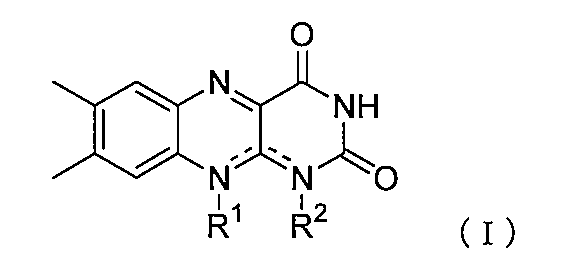
[式中、R1は存在しないか又は-CH3、若しくは
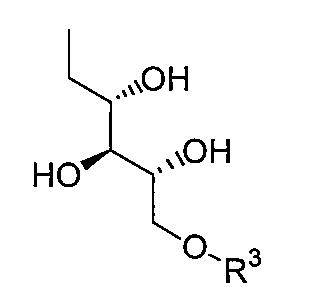
であり、R1が存在しない場合には、R1が連結して描かれている窒素原子は隣接炭素原子との間に二重結合を形成しておりかつR2はHであり、
R2は存在しないか、又はHであり、R2が存在しない場合には、R2が連結して描かれている窒素原子は隣接炭素原子との間に二重結合を形成しており、
R3は、H、リン酸基、又は

である]
で表される化合物である、1に記載の組成物、2、5若しくは6に記載の電極、3、5若しくは6に記載の電池又は4、5若しくは6に記載のセンサー。
[8] フラビン化合物が、フラビンモノヌクレオチド、リボフラビン、ルミクロム、フラビンアデニンジヌクレオチド又はルミフラビンである、1若しくは7に記載の組成物、2、5、6若しくは7に記載の電極、3、5、6若しくは7に記載の電池又は4、5、6若しくは7に記載のセンサー。
[9] 前記(i)において、人工電子メディエーターが、キノン類、フェナジン類、ビオロゲン類、シトクロム類、チオレドキシン類、フェノキサジン類、フェノチアジン類、フェリシアン化物、フェレドキシン類、フェロセン、フェロセン誘導体、及び金属錯体である、
前記(ii)において、非水溶性の電子メディエーターがフェロセン、非水溶性のキノン類、非水溶性のフェナジン類、非水溶性のビオロゲン類、非水溶性のチオレドキシン類、非水溶性のフェノキサジン類、非水溶性のフェノチアジン類、非水溶性のフェレドキシン類、及び非水溶性のフェロセン誘導体である、又は
前記(iii)において、さらに、酸化還元電位が0.2V以上の電子メディエーターを含まない、
1、7若しくは8に記載の組成物、2、5、6、7若しくは8に記載の電極、3、5、6、7若しくは8に記載の電池又は4、5、6、7若しくは8に記載のセンサー。
[10] グルコースを含みうる試料と、遊離型のフラビン化合物と、精製されたFAD依存性グルコースオキシダーゼ又は精製されたFAD依存性グルコースデヒドロゲナーゼとを接触させる工程、及び電流を測定する工程を含む、グルコースの電気化学的測定方法、
ただし該方法は、
(i) 単独で電子をFAD依存性グルコースオキシダーゼ又はFAD依存性グルコースデヒドロゲナーゼから受け取ることのできる人工電子メディエーターを外部から添加しない、
(ii) 単独で電子をFAD依存性グルコースオキシダーゼ又はFAD依存性グルコースデヒドロゲナーゼから受け取ることのできる非水溶性の電子メディエーターを外部から添加しない、又は
(iii) 単独で電子をFAD依存性グルコースオキシダーゼ又はFAD依存性グルコースデヒドロゲナーゼから受け取ることのできる、酸化還元電位が0.3V以上の電子メディエーターを外部から添加しない、
前記方法。
[11] 遊離型のフラビン化合物を電子メディエーターとして用いる発電方法であって、アノード及びカソードを使用し、
電解質に接触しているアノードにフラビン化合物を供給し、グルコース燃料を供給する工程を有し、
該アノードが、精製されたFAD依存性グルコースデヒドロゲナーゼ又は精製されたFAD依存性グルコースオキシダーゼを有する電極である、該発電方法、
ただし該方法は、
(i) 単独で電子をFAD依存性グルコースオキシダーゼ又はFAD依存性グルコースデヒドロゲナーゼから受け取ることのできる人工電子メディエーターを外部から添加しない、
(ii) 単独で電子をFAD依存性グルコースオキシダーゼ又はFAD依存性グルコースデヒドロゲナーゼから受け取ることのできる非水溶性の電子メディエーターを外部から添加しない、又は
(iii) 単独で電子をFAD依存性グルコースオキシダーゼ又はFAD依存性グルコースデヒドロゲナーゼから受け取ることのできる、酸化還元電位が0.3V以上の電子メディエーターを外部から添加しない、
前記方法。
[12] 該フラビン化合物が固相中に固定化されている非酵素型のフラビン化合物である、10又は11に記載の方法。
[13] 精製されたFAD依存性グルコースオキシダーゼ又は精製されたFAD依存性グルコースデヒドロゲナーゼが固相中に固定化されている、10~12のいずれかに記載の方法。
[14] フラビン化合物が以下の化学式(I)

[式中、R1は存在しないか又は-CH3、若しくは

であり、R1が存在しない場合には、R1が連結して描かれている窒素原子は隣接炭素原子との間に二重結合を形成しておりかつR2はHであり、
R2は存在しないか、又はHであり、R2が存在しない場合には、R2が連結して描かれている窒素原子は隣接炭素原子との間に二重結合を形成しており、
R3は、H、リン酸基、又は
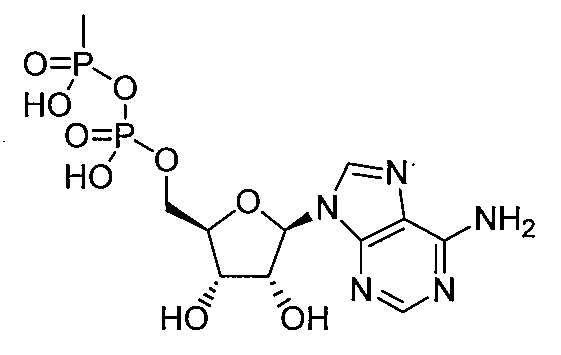
である]
で表される化合物である、10~13のいずれかに記載の方法。
[15] フラビン化合物が、フラビンモノヌクレオチド、リボフラビン、ルミクロム、フラビンアデニンジヌクレオチド又はルミフラビンである、10~14のいずれかに記載の方法。
[16] 前記(i)において、人工電子メディエーターが、キノン類、フェナジン類、ビオロゲン類、シトクロム類、チオレドキシン類、フェノキサジン類、フェノチアジン類、フェリシアン化物、フェレドキシン類、フェロセン、フェロセン誘導体、及び金属錯体である、
前記(ii)において、非水溶性の電子メディエーターがフェロセン、非水溶性のキノン類、非水溶性のフェナジン類、非水溶性のビオロゲン類、非水溶性のチオレドキシン類、非水溶性のフェノキサジン類、非水溶性のフェノチアジン類、非水溶性のフェレドキシン類、及び非水溶性のフェロセン誘導体である、又は
前記(iii)において、さらに、酸化還元電位が0.2V以上の電子メディエーターを外部から添加しない、
10~15のいずれかに記載の方法。
[1] 遊離型のフラビン化合物を含み、精製されたFAD依存性グルコースオキシダーゼ又は精製されたFAD依存性グルコースデヒドロゲナーゼを含む、グルコース測定用組成物、
ただし該組成物は、
(i) 外部から添加される、単独で電子をFAD依存性グルコースオキシダーゼ又はFAD依存性グルコースデヒドロゲナーゼから受け取ることのできる、人工電子メディエーターを含まない、
(ii) 外部から添加される、単独で電子をFAD依存性グルコースオキシダーゼ又はFAD依存性グルコースデヒドロゲナーゼから受け取ることのできる、非水溶性の電子メディエーターを含まない、又は
(iii) 外部から添加される、単独で電子をFAD依存性グルコースオキシダーゼ又はFAD依存性グルコースデヒドロゲナーゼから受け取ることのできる、酸化還元電位が0.3V以上の電子メディエーターを含まない、
前記グルコース測定用組成物。
[2] 遊離型のフラビン化合物を含み、精製されたFAD依存性グルコースオキシダーゼ又は精製されたFAD依存性グルコースデヒドロゲナーゼを含む、アノード電極、
ただし該電極は、
(i) 外部から添加される、単独で電子をFAD依存性グルコースオキシダーゼ又はFAD依存性グルコースデヒドロゲナーゼから受け取ることのできる、人工電子メディエーターを含まない、
(ii) 外部から添加される、単独で電子をFAD依存性グルコースオキシダーゼ又はFAD依存性グルコースデヒドロゲナーゼから受け取ることのできる、非水溶性の電子メディエーターを含まない、又は
(iii) 外部から添加される、単独で電子をFAD依存性グルコースオキシダーゼ又はFAD依存性グルコースデヒドロゲナーゼから受け取ることのできる、酸化還元電位が0.3V以上の電子メディエーターを含まない、
前記アノード電極。
[3] 2に記載のアノード電極、カソード電極、及び、グルコースを含む燃料槽を有する、グルコース燃料電池。
[4] 遊離型のフラビン化合物及び、精製されたFAD依存性グルコースオキシダーゼ又は精製されたFAD依存性グルコースデヒドロゲナーゼを有する、グルコースセンサー、
ただし該センサーは、
(i) 外部から添加される、人工電子メディエーターを含まない、
(ii) 外部から添加される、非水溶性の電子メディエーターを含まない、又は
(iii) 外部から添加される、酸化還元電位が0.3V以上の電子メディエーターを含まない、
前記センサー。
[5] 該フラビン化合物が固相中に固定化されている非酵素型のフラビン化合物である、2に記載の電極、3に記載の電池又は4に記載のセンサー。
[6] 精製されたFAD依存性グルコースオキシダーゼ又は精製されたFAD依存性グルコースデヒドロゲナーゼが固相中に固定化されている、2又は5に記載の電極、3又は5に記載の電池或いは4又は5に記載のセンサー。
[7] フラビン化合物が以下の化学式(I)
R2は存在しないか、又はHであり、R2が存在しない場合には、R2が連結して描かれている窒素原子は隣接炭素原子との間に二重結合を形成しており、
R3は、H、リン酸基、又は
で表される化合物である、1に記載の組成物、2、5若しくは6に記載の電極、3、5若しくは6に記載の電池又は4、5若しくは6に記載のセンサー。
[8] フラビン化合物が、フラビンモノヌクレオチド、リボフラビン、ルミクロム、フラビンアデニンジヌクレオチド又はルミフラビンである、1若しくは7に記載の組成物、2、5、6若しくは7に記載の電極、3、5、6若しくは7に記載の電池又は4、5、6若しくは7に記載のセンサー。
[9] 前記(i)において、人工電子メディエーターが、キノン類、フェナジン類、ビオロゲン類、シトクロム類、チオレドキシン類、フェノキサジン類、フェノチアジン類、フェリシアン化物、フェレドキシン類、フェロセン、フェロセン誘導体、及び金属錯体である、
前記(ii)において、非水溶性の電子メディエーターがフェロセン、非水溶性のキノン類、非水溶性のフェナジン類、非水溶性のビオロゲン類、非水溶性のチオレドキシン類、非水溶性のフェノキサジン類、非水溶性のフェノチアジン類、非水溶性のフェレドキシン類、及び非水溶性のフェロセン誘導体である、又は
前記(iii)において、さらに、酸化還元電位が0.2V以上の電子メディエーターを含まない、
1、7若しくは8に記載の組成物、2、5、6、7若しくは8に記載の電極、3、5、6、7若しくは8に記載の電池又は4、5、6、7若しくは8に記載のセンサー。
[10] グルコースを含みうる試料と、遊離型のフラビン化合物と、精製されたFAD依存性グルコースオキシダーゼ又は精製されたFAD依存性グルコースデヒドロゲナーゼとを接触させる工程、及び電流を測定する工程を含む、グルコースの電気化学的測定方法、
ただし該方法は、
(i) 単独で電子をFAD依存性グルコースオキシダーゼ又はFAD依存性グルコースデヒドロゲナーゼから受け取ることのできる人工電子メディエーターを外部から添加しない、
(ii) 単独で電子をFAD依存性グルコースオキシダーゼ又はFAD依存性グルコースデヒドロゲナーゼから受け取ることのできる非水溶性の電子メディエーターを外部から添加しない、又は
(iii) 単独で電子をFAD依存性グルコースオキシダーゼ又はFAD依存性グルコースデヒドロゲナーゼから受け取ることのできる、酸化還元電位が0.3V以上の電子メディエーターを外部から添加しない、
前記方法。
[11] 遊離型のフラビン化合物を電子メディエーターとして用いる発電方法であって、アノード及びカソードを使用し、
電解質に接触しているアノードにフラビン化合物を供給し、グルコース燃料を供給する工程を有し、
該アノードが、精製されたFAD依存性グルコースデヒドロゲナーゼ又は精製されたFAD依存性グルコースオキシダーゼを有する電極である、該発電方法、
ただし該方法は、
(i) 単独で電子をFAD依存性グルコースオキシダーゼ又はFAD依存性グルコースデヒドロゲナーゼから受け取ることのできる人工電子メディエーターを外部から添加しない、
(ii) 単独で電子をFAD依存性グルコースオキシダーゼ又はFAD依存性グルコースデヒドロゲナーゼから受け取ることのできる非水溶性の電子メディエーターを外部から添加しない、又は
(iii) 単独で電子をFAD依存性グルコースオキシダーゼ又はFAD依存性グルコースデヒドロゲナーゼから受け取ることのできる、酸化還元電位が0.3V以上の電子メディエーターを外部から添加しない、
前記方法。
[12] 該フラビン化合物が固相中に固定化されている非酵素型のフラビン化合物である、10又は11に記載の方法。
[13] 精製されたFAD依存性グルコースオキシダーゼ又は精製されたFAD依存性グルコースデヒドロゲナーゼが固相中に固定化されている、10~12のいずれかに記載の方法。
[14] フラビン化合物が以下の化学式(I)
R2は存在しないか、又はHであり、R2が存在しない場合には、R2が連結して描かれている窒素原子は隣接炭素原子との間に二重結合を形成しており、
R3は、H、リン酸基、又は
で表される化合物である、10~13のいずれかに記載の方法。
[15] フラビン化合物が、フラビンモノヌクレオチド、リボフラビン、ルミクロム、フラビンアデニンジヌクレオチド又はルミフラビンである、10~14のいずれかに記載の方法。
[16] 前記(i)において、人工電子メディエーターが、キノン類、フェナジン類、ビオロゲン類、シトクロム類、チオレドキシン類、フェノキサジン類、フェノチアジン類、フェリシアン化物、フェレドキシン類、フェロセン、フェロセン誘導体、及び金属錯体である、
前記(ii)において、非水溶性の電子メディエーターがフェロセン、非水溶性のキノン類、非水溶性のフェナジン類、非水溶性のビオロゲン類、非水溶性のチオレドキシン類、非水溶性のフェノキサジン類、非水溶性のフェノチアジン類、非水溶性のフェレドキシン類、及び非水溶性のフェロセン誘導体である、又は
前記(iii)において、さらに、酸化還元電位が0.2V以上の電子メディエーターを外部から添加しない、
10~15のいずれかに記載の方法。
本明細書は本願の優先権の基礎となる日本国特許出願番号2016-205539号の開示内容を包含する。
本発明のフラビン化合物は、フェリシアン化カリウムのような従来のメディエーターと異なり、一般的には生体内に存在するものであり生体適合性が高く、人体に対する毒性がないか又は毒性が低いと考えられる。そのため、本発明のフラビン化合物を含む組成物や該フラビン化合物を用いる測定方法は、体内埋め込み型の連続グルコース測定に用いることができる。また本発明のフラビン化合物はグルコース燃料電池に応用することができる。
(フラビン化合物及びフラビン化合物を含む組成物)
ある実施形態において本発明はフラビン化合物を提供する。別の実施形態において本発明はフラビン化合物を含むグルコース測定用組成物を提供する。本発明のフラビン化合物は、グルコースオキシダーゼやグルコースデヒドロゲナーゼにより触媒されるグルコース酸化還元反応において、メディエーターとして機能する。メディエーターとして機能するとは、フラビン化合物が電子移動に与ることをいい、例えば電極を用いる系では、本発明のフラビン化合物は、GOD又はGDHから電子を受け取って還元型となり、電極に電子を渡して酸化型に戻る。このような観点から、本発明のフラビン化合物のことを電子移動媒介剤と呼ぶこともできる。本明細書においてこれらの用語は同義とする。
ある実施形態において本発明はフラビン化合物を提供する。別の実施形態において本発明はフラビン化合物を含むグルコース測定用組成物を提供する。本発明のフラビン化合物は、グルコースオキシダーゼやグルコースデヒドロゲナーゼにより触媒されるグルコース酸化還元反応において、メディエーターとして機能する。メディエーターとして機能するとは、フラビン化合物が電子移動に与ることをいい、例えば電極を用いる系では、本発明のフラビン化合物は、GOD又はGDHから電子を受け取って還元型となり、電極に電子を渡して酸化型に戻る。このような観点から、本発明のフラビン化合物のことを電子移動媒介剤と呼ぶこともできる。本明細書においてこれらの用語は同義とする。
FAD依存性の、GODやGDHは、補酵素であるフラビン系化合物FADと共にホロ酵素を形成する。本明細書においてGODという場合、特に断らない限り、これはFAD依存性GODをいうものとする。本明細書においてGDHという場合、特に断らない限り、これはFAD依存性GDHをいうものとする。ホロ酵素においてFADは非共有結合により酵素と複合体を形成しており、通常、酵素中に埋没している。すなわちホロ酵素に含まれるFADは、溶液中に遊離していない。補酵素を有しないGODやGDHはアポ酵素と呼ばれグルコースに対する活性を示さない。本明細書において本発明のフラビン化合物というとき、これはホロ酵素中に含まれる補酵素を包含しないものとする。すなわち本発明のフラビン化合物は酵素から遊離している状態で存在する。特に断らない限り、本明細書において本発明のフラビン化合物というとき、これは遊離状態のフラビン化合物、遊離型のフラビン化合物をいうものとする。また、その裏返しとして、GODやGDHのホロ酵素中に含有される補酵素FADは、本明細書にいう「本発明のフラビン化合物」に該当しない。
なお、ある実施形態において、本発明のフラビン化合物は、電極表面など固相中に固定化して使用することができる。このような場合にも、当該固定化されたフラビン化合物は、ホロ酵素中に含まれておらず、GODやGDH酵素と独立して存在する。したがって、このような固定化されたフラビン化合物も、便宜上、本明細書において、「遊離型のフラビン化合物」との用語に包含されるものとする。また、このようなGODやGDH酵素と独立して存在するフラビン化合物を、非酵素型フラビン化合物、非酵素結合型フラビン化合物、ということがある。非酵素型フラビン化合物や非酵素結合型フラビン化合物もまた、固相中に固定化されていてもよい。
ある実施形態において、本発明のフラビン化合物は下記の一般式Iの化合物でありうる:
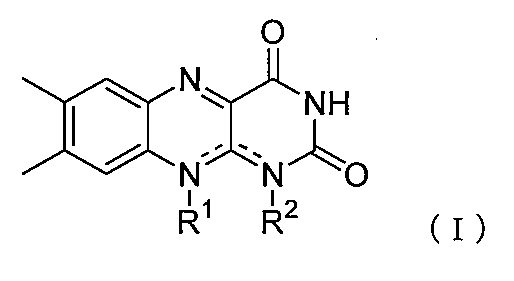
[式中、R1は存在しないか又は-CH3、若しくは

であり、R1が存在しない場合には、R1が連結して描かれている窒素原子は隣接炭素原子との間に二重結合を形成しておりかつR2はHであり、
R2は存在しないか、又はHであり、R2が存在しない場合には、R2が連結して描かれている窒素原子は隣接炭素原子との間に二重結合を形成しており、
R3は、H、リン酸基、又は

である]。
R2は存在しないか、又はHであり、R2が存在しない場合には、R2が連結して描かれている窒素原子は隣接炭素原子との間に二重結合を形成しており、
R3は、H、リン酸基、又は
ある実施形態において、本発明のフラビン化合物はリボフラビン(RF)である(CAS 83-88-5)。

ある実施形態において、本発明のフラビン化合物はフラビンモノヌクレオチド(FMN)である(CAS 146-17-8)。
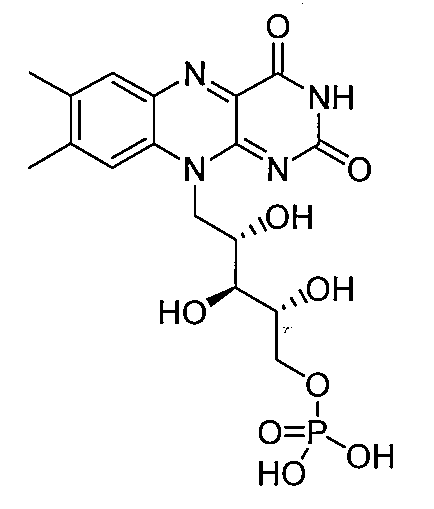
ある実施形態において、本発明のフラビン化合物はルミクロム(LC)である(CAS 1086-80-2)。

ある実施形態において、本発明のフラビン化合物はフラビンアデニンジヌクレオチド(FAD)である(CAS 146-14-5)。

ある実施形態において、本発明のフラビン化合物はルミフラビン(LF)である(CAS 1088-56-8)。

フラビン化合物には、一般に、3種の酸化還元状態及び3種のイオン化状態があることが知られている。上記の化学式では、本発明のフラビン化合物を、中性型で酸化型の形態で記載した。しかしながらこの形態のみならず、本発明のフラビン化合物は、酸化型(キノン型)、セミキノン型、又は還元型(ヒドロキノン型)であり得る。また、本発明のフラビン化合物は、中性型、又はアニオン型でありうる。便宜上、本発明のフラビン化合物、例えば上記化学式で表される本発明のフラビン化合物という場合、これは、中性型、又はアニオン型の、酸化型、セミキノン型、又は還元型の形態のものを包含するものとする。例えば、測定系に、本発明のフラビン化合物として中性型で酸化型の化合物を添加した後、溶液のpHやプロトン授受によりそれが酸化型でアニオン型の化合物に変化することがあり得るが、そのような化合物も本発明のフラビン化合物に包含されるものとする。
本発明のフラビン化合物は、人工合成してもよく、天然物を取得してもよい。また市販されているものであってもよい。
ある実施形態において、本発明のフラビン化合物は、グルコースデヒドロゲナーゼと共に使用しうる(FAD依存性GDH)。別の実施形態において、本発明のフラビン化合物は、グルコースオキシダーゼと共に使用しうる(FAD依存性GOD)。別の実施形態において、本発明のフラビン化合物を含む組成物は、グルコースデヒドロゲナーゼ又はグルコースオキシダーゼをさらに含む。GDH又はGODは溶液中に遊離していてもよく、固相に固定化された状態でもよい。GDH又はGODは、単独で存在してもよく、別の化合物やタンパク質、例えば酵素や抗体に連結されたものでもよい。
ある実施形態において、本発明のフラビン化合物を含む組成物は、
(i) 外部から添加される、単独で電子をFAD依存性グルコースオキシダーゼ又はFAD依存性グルコースデヒドロゲナーゼから受け取ることのできる人工電子メディエーターを含まない、
(ii) 外部から添加される、単独で電子をFAD依存性グルコースオキシダーゼ又はFAD依存性グルコースデヒドロゲナーゼから受け取ることのできる非水溶性の電子メディエーターを含まない、又は
(iii) 外部から添加される、単独で電子をFAD依存性グルコースオキシダーゼ又はFAD依存性グルコースデヒドロゲナーゼから受け取ることのできる、酸化還元電位が0.3V以上の電子メディエーターを含まない。ある実施形態において、本発明の電極及び本発明のセンサーについても同様である。なお、本明細書では特に断らない限り、酸化還元電位は、銀塩化銀電極を基準としたものとする。
(i) 外部から添加される、単独で電子をFAD依存性グルコースオキシダーゼ又はFAD依存性グルコースデヒドロゲナーゼから受け取ることのできる人工電子メディエーターを含まない、
(ii) 外部から添加される、単独で電子をFAD依存性グルコースオキシダーゼ又はFAD依存性グルコースデヒドロゲナーゼから受け取ることのできる非水溶性の電子メディエーターを含まない、又は
(iii) 外部から添加される、単独で電子をFAD依存性グルコースオキシダーゼ又はFAD依存性グルコースデヒドロゲナーゼから受け取ることのできる、酸化還元電位が0.3V以上の電子メディエーターを含まない。ある実施形態において、本発明の電極及び本発明のセンサーについても同様である。なお、本明細書では特に断らない限り、酸化還元電位は、銀塩化銀電極を基準としたものとする。
また、ある実施形態において、本発明のフラビン化合物を用いたグルコースの電気化学的測定方法及び発電方法は、
(i) 単独で電子をFAD依存性グルコースオキシダーゼ又はFAD依存性グルコースデヒドロゲナーゼから受け取ることのできる人工電子メディエーターを外部から添加しない、
(ii) 単独で電子をFAD依存性グルコースオキシダーゼ又はFAD依存性グルコースデヒドロゲナーゼから受け取ることのできる非水溶性の電子メディエーターを外部から添加しない、又は
(iii) 単独で電子をFAD依存性グルコースオキシダーゼ又はFAD依存性グルコースデヒドロゲナーゼから受け取ることのできる、酸化還元電位が0.3V以上の電子メディエーターを外部から添加しない。なおここでいう外部から添加とは、測定直前や測定中の添加も、測定試薬調製における添加も包含する。
(i) 単独で電子をFAD依存性グルコースオキシダーゼ又はFAD依存性グルコースデヒドロゲナーゼから受け取ることのできる人工電子メディエーターを外部から添加しない、
(ii) 単独で電子をFAD依存性グルコースオキシダーゼ又はFAD依存性グルコースデヒドロゲナーゼから受け取ることのできる非水溶性の電子メディエーターを外部から添加しない、又は
(iii) 単独で電子をFAD依存性グルコースオキシダーゼ又はFAD依存性グルコースデヒドロゲナーゼから受け取ることのできる、酸化還元電位が0.3V以上の電子メディエーターを外部から添加しない。なおここでいう外部から添加とは、測定直前や測定中の添加も、測定試薬調製における添加も包含する。
ある実施形態において、本発明のフラビン化合物を含む組成物、電極、及びセンサーは、外部から添加される、単独で電子をFAD依存性グルコースオキシダーゼ又はFAD依存性グルコースデヒドロゲナーゼから受け取ることのできる、酸化還元電位が0.3V以上、0.2V以上、0.1V以上、または0V以上、0.8V以下、0.7V以下、0.6V以下の電子メディエーターを含まない。別の実施形態では、本発明のフラビン化合物を含む組成物、電極、及びセンサーは、外部から添加される、単独で電子をFAD依存性グルコースオキシダーゼ又はFAD依存性グルコースデヒドロゲナーゼから受け取ることのできる、酸化還元電位が0~0.8V、0~0.7V、0~0.6V、0.1~0.7V、0.2~0.6V、0.3~0.8V、0.3~0.7V、0.3~0.6Vの電子メディエーターを含まない。ある実施形態において本発明のフラビン化合物を用いる方法についても同様にこれらは除外される。
ある実施形態において、本発明のフラビン化合物を含む組成物、電極、及びセンサーは、外部から添加される、単独で電子をFAD依存性グルコースオキシダーゼ又はFAD依存性グルコースデヒドロゲナーゼから受け取ることのできる、非水溶性の電子メディエーターを含まない。非水溶性の電子メディエーターとしては、フェロセン、非水溶性のキノン類、例えばフェナントロリンキノン、非水溶性のフェナジン類、例えばフェナジン、非水溶性のビオロゲン類、非水溶性のチオレドキシン類、非水溶性のフェノキサジン類、非水溶性のフェノチアジン類、非水溶性のフェレドキシン類、及び非水溶性のフェロセン誘導体等が挙げられるがこれに限らない。ある実施形態において本発明のフラビン化合物を用いる方法についても同様にこれらは除外される。
ある実施形態において、本発明のフラビン化合物を含む組成物、電極、及びセンサーは、単独で電子をFAD依存性グルコースオキシダーゼ又はFAD依存性グルコースデヒドロゲナーゼから受け取ることのできる従来の人工電子メディエーターを含まない。ある実施形態において、本発明のフラビン化合物を用いる方法についても同様にこれらは除外される。単独で電子をFAD依存性グルコースオキシダーゼ又はFAD依存性グルコースデヒドロゲナーゼから受け取ることのできる従来の人工電子メディエーターとしては、系に人工的に外部から添加される、フェリシアン化カリウム、キノン類、アントラキノン類、フェナジン類、ビオロゲン類、シトクロム類、チオレドキシン類、フェノキサジン類、フェノチアジン類、フェリシアン化物、例えばフェリシアン化カリウム、フェレドキシン類、フェロセンまたはフェロセン誘導体、オスミウム錯体、コバルト錯体、ルテニウム錯体、鉄錯体、バナジウム錯体などの金属錯体であって、単独で電子をFAD依存性グルコースオキシダーゼ又はFAD依存性グルコースデヒドロゲナーゼから受け取ることのできるものが挙げられる。これらの化合物や誘導体は、スルホニル基、スルホ基、カルボニル基、カルボキシル基、アミノ基、イミノ基、ニトロ基、ニトロソ基、ヒドロキシ基、アルキル基(例えばC1~C16アルキル、例えばメチル基)、アルコキシル基、アシル基、シアノ基、ハロゲン基などの官能基を一又は複数、有しうる。具体的な電子メディエーター化合物としては、例えば1,1’-ジメチルフェロセン、フェロセンカルボン酸、フェロセンカルボキシアルデヒド、ベンゾキノン、ヒドロキノン、フェリシアン/フェロシアン化物(K若しくはNa塩、例えばフェリシアン化カリウム)、フェリシニウム/フェロセン、フェナジンメトサルフェート、1-メトキシ-5-メチルフェナジウムメチルサルフェイト、2,6-ジクロロフェノールインドフェノール、クロラニル(Chloranil)、ブロマニル(Bromanyl)、フェナントロリンキノン、アントラキノン、オクタシアノタングステン酸イオン、オクタシアノモリブデン酸イオン、[Ni(PQ3)]2+イオン、例えば[Ni(PQ3)]Cl2、[Ni(PQ)3]Br2、[Os(dmo)2(1-ビニルイミダゾール)X]X、[Os(dmo)2(1-ビニルイミダゾール)X]X2、[Os(dmo)2(イミダゾール)X]X、[Os(dmo)2(イミダゾール)X]X2、[Os(dmo)2(1-メチルイミダゾール)X]X2、[Os(dmo)2(メチルイミダゾール)X]X2(これらの化合物においてdmoは4,4′-ジメトキシ-2,2′-ビピリジンであり、Xはハロゲンである)であって、単独で電子をFAD依存性グルコースオキシダーゼ又はFAD依存性グルコースデヒドロゲナーゼから受け取ることのできるもの等が挙げられる。
ある実施形態において、単独で電子をFAD依存性グルコースオキシダーゼ又はFAD依存性グルコースデヒドロゲナーゼから受け取ることのできる人工電子メディエーターは、フェリシアン化カリウム、フェロセン、[Ni(PQ3)]Cl2、及び[Ni(PQ)3]Br2である。したがって、ある実施形態において、本発明のフラビン化合物を含む組成物、電極、及びセンサーは、フェリシアン化カリウム、フェロセン、[Ni(PQ3)]Cl2、及び[Ni(PQ)3]Br2を含まない。またある実施形態において、本発明の方法ではこれらは添加されない。
ルテニウム錯体を単独の電子メディエーターとした場合、所定の電位を印加しても、FAD依存性GDHはルテニウム錯体から電子を受け取らないことが知られている。一方で、ルテニウム錯体及びFAD依存性GDHを含む系に1-mPMSを添加すると、所定の電位を印加した場合、ルテニウム錯体が電子を受け取ることができるようになることが知られている(特開2013-083634参照)。特定の理論に拘束されることを望むものではないが、ルテニウム錯体とFAD依存性GDH間における相互作用により、GDHに含有されているFADに、ルテニウム錯体が電子を受け取ることができる程度に十分に近接することができないと考えられる。そのため、ルテニウム錯体を単独の電子メディエーターとしてFAD依存性GDHと共に使用した場合、所定の電位を印加しても応答電流が観測されないものと考えられる。他方で、この系に単独で電子をFAD依存性GDHから直接受け取ることのできる別の人工電子メディエーターである1-mPMSが存在すると、まず、1-mPMSがFAD依存性GDHから電子を受け取り、次いでルテニウム錯体に電子を受け渡すと考えられる。このとき、単独の電子メディエーターとしてのルテニウム錯体及びFAD依存性GDHを含む系にあっては、ルテニウム錯体は、本明細書にいう「単独で電子をFAD依存性グルコースオキシダーゼ又はFAD依存性グルコースデヒドロゲナーゼから受け取ることのできる人工電子メディエーター」に該当しない。しかしながら、系に1-mPMSがさらに存在するとルテニウム錯体は電子を受け取ることができるようになる。そのため、電子メディエーターとして1-mPMS及びルテニウム錯体を含み、FAD依存性GDHを含む系にあっては、1-mPMS及びルテニウム錯体の組み合わせは、電子をFAD依存性グルコースオキシダーゼ又はFAD依存性グルコースデヒドロゲナーゼから受け取ることができる。このとき、1-mPMSの代わりに本発明のフラビン化合物を用いると、FAD依存性GDHから溶液中に存在する遊離型のフラビン化合物が電子を受け取り、次いで該フラビン化合物が該電子をルテニウム錯体に受け渡すことができるようになると考えられる。ある実施形態において、本発明は、このような電子メディエーターと本発明のフラビン化合物の組み合わせを含む。すなわち、ある実施形態において、本発明のグルコース測定用組成物は、遊離型のフラビン化合物を含み、精製されたFAD依存性グルコースオキシダーゼ又は精製されたFAD依存性グルコースデヒドロゲナーゼを含み、単独では電子をFAD依存性グルコースオキシダーゼ又はFAD依存性グルコースデヒドロゲナーゼから受け取ることができないが、本発明のフラビン化合物との共存下では、本発明のフラビン化合物から電子を受け取ることのできるルテニウム錯体、例えばヘキサアンミンルテニウムを含む。また、逆にいうと、このような電子メディエーターと本発明のフラビン化合物の組み合わせは本発明から除外されない。したがって、本発明の組成物からは、単独で電子をFAD依存性グルコースオキシダーゼ又はFAD依存性グルコースデヒドロゲナーゼから受け取ることのできる人工電子メディエーターは除かれるが、FAD依存性グルコースオキシダーゼ又はFAD依存性グルコースデヒドロゲナーゼから電子を受け取った遊離型の本発明のフラビン化合物から電子をさらに受け取ることのできる従来の人工電子メディエーターは除かれない(本発明に含まれる)。別の言い方をすると、本発明の組成物からは、単独で電子をFAD依存性グルコースオキシダーゼ又はFAD依存性グルコースデヒドロゲナーゼから直接受け取ることのできる人工電子メディエーターは除かれる。本発明の電極、センサー、方法についても同様である。
なお、上記において、組成物または測定系に外部から添加される、とは、グルコース濃度測定において、応答電流に影響を及ぼしうる濃度での添加をいう(グルコース測定上有効な量での添加)。例えばグルコース濃度測定において、応答電流に影響を及ぼさない程度の微少量の人工電子メディエーターを外部から本発明の組成物に添加したとしても、それは本発明の組成物を用いたグルコース濃度測定に何ら影響を及ぼすものではなく、したがって本発明に包含される。また、本発明の組成物が、外部添加される人工電子メディエーターを含まない、とは、外部添加される人工電子メディエーターを実質的に含まないことを意味し、すなわち、応答電流に影響を及ぼさない程度の微少量の人工電子メディエーターを含んでもよいが、応答電流に影響を及す実質的な量の人工電子メディエーターは含まないことをいう。したがってある実施形態において、応答電流に影響を及す実質的な量の単独で電子をFAD依存性グルコースオキシダーゼ又はFAD依存性グルコースデヒドロゲナーゼから受け取ることのできる人工電子メディエーターを含む組成物は本発明から除かれる。また、人体に関連するグルコース濃度測定において、人体に悪影響を及ぼさず許容される量であって、応答電流に影響を及ぼさない程度のごく微少量の単独で電子をFAD依存性グルコースオキシダーゼ又はFAD依存性グルコースデヒドロゲナーゼから受け取ることのできる人工電子メディエーターを外部から本発明の組成物に添加したとしても、それは本発明の組成物を用いたグルコース濃度測定に何ら影響を及ぼすものではなく、したがって本発明に包含される。本発明の電極、センサー、及び方法についても同様である。
本発明者は、以前にFAD依存性GDHをシトクロムと連結した融合タンパク質について報告した(国際公開第2017/094776号)。当該文献では融合タンパク質は、Cytb-GDHやGDH-Cytbと表記されている。ある実施形態では、FAD依存性GDHとしてこのような融合タンパク質を使用しうる。このとき、融合タンパク質(Cytb-GDH等)に包含されるシトクロム部分は、融合タンパク質の一部であって、本明細書にいう、外部から添加されるシトクロムに該当しない。したがってある実施形態では、遊離型のフラビン化合物を含み、精製されたグルコースデヒドロゲナーゼ-シトクロム融合タンパク質を含む、グルコース測定用組成物が提供され、ただし、この組成物は外部から添加されるシトクロムを含まない。
(GDH又はGODの固定化方法)
GDHやGODは任意の公知の方法により固相に固定化されうる。例えばGDHやGODをビーズや膜、電極表面に固定化してもよい。固定化方法としては、架橋試薬を用いる方法、高分子マトリックス中に封入する方法、透析膜で被覆する方法、光架橋性ポリマー、導電性ポリマー、酸化還元ポリマーなどがあり、ポリマー中に固定あるいは電極上に吸着固定してもよく、またこれらを組み合わせて用いてもよい。典型的には、グルタルアルデヒドを用いてGOD又はGDHをカーボン電極上に固定化した後、アミン基を有する試薬で処理してグルタルアルデヒドをブロッキングする。固定化するGDHやGODの量は、電気化学的測定或いは燃料電池発電に必要な電流を生じうる量とすることができ、適宜決定しうる。
GDHやGODは任意の公知の方法により固相に固定化されうる。例えばGDHやGODをビーズや膜、電極表面に固定化してもよい。固定化方法としては、架橋試薬を用いる方法、高分子マトリックス中に封入する方法、透析膜で被覆する方法、光架橋性ポリマー、導電性ポリマー、酸化還元ポリマーなどがあり、ポリマー中に固定あるいは電極上に吸着固定してもよく、またこれらを組み合わせて用いてもよい。典型的には、グルタルアルデヒドを用いてGOD又はGDHをカーボン電極上に固定化した後、アミン基を有する試薬で処理してグルタルアルデヒドをブロッキングする。固定化するGDHやGODの量は、電気化学的測定或いは燃料電池発電に必要な電流を生じうる量とすることができ、適宜決定しうる。
(本発明のフラビン化合物の固定化方法)
ある実施形態において、本発明のフラビン化合物は、溶液中に単独で存在していてもよく、また、ビーズや膜、電極表面等の固相に固定化されていてもよい。固定化方法としては、架橋試薬を用いる方法、高分子マトリックス中に封入する方法、透析膜で被覆する方法、光架橋性ポリマー、導電性ポリマー、酸化還元ポリマーなどがあり、ポリマー中に固定あるいは電極上に吸着固定してもよく、またこれらを組み合わせて用いてもよい。固定化するフラビン化合物の量は、電気化学的測定或いは燃料電池発電に必要な電流を生じうる量とすることができ、適宜決定しうる。
ある実施形態において、本発明のフラビン化合物は、溶液中に単独で存在していてもよく、また、ビーズや膜、電極表面等の固相に固定化されていてもよい。固定化方法としては、架橋試薬を用いる方法、高分子マトリックス中に封入する方法、透析膜で被覆する方法、光架橋性ポリマー、導電性ポリマー、酸化還元ポリマーなどがあり、ポリマー中に固定あるいは電極上に吸着固定してもよく、またこれらを組み合わせて用いてもよい。固定化するフラビン化合物の量は、電気化学的測定或いは燃料電池発電に必要な電流を生じうる量とすることができ、適宜決定しうる。
ある実施形態では、本発明のフラビン化合物が固定化され、さらにGDH又はGODが固定化されていてもよい。この場合、これらは同一又は異なる方法により固定化されていてもよい。
試料溶液に添加する本発明のフラビン化合物の終濃度は特に限定されず、例えば、0.01~200mM、0.02~150mM、0.03~100mM、0.04~80mM、0.05~60mM、0.06~50mM、0.08~40mM、0.1mM~30mM、0.15~20mM、0.2~10mM、0.3~5mM、0.4~3mM、例えば0.05~10mMの範囲であり得る。試料溶液に添加する本発明のフラビン化合物の終濃度は特に限定されず、例えば0.001~5%(w/v)、0.003~3%(w/v)、0.005~1%(w/v)、0.01~0.5%(w/v)、0.02~0.3%(w/v)、0.03~0.1%(w/v)であり得る。なお、フラビン化合物と他の酵素や試薬との添加順序は制限されず、同時でも逐次添加でもよい。
フラビン化合物をGODと共に使用する場合、試料に含まれる又は試料中に生成すると推定される還元型のメディエーターの濃度範囲に対応して、電気化学的測定用試薬の各成分の濃度を調節することができる。
特に断らない限り、本発明の組成物に含まれるグルコースデヒドロゲナーゼ又はグルコースオキシダーゼは、精製された酵素である。GOD又はGDHを含む細胞抽出物や細胞破砕液、粗酵素抽出液は、GODやGDH以外にも様々な夾雑物質を含む。例えば微生物では粗酵素抽出液中のリボフラビン量は約53~133μMとの報告がある(J Indust Micro Biotech 1999, 22, pp.8-18)。このような粗酵素抽出液等は、そのまま電気化学的測定に供すると、夾雑物質が電子を受け取るなどして電極への電子の授受が妨害されるため、粗酵素抽出液において、このリボフラビン濃度では正確な電気化学的測定は困難である。そこで本発明の電気化学的グルコース測定法では、夾雑物質が除去されたGOD又はGDHを使用する。本明細書においてGOD又はGDHが精製されている、又は精製酵素である、とは、必ずしもタンパク質が純品である必要はなく、グルコースの電気化学的測定が可能な程度に酵素標品から夾雑物質が除去されていることをいう。
(グルコースデヒドロゲナーゼ)
グルコースデヒドロゲナーゼは天然に広く存在し、微生物や動植物起源の酵素を探索することにより得ることができる。微生物においては、例えば、糸状菌、酵母または細菌等から得ることができる。本発明のグルコースデヒドロゲナーゼは例えば、ケカビ亜門、ケカビ綱、ケカビ目、ケカビ科に分類される微生物、例えばムコール(Mucor)属、アブシジア(Absidia)属、アクチノムコール(Actinomucor)属、カラクサケカビ(Circinella)属などの生物種に由来するGDHまたはその改変体であり得る。
グルコースデヒドロゲナーゼは天然に広く存在し、微生物や動植物起源の酵素を探索することにより得ることができる。微生物においては、例えば、糸状菌、酵母または細菌等から得ることができる。本発明のグルコースデヒドロゲナーゼは例えば、ケカビ亜門、ケカビ綱、ケカビ目、ケカビ科に分類される微生物、例えばムコール(Mucor)属、アブシジア(Absidia)属、アクチノムコール(Actinomucor)属、カラクサケカビ(Circinella)属などの生物種に由来するGDHまたはその改変体であり得る。
ムコール(Mucor)属の微生物としては、ムコール・プライニ(Mucor prainii)、ムコール・シルシネロイデス(Mucor circinelloides)、ムコール・ヒエマリス(Mucor hiemalis)、ムコール・サブチリスマス(Mucor subtilissimus)、ムコール・ギリエルモンディ(Mucor guilliermondii)、ムコール・ジャバニカス(Mucor javanicus)、ムコール・ダイモルフォスポラス(Mucor dimorphosporus)が挙げられる。Absidia属の微生物としては、アブシジア・シリンドロスポラ(Absidia cylindrospora)、アブシジア・ヒアロスポラ(Absidia hyalospora)を挙げることができる。Actinomucor属微生物としては、アクチノムコール・エレガンス(Actinomucor elegans)を挙げることができる。カラクサケカビ(Circinella)属の微生物としては、シルシネラ・シンプレックス(Circinella simplex)、シルシネラ属種(Circinella sp.)、シルシネラ・アンガレンシス(Circinella angarensis)、シルシネラ・シネンシス(Circinella chinensis)、シルシネラ・ラクリミスポラ(Circinella lacrymispora)、シルシネラ・マイナー(Circinella minor)、シルシネラ・ムコロイデス(Circinella mucoroides)、シルシネラ・リジダ(Circinella rigida)、シルシネラ・アンベラータ(Circinella umbellata)及びシルシネラ・ムスカエ(Circinella muscae)を挙げることができる。ある実施形態において、GDHはAspergillus oryzae由来のものでありうる。ある実施形態において、GDHはBBI社の製品コードGLD1のGDHでありうる(Aspergillus oryzae由来)。ある実施形態においてGDHはAspergillus terreus由来GDHでありうる(特許第5020070号参照)。
(グルコースオキシダーゼ)
グルコースオキシダーゼは天然に広く存在し、微生物や動植物起源の酵素を探索することにより得ることができる。微生物においては、例えば、糸状菌、酵母または細菌等から得ることができる。本発明のグルコースオキシダーゼは例えば、アスペルギルス属、ペニシリウム属、ミツバチ(Apis)属、ムコール属、フザリウム属、ストレプトマイセス属、タラロマイセス属などの生物種に由来するGODまたはその改変体であり得る。ある実施形態において、GODは東洋紡社のカタログ番号GLO-201のものでありうる(アスペルギルス属由来)。なお、GLO-201の製品カタログの構造(Structure)の欄には、2モルのFADを伴った糖タンパク質(Glycoprotein with 2 moles of FAD)とあり、これはホロ酵素である。
グルコースオキシダーゼは天然に広く存在し、微生物や動植物起源の酵素を探索することにより得ることができる。微生物においては、例えば、糸状菌、酵母または細菌等から得ることができる。本発明のグルコースオキシダーゼは例えば、アスペルギルス属、ペニシリウム属、ミツバチ(Apis)属、ムコール属、フザリウム属、ストレプトマイセス属、タラロマイセス属などの生物種に由来するGODまたはその改変体であり得る。ある実施形態において、GODは東洋紡社のカタログ番号GLO-201のものでありうる(アスペルギルス属由来)。なお、GLO-201の製品カタログの構造(Structure)の欄には、2モルのFADを伴った糖タンパク質(Glycoprotein with 2 moles of FAD)とあり、これはホロ酵素である。
(GOD又はGDH遺伝子)
GOD又はGDHをコードする遺伝子を得るには、通常一般的に用いられている遺伝子のクローニング方法が用いられる。例えば、GOD又はGDH生産能を有する微生物菌体や種々の細胞から常法、例えば、Current Protocols in Molecular Biology(WILEY Interscience,1989)記載の方法により、染色体DNAまたはmRNAを抽出することができる。さらにmRNAを鋳型としてcDNAを合成することができる。このようにして得られた染色体DNAまたはcDNAを用いて、染色体DNAまたはcDNAのライブラリーを作製することができる。
GOD又はGDHをコードする遺伝子を得るには、通常一般的に用いられている遺伝子のクローニング方法が用いられる。例えば、GOD又はGDH生産能を有する微生物菌体や種々の細胞から常法、例えば、Current Protocols in Molecular Biology(WILEY Interscience,1989)記載の方法により、染色体DNAまたはmRNAを抽出することができる。さらにmRNAを鋳型としてcDNAを合成することができる。このようにして得られた染色体DNAまたはcDNAを用いて、染色体DNAまたはcDNAのライブラリーを作製することができる。
次いで、GOD又はGDHのアミノ酸配列に基づき、適当なプローブDNAを合成し、これを用いて染色体DNAまたはcDNAのライブラリーからGDH遺伝子を選抜する方法、あるいは、アミノ酸配列に基づき、適当なプライマーDNAを作製して、5’RACE法や3’RACE法などの適当なポリメラーゼ連鎖反応(PCR法)により、目的の遺伝子断片を含むDNAを増幅させ、これらのDNA断片を連結させて、目的遺伝子の全長を含むDNAを得ることができる。
GDHをコードする遺伝子としては公知のあらゆる遺伝子が使用可能であり、例えばMucor属由来のGDH遺伝子(特許第4648993号に記載のもの)が挙げられる。この遺伝子を改変したものを用いてもよく、例えば国際公開第2012/169512号及び国際公開第2015/099112号に記載の改変遺伝子などが挙げられる。また特許第4648993号に記載のMucor prainii由来のGDH(MpGDHともいう)にT387A/I545T変異を導入した変異体を用いてもよい。またGDHをコードする遺伝子の例として、Aspergillus terreus由来のGDH遺伝子(AtGLD)が挙げられる(特許第5020070号)。
GODをコードする遺伝子としては公知のあらゆる遺伝子が使用可能であり、例えばアスペルギルス属由来のGOD遺伝子が挙げられる。遺伝子は改変されたものでもよい。
これらの遺伝子は、各種ベクターに連結または挿入してもよく、染色体やゲノムに組み入れてもよい。ベクターを用いる場合、ベクターへのクローニングには、TA Cloning Kit(インビトロジェン社)やIn-Fusion HD Cloning Kit(クロンテック社)などの市販のキット;pUC119(タカラバイオ社)、pUC18(タカラバイオ社)、pBR322(タカラバイオ社)、pBluescript SK+(ストラタジーン社)、pYES2/CT(インビトロジェン社)などの市販のプラスミドベクターDNA;λEMBL3(ストラタジーン社)などの市販のバクテリオファージベクターDNAが使用できる。該組換え体DNAを用いて、宿主生物、例えば、大腸菌(Escherichia coli)、好ましくは大腸菌JM109株(タカラバイオ社)や大腸菌DH5α株(タカラバイオ社)を形質転換する。得られた形質転換体に含まれる組換え体DNAを、QIAGEN Plasmid Mini Kit(キアゲン社)などを用いて精製する。
(GOD又はGDHの製造)
GOD又はGDHは、上述のように取得した形質転換細胞を培養し、前記細胞中に含まれるGOD又はGDH遺伝子を発現させ、次いで、前記培養物から発現タンパク質を単離することにより製造すればよい。
GOD又はGDHは、上述のように取得した形質転換細胞を培養し、前記細胞中に含まれるGOD又はGDH遺伝子を発現させ、次いで、前記培養物から発現タンパク質を単離することにより製造すればよい。
糸状菌を培養する通常の培地、すなわち炭素源、窒素源、無機物、その他の栄養素を適切な割合で含有するものであれば、合成培地及び天然培地のいずれでも使用できる。また、上記微生物宿主細胞を培養する培地としては、例えば、酵母エキス、トリプトン、ペプトン、肉エキス、コーンスティープリカーあるいは大豆若しくは小麦ふすまの浸出液等の1種以上の窒素源に、塩化ナトリウム、リン酸第1カリウム、リン酸第2カリウム、硫酸マグネシウム、塩化マグネシウム、塩化第2鉄、硫酸第2鉄あるいは硫酸マンガン等の無機塩類の1種以上を添加し、さらに必要により糖質原料、ビタミン等を適宜添加したものが用いられる。
培養条件は、当業者により通常知られる糸状菌の培養条件を採用すればよく、例えば、培地の初発pHは5~10に調整し、培養温度は20~40℃、培養時間は数時間~数日間、好ましくは1~7日間、より好ましくは2~5日間など、適宜設定することができる。培養手段は特に限定されず、通気撹拌深部培養、振盪培養、静地培養などを採用することができるが、溶存酸素が十分になるような条件で培養することが好ましい。例えば、アスペルギルス属微生物を培養する場合の培地及び培養条件の一例として、後述する実施例に記載があるDPY培地を用いた、30℃、160rpmでの3~5日間の振盪培養が挙げられる。微生物宿主細胞を培養する際は、10~42℃の培養温度、好ましくは25℃前後の培養温度で4~24時間、さらに好ましくは25℃前後の培養温度で4~8時間、通気攪拌深部培養、振盪培養、静置培養等により実施すればよい。
培養終了後、該培養物よりGOD又はGDHを採取する。これには、通常の公知の酵素採取手段を用いればよい。例えば、培地上清画分を回収するか、または、常法により菌体を、超音波破壊処理、磨砕処理等するか、又はリゾチーム等の溶菌酵素を用いて本酵素を抽出するか、又はトルエン等の存在下で振盪若しくは放置して溶菌を行わせ、本酵素を菌体外に排出させることができる。そして、この溶液を濾過、遠心分離等して固形部分を除去し、必要によりストレプトマイシン硫酸塩、プロタミン硫酸塩、若しくは硫酸マンガン等により核酸を除去したのち、これに硫安、アルコール、アセトン等を添加して分画し、沈澱物を採取し、GOD又はGDHの粗酵素を得る。
粗酵素を、公知の任意の手段を用いてさらに精製することもできる。精製された酵素標品を得るには、例えば、セファデックス、ウルトロゲル若しくはバイオゲル等を用いるゲルろ過法;イオン交換体を用いる吸着溶出法;ポリアクリルアミドゲル等を用いる電気泳動法;ヒドロキシアパタイトを用いる吸着溶出法;蔗糖密度勾配遠心法等の沈降法;疎水性クロマトグラフィー法;アフィニティクロマトグラフィー法;分子ふるい膜若しくは中空糸膜等を用いる分画法等を適宜選択し、又はこれらを組み合わせて実施することにより、精製された酵素標品を得ることができる。
酵素が精製されているか否かの判断は、ポリアクリルアミドゲル電気泳動法及び染色により行ってもよく、また、濃度既知のグルコース試料を用いて適性にグルコースの電気化学的測定ができるか試験することにより行ってもよい。
(GDHの活性測定)
GDH(EC 1.1.99.10)は、グルコースの水酸基を酸化してグルコノ-δ-ラクトンを生成する反応を触媒する。このとき電子受容体が電子を受け取り、還元型電子受容体になる。GDHの活性は、この作用原理を利用し、例えば、電子受容体としてフェナジンメトサルフェート(PMS)及び2,6-ジクロロインドフェノール(DCIP)を用いた以下の測定系を用いて測定することができる。
(反応1) D-グルコ-ス + PMS(酸化型)
→ D-グルコノ-δ-ラクトン + PMS(還元型)
(反応2) PMS(還元型) + DCIP(酸化型)
→ PMS(酸化型) + DCIP(還元型)
GDH(EC 1.1.99.10)は、グルコースの水酸基を酸化してグルコノ-δ-ラクトンを生成する反応を触媒する。このとき電子受容体が電子を受け取り、還元型電子受容体になる。GDHの活性は、この作用原理を利用し、例えば、電子受容体としてフェナジンメトサルフェート(PMS)及び2,6-ジクロロインドフェノール(DCIP)を用いた以下の測定系を用いて測定することができる。
(反応1) D-グルコ-ス + PMS(酸化型)
→ D-グルコノ-δ-ラクトン + PMS(還元型)
(反応2) PMS(還元型) + DCIP(酸化型)
→ PMS(酸化型) + DCIP(還元型)
具体的には、まず、(反応1)において、D-グルコースの酸化に伴い、PMS(還元型)が生成する。続いて進行する(反応2)により、PMS(還元型)が酸化されるのに伴ってDCIPが還元される。この「DCIP(酸化型)」の消失度合を波長600nmにおける吸光度の変化量として検知し、この変化量に基づいて酵素活性を求めることができる。
GDHの活性は、以下の手順に従って測定することができる。100mM リン酸緩衝液(pH7.0) 2.05mL、1M D-グルコース溶液 0.6mLおよび2mM DCIP溶液 0.15mLを混合し、37℃で5分間保温する。次いで、15mM PMS溶液 0.1mL及び酵素サンプル溶液0.1mLを添加し、反応を開始する。反応開始時、および、経時的な吸光度を測定し、酵素反応の進行に伴う600nmにおける吸光度の1分間あたりの減少量(ΔA600)を求め、次式に従いGDH活性を算出する。この際、GDH活性は、37℃において濃度200mMのD-グルコース存在下で1分間に1μmolのDCIPを還元する酵素量を1Uと定義する。

なお、式中の3.0は反応試薬+酵素試薬の液量(mL)、16.3は本活性測定条件におけるミリモル分子吸光係数(cm2/μmol)、0.1は酵素溶液の液量(mL)、1.0はセルの光路長(cm)、ΔA600blankは100mM リン酸緩衝液(pH7.0)を酵素サンプル溶液の代わりに添加して反応開始した場合の600nmにおける吸光度の1分間あたりの減少量、dfは希釈倍数を表す。
(GODの活性測定)
GOD(EC 1.1.3.4)は、グルコースの水酸基を酸化してグルコノ-δ-ラクトン及び過酸化水素を生成する反応を触媒する。
GODの活性は、この作用原理を利用し、生成する過酸化水素をペルオキシダーゼと反応させ、発色剤を発色させることにより測定することができる。
GOD(EC 1.1.3.4)は、グルコースの水酸基を酸化してグルコノ-δ-ラクトン及び過酸化水素を生成する反応を触媒する。
GODの活性は、この作用原理を利用し、生成する過酸化水素をペルオキシダーゼと反応させ、発色剤を発色させることにより測定することができる。
グルコースオキシダーゼ活性の測定方法
<試薬>
100mM MES-Na緩衝液pH5.7
0.5% 4-アミノアンチピリン(東京化成工業社製、4AA)溶液
5.0g/L TOOS(N-エチル-N-(2-ヒドロキシ-3-スルホプロピル)-m-トルイジンナトリウム、同仁化学社製)溶液
400U/mL パーオキシダーゼ(キッコーマン社製、POD)溶液
1.2M D-グルコース溶液
上記MES-Na緩衝液30.0mL、4AA溶液0.3mL、TOOS溶液0.3m
L、POD溶液0.3mL、D―グルコース溶液6.0mLを混合して反応試薬とする。
<試薬>
100mM MES-Na緩衝液pH5.7
0.5% 4-アミノアンチピリン(東京化成工業社製、4AA)溶液
5.0g/L TOOS(N-エチル-N-(2-ヒドロキシ-3-スルホプロピル)-m-トルイジンナトリウム、同仁化学社製)溶液
400U/mL パーオキシダーゼ(キッコーマン社製、POD)溶液
1.2M D-グルコース溶液
上記MES-Na緩衝液30.0mL、4AA溶液0.3mL、TOOS溶液0.3m
L、POD溶液0.3mL、D―グルコース溶液6.0mLを混合して反応試薬とする。
<測定条件>
反応試薬3mLを37℃で5分間予備加温する。GOD溶液0.1mLを添加しゆるやかに混和後、水を対照に37℃に制御された分光光度計で、555nmにおける吸光度を測定する。測定値は、555nmにおける1分後から3分後の1分間あたりの吸光度変化とする。37℃、1分当たりに生成される過酸化水素のマイクロモル数を酵素液中の活性単位(U)とし、下記の式に従って算出する。
活性(U/ml)= {(ΔAs-ΔA0)×3.1×df}÷(32.8×0.5×0.1)
ΔAs : 反応液の1分間あたりの吸光度変化
ΔA0 : 対照液の1分間あたりの吸光度変化
32.8: 反応により生成されるキノンイミン色素の
ミリモル吸光係数(mM-1・cm-1)
0.5 : 1molの過酸化水素による生成されるキノンイミン色素のmol数
df : 希釈係数
反応試薬3mLを37℃で5分間予備加温する。GOD溶液0.1mLを添加しゆるやかに混和後、水を対照に37℃に制御された分光光度計で、555nmにおける吸光度を測定する。測定値は、555nmにおける1分後から3分後の1分間あたりの吸光度変化とする。37℃、1分当たりに生成される過酸化水素のマイクロモル数を酵素液中の活性単位(U)とし、下記の式に従って算出する。
活性(U/ml)= {(ΔAs-ΔA0)×3.1×df}÷(32.8×0.5×0.1)
ΔAs : 反応液の1分間あたりの吸光度変化
ΔA0 : 対照液の1分間あたりの吸光度変化
32.8: 反応により生成されるキノンイミン色素の
ミリモル吸光係数(mM-1・cm-1)
0.5 : 1molの過酸化水素による生成されるキノンイミン色素のmol数
df : 希釈係数
(グルコースアッセイキット)
ある実施形態において本発明は、本発明のフラビン化合物を含むグルコースアッセイキットを提供する。ある実施形態において、このキットはGDHを含む。別の実施形態においてこのキットはGODを含む。このキットを用いることにより、GOD又はGDHを用いて血中のグルコース(血糖値)を測定することができる。測定は連続的に行ってもよい。
ある実施形態において本発明は、本発明のフラビン化合物を含むグルコースアッセイキットを提供する。ある実施形態において、このキットはGDHを含む。別の実施形態においてこのキットはGODを含む。このキットを用いることにより、GOD又はGDHを用いて血中のグルコース(血糖値)を測定することができる。測定は連続的に行ってもよい。
本発明のグルコースアッセイキットは、少なくとも1回のアッセイに十分な量の本発明のフラビン化合物を含む。典型的には、本発明のグルコースアッセイキットは、本発明のフラビン化合物に加えて、GOD又はGDH、アッセイに必要な緩衝液、キャリブレーションカーブ作製のためのグルコース標準溶液、ならびに指針を含む。ある実施形態において、本発明のグルコースアッセイキット、例えばSMBG用、CGM用、またはFGM用のグルコースアッセイキットは、本発明のフラビン化合物とGOD又はGDHとを同一試薬として含む。別の実施形態において、本発明のグルコースアッセイキットは、フラビン化合物とGOD又はGDHとを別々の試薬として含む。本発明のフラビン化合物は種々の形態で、例えば、凍結乾燥された試薬として、ビーズや電極表面に固定化された試薬として、または適切な保存溶液中の溶液、好ましくは遮光されている溶液として提供することができる。
グルコース濃度の測定は、比色式グルコースアッセイキットの場合は、例えば、以下のように行うことができる。グルコースアッセイキットの反応層にはGDH、そして反応促進剤としてN-(2-アセトアミド)イミド2酢酸(ADA)、ビス(2-ヒドロキシエチル)イミノトリス(ヒドロキシメチル)メタン(Bis-Tris)、炭酸ナトリウムおよびイミダゾールからなる群より選ばれる1以上の物質を含む液状もしくは固体状の組成物を保持させておく。ここで、必要に応じてpH緩衝剤、発色試薬(変色試薬)を添加する。ここにグルコースを含む試料を加え、一定時間反応させる。この間、GDHより電子を直接受け取ることによって重合し生成する色素もしくは還元された色素の最大吸収波長に相当する吸光度をモニタリングする。レート法であれば、吸光度の時間あたりの変化率から、エンドポイント法であれば、試料中のグルコースがすべて酸化された時点までの吸光度変化から、予め標準濃度のグルコース溶液を用いて作製したキャリブレーションカーブを元にして、試料中のグルコース濃度を算出することができる。
この方法において使用できる発色試薬(変色試薬)としては、たとえば2,6-ジクロロインドフェノール(DCIP)を電子受容体として添加し、600nmにおける吸光度の減少をモニタリングすることでグルコースの定量が可能である。また、発色試薬としてニトロテトラゾリウムブルー(NTB)を加え、570nm吸光度を測定することにより生成するジホルマザンの量を決定し、グルコース濃度を算出することが可能である。なお、いうまでもなく、使用する発色試薬(変色試薬)はこれらに限定されない。
(グルコースセンサー)
ある実施形態において本発明は、本発明のフラビン化合物を用いるグルコースセンサーを提供する。本発明のグルコースセンサーは、本発明のフラビン化合物及びGDH又はGODを有する。グルコースセンサーの電極としては、カーボン電極、金電極、白金電極などを用い、この電極上にGOD又はGDH酵素を塗布または固定化することができる。さらに、或いはこれと独立して、本発明のフラビン化合物を電極上に塗布または固定化してもよい。固定化方法としては、上記の「GDH又はGODの固定化方法」の段落を参照のこと。
ある実施形態において本発明は、本発明のフラビン化合物を用いるグルコースセンサーを提供する。本発明のグルコースセンサーは、本発明のフラビン化合物及びGDH又はGODを有する。グルコースセンサーの電極としては、カーボン電極、金電極、白金電極などを用い、この電極上にGOD又はGDH酵素を塗布または固定化することができる。さらに、或いはこれと独立して、本発明のフラビン化合物を電極上に塗布または固定化してもよい。固定化方法としては、上記の「GDH又はGODの固定化方法」の段落を参照のこと。
本発明のフラビン化合物及びGOD又はGDHは、ポテンショスタットやガルバノスタットなどを用いることにより、種々の電気化学的な測定手法に用いることができる。電気化学的測定法としては、アンペロメトリー、例えばクロノアンペロメトリー、ボルタンメトリー、例えばサイクリックボルタンメトリー、ポテンショメトリー、クーロメトリーなどの様々な手法が挙げられる。例えばアンペロメトリー法により、グルコースが還元される際の電流を測定することで、試料中のグルコース濃度を算出することができる。印加電圧は条件や装置の設定にもよるが、例えば-1000mV~+1000mV(vs. Ag/AgCl)などとすることができる。
(グルコースの電気化学的測定)
ある実施形態において、本発明は、グルコースを含みうる試料と、遊離型フラビン化合物と、精製されたグルコースオキシダーゼ又は精製されたグルコースデヒドロゲナーゼとを接触させる工程及び電流を測定する工程を含む、グルコースの電気化学的測定方法を提供する。該フラビン化合物及び/又は酵素は固相中に固定化されていてもよい。
ある実施形態において、本発明は、グルコースを含みうる試料と、遊離型フラビン化合物と、精製されたグルコースオキシダーゼ又は精製されたグルコースデヒドロゲナーゼとを接触させる工程及び電流を測定する工程を含む、グルコースの電気化学的測定方法を提供する。該フラビン化合物及び/又は酵素は固相中に固定化されていてもよい。
例えばグルコース濃度の電気化学的測定は、以下のようにして行うことができる。恒温セルに緩衝液を入れ、一定温度に維持する。作用電極としてGDH又はGODを固定化した電極を用い、対極(例えば白金電極)および参照電極(例えばAg/AgCl電極やAg/Ag+電極)を用いる。反応液に本発明のフラビン化合物を添加する。カーボン電極に一定の電圧を印加して、電流が定常になった後、グルコースを含む試料を加えて電流の増加を測定する。標準濃度のグルコース溶液により作製したキャリブレーションカーブに従い、試料中のグルコース濃度を計算することができる。印加する電位は、例えば+800mV以下、+700mV以下、+600mV以下、+500mV以下、+400mV以下、+300mV以下、+200mV以下、+100mV以下、+50mV以下とすることができ、-200mV以上、-100mV以上、-50mV以上、例えば0mV以上、とすることができ、例えば+800mV~-200mV、+800mV~-100mV、+800mV~-50mV、+600mV~0mV、+500mV~0mV、+400mV~0mV、+300mV~0mV、+200mV~0mVとすることができる(いずれも銀塩化銀参照電極に対し)。
具体的な例としては、グラッシーカーボン(GC)電極に0.2U~150U、より好ましくは、0.5U~100UのGDH又はGODを固定化し、グルコース濃度に対する応答電流値を測定する。電解セル中に、100mM リン酸カリウム緩衝液(pH6.0)10.0mlを添加する。GC電極をポテンショスタットBAS100B/W(BAS製)に接続し、37℃で溶液を撹拌し、銀塩化銀参照電極に対して+500mVを印加する。これらの系に1M D-グルコース溶液を終濃度が5、10、20、30、40、50mMになるよう添加し、添加ごとに定常状態の電流値を測定する。この電流値を既知のグルコース濃度(5、10、20、30、40、50mM)に対してプロットし、検量線を作成する。これよりGDH又はGOD酵素固定化電極でグルコースの定量が可能となる。
さらに電気化学測定のために印刷電極を用いることもできる。これにより測定に必要な溶液量を低減することができる。この場合、電極は絶縁基板上に形成されてなることが好ましい。具体的には、フォトリゾグラフィ技術や、スクリーン印刷、グラビア印刷、フレキソ印刷などの印刷技術により、電極を基板上に形成させることが望ましい。また、絶縁基板の素材としては、シリコン、ガラス、セラミック、ポリ塩化ビニル、ポリエチレン、ポリプロピレン、ポリエステルなどが挙げられるが、各種の溶媒や薬品に対する耐性の強いものを用いるのがより好ましい。作用極の面積は、所望の応答電流に応じて設定することができる。例えばある実施形態では、作用極の面積を1mm2以上、1.5mm2以上、2mm2以上、2.5mm2以上、3mm2以上、4mm2以上、5mm2以上、6mm2以上、7mm2以上、8mm2以上、9mm2以上、10mm2以上、12mm2以上、15mm2以上、20mm2以上、30mm2以上、40mm2以上、50mm2以上、1cm2以上、2cm2以上、3cm2以上、4cm2以上、5cm2以上、例えば10cm2以上とすることができる。ある実施形態では、作用極の面積を10cm2以下、5cm2以下、例えば1cm2以下、とすることができる。対極も同様でありうる。
ある実施形態では、本発明のグルコースセンサーを有する持続血糖測定装置を提供する。持続血糖測定装置は、24時間を通した血糖値の変動を把握することが可能となるCGM(continuous glucose monitoring)デバイスやFGM(Flash glucose monitoring)デバイスを含みうる。またある実施形態において、本発明は、本発明の組成物、電極又はセンサーを用いる連続グルコースモニタリング方法を提供する。
ある実施形態において、本発明のCGMデバイスは、皮膚の下に配置するためのグルコースセンサーを有しうる。センサーは一定期間、例えば1日~3週間、装着されうる。センサーは使い捨て型であってもよく、再利用可能であってもよい。センサーは、組織と酵素の直接接触を防ぐためのセンサーメンブレン層を有し得る。センサーは、アプリケーターを用いて腹部に挿入するよう設計しうる。ある実施形態において、本発明は発信機及びセンサーから発信機への連結部をさらに有するCGMデバイスを提供する。発信機はインプラントせずともよい。好ましくは発信機は、電波受信機と通信可能である。CGMデバイスはさらに、グルコースレベルを連続的に表示する電気的受信機を有し得る。CGMデバイスは場合により、キャリブレーション用のフィンガースティック(指先穿刺部材)を有し得る。CGMデバイスは使用説明書を有し得る。
(本発明の燃料電池)
ある実施形態において本発明は、本発明のフラビン化合物や、フラビン化合物を含む組成物を有する燃料電池用のアノード及び当該アノードを備えた燃料電池を提供する。ある実施形態において本発明は、本発明のフラビン化合物や、フラビン化合物を含む組成物、または該アノードを使用し、グルコースを燃料とする発電方法を提供する。
ある実施形態において本発明は、本発明のフラビン化合物や、フラビン化合物を含む組成物を有する燃料電池用のアノード及び当該アノードを備えた燃料電池を提供する。ある実施形態において本発明は、本発明のフラビン化合物や、フラビン化合物を含む組成物、または該アノードを使用し、グルコースを燃料とする発電方法を提供する。
本発明の燃料電池は、本発明のフラビン化合物、燃料槽、カソード、GOD又はGDHを有するアノード、及び電解質を備えている。また本発明の燃料電池は、必要に応じて、アノードとカソードとの間に負荷抵抗を配置することができ、そのための配線を備えうる。ある実施形態において負荷抵抗は、本発明の燃料電池の一部である。ある実施形態において、負荷抵抗は、本発明の燃料電池の一部ではなく、本発明の燃料電池は、適当な負荷抵抗に接続できるよう構成されている。本発明の燃料電池においてGOD又はGDHはアノードの一部を構成する。例えばGOD又はGDHはアノードに近接若しくは接触していてもよく、固定化されていてもよく、又は吸着していてもよい。燃料槽はグルコースを含む。すなわち本明細書において燃料電池という場合、特に断らない限りこれはグルコースを燃料とするものをいう。GOD又はGDHの作用によりグルコースが酸化され還元型メディエーターが生じ、これが電極に電子を受け渡すと電流が流れる。ある実施形態において本発明の燃料電池はアノードとカソードを分離するイオン交換膜を有し得る。イオン交換膜は1nm~20nmの孔を有し得る。アノードは炭素電極のような一般的な電極であり得る。例えば、カーボンブラック、グラファイト、活性炭等の導電性炭素質からなる電極や、金、白金等の金属からなる電極を用いることができる。具体的には、カーボンペーパー、グラッシーカーボン、HOPG(高配向性熱分解グラファイト)等が挙げられる。対をなすカソードとしては、例えば、白金や白金合金等、燃料電池において一般的に用いられている電極触媒を、カーボンブラック、グラファイト、活性炭のような炭素質材料、又は金、白金等からなる導電体に担持させた電極や、白金や白金合金等の電極触媒そのものからなる導電体をカソード電極として用い、酸化剤(カソード側基質、酸素等)を電極触媒に供給するような形態とすることができる。
別の実施形態では、上記のような基質酸化型酵素電極からなるアノードと対をなすカソードとして、基質還元型酵素電極を使用しうる。酸化剤を還元する酸化還元酵素としては、ラッカーゼやビリルビンオキシターゼなど公知の酵素が挙げられる。酸化剤を還元する触媒として酸化還元酵素を用いる場合には、必要に応じて、公知の電子伝達メディエータを用いてもよい。カソード用メディエーターはアノード用メディエーターと同一でも異なってもよい。酸化剤としては、酸素、過酸化水素等が挙げられる。
ある実施形態において、カソードにおける電極反応を妨害する不純物(アスコルビン酸や尿酸等)による影響を回避するために、酸素選択性の膜(例えばジメチルポリシロキサンの膜)をカソード電極の周囲に配置することができる。
本発明の発電方法は、GOD又はGDHを有するアノードに燃料となるグルコースを供給する工程を含む。GOD又はGDHを有するアノードにグルコースが供給されると、グルコースが酸化され、D-グルコノ-δ-ラクトンとなり、同時に生成した電子を、GOD又はGDHは、該酸化酵素と電極との間の電子伝達を仲介する電子伝達メディエータ、例えばフラビン化合物へと受け渡し、該電子伝達メディエータによって導電性基材(アノード電極)へ電子が受け渡される。アノード電極から配線(外部回路)を通って電子がカソード電極に到達することで、電流が発生する。
上記過程において発生するプロトン(H+)は、電解質溶液内をカソード電極まで移動する。そして、カソード電極では、電解質溶液内をアノードから移動してきたプロトンと、外部回路を経てアノード側から移動してきた電子と、酸素や過酸化水素等の酸化剤(カソード側基質)とが反応して水が生成される。これを利用し発電を行うことができる。
本発明のフラビン化合物や、フラビン化合物を含む組成物は、試料中のグルコース濃度測定に使用することができ、これは例えば糖尿病の診断や血糖値の自己モニタリングに役立てることができる。また、本発明の組成物は酵素電極と共に使用することができ、種々の電気化学的測定に用いることができる。また、本発明の組成物は酵素センサーと共に使用することができる。また、本発明の組成物はグルコース測定キットやグルコースセンサーに利用することができる。さらに本発明のフラビン化合物や、フラビン化合物を含む組成物は、燃料電池に用いることができる。すなわち本発明のフラビン化合物や、フラビン化合物を含む組成物は、グルコースを燃料とする発電方法に使用することができる。これは例示であり、本発明のフラビン化合物又はフラビン化合物を含む組成物の用途はこれに限られない。
以下の実施例により、本発明をさらに例証する。ただし、本発明の技術的範囲は、それらの例により何ら限定されるものではない。
[実施例1]
1.Mucor属由来GDH遺伝子の宿主への導入とGDH活性の確認
まず特許第4648993号に記載のMucor属由来GDH(MpGDH)にT387A/I545Tの各変異を導入したGDH変異体をコードする遺伝子を取得した。MpGDH変異体のアミノ酸配列は配列番号1に示し、その遺伝子の塩基配列は配列番号2に示す。プラスミドpUC19のマルチクローニングサイトに対象遺伝子であるMpGDH変異体遺伝子を常法により挿入させたDNAコンストラクトを作製した。具体的には、pUC19は、In-Fusion HD Cloning Kit(クロンテック社)に付属されているpUC19 linearized Vectorを用いた。pUC19のマルチクローニングサイトにあるIn-Fusion Cloning Siteにて、MpGDH変異体遺伝子を、上記したIn-Fusion HD Cloning Kitを使用して、キットに添付されたプロトコールに従って連結して、コンストラクト用プラスミド(pUC19-MpGDH変異体)を得た。
1.Mucor属由来GDH遺伝子の宿主への導入とGDH活性の確認
まず特許第4648993号に記載のMucor属由来GDH(MpGDH)にT387A/I545Tの各変異を導入したGDH変異体をコードする遺伝子を取得した。MpGDH変異体のアミノ酸配列は配列番号1に示し、その遺伝子の塩基配列は配列番号2に示す。プラスミドpUC19のマルチクローニングサイトに対象遺伝子であるMpGDH変異体遺伝子を常法により挿入させたDNAコンストラクトを作製した。具体的には、pUC19は、In-Fusion HD Cloning Kit(クロンテック社)に付属されているpUC19 linearized Vectorを用いた。pUC19のマルチクローニングサイトにあるIn-Fusion Cloning Siteにて、MpGDH変異体遺伝子を、上記したIn-Fusion HD Cloning Kitを使用して、キットに添付されたプロトコールに従って連結して、コンストラクト用プラスミド(pUC19-MpGDH変異体)を得た。
また、Mucor属由来GDH(MpGDH、配列番号1)にN66Y/N68G/C88A/Q233R/T387C/E554D/L557V/S559Kの各変異を導入した改変GDH(MpGDH-M1)をコードする遺伝子を取得した。MpGDH-M1のアミノ酸配列は配列番号3に示し、その遺伝子の塩基配列は配列番号4に示す。プラスミドpUC19のマルチクローニングサイトに対象遺伝子であるMpGDH-M1遺伝子を常法により挿入させたDNAコンストラクトを作製した。上記と同様に、pUC19のマルチクローニングサイトにあるIn-Fusion Cloning Siteにて、MpGDH-M1遺伝子を、上記したIn-Fusion HD Cloning Kitを使用して、キットに添付されたプロトコールに従って連結して、コンストラクト用プラスミド(pUC19-MpGDH-M1)を得た。
得られた組換え体プラスミドpUC19-MpGDH-M1を鋳型として、配列番号7-12の合成オリゴヌクレオチド、KOD-Plus-(東洋紡社製)を用い、以下の条件でPCR反応を行った。
すなわち、10×KOD-Plus-緩衝液を5μl、dNTPが各2mMになるよう調製されたdNTPs混合溶液を5μl、25mMのMgSO4溶液を2μl、鋳型となるMpGDH-M1遺伝子を連結させたDNAコンストラクトを50ng、上記合成オリゴヌクレオチドをそれぞれ15pmol、KOD-Plus-を1Unit加えて、滅菌水により全量を50μlとした。調製した反応液をサーマルサイクラー(エッペンドルフ社製)を用いて、94℃で2分間インキュベートし、続いて、「94℃、15秒」-「50℃、30秒」-「68℃、8分」のサイクルを30回繰り返した。
反応液の一部を1.0%アガロースゲルで電気泳動し、約8,000bpのDNAが特異的に増幅されていることを確認した。こうして得られたDNAを制限酵素DpnI(NEW ENGLAND BIOLABS社製)で処理し、残存している鋳型DNAを切断した後、大腸菌JM109を形質転換し、LB-amp寒天培地に展開した。生育したコロニーをLB-amp培地[1%(W/V) バクトトリプトン、0.5%(W/V) ペプトン、0.5%(W/V) NaCl、50μg/ml Ampicillin]2.5mlに接種して、37℃で20時間振とう培養し、培養物を得た。この培養物を7,000rpmで、5分間遠心分離することにより集菌して菌体を得た。次いで、この菌体よりQIAGEN tip-100(キアゲン社製)を用いて組換え体プラスミドを抽出して精製し、DNA2.5μgを得た。該プラスミド中のMpGDH-M1をコードするDNAの塩基配列を、マルチキャピラリーDNA解析システムApplied Biosystems 3130xlジェネティックアナライザ(Life Technologies社製)を用いて決定し、その結果、配列番号1記載のアミノ酸配列の175位のアラニンをシステインに、214位のアスパラギンをシステインに、及び466位のグリシンをアスパラギン酸に置換した変異体であるMpGDH-M1/A175C/N214C/G466D(配列番号5)をコードするDNAコンストラクトを得た(pUC19-MpGDH-M2)(配列番号6)。
これらの遺伝子をコウジカビ(Aspergillus sojae; アスペルギルス・ソーヤ)で発現させ、そのGDH活性を評価した。
具体的には、MpGDH変異体及びMpGDH-M2を取得することを目的として、GDH遺伝子を用いて、Double-joint PCR(Fungal Genetics and Biology,2004年,第41巻,p973-981)を行い、5’アーム領域~PyrG遺伝子(ウラシル栄養要求性マーカー)~TEF1プロモーター遺伝子~フラビン結合型GDH遺伝子~3’アーム領域から成るカセットを構築し、下記の手順でアスペルギルス・ソーヤNBRC4239株由来pyrG破壊株(pyrG遺伝子の上流48bp、コード領域896bp、下流240bp欠損株)の形質転換に用いた。500ml容三角フラスコ中の20mMウリジンを含むポリペプトンデキストリン液体培地100mlに、アスペルギルス・ソーヤNBRC4239株由来pyrG破壊株の分生子を接種し、30℃で約20時間振とう培養を行った後、菌体を回収した。回収した菌体からプロトプラストを調製した。得られたプロトプラスト及び20μgの対象遺伝子挿入DNAコンストラクトを用いて、プロトプラストPEG法により形質転換を行い、次いで0.5%(w/v)寒天及び1.2Mソルビトールを含むCzapek-Dox最少培地(ディフコ社;pH6)を用いて、30℃、5日間以上インキュベートし、コロニー形成能があるものとして形質転換アスペルギルス・ソーヤを得た。
得られた形質転換アスペルギルス・ソーヤは、ウリジン要求性を相補する遺伝子であるpyrGが導入されることにより、ウリジン無添加培地に生育できるようになることで、目的の遺伝子が導入された株として選択できた。得られた菌株の中から目的の形質転換体を、PCRで確認して選抜した。
MpGDH変異体の遺伝子により形質転換した形質転換アスペルギルス・ソーヤを用いて、それぞれのGDH生産を行った。
200ml容三角フラスコ中のDPY液体培地(1%(w/v)ポリペプトン、2%(w/v)デキストリン、0.5%(w/v)酵母エキス、0.5%(w/v)KH2PO4、0.05%(w/v)MgSO4・7H20;pH未調整)40mlに、各菌株の分生子を接種し、30℃で4日間、160rpmで振とう培養を行った。次いで、培養後の培養物から菌体をろ過し、得られた培地上清画分をAmicon Ultra-15, 30K NMWL(ミリポア社製)で10mLまで濃縮し、150mM NaClを含む20mM リン酸カリウム緩衝液(pH6.5)で平衡化したHiLoad 26/60 Superdex 200pg(GEヘルスケア社製)にアプライし、同緩衝液で溶出させ、GDH活性を示す画分を回収し、MpGDH変異体及びMpGDH-M2の精製標品を得た。なお、この酵素はそのFAD結合部位を介してFADと結合している状態のものである(ホロ酵素)。
2.Aspergillus terreus由来GDH遺伝子の宿主への導入と精製標品の取得
特許第5020070号に記載のAspergillus terreus由来GDH(AtGLD)遺伝子を上記と同様にAspergillus sojaeで発現させた。さらに上記と同様にGDH生産させ、得られた培地上清画分を精製し、AtGLDの精製標品を得た。なお、この酵素はそのFAD結合部位を介してFADと結合している状態のものである(ホロ酵素)。
特許第5020070号に記載のAspergillus terreus由来GDH(AtGLD)遺伝子を上記と同様にAspergillus sojaeで発現させた。さらに上記と同様にGDH生産させ、得られた培地上清画分を精製し、AtGLDの精製標品を得た。なお、この酵素はそのFAD結合部位を介してFADと結合している状態のものである(ホロ酵素)。
3.フラビン系化合物を用いたセンサー評価
MpGDH変異体の精製標品と2種のフラビン化合物(リボフラビン(RF)、フラビンモノヌクレオチド(FMN))を用いて、印刷電極測定によるクロノアンペロメトリーを行った。具体的には、グラッシーカーボンの作用電極(2.64mm2)、銀塩化銀の参照電極が印刷されてなる、DEP Chip電極(丸形・カーボン・ダムリング付き;バイオデバイステクノロジー社製)上に、35mg/mlの精製酵素MpGDH変異体溶液を10μL載せた。その後、DEP Chip専用コネクターを用いて、ALS 電気化学アナライザー 814D(BAS社製)に接続した。そして、+300mV(vs. Ag/Ag+)の電圧を印加したクロノアンペロメトリーを行った。具体的には、終濃度50mMのリン酸カリウム緩衝液(pH7.0)及び20mMグルコース、100μMのRF溶液を10μL電極上に載せて反応を行い、60秒間の電流値を測定した。同様にして、100μMのRFの代わりに1mMのFMNを用いて測定した。また、対照として、RFやFMNを含んでいないグルコース溶液を用いて同様の試験を行った。
MpGDH変異体の精製標品と2種のフラビン化合物(リボフラビン(RF)、フラビンモノヌクレオチド(FMN))を用いて、印刷電極測定によるクロノアンペロメトリーを行った。具体的には、グラッシーカーボンの作用電極(2.64mm2)、銀塩化銀の参照電極が印刷されてなる、DEP Chip電極(丸形・カーボン・ダムリング付き;バイオデバイステクノロジー社製)上に、35mg/mlの精製酵素MpGDH変異体溶液を10μL載せた。その後、DEP Chip専用コネクターを用いて、ALS 電気化学アナライザー 814D(BAS社製)に接続した。そして、+300mV(vs. Ag/Ag+)の電圧を印加したクロノアンペロメトリーを行った。具体的には、終濃度50mMのリン酸カリウム緩衝液(pH7.0)及び20mMグルコース、100μMのRF溶液を10μL電極上に載せて反応を行い、60秒間の電流値を測定した。同様にして、100μMのRFの代わりに1mMのFMNを用いて測定した。また、対照として、RFやFMNを含んでいないグルコース溶液を用いて同様の試験を行った。
結果を図4に示す。図4はMpGDH変異体酵素とRFもしくはFMNを混合したクロノアンペロメトリー測定結果である。RFやFMNを混合しなかった場合と比べて、RFやFMNを添加した場合に有意に高い応答電流が見られた。+300mV(vs. Ag/Ag+)の印加電圧で測定開始から60秒後において応答電流がRFやFMNを添加しなかった際は30.6nAであったが、RFを添加した際には33.5nAであり、FMNを添加した際には53.2nAと高い値が示された。
続いて、GDH-M2の精製標品を用いて上記と同様の測定を行った。その結果、RFやFMNを混合しなかった場合と比べて、RFやFMNを添加した場合に有意に高い応答電流が見られた。+300mV(vs. Ag/Ag+)の印加電圧で測定開始から60秒後において応答電流がRFやFMNを添加しなかった際は17.5nAであったが、RFを添加した際には19.2nAであり、FMNを添加した際には19.6nAと高い値が示された。すなわち、バックグラウンドと比較して、測定可能な応答電流が観測された。
続いて、AtGLDの精製標品と4種のフラビン化合物(RF、FMN、ルミクロム(LC)、フラビンアデニンジヌクレオチド(FAD))を用いて、上記と同様に印刷電極測定によるクロノアンペロメトリーを行った。ただし、印加電圧を+100mV(vs. Ag/Ag+)とし、100μMのRF、1mMのFMN、100μMのLC、1mMのFADをそれぞれ用いた。結果を図1に示す。図1はAtGLD酵素とRFもしくはFMN、LC、FADを混合したクロノアンペロメトリー測定結果である。フラビン化合物を混合しなかった場合と比べて、RFやFMN、LC、FADを添加した場合に有意に高い応答電流が見られた。+100mV(vs. Ag/Ag+)の印加電圧で測定開始から60秒後において応答電流がフラビン化合物を添加しなかった際は1.4nAであったが、RFを添加した際には3.3nAであり、FMNを添加した際には17.9nAであり、LCを添加した際には10.3nAであり、FADを添加した際には2.7nAと高い値が示された。すなわち、バックグラウンドと比較して、測定可能な応答電流が観測された。なお、グルコース未添加でフラビン化合物を混合した場合はいずれも、1.4nAより応答電流は下回った。
続いて、Glucose Dehydrogenase(FAD-dependent)(BBI社製、Product Code:GLD1、以下GLD1と表記する)と4種のフラビン化合物(RF、FMN、LC、FAD)を用いて、上記と同様に印刷電極測定によるクロノアンペロメトリーを行った。なお、これらのGDHも、そのFAD結合部位を介してFADと結合している状態のものである(ホロ酵素)。ただし、印加電圧を+100mV(vs. Ag/Ag+)とした。結果を図2に示す。図2はGLD1酵素とRFもしくはFMN、LC、FADを混合したクロノアンペロメトリー測定結果である。フラビン化合物を混合しなかった場合と比べて、RFやFMN、LC、FADを添加した場合に有意に高い応答電流が見られた。+100mV(vs. Ag/Ag+)の印加電圧で測定開始から60秒後において応答電流がフラビン化合物を添加しなかった際は1.1nAであったが、RFを添加した際には2.1nAであり、FMNを添加した際には30.8nAであり、LCを添加した際には3.5nAであり、FADを添加した際には5.7nAと高い値が示された。すなわち、バックグラウンドと比較して、測定可能な応答電流が観測された。
続いて、Glucose Oxidase(東洋紡社製、Product Code:GLO-201、以下GODと表記する)と2種のフラビン化合物(RF、FMN)を用いて、上記と同様に印刷電極測定によるクロノアンペロメトリーを行った。なお、これらのGDHも、そのFAD結合部位を介してFADと結合している状態のものである(ホロ酵素)。ただし、印刷電極はカーボンの作用電極(12.6mm2)、銀の参照電極が印刷されてなる、SCREEN-PRINTED ELECTRODES(Drop Sense社製、DRP-110)を用い、専用コネクター(Drop Sense社製、DRP-CAC)を用いて、ALS 電気化学アナライザー 814D(BAS社製)に接続した。そして、印加電圧を+100mV(vs. Ag/Ag+)とした。結果を図3に示す。図3はGOD酵素とRFもしくはFMNを混合したクロノアンペロメトリー測定結果である。フラビン化合物を混合しなかった場合と比べて、RFやFMNを添加した場合に有意に高い応答電流が見られた。+100mV(vs. Ag/Ag+)の印加電圧で測定開始から60秒後において応答電流がフラビン化合物を添加しなかった際は9.8nAであったが、RFを添加した際には25.0nAであり、FMNを添加した際には31.6nAと高い値が示された。すなわち、バックグラウンドと比較して、測定可能な応答電流が観測された。
以上のように、フラビン系化合物を用いると、GDHやGODがグルコースと反応した際に得られる応答電流が高められ、感度よくグルコースを測定できるといえる。また、応答電流がグルコース濃度に依存していることから、濃度既知のグルコース含有サンプルに基づく応答電流を予め測定して検量線を作成しておき、濃度未知のグルコース含有サンプルの応答電流を測定し、当該検量線から、グルコース濃度を測定することができる。なお、上記はあくまで例証であり、本発明はこれに何ら限定されない。例えば、より大きな応答電流が好ましい場合には、電極面積、例えば作用極の面積をスケールアップすることができる。
以上より、フラビン化合物不在下の場合と比較して、本発明のフラビン化合物の存在下で応答電流の増大が観察されたことから、本発明の遊離型フラビン化合物は、メディエーターとして機能し、GOD又はGDHがグルコースをグルコノラクトンへ酸化するときに、電子の受け渡しを媒介していることが裏付けられた。フラビン化合物の酸化還元電位は知られており、相手化合物の酸化還元電位次第で電子の授受が可能であることは知られているが、実際にフラビン化合物をGDHやGODと混合してグルコースを測定した例はこれまで報告されていない。
[実施例2]
電気化学的測定におけるグルコース濃度依存性の確認
35mg/mlのGLD1溶液を2μL、1.5Mの塩化カリウムを含有した20mMのリン酸カリウム緩衝液(pH7.0)を3μL、さらに1mMのFMNを5μL、DEP Chip電極に混合して載せた。そして、-400mVから+200mV(vs. Ag/AgCl)の範囲で電圧を掃引したサイクリックボルタンメトリーを行った。掃引速度は10mV/secで行った。続いて、種々のグルコース濃度になるように2Mグルコース溶液を添加し、同様にサイクリックボルタンメトリーを行った。ある特定電位における酸化電流値(IO)と還元電流値(IR)を足して2で割った値を算出し、この算出値がグルコース濃度依存的に増加するか調べた。一般的に、ある特定電位で印加したクロノアンペロメトリーにて一定の応答電流となった際の値が基質濃度依存的に増加すれば、サイクリックボルタンメトリーにおける先と同じ電位における(IO+IR)/2の値も同様に増加し、連動することが知られている。
電気化学的測定におけるグルコース濃度依存性の確認
35mg/mlのGLD1溶液を2μL、1.5Mの塩化カリウムを含有した20mMのリン酸カリウム緩衝液(pH7.0)を3μL、さらに1mMのFMNを5μL、DEP Chip電極に混合して載せた。そして、-400mVから+200mV(vs. Ag/AgCl)の範囲で電圧を掃引したサイクリックボルタンメトリーを行った。掃引速度は10mV/secで行った。続いて、種々のグルコース濃度になるように2Mグルコース溶液を添加し、同様にサイクリックボルタンメトリーを行った。ある特定電位における酸化電流値(IO)と還元電流値(IR)を足して2で割った値を算出し、この算出値がグルコース濃度依存的に増加するか調べた。一般的に、ある特定電位で印加したクロノアンペロメトリーにて一定の応答電流となった際の値が基質濃度依存的に増加すれば、サイクリックボルタンメトリーにおける先と同じ電位における(IO+IR)/2の値も同様に増加し、連動することが知られている。
GLD1とFMNを混合して測定し、グルコース濃度と(IO+IR)/2値をプロットした結果を図5に示す。その結果、+100mV(vs. Ag/AgCl)においてグルコース濃度依存的に(IO+IR)/2値も増加していることが確認され、FMNがメディエータとして機能していることが分かった。さらに、-100mV(vs. Ag/AgCl)においてもグルコース濃度依存的に(IO+IR)/2値も増加していることが確認された。
なお、本発明のフラビン化合物の代わりに、従来の人工電子メディエーターを用いて上記の条件で応答電流を測定しても、応答電流は観測されないと考えられる。なぜならば、従来の人工電子メディエーターは酸化還元電位が本発明のフラビン化合物のそれと異なり、たとえばフェリシアン化カリウムは、酸化還元電位が250mV前後である。そうすると、フェリシアン化カリウムをメディエーターとして用いても100mV程度の印加電位では応答電流は流れず、応答電流を観察するには約350mV以上の電位を印加する必要があると考えられる。ところが本発明の化合物では、+100mVという低電位でも応答電流が観察された。これは種々の用途において有利となるものである。
続いて上記と同様に、MpGDH-M2とFMNを混合し、-400mVから+200mV(vs. Ag/AgCl)の範囲で電圧を掃引したサイクリックボルタンメトリーを行った。グルコース濃度と(IO+IR)/2値をプロットした結果を図6に示す。その結果、+100mV(vs. Ag/AgCl)においてグルコース濃度依存的に(IO+IR)/2値も増加していることが確認され、FMNがメディエータとして機能していることが分かった。
続いて、35mg/mlのGLD1溶液を2μL、1.5Mの塩化カリウムを含有した20mMのリン酸カリウム緩衝液(pH7.0)を3μL、さらに1mMのFADを5μL、DEP Chip電極に混合して載せた。そして、0mVから+600mV(vs. Ag/AgCl)の範囲で電圧を掃引したサイクリックボルタンメトリーを行った。掃引速度は10mV/secで行った。続いて、種々のグルコース濃度になるように2Mグルコース溶液を添加し、同様にサイクリックボルタンメトリーを行った。GLD1とFADを混合して測定し、グルコース濃度と(IO+IR)/2値をプロットした結果を図7に示す。その結果、+100mV(vs. Ag/AgCl)においてグルコース濃度依存的に(IO+IR)/2値も増加していることが確認され、FADがメディエータとして機能していることが分かった。
続いて、35mg/mlのMpGDH―M2溶液を2μL、1.5Mの塩化カリウムを含有した20mMのリン酸カリウム緩衝液(pH7.0)を3μL、さらに100μMのRFを5μL、DEP Chip電極に混合して載せた。そして、0mVから+600mV(vs. Ag/AgCl)の範囲で電圧を掃引したサイクリックボルタンメトリーを行った。掃引速度は10mV/secで行った。続いて、種々のグルコース濃度になるように2Mグルコース溶液を添加し、同様にサイクリックボルタンメトリーを行った。MpGDH―M2とRFを混合して測定し、グルコース濃度と(IO+IR)/2値をプロットした結果を図8に示す。その結果、+500mV(vs. Ag/AgCl)においてグルコース濃度依存的に(IO+IR)/2値も増加していることが確認され、FADがメディエータとして機能していることが分かった。さらに、+400mV(vs. Ag/AgCl)においても同様にグルコース濃度依存性が確認された。
続いて、35mg/mlのGLD1溶液を2μL、1.5Mの塩化カリウムを含有した20mMのリン酸カリウム緩衝液(pH7.0)を3μL、さらに100μMのLCを5μL、DEP Chip電極に混合して載せた。そして、0mVから+600mV(vs. Ag/AgCl)の範囲で電圧を掃引したサイクリックボルタンメトリーを行った。掃引速度は10mV/secで行った。続いて、種々のグルコース濃度になるように2Mグルコース溶液を添加し、同様にサイクリックボルタンメトリーを行った。GLD1とLCを混合して測定し、グルコース濃度と(IO+IR)/2値をプロットした結果を図9に示す。その結果、+500mV(vs. Ag/AgCl)においてグルコース濃度依存的に(IO+IR)/2値も増加していることが確認され、LCがメディエータとして機能していることが分かった。
またルテニウム錯体とFMNを組み合わせた際の効果を確認した。35mg/mlのGLD1溶液を2μL、1.5Mの塩化カリウムを含有した20mMのリン酸カリウム緩衝液(pH7.0)を3μL、さらに100μMのヘキサアンミンルテニウムを2.5μL、1mMのFMNを2.5μL、DEP Chip電極に混合して載せた。そして、―400mVから+200mV(vs. Ag/AgCl)の範囲で電圧を掃引したサイクリックボルタンメトリーを行った。掃引速度は10mV/secで行った。続いて、18mMのグルコース濃度になるように2Mグルコース溶液を添加し、同様にサイクリックボルタンメトリーを行った。比較として、同様の濃度でヘキサアンミンルテニウム単独、FMN単独で試験を行った。その結果、GLD1とヘキサアンミンルテニウムを混合して測定し、18mMグルコースを添加した際の0Vにおける(IO+IR)/2値は2nAであった。GLD1とFMNを混合して測定し、18mMグルコースを添加した際の(IO+IR)/2値は3nAであった。GLD1とヘキサアンミンルテニウム、FMNを混合して測定し、18mMグルコースを添加した際の(IO+IR)/2値は11nAであり、相乗的な応答電流の増加を確認することができた。なお、いずれの場合においてもグルコース未添加時における(IO+IR)/2値は0~1nAの範囲内であった。
なお、数nAの感度があれば十分に電気化学的測定装置でグルコースを検出できるため、上記測定により、検量線を作成すれば濃度未知のグルコースを含みうるサンプルに関し、含有されるグルコースを検出することが可能である。したがって、実施例1においてグルコース添加時にグルコースが無い時と比較して応答電流が僅かでも向上した場合、さらにグルコースを添加した際に応答電流も向上するといえる。
[実施例3]
1.燃料電池の構築
精製GDHをカーボン電極にグルタルアルデヒドによる架橋固定化することでアノード電極を作製する。また、ビリルビンオキシダーゼ(BOD、天野エンザイム社製)を多孔質カーボン電極に固定化することでカソード電極を作製する。アノード電極とカソード電極との間に固体高分子電解質膜としてナフィオン膜を挟んだ、バイオ電池を構築する。また、アノード電極とカソード電極を結ぶ配線の間に、一定の負荷抵抗と電圧計をそれぞれ直列と並列に挿入する。アノード側には、1M リン酸カリウム緩衝液(pH7.0)、10mM FMN、400mM D-グルコースを含む電解質溶液を入れ、グルコースを供給し、30℃,pH7の条件で作動させ、電流が流れるようにする。
1.燃料電池の構築
精製GDHをカーボン電極にグルタルアルデヒドによる架橋固定化することでアノード電極を作製する。また、ビリルビンオキシダーゼ(BOD、天野エンザイム社製)を多孔質カーボン電極に固定化することでカソード電極を作製する。アノード電極とカソード電極との間に固体高分子電解質膜としてナフィオン膜を挟んだ、バイオ電池を構築する。また、アノード電極とカソード電極を結ぶ配線の間に、一定の負荷抵抗と電圧計をそれぞれ直列と並列に挿入する。アノード側には、1M リン酸カリウム緩衝液(pH7.0)、10mM FMN、400mM D-グルコースを含む電解質溶液を入れ、グルコースを供給し、30℃,pH7の条件で作動させ、電流が流れるようにする。
特定の理論に拘束されることを望むものではないが、本発明の燃料電池について以下のように考察される。すなわち、実施例1において100mVという低電位を印加した場合にも、本発明の化合物の存在下では応答電流が観察された。したがって例えば酸素を用いる燃料電池であれば、酸素の酸化還元電位から100mVを減算した大きな起電力が期待される。これは種々の用途において有利となる。
本発明のフラビン化合物または本発明のフラビン化合物を含む組成物を用いることにより、毒性の低い又は毒性のないメディエーターにより、グルコース測定を行うことができる。これは例えば、体内埋め込み型の連続グルコース測定に用いることができる。またこれはグルコース燃料電池に使用しうる。
本明細書で言及又は引用した全ての刊行物、特許および特許出願をそのまま参考として本明細書にとり入れるものとする。
配列の簡単な説明
配列番号1 Mucor prainii由来GDHのアミノ酸配列
配列番号2 Mucor prainii由来GDHの核酸配列
配列番号3 MpGDH-M1(aa)
配列番号4 MpGDH-M1(DNA)
配列番号5 MpGDH-M2(aa)
配列番号6 MpGDH-M2(DNA)
配列番号7-12 プライマー
配列番号1 Mucor prainii由来GDHのアミノ酸配列
配列番号2 Mucor prainii由来GDHの核酸配列
配列番号3 MpGDH-M1(aa)
配列番号4 MpGDH-M1(DNA)
配列番号5 MpGDH-M2(aa)
配列番号6 MpGDH-M2(DNA)
配列番号7-12 プライマー
本明細書で引用した全ての刊行物、特許及び特許出願はそのまま引用により本明細書に組み入れられるものとする。
Claims (16)
- 遊離型のフラビン化合物を含み、精製されたFAD依存性グルコースオキシダーゼ又は精製されたFAD依存性グルコースデヒドロゲナーゼを含む、グルコース測定用組成物、
ただし該組成物は、
(i) 外部から添加される、単独で電子をFAD依存性グルコースオキシダーゼ又はFAD依存性グルコースデヒドロゲナーゼから受け取ることのできる、人工電子メディエーターを含まない、
(ii) 外部から添加される、単独で電子をFAD依存性グルコースオキシダーゼ又はFAD依存性グルコースデヒドロゲナーゼから受け取ることのできる、非水溶性の電子メディエーターを含まない、又は
(iii) 外部から添加される、単独で電子をFAD依存性グルコースオキシダーゼ又はFAD依存性グルコースデヒドロゲナーゼから受け取ることのできる、酸化還元電位が0.3V以上の電子メディエーターを含まない、
前記グルコース測定用組成物。 - 遊離型のフラビン化合物を含み、精製されたFAD依存性グルコースオキシダーゼ又は精製されたFAD依存性グルコースデヒドロゲナーゼを含む、アノード電極、
ただし該電極は、
(i) 外部から添加される、単独で電子をFAD依存性グルコースオキシダーゼ又はFAD依存性グルコースデヒドロゲナーゼから受け取ることのできる、人工電子メディエーターを含まない、
(ii) 外部から添加される、単独で電子をFAD依存性グルコースオキシダーゼ又はFAD依存性グルコースデヒドロゲナーゼから受け取ることのできる、非水溶性の電子メディエーターを含まない、又は
(iii) 外部から添加される、単独で電子をFAD依存性グルコースオキシダーゼ又はFAD依存性グルコースデヒドロゲナーゼから受け取ることのできる、酸化還元電位が0.3V以上の電子メディエーターを含まない、
前記アノード電極。 - 請求項2に記載のアノード電極、カソード電極、及び、グルコースを含む燃料槽を有する、グルコース燃料電池。
- 遊離型のフラビン化合物及び、精製されたFAD依存性グルコースオキシダーゼ又は精製されたFAD依存性グルコースデヒドロゲナーゼを有する、グルコースセンサー、
ただし該センサーは、
(i) 外部から添加される、人工電子メディエーターを含まない、
(ii) 外部から添加される、非水溶性の電子メディエーターを含まない、又は
(iii) 外部から添加される、酸化還元電位が0.3V以上の電子メディエーターを含まない、
前記センサー。 - 該フラビン化合物が固相中に固定化されている非酵素型のフラビン化合物である、請求項2に記載の電極、請求項3に記載の電池又は請求項4に記載のセンサー。
- 精製されたFAD依存性グルコースオキシダーゼ又は精製されたFAD依存性グルコースデヒドロゲナーゼが固相中に固定化されている、請求項2又は5に記載の電極、請求項3又は5に記載の電池或いは請求項4又は5に記載のセンサー。
- フラビン化合物が以下の化学式(I)

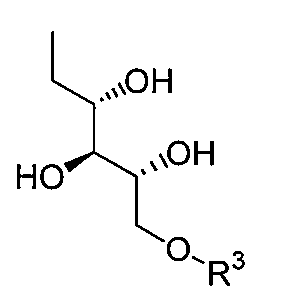
R2は存在しないか、又はHであり、R2が存在しない場合には、R2が連結して描かれている窒素原子は隣接炭素原子との間に二重結合を形成しており、
R3は、H、リン酸基、又は
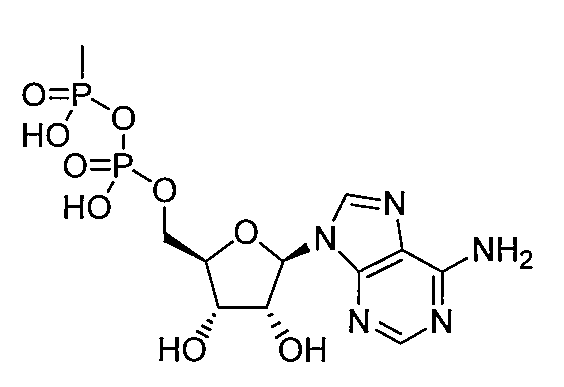
で表される化合物である、請求項1に記載の組成物、請求項2、5若しくは6に記載の電極、請求項3、5若しくは6に記載の電池又は請求項4、5若しくは6に記載のセンサー。 - フラビン化合物が、フラビンモノヌクレオチド、リボフラビン、ルミクロム、フラビンアデニンジヌクレオチド又はルミフラビンである、請求項1若しくは7に記載の組成物、請求項2、5、6若しくは7に記載の電極、請求項3、5、6若しくは7に記載の電池又は請求項4、5、6若しくは7に記載のセンサー。
- 前記(i)において、人工電子メディエーターが、キノン類、フェナジン類、ビオロゲン類、シトクロム類、チオレドキシン類、フェノキサジン類、フェノチアジン類、フェリシアン化物、フェレドキシン類、フェロセン、フェロセン誘導体、及び金属錯体である、
前記(ii)において、非水溶性の電子メディエーターがフェロセン、非水溶性のキノン類、非水溶性のフェナジン類、非水溶性のビオロゲン類、非水溶性のチオレドキシン類、非水溶性のフェノキサジン類、非水溶性のフェノチアジン類、非水溶性のフェレドキシン類、及び非水溶性のフェロセン誘導体である、又は
前記(iii)において、さらに、酸化還元電位が0.2V以上の電子メディエーターを含まない、
請求項1、7若しくは8に記載の組成物、請求項2、5、6、7若しくは8に記載の電極、請求項3、5、6、7若しくは8に記載の電池又は請求項4、5、6、7若しくは8に記載のセンサー。 - グルコースを含みうる試料と、遊離型のフラビン化合物と、精製されたFAD依存性グルコースオキシダーゼ又は精製されたFAD依存性グルコースデヒドロゲナーゼとを接触させる工程、及び電流を測定する工程を含む、グルコースの電気化学的測定方法、
ただし該方法は、
(i) 単独で電子をFAD依存性グルコースオキシダーゼ又はFAD依存性グルコースデヒドロゲナーゼから受け取ることのできる人工電子メディエーターを外部から添加しない、
(ii) 単独で電子をFAD依存性グルコースオキシダーゼ又はFAD依存性グルコースデヒドロゲナーゼから受け取ることのできる非水溶性の電子メディエーターを外部から添加しない、又は
(iii) 単独で電子をFAD依存性グルコースオキシダーゼ又はFAD依存性グルコースデヒドロゲナーゼから受け取ることのできる、酸化還元電位が0.3V以上の電子メディエーターを外部から添加しない、
前記方法。 - 遊離型のフラビン化合物を電子メディエーターとして用いる発電方法であって、アノード及びカソードを使用し、
電解質に接触しているアノードにフラビン化合物を供給し、グルコース燃料を供給する工程を有し、
該アノードが、精製されたFAD依存性グルコースデヒドロゲナーゼ又は精製されたFAD依存性グルコースオキシダーゼを有する電極である、該発電方法、
ただし該方法は、
(i) 単独で電子をFAD依存性グルコースオキシダーゼ又はFAD依存性グルコースデヒドロゲナーゼから受け取ることのできる人工電子メディエーターを外部から添加しない、
(ii) 単独で電子をFAD依存性グルコースオキシダーゼ又はFAD依存性グルコースデヒドロゲナーゼから受け取ることのできる非水溶性の電子メディエーターを外部から添加しない、又は
(iii) 単独で電子をFAD依存性グルコースオキシダーゼ又はFAD依存性グルコースデヒドロゲナーゼから受け取ることのできる、酸化還元電位が0.3V以上の電子メディエーターを外部から添加しない、
前記方法。 - 該フラビン化合物が固相中に固定化されている非酵素型のフラビン化合物である、請求項10又は11に記載の方法。
- 精製されたFAD依存性グルコースオキシダーゼ又は精製されたFAD依存性グルコースデヒドロゲナーゼが固相中に固定化されている、請求項10~12のいずれか1項に記載の方法。
- フラビン化合物が以下の化学式(I)

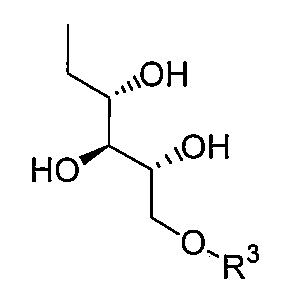
R2は存在しないか、又はHであり、R2が存在しない場合には、R2が連結して描かれている窒素原子は隣接炭素原子との間に二重結合を形成しており、
R3は、H、リン酸基、又は
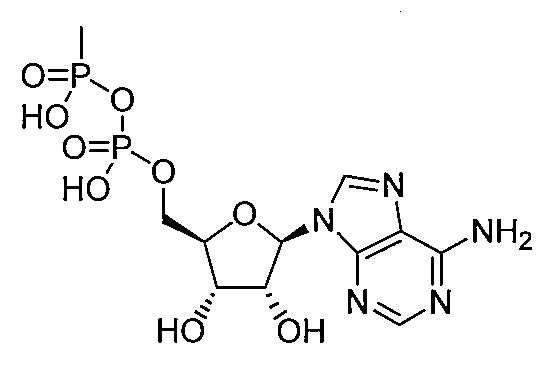
で表される化合物である、請求項10~13のいずれか1項に記載の方法。 - フラビン化合物が、フラビンモノヌクレオチド、リボフラビン、ルミクロム、フラビンアデニンジヌクレオチド又はルミフラビンである、請求項10~14のいずれか1項に記載の方法。
- 前記(i)において、人工電子メディエーターが、キノン類、フェナジン類、ビオロゲン類、シトクロム類、チオレドキシン類、フェノキサジン類、フェノチアジン類、フェリシアン化物、フェレドキシン類、フェロセン、フェロセン誘導体、及び金属錯体である、
前記(ii)において、非水溶性の電子メディエーターがフェロセン、非水溶性のキノン類、非水溶性のフェナジン類、非水溶性のビオロゲン類、非水溶性のチオレドキシン類、非水溶性のフェノキサジン類、非水溶性のフェノチアジン類、非水溶性のフェレドキシン類、及び非水溶性のフェロセン誘導体である、又は
前記(iii)において、さらに、酸化還元電位が0.2V以上の電子メディエーターを外部から添加しない、
請求項10~15のいずれか1項に記載の方法。
Priority Applications (1)
| Application Number | Priority Date | Filing Date | Title |
|---|---|---|---|
| US16/342,841 US12571758B2 (en) | 2016-10-19 | 2017-10-19 | Glucose redox reaction and composition for glucose measurement using flavin compound |
Applications Claiming Priority (2)
| Application Number | Priority Date | Filing Date | Title |
|---|---|---|---|
| JP2016205539 | 2016-10-19 | ||
| JP2016-205539 | 2016-10-19 |
Publications (1)
| Publication Number | Publication Date |
|---|---|
| WO2018074551A1 true WO2018074551A1 (ja) | 2018-04-26 |
Family
ID=62019548
Family Applications (1)
| Application Number | Title | Priority Date | Filing Date |
|---|---|---|---|
| PCT/JP2017/037851 Ceased WO2018074551A1 (ja) | 2016-10-19 | 2017-10-19 | フラビン化合物を用いたグルコース酸化還元反応及びグルコース測定用組成物 |
Country Status (2)
| Country | Link |
|---|---|
| US (1) | US12571758B2 (ja) |
| WO (1) | WO2018074551A1 (ja) |
Cited By (1)
| Publication number | Priority date | Publication date | Assignee | Title |
|---|---|---|---|---|
| JP2022176735A (ja) * | 2021-05-17 | 2022-11-30 | 株式会社アイシン | 酵素電極を用いるバイオ燃料電池 |
Families Citing this family (6)
| Publication number | Priority date | Publication date | Assignee | Title |
|---|---|---|---|---|
| WO2017094776A1 (ja) | 2015-11-30 | 2017-06-08 | キッコーマン株式会社 | シトクロム融合型グルコースデヒドロゲナーゼ及びグルコース測定法 |
| US11066690B2 (en) | 2016-05-09 | 2021-07-20 | Kikkoman Corporation | Flavin-binding glucose dehydrogenase variant |
| CN110494568B (zh) | 2017-03-31 | 2024-03-19 | 龟甲万株式会社 | 使用fad依赖性葡糖脱氢酶的连续葡萄糖监测 |
| WO2024119224A1 (en) * | 2022-12-05 | 2024-06-13 | Australian National University | Electrochemical cell and uses thereof |
| CN115963158A (zh) * | 2023-01-04 | 2023-04-14 | 北京理工大学 | 一种葡萄糖传感器及其传感介质与制备方法 |
| CN120559053B (zh) * | 2025-07-30 | 2025-10-03 | 中国矿业大学 | 基于葡萄糖脱氢酶构筑的葡萄糖传感器的制备方法和应用 |
Citations (5)
| Publication number | Priority date | Publication date | Assignee | Title |
|---|---|---|---|---|
| JPH06242068A (ja) * | 1993-02-18 | 1994-09-02 | Nec Corp | グルコースセンサの製造方法 |
| JP2004296099A (ja) * | 2003-03-25 | 2004-10-21 | Fuji Photo Film Co Ltd | 酵素反応を利用した電気エネルギー発生・貯蔵方法および装置 |
| JP2006234788A (ja) * | 2004-07-23 | 2006-09-07 | Canon Inc | 酵素電極、酵素電極を有するデバイス、センサ、燃料電池、電気化学的反応装置 |
| JP2009150658A (ja) * | 2007-12-18 | 2009-07-09 | Tdk Corp | 電気化学センサ及び電気化学センサシステム |
| JP2009168622A (ja) * | 2008-01-16 | 2009-07-30 | Tdk Corp | 代謝物濃度を測定する方法及びこれに用いられる電気化学センサ |
Family Cites Families (24)
| Publication number | Priority date | Publication date | Assignee | Title |
|---|---|---|---|---|
| US4704193A (en) * | 1986-05-14 | 1987-11-03 | Gte Laboratories Incorporated | Covalently coupled cofactor modified electrodes and methods of synthesis and use |
| US5126247A (en) | 1988-02-26 | 1992-06-30 | Enzymatics, Inc. | Method, system and devices for the assay and detection of biochemical molecules |
| JPH02298855A (ja) | 1989-03-20 | 1990-12-11 | Assoc Univ Inc | 固定化酵素とレドックス重合体を用いた電気化学的バイオセンサー |
| US5089112A (en) * | 1989-03-20 | 1992-02-18 | Associated Universities, Inc. | Electrochemical biosensor based on immobilized enzymes and redox polymers |
| JPH0321857A (ja) | 1989-06-19 | 1991-01-30 | Terumo Corp | 酵素センサ及びその製造方法 |
| US5710009A (en) * | 1994-02-17 | 1998-01-20 | Serex, Inc. | Receptor:release ligand (reland) complexes and release assays using said reland and methods and kits based thereon |
| US5723284A (en) | 1996-04-01 | 1998-03-03 | Bayer Corporation | Control solution and method for testing the performance of an electrochemical device for determining the concentration of an analyte in blood |
| IL118432A (en) * | 1996-05-27 | 1999-12-31 | Yissum Res Dev Co | Electrochemical and photochemical electrodes and their use |
| US8118991B2 (en) * | 2001-09-04 | 2012-02-21 | Stephen Eliot Zweig | Apoenzyme reactivation electrochemical detection method and assay |
| US7166208B2 (en) * | 2004-03-03 | 2007-01-23 | Stephen Eliot Zweig | Apoenzyme reactivation electrochemical detection method and assay |
| US7638228B2 (en) * | 2002-11-27 | 2009-12-29 | Saint Louis University | Enzyme immobilization for use in biofuel cells and sensors |
| GB0309905D0 (en) * | 2003-04-30 | 2003-06-04 | E2V Technologics Ltd | Electrochemical sensing assays |
| JP4839219B2 (ja) | 2003-10-24 | 2011-12-21 | バイエル・ヘルスケア・エルエルシー | 酵素的電気化学的バイオセンサ |
| US7887750B2 (en) * | 2004-05-05 | 2011-02-15 | Bayer Healthcare Llc | Analytical systems, devices, and cartridges therefor |
| WO2006009324A1 (en) * | 2004-07-23 | 2006-01-26 | Canon Kabushiki Kaisha | Enzyme electrode, and device, sensor, fuel cell and electrochemical reactor employing the enzyme electrode |
| JP2008071584A (ja) | 2006-09-13 | 2008-03-27 | Toyota Motor Corp | 電子伝達メディエータ修飾酵素電極及びこれを備える生物燃料電池 |
| JP5273680B2 (ja) * | 2007-09-18 | 2013-08-28 | 国立大学法人東京農工大学 | 酵素電極 |
| US8771500B2 (en) * | 2007-10-22 | 2014-07-08 | The University Of Connecticut | Glucose sensors and methods of manufacture thereof |
| JPWO2012042903A1 (ja) | 2010-09-30 | 2014-02-06 | パナソニック株式会社 | 試薬組成物、センサ、センサシステム及びセンサの製造方法 |
| JP6101011B2 (ja) | 2012-07-13 | 2017-03-22 | キッコーマン株式会社 | フラビン結合型グルコースデヒドロゲナーゼを含む組成物の安定性を向上する方法 |
| EP3369815B1 (en) | 2015-10-30 | 2022-03-09 | Kikkoman Corporation | Glucose dehydrogenase having modified electron transfer properties, and glucose measurement method |
| WO2017094776A1 (ja) | 2015-11-30 | 2017-06-08 | キッコーマン株式会社 | シトクロム融合型グルコースデヒドロゲナーゼ及びグルコース測定法 |
| US11066690B2 (en) | 2016-05-09 | 2021-07-20 | Kikkoman Corporation | Flavin-binding glucose dehydrogenase variant |
| CN110494568B (zh) | 2017-03-31 | 2024-03-19 | 龟甲万株式会社 | 使用fad依赖性葡糖脱氢酶的连续葡萄糖监测 |
-
2017
- 2017-10-19 WO PCT/JP2017/037851 patent/WO2018074551A1/ja not_active Ceased
- 2017-10-19 US US16/342,841 patent/US12571758B2/en active Active
Patent Citations (5)
| Publication number | Priority date | Publication date | Assignee | Title |
|---|---|---|---|---|
| JPH06242068A (ja) * | 1993-02-18 | 1994-09-02 | Nec Corp | グルコースセンサの製造方法 |
| JP2004296099A (ja) * | 2003-03-25 | 2004-10-21 | Fuji Photo Film Co Ltd | 酵素反応を利用した電気エネルギー発生・貯蔵方法および装置 |
| JP2006234788A (ja) * | 2004-07-23 | 2006-09-07 | Canon Inc | 酵素電極、酵素電極を有するデバイス、センサ、燃料電池、電気化学的反応装置 |
| JP2009150658A (ja) * | 2007-12-18 | 2009-07-09 | Tdk Corp | 電気化学センサ及び電気化学センサシステム |
| JP2009168622A (ja) * | 2008-01-16 | 2009-07-30 | Tdk Corp | 代謝物濃度を測定する方法及びこれに用いられる電気化学センサ |
Cited By (2)
| Publication number | Priority date | Publication date | Assignee | Title |
|---|---|---|---|---|
| JP2022176735A (ja) * | 2021-05-17 | 2022-11-30 | 株式会社アイシン | 酵素電極を用いるバイオ燃料電池 |
| JP7658163B2 (ja) | 2021-05-17 | 2025-04-08 | 株式会社アイシン | 酵素電極を用いるバイオ燃料電池 |
Also Published As
| Publication number | Publication date |
|---|---|
| US12571758B2 (en) | 2026-03-10 |
| US20190257781A1 (en) | 2019-08-22 |
Similar Documents
| Publication | Publication Date | Title |
|---|---|---|
| US12571758B2 (en) | Glucose redox reaction and composition for glucose measurement using flavin compound | |
| US9493814B2 (en) | Flavin-binding glucose dehydrogenase having improved substrate specificity | |
| JP6526572B2 (ja) | 熱安定性が向上したフラビン結合型グルコースデヒドロゲナーゼ | |
| JP7032906B2 (ja) | フラビン化合物を用いたグルコース酸化還元反応及びグルコース測定用組成物 | |
| US20170191105A1 (en) | Enzyme electrode | |
| JP2010057427A (ja) | グルコース脱水素酵素およびグルコースの電気化学測定法 | |
| US11066690B2 (en) | Flavin-binding glucose dehydrogenase variant | |
| EP3780207A1 (en) | Novel mediator | |
| Iwasa et al. | Fungal FAD-dependent glucose dehydrogenases concerning high activity, affinity, and thermostability for maltose-insensitive blood glucose sensor | |
| JP6635913B2 (ja) | 比活性が向上したフラビン結合型グルコースデヒドロゲナーゼ | |
| JP6484741B1 (ja) | 新規メディエータ | |
| JP2010051312A (ja) | グルコース脱水素酵素を用いたグルコースの電気化学測定法 | |
| US11781167B2 (en) | Continuous glucose monitoring using an FAD-dependent glucose dehydrogenase | |
| US11046993B2 (en) | Glucose dehydrogenase having modified electron transfer properties, and glucose measurement method | |
| JP2011050300A (ja) | グルコースセンサ | |
| JP6934720B2 (ja) | 基質特異性が向上したフラビン結合型グルコースデヒドロゲナーゼ | |
| JP2025081628A (ja) | グルコースデヒドロゲナーゼの基質特異性を改変する方法及びグルコースデヒドロゲナーゼ基質特異性改変剤 | |
| JP6484742B1 (ja) | 新規メディエータ | |
| JP7165493B2 (ja) | 保存安定性に優れたグルコースデヒドロゲナーゼ及び持続血糖測定 | |
| EP3656868B1 (en) | Glucose monitoring method and glucose sensor | |
| JP2019022476A (ja) | グルコースデヒドロゲナーゼを用いた持続血糖測定 |
Legal Events
| Date | Code | Title | Description |
|---|---|---|---|
| 121 | Ep: the epo has been informed by wipo that ep was designated in this application |
Ref document number: 17862521 Country of ref document: EP Kind code of ref document: A1 |
|
| NENP | Non-entry into the national phase |
Ref country code: DE |
|
| 122 | Ep: pct application non-entry in european phase |
Ref document number: 17862521 Country of ref document: EP Kind code of ref document: A1 |
|
| WWG | Wipo information: grant in national office |
Ref document number: 16342841 Country of ref document: US |