WO2017206955A1 - 新型噻唑类衍生物在治疗病毒感染中的应用 - Google Patents
新型噻唑类衍生物在治疗病毒感染中的应用 Download PDFInfo
- Publication number
- WO2017206955A1 WO2017206955A1 PCT/CN2017/087077 CN2017087077W WO2017206955A1 WO 2017206955 A1 WO2017206955 A1 WO 2017206955A1 CN 2017087077 W CN2017087077 W CN 2017087077W WO 2017206955 A1 WO2017206955 A1 WO 2017206955A1
- Authority
- WO
- WIPO (PCT)
- Prior art keywords
- virus
- compound
- group
- pharmaceutically acceptable
- substituted
- Prior art date
- Legal status (The legal status is an assumption and is not a legal conclusion. Google has not performed a legal analysis and makes no representation as to the accuracy of the status listed.)
- Ceased
Links
- HHZYYWLZLNMVOG-FSJBWODESA-N CCC(C)N(c1nc(-c(cccc2)c2Cl)c[s]1)/N=C/c(cccc1)c1C(O)=O Chemical compound CCC(C)N(c1nc(-c(cccc2)c2Cl)c[s]1)/N=C/c(cccc1)c1C(O)=O HHZYYWLZLNMVOG-FSJBWODESA-N 0.000 description 1
- GRUAOTGUFPHFRE-CIAFOILYSA-N Cc1c(-c2ccccc2)nc(N(C)/N=C/c(ccc(C)c2)c2C(O)=O)[s]1 Chemical compound Cc1c(-c2ccccc2)nc(N(C)/N=C/c(ccc(C)c2)c2C(O)=O)[s]1 GRUAOTGUFPHFRE-CIAFOILYSA-N 0.000 description 1
Images

Classifications
-
- A—HUMAN NECESSITIES
- A61—MEDICAL OR VETERINARY SCIENCE; HYGIENE
- A61K—PREPARATIONS FOR MEDICAL, DENTAL OR TOILETRY PURPOSES
- A61K31/00—Medicinal preparations containing organic active ingredients
- A61K31/33—Heterocyclic compounds
- A61K31/395—Heterocyclic compounds having nitrogen as a ring hetero atom, e.g. guanethidine or rifamycins
- A61K31/41—Heterocyclic compounds having nitrogen as a ring hetero atom, e.g. guanethidine or rifamycins having five-membered rings with two or more ring hetero atoms, at least one of which being nitrogen, e.g. tetrazole
- A61K31/425—Thiazoles
- A61K31/426—1,3-Thiazoles
-
- A—HUMAN NECESSITIES
- A61—MEDICAL OR VETERINARY SCIENCE; HYGIENE
- A61P—SPECIFIC THERAPEUTIC ACTIVITY OF CHEMICAL COMPOUNDS OR MEDICINAL PREPARATIONS
- A61P31/00—Antiinfectives, i.e. antibiotics, antiseptics, chemotherapeutics
- A61P31/12—Antivirals
-
- C—CHEMISTRY; METALLURGY
- C07—ORGANIC CHEMISTRY
- C07D—HETEROCYCLIC COMPOUNDS
- C07D277/00—Heterocyclic compounds containing 1,3-thiazole or hydrogenated 1,3-thiazole rings
- C07D277/02—Heterocyclic compounds containing 1,3-thiazole or hydrogenated 1,3-thiazole rings not condensed with other rings
- C07D277/20—Heterocyclic compounds containing 1,3-thiazole or hydrogenated 1,3-thiazole rings not condensed with other rings having two or three double bonds between ring members or between ring members and non-ring members
- C07D277/32—Heterocyclic compounds containing 1,3-thiazole or hydrogenated 1,3-thiazole rings not condensed with other rings having two or three double bonds between ring members or between ring members and non-ring members with hetero atoms or with carbon atoms having three bonds to hetero atoms with at the most one bond to halogen, e.g. ester or nitrile radicals, directly attached to ring carbon atoms
- C07D277/38—Nitrogen atoms
- C07D277/50—Nitrogen atoms bound to hetero atoms
-
- Y—GENERAL TAGGING OF NEW TECHNOLOGICAL DEVELOPMENTS; GENERAL TAGGING OF CROSS-SECTIONAL TECHNOLOGIES SPANNING OVER SEVERAL SECTIONS OF THE IPC; TECHNICAL SUBJECTS COVERED BY FORMER USPC CROSS-REFERENCE ART COLLECTIONS [XRACs] AND DIGESTS
- Y02—TECHNOLOGIES OR APPLICATIONS FOR MITIGATION OR ADAPTATION AGAINST CLIMATE CHANGE
- Y02A—TECHNOLOGIES FOR ADAPTATION TO CLIMATE CHANGE
- Y02A50/00—TECHNOLOGIES FOR ADAPTATION TO CLIMATE CHANGE in human health protection, e.g. against extreme weather
- Y02A50/30—Against vector-borne diseases, e.g. mosquito-borne, fly-borne, tick-borne or waterborne diseases whose impact is exacerbated by climate change
Definitions
- the present invention relates to the field of medicinal chemistry; in particular, the present invention relates to the use of novel thiazole derivatives for the preparation of a medicament for the treatment of viral infections and for the treatment of viral infections.
- RNA viruses such as viruses and coronaviruses.
- Diseases caused by acute viral infections have some common characteristics: 1) short course of disease (1-2 weeks), rapid development (rapid development within a few days after onset); 2) it is easy to cause severe illness and even death in high-risk groups; 3) It is easy to cause people to spread; 4) Rapid replication of the virus usually causes excessive inflammation.
- influenza virus Take the influenza virus as an example.
- the mortality rate of adults hospitalized for influenza virus infection is 5%-10%, and about 20,000 people die from influenza virus infection every year. This does not include the millions of deaths caused by several famous influenza pandemics, as well as the outbreak caused by avian influenza viruses such as H7N9, H5N1, H5N6 and even H1N1.
- the course of influenza virus infection is about 14 days. In severe cases, the critically ill patients deteriorate rapidly until death within a few days after the onset.
- specific antiviral drugs such as Tamiflu are also given, the virus concentration is too high due to the late stage of the disease. The suppression effect is limited and cannot save lives.
- oseltamivir (trade name “Duffy”, Roche) and zanamivir (trade name “Leeqing”, GSK).
- these two drugs are inhibitors of the virus's ceramidase and can inhibit the release of the virus, so it is clinically proven to shorten the disease time and reduce the risk of complications.
- these two drugs are not limited due to the mechanism of action.
- the early use of the virus (48 hours after the onset of symptoms) will greatly reduce the effect.
- favipiravir a new anti-influenza virus developed by Fukuyama Chemical Co., Ltd., was approved for marketing. It is aimed at the viral polymerase, which can inhibit the replication of the virus.
- antiviral drugs are mainly based on functional proteins that target viruses, that is, specific drugs need to be developed for each virus. Although this antiviral drug can achieve high specificity and selectivity, long-term heavy use often leads to drug resistance. Different drugs are developed for different viruses, and the development cycle is long and the cost is high.
- the virus As a living organism, the virus must rely on the resources of the host cell for reproduction. Therefore, there is an urgent need in the art for small molecule drugs designed for host molecules on which the virus depends to obtain a broad spectrum antiviral drug.
- the invention provides the use of a compound of Formula I, or a pharmaceutically acceptable salt thereof, for the manufacture of a medicament for the treatment of a viral infection:
- R 1 is selected from the group consisting of: H, a substituted or unsubstituted C1-C6 alkyl group, a C3-C6 cycloalkyl group;
- R 2 is independently selected from the group consisting of: H, halogen, substituted or unsubstituted C1-C6 alkyl, substituted or unsubstituted C1-C6 alkoxy, CN, NO 2 , hydroxyl, NR a R b ;
- R a and R b may be independently selected from H or C1-C6 alkyl
- R 3 is selected from the group consisting of: H, a substituted or unsubstituted C1-C6 alkyl group;
- R 4 is independently selected from the group consisting of: H, halogen
- n is an integer from 0-4;
- n is an integer of 0-5.
- the virus is an RNA virus, including but not limited to: influenza virus, respiratory syncytial virus, hand-foot-and-mouth virus (EV71), dengue virus (type 2 dengue virus), Zika virus, Japanese encephalitis virus.
- influenza virus includes, but is not limited to, H3N2 influenza virus, H1N1 influenza virus, H7N9 influenza virus.
- the compound is as shown in Formula II:
- R 5 and R 6 are independently selected from: H, halogen, substituted or unsubstituted C1-C6 alkyl, substituted or unsubstituted C1-C6 alkoxy, hydroxy, NH 2 ;
- R 7 , R 8 and R 9 are independently selected from the group consisting of: H, halogen;
- R 1 and R 3 are as described above.
- R 1 is selected from the group consisting of: H, C1-C6 alkyl
- R 3 is selected from: H, substituted or unsubstituted C1-C6 alkyl
- R 5 and R 6 are independently selected from: H, halogen.
- R 7 and R 8 are independently selected from the group consisting of: H, halogen
- R 9 is H.
- the compound of Formula I, or a pharmaceutically acceptable salt thereof is a compound selected from the group consisting of: or a pharmaceutically acceptable salt thereof:
- the compound is a compound selected from the group consisting of:
- the present invention provides a pharmaceutical composition
- a pharmaceutical composition comprising a compound of the first aspect of the invention or a pharmaceutically acceptable salt thereof in combination with other antiviral drugs, and pharmaceutically acceptable Carrier or excipient.
- the pharmaceutical composition comprises Compound No. 16 or a pharmaceutically acceptable salt thereof and oseltamivir, and a pharmaceutically acceptable carrier or excipient.
- the present invention provides a use of a pharmaceutical composition comprising a compound of the first aspect of the invention, or a pharmaceutically acceptable salt thereof, for the manufacture of a medicament for the treatment of a viral infection, And a pharmaceutically acceptable carrier or excipient.
- the present invention provides a pharmaceutical composition for treating a viral infection and comprising the compound of the first aspect of the invention or a pharmaceutically acceptable salt thereof, and a pharmaceutically acceptable Carrier or excipient.
- the pharmaceutical composition is a dosage form suitable for oral administration, including but not limited to tablets, solutions, suspensions, capsules, granules, powders.
- the present invention provides a method of treating a viral infection, the method comprising administering a compound of the first aspect of the invention or the pharmaceutical composition of the second or fourth aspect of the invention to a need for treatment of a viral infection Object.
- the virus is an RNA virus, including but not limited to influenza virus, respiratory syncytial virus, hand-foot-and-mouth virus (EV71), dengue virus (type 2 dengue virus), Zika virus, Japanese encephalitis virus .
- influenza virus includes, but is not limited to, H3N2 influenza virus, H1N1 influenza virus, H7N9 influenza virus.
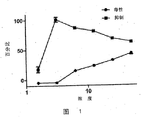
- Figure 1 shows the inhibitory effect and cytotoxicity of Compound No. 16 on influenza virus.
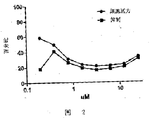
- Figure 2 shows the inhibitory effect and cell survival curve of Compound No. 10 on human hand foot and mouth virus EV71.
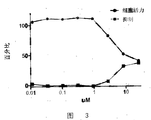
- Figure 3 shows the inhibitory effect and cell survival curve of Compound No. 16 on human respiratory syncytial virus RSV.
- Figure 4 shows the change in body weight of mice after infection with a lethal dose of H7N9.
- CTRL intraperitoneal injection of PBS, no infection of the virus; 312 (compound 16), intraperitoneal injection of 312, no infection of the virus; 1LD + PBS: intraperitoneal injection of PBS, infection of the virus; 1LD + OLS: intraperitoneal injection of oseltamivir, infected with the virus; 1LD+312: 312 intraperitoneal injection, infected with virus; 1LD+312+OLS: intraperitoneal injection of 312 and oseltamivir, infected with the virus.
- the drug was injected once a day for the first 5 days from the first day of infection.
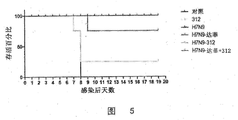
- Figure 5 shows the survival rate of drug-treated H7N9 heavily infected mice, where 312 is compound No. 16.
- the present inventors designed novel compounds against nucleic acid synthesis reactions of host cells, and obtained the best candidate compounds by screening for toxicity and function of the compounds. Since viral replication is heavily dependent on the nucleic acid resources of the host cell, the excessive inflammatory response caused by viral infection also depends on gene expression. Therefore, preventing nucleic acid synthesis of the host cell can inhibit viral replication on the one hand and excessive inflammatory response on the other hand. In normal cells, since the gene synthesis and expression are in a certain steady state, and the new nucleic acid synthesis is not excessively dependent, the compound of the present invention is less toxic to normal cells, and more effective to virus-infected cells.
- alkyl refers to a saturated branched or straight-chain alkyl group having a carbon chain length of from 1 to 10 carbon atoms, and preferred alkyl groups include from 2 to 8 carbon atoms, from 1 to 6, and from 1 to An alkyl group having 4 carbon atoms and 1-3 carbon atoms.
- alkyl groups include, but are not limited to, methyl, ethyl, n-propyl, isopropyl, n-butyl, isobutyl, heptyl, and the like.
- the alkyl group may be substituted by one or more substituents, for example by halogen or haloalkyl.
- the alkyl group may be an alkyl group substituted with 1 to 4 fluorine atoms, such as a trifluoromethyl group, or the alkyl group may be an alkyl group substituted with a fluoroalkyl group.
- cycloalkyl means a saturated alkyl group having an alicyclic structure, for example, a C3-C6 cycloalkyl group.
- the cycloalkyl group includes, but is not limited to, cyclopropyl, cyclobutyl, cyclopentyl or cyclohexyl.
- the cycloalkyl groups described herein may be substituted or unsubstituted, including but not limited to, substituted with one or more halogen atoms, such as a fluorine atom.
- amino refers to a group of the formula "NRxRy", wherein Rx and Ry may be independently selected from H or C1-C3 alkyl or C1-C3 haloalkyl.
- amino refers to NH2.
- halogen refers to fluoro, chloro, bromo and iodo.
- the halogen is chlorine or fluorine; more preferably fluorine.
- the present inventors have unexpectedly discovered a series of thiazole derivatives having broad spectrum and excellent antiviral activity. These compounds show excellent antiviral activity in animal experiments.
- the compound of the invention is a compound of formula I or a pharmaceutically acceptable salt thereof:
- R 1 is selected from the group consisting of: H, a substituted or unsubstituted C1-C6 alkyl group, a C3-C6 cycloalkyl group;
- R 2 is independently selected from the group consisting of: H, halogen, substituted or unsubstituted C1-C6 alkyl, substituted or unsubstituted C1-C6 alkoxy, CN, NO 2 , hydroxyl, NR a R b ;
- R a and R b may be independently selected from H or C1-C6 alkyl
- R 3 is selected from the group consisting of: H, a substituted or unsubstituted C1-C6 alkyl group;
- R 4 is selected from the group consisting of: H, halogen
- n is an integer from 0 to 4.
- n is an integer of 0-5.
- the compound of the invention is as shown in Formula II:
- R 5 and R 6 are independently selected from: H, halogen, substituted or unsubstituted C1-C6 alkyl, substituted or unsubstituted C1-C6 alkoxy, hydroxy, NH 2 ;
- R 7 , R 8 and R 9 are independently selected from the group consisting of: H, halogen;
- R 1 and R 3 are as described above.
- R 1 is selected from the group consisting of: H, C1-C6 alkyl, preferably C1-C3 alkyl;
- R 3 is selected from: H, substituted or unsubstituted C1-C6 alkyl, preferably C1-C3 alkane
- R 5 and R 6 are independently selected from: H, halogen, preferably F, unsubstituted or halogen, preferably F-substituted C1-C3 alkyl;
- R 7 and R 8 are independently selected from: H, halogen, preferably Cl;
- R 9 is H.
- virus as used herein has the same meaning as commonly understood by those skilled in the art, and consists of or consists solely of a nucleic acid molecule (DNA or RNA) (eg, a prion).
- DNA or RNA nucleic acid molecule
- the virus is small and simple in structure. The virus has no cellular structure, and the virus itself cannot replicate because it does not have the basic system necessary to achieve metabolism. However, when it contacts the host cell, its nucleic acid material invades the host cell, and with the latter's replication system, the new virus is replicated according to the instructions of the viral gene.
- the virus described herein refers to an RNA virus.
- RNA viruses are a type of biological virus. Their genetic material consists of RNA ribonucleic acid. Usually, the nucleic acid is single-stranded (ssRNA) and double-stranded (dsRNA).
- the RNA viruses described herein include, but are not limited to, influenza virus, respiratory syncytial virus, hand-foot-and-mouth virus (EV71), dengue virus (type 2 dengue virus), Zika virus, Japanese encephalitis virus .
- influenza virus includes, but is not limited to, H3N2 influenza virus, H1N1 influenza virus, H7N9 influenza virus.
- the present invention further provides a pharmaceutical composition for treating an RNA virus infection
- the composition contains a therapeutically effective amount of a compound of the invention, or a pharmaceutically acceptable salt thereof, and a pharmaceutically acceptable carrier or excipient.
- Examples of pharmaceutically acceptable salts of the compounds of the invention include, but are not limited to, inorganic and organic acid salts such as the hydrochloride, hydrobromide, sulfate, citrate, lactate, tartrate, maleate salts. , fumarate, mandelate and oxalate; and inorganic and formed with bases such as sodium hydroxy, tris(hydroxymethyl)aminomethane (TRIS, tromethamine) and N-methyl glucosamine Organic base salt.
- inorganic and organic acid salts such as the hydrochloride, hydrobromide, sulfate, citrate, lactate, tartrate, maleate salts. , fumarate, mandelate and oxalate
- bases such as sodium hydroxy, tris(hydroxymethyl)aminomethane (TRIS, tromethamine) and N-methyl glucosamine Organic base salt.
- the compound of the present invention or a pharmaceutically acceptable salt thereof is orally administered to a mammal daily in an amount of from about 0.0025 to 50 mg/kg body weight. Preferably, however, it is about 0.01 to 10 mg per kilogram of oral administration.
- a unit oral dose can include from about 0.01 to 50 mg, preferably from about 0.1 to 10 mg, of a compound of the invention.
- the unit dose may be administered one or more times per day in one or more tablets, each tablet containing from about 0.1 to 50 mg, conveniently from about 0.25 to 10 mg of the compound of the invention or a solvate thereof.
- the pharmaceutical composition of the present invention can be formulated into a form suitable for various administration routes, including but not limited to being formulated for parenteral, subcutaneous, intravenous, intramuscular, intraperitoneal, transdermal, oral, intrathecal, intracranial A form of administration, intranasal or topical, for the treatment of tumors and other diseases.
- the amount administered is an amount effective to ameliorate or eliminate one or more conditions.
- an effective amount is an amount sufficient to ameliorate or in some way alleviate the symptoms associated with the disease.
- Such doses can be administered as a single dose or can be administered according to an effective therapeutic regimen.
- the amount administered may cure the disease, but administration is usually to improve the symptoms of the disease. Repeated administration is generally required to achieve the desired improvement in symptoms.
- the dosage of the drug will be determined by the age of the patient, the health and weight, the type of concurrent treatment, the frequency of treatment, and the desired therapeutic benefit.
- the pharmaceutical preparation of the present invention can be administered to any mammal as long as they can obtain the therapeutic effect of the compound of the present invention.
- the most important of these mammals is humans.
- the compounds of the invention or pharmaceutical compositions thereof are useful for the treatment of ulcerative colitis.
- the pharmaceutical preparations of the invention can be made in a known manner. For example, it is manufactured by a conventional mixing, granulating, tableting, dissolving, or freeze drying process. In the manufacture of oral formulations, the mixture can be selectively milled by combining the solid adjuvant with the active compound. If necessary or necessary, after adding an appropriate amount of auxiliary agent, the mixture of particles is processed to obtain a tablet or tablet core.
- Suitable excipients are, in particular, fillers, such as sugars such as lactose or sucrose, mannitol or sorbitol; cellulose preparations or calcium phosphates, such as tricalcium phosphate or calcium hydrogen phosphate; and binders, such as starch pastes, including corn starch. , wheat starch, rice starch, potato starch, gelatin, tragacanth, methyl cellulose, hydroxypropyl methyl cellulose, sodium carboxymethyl cellulose, or polyvinylpyrrolidone.
- fillers such as sugars such as lactose or sucrose, mannitol or sorbitol
- cellulose preparations or calcium phosphates such as tricalcium phosphate or calcium hydrogen phosphate
- binders such as starch pastes, including corn starch. , wheat starch, rice starch, potato starch, gelatin, tragacanth, methyl cellulose, hydroxypropyl methyl cellulose, sodium carboxymethyl
- a disintegrating agent such as the above-mentioned starch, and carboxymethyl starch, crosslinked polyvinylpyrrolidone, agar, or alginic acid or a salt thereof such as sodium alginate may be added.
- Adjuvants are especially flow regulators and lubricants, for example, silica, talc, stearates such as calcium magnesium stearate, stearic acid or polyethylene glycol.
- the tablet core can be provided with a suitable coating that is resistant to gastric juice. For this purpose, a concentrated sugar solution can be applied.
- Such solutions may contain gum arabic, talc, polyvinylpyrrolidone, polyethylene glycol and/or titanium dioxide, lacquer solutions and suitable organic solvents or solvent mixtures.
- a suitable cellulose solution such as cellulose acetate phthalic acid or hydroxypropyl methylcellulose phthalic acid can be used.
- a dye or pigment can be added to the coating of the tablet or tablet core. For example, a combination for identifying or for characterizing the dosage of an active ingredient.
- the present invention also provides a pharmaceutical composition comprising a compound of the present invention or a pharmaceutically acceptable salt thereof in combination with other antiviral drugs, such as oseltamivir, and pharmaceutically acceptable Carrier or excipient.
- the compound in the pharmaceutical composition of the invention is Compound No. 16.
- the present invention also provides a method of treating an RNA viral infection, the method comprising administering to a subject in need of treatment a compound of the invention or a pharmaceutical composition comprising a compound of the invention.
- Methods of administration include, but are not limited to, various methods of administration well known in the art, which can be determined based on the actual circumstances of the patient. These methods include, but are not limited to, parenteral, subcutaneous, intravenous, intramuscular, intraperitoneal, transdermal, buccal, intrathecal, intracranial, nasal or topical routes of administration.
- the invention also encompasses the use of a compound of the invention in the manufacture of a medicament for the treatment of an RNA viral infection.
- the compound of the present invention can form a salt or an ester due to the carboxyl group contained therein, thereby forming a prodrug.
- the present invention first discovered a series of thiazole derivatives having broad spectrum and excellent antiviral activity
- the compounds of the invention are less toxic to normal cells
- the compound of the present invention lays a material foundation for researching and developing a new generation of antiviral drugs, and thus has important academic value and practical significance.
- IC50 drug inhibitory concentration
- MDCK cells or Vero cells or RD cells were plated into 96-well plates, and grown to 90% or more after 12 hours of culture. The drug was diluted in a 2x series (1 x 10 -1 to 1 x 10 -10 ). Single-layer MDCK cells were aspirated, washed once with PBS, and 100 ⁇ l of the corresponding dilution drug solution was added to each well, and four replicate wells were made for each dilution.
- the drug dilution factor is calculated according to the Reed and Muench formula to calculate the TC50 of the drug.
- the present inventors examined the inhibitory effect of the compound of the present invention on cytopathic effect (CPE) caused by viral infection on mammalian cells. the result shows:
- the compound No. 16 has a TC50 of >50 uM on the MDCK of the host cell of influenza virus, and the inhibitory effect on influenza virus is about 2 uM (Fig. 1);
- Compound No. 10 has a certain inhibitory effect on human hand-foot-mouth virus EV71 (Fig. 2);
- Compound No. 16 has a certain inhibitory effect on human respiratory syncytial virus RSV (Fig. 3).
- mice were infected intranasally with a lethal dose of H7N9 avian influenza virus (1MLD50).
- Compound No. 16 (10 mg/kg) can achieve a similar positive drug oseltamivir (OLS, 20 mg/kg). The therapeutic effect is manifested by the recovery of infected mice.
- Compound No. 16 was better combined with oseltamivir ( Figure 4).
- Figure 4 In terms of survival, the combination of Compound 16 and oseltamivir increased the survival rate of H7N9 heavily infected mice by 25% compared to oseltamivir alone ( Figure 5).
- the compounds of the present invention have better anti-influenza virus, anti-hand-foot-to-mouth virus, anti-dengue virus and other acute infectious viruses, and existing antiviral drugs,
- oseltamivir can increase the survival rate of H7N9 severely infected mice by 25%. Has the prospect of developing a broad spectrum antiviral drug.
Landscapes
- Health & Medical Sciences (AREA)
- Chemical & Material Sciences (AREA)
- Life Sciences & Earth Sciences (AREA)
- Organic Chemistry (AREA)
- Animal Behavior & Ethology (AREA)
- Pharmacology & Pharmacy (AREA)
- Veterinary Medicine (AREA)
- Public Health (AREA)
- Medicinal Chemistry (AREA)
- General Health & Medical Sciences (AREA)
- Communicable Diseases (AREA)
- Oncology (AREA)
- Virology (AREA)
- Nuclear Medicine, Radiotherapy & Molecular Imaging (AREA)
- General Chemical & Material Sciences (AREA)
- Chemical Kinetics & Catalysis (AREA)
- Epidemiology (AREA)
- Pharmaceuticals Containing Other Organic And Inorganic Compounds (AREA)
Abstract
提供噻唑类衍生物在治疗病毒感染以及制备治疗病毒感染的药物中的应用。具体而言,提供式(I)所示的化合物、含有式(I)化合物的药物组合物在治疗病毒感染以及制备治疗病毒感染的药物中的用途。
Description
本发明涉及药物化学领域;具体地说,本发明涉及新型的噻唑类衍生物在制备治疗病毒感染的药物以及在治疗病毒感染中的应用。
急性病毒感染引起的疾病是公共卫生安全的重要威胁,这些病毒不仅包括熟知的流感病毒(禽流感病毒)、手足口病毒、登革热病毒,还包括一些新发突发的新型烈性病毒如埃博拉病毒、冠状病毒等多种RNA病毒。急性病毒感染引起的疾病都具有一些共同特点:1)病程短(1-2周),发展快(发病后几天内迅速发展);2)在高危人群中很容易引发重症乃至死亡;3)容易引起人群传播;4)病毒快速复制通常会引起过度炎症反应。
以流感病毒为例,根据美国CDC统计的数据,因感染流感病毒而住院的成年人死亡率在5%-10%,每年约有2万人死于流感病毒感染。这还不包括几次著名的流感大流行造成的数以百万计的死亡,以及诸如H7N9、H5N1、H5N6甚至H1N1在内的禽流感病毒引发的疫情。流感病毒感染的病程在14天左右,重症病人在发病后的几天内病情迅速恶化直至死亡,虽然也给与了特异性抗病毒药物如达菲等进行治疗,但由于发病后期病毒浓度过高,抑制效果有限,无法挽救生命。
目前治疗流感病毒感染的主要是两种处方药,奥斯他韦(oseltamivir,商品名“达菲”,罗氏)和扎那米韦(zanamivir,商品名“乐感清”,GSK)。这两种药物是针对病毒的神经酰胺酶的抑制剂,可以抑制病毒的释放,因此在临床上证明可以缩短疾病时间和降低并发症风险,然而,这两种药物由于作用机制的限制,如不在病毒感染早期(出现症状后48小时)使用,其效果将大打折扣。近期,由日本福山化学研发的抗流感病毒新药法匹拉韦(favipiravir)获批上市,其针对的是病毒的聚合酶,可以抑制病毒的复制,理论上比上述两种药物的抗病毒效果会更好,在疾病晚期使用也会更有效。根据估计,全球每年流感病毒的药物售值超过2亿美元,市场主要在欧美等发达国家。考虑到亚洲地区禽类高养殖密度的国家的药物需求,未来的抗流感病毒药物市场无疑是巨大的。
目前,抗病毒药物以靶向病毒的功能性蛋白为主,即针对每一个病毒需要研发针对性的药物。这种抗病毒药物虽然可以达到很高的特异性和选择性,但长期大量使用往往会出现耐药性。针对不同的病毒开发不同的药物,研发周期长,成本也高。
病毒作为寄生生活的生物体,必须依赖宿主细胞的资源进行繁殖。因此,本领域急需针对病毒赖以生存的宿主分子设计的小分子药物以便得到广谱抗病毒药物。
发明内容
本发明的目的在于提供新型的、广谱的具备抗病毒感染活性的化合物,以便用作病毒感染的治疗药物。
在第一方面,本发明提供式I所示化合物或其药学上可接受的盐在制备治疗病毒感染的药物中的用途:

式中,
R1选自:H、取代或未取代的C1-C6烷基、C3-C6环烷基;
R2独立选自:H、卤素、取代或未取代的C1-C6烷基、取代或未取代的C1-C6烷氧基、CN、NO2、羟基、NRaRb;
Ra、Rb可独立选自H或C1-C6烷基
R3选自:H、取代或未取代的C1-C6烷基;
R4独立选自:H、卤素;
m为0-4的整数;
n为0~5的整数。
在具体的实施方式中,所述病毒是RNA病毒,包括但不限于:流感病毒、呼吸道合胞体病毒、手足口病毒(EV71)、登革热病毒(2型登革热病毒)、寨卡病毒、日本脑炎病毒。
在优选的实施方式中,所述流感病毒包括但不限于:H3N2流感病毒、H1N1流感病毒、H7N9流感病毒。
在具体的实施方式中,所述化合物如式II所示:

式中,
R5和R6独立选自:H、卤素、取代或未取代的C1-C6烷基、取代或未取代的C1-C6烷氧基、羟基、NH2;
R7、R8和R9独立选自:H、卤素;
R1和R3如上所述。
在具体的实施方式中,R1选自:H、C1-C6烷基;R3选自:H、取代或未取代的C1-C6烷基;R5和R6独立选自:H、卤素、未取代的或卤素取代的C1-C3烷基;R7和R8独立选自:H、卤素;R9是H。
在具体的实施方式中,所述的式I所示化合物或其药学上可接受的盐是选自下组的化合物或其药学上可接受的盐:


在具体的实施方式中,所述化合物是选自下组的化合物:

在第二方面,本发明提供一种药物组合物,所述药物组合物包含本发明第一方面所述的化合物或其药学上可接受的盐与其它抗病毒药物的组合,以及药学上可接受的载体或赋形剂。
在优选的实施方式中,所述药物组合物包含16号化合物或其药学上可接受的盐与奥司他韦,以及药学上可接受的载体或赋形剂。
在第三方面,本发明提供一种药物组合物在制备用于治疗病毒感染的药物中的用途,所述药物组合物含有本发明第一方面所述的化合物或其药学上可接受的盐,以及药学上可接受的载体或赋形剂。
在第四方面,本发明提供一种药物组合物,所述药物组合物用于治疗病毒感染并且含有本发明第一方面所述的化合物或其药学上可接受的盐,以及药学上可接受的载体或赋形剂。
在优选的实施方式中,所述药物组合物是适于口服的剂型,包括但不限于片剂、溶液剂、混悬液、胶囊剂、颗粒剂、粉剂。
在第五方面,本发明提供一种治疗病毒感染的方法,所述方法包括将本发明第一方面所述的化合物或本发明第二或第四方面所述的药物组合物给予需要治疗病毒感染的对象。
在优选的实施方式中,所述病毒是RNA病毒,包括但不限于流感病毒、呼吸道合胞体病毒、手足口病毒(EV71)、登革热病毒(2型登革热病毒)、寨卡病毒、日本脑炎病毒。
在进一步的优选实施方式中,所述流感病毒包括但不限于H3N2流感病毒、H1N1流感病毒、H7N9流感病毒。
应理解,在本发明范围内中,本发明的上述各技术特征和在下文(如实施例)中具体描述的各技术特征之间都可以互相组合,从而构成新的或优选的技术方案。限于篇幅,在此不再一一累述。
图1显示了16号化合物对流感病毒的抑制效果和细胞毒性。
图2显示了10号化合物对人手足口病毒EV71的抑制效果和细胞存活曲线。
图3显示了16号化合物对人呼吸道合胞病毒RSV的抑制效果和细胞存活曲线。
图4显示了小鼠感染致死剂量的H7N9后的体重变化曲线。CTRL:腹腔注射PBS,不感染病毒;312(16号化合物),腹腔注射312,不感染病毒;1LD+PBS:腹腔注射PBS,感染病毒;1LD+OLS:腹腔注射奥司他韦,感染病毒;1LD+312:腹腔注射312,感染病毒;1LD+312+OLS:腹腔注射312和奥司他韦,感染病毒。药物从感染第一天开始每天注射一次,连续5天。
图5显示了经药物治疗的H7N9重度感染小鼠的存活率,其中312是16号化合物。
发明人经过广泛而深入的研究,出乎意料地发现了一系列具备广谱且优异的抗病毒活性
的噻唑类衍生物。同时,这些化合物具有较低的毒性。在此基础上完成了本发明。
本发明人针对宿主细胞的核酸合成反应设计新型化合物,通过对化合物的毒性和功能进行筛选而得到最佳的候选化合物。由于病毒复制严重依赖于宿主细胞的核酸资源,病毒感染引起的过度炎症反应也依赖于基因表达,因此,阻止宿主细胞的核酸合成一方面可以抑制病毒复制,另一方面可以抑制过度的炎症反应。在正常细胞中,由于基因合成和表达处于一定的稳态,不会过分依赖新的核酸合成,因此本发明的化合物对正常细胞的毒性较小,而对病毒感染的细胞效果更为显著。
术语定义
本文中涉及到的一些基团定义如下:
本文中,“烷基”是指碳链长度为1-10个碳原子的饱和的支链或直链烷基,优选的烷基包括长2-8个碳原子、1-6个、1-4个碳原子、1-3个碳原子不等的烷基。烷基的例子包括但不限于甲基、乙基、正丙基、异丙基、正丁基、异丁基、庚基等。烷基可以被1个或多个取代基取代,例如被卤素或卤代烷基取代。例如,烷基可以是被1-4个氟原子取代的烷基,例如三氟甲基,或者烷基可以是被氟代烷基取代的烷基。
本文中,“环烷基”是指含有脂环结构的饱和烷基,例如,C3-C6环烷基。在具体的实施方式中,所述环烷基包括但不限于:环丙基、环丁基、环戊基或环己基。本文所述的环烷基可以是取代或未取代的,包括但不限于被一个或多个卤素原子,例如氟原子取代。
本文中,“氨基”是指结构式为“NRxRy”的基团,其中,Rx和Ry可独立选自H或C1-C3烷基或C1-C3卤代烷基。在具体的实施方式中,本文所述的“氨基”是指NH2。
在本文中,“卤素”是指氟、氯、溴和碘。在优选的实施方式中,卤素是氯或氟;更优选氟。
本发明的化合物
本发明人出乎意料地发现了一系列具备广谱且优异的抗病毒活性的噻唑类衍生物。这些化合物在动物实验中显示出优异的抗病毒活性。
在具体的实施方式中,本发明的化合物是式I所示化合物或其药学上可接受的盐:

式中,
R1选自:H、取代或未取代的C1-C6烷基、C3-C6环烷基;
R2独立选自:H、卤素、取代或未取代的C1-C6烷基、取代或未取代的C1-C6烷氧基、
CN、NO2、羟基、NRaRb;
Ra、Rb可独立选自H或C1-C6烷基
R3选自:H、取代或未取代的C1-C6烷基;
R4选自:H、卤素;
m为0~4的整数;
n为0~5的整数。
在优选的实施方式中,在优选的实施方式中,本发明的化合物如式II所示:

式中,
R5和R6独立选自:H、卤素、取代或未取代的C1-C6烷基、取代或未取代的C1-C6烷氧基、羟基、NH2;
R7、R8和R9独立选自:H、卤素;
R1和R3如上所述。
在进一步的实施方式中,R1选自:H、C1-C6烷基,优选C1-C3烷基;R3选自:H、取代或未取代的C1-C6烷基,优选C1-C3烷基;R5和R6独立选自:H、卤素,优选F,未取代的或卤素,优选F取代的C1-C3烷基;R7和R8独立选自:H、卤素,优选Cl;R9是H。
病毒
本文所用的术语“病毒”与本领域技术人员通常理解的含义相同,其由核酸分子(DNA或RNA)与蛋白质构成的或仅由蛋白质构成(例如朊病毒)。病毒个体微小,结构简单。病毒没有细胞结构,由于没有实现新陈代谢所必需的基本系统,所以病毒自身不能复制。但是当它接触到宿主细胞时,它的核酸物质侵入宿主细胞内,借助后者的复制系统,按照病毒基因的指令复制新的病毒。
本发明人出乎意料地发现一系列新型的噻唑类衍生物对病毒感染具备良好的治疗效果。在具体的实施方式中,本文所述的病毒是指RNA病毒(RNA virus)。RNA病毒是生物病毒的一种,它们的遗传物质由核糖核酸组成(RNA ribonucleic acid),通常核酸是单链的(ssRNA single-stranded RNA),也有双链的(dsRNA double-stranded RNA)。
在具体的实施方式中,本文所述的RNA病毒包括但不限于:流感病毒、呼吸道合胞体病毒、手足口病毒(EV71)、登革热病毒(2型登革热病毒)、寨卡病毒、日本脑炎病毒。在优选的实施方式中,所述流感病毒包括但不限于:H3N2流感病毒、H1N1流感病毒、H7N9流感病毒。
在上述化合物的基础上,本发明进一步提供一种用于治疗RNA病毒感染的药物组合物,
该组合物含有治疗有效量的本发明化合物或其药学上可接受的盐,以及药学上可接受的载体或赋形剂。
本发明化合物的药学上可接受的盐的例子包括但不限于无机和有机酸盐,例如盐酸盐、氢溴酸盐、硫酸盐、柠檬酸盐、乳酸盐、酒石酸盐、马来酸盐、富马酸盐、扁桃酸盐和草酸盐;以及与碱例如钠羟基、三(羟基甲基)胺基甲烷(TRIS,胺丁三醇)和N-甲基葡糖胺形成的无机和有机碱盐。
虽然每个人的需求各不相同,本领域技术人员可确定本发明药物组合物中每种活性成分的最佳剂量。一般情况下,本发明的化合物或其药学上可接受的盐,对哺乳动物每天口服给药,药量按照约0.0025到50毫克/公斤体重。但最好是每公斤口服给药约0.01到10毫克。例如,单位口服剂量可以包括约0.01到50毫克,最好是约0.1到10毫克的本发明化合物。单位剂量可给予一次或多次,每天为一片或多片,每片含有约0.1到50毫克,合宜地约0.25到10毫克的本发明化合物或其溶剂化物。
本发明的药物组合物可被配制成适合各种给药途径的制剂形式,包括但不限于被配制成用于肠外,皮下,静脉,肌肉,腹腔内,透皮,口腔,鞘内,颅内,鼻腔或外用途径给药的形式,用于治疗肿瘤和其他疾病。给药量是有效地改善或消除一个或多个病症的药量。对于特定疾病的治疗,有效量是足以改善或以某些方式减轻与疾病有关的症状的药量。这样的药量可作为单一剂量施用,或者可依据有效的治疗方案给药。给药量也许可治愈疾病,但是给药通常是为了改善疾病的症状。一般需要反复给药来实现所需的症状改善。药的剂量将根据病人的年龄,健康与体重,并行治疗的种类,治疗的频率,以及所需治疗效益来决定。
本发明的药物制剂可以给予任何哺乳动物,只要他们能获得本发明化合物的治疗效果。在这些哺乳动物中最为重要的是人类。本发明的化合物或其药物组合物可用于治疗溃疡性结肠炎。
本发明的药物制剂可用已知的方式制造。例如,由传统的混合,制粒,制锭,溶解,或冷冻干燥过程制造。制造口服制剂时,可结合固体辅料和活性化合物,选择性研磨混合物。如果需要或必要时加入适量助剂后,加工颗粒混合物,获得片剂或锭剂芯。
合适的辅料特别是填料,例如糖类如乳糖或蔗糖,甘露醇或山梨醇;纤维素制剂或钙磷酸盐,例如磷酸三钙或磷酸氢钙;以及粘结剂,例如淀粉糊,包括玉米淀粉,小麦淀粉,大米淀粉,马铃薯淀粉,明胶,黄芪胶,甲基纤维素,羟丙基甲基纤维素,羧甲基纤维素钠,或聚乙烯吡咯烷酮。如果需要,可增加崩解剂,比如上面提到的淀粉,以及羧甲基淀粉,交联聚乙烯吡咯烷酮,琼脂,或褐藻酸或其盐,如海藻酸钠。辅助剂特别是流动调节剂和润滑剂,例如,硅石,滑石,硬脂酸盐类,如镁硬脂酸钙,硬脂酸或聚乙二醇。如果需要,可以給锭剂核芯提供可以抵抗胃液的合适包衣。为此,可以应用浓缩糖类溶液。此类溶液可以含有阿拉伯树胶,滑石,聚乙烯吡咯烷酮,聚乙二醇和/或二氧化钛,漆溶液和合适的有机溶剂或溶剂混合物。为了制备耐胃液的包衣,可使用适当的纤维素溶液,例如醋酸纤维素邻苯二甲酸或羟丙基甲基纤维素邻苯二甲酸。可向药片或锭剂核芯的包衣加入染料或色素。例如,用于识别或为了表征活性成分剂量的组合。
在进一步的研究中,本发明人出乎意料地发现,本发明的化合物与其它抗病毒药物,例如奥司他韦联用可以产生更佳的治疗效果。因此,本发明还提供了一种药物组合物,所述药物组合物包含本发明的化合物或其药学上可接受的盐与其它抗病毒药物,例如奥司他韦的组合,以及药学上可接受的载体或赋形剂。
在优选的实施方式中,本发明的药物组合物中的化合物是16号化合物。
因此,本发明还提供一种治疗RNA病毒感染的方法,该方法包括给予需要治疗的对象以本发明的化合物或包含本发明化合物的药物组合物。
给药方法包括但不限于本领域周知的各种给药方法,可根据患者的实际情况加以确定。这些方法包括但不限于肠外、皮下、静脉、肌肉、腹腔内、透皮、口腔、鞘内、颅内、鼻腔或外用途径给药。
本发明也包括本发明化合物在制备治疗RNA病毒感染的药物中的用途。
此外,本领域技术人员基于本领域的公知常识和本发明的内容可以知晓,本发明化合物因其中所含的羧基而能形成盐或酯,进而可以形成前药。
本发明的优点
1.本发明首次发现了一系列具备广谱且优异的抗病毒活性的噻唑类衍生物;
2.本发明的化合物对正常细胞的毒性较低
3.本发明的化合物为研究和开发新一代抗病毒药物奠定了物质基础,从而具备很重要的学术价值与现实意义。
以下结合具体实施案例对本发明的技术方案进一步描述,但以下实施例不构成对本发明的限制,所有依据本发明的原理和技术手段采用的各种施用方法,均属于本发明范围。下列实施例中未注明具体条件的实验方法,通常按照常规条件,或按照制造厂商所建议的条件。除非另外说明,否则百分比和份数按重量计算。
实施例1:
(E)-4-(2-氯苯基)-2-[1-甲基-2-(2-羧基苄叉基)肼基]噻唑1

2-甲基氨基硫脲(1-1)
称取2.5g(17.3mmol)甲基肼硫酸盐于250ml单口瓶中,加入100ml乙醇,搅拌下加入1.6g(20.8mmol)硫氰酸铵,加热至回流,反应72h后,将反应液冷至室温,抽滤,滤液旋干硅胶柱层析(DCM/MeOH=40:1),分第二个副产物,得白色粉末状固体0.63g,产率34.2%。
1H NMR(400MHz,DMSO-d6,ppm)δ7.36(s,2H),4.89(s,2H),3.41(s,3H).GC-MS(EI)calcd for C2H7N3S[M]+105.0,found 105.0.
2-甲基-1-(2-羧基苄差基)氨基硫脲(1-2)
称取80mg(0.76mmol)化合物(1)于50ml单口瓶中,加入20ml乙醇,搅拌下加入邻羧基苯甲醛114mg(0.76mmol),加热至回流,TLC监测反应至原料转化完全,将反应液冷至室温,旋干溶剂,硅胶柱层析(DCM/MeOH=120:1),得白色粉末状固体100mg,产率56%。
1H NMR(400MHz,DMSO-d6,ppm)δ13.36(br,1H),8.56(s,1H),8.51(s,1H),8.31(d,J=7.8Hz,1H),8.25(s,1H),7.88(d,J=8Hz,1H),7.59(t,J=7.2Hz,1H),7.50(t,J=7.2Hz,1H),3.77(s,3H).LC-MS(ESI)calcd for C10H12N3O2S[M+H]+238.1,found 238.1.
(E)-4-(2-氯苯基)-2-[1-甲基-2-(2-羧基苄叉基)肼基]噻唑1
称取100mg(0.42mmol)化合物(2)于50ml单口瓶中,加入10ml乙醇,搅拌下加入65μL(0.42mmol)2’-氯-2-溴苯乙酮,升温至回流,TLC跟踪反应至原料转化完全,将反应液冷至室温,旋干溶剂,硅胶柱层析(DCM/MeOH=120:1),得黄色粉末状固体106mg,产率67.9%,Mp.210.4-212.0℃。
1H NMR(400MHz,DMSO-d6,ppm)δ13.30(s,1H),8.62(s,1H),8.02(d,J=7.6Hz,1H),7.98–7.90(m,2H),7.66(t,J=7.6Hz,1H),7.56–7.49(m,2H),7.47(s,1H),7.43(td,J1=7.4Hz,J2=1.2Hz,1H),7.36(td,J1=7.6Hz,J2=1.6Hz,1H),3.68(s,3H).13C NMR(125MHz,DMSO-d6,ppm)δ168.98,168.57,147.11,136.94,135.17,133.42,132.48,131.51,131.09,130.98,130.75,130.16,129.45,129.19,127.63,126.51,111.41,32.88.HRMS(ESI)calcd for C18H15N3O2SCl[M+H]+372.0574,found 372.0575.
采取类似的方法,本发明人利用相应的起始材料进一步合成了以下化合物:
(E)-4-(2-氯苯基)-2-[1-乙基-2-(2-羧基苄叉基)肼基]噻唑2

Mp.203.3-204.1℃.1H NMR(500MHz,DMSO-d6,ppm)δ13.32(br,1H),8.64(s,1H),7.98–7.91(m,3H),7.66(t,J=7.5Hz,1H),7.56–7.46(m,2H),7.45–7.39(m,2H),7.34(t,J=6.8Hz,1H),4.32(q,J=6.8Hz,2H),1.27(t,J=7.0Hz,3H).13C NMR(125MHz,DMSO-d6,ppm)δ168.56,168.36,147.34,137.00,135.42,133.53,132.50,131.53,131.12,130.92,130.72,130.22,129.42,129.19,127.62,126.62,111.22,40.38,10.33.HRMS(ESI)calcd for C19H17N3O2SCl[M+H]+386.0730,found 386.0728.
(E)-4-(2-氯苯基)-2-[1-丙基-2-(2-羧基苄叉基)肼基]噻唑3

Mp.172.6-173.4℃.1H NMR(400MHz,DMSO-d6,ppm)δ13.35(br,1H),8.65(s,1H),7.98(d,J=8.0Hz,1H),7.95-7.92(m,2H),7.67(t,J=7.2Hz,1H),7.54(d,J=8.0Hz,1H),7.5(t,J=7.6Hz,1H),7.45-7.42(m,2H),7.36(t,J1=7.6Hz,J2=1.6Hz,1H),4.25(t,J=7.2Hz,2H),1.82-1.73(m,2H),0.97(t,J=7.4Hz,1H).13C NMR(100MHz,DMSO-d6,ppm)δ168.54,168.22 146.95,136.63,134.96,133.17,132.11,131.10,130.74,130.55,130.34,129.82,129.04,128.80,127.26,126.09,110.77,46.31,17.98,11.17.HRMS(ESI)calcd for C20H19N3O2SCl[M+H]+400.0887,found 400.0879.
(E)-4-(2-氯苯基)-2-[1-异丙基-2-(2-羧基苄叉基)肼基]噻唑4

Mp.185.4-187.0℃.1H NMR(400MHz,DMSO-d6,ppm)δ13.35(br,1H),8.91(s,1H),7.99(d,J=8.0Hz,1H),7.95-7.92(m,2H),7.67(t,J=7.6Hz,1H),7.54(d,J=8.0Hz,1H),7.52(t,J=7.6Hz,1H),7.46-7.42(m,2H),7.36(td,J1=7.6Hz,J2=1.6Hz,1H),5.22-5.11(m,1H),1.57(d,J=6.8Hz,6H).13C NMR(100MHz,DMSO-d6,ppm)δ168.22,168.21,146.90,137.32,135.23,133.14,132.07,131.06,130.64,130.58,130.39,129.88,128.97,128.78,127.28,125.91,111.12,49.61,18.07,18.07.HRMS(ESI)calcd for C20H19N3O2SCl[M+H]+400.0887,found400.0885.
(E)-4-(2-氯苯基)-2-[1-(2-丁基)-2-(2-羧基苄叉基)肼基]噻唑5

Mp.170.5-170.6℃.1H NMR(400MHz,DMSO-d6,ppm)δ13.32(br,1H),8.91(s,1H),7.99(d,J=8.0Hz,1H),7.95-7.90(m,2H),7.67(t,J1=7.6Hz,1H),7.55-7.48(m,2H),7.46-7.42(m,2H),7.36(td,J1=7.6Hz,J2=1.6Hz,1H),5.00-4.93(m,1H),2.35-2.24(m,1H),1.92-1.81(m,1H),1.54(d,J=6.8Hz,3H),0.88(t,J=7.2Hz,3H).13C NMR(100MHz,DMSO-d6,ppm)δ168.66,168.19,146.97,137.03,135.24,133.19,132.13,131.04,130.67,130.58,130.39,129.70,128.98,128.77,127.29,125.91,111.04,55.67,25.26,16.33,11.14.HRMS(ESI)calcd for C21H21N3O2SCl[M+H]+414.1043,found 414.1029.
(E)-4-(2-氯苯基)-2-[1-(2-戊基)-2-(2-羧基苄叉基)肼基]噻唑6

Mp.146.7-147.0℃.1H NMR(400MHz,DMSO-d6,ppm)δ13.35(br,1H),8.91(s,1H),7.98(d,J=7.6Hz,1H),7.94(d,J=8.0Hz,1H),7.91(dd,J1=7.6Hz,J2=1.6Hz,1H),7.67(t,J=7.6Hz,1H),7.53(d,J=8.0Hz,1H),7.49(t,J=7.6Hz,1H),7.46-7.42(m,2H),7.36(td,J1=7.6Hz,J2=1.6Hz,1H),5.14-5.06(m,1H),2.34-2.25(m,1H),1.82-1.73(m,1H),1.53(d,J=6.8Hz,3H),1.34-1.24(m,2H),0.89(t,J=7.4Hz,1H).13C NMR(100MHz,DMSO-d6,ppm)δ168.68,168.20,146.98,137.04,135.30,133.20,132.14,131.00,130.68,130.59,130.40,129.68,128.99,127.30,125.90,111.09,53.81,34.20,19.46,16.46,13.60.HRMS(ESI)calcd for C22H23N3O2SCl[M+H]+428.1200,found 428.1193.
(E)-4-(2-氯苯基)-2-[1-羟乙基-2-(2-羧基苄叉基)肼基]噻唑7

Mp.187.9-188.9℃.1H NMR(400MHz,DMSO-d6,ppm)δ13.24(br,1H),8.75(s,1H),7.98-7.01(m,3H),7.66(t,J=7.6Hz,1H),7.54(d,J=8.0Hz,1H),7.49(t,J=7.6Hz,1H),7.45-7.41(m,2H),7.36(td,J1=7.6Hz,J2=1.6Hz,1H),4.35(t,J=6.4Hz,2H),3.76(t,J=6.4Hz,2H).13C NMR(100MHz,DMSO-d6,ppm)δ168.64,168.23,146.87,136.89,134.91,133.15,131.99,131.19,130.71,130.46,130.32,130.16,129.04,128.79,127.22,126.28,110.78,56.24,47.46.HRMS(ESI)calcd for C19H17N3O3SCl[M+H]+402.0679,found 402.0678.
(E)-4-(2-氯苯基)-2-[1-甲基-2-(4-三氟甲基-2-羧基苄叉基)肼基]噻唑8

Mp.209.3-210.7℃.1H NMR(400MHz,DMSO-d6,ppm)δ14.02(br,1H),8.66(s,1H),8.21(d,J=8.0Hz,1H),8.17(s,1H),8.02(d,J=8.0Hz,1H),7.95(d,J=7.6Hz,1H),7.56-7.53(m,2H),7.43(t,J=7.6Hz,1H),7.37(t,J=7.6Hz,1H),3.70(s,3H).13C NMR(100MHz,DMSO-d6,ppm)δ168.33,167.17,146.79,138.38,135.01,132.91,131.12,130.70,130.37,129.14,128.57,128.25,128.20,127.26,127.04,125.10,122.40,111.51,32.68.HRMS(ESI)calcd for C19H14N3O2SClF3[M+H]+440.0447,found 440.0433.
(E)-4-(2-氯苯基)-2-[1-甲基-2-(4-甲基-2-羧基苄叉基)肼基]噻唑9

Mp.231.3-232.5℃.1H NMR(400MHz,DMSO-d6,ppm)δ13.30(br,1H),8.59(s,1H),7.96(d,J=7.6Hz,1H),7.92(d,J=8.0Hz,1H),7.75(s,1H),7.54(d,J=7.6Hz,1H),7.49-7.46(m,2H),7.43(t,J=7.6Hz,1H),7.36(t,J=7.6Hz,1H),3.66(s,3H),2.38(s,3H).13C NMR(100MHz,DMSO-d6,ppm)δ168.60,168.35,146.68,138.54,136.64,133.03,132.70,132.07,131.11,130.86,130.67,130.34,129.83,129.00,127.21,126.04,110.84,32.39,20.69.HRMS(ESI)calcd for C19H17N3O2SCl[M+H]+386.0730,found 386.0738.
(E)-4-(2-氯苯基)-2-[1-甲基-2-(2-羧基-4-氟苄叉基)肼基]噻唑10

Mp.228.6-229.7℃.1H NMR(400MHz,DMSO-d6,ppm)δ13.28(br,1H),8.14(s,1H),7.93(dd,J1=7.6Hz,J2=1.6Hz,1H),7.61(dd,J1=7.0Hz,J2=1.8Hz,1H),7.55-7.49(m,3H),7.44-7.41(m,1H),7.36(td,J1=7.6Hz,J2=1.6Hz,1H),3.68(s,3H).13C NMR(100MHz,DMSO-d6,ppm)δ168.55,168.01,159.74(d,1J=249Hz),146.67,133.68,133.10,131.50,131.12,130.72,130.32,130.10(d,3J=8.8Hz),129.06,127.23,125.53(d,4J=3.1Hz),121.75(d,2J=11.8Hz),118.76(d,2J=22Hz),111.13,32.28.HRMS(ESI)calcd for C18H14N3O2FSCl[M+H]+390.0479,found 390.0475.
(E)-5-甲基-4-苯基-2-[1-甲基-2-(4-甲基-2-羧基苄叉基)肼基]噻唑11

Mp.243.2-245.2℃.1H NMR(400MHz,DMSO-d6,ppm)δ13.24(br,1H),8.54(s,1H),7.91(d,J=8.0Hz,1H),7.73(s,1H),7.64-7.53(m,2H),7.46-7.42(m,3H),7.33(t,J=7.4Hz,1H),3.60(s,3H),2.44(s,3H),2.38(s,3H).13C NMR(100MHz,DMSO-d6,ppm)δ168.35,165.40,145.43,138.33,135.76,135.16,132.68,132.22,130.86,129.62,128.24,128.24,127.85,127.85,127.06,125.89,119.27,31.85,20.68,12.24.HRMS(ESI)calcd for C20H20N3O2S[M+H]+366.1276,found 366.1273.
(E)-5-甲基-4-苯基-2-[1-甲基-2-(2-羧基苄叉基)肼基]噻唑12

Mp.222.7-224.9℃.1H NMR(400MHz,DMSO-d6,ppm)δ13.32(br,1H),8.58(s,1H),8.01(d,J=8.0Hz,1H),7.92(d,J=7.6Hz,1H),7.68-7.63(m,3H),7.50-7.43(m,3H),7.34(t,J=7.4Hz,1H),3.62(s,3H),2.44(s,3H).13C NMR(100MHz,DMSO-d6,ppm)δ168.24,165.36,145.47,135.66,135.13,134.90,131.98,130.58,129.70,128.59,128.25,128.25,127.86,127.86,127.09,125.94,119.44,31.93,12.24.HRMS(ESI)calcd for C19H16N3O2S[M-H]-350.0963,found 350.0951.
(E)-4-(2-氯苯基)-2-[1-甲基-2-(2-羧基苄叉基)肼基]噻唑13

Mp.208.8-209.8℃.1H NMR(400MHz,DMSO-d6,ppm)δ13.46(br,1H),8.60(s,1H),8.01(d,J=8.0Hz,1H),7.92(d,J=8.0Hz,1H),7.64(t,J=7.4Hz,1H),7.56(d,J=7.6Hz,1H),7.49-7.39(m,4H),3.56(s,3H),2.15(s,3H).13C NMR(100MHz,DMSO-d6,ppm)δ168.98,166.46,144.56,136.46,135.29,134.54,133.25,132.50,132.31,131.05,130.72,130.26,130.01,129.09,127.49,126.42,121.85,32.46,12.16.HRMS(ESI)calcd for C19H17N3O2SCl[M+H]+386.0730,found 386.0727.
(E)-5-乙基-4-(2-氯苯基)-2-(2-羧基苄叉肼基)噻唑14

Mp.223.9-223.9℃.1H NMR(500MHz,DMSO-d6,ppm)δ12.57(br,2H),8.79(s,1H),8.01(d,J=8.0Hz,1H),7.88(d,J=8.0Hz,1H),7.62(t,J=7.5Hz,1H),7.56–7.51(m,1H),7.46(t,J=7.5Hz,1H),7.44-7.36(m,3H),2.49(q,J=7.5Hz,1H),1.13(t,J=7.5Hz,3H).13C NMR(125MHz,DMSO-d6,ppm)δ169.28,165.92,144.14,140.84,135.89,135.46,133.99,133.03,133.02,131.46,130.81,130.73,130.60,129.73,128.09,127.73,127.01,20.99,17.25.HRMS(ESI)calcd for C19H17N3O2SCl[M+H]+386.0730,found 386.0729.
(E)-5-甲基-4-(2-氯苯基)-2-(2-羧基苄叉肼基)噻唑15

Mp.217.6-217.8℃.1H NMR(400MHz,DMSO-d6,ppm)δ12.7(br,2H),8.77(s,1H),7.99(d,J=7.6Hz,1H),7.87(d,J=7.2Hz,1H),7.62(t,J=7.4Hz,1H),7.562-7.543(m,1H),7.481-7.397(m,4H),2.14(s,3H).13C NMR(125MHz,DMSO-d6,ppm)δ168.65,165.18,144.49,140.16,135.25,134.56,133.21,132.46,130.83,130.14,130.03,129.11,127.45,126.37,119.49,12.15.HRMS(ESI)calcd for C18H15N3O2SCl[M+H]+372.0574,found 372.0569.
(E)-4-(2-氯苯基)-2-(2-羧基苄叉肼基)噻唑16

Mp.200.2-200.9℃.1H NMR(400MHz,DMSO-d6,ppm)δ13.2(br,1H),12.4(br,1H),8.82(s,1H),8.00(d,J=7.6Hz,1H),7.89-7.86(m,2H),7.64(t,J=7.4Hz,1H),7.53(dd,J1=7.6Hz,J2=1.2Hz,1H),7.49(td,J1=7.6Hz,J2=1.2Hz,1H),7.42(td,J1=7.6Hz,J2=1.2Hz,1H),7.36(m,2H).13C NMR(100MHz,DMSO-d6,ppm)δ168.63,167.77,147.63,140.76,135.08,133.71,132.43,131.54,131.23,130.83,130.83,130.26,129.47,129.28,127.69,126.47,109.26.HRMS(ESI)calcd for C17H13N3O2SCl[M+H]+358.0417,found 358.0417.
(E)-5-甲基-4-苯基-2-(2-羧基苄叉肼基)噻唑17

Mp.215.9-216.0℃.1H NMR(400MHz,DMSO-d6,ppm)δ12.7(br,2H),8.77(s,1H),7.99(d,J=7.6Hz,1H),7.87(dd,J1=8.0Hz,J2=1.2Hz,1H),7.63-7.59(m,3H),7.48-7.43(m,3H),7.33(t,J=7.2Hz,1H),2.43(s,3H).13C NMR(125MHz,DMSO-d6,ppm)δ168.66,164.72,146.00,140.05,135.64,135.24,132.36,130.83,130.12,129.08,128.73,128.73,128.35,128.35,127.51,126.33,117.61,12.74.HRMS(ESI)calcd for C18H16N3O2S[M+H]+338.0963,found338.0954.
(E)-4-苯基-2-(2-羧基苄叉肼基)噻唑18

Mp.163.8-165.6℃.1H NMR(400MHz,DMSO-d6,ppm)δ13.45(br,1H),12.49(br,1H),8.81(s,1H),7.99(d,J=7.6Hz,1H),7.87(m,3H),7.63(t,J=7.4Hz,1H),7.47(t,J=7.2Hz,1H),7.41(t,J=7.6Hz,2H),7.33(s,1H),7.30(t,J=7.4Hz,1H).13C NMR(100MHz,DMSO-d6,ppm)δ168.53,168.53,150.97,140.58,135.02,134.99,132.31,130.74,130.15,129.15,128.96,128.96,127.90,126.34,125.90,125.90,104.20.HRMS(ESI)calcd for C18H16N3O2S[M-H]-322.0650,found 322.0656.
(E)-4-(2,5-二氯苯基)-2-[1-甲基-2-(2-羧基苄叉基)肼基]噻唑19

Mp.268.4-269.5℃.1H NMR(400MHz,DMSO-d6,ppm)δ13.31(br,1H),8.63(s,1H),8.02-8.00(m,2H),7.93(d,J=7.2Hz,1H),7.67(t,J=7.6Hz,1H),7.63(s,1H),7.58(d,J=7.6Hz,1H),7.50(t,J=7.2Hz,1H),7.43(dd,J1=7.2Hz,J2=2.8Hz,1H),3.68(s,3H).13C NMR(100MHz,DMSO-d6,ppm)δ168.68,168.15,145.13,136.79,134.70,134.21,132.14,132.06,131.85,130.59,130.17,129.76,129.20,128.84,128.58,126.13,112.31,32.49.HRMS(ESI)calcd for C18H14N3O2SCl2[M+H]+406.0184,found 406.0187.
(E)-4-苯基-2-[1-甲基-2-(2-羧基苄叉基)肼基]噻唑20

Mp.205.6-206.8℃.1H NMR(400MHz,DMSO-d6,ppm)δ13.31(br,1H),8.62(s,1H),8.02(d,J=7.6Hz,1H),7.94-7.91(m,3H),7.66(t,J=7.2Hz,1H),7.49(t,J=7.2Hz,1H),7.45-7.40(m,3H),7.31(t,J=7.2Hz,1H),3.71(s,3H).13C NMR(100MHz,DMSO-d6,ppm)δ169.45,168.20,150.18,136.35,134.80,134.49,132.07,130.60,129.71,128.76,128.56,128.56,127.59,126.09,125.54,125.54,105.97,32.51.HRMS(ESI)calcd for C18H16N3O2S[M+H]+338.0963,found 338.0963.
(E)-4-(3-氯苯基)-2-[1-甲基-2-(2-羧基苄叉基)肼基]噻唑21

Mp.244.7-245.4℃.1H NMR(400MHz,DMSO-d6,ppm)δ13.32(br,1H),8.63(s,1H),8.01(d,J=7.6Hz,1H),7.97(s,1H),7.93(d,J=7.6Hz,1H),7.88(d,J=8.0Hz,1H),7.66(t,J=7.6Hz,1H),7.61(s,1H),7.50(t,J=7.6Hz,1H),7.45(t,J=7.6Hz,1H),7.37(d,J=8.0Hz,1H),3.71(s,3H).13C NMR(100MHz,DMSO-d6,ppm)δ169.57,168.18,148.56,136.64,136.50,134.72,133.48,132.06,130.59,130.44,129.76,128.81,127.28,126.12,125.16,124.05,107.56,32.52.HRMS(ESI)calcd for C18H15N3O2SCl[M+H]+372.0574,found 372.0574.
(E)-5-甲基-4-(2-氯苯基)-2-[1-(2-戊基)-2-(2-羧基苄叉基)肼基]噻唑22

Mp.89.9-90.1℃.1H NMR(400MHz,DMSO-d6,ppm)δ13.29(br,1H),8.85(s,1H),7.98(d,J=8.0Hz,1H),7.92(d,J=7.6Hz,1H),7.65(t,J=7.6Hz,1H),7.56-7.54(m,1H),7.51-7.41(m,4H),5.05-4.96(m,1H),2.29-2.22(m,1H),2.16(s,3H),1.75-1.67(m,1H),1.46(d,J=7.2Hz,3H),1.28-1.23(m,2H),0.87(t,J=7.6Hz,3H).13C NMR(100MHz,DMSO-d6,ppm)δ168.23,166.06,144.08,136.14,135.46,134.09,132.79,132.09,131.93,130.58,129.64,129.60,129.48,128.56,126.95,125.73,121.62,53.39,34.01,19.41,16.35,13.58,11.52.HRMS(ESI)calcd for C23H25N3O2SCl[M+H]+442.1356,found 442.1354.
(E)-2-((2-(4-(3-甲氧基苯基)噻唑-2-基)亚肼基)甲基)苯甲酸(52)

熔点:167.3-167.9℃.1H NMR(400MHz,DMSO-d6):δ12.80(s,1H),8.82(s,1H),8.00(d,J=8.0Hz,1H),7.88(d,J=7.6Hz,1H),7.62(t,J=7.6Hz,1H),7.49-7.43(m,3H),7.37(s,1H),7.32(t,J=8.0Hz,1H),6.88(dd,J1=8.4Hz,J2=2.0Hz,1H),3.80(s,3H).13C NMR(100MHz,DMSO-d6):168.67,168.52,159.99,150.90,140.75,136.52,135.04,132.36,130.81,130.40,130.12,129.26,126.43,118.41,113.80,111.31,104.71,55.52.HRMS(ESI)calcd for C18H14N3O3S[M-H]-352.0756,found 352.0754.Purity:95.56%(tR 7.94min).
(E)-2-((2-(4-(3-氨基甲酰基苯基)噻唑-2-基)亚肼基)甲基)苯甲酸(53)

熔点:297.9-298.4℃.1H NMR(400MHz,DMSO-d6):δ12.20(s,1H),8.83(s,1H),8.39(s,1H),8.05(s,1H),8.00(dd,J1=7.2Hz,J2=3.2Hz,2H),7.88(d,J=7.6Hz,1H),7.80(d,J=7.6Hz,1H),7.63(t,J=7.6Hz,1H),7.51-7.46(m,2H),7.41(s,2H).13C NMR(100MHz,DMSO-d6):168.77,168.67,168.44,150.57,140.83,135.19,135.14,135.02,132.40,130.83,130.36,129.31,129.03,128.62,126.91,126.46,125.36,105.00.HRMS(ESI)calcd for C18H15N4O3S[M+H]+367.0865,found 367.0863.Purity:97.89%(tR 7.832min).
(E)-2-((2-(4-(对甲苯基)噻唑-2-基)亚肼基)甲基)苯甲酸(54)

熔点:225.5-226.1℃.1H NMR(400MHz,DMSO-d6):δ12.80(s,1H),8.83(s,1H),8.00(d,J=7.2Hz,1H),7.88(d,J=7.6Hz,1H),7.75(d,J=8.0Hz,2H),7.62(t,J=7.6Hz,1H),7.47(t,J=7.6Hz,1H),7.25(s,1H),7.21(t,J=8.0Hz,2H),2.32(s,3H).13C NMR(100MHz,DMSO-d6):168.73,168.55,151.12,140.69,137.26,135.04,132.50,132.29,130.80,130.56,129.63,129.22,126.39,125.96,103.37,21.27.HRMS(ESI)calcd for C18H14N3O2S[M-H]-336.0807,found 336.0808.Purity:96.31%(tR 13.17min).
(E)-2-((2-(4-(2,5-二氯苯基)噻唑-2-基)亚肼基)甲基)苯甲酸(55)

熔点:205.0-206.0℃.1H NMR(400MHz,DMSO-d6):δ12.20(s,1H),8.84(s,1H),7.99(d,J=7.2Hz,1H),7.95(d,J=6.4Hz,1H),7.88(d,J=8.0Hz,1H),7.62(t,J=7.2Hz,1H),7.57(d,J=8.4Hz,1H),7.52(s,1H),7.47(t,J=7.6Hz,1H),7.41(dd,J1=8.8Hz,J2=2.8Hz,1H).13C NMR(100MHz,DMSO-d6):168.67,167.90,146.07,141.15,135.02,134.92,132.65,132.33,132.28,130.82,130.74,130.62,129.74,129.35,129.03,126.46,110.57.HRMS(ESI)calcd for C17H10N3O2SCl2[M-H]-389.9871,found 389.9871.Purity:97.66%(tR 9.88min).
(E)-2-((2-(4-(2,5-二氯苯基)噻唑-2-基)亚肼基)甲基)苯甲酸(56)

熔点:238.1-239.4℃.1H NMR(400MHz,DMSO-d6):δ12.80(s,1H),8.87(s,1H),8.40
(s,1H),8.04-8.01(m,2H),7.96-7.89(m,4H),7.64(t,J=7.6Hz,1H),7.54-7.46(m,4H).13C NMR(100MHz,DMSO-d6):168.75,168.68,151.02,140.83,135.07,133.65,132.92,132.58,132.40,130.85,130.39,129.29,128.63,128.57,128.05,126.90,126.47,124.57,124.43,105.15.HRMS(ESI)calcd for C21H16N3O2S[M+H]+374.0963,found 374.0959.Purity:96.39%(tR 19.11min).
(E)-2-((2-(4-(萘-2-基)噻唑-2-基)亚肼基)甲基)苯甲酸(57)

熔点:227.1-228.1℃.1H NMR(400MHz,DMSO-d6):δ12.35(s,1H),8.83(s,1H),8.01(d,J=6.0Hz,1H),7.96(d,J=6.8Hz,2H),7.88(d,J=6.0Hz,1H),7.74-7.71(m,4H),7.64(t,J=6.4Hz,1H),7.48(t,J=6.0Hz,3H),7.42(s,1H),7.38(t,J=6.0Hz,1H).13C NMR(100MHz,DMSO-d6):169.31,169.31,151.40,141.42,140.82,140.22,135.75,134.93,133.11,131.52,130.98,130.12,129.97,128.62,127.99,127.63,127.26,127.14,105.26.HRMS(ESI)calcd for C23H18N3O2S[M+H]+400.1120,found 400.1114.Purity:97.60%(tR 9.16min).
(E)-2-((2-(4-(2-氯苯基)噻唑-2-基)亚肼基)甲基)-6-氟苯甲酸(58)

熔点:211.2-211.7℃.1H NMR(400MHz,DMSO-d6):δ12.40(s,1H),8.18(s,1H),7.86(dd,J1=7.6Hz,J2=1.6Hz,1H),7.69(d,J=8.0Hz,1H),7.55-7.50(m,2H),7.41(t,J=7.6Hz,1H),7.37(s,1H),7.35(t,J=7.6Hz,1H),7.29(t,J=8.8Hz,1H).13C NMR(100MHz,DMSO-d6):167.56,166.14,160.51,158.06,147.64,138.21,138.17,133.94,133.89,133.68,131.54,131.25,130.83,129.53,127.72,122.04,116.51,116.29,109.58.HRMS(ESI)calcd for C17H10N3O2SClF[M-H]-374.0166,found 374.0164.Purity:97.09%(tR 12.05min).
(E)-2-((2-(4-(2-氯苯基)噻唑-2-基)亚肼基)甲基)-3-氨基苯甲酸(59)

mp 220.9-221.6℃.1H NMR(400MHz,DMSO-d6):δ12.8(s,1H),11.1(s,1H),7.93(s,1H),7.89(d,J=7.2Hz,1H),7.62(d,J=7.6Hz,1H),7.52-7.43(m,3H),7.12(d,J=7.2Hz,1H),7.08(d,J=8.4Hz,1H),6.77(s,2H).13C NMR(100MHz,DMSO-d6):δ165.84,155.22,154.28,147.07,146.30,133.99,132.71,131.65,131.51,131.09,130.33,129.73,128.14,121.28,114.49,113.14,111.55.Purity:97.06%(tR 19.58min).
实施例2(活性评价)
细胞水平抑制病毒复制的活性试验
药物IC50(half inhibitory concentration)的测定:MDCK细胞或者Vero细胞或者RD细胞铺至96孔板,培养12h后生长至90%以上备用。药物用2倍系列梯度稀释(1×10⁻¹至1×10⁻¹⁰)。单层MDCK细胞吸去培液,PBS洗一遍,每孔加入相应稀释度药物溶液50μl,同时每孔加入含有100倍TCID50的病毒液50ul,每个稀释度做四个复孔。37℃,5%CO2培养3-5天后,观察CPE(细胞病变)的产生,记录四个复孔中可保护细胞不产生CPE的阳性孔和不能保护细胞产生CPE的阴性孔的数目,找出能可抑制半数细胞产生病变的药物稀释倍
数,根据按Reed和Muench公式计算出该药物的IC50。
药物TC50(half toxicity concentration)的测定:MDCK细胞或者Vero细胞或者RD细胞铺至96孔板,培养12h后生长至90%以上备用。药物用2倍系列梯度稀释(1×10⁻¹至1×10⁻¹⁰)。单层MDCK细胞吸去培液,PBS洗一遍,每孔加入相应稀释度药物溶液100μl,每个稀释度做四个复孔。37℃,5%CO2培养3-5天后,观察药物毒性导致的细胞死亡,记录四个复孔中发生细胞死亡的阳性孔和不发生细胞死亡的阴性孔的数目,找出导致半数细胞死亡的药物稀释倍数,根据按Reed和Muench公式计算出该药物的TC50。
本发明人在哺乳动物细胞上检测了本发明化合物对病毒感染引起的细胞病变(cytopathic effect,CPE)的抑制效果。结果表明:
16号化合物在流感病毒的宿主细胞MDCK上的TC50>50uM,对流感病毒的抑制效果IC50约为2uM(图1);
10号化合物对人手足口病毒EV71具有一定抑制效果(图2);
16号化合物对人呼吸道合胞病毒RSV具有一定的抑制效果(图3)。
本发明化合物对H3N2(流感病毒)在宿主细胞MDCK的半数抑制浓度IC50和药物半数有毒浓度TC50
| 化合物编号 | IC50(uM) | TC50(uM) | SI(TC50/IC50) |
| 1 | 0.12 | 15 | 125 |
| 2 | 1.50 | 23 | 15 |
| 3 | 25 | 52 | 2.08 |
| 4 | 112 | 35 | 0.31 |
| 5 | 243 | 89 | 0.37 |
| 6 | 554 | 97 | 0.18 |
| 7 | 248 | 124 | 0.5 |
| 8 | 0.21 | 49 | 233 |
| 8-1 | 0.25 | 114 | 456 |
| 9 | 0.19 | 26 | 137 |
| 9-1 | 0.27 | 89 | 330 |
| 10 | 0.10 | 32 | 320 |
| 10-1 | 0.31 | 97 | 313 |
| 11 | 86 | 234 | 2.72 |
| 12 | 0.35 | 51 | 146 |
| 12-1 | 0.52 | 128 | 246 |
| 13 | 114 | 373 | 3.27 |
| 14 | 550 | 91 | 0.16 |
| 15 | 351 | 88 | |
| 16 | 0.20 | >50 | >250 |
| 17 | 1.5 | 94 | 62.6 |
| 18 | 45 | 148 | 3.3 |
| 19 | 0.9 | 43 | 47.8 |
| 20 | 5.2 | 57 | 11 |
| 21 | 2.5 | 49 | 19.6 |
| 22 | 248 | 415 | 1.6 |
| 23-1 | 0.26 | 124 | 477 |
| 24 | 152 | ||
| 25 | 742 | ||
| 52 | 147 | ||
| 53 | 216 | ||
| 54 | 326 | ||
| 55 | 12 | 547 | 45.6 |
| 56 | 549 | ||
| 57 | 4428 | ||
| 58 | 365 | ||
| 59 | 1542 |
化合物对H1N1(流感病毒)在宿主细胞MDCK的半数抑制浓度IC50和药物半数有毒浓度TC50
| 化合物编号 | IC50(uM) | TC50(uM) | SI(TC50/IC50) |
| 1 | 0.42 | 35 | 83 |
| 2 | 3.69 | 29 | 8 |
| 3 | 12.3 | 86 | 7 |
| 4 | 2.6 | 23 | 8.8 |
| 5 | 52 | 68 | 1.3 |
| 6 | 124 | 451 | 2 |
| 7 | 221 | 355 | 1.6 |
| 8 | 0.63 | 31 | 49 |
| 8-1 | 0.89 | 123 | 138 |
| 9 | 0.27 | 65 | 240 |
| 9-1 | 0.36 | 235 | 653 |
| 10 | 0.21 | 49 | 233 |
| 10-1 | 0.39 | 240 | 615 |
| 11 | 5.1 | 241 | 47 |
| 12 | 0.79 | 61 | 77 |
| 12-1 | 0.91 | 329 | 362 |
| 13 | 65 | 87 | 1.3 |
| 14 | 41 | 88 | 2.1 |
| 15 | 124 | 412 | 3.3 |
| 16 | 0.5 | >50 | >100 |
| 17 | 8.1 | 561 | 7 |
| 18 | 10.2 | 124 | 12 |
| 19 | 0.56 | 26 | 46 |
| 20 | 2.5 | 57 | 22.8 |
| 21 | 5.4 | 41 | 7.6 |
| 22 | 55 | 148 | 2.7 |
| 23 | 0.39 | 87 | 223 |
| 23-1 | 0.67 | 201 | 300 |
| 24 | 325 | ||
| 25 | 485 | ||
| 52 | 1240 | ||
| 53 | 781 | ||
| 54 | 112 | ||
| 55 | 8.2 | 412 | 50 |
| 56 | 2310 |
| 57 | 1291 | ||
| 58 | 5.6 | 254 | 45 |
| 59 | 3324 |
化合物对H7N9(流感病毒)在宿主细胞MDCK的半数抑制浓度IC50和药物半数有毒浓度TC50
| 化合物编号 | IC50(uM) | TC50(uM) | SI(TC50/IC50) |
| 1 | 2.32 | 26 | 11 |
| 2 | 5.73 | 45 | 8 |
| 8 | 0.59 | 39 | 66 |
| 8-1 | 0.86 | 96 | 117 |
| 9 | 0.53 | 44 | 83 |
| 9-1 | 0.67 | 219 | 327 |
| 10 | 0.28 | 45 | 161 |
| 10-1 | 0.49 | 253 | 516 |
| 11 | 14 | 54 | |
| 12 | 1.09 | 59 | 54 |
| 12-1 | 2.30 | 248 | 108 |
| 16 | 1.2 | >50 | >41.7 |
| 23 | 0.35 | 54 | |
| 23-1 | 0.67 | 102 | 152 |
| 55 | 6.9 | 624 |
化合物对RSV(人呼吸道合胞病毒)在宿主细胞Vero(非洲绿猴肾细胞)的半数抑制浓度IC50和药物半数有毒浓度TC50
| 化合物编号 | IC50(uM) | TC50(uM) | SI(TC50/IC50) |
| 1 | 4.34 | 31 | 150 |
| 2 | 7.69 | 29 | 4 |
| 8 | 5.63 | 31 | 5.5 |
| 8-1 | 8.89 | 123 | 14 |
| 9 | 2.27 | 35 | 15 |
| 9-1 | 3.36 | 135 | 40 |
| 10 | 5.21 | 19 | 3.6 |
| 10-1 | 7.39 | 50 | 6.8 |
| 12 | 1.79 | 21 | 11.7 |
| 12-1 | 6.91 | 39 | 5.6 |
| 16 | 5.00 | 20 | 4 |
| 23-1 | 5.67 | 101 | 19 |
| 55 | 8.2 | 154 | 19 |
化合物对EV71(人手足口病毒)在宿主细胞RD(人恶性胚胎横纹肌瘤细胞)的半数抑制浓度IC50和药物半数有毒浓度TC50
| 化合物编号 | IC50(uM) | TC50(uM) | SI(TC50/IC50) |
| 1 | 0.14 | 1 | 7.1 |
| 2 | 0.23 | 1 | 4.3 |
| 8 | 0.09 | 1 | 11 |
| 8-1 | 0.19 | 2 | 10.5 |
| 9 | 0.12 | 1 | 8.3 |
| 9-1 | 0.33 | 3 | 9 |
| 10 | 0.05 | 0.5 | 10 |
| 10-1 | 0.18 | 1 | 5.6 |
| 12 | 0.25 | 1 | 4 |
| 12-1 | 0.39 | 2 | 5 |
| 16 | 0.30 | 1 | 3.3 |
| 23-1 | 0.37 | 2 | 5.4 |
| 55 | 0.51 | 3.1 | 6 |
化合物对Dengue Virus 2(登革病毒2型)在宿主细胞Vero(非洲绿猴肾细胞)的半数抑制浓度IC50和药物半数有毒浓度TC50
| 化合物编号 | IC50(uM) | TC50(uM) | SI(TC50/IC50) |
| 1 | 0.11 | 16 | 145 |
| 2 | 0.35 | 24 | 68.6 |
| 8 | 0.09 | 19 | 211 |
| 8-1 | 0.20 | 65 | 325 |
| 9 | 0.17 | 18 | 106 |
| 9-1 | 0.31 | 39 | 125.8 |
| 10 | 0.05 | 23 | 460 |
| 10-1 | 0.15 | 45 | 300 |
| 12 | 0.26 | 17 | 65 |
| 12-1 | 0.39 | 23 | 59 |
| 16 | 0.12 | 20 | 167 |
| 23-1 | 0.39 | 78 | 200 |
| 55 | 0.63 | 69 | 110 |
化合物对Zika Vrius(寨卡病毒)在宿主细胞Vero(非洲绿猴肾细胞)的半数抑制浓度IC50和药物半数有毒浓度TC50
| 化合物编号 | IC50(uM) | TC50(uM) | SI(TC50/IC50) |
| 1 | 0.10 | 13 | 130 |
| 2 | 0.45 | 24 | 53 |
| 8 | 0.12 | 19 | 158 |
| 8-1 | 0.25 | 66 | 264 |
| 9 | 0.15 | 15 | 100 |
| 9-1 | 0.33 | 42 | 127 |
| 10 | 0.06 | 21 | 350 |
| 10-1 | 0.17 | 89 | 523 |
| 12 | 0.23 | 13 | 56.5 |
| 12-1 | 0.30 | 33 | 110 |
| 16 | 0.15 | 20 | 133 |
| 23-1 | 0.29 | 76 | 262 |
| 55 | 0.33 | 68 | 206 |
化合物对JEV(日本脑炎病毒)在宿主细胞Vero(非洲绿猴肾细胞)的半数抑制浓度IC50和药物半数有毒浓度TC50
| 化合物编号 | IC50(uM) | TC50(uM) | SI(TC50/IC50) |
| 1 | 0.15 | 12 | 80 |
| 2 | 0.35 | 16 | 45.7 |
| 8 | 0.10 | 17 | 170 |
| 8-1 | 0.23 | 36 | 156 |
| 9 | 0.15 | 11 | 73.3 |
| 9-1 | 0.32 | 32 | 100 |
| 10 | 0.06 | 13 | 216 |
| 10-1 | 0.16 | 49 | 306 |
| 12 | 0.13 | 13 | 100 |
| 12-1 | 0.31 | 43 | 138.7 |
| 16 | 0.20 | 20 | 100 |
| 23-1 | 0.29 | 36 | 124 |
小鼠体内感染的抗病毒活性试验
在小鼠攻毒实验中,使用致死剂量的H7N9禽流感病毒(1MLD50)滴鼻感染小鼠,16号化合物(10mg/kg)可以达到阳性药奥司他韦(OLS,20mg/kg)相似的治疗效果,表现为感染小鼠体重回升。16号化合物与奥司他韦联合使用效果更佳(图4)。在存活率上,与单独使用奥司他韦相比,16号化合物与奥司他韦联合使用能将H7N9重度感染小鼠的存活率提高25%(图5)。
讨论:
通过体外细胞实验和体内的小鼠攻毒实验验证,本发明的化合物具有较好的抗流感病毒、抗手足口病毒、抗登革热病毒等急性感染病毒的能力,在与现有的抗病毒药物,例如奥司他韦联用后能将H7N9重度感染小鼠的存活率提高25%。具有开发成广谱抗病毒药物的前景。
在本发明提及的所有文献都在本申请中引用作为参考,就如同每一篇文献被单独引用作为参考那样。此外应理解,在阅读了本发明的上述讲授内容之后,本领域技术人员可以对本发明作各种改动或修改,这些等价形式同样落于本申请所附权利要求书所限定的范围。
Claims (10)
- 式I所示化合物或其药学上可接受的盐在制备治疗病毒感染的药物中的用途:
 式中,R1选自:H、取代或未取代的C1-C6烷基、C3-C6环烷基;R2独立选自:H、卤素、取代或未取代的C1-C6烷基、取代或未取代的C1-C6烷氧基、CN、NO2、羟基、NRaRb;Ra、Rb可独立选自H或C1-C6烷基R3选自:H、取代或未取代的C1-C6烷基;R4独立选自:H、卤素;m为0-4的整数;n为0~5的整数。
 - 如权利要求1所述的用途,其特征在于,所述病毒是RNA病毒,包括但不限于:流感病毒、呼吸道合胞体病毒、手足口病毒(EV71)、登革热病毒(2型登革热病毒)、寨卡病毒、日本脑炎病毒。
- 如权利要求1或2所述的用途,其特征在于,所述化合物如式II所示:
 式中,R5和R6独立选自:H、卤素、取代或未取代的C1-C6烷基、取代或未取代的C1-C6烷氧基、羟基、NH2;R7、R8和R9独立选自:H、卤素;R1和R3如权利要求1所述。
 - 如权利要求3所述的用途,其特征在于,式中R1选自:H、C1-C6烷基;R3选自:H、取代或未取代的C1-C6烷基;R5和R6独立选自:H、卤素、未取代的或卤素取代的C1-C3烷基;R7和R8独立选自:H、卤素;R9是H。
- 如权利要求1或2所述的用途,其特征在于,式I所示化合物或其药学上可接受的盐是选自下组的化合物或其药学上可接受的盐:


- 如权利要求5所述的用途,其特征在于,所述化合物是选自下组的化合物:


- 一种药物组合物,所述药物组合物包含权利要求1-6中任一项所述的化合物或其药学上可接受的盐与其它抗病毒药物的组合,以及药学上可接受的载体或赋形剂。
- 一种药物组合物在制备用于治疗病毒感染的药物中的用途,其特征在于,所述药物组合物含有权利要求1-6中任一项所述的化合物或其药学上可接受的盐,以及药学上可接受的载体或赋形剂。
- 一种药物组合物,其特征在于,所述药物组合物用于治疗病毒感染并且含有权利要求1-6中任一项所述的化合物或其药学上可接受的盐,以及药学上可接受的载体或赋形剂。
- 一种治疗病毒感染的方法,所述方法包括将权利要求1-6中任一项所述的化合物或权利要求7或9所述的药物组合物给予需要治疗RNA病毒感染的对象。
Priority Applications (1)
| Application Number | Priority Date | Filing Date | Title |
|---|---|---|---|
| US16/306,465 US11590109B2 (en) | 2016-06-03 | 2017-06-02 | Applications of novel thiazole derivative in treating virus infection |
Applications Claiming Priority (2)
| Application Number | Priority Date | Filing Date | Title |
|---|---|---|---|
| CN201610392348.9 | 2016-06-03 | ||
| CN201610392348.9A CN107459496B (zh) | 2016-06-03 | 2016-06-03 | 噻唑类衍生物在治疗病毒感染中的应用 |
Publications (1)
| Publication Number | Publication Date |
|---|---|
| WO2017206955A1 true WO2017206955A1 (zh) | 2017-12-07 |
Family
ID=60479093
Family Applications (1)
| Application Number | Title | Priority Date | Filing Date |
|---|---|---|---|
| PCT/CN2017/087077 Ceased WO2017206955A1 (zh) | 2016-06-03 | 2017-06-02 | 新型噻唑类衍生物在治疗病毒感染中的应用 |
Country Status (3)
| Country | Link |
|---|---|
| US (1) | US11590109B2 (zh) |
| CN (1) | CN107459496B (zh) |
| WO (1) | WO2017206955A1 (zh) |
Cited By (2)
| Publication number | Priority date | Publication date | Assignee | Title |
|---|---|---|---|---|
| WO2023011312A1 (zh) * | 2021-08-02 | 2023-02-09 | 上海汇伦医药股份有限公司 | 多取代噻唑衍生物及其在疾病治疗中的应用 |
| US20230190713A1 (en) * | 2020-03-02 | 2023-06-22 | East China University Of Science And Technology | Anti-rna virus drug and application thereof |
Families Citing this family (3)
| Publication number | Priority date | Publication date | Assignee | Title |
|---|---|---|---|---|
| CN112707874A (zh) * | 2020-12-29 | 2021-04-27 | 广东中科药物研究有限公司 | 一种抗病毒化合物及其制备方法 |
| CN116617226B (zh) * | 2023-06-21 | 2024-06-25 | 湖北工业大学 | 新型吲哚喹啉衍生物作为肠道病毒71型抑制剂的应用 |
| CN120865107B (zh) * | 2025-09-22 | 2026-01-23 | 中国医学科学院医药生物技术研究所 | 一种苯吩嗪衍生物、其制备方法与用途 |
Citations (4)
| Publication number | Priority date | Publication date | Assignee | Title |
|---|---|---|---|---|
| DE1040372B (de) * | 1956-07-19 | 1958-10-02 | Wolfen Filmfab Veb | Verfahren zur Herstellung farbiger photographischer Aufsichts- oder Durchsichtsbilder mit Hilfe der chromogenen Entwicklung |
| US4319026A (en) * | 1980-08-14 | 1982-03-09 | Gulf Oil Corporation | Heterocyclic-substituted hydrazides and hydrazones as plant growth regulators |
| CN103006653A (zh) * | 2011-09-27 | 2013-04-03 | 华东理工大学 | 2,4-二取代噻唑类衍生物作为dhodh抑制剂的应用 |
| CN106892878A (zh) * | 2015-12-18 | 2017-06-27 | 华东理工大学 | 噻唑类衍生物及其在抑制二氢乳清酸脱氢酶中的应用 |
Family Cites Families (3)
| Publication number | Priority date | Publication date | Assignee | Title |
|---|---|---|---|---|
| EP0638075B1 (en) * | 1993-02-26 | 2002-01-16 | Otsuka Pharmaceutical Co., Ltd. | Thiazole or imidazole derivatives as maillard reaction inhibitors |
| TW409125B (en) * | 1996-04-22 | 2000-10-21 | Novartis Ag | Antivirally active heterocyclic azahexane derivatives |
| US9096585B2 (en) * | 2010-05-28 | 2015-08-04 | Icahn School Of Medicine At Mount Sinai | Antiviral compounds and uses thereof |
-
2016
- 2016-06-03 CN CN201610392348.9A patent/CN107459496B/zh not_active Expired - Fee Related
-
2017
- 2017-06-02 US US16/306,465 patent/US11590109B2/en active Active
- 2017-06-02 WO PCT/CN2017/087077 patent/WO2017206955A1/zh not_active Ceased
Patent Citations (4)
| Publication number | Priority date | Publication date | Assignee | Title |
|---|---|---|---|---|
| DE1040372B (de) * | 1956-07-19 | 1958-10-02 | Wolfen Filmfab Veb | Verfahren zur Herstellung farbiger photographischer Aufsichts- oder Durchsichtsbilder mit Hilfe der chromogenen Entwicklung |
| US4319026A (en) * | 1980-08-14 | 1982-03-09 | Gulf Oil Corporation | Heterocyclic-substituted hydrazides and hydrazones as plant growth regulators |
| CN103006653A (zh) * | 2011-09-27 | 2013-04-03 | 华东理工大学 | 2,4-二取代噻唑类衍生物作为dhodh抑制剂的应用 |
| CN106892878A (zh) * | 2015-12-18 | 2017-06-27 | 华东理工大学 | 噻唑类衍生物及其在抑制二氢乳清酸脱氢酶中的应用 |
Non-Patent Citations (3)
| Title |
|---|
| DATABASE STN-REGISTRY ACS.: "RN 1011908-75-0; RN 1011880-96-8; RN 1011652-36-0; RN 1011652-36-6; RN 496038-11-0 RN 101601-46-1", Database accession no. RN 1011908-75-0 * |
| LI, SHILIANG ET AL.: "Rational Design of Benzylidenehydrazinyl-Substituted Thiazole Derivatives as Potent Inhibitors of Human Dihydroorotate Dehydrogenase with in Vivo Anti-Arthritic Activity", SCIENTIFIC REPORTS, vol. 5, 7 October 2015 (2015-10-07), pages 1 - 19, XP055439180, ISSN: 2045-2322 * |
| LI, SHILIANG ET AL.: "Rational Design of Benzylidenehydrazinyl-Substituted Thiazole Derivatives as Potent Inhibitors of Human Dihydroorotate Dehydrogenase with in Vivo Anti-Arthritic Activity", SCIENTIFIC REPORTS, vol. 5, no. 14836, 7 October 2015 (2015-10-07), pages 1 - 19, XP055439180, ISSN: 2045-2322 * |
Cited By (2)
| Publication number | Priority date | Publication date | Assignee | Title |
|---|---|---|---|---|
| US20230190713A1 (en) * | 2020-03-02 | 2023-06-22 | East China University Of Science And Technology | Anti-rna virus drug and application thereof |
| WO2023011312A1 (zh) * | 2021-08-02 | 2023-02-09 | 上海汇伦医药股份有限公司 | 多取代噻唑衍生物及其在疾病治疗中的应用 |
Also Published As
| Publication number | Publication date |
|---|---|
| CN107459496B (zh) | 2022-07-19 |
| CN107459496A (zh) | 2017-12-12 |
| US11590109B2 (en) | 2023-02-28 |
| US20190134008A1 (en) | 2019-05-09 |
Similar Documents
| Publication | Publication Date | Title |
|---|---|---|
| WO2017206955A1 (zh) | 新型噻唑类衍生物在治疗病毒感染中的应用 | |
| JP4792025B2 (ja) | 5−ヒドロキシインドール−3−カルボン酸エステル類誘導体およびその用途 | |
| HK1210177A1 (zh) | 二羟基嘧啶碳酸衍生物以及它们在治疗、改善或预防病毒疾病中的用途 | |
| WO2018157842A1 (zh) | 2-(取代苯氨基)苯甲酸类fto抑制剂治疗白血病的用途 | |
| KR20110124751A (ko) | 벤지미다졸-4-카르복스아미드 유도체 및 그 제조 방법, 약학적 조성물 및 그 용도 | |
| CN100361975C (zh) | 5-羟基-3-羧酸酯吲哚类衍生物及其制备方法 | |
| CN101553489B (zh) | 4-氨基-3-芳基氨基-6-芳基吡唑[3,4-d]嘧啶衍生物及其制备方法和其作为抗病毒药物的应用 | |
| CN101684098A (zh) | 一类5-脂氧酶抑制剂及其制备方法、药物组合物和应用 | |
| US11534427B2 (en) | Applications of novel thiazole derivative in treating inflammatory bowel diseases | |
| CN102850282B (zh) | 3-取代氧基-2-吡嗪甲酰胺类化合物及其用途 | |
| CN109574920B (zh) | 3-腈基-6环丙基吡啶类ido1抑制剂及其用途 | |
| JP5932827B2 (ja) | チアゾールアミン誘導体および抗ピコルナウイルス感染薬剤としてのその使用 | |
| CN102617478B (zh) | 苯并咪唑、噁唑和噻唑衍生物的合成及其应用 | |
| CN101602750B (zh) | 萘基、(取代)芳基、哌嗪基脒类化合物 | |
| CN114394934B (zh) | 吡唑苯甲酰胺类化合物及其制备方法和应用 | |
| CN101111247A (zh) | 疱疹病毒相关疾病的预防或治疗剂 | |
| CN107311933A (zh) | 一类苯并咪唑衍生物,及其制备方法和用途 | |
| CN102453028A (zh) | 抗真菌剂—2-[(2,3-二氢-4H-苯并[b]噻喃-4-亚基)亚肼基]-4-氧代四氢噻(噁)唑-5-乙酸衍生物 | |
| CN100584828C (zh) | 新的5-羟基吲哚-3-羧酸酯类衍生物 | |
| CN101851218A (zh) | 4,5-二取代芳基异硒唑类衍生物及其用途 | |
| US11786537B2 (en) | Therapeutic inhibition affinity of copper (II) complex and their diazenyl pyridinone heterocyclic ligands against SARS-CoV2 | |
| CN102688232B (zh) | 异吲哚-1,3二酮衍生物作为rsk2抑制剂的合成与应用 | |
| CN118063386B (zh) | (e)-n-[(1h-吲唑-7-基)甲基]-3-芳基丙烯酰胺衍生物的制备及其应用 | |
| CN103946224A (zh) | 4-氨基-3-苯氨基-6-苯基吡唑并[3,4-d]嘧啶衍生物,其制备和作为抗病毒剂的用途 | |
| CN101463019B (zh) | 含有芳基、芳甲基和哌嗪基的脒类化合物 |
Legal Events
| Date | Code | Title | Description |
|---|---|---|---|
| 121 | Ep: the epo has been informed by wipo that ep was designated in this application |
Ref document number: 17805900 Country of ref document: EP Kind code of ref document: A1 |
|
| NENP | Non-entry into the national phase |
Ref country code: DE |
|
| 122 | Ep: pct application non-entry in european phase |
Ref document number: 17805900 Country of ref document: EP Kind code of ref document: A1 |