WO2017199353A1 - 情報機器操作システム、情報機器操作方法及びプログラム - Google Patents
情報機器操作システム、情報機器操作方法及びプログラム Download PDFInfo
- Publication number
- WO2017199353A1 WO2017199353A1 PCT/JP2016/064662 JP2016064662W WO2017199353A1 WO 2017199353 A1 WO2017199353 A1 WO 2017199353A1 JP 2016064662 W JP2016064662 W JP 2016064662W WO 2017199353 A1 WO2017199353 A1 WO 2017199353A1
- Authority
- WO
- WIPO (PCT)
- Prior art keywords
- information
- authentication
- information terminal
- application
- terminal
- Prior art date
- Legal status (The legal status is an assumption and is not a legal conclusion. Google has not performed a legal analysis and makes no representation as to the accuracy of the status listed.)
- Ceased
Links
Images





Classifications
-
- G—PHYSICS
- G06—COMPUTING OR CALCULATING; COUNTING
- G06F—ELECTRIC DIGITAL DATA PROCESSING
- G06F21/00—Security arrangements for protecting computers, components thereof, programs or data against unauthorised activity
- G06F21/30—Authentication, i.e. establishing the identity or authorisation of security principals
- G06F21/31—User authentication
- G06F21/40—User authentication by quorum, i.e. whereby two or more security principals are required
-
- G—PHYSICS
- G06—COMPUTING OR CALCULATING; COUNTING
- G06F—ELECTRIC DIGITAL DATA PROCESSING
- G06F21/00—Security arrangements for protecting computers, components thereof, programs or data against unauthorised activity
- G06F21/30—Authentication, i.e. establishing the identity or authorisation of security principals
- G06F21/31—User authentication
- G06F21/32—User authentication using biometric data, e.g. fingerprints, iris scans or voiceprints
-
- H—ELECTRICITY
- H04—ELECTRIC COMMUNICATION TECHNIQUE
- H04L—TRANSMISSION OF DIGITAL INFORMATION, e.g. TELEGRAPHIC COMMUNICATION
- H04L63/00—Network architectures or network communication protocols for network security
- H04L63/08—Network architectures or network communication protocols for network security for authentication of entities
- H04L63/0861—Network architectures or network communication protocols for network security for authentication of entities using biometrical features, e.g. fingerprint, retina-scan
-
- H—ELECTRICITY
- H04—ELECTRIC COMMUNICATION TECHNIQUE
- H04M—TELEPHONIC COMMUNICATION
- H04M11/00—Telephonic communication systems specially adapted for combination with other electrical systems
-
- H—ELECTRICITY
- H04—ELECTRIC COMMUNICATION TECHNIQUE
- H04Q—SELECTING
- H04Q9/00—Arrangements in telecontrol or telemetry systems for selectively calling a substation from a main station, in which substation desired apparatus is selected for applying a control signal thereto or for obtaining measured values therefrom
-
- H—ELECTRICITY
- H04—ELECTRIC COMMUNICATION TECHNIQUE
- H04W—WIRELESS COMMUNICATION NETWORKS
- H04W12/00—Security arrangements; Authentication; Protecting privacy or anonymity
- H04W12/04—Key management, e.g. using generic bootstrapping architecture [GBA]
- H04W12/047—Key management, e.g. using generic bootstrapping architecture [GBA] without using a trusted network node as an anchor
- H04W12/0471—Key exchange
-
- H—ELECTRICITY
- H04—ELECTRIC COMMUNICATION TECHNIQUE
- H04L—TRANSMISSION OF DIGITAL INFORMATION, e.g. TELEGRAPHIC COMMUNICATION
- H04L67/00—Network arrangements or protocols for supporting network services or applications
- H04L67/01—Protocols
- H04L67/12—Protocols specially adapted for proprietary or special-purpose networking environments, e.g. medical networks, sensor networks, networks in vehicles or remote metering networks
Definitions
- the present invention relates to an information device operation system, an information device operation method, and a program including an information terminal having biometric authentication or camera authentication and an information device connected to the information terminal via a network.
- IoT Internet of Things
- terminal devices such as information terminals via a public network such as the Internet.
- IoT device when operating with an information terminal, authentication using a user name, a password, or the like, or authentication using SSH is performed. The user can operate the IoT device by operating the authenticated information terminal.
- An object of the present invention is to provide an information device operation system, an information device operation method, and a program with improved convenience and security.
- the present invention provides the following solutions.
- the invention according to the first feature is an information equipment operating system comprising an information terminal provided with biometric authentication and an information equipment connected to the information terminal via a network, Detecting means for detecting that the biometric authentication is performed; An operating means for operating the information device using an application installed in the information terminal when detecting that the biometric authentication is made; An information device operating system is provided.
- an information device operating system including an information terminal provided with biometric authentication and an information device connected to the information terminal via a network is configured such that the biometric authentication is performed.
- the information device is operated using an application installed in the information terminal.
- the invention according to the first feature is a category of information equipment operation system, but the same actions and effects according to the category are exhibited in other categories such as methods and programs.
- the invention according to the second feature is an information equipment operating system comprising an information terminal provided with camera authentication and an information equipment connected to the information terminal via a network, Detecting means for detecting that the camera authentication has been performed; An operating means for operating the information device using an application installed in the information terminal when detecting that the camera authentication is performed; An information device operating system is provided.
- an information equipment operating system comprising an information terminal equipped with camera authentication and an information equipment connected to the information terminal via a network, the camera authentication is performed.
- the information device is operated using an application installed in the information terminal.
- the invention according to the second feature is a category of information equipment operation system, but the same actions and effects according to the category are exhibited in other categories such as methods and programs.
- the application is a standardized application
- the operation means operates the information device using the standardized application.
- an information equipment operating system which is an invention according to the first or second feature.
- the information equipment operating system is a standardized application, and the standardized application is used to connect the information equipment. Manipulate.
- the invention according to a fourth feature is that, when the operation means detects that biometric authentication of a predetermined number of people has been performed, the information device is operated using the application.
- an information equipment operating system which is an invention according to a first feature.
- the information equipment operating system uses the application to detect the biometric authentication of a predetermined number of people, and Operate information equipment.
- the invention according to a fifth feature operates the information device using the application when the operation means detects that a predetermined number of cameras have been authenticated.
- an information equipment operating system which is an invention according to a second feature.
- the application when the information device operating system according to the second aspect of the invention detects that a predetermined number of cameras have been authenticated, the application is used to Operate information equipment.
- the invention according to a sixth aspect is an information device operating method comprising an information terminal provided with biometric authentication and an information device connected to the information terminal via a network, Detecting that the biometric authentication has been performed; When detecting that the biometric authentication is made, using the application installed in the information terminal, operating the information device; An information apparatus operating method is provided.
- An invention according to a seventh feature is an information device operating method comprising an information terminal provided with camera authentication and an information device connected to the information terminal via a network, Detecting that the camera authentication has been performed; A step of operating the information device using an application installed in the information terminal when detecting that the camera authentication has been performed; An information apparatus operating method is provided.
- An invention according to an eighth feature provides an information device operation system including an information terminal provided with biometric authentication and an information device connected to the information terminal via a network. Detecting that the biometric authentication has been performed; A step of operating the information device using an application installed in the information terminal when it is detected that the biometric authentication is performed; A program characterized in that is executed is provided.
- the invention according to the ninth feature provides an information equipment operation system comprising an information terminal equipped with camera authentication and an information equipment connected to the information terminal via a network. Detecting that the camera authentication has been performed; A step of operating the information device using an application installed in the information terminal when it is detected that the camera authentication is performed; A program characterized in that is executed is provided.
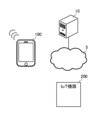
- FIG. 1 is a diagram showing an outline of the information equipment operating system 1.
- FIG. 2 is an overall configuration diagram of the information equipment operation system 1.
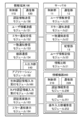
- FIG. 3 is a functional block diagram of the server 10, the information terminal 100, and the information device 200.
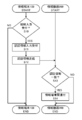
- FIG. 4 is a flowchart illustrating device authentication processing executed by the information terminal 100 and the information device 200.
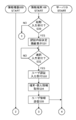
- FIG. 5 is a flowchart showing user information registration processing executed by the server 10 and the information terminal 100.
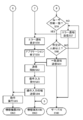
- FIG. 6 is a flowchart showing device operation processing executed by the server 10, the information terminal 100, and the information device 200.
- FIG. 7 is a flowchart illustrating device operation processing executed by the server 10, the information terminal 100, and the information device 200.
- FIG. 1 is a diagram showing an outline of the information equipment operating system 1.
- FIG. 2 is an overall configuration diagram of the information equipment operation system 1.
- FIG. 3 is a functional block diagram of the server 10, the information terminal 100, and the information device 200.
- FIG. 4 is a flowchart illustrating device
- FIG. 8 is a flowchart illustrating device operation processing executed by the server 10, the information terminal 100, and the information device 200.
- FIG. 9 is a flowchart illustrating device operation processing executed by the server 10, the information terminal 100, and the information device 200.
- FIG. 10 is a diagram illustrating an example of an authentication content determination screen displayed by the information terminal 100.
- FIG. 1 is a diagram for explaining an overview of an information equipment operating system 1 which is a preferred embodiment of the present invention.
- the information equipment operation system 1 includes a server 10, an information terminal 100, and an information equipment 200.
- the information terminal 100 and the information device 200 are not limited to one and may be plural.
- each process mentioned later may be implement
- the information device operation system 1 may be configured without a server. In this case, each process to be described later may be realized by either or both of the information terminal 100 and the information device 200.
- the server 10 is a server device capable of data communication with the information terminal 100.
- the information terminal 100 is a terminal device capable of data communication with the server 10 and the information device 200.
- the information terminal 100 is, for example, a cellular phone, a portable information terminal, a tablet terminal, a personal computer, an electric appliance such as a netbook terminal, a slate terminal, an electronic book terminal, a portable music player, a smart glass, a head mounted display, or the like Wearable terminals and other items.
- the information device 200 is an IoT device capable of data communication with the information terminal 100.
- the information device 200 is, for example, a device or system that can be connected to a public line network such as the Internet, such as a drone, an appliance, an energy monitoring system.
- the information terminal 100 accepts user authentication by biometric authentication or camera authentication (step S01).
- the biometric authentication is, for example, fingerprint authentication, iris authentication, vein authentication, or voiceprint authentication.
- the camera authentication is, for example, authentication by taking an image of itself by an imaging device such as a camera included in the information terminal 100 and analyzing the captured image and accepting a gesture operation by the user.
- the user authentication may accept a configuration other than the configuration described above.
- the information terminal 100 transmits authentication data, which is data related to the received user authentication, to the server 10 (step S02).
- the server 10 receives the authentication data.
- the server 10 determines whether or not the received authentication data matches the characteristics of the user registered in advance, and transmits the authentication result to the information terminal 100 (step S03).
- the information terminal 100 receives the authentication result. If the received authentication result indicates that the information terminal 100 matches, the information terminal 100 enables the operation of the information device 200 by the application (step S04). On the other hand, if the received authentication result indicates that they do not match, the information terminal 100 disables the operation of the information device 200 by the application.
- one information device 200 corresponds to one application
- the configuration may be such that one information device 200 is operated by this one application, or a plurality of information devices 200 are supported.
- the configuration may be such that a plurality of information devices 200 are operated by a standardized standard application.
- the standard application means an application that can operate a plurality of information devices 200.
- the above-described authentication is executed in the standard application, and the plurality of information devices 200 are operated by the standard application.
- FIG. 2 is a diagram showing a system configuration of the information equipment operating system 1 which is a preferred embodiment of the present invention.
- the information device operating system 1 includes a server 10, an information terminal 100, an information device 200, and a public line network (Internet network, third generation, fourth generation communication network, etc.) 5.
- a plurality of information terminals 100 and information devices 200 may be provided.
- each process mentioned later may be implement
- the server 10 is the server device described above having the functions described below.
- the information terminal 100 is the above-described terminal device having the functions described below.
- the information device 200 is the above-described IoT device having the functions described below.
- FIG. 3 is a functional block diagram of the server 10, the information terminal 100, and the information device 200.
- the server 10 includes a CPU (Central Processing Unit), a RAM (Random Access Memory), a ROM (Read Only Memory), etc. as the control unit 11, and a device for enabling communication with other devices as the communication unit 12.
- a WiFi (Wireless Fidelity) compatible device compliant with IEEE 802.11 is provided.
- the server 10 also includes a data storage unit such as a hard disk, a semiconductor memory, a recording medium, or a memory card as the storage unit 13.
- the control unit 11 when the control unit 11 reads a predetermined program, the user information reception module 20, the error notification transmission module 21, and the match notification transmission module 22 are realized in cooperation with the communication unit 12. Also, in the server 10, the user information storage module 30 and the information comparison module 31 are realized in cooperation with the storage unit 13 by the control unit 11 reading a predetermined program.
- the information terminal 100 includes a CPU, RAM, ROM, and the like as the control unit 110, and a device for enabling communication with other devices as the communication unit 120.
- the information terminal 100 serves as an input / output unit 140 that outputs and displays data and images controlled by the control unit 110, an input unit such as a touch panel, a keyboard, and a mouse that accepts input from a user, a lens, and an imaging
- An imaging device such as an element, a reading device that reads biometric authentication information of a user, and the like are provided.
- the control unit 110 when the control unit 110 reads a predetermined program, the authentication information transmission module 150, the user information transmission module 151, the error notification reception module 152, the match notification reception module 153, in cooperation with the communication unit 120, The device communication module 154 is realized.
- the control unit 110 reads a predetermined program, so that the application module 160, the biometric authentication information input reception module 161, the camera authentication information input reception module 162, and the authentication cooperate with the input / output unit 140.
- a screen display module 163 and an error notification display module 164 are realized.
- the information device 200 includes a CPU, a RAM, a ROM, and the like as the control unit 210, and a device for enabling communication with other devices as the communication unit 220.
- the information device 200 includes various devices and the like on which each IoT device performs various functions. For example, when the information device 200 is a drone, a flight device, an imaging device, and the like are provided.
- the information device 200 realizes an authentication information receiving module 250, an authentication module 251, and an operation input information receiving module 252 in cooperation with the communication unit 220 when the control unit 210 reads a predetermined program.
- FIG. 4 is a diagram illustrating a flowchart of device authentication processing executed by the information terminal 100 and the information device 200. The processing executed by the modules of each device described above will be described together with this processing.
- the application module 160 activates the application and determines whether or not an input for newly connecting the information device 200 has been received (step S10).
- the application started by the application module 160 may be one application corresponding to one information device 200 or a standard application that is a standardized application corresponding to a plurality of information devices 200. Also good.
- the newly connected input is, for example, an input for detecting the information device 200 to be newly connected.
- the application module 160 detects the information device 200 that has never been connected by the activated application.
- step S10 when the application module 160 determines that an input for newly connecting the information device 200 has not been received (NO in step S10), the process ends.
- the application module 160 determines in step S10 that an input for newly connecting the information device 200 has been received (step S10 YES)
- the application module 160 receives an input of authentication information (step S11).
- the authentication information is an input that associates the information terminal 100 in which the application is installed with the information device 200 that is newly detected. Specifically, the input of the SSID and password of the information device 200 is accepted.
- the authentication information transmission module 150 transmits the received authentication information to the information device 200 (step S12).
- the authentication information receiving module 250 receives authentication information.
- the authentication module 251 determines whether or not the received authentication information matches its own authentication information (Step S13).
- the authentication module 251 determines whether its own SSID, password, and the like match. If the authentication module 251 determines in step S13 that they do not match (NO in step S13), the process ends.
- the information device 200 may transmit an error notification indicating that the authentication information does not match to the information terminal 100, and the information terminal 100 may be configured to display this error notification.
- step S13 determines in step S13 that they match (YES in step S13)
- the authentication module 251 associates it with the information terminal 100 that transmitted the authentication information (step S14).
- this process may be configured to use biometric authentication or camera authentication, which will be described later, as authentication information.
- biometric authentication or camera authentication based on the authentication information acquired by biometric authentication or camera authentication, it may be determined whether the server 10 or the information terminal 100 has been authenticated, and the information terminal 100 and the information device 200 may be associated with each other.
- the above is the device authentication process.
- FIG. 5 is a diagram illustrating a flowchart of user information registration processing executed by the server 10 and the information terminal 100. The processing executed by the modules of each device described above will be described together with this processing.
- the application module 160 determines whether or not an activation input of an application that performs user authentication has been received (step S20).
- User authentication is biometric authentication or camera authentication.
- Biometric authentication is, for example, authentication based on fingerprints, irises, veins, and voiceprints.
- the camera authentication is an authentication based on the extracted feature amount by extracting a feature amount by analyzing the captured image captured by the imaging device or the like. For example, it is a gesture based on a feature amount of a user's face photograph and a user's body movement.
- step S20 when the application module 160 determines that the input has not been received (step S20: NO), the process ends.
- step S20 when the application module 160 determines that an input has been received (step S20 YES), the biometric authentication information input receiving module 161 receives a biometric authentication input (step S21).
- step S ⁇ b> 21 the biometric authentication information input reception module 161 receives input from various sensors, imaging devices, and the like.
- the biometric authentication information input receiving module 161 may receive a plurality of biometric authentications or a single biometric authentication.
- the biometric authentication may have a configuration other than the configuration described above.
- the camera authentication information input receiving module 162 receives an input of camera authentication (step S22).
- the camera authentication information input reception module 162 may receive a plurality of camera authentications or a single camera authentication.
- the camera authentication may have a configuration other than the configuration described above.
- step S21 and step S22 may be configured to execute only one of them. In this case, one process that is not executed may be omitted. Further, the order of the processes in step S21 and step S22 may be reversed.
- the application module 160 obtains terminal information such as an identifier, a telephone number, a manufacturing number, an IP address, and a MAC address of the information terminal 100 and personal information such as the name, mail address, telephone number, and attribute of the user of the information terminal 100 (Step S23).
- the attributes are, for example, age, occupation, and address.
- the application module 160 acquires terminal information and personal information from a telephone directory application, a setting application, or the like.
- the application module 160 may be configured to acquire terminal information and personal information by a configuration other than the configuration described above.
- the user information transmission module 151 transmits user information including the above-described biometric authentication information, camera authentication information, terminal information, and personal information to the server 10 (step S24).
- the user information only needs to include at least biometric authentication information or camera authentication information, and other information can be appropriately changed.
- the user information receiving module 20 receives user information.
- the user information storage module 30 stores the received user information (step S25).
- the user information storage module 30 stores biometric authentication information, camera authentication information, terminal information, and personal information in association with each other.
- the above is the user information registration process.
- FIGS. 6 and 7 are flowcharts of device operation processing executed by the server 10, the information terminal 100, and the information device 200. The processing executed by the modules of each device described above will be described together with this processing.
- the application module 160 determines whether an activation input of an application that operates the information device 200 has been received (step S30).
- This application may be one application corresponding to one information device 200, or may be a standardized standard application corresponding to a plurality of information devices 200.
- step S30 when the application module 160 determines that the activation input has not been received (step S30: NO), the process ends.
- step S30 if it is determined in step S30 that the application module 160 has accepted the activation input (YES in step S30), the authentication screen display module 163 displays an authentication content determination screen (step S31).
- FIG. 10 is a diagram illustrating an example of an authentication content determination screen displayed by the authentication screen display module 163.
- the authentication screen display module 163 displays, as an authentication content determination screen, a notification indicating that the authentication content is determined, a biometric authentication input selection area 300, a camera authentication input selection area 310, a determination icon 320, and an end.
- An icon 330 is displayed.
- the authentication screen display module 163 receives input to either or both of the biometric authentication input selection area 300 and the camera authentication input selection area 310.
- the authentication screen display module 163 executes either or both of the input biometric authentication input and camera authentication input by receiving an input to the decision icon 320.
- the authentication screen display module 163 ends the process by receiving an input to the end icon 330.
- the authentication screen display module 163 determines whether or not selection input of biometric authentication information or camera authentication information has been performed (step S32). In step S ⁇ b> 32, the authentication screen display module 163 receives an input to either or both of the biometric authentication input selection area 300 and the camera authentication input selection area 310 and determines whether an input of the determination icon 320 has been received. If the authentication screen display module 163 determines in step S32 that no selection input has been made (NO in step S32), the process is repeated.
- step S32 when the authentication screen display module 163 determines that a selection input has been made (YES in step S32), the user authentication input of either or both of the biometric authentication information and the camera authentication information for which the selection input has been performed is performed. Accept (step S33).
- step S33 when the authentication screen display module 163 receives input of biometric authentication information, the application module 160 receives biometric authentication using a sensor or the like.
- Biometric authentication has the configuration described above.
- step S33 when the authentication screen display module 163 receives input of camera authentication information, the application module 160 receives camera authentication by the imaging device or the like.
- the camera authentication has the configuration described above.
- the application module 160 acquires the terminal information and personal information described above (step S34).
- the process in step S34 is the same as the process in step S23 described above.
- the user information transmission module 151 transmits user information including the received biometric authentication information or camera authentication information, terminal information, and personal information to the server 10 (step S35).
- the process of step S35 is the same as the process of step S24 described above.
- the user information receiving module 20 receives user information.
- the information comparison module 31 compares the user information stored by itself with the user information received this time, and determines whether the user information matches (step S36). In step S36, the information comparison module 31 determines whether at least the biometric authentication information or the camera authentication information among the user information matches.
- step S36 the information comparison module 31 compares the biometric authentication information included in the stored user information with the biometric authentication information included in the received user information, and determines whether or not they match in the same content. For example, when the received biometric authentication is a fingerprint, the same content is a comparison of the fingerprints in the stored biometric authentication information to determine whether or not they match.
- step S36 the information comparison module 31 compares the camera authentication information included in the stored user information with the camera authentication information included in the received user information, and determines whether or not they match in the same content.
- the received camera authentication information is information related to the user's face image
- the same content is, for example, comparing the face images in the stored camera authentication information to determine whether or not the feature amounts match.
- the received camera authentication information is information related to a gesture performed by the user
- the information related to the gesture in the stored camera authentication information is compared to determine whether or not the feature amounts match.
- the information comparison module 31 compares the biometric information and camera authentication information included in the stored user information with the biometric information and camera authentication information included in the received user information. Also good. In this case, any configuration may be used as long as it is determined whether or not both match.
- the information comparison module 31 may be configured to determine whether terminal information and personal information match in addition to biometric authentication information or camera authentication information. For example, the information comparison module 31 determines whether or not all pieces of information match.
- step S36 When the information comparison module 31 determines in step S36 that the user information does not match (NO in step S36), the error notification transmission module 21 sends an error notification indicating that the user information does not match to the information terminal 100. (Step S37).
- the error notification receiving module 152 receives an error notification.
- the error notification display module 164 displays the received error notification (step S38), and the application module 160 stops the activation of the application and ends the application (step S39).
- the information terminal 100 can prevent the operation of the information device 200 from being executed by stopping the operation of the application when biometric authentication or camera authentication does not match. Become.
- step S36 determines in step S36 that the user information matches (YES in step S36)
- the match notification transmission module 22 sends a match notification indicating that the user information matches. It transmits to the terminal 100 (step S40).
- the match notification receiving module 153 receives the match notification.
- the device communication module 154 starts communication between the information terminal 100 and the information device 200 (step S41).
- Application module 160 accepts an operation input to information device 200 (step S42).
- the device communication module 154 transmits operation input information indicating the received operation input to the information device 200 (step S43).
- the operation input information receiving module 252 receives operation input information.
- the information device 200 performs an operation based on the operation input information (step S44).
- the above is the device operation processing.
- the processing executed by the server 10 may be executed by either or both of the information terminal 100 and the information device 200. That is, the information equipment operation system 1 may be configured by the information terminal 100 and the information equipment 200. In this case, for example, the information terminal 100 may perform authentication of user information by the server 10 described above.
- the information equipment operation system 1 includes a server 10, a plurality of information terminals 100, an information equipment 200, and a public line network 5. That is, the difference from the above-described embodiment is that a plurality of information terminals 100 exist.
- symbol is attached
- FIG. 8 and 9 are flowcharts showing device operation processing executed by the server 10, the information terminal 100, and the information device 200.
- FIG. 8 and 9 The processing executed by the modules of each device described above will be described together with this processing.
- the information terminal 100 and the server 10 execute the above-described processing of Step S30 to Step S39 (Step S50 to Step S59).
- step S56 determines that the user information matches (YES in step S56)
- the information comparison module 31 determines that the number of users determined to match is equal to or greater than a predetermined number. Whether or not (step S60).
- the predetermined number of people is, for example, the number of all people who are registered in advance as users of the information device 200, half of the registered number, a plurality of the registered number of people, one preset group The number of all members belonging to the group, half of the number of members belonging to the registered group, and the plurality of the registered number of people.
- step S60 when the information comparison module 31 determines that the number of persons is not equal to or greater than the predetermined number (step S60: NO), the information comparison module 31 performs the process of step S57 described above.
- a different weight is given in advance to each user of the information terminal 100, and it is determined whether or not the total value of the weights is equal to or greater than a predetermined value. It is good. For example, it is possible to perform weighting according to the status and position of users belonging to one group, and to make a determination based on the total weight value regardless of the number of people. Specifically, a weight of 10 is assigned to the user D belonging to one group, a weight of 5 is assigned to the user E, a weight of 2 is assigned to the users F, G, and H, and the total weight value is 5 It is also possible to adopt a configuration for determining whether or not this is the case.
- step S60 when the information comparison module 31 determines in step S60 that the number of persons is equal to or greater than the predetermined number (YES in step S60), the match notification transmission module 22 sends a match notification indicating that the user information and the number of persons match.
- the information is transmitted to the information terminal 100 owned by the user of the information device 200 (step S61).
- step S ⁇ b> 61 the match notification transmission module 22 transmits a match notification to the plurality of information terminals 100.
- the information terminal 100 and the information device 200 execute the above-described steps S41 to S44 (steps S62 to S65).
- user information including terminal information and personal information is determined as user information.
- terminal information and personal information may not be included in the user information.
- the information terminal 100 that performs biometric authentication or camera authentication may be the information terminal 100 that has been authenticated by the information device 200.
- a plurality of applications that operate the information device 200 described above may exist in one information terminal 100. For example, what is necessary is just the structure which sets one application with respect to each user of a some user, and performs the process mentioned above by this one application. That is, an application used by a certain user A may be different from an application used by another user B.
- the server 10 may be configured to transmit a coincidence notification based on the fact that user information of a predetermined number or more matches.
- the means and functions described above are realized by a computer (including a CPU, an information processing apparatus, and various terminals) reading and executing a predetermined program.
- the program is provided in a form recorded on a computer-readable recording medium such as a flexible disk, CD (CD-ROM, etc.), DVD (DVD-ROM, DVD-RAM, etc.).
- the computer reads the program from the recording medium, transfers it to the internal storage device or the external storage device, stores it, and executes it.
- the program may be recorded in advance in a storage device (recording medium) such as a magnetic disk, an optical disk, or a magneto-optical disk, and provided from the storage device to a computer via a communication line.
- Information device operation system 10 servers, 100 information terminals, 200 information devices
Landscapes
- Engineering & Computer Science (AREA)
- Computer Security & Cryptography (AREA)
- Theoretical Computer Science (AREA)
- General Engineering & Computer Science (AREA)
- Computer Hardware Design (AREA)
- Computer Networks & Wireless Communication (AREA)
- Signal Processing (AREA)
- General Physics & Mathematics (AREA)
- Software Systems (AREA)
- Physics & Mathematics (AREA)
- Computing Systems (AREA)
- General Health & Medical Sciences (AREA)
- Biomedical Technology (AREA)
- Health & Medical Sciences (AREA)
- Telephonic Communication Services (AREA)
- User Interface Of Digital Computer (AREA)
Abstract
Description
前記生体認証がなされたことを検知する検知手段と、
前記生体認証がなされたことを検知した場合に、前記情報端末にインストールされたアプリケーションを利用して、前記情報機器を操作する操作手段と、
を備えることを特徴とする情報機器操作システムを提供する。
前記カメラ認証がなされたことを検知する検知手段と、
前記カメラ認証がなされたことを検知した場合に、前記情報端末にインストールされたアプリケーションを利用して、前記情報機器を操作する操作手段と、
を備えることを特徴とする情報機器操作システムを提供する。
前記操作手段は、前記標準化されたアプリケーションを利用して、前記情報機器を操作する、
ことを特徴とする第1又は第2の特徴に係る発明である情報機器操作システムを提供する。
ことを特徴とする第1の特徴に係る発明である情報機器操作システムを提供する。
ことを特徴とする第2の特徴に係る発明である情報機器操作システムを提供する。
前記生体認証がなされたことを検知するステップと、
前記生体認証がなされたことを検知した場合に、前記情報端末にインストールされたアプリケーションを利用して、前記情報機器を操作するステップと、
を備えることを特徴とする情報機器操作方法を提供する。
前記カメラ認証がなされたことを検知するステップと、
前記カメラ認証がなされたことを検知した場合に、前記情報端末にインストールされたアプリケーションを利用して、前記情報機器を操作するステップと、
を備えることを特徴とする情報機器操作方法を提供する。
前記生体認証がなされたことを検知するステップ、
前記生体認証がなされたことを検知した場合に、前記情報端末にインストールされたアプリケーションを利用して、前記情報機器を操作するステップ、
を実行させることを特徴とするプログラムを提供する。
前記カメラ認証がなされたことを検知するステップ、
前記カメラ認証がなされたことを検知した場合に、前記情報端末にインストールされたアプリケーションを利用して、前記情報機器を操作するステップ、
を実行させることを特徴とするプログラムを提供する。
本発明の概要について、図1に基づいて説明する。図1は、本発明の好適な実施形態である情報機器操作システム1の概要を説明するための図である。情報機器操作システム1は、サーバ10、情報端末100、情報機器200から構成される。なお、情報端末100、情報機器200は1つに限らず複数であってもよい。また、後述する各処理は、サーバ10、情報端末100又は情報機器200のいずれか又は複数の組み合わせにより実現されてもよい。また、情報機器操作システム1は、サーバを有さない構成であってもよい。この場合、後述する各処理は、情報端末100又は情報機器200のいずれか又は双方により実現されてもよい。
図2に基づいて、情報機器操作システム1のシステム構成について説明する。図2は、本発明の好適な実施形態である情報機器操作システム1のシステム構成を示す図である。情報機器操作システム1は、サーバ10、情報端末100、情報機器200、公衆回線網(インターネット網や、第3、第4世代通信網等)5から構成される。なお、情報端末100及び情報機器200は、複数であってもよい。また、後述する各処理は、サーバ10、情報端末100又は情報機器200のいずれか又は複数の組み合わせにより実現されてもよい。
図3に基づいて、情報機器操作システム1の機能について説明する。図3は、サーバ10、情報端末100、情報機器200の機能ブロック図を示す図である。
図4に基づいて、情報機器操作システム1が実行する機器認証処理について説明する。図4は、情報端末100、情報機器200が実行する機器認証処理のフローチャートを示す図である。上述した各装置のモジュールが実行する処理について、本処理に併せて説明する。
次に、図5に基づいて、情報機器操作システム1が実行するユーザ情報登録処理について説明する。図5は、サーバ10、情報端末100が実行するユーザ情報登録処理のフローチャートを示す図である。上述した各装置のモジュールが実行する処理について、本処理に併せて説明する。
次に、図6及び図7に基づいて、情報機器操作システム1が実行する機器操作処理について説明する。図6及び図7は、サーバ10、情報端末100、情報機器200が実行する機器操作処理のフローチャートを示す図である。上述した各装置のモジュールが実行する処理について、本処理に併せて説明する。
次に、上述した本実施形態における変形例について説明する。本変形例において、情報機器操作システム1は、サーバ10、複数の情報端末100、情報機器200、公衆回線網5から構成される。すなわち、上述した実施形態との相違点は、情報端末100が複数個存在している点である。なお、上述した実施形態と同様の構成については、同様の符号を付し、その詳細な説明は省略する。
本変形例における機器操作処理について説明する。なお、複数の情報端末100の各々は、上述した機器認証処理及びユーザ情報登録処理を実行する。
Claims (9)
- 生体認証を備えた情報端末と、当該情報端末とネットワークを介して接続された情報機器とからなる情報機器操作システムであって、
前記生体認証がなされたことを検知する検知手段と、
前記生体認証がなされたことを検知した場合に、前記情報端末にインストールされたアプリケーションを利用して、前記情報機器を操作する操作手段と、
を備えることを特徴とする情報機器操作システム。 - カメラ認証を備えた情報端末と、当該情報端末とネットワークを介して接続された情報機器とからなる情報機器操作システムであって、
前記カメラ認証がなされたことを検知する検知手段と、
前記カメラ認証がなされたことを検知した場合に、前記情報端末にインストールされたアプリケーションを利用して、前記情報機器を操作する操作手段と、
を備えることを特徴とする情報機器操作システム。 - 前記アプリケーションは、標準化されたアプリケーションであり、
前記操作手段は、前記標準化されたアプリケーションを利用して、前記情報機器を操作する、
ことを特徴とする請求項1又は2に記載の情報機器操作システム。 - 前記操作手段は、所定の人数の生体認証がなされたことを検知した場合に、前記アプリケーションを利用して、前記情報機器を操作する、
ことを特徴とする請求項1に記載の情報機器操作システム。 - 前記操作手段は、所定の人数のカメラ認証がなされたことを検知した場合に、前記アプリケーションを利用して、前記情報機器を操作する、
ことを特徴とする請求項2に記載の情報機器操作システム。 - 生体認証を備えた情報端末と、当該情報端末とネットワークを介して接続された情報機器とからなる情報機器操作方法であって、
前記生体認証がなされたことを検知するステップと、
前記生体認証がなされたことを検知した場合に、前記情報端末にインストールされたアプリケーションを利用して、前記情報機器を操作するステップと、
を備えることを特徴とする情報機器操作方法。 - カメラ認証を備えた情報端末と、当該情報端末とネットワークを介して接続された情報機器とからなる情報機器操作方法であって、
前記カメラ認証がなされたことを検知するステップと、
前記カメラ認証がなされたことを検知した場合に、前記情報端末にインストールされたアプリケーションを利用して、前記情報機器を操作するステップと、
を備えることを特徴とする情報機器操作方法。 - 生体認証を備えた情報端末と、当該情報端末とネットワークを介して接続された情報機器とからなる情報機器操作システムに、
前記生体認証がなされたことを検知するステップ、
前記生体認証がなされたことを検知した場合に、前記情報端末にインストールされたアプリケーションを利用して、前記情報機器を操作するステップ、
を実行させることを特徴とするプログラム。 - カメラ認証を備えた情報端末と、当該情報端末とネットワークを介して接続された情報機器とからなる情報機器操作システムに、
前記カメラ認証がなされたことを検知するステップ、
前記カメラ認証がなされたことを検知した場合に、前記情報端末にインストールされたアプリケーションを利用して、前記情報機器を操作するステップ、
を実行させることを特徴とするプログラム。
Priority Applications (3)
| Application Number | Priority Date | Filing Date | Title |
|---|---|---|---|
| PCT/JP2016/064662 WO2017199353A1 (ja) | 2016-05-17 | 2016-05-17 | 情報機器操作システム、情報機器操作方法及びプログラム |
| US16/302,116 US10509899B2 (en) | 2016-05-17 | 2016-05-17 | Information device operating system, information device operating method and program for operating information device based on authentication |
| JP2018517984A JP6441544B2 (ja) | 2016-05-17 | 2016-05-17 | 情報機器操作システム、情報機器操作方法及びプログラム |
Applications Claiming Priority (1)
| Application Number | Priority Date | Filing Date | Title |
|---|---|---|---|
| PCT/JP2016/064662 WO2017199353A1 (ja) | 2016-05-17 | 2016-05-17 | 情報機器操作システム、情報機器操作方法及びプログラム |
Publications (1)
| Publication Number | Publication Date |
|---|---|
| WO2017199353A1 true WO2017199353A1 (ja) | 2017-11-23 |
Family
ID=60325053
Family Applications (1)
| Application Number | Title | Priority Date | Filing Date |
|---|---|---|---|
| PCT/JP2016/064662 Ceased WO2017199353A1 (ja) | 2016-05-17 | 2016-05-17 | 情報機器操作システム、情報機器操作方法及びプログラム |
Country Status (3)
| Country | Link |
|---|---|
| US (1) | US10509899B2 (ja) |
| JP (1) | JP6441544B2 (ja) |
| WO (1) | WO2017199353A1 (ja) |
Cited By (2)
| Publication number | Priority date | Publication date | Assignee | Title |
|---|---|---|---|---|
| JP2017228154A (ja) * | 2016-06-23 | 2017-12-28 | 富士ゼロックス株式会社 | 情報管理装置、情報管理プログラム及び情報管理システム |
| CN110011985A (zh) * | 2019-03-19 | 2019-07-12 | 阿里巴巴集团控股有限公司 | 用于操作物联网设备的方法和系统 |
Families Citing this family (1)
| Publication number | Priority date | Publication date | Assignee | Title |
|---|---|---|---|---|
| WO2022144996A1 (ja) * | 2020-12-28 | 2022-07-07 | 三菱電機株式会社 | 送信データ設定支援プログラム、ゲートウェイ装置および送信データ設定支援方法 |
Citations (10)
| Publication number | Priority date | Publication date | Assignee | Title |
|---|---|---|---|---|
| JP2003150551A (ja) * | 2001-11-09 | 2003-05-23 | Yokogawa Electric Corp | 認証検査装置 |
| JP2005248542A (ja) * | 2004-03-03 | 2005-09-15 | Toshiba Corp | 認証システム及び認証方法 |
| JP2008131081A (ja) * | 2006-11-16 | 2008-06-05 | Pioneer Electronic Corp | テレビ受像機及び/又は録画再生装置の動作設定システム、リモートコントローラ及びテレビ受像機及び/又は録画再生装置 |
| JP2008199197A (ja) * | 2007-02-09 | 2008-08-28 | Sharp Corp | コンテンツ出力システム、携帯通信端末およびコンテンツ出力装置 |
| JP2010074782A (ja) * | 2008-09-22 | 2010-04-02 | Optim Corp | 携帯機器および実行制御方法 |
| JP2012161001A (ja) * | 2011-02-02 | 2012-08-23 | Toshiba Carrier Corp | 制御システム、およびこれに用いる顔認証システム、携帯端末 |
| WO2014103308A1 (ja) * | 2012-12-28 | 2014-07-03 | パナソニック株式会社 | 制御方法 |
| JP2014164359A (ja) * | 2013-02-21 | 2014-09-08 | Nec Networks & System Integration Corp | 認証システム |
| JP2015036918A (ja) * | 2013-08-14 | 2015-02-23 | 富士ゼロックス株式会社 | 情報処理装置及び情報処理プログラム |
| US20150312041A1 (en) * | 2009-11-17 | 2015-10-29 | Unho Choi | Authentication in ubiquitous environment |
Family Cites Families (8)
| Publication number | Priority date | Publication date | Assignee | Title |
|---|---|---|---|---|
| JP4576132B2 (ja) | 2004-02-25 | 2010-11-04 | 株式会社リコー | 認証方法及び認証装置 |
| JP2005303376A (ja) | 2004-04-06 | 2005-10-27 | Canon Inc | 画像処理装置及び情報処理方法 |
| WO2007089503A2 (en) * | 2006-01-26 | 2007-08-09 | Imprivata, Inc. | Systems and methods for multi-factor authentication |
| CN101925915B (zh) * | 2007-11-21 | 2016-06-22 | 高通股份有限公司 | 设备访问控制 |
| KR101111381B1 (ko) | 2009-11-17 | 2012-02-24 | 최운호 | 유비쿼터스 인증 관리를 위한 사용자 인증 시스템, 사용자 인증장치, 스마트 카드 및 사용자 인증방법 |
| US20130080898A1 (en) * | 2011-09-26 | 2013-03-28 | Tal Lavian | Systems and methods for electronic communications |
| KR102297475B1 (ko) * | 2014-10-17 | 2021-09-02 | 삼성전자주식회사 | 사물 인터넷을 위한 단말 및 그 동작 방법 |
| US9852562B2 (en) * | 2015-07-06 | 2017-12-26 | Acsys Ip Holding, Inc. | Systems and methods for redundant access control systems based on mobile devices and removable wireless buttons |
-
2016
- 2016-05-17 JP JP2018517984A patent/JP6441544B2/ja active Active
- 2016-05-17 WO PCT/JP2016/064662 patent/WO2017199353A1/ja not_active Ceased
- 2016-05-17 US US16/302,116 patent/US10509899B2/en active Active
Patent Citations (10)
| Publication number | Priority date | Publication date | Assignee | Title |
|---|---|---|---|---|
| JP2003150551A (ja) * | 2001-11-09 | 2003-05-23 | Yokogawa Electric Corp | 認証検査装置 |
| JP2005248542A (ja) * | 2004-03-03 | 2005-09-15 | Toshiba Corp | 認証システム及び認証方法 |
| JP2008131081A (ja) * | 2006-11-16 | 2008-06-05 | Pioneer Electronic Corp | テレビ受像機及び/又は録画再生装置の動作設定システム、リモートコントローラ及びテレビ受像機及び/又は録画再生装置 |
| JP2008199197A (ja) * | 2007-02-09 | 2008-08-28 | Sharp Corp | コンテンツ出力システム、携帯通信端末およびコンテンツ出力装置 |
| JP2010074782A (ja) * | 2008-09-22 | 2010-04-02 | Optim Corp | 携帯機器および実行制御方法 |
| US20150312041A1 (en) * | 2009-11-17 | 2015-10-29 | Unho Choi | Authentication in ubiquitous environment |
| JP2012161001A (ja) * | 2011-02-02 | 2012-08-23 | Toshiba Carrier Corp | 制御システム、およびこれに用いる顔認証システム、携帯端末 |
| WO2014103308A1 (ja) * | 2012-12-28 | 2014-07-03 | パナソニック株式会社 | 制御方法 |
| JP2014164359A (ja) * | 2013-02-21 | 2014-09-08 | Nec Networks & System Integration Corp | 認証システム |
| JP2015036918A (ja) * | 2013-08-14 | 2015-02-23 | 富士ゼロックス株式会社 | 情報処理装置及び情報処理プログラム |
Cited By (3)
| Publication number | Priority date | Publication date | Assignee | Title |
|---|---|---|---|---|
| JP2017228154A (ja) * | 2016-06-23 | 2017-12-28 | 富士ゼロックス株式会社 | 情報管理装置、情報管理プログラム及び情報管理システム |
| CN110011985A (zh) * | 2019-03-19 | 2019-07-12 | 阿里巴巴集团控股有限公司 | 用于操作物联网设备的方法和系统 |
| US11271745B2 (en) | 2019-03-19 | 2022-03-08 | Advanced New Technologies Co., Ltd. | Method and system for operating internet of things device |
Also Published As
| Publication number | Publication date |
|---|---|
| US20190286807A1 (en) | 2019-09-19 |
| JPWO2017199353A1 (ja) | 2018-12-06 |
| US10509899B2 (en) | 2019-12-17 |
| JP6441544B2 (ja) | 2018-12-19 |
Similar Documents
| Publication | Publication Date | Title |
|---|---|---|
| US12032668B2 (en) | Identifying and authenticating users based on passive factors determined from sensor data | |
| US8627095B2 (en) | Information processing apparatus, information processing method, and program | |
| CN104200145B (zh) | 电子设备中的嵌入式验证系统 | |
| US9531710B2 (en) | Behavioral authentication system using a biometric fingerprint sensor and user behavior for authentication | |
| US9781105B2 (en) | Fallback identity authentication techniques | |
| JP7023139B2 (ja) | 解錠システム、解錠装置、解錠方法、端末装置及びプログラム | |
| US11265311B1 (en) | User authentication systems and methods | |
| JPWO2015189967A1 (ja) | 情報処理装置、アプリケーションソフトウェア起動システム及びアプリケーションソフトウェア起動方法 | |
| CN106992956B (zh) | 一种实现设备间认证的方法、装置和系统 | |
| WO2012114881A1 (ja) | 把持特徴学習認証システム及び把持特徴学習認証方法 | |
| WO2012102110A1 (ja) | 移動情報端末、把持特徴学習方法、及び把持特徴認証方法 | |
| CN108345778A (zh) | 认证系统和方法 | |
| JP6441544B2 (ja) | 情報機器操作システム、情報機器操作方法及びプログラム | |
| JP7124174B1 (ja) | 多要素認証のための方法および装置 | |
| KR20200006991A (ko) | 생체 서명을 사용하여 사용자를 인증하는 방법, 시스템 및 매체 | |
| JP2017157232A (ja) | 情報処理装置、アプリケーションソフトウェア起動システム及びアプリケーションソフトウェア起動方法 | |
| US12574372B2 (en) | Sharing a biometric token across platforms and devices for authentication | |
| CN106469269B (zh) | 一种密码管理的方法、装置及终端 | |
| CN110891045A (zh) | 密码的设置方法、验证方法和相关设备 | |
| KR20160098901A (ko) | 사용자 인증 서버 시스템 및 이를 이용한 사용자 인증 방법 | |
| CN110546638A (zh) | 生物特征认证的改进 | |
| JP7100334B2 (ja) | 認証装置、認証方法、及びプログラム | |
| CN113490946A (zh) | 委托的认证系统和技术 | |
| WO2013182131A1 (zh) | 一种配置方法、配置装置及电子设备 | |
| JP2017102758A (ja) | 認証装置、認証方法及びプログラム |
Legal Events
| Date | Code | Title | Description |
|---|---|---|---|
| WWE | Wipo information: entry into national phase |
Ref document number: 2018517984 Country of ref document: JP |
|
| NENP | Non-entry into the national phase |
Ref country code: DE |
|
| 121 | Ep: the epo has been informed by wipo that ep was designated in this application |
Ref document number: 16902372 Country of ref document: EP Kind code of ref document: A1 |
|
| 32PN | Ep: public notification in the ep bulletin as address of the adressee cannot be established |
Free format text: NOTING OF LOSS OF RIGHTS PURSUANT TO RULE 112(1) EPC (EPO FORM 1205 DATED 20/02/2019) |
|
| 122 | Ep: pct application non-entry in european phase |
Ref document number: 16902372 Country of ref document: EP Kind code of ref document: A1 |