WO2017159996A1 - 약물 저항성 인플루엔자 바이러스에 대한 항체 - Google Patents
약물 저항성 인플루엔자 바이러스에 대한 항체 Download PDFInfo
- Publication number
- WO2017159996A1 WO2017159996A1 PCT/KR2017/001598 KR2017001598W WO2017159996A1 WO 2017159996 A1 WO2017159996 A1 WO 2017159996A1 KR 2017001598 W KR2017001598 W KR 2017001598W WO 2017159996 A1 WO2017159996 A1 WO 2017159996A1
- Authority
- WO
- WIPO (PCT)
- Prior art keywords
- antibody
- neuraminidase
- seq
- influenza
- amino acid
- Prior art date
- Legal status (The legal status is an assumption and is not a legal conclusion. Google has not performed a legal analysis and makes no representation as to the accuracy of the status listed.)
- Ceased
Links
Images


Classifications
-
- C—CHEMISTRY; METALLURGY
- C07—ORGANIC CHEMISTRY
- C07K—PEPTIDES
- C07K16/00—Immunoglobulins [IG], e.g. monoclonal or polyclonal antibodies
- C07K16/08—Immunoglobulins [IG], e.g. monoclonal or polyclonal antibodies against material from viruses
- C07K16/10—RNA viruses
-
- C—CHEMISTRY; METALLURGY
- C12—BIOCHEMISTRY; BEER; SPIRITS; WINE; VINEGAR; MICROBIOLOGY; ENZYMOLOGY; MUTATION OR GENETIC ENGINEERING
- C12N—MICROORGANISMS OR ENZYMES; COMPOSITIONS THEREOF; PROPAGATING, PRESERVING, OR MAINTAINING MICROORGANISMS; MUTATION OR GENETIC ENGINEERING; CULTURE MEDIA
- C12N15/00—Mutation or genetic engineering; DNA or RNA concerning genetic engineering, vectors, e.g. plasmids, or their isolation, preparation or purification; Use of hosts therefor
- C12N15/09—Recombinant DNA-technology
- C12N15/63—Introduction of foreign genetic material using vectors; Vectors; Use of hosts therefor; Regulation of expression
-
- G—PHYSICS
- G01—MEASURING; TESTING
- G01N—INVESTIGATING OR ANALYSING MATERIALS BY DETERMINING THEIR CHEMICAL OR PHYSICAL PROPERTIES
- G01N33/00—Investigating or analysing materials by specific methods not covered by groups G01N1/00 - G01N31/00
- G01N33/48—Biological material, e.g. blood, urine; Haemocytometers
- G01N33/50—Chemical analysis of biological material, e.g. blood, urine; Testing involving biospecific ligand binding methods; Immunological testing
- G01N33/53—Immunoassay; Biospecific binding assay; Materials therefor
- G01N33/569—Immunoassay; Biospecific binding assay; Materials therefor for microorganisms, e.g. protozoa, bacteria, viruses
Definitions
- the present invention relates to antibodies against influenza A viruses, and more particularly to antibodies that can be used for the treatment and detection of mutant influenza A viruses having resistance to antiviral drugs such as oseltamivir and zanamivir. will be.
- Influenza (flu) is a respiratory disease transmitted by the influenza virus through the respiratory system of humans and animals (birds, pigs, dogs, horses, etc.). Human influenza occurs in 10-20% of the world's population each year, and is highly contagious and tends to spread on a global scale every year. Symptoms of influenza include respiratory diseases such as high fever, headache, muscle pain, sore throat, sore throat, and cough, and in severe cases, death of the elderly, chronic disease holders, and the like.
- influenza infections are suspected, they should be treated promptly to prevent the development of dangerous situations and to prevent further transmission to others.
- oseltamivir phosphate (Tamiflu TM) is mainly used for the treatment of influenza infection, and zanamivir and the like have been developed, and in recent years, the incidence of viral mutants that are resistant to such antiviral drugs is increasing.
- Methods for distinguishing viruses have been reported in a number of documents, for example Marin MJ et al. Discloses a method for distinguishing between human influenza virus and avian influenza virus. However, no effective method has been developed so far to determine whether a patient suspected of influenza infection is infected with an antiviral drug resistant virus.
- An object of the present invention is to provide an antibody that can be used in general for the treatment and detection of influenza A virus having a drug resistance mutation.
- the present invention provides an antibody comprising a light chain cappa chain comprising an amino acid sequence as set out in SEQ ID NO: 1 and a heavy chain variable region comprising an amino acid sequence as set out in SEQ ID NO: 2.
- a light chain cappa chain comprising an amino acid sequence as set out in SEQ ID NO: 1
- a heavy chain variable region comprising an amino acid sequence as set out in SEQ ID NO: 2.
- Portions other than those corresponding to SEQ ID NO: 1 and SEQ ID NO: 2 in the antibody may be corresponding portions (parts other than the light chain variable region and the heavy chain variable region) of any antibody.
- the I223R mutation in the neuraminidase of influenza A virus has been reported to reduce susceptibility to antiviral drugs such as Oseltamivir and Zanamivir.
- the antibody of the present invention selectively binds to neuraminidase with I223R mutation and has a low binding force to neuraminidase without I223R mutation, thereby detecting or detecting influenza A virus expressing neuraminidase with I233R mutation. It can be applied to treat.
- Antibodies of the invention have a high binding capacity to neuraminidase with I223R mutations and any other additional mutations. There are no restrictions on additional mutations, but can be, for example, H275Y mutations.
- additional mutations can be, for example, H275Y mutations.
- the double mutant I223R and H275Y mutations are known to increase resistance to antiviral drugs significantly (Jerome LeGoff et al ., I223R Mutation in Influenza A (H1N1) pdm09 Neuraminidase Confers Reduced Susceptibility to Oseltamivir and Zanamivir) and Enhanced Resistance with H275Y, PLoS ONE 7 (8): e37095. doi: 10.1371 / journal.pone.0037095).
- existing antibodies are antibodies derived from the mouse or a lot of chimeric antibodies including the mouse-derived parts, these antibodies have a disadvantage in that the effect of inducing immunity to the antibody itself in the body is less effective or cause side effects There was a limit to the application. Since the antibody of the present invention is derived from human, it does not induce immunity and can be used safely.
- the present invention provides an isolated nucleic acid molecule encoding an amino acid sequence set forth in SEQ ID NO: 1.
- the nucleic acid molecule may be RNA or cDNA to the RNA.
- the nucleic acid molecule may be a nucleotide sequence set forth in SEQ ID NO: 3, but is not limited thereto.
- the present invention provides a recombinant vector into which a nucleic acid molecule encoding the amino acid sequence set forth in SEQ ID NO: 1 is inserted.
- the recombinant vector may be one wherein the nucleic acid molecule is inserted into the pET28a-Histag-MBP-Histag vector.
- the type of vector is not limited thereto.
- the present invention provides an isolated nucleic acid molecule encoding an amino acid sequence set forth in SEQ ID NO: 2.
- the nucleic acid molecule may be RNA or cDNA to the RNA.
- the nucleic acid molecule may be a nucleotide sequence set forth in SEQ ID NO: 4, but is not limited thereto.
- the present invention provides a recombinant vector inserted with a nucleic acid molecule encoding the amino acid sequence set forth in SEQ ID NO: 2.
- the present invention provides a cell comprising a recombinant vector into which a nucleic acid molecule encoding the amino acid sequence set forth in SEQ ID NO: 1 is inserted.
- the cells may be HEK293T cells, E. Coli cells and the like. However, cell types are not limited thereto.
- the present invention provides a cell comprising a recombinant vector into which a nucleic acid molecule encoding the amino acid sequence set forth in SEQ ID NO: 2 is inserted.
- the present invention provides a nucleic acid molecule encoding the amino acid sequence represented by SEQ ID NO: 1 and a recombinant vector into which the nucleic acid molecule encoding the amino acid sequence represented by SEQ ID NO: 2 is inserted, and a cell comprising the recombinant vector.
- the nucleic acid molecule encoding the amino acid sequence represented by SEQ ID NO: 1 may be a nucleotide sequence represented by SEQ ID NO: 3
- the nucleic acid molecule encoding the amino acid sequence represented by SEQ ID NO: 2 is represented by SEQ ID NO: 4 It may be a base sequence described, but is not limited thereto.
- the present invention comprises an antibody comprising an antibody comprising a light chain cappa chain comprising an amino acid sequence as set out in SEQ ID NO: 1 and a heavy chain variable region comprising an amino acid sequence as set out in SEQ ID NO: 2 as an active ingredient, preventing or treating influenza A virus infection It provides a composition for.
- the composition may comprise 5 to 200 mg of the antibody per 0.8 ml, it may be administered by dilution with a suitable solvent.
- suitable solvent for parenteral administration include sterile aqueous solutions, non-aqueous solvents, suspensions, emulsions, lyophilized preparations and suppositories.
- non-aqueous solvent and the suspension solvent propylene glycol, polyethylene glycol, vegetable oil such as olive oil, injectable ester such as ethyl oleate, and the like can be used.
- mannitol, polysorbate 80, and the like may be further included in the composition, and various buffers for adjusting the pH of the composition may be further included, for example, acetic acid buffer, citric acid buffer, and phosphate buffer.
- various buffers for adjusting the pH of the composition may be further included, for example, acetic acid buffer, citric acid buffer, and phosphate buffer.
- the materials that may be included in the composition of the present invention is not limited thereto.
- the dosage of the active ingredient depends on the condition and weight of the patient, the extent of the disease, the form of the drug, the route of administration and the duration, and may be appropriately selected in some cases.
- the composition may be administered 5 to 200 mg, preferably 40 to 100 mg per week, but the dosage is not limited thereto.
- the dosing frequency may be adjusted appropriately, for example, once or several times a day, or every other day or every other day, every week, every other week, every other week, every month, every other month, or every month. .
- composition of the present invention can be administered orally or parenterally, preferably parenterally.
- the route of administration of the composition can be subcutaneous, intradermal, intramuscular, intravenous, intraarterial, intraperitoneal, transdermal, nasal, intrasternal, inhaled, topical and the like. However, the route of administration is not limited thereto.
- the present invention provides a composition for detecting influenza A virus, comprising an antibody comprising a light chain comprising the amino acid sequence of SEQ ID NO: 1 and a heavy chain variable region comprising the amino acid sequence of SEQ ID NO: 2.
- the present invention provides a kit for influenza A virus detection, comprising an antibody comprising a light chain comprising the amino acid sequence of SEQ ID NO: 1 and a heavy chain variable region comprising the amino acid sequence of SEQ ID NO: 2.
- the kit can be used to detect influenza A viruses expressing neuraminidase comprising an I223R mutation or neuraminidase comprising an I223R mutation.
- the kit may further include tools or equipment necessary for use instructions and other detection.
- the present invention relates to antibodies that can be generalized for the treatment and detection of influenza A viruses expressing neuraminidase with I223R.
- the antibody of the present invention specifically binds to influenza A virus expressing neuraminidase which has caused an I223R mutation causing drug resistance such as oseltamivir, zanamivir and the like.
- the antibody of the present invention has high affinity for antigen and can be applied to an in vitro diagnostic kit, and does not induce an immune response as a human origin, and thus can be used for targeting and treatment in the body.
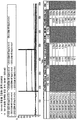
- FIG. 1 is a schematic diagram of the influenza A H1N1 virus, and the bottom of FIG. 1 compares the amino acid sequences of wild type neuraminidase and neuraminidase with I223R and H275Y mutations.
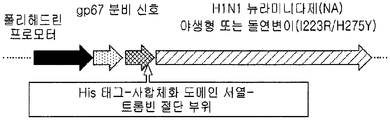
- FIG. 2 is a schematic diagram of the baculovirus expression system of the present invention.
- Figure 3 shows Western blot analysis of wild type neuraminidase and I223R mutant neuraminidase.
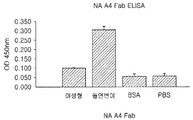
- FIG. 5 shows ELISA results for wild-type and mutant neuraminidase, BSA and PBS of NA-A4 antibodies selected as a result of panning.
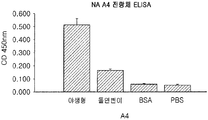
- FIG. 8 shows ELISA results for wild-type and mutant neuraminidase, BSA and PBS of NA-A4 whole antibody.
- Figure 10 is the result of confirming the K D for wild-type neuraminidase of NA-A4 whole antibody by SPR.
- Figure 11 is the result of confirming the K D for the mutated neuraminidase of NA-A4 whole antibody by SPR.
- the baculovirus system was used to produce influenza A virus neuraminidase with drug resistant mutations (I223R).
- the baculovirus system is a viral system that expresses proteins in insect cells and uses the principle that baculovirus is infected and amplified by insect cells.
- isolation / purification was performed between the GP67A secretion sequence of the baculovirus transfer vector pAcGP67a (BD Biosciences) and the multicloning site (MCS). Hexa histidine, tetramerization domain, thrombin cleavage site (LVPRS residues), neuraminidase head domain [75-469 aa, H1N1 (A / califonia) / 04/2009)] in order to construct the construct and insert its base sequence.
- MCS multicloning site
- the tetramerization domain sequence of VASP (SSSDYSDLQRVKQELLEEVKKELQKVKEEIIEAFVQELRKRG residues, SEQ ID NO: 5) was used to maintain the neuraminidase activity present as tetramer in nature.
- the vector for neuraminidase production including drug resistance mutation (I223R) has the same structure as the vector for wild-type protein production, but was designed in such a way that the mutation is included in the residue.
- FIG. 1 The upper part of FIG. 1 is a schematic diagram of the influenza A virus, and the lower part of FIG. 1 compares the wild type neuraminidase sequence and the neuraminidase sequence in which the I223R mutation and the H275Y mutation occurred.
- an antibody against the I223R mutant virus was prepared. In some cases, both I223R and H275Y mutations occur at the same time (double mutant). It is reported to increase.
- FIG. 2 is a schematic diagram of the baculovirus expression system of the present invention.
- Insect cells (Spodoptera frugiperda, Sf9) having a log phase growth cultured in bloodless medium sf900II SFM (Gibco) were prepared in a 50% confluent (semi-confluent) monolayer.
- Profectin (ABvector) transfection reagent linearized baculovirus DNA (Proeasy, ABvector) and the prepared transfection vector mixed DNA (1: 1 to 0.2) were transfected into Sf9.
- Sf9 cells were cultured at 28 ° C. to induce baculovirus proliferation.
- the cell culture solution was collected to obtain recombinant baculoviruses expressing wild-type neuraminidase and mutated neuraminidase, respectively.
- the recombinant virus content (titer)
- the recombinant baculovirus-containing culture solution was added to the Sf9 culture medium of log phase growth (10-20: 1, v: v), and cultured to induce virus propagation.
- a constant cell culture solution was taken to confirm the expression of the desired protein neuraminidase.
- FIG. 3 shows Western blot analysis using His tag antibody, wherein wild-type neuraminidase was about 50 kDa in size, while mutant neuraminidase was a glycosylated protein, and thus it was observed to have a molecular weight of about 53 kDa. .
- high hive (insect) cells which are insect cells with faster cell growth than Sf9, were prepared in serum-free medium Express High SFM (Gibco co.) In log phase growth.
- the recombinant baculovirus culture obtained above was added to these cells in a certain ratio (10-20: 1, v: v), and the cells were cultured to induce the expression of recombinant proteins. After incubation for 72 hours, the culture solution was collected by centrifugation at 4000 rpm and the culture solution was filtered using a 0.45um pore size membrane. To purify the recombinant protein, the filtered culture was loaded on a column filled with Ni-NTA agarose.
- Buffer 35mM imidazole, 50mM Tris-HCl, 0.2M NaCl, 5% glycerol pH 7.5
- 0.5M imidazole-containing buffer 50mM Tris-HCl, 0.2M NaCl, 5% glycerol. pH 7.5
- PBS phosphate-buffered saline, containing 5% glycerol
- NA WT wild-type neuraminidase
- mutant neuraminidase antigens produced in 1-1 was performed using the NA-Fluor Influenza Neuraminidase assay kit (life technologies cat.4457091).
- the NA activity test was also performed on the neuraminidase antigen (Sino, cat. 11085-V01H) of the H1N1 virus.
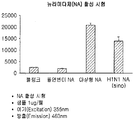
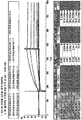
- wild type neuraminidase showed high NA activity, but I223R mutant neuraminidase was shown to have little NA activity (FIG. 4).
- the human antibody library retained in this laboratory was amplified by the following method.
- Example 1 100 ⁇ g of the mutant neuraminidase (I223R) prepared in Example 1 was coated in a tube (immunotube), and the library phage prepared in 2-1 was added to the tube and placed at 37 ° C. for 1 hour, followed by 0.5% PBST. Washed 10 times. Phage remaining after washing was diluted with 0.1 M glycine-HCl (pH 2.5) and then amplified by infection with E. coli TG1 mutants. At this time, the panning method was the same, and the number of washing with 0.5% PBST was increased 10 times each time the number of panning was increased.
- IPTG isopropyl-1-thio- ⁇ -D-galactopyranoside
- ELISA was performed. Specifically, the amplified clone is added to a tube coated with neuraminidase (I223R), and the primary antibody (Goat F (ab ') 2 Anti-Human IgG (Fab') 2 (HRP), purchased from abcam (cat.ab98535) diluted 1: 3000 in 0.05% PBST and then bound at 37 ° C. for 1 hour, washed and then reacted with TMB bound secondary antibody and washed, TMB substrate solution was added to detect clones bound to mutant neuraminidase (I223R). BSA was used as a negative control.
- the clones were sequenced to select one antibody clone therefrom. Sequencing showed that the light chain Kappa chain sequence of one of the clones was SEQ ID NO: 1 and the heavy chain variable region sequence was SEQ ID NO: 2 (FIG. 6). In FIG. 6, the parts indicated by gray letters correspond to CDR1, CDR2, and CDR3, respectively.
- NA-A4 antibody Mutant neuraminidase of influenza A virus, comprising a light chain cappa chain comprising an amino acid sequence as set out in SEQ ID NO: 1 and a heavy chain variable region comprising an amino acid sequence as set out in SEQ ID NO: 2 prepared as described above (I223R) Human antibody that specifically binds to) was named influenza NA-A4 antibody (hereinafter referred to as NA-A4 antibody).
- Example 3 The binding capacity and the K D value for the preceding paragraph is of a selected antibody clones embodied and mutant New lamina claim (K D value) measurements
- nucleotide sequence (SEQ ID NO: 3) encoding the light chain cappa chain of the Fab-type NA-A4 antibody and the nucleotide sequence encoding the heavy chain variable region (SEQ ID NO: 4) were amplified by polymerase chain reaction.
- the amplified sequences were separated through 1.5% agarose gel (Cambrex) and then purified.
- leader sequences of the heavy and light chains were synthesized by PCR, separated from pdCMV-dhfrC (Korean Patent Registration No. 10-0476363), separated through 1.5% agarose gel (Cambrex), and then purified.
- the sequence of the primer used at the time of PCR is as follows.
- the heavy chain leader sequence of the amplified pdCMV-dhfrC and the nucleic acid sequence encoding SEQ ID NO: 2 were linked to the light chain leader sequence and the nucleic acid sequence encoding SEQ ID NO: 1 using recombination PCR, respectively.
- the primers used to link the heavy chain variable region and the leader chain of the heavy chain were SEQ ID NO: 8 and SEQ ID NO: 9, and the primers used to link the light chain variable region and the light chain leader sequence were SEQ ID NO: 6 and SEQ ID NO: 7.
- the linked sequences were separated and purified through 1.5% agarose gel (Cambrex) and the heavy chains were restriction enzymes EcoRI (Roche, Switzerland) and ApaI (Roche, Switzerland), and the light chains were HindIII (Roche, Switzerland) and BsiWI (Roche). , Switzerland).
- the pdCMV-dhfrC vector was also digested and purified with the same restriction enzyme, and the cleaved heavy and light chain sequences were cloned respectively above the heavy and light chain constant regions of the vector.
- the thus prepared vector was digested with the same restriction enzyme and cloned above the heavy and light chain constant regions of the purified pdCMV-dhfrC vector, respectively, and named pdCMV-dhfrC-NA-A4 vector.
- PEG was used to transform HEK293T cells with the pdCMV-dhfrC-NA-A4 vector.
- the transformed cells were incubated in a 37 ° C. 5% CO 2 incubator for 4-6 hours, then changed to medium-free CD293 (Gibco, USA) containing no serum and incubated in the same incubator for 3 days to obtain NA-A4 antibody.
- the supernatant to produce was collected.
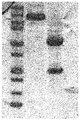
- NA-A4 antibody was purified through a protein A agarose column (Upstate, USA) and confirmed by performing electrophoresis (FIG. 7).
- FIG. 7 the bands of the NA-A4 whole antibody (center lane), heavy and light chains (right lane) are shown, and other bands do not appear.
- protein bands having molecular weights of 50 KDa and 25 KDa which are known as the molecular weights of the heavy and light chains of the antibody, were observed. Therefore, it was found that pro-antibody was successful.
- Example 2 100 ng of the mutant neuraminidase (I223R) prepared in Example 1 was coated in a well of a 96-well plate, and the NA-A4 whole antibody was added to the well by step dilution by 1/2 starting at 12.5 nM. After washing, the secondary antibody (anti-human IgG (Fc specific) -HRP) was added diluted at 1/3000. Then the wells were washed again, the substrate was added and the absorbance was measured. The absorbance according to the concentration of the treated whole antibody is shown in FIG. 8.
- NA-A4 whole antibody is significantly higher binding capacity to mutant neuraminidase (I223R) than wild type neuraminidase (NA WT), and hardly binds to the control (BSA, PBS).
- K D values were measured by three replicates using ELISA, BLITZ, and SPR with the pro-antibody NA-A4 antibody.
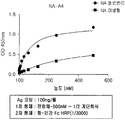
- Absorbance measurements after ELISA for wild type neuraminidase and mutant neuraminidase (I223R) are shown in FIG. 9 and SPR assay results for wild type neuraminidase are shown in FIG. 10 for mutant neuraminidase (I223R).
- SPR analysis results are shown in FIG. 11. The results of ELISA, BLITZ, and SPR analysis are summarized in Table 3 below.
- the K D value is significantly lower than that of wild type neuraminidase in mutant neuraminidase (I223R), from which NA-A4 antibody is mutated neuraminidase than wild type neuraminidase. It can be seen that the binding force to nidase (I223R) is very high.
- the NA-A4 whole antibody binds to wild-type Influenza A / california / 07/2009 (H1N1) without mutation, and it is confirmed that it does not bind to wild-type virus (Fig. 1). 12).
Landscapes
- Health & Medical Sciences (AREA)
- Life Sciences & Earth Sciences (AREA)
- Chemical & Material Sciences (AREA)
- Engineering & Computer Science (AREA)
- Genetics & Genomics (AREA)
- Organic Chemistry (AREA)
- Immunology (AREA)
- Molecular Biology (AREA)
- Biomedical Technology (AREA)
- Virology (AREA)
- Biochemistry (AREA)
- General Health & Medical Sciences (AREA)
- Biotechnology (AREA)
- Medicinal Chemistry (AREA)
- Biophysics (AREA)
- Bioinformatics & Cheminformatics (AREA)
- Zoology (AREA)
- Hematology (AREA)
- Microbiology (AREA)
- Urology & Nephrology (AREA)
- Wood Science & Technology (AREA)
- Physics & Mathematics (AREA)
- General Engineering & Computer Science (AREA)
- Proteomics, Peptides & Aminoacids (AREA)
- General Physics & Mathematics (AREA)
- Pathology (AREA)
- Analytical Chemistry (AREA)
- Plant Pathology (AREA)
- Tropical Medicine & Parasitology (AREA)
- Food Science & Technology (AREA)
- Cell Biology (AREA)
- Peptides Or Proteins (AREA)
- Communicable Diseases (AREA)
- Pulmonology (AREA)
- Medicines Containing Antibodies Or Antigens For Use As Internal Diagnostic Agents (AREA)
Abstract
본 발명은 I223R을 갖는 뉴라미니다제를 발현하는 인플루엔자 A 바이러스의 치료 및 검출에 범용될 수 있는 항체에 관한 것이다. 본 발명의 항체는 오셀타미비르, 자나미비르 등의 약물 저항성을 유발하는 I223R 돌연변이를 일으킨 뉴라미니다제를 발현하는 인플루엔자 A 바이러스에 특이적으로 결합한다. 본 발명의 항체는 항원에 대한 친화성이 높아 체외진단 키트에 적용할 수 있으며, 인간 유래로서 면역반응을 유도하지 않아 체내 타겟팅 및 치료 목적으로 활용될 수 있다.
Description
본 발명은 인플루엔자 A 바이러스에 대한 항체에 관한 것으로서, 보다 구체적으로는 오셀타미비르, 자나미비르 등의 항바이러스 약물에 대한 저항성을 갖는 돌연변이 인플루엔자 A 바이러스의 치료 및 검출에 범용될 수 있는 항체에 관한 것이다.
인플루엔자(influenza, 독감)는 인플루엔자 바이러스(Influenza virus)에 의해 사람 및 동물(조류, 돼지, 개, 말 등)의 호흡기를 통해 전파되는 호흡기성 질병이다. 사람 인플루엔자(Human influenza)의 경우 매년 전 세계 10-20% 인구에서 발생하며, 전염성이 높아 매년 세계적 규모로 유행하는 경향이 있다. 인플루엔자의 증상은 고열, 두통, 근육통, 인후의 염증, 통증, 기침 등의 호흡기질환을 수반하며 심한 경우 노약자, 만성질환보유자 등의 사망을 유발할 수 있다.
인플루엔자 감염이 의심되면 신속하게 치료하여 위험한 상황이 초래되는 것을 막고 다른 사람들에게 추가적으로 전파되는 것을 방지해야 한다. 현재 인플루엔자 감염의 치료에는 오셀타미비르 포스페이트(타미플루™)가 주로 이용되고 있고, 그 외 자나미비르 등이 개발되어 있는데, 근래에 이러한 항바이러스 약물에 저항성을 나타내는 바이러스 변이주 발생이 증가하고 있다. 바이러스를 구별할 수 있는 방법에 대해서는 다수의 문헌에서 보고된 바 있는데, 예를 들어 Marin MJ et al.은 인간 인플루엔자 바이러스와 조류 인플루엔자 바이러스를 구별하는 방법에 대해 개시하고 있다. 그러나 인플루엔자 감염이 의심되는 환자가 항바이러스 약물 저항성 바이러스에 감염되었는지 여부를 확인할 수 있는 효과적인 방법은 현재까지 개발된 바 없다.
[선행기술문헌]
Marin MJ et al., Glyconanoparticles for the plasmonic detection and discrimination between human and avian influenza, Org Biomol Chem. 2013 Nov 7; 11(41):7101-7
Jerome LeGoff et al., I223R Mutation in Influenza A(H1N1)pdm09 Neuraminidase Confers Reduced Susceptibility to Oseltamivir and Zanamivir and Enhanced Resistance with H275Y, PLoS
ONE 7(8): e37095. doi: 10.1371/journal.pone.0037095
본 발명은 약물 저항성 돌연변이를 갖는 인플루엔자 A 바이러스의 치료 및 검출에 범용으로 사용할 수 있는 항체를 제공하는 것을 목적으로 한다.
이에, 본 발명은 서열번호 1로 기재되는 아미노산 서열을 포함하는 경쇄 캅파 쇄 및 서열번호 2로 기재되는 아미노산 서열을 포함하는 중쇄 가변영역을 포함하는 항체를 제공한다. 상기 항체에서 서열번호 1 및 서열번호 2에 해당하는 부분 이외의 부분은 임의의 항체의 상응하는 부분(경쇄 가변영역 및 중쇄 가변영역 이외의 부분)이 될 수 있다.
인플루엔자 A 바이러스의 뉴라미니다제에서 I223R 돌연변이는 오셀타미비르(Oseltamivir), 자나미비르(Zanamivir) 등의 항바이러스제 약물에 대한 감수성을 감소시키는 것으로 보고되어 있다. 본 발명의 항체는 I223R 돌연변이를 갖는 뉴라미니다제에 선택적으로 결합하고 I223R 돌연변이를 갖지 않는 뉴라미니다제에는 결합력이 현저히 낮아, I233R 돌연변이를 갖는 뉴라미니다제를 발현하는 인플루엔자 A 바이러스를 검출 또는 치료하는 데 적용될 수 있다.
본 발명의 항체는 I223R 돌연변이를 갖고, 그 외의 임의의 추가적 돌연변이를 갖는 뉴라미니다제에도 높은 결합력을 나타낸다. 추가적 돌연변이에는 제한이 없으나, 예를 들어 H275Y 돌연변이가 될 수 있다. I223R 돌연변이와 H275Y 돌연변이가 함께 발생한 경우(double mutant) 항바이러스제 약물에 대한 저항성을 크게 증가시키는 것으로 알려져 있다(Jerome LeGoff et al., I223R Mutation in Influenza A(H1N1)pdm09 Neuraminidase Confers Reduced Susceptibility to Oseltamivir and Zanamivir and Enhanced Resistance with H275Y, PLoS ONE 7(8): e37095. doi: 10.1371/journal.pone.0037095).
한편 기존의 항체는 마우스에서 유래된 항체이거나 또는 마우스에서 유래된 부분을 포함하는 키메릭 항체가 많은데, 이러한 항체는 체내에서 항체 자체에 대한 면역을 유도하여 효과가 떨어지거나 부작용을 유발한다는 단점이 있어 적용에 한계가 있었다. 본 발명의 항체는 인간 유래로서, 면역을 유도하지 않아 안전하게 사용할 수 있다.
본 발명은 서열번호 1로 기재되는 아미노산 서열을 암호화하는 단리된 핵산 분자를 제공한다. 상기 핵산 분자는 RNA 또는 상기 RNA에 대한 cDNA일 수 있다. 일 구현예로서 상기 핵산 분자는 서열번호 3으로 기재되는 염기서열일 수 있으나, 이에 제한되지 않는다.
본 발명은 상기 서열번호 1로 기재되는 아미노산 서열을 암호화하는 핵산 분자가 삽입된 재조합 벡터를 제공한다. 상기 재조합 벡터는 pET28a-Histag-MBP-Histag 벡터에 상기 핵산 분자가 삽입된 것일 수 있다. 그러나 벡터의 종류는 이에 제한되지 않는다.
본 발명은 서열번호 2로 기재되는 아미노산 서열을 암호화하는 단리된 핵산 분자를 제공한다. 상기 핵산 분자는 RNA 또는 상기 RNA에 대한 cDNA일 수 있다. 일 구현예로서 상기 핵산 분자는 서열번호 4로 기재되는 염기서열일 수 있으나, 이에 제한되지 않는다.
본 발명은 상기 서열번호 2로 기재되는 아미노산 서열을 암호화하는 핵산 분자가 삽입된 재조합 벡터를 제공한다.
본 발명은 상기 서열번호 1로 기재되는 아미노산 서열을 암호화하는 핵산 분자가 삽입된 재조합 벡터를 포함하는 세포를 제공한다. 상기 세포는 HEK293T 세포, E.Coli 세포 등이 될 수 있다. 그러나 세포의 종류는 이에 제한되지 않는다.
본 발명은 상기 서열번호 2로 기재되는 아미노산 서열을 암호화하는 핵산 분자가 삽입된 재조합 벡터를 포함하는 세포를 제공한다.
본 발명은 상기 서열번호 1로 기재되는 아미노산 서열을 암호화하는 핵산 분자 및 상기 서열번호 2로 기재되는 아미노산 서열을 암호화하는 핵산 분자가 삽입된 재조합 벡터, 및 상기 재조합 벡터를 포함하는 세포를 제공한다. 일 구현예로서 상기 서열번호 1로 기재되는 아미노산 서열을 암호화하는 핵산 분자는 서열번호 3으로 기재되는 염기서열일 수 있고, 상기 서열번호 2로 기재되는 아미노산 서열을 암호화하는 핵산 분자는 서열번호 4로 기재되는 염기서열일 수 있으나, 이에 제한되지 않는다.
본 발명은 서열번호 1로 기재되는 아미노산 서열을 포함하는 경쇄 캅파 쇄 및 서열번호 2로 기재되는 아미노산 서열을 포함하는 중쇄 가변영역을 포함하는 항체를 유효성분으로 포함하는, 인플루엔자 A 바이러스 감염증 예방 또는 치료용 조성물을 제공한다.
본 발명의 일 구현예로서, 상기 조성물은 0.8 ml 당 5 내지 200 mg의 상기 항체를 포함할 수 있으며, 이를 적절한 용제로 희석하여 투여할 수 있다. 비경구 투여를 위한 제제에는 멸균된 수용액, 비수성용제, 현탁제, 유제, 동결건조제제 및 좌제가 포함된다. 비수성용제와 현탁용제로는 프로필렌글리콜, 폴리에틸렌글리콜, 올리브 오일과 같은 식물성 기름, 에틸올레이트와 같은 주사 가능한 에스테르 등이 사용될 수 있다. 또한 만니톨, 폴리소르베이트80 등이 조성물 내에 더 포함될 수 있으며, 조성물의 pH를 조절하기 위한 각종 완충액, 예를 들어 아세트산 완충액, 시트르산 완충액, 인산염 완충액 등이 더 포함될 수 있다. 그러나 본 발명의 조성물에 포함될 수 있는 물질은 이에 제한되지 않는다.
본 발명의 조성물 및 방법에 있어서, 유효성분의 투여량은 환자의 상태 및 체중, 질병의 정도, 약물형태, 투여경로 및 기간에 따라 다르지만, 경우에 따라 적절하게 선택될 수 있다. 예를 들어, 상기 조성물은 1주일에 5 내지 200 mg, 바람직하게는 40 내지 100 mg 투여될 수 있으나, 투여량은 이에 제한되지 않는다. 상기 투여 빈도는 적절히 조정될 수 있으며, 예를 들어 하루에 한 번 또는 여러 번 투여할 수도 있고, 격일 또는 수 일 간격, 매주, 격주, 수 주 간격, 매월, 격월, 또는 수개월 간격으로 투여할 수도 있다.
본 발명의 조성물은 경구 또는 비경구로 투여할 수 있으며, 바람직하게는 비경구로 투여할 수 있다. 조성물의 투여 경로는 피하, 피내, 근육내, 정맥내, 동맥내, 복강내, 경피, 비측내, 흉골내, 흡입, 국소 등이 될 수 있다. 그러나 투여 경로는 이에 제한되지 않는다.
본 발명은 서열번호 1로 기재되는 아미노산 서열을 포함하는 경쇄 및 서열번호 2로 기재되는 아미노산 서열을 포함하는 중쇄 가변영역을 포함하는 항체를 포함하는, 인플루엔자 A 바이러스 검출용 조성물을 제공한다.
본 발명은 서열번호 1로 기재되는 아미노산 서열을 포함하는 경쇄 및 서열번호 2로 기재되는 아미노산 서열을 포함하는 중쇄 가변영역을 포함하는 항체를 포함하는, 인플루엔자 A 바이러스 검출용 키트를 제공한다. 상기 키트는 I223R 돌연변이를 포함하는 뉴라미니다제 또는 I223R 돌연변이를 포함하는 뉴라미니다제를 발현하는 인플루엔자 A 바이러스를 검출하는 데 사용할 수 있다. 또한 상기 키트는 사용 지침(instruction) 및 기타 검출에 필요한 도구 또는 장비를 더 포함할 수 있다.
본 발명은 I223R을 갖는 뉴라미니다제를 발현하는 인플루엔자 A 바이러스의 치료 및 검출에 범용될 수 있는 항체에 관한 것이다. 본 발명의 항체는 오셀타미비르, 자나미비르 등의 약물 저항성을 유발하는 I223R 돌연변이를 일으킨 뉴라미니다제를 발현하는 인플루엔자 A 바이러스에 특이적으로 결합한다. 본 발명의 항체는 항원에 대한 친화성이 높아 체외진단 키트에 적용할 수 있으며, 인간 유래로서 면역반응을 유도하지 않아 체내 타겟팅 및 치료 목적으로 활용될 수 있다.
도 1의 상단은 인플루엔자 A H1N1 바이러스의 모식도이며, 도 1의 하단은 야생형 뉴라미니다제와 I223R 및 H275Y 돌연변이가 일어난 뉴라미니다제의 아미노산 서열을 비교한 것이다.
도 2는 본 발명의 배큘로바이러스 발현 시스템의 모식도이다.
도 3은 야생형 뉴라미니다제와 I223R 돌연변이 뉴라미니다제의 웨스턴 블롯 분석 결과이다.
도 4는 야생형 뉴라미니다제와 I223R 돌연변이 뉴라미니다제의 NA 활성 시험 결과이다.
도 5는 패닝 결과 선별된 NA-A4 항체의 야생형 및 돌연변이 뉴라미니다제, BSA 및 PBS에 대한 ELISA 결과이다.
도 6은 NA-A4 항체의 서열번호 1 및 서열번호 2를 나타낸 도이다.
도 7은 정제된 NA-A4 항체로 전기영동을 수행한 결과를 나타낸 도이다.
도 8은 NA-A4 전항체(whole antibody)의 야생형 및 돌연변이 뉴라미니다제, BSA 및 PBS에 대한 ELISA 결과이다.
도 9는 NA-A4 전항체의 NA-A4 전항체(whole antibody)의 야생형 및 돌연변이 뉴라미니다제에 대한 결합능을 ELISA로 확인한 결과이다.
도 10은 NA-A4 전항체의 야생형 뉴라미니다제에 대한 KD를 SPR로 확인한 결과이다.
도 11은 NA-A4 전항체의 돌연변이 뉴라미니다제에 대한 KD를 SPR로 확인한 결과이다.
도 12는 NA-A4 전항체의 야생형 Influenza A/CA/07/2009 (H1N1) 바이러스에 대한 결합 시험 결과이다.
이하, 본 발명의 이해를 돕기 위하여 바람직한 실시예를 제시한다. 그러나 하기의 실시예는 본 발명을 보다 쉽게 이해하기 위하여 제공되는 것일 뿐, 실시예에 의해 본 발명의 내용이 한정되는 것은 아니다.
실시예
1. 약물 저항성 돌연변이를 갖는 인플루엔자 A 바이러스
뉴라미니다제
생산
1-1. 야생형 및 돌연변이
뉴라미니다제
생산
배큘로바이러스 시스템(Baculovirus System)을 이용하여 약물 저항성 돌연변이(I223R)를 갖는 인플루엔자 A 바이러스 뉴라미니다제를 생산하였다. 배큘로바이러스 시스템은 곤충세포에서 단백질을 발현하는 바이러스 시스템으로서, 배큘로바이러스가 곤충세포에 감염되어 증폭되는 원리를 이용한다.
야생형 뉴라미니다제 단백질 생산을 위한 벡터를 제조하기 위하여, 배큘로바이러스(baculovirus) transfer vector인 pAcGP67a(BD Biosciences)의 GP67A 분비 서열(gp67 signal sequence)과 multicloning site(MCS) 사이에 분리/정제를 위한 태그(hexa histidine), 사합체화 도메인(tetramerization domain), 트롬빈 절단 부위(thrombine cleavage site)(LVPRS residues), 뉴라미니다제 헤드 도메인(neuraminidase head domain)[75-469 a.a, H1N1(A/califonia/04/2009)] 순으로 construct를 설계하였고 이의 염기서열을 삽입하였다. 특히 자연 상태에서 사합체로 존재하는 뉴라미니다제의 활성을 유지하기 위해, VASP의 사합체화 도메인 서열 (SSSDYSDLQRVKQELLEEVKKELQKVKEEIIEAFVQELRKRG residues, 서열번호 5)을 이용하였다. 한편 약물 저항성 돌연변이(I223R)를 포함하는 뉴라미니다제 생산을 위한 벡터는 상기 야생형 단백질 생산을 위한 벡터와 동일한 구조를 갖되 해당 잔기에 돌연변이를 포함하는 방식으로 설계하였다.
도 1의 상단은 인플루엔자 A 바이러스의 모식도이며, 도 1의 하단은 야생형 뉴라미니다제 서열 및 I223R 돌연변이, H275Y 돌연변이가 일어난 뉴라미니다제 서열을 비교한 것이다. 본 발명에서는 I223R 돌연변이 바이러스에 대한 항체를 제조하였는데, I223R과 H275Y 돌연변이가 동시에 발생하는 경우도 있으며(double mutant), I223R&H275Y double mutant의 경우 항바이러스제 저항성이 I223R 또는 H275Y 돌연변이 중 어느 하나가 일어난 경우보다 더욱 높아지는 것으로 보고되어 있다.
도 2는 본 발명의 배큘로바이러스 발현 시스템의 모식도이다.
무혈정 배지 sf900II SFM (Gibco)에서 배양되어 log phase 성장을 갖는 곤충세포 (Spodoptera frugiperda, Sf9)를 50% confluent (semi-confluent) monolayer 상태로 준비하였다. Profectin (ABvector) 형질감염 시약을 이용하여 선형화된(linearized) 배큘로바이러스 DNA (Proeasy, ABvector)와 상기 제작한 형질감염 벡터 혼합 DNA (1:1~0.2)를 Sf9에 형질감염 시켰다. Sf9 세포를 28 ℃에서 배양하며 배큘로바이러스 증식을 유도하였다. 72시간 배양 후, 세포배양액을 수거하여 야생형 뉴라미니다제와 돌연변이 뉴라미니다제를 발현하는 재조합 배큘로바이러스를 각각 확보하였다. 재조합 바이러스 함량 (titer)을 높이기 위해, log phase 성장의 Sf9 배양액에 상기 재조합 배큘로바이러스 함유 배양액을 일정 비율로 첨가(10~20:1, v:v), 배양하며 바이러스 증식을 유도하였다. 72시간 배양 후, 일정 세포배양액을 취하여 목적단백질인 뉴라미니다제의 발현을 확인하였다.
도 3은 His 태그 항체(His tag antibody)를 이용한 웨스턴 블롯 분석 결과인데, 야생형 뉴라미니다제가 약 50 kDa 크기인 반면, 돌연변이 뉴라미니다제는 당화 단백질이므로 약 53 kDa의 분자량을 갖는 것으로 관찰되었다.
또한 Sf9 보다 세포 성장이 빠른 곤충세포인 high hive (insect) cell을 무혈청 배지 Express High SFM (Gibco co.)에서 log phase 성장 상태로 준비하였다. 이 세포에 상기에서 확보한 재조합 배큘로바이러스 배양액을 일정비율 (10~20:1, v:v) 첨가하고 세포를 배양하여 재조합 단백질의 발현을 유도하였다. 72시간 배양 후, 4000rpm에서 원심 분리하여 배양액을 수거하여 0.45um pore size membrane을 이용하여 배양액을 여과(filtering)하였다. 재조합 단백질을 정제하기 위해, Ni-NTA agarose로 충전된 컬럼에 여과한 배양액을 로딩하였다. 버퍼 (35mM imidazole, 50mM Tris-HCl, 0.2M NaCl, 5% glycerol pH 7.5)을 컬럼에 로드하여 충분한 워싱을 진행한 후, 0.5M imidazole 함유 버퍼 (50mM Tris-HCl, 0.2M NaCl, 5% glycerol pH 7.5)를 컬럼에 로드하여 Ni-NTA agarose로부터 His 태그를 갖는 재조합 단백질을 용출하였다. 용출 분획을 모은 후 Hi Trap desalting column(GE healthcare)을 이용하여 탈염 및 PBS(phosphate-buffered saline, 5% glycerol 함유)로 버퍼교환을 진행하였다.
1-2. 야생형 및 돌연변이
뉴라미니다제의
NA 활성 시험
NA-Fluor Influenza Neuraminidase assay kit(life technologies cat.4457091)를 이용하여 1-1에서 생산된 야생형 뉴라미니다제(NA WT) 및 돌연변이 뉴라미니다제(NA mutant) 항원의 NA 활성 시험을 진행하였다. 한편 비교를 위하여 H1N1 바이러스의 뉴라미니다제 항원(Sino, cat.11085-V01H)에 대해서도 NA 활성 시험을 진행하였다. 그 결과, 야생형 뉴라미니다제는 높은 NA 활성을 나타내었으나, I223R 돌연변이 뉴라미니다제는 NA 활성이 거의 없는 것으로 나타났다(도 4).
실시예
2. 약물 저항성 돌연변이를 갖는 인플루엔자 A 바이러스
뉴라미니다제에
선택적으로 결합하는 항체 선별
2-1. 파지 디스플레이 항체 라이브러리(phage-displayed human antibody library) 제조
하기 방법으로 본 실험실에서 보유하고 있는 인간 항체 라이브러리를 증폭하였다.
상기 인간 항체 라이브러리를 포함하고 있는 E.
coli 세포를 OD600=0.6-0.7까지 배양한 후, 헬퍼 파지(helper phage)를 첨가하여 30분간 방치하고(standing) 30분간 진탕(shaking)한 후, 카나마이신(kanamycin)을 첨가하고 밤새 배양하였다. 그 후 증폭된 라이브러리 파지를 배양액으로부터 회수하였다.
2-2.
바이오패닝
(
biopanning
)
상기 실시예 1에서 준비한 돌연변이 뉴라미니다제(I223R) 100 μg을 튜브 내에 코팅하고(immunotube), 상기 튜브에 상기 2-1에서 준비한 라이브러리 파지를 첨가하고 37℃ 에서 1시간 동안 둔 후 0.5% PBST로 10회 세척하였다. 세척 후 남아있는 파지를 0.1 M 글리신-HCl(pH 2.5)로 희석한 후, E.coli TG1 변이주에 감염시켜 증폭하였다. 이때 패닝 방법은 동일하게 하고, 패닝 횟수가 증가할 때마다 0.5% PBST로 세척하는 횟수를 10회씩 증가시켰다.
1차 패닝에서 4차 패닝까지의 유입(input) 및 유출(output) 역가는 하기 표 1과 같다.
[표 1]

2-3. 돌연변이
뉴라미니다제에
특이적인 항체 클론 선별
3차 및 4차 패닝에서 증폭된 96종의 클론들을 무작위로 선택하여 E.
coli TG1 변이주에 감염시킨 세포를 약 1000개의 단일 콜로니(single colony)가 되도록 플레이팅(plating)하여 각각의 단일 콜로니를 OD600=0.6-0.7까지 배양한 후 IPTG(isopropyl-1-thio-β-D-galactopyranoside)로 28℃ 유도한 상층액(sup)을 돌연변이 뉴라미니다제(I223R)가 100ng/well로 코팅되어있는 96 웰 플레이트에 넣고 37℃에서 1시간 둔 뒤, 0.05% PBST로 3번 세척하였다.
그 다음 ELISA를 수행하였다. 구체적으로, 상기 증폭된 클론을 뉴라미니다제(I223R)가 코팅된 튜브에 첨가하고, 상기 튜브에 1차 항체(Goat F(ab')2 Anti-Human IgG (Fab')2 (HRP), abcam으로부터 구입(cat.ab98535))를 0.05% PBST에 1:3000으로 희석한 후 37℃에서 1시간 동안 결합시키고, 세척한 다음 TMB가 결합된 2차 항체와 반응시킨 후 세척하고, TMB 기질 용액을 첨가하여 돌연변이 뉴라미니다제(I223R)에 결합한 클론을 검출하였다. 음성 대조군으로는 BSA를 사용하였다.
음성 대조군(negative control)에는 결합하지 않고 돌연변이 뉴라미니다제(I223R)에만 선택적으로 결합하는 1개의 클론을 수득하였다. ELISA 결과 상기 클론이 야생형 뉴라미니다제(WT) 및 음성 대조군(BSA 및 PBS)에는 결합하지 않고 돌연변이 뉴라미니다제(I223R)에 선택적으로 결합함을 확인하였다(도 5).
상기 클론을 시퀀싱하여 그 중에서 1개의 항체 클론을 선별하였다. 시퀀싱 결과, 1개의 상기 클론의 경쇄 캅파(Kappa) 쇄 서열은 서열번호 1이었고, 중쇄 가변영역 서열은 서열번호 2였다(도 6). 도 6에서 회색 글씨로 표시한 부분은 각각 CDR1, CDR2, 및 CDR3에 해당하는 부분이다.
상기와 같이 제조된, 서열번호 1로 기재되는 아미노산 서열을 포함하는 경쇄 캅파 쇄 및 서열번호 2로 기재되는 아미노산 서열을 포함하는 중쇄 가변영역을 포함하는, 인플루엔자 A 바이러스의 돌연변이 뉴라미니다제(I223R)에 특이적으로 결합하는 인간 항체를 인플루엔자 NA-A4 항체(Influenza NA-A4 antibody, 이하 NA-A4 항체)로 명명하였다.
실시예 3. 선별된 항체 클론의 전항체화 및 돌연변이 뉴라미니다제에 대한 결합능 및 KD 값(KD value) 측정
3-1. 항체 클론의
전항체화
상기 선별된 클론들을 보다 정밀하게 분석하기 위해 하기 방법에 따라 전항체(whole Ig) 형태로 전환하였다.
먼저 Fab 형태의 NA-A4 항체의 경쇄 캅파 쇄를 암호화하는 염기서열(서열번호 3) 및 중쇄 가변영역을 암호화하는 염기서열(서열번호 4)을 중합효소연쇄반응으로 증폭시켰다.
증폭된 서열을 1.5% 아가로즈 겔 (Cambrex)을 통하여 분리한 다음 정제하였다.
이와는 별도로, pdCMV-dhfrC(대한민국 특허 등록번호 제10-0476363호)로부터 중쇄와 경쇄의 리더 시퀀스를 PCR에 의하여 합성하고 분리하고 1.5% 아가로즈 겔 (Cambrex)을 통하여 분리한 다음 정제하였다. PCR시 사용한 프라이머의 서열은 하기와 같다.
[표 2]

그 다음 증폭된 pdCMV-dhfrC의 중쇄 리더 시퀀스와 서열번호 2를 암호화하는 핵산 서열을, 경쇄 리더 시퀀스와 서열번호 1을 암호화하는 핵산 서열을 각각 재조합(recombination) PCR을 이용하여 연결시켰다. 중쇄 가변영역과 중쇄의 리더 시퀀스를 연결시키는데 사용한 프라이머는 서열번호 8과 서열번호 9이었고, 경쇄 가변영역과 경쇄의 리더 시퀀스를 연결시키는데 사용한 프라이머는 서열번호 6와 서열번호 7이었다.
연결된 서열은 1.5% 아가로즈 겔 (Cambrex)을 통하여 분리한 다음 정제하고, 중쇄는 제한효소 EcoRI(Roche, 스위스)과 ApaI(Roche, 스위스)으로, 경쇄는 HindⅢ(Roche, 스위스)와 BsiWI(Roche, 스위스)로 절단하였다. pdCMV-dhfrC 벡터 역시 동일한 제한효소로 절단하고 정제하고, 상기 벡터의 중쇄와 경쇄 불변영역 위쪽에 상기 절단된 중쇄 및 경쇄 서열을 각각 클로닝하였다. 이렇게 하여 제조한 벡터를 동일한 제한효소로 절단하고 정제한 pdCMV-dhfrC 벡터의 중쇄와 경쇄 불변영역 위쪽에 각각 클로닝하고 pdCMV-dhfrC-NA-A4 벡터라 명명하였다.
PEG를 사용하여 상기 pdCMV-dhfrC-NA-A4 벡터로 HEK293T 세포를 형질전환 시켰다. 형질전환 된 세포를 4-6시간 동안 37℃ 5% CO2 항온 배양기에서 배양한 후 혈청을 함유하고 있지 않은 배지 CD293(Gibco, 미국)로 바꾸어 3일간 동일한 항온 배양기에서 배양하여 NA-A4 항체를 생산하는 상청액을 수집하였다. 수집된 상청액으로부터 protein A 아가로즈 컬럼(Upstate, 미국)을 통하여 NA-A4 항체를 정제하고, 전기영동을 수행하여 확인하였다(도 7). 도 7에서 NA-A4 전항체(중앙 레인) 및 중쇄와 경쇄(우측 레인)의 밴드가 나타나고, 다른 밴드가 나타나지 않음을 확인할 수 있다. 항체를 환원시켰을 때에 항체의 중쇄 및 경쇄의 분자량으로 알려진 50KDa, 25KDa의 분자량을 갖는 단백질 밴드를 관찰하였다. 따라서 전항체화가 성공적으로 이루어졌음을 알 수 있었다.
또한 상기 실시예 1에서 준비한 돌연변이 뉴라미니다제(I223R) 100 ng을 96-웰 플레이트의 웰 내에 코팅하고, 상기 NA-A4 전항체를 12.5 nM에서 시작하여 1/2로 계단희석하여 웰에 첨가하고, 세척한 후, 2차 항체(항-인간 IgG(Fc specific)-HRP)를 1/3000으로 희석하여 첨가하였다. 그 후 다시 웰을 세척하고 기질을 첨가한 후 흡광도를 측정하였다. 처리한 전항체의 농도에 따른 흡광도를 도 8에 나타내었다. 도 8에서 NA-A4 전항체가 야생형 뉴라니미니다제(NA WT)보다 돌연변이 뉴라미니다제(I223R)에 대한 결합능이 현저히 높으며, 대조군(BSA, PBS)에는 거의 결합하지 않음을 알 수 있다.
3-2. 돌연변이
뉴라미니다제(I223R)에
대한
Kd
값(
Kd
value) 및
결합능
측정
전항체화된 NA-A4 항체로 ELISA, BLITZ, 및 SPR을 이용하여 3번의 반복실험을 진행하여 KD 값을 측정하였다. 야생형 뉴라미니다제 및 돌연변이 뉴라미니다제(I223R)에 대한 ELISA 후 흡광도 측정은 도 9에, 야생형 뉴라미니다제에 대한 SPR 분석 결과는 도 10에, 돌연변이 뉴라미니다제(I223R)에 대한 SPR 분석 결과는 도 11에 나타내었다. ELISA, BLITZ, 및 SPR 분석 결과를 요약하면 하기 표 3과 같다.
[표 3]

상기 표 3에서, 3가지 분석방법 모두에서 돌연변이 뉴라미니다제(I223R)에서 야생형 뉴라미니다제보다 KD 값이 현저히 작게 나타나는데, 이로부터 NA-A4 항체가 야생형 뉴라니미니다제보다 돌연변이 뉴라미니다제(I223R)에 대한 결합력이 매우 높음을 알 수 있다.
실시예
4. 야생형 인플루엔자
바이러스에 대한 결합 여부
확인
상기 NA-A4 전항체(whole antibody)가 돌연변이가 일어나지 않은 야생형 Influenza A/california/07/2009(H1N1)에 결합하는지 여부를 흡광도를 측정하여 확인한 바, 야생형 바이러스에는 결합하지 않음을 확인하였다(도 12).
Claims (5)
- 서열번호 1로 기재되는 아미노산 서열을 포함하는 경쇄 캅파 쇄 및 서열번호 2로 기재되는 아미노산 서열을 포함하는 중쇄 가변영역을 포함하는, 항체.
- 제1항에 있어서, 상기 인간 항체는 I223R 돌연변이를 포함하는 인플루엔자 A 바이러스의 뉴라미니다제(neuraminidase)에 결합하는 항체.
- 서열번호 1로 기재되는 아미노산 서열을 암호화하는 염기서열 및 서열번호 2로 기재되는 아미노산 서열을 암호화하는 염기서열을 포함하는 재조합 벡터.
- 서열번호 3으로 기재되는 염기서열 또는 서열번호 4로 기재되는 염기서열을 갖는 핵산 분자.
- 서열번호 1로 기재되는 아미노산 서열을 포함하는 경쇄 캅파 쇄 및 서열번호 2로 기재되는 아미노산 서열을 포함하는 중쇄 가변영역을 포함하는 인간 항체를 포함하는, I223R 돌연변이를 포함하는 뉴라미니다제 또는 I223R 돌연변이를 포함하는 뉴라미니다제를 발현하는 인플루엔자 A 바이러스 검출용 키트.
Applications Claiming Priority (2)
| Application Number | Priority Date | Filing Date | Title |
|---|---|---|---|
| KR10-2016-0032979 | 2016-03-18 | ||
| KR1020160032979A KR101825407B1 (ko) | 2016-03-18 | 2016-03-18 | 약물 저항성 인플루엔자 바이러스에 대한 항체 |
Publications (1)
| Publication Number | Publication Date |
|---|---|
| WO2017159996A1 true WO2017159996A1 (ko) | 2017-09-21 |
Family
ID=59850377
Family Applications (1)
| Application Number | Title | Priority Date | Filing Date |
|---|---|---|---|
| PCT/KR2017/001598 Ceased WO2017159996A1 (ko) | 2016-03-18 | 2017-02-14 | 약물 저항성 인플루엔자 바이러스에 대한 항체 |
Country Status (2)
| Country | Link |
|---|---|
| KR (1) | KR101825407B1 (ko) |
| WO (1) | WO2017159996A1 (ko) |
Cited By (3)
| Publication number | Priority date | Publication date | Assignee | Title |
|---|---|---|---|---|
| CN110092829A (zh) * | 2018-01-31 | 2019-08-06 | 长庚医疗财团法人林口长庚纪念医院 | 人源抗肠病毒71型单克隆抗体的制法、产物及其应用 |
| CN117534737A (zh) * | 2022-07-15 | 2024-02-09 | 中山大学·深圳 | 一种季节性甲型流感通用Mosaic重组抗原及其疫苗和应用 |
| CN119143870A (zh) * | 2024-11-11 | 2024-12-17 | 四川大学 | 一种针对甲型流感病毒h1n1亚型na蛋白的纳米抗体及应用 |
Families Citing this family (1)
| Publication number | Priority date | Publication date | Assignee | Title |
|---|---|---|---|---|
| KR102218980B1 (ko) | 2019-09-18 | 2021-02-23 | 한국생명공학연구원 | 오셀타미비르 내성 인플루엔자 바이러스에 대한 항체 |
Citations (3)
| Publication number | Priority date | Publication date | Assignee | Title |
|---|---|---|---|---|
| WO2011096302A1 (ja) * | 2010-02-02 | 2011-08-11 | 国立大学法人名古屋大学 | 薬剤耐性インフルエンザウイルス特異的抗体及びその用途 |
| US20140194392A1 (en) * | 2013-01-09 | 2014-07-10 | National Chiao Tung University | Drug screening method |
| WO2015045053A1 (ja) * | 2013-09-26 | 2015-04-02 | 株式会社 富山研究所 | 薬剤耐性インフルエンザウイルス検出キット |
-
2016
- 2016-03-18 KR KR1020160032979A patent/KR101825407B1/ko active Active
-
2017
- 2017-02-14 WO PCT/KR2017/001598 patent/WO2017159996A1/ko not_active Ceased
Patent Citations (3)
| Publication number | Priority date | Publication date | Assignee | Title |
|---|---|---|---|---|
| WO2011096302A1 (ja) * | 2010-02-02 | 2011-08-11 | 国立大学法人名古屋大学 | 薬剤耐性インフルエンザウイルス特異的抗体及びその用途 |
| US20140194392A1 (en) * | 2013-01-09 | 2014-07-10 | National Chiao Tung University | Drug screening method |
| WO2015045053A1 (ja) * | 2013-09-26 | 2015-04-02 | 株式会社 富山研究所 | 薬剤耐性インフルエンザウイルス検出キット |
Non-Patent Citations (2)
| Title |
|---|
| PIZZORNO: "Impact of mutations at residue 1223 of the neuraminidase protein on the resistance profile, replication level, and virulence of the 2009 pandemic influenza virus", ANTIMICROBIAL AGENTS AND CHEMOTHERAPY, vol. 56, no. 3, 2012, pages 1208 - 1214, XP055601172, ISSN: 0066-4804, DOI: 10.1128/AAC.05994-11 * |
| VAN DER VRIES: "H1N1 2009 pandemic influenza virus: resistance of the I223R neuraminidase mutant explained by kinetic and structural analysis", PLOS PATHOGENS, vol. 8, no. 9, 2012, pages 1 - 8, XP055601168 * |
Cited By (8)
| Publication number | Priority date | Publication date | Assignee | Title |
|---|---|---|---|---|
| CN110092829A (zh) * | 2018-01-31 | 2019-08-06 | 长庚医疗财团法人林口长庚纪念医院 | 人源抗肠病毒71型单克隆抗体的制法、产物及其应用 |
| CN117534737A (zh) * | 2022-07-15 | 2024-02-09 | 中山大学·深圳 | 一种季节性甲型流感通用Mosaic重组抗原及其疫苗和应用 |
| CN117534739A (zh) * | 2022-07-15 | 2024-02-09 | 中山大学·深圳 | 一种季节性甲型流感通用Mosaic重组抗原及其疫苗和应用 |
| CN117534738A (zh) * | 2022-07-15 | 2024-02-09 | 中山大学·深圳 | 一种季节性甲型流感通用Mosaic重组抗原及其疫苗和应用 |
| CN117534739B (zh) * | 2022-07-15 | 2024-07-05 | 中山大学·深圳 | 一种季节性甲型流感通用Mosaic重组抗原及其疫苗和应用 |
| CN117534738B (zh) * | 2022-07-15 | 2024-08-09 | 中山大学·深圳 | 一种季节性甲型流感通用Mosaic重组抗原及其疫苗和应用 |
| CN117534737B (zh) * | 2022-07-15 | 2024-09-06 | 中山大学·深圳 | 一种季节性甲型流感通用Mosaic重组抗原及其疫苗和应用 |
| CN119143870A (zh) * | 2024-11-11 | 2024-12-17 | 四川大学 | 一种针对甲型流感病毒h1n1亚型na蛋白的纳米抗体及应用 |
Also Published As
| Publication number | Publication date |
|---|---|
| KR101825407B1 (ko) | 2018-02-06 |
| KR20170108690A (ko) | 2017-09-27 |
Similar Documents
| Publication | Publication Date | Title |
|---|---|---|
| CN112794918B (zh) | 针对新型冠状病毒的人ACE2改造蛋白、ACE2-hFc类抗体蛋白 | |
| EA027069B1 (ru) | Моноклональные антитела, способные взаимодействовать с множеством подтипов вируса гриппа а | |
| WO2017159996A1 (ko) | 약물 저항성 인플루엔자 바이러스에 대한 항체 | |
| JP7343739B2 (ja) | SARS-CoV-2流行性変異株に対するモノクローナル抗体20D8 | |
| Zhang et al. | A mosaic-type trimeric RBD-based COVID-19 vaccine candidate induces potent neutralization against Omicron and other SARS-CoV-2 variants | |
| Rani et al. | Increased antibody affinity confers broad in vitro protection against escape mutants of severe acute respiratory syndrome coronavirus | |
| CN104628848B (zh) | 单克隆抗体mers‑27及其编码基因和应用 | |
| CN118369338A (zh) | 协同中和新型冠状病毒的人源抗体和抗体组合及其应用 | |
| CN116217713B (zh) | 一株人源中和抗体或其抗原结合片段及其应用 | |
| CN116655782A (zh) | 新型冠状病毒s蛋白单克隆抗体及其应用 | |
| CN104628849B (zh) | 单克隆抗体mers‑4及其编码基因和应用 | |
| CN115057939B (zh) | 结合新型冠状病毒的双特异性结合蛋白、药物和方法 | |
| CN114891075B (zh) | 一种对新冠病毒s蛋白rbmfp结构域具有结合亲和力的多肽及其应用 | |
| Ueno et al. | Isolation of human monoclonal antibodies with neutralizing activity to a broad spectrum of SARS-CoV-2 viruses including the Omicron variants | |
| WO2013081371A1 (ko) | 인간 b 세포에서 생산된 인플루엔자 a 바이러스 중화 활성을 가지는 결합 분자 | |
| CN119390824B (zh) | 一种结合猴痘病毒b6r蛋白的单克隆抗体及其应用 | |
| CN117866081A (zh) | 一种抗新型冠状病毒的全人源单克隆抗体及其用途 | |
| CN115925904B (zh) | 一种新冠病毒单克隆中和抗体及其应用 | |
| CN118702811A (zh) | 广泛识别新冠病毒的人源中和抗体及其应用 | |
| Desogus et al. | Production and characterization of a human recombinant monoclonal Fab fragment specific for influenza A viruses | |
| CN105859882B (zh) | 人源抗mers病毒中和性抗体a1、其制备方法及应用 | |
| CN111704665B (zh) | 一种针对H3N2犬流感病毒的重组犬源化抗体scFv-Fc | |
| CN121471347B (zh) | 一种抗SARS-CoV和SARS-CoV-2的全人源单克隆抗体及其应用 | |
| Duty et al. | Broadly neutralizing human monoclonal antibodies against BK polyomavirus genotypes | |
| CN107266566B (zh) | 人源抗ev71病毒中和性抗体e1及其应用 |
Legal Events
| Date | Code | Title | Description |
|---|---|---|---|
| NENP | Non-entry into the national phase |
Ref country code: DE |
|
| 121 | Ep: the epo has been informed by wipo that ep was designated in this application |
Ref document number: 17766897 Country of ref document: EP Kind code of ref document: A1 |
|
| 122 | Ep: pct application non-entry in european phase |
Ref document number: 17766897 Country of ref document: EP Kind code of ref document: A1 |