WO2017147742A1 - Gfral receptor therapies - Google Patents
Gfral receptor therapies Download PDFInfo
- Publication number
- WO2017147742A1 WO2017147742A1 PCT/CN2016/074809 CN2016074809W WO2017147742A1 WO 2017147742 A1 WO2017147742 A1 WO 2017147742A1 CN 2016074809 W CN2016074809 W CN 2016074809W WO 2017147742 A1 WO2017147742 A1 WO 2017147742A1
- Authority
- WO
- WIPO (PCT)
- Prior art keywords
- compound
- gfral
- mammal
- gdf15
- receptor
- Prior art date
- Legal status (The legal status is an assumption and is not a legal conclusion. Google has not performed a legal analysis and makes no representation as to the accuracy of the status listed.)
- Ceased
Links
Images




Classifications
-
- A—HUMAN NECESSITIES
- A61—MEDICAL OR VETERINARY SCIENCE; HYGIENE
- A61K—PREPARATIONS FOR MEDICAL, DENTAL OR TOILETRY PURPOSES
- A61K45/00—Medicinal preparations containing active ingredients not provided for in groups A61K31/00 - A61K41/00
- A61K45/06—Mixtures of active ingredients without chemical characterisation, e.g. antiphlogistics and cardiaca
-
- A—HUMAN NECESSITIES
- A61—MEDICAL OR VETERINARY SCIENCE; HYGIENE
- A61K—PREPARATIONS FOR MEDICAL, DENTAL OR TOILETRY PURPOSES
- A61K39/00—Medicinal preparations containing antigens or antibodies
- A61K39/395—Antibodies; Immunoglobulins; Immune serum, e.g. antilymphocytic serum
-
- A—HUMAN NECESSITIES
- A61—MEDICAL OR VETERINARY SCIENCE; HYGIENE
- A61K—PREPARATIONS FOR MEDICAL, DENTAL OR TOILETRY PURPOSES
- A61K38/00—Medicinal preparations containing peptides
- A61K38/16—Peptides having more than 20 amino acids; Gastrins; Somatostatins; Melanotropins; Derivatives thereof
- A61K38/17—Peptides having more than 20 amino acids; Gastrins; Somatostatins; Melanotropins; Derivatives thereof from animals; from humans
- A61K38/177—Receptors; Cell surface antigens; Cell surface determinants
- A61K38/179—Receptors; Cell surface antigens; Cell surface determinants for growth factors; for growth regulators
-
- A—HUMAN NECESSITIES
- A61—MEDICAL OR VETERINARY SCIENCE; HYGIENE
- A61P—SPECIFIC THERAPEUTIC ACTIVITY OF CHEMICAL COMPOUNDS OR MEDICINAL PREPARATIONS
- A61P1/00—Drugs for disorders of the alimentary tract or the digestive system
- A61P1/14—Prodigestives, e.g. acids, enzymes, appetite stimulants, antidyspeptics, tonics, antiflatulents
-
- A—HUMAN NECESSITIES
- A61—MEDICAL OR VETERINARY SCIENCE; HYGIENE
- A61P—SPECIFIC THERAPEUTIC ACTIVITY OF CHEMICAL COMPOUNDS OR MEDICINAL PREPARATIONS
- A61P3/00—Drugs for disorders of the metabolism
- A61P3/04—Anorexiants; Antiobesity agents
-
- A—HUMAN NECESSITIES
- A61—MEDICAL OR VETERINARY SCIENCE; HYGIENE
- A61P—SPECIFIC THERAPEUTIC ACTIVITY OF CHEMICAL COMPOUNDS OR MEDICINAL PREPARATIONS
- A61P3/00—Drugs for disorders of the metabolism
- A61P3/08—Drugs for disorders of the metabolism for glucose homeostasis
-
- A—HUMAN NECESSITIES
- A61—MEDICAL OR VETERINARY SCIENCE; HYGIENE
- A61P—SPECIFIC THERAPEUTIC ACTIVITY OF CHEMICAL COMPOUNDS OR MEDICINAL PREPARATIONS
- A61P3/00—Drugs for disorders of the metabolism
- A61P3/08—Drugs for disorders of the metabolism for glucose homeostasis
- A61P3/10—Drugs for disorders of the metabolism for glucose homeostasis for hyperglycaemia, e.g. antidiabetics
-
- A—HUMAN NECESSITIES
- A61—MEDICAL OR VETERINARY SCIENCE; HYGIENE
- A61P—SPECIFIC THERAPEUTIC ACTIVITY OF CHEMICAL COMPOUNDS OR MEDICINAL PREPARATIONS
- A61P43/00—Drugs for specific purposes, not provided for in groups A61P1/00-A61P41/00
-
- C—CHEMISTRY; METALLURGY
- C07—ORGANIC CHEMISTRY
- C07K—PEPTIDES
- C07K16/00—Immunoglobulins [IGs], e.g. monoclonal or polyclonal antibodies
- C07K16/18—Immunoglobulins [IGs], e.g. monoclonal or polyclonal antibodies against material from animals or humans
- C07K16/22—Immunoglobulins [IGs], e.g. monoclonal or polyclonal antibodies against material from animals or humans against growth factors ; against growth regulators
-
- A—HUMAN NECESSITIES
- A61—MEDICAL OR VETERINARY SCIENCE; HYGIENE
- A61K—PREPARATIONS FOR MEDICAL, DENTAL OR TOILETRY PURPOSES
- A61K39/00—Medicinal preparations containing antigens or antibodies
- A61K2039/505—Medicinal preparations containing antigens or antibodies comprising antibodies
Definitions
- the present invention relates to the field of medicine. More particularly, the invention relates to a method of treating diabetes or obesity by agonizing the GFRAL receptor, a compound for use in such treatment and pharmaceutical compositions containing such a compound. The invention also relates to a method of treating cachexia by antagonizing, inhibiting, neutralizing or blocking the GFRAL receptor, a compound for use in such treatment and pharmaceutical compositions containing such a compound.
- GDF15 belongs to the transforming growth factor-beta (TGF ⁇ ) superfamily. Among many reported biological functions of GDF15, the regulation of energy homeostasis may be important due to its potential in the treatment of obesity and metabolic diseases. The connection between GDF15 and body weight was initially based on the observation of a correlation between elevated serum GDF15 levels and weight loss in individuals with advanced prostate cancer. Furthermore, overexpression of GDF15 in animal models leads to lean phenotype, hypophagia and improvement of metabolic parameters. It has been reported that GDF15 modulates food intake and body weight by acting on the hypothalamus and brainstem. However, the mechanism of the action of GDF15 is not understood on the molecular level and no receptor of GDF15 has so far been identified.
- TGF ⁇ transforming growth factor-beta
- GDF15 binds with high affinity towards a remote member of the GFR ⁇ receptor family, GFRAL (GDNF receptor alpha like) , which is a membrane protein with a single transmembrane domain with no known ligand.
- GFRAL is a member of the Glial cell line-derived neurotrophic factor (GDNF) family of receptors.
- the GDNF family ligands belong to the cysteine-knot protein family and function as homodimers.
- all GDNF family ligands signal through a complex between the RET receptor and GDNF family receptor- ⁇ .
- GFR ⁇ receptors are plasma membrane proteins with a glycosyl phosphatidylinositol (GPI) anchor.
- GPI glycosyl phosphatidylinositol
- GFRAL is a distant homolog of the GFR ⁇ family, and it is more closely related to GFR ⁇ -3 (30% identity) than it is to GFR ⁇ -1, -2, or -4.
- One distinction between GFRAL and other members of the GFR ⁇ family is GFRAL lacks a C-terminal GPI anchor motif. Instead, GFRAL is predicted to be a membrane protein with a single transmembrane domain.
- Applicant discloses herein that the effects of GDF15 on body weight, food intake and glucose parameters in an animal model require the GFRAL receptor.
- the efficacy of recombinant GDF15 to reduce blood glucose and body weight is absent in homozygous GFRAL-deficient mice. These data provide unequivocal evidence to support GFRAL as the GDF15 receptor. This discovery is the basis for developing new compounds that interact with the GFRAL receptor to treat one or more of diabetes, obesity and cachexia.
- the inventions described herein provide methods of modulating GDF15 and GFRAL activity with a compound comprising agonizing, antagonizing, inhibiting, neutralizing or blocking the GFRAL receptor.
- the compound may comprise an antibody which binds to the GFRAL receptor with a greater affinity than GDF15 and blocks GDF15 from binding to the GFRAL receptor.
- the inventions also comprise methods of reducing blood glucose and reducing body weight in a mammal comprising administering a compound or pharmaceutical composition to agonize the GFRAL receptor.
- the inventions further comprise methods of increasing blood glucose and increasing body weight in a mammal comprising administering a compound or pharmaceutical composition to antagonize, inhibit, neutralize or block the GFRAL receptor.
- the present invention comprises a method of reducing blood glucose in a mammal comprising administering to a mammal in need thereof an effective amount of a compound which agonizes the GFRAL receptor.
- the invention further comprises a method of increasing blood glucose in a mammal comprising administering to a mammal in need thereof an effective amount of a compound which antagonizes, inhibits, neutralizes or blocks the GFRAL receptor.
- the invention comprises a method of reducing body weight in a mammal comprising administering to a mammal in need thereof an effective amount of a compound which agonizes the GFRAL receptor.
- the present invention further comprises a method of increasing body weight in a mammal comprising administering to a mammal in need thereof an effective amount of a compound which antagonizes, inhibits, neutralizes or blocks the GFRAL receptor.
- the invention comprises the foregoing methods wherein the compound blocks the GFRAL receptor by inhibiting the binding of GDF15 and wherein the compound comprises an antibody or fragment thereof.
- the invention further comprises the foregoing methods wherein the mammal is a human and the GFRAL receptor has the amino acid sequence of SEQ ID NO: 4 and the GDF15 has the amino acid sequence of SEQ ID NO: 2.
- the present invention further comprises the foregoing methods wherein the mammal is a mouse and wherein the GFRAL receptor has the amino acid sequence of SEQ ID NO: 9 and the GDF15 has the amino acid sequence of SEQ ID NO: 7.
- the present invention comprises the foregoing methods wherein the compound is administered with one or more pharmaceutically acceptable excipients and wherein the compound is administered with one or more of GLP-1, insulin, an insulin analog, a DPP-4 inhibitor, an SGLT2 inhibitor and glucagon.
- the present invention comprises a pharmaceutical composition comprising a compound which agonizes the GFRAL receptor and one or more pharmaceutically acceptable excipients.
- the invention further comprises a pharmaceutical composition comprising a compound which antagonizes, inhibits, neutralizes or blocks the GFRAL receptor and one or more pharmaceutically acceptable excipients.
- the invention also comprises the foregoing composition further comprising one or more of GLP-1, insulin, an insulin analog, a DPP-4 inhibitor, an SGLT2 inhibitor and glucagon.
- the invention further comprises the foregoing composition wherein the compound and one or more of GLP-1, insulin, an insulin analog, a DPP-4 inhibitor, an SGLT2 inhibitor and glucagon are fused.
- the present invention comprises an isolated compound which agonizes the GFRAL receptor.
- the invention further comprises an isolated compound which antagonizes, inhibits, neutralizes or blocks the GFRAL receptor.
- the invention also comprises the foregoing compound wherein the compound is a peptide, protein, an antibody or fragment thereof.
- the invention further comprises the foregoing compound wherein the antibody or fragment thereof binds to the same epitope or amino acid region on GFRAL as GDF15.
- the present invention comprises a method of treating diabetes in a mammal comprising administering to a mammal in need thereof an effective amount of a compound which agonizes the GFRAL receptor.
- the invention further comprises a method of treating obesity in a mammal comprising administering to a mammal in need thereof an effective amount of a compound which agonizes the GFRAL receptor.
- the invention also comprises a method of treating cachexia in a mammal comprising administering to a mammal in need thereof an effective amount of a compound which antagonizes, inhibits, neutralizes or blocks the GFRAL receptor.
- the invention comprises a protein comprising (a) a GDF15-binding soluble fragment of an insoluble human GFRAL receptor, wherein the insoluble human GFRAL receptor specifically binds to human GDF15 and (b) all of the domains of the constant region of a human immunoglobulin IgG heavy chain other than the first domain of said constant region; wherein said protein specifically binds human GDF15.
- the invention further comprises the foregoing protein wherein the insoluble human GFRAL receptor comprises SEQ ID NO: 4.
- the invention also comprises the foregoing protein wherein the protein consists essentially of the extracellular region of the insoluble human GFRAL receptor and all the domains of the constant region of a human IgG1 immunoglobulin heavy chain other than the first domain of the constant region.
- an antibody refers to an intact antibody (comprising a complete or full length Fc region) , a substantially intact antibody, or a portion or fragment of an antibody comprising an antigen-binding region, e.g., a Fab fragment, Fab’ fragment or F (ab’ ) 2 fragment of an animal, humanized or human antibody.
- the term “monoclonal antibody” as used herein refers to an antibody from a population of substantially homogeneous antibodies, i.e., the individual antibodies comprising the population are identical and/or bind the same epitope (s) , except for possible variants that may arise during production of the monoclonal antibody, such as variants generally being present in minor amounts.
- Such monoclonal antibody typically includes an antibody comprising a polypeptide sequence that binds a target, wherein the target-binding polypeptide sequence was obtained by a process that includes the selection of a single target binding polypeptide sequence from a plurality of polypeptide sequences.
- the selection process can be the selection of a unique clone from a plurality of clones, such as a pool if hybridoma clones, phage clones or recombinant DNA clones.
- the selected target binding sequence can be further altered, for example, to improve affinity for the target, to humanize the target binding sequence, to improve its production in cell culture, to reduce its immunogenicity in vivo, to create a multispecific antibody, etc., and that an antibody comprising the altered target binding sequence is also a monoclonal antibody of this invention.
- an antibody comprising the altered target binding sequence is also a monoclonal antibody of this invention.
- polyclonal antibody preparations which typically include different antibodies directed against different determinants (epitopes)
- each monoclonal antibody of a monoclonal antibody preparation is directed against a single determinant on an antigen.
- the monoclonal antibody preparations are advantageous in that they are typically uncontaminated by other immunoglobulins.
- the modifier “monoclonal” indicates the character of the antibody as being obtained from a substantially homogeneous population of antibodies, and is not to be construed as requiring production of the antibody by any particular method.
- the monoclonal antibodies to be used in accordance with the present invention may be made by a variety of techniques known in the art, including one or more of the hybridoma method, recombinant DNA methods, and phage display technologies.
- the monoclonal antibodies herein specifically include “chimeric” antibodies (immunoglobulins) in which a portion of the heavy and/or light chain is identical with or homologous to corresponding sequences in antibodies derived from a particular species or belonging to a particular antibody class or subclass, while portions of the remainder of the chain (s) is identical with or homologous to corresponding sequences in antibodies derived from another species or belonging to another antibody class or subclass, as well as fragments of such antibodies, so long as they exhibit the desired biological activity.
- Methods of making chimeric antibodies are known in the art.
- agents for the treatment of diabetes and/or obesity may be combined with other agents for the treatment of diabetes and/or obesity.
- the compound of the invention, or a pharmaceutically acceptable salt thereof may be co-administered, simultaneously or sequentially, with other effective treatment (s) for diabetes or obesity including, but not limited to GLP-1, insulin, insulin analogs, DPP-4 inhibitors, SGLT2 inhibitors and glucagon.
- the compound of the invention, or a pharmaceutically acceptable salt thereof, alone or in combination with other effective treatement (s) may be administered, simultaneously or sequentially, following approved medical procedures such as bariatric surgeries, for example, gastric bypass surgery or adjustable gastric banding procedures.
- GDF15 The interaction of GDF15 and a group of GFR ⁇ receptor related proteins is tested through a co-immunoprecipitation assay.
- Three receptors, GFR ⁇ 4, GFRAL (SEQ ID. NO: 4) and Gas1 are FLAG TM -tagged and are transiently overexpressed in HEK293 cells.
- FLAG TM a registered trademark of Sigma-Aldrich, is a tag that can be added to a protein, having the sequence motif Asp-Tyr-Lys-Asp-Asp-Asp-Asp-Lys.
- Cell lysates are harvested and incubated with GDF15-tandem Fc fusion recombinant protein before immunoprecipitation with anti-FLAG TM antibody.
- GDF15 SEQ ID. NO: 2
- GFRAL Figure 1
- the recombinant protein of the extra cellular domain ( “ECD” ) of GFRAL (SEQ ID. NO: 4) is expressed and purified to develop a solid-phase assay to generate a more quantitative measurement of the relative binding affinities.
- Recombinant native GDNF protein is utilized as a positive control in this assay and it binds to the canonical GFR ⁇ receptors, with the strongest interaction with GFR ⁇ 1 ( Figure 2A) . No interaction is observed between GDNF and GFRAL or Gas1.
- native GDF15 SEQ ID. NO: 2
- binds strongly to the ECD of GFRAL, but does not recognize any of the other receptors ( Figure 2B) .
- GFRAL SEQ ID. NO: 4
- GDF15 SEQ ID. NO: 2
- Purified recombinant ECD of GFRAL is immobilized on a GE Life Sciences CM5 chip via ammine coupling.
- Various concentrations of recombinant GDF15 protein are delivered in the mobile phase (Fig 3) .
- Six datasets are fit to a bivalent analyze model and the affinity of the protein (KD) is calculated.
- KD affinity of the protein
- the affinity between native recombinant GDF15 and the ECD of GFRAL is ⁇ 0.7 nM.
- GDF15 requires GFRAL.
- Mice with whole body deletion of GFRAL are acquired from Taconic Biosciences, Inc. for this testing.
- Homozygous GFRAL knockout mice are viable and with no gross abnormalities.
- Male homozygous knockout mice weigh less than wild-type gender matched littermates, while no significant body weight difference is observed between female KO and wild-type littermates.
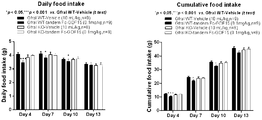
- mice with GDF15 suppresses food intake and weight gain with improvement of glucose parameters.
- GFRAL recombinant tandem Fc GDF15 (SEQ ID. NO: 2) protein for 13 days at 0.1 mg/kg dose once every two days.
- Wild type ( “WT” ) animals exhibited sustained weight loss and significantly attenuated food intake ( Figure 4) .
- GDF15 led to a significant decrease of baseline glucose level in the WT mice ( Figure 4) .
- OGTT oral glucose tolerance test
- WT animals treated with GDF15 had reduced glucose excursion compared to the vehicle treatment group ( Figure 4) .
- GDF15 body weight, food intake and glucose parameters are absent in the GFRAL knockout cohort ( Figure 4) .
- GDF15 treatment having no effects on GFRAL knockout mice confirmed our hypothesis that GFRAL is the endogenous GDF15 receptor that mediates the biological activities of GDF15.
- This approach may also be used to identify potential therapeutically effective GFRAL agonist antibodies or proteins by measuring the effects on food intake, weight gain and glucose compared in WT animals with a GFRAL receptor to the same type of animals treated with GDF15.
- GFRAL antibodies are generated. Six mouse monoclonal antibodies against mouse GFRAL are generated with mouse hybridomas created from mice exposed to a recombinant protein antigen of SEQ ID NO: 11. The six resultant antibodies are selected to test their ability to interfere with GDF15 binding. Two antibodies, 8A2 and 8G2, dose dependently inhibit the binding between GDF15 and GFRAL ( Figure 5) . These two antibodies bind to both human and mouse GFRAL receptors. The other four antibodies, 7F10, 5E1, 6F10 and 2H8, bind only to mouse GFRAL receptors.
- Human and mouse GDF15 amino acid sequences are given below as SEQ ID NOs: 1 and 6, respectively.
- the pro-domain of these sequences must be cleaved off the full length protein in order to generate the active GDF15 molecule.
- the active GDF15 molecule amino acid sequences are given below as SEQ ID NO: 2 for human GDF15 and SEQ ID NO: 7 for mouse GDF15.
- FIG. 1 A co-immunoprecipitation assay shows that GFRAL interacts with GDF15.
- Cell lysates prepared from HEK293 cells are transiently transfected with FLAG TM tagged GFR ⁇ 4, GFRAL or GAS1 and are incubated with recombinant tandem Fc-GDF15 protein.
- Immunoprecipitation is performed using anti-FLAG TM antibody followed by immunoblotting with anti-FLAG TM and anti-Fc antibodies.
- FIG. 1 A solid-phase binding assay shows that (A) Recombinant GDNF protein binds most strongly to GFR ⁇ 1 and (B) recombinant GDF15 interacts specifically with the ECD of GFRAL.
- FIG. 3 A Surface Plasmon Resonance ( “SPR” ) sensorgram shows binding between GDF15 (SEQ ID. NO: 2) and the ECD of GFRAL (SEQ ID. NO: 4) .
- the binding between recombinant ECD of GFRAL with (A) native GDF15 and (B) tandem Fc-GDF15 is studied at 25°C.
- the biosensor chip response is plotted as a function of time.
- GDF15 SEQ ID NO. 7
- Antibodies are tested to determine whether they block the interaction between GDF15 and GFRAL. Interactions between GDF15 (SEQ ID. NO: 2) and GFRAL (SEQ ID. NO: 9) are assessed by solid-phase binding assay in the presence of the different GFRAL antibodies that are generated. 8A2 and 8G2 are able to inhibit the binding in a dose dependent fashion.
- Tandem Fc GDF15 comprises a first Fc region and a second Fc region and native GDF15 (SEQ ID. NO: 2) at the C-terminus. The first and the second Fc regions are linked through a flexible linker to form a contiguous polypeptide and dimerize to form an Fc dimer.
- Recombinant tandem Fc and ECD of GFRAL are expressed and purified by Novoprotein.
- GFRAL knockout mice are acquired from Taconic, the exon 2 and 3 from GFRAL gene are replaced by LacZ/Neo cassette through homologous recombination.
- HEK293 cells are maintained in Dulbecco's modified Eagle's medium supplemented with 10% fetal bovine serum and penicillin/streptomycin. Cells are transfected with expression vectors using the Lipofectamine 2000 transfection reagent (Invitrogen) . Cell lysate is harvested in PBS and 1 % NP40 plus protease inhibitor cocktail. Immunoprecipitation is performed with anti-FLAG TM antibody-conjugated beads in the presence of 1 ⁇ g/ml tandem Fc GDF15 recombinant protein. Immunoblotting is performed with anti-FLAG TM and anti-human Fc antibodies.
- Each cycle consists of the following steps: 1) injection of about 45 ⁇ l of GDF15 at a flow rate of 30 ⁇ l/min followed by 5 minutes for dissociation; and 2) regeneration using about 15 ⁇ l of 10 mM glycine hydrochloride, pH 1.5. Association and dissociation rates for each cycle are evaluated using BIA Evaluation Software.
- Wild-type and GFRAL homozygous knockout littermates are used in the study.
- Recombinant tandem Fc GDF15 protein or vehicle (PBS) is injected intraperitoneally ( “i.p” ) at 0.1 mg/kg once every two days. After the indicated times, body weight and food intake are measured. Tail vein blood is collected and blood glucose is measured by a glucose meter.
- mice are fasted 6 hours before oral administration of glucose (2 g/kg) , and glucose levels will be measured immediately pre-dose, 15, 30, 60 and 120 minutes after glucose challenge.
Landscapes
- Health & Medical Sciences (AREA)
- Life Sciences & Earth Sciences (AREA)
- Chemical & Material Sciences (AREA)
- Medicinal Chemistry (AREA)
- General Health & Medical Sciences (AREA)
- Pharmacology & Pharmacy (AREA)
- Veterinary Medicine (AREA)
- Public Health (AREA)
- Animal Behavior & Ethology (AREA)
- Organic Chemistry (AREA)
- Engineering & Computer Science (AREA)
- Bioinformatics & Cheminformatics (AREA)
- Diabetes (AREA)
- Nuclear Medicine, Radiotherapy & Molecular Imaging (AREA)
- General Chemical & Material Sciences (AREA)
- Chemical Kinetics & Catalysis (AREA)
- Hematology (AREA)
- Immunology (AREA)
- Obesity (AREA)
- Epidemiology (AREA)
- Emergency Medicine (AREA)
- Proteomics, Peptides & Aminoacids (AREA)
- Endocrinology (AREA)
- Cell Biology (AREA)
- Genetics & Genomics (AREA)
- Zoology (AREA)
- Nutrition Science (AREA)
- Child & Adolescent Psychology (AREA)
- Biochemistry (AREA)
- Biophysics (AREA)
- Gastroenterology & Hepatology (AREA)
- Molecular Biology (AREA)
- Microbiology (AREA)
- Mycology (AREA)
- Peptides Or Proteins (AREA)
- Medicines That Contain Protein Lipid Enzymes And Other Medicines (AREA)
- Medicines Containing Antibodies Or Antigens For Use As Internal Diagnostic Agents (AREA)
Priority Applications (4)
| Application Number | Priority Date | Filing Date | Title |
|---|---|---|---|
| JP2018540415A JP2019510739A (ja) | 2016-02-29 | 2016-02-29 | Gfral受容体療法 |
| CN201680082844.2A CN108697795A (zh) | 2016-02-29 | 2016-02-29 | Gfral受体疗法 |
| EP16891935.5A EP3423094A4 (en) | 2016-02-29 | 2016-02-29 | GFRAL RECEPTOR THERAPIES |
| PCT/CN2016/074809 WO2017147742A1 (en) | 2016-02-29 | 2016-02-29 | Gfral receptor therapies |
Applications Claiming Priority (1)
| Application Number | Priority Date | Filing Date | Title |
|---|---|---|---|
| PCT/CN2016/074809 WO2017147742A1 (en) | 2016-02-29 | 2016-02-29 | Gfral receptor therapies |
Publications (1)
| Publication Number | Publication Date |
|---|---|
| WO2017147742A1 true WO2017147742A1 (en) | 2017-09-08 |
Family
ID=59742416
Family Applications (1)
| Application Number | Title | Priority Date | Filing Date |
|---|---|---|---|
| PCT/CN2016/074809 Ceased WO2017147742A1 (en) | 2016-02-29 | 2016-02-29 | Gfral receptor therapies |
Country Status (4)
| Country | Link |
|---|---|
| EP (1) | EP3423094A4 (enExample) |
| JP (1) | JP2019510739A (enExample) |
| CN (1) | CN108697795A (enExample) |
| WO (1) | WO2017147742A1 (enExample) |
Cited By (15)
| Publication number | Priority date | Publication date | Assignee | Title |
|---|---|---|---|---|
| EP2694092B1 (en) | 2011-04-08 | 2017-01-04 | Amgen Inc. | Method of treating or ameliorating metabolic disorders using growth differentiation factor 15 (gdf-15) |
| WO2018071493A1 (en) * | 2016-10-12 | 2018-04-19 | Janssen Biotech, Inc. | Methods for screening for modulators of gdf15-like biological activity |
| CN109069636A (zh) * | 2016-03-04 | 2018-12-21 | 恩格姆生物制药公司 | 用于调节体重的组合物和方法 |
| US10174119B2 (en) | 2016-03-31 | 2019-01-08 | Ngm Biopharmaceuticals, Inc. | Binding proteins and methods of use thereof |
| US10588980B2 (en) | 2014-06-23 | 2020-03-17 | Novartis Ag | Fatty acids and their use in conjugation to biomolecules |
| WO2020084496A1 (en) * | 2018-10-22 | 2020-04-30 | Janssen Pharmaceutica Nv | Glucagon like peptide 1 (glp1)-growth differentiation factor 15 (gdf15) fusion proteins and uses thereof |
| US11104711B2 (en) | 2018-04-06 | 2021-08-31 | Eli Lilly And Company | Growth differentiation factor 15 agonist compounds and methods of using the same |
| WO2021174048A1 (en) | 2020-02-28 | 2021-09-02 | Kallyope, Inc. | Gpr40 agonists |
| US11279702B2 (en) | 2020-05-19 | 2022-03-22 | Kallyope, Inc. | AMPK activators |
| US11407768B2 (en) | 2020-06-26 | 2022-08-09 | Kallyope, Inc. | AMPK activators |
| WO2022207846A1 (en) | 2021-03-31 | 2022-10-06 | Cambridge Enterprise Limited | Therapeutic inhibitors of gdf15 signalling |
| US11512065B2 (en) | 2019-10-07 | 2022-11-29 | Kallyope, Inc. | GPR119 agonists |
| WO2024183468A1 (zh) * | 2023-03-03 | 2024-09-12 | 北京志道生物科技有限公司 | 一种多肽分子 |
| IT202300006387A1 (it) * | 2023-03-31 | 2024-10-01 | Univ Degli Studi Roma La Sapienza | Inibitore del recettore gfral per uso nel trattamento della sclerosi laterale amiotrofica |
| EP4365201A4 (en) * | 2021-06-30 | 2025-10-08 | Shanghai Jmt Bio Tech Co Ltd | ANTI-GFRAL ANTIBODY AND RELATED APPLICATION |
Families Citing this family (2)
| Publication number | Priority date | Publication date | Assignee | Title |
|---|---|---|---|---|
| AU2021284131B2 (en) | 2020-06-04 | 2025-05-29 | Daegu Gyeongbuk Institute Of Science And Technology | GFRAL-antagonistic antibody and use thereof |
| CN116444667B (zh) * | 2023-06-13 | 2023-09-01 | 上海驯鹿生物技术有限公司 | 一种靶向gdf15的全人源抗体及其应用 |
Family Cites Families (7)
| Publication number | Priority date | Publication date | Assignee | Title |
|---|---|---|---|---|
| CA2478369A1 (en) * | 2002-03-05 | 2003-09-18 | Genentech, Inc. | Novel polypeptides having sequence similarity to gdnfr and nucleic acids encoding the same |
| CA2694863A1 (en) * | 2007-08-16 | 2009-02-19 | Garvan Institute Of Medical Research | Agents and methods for modulating macrophage inhibitory cytokine (mic-1) activity |
| CN103533951B (zh) * | 2011-04-08 | 2017-04-19 | 安姆根有限公司 | 使用生长分化因子15(gdf‑15)治疗或改善代谢障碍的方法 |
| CN102321173B (zh) * | 2011-08-12 | 2013-04-03 | 中国医学科学院肿瘤研究所 | 人源化巨噬细胞抑制因子1单克隆抗体及其应用 |
| JO3462B1 (ar) * | 2012-08-22 | 2020-07-05 | Regeneron Pharma | أجسام مضادة بشرية تجاه gfr?3 وطرق لاستخدامها |
| EP3689370A1 (en) * | 2012-12-21 | 2020-08-05 | Aveo Pharmaceuticals Inc. | Anti-gdf15 antibodies |
| WO2017121865A1 (en) * | 2016-01-15 | 2017-07-20 | Novo Nordisk A/S | Mic-1 receptor and uses thereof |
-
2016
- 2016-02-29 CN CN201680082844.2A patent/CN108697795A/zh active Pending
- 2016-02-29 WO PCT/CN2016/074809 patent/WO2017147742A1/en not_active Ceased
- 2016-02-29 EP EP16891935.5A patent/EP3423094A4/en not_active Withdrawn
- 2016-02-29 JP JP2018540415A patent/JP2019510739A/ja active Pending
Non-Patent Citations (3)
| Title |
|---|
| HONG JH ET AL.: "GDF15 Is a Novel Biomarker for Impaired Fasting Glucose", DIABETES & METABOLISM JOURNAL, vol. 38, no. 6, 15 December 2014 (2014-12-15), pages 472 - 479, XP055366561 * |
| LIU H ET AL.: "GDNF Jia Zu Shou Ti alpha (GFRalpha) Yang Dan Bai GFRAL Zai Bu Ru Dong Wu Shen Jing Xi Bao De Biao Da He Gong Neng Yan Jiu", PROCEEDINGS OF THE 7TH BIENNIAL MEETING AND THE 5TH CONGRESS OF THE CHINESE SOCIETY FOR NEUROSCIENCE, 10 December 2013 (2013-12-10), pages 269, XP009511544 * |
| See also references of EP3423094A4 * |
Cited By (26)
| Publication number | Priority date | Publication date | Assignee | Title |
|---|---|---|---|---|
| US10752664B2 (en) | 2011-04-08 | 2020-08-25 | Amgen Inc. | Method of treating or ameliorating metabolic disorders using growth differentiation factor 15 (GDF-15) |
| EP2694092B1 (en) | 2011-04-08 | 2017-01-04 | Amgen Inc. | Method of treating or ameliorating metabolic disorders using growth differentiation factor 15 (gdf-15) |
| US10786576B2 (en) | 2014-06-23 | 2020-09-29 | Novartis Ag | Fatty acids and their use in conjugation to biomolecules |
| US10588980B2 (en) | 2014-06-23 | 2020-03-17 | Novartis Ag | Fatty acids and their use in conjugation to biomolecules |
| US11752211B2 (en) | 2014-06-23 | 2023-09-12 | Novartis Ag | Fatty acids and their use in conjugation to biomolecules |
| EP3423097A4 (en) * | 2016-03-04 | 2019-08-21 | NGM Biopharmaceuticals, Inc. | COMPOSITIONS AND METHODS FOR MODULATING BODY WEIGHT |
| CN109069636A (zh) * | 2016-03-04 | 2018-12-21 | 恩格姆生物制药公司 | 用于调节体重的组合物和方法 |
| US10174119B2 (en) | 2016-03-31 | 2019-01-08 | Ngm Biopharmaceuticals, Inc. | Binding proteins and methods of use thereof |
| US12180289B2 (en) | 2016-03-31 | 2024-12-31 | Ngm Biopharmaceuticals, Inc. | Binding proteins and methods of use thereof |
| US10975154B2 (en) | 2016-03-31 | 2021-04-13 | Ngm Biopharmaceuticals, Inc. | Binding proteins and methods of use thereof |
| WO2018071493A1 (en) * | 2016-10-12 | 2018-04-19 | Janssen Biotech, Inc. | Methods for screening for modulators of gdf15-like biological activity |
| US11104711B2 (en) | 2018-04-06 | 2021-08-31 | Eli Lilly And Company | Growth differentiation factor 15 agonist compounds and methods of using the same |
| US12275770B2 (en) | 2018-10-22 | 2025-04-15 | Janssen Sciences Ireland Unlimited Company | Glucagon like peptide 1 (GLP1)-growth differentiation factor 15 (GDF15) fusion proteins and uses thereof |
| US11713345B2 (en) | 2018-10-22 | 2023-08-01 | Janssen Sciences Ireland Unlimited Company | Glucagon like peptide 1 (GLP1)-growth differentiation factor 15 (GDF15) fusion proteins and uses thereof |
| WO2020084496A1 (en) * | 2018-10-22 | 2020-04-30 | Janssen Pharmaceutica Nv | Glucagon like peptide 1 (glp1)-growth differentiation factor 15 (gdf15) fusion proteins and uses thereof |
| US11512065B2 (en) | 2019-10-07 | 2022-11-29 | Kallyope, Inc. | GPR119 agonists |
| WO2021174048A1 (en) | 2020-02-28 | 2021-09-02 | Kallyope, Inc. | Gpr40 agonists |
| US12264171B2 (en) | 2020-02-28 | 2025-04-01 | Kallyope, Inc. | GPR40 agonists |
| US11279702B2 (en) | 2020-05-19 | 2022-03-22 | Kallyope, Inc. | AMPK activators |
| US11851429B2 (en) | 2020-05-19 | 2023-12-26 | Kallyope, Inc. | AMPK activators |
| US11407768B2 (en) | 2020-06-26 | 2022-08-09 | Kallyope, Inc. | AMPK activators |
| WO2022207846A1 (en) | 2021-03-31 | 2022-10-06 | Cambridge Enterprise Limited | Therapeutic inhibitors of gdf15 signalling |
| EP4365201A4 (en) * | 2021-06-30 | 2025-10-08 | Shanghai Jmt Bio Tech Co Ltd | ANTI-GFRAL ANTIBODY AND RELATED APPLICATION |
| WO2024183468A1 (zh) * | 2023-03-03 | 2024-09-12 | 北京志道生物科技有限公司 | 一种多肽分子 |
| IT202300006387A1 (it) * | 2023-03-31 | 2024-10-01 | Univ Degli Studi Roma La Sapienza | Inibitore del recettore gfral per uso nel trattamento della sclerosi laterale amiotrofica |
| WO2024201293A1 (en) * | 2023-03-31 | 2024-10-03 | Università Degli Studi Di Roma "La Sapienza" | Gfral receptor inhibitor for use in the treatment of amyotrophic lateral sclerosis |
Also Published As
| Publication number | Publication date |
|---|---|
| CN108697795A (zh) | 2018-10-23 |
| JP2019510739A (ja) | 2019-04-18 |
| EP3423094A1 (en) | 2019-01-09 |
| EP3423094A4 (en) | 2019-11-06 |
Similar Documents
| Publication | Publication Date | Title |
|---|---|---|
| WO2017147742A1 (en) | Gfral receptor therapies | |
| US11168144B2 (en) | Activatable anti-PDL1 antibodies, and methods of use thereof | |
| RU2758113C2 (ru) | Антитела к muc16 и их применение | |
| US20250353915A1 (en) | Antibodies to galectin-3 and methods of use thereof | |
| RU2702553C2 (ru) | Новое антитело против tie-2 человека | |
| MX2010011717A (es) | Anticuerpos anti-hepcidina y metodos de uso. | |
| BR112020025502A2 (pt) | Anticorpos il-11ra | |
| WO2021063352A1 (zh) | 一种抗pd-l1抗原结合蛋白及其应用 | |
| WO2021063350A1 (zh) | 一种融合蛋白及其应用 | |
| US11542329B2 (en) | Antibodies targeting Glycoprotein VI | |
| CN115298216A (zh) | 抗体或其抗原结合片段、其制备方法及医药用途 | |
| US20250122303A1 (en) | Treatment and prevention of cancer using her3 antigen-binding molecules | |
| EP3145545B1 (en) | Bak binding proteins | |
| CN118525034A (zh) | 犬白介素-31受体αI的犬源化抗体 | |
| WO2020033925A2 (en) | Antibodies that bind cd277 and uses thereof | |
| EA046745B1 (ru) | Способ лечения рака активируемым антителом против pdl1 | |
| CA3064588A1 (en) | Activatable anti-pdl1 antibodies, and methods of use thereof |
Legal Events
| Date | Code | Title | Description |
|---|---|---|---|
| ENP | Entry into the national phase |
Ref document number: 2018540415 Country of ref document: JP Kind code of ref document: A |
|
| NENP | Non-entry into the national phase |
Ref country code: DE |
|
| WWE | Wipo information: entry into national phase |
Ref document number: 2016891935 Country of ref document: EP |
|
| ENP | Entry into the national phase |
Ref document number: 2016891935 Country of ref document: EP Effective date: 20181001 |
|
| 121 | Ep: the epo has been informed by wipo that ep was designated in this application |
Ref document number: 16891935 Country of ref document: EP Kind code of ref document: A1 |